EP3198259B1 - Verfahren und vorrichtung zur dispersion von mikroben in einer flüssigen suspension - Google Patents
Verfahren und vorrichtung zur dispersion von mikroben in einer flüssigen suspension Download PDFInfo
- Publication number
- EP3198259B1 EP3198259B1 EP15843879.6A EP15843879A EP3198259B1 EP 3198259 B1 EP3198259 B1 EP 3198259B1 EP 15843879 A EP15843879 A EP 15843879A EP 3198259 B1 EP3198259 B1 EP 3198259B1
- Authority
- EP
- European Patent Office
- Prior art keywords
- container
- transducer head
- turbidity
- biological sample
- guide block
- Prior art date
- Legal status (The legal status is an assumption and is not a legal conclusion. Google has not performed a legal analysis and makes no representation as to the accuracy of the status listed.)
- Active
Links
Images





Classifications
-
- C—CHEMISTRY; METALLURGY
- C12—BIOCHEMISTRY; BEER; SPIRITS; WINE; VINEGAR; MICROBIOLOGY; ENZYMOLOGY; MUTATION OR GENETIC ENGINEERING
- C12Q—MEASURING OR TESTING PROCESSES INVOLVING ENZYMES, NUCLEIC ACIDS OR MICROORGANISMS; COMPOSITIONS OR TEST PAPERS THEREFOR; PROCESSES OF PREPARING SUCH COMPOSITIONS; CONDITION-RESPONSIVE CONTROL IN MICROBIOLOGICAL OR ENZYMOLOGICAL PROCESSES
- C12Q1/00—Measuring or testing processes involving enzymes, nucleic acids or microorganisms; Compositions therefor; Processes of preparing such compositions
- C12Q1/02—Measuring or testing processes involving enzymes, nucleic acids or microorganisms; Compositions therefor; Processes of preparing such compositions involving viable microorganisms
- C12Q1/04—Determining presence or kind of microorganism; Use of selective media for testing antibiotics or bacteriocides; Compositions containing a chemical indicator therefor
-
- G—PHYSICS
- G01—MEASURING; TESTING
- G01N—INVESTIGATING OR ANALYSING MATERIALS BY DETERMINING THEIR CHEMICAL OR PHYSICAL PROPERTIES
- G01N15/00—Investigating characteristics of particles; Investigating permeability, pore-volume or surface-area of porous materials
-
- G—PHYSICS
- G01—MEASURING; TESTING
- G01N—INVESTIGATING OR ANALYSING MATERIALS BY DETERMINING THEIR CHEMICAL OR PHYSICAL PROPERTIES
- G01N21/00—Investigating or analysing materials by the use of optical means, i.e. using sub-millimetre waves, infrared, visible or ultraviolet light
- G01N21/17—Systems in which incident light is modified in accordance with the properties of the material investigated
- G01N21/47—Scattering, i.e. diffuse reflection
- G01N21/49—Scattering, i.e. diffuse reflection within a body or fluid
- G01N21/51—Scattering, i.e. diffuse reflection within a body or fluid inside a container, e.g. in an ampoule
-
- G—PHYSICS
- G01—MEASURING; TESTING
- G01N—INVESTIGATING OR ANALYSING MATERIALS BY DETERMINING THEIR CHEMICAL OR PHYSICAL PROPERTIES
- G01N21/00—Investigating or analysing materials by the use of optical means, i.e. using sub-millimetre waves, infrared, visible or ultraviolet light
- G01N21/17—Systems in which incident light is modified in accordance with the properties of the material investigated
- G01N21/59—Transmissivity
-
- G—PHYSICS
- G01—MEASURING; TESTING
- G01N—INVESTIGATING OR ANALYSING MATERIALS BY DETERMINING THEIR CHEMICAL OR PHYSICAL PROPERTIES
- G01N15/00—Investigating characteristics of particles; Investigating permeability, pore-volume or surface-area of porous materials
- G01N2015/0023—Investigating dispersion of liquids
- G01N2015/003—Investigating dispersion of liquids in liquids, e.g. emulsion
Definitions
- the present invention relates generally to a method and apparatus for dispersing microbes in a liquid suspension sample.
- microorganisms such as Mycobacterium tuberculosis
- Existing conventional dispersion methods can involve mechanical grinding, agitation using a bacteria flask, or pipette blending, etc. Mechanical grinding is generally performed manually and the resulting dispersion is poor, non-uniform, and time consuming. The process of grinding and dilution is carried out in an open container, introducing undesirable opportunities for contact with the skin and/or respiratory systems and exposing the laboratory or hospital personnel to potential hidden danger of infection if the sample is an infectious or toxic microorganism.
- microbial suspensions samples can be analyzed. Some tests, such as turbidity tests, have strict requirements concerning the transparency of the vessel holding the sample. In traditional dispersion methods, sample grinding process generates liquid residue that gets dispersed on the vessel walls, and thus can interfere with the vessel's transparency.
- An example of an ultrasonic optical cleaning system is disclosed in US 7808642 B2 . The described system deters the build-up of organic and inorganic particulates on the surface of glassware used in water testing instrumentation by including an ultrasonic transducer attached to the surface of the glassware.
- the apparatus for dispersing microbes in a biological sample and measuring turbidity of the biological sample comprises: an ultrasonic transducer having a transducer head portion that generates ultrasonic vibrations; a container-receiving guide block for holding a container of the biological sample in an operating configuration in which the container's bottom end and the transducer head come in direct contact, wherein the container-receiving guide block has a top end and a bottom end and a sidewall defining a longitudinally oriented bore extending from the top end to the bottom end of the container-receiving guide block for receiving the container, wherein the bottom end aligns the container's bottom end with the transducer head; a light source for shining light into the biological sample for measuring the turbidity of the biological sample, wherein the light source is provided with a hole for receiving the container therethrough and the hole is aligned with the longitudinally oriented bore of the container-receiving guide block; a lid assembly, movable between an open position and
- an apparatus for dispersing microbes in a liquid suspension sample and measuring turbidity of the liquid suspension comprises: a transparent container for holding a quantity of the liquid suspension in a sealed chamber, the container having a closed bottom end and an open top end, wherein the open top end is closable with a cap; an ultrasonic transducer having a transducer head portion that generates ultrasonic vibrations; a container-receiving guide block for holding the container in an operating configuration in which the container's bottom end and the transducer head are in direct contact, wherein the container-receiving guide block has a top end and a bottom end and a sidewall defining a longitudinally oriented bore extending from the top end to the bottom end of the container-receiving guide block for receiving the container, wherein the bottom end aligns the closed bottom end of the container with the transducer head, and wherein the container-receiving guide block provides a light source for measuring the turbidity of the
- a method for dispersing microbes in a liquid suspension and measuring the liquid's turbidity comprising:
- the method and apparatus for dispersing microbes in a liquid suspension described herein generally does not disperse liquid droplets to the container wall and thus avoids interference in measuring the turbidity from such surface liquid residue.
- the invention disclosed herein provides an improved microbial dispersion method which utilizes ultrasonic energy.
- the method provides a process that is highly efficient, biologically safe, and easy to use.
- Ultrasonic energy is transmitted through a transducer to the walls of the container holding the liquid suspension of microbes and serve to disperse microbes.
- the ultrasonic waves pass directly from the wall into the liquid suspension where they serve to disperse the microbes.
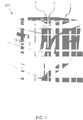
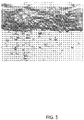
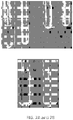
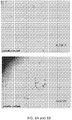
- the ultrasonic waves achieve the effect of dispersing microbe clumps by ultrasonic cavitation (see Figures).
- This dispersion process occurs in a sealed container and prevents the dispersion of fluid on the container walls that could affect subsequent operations.
- the ultrasonic waves are dispersed uniformly through the walls and the bottom of the vessel.
- the microbial dispersion methods disclosed herein are greatly improved.
- the ultrasonic waves are dispersed more uniformly to the walls and the bottom of the container and its surrounding area via the ultrasonic transducer.
- the exemplary dispersion/detection apparatus of the present disclosure can solves the unmet need of dispersing infectious microbes which tend to cluster, thus eliminating the need for traditional manual grinding of microbial colonies.
- the apparatus and methods disclosed herein are particularly suitable for the preparation of bacteria such as M. tuberculosis for drug sensitivity and other tests; thus providing an integrated solution for microbe dispersion and turbidity measurements.
- the exemplary apparatus can combine microbial dispersion functionality with real-time accurate McFarland turbidity measurements.
- the exemplary apparatus described herein can provide automatic dilution volume calculations.
- the exemplary apparatus described herein can perform dispersion and detection/assaying within a closed system, thus greatly reducing user's exposure to biohazards.
- the exemplary apparatus described herein can have instrument characteristics that includes:
- the exemplary apparatus has the following working characteristics:
- Exemplary microorganisms that can be dispersed using the method and apparatus disclosed herein include Mycobacterium tuberculosis, Staphylococcus aureus, Pseudomonas aeruginosa, Bacillus subtilis, Streptococcus albus and Aspergillus niger.
- any infectious, bacterial/microbial samples with tendency for aggregation can be dispersed using the methods and apparatus of the present disclosure.
- the suitable frequency of the ultrasonic transducer ranges from about 20 KHz to about 80 KHz, the power from about 5 W to about 200 W, and the duration for applying the ultrasonic energy can range from about 15 sec ⁇ 120 sec or more.
- Mycobacterium tuberculosis can be effectively dispersed using these conditions, and dispersion has no effect on bacterial viability and/or activity.
- the present invention also describes a microbial dispersion instrument.
- the ultrasound dispersion instrument includes an ultrasonic wave generator and an ultrasonic wave transducer, and an electrical connection between the ultrasonic generator and ultrasonic transducer.
- the described dispersion device can also include a container which serves in microbe dispersion. The bottom end of the container is in close contact with the face of the ultrasonic transducer.
- the container can be of different sizes, is easily replaced, and the size of the area of close contact between the container and the transducer can be adjusted according to the desired dispersion effect.
- the bottom of the vessel is in close contact with the ultrasonic transducer.
- the hollow in the face of the ultrasonic transducer is compatible with the bottom of the vessel. The close contact between the bottom of the container and the face of the ultrasonic wave transducer improves the dispersion of ultrasonic waves in the area surrounding the bottom of the container.
- the apparatus 100 comprises a transparent vessel/container 11 for holding a quantity of the liquid suspension 50 in a sealed chamber formed by the walls of the container 11.
- the container 11 has a closed bottom end 11a and an open top end 1 1b.
- the open top end is closable with a cap 11c.
- the open end 1 1b and the cap 11c are preferably provided with screw threads so that the the cap 11c can be closed tightly to prevent the liquid suspension of microbes from spilling out during the operation of the apparatus.
- the apparatus is equipped with an ultrasonic transducer 9 that generates ultrasonic vibrations.
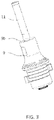
- the transducer 9 has a transducer head portion 9a that is configured and adapted for directly contacting and engaging the bottom end 11a of the container 11.
- the transducer head 9a is provided with a recess (i.e., a blind hole) 9b having a chamfered edge 9c around the annular edge of the recess.
- the recess 9b allows the transducer head 9a to receive the bottom end 1 1a of the container which generally has a curved contour as shown.
- the chamfered edge 9c of the recess 9b also allows more intimate direct contact between the transducer head 9a and the container's bottom end 11a for efficient transfer of ultrasonic vibration from the transducer head to the container 11.
- the chamfered edge 9c has a width of 0.75 mm and a chamfer angle of 45°.
- the ultrasonic transducer 9 in the dispersion instrument described operates at a frequency in the range of about 20 KHz to about 80 KHz, a power range of about 5 W to about 200 W. Microbial dispersion under these conditions is effective, and does not influence the activity of the sample.
- the ultrasonic waves By changing the mode of action of ultrasonic waves, the ultrasonic waves pass through the transducer and are dispersed evenly via the walls of the container to disperse the microbe, with no need for a liquid medium between the transducer and the container, thus realizing the purpose of dispersion.
- the instrument is efficient and convenient, and is easy to operate.
- the apparatus 100 also includes a container-receiving guide block 8 for holding the container 11 in an operating configuration.
- the container In the operating configuration, the container is in an upright orientation as shown and the container's bottom end 11a and the transducer head 9a are in direct contact.
- the container-receiving guide block 8 has a top end 8a and a bottom end 8b and a sidewall 8c defining a longitudinally oriented bore 8f extending from the top end 8a to the bottom end 8b of the container-receiving guide block for receiving the container 11.
- the bottom end 8b aligns the closed bottom end 1 1a of the container with the transducer head 9a to enable dispersion of the microbes in the liquid suspension 50 by ultrasonic energy.
- the apparatus 100 also includes a lid assembly 2, movable between an open position and a closed position.
- the position of the lid assembly 2 shown in FIG. 1 is the closed position and the open position is represented by the dotted outline 2a.
- the arrow A shows the hinged open and closing motion of the lid assembly 2.
- the lid assembly 2 is configured and adapted for engaging the top end 11b of the container and urge the container toward the transducer head 9a when the container 11 is inserted in the container-receiving guide block 8 and the lid assembly is in the closed position as shown.
- the urging by the lid assembly ensures that the container's bottom surface is in direct contact with the transducer head 9a and the ultrasonic vibrations generated by the transducer head is transmitted through the container wall to the liquid suspension 50 and disperse the microbes in the liquid suspension as desired.
- Turbidity of a liquid suspension is measured by considering the propensity of particles suspended in the liquid to scatter a light beam shining on them. To measure turbidity this way requires a light source and a detector set up to the side of the light beam, i.e. 90° to the light beam. The more particles there are in the liquid, more of the source light will be scattered by the particles and reach the detector positioned 90° to the light beam. These measurements can be quantified to certain standardized units well known in the art.
- the container-receiving guide block 8 is provided with a light source 7 for measuring the turbidity of the liquid suspension 50 in the container 11.
- the light source 7 is provided near the top end Sa of the container-receiving guide block so that the light shines downward into the liquid suspension 50.
- the light source 7 is provided with a hole 7a, which is aligned with the longitudinally oriented bore 8f of the container-receiving guide block 8, for receiving the container 11 therethrough.
- a photo diode 70 is provided for detecting the light scattered by the microbes in the liquid suspension 50 so that the suspension's turbidity can be measured.
- An opening or a window 30 is provided on the sidewall 8c of the container-receiving guide block 8 to accommodate the photo diode 70 so that the photo diode 70 can detect the scattered light coming from the liquid suspension 50.
- the apparatus can be configured with an appropriate controller or programmed with an appropriate controlling processor so that the dispersion of the microbes in the liquid suspension by the ultrasonic energy and the turbidity measurement of thus properly dispersed liquid suspension can be conducted in serial sequence or simultaneously.
- the two modes may be selected depending on the particular microbes that are being sampled so that more optimal processing sequence can be chosen.
- the container 11 has a cylindrical shape and the recess 9b provided in the transducer head 9a has a circular opening having a chamfered edge 9c.
- the recess 9b allows the transducer head 9a to accommodate the various shapes that may be presented by the bottom end 1 1a of the container 11.
- the chamfered edge 9c makes the contact with the container along the annular edge of the recess 9b for providing a close contact between the container bottom surface and the transducer head for efficient transfer of ultrasonic vibration from the transducer head to the container.
- the bottom end 11a has a spherical contour.
- the lid assembly 2 is provided with a spring-loaded mechanism for engaging the top end 11 b of the container and urge the container 11 toward the transducer head 9a.
- the spring-loaded mechanism comprises a receptacle 4 for receiving the top end 1 1b of the container including the screw cap 11c.
- the receptacle 4 is nested inside a hub 5.
- the hub 5 is provided with an opening through which the receptacle 4 fits in slidable (in longitudinal direction) manner.
- the receptacle 4 is situated within the hub 5 and can slide up and down.
- the structures of the receptacle 4 and the hub 5 are configured to form a chamber Sa between the sidewalls of the receptacle 4 and the hub 5 and a coil spring 6 is captured inside the chamber 5a.
- the configuration is such that the coil spring 6 is under compression and urges against the receptacle 4 and the hub 5.
- the coil spring 6 pushes the hub 5 upward and it pushes the receptacle 4 downward in the orientation of FIG. 1 .
- the hub 5 is affixed to the lid assembly 2 so that when the lid assembly 2 is in closed position and the latch 1 locks the lid assembly 2 into a stationary position, the hub 5 is not movable. However, the receptacle 4 will be movable up and down against the resistance of the coil spring 6.
- the spring-loaded receptacle 4 will provide a downward force on the top end 11b of the container and urge the container toward the transducer head 9a.
- the following apparatus 100 for dispersing microbes in a liquid suspension and measuring turbidity of the liquid suspension described above can be manufactured and provided to the end users without the containers for the liquid suspension of microbes.
- the containers can be supplied to the end users separate from the apparatus 100.
- the containers can be formed in a variety of sizes and shapes as long as the closed bottom end of the container is appropriately shaped to make the proper direct contact with the recess 9b of the transducer head 9a.
- the ultrasonic transducer 9 is driven by an appropriate ultrasonic signal generator which provides high-frequency driving current to the ultrasonic transducer 9.
- the high-frequency driving current drives the ultrasonic transducer to generate high-frequency, ultrasonic vibrations which is transmitted quickly through the walls of the container 11 and to the liquid suspension inside.
- the ultrasonic energy creates ultrasonic waves in the liquid suspension which cause cavitation in the liquid, dispersing any clusters of microbes into their constituent microbial particles.
- the electronics and control circuits that are used to drive and control the active components of the apparatus 100, such as the ultrasonic transducer 9, the light source 7, and the photo diode 70 are well known in the art. Therefore one of ordinary skill in the art would know how to power these components to make them operational.
- the optimal frequency of the ultrasonic transducer is about 20 KHz to about 80 KHz, the power is about 5 W to about 200 W, and the reaction time is about 15 s ⁇ 120 s.
- the present method does not destroy the viability and/or integrity of the microbes.
- the shape of the ultrasound transducer used has no special restrictions, and can be selected to match the shape of the containers used.
- the frequency and power of the transducer can also be varied depending on the type and weight of the sample. For example, when the sample is Mycobacterium tuberculosis, the frequency of the ultrasonic transducer is about 20 KHz- about 80 KHz, and the preferred power is about 5 W- 200W.
Landscapes
- Chemical & Material Sciences (AREA)
- Health & Medical Sciences (AREA)
- Life Sciences & Earth Sciences (AREA)
- Physics & Mathematics (AREA)
- Analytical Chemistry (AREA)
- Biochemistry (AREA)
- General Health & Medical Sciences (AREA)
- Immunology (AREA)
- General Physics & Mathematics (AREA)
- Pathology (AREA)
- Organic Chemistry (AREA)
- Wood Science & Technology (AREA)
- Zoology (AREA)
- Proteomics, Peptides & Aminoacids (AREA)
- Engineering & Computer Science (AREA)
- Biotechnology (AREA)
- Microbiology (AREA)
- Molecular Biology (AREA)
- Dispersion Chemistry (AREA)
- Toxicology (AREA)
- Biophysics (AREA)
- Bioinformatics & Cheminformatics (AREA)
- General Engineering & Computer Science (AREA)
- Genetics & Genomics (AREA)
- Sampling And Sample Adjustment (AREA)
- Investigating Or Analysing Materials By Optical Means (AREA)
- Apparatus Associated With Microorganisms And Enzymes (AREA)
Claims (6)
- Vorrichtung (100) zum Dispergieren von Mikroben in einer biologischen Probe und Messen der Trübung der biologischen Probe, wobei die Vorrichtung Folgendes umfasst:einen Ultraschallwandler (9), der einen Wandlerkopfabschnitt (9a) aufweist, der Ultraschallschwingungen erzeugt;eine Fotodiode (70) zum Messen der Trübung der biologischen Probe;dadurch gekennzeichnet, dass die Vorrichtung ferner Folgendes umfasst:einen Behälteraufnahme-Führungsblock (8) zum Halten eines Behälters (11) der biologischen Probe in einer Betriebskonfiguration, in der das untere Ende (11a) des Behälters und der Wandlerkopf in direkten Kontakt kommen, wobei der Behälteraufnahme-Führungsblock ein oberes Ende (8a) und ein unteres Ende (8b) und eine Seitenwand (8c), die eine sich von dem oberen Ende zu dem unteren Ende des Behälteraufnahme-Führungsblocks (8) erstreckende, längs orientierte lichte Weite (8f) zum Aufnehmen des Behälters (11) definiert, aufweist, wobei das untere Ende das untere Ende (11a) des Behälters auf den Wandlerkopf ausrichtet;eine Lichtquelle (7) zum Strahlen von Licht in die biologische Probe zum Messen der Trübung der biologischen Probe, wobei die Lichtquelle mit einem Loch (7a) zum Aufnehmen des Behälters (11) dadurch hindurch versehen ist und das Loch auf die längs orientierte lichte Weite des Behälteraufnahme-Führungsblocks (8) ausgerichtet ist;eine Deckelanordnung (2), die zwischen einer offenen Stellung und einer geschlossenen Stellung bewegbar ist und die dazu konfiguriert und angepasst ist, mit dem Behälter (11) in Eingriff zu gelangen und den Behälter (11) in Richtung des Wandlerkopfs zu drücken, wenn der Behälter von dem Behälteraufnahme-Führungsblock (8) gehalten wird und sich die Deckelanordnung (2) in der geschlossenen Stellung befindet, sodass sich die untere Oberfläche des Behälters in direktem Kontakt mit dem Wandlerkopf befindet und die von dem Wandlerkopf erzeugten Ultraschallschwingungen durch eine Behälterwand auf die Probe übertragen werden und die Mikroben in der Probe dispergieren;wobei die Deckelanordnung (2) mit einem federbelasteten Mechanismus versehen ist, der von einer Nabe (5) und einer Buchse (4), die nestartig in der Nabe angeordnet ist, um mit dem oberen Ende des Behälters (11) in Eingriff zu gelangen und den Behälter (11) in Richtung des Wandlerkopfs zu drücken, gebildet wird, wobei die Nabe (5) an der Deckelanordnung (2) angebracht ist und eine Öffnung aufweist, durch die die Buchse (4) in der Nabe (5) aufgenommen ist und dazu konfiguriert ist, nach oben und nach unten zu gleiten, wobei die Buchse (4) eine von ihren Seitenwänden definierte Höhlung aufweist, um das obere Ende (11b) des Behälters aufzunehmen, wobei die Nabe und die Buchse eine Kammer (5a) zwischen den Seitenwänden der Buchse (4) und der Nabe (5) bilden, wobei eine Spiralfeder (6) in der Kammer gefangen ist und nach unten auf die Buchse (4) drückt; undeine auf der Seitenwand des Behälteraufnahme-Führungsblocks (8) bereitgestellte Öffnung (30), wobei die Öffnung einen Beobachtungszugang zu dem Behälter für die Fotodiode (70) zum Messen der Trübung der Probe bereitstellt.
- Vorrichtung nach Anspruch 1, wobei die Vorrichtung zur Verwendung mit einem Behälter (11) konfiguriert ist, bei dem es sich um einen durchsichtigen Behälter zum Halten einer Menge der biologischen Probe in einer verschlossenen Kammer handelt, wobei der Behälter ein geschlossenes unteres Ende (11a) und ein offenes oberes Ende (11b) aufweist, wobei das offene Ende mit einer Kappe (11c) verschließbar ist.
- Vorrichtung nach Anspruch 1 oder 2, die dazu konfiguriert ist, die Trübung der biologischen Probe gleichzeitig mit dem Dispergieren der Mikroben in der biologischen Probe zu messen.
- Vorrichtung nach Anspruch 1 oder 2, wobei der Wandlerkopf (9a) mit einer Aussparung (9b) versehen ist, die eine abgeschrägte Kante (9c) aufweist, die mit dem unteren Ende (11a) des Behälters einen Kontakt herstellt, um Ultraschallschwingungen effizient von dem Wandlerkopf auf den Behälter (11) zu übertragen.
- Vorrichtung nach Anspruch 4, wobei der Behälter (11) eine zylindrische Form aufweist und die in dem Wandlerkopf (9a) bereitgestellte Aussparung eine kreisförmige Öffnung aufweist und die abgeschrägte Kante (9c) entlang eines ringförmigen Bereichs den Kontakt mit dem Behälter herstellt, um einen engen Kontakt zwischen der unteren Oberfläche des Behälters und dem Wandlerkopf zur effizienten Übertragung von Ultraschallschwingungen von dem Wandlerkopf auf den Behälter bereitzustellen.
- Vorrichtung nach Anspruch 1 oder 2, wobei die Lichtquelle (7) für die Trübungsmessung in der Nähe des oberen Endes (8a) des Behälteraufnahme-Führungsblocks (8) bereitgestellt ist.
Applications Claiming Priority (2)
| Application Number | Priority Date | Filing Date | Title |
|---|---|---|---|
| CN201410503351.4A CN104263718B (zh) | 2014-09-26 | 2014-09-26 | 一种超声波微生物分散方法及装置 |
| PCT/US2015/052503 WO2016049604A1 (en) | 2014-09-26 | 2015-09-25 | Method and apparatus for dispersion of microbes in a liquid suspension |
Publications (3)
| Publication Number | Publication Date |
|---|---|
| EP3198259A1 EP3198259A1 (de) | 2017-08-02 |
| EP3198259A4 EP3198259A4 (de) | 2018-05-23 |
| EP3198259B1 true EP3198259B1 (de) | 2022-11-09 |
Family
ID=52155300
Family Applications (1)
| Application Number | Title | Priority Date | Filing Date |
|---|---|---|---|
| EP15843879.6A Active EP3198259B1 (de) | 2014-09-26 | 2015-09-25 | Verfahren und vorrichtung zur dispersion von mikroben in einer flüssigen suspension |
Country Status (4)
| Country | Link |
|---|---|
| US (1) | US10316346B2 (de) |
| EP (1) | EP3198259B1 (de) |
| CN (1) | CN104263718B (de) |
| WO (1) | WO2016049604A1 (de) |
Families Citing this family (10)
| Publication number | Priority date | Publication date | Assignee | Title |
|---|---|---|---|---|
| CN104877904B (zh) * | 2015-04-30 | 2018-05-15 | 广东体必康生物科技有限公司 | 一种细菌分散计数仪 |
| AU2018254602B2 (en) | 2017-04-20 | 2021-04-01 | Biomerieux, Inc. | Optical density instrument and systems and methods using the same |
| CN107557352A (zh) * | 2017-09-14 | 2018-01-09 | 广东体必康生物科技有限公司 | 超声固相破碎细胞的方法及应用 |
| CN108872029B (zh) * | 2018-08-29 | 2021-06-15 | 杭州震弘环境科技有限公司 | 气体浊度处理节点 |
| CN109086835B (zh) * | 2018-08-29 | 2019-10-15 | 丁柳朋 | 一种浊度数据处理系统 |
| DE102018122422A1 (de) * | 2018-09-13 | 2020-03-19 | Bluelab Wasseranalysesysteme Gmbh | Verfahren zur Messung einer Trinkwasserkontamination in einer Trinkwasserleitung durch Mikroorganismen |
| CN111215215A (zh) * | 2020-03-31 | 2020-06-02 | 宁波集智生物科技有限公司 | 一种通过超声波实现的非接触性组织破碎仪 |
| CN113234791B (zh) * | 2021-06-25 | 2022-09-23 | 长沙和光生物科技有限公司 | 一种凝结芽孢杆菌的计数检测方法 |
| CN116078240A (zh) * | 2023-03-06 | 2023-05-09 | 博颐(上海)科学仪器设备有限公司 | 超声波振荡处理装置、系统以及方法 |
| CN117126841B (zh) * | 2023-10-23 | 2024-02-06 | 中国农业科学院农业资源与农业区划研究所 | 一种提高微生物肥料样品测定均匀性的方法 |
Family Cites Families (16)
| Publication number | Priority date | Publication date | Assignee | Title |
|---|---|---|---|---|
| US3942683A (en) | 1971-11-09 | 1976-03-09 | Eduard Haas | Tablet dispensing receptacle |
| US5139745A (en) * | 1990-03-30 | 1992-08-18 | Block Medical, Inc. | Luminometer |
| US5446544A (en) * | 1993-01-22 | 1995-08-29 | Hf Scientific, Inc. | Turbidimeter |
| DE19646972A1 (de) | 1996-11-14 | 1998-05-20 | Mannesmann Vdo Ag | Ausschließlich durch Ansprühen mit Waschflüssigkeit arbeitende Scheibenreinigungsanlage |
| US6939696B1 (en) | 1998-08-03 | 2005-09-06 | Becton, Dickinson And Company | Cell disruption method using sonication |
| US6119510A (en) | 1998-08-31 | 2000-09-19 | Lucent Technologies Inc. | Process for determining characteristics of suspended particles |
| US20060042671A1 (en) * | 2003-10-24 | 2006-03-02 | Connelly Rowan T | Ultrasonic optical cleaning system |
| WO2006086331A2 (en) * | 2005-02-08 | 2006-08-17 | Cdex, Inc. | Cuvette and cuvette cap |
| US7430043B1 (en) | 2007-06-07 | 2008-09-30 | Evans James M | Turbidimeter improvements |
| US20100113983A1 (en) | 2008-10-31 | 2010-05-06 | Microsoft Corporation | Utilizing ultrasound to disrupt pathogens |
| JP2011087477A (ja) | 2009-10-20 | 2011-05-06 | Fujifilm Corp | 微生物の処理方法 |
| EP2487480B1 (de) | 2011-02-09 | 2014-01-15 | ABB Technology AG | Optisches Sensorelement und optische Probenanalysevorrichtung |
| CN102407423B (zh) | 2011-09-28 | 2013-12-04 | 于邦仲 | 一种呼吸流量节律控制气阀阀座加工方法 |
| CN105229465A (zh) | 2013-03-15 | 2016-01-06 | 赛拉诺斯股份有限公司 | 用于样品制备的装置、系统和方法 |
| US9359632B2 (en) | 2013-03-15 | 2016-06-07 | Theranos, Inc. | Devices, systems and methods for sample preparation |
| CN204138668U (zh) * | 2014-09-26 | 2015-02-04 | 广东体必康生物科技有限公司 | 一种超声波微生物分散装置 |
-
2014
- 2014-09-26 CN CN201410503351.4A patent/CN104263718B/zh active Active
-
2015
- 2015-09-25 US US14/866,691 patent/US10316346B2/en active Active
- 2015-09-25 EP EP15843879.6A patent/EP3198259B1/de active Active
- 2015-09-25 WO PCT/US2015/052503 patent/WO2016049604A1/en not_active Ceased
Also Published As
| Publication number | Publication date |
|---|---|
| EP3198259A4 (de) | 2018-05-23 |
| EP3198259A1 (de) | 2017-08-02 |
| WO2016049604A1 (en) | 2016-03-31 |
| CN104263718B (zh) | 2017-11-24 |
| CN104263718A (zh) | 2015-01-07 |
| US20160090616A1 (en) | 2016-03-31 |
| US10316346B2 (en) | 2019-06-11 |
Similar Documents
| Publication | Publication Date | Title |
|---|---|---|
| EP3198259B1 (de) | Verfahren und vorrichtung zur dispersion von mikroben in einer flüssigen suspension | |
| RU2718086C2 (ru) | Автоматизированный способ и система для получения и приготовления образца микроорганизма как для идентификации, так и для тестов на чувствительность к антибиотикам | |
| CN102460177B (zh) | 用于对培养试样容器进行自动地通风和取样的系统和方法 | |
| EP3134719B1 (de) | Partikelsensor mit störstoffdiskriminierung | |
| US9046505B2 (en) | Sample preparation apparatus | |
| BRPI1012186B1 (pt) | Instrumento de detecção combinada para cultura de espécie em containers e instrumento para a identificação e/ou caracterização de um agente microbial em uma amostra | |
| US11022483B2 (en) | Light detection system and method of using same | |
| US20250050342A1 (en) | Device for collecting, storing and dividing sample | |
| US20190298317A1 (en) | Instrumented receptacle apparatus for health analysis of body fluids | |
| JP6807323B2 (ja) | 光検出システム、及びその使用方法 | |
| US11300495B2 (en) | Flow cytometer arrangement | |
| CN107430075B (zh) | 光检测系统及其使用方法 | |
| US10486158B2 (en) | Enclosing holder for a sample container | |
| EP1368635B1 (de) | Vorrichtung und verfahren zum verarbeiten und testen einer biologischen probe | |
| US12350232B2 (en) | Self centering vial holder for immersion probes | |
| EP2459986B1 (de) | Vorrichtung und verfahren für nachweis und analyse von partikeln in fluiden | |
| EP3808440A1 (de) | Vorrichtung zum rühren einer flüssigkeit und halter für einen magnetrührer | |
| BRPI0706912A2 (pt) | aparelho de amostragem | |
| CA2610629A1 (en) | Liquid sampling apparatus and method of using same | |
| BR122023006901B1 (pt) | Instrumento de laboratório | |
| BR112017025551B1 (pt) | Método e sistema automatizado para obter e preparar amostra de micro-organismos tanto para identificação quanto para testes de susceptibilidade a antibióticos |
Legal Events
| Date | Code | Title | Description |
|---|---|---|---|
| STAA | Information on the status of an ep patent application or granted ep patent |
Free format text: STATUS: THE INTERNATIONAL PUBLICATION HAS BEEN MADE |
|
| PUAI | Public reference made under article 153(3) epc to a published international application that has entered the european phase |
Free format text: ORIGINAL CODE: 0009012 |
|
| STAA | Information on the status of an ep patent application or granted ep patent |
Free format text: STATUS: REQUEST FOR EXAMINATION WAS MADE |
|
| 17P | Request for examination filed |
Effective date: 20170425 |
|
| AK | Designated contracting states |
Kind code of ref document: A1 Designated state(s): AL AT BE BG CH CY CZ DE DK EE ES FI FR GB GR HR HU IE IS IT LI LT LU LV MC MK MT NL NO PL PT RO RS SE SI SK SM TR |
|
| AX | Request for extension of the european patent |
Extension state: BA ME |
|
| RIN1 | Information on inventor provided before grant (corrected) |
Inventor name: BI, LIJUN Inventor name: MO, BAIZI Inventor name: TAO, SHENGCE Inventor name: ZHAO, WEIGUO Inventor name: ZHANG, HONGBO Inventor name: HOU, JIAN Inventor name: YANG, XIAO Inventor name: LI, JIAWEI Inventor name: ZHU, GUOFENG Inventor name: HANG, HAIYING Inventor name: DENG, JIAOYU |
|
| DAV | Request for validation of the european patent (deleted) | ||
| DAX | Request for extension of the european patent (deleted) | ||
| RIN1 | Information on inventor provided before grant (corrected) |
Inventor name: DENG, JIAOYU Inventor name: ZHANG, HONGBO Inventor name: ZHAO, WEIGUO Inventor name: TAO, SHENGCE Inventor name: ZHU, GUOFENG Inventor name: BI, LIJUN Inventor name: MO, BAIZI Inventor name: YANG, XIAO Inventor name: HOU, JIAN Inventor name: HANG, HAIYING Inventor name: LI, JIAWEI |
|
| RIN1 | Information on inventor provided before grant (corrected) |
Inventor name: HANG, HAIYING Inventor name: HOU, JIAN Inventor name: ZHANG, HONGBO Inventor name: ZHAO, WEIGUO Inventor name: DENG, JIAOYU Inventor name: YANG, XIAO Inventor name: TAO, SHENGCE Inventor name: BI, LIJUN Inventor name: MO, BAIZI Inventor name: LI, JIAWEI Inventor name: ZHU, GUOFENG |
|
| A4 | Supplementary search report drawn up and despatched |
Effective date: 20180420 |
|
| RIC1 | Information provided on ipc code assigned before grant |
Ipc: G01N 21/51 20060101ALI20180416BHEP Ipc: G01N 21/00 20060101AFI20180416BHEP |
|
| REG | Reference to a national code |
Ref country code: HK Ref legal event code: DE Ref document number: 1241465 Country of ref document: HK |
|
| GRAP | Despatch of communication of intention to grant a patent |
Free format text: ORIGINAL CODE: EPIDOSNIGR1 |
|
| STAA | Information on the status of an ep patent application or granted ep patent |
Free format text: STATUS: GRANT OF PATENT IS INTENDED |
|
| INTG | Intention to grant announced |
Effective date: 20210507 |
|
| GRAJ | Information related to disapproval of communication of intention to grant by the applicant or resumption of examination proceedings by the epo deleted |
Free format text: ORIGINAL CODE: EPIDOSDIGR1 |
|
| STAA | Information on the status of an ep patent application or granted ep patent |
Free format text: STATUS: REQUEST FOR EXAMINATION WAS MADE |
|
| INTC | Intention to grant announced (deleted) | ||
| GRAP | Despatch of communication of intention to grant a patent |
Free format text: ORIGINAL CODE: EPIDOSNIGR1 |
|
| STAA | Information on the status of an ep patent application or granted ep patent |
Free format text: STATUS: GRANT OF PATENT IS INTENDED |
|
| INTG | Intention to grant announced |
Effective date: 20210924 |
|
| GRAJ | Information related to disapproval of communication of intention to grant by the applicant or resumption of examination proceedings by the epo deleted |
Free format text: ORIGINAL CODE: EPIDOSDIGR1 |
|
| STAA | Information on the status of an ep patent application or granted ep patent |
Free format text: STATUS: REQUEST FOR EXAMINATION WAS MADE |
|
| RAP3 | Party data changed (applicant data changed or rights of an application transferred) |
Owner name: HANG, HAIYING Owner name: TB HEALTHCARE BIOTECHNOLOGY (GUANGDONG) CO., LTD. |
|
| GRAP | Despatch of communication of intention to grant a patent |
Free format text: ORIGINAL CODE: EPIDOSNIGR1 |
|
| STAA | Information on the status of an ep patent application or granted ep patent |
Free format text: STATUS: GRANT OF PATENT IS INTENDED |
|
| INTC | Intention to grant announced (deleted) | ||
| INTG | Intention to grant announced |
Effective date: 20220303 |
|
| GRAS | Grant fee paid |
Free format text: ORIGINAL CODE: EPIDOSNIGR3 |
|
| GRAA | (expected) grant |
Free format text: ORIGINAL CODE: 0009210 |
|
| STAA | Information on the status of an ep patent application or granted ep patent |
Free format text: STATUS: THE PATENT HAS BEEN GRANTED |
|
| RAP3 | Party data changed (applicant data changed or rights of an application transferred) |
Owner name: HANG, HAIYING Owner name: TB HEALTHCARE CO., LTD. |
|
| AK | Designated contracting states |
Kind code of ref document: B1 Designated state(s): AL AT BE BG CH CY CZ DE DK EE ES FI FR GB GR HR HU IE IS IT LI LT LU LV MC MK MT NL NO PL PT RO RS SE SI SK SM TR |
|
| REG | Reference to a national code |
Ref country code: GB Ref legal event code: FG4D |
|
| REG | Reference to a national code |
Ref country code: CH Ref legal event code: EP Ref country code: AT Ref legal event code: REF Ref document number: 1530682 Country of ref document: AT Kind code of ref document: T Effective date: 20221115 |
|
| REG | Reference to a national code |
Ref country code: DE Ref legal event code: R096 Ref document number: 602015081549 Country of ref document: DE |
|
| REG | Reference to a national code |
Ref country code: IE Ref legal event code: FG4D |
|
| REG | Reference to a national code |
Ref country code: LT Ref legal event code: MG9D |
|
| REG | Reference to a national code |
Ref country code: NL Ref legal event code: MP Effective date: 20221109 |
|
| REG | Reference to a national code |
Ref country code: AT Ref legal event code: MK05 Ref document number: 1530682 Country of ref document: AT Kind code of ref document: T Effective date: 20221109 |
|
| PG25 | Lapsed in a contracting state [announced via postgrant information from national office to epo] |
Ref country code: SE Free format text: LAPSE BECAUSE OF FAILURE TO SUBMIT A TRANSLATION OF THE DESCRIPTION OR TO PAY THE FEE WITHIN THE PRESCRIBED TIME-LIMIT Effective date: 20221109 Ref country code: PT Free format text: LAPSE BECAUSE OF FAILURE TO SUBMIT A TRANSLATION OF THE DESCRIPTION OR TO PAY THE FEE WITHIN THE PRESCRIBED TIME-LIMIT Effective date: 20230309 Ref country code: NO Free format text: LAPSE BECAUSE OF FAILURE TO SUBMIT A TRANSLATION OF THE DESCRIPTION OR TO PAY THE FEE WITHIN THE PRESCRIBED TIME-LIMIT Effective date: 20230209 Ref country code: LT Free format text: LAPSE BECAUSE OF FAILURE TO SUBMIT A TRANSLATION OF THE DESCRIPTION OR TO PAY THE FEE WITHIN THE PRESCRIBED TIME-LIMIT Effective date: 20221109 Ref country code: FI Free format text: LAPSE BECAUSE OF FAILURE TO SUBMIT A TRANSLATION OF THE DESCRIPTION OR TO PAY THE FEE WITHIN THE PRESCRIBED TIME-LIMIT Effective date: 20221109 Ref country code: ES Free format text: LAPSE BECAUSE OF FAILURE TO SUBMIT A TRANSLATION OF THE DESCRIPTION OR TO PAY THE FEE WITHIN THE PRESCRIBED TIME-LIMIT Effective date: 20221109 Ref country code: AT Free format text: LAPSE BECAUSE OF FAILURE TO SUBMIT A TRANSLATION OF THE DESCRIPTION OR TO PAY THE FEE WITHIN THE PRESCRIBED TIME-LIMIT Effective date: 20221109 |
|
| PG25 | Lapsed in a contracting state [announced via postgrant information from national office to epo] |
Ref country code: RS Free format text: LAPSE BECAUSE OF FAILURE TO SUBMIT A TRANSLATION OF THE DESCRIPTION OR TO PAY THE FEE WITHIN THE PRESCRIBED TIME-LIMIT Effective date: 20221109 Ref country code: PL Free format text: LAPSE BECAUSE OF FAILURE TO SUBMIT A TRANSLATION OF THE DESCRIPTION OR TO PAY THE FEE WITHIN THE PRESCRIBED TIME-LIMIT Effective date: 20221109 Ref country code: LV Free format text: LAPSE BECAUSE OF FAILURE TO SUBMIT A TRANSLATION OF THE DESCRIPTION OR TO PAY THE FEE WITHIN THE PRESCRIBED TIME-LIMIT Effective date: 20221109 Ref country code: IS Free format text: LAPSE BECAUSE OF FAILURE TO SUBMIT A TRANSLATION OF THE DESCRIPTION OR TO PAY THE FEE WITHIN THE PRESCRIBED TIME-LIMIT Effective date: 20230309 Ref country code: HR Free format text: LAPSE BECAUSE OF FAILURE TO SUBMIT A TRANSLATION OF THE DESCRIPTION OR TO PAY THE FEE WITHIN THE PRESCRIBED TIME-LIMIT Effective date: 20221109 Ref country code: GR Free format text: LAPSE BECAUSE OF FAILURE TO SUBMIT A TRANSLATION OF THE DESCRIPTION OR TO PAY THE FEE WITHIN THE PRESCRIBED TIME-LIMIT Effective date: 20230210 |
|
| PG25 | Lapsed in a contracting state [announced via postgrant information from national office to epo] |
Ref country code: NL Free format text: LAPSE BECAUSE OF FAILURE TO SUBMIT A TRANSLATION OF THE DESCRIPTION OR TO PAY THE FEE WITHIN THE PRESCRIBED TIME-LIMIT Effective date: 20221109 |
|
| PG25 | Lapsed in a contracting state [announced via postgrant information from national office to epo] |
Ref country code: SM Free format text: LAPSE BECAUSE OF FAILURE TO SUBMIT A TRANSLATION OF THE DESCRIPTION OR TO PAY THE FEE WITHIN THE PRESCRIBED TIME-LIMIT Effective date: 20221109 Ref country code: RO Free format text: LAPSE BECAUSE OF FAILURE TO SUBMIT A TRANSLATION OF THE DESCRIPTION OR TO PAY THE FEE WITHIN THE PRESCRIBED TIME-LIMIT Effective date: 20221109 Ref country code: EE Free format text: LAPSE BECAUSE OF FAILURE TO SUBMIT A TRANSLATION OF THE DESCRIPTION OR TO PAY THE FEE WITHIN THE PRESCRIBED TIME-LIMIT Effective date: 20221109 Ref country code: DK Free format text: LAPSE BECAUSE OF FAILURE TO SUBMIT A TRANSLATION OF THE DESCRIPTION OR TO PAY THE FEE WITHIN THE PRESCRIBED TIME-LIMIT Effective date: 20221109 Ref country code: CZ Free format text: LAPSE BECAUSE OF FAILURE TO SUBMIT A TRANSLATION OF THE DESCRIPTION OR TO PAY THE FEE WITHIN THE PRESCRIBED TIME-LIMIT Effective date: 20221109 |
|
| REG | Reference to a national code |
Ref country code: DE Ref legal event code: R097 Ref document number: 602015081549 Country of ref document: DE |
|
| PG25 | Lapsed in a contracting state [announced via postgrant information from national office to epo] |
Ref country code: SK Free format text: LAPSE BECAUSE OF FAILURE TO SUBMIT A TRANSLATION OF THE DESCRIPTION OR TO PAY THE FEE WITHIN THE PRESCRIBED TIME-LIMIT Effective date: 20221109 Ref country code: AL Free format text: LAPSE BECAUSE OF FAILURE TO SUBMIT A TRANSLATION OF THE DESCRIPTION OR TO PAY THE FEE WITHIN THE PRESCRIBED TIME-LIMIT Effective date: 20221109 |
|
| PLBE | No opposition filed within time limit |
Free format text: ORIGINAL CODE: 0009261 |
|
| STAA | Information on the status of an ep patent application or granted ep patent |
Free format text: STATUS: NO OPPOSITION FILED WITHIN TIME LIMIT |
|
| 26N | No opposition filed |
Effective date: 20230810 |
|
| PG25 | Lapsed in a contracting state [announced via postgrant information from national office to epo] |
Ref country code: SI Free format text: LAPSE BECAUSE OF FAILURE TO SUBMIT A TRANSLATION OF THE DESCRIPTION OR TO PAY THE FEE WITHIN THE PRESCRIBED TIME-LIMIT Effective date: 20221109 |
|
| REG | Reference to a national code |
Ref country code: DE Ref legal event code: R119 Ref document number: 602015081549 Country of ref document: DE |
|
| REG | Reference to a national code |
Ref country code: HK Ref legal event code: WD Ref document number: 1241465 Country of ref document: HK |
|
| REG | Reference to a national code |
Ref country code: CH Ref legal event code: PL |
|
| PG25 | Lapsed in a contracting state [announced via postgrant information from national office to epo] |
Ref country code: LU Free format text: LAPSE BECAUSE OF NON-PAYMENT OF DUE FEES Effective date: 20230925 |
|
| REG | Reference to a national code |
Ref country code: BE Ref legal event code: MM Effective date: 20230930 |
|
| PG25 | Lapsed in a contracting state [announced via postgrant information from national office to epo] |
Ref country code: LU Free format text: LAPSE BECAUSE OF NON-PAYMENT OF DUE FEES Effective date: 20230925 Ref country code: IT Free format text: LAPSE BECAUSE OF FAILURE TO SUBMIT A TRANSLATION OF THE DESCRIPTION OR TO PAY THE FEE WITHIN THE PRESCRIBED TIME-LIMIT Effective date: 20221109 Ref country code: MC Free format text: LAPSE BECAUSE OF FAILURE TO SUBMIT A TRANSLATION OF THE DESCRIPTION OR TO PAY THE FEE WITHIN THE PRESCRIBED TIME-LIMIT Effective date: 20221109 |
|
| REG | Reference to a national code |
Ref country code: IE Ref legal event code: MM4A |
|
| PG25 | Lapsed in a contracting state [announced via postgrant information from national office to epo] |
Ref country code: IE Free format text: LAPSE BECAUSE OF NON-PAYMENT OF DUE FEES Effective date: 20230925 |
|
| PG25 | Lapsed in a contracting state [announced via postgrant information from national office to epo] |
Ref country code: CH Free format text: LAPSE BECAUSE OF NON-PAYMENT OF DUE FEES Effective date: 20230930 |
|
| PG25 | Lapsed in a contracting state [announced via postgrant information from national office to epo] |
Ref country code: IE Free format text: LAPSE BECAUSE OF NON-PAYMENT OF DUE FEES Effective date: 20230925 Ref country code: FR Free format text: LAPSE BECAUSE OF NON-PAYMENT OF DUE FEES Effective date: 20230930 Ref country code: DE Free format text: LAPSE BECAUSE OF NON-PAYMENT OF DUE FEES Effective date: 20240403 Ref country code: CH Free format text: LAPSE BECAUSE OF NON-PAYMENT OF DUE FEES Effective date: 20230930 |
|
| PG25 | Lapsed in a contracting state [announced via postgrant information from national office to epo] |
Ref country code: BE Free format text: LAPSE BECAUSE OF NON-PAYMENT OF DUE FEES Effective date: 20230930 |
|
| PG25 | Lapsed in a contracting state [announced via postgrant information from national office to epo] |
Ref country code: BG Free format text: LAPSE BECAUSE OF FAILURE TO SUBMIT A TRANSLATION OF THE DESCRIPTION OR TO PAY THE FEE WITHIN THE PRESCRIBED TIME-LIMIT Effective date: 20221109 |
|
| PG25 | Lapsed in a contracting state [announced via postgrant information from national office to epo] |
Ref country code: BG Free format text: LAPSE BECAUSE OF FAILURE TO SUBMIT A TRANSLATION OF THE DESCRIPTION OR TO PAY THE FEE WITHIN THE PRESCRIBED TIME-LIMIT Effective date: 20221109 |
|
| PG25 | Lapsed in a contracting state [announced via postgrant information from national office to epo] |
Ref country code: CY Free format text: LAPSE BECAUSE OF FAILURE TO SUBMIT A TRANSLATION OF THE DESCRIPTION OR TO PAY THE FEE WITHIN THE PRESCRIBED TIME-LIMIT; INVALID AB INITIO Effective date: 20150925 |
|
| PG25 | Lapsed in a contracting state [announced via postgrant information from national office to epo] |
Ref country code: HU Free format text: LAPSE BECAUSE OF FAILURE TO SUBMIT A TRANSLATION OF THE DESCRIPTION OR TO PAY THE FEE WITHIN THE PRESCRIBED TIME-LIMIT; INVALID AB INITIO Effective date: 20150925 |
|
| PGFP | Annual fee paid to national office [announced via postgrant information from national office to epo] |
Ref country code: GB Payment date: 20250923 Year of fee payment: 11 |
|
| PG25 | Lapsed in a contracting state [announced via postgrant information from national office to epo] |
Ref country code: TR Free format text: LAPSE BECAUSE OF FAILURE TO SUBMIT A TRANSLATION OF THE DESCRIPTION OR TO PAY THE FEE WITHIN THE PRESCRIBED TIME-LIMIT Effective date: 20221109 |