EP3197232B1 - Benutzererkennungsverfahren, benutzergerät und funktionseinheit für proximity-dienst - Google Patents
Benutzererkennungsverfahren, benutzergerät und funktionseinheit für proximity-dienst Download PDFInfo
- Publication number
- EP3197232B1 EP3197232B1 EP14903760.8A EP14903760A EP3197232B1 EP 3197232 B1 EP3197232 B1 EP 3197232B1 EP 14903760 A EP14903760 A EP 14903760A EP 3197232 B1 EP3197232 B1 EP 3197232B1
- Authority
- EP
- European Patent Office
- Prior art keywords
- monitored
- message
- monitoring
- proximity service
- service function
- Prior art date
- Legal status (The legal status is an assumption and is not a legal conclusion. Google has not performed a legal analysis and makes no representation as to the accuracy of the status listed.)
- Active
Links
Images


Classifications
-
- H—ELECTRICITY
- H04—ELECTRIC COMMUNICATION TECHNIQUE
- H04W—WIRELESS COMMUNICATION NETWORKS
- H04W76/00—Connection management
- H04W76/40—Connection management for selective distribution or broadcast
-
- H—ELECTRICITY
- H04—ELECTRIC COMMUNICATION TECHNIQUE
- H04L—TRANSMISSION OF DIGITAL INFORMATION, e.g. TELEGRAPHIC COMMUNICATION
- H04L63/00—Network architectures or network communication protocols for network security
- H04L63/30—Network architectures or network communication protocols for network security for supporting lawful interception, monitoring or retaining of communications or communication related information
-
- H—ELECTRICITY
- H04—ELECTRIC COMMUNICATION TECHNIQUE
- H04W—WIRELESS COMMUNICATION NETWORKS
- H04W12/00—Security arrangements; Authentication; Protecting privacy or anonymity
- H04W12/02—Protecting privacy or anonymity, e.g. protecting personally identifiable information [PII]
-
- H—ELECTRICITY
- H04—ELECTRIC COMMUNICATION TECHNIQUE
- H04W—WIRELESS COMMUNICATION NETWORKS
- H04W12/00—Security arrangements; Authentication; Protecting privacy or anonymity
- H04W12/08—Access security
-
- H—ELECTRICITY
- H04—ELECTRIC COMMUNICATION TECHNIQUE
- H04W—WIRELESS COMMUNICATION NETWORKS
- H04W24/00—Supervisory, monitoring or testing arrangements
- H04W24/08—Testing, supervising or monitoring using real traffic
-
- H—ELECTRICITY
- H04—ELECTRIC COMMUNICATION TECHNIQUE
- H04W—WIRELESS COMMUNICATION NETWORKS
- H04W48/00—Access restriction; Network selection; Access point selection
- H04W48/08—Access restriction or access information delivery, e.g. discovery data delivery
- H04W48/10—Access restriction or access information delivery, e.g. discovery data delivery using broadcasted information
-
- H—ELECTRICITY
- H04—ELECTRIC COMMUNICATION TECHNIQUE
- H04W—WIRELESS COMMUNICATION NETWORKS
- H04W72/00—Local resource management
- H04W72/30—Resource management for broadcast services
-
- H—ELECTRICITY
- H04—ELECTRIC COMMUNICATION TECHNIQUE
- H04W—WIRELESS COMMUNICATION NETWORKS
- H04W8/00—Network data management
- H04W8/005—Discovery of network devices, e.g. terminals
Definitions
- the present invention relates to the field of mobile communications technologies, and in particular, to a user discovery method, user equipment, and a proximity service function entity.
- monitoring UE Before monitoring other UE (referred to as monitored UE below), monitoring UE needs to first send a monitoring request to a proximity service function entity.
- the proximity service function entity forwards the monitoring request to an application server, and then the application server determines whether the monitored UE enables a discovery function (may also be referred to as a broadcast function). If the monitored UE enables the discovery function, the application server sends information about the monitored UE to the proximity service function entity.
- the proximity service function entity sends, to the monitoring UE, proximity service application code used by the monitored UE for broadcasting, so that the monitoring UE can use the proximity service application code to start to monitor the monitored UE.
- monitoring UE wants to discover monitored UE, the monitored UE needs to actively enable a discovery function (that is, active broadcasting). If the monitored UE does not enable the discovery function, the monitoring UE cannot discover the monitored UE.
- a discovery function that is, active broadcasting
- the present invention provides user discovery methods, user equipments, and a proximity service function entity, as set fourth by the independent claims 1, 7, 10, 13, 14 and 15, with further embodiments described in the dependent claims.
- the technical solutions are as follows:
- a user discovery method includes:
- the method further includes: saving a monitoring-related context, where the monitoring-related context includes the identity of the monitored UE, the identity of the monitoring UE, the broadcast code word of the monitored UE, and a life cycle of the broadcast code word of the monitored UE.
- the method further includes:
- the method further includes:
- the method further includes:
- the method further includes:
- a user discovery method includes:
- the method further includes: sending a fourth message to the proximity service function entity, where the fourth message is used to prompt that the monitoring UE cannot monitor the monitored UE, and the fourth message carries the broadcast code word of the monitored UE or the identity of the monitored UE.
- the method further includes: sending a fifth message to the proximity service function entity, where the fifth message is used to initiate a deactivation request, and the fifth message carries the broadcast code word of the monitored UE.
- a user discovery method includes:
- the method further includes: sending a fourth message to the proximity service function entity, where the fourth message is used to initiate a deactivation request, and the fourth message carries the broadcast code word of the monitored UE.
- the method further includes: if the monitored UE agrees to be monitored by the monitoring UE and receives the broadcast code word, sending a broadcast message, where the broadcast message carries the broadcast code word of the monitored UE.
- a proximity service function entity includes:
- the proximity service function entity further includes: a storage module, configured to store a monitoring-related context, where the monitoring-related context includes the identity of the monitored UE, the identity of the monitoring UE, the broadcast code word of the monitored UE, and a life cycle of the broadcast code word of the monitored UE.
- a storage module configured to store a monitoring-related context, where the monitoring-related context includes the identity of the monitored UE, the identity of the monitoring UE, the broadcast code word of the monitored UE, and a life cycle of the broadcast code word of the monitored UE.
- the proximity service function entity further includes:
- the proximity service function entity further includes:
- the proximity service function entity further includes:
- the proximity service function entity further includes:
- user equipment is provided, where the user equipment includes:
- the user equipment further includes: a second sending module, configured to send a fourth message to the proximity service function entity, where the fourth message is used to prompt that the monitoring UE cannot monitor the monitored UE, and the fourth message carries the broadcast code word of the monitored UE or the identity of the monitored UE.
- a second sending module configured to send a fourth message to the proximity service function entity, where the fourth message is used to prompt that the monitoring UE cannot monitor the monitored UE, and the fourth message carries the broadcast code word of the monitored UE or the identity of the monitored UE.
- the user equipment further includes: a third sending module, configured to send a fifth message to the proximity service function entity, where the fifth message is used to initiate a deactivation request, and the fifth message carries the broadcast code word of the monitored UE.
- a third sending module configured to send a fifth message to the proximity service function entity, where the fifth message is used to initiate a deactivation request, and the fifth message carries the broadcast code word of the monitored UE.
- user equipment is provided, where the user equipment includes:
- the user equipment further includes: a second sending module, configured to send a fourth message to the proximity service function entity, where the fourth message is used to initiate a deactivation request, and the fourth message carries the broadcast code word of the monitored UE.
- a second sending module configured to send a fourth message to the proximity service function entity, where the fourth message is used to initiate a deactivation request, and the fourth message carries the broadcast code word of the monitored UE.
- the user equipment further includes: a third sending module, configured to: when the monitored UE agrees to be monitored by the monitoring UE and receives the broadcast code word, send a broadcast message, where the broadcast message carries the broadcast code word of the monitored UE.
- a third sending module configured to: when the monitored UE agrees to be monitored by the monitoring UE and receives the broadcast code word, send a broadcast message, where the broadcast message carries the broadcast code word of the monitored UE.
- a proximity service function entity includes: a processor, a memory, a bus, and a communications interface, where the memory is configured to store a computer executable instruction, the processor and the memory are connected by using the bus, wherein the processor is configured to execute the computer executable instruction stored in the memory to perform one of the user discovery methods described in the foregoing.
- user equipment includes: a processor, a memory, a bus, and a communications interface, where the memory is configured to store a computer executable instruction, the processor and the memory are connected by using the bus, wherein the processor is configured to execute the computer executable instruction stored in the memory to perform one of the user discovery methods described in the foregoing.
- user equipment includes: a processor, a memory, a bus, and a communications interface, where the memory is configured to store a computer executable instruction, the processor and the memory are connected by using the bus, wherein the processor is configured to execute the computer executable instruction stored in the memory to perform one of the user discovery methods described in the foregoing.
- a first message sent by monitoring UE is obtained, and a second message is sent to monitored UE, where the second message is used to apply to the monitored UE for monitoring authorization, so that the monitored UE can still learn that the monitoring UE sends a monitoring authorization application request to the monitored UE when broadcasting is not started, and further start to broadcast; then, a third message sent by the monitored UE is received; and if the third message indicates that a monitored user agrees to be monitored by a monitoring user, a fourth message is sent to the monitoring UE, where the fourth message carries a broadcast code word of the monitored UE, so that the monitoring UE can monitor the monitored UE according to the broadcast code word, thereby implementing that the monitoring user can still monitor and discover the monitored user when the monitored user does not actively broadcast.
- the so-called proximity service means that when two (or more) UEs are relatively close to each other, the two (or more) UEs can discover each other, and may directly exchange data without using a core network entity or exchange data by using only a base station.
- Mutual discovery among users is an important part of the proximity service.
- one UE In a process of the mutual discovery among users, one UE (referred to as monitored UE in the embodiments of the present invention) needs to broadcast and adds identity information of the UE to a broadcast message, for example, a user ID, and user code.
- another UE After receiving the broadcast message, another UE (referred to as monitoring UE in the embodiments of the present invention) determines, according to the identity information in the broadcast message, whether the UE sending the broadcast message is the UE the another UE wants to discover. If the UE sending the broadcast message is the UE the monitoring UE wants to discover, the monitoring UE reports information about the monitored UE to an application server. Then, the application server sends information (for example, application information such as a user name, and a personalized signature) about the monitoring UE to the monitored UE, thereby implementing the mutual discovery among users.
- information for example, application information such as a user name, and a personalized signature
- Broadcasting of the monitored UE may be active broadcasting, that is, a monitored user actively enables a broadcast function, or may be passive broadcasting, that is, the monitoring UE applies to the monitored UE for monitoring, and the monitored UE broadcasts when the monitored user allows monitoring by the monitoring UE.
- a focus of the embodiments of the present invention lies in that the passive broadcasting of the monitored UE is applicable to a scenario in which a user of the monitored UE does not enable the broadcast function due to a reason, for example, the user does not know how to operate or forgets to enable the broadcast function, and the monitoring UE needs to monitor the monitored UE, for example, a scenario in which parents hope to monitor a child (the child may not know how to enable the broadcast function due to a small age) at any time, a scenario in which a guide monitors a tourist in a tour (the tourist may forget to enable the broadcast function due to separation), or a scenario in which friends do not want to get separated during shopping (during shopping, a friend forgets to enable the broadcast function because they do not expect to get separated).
- This embodiment of the present invention provides a user discovery method.
- the method may be executed by a core network entity, for example, a proximity service function entity in a core network.
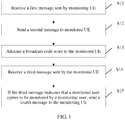
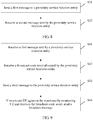
- the proximity service function entity may be individually disposed. Referring to FIG. 1 , the method includes the following steps.
- Step S11 Receive a first message sent by monitoring UE, where the first message is used to request to monitor monitored UE, the first message carries a command word, and the command word is used to apply for monitoring authorization.
- the first message may be implemented by adding a monitoring command word (that is, the command word in step S11) to a restricted discovery request.
- the monitoring command word may be supervising.
- the monitoring command word may be used to enable the proximity service function entity to trigger an authentication procedure, and trigger the monitored UE to broadcast.
- the monitoring UE in actual application, may be referred to as Monitoring UE
- Monitoring UE refers to UE used by a monitoring user.
- the monitored UE in actual application, may be referred to as Announcing UE
- UE used by a monitored user refers to UE used by a monitored user.
- Step S12 Send a second message to the monitored UE, where the second message is used to apply to the monitored UE for monitoring authorization, and the second message carries an identity of the monitoring UE.
- the second message may further carry a command word.
- the monitored UE learns, according to the received second message, that the UE sends a monitoring request to the monitored UE.
- the monitored UE may prompt, according to the second message, the user whether to accept monitoring.
- the user may choose, by using a user command, whether to accept the monitoring.
- the monitored UE sends corresponding information according to the received user command.
- an identity of the monitored UE may be a fixed ID (for example, a subscriber identity module (SIM for short) card ID) of the user, or may be a temporary ID allocated to the user.
- An identity in this embodiment is preferably a temporary ID. The temporary ID may prevent an application server from learning mobile network identity information of UE, and ensure security of the mobile network identity information of a user.
- the temporary ID is allocated by the proximity service function entity to the UE.
- the temporary ID may include a public land mobile network (PLMN for short) ID, and is used to uniquely determine the UE in an evolved packet core (EPC for short) network.
- PLMN public land mobile network
- EPC evolved packet core
- Step S13 Allocate a broadcast code word to the monitored UE.
- the broadcast code word of the monitored UE refers to a code word that is to be added to a broadcast message by the monitored UE.
- the proximity service function entity may allocate the broadcast code word to the monitored UE after the monitored UE agrees to be monitored by the monitoring UE, or the proximity service function entity may allocate the broadcast code word to the monitored UE when the proximity service function entity sends the second message to the monitored UE.
- Step S14 Receive a third message sent by the monitored UE, where the third message is used to indicate whether the monitored UE agrees to be monitored by the monitoring UE, and the third message carries an identity of the monitored UE.
- step S15 is performed. If the third message indicates that the monitored UE agrees to be monitored by the monitoring UE, a response message is sent to the monitoring UE. The response message is used to indicate that the monitored UE does not agree to be monitored.
- Step S15 Send a fourth message to the monitoring UE, where the fourth message carries the identity of the monitored UE and the broadcast code word of the monitored UE.
- the monitoring UE After receiving the broadcast code word of the monitored UE, the monitoring UE starts to monitor the monitored UE.
- a first message sent by monitoring UE is obtained, and a second message is sent to monitored UE, where the second message is used to apply to the monitored UE for monitoring authorization, so that the monitored UE can still learn that the monitoring UE sends a monitoring authorization application request to the monitored UE when broadcasting is not started, and further start to broadcast; then, a third message sent by the monitored UE is received; and if the third message indicates that a monitored user agrees to be monitored by a monitoring user, a fourth message is sent to the monitoring UE, where the fourth message carries a broadcast code word of the monitored UE, so that the monitoring UE can monitor the monitored UE according to the broadcast code word, thereby implementing that the monitoring user can still monitor and discover the monitored user when the monitored user does not actively broadcast.
- an identity of UE is a UE ID (referred to as a first identity of the UE in the following) allocated by a proximity service function entity to the UE.
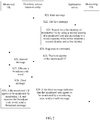
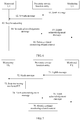
- an application server allocates a user ID (referred to as a second identity of the UE in the following) to an application user. Referring to FIG. 2 , the method includes the following steps.
- Step S21 Monitoring UE sends a first message to the proximity service function entity, where the first message is used to request to monitor monitored UE, the first message carries a command word, and the command word is used to apply for monitoring authorization.
- the first message may be implemented by adding a monitoring command word (that is, the command word in step S21) to a restricted discovery request.
- the monitoring command word may be supervising.
- the monitoring command word may be used to enable the proximity service function entity to trigger an authentication procedure, and trigger the monitored UE to broadcast.
- the monitoring UE may further send monitoring-related information such as monitoring duration to the proximity service function entity according to a user command.
- the monitoring UE refers to UE used by a monitoring user.
- the first message may further include a second identity of the monitoring UE and a second identity of the monitored UE.
- the application server allocates a second identity to UE.
- the second identity may be a fixed ID of a user (for example, an instant messaging application account of the user), or may be a temporary ID (for example, a temporary ID corresponding to an instant messaging application account of a user) allocated according to a fixed ID of the user.
- a second identity in this embodiment is preferably a temporary ID. Therefore, this may prevent a core network entity from learning application layer information of a user, for example, account information and a signature, and security of the application layer information of the user is ensured.
- that the second identity is a temporary ID is used for description, and is not emphasized in the following.
- the monitoring UE may designate a monitoring object (that is, the monitored UE) in the following manners.
- step 2 may be further implemented in the following manner.
- the first message sent by the monitoring UE to the proximity service function entity includes only the second identity of the monitoring user, and does not include the second identity of the monitored user.
- the monitoring user sends a monitoring command to the monitoring UE.
- the monitoring command includes a user ID (for example, an instant messaging application account of the user) of the monitoring object (that is, the monitored user).
- the monitoring UE sends the user ID of the monitored user to the application server by using the proximity service function entity.
- the application server stores a correspondence between the second identity of the monitoring user and the second identity of the monitored user.
- Step S22 The proximity service function entity sends, to the application server, the first message sent by the monitoring UE.
- the proximity service function entity is usually set according to an operator.
- UEs belonging to different operators are usually managed by proximity service function entities of respective operators.
- the proximity service function entities allocate UE IDs and proximity service application service code, and manage monitoring-related contexts (described in detail in the following) of the UEs.
- non-roaming a case in which the monitoring UE and the monitored UE are managed by proximity service function entities of a same operator.
- roaming A case in which the monitoring UE and the monitored UE are managed by proximity service function entities of different operators.
- Step S23 The application server searches for a first identity of the monitored UE by using a second identity of a monitored user and according to a stored mapping relationship between a second identity and a first identity.
- step S24 is performed. If the application server finds the first identity of the monitored UE, step S25 is performed.
- the monitored UE refers to UE used by the monitored user.
- the first identity of the UE may be a fixed ID (for example, a subscriber identity module (SIM for short) card ID) of the user, or may be a temporary ID allocated to the user.
- SIM subscriber identity module
- these first identities are preferably temporary IDs.
- the temporary ID may prevent the application server from learning mobile network identity information of UE, and ensure security of the mobile network identity information of a user.
- these temporary IDs are allocated by the proximity service function entity to UEs.
- These temporary IDs may include a public land mobile network (PLMN for short) ID, and are used to uniquely determine the UEs in an evolved packet core (EPC for short) network.
- PLMN public land mobile network
- EPC evolved packet core
- mapping relationship between the second identity and the first identity is prestored on the application server (for example, obtained by using the following registration procedure).
- the second identity of the monitored user may be sent to the application server by being added to the foregoing first message, or may be sent to the application server in advance.
- the first identity is a temporary ID is used for description, and is not emphasized in the following.
- Step S24 The application server sends a registration command to the monitored UE, where the registration command is used to instruct the monitored UE to initiate a registration procedure.
- the registration procedure is as follows: 31.
- the monitored UE sends a registration request to the proximity service function entity according to the registration command, where the registration request includes the second identity of the monitored user.
- the registration request may be a restricted discovery registration request.
- the proximity service function entity allocates the first identity to the monitored UE.
- the proximity service function entity sends the first identity of the monitored UE and the registration request to the application server.
- the application server feeds back a first acknowledgement message to the proximity service function entity.
- the proximity service function entity After receiving the first acknowledgement message, the proximity service function entity feeds back a second acknowledgement message to the monitored UE, where the second acknowledgement message includes the first identity of the monitored UE.
- the monitored UE sends a registration completion indication message to the application server.
- the application server After receiving the registration completion indication message, the application server saves a mapping relationship between the first identity and the second identity of the monitored UE.
- the monitored UE may output a user option, so that the user chooses to initiate or not to initiate the registration procedure.
- step S25 may continue to be performed.
- Step S25 The application server feeds back the first identity of the monitored UE to the proximity service function entity.
- the application server may further send the monitoring duration to the proximity service function entity.
- Step S26 The proximity service function entity sends a second message to the monitored UE, where the second message is used to apply to the monitored UE for monitoring authorization, and the second message carries the first identity of the monitored UE.
- second information may further carry a command word.
- the monitored UE learns, according to the received second message, that the UE sends a monitoring request to the monitored UE.
- the monitored UE may prompt, according to the second message, the user whether to accept monitoring.
- the user may choose, by using a user command, whether to accept the monitoring.
- the monitored UE sends corresponding information according to the received user command.
- the proximity service function entity may further send the monitoring duration to the monitored UE.
- the second message is directly sent to the monitored UE by a proximity service function entity shared by the monitoring UE and the monitored UE.
- the second message is forwarded to the monitored UE by a proximity service function entity of an operator to which the monitored UE belongs.
- Step S27 The proximity service function entity allocates a broadcast code word to the monitored UE.
- the broadcast code word of the monitored UE refers to a code word that is to be added to a broadcast message by the monitored UE.
- the proximity service function entity may allocate the broadcast code word to the monitored UE after the monitored UE agrees to be monitored by the monitoring UE, or the proximity service function entity may allocate the broadcast code word to the monitored UE when the proximity service function entity sends the second message to the monitored UE.
- Step S28 The monitored UE sends a third message to the proximity service function entity, where the third message is used to indicate whether the monitored UE agrees to be monitored by the monitoring UE, and the third message carries the first identity of the monitored UE.
- step S29 is performed. If the third message indicates that the monitored UE agrees to be monitored by the monitoring UE, a response message is sent to the monitoring UE. The response message is used to indicate that the monitored UE does not agree to be monitored.
- the third message is directly sent to the monitoring UE by the proximity service function entity shared by the monitoring UE and the monitored UE.
- the monitored UE sends the third message to the proximity service function entity of the operator to which the monitored UE belongs, and a proximity service function entity of an operator to which the monitoring UE belongs forwards the third message to the monitoring UE.
- Step S29 The proximity service function entity sends a fourth message to the monitoring UE, where the fourth message carries the broadcast code word of the monitored UE.
- the monitoring UE After receiving the broadcast code word of the monitored UE, the monitoring UE starts to monitor the monitored UE.
- the broadcast code word is used to uniquely identify UE on an air interface.
- the fourth message is directly sent to the monitoring UE by the proximity service function entity shared by the monitoring UE and the monitored UE.
- the fourth message is sent to the monitoring UE by the proximity service function entity of the operator to which the monitoring UE belongs.
- Step S30 If the monitored UE agrees to be monitored by the monitoring UE and receives the broadcast code word, a broadcast message is sent, where the broadcast message carries the broadcast code word of the monitored UE.
- the monitored UE After agreeing to be monitored and receiving the broadcast code word, the monitored UE starts to broadcast, and sends the broadcast message that carries the broadcast code word.
- the proximity service function entity saves a monitoring-related context.
- the monitoring-related context includes the first identity of the monitored UE, a first identity of the monitoring UE, the broadcast code word of the monitored UE, and a life cycle of the broadcast code word of the monitored UE.
- the monitoring-related context may further include information such as the monitoring duration.
- the method provided in this embodiment may further include:
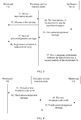
- the broadcast code word has the life cycle, and in a monitoring process, if the life cycle of the broadcast code word ends, a procedure of reallocating a broadcast code word is triggered.
- the reallocation procedure is as follows: 41.
- the proximity service function entity allocates a new broadcast code word to the monitored UE.
- the monitored UE to which the new broadcast code word is allocated feeds back a third acknowledgement message to the proximity service function entity.
- the proximity service function entity sends, according to the saved monitoring-related context, the new broadcast code word to the monitoring UE corresponding to the monitored UE.
- the monitoring UE feeds back a fourth acknowledgement message to the proximity service function entity.
- a case in which monitoring cannot be performed due to expiration or invalidity of the broadcast code word may be avoided by using the procedure of reallocating a broadcast code word.
- the method in this embodiment may further include:
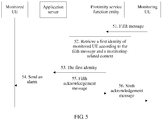
- the alarm procedure is as follows: 51.
- the monitoring UE sends a fifth message to the proximity service function entity, where the fifth message is used to prompt that the monitoring UE cannot monitor the monitored UE, and the fifth message carries the broadcast code word of the monitored UE.
- the proximity service function entity retrieves the first identity of the monitored UE according to the fifth message and the monitoring-related context.
- the proximity service function entity sends the first identity to the application server.
- the application server sends an alarm to the monitored UE.
- the application server feeds back a fifth acknowledgement message to the proximity service function entity.
- the proximity service function entity feeds back a sixth acknowledgement message to the monitoring UE.
- the fifth message may carry the first identity of the monitored UE, and step 52 in the alarm procedure may be omitted.
- the method in this embodiment may further include:
- the monitoring user may initiate a deactivation procedure.
- the deactivation procedure includes: 61.
- the monitoring UE sends a sixth message to the proximity service function entity, where the sixth message is used by the monitoring UE to initiate a deactivation request, and the sixth message carries the broadcast code word of the monitored UE.
- the proximity service function entity sends a seventh message to the monitored UE according to the sixth message and the monitoring-related context, where the seventh message is used to instruct the monitored UE to stop broadcasting.
- the monitored UE stops broadcasting according to the seventh message.
- the monitored UE feeds back a seventh acknowledgement message to the proximity service function entity.
- the proximity service function entity feeds back an eighth acknowledgement message to the monitoring UE.
- the proximity service function entity deletes the related monitoring-related context.
- the method in this embodiment may further include:
- the monitored UE may initiate a deactivation procedure.
- the procedure includes: 71.
- the monitored UE sends an eighth message to the proximity service function entity, where the eighth message is used by the monitored UE to initiate a deactivation request, and the eighth message carries the broadcast code word of the monitored UE.
- the proximity service function entity sends a ninth message to the monitoring UE according to the eighth message and the monitoring-related context, where the ninth message is used to instruct the monitoring UE to stop monitoring the monitored UE.
- the monitoring UE stops monitoring the monitored UE according to the ninth message.
- the monitoring UE feeds back a ninth acknowledgement message to the proximity service function entity.
- the proximity service function entity feeds back a tenth acknowledgement message to the monitored UE.
- the proximity service function entity modifies the related monitoring-related context.
- the monitoring UE when the monitoring UE and the monitored UE may roam, the monitoring UE first exchanges related information with the proximity service function entity of the operator to which the monitoring UE belongs, and the monitored UE first exchanges related information with the proximity service function entity of the operator to which the monitored UE belongs, and then the proximity service function entities of the operators to which the monitoring UE and the monitored UE respectively belong exchange the related information.
- Each proximity service function entity of a different operator may exchange related information with the application server.
- a first message sent by monitoring UE is obtained, and a second message is sent to monitored UE, where the second message is used to apply to the monitored UE for monitoring authorization, so that the monitored UE can still learn that the monitoring UE sends a monitoring authorization application request to the monitored UE when broadcasting is not started, and further start to broadcast; then, a third message sent by the monitored UE is received; and if the third message indicates that a monitored user agrees to be monitored by a monitoring user, a fourth message is sent to the monitoring UE, where the fourth message carries a broadcast code word of the monitored UE, so that the monitoring UE can monitor the monitored UE according to the broadcast code word, thereby implementing that the monitoring user can still monitor and discover the monitored user when the monitored user does not actively broadcast.
- a case in which monitoring cannot be performed due to expiration or invalidity of the broadcast code word may be avoided by using a procedure of reallocating a broadcast code word.
- an alarm procedure may be further used to actively alarm the monitored UE.
- network resources occupied by the monitored UE and the monitoring UE may be further released in a timely manner by using deactivation procedures, so as to avoid waste of the network resources.
- This embodiment of the present invention provides a user discovery method.
- the method may be executed by monitoring UE.
- the method includes the following steps.
- Step S31 Send a first message to a proximity service function entity, where the first message is used to request to monitor monitored UE, the first message carries a command word, and the command word is used to apply for monitoring authorization.
- the first message may be implemented by adding a monitoring command word (that is, the command word in step S31) to a restricted discovery request.
- the monitoring command word may be supervising.
- the monitoring command word may be used to enable the proximity service function entity to trigger an authentication procedure, and trigger the monitored UE to broadcast.
- Step S32 Receive a second message sent by the proximity service function entity, where the second message is sent after the proximity service function entity receives a third message sent by the monitored UE and when the third message indicates that the monitored UE agrees to be monitored by the monitoring UE, the third message carries an identity of the monitored UE, and the second message carries the identity of the monitored UE and a broadcast code word of the monitored UE.
- the broadcast code word of the monitored UE refers to a code word that is to be added to a broadcast message by the monitored UE.
- the monitoring UE After receiving the broadcast code word of the monitored UE, the monitoring UE starts to monitor the monitored UE.
- the method in this embodiment may further include: sending a fourth message to the proximity service function entity, where the fourth message is used to prompt that the monitoring UE cannot monitor the monitored UE, and the fourth message carries the broadcast code word of the monitored UE or the identity of the monitored UE.
- the proximity service function entity sends an alarm to the monitored UE according to the fourth message.
- a specific alarm procedure is described in the foregoing, and details are not described herein again.
- the method in this embodiment may further include: sending a fifth message to the proximity service function entity, where the fifth message is used to initiate a deactivation request, and the fifth message carries the broadcast code word of the monitored UE.
- the proximity service function entity sends a sixth message to the monitored UE according to the fifth message and a monitoring-related context.
- the sixth message is used to instruct the monitored UE to stop broadcasting.
- the first message in this embodiment is corresponding to the first message in Embodiment 2
- the second message is corresponding to the fourth message in Embodiment 2
- the third message is corresponding to the third message in Embodiment 2
- the fourth message is corresponding to the fifth message in Embodiment 2
- the fifth message is corresponding to the sixth message in Embodiment 2
- the sixth message is corresponding to the seventh message in Embodiment 2.
- a first message sent by monitoring UE is obtained, and a second message is sent to monitored UE, where the second message is used to apply to the monitored UE for monitoring authorization, so that the monitored UE can still learn that the monitoring UE sends a monitoring authorization application request to the monitored UE when broadcasting is not started, and further start to broadcast; then, a third message sent by the monitored UE is received; and if the third message indicates that a monitored user agrees to be monitored by a monitoring user, a fourth message is sent to the monitoring UE, where the fourth message carries a broadcast code word of the monitored UE, so that the monitoring UE can monitor the monitored UE according to the broadcast code word, thereby implementing that the monitoring user can still monitor and discover the monitored user when the monitored user does not actively broadcast.
- This embodiment of the present invention provides a user discovery method.
- the method may be executed by monitored UE.
- the method includes the following steps.
- Step S41 Receive a first message sent by a proximity service function entity, where the first message is sent after the proximity service function entity receives a second message sent by monitoring UE, the second message is used by the monitoring UE to request to monitor the monitored UE, the second message carries a command word, the command word is used to apply for monitoring authorization, the first message is used to apply for monitoring authorization, and the first message carries an identity of the monitoring UE.
- the first message may further carry a command word.
- the monitored UE learns, according to the received first message, that the UE sends a monitoring request to the monitored UE.
- the monitored UE may prompt, according to the first message, a user whether to accept monitoring.
- the user may choose, by using a user command, whether to accept the monitoring.
- the monitored UE sends corresponding information according to the received user command.
- Step S42 Receive a broadcast code word allocated by the proximity service function entity.
- Step S43 Send a third message to the proximity service function entity, where the third message is used to indicate whether monitoring by the monitoring UE is agreed, and the third message carries an identity of the monitored UE.
- the method further includes step S44.
- Step S44 Send a broadcast message, where the broadcast message carries the broadcast code word of the monitored UE.
- the method in this embodiment may further include: sending a fourth message to the proximity service function entity, where the fourth message is used to initiate a deactivation request, and the fourth message carries the broadcast code word of the monitored UE.
- the proximity service function entity sends a fifth message to the monitoring UE according to the fourth message and a monitoring-related context.
- the fifth message is used to instruct the monitoring UE to stop monitoring the monitored UE.
- the first message in this embodiment is corresponding to the second message in Embodiment 2
- the second message is corresponding to the first message in Embodiment 2
- the third message is corresponding to the third message in Embodiment 2
- the fourth message is corresponding to the eighth message in Embodiment 2
- the fifth message is corresponding to the ninth message in Embodiment 2.
- a first message sent by monitoring UE is obtained, and a second message is sent to monitored UE, where the second message is used to apply to the monitored UE for monitoring authorization, so that the monitored UE can still learn that the monitoring UE sends a monitoring authorization application request to the monitored UE when broadcasting is not started, and further start to broadcast; then, a third message sent by the monitored UE is received; and if the third message indicates that a monitored user agrees to be monitored by a monitoring user, a fourth message is sent to the monitoring UE, where the fourth message carries a broadcast code word of the monitored UE, so that the monitoring UE can monitor the monitored UE according to the broadcast code word, thereby implementing that the monitoring user can still monitor and discover the monitored user when the monitored user does not actively broadcast.
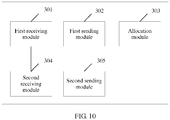
- the proximity service function entity includes a first receiving module 301, a first sending module 302, an allocation module 303, a second receiving module 304, and a second sending module 305.
- the first receiving module 301 is configured to receive a first message sent by monitoring UE, where the first message is used to request to monitor monitored UE, the first message carries a command word, and the command word is used to apply for monitoring authorization.
- the first message may be implemented by adding a monitoring command word to a restricted discovery request.
- the monitoring command word may be supervising.
- the monitoring command word may be used to enable the proximity service function entity to trigger an authentication procedure, and trigger the monitored UE to broadcast.
- the monitoring UE refers to UE used by a monitoring user.
- the monitored UE refers to UE used by a monitored user.
- the first sending module 302 is configured to send a second message to the monitored UE, where the second message is used to apply to the monitored UE for monitoring authorization, and the second message carries an identity of the monitoring UE.
- the second message may further carry a command word.
- the monitored UE learns, according to the received second message, that the UE sends a monitoring request to the monitored UE.
- the monitored UE may prompt, according to the second message, the user whether to accept monitoring.
- the user may choose, by using a user command, whether to accept the monitoring.
- the monitored UE sends corresponding information according to the received user command.
- an identity of the monitored UE may be a fixed ID (for example, a subscriber identity module (SIM for short) card ID) of the user, or may be a temporary ID allocated to the user.
- An identity in this embodiment is preferably a temporary ID. The temporary ID may prevent an application server from learning mobile network identity information of UE, and ensure security of the mobile network identity information of a user.
- the temporary ID is allocated by the proximity service function entity to the UE.
- the temporary ID may include a public land mobile network (PLMN for short) ID, and is used to uniquely determine the UE in an evolved packet core (EPC for short) network.
- PLMN public land mobile network
- EPC evolved packet core
- the allocation module 303 is configured to allocate a broadcast code word to the monitored UE.
- the second receiving module 304 is configured to receive a third message sent by the monitored UE, where the third message is used to indicate whether the monitored UE agrees to be monitored by the monitoring UE, and the third message carries an identity of the monitored UE.
- the second sending module 305 is configured to: when the third message indicates that the monitored UE agrees to be monitored by the monitoring UE, send a fourth message to the monitoring UE, where the fourth message carries the identity of the monitored UE and the broadcast code word of the monitored UE.
- the broadcast code word of the monitored UE refers to a code word that is to be added to a broadcast message by the monitored UE.
- the monitoring UE After receiving the broadcast code word of the monitored UE, the monitoring UE starts to monitor the monitored UE.
- a first message sent by monitoring UE is obtained, and a second message is sent to monitored UE, where the second message is used to apply to the monitored UE for monitoring authorization, so that the monitored UE can still learn that the monitoring UE sends a monitoring authorization application request to the monitored UE when broadcasting is not started; then, a third message sent by the monitored UE is received; and if the third message indicates that a monitored user agrees to be monitored by a monitoring user, a fourth message is sent to the monitoring UE, where the fourth message carries a broadcast code word of the monitored UE, so that the monitoring UE can monitor the monitored UE according to the broadcast code word, thereby implementing that the monitoring user can still monitor and discover the monitored user when the monitored user does not actively broadcast.
- the proximity service function entity includes a first receiving module 401, a first sending module 402, an allocation module 403, a second receiving module 404, and a second sending module 405.
- the first receiving module 401 is configured to receive a first message sent by monitoring UE, where the first message is used to request to monitor monitored UE, the first message carries a command word, and the command word is used to apply for monitoring authorization.
- the first message may be implemented by adding a monitoring command word to a restricted discovery request.
- the monitoring command word may be supervising.
- the monitoring command word may be used to enable the proximity service function entity to trigger an authentication procedure, and trigger the monitored UE to broadcast.
- the monitoring UE refers to UE used by a monitoring user.
- the monitored UE refers to UE used by a monitored user.
- the first sending module 402 is configured to send a second message to the monitored UE, where the second message is used to apply to the monitored UE for monitoring authorization, and the second message carries an identity of the monitoring UE.
- the second message may further carry a command word.
- the monitored UE learns, according to the received second message, that the UE sends a monitoring request to the monitored UE.
- the monitored UE may prompt, according to the second message, the user whether to accept monitoring.
- the user may choose, by using a user command, whether to accept the monitoring.
- the monitored UE sends corresponding information according to the received user command.
- an identity of the monitored UE may be a fixed ID (for example, a subscriber identity module (SIM for short) card ID) of the user, or may be a temporary ID allocated to the user.
- a first identity in this embodiment is preferably a temporary ID.
- the temporary ID may prevent an application server from learning mobile network identity information of UE, and ensure security of the mobile network identity information of a user.
- the temporary ID is allocated by the proximity service function entity to the UE.
- the temporary ID may include a public land mobile network (PLMN for short) ID, and is used to uniquely determine the UE in an evolved packet core (EPC for short) network.
- PLMN public land mobile network
- EPC evolved packet core
- the allocation module 403 is configured to allocate a broadcast code word to the monitored UE.
- the second receiving module 404 is configured to receive a third message sent by the monitored UE, where the third message is used to indicate whether the monitored UE agrees to be monitored by the monitoring UE, and the third message carries an identity of the monitored UE.
- the second sending module 405 is configured to: when the third message indicates that the monitored UE agrees to be monitored by the monitoring UE, send a fourth message to the monitoring UE, where the fourth message carries the identity of the monitored UE and the broadcast code word of the monitored UE.
- the broadcast code word of the monitored UE refers to a code word that is to be added to a broadcast message by the monitored UE.
- the monitoring UE After receiving the broadcast code word of the monitored UE, the monitoring UE starts to monitor the monitored UE.
- the proximity service function entity further includes: a storage module 406, configured to store a monitoring-related context, where the monitoring-related context includes the identity of the monitored UE, the identity of the monitoring UE, the broadcast code word of the monitored UE, and a life cycle of the broadcast code word of the monitored UE.
- a storage module 406 configured to store a monitoring-related context, where the monitoring-related context includes the identity of the monitored UE, the identity of the monitoring UE, the broadcast code word of the monitored UE, and a life cycle of the broadcast code word of the monitored UE.
- the monitoring-related context may further include information such as monitoring duration.
- the proximity service function entity further includes:
- the proximity service function entity further includes:
- the proximity service function entity further includes:
- the proximity service function entity further includes:
- a first message sent by monitoring UE is obtained, and a second message is sent to monitored UE, where the second message is used to apply to the monitored UE for monitoring authorization, so that the monitored UE can still learn that the monitoring UE sends a monitoring authorization application request to the monitored UE when broadcasting is not started; then, a third message sent by the monitored UE is received; and if the third message indicates that a monitored user agrees to be monitored by a monitoring user, a fourth message is sent to the monitoring UE, where the fourth message carries a broadcast code word of the monitored UE, so that the monitoring UE can monitor the monitored UE according to the broadcast code word, thereby implementing that the monitoring user can still monitor and discover the monitored user when the monitored user does not actively broadcast.
- a case in which monitoring cannot be performed due to expiration or invalidity of the broadcast code word may be avoided by using a procedure of reallocating a broadcast code word.
- an alarm procedure may be further used to actively alarm the monitored UE.
- network resources occupied by the monitored UE and the monitoring UE may be further released in a timely manner by using deactivation procedures, so as to avoid waste of the network resources.
- the user equipment includes a first sending module 501 and a receiving module 502.
- the first sending module 501 is configured to send a first message to a proximity service function entity, where the first message is used to request to monitor monitored UE, the first message carries a command word, and the command word is used to apply for monitoring authorization.
- the first message may be implemented by adding a monitoring command word to a restricted discovery request.
- the monitoring command word may be supervising.
- the monitoring command word may be used to enable the proximity service function entity to trigger an authentication procedure, and trigger the monitored UE to broadcast.
- the receiving module 502 is configured to receive a second message sent by the proximity service function entity, where the second message is sent after the proximity service function entity receives a third message sent by the monitored UE and when the third message indicates that the monitored UE agrees to be monitored by the monitoring UE, the third message carries an identity of the monitored UE, and the fourth message carries the identity of the monitored UE and a broadcast code word of the monitored UE.
- the broadcast code word of the monitored UE refers to a code word that is to be added to a broadcast message by the monitored UE.
- the monitoring UE After receiving the broadcast code word of the monitored UE, the monitoring UE starts to monitor the monitored UE.
- the user equipment further includes: a second sending module 503, configured to send a fourth message to the proximity service function entity, where the fourth message is used to prompt that the monitoring UE cannot monitor the monitored UE, and the fourth message carries the broadcast code word of the monitored UE or the identity of the monitored UE.
- the user equipment further includes: a third sending module 504, configured to send a fifth message to the proximity service function entity, where the fifth message is used to initiate a deactivation request, and the fifth message carries the broadcast code word of the monitored UE.
- the first message in this embodiment is corresponding to the first message in Embodiment 2
- the second message is corresponding to the fourth message in Embodiment 2
- the third message is corresponding to the third message in Embodiment 2
- the fourth message is corresponding to the fifth message in Embodiment 2
- the fifth message is corresponding to the sixth message in Embodiment 2.
- a first message sent by monitoring UE is obtained, and a second message is sent to monitored UE, where the second message is used to apply to the monitored UE for monitoring authorization, so that the monitored UE can still learn that the monitoring UE sends a monitoring authorization application request to the monitored UE when broadcasting is not started, and further start to broadcast; then, a third message sent by the monitored UE is received; and if the third message indicates that a monitored user agrees to be monitored by a monitoring user, a fourth message is sent to the monitoring UE, where the fourth message carries a broadcast code word of the monitored UE, so that the monitoring UE can monitor the monitored UE according to the broadcast code word, thereby implementing that the monitoring user can still monitor and discover the monitored user when the monitored user does not actively broadcast.
- the user equipment includes a first receiving module 601, a second receiving module 602, and a first sending module 603.
- the first receiving module 601 is configured to receive a first message sent by a proximity service function entity, where the first message is sent after the proximity service function entity receives a second message sent by monitoring UE, the second message is used by the monitoring UE to request to monitor the monitored UE, the second message carries a command word, the command word is used to apply for monitoring authorization, the first message is used to apply for monitoring authorization, and the first message carries an identity of the monitoring UE.
- the first message may further carry a command word.
- the monitored UE learns, according to the received first message, that the UE sends a monitoring request to the monitored UE.
- the monitored UE may prompt, according to the first message, a user whether to accept monitoring.
- the user may choose, by using a user command, whether to accept the monitoring.
- the monitored UE sends corresponding information according to the received user command.
- the second receiving module 602 is configured to receive a broadcast code word allocated by the proximity service function entity.
- the first sending module 603 is configured to send a third message to the proximity service function entity, where the third message is used to indicate whether monitoring by the monitoring UE is agreed, and the third message carries an identity of the monitored UE.
- the user equipment further includes: a second sending module 604, configured to send a fourth message to the proximity service function entity, where the fourth message is used to initiate a deactivation request, and the fourth message carries the broadcast code word of the monitored UE.
- the user equipment further includes: a third sending module 605, configured to: when the monitored UE agrees to be monitored by the monitoring UE and receives the broadcast code word, send a broadcast message, where the broadcast message carries the broadcast code word of the monitored UE.
- a third sending module 605 configured to: when the monitored UE agrees to be monitored by the monitoring UE and receives the broadcast code word, send a broadcast message, where the broadcast message carries the broadcast code word of the monitored UE.
- the first message in this embodiment is corresponding to the second message in Embodiment 2
- the second message is corresponding to the first message in Embodiment 2
- the third message is corresponding to the third message in Embodiment 2
- the fourth message is corresponding to the eighth message in Embodiment 2.
- a first message sent by monitoring UE is obtained, and a second message is sent to monitored UE, where the second message is used to apply to the monitored UE for monitoring authorization, so that the monitored UE can still learn that the monitoring UE sends a monitoring authorization application request to the monitored UE when broadcasting is not started, and further start to broadcast; then, a third message sent by the monitored UE is received; and if the third message indicates that a monitored user agrees to be monitored by a monitoring user, a fourth message is sent to the monitoring UE, where the fourth message carries a broadcast code word of the monitored UE, so that the monitoring UE can monitor the monitored UE according to the broadcast code word, thereby implementing that the monitoring user can still monitor and discover the monitored user when the monitored user does not actively broadcast.
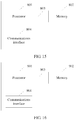
- the proximity service function entity includes: a processor 701, a memory 702, a bus 703, and a communications interface 704, where the memory 702 is configured to store a computer executable instruction, the processor 701 and the memory 702 are connected by using the bus 703, and when a computer runs, the processor 701 executes the computer executable instruction stored in the memory, so that the computer executes the method described in Embodiment 1 or Embodiment 2.
- a first message sent by monitoring UE is obtained, and a second message is sent to monitored UE, where the second message is used to apply to the monitored UE for monitoring authorization, so that the monitored UE can still learn that the monitoring UE sends a monitoring authorization application request to the monitored UE when broadcasting is not started, and further start to broadcast; then, a third message sent by the monitored UE is received; and if the third message indicates that a monitored user agrees to be monitored by a monitoring user, a fourth message is sent to the monitoring UE, where the fourth message carries a broadcast code word of the monitored UE, so that the monitoring UE can monitor the monitored UE according to the broadcast code word, thereby implementing that the monitoring user can still monitor and discover the monitored user when the monitored user does not actively broadcast.
- the user equipment includes: a processor 801, a memory 802, a bus 803, and a communications interface 804, where the memory 802 is configured to store a computer executable instruction, the processor 801 and the memory 802 are connected by using the bus 803, and when a computer runs, the processor 801 executes the computer executable instruction stored in the memory, so that the computer executes the method described in Embodiment 3 or the method executed by the monitoring UE in Embodiment 2.
- a first message sent by monitoring UE is obtained, and a second message is sent to monitored UE, where the second message is used to apply to the monitored UE for monitoring authorization, so that the monitored UE can still learn that the monitoring UE sends a monitoring authorization application request to the monitored UE when broadcasting is not started, and further start to broadcast; then, a third message sent by the monitored UE is received; and if the third message indicates that a monitored user agrees to be monitored by a monitoring user, a fourth message is sent to the monitoring UE, where the fourth message carries a broadcast code word of the monitored UE, so that the monitoring UE can monitor the monitored UE according to the broadcast code word, thereby implementing that the monitoring user can still monitor and discover the monitored user when the monitored user does not actively broadcast.
- the user equipment includes: a processor 901, a memory 902, a bus 903, and a communications interface 904, where the memory 902 is configured to store a computer executable instruction, the processor 901 and the memory 902 are connected by using the bus 903, and when a computer runs, the processor 901 executes the computer executable instruction stored in the memory, so that the computer executes the method described in Embodiment 4 or the method executed by the monitored UE in Embodiment 2.
- a first message sent by monitoring UE is obtained, and a second message is sent to monitored UE, where the second message is used to apply to the monitored UE for monitoring authorization, so that the monitored UE can still learn that the monitoring UE sends a monitoring authorization application request to the monitored UE when broadcasting is not started, and further start to broadcast; then, a third message sent by the monitored UE is received; and if the third message indicates that a monitored user agrees to be monitored by a monitoring user, a fourth message is sent to the monitoring UE, where the fourth message carries a broadcast code word of the monitored UE, so that the monitoring UE can monitor the monitored UE according to the broadcast code word, thereby implementing that the monitoring user can still monitor and discover the monitored user when the monitored user does not actively broadcast.
- the proximity service function entity provided in the foregoing embodiments implements the user discovery method
- division of the foregoing function modules is used as an example for illustration.
- the foregoing functions can be allocated to different function modules and implemented according to a requirement, that is, an inner structure of a device is divided into different function modules to implement all or some of the functions described above.
- the proximity service function entity provided in the foregoing embodiments pertains to a same concept as the embodiments of the user discovery method. For a specific implementation process of the proximity service function entity, refer to the method embodiments, and details are not described herein again.
- the program may be stored in a computer-readable storage medium.
- the storage medium may be a read-only memory, a magnetic disk, or an optical disc.
Landscapes
- Engineering & Computer Science (AREA)
- Computer Networks & Wireless Communication (AREA)
- Signal Processing (AREA)
- Computer Security & Cryptography (AREA)
- Technology Law (AREA)
- Computer Hardware Design (AREA)
- Computing Systems (AREA)
- General Engineering & Computer Science (AREA)
- Databases & Information Systems (AREA)
- Mobile Radio Communication Systems (AREA)
Claims (15)
- Benutzererkennungsverfahren, wobei das Verfahren folgende Schritte umfasst:Empfangen (S11), durch eine Funktionseinheit für Proximity-Dienst, einer ersten Nachricht, die durch ein überwachendes Benutzerendgerät UE gesendet wird, wobei die erste Nachricht verwendet wird, um die Überwachung eines überwachten UE anzufragen, die erste Nachricht ein Befehlswort enthält, und das Befehlswort verwendet wird, um eine Überwachungsgenehmigung zu beantragen;Senden (S12), durch die Funktionseinheit für Proximity-Dienst, einer zweiten Nachricht an das überwachte UE, wobei die zweite Nachricht verwendet wird, um bei dem überwachten UE eine Überwachungsgenehmigung zu beantragen, und die zweite Nachricht eine Identität des überwachenden UE enthält;Zuteilen (S13), durch die Funktionseinheit für Proximity-Dienst, eines Rundsende-Codeworts an das überwachte UE, und Senden, durch die Funktionseinheit für Proximity-Dienst, des Rundsende-Codeworts an das überwachte UE;Empfangen (S14), durch die Funktionseinheit für Proximity-Dienst, einer dritten Nachricht, die durch das überwachte UE gesendet wird, wobei die dritte Nachricht verwendet wird, um anzugeben, ob das überwachte UE damit einverstanden ist, von dem überwachenden UE überwacht zu werden, und die dritte Nachricht eine Identität des überwachten UE enthält; undfalls die dritte Nachricht angibt, dass das überwachte UE damit einverstanden ist, von dem überwachenden UE überwacht zu werden, Senden (S15), durch die Funktionseinheit für Proximity-Dienst, einer vierten Nachricht an das überwachende UE, wobei die vierte Nachricht die Identität des überwachten UE und das Rundsende-Codewort des überwachten UE enthält.
- Verfahren nach Anspruch 1, wobei das Verfahren ferner folgende Schritte umfasst:Speichern eines ein überwachungsbezogenen Zusammenhangs, wobei der überwachungsbezogene Zusammenhang die Identität des überwachten UE, die Identität des überwachenden UE, das Rundsende-Codewort des überwachten UE und einen Lebenszyklus des Rundsende-Codeworts des überwachten UE umfasst.
- Verfahren nach Anspruch 2, wobei das Verfahren ferner folgende Schritte umfasst:wenn der Lebenszyklus des Rundsende-Codeworts des überwachten UE abläuft, Zuteilen eines neuen Rundsende-Codeworts an das überwachte UE; undSenden des neuen Rundsende-Codeworts an das überwachende UE gemäß dem gespeicherten überwachungsbezogenen Zusammenhang.
- Verfahren nach Anspruch 2, wobei das Verfahren ferner folgende Schritte umfasst:Empfangen (51) einer fünften Nachricht, die durch das überwachende UE gesendet wird, wobei die fünfte Nachricht verwendet wird, um nahezulegen, dass das überwachende UE das überwachte UE nicht überwachen kann, und die fünfte Nachricht das Rundsende-Codewort des überwachten UE oder die Identität des überwachten UE enthält; undSenden (54) eines Alarms an das überwachte UE gemäß der fünften Nachricht.
- Verfahren nach Anspruch 2, wobei das Verfahren ferner folgende Schritte umfasst:Empfangen (61) einer sechsten Nachricht, die durch das überwachende UE gesendet wird, wobei die sechste Nachricht durch das überwachende UE verwendet wird, um eine Deaktivierungsanfrage einzuleiten, und die sechste Nachricht das Rundsende-Codewort des überwachten UE enthält; undSenden (62) einer siebten Nachricht an das überwachte UE gemäß der sechsten Nachricht und dem überwachungsbezogenen Zusammenhang, wobei die siebte Nachricht verwendet wird, um das überwachte UE anzuweisen, mit dem Rundsenden aufzuhören.
- Verfahren nach Anspruch 2, wobei das Verfahren ferner folgende Schritte umfasst:Empfangen (71) einer achten Nachricht, die durch das überwachte UE gesendet wird, wobei die achte Nachricht durch das überwachte UE verwendet wird, um eine Deaktivierungsanfrage einzuleiten, und die achte Nachricht das Rundesende-Codewort des überwachten UE enthält; undSenden (72) einer neunten Nachricht an das überwachende UE gemäß der achten Nachricht und dem überwachungsbezogenen Zusammenhang, wobei die neunte Nachricht verwendet wird, um das überwachende UE anzuweisen, mit dem Überwachen des überwachten UE aufzuhören.
- Benutzererkennungsverfahren, wobei das Verfahren folgende Schritte umfasst:Senden (S31) einer ersten Nachricht an eine Funktionseinheit für Proximity-Dienst, wobei die erste Nachricht verwendet wird, um die Überwachung des überwachten UE anzufragen, die erste Nachricht ein Befehlswort enthält, und das Befehlswort verwendet wird, um eine Überwachungsgenehmigung zu beantragen; undEmpfangen (S32) einer zweiten Nachricht, die durch die Funktionseinheit für Proximity-Dienst gesendet wird, wobei die zweite Nachricht gesendet wird, nachdem die Funktionseinheit für Proximity-Dienst eine dritte Nachricht empfangen hat, die durch das überwachte UE gesendet wird, und wenn die dritte Nachricht angibt, dass das überwachte UE damit einverstanden ist, von dem überwachenden UE überwacht zu werden, die dritte Nachricht eine Identität des überwachten UE enthält, und die zweite Nachricht die Identität des überwachten UE und ein Rundsende-Codewort des überwachten UE enthält.
- Verfahren nach Anspruch 7, wobei das Verfahren ferner folgenden Schritt umfasst:Senden einer vierten Nachricht an die Funktionseinheit für Proximity-Dienst, wobei die vierte Nachricht verwendet wird, um nahezulegen, dass das überwachende UE das überwachte UE nicht überwachen kann, und die vierte Nachricht das Rundesende-Codewort des überwachten UE oder die Identität des überwachten UE enthält.
- Verfahren nach Anspruch 7, wobei das Verfahren ferner folgenden Schritt umfasst:Senden einer fünften Nachricht an die Funktionseinheit für Proximity-Dienst, wobei die fünfte Nachricht verwendet wird, um eine Deaktivierungsanfrage einzuleiten, und die fünfte Nachricht das Rundsende-Codewort des überwachten UE enthält.
- Benutzererkennungsverfahren, wobei das Verfahren folgende Schritte umfasst:Empfangen (S41) einer ersten Nachricht, die durch eine Funktionseinheit für Proximity-Dienst gesendet wird, wobei die erste Nachricht gesendet wird, nachdem die Funktionseinheit für Proximity-Dienst eine zweite Nachricht empfangen hat, die durch das überwachende UE gesendet wird, die zweite Nachricht durch das überwachende UE verwendet wird, um die Überwachung des überwachten UE anzufragen, die zweite Nachricht ein Befehlswort enthält, das Befehlswort verwendet wird, um eine Überwachungsgenehmigung zu beantragen, die erste Nachricht verwendet wird, um eine Überwachungsgenehmigung zu beantragen, und die erste Nachricht eine Identität des überwachenden UE enthält;Empfangen (S42) eines Rundsende-Codeworts, das durch die Funktionseinheit für Proximity-Dienst zugeteilt wird; undSenden (S43) einer dritten Nachricht an die Funktionseinheit für Proximity-Dienst, wobei die dritte Nachricht verwendet wird, um anzugeben, ob das überwachende UE einverstanden ist, und die dritte Nachricht eine Identität des überwachten UE enthält.
- Verfahren nach Anspruch 10, wobei das Verfahren ferner folgenden Schritt umfasst:Senden einer vierten Nachricht an die Funktionseinheit für Proximity-Dienst, wobei die vierte Nachricht verwendet wird, um eine Deaktivierungsanfrage einzuleiten, und die vierte Nachricht das Rundesende-Codewort des überwachten UE enthält.
- Verfahren nach Anspruch 10, wobei das Verfahren ferner folgenden Schritt umfasst:falls die überwachte UE damit einverstanden ist, von dem überwachenden UE überwacht zu werden, und das Rundsende-Codewort empfängt, Senden (S44) einer Rundsendenachricht, wobei die Rundsendenachricht das Rundesende-Codewort des überwachten UE enthält.
- Funktionseinheit für Proximity-Dienst, wobei die Funktionseinheit für Proximity-Dienst Folgendes umfasst:einen Prozessor (701), einen Speicher (702), einen Bus (703) und eine Kommunikationsschnittstelle (704), wobei der Speicher (702) konfiguriert ist, um eine computerausführbare Anweisung zu speichern, der Prozessor (701) und der Speicher (702) unter Verwendung des Busses (703) verbunden sind, wobei der Prozessor konfiguriert ist, um die computerausführbare Anweisung auszuführen, die in dem Speicher gespeichert ist, um das Verfahren nach einem der Ansprüche 1 bis 6 auszuführen.
- Benutzerendgerät, wobei das Benutzerendgerät Folgendes umfasst:einen Prozessor (801), einen Speicher (802), einen Bus (803) und eine Kommunikationsschnittstelle (804), wobei der Speicher (802) konfiguriert ist, um eine computerausführbare Anweisung zu speichern, der Prozessor (801) und der Speicher (802) unter Verwendung des Busses (803) verbunden sind, wobei der Prozessor konfiguriert ist, um die computerausführbare Anweisung auszuführen, die in dem Speicher gespeichert ist, um das Verfahren nach einem der Ansprüche 7 bis 9 auszuführen.
- Benutzerendgerät, wobei das Benutzerendgerät Folgendes umfasst:einen Prozessor (901), einen Speicher (902), einen Bus (903) und eine Kommunikationsschnittstelle (904), wobei der Speicher (902) konfiguriert ist, um eine computerausführbare Anweisung zu speichern, der Prozessor (901) und der Speicher (902) unter Verwendung des Busses (903) verbunden sind, wobei der Prozessor konfiguriert ist, um die computerausführbare Anweisung auszuführen, die in dem Speicher gespeichert ist, um das Verfahren nach einem der Ansprüche 10 bis 12 auszuführen.
Applications Claiming Priority (1)
| Application Number | Priority Date | Filing Date | Title |
|---|---|---|---|
| PCT/CN2014/088408 WO2016054824A1 (zh) | 2014-10-11 | 2014-10-11 | 用户发现方法、用户设备以及接近业务功能实体 |
Publications (3)
| Publication Number | Publication Date |
|---|---|
| EP3197232A1 EP3197232A1 (de) | 2017-07-26 |
| EP3197232A4 EP3197232A4 (de) | 2017-11-08 |
| EP3197232B1 true EP3197232B1 (de) | 2018-11-28 |
Family
ID=55652512
Family Applications (1)
| Application Number | Title | Priority Date | Filing Date |
|---|---|---|---|
| EP14903760.8A Active EP3197232B1 (de) | 2014-10-11 | 2014-10-11 | Benutzererkennungsverfahren, benutzergerät und funktionseinheit für proximity-dienst |
Country Status (4)
| Country | Link |
|---|---|
| US (1) | US10306701B2 (de) |
| EP (1) | EP3197232B1 (de) |
| CN (1) | CN106664731B (de) |
| WO (1) | WO2016054824A1 (de) |
Families Citing this family (1)
| Publication number | Priority date | Publication date | Assignee | Title |
|---|---|---|---|---|
| US20190114902A1 (en) * | 2014-12-08 | 2019-04-18 | Beth Lazarski | Handheld emergency communications and location in-formation systems |
Family Cites Families (10)
| Publication number | Priority date | Publication date | Assignee | Title |
|---|---|---|---|---|
| EP3496334B2 (de) * | 2012-04-27 | 2023-11-08 | InterDigital Patent Holdings, Inc. | Verfahren und system zur unterstützung von näherungserkennungsverfahren |
| CN103731826A (zh) * | 2012-10-11 | 2014-04-16 | 中兴通讯股份有限公司 | D2d用户设备认证方法及装置 |
| US11496948B2 (en) * | 2012-10-19 | 2022-11-08 | Samsung Electronics Co., Ltd. | System and method for ad-hoc/network assisted device discovery protocol for device to device communications |
| US9532224B2 (en) * | 2012-11-05 | 2016-12-27 | Electronics And Telecommunications Research Institute | Method of device-to-device discovery and apparatus thereof |
| US20140148201A1 (en) | 2012-11-23 | 2014-05-29 | Innovative Sonic Corporation | Method and apparatus for direct device to device discovery in a wireless communication system |
| US9496971B2 (en) * | 2012-12-10 | 2016-11-15 | Qualcomm Incorporated | Techniques for determining actual and/or near states of proximity between mobile devices |
| US9173061B2 (en) * | 2012-12-17 | 2015-10-27 | Apple Inc. | Monitoring a mobile device en route to destination |
| CN103906174B (zh) * | 2012-12-26 | 2017-07-21 | 华为技术有限公司 | 设备发现方法及终端 |
| CN103916879A (zh) | 2012-12-31 | 2014-07-09 | 华为终端有限公司 | 设备发现方法、装置及系统 |
| US20140301270A1 (en) * | 2013-04-05 | 2014-10-09 | Kerstin Johnsson | Identifiers for proximity services |
-
2014
- 2014-10-11 EP EP14903760.8A patent/EP3197232B1/de active Active
- 2014-10-11 WO PCT/CN2014/088408 patent/WO2016054824A1/zh not_active Ceased
- 2014-10-11 CN CN201480081621.5A patent/CN106664731B/zh active Active
-
2017
- 2017-04-10 US US15/483,078 patent/US10306701B2/en active Active
Non-Patent Citations (1)
| Title |
|---|
| None * |
Also Published As
| Publication number | Publication date |
|---|---|
| US20170215061A1 (en) | 2017-07-27 |
| US10306701B2 (en) | 2019-05-28 |
| EP3197232A4 (de) | 2017-11-08 |
| WO2016054824A1 (zh) | 2016-04-14 |
| EP3197232A1 (de) | 2017-07-26 |
| CN106664731A (zh) | 2017-05-10 |
| CN106664731B (zh) | 2019-10-25 |
Similar Documents
| Publication | Publication Date | Title |
|---|---|---|
| CN109951824B (zh) | 通信方法及装置 | |
| US11659621B2 (en) | Selection of IP version | |
| KR102757159B1 (ko) | 제한된 직접 검색을 위한 방법 | |
| EP2982084B1 (de) | Verfahren und vorrichtung zum routen von nähebasierten kurznachrichten in einem drahtloskommunikationssystem | |
| US11917718B2 (en) | Local area network communication management method and apparatus | |
| US9538357B2 (en) | Method and apparatus for processing D2D device identity | |
| US12382284B2 (en) | User equipment authentication and authorization procedure for edge data network | |
| US20130189955A1 (en) | Method for context establishment in telecommunication networks | |
| CN115336303B (zh) | 一种终端设备标识的获取方法、装置及系统 | |
| US10484396B2 (en) | Method and device for examining message integrity check | |
| US12418788B2 (en) | Network operations to receive user consent for edge computing | |
| JP2022507362A (ja) | パラメータ設定のための方法および装置 | |
| JP2015503304A (ja) | アクセス方法、モビリティ管理デバイス、およびユーザ機器 | |
| US11653395B2 (en) | Method for establishing a connection of a mobile terminal to a mobile radio communication network and radio access network component | |
| EP3197232B1 (de) | Benutzererkennungsverfahren, benutzergerät und funktionseinheit für proximity-dienst | |
| US10250700B2 (en) | Methods and devices for notifying authorization update | |
| US12317339B2 (en) | Security protection on user consent for edge computing | |
| WO2024065503A1 (en) | Negotiation of authentication procedures in edge computing | |
| KR20260009317A (ko) | 통신 방법 및 장치 | |
| WO2024175369A1 (en) | Secondary authentication for remote user equipment |
Legal Events
| Date | Code | Title | Description |
|---|---|---|---|
| STAA | Information on the status of an ep patent application or granted ep patent |
Free format text: STATUS: THE INTERNATIONAL PUBLICATION HAS BEEN MADE |
|
| PUAI | Public reference made under article 153(3) epc to a published international application that has entered the european phase |
Free format text: ORIGINAL CODE: 0009012 |
|
| STAA | Information on the status of an ep patent application or granted ep patent |
Free format text: STATUS: REQUEST FOR EXAMINATION WAS MADE |
|
| 17P | Request for examination filed |
Effective date: 20170421 |
|
| AK | Designated contracting states |
Kind code of ref document: A1 Designated state(s): AL AT BE BG CH CY CZ DE DK EE ES FI FR GB GR HR HU IE IS IT LI LT LU LV MC MK MT NL NO PL PT RO RS SE SI SK SM TR |
|
| AX | Request for extension of the european patent |
Extension state: BA ME |
|
| A4 | Supplementary search report drawn up and despatched |
Effective date: 20171009 |
|
| RIC1 | Information provided on ipc code assigned before grant |
Ipc: H04W 76/00 20090101AFI20171002BHEP Ipc: H04W 12/06 20090101ALI20171002BHEP |
|
| DAX | Request for extension of the european patent (deleted) | ||
| REG | Reference to a national code |
Ref country code: DE Ref legal event code: R079 Ref document number: 602014037237 Country of ref document: DE Free format text: PREVIOUS MAIN CLASS: H04W0076000000 Ipc: H04L0029060000 |
|
| RIC1 | Information provided on ipc code assigned before grant |
Ipc: H04W 76/40 20180101ALI20180426BHEP Ipc: H04L 29/06 20060101AFI20180426BHEP Ipc: H04W 12/02 20090101ALI20180426BHEP |
|
| GRAP | Despatch of communication of intention to grant a patent |
Free format text: ORIGINAL CODE: EPIDOSNIGR1 |
|
| STAA | Information on the status of an ep patent application or granted ep patent |
Free format text: STATUS: GRANT OF PATENT IS INTENDED |
|
| INTG | Intention to grant announced |
Effective date: 20180621 |
|
| GRAS | Grant fee paid |
Free format text: ORIGINAL CODE: EPIDOSNIGR3 |
|
| GRAA | (expected) grant |
Free format text: ORIGINAL CODE: 0009210 |
|
| STAA | Information on the status of an ep patent application or granted ep patent |
Free format text: STATUS: THE PATENT HAS BEEN GRANTED |
|
| AK | Designated contracting states |
Kind code of ref document: B1 Designated state(s): AL AT BE BG CH CY CZ DE DK EE ES FI FR GB GR HR HU IE IS IT LI LT LU LV MC MK MT NL NO PL PT RO RS SE SI SK SM TR |
|
| REG | Reference to a national code |
Ref country code: CH Ref legal event code: EP |
|
| REG | Reference to a national code |
Ref country code: AT Ref legal event code: REF Ref document number: 1071618 Country of ref document: AT Kind code of ref document: T Effective date: 20181215 |
|
| REG | Reference to a national code |
Ref country code: IE Ref legal event code: FG4D |
|
| REG | Reference to a national code |
Ref country code: DE Ref legal event code: R096 Ref document number: 602014037237 Country of ref document: DE |
|
| REG | Reference to a national code |
Ref country code: NL Ref legal event code: MP Effective date: 20181128 |
|
| REG | Reference to a national code |
Ref country code: LT Ref legal event code: MG4D |
|
| REG | Reference to a national code |
Ref country code: AT Ref legal event code: MK05 Ref document number: 1071618 Country of ref document: AT Kind code of ref document: T Effective date: 20181128 |
|
| PG25 | Lapsed in a contracting state [announced via postgrant information from national office to epo] |
Ref country code: LT Free format text: LAPSE BECAUSE OF FAILURE TO SUBMIT A TRANSLATION OF THE DESCRIPTION OR TO PAY THE FEE WITHIN THE PRESCRIBED TIME-LIMIT Effective date: 20181128 Ref country code: NO Free format text: LAPSE BECAUSE OF FAILURE TO SUBMIT A TRANSLATION OF THE DESCRIPTION OR TO PAY THE FEE WITHIN THE PRESCRIBED TIME-LIMIT Effective date: 20190228 Ref country code: HR Free format text: LAPSE BECAUSE OF FAILURE TO SUBMIT A TRANSLATION OF THE DESCRIPTION OR TO PAY THE FEE WITHIN THE PRESCRIBED TIME-LIMIT Effective date: 20181128 Ref country code: BG Free format text: LAPSE BECAUSE OF FAILURE TO SUBMIT A TRANSLATION OF THE DESCRIPTION OR TO PAY THE FEE WITHIN THE PRESCRIBED TIME-LIMIT Effective date: 20190228 Ref country code: FI Free format text: LAPSE BECAUSE OF FAILURE TO SUBMIT A TRANSLATION OF THE DESCRIPTION OR TO PAY THE FEE WITHIN THE PRESCRIBED TIME-LIMIT Effective date: 20181128 Ref country code: LV Free format text: LAPSE BECAUSE OF FAILURE TO SUBMIT A TRANSLATION OF THE DESCRIPTION OR TO PAY THE FEE WITHIN THE PRESCRIBED TIME-LIMIT Effective date: 20181128 Ref country code: ES Free format text: LAPSE BECAUSE OF FAILURE TO SUBMIT A TRANSLATION OF THE DESCRIPTION OR TO PAY THE FEE WITHIN THE PRESCRIBED TIME-LIMIT Effective date: 20181128 Ref country code: IS Free format text: LAPSE BECAUSE OF FAILURE TO SUBMIT A TRANSLATION OF THE DESCRIPTION OR TO PAY THE FEE WITHIN THE PRESCRIBED TIME-LIMIT Effective date: 20190328 Ref country code: AT Free format text: LAPSE BECAUSE OF FAILURE TO SUBMIT A TRANSLATION OF THE DESCRIPTION OR TO PAY THE FEE WITHIN THE PRESCRIBED TIME-LIMIT Effective date: 20181128 |
|
| PG25 | Lapsed in a contracting state [announced via postgrant information from national office to epo] |
Ref country code: GR Free format text: LAPSE BECAUSE OF FAILURE TO SUBMIT A TRANSLATION OF THE DESCRIPTION OR TO PAY THE FEE WITHIN THE PRESCRIBED TIME-LIMIT Effective date: 20190301 Ref country code: PT Free format text: LAPSE BECAUSE OF FAILURE TO SUBMIT A TRANSLATION OF THE DESCRIPTION OR TO PAY THE FEE WITHIN THE PRESCRIBED TIME-LIMIT Effective date: 20190328 Ref country code: RS Free format text: LAPSE BECAUSE OF FAILURE TO SUBMIT A TRANSLATION OF THE DESCRIPTION OR TO PAY THE FEE WITHIN THE PRESCRIBED TIME-LIMIT Effective date: 20181128 Ref country code: AL Free format text: LAPSE BECAUSE OF FAILURE TO SUBMIT A TRANSLATION OF THE DESCRIPTION OR TO PAY THE FEE WITHIN THE PRESCRIBED TIME-LIMIT Effective date: 20181128 Ref country code: SE Free format text: LAPSE BECAUSE OF FAILURE TO SUBMIT A TRANSLATION OF THE DESCRIPTION OR TO PAY THE FEE WITHIN THE PRESCRIBED TIME-LIMIT Effective date: 20181128 |
|
| PG25 | Lapsed in a contracting state [announced via postgrant information from national office to epo] |
Ref country code: NL Free format text: LAPSE BECAUSE OF FAILURE TO SUBMIT A TRANSLATION OF THE DESCRIPTION OR TO PAY THE FEE WITHIN THE PRESCRIBED TIME-LIMIT Effective date: 20181128 |
|
| PG25 | Lapsed in a contracting state [announced via postgrant information from national office to epo] |
Ref country code: PL Free format text: LAPSE BECAUSE OF FAILURE TO SUBMIT A TRANSLATION OF THE DESCRIPTION OR TO PAY THE FEE WITHIN THE PRESCRIBED TIME-LIMIT Effective date: 20181128 Ref country code: DK Free format text: LAPSE BECAUSE OF FAILURE TO SUBMIT A TRANSLATION OF THE DESCRIPTION OR TO PAY THE FEE WITHIN THE PRESCRIBED TIME-LIMIT Effective date: 20181128 Ref country code: IT Free format text: LAPSE BECAUSE OF FAILURE TO SUBMIT A TRANSLATION OF THE DESCRIPTION OR TO PAY THE FEE WITHIN THE PRESCRIBED TIME-LIMIT Effective date: 20181128 Ref country code: CZ Free format text: LAPSE BECAUSE OF FAILURE TO SUBMIT A TRANSLATION OF THE DESCRIPTION OR TO PAY THE FEE WITHIN THE PRESCRIBED TIME-LIMIT Effective date: 20181128 |
|
| REG | Reference to a national code |
Ref country code: DE Ref legal event code: R097 Ref document number: 602014037237 Country of ref document: DE |
|
| PG25 | Lapsed in a contracting state [announced via postgrant information from national office to epo] |
Ref country code: SK Free format text: LAPSE BECAUSE OF FAILURE TO SUBMIT A TRANSLATION OF THE DESCRIPTION OR TO PAY THE FEE WITHIN THE PRESCRIBED TIME-LIMIT Effective date: 20181128 Ref country code: SM Free format text: LAPSE BECAUSE OF FAILURE TO SUBMIT A TRANSLATION OF THE DESCRIPTION OR TO PAY THE FEE WITHIN THE PRESCRIBED TIME-LIMIT Effective date: 20181128 Ref country code: EE Free format text: LAPSE BECAUSE OF FAILURE TO SUBMIT A TRANSLATION OF THE DESCRIPTION OR TO PAY THE FEE WITHIN THE PRESCRIBED TIME-LIMIT Effective date: 20181128 Ref country code: RO Free format text: LAPSE BECAUSE OF FAILURE TO SUBMIT A TRANSLATION OF THE DESCRIPTION OR TO PAY THE FEE WITHIN THE PRESCRIBED TIME-LIMIT Effective date: 20181128 |
|
| PLBE | No opposition filed within time limit |
Free format text: ORIGINAL CODE: 0009261 |
|
| STAA | Information on the status of an ep patent application or granted ep patent |
Free format text: STATUS: NO OPPOSITION FILED WITHIN TIME LIMIT |
|
| PG25 | Lapsed in a contracting state [announced via postgrant information from national office to epo] |
Ref country code: SI Free format text: LAPSE BECAUSE OF FAILURE TO SUBMIT A TRANSLATION OF THE DESCRIPTION OR TO PAY THE FEE WITHIN THE PRESCRIBED TIME-LIMIT Effective date: 20181128 |
|
| 26N | No opposition filed |
Effective date: 20190829 |
|
| PG25 | Lapsed in a contracting state [announced via postgrant information from national office to epo] |
Ref country code: TR Free format text: LAPSE BECAUSE OF FAILURE TO SUBMIT A TRANSLATION OF THE DESCRIPTION OR TO PAY THE FEE WITHIN THE PRESCRIBED TIME-LIMIT Effective date: 20181128 |
|
| PG25 | Lapsed in a contracting state [announced via postgrant information from national office to epo] |
Ref country code: MC Free format text: LAPSE BECAUSE OF FAILURE TO SUBMIT A TRANSLATION OF THE DESCRIPTION OR TO PAY THE FEE WITHIN THE PRESCRIBED TIME-LIMIT Effective date: 20181128 |
|
| REG | Reference to a national code |
Ref country code: CH Ref legal event code: PL |
|
| PG25 | Lapsed in a contracting state [announced via postgrant information from national office to epo] |
Ref country code: LI Free format text: LAPSE BECAUSE OF NON-PAYMENT OF DUE FEES Effective date: 20191031 Ref country code: CH Free format text: LAPSE BECAUSE OF NON-PAYMENT OF DUE FEES Effective date: 20191031 Ref country code: LU Free format text: LAPSE BECAUSE OF NON-PAYMENT OF DUE FEES Effective date: 20191011 |
|
| REG | Reference to a national code |
Ref country code: BE Ref legal event code: MM Effective date: 20191031 |
|
| PG25 | Lapsed in a contracting state [announced via postgrant information from national office to epo] |
Ref country code: BE Free format text: LAPSE BECAUSE OF NON-PAYMENT OF DUE FEES Effective date: 20191031 |
|
| PG25 | Lapsed in a contracting state [announced via postgrant information from national office to epo] |
Ref country code: IE Free format text: LAPSE BECAUSE OF NON-PAYMENT OF DUE FEES Effective date: 20191011 |
|
| PG25 | Lapsed in a contracting state [announced via postgrant information from national office to epo] |
Ref country code: CY Free format text: LAPSE BECAUSE OF FAILURE TO SUBMIT A TRANSLATION OF THE DESCRIPTION OR TO PAY THE FEE WITHIN THE PRESCRIBED TIME-LIMIT Effective date: 20181128 |
|
| PG25 | Lapsed in a contracting state [announced via postgrant information from national office to epo] |
Ref country code: MT Free format text: LAPSE BECAUSE OF FAILURE TO SUBMIT A TRANSLATION OF THE DESCRIPTION OR TO PAY THE FEE WITHIN THE PRESCRIBED TIME-LIMIT Effective date: 20181128 Ref country code: HU Free format text: LAPSE BECAUSE OF FAILURE TO SUBMIT A TRANSLATION OF THE DESCRIPTION OR TO PAY THE FEE WITHIN THE PRESCRIBED TIME-LIMIT; INVALID AB INITIO Effective date: 20141011 |
|
| REG | Reference to a national code |
Ref country code: DE Ref legal event code: R079 Ref document number: 602014037237 Country of ref document: DE Free format text: PREVIOUS MAIN CLASS: H04L0029060000 Ipc: H04L0065000000 |
|
| PG25 | Lapsed in a contracting state [announced via postgrant information from national office to epo] |
Ref country code: MK Free format text: LAPSE BECAUSE OF FAILURE TO SUBMIT A TRANSLATION OF THE DESCRIPTION OR TO PAY THE FEE WITHIN THE PRESCRIBED TIME-LIMIT Effective date: 20181128 |
|
| PGFP | Annual fee paid to national office [announced via postgrant information from national office to epo] |
Ref country code: GB Payment date: 20250904 Year of fee payment: 12 |
|
| PGFP | Annual fee paid to national office [announced via postgrant information from national office to epo] |
Ref country code: FR Payment date: 20250908 Year of fee payment: 12 |
|
| PGFP | Annual fee paid to national office [announced via postgrant information from national office to epo] |
Ref country code: DE Payment date: 20250902 Year of fee payment: 12 |