EP3197097B1 - Mehrfach-kpi-korrelation in drahtlosen protokollen - Google Patents
Mehrfach-kpi-korrelation in drahtlosen protokollen Download PDFInfo
- Publication number
- EP3197097B1 EP3197097B1 EP17152519.9A EP17152519A EP3197097B1 EP 3197097 B1 EP3197097 B1 EP 3197097B1 EP 17152519 A EP17152519 A EP 17152519A EP 3197097 B1 EP3197097 B1 EP 3197097B1
- Authority
- EP
- European Patent Office
- Prior art keywords
- kpi
- network
- recited
- wireless communication
- root causes
- Prior art date
- Legal status (The legal status is an assumption and is not a legal conclusion. Google has not performed a legal analysis and makes no representation as to the accuracy of the status listed.)
- Active
Links
- 238000012544 monitoring process Methods 0.000 claims description 71
- 238000000034 method Methods 0.000 claims description 32
- 238000004891 communication Methods 0.000 claims description 31
- 238000004458 analytical method Methods 0.000 claims description 17
- 238000004590 computer program Methods 0.000 claims description 12
- 208000018910 keratinopathic ichthyosis Diseases 0.000 description 127
- 238000010586 diagram Methods 0.000 description 17
- 239000000523 sample Substances 0.000 description 13
- 238000012545 processing Methods 0.000 description 11
- 230000006870 function Effects 0.000 description 9
- 230000000875 corresponding effect Effects 0.000 description 7
- 230000007246 mechanism Effects 0.000 description 7
- 230000003287 optical effect Effects 0.000 description 6
- 230000008901 benefit Effects 0.000 description 5
- 230000011664 signaling Effects 0.000 description 5
- 230000008569 process Effects 0.000 description 4
- 238000013024 troubleshooting Methods 0.000 description 4
- 238000004422 calculation algorithm Methods 0.000 description 3
- 238000007726 management method Methods 0.000 description 3
- 230000005055 memory storage Effects 0.000 description 3
- 230000006855 networking Effects 0.000 description 3
- 238000012546 transfer Methods 0.000 description 3
- 206010065042 Immune reconstitution inflammatory syndrome Diseases 0.000 description 2
- 230000002596 correlated effect Effects 0.000 description 2
- 230000001419 dependent effect Effects 0.000 description 2
- 238000005516 engineering process Methods 0.000 description 2
- 238000011156 evaluation Methods 0.000 description 2
- 230000007774 longterm Effects 0.000 description 2
- 239000000463 material Substances 0.000 description 2
- 239000013307 optical fiber Substances 0.000 description 2
- 230000002093 peripheral effect Effects 0.000 description 2
- 230000000644 propagated effect Effects 0.000 description 2
- 230000004913 activation Effects 0.000 description 1
- 239000008186 active pharmaceutical agent Substances 0.000 description 1
- 238000003491 array Methods 0.000 description 1
- 238000013475 authorization Methods 0.000 description 1
- 230000006399 behavior Effects 0.000 description 1
- 230000005540 biological transmission Effects 0.000 description 1
- 238000004364 calculation method Methods 0.000 description 1
- 230000008859 change Effects 0.000 description 1
- 239000000470 constituent Substances 0.000 description 1
- 230000008878 coupling Effects 0.000 description 1
- 238000010168 coupling process Methods 0.000 description 1
- 238000005859 coupling reaction Methods 0.000 description 1
- 238000013461 design Methods 0.000 description 1
- 238000011161 development Methods 0.000 description 1
- 230000000694 effects Effects 0.000 description 1
- 239000000835 fiber Substances 0.000 description 1
- 230000006872 improvement Effects 0.000 description 1
- 230000000977 initiatory effect Effects 0.000 description 1
- 230000003993 interaction Effects 0.000 description 1
- 238000012423 maintenance Methods 0.000 description 1
- 238000004519 manufacturing process Methods 0.000 description 1
- 238000005065 mining Methods 0.000 description 1
- 238000012986 modification Methods 0.000 description 1
- 230000004048 modification Effects 0.000 description 1
- 230000002265 prevention Effects 0.000 description 1
- 230000004044 response Effects 0.000 description 1
- 238000005070 sampling Methods 0.000 description 1
- 239000004065 semiconductor Substances 0.000 description 1
- 238000000926 separation method Methods 0.000 description 1
- 238000012360 testing method Methods 0.000 description 1
Images

Classifications
-
- H—ELECTRICITY
- H04—ELECTRIC COMMUNICATION TECHNIQUE
- H04W—WIRELESS COMMUNICATION NETWORKS
- H04W24/00—Supervisory, monitoring or testing arrangements
- H04W24/04—Arrangements for maintaining operational condition
-
- H—ELECTRICITY
- H04—ELECTRIC COMMUNICATION TECHNIQUE
- H04L—TRANSMISSION OF DIGITAL INFORMATION, e.g. TELEGRAPHIC COMMUNICATION
- H04L41/00—Arrangements for maintenance, administration or management of data switching networks, e.g. of packet switching networks
- H04L41/06—Management of faults, events, alarms or notifications
- H04L41/0631—Management of faults, events, alarms or notifications using root cause analysis; using analysis of correlation between notifications, alarms or events based on decision criteria, e.g. hierarchy, tree or time analysis
-
- H—ELECTRICITY
- H04—ELECTRIC COMMUNICATION TECHNIQUE
- H04L—TRANSMISSION OF DIGITAL INFORMATION, e.g. TELEGRAPHIC COMMUNICATION
- H04L41/00—Arrangements for maintenance, administration or management of data switching networks, e.g. of packet switching networks
- H04L41/06—Management of faults, events, alarms or notifications
- H04L41/0631—Management of faults, events, alarms or notifications using root cause analysis; using analysis of correlation between notifications, alarms or events based on decision criteria, e.g. hierarchy, tree or time analysis
- H04L41/064—Management of faults, events, alarms or notifications using root cause analysis; using analysis of correlation between notifications, alarms or events based on decision criteria, e.g. hierarchy, tree or time analysis involving time analysis
-
- H—ELECTRICITY
- H04—ELECTRIC COMMUNICATION TECHNIQUE
- H04L—TRANSMISSION OF DIGITAL INFORMATION, e.g. TELEGRAPHIC COMMUNICATION
- H04L43/00—Arrangements for monitoring or testing data switching networks
- H04L43/08—Monitoring or testing based on specific metrics, e.g. QoS, energy consumption or environmental parameters
- H04L43/0805—Monitoring or testing based on specific metrics, e.g. QoS, energy consumption or environmental parameters by checking availability
- H04L43/0817—Monitoring or testing based on specific metrics, e.g. QoS, energy consumption or environmental parameters by checking availability by checking functioning
-
- H—ELECTRICITY
- H04—ELECTRIC COMMUNICATION TECHNIQUE
- H04L—TRANSMISSION OF DIGITAL INFORMATION, e.g. TELEGRAPHIC COMMUNICATION
- H04L43/00—Arrangements for monitoring or testing data switching networks
- H04L43/18—Protocol analysers
-
- H—ELECTRICITY
- H04—ELECTRIC COMMUNICATION TECHNIQUE
- H04L—TRANSMISSION OF DIGITAL INFORMATION, e.g. TELEGRAPHIC COMMUNICATION
- H04L43/00—Arrangements for monitoring or testing data switching networks
- H04L43/50—Testing arrangements
- H04L43/55—Testing of service level quality, e.g. simulating service usage
Definitions
- the present invention relates, in general, to network monitoring, and more particularly to multi KPI correlation in wireless networks.
- Network and customer experience monitoring solutions are widely accepted standards for the operations of carrier service provider networks across both fixed networks (e.g., Cable/Multi System Operator (MSO), IP broadband such as Digital Subscriber Line (DSL), Fiber To Home (FTTH), etc.) and mobile networks (e.g., second and a half generation (2.5G), third generation (3G), fourth generation (4G), 3GPP Long Term Evolution (LTE), etc.).
- MSO Cable/Multi System Operator
- IP broadband such as Digital Subscriber Line (DSL), Fiber To Home (FTTH), etc.
- mobile networks e.g., second and a half generation (2.5G), third generation (3G), fourth generation (4G), 3GPP Long Term Evolution (LTE), etc.
- MSO Cable/Multi System Operator
- IP broadband such as Digital Subscriber Line (DSL), Fiber To Home (FTTH), etc.
- mobile networks e.g., second and a half generation (2.5G), third generation (3G), fourth generation (4G), 3GPP Long Term Evolution (LTE), etc.
- KPIs include Handover Success (by node, location, etc.), Call Drop Ratio (by node, handset, etc.), Application Usage (by node, subscriber, etc.), Subscriber Count (by location, demographic, etc.), and the like.
- Contemporary telecommunication network environments typically involve multiple technologies, multiple protocols, and interconnections to a wide variety of networks. More complex network environment means that the potential for problems in internetworks is high, and the source of problems is often elusive. Thus, there is a strong demand for robust diagnostic tools for troubleshooting networking failures.
- G-RCA Generic Root Cause Analysis platform
- SQL service quality management
- a network monitoring system is provided according to independent claim 1.
- a method for automatically identifying root causes of a failure in a wireless communication system is according to independent claim 8.
- the below illustrated embodiments are directed to a system and method for multi KPI correlation in wireless protocols in which a component or a feature that is common to more than one illustration is indicated with a common reference. It is to be appreciated the below illustrated embodiments are not limited in any way to what is shown, as the illustrated embodiments described below are merely exemplary of the invention, which can be embodied in various forms, as appreciated by one skilled in the art. Therefore, it is to be understood that any structural and functional details disclosed herein are not to be interpreted as limiting, but merely as a basis for the claims and as a representative for teaching one skilled in the art to variously employ the present invention. Furthermore, the terms and phrases used herein are not intended to be limiting but rather to provide an understandable description of the illustrated embodiments.
- the embodiments of this invention as discussed below are preferably utilized in conjunction with a software algorithm, program or code residing on computer useable medium having control logic for enabling execution on a device having a computer processor.
- the device typically includes memory storage configured to provide output from execution of the computer algorithm or program.
- the term "software” is meant to be synonymous with any code or program that can be in a processor of a host computer, regardless of whether the implementation is in hardware, firmware or as a software computer product available on a disc, a memory storage device, or for download from a remote machine.
- the embodiments described herein include such software to implement the equations, relationships and algorithms described below.
- One skilled in the art will appreciate further features and advantages of the certain embodiments described herein. Thus, the certain embodiments are not to be understood to be limited by what has been particularly shown and described, except as indicated by the appended claims.
- a computer system component may constitute a "module” that is configured and operates to perform certain operations as described herein below.
- module should be understood to encompass a tangible entity, be that an entity that is physically constructed, permanently configured (e.g., hardwired) or temporarily configured (e.g. programmed) to operate in a certain manner and to perform certain operations described herein.
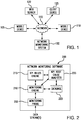
- FIG. 1 illustrates a block diagram of a network monitoring system.
- mobile devices 105 and 110 may be capable of transmitting and receiving data (e.g., web pages, audio, video, etc.) to and from each other over network 115.
- web server 120 may be configured to provide one or more web pages to client device 125 through network 115.
- network 115 may include any suitable wireless/mobile computer or data network including, for example, a 3G, 4G, or LTE wireless networks, etc.
- Communications between mobile devices 105 and 110, as well as communications between web server 120 and client device 125, may be monitored by network monitoring system 100, as data packets comprising those communications pass through wireless network 115 spanning multiple interfaces.
- network monitoring system 100 may include a network monitor or analyzer, a packet sniffer, a probe, or the like, coupled to network 115. Protocols used to enable communications taking place in FIG. 1 may be selected, for instance, based upon the type of content being communicated, the type of wireless network 115, and/or the capabilities of devices 105, 110, and/or 125.
- HTTP hypertext transfer protocol
- HTTP Timing Protocol HTTP
- HTTP date headers HTTP date headers
- RESTFUL APIs using, for example, the HTTP protocol as a synchronization protocol, Transmission Control Protocol (TCP), Real Time Streaming Protocol (RTSP), or more commonly, Real Time Messaging Protocol (RTMP), User Datagram Protocol (UDP) and Real Time Transport Protocol (RTP).
- TCP Transmission Control Protocol
- RTSP Real Time Streaming Protocol
- RTMP Real Time Messaging Protocol
- UDP User Datagram Protocol
- RTP Real Time Transport Protocol
- Each communication session for the various devices 105, 110, and/or 125 may have different start and stop times, and may be subject to different network traffic constraints. During each session, the available bandwidth for that session may change multiple times. Also, a data stream may start and stop during a given session.
- network monitoring system 100 may be configured to sample (e.g., unobtrusively) related data packets for a communication session in order to track a plurality of KPIs, such as, but not limited to, signaling plane delay KPIs, cell congestion levels KPIs, etc.
- the signaling plane delay KPI measures or monitors the response time in setting up a service for an end user.
- Examples of Signaling Plane Delay KPIs include the delay endured by a User Equipment (UE) to setup a Radio Resource Control (RRC) connection, or the procedure delay in adding or deleting the radio links during hand-off procedures when a UE moves between radio cells.
- UE User Equipment
- RRC Radio Resource Control
- Radio Access Bearer RRB
- RRC Radio Access Bearer
- network monitoring system 100 can optionally further provide other services, such as, but not limited to, an analysis scheme whereby all relevant KPIs associated with a user-identified failure and related to a subscriber activity spanning multiple interfaces are examined to provide precise root cause failure identification of the session.
- analysis scheme may utilize a KPI rules engine to create a standard set of KPI analysis rules which will be used by an analyzer module coupled to the rules engine to determine a prioritized list of most likely root causes and can be further tuned to meet individual customer needs.
- network monitoring system 100 may be configured to automatically sift through and correlate relevant transactions and corresponding KPIs across multiple interfaces and protocols to automatically identify one or more likely root causes.
- a myriad of root causes might be in-play during any given sampling window.
- a failure of a particular interface can cause multiple error messages to appear in different subscriber session records that represent the output of various wireless network transactions, thereby creating interleaved sequences of events in the respective subscriber session records. Each event may be associated with a corresponding KPI.
- a KPI root cause analyzer 225 described below may employ a scoring technique to automatically identify a list of most likely causes of a network failure.
- Automated troubleshooting systems can benefit greatly from identification of most likely causes, as opposed to individual error messages, as this reduces noise (i.e., erroneous, meaningless, missing, incomplete, or difficult-to-interpret information), compresses the data and facilitates a more accurate representation of all transactions in the wireless network.
- noise i.e., erroneous, meaningless, missing, incomplete, or difficult-to-interpret information
- client devices 105, 110, and 125 may include any computer system or device such as, for example, a personal computer, laptop computer, tablet computer, mobile device, smart phone, network-enabled devices, web-enabled televisions, and the like.
- Client devices 105, 110, and 125 may allow users to carry out voice communications, navigate the Internet or other data networks using a web browser application or the like via a Graphical User Interface (GUI), etc.
- GUI Graphical User Interface
- client device 125 may access a content catalog made available by web server 120 through a stand-alone or web-based client application.
- Web server 120 may include any server or computer system capable of delivering content to device 125.
- wireless network 115 may comprise any number of elements (i.e., nodes and endpoints).
- wireless network 115 may include nodes or endpoints that may be components in a 3G or 4G wireless network, such as a Serving General Packet Radio Service (GPRS) Support Node (SGSN), Gateway GPRS Support Node (GGSN) or Border Gateway in a GPRS network, Packet Data Serving Node (PDSN) in a Code Division Multiple Access (CDMA) 2000 network, a Mobile Management Entity (MME), eNodeB, Serving Gateway (SGW), Home Subscriber Server (HSS) in a LTE network or any other core network nodes or routers that transfer data packets or messages between endpoints.
- GPRS General Packet Radio Service
- GGSN Gateway GPRS Support Node
- HSS Home Subscriber Server
- nodes and endpoints may be interconnected in any suitable manner, including being coupled to one or more other such nodes and/or endpoints.
- control data such as information for setting-up, managing or tearing-down calls or sessions between endpoints.
- user data such as actual voice, video, email or information content to and from connected devices.
- network monitoring system 100 may be used to monitor the performance of wireless network 115. To that end, monitoring system 100 may be configured to capture packets that are transported across wireless network 115. In some embodiments, packet capture devices may be non-intrusively coupled to network links to capture substantially all of the packets transmitted across the links. It will be understood that, in an actual network, there may be dozens or hundreds of physical, logical or virtual connections and links between nodes. In some cases, network monitoring system 100 may be coupled to all or a high percentage of these links. In other embodiments, monitoring system 100 may be coupled only to a portion of wireless network 115, such as only to links associated with a particular carrier or service provider. The packet capture devices may be part of network monitoring system 100, such as a line interface card, or may be separate components that are remotely coupled to network monitoring system 100 from different locations.
- Monitoring system 100 may include one or more processors running one or more software applications that collect, correlate and/or analyze media and signaling data packets from wireless network 115.
- Monitoring system 100 may incorporate protocol analyzer, session analyzer, and/or traffic analyzer functionality that provides OSI (Open Systems Interconnection) Layer 2 to Layer 7 troubleshooting by characterizing network traffic by links, nodes, applications, service types and servers on wireless network 115.
- OSI Open Systems Interconnection
- these operations may be provided, for example, by the IRIS® toolset available from NetScout Inc., although other suitable tools may exist or be later developed.
- the packet capture devices coupling network monitoring system 100 to wireless network 115 may be high-speed, high-density probes that are optimized to handle high bandwidth IP traffic, such as the GEOPROBE® G10, also available from NetScout, Inc., although other suitable tools may exist or be later developed.
- a service provider or network operator may access data from monitoring system 100 via a user interface station having a display or graphical user interface, such as the IRIS VIEW configurable software framework that provides a single, integrated platform for several applications, including feeds to customer experience management systems and operation support system (OSS) and business support system (BSS) applications, which is also available from NetScout, Inc., although other suitable tools may exist or be later developed.
- OSS operation support system
- BSS business support system
- Monitoring system 100 may further comprise an internal or external memory for storing captured data packets, user session data, and configuration information. Monitoring system 100 may capture and correlate KPIs associated with specific data sessions. In some embodiments, a rules engine determines a customized set of KPIs that need to be correlated. These KPIs may be captured in an array or other forms of individual readable output, such as a "Comma-Separated Value” (CSV) data file. The resulting CSV file or other individual readable output can be used to compute score weighting values for each KPI record, as described below.
- CSV Common-Separated Value
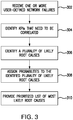
- network monitoring software 200 may be a software application executable by monitoring system 100 of FIG. 1 .
- a plurality of communication sessions or data streams may be transmitted across wireless network 115 between devices 105, 110, 120, and/or 125. Such communications may be streamed over HTTP, RTMP, RTP, or any other suitable protocols.
- Monitoring probe 205 may be configured to capture data packets from wireless network 115, including, for example, data from one or more HTTP requests or sessions. As such, monitoring probe 205 may determine subscriber identifying information for the captured data packets and may combine related data into session or request records. Monitoring probe 205 may then feed session records and captured packet data to monitoring engine 210. In some cases, a session record may include multiple segments that are provided to monitoring engine 210 periodically while an associated session is active. Monitoring engine 210 may in turn be configured to extract session data from each session record and to identify the protocol for each session record.
- Session data may include a plurality of PDUs corresponding to a plurality of different protocols stored to database 220.
- the plurality of PDUs comprises a plurality of signaling messages exchanged between one or more elements of wireless communication system 115.
- Database 220 may also store subscriber information and client device data.
- Network monitoring software 200 may allow the service provider for wireless network 115 to collect data from various network access requests or established network sessions concurrently or simultaneously. Data for multiple requests or sessions is stored in database 220, which allows the service provider to track each service or to extract system-wide parameters. For example, monitoring probe 205 and/or monitoring engine 210 may identify the type of protocol being used for each session by analyzing the header of one or more data packets for that session.
- Monitoring probe 205 and/or monitoring engine 210 may also track network resources available to each service session, and may identify resource changes that occur in real-time. At least in some embodiments, session monitoring engine 210 may use the collected information to generate a plurality of KPIs for the overall network.
- the KPIs may include, for example, indicators for accessibility, retainability, integrity, availability, mobility, etc.
- network monitoring system 100 may employ a set of KPI rules to automatically identify a list of likely causes for the identified failure.
- different sets of KPI rules may apply to different types of traffic.
- Each KPI rule may in turn dictate a specific set of KPIs that will be used in subsequent processing such as, for example, the analysis and correlation of various individual KPIs based on a specific rule and/or ruleset or the like.
- Additional examples of utilized KPI data may include, but are not limited to, connection establishment indicators, service performance indicators, authentication indicators, network congestion indicators, connection maintenance indicators, service completion indicators, service quality indicators, and/or service availability indicators.
- network monitoring software 200 also includes a KPI rules engine 215.
- KPI rules engine 215 includes one or more software modules or components that manages and automates the aforementioned KPI rules. For instance, KPI rules engine 215 evaluates all calculated KPIs and identifies one or more KPIs needed to be correlated based on the evaluation of provided network failure data.
- KPI rules engine 215 evaluates all calculated KPIs and identifies one or more KPIs needed to be correlated based on the evaluation of provided network failure data.
- one advantage of a rules engine is the separation of the rules from the underlying application code. With the rules separated from the application code, KPI rules engine 215 allows the users to modify the rules frequently without the help of technical staff and hence, allowing network monitoring software 200 to be more adaptable with the dynamic rules.
- KPI rules may be grouped or partitioned into one or more rule sets, where each rule set contains one or more rules. Then KPI rules engine 215 executes the rules according to the execution order. In one embodiment, a model of the execution order is generated and loaded into KPI rules engine 215.
- KPI rules engine 215 may also be configured to exchange information with a KPI root cause analyzer 225 as described below with respect to FIG. 3 .
- the exemplary KPI root cause analyzer 225 of FIG. 2 analyzes the KPI data of interest based on an appropriate rule/ruleset and utilizes KPI scoring mechanism to determine and/or identify the most likely root cause(s) of network performance problems.
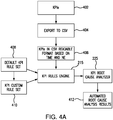
- FIG. 3 a flowchart of a method for automatically identifying failures in wireless networks using KPI correlation is provided, in accordance with embodiments of the present invention.
- the flow diagram in FIG. 3 shows examples in which operational steps are carried out in a particular order, as indicated by the lines connecting the blocks, but the various steps shown in this diagram can be performed in any order, or in any combination or sub-combination. It should be appreciated that in some embodiments some of the steps described below may be combined into a single step. In some embodiments, one or more steps may be omitted. In some embodiments, one or more additional steps may be performed. As will be appreciated by one skilled in the art, aspects of the present invention may be embodied as a method or computer program product. In some embodiments, the method described below may be performed, at least in part, by one or more components of network monitoring system 100.
- monitoring engine 210 may provide on demand activation of the automated network failure root-cause analysis.
- proactive service assurance can aid in lowering the impact and the prevention of failures or outages on communications network.
- one or more network failures may be automatically detected based on data collected by monitoring probes 205.
- monitoring probes 205 can collect network data indicating one or more network failures (e.g., alarms and/or traps) by monitoring one or more network elements or systems of wireless network 115.
- one or more network failures may be identified by a user while evaluating a plurality of subscriber session records stored in database 220 for long-term storage.
- KPI root cause analyzer 225 may be configured, at step 304, to dynamically obtain from KPI rules engine 215 a rule set related to the one or more network failures identified by monitoring engine 210 in step 302.
- KPI rules engine 215 may identify an appropriate rule set by mining KPI data stored in database 220, for example, by using learning algorithms to identify KPIs that are most significantly associated with identified network failure(s).
- KPI rules engine 215 may be configured to obtain a timestamp that identifies a relative time when the identified failure(s) occurred. This timestamp may be used by KPI rules engine 215 to determine which KPI data to read from database 220.
- the timestamp can also be used in comparisons performed at the network 100 to determine if dependencies from other transactions are possible, if the transaction might be dependent on another transaction or if conflicting transactions have taken place. It should be noted that because the end-to-end (or user perceived) network performance depends on the interaction of many protocols at different interfaces and on various protocol layers, various KPIs may also correspond to different protocols and different interfaces. In some embodiments, each rule set matches one or more transactions with one or more KPIs for a given protocol in the wireless communication system 115.
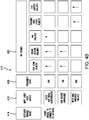
- FIG. 4A illustrates an exemplary methodology for utilizing KPI rules for automated identification of most likely root causes, according to some embodiments of the present invention.
- KPIs 402 may be stored in database 220 as a plurality of KPI records. These KPI records may be accessed by KPI rules engine 215 in various formats.
- database 220 may be configured and operable to export 404 one or more KPI records as a comma separated variable (CSV) file based, for example, on a time period associated with the identified failure and/or based on one or more network elements of the wireless communication system associated with the identified failure.
- KPI records may be exported as various data structures in text files, eXtensible Markup Language (XML) documents, Virtual Storage Access Method (VSAM) files, flat files, Binary files, etc.
- XML eXtensible Markup Language
- VSAM Virtual Storage Access Method
- KPI rules engine 215 may include a natural language enhanced user interface.
- KPI rules engine 215 broadly refers to a software module that manages KPI rules.
- some embodiments of the KPI rules engine 215 may store KPI rules, evaluate KPI rules, and execute KPI rules based on results of rule evaluation.
- one or more rule templates in a natural language are generated from one or more predefined sentences. The predefined sentences can be written in the natural language syntax as well using a plain grammar format.
- a natural language as used herein generally refers to a language written or spoken by humans for general-purpose communication, as opposed to constructs, such as computer-programming languages, machine-readable or machine-executable languages, or the languages used in the study of formal logic, such as mathematical logic.
- Some examples of a natural language include English, German, French, Russian, Japanese, Chinese, etc.
- the predefined sentences are KPI rules previously submitted by users.
- the predefined sentences may also include KPI records provided by exported CSV-readable file.
- a user interface of KPI rules engine 215 may be created using the rule templates to allow a user to compose rules for correlation of specific KPIs by KPI rules engine 215. For example, as shown in FIG.
- users may predefine a global KPI rule set 408 that searches for correlation between specific KPIs.
- Global KPI rule set 408 may include one or more predefined sentences that can be written in the natural language syntax using a plain grammar format.
- KPI rules engine 215 may be configured and operable to generate a customized KPI rule set 410 based on the global KPI rule set 408 and based on the KPI records 406 provided in the exported CSV readable file.
- KPI root cause analyzer 225 is configured to identify one or more likely root causes based on the customized rule set 410 identified in step 304 and associated with the failure(s) identified in step 302.
- Table 1 below illustrates exemplary customized rule set 410 for different wireless protocols provided by KPI rules engine 215 in accordance with aspects of the present invention: Table 1 Root Cause Description KPIs Users not being authenticated S1-MME PDN Connection Rejects ABOVE 2% GTP-V2 Create Session Failures ABOVE 2% S6b AAA Failure ABOVE 2% SGW Resource Unavailable S1-MME PDN Connection Rejects ABOVE 2% GTP-V2 Create Session Failures ABOVE 2% S6b AAA Failure BELOW 2% Inter MME Handover Failure Tracking Area Update Reject ABOVE 1% S10 Context Failures ABOVE 4%
- the exemplary customized rule set 410 specifies three different potential root causes: i) users not being authenticated by the network, ii) SGW resource unavailable and iii) inter MME handover failure.
- the exemplary customized rule set 410 presented in table 1 above also specifies a plurality of KPIs that can be used for correlation to determine likelihood of each of the potential root causes. Notably, at least some KPIs may be indicative of few different issues. For example, in table 1 a relatively high number (e.g., over 2%) of PDN connection reject messages sent over S 1-MME interface and unusually high number of GTPv2 create session failures may be indicative of two different root causes.
- KPI root cause analyzer 225 may utilize a third KPI as a distinguishing factor.
- such distinguishing factor is a KPI indicative of connection failures with authentication, authorization, and accounting (AAA) server communicated over the S6b interface (interface between the 3GPP AAA and the PDN gateway) if a 3GPP AAA is deployed.
- AAA authentication, authorization, and accounting
- KPI root cause analyzer 225 may determine whether users are unable to connect to the LTE network due to inter MME handover failure by correlating KPIs indicative of tracking area update reject messages and context failure messages communicated over S10 interface.
- KPI root cause analyzer 225 assigns probability scores to each of the identified root causes based on a combination of factors. In other words, since multiple root causes might be in play, KPI root cause analyzer 225 may employ a scoring mechanism described below to determine likelihood that each potential cause actually caused the reported network problems.
- the scoring mechanism includes three separate steps.
- KPI root cause analyzer 225 determines a threshold excess score (C1-C3) for each KPI associated with the identified root causes by calculating the actual number of failures exceeding thresholds specified in table 1 (i.e., 2% thresholds for PDN connection reject messages sent over S1-MME interface and GTPv2 create session failures).
- the second step of the scoring mechanism involves calculation of KPI scores based on a number of detected failures exceeding a predefined threshold (threshold excess score) in the wireless communication system for each of the one or more identified root causes.
- KPI root cause analyzer 225 assigns a weight value to each threshold excess score as the depth of KPI records used for correlation increases.
- KPI root cause analyzer 225 multiplies each threshold excess score by an integer number such that the integer increases follow a portion of a Fibonacci number series.
- the kth number (with the exception of the first and second numbers which both equal one) in the series will equal the sum of the (k-1) and (k-2) numbers.
- a Fibonacci series is as follows: 1, 1, 2, 3, 5, 8, 13, 21, etc.
- weight values for threshold excess score may increase linearly.
- the third and final step of the scoring mechanism involves generation of probability score as a ratio of each KPI score to the sum of all KPI scores, as shown in table 2.
- the probability score is indicative of likelihood that each potential cause actually caused the reported network problems.
- the third listed potential cause (inter MME handover failure) has approximately 60% likelihood of causing users' inability to connect to an LTE network.
- KPI root cause analyzer 225 employs the KPI rules and scoring mechanism to automatically identify failure causes by correlating transactions and corresponding KPIs, thusly substantially eliminating the need for any manual analysis.
- KPI root cause analyzer 225 displays root cause analysis results 412 to a user via a user interface.
- FIG. 4B illustrates exemplary output generated by a KPI root cause analyzer 225, according to an embodiment of the present invention.
- root cause analysis results may be presented to a user in a table format.
- Such analysis results table 412 may include, for example, information related to the customer specified network issue 414, identified potential root causes 416, probability scores corresponding to each potential root cause 418 and historical KPI trends 420.
- root cause analysis results 412 are presented to the user as a list of most likely root causes prioritized based on the calculated probability scores.
- KPI root cause analyzer 225 may present root cause analysis results 412 in any form, graphical or non-graphical.
- the disclosed embodiments of the present invention enable exclusively automatic troubleshooting of E2E services. Furthermore, the disclosed embodiments provide network monitoring systems an ability to quickly triage a plurality of identified/detected network problems, which is quite valuable to the end users of such monitoring systems.
- aspects of the present invention may be embodied as a system, method or computer program product. Accordingly, aspects of the present invention may take the form of an entirely hardware embodiment, an entirely software embodiment (including firmware, resident software, micro-code, etc.) or an embodiment combining software and hardware aspects that may all generally be referred to herein as a "circuit,” “module” or “system.” Furthermore, aspects of the present invention may take the form of a computer program product embodied in one or more computer readable medium(s) having computer readable program code embodied thereon.
- the computer readable medium may be a computer readable signal medium or a computer readable storage medium.
- a computer readable storage medium may be, for example, but not limited to, an electronic, magnetic, optical, electromagnetic, infrared, or semiconductor system, apparatus, or device, or any suitable combination of the foregoing.
- a computer readable storage medium may be any tangible medium that can contain, or store a program for use by or in connection with an instruction execution system, apparatus, or device.
- a computer readable signal medium may include a propagated data signal with computer readable program code embodied therein, for example, in baseband or as part of a carrier wave. Such a propagated signal may take any of a variety of forms, including, but not limited to, electro-magnetic, optical, or any suitable combination thereof.
- a computer readable signal medium may be any computer readable medium that is not a computer readable storage medium and that can communicate, propagate, or transport a program for use by or in connection with an instruction execution system, apparatus, or device.
- Program code embodied on a computer readable medium may be transmitted using any appropriate medium, including but not limited to wireless, wireline, optical fiber cable, RF, etc., or any suitable combination of the foregoing.
- Computer program code for carrying out operations for aspects of the present invention may be written in any combination of one or more programming languages, including an object oriented programming language such as Java, Smalltalk, C++ or the like and conventional procedural programming languages, such as the "C" programming language or similar programming languages.
- the program code may execute entirely on the user's computer, partly on the user's computer, as a stand-alone software package, partly on the user's computer and partly on a remote computer or entirely on the remote computer or server.
- the remote computer may be connected to the user's computer through any type of network, including a local area network (LAN) or a wide area network (WAN), or the connection may be made to an external computer (for example, through the Internet using an Internet Service Provider).
- LAN local area network
- WAN wide area network
- Internet Service Provider for example, AT&T, MCI, Sprint, EarthLink, MSN, GTE, etc.
- These computer program instructions may also be stored in a computer readable medium that can direct a computer, other programmable data processing apparatus, or other devices to function in a particular manner, such that the instructions stored in the computer readable medium produce an article of manufacture including instructions which implement the function/act specified in the flowchart and/or block diagram block or blocks.
- the computer program instructions may also be loaded onto a computer, other programmable data processing apparatus, or other devices to cause a series of operational steps to be performed on the computer, other programmable apparatus or other devices to produce a computer implemented process such that the instructions which execute on the computer or other programmable apparatus provide processes for implementing the functions/acts specified in the flowchart and/or block diagram block or blocks.
- Embodiments of the network monitoring system may be implemented or executed by one or more computer systems.
- One such computer system, the network monitoring system 100 is illustrated in FIG. 5 .
- network monitoring system 100 may be a server, a distributed computer system, a workstation, a network computer, a desktop computer, a laptop, or the like.
- Network monitoring system 100 is only one example of a suitable system and is not intended to suggest any limitation as to the scope of use or functionality of embodiments of the invention described herein. Regardless, network monitoring system 100 is capable of being implemented and/or performing any of the functionality set forth hereinabove.
- Network monitoring system 100 is operational with numerous other general purpose or special purpose computing system environments or configurations.
- Examples of well-known computing systems, environments, and/or configurations that may be suitable for use with the network monitoring system 100 include, but are not limited to, personal computer systems, server computer systems, thin clients, thick clients, hand-held or laptop devices, multiprocessor systems, microprocessor-based systems, set top boxes, programmable consumer electronics, network PCs, minicomputer systems, mainframe computer systems, and distributed data processing environments that include any of the above systems or devices, and the like.
- network monitoring system 100 may be described in the general context of computer system-executable instructions, such as program modules, being executed by a computer system.
- program modules may include routines, programs, objects, components, logic, data structures, and so on that perform particular tasks or implement particular abstract data types.
- Network monitoring system 100 may be practiced in distributed data processing environments where tasks are performed by processing devices that are linked through a communications network.
- program modules may be located in both local and remote computer system storage media including memory storage devices.
- the network monitoring system 100 is shown in FIG. 5 in the form of a general-purpose computing device.
- the components of network monitoring system 100 may include, but are not limited to, one or more processors or processing units 516, a system memory 528, and a bus 518 that couples various system components including system memory 528 to processor 516.
- Bus 518 represents one or more of any of several types of bus structures, including a memory bus or memory controller, a peripheral bus, an accelerated graphics port, and a processor or local bus using any of a variety of bus architectures.
- bus architectures include Industry Standard Architecture (ISA) bus, Micro Channel Architecture (MCA) bus, Enhanced ISA (EISA) bus, Video Electronics Standards Association (VESA) local bus, and Peripheral Component Interconnect (PCI) bus.
- Network monitoring system 100 typically includes a variety of computer system readable media. Such media may be any available media that is accessible by network monitoring system 100, and it includes both volatile and non-volatile media, removable and non-removable media.
- System memory 528 can include computer system readable media in the form of volatile memory, such as random access memory (RAM) 530 and/or cache memory 532.
- Network monitoring system 100 may further include other removable/non-removable, volatile/non-volatile computer system storage media.
- storage system 534 can be provided for reading from and writing to a non-removable, non-volatile magnetic media (not shown and typically called a "hard drive").
- a magnetic disk drive for reading from and writing to a removable, non-volatile magnetic disk (e.g., a "floppy disk")
- an optical disk drive for reading from or writing to a removable, non-volatile optical disk such as a CD-ROM, DVD-ROM or other optical media
- each can be connected to bus 518 by one or more data media interfaces.
- memory 528 may include at least one program product having a set (e.g., at least one) of program modules that are configured to carry out the functions of embodiments of the invention.
- Program/utility 540 having a set (at least one) of program modules 515 (such as monitoring probe 205, monitoring engine 210, KPI rules engine 215 and KPI root cause analyzer 225) may be stored in memory 528 by way of example, and not limitation, as well as an operating system, one or more application programs, other program modules, and program data. Each of the operating system, one or more application programs, other program modules, and program data or some combination thereof, may include an implementation of a networking environment.
- Program modules generally carry out the functions and/or methodologies of embodiments of the invention as described herein.
- Network monitoring system 100 may also communicate with one or more external devices such as a keyboard, a pointing device, a display, etc.; one or more devices that enable a user to interact with network monitoring system 100; and/or any devices (e.g., network card, modem, etc.) that enable network monitoring system 100 to communicate with one or more other computing devices. Such communication can occur via Input/Output (I/O) interfaces 522. Still yet, network monitoring system 100 can communicate with one or more networks such as a local area network (LAN), a general wide area network (WAN), and/or a public network (e.g., the Internet) via network adapter 520. As depicted, network adapter 520 communicates with the other components of network monitoring system 100 via bus 518.
- LAN local area network
- WAN wide area network
- public network e.g., the Internet
- network monitoring system 100 includes, but are not limited to: microcode, device drivers, redundant processing units, external disk drive arrays, RAID systems, tape drives, and data archival storage systems, etc.
- each block in the flowchart or block diagrams may represent a module, segment, or portion of code, which comprises one or more executable instructions for implementing the specified logical function(s).
- the functions noted in the block may occur out of the order noted in the figures. For example, two blocks shown in succession may, in fact, be executed substantially concurrently, or the blocks may sometimes be executed in the reverse order, depending upon the functionality involved.
Landscapes
- Engineering & Computer Science (AREA)
- Computer Networks & Wireless Communication (AREA)
- Signal Processing (AREA)
- Environmental & Geological Engineering (AREA)
- Quality & Reliability (AREA)
- Mobile Radio Communication Systems (AREA)
- Data Exchanges In Wide-Area Networks (AREA)
Claims (15)
- Netzwerküberwachungssystem (100), wobei das System (100) umfasst:einen Prozessor (516);einen mit dem Prozessor (516) gekoppelten Speicher (528);eine Datenbank (220), die eine Vielzahl von Leistungskennzahl-(KPI-)Datensätzen zum Überwachen eines drahtlosen Kommunikationssystems (115) einschließt;eine Regelfunktionseinheit (215), die dafür konfiguriert und betreibbar ist, im Speicher KPI-Regeln zu speichern, die mindestens einer Regelmenge zugeordnet sind; undeine Analysefunktionseinheit (225), die dafür konfiguriert und betreibbar ist:unter Verwendung des Prozessors (516) auf der Grundlage mindestens einer KPI-Regel in der mindestens einen Regelmenge eine oder mehrere Grundursachen eines Fehlers für eine oder mehrere Transaktionen zu erkennen;auf der Grundlage einer Anzahl erkannter Fehler, die einen vordefinierten Schwellenwert im drahtlosen Kommunikationssystem (115) überschreiten, eine KPI-Wertung für jede der einen oder mehreren erkannten Grundursachen zu erzeugen; undauf der Grundlage der erzeugten KPI-Wertung einen Wahrscheinlichkeitswertungswert für jede der einen oder mehreren erkannten Grundursachen zu erzeugen.
- System (100) nach Anspruch 1, worin die Vielzahl von KPI-Datensätzen einer Vielzahl von unterschiedlichen Protokollen entspricht.
- System (100) nach Anspruch 2, worin die Analysefunktionseinheit (225) ferner dafür konfiguriert und betreibbar ist, mindestens zwei aus der Vielzahl von KPI-Datensätzen über die Vielzahl von unterschiedlichen Protokollen hinweg zu korrelieren.
- System (100), nach Anspruch 1, worin die Analysefunktionseinheit (225) ferner dafür konfiguriert und betreibbar ist, die erkannte eine oder mehreren Grundursachen auf der Grundlage der erzeugten Wahrscheinlichkeitswertungswerte nach Priorität zu ordnen.
- System (100) nach Anspruch 1, worin die Regelfunktionseinheit (215) eine mit natürlicher Sprache verbesserte Benutzeroberfläche umfasst und die mindestens eine Regelmenge unter Verwendung von Syntax und Format ähnlich natürlicher Sprache erzeugt.
- System (100) nach Anspruch 1, worin die Datenbank (220) ferner dafür konfiguriert und betreibbar ist, einen oder mehrere aus der Vielzahl von KPI-Datensätzen in eine Datendatei in einem vordefinierten Format zu exportieren, und zwar auf der Grundlage eines dem Fehler zugeordneten Zeitraums und/oder auf der Grundlage von einem oder mehreren dem Fehler zugeordneten Netzwerkelementen des drahtlosen Kommunikationssystems (115).
- System (100) nach Anspruch 6, worin das vordefinierte Format mindestens eines von Folgendem umfasst: ein Format mit kommagetrennten Werten, CSV, ein Format der erweiterbaren Textauszeichnungssprache, XML, binäres Dateiformat und Flat-File-Format.
- Verfahren zum automatischen Erkennen einer Grundursache eines Fehlers in einem drahtlosen Kommunikationssystem (115), wobei das Verfahren umfasst:Erzeugen von Regeln, die einer Vielzahl von Leistungskennzahl-(KPI-)Datensätzen zum Überwachen eines drahtlosen Kommunikationssystems (115) zugeordnet sind;durch einen Prozessor (516) erfolgendes Erkennen von einem oder mehreren Fehlern im drahtlosen Kommunikationssystem (115);durch einen Prozessor (516) erfolgendes Erkennen von einer oder mehreren wahrscheinlichen Grundursachen, die dem einen oder den mehreren erkannten Fehlern zugeordnet sind;durch einen Prozessor (516) erfolgendes Analysieren der einen oder mehreren wahrscheinlichen Grundursachen durch Korrelieren einiger der KPI-Datensätze auf der Grundlage der erzeugten Regeln;Erzeugen einer KPI-Wertung für jede der einen oder mehreren erkannten Grundursachen auf der Grundlage einer Anzahl von erkannten Fehlern, die einen vordefinierten Schwellenwert im drahtlosen Kommunikationssystem (115) überschreiten; undErzeugen eines Wahrscheinlichkeitswertungswerts für jede der einen oder mehreren erkannten Grundursachen auf der Grundlage der erzeugten KPI-Wertung.
- Verfahren nach Anspruch 8, worin die Vielzahl von KPI-Datensätzen einer Vielzahl von unterschiedlichen Protokollen entspricht.
- Verfahren nach Anspruch 9, worin das Korrelieren einiger der KPI-Datensätze ferner umfasst: Korrelieren von mindestens zweien aus der Vielzahl von KPI-Datensätzen über die Vielzahl von unterschiedlichen Protokollen hinweg.
- Verfahren nach Anspruch 8, ferner umfassend: auf der Grundlage der erzeugten Wahrscheinlichkeitswertungswerte erfolgendes Ordnen der erkannten einen oder mehreren Grundursachen nach Priorität.
- Verfahren nach Anspruch 8, worin das Erzeugen von Regeln umfasst: Erzeugen mindestens einer Regelmenge unter Verwendung von Syntax und Format ähnlich natürlicher Sprache.
- Verfahren nach Anspruch 8, ferner umfassend: Exportieren von einem oder mehreren aus der Vielzahl von KPI-Datensätzen in eine Datendatei in einem vordefinierten Format, und zwar auf der Grundlage eines dem Fehler zugeordneten Zeitraums und/oder auf der Grundlage von einem oder mehreren dem Fehler zugeordneten Netzwerkelementen des drahtlosen Kommunikationssystems (115).
- Verfahren nach Anspruch 13, worin das vordefinierte Format mindestens eines von Folgendem umfasst: ein Format mit kommagetrennten Werten, CSV, ein Format der erweiterbaren Textauszeichnungssprache, XML, binäres Dateiformat und Flat-File-Format.
- Computerprogrammprodukt zum automatischen Erkennen einer Grundursache eines Fehlers in einem drahtlosen Kommunikationssystem (115), wobei das Computerprogrammprodukt umfasst:
eine oder mehrere nichtflüchtige computerlesbare Speichervorrichtungen (528) und eine Vielzahl von Programmanweisungen (540), die auf mindestens einer der einen oder mehreren computerlesbaren Speichervorrichtungen (528) gespeichert sind, wobei die Vielzahl von Programmanweisungen umfasst:Programmanweisungen, um Regeln zu erzeugen, die einer Vielzahl von Leistungskennzahl-(KPI-)Datensätzen zum Überwachen eines drahtlosen Kommunikationssystems (115) zugeordnet sind;Programmanweisungen, um einen oder mehrere Fehler im drahtlosen Kommunikationssystem (115) zu erkennen;Programmanweisungen, um eine oder mehrere wahrscheinliche Grundursachen zu erkennen, die dem erkannten Fehler zugeordnet sind;Programmanweisungen, um die eine oder mehreren wahrscheinlichen Grundursachen durch Korrelieren einiger der KPI-Datensätze auf der Grundlage der erzeugten Regeln zu analysieren;Programmanweisungen, um auf der Grundlage einer Anzahl erkannter Fehler, die einen vordefinierten Schwellenwert im drahtlosen Kommunikationssystem (115) überschreiten, eine KPI-Wertung für jede der einen oder mehreren erkannten Grundursachen zu erzeugen; undProgrammanweisungen, um auf der Grundlage der erzeugten KPI-Wertung einen Wahrscheinlichkeitswertungswert für jede der einen oder mehreren erkannten Grundursachen zu erzeugen.
Applications Claiming Priority (1)
| Application Number | Priority Date | Filing Date | Title |
|---|---|---|---|
| US15/001,987 US10306490B2 (en) | 2016-01-20 | 2016-01-20 | Multi KPI correlation in wireless protocols |
Publications (2)
| Publication Number | Publication Date |
|---|---|
| EP3197097A1 EP3197097A1 (de) | 2017-07-26 |
| EP3197097B1 true EP3197097B1 (de) | 2018-10-17 |
Family
ID=57944268
Family Applications (1)
| Application Number | Title | Priority Date | Filing Date |
|---|---|---|---|
| EP17152519.9A Active EP3197097B1 (de) | 2016-01-20 | 2017-01-20 | Mehrfach-kpi-korrelation in drahtlosen protokollen |
Country Status (2)
| Country | Link |
|---|---|
| US (1) | US10306490B2 (de) |
| EP (1) | EP3197097B1 (de) |
Families Citing this family (52)
| Publication number | Priority date | Publication date | Assignee | Title |
|---|---|---|---|---|
| US10374904B2 (en) | 2015-05-15 | 2019-08-06 | Cisco Technology, Inc. | Diagnostic network visualization |
| US10142353B2 (en) | 2015-06-05 | 2018-11-27 | Cisco Technology, Inc. | System for monitoring and managing datacenters |
| US10536357B2 (en) | 2015-06-05 | 2020-01-14 | Cisco Technology, Inc. | Late data detection in data center |
| US9967158B2 (en) | 2015-06-05 | 2018-05-08 | Cisco Technology, Inc. | Interactive hierarchical network chord diagram for application dependency mapping |
| US10374882B2 (en) | 2016-03-16 | 2019-08-06 | Futurewei Technologies, Inc. | Systems and methods for identifying causes of quality degradation in wireless networks |
| US10321336B2 (en) * | 2016-03-16 | 2019-06-11 | Futurewei Technologies, Inc. | Systems and methods for robustly determining time series relationships in wireless networks |
| US10289438B2 (en) | 2016-06-16 | 2019-05-14 | Cisco Technology, Inc. | Techniques for coordination of application components deployed on distributed virtual machines |
| US10708183B2 (en) | 2016-07-21 | 2020-07-07 | Cisco Technology, Inc. | System and method of providing segment routing as a service |
| US11727283B2 (en) * | 2020-05-19 | 2023-08-15 | International Business Machines Corporation | Rule distribution across instances of rules engine |
| US10972388B2 (en) | 2016-11-22 | 2021-04-06 | Cisco Technology, Inc. | Federated microburst detection |
| US10708152B2 (en) | 2017-03-23 | 2020-07-07 | Cisco Technology, Inc. | Predicting application and network performance |
| US10523512B2 (en) | 2017-03-24 | 2019-12-31 | Cisco Technology, Inc. | Network agent for generating platform specific network policies |
| US10250446B2 (en) | 2017-03-27 | 2019-04-02 | Cisco Technology, Inc. | Distributed policy store |
| US10764141B2 (en) | 2017-03-27 | 2020-09-01 | Cisco Technology, Inc. | Network agent for reporting to a network policy system |
| US10594560B2 (en) | 2017-03-27 | 2020-03-17 | Cisco Technology, Inc. | Intent driven network policy platform |
| US10873794B2 (en) | 2017-03-28 | 2020-12-22 | Cisco Technology, Inc. | Flowlet resolution for application performance monitoring and management |
| US10680887B2 (en) | 2017-07-21 | 2020-06-09 | Cisco Technology, Inc. | Remote device status audit and recovery |
| US10554501B2 (en) | 2017-10-23 | 2020-02-04 | Cisco Technology, Inc. | Network migration assistant |
| US10523541B2 (en) | 2017-10-25 | 2019-12-31 | Cisco Technology, Inc. | Federated network and application data analytics platform |
| US10594542B2 (en) | 2017-10-27 | 2020-03-17 | Cisco Technology, Inc. | System and method for network root cause analysis |
| US11233821B2 (en) | 2018-01-04 | 2022-01-25 | Cisco Technology, Inc. | Network intrusion counter-intelligence |
| US10999149B2 (en) | 2018-01-25 | 2021-05-04 | Cisco Technology, Inc. | Automatic configuration discovery based on traffic flow data |
| US10574575B2 (en) | 2018-01-25 | 2020-02-25 | Cisco Technology, Inc. | Network flow stitching using middle box flow stitching |
| US10798015B2 (en) | 2018-01-25 | 2020-10-06 | Cisco Technology, Inc. | Discovery of middleboxes using traffic flow stitching |
| US10826803B2 (en) | 2018-01-25 | 2020-11-03 | Cisco Technology, Inc. | Mechanism for facilitating efficient policy updates |
| CN108399066A (zh) * | 2018-01-25 | 2018-08-14 | 链家网(北京)科技有限公司 | 一种规则引擎实现方法及装置 |
| US11128700B2 (en) | 2018-01-26 | 2021-09-21 | Cisco Technology, Inc. | Load balancing configuration based on traffic flow telemetry |
| US11805003B2 (en) * | 2018-05-18 | 2023-10-31 | Cisco Technology, Inc. | Anomaly detection with root cause learning in a network assurance service |
| US10785090B2 (en) * | 2018-05-18 | 2020-09-22 | Cisco Technology, Inc. | Using machine learning based on cross-signal correlation for root cause analysis in a network assurance service |
| WO2020014575A1 (en) * | 2018-07-12 | 2020-01-16 | Ribbon Communications | Telecommunication event object classification based on information from multiple protocols |
| US10931542B2 (en) * | 2018-08-10 | 2021-02-23 | Futurewei Technologies, Inc. | Network embedded real time service level objective validation |
| US11494212B2 (en) * | 2018-09-27 | 2022-11-08 | Intel Corporation | Technologies for adaptive platform resource assignment |
| US11424977B2 (en) * | 2018-12-10 | 2022-08-23 | Wipro Limited | Method and system for performing effective orchestration of cognitive functions in distributed heterogeneous communication network |
| US11381491B2 (en) | 2019-04-15 | 2022-07-05 | Netscout Systems, Inc. | System and method for load balancing of network packets received from a MME with smart clustering |
| US11356321B2 (en) | 2019-05-20 | 2022-06-07 | Samsung Electronics Co., Ltd. | Methods and systems for recovery of network elements in a communication network |
| US11093319B2 (en) * | 2019-05-29 | 2021-08-17 | Microsoft Technology Licensing, Llc | Automated recovery of webpage functionality |
| JP7339037B2 (ja) * | 2019-07-10 | 2023-09-05 | ファナック株式会社 | 制御装置、診断方法及び診断プログラム |
| US11165672B2 (en) | 2019-08-23 | 2021-11-02 | Cisco Technology, Inc. | Application performance management integration with network assurance |
| US20210165723A1 (en) * | 2019-12-03 | 2021-06-03 | Computational Systems, Inc. | Graphical Indicator With History |
| CN111200530A (zh) * | 2019-12-31 | 2020-05-26 | 畅捷通信息技术股份有限公司 | 一种基于kpi指标进行根因分析的方法及装置 |
| ZA202100191B (en) * | 2020-01-20 | 2023-12-20 | EXFO Solutions SAS | Method and device for estimating a number of distinct subscribers of a telecommunication network impacted by network issues |
| CN111314124B (zh) * | 2020-02-07 | 2023-04-07 | 中国联合网络通信集团有限公司 | 高铁网络的网络问题分析方法、装置、设备及存储介质 |
| CN114095387B (zh) * | 2020-07-29 | 2023-09-05 | 中国移动通信集团北京有限公司 | 信息确定方法、装置、设备及介质 |
| US11979270B2 (en) * | 2020-10-12 | 2024-05-07 | Ribbon Communications Operating Company, Inc. | Methods, apparatus and systems for efficient cross-layer network analytics |
| US20220292386A1 (en) * | 2021-03-09 | 2022-09-15 | Accenture Global Solutions Limited | Method and system for machine learning based user experience evaluation for information technology support services |
| US11470490B1 (en) | 2021-05-17 | 2022-10-11 | T-Mobile Usa, Inc. | Determining performance of a wireless telecommunication network |
| CN115442833B (zh) * | 2021-06-03 | 2024-06-18 | 中国移动通信集团四川有限公司 | 一种投诉根因分析方法、装置及电子设备 |
| CN117795920A (zh) | 2021-09-03 | 2024-03-29 | 华为技术有限公司 | 计算机网络中对异常事件的根因分析 |
| US11477091B1 (en) * | 2021-09-09 | 2022-10-18 | T-Mobile Innovations Llc | Network anomaly detection using a multivariate-relations engine |
| US11800398B2 (en) | 2021-10-27 | 2023-10-24 | T-Mobile Usa, Inc. | Predicting an attribute of an immature wireless telecommunication network, such as a 5G network |
| US12192790B2 (en) | 2021-10-27 | 2025-01-07 | T-Mobile Usa, Inc. | Predicting an attribute of a wireless telecommunication network, such as a 5G network |
| WO2024116138A1 (en) * | 2022-12-01 | 2024-06-06 | Jio Platforms Limited | System and method for user feedback loop management |
Family Cites Families (16)
| Publication number | Priority date | Publication date | Assignee | Title |
|---|---|---|---|---|
| US6415193B1 (en) * | 1999-07-08 | 2002-07-02 | Fabcentric, Inc. | Recipe editor for editing and creating process recipes with parameter-level semiconductor-manufacturing equipment |
| US20020154751A1 (en) * | 2000-10-18 | 2002-10-24 | Thompson Richard H. | Method for managing wireless communication device use including optimizing rate and service plan selection |
| US8140454B2 (en) * | 2007-12-28 | 2012-03-20 | Software Ag | Systems and/or methods for prediction and/or root cause analysis of events based on business activity monitoring related data |
| US8411577B2 (en) | 2010-03-19 | 2013-04-02 | At&T Intellectual Property I, L.P. | Methods, apparatus and articles of manufacture to perform root cause analysis for network events |
| US8972467B2 (en) * | 2010-08-31 | 2015-03-03 | Sovanta Ag | Method for selecting a data set from a plurality of data sets by means of an input device |
| BR112013010107A2 (pt) * | 2010-10-29 | 2016-09-06 | Ericsson Telefon Ab L M | desempenho de serviço em rede de comunicações |
| US9325568B2 (en) * | 2011-03-03 | 2016-04-26 | Telefonaktiebolaget Lm Ericsson (Publ) | Technique for determining correlated events in a communication system |
| US9031561B2 (en) * | 2011-11-17 | 2015-05-12 | Cisco Technology, Inc. | Method and system for optimizing cellular networks operation |
| US20150163271A1 (en) * | 2011-12-22 | 2015-06-11 | Telefonaktiebolaget L M Ericsson (Publ) | Apparatus and method for monitoring performance in a communications network |
| US9128912B2 (en) * | 2012-07-20 | 2015-09-08 | Fujitsu Limited | Efficient XML interchange schema document encoding |
| CN105264859B (zh) * | 2013-04-09 | 2018-08-31 | 诺基亚通信公司 | 用于生成对基于web的应用的客户体验的洞悉的方法和装置 |
| WO2014183784A1 (en) * | 2013-05-14 | 2014-11-20 | Telefonaktiebolaget L M Ericsson (Publ) | Resource budget determination for communications network |
| US8948369B2 (en) * | 2013-06-24 | 2015-02-03 | Avaya Inc. | Method and system for optimizing performance within a contact center |
| CN104903866B (zh) | 2013-11-29 | 2017-12-15 | 株式会社日立制作所 | 对事件根本原因的分析予以支援的管理系统以及方法 |
| US10462688B2 (en) * | 2015-06-29 | 2019-10-29 | Cisco Technology, Inc. | Association rule analysis and data visualization for mobile networks |
| US11811584B2 (en) * | 2015-11-03 | 2023-11-07 | Tektronix Texas, Llc | System and method for automatically identifying failure in services deployed by mobile network operators |
-
2016
- 2016-01-20 US US15/001,987 patent/US10306490B2/en active Active
-
2017
- 2017-01-20 EP EP17152519.9A patent/EP3197097B1/de active Active
Non-Patent Citations (1)
| Title |
|---|
| None * |
Also Published As
| Publication number | Publication date |
|---|---|
| US10306490B2 (en) | 2019-05-28 |
| US20170208487A1 (en) | 2017-07-20 |
| EP3197097A1 (de) | 2017-07-26 |
Similar Documents
| Publication | Publication Date | Title |
|---|---|---|
| EP3197097B1 (de) | Mehrfach-kpi-korrelation in drahtlosen protokollen | |
| EP3197100B1 (de) | Mehrfachursachenkorrelation in drahtlosprotokollen | |
| US11811584B2 (en) | System and method for automatically identifying failure in services deployed by mobile network operators | |
| EP2611074B1 (de) | Vertrauensintervalle für die Hauptleistungsindikatoren in Kommunikationsnetzwerken | |
| US10326640B2 (en) | Knowledge base radio and core network prescriptive root cause analysis | |
| US8964582B2 (en) | Data integrity scoring and visualization for network and customer experience monitoring | |
| US9853867B2 (en) | Method and apparatus to determine network quality | |
| EP3379419B1 (de) | Situationsanalyse | |
| EP2661020B1 (de) | Adaptive Überwachung von Telekommunikationsnetzwerken | |
| JP6690011B2 (ja) | ストリーミング分析法を用いてネットワーク問題の実効顧客影響度をリアルタイムで測定するためのシステム及び方法 | |
| EP2744151B1 (de) | Verfahren, System und Computer-lesbares Medium zur Überwachung von Datenverkehr über Vermittler von DIAMETER-Kernen hinweg | |
| US9172593B2 (en) | System and method for identifying problems on a network | |
| US20130166738A1 (en) | Web Page Download Time Analysis | |
| EP2632083A1 (de) | Intelligente und skalierbare Netzwerküberwachung unter Verwendung einer Vorrichtungshierarchie | |
| US10425913B2 (en) | Automated equipment characterization from wireless network data | |
| CN104539556A (zh) | 在异构网络环境下为用户提供满意服务质量的方法 | |
| EP3316141A1 (de) | Verfahren und system zur bestimmung der leistung einer auf mobilen stationen installierten anwendung | |
| CN107517237A (zh) | 一种视频识别方法和装置 | |
| Qian et al. | Discerning MOS of Video Conferencing via Deep Packet Inspection and Video Context Clues |
Legal Events
| Date | Code | Title | Description |
|---|---|---|---|
| PUAI | Public reference made under article 153(3) epc to a published international application that has entered the european phase |
Free format text: ORIGINAL CODE: 0009012 |
|
| STAA | Information on the status of an ep patent application or granted ep patent |
Free format text: STATUS: REQUEST FOR EXAMINATION WAS MADE |
|
| 17P | Request for examination filed |
Effective date: 20170120 |
|
| AK | Designated contracting states |
Kind code of ref document: A1 Designated state(s): AL AT BE BG CH CY CZ DE DK EE ES FI FR GB GR HR HU IE IS IT LI LT LU LV MC MK MT NL NO PL PT RO RS SE SI SK SM TR |
|
| AX | Request for extension of the european patent |
Extension state: BA ME |
|
| REG | Reference to a national code |
Ref country code: DE Ref legal event code: R079 Ref document number: 602017000596 Country of ref document: DE Free format text: PREVIOUS MAIN CLASS: H04L0012240000 Ipc: H04L0012260000 |
|
| GRAP | Despatch of communication of intention to grant a patent |
Free format text: ORIGINAL CODE: EPIDOSNIGR1 |
|
| STAA | Information on the status of an ep patent application or granted ep patent |
Free format text: STATUS: GRANT OF PATENT IS INTENDED |
|
| RIC1 | Information provided on ipc code assigned before grant |
Ipc: H04L 12/24 20060101ALI20180309BHEP Ipc: H04L 12/26 20060101AFI20180309BHEP Ipc: H04W 24/04 20090101ALI20180309BHEP |
|
| INTG | Intention to grant announced |
Effective date: 20180326 |
|
| GRAS | Grant fee paid |
Free format text: ORIGINAL CODE: EPIDOSNIGR3 |
|
| GRAA | (expected) grant |
Free format text: ORIGINAL CODE: 0009210 |
|
| STAA | Information on the status of an ep patent application or granted ep patent |
Free format text: STATUS: THE PATENT HAS BEEN GRANTED |
|
| AK | Designated contracting states |
Kind code of ref document: B1 Designated state(s): AL AT BE BG CH CY CZ DE DK EE ES FI FR GB GR HR HU IE IS IT LI LT LU LV MC MK MT NL NO PL PT RO RS SE SI SK SM TR |
|
| REG | Reference to a national code |
Ref country code: GB Ref legal event code: FG4D |
|
| REG | Reference to a national code |
Ref country code: CH Ref legal event code: EP |
|
| REG | Reference to a national code |
Ref country code: IE Ref legal event code: FG4D |
|
| REG | Reference to a national code |
Ref country code: DE Ref legal event code: R096 Ref document number: 602017000596 Country of ref document: DE Ref country code: AT Ref legal event code: REF Ref document number: 1055306 Country of ref document: AT Kind code of ref document: T Effective date: 20181115 |
|
| REG | Reference to a national code |
Ref country code: NL Ref legal event code: MP Effective date: 20181017 |
|
| REG | Reference to a national code |
Ref country code: LT Ref legal event code: MG4D |
|
| REG | Reference to a national code |
Ref country code: AT Ref legal event code: MK05 Ref document number: 1055306 Country of ref document: AT Kind code of ref document: T Effective date: 20181017 |
|
| PG25 | Lapsed in a contracting state [announced via postgrant information from national office to epo] |
Ref country code: NL Free format text: LAPSE BECAUSE OF FAILURE TO SUBMIT A TRANSLATION OF THE DESCRIPTION OR TO PAY THE FEE WITHIN THE PRESCRIBED TIME-LIMIT Effective date: 20181017 |
|
| PG25 | Lapsed in a contracting state [announced via postgrant information from national office to epo] |
Ref country code: IS Free format text: LAPSE BECAUSE OF FAILURE TO SUBMIT A TRANSLATION OF THE DESCRIPTION OR TO PAY THE FEE WITHIN THE PRESCRIBED TIME-LIMIT Effective date: 20190217 Ref country code: FI Free format text: LAPSE BECAUSE OF FAILURE TO SUBMIT A TRANSLATION OF THE DESCRIPTION OR TO PAY THE FEE WITHIN THE PRESCRIBED TIME-LIMIT Effective date: 20181017 Ref country code: LT Free format text: LAPSE BECAUSE OF FAILURE TO SUBMIT A TRANSLATION OF THE DESCRIPTION OR TO PAY THE FEE WITHIN THE PRESCRIBED TIME-LIMIT Effective date: 20181017 Ref country code: PL Free format text: LAPSE BECAUSE OF FAILURE TO SUBMIT A TRANSLATION OF THE DESCRIPTION OR TO PAY THE FEE WITHIN THE PRESCRIBED TIME-LIMIT Effective date: 20181017 Ref country code: BG Free format text: LAPSE BECAUSE OF FAILURE TO SUBMIT A TRANSLATION OF THE DESCRIPTION OR TO PAY THE FEE WITHIN THE PRESCRIBED TIME-LIMIT Effective date: 20190117 Ref country code: HR Free format text: LAPSE BECAUSE OF FAILURE TO SUBMIT A TRANSLATION OF THE DESCRIPTION OR TO PAY THE FEE WITHIN THE PRESCRIBED TIME-LIMIT Effective date: 20181017 Ref country code: ES Free format text: LAPSE BECAUSE OF FAILURE TO SUBMIT A TRANSLATION OF THE DESCRIPTION OR TO PAY THE FEE WITHIN THE PRESCRIBED TIME-LIMIT Effective date: 20181017 Ref country code: LV Free format text: LAPSE BECAUSE OF FAILURE TO SUBMIT A TRANSLATION OF THE DESCRIPTION OR TO PAY THE FEE WITHIN THE PRESCRIBED TIME-LIMIT Effective date: 20181017 Ref country code: NO Free format text: LAPSE BECAUSE OF FAILURE TO SUBMIT A TRANSLATION OF THE DESCRIPTION OR TO PAY THE FEE WITHIN THE PRESCRIBED TIME-LIMIT Effective date: 20190117 Ref country code: AT Free format text: LAPSE BECAUSE OF FAILURE TO SUBMIT A TRANSLATION OF THE DESCRIPTION OR TO PAY THE FEE WITHIN THE PRESCRIBED TIME-LIMIT Effective date: 20181017 |
|
| PG25 | Lapsed in a contracting state [announced via postgrant information from national office to epo] |
Ref country code: AL Free format text: LAPSE BECAUSE OF FAILURE TO SUBMIT A TRANSLATION OF THE DESCRIPTION OR TO PAY THE FEE WITHIN THE PRESCRIBED TIME-LIMIT Effective date: 20181017 Ref country code: PT Free format text: LAPSE BECAUSE OF FAILURE TO SUBMIT A TRANSLATION OF THE DESCRIPTION OR TO PAY THE FEE WITHIN THE PRESCRIBED TIME-LIMIT Effective date: 20190217 Ref country code: GR Free format text: LAPSE BECAUSE OF FAILURE TO SUBMIT A TRANSLATION OF THE DESCRIPTION OR TO PAY THE FEE WITHIN THE PRESCRIBED TIME-LIMIT Effective date: 20190118 Ref country code: RS Free format text: LAPSE BECAUSE OF FAILURE TO SUBMIT A TRANSLATION OF THE DESCRIPTION OR TO PAY THE FEE WITHIN THE PRESCRIBED TIME-LIMIT Effective date: 20181017 Ref country code: SE Free format text: LAPSE BECAUSE OF FAILURE TO SUBMIT A TRANSLATION OF THE DESCRIPTION OR TO PAY THE FEE WITHIN THE PRESCRIBED TIME-LIMIT Effective date: 20181017 |
|
| REG | Reference to a national code |
Ref country code: DE Ref legal event code: R097 Ref document number: 602017000596 Country of ref document: DE |
|
| PG25 | Lapsed in a contracting state [announced via postgrant information from national office to epo] |
Ref country code: CZ Free format text: LAPSE BECAUSE OF FAILURE TO SUBMIT A TRANSLATION OF THE DESCRIPTION OR TO PAY THE FEE WITHIN THE PRESCRIBED TIME-LIMIT Effective date: 20181017 Ref country code: IT Free format text: LAPSE BECAUSE OF FAILURE TO SUBMIT A TRANSLATION OF THE DESCRIPTION OR TO PAY THE FEE WITHIN THE PRESCRIBED TIME-LIMIT Effective date: 20181017 Ref country code: DK Free format text: LAPSE BECAUSE OF FAILURE TO SUBMIT A TRANSLATION OF THE DESCRIPTION OR TO PAY THE FEE WITHIN THE PRESCRIBED TIME-LIMIT Effective date: 20181017 |
|
| PLBE | No opposition filed within time limit |
Free format text: ORIGINAL CODE: 0009261 |
|
| STAA | Information on the status of an ep patent application or granted ep patent |
Free format text: STATUS: NO OPPOSITION FILED WITHIN TIME LIMIT |
|
| PG25 | Lapsed in a contracting state [announced via postgrant information from national office to epo] |
Ref country code: MC Free format text: LAPSE BECAUSE OF FAILURE TO SUBMIT A TRANSLATION OF THE DESCRIPTION OR TO PAY THE FEE WITHIN THE PRESCRIBED TIME-LIMIT Effective date: 20181017 Ref country code: SK Free format text: LAPSE BECAUSE OF FAILURE TO SUBMIT A TRANSLATION OF THE DESCRIPTION OR TO PAY THE FEE WITHIN THE PRESCRIBED TIME-LIMIT Effective date: 20181017 Ref country code: RO Free format text: LAPSE BECAUSE OF FAILURE TO SUBMIT A TRANSLATION OF THE DESCRIPTION OR TO PAY THE FEE WITHIN THE PRESCRIBED TIME-LIMIT Effective date: 20181017 Ref country code: SM Free format text: LAPSE BECAUSE OF FAILURE TO SUBMIT A TRANSLATION OF THE DESCRIPTION OR TO PAY THE FEE WITHIN THE PRESCRIBED TIME-LIMIT Effective date: 20181017 Ref country code: EE Free format text: LAPSE BECAUSE OF FAILURE TO SUBMIT A TRANSLATION OF THE DESCRIPTION OR TO PAY THE FEE WITHIN THE PRESCRIBED TIME-LIMIT Effective date: 20181017 |
|
| 26N | No opposition filed |
Effective date: 20190718 |
|
| PG25 | Lapsed in a contracting state [announced via postgrant information from national office to epo] |
Ref country code: LU Free format text: LAPSE BECAUSE OF NON-PAYMENT OF DUE FEES Effective date: 20190120 |
|
| REG | Reference to a national code |
Ref country code: BE Ref legal event code: MM Effective date: 20190131 |
|
| REG | Reference to a national code |
Ref country code: IE Ref legal event code: MM4A |
|
| PG25 | Lapsed in a contracting state [announced via postgrant information from national office to epo] |
Ref country code: FR Free format text: LAPSE BECAUSE OF NON-PAYMENT OF DUE FEES Effective date: 20190131 Ref country code: SI Free format text: LAPSE BECAUSE OF FAILURE TO SUBMIT A TRANSLATION OF THE DESCRIPTION OR TO PAY THE FEE WITHIN THE PRESCRIBED TIME-LIMIT Effective date: 20181017 |
|
| PG25 | Lapsed in a contracting state [announced via postgrant information from national office to epo] |
Ref country code: BE Free format text: LAPSE BECAUSE OF NON-PAYMENT OF DUE FEES Effective date: 20190131 |
|
| PG25 | Lapsed in a contracting state [announced via postgrant information from national office to epo] |
Ref country code: IE Free format text: LAPSE BECAUSE OF NON-PAYMENT OF DUE FEES Effective date: 20190120 |
|
| PG25 | Lapsed in a contracting state [announced via postgrant information from national office to epo] |
Ref country code: TR Free format text: LAPSE BECAUSE OF FAILURE TO SUBMIT A TRANSLATION OF THE DESCRIPTION OR TO PAY THE FEE WITHIN THE PRESCRIBED TIME-LIMIT Effective date: 20181017 |
|
| PG25 | Lapsed in a contracting state [announced via postgrant information from national office to epo] |
Ref country code: MT Free format text: LAPSE BECAUSE OF NON-PAYMENT OF DUE FEES Effective date: 20190120 |
|
| REG | Reference to a national code |
Ref country code: CH Ref legal event code: PL |
|
| PG25 | Lapsed in a contracting state [announced via postgrant information from national office to epo] |
Ref country code: CH Free format text: LAPSE BECAUSE OF NON-PAYMENT OF DUE FEES Effective date: 20200131 Ref country code: LI Free format text: LAPSE BECAUSE OF NON-PAYMENT OF DUE FEES Effective date: 20200131 |
|
| PG25 | Lapsed in a contracting state [announced via postgrant information from national office to epo] |
Ref country code: CY Free format text: LAPSE BECAUSE OF FAILURE TO SUBMIT A TRANSLATION OF THE DESCRIPTION OR TO PAY THE FEE WITHIN THE PRESCRIBED TIME-LIMIT Effective date: 20181017 |
|
| PG25 | Lapsed in a contracting state [announced via postgrant information from national office to epo] |
Ref country code: HU Free format text: LAPSE BECAUSE OF FAILURE TO SUBMIT A TRANSLATION OF THE DESCRIPTION OR TO PAY THE FEE WITHIN THE PRESCRIBED TIME-LIMIT; INVALID AB INITIO Effective date: 20170120 |
|
| REG | Reference to a national code |
Ref country code: DE Ref legal event code: R079 Ref document number: 602017000596 Country of ref document: DE Free format text: PREVIOUS MAIN CLASS: H04L0012260000 Ipc: H04L0043000000 |
|
| PG25 | Lapsed in a contracting state [announced via postgrant information from national office to epo] |
Ref country code: MK Free format text: LAPSE BECAUSE OF FAILURE TO SUBMIT A TRANSLATION OF THE DESCRIPTION OR TO PAY THE FEE WITHIN THE PRESCRIBED TIME-LIMIT Effective date: 20181017 |
|
| P01 | Opt-out of the competence of the unified patent court (upc) registered |
Effective date: 20231024 |
|
| PGFP | Annual fee paid to national office [announced via postgrant information from national office to epo] |
Ref country code: DE Payment date: 20250129 Year of fee payment: 9 |
|
| PGFP | Annual fee paid to national office [announced via postgrant information from national office to epo] |
Ref country code: GB Payment date: 20250127 Year of fee payment: 9 |