EP3196964A1 - Advanced graphite additive for enhanced cycle-life of deep discharge lead-acid batteries - Google Patents
Advanced graphite additive for enhanced cycle-life of deep discharge lead-acid batteries Download PDFInfo
- Publication number
- EP3196964A1 EP3196964A1 EP17153092.6A EP17153092A EP3196964A1 EP 3196964 A1 EP3196964 A1 EP 3196964A1 EP 17153092 A EP17153092 A EP 17153092A EP 3196964 A1 EP3196964 A1 EP 3196964A1
- Authority
- EP
- European Patent Office
- Prior art keywords
- deep discharge
- lead acid
- carbon
- battery
- discharge lead
- Prior art date
- Legal status (The legal status is an assumption and is not a legal conclusion. Google has not performed a legal analysis and makes no representation as to the accuracy of the status listed.)
- Granted
Links
Images









Classifications
-
- H—ELECTRICITY
- H01—ELECTRIC ELEMENTS
- H01M—PROCESSES OR MEANS, e.g. BATTERIES, FOR THE DIRECT CONVERSION OF CHEMICAL ENERGY INTO ELECTRICAL ENERGY
- H01M4/00—Electrodes
- H01M4/02—Electrodes composed of, or comprising, active material
- H01M4/62—Selection of inactive substances as ingredients for active masses, e.g. binders, fillers
- H01M4/624—Electric conductive fillers
- H01M4/625—Carbon or graphite
-
- H—ELECTRICITY
- H01—ELECTRIC ELEMENTS
- H01B—CABLES; CONDUCTORS; INSULATORS; SELECTION OF MATERIALS FOR THEIR CONDUCTIVE, INSULATING OR DIELECTRIC PROPERTIES
- H01B1/00—Conductors or conductive bodies characterised by the conductive materials; Selection of materials as conductors
- H01B1/04—Conductors or conductive bodies characterised by the conductive materials; Selection of materials as conductors mainly consisting of carbon-silicon compounds, carbon or silicon
-
- H—ELECTRICITY
- H01—ELECTRIC ELEMENTS
- H01B—CABLES; CONDUCTORS; INSULATORS; SELECTION OF MATERIALS FOR THEIR CONDUCTIVE, INSULATING OR DIELECTRIC PROPERTIES
- H01B1/00—Conductors or conductive bodies characterised by the conductive materials; Selection of materials as conductors
- H01B1/06—Conductors or conductive bodies characterised by the conductive materials; Selection of materials as conductors mainly consisting of other non-metallic substances
- H01B1/12—Conductors or conductive bodies characterised by the conductive materials; Selection of materials as conductors mainly consisting of other non-metallic substances organic substances
- H01B1/122—Ionic conductors
-
- H—ELECTRICITY
- H01—ELECTRIC ELEMENTS
- H01M—PROCESSES OR MEANS, e.g. BATTERIES, FOR THE DIRECT CONVERSION OF CHEMICAL ENERGY INTO ELECTRICAL ENERGY
- H01M10/00—Secondary cells; Manufacture thereof
- H01M10/06—Lead-acid accumulators
-
- H—ELECTRICITY
- H01—ELECTRIC ELEMENTS
- H01M—PROCESSES OR MEANS, e.g. BATTERIES, FOR THE DIRECT CONVERSION OF CHEMICAL ENERGY INTO ELECTRICAL ENERGY
- H01M10/00—Secondary cells; Manufacture thereof
- H01M10/06—Lead-acid accumulators
- H01M10/08—Selection of materials as electrolytes
-
- H—ELECTRICITY
- H01—ELECTRIC ELEMENTS
- H01M—PROCESSES OR MEANS, e.g. BATTERIES, FOR THE DIRECT CONVERSION OF CHEMICAL ENERGY INTO ELECTRICAL ENERGY
- H01M10/00—Secondary cells; Manufacture thereof
- H01M10/06—Lead-acid accumulators
- H01M10/12—Construction or manufacture
-
- H—ELECTRICITY
- H01—ELECTRIC ELEMENTS
- H01M—PROCESSES OR MEANS, e.g. BATTERIES, FOR THE DIRECT CONVERSION OF CHEMICAL ENERGY INTO ELECTRICAL ENERGY
- H01M10/00—Secondary cells; Manufacture thereof
- H01M10/06—Lead-acid accumulators
- H01M10/12—Construction or manufacture
- H01M10/121—Valve regulated lead acid batteries [VRLA]
-
- H—ELECTRICITY
- H01—ELECTRIC ELEMENTS
- H01M—PROCESSES OR MEANS, e.g. BATTERIES, FOR THE DIRECT CONVERSION OF CHEMICAL ENERGY INTO ELECTRICAL ENERGY
- H01M10/00—Secondary cells; Manufacture thereof
- H01M10/60—Heating or cooling; Temperature control
- H01M10/61—Types of temperature control
- H01M10/613—Cooling or keeping cold
-
- H—ELECTRICITY
- H01—ELECTRIC ELEMENTS
- H01M—PROCESSES OR MEANS, e.g. BATTERIES, FOR THE DIRECT CONVERSION OF CHEMICAL ENERGY INTO ELECTRICAL ENERGY
- H01M10/00—Secondary cells; Manufacture thereof
- H01M10/60—Heating or cooling; Temperature control
- H01M10/62—Heating or cooling; Temperature control specially adapted for specific applications
- H01M10/625—Vehicles
-
- H—ELECTRICITY
- H01—ELECTRIC ELEMENTS
- H01M—PROCESSES OR MEANS, e.g. BATTERIES, FOR THE DIRECT CONVERSION OF CHEMICAL ENERGY INTO ELECTRICAL ENERGY
- H01M4/00—Electrodes
- H01M4/02—Electrodes composed of, or comprising, active material
- H01M4/14—Electrodes for lead-acid accumulators
-
- H—ELECTRICITY
- H01—ELECTRIC ELEMENTS
- H01M—PROCESSES OR MEANS, e.g. BATTERIES, FOR THE DIRECT CONVERSION OF CHEMICAL ENERGY INTO ELECTRICAL ENERGY
- H01M4/00—Electrodes
- H01M4/02—Electrodes composed of, or comprising, active material
- H01M4/14—Electrodes for lead-acid accumulators
- H01M4/16—Processes of manufacture
- H01M4/20—Processes of manufacture of pasted electrodes
-
- H—ELECTRICITY
- H01—ELECTRIC ELEMENTS
- H01M—PROCESSES OR MEANS, e.g. BATTERIES, FOR THE DIRECT CONVERSION OF CHEMICAL ENERGY INTO ELECTRICAL ENERGY
- H01M4/00—Electrodes
- H01M4/02—Electrodes composed of, or comprising, active material
- H01M4/36—Selection of substances as active materials, active masses, active liquids
- H01M4/38—Selection of substances as active materials, active masses, active liquids of elements or alloys
-
- H—ELECTRICITY
- H01—ELECTRIC ELEMENTS
- H01M—PROCESSES OR MEANS, e.g. BATTERIES, FOR THE DIRECT CONVERSION OF CHEMICAL ENERGY INTO ELECTRICAL ENERGY
- H01M4/00—Electrodes
- H01M4/02—Electrodes composed of, or comprising, active material
- H01M4/36—Selection of substances as active materials, active masses, active liquids
- H01M4/48—Selection of substances as active materials, active masses, active liquids of inorganic oxides or hydroxides
- H01M4/56—Selection of substances as active materials, active masses, active liquids of inorganic oxides or hydroxides of lead
-
- H—ELECTRICITY
- H01—ELECTRIC ELEMENTS
- H01M—PROCESSES OR MEANS, e.g. BATTERIES, FOR THE DIRECT CONVERSION OF CHEMICAL ENERGY INTO ELECTRICAL ENERGY
- H01M4/00—Electrodes
- H01M4/02—Electrodes composed of, or comprising, active material
- H01M4/62—Selection of inactive substances as ingredients for active masses, e.g. binders, fillers
- H01M4/627—Expanders for lead-acid accumulators
-
- H—ELECTRICITY
- H01—ELECTRIC ELEMENTS
- H01M—PROCESSES OR MEANS, e.g. BATTERIES, FOR THE DIRECT CONVERSION OF CHEMICAL ENERGY INTO ELECTRICAL ENERGY
- H01M50/00—Constructional details or processes of manufacture of the non-active parts of electrochemical cells other than fuel cells, e.g. hybrid cells
- H01M50/40—Separators; Membranes; Diaphragms; Spacing elements inside cells
- H01M50/409—Separators, membranes or diaphragms characterised by the material
- H01M50/431—Inorganic material
- H01M50/434—Ceramics
-
- H—ELECTRICITY
- H01—ELECTRIC ELEMENTS
- H01M—PROCESSES OR MEANS, e.g. BATTERIES, FOR THE DIRECT CONVERSION OF CHEMICAL ENERGY INTO ELECTRICAL ENERGY
- H01M50/00—Constructional details or processes of manufacture of the non-active parts of electrochemical cells other than fuel cells, e.g. hybrid cells
- H01M50/40—Separators; Membranes; Diaphragms; Spacing elements inside cells
- H01M50/409—Separators, membranes or diaphragms characterised by the material
- H01M50/44—Fibrous material
-
- H—ELECTRICITY
- H01—ELECTRIC ELEMENTS
- H01M—PROCESSES OR MEANS, e.g. BATTERIES, FOR THE DIRECT CONVERSION OF CHEMICAL ENERGY INTO ELECTRICAL ENERGY
- H01M4/00—Electrodes
- H01M4/02—Electrodes composed of, or comprising, active material
- H01M2004/021—Physical characteristics, e.g. porosity, surface area
-
- H—ELECTRICITY
- H01—ELECTRIC ELEMENTS
- H01M—PROCESSES OR MEANS, e.g. BATTERIES, FOR THE DIRECT CONVERSION OF CHEMICAL ENERGY INTO ELECTRICAL ENERGY
- H01M4/00—Electrodes
- H01M4/02—Electrodes composed of, or comprising, active material
- H01M2004/026—Electrodes composed of, or comprising, active material characterised by the polarity
- H01M2004/027—Negative electrodes
-
- H—ELECTRICITY
- H01—ELECTRIC ELEMENTS
- H01M—PROCESSES OR MEANS, e.g. BATTERIES, FOR THE DIRECT CONVERSION OF CHEMICAL ENERGY INTO ELECTRICAL ENERGY
- H01M4/00—Electrodes
- H01M4/02—Electrodes composed of, or comprising, active material
- H01M2004/026—Electrodes composed of, or comprising, active material characterised by the polarity
- H01M2004/028—Positive electrodes
-
- H—ELECTRICITY
- H01—ELECTRIC ELEMENTS
- H01M—PROCESSES OR MEANS, e.g. BATTERIES, FOR THE DIRECT CONVERSION OF CHEMICAL ENERGY INTO ELECTRICAL ENERGY
- H01M2220/00—Batteries for particular applications
- H01M2220/20—Batteries in motive systems, e.g. vehicle, ship, plane
-
- Y—GENERAL TAGGING OF NEW TECHNOLOGICAL DEVELOPMENTS; GENERAL TAGGING OF CROSS-SECTIONAL TECHNOLOGIES SPANNING OVER SEVERAL SECTIONS OF THE IPC; TECHNICAL SUBJECTS COVERED BY FORMER USPC CROSS-REFERENCE ART COLLECTIONS [XRACs] AND DIGESTS
- Y02—TECHNOLOGIES OR APPLICATIONS FOR MITIGATION OR ADAPTATION AGAINST CLIMATE CHANGE
- Y02E—REDUCTION OF GREENHOUSE GAS [GHG] EMISSIONS, RELATED TO ENERGY GENERATION, TRANSMISSION OR DISTRIBUTION
- Y02E60/00—Enabling technologies; Technologies with a potential or indirect contribution to GHG emissions mitigation
- Y02E60/10—Energy storage using batteries
-
- Y—GENERAL TAGGING OF NEW TECHNOLOGICAL DEVELOPMENTS; GENERAL TAGGING OF CROSS-SECTIONAL TECHNOLOGIES SPANNING OVER SEVERAL SECTIONS OF THE IPC; TECHNICAL SUBJECTS COVERED BY FORMER USPC CROSS-REFERENCE ART COLLECTIONS [XRACs] AND DIGESTS
- Y10—TECHNICAL SUBJECTS COVERED BY FORMER USPC
- Y10T—TECHNICAL SUBJECTS COVERED BY FORMER US CLASSIFICATION
- Y10T29/00—Metal working
- Y10T29/49—Method of mechanical manufacture
- Y10T29/49002—Electrical device making
- Y10T29/49108—Electric battery cell making
-
- Y—GENERAL TAGGING OF NEW TECHNOLOGICAL DEVELOPMENTS; GENERAL TAGGING OF CROSS-SECTIONAL TECHNOLOGIES SPANNING OVER SEVERAL SECTIONS OF THE IPC; TECHNICAL SUBJECTS COVERED BY FORMER USPC CROSS-REFERENCE ART COLLECTIONS [XRACs] AND DIGESTS
- Y10—TECHNICAL SUBJECTS COVERED BY FORMER USPC
- Y10T—TECHNICAL SUBJECTS COVERED BY FORMER US CLASSIFICATION
- Y10T29/00—Metal working
- Y10T29/49—Method of mechanical manufacture
- Y10T29/49002—Electrical device making
- Y10T29/49108—Electric battery cell making
- Y10T29/49115—Electric battery cell making including coating or impregnating
Definitions
- the present disclosure relates generally to lead-acid batteries, and more particularly to an Advanced Graphite additive to enhance the cycle life of deep discharge or motive power lead-acid batteries, to such batteries containing such an additive, a paste for such batteries, and methods for making such batteries.
- the lead-acid battery is the oldest and most popular type of rechargeable energy storage device, dating back to the late 1850's when initially conceived by Raymond Gaston Planté. Despite having a very low energy-to-weight ratio and a low energy-to-volume ratio, the lead-acid battery can supply high-surge currents, allowing the cells to maintain a relatively large power-to-weight ratio. These features, along with their low cost, make lead-acid batteries attractive for use in motor vehicles, which require a high current for starter motors.
- a lead-acid battery is generally composed of a positive electrode and a negative electrode in an electrolyte bath.
- the electrodes are isolated by a porous separator whose primary role is to eliminate all contact between the electrodes while keeping them within a minimal distance (e.g., a few millimeters) of each other.
- a separator prevents electrode short-circuits by containing dendrites (puncture resistance) and reducing the Pb deposits in the bottom of the battery.
- a fully charged, positive lead-acid battery electrode is typically lead dioxide (PbO 2 ).
- the negative current collector is lead (Pb) metal and electrolyte is sulfuric acid (H 2 SO 4 ).
- Sulfuric acid is a strong acid that typically dissociates into ions prior to being added to the battery: H 2 SO 4 ⁇ H + + HSO 4 -
- lead metal in the negative plate reacts with sulphuric acid to form lead sulphate (PbSO 4 ), which is then deposited on the surface of the negative plate.
- PbSO 4 Upon recharging the battery, PbSO 4 is converted back to Pb by dissolving lead sulphate crystals (PbSO 4 ) into the electrolyte. Adding the two charge half-cell reactions yields the full-cell charge reaction.
- Motive power or traction batteries are deep discharge batteries that are used in material handling and electric vehicles such as golf-carts, lift trucks, sweeper/scrubbers, wheel chairs, airport ground support equipment, mining vehicles etc. These batteries typically have high capacities and are discharged at a moderate rate to deep depths of discharge (up to 80% DoD) on a daily basis. Motive power batteries are also expected to have longer life of up to 5 years and up to 2000 charge-discharge cycles. Also, since these batteries are used on a daily basis, it is required to completely recharge these batteries in a short period of time (8 -12 hours) using high charge currents and allow the batteries to cool down before use.
- High capacity requirement in motive power batteries is achieved by using thick electrodes containing large amount of active material and higher density pastes.
- the formation time is long (several days) with larger active mass for motive power batteries.
- one approach to reducing formation time is to increase current density, this results in an increase in formation temperature and decreased long term performance.
- these batteries are used on a daily basis, it is required to completely recharge these batteries in a short period of time (e.g., 8-12 hours) using high charge currents, followed by allowing the batteries to cool down prior to use.
- Use of thick plates reduces the charge and discharge power of the Motive power batteries.
- Expanders act as anti-shrinkage agents and are an important component of lead/acid batteries because they prevent performance losses in negative plates that would otherwise be caused by passivation and structural changes in the active material.
- expanders were developed from a mixture of carbon black, lignin derivatives (e.g., lignosulphate, lignosulfonates), and barium sulphate (BaSO 4 ) These expanders can be incorporated into a battery's negative plates in several ways, including adding the individual components to a paste mix and adding a preblended formulation.
- lignin derivatives e.g., lignosulphate, lignosulfonates
- BaSO 4 barium sulphate
- Carbon black, substantially pure elemental carbon typically in the form of colloidal particles produced by an incomplete combustion or thermal decomposition of gaseous or liquid hydrocarbons under controlled conditions, is typically added to the negative active material (NAM) to increase: (i) electrical conductivity; (ii) surface area of the NAM; and (iii) nucleating PbSO 4 crystals. It is a black, finely divided, pellet or powder.
- lignin derivatives e.g., lignosulphate, lignosulfonates, and other complex aromatic polyethers
- Lignin derivatives have the property of being strong antiflocculents (e.g., they prevent colloids from coming out of suspension in the form of flocs or flakes) and comprise a large hydrophobic organic part (R + ) and a small hydrophilic inorganic fraction (SO 3 - ).
- R + hydrophobic organic part
- SO 3 - small hydrophilic inorganic fraction
- the hydrophobic part of the RSO 3 - anion will be adsorbed on the surface of the lead particles, and thus the hydrophilic part of the anion will phase-out to the aqueous electrolyte phase. This results in an increase in the repulsion potential, which prevents the particles from coalescing or sintering.
- Many different lignosulfonates have been used in expanders; however, their effects on the performance of lead/acid batteries varies dramatically based on the expander formula and battery type application (e.g., Starting, Motive, Standby).
- Barium sulfate being isomorphic to PbSO 4 . acts as a nucleation agent and ensures uniform distribution of PbSO 4 crystals throughout the active mass volume.
- the ability of barium sulfate to act as a site for lead sulfate precipitation is due to the similar structures of the two compounds.
- Strontium sulfate has also been shown to be an effective expander. The inert barium sulfate provides a large number of sites for the precipitation of lead sulfate crystallites and thereby prevents its deposition as a thin, impermeable, passivating PbSO 4 film.
- a notable difference between expanders used in automotive and industrial applications is the ratio of barium sulfate to carbon.
- a high fraction of lignosulfonate 25 - 40%
- a smaller percentage of lignosulfonate may be used (0 - 10%).
- the higher percentage of lignosulfonate in automotive plates may be useful in producing high cold-cranking amperes, whereas a larger amount of barium sulfate in industrial plates may help prevent passivation during deep cycling and provide greater durability.
- Conductive additives in positive plates such as BaPbO 3 (Barium metaplumbate); Pb 3 O 4 (Red lead), Titanium based compounds (e.g., Ti 4 O 7 , TiSi 2 , TiO 2 ), and graphite have been used to improve the power density and corrosion resistance in lead-acid batteries.
- higher surface area additives e.g., glass microspheres, particulate silica, zeolite, and porous carbons
- glass microspheres, particulate silica, zeolite, and porous carbons have also been added to negative paste to improve electrolyte access and enhance cycle life.
- carbon has been a popular additive to the NAM in lead-acid batteries. Although the role of carbon in NAM may be generally unclear, several beneficial effects have been identified. For example, carbon nucleates the PbSO 4 crystals, resulting in smaller crystals that may be more easily dissolved into the electrolyte during charging processes. This restricts the progress of plate sulfation (e.g., formation of a PbSO 4 layer) and increases the useful life of the battery in high-rate, partial state-of-charge (HRPSoC) duty. High surface-area carbons can act as a reservoir for electrolyte within NAM, thus reducing the possibility of plate dry-out.
- HRPSoC partial state-of-charge
- a combination of highly conductive graphite, high surface area carbon black and/or activated carbon is often used in NAM.
- the atoms are typically arranged in planar hexagonal networks (e.g., graphene layers) held together by strong sp 2 bonds resulting in high inplanar electronic conductivity.
- a disordered carbon typically arises when a fraction of carbon atoms is sp 3 hybridized rather than sp 2 .
- the electronic conductivity of mixed carbon depends on the distribution of sp 3 carbon in sp 2 domains.
- graphite additives in active material decrease the resistivity of the paste by forming a conductive path around the PbSO 4 crystals, they are reported to have lower surface areas (typically in the order of 10 - 30 m 2 /g).
- a second carbon additive is generally required to increase the total surface area of the NAM to improve the accessibility of electrolyte.
- Carbon blacks and activated carbons with surface areas between 200 - 2000 m 2 /g may be added in conjunction with graphite to improve surface area as well as electronic conductivity.
- Activated carbon is a form of carbon that has been processed to greatly increase porosity, thus greatly increasing its surface area (e.g., 1 gram of activated carbon may have surface area in excess of 500 m 2 ).
- a graphitic carbon with a greater degree of defective sites in regular graphene layers is disclosed herein.
- U.S. Patent No. 6,548,211 to Kamada, et al. discloses the addition of graphite powder having a mean particle size smaller than 30 ⁇ m added in the range of about 0.3% to 2% by weight.
- U.S. Patent Publication No. 2010/0015531 to Dickinson, et al. discloses a paste for negative plate of lead acid battery having a activated carbon additive loadings of 1.0% to 2.0% by weight.
- the activated carbon additive taught by Dickinson, has a mesopore volume of greater than about 0.1 cm 3 /g and a mesopore size range of about 20 - 320 angstroms ( ⁇ ) as determined by the DFT nitrogen adsorption method.
- U.S. Patent Publication No. 2010/0040950 to Buiel, et al. describes a negative electrode having a mixture of activated carbon ( ⁇ 5 - 95% by weight), lead (5 - 95% by weight), and conductive carbon (5 - 20% by weight).
- Carbon blacks and activated carbons have the ability to accept a higher charge because of their higher surface areas and enhanced electrolyte accessibility. Unfortunately, because of their porous structures, carbon blacks and activated carbons have poor retention on particle size during paste mixing and cycling. As a result, carbon blacks and activated carbons often disintegrate, causing the carbon to bleed out of the plate over period of time, resulting in active material shedding from the grids.
- Graphites by contrast, with ordered structures, are advantageous because they are both inert to electrochemical reactions during charge-discharge cycles and resist disintegration during cycle life tests over an extended period. Unfortunately, graphites have lower surface areas, thus restricting electrolyte access and resulting in an active material with lower charge acceptance.
- a graphitic carbon with a greater degree of defective sites in regular graphene layers is disclosed herein.
- Lower regularity of graphitic layers results in graphite with an advantageous surface area of, e.g., about 250 to 550 m 2 /g, as compared to typical graphite surface areas, which are between 10 and 30 m 2 /g.
- a deep storage lead acid cell energy storage device comprises: an electrode comprising lead; an electrode comprising lead dioxide; a separator between the electrode comprising lead and the electrode comprising lead dioxide; an aqueous solution electrolyte containing sulfuric acid; and a carbon-based additive having a specific surface area of approximately 250 to 550 m 2 /g.
- exemplary embodiments provide a carbon-based additive having a specific surface area of approximately 100 to 550 m 2 /g.
- Other exemplary embodiments provide a carbon-based additive having a specific surface area of approximately 100 to 900 m 2 /g, wherein the carbon-based additive is mixed with a negative paste and wherein the concentration of the carbon-based additive relative to the paste is approximately 0.2 to 3% by weight.
- such a deep discharge lead acid cell energy storage device is configured to provide: charge acceptance, e.g., of 1.03 to 1.90 Ah/min, representing an increase of about 15% at room temperature (80F); charge acceptance, e.g., of 0.67 to 1.49 Ah/min, representing an increase of about 48% at cold temperature (32F); improved formation efficiency such that it is increased by 18% over standard motive power cells, having PbO to PbO 2 conversion of 85 - 90% in positive plates.
- Other exemplary embodiments provide a deep discharge cell that is capable of two times improvement, e.g., with between about 1000 -2000 cycles, in 80% DoD motive power cycle life test compared to standard.
- a deep discharge lead acid cell utilized for cold storage application includes: a first electrode comprising lead; a second electrode comprising lead dioxide; a separator between the electrode comprising lead and the electrode comprising lead dioxide; an aqueous solution electrolyte containing sulfuric acid; and a carbon-based additive comprising graphite having a specific surface area of approximately 100 to 900 m 2 /g, wherein the carbon-based additive is mixed with a negative paste and wherein the concentration of the carbon-based additive relative to the paste is between about 0.2 to 3% by weight.
- the cold storage deep discharge lead acid cell has 48% lower recharge time to full SoC over standard motive power cells having standard recharge times of 6 - 8 hours.
- the cold storage deep discharge lead acid cell accepts up to 48% more current during opportunity charging at shift breaks and helps battery last the entire shift of 8 hours compared to standard motive power cells which typically last 5 - 6 hours.
- the cold storage deep discharge lead acid cell has a 50 - 500 mV lower voltage for the same charge current, with improved head dissipation and wear resistance on the cells as compared to standard motive power cells.
- motive power batteries with faster recharge and enhanced cycling are disclosed, including use of advanced graphite in negative paste. Exemplary embodiments thus provide improved recharge efficiency and reduction of recharge time for Motive power lead acid batteries during opportunity charging as well as end-of-shift full recharge. In addition, exemplary embodiments provide reduction of formation time of the Motive power lead acid batteries by increasing the formation efficiency. Further, exemplary embodiments improve the cycle life of Motive power lead acid batteries beyond current life of 4-5 years.
- a deep discharge lead acid cell comprises a first electrode comprising lead; a second electrode comprising lead dioxide, wherein at least one of said first and second electrodes are configured with a thickness between about .015 and .025 inches; a separator between the electrode comprising lead and the electrode comprising lead dioxide; an aqueous solution electrolyte containing sulfuric acid; and a carbon-based additive having a specific surface area of approximately 100 to 900 m 2 /g.
- a deep discharge lead acid cell wherein said first and second electrodes of the deep discharge lead acid cell are configured with a thickness between about .015 and .025 inches.
- a deep discharge lead acid cell wherein the charge acceptance is increased by about 15% at about 80 degrees F over standard motive power cells, having a charge acceptance of between about 1.03 to 1.90 Ah/min.
- a deep discharge lead acid cell wherein the charge acceptance is increased by about 48% at about 32 degrees F over standard motive power cells, having a charge acceptance of between about 0.67 to 1.49 Ah/min.
- a deep discharge lead acid cell wherein the charge acceptance is increased by about 15% at about 80 degrees F over standard motive power cells, having a charge acceptance of between about 1.03 to 1.90 Ah/min and wherein the charge acceptance is increased by about 48% at about 32 degrees F over standard motive power cells, having a charge acceptance of between about 0.67 to 1.49Ah/min.
- a deep discharge lead acid cell wherein the formation efficiency is increased by about 18% over standard motive power cells, having PbO to PbO 2 conversion of 85 - 90% in positive plates.
- a deep discharge lead acid cell wherein the cell is configured to perform between about 1000 - 2000 cycles in 80% DoD motive power cycle life test.
- a deep discharge lead acid cell wherein the carbon-based additive is mixed with a negative paste and wherein the concentration of the carbon-based additive relative to the paste is between about 0.2 to 3% by weight.
- a deep discharge lead acid cell is described, utilized for cold storage application, wherein said cold storage deep discharge lead acid cell has 48% lower recharge time to full SoC over standard motive power cells having standard recharge times of 6 - 8 hours.
- a deep discharge lead acid cell is described, utilized for cold storage application, wherein said cold storage deep discharge lead acid cell accepts up to 48% more current during opportunity charging at shift breaks and helps battery last the entire shift of 8 hours compared to standard motive power cells which typically last 5 - 6 hours.
- a deep discharge lead acid cell is described utilized for cold storage application, wherein said cold storage deep discharge lead acid cell has a 50 - 500 mV lower voltage for the same charge current, with improved heat dissipation and wear resistance on the cells as compared to standard motive power cells.
- a deep discharge lead acid battery comprises a plurality of deep discharge lead acid cells as described herein, wherein said first and second electrodes are configured with a thickness between about .015 and .025 inches, wherein the carbon-based additive has a specific surface area of approximately 250 to 550 m 2 /g, and wherein said deep discharge lead acid battery has a capacity of between about 300 to 2000 Ah and a voltage of between about 6V and 48V.
- a deep discharge lead acid battery wherein the charge acceptance at about 32 degrees F is between about 0.67 to 1.49 Ah/min.
- a graphitic carbon with a greater degree of defective sites in regular graphene layers is disclosed herein.
- Lower regularity of graphitic layers results in an Advanced Graphite with a highly advantageous surface area, e.g., about 100 - 900 m 2 /g, as compared to typical numbers of between 10 - 30 m 2 /g.
- a carbon based additive e.g., Advance Graphite
- a suitable off-the-shelf Advanced Graphite substitute may include, for example, CyPbrid I TM and CyPbrid II TM.
- CyPbrid I TM available from Imerys Graphite and Carbon TM (www.timcal.com), is a high purity graphite ( ⁇ 0.22% ash) with a specific surface area of 280-300 m 2 g.
- carbon nanotubes may be used as a carbon-based paste additive.
- Carbon nanotubes are hexagonally shaped arrangements of carbon atoms that have been rolled into molecular-scale tubes of graphitic carbon. Carbon nanotubes have been constructed with length-to-diameter ratio of up to 132,000,000:1, therefore yielding a very high surface area to volume ratio.
- one of the following can be used in negative active paste: an admixture of crystalline carbon, like graphite, carbon nanotube or graphene and amorphous carbon, like carbon black or activated carbon; or heat and/or mechanically treated crystalline carbon, like graphite, carbon nanotube or grapheme, among others.
- Advanced Graphite also has a lower crystallinity percentage (60%) and a wider full width at half maximum (FWHM) value (0.79) (i.e., larger size distribution) compared to standard graphite, yielding higher defective carbon sites.
- the lower crystallinity percentage indicates higher defects in the Advance Graphite structure, providing a significantly greater surface area.
- Advanced Graphite's surface area was found to be over ten times greater than the surface area of standard graphite (330 m 2 /g versus 21m 2 /g ). Despite the higher surface area, the positive attributes of advanced graphite remained virtually unchanged.
- FIG. 1a is a graph representing the extent of periodic graphene layers compared by two-dimensional, wide-angle x-ray diffraction
- Figure 1b represents the extent of periodic graphene layers compared by thermogravimetric analysis for the standard battery grade graphite and Advanced Graphite of the present invention.
- Wider degradation window for Advanced Graphite is consistent with wider FWHM result obtained from WAXD, indicating large crystal size distribution.
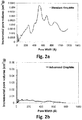
- FIG. 2a a graph representing pore-volume distribution calculated by the DFT method for a standard, battery-grade graphite is shown, while Figure 2b represents the pore-volume distribution for Advanced Graphite.
- Figure 2a shows that the pore volume for standard graphite is relatively low (less than 4.5 x 10 -3 cm 3 /g) for the entire range of pores measured for nitrogen gas adsorption with a wide pore range distribution. As a result, the surface area of standard graphite is relatively low, thus restricting electrolyte access, resulting in an active material with lower charge acceptance.
- FIG. 2b shows that Advanced Graphite has a much higher pore volume for pore widths (0 - 800 ⁇ ) with a peak of 0.05 cm 3 /g with predominantly micro (less than 20 ⁇ ) and meso (20 - 500 ⁇ ) porosity.
- Advanced Graphite may further contain an trivial amount of macro (greater than 500 ⁇ ) pore widths, typically between 0 and 10%.
- Advanced Graphite with predominantly micro and meso porosity has a total pore volume approximately 3 times greater than standard graphite (0.2 cm 3 /g for advanced graphite vs. 0.065 cm 3 /g for standard graphite). As a result, the surface area of standard graphite is much greater, thus allowing electrolyte access, resulting in an active material with higher charge acceptance.
- AGM batteries were assembled with three different compositions of negative paste, including (i) a control negative mix having no additional carbon; (ii) a negative mix with 1%-by-weight standard graphite and 1%-by-weight, standard carbon black; and (iii) a negative mix with 2% by weight Advanced Graphite.
- AGM batteries instead of using a gel or liquid electrolyte, use a fiberglass like separator to hold the electrolyte in place.
- AGMs spill-proof and the most vibration and impact resistant lead-acid batteries available today. Even better, AGM batteries use almost the same voltage set-points as flooded cells and thus can be used as drop-in replacements for flooded cells.
- Discharge power determines the degree of achievable electrical boosting during the acceleration period, while the charge acceptance affects the degree of utilization of the regenerative braking energy during the deceleration step.
- SoC State-of-Charge's
- EUCAR European Council for Automotive R&D
- a non-stop, power-assist, cycle-life test in which the battery is cycled continuously without rest step at 10,000 cycle intervals, has been devised to simulate real life test conditions. This test helps in differentiating the various grades of carbons that produced similar test in a standard, EUCAR, power-assist cycle-life test.
- a crystalline solid consists of regularly spaced atoms (electrons) that may be described using imaginary planes. The distance between these planes is called the d-spacing where the intensity of the d-space pattern is typically directly proportional to the number of electrons (atoms) that are found in the imaginary planes. Every crystalline solid will have a unique pattern of d-spacing (also known as the powder pattern), which may be analogous to a "finger print" for a solid.
- the peak position and d-spacing remains constant for all grades of graphite while intensity of the peak varies based on the amount of defects present in the sample quantified by crystallinity percentage of the sample. Carbon black (and activated carbon) have no peak due to the absence of periodic structure.
- Full width at half maximum (FWHM) of a peak is a measure of crystal size distribution where a smaller FWHM (narrow peak) corresponds to smaller distribution of crystal sizes.
- Surface area is in general inversely related to crystallinity percentages (lower defects in carbon, lower surface area).
- motive power (deep discharge lead acid battery) applications include material handling and electric vehicles, such as golf carts, lift trucks, sweepers and scrubbers, wheel chairs, airport ground support equipment and mining vehicles, among others.
- Such applications require high capacity batteries (e.g., 300 to 2000 Ah) discharged at a moderate rate to deep depths of discharges (up to 80% DoD daily).
- transportation batteries e.g., automotive, truck and tractor trailer, construction, agriculture equipment, marine, powersports, etc.
- medium to low capacity batteries 100 Ah or less
- motive power batteries are longer life batteries, with up to five years of life and up to 2000 charge discharge cycles, as compared to the relatively lower life of 2-4 years in transportation batteries, depending on application.
- Motive power batteries also utilize thicker electrode designs, large amounts of active material and high density paste for high energy requirements (with grid thickness and paste density being four to five times that of transportation batteries, e.g., .150 - .250 in. vs..035 - .050 in.), while transportation batteries have thinner electrode designs for high power requirements and relatively lower active mass and standard density paste.
- motive power batteries may use a lead-antimony alloy grid, used for cyclability requirements in deep discharge applications, whereas transportation batteries utilize a lead-calcium alloy grid for lower water consumption and stable float charge requirements. Maintenance is also required for motive power batteries (watering on a weekly basis), whereas transportation batteries are typically maintenance free.
- motive power batteries may include voltages between 6V to 48V, where 3 to 24 cells are assembled in motive power trays, which cells may be arranged in a multitude of physical configurations.
- Transportation batteries are typically 12V units with 6 cells that are assembled inside a battery compartment.
- a deep storage lead acid cell energy storage device comprises: an electrode comprising lead; an electrode comprising lead dioxide; a separator between the electrode comprising lead and the electrode comprising lead dioxide; an aqueous solution electrolyte containing sulfuric acid; and a carbon-based additive having a specific surface area of approximately 250 to 550 m 2 /g.
- Illustrated exemplary elements include: a positive plate 102; a separator 104; a cell jar 106; a cell cover 108; a negative strap 110; a positive strap 112; a negative post 114; a positive post 116; a negative plate 118; a glass mat 120; a floating bushing 122; a Koroseal retainer 124; a vent plug 126; an element protector 128; a self-leveling bridge 130; and a bottom boot 132.
- Figure 5 illustrates an exemplary cell 100 in the context of an exemplary tubular motive power battery assembly, shown generally at 134, including: intercell connectors 136; tray 138; and cable and connector 140.
- Figure 6 illustrates an exemplary method 200 for making motive power batteries, including: Mixing lead oxide, one or more carbon materials, an expander and polymeric fibers in a mixing vessel at step 202; adding water and continuing mixing, with spraying sulfuric acid into the mixing vessel with constant stirring at step 204; measuring the viscosity and penetration of the mixture, and optionally adding more water to the mixture to attain the necessary viscosity at step 206; applying the carbon paste to a lead alloy grid at step 208; curing the carbon paste on the lead alloy grid at a required temperature and humidity followed by drying at high temperature at step 210; plate assembly and acid filling at step 212; battery formation using carbon formation profile at step 214; and washing and packing for shipment at step 216.
- exemplary embodiments provide a carbon-based additive having a specific surface area of approximately 100 to 550 m 2 /g.
- Other exemplary embodiments provide a carbon-based additive having a specific surface area of approximately 100 to 900 m 2 /g, wherein the carbon-based additive is mixed with a negative paste and wherein the concentration of the carbon-based additive relative to the paste is approximately 0.2 to 3% by weight.
- such a deep discharge lead acid cell energy storage device is configured to provide: charge acceptance, e.g., of 1.03 to 1.90 Ah/min, representing an increase of about 15% at room temperature (80F); charge acceptance, e.g., of 0.67 to 1.49 Ah/min, representing an increase of about 48% at cold temperature (32F); improved formation efficiency such that it is increased by 18% over standard motive power cells, having PbO to PbO 2 conversion of 85 - 90% in positive plates.
- Other exemplary embodiments provide a deep discharge cell that is capable of two times improvement, e.g., with between about 1000 -2000 cycles, in 80% DoD motive power cycle life test compared to standard.
- a deep discharge lead acid cell utilized for cold storage application includes: a first electrode comprising lead; a second electrode comprising lead dioxide; a separator between the electrode comprising lead and the electrode comprising lead dioxide; an aqueous solution electrolyte containing sulfuric acid; and a carbon-based additive comprising graphite having a specific surface area of approximately 100 to 900 m 2 /g, wherein the carbon-based additive is mixed with a negative paste and wherein the concentration of the carbon-based additive relative to the paste is between about 0.2 to 3% by weight.
- the cold storage deep discharge lead acid cell has 48% lower recharge time to full SoC over standard motive power cells having standard recharge times of 6 - 8 hours.
- the cold storage deep discharge lead acid cell accepts up to 48% more current during opportunity charging at shift breaks and helps battery last the entire shift of 8 hours compared to standard motive power cells which typically last 5 - 6 hours.
- the cold storage deep discharge lead acid cell has a 50 - 500 mV lower voltage for the same charge current, with improved heat dissipation and wear resistance on the cells as compared to standard motive power cells.
- motive power batteries with faster recharge and enhanced cycling are disclosed, including use of advanced graphite in negative paste.
- Exemplary embodiments thus provide improved recharge efficiency and reduction of recharge time for Motive power lead acid batteries during opportunity charging as well as end-of-shift full recharge.
- the charge current that a battery accepts during testing depends on the surface area of the negative active material and the electrical conductivity of the electrodes.
- deep discharge batteries containing advanced graphite show higher charge acceptance compared to standard deep discharge batteries with no carbon as well as such batteries with standard graphite due to a higher surface area of the advanced graphite.
- exemplary embodiments provide reduction of formation time of the Motive power lead acid batteries by increasing the formation efficiency. Carbon inclusion also lowers hydrogen evolution overpotential on the negative plate. Graphites in negative plates reduce the cell voltage during formation process due to the decrease in negative plate resistance. Hence, formation efficiency is improved.
- exemplary embodiments improve the cycle life of Motive power lead acid batteries beyond current life of 4-5 years. Since motive power batteries regularly operate under PSoC conditions, the presence of advanced graphite in NAM nucleates the PbSO 4 crystals during cycling, resulting in smaller crystals that may be more easily dissolved into the electrolyte during charging processes. This restricts the progress of plate sulfation (e.g., formation of a PbSO 4 layer) and increases the useful life of the battery during cycling. High surface-area carbons can also act as a reservoir for electrolyte within NAM, thus reducing the possibility of plate dry-out.
- exemplary embodiments provide advantage with use of antimony alloys in grids, which typically cause water loss during use (requiring cell maintenance and watering on a weekly basis).
- water loss concerns that may limit carbon usage in other applications is not an issue in exemplary embodiments of the presently described motive power application.
- Formation process involves conversion of cured pastes into electrochemically active porous materials - PbO 2 in positive plate and Pb in negative plate. This conversion is achieved by charging the positive and negative cured plates typically at current densities 0.7 - 2.5 mA/cm 2 over several hours. Typically, 1.7 to 2.3 times the theoretical capacity is delivered to the plates during formation. Formation temperature is kept below 60 °C to favor formation of ⁇ - PbO 2 over ⁇ - PbO 2 which results in lower initial capacity but longer cycling performance. Formation is the longest process step in manufacture of lead acid batteries and several attempts were made in the past to improve formation efficiency and reduce formation time. Effort to increase current density to shorten formation times resulted in increase in formation temperature and decreased long term performance.
- Formation efficiency is determined by measuring the PbO 2 content in positive plates after formation using the wet chemistry process.
- PbO 2 content in positive plates from standard battery, standard battery-grade graphite as well as advanced graphite (low & high concentration) after formation is shown in Figure 7 .
- Inclusion of graphites in negative plates reduces the cell voltage during formation process due to decrease in negative plate resistance. Carbon inclusion also lowers hydrogen evolution over-potential on the negative plate while increasing oxygen evolution over-potential on the positive side. With increase in over-potential on the positive plate, less energy is consumed for electrolysis reaction and more energy is used on electrochemical reaction to convert PbO to PbO 2 . Hence, formation efficiency is improved with carbon addition on the carbon plates.
- Figure 7 shows PbO 2 content in plate from standard battery to be about 80% while positive plates from advanced graphite containing batteries have more than 90% PbO 2 .
- a charge acceptance test is performed to determine the ability of battery to accept charge at a discharged state or at partial state of charge (PSoC) conditions.
- Battery was initially discharged at C/6 rate completely until the battery voltage reaches 1.75 volts per cell. Then the battery is placed at target temperature of 80F or 32F for 8 hours for the battery voltage. The battery is then charged at 2.75 volts per cell/100 A maximum current until 116% of the ampere hour is returned.
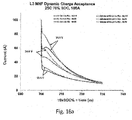
- the charge current that a battery accepts during this test depends on surface area of the negative active material and electrical conductivity of the electrodes. Advanced graphite containing batteries showed higher charge acceptance compared to standard batteries with no carbon as well as batteries with standard graphite.
- Figure 10 shows results from 80% DoD cycle life test at C/6 rate with 115% recharge.
- C/6 rate capacity for standard group as well as batteries with standard graphite dropped below 100% of rated capacity after 280 cycles while advanced graphite (low & high) containing batteries show capacities above 110 and 120% of rated capacity respectively. Water loss was comparable for all four groups.
- Ten point running average of charge back and 95% confidence interval of percent ampere-hour charge back data from the cycling test are shown in Figure 11 . Percent charge back started fading for standard batteries while advanced graphite batteries can still charge back to 110% or greater.
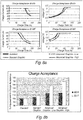
- Figures 12a and 12b The charge acceptance power and power discharge at different SoC (at a constant 25° C) are presented in Figures 12a and 12b for modules containing: (i) no-carbon, standard-negative mix; (ii) negative mix with 1% by weight standard graphite and 1 wt% standard carbon black; and (iii) negative mix with 2% by weight advanced carbon.
- Figure 12a is a bar graph representing regenerative charge acceptance (watts)
- Figure 12b is a bar graph representing peak power (watts) for 6V/24 Ah.
- SoC state-of-charge
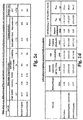
- Figure 1d is a chart depicting the comparable initial characterization of three spiral 6V/25 Ah modules used in the test.
- the graph indicates that a standard, graphite-carbon mix generally shows a higher charge acceptance as compared to both the no-carbon control mix and Advanced Graphite mix.
- the performance of the standard, graphite-carbon mix may be attributed to the presence of smaller-particulate, high surface area, carbon black.
- the graph clearly indicates that the Advanced Graphite mix consistently yields the highest discharge power at all state-of-charge levels.
- the graph also shows the drastic drop in discharge power for the no-carbon, control mix and standard, graphite-carbon mix as the SOC decreases from 100% to 20%.
- the Advanced Graphite mix's outstanding performance may be attributed to the higher electrical conductivity of Advanced Graphite as compared to the standard graphite/carbon black mix. Remarkably, maximum improvement was observed at 20% SoC, where the Advanced Graphite mix showed more than 35% and 25% improvement over the control battery (no-carbon mix) and standard, graphite-carbon mix, respectively.
- the EUCAR, power-assist, cycle-life test is an important test for hybrid electric vehicle (HEV) applications carried out to simulate the power performance of batteries under partial state-of-charge cycling.
- the profile used for testing contains a test unit that repeats 10,000 times with the battery at 60% SoC and 2.5% depth-of-discharge.
- the battery rests for a few hours after 10,000 cycles for the electrolyte to stabilize in the battery before further testing.
- This rest step in power-assist cycle-life tests does not typically represent actual use conditions. Therefore, a non-stop, power-assist, cycle-life test was devised, whereby the battery was cycled without rest until it reached failure condition.
- the non-stop, power-assist test also helps to differentiate various carbon groups that perform alike when rested after every 10,000 cycles.
- Advanced Graphite with ordered structures that are inert to electrochemical reactions during charge-discharge cycles and with surface area of at least ten times greater than typical battery-grade natural or synthetic graphites, is an ideal candidate for lead-acid battery application.
- the use of this Advanced Graphite will advance the capabilities of valve-regulated, lead-acid battery to compete with other chemistries for HEV application.
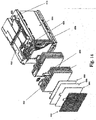
- Figure 14 illustrates a prismatic lead-acid battery 600 configured to accept an Advanced Carbon paste.
- the lead-acid battery comprises a lower housing 610 and a lid 616.
- the cavity formed by the lower housing 610 and a lid 616 houses a series of plates that collectively form a positive plate pack 612 (i.e., positive electrode) and a negative plate pack 614 (i.e., negative electrode).
- the positive and negative electrodes are submerged in an electrolyte bath within the housing. Electrode plates are isolated from one another by a porous separator 606 whose primary role is to eliminate all contact between the positive plates 604 and negative plates 608, while keeping them within a minimal distance (e.g., a few millimeters) of each other.
- the positive plate pack 612 and negative plate pack 614 each have an electrically connective bar travelling perpendicular to the plate direction that causes all positive plates to be electrically coupled and negative plates to be electrically coupled, typically by a tab on each plate. Electrically coupled to each connective bar is a connection post or terminal (i.e., positive 620 and negative post 618).
- the Advanced Carbon paste of the present application may be pressed in to the openings of grid plates 602, which, in certain exemplary embodiments, maybe slightly tapered on each side to better retain the paste.
- a prismatic AGM lead-acid battery is depicted, the Advance Carbon additive may be used with any lead-acid battery, including, for example, flooded/wet cells and/or gel cells.
- the battery shape need not be prismatic, it may be cylindrical, or a series of cylindrical cells arranged in various configurations (e.g., a six-pack or an off-set six-pack).
- a carbon containing paste may be prepared having an optimum viscosity (260 - 310 grams/cubic inch) and penetration (38 - 50).
- the carbon paste may then be applied to a lead alloy grid that may be cured at a high temperature and humidity.
- a lead alloy grid In cylindrical cells, positive and negative plates are rolled with a seperator and/or pasting papers into spiral cells prior to curing. Once cured, the plates are further dried at a higher temperature and assembled in the battery casing. Respective gravity acid may be used to fill the battery casing. Batteries are then formed using an optimized carbon batteries formation process (i.e., profile).
- the formation process may include, for example, a series of constant current or constant voltage charging steps performed on a battery after acid filling to convert lead oxide to lead dioxide in positive plate and lead oxide to metallic lead in negative plate.
- carbon-containing negative plates have lower active material (lead oxide) compared to control plates.
- the formation process i.e., profile
- the formation process is typically shorter.
- FIG. 15 illustrates a spiral-wound lead-acid battery 700 configured to accept an Advanced Graphite paste.
- a spiral-wound lead-acid battery 700 comprises a lower housing 710 and a lid 716.
- the cavity formed by the lower housing 710 and a lid 716 houses one or more tightly compressed cells 702.
- Each tightly compressed cell 702 has a positive electrode sheet 704, a negative electrode sheet 708 and a separator 706 (e.g., an absorbent glass mat separator).
- AGM batteries use thin, sponge-like, absorbent glass mat separators 706 that absorb all liquid electrolytes while isolating the electrode sheets.
- a carbon containing paste may be prepared having an optimum viscosity (260 - 310 grams/cubic inch) and penetration (38 - 50).
- the carbon paste may then be applied to a lead alloy grid that may be cured at a high temperature and humidity.
- a lead alloy grid In cylindrical cells, positive and negative plates are rolled with a seperator and/or pasting papers into spiral cells prior to curing. Once cured, the plates are further dried at a higher temperature and assembled in the battery casing. Respective gravity acid may be used to fill the battery casing. Batteries are then formed using an optimized carbon batteries formation process.
- the Advanced Graphite paste may be prepared using one of many known processes.
- US Patent 6,531,248 to Zguris et al. discusses a number of known procedures for preparing paste and applying paste to an electrode.
- a paste may be prepared by mixing sulfuric acid, water, and various additives (e.g., Advance Graphite and/or other expanders), where paste mixing is controlled by adding or reducing fluids (e.g., H 2 O, H 2 SO 4 , tetrabasic lead sulfate, etc.) to achieve a desired paste density.
- the paste density may be measured using a cup with a hemispherical cavity, penetrometer (a device often used to test the strength of soil) and/or other density measurement device.
- Zguris also discusses a number of methods for applying a paste to a battery electrode.
- a "hydroset" cure involves subjecting pasted plates to a temperature (e.g., between 25 and 40°C) for 1 to 3 days.
- the lead content of the active material is reduced by gradual oxidation from about 10 to less than 3 weight percent.
- the water i.e., about 50 volume percentage
- MHF Micro-hybrid flooded
- Charge acceptance test was performed to determine the ability of battery to accept charge at a partial state of charge (PSoC) conditions.
- the battery was initially discharged at C/20 rate to get the battery to 70, 80 or 90 % state of charge (SoC). After the battery voltage stabilized at that PSoC, battery was charged with a constant voltage. Current drawn by batteries during this charge step was monitored and recorded. The charge current that a battery accepted during this test depended on surface area of the negative active material and electrical conductivity of the electrodes. Charge acceptance varied with charge voltage, as well as SoC, of the battery. Charge voltages of 13.5, 14.0 and 14.4 V were used to determine the charge acceptance of batteries at 70, 80 or 90 % SoC ( Figures 16a , 16b and 16c ).
- Advanced graphite-containing batteries showed higher charge acceptance, compared to standard batteries with no carbon, at all charge voltage and at all SoC. Differences in charge acceptance for standard and advanced graphite containing batteries appear to be higher at higher test voltages. Similar differences in charge acceptance were observed at all state-of-charges. Charge acceptance decreased for both groups at lower test voltages.
- DoD testing consists of a discharge capacity test done after 85 charge - discharge micro-cycles, with 17.5 % depth of discharge swing performed on a battery at 50% state of charge.
- Figure 17 shows that a significant and unexpected cycle life was achieved for the advanced graphite mix where the battery was able to cycle more than 1000 cycles (13 to 14 weeks), while the standard batteries failed around 750 cycles (less than 9 weeks). This important advancement in cycle life is the result of combining two important attributes of additives -higher surface area and higher electrical conductivity in single graphite. Addition of this advanced graphite results in a robust battery that could be cycled efficiently over an extended period of time.
- Group LN5 92Ah Advanced glass mat (AGM) type prismatic batteries were assembled with two different compositions of negative paste. Tnests were conducted with regard to batteries having no additional carbon standard negative mix for reference, as well as negative mix with 0.3 wt % Advanced Graphite. A standard paste-mixing recipe was used for standard positive and standard negative control pastes. Additional graphite-containing carbon additive was added to the negative paste mix for advanced graphite-containing plates. The dried plates were assembled in the battery casing with standard AGM seperators; and standard specific gravity acid was filled into the battery casing specific to AGM batteries. Formed batteries were subjected to various electrochemical tests, as is described below.
- Repeated reserve capacity test is a cycle life test performed to predict the durability of lead acid batteries.
- the batteries are cycled at reserve capacity rate (25A discharge) 50 times. Discharge capacities are monitored and recorded over 50 cycles for both standard and advanced graphite batteries.
- Figure 18 shows a graph of discharge capacities as % of rated capacity over 50 cycles of Repeated reserve capacity test for batteries with standard negative mix with no carbon and for batteries with advanced graphite containing negative mix.
- Figure 18 shows that Advanced Graphite containing battery increases cumulative energy capacity over 50 cycles of repeated reserve capacity test by about 10 %, when compared to standard battery. This increase is observed for an average of 3 batteries from each group. This advancement in cycle life is the result of combining two important attributes of advanced graphite additive - higher surface area and higher electrical conductivity in single graphite.
Landscapes
- Chemical & Material Sciences (AREA)
- Chemical Kinetics & Catalysis (AREA)
- Electrochemistry (AREA)
- General Chemical & Material Sciences (AREA)
- Engineering & Computer Science (AREA)
- Manufacturing & Machinery (AREA)
- Inorganic Chemistry (AREA)
- Physics & Mathematics (AREA)
- Spectroscopy & Molecular Physics (AREA)
- Ceramic Engineering (AREA)
- Battery Electrode And Active Subsutance (AREA)
- Secondary Cells (AREA)
Abstract
Description
- This application is a Continuation-In-Part of
U.S. Patent Application No. 14/279,492, filed May 16, 2014 U.S. Patent Application No. 12/984,023 filed January 4, 2011 U.S. Patent No. 8,765,297 , the disclosures of which are incorporated by reference herein in their entireties. - The present disclosure relates generally to lead-acid batteries, and more particularly to an Advanced Graphite additive to enhance the cycle life of deep discharge or motive power lead-acid batteries, to such batteries containing such an additive, a paste for such batteries, and methods for making such batteries.
- The lead-acid battery is the oldest and most popular type of rechargeable energy storage device, dating back to the late 1850's when initially conceived by Raymond Gaston Planté. Despite having a very low energy-to-weight ratio and a low energy-to-volume ratio, the lead-acid battery can supply high-surge currents, allowing the cells to maintain a relatively large power-to-weight ratio. These features, along with their low cost, make lead-acid batteries attractive for use in motor vehicles, which require a high current for starter motors. A lead-acid battery is generally composed of a positive electrode and a negative electrode in an electrolyte bath. Typically, the electrodes are isolated by a porous separator whose primary role is to eliminate all contact between the electrodes while keeping them within a minimal distance (e.g., a few millimeters) of each other. A separator prevents electrode short-circuits by containing dendrites (puncture resistance) and reducing the Pb deposits in the bottom of the battery.
- A fully charged, positive lead-acid battery electrode is typically lead dioxide (PbO2). The negative current collector is lead (Pb) metal and electrolyte is sulfuric acid (H2SO4). Sulfuric acid is a strong acid that typically dissociates into ions prior to being added to the battery:
H2SO4 → H++ HSO4 -
- As indicated in the following two half-cell reactions, when this cell discharges, lead metal in the negative plate reacts with sulphuric acid to form lead sulphate (PbSO4), which is then deposited on the surface of the negative plate.
Pb (s) + HSO4 - (aq) → PbSO4 (s) + H +(aq) + 2e- (negative-plate half reaction)
PbO2 (s) + 3H +(aq) + HSO4 - (aq) + 2e- → PbSO4 (s) + 2H2O (positive-plate half reaction)
- During the discharge operation, acid is consumed and water is produced; during the charge operation, water is consumed and acid is produced. Adding the two discharge half-cell reactions yields the full-cell discharge reaction:
Pb + PbO2 + 2H2SO4 → 2PbSO4 + 2H2O (full-cell discharge equation)
- When the lead-acid battery is under load, an electric field in the electrolyte causes negative ions (in this case bisulfate) to drift toward the negative plate. The negative ion is consumed by reacting with the plate. The reaction also produces a positive ion (proton) that drifts away under the influence of the field, leaving two electrons behind in the plate to be delivered to the terminal.
- Upon recharging the battery, PbSO4 is converted back to Pb by dissolving lead sulphate crystals (PbSO4) into the electrolyte. Adding the two charge half-cell reactions yields the full-cell charge reaction.
PbSO4 (s) + H +(aq) + 2e- → Pb (s) + HSO4 - (aq) (negative-plate half reaction)
PbSO4 (s) + 2H2O → PbO2 (s) + 3H+(aq) + HSO4 - (aq) + 2e- (positive-plate half reaction)
2PbS04 (s) + 2H2O (aq) → Pb (s) + PbO2 (s)+ 2H+ (aq)+ 2HSO4 - (aq) (full-cell charge equation)
- When the battery repeatedly cycles between charging and discharging, the efficiency of dissolution of PbSO4 and conversion to Pb metal decreases over time. As a result, the amount of PbSO4 continues to increase on the surface of negative plate and over time forms an impermeable layer of PbSO4, thus restricting access of electrolyte to the electrode.
- Motive power or traction batteries are deep discharge batteries that are used in material handling and electric vehicles such as golf-carts, lift trucks, sweeper/scrubbers, wheel chairs, airport ground support equipment, mining vehicles etc. These batteries typically have high capacities and are discharged at a moderate rate to deep depths of discharge (up to 80% DoD) on a daily basis. Motive power batteries are also expected to have longer life of up to 5 years and up to 2000 charge-discharge cycles. Also, since these batteries are used on a daily basis, it is required to completely recharge these batteries in a short period of time (8 -12 hours) using high charge currents and allow the batteries to cool down before use.
- High capacity requirement in motive power batteries is achieved by using thick electrodes containing large amount of active material and higher density pastes. Hence, the formation time is long (several days) with larger active mass for motive power batteries. While one approach to reducing formation time is to increase current density, this results in an increase in formation temperature and decreased long term performance. Because these batteries are used on a daily basis, it is required to completely recharge these batteries in a short period of time (e.g., 8-12 hours) using high charge currents, followed by allowing the batteries to cool down prior to use. Use of thick plates reduces the charge and discharge power of the Motive power batteries.
- Deep discharge and long life requirements necessitate research in positive/negative grid alloys with high corrosion resistance, low possibility of thermal runaway and low premature capacity loss. Lead-antimony alloys have been used conventionally in positive grids due to its high corrosion resistance in deep discharge-charge cycling. However, antimony alloy causes thermal runaway when used in VRLA cells where water loss is critical. Lead-Cadmium-Antimony alloy solved the thermal runaway issue but now discontinued due to carcinogenic effect of Cadmium. Calcium-Lead, Calcium-tin-lead, Calcium-tin-silver lead, selenium-antimony-tin-lead alloys were also explored in the past for Motive power cell grids. Other advancement in motive power cells involved attempts to make motive power batteries maintenance-free (sealed VRLA) and spill-free (Gel electrolyte).
- Over the years, several additives have been used in negative plate of lead acid battery as part of expander formulation to improve charge acceptance/recharge ability, lessen the growth of lead sulphate (PbSO4) and improve battery performance. Expanders act as anti-shrinkage agents and are an important component of lead/acid batteries because they prevent performance losses in negative plates that would otherwise be caused by passivation and structural changes in the active material. To make a negative plate spongy and prevent the solidification of lead, expanders were developed from a mixture of carbon black, lignin derivatives (e.g., lignosulphate, lignosulfonates), and barium sulphate (BaSO4) These expanders can be incorporated into a battery's negative plates in several ways, including adding the individual components to a paste mix and adding a preblended formulation.
- Carbon black, substantially pure elemental carbon, typically in the form of colloidal particles produced by an incomplete combustion or thermal decomposition of gaseous or liquid hydrocarbons under controlled conditions, is typically added to the negative active material (NAM) to increase: (i) electrical conductivity; (ii) surface area of the NAM; and (iii) nucleating PbSO4 crystals. It is a black, finely divided, pellet or powder.
- The presence of lignin derivatives (e.g., lignosulphate, lignosulfonates, and other complex aromatic polyethers) helps prevent the formation of an obstructive PbSO4 layer on the electrode surface and facilitates the formation of a porous layer built up of individual PbSO4 crystals. Lignin derivatives have the property of being strong antiflocculents (e.g., they prevent colloids from coming out of suspension in the form of flocs or flakes) and comprise a large hydrophobic organic part (R+) and a small hydrophilic inorganic fraction (SO3 -). As a result, lignin derivatives are water-soluble. For example:
RS03Na → RSO3 - +Na+
- The hydrophobic part of the RSO3 - anion will be adsorbed on the surface of the lead particles, and thus the hydrophilic part of the anion will phase-out to the aqueous electrolyte phase. This results in an increase in the repulsion potential, which prevents the particles from coalescing or sintering. Many different lignosulfonates have been used in expanders; however, their effects on the performance of lead/acid batteries varies dramatically based on the expander formula and battery type application (e.g., Starting, Motive, Standby).
- Barium sulfate, being isomorphic to PbSO4. acts as a nucleation agent and ensures uniform distribution of PbSO4 crystals throughout the active mass volume. The ability of barium sulfate to act as a site for lead sulfate precipitation is due to the similar structures of the two compounds. Strontium sulfate has also been shown to be an effective expander. The inert barium sulfate provides a large number of sites for the precipitation of lead sulfate crystallites and thereby prevents its deposition as a thin, impermeable, passivating PbSO4 film.
- A notable difference between expanders used in automotive and industrial applications is the ratio of barium sulfate to carbon. For example, in automotive batteries, a high fraction of lignosulfonate (25 - 40%) may be used, whereas in industrial batteries, a smaller percentage of lignosulfonate may be used (0 - 10%). The higher percentage of lignosulfonate in automotive plates may be useful in producing high cold-cranking amperes, whereas a larger amount of barium sulfate in industrial plates may help prevent passivation during deep cycling and provide greater durability.
- Conductive additives in positive plates, such as BaPbO3 (Barium metaplumbate); Pb3O4 (Red lead), Titanium based compounds (e.g., Ti4O7, TiSi2, TiO2), and graphite have been used to improve the power density and corrosion resistance in lead-acid batteries. Similarly, higher surface area additives (e.g., glass microspheres, particulate silica, zeolite, and porous carbons) have also been added to negative paste to improve electrolyte access and enhance cycle life.
- For several decades, carbon has been a popular additive to the NAM in lead-acid batteries. Although the role of carbon in NAM may be generally unclear, several beneficial effects have been identified. For example, carbon nucleates the PbSO4 crystals, resulting in smaller crystals that may be more easily dissolved into the electrolyte during charging processes. This restricts the progress of plate sulfation (e.g., formation of a PbSO4 layer) and increases the useful life of the battery in high-rate, partial state-of-charge (HRPSoC) duty. High surface-area carbons can act as a reservoir for electrolyte within NAM, thus reducing the possibility of plate dry-out.
- A combination of highly conductive graphite, high surface area carbon black and/or activated carbon is often used in NAM. In graphite, the atoms are typically arranged in planar hexagonal networks (e.g., graphene layers) held together by strong sp2 bonds resulting in high inplanar electronic conductivity. A disordered carbon typically arises when a fraction of carbon atoms is sp3 hybridized rather than sp2. The electronic conductivity of mixed carbon depends on the distribution of sp3 carbon in sp2 domains. Although graphite additives in active material decrease the resistivity of the paste by forming a conductive path around the PbSO4 crystals, they are reported to have lower surface areas (typically in the order of 10 - 30 m2/g). A second carbon additive is generally required to increase the total surface area of the NAM to improve the accessibility of electrolyte. Carbon blacks and activated carbons with surface areas between 200 - 2000 m2/g may be added in conjunction with graphite to improve surface area as well as electronic conductivity. Activated carbon is a form of carbon that has been processed to greatly increase porosity, thus greatly increasing its surface area (e.g., 1 gram of activated carbon may have surface area in excess of 500 m2). A graphitic carbon with a greater degree of defective sites in regular graphene layers is disclosed herein.
- Numerous attempts have been made to overcome the above-mentioned problems. For example,
U.S. Patent No. 6,548,211 to Kamada, et al. , discloses the addition of graphite powder having a mean particle size smaller than 30 µm added in the range of about 0.3% to 2% by weight.U.S. Patent Publication No. 2010/0015531 to Dickinson, et al. , discloses a paste for negative plate of lead acid battery having a activated carbon additive loadings of 1.0% to 2.0% by weight. The activated carbon additive, taught by Dickinson, has a mesopore volume of greater than about 0.1 cm3/g and a mesopore size range of about 20 - 320 angstroms (Å) as determined by the DFT nitrogen adsorption method.U.S. Patent Publication No. 2010/0040950 to Buiel, et al. describes a negative electrode having a mixture of activated carbon (∼ 5 - 95% by weight), lead (5 - 95% by weight), and conductive carbon (5 - 20% by weight).U.S. Patent No. 5,547,783 to Funato, et al. , describes various additives, including carbon, acetylene black, polyaniline, tin powder, and tin compound powder having an average particle diameter of 100 µm or less.U.S. Patent No. 5,156,935 to Hohjo, et al. , describes electro-conductive whiskers made of carbon, graphite or potassium titanate - useful as additives for the negative plate of a lead-acid battery - having a diameter of 10 µm or less, aspect ratio of 50 or more, and a specific surface area of 2 m2/g(21). Unfortunately, none of these previous attempts have been able to achieve the benefit of both higher surface area and higher electronic conductivity in a single carbon material. - Carbon blacks and activated carbons have the ability to accept a higher charge because of their higher surface areas and enhanced electrolyte accessibility. Unfortunately, because of their porous structures, carbon blacks and activated carbons have poor retention on particle size during paste mixing and cycling. As a result, carbon blacks and activated carbons often disintegrate, causing the carbon to bleed out of the plate over period of time, resulting in active material shedding from the grids.
- Graphites, by contrast, with ordered structures, are advantageous because they are both inert to electrochemical reactions during charge-discharge cycles and resist disintegration during cycle life tests over an extended period. Unfortunately, graphites have lower surface areas, thus restricting electrolyte access and resulting in an active material with lower charge acceptance.
- Despite the numerous existing battery additives, there is a need for an improved battery additive that (i) is inert to electrochemical reactions during charge-discharge cycles; (ii) resists disintegration during cycle life tests over an extended period; and (iii) yields an increased charge acceptance.
- A graphitic carbon with a greater degree of defective sites in regular graphene layers is disclosed herein. Lower regularity of graphitic layers results in graphite with an advantageous surface area of, e.g., about 250 to 550 m2/g, as compared to typical graphite surface areas, which are between 10 and 30 m2/g.
- According to a first aspect of the present invention, a deep storage lead acid cell energy storage device comprises: an electrode comprising lead; an electrode comprising lead dioxide; a separator between the electrode comprising lead and the electrode comprising lead dioxide; an aqueous solution electrolyte containing sulfuric acid; and a carbon-based additive having a specific surface area of approximately 250 to 550 m2/g.
- Other exemplary embodiments provide a carbon-based additive having a specific surface area of approximately 100 to 550 m2/g. Other exemplary embodiments provide a carbon-based additive having a specific surface area of approximately 100 to 900 m2/g, wherein the carbon-based additive is mixed with a negative paste and wherein the concentration of the carbon-based additive relative to the paste is approximately 0.2 to 3% by weight.
- In other exemplary embodiments, such a deep discharge lead acid cell energy storage device is configured to provide: charge acceptance, e.g., of 1.03 to 1.90 Ah/min, representing an increase of about 15% at room temperature (80F); charge acceptance, e.g., of 0.67 to 1.49 Ah/min, representing an increase of about 48% at cold temperature (32F); improved formation efficiency such that it is increased by 18% over standard motive power cells, having PbO to PbO2 conversion of 85 - 90% in positive plates. Other exemplary embodiments provide a deep discharge cell that is capable of two times improvement, e.g., with between about 1000 -2000 cycles, in 80% DoD motive power cycle life test compared to standard.
- In other exemplary embodiments a deep discharge lead acid cell utilized for cold storage application includes: a first electrode comprising lead; a second electrode comprising lead dioxide; a separator between the electrode comprising lead and the electrode comprising lead dioxide; an aqueous solution electrolyte containing sulfuric acid; and a carbon-based additive comprising graphite having a specific surface area of approximately 100 to 900 m2/g, wherein the carbon-based additive is mixed with a negative paste and wherein the concentration of the carbon-based additive relative to the paste is between about 0.2 to 3% by weight. In further exemplary embodiments, the cold storage deep discharge lead acid cell has 48% lower recharge time to full SoC over standard motive power cells having standard recharge times of 6 - 8 hours. In further exemplary embodiments, the cold storage deep discharge lead acid cell accepts up to 48% more current during opportunity charging at shift breaks and helps battery last the entire shift of 8 hours compared to standard motive power cells which typically last 5 - 6 hours. In further exemplary embodiments, the cold storage deep discharge lead acid cell has a 50 - 500 mV lower voltage for the same charge current, with improved head dissipation and wear resistance on the cells as compared to standard motive power cells.
- In exemplary embodiments, motive power batteries with faster recharge and enhanced cycling are disclosed, including use of advanced graphite in negative paste. Exemplary embodiments thus provide improved recharge efficiency and reduction of recharge time for Motive power lead acid batteries during opportunity charging as well as end-of-shift full recharge. In addition, exemplary embodiments provide reduction of formation time of the Motive power lead acid batteries by increasing the formation efficiency. Further, exemplary embodiments improve the cycle life of Motive power lead acid batteries beyond current life of 4-5 years.
- In one embodiment, a deep discharge lead acid cell comprises a first electrode comprising lead; a second electrode comprising lead dioxide, wherein at least one of said first and second electrodes are configured with a thickness between about .015 and .025 inches; a separator between the electrode comprising lead and the electrode comprising lead dioxide; an aqueous solution electrolyte containing sulfuric acid; and a carbon-based additive having a specific surface area of approximately 100 to 900 m2/g.
- In a further embodiment, a deep discharge lead acid cell is described wherein said first and second electrodes of the deep discharge lead acid cell are configured with a thickness between about .015 and .025 inches.
- In a further embodiment, a deep discharge lead acid cell is described wherein the charge acceptance is increased by about 15% at about 80 degrees F over standard motive power cells, having a charge acceptance of between about 1.03 to 1.90 Ah/min.
- In a further embodiment, a deep discharge lead acid cell is described wherein the charge acceptance is increased by about 48% at about 32 degrees F over standard motive power cells, having a charge acceptance of between about 0.67 to 1.49 Ah/min.
- In a further embodiment, a deep discharge lead acid cell is described wherein the charge acceptance is increased by about 15% at about 80 degrees F over standard motive power cells, having a charge acceptance of between about 1.03 to 1.90 Ah/min and wherein the charge acceptance is increased by about 48% at about 32 degrees F over standard motive power cells, having a charge acceptance of between about 0.67 to 1.49Ah/min.
- In a further embodiment, a deep discharge lead acid cell is described wherein the formation efficiency is increased by about 18% over standard motive power cells, having PbO to PbO2 conversion of 85 - 90% in positive plates.
- In a further embodiment, a deep discharge lead acid cell is described wherein the cell is configured to perform between about 1000 - 2000 cycles in 80% DoD motive power cycle life test.
- In a further embodiment, a deep discharge lead acid cell is described wherein the carbon-based additive is mixed with a negative paste and wherein the concentration of the carbon-based additive relative to the paste is between about 0.2 to 3% by weight.
- In a further embodiment, a deep discharge lead acid cell is described, utilized for cold storage application, wherein said cold storage deep discharge lead acid cell has 48% lower recharge time to full SoC over standard motive power cells having standard recharge times of 6 - 8 hours.
- In a further embodiment, a deep discharge lead acid cell is described, utilized for cold storage application, wherein said cold storage deep discharge lead acid cell accepts up to 48% more current during opportunity charging at shift breaks and helps battery last the entire shift of 8 hours compared to standard motive power cells which typically last 5 - 6 hours.
- In a further embodiment, a deep discharge lead acid cell is described utilized for cold storage application, wherein said cold storage deep discharge lead acid cell has a 50 - 500 mV lower voltage for the same charge current, with improved heat dissipation and wear resistance on the cells as compared to standard motive power cells.
- In a further embodiment, a deep discharge lead acid battery comprises a plurality of deep discharge lead acid cells as described herein, wherein said first and second electrodes are configured with a thickness between about .015 and .025 inches, wherein the carbon-based additive has a specific surface area of approximately 250 to 550 m2/g, and wherein said deep discharge lead acid battery has a capacity of between about 300 to 2000 Ah and a voltage of between about 6V and 48V.
- In a further embodiment, a deep discharge lead acid battery is described wherein the charge acceptance at about 32 degrees F is between about 0.67 to 1.49 Ah/min.
- Furthermore, a use of a deep discharge lead acid cell as described herein for cold storage application is described.
- Furthermore, a use of a deep discharge lead acid battery as described herein for cold storage application is described.
- These and other advantages of the present invention will be readily understood with reference to the following specifications and attached drawings wherein:
-
Figure 1a is a graph representing the extent of periodic graphene layers compared by two-dimensional, wide-angle X-ray diffraction; -
Figure 1b is a graph representing the extent of periodic graphene layers compared by thermogravimetric analysis for the standard, battery-grade graphite and Advanced Graphite used in this work; -
Figure 1c is a chart depicting wide-angle X-ray diffraction and thermogravimetric analysis results of standard, battery-grade graphite and Advanced Graphite; -
Figure 1d is a chart depicting initial characterization of spiral 6V/25 Ah modules; -
Figure 2a is a graph representing pore-volume distribution calculated by density functional theory (DFT) method for standard, battery-grade graphite; -
Figure 2b is a graph representing pore-volume distribution calculated by density-functional theory (DFT) method for Advanced Graphite; -
Figure 3a is a graph comparing surface areas calculated by Brunauer, Emmett, and Teller (BET) method for dry unformed(DUF) standard negative, battery grade graphite and advanced graphite (low and high concentration) paste mixes; -
Figure 3b is a graph comparing surface areas calculated by Brunauer, Emmett, and Teller (BET) method for formed standard negative, battery grade graphite and advanced graphite (low and high concentration) paste mixes; -
Figure 4 illustrates an expanded perspective view of an exemplary Flat plate motive power cell in accordance with the present invention; -
Figure 5 illustrates an expanded perspective view of an exemplary Tubular plate motive power battery in accordance with the present invention; -
Figure 6 is a flow chart describing a method of making a motive power battery in accordance with the present invention; -
Figure 7 is a graph comparing % conversion of PbO to PbO2 in positive plates during formation process of standard , battery grade graphite and advanced graphite (low and high concentration) containing batteries; -
Figure 8a is a graph comparing current and voltage profiles of standard , battery grade graphite and advanced graphite (low and high concentration) containing batteries during the charge acceptance test performed at 100A/2.75volts per cell both at 80F and 32F temperatures; -
Figure 8b is a graph comparing charge acceptance behavior represented as average ampere-hour per minute of standard, battery grade graphite and advanced graphite (low and high concentration) containing batteries during the charge acceptance test performed at 100A/2.75volts per cell both at 80F and 32F temperatures; -
Figure 9 is a graph comparing water loss in grams per ampere-hour and total ampere-hour input during the gassing study performed at 2.4 or 2.5 volts per cell for 168 hours in standard and advanced graphite (low and high concentration) containing motive power batteries. -
Figure 10 is a graph comparing end-of-discharge voltages for standard, battery grade graphite and advanced graphite (low and high concentration) containing motive power batteries during 80% DoD cycle life test at C/6 rate; -
Figure 11 is a graph showing percent ampere-hour charge back data from 80% DoD cycle life test at C/6 rate for motive power batteries; -
Figure 12a is a bar graph representing regenerative-charge acceptance for 6V/24 Ah modules containing (i) no-carbon, standard, negative mix; (ii) negative mix with 1% by weight standard graphite and 1 wt% standard carbon black; and (iii) negative mix with 2% by weight-advanced carbon at different state-of-charges (SoC) at 25 °C; -
Figure 12b is a bar graph representing peak power for 6V/24 Ah modules containing (i) no-carbon, standard, negative mix; (ii) negative mix with 1% by weight standard graphite and 1 wt% standard carbon black; and (iii) negative mix with 2% by weight-advanced carbon at different state-of-charges (SoC) at 25 °C; -
Figure 13 is a graph representing end of discharge voltage for (i) negative mix with 1% by weight standard graphite and 1 wt% standard carbon black; and (ii) negative mix with 2% by weight-advanced carbon at 60% state-of-charges (SoC) and 2.5% depth-of-discharge (DoD) at 25° C on non-stop, power assist cycle life; -
Figure 14 is a diagram of an example prismatic lead-acid battery capable of carrying out the present invention; -
Figure 15 is a diagram of an example spiral-wound lead-acid battery capable of carrying out the present invention; -
Figure 16a shows a graph of dynamic charge acceptance testing performed at 70% state of charges (SoC) with charge voltage of 13.5, 14.0 or 14.4 V for batteries with standard negative mix with no carbon and for batteries with advanced graphite containing negative mix; -
Figure 16b shows a graph of dynamic charge acceptance testing performed at 80% state of charges (SoC) with charge voltage of 13.5, 14.0 or 14.4 V for batteries with standard negative mix with no carbon and for batteries with advanced graphite containing negative mix; -
Figure 16c shows a graph of dynamic charge acceptance testing performed at 90% state of charges (SoC) with charge voltage of 13.5, 14.0 or 14.4 V for batteries with standard negative mix with no carbon and for batteries with advanced graphite containing negative mix; -
Figure 17 shows a graph of end of discharge voltages and discharge capacities in VDA 17.5% DoD test for batteries with standard negative mix with no carbon and for batteries with advanced graphite containing negative mix; and -
Figure 18 shows a graph of discharge capacities as % of rated capacity over 50 cycles of repeated reserve capacity test for batteries with standard negative mix with no carbon and for batteries with advanced graphite containing negative mix. - Exemplary embodiments of the present invention will be described herein below with reference to the accompanying drawings. In the following description, well-known functions or constructions are not described in detail because they would obscure the invention in unnecessary detail.
- A graphitic carbon with a greater degree of defective sites in regular graphene layers is disclosed herein. Lower regularity of graphitic layers results in an Advanced Graphite with a highly advantageous surface area, e.g., about 100 - 900 m2/g, as compared to typical numbers of between 10 - 30 m2/g. A carbon based additive (e.g., Advance Graphite) would preferably have a surface area between 20 and 750 m2/g with a more preferred range of about 20 - 450 m2/g or 20 - 550 m2/g. However, a most preferred range would be about 100 - 900 m2/g, 100 - 550 m2/g, 100 - 350 m2/g or 100 - 250 m2/g. A suitable off-the-shelf Advanced Graphite substitute may include, for example, CyPbrid I ™ and CyPbrid II ™. CyPbrid I ™, available from Imerys Graphite and Carbon ™ (www.timcal.com), is a high purity graphite (<0.22% ash) with a specific surface area of 280-300 m2g. Alternatively, carbon nanotubes may be used as a carbon-based paste additive. Carbon nanotubes are hexagonally shaped arrangements of carbon atoms that have been rolled into molecular-scale tubes of graphitic carbon. Carbon nanotubes have been constructed with length-to-diameter ratio of up to 132,000,000:1, therefore yielding a very high surface area to volume ratio. In other alternate exemplary embodiments, one of the following can be used in negative active paste: an admixture of crystalline carbon, like graphite, carbon nanotube or graphene and amorphous carbon, like carbon black or activated carbon; or heat and/or mechanically treated crystalline carbon, like graphite, carbon nanotube or grapheme, among others.
- During research and development of the Motive power batteries with Advanced Graphite and Advanced Graphite paste, a number of experimental methods and devices were employed: (i) the structures of graphite powder samples were analyzed using X-ray diffraction; (ii) degradation behavior was examined using a thermogravimetric analyzer; and (iii) surface area and pore-size distribution were probed using a surface area analyzer. Powder X-ray diffraction was performed using a Siemens D5000 X-Ray Diffractometer operated at 20 kV, 5A. Thermogravimetric analysis (TGA) was performed using a TA instruments TGA Q500 by heating the graphite powder sample up to 1,000° C at the rate of 20° C/min. Surface area and pore-size distribution were measured using nitrogen gas adsorption on a Micromeritics Tristar 3020. Data were analyzed using Brunauer, Emmett, and Teller (BET) and density functional theory (DFT) methods. Conversion of PbO to PbO2 during formation process is verified using the wet chemistry process involving dissolution of positive active mass in acetic acid and hydrogen per oxide. Charge acceptance test is performed by initially discharging the battery at C/6 rate until the battery voltage reaches 1.75 volts per cell. Then the battery is placed at target temperature of 80F or 32F for 8 hours for the battery voltage. The battery is then charged at 2.75 volts per cell/100 A maximum current until 116% of the ampere hour is returned. Gassing study was performed by floating the batteries at 2.4 or 2.5 volts per cell for a period of 1 week (168h). Water loss and charge acceptance/total Ah returned on the batteries are measured at the end of test period. 80% DoD cycle life test at C/6 rate with 115% recharge is chosen to be long term cycling test.
- Wide-angle X-ray diffraction (WAXD) and Thermogravimetric analysis (TGA) results for standard battery grade graphite, as well as the Advanced Graphite of the present application, are provided in
Figures 1a through 1c . Diffraction peak position (2θ ∼ 26°) as well as d-spacing (3.4 Å) for two grades were consistent with diffraction patterns from graphene layers. The peak intensity for the disclosed Advanced Graphite was about ∼ 70% of standard battery grade graphite, indicating greater defects on graphite structures. The chart inFigure 1c represents a comparison of the wide angle x-ray diffraction and thermogravimetric analysis results of standard battery grade graphite and Advanced Graphite. - As indicated in
Figure 1c , Advanced Graphite also has a lower crystallinity percentage (60%) and a wider full width at half maximum (FWHM) value (0.79) (i.e., larger size distribution) compared to standard graphite, yielding higher defective carbon sites. The lower crystallinity percentage indicates higher defects in the Advance Graphite structure, providing a significantly greater surface area. Advanced Graphite's surface area was found to be over ten times greater than the surface area of standard graphite (330 m2/g versus 21m2/g ). Despite the higher surface area, the positive attributes of advanced graphite remained virtually unchanged. For example, according to the thermogravimetry tests, both standard graphite and Advanced Graphite had comparable degradation values, indicating that, unlike high surface area carbon black and activated carbon, the graphite will not degrade as much over time. Essentially, Advanced Graphite combines the stability of standard graphite with the high surface area of carbon blacks and activated carbons in a single carbon-based additive. - Although comparable, Advanced Graphite also onsets degradation at a lower temperature as compared to standard graphite, resulting from the presence of higher amorphous carbons and/or defective carbon sites (as seen in
Figure 1b ).Figure 1a is a graph representing the extent of periodic graphene layers compared by two-dimensional, wide-angle x-ray diffraction, whileFigure 1b represents the extent of periodic graphene layers compared by thermogravimetric analysis for the standard battery grade graphite and Advanced Graphite of the present invention. Wider degradation window for Advanced Graphite is consistent with wider FWHM result obtained from WAXD, indicating large crystal size distribution. - Referring to
Figure 2a , a graph representing pore-volume distribution calculated by the DFT method for a standard, battery-grade graphite is shown, whileFigure 2b represents the pore-volume distribution for Advanced Graphite.Figure 2a shows that the pore volume for standard graphite is relatively low (less than 4.5 x 10⁻³ cm3/g) for the entire range of pores measured for nitrogen gas adsorption with a wide pore range distribution. As a result, the surface area of standard graphite is relatively low, thus restricting electrolyte access, resulting in an active material with lower charge acceptance. -
Figure 2b , by contrast, shows that Advanced Graphite has a much higher pore volume for pore widths (0 - 800Å) with a peak of 0.05 cm3/g with predominantly micro (less than 20Å) and meso (20 - 500Å) porosity. Depending on the batch, Advanced Graphite may further contain an trivial amount of macro (greater than 500Å) pore widths, typically between 0 and 10%. Advanced Graphite with predominantly micro and meso porosity has a total pore volume approximately 3 times greater than standard graphite (0.2 cm3/g for advanced graphite vs. 0.065 cm3/g for standard graphite). As a result, the surface area of standard graphite is much greater, thus allowing electrolyte access, resulting in an active material with higher charge acceptance. - To test and compare the Advanced Graphite against various negative pastes, spiral wound 6V/25 Ah modules and prismatic 14.4V/78 Ah valve-regulated lead-acid (VRLA) type absorbed glass mat (AGM) batteries were assembled with three different compositions of negative paste, including (i) a control negative mix having no additional carbon; (ii) a negative mix with 1%-by-weight standard graphite and 1%-by-weight, standard carbon black; and (iii) a negative mix with 2% by weight Advanced Graphite. AGM batteries, instead of using a gel or liquid electrolyte, use a fiberglass like separator to hold the electrolyte in place. The physical bond between the separator fibers, the lead plates, and the container make AGMs spill-proof and the most vibration and impact resistant lead-acid batteries available today. Even better, AGM batteries use almost the same voltage set-points as flooded cells and thus can be used as drop-in replacements for flooded cells.
- Initial characterization of the modules included 20-hour capacity (discharge at 1.2A to 5.25V at 25°C), reserve capacity (discharge at 25A to 5.25V at 25° C) and cold cranking (discharge at 400A to 3.6V at -18° C). After each test, the modules were recharged at 6A / 7.2V / 20h + 4h / 0.6A. For the sake of accuracy during the testing, battery weights, internal resistance, and low-rate and high-rate discharges for each group were equivalent at onset. The average results for the initial characterizations of the modules of the three groups of modules are summarized in
Figure 1d. Figure 1d clearly show that all batteries had comparable initial performance parameters, thus suggesting that any change in performance during the testing would be due to the various paste additives, and not variations in the battery construction. - In hybrid electric vehicle applications, the power on discharge for a battery and the charge acceptance power are of great importance. Discharge power determines the degree of achievable electrical boosting during the acceleration period, while the charge acceptance affects the degree of utilization of the regenerative braking energy during the deceleration step. To simulate the different conditions in which the battery can work in the vehicle, the tests were conducted at different State-of-Charge's (SoC) ranging from 20% to 100%. A constant voltage of 16V was used for 5 seconds at 25°C for charge acceptance power while a voltage of 10V was used for 10 seconds at 25° C for discharge power measurement.
- Power-assist, cycle life tests were also performed to determine the influence of the three different negative plate formulations in the evolution of capacity, voltage, and internal resistance under partial state-of-charge cycling. The profile used for testing was based on the European Council for Automotive R&D (EUCAR) procedure for Hybrid Electric Vehicles (HEV) and had to be repeated 10,000 times (on one unit) with the battery at 60% SoC and 2.5% depth-of-discharge.
- The evolution of end voltage, capacity, weight loss, and internal resistance is recorded every 10,000 cycles. The battery was rested for 6 hours after every 10,000 cycles to allow the electrolyte to stabilize. At end of discharge, a voltage of 5V (per 6V module) reached along the cycling, or a battery capacity under 50% of initial value, was considered battery failure criteria. From previous Advanced Lead-Acid Battery Consortium (ALABC) reports, power-assist cycle life in the range 200,000 - 220,000 cycles has been obtained for different NAM formulations that included additions of different types of graphites and combination carbon black and graphite in the
range 1% - 1.5%. A non-stop, power-assist, cycle-life test, in which the battery is cycled continuously without rest step at 10,000 cycle intervals, has been devised to simulate real life test conditions. This test helps in differentiating the various grades of carbons that produced similar test in a standard, EUCAR, power-assist cycle-life test. - The results show the negative mix with 2% by weight Advanced Graphite greatly outperformed both the standard negative mix and the negative mix with 1% by weight Standard Graphite and 1% by weight Standard Carbon Black. In reviewing the results, a wide-angle X-ray diffraction (WAXD) was used to determine the regularity of carbon structures. Diffraction peaks at a specific angle appeared due to constructive interferences from X-rays diffracted from periodic crystal structures. For graphite, the only periodic structure is the arrangement of graphene sheets in the z-direction. The distance between these carbon layers is a constant ∼ 3.35 Å. Diffraction from these sheets (002 plane) of graphite results in a diffraction peak at 2θ ∼ 26°.
- A crystalline solid consists of regularly spaced atoms (electrons) that may be described using imaginary planes. The distance between these planes is called the d-spacing where the intensity of the d-space pattern is typically directly proportional to the number of electrons (atoms) that are found in the imaginary planes. Every crystalline solid will have a unique pattern of d-spacing (also known as the powder pattern), which may be analogous to a "finger print" for a solid. The peak position and d-spacing remains constant for all grades of graphite while intensity of the peak varies based on the amount of defects present in the sample quantified by crystallinity percentage of the sample. Carbon black (and activated carbon) have no peak due to the absence of periodic structure. Full width at half maximum (FWHM) of a peak is a measure of crystal size distribution where a smaller FWHM (narrow peak) corresponds to smaller distribution of crystal sizes. Surface area is in general inversely related to crystallinity percentages (lower defects in carbon, lower surface area).
- The following discussion regarding
Figures 3-8 relate to deep discharge lead acid batteries (motive devices). - As we have noted, motive power (deep discharge lead acid battery) applications include material handling and electric vehicles, such as golf carts, lift trucks, sweepers and scrubbers, wheel chairs, airport ground support equipment and mining vehicles, among others. Such applications require high capacity batteries (e.g., 300 to 2000 Ah) discharged at a moderate rate to deep depths of discharges (up to 80% DoD daily). This is contrasted against transportation batteries (e.g., automotive, truck and tractor trailer, construction, agriculture equipment, marine, powersports, etc.), which are medium to low capacity batteries (100 Ah or less) discharged at a high rate to shallow depth of discharges (e.g., 20% DoD). Additionally, motive power batteries are longer life batteries, with up to five years of life and up to 2000 charge discharge cycles, as compared to the relatively lower life of 2-4 years in transportation batteries, depending on application.
- Motive power batteries also utilize thicker electrode designs, large amounts of active material and high density paste for high energy requirements (with grid thickness and paste density being four to five times that of transportation batteries, e.g., .150 - .250 in. vs..035 - .050 in.), while transportation batteries have thinner electrode designs for high power requirements and relatively lower active mass and standard density paste.
- Further, motive power batteries may use a lead-antimony alloy grid, used for cyclability requirements in deep discharge applications, whereas transportation batteries utilize a lead-calcium alloy grid for lower water consumption and stable float charge requirements. Maintenance is also required for motive power batteries (watering on a weekly basis), whereas transportation batteries are typically maintenance free.
- Finally, motive power batteries may include voltages between 6V to 48V, where 3 to 24 cells are assembled in motive power trays, which cells may be arranged in a multitude of physical configurations. Transportation batteries are typically 12V units with 6 cells that are assembled inside a battery compartment.
- In exemplary embodiments, a deep storage lead acid cell energy storage device comprises: an electrode comprising lead; an electrode comprising lead dioxide; a separator between the electrode comprising lead and the electrode comprising lead dioxide; an aqueous solution electrolyte containing sulfuric acid; and a carbon-based additive having a specific surface area of approximately 250 to 550 m2/g.
- Referring now to
Figures 3a and 3b , surface area results for motive power batteries are illustrated for modules containing: (i) no-carbon, standard-negative mix; (ii) negative mix with 1% by weight standard graphite and 1 wt% standard carbon black; and (iii) negative mix with 2% by weight advanced carbon. Surface areas of dry unformed negative as well as formed negative pastes of standard negative, standard graphite negative as well as advanced graphite negative (low and high concentrations) mixes were analyzed using BET method and shown inFigure 3a and 3b . Inclusion of standard graphite increases the surface area of negative mix by about 10% while advanced graphite addition increase the surface area by about 50 and 75 % at low and high loading respectively. The surface area values were consistent in unformed and formed pastes. Increase in total surface area of the NAM will improve its accessibility to electrolyte, which results in better charge acceptance and rechargability of the battery. - Referring now to
Figure 4 , an exemplary motive power cell, shown generally at 100, is illustrated in expanded perspective view. Illustrated exemplary elements include: apositive plate 102; aseparator 104; acell jar 106; acell cover 108; anegative strap 110; apositive strap 112; anegative post 114; apositive post 116; anegative plate 118; aglass mat 120; a floatingbushing 122; aKoroseal retainer 124; avent plug 126; anelement protector 128; a self-levelingbridge 130; and abottom boot 132. -
Figure 5 illustrates anexemplary cell 100 in the context of an exemplary tubular motive power battery assembly, shown generally at 134, including:intercell connectors 136;tray 138; and cable andconnector 140. -
Figure 6 illustrates anexemplary method 200 for making motive power batteries, including: Mixing lead oxide, one or more carbon materials, an expander and polymeric fibers in a mixing vessel atstep 202; adding water and continuing mixing, with spraying sulfuric acid into the mixing vessel with constant stirring atstep 204; measuring the viscosity and penetration of the mixture, and optionally adding more water to the mixture to attain the necessary viscosity atstep 206; applying the carbon paste to a lead alloy grid atstep 208; curing the carbon paste on the lead alloy grid at a required temperature and humidity followed by drying at high temperature atstep 210; plate assembly and acid filling atstep 212; battery formation using carbon formation profile at step 214; and washing and packing for shipment atstep 216. - Other exemplary embodiments provide a carbon-based additive having a specific surface area of approximately 100 to 550 m2/g. Other exemplary embodiments provide a carbon-based additive having a specific surface area of approximately 100 to 900 m2/g, wherein the carbon-based additive is mixed with a negative paste and wherein the concentration of the carbon-based additive relative to the paste is approximately 0.2 to 3% by weight.
- In other exemplary embodiments, such a deep discharge lead acid cell energy storage device is configured to provide: charge acceptance, e.g., of 1.03 to 1.90 Ah/min, representing an increase of about 15% at room temperature (80F); charge acceptance, e.g., of 0.67 to 1.49 Ah/min, representing an increase of about 48% at cold temperature (32F); improved formation efficiency such that it is increased by 18% over standard motive power cells, having PbO to PbO2 conversion of 85 - 90% in positive plates. Other exemplary embodiments provide a deep discharge cell that is capable of two times improvement, e.g., with between about 1000 -2000 cycles, in 80% DoD motive power cycle life test compared to standard.
- In other exemplary embodiments A deep discharge lead acid cell utilized for cold storage application includes: a first electrode comprising lead; a second electrode comprising lead dioxide; a separator between the electrode comprising lead and the electrode comprising lead dioxide; an aqueous solution electrolyte containing sulfuric acid; and a carbon-based additive comprising graphite having a specific surface area of approximately 100 to 900 m2/g, wherein the carbon-based additive is mixed with a negative paste and wherein the concentration of the carbon-based additive relative to the paste is between about 0.2 to 3% by weight. In further exemplary embodiments, the cold storage deep discharge lead acid cell has 48% lower recharge time to full SoC over standard motive power cells having standard recharge times of 6 - 8 hours. In further exemplary embodiments, the cold storage deep discharge lead acid cell accepts up to 48% more current during opportunity charging at shift breaks and helps battery last the entire shift of 8 hours compared to standard motive power cells which typically last 5 - 6 hours. In further exemplary embodiments, the cold storage deep discharge lead acid cell has a 50 - 500 mV lower voltage for the same charge current, with improved heat dissipation and wear resistance on the cells as compared to standard motive power cells.
- In further exemplary embodiments, motive power batteries with faster recharge and enhanced cycling are disclosed, including use of advanced graphite in negative paste. Exemplary embodiments thus provide improved recharge efficiency and reduction of recharge time for Motive power lead acid batteries during opportunity charging as well as end-of-shift full recharge. The charge current that a battery accepts during testing depends on the surface area of the negative active material and the electrical conductivity of the electrodes. As is disclosed herein, deep discharge batteries containing advanced graphite show higher charge acceptance compared to standard deep discharge batteries with no carbon as well as such batteries with standard graphite due to a higher surface area of the advanced graphite.
- In addition, exemplary embodiments provide reduction of formation time of the Motive power lead acid batteries by increasing the formation efficiency. Carbon inclusion also lowers hydrogen evolution overpotential on the negative plate. Graphites in negative plates reduce the cell voltage during formation process due to the decrease in negative plate resistance. Hence, formation efficiency is improved.
- Further, exemplary embodiments improve the cycle life of Motive power lead acid batteries beyond current life of 4-5 years. Since motive power batteries regularly operate under PSoC conditions, the presence of advanced graphite in NAM nucleates the PbSO4 crystals during cycling, resulting in smaller crystals that may be more easily dissolved into the electrolyte during charging processes. This restricts the progress of plate sulfation (e.g., formation of a PbSO4 layer) and increases the useful life of the battery during cycling. High surface-area carbons can also act as a reservoir for electrolyte within NAM, thus reducing the possibility of plate dry-out.
- Additionally, exemplary embodiments provide advantage with use of antimony alloys in grids, which typically cause water loss during use (requiring cell maintenance and watering on a weekly basis). However, water loss concerns that may limit carbon usage in other applications is not an issue in exemplary embodiments of the presently described motive power application.
- Formation process involves conversion of cured pastes into electrochemically active porous materials - PbO2 in positive plate and Pb in negative plate. This conversion is achieved by charging the positive and negative cured plates typically at current densities 0.7 - 2.5 mA/cm2 over several hours. Typically, 1.7 to 2.3 times the theoretical capacity is delivered to the plates during formation. Formation temperature is kept below 60 °C to favor formation of α- PbO2 over β- PbO2 which results in lower initial capacity but longer cycling performance. Formation is the longest process step in manufacture of lead acid batteries and several attempts were made in the past to improve formation efficiency and reduce formation time. Effort to increase current density to shorten formation times resulted in increase in formation temperature and decreased long term performance. Formation efficiency is determined by measuring the PbO2 content in positive plates after formation using the wet chemistry process. PbO2 content in positive plates from standard battery, standard battery-grade graphite as well as advanced graphite (low & high concentration) after formation is shown in
Figure 7 . Inclusion of graphites in negative plates reduces the cell voltage during formation process due to decrease in negative plate resistance. Carbon inclusion also lowers hydrogen evolution over-potential on the negative plate while increasing oxygen evolution over-potential on the positive side. With increase in over-potential on the positive plate, less energy is consumed for electrolysis reaction and more energy is used on electrochemical reaction to convert PbO to PbO2. Hence, formation efficiency is improved with carbon addition on the carbon plates.Figure 7 shows PbO2 content in plate from standard battery to be about 80% while positive plates from advanced graphite containing batteries have more than 90% PbO2. - A charge acceptance test is performed to determine the ability of battery to accept charge at a discharged state or at partial state of charge (PSoC) conditions. Battery was initially discharged at C/6 rate completely until the battery voltage reaches 1.75 volts per cell. Then the battery is placed at target temperature of 80F or 32F for 8 hours for the battery voltage. The battery is then charged at 2.75 volts per cell/100 A maximum current until 116% of the ampere hour is returned. The charge current that a battery accepts during this test depends on surface area of the negative active material and electrical conductivity of the electrodes. Advanced graphite containing batteries showed higher charge acceptance compared to standard batteries with no carbon as well as batteries with standard graphite. The charge current remained at maximum charge current of 100A for longer period of time for the batteries with advanced graphite while the charge voltage did not reach the maximum value of 2.75 volts per cell for extended period of time for the advanced battery groups as shown in
Figure 8a . Advanced battery groups (low/high) showed an increase of 14/15 % in average ampere-hour returned per minute compared to standard batteries at 80F while the improvement is 35/48% at cold temperature (32F) as shown inFigure 8b . - A gassing study was performed by floating the batteries at 2.4 or 2.5 volts per cell for a period of 1 week (168h). Water loss and charge acceptance/total Ah returned on the batteries are measured at the end of test period and is shown in
Figure 9 . Advanced graphite (low & high) containing batteries lose 1.5X & 2 X more water respectively at 80F when charged at 2.4 vpc for 168h. At 2.5 vpc for 168h, water loss increases to 1.9X & 2.9X respectively. Total Ah input is correspondingly higher for advanced graphite containing batteries. At 32F Water loss is minimal for standard as well as advanced graphite groups tested in both 2.4/2.5 vpc and total Ah input is correspondingly low. Advanced graphite containing batteries accepted 2X more Ah at 2.5 vpc compared to standard. Hence, inclusion of advanced graphite has greater benefit in cold storage applications where charge acceptance benefit is retained and water loss is negligible. -
Figure 10 shows results from 80% DoD cycle life test at C/6 rate with 115% recharge. C/6 rate capacity for standard group as well as batteries with standard graphite dropped below 100% of rated capacity after 280 cycles while advanced graphite (low & high) containing batteries show capacities above 110 and 120% of rated capacity respectively. Water loss was comparable for all four groups. Ten point running average of charge back and 95% confidence interval of percent ampere-hour charge back data from the cycling test are shown inFigure 11 . Percent charge back started fading for standard batteries while advanced graphite batteries can still charge back to 110% or greater. - The charge acceptance power and power discharge at different SoC (at a constant 25° C) are presented in
Figures 12a and 12b for modules containing: (i) no-carbon, standard-negative mix; (ii) negative mix with 1% by weight standard graphite and 1 wt% standard carbon black; and (iii) negative mix with 2% by weight advanced carbon.Figure 12a is a bar graph representing regenerative charge acceptance (watts), whileFigure 12b is a bar graph representing peak power (watts) for 6V/24 Ah. The data was collected at different state-of-charge (SoC) values, ranging from 20% to 100% with 20% intervals. For reference,Figure 1d is a chart depicting the comparable initial characterization of three spiral 6V/25 Ah modules used in the test. - Referring to
Figure 12a , the graph indicates that a standard, graphite-carbon mix generally shows a higher charge acceptance as compared to both the no-carbon control mix and Advanced Graphite mix. The performance of the standard, graphite-carbon mix may be attributed to the presence of smaller-particulate, high surface area, carbon black. - In
Figure 12b , by contrast, the graph clearly indicates that the Advanced Graphite mix consistently yields the highest discharge power at all state-of-charge levels. The graph also shows the drastic drop in discharge power for the no-carbon, control mix and standard, graphite-carbon mix as the SOC decreases from 100% to 20%. The Advanced Graphite mix's outstanding performance may be attributed to the higher electrical conductivity of Advanced Graphite as compared to the standard graphite/carbon black mix. Remarkably, maximum improvement was observed at 20% SoC, where the Advanced Graphite mix showed more than 35% and 25% improvement over the control battery (no-carbon mix) and standard, graphite-carbon mix, respectively. - The EUCAR, power-assist, cycle-life test is an important test for hybrid electric vehicle (HEV) applications carried out to simulate the power performance of batteries under partial state-of-charge cycling. The profile used for testing contains a test unit that repeats 10,000 times with the battery at 60% SoC and 2.5% depth-of-discharge. The battery rests for a few hours after 10,000 cycles for the electrolyte to stabilize in the battery before further testing. This rest step in power-assist cycle-life tests does not typically represent actual use conditions. Therefore, a non-stop, power-assist, cycle-life test was devised, whereby the battery was cycled without rest until it reached failure condition. The non-stop, power-assist test also helps to differentiate various carbon groups that perform alike when rested after every 10,000 cycles.
- Results of the non-stop, power-assist test is presented in
Figure 13 , which shows the standard, graphite-carbon mix (1% by weight standard graphite and 1 % by weight standard carbon black and a negative mix with 2% by weight advanced carbon) - the best performing group from previous results - reaching failure condition below 20,000 cycles. A significant and unexpected cycle life was achieved for the Advanced Graphite mix (2% by weight Advanced Graphite), where the battery was able to cycle beyond 145,000 cycles above the failure voltage of 9V. This important advancement in cycle life is the result of combining two important attributes of additives -higher surface area and higher electrical conductivity in a single graphite (i.e., Advanced Graphite). - Elimination of carbon black, with its inferior mechanical stability, from the negative paste mix, a typical additive to improve surface area and enhance charge acceptance, results in a robust battery that may be cycled efficiently over an extended period of time.
- Advanced Graphite, with ordered structures that are inert to electrochemical reactions during charge-discharge cycles and with surface area of at least ten times greater than typical battery-grade natural or synthetic graphites, is an ideal candidate for lead-acid battery application. The use of this Advanced Graphite will advance the capabilities of valve-regulated, lead-acid battery to compete with other chemistries for HEV application.
-
Figure 14 illustrates a prismatic lead-acid battery 600 configured to accept an Advanced Carbon paste. As seen in the diagram, the lead-acid battery comprises alower housing 610 and alid 616. The cavity formed by thelower housing 610 and alid 616 houses a series of plates that collectively form a positive plate pack 612 (i.e., positive electrode) and a negative plate pack 614 (i.e., negative electrode). The positive and negative electrodes are submerged in an electrolyte bath within the housing. Electrode plates are isolated from one another by aporous separator 606 whose primary role is to eliminate all contact between thepositive plates 604 andnegative plates 608, while keeping them within a minimal distance (e.g., a few millimeters) of each other. Thepositive plate pack 612 and negative plate pack 614 each have an electrically connective bar travelling perpendicular to the plate direction that causes all positive plates to be electrically coupled and negative plates to be electrically coupled, typically by a tab on each plate. Electrically coupled to each connective bar is a connection post or terminal (i.e., positive 620 and negative post 618). The Advanced Carbon paste of the present application may be pressed in to the openings ofgrid plates 602, which, in certain exemplary embodiments, maybe slightly tapered on each side to better retain the paste. Although a prismatic AGM lead-acid battery is depicted, the Advance Carbon additive may be used with any lead-acid battery, including, for example, flooded/wet cells and/or gel cells. As seen inFigure 14 , the battery shape need not be prismatic, it may be cylindrical, or a series of cylindrical cells arranged in various configurations (e.g., a six-pack or an off-set six-pack). - A carbon containing paste may be prepared having an optimum viscosity (260 - 310 grams/cubic inch) and penetration (38 - 50). The carbon paste may then be applied to a lead alloy grid that may be cured at a high temperature and humidity. In cylindrical cells, positive and negative plates are rolled with a seperator and/or pasting papers into spiral cells prior to curing. Once cured, the plates are further dried at a higher temperature and assembled in the battery casing. Respective gravity acid may be used to fill the battery casing. Batteries are then formed using an optimized carbon batteries formation process (i.e., profile). The formation process may include, for example, a series of constant current or constant voltage charging steps performed on a battery after acid filling to convert lead oxide to lead dioxide in positive plate and lead oxide to metallic lead in negative plate. In general, carbon-containing negative plates have lower active material (lead oxide) compared to control plates. Thus, the formation process (i.e., profile) for carbon containing plates is typically shorter.
-
Figure 15 illustrates a spiral-wound lead-acid battery 700 configured to accept an Advanced Graphite paste. As in the prismatic lead-acid battery 600, a spiral-wound lead-acid battery 700 comprises alower housing 710 and alid 716. The cavity formed by thelower housing 710 and alid 716 houses one or more tightly compressedcells 702. Each tightlycompressed cell 702 has apositive electrode sheet 704, anegative electrode sheet 708 and a separator 706 (e.g., an absorbent glass mat separator). AGM batteries use thin, sponge-like, absorbentglass mat separators 706 that absorb all liquid electrolytes while isolating the electrode sheets. A carbon containing paste may be prepared having an optimum viscosity (260 - 310 grams/cubic inch) and penetration (38 - 50). The carbon paste may then be applied to a lead alloy grid that may be cured at a high temperature and humidity. In cylindrical cells, positive and negative plates are rolled with a seperator and/or pasting papers into spiral cells prior to curing. Once cured, the plates are further dried at a higher temperature and assembled in the battery casing. Respective gravity acid may be used to fill the battery casing. Batteries are then formed using an optimized carbon batteries formation process. - The Advanced Graphite paste may be prepared using one of many known processes. For example,
US Patent 6,531,248 to Zguris et al. discusses a number of known procedures for preparing paste and applying paste to an electrode. For example, a paste may be prepared by mixing sulfuric acid, water, and various additives (e.g., Advance Graphite and/or other expanders), where paste mixing is controlled by adding or reducing fluids (e.g., H2O, H2SO4, tetrabasic lead sulfate, etc.) to achieve a desired paste density. The paste density may be measured using a cup with a hemispherical cavity, penetrometer (a device often used to test the strength of soil) and/or other density measurement device. A number of factors can affect paste density, including for example, the total amount of water and acid used in the paste, the specific identity of the oxide or oxides used, and the type of mixer used. Zguris also discusses a number of methods for applying a paste to a battery electrode. For example, a "hydroset" cure involves subjecting pasted plates to a temperature (e.g., between 25 and 40°C) for 1 to 3 days. During the curing step, the lead content of the active material is reduced by gradual oxidation from about 10 to less than 3 weight percent. Furthermore, the water (i.e., about 50 volume percentage) is evaporated. - Additional Examples follow:
- Group L3 70Ah Micro-hybrid flooded (MHF) prismatic type batteries were assembled with two different compositions of negative paste: standard negative mix with no additional carbon; and negative mix with 1.3 wt % Advanced Graphite
- Charge acceptance test was performed to determine the ability of battery to accept charge at a partial state of charge (PSoC) conditions. The battery was initially discharged at C/20 rate to get the battery to 70, 80 or 90 % state of charge (SoC). After the battery voltage stabilized at that PSoC, battery was charged with a constant voltage. Current drawn by batteries during this charge step was monitored and recorded. The charge current that a battery accepted during this test depended on surface area of the negative active material and electrical conductivity of the electrodes. Charge acceptance varied with charge voltage, as well as SoC, of the battery. Charge voltages of 13.5, 14.0 and 14.4 V were used to determine the charge acceptance of batteries at 70, 80 or 90 % SoC (
Figures 16a ,16b and16c ). - Advanced graphite-containing batteries showed higher charge acceptance, compared to standard batteries with no carbon, at all charge voltage and at all SoC. Differences in charge acceptance for standard and advanced graphite containing batteries appear to be higher at higher test voltages. Similar differences in charge acceptance were observed at all state-of-charges. Charge acceptance decreased for both groups at lower test voltages.
- Standard batteries with no carbon, and batteries with advanced graphite additives, were then subjected to 17.5% depth of discharge (DoD) test according to the Verband der Automobilindustrie (VDA) performance specification for enhanced flooded batteries. One unit (approximately 1 week) of 17.5% DoD testing consists of a discharge capacity test done after 85 charge - discharge micro-cycles, with 17.5 % depth of discharge swing performed on a battery at 50% state of charge.
Figure 17 shows that a significant and unexpected cycle life was achieved for the advanced graphite mix where the battery was able to cycle more than 1000 cycles (13 to 14 weeks), while the standard batteries failed around 750 cycles (less than 9 weeks). This important advancement in cycle life is the result of combining two important attributes of additives -higher surface area and higher electrical conductivity in single graphite. Addition of this advanced graphite results in a robust battery that could be cycled efficiently over an extended period of time. - Discovery of this advanced graphite, with ordered structures that are inert to electrochemical reactions during charge-discharge cycles and with surface area of at least 10 times greater than typical battery grade natural or synthetic graphites, is a vital step for lead acid battery application. Use of this Advanced Graphite represents a significant advance for the capabilities of valve-regulated lead acid battery as compared with other chemistries for HEV application.
- Group LN5 92Ah Advanced glass mat (AGM) type prismatic batteries were assembled with two different compositions of negative paste. Tnests were conducted with regard to batteries having no additional carbon standard negative mix for reference, as well as negative mix with 0.3 wt % Advanced Graphite. A standard paste-mixing recipe was used for standard positive and standard negative control pastes. Additional graphite-containing carbon additive was added to the negative paste mix for advanced graphite-containing plates. The dried plates were assembled in the battery casing with standard AGM seperators; and standard specific gravity acid was filled into the battery casing specific to AGM batteries. Formed batteries were subjected to various electrochemical tests, as is described below.
- Repeated reserve capacity test is a cycle life test performed to predict the durability of lead acid batteries. The batteries are cycled at reserve capacity rate (25A discharge) 50 times. Discharge capacities are monitored and recorded over 50 cycles for both standard and advanced graphite batteries.
Figure 18 shows a graph of discharge capacities as % of rated capacity over 50 cycles of Repeated reserve capacity test for batteries with standard negative mix with no carbon and for batteries with advanced graphite containing negative mix.Figure 18 shows that Advanced Graphite containing battery increases cumulative energy capacity over 50 cycles of repeated reserve capacity test by about 10 %, when compared to standard battery. This increase is observed for an average of 3 batteries from each group. This advancement in cycle life is the result of combining two important attributes of advanced graphite additive - higher surface area and higher electrical conductivity in single graphite. - The individual components shown in outline or designated by blocks in the attached Drawings are all well-known in the battery arts, and their specific construction and operation are not critical to the operation or best mode for carrying out the invention.
- While the present invention has been described with respect to exemplary embodiments, it is to be understood that the invention is not limited to the disclosed embodiments. To the contrary, the invention is intended to cover various modifications and equivalent arrangements included within the spirit and scope of the appended claims. The scope of the following claims is to be accorded the broadest interpretation so as to encompass all such modifications and equivalent structures and functions.
- All U.S. and foreign patent documents, all articles, brochures, and all other published documents discussed above are hereby incorporated by reference into the Detailed Description of the Preferred Embodiment.
Claims (15)
- A deep discharge lead acid cell, comprising:a first electrode comprising lead;a second electrode comprising lead dioxide, wherein at least one of said first and second electrodes are configured with a thickness between about .015 and .025 inches;a separator between the electrode comprising lead and the electrode comprising lead dioxide;an aqueous solution electrolyte containing sulfuric acid; anda carbon-based additive having a specific surface area of approximately 100 to 900 m2/g.
- The deep discharge lead acid cell according to claim 1, wherein said first and second electrodes are configured with a thickness between about .015 and .025 inches.
- The deep discharge lead acid cell according to any of the preceding claims, wherein the charge acceptance is increased by about 15% at about 80 degrees F over standard motive power cells, having a charge acceptance of between about 1.03 to 1.90 Ah/min.
- The deep discharge lead acid cell according to any of the preceding claims, wherein the charge acceptance is increased by about 48% at about 32 degrees F over standard motive power cells, having a charge acceptance of between about 0.67 to 1.49 Ah/min.
- The deep discharge lead acid cell according to any of the preceding claims, wherein the charge acceptance is increased by about 15% at about 80 degrees F over standard motive power cells, having a charge acceptance of between about 1.03 to 1.90 Ah/min and wherein the charge acceptance is increased by about 48% at about 32 degrees F over standard motive power cells, having a charge acceptance of between about 0.67 to 1.49Ah/min.
- The deep discharge lead acid cell according to any of the preceding claims, wherein the formation efficiency is increased by about 18% over standard motive power cells, having PbO to PbO2 conversion of 85 - 90% in positive plates.
- The deep discharge lead acid cell according to any of the preceding claims, wherein the cell is configured to perform between about 1000 - 2000 cycles in 80% DoD motive power cycle life test.
- A deep discharge lead acid cell according to any of the preceding claims, wherein the carbon-based additive is mixed with a negative paste and wherein the concentration of the carbon-based additive relative to the paste is between about 0.2 to 3% by weight.
- A deep discharge lead acid cell according to any of the preceding claims, utilized for cold storage application, wherein said cold storage deep discharge lead acid cell has 48% lower recharge time to full SoC over standard motive power cells having standard recharge times of 6 - 8 hours.
- A deep discharge lead acid cell according to any of the preceding claims, utilized for cold storage application, wherein said cold storage deep discharge lead acid cell accepts up to 48% more current during opportunity charging at shift breaks and helps battery last the entire shift of 8 hours compared to standard motive power cells which typically last 5 - 6 hours.
- A deep discharge lead acid cell according to any of the preceding claims utilized for cold storage application, wherein said cold storage deep discharge lead acid cell has a 50 - 500 mV lower voltage for the same charge current, with improved heat dissipation and wear resistance on the cells as compared to standard motive power cells.
- A deep discharge lead acid battery comprising a plurality of deep discharge lead acid cells as described in any of the claims 1-11, wherein said first and second electrodes are configured with a thickness between about .015 and .025 inches, wherein the carbon-based additive has a specific surface area of approximately 250 to 550 m2/g, and wherein said deep discharge lead acid battery has a capacity of between about 300 to 2000 Ah and a voltage of between about 6V and 48V.
- A deep discharge lead acid battery according to claim 12, wherein the charge acceptance at about 32 degrees F is between about 0.67 to 1.49 Ah/min.
- Use of a deep discharge lead acid cell as described in any of the claims 1-11 for cold storage application.
- Use of a deep discharge lead acid battery as described in any of the claims 12-13 for cold storage application.
Priority Applications (1)
| Application Number | Priority Date | Filing Date | Title |
|---|---|---|---|
| PL17153092T PL3196964T3 (en) | 2011-01-04 | 2017-01-25 | Advanced graphite additive for enhanced cycle-life of deep discharge lead-acid batteries |
Applications Claiming Priority (2)
| Application Number | Priority Date | Filing Date | Title |
|---|---|---|---|
| US12/984,023 US8765297B2 (en) | 2011-01-04 | 2011-01-04 | Advanced graphite additive for enhanced cycle-life of lead-acid batteries |
| US15/005,254 US10340523B2 (en) | 2011-01-04 | 2016-01-25 | Advanced graphite additive for enhanced cycle-life of deep discharge lead-acid batteries |
Publications (2)
| Publication Number | Publication Date |
|---|---|
| EP3196964A1 true EP3196964A1 (en) | 2017-07-26 |
| EP3196964B1 EP3196964B1 (en) | 2020-04-29 |
Family
ID=46381045
Family Applications (2)
| Application Number | Title | Priority Date | Filing Date |
|---|---|---|---|
| EP11854723.1A Active EP2661785B1 (en) | 2011-01-04 | 2011-12-23 | Advanced graphite additive for enhanced cycle-life of lead-acid batteries |
| EP17153092.6A Active EP3196964B1 (en) | 2011-01-04 | 2017-01-25 | Advanced graphite additive for enhanced cycle-life of deep discharge lead-acid batteries |
Family Applications Before (1)
| Application Number | Title | Priority Date | Filing Date |
|---|---|---|---|
| EP11854723.1A Active EP2661785B1 (en) | 2011-01-04 | 2011-12-23 | Advanced graphite additive for enhanced cycle-life of lead-acid batteries |
Country Status (7)
| Country | Link |
|---|---|
| US (3) | US8765297B2 (en) |
| EP (2) | EP2661785B1 (en) |
| CA (2) | CA3030921C (en) |
| ES (2) | ES2685859T3 (en) |
| PL (2) | PL2661785T3 (en) |
| PT (2) | PT2661785T (en) |
| WO (1) | WO2012094180A2 (en) |
Cited By (4)
| Publication number | Priority date | Publication date | Assignee | Title |
|---|---|---|---|---|
| US11888106B2 (en) | 2019-05-24 | 2024-01-30 | Advanced Battery Concepts, LLC | Battery assembly with integrated edge seal and methods of forming the seal |
| US12107253B2 (en) | 2018-11-15 | 2024-10-01 | Advanced Battery Concepts, LLC | Active materials useful in balancing power and energy density of a battery assembly |
| EP4329004A4 (en) * | 2021-06-08 | 2025-04-02 | GS Yuasa International Ltd. | CONTROL VALVE-TYPE LEAD-ACID STORAGE BATTERY AND ENERGY STORAGE SYSTEM EQUIPPED WITH SAME |
| US12597648B2 (en) | 2020-03-16 | 2026-04-07 | Advanced Battery Concepts, LLC | Battery assembly, method of preparation, and thermal control thereof |
Families Citing this family (27)
| Publication number | Priority date | Publication date | Assignee | Title |
|---|---|---|---|---|
| US8765297B2 (en) | 2011-01-04 | 2014-07-01 | Exide Technologies | Advanced graphite additive for enhanced cycle-life of lead-acid batteries |
| HUE034878T2 (en) * | 2011-12-22 | 2018-03-28 | Cabot Corp | Carbon blacks and use in electrodes for lead acid batteries |
| FR2986120B1 (en) * | 2012-01-23 | 2015-08-21 | Commissariat Energie Atomique | COMBINED MANAGEMENT OF TWO SOURCES OF VOLTAGE |
| EP2901515B1 (en) * | 2012-09-28 | 2019-05-22 | Cabot Corporation | Method of making active material compositions comprising high surface area carbonaceous materials |
| US10014520B2 (en) | 2012-10-31 | 2018-07-03 | Exide Technologies Gmbh | Composition that enhances deep cycle performance of valve-regulated lead-acid batteries filled with gel electrolyte |
| WO2014186455A1 (en) * | 2013-05-14 | 2014-11-20 | Axion Power International Inc. | Negative electrode for lead-acid battery |
| TWI583043B (en) * | 2014-03-31 | 2017-05-11 | 長興材料工業股份有限公司 | Electrolyte composition |
| WO2015171595A1 (en) * | 2014-05-05 | 2015-11-12 | Daramic, Llc | Improved lead-acid battery separators, electrodes, batteries, and methods of manufacture and use thereof |
| WO2016064532A1 (en) * | 2014-10-22 | 2016-04-28 | Cabot Corporation | Carbon additives for negative electrodes |
| JP6318137B2 (en) * | 2015-09-30 | 2018-04-25 | Dowaエレクトロニクス株式会社 | Conductive paste and conductive film |
| WO2017123190A1 (en) | 2016-01-11 | 2017-07-20 | Daramic, Llc | Improved battery separators for e-rickshaw and similar vehicle lead acid batteries |
| US10511022B2 (en) * | 2016-04-27 | 2019-12-17 | Rsr Technologies, Inc. | Lead-based alloy and related processes and products |
| JP6733402B2 (en) * | 2016-07-29 | 2020-07-29 | 株式会社Gsユアサ | Lead acid battery |
| CN106099229B (en) * | 2016-08-03 | 2018-12-07 | 湖北双登润阳新能源有限公司 | Lead-acid storage battery terminal sealing performance accelerated test method |
| JP7099448B2 (en) * | 2017-04-28 | 2022-07-12 | 株式会社Gsユアサ | Lead-acid battery |
| US11936032B2 (en) * | 2017-06-09 | 2024-03-19 | Cps Technology Holdings Llc | Absorbent glass mat battery |
| NZ761688A (en) * | 2017-07-27 | 2026-01-30 | Panasonic Energy Co Ltd | Battery pack and production method for same |
| KR20240108534A (en) * | 2017-09-08 | 2024-07-09 | 다라믹 엘엘씨 | Improved lead acid battery separators incorporating carbon |
| CN113196522A (en) * | 2018-12-04 | 2021-07-30 | 卡博特公司 | Composition, electrode and lead-acid battery with low-temperature performance |
| US20200266498A1 (en) * | 2019-02-19 | 2020-08-20 | Neweem Ltd. Co. | Lead-acid battery restoration agents containing graphene materials |
| CN113690481B (en) | 2019-07-10 | 2022-08-05 | 宁德时代新能源科技股份有限公司 | Lithium ion battery and electric equipment comprising same |
| CN110739457B (en) * | 2019-10-21 | 2022-02-22 | 肇庆理士电源技术有限公司 | Lead-carbon battery negative electrode lead paste and preparation method thereof, lead-carbon battery negative plate and lead-carbon battery |
| CN111740174B (en) * | 2020-06-16 | 2022-03-15 | 武汉大学 | Application of a high hydrogen evolution overpotential carbon material in lead/carbon batteries |
| CN112886018A (en) * | 2021-03-04 | 2021-06-01 | 福州伯瑞电源科技有限公司 | Preparation method of positive lead plaster formed in lead-acid storage battery |
| JP6984779B1 (en) * | 2021-06-08 | 2021-12-22 | 株式会社Gsユアサ | A power storage system including a control valve type lead acid battery and its manufacturing method, and a control valve type lead acid battery. |
| CN115453362A (en) * | 2022-09-13 | 2022-12-09 | 湖北亿纬动力有限公司 | Battery cell testing method and device, electronic equipment and storage medium |
| GB2632302A (en) * | 2023-08-01 | 2025-02-05 | Hyonic Ltd | Electrochemical cell additive |
Citations (9)
| Publication number | Priority date | Publication date | Assignee | Title |
|---|---|---|---|---|
| US5156935A (en) | 1988-07-21 | 1992-10-20 | Yuasa Battery Co., Ltd. | Lead-acid battery |
| US5547783A (en) | 1993-12-29 | 1996-08-20 | Japan Storage Battery Company, Limited | Valve-regulated lead-acid battery |
| US6531248B1 (en) | 1999-10-06 | 2003-03-11 | Squannacook Technologies Llc | Battery paste |
| US6548211B1 (en) | 1996-05-20 | 2003-04-15 | Japan Storage Battery Co., Ltd. | Negative electrode plate for lead storage battery |
| US20100015531A1 (en) | 2008-07-18 | 2010-01-21 | Meadwestvaco Corporation | Enhanced negative plates for lead acid batteries |
| US20100040950A1 (en) | 2006-10-23 | 2010-02-18 | Axion Power International, Inc. | Negative Electrode for Hybrid Energy Storage Device |
| US20110083966A1 (en) * | 2008-06-09 | 2011-04-14 | Commissariat A L 'energie Atomique Et Aux Energies Alternatives | Electrode for lead-acid battery and method for producing such an electrode |
| US20120003543A1 (en) * | 2009-04-06 | 2012-01-05 | Commissariat A L'energie Atomique Et Aux Energies Alternatives | Acid-lead battery electrode comprising a network of pores passing therethrough, and production method |
| US20140255775A1 (en) * | 2011-01-04 | 2014-09-11 | Exide Technologies | Advanced graphite additive for enhanced cycle-life of lead-acid batteries |
Family Cites Families (41)
| Publication number | Priority date | Publication date | Assignee | Title |
|---|---|---|---|---|
| US4401730A (en) | 1980-10-03 | 1983-08-30 | Gnb Batteries Inc. | Sealed deep cycle lead acid battery |
| US4537842A (en) | 1983-06-15 | 1985-08-27 | Sundberg Erik G | Thin tubular positive electrodes for lead-acid batteries and method of making same |
| US5045170A (en) | 1989-05-02 | 1991-09-03 | Globe-Union, Inc. | Electrodies containing a conductive metal oxide |
| DE69427248T2 (en) | 1993-04-01 | 2001-09-13 | Gnb Industrial Battery Co., Lombard | Tray arrangement of gas-tight lead acid cells and motor vehicle using such a tray arrangement of cells |
| FR2754394B1 (en) | 1996-10-03 | 1998-11-13 | Accumulateurs Fixes | SEPARATOR FOR HYDRURABLE NICKEL-METAL ACCUMULATOR |
| US5876873A (en) | 1997-01-21 | 1999-03-02 | Gnb Technologies, Inc. | Sealed lead-acid cells and batteries having internal and external restraint for accommodating plate growth |
| US6423451B1 (en) | 1997-05-07 | 2002-07-23 | Gnb Technologies, Inc. | Lead-acid cell and positive plate and alloy therefor |
| US6194100B1 (en) | 1998-09-28 | 2001-02-27 | Douglas Battery Manufacturing Co. | Method for making valve-regulated lead acid battery with vacuum draw down |
| US6265108B1 (en) | 1999-12-02 | 2001-07-24 | Subhas Chandra Chalasani | Flooded valve regulated lead-acid battery having improved life |
| JP2001332264A (en) | 2000-05-25 | 2001-11-30 | Shin Kobe Electric Mach Co Ltd | Small control valve type lead storage battery |
| EP1248307A1 (en) * | 2001-04-03 | 2002-10-09 | Hitachi, Ltd. | Lead-acid battery |
| ES2537534T3 (en) | 2003-09-18 | 2015-06-09 | Commonwealth Scientific And Industrial Research Organisation | High performance energy storage devices |
| KR100828275B1 (en) | 2003-10-21 | 2008-05-07 | 존슨 컨트롤스 테크놀러지 컴퍼니 | Battery paste materials and methods |
| JP4975433B2 (en) | 2004-04-05 | 2012-07-11 | 株式会社クレハ | Negative electrode material for high current input / output non-aqueous electrolyte secondary battery, its manufacturing method, and battery using negative electrode material |
| WO2006025377A1 (en) | 2004-08-30 | 2006-03-09 | Mitsubishi Chemical Corporation | Negative electrode material for nonaqueous secondary cells, negative electrode for nonaqueous secondary cells, and nonaqueous secondary cell |
| JP4396527B2 (en) | 2005-01-11 | 2010-01-13 | 新神戸電機株式会社 | Lead acid battery |
| EP1876663B1 (en) | 2005-04-26 | 2017-04-05 | Fuji Jukogyo Kabushiki Kaisha | Negative electrode active material for charging device |
| JP5092272B2 (en) * | 2005-05-31 | 2012-12-05 | 新神戸電機株式会社 | Lead-acid battery and method for producing lead-acid battery |
| WO2007036979A1 (en) | 2005-09-27 | 2007-04-05 | The Furukawa Battery Co., Ltd. | Lead storage battery and process for producing the same |
| US7964530B2 (en) | 2005-09-29 | 2011-06-21 | Showa Denko K.K. | Activated carbon and process of making the same |
| SE530733C2 (en) | 2005-12-21 | 2008-08-26 | Effpower Ab | Method and apparatus for making a battery, as well as a battery |
| JP5066825B2 (en) | 2006-03-31 | 2012-11-07 | 新神戸電機株式会社 | Lead acid battery |
| CA2654595C (en) | 2006-06-20 | 2013-08-13 | Teck Cominco Metals Ltd. | Method and apparatus for continuously mixing battery pastes |
| BRPI0621965A2 (en) | 2006-08-18 | 2011-12-27 | Firefly Energy Inc | composite foam, and, Lead acid battery |
| WO2008049037A2 (en) | 2006-10-17 | 2008-04-24 | Maxwell Technologies, Inc. | Electrode for energy storage device |
| KR20090082891A (en) | 2006-10-18 | 2009-07-31 | 에이전시 포 사이언스, 테크놀로지 앤드 리서치 | Method of functionalizing a carbon material |
| AR064292A1 (en) | 2006-12-12 | 2009-03-25 | Commw Scient Ind Res Org | ENHANCED ENERGY STORAGE DEVICE |
| US8637183B2 (en) | 2007-06-06 | 2014-01-28 | Hammond Group, Inc. | Expanders for lead-acid batteries |
| PL2070875T3 (en) | 2007-12-14 | 2017-03-31 | Unilever N.V. | Process for producing an electrode for capacitive deionisation and electrode obtained by said process |
| US9017837B2 (en) * | 2008-02-19 | 2015-04-28 | Cabot Corporation | High surface area graphitized carbon and processes for making same |
| WO2009119582A1 (en) | 2008-03-24 | 2009-10-01 | 日本ゼオン株式会社 | Electrode for lead acid storage battery and use thereof |
| WO2011056537A2 (en) | 2009-10-26 | 2011-05-12 | Axion Power International, Inc. | Energy storage device with limited lignin in negative electrode |
| EP2497137B1 (en) | 2009-11-02 | 2019-07-24 | Cabot Corporation | Lead-acid batteries and pastes therefor |
| EP2510569B1 (en) | 2009-12-11 | 2020-07-22 | Basf Se | Carbon materials comprising an electrochemical modifier |
| US20110250500A1 (en) | 2010-04-12 | 2011-10-13 | Ho Marvin C | Positive active material for a lead-acid battery |
| US8709663B2 (en) | 2010-05-10 | 2014-04-29 | Xiaogang Wang | Current collector for lead acid battery |
| EP2577776A4 (en) | 2010-06-02 | 2014-07-23 | Univ Florida State Res Found | ELECTROCHEMICAL CAPACITORS WITH HIGH ENERGY DENSITY |
| CA3051078C (en) | 2011-03-07 | 2022-07-12 | Exide Technologies | Energy storage devices comprising carbon-based additives and methods of making thereof |
| US10014520B2 (en) | 2012-10-31 | 2018-07-03 | Exide Technologies Gmbh | Composition that enhances deep cycle performance of valve-regulated lead-acid batteries filled with gel electrolyte |
| US20140120386A1 (en) | 2012-10-31 | 2014-05-01 | Exide Technologies | Over-Saturated Absorbed Glass Mat Valve Regulated Lead-Acid Battery Comprising Carbon Additives |
| PL2887428T3 (en) | 2013-12-20 | 2017-06-30 | Hoppecke Batterien Gmbh & Co. Kg | Battery, in particular traction battery |
-
2011
- 2011-01-04 US US12/984,023 patent/US8765297B2/en active Active
- 2011-12-23 EP EP11854723.1A patent/EP2661785B1/en active Active
- 2011-12-23 CA CA3030921A patent/CA3030921C/en active Active
- 2011-12-23 WO PCT/US2011/067137 patent/WO2012094180A2/en not_active Ceased
- 2011-12-23 ES ES11854723.1T patent/ES2685859T3/en active Active
- 2011-12-23 PL PL11854723T patent/PL2661785T3/en unknown
- 2011-12-23 PT PT11854723T patent/PT2661785T/en unknown
- 2011-12-23 CA CA2858050A patent/CA2858050C/en active Active
-
2014
- 2014-05-16 US US14/279,492 patent/US10224550B2/en active Active
-
2016
- 2016-01-25 US US15/005,254 patent/US10340523B2/en active Active
-
2017
- 2017-01-25 PL PL17153092T patent/PL3196964T3/en unknown
- 2017-01-25 PT PT171530926T patent/PT3196964T/en unknown
- 2017-01-25 ES ES17153092T patent/ES2792053T3/en active Active
- 2017-01-25 EP EP17153092.6A patent/EP3196964B1/en active Active
Patent Citations (9)
| Publication number | Priority date | Publication date | Assignee | Title |
|---|---|---|---|---|
| US5156935A (en) | 1988-07-21 | 1992-10-20 | Yuasa Battery Co., Ltd. | Lead-acid battery |
| US5547783A (en) | 1993-12-29 | 1996-08-20 | Japan Storage Battery Company, Limited | Valve-regulated lead-acid battery |
| US6548211B1 (en) | 1996-05-20 | 2003-04-15 | Japan Storage Battery Co., Ltd. | Negative electrode plate for lead storage battery |
| US6531248B1 (en) | 1999-10-06 | 2003-03-11 | Squannacook Technologies Llc | Battery paste |
| US20100040950A1 (en) | 2006-10-23 | 2010-02-18 | Axion Power International, Inc. | Negative Electrode for Hybrid Energy Storage Device |
| US20110083966A1 (en) * | 2008-06-09 | 2011-04-14 | Commissariat A L 'energie Atomique Et Aux Energies Alternatives | Electrode for lead-acid battery and method for producing such an electrode |
| US20100015531A1 (en) | 2008-07-18 | 2010-01-21 | Meadwestvaco Corporation | Enhanced negative plates for lead acid batteries |
| US20120003543A1 (en) * | 2009-04-06 | 2012-01-05 | Commissariat A L'energie Atomique Et Aux Energies Alternatives | Acid-lead battery electrode comprising a network of pores passing therethrough, and production method |
| US20140255775A1 (en) * | 2011-01-04 | 2014-09-11 | Exide Technologies | Advanced graphite additive for enhanced cycle-life of lead-acid batteries |
Cited By (4)
| Publication number | Priority date | Publication date | Assignee | Title |
|---|---|---|---|---|
| US12107253B2 (en) | 2018-11-15 | 2024-10-01 | Advanced Battery Concepts, LLC | Active materials useful in balancing power and energy density of a battery assembly |
| US11888106B2 (en) | 2019-05-24 | 2024-01-30 | Advanced Battery Concepts, LLC | Battery assembly with integrated edge seal and methods of forming the seal |
| US12597648B2 (en) | 2020-03-16 | 2026-04-07 | Advanced Battery Concepts, LLC | Battery assembly, method of preparation, and thermal control thereof |
| EP4329004A4 (en) * | 2021-06-08 | 2025-04-02 | GS Yuasa International Ltd. | CONTROL VALVE-TYPE LEAD-ACID STORAGE BATTERY AND ENERGY STORAGE SYSTEM EQUIPPED WITH SAME |
Also Published As
| Publication number | Publication date |
|---|---|
| WO2012094180A3 (en) | 2012-11-15 |
| PT2661785T (en) | 2018-10-15 |
| US20140255775A1 (en) | 2014-09-11 |
| CA2858050C (en) | 2019-03-05 |
| CA2858050A1 (en) | 2012-07-12 |
| CA3030921A1 (en) | 2012-07-12 |
| ES2792053T3 (en) | 2020-11-06 |
| PL2661785T3 (en) | 2018-12-31 |
| EP2661785A2 (en) | 2013-11-13 |
| US10340523B2 (en) | 2019-07-02 |
| US20160248097A1 (en) | 2016-08-25 |
| US8765297B2 (en) | 2014-07-01 |
| EP2661785B1 (en) | 2018-08-08 |
| WO2012094180A2 (en) | 2012-07-12 |
| PL3196964T3 (en) | 2020-07-27 |
| ES2685859T3 (en) | 2018-10-11 |
| CA3030921C (en) | 2021-06-15 |
| US20120171564A1 (en) | 2012-07-05 |
| PT3196964T (en) | 2020-05-22 |
| EP2661785A4 (en) | 2016-09-14 |
| EP3196964B1 (en) | 2020-04-29 |
| US10224550B2 (en) | 2019-03-05 |
Similar Documents
| Publication | Publication Date | Title |
|---|---|---|
| EP3196964B1 (en) | Advanced graphite additive for enhanced cycle-life of deep discharge lead-acid batteries | |
| EP2684244B1 (en) | Energy storage devices comprising carbon-based additives and methods of making thereof | |
| JP5621841B2 (en) | Lead acid battery | |
| EP3288107B1 (en) | Lead storage battery | |
| JP5500315B2 (en) | Lead acid battery | |
| JP5598532B2 (en) | Lead acid battery | |
| US20240222600A1 (en) | Absorbent glass mat battery | |
| JP2004327299A (en) | Sealed lead-acid storage battery |
Legal Events
| Date | Code | Title | Description |
|---|---|---|---|
| PUAI | Public reference made under article 153(3) epc to a published international application that has entered the european phase |
Free format text: ORIGINAL CODE: 0009012 |
|
| STAA | Information on the status of an ep patent application or granted ep patent |
Free format text: STATUS: THE APPLICATION HAS BEEN PUBLISHED |
|
| AK | Designated contracting states |
Kind code of ref document: A1 Designated state(s): AL AT BE BG CH CY CZ DE DK EE ES FI FR GB GR HR HU IE IS IT LI LT LU LV MC MK MT NL NO PL PT RO RS SE SI SK SM TR |
|
| AX | Request for extension of the european patent |
Extension state: BA ME |
|
| STAA | Information on the status of an ep patent application or granted ep patent |
Free format text: STATUS: REQUEST FOR EXAMINATION WAS MADE |
|
| 17P | Request for examination filed |
Effective date: 20180126 |
|
| RBV | Designated contracting states (corrected) |
Designated state(s): AL AT BE BG CH CY CZ DE DK EE ES FI FR GB GR HR HU IE IS IT LI LT LU LV MC MK MT NL NO PL PT RO RS SE SI SK SM TR |
|
| STAA | Information on the status of an ep patent application or granted ep patent |
Free format text: STATUS: EXAMINATION IS IN PROGRESS |
|
| 17Q | First examination report despatched |
Effective date: 20180413 |
|
| RIC1 | Information provided on ipc code assigned before grant |
Ipc: H01M 4/14 20060101AFI20191008BHEP Ipc: H01M 4/62 20060101ALI20191008BHEP Ipc: H01B 1/04 20060101ALI20191008BHEP Ipc: H01M 10/12 20060101ALI20191008BHEP Ipc: H01M 4/56 20060101ALI20191008BHEP Ipc: H01M 10/06 20060101ALI20191008BHEP Ipc: H01M 4/20 20060101ALI20191008BHEP Ipc: H01B 1/12 20060101ALI20191008BHEP |
|
| GRAP | Despatch of communication of intention to grant a patent |
Free format text: ORIGINAL CODE: EPIDOSNIGR1 |
|
| STAA | Information on the status of an ep patent application or granted ep patent |
Free format text: STATUS: GRANT OF PATENT IS INTENDED |
|
| INTG | Intention to grant announced |
Effective date: 20191127 |
|
| GRAS | Grant fee paid |
Free format text: ORIGINAL CODE: EPIDOSNIGR3 |
|
| GRAA | (expected) grant |
Free format text: ORIGINAL CODE: 0009210 |
|
| STAA | Information on the status of an ep patent application or granted ep patent |
Free format text: STATUS: THE PATENT HAS BEEN GRANTED |
|
| AK | Designated contracting states |
Kind code of ref document: B1 Designated state(s): AL AT BE BG CH CY CZ DE DK EE ES FI FR GB GR HR HU IE IS IT LI LT LU LV MC MK MT NL NO PL PT RO RS SE SI SK SM TR |
|
| REG | Reference to a national code |
Ref country code: GB Ref legal event code: FG4D |
|
| REG | Reference to a national code |
Ref country code: CH Ref legal event code: EP |
|
| REG | Reference to a national code |
Ref country code: AT Ref legal event code: REF Ref document number: 1264652 Country of ref document: AT Kind code of ref document: T Effective date: 20200515 |
|
| REG | Reference to a national code |
Ref country code: DE Ref legal event code: R096 Ref document number: 602017015451 Country of ref document: DE |
|
| REG | Reference to a national code |
Ref country code: PT Ref legal event code: SC4A Ref document number: 3196964 Country of ref document: PT Date of ref document: 20200522 Kind code of ref document: T Free format text: AVAILABILITY OF NATIONAL TRANSLATION Effective date: 20200518 |
|
| REG | Reference to a national code |
Ref country code: IE Ref legal event code: FG4D |
|
| REG | Reference to a national code |
Ref country code: NL Ref legal event code: MP Effective date: 20200429 |
|
| REG | Reference to a national code |
Ref country code: LT Ref legal event code: MG4D |
|
| PG25 | Lapsed in a contracting state [announced via postgrant information from national office to epo] |
Ref country code: IS Free format text: LAPSE BECAUSE OF FAILURE TO SUBMIT A TRANSLATION OF THE DESCRIPTION OR TO PAY THE FEE WITHIN THE PRESCRIBED TIME-LIMIT Effective date: 20200829 Ref country code: SE Free format text: LAPSE BECAUSE OF FAILURE TO SUBMIT A TRANSLATION OF THE DESCRIPTION OR TO PAY THE FEE WITHIN THE PRESCRIBED TIME-LIMIT Effective date: 20200429 Ref country code: FI Free format text: LAPSE BECAUSE OF FAILURE TO SUBMIT A TRANSLATION OF THE DESCRIPTION OR TO PAY THE FEE WITHIN THE PRESCRIBED TIME-LIMIT Effective date: 20200429 Ref country code: NO Free format text: LAPSE BECAUSE OF FAILURE TO SUBMIT A TRANSLATION OF THE DESCRIPTION OR TO PAY THE FEE WITHIN THE PRESCRIBED TIME-LIMIT Effective date: 20200729 Ref country code: LT Free format text: LAPSE BECAUSE OF FAILURE TO SUBMIT A TRANSLATION OF THE DESCRIPTION OR TO PAY THE FEE WITHIN THE PRESCRIBED TIME-LIMIT Effective date: 20200429 Ref country code: GR Free format text: LAPSE BECAUSE OF FAILURE TO SUBMIT A TRANSLATION OF THE DESCRIPTION OR TO PAY THE FEE WITHIN THE PRESCRIBED TIME-LIMIT Effective date: 20200730 |
|
| REG | Reference to a national code |
Ref country code: ES Ref legal event code: FG2A Ref document number: 2792053 Country of ref document: ES Kind code of ref document: T3 Effective date: 20201106 |
|
| REG | Reference to a national code |
Ref country code: AT Ref legal event code: MK05 Ref document number: 1264652 Country of ref document: AT Kind code of ref document: T Effective date: 20200429 |
|
| PG25 | Lapsed in a contracting state [announced via postgrant information from national office to epo] |
Ref country code: LV Free format text: LAPSE BECAUSE OF FAILURE TO SUBMIT A TRANSLATION OF THE DESCRIPTION OR TO PAY THE FEE WITHIN THE PRESCRIBED TIME-LIMIT Effective date: 20200429 Ref country code: HR Free format text: LAPSE BECAUSE OF FAILURE TO SUBMIT A TRANSLATION OF THE DESCRIPTION OR TO PAY THE FEE WITHIN THE PRESCRIBED TIME-LIMIT Effective date: 20200429 Ref country code: RS Free format text: LAPSE BECAUSE OF FAILURE TO SUBMIT A TRANSLATION OF THE DESCRIPTION OR TO PAY THE FEE WITHIN THE PRESCRIBED TIME-LIMIT Effective date: 20200429 Ref country code: BG Free format text: LAPSE BECAUSE OF FAILURE TO SUBMIT A TRANSLATION OF THE DESCRIPTION OR TO PAY THE FEE WITHIN THE PRESCRIBED TIME-LIMIT Effective date: 20200729 |
|
| PG25 | Lapsed in a contracting state [announced via postgrant information from national office to epo] |
Ref country code: NL Free format text: LAPSE BECAUSE OF FAILURE TO SUBMIT A TRANSLATION OF THE DESCRIPTION OR TO PAY THE FEE WITHIN THE PRESCRIBED TIME-LIMIT Effective date: 20200429 Ref country code: AL Free format text: LAPSE BECAUSE OF FAILURE TO SUBMIT A TRANSLATION OF THE DESCRIPTION OR TO PAY THE FEE WITHIN THE PRESCRIBED TIME-LIMIT Effective date: 20200429 |
|
| PG25 | Lapsed in a contracting state [announced via postgrant information from national office to epo] |
Ref country code: CZ Free format text: LAPSE BECAUSE OF FAILURE TO SUBMIT A TRANSLATION OF THE DESCRIPTION OR TO PAY THE FEE WITHIN THE PRESCRIBED TIME-LIMIT Effective date: 20200429 Ref country code: RO Free format text: LAPSE BECAUSE OF FAILURE TO SUBMIT A TRANSLATION OF THE DESCRIPTION OR TO PAY THE FEE WITHIN THE PRESCRIBED TIME-LIMIT Effective date: 20200429 Ref country code: SM Free format text: LAPSE BECAUSE OF FAILURE TO SUBMIT A TRANSLATION OF THE DESCRIPTION OR TO PAY THE FEE WITHIN THE PRESCRIBED TIME-LIMIT Effective date: 20200429 Ref country code: AT Free format text: LAPSE BECAUSE OF FAILURE TO SUBMIT A TRANSLATION OF THE DESCRIPTION OR TO PAY THE FEE WITHIN THE PRESCRIBED TIME-LIMIT Effective date: 20200429 Ref country code: EE Free format text: LAPSE BECAUSE OF FAILURE TO SUBMIT A TRANSLATION OF THE DESCRIPTION OR TO PAY THE FEE WITHIN THE PRESCRIBED TIME-LIMIT Effective date: 20200429 Ref country code: DK Free format text: LAPSE BECAUSE OF FAILURE TO SUBMIT A TRANSLATION OF THE DESCRIPTION OR TO PAY THE FEE WITHIN THE PRESCRIBED TIME-LIMIT Effective date: 20200429 |
|
| REG | Reference to a national code |
Ref country code: DE Ref legal event code: R097 Ref document number: 602017015451 Country of ref document: DE |
|
| PG25 | Lapsed in a contracting state [announced via postgrant information from national office to epo] |
Ref country code: SK Free format text: LAPSE BECAUSE OF FAILURE TO SUBMIT A TRANSLATION OF THE DESCRIPTION OR TO PAY THE FEE WITHIN THE PRESCRIBED TIME-LIMIT Effective date: 20200429 |
|
| PLBE | No opposition filed within time limit |
Free format text: ORIGINAL CODE: 0009261 |
|
| STAA | Information on the status of an ep patent application or granted ep patent |
Free format text: STATUS: NO OPPOSITION FILED WITHIN TIME LIMIT |
|
| 26N | No opposition filed |
Effective date: 20210201 |
|
| PG25 | Lapsed in a contracting state [announced via postgrant information from national office to epo] |
Ref country code: SI Free format text: LAPSE BECAUSE OF FAILURE TO SUBMIT A TRANSLATION OF THE DESCRIPTION OR TO PAY THE FEE WITHIN THE PRESCRIBED TIME-LIMIT Effective date: 20200429 |
|
| PG25 | Lapsed in a contracting state [announced via postgrant information from national office to epo] |
Ref country code: MC Free format text: LAPSE BECAUSE OF FAILURE TO SUBMIT A TRANSLATION OF THE DESCRIPTION OR TO PAY THE FEE WITHIN THE PRESCRIBED TIME-LIMIT Effective date: 20200429 |
|
| REG | Reference to a national code |
Ref country code: CH Ref legal event code: PL |
|
| PG25 | Lapsed in a contracting state [announced via postgrant information from national office to epo] |
Ref country code: LU Free format text: LAPSE BECAUSE OF NON-PAYMENT OF DUE FEES Effective date: 20210125 |
|
| REG | Reference to a national code |
Ref country code: BE Ref legal event code: MM Effective date: 20210131 |
|
| PG25 | Lapsed in a contracting state [announced via postgrant information from national office to epo] |
Ref country code: CH Free format text: LAPSE BECAUSE OF NON-PAYMENT OF DUE FEES Effective date: 20210131 Ref country code: LI Free format text: LAPSE BECAUSE OF NON-PAYMENT OF DUE FEES Effective date: 20210131 |
|
| PG25 | Lapsed in a contracting state [announced via postgrant information from national office to epo] |
Ref country code: IE Free format text: LAPSE BECAUSE OF NON-PAYMENT OF DUE FEES Effective date: 20210125 |
|
| PG25 | Lapsed in a contracting state [announced via postgrant information from national office to epo] |
Ref country code: BE Free format text: LAPSE BECAUSE OF NON-PAYMENT OF DUE FEES Effective date: 20210131 |
|
| PG25 | Lapsed in a contracting state [announced via postgrant information from national office to epo] |
Ref country code: HU Free format text: LAPSE BECAUSE OF FAILURE TO SUBMIT A TRANSLATION OF THE DESCRIPTION OR TO PAY THE FEE WITHIN THE PRESCRIBED TIME-LIMIT; INVALID AB INITIO Effective date: 20170125 |
|
| PG25 | Lapsed in a contracting state [announced via postgrant information from national office to epo] |
Ref country code: CY Free format text: LAPSE BECAUSE OF FAILURE TO SUBMIT A TRANSLATION OF THE DESCRIPTION OR TO PAY THE FEE WITHIN THE PRESCRIBED TIME-LIMIT Effective date: 20200429 |
|
| PG25 | Lapsed in a contracting state [announced via postgrant information from national office to epo] |
Ref country code: MK Free format text: LAPSE BECAUSE OF FAILURE TO SUBMIT A TRANSLATION OF THE DESCRIPTION OR TO PAY THE FEE WITHIN THE PRESCRIBED TIME-LIMIT Effective date: 20200429 |
|
| PG25 | Lapsed in a contracting state [announced via postgrant information from national office to epo] |
Ref country code: MT Free format text: LAPSE BECAUSE OF FAILURE TO SUBMIT A TRANSLATION OF THE DESCRIPTION OR TO PAY THE FEE WITHIN THE PRESCRIBED TIME-LIMIT Effective date: 20200429 |
|
| PG25 | Lapsed in a contracting state [announced via postgrant information from national office to epo] |
Ref country code: TR Free format text: LAPSE BECAUSE OF FAILURE TO SUBMIT A TRANSLATION OF THE DESCRIPTION OR TO PAY THE FEE WITHIN THE PRESCRIBED TIME-LIMIT Effective date: 20200429 |
|
| PGFP | Annual fee paid to national office [announced via postgrant information from national office to epo] |
Ref country code: GB Payment date: 20251204 Year of fee payment: 10 |
|
| PGFP | Annual fee paid to national office [announced via postgrant information from national office to epo] |
Ref country code: FR Payment date: 20251128 Year of fee payment: 10 |
|
| PGFP | Annual fee paid to national office [announced via postgrant information from national office to epo] |
Ref country code: SE Payment date: 20251210 Year of fee payment: 10 |
|
| PGFP | Annual fee paid to national office [announced via postgrant information from national office to epo] |
Ref country code: PL Payment date: 20251121 Year of fee payment: 10 |
|
| PGFP | Annual fee paid to national office [announced via postgrant information from national office to epo] |
Ref country code: ES Payment date: 20260212 Year of fee payment: 10 |
|
| PGFP | Annual fee paid to national office [announced via postgrant information from national office to epo] |
Ref country code: DE Payment date: 20251203 Year of fee payment: 10 |
|
| PGFP | Annual fee paid to national office [announced via postgrant information from national office to epo] |
Ref country code: IT Payment date: 20251219 Year of fee payment: 10 |
|
| PGFP | Annual fee paid to national office [announced via postgrant information from national office to epo] |
Ref country code: PT Payment date: 20260123 Year of fee payment: 10 |