EP3192407A1 - Coffee extraction device and method - Google Patents
Coffee extraction device and method Download PDFInfo
- Publication number
- EP3192407A1 EP3192407A1 EP15840068.9A EP15840068A EP3192407A1 EP 3192407 A1 EP3192407 A1 EP 3192407A1 EP 15840068 A EP15840068 A EP 15840068A EP 3192407 A1 EP3192407 A1 EP 3192407A1
- Authority
- EP
- European Patent Office
- Prior art keywords
- pump
- coffee
- flow rate
- voltage
- preset
- Prior art date
- Legal status (The legal status is an assumption and is not a legal conclusion. Google has not performed a legal analysis and makes no representation as to the accuracy of the status listed.)
- Granted
Links
Images
Classifications
-
- A—HUMAN NECESSITIES
- A47—FURNITURE; DOMESTIC ARTICLES OR APPLIANCES; COFFEE MILLS; SPICE MILLS; SUCTION CLEANERS IN GENERAL
- A47J—KITCHEN EQUIPMENT; COFFEE MILLS; SPICE MILLS; APPARATUS FOR MAKING BEVERAGES
- A47J31/00—Apparatus for making beverages
- A47J31/24—Coffee-making apparatus in which hot water is passed through the filter under pressure, i.e. in which the coffee grounds are extracted under pressure
- A47J31/34—Coffee-making apparatus in which hot water is passed through the filter under pressure, i.e. in which the coffee grounds are extracted under pressure with hot water under liquid pressure
- A47J31/36—Coffee-making apparatus in which hot water is passed through the filter under pressure, i.e. in which the coffee grounds are extracted under pressure with hot water under liquid pressure with mechanical pressure-producing means
-
- A—HUMAN NECESSITIES
- A23—FOODS OR FOODSTUFFS; TREATMENT THEREOF, NOT COVERED BY OTHER CLASSES
- A23F—COFFEE; TEA; THEIR SUBSTITUTES; MANUFACTURE, PREPARATION, OR INFUSION THEREOF
- A23F5/00—Coffee; Coffee substitutes; Preparations thereof
- A23F5/24—Extraction of coffee; Coffee extracts; Making instant coffee
- A23F5/26—Extraction of water soluble constituents
-
- A—HUMAN NECESSITIES
- A47—FURNITURE; DOMESTIC ARTICLES OR APPLIANCES; COFFEE MILLS; SPICE MILLS; SUCTION CLEANERS IN GENERAL
- A47J—KITCHEN EQUIPMENT; COFFEE MILLS; SPICE MILLS; APPARATUS FOR MAKING BEVERAGES
- A47J31/00—Apparatus for making beverages
- A47J31/24—Coffee-making apparatus in which hot water is passed through the filter under pressure, i.e. in which the coffee grounds are extracted under pressure
- A47J31/34—Coffee-making apparatus in which hot water is passed through the filter under pressure, i.e. in which the coffee grounds are extracted under pressure with hot water under liquid pressure
- A47J31/36—Coffee-making apparatus in which hot water is passed through the filter under pressure, i.e. in which the coffee grounds are extracted under pressure with hot water under liquid pressure with mechanical pressure-producing means
- A47J31/3604—Coffee-making apparatus in which hot water is passed through the filter under pressure, i.e. in which the coffee grounds are extracted under pressure with hot water under liquid pressure with mechanical pressure-producing means with a mechanism arranged to move the brewing chamber between loading, infusing and ejecting stations
- A47J31/3623—Cartridges being employed
-
- A—HUMAN NECESSITIES
- A47—FURNITURE; DOMESTIC ARTICLES OR APPLIANCES; COFFEE MILLS; SPICE MILLS; SUCTION CLEANERS IN GENERAL
- A47J—KITCHEN EQUIPMENT; COFFEE MILLS; SPICE MILLS; APPARATUS FOR MAKING BEVERAGES
- A47J31/00—Apparatus for making beverages
- A47J31/24—Coffee-making apparatus in which hot water is passed through the filter under pressure, i.e. in which the coffee grounds are extracted under pressure
- A47J31/34—Coffee-making apparatus in which hot water is passed through the filter under pressure, i.e. in which the coffee grounds are extracted under pressure with hot water under liquid pressure
- A47J31/36—Coffee-making apparatus in which hot water is passed through the filter under pressure, i.e. in which the coffee grounds are extracted under pressure with hot water under liquid pressure with mechanical pressure-producing means
- A47J31/3666—Coffee-making apparatus in which hot water is passed through the filter under pressure, i.e. in which the coffee grounds are extracted under pressure with hot water under liquid pressure with mechanical pressure-producing means whereby the loading of the brewing chamber with the brewing material is performed by the user
- A47J31/3676—Cartridges being employed
-
- A—HUMAN NECESSITIES
- A47—FURNITURE; DOMESTIC ARTICLES OR APPLIANCES; COFFEE MILLS; SPICE MILLS; SUCTION CLEANERS IN GENERAL
- A47J—KITCHEN EQUIPMENT; COFFEE MILLS; SPICE MILLS; APPARATUS FOR MAKING BEVERAGES
- A47J31/00—Apparatus for making beverages
- A47J31/40—Beverage-making apparatus with dispensing means for adding a measured quantity of ingredients, e.g. coffee, water, sugar, cocoa, milk, tea
- A47J31/407—Beverage-making apparatus with dispensing means for adding a measured quantity of ingredients, e.g. coffee, water, sugar, cocoa, milk, tea with ingredient-containing cartridges; Cartridge-perforating means
-
- A—HUMAN NECESSITIES
- A47—FURNITURE; DOMESTIC ARTICLES OR APPLIANCES; COFFEE MILLS; SPICE MILLS; SUCTION CLEANERS IN GENERAL
- A47J—KITCHEN EQUIPMENT; COFFEE MILLS; SPICE MILLS; APPARATUS FOR MAKING BEVERAGES
- A47J31/00—Apparatus for making beverages
- A47J31/44—Parts or details or accessories of beverage-making apparatus
- A47J31/4403—Constructional details
-
- A—HUMAN NECESSITIES
- A47—FURNITURE; DOMESTIC ARTICLES OR APPLIANCES; COFFEE MILLS; SPICE MILLS; SUCTION CLEANERS IN GENERAL
- A47J—KITCHEN EQUIPMENT; COFFEE MILLS; SPICE MILLS; APPARATUS FOR MAKING BEVERAGES
- A47J31/00—Apparatus for making beverages
- A47J31/44—Parts or details or accessories of beverage-making apparatus
- A47J31/52—Alarm-clock-controlled mechanisms for coffee- or tea-making apparatus ; Timers for coffee- or tea-making apparatus; Electronic control devices for coffee- or tea-making apparatus
-
- A—HUMAN NECESSITIES
- A47—FURNITURE; DOMESTIC ARTICLES OR APPLIANCES; COFFEE MILLS; SPICE MILLS; SUCTION CLEANERS IN GENERAL
- A47J—KITCHEN EQUIPMENT; COFFEE MILLS; SPICE MILLS; APPARATUS FOR MAKING BEVERAGES
- A47J31/00—Apparatus for making beverages
- A47J31/44—Parts or details or accessories of beverage-making apparatus
- A47J31/52—Alarm-clock-controlled mechanisms for coffee- or tea-making apparatus ; Timers for coffee- or tea-making apparatus; Electronic control devices for coffee- or tea-making apparatus
- A47J31/525—Alarm-clock-controlled mechanisms for coffee- or tea-making apparatus ; Timers for coffee- or tea-making apparatus; Electronic control devices for coffee- or tea-making apparatus the electronic control being based on monitoring of specific process parameters
- A47J31/5255—Alarm-clock-controlled mechanisms for coffee- or tea-making apparatus ; Timers for coffee- or tea-making apparatus; Electronic control devices for coffee- or tea-making apparatus the electronic control being based on monitoring of specific process parameters of flow rate
Definitions
- the present disclosure relates to a coffee extraction device and a coffee extraction method in which coffee may be extracted from a coffee capsule (capsule coffee) or the like.
- coffee extraction devices such as coffee makers and the like are devices able to be used simply and effectively in daily life.
- Coffee extraction devices referred to as capsule coffee machines are devices producing liquid beverages from capsules containing beverage powders such as black tea, cocoa, and the like, as well as coffee, from which liquid beverages are extracted by supplying high-temperature, high-pressure water and steam to capsules installed in capsule extraction units.
- coffee powder contained in coffee capsules may form a blockage under high pressure during coffee extraction to thus block extraction paths.
- it may be difficult to extract coffee, even when high-pressure pumps are operated.
- Patent Document 1 Korean Utility Model Laid-Open Publication No. 2011-0010665 (Published on November 15, 2011 )
- An aspect of the present disclosure to solve at least some of the problems of the related art as described above is to provide a coffee extraction device and a coffee extraction method in which coffee may be stably extracted even when a blockage phenomenon occurs in coffee powder contained in a coffee capsule.
- a coffee extraction device includes a coffee extraction unit in which a coffee capsule is mounted; a pump pressurizing water and supplying the water to the coffee extraction unit; a flow rate sensor measuring a flow rate of the water supplied to the coffee extraction unit; and a control unit controlling driving of the pump, based on the flow rate sensed by the flow rate sensor.
- the control unit may stop the pump and then redrive the pump, when the flow rate sensed by the flow rate sensor is lower than a preset flow rate.
- the control unit may perform controlling to apply a second voltage, higher than a first voltage applied to the pump at the time of initial driving of the pump, to the pump during at least a portion of a voltage application period of time when the pump is redriven.
- the control unit may perform controlling to apply a third voltage, lower than the second voltage to the pump after applying the second voltage to the pump for a preset period of time, when the pump is redriven.
- the third voltage may have a level equal to or higher than a level of the first voltage.
- the control unit may stop the pump for a preset period of time and then redrive the pump at the time of a redriving of the pump, when the flow rate sensed by the flow rate sensor is lower than the preset flow rate. In this case, when the number of redriving operations of the pump is equal to or greater than a preset number, the control unit may notify a user of abnormality in a coffee extraction function.
- the coffee extraction device may further include a heater installed on a flow path between the pump and the coffee extraction unit to heat the water supplied to the coffee extraction unit.
- a coffee extraction method includes a pump driving process of driving a pump to supply high-pressure water to a coffee capsule; and a re-extraction process of stopping driving of the pump and then performing redriving of the pump when a flow rate of water supplied to the coffee capsule is lower than a preset flow rate.
- the re-extraction process may be performed, when the flow rate of the water supplied to the coffee capsule is lower than the preset flow rate, after the pump driving process is performed for a preset pump driving period.
- the re-extraction process may be repeatedly performed, when the flow rate of the water supplied to the coffee capsule is lower than the preset flow rate after the re-extraction process is performed.
- the coffee extraction method may further include a process of displaying abnormality present in a coffee extraction function when the number of the re-extraction processes is equal to or greater than a preset number.
- a coffee extraction method includes a pump driving process of driving a pump to supply high-pressure water to a coffee capsule; and a re-extraction process of stopping driving of the pump and then performing redriving of the pump when a water amount supplied to the coffee capsule does not reach a preset water amount within a preset time.
- the re-extraction process may be performed by applying a second voltage, higher than a first voltage applied to the pump in the pump driving process, to the pump during at least a portion of a voltage application period of time of voltage applied to the pump.
- the re-extraction process may be performed by applying a third voltage, lower than the second voltage to the pump after applying the second voltage to the pump for a second voltage setting period of time.
- the third voltage may have a level equal to or higher than a level of the first voltage.
- the coffee extraction method may further include an initial pump driving process of stopping the pump after driving the pump for a preset initial driving period before the pump driving process.
- stable coffee extraction may be performed even when a blockage phenomenon occurs in coffee powder contained in a coffee capsule by changing pressure of water and steam supplied to the coffee capsule.
- the pressure of water and steam supplied to a coffee capsule may be changed by changing a level of voltage applied to a pump, and thus, liquid coffee may be extracted even when a blockage phenomenon occurs in coffee powder.
- whether a blockage phenomenon has occurred in a coffee capsule may be determined through flow-rate sensing using a flow rate sensor, and the blockage phenomenon may be removed.
- the driving of a pump may be stopped and the pump may then be redriven to remove a blockage phenomenon or to allow for formation of a flow path in a region in which a blockage phenomenon does not occur, and thus, stable coffee extraction may be performed.
- liquid beverages may be extracted from various types of capsules containing various beverage powders, such as black tea, cocoa, and the like as well as coffee.
- a capsule used in a coffee extraction device and a coffee extraction method according to exemplary embodiments is not limited to a coffee capsule, and capsules containing various powders for beverage extraction may be used.
- a coffee extraction device 100 according to an exemplary embodiment will be described with reference to FIGS. 1 , 5, and 6 .
- a coffee extraction device 100 may include a coffee extraction unit 150 in which a coffee capsule 140 is mounted, a pump 120 pressurizing water and supplying the water to the coffee extraction unit 150, a flow rate sensor 110 measuring a flow rate of water supplied to the coffee extraction unit 150, and a control unit 160 controlling driving of the pump 120 based on the flow rate sensed by the flow rate sensor 110.
- the coffee extraction device 100 may further include a heater 130 installed to heat water supplied to the coffee extraction unit 150, and a display unit 170 providing a notification to a user.
- the flow rate sensor 110 may measure a flow rate of water supplied to the coffee extraction unit 150.
- the flow rate sensor 110 may be configured to allow for flow measurement of a relatively low flow rate, for example, 1 LPM or less, in consideration of a relatively small extraction amount by the coffee extraction unit 150.
- the pump 120 may be configured to supply high pressure, for example, 7 to 10 bars, to the coffee extraction unit. Since the structure of such a high-pressure pump is commonly used in the art, a detailed description thereof will be omitted.
- the heater 130 may be configured to heat water introduced thereinto to be supplied to the coffee extraction unit as high temperature water or steam.
- the heater 130 may be configured to withstand relatively high pressure of the pump 120, and as the heater, a die-casting heater may be used by way of example.
- Such a die casting heater may be a die-cast heater formed of a material having relatively high thermal conductivity, such as aluminum or the like, in a state in which the heater 130 and a pipe in which water flows are arranged, and since the pipe is installed inside die-cast metal, the die-casting heater may be stably used even in a high-pressure environment.
- the heater 130 used according to an exemplary embodiment in the present disclosure is not limited to the above-described die casting heater, and various heaters 130 commonly used in the art may be used as long as the heaters are usable in a high pressure environment of, for example, 7 to 10 bars.
- the coffee extraction unit 150 may be provided with a capsule mounting portion (not shown) in which the coffee capsule 140 is mounted, and may extract liquid coffee by supplying high-pressure water (or steam) to the coffee capsule 140.
- high-pressure water or steam
- 'water' is supplied to the coffee extraction unit 150 for ease of explanation, for example, when water heated in a heater is supplied at high pressure, the water is changed to steam and may be supplied to the coffee extraction unit 150.
- 'water' supplied to the coffee extraction unit 150 is defined as including steam and may only be provided as steam.
- an upper punching mechanism 151 puncturing an upper portion of the coffee capsule 140 may be provided above the coffee capsule 140, to allow the water pressurized by the pump 120 to be introduced into the coffee capsule 140.
- a lower punching mechanism 152 puncturing a lower portion of the coffee capsule 140 may be provided below the coffee capsule 140, to allow coffee powder 145 and high-pressure water inside the coffee capsule 140 to be in contact with each other and to be supplied to a user through a punctured portion thereof.
- the coffee capsule 140 may have a structure in which the coffee powder 145 is accommodated in a capsule body portion 141 as illustrated in FIG. 1 by way of example, and may be provided with an upper cover 143 and a lower cover 144 on upper and lower portions thereof, respectively, to protect the coffee powder 145 accommodated in the inside of the coffee capsule.
- the coffee capsule 140 used in an exemplary embodiment is not limited to the structure illustrated in FIG. 1 , and a capsule commonly used in the art in which the coffee powder 145 is accommodated may be used.
- control unit 160 may control driving of the pump 120, based on a flow rate sensed by the flow rate sensor 110.
- the flow rate sensed by the flow rate sensor 110 when the flow rate sensed by the flow rate sensor 110 is lower than a preset flow rate, it may indicate that the flow rate of water supplied to the coffee extraction unit 150 is extremely small or there is no water supplied thereto, which may be determined as the occurrence of a blockage phenomenon caused by high-pressure water inside the coffee capsule 140.
- control unit 160 may control the driving of the pump 120 to solve the blockage phenomenon.
- control unit 160 may control the pump 120 to be stopped and then redriven.
- a level of pressure applied to the coffee capsule 140 may be lower than the pressure provided before the pump 120 is stopped.
- a level of the pressure applied to the coffee powder 145 may be varied, thereby changing a pressure distribution or an arrangement state of the powder.
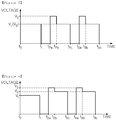
- control unit 160 may perform controlling to apply a second voltage V 2 , higher than a first voltage V 1 applied to the pump 120 at the time of initial driving of the pump 120, to the pump 120, during at least a portion t 2a to t 2b of a voltage application period of time t 2a to t 2c when the pump 120 is redriven, as illustrated in FIGS. 5 and 6 .
- the second voltage V 2 when a voltage applied to the pump 120 during an initial driving operation to to t 1 of the pump 120 is the first voltage V 1 , the second voltage V 2 provided when the pump 120 is redriven after the pump 120 is stopped for a preset period of time t 1 to t 2a may be higher than the first voltage V 1 .
- the second voltage V 2 is increased to be higher than the first voltage V 1 as described above, since a higher pressure than that in the case in which the first voltage V 1 is applied to the pump 120 is applied to the coffee capsule 140, the blockage phenomenon of the coffee powder 145 may be easily removed.
- control unit 160 may apply the second voltage V 2 to the pump 120 for a preset period of time t 2a to t 2b when the pump 120 is redriven, and then, may apply a third voltage V 3 lower than the second voltage V 2 thereto for a remaining time t 2b to t 2c .
- the control unit 160 may apply the second voltage V 2 to the pump 120 for a preset period of time t 2a to t 2b when the pump 120 is redriven, and then, may apply a third voltage V 3 lower than the second voltage V 2 thereto for a remaining time t 2b to t 2c .
- the control unit 160 may apply the second voltage V 2 to the pump 120 for a preset period of time t 2a to t 2b when the pump 120 is redriven, and then, may apply a third voltage V 3 lower than the second voltage V 2 thereto for a remaining time t 2b to t 2c .
- the third voltage V 3 may be set to be equal to a level of the first voltage V 1 as illustrated in FIG. 5 , or may also be set to be higher than the level of the first voltage V 1 as illustrated in FIG. 6 .
- a case in which the blockage phenomenon occurs even after the pump 120 is redriven after the pump 120 is stopped may be present.
- the flow rate sensed by the flow rate sensor 110 may be lower than the preset flow rate.
- the control unit 160 may stop the pump 120 for a preset period of time and may then redrive the pump 120.
- the pump 120 may be redriven after a preset period of time t 2c to t 3a has elapsed.
- the third voltage V 3 lower than the second voltage V 2 may be applied for the remaining time t 3b to t 3c after the second voltage V 2 is applied to the pump 120 for the preset time t 3a to t 3b .
- a redriving operation of the pump 120 after the pump 120 is stopped may also continue.
- the preset flow rate is not reached, even when the pump 120 is redriven a predetermined number of times or more, for example, three times or more, a user wait time may be excessively long, and it may also be difficult to remove the blockage phenomenon of the coffee powder 145 using only the method described above.
- the control unit 160 may notify a user of abnormality in a coffee extraction function through the display unit 170.
- the user may take measures, such as removing the coffee capsule 140 having abnormality in a coffee extraction function from the coffee extraction unit 150 and installing a new coffee capsule 140 into the coffee extraction unit 150, and the like.
- a safety accident may occur due to water splashing or the like when the user opens the coffee extraction unit 150.
- a process of removing residual pressure inside the coffee capsule 140 through opening of a channel connected to the coffee extraction unit 150, or the like, when the function abnormality is noticed to the user may be provided.
- the coffee extraction method S100 may include a pump driving process S120 of driving the pump 120 to supply high-pressure water to the coffee capsule 140, and a re-extraction process (S200) of stopping a driving operation of the pump 120 and performing redriving of the pump 120 when a flow rate of the water supplied to the coffee capsule 140 is lower than a preset flow rate.
- the pump driving process (S120) may be performed under conditions enabling coffee extraction in which, for example, a temperature of the heater 130 is higher than a preset temperature.
- high-pressure water may be supplied to the coffee extraction unit 150, and liquid coffee may be extracted from the coffee extraction unit 150.
- the flow rate sensed by the flow rate sensor 110 may be equal to or higher than the preset flow rate in S130, and liquid coffee may be smoothly extracted from the coffee extraction unit 150.
- it may be determined whether a preset water amount has been reached, for example, whether a preset water amount for Americano coffee is greater than a preset water amount for espresso coffee, according to an extracted coffee type in S180.
- the driving of the pump 120 may be continuously performed in S120, and when reaching the preset water amount, since the extraction has been completed, the driving of the pump 120 may be stopped in S190.
- the flow rate detected by the flow rate sensor 110 may be lower than the preset flow rate in S130. In this case, even in the case in which the pump 120 is continuously driven, the coffee extraction may not be smooth.
- the re-extraction process S200 in which the driving of the pump 120 is stopped and redriving of the pump 120 is then performed may be performed.
- the re-extraction process S200 may include a process S140 in which the pump 120 is stopped for a preset period of time and a process S160 of redriving the pump 120.
- pressure applied to the coffee capsule 140 may be lower than a level of pressure before the pump 120 stops.
- the level of pressure applied to the coffee powder 145 may be changed, thereby changing a pressure distribution or an arrangement state of powder.
- a blockage phenomenon may be removed or a flow path may be formed in a region in which a blockage phenomenon does not occur by performing the pump redriving process (S160) after the pump stop process (S140), thereby providing stable coffee extraction.
- a second voltage V 2 higher than a first voltage V 1 applied to the pump 120 during the pump driving process S120 may be applied to the pump 120 for at least a portion t 2a to t 2b of a voltage application period of time t 2a to t 2c at the time of a redriving of the pump 120.
- the second voltage V 2 provided when the pump redriving process S160 is performed after the pump stop process S140 for a preset period of time t 1 to t 2a may be higher than the first voltage V 1 .
- the second voltage V 2 is increased to be higher than the first voltage V 1 as described above, since a higher pressure than that in the case in which the first voltage V 1 is applied to the pump 120 is applied to the coffee capsule 140, the blockage phenomenon of the coffee powder 145 may be easily removed.
- the second voltage V 2 may be applied to the pump 120 for a preset period of time t 2a to t 2b when the pump 120 is redriven, and then, a third voltage V 3 lower than the second voltage V 2 may be applied thereto for a remaining time t 2b to t 2c .
- a level of the second voltage V 2 may not be continuously maintained, and the third voltage V 3 lower than the second voltage V 2 may be supplied after a preset time t 2a to t 2b .
- the third voltage V 3 may be set to be equal to a level of the first voltage V 1 as illustrated in FIG. 5 , or may also be set to be higher than the level of the first voltage V 1 as illustrated in FIG. 6 .
- a case in which the blockage phenomenon occurs even after the pump redriving process S160 is performed after the pump stop process S140 may be present.
- the flow rate sensed by the flow rate sensor 110 may be lower than the preset flow rate.
- the re-extraction process S200 may be performed, for example, the pump redriving process S160 may be repeated after the pump 120 is stopped for a preset period of time (S140).
- the pump 120 may be redriven after a preset period of time t 2c to t 3a has elapsed.
- the third voltage V 3 lower than the second voltage V 2 may be applied for a remaining time t 3b to t 3c .
- the pump redriving process S160 may also be continuously performed after the pump stop process S140.
- the preset flow rate is not reached, even when the pump 120 is redriven a predetermined number of times or more, for example, three times or more, a user wait time may be excessively long, and it may also be difficult to remove the blockage phenomenon of the coffee powder 145 using only the method described above.
- the user may be notified of abnormality in a coffee extracting function through the display unit 170 in S170. Then, the user may take measures, such as removing the coffee capsule 140 having abnormality in a coffee extraction function from the coffee extraction unit 150 and installing a new coffee capsule 140 into the coffee extraction unit 150, and the like. In this case, since residual pressure may be present in the coffee capsule 140 even in a state in which the driving of the pump 120 is stopped, a safety accident may occur due to water splashing or the like when a user opens the coffee extraction unit 150.
- the process S170 of notifying a user of abnormality or error in the extraction function may include a process of removing residual pressure inside the coffee capsule 140 through opening of a channel connected to the coffee extraction unit 150, or the like.
- the coffee extraction method S100a illustrated in FIG. 3 may be similar to the coffee extraction method S100 illustrated in FIG. 2 , except that an initial pump driving process S115 is performed for a preset time before a pump driving process S120.
- the pump 120 may be initially driven for a preset time to initially supply high-pressure water to the coffee powder 145.
- the blockage phenomenon may be removed in the pump driving process S120 and a re-extraction process S200 to be performed subsequently.
- the coffee powder 145 may be more easily removed from a blockage phenomenon.
- the coffee extraction method S100b illustrated in FIG. 4 has a difference from the exemplary embodiment illustrated in FIG. 2 , in that instead of the process S130 of comparing the flow rate sensed by the flow rate sensor 110 with the preset flow rate, a process S180 of determining whether a water amount reaches a preset water amount is performed to thus determine whether or not the re-extraction process S200b is to be performed.
- the pump 120 may be driven for a preset time according to a preset water amount based on a type of coffee to be extracted, in S120, and as a water amount supplied to the coffee capsule 140 reaches the preset water amount within a preset time in S180, coffee extraction may be completed.
- the driving of the pump 120 may be stopped in S190.
- the water amount supplied to the coffee capsule 140 does not reach the preset water amount in S180, it may be determined that the flow of the coffee powder 145 was blocked, and the re-extraction process (S200b) may be performed.
- a detailed configuration of the re-extraction process (S200b) is the same as that of the coffee extraction method S100 illustrated in FIG. 2 , and a detailed description thereof will be omitted.
Landscapes
- Engineering & Computer Science (AREA)
- Food Science & Technology (AREA)
- Mechanical Engineering (AREA)
- Life Sciences & Earth Sciences (AREA)
- Chemical & Material Sciences (AREA)
- Polymers & Plastics (AREA)
- Physics & Mathematics (AREA)
- Fluid Mechanics (AREA)
- Apparatus For Making Beverages (AREA)
Abstract
Description
- The present disclosure relates to a coffee extraction device and a coffee extraction method in which coffee may be extracted from a coffee capsule (capsule coffee) or the like.
- As daily life and social life progress and tasks performed therein become specialized, a great number of devices used simply and efficiently in life have been developed, and in this regard, coffee extraction devices such as coffee makers and the like are devices able to be used simply and effectively in daily life.
- Coffee extraction devices referred to as capsule coffee machines are devices producing liquid beverages from capsules containing beverage powders such as black tea, cocoa, and the like, as well as coffee, from which liquid beverages are extracted by supplying high-temperature, high-pressure water and steam to capsules installed in capsule extraction units.
- However, in related art coffee extraction devices, when high-pressure water and steam is supplied to coffee powder contained in capsules, a blockage phenomenon in which powder is compressed at high pressure may occur, such that coffee may not be able to be extracted.
- For example, coffee powder contained in coffee capsules may form a blockage under high pressure during coffee extraction to thus block extraction paths. In the case of such a blockage phenomenon, it may be difficult to extract coffee, even when high-pressure pumps are operated.
- In the case of such a blockage phenomenon, a problem in which high pressure pumps fail due to an excessive load applied thereto may occur, and furthermore, coffee capsules (capsule coffee) having abnormality in extraction function cannot be used and should be discarded.
- Further, when users forcibly open coffee extraction units, a safety problem in which high-temperature, high-pressure water and steam may be released externally, may occur.
(Patent Document 1) Korean Utility Model Laid-Open Publication No.2011-0010665 (Published on November 15, 2011 - An aspect of the present disclosure to solve at least some of the problems of the related art as described above is to provide a coffee extraction device and a coffee extraction method in which coffee may be stably extracted even when a blockage phenomenon occurs in coffee powder contained in a coffee capsule.
- According to an aspect of the present disclosure, a coffee extraction device includes a coffee extraction unit in which a coffee capsule is mounted; a pump pressurizing water and supplying the water to the coffee extraction unit; a flow rate sensor measuring a flow rate of the water supplied to the coffee extraction unit; and a control unit controlling driving of the pump, based on the flow rate sensed by the flow rate sensor.
- The control unit may stop the pump and then redrive the pump, when the flow rate sensed by the flow rate sensor is lower than a preset flow rate.
- The control unit may perform controlling to apply a second voltage, higher than a first voltage applied to the pump at the time of initial driving of the pump, to the pump during at least a portion of a voltage application period of time when the pump is redriven. In this case, the control unit may perform controlling to apply a third voltage, lower than the second voltage to the pump after applying the second voltage to the pump for a preset period of time, when the pump is redriven. In this case, the third voltage may have a level equal to or higher than a level of the first voltage.
- The control unit may stop the pump for a preset period of time and then redrive the pump at the time of a redriving of the pump, when the flow rate sensed by the flow rate sensor is lower than the preset flow rate. In this case, when the number of redriving operations of the pump is equal to or greater than a preset number, the control unit may notify a user of abnormality in a coffee extraction function.
- The coffee extraction device may further include a heater installed on a flow path between the pump and the coffee extraction unit to heat the water supplied to the coffee extraction unit.
- According to another aspect of the present disclosure, a coffee extraction method includes a pump driving process of driving a pump to supply high-pressure water to a coffee capsule; and a re-extraction process of stopping driving of the pump and then performing redriving of the pump when a flow rate of water supplied to the coffee capsule is lower than a preset flow rate.
- The re-extraction process may be performed, when the flow rate of the water supplied to the coffee capsule is lower than the preset flow rate, after the pump driving process is performed for a preset pump driving period.
- The re-extraction process may be repeatedly performed, when the flow rate of the water supplied to the coffee capsule is lower than the preset flow rate after the re-extraction process is performed.
- The coffee extraction method may further include a process of displaying abnormality present in a coffee extraction function when the number of the re-extraction processes is equal to or greater than a preset number.
- According to another aspect of the present disclosure, a coffee extraction method includes a pump driving process of driving a pump to supply high-pressure water to a coffee capsule; and a re-extraction process of stopping driving of the pump and then performing redriving of the pump when a water amount supplied to the coffee capsule does not reach a preset water amount within a preset time.
- The re-extraction process may be performed by applying a second voltage, higher than a first voltage applied to the pump in the pump driving process, to the pump during at least a portion of a voltage application period of time of voltage applied to the pump. The re-extraction process may be performed by applying a third voltage, lower than the second voltage to the pump after applying the second voltage to the pump for a second voltage setting period of time. The third voltage may have a level equal to or higher than a level of the first voltage.
- The coffee extraction method may further include an initial pump driving process of stopping the pump after driving the pump for a preset initial driving period before the pump driving process.
- According to an exemplary embodiment providing the configuration as above, stable coffee extraction may be performed even when a blockage phenomenon occurs in coffee powder contained in a coffee capsule by changing pressure of water and steam supplied to the coffee capsule.
- In detail, the pressure of water and steam supplied to a coffee capsule may be changed by changing a level of voltage applied to a pump, and thus, liquid coffee may be extracted even when a blockage phenomenon occurs in coffee powder.
- In addition, according to an exemplary embodiment in the present disclosure, whether a blockage phenomenon has occurred in a coffee capsule may be determined through flow-rate sensing using a flow rate sensor, and the blockage phenomenon may be removed.
- According to an exemplary embodiment in the present disclosure, the driving of a pump may be stopped and the pump may then be redriven to remove a blockage phenomenon or to allow for formation of a flow path in a region in which a blockage phenomenon does not occur, and thus, stable coffee extraction may be performed.
-
-
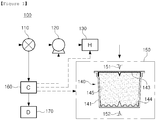
FIG. 1 is a schematic diagram of a coffee extraction device according to an exemplary embodiment in the present disclosure. -
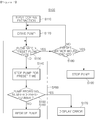
FIG. 2 is a flow chart illustrating a coffee extraction method according to an exemplary embodiment in the present disclosure. -
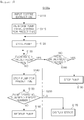
FIG. 3 is a flow chart illustrating a coffee extraction method according to another exemplary embodiment in the present disclosure. -
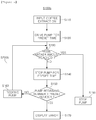
FIG. 4 is a flow chart illustrating a coffee extraction method according to another exemplary embodiment in the present disclosure. -
FIGS. 5 and 6 are graphs illustrating various examples of changes in a voltage applied to a pump in a coffee extraction method according to an exemplary embodiment in the present disclosure. -
- 100
- Coffee Extraction Device
- 110
- Flow Rate Sensor
- 120
- Pump
- 130
- Heater
- 140
- Coffee Capsule
- 141
- Capsule Body Portion
- 143
- Upper Cover
- 144
- Lower Cover
- 145
- Coffee Powder
- 150
- Coffee Extraction Unit
- 151
- Upper Punching Mechanism
- 152
- Lower Punching Mechanism
- 160
- Control Unit
- 170
- Display Unit
- Hereinafter, exemplary embodiments in the present disclosure will be described with reference to the accompanying drawings. However, the exemplary embodiments in the present disclosure may be variously modified and are not limited to descriptions below. In addition, exemplary embodiments are provided to more fully describe the present invention to those skilled in the art. The shapes, sizes and the like of elements in the drawings may be exaggerated for ease of explanation.
- Furthermore, as used herein, the singular forms are intended to include the plural forms as well, unless the context clearly indicates otherwise.
- In a coffee extraction device and a coffee extraction method according to an exemplary embodiment in the present disclosure, liquid beverages may be extracted from various types of capsules containing various beverage powders, such as black tea, cocoa, and the like as well as coffee. In this specification including the claims, although the case of extracting liquid coffee from a coffee capsule is provided by way of example, a capsule used in a coffee extraction device and a coffee extraction method according to exemplary embodiments is not limited to a coffee capsule, and capsules containing various powders for beverage extraction may be used.
- Hereinafter, a coffee extraction device and a coffee extraction method according to an exemplary embodiment in the present disclosure will be described with reference to the accompanying drawings.
- First, a
coffee extraction device 100 according to an exemplary embodiment will be described with reference toFIGS. 1 ,5, and 6 . - As illustrated in
FIG. 1 , acoffee extraction device 100 according to an exemplary embodiment may include acoffee extraction unit 150 in which acoffee capsule 140 is mounted, apump 120 pressurizing water and supplying the water to thecoffee extraction unit 150, aflow rate sensor 110 measuring a flow rate of water supplied to thecoffee extraction unit 150, and acontrol unit 160 controlling driving of thepump 120 based on the flow rate sensed by theflow rate sensor 110. Thecoffee extraction device 100 may further include aheater 130 installed to heat water supplied to thecoffee extraction unit 150, and adisplay unit 170 providing a notification to a user. - The
flow rate sensor 110 may measure a flow rate of water supplied to thecoffee extraction unit 150. Theflow rate sensor 110 may be configured to allow for flow measurement of a relatively low flow rate, for example, 1 LPM or less, in consideration of a relatively small extraction amount by thecoffee extraction unit 150. - In addition, the
pump 120 may be configured to supply high pressure, for example, 7 to 10 bars, to the coffee extraction unit. Since the structure of such a high-pressure pump is commonly used in the art, a detailed description thereof will be omitted. - The
heater 130 may be configured to heat water introduced thereinto to be supplied to the coffee extraction unit as high temperature water or steam. Theheater 130 may be configured to withstand relatively high pressure of thepump 120, and as the heater, a die-casting heater may be used by way of example. - Such a die casting heater may be a die-cast heater formed of a material having relatively high thermal conductivity, such as aluminum or the like, in a state in which the
heater 130 and a pipe in which water flows are arranged, and since the pipe is installed inside die-cast metal, the die-casting heater may be stably used even in a high-pressure environment. - However, the
heater 130 used according to an exemplary embodiment in the present disclosure is not limited to the above-described die casting heater, andvarious heaters 130 commonly used in the art may be used as long as the heaters are usable in a high pressure environment of, for example, 7 to 10 bars. - The
coffee extraction unit 150 may be provided with a capsule mounting portion (not shown) in which thecoffee capsule 140 is mounted, and may extract liquid coffee by supplying high-pressure water (or steam) to thecoffee capsule 140. On the other hand, in this specification, although it is described that 'water' is supplied to thecoffee extraction unit 150 for ease of explanation, for example, when water heated in a heater is supplied at high pressure, the water is changed to steam and may be supplied to thecoffee extraction unit 150. Thus, in the present specification including claims, 'water' supplied to thecoffee extraction unit 150 is defined as including steam and may only be provided as steam. - In addition, an upper punching mechanism 151 puncturing an upper portion of the
coffee capsule 140 may be provided above thecoffee capsule 140, to allow the water pressurized by thepump 120 to be introduced into thecoffee capsule 140. In addition, alower punching mechanism 152 puncturing a lower portion of thecoffee capsule 140 may be provided below thecoffee capsule 140, to allowcoffee powder 145 and high-pressure water inside thecoffee capsule 140 to be in contact with each other and to be supplied to a user through a punctured portion thereof. - In addition, the
coffee capsule 140 may have a structure in which thecoffee powder 145 is accommodated in acapsule body portion 141 as illustrated inFIG. 1 by way of example, and may be provided with anupper cover 143 and alower cover 144 on upper and lower portions thereof, respectively, to protect thecoffee powder 145 accommodated in the inside of the coffee capsule. However, thecoffee capsule 140 used in an exemplary embodiment is not limited to the structure illustrated inFIG. 1 , and a capsule commonly used in the art in which thecoffee powder 145 is accommodated may be used. - On the other hand, the
control unit 160 may control driving of thepump 120, based on a flow rate sensed by theflow rate sensor 110. - For example, when the flow rate sensed by the
flow rate sensor 110 is lower than a preset flow rate, it may indicate that the flow rate of water supplied to thecoffee extraction unit 150 is extremely small or there is no water supplied thereto, which may be determined as the occurrence of a blockage phenomenon caused by high-pressure water inside thecoffee capsule 140. - Thus, for example, when the flow rate detected by the
flow rate sensor 110 is lower than the preset flow rate, thecontrol unit 160 may control the driving of thepump 120 to solve the blockage phenomenon. - In detail, for example, when the flow rate detected by the
flow rate sensor 110 is lower than the preset flow rate, thecontrol unit 160 may control thepump 120 to be stopped and then redriven. - For example, when the driving of the
pump 120 is stopped for a preset period of time, a level of pressure applied to thecoffee capsule 140 may be lower than the pressure provided before thepump 120 is stopped. In this state, when thepump 120 is redriven, a level of the pressure applied to thecoffee powder 145 may be varied, thereby changing a pressure distribution or an arrangement state of the powder. Thus, stable extraction may be performed by eliminating the blockage phenomenon or allowing a flow path to be formed in a region in which the blockage phenomenon does not occur, via the redriving of the pump after thepump 120 is stopped. - In this case, the
control unit 160 may perform controlling to apply a second voltage V2, higher than a first voltage V1 applied to thepump 120 at the time of initial driving of thepump 120, to thepump 120, during at least a portion t2a to t2b of a voltage application period of time t2a to t2c when thepump 120 is redriven, as illustrated inFIGS. 5 and 6 . - For example, with reference to
FIGS. 5 and 6 , when a voltage applied to thepump 120 during an initial driving operation to to t1 of thepump 120 is the first voltage V1, the second voltage V2 provided when thepump 120 is redriven after thepump 120 is stopped for a preset period of time t1 to t2a may be higher than the first voltage V1. When the second voltage V2 is increased to be higher than the first voltage V1 as described above, since a higher pressure than that in the case in which the first voltage V1 is applied to thepump 120 is applied to thecoffee capsule 140, the blockage phenomenon of thecoffee powder 145 may be easily removed. - In addition, the
control unit 160 may apply the second voltage V2 to thepump 120 for a preset period of time t2a to t2b when thepump 120 is redriven, and then, may apply a third voltage V3 lower than the second voltage V2 thereto for a remaining time t2b to t2c. For example, since the blockage phenomenon may be removed by applying the second voltage V2 higher than the first voltage V1 to thepump 120, a level of the second voltage V2 may not be continuously maintained, and the third voltage V3 lower than the second voltage V2 may be supplied after a preset period of time t2a to t2b. - In this case, the third voltage V3 may be set to be equal to a level of the first voltage V1 as illustrated in
FIG. 5 , or may also be set to be higher than the level of the first voltage V1 as illustrated inFIG. 6 . - On the other hand, a case in which the blockage phenomenon occurs even after the
pump 120 is redriven after thepump 120 is stopped may be present. For example, in the case in which the blockage phenomenon is not removed even after thepump 120 is redriven, the flow rate sensed by theflow rate sensor 110 may be lower than the preset flow rate. - As described above, at the time of a redriving operation of the
pump 120, when the flow rate sensed by theflow rate sensor 110 is lower than the preset flow rate, thecontrol unit 160 may stop thepump 120 for a preset period of time and may then redrive thepump 120. Thus, as illustrated inFIGS. 5 and 6 , thepump 120 may be redriven after a preset period of time t2c to t3a has elapsed. In this case, the third voltage V3 lower than the second voltage V2 may be applied for the remaining time t3b to t3c after the second voltage V2 is applied to thepump 120 for the preset time t3a to t3b. - On the other hand, in the case in which the flow rate sensed by the
flow rate sensor 110 continues to be lower than the preset flow rate even after thepump 120 is redriven, a redriving operation of thepump 120 after thepump 120 is stopped may also continue. However, if the preset flow rate is not reached, even when thepump 120 is redriven a predetermined number of times or more, for example, three times or more, a user wait time may be excessively long, and it may also be difficult to remove the blockage phenomenon of thecoffee powder 145 using only the method described above. - Thus, for example, when the number of redriving operations of the
pump 120 is equal to or greater than a preset number, thecontrol unit 160 may notify a user of abnormality in a coffee extraction function through thedisplay unit 170. Thus, the user may take measures, such as removing thecoffee capsule 140 having abnormality in a coffee extraction function from thecoffee extraction unit 150 and installing anew coffee capsule 140 into thecoffee extraction unit 150, and the like. In this case, since residual pressure may be present in thecoffee capsule 140 even in a state in which the driving of thepump 120 is stopped, a safety accident may occur due to water splashing or the like when the user opens thecoffee extraction unit 150. Thus, a process of removing residual pressure inside thecoffee capsule 140 through opening of a channel connected to thecoffee extraction unit 150, or the like, when the function abnormality is noticed to the user, may be provided. - Subsequently, a coffee extraction method according to another exemplary embodiment in the present disclosure will be described with reference to
FIGS. 1 to 6 . - First, a coffee extraction method (S100) illustrated in
FIG. 2 as an example will be described with reference to thecoffee extraction device 100 ofFIG. 1 . - As illustrated in
FIG. 2 , the coffee extraction method S100 according to an exemplary embodiment may include a pump driving process S120 of driving thepump 120 to supply high-pressure water to thecoffee capsule 140, and a re-extraction process (S200) of stopping a driving operation of thepump 120 and performing redriving of thepump 120 when a flow rate of the water supplied to thecoffee capsule 140 is lower than a preset flow rate. - For example, when a user selects a coffee extraction button, in other words, when coffee extraction is input in S110, the pump driving process (S120) may be performed under conditions enabling coffee extraction in which, for example, a temperature of the
heater 130 is higher than a preset temperature. - When the
pump 120 is driven, high-pressure water may be supplied to thecoffee extraction unit 150, and liquid coffee may be extracted from thecoffee extraction unit 150. - At this time, in the case in which a blockage phenomenon does not occur in the
coffee capsule 140, the flow rate sensed by theflow rate sensor 110 may be equal to or higher than the preset flow rate in S130, and liquid coffee may be smoothly extracted from thecoffee extraction unit 150. At this time, it may be determined whether a preset water amount has been reached, for example, whether a preset water amount for Americano coffee is greater than a preset water amount for espresso coffee, according to an extracted coffee type in S180. When the water amount does not reach the preset water amount, the driving of thepump 120 may be continuously performed in S120, and when reaching the preset water amount, since the extraction has been completed, the driving of thepump 120 may be stopped in S190. - On the other hand, in the case in which a blockage phenomenon occurs in the
coffee capsule 140, the flow rate detected by theflow rate sensor 110 may be lower than the preset flow rate in S130. In this case, even in the case in which thepump 120 is continuously driven, the coffee extraction may not be smooth. - Thus, for example, when the flow rate of water supplied to the
coffee capsule 140 is lower than a preset flow rate, the re-extraction process S200 in which the driving of thepump 120 is stopped and redriving of thepump 120 is then performed may be performed. - As illustrated in
FIG. 2 by way of example, the re-extraction process S200 may include a process S140 in which thepump 120 is stopped for a preset period of time and a process S160 of redriving thepump 120. - For example, when the driving of the
pump 120 is stopped for a preset period of time in S140, pressure applied to thecoffee capsule 140 may be lower than a level of pressure before thepump 120 stops. In this state, when thepump 120 is redriven in S160, the level of pressure applied to thecoffee powder 145 may be changed, thereby changing a pressure distribution or an arrangement state of powder. Thus, a blockage phenomenon may be removed or a flow path may be formed in a region in which a blockage phenomenon does not occur by performing the pump redriving process (S160) after the pump stop process (S140), thereby providing stable coffee extraction. - In this case, as illustrated in
FIGS. 5 and 6 , in the pump redriving process S160 of the re-extraction process S200, a second voltage V2 higher than a first voltage V1 applied to thepump 120 during the pump driving process S120 may be applied to thepump 120 for at least a portion t2a to t2b of a voltage application period of time t2a to t2c at the time of a redriving of thepump 120. - In other words, referring to
FIGS. 5 and 6 , when a voltage applied to thepump 120 during an initial driving operation t0 to t1 of thepump 120 is the first voltage V1, the second voltage V2 provided when the pump redriving process S160 is performed after the pump stop process S140 for a preset period of time t1 to t2a may be higher than the first voltage V1. When the second voltage V2 is increased to be higher than the first voltage V1 as described above, since a higher pressure than that in the case in which the first voltage V1 is applied to thepump 120 is applied to thecoffee capsule 140, the blockage phenomenon of thecoffee powder 145 may be easily removed. - In addition, in the pump redriving process S160 of the re-extraction process S200, the second voltage V2 may be applied to the
pump 120 for a preset period of time t2a to t2b when thepump 120 is redriven, and then, a third voltage V3 lower than the second voltage V2 may be applied thereto for a remaining time t2b to t2c. For example, since the blockage phenomenon may be removed by applying the second voltage V2 higher than the first voltage V1 to thepump 120, a level of the second voltage V2 may not be continuously maintained, and the third voltage V3 lower than the second voltage V2 may be supplied after a preset time t2a to t2b. - In this case, the third voltage V3 may be set to be equal to a level of the first voltage V1 as illustrated in
FIG. 5 , or may also be set to be higher than the level of the first voltage V1 as illustrated inFIG. 6 . - On the other hand, a case in which the blockage phenomenon occurs even after the pump redriving process S160 is performed after the pump stop process S140 may be present. For example, in the case in which the blockage phenomenon is not removed even after the pump redriving process S160, the flow rate sensed by the
flow rate sensor 110 may be lower than the preset flow rate. - As such, when the flow rate sensed by the
flow rate sensor 110 is lower than the preset flow rate during the pump redriving process S160, in S130, the re-extraction process S200 may be performed, for example, the pump redriving process S160 may be repeated after thepump 120 is stopped for a preset period of time (S140). As illustrated inFIGS. 5 and 6 , thepump 120 may be redriven after a preset period of time t2c to t3a has elapsed. Further, in this case, after the second voltage V2 is applied to thepump 120 for the preset period of time t3a to t3b, the third voltage V3 lower than the second voltage V2 may be applied for a remaining time t3b to t3c. - On the other hand, in the case in which the flow rate sensed by the
flow rate sensor 110 continues to be lower than the preset flow rate even after the pump redriving process S160 in S130, the pump redriving process S160 may also be continuously performed after the pump stop process S140. However, if the preset flow rate is not reached, even when thepump 120 is redriven a predetermined number of times or more, for example, three times or more, a user wait time may be excessively long, and it may also be difficult to remove the blockage phenomenon of thecoffee powder 145 using only the method described above. - Thus, for example, when the number of times of redriving the
pump 120 is equal to or greater than the preset number of times in S150, the user may be notified of abnormality in a coffee extracting function through thedisplay unit 170 in S170. Then, the user may take measures, such as removing thecoffee capsule 140 having abnormality in a coffee extraction function from thecoffee extraction unit 150 and installing anew coffee capsule 140 into thecoffee extraction unit 150, and the like. In this case, since residual pressure may be present in thecoffee capsule 140 even in a state in which the driving of thepump 120 is stopped, a safety accident may occur due to water splashing or the like when a user opens thecoffee extraction unit 150. Thus, the process S170 of notifying a user of abnormality or error in the extraction function may include a process of removing residual pressure inside thecoffee capsule 140 through opening of a channel connected to thecoffee extraction unit 150, or the like. - Subsequently, a coffee extraction method (S100a) illustrated as an example in
FIG. 3 will be described. The coffee extraction method S100a illustrated inFIG. 3 may be similar to the coffee extraction method S100 illustrated inFIG. 2 , except that an initial pump driving process S115 is performed for a preset time before a pump driving process S120. - Thus, a detailed description of configurations the same as or similar to the exemplary embodiment illustrated in
FIG. 2 will be omitted, and only differences will be described. - In the initial pump driving process S115, the
pump 120 may be initially driven for a preset time to initially supply high-pressure water to thecoffee powder 145. For example, in the case in which a blockage phenomenon occurs in the initial pump driving process S115, the blockage phenomenon may be removed in the pump driving process S120 and a re-extraction process S200 to be performed subsequently. - For example, in the case of the exemplary embodiment illustrated in
FIG. 3 , as the initial pump driving process S115 is further performed, thecoffee powder 145 may be more easily removed from a blockage phenomenon. - Further, a coffee extraction method (S100b) illustrated in
FIG. 4 as an example will be described below. - The coffee extraction method S100b illustrated in
FIG. 4 has a difference from the exemplary embodiment illustrated inFIG. 2 , in that instead of the process S130 of comparing the flow rate sensed by theflow rate sensor 110 with the preset flow rate, a process S180 of determining whether a water amount reaches a preset water amount is performed to thus determine whether or not the re-extraction process S200b is to be performed. - For example, the
pump 120 may be driven for a preset time according to a preset water amount based on a type of coffee to be extracted, in S120, and as a water amount supplied to thecoffee capsule 140 reaches the preset water amount within a preset time in S180, coffee extraction may be completed. Thus, the driving of thepump 120 may be stopped in S190. In the case in which the water amount supplied to thecoffee capsule 140 does not reach the preset water amount in S180, it may be determined that the flow of thecoffee powder 145 was blocked, and the re-extraction process (S200b) may be performed. - A detailed configuration of the re-extraction process (S200b) is the same as that of the coffee extraction method S100 illustrated in
FIG. 2 , and a detailed description thereof will be omitted. - While exemplary embodiments have been shown and described above, it will be apparent to those skilled in the art that modifications and variations could be made without departing from the scope of the present disclosure as defined by the appended claims.
Claims (17)
- A coffee extraction device comprising:a coffee extraction unit in which a coffee capsule is mounted;a pump pressurizing water and supplying the water to the coffee extraction unit;a flow rate sensor measuring a flow rate of the water supplied to the coffee extraction unit; anda control unit controlling driving of the pump, based on the flow rate sensed by the flow rate sensor.
- The coffee extraction device of claim 1, wherein the control unit stops the pump and then redrives the pump, when the flow rate sensed by the flow rate sensor is lower than a preset flow rate.
- The coffee extraction device of claim 2, wherein the control unit performs controlling to apply a second voltage, higher than a first voltage applied to the pump at the time of initial driving of the pump, to the pump during at least a portion of a voltage application period of time when the pump is redriven.
- The coffee extraction device of claim 3, wherein the control unit performs controlling to apply a third voltage, lower than the second voltage, to the pump after applying the second voltage to the pump for a preset period of time, when the pump is redriven.
- The coffee extraction device of claim 4, wherein the third voltage has a level equal to or higher than a level of the first voltage.
- The coffee extraction device of claim 2, wherein the control unit stops the pump for a preset period of time and then redrives the pump at the time of redriving of the pump, when the flow rate sensed by the flow rate sensor is lower than the preset flow rate.
- The coffee extraction device of claim 6, wherein when the number of redriving operations of the pump is equal to or greater than a preset number, the control unit notifies a user of abnormality in a coffee extraction function.
- The coffee extraction device of any one of claims 1 to 7, further comprising a heater installed on a flow path between the pump and the coffee extraction unit to heat the water supplied to the coffee extraction unit.
- A coffee extraction method comprising:a pump driving process of driving a pump to supply high-pressure water to a coffee capsule; anda re-extraction process of stopping driving of the pump and then performing redriving of the pump when a flow rate of water supplied to the coffee capsule is lower than a preset flow rate.
- The method of claim 9, wherein the re-extraction process is performed, when the flow rate of the water supplied to the coffee capsule is lower than the preset flow rate, after the pump driving process is performed for a preset pump driving period.
- The method of claim 9, wherein the re-extraction process is repeatedly performed, when the flow rate of the water supplied to the coffee capsule is lower than the preset flow rate after the re-extraction process is performed.
- The method of claim 11, further comprising a process of displaying an abnormality present in a coffee extraction function when the number of the re-extraction processes is equal to or greater than a preset number.
- A coffee extraction method comprising:a pump driving process of driving a pump to supply high-pressure water to a coffee capsule; anda re-extraction process of stopping driving of the pump and then performing redriving of the pump when a water amount supplied to the coffee capsule does not reach a preset water amount within a preset time.
- The method of any one of claims 9 to 13, wherein the re-extraction process is performed by applying a second voltage, higher than a first voltage applied to the pump in the pump driving process, to the pump during at least a portion of a voltage application period of time of voltage applied to the pump.
- The method of claim 14, wherein the re-extraction process is performed by applying a third voltage, lower than the second voltage, to the pump after applying the second voltage to the pump for a second voltage setting period of time.
- The method of claim 15, wherein the third voltage has a level equal to or higher than a level of the first voltage.
- The method of any one of claims 9 to 13, further comprising an initial pump driving process of stopping the pump after driving the pump for a preset initial driving period before the pump driving process.
Applications Claiming Priority (2)
| Application Number | Priority Date | Filing Date | Title |
|---|---|---|---|
| KR1020140121255A KR102285134B1 (en) | 2014-09-12 | 2014-09-12 | Capsule Coffee Maker and Coffee Making Method |
| PCT/KR2015/009575 WO2016039581A1 (en) | 2014-09-12 | 2015-09-11 | Coffee extraction device and method |
Publications (3)
| Publication Number | Publication Date |
|---|---|
| EP3192407A1 true EP3192407A1 (en) | 2017-07-19 |
| EP3192407A4 EP3192407A4 (en) | 2017-11-15 |
| EP3192407B1 EP3192407B1 (en) | 2019-04-03 |
Family
ID=55459281
Family Applications (1)
| Application Number | Title | Priority Date | Filing Date |
|---|---|---|---|
| EP15840068.9A Active EP3192407B1 (en) | 2014-09-12 | 2015-09-11 | Coffee extraction device and method |
Country Status (5)
| Country | Link |
|---|---|
| US (1) | US10667643B2 (en) |
| EP (1) | EP3192407B1 (en) |
| KR (1) | KR102285134B1 (en) |
| CN (1) | CN106714630B (en) |
| WO (1) | WO2016039581A1 (en) |
Cited By (1)
| Publication number | Priority date | Publication date | Assignee | Title |
|---|---|---|---|---|
| CN117122205A (en) * | 2023-09-08 | 2023-11-28 | 玛西(北京)国际品牌管理有限公司 | Extraction pressure and flow control devices, methods, electronic equipment and storage media |
Families Citing this family (13)
| Publication number | Priority date | Publication date | Assignee | Title |
|---|---|---|---|---|
| KR102285134B1 (en) * | 2014-09-12 | 2021-08-05 | 코웨이 주식회사 | Capsule Coffee Maker and Coffee Making Method |
| KR102380876B1 (en) * | 2017-05-25 | 2022-03-31 | 엘지전자 주식회사 | Beverage maker |
| KR102259341B1 (en) * | 2017-05-25 | 2021-06-01 | 엘지전자 주식회사 | Beverage maker |
| KR102200598B1 (en) * | 2017-05-25 | 2021-01-11 | 엘지전자 주식회사 | Beverage maker |
| KR102187330B1 (en) * | 2017-05-29 | 2020-12-07 | 엘지전자 주식회사 | Beverage maker |
| KR102463325B1 (en) * | 2017-08-01 | 2022-11-04 | 엘지전자 주식회사 | Beverage maker |
| KR102397732B1 (en) * | 2017-08-08 | 2022-05-13 | 엘지전자 주식회사 | Beverage maker and method for making beverage |
| KR102066111B1 (en) * | 2017-11-17 | 2020-01-14 | 주식회사 룩테크 | Multi liquid extraction apparatus |
| CN108514334B (en) * | 2018-03-14 | 2021-01-05 | 杭州易杯食品科技有限公司 | Method for making tea drink by capsule drink machine |
| EP3639708A1 (en) * | 2018-10-18 | 2020-04-22 | Tchibo GmbH | Machine for making beverages |
| KR102571262B1 (en) * | 2020-11-23 | 2023-08-25 | 엘지전자 주식회사 | Beverage maker |
| CN115137209B (en) * | 2021-03-31 | 2025-04-22 | 汉美驰品牌有限公司 | Beverage making machines |
| KR102753509B1 (en) * | 2022-09-06 | 2025-01-09 | 한국항공우주연구원 | Process for brewing espresso coffee using a coffee machine |
Family Cites Families (26)
| Publication number | Priority date | Publication date | Assignee | Title |
|---|---|---|---|---|
| EP0915673A1 (en) | 1996-12-23 | 1999-05-19 | Koninklijke Philips Electronics N.V. | Coffee maker |
| JP3770166B2 (en) | 2001-06-11 | 2006-04-26 | 富士電機リテイルシステムズ株式会社 | Coffee beverage production equipment |
| US20050188854A1 (en) * | 2002-02-07 | 2005-09-01 | The Coca-Cola Co. | Coffee and tea dispenser |
| DE102004002004A1 (en) * | 2004-01-14 | 2005-08-11 | Schifferle, René | Coffee machine for brewing coffee powder packaged in a capsule |
| DE202004020907U1 (en) * | 2004-09-24 | 2006-05-24 | BSH Bosch und Siemens Hausgeräte GmbH | Espresso or coffee pad machine has heater for water pumped from tank and, after heating, into brewing chamber whose outlet has temperature sensor connected to control which switches off pump or heater when temperature rises too far |
| US7401545B2 (en) | 2004-11-09 | 2008-07-22 | Nestec S.A. | Method and apparatus for optimizing variable liquid temperatures |
| FR2885290B1 (en) | 2005-05-04 | 2007-06-01 | Seb Sa | COFFEE MACHINE WITH SEVERAL INFUSION HEADS |
| EP1968419B1 (en) * | 2006-01-05 | 2016-01-27 | Breville PTY Limited | Automated dose control for espresso maker |
| AR060176A1 (en) | 2006-03-28 | 2008-05-28 | Tuttoespresso Spa | PROCEDURE AND DEVICE FOR THE PREPARATION OF A DRINK UNDER CONTROLLED PRESSURE |
| GB2447024A (en) * | 2007-02-27 | 2008-09-03 | Kraft Foods R & D Inc | A dispensing machine for hot or cold drinks |
| EP2027798A1 (en) * | 2007-08-20 | 2009-02-25 | Nestec S.A. | Beverage production module and method for operating a beverage production module |
| EP2070454B1 (en) * | 2007-12-12 | 2015-07-15 | Nestec S.A. | Beverage production machines comprising a plurality of core units |
| DK2317898T3 (en) * | 2008-07-14 | 2012-10-15 | Nestec Sa | WATER CIRCULATION SYSTEM FOR A DRINK PREPARATION DEVICE |
| PT2273117E (en) | 2009-06-03 | 2013-10-04 | Nestec Sa | Process for detecting scale formation in a beverage preparation machine |
| EP2314182B2 (en) | 2009-10-23 | 2018-10-03 | Gruppo Cimbali S.p.A. | A coffee machine with dispensing pressure regulation and a method relating thereto |
| CN201727359U (en) | 2010-05-07 | 2011-02-02 | 漳州灿坤实业有限公司 | Extraction mechanism of coffee capsule |
| CN103221320B (en) * | 2010-11-11 | 2015-10-21 | 雀巢产品技术援助有限公司 | For capsule, beverage production machines and system prepared by nutrition product |
| KR101036020B1 (en) | 2011-01-14 | 2011-05-23 | 세계실업(주) | Fall prevention device of industrial lift |
| DE202011001661U1 (en) | 2011-01-19 | 2011-06-09 | Mahlich, Gotthard, 61476 | Brewing or preparation chamber for a beverage preparation device |
| KR20120117529A (en) | 2011-04-15 | 2012-10-24 | 주식회사 다인 | Extraction apparatus of beverage and method using the same |
| GB201110848D0 (en) * | 2011-06-24 | 2011-08-10 | Mars Inc | Beverage preparation apparatus and method and beverage capsules for use therein |
| WO2013080073A1 (en) * | 2011-11-28 | 2013-06-06 | Koninklijke Philips Electronics N.V. | Package and system for the preparation of beverages |
| JP5501324B2 (en) * | 2011-11-29 | 2014-05-21 | 日野自動車株式会社 | Injector control method |
| EP2612579A1 (en) * | 2012-01-05 | 2013-07-10 | Nestec S.A. | A beverage preparation machine |
| US20160000252A1 (en) * | 2014-07-02 | 2016-01-07 | As Wilfa | Pump and heating method and arrangement for coffee brewing |
| KR102285134B1 (en) * | 2014-09-12 | 2021-08-05 | 코웨이 주식회사 | Capsule Coffee Maker and Coffee Making Method |
-
2014
- 2014-09-12 KR KR1020140121255A patent/KR102285134B1/en active Active
-
2015
- 2015-09-11 WO PCT/KR2015/009575 patent/WO2016039581A1/en not_active Ceased
- 2015-09-11 CN CN201580048880.2A patent/CN106714630B/en active Active
- 2015-09-11 EP EP15840068.9A patent/EP3192407B1/en active Active
- 2015-09-11 US US15/510,471 patent/US10667643B2/en active Active
Cited By (1)
| Publication number | Priority date | Publication date | Assignee | Title |
|---|---|---|---|---|
| CN117122205A (en) * | 2023-09-08 | 2023-11-28 | 玛西(北京)国际品牌管理有限公司 | Extraction pressure and flow control devices, methods, electronic equipment and storage media |
Also Published As
| Publication number | Publication date |
|---|---|
| CN106714630B (en) | 2020-03-20 |
| US10667643B2 (en) | 2020-06-02 |
| KR20160031648A (en) | 2016-03-23 |
| CN106714630A (en) | 2017-05-24 |
| WO2016039581A1 (en) | 2016-03-17 |
| KR102285134B1 (en) | 2021-08-05 |
| EP3192407A4 (en) | 2017-11-15 |
| EP3192407B1 (en) | 2019-04-03 |
| US20170290457A1 (en) | 2017-10-12 |
Similar Documents
| Publication | Publication Date | Title |
|---|---|---|
| EP3192407B1 (en) | Coffee extraction device and method | |
| KR101194980B1 (en) | Coffee machine with load cell | |
| EP2800501B1 (en) | A beverage preparation machine | |
| KR20210024456A (en) | Method for improving the uniformity of espresso coffee concentration in espresso coffee machines and related espresso coffee machines | |
| RU2683194C2 (en) | Coffee machine for single portion capsules | |
| EP3091882B1 (en) | Method and device for producing a beverage | |
| JP2013530780A (en) | High performance heating device | |
| CN1935074A (en) | Thermoblock based beverage production device with brewing chamber | |
| EP3319493B1 (en) | Beverage preparation machine | |
| KR20160031689A (en) | Water Purifier Capable of Offering Beverage | |
| KR102441652B1 (en) | Ice water purifier with beverage extraction function | |
| RU2564231C2 (en) | Boiling water automatic filling machine | |
| KR20120114741A (en) | Extraction apparatus of beverage and method using the same | |
| KR20130116159A (en) | Instantaneous water heater | |
| JP6076663B2 (en) | Heat recovery apparatus and heat recovery method | |
| KR102280967B1 (en) | Water purifier with coffee brewing function and pipe pressure eliminating method thereof | |
| KR102334757B1 (en) | Water purifier with coffee brewing function and pipe washing method thereof | |
| KR102292860B1 (en) | Water purifier with coffee brewing function and remained water removing method thereof | |
| KR102579591B1 (en) | Hot water supply device for drip coffee machine | |
| KR102385173B1 (en) | Water purifier offering beverage | |
| KR102373004B1 (en) | Water purifier having ice-maker and capable of offering beverage | |
| JP2015187523A (en) | hot water storage type water heater | |
| KR20120114740A (en) | Extraction apparatus of beverage and method using the same | |
| KR20240079204A (en) | Coffee extracting machine | |
| JPWO2014027591A1 (en) | How to use the flyer |
Legal Events
| Date | Code | Title | Description |
|---|---|---|---|
| STAA | Information on the status of an ep patent application or granted ep patent |
Free format text: STATUS: THE INTERNATIONAL PUBLICATION HAS BEEN MADE |
|
| PUAI | Public reference made under article 153(3) epc to a published international application that has entered the european phase |
Free format text: ORIGINAL CODE: 0009012 |
|
| STAA | Information on the status of an ep patent application or granted ep patent |
Free format text: STATUS: REQUEST FOR EXAMINATION WAS MADE |
|
| 17P | Request for examination filed |
Effective date: 20170410 |
|
| AK | Designated contracting states |
Kind code of ref document: A1 Designated state(s): AL AT BE BG CH CY CZ DE DK EE ES FI FR GB GR HR HU IE IS IT LI LT LU LV MC MK MT NL NO PL PT RO RS SE SI SK SM TR |
|
| AX | Request for extension of the european patent |
Extension state: BA ME |
|
| A4 | Supplementary search report drawn up and despatched |
Effective date: 20170914 |
|
| RIC1 | Information provided on ipc code assigned before grant |
Ipc: A47J 31/36 20060101AFI20170908BHEP Ipc: A47J 31/44 20060101ALI20170908BHEP Ipc: A47J 31/52 20060101ALI20170908BHEP |
|
| RA4 | Supplementary search report drawn up and despatched (corrected) |
Effective date: 20171013 |
|
| DAV | Request for validation of the european patent (deleted) | ||
| DAX | Request for extension of the european patent (deleted) | ||
| GRAP | Despatch of communication of intention to grant a patent |
Free format text: ORIGINAL CODE: EPIDOSNIGR1 |
|
| STAA | Information on the status of an ep patent application or granted ep patent |
Free format text: STATUS: GRANT OF PATENT IS INTENDED |
|
| INTG | Intention to grant announced |
Effective date: 20181203 |
|
| GRAS | Grant fee paid |
Free format text: ORIGINAL CODE: EPIDOSNIGR3 |
|
| GRAA | (expected) grant |
Free format text: ORIGINAL CODE: 0009210 |
|
| STAA | Information on the status of an ep patent application or granted ep patent |
Free format text: STATUS: THE PATENT HAS BEEN GRANTED |
|
| AK | Designated contracting states |
Kind code of ref document: B1 Designated state(s): AL AT BE BG CH CY CZ DE DK EE ES FI FR GB GR HR HU IE IS IT LI LT LU LV MC MK MT NL NO PL PT RO RS SE SI SK SM TR |
|
| REG | Reference to a national code |
Ref country code: GB Ref legal event code: FG4D |
|
| REG | Reference to a national code |
Ref country code: CH Ref legal event code: EP Ref country code: AT Ref legal event code: REF Ref document number: 1114692 Country of ref document: AT Kind code of ref document: T Effective date: 20190415 |
|
| REG | Reference to a national code |
Ref country code: IE Ref legal event code: FG4D |
|
| REG | Reference to a national code |
Ref country code: DE Ref legal event code: R096 Ref document number: 602015027796 Country of ref document: DE |
|
| REG | Reference to a national code |
Ref country code: NL Ref legal event code: MP Effective date: 20190403 |
|
| REG | Reference to a national code |
Ref country code: LT Ref legal event code: MG4D |
|
| REG | Reference to a national code |
Ref country code: AT Ref legal event code: MK05 Ref document number: 1114692 Country of ref document: AT Kind code of ref document: T Effective date: 20190403 |
|
| PG25 | Lapsed in a contracting state [announced via postgrant information from national office to epo] |
Ref country code: NL Free format text: LAPSE BECAUSE OF FAILURE TO SUBMIT A TRANSLATION OF THE DESCRIPTION OR TO PAY THE FEE WITHIN THE PRESCRIBED TIME-LIMIT Effective date: 20190403 |
|
| PG25 | Lapsed in a contracting state [announced via postgrant information from national office to epo] |
Ref country code: FI Free format text: LAPSE BECAUSE OF FAILURE TO SUBMIT A TRANSLATION OF THE DESCRIPTION OR TO PAY THE FEE WITHIN THE PRESCRIBED TIME-LIMIT Effective date: 20190403 Ref country code: NO Free format text: LAPSE BECAUSE OF FAILURE TO SUBMIT A TRANSLATION OF THE DESCRIPTION OR TO PAY THE FEE WITHIN THE PRESCRIBED TIME-LIMIT Effective date: 20190703 Ref country code: LT Free format text: LAPSE BECAUSE OF FAILURE TO SUBMIT A TRANSLATION OF THE DESCRIPTION OR TO PAY THE FEE WITHIN THE PRESCRIBED TIME-LIMIT Effective date: 20190403 Ref country code: CZ Free format text: LAPSE BECAUSE OF FAILURE TO SUBMIT A TRANSLATION OF THE DESCRIPTION OR TO PAY THE FEE WITHIN THE PRESCRIBED TIME-LIMIT Effective date: 20190403 Ref country code: ES Free format text: LAPSE BECAUSE OF FAILURE TO SUBMIT A TRANSLATION OF THE DESCRIPTION OR TO PAY THE FEE WITHIN THE PRESCRIBED TIME-LIMIT Effective date: 20190403 Ref country code: PT Free format text: LAPSE BECAUSE OF FAILURE TO SUBMIT A TRANSLATION OF THE DESCRIPTION OR TO PAY THE FEE WITHIN THE PRESCRIBED TIME-LIMIT Effective date: 20190803 Ref country code: HR Free format text: LAPSE BECAUSE OF FAILURE TO SUBMIT A TRANSLATION OF THE DESCRIPTION OR TO PAY THE FEE WITHIN THE PRESCRIBED TIME-LIMIT Effective date: 20190403 Ref country code: SE Free format text: LAPSE BECAUSE OF FAILURE TO SUBMIT A TRANSLATION OF THE DESCRIPTION OR TO PAY THE FEE WITHIN THE PRESCRIBED TIME-LIMIT Effective date: 20190403 Ref country code: AL Free format text: LAPSE BECAUSE OF FAILURE TO SUBMIT A TRANSLATION OF THE DESCRIPTION OR TO PAY THE FEE WITHIN THE PRESCRIBED TIME-LIMIT Effective date: 20190403 |
|
| PG25 | Lapsed in a contracting state [announced via postgrant information from national office to epo] |
Ref country code: LV Free format text: LAPSE BECAUSE OF FAILURE TO SUBMIT A TRANSLATION OF THE DESCRIPTION OR TO PAY THE FEE WITHIN THE PRESCRIBED TIME-LIMIT Effective date: 20190403 Ref country code: GR Free format text: LAPSE BECAUSE OF FAILURE TO SUBMIT A TRANSLATION OF THE DESCRIPTION OR TO PAY THE FEE WITHIN THE PRESCRIBED TIME-LIMIT Effective date: 20190704 Ref country code: PL Free format text: LAPSE BECAUSE OF FAILURE TO SUBMIT A TRANSLATION OF THE DESCRIPTION OR TO PAY THE FEE WITHIN THE PRESCRIBED TIME-LIMIT Effective date: 20190403 Ref country code: RS Free format text: LAPSE BECAUSE OF FAILURE TO SUBMIT A TRANSLATION OF THE DESCRIPTION OR TO PAY THE FEE WITHIN THE PRESCRIBED TIME-LIMIT Effective date: 20190403 Ref country code: BG Free format text: LAPSE BECAUSE OF FAILURE TO SUBMIT A TRANSLATION OF THE DESCRIPTION OR TO PAY THE FEE WITHIN THE PRESCRIBED TIME-LIMIT Effective date: 20190703 |
|
| PG25 | Lapsed in a contracting state [announced via postgrant information from national office to epo] |
Ref country code: AT Free format text: LAPSE BECAUSE OF FAILURE TO SUBMIT A TRANSLATION OF THE DESCRIPTION OR TO PAY THE FEE WITHIN THE PRESCRIBED TIME-LIMIT Effective date: 20190403 Ref country code: IS Free format text: LAPSE BECAUSE OF FAILURE TO SUBMIT A TRANSLATION OF THE DESCRIPTION OR TO PAY THE FEE WITHIN THE PRESCRIBED TIME-LIMIT Effective date: 20190803 |
|
| REG | Reference to a national code |
Ref country code: DE Ref legal event code: R097 Ref document number: 602015027796 Country of ref document: DE |
|
| PG25 | Lapsed in a contracting state [announced via postgrant information from national office to epo] |
Ref country code: RO Free format text: LAPSE BECAUSE OF FAILURE TO SUBMIT A TRANSLATION OF THE DESCRIPTION OR TO PAY THE FEE WITHIN THE PRESCRIBED TIME-LIMIT Effective date: 20190403 Ref country code: SK Free format text: LAPSE BECAUSE OF FAILURE TO SUBMIT A TRANSLATION OF THE DESCRIPTION OR TO PAY THE FEE WITHIN THE PRESCRIBED TIME-LIMIT Effective date: 20190403 Ref country code: EE Free format text: LAPSE BECAUSE OF FAILURE TO SUBMIT A TRANSLATION OF THE DESCRIPTION OR TO PAY THE FEE WITHIN THE PRESCRIBED TIME-LIMIT Effective date: 20190403 Ref country code: DK Free format text: LAPSE BECAUSE OF FAILURE TO SUBMIT A TRANSLATION OF THE DESCRIPTION OR TO PAY THE FEE WITHIN THE PRESCRIBED TIME-LIMIT Effective date: 20190403 |
|
| PLBE | No opposition filed within time limit |
Free format text: ORIGINAL CODE: 0009261 |
|
| STAA | Information on the status of an ep patent application or granted ep patent |
Free format text: STATUS: NO OPPOSITION FILED WITHIN TIME LIMIT |
|
| PG25 | Lapsed in a contracting state [announced via postgrant information from national office to epo] |
Ref country code: SM Free format text: LAPSE BECAUSE OF FAILURE TO SUBMIT A TRANSLATION OF THE DESCRIPTION OR TO PAY THE FEE WITHIN THE PRESCRIBED TIME-LIMIT Effective date: 20190403 |
|
| 26N | No opposition filed |
Effective date: 20200106 |
|
| PG25 | Lapsed in a contracting state [announced via postgrant information from national office to epo] |
Ref country code: TR Free format text: LAPSE BECAUSE OF FAILURE TO SUBMIT A TRANSLATION OF THE DESCRIPTION OR TO PAY THE FEE WITHIN THE PRESCRIBED TIME-LIMIT Effective date: 20190403 |
|
| PG25 | Lapsed in a contracting state [announced via postgrant information from national office to epo] |
Ref country code: MC Free format text: LAPSE BECAUSE OF FAILURE TO SUBMIT A TRANSLATION OF THE DESCRIPTION OR TO PAY THE FEE WITHIN THE PRESCRIBED TIME-LIMIT Effective date: 20190403 Ref country code: SI Free format text: LAPSE BECAUSE OF FAILURE TO SUBMIT A TRANSLATION OF THE DESCRIPTION OR TO PAY THE FEE WITHIN THE PRESCRIBED TIME-LIMIT Effective date: 20190403 |
|
| REG | Reference to a national code |
Ref country code: CH Ref legal event code: PL |
|
| PG25 | Lapsed in a contracting state [announced via postgrant information from national office to epo] |
Ref country code: LU Free format text: LAPSE BECAUSE OF NON-PAYMENT OF DUE FEES Effective date: 20190911 Ref country code: CH Free format text: LAPSE BECAUSE OF NON-PAYMENT OF DUE FEES Effective date: 20190930 Ref country code: IE Free format text: LAPSE BECAUSE OF NON-PAYMENT OF DUE FEES Effective date: 20190911 Ref country code: LI Free format text: LAPSE BECAUSE OF NON-PAYMENT OF DUE FEES Effective date: 20190930 |
|
| REG | Reference to a national code |
Ref country code: BE Ref legal event code: MM Effective date: 20190930 |
|
| PG25 | Lapsed in a contracting state [announced via postgrant information from national office to epo] |
Ref country code: BE Free format text: LAPSE BECAUSE OF NON-PAYMENT OF DUE FEES Effective date: 20190930 |
|
| PG25 | Lapsed in a contracting state [announced via postgrant information from national office to epo] |
Ref country code: CY Free format text: LAPSE BECAUSE OF FAILURE TO SUBMIT A TRANSLATION OF THE DESCRIPTION OR TO PAY THE FEE WITHIN THE PRESCRIBED TIME-LIMIT Effective date: 20190403 |
|
| PG25 | Lapsed in a contracting state [announced via postgrant information from national office to epo] |
Ref country code: HU Free format text: LAPSE BECAUSE OF FAILURE TO SUBMIT A TRANSLATION OF THE DESCRIPTION OR TO PAY THE FEE WITHIN THE PRESCRIBED TIME-LIMIT; INVALID AB INITIO Effective date: 20150911 Ref country code: MT Free format text: LAPSE BECAUSE OF FAILURE TO SUBMIT A TRANSLATION OF THE DESCRIPTION OR TO PAY THE FEE WITHIN THE PRESCRIBED TIME-LIMIT Effective date: 20190403 |
|
| PG25 | Lapsed in a contracting state [announced via postgrant information from national office to epo] |
Ref country code: MK Free format text: LAPSE BECAUSE OF FAILURE TO SUBMIT A TRANSLATION OF THE DESCRIPTION OR TO PAY THE FEE WITHIN THE PRESCRIBED TIME-LIMIT Effective date: 20190403 |
|
| PGFP | Annual fee paid to national office [announced via postgrant information from national office to epo] |
Ref country code: FR Payment date: 20250624 Year of fee payment: 11 |
|
| PGFP | Annual fee paid to national office [announced via postgrant information from national office to epo] |
Ref country code: DE Payment date: 20250624 Year of fee payment: 11 |
|
| PGFP | Annual fee paid to national office [announced via postgrant information from national office to epo] |
Ref country code: IT Payment date: 20250624 Year of fee payment: 11 |
|
| PGFP | Annual fee paid to national office [announced via postgrant information from national office to epo] |
Ref country code: GB Payment date: 20250707 Year of fee payment: 11 |