EP3192003B1 - Bereitstellung einer vertrauenswürdigen umgebung mit einem prozessor - Google Patents
Bereitstellung einer vertrauenswürdigen umgebung mit einem prozessor Download PDFInfo
- Publication number
- EP3192003B1 EP3192003B1 EP15839311.6A EP15839311A EP3192003B1 EP 3192003 B1 EP3192003 B1 EP 3192003B1 EP 15839311 A EP15839311 A EP 15839311A EP 3192003 B1 EP3192003 B1 EP 3192003B1
- Authority
- EP
- European Patent Office
- Prior art keywords
- trusted
- soc
- single core
- memory
- tee
- Prior art date
- Legal status (The legal status is an assumption and is not a legal conclusion. Google has not performed a legal analysis and makes no representation as to the accuracy of the status listed.)
- Active
Links
Images



Classifications
-
- G—PHYSICS
- G06—COMPUTING OR CALCULATING; COUNTING
- G06F—ELECTRIC DIGITAL DATA PROCESSING
- G06F21/00—Security arrangements for protecting computers, components thereof, programs or data against unauthorised activity
- G06F21/50—Monitoring users, programs or devices to maintain the integrity of platforms, e.g. of processors, firmware or operating systems
- G06F21/57—Certifying or maintaining trusted computer platforms, e.g. secure boots or power-downs, version controls, system software checks, secure updates or assessing vulnerabilities
- G06F21/575—Secure boot
-
- G—PHYSICS
- G06—COMPUTING OR CALCULATING; COUNTING
- G06F—ELECTRIC DIGITAL DATA PROCESSING
- G06F21/00—Security arrangements for protecting computers, components thereof, programs or data against unauthorised activity
- G06F21/50—Monitoring users, programs or devices to maintain the integrity of platforms, e.g. of processors, firmware or operating systems
- G06F21/52—Monitoring users, programs or devices to maintain the integrity of platforms, e.g. of processors, firmware or operating systems during program execution, e.g. stack integrity ; Preventing unwanted data erasure; Buffer overflow
- G06F21/53—Monitoring users, programs or devices to maintain the integrity of platforms, e.g. of processors, firmware or operating systems during program execution, e.g. stack integrity ; Preventing unwanted data erasure; Buffer overflow by executing in a restricted environment, e.g. sandbox or secure virtual machine
-
- G—PHYSICS
- G06—COMPUTING OR CALCULATING; COUNTING
- G06F—ELECTRIC DIGITAL DATA PROCESSING
- G06F21/00—Security arrangements for protecting computers, components thereof, programs or data against unauthorised activity
- G06F21/70—Protecting specific internal or peripheral components, in which the protection of a component leads to protection of the entire computer
- G06F21/71—Protecting specific internal or peripheral components, in which the protection of a component leads to protection of the entire computer to assure secure computing or processing of information
- G06F21/72—Protecting specific internal or peripheral components, in which the protection of a component leads to protection of the entire computer to assure secure computing or processing of information in cryptographic circuits
-
- G—PHYSICS
- G06—COMPUTING OR CALCULATING; COUNTING
- G06F—ELECTRIC DIGITAL DATA PROCESSING
- G06F21/00—Security arrangements for protecting computers, components thereof, programs or data against unauthorised activity
- G06F21/70—Protecting specific internal or peripheral components, in which the protection of a component leads to protection of the entire computer
- G06F21/78—Protecting specific internal or peripheral components, in which the protection of a component leads to protection of the entire computer to assure secure storage of data
- G06F21/79—Protecting specific internal or peripheral components, in which the protection of a component leads to protection of the entire computer to assure secure storage of data in semiconductor storage media, e.g. directly-addressable memories
-
- G—PHYSICS
- G06—COMPUTING OR CALCULATING; COUNTING
- G06F—ELECTRIC DIGITAL DATA PROCESSING
- G06F9/00—Arrangements for program control, e.g. control units
- G06F9/06—Arrangements for program control, e.g. control units using stored programs, i.e. using an internal store of processing equipment to receive or retain programs
- G06F9/44—Arrangements for executing specific programs
- G06F9/4401—Bootstrapping
- G06F9/4406—Loading of operating system
-
- H—ELECTRICITY
- H04—ELECTRIC COMMUNICATION TECHNIQUE
- H04L—TRANSMISSION OF DIGITAL INFORMATION, e.g. TELEGRAPHIC COMMUNICATION
- H04L9/00—Cryptographic mechanisms or cryptographic arrangements for secret or secure communications; Network security protocols
- H04L9/08—Key distribution or management, e.g. generation, sharing or updating, of cryptographic keys or passwords
- H04L9/0861—Generation of secret information including derivation or calculation of cryptographic keys or passwords
-
- H—ELECTRICITY
- H04—ELECTRIC COMMUNICATION TECHNIQUE
- H04L—TRANSMISSION OF DIGITAL INFORMATION, e.g. TELEGRAPHIC COMMUNICATION
- H04L9/00—Cryptographic mechanisms or cryptographic arrangements for secret or secure communications; Network security protocols
- H04L9/08—Key distribution or management, e.g. generation, sharing or updating, of cryptographic keys or passwords
- H04L9/0894—Escrow, recovery or storing of secret information, e.g. secret key escrow or cryptographic key storage
-
- H—ELECTRICITY
- H04—ELECTRIC COMMUNICATION TECHNIQUE
- H04L—TRANSMISSION OF DIGITAL INFORMATION, e.g. TELEGRAPHIC COMMUNICATION
- H04L9/00—Cryptographic mechanisms or cryptographic arrangements for secret or secure communications; Network security protocols
- H04L9/14—Cryptographic mechanisms or cryptographic arrangements for secret or secure communications; Network security protocols using a plurality of keys or algorithms
-
- H—ELECTRICITY
- H04—ELECTRIC COMMUNICATION TECHNIQUE
- H04L—TRANSMISSION OF DIGITAL INFORMATION, e.g. TELEGRAPHIC COMMUNICATION
- H04L9/00—Cryptographic mechanisms or cryptographic arrangements for secret or secure communications; Network security protocols
- H04L9/30—Public key, i.e. encryption algorithm being computationally infeasible to invert or user's encryption keys not requiring secrecy
- H04L9/3006—Public key, i.e. encryption algorithm being computationally infeasible to invert or user's encryption keys not requiring secrecy underlying computational problems or public-key parameters
- H04L9/302—Public key, i.e. encryption algorithm being computationally infeasible to invert or user's encryption keys not requiring secrecy underlying computational problems or public-key parameters involving the integer factorization problem, e.g. RSA or quadratic sieve [QS] schemes
-
- G—PHYSICS
- G06—COMPUTING OR CALCULATING; COUNTING
- G06F—ELECTRIC DIGITAL DATA PROCESSING
- G06F2221/00—Indexing scheme relating to security arrangements for protecting computers, components thereof, programs or data against unauthorised activity
- G06F2221/03—Indexing scheme relating to G06F21/50, monitoring users, programs or devices to maintain the integrity of platforms
- G06F2221/033—Test or assess software
-
- G—PHYSICS
- G06—COMPUTING OR CALCULATING; COUNTING
- G06F—ELECTRIC DIGITAL DATA PROCESSING
- G06F2221/00—Indexing scheme relating to security arrangements for protecting computers, components thereof, programs or data against unauthorised activity
- G06F2221/21—Indexing scheme relating to G06F21/00 and subgroups addressing additional information or applications relating to security arrangements for protecting computers, components thereof, programs or data against unauthorised activity
- G06F2221/2107—File encryption
-
- G—PHYSICS
- G06—COMPUTING OR CALCULATING; COUNTING
- G06F—ELECTRIC DIGITAL DATA PROCESSING
- G06F2221/00—Indexing scheme relating to security arrangements for protecting computers, components thereof, programs or data against unauthorised activity
- G06F2221/21—Indexing scheme relating to G06F21/00 and subgroups addressing additional information or applications relating to security arrangements for protecting computers, components thereof, programs or data against unauthorised activity
- G06F2221/2111—Location-sensitive, e.g. geographical location, GPS
-
- H—ELECTRICITY
- H04—ELECTRIC COMMUNICATION TECHNIQUE
- H04L—TRANSMISSION OF DIGITAL INFORMATION, e.g. TELEGRAPHIC COMMUNICATION
- H04L2209/00—Additional information or applications relating to cryptographic mechanisms or cryptographic arrangements for secret or secure communication H04L9/00
- H04L2209/60—Digital content management, e.g. content distribution
Definitions
- Embodiments relate to providing security to computing devices.
- Patent document US2014208123 represents related prior art.
- a trusted execution environment may be provided for a portable computing device, even where a central processor or system on chip (SoC) of such platform is of a low power, single core design that inherently does not have hardware capability (such as by way of security coprocessor, hardware trusted platform module (TPM) or so forth) for a secure environment.
- This TEE may be realized by a hardware/software co-design processor that provides combinations of hardware and software-based techniques for instantiating a TEE.
- a TEE may be created in a mobile platform to perform digital rights management (DRM), firmware TPM (fTPM) operations, one-time password (OTP), and other high assurance usages.
- DRM digital rights management
- fTPM firmware TPM
- OTP one-time password
- secure operations include: creation and maintenance of a trusted path such as to provide a protected audio video path (PAVP); and creation and maintenance of a secure input/output path, among others.
- a TEE can be provided for a platform having a processor that does not have either: inherent security capabilities such as Intel@ Software Guard Extensions (SGX) capabilities (by way of processorinternal hardware and extensions to a given instruction set (e.g., an Intel@ Architecture (IA) 32 or 64 instruction set) via a microcode-based isolation mechanism to provide containers in a user environment); or dedicated security hardware resources such as a Converged Security Management Engine (CSME), which may itself be a coprocessor according to a given processor design such as an Intel@ Minute IA design.
- SGX Software Guard Extensions
- IA Intel@ Architecture
- CSME Converged Security Management Engine
- Such coprocessor may not be suitable in given embodiments as the addition of another Minute IA core (in cases where the single core itself is a Minute IA core) would increase die size, power consumption and cost, which may dictate against use in various portable computing devices ranging from smartphones, tablet computers, wearables, embedded devices and so forth.
- embodiments are not limited to Intel ® -based processors and are equally applicable to processors of other manufacturers or licensors such as processors having an ARM architecture such as Cortex-based processors or SoCs, or processors available from AMD Inc. or others.
- a TEE thus includes both a hardware-based isolation mechanism and a software environment inside this hardware-protected domain.
- a TEE may be provided within a system management mode (SMM) of a processor. More specifically, features of a boot read only memory (ROM) work in conjunction with the SMM to provide for a TEE in a SoC or other processor having minimal compute capabilities (such that a dedicated core, coprocessor, or other secure logic is not available for performing TEE creation and secure environment operations).
- SMM system management mode
- ROM boot read only memory
- a TEE may be provided in such processor using a combination of code or logic of the boot ROM to perform at least key storage, and access control logic to qualify access these boot ROM capabilities via a mechanism as described herein so that non-SMM code cannot access the boot ROM.
- a virtual machine such as a Java TM -like virtual machine and/or emulated SGX or 'eSGX' may be present in order to provide some degree of trusted software application compatibility.
- entry into the TEE may be via a Global Platform (GP)-style application programming interface (API).
- GP Global Platform
- API application programming interface
- SMM is a highest privilege execution mode that runs under ring 0/supervisor mode (or an IA VMX root). Entry into SMM may be triggered by a system management interrupt (SMI), in an embodiment. This trigger may be verified by a hardware isolation mechanism such as a system management mode range register, which may be configured to confirm valid access to a protected portion of system memory.
- SMI system management interrupt
- a TEE may be effected via boot ROM code (and secure key storage) and interaction between this code and SMM operations.
- an endorsement key (EK) key pair is generated and stored in boot ROM private resources such as a private isolated key store.
- the boot ROM first guarantees that Uniform Extensible Firmware Interface (UEFI) firmware is authentic and then passes control to a UEFI SMM.
- UEFI Uniform Extensible Firmware Interface
- this firmware may be signed and cryptoverified such as done in a secure boot.
- the EK from isolated storage e.g., in the boot ROM, can be accessed and provided to the SMM.
- the SMM stores the keys and/or any derivatives in a protected portion of memory such as system management random access memory (SMRAM).
- SMRAM system management random access memory
- This memory may be reset (e.g., via zeroizing) across reboots and further may be isolated from host access.
- each boot provisions keying material into the SMM TEE from the boot ROM and its associated key store.
- the key store may be located in another portion of the SoC such as field programmable fuses of the SoC.
- the key store and its constituent keys can be provisioned in the factory under a manufacturer authority, e.g., of the processor manufacturer or original equipment manufacturer (OEM) manufacturer.
- OEM original equipment manufacturer
- additional keys such as for DRM usages (e.g., a Google Widevine key box) may be provisioned at manufacture or in the field by a user or information technology (IT) personnel.
- a SMM firmware driver may expose one or more Intel@ SGX instructions to enter into SMM mode and provide software PAVP or secure input/output (IO) capability.
- the SoC can ensure that only a SMM TEE can communicate with a graphics processor of a peripheral device (e.g., a PCI device) by having the SMM code disable a device ID for this graphics device upon operating system (OS) reset so that the device is only visible to the SMM TEE, and thus the host/OS is not aware of this trusted video path.
- a SMM range register e.g., one or more SMRRs
- a SMM port trap allows the host to communicate to a SMM driver to enter/exit SMM mode.
- a plurality of TEE-based applications - such as a TPM, DRM blackbox, and emulated or software SGX - can be implemented on a low power, low functionality processor or other SoC.
- processor 100 is an SoC that includes a single core 110.
- core 110 may be a low power and relatively simple processor core such as an in-order processor.
- core 110 may be an Intel ® Quark TM processor core.
- Such processor in an embodiment is a single-threaded core configured to execute instructions of a legacy instruction set architecture such as a Pentium ® -compatible ISA.
- core 110 couples to a host bridge 115, which may be an interface to various components of the SoC.
- host bridge 115 couples to an on-die boot read-only memory (ROM) 120 which in an embodiment may store code and key material as described herein.
- ROM read-only memory
- Host bridge 115 further couples to a cache memory 130, which in an embodiment may be an embedded a static random access memory (eSRAM).
- eSRAM static random access memory
- Host bridge 115 further couples to a memory controller 140 configured to interface with an off-chip memory such as a given system memory, e.g., a DRAM. Note that this DRAM may include a protected or secure portion such as a SMRAM used for secure operations as described herein.
- host bridge 115 couples to various interfaces to off-chip devices. Such interfaces include a legacy bridge 150, from which interface to various off-chip components may occur. As examples, such off-chip components may include an external ROM and a platform management controller, among other off-chip devices.
- host bridge 115 further couples to a fabric 160 which in an embodiment may be an Advanced Microcontroller Bus Architecture (AMBA) fabric configured to interface to additional off-chip components, such as via an I 2 C interface, a USB interface, and an Ethernet interface, among others.
- host bridge 115 further couples to a PCIe interface 170 that in turn may interface with one or more off-chip PCIe devices. Understand while shown with these limited components in the embodiment of FIG. 1 , the scope of the present invention is not limited in this regard and many alternatives and variations are possible.
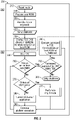
- FIG. 2 shown is a flow diagram of a method in accordance with an embodiment of the present invention. As shown in FIG. 2 , portions of method 200 may be performed both on reset of a system including a TEE capability, as well as during normal operation of the system to perform one or more trusted operations to be executed within the TEE.
- method 200 begins in a pre-boot environment 202 upon a reset vector (block 210), which may be a hardwired redirection responsive to reset of a system including an SoC to vector to a predetermined location in a firmware storage, also referred to herein as a boot ROM.
- a reset vector (block 210)
- a boot ROM a firmware storage
- Pre-boot may begin according to a root of trust from this hardcoded entry point.
- one such operation includes generation of an endorsement key pair (EK).
- this key pair may be generated as to a Rivest Shamir Adleman (RSA) public/private key pair.
- This key pair may be stored in a given secure location such as a protected key store of the boot ROM.
- this key pair may be generated during manufacturing of a system, and then the manufacturer could generate an EK certificate, which is then published.
- this pre-boot code may include a security portion, pre-execution initialization code and a driver execution environment code (respectively SEC, PEI, and DXE).
- this protected portion of system memory is a SMRAM.
- SMRAM may be a partitioned portion of a system memory to which access is only allowed when the processor is in a SMM mode of operation.
- access control hardware may protect this portion of system memory, e.g., via a set of memory range registers and access control logic to confirm that the processor is validly in an SMM before allowing access to the protected range.
- TEE drivers may be set up.
- such drivers may include one or more TEE DXE drivers.
- a handshake protocol may be performed to obtain the previously generated key pair from the boot ROM and store such keys in the protected portion of system memory, e.g., SMRAM.
- an IN_SMM signal may be set to initiate the handshake to pass the keys into the SMRAM, where they may be hidden from the system outside of SMM, including the OS and any malware executing on the system.
- a TEE has been set up, and pre-boot operations are completed. Accordingly control passes to a boot or OS environment 252 in which the OS is booted (block 240). During normal operation of the system in this environment, it can be determined, when a requested action is received, whether the action is a trusted action (namely a request for a trusted action) received during a non-SMM (diamond 250). In various embodiments, note that inputs and outputs can be trusted via drivers executed within the TEE. Examples of this trusted action request may be an OS request for a firmware TPM operation, which may trigger an SMI for SMM to be entered. As another example a Global Platform API may trigger a request for a trusted action, such as an OTP or a financial transaction.
- a trusted action such as an OTP or a financial transaction.
- a dirty shutdown includes an indication to a user of an unauthorized attempt to perform a trusted operation.
- an LED indicator may blink to indicate the attempt.
- the platform can simply omit execution of the operation and return to appropriate return code such as "EFI_SECURITY_VIOLATION" in the case of an errant pre-OS UEFI caller.
- a SMM initiation signal is set, e.g., the IN_SMM signal, to begin execution of the requested trusted operation in the SMM.
- the result of the trusted operation may be placed into an unprotected memory such as RAM accessible to the OS.
- RSM resume
- one example use case for a TEE in accordance with an embodiment is for handling protected digital content, e.g., having DRM management protection.
- a user desires to download or stream and watch a movie or other video content via a content delivery service such as Netflix TM .
- encrypted digital content is received in a system via a network connection. Note that the actual receipt is via an unencrypted channel, although the content itself is encrypted.
- a TEE is entered and secure keys are used in performing decryption operations.
- the stored EK key pair may act as a key hierarchy root in order to generate a protected storage root key (SRK) secured in a secure storage and which is accessed in the TEE for deriving and accessing other keys such as content decryption keys.
- SRK protected storage root key
- the EK key pair may be used for management of other keys such as keys used for content encryption/decryption.
- a set of content decryption keys may themselves be encrypted and maintained in a non-secure storage such as a given non-volatile storage of the system, e.g., an unprotected flash memory of the system.
- these stored keys from the unprotected storage may be obtained and unwrapped using the protected EK keys. Then decryption operations can be performed on the content using these decrypted keys.
- the content may be sent via a secure channel to a destination, e.g., a local display coupled to the processor via a secure path (e.g., via an Intel ® PAVP technology), where this secure path cannot be snooped by untrusted sources such as an untrusted OS or malware operating in the system.
- the secure or trusted channel may be realized via a dedicated console driver in SMM to provide a trusted hardware path that communicates directly with a destination device, and does not use an OS display or other driver.
- user or other input while in the TEE may also be via a trusted input path, as an input device driver may execute within SMM in the TEE, and thus avoid malware or untrusted OS input driver. Accordingly, secure content may be received and processed in a system with high assurance.
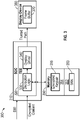
- a system 300 includes an SoC 310 coupled to a memory 350 which in an embodiment is a system memory including a secure portion (e.g., SMRAM) 352 and an unprotected portion 354.
- SoC 310 couples to a display device 360, which may be a touchscreen display or other display of the system.
- SoC 310 Responsive to receipt of an SMI, SoC 310 enters into a TEE 320.
- a decryption logic 330 operates to decrypt incoming encrypted content which may be any type of protected digital content such as secure video, audio or other protected information, which may be received via an unencrypted channel.
- communication occurs between decryption logic 330 and memory 350, and more specifically to secure portion 352 to obtain SRK 353 and to unprotected portion 354 to obtain an encrypted key pair 355.
- encrypted key pair 355 is a previously stored key pair associated with a provider of the content.
- SRK 353 may be used. More specifically, SRK 353 may be an EK key pair, e.g., provisioned into SMRAM during initialization of the system (as obtained from a boot ROM). Using the keys of SRK 353, encrypted key pair 355 may be decrypted and the decrypted keys used for decryption in decryption logic 330 to output decrypted content.
- EK key pair e.g., provisioned into SMRAM during initialization of the system (as obtained from a boot ROM).
- encrypted key pair 355 may be decrypted and the decrypted keys used for decryption in decryption logic 330 to output decrypted content.
- TEE 320 further includes a display driver 340 which is a trusted and secure driver inaccessible to an OS or malware executing on the system.
- a trusted path is provided between TEE 320 and display device 360.
- the decrypted content may be stored into a frame buffer 370 of the display device, which then outputs the decrypted content to the display. Understand while shown at this high level in the illustration of FIG. 3 , the scope of the present invention is not limited in this regard and many variations and alternatives are possible.
- Another use case may be for storage of encrypted pages in memory in the case where a protected memory, e.g., SMRAM, is insufficient for purposes of holding instructions and/or data during trusted operations in a TEE. That is, in many systems SMRAM is limited, e.g., to 8 megabytes (MB). In some cases, an SMM handler other secure code may consume more than this 8 MB limit and accordingly, code and/or data may be swapped between SMRAM and an unprotected memory.
- the information when encrypted pages are brought into SMRAM, the information may first be decrypted, using keys derived from the storage root key. And similarly, when the information is to be sent back out from the protected storage, the derived keys may again be used to encrypt the information before storage in the unprotected memory.
- system 400 may be an embedded device or wearable, and as such may be a headless system without a display in the example shown.
- a CPU 410 may be a SoC or other processor that has a single low power core as described herein, and is configured to execute in SMM to provide a trusted execution environment to be used for secure operations as described herein.
- SMM single low power core
- secure operations may be performed, including emulation of Intel ® SGX technology, Intel ® TXT technology, or an ARM TrustZone.
- system memory 415 e.g., formed of dynamic random access memory (DRAM)
- non-volatile storage 435 which may be a main mass storage of the system and may correspond, e.g., to a solid state drive.
- system memory 415 may include SMRAM to store an EK (and derivatives) as described herein.
- additional components may be present including a sensor/communications hub 440 coupled to CPU 410.
- Hub 440 may be a standalone hub or configured within CPU 440.
- one or more sensors 442 may be in communication with hub 440.
- sensors can include biometric input sensors, one or more capture devices, and a global positioning system (GPS) module or other dedicated location sensor.
- GPS global positioning system
- Other sensors such as inertial and environmental sensors also may be present.
- GPS global positioning system
- an accelerometer and a force detector may be provided and information obtained from these sensors can be used in biometric authentications.
- one or more wireless communication modules 445 may be present to enable communication with local or wide area wireless networks such as a given cellular system in accordance with a 3G or 4G/LTE communication protocol.
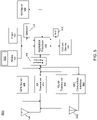
- system 500 may be a smartphone or other wireless communicator.
- a baseband processor 505 is configured to perform various signal processing with regard to communication signals to be transmitted from or received by the system.
- baseband processor 505 is coupled to an application processor 510, which may be a main CPU of the system to execute an OS and other system software, in addition to user applications such as many well-known social media and multimedia apps.
- Application processor 510 may further be configured to enter a SMM to perform secure operations for the device, as described herein.
- application processor 510 can couple to a user interface/display 520, e.g., a touch screen display.
- application processor 510 may couple to a memory system including a non-volatile memory, namely a flash memory 530 and a system memory, namely a DRAM 535.
- DRAM 535 may include a secure portion 532 in which secrets such as an EK and derived keys may be stored.
- application processor 510 also couples to a capture device 545 such as one or more image capture devices that can record video and/or still images.
- a plurality of sensors 525 may couple to application processor 510 to enable input of a variety of sensed information such as accelerometer and other environmental information.
- a near field communication (NFC) contactless interface 560 is provided that communicates in a NFC near field via an NFC antenna 565. While separate antennae are shown in FIG. 5 , understand that in some implementations one antenna or a different set of antennae may be provided to enable various wireless functionality.
- NFC near field communication
- a power management integrated circuit (PMIC) 515 couples to application processor 510 to perform platform level power management. To this end, PMIC 515 may issue power management requests to application processor 510 to enter certain low power states as desired. Furthermore, based on platform constraints, PMIC 515 may also control the power level of other components of system 500.
- PMIC power management integrated circuit
- a radio frequency (RF) transceiver 570 and a wireless local area network (WLAN) transceiver 575 may be present.
- RF transceiver 570 may be used to receive and transmit wireless data and calls according to a given wireless communication protocol such as 3G or 4G wireless communication protocol such as in accordance with a code division multiple access (CDMA), global system for mobile communication (GSM), long term evolution (LTE) or other protocol.
- CDMA code division multiple access
- GSM global system for mobile communication
- LTE long term evolution
- GPS sensor 580 may be present, with location information being provided to security processor 550 for use as described herein.
- wireless communications such as receipt or transmission of radio signals, e.g., AM/FM and other signals may also be provided.
- local wireless communications such as according to a Bluetooth TM or IEEE 802.11 standard can also be realized.
- system 600 may be mobile low-power system such as a tablet computer, 2:1 tablet, fablet or other convertible or standalone tablet system.
- SoC 610 is present and may be configured to operate as an application processor for the device, and to enter into SMM to perform secure operations as described herein.
- SoC 610 A variety of devices may couple to SoC 610.
- a memory subsystem includes a flash memory 640 and a DRAM 645 coupled to SoC 610.
- SoC 610 may include an integrated memory controller to handle communications with DRAM 645, and set up and protect a secure portion within this memory (e.g., SMRAM) as described herein.
- SMRAM secure portion within this memory
- a touch panel 620 is coupled to the SoC 610 to provide display capability and user input via touch, including provision of a virtual keyboard on a display of touch panel 620.
- SoC 610 couples to an Ethernet interface 630.
- a peripheral hub 625 is coupled to SoC 610 to enable interfacing with various peripheral devices, such as may be coupled to system 600 by any of various ports or other connectors.
- a power management integrated circuit (PMIC) 680 is coupled to SoC 610 to provide platform-based power management, e.g., based on whether the system is powered by a battery 690 or AC power via an AC adapter 695.
- PMIC 680 may further perform platform power management activities based on environmental and usage conditions.
- PMIC 680 may communicate control and status information to SoC 610 to cause various power management actions within SoC 610.
- a WLAN unit 650 is coupled to SoC 610 and in turn to an antenna 655.
- WLAN unit 650 may provide for communication according to one or more wireless protocols, including an IEEE 802.11 protocol, a Bluetooth TM protocol or any other wireless protocol.
- a plurality of sensors 660 may couple to SoC 610. These sensors may include various accelerometer, environmental and other sensors, including user gesture sensors. Finally, an audio codec 665 is coupled to SoC 610 to provide an interface to an audio output device 670.
- SoC 610 may include various accelerometer, environmental and other sensors, including user gesture sensors.
- an audio codec 665 is coupled to SoC 610 to provide an interface to an audio output device 670.
- Embodiments may be used in many different types of systems.
- a communication device can be arranged to perform the various methods and techniques described herein.
- the scope of the present invention is not limited to a communication device, and instead other embodiments can be directed to other types of apparatus for processing instructions, or one or more machine readable media including instructions that in response to being executed on a computing device, cause the device to carry out one or more of the methods and techniques described herein.
- Embodiments may be implemented in code and may be stored on a nontransitory storage medium having stored thereon instructions which can be used to program a system to perform the instructions.
- the storage medium may include, but is not limited to, any type of disk including floppy disks, optical disks, solid state drives (SSDs), compact disk read-only memories (CD-ROMs), compact disk rewritables (CD-RWs), and magneto-optical disks, semiconductor devices such as read-only memories (ROMs), random access memories (RAMs) such as dynamic random access memories (DRAMs), static random access memories (SRAMs), erasable programmable read-only memories (EPROMs), flash memories, electrically erasable programmable read-only memories (EEPROMs), magnetic or optical cards, or any other type of media suitable for storing electronic instructions.
- ROMs read-only memories
- RAMs random access memories
- DRAMs dynamic random access memories
- SRAMs static random access memories
- EPROMs erasable programm
Landscapes
- Engineering & Computer Science (AREA)
- Computer Security & Cryptography (AREA)
- Theoretical Computer Science (AREA)
- Software Systems (AREA)
- Computer Hardware Design (AREA)
- General Engineering & Computer Science (AREA)
- Physics & Mathematics (AREA)
- General Physics & Mathematics (AREA)
- Computer Networks & Wireless Communication (AREA)
- Signal Processing (AREA)
- Computing Systems (AREA)
- Mathematical Physics (AREA)
- Storage Device Security (AREA)
Claims (13)
- System auf einem Chip (SoC), umfassend:einen einzelnen Kern, wobei der einzelne Kern den einzigen Kern des SoC umfasst und wobei der einzelne Kern konfiguriert ist, in einen Systemverwaltungsmodus (SMM) einzutreten, um eine vertrauenswürdige Ausführungsumgebung (TEE) bereitzustellen, um mindestens eine sichere Operation durchzuführen, wobei der einzelne Kern in der TEE mindestens eine Sicherheitsanweisung eines durch den einzelnen Kern nicht unterstützten Anweisungssatzes emulieren soll; undeine an den einzelnen Kern gekoppelte Speichersteuerung, die Speichersteuerung zum Anbinden an einen Systemspeicher, wobei, zum Einrichten der TEE, der einzelne Kern eine Firmware vor dem Urladen authentifizieren, die Firmware vor dem Urladen ausführen, einen vertrauenswürdigen Abschnitt des Systemspeichers für den SMM erzeugen und die Ausführung an einen vertrauenswürdigen Agenten, der mit dem vertrauenswürdigen Abschnitt assoziiert ist, übertragen soll, um ein Schlüsselpaar aus einer geschützten Speicherung zu erlangen und das Schlüsselpaar in dem vertrauenswürdigen Abschnitt des Systemspeichers zu speichern.
- SoC nach Anspruch 1, wobei der einzelne Kern in dem SMM operieren soll, um das Schlüsselpaar aus der geschützten Speicherung, umfassend eine nichtflüchtige Speicherung, der einen isolierten Schlüsselspeicher zum Speichern des Schlüsselpaars enthält, zu erlangen, wobei das Schlüsselpaar in der nichtflüchtigen Speicherung während der Herstellung eines Systems, das den SoC enthält, erzeugt und gespeichert werden soll.
- SoC nach einem der vorhergehenden Ansprüche 1 oder 2, wobei der einzelne Kern in der TEE ist, um verschlüsselten Inhalt zu empfangen, den verschlüsselten Inhalt unter Verwendung eines oder mehrerer in einer an den SoC gekoppelten ungeschützten Speicherung gespeicherter abgeleiteter Schlüssel zu entschlüsseln und den entschlüsselten Inhalt an eine Ausgangsvorrichtung über einen vertrauenswürdigen Kanal auszugeben.
- SoC nach einem der vorhergehenden Ansprüche 1 oder 2, wobei der einzelne Kern in der TEE ist, um eine in dem sicheren Speicher gespeicherte Seite von Informationen zu verschlüsseln und die verschlüsselte Seite in einem ungeschützten Abschnitt des Systemspeichers zu speichern.
- SoC nach einem der vorhergehenden Ansprüche 1 oder 2, wobei das SoC ferner einen Urlade-Nur-Lese-Speicher (ROM) umfasst, um das Schlüsselpaar in einem geschützten Abschnitt des Urlade-ROM zu speichern.
- SoC nach Anspruch 1, das System ferner umfassend:eine an den SoC gekoppelte Anzeigevorrichtung, die Anzeigevorrichtung enthaltend einen Frame-Zwischenspeicher zum Speichern verarbeiteter Daten, die auf der Anzeigevorrichtung angezeigt werden sollen; undwobei der Systemspeicher an den SoC gekoppelt ist, der Systemspeicher den sicheren Speicher zum Speichern des Schlüsselpaars und einen ungeschützten Abschnitt zum Speichern eines oder mehrerer Entschlüsselungsschlüssel enthält, wobei in dem SMM der Systemspeicher verschlüsselten Inhalt empfangen, den verschlüsselten Inhalt unter Verwendung des einen oder der mehreren Entschlüsselungsschlüssel entschlüsseln und den entschlüsselten Inhalt zu der Anzeigevorrichtung ausgeben soll.
- SoC nach Anspruch 6, wobei die Anzeigevorrichtung über einen vertrauenswürdigen Kanal an den SoC gekoppelt ist, wobei der SoC einen Anzeigetreiber in der TEE ausführen soll, um die verarbeiteten Daten an die Anzeigevorrichtung zur Speicherung in dem Frame-Zwischenspeicher zu leiten.
- Verfahren zum Einrichten einer vertrauenswürdigen Ausführungsumgebung auf einem System auf einem Chip (SoC), umfassend einen einzelnen Kern eines Prozessors und eine Speichersteuerung, wobei der einzelne Kern den einzigen Kern des SoC umfasst, wobei die Speichersteuerung an den einzelnen Kern gekoppelt ist und wobei die Speichersteuerung an einen Systemspeicher anbinden soll, das Verfahren umfassendAusführen mindestens eines Abschnitts einer Firmware einer Umgebung vor dem Urladen in dem einzelnen Kern des Prozessors, um einen vertrauenswürdigen Abschnitt des Systemspeichers für einen Systemverwaltungsmodus (SMM) zu erzeugen, um eine vertrauenswürdige Ausführungsumgebung (TEE) bereitzustellen, um mindestens eine sichere Operation durchzuführen, wobei der einzelne Kern in der TEE mindestens eine Sicherheitsanweisung eines durch den einzelnen Kern nicht unterstützten Anweisungssatzes emulieren soll; undÜbertragen der Ausführung an einen vertrauenswürdigen Agenten, der mit dem vertrauenswürdigen Abschnitt assoziiert ist, Anfordern eines Schlüsselpaars aus einem geschützten Abschnitt einer nichtflüchtigen Speicherung, Speichern des Schlüsselpaars in dem vertrauenswürdigen Abschnitt des Systemspeichers.
- Verfahren nach Anspruch 8, ferner umfassend Empfangen einer vertrauenswürdigen Aktionsanforderung von einem nicht vertrauenswürdigen Agenten und, wenn die vertrauenswürdige Aktionsanforderung von dem vertrauenswürdigen Agenten unterstützt wird, Eintreten in die vertrauenswürdige Ausführungsumgebung über den vertrauenswürdigen Agenten, um eine sichere Operation korrespondierend mit der vertrauenswürdigen Aktionsanforderung in der vertrauenswürdigen Ausführungsumgebung auszuführen.
- Verfahren nach Anspruch 8, ferner umfassend Anfordern des Schlüsselpaars aus dem geschützten Abschnitt des nichtflüchtigen Speichers als Reaktion auf eine durch den einzelnen Kern ausgeführte Anweisung IN_SMM, während in einer vertrauenswürdigen Ausführungsumgebung.
- Verfahren nach Anspruch 8, ferner umfassend Empfangen von verschlüsseltem Inhalt, Entschlüsseln des verschlüsselten Inhalts unter Verwendung eines oder mehrerer in dem Systemspeicher gespeicherter abgeleiteter Schlüssel und Ausgeben des entschlüsselten Inhalts an eine Ausgangsvorrichtung über einen vertrauenswürdigen Kanal.
- Gerät, umfassend Mittel zum Durchführen eines Verfahrens nach einem der Ansprüche 8 bis 11.
- Maschinenlesbares Speicherungsmedium, enthaltend maschinenlesbare Anweisungen, die, wenn sie durch einen Prozessor ausgeführt werden, den Prozessor veranlassen, ein Verfahren nach einem der Ansprüche 8 bis 11 zu implementieren.
Applications Claiming Priority (2)
| Application Number | Priority Date | Filing Date | Title |
|---|---|---|---|
| US14/482,136 US9594927B2 (en) | 2014-09-10 | 2014-09-10 | Providing a trusted execution environment using a processor |
| PCT/US2015/042436 WO2016039880A1 (en) | 2014-09-10 | 2015-07-28 | Providing a trusted execution environment using a processor |
Publications (3)
| Publication Number | Publication Date |
|---|---|
| EP3192003A1 EP3192003A1 (de) | 2017-07-19 |
| EP3192003A4 EP3192003A4 (de) | 2018-05-16 |
| EP3192003B1 true EP3192003B1 (de) | 2022-07-06 |
Family
ID=55437771
Family Applications (1)
| Application Number | Title | Priority Date | Filing Date |
|---|---|---|---|
| EP15839311.6A Active EP3192003B1 (de) | 2014-09-10 | 2015-07-28 | Bereitstellung einer vertrauenswürdigen umgebung mit einem prozessor |
Country Status (5)
| Country | Link |
|---|---|
| US (2) | US9594927B2 (de) |
| EP (1) | EP3192003B1 (de) |
| CN (1) | CN106605233B (de) |
| TW (1) | TWI546699B (de) |
| WO (1) | WO2016039880A1 (de) |
Families Citing this family (77)
| Publication number | Priority date | Publication date | Assignee | Title |
|---|---|---|---|---|
| DE102008011501A1 (de) | 2008-02-25 | 2009-08-27 | Carl Zeiss Smt Ag | Verfahren zum Betreiben eines Beleuchtungssystems einer mikrolithographischen Projektionsbelichtungsanlage |
| KR102192419B1 (ko) * | 2014-09-11 | 2020-12-17 | 삼성전자주식회사 | 웨어러블 장치를 사용하여 전자 장치를 제어하는 방법 및 전자 장치의 동작 방법 |
| US10657262B1 (en) * | 2014-09-28 | 2020-05-19 | Red Balloon Security, Inc. | Method and apparatus for securing embedded device firmware |
| US9800561B2 (en) * | 2014-11-06 | 2017-10-24 | Intel Corporation | Secure sharing of user annotated subscription media with trusted devices |
| US20160134621A1 (en) * | 2014-11-12 | 2016-05-12 | Qualcomm Incorporated | Certificate provisioning for authentication to a network |
| KR102281782B1 (ko) * | 2014-11-14 | 2021-07-27 | 삼성전자주식회사 | 무선 통신 시스템에서 단말의 어플리케이션을 원격으로 관리하는 방법 및 장치 |
| US10474596B2 (en) * | 2015-06-25 | 2019-11-12 | Intel Corporation | Providing dedicated resources for a system management mode of a processor |
| US10083306B2 (en) * | 2015-06-26 | 2018-09-25 | Intel Corporation | Establishing hardware roots of trust for internet-of-things devices |
| US10102151B2 (en) * | 2015-11-06 | 2018-10-16 | International Business Machines Corporation | Protecting a memory from unauthorized access |
| US10193858B2 (en) * | 2015-12-22 | 2019-01-29 | Mcafee, Llc | Attestation device custody transfer protocol |
| US11831654B2 (en) * | 2015-12-22 | 2023-11-28 | Mcafee, Llc | Secure over-the-air updates |
| CN108781211A (zh) * | 2016-03-01 | 2018-11-09 | 高通股份有限公司 | 用于装置的tee执行的用户界面 |
| CN105809036B (zh) * | 2016-04-01 | 2019-05-10 | 中国银联股份有限公司 | 一种tee访问控制方法以及实现该方法的移动终端 |
| US10389517B2 (en) | 2016-06-27 | 2019-08-20 | Nxp B.V. | Using secure key storage to bind a white-box implementation to one platform |
| US10628611B2 (en) | 2016-11-04 | 2020-04-21 | Qualcomm Incorporated | Exclusive execution environment within a system-on-a-chip computing system |
| EP3340147A1 (de) | 2016-12-22 | 2018-06-27 | Mastercard International Incorporated | Verfahren zur bereitstellung von schlüsselkennungen in transaktionsdaten |
| US10706143B2 (en) * | 2017-05-19 | 2020-07-07 | Intel Corporation | Techniques for secure-chip memory for trusted execution environments |
| US10643006B2 (en) * | 2017-06-14 | 2020-05-05 | International Business Machines Corporation | Semiconductor chip including integrated security circuit |
| US10708061B2 (en) | 2017-06-25 | 2020-07-07 | Microsoft Technology Licensing, Llc | Secure key storage for multi-core processor |
| US10503892B2 (en) | 2017-06-25 | 2019-12-10 | Microsoft Technology Licensing, Llc | Remote attestation for multi-core processor |
| US10402567B2 (en) | 2017-06-25 | 2019-09-03 | Microsoft Technology Licensing, Llc | Secure boot for multi-core processor |
| US11032067B2 (en) * | 2017-07-03 | 2021-06-08 | Stmicroelectronics S.R.L. | Hardware secure module, related processing system, integrated circuit, device and method |
| US10769269B2 (en) * | 2017-07-10 | 2020-09-08 | Intel Corporation | Method and apparatus to gather platform configuration profile in a trustworthy manner |
| CN107465504A (zh) * | 2017-08-15 | 2017-12-12 | 上海与德科技有限公司 | 一种提高密钥安全性的方法及装置 |
| US10839080B2 (en) * | 2017-09-01 | 2020-11-17 | Microsoft Technology Licensing, Llc | Hardware-enforced firmware security |
| US10740494B2 (en) * | 2017-09-06 | 2020-08-11 | Google Llc | Central and delegate security processors for a computing device |
| US10511575B2 (en) * | 2017-09-18 | 2019-12-17 | Huawei Technologies Co., Ltd. | Securing delegated credentials in third-party networks |
| CN107707981B (zh) * | 2017-09-27 | 2020-10-30 | 晶晨半导体(上海)股份有限公司 | 一种基于Trustzone技术的微码签名安全管理系统及方法 |
| US10761951B2 (en) * | 2017-12-28 | 2020-09-01 | Intel Corporation | FPGA based functional safety control logic (FFSCL) |
| US10922441B2 (en) * | 2018-05-04 | 2021-02-16 | Huawei Technologies Co., Ltd. | Device and method for data security with a trusted execution environment |
| CN110677250B (zh) | 2018-07-02 | 2022-09-02 | 阿里巴巴集团控股有限公司 | 密钥和证书分发方法、身份信息处理方法、设备、介质 |
| CN110795774B (zh) | 2018-08-02 | 2023-04-11 | 阿里巴巴集团控股有限公司 | 基于可信高速加密卡的度量方法、设备和系统 |
| CN110795742B (zh) | 2018-08-02 | 2023-05-02 | 阿里巴巴集团控股有限公司 | 高速密码运算的度量处理方法、装置、存储介质及处理器 |
| CN110874478B (zh) | 2018-08-29 | 2023-05-02 | 阿里巴巴集团控股有限公司 | 密钥处理方法及装置、存储介质和处理器 |
| US11693970B2 (en) * | 2019-01-04 | 2023-07-04 | Baidu Usa Llc | Method and system for managing memory of data processing accelerators |
| CN109739565B (zh) * | 2019-01-07 | 2022-03-29 | 深圳忆联信息系统有限公司 | 一种保证Bootrom正常运行的方法、装置、计算机设备及存储介质 |
| US11251942B2 (en) * | 2019-01-09 | 2022-02-15 | Alibaba Group Holding Limited | Secure communication channel between encryption/decryption component and trusted execution environment |
| GB2581161A (en) * | 2019-02-05 | 2020-08-12 | Trustonic Ltd | Software encryption |
| US11354418B2 (en) * | 2019-03-08 | 2022-06-07 | International Business Machines Corporation | Incremental decryption and integrity verification of a secure operating system image |
| US11336684B2 (en) * | 2019-06-07 | 2022-05-17 | Lookout, Inc. | Mobile device security using a secure execution context |
| CN111108522B (zh) * | 2019-08-12 | 2024-04-16 | 创新先进技术有限公司 | 基于区块链的传票送达 |
| CN112182557B (zh) * | 2019-09-19 | 2022-05-03 | 中国科学院信息工程研究所 | 一种芯片级内置式的主动安全监控架构实现方法及电子装置 |
| US11954198B2 (en) * | 2019-10-31 | 2024-04-09 | Vmware, Inc. | Unifying hardware trusted execution environment technologies using virtual secure enclave device |
| US11436343B2 (en) * | 2019-12-31 | 2022-09-06 | Arm Limited | Device, system, and method of policy enforcement for rich execution environment |
| CN113139175B (zh) | 2020-01-19 | 2024-12-06 | 阿里巴巴集团控股有限公司 | 处理单元、电子设备以及安全控制方法 |
| US12197563B2 (en) | 2020-01-29 | 2025-01-14 | Huawei Technologies Co., Ltd. | Apparatus and method for protecting shared objects |
| CN111444553A (zh) * | 2020-04-01 | 2020-07-24 | 中国人民解放军国防科技大学 | 支持tee扩展的安全存储实现方法及系统 |
| KR20210125330A (ko) * | 2020-04-08 | 2021-10-18 | 삼성전자주식회사 | 보안 데이터 처리 방법 및 이를 지원하는 전자 장치 |
| CN111757176B (zh) * | 2020-06-11 | 2021-11-30 | 青岛海信传媒网络技术有限公司 | 流媒体文件安全播放方法及显示设备 |
| US11816220B2 (en) * | 2020-09-25 | 2023-11-14 | Intel Corporation | Phased boot process to dynamically initialize devices in a verified environment |
| US12306951B2 (en) * | 2020-10-29 | 2025-05-20 | EMC IP Holding Company LLC | Secure enclave pathing configuration for data confidence fabrics |
| US12130924B2 (en) * | 2020-11-19 | 2024-10-29 | Intel Corporation | Seamless SMM global driver update base on SMM root of trust |
| CN112507397B (zh) * | 2020-11-23 | 2023-03-14 | 中国人民解放军战略支援部队信息工程大学 | 基于信息加密的微处理器固件信息保护方法 |
| US20210110070A1 (en) * | 2020-12-22 | 2021-04-15 | Anjo Lucas Vahldiek-Oberwagner | Reducing latency of hardware trusted execution environments |
| US11604643B2 (en) | 2020-12-29 | 2023-03-14 | Shanghai Zhaoxin Semiconductor Co., Ltd. | System for executing new instructions and method for executing new instructions |
| US11803381B2 (en) | 2020-12-29 | 2023-10-31 | Shanghai Zhaoxin Semiconductor Co., Ltd. | Instruction simulation device and method thereof |
| US20220206809A1 (en) * | 2020-12-29 | 2022-06-30 | Shanghai Zhaoxin Semiconductor Co., Ltd. | Method and system for executing new instructions |
| US11914997B2 (en) | 2020-12-29 | 2024-02-27 | Shanghai Zhaoxin Semiconductor Co., Ltd. | Method and system for executing new instructions |
| US11669328B2 (en) | 2020-12-29 | 2023-06-06 | Shanghai Zhaoxin Semiconductor Co., Ltd. | Method and system for converting instructions |
| US11625247B2 (en) * | 2020-12-29 | 2023-04-11 | Shanghai Zhaoxin Semiconductor Co., Ltd. | System for executing new instructions and method for executing new instructions |
| US11803383B2 (en) | 2020-12-29 | 2023-10-31 | Shanghai Zhaoxin Semiconductor Co., Ltd. | Method and system for executing new instructions |
| US11789736B2 (en) | 2020-12-29 | 2023-10-17 | Shanghai Zhaoxin Semiconductor Co., Ltd. | Method and system for executing new instructions |
| US11750372B2 (en) * | 2021-01-07 | 2023-09-05 | Dell Products L.P. | BIOS/OS key provisioning system |
| US11722903B2 (en) * | 2021-04-09 | 2023-08-08 | Northrop Grumman Systems Corporation | Environmental verification for controlling access to data |
| US11816252B2 (en) * | 2021-07-12 | 2023-11-14 | Dell Products L.P. | Managing control of a security processor in a supply chain |
| US11392705B1 (en) * | 2021-07-29 | 2022-07-19 | Netskope, Inc. | Disk encryption key management for booting of a device |
| US11989576B2 (en) * | 2021-08-24 | 2024-05-21 | Hewlett-Packard Development Company, L.P. | Execution of code in system memory |
| KR102430219B1 (ko) * | 2021-09-15 | 2022-08-05 | 삼성전자주식회사 | 스토리지 장치, 스토리지 장치의 키 생성 방법 및 스토리지 장치의 인증 방법 |
| US11645092B1 (en) | 2021-10-25 | 2023-05-09 | International Business Machines Corporation | Building and deploying an application |
| US11755721B2 (en) * | 2021-10-25 | 2023-09-12 | International Business Machines Corporation | Trusted workload execution |
| US12314755B2 (en) | 2021-12-03 | 2025-05-27 | International Business Machines Corporation | Scheduling a secure code segment on a processor core of a processing unit |
| US12602466B2 (en) * | 2021-12-03 | 2026-04-14 | International Business Machines Corporation | Operating a secure code segment on a processor core of a processing unit |
| US11824984B2 (en) | 2022-01-11 | 2023-11-21 | International Business Machines Corporation | Storage encryption for a trusted execution environment |
| CN114546501B (zh) * | 2022-01-28 | 2023-10-24 | 郑州信大捷安信息技术股份有限公司 | 一种物理只读磁盘中启动Linux操作系统的方法 |
| CN115935335B (zh) * | 2022-10-14 | 2025-09-16 | 超聚变数字技术有限公司 | 一种固件的启动方法、芯片及计算设备 |
| EP4413696B1 (de) | 2022-12-30 | 2025-05-14 | Google LLC | Sichere arbeitsabläufe zur verbesserung der datensicherheit unter verwendung von sandboxen, die von vertrauenswürdigen ausführungsumgebungen gehostet sind |
| US20250252186A1 (en) * | 2024-02-01 | 2025-08-07 | Dell Products L.P. | Runtime Trusted Execution Environment to Facilitate Information Handling System Firmware Management Operations |
Family Cites Families (30)
| Publication number | Priority date | Publication date | Assignee | Title |
|---|---|---|---|---|
| US8479293B2 (en) * | 2000-11-30 | 2013-07-02 | Access Co., Ltd. | Security technique for an open computing platform system |
| US7058768B2 (en) * | 2002-04-17 | 2006-06-06 | Microsoft Corporation | Memory isolation through address translation data edit control |
| EP1391819A1 (de) * | 2002-08-19 | 2004-02-25 | Hewlett-Packard Company | Datenverarbeitungssystem und Verfahren |
| US7974416B2 (en) * | 2002-11-27 | 2011-07-05 | Intel Corporation | Providing a secure execution mode in a pre-boot environment |
| US8261063B2 (en) * | 2003-02-03 | 2012-09-04 | Hewlett-Packard Development Company, L.P. | Method and apparatus for managing a hierarchy of nodes |
| US7210009B2 (en) * | 2003-09-04 | 2007-04-24 | Advanced Micro Devices, Inc. | Computer system employing a trusted execution environment including a memory controller configured to clear memory |
| GB0411654D0 (en) * | 2004-05-25 | 2004-06-30 | Hewlett Packard Development Co | A generic trusted platform architecture |
| US20070297606A1 (en) * | 2006-06-27 | 2007-12-27 | Tkacik Thomas E | Multiple key security and method for electronic devices |
| US8438653B2 (en) * | 2007-04-10 | 2013-05-07 | Microsoft Corporation | Strategies for controlling use of a resource that is shared between trusted and untrusted environments |
| US7921286B2 (en) * | 2007-11-14 | 2011-04-05 | Microsoft Corporation | Computer initialization for secure kernel |
| US8117642B2 (en) * | 2008-03-21 | 2012-02-14 | Freescale Semiconductor, Inc. | Computing device with entry authentication into trusted execution environment and method therefor |
| US7984286B2 (en) * | 2008-06-25 | 2011-07-19 | Intel Corporation | Apparatus and method for secure boot environment |
| US8136158B1 (en) * | 2008-07-21 | 2012-03-13 | Google Inc. | User-level segmentation mechanism that facilitates safely executing untrusted native code |
| US8522066B2 (en) | 2010-06-25 | 2013-08-27 | Intel Corporation | Providing silicon integrated code for a system |
| US8312258B2 (en) | 2010-07-22 | 2012-11-13 | Intel Corporation | Providing platform independent memory logic |
| US20120036308A1 (en) | 2010-08-06 | 2012-02-09 | Swanson Robert C | Supporting a secure readable memory region for pre-boot and secure mode operations |
| US8532290B2 (en) | 2011-03-04 | 2013-09-10 | Netflix, Inc. | Content playback APIS using encrypted streams |
| US9268941B1 (en) * | 2012-05-01 | 2016-02-23 | Marvell International Ltd. | Method for secure software resume from low power mode |
| US9418209B2 (en) | 2012-10-02 | 2016-08-16 | Google Technology Holdings LLC | Systems and methods for manipulating sensitive information in a secure mobile environment |
| US9008304B2 (en) | 2012-12-28 | 2015-04-14 | Intel Corporation | Content protection key management |
| US9037854B2 (en) * | 2013-01-22 | 2015-05-19 | Amazon Technologies, Inc. | Privileged cryptographic services in a virtualized environment |
| US8559631B1 (en) * | 2013-02-09 | 2013-10-15 | Zeutro Llc | Systems and methods for efficient decryption of attribute-based encryption |
| KR102095912B1 (ko) * | 2013-05-15 | 2020-04-02 | 삼성전자 주식회사 | 보안 기능 운용 방법 및 이를 지원하는 전자 장치 |
| DE102013107203A1 (de) * | 2013-07-09 | 2015-01-15 | Dr. Ing. H.C. F. Porsche Aktiengesellschaft | Dachschalen-Aufbau für ein Kraftfahrzeug |
| US9672162B2 (en) * | 2013-08-16 | 2017-06-06 | Arm Limited | Data processing systems |
| US9535712B2 (en) * | 2013-12-04 | 2017-01-03 | Insyde Software Corp. | System and method to store data securely for firmware using read-protected storage |
| US9514304B2 (en) * | 2013-12-23 | 2016-12-06 | Intel Corporation | Methods and apparatus to facilitate secure screen input |
| DE102013227184A1 (de) * | 2013-12-27 | 2015-07-02 | Robert Bosch Gmbh | Verfahren zur Absicherung eines Systems-on-a-Chip |
| US11228427B2 (en) * | 2014-02-11 | 2022-01-18 | Ericsson Ab | System and method for securing content keys delivered in manifest files |
| US9690943B2 (en) * | 2014-06-04 | 2017-06-27 | Dell Products L.P. | BIOS secure data management system |
-
2014
- 2014-09-10 US US14/482,136 patent/US9594927B2/en active Active
-
2015
- 2015-07-28 CN CN201580042636.5A patent/CN106605233B/zh active Active
- 2015-07-28 WO PCT/US2015/042436 patent/WO2016039880A1/en not_active Ceased
- 2015-07-28 EP EP15839311.6A patent/EP3192003B1/de active Active
- 2015-07-31 TW TW104124936A patent/TWI546699B/zh not_active IP Right Cessation
-
2017
- 2017-02-01 US US15/421,539 patent/US10366237B2/en active Active
Also Published As
| Publication number | Publication date |
|---|---|
| US20160070932A1 (en) | 2016-03-10 |
| US20170140153A1 (en) | 2017-05-18 |
| TWI546699B (zh) | 2016-08-21 |
| US9594927B2 (en) | 2017-03-14 |
| WO2016039880A1 (en) | 2016-03-17 |
| EP3192003A1 (de) | 2017-07-19 |
| CN106605233B (zh) | 2021-04-16 |
| CN106605233A (zh) | 2017-04-26 |
| TW201617965A (zh) | 2016-05-16 |
| US10366237B2 (en) | 2019-07-30 |
| EP3192003A4 (de) | 2018-05-16 |
Similar Documents
| Publication | Publication Date | Title |
|---|---|---|
| US10366237B2 (en) | Providing a trusted execution environment using a processor | |
| Lentz et al. | Secloak: Arm trustzone-based mobile peripheral control | |
| US10536274B2 (en) | Cryptographic protection for trusted operating systems | |
| US10810138B2 (en) | Enhanced storage encryption with total memory encryption (TME) and multi-key total memory encryption (MKTME) | |
| EP3049989B1 (de) | Schutzschema für entfernt gespeicherte daten | |
| US20160350534A1 (en) | System, apparatus and method for controlling multiple trusted execution environments in a system | |
| US10691627B2 (en) | Avoiding redundant memory encryption in a cryptographic protection system | |
| US8539245B2 (en) | Apparatus and method for accessing a secure partition in non-volatile storage by a host system enabled after the system exits a first instance of a secure mode | |
| US10445154B2 (en) | Firmware-related event notification | |
| US9870467B2 (en) | Apparatus and method for implementing a forked system call in a system with a protected region | |
| US12417322B2 (en) | Technologies for filtering memory access transactions received from one or more I/O devices | |
| US20180268132A1 (en) | Hardware isolated secure processing system within a secure element | |
| WO2016209353A1 (en) | Authentication of a multiple protocol connection | |
| CN112149144A (zh) | 聚合密码引擎 | |
| US10938857B2 (en) | Management of a distributed universally secure execution environment | |
| US9537738B2 (en) | Reporting platform information using a secure agent | |
| US20190228159A1 (en) | Technologies for filtering memory access transactions received from one or more accelerators via coherent accelerator link | |
| US20170317832A1 (en) | Virtual Secure Elements in Computing Systems based on ARM Processors | |
| EP4273722A1 (de) | Anschlusschip und messverfahren dafür | |
| WO2008025036A2 (en) | Data processing systems utilizing secure memory |
Legal Events
| Date | Code | Title | Description |
|---|---|---|---|
| STAA | Information on the status of an ep patent application or granted ep patent |
Free format text: STATUS: THE INTERNATIONAL PUBLICATION HAS BEEN MADE |
|
| PUAI | Public reference made under article 153(3) epc to a published international application that has entered the european phase |
Free format text: ORIGINAL CODE: 0009012 |
|
| STAA | Information on the status of an ep patent application or granted ep patent |
Free format text: STATUS: REQUEST FOR EXAMINATION WAS MADE |
|
| 17P | Request for examination filed |
Effective date: 20170125 |
|
| AK | Designated contracting states |
Kind code of ref document: A1 Designated state(s): AL AT BE BG CH CY CZ DE DK EE ES FI FR GB GR HR HU IE IS IT LI LT LU LV MC MK MT NL NO PL PT RO RS SE SI SK SM TR |
|
| AX | Request for extension of the european patent |
Extension state: BA ME |
|
| DAV | Request for validation of the european patent (deleted) | ||
| DAX | Request for extension of the european patent (deleted) | ||
| RIN1 | Information on inventor provided before grant (corrected) |
Inventor name: BARRY, PETER J. Inventor name: DICE, PETER A. Inventor name: SELVARAJE, GOPINATTH Inventor name: ZIMMER, VINCENT J. Inventor name: CARRENO, JULIEN Inventor name: POORNACHANDRAN, RAJESH Inventor name: ROSENBAUM, LEE G. Inventor name: VAN DE VEN, ARJAN |
|
| REG | Reference to a national code |
Ref country code: DE Ref legal event code: R079 Ref document number: 602015079792 Country of ref document: DE Free format text: PREVIOUS MAIN CLASS: G06F0021620000 Ipc: G06F0021570000 |
|
| A4 | Supplementary search report drawn up and despatched |
Effective date: 20180412 |
|
| RIC1 | Information provided on ipc code assigned before grant |
Ipc: G06F 9/4401 20180101ALI20180406BHEP Ipc: H04L 9/14 20060101ALI20180406BHEP Ipc: G06F 21/72 20130101ALI20180406BHEP Ipc: G06F 21/53 20130101ALI20180406BHEP Ipc: H04L 9/30 20060101ALI20180406BHEP Ipc: G06F 21/57 20130101AFI20180406BHEP Ipc: G06F 21/79 20130101ALI20180406BHEP Ipc: H04L 9/08 20060101ALI20180406BHEP |
|
| STAA | Information on the status of an ep patent application or granted ep patent |
Free format text: STATUS: EXAMINATION IS IN PROGRESS |
|
| 17Q | First examination report despatched |
Effective date: 20200127 |
|
| GRAP | Despatch of communication of intention to grant a patent |
Free format text: ORIGINAL CODE: EPIDOSNIGR1 |
|
| STAA | Information on the status of an ep patent application or granted ep patent |
Free format text: STATUS: GRANT OF PATENT IS INTENDED |
|
| INTG | Intention to grant announced |
Effective date: 20220128 |
|
| GRAS | Grant fee paid |
Free format text: ORIGINAL CODE: EPIDOSNIGR3 |
|
| GRAA | (expected) grant |
Free format text: ORIGINAL CODE: 0009210 |
|
| STAA | Information on the status of an ep patent application or granted ep patent |
Free format text: STATUS: THE PATENT HAS BEEN GRANTED |
|
| AK | Designated contracting states |
Kind code of ref document: B1 Designated state(s): AL AT BE BG CH CY CZ DE DK EE ES FI FR GB GR HR HU IE IS IT LI LT LU LV MC MK MT NL NO PL PT RO RS SE SI SK SM TR |
|
| REG | Reference to a national code |
Ref country code: AT Ref legal event code: REF Ref document number: 1503364 Country of ref document: AT Kind code of ref document: T Effective date: 20220715 Ref country code: CH Ref legal event code: EP |
|
| REG | Reference to a national code |
Ref country code: DE Ref legal event code: R096 Ref document number: 602015079792 Country of ref document: DE |
|
| REG | Reference to a national code |
Ref country code: IE Ref legal event code: FG4D |
|
| REG | Reference to a national code |
Ref country code: NL Ref legal event code: FP |
|
| REG | Reference to a national code |
Ref country code: LT Ref legal event code: MG9D |
|
| PG25 | Lapsed in a contracting state [announced via postgrant information from national office to epo] |
Ref country code: SE Free format text: LAPSE BECAUSE OF FAILURE TO SUBMIT A TRANSLATION OF THE DESCRIPTION OR TO PAY THE FEE WITHIN THE PRESCRIBED TIME-LIMIT Effective date: 20220706 Ref country code: RS Free format text: LAPSE BECAUSE OF FAILURE TO SUBMIT A TRANSLATION OF THE DESCRIPTION OR TO PAY THE FEE WITHIN THE PRESCRIBED TIME-LIMIT Effective date: 20220706 Ref country code: PT Free format text: LAPSE BECAUSE OF FAILURE TO SUBMIT A TRANSLATION OF THE DESCRIPTION OR TO PAY THE FEE WITHIN THE PRESCRIBED TIME-LIMIT Effective date: 20221107 Ref country code: NO Free format text: LAPSE BECAUSE OF FAILURE TO SUBMIT A TRANSLATION OF THE DESCRIPTION OR TO PAY THE FEE WITHIN THE PRESCRIBED TIME-LIMIT Effective date: 20221006 Ref country code: LV Free format text: LAPSE BECAUSE OF FAILURE TO SUBMIT A TRANSLATION OF THE DESCRIPTION OR TO PAY THE FEE WITHIN THE PRESCRIBED TIME-LIMIT Effective date: 20220706 Ref country code: LT Free format text: LAPSE BECAUSE OF FAILURE TO SUBMIT A TRANSLATION OF THE DESCRIPTION OR TO PAY THE FEE WITHIN THE PRESCRIBED TIME-LIMIT Effective date: 20220706 Ref country code: FI Free format text: LAPSE BECAUSE OF FAILURE TO SUBMIT A TRANSLATION OF THE DESCRIPTION OR TO PAY THE FEE WITHIN THE PRESCRIBED TIME-LIMIT Effective date: 20220706 Ref country code: ES Free format text: LAPSE BECAUSE OF FAILURE TO SUBMIT A TRANSLATION OF THE DESCRIPTION OR TO PAY THE FEE WITHIN THE PRESCRIBED TIME-LIMIT Effective date: 20220706 |
|
| REG | Reference to a national code |
Ref country code: AT Ref legal event code: MK05 Ref document number: 1503364 Country of ref document: AT Kind code of ref document: T Effective date: 20220706 |
|
| PG25 | Lapsed in a contracting state [announced via postgrant information from national office to epo] |
Ref country code: PL Free format text: LAPSE BECAUSE OF FAILURE TO SUBMIT A TRANSLATION OF THE DESCRIPTION OR TO PAY THE FEE WITHIN THE PRESCRIBED TIME-LIMIT Effective date: 20220706 Ref country code: IS Free format text: LAPSE BECAUSE OF FAILURE TO SUBMIT A TRANSLATION OF THE DESCRIPTION OR TO PAY THE FEE WITHIN THE PRESCRIBED TIME-LIMIT Effective date: 20221106 Ref country code: GR Free format text: LAPSE BECAUSE OF FAILURE TO SUBMIT A TRANSLATION OF THE DESCRIPTION OR TO PAY THE FEE WITHIN THE PRESCRIBED TIME-LIMIT Effective date: 20221007 |
|
| REG | Reference to a national code |
Ref country code: CH Ref legal event code: PL |
|
| REG | Reference to a national code |
Ref country code: BE Ref legal event code: MM Effective date: 20220731 |
|
| REG | Reference to a national code |
Ref country code: DE Ref legal event code: R097 Ref document number: 602015079792 Country of ref document: DE |
|
| PG25 | Lapsed in a contracting state [announced via postgrant information from national office to epo] |
Ref country code: SM Free format text: LAPSE BECAUSE OF FAILURE TO SUBMIT A TRANSLATION OF THE DESCRIPTION OR TO PAY THE FEE WITHIN THE PRESCRIBED TIME-LIMIT Effective date: 20220706 Ref country code: RO Free format text: LAPSE BECAUSE OF FAILURE TO SUBMIT A TRANSLATION OF THE DESCRIPTION OR TO PAY THE FEE WITHIN THE PRESCRIBED TIME-LIMIT Effective date: 20220706 Ref country code: MC Free format text: LAPSE BECAUSE OF FAILURE TO SUBMIT A TRANSLATION OF THE DESCRIPTION OR TO PAY THE FEE WITHIN THE PRESCRIBED TIME-LIMIT Effective date: 20220706 Ref country code: LU Free format text: LAPSE BECAUSE OF NON-PAYMENT OF DUE FEES Effective date: 20220728 Ref country code: LI Free format text: LAPSE BECAUSE OF NON-PAYMENT OF DUE FEES Effective date: 20220731 Ref country code: DK Free format text: LAPSE BECAUSE OF FAILURE TO SUBMIT A TRANSLATION OF THE DESCRIPTION OR TO PAY THE FEE WITHIN THE PRESCRIBED TIME-LIMIT Effective date: 20220706 Ref country code: CZ Free format text: LAPSE BECAUSE OF FAILURE TO SUBMIT A TRANSLATION OF THE DESCRIPTION OR TO PAY THE FEE WITHIN THE PRESCRIBED TIME-LIMIT Effective date: 20220706 Ref country code: CH Free format text: LAPSE BECAUSE OF NON-PAYMENT OF DUE FEES Effective date: 20220731 Ref country code: AT Free format text: LAPSE BECAUSE OF FAILURE TO SUBMIT A TRANSLATION OF THE DESCRIPTION OR TO PAY THE FEE WITHIN THE PRESCRIBED TIME-LIMIT Effective date: 20220706 |
|
| PLBE | No opposition filed within time limit |
Free format text: ORIGINAL CODE: 0009261 |
|
| STAA | Information on the status of an ep patent application or granted ep patent |
Free format text: STATUS: NO OPPOSITION FILED WITHIN TIME LIMIT |
|
| PG25 | Lapsed in a contracting state [announced via postgrant information from national office to epo] |
Ref country code: SK Free format text: LAPSE BECAUSE OF FAILURE TO SUBMIT A TRANSLATION OF THE DESCRIPTION OR TO PAY THE FEE WITHIN THE PRESCRIBED TIME-LIMIT Effective date: 20220706 Ref country code: EE Free format text: LAPSE BECAUSE OF FAILURE TO SUBMIT A TRANSLATION OF THE DESCRIPTION OR TO PAY THE FEE WITHIN THE PRESCRIBED TIME-LIMIT Effective date: 20220706 Ref country code: BE Free format text: LAPSE BECAUSE OF NON-PAYMENT OF DUE FEES Effective date: 20220731 |
|
| 26N | No opposition filed |
Effective date: 20230411 |
|
| P01 | Opt-out of the competence of the unified patent court (upc) registered |
Effective date: 20230518 |
|
| PG25 | Lapsed in a contracting state [announced via postgrant information from national office to epo] |
Ref country code: AL Free format text: LAPSE BECAUSE OF FAILURE TO SUBMIT A TRANSLATION OF THE DESCRIPTION OR TO PAY THE FEE WITHIN THE PRESCRIBED TIME-LIMIT Effective date: 20220706 |
|
| PG25 | Lapsed in a contracting state [announced via postgrant information from national office to epo] |
Ref country code: IE Free format text: LAPSE BECAUSE OF NON-PAYMENT OF DUE FEES Effective date: 20220728 |
|
| PG25 | Lapsed in a contracting state [announced via postgrant information from national office to epo] |
Ref country code: SI Free format text: LAPSE BECAUSE OF FAILURE TO SUBMIT A TRANSLATION OF THE DESCRIPTION OR TO PAY THE FEE WITHIN THE PRESCRIBED TIME-LIMIT Effective date: 20220706 |
|
| PG25 | Lapsed in a contracting state [announced via postgrant information from national office to epo] |
Ref country code: IT Free format text: LAPSE BECAUSE OF FAILURE TO SUBMIT A TRANSLATION OF THE DESCRIPTION OR TO PAY THE FEE WITHIN THE PRESCRIBED TIME-LIMIT Effective date: 20220706 |
|
| PG25 | Lapsed in a contracting state [announced via postgrant information from national office to epo] |
Ref country code: HU Free format text: LAPSE BECAUSE OF FAILURE TO SUBMIT A TRANSLATION OF THE DESCRIPTION OR TO PAY THE FEE WITHIN THE PRESCRIBED TIME-LIMIT; INVALID AB INITIO Effective date: 20150728 |
|
| PG25 | Lapsed in a contracting state [announced via postgrant information from national office to epo] |
Ref country code: MK Free format text: LAPSE BECAUSE OF FAILURE TO SUBMIT A TRANSLATION OF THE DESCRIPTION OR TO PAY THE FEE WITHIN THE PRESCRIBED TIME-LIMIT Effective date: 20220706 Ref country code: HR Free format text: LAPSE BECAUSE OF FAILURE TO SUBMIT A TRANSLATION OF THE DESCRIPTION OR TO PAY THE FEE WITHIN THE PRESCRIBED TIME-LIMIT Effective date: 20220706 Ref country code: CY Free format text: LAPSE BECAUSE OF FAILURE TO SUBMIT A TRANSLATION OF THE DESCRIPTION OR TO PAY THE FEE WITHIN THE PRESCRIBED TIME-LIMIT Effective date: 20220706 |
|
| PG25 | Lapsed in a contracting state [announced via postgrant information from national office to epo] |
Ref country code: TR Free format text: LAPSE BECAUSE OF FAILURE TO SUBMIT A TRANSLATION OF THE DESCRIPTION OR TO PAY THE FEE WITHIN THE PRESCRIBED TIME-LIMIT Effective date: 20220706 |
|
| PG25 | Lapsed in a contracting state [announced via postgrant information from national office to epo] |
Ref country code: BG Free format text: LAPSE BECAUSE OF FAILURE TO SUBMIT A TRANSLATION OF THE DESCRIPTION OR TO PAY THE FEE WITHIN THE PRESCRIBED TIME-LIMIT Effective date: 20220706 |
|
| PG25 | Lapsed in a contracting state [announced via postgrant information from national office to epo] |
Ref country code: MT Free format text: LAPSE BECAUSE OF FAILURE TO SUBMIT A TRANSLATION OF THE DESCRIPTION OR TO PAY THE FEE WITHIN THE PRESCRIBED TIME-LIMIT Effective date: 20220706 |
|
| PGFP | Annual fee paid to national office [announced via postgrant information from national office to epo] |
Ref country code: GB Payment date: 20250619 Year of fee payment: 11 |
|
| PGFP | Annual fee paid to national office [announced via postgrant information from national office to epo] |
Ref country code: NL Payment date: 20250620 Year of fee payment: 11 |
|
| PGFP | Annual fee paid to national office [announced via postgrant information from national office to epo] |
Ref country code: FR Payment date: 20250620 Year of fee payment: 11 |
|
| PGFP | Annual fee paid to national office [announced via postgrant information from national office to epo] |
Ref country code: DE Payment date: 20250618 Year of fee payment: 11 |