EP3192001B1 - Systeme und verfahren zur erkennung von versuchen zur übertragung von vertraulichen informationen über datenverteilungskanäle - Google Patents
Systeme und verfahren zur erkennung von versuchen zur übertragung von vertraulichen informationen über datenverteilungskanäle Download PDFInfo
- Publication number
- EP3192001B1 EP3192001B1 EP15751190.8A EP15751190A EP3192001B1 EP 3192001 B1 EP3192001 B1 EP 3192001B1 EP 15751190 A EP15751190 A EP 15751190A EP 3192001 B1 EP3192001 B1 EP 3192001B1
- Authority
- EP
- European Patent Office
- Prior art keywords
- file
- image
- data
- matching technique
- known sensitive
- Prior art date
- Legal status (The legal status is an assumption and is not a legal conclusion. Google has not performed a legal analysis and makes no representation as to the accuracy of the status listed.)
- Active
Links
Images


Classifications
-
- G—PHYSICS
- G06—COMPUTING OR CALCULATING; COUNTING
- G06F—ELECTRIC DIGITAL DATA PROCESSING
- G06F21/00—Security arrangements for protecting computers, components thereof, programs or data against unauthorised activity
- G06F21/50—Monitoring users, programs or devices to maintain the integrity of platforms, e.g. of processors, firmware or operating systems
-
- G—PHYSICS
- G06—COMPUTING OR CALCULATING; COUNTING
- G06F—ELECTRIC DIGITAL DATA PROCESSING
- G06F21/00—Security arrangements for protecting computers, components thereof, programs or data against unauthorised activity
- G06F21/60—Protecting data
- G06F21/62—Protecting access to data via a platform, e.g. using keys or access control rules
- G06F21/6209—Protecting access to data via a platform, e.g. using keys or access control rules to a single file or object, e.g. in a secure envelope, encrypted and accessed using a key, or with access control rules appended to the object itself
-
- G—PHYSICS
- G06—COMPUTING OR CALCULATING; COUNTING
- G06F—ELECTRIC DIGITAL DATA PROCESSING
- G06F21/00—Security arrangements for protecting computers, components thereof, programs or data against unauthorised activity
- G06F21/60—Protecting data
-
- H—ELECTRICITY
- H04—ELECTRIC COMMUNICATION TECHNIQUE
- H04L—TRANSMISSION OF DIGITAL INFORMATION, e.g. TELEGRAPHIC COMMUNICATION
- H04L63/00—Network architectures or network communication protocols for network security
- H04L63/14—Network architectures or network communication protocols for network security for detecting or protecting against malicious traffic
- H04L63/1408—Network architectures or network communication protocols for network security for detecting or protecting against malicious traffic by monitoring network traffic
Definitions
- DLP data-loss-prevention
- OCR optical character recognition
- WO2013098587 (A1 ) discusses preventing unintentionally violating privacy when sharing and/or publishing content.
- the instant disclosure describes various systems and methods for detecting attempts to transmit sensitive information via data-distribution channels by treating all documents as images and then using image-processing techniques to extract features for comparison to a gallery of images protected by a DLP policy.
- the invention is defined by the appended independent claims.
- a computer-implemented method for detecting attempts to transmit sensitive information via data-distribution channels may include (1) identifying an attempt to transmit a file through a data-distribution channel, (2) comparing, using an image-matching technique, the file with at least one known sensitive file that is both stored in an image format and protected by a DLP policy, (3) determining, based on the results of the image-matching technique, that the file violates the DLP policy, and (4) performing a security action in response to determining that the file violates the DLP policy.
- the security action may include (1) blocking the attempt to transmit the file through the data-distribution channel, (2) alerting an administrator to the attempt to transmit the file through the data-distribution channel, (3) informing a user that the attempt to transmit the file through the data-distribution channel violates the DLP policy, and/or (4) logging the attempt to transmit the file through the data-distribution channel.
- the file may be compared with the known sensitive file in a variety of ways.
- comparing the file with the known sensitive file may include converting the file into an image format.
- comparing the file with the known sensitive file may include creating a difference image that represents a set of elements that are different between the known sensitive file and the file.
- comparing the file with the known sensitive file may include identifying a set of key points within the file that are homologous to a set of key points within the known sensitive file.
- comparing the file with the known sensitive file may include (1) comparing a single visual element of the file to a single visual element of the known sensitive file, (2) comparing a set of distance ratios between key features of the file to a set of distance ratios between key features of the known sensitive file, and/or (3) comparing, using a distance metric, a set of feature vectors belonging to the file to a set of feature vectors belonging to the known sensitive file.
- the image comparison may involve several steps.
- comparing the file with the known sensitive may include (1) identifying a gallery of known sensitive files that are both stored in image formats and protected by the data loss prevention policy, (2) comparing, using a coarse image-matching technique, the file and a plurality of known sensitive files in the gallery, (3) comparing, using a finer image-matching technique that consumes more computing resources than the coarse image-matching technique, the file and a plurality of known sensitive files within the gallery not discarded by the coarse image-matching technique, and (4) comparing, using a final image-matching technique that consumes more computing resources than the finer image-matching technique, the file and a plurality of known sensitive files within the gallery not discarded by the finer image-matching technique.
- determining, based on the results of the image-matching technique, that the file violates the DLP policy may include determining that the file includes personally identifying information.
- the known sensitive file may include a text-based form and determining that the file violates the DLP policy may include determining that the file includes an edited version of the text-based form that includes personally identifying information.
- the computer-implemented method may be applied to data at rest.
- the computer-implemented method may further include (1) identifying an additional file that is stored on the computing device, (2) comparing, using the image-matching technique, the additional file with at least one additional known sensitive file that is both stored in an image format and protected by the DLP policy, (3) determining, based on the image-matching technique, that the additional file violates the DLP policy, and (4) performing an additional security action in response to determining that the additional file violates the DLP policy.
- a system for implementing the above-described method may include (1) an identification module, stored in memory, that identifies an attempt to transmit a file through a data-distribution channel, (2) a comparison module, stored in memory, that compares, using an image-matching technique, the file with at least one known sensitive file that is both stored in an image format and protected by a DLP policy, (3) a determination module, stored in memory, that determines, based on the results of the image-matching technique, that the file violates the DLP policy, (4) a security module, stored in memory, that performs a security action in response to determining that the file violates the DLP policy, and (5) at least one physical processor configured to execute the identification module, the comparison module, the determination module, and the security module.
- a computer-readable medium may include one or more computer-executable instructions that, when executed by at least one processor of a computing device, may cause the computing device to (1) identify an attempt to transmit a file through a data-distribution channel, (2) compare, using an image-matching technique, the file with at least one known sensitive file that is both stored in an image format and protected by a DLP policy, (3) determine, based on the results of the image-matching technique, that the file violates the DLP policy, and (4) perform a security action in response to determining that the file violates the DLP policy.
- the present disclosure is generally directed to systems and methods for detecting attempts to transmit sensitive information via data-distribution channels.
- the systems described herein may efficiently compare documents while avoiding problems inherent to OCR. If a document is found to be a version of a sensitive document, the systems described herein may detect, locate, and/or highlight changes between the versions of the document in order to identify DLP policy violations and/or make such violations more readily reviewable.
- FIGS. 1 , 2 and 4 detailed descriptions of exemplary systems for detecting attempts to transmit sensitive information via data-distribution channels. Detailed descriptions of corresponding computer-implemented methods will also be provided in connection with FIGS. 3 , 5 and 6 . In addition, detailed descriptions of an exemplary computing system and network architecture capable of implementing one or more of the embodiments described herein will be provided in connection with FIGS. 7 and 8 , respectively.
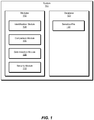
- FIG. 1 is a block diagram of exemplary system 100 for detecting attempts to transmit sensitive information via data-distribution channels.
- exemplary system 100 may include one or more modules 102 for performing one or more tasks.
- exemplary system 100 may include an identification module 104 that may identify an attempt to transmit a file through a data-distribution channel.
- exemplary system 100 may additionally include a comparison module 106 that may compare, using an image-matching technique, the file with at least one known sensitive file 122 that may be both stored in an image format and protected by a data-loss-prevention policy.
- Exemplary system 100 may also include a determination module 108 that may determine, based on the results of the image-matching technique, that the file violates the data-loss-prevention policy.
- Exemplary system 100 may additionally include a security module 110 that may perform a security action in response to determining that the file violates the data-loss-prevention policy.
- a determination module 108 may determine, based on the results of the image-matching technique, that the file violates the data-loss-prevention policy.
- exemplary system 100 may additionally include a security module 110 that may perform a security action in response to determining that the file violates the data-loss-prevention policy.
- modules 102 in FIG. 1 may represent portions of a single module or application.
- one or more of modules 102 in FIG. 1 may represent one or more software applications or programs that, when executed by a computing device, may cause the computing device to perform one or more tasks.
- one or more of modules 102 may represent software modules stored and configured to run on one or more computing devices, such as the devices illustrated in FIG. 2 (e.g., computing device 202 and/or server 206), computing system 710 in FIG. 7 , and/or portions of exemplary network architecture 800 in FIG. 8 .
- One or more of modules 102 in FIG. 1 may also represent all or portions of one or more special-purpose computers configured to perform one or more tasks.
- exemplary system 100 may also include one or more databases, such as database 120.
- database 120 may be configured to store sensitive file(s) 122.
- Database 120 may represent portions of a single database or computing device or a plurality of databases or computing devices.
- database 120 may represent a portion of server 206 in FIG. 2 , computing system 710 in FIG. 7 , and/or portions of exemplary network architecture 800 in FIG. 8 .
- database 120 in FIG. 1 may represent one or more physically separate devices capable of being accessed by a computing device, such as server 206 in FIG. 2 , computing system 710 in FIG. 7 , and/or portions of exemplary network architecture 800 in FIG. 8 .
- Exemplary system 100 in FIG. 1 may be implemented in a variety of ways. For example, all or a portion of exemplary system 100 may represent portions of exemplary system 200 in FIG. 2 .
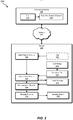
- system 200 may include a computing device 202 in communication with a server 206 via a network 204.
- computing device 202 may be programmed with one or more of modules 102 and/or may store all or a portion of the data in database 120.
- server 206 may be programmed with one or more of modules 102 and/or may store all or a portion of the data in database 120.
- one or more of modules 102 from FIG. 1 may, when executed by at least one processor of computing device 202 and/or server 206, enable computing device 202 and/or server 206 to detect attempts to transmit sensitive files via data-distribution channels.
- identification module 104 may identify an attempt to transmit a file 208 through a data-distribution channel 209.
- Comparison module 106 may then compare, using an image-matching technique, file 208 with at least one known sensitive file 122 that is both stored in an image format and protected by a DLP policy 212.
- Determination module 108 may then determine, based on match results 214, that file 208 violates DLP policy 212.
- security module 110 may execute a security action 216 in response to determining that file 208 violates DLP policy 212.
- Computing device 202 generally represents any type or form of computing device capable of reading computer-executable instructions. Examples of computing device 202 include, without limitation, laptops, tablets, desktops, servers, cellular phones, Personal Digital Assistants (PDAs), multimedia players, embedded systems, wearable devices (e.g., smart watches, smart glasses, etc.), gaming consoles, combinations of one or more of the same, exemplary computing system 710 in FIG. 7 , or any other suitable computing device.
- PDAs Personal Digital Assistants
- multimedia players e.g., Apple iPods, Apple iPods, Samsung Galaxy Tabs, etc.
- wearable devices e.g., smart watches, smart glasses, etc.
- gaming consoles e.g., Sony PlayStation 4, Microsoft Xbox One, etc.
- combinations of one or more of the same exemplary computing system 710 in FIG. 7 , or any other suitable computing device.
- Server 206 generally represents any type or form of computing device that is capable of storing a gallery of images. Examples of server 206 include, without limitation, application servers and database servers configured to provide various database services and/or run certain software applications.
- Network 204 generally represents any medium or architecture capable of facilitating communication or data transfer. Examples of network 204 include, without limitation, an intranet, a Wide Area Network (WAN), a Local Area Network (LAN), a Personal Area Network (PAN), the Internet, Power Line Communications (PLC), a cellular network (e.g., a Global System for Mobile Communications (GSM) network), exemplary network architecture 800 in FIG. 8 , or the like. Network 204 may facilitate communication or data transfer using wireless or wired connections. In one embodiment, network 204 may facilitate communication between computing device 202 and server 206.
- WAN Wide Area Network
- LAN Local Area Network
- PAN Personal Area Network
- PLC Power Line Communications
- GSM Global System for Mobile Communications
- GSM Global System for Mobile Communications
- Network 204 may facilitate communication or data transfer using wireless or wired connections. In one embodiment, network 204 may facilitate communication between computing device 202 and server 206.
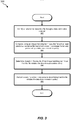
- FIG. 3 is a flow diagram of an exemplary computer-implemented method 300 for detecting attempts to transmit sensitive information via data-distribution channels.
- the steps shown in FIG. 3 may be performed by any suitable computer-executable code and/or computing system. In some embodiments, the steps shown in FIG. 3 may be performed by one or more of the components of system 100 in FIG. 1 , system 200 in FIG. 2 , computing system 710 in FIG. 7 , and/or portions of exemplary network architecture 800 in FIG. 8 .
- one or more of the systems described herein may identify an attempt to transmit a file through a data-distribution channel.
- identification module 104 may, as part of server 206 in FIG. 2 , identify an attempt to transmit file 208 through data-distribution channel 209.
- data-distribution channel generally refers to any type or form of communication pathway, computing system, and/or executable code capable of dispersing digital information from one entity to another.
- Examples of data-distribution channels include, without limitation, computing devices, mobile communication devices, email accounts, text-messaging services, social networking platforms, Internet and Ethernet networks, servers, removable storage devices, data transfer cables, and/or any other suitable communication channel.
- Identification module 104 may identify an attempt to transmit a file in a variety of ways and/or contexts.
- identification module 104 may be installed on an endpoint device and may monitor data-distribution channels on the endpoint device, such as universal serial bus (USB) ports, network connections, file transfer protocol clients, and/or email clients.
- identification module 104 may be installed on a network gateway and may monitor network traffic.
- identification module 104 may monitor a fax machine to identify attempts to transmit sensitive information via outgoing faxes.
- identification module 104 may only identify attempts to transmit files to destinations outside of a secure environment.
- identification module 104 may identify any attempt to transmit a file via a data-distribution channel.
- identification module 104 may, upon identifying an attempt to transmit a file (and prior to performing step 304), perform a preliminary analysis on the file in order to determine whether further analysis is warranted. In one embodiment, this preliminary analysis may involve analyzing a color histogram for the file. For example, identification module 104 may determine, by analyzing a color histogram for a file, that the file is a brightly colored image (e.g., a vacation photo) and is therefore unlikely to match black and white forms that include sensitive information. In this example, identification module 104 may allow the attempt to transmit the file and/or may refrain from passing the file along to comparison module 106 for further analysis. By performing this initial analysis, identification module 104 may quickly determine that some images may not be subject to DLP policies and may thus save the additional resources that would otherwise have been required to more thoroughly analyze the images.
- this preliminary analysis may involve analyzing a color histogram for the file. For example, identification module 104 may determine, by analyzing a color histogram for a file, that the file is a
- one or more of the systems described herein may compare, using an image-matching technique, the file with at least one known sensitive file that is both stored in an image format and protected by a DLP policy.
- comparison module 106 may, as part of server 206 in FIG. 2 , compare, using an image-matching technique, file 208 with at least one known sensitive file 122 that is both stored in an image format and protected by DLP policy 212.
- image-matching technique generally refers to any method or combination of methods used to determine whether one image is similar to another.
- Image-matching techniques may include both global and local image-processing and/or computer-vision techniques. Global techniques analyze the image as a whole, while local techniques focus on a set of interest points in an image.
- a local image-matching technique may include a technique that extracts feature vectors called descriptors around automatically or manually determined key points from an image, such as scale-invariant feature transform (SIFT) techniques, speeded-up robust features (SURF) techniques, and/or oriented fast and rotated brief (ORB) techniques.
- SIFT scale-invariant feature transform
- SURF speeded-up robust features
- ORB oriented fast and rotated brief
- descriptors typically offer a degree of invariance with respect to scale, illumination, rotation, and perspective changes.
- Examples of global image-matching techniques include, but are not limited to, histogram-matching, correlation-filters, principal component analysis (PCA), linear discriminant analysis (LDA), etc.
- image format generally refers to any data storage format that may be rendered as a two dimensional array of pixels.
- an image format may include data describing each pixel and/or data containing geometric descriptions of an image.
- files stored in an image format may be pictures of forms and/or other objects. Examples of image formats include, without limitation, raster image formats, bitmap image formats, graphics interchange format, portable network graphics, vector image formats, compound image formats, and/or stereo image formats.
- DLP policy generally refers to any policy and/or system designed to detect and/or prevent potential data breaches.
- DLP systems may act on data which may be in use, in motion, and/or at rest.
- DLP systems may include policies about the storage and/or transmission of data, software configured to enforce DLP policies, physical enforcement of DLP policies, and/or hardware modifications that may prevent the transmission of data.
- Examples of DLP policies may include, without limitation, "company private data may not be copied to movable storage media,” “personally identifying information may not be emailed,” and/or “tax forms may not be faxed.”
- examples of DLP enforcement may include, without limitation, preventing write requests to portable storage media, filtering outgoing emails to detect sensitive data, preventing access to sensitive data while devices are on unsecured networks, and/or blocking faxes containing sensitive data.
- Comparison module 106 may compare the files in a variety of ways and/or contexts.
- comparison module 106 may be part a DLP policy enforcement application that may use a variety of methods to determine whether a file includes sensitive information.
- comparison module 106 may be part of a general purpose image-comparison application.
- comparison module 106 may compare the file with the known sensitive file by converting the file into an image format.
- a file may not be in an image format and thus may need to be converted before being compared to a sensitive file that is stored in an image format.
- the file may be in the form of a fax, a portable document format file, a text file, and/or a .DOC file.
- comparison module 106 may convert the non-image file into an image format by rendering it at a given resolution before proceeding.
- comparison module 106 may convert file 208 from a text file into a bitmap file (using, e.g., one or more of a variety of conversion techniques) before attempting to compare the same to a gallery of known sensitive files stored in image format.
- comparison module 106 may identify, using the image-matching technique, a set of key points within the file that are homologous to a set of key points within the known sensitive file. For example, comparison module 106 may compare, using the image-matching technique, file 208 with sensitive file 122 using a distance metric related to the image-matching technique employed. If more than one sensitive file 122 is present in the database, comparison module 106 may measure the similarity between file 208 and each of the files in the database to determine if one or more files produce a match.
- comparison module 106 may measure the distance between descriptors belonging to file 208 and descriptors belonging to sensitive file 122. If the descriptors consist of a vector of floating values, an L2 or L1 distance metric might be used. If the descriptors consist of a vector of Boolean values, an L0 or Hamming distance maybe used to measure the similarity. Any other suitable distance metric may also be used.
- comparison module 106 may, based on the spatial distribution of the set of matching descriptors, estimate a geometric transformation that will map file 208 to the best-matching sensitive file in a gallery of known sensitive files. This mapping may include a homography and/or projective transformation to correct for misalignment.
- comparison module 106 may compare, using the image-matching technique, the file with the known sensitive file by at least one of (1) comparing a single visual element of the file to a single visual element of the known sensitive file, (2) comparing a set of distance ratios between key features of the file to a set of distance ratios between key features of the known sensitive file, and/or (3) comparing, using an appropriate distance metric, a set of feature vectors belonging to the to a set of feature vectors belonging to the known sensitive file.
- comparison module 106 may identify an important visual element of sensitive file 122 and examine file 208 for the presence of the important visual element.
- visual elements include, without limitation, a region of a single color, a straight line, or a geometric shape (e.g., a circle, a square, a triangle, or any other appropriate shape).
- comparison module 106 may locate a line in a particular region of sensitive file 122 and locate a line with a similar length and in a similar location within file 208. Based on this comparison, comparison module 106 may determine that file 208 matches sensitive file 122.
- Comparison module 106 may additionally or alternatively identify a set of key points contained within file 208 and calculate the ratios of the distances between them. If sensitive file 122 contains key points with distance ratios similar to those within file 208, comparison module 106 may determine that file 208 is similar to sensitive file 122.
- comparison module 106 may compare, using the image-matching technique, the file with the known sensitive file that is both stored in the image format and protected by the data loss prevention policy by (1) identifying a gallery of known sensitive files that are both stored in image formats and protected by the data loss prevention policy, (2) comparing, using a coarse image-matching technique, the file and a plurality of known sensitive files in the gallery, (3) comparing, using a finer image-matching technique that consumes more computing resources than the coarse image-matching technique, the file and a plurality of known sensitive files within the gallery not discarded by the coarse image-matching technique, and (4) comparing, using a final image-matching technique that consumes more computing resources than the finer image-matching technique, the file and a plurality of known sensitive files within the gallery not discarded by the finer image-matching technique.
- the cascade architecture described above may be designed to significantly speed-up the identification of sensitive file 122, especially if the database of sensitive files is large.
- the cascade architecture which may consist of a series of sub-matchers, sorted by increasing complexity and matching power from the coarsest to the finest, offers two main advantages.
- the cascade architecture may enable comparison module 106 to narrow down the search space by progressively eliminating easy non-matches without spending too many resources, and focusing on the more challenging potential-matches that require a finer match and more analysis that consumes more resources.
- the cascade architecture may enable comparison module 106 to exit early by determining early on and without spending too many resources that a match to query file 208 is not present in the gallery of sensitive files.
- a cascade architecture 414 may compare file 208 to any or all files in a gallery 402 that may store a variety of sensitive files, in some examples including sensitive file 112.
- Cascade architecture 414 may include a coarse matcher404, a finer matcher 406, and/or a finest matcher 408.
- cascade architecture may include any number of additional matchers between finer matcher 406 and finest matcher 408.
- coarse matcher 404 may compare file 208 to the files in gallery 402. If no file in gallery 402 is similar to file 208 according to coarse matcher 404, the systems described herein may exit the cascade architecture at that point.
- finer matcher 406 may compare file 208 to the remaining files in gallery 402 not excluded by coarse matcher 404. If no file in gallery 402 is similar to file 208 according to finer matcher 406, the systems described herein may exit the cascade architecture. This process may repeat for any number of matches until finest matcher 408 either produces a top match 410 for file 208 out of the files in gallery 402 or determines that there is no match to file 208 in gallery 402.
- one or more of the systems described herein may determine, based on the results of the image-matching technique, that the file violates the DLP policy.
- determination module 108 may, as part of server 206 in FIG. 2 , determine, based on match results 214, that file 208 violates DLP policy 212.
- Determination module 108 may determine that the file violates the DLP policy in a variety of ways and/or contexts. For example, determination module 108 may receive information from comparison module 106 that demonstrates a similarity between file 208 and sensitive file 122, which may be protected by DLP policy 212. As an example, DLP policy 212 may state that employee emergency contact forms should not be emailed to third parties. In this example, sensitive file 122 may constitute a blank emergency contact form, and file 208 may constitute a filled in version of the emergency contact form. As such, determination module 108 may determine that the attempt to transmit file 208 constitutes a violation of DLP policy 212.
- the known sensitive file may include a text-based form and determining, based on the results of the image-matching technique, that the file violates the DLP policy may include determining that the file includes an edited version of the text-based form.
- file 208 may include a text-based form and comparison module 106 may determine that file 208 contains enough similar key points to sensitive file 122 to be deemed a match, and additionally contains other image elements not contained within sensitive file 122.
- comparison module 106 may determine that file 208 constitutes an edited version of sensitive file 122, and determination module 108 may determine that an attempt to transmit file 208 constitutes a breach of DLP policy 212 because sensitive file 122 includes fields requesting personally identifying information, such as a social security number.
- forms may be digitized and added to an image gallery to create a sample or corpus of known sensitive files.
- modules 102 may receive a digitized version of document 508 and have access to form image gallery 506.
- Form image gallery 506 may include digital representations of files known to be protected by DLP policies, and the files may be embodied by items such as PDF form 502 or printed form 504. Examples of printed form 504 may include, without limitation, tax documents, payroll documents, patent disclosure forms, research notes, or any other suitable physical representation of information.
- Modules 102 may examine document 508 to determine if elements of a form from form image gallery 506 is present within document 508. If modules 102 find that elements from the form are present in document 508, modules 102 may then examine document 508 for any regions that may have been filled in and highlight regions of document 508 that contain the alterations.
- comparison module 106 may compare, using the image-matching technique, the file with the known sensitive file by creating a difference image that represents a set of elements that are different between the known sensitive file and the file. This difference image may be created by subtracting the value of each pixel of sensitive file 122 from the corresponding pixel of file 208. Comparison module 106 may employ certain image processing techniques beyond a simple pixel-to-pixel subtraction to generate this difference image, in a way that will make this difference image operation robust to minor alignment errors that could be produced by image transformation generated by identification module 104. Examples of image processing techniques include, but are not limited to, morphological operations such as dilation, erosion, etc.
- comparison module 106 may further employ morphological operations on the difference image in order to emphasize and enhance the highlighting of differences between file 208 and sensitive file 122.
- the difference image may then be used by comparison module 106 or determination module 108 in further steps of image analysis, or delivered to security module 110 as part of a security action 216.
- morphologically dilate refers to an image manipulation technique where the value of a given pixel is applied to other pixels within a given radius. Examples of applying the value of a given pixel include, without limitation, adding the value of the given pixel to the surrounding pixels and/or averaging the values of the pixel and the surrounding pixels. Other types of morphological operations might also be employed by any of the modules described herein.
- determination module 108 may determine that the file violates the DLP policy based at least in part on a highlighted difference image.
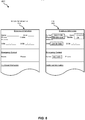
- FIG. 6 is an exemplary output of a highlighting operation.
- known sensitive file 602 may be a form with fields for employee information.
- File 604 may include a filled in copy of known sensitive file 602 containing personal information for an employee named Jane Smith.
- the fields for name, date, phone number, mobile number, social security number, and emergency contact name have been filled in with information pertaining to Jane Smith.
- the regions bounded by dotted boxes denote regions that may be highlighted following the subtraction of known sensitive file 602 from file 604.
- file 602 may violate a DLP policy that states that no files including social security numbers may be transmitted via data-distribution channels.
- determination module 108 may determine that the file includes an annotation of some type that violates a DLP policy, even if the annotation does not contain OCR-parseable text. For example, determination module 108 may determine that differences between image files indicate that a file includes one or more signatures, watermarks, stamps, highlights, margin notes, and/or other annotations. In this example, even though traditional OCR techniques would have been unable to parse the annotation, the image-matching technique used by the systems described herein may still identify potential DLP policy violations that contain illegible text or no text at all, resulting in an effectively content-agnostic approach to DLP enforcement.
- determination module 108 may determine, based on the results of the image-matching technique, that the file violates the DLP policy by determining that the file includes personally identifying information. Determination module 108 may ascertain that a DLP policy violation has occurred by utilizing a difference image and/or a set of highlighted differences produced by comparison module 106. For example, determination module 108 may determine, based on regions of difference, that sensitive information has been entered into a form. Additionally or alternatively, determination module 108 may determine that a photograph contains a representation of sensitive information, such as a prototype device based on matching key points within the photograph to key points within a known sensitive file.
- one or more of the systems described herein may perform a security action in response to determining that the file violates the DLP policy.
- security module 110 may, as part of server 206 in FIG. 2 , perform a security action 216 in response to determining that file 208 violates DLP policy 212.
- Security module 110 may perform a security action in a variety of ways. For example, security module 110 may perform a security action by (1) blocking the attempt to transmit the file through the data-distribution channel, (2) alerting an administrator to the attempt to transmit the file through the data-distribution channel, (3) informing a user that the attempt to transmit the file through the data-distribution channel violates the DLP policy, and/or (4) logging the attempt to transmit the file through the data-distribution channel. For example, security module 110 may block an email that includes a sensitive file as an attachment and/or forward the email to an administrator.
- the systems described herein may identify a file at rest that is subject to a DLP policy. For example, an administrator may run a scan on a computing device to determine if any files stored on the computing device are subject to a DLP policy. In this example, and with reference to FIG.
- identification module 104 may identify an additional file that is stored on computing device 202
- comparison module 106 may compare, using an image-matching technique, the additional file with at least one additional known sensitive file that is both stored in an image format and protected by a DLP policy
- determination module 108 may determine, based on the image-matching technique, that the additional file violates the DLP policy
- security module 110 may perform an additional security action in response to determining that the additional file violates the DLP policy.
- the systems described herein may compare files being transmitted via data-distribution channels to a gallery of reference documents (provided, e.g., by a user or administrator) to determine whether the transmitted files are protected by a DLP policy.
- the systems described herein may treat the reference documents and the document being transmitted as image files, and may perform computer-vision techniques on the images in order to determine whether they represent versions of the same document. If the transmitted document matches a gallery image, the systems described herein may perform further analysis to highlight the differences, for example by highlighting filled-out fields in a text-based form.
- the systems described herein may efficiently make determinations about whether documents are subject to a DLP policy without being burdened by the overhead and/or difficulties associated with OCR.
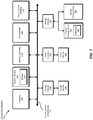
- FIG. 7 is a block diagram of an exemplary computing system 710 capable of implementing one or more of the embodiments described and/or illustrated herein.
- computing system 710 may perform and/or be a means for performing, either alone or in combination with other elements, one or more of the steps described herein (such as one or more of the steps illustrated in FIG. 3 ).
- All or a portion of computing system 710 may also perform and/or be a means for performing any other steps, methods, or processes described and/or illustrated herein.
- Computing system 710 broadly represents any single or multi-processor computing device or system capable of executing computer-readable instructions. Examples of computing system 710 include, without limitation, workstations, laptops, client-side terminals, servers, distributed computing systems, handheld devices, or any other computing system or device. In its most basic configuration, computing system 710 may include at least one processor 714 and a system memory 716.
- Processor 714 generally represents any type or form of physical processing unit (e.g., a hardware-implemented central processing unit) capable of processing data or interpreting and executing instructions.
- processor 714 may receive instructions from a software application or module. These instructions may cause processor 714 to perform the functions of one or more of the exemplary embodiments described and/or illustrated herein.
- System memory 716 generally represents any type or form of volatile or non-volatile storage device or medium capable of storing data and/or other computer-readable instructions. Examples of system memory 716 include, without limitation, Random Access Memory (RAM), Read Only Memory (ROM), flash memory, or any other suitable memory device. Although not required, in certain embodiments computing system 710 may include both a volatile memory unit (such as, for example, system memory 716) and a non-volatile storage device (such as, for example, primary storage device 732, as described in detail below). In one example, one or more of modules 102 from FIG. 1 may be loaded into system memory 716.
- RAM Random Access Memory
- ROM Read Only Memory
- flash memory or any other suitable memory device.
- computing system 710 may include both a volatile memory unit (such as, for example, system memory 716) and a non-volatile storage device (such as, for example, primary storage device 732, as described in detail below). In one example, one or more of modules 102 from FIG. 1 may be loaded into system memory
- exemplary computing system 710 may also include one or more components or elements in addition to processor 714 and system memory 716.
- computing system 710 may include a memory controller 718, an Input/Output (I/O) controller 720, and a communication interface 722, each of which may be interconnected via a communication infrastructure 712.
- Communication infrastructure 712 generally represents any type or form of infrastructure capable of facilitating communication between one or more components of a computing device. Examples of communication infrastructure 712 include, without limitation, a communication bus (such as an Industry Standard Architecture (ISA), Peripheral Component Interconnect (PCI), PCI Express (PCIe), or similar bus) and a network.
- ISA Industry Standard Architecture
- PCI Peripheral Component Interconnect
- PCIe PCI Express
- Memory controller 718 generally represents any type or form of device capable of handling memory or data or controlling communication between one or more components of computing system 710. For example, in certain embodiments memory controller 718 may control communication between processor 714, system memory 716, and I/O controller 720 via communication infrastructure 712.
- I/O controller 720 generally represents any type or form of module capable of coordinating and/or controlling the input and output functions of a computing device. For example, in certain embodiments I/O controller 720 may control or facilitate transfer of data between one or more elements of computing system 710, such as processor 714, system memory 716, communication interface 722, display adapter 726, input interface 730, and storage interface 734.
- Communication interface 722 broadly represents any type or form of communication device or adapter capable of facilitating communication between exemplary computing system 710 and one or more additional devices.
- communication interface 722 may facilitate communication between computing system 710 and a private or public network including additional computing systems.
- Examples of communication interface 722 include, without limitation, a wired network interface (such as a network interface card), a wireless network interface (such as a wireless network interface card), a modem, and any other suitable interface.
- communication interface 722 may provide a direct connection to a remote server via a direct link to a network, such as the Internet.
- Communication interface 722 may also indirectly provide such a connection through, for example, a local area network (such as an Ethernet network), a personal area network, a telephone or cable network, a cellular telephone connection, a satellite data connection, or any other suitable connection.
- communication interface 722 may also represent a host adapter configured to facilitate communication between computing system 710 and one or more additional network or storage devices via an external bus or communications channel.
- host adapters include, without limitation, Small Computer System Interface (SCSI) host adapters, USB host adapters, Institute of Electrical and Electronics Engineers (IEEE) 1394 host adapters, Advanced Technology Attachment (ATA), Parallel ATA (PATA), Serial ATA (SATA), and External SATA (eSATA) host adapters, Fibre Channel interface adapters, Ethernet adapters, or the like.
- Communication interface 722 may also allow computing system 710 to engage in distributed or remote computing. For example, communication interface 722 may receive instructions from a remote device or send instructions to a remote device for execution.
- computing system 710 may also include at least one display device 724 coupled to communication infrastructure 712 via a display adapter 726.
- Display device 724 generally represents any type or form of device capable of visually displaying information forwarded by display adapter 726.
- display adapter 726 generally represents any type or form of device configured to forward graphics, text, and other data from communication infrastructure 712 (or from a frame buffer, as known in the art) for display on display device 724.
- exemplary computing system 710 may also include at least one input device 728 coupled to communication infrastructure 712 via an input interface 730.
- Input device 728 generally represents any type or form of input device capable of providing input, either computer or human generated, to exemplary computing system 710. Examples of input device 728 include, without limitation, a keyboard, a pointing device, a speech recognition device, or any other input device.
- exemplary computing system 710 may also include a primary storage device 732 and a backup storage device 733 coupled to communication infrastructure 712 via a storage interface 734.
- Storage devices 732 and 733 generally represent any type or form of storage device or medium capable of storing data and/or other computer-readable instructions.
- storage devices 732 and 733 may be a magnetic disk drive (e.g., a so-called hard drive), a solid state drive, a floppy disk drive, a magnetic tape drive, an optical disk drive, a flash drive, or the like.
- Storage interface 734 generally represents any type or form of interface or device for transferring data between storage devices 732 and 733 and other components of computing system 710.
- database 120 from FIG. 1 may be stored in primary storage device 732.
- storage devices 732 and 733 may be configured to read from and/or write to a removable storage unit configured to store computer software, data, or other computer-readable information.
- suitable removable storage units include, without limitation, a floppy disk, a magnetic tape, an optical disk, a flash memory device, or the like.
- Storage devices 732 and 733 may also include other similar structures or devices for allowing computer software, data, or other computer-readable instructions to be loaded into computing system 710.
- storage devices 732 and 733 may be configured to read and write software, data, or other computer-readable information.
- Storage devices 732 and 733 may also be a part of computing system 710 or may be a separate device accessed through other interface systems.
- computing system 710 may also employ any number of software, firmware, and/or hardware configurations.
- one or more of the exemplary embodiments disclosed herein may be encoded as a computer program (also referred to as computer software, software applications, computer-readable instructions, or computer control logic) on a computer-readable medium.
- computer-readable medium generally refers to any form of device, carrier, or medium capable of storing or carrying computer-readable instructions.
- Examples of computer-readable media include, without limitation, transmission-type media, such as carrier waves, and non-transitory-type media, such as magnetic-storage media (e.g., hard disk drives, tape drives, and floppy disks), optical-storage media (e.g., Compact Disks (CDs), Digital Video Disks (DVDs), and BLU-RAY disks), electronic-storage media (e.g., solid-state drives and flash media), and other distribution systems.
- transmission-type media such as carrier waves
- non-transitory-type media such as magnetic-storage media (e.g., hard disk drives, tape drives, and floppy disks), optical-storage media (e.g., Compact Disks (CDs), Digital Video Disks (DVDs), and BLU-RAY disks), electronic-storage media (e.g., solid-state drives and flash media), and other distribution systems.
- transmission-type media such as carrier waves
- non-transitory-type media such as magnetic-stor
- the computer-readable medium containing the computer program may be loaded into computing system 710. All or a portion of the computer program stored on the computer-readable medium may then be stored in system memory 716 and/or various portions of storage devices 732 and 733.
- a computer program loaded into computing system 710 may cause processor 714 to perform and/or be a means for performing the functions of one or more of the exemplary embodiments described and/or illustrated herein.
- one or more of the exemplary embodiments described and/or illustrated herein may be implemented in firmware and/or hardware.
- computing system 710 may be configured as an Application Specific Integrated Circuit (ASIC) adapted to implement one or more of the exemplary embodiments disclosed herein.
- ASIC Application Specific Integrated Circuit
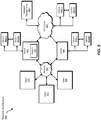
- FIG. 8 is a block diagram of an exemplary network architecture 800 in which client systems 810, 820, and 830 and servers 840 and 845 may be coupled to a network 850.
- network architecture 800 may perform and/or be a means for performing, either alone or in combination with other elements, one or more of the steps disclosed herein (such as one or more of the steps illustrated in FIG. 3 ). All or a portion of network architecture 800 may also be used to perform and/or be a means for performing other steps and features set forth in the instant disclosure.
- Client systems 810, 820, and 830 generally represent any type or form of computing device or system, such as exemplary computing system 710 in FIG. 7 .
- servers 840 and 845 generally represent computing devices or systems, such as application servers or database servers, configured to provide various database services and/or run certain software applications.
- Network 850 generally represents any telecommunication or computer network including, for example, an intranet, a WAN, a LAN, a PAN, or the Internet.
- client systems 810, 820, and/or 830 and/or servers 840 and/or 845 may include all or a portion of system 100 from FIG. 1 .
- one or more storage devices 860(1)-(N) may be directly attached to server 840.
- one or more storage devices 870(1)-(N) may be directly attached to server 845.
- Storage devices 860(1)-(N) and storage devices 870(1)-(N) generally represent any type or form of storage device or medium capable of storing data and/or other computer-readable instructions.
- storage devices 860(1)-(N) and storage devices 870(1)-(N) may represent Network-Attached Storage (NAS) devices configured to communicate with servers 840 and 845 using various protocols, such as Network File System (NFS), Server Message Block (SMB), or Common Internet File System (CIFS).
- NFS Network File System
- SMB Server Message Block
- CIFS Common Internet File System
- SAN fabric 880 generally represents any type or form of computer network or architecture capable of facilitating communication between a plurality of storage devices.
- SAN fabric 880 may facilitate communication between servers 840 and 845 and a plurality of storage devices 890(1)-(N) and/or an intelligent storage array 895.
- SAN fabric 880 may also facilitate, via network 850 and servers 840 and 845, communication between client systems 810, 820, and 830 and storage devices 890(1)-(N) and/or intelligent storage array 895 in such a manner that devices 890(1)-(N) and array 895 appear as locally attached devices to client systems 810, 820, and 830.
- storage devices 890(1)-(N) and intelligent storage array 895 generally represent any type or form of storage device or medium capable of storing data and/or other computer-readable instructions.
- a communication interface such as communication interface 722 in FIG. 7
- Client systems 810, 820, and 830 may be able to access information on server 840 or 845 using, for example, a web browser or other client software.
- client software may allow client systems 810, 820, and 830 to access data hosted by server 840, server 845, storage devices 860(1)-(N), storage devices 870(1)-(N), storage devices 890(1)-(N), or intelligent storage array 895.
- FIG. 8 depicts the use of a network (such as the Internet) for exchanging data, the embodiments described and/or illustrated herein are not limited to the Internet or any particular network-based environment.
- all or a portion of one or more of the exemplary embodiments disclosed herein may be encoded as a computer program and loaded onto and executed by server 840, server 845, storage devices 860(1)-(N), storage devices 870(1)-(N), storage devices 890(1)-(N), intelligent storage array 895, or any combination thereof. All or a portion of one or more of the exemplary embodiments disclosed herein may also be encoded as a computer program, stored in server 840, run by server 845, and distributed to client systems 810, 820, and 830 over network 850.
- computing system 710 and/or one or more components of network architecture 800 may perform and/or be a means for performing, either alone or in combination with other elements, one or more steps of an exemplary method for detecting attempts to transmit sensitive information via data-distribution channels.
- exemplary system 100 in FIG. 1 may represent portions of a cloud-computing or network-based environment.
- Cloud-computing environments may provide various services and applications via the Internet. These cloud-based services (e.g., software as a service, platform as a service, infrastructure as a service, etc.) may be accessible through a web browser or other remote interface.
- Various functions described herein may be provided through a remote desktop environment or any other cloud-based computing environment.
- exemplary system 100 in FIG. 1 may facilitate multi-tenancy within a cloud-based computing environment.
- the software modules described herein may configure a computing system (e.g., a server) to facilitate multi-tenancy for one or more of the functions described herein.
- a computing system e.g., a server
- one or more of the software modules described herein may program a server to enable two or more clients (e.g., customers) to share an application that is running on the server.
- clients e.g., customers
- a server programmed in this manner may share an application, operating system, processing system, and/or storage system among multiple customers (i.e., tenants).
- tenants i.e., customers
- One or more of the modules described herein may also partition data and/or configuration information of a multi-tenant application for each customer such that one customer cannot access data and/or configuration information of another customer.
- exemplary system 100 in FIG. 1 may be implemented within a virtual environment.
- the modules and/or data described herein may reside and/or execute within a virtual machine.
- the term “virtual machine” generally refers to any operating system environment that is abstracted from computing hardware by a virtual machine manager (e.g., a hypervisor). Additionally or alternatively, the modules and/or data described herein may reside and/or execute within a virtualization layer.
- the term “visualization layer” generally refers to any data layer and/or application layer that overlays and/or is abstracted from an operating system environment.
- a virtualization layer may be managed by a software virtualization solution (e.g., a file system filter) that presents the virtualization layer as though it were part of an underlying base operating system.
- a software virtualization solution may redirect calls that are initially directed to locations within a base file system and/or registry to locations within a virtualization layer.
- exemplary system 100 in FIG. 1 may represent portions of a mobile computing environment.
- Mobile computing environments may be implemented by a wide range of mobile computing devices, including mobile phones, tablet computers, e-book readers, personal digital assistants, wearable computing devices (e.g., computing devices with a head-mounted display, smartwatches, etc.), and the like.
- mobile computing environments may have one or more distinct features, including, for example, reliance on battery power, presenting only one foreground application at any given time, remote management features, touchscreen features, location and movement data (e.g., provided by Global Positioning Systems, gyroscopes, accelerometers, etc.), restricted platforms that restrict modifications to system-level configurations and/or that limit the ability of third-party software to inspect the behavior of other applications, controls to restrict the installation of applications (e.g., to only originate from approved application stores), etc.
- Various functions described herein may be provided for a mobile computing environment and/or may interact with a mobile computing environment.
- exemplary system 100 in FIG. 1 may represent portions of, interact with, consume data produced by, and/or produce data consumed by one or more systems for information management.
- information management may refer to the protection, organization, and/or storage of data.
- systems for information management may include, without limitation, storage systems, backup systems, archival systems, replication systems, high availability systems, data search systems, virtualization systems, and the like.
- exemplary system 100 in FIG. 1 may represent portions of, produce data protected by, and/or communicate with one or more systems for information security.
- information security may refer to the control of access to protected data.
- systems for information security may include, without limitation, systems providing managed security services, data loss prevention systems, identity authentication systems, access control systems, encryption systems, policy compliance systems, intrusion detection and prevention systems, electronic discovery systems, and the like.
- exemplary system 100 in FIG. 1 may represent portions of, communicate with, and/or receive protection from one or more systems for endpoint security.
- endpoint security may refer to the protection of endpoint systems from unauthorized and/or illegitimate use, access, and/or control.
- systems for endpoint protection may include, without limitation, anti-malware systems, user authentication systems, encryption systems, privacy systems, spam-filtering services, and the like.
- one or more of the modules described herein may transform data, physical devices, and/or representations of physical devices from one form to another.
- one or more of the modules recited herein may receive file data to be transformed, transform the file data, output a result of the transformation to an image-matching technique, use the result of the transformation to determine whether two images represent the same document, and store the result of the transformation to a database.
- one or more of the modules recited herein may transform a processor, volatile memory, non-volatile memory, and/or any other portion of a physical computing device from one form to another by executing on the computing device, storing data on the computing device, and/or otherwise interacting with the computing device.
Landscapes
- Engineering & Computer Science (AREA)
- Computer Security & Cryptography (AREA)
- Theoretical Computer Science (AREA)
- General Engineering & Computer Science (AREA)
- Computer Hardware Design (AREA)
- Software Systems (AREA)
- General Physics & Mathematics (AREA)
- Physics & Mathematics (AREA)
- Bioethics (AREA)
- Health & Medical Sciences (AREA)
- General Health & Medical Sciences (AREA)
- Computing Systems (AREA)
- Computer Networks & Wireless Communication (AREA)
- Signal Processing (AREA)
- Information Retrieval, Db Structures And Fs Structures Therefor (AREA)
- Storage Device Security (AREA)
- Image Analysis (AREA)
Claims (15)
- Ein computerimplementiertes Verfahren zum Detektieren von Versuchen, eine vertrauliche Information via Datenverteilungskanäle zu übertragen, wobei zumindest ein Teil des Verfahrens mittels einer Rechenvorrichtung ausgeführt wird, welche zumindest einen Prozessor aufweist, wobei das Verfahren aufweist:Identifizieren (302) eines Versuchs, eine Datei (208) durch einen Datenverteilungskanal (209) zu übertragen;Vergleichen, unter Verwendung einer Bildvergleich-Technik (404), der Datei mit einer Mehrzahl von bekannten vertraulichen Dateien (122), welche sowohl in Bildformaten gespeichert sind als auch mittels einer Datenverlust-Präventionsrichtlinie (212) geschützt sind;Vergleichen, unter Verwendung einer genaueren Bildvergleich-Technik (406), welche mehr Rechenkapazitäten verbraucht als die Bildvergleich-Technik, der Datei mit zumindest einer bekannten vertraulichen Datei von der Mehrzahl von bekannten vertraulichen Dateien, welche nicht mittels der Bildvergleich-Technik verworfen wurde;Bestimmen (306), basierend auf den Ergebnissen der genaueren Bildvergleich-Technik, dass die Datei die Datenverlust-Präventionsrichtlinie verletzt;Ausführen (308) einer Sicherheitsmaßnahme (216) als Reaktion auf das Bestimmen, dass die Datei die Datenverlust-Präventionsrichtlinie verletzt.
- Das computerimplementierte Verfahren gemäß Anspruch 1, wobei die Sicherheitsmaßnahme zumindest eines aufweist von:Sperren des Versuchs, die Datei durch den Datenverteilungskanal zu übertragen;Alarmieren eines Administrators bezüglich des Versuchs, die Datei durch den Datenverteilungskanal zu übertragen;Informieren eines Benutzers, dass der Versuch, die Datei durch den Datenverteilungskanal zu übertragen, die Datenverlust-Präventionsrichtlinie verletzt;Protokollieren des Versuchs, die Datei durch den Datenverteilungskanal zu übertragen.
- Das computerimplementierte Verfahren gemäß Anspruch 1, wobei das Vergleichen, unter Verwendung der Bildvergleich-Technik, der Datei mit der bekannten vertraulichen Datei ein Konvertieren der Datei in das Bildformat aufweist.
- Das computerimplementierte Verfahren gemäß Anspruch 1, wobei die bekannte vertrauliche Datei eine textbasierte Form aufweist und das Bestimmen, basierend auf den Ergebnissen der genaueren Bildvergleich-Technik, dass die Datei die Datenverlust-Präventionsrichtlinie verletzt, ein Bestimmen aufweist, dass die Datei eine geänderte Version der textbasierten Form aufweist.
- Das computerimplementierte Verfahren gemäß Anspruch 1, wobei das Vergleichen, unter Verwendung der genaueren Bildvergleich-Technik, der Datei mit der bekannten vertraulichen Datei ein Erzeugen eines Differenzbilds aufweist, welches einen Satz von Elementen darstellt, welche bei der bekannten vertraulichen Datei und der Datei verschieden sind.
- Das computerimplementierte Verfahren gemäß Anspruch 1, wobei das Vergleichen, unter Verwendung der genaueren Bildvergleich-Technik, der Datei mit der bekannten vertraulichen Datei ein Identifizieren eines Satzes von Schlüsselpunkten in der Datei aufweist, welche homolog zu einem Satz von Schlüsselpunkten in der bekannten vertraulichen Datei sind.
- Das computerimplementierte Verfahren gemäß Anspruch 1, wobei das Vergleichen, unter Verwendung der genaueren Bildvergleich-Technik, der Datei mit der bekannten vertraulichen Datei zumindest eines aufweist von:Vergleichen eines einzelnen visuellen Elements der Datei mit einem einzelnen visuellen Element der bekannten vertraulichen Datei;Vergleichen eines Satzes von Abstandsverhältnissen zwischen Schlüsselmerkmalen der Datei mit einem Satz von Abstandsverhältnissen zwischen Schlüsselmerkmalen der bekannten vertraulichen Datei;Vergleichen, unter Verwendung einer Abstandsmetrik, eines Satzes von Merkmalsvektoren, welche zu der Datei gehören, mit einem Satz von Merkmalsvektoren, welche zu der bekannten vertraulichen Datei gehören.
- Das computerimplementierte Verfahren gemäß Anspruch 1:wobei das Vergleichen, unter Verwendung der Bildvergleich-Technik, der Datei mit der Mehrzahl von bekannten vertraulichen Dateien ein Identifizieren einer Galerie von bekannten vertraulichen Dateien aufweist, welche sowohl in Bildformaten gespeichert sind als auch mittels der Datenverlust-Präventionsrichtlinie geschützt sind;ferner aufweisend Vergleichen, unter Verwendung einer finalen Bildvergleich-Technik, welche mehr Rechenressourcen verbraucht als die genauere Bildvergleich-Technik, der Datei mit einer Mehrzahl von bekannten vertraulichen Dateien in der Galerie, welche nicht mittels der genaueren Bildvergleich-Technik verworfen wurden.
- Das computerimplementierte Verfahren gemäß Anspruch 1, wobei das Bestimmen, basierend auf den Ergebnissen der genaueren Bildvergleich-Technik, dass die Datei die Datenverlust-Präventionsrichtlinie verletzt, ein Bestimmen aufweist, dass die Datei eine persönlich identifizierende Information enthält.
- Das computerimplementierte Verfahren gemäß Anspruch 1, ferner aufweisend:Identifizieren einer zusätzlichen Datei, welche auf der Rechenvorrichtung gespeichert ist;Vergleichen, unter Verwendung der Bildvergleich-Technik, der zusätzlichen Datei mit zumindest einer zusätzlichen bekannten vertraulichen Datei, welche sowohl in dem Bildformat gespeichert ist als auch mittels der Datenverlust-Präventionsrichtlinie geschützt ist;Bestimmen, basierend auf der Bildvergleich-Technik, dass die zusätzliche Datei die Datenverlust-Präventionsrichtlinie verletzt;Ausführen einer zusätzlichen Sicherheitsmaßnahme als Reaktion auf das Bestimmen, dass die zusätzliche Datei die Datenverlust-Präventionsrichtlinie verletzt.
- Ein System zum Detektieren von Versuchen, eine vertrauliche Information via Datenverteilungskanäle zu übertragen, wobei das System aufweist:ein Identifizierungsmodul (104), welches in einem Speicher gespeichert ist, welches konfiguriert ist, einen Versuch zu identifizieren, eine Datei durch einen Datenverteilungskanal zu übertragen;ein Vergleichsmodul (106), welches in einem Speicher gespeichert ist, welches konfiguriert ist zum:Vergleichen, unter Verwendung einer Bildvergleich-Technik (404), der Datei mit einer Mehrzahl von bekannten vertraulichen Dateien, welche sowohl in Bildformaten gespeichert sind als auch mittels einer Datenverlust-Präventionsrichtlinie (212) geschützt sind; undVergleichen, unter Verwendung einer genaueren Bildvergleich-Technik (406), der Datei mit zumindest einer bekannten vertraulichen Datei von der Mehrzahl von bekannten vertraulichen Dateien, welche nicht mittels der Bildvergleich-Technik verworfen wurde;ein Bestimmungsmodul (108), welches in einem Speicher gespeichert ist, welches konfiguriert ist, basierend auf den Ergebnissen der genaueren Bildvergleich-Technik, zu bestimmen, dass die Datei die Datenverlust-Präventionsrichtlinie verletzt;ein Sicherheitsmodul (110), welches in einem Speicher gespeichert ist, welches konfiguriert ist, eine Sicherheitsmaßnahme durchzuführen, als Reaktion auf das Bestimmen, dass die Datei die Datenverlust-Präventionsrichtlinie verletzt;zumindest einen physischen Prozessor, welcher konfiguriert ist zum Ausführen des Identifizierungsmoduls, des Vergleichsmoduls, des Bestimmungsmoduls und des Sicherheitsmoduls.
- Das System gemäß Anspruch 11, wobei die bekannte vertrauliche Datei eine textbasierte Form aufweist und das Bestimmungsmodul konfiguriert ist zum Bestimmen, basierend auf den Ergebnissen der Bildvergleich-Technik, dass die Datei die Datenverlust-Präventionsrichtlinie verletzt, mittels Bestimmens, dass die Datei eine geänderte Version der textbasierten Form aufweist.
- Das System gemäß Anspruch 11, wobei das Vergleichsmodul konfiguriert ist zum Vergleichen, unter Verwendung der genaueren Bildvergleich-Technik, der Datei mit der bekannten vertraulichen Datei mittels Erzeugens eines Differenzbilds, welches einen Satz von Elementen darstellt, welche bei der bekannten vertraulichen Datei und der Datei verschieden sind.
- Das System gemäß Anspruch 11, wobei das Vergleichsmodul:konfiguriert ist zum Vergleichen, unter Verwendung der Bildvergleich-Technik, der Datei mit der Mehrzahl von bekannten vertraulichen Dateien, mittels Identifizierens einer Galerie von bekannten vertraulichen Dateien, welche sowohl in Bildformaten gespeichert sind als auch mittels der Datenverlust-Präventionsrichtlinie geschützt sind;ferner konfiguriert ist zum Vergleichen, unter Verwendung einer finalen Bildvergleich-Technik, welche mehr Rechenressourcen verbraucht als die genauere Bildvergleich-Technik, der Datei mit einer Mehrzahl von bekannten vertraulichen Dateien in der Galerie, welche nicht mittels der genaueren Bildvergleich-Technik verworfen wurden.
- Ein nicht-transitorisches computerlesbares Medium aufweisend eine oder mehrere computerlesbare Anweisungen, welche, wenn sie mittels zumindest eines Prozessors einer Rechenvorrichtung ausgeführt werden, die Rechenvorrichtung veranlassen zum:Identifizieren eines Versuchs, eine Datei durch einen Datenverteilungskanal zu übertragen;Vergleichen, unter Verwendung einer Bildvergleich-Technik, der Datei mit einer Mehrzahl von bekannten vertraulichen Dateien, welche sowohl in Bildformaten gespeichert sind als auch mittels einer Datenverlust-Präventionsrichtlinie geschützt sind;Vergleichen, unter Verwendung einer genaueren Bildvergleich-Technik, welche mehr Rechenressourcen verbraucht als die Bildvergleich-Technik, der Datei mit zumindest einer bekannten vertraulichen Datei von der Mehrzahl von bekannten vertraulichen Dateien, welche nicht mittels der Bildvergleich-Technik verworfen wurde;Bestimmen, basierend auf den Ergebnissen der genaueren Bildvergleich-Technik, dass die Datei die Datenverlust-Präventionsrichtlinie verletzt;Ausführen einer Sicherheitsmaßnahme als Reaktion auf das Bestimmen, dass die Datei die Datenverlust-Präventionsrichtlinie verletzt.
Applications Claiming Priority (2)
| Application Number | Priority Date | Filing Date | Title |
|---|---|---|---|
| US14/483,131 US9436821B2 (en) | 2014-09-10 | 2014-09-10 | Systems and methods for detecting attempts to transmit sensitive information via data-distribution channels |
| PCT/US2015/043056 WO2016039885A1 (en) | 2014-09-10 | 2015-07-31 | Systems and methods for detecting attempts to transmit sensitive information via data-distribution channels |
Publications (2)
| Publication Number | Publication Date |
|---|---|
| EP3192001A1 EP3192001A1 (de) | 2017-07-19 |
| EP3192001B1 true EP3192001B1 (de) | 2021-01-13 |
Family
ID=53879785
Family Applications (1)
| Application Number | Title | Priority Date | Filing Date |
|---|---|---|---|
| EP15751190.8A Active EP3192001B1 (de) | 2014-09-10 | 2015-07-31 | Systeme und verfahren zur erkennung von versuchen zur übertragung von vertraulichen informationen über datenverteilungskanäle |
Country Status (5)
| Country | Link |
|---|---|
| US (1) | US9436821B2 (de) |
| EP (1) | EP3192001B1 (de) |
| JP (1) | JP6342577B2 (de) |
| CN (1) | CN107077570A (de) |
| WO (1) | WO2016039885A1 (de) |
Families Citing this family (22)
| Publication number | Priority date | Publication date | Assignee | Title |
|---|---|---|---|---|
| JP3124594B2 (ja) | 1991-11-11 | 2001-01-15 | キヤノン株式会社 | 液体噴射記録ヘッド用基体、その製造方法および液体噴射記録ヘッド |
| CN105404828A (zh) * | 2014-09-12 | 2016-03-16 | 国际商业机器公司 | 用于数据安全的方法和系统 |
| US9697349B2 (en) | 2014-10-26 | 2017-07-04 | Microsoft Technology Licensing, Llc | Access blocking for data loss prevention in collaborative environments |
| US9674201B1 (en) | 2015-12-29 | 2017-06-06 | Imperva, Inc. | Unobtrusive protection for large-scale data breaches utilizing user-specific data object access budgets |
| US9674202B1 (en) | 2015-12-29 | 2017-06-06 | Imperva, Inc. | Techniques for preventing large-scale data breaches utilizing differentiated protection layers |
| US20190089595A1 (en) * | 2017-09-18 | 2019-03-21 | Cyber 2.0 (2015) LTD | Automatic security configuration |
| US10805311B2 (en) * | 2016-08-22 | 2020-10-13 | Paubox Inc. | Method for securely communicating email content between a sender and a recipient |
| US11323458B1 (en) | 2016-08-22 | 2022-05-03 | Paubox, Inc. | Method for securely communicating email content between a sender and a recipient |
| GB2554657B (en) * | 2016-09-30 | 2019-09-11 | F Secure Corp | Protection from malicious and/or harmful content in cloud-based service scenarios |
| US10783262B2 (en) * | 2017-02-03 | 2020-09-22 | Adobe Inc. | Tagging documents with security policies |
| US10552633B2 (en) | 2017-03-23 | 2020-02-04 | International Business Machines Corporation | Privacy annotation from differential analysis of snapshots |
| US10547531B2 (en) * | 2017-03-27 | 2020-01-28 | Ca, Inc. | Systems and methods for enforcing data loss prevention policies |
| EP3602377A1 (de) | 2017-03-30 | 2020-02-05 | McAfee, LLC | Sichere softwaredefinierte speicherung |
| US10817617B1 (en) * | 2018-06-28 | 2020-10-27 | Ca, Inc. | Data loss prevention for biometric data |
| US10754998B2 (en) * | 2018-10-17 | 2020-08-25 | Bank Of America Corporation | Data loss prevention using machine learning |
| CN109829327B (zh) * | 2018-12-15 | 2024-11-12 | 中国平安人寿保险股份有限公司 | 敏感信息处理方法、装置、电子设备及存储介质 |
| US11093628B2 (en) | 2019-02-14 | 2021-08-17 | International Business Machines Corporation | Cross-domain content-lifecycle management |
| US10970532B1 (en) * | 2019-06-06 | 2021-04-06 | Ca, Inc. | Systems and methods for preventing sharing of sensitive content in image data on a closed computing platform |
| EP3767914B1 (de) * | 2019-07-17 | 2025-03-05 | AO Kaspersky Lab | System und verfahren zur erkennung von anomalien in einem technologischen system |
| US20220309184A1 (en) * | 2021-03-26 | 2022-09-29 | Rubrik, Inc. | File content analysis and data management |
| CN113868698A (zh) * | 2021-08-26 | 2021-12-31 | 上海上讯信息技术股份有限公司 | 一种文件脱敏方法及设备 |
| CN118153114B (zh) * | 2024-05-11 | 2024-07-02 | 甲亥智能(成都)科技有限公司 | 一种非结构化数据安全保护系统 |
Citations (1)
| Publication number | Priority date | Publication date | Assignee | Title |
|---|---|---|---|---|
| WO2013098587A1 (en) * | 2011-12-27 | 2013-07-04 | Nokia Corporation | Preventing unintentionally violating privacy when sharing and/or publishing content |
Family Cites Families (15)
| Publication number | Priority date | Publication date | Assignee | Title |
|---|---|---|---|---|
| US7412489B2 (en) * | 2003-08-21 | 2008-08-12 | Ameriprise Financial, Inc. | Method and system for electronic archival and retrieval of electronic communications |
| JP4093482B2 (ja) * | 2003-12-24 | 2008-06-04 | インターナショナル・ビジネス・マシーンズ・コーポレーション | アクセス制御システム、アクセス制御装置、アクセス制御方法、プログラム、及び記録媒体 |
| JP4557875B2 (ja) * | 2005-11-30 | 2010-10-06 | キヤノン株式会社 | 画像処理方法及び装置 |
| JP2008042636A (ja) * | 2006-08-08 | 2008-02-21 | Fuji Xerox Co Ltd | 文書処理装置および文書処理システム、文書処理プログラム |
| US8199965B1 (en) | 2007-08-17 | 2012-06-12 | Mcafee, Inc. | System, method, and computer program product for preventing image-related data loss |
| US8271642B1 (en) * | 2007-08-29 | 2012-09-18 | Mcafee, Inc. | System, method, and computer program product for isolating a device associated with at least potential data leakage activity, based on user input |
| US8060596B1 (en) * | 2007-12-26 | 2011-11-15 | Symantec Corporation | Methods and systems for normalizing data loss prevention categorization information |
| US8826443B1 (en) * | 2008-09-18 | 2014-09-02 | Symantec Corporation | Selective removal of protected content from web requests sent to an interactive website |
| JP4763812B2 (ja) * | 2009-02-24 | 2011-08-31 | インターナショナル・ビジネス・マシーンズ・コーポレーション | 文書の機密度判定を支援する方法、装置及びコンピュータプログラム |
| CN101510257B (zh) * | 2009-03-31 | 2011-08-10 | 华为技术有限公司 | 一种人脸相似度匹配方法及装置 |
| CN101537251B (zh) * | 2009-04-17 | 2011-06-15 | 刘铮 | 基于图像匹配技术的台球复位方法 |
| JP2012182737A (ja) * | 2011-03-02 | 2012-09-20 | Nec Corp | 秘密資料流出防止システム、判定装置、秘密資料流出防止方法およびプログラム |
| CN102231188A (zh) * | 2011-07-05 | 2011-11-02 | 上海合合信息科技发展有限公司 | 结合文字识别和图像匹配的名片识别方法 |
| US9197655B2 (en) * | 2013-07-16 | 2015-11-24 | Bank Of America Corporation | Steganography detection |
| CN103824030A (zh) * | 2014-02-27 | 2014-05-28 | 宇龙计算机通信科技(深圳)有限公司 | 数据保护装置和数据保护方法 |
-
2014
- 2014-09-10 US US14/483,131 patent/US9436821B2/en not_active Expired - Fee Related
-
2015
- 2015-07-31 WO PCT/US2015/043056 patent/WO2016039885A1/en not_active Ceased
- 2015-07-31 EP EP15751190.8A patent/EP3192001B1/de active Active
- 2015-07-31 JP JP2017511681A patent/JP6342577B2/ja active Active
- 2015-07-31 CN CN201580047179.9A patent/CN107077570A/zh active Pending
Patent Citations (1)
| Publication number | Priority date | Publication date | Assignee | Title |
|---|---|---|---|---|
| WO2013098587A1 (en) * | 2011-12-27 | 2013-07-04 | Nokia Corporation | Preventing unintentionally violating privacy when sharing and/or publishing content |
Also Published As
| Publication number | Publication date |
|---|---|
| JP6342577B2 (ja) | 2018-06-13 |
| WO2016039885A1 (en) | 2016-03-17 |
| US9436821B2 (en) | 2016-09-06 |
| EP3192001A1 (de) | 2017-07-19 |
| CN107077570A (zh) | 2017-08-18 |
| JP2017531249A (ja) | 2017-10-19 |
| US20160070905A1 (en) | 2016-03-10 |
Similar Documents
| Publication | Publication Date | Title |
|---|---|---|
| EP3192001B1 (de) | Systeme und verfahren zur erkennung von versuchen zur übertragung von vertraulichen informationen über datenverteilungskanäle | |
| US10803188B1 (en) | Systems and methods for preventing sensitive data sharing | |
| US9245123B1 (en) | Systems and methods for identifying malicious files | |
| US10733434B2 (en) | Method and system for accurately detecting, extracting and representing redacted text blocks in a document | |
| US10073864B1 (en) | Systems and methods for automated aggregation of information-source metadata | |
| US10438000B1 (en) | Using recognized backup images for recovery after a ransomware attack | |
| EP3574449B1 (de) | Strukturierte text- und musterabstimmung zur verhinderung von datenverlusten in einer objektspezifischen bilddomäne | |
| US10079835B1 (en) | Systems and methods for data loss prevention of unidentifiable and unsupported object types | |
| US9317679B1 (en) | Systems and methods for detecting malicious documents based on component-object reuse | |
| US20150269386A1 (en) | Systems and methods for increasing compliance with data loss prevention policies | |
| US9805204B1 (en) | Systems and methods for determining that files found on client devices comprise sensitive information | |
| US10735468B1 (en) | Systems and methods for evaluating security services | |
| CA3018437C (en) | Optical character recognition utilizing hashed templates | |
| US10970532B1 (en) | Systems and methods for preventing sharing of sensitive content in image data on a closed computing platform | |
| US11023580B1 (en) | Systems and methods for cross-product malware categorization | |
| US10489685B1 (en) | Image data identifiers and validators for data loss prevention | |
| US8485428B1 (en) | Systems and methods for providing security information about quick response codes | |
| US10546123B1 (en) | Systems and methods for identifying malicious computer files | |
| US9137317B2 (en) | Data loss prevention of information using structured document templates and forms | |
| US20260006076A1 (en) | Systems and methods for identifying brands utilized in website phishing campaigns | |
| US8464343B1 (en) | Systems and methods for providing security information about quick response codes | |
| US9667575B1 (en) | Systems and methods for detecting webpages belonging to spam campaigns | |
| US10666675B1 (en) | Systems and methods for creating automatic computer-generated classifications | |
| KR102619521B1 (ko) | 인공지능 기반의 기밀정보 암호화 방법 및 장치 | |
| US11270014B1 (en) | Systems and methods for utilizing metadata for protecting against the sharing of images in a computing network |
Legal Events
| Date | Code | Title | Description |
|---|---|---|---|
| STAA | Information on the status of an ep patent application or granted ep patent |
Free format text: STATUS: THE INTERNATIONAL PUBLICATION HAS BEEN MADE |
|
| PUAI | Public reference made under article 153(3) epc to a published international application that has entered the european phase |
Free format text: ORIGINAL CODE: 0009012 |
|
| STAA | Information on the status of an ep patent application or granted ep patent |
Free format text: STATUS: REQUEST FOR EXAMINATION WAS MADE |
|
| 17P | Request for examination filed |
Effective date: 20170331 |
|
| AK | Designated contracting states |
Kind code of ref document: A1 Designated state(s): AL AT BE BG CH CY CZ DE DK EE ES FI FR GB GR HR HU IE IS IT LI LT LU LV MC MK MT NL NO PL PT RO RS SE SI SK SM TR |
|
| AX | Request for extension of the european patent |
Extension state: BA ME |
|
| DAV | Request for validation of the european patent (deleted) | ||
| DAX | Request for extension of the european patent (deleted) | ||
| STAA | Information on the status of an ep patent application or granted ep patent |
Free format text: STATUS: EXAMINATION IS IN PROGRESS |
|
| 17Q | First examination report despatched |
Effective date: 20190719 |
|
| RAP1 | Party data changed (applicant data changed or rights of an application transferred) |
Owner name: CA, INC. |
|
| GRAP | Despatch of communication of intention to grant a patent |
Free format text: ORIGINAL CODE: EPIDOSNIGR1 |
|
| STAA | Information on the status of an ep patent application or granted ep patent |
Free format text: STATUS: GRANT OF PATENT IS INTENDED |
|
| INTG | Intention to grant announced |
Effective date: 20200727 |
|
| GRAS | Grant fee paid |
Free format text: ORIGINAL CODE: EPIDOSNIGR3 |
|
| GRAA | (expected) grant |
Free format text: ORIGINAL CODE: 0009210 |
|
| STAA | Information on the status of an ep patent application or granted ep patent |
Free format text: STATUS: THE PATENT HAS BEEN GRANTED |
|
| AK | Designated contracting states |
Kind code of ref document: B1 Designated state(s): AL AT BE BG CH CY CZ DE DK EE ES FI FR GB GR HR HU IE IS IT LI LT LU LV MC MK MT NL NO PL PT RO RS SE SI SK SM TR |
|
| REG | Reference to a national code |
Ref country code: GB Ref legal event code: FG4D |
|
| REG | Reference to a national code |
Ref country code: CH Ref legal event code: EP |
|
| REG | Reference to a national code |
Ref country code: IE Ref legal event code: FG4D |
|
| REG | Reference to a national code |
Ref country code: DE Ref legal event code: R096 Ref document number: 602015064737 Country of ref document: DE |
|
| REG | Reference to a national code |
Ref country code: AT Ref legal event code: REF Ref document number: 1355099 Country of ref document: AT Kind code of ref document: T Effective date: 20210215 |
|
| REG | Reference to a national code |
Ref country code: AT Ref legal event code: MK05 Ref document number: 1355099 Country of ref document: AT Kind code of ref document: T Effective date: 20210113 |
|
| REG | Reference to a national code |
Ref country code: NL Ref legal event code: MP Effective date: 20210113 |
|
| REG | Reference to a national code |
Ref country code: LT Ref legal event code: MG9D |
|
| PG25 | Lapsed in a contracting state [announced via postgrant information from national office to epo] |
Ref country code: PT Free format text: LAPSE BECAUSE OF FAILURE TO SUBMIT A TRANSLATION OF THE DESCRIPTION OR TO PAY THE FEE WITHIN THE PRESCRIBED TIME-LIMIT Effective date: 20210513 Ref country code: LT Free format text: LAPSE BECAUSE OF FAILURE TO SUBMIT A TRANSLATION OF THE DESCRIPTION OR TO PAY THE FEE WITHIN THE PRESCRIBED TIME-LIMIT Effective date: 20210113 Ref country code: HR Free format text: LAPSE BECAUSE OF FAILURE TO SUBMIT A TRANSLATION OF THE DESCRIPTION OR TO PAY THE FEE WITHIN THE PRESCRIBED TIME-LIMIT Effective date: 20210113 Ref country code: FI Free format text: LAPSE BECAUSE OF FAILURE TO SUBMIT A TRANSLATION OF THE DESCRIPTION OR TO PAY THE FEE WITHIN THE PRESCRIBED TIME-LIMIT Effective date: 20210113 Ref country code: GR Free format text: LAPSE BECAUSE OF FAILURE TO SUBMIT A TRANSLATION OF THE DESCRIPTION OR TO PAY THE FEE WITHIN THE PRESCRIBED TIME-LIMIT Effective date: 20210414 Ref country code: BG Free format text: LAPSE BECAUSE OF FAILURE TO SUBMIT A TRANSLATION OF THE DESCRIPTION OR TO PAY THE FEE WITHIN THE PRESCRIBED TIME-LIMIT Effective date: 20210413 Ref country code: NL Free format text: LAPSE BECAUSE OF FAILURE TO SUBMIT A TRANSLATION OF THE DESCRIPTION OR TO PAY THE FEE WITHIN THE PRESCRIBED TIME-LIMIT Effective date: 20210113 Ref country code: NO Free format text: LAPSE BECAUSE OF FAILURE TO SUBMIT A TRANSLATION OF THE DESCRIPTION OR TO PAY THE FEE WITHIN THE PRESCRIBED TIME-LIMIT Effective date: 20210413 |
|
| PG25 | Lapsed in a contracting state [announced via postgrant information from national office to epo] |
Ref country code: SE Free format text: LAPSE BECAUSE OF FAILURE TO SUBMIT A TRANSLATION OF THE DESCRIPTION OR TO PAY THE FEE WITHIN THE PRESCRIBED TIME-LIMIT Effective date: 20210113 Ref country code: AT Free format text: LAPSE BECAUSE OF FAILURE TO SUBMIT A TRANSLATION OF THE DESCRIPTION OR TO PAY THE FEE WITHIN THE PRESCRIBED TIME-LIMIT Effective date: 20210113 Ref country code: RS Free format text: LAPSE BECAUSE OF FAILURE TO SUBMIT A TRANSLATION OF THE DESCRIPTION OR TO PAY THE FEE WITHIN THE PRESCRIBED TIME-LIMIT Effective date: 20210113 Ref country code: LV Free format text: LAPSE BECAUSE OF FAILURE TO SUBMIT A TRANSLATION OF THE DESCRIPTION OR TO PAY THE FEE WITHIN THE PRESCRIBED TIME-LIMIT Effective date: 20210113 Ref country code: PL Free format text: LAPSE BECAUSE OF FAILURE TO SUBMIT A TRANSLATION OF THE DESCRIPTION OR TO PAY THE FEE WITHIN THE PRESCRIBED TIME-LIMIT Effective date: 20210113 |
|
| PG25 | Lapsed in a contracting state [announced via postgrant information from national office to epo] |
Ref country code: IS Free format text: LAPSE BECAUSE OF FAILURE TO SUBMIT A TRANSLATION OF THE DESCRIPTION OR TO PAY THE FEE WITHIN THE PRESCRIBED TIME-LIMIT Effective date: 20210513 |
|
| REG | Reference to a national code |
Ref country code: DE Ref legal event code: R097 Ref document number: 602015064737 Country of ref document: DE |
|
| PG25 | Lapsed in a contracting state [announced via postgrant information from national office to epo] |
Ref country code: CZ Free format text: LAPSE BECAUSE OF FAILURE TO SUBMIT A TRANSLATION OF THE DESCRIPTION OR TO PAY THE FEE WITHIN THE PRESCRIBED TIME-LIMIT Effective date: 20210113 Ref country code: EE Free format text: LAPSE BECAUSE OF FAILURE TO SUBMIT A TRANSLATION OF THE DESCRIPTION OR TO PAY THE FEE WITHIN THE PRESCRIBED TIME-LIMIT Effective date: 20210113 Ref country code: SM Free format text: LAPSE BECAUSE OF FAILURE TO SUBMIT A TRANSLATION OF THE DESCRIPTION OR TO PAY THE FEE WITHIN THE PRESCRIBED TIME-LIMIT Effective date: 20210113 |
|
| PLBE | No opposition filed within time limit |
Free format text: ORIGINAL CODE: 0009261 |
|
| STAA | Information on the status of an ep patent application or granted ep patent |
Free format text: STATUS: NO OPPOSITION FILED WITHIN TIME LIMIT |
|
| PG25 | Lapsed in a contracting state [announced via postgrant information from national office to epo] |
Ref country code: DK Free format text: LAPSE BECAUSE OF FAILURE TO SUBMIT A TRANSLATION OF THE DESCRIPTION OR TO PAY THE FEE WITHIN THE PRESCRIBED TIME-LIMIT Effective date: 20210113 Ref country code: SK Free format text: LAPSE BECAUSE OF FAILURE TO SUBMIT A TRANSLATION OF THE DESCRIPTION OR TO PAY THE FEE WITHIN THE PRESCRIBED TIME-LIMIT Effective date: 20210113 Ref country code: RO Free format text: LAPSE BECAUSE OF FAILURE TO SUBMIT A TRANSLATION OF THE DESCRIPTION OR TO PAY THE FEE WITHIN THE PRESCRIBED TIME-LIMIT Effective date: 20210113 |
|
| 26N | No opposition filed |
Effective date: 20211014 |
|
| PG25 | Lapsed in a contracting state [announced via postgrant information from national office to epo] |
Ref country code: ES Free format text: LAPSE BECAUSE OF FAILURE TO SUBMIT A TRANSLATION OF THE DESCRIPTION OR TO PAY THE FEE WITHIN THE PRESCRIBED TIME-LIMIT Effective date: 20210113 Ref country code: AL Free format text: LAPSE BECAUSE OF FAILURE TO SUBMIT A TRANSLATION OF THE DESCRIPTION OR TO PAY THE FEE WITHIN THE PRESCRIBED TIME-LIMIT Effective date: 20210113 |
|
| PG25 | Lapsed in a contracting state [announced via postgrant information from national office to epo] |
Ref country code: SI Free format text: LAPSE BECAUSE OF FAILURE TO SUBMIT A TRANSLATION OF THE DESCRIPTION OR TO PAY THE FEE WITHIN THE PRESCRIBED TIME-LIMIT Effective date: 20210113 |
|
| REG | Reference to a national code |
Ref country code: CH Ref legal event code: PL |
|
| GBPC | Gb: european patent ceased through non-payment of renewal fee |
Effective date: 20210731 |
|
| PG25 | Lapsed in a contracting state [announced via postgrant information from national office to epo] |
Ref country code: MC Free format text: LAPSE BECAUSE OF FAILURE TO SUBMIT A TRANSLATION OF THE DESCRIPTION OR TO PAY THE FEE WITHIN THE PRESCRIBED TIME-LIMIT Effective date: 20210113 |
|
| REG | Reference to a national code |
Ref country code: BE Ref legal event code: MM Effective date: 20210731 |
|
| PG25 | Lapsed in a contracting state [announced via postgrant information from national office to epo] |
Ref country code: LI Free format text: LAPSE BECAUSE OF NON-PAYMENT OF DUE FEES Effective date: 20210731 Ref country code: IT Free format text: LAPSE BECAUSE OF FAILURE TO SUBMIT A TRANSLATION OF THE DESCRIPTION OR TO PAY THE FEE WITHIN THE PRESCRIBED TIME-LIMIT Effective date: 20210113 Ref country code: GB Free format text: LAPSE BECAUSE OF NON-PAYMENT OF DUE FEES Effective date: 20210731 Ref country code: CH Free format text: LAPSE BECAUSE OF NON-PAYMENT OF DUE FEES Effective date: 20210731 |
|
| PG25 | Lapsed in a contracting state [announced via postgrant information from national office to epo] |
Ref country code: IS Free format text: LAPSE BECAUSE OF FAILURE TO SUBMIT A TRANSLATION OF THE DESCRIPTION OR TO PAY THE FEE WITHIN THE PRESCRIBED TIME-LIMIT Effective date: 20210513 Ref country code: LU Free format text: LAPSE BECAUSE OF NON-PAYMENT OF DUE FEES Effective date: 20210731 Ref country code: FR Free format text: LAPSE BECAUSE OF NON-PAYMENT OF DUE FEES Effective date: 20210731 |
|
| PG25 | Lapsed in a contracting state [announced via postgrant information from national office to epo] |
Ref country code: IE Free format text: LAPSE BECAUSE OF NON-PAYMENT OF DUE FEES Effective date: 20210731 Ref country code: BE Free format text: LAPSE BECAUSE OF NON-PAYMENT OF DUE FEES Effective date: 20210731 |
|
| PG25 | Lapsed in a contracting state [announced via postgrant information from national office to epo] |
Ref country code: HU Free format text: LAPSE BECAUSE OF FAILURE TO SUBMIT A TRANSLATION OF THE DESCRIPTION OR TO PAY THE FEE WITHIN THE PRESCRIBED TIME-LIMIT; INVALID AB INITIO Effective date: 20150731 |
|
| PG25 | Lapsed in a contracting state [announced via postgrant information from national office to epo] |
Ref country code: CY Free format text: LAPSE BECAUSE OF FAILURE TO SUBMIT A TRANSLATION OF THE DESCRIPTION OR TO PAY THE FEE WITHIN THE PRESCRIBED TIME-LIMIT Effective date: 20210113 |
|
| PG25 | Lapsed in a contracting state [announced via postgrant information from national office to epo] |
Ref country code: MK Free format text: LAPSE BECAUSE OF FAILURE TO SUBMIT A TRANSLATION OF THE DESCRIPTION OR TO PAY THE FEE WITHIN THE PRESCRIBED TIME-LIMIT Effective date: 20210113 |
|
| PG25 | Lapsed in a contracting state [announced via postgrant information from national office to epo] |
Ref country code: TR Free format text: LAPSE BECAUSE OF FAILURE TO SUBMIT A TRANSLATION OF THE DESCRIPTION OR TO PAY THE FEE WITHIN THE PRESCRIBED TIME-LIMIT Effective date: 20210113 |
|
| PG25 | Lapsed in a contracting state [announced via postgrant information from national office to epo] |
Ref country code: MT Free format text: LAPSE BECAUSE OF FAILURE TO SUBMIT A TRANSLATION OF THE DESCRIPTION OR TO PAY THE FEE WITHIN THE PRESCRIBED TIME-LIMIT Effective date: 20210113 |
|
| PGFP | Annual fee paid to national office [announced via postgrant information from national office to epo] |
Ref country code: DE Payment date: 20250710 Year of fee payment: 11 |