EP3190216B1 - Method for manufacturing super absorbent polymer fiber - Google Patents
Method for manufacturing super absorbent polymer fiber Download PDFInfo
- Publication number
- EP3190216B1 EP3190216B1 EP16842358.0A EP16842358A EP3190216B1 EP 3190216 B1 EP3190216 B1 EP 3190216B1 EP 16842358 A EP16842358 A EP 16842358A EP 3190216 B1 EP3190216 B1 EP 3190216B1
- Authority
- EP
- European Patent Office
- Prior art keywords
- solution
- polymer fiber
- superabsorbent polymer
- neutralization
- water
- Prior art date
- Legal status (The legal status is an assumption and is not a legal conclusion. Google has not performed a legal analysis and makes no representation as to the accuracy of the status listed.)
- Active
Links
Images

Classifications
-
- D—TEXTILES; PAPER
- D01—NATURAL OR MAN-MADE THREADS OR FIBRES; SPINNING
- D01D—MECHANICAL METHODS OR APPARATUS IN THE MANUFACTURE OF ARTIFICIAL FILAMENTS, THREADS, FIBRES, BRISTLES OR RIBBONS
- D01D5/00—Formation of filaments, threads, or the like
- D01D5/18—Formation of filaments, threads, or the like by means of rotating spinnerets
-
- A—HUMAN NECESSITIES
- A61—MEDICAL OR VETERINARY SCIENCE; HYGIENE
- A61F—FILTERS IMPLANTABLE INTO BLOOD VESSELS; PROSTHESES; DEVICES PROVIDING PATENCY TO, OR PREVENTING COLLAPSING OF, TUBULAR STRUCTURES OF THE BODY, e.g. STENTS; ORTHOPAEDIC, NURSING OR CONTRACEPTIVE DEVICES; FOMENTATION; TREATMENT OR PROTECTION OF EYES OR EARS; BANDAGES, DRESSINGS OR ABSORBENT PADS; FIRST-AID KITS
- A61F13/00—Bandages or dressings; Absorbent pads
- A61F13/15—Absorbent pads, e.g. sanitary towels, swabs or tampons for external or internal application to the body; Supporting or fastening means therefor; Tampon applicators
- A61F13/53—Absorbent pads, e.g. sanitary towels, swabs or tampons for external or internal application to the body; Supporting or fastening means therefor; Tampon applicators characterised by the absorbing medium
-
- C—CHEMISTRY; METALLURGY
- C08—ORGANIC MACROMOLECULAR COMPOUNDS; THEIR PREPARATION OR CHEMICAL WORKING-UP; COMPOSITIONS BASED THEREON
- C08L—COMPOSITIONS OF MACROMOLECULAR COMPOUNDS
- C08L23/00—Compositions of homopolymers or copolymers of unsaturated aliphatic hydrocarbons having only one carbon-to-carbon double bond; Compositions of derivatives of such polymers
- C08L23/02—Compositions of homopolymers or copolymers of unsaturated aliphatic hydrocarbons having only one carbon-to-carbon double bond; Compositions of derivatives of such polymers not modified by chemical after-treatment
- C08L23/04—Homopolymers or copolymers of ethene
- C08L23/08—Copolymers of ethene
- C08L23/0846—Copolymers of ethene with unsaturated hydrocarbons containing atoms other than carbon or hydrogen
- C08L23/0853—Ethylene vinyl acetate copolymers
-
- C—CHEMISTRY; METALLURGY
- C08—ORGANIC MACROMOLECULAR COMPOUNDS; THEIR PREPARATION OR CHEMICAL WORKING-UP; COMPOSITIONS BASED THEREON
- C08L—COMPOSITIONS OF MACROMOLECULAR COMPOUNDS
- C08L33/00—Compositions of homopolymers or copolymers of compounds having one or more unsaturated aliphatic radicals, each having only one carbon-to-carbon double bond, and only one being terminated by only one carboxyl radical, or of salts, anhydrides, esters, amides, imides or nitriles thereof; Compositions of derivatives of such polymers
- C08L33/24—Homopolymers or copolymers of amides or imides
- C08L33/26—Homopolymers or copolymers of acrylamide or methacrylamide
-
- D—TEXTILES; PAPER
- D01—NATURAL OR MAN-MADE THREADS OR FIBRES; SPINNING
- D01D—MECHANICAL METHODS OR APPARATUS IN THE MANUFACTURE OF ARTIFICIAL FILAMENTS, THREADS, FIBRES, BRISTLES OR RIBBONS
- D01D1/00—Treatment of filament-forming or like material
- D01D1/02—Preparation of spinning solutions
-
- D—TEXTILES; PAPER
- D01—NATURAL OR MAN-MADE THREADS OR FIBRES; SPINNING
- D01F—CHEMICAL FEATURES IN THE MANUFACTURE OF ARTIFICIAL FILAMENTS, THREADS, FIBRES, BRISTLES OR RIBBONS; APPARATUS SPECIALLY ADAPTED FOR THE MANUFACTURE OF CARBON FILAMENTS
- D01F1/00—General methods for the manufacture of artificial filaments or the like
- D01F1/02—Addition of substances to the spinning solution or to the melt
- D01F1/10—Other agents for modifying properties
-
- D—TEXTILES; PAPER
- D01—NATURAL OR MAN-MADE THREADS OR FIBRES; SPINNING
- D01F—CHEMICAL FEATURES IN THE MANUFACTURE OF ARTIFICIAL FILAMENTS, THREADS, FIBRES, BRISTLES OR RIBBONS; APPARATUS SPECIALLY ADAPTED FOR THE MANUFACTURE OF CARBON FILAMENTS
- D01F6/00—Monocomponent artificial filaments or the like of synthetic polymers; Manufacture thereof
- D01F6/02—Monocomponent artificial filaments or the like of synthetic polymers; Manufacture thereof from homopolymers obtained by reactions only involving carbon-to-carbon unsaturated bonds
- D01F6/16—Monocomponent artificial filaments or the like of synthetic polymers; Manufacture thereof from homopolymers obtained by reactions only involving carbon-to-carbon unsaturated bonds from polymers of unsaturated carboxylic acids or unsaturated organic esters, e.g. polyacrylic esters, polyvinyl acetate
-
- D—TEXTILES; PAPER
- D01—NATURAL OR MAN-MADE THREADS OR FIBRES; SPINNING
- D01F—CHEMICAL FEATURES IN THE MANUFACTURE OF ARTIFICIAL FILAMENTS, THREADS, FIBRES, BRISTLES OR RIBBONS; APPARATUS SPECIALLY ADAPTED FOR THE MANUFACTURE OF CARBON FILAMENTS
- D01F6/00—Monocomponent artificial filaments or the like of synthetic polymers; Manufacture thereof
- D01F6/28—Monocomponent artificial filaments or the like of synthetic polymers; Manufacture thereof from copolymers obtained by reactions only involving carbon-to-carbon unsaturated bonds
- D01F6/36—Monocomponent artificial filaments or the like of synthetic polymers; Manufacture thereof from copolymers obtained by reactions only involving carbon-to-carbon unsaturated bonds comprising unsaturated carboxylic acids or unsaturated organic esters as the major constituent
-
- D—TEXTILES; PAPER
- D01—NATURAL OR MAN-MADE THREADS OR FIBRES; SPINNING
- D01G—PRELIMINARY TREATMENT OF FIBRES, e.g. FOR SPINNING
- D01G99/00—Subject matter not provided for in other groups of this subclass
- D01G99/005—Conditioning of textile fibre during treatment before spinning
-
- D—TEXTILES; PAPER
- D04—BRAIDING; LACE-MAKING; KNITTING; TRIMMINGS; NON-WOVEN FABRICS
- D04H—MAKING TEXTILE FABRICS, e.g. FROM FIBRES OR FILAMENTARY MATERIAL; FABRICS MADE BY SUCH PROCESSES OR APPARATUS, e.g. FELTS, NON-WOVEN FABRICS; COTTON-WOOL; WADDING ; NON-WOVEN FABRICS FROM STAPLE FIBRES, FILAMENTS OR YARNS, BONDED WITH AT LEAST ONE WEB-LIKE MATERIAL DURING THEIR CONSOLIDATION
- D04H1/00—Non-woven fabrics formed wholly or mainly of staple fibres or like relatively short fibres
- D04H1/40—Non-woven fabrics formed wholly or mainly of staple fibres or like relatively short fibres from fleeces or layers composed of fibres without existing or potential cohesive properties
- D04H1/42—Non-woven fabrics formed wholly or mainly of staple fibres or like relatively short fibres from fleeces or layers composed of fibres without existing or potential cohesive properties characterised by the use of certain kinds of fibres insofar as this use has no preponderant influence on the consolidation of the fleece
- D04H1/4282—Addition polymers
- D04H1/4291—Olefin series
-
- D—TEXTILES; PAPER
- D04—BRAIDING; LACE-MAKING; KNITTING; TRIMMINGS; NON-WOVEN FABRICS
- D04H—MAKING TEXTILE FABRICS, e.g. FROM FIBRES OR FILAMENTARY MATERIAL; FABRICS MADE BY SUCH PROCESSES OR APPARATUS, e.g. FELTS, NON-WOVEN FABRICS; COTTON-WOOL; WADDING ; NON-WOVEN FABRICS FROM STAPLE FIBRES, FILAMENTS OR YARNS, BONDED WITH AT LEAST ONE WEB-LIKE MATERIAL DURING THEIR CONSOLIDATION
- D04H1/00—Non-woven fabrics formed wholly or mainly of staple fibres or like relatively short fibres
- D04H1/40—Non-woven fabrics formed wholly or mainly of staple fibres or like relatively short fibres from fleeces or layers composed of fibres without existing or potential cohesive properties
- D04H1/42—Non-woven fabrics formed wholly or mainly of staple fibres or like relatively short fibres from fleeces or layers composed of fibres without existing or potential cohesive properties characterised by the use of certain kinds of fibres insofar as this use has no preponderant influence on the consolidation of the fleece
- D04H1/4326—Condensation or reaction polymers
-
- D—TEXTILES; PAPER
- D04—BRAIDING; LACE-MAKING; KNITTING; TRIMMINGS; NON-WOVEN FABRICS
- D04H—MAKING TEXTILE FABRICS, e.g. FROM FIBRES OR FILAMENTARY MATERIAL; FABRICS MADE BY SUCH PROCESSES OR APPARATUS, e.g. FELTS, NON-WOVEN FABRICS; COTTON-WOOL; WADDING ; NON-WOVEN FABRICS FROM STAPLE FIBRES, FILAMENTS OR YARNS, BONDED WITH AT LEAST ONE WEB-LIKE MATERIAL DURING THEIR CONSOLIDATION
- D04H1/00—Non-woven fabrics formed wholly or mainly of staple fibres or like relatively short fibres
- D04H1/70—Non-woven fabrics formed wholly or mainly of staple fibres or like relatively short fibres characterised by the method of forming fleeces or layers, e.g. reorientation of fibres
- D04H1/72—Non-woven fabrics formed wholly or mainly of staple fibres or like relatively short fibres characterised by the method of forming fleeces or layers, e.g. reorientation of fibres the fibres being randomly arranged
- D04H1/724—Non-woven fabrics formed wholly or mainly of staple fibres or like relatively short fibres characterised by the method of forming fleeces or layers, e.g. reorientation of fibres the fibres being randomly arranged forming webs during fibre formation, e.g. flash-spinning
-
- D—TEXTILES; PAPER
- D04—BRAIDING; LACE-MAKING; KNITTING; TRIMMINGS; NON-WOVEN FABRICS
- D04H—MAKING TEXTILE FABRICS, e.g. FROM FIBRES OR FILAMENTARY MATERIAL; FABRICS MADE BY SUCH PROCESSES OR APPARATUS, e.g. FELTS, NON-WOVEN FABRICS; COTTON-WOOL; WADDING ; NON-WOVEN FABRICS FROM STAPLE FIBRES, FILAMENTS OR YARNS, BONDED WITH AT LEAST ONE WEB-LIKE MATERIAL DURING THEIR CONSOLIDATION
- D04H13/00—Other non-woven fabrics
-
- C—CHEMISTRY; METALLURGY
- C08—ORGANIC MACROMOLECULAR COMPOUNDS; THEIR PREPARATION OR CHEMICAL WORKING-UP; COMPOSITIONS BASED THEREON
- C08L—COMPOSITIONS OF MACROMOLECULAR COMPOUNDS
- C08L2203/00—Applications
- C08L2203/12—Applications used for fibers
-
- C—CHEMISTRY; METALLURGY
- C08—ORGANIC MACROMOLECULAR COMPOUNDS; THEIR PREPARATION OR CHEMICAL WORKING-UP; COMPOSITIONS BASED THEREON
- C08L—COMPOSITIONS OF MACROMOLECULAR COMPOUNDS
- C08L2312/00—Crosslinking
-
- D—TEXTILES; PAPER
- D01—NATURAL OR MAN-MADE THREADS OR FIBRES; SPINNING
- D01D—MECHANICAL METHODS OR APPARATUS IN THE MANUFACTURE OF ARTIFICIAL FILAMENTS, THREADS, FIBRES, BRISTLES OR RIBBONS
- D01D5/00—Formation of filaments, threads, or the like
- D01D5/38—Formation of filaments, threads, or the like during polymerisation
Definitions
- the present invention relates to a method of manufacturing a superabsorbent polymer fiber.
- Superabsorbent polymers are synthetic polymer materials that are able to absorb about 500 to 1000 times their own weight in moisture. Such superabsorbent polymers have begun to be used in real-world applications for sanitary items, and are currently being widely employed not only in hygiene products, such as disposable baby diapers and the like, but also in soil conditioners for gardening applications, water-stopping agents for civil engineering and construction applications, sheets for raising seedlings, freshness preservatives for food distribution, fomentation materials, etc. Accordingly, superabsorbent polymers (SAPs), which are known to have outstanding absorption capability compared to existing absorbents, are utilized in a wide variety of applications, and thus the market competitiveness thereof is regarded as high.
- CN103160952B relates to a preparation method for high water-absorption fiber, wherein the high water-absorption fiber is prepared by a rear cross linking agent.
- US2008081189A1 relates to a method for making mixed polymer composite fibers, comprising blending a carboxyalkyl cellulose and a galactomannan polymer or glucomannans polymer in water to provide an aqueous solution; treating the aqueous solution with a first crosslinking agent to provide a gel; forming gel fibers from the get using melt blowing, centrifugal spinning, wet spinning or dry-jet wet spinning; treating the gel fibers with a water miscible solvent to provide mixed polymer composite fibers.
- the present invention has been made keeping in mind the problems encountered in the related art, and the present invention is intended to provide a novel type of fiber having a superabsorbent polymer function, which entails no concern of scattering or leaking because it is provided in the form of a nonwoven fabric, unlike a superabsorbent polymer powder, and moreover which may be directly spun on a substrate during the production thereof, thus simplifying the manufacturing process.
- the present invention is intended to provide a method of manufacturing a superabsorbent polymer fiber, the application range of which is broad thanks to the flexibility thereof.
- the present invention provides a method of manufacturing a superabsorbent polymer fiber, comprising the steps of: (1) preparing a neutralization solution by dissolving a polymer of a water-soluble ethylenic unsaturated monomer in a sodium hydroxide aqueous solution; (2) preparing a spinning solution by adding the neutralization solution with a crosslinking agent and performing stirring; and (3) producing a superabsorbent polymer fiber by subjecting the spinning solution to centrifugal spinning using a spinneret and then performing drying, wherein the neutralization solution has a neutralization degree of 40 to 90 mol%, wherein the water-soluble ethylenic unsaturated monomer is at least one selected from the group consisting of isobutylene, maleic anhydride, acrylic acid, methylacrylate, and hydroxypropyl methacrylate, and wherein the crosslinking agent is an epoxy compound.
- the present invention provides a superabsorbent polymer fiber, manufactured by the aforementioned method.
- a method of manufacturing a superabsorbent polymer fiber is advantageous in that a centrifugal spinning process is performed, and thus the device configuration is simple, energy consumption is low, fewer limitations are imposed on the spinning polymer, and the manufacturing process is simple due to the formation of a nonwoven fabric. Furthermore, unlike a superabsorbent polymer in powder form, the novel type of fiber having a superabsorbent polymer function can be provided in the form of a nonwoven fabric, thus causing no concern of scattering or leaking upon production thereof.
- the present invention addresses a method of manufacturing a superabsorbent polymer fiber, comprising the steps of: (1) preparing a neutralization solution by dissolving a polymer of a water-soluble ethylenic unsaturated monomer in a sodium hydroxide aqueous solution; (2) preparing a spinning solution by adding the neutralization solution with a crosslinking agent and performing stirring; and (3) producing a superabsorbent polymer fiber by subjecting the spinning solution to centrifugal spinning using a spinneret and then performing drying, wherein the neutralization solution has a neutralization degree of 40 to 90 mol%, wherein the water-soluble ethylenic unsaturated monomer is at least one selected from the group consisting of isobutylene, maleic anhydride, acrylic acid, methylacrylate, and hydroxypropyl methacrylate, and wherein the crosslinking agent is an epoxy compound.
- the neutralization solution is prepared by dissolving a polymer of a water-soluble ethylenic unsaturated monomer in a sodium hydroxide aqueous solution.
- the water-soluble ethylenic unsaturated monomer is at least one selected from the group consisting of isobutylene, maleic anhydride, acrylic acid, methyl acrylate, and hydroxypropyl methacrylate.
- Acrylic acid is most preferable.
- acrylic acid is used as the monomer, a superabsorbent polymer fiber having improved absorption capability may be obtained.
- the concentration of the water-soluble ethylenic unsaturated monomer may be appropriately determined taking into consideration the reaction time and the reaction conditions, and the amount of the water-soluble ethylenic unsaturated monomer is preferably set to the range of 10 to 50 wt% based on the total weight of the sodium hydroxide aqueous solution. If the concentration of the water-soluble ethylenic unsaturated monomer is less than 10 wt%, economic benefits may be negated. On the other hand, if the concentration thereof exceeds 50 wt%, viscosity may increase and thus the spinning solution may not be spun via the spinneret, making it impossible to form a fiber phase.
- the neutralization degree of the neutralization solution prepared in step (1) is set within the range of 40 to 90 mol%, and more preferably 50 to 80 mol%.
- the term "neutralization degree” is a value calculated using a predetermined equation upon the measurement of a water-soluble component. As the neutralization degree decreases, the absorption capability of the ultimately obtained superabsorbent polymer fiber may decrease.
- step (2) of the present invention the spinning solution is prepared by adding the neutralization solution obtained in step (1) with the crosslinking agent and stirring it.
- the crosslinking agent, which is added in the present invention is an epoxy compound.
- examples of the epoxy compound may include ethylene glycol diglycidyl ether and glycidol
- the polyamine compound may include at least one selected from the group consisting of ethylene diamine, diethylene triamine, triethylene tetramine, tetraethylene pentamine, pentaethylene hexamine, polyethyleneimine, and polyamide polyamine.
- the amount of the crosslinking agent that is added to treat the surface of the polymer particles may be appropriately determined depending on the kind of crosslinking agent or the reaction conditions, and is generally set to the range of 0.001 to 5 wt%, preferably 0.01 to 3 wt%, and more preferably 0.05 to 2 wt%, based on the total weight of the water-soluble ethylenic unsaturated monomer. If the amount of the crosslinking agent is too small, the crosslinking reaction does not readily occur. On the other hand, if the amount thereof exceeds 5 wt% based on the total weight of the water-soluble ethylenic unsaturated monomer, the properties of the superabsorbent polymer may deteriorate somewhat due to the excessive crosslinking reaction.
- step (3) the spinning solution obtained in step (2) is placed in a spinneret so as to be centrifugally spun and is then dried, thereby producing a superabsorbent polymer fiber.
- the centrifugal spinning is a process of producing a nonwoven fabric in a manner in which a polymer that is melted or dissolved is placed in a spinneret having multiple holes and rotated at high speed and the polymer that is not solidified is stretched using centrifugal force acting upon rotation, whereby refined and solidified fibers are stacked on a collector.
- Centrifugal spinning is advantageous in that the device configuration is simple, energy consumption is low, there are few limitations on the polymers that are usable, and the manufacturing process is simple due to the formation of a nonwoven fabric.
- the rotation speed during the centrifugal spinning process is preferably set to, but is not limited to, the range of 3,000 rpm to 15,000 rpm.
- the rotation speed during the centrifugal spinning process is preferably set to, but is not limited to, the range of 3,000 rpm to 15,000 rpm.
- step (3) the drying may be performed at a drying temperature of 100 to 250°C for 10 min to 120 min.
- drying temperature refers to the temperature of a heat medium supplied for the drying process or the temperature of a drying reactor containing a heat medium and a polymer in the drying process. If the drying temperature is lower than 100°C, the drying time may become excessively long, and the properties of the ultimately obtained superabsorbent polymer fiber may be deteriorated. On the other hand, if the drying temperature is higher than 250°C, only the surface of the fiber may be excessively dried, and thereby the properties of the ultimately obtained superabsorbent polymer fiber may be deteriorated.
- the drying is preferably carried out at a temperature of 100 to 250°C, and more preferably 160 to 200°C.
- the drying time is not limited, but is preferably set to the range of 10 min to 120 min, and more preferably 20 min to 90 min, taking processing efficiency into account.
- the drying process is not limited, so long as it is typically used in the art. Specifically, the drying process may be performed using hot air supply, IR irradiation, microwave irradiation, or UV irradiation.
- a fiber that is preferably a nonwoven fabric, but is not limited thereto.
- the resin-molded products may include the polymer fiber of the aforementioned embodiment, or may be composed exclusively of such a polymer fiber.
- Such a disposable resin-molded product is not particularly limited, but may encompass molded products useful in various fields, such as medical, chemical, chemical engineering, food or cosmetic fields.
- the present invention addresses a superabsorbent polymer fiber manufactured by the above method.
- a superabsorbent polymer fiber nonwoven fabric was manufactured in the same manner as in Example 1, with the exception that the epoxy serving as the crosslinking agent was added in an amount of 1 wt% based on the amount of isobutylene/maleic anhydride.
- a superabsorbent polymer fiber nonwoven fabric was manufactured in the same manner as in Example 2, with the exception that a solution having a neutralization degree of 35 mol% was spun.
- a superabsorbent polymer fiber nonwoven fabric was manufactured in the same manner as in Example 2, with the exception that a solution having a neutralization degree of 95 mol% was spun.
- Example 1 The conditions of Examples 1 to 4 and Comparative Example 1 and 2 are shown in Table 1 below.
- Table 1 A concentration (wt%) B concentration (wt%) Neutralization degree (mol%) Rpm Drying temperature (°C) Drying time (min) Ex.1 30 0.3 80 10,000 190 30 Ex.2 1 Ex.3 25 0.1 50 7,000 140 C.Ex.1 30 1 35 10,000 190 C.Ex.2 30 1 95 10,000 190 A: Water-soluble ethylenic unsaturated monomer B: Crosslinking agent
- the superabsorbent polymer fiber nonwoven fabrics of Examples 1 to 4 were measured for CRC.
- CRC was measured using the EDANA method WSP 241.3. Specifically, 0.2 g of the prepared superabsorbent nonwoven fabric was placed in a teabag and then immersed in a 0.9% saline solution for 30 min. Thereafter, dehydration was performed for 3 min at a centrifugal force of 250 G (gravity), and the amount of saline solution that was absorbed was measured.
- Test Example 2 Evaluation of properties of superabsorbent polymer fiber nonwoven fabric - Absorption Under Load (AUL)
- the superabsorbent nonwoven fabrics of Examples 1 to 4 were measured for AUL.
- AUL was measured using the EDANA method WSP 242.3. Specifically, 0.16 g of a sample of the prepared superabsorbent nonwoven fabric was placed in a cylinder according to EDANA, and a pressure of 0.3 psi was applied using a piston and a weight. Thereafter, the amount of 0.9% saline that was absorbed in 60 min was measured.
- CRC g/g
- AUL (g/g) Ex.1 61.6 7.6 Ex.2 24.4 22.2 Ex.3 19.7 19.2 C.Ex.1 16.3 16.7 C.Ex.2 22.5 20.4
- FIG. 2 shows the SEM image of the superabsorbent polymer fiber according to an embodiment of the present invention, as observed using a table SEM, for example, a Phenom Pro model available from PHENOM WORLD. Based on the results of magnified observation of the superabsorbent polymer fiber, a single strand of the fiber was measured to have a width of 4.89 ⁇ m.
- the superabsorbent polymer fiber according to the present invention can be found to be a novel type of fiber having a superabsorbent polymer function in various CRC and AUL distribution ranges.
Landscapes
- Engineering & Computer Science (AREA)
- Textile Engineering (AREA)
- Chemical & Material Sciences (AREA)
- Chemical Kinetics & Catalysis (AREA)
- Health & Medical Sciences (AREA)
- Mechanical Engineering (AREA)
- General Chemical & Material Sciences (AREA)
- Organic Chemistry (AREA)
- Medicinal Chemistry (AREA)
- Polymers & Plastics (AREA)
- Animal Behavior & Ethology (AREA)
- Heart & Thoracic Surgery (AREA)
- Biomedical Technology (AREA)
- General Health & Medical Sciences (AREA)
- Public Health (AREA)
- Veterinary Medicine (AREA)
- Vascular Medicine (AREA)
- Life Sciences & Earth Sciences (AREA)
- Epidemiology (AREA)
- Manufacturing & Machinery (AREA)
- Artificial Filaments (AREA)
- Compositions Of Macromolecular Compounds (AREA)
- Addition Polymer Or Copolymer, Post-Treatments, Or Chemical Modifications (AREA)
- Treatments For Attaching Organic Compounds To Fibrous Goods (AREA)
Description
- The present invention relates to a method of manufacturing a superabsorbent polymer fiber.
- Superabsorbent polymers (SAPs) are synthetic polymer materials that are able to absorb about 500 to 1000 times their own weight in moisture. Such superabsorbent polymers have begun to be used in real-world applications for sanitary items, and are currently being widely employed not only in hygiene products, such as disposable baby diapers and the like, but also in soil conditioners for gardening applications, water-stopping agents for civil engineering and construction applications, sheets for raising seedlings, freshness preservatives for food distribution, fomentation materials, etc. Accordingly, superabsorbent polymers (SAPs), which are known to have outstanding absorption capability compared to existing absorbents, are utilized in a wide variety of applications, and thus the market competitiveness thereof is regarded as high.
- Currently useful superabsorbent polymers are prepared in the form of a powder. Such a superabsorbent polymer powder may be scattered or may leak when manufacturing hygiene materials or upon real-world application, and the use range thereof is limited because it has to be used together with a specific type of substrate. Furthermore, the process of manufacturing a superabsorbent polymer powder is complicated and involves many factors that must be controlled.
-
CN103160952B relates to a preparation method for high water-absorption fiber, wherein the high water-absorption fiber is prepared by a rear cross linking agent.US2008081189A1 relates to a method for making mixed polymer composite fibers, comprising blending a carboxyalkyl cellulose and a galactomannan polymer or glucomannans polymer in water to provide an aqueous solution; treating the aqueous solution with a first crosslinking agent to provide a gel; forming gel fibers from the get using melt blowing, centrifugal spinning, wet spinning or dry-jet wet spinning; treating the gel fibers with a water miscible solvent to provide mixed polymer composite fibers. - Therefore, the present invention has been made keeping in mind the problems encountered in the related art, and the present invention is intended to provide a novel type of fiber having a superabsorbent polymer function, which entails no concern of scattering or leaking because it is provided in the form of a nonwoven fabric, unlike a superabsorbent polymer powder, and moreover which may be directly spun on a substrate during the production thereof, thus simplifying the manufacturing process. In addition, the present invention is intended to provide a method of manufacturing a superabsorbent polymer fiber, the application range of which is broad thanks to the flexibility thereof.
- Therefore, the present invention provides a method of manufacturing a superabsorbent polymer fiber, comprising the steps of: (1) preparing a neutralization solution by dissolving a polymer of a water-soluble ethylenic unsaturated monomer in a sodium hydroxide aqueous solution; (2) preparing a spinning solution by adding the neutralization solution with a crosslinking agent and performing stirring; and (3) producing a superabsorbent polymer fiber by subjecting the spinning solution to centrifugal spinning using a spinneret and then performing drying, wherein the neutralization solution has a neutralization degree of 40 to 90 mol%, wherein the water-soluble ethylenic unsaturated monomer is at least one selected from the group consisting of isobutylene, maleic anhydride, acrylic acid, methylacrylate, and hydroxypropyl methacrylate, and wherein the crosslinking agent is an epoxy compound.
- In addition, the present invention provides a superabsorbent polymer fiber, manufactured by the aforementioned method.
- According to the present invention, a method of manufacturing a superabsorbent polymer fiber is advantageous in that a centrifugal spinning process is performed, and thus the device configuration is simple, energy consumption is low, fewer limitations are imposed on the spinning polymer, and the manufacturing process is simple due to the formation of a nonwoven fabric. Furthermore, unlike a superabsorbent polymer in powder form, the novel type of fiber having a superabsorbent polymer function can be provided in the form of a nonwoven fabric, thus causing no concern of scattering or leaking upon production thereof. Also, in the present invention, direct spinning on a substrate is possible during the production thereof, thus simplifying the manufacturing process, and the superabsorbent polymer fiber, which is flexible and has a variety of applications, can be obtained, thus enabling the expansion thereof to new application fields.
-
-
FIG. 1 shows a photograph of a superabsorbent polymer fiber (nonwoven fabric) according to an embodiment of the present invention; and -
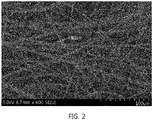
FIG. 2 shows a scanning electron microscope image of a superabsorbent polymer fiber (nonwoven fabric) according to an embodiment of the present invention. - Hereinafter, a detailed description will be given of the present invention.
- The present invention addresses a method of manufacturing a superabsorbent polymer fiber, comprising the steps of: (1) preparing a neutralization solution by dissolving a polymer of a water-soluble ethylenic unsaturated monomer in a sodium hydroxide aqueous solution; (2) preparing a spinning solution by adding the neutralization solution with a crosslinking agent and performing stirring; and (3) producing a superabsorbent polymer fiber by subjecting the spinning solution to centrifugal spinning using a spinneret and then performing drying, wherein the neutralization solution has a neutralization degree of 40 to 90 mol%, wherein the water-soluble ethylenic unsaturated monomer is at least one selected from the group consisting of isobutylene, maleic anhydride, acrylic acid, methylacrylate, and hydroxypropyl methacrylate, and wherein the crosslinking agent is an epoxy compound.
- Specifically, in step (1) of the method of manufacturing the superabsorbent polymer fiber according to the present invention, the neutralization solution is prepared by dissolving a polymer of a water-soluble ethylenic unsaturated monomer in a sodium hydroxide aqueous solution.
- In the method of manufacturing the superabsorbent polymer fiber according to the present invention, the water-soluble ethylenic unsaturated monomer is at least one selected from the group consisting of isobutylene, maleic anhydride, acrylic acid, methyl acrylate, and hydroxypropyl methacrylate. Acrylic acid is most preferable. When acrylic acid is used as the monomer, a superabsorbent polymer fiber having improved absorption capability may be obtained. Meanwhile, in the method of manufacturing the superabsorbent polymer fiber according to the present invention, the concentration of the water-soluble ethylenic unsaturated monomer may be appropriately determined taking into consideration the reaction time and the reaction conditions, and the amount of the water-soluble ethylenic unsaturated monomer is preferably set to the range of 10 to 50 wt% based on the total weight of the sodium hydroxide aqueous solution. If the concentration of the water-soluble ethylenic unsaturated monomer is less than 10 wt%, economic benefits may be negated. On the other hand, if the concentration thereof exceeds 50 wt%, viscosity may increase and thus the spinning solution may not be spun via the spinneret, making it impossible to form a fiber phase.
- The neutralization degree of the neutralization solution prepared in step (1) is set within the range of 40 to 90 mol%, and more preferably 50 to 80 mol%. As used herein, the term "neutralization degree" is a value calculated using a predetermined equation upon the measurement of a water-soluble component. As the neutralization degree decreases, the absorption capability of the ultimately obtained superabsorbent polymer fiber may decrease.
- In step (2) of the present invention, the spinning solution is prepared by adding the neutralization solution obtained in step (1) with the crosslinking agent and stirring it.
- The crosslinking agent, which is added in the present invention is an epoxy compound.
- Also, examples of the epoxy compound may include ethylene glycol diglycidyl ether and glycidol, and the polyamine compound may include at least one selected from the group consisting of ethylene diamine, diethylene triamine, triethylene tetramine, tetraethylene pentamine, pentaethylene hexamine, polyethyleneimine, and polyamide polyamine.
- The amount of the crosslinking agent that is added to treat the surface of the polymer particles may be appropriately determined depending on the kind of crosslinking agent or the reaction conditions, and is generally set to the range of 0.001 to 5 wt%, preferably 0.01 to 3 wt%, and more preferably 0.05 to 2 wt%, based on the total weight of the water-soluble ethylenic unsaturated monomer. If the amount of the crosslinking agent is too small, the crosslinking reaction does not readily occur. On the other hand, if the amount thereof exceeds 5 wt% based on the total weight of the water-soluble ethylenic unsaturated monomer, the properties of the superabsorbent polymer may deteriorate somewhat due to the excessive crosslinking reaction.
- In the following step (3), the spinning solution obtained in step (2) is placed in a spinneret so as to be centrifugally spun and is then dried, thereby producing a superabsorbent polymer fiber.
- The centrifugal spinning is a process of producing a nonwoven fabric in a manner in which a polymer that is melted or dissolved is placed in a spinneret having multiple holes and rotated at high speed and the polymer that is not solidified is stretched using centrifugal force acting upon rotation, whereby refined and solidified fibers are stacked on a collector. Centrifugal spinning is advantageous in that the device configuration is simple, energy consumption is low, there are few limitations on the polymers that are usable, and the manufacturing process is simple due to the formation of a nonwoven fabric.
- In an embodiment of the present invention, the rotation speed during the centrifugal spinning process is preferably set to, but is not limited to, the range of 3,000 rpm to 15,000 rpm. Upon centrifugal spinning at the above rotation speed, direct spinning on a substrate is possible, thus simplifying the manufacturing process.
- In step (3), the drying may be performed at a drying temperature of 100 to 250°C for 10 min to 120 min.
- As used herein, the term "drying temperature" refers to the temperature of a heat medium supplied for the drying process or the temperature of a drying reactor containing a heat medium and a polymer in the drying process. If the drying temperature is lower than 100°C, the drying time may become excessively long, and the properties of the ultimately obtained superabsorbent polymer fiber may be deteriorated. On the other hand, if the drying temperature is higher than 250°C, only the surface of the fiber may be excessively dried, and thereby the properties of the ultimately obtained superabsorbent polymer fiber may be deteriorated. The drying is preferably carried out at a temperature of 100 to 250°C, and more preferably 160 to 200°C.
- The drying time is not limited, but is preferably set to the range of 10 min to 120 min, and more preferably 20 min to 90 min, taking processing efficiency into account. Also, the drying process is not limited, so long as it is typically used in the art. Specifically, the drying process may be performed using hot air supply, IR irradiation, microwave irradiation, or UV irradiation.
- Provided is a fiber that is preferably a nonwoven fabric, but is not limited thereto.
- Provided is a superabsorbent polymer fiber that is suitable for use in hygiene materials or resin-molded products. Here, the resin-molded products may include the polymer fiber of the aforementioned embodiment, or may be composed exclusively of such a polymer fiber.
- The end use of such a disposable resin-molded product is not particularly limited, but may encompass molded products useful in various fields, such as medical, chemical, chemical engineering, food or cosmetic fields.
- In addition, the present invention addresses a superabsorbent polymer fiber manufactured by the above method.
- A better understanding of the present invention may be obtained via the following examples, which are set forth to illustrate, but are not to be construed as limiting the scope of the present invention. The scope of the present invention is given by the claims, and also contains all modifications within the meaning and range equivalent to the claims. Unless otherwise mentioned, "%" and "part", indicating amounts in the following examples and comparative examples, are given on a mass basis.
- 100 g of isobutylene/maleic anhydride and 41.5 g of caustic soda (sodium hydroxide) were dissolved in 330 g of water to give a solution having a solid content of 30 wt% and a neutralization degree of 80 mol%. This solution was then added with, as a crosslinking agent, epoxy (ethylene glycol diglycidyl ether, EX-810) in an amount of 0.3 wt%, based on the amount of isobutylene/maleic anhydride, and stirred so as to be completely mixed, thus preparing a spinning solution. 5 g of the spinning solution was placed in a spinneret having a hole size of 600 µm and spun at 10,000 rpm, whereby a sample was collected and then dried at 190°C for 30 min, thereby manufacturing a superabsorbent polymer fiber nonwoven fabric. The nonwoven fabric thus obtained is shown in
FIG. 1 . - A superabsorbent polymer fiber nonwoven fabric was manufactured in the same manner as in Example 1, with the exception that the epoxy serving as the crosslinking agent was added in an amount of 1 wt% based on the amount of isobutylene/maleic anhydride.
- 100 g of a copolymer comprising acrylic acid, methyl acrylate, and hydroxypropyl methacrylate and 27.8 g of caustic soda were dissolved in 383.25 g of water to give a solution having a solid content of 25 wt% and a neutralization degree of 50 mol%. This solution was then added with, as a crosslinking agent, epoxy (ethylene glycol diglycidyl ether, EX-810) in an amount of 0.1 wt% based on the amount of the copolymer, and stirred so as to be completely mixed, thus preparing a spinning solution. 5 g of the spinning solution was placed in a spinneret having a hole size of 600 µm and spun at 7,000 rpm, whereby a sample was collected and then dried at 140°C for 30 min, thereby manufacturing a superabsorbent polymer fiber nonwoven fabric.
- A superabsorbent polymer fiber nonwoven fabric was manufactured in the same manner as in Example 2, with the exception that a solution having a neutralization degree of 35 mol% was spun.
- A superabsorbent polymer fiber nonwoven fabric was manufactured in the same manner as in Example 2, with the exception that a solution having a neutralization degree of 95 mol% was spun.
- The conditions of Examples 1 to 4 and Comparative Example 1 and 2 are shown in Table 1 below.
[Table 1] A concentration (wt%) B concentration (wt%) Neutralization degree (mol%) Rpm Drying temperature (°C) Drying time (min) Ex.1 30 0.3 80 10,000 190 30 Ex.2 1 Ex.3 25 0.1 50 7,000 140 C.Ex.1 30 1 35 10,000 190 C.Ex.2 30 1 95 10,000 190 A: Water-soluble ethylenic unsaturated monomer
B: Crosslinking agent - The superabsorbent polymer fiber nonwoven fabrics of Examples 1 to 4 were measured for CRC. CRC was measured using the EDANA method WSP 241.3. Specifically, 0.2 g of the prepared superabsorbent nonwoven fabric was placed in a teabag and then immersed in a 0.9% saline solution for 30 min. Thereafter, dehydration was performed for 3 min at a centrifugal force of 250 G (gravity), and the amount of saline solution that was absorbed was measured.
- The superabsorbent nonwoven fabrics of Examples 1 to 4 were measured for AUL. AUL was measured using the EDANA method WSP 242.3. Specifically, 0.16 g of a sample of the prepared superabsorbent nonwoven fabric was placed in a cylinder according to EDANA, and a pressure of 0.3 psi was applied using a piston and a weight. Thereafter, the amount of 0.9% saline that was absorbed in 60 min was measured.
[Table 2] CRC (g/g) AUL (g/g) Ex.1 61.6 7.6 Ex.2 24.4 22.2 Ex.3 19.7 19.2 C.Ex.1 16.3 16.7 C.Ex.2 22.5 20.4 -
FIG. 2 shows the SEM image of the superabsorbent polymer fiber according to an embodiment of the present invention, as observed using a table SEM, for example, a Phenom Pro model available from PHENOM WORLD. Based on the results of magnified observation of the superabsorbent polymer fiber, a single strand of the fiber was measured to have a width of 4.89 µm. - As is apparent from the above results, the superabsorbent polymer fiber according to the present invention can be found to be a novel type of fiber having a superabsorbent polymer function in various CRC and AUL distribution ranges.
Claims (6)
- A method of manufacturing a superabsorbent polymer fiber, comprising steps of:1) preparing a neutralization solution by dissolving a polymer of a water-soluble ethylenic unsaturated monomer in a sodium hydroxide aqueous solution;2) preparing a spinning solution by adding the neutralization solution with a crosslinking agent and then performing stirring; and3) producing a superabsorbent polymer fiber by subjecting the spinning solution to centrifugal spinning using a spinneret and then performing drying,wherein the neutralization solution has a neutralization degree of 40 to 90 mol%,
wherein the water-soluble ethylenic unsaturated monomer is at least one selected from the group consisting of isobutylene, maleic anhydride, acrylic acid, methylacrylate, and hydroxypropyl methacrylate, and
wherein the crosslinking agent is an epoxy compound. - The method of claim 1, wherein the neutralization solution has a neutralization degree of 50 to 80 mol%.
- The method of claim 1, wherein the centrifugal spinning is performed at a rotation speed of 3,000 rpm to 15,000 rpm.
- The method of claim 1, wherein in the preparing the neutralization solution of step 1), the water-soluble ethylenic unsaturated monomer is used in an amount of 10 to 50 wt% based on a total weight of the sodium hydroxide aqueous solution.
- The method of claim 1, wherein in the preparing the spinning solution of step 2), the crosslinking agent is used in an amount of 0.001 to 5 wt% based on a total weight of the water-soluble ethylenic unsaturated monomer.
- The method of claim 1, wherein in step 3), the drying is performed at a temperature of 100 to 250°C for 10 min to 120 min.
Applications Claiming Priority (3)
| Application Number | Priority Date | Filing Date | Title |
|---|---|---|---|
| KR20150125535 | 2015-09-04 | ||
| KR1020160106096A KR101929450B1 (en) | 2015-09-04 | 2016-08-22 | A method for preparing super absorbent polymer resin fiber |
| PCT/KR2016/009856 WO2017039392A1 (en) | 2015-09-04 | 2016-09-02 | Method for manufacturing super absorbent polymer fiber |
Publications (3)
| Publication Number | Publication Date |
|---|---|
| EP3190216A1 EP3190216A1 (en) | 2017-07-12 |
| EP3190216A4 EP3190216A4 (en) | 2017-09-06 |
| EP3190216B1 true EP3190216B1 (en) | 2019-05-08 |
Family
ID=58460272
Family Applications (1)
| Application Number | Title | Priority Date | Filing Date |
|---|---|---|---|
| EP16842358.0A Active EP3190216B1 (en) | 2015-09-04 | 2016-09-02 | Method for manufacturing super absorbent polymer fiber |
Country Status (4)
| Country | Link |
|---|---|
| US (1) | US20170306528A1 (en) |
| EP (1) | EP3190216B1 (en) |
| KR (1) | KR101929450B1 (en) |
| CN (1) | CN107075761B (en) |
Families Citing this family (22)
| Publication number | Priority date | Publication date | Assignee | Title |
|---|---|---|---|---|
| KR102056302B1 (en) * | 2016-03-24 | 2019-12-16 | 주식회사 엘지화학 | A method for preparing super absorbent polymer resin fiber |
| JP7032076B2 (en) * | 2017-08-09 | 2022-03-08 | 帝人フロンティア株式会社 | Fiber structure and its manufacturing method |
| EP3674462B1 (en) * | 2017-10-30 | 2022-03-09 | LG Chem, Ltd. | Super absorbent polymer non-woven fabric and preparation method of the same |
| EP3527183B8 (en) | 2018-02-18 | 2020-11-11 | Ontex BV | Absorbent core, articles comprising said core, and methods of making |
| EP3527184B1 (en) | 2018-02-18 | 2021-02-24 | Ontex BV | Absorbent core and articles comprising said core |
| EP3552591B1 (en) | 2018-04-13 | 2023-09-27 | Ontex BV | Absorbent core, articles comprising said core, and methods of making |
| KR102514496B1 (en) | 2018-07-02 | 2023-03-27 | 주식회사 엘지화학 | A method for preparing super absorbent polymer non-woven fabfic |
| PL3838241T3 (en) | 2019-03-21 | 2022-02-14 | Ontex Bv | ABSORBENT PRODUCTS |
| ES2989914T3 (en) | 2019-03-21 | 2024-11-28 | Ontex Bv | Process and apparatus for manufacturing channeled absorbent articles |
| PL3827798T4 (en) | 2019-03-21 | 2023-02-27 | Ontex Bv | Absorbent articles |
| CN110735229A (en) * | 2019-11-22 | 2020-01-31 | 厦门当盛新材料有限公司 | Waterproof breathable film and production method thereof |
| DE202020102458U1 (en) | 2020-03-19 | 2020-06-05 | Ontex Bvba | Absorbent articles |
| DE602020002608C5 (en) | 2020-03-19 | 2023-06-07 | Ontex Bv | ABSORBENT ARTICLES AND METHODS OF MANUFACTURE |
| EP4138750B1 (en) | 2020-04-24 | 2025-10-22 | Ontex BV | Absorbent articles and methods of making |
| ES3004060T3 (en) | 2020-04-24 | 2025-03-11 | Ontex Bv | Absorbent articles and methods of making |
| ES2991263T3 (en) | 2020-12-10 | 2024-12-03 | Ontex Bv | Absorbent articles |
| EP4259057A1 (en) | 2020-12-10 | 2023-10-18 | Ontex BV | Absorbent articles and methods of making |
| ES2973141T3 (en) | 2021-04-21 | 2024-06-18 | Ontex Bv | Absorbent articles that have a moisture indicator |
| EP4183382A1 (en) | 2021-11-19 | 2023-05-24 | Ontex BV | Array of disposable absorbent articles |
| US11958308B1 (en) | 2023-05-31 | 2024-04-16 | G13 Innovation In Production Ltd | Thermal paper, and methods and systems for forming the same |
| WO2025129007A1 (en) * | 2023-12-15 | 2025-06-19 | Werewool Inc. | Soy alginate fibers |
| WO2025180754A1 (en) | 2024-02-26 | 2025-09-04 | Ontex Bv | Absorbent articles and methods of making |
Citations (10)
| Publication number | Priority date | Publication date | Assignee | Title |
|---|---|---|---|---|
| JPS645968B2 (en) | 1980-12-15 | 1989-02-01 | Amada Co Ltd | |
| JPH01260014A (en) | 1988-04-07 | 1989-10-17 | Kuraray Co Ltd | Water-absorbing fiber |
| JPH01292003A (en) | 1988-05-19 | 1989-11-24 | Sekisui Plastics Co Ltd | Purification of water-absorbable resin |
| EP0798335A2 (en) | 1996-03-29 | 1997-10-01 | Hoechst Aktiengesellschaft | Process for producing porous, hydrophilic, highly swellable hydrogels |
| WO2000056959A1 (en) | 1999-03-22 | 2000-09-28 | Basf Aktiengesellschaft | Multicomponent superabsorbent fibers |
| JP2010024565A (en) | 2008-07-16 | 2010-02-04 | Unitika Ltd | Fiber assembly |
| WO2010015709A2 (en) | 2008-08-08 | 2010-02-11 | Basf Se | Fibrous surface structure containing active ingredients with controlled release of active ingredients, use thereof and method for the production thereof |
| WO2013083698A1 (en) | 2011-12-08 | 2013-06-13 | Basf Se | Process for producing water-absorbing polymer fibres |
| WO2014053345A1 (en) | 2012-10-02 | 2014-04-10 | Basf Se | Process for producing water-absorbing polymer fibres |
| WO2015015331A1 (en) | 2013-07-29 | 2015-02-05 | Kimberly-Clark Worldwide, Inc. | Solution spinning of fibers |
Family Cites Families (12)
| Publication number | Priority date | Publication date | Assignee | Title |
|---|---|---|---|---|
| JPS6328912A (en) * | 1986-07-17 | 1988-02-06 | Nichibi:Kk | Production of highly water absorbing fiber |
| JPH01103643A (en) * | 1987-10-15 | 1989-04-20 | Kuraray Co Ltd | Water-absorptive composition |
| US5079306A (en) * | 1990-01-04 | 1992-01-07 | Arco Chemical Technology, Inc. | Polymer compositions and absorbent fibers produced therefrom |
| US5026784A (en) * | 1990-01-04 | 1991-06-25 | Arco Chemical Technology, Inc. | Polymer compositions and absorbent fibers produced therefrom |
| CA2187633A1 (en) * | 1994-04-11 | 1995-10-19 | Douglas R. Chambers | Superabsorbent polymers and products therefrom |
| WO2001000259A1 (en) * | 1999-06-29 | 2001-01-04 | Stockhausen Gmbh & Co. Kg | Manufacture of web superabsorbent polymer and fiber |
| DE10137171A1 (en) | 2001-07-31 | 2003-02-13 | Stockhausen Chem Fab Gmbh | Preparation of celluosic shaped bodies having superabsorber properties useful for production of disposable diapers, tampons, bandages, incontinence articles, moisture absorbers, clothing, filters, and packaging materials |
| DE10249821A1 (en) * | 2002-10-25 | 2004-05-13 | Stockhausen Gmbh & Co. Kg | A two-stage process for preparation of an absorbing polymer useful for foams, sealing materials, liquid absorbing hygiene articles, plant growth regulators, packaging materials, and floor covering additives |
| DE10255418A1 (en) * | 2002-11-28 | 2004-06-17 | Stockhausen Gmbh & Co. Kg | Drawn absorbent polymer fibers |
| US20080081189A1 (en) | 2006-10-02 | 2008-04-03 | Weyerhaeuser Co. | Mixed Polymer Superabsorbent Fibers And Method For Their Preparation |
| CN103160952B (en) * | 2013-04-15 | 2015-04-08 | 东华大学 | Preparation method of fiber with high water absorption |
| US9365951B2 (en) * | 2014-01-30 | 2016-06-14 | Kimberly-Clark Worldwide, Inc. | Negative polarity on the nanofiber line |
-
2016
- 2016-08-22 KR KR1020160106096A patent/KR101929450B1/en active Active
- 2016-09-02 US US15/518,291 patent/US20170306528A1/en not_active Abandoned
- 2016-09-02 EP EP16842358.0A patent/EP3190216B1/en active Active
- 2016-09-02 CN CN201680003289.XA patent/CN107075761B/en active Active
Patent Citations (10)
| Publication number | Priority date | Publication date | Assignee | Title |
|---|---|---|---|---|
| JPS645968B2 (en) | 1980-12-15 | 1989-02-01 | Amada Co Ltd | |
| JPH01260014A (en) | 1988-04-07 | 1989-10-17 | Kuraray Co Ltd | Water-absorbing fiber |
| JPH01292003A (en) | 1988-05-19 | 1989-11-24 | Sekisui Plastics Co Ltd | Purification of water-absorbable resin |
| EP0798335A2 (en) | 1996-03-29 | 1997-10-01 | Hoechst Aktiengesellschaft | Process for producing porous, hydrophilic, highly swellable hydrogels |
| WO2000056959A1 (en) | 1999-03-22 | 2000-09-28 | Basf Aktiengesellschaft | Multicomponent superabsorbent fibers |
| JP2010024565A (en) | 2008-07-16 | 2010-02-04 | Unitika Ltd | Fiber assembly |
| WO2010015709A2 (en) | 2008-08-08 | 2010-02-11 | Basf Se | Fibrous surface structure containing active ingredients with controlled release of active ingredients, use thereof and method for the production thereof |
| WO2013083698A1 (en) | 2011-12-08 | 2013-06-13 | Basf Se | Process for producing water-absorbing polymer fibres |
| WO2014053345A1 (en) | 2012-10-02 | 2014-04-10 | Basf Se | Process for producing water-absorbing polymer fibres |
| WO2015015331A1 (en) | 2013-07-29 | 2015-02-05 | Kimberly-Clark Worldwide, Inc. | Solution spinning of fibers |
Non-Patent Citations (2)
| Title |
|---|
| "Modern Superabsorbent Polymer Technology", 1998, article GRAHAM ET AL.: "Commercial Processes for the Manufacture of Superabsorbent Polymers", pages: 69 - 77, 223-249, XP055683365 |
| SARKAR ET AL.: "Electrospinning to Forcespinning(TM)", MATERIALS TODAY, vol. 13, November 2010 (2010-11-01), pages 12 - 14, XP027448950 |
Also Published As
| Publication number | Publication date |
|---|---|
| US20170306528A1 (en) | 2017-10-26 |
| EP3190216A1 (en) | 2017-07-12 |
| KR20170028836A (en) | 2017-03-14 |
| CN107075761A (en) | 2017-08-18 |
| CN107075761B (en) | 2019-12-20 |
| EP3190216A4 (en) | 2017-09-06 |
| KR101929450B1 (en) | 2018-12-14 |
Similar Documents
| Publication | Publication Date | Title |
|---|---|---|
| EP3190216A1 (en) | Method for manufacturing super absorbent polymer fiber | |
| JP6460495B2 (en) | Poly (meth) acrylic acid (salt) -based particulate water-absorbing agent and production method | |
| CN104334617B (en) | Carboxyalkylated starch polyacrylic acid salt composite through compound base amount method | |
| US11613613B2 (en) | Superabsorbent polymer composition and method for preparing the same | |
| US10280297B2 (en) | Particulate water-absorbing agent | |
| EP3336226B1 (en) | Method for producing superabsorbent polymer fiber | |
| WO2004024816A1 (en) | Water absorbing agent and method for the production thereof | |
| SA08290542B1 (en) | Method for Producing Water Absorbent Resin | |
| WO2011078298A1 (en) | Water-absorbable polyacrylic acid resin powder, and process for production thereof | |
| EP0527271A1 (en) | Resin composition having biodegradability and high absorbency nonwoven fabric made of the same and pads comprising said fabric | |
| EP4317260A1 (en) | Superabsorbent polymer and method for producing the same | |
| US9669384B2 (en) | Water-absorbing resin and preparing method thereof | |
| CN109252245B (en) | Super-absorbent alginate fiber and preparation method thereof | |
| WO2009093708A1 (en) | Water absorbent and process for production thereof | |
| CN117164894A (en) | Cross-linked carboxymethylcellulose super-absorbent gel for sanitary napkins and preparation method thereof | |
| JP2016053144A (en) | Water-absorbing resin particles, method for producing water-absorbing resin particles, and absorbing body | |
| JP2003503114A (en) | Manufacture of woven superabsorbent polymers and fibers | |
| JP2016113465A (en) | Polyacrylic acid (acrylate)-based water-absorbing resin, and production method thereof | |
| JP2012077157A (en) | Water-absorbing resin and method for manufacturing the same | |
| WO2017039392A1 (en) | Method for manufacturing super absorbent polymer fiber | |
| WO2024132959A1 (en) | Biologically degradable superabsorber | |
| CN109071831A (en) | Method for producing superabsorbent polymers | |
| Yang et al. | Research Advances in Superabsorbent Polymers. Polymers 2024, 16, 501 | |
| TWI593369B (en) | Use of nanofiber containing fish scale peptide and temperature sensing material as mask and preparation method thereof | |
| JP2025026271A (en) | Manufacturing method of recycled water absorbent resin |
Legal Events
| Date | Code | Title | Description |
|---|---|---|---|
| STAA | Information on the status of an ep patent application or granted ep patent |
Free format text: STATUS: THE INTERNATIONAL PUBLICATION HAS BEEN MADE |
|
| PUAI | Public reference made under article 153(3) epc to a published international application that has entered the european phase |
Free format text: ORIGINAL CODE: 0009012 |
|
| STAA | Information on the status of an ep patent application or granted ep patent |
Free format text: STATUS: REQUEST FOR EXAMINATION WAS MADE |
|
| 17P | Request for examination filed |
Effective date: 20170407 |
|
| AK | Designated contracting states |
Kind code of ref document: A1 Designated state(s): AL AT BE BG CH CY CZ DE DK EE ES FI FR GB GR HR HU IE IS IT LI LT LU LV MC MK MT NL NO PL PT RO RS SE SI SK SM TR |
|
| AX | Request for extension of the european patent |
Extension state: BA ME |
|
| RIC1 | Information provided on ipc code assigned before grant |
Ipc: D04H 1/724 20120101ALI20170725BHEP Ipc: D01F 6/36 20060101ALI20170725BHEP Ipc: D01F 6/16 20060101ALI20170725BHEP Ipc: A61F 13/53 20060101ALI20170725BHEP Ipc: D01D 5/18 20060101ALI20170725BHEP Ipc: D04H 1/4326 20120101ALI20170725BHEP Ipc: D04H 1/4291 20120101AFI20170725BHEP Ipc: D04H 13/00 20060101ALI20170725BHEP |
|
| A4 | Supplementary search report drawn up and despatched |
Effective date: 20170807 |
|
| STAA | Information on the status of an ep patent application or granted ep patent |
Free format text: STATUS: EXAMINATION IS IN PROGRESS |
|
| 17Q | First examination report despatched |
Effective date: 20180713 |
|
| DAV | Request for validation of the european patent (deleted) | ||
| DAX | Request for extension of the european patent (deleted) | ||
| GRAP | Despatch of communication of intention to grant a patent |
Free format text: ORIGINAL CODE: EPIDOSNIGR1 |
|
| STAA | Information on the status of an ep patent application or granted ep patent |
Free format text: STATUS: GRANT OF PATENT IS INTENDED |
|
| INTG | Intention to grant announced |
Effective date: 20190128 |
|
| GRAS | Grant fee paid |
Free format text: ORIGINAL CODE: EPIDOSNIGR3 |
|
| GRAA | (expected) grant |
Free format text: ORIGINAL CODE: 0009210 |
|
| STAA | Information on the status of an ep patent application or granted ep patent |
Free format text: STATUS: THE PATENT HAS BEEN GRANTED |
|
| AK | Designated contracting states |
Kind code of ref document: B1 Designated state(s): AL AT BE BG CH CY CZ DE DK EE ES FI FR GB GR HR HU IE IS IT LI LT LU LV MC MK MT NL NO PL PT RO RS SE SI SK SM TR |
|
| REG | Reference to a national code |
Ref country code: GB Ref legal event code: FG4D |
|
| REG | Reference to a national code |
Ref country code: CH Ref legal event code: EP Ref country code: AT Ref legal event code: REF Ref document number: 1130282 Country of ref document: AT Kind code of ref document: T Effective date: 20190515 |
|
| REG | Reference to a national code |
Ref country code: DE Ref legal event code: R096 Ref document number: 602016013824 Country of ref document: DE Ref country code: IE Ref legal event code: FG4D |
|
| REG | Reference to a national code |
Ref country code: NL Ref legal event code: MP Effective date: 20190508 |
|
| REG | Reference to a national code |
Ref country code: LT Ref legal event code: MG4D |
|
| PG25 | Lapsed in a contracting state [announced via postgrant information from national office to epo] |
Ref country code: ES Free format text: LAPSE BECAUSE OF FAILURE TO SUBMIT A TRANSLATION OF THE DESCRIPTION OR TO PAY THE FEE WITHIN THE PRESCRIBED TIME-LIMIT Effective date: 20190508 Ref country code: PT Free format text: LAPSE BECAUSE OF FAILURE TO SUBMIT A TRANSLATION OF THE DESCRIPTION OR TO PAY THE FEE WITHIN THE PRESCRIBED TIME-LIMIT Effective date: 20190908 Ref country code: SE Free format text: LAPSE BECAUSE OF FAILURE TO SUBMIT A TRANSLATION OF THE DESCRIPTION OR TO PAY THE FEE WITHIN THE PRESCRIBED TIME-LIMIT Effective date: 20190508 Ref country code: AL Free format text: LAPSE BECAUSE OF FAILURE TO SUBMIT A TRANSLATION OF THE DESCRIPTION OR TO PAY THE FEE WITHIN THE PRESCRIBED TIME-LIMIT Effective date: 20190508 Ref country code: FI Free format text: LAPSE BECAUSE OF FAILURE TO SUBMIT A TRANSLATION OF THE DESCRIPTION OR TO PAY THE FEE WITHIN THE PRESCRIBED TIME-LIMIT Effective date: 20190508 Ref country code: NO Free format text: LAPSE BECAUSE OF FAILURE TO SUBMIT A TRANSLATION OF THE DESCRIPTION OR TO PAY THE FEE WITHIN THE PRESCRIBED TIME-LIMIT Effective date: 20190808 Ref country code: HR Free format text: LAPSE BECAUSE OF FAILURE TO SUBMIT A TRANSLATION OF THE DESCRIPTION OR TO PAY THE FEE WITHIN THE PRESCRIBED TIME-LIMIT Effective date: 20190508 Ref country code: LT Free format text: LAPSE BECAUSE OF FAILURE TO SUBMIT A TRANSLATION OF THE DESCRIPTION OR TO PAY THE FEE WITHIN THE PRESCRIBED TIME-LIMIT Effective date: 20190508 Ref country code: NL Free format text: LAPSE BECAUSE OF FAILURE TO SUBMIT A TRANSLATION OF THE DESCRIPTION OR TO PAY THE FEE WITHIN THE PRESCRIBED TIME-LIMIT Effective date: 20190508 |
|
| PG25 | Lapsed in a contracting state [announced via postgrant information from national office to epo] |
Ref country code: RS Free format text: LAPSE BECAUSE OF FAILURE TO SUBMIT A TRANSLATION OF THE DESCRIPTION OR TO PAY THE FEE WITHIN THE PRESCRIBED TIME-LIMIT Effective date: 20190508 Ref country code: BG Free format text: LAPSE BECAUSE OF FAILURE TO SUBMIT A TRANSLATION OF THE DESCRIPTION OR TO PAY THE FEE WITHIN THE PRESCRIBED TIME-LIMIT Effective date: 20190808 Ref country code: LV Free format text: LAPSE BECAUSE OF FAILURE TO SUBMIT A TRANSLATION OF THE DESCRIPTION OR TO PAY THE FEE WITHIN THE PRESCRIBED TIME-LIMIT Effective date: 20190508 Ref country code: GR Free format text: LAPSE BECAUSE OF FAILURE TO SUBMIT A TRANSLATION OF THE DESCRIPTION OR TO PAY THE FEE WITHIN THE PRESCRIBED TIME-LIMIT Effective date: 20190809 |
|
| REG | Reference to a national code |
Ref country code: AT Ref legal event code: MK05 Ref document number: 1130282 Country of ref document: AT Kind code of ref document: T Effective date: 20190508 |
|
| PG25 | Lapsed in a contracting state [announced via postgrant information from national office to epo] |
Ref country code: EE Free format text: LAPSE BECAUSE OF FAILURE TO SUBMIT A TRANSLATION OF THE DESCRIPTION OR TO PAY THE FEE WITHIN THE PRESCRIBED TIME-LIMIT Effective date: 20190508 Ref country code: DK Free format text: LAPSE BECAUSE OF FAILURE TO SUBMIT A TRANSLATION OF THE DESCRIPTION OR TO PAY THE FEE WITHIN THE PRESCRIBED TIME-LIMIT Effective date: 20190508 Ref country code: AT Free format text: LAPSE BECAUSE OF FAILURE TO SUBMIT A TRANSLATION OF THE DESCRIPTION OR TO PAY THE FEE WITHIN THE PRESCRIBED TIME-LIMIT Effective date: 20190508 Ref country code: SK Free format text: LAPSE BECAUSE OF FAILURE TO SUBMIT A TRANSLATION OF THE DESCRIPTION OR TO PAY THE FEE WITHIN THE PRESCRIBED TIME-LIMIT Effective date: 20190508 Ref country code: CZ Free format text: LAPSE BECAUSE OF FAILURE TO SUBMIT A TRANSLATION OF THE DESCRIPTION OR TO PAY THE FEE WITHIN THE PRESCRIBED TIME-LIMIT Effective date: 20190508 Ref country code: RO Free format text: LAPSE BECAUSE OF FAILURE TO SUBMIT A TRANSLATION OF THE DESCRIPTION OR TO PAY THE FEE WITHIN THE PRESCRIBED TIME-LIMIT Effective date: 20190508 |
|
| REG | Reference to a national code |
Ref country code: DE Ref legal event code: R026 Ref document number: 602016013824 Country of ref document: DE |
|
| PLBI | Opposition filed |
Free format text: ORIGINAL CODE: 0009260 |
|
| PLAX | Notice of opposition and request to file observation + time limit sent |
Free format text: ORIGINAL CODE: EPIDOSNOBS2 |
|
| PG25 | Lapsed in a contracting state [announced via postgrant information from national office to epo] |
Ref country code: IT Free format text: LAPSE BECAUSE OF FAILURE TO SUBMIT A TRANSLATION OF THE DESCRIPTION OR TO PAY THE FEE WITHIN THE PRESCRIBED TIME-LIMIT Effective date: 20190508 Ref country code: SM Free format text: LAPSE BECAUSE OF FAILURE TO SUBMIT A TRANSLATION OF THE DESCRIPTION OR TO PAY THE FEE WITHIN THE PRESCRIBED TIME-LIMIT Effective date: 20190508 |
|
| 26 | Opposition filed |
Opponent name: NIPPON SHOKUBAI CO., LTD. Effective date: 20200207 |
|
| PG25 | Lapsed in a contracting state [announced via postgrant information from national office to epo] |
Ref country code: TR Free format text: LAPSE BECAUSE OF FAILURE TO SUBMIT A TRANSLATION OF THE DESCRIPTION OR TO PAY THE FEE WITHIN THE PRESCRIBED TIME-LIMIT Effective date: 20190508 |
|
| PG25 | Lapsed in a contracting state [announced via postgrant information from national office to epo] |
Ref country code: PL Free format text: LAPSE BECAUSE OF FAILURE TO SUBMIT A TRANSLATION OF THE DESCRIPTION OR TO PAY THE FEE WITHIN THE PRESCRIBED TIME-LIMIT Effective date: 20190508 |
|
| PG25 | Lapsed in a contracting state [announced via postgrant information from national office to epo] |
Ref country code: MC Free format text: LAPSE BECAUSE OF FAILURE TO SUBMIT A TRANSLATION OF THE DESCRIPTION OR TO PAY THE FEE WITHIN THE PRESCRIBED TIME-LIMIT Effective date: 20190508 Ref country code: SI Free format text: LAPSE BECAUSE OF FAILURE TO SUBMIT A TRANSLATION OF THE DESCRIPTION OR TO PAY THE FEE WITHIN THE PRESCRIBED TIME-LIMIT Effective date: 20190508 |
|
| REG | Reference to a national code |
Ref country code: CH Ref legal event code: PL |
|
| PLBB | Reply of patent proprietor to notice(s) of opposition received |
Free format text: ORIGINAL CODE: EPIDOSNOBS3 |
|
| PG25 | Lapsed in a contracting state [announced via postgrant information from national office to epo] |
Ref country code: IE Free format text: LAPSE BECAUSE OF NON-PAYMENT OF DUE FEES Effective date: 20190902 Ref country code: LI Free format text: LAPSE BECAUSE OF NON-PAYMENT OF DUE FEES Effective date: 20190930 Ref country code: CH Free format text: LAPSE BECAUSE OF NON-PAYMENT OF DUE FEES Effective date: 20190930 Ref country code: LU Free format text: LAPSE BECAUSE OF NON-PAYMENT OF DUE FEES Effective date: 20190902 |
|
| PG25 | Lapsed in a contracting state [announced via postgrant information from national office to epo] |
Ref country code: CY Free format text: LAPSE BECAUSE OF FAILURE TO SUBMIT A TRANSLATION OF THE DESCRIPTION OR TO PAY THE FEE WITHIN THE PRESCRIBED TIME-LIMIT Effective date: 20190508 |
|
| PG25 | Lapsed in a contracting state [announced via postgrant information from national office to epo] |
Ref country code: IS Free format text: LAPSE BECAUSE OF FAILURE TO SUBMIT A TRANSLATION OF THE DESCRIPTION OR TO PAY THE FEE WITHIN THE PRESCRIBED TIME-LIMIT Effective date: 20190908 |
|
| PG25 | Lapsed in a contracting state [announced via postgrant information from national office to epo] |
Ref country code: HU Free format text: LAPSE BECAUSE OF FAILURE TO SUBMIT A TRANSLATION OF THE DESCRIPTION OR TO PAY THE FEE WITHIN THE PRESCRIBED TIME-LIMIT; INVALID AB INITIO Effective date: 20160902 Ref country code: MT Free format text: LAPSE BECAUSE OF FAILURE TO SUBMIT A TRANSLATION OF THE DESCRIPTION OR TO PAY THE FEE WITHIN THE PRESCRIBED TIME-LIMIT Effective date: 20190508 |
|
| REG | Reference to a national code |
Ref country code: DE Ref legal event code: R100 Ref document number: 602016013824 Country of ref document: DE |
|
| PLCK | Communication despatched that opposition was rejected |
Free format text: ORIGINAL CODE: EPIDOSNREJ1 |
|
| PLBN | Opposition rejected |
Free format text: ORIGINAL CODE: 0009273 |
|
| STAA | Information on the status of an ep patent application or granted ep patent |
Free format text: STATUS: OPPOSITION REJECTED |
|
| 27O | Opposition rejected |
Effective date: 20211026 |
|
| PG25 | Lapsed in a contracting state [announced via postgrant information from national office to epo] |
Ref country code: MK Free format text: LAPSE BECAUSE OF FAILURE TO SUBMIT A TRANSLATION OF THE DESCRIPTION OR TO PAY THE FEE WITHIN THE PRESCRIBED TIME-LIMIT Effective date: 20190508 |
|
| P01 | Opt-out of the competence of the unified patent court (upc) registered |
Effective date: 20230523 |
|
| PGFP | Annual fee paid to national office [announced via postgrant information from national office to epo] |
Ref country code: DE Payment date: 20250820 Year of fee payment: 10 |
|
| PGFP | Annual fee paid to national office [announced via postgrant information from national office to epo] |
Ref country code: GB Payment date: 20250820 Year of fee payment: 10 Ref country code: BE Payment date: 20250821 Year of fee payment: 10 |
|
| PGFP | Annual fee paid to national office [announced via postgrant information from national office to epo] |
Ref country code: FR Payment date: 20250821 Year of fee payment: 10 |