EP3190131A1 - Living radical polymerization initiator, method for producing polymer, and polymer - Google Patents
Living radical polymerization initiator, method for producing polymer, and polymer Download PDFInfo
- Publication number
- EP3190131A1 EP3190131A1 EP15838864.5A EP15838864A EP3190131A1 EP 3190131 A1 EP3190131 A1 EP 3190131A1 EP 15838864 A EP15838864 A EP 15838864A EP 3190131 A1 EP3190131 A1 EP 3190131A1
- Authority
- EP
- European Patent Office
- Prior art keywords
- group
- polymer
- carbon atoms
- radical polymerization
- monomer
- Prior art date
- Legal status (The legal status is an assumption and is not a legal conclusion. Google has not performed a legal analysis and makes no representation as to the accuracy of the status listed.)
- Granted
Links
Images


Classifications
-
- C—CHEMISTRY; METALLURGY
- C08—ORGANIC MACROMOLECULAR COMPOUNDS; THEIR PREPARATION OR CHEMICAL WORKING-UP; COMPOSITIONS BASED THEREON
- C08K—Use of inorganic or non-macromolecular organic substances as compounding ingredients
- C08K5/00—Use of organic ingredients
- C08K5/04—Oxygen-containing compounds
- C08K5/09—Carboxylic acids; Metal salts thereof; Anhydrides thereof
-
- C—CHEMISTRY; METALLURGY
- C08—ORGANIC MACROMOLECULAR COMPOUNDS; THEIR PREPARATION OR CHEMICAL WORKING-UP; COMPOSITIONS BASED THEREON
- C08F—MACROMOLECULAR COMPOUNDS OBTAINED BY REACTIONS ONLY INVOLVING CARBON-TO-CARBON UNSATURATED BONDS
- C08F293/00—Macromolecular compounds obtained by polymerisation on to a macromolecule having groups capable of inducing the formation of new polymer chains bound exclusively at one or both ends of the starting macromolecule
- C08F293/005—Macromolecular compounds obtained by polymerisation on to a macromolecule having groups capable of inducing the formation of new polymer chains bound exclusively at one or both ends of the starting macromolecule using free radical "living" or "controlled" polymerisation, e.g. using a complexing agent
-
- C—CHEMISTRY; METALLURGY
- C07—ORGANIC CHEMISTRY
- C07C—ACYCLIC OR CARBOCYCLIC COMPOUNDS
- C07C69/00—Esters of carboxylic acids; Esters of carbonic or haloformic acids
- C07C69/62—Halogen-containing esters
- C07C69/63—Halogen-containing esters of saturated acids
-
- C—CHEMISTRY; METALLURGY
- C07—ORGANIC CHEMISTRY
- C07C—ACYCLIC OR CARBOCYCLIC COMPOUNDS
- C07C69/00—Esters of carboxylic acids; Esters of carbonic or haloformic acids
- C07C69/62—Halogen-containing esters
- C07C69/63—Halogen-containing esters of saturated acids
- C07C69/635—Halogen-containing esters of saturated acids containing rings in the acid moiety
-
- C—CHEMISTRY; METALLURGY
- C07—ORGANIC CHEMISTRY
- C07C—ACYCLIC OR CARBOCYCLIC COMPOUNDS
- C07C69/00—Esters of carboxylic acids; Esters of carbonic or haloformic acids
- C07C69/62—Halogen-containing esters
- C07C69/65—Halogen-containing esters of unsaturated acids
-
- C—CHEMISTRY; METALLURGY
- C07—ORGANIC CHEMISTRY
- C07C—ACYCLIC OR CARBOCYCLIC COMPOUNDS
- C07C69/00—Esters of carboxylic acids; Esters of carbonic or haloformic acids
- C07C69/66—Esters of carboxylic acids having esterified carboxylic groups bound to acyclic carbon atoms and having any of the groups OH, O—metal, —CHO, keto, ether, acyloxy, groups, groups, or in the acid moiety
- C07C69/73—Esters of carboxylic acids having esterified carboxylic groups bound to acyclic carbon atoms and having any of the groups OH, O—metal, —CHO, keto, ether, acyloxy, groups, groups, or in the acid moiety of unsaturated acids
-
- C—CHEMISTRY; METALLURGY
- C08—ORGANIC MACROMOLECULAR COMPOUNDS; THEIR PREPARATION OR CHEMICAL WORKING-UP; COMPOSITIONS BASED THEREON
- C08F—MACROMOLECULAR COMPOUNDS OBTAINED BY REACTIONS ONLY INVOLVING CARBON-TO-CARBON UNSATURATED BONDS
- C08F2/00—Processes of polymerisation
- C08F2/38—Polymerisation using regulators, e.g. chain terminating agents, e.g. telomerisation
-
- C—CHEMISTRY; METALLURGY
- C08—ORGANIC MACROMOLECULAR COMPOUNDS; THEIR PREPARATION OR CHEMICAL WORKING-UP; COMPOSITIONS BASED THEREON
- C08F—MACROMOLECULAR COMPOUNDS OBTAINED BY REACTIONS ONLY INVOLVING CARBON-TO-CARBON UNSATURATED BONDS
- C08F2/00—Processes of polymerisation
- C08F2/44—Polymerisation in the presence of compounding ingredients, e.g. plasticisers, dyestuffs, fillers
Definitions
- the present invention relates to a polymerization initiator used for living radical polymerization, a method for producing a polymer, and a polymer produced by using them.
- a radical polymerization method As a method for obtaining a vinyl polymer based on polymerization of a vinyl monomer, a radical polymerization method is conventionally known.
- the radical polymerization method has a disadvantage that it is generally difficult to control the molecular weight of a vinyl polymer to be obtained.
- the ratio (Mw/Mn) between weight average molecular weight (Mw) and number average molecular weight (Mn) can be only reduced to 2 to 3 or so.
- a living radical polymerization method As a method for overcoming the above disadvantages, a living radical polymerization method has been developed since 1990. Namely, according to the living radical polymerization method, it is possible to control the molecular weight and also possible to obtain a polymer with narrow molecular weight distribution.
- Patent Literature 1 since it is possible to obtain easily a polymer which has Mw/Mn of 2 or less, the method receives great attention as a method for producing a polymer that is used for a cutting edge field like nano technology (see, Patent Literature 1, for example).
- Patent Literature 1 JP 2009-203359 A
- the conventional radical polymerization method described above involves with a reaction system in which the polymerization reaction progresses for one initiating group of a polymerization initiator.
- a reaction system in which a different polymerization reaction is carried out for a plurality of initiating groups it would be preferable to have a reaction system in which a different polymerization reaction is carried out for a plurality of initiating groups.
- an object of the present invention is toprovide a living radical polymerization initiator which has two halogen atoms different from each other in reactivity and enables different polymerization reactions to proceed in two directions by having each of the halogen atoms as a initiating group, a method for producing a polymer, and a polymer produced by using them.
- the inventors of the present invention invented a living radical polymerization initiator which has two halogen atoms different from each other in reactivity and enables different polymerization reactions to proceed in two directions by having each of the halogen atoms as a initiating group, a method for producing a polymer, and a polymer produced by using them.
- a living radical polymerization initiator according to a first invention is a living radical polymerization initiator which consists of the following general formula (1):
- R 1 represents an organic group which is linkable with two or more other organic groups, and is an aliphatic group having 1 to 12 carbon atoms, an aromatic group, an alkylcarbonyl group having 1 to 12 carbon atoms, an alkoxycarbonyl group having 1 to 12 carbon atoms, an aminocarbonyl group, an alkylaminocarbonyl group having 1 to 12 carbon atoms, a dialkylaminocarbonyl group having 1 to 12 carbon atoms, an arylcarbonyl group, an alkylsulfonyl group having 1 to 12 carbon atoms, an aryl sulfonyl group, or an organic group in which two or more of those groups are combined
- R 2 , R 3 , R 4 and R 5 are a hydrogen atom or an organic group selected from an aliphatic group having 1 to 12 carbon atoms, an aromatic group, an alkylcarbonyl group having 1 to 12 carbon atoms, an alkoxycarbonyl group having 1 to 12 carbon atom
- the halogen atom is iodide, chloride, or bromide.
- a method for producing a polymer according to a third invention is a method for producing a polymer by using the living radicalpolymerization initiator according to the first or second invention, including: a first polymerization step in which, for only one halogen atom of the X or Y of the living radical polymerization initiator, a living radical polymerization reaction in which the living radical polymerization reaction initiator is mixed with a monomer with unsaturated bond and the reaction is carried out at a reaction condition depending on a type of the monomer one or more times while changing in order the type of the monomer to be mixed to obtain a first product; and a second polymerization step in which, for both halogen atoms of the X and Y contained in the first product, at least one type of the monomer is subjected to a living radical polymerization reaction in order at a reaction condition depending on a type of the monomer to obtain a final product.
- the first polymerization step and the second polymerization step are carried out by using a catalyst and the first polymerization step and the second polymerization step are carried out such that at least one of reaction temperature and type of the catalyst is changed depending on the type of the monomer.
- the catalyst is a transition metal complex-based catalyst which is used for an atom transfer radical polymerization, a catalyst consisting of a compound containing at least one center element selected from phosphorus, nitrogen, carbon, oxygen, germanium, tin, and antimony and a halogen atom bound to the center element, which is used for reversible chain transfer catalyst polymerization, an organic amine compound catalyst used for reversible complexation mediated polymerization, or a catalyst in which, as a non-metal compound having an ionic bond with a halide ion, a non-metal atom in the non-metal compound is in a cation state and forms an ionic bond with the halide ion.
- the first polymerization step and the second polymerization step are carried out at 180°C or lower.
- the first polymerization step and the second polymerization step are carried out for reaction time of 30 minutes or longer and 24 hours or shorter.
- a polymer according to the eighth invention is produced by using the method for producing a polymer according to any one of the third to seventh invention.
- a living radical polymerization initiator which has two halogen atoms different from each other in reactivity and enables different polymerization reactions to proceed in two directions by having each of the halogen atoms as a initiating group, a method for producing a polymer, and a polymer produced by using them.
- the living radical polymerization initiator according to this embodiment has a structure represented by the chemical formula (1), and it has two halogen atoms different from each other in reactivity.
- R 1 is an organic group with valency of two or more, i.e., an organic group which is linkable with two or more other organic groups, and examples thereof include an aliphatic group having 1 to 12 carbon atoms, an aromatic group, an alkylcarbonyl group having 1 to 12 carbon atoms, an alkoxycarbonyl group having 1 to 12 carbon atoms, an aminocarbonyl group, an alkylaminocarbonyl group having 1 to 12 carbon atoms, a dialkylaminocarbonyl group having 1 to 12 carbon atoms, an arylcarbonyl group, an alkylsulfonyl group having 1 to 12 carbon atoms , an aryl sulfonyl group, and an organic group in which two or more of those groups are combined.
- each of R 2 , R 3 , R 4 and R 5 is a hydrogen atom or an organic group selected from an aliphatic group having 1 to 12 carbon atoms, an aromatic group, an alkylcarbonyl group having 1 to 12 carbon atoms, an alkoxycarbonyl group having 1 to 12 carbon atoms, an aminocarbonyl group, an alkylaminocarbonyl group having 1 to 12 carbon atoms, a dialkylaminocarbonyl group having 1 to 12 carbon atoms, an arylcarbonyl group, an alkylsulfonyl group having 1 to 12 carbon atoms, and an aryl sulfonyl group, X and Y are a halogen atom, and m and n are an integer of 1 or more.
- the left and right structures of the linking group R 1 in the chemical formula (1) are non-symmetrical so that the halogen atoms X and Y are given with different reactivity.
- the linking group R 1 is not particularly limited as long as it is an organic group which is linkable with two or more other organic groups. Specific examples thereof include an aliphatic group, an aromatic group, an alkylcarbonyl group having 1 to 12 carbon atoms, an alkoxycarbonyl group having 1 to 12 carbon atoms, an aminocarbonyl group, an alkylaminocarbonyl group having 1 to 12 carbon atoms, a dialkylaminocarbonyl group having 1 to 12 carbon atoms, an arylcarbonyl group, an alkylsulfonyl group having 1 to 12 carbon atoms, an aryl sulfonyl group, and an organic group in which two or more of those groups are combined.
- the linking group R 1 may have a substituent group, and in a case in which it has a substituent group, number of the substituent group is not particularly limited as long as the substitution can be made, and the number is 1 or more.
- a halogen atom a linear or non-linear alkyl group having 1 to 12 carbon atoms which may be substituted, an aromatic group whichmaybe substituted, anon-aromatic heterocyclic group which may be substituted, a carboxy graup, a linear or non-linear alkoxy group having 1 to 12 carbon atoms, a cyano group, a nitro group, and the like can be mentioned.
- aliphatic group a linear or non-linear alkyl group having 1 to 12 carbon atoms which may be substituted can be mentioned.
- number of the substituent group is not particularly limited, and it is 1 or more.
- a halogen atom a linear or non-linear alkyl group having 1 to 12 carbon atoms which may be substituted, an aromatic group which may be substituted, a non-aromatic heterocyclic group which may be substituted, a linear or non-linear alkoxy group having 1 to 12 carbon atoms, a cyano group, a nitro group, and the like can be mentioned.
- an aromatic hydrocarbon cyclic group or an aromatic heterocyclic group can be mentioned, and specific examples thereof include a phenyl group, a biphenylyl group, a terphenylyl group, a naphthyl group, a binaphthylyl group, an azulenyl group, an anthracenyl group, a phenanthrenyl group, a furarenyl group, a furyl group, a thienyl group, a pyrrolyl group, a pyrazolyl group, an imidazolyl group, an isoxazolyl group, a thiazolyl group, a tidiazolyl group, a pyridyl group, a benzofuranyl group, an indolyl group, a benzothiazolyl group, and a carbazolyl group.
- the aromatic group may be substituted, and in that case, number of the substituent group is not particularly limited as long as the substitution can be made, and it is 1 or more.
- a halogen atom a linear or non-linear alkyl group having 1 to 12 carbon atoms which may be substituted, an aromatic group which may be substituted, a non-aromatic heterocyclic group which may be substituted, a carboxy group, a linear or non-linear alkoxy group having 1 to 12 carbon atoms, a cyano group, a nitro group, and the like can be mentioned.
- aliphatic group a linear or non-linear alkyl group having 1 to 12 carbon atoms which may be substituted can be mentioned.
- number of the substituent group is not particularly limited as long as the substitution can be made, and it is 1 or more.
- a halogen atom a linear or non-linear alkyl group having 1 to 12 carbon atoms which may be substituted, an aromatic group which may be substituted, a non-aromatic heterocyclic group which may be substituted, a linear or non-linear alkoxy group having 1 to 12 carbon atoms, a cyano group, a nitro group, and the like can be mentioned.
- an aromatic hydrocarbon cyclic group or an aromatic heterocyclic group can be mentioned, and specific examples thereof include a phenyl group, a biphenylyl group, a terphenylyl group, a naphthyl group, a binaphthylyl group, an azulenyl group, an anthracenyl group, a phenanthrenyl group, a furarenyl group, a furyl group, a thienyl group, a pyrrolyl group, a pyrazolyl group, an imidazolyl group, an isoxazolyl group, a thiazolyl group, a tidiazolyl group, a pyridyl group, a benzofuranyl group, an indolyl group, a benzothiazolyl group, and a carbazolyl group.
- the aromatic group may be substituted, and in that case, number of the substituent group is not particularly limited as long as the substitution can be made, and it is 1 or more.
- a halogen atom a linear or non-linear alkyl group having 1 to 12 carbon atoms which may be substituted, an aromatic group which may be substituted, a non-aromatic heterocyclic group which may be substituted, a carboxy group, a linear or non-linear alkoxy group having 1 to 12 carbon atoms, a cyano group, a nitro group, and the like can be mentioned.
- arylcarbonyl group a benzoyl group, a 1-naphthoyl group, a 2-naphthoyl group, a 2-pyridylcarbonyl group, a 3-pyridylcarbonyl group, a 4-pyridylcarbonyl group, and the like can be mentioned.
- aryl sulfonyl group a benzene sulfonyl group, a toluene sulfonyl group, and the like can be mentioned.
- X and Y in the chemical formula (1) represent a halogen atom, and they are preferably chloride, bromide, or iodide, and more preferably iodide.
- the aforementioned living radical polymerization initiator according to the present invention has two halogen atoms that are different from each other in reactivity as an initiating group, by suitably adjusting the reaction conditions , the living radical polymerization reaction different for each initiating group is allowed to occur.
- Fig. 1 is a schematic diagram illustrating a basic reaction in a method for producing a polymer according to an embodiment of the invention.
- a, b, and c each represent a radical reactive polymerizable monomer having an unsaturated bond, and each of them may be a different monomer or the same monomer.
- A, B, and C each represent a polymer block.
- the polymerization reaction of a radical polymerizable monomer is carried out one or more times by having one of the halogen atoms as an initiating group while the type of a monomer to be mixed is changed in order, and then as a second step, the polymerization reaction is carried out to produce a polymer by using the other halogen atom remaining in the skeleton of an initiator as an initiator.
- the halogen atom Y in the living radical polymerization initiator of Fig. 1 is designed such that it has higher reactivity than the halogen atom X.
- each of the reaction conditions to 4 has a different reaction condition, one or more of the reaction temperature, reaction time, presence or absence of the catalyst, and type of the catalyst is different.
- reaction condition 1 is set such that the living radical polymerization progresses only with the halogen atom Y which has higher reactivity among the living radical polymerization initiators.
- polymer A in which a plurality of the monomers A are polymerized to the halogen atom Y of the living radical polymerization initiator is produced.
- the polymer A is then subjected to living radical polymerization reaction with the monomer b. By changing the reaction condition, a different polymer can be obtained.
- polymer BAB in which a plurality of the monomers b are polymerized at each side of the halogen atom X and the halogen atom Y of the polymer A is generated.
- any one halogen atom remains unreacted in the first step of the reaction, and by varying the reaction temperature or adding a different catalyst in the second step and the third step, the remaining halogen atom reacts as an initiating group with the monomer.
- polymer CABC in which a plurality of the monomers c are polymerized at each side of the halogen atom X and the halogen atom Y of the polymer AB is generated. It is evident that the polymer ABC can be obtained by carrying out the reaction under the reaction condition in which the monomer c reacts with the halogen atom Y side of the polymer AB and a different living polymerization reaction is allowed to proceed additionally with the polymer CABC or the polymer ABC.
- the radical polymerizable monomer used for the aforementioned reaction is a monomer having an unsaturated bond which allows radical polymerization in the presence of an organic radical.
- the unsaturated bond may be a triple bond other than a double bond.
- any one of conventionally known monomers allowing living radical polymerization can be used.
- Such radical polymerizable monomer is specifically a monomer which is referred to as a vinyl monomer.
- a monomer in which R 5 is methyl and R 6 is carboxylate is referred to as a methacrylate-based monomer, and it can be desirably used in the present invention
- methacrylate-based monomer examples include methyl methacrylate, ethyl methacrylate, propyl methacrylate, n-butyl methacrylate, t-butyl methacrylate, hexyl methacrylate, 2-ethylhexyl methacrylate, nonyl methacrylate, benzyl methacrylate, glycidyl methacrylate, cyclohexyl methacrylate, lauryl methacrylate, n-octyl methacrylate, 2-methoxyethyl methacrylate, butoxyethyl methacrylate, methoxytetraethylene glycol methacrylate, 2-hydroxyethyl methacrylate, 2-hydroxypropyl methacrylate, 3-chloro-2-hydroxypropyl methacrylate, tetrahydrofurfuryl methacrylate, 2-hydroxy3-phenoxypropyl methacrylate, diethylene glycol methacrylate,
- methacrylic acid can be also used.
- acrylate-based monomer a monomer in which R 5 is hydrogen and R 6 is carboxylate is referred to as an acrylate-based monomer, and it can be desirably used in the present invention.
- the acrylate-based monomer examples include methyl acrylate, ethyl acrylate, propyl acrylate, n-butyl acrylate, t-butyl acrylate, hexyl acrylate, 2-ethylhexyl acrylate, nonyl acrylate, benzyl acrylate, glycidyl acrylate, cyclohexyl acrylate, lauryl acrylate, n-octyl acrylate, 2-methoxyethyl acrylate, butoxyethyl acrylate, methoxytetraethylene glycol acrylate,2-hydroxyethyl acrylate, 2-hydroxypropyl acrylate, 3-chloro2-hydroxypropyl acrylate, tetrahydrofurfuryl acrylate, 2-hydroxy 3-phenoxypropyl acrylate, diethylene glycol acrylate, polyethylene glycol acrylate, and 2-(dimethylamino)ethyl acryl
- acrylic acid can be also used.
- acrylate with ion liquid property like 2-(N,N-diethyl-N-methylamino)ethyl acrylate+/trifluorosulfonyl iminium (N(CF 3 SO 2 ) 2- ) salt, 2-(N-ethyl-N-methyl-N-hydrogenated amino)ethyl acrylate+/trifluorosulfonyl iminium (N(CF 3 SO 2 ) 2- ) salt, 1-ethyl-3-methylimidazolium acrylate+/fluorohydrogenation ((FH)nF - ) salt, and N-ethyl-N-methylpyrrolidinium acrylate+/fluorohydrogenation (FH)nF - ) salt can be used.
- Controlling the living radical polymerization of acrylate is difficult in general. However, the control can be made according to the present invention.
- the polymerization of an acrylate can be desirably controlled.
- a monomer in which R 5 is hydrogen and R 6 is phenyl corresponds to styrene and it can be desirably used in the present invention.
- a monomer in which R 6 is phenyl or a phenyl derivative corresponds to a styrene derivative and it can be desirably used in the present invention.
- Specific examples thereof include o-, m-, p-methoxystyrene, o-, m-, p-styrene sulfonic acid, and the like.
- a monomer in which R 5 is hydrogen and R 6 is alkyl corresponds to alkylene and it can be desirably used in the present invention.
- a monomer having two or more vinyl groups canbe also used.
- a diene-based compound for example, butadiene and isoprene
- a compound with two allyl groups for example, diallyl phthalate
- dimethacrylate with twomethacryls for example, ethylene glycol dimethacrylate
- diacrylate with two acryls for example, ethylene glycol diacrylate
- a vinyl monomer other than those described above can be also used.
- vinyl esters for example, vinyl acetate, vinyl propionate, vinyl benzoate, and vinyl acetate
- a styrene derivative other that those described above for example, ⁇ -methylstyrene
- vinyl ketones for example, vinyl ethyl ketone, vinyl hexyl ketone, and methyl isopropenyl ketone
- an N-vinyl compound for example, N-vinyl pyrrolidone, N-vinyl pyrrole, N-vinyl carbazole, and N-vinyl indole
- (meth)acrylamide and a derivative thereof for example, N-isopropyl acrylamide, N-isopropyl methacrylamide, N,N-dimethyl acrylamide, N,N-dimethyl methacrylamide, N-methylol acrylamide, and N-methylol methacrylamide
- vinyl esters for example, vinyl
- Those monomers may be used either singly or in combination of two or more types. Furthermore, two or more types of a monomer maybe added simultaneously at the time of initiating the reaction of the first step, or they may be added to each step of the reaction.
- an arbitrarily selected catalyst of the present invention may be added, if necessary. It is possible not to have any catalyst. However, by adding the catalyst, the reaction progresses more favorably. Combination of the type of the monomer and the type of the catalyst of the present invention is not particularly limited.
- the catalyst examples include a transition metal complex-based catalyst which is used for an atom transfer radical polymerization (ATRP method), a catalyst consisting of a compound containing at least one center element selected from phosphorus, nitrogen, carbon, oxygen, germanium, tin, and antimony and a halogen atom bound to the center element, which is used for reversible chain transfer catalyst polymerization (RTCP method), an organic amine compound used for reversible complexation mediated polymerization (RCMP), and a catalyst in which, as a non-metal compound having an ionic bond with a halide ion, a non-metal atom in the non-metal compound is in a cation state and forms an ionic bond with the halide ion.
- ATRP method atom transfer radical polymerization
- a catalyst consisting of a compound containing at least one center element selected from phosphorus, nitrogen, carbon, oxygen, germanium, tin, and antimony and a halogen atom bound to
- a metal complex formed of a metal with low atomic valency such as Group 7, Group 8, Group 9, Group 10, or Group 11 of the Periodic Table and an organic ligand or a metal complex formed of a metal with low atomic valency such as Group 7, Group 8, Group 9, Group 10, or Group 11 of the Periodic Table, a metal with high atomic valency, and an organic ligand can be used.
- Examples of the metal with low atomic valency include cuprous chloride, cuprous bromide, I cuprous iodide, cuprous cyanide, cuprous oxide, ferrous chloride, ferrous bromide and ferrous iodide, and examples of the metal with high atomic valency include ferric chloride, ferric bromide, ferric iodide, ruthenium dichloride, ruthenium dibromide, and ruthenium diiodide.
- examples of the organic ligand include pyridines, bipyridines, polyamines, and phosphines, and specific examples thereof include 2,2'-bipyridyl and a derivative thereof, 1,10-phenanthroline and a derivative thereof, tetramethylethylene diamine, pentamethyldiethylene triamine, tris(dimethylaminoethyl)amine, triphenylphosphine, and tributylphosphine.
- Examples of the catalyst which has an element selected from germanium, tin, and antimony as a center element include a compound which contains at least one center element selected from germanium, tin, and antimony and at least one halogen atom bound to the center element, and specific examples thereof include germanium (II) iodide, germanium (IV) iodide, tin (II) iodide, and tin (IV) iodide (see, JP 2007-92014 A ).
- a compound having at least one center element selected from nitrogen and phosphorus and at least one halogen atom bound to the center element can be mentioned.
- Specific examples thereof include phosphorus halide, phosphine halide, nitrogen halide, phosphorus acid halide, amine halide, and imide halide derivative (see, WO 2008/139980 A ).
- organic amine compound catalyst examples include triethylamine, tributylamine, 1,1,2,2-tetrakis(dimethylamino)ethezle, 1,4,8,11-tetramethyl-1,4,8,11-tetraazacyclotetradecane, ethylenediamine, tetramethylethylenediamine, tetramethyldiaminomethane, tris(2--aminoethyl)amine, tris(2-(methylamino)ethyl)amine, and hematopporphyrin (see, WO 2011/016166 A ).
- the catalyst in which, as a non-metal compound having an ionic bond with a halide ion, a non-metal atom in the non-metal compound is in a cation state and forms an ionic bond with the halide ion include ammonium salt, imidazolium salt, pyridinium salt, phosphonium salt, sulfonium salt, and iodonium salt.
- More specific examples thereof include tetrabutyl ammonium iodide, tetrabutyl ammoniumtri iodide, tetrabutyl ammoniumbromo diiodide, 1-methyl-3-methyl-imidazolium iodide, 1-ethyl-3-methylimidazolium bromide, 2-chloro-1-methylpyridinium iodide, hexaphenyldiphosphagenium chloride, methyltributyl phosphonium iodide, tetraphenyl phosphonium iodide, tributylsulfonium iodide, and diphenyliodonium iodide (see, WO 2013/027419 A ).
- the reaction temperature is not particularly limited. It is preferably 0°C to 180°C, and more preferably 30°C to 120°C.
- the reaction time can be suitably selected within a range of 30 minutes to 24 hours such that is it suitable for each reaction.
- the reaction can be carried out in the absence of a solvent. However, it is also possible to use a solvent.
- the reaction solvent is not particularly limited as long as the reaction is not inhibited by it. However, it is preferable to use acetonitrile, methylene chloride, tetrahydrofuran, toluene, xylene, acetone, methyl ethyl ketone, ethanol, isopropanol, ethyl acetate, butyl acetate, ethyl cellosolve, or the like.
- reaction mixture was stirred for 30 minutes at room temperature and then washed with 5% hydrogen bromide, a saturated aqueous solution of sodium carbonate, a saturated aqueous solution of sodium sulfite, and water followed by extraction of an organic layer.
- the extracted solution was dried over anhydrous sodium sulfate, and according to concentration under reduced pressure, 42.91 g (yield: 95%) of methyl 2-(4'-(2''-bromopropionyloxy)phenyl)acetate was obtained.
- the obtained reaction mixture was washed with a saturated aqueous solution of sodium sulfite and water followed by extraction of anorganic layer.
- the extracted solution was dried over anhydrous sodium sulfate, and according to concentration under reduced pressure, 11.67 g (yield: 93%) of methyl 2-bromo-2-(4'-(2''-bromopropionyloxy)phenyl)acetate was obtained.
- reaction mixture was added with dichloromethane and then washed with a saturated aqueous solution of sodium sulfite and water followed by extraction of an organic layer.
- reaction mixture was added with dichloromethane and then washed with a saturated aqueous solution of sodium sulfite. After drying over anhydrous sodium sulfate followed by concentration under reduced pressure, 20 mL of acetonitrile was added and then 6.0 g (40 mmol) of sodium iodide was added. After the reaction for 7 hours at 80°C, 9.0 g (60 mmol) of sodium iodide was added followed by further reaction for 7 hours.
- reaction mixture was added with dichloromethane and washed with a saturated aqueous solution of sodium sulfite and water followed by extraction of an organic layer.
- reaction mixture was added with dichloromethane and washed with 10 mL of an aqueous solution of sodium sulfite. Furthermore, the aqueous phase was extracted with 20 mL of dichloromethane and the organic layer was combined. After drying over anhydrous sodium sulfate, concentration under reduced pressure was carried out.
- reaction mixture was washed with 5% hydrogen bromide, a saturated aqueous solution of sodium carbonate and water to extract an organic layer.
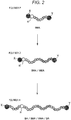
- FIG. 2 is a schematic diagram illustrating a process for having a polymer with regard to a method for producing a polymer according to Example.
- FIG. 3 is a 1H-NMR chart of a living radical polymerization initiator and each polymer obtained by the method for producing a polymer according to Example, in which (a) represents a structural formula of alkyl iodide as a living radical polymerization initiator, (b) represents a 1H-NMR chart of the living radical polymerization initiator, (c) represents a 1H-NMR chart of a polymer P, (d) represents a 1H-NMR chart of a polymer Q, and (e) represents a 1H-NMR chart of a polymer R.
- BMA butyl methacrylate
- methyl 2-iodo-2-(4'-(2''-iodopropionyloxy)phenyl)acetate 160 mM
- tributylmethyl phosphonium iodide 80 mM
- the reaction solution was added and the polymer was isolated by re-precipitation.
- the iodophenyl acetyl part had undergone almost 100% initiation of the polymerization to have a grown polymer.
- 96% of the iodopropionyl part had no initiation and almost selective growth of a polymer of BMA from the iodophenyl acetyl part was shown.
- MMA methyl methacrylate
- tributylmethyl phosphonium iodide 80 mM
- the reaction solution was added and the polymer was isolated by re-precipitation.
- M with regard to the concentration indicates mole number based on 1 liter of a monomer.
- 8 M means that 8 moles are included in 1 liter of a monomer.
- 1 liter of a monomer (in bulk) is 8 moles at room temperature.
- mM with regard to the concentration indicates millimole number based on 1 liter of a monomer.
- 80 mM means that 80 millimoles are included in 1 liter of a monomer.
- Mn indicates number average molecular weight of an obtained polymer.
- PDI indicates the ratio of Mw/Mn.
Landscapes
- Chemical & Material Sciences (AREA)
- Organic Chemistry (AREA)
- Health & Medical Sciences (AREA)
- Chemical Kinetics & Catalysis (AREA)
- Medicinal Chemistry (AREA)
- Polymers & Plastics (AREA)
- Addition Polymer Or Copolymer, Post-Treatments, Or Chemical Modifications (AREA)
- Graft Or Block Polymers (AREA)
- Organic Low-Molecular-Weight Compounds And Preparation Thereof (AREA)
- Polymerization Catalysts (AREA)
Abstract
Description
- The present invention relates to a polymerization initiator used for living radical polymerization, a method for producing a polymer, and a polymer produced by using them.
- As a method for obtaining a vinyl polymer based on polymerization of a vinyl monomer, a radical polymerization method is conventionally known. The radical polymerization method has a disadvantage that it is generally difficult to control the molecular weight of a vinyl polymer to be obtained.
- Furthermore, there is also a disadvantage that, as the vinyl polymer to be obtained is a mixture of compounds with various molecular weights, it is difficult to obtain a vinyl polymer with narrow molecular weight distribution.
- Specifically, even when the reaction is controlled, the ratio (Mw/Mn) between weight average molecular weight (Mw) and number average molecular weight (Mn) can be only reduced to 2 to 3 or so.
- As a method for overcoming the above disadvantages, a living radical polymerization method has been developed since 1990. Namely, according to the living radical polymerization method, it is possible to control the molecular weight and also possible to obtain a polymer with narrow molecular weight distribution.
- Specifically, since it is possible to obtain easily a polymer which has Mw/Mn of 2 or less, the method receives great attention as a method for producing a polymer that is used for a cutting edge field like nano technology (see,
Patent Literature 1, for example). - Patent Literature 1:
JP 2009-203359 A - Meanwhile, the conventional radical polymerization method described above involves with a reaction system in which the polymerization reaction progresses for one initiating group of a polymerization initiator. However, it would be preferable to have a reaction system in which a different polymerization reaction is carried out for a plurality of initiating groups.
- Accordingly, the present invention is devised in view of the problems described above, and an object of the present invention is toprovide a living radical polymerization initiator which has two halogen atoms different from each other in reactivity and enables different polymerization reactions to proceed in two directions by having each of the halogen atoms as a initiating group, a method for producing a polymer, and a polymer produced by using them.
- To solve the problems described above, the inventors of the present invention invented a living radical polymerization initiator which has two halogen atoms different from each other in reactivity and enables different polymerization reactions to proceed in two directions by having each of the halogen atoms as a initiating group, a method for producing a polymer, and a polymer produced by using them.
- A living radical polymerization initiator according to a first invention is a living radical polymerization initiator which consists of the following general formula (1):

- Herein, R1 represents an organic group which is linkable with two or more other organic groups, and is an aliphatic group having 1 to 12 carbon atoms, an aromatic group, an alkylcarbonyl group having 1 to 12 carbon atoms, an alkoxycarbonyl group having 1 to 12 carbon atoms, an aminocarbonyl group, an alkylaminocarbonyl group having 1 to 12 carbon atoms, a dialkylaminocarbonyl group having 1 to 12 carbon atoms, an arylcarbonyl group, an alkylsulfonyl group having 1 to 12 carbon atoms, an aryl sulfonyl group, or an organic group in which two or more of those groups are combined, R2, R3, R4 and R5 are a hydrogen atom or an organic group selected from an aliphatic group having 1 to 12 carbon atoms, an aromatic group, an alkylcarbonyl group having 1 to 12 carbon atoms, an alkoxycarbonyl group having 1 to 12 carbon atoms, an aminocarbonyl group, an alkylaminocarbonyl group having 1 to 12 carbon atoms, a dialkylaminocarbonyl group having 1 to 12 carbon atoms, an arylcarbonyl group, a carboxy group, an alkylsulfonyl group having 1 to 12 carbon atoms, and an aryl sulfonyl group, X and Y are a halogen atom, m and n are an integer of 1 or more, and the X and Y are in a state in which they are different from each other in reactivity with a monomer.
- In the living radical polymerization initiator according to a second invention, in the first invention, the halogen atom is iodide, chloride, or bromide.
- A method for producing a polymer according to a third invention is a method for producing a polymer by using the living radicalpolymerization initiator according to the first or second invention, including: a first polymerization step in which, for only one halogen atom of the X or Y of the living radical polymerization initiator, a living radical polymerization reaction in which the living radical polymerization reaction initiator is mixed with a monomer with unsaturated bond and the reaction is carried out at a reaction condition depending on a type of the monomer one or more times while changing in order the type of the monomer to be mixed to obtain a first product; and a second polymerization step in which, for both halogen atoms of the X and Y contained in the first product, at least one type of the monomer is subjected to a living radical polymerization reaction in order at a reaction condition depending on a type of the monomer to obtain a final product.
- In the method for producing a polymer according to a fourth invention, in the third invention, the first polymerization step and the second polymerization step are carried out by using a catalyst and the first polymerization step and the second polymerization step are carried out such that at least one of reaction temperature and type of the catalyst is changed depending on the type of the monomer.
- In the method for producing a polymer according to a fifth invention, in the fourth invention, the catalyst is a transition metal complex-based catalyst which is used for an atom transfer radical polymerization, a catalyst consisting of a compound containing at least one center element selected from phosphorus, nitrogen, carbon, oxygen, germanium, tin, and antimony and a halogen atom bound to the center element, which is used for reversible chain transfer catalyst polymerization, an organic amine compound catalyst used for reversible complexation mediated polymerization, or a catalyst in which, as a non-metal compound having an ionic bond with a halide ion, a non-metal atom in the non-metal compound is in a cation state and forms an ionic bond with the halide ion.
- In the method for producing a polymer according to a sixth invention, in any one of the third to fifth invention, the first polymerization step and the second polymerization step are carried out at 180°C or lower.
- In the method for producing a polymer according to a seventh invention, in any one of the third to sixth invention, the first polymerization step and the second polymerization step are carried out for reaction time of 30 minutes or longer and 24 hours or shorter.
- A polymer according to the eighth invention is produced by using the method for producing a polymer according to any one of the third to seventh invention.
- According to the present invention consisting of the above constitutions, it is possible to provide a living radical polymerization initiator which has two halogen atoms different from each other in reactivity and enables different polymerization reactions to proceed in two directions by having each of the halogen atoms as a initiating group, a method for producing a polymer, and a polymer produced by using them.
-
-
Fig. 1 is a schematic diagram illustrating a basic reaction in a method for producing a polymer according to an embodiment of the present invention. -
Fig. 2 is a schematic diagram illustrating a process for having a polymer with regard to a method for producing a polymer according to Example. -
Fig. 3 is a 1H-NMR chart of a living radical polymerization initiator and each polymer obtained by the method for producing a polymer according to Example, in which (a) represents a structural formula of alkyl iodide as a living radical polymerization initiator, (b) represents a 1H-NMR chart of the living radical polymerization initiator, (c) represents a 1H-NMR chart of a polymer P, (d) represents a 1H-NMR chart of a polymer Q, and (e) represents a 1H-NMR chart of a polymer R. - Hereinbelow, a living radical polymerization initiator according to an embodiment of the present invention and a method for producing a polymer by using it are described in detail.
- The living radical polymerization initiator according to this embodiment has a structure represented by the chemical formula (1), and it has two halogen atoms different from each other in reactivity.

- In the above chemical formula (1), R1 is an organic group with valency of two or more, i.e., an organic group which is linkable with two or more other organic groups, and examples thereof include an aliphatic group having 1 to 12 carbon atoms, an aromatic group, an alkylcarbonyl group having 1 to 12 carbon atoms, an alkoxycarbonyl group having 1 to 12 carbon atoms, an aminocarbonyl group, an alkylaminocarbonyl group having 1 to 12 carbon atoms, a dialkylaminocarbonyl group having 1 to 12 carbon atoms, an arylcarbonyl group, an alkylsulfonyl group having 1 to 12 carbon atoms , an aryl sulfonyl group, and an organic group in which two or more of those groups are combined.
- Furthermore, each of R2, R3, R4 and R5 is a hydrogen atom or an organic group selected from an aliphatic group having 1 to 12 carbon atoms, an aromatic group, an alkylcarbonyl group having 1 to 12 carbon atoms, an alkoxycarbonyl group having 1 to 12 carbon atoms, an aminocarbonyl group, an alkylaminocarbonyl group having 1 to 12 carbon atoms, a dialkylaminocarbonyl group having 1 to 12 carbon atoms, an arylcarbonyl group, an alkylsulfonyl group having 1 to 12 carbon atoms, and an aryl sulfonyl group, X and Y are a halogen atom, and m and n are an integer of 1 or more. The left and right structures of the linking group R1 in the chemical formula (1) are non-symmetrical so that the halogen atoms X and Y are given with different reactivity.
- The linking group R1 is not particularly limited as long as it is an organic group which is linkable with two or more other organic groups. Specific examples thereof include an aliphatic group, an aromatic group, an alkylcarbonyl group having 1 to 12 carbon atoms, an alkoxycarbonyl group having 1 to 12 carbon atoms, an aminocarbonyl group, an alkylaminocarbonyl group having 1 to 12 carbon atoms, a dialkylaminocarbonyl group having 1 to 12 carbon atoms, an arylcarbonyl group, an alkylsulfonyl group having 1 to 12 carbon atoms, an aryl sulfonyl group, and an organic group in which two or more of those groups are combined.
- The linking group R1 may have a substituent group, and in a case in which it has a substituent group, number of the substituent group is not particularly limited as long as the substitution can be made, and the number is 1 or more.
- As for the group which may be substituted on the linking group R1, a halogen atom, a linear or non-linear alkyl group having 1 to 12 carbon atoms which may be substituted, an aromatic group whichmaybe substituted, anon-aromatic heterocyclic group which may be substituted, a carboxy graup, a linear or non-linear alkoxy group having 1 to 12 carbon atoms, a cyano group, a nitro group, and the like can be mentioned.
- As for the aliphatic group, a linear or non-linear alkyl group having 1 to 12 carbon atoms which may be substituted can be mentioned.
- In a case in which the aliphatic group is substituted, number of the substituent group is not particularly limited, and it is 1 or more.
- Furthermore, as for the group which may be substituted on the aliphatic group, a halogen atom, a linear or non-linear alkyl group having 1 to 12 carbon atoms which may be substituted, an aromatic group which may be substituted, a non-aromatic heterocyclic group which may be substituted, a linear or non-linear alkoxy group having 1 to 12 carbon atoms, a cyano group, a nitro group, and the like can be mentioned.
- As for the aromatic group, an aromatic hydrocarbon cyclic group or an aromatic heterocyclic group can be mentioned, and specific examples thereof include a phenyl group, a biphenylyl group, a terphenylyl group, a naphthyl group, a binaphthylyl group, an azulenyl group, an anthracenyl group, a phenanthrenyl group, a furarenyl group, a furyl group, a thienyl group, a pyrrolyl group, a pyrazolyl group, an imidazolyl group, an isoxazolyl group, a thiazolyl group, a tidiazolyl group, a pyridyl group, a benzofuranyl group, an indolyl group, a benzothiazolyl group, and a carbazolyl group.
- The aromatic group may be substituted, and in that case, number of the substituent group is not particularly limited as long as the substitution can be made, and it is 1 or more.
- Furthermore, as for the group which may be substituted on the aromatic group, a halogen atom, a linear or non-linear alkyl group having 1 to 12 carbon atoms which may be substituted, an aromatic group which may be substituted, a non-aromatic heterocyclic group which may be substituted, a carboxy group, a linear or non-linear alkoxy group having 1 to 12 carbon atoms, a cyano group, a nitro group, and the like can be mentioned.
- As for the aliphatic group, a linear or non-linear alkyl group having 1 to 12 carbon atoms which may be substituted can be mentioned.
- In a case in which the aliphatic group is substituted, number of the substituent group is not particularly limited as long as the substitution can be made, and it is 1 or more.
- Furthermore, as for the group which may be substituted on the aliphatic group, a halogen atom, a linear or non-linear alkyl group having 1 to 12 carbon atoms which may be substituted, an aromatic group which may be substituted, a non-aromatic heterocyclic group which may be substituted, a linear or non-linear alkoxy group having 1 to 12 carbon atoms, a cyano group, a nitro group, and the like can be mentioned.
- As for the aromatic group, an aromatic hydrocarbon cyclic group or an aromatic heterocyclic group can be mentioned, and specific examples thereof include a phenyl group, a biphenylyl group, a terphenylyl group, a naphthyl group, a binaphthylyl group, an azulenyl group, an anthracenyl group, a phenanthrenyl group, a furarenyl group, a furyl group, a thienyl group, a pyrrolyl group, a pyrazolyl group, an imidazolyl group, an isoxazolyl group, a thiazolyl group, a tidiazolyl group, a pyridyl group, a benzofuranyl group, an indolyl group, a benzothiazolyl group, and a carbazolyl group.
- The aromatic group may be substituted, and in that case, number of the substituent group is not particularly limited as long as the substitution can be made, and it is 1 or more.
- Furthermore, as for the group which may be substituted on the aromatic group, a halogen atom, a linear or non-linear alkyl group having 1 to 12 carbon atoms which may be substituted, an aromatic group which may be substituted, a non-aromatic heterocyclic group which may be substituted, a carboxy group, a linear or non-linear alkoxy group having 1 to 12 carbon atoms, a cyano group, a nitro group, and the like can be mentioned.
- Furthermore, as for the arylcarbonyl group, a benzoyl group, a 1-naphthoyl group, a 2-naphthoyl group, a 2-pyridylcarbonyl group, a 3-pyridylcarbonyl group, a 4-pyridylcarbonyl group, and the like can be mentioned.
- Furthermore, as for the aryl sulfonyl group, a benzene sulfonyl group, a toluene sulfonyl group, and the like can be mentioned.
- Furthermore, X and Y in the chemical formula (1) represent a halogen atom, and they are preferably chloride, bromide, or iodide, and more preferably iodide.
- Since the aforementioned living radical polymerization initiator according to the present invention has two halogen atoms that are different from each other in reactivity as an initiating group, by suitably adjusting the reaction conditions , the living radical polymerization reaction different for each initiating group is allowed to occur.
- Next, descriptions are given for the method for producing a polymer of a radical polymerizable monomer which is obtained by carrying out living radical polymerization by using the aforementioned living radical polymerization initiator.
- The method for producing a polymer according to this embodiment is achieved by performing abasic reaction illustrated in
Fig. 1 with use of the aforementioned living radical polymerization initiator.Fig. 1 is a schematic diagram illustrating a basic reaction in a method for producing a polymer according to an embodiment of the invention. a, b, and c each represent a radical reactive polymerizable monomer having an unsaturated bond, and each of them may be a different monomer or the same monomer. Furthermore, A, B, and C each represent a polymer block. - According to the basic reaction illustrated in
Fig. 1 , as a first step, the polymerization reaction of a radical polymerizable monomer is carried out one or more times by having one of the halogen atoms as an initiating group while the type of a monomer to be mixed is changed in order, and then as a second step, the polymerization reaction is carried out to produce a polymer by using the other halogen atom remaining in the skeleton of an initiator as an initiator. - Herein, the halogen atom Y in the living radical polymerization initiator of
Fig. 1 is designed such that it has higher reactivity than the halogen atom X. - Furthermore, since each of the reaction conditions to 4 has a different reaction condition, one or more of the reaction temperature, reaction time, presence or absence of the catalyst, and type of the catalyst is different.
- According to the reaction of
Fig. 1 , the monomer a and the living radical polymerization initiator are first reacted with each other atreaction condition 1. Thereaction condition 1 is set such that the living radical polymerization progresses only with the halogen atom Y which has higher reactivity among the living radical polymerization initiators. - Accordingly, polymer A in which a plurality of the monomers A are polymerized to the halogen atom Y of the living radical polymerization initiator is produced.
- The polymer A is then subjected to living radical polymerization reaction with the monomer b. By changing the reaction condition, a different polymer can be obtained.
- Specifically, by reacting the polymer A with the monomer b under the
reaction condition 2 in which the reaction is allowed to occur not only with the halogen atom Y having high reactivity but also with the halogen atom X having low reactivity, polymer BAB in which a plurality of the monomers b are polymerized at each side of the halogen atom X and the halogen atom Y of the polymer A is generated. - Incidentally, by reacting the polymer A with the monomer b under the
reaction condition 3 in which the reaction is allowed to occur only with the halogen atom Y having high reactivity, polymer AB in which a plurality of the monomers b are polymerized at the halogen atom Y side of the polymer A is generated. - As described above, according to the aforementioned basic reaction, any one halogen atom remains unreacted in the first step of the reaction, and by varying the reaction temperature or adding a different catalyst in the second step and the third step, the remaining halogen atom reacts as an initiating group with the monomer.
- It is also possible to carry out an additional living radical polymerization reaction for the polymer BAB or the polymer AB which is obtained as described above.
- For example, by reacting the polymer AB with the monomer c under the
reaction condition 4 in which both the halogen atom X and the halogen atom Y react, polymer CABC in which a plurality of the monomers c are polymerized at each side of the halogen atom X and the halogen atom Y of the polymer AB is generated. It is evident that the polymer ABC can be obtained by carrying out the reaction under the reaction condition in which the monomer c reacts with the halogen atom Y side of the polymer AB and a different living polymerization reaction is allowed to proceed additionally with the polymer CABC or the polymer ABC. - The radical polymerizable monomer used for the aforementioned reaction is a monomer having an unsaturated bond which allows radical polymerization in the presence of an organic radical. The unsaturated bond may be a triple bond other than a double bond. Namely, for the method for producing a polymer according to the present embodiment, any one of conventionally known monomers allowing living radical polymerization can be used.
- Such radical polymerizable monomer is specifically a monomer which is referred to as a vinyl monomer. The vinyl monomer is a general name of monomers that are represented by general formula "CH2 = CR5R6".
- With regard to the above general formula, a monomer in which R5 is methyl and R6 is carboxylate is referred to as a methacrylate-based monomer, and it can be desirably used in the present invention,
- Specific examples of the methacrylate-based monomer include methyl methacrylate, ethyl methacrylate, propyl methacrylate, n-butyl methacrylate, t-butyl methacrylate, hexyl methacrylate, 2-ethylhexyl methacrylate, nonyl methacrylate, benzyl methacrylate, glycidyl methacrylate, cyclohexyl methacrylate, lauryl methacrylate, n-octyl methacrylate, 2-methoxyethyl methacrylate, butoxyethyl methacrylate, methoxytetraethylene glycol methacrylate, 2-hydroxyethyl methacrylate, 2-hydroxypropyl methacrylate, 3-chloro-2-hydroxypropyl methacrylate, tetrahydrofurfuryl methacrylate, 2-hydroxy3-phenoxypropyl methacrylate, diethylene glycol methacrylate, polyethylene glycol methacrylate, and 2-(dimethylamino)ethyl methacrylate.
- Furthermore, methacrylic acid can be also used.
- Furthermore, methacrylate with ion liquid property like 2-(N,N-diethyl-N-methylamino)ethyl methacrylate+/trifluorosulfonyl iminium (N(CF3SO2)2-) salt, 2-(N-ethyl-N-methyl-N-hydrogenated amino)ethyl methacrylate+/trifluorosulfonyl iminium (N(CF3SO2)2-) salt, 1-ethyl-3-methylimidazolium methacrylate+/fluorohydrogenation ((FH)nF-) salt, and N-ethyl-N-methylpyrrolidinium methacrylate+/fluorohydrogenation ((FH)nF-) salt can be used.
- With regard to the above general formula of vinyl monomer, a monomer in which R5 is hydrogen and R6 is carboxylate is referred to as an acrylate-based monomer, and it can be desirably used in the present invention.
- Specific examples of the acrylate-based monomer include methyl acrylate, ethyl acrylate, propyl acrylate, n-butyl acrylate, t-butyl acrylate, hexyl acrylate, 2-ethylhexyl acrylate, nonyl acrylate, benzyl acrylate, glycidyl acrylate, cyclohexyl acrylate, lauryl acrylate, n-octyl acrylate, 2-methoxyethyl acrylate, butoxyethyl acrylate, methoxytetraethylene glycol acrylate,2-hydroxyethyl acrylate, 2-hydroxypropyl acrylate, 3-chloro2-hydroxypropyl acrylate, tetrahydrofurfuryl acrylate, 2-hydroxy 3-phenoxypropyl acrylate, diethylene glycol acrylate, polyethylene glycol acrylate, and 2-(dimethylamino)ethyl acrylate.
- Furthermore, acrylic acid can be also used.
- Furthermore, acrylate with ion liquid property like 2-(N,N-diethyl-N-methylamino)ethyl acrylate+/trifluorosulfonyl iminium (N(CF3SO2)2-) salt, 2-(N-ethyl-N-methyl-N-hydrogenated amino)ethyl acrylate+/trifluorosulfonyl iminium (N(CF3SO2)2-) salt, 1-ethyl-3-methylimidazolium acrylate+/fluorohydrogenation ((FH)nF-) salt, and N-ethyl-N-methylpyrrolidinium acrylate+/fluorohydrogenation (FH)nF-) salt can be used.
- Controlling the living radical polymerization of acrylate is difficult in general. However, the control can be made according to the present invention. When a phosphorus-based catalyst is used, in particular, the polymerization of an acrylate can be desirably controlled.
- With regard to the above general formula of vinyl monomer, a monomer in which R5 is hydrogen and R6 is phenyl corresponds to styrene and it can be desirably used in the present invention.
- Furthermore, a monomer in which R6 is phenyl or a phenyl derivative corresponds to a styrene derivative and it can be desirably used in the present invention. Specific examples thereof include o-, m-, p-methoxystyrene, o-, m-, p-styrene sulfonic acid, and the like.
- Furthermore, vinyl naphthalene in which R6 is an aromatic can be also mentioned.
- With regard to the above general formula of vinyl monomer, a monomer in which R5 is hydrogen and R6 is alkyl corresponds to alkylene and it can be desirably used in the present invention.
- For the present invention, a monomer having two or more vinyl groups canbe also used. Specific examples thereof include a diene-based compound (for example, butadiene and isoprene), a compound with two allyl groups (for example, diallyl phthalate), dimethacrylate with twomethacryls (for example, ethylene glycol dimethacrylate), and diacrylate with two acryls (for example, ethylene glycol diacrylate).
- For the present invention, a vinyl monomer other than those described above can be also used. Specific examples thereof include vinyl esters (for example, vinyl acetate, vinyl propionate, vinyl benzoate, and vinyl acetate), a styrene derivative other that those described above (for example, α-methylstyrene), vinyl ketones (for example, vinyl ethyl ketone, vinyl hexyl ketone, and methyl isopropenyl ketone), an N-vinyl compound (for example, N-vinyl pyrrolidone, N-vinyl pyrrole, N-vinyl carbazole, and N-vinyl indole), (meth)acrylamide and a derivative thereof (for example, N-isopropyl acrylamide, N-isopropyl methacrylamide, N,N-dimethyl acrylamide, N,N-dimethyl methacrylamide, N-methylol acrylamide, and N-methylol methacrylamide), acrylonitrile, methacrylonitrile, maleic acid and a derivative thereof (for example, maleic anhydride), vinyl halides (for example, vinyl chloride, vinylidene chloride, tetrachloroethylene, hexachloropropylene, and vinyl fluoride), and olefins (for example, ethylene, propylene, 1-hexene, and cyclohexene).
- Those monomers may be used either singly or in combination of two or more types. Furthermore, two or more types of a monomer maybe added simultaneously at the time of initiating the reaction of the first step, or they may be added to each step of the reaction.
- For a monomer which is arbitrarily selected, an arbitrarily selected catalyst of the present invention may be added, if necessary. It is possible not to have any catalyst. However, by adding the catalyst, the reaction progresses more favorably. Combination of the type of the monomer and the type of the catalyst of the present invention is not particularly limited.
- Examples of the catalyst include a transition metal complex-based catalyst which is used for an atom transfer radical polymerization (ATRP method), a catalyst consisting of a compound containing at least one center element selected from phosphorus, nitrogen, carbon, oxygen, germanium, tin, and antimony and a halogen atom bound to the center element, which is used for reversible chain transfer catalyst polymerization (RTCP method), an organic amine compound used for reversible complexation mediated polymerization (RCMP), and a catalyst in which, as a non-metal compound having an ionic bond with a halide ion, a non-metal atom in the non-metal compound is in a cation state and forms an ionic bond with the halide ion.
- As for the transitionmetal complex-based catalyst, a metal complex formed of a metal with low atomic valency such as
Group 7,Group 8, Group 9,Group 10, or Group 11 of the Periodic Table and an organic ligand or a metal complex formed of a metal with low atomic valency such asGroup 7,Group 8, Group 9,Group 10, or Group 11 of the Periodic Table, a metal with high atomic valency, and an organic ligand (see,JP 2002-249505 A - Examples of the metal with low atomic valency include cuprous chloride, cuprous bromide, I cuprous iodide, cuprous cyanide, cuprous oxide, ferrous chloride, ferrous bromide and ferrous iodide, and examples of the metal with high atomic valency include ferric chloride, ferric bromide, ferric iodide, ruthenium dichloride, ruthenium dibromide, and ruthenium diiodide.
- Furthermore, examples of the organic ligand include pyridines, bipyridines, polyamines, and phosphines, and specific examples thereof include 2,2'-bipyridyl and a derivative thereof, 1,10-phenanthroline and a derivative thereof, tetramethylethylene diamine, pentamethyldiethylene triamine, tris(dimethylaminoethyl)amine, triphenylphosphine, and tributylphosphine.
- Examples of the catalyst which has an element selected from germanium, tin, and antimony as a center element include a compound which contains at least one center element selected from germanium, tin, and antimony and at least one halogen atom bound to the center element, and specific examples thereof include germanium (II) iodide, germanium (IV) iodide, tin (II) iodide, and tin (IV) iodide (see,
JP 2007-92014 A - As for the catalyst in which nitrogen or phosphorus is contained as a center element, a compound having at least one center element selected from nitrogen and phosphorus and at least one halogen atom bound to the center element can be mentioned. Specific examples thereof include phosphorus halide, phosphine halide, nitrogen halide, phosphorus acid halide, amine halide, and imide halide derivative (see,
WO 2008/139980 A ). - Specific examples of the organic amine compound catalyst include triethylamine, tributylamine, 1,1,2,2-tetrakis(dimethylamino)ethezle, 1,4,8,11-tetramethyl-1,4,8,11-tetraazacyclotetradecane, ethylenediamine, tetramethylethylenediamine, tetramethyldiaminomethane, tris(2--aminoethyl)amine, tris(2-(methylamino)ethyl)amine, and hematopporphyrin (see,
WO 2011/016166 A ). - Specific examples of the catalyst in which, as a non-metal compound having an ionic bond with a halide ion, a non-metal atom in the non-metal compound is in a cation state and forms an ionic bond with the halide ion include ammonium salt, imidazolium salt, pyridinium salt, phosphonium salt, sulfonium salt, and iodonium salt. More specific examples thereof include tetrabutyl ammonium iodide, tetrabutyl ammoniumtri iodide, tetrabutyl ammoniumbromo diiodide, 1-methyl-3-methyl-imidazolium iodide, 1-ethyl-3-methylimidazolium bromide, 2-chloro-1-methylpyridinium iodide, hexaphenyldiphosphagenium chloride, methyltributyl phosphonium iodide, tetraphenyl phosphonium iodide, tributylsulfonium iodide, and diphenyliodonium iodide (see,
WO 2013/027419 A ). - The reaction temperature is not particularly limited. It is preferably 0°C to 180°C, and more preferably 30°C to 120°C.
- The reaction time can be suitably selected within a range of 30 minutes to 24 hours such that is it suitable for each reaction.
- The reaction can be carried out in the absence of a solvent. However, it is also possible to use a solvent. The reaction solvent is not particularly limited as long as the reaction is not inhibited by it. However, it is preferable to use acetonitrile, methylene chloride, tetrahydrofuran, toluene, xylene, acetone, methyl ethyl ketone, ethanol, isopropanol, ethyl acetate, butyl acetate, ethyl cellosolve, or the like.
- Hereinbelow, the present invention is described in greater detail in view of the Examples. However, it is evident that the present invention is not limited to the Examples at all.
-

- To a mixture solution of 25.00 g (150.4 mmol) of methyl 4-hydroxyphenylacetate, 47.60 g (601.7 mmol) of pyridine, and 100 mL of diethyl ether, 50 mL diethyl ether solution of 38.97 g (180.5 mmol) of 2-bromopropionyl bromide was added at 0°C.
- After that, the reaction mixture was stirred for 30 minutes at room temperature and then washed with 5% hydrogen bromide, a saturated aqueous solution of sodium carbonate, a saturated aqueous solution of sodium sulfite, and water followed by extraction of an organic layer. The extracted solution was dried over anhydrous sodium sulfate, and according to concentration under reduced pressure, 42.91 g (yield: 95%) of methyl 2-(4'-(2''-bromopropionyloxy)phenyl)acetate was obtained.
- Next, to 66 mL dichloroethane solution of 9.94 g (33.00 mmol) of methyl 2- (4'- (2''-bromopropionyloxy)phenyl)acetate, 7.05 g (39.60 mmol) of N-bromosuccinimide was added at room temperature, and stirred under reflux for 5 hours while being illuminated with an LED light.
- The obtained reaction mixture was washed with a saturated aqueous solution of sodium sulfite and water followed by extraction of anorganic layer. The extracted solution was dried over anhydrous sodium sulfate, and according to concentration under reduced pressure, 11.67 g (yield: 93%) of methyl 2-bromo-2-(4'-(2''-bromopropionyloxy)phenyl)acetate was obtained.
- To 55 mL acetonitrile solution of 10.37 g (27.23 mmol) of methyl 2-bromo-2-(4'-(2''-bromopropionyloxy)phenyl)acetate, 16.35 g (1.09.11 mmol) of sodium iodide was added at 0°C and then stirred at the same temperature for 1.5 hours.
- The obtained reaction mixture was added with dichloromethane and then washed with a saturated aqueous solution of sodium sulfite and water followed by extraction of an organic layer.
- The extracted solution was dried over anhydrous sodium sulfate and then concentrated under reduced pressure, and according to purification by silica gel column chromatography, 5.80 g (yield: 45%) of methyl 2-iodo-2-(4'(2''-iodopropionyloxy)phenyl)acetate was obtained. 1H NMR (CDCl3): □ = 2.04 (d, 3H), 3.76 (s, 3H), 4.68 (q, 1H), 5.52 (s, 1H), 7.07 (d, 2H), 7.63 (d, 2H).
-


- 4.5 g (20 mmol) of 2-bromoisobutyric acid bromide and 9.0 g (60 mmol) of sodium iodide were admixed with each other under light-shielded condition, and after adding 4.8 mL (60 mmol) of tetrahydrofuran thereto, they were stirred for 2 hours at 25°C and subsequently for 30 minutes at 50°C.
- Next, the obtained reaction mixture was added with dichloromethane and then washed with a saturated aqueous solution of sodium sulfite. After drying over anhydrous sodium sulfate followed by concentration under reduced pressure, 20 mL of acetonitrile was added and then 6.0 g (40 mmol) of sodium iodide was added. After the reaction for 7 hours at 80°C, 9.0 g (60 mmol) of sodium iodide was added followed by further reaction for 7 hours.
- After that, the precipitates were separated by filtration followed by concentration under reduced pressure. Dichloromethane was then added and washing with a saturated aqueous solution of sodium sulfite was carried out. After drying over anhydrous sodium sulfate, concentration under reduced pressure was carried out.
- Then, by purifying the obtained crude product by silica gel column chromatography, 4.4 g (yield: 68%) of (4-iodobutyl)2-iodoisobutyric acid was obtained. 1H NMR (CDCl3) : □ = 4.17 (t, 2H), 3.22 (t, 2H), 2.06 (s, 6H), 1.98-1.90 (m, 2H), 1.83-1.77 (m, 2H).
-

- To a mixture solution of 20.00 g (120.36 mmol)) of methyl 4-hydroxyphenylacetate, 22.11 g (132.39 mmol) of 4-boromobutyric acid, and 60 mL of benzene, 16.69g (108.32mmol) of phosphoryl chloride was added at room temperature.
- After that, it was stirred for 5.5 hours at 80°C and the reaction mixture was added to 100 mL of water to extract an organic layer. The extracted solution was washed with a saturated aqueous solution of sodium sulfite and water followed by drying over anhydrous sodium sulfate, and according to concentration under reduced pressure, 34.37 g (yield: 91%) of methyl 2-(4'-(4''-bromobutanoyloxy)phenyl)acetate was obtained.
- To 85 mL dichloroethane solution of 26.31 g (83.48 mmol) of methyl 2-(4'-(4''-bromobutanoyloxy)phenyl)acetate, 22.29 g (125.22 mmol) of N-bromosuccinimide was added at room temperature.
- Next, stirring under reflux was carried out for 6.5 hours while being illuminated with an LED light. The obtained reaction mixture was washed with a saturated aqueous solution of sodium sulfite and water followed by extraction of an organic layer.
- Next, the extracted solution was dried over anhydrous sodium sulfate followed by concentration under reduced pressure. By purifying the obtained crude product by silica gel column chromatography, 7.29 g (yield: 22%) of methyl 2-bromo-2-(4'-(4''-bromobutanoyloxy)phenyl)acetate was obtained.
- Next, to 20 mL acetone solution of 6.92 g (17.56 mmol) of methyl 2-bromo-2-(4'-(4''-bromobutanoyloxy)phenyl)acetate, 6.32g (42.14 mmol) of sodium iodide was added at room temperature and then stirred for 0.5 hour at 40°C.
- Next, the obtained reaction mixture was added with dichloromethane and washed with a saturated aqueous solution of sodium sulfite and water followed by extraction of an organic layer.
- Then, the extracted solution was dried over anhydrous sodium sulfate followed by concentration under reduced pressure. The obtained crude product was purified by silica gel column chromatography to obtain 2.50 g (yield: 30%) of methyl 2-iodo-2-(4'-(4''-iodobutanoyloxy)phenyl)acetate. 1H NMR (CDCl3): □ = 2.17-2.21 (m, 2H), 2.66-2.69 (t, 2H), 3.25-3.28 (t, 2H), 3.73 (s, 3H), 5.53 (s, 1H), 7.02-7.04 (m, 2H), 7.59-7.61 (m, 2H).
-

- 6.5 g (30 mmol) of 2-bromophenylacetic acid was mixed with 4.2 mL (60 mmol) of thionyl chloride, and under light-shielded condition, they were stirred for 50 minutes at 80°C.
- Subsequently, after removing volatile components under reduced pressure, 8 mL (100 mmol) of THF was added and 18.0 g (120 mmol) of sodium iodide was added under light-shielded condition. After stirring for 2 hours at 27°C, 4.5 g (30 mmol) of sodium iodide was added and stirred for 5 hours at the same condition.
- Next, the obtained reaction mixture was added with dichloromethane and washed with 10 mL of an aqueous solution of sodium sulfite. Furthermore, the aqueous phase was extracted with 20 mL of dichloromethane and the organic layer was combined. After drying over anhydrous sodium sulfate, concentration under reduced pressure was carried out.
- Then, the obtained crude product was purified by silica gel column chromatography to obtain 4.1 g (yield: 31%) of 4-iodobutyl 2-iodophenyl acetate. 1H NMR (CDCl3) : □ = 7.59-7.57 (m, 2H), 7.33-7.27 (m, 3H), 5.18 (s, 1H), 4.21-4.14 (m, 2H), 3.18 (t, 3H), 1.92-1.86 (m, 2H), 1.81-1.76 (m, 2H).
-

- To 25.00 g (114.66 mmol) of 2-boromophenyl acetic acid, 27.28 g (229.32 mmol) of thionyl chloride was added followed by stirring under reflux of 1 hour.
- After that, the remaining thionyl chloride was removed under reduced pressure, and then added to a mixture of 284.67 g (4586.32 mmol) of ethylene glycol and 9.52 g (120.39 mmol) of pyridine at room temperature.
- After stirring at the same temperature for 1 hour, diethyl ether was added and washing was carried out with 1 N hydrochloric acid, a saturated aqueous solution of sodium carbonate and water.
- After drying over anhydrous sodium sulfate, 23.61g (yield: 80%) of 2-hydroxyethyl 2-bromo-2-phenylacetate was obtained.
- To a mixture of 5.00 g (19.30 mmol) 2-hydroxyethyl 2-bromo-2-phenylacetate, 1.60g (20.26 mmol) of pyridine, and 20 mL of diethyl ether, 10 mL diethyl ether solution of 4.09 g (20.26 mmol) of 2-bromopropionyl bromide was added at room temperature.
- After stirring at the same temperature for 1 hour, the obtained reaction mixture was washed with 5% hydrogen bromide, a saturated aqueous solution of sodium carbonate and water to extract an organic layer.
- The extracted solution was dried over anhydrous sodium sulfate followed by concentration under reduced pressure. The obtained crude product was purified by silica gel column chromatography to obtain 4.41 g (yield: 60%) of 2-(bromoacetoxy)ethyl 2-bromo-2-phenyl acetate.
- To 22 mL acetone solution of 4.25 g (11.18 mmol) of 2- (bromoacetoxy) ethyl 2-bromo-2-phenyl acetate, 4.02 g (26.83 mmol) of sodium iodide was added at 0°C followed by stirring at the same temperature for 30 minutes.
- After that, the precipitates were separated by filtration followed by concentration under reduced pressure. Dichloromethane was then added and washing with a saturated aqueous solution of sodium sulfite and water was carried out and an organic layer was extracted.
- Then, the extracted solution was dried over anhydrous sodium sulfate followed by concentration under reducedpressure . The obtained crude product was purified by silica gel column chromatography to obtain 2.52 g (yield: 48%) of 2-(iodoacetoxy)ethyl 2-iodo-2-phenylacetate. 1H NMR (CDCl3): □ = 3.66 (s, 2H), 4.34-4.38 (m, 4H), 5.55 (s, 1H), 7.28-7.33 (m, 3H), 7.58-7.60 (m, 2H).
- Based on the basic reaction described above, production of a living radical polymer was carried out under the following specific reaction conditions.
Fig. 2 is a schematic diagram illustrating a process for having a polymer with regard to a method for producing a polymer according to Example.Fig. 3 is a 1H-NMR chart of a living radical polymerization initiator and each polymer obtained by the method for producing a polymer according to Example, in which (a) represents a structural formula of alkyl iodide as a living radical polymerization initiator, (b) represents a 1H-NMR chart of the living radical polymerization initiator, (c) represents a 1H-NMR chart of a polymer P, (d) represents a 1H-NMR chart of a polymer Q, and (e) represents a 1H-NMR chart of a polymer R. - In the method for producing a polymer according to this Example, all the polymerization reactions were carried out under argon gas atmosphere.
- To 20 mL (8 M) of butyl methacrylate (BMA), methyl 2-iodo-2-(4'-(2''-iodopropionyloxy)phenyl)acetate (160 mM) and tributylmethyl phosphonium iodide (80 mM) were added and then stirred under heating for 8 hours at 60°C. The polymerization rate (i.e., monomer conversion rate) was 55%.
- To chilled hexane, the reaction solution was added and the polymer was isolated by re-precipitation. The isolated polymer P has Mn = 3,900 and PDI = 1.15. According to the NMR measurement, the iodophenyl acetyl part had undergone almost 100% initiation of the polymerization to have a grown polymer. On the other hand, 96% of the iodopropionyl part had no initiation and almost selective growth of a polymer of BMA from the iodophenyl acetyl part was shown.
- To the polymer P (160mM), 20mL (8M) of methyl methacrylate (MMA) and tributylmethyl phosphonium iodide (80 mM) were added and then stirred under heating for 8 hours at 60°C. The polymerization rate (i.e. , monomer conversion rate) of MMA was 30%.
- To chilled hexane, the reaction solution was added and the polymer was isolated by re-precipitation. The isolated polymer Q has Mn = 5, 800 and PDI = 1.24. According to the NMR measurement, 90% of the iodopropionyl part had no initiation and a block polymer (BMA and MMA) was almost selectively produced from the iodophenyl acetyl part.
- Furthermore, to the polymer Q (160 mM) obtained in the second reaction step, 20 mL (8 M) of n-butyl acrylate (BA) and tetrabutyl ammonium iodide (320 mM) were added and then stirred under heating for 24 hours at 110°C. The polymerization rate (i.e., monomer conversion rate) of BA was 32%. To chilled hexane , the reaction solution was added and the polymer was isolated by re-precipitation.
- The isolated polymer R has Mn = 8,000 and PDI = 1.33. According to the NMR measurement, the polymerization was initiated almost 100% from of the iodopropionyl part. Accordingly, together with growth of a homopolymer of BA, a triblock polymer (BMA, MMA, and BA) was grown from iodophenyl acetyl part.
- Accordingly, it was possible to synthesize a non-symmetric multi-block polymer of CABC type in which A chain is BMA, B chain is MMA, and C chain is BA.
1H-NMR chart of the polymer P, Q, and R which have been obtained in each step is as shown in (c) to (e) ofFig. 3 , respectively. - Incidentally, "M" with regard to the concentration indicates mole number based on 1 liter of a monomer. For example, 8 M means that 8 moles are included in 1 liter of a monomer. Incidentally, in case of MMA, 1 liter of a monomer (in bulk) is 8 moles at room temperature.
- Furthermore, "mM" with regard to the concentration indicates millimole number based on 1 liter of a monomer. For example, 80 mM means that 80 millimoles are included in 1 liter of a monomer.
- Furthermore, "Mn" indicates number average molecular weight of an obtained polymer.
- Furthermore, "PDI" indicates the ratio of Mw/Mn.
- According to the method for producing a polymer of the present invention described in the above, since a living radical polymerization initiator which has, as an initiating group for reaction, two halogen atoms different from each other in reactivity is used, it is possible to proceed with a different living radical polymerization reaction for each initiating group by suitably adjusting the reaction conditions.
-
- R1 Linking group
- R2 Any one of a halogen atom, an aromatic group, an aliphatic group, and an acyloyl group
- X, Y Halogen atom
Claims (8)
- A living radical polymerization initiator, represented by the following general formula (1):
 in the formula, R1 represents an organic group which is linkable with two or more other organic groups, and is selected from an aliphatic group having 1 to 12 carbon atoms, an aromatic group, an alkylcarbonyl group having 1 to 12 carbon atoms, an alkoxycarbonyl group having 1 to 12 carbon atoms, an aminocarbonyl group, an alkylaminocarbonyl group having 1 to 12 carbon atoms, a dialkylaminocarbonyl group having 1 to 12 carbon atoms, an arylcarbonyl group, an alkylsulfonyl group having 1 to 12 carbon atoms, an aryl sulfonyl group, and an organic group in which two or more of those groups are combined,R2, R3 , R4 and R5 are a hydrogen atom or an organic group selected from an aliphatic group having 1 to 12 carbon atoms, an aromatic group, an alkylcarbonyl group, an alkoxycarbonyl group, an aminocarbonyl group, an alkylaminocarbonyl group, a dialkylaminocarbonyl group having 1 to 12 carbon atoms, an arylcarbonyl group, a carboxy group, an alkylsulfonyl group having 1 to 12 carbon atoms, and an aryl sulfonyl group,X and Y are a halogen atom,m and n are an integer of 1 or more, andthe X and Y are in a state in which they are different from each other in reactivity with a monomer.
 - The living radical polymerization initiator according to claim 1, wherein the halogen atom is iodide, chloride, or bromide.
- A method for producing a polymer by using the living radical polymerization initiator according to claim 1 or 2, comprising:a first polymerization step in which, for only one halogen atom of the X or Y of the living radical polymerization initiator, a living radical polymerization reaction in which the living radical polymerization reaction initiator is mixed with a monomer with unsaturated bond and the reaction is carried out at a reaction condition depending on a type of the monomer one or more times while changing in order the type of the monomer to be mixed to obtain a first product; anda second polymerization step in which, for both halogen atoms of the X and Y contained in the first product, at least one type of the monomer is subjected to a living radical polymerization reaction in order at a reaction condition depending on a type of the monomer to obtain a final product.
- The method for producing a polymer according to claim 3, wherein the first polymerization step and the second polymerization step are carried out by using a catalyst and the first polymerization step and the second polymerization step are carried out such that at least one of reaction temperature and type of the catalyst is changed depending on the type of the monomer.
- The method for producing a polymer according to claim 4, wherein the catalyst is a transition metal complex-based catalyst which is used for an atom transfer radical polymerization, a catalyst consisting of a compound containing at least one center element selected from phosphorus, nitrogen, carbon, oxygen, germanium, tin, and antimony and a halogen atom bound to the center element, which is used for reversible chain transfer catalyst polymerization, an organic amine compound catalyst used for reversible complexation mediated polymerization, or a catalyst in which, as a non-metal compound having an ionic bond with a halide ion, a non-metal atom in the non-metal compound is in a cation state and forms an ionic bond with the halide ion.
- The method for producing a polymer according to any one of claims 3 to 5, wherein the first polymerization step and the second polymerization step are carried out at 180°C or lower.
- The method for producing a polymer according to any one of claims 3 to 6, wherein the first polymerization step and the second polymerization step are carried out for reaction time of 30 minutes or longer and 24 hours or shorter.
- A polymer produced by using the method according to any one of claims 3 to 7.
Applications Claiming Priority (2)
| Application Number | Priority Date | Filing Date | Title |
|---|---|---|---|
| JP2014178384A JP6528260B2 (en) | 2014-09-02 | 2014-09-02 | Method for producing polymer, and living radical polymerization initiator |
| PCT/JP2015/003991 WO2016035258A1 (en) | 2014-09-02 | 2015-08-07 | Living radical polymerization initiator, method for producing polymer, and polymer |
Publications (3)
| Publication Number | Publication Date |
|---|---|
| EP3190131A1 true EP3190131A1 (en) | 2017-07-12 |
| EP3190131A4 EP3190131A4 (en) | 2018-05-30 |
| EP3190131B1 EP3190131B1 (en) | 2020-07-29 |
Family
ID=55439349
Family Applications (1)
| Application Number | Title | Priority Date | Filing Date |
|---|---|---|---|
| EP15838864.5A Active EP3190131B1 (en) | 2014-09-02 | 2015-08-07 | Living radical polymerization initiator, method for producing polymer, and polymer |
Country Status (7)
| Country | Link |
|---|---|
| US (1) | US10414848B2 (en) |
| EP (1) | EP3190131B1 (en) |
| JP (1) | JP6528260B2 (en) |
| KR (1) | KR102419414B1 (en) |
| CN (1) | CN106604938B (en) |
| SG (1) | SG11201701672WA (en) |
| WO (1) | WO2016035258A1 (en) |
Cited By (1)
| Publication number | Priority date | Publication date | Assignee | Title |
|---|---|---|---|---|
| EP3792267A4 (en) * | 2018-05-07 | 2022-03-16 | Ochanomizu University | COMPOUND CONTAINING IODINE |
Families Citing this family (12)
| Publication number | Priority date | Publication date | Assignee | Title |
|---|---|---|---|---|
| JP6254239B2 (en) * | 2016-02-29 | 2017-12-27 | 大日精化工業株式会社 | Polymer production method |
| JP6833485B2 (en) * | 2016-12-05 | 2021-02-24 | 大日精化工業株式会社 | How to make a star polymer, a star polymer, and a filler dispersion |
| JP6245719B1 (en) * | 2017-03-24 | 2017-12-13 | 大日精化工業株式会社 | Polymer production method |
| JP6836242B2 (en) * | 2017-04-19 | 2021-02-24 | 大日精化工業株式会社 | A method for producing a polymer and a polymer obtained by the method for producing the polymer. |
| CN108948245A (en) * | 2018-06-04 | 2018-12-07 | 常州大学 | The aqueous solution reverse atom transfer radical polymerization of N, N- dimethacrylamide |
| CN109251261A (en) * | 2018-08-30 | 2019-01-22 | 常州大学 | The aqueous solution reverse atom transfer radical polymerization of acrylamide |
| CN109293810B (en) * | 2018-09-29 | 2020-09-08 | 江苏斯德瑞克化工有限公司 | Controllable free radical polymerization method catalyzed by nonmetal |
| CN110357992A (en) * | 2019-07-09 | 2019-10-22 | 复旦大学 | A kind of fluoropolymer-containing preparation method of super high molecular weight |
| CN112175121B (en) * | 2020-07-25 | 2022-07-12 | 青岛大学 | A method for catalyzing the polymerization of polar vinyl monomers based on hindered Lewis acid-base pairs |
| JP7216694B2 (en) * | 2020-10-30 | 2023-02-01 | 大日精化工業株式会社 | Pigment Dispersant and Method for Producing Same, Pigment Dispersion for Inkjet Ink, and Aqueous Inkjet Ink |
| CN115197379B (en) * | 2022-07-18 | 2023-09-22 | 福州大学 | A method for regulating polymer grafting density |
| CN116574225B (en) * | 2023-05-17 | 2025-07-29 | 福州大学 | CABC type asymmetric block copolymer and preparation method thereof |
Family Cites Families (3)
| Publication number | Priority date | Publication date | Assignee | Title |
|---|---|---|---|---|
| JP2009203359A (en) | 2008-02-28 | 2009-09-10 | Nippon Chem Ind Co Ltd | Living radical polymerization additive and living radical polymerization method using the same |
| JP4895226B2 (en) * | 2008-07-15 | 2012-03-14 | 株式会社豊田中央研究所 | Polymerization initiator, method for producing polymer-modified material using the same, and molded product containing polymer-modified material |
| JP5884375B2 (en) * | 2011-09-29 | 2016-03-15 | 日立化成株式会社 | Living radical polymerization initiator, star copolymer, resin composition, and die bond film |
-
2014
- 2014-09-02 JP JP2014178384A patent/JP6528260B2/en active Active
-
2015
- 2015-08-07 EP EP15838864.5A patent/EP3190131B1/en active Active
- 2015-08-07 CN CN201580046890.2A patent/CN106604938B/en active Active
- 2015-08-07 SG SG11201701672WA patent/SG11201701672WA/en unknown
- 2015-08-07 KR KR1020177005641A patent/KR102419414B1/en active Active
- 2015-08-07 US US15/508,313 patent/US10414848B2/en active Active
- 2015-08-07 WO PCT/JP2015/003991 patent/WO2016035258A1/en not_active Ceased
Cited By (1)
| Publication number | Priority date | Publication date | Assignee | Title |
|---|---|---|---|---|
| EP3792267A4 (en) * | 2018-05-07 | 2022-03-16 | Ochanomizu University | COMPOUND CONTAINING IODINE |
Also Published As
| Publication number | Publication date |
|---|---|
| KR20170048379A (en) | 2017-05-08 |
| KR102419414B1 (en) | 2022-07-11 |
| JP2016053097A (en) | 2016-04-14 |
| US20170306073A1 (en) | 2017-10-26 |
| CN106604938A (en) | 2017-04-26 |
| WO2016035258A1 (en) | 2016-03-10 |
| US10414848B2 (en) | 2019-09-17 |
| CN106604938B (en) | 2020-03-31 |
| SG11201701672WA (en) | 2017-04-27 |
| EP3190131A4 (en) | 2018-05-30 |
| JP6528260B2 (en) | 2019-06-12 |
| EP3190131B1 (en) | 2020-07-29 |
Similar Documents
| Publication | Publication Date | Title |
|---|---|---|
| EP3190131B1 (en) | Living radical polymerization initiator, method for producing polymer, and polymer | |
| Yamago et al. | Recent progress in the use of photoirradiation in living radical polymerization | |
| US10689336B2 (en) | Radical polymerization initiator and method for producing polymers | |
| WO2013027419A1 (en) | Living radical polymerization catalyst and polymerization method | |
| Tunca et al. | Synthesis of asymmetric difunctional initiators and their use in the preparation of block copolymers via ATRP and SFRP | |
| JP6552970B2 (en) | Living radical polymerization catalyst and method for producing polymer using the same | |
| Fliedel et al. | Homolytically weak metal-carbon bonds make robust controlled radical polymerizations systems for “less-activated monomers” | |
| Nicolay et al. | ATRP with alkyl pseudohalides acting as initiators and chain transfer agents: when ATRP and RAFT polymerization become one | |
| JP5193480B2 (en) | Method for producing living radical polymer and polymer | |
| Tsarevsky et al. | Atom transfer radical polymerization (ATRP) | |
| JP5380709B2 (en) | Living radical polymerization reaction promoter | |
| EP3590982B1 (en) | Method for producing graft polymer | |
| Chu et al. | Synthesis of thiophene-containing acyclic alkoxyamine for nitroxide-mediated radical polymerization of acrylates and styrene | |
| JP5176120B2 (en) | Living radical polymerization initiator and polymer production method using the same | |
| JP5963516B2 (en) | Method for producing polymer and polymer produced by the method | |
| CN108976367B (en) | A method to achieve "living"/controlled radical polymerization in air | |
| CN106046221A (en) | Catalyst for reversible-dormant free radical polymerization and polymerization method | |
| JP6127521B2 (en) | Process for producing block copolymer | |
| ES3033537T3 (en) | Method for producing organic tellurium compound and method for producing vinyl polymer | |
| US20190092890A1 (en) | Method for producing copolymer, and method for producing latex | |
| Mputumana | Siloxyl and hydroxyl functionalized polymers by atom transfer radical polymerization | |
| JP2004331817A (en) | Method for producing graft copolymer | |
| JP2002080514A (en) | Composite polymerization initiator |
Legal Events
| Date | Code | Title | Description |
|---|---|---|---|
| STAA | Information on the status of an ep patent application or granted ep patent |
Free format text: STATUS: THE INTERNATIONAL PUBLICATION HAS BEEN MADE |
|
| PUAI | Public reference made under article 153(3) epc to a published international application that has entered the european phase |
Free format text: ORIGINAL CODE: 0009012 |
|
| STAA | Information on the status of an ep patent application or granted ep patent |
Free format text: STATUS: REQUEST FOR EXAMINATION WAS MADE |
|
| 17P | Request for examination filed |
Effective date: 20170330 |
|
| AK | Designated contracting states |
Kind code of ref document: A1 Designated state(s): AL AT BE BG CH CY CZ DE DK EE ES FI FR GB GR HR HU IE IS IT LI LT LU LV MC MK MT NL NO PL PT RO RS SE SI SK SM TR |
|
| AX | Request for extension of the european patent |
Extension state: BA ME |
|
| DAV | Request for validation of the european patent (deleted) | ||
| DAX | Request for extension of the european patent (deleted) | ||
| A4 | Supplementary search report drawn up and despatched |
Effective date: 20180504 |
|
| RIC1 | Information provided on ipc code assigned before grant |
Ipc: C07C 69/63 20060101AFI20180426BHEP Ipc: C07C 69/73 20060101ALI20180426BHEP Ipc: C07C 69/65 20060101ALI20180426BHEP Ipc: C08F 293/00 20060101ALI20180426BHEP Ipc: C08F 4/00 20060101ALI20180426BHEP |
|
| STAA | Information on the status of an ep patent application or granted ep patent |
Free format text: STATUS: EXAMINATION IS IN PROGRESS |
|
| 17Q | First examination report despatched |
Effective date: 20191021 |
|
| REG | Reference to a national code |
Ref country code: DE Ref legal event code: R079 Ref document number: 602015056642 Country of ref document: DE Free format text: PREVIOUS MAIN CLASS: C08F0004000000 Ipc: C07C0069630000 |
|
| GRAP | Despatch of communication of intention to grant a patent |
Free format text: ORIGINAL CODE: EPIDOSNIGR1 |
|
| STAA | Information on the status of an ep patent application or granted ep patent |
Free format text: STATUS: GRANT OF PATENT IS INTENDED |
|
| RIC1 | Information provided on ipc code assigned before grant |
Ipc: C07C 69/73 20060101ALI20200221BHEP Ipc: C07C 69/63 20060101AFI20200221BHEP Ipc: C07C 69/65 20060101ALI20200221BHEP Ipc: C08F 4/00 20060101ALI20200221BHEP Ipc: C08F 293/00 20060101ALI20200221BHEP |
|
| INTG | Intention to grant announced |
Effective date: 20200316 |
|
| RIN1 | Information on inventor provided before grant (corrected) |
Inventor name: MIYAMOTO, MICHIHIKO Inventor name: YAMAGUCHI, YU Inventor name: GOTO, ATSUSHI Inventor name: JITSUKAWA, TAKUYA Inventor name: KOMATSU, HIROTO |
|
| GRAS | Grant fee paid |
Free format text: ORIGINAL CODE: EPIDOSNIGR3 |
|
| GRAA | (expected) grant |
Free format text: ORIGINAL CODE: 0009210 |
|
| STAA | Information on the status of an ep patent application or granted ep patent |
Free format text: STATUS: THE PATENT HAS BEEN GRANTED |
|
| AK | Designated contracting states |
Kind code of ref document: B1 Designated state(s): AL AT BE BG CH CY CZ DE DK EE ES FI FR GB GR HR HU IE IS IT LI LT LU LV MC MK MT NL NO PL PT RO RS SE SI SK SM TR |
|
| REG | Reference to a national code |
Ref country code: CH Ref legal event code: EP |
|
| REG | Reference to a national code |
Ref country code: AT Ref legal event code: REF Ref document number: 1295611 Country of ref document: AT Kind code of ref document: T Effective date: 20200815 |
|
| REG | Reference to a national code |
Ref country code: IE Ref legal event code: FG4D |
|
| REG | Reference to a national code |
Ref country code: DE Ref legal event code: R096 Ref document number: 602015056642 Country of ref document: DE |
|
| REG | Reference to a national code |
Ref country code: LT Ref legal event code: MG4D |
|
| REG | Reference to a national code |
Ref country code: NL Ref legal event code: MP Effective date: 20200729 |
|
| REG | Reference to a national code |
Ref country code: AT Ref legal event code: MK05 Ref document number: 1295611 Country of ref document: AT Kind code of ref document: T Effective date: 20200729 |
|
| PG25 | Lapsed in a contracting state [announced via postgrant information from national office to epo] |
Ref country code: BG Free format text: LAPSE BECAUSE OF FAILURE TO SUBMIT A TRANSLATION OF THE DESCRIPTION OR TO PAY THE FEE WITHIN THE PRESCRIBED TIME-LIMIT Effective date: 20201029 Ref country code: SE Free format text: LAPSE BECAUSE OF FAILURE TO SUBMIT A TRANSLATION OF THE DESCRIPTION OR TO PAY THE FEE WITHIN THE PRESCRIBED TIME-LIMIT Effective date: 20200729 Ref country code: NO Free format text: LAPSE BECAUSE OF FAILURE TO SUBMIT A TRANSLATION OF THE DESCRIPTION OR TO PAY THE FEE WITHIN THE PRESCRIBED TIME-LIMIT Effective date: 20201029 Ref country code: AT Free format text: LAPSE BECAUSE OF FAILURE TO SUBMIT A TRANSLATION OF THE DESCRIPTION OR TO PAY THE FEE WITHIN THE PRESCRIBED TIME-LIMIT Effective date: 20200729 Ref country code: ES Free format text: LAPSE BECAUSE OF FAILURE TO SUBMIT A TRANSLATION OF THE DESCRIPTION OR TO PAY THE FEE WITHIN THE PRESCRIBED TIME-LIMIT Effective date: 20200729 Ref country code: LT Free format text: LAPSE BECAUSE OF FAILURE TO SUBMIT A TRANSLATION OF THE DESCRIPTION OR TO PAY THE FEE WITHIN THE PRESCRIBED TIME-LIMIT Effective date: 20200729 Ref country code: PT Free format text: LAPSE BECAUSE OF FAILURE TO SUBMIT A TRANSLATION OF THE DESCRIPTION OR TO PAY THE FEE WITHIN THE PRESCRIBED TIME-LIMIT Effective date: 20201130 Ref country code: FI Free format text: LAPSE BECAUSE OF FAILURE TO SUBMIT A TRANSLATION OF THE DESCRIPTION OR TO PAY THE FEE WITHIN THE PRESCRIBED TIME-LIMIT Effective date: 20200729 Ref country code: GR Free format text: LAPSE BECAUSE OF FAILURE TO SUBMIT A TRANSLATION OF THE DESCRIPTION OR TO PAY THE FEE WITHIN THE PRESCRIBED TIME-LIMIT Effective date: 20201030 Ref country code: HR Free format text: LAPSE BECAUSE OF FAILURE TO SUBMIT A TRANSLATION OF THE DESCRIPTION OR TO PAY THE FEE WITHIN THE PRESCRIBED TIME-LIMIT Effective date: 20200729 |
|
| PG25 | Lapsed in a contracting state [announced via postgrant information from national office to epo] |
Ref country code: RS Free format text: LAPSE BECAUSE OF FAILURE TO SUBMIT A TRANSLATION OF THE DESCRIPTION OR TO PAY THE FEE WITHIN THE PRESCRIBED TIME-LIMIT Effective date: 20200729 Ref country code: LV Free format text: LAPSE BECAUSE OF FAILURE TO SUBMIT A TRANSLATION OF THE DESCRIPTION OR TO PAY THE FEE WITHIN THE PRESCRIBED TIME-LIMIT Effective date: 20200729 Ref country code: PL Free format text: LAPSE BECAUSE OF FAILURE TO SUBMIT A TRANSLATION OF THE DESCRIPTION OR TO PAY THE FEE WITHIN THE PRESCRIBED TIME-LIMIT Effective date: 20200729 Ref country code: IS Free format text: LAPSE BECAUSE OF FAILURE TO SUBMIT A TRANSLATION OF THE DESCRIPTION OR TO PAY THE FEE WITHIN THE PRESCRIBED TIME-LIMIT Effective date: 20201129 |
|
| PG25 | Lapsed in a contracting state [announced via postgrant information from national office to epo] |
Ref country code: NL Free format text: LAPSE BECAUSE OF FAILURE TO SUBMIT A TRANSLATION OF THE DESCRIPTION OR TO PAY THE FEE WITHIN THE PRESCRIBED TIME-LIMIT Effective date: 20200729 |
|
| REG | Reference to a national code |
Ref country code: CH Ref legal event code: PL |
|
| PG25 | Lapsed in a contracting state [announced via postgrant information from national office to epo] |
Ref country code: DK Free format text: LAPSE BECAUSE OF FAILURE TO SUBMIT A TRANSLATION OF THE DESCRIPTION OR TO PAY THE FEE WITHIN THE PRESCRIBED TIME-LIMIT Effective date: 20200729 Ref country code: CZ Free format text: LAPSE BECAUSE OF FAILURE TO SUBMIT A TRANSLATION OF THE DESCRIPTION OR TO PAY THE FEE WITHIN THE PRESCRIBED TIME-LIMIT Effective date: 20200729 Ref country code: CH Free format text: LAPSE BECAUSE OF NON-PAYMENT OF DUE FEES Effective date: 20200831 Ref country code: IT Free format text: LAPSE BECAUSE OF FAILURE TO SUBMIT A TRANSLATION OF THE DESCRIPTION OR TO PAY THE FEE WITHIN THE PRESCRIBED TIME-LIMIT Effective date: 20200729 Ref country code: MC Free format text: LAPSE BECAUSE OF FAILURE TO SUBMIT A TRANSLATION OF THE DESCRIPTION OR TO PAY THE FEE WITHIN THE PRESCRIBED TIME-LIMIT Effective date: 20200729 Ref country code: LU Free format text: LAPSE BECAUSE OF NON-PAYMENT OF DUE FEES Effective date: 20200807 Ref country code: LI Free format text: LAPSE BECAUSE OF NON-PAYMENT OF DUE FEES Effective date: 20200831 Ref country code: SM Free format text: LAPSE BECAUSE OF FAILURE TO SUBMIT A TRANSLATION OF THE DESCRIPTION OR TO PAY THE FEE WITHIN THE PRESCRIBED TIME-LIMIT Effective date: 20200729 Ref country code: RO Free format text: LAPSE BECAUSE OF FAILURE TO SUBMIT A TRANSLATION OF THE DESCRIPTION OR TO PAY THE FEE WITHIN THE PRESCRIBED TIME-LIMIT Effective date: 20200729 Ref country code: EE Free format text: LAPSE BECAUSE OF FAILURE TO SUBMIT A TRANSLATION OF THE DESCRIPTION OR TO PAY THE FEE WITHIN THE PRESCRIBED TIME-LIMIT Effective date: 20200729 |
|
| REG | Reference to a national code |
Ref country code: DE Ref legal event code: R097 Ref document number: 602015056642 Country of ref document: DE |
|
| REG | Reference to a national code |
Ref country code: BE Ref legal event code: MM Effective date: 20200831 |
|
| PG25 | Lapsed in a contracting state [announced via postgrant information from national office to epo] |
Ref country code: AL Free format text: LAPSE BECAUSE OF FAILURE TO SUBMIT A TRANSLATION OF THE DESCRIPTION OR TO PAY THE FEE WITHIN THE PRESCRIBED TIME-LIMIT Effective date: 20200729 |
|
| PLBE | No opposition filed within time limit |
Free format text: ORIGINAL CODE: 0009261 |
|
| STAA | Information on the status of an ep patent application or granted ep patent |
Free format text: STATUS: NO OPPOSITION FILED WITHIN TIME LIMIT |
|
| GBPC | Gb: european patent ceased through non-payment of renewal fee |
Effective date: 20201029 |
|
| PG25 | Lapsed in a contracting state [announced via postgrant information from national office to epo] |
Ref country code: SK Free format text: LAPSE BECAUSE OF FAILURE TO SUBMIT A TRANSLATION OF THE DESCRIPTION OR TO PAY THE FEE WITHIN THE PRESCRIBED TIME-LIMIT Effective date: 20200729 |
|
| 26N | No opposition filed |
Effective date: 20210430 |
|
| PG25 | Lapsed in a contracting state [announced via postgrant information from national office to epo] |
Ref country code: GB Free format text: LAPSE BECAUSE OF NON-PAYMENT OF DUE FEES Effective date: 20201029 Ref country code: IE Free format text: LAPSE BECAUSE OF NON-PAYMENT OF DUE FEES Effective date: 20200807 Ref country code: SI Free format text: LAPSE BECAUSE OF FAILURE TO SUBMIT A TRANSLATION OF THE DESCRIPTION OR TO PAY THE FEE WITHIN THE PRESCRIBED TIME-LIMIT Effective date: 20200729 Ref country code: BE Free format text: LAPSE BECAUSE OF NON-PAYMENT OF DUE FEES Effective date: 20200831 |
|
| PG25 | Lapsed in a contracting state [announced via postgrant information from national office to epo] |
Ref country code: TR Free format text: LAPSE BECAUSE OF FAILURE TO SUBMIT A TRANSLATION OF THE DESCRIPTION OR TO PAY THE FEE WITHIN THE PRESCRIBED TIME-LIMIT Effective date: 20200729 Ref country code: MT Free format text: LAPSE BECAUSE OF FAILURE TO SUBMIT A TRANSLATION OF THE DESCRIPTION OR TO PAY THE FEE WITHIN THE PRESCRIBED TIME-LIMIT Effective date: 20200729 Ref country code: CY Free format text: LAPSE BECAUSE OF FAILURE TO SUBMIT A TRANSLATION OF THE DESCRIPTION OR TO PAY THE FEE WITHIN THE PRESCRIBED TIME-LIMIT Effective date: 20200729 |
|
| PG25 | Lapsed in a contracting state [announced via postgrant information from national office to epo] |
Ref country code: MK Free format text: LAPSE BECAUSE OF FAILURE TO SUBMIT A TRANSLATION OF THE DESCRIPTION OR TO PAY THE FEE WITHIN THE PRESCRIBED TIME-LIMIT Effective date: 20200729 |
|
| P01 | Opt-out of the competence of the unified patent court (upc) registered |
Effective date: 20230526 |
|
| PGFP | Annual fee paid to national office [announced via postgrant information from national office to epo] |
Ref country code: DE Payment date: 20250811 Year of fee payment: 11 |
|
| PGFP | Annual fee paid to national office [announced via postgrant information from national office to epo] |
Ref country code: FR Payment date: 20250826 Year of fee payment: 11 |