EP3188439A1 - System and method for evaluation and response to cyber security exposure in an embedded control device - Google Patents
System and method for evaluation and response to cyber security exposure in an embedded control device Download PDFInfo
- Publication number
- EP3188439A1 EP3188439A1 EP16203375.7A EP16203375A EP3188439A1 EP 3188439 A1 EP3188439 A1 EP 3188439A1 EP 16203375 A EP16203375 A EP 16203375A EP 3188439 A1 EP3188439 A1 EP 3188439A1
- Authority
- EP
- European Patent Office
- Prior art keywords
- cyber security
- exposure
- embedded device
- potential
- security exposure
- Prior art date
- Legal status (The legal status is an assumption and is not a legal conclusion. Google has not performed a legal analysis and makes no representation as to the accuracy of the status listed.)
- Granted
Links
Images

Classifications
-
- H—ELECTRICITY
- H04—ELECTRIC COMMUNICATION TECHNIQUE
- H04L—TRANSMISSION OF DIGITAL INFORMATION, e.g. TELEGRAPHIC COMMUNICATION
- H04L63/00—Network architectures or network communication protocols for network security
- H04L63/20—Network architectures or network communication protocols for network security for managing network security; network security policies in general
-
- H—ELECTRICITY
- H04—ELECTRIC COMMUNICATION TECHNIQUE
- H04L—TRANSMISSION OF DIGITAL INFORMATION, e.g. TELEGRAPHIC COMMUNICATION
- H04L63/00—Network architectures or network communication protocols for network security
- H04L63/14—Network architectures or network communication protocols for network security for detecting or protecting against malicious traffic
- H04L63/1408—Network architectures or network communication protocols for network security for detecting or protecting against malicious traffic by monitoring network traffic
-
- H—ELECTRICITY
- H04—ELECTRIC COMMUNICATION TECHNIQUE
- H04L—TRANSMISSION OF DIGITAL INFORMATION, e.g. TELEGRAPHIC COMMUNICATION
- H04L43/00—Arrangements for monitoring or testing data switching networks
- H04L43/08—Monitoring or testing based on specific metrics, e.g. QoS, energy consumption or environmental parameters
- H04L43/0805—Monitoring or testing based on specific metrics, e.g. QoS, energy consumption or environmental parameters by checking availability
- H04L43/0811—Monitoring or testing based on specific metrics, e.g. QoS, energy consumption or environmental parameters by checking availability by checking connectivity
-
- H—ELECTRICITY
- H04—ELECTRIC COMMUNICATION TECHNIQUE
- H04L—TRANSMISSION OF DIGITAL INFORMATION, e.g. TELEGRAPHIC COMMUNICATION
- H04L63/00—Network architectures or network communication protocols for network security
- H04L63/14—Network architectures or network communication protocols for network security for detecting or protecting against malicious traffic
- H04L63/1433—Vulnerability analysis
-
- H—ELECTRICITY
- H04—ELECTRIC COMMUNICATION TECHNIQUE
- H04L—TRANSMISSION OF DIGITAL INFORMATION, e.g. TELEGRAPHIC COMMUNICATION
- H04L63/00—Network architectures or network communication protocols for network security
- H04L63/30—Network architectures or network communication protocols for network security for supporting lawful interception, monitoring or retaining of communications or communication related information
- H04L63/308—Network architectures or network communication protocols for network security for supporting lawful interception, monitoring or retaining of communications or communication related information retaining data, e.g. retaining successful, unsuccessful communication attempts, internet access, or e-mail, internet telephony, intercept related information or call content
Definitions
- the present invention provides a system for evaluating a potential for cyber security exposure of an embedded control device, the system comprising:
- the present invention also provides a method for evaluating a potential cyber security exposure of an embedded control device located on a local control network, the method comprising:
- any embedded control device which comprises motor controllers, motor overload relays, programmable logic controllers (PLC), variable speed motor drives, programmable logic relays, sensors, etc.
- PLC programmable logic controllers
- variable speed motor drives programmable logic relays
- sensors etc.
- PLC programmable logic controllers
- FIG. 1 illustrates a local industrial control network generally indicated by reference number 10.
- the local control network 10 can be hard wired or wireless.
- Operatively connected to the local control network 10 are a number of individual embedded control devices 14, which can comprise motor controllers, motor overload relays, programmable logic controllers (PLC), variable speed motor drives, programmable logic relays, sensors, etc.
- Each embedded control device 14 has at least one communications port 18 that provides two way communications between the embedded control devices 14 on the local control network 10.
- the local control network 10 can also have a connection to an office network 22, which can be connected to a global network 26 (internet), usually through a firewall or virtual private network (VPN) 30.
- the firewall 30 provides some degree of isolation between the office network 22 and the global network 26.
- the global network 26 provides communication for millions of externally hosted systems 34, any one of which could initiate a cyber attack on an unprotected embedded control device 14.
- Each embedded control device 14 includes a memory 38 for storing information including its current potential cyber security exposure level 42, its cyber security exposure threshold 46 and an algorithm 50 used by a processor 54 to perform the potential cyber security exposure evaluation.
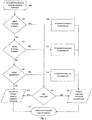
- FIG 2 is a flow chart for determining cyber security exposure threshold 46 of the embedded control device 14.
- the cyber security exposure threshold 46 is directly related to the functional criticality of the embedded device 14. It is generally determined by a user during commissioning and is related to information about the functions of the embedded control device 14, such as the intended function of the embedded control device 14 with respect to design and regulatory standards concerned with its use, device configuration parameters such as which functions of the embedded control device 14 are enabled, and application parameters such as is the application of the embedded control device 14 critical with respect to safety of employees, equipment and/or processes. Other critical criteria can also be used to determine the cyber security threshold 46, but for the example in Figure 3 only three criteria will be presented.
- the process for establishing the cyber security threshold 46 for an embedded device 14 starts at step 100 where all criteria being considered would have an initial threshold unit value of zero.
- step 105 if the product was not considered safety oriented it would maintain a zero threshold unit. If it was considered a safety oriented product it would be given one threshold unit at step 115 unless the user had over-ridden the award at step 110.
- step 120 if a safety function was not enabled the initial threshold unit of zero would be maintained. If a safety function was enabled one threshold unit would be awarded unless the user had over-ridden the award at step 110.
- the application was not considered critical initial threshold unit of zero would be maintained. If the application was considered critical one threshold unit would be awarded unless the user had over-ridden the award at step 110.
- step 140 if all criteria maintained their initial zero threshold the current exposure threshold can be maintained or increased to a higher level but not exceeding the current level.
- any awarded threshold units are quantified and a new threshold level determined. If the user has over-ridden any awarded threshold units they will not be counted. If the user has over-ridden all awarded threshold units the initial zero threshold units will be used and the result will be the same as step 140.
- a new threshold value from either step 140 or 145 will be stored in memory. It is understood that the function of an embedded device 14 can change over time and thus the cyber security exposure threshold 46 and the potential for cyber security exposure can also change over time. It is also understood that the value of the threshold units can be weighted based on the criticality of the criteria being evaluated.
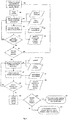
- FIG. 3 is a flow chart for a method of the invention used to determine the potential cyber security exposure of an individual embedded control device 14, and adjust that level if required.
- the system for determining the potential for cyber security process exposure is waiting for a trigger to initiate the evaluation process. The process can be initiated randomly, at a predetermined time or schedule, or by unusual traffic on the local control network 10.
- a trigger has been received at step 105
- a first level of potential cyber security exposure of the embedded control device 14 is started at step 110.
- the first level of potential cyber security exposure is initiated directly by the processor 54, which selects one of the at least one communication ports 18, retrieves the cyber security exposure level evaluation algorithm 50 and other information required to perform the potential cyber security exposure evaluation from memory 38.
- the processor 54 attempts to send an outgoing message 58 from the selected port 18, using multiple available protocols, to a known externally hosted system 62, having an IP address stored in memory 38 and known to be accessible on the global network 26 outside the local control network 10.
- the known externally hosted system 62 can be provided by the manufacturer of the embedded control device 14 or a known third party service provider.
- the outgoing message 58 can include a request for delivery receipt notification, the embedded control device 14 identification, IP address, enabled or disabled services, port assignments, and a request that the known externally hosted system 62 send an incoming message to the selected port 18 of the embedded control device 14.
- the connection attempt success (received) or failure (not received) of outgoing message 58 is evaluated.
- the result of the success/failure attempt of the outgoing message 58 is recorded in memory 38. If the attempt was successful one exposure unit will be recorded for the attempt at step 125. To prevent recording a false "success" status a "success" status is only recorded when an expected response is included in an incoming message 66 received by the selected port 18 of the embedded control device 14.
- the expected response can be a predetermined authentication message that could be encrypted.
- the result of the first degree of potential cyber security exposure will indicate that the selected port 18 of the embedded control device 14 either has access to the global network 26 or does not have access to the global network 26 through the network it is connected to.
- step 130 if all attempts have not been completed steps 110-125 are repeated for each remaining selected communications port 18 and protocol used by each selected communications port 18. If all attempts have been completed at step 130 and none were successful, the evaluation process will return to step 100. If at least one attempt was successful in the first level of potential cyber security exposure at step 135, the process will proceed to the second level of potential cyber security exposure.
- the second level of potential cyber security exposure is indirectly initiated by the processor 54 through outgoing message 58.
- the known externally hosted device 62 using information provided in the outgoing message 58, attempts to send an incoming messages 66 to the communications port 18, of the embedded control device 14 from which the outgoing message 58 was received, using any protocols identified in the outgoing message 58.
- the connection attempt success or failure of incoming message 58 is evaluated.
- the success/failure status of the incoming message 66, sent to the selected communications port 18 of the embedded control device 14 by the known externally hosted device 62 will be recorded in a memory 72 of the known externally hosted device 62 and the success status of those incoming messages 66 will be recorded in the memory 38 of the embedded control device 14.
- steps 140-155 are repeated for each remaining communications port 18 and protocol used by each communications port 18 from which an outgoing message 58 was received by the known externally hosted device 62. If all attempts have been completed at step 160 the processor 58 will sum all recorded exposure units and record in memory 38 at step 165. At step 170 the processor 58 will compare the total exposure units with the exposure threshold. If the total threshold units exceed the threshold actions will be taken to adjust the exposure potential to a lower level at step 175. If the total threshold units does not exceed the threshold the current potential exposure level can be maintained or can be adjusted to a higher level but not exceeding the current level at step 180.
- various stimuli may prompt execution of the cyber security autotuning process.
- the following list includes some stimuli that can initiate execution of the cyber security autotuning process:
Landscapes
- Engineering & Computer Science (AREA)
- Computer Security & Cryptography (AREA)
- Computer Networks & Wireless Communication (AREA)
- Signal Processing (AREA)
- Computer Hardware Design (AREA)
- Computing Systems (AREA)
- General Engineering & Computer Science (AREA)
- Environmental & Geological Engineering (AREA)
- Data Exchanges In Wide-Area Networks (AREA)
- Computer And Data Communications (AREA)
- Small-Scale Networks (AREA)
Abstract
Description
- The present disclosure is related to embedded industrial control devices on local control networks and particularly to a method and apparatus for determining the potential for a cyber security attack on an individual embedded industrial control device.
- The industrial control products industry has historically stipulated or assumed that embedded control devices and/or industrial control products, which are part of an industrial control system or an industrial automation system, are connected to private networks. For example, being connected only to local control networks or in-plant networks, not to the internet or any global networks outside of the local control network. Stating or specifying that embedded control devices or products should be used in a 'safe' network environment has been an industry standard. However, this assumption or instruction has not always been followed, leading to embedded control products often having connections to the internet, either accidentally or on purpose. Embedded control products can be exposed to cyber security threats at different levels of severity depending on their function in the network and how they are connected to the internet (outside world). They can be connected directly to the internet, or indirectly through a firewall or network address translation (NAT), which is expected to provide cyber security protection.
- In the past embedded industrial control devices have been compromised, some events, such as the 2014 attack on a German steel mill, which significantly damaged a blast furnace, have achieved significant notoriety. With the recent increases in cyber attacks on many networks that were thought to be secure our awareness of the vulnerability of industrial control networks, and the potential for personal injury, death, equipment damage or loss of production that could result, has also increased. Therefore, there is a need to decrease the exposure to, and risk from, cyber security threats on industrial control devices with possible connections to the internet or an outside global network. Thus, a need for more robust, automatic cyber security protection within each embedded control product would be most desirable.
- The present invention provides a system for evaluating a potential for cyber security exposure of an embedded control device, the system comprising:
- an embedded device having at least one communications port capable of sending outgoing messages and receiving incoming messages on a local network;
- a memory for storing an algorithm defining steps for evaluating the potential cyber security exposure of the embedded device;
- a processor capable of performing the stored steps for evaluating the potential cyber security exposure of the embedded device; and
- wherein evaluating the potential cyber security exposure of the embedded device comprises; determining a cyber security threshold for the embedded device;
- initiating, by the processor, a first level of potential cyber security exposure evaluation by sending an outgoing message from the at least one communications port to an IP address known to be accessible on a network outside the local network, the message initiating a second level of cyber security exposure evaluation by requesting an incoming response message from the receiving IP address;
- comparing, by the processor, a success/failure status of the outgoing and incoming messages with the cyber security threshold; and
- maintaining or altering a current level of cyber security exposure, by the processor, based on the comparison.
- The present invention also provides a method for evaluating a potential cyber security exposure of an embedded control device located on a local control network, the method comprising:
- determining a cyber security threshold for the embedded device;
- sending, from a communications port of the embedded device, an outgoing message to an IP address known to be accessible on a network outside the local network, the message requesting an incoming response message from the receiving IP address indicating receipt of the outgoing message;
- comparing, by a processor of the embedded device, a success/failure status of the outgoing and incoming messages with the cyber security threshold for the industrial control device; and maintaining or altering a current level of cyber security exposure, by the processor based on the comparison.
- Although the invention as disclosed herein is applied to any embedded control device, which comprises motor controllers, motor overload relays, programmable logic controllers (PLC), variable speed motor drives, programmable logic relays, sensors, etc., it can also be applied to other devices residing on a local network that have a memory for storing the algorithm steps and a processor capable of performing the stored steps.
-
-
Figure 1 illustrates a local area network with embedded industrial control devices and possible connections to the internet or other global network. -
Figure 2 is a flow chart for determining the exposure threshold of the embedded device. -
Figure 3 is a flow chart for the overall evaluation of the potential cyber security exposure of an embedded control device and taking appropriate action to reduce exposure if required. -
Figure 1 illustrates a local industrial control network generally indicated byreference number 10. Thelocal control network 10 can be hard wired or wireless. Operatively connected to thelocal control network 10 are a number of individual embeddedcontrol devices 14, which can comprise motor controllers, motor overload relays, programmable logic controllers (PLC), variable speed motor drives, programmable logic relays, sensors, etc. Each embeddedcontrol device 14 has at least onecommunications port 18 that provides two way communications between the embeddedcontrol devices 14 on thelocal control network 10. Thelocal control network 10 can also have a connection to anoffice network 22, which can be connected to a global network 26 (internet), usually through a firewall or virtual private network (VPN) 30. Thefirewall 30 provides some degree of isolation between theoffice network 22 and theglobal network 26. Theglobal network 26 provides communication for millions of externally hostedsystems 34, any one of which could initiate a cyber attack on an unprotected embeddedcontrol device 14. Each embeddedcontrol device 14 includes amemory 38 for storing information including its current potential cybersecurity exposure level 42, its cybersecurity exposure threshold 46 and analgorithm 50 used by aprocessor 54 to perform the potential cyber security exposure evaluation. -
Figure 2 is a flow chart for determining cybersecurity exposure threshold 46 of the embeddedcontrol device 14. The cybersecurity exposure threshold 46 is directly related to the functional criticality of the embeddeddevice 14. It is generally determined by a user during commissioning and is related to information about the functions of the embeddedcontrol device 14, such as the intended function of the embeddedcontrol device 14 with respect to design and regulatory standards concerned with its use, device configuration parameters such as which functions of the embeddedcontrol device 14 are enabled, and application parameters such as is the application of the embeddedcontrol device 14 critical with respect to safety of employees, equipment and/or processes. Other critical criteria can also be used to determine thecyber security threshold 46, but for the example inFigure 3 only three criteria will be presented. The process for establishing thecyber security threshold 46 for an embeddeddevice 14 starts atstep 100 where all criteria being considered would have an initial threshold unit value of zero. Atstep 105, if the product was not considered safety oriented it would maintain a zero threshold unit. If it was considered a safety oriented product it would be given one threshold unit atstep 115 unless the user had over-ridden the award atstep 110. Atstep 120, if a safety function was not enabled the initial threshold unit of zero would be maintained. If a safety function was enabled one threshold unit would be awarded unless the user had over-ridden the award atstep 110. Atstep 130, if the application was not considered critical initial threshold unit of zero would be maintained. If the application was considered critical one threshold unit would be awarded unless the user had over-ridden the award atstep 110. Atstep 140 if all criteria maintained their initial zero threshold the current exposure threshold can be maintained or increased to a higher level but not exceeding the current level. Atstep 145 any awarded threshold units are quantified and a new threshold level determined. If the user has over-ridden any awarded threshold units they will not be counted. If the user has over-ridden all awarded threshold units the initial zero threshold units will be used and the result will be the same asstep 140. At step 150 a new threshold value from eitherstep
It is understood that the function of an embeddeddevice 14 can change over time and thus the cybersecurity exposure threshold 46 and the potential for cyber security exposure can also change over time. It is also understood that the value of the threshold units can be weighted based on the criticality of the criteria being evaluated. -
Figure 3 is a flow chart for a method of the invention used to determine the potential cyber security exposure of an individual embeddedcontrol device 14, and adjust that level if required. Atstep 100 the system for determining the potential for cyber security process exposure is waiting for a trigger to initiate the evaluation process. The process can be initiated randomly, at a predetermined time or schedule, or by unusual traffic on thelocal control network 10. Once a trigger has been received atstep 105, a first level of potential cyber security exposure of the embeddedcontrol device 14, is started atstep 110. The first level of potential cyber security exposure is initiated directly by theprocessor 54, which selects one of the at least onecommunication ports 18, retrieves the cyber security exposurelevel evaluation algorithm 50 and other information required to perform the potential cyber security exposure evaluation frommemory 38. Theprocessor 54 attempts to send an outgoing message 58 from the selectedport 18, using multiple available protocols, to a known externally hostedsystem 62, having an IP address stored inmemory 38 and known to be accessible on theglobal network 26 outside thelocal control network 10. The known externally hostedsystem 62 can be provided by the manufacturer of the embeddedcontrol device 14 or a known third party service provider. The outgoing message 58 can include a request for delivery receipt notification, the embeddedcontrol device 14 identification, IP address, enabled or disabled services, port assignments, and a request that the known externally hostedsystem 62 send an incoming message to the selectedport 18 of the embeddedcontrol device 14. Atstep 115 the connection attempt success (received) or failure (not received) of outgoing message 58 is evaluated. Atstep 120 the result of the success/failure attempt of the outgoing message 58 is recorded inmemory 38. If the attempt was successful one exposure unit will be recorded for the attempt atstep 125. To prevent recording a false "success" status a "success" status is only recorded when an expected response is included in an incoming message 66 received by the selectedport 18 of the embeddedcontrol device 14. The expected response can be a predetermined authentication message that could be encrypted. The result of the first degree of potential cyber security exposure will indicate that the selectedport 18 of the embeddedcontrol device 14 either has access to theglobal network 26 or does not have access to theglobal network 26 through the network it is connected to. Atstep 130, if all attempts have not been completed steps 110-125 are repeated for each remaining selectedcommunications port 18 and protocol used by each selectedcommunications port 18. If all attempts have been completed atstep 130 and none were successful, the evaluation process will return to step 100. If at least one attempt was successful in the first level of potential cyber security exposure atstep 135, the process will proceed to the second level of potential cyber security exposure. - The second level of potential cyber security exposure is indirectly initiated by the
processor 54 through outgoing message 58. Atstep 140 the known externally hosteddevice 62, using information provided in the outgoing message 58, attempts to send an incoming messages 66 to thecommunications port 18, of the embeddedcontrol device 14 from which the outgoing message 58 was received, using any protocols identified in the outgoing message 58. Atstep 145 the connection attempt success or failure of incoming message 58 is evaluated. Atstep 150, the success/failure status of the incoming message 66, sent to the selectedcommunications port 18 of the embeddedcontrol device 14 by the known externally hosteddevice 62, will be recorded in amemory 72 of the known externally hosteddevice 62 and the success status of those incoming messages 66 will be recorded in thememory 38 of the embeddedcontrol device 14. Since the embeddedcontrol device 14 cannot directly record the failed status of attempted incoming message 66 during the second level of potential cyber security exposure it must request the failed status from the known externally hosteddevice 62 in a subsequent message to the known externally hosteddevice 62 or it must assume a failed status after a pre-determined time duration. If the attempt was successful one exposure unit will be recorded for the attempt atstep 155. The result of the second level of potential cyber security exposure will indicate that the selectedcommunications port 18 of the embeddedcontrol device 14 either is exposed and can be accessed from theglobal network 26 or is not exposed and cannot be accessed from theglobal network 26. Atstep 160, if all attempts have not been completed steps 140-155 are repeated for each remainingcommunications port 18 and protocol used by eachcommunications port 18 from which an outgoing message 58 was received by the known externally hosteddevice 62. If all attempts have been completed atstep 160 the processor 58 will sum all recorded exposure units and record inmemory 38 atstep 165. Atstep 170 the processor 58 will compare the total exposure units with the exposure threshold. If the total threshold units exceed the threshold actions will be taken to adjust the exposure potential to a lower level atstep 175. If the total threshold units does not exceed the threshold the current potential exposure level can be maintained or can be adjusted to a higher level but not exceeding the current level atstep 180. - The success/failure status of the outgoing messages 58 and success status of incoming messages 66 can be given a numeric value (for example 1 for success and 0 for failure as used in the flow chart above), which is recorded in
memory 38 for uses by theprocessor 54. The sum of the numeric values representing the outgoing 58 and incoming message 66 status is compared with the current cybersecurity exposure threshold 46 byprocessor 54 to determine if the current cybersecurity exposure threshold 46 has been exceeded. If the current cybersecurity exposure threshold 46 has not been exceeded the current potential cyber security exposure level can be maintained or can be adjusted to a higher potential cyber security exposure level, but not exceeding the current cybersecurity exposure threshold 46. If the current cybersecurity exposure threshold 46 has been exceeded the current potential cyber security exposure level can be adjusted to a lower potential cyber security exposure level by theprocessor 54. - The cyber
security exposure threshold 46 establishes acceptance criteria to compare against the recorded received outgoing 58 and incoming 66 message for eachcommunication port 18 and protocol combination that the embeddedcontrol device 14 and known externally hosteddevice 62 attempt. The acceptance criteria can be configurable by a user to accommodate specific application requirements; the criteria may also be updated with embeddedcontrol device 14 firmware or security updates supplied by the embeddedcontrol device 14 manufacturer to keep the criteria up to date with cyber security developments. - The embedded
control device 14 takes action based on the result of the comparison between the results of the first and second levels of potential cyber security exposure and the cybersecurity exposure threshold 46. If the comparison shows that a specific network service of the embeddedcontrol device 14 creates a level of exposure above the cybersecurity exposure threshold 46 the action can be to modify or limit the characteristics of the service. This can include disabling the service, prohibit the changing of setting, permit monitoring only or requiring an increased level of authentication or security to access the service. For example, a webpage function can be disabled, or modified to require a username and password login, or to require a login using some form of security such as secure socket layer (SSL) or transport layer security (TLS). If the comparison shows that the level of exposure for the embeddedcontrol device 14 permits a lowered level of security for a function, the function may be restored to a user preferred, lower level of security, or the embeddedcontrol device 14 may prompt a user or administrator to allow the minimum threshold of security required to meet the results of the first and second levels of potential cyber security exposure. Adapting to the level of security required by the results of the first and second levels of potential cyber security exposure can be performed individually for each network service or function, or it can be performed for a subset of services and functions; this provides a potential benefit of increased usability or accessibility for the product. - Many services and functions of the embedded
control device 14 can be controlled in this manner, to optimize the performance of the embeddeddevice 14 within the constraints of the potential cyber security exposure level to the results of the first and second degrees of potential cyber security exposure. The following list includes some functions that can be managed by automatic cyber security exposure evaluation and response, though additional functions can be imagined: - Device firmware update
- Account information modification, including username, password, credentials, contact information
- Access rights control, including the parameters that can be monitored or controlled
- Device function commands, such as reset, start, and stop of a motor, or output control of a logic controller
- Device configuration data, such as motor starter topologies, or parameterization such as external sensor types or ranges
- Service authentication requirements management - webpages, customer engineering tools, human machine interfaces
- Protocol management - Modbus/TCP, file transfer protocol (FTP), and secure FTP (SFTP), telnet, secure shell (SSH), hypertext transmission protocol (HTTP), HTTPS, etc.
- To maintain validity of the management of services by cyber security autotuning, the embedded
control device 14 can periodically execute the process for determining potential cyber security exposure described above. The period of automatic refresh can be fixed or random, and can be influenced by factors such as network traffic load, or the device profile and current potential cyber security exposure threshold. For example the period of automatic refresh may be lower if the cybersecurity exposure threshold 46 is lower, or the device application is identified by the user as critical. - In addition to a periodic refresh, various stimuli may prompt execution of the cyber security autotuning process. The following list includes some stimuli that can initiate execution of the cyber security autotuning process:
- Changes to the device function, which change the network exposure threshold
- Connections to the device from a new IP address, or from a new range of IP addresses
- Connections using previously unused protocols
- Failed authentication attempts
- Application of new security policies, such as a user initiated change or firmware update to the acceptance criteria for network exposure comparison
- Physical changes to the device, including adding or removing modules or extensions
- Updates to device settings, such as setting a new subnet mask, DHCP server, IP address assignment mechanism, etc
- Detection of device discovery service execution, for example a DPWS discovery
Claims (2)
- A system for evaluating a potential cyber security exposure of an embedded device, the system comprising:an embedded device having at least one communications port capable of sending outgoing messages and receiving incoming messages on a local network;a memory for storing an algorithm defining steps for evaluating the potential cyber security exposure of the embedded device;a processor capable of performing the stored steps for evaluating the potential cyber security exposure of the embedded device; andwherein evaluating the potential cyber security exposure of the embedded device comprises;determining a cyber security threshold for the embedded device;initiating, by the processor, a first level of potential cyber security exposure evaluation by sending an outgoing message from the at least one communications port to an IP address known to be accessible on a network outside the local network, the message initiating a second level of cyber security exposure evaluation by requesting an incoming response message from the receiving IP address;comparing, by the processor, a success/failure status of the outgoing and incoming messages with the cyber security threshold; andmaintaining or altering a current level of cyber security exposure, by the processor, based on the comparison.
- A method for evaluating a potential cyber security exposure of an embedded device located on a local network, the method comprising:determining a cyber security threshold for the embedded device;sending, from a communications port of the embedded device, an outgoing message to an IP address known to be accessible on a network outside the local network, the message requesting an incoming response message from the receiving IP address indicating receipt of the outgoing message;comparing, by a processor of the embedded device, a success/failure status of the outgoing and incoming messages with the cyber security threshold for the industrial control device; andmaintaining or altering a current level of cyber security exposure, by the processor based on the comparison.
Applications Claiming Priority (1)
| Application Number | Priority Date | Filing Date | Title |
|---|---|---|---|
| US14/980,527 US10154046B2 (en) | 2015-12-28 | 2015-12-28 | System and method for evaluation and response to cyber security exposure in an embedded control device |
Publications (3)
| Publication Number | Publication Date |
|---|---|
| EP3188439A1 true EP3188439A1 (en) | 2017-07-05 |
| EP3188439B1 EP3188439B1 (en) | 2020-03-04 |
| EP3188439B8 EP3188439B8 (en) | 2020-06-17 |
Family
ID=57544283
Family Applications (1)
| Application Number | Title | Priority Date | Filing Date |
|---|---|---|---|
| EP16203375.7A Active EP3188439B8 (en) | 2015-12-28 | 2016-12-12 | System and method for evaluation and response to cyber security exposure in an embedded control device |
Country Status (3)
| Country | Link |
|---|---|
| US (1) | US10154046B2 (en) |
| EP (1) | EP3188439B8 (en) |
| CN (1) | CN106921649B (en) |
Cited By (2)
| Publication number | Priority date | Publication date | Assignee | Title |
|---|---|---|---|---|
| EP3676924A1 (en) * | 2017-08-29 | 2020-07-08 | Eaton Intelligent Power Limited | Motor control device with solid state circuit breaker |
| US20260025401A1 (en) * | 2024-07-17 | 2026-01-22 | Reliaquest Holdings, Llc | Threat Mitigation System and Method |
Families Citing this family (2)
| Publication number | Priority date | Publication date | Assignee | Title |
|---|---|---|---|---|
| RS67067B1 (en) * | 2020-05-05 | 2025-08-29 | Grieshaber Vega Kg | Field device with a security module, retrofit module for a field device, method for setting an it security level and computer program code |
| US11783068B2 (en) * | 2021-03-24 | 2023-10-10 | Bank Of America Corporation | System for dynamic exposure monitoring |
Citations (4)
| Publication number | Priority date | Publication date | Assignee | Title |
|---|---|---|---|---|
| US20050015624A1 (en) * | 2003-06-09 | 2005-01-20 | Andrew Ginter | Event monitoring and management |
| US20110173699A1 (en) * | 2010-01-13 | 2011-07-14 | Igal Figlin | Network intrusion detection with distributed correlation |
| US20140373161A1 (en) * | 2013-06-18 | 2014-12-18 | FoxGuardSolutions, Inc. | Methods and systems for complying with network security requirements |
| US20150304352A1 (en) * | 2014-03-31 | 2015-10-22 | Ringcentral, Inc. | System and method for detecting security exposures of voip devices |
Family Cites Families (10)
| Publication number | Priority date | Publication date | Assignee | Title |
|---|---|---|---|---|
| US7346929B1 (en) | 1999-07-29 | 2008-03-18 | International Business Machines Corporation | Method and apparatus for auditing network security |
| CN101488168B (en) * | 2008-01-17 | 2011-06-22 | 北京启明星辰信息技术股份有限公司 | Integrated risk computing method and system of computer information system |
| CN101883017B (en) * | 2009-05-04 | 2012-02-01 | 北京启明星辰信息技术股份有限公司 | System and method for evaluating network safe state |
| US8886746B2 (en) * | 2009-09-09 | 2014-11-11 | Rockwell Automation Technologies, Inc. | Diagnostic module for distributed industrial network including industrial control devices |
| US20110167014A1 (en) * | 2010-01-05 | 2011-07-07 | International Business Machines Corporation | Method and apparatus of adaptive categorization technique and solution for services selection based on pattern recognition |
| CN102033789A (en) * | 2010-12-03 | 2011-04-27 | 北京理工大学 | Reliability analysis method for embedded safety-critical system |
| US8856936B2 (en) | 2011-10-14 | 2014-10-07 | Albeado Inc. | Pervasive, domain and situational-aware, adaptive, automated, and coordinated analysis and control of enterprise-wide computers, networks, and applications for mitigation of business and operational risks and enhancement of cyber security |
| CN102801739A (en) * | 2012-08-25 | 2012-11-28 | 乐山师范学院 | Network risk determining and evidence obtaining method based on cloud computing environment |
| US9330262B2 (en) | 2012-09-21 | 2016-05-03 | University Of Limerick | Systems and methods for runtime adaptive security to protect variable assets |
| CN103905450B (en) * | 2014-04-03 | 2017-05-31 | 国网河南省电力公司电力科学研究院 | Intelligent grid embedded device network check and evaluation system and check and evaluation method |
-
2015
- 2015-12-28 US US14/980,527 patent/US10154046B2/en active Active
-
2016
- 2016-12-12 EP EP16203375.7A patent/EP3188439B8/en active Active
- 2016-12-19 CN CN201611177511.6A patent/CN106921649B/en active Active
Patent Citations (4)
| Publication number | Priority date | Publication date | Assignee | Title |
|---|---|---|---|---|
| US20050015624A1 (en) * | 2003-06-09 | 2005-01-20 | Andrew Ginter | Event monitoring and management |
| US20110173699A1 (en) * | 2010-01-13 | 2011-07-14 | Igal Figlin | Network intrusion detection with distributed correlation |
| US20140373161A1 (en) * | 2013-06-18 | 2014-12-18 | FoxGuardSolutions, Inc. | Methods and systems for complying with network security requirements |
| US20150304352A1 (en) * | 2014-03-31 | 2015-10-22 | Ringcentral, Inc. | System and method for detecting security exposures of voip devices |
Cited By (3)
| Publication number | Priority date | Publication date | Assignee | Title |
|---|---|---|---|---|
| EP3676924A1 (en) * | 2017-08-29 | 2020-07-08 | Eaton Intelligent Power Limited | Motor control device with solid state circuit breaker |
| US11791619B2 (en) | 2017-08-29 | 2023-10-17 | Eaton Intelligent Power Limited | Motor control device with solid state circuit breaker |
| US20260025401A1 (en) * | 2024-07-17 | 2026-01-22 | Reliaquest Holdings, Llc | Threat Mitigation System and Method |
Also Published As
| Publication number | Publication date |
|---|---|
| US20170187728A1 (en) | 2017-06-29 |
| CN106921649A (en) | 2017-07-04 |
| EP3188439B8 (en) | 2020-06-17 |
| US10154046B2 (en) | 2018-12-11 |
| CN106921649B (en) | 2021-05-04 |
| EP3188439B1 (en) | 2020-03-04 |
Similar Documents
| Publication | Publication Date | Title |
|---|---|---|
| Shah et al. | A survey on Classification of Cyber-attacks on IoT and IIoT devices | |
| US10061635B2 (en) | Cyber physical system | |
| EP3188439B1 (en) | System and method for evaluation and response to cyber security exposure in an embedded control device | |
| EP2474140B1 (en) | Checking a configuration modification for an ied | |
| JP5411916B2 (en) | Protection relay and network system including the same | |
| US20170339190A1 (en) | Device-specific packet inspection plan | |
| US9686316B2 (en) | Layer-2 security for industrial automation by snooping discovery and configuration messages | |
| Hui et al. | Investigating current plc security issues regarding siemens s7 communications and TIA portal | |
| US8351340B2 (en) | Method for detecting a proxy ARP agent in secure networks having embedded controllers | |
| CN112866427A (en) | Apparatus and method for security of industrial control network | |
| US11516229B2 (en) | Control device and control system | |
| JP2012221274A (en) | Network management system and server | |
| US11397806B2 (en) | Security monitoring device | |
| US9225703B2 (en) | Protecting end point devices | |
| CN106713364B (en) | The home gateway access method and system dynamically changed in smart home | |
| EP4000232A1 (en) | System and method for protection of an ics network by an hmi server therein | |
| US20140075541A1 (en) | Systems and methods for accessing resources through a firewall | |
| KR101343693B1 (en) | Network security system and method for process thereof | |
| US20170093887A1 (en) | Network command evaluation and response system | |
| McNeil | Secure IoT deployment in the cement industry | |
| JP6286324B2 (en) | Communication device and communication server | |
| EP3598712B1 (en) | Commissioning an industrial controller system for establishing a secure communication | |
| US20180367562A1 (en) | Avoidance of weaknesses | |
| US20140075533A1 (en) | Accessing resources through a firewall | |
| Yoo et al. | An Empirical Study on the Vulnerability of the Modbus Protocol Suitable for the SMEs Manufacturing Enterprises in Korea |
Legal Events
| Date | Code | Title | Description |
|---|---|---|---|
| PUAI | Public reference made under article 153(3) epc to a published international application that has entered the european phase |
Free format text: ORIGINAL CODE: 0009012 |
|
| STAA | Information on the status of an ep patent application or granted ep patent |
Free format text: STATUS: THE APPLICATION HAS BEEN PUBLISHED |
|
| AK | Designated contracting states |
Kind code of ref document: A1 Designated state(s): AL AT BE BG CH CY CZ DE DK EE ES FI FR GB GR HR HU IE IS IT LI LT LU LV MC MK MT NL NO PL PT RO RS SE SI SK SM TR |
|
| AX | Request for extension of the european patent |
Extension state: BA ME |
|
| STAA | Information on the status of an ep patent application or granted ep patent |
Free format text: STATUS: REQUEST FOR EXAMINATION WAS MADE |
|
| 17P | Request for examination filed |
Effective date: 20171229 |
|
| RBV | Designated contracting states (corrected) |
Designated state(s): AL AT BE BG CH CY CZ DE DK EE ES FI FR GB GR HR HU IE IS IT LI LT LU LV MC MK MT NL NO PL PT RO RS SE SI SK SM TR |
|
| STAA | Information on the status of an ep patent application or granted ep patent |
Free format text: STATUS: EXAMINATION IS IN PROGRESS |
|
| 17Q | First examination report despatched |
Effective date: 20180406 |
|
| GRAP | Despatch of communication of intention to grant a patent |
Free format text: ORIGINAL CODE: EPIDOSNIGR1 |
|
| STAA | Information on the status of an ep patent application or granted ep patent |
Free format text: STATUS: GRANT OF PATENT IS INTENDED |
|
| INTG | Intention to grant announced |
Effective date: 20190829 |
|
| GRAS | Grant fee paid |
Free format text: ORIGINAL CODE: EPIDOSNIGR3 |
|
| GRAJ | Information related to disapproval of communication of intention to grant by the applicant or resumption of examination proceedings by the epo deleted |
Free format text: ORIGINAL CODE: EPIDOSDIGR1 |
|
| GRAL | Information related to payment of fee for publishing/printing deleted |
Free format text: ORIGINAL CODE: EPIDOSDIGR3 |
|
| STAA | Information on the status of an ep patent application or granted ep patent |
Free format text: STATUS: EXAMINATION IS IN PROGRESS |
|
| GRAR | Information related to intention to grant a patent recorded |
Free format text: ORIGINAL CODE: EPIDOSNIGR71 |
|
| STAA | Information on the status of an ep patent application or granted ep patent |
Free format text: STATUS: GRANT OF PATENT IS INTENDED |
|
| GRAA | (expected) grant |
Free format text: ORIGINAL CODE: 0009210 |
|
| STAA | Information on the status of an ep patent application or granted ep patent |
Free format text: STATUS: THE PATENT HAS BEEN GRANTED |
|
| INTC | Intention to grant announced (deleted) | ||
| INTG | Intention to grant announced |
Effective date: 20200123 |
|
| AK | Designated contracting states |
Kind code of ref document: B1 Designated state(s): AL AT BE BG CH CY CZ DE DK EE ES FI FR GB GR HR HU IE IS IT LI LT LU LV MC MK MT NL NO PL PT RO RS SE SI SK SM TR |
|
| REG | Reference to a national code |
Ref country code: GB Ref legal event code: FG4D |
|
| RAP2 | Party data changed (patent owner data changed or rights of a patent transferred) |
Owner name: SCHNEIDER ELECTRIC USA, INC. |
|
| REG | Reference to a national code |
Ref country code: CH Ref legal event code: EP |
|
| REG | Reference to a national code |
Ref country code: AT Ref legal event code: REF Ref document number: 1241719 Country of ref document: AT Kind code of ref document: T Effective date: 20200315 |
|
| REG | Reference to a national code |
Ref country code: DE Ref legal event code: R096 Ref document number: 602016030966 Country of ref document: DE |
|
| REG | Reference to a national code |
Ref country code: IE Ref legal event code: FG4D |
|
| REG | Reference to a national code |
Ref country code: CH Ref legal event code: PK Free format text: BERICHTIGUNG B8 |
|
| PG25 | Lapsed in a contracting state [announced via postgrant information from national office to epo] |
Ref country code: FI Free format text: LAPSE BECAUSE OF FAILURE TO SUBMIT A TRANSLATION OF THE DESCRIPTION OR TO PAY THE FEE WITHIN THE PRESCRIBED TIME-LIMIT Effective date: 20200304 Ref country code: RS Free format text: LAPSE BECAUSE OF FAILURE TO SUBMIT A TRANSLATION OF THE DESCRIPTION OR TO PAY THE FEE WITHIN THE PRESCRIBED TIME-LIMIT Effective date: 20200304 Ref country code: NO Free format text: LAPSE BECAUSE OF FAILURE TO SUBMIT A TRANSLATION OF THE DESCRIPTION OR TO PAY THE FEE WITHIN THE PRESCRIBED TIME-LIMIT Effective date: 20200604 |
|
| REG | Reference to a national code |
Ref country code: NL Ref legal event code: MP Effective date: 20200304 |
|
| PG25 | Lapsed in a contracting state [announced via postgrant information from national office to epo] |
Ref country code: SE Free format text: LAPSE BECAUSE OF FAILURE TO SUBMIT A TRANSLATION OF THE DESCRIPTION OR TO PAY THE FEE WITHIN THE PRESCRIBED TIME-LIMIT Effective date: 20200304 Ref country code: LV Free format text: LAPSE BECAUSE OF FAILURE TO SUBMIT A TRANSLATION OF THE DESCRIPTION OR TO PAY THE FEE WITHIN THE PRESCRIBED TIME-LIMIT Effective date: 20200304 Ref country code: HR Free format text: LAPSE BECAUSE OF FAILURE TO SUBMIT A TRANSLATION OF THE DESCRIPTION OR TO PAY THE FEE WITHIN THE PRESCRIBED TIME-LIMIT Effective date: 20200304 Ref country code: GR Free format text: LAPSE BECAUSE OF FAILURE TO SUBMIT A TRANSLATION OF THE DESCRIPTION OR TO PAY THE FEE WITHIN THE PRESCRIBED TIME-LIMIT Effective date: 20200605 Ref country code: BG Free format text: LAPSE BECAUSE OF FAILURE TO SUBMIT A TRANSLATION OF THE DESCRIPTION OR TO PAY THE FEE WITHIN THE PRESCRIBED TIME-LIMIT Effective date: 20200604 |
|
| REG | Reference to a national code |
Ref country code: LT Ref legal event code: MG4D |
|
| PG25 | Lapsed in a contracting state [announced via postgrant information from national office to epo] |
Ref country code: NL Free format text: LAPSE BECAUSE OF FAILURE TO SUBMIT A TRANSLATION OF THE DESCRIPTION OR TO PAY THE FEE WITHIN THE PRESCRIBED TIME-LIMIT Effective date: 20200304 |
|
| PG25 | Lapsed in a contracting state [announced via postgrant information from national office to epo] |
Ref country code: SK Free format text: LAPSE BECAUSE OF FAILURE TO SUBMIT A TRANSLATION OF THE DESCRIPTION OR TO PAY THE FEE WITHIN THE PRESCRIBED TIME-LIMIT Effective date: 20200304 Ref country code: IS Free format text: LAPSE BECAUSE OF FAILURE TO SUBMIT A TRANSLATION OF THE DESCRIPTION OR TO PAY THE FEE WITHIN THE PRESCRIBED TIME-LIMIT Effective date: 20200704 Ref country code: LT Free format text: LAPSE BECAUSE OF FAILURE TO SUBMIT A TRANSLATION OF THE DESCRIPTION OR TO PAY THE FEE WITHIN THE PRESCRIBED TIME-LIMIT Effective date: 20200304 Ref country code: SM Free format text: LAPSE BECAUSE OF FAILURE TO SUBMIT A TRANSLATION OF THE DESCRIPTION OR TO PAY THE FEE WITHIN THE PRESCRIBED TIME-LIMIT Effective date: 20200304 Ref country code: EE Free format text: LAPSE BECAUSE OF FAILURE TO SUBMIT A TRANSLATION OF THE DESCRIPTION OR TO PAY THE FEE WITHIN THE PRESCRIBED TIME-LIMIT Effective date: 20200304 Ref country code: RO Free format text: LAPSE BECAUSE OF FAILURE TO SUBMIT A TRANSLATION OF THE DESCRIPTION OR TO PAY THE FEE WITHIN THE PRESCRIBED TIME-LIMIT Effective date: 20200304 Ref country code: CZ Free format text: LAPSE BECAUSE OF FAILURE TO SUBMIT A TRANSLATION OF THE DESCRIPTION OR TO PAY THE FEE WITHIN THE PRESCRIBED TIME-LIMIT Effective date: 20200304 Ref country code: ES Free format text: LAPSE BECAUSE OF FAILURE TO SUBMIT A TRANSLATION OF THE DESCRIPTION OR TO PAY THE FEE WITHIN THE PRESCRIBED TIME-LIMIT Effective date: 20200304 Ref country code: PT Free format text: LAPSE BECAUSE OF FAILURE TO SUBMIT A TRANSLATION OF THE DESCRIPTION OR TO PAY THE FEE WITHIN THE PRESCRIBED TIME-LIMIT Effective date: 20200729 |
|
| REG | Reference to a national code |
Ref country code: AT Ref legal event code: MK05 Ref document number: 1241719 Country of ref document: AT Kind code of ref document: T Effective date: 20200304 |
|
| REG | Reference to a national code |
Ref country code: DE Ref legal event code: R097 Ref document number: 602016030966 Country of ref document: DE |
|
| PLBE | No opposition filed within time limit |
Free format text: ORIGINAL CODE: 0009261 |
|
| STAA | Information on the status of an ep patent application or granted ep patent |
Free format text: STATUS: NO OPPOSITION FILED WITHIN TIME LIMIT |
|
| PG25 | Lapsed in a contracting state [announced via postgrant information from national office to epo] |
Ref country code: DK Free format text: LAPSE BECAUSE OF FAILURE TO SUBMIT A TRANSLATION OF THE DESCRIPTION OR TO PAY THE FEE WITHIN THE PRESCRIBED TIME-LIMIT Effective date: 20200304 Ref country code: AT Free format text: LAPSE BECAUSE OF FAILURE TO SUBMIT A TRANSLATION OF THE DESCRIPTION OR TO PAY THE FEE WITHIN THE PRESCRIBED TIME-LIMIT Effective date: 20200304 Ref country code: IT Free format text: LAPSE BECAUSE OF FAILURE TO SUBMIT A TRANSLATION OF THE DESCRIPTION OR TO PAY THE FEE WITHIN THE PRESCRIBED TIME-LIMIT Effective date: 20200304 |
|
| 26N | No opposition filed |
Effective date: 20201207 |
|
| PG25 | Lapsed in a contracting state [announced via postgrant information from national office to epo] |
Ref country code: SI Free format text: LAPSE BECAUSE OF FAILURE TO SUBMIT A TRANSLATION OF THE DESCRIPTION OR TO PAY THE FEE WITHIN THE PRESCRIBED TIME-LIMIT Effective date: 20200304 Ref country code: PL Free format text: LAPSE BECAUSE OF FAILURE TO SUBMIT A TRANSLATION OF THE DESCRIPTION OR TO PAY THE FEE WITHIN THE PRESCRIBED TIME-LIMIT Effective date: 20200304 |
|
| REG | Reference to a national code |
Ref country code: CH Ref legal event code: PL |
|
| PG25 | Lapsed in a contracting state [announced via postgrant information from national office to epo] |
Ref country code: MC Free format text: LAPSE BECAUSE OF FAILURE TO SUBMIT A TRANSLATION OF THE DESCRIPTION OR TO PAY THE FEE WITHIN THE PRESCRIBED TIME-LIMIT Effective date: 20200304 |
|
| REG | Reference to a national code |
Ref country code: BE Ref legal event code: MM Effective date: 20201231 |
|
| PG25 | Lapsed in a contracting state [announced via postgrant information from national office to epo] |
Ref country code: LU Free format text: LAPSE BECAUSE OF NON-PAYMENT OF DUE FEES Effective date: 20201212 Ref country code: IE Free format text: LAPSE BECAUSE OF NON-PAYMENT OF DUE FEES Effective date: 20201212 |
|
| REG | Reference to a national code |
Ref country code: DE Ref legal event code: R079 Ref document number: 602016030966 Country of ref document: DE Free format text: PREVIOUS MAIN CLASS: H04L0029060000 Ipc: H04L0065000000 |
|
| PG25 | Lapsed in a contracting state [announced via postgrant information from national office to epo] |
Ref country code: CH Free format text: LAPSE BECAUSE OF NON-PAYMENT OF DUE FEES Effective date: 20201231 Ref country code: LI Free format text: LAPSE BECAUSE OF NON-PAYMENT OF DUE FEES Effective date: 20201231 |
|
| PG25 | Lapsed in a contracting state [announced via postgrant information from national office to epo] |
Ref country code: TR Free format text: LAPSE BECAUSE OF FAILURE TO SUBMIT A TRANSLATION OF THE DESCRIPTION OR TO PAY THE FEE WITHIN THE PRESCRIBED TIME-LIMIT Effective date: 20200304 Ref country code: MT Free format text: LAPSE BECAUSE OF FAILURE TO SUBMIT A TRANSLATION OF THE DESCRIPTION OR TO PAY THE FEE WITHIN THE PRESCRIBED TIME-LIMIT Effective date: 20200304 Ref country code: CY Free format text: LAPSE BECAUSE OF FAILURE TO SUBMIT A TRANSLATION OF THE DESCRIPTION OR TO PAY THE FEE WITHIN THE PRESCRIBED TIME-LIMIT Effective date: 20200304 |
|
| PG25 | Lapsed in a contracting state [announced via postgrant information from national office to epo] |
Ref country code: MK Free format text: LAPSE BECAUSE OF FAILURE TO SUBMIT A TRANSLATION OF THE DESCRIPTION OR TO PAY THE FEE WITHIN THE PRESCRIBED TIME-LIMIT Effective date: 20200304 Ref country code: AL Free format text: LAPSE BECAUSE OF FAILURE TO SUBMIT A TRANSLATION OF THE DESCRIPTION OR TO PAY THE FEE WITHIN THE PRESCRIBED TIME-LIMIT Effective date: 20200304 |
|
| PG25 | Lapsed in a contracting state [announced via postgrant information from national office to epo] |
Ref country code: BE Free format text: LAPSE BECAUSE OF NON-PAYMENT OF DUE FEES Effective date: 20201231 |
|
| PGFP | Annual fee paid to national office [announced via postgrant information from national office to epo] |
Ref country code: GB Payment date: 20241217 Year of fee payment: 9 |
|
| PGFP | Annual fee paid to national office [announced via postgrant information from national office to epo] |
Ref country code: FR Payment date: 20241227 Year of fee payment: 9 |
|
| PGFP | Annual fee paid to national office [announced via postgrant information from national office to epo] |
Ref country code: DE Payment date: 20251229 Year of fee payment: 10 |