EP3185164A2 - Systeme und verfahren zur detektion von bösartigem code mittels visualisierung - Google Patents
Systeme und verfahren zur detektion von bösartigem code mittels visualisierung Download PDFInfo
- Publication number
- EP3185164A2 EP3185164A2 EP15833965.5A EP15833965A EP3185164A2 EP 3185164 A2 EP3185164 A2 EP 3185164A2 EP 15833965 A EP15833965 A EP 15833965A EP 3185164 A2 EP3185164 A2 EP 3185164A2
- Authority
- EP
- European Patent Office
- Prior art keywords
- dns
- domain name
- address
- visualization
- triangle
- Prior art date
- Legal status (The legal status is an assumption and is not a legal conclusion. Google has not performed a legal analysis and makes no representation as to the accuracy of the status listed.)
- Withdrawn
Links
Images


Classifications
-
- G—PHYSICS
- G06—COMPUTING OR CALCULATING; COUNTING
- G06F—ELECTRIC DIGITAL DATA PROCESSING
- G06F21/00—Security arrangements for protecting computers, components thereof, programs or data against unauthorised activity
- G06F21/50—Monitoring users, programs or devices to maintain the integrity of platforms, e.g. of processors, firmware or operating systems
- G06F21/55—Detecting local intrusion or implementing counter-measures
- G06F21/56—Computer malware detection or handling, e.g. anti-virus arrangements
-
- H—ELECTRICITY
- H04—ELECTRIC COMMUNICATION TECHNIQUE
- H04L—TRANSMISSION OF DIGITAL INFORMATION, e.g. TELEGRAPHIC COMMUNICATION
- H04L63/00—Network architectures or network communication protocols for network security
- H04L63/14—Network architectures or network communication protocols for network security for detecting or protecting against malicious traffic
- H04L63/1441—Countermeasures against malicious traffic
- H04L63/1458—Denial of Service
-
- H—ELECTRICITY
- H04—ELECTRIC COMMUNICATION TECHNIQUE
- H04L—TRANSMISSION OF DIGITAL INFORMATION, e.g. TELEGRAPHIC COMMUNICATION
- H04L63/00—Network architectures or network communication protocols for network security
- H04L63/14—Network architectures or network communication protocols for network security for detecting or protecting against malicious traffic
- H04L63/1408—Network architectures or network communication protocols for network security for detecting or protecting against malicious traffic by monitoring network traffic
- H04L63/1416—Event detection, e.g. attack signature detection
-
- H—ELECTRICITY
- H04—ELECTRIC COMMUNICATION TECHNIQUE
- H04L—TRANSMISSION OF DIGITAL INFORMATION, e.g. TELEGRAPHIC COMMUNICATION
- H04L1/00—Arrangements for detecting or preventing errors in the information received
- H04L1/20—Arrangements for detecting or preventing errors in the information received using signal quality detector
- H04L1/203—Details of error rate determination, e.g. BER, FER or WER
-
- H—ELECTRICITY
- H04—ELECTRIC COMMUNICATION TECHNIQUE
- H04L—TRANSMISSION OF DIGITAL INFORMATION, e.g. TELEGRAPHIC COMMUNICATION
- H04L43/00—Arrangements for monitoring or testing data switching networks
- H04L43/10—Active monitoring, e.g. heartbeat, ping or trace-route
- H04L43/106—Active monitoring, e.g. heartbeat, ping or trace-route using time related information in packets, e.g. by adding timestamps
-
- H—ELECTRICITY
- H04—ELECTRIC COMMUNICATION TECHNIQUE
- H04L—TRANSMISSION OF DIGITAL INFORMATION, e.g. TELEGRAPHIC COMMUNICATION
- H04L61/00—Network arrangements, protocols or services for addressing or naming
- H04L61/45—Network directories; Name-to-address mapping
- H04L61/4505—Network directories; Name-to-address mapping using standardised directories; using standardised directory access protocols
- H04L61/4511—Network directories; Name-to-address mapping using standardised directories; using standardised directory access protocols using domain name system [DNS]
-
- H—ELECTRICITY
- H04—ELECTRIC COMMUNICATION TECHNIQUE
- H04L—TRANSMISSION OF DIGITAL INFORMATION, e.g. TELEGRAPHIC COMMUNICATION
- H04L61/00—Network arrangements, protocols or services for addressing or naming
- H04L61/50—Address allocation
- H04L61/5007—Internet protocol [IP] addresses
-
- H—ELECTRICITY
- H04—ELECTRIC COMMUNICATION TECHNIQUE
- H04L—TRANSMISSION OF DIGITAL INFORMATION, e.g. TELEGRAPHIC COMMUNICATION
- H04L63/00—Network architectures or network communication protocols for network security
- H04L63/10—Network architectures or network communication protocols for network security for controlling access to devices or network resources
- H04L63/101—Access control lists [ACL]
-
- H—ELECTRICITY
- H04—ELECTRIC COMMUNICATION TECHNIQUE
- H04L—TRANSMISSION OF DIGITAL INFORMATION, e.g. TELEGRAPHIC COMMUNICATION
- H04L63/00—Network architectures or network communication protocols for network security
- H04L63/14—Network architectures or network communication protocols for network security for detecting or protecting against malicious traffic
- H04L63/1408—Network architectures or network communication protocols for network security for detecting or protecting against malicious traffic by monitoring network traffic
- H04L63/1425—Traffic logging, e.g. anomaly detection
-
- H—ELECTRICITY
- H04—ELECTRIC COMMUNICATION TECHNIQUE
- H04L—TRANSMISSION OF DIGITAL INFORMATION, e.g. TELEGRAPHIC COMMUNICATION
- H04L2463/00—Additional details relating to network architectures or network communication protocols for network security covered by H04L63/00
- H04L2463/142—Denial of service attacks against network infrastructure
-
- H—ELECTRICITY
- H04—ELECTRIC COMMUNICATION TECHNIQUE
- H04L—TRANSMISSION OF DIGITAL INFORMATION, e.g. TELEGRAPHIC COMMUNICATION
- H04L2463/00—Additional details relating to network architectures or network communication protocols for network security covered by H04L63/00
- H04L2463/144—Detection or countermeasures against botnets
-
- H—ELECTRICITY
- H04—ELECTRIC COMMUNICATION TECHNIQUE
- H04L—TRANSMISSION OF DIGITAL INFORMATION, e.g. TELEGRAPHIC COMMUNICATION
- H04L2463/00—Additional details relating to network architectures or network communication protocols for network security covered by H04L63/00
- H04L2463/145—Detection or countermeasures against cache poisoning
-
- H—ELECTRICITY
- H04—ELECTRIC COMMUNICATION TECHNIQUE
- H04L—TRANSMISSION OF DIGITAL INFORMATION, e.g. TELEGRAPHIC COMMUNICATION
- H04L2463/00—Additional details relating to network architectures or network communication protocols for network security covered by H04L63/00
- H04L2463/146—Tracing the source of attacks
Definitions
- the present invention relates a system and a method for detecting a malicious code using visualization.
- a botnet is a combination of the words malicious code-infected terminal (bot) and network, and is a network of terminals infected with a malicious code to be remotely controlled by an attacker.
- the botnet which is a major threat on the Internet, is used in various cybercrimes such as personal information hijacking, distributed denial of service (hereinafter, referred to as "DDoS”) attacks, spamming mail sending, pharming, phishing, and the like, thereby threatening national security as well as economic loss.
- DDoS distributed denial of service
- C&C command and control
- an Internet protocol address (hereinafter, referred to as an "IP address") or a domain name is programmed into a character string in a malicious code to communicate with a C&C server.
- IP address Internet protocol address
- the C&C server may be easily detected and blocked through the static analysis of a conventional security technology.
- a recent botnet uses an avoidance technique called domain flux, such as a domain generation algorithm (hereinafter, referred to as "DGA"), a dynamic domain name system (DDNS), and the like. Since the domain name of the C&C server 110 generated by the DGA is maintained only for a short time period, it is difficult for the security system to detect the domain name of the C&C server 110. Due to numerous variants of malicious codes and various avoidance techniques, it is difficult for the existing security systems to detect various malicious codes. Differently from such an initial botnet, since the malicious code communicates with a plurality of C&C servers, a single point of failure does not exist so that it is difficult to block the malicious code.
- DGA domain generation algorithm
- DDNS dynamic domain name system
- Client-based botnet detection technology may be broadly divided into signature-based detection technology and abnormal behavior-based detection technology.
- the signature-based detection technology that uses a malicious code analysis cannot detect a new bot, and can be easily circumvented by using execution compression technology.
- the abnormal behavior-based detection technology has a technique of detecting a malicious code using an abnormal behavior such as a system call, there is a disadvantage that a false detection rate is high.
- the network-based botnet detection technology detects a malicious code by analyzing network traffic, it is difficult to process a large amount of traffic, and it is impossible to monitor packets when encryption communication is performed.
- An object of the present invention is to provide a visualized pattern to allow a user to intuitively detect a malicious operation.
- a system for detecting a malicious code using visualization which includes collecting a DNS packet, extracting parameters for visualization from the collected DNS packet, loading data, filtering, managing a blacklist, and generating a visualization pattern of the extracted parameter and the filtered data.
- the parameters include at least two of an IP address of a client sending a DNS query, a query type, the domain name, a timestamp, and a flag.
- a system and a method for detecting a malicious code using visualization which includes generating a visualization pattern using DNS packets, and outputting the generated visualization pattern.
- the pattern represents a destination domain name, an IP address of a client requesting a DNS query, and a quantity of the DNS query.
- a method for detecting a malicious code using visualization which includes extracting data corresponding to IP addresses and DNS queries of clients from DNS response packets; and generating a visualization pattern displayed in a cylindrical coordinate system based on the extracted data.
- a method for detecting a malicious code using visualization which includes generating a visualization pattern for detecting a malicious code by using DNS packets.
- IP addresses of devices inquiring a domain name are displayed on the visualization pattern based on the domain name.
- a pattern of visualizing a botnet behavior by using a DNS response is generated, so that a user may intuitionally detect a malicious behavior through the pattern.
- the present invention relates to a system and a method for detecting a malicious code using visualization and provides a visualization pattern through which a user may intuitionally detect a botnet behavior.
- a botnet will be briefly described prior to a detailed description of the system and method for detecting a malicious code.
- FIG. 1 is a view illustrating a structure of botnet.
- a botnet is a network of bots, which are terminals (hereinafter, referred to as “bots”) infected with a malicious code, remotely controlled through a command and control (hereinafter, referred to as "C&C") server 110 by a botmaster 100 having authority to command/control the bots.
- bots terminals
- C&C command and control
- the botnet uses only one C&C server 110, in recent years, to prevent the behavior from being detected, a plurality of C&C servers 110 may be used or a domain name of the C&C servers 110 may be changed.
- a bot 120 sends a domain name system (hereinafter, referred to as "DNS") query to a DNS server 130 in a process of accessing to the C&C server 110.
- DNS domain name system
- the bot executes a downloaded malicious code and inquires an IP address of the C&C server 110 of the DNS server 130.
- the bot 120 is joined by accessing to the C&C server 110 by using the IP address received from the DNS server 130 as a response.
- the botmaster 100 controls and commands numerous bots 120 through the C&C server 110.
- the bots that have received the command perform attacks such as DDoS, spam mail transmission, personal information leakages, and the like.
- a recent botnet avoids a malicious code detection system using a plurality of domain names to access to the C&C servers 110, which are distributed in several places. Even if it is failed to access to some C&C servers 110 or some C&C servers 110 are blocked, this is to prevent the entire botnet from being blocked by accessing to another C&C server 110.
- FIG. 2 is a view illustrating a system for detecting a malicious code using visualization according to an embodiment of the present invention.
- a system 220 for detecting a malicious code is operated in an environment that the DNS server 130 and a plurality of client terminals 210a, 210b, 210c and 210d are connected to a network 200.
- the client terminals 210a, 210b, 210c and 210d include all kinds of terminals inquiring to the DNS server 130 through the network 200.
- the client terminal 210 includes all kinds of terminals, such as a desktop computer, a laptop computer, a smartphone, a tablet PC, a smart TV, a smart vehicle, smart home appliances, and the like, accessible to the network 200.
- the network 200 includes a wire network such as a wide area network (WAN), a metropolitan area network, a local area network (LAN), Intranet, and the like, and a wireless network such as a mobile radio communication network, a satellite network, and the like.
- WAN wide area network
- LAN local area network
- Intranet Intranet
- wireless network such as a mobile radio communication network, a satellite network, and the like.
- the DNS server 130 performs a function of converting a domain name to a network address or vice versa. According to an embodiment of the present invention, when the client terminal 210 sends a query about a domain to the DNS server 130 to access to a target server for the purpose of receiving a service, the DNS server 130 provides an IP address to the client terminal 210 as a response to the query. In a case of bots 120 infected with the same malicious code, since the bots 120 act collectively in a similar query pattern, there is a difference between the bots 120 and uninfected client terminals.
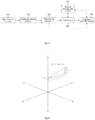
- FIG. 3 is a block diagram illustrating a method for detecting a malicious code according to an embodiment of the present invention.
- the system 220 for detecting a malicious code includes a data collection module 300, a parameter extraction module 310, a data loading module 320, a filter module 330, a blacklist management module 340, and a visualization generation module 350.
- the data collection module 300 collects a DNS response packet on the network 200.
- the data collection module 300 may collect a DNS response packet by mirroring traffic through tapping or may directly collect a DNS response packet through software installed to the client terminal.
- the system 220 for detecting a malicious code may collect a DNS query.
- the system of the present invention analyzes DNS traffic is because the load is less than that when analyzing the entire network traffic and DNS traffic occurs before malicious behaviors of the bots 120.
- the DNS response packet includes query data as well as DNS response data.
- the parameter extraction module 310 extracts visualization parameters by parsing the DNS response packet.
- the parameter may include an IP address of the client terminal 210, a domain name, a DNS query type, a timestamp, and a flag.
- the parameter extraction module 310 may calculate cardinality for each domain name based on the IP address and the domain name of the DNS response.
- the parameter extraction module 310 may calculate intensity based on the timestamp and the IP address.
- the parameter extraction module 310 may calculate a flag error rate based on the IP address and the flag.
- the IP address of the client terminal 210 may be a 32-bit value or 64-bit value in an IP header section.
- the query type which is a 16-bit value having no signs for a query type field in the DNS query section, may be used to identify a behavior type.
- the domain name is a domain name of which the client terminal 210 intends to obtain the IP address.
- the domain name may be a variable-length string in a DNS query section or a response section and may be used to identify an attack target of the C&C server 110 and the bots (120).
- the timestamp may be a 32-bit value of a response time which the DNS server 130 records.
- the timestamp may be used to measure a quantity of DNS queries generated by the client terminal 210.
- the present invention may use a predetermined time ⁇ t i ( c ) and a time variation ⁇ t i ( c ) of the initial time t 0 ( c ) the client C .
- the flag which is a 16-bit value in the DNS header section, includes fields including state information. Specifically, the lower four bits of the flag which represents a replay code (hereinafter, referred to as "RCODE") and indicates whether the query was successfully answered are used.
- the flag may be used to measure the error rate to detect a botnet or a DNS cache poisoning attack in which an attacker inserts falsified information into a cache of the DNS server 130.
- the system of the present invention may calculate three parameters of a cardinality, an intensity and a flag error rate.
- the cardinality represents the number of clients inquiring a specific domain name.
- the cardinality may be calculated for each domain name based on the IP address and the domain name of the client of the DNS response. Normal clients do not maintain constant cardinalities, but the botnet maintains a relatively constant cardinality over time. Thus, the system may visually group botnets through the cardinalities.
- the intensity represents the number of queries per second of a client.
- a malicious behavior such as a spam transmission, a DNS cache poisoning attack, a distributed reflection DoS (hereinafter, referred to as "DRDoS") attack, and the like generates many DNS packets for a short time.
- the system may measure the intensity to identify a client which is shown as a client performing a malicious behavior in consideration of the characteristics of a malicious behavior.
- the intensity may be calculated based on the timestamp and the IP address of a client.
- the flag error rate may be used to detect an attack or a malicious behavior. For example, when an attacker makes a DNS cache poisoning attack, many error flags are generated. Thus, the system may detect an attack or a malicious behavior through the error flags.
- the flag error rate may be calculated based on the IP address of the client and the flag.
- the data loading module 320 may group all the IP addresses for each domain name and store the data extracted by the parameter extraction module 310.
- the data loading module 320 includes a data structure (hereinafter, referred to as a "domain table”) for loading a domain name and a data structure (hereinafter, referred to as "IP table”) for loading an IP of a client inquiring the corresponding domain.
- a domain table for loading a domain name
- IP table data structure
- the domain table may be a data structure H D ⁇ d,H C ⁇ having a domain name d as a key and the IP table H C as a value.
- the IP table H C may be a data structure H C ⁇ c,c ⁇ ⁇ having an IP address c of a client as a key, and a structure c ⁇ including an array q for storing a query type, an array ⁇ t for storing an amount of variation in time, an array ⁇ t of storing a timestamp, and an array f for storing a flag.
- the data structures of the domain table and the IP table of the data loading module 320 may be implemented with all kinds of detection algorithms such as an array, a hash table, a hash map, a binary search tree, B-tree, an AVL tree, and the like.
- the data loading module 320 searches for whether a domain name d i exists in the domain table H D , and if the domain name d i exists in the domain table H D , searches for whether a client IP c i exists in the corresponding IP table H C .
- the client IP c i is inserted as a key and the new structure c ⁇ ' is inserted into the IP table H C having the new structure c ⁇ ' as a value.
- the data loading module 320 may delete the stored data after a preset threshold time has elapsed.
- the data loading module 320 may load only once without redundantly loading a single domain of the domain table.
- the data loading module 320 may load the IP address of a client only once without redundantly loading it in a single domain, and may store a query type, a timestamp and a flag according to a single IP address.
- the filter module 330 filters the data loaded by the data loading module 320 to remove data on a normal behavior from the data.
- the filter module 330 filters and groups the domain names according to the cardinalities
- the filter module 330 receives the domain table H D of the data loading module 320 as an input, and generates a data structure T having the cardinality
- the filter module 330 While the filter module 330 is traversing the domain table H D , the filter module 330 compares the total number
- the filter module 330 searches for whether the cardinality
- the filter module 330 inserts the offset of H D [ d ] into the corresponding array o.
- a new array o is generated, and the filter module 330 inserts the offset of H D [ d ] into the new array o , inserts
- the blacklist management module 340 performs a function of storing a known blacklist domain.
- the visualization generation module 350 outputs sets v of triangle vertices in a cylindrical coordinate system.
- the visualization generation module of the present invention may display behaviors of clients in a triangle form.
- the coordinates of a general cylindrical coordinate system uses a radius r and angles ⁇ and z formed in the x-y plane to display a point in a three-dimensional space, but in the present invention, the cylindrical coordinate system uses the height r , angle ⁇ and z , and base ⁇ of a triangle to display the triangle in the three-dimensional space.
- the visualization generation module 350 While traversing the data structure T of the filter module 330, the visualization generation module 350 obtains the cardinality
- the IP address c i of the client may be expressed as following Equation 3.
- the IP address c i of the client may be calculated as following Equation 4 expressed with angle ⁇ in the cylindrical coordinate system.
- the IP address c i of each client may be mapped with the angle ⁇ .
- the height r of the triangle is determined by the cardinality
- the threshold value ( ) may be determined according a network scale or a display resolution.
- the position axis z of the triangle may be determined according to the cardinality
- a value of z is not determined according to the cardinality
- the coordinate value range of the vertex set V including the elements of each triangle may be defined as following Equation 7.
- the base ⁇ of the triangle may be determined according to the average number of queries per second of the client having IP address c i .
- three octets may be selected from the client IP and displayed with values in the range of 0 to 255 in red, green and blue.
- the system may assign different colors to triangles according to a situation even if the triangle is the same.
- the color of the triangle when the intensity of the IP address of the client exceeds a preset threshold value or the flag error rate of the IP address exceeds a threshold value may be different from that of the triangle when the intensity of the IP address of the client is equal to or less than the preset threshold value, or the flag error rate of the IP address is equal to or less than the preset threshold value or exceeds the blacklist domain or the threshold value.
- the system may represent the color of the triangle corresponding to the indication of an attack differently from the colors of other wings.
- the user may intuitively detect that an attack is applied to the destination, through the pattern.
- a system and a method for detecting a malicious code using visualization may visually display DNS data in a cylindrical coordinate system.
- the system may collect DNS responses, extract DNS queries included in the collected DNS responses, and generate a visual pattern based on the extracted DNS queries.
- ' d ' on the z axis may represent the domain name, such as Naver, Daum, and the like, of the attack destination or the domain name of the C&C server 110.
- ' c ' may represent the client transmitting a packet, for example, the bot 120.
- the length of the base of the triangle may be the intensity of the DNS query of a bot.
- the user may know, through the visually displayed pattern, which bot 120 communicates with which C&C server 110 or where the attack destination is.
- the system may display the IP address of each client in the cylinder coordinate system, may display the domain name on the z-axis according to the cardinality queried by the client, and vice versa.
- the reason that the triangle is displayed in three-dimensional space is because client IP addresses are displayed with dots or lines on a linear axis or plane, so that large numbers of IP addresses overlap or intersect with each other, so it is difficult to distinguish IP addresses from each other.
- the domain name may be a domain name of the destination or a domain name of the C&C server 110.
- the system of the present invention displays a botnet using a pattern formed by collecting triangles in a cylindrical coordinate system.
- the coordinates of a triangle in a cylindrical coordinate system may be displayed with a height r , an angle ⁇ , a position z on the z axis, and a base ⁇ of a triangle.
- the system displays the base of the triangle using additional coordinates ⁇ to display the intensity of the query of the client.
- the reason that a triangle is used to represent the intensity is because the triangle may represent more informational than a point or line and may be easier to distinguish colors or locations than points or lines.
- another reason is because a larger amount of processing is required when a figure having more vertices than a triangle is displayed.
- still another reason is because a triangle is sufficient for the user to intuitively recognize a malicious behavior.
- the IP address of each client is represented by an angle ⁇ of a triangle.
- the IP addresses of clients inquiring a destination having the same domain name may be displayed with a circle around the z . axis.
- the base of each triangle may represent the intensity of an amount of DNS queries of the client.
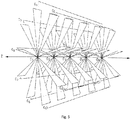
- the system may define an attack pattern in four patterns as illustrated in FIGS. 6A to 6D .
- Type- I ( FIG. 6A ):
- a plurality of bots 120 performs a DNS query to find one C&C server 110, they are represented in a disk-shaped pattern.
- a disk-shaped pattern may appear even in a normal case, but, in this case, the cardinality is very irregular and the disk-shaped pattern has a low intensity.
- the disk-shaped pattern corresponding to a botnet may be clearly distinguished from the pattern corresponding to a normal case in terms of size, color and thickness.
- Type- I ( FIG. 6B ): When a plurality of C&C servers 110 or C&C server 110 has a plurality of domain names or a domain name, in a case that a plurality of bots performs DNS queries, disk-shaped patterns of Type-I may be arrayed to be represented in a cylinder shape. In this case, the disk-shaped patterns may be the same or similar to each other.
- Type-III ( FIG. 6C ) : When a single bot 120 or plural bots 120 send many DNS queries, a pattern may be formed in an triangle having an increased width. Such a pattern represents a DRDoS attack or an abnormal behavior.
- Type-IV ( FIG. 6D ) : When one bot 120 inquires a plurality of domain names, a plurality of triangles may be arranged in the z-axis direction so that it is expressed as a plane. This represents a DNS cache poisoning attack or another type of abnormal behavior.
Landscapes
- Engineering & Computer Science (AREA)
- Computer Security & Cryptography (AREA)
- Computer Networks & Wireless Communication (AREA)
- Signal Processing (AREA)
- General Engineering & Computer Science (AREA)
- Computer Hardware Design (AREA)
- Computing Systems (AREA)
- Health & Medical Sciences (AREA)
- General Health & Medical Sciences (AREA)
- Software Systems (AREA)
- Theoretical Computer Science (AREA)
- Cardiology (AREA)
- Quality & Reliability (AREA)
- Virology (AREA)
- Physics & Mathematics (AREA)
- General Physics & Mathematics (AREA)
- Data Exchanges In Wide-Area Networks (AREA)
- Computer And Data Communications (AREA)
Applications Claiming Priority (2)
| Application Number | Priority Date | Filing Date | Title |
|---|---|---|---|
| KR1020140107285A KR101544322B1 (ko) | 2014-08-18 | 2014-08-18 | 시각화를 이용한 악성 코드 탐지 시스템과 방법 |
| PCT/KR2015/008625 WO2016028067A2 (ko) | 2014-08-18 | 2015-08-18 | 시각화를 이용한 악성 코드 탐지 시스템과 방법 |
Publications (2)
| Publication Number | Publication Date |
|---|---|
| EP3185164A2 true EP3185164A2 (de) | 2017-06-28 |
| EP3185164A4 EP3185164A4 (de) | 2017-08-16 |
Family
ID=54061002
Family Applications (1)
| Application Number | Title | Priority Date | Filing Date |
|---|---|---|---|
| EP15833965.5A Withdrawn EP3185164A4 (de) | 2014-08-18 | 2015-08-18 | Systeme und verfahren zur detektion von bösartigem code mittels visualisierung |
Country Status (4)
| Country | Link |
|---|---|
| US (1) | US20170272454A1 (de) |
| EP (1) | EP3185164A4 (de) |
| KR (1) | KR101544322B1 (de) |
| WO (1) | WO2016028067A2 (de) |
Cited By (1)
| Publication number | Priority date | Publication date | Assignee | Title |
|---|---|---|---|---|
| CN107835149A (zh) * | 2017-09-13 | 2018-03-23 | 杭州安恒信息技术有限公司 | 基于dns流量分析的网络窃密行为检测方法以及装置 |
Families Citing this family (16)
| Publication number | Priority date | Publication date | Assignee | Title |
|---|---|---|---|---|
| WO2016164050A1 (en) * | 2015-04-10 | 2016-10-13 | Hewlett Packard Enterprise Development Lp | Network anomaly detection |
| US10805318B2 (en) | 2015-08-28 | 2020-10-13 | Hewlett Packard Enterprise Development Lp | Identification of a DNS packet as malicious based on a value |
| EP3275150B1 (de) * | 2015-08-28 | 2019-08-07 | Hewlett-Packard Enterprise Development LP | Extrahierte datenklassifizierung zur bestimmung, ob ein dns-paket schädlich ist |
| US9954881B1 (en) * | 2016-03-29 | 2018-04-24 | Microsoft Technology Licensing, Llc | ATO threat visualization system |
| US10148683B1 (en) | 2016-03-29 | 2018-12-04 | Microsoft Technology Licensing, Llc | ATO threat detection system |
| US10348758B1 (en) * | 2016-12-02 | 2019-07-09 | Symantec Corporation | Systems and methods for providing interfaces for visualizing threats within networked control systems |
| KR102575974B1 (ko) | 2017-01-25 | 2023-09-08 | 한국전자통신연구원 | 데이터 시각화 장치 및 방법 |
| KR102057459B1 (ko) * | 2017-11-27 | 2020-01-22 | (주)에이알씨엔에스 | 네트워크 트래픽 플로우를 이용한 보안상황 종합 분석 및 인지 시스템 |
| US11201853B2 (en) * | 2019-01-10 | 2021-12-14 | Vmware, Inc. | DNS cache protection |
| US20200314107A1 (en) * | 2019-03-29 | 2020-10-01 | Mcafee, Llc | Systems, methods, and media for securing internet of things devices |
| CN110365658B (zh) * | 2019-06-25 | 2022-04-19 | 深圳市腾讯计算机系统有限公司 | 一种反射攻击防护与流量清洗方法、装置、设备及介质 |
| US10855644B1 (en) | 2019-09-09 | 2020-12-01 | Vmware, Inc. | Address resolution protocol entry verification |
| US11575646B2 (en) | 2020-03-12 | 2023-02-07 | Vmware, Inc. | Domain name service (DNS) server cache table validation |
| US11438166B2 (en) * | 2020-03-19 | 2022-09-06 | Oracle International Corporation | System and method for use of a suffix tree to control blocking of blacklisted encrypted domains |
| US12081589B2 (en) * | 2021-01-22 | 2024-09-03 | Comcast Cable Communications, Llc | Systems and methods for improved domain name system security |
| CN118584898B (zh) * | 2024-08-01 | 2024-10-01 | 华中科技大学 | 一种用于数控车削加工的nc代码安全语义分析方法 |
Family Cites Families (5)
| Publication number | Priority date | Publication date | Assignee | Title |
|---|---|---|---|---|
| JP4296184B2 (ja) | 2006-03-13 | 2009-07-15 | 日本電信電話株式会社 | 攻撃検出装置、攻撃検出方法および攻撃検出プログラム |
| KR100879608B1 (ko) * | 2007-01-23 | 2009-01-21 | 한남대학교 산학협력단 | 공격지식기반의 네트워크 트래픽 분석 및 감시 방법 |
| KR20120057066A (ko) * | 2010-11-26 | 2012-06-05 | 한국전자통신연구원 | 네트워크 보안관제 시스템 및 방법, 네트워크 보안관제를 위한 보안 이벤트 처리 장치 및 시각화 처리 장치 |
| KR101182793B1 (ko) * | 2011-02-11 | 2012-09-13 | 고려대학교 산학협력단 | 도메인 이름 서비스 질의 데이터를 이용한 봇넷 탐지 방법 및 시스템 |
| KR101538374B1 (ko) * | 2011-07-29 | 2015-07-22 | 한국전자통신연구원 | 사이버 위협 사전 예측 장치 및 방법 |
-
2014
- 2014-08-18 KR KR1020140107285A patent/KR101544322B1/ko not_active Expired - Fee Related
-
2015
- 2015-08-18 WO PCT/KR2015/008625 patent/WO2016028067A2/ko not_active Ceased
- 2015-08-18 US US15/505,237 patent/US20170272454A1/en not_active Abandoned
- 2015-08-18 EP EP15833965.5A patent/EP3185164A4/de not_active Withdrawn
Cited By (1)
| Publication number | Priority date | Publication date | Assignee | Title |
|---|---|---|---|---|
| CN107835149A (zh) * | 2017-09-13 | 2018-03-23 | 杭州安恒信息技术有限公司 | 基于dns流量分析的网络窃密行为检测方法以及装置 |
Also Published As
| Publication number | Publication date |
|---|---|
| WO2016028067A3 (ko) | 2016-04-07 |
| EP3185164A4 (de) | 2017-08-16 |
| KR101544322B1 (ko) | 2015-08-21 |
| WO2016028067A2 (ko) | 2016-02-25 |
| US20170272454A1 (en) | 2017-09-21 |
Similar Documents
| Publication | Publication Date | Title |
|---|---|---|
| EP3185164A2 (de) | Systeme und verfahren zur detektion von bösartigem code mittels visualisierung | |
| CN111147504B (zh) | 威胁检测方法、装置、设备和存储介质 | |
| Dainotti et al. | Analysis of a"/0" Stealth Scan from a Botnet | |
| Feily et al. | A survey of botnet and botnet detection | |
| Lin et al. | Cyber attack and defense on industry control systems | |
| CN109474575B (zh) | 一种dns隧道的检测方法及装置 | |
| US20150341380A1 (en) | System and method for detecting abnormal behavior of control system | |
| US9866575B2 (en) | Management and distribution of virtual cyber sensors | |
| US20150009038A1 (en) | Method and apparatus for visualizing network security alerts | |
| USRE50199E1 (en) | System and method for detecting a malicious activity in a computing environment | |
| CN106254318A (zh) | 一种网络攻击分析方法 | |
| Bou-Harb et al. | Behavioral analytics for inferring large-scale orchestrated probing events | |
| CN106302859B (zh) | 一种dnssec否定应答的响应及处理方法 | |
| Pearlman et al. | Visualizing network security events using compound glyphs from a service-oriented perspective | |
| CN116614260B (zh) | 复杂网络攻击检测方法、系统、电子设备及存储介质 | |
| Zhang et al. | A hadoop based analysis and detection model for ip spoofing typed ddos attack | |
| KR20200109875A (ko) | 유해 ip 판단 방법 | |
| Pashamokhtari et al. | Progressive monitoring of iot networks using sdn and cost-effective traffic signatures | |
| CN112953895A (zh) | 一种攻击行为检测方法、装置、设备及可读存储介质 | |
| CN119363485B (zh) | 攻击数据多维度分析方法、装置、设备和存储介质 | |
| Seo et al. | Cylindrical Coordinates Security Visualization for multiple domain command and control botnet detection | |
| CN120750628A (zh) | 一种网络资产探测方法、装置、设备以及存储介质 | |
| CN106209867B (zh) | 一种高级威胁防御方法及系统 | |
| Song et al. | A comprehensive approach to detect unknown attacks via intrusion detection alerts | |
| CN110661795A (zh) | 一种向量级威胁情报自动生产、分发系统及方法 |
Legal Events
| Date | Code | Title | Description |
|---|---|---|---|
| PUAI | Public reference made under article 153(3) epc to a published international application that has entered the european phase |
Free format text: ORIGINAL CODE: 0009012 |
|
| 17P | Request for examination filed |
Effective date: 20170217 |
|
| AK | Designated contracting states |
Kind code of ref document: A2 Designated state(s): AL AT BE BG CH CY CZ DE DK EE ES FI FR GB GR HR HU IE IS IT LI LT LU LV MC MK MT NL NO PL PT RO RS SE SI SK SM TR |
|
| AX | Request for extension of the european patent |
Extension state: BA ME |
|
| STAA | Information on the status of an ep patent application or granted ep patent |
Free format text: STATUS: THE APPLICATION HAS BEEN WITHDRAWN |
|
| A4 | Supplementary search report drawn up and despatched |
Effective date: 20170719 |
|
| RIC1 | Information provided on ipc code assigned before grant |
Ipc: H04L 29/06 20060101AFI20170713BHEP |
|
| 18W | Application withdrawn |
Effective date: 20170809 |