EP3184635A1 - Krebsmarker und krebsbestimmungsverfahren - Google Patents
Krebsmarker und krebsbestimmungsverfahren Download PDFInfo
- Publication number
- EP3184635A1 EP3184635A1 EP15833168.6A EP15833168A EP3184635A1 EP 3184635 A1 EP3184635 A1 EP 3184635A1 EP 15833168 A EP15833168 A EP 15833168A EP 3184635 A1 EP3184635 A1 EP 3184635A1
- Authority
- EP
- European Patent Office
- Prior art keywords
- nucleotide sequence
- seq
- cells
- dna
- circle
- Prior art date
- Legal status (The legal status is an assumption and is not a legal conclusion. Google has not performed a legal analysis and makes no representation as to the accuracy of the status listed.)
- Withdrawn
Links
- 238000000034 method Methods 0.000 title claims abstract description 94
- 239000000439 tumor marker Substances 0.000 title claims abstract description 29
- 206010028980 Neoplasm Diseases 0.000 title abstract description 28
- 201000011510 cancer Diseases 0.000 title abstract description 28
- 239000002773 nucleotide Substances 0.000 claims abstract description 257
- 125000003729 nucleotide group Chemical group 0.000 claims abstract description 257
- 238000006243 chemical reaction Methods 0.000 claims abstract description 97
- 230000011987 methylation Effects 0.000 claims abstract description 62
- 238000007069 methylation reaction Methods 0.000 claims abstract description 62
- 101100013367 Homo sapiens FOXB2 gene Proteins 0.000 claims abstract description 55
- FWMNVWWHGCHHJJ-SKKKGAJSSA-N 4-amino-1-[(2r)-6-amino-2-[[(2r)-2-[[(2r)-2-[[(2r)-2-amino-3-phenylpropanoyl]amino]-3-phenylpropanoyl]amino]-4-methylpentanoyl]amino]hexanoyl]piperidine-4-carboxylic acid Chemical compound C([C@H](C(=O)N[C@H](CC(C)C)C(=O)N[C@H](CCCCN)C(=O)N1CCC(N)(CC1)C(O)=O)NC(=O)[C@H](N)CC=1C=CC=CC=1)C1=CC=CC=C1 FWMNVWWHGCHHJJ-SKKKGAJSSA-N 0.000 claims abstract description 37
- LSNNMFCWUKXFEE-UHFFFAOYSA-M Bisulfite Chemical compound OS([O-])=O LSNNMFCWUKXFEE-UHFFFAOYSA-M 0.000 claims abstract description 37
- 108091028043 Nucleic acid sequence Proteins 0.000 claims abstract description 36
- OPTASPLRGRRNAP-UHFFFAOYSA-N cytosine Chemical compound NC=1C=CNC(=O)N=1 OPTASPLRGRRNAP-UHFFFAOYSA-N 0.000 description 215
- 210000004027 cell Anatomy 0.000 description 133
- 108020004414 DNA Proteins 0.000 description 125
- 229940104302 cytosine Drugs 0.000 description 63
- 108091029430 CpG site Proteins 0.000 description 49
- 239000000243 solution Substances 0.000 description 46
- 238000010586 diagram Methods 0.000 description 35
- LFQSCWFLJHTTHZ-UHFFFAOYSA-N Ethanol Chemical compound CCO LFQSCWFLJHTTHZ-UHFFFAOYSA-N 0.000 description 21
- 102000016928 DNA-directed DNA polymerase Human genes 0.000 description 17
- 239000007853 buffer solution Substances 0.000 description 17
- 108010014303 DNA-directed DNA polymerase Proteins 0.000 description 16
- 150000001875 compounds Chemical class 0.000 description 16
- 239000013612 plasmid Substances 0.000 description 16
- ISAKRJDGNUQOIC-UHFFFAOYSA-N Uracil Chemical compound O=C1C=CNC(=O)N1 ISAKRJDGNUQOIC-UHFFFAOYSA-N 0.000 description 14
- 238000000605 extraction Methods 0.000 description 13
- HEMHJVSKTPXQMS-UHFFFAOYSA-M Sodium hydroxide Chemical compound [OH-].[Na+] HEMHJVSKTPXQMS-UHFFFAOYSA-M 0.000 description 12
- 201000010897 colon adenocarcinoma Diseases 0.000 description 12
- 208000029742 colonic neoplasm Diseases 0.000 description 12
- 238000012408 PCR amplification Methods 0.000 description 11
- 210000004369 blood Anatomy 0.000 description 11
- 239000008280 blood Substances 0.000 description 11
- 125000004432 carbon atom Chemical group C* 0.000 description 11
- -1 for example Inorganic materials 0.000 description 11
- 239000002609 medium Substances 0.000 description 11
- 238000000746 purification Methods 0.000 description 11
- 125000000217 alkyl group Chemical group 0.000 description 10
- 238000001962 electrophoresis Methods 0.000 description 10
- 239000000047 product Substances 0.000 description 10
- XLYOFNOQVPJJNP-UHFFFAOYSA-N water Substances O XLYOFNOQVPJJNP-UHFFFAOYSA-N 0.000 description 10
- 239000003513 alkali Substances 0.000 description 9
- 230000007062 hydrolysis Effects 0.000 description 9
- 238000006460 hydrolysis reaction Methods 0.000 description 9
- HEDRZPFGACZZDS-UHFFFAOYSA-N Chloroform Chemical compound ClC(Cl)Cl HEDRZPFGACZZDS-UHFFFAOYSA-N 0.000 description 8
- KFZMGEQAYNKOFK-UHFFFAOYSA-N Isopropanol Chemical compound CC(C)O KFZMGEQAYNKOFK-UHFFFAOYSA-N 0.000 description 8
- ISWSIDIOOBJBQZ-UHFFFAOYSA-N Phenol Chemical compound OC1=CC=CC=C1 ISWSIDIOOBJBQZ-UHFFFAOYSA-N 0.000 description 8
- 108010006785 Taq Polymerase Proteins 0.000 description 8
- 229960000643 adenine Drugs 0.000 description 8
- 230000015572 biosynthetic process Effects 0.000 description 8
- 229910052799 carbon Inorganic materials 0.000 description 8
- PHTQWCKDNZKARW-UHFFFAOYSA-N isoamylol Chemical compound CC(C)CCO PHTQWCKDNZKARW-UHFFFAOYSA-N 0.000 description 8
- 239000000203 mixture Substances 0.000 description 8
- 229930024421 Adenine Natural products 0.000 description 7
- GFFGJBXGBJISGV-UHFFFAOYSA-N Adenine Chemical compound NC1=NC=NC2=C1N=CN2 GFFGJBXGBJISGV-UHFFFAOYSA-N 0.000 description 7
- 230000000694 effects Effects 0.000 description 7
- 125000004435 hydrogen atom Chemical group [H]* 0.000 description 7
- 210000004072 lung Anatomy 0.000 description 7
- 108090000623 proteins and genes Proteins 0.000 description 7
- 238000000926 separation method Methods 0.000 description 7
- 239000000126 substance Substances 0.000 description 7
- 229940035893 uracil Drugs 0.000 description 7
- QKNYBSVHEMOAJP-UHFFFAOYSA-N 2-amino-2-(hydroxymethyl)propane-1,3-diol;hydron;chloride Chemical compound Cl.OCC(N)(CO)CO QKNYBSVHEMOAJP-UHFFFAOYSA-N 0.000 description 6
- KWYUFKZDYYNOTN-UHFFFAOYSA-M Potassium hydroxide Chemical compound [OH-].[K+] KWYUFKZDYYNOTN-UHFFFAOYSA-M 0.000 description 6
- LSNNMFCWUKXFEE-UHFFFAOYSA-N Sulfurous acid Chemical compound OS(O)=O LSNNMFCWUKXFEE-UHFFFAOYSA-N 0.000 description 6
- 150000001721 carbon Chemical group 0.000 description 6
- 239000000499 gel Substances 0.000 description 6
- 238000010438 heat treatment Methods 0.000 description 6
- 229910052757 nitrogen Inorganic materials 0.000 description 6
- 238000001556 precipitation Methods 0.000 description 6
- 108091008146 restriction endonucleases Proteins 0.000 description 6
- 210000001626 skin fibroblast Anatomy 0.000 description 6
- RWQNBRDOKXIBIV-UHFFFAOYSA-N thymine Chemical compound CC1=CNC(=O)NC1=O RWQNBRDOKXIBIV-UHFFFAOYSA-N 0.000 description 6
- 239000007983 Tris buffer Substances 0.000 description 5
- 238000010367 cloning Methods 0.000 description 5
- SUYVUBYJARFZHO-RRKCRQDMSA-N dATP Chemical compound C1=NC=2C(N)=NC=NC=2N1[C@H]1C[C@H](O)[C@@H](COP(O)(=O)OP(O)(=O)OP(O)(O)=O)O1 SUYVUBYJARFZHO-RRKCRQDMSA-N 0.000 description 5
- SUYVUBYJARFZHO-UHFFFAOYSA-N dATP Natural products C1=NC=2C(N)=NC=NC=2N1C1CC(O)C(COP(O)(=O)OP(O)(=O)OP(O)(O)=O)O1 SUYVUBYJARFZHO-UHFFFAOYSA-N 0.000 description 5
- 239000005547 deoxyribonucleotide Substances 0.000 description 5
- 238000010353 genetic engineering Methods 0.000 description 5
- 239000001226 triphosphate Substances 0.000 description 5
- 235000011178 triphosphate Nutrition 0.000 description 5
- LENZDBCJOHFCAS-UHFFFAOYSA-N tris Chemical compound OCC(N)(CO)CO LENZDBCJOHFCAS-UHFFFAOYSA-N 0.000 description 5
- 206010052747 Adenocarcinoma pancreas Diseases 0.000 description 4
- QGZKDVFQNNGYKY-UHFFFAOYSA-N Ammonia Chemical compound N QGZKDVFQNNGYKY-UHFFFAOYSA-N 0.000 description 4
- IJGRMHOSHXDMSA-UHFFFAOYSA-N Atomic nitrogen Chemical compound N#N IJGRMHOSHXDMSA-UHFFFAOYSA-N 0.000 description 4
- 206010006187 Breast cancer Diseases 0.000 description 4
- 208000026310 Breast neoplasm Diseases 0.000 description 4
- 206010052360 Colorectal adenocarcinoma Diseases 0.000 description 4
- 102000012410 DNA Ligases Human genes 0.000 description 4
- 108010061982 DNA Ligases Proteins 0.000 description 4
- 238000007400 DNA extraction Methods 0.000 description 4
- 102100021085 Forkhead box protein B2 Human genes 0.000 description 4
- 108700039691 Genetic Promoter Regions Proteins 0.000 description 4
- DHMQDGOQFOQNFH-UHFFFAOYSA-N Glycine Chemical compound NCC(O)=O DHMQDGOQFOQNFH-UHFFFAOYSA-N 0.000 description 4
- 101000818319 Homo sapiens Forkhead box protein B2 Proteins 0.000 description 4
- 102100020870 La-related protein 6 Human genes 0.000 description 4
- 108050008265 La-related protein 6 Proteins 0.000 description 4
- 241000124008 Mammalia Species 0.000 description 4
- UIIMBOGNXHQVGW-UHFFFAOYSA-M Sodium bicarbonate Chemical compound [Na+].OC([O-])=O UIIMBOGNXHQVGW-UHFFFAOYSA-M 0.000 description 4
- FAPWRFPIFSIZLT-UHFFFAOYSA-M Sodium chloride Chemical compound [Na+].[Cl-] FAPWRFPIFSIZLT-UHFFFAOYSA-M 0.000 description 4
- KYIKRXIYLAGAKQ-UHFFFAOYSA-N abcn Chemical compound C1CCCCC1(C#N)N=NC1(C#N)CCCCC1 KYIKRXIYLAGAKQ-UHFFFAOYSA-N 0.000 description 4
- 230000003321 amplification Effects 0.000 description 4
- 239000007864 aqueous solution Substances 0.000 description 4
- 238000005869 desulfonation reaction Methods 0.000 description 4
- 239000012153 distilled water Substances 0.000 description 4
- 239000011259 mixed solution Substances 0.000 description 4
- 125000004433 nitrogen atom Chemical group N* 0.000 description 4
- 238000003199 nucleic acid amplification method Methods 0.000 description 4
- 108020004707 nucleic acids Proteins 0.000 description 4
- 102000039446 nucleic acids Human genes 0.000 description 4
- 201000002094 pancreatic adenocarcinoma Diseases 0.000 description 4
- 235000002639 sodium chloride Nutrition 0.000 description 4
- 210000001519 tissue Anatomy 0.000 description 4
- 230000009466 transformation Effects 0.000 description 4
- JKMHFZQWWAIEOD-UHFFFAOYSA-N 2-[4-(2-hydroxyethyl)piperazin-1-yl]ethanesulfonic acid Chemical compound OCC[NH+]1CCN(CCS([O-])(=O)=O)CC1 JKMHFZQWWAIEOD-UHFFFAOYSA-N 0.000 description 3
- QTBSBXVTEAMEQO-UHFFFAOYSA-N Acetic acid Chemical compound CC(O)=O QTBSBXVTEAMEQO-UHFFFAOYSA-N 0.000 description 3
- 241000588724 Escherichia coli Species 0.000 description 3
- 239000006173 Good's buffer Substances 0.000 description 3
- 239000007995 HEPES buffer Substances 0.000 description 3
- 206010060862 Prostate cancer Diseases 0.000 description 3
- 208000000236 Prostatic Neoplasms Diseases 0.000 description 3
- 238000012300 Sequence Analysis Methods 0.000 description 3
- DWAQJAXMDSEUJJ-UHFFFAOYSA-M Sodium bisulfite Chemical compound [Na+].OS([O-])=O DWAQJAXMDSEUJJ-UHFFFAOYSA-M 0.000 description 3
- 210000001744 T-lymphocyte Anatomy 0.000 description 3
- 239000007997 Tricine buffer Substances 0.000 description 3
- 239000011543 agarose gel Substances 0.000 description 3
- 238000000246 agarose gel electrophoresis Methods 0.000 description 3
- AVKUERGKIZMTKX-NJBDSQKTSA-N ampicillin Chemical compound C1([C@@H](N)C(=O)N[C@H]2[C@H]3SC([C@@H](N3C2=O)C(O)=O)(C)C)=CC=CC=C1 AVKUERGKIZMTKX-NJBDSQKTSA-N 0.000 description 3
- 229960000723 ampicillin Drugs 0.000 description 3
- 238000004458 analytical method Methods 0.000 description 3
- 239000002585 base Substances 0.000 description 3
- 239000000872 buffer Substances 0.000 description 3
- 210000001840 diploid cell Anatomy 0.000 description 3
- 230000001605 fetal effect Effects 0.000 description 3
- 210000002950 fibroblast Anatomy 0.000 description 3
- 238000001914 filtration Methods 0.000 description 3
- 238000005259 measurement Methods 0.000 description 3
- 230000001105 regulatory effect Effects 0.000 description 3
- 238000012163 sequencing technique Methods 0.000 description 3
- 229940079827 sodium hydrogen sulfite Drugs 0.000 description 3
- 235000010267 sodium hydrogen sulphite Nutrition 0.000 description 3
- FVAUCKIRQBBSSJ-UHFFFAOYSA-M sodium iodide Chemical compound [Na+].[I-] FVAUCKIRQBBSSJ-UHFFFAOYSA-M 0.000 description 3
- 239000006228 supernatant Substances 0.000 description 3
- 229940113082 thymine Drugs 0.000 description 3
- 229920001817 Agar Polymers 0.000 description 2
- NLXLAEXVIDQMFP-UHFFFAOYSA-N Ammonia chloride Chemical compound [NH4+].[Cl-] NLXLAEXVIDQMFP-UHFFFAOYSA-N 0.000 description 2
- BTBUEUYNUDRHOZ-UHFFFAOYSA-N Borate Chemical compound [O-]B([O-])[O-] BTBUEUYNUDRHOZ-UHFFFAOYSA-N 0.000 description 2
- 208000011691 Burkitt lymphomas Diseases 0.000 description 2
- VTYYLEPIZMXCLO-UHFFFAOYSA-L Calcium carbonate Chemical compound [Ca+2].[O-]C([O-])=O VTYYLEPIZMXCLO-UHFFFAOYSA-L 0.000 description 2
- OKTJSMMVPCPJKN-UHFFFAOYSA-N Carbon Chemical compound [C] OKTJSMMVPCPJKN-UHFFFAOYSA-N 0.000 description 2
- 206010008342 Cervix carcinoma Diseases 0.000 description 2
- 102000053602 DNA Human genes 0.000 description 2
- 208000000461 Esophageal Neoplasms Diseases 0.000 description 2
- 108090000852 Forkhead Transcription Factors Proteins 0.000 description 2
- 102000004315 Forkhead Transcription Factors Human genes 0.000 description 2
- 229920002527 Glycogen Polymers 0.000 description 2
- 239000006142 Luria-Bertani Agar Substances 0.000 description 2
- CSNNHWWHGAXBCP-UHFFFAOYSA-L Magnesium sulfate Chemical compound [Mg+2].[O-][S+2]([O-])([O-])[O-] CSNNHWWHGAXBCP-UHFFFAOYSA-L 0.000 description 2
- LRHPLDYGYMQRHN-UHFFFAOYSA-N N-Butanol Chemical compound CCCCO LRHPLDYGYMQRHN-UHFFFAOYSA-N 0.000 description 2
- 206010029260 Neuroblastoma Diseases 0.000 description 2
- 206010030155 Oesophageal carcinoma Diseases 0.000 description 2
- 238000012181 QIAquick gel extraction kit Methods 0.000 description 2
- 108020004682 Single-Stranded DNA Proteins 0.000 description 2
- CDBYLPFSWZWCQE-UHFFFAOYSA-L Sodium Carbonate Chemical compound [Na+].[Na+].[O-]C([O-])=O CDBYLPFSWZWCQE-UHFFFAOYSA-L 0.000 description 2
- 208000006105 Uterine Cervical Neoplasms Diseases 0.000 description 2
- 230000003187 abdominal effect Effects 0.000 description 2
- 230000001154 acute effect Effects 0.000 description 2
- 239000008272 agar Substances 0.000 description 2
- 150000008044 alkali metal hydroxides Chemical class 0.000 description 2
- 125000003277 amino group Chemical group 0.000 description 2
- 229910021529 ammonia Inorganic materials 0.000 description 2
- 150000001450 anions Chemical class 0.000 description 2
- 229940041514 candida albicans extract Drugs 0.000 description 2
- 201000010881 cervical cancer Diseases 0.000 description 2
- 239000003795 chemical substances by application Substances 0.000 description 2
- 210000003109 clavicle Anatomy 0.000 description 2
- 230000006326 desulfonation Effects 0.000 description 2
- 238000001514 detection method Methods 0.000 description 2
- XBDQKXXYIPTUBI-UHFFFAOYSA-N dimethylselenoniopropionate Natural products CCC(O)=O XBDQKXXYIPTUBI-UHFFFAOYSA-N 0.000 description 2
- 201000004101 esophageal cancer Diseases 0.000 description 2
- 229940096919 glycogen Drugs 0.000 description 2
- 229960000789 guanidine hydrochloride Drugs 0.000 description 2
- PJJJBBJSCAKJQF-UHFFFAOYSA-N guanidinium chloride Chemical compound [Cl-].NC(N)=[NH2+] PJJJBBJSCAKJQF-UHFFFAOYSA-N 0.000 description 2
- 206010073071 hepatocellular carcinoma Diseases 0.000 description 2
- 210000003292 kidney cell Anatomy 0.000 description 2
- 201000003785 large intestine adenocarcinoma Diseases 0.000 description 2
- 210000000265 leukocyte Anatomy 0.000 description 2
- 239000012160 loading buffer Substances 0.000 description 2
- 210000001165 lymph node Anatomy 0.000 description 2
- 208000002154 non-small cell lung carcinoma Diseases 0.000 description 2
- 150000007523 nucleic acids Chemical class 0.000 description 2
- 150000007524 organic acids Chemical class 0.000 description 2
- 230000002611 ovarian Effects 0.000 description 2
- 125000004430 oxygen atom Chemical group O* 0.000 description 2
- 239000008055 phosphate buffer solution Substances 0.000 description 2
- 229920002401 polyacrylamide Polymers 0.000 description 2
- 150000003839 salts Chemical class 0.000 description 2
- 235000017557 sodium bicarbonate Nutrition 0.000 description 2
- 229910000030 sodium bicarbonate Inorganic materials 0.000 description 2
- 239000011780 sodium chloride Substances 0.000 description 2
- 239000012192 staining solution Substances 0.000 description 2
- 239000008223 sterile water Substances 0.000 description 2
- 239000012137 tryptone Substances 0.000 description 2
- 208000029729 tumor suppressor gene on chromosome 11 Diseases 0.000 description 2
- 239000012138 yeast extract Substances 0.000 description 2
- GUAHPAJOXVYFON-ZETCQYMHSA-N (8S)-8-amino-7-oxononanoic acid zwitterion Chemical compound C[C@H](N)C(=O)CCCCCC(O)=O GUAHPAJOXVYFON-ZETCQYMHSA-N 0.000 description 1
- WURBVZBTWMNKQT-UHFFFAOYSA-N 1-(4-chlorophenoxy)-3,3-dimethyl-1-(1,2,4-triazol-1-yl)butan-2-one Chemical compound C1=NC=NN1C(C(=O)C(C)(C)C)OC1=CC=C(Cl)C=C1 WURBVZBTWMNKQT-UHFFFAOYSA-N 0.000 description 1
- 229920000936 Agarose Polymers 0.000 description 1
- USFZMSVCRYTOJT-UHFFFAOYSA-N Ammonium acetate Chemical compound N.CC(O)=O USFZMSVCRYTOJT-UHFFFAOYSA-N 0.000 description 1
- 239000005695 Ammonium acetate Substances 0.000 description 1
- 239000004254 Ammonium phosphate Substances 0.000 description 1
- 235000014469 Bacillus subtilis Nutrition 0.000 description 1
- 241000894006 Bacteria Species 0.000 description 1
- 241000282421 Canidae Species 0.000 description 1
- 108020004635 Complementary DNA Proteins 0.000 description 1
- 108091029523 CpG island Proteins 0.000 description 1
- 230000004544 DNA amplification Effects 0.000 description 1
- 230000004568 DNA-binding Effects 0.000 description 1
- PQUCIEFHOVEZAU-UHFFFAOYSA-N Diammonium sulfite Chemical compound [NH4+].[NH4+].[O-]S([O-])=O PQUCIEFHOVEZAU-UHFFFAOYSA-N 0.000 description 1
- 241000620209 Escherichia coli DH5[alpha] Species 0.000 description 1
- 108060002716 Exonuclease Proteins 0.000 description 1
- 229930091371 Fructose Natural products 0.000 description 1
- 239000005715 Fructose Substances 0.000 description 1
- RFSUNEUAIZKAJO-ARQDHWQXSA-N Fructose Chemical compound OC[C@H]1O[C@](O)(CO)[C@@H](O)[C@@H]1O RFSUNEUAIZKAJO-ARQDHWQXSA-N 0.000 description 1
- WQZGKKKJIJFFOK-GASJEMHNSA-N Glucose Natural products OC[C@H]1OC(O)[C@H](O)[C@@H](O)[C@@H]1O WQZGKKKJIJFFOK-GASJEMHNSA-N 0.000 description 1
- UFHFLCQGNIYNRP-UHFFFAOYSA-N Hydrogen Chemical compound [H][H] UFHFLCQGNIYNRP-UHFFFAOYSA-N 0.000 description 1
- 206010027476 Metastases Diseases 0.000 description 1
- 239000001888 Peptone Substances 0.000 description 1
- 108010080698 Peptones Proteins 0.000 description 1
- 108010010677 Phosphodiesterase I Proteins 0.000 description 1
- 208000006265 Renal cell carcinoma Diseases 0.000 description 1
- VYPSYNLAJGMNEJ-UHFFFAOYSA-N Silicium dioxide Chemical compound O=[Si]=O VYPSYNLAJGMNEJ-UHFFFAOYSA-N 0.000 description 1
- 229920002472 Starch Polymers 0.000 description 1
- CZMRCDWAGMRECN-UGDNZRGBSA-N Sucrose Chemical compound O[C@H]1[C@H](O)[C@@H](CO)O[C@@]1(CO)O[C@@H]1[C@H](O)[C@@H](O)[C@H](O)[C@@H](CO)O1 CZMRCDWAGMRECN-UGDNZRGBSA-N 0.000 description 1
- 229930006000 Sucrose Natural products 0.000 description 1
- 108091023040 Transcription factor Proteins 0.000 description 1
- 102000040945 Transcription factor Human genes 0.000 description 1
- 241000700605 Viruses Species 0.000 description 1
- 241000269368 Xenopus laevis Species 0.000 description 1
- 240000008042 Zea mays Species 0.000 description 1
- 235000005824 Zea mays ssp. parviglumis Nutrition 0.000 description 1
- 235000002017 Zea mays subsp mays Nutrition 0.000 description 1
- 150000001298 alcohols Chemical class 0.000 description 1
- 229910000288 alkali metal carbonate Inorganic materials 0.000 description 1
- 150000008041 alkali metal carbonates Chemical class 0.000 description 1
- 229910001860 alkaline earth metal hydroxide Inorganic materials 0.000 description 1
- 150000001412 amines Chemical class 0.000 description 1
- 235000019257 ammonium acetate Nutrition 0.000 description 1
- 229940043376 ammonium acetate Drugs 0.000 description 1
- 235000019270 ammonium chloride Nutrition 0.000 description 1
- 229910000148 ammonium phosphate Inorganic materials 0.000 description 1
- 235000019289 ammonium phosphates Nutrition 0.000 description 1
- 150000003863 ammonium salts Chemical class 0.000 description 1
- BFNBIHQBYMNNAN-UHFFFAOYSA-N ammonium sulfate Chemical compound N.N.OS(O)(=O)=O BFNBIHQBYMNNAN-UHFFFAOYSA-N 0.000 description 1
- 229910052921 ammonium sulfate Inorganic materials 0.000 description 1
- 235000011130 ammonium sulphate Nutrition 0.000 description 1
- RQPZNWPYLFFXCP-UHFFFAOYSA-L barium dihydroxide Chemical compound [OH-].[OH-].[Ba+2] RQPZNWPYLFFXCP-UHFFFAOYSA-L 0.000 description 1
- 229910001863 barium hydroxide Inorganic materials 0.000 description 1
- WQZGKKKJIJFFOK-VFUOTHLCSA-N beta-D-glucose Chemical compound OC[C@H]1O[C@@H](O)[C@H](O)[C@@H](O)[C@@H]1O WQZGKKKJIJFFOK-VFUOTHLCSA-N 0.000 description 1
- 239000012148 binding buffer Substances 0.000 description 1
- 210000000601 blood cell Anatomy 0.000 description 1
- 210000001124 body fluid Anatomy 0.000 description 1
- 239000010839 body fluid Substances 0.000 description 1
- 210000002798 bone marrow cell Anatomy 0.000 description 1
- 238000010804 cDNA synthesis Methods 0.000 description 1
- 229910000019 calcium carbonate Inorganic materials 0.000 description 1
- 229960003563 calcium carbonate Drugs 0.000 description 1
- AXCZMVOFGPJBDE-UHFFFAOYSA-L calcium dihydroxide Chemical compound [OH-].[OH-].[Ca+2] AXCZMVOFGPJBDE-UHFFFAOYSA-L 0.000 description 1
- 239000000920 calcium hydroxide Substances 0.000 description 1
- 229910001861 calcium hydroxide Inorganic materials 0.000 description 1
- 150000001720 carbohydrates Chemical class 0.000 description 1
- 235000014633 carbohydrates Nutrition 0.000 description 1
- 230000022131 cell cycle Effects 0.000 description 1
- 230000003196 chaotropic effect Effects 0.000 description 1
- 239000007795 chemical reaction product Substances 0.000 description 1
- 210000001072 colon Anatomy 0.000 description 1
- 239000002299 complementary DNA Substances 0.000 description 1
- 238000012790 confirmation Methods 0.000 description 1
- 229910000365 copper sulfate Inorganic materials 0.000 description 1
- 229960000355 copper sulfate Drugs 0.000 description 1
- ARUVKPQLZAKDPS-UHFFFAOYSA-L copper(II) sulfate Chemical compound [Cu+2].[O-][S+2]([O-])([O-])[O-] ARUVKPQLZAKDPS-UHFFFAOYSA-L 0.000 description 1
- 235000005822 corn Nutrition 0.000 description 1
- 239000012531 culture fluid Substances 0.000 description 1
- 210000004748 cultured cell Anatomy 0.000 description 1
- 238000012258 culturing Methods 0.000 description 1
- RGWHQCVHVJXOKC-SHYZEUOFSA-J dCTP(4-) Chemical compound O=C1N=C(N)C=CN1[C@@H]1O[C@H](COP([O-])(=O)OP([O-])(=O)OP([O-])([O-])=O)[C@@H](O)C1 RGWHQCVHVJXOKC-SHYZEUOFSA-J 0.000 description 1
- HAAZLUGHYHWQIW-KVQBGUIXSA-N dGTP Chemical compound C1=NC=2C(=O)NC(N)=NC=2N1[C@H]1C[C@H](O)[C@@H](COP(O)(=O)OP(O)(=O)OP(O)(O)=O)O1 HAAZLUGHYHWQIW-KVQBGUIXSA-N 0.000 description 1
- NHVNXKFIZYSCEB-XLPZGREQSA-N dTTP Chemical compound O=C1NC(=O)C(C)=CN1[C@@H]1O[C@H](COP(O)(=O)OP(O)(=O)OP(O)(O)=O)[C@@H](O)C1 NHVNXKFIZYSCEB-XLPZGREQSA-N 0.000 description 1
- 238000000354 decomposition reaction Methods 0.000 description 1
- 238000012217 deletion Methods 0.000 description 1
- 230000037430 deletion Effects 0.000 description 1
- 125000004663 dialkyl amino group Chemical group 0.000 description 1
- MNNHAPBLZZVQHP-UHFFFAOYSA-N diammonium hydrogen phosphate Chemical compound [NH4+].[NH4+].OP([O-])([O-])=O MNNHAPBLZZVQHP-UHFFFAOYSA-N 0.000 description 1
- 229940111685 dibasic potassium phosphate Drugs 0.000 description 1
- ZPWVASYFFYYZEW-UHFFFAOYSA-L dipotassium hydrogen phosphate Chemical compound [K+].[K+].OP([O-])([O-])=O ZPWVASYFFYYZEW-UHFFFAOYSA-L 0.000 description 1
- 238000004520 electroporation Methods 0.000 description 1
- 239000012149 elution buffer Substances 0.000 description 1
- 210000002257 embryonic structure Anatomy 0.000 description 1
- 102000013165 exonuclease Human genes 0.000 description 1
- 239000000284 extract Substances 0.000 description 1
- 229960001781 ferrous sulfate Drugs 0.000 description 1
- 239000011790 ferrous sulphate Substances 0.000 description 1
- 235000003891 ferrous sulphate Nutrition 0.000 description 1
- 239000007850 fluorescent dye Substances 0.000 description 1
- 239000008103 glucose Substances 0.000 description 1
- 239000003102 growth factor Substances 0.000 description 1
- 239000001963 growth medium Substances 0.000 description 1
- 210000003494 hepatocyte Anatomy 0.000 description 1
- 238000004128 high performance liquid chromatography Methods 0.000 description 1
- 239000001257 hydrogen Substances 0.000 description 1
- 229910052739 hydrogen Inorganic materials 0.000 description 1
- RWSOTUBLDIXVET-UHFFFAOYSA-M hydrosulfide Chemical compound [SH-] RWSOTUBLDIXVET-UHFFFAOYSA-M 0.000 description 1
- 238000010348 incorporation Methods 0.000 description 1
- 238000003780 insertion Methods 0.000 description 1
- 230000037431 insertion Effects 0.000 description 1
- 238000011835 investigation Methods 0.000 description 1
- BAUYGSIQEAFULO-UHFFFAOYSA-L iron(2+) sulfate (anhydrous) Chemical compound [Fe+2].[O-]S([O-])(=O)=O BAUYGSIQEAFULO-UHFFFAOYSA-L 0.000 description 1
- 229910000359 iron(II) sulfate Inorganic materials 0.000 description 1
- 210000003734 kidney Anatomy 0.000 description 1
- 210000002429 large intestine Anatomy 0.000 description 1
- 239000007788 liquid Substances 0.000 description 1
- 238000004811 liquid chromatography Methods 0.000 description 1
- 210000004185 liver Anatomy 0.000 description 1
- 201000007270 liver cancer Diseases 0.000 description 1
- 208000014018 liver neoplasm Diseases 0.000 description 1
- VTHJTEIRLNZDEV-UHFFFAOYSA-L magnesium dihydroxide Chemical compound [OH-].[OH-].[Mg+2] VTHJTEIRLNZDEV-UHFFFAOYSA-L 0.000 description 1
- 239000000347 magnesium hydroxide Substances 0.000 description 1
- 229910001862 magnesium hydroxide Inorganic materials 0.000 description 1
- GVALZJMUIHGIMD-UHFFFAOYSA-H magnesium phosphate Chemical compound [Mg+2].[Mg+2].[Mg+2].[O-]P([O-])([O-])=O.[O-]P([O-])([O-])=O GVALZJMUIHGIMD-UHFFFAOYSA-H 0.000 description 1
- 239000004137 magnesium phosphate Substances 0.000 description 1
- 229960002261 magnesium phosphate Drugs 0.000 description 1
- 229910000157 magnesium phosphate Inorganic materials 0.000 description 1
- 235000010994 magnesium phosphates Nutrition 0.000 description 1
- 229910052943 magnesium sulfate Inorganic materials 0.000 description 1
- 229960003390 magnesium sulfate Drugs 0.000 description 1
- 235000019341 magnesium sulphate Nutrition 0.000 description 1
- 210000004962 mammalian cell Anatomy 0.000 description 1
- 210000005075 mammary gland Anatomy 0.000 description 1
- 229940099596 manganese sulfate Drugs 0.000 description 1
- 239000011702 manganese sulphate Substances 0.000 description 1
- 235000007079 manganese sulphate Nutrition 0.000 description 1
- SQQMAOCOWKFBNP-UHFFFAOYSA-L manganese(II) sulfate Chemical compound [Mn+2].[O-]S([O-])(=O)=O SQQMAOCOWKFBNP-UHFFFAOYSA-L 0.000 description 1
- 235000013372 meat Nutrition 0.000 description 1
- 230000009401 metastasis Effects 0.000 description 1
- 244000005700 microbiome Species 0.000 description 1
- 150000007522 mineralic acids Chemical class 0.000 description 1
- 239000012046 mixed solvent Substances 0.000 description 1
- 229940111688 monobasic potassium phosphate Drugs 0.000 description 1
- 235000019796 monopotassium phosphate Nutrition 0.000 description 1
- 230000035772 mutation Effects 0.000 description 1
- 210000003757 neuroblast Anatomy 0.000 description 1
- 230000004766 neurogenesis Effects 0.000 description 1
- QJGQUHMNIGDVPM-UHFFFAOYSA-N nitrogen group Chemical group [N] QJGQUHMNIGDVPM-UHFFFAOYSA-N 0.000 description 1
- 235000016709 nutrition Nutrition 0.000 description 1
- 235000005985 organic acids Nutrition 0.000 description 1
- 210000001672 ovary Anatomy 0.000 description 1
- 210000000496 pancreas Anatomy 0.000 description 1
- 235000019319 peptone Nutrition 0.000 description 1
- 125000001997 phenyl group Chemical group [H]C1=C([H])C([H])=C(*)C([H])=C1[H] 0.000 description 1
- GNSKLFRGEWLPPA-UHFFFAOYSA-M potassium dihydrogen phosphate Chemical compound [K+].OP(O)([O-])=O GNSKLFRGEWLPPA-UHFFFAOYSA-M 0.000 description 1
- 230000003449 preventive effect Effects 0.000 description 1
- 238000012545 processing Methods 0.000 description 1
- BDERNNFJNOPAEC-UHFFFAOYSA-N propan-1-ol Chemical compound CCCO BDERNNFJNOPAEC-UHFFFAOYSA-N 0.000 description 1
- 235000019260 propionic acid Nutrition 0.000 description 1
- 210000002307 prostate Anatomy 0.000 description 1
- 210000005267 prostate cell Anatomy 0.000 description 1
- 238000011403 purification operation Methods 0.000 description 1
- IUVKMZGDUIUOCP-BTNSXGMBSA-N quinbolone Chemical compound O([C@H]1CC[C@H]2[C@H]3[C@@H]([C@]4(C=CC(=O)C=C4CC3)C)CC[C@@]21C)C1=CCCC1 IUVKMZGDUIUOCP-BTNSXGMBSA-N 0.000 description 1
- 230000035484 reaction time Effects 0.000 description 1
- 210000000664 rectum Anatomy 0.000 description 1
- 238000011160 research Methods 0.000 description 1
- 230000035939 shock Effects 0.000 description 1
- 239000000741 silica gel Substances 0.000 description 1
- 229910002027 silica gel Inorganic materials 0.000 description 1
- 229910000029 sodium carbonate Inorganic materials 0.000 description 1
- 229960002668 sodium chloride Drugs 0.000 description 1
- 235000009518 sodium iodide Nutrition 0.000 description 1
- 239000007787 solid Substances 0.000 description 1
- 241000894007 species Species 0.000 description 1
- 239000008107 starch Substances 0.000 description 1
- 235000019698 starch Nutrition 0.000 description 1
- 125000001424 substituent group Chemical group 0.000 description 1
- 239000005720 sucrose Substances 0.000 description 1
- 238000006277 sulfonation reaction Methods 0.000 description 1
- 238000003786 synthesis reaction Methods 0.000 description 1
- 238000007669 thermal treatment Methods 0.000 description 1
- 230000001131 transforming effect Effects 0.000 description 1
- 210000004291 uterus Anatomy 0.000 description 1
- 238000010792 warming Methods 0.000 description 1
- 239000011534 wash buffer Substances 0.000 description 1
- 238000005406 washing Methods 0.000 description 1
Images


Classifications
-
- C—CHEMISTRY; METALLURGY
- C12—BIOCHEMISTRY; BEER; SPIRITS; WINE; VINEGAR; MICROBIOLOGY; ENZYMOLOGY; MUTATION OR GENETIC ENGINEERING
- C12Q—MEASURING OR TESTING PROCESSES INVOLVING ENZYMES, NUCLEIC ACIDS OR MICROORGANISMS; COMPOSITIONS OR TEST PAPERS THEREFOR; PROCESSES OF PREPARING SUCH COMPOSITIONS; CONDITION-RESPONSIVE CONTROL IN MICROBIOLOGICAL OR ENZYMOLOGICAL PROCESSES
- C12Q1/00—Measuring or testing processes involving enzymes, nucleic acids or microorganisms; Compositions therefor; Processes of preparing such compositions
- C12Q1/68—Measuring or testing processes involving enzymes, nucleic acids or microorganisms; Compositions therefor; Processes of preparing such compositions involving nucleic acids
- C12Q1/6813—Hybridisation assays
- C12Q1/6816—Hybridisation assays characterised by the detection means
- C12Q1/682—Signal amplification
-
- C—CHEMISTRY; METALLURGY
- C12—BIOCHEMISTRY; BEER; SPIRITS; WINE; VINEGAR; MICROBIOLOGY; ENZYMOLOGY; MUTATION OR GENETIC ENGINEERING
- C12Q—MEASURING OR TESTING PROCESSES INVOLVING ENZYMES, NUCLEIC ACIDS OR MICROORGANISMS; COMPOSITIONS OR TEST PAPERS THEREFOR; PROCESSES OF PREPARING SUCH COMPOSITIONS; CONDITION-RESPONSIVE CONTROL IN MICROBIOLOGICAL OR ENZYMOLOGICAL PROCESSES
- C12Q1/00—Measuring or testing processes involving enzymes, nucleic acids or microorganisms; Compositions therefor; Processes of preparing such compositions
- C12Q1/68—Measuring or testing processes involving enzymes, nucleic acids or microorganisms; Compositions therefor; Processes of preparing such compositions involving nucleic acids
- C12Q1/6876—Nucleic acid products used in the analysis of nucleic acids, e.g. primers or probes
- C12Q1/6883—Nucleic acid products used in the analysis of nucleic acids, e.g. primers or probes for diseases caused by alterations of genetic material
- C12Q1/6886—Nucleic acid products used in the analysis of nucleic acids, e.g. primers or probes for diseases caused by alterations of genetic material for cancer
-
- C—CHEMISTRY; METALLURGY
- C12—BIOCHEMISTRY; BEER; SPIRITS; WINE; VINEGAR; MICROBIOLOGY; ENZYMOLOGY; MUTATION OR GENETIC ENGINEERING
- C12N—MICROORGANISMS OR ENZYMES; COMPOSITIONS THEREOF; PROPAGATING, PRESERVING, OR MAINTAINING MICROORGANISMS; MUTATION OR GENETIC ENGINEERING; CULTURE MEDIA
- C12N15/00—Mutation or genetic engineering; DNA or RNA concerning genetic engineering, vectors, e.g. plasmids, or their isolation, preparation or purification; Use of hosts therefor
- C12N15/09—Recombinant DNA-technology
-
- C—CHEMISTRY; METALLURGY
- C12—BIOCHEMISTRY; BEER; SPIRITS; WINE; VINEGAR; MICROBIOLOGY; ENZYMOLOGY; MUTATION OR GENETIC ENGINEERING
- C12Q—MEASURING OR TESTING PROCESSES INVOLVING ENZYMES, NUCLEIC ACIDS OR MICROORGANISMS; COMPOSITIONS OR TEST PAPERS THEREFOR; PROCESSES OF PREPARING SUCH COMPOSITIONS; CONDITION-RESPONSIVE CONTROL IN MICROBIOLOGICAL OR ENZYMOLOGICAL PROCESSES
- C12Q1/00—Measuring or testing processes involving enzymes, nucleic acids or microorganisms; Compositions therefor; Processes of preparing such compositions
- C12Q1/68—Measuring or testing processes involving enzymes, nucleic acids or microorganisms; Compositions therefor; Processes of preparing such compositions involving nucleic acids
-
- C—CHEMISTRY; METALLURGY
- C12—BIOCHEMISTRY; BEER; SPIRITS; WINE; VINEGAR; MICROBIOLOGY; ENZYMOLOGY; MUTATION OR GENETIC ENGINEERING
- C12Q—MEASURING OR TESTING PROCESSES INVOLVING ENZYMES, NUCLEIC ACIDS OR MICROORGANISMS; COMPOSITIONS OR TEST PAPERS THEREFOR; PROCESSES OF PREPARING SUCH COMPOSITIONS; CONDITION-RESPONSIVE CONTROL IN MICROBIOLOGICAL OR ENZYMOLOGICAL PROCESSES
- C12Q1/00—Measuring or testing processes involving enzymes, nucleic acids or microorganisms; Compositions therefor; Processes of preparing such compositions
- C12Q1/68—Measuring or testing processes involving enzymes, nucleic acids or microorganisms; Compositions therefor; Processes of preparing such compositions involving nucleic acids
- C12Q1/6809—Methods for determination or identification of nucleic acids involving differential detection
-
- C—CHEMISTRY; METALLURGY
- C12—BIOCHEMISTRY; BEER; SPIRITS; WINE; VINEGAR; MICROBIOLOGY; ENZYMOLOGY; MUTATION OR GENETIC ENGINEERING
- C12Q—MEASURING OR TESTING PROCESSES INVOLVING ENZYMES, NUCLEIC ACIDS OR MICROORGANISMS; COMPOSITIONS OR TEST PAPERS THEREFOR; PROCESSES OF PREPARING SUCH COMPOSITIONS; CONDITION-RESPONSIVE CONTROL IN MICROBIOLOGICAL OR ENZYMOLOGICAL PROCESSES
- C12Q1/00—Measuring or testing processes involving enzymes, nucleic acids or microorganisms; Compositions therefor; Processes of preparing such compositions
- C12Q1/68—Measuring or testing processes involving enzymes, nucleic acids or microorganisms; Compositions therefor; Processes of preparing such compositions involving nucleic acids
- C12Q1/6813—Hybridisation assays
- C12Q1/6827—Hybridisation assays for detection of mutation or polymorphism
-
- C—CHEMISTRY; METALLURGY
- C12—BIOCHEMISTRY; BEER; SPIRITS; WINE; VINEGAR; MICROBIOLOGY; ENZYMOLOGY; MUTATION OR GENETIC ENGINEERING
- C12Q—MEASURING OR TESTING PROCESSES INVOLVING ENZYMES, NUCLEIC ACIDS OR MICROORGANISMS; COMPOSITIONS OR TEST PAPERS THEREFOR; PROCESSES OF PREPARING SUCH COMPOSITIONS; CONDITION-RESPONSIVE CONTROL IN MICROBIOLOGICAL OR ENZYMOLOGICAL PROCESSES
- C12Q1/00—Measuring or testing processes involving enzymes, nucleic acids or microorganisms; Compositions therefor; Processes of preparing such compositions
- C12Q1/68—Measuring or testing processes involving enzymes, nucleic acids or microorganisms; Compositions therefor; Processes of preparing such compositions involving nucleic acids
- C12Q1/6844—Nucleic acid amplification reactions
- C12Q1/6851—Quantitative amplification
-
- C—CHEMISTRY; METALLURGY
- C12—BIOCHEMISTRY; BEER; SPIRITS; WINE; VINEGAR; MICROBIOLOGY; ENZYMOLOGY; MUTATION OR GENETIC ENGINEERING
- C12Q—MEASURING OR TESTING PROCESSES INVOLVING ENZYMES, NUCLEIC ACIDS OR MICROORGANISMS; COMPOSITIONS OR TEST PAPERS THEREFOR; PROCESSES OF PREPARING SUCH COMPOSITIONS; CONDITION-RESPONSIVE CONTROL IN MICROBIOLOGICAL OR ENZYMOLOGICAL PROCESSES
- C12Q1/00—Measuring or testing processes involving enzymes, nucleic acids or microorganisms; Compositions therefor; Processes of preparing such compositions
- C12Q1/68—Measuring or testing processes involving enzymes, nucleic acids or microorganisms; Compositions therefor; Processes of preparing such compositions involving nucleic acids
- C12Q1/6869—Methods for sequencing
- C12Q1/6874—Methods for sequencing involving nucleic acid arrays, e.g. sequencing by hybridisation
-
- C—CHEMISTRY; METALLURGY
- C12—BIOCHEMISTRY; BEER; SPIRITS; WINE; VINEGAR; MICROBIOLOGY; ENZYMOLOGY; MUTATION OR GENETIC ENGINEERING
- C12Q—MEASURING OR TESTING PROCESSES INVOLVING ENZYMES, NUCLEIC ACIDS OR MICROORGANISMS; COMPOSITIONS OR TEST PAPERS THEREFOR; PROCESSES OF PREPARING SUCH COMPOSITIONS; CONDITION-RESPONSIVE CONTROL IN MICROBIOLOGICAL OR ENZYMOLOGICAL PROCESSES
- C12Q2523/00—Reactions characterised by treatment of reaction samples
- C12Q2523/10—Characterised by chemical treatment
- C12Q2523/125—Bisulfite(s)
-
- C—CHEMISTRY; METALLURGY
- C12—BIOCHEMISTRY; BEER; SPIRITS; WINE; VINEGAR; MICROBIOLOGY; ENZYMOLOGY; MUTATION OR GENETIC ENGINEERING
- C12Q—MEASURING OR TESTING PROCESSES INVOLVING ENZYMES, NUCLEIC ACIDS OR MICROORGANISMS; COMPOSITIONS OR TEST PAPERS THEREFOR; PROCESSES OF PREPARING SUCH COMPOSITIONS; CONDITION-RESPONSIVE CONTROL IN MICROBIOLOGICAL OR ENZYMOLOGICAL PROCESSES
- C12Q2600/00—Oligonucleotides characterized by their use
- C12Q2600/154—Methylation markers
Definitions
- the present invention relates to a cancer marker and a cancer determination method using the same.
- a group of transcription factors that has a forkhead or a winged helix DNA-binding domain is called FOX (Forkhead box), and about 50 kinds are present in human. Although they act mainly as an embryologic regulating factor, a tissue-specific regulating factor, and cell cycle regulating factor, there are many FOXes whose action is little elucidated. Among them, FOXB2 has been reported to be involved in neurogenesis of embryos in African clawed frog, however, its function in mammals has not been elucidated.
- methylation of DNA has been known to be associated with canceration, and in JP-A2008-283947 , there has been described a method for detecting esophageal cancer, on the basis of methylation ratio in a CpG island (CpG dinucleotide: -CG- sequence) of a FOXB2 gene.
- Patent Literature 1 JP- A-2008-283947
- Patent Literature 1 there has been described that cancer cells are often underwent methylation of cytosine of CpG dinucleotide, and further, there has been described that by measuring the FOXB2 gene of esophageal cancer by a BAMCA method, cytosine of CpG dinucleotide was confirmed to be methylated.
- the BAMCA method measures methylation of CCCGGG sequence, the measurement point is very limited.
- the present inventors have discovered, as a result of extensive investigation on methylation of cytosine of CpG dinucleotide in cancer cells, that even in cancer cells, not all CpG dinucleotides are methylated, and in addition, methylation ratio was discovered to differ by position of CpG dinucleotide. Therefore, determination of cancer by methylation in several places, such as by the BAMCA method, has low precision, and thus a method for determining canceration of cells in higher precision has been desired.
- cancer determination method that is applicable not only to canceration of a specific cell but also to various cells. Therefore, it is an object of the present invention to provide a cancer determination method, as well as a cancer marker which is capable of determining canceration of cells in good precision, and is capable of determining canceration of various cells.
- the present inventors have investigated extensively in view of the above situation, and have discovered, as a result of analysis of a specific region of the FOXB2 gene, by a bisulfite method, using genomic DNA derived from various normal cells, blood of a healthy subject and various cancer cells, as a template, cytosine of CpG dinucleotide in the specific region was in an unmethylated state in the genomic DNA derived from various normal cells and the whole blood of the healthy subject, and those derived from various cancer cells were in a methylated state.
- the present invention has been completed.
- the present invention relates to "a cancer marker consisting of a portion of or all of the nucleotide sequence represented by SEQ ID NO: 1 in a FOXB2 gene derived from a cell, and being continuous nucleotide sequences comprising at least the nucleotide sequence represented by SEQ ID NO: 3, wherein 30% or more of cytosines of the -CG- sequences present in said nucleotide sequence are methylated", "a cancer marker, consisting of a portion of or all of the nucleotide sequence represented by SEQ ID NO: 1 in a FOXB2 gene derived from a cell, and being continuous nucleotide sequences comprising at least the nucleotide sequence represented by SEQ ID NO: 2, wherein 30% or more of cytosines of the -CG- sequences present in said nucleotide sequence are methylated", and "a method for determining canceration of cells wherein methylation ratio for a portion of or all of cytosines of the -CG-
- the cancer marker of the present invention as an indicator, and by the method of the present invention, it is possible to determine canceration of cells for various cells regardless of the kind of cells. Furthermore, since the method of the present invention measures methylation ratio of cytosine of CpG dinucleotide of a specific region, it is possible to determine canceration of cells in good precision.
- the cancer marker of the present invention is the one consisting of a portion of or all of the nucleotide sequence represented by SEQ ID NO: 1, present in a promotor region of the FOXB2 gene derived from cells, and comprising at least the nucleotide sequence represented by SEQ ID NO: 3, or comprising at least the nucleotide sequence represented by SEQ ID NO: 2 (hereinafter, they may be abbreviated sometimes as the cancer marker nucleotide sequence pertaining to the present invention), in which 30% or more, preferably 40% or more, and more preferably 50% or more of cytosines of the -CG- sequences present in the nucleotide sequence are methylated.
- the cancer marker nucleotide sequence pertaining to the present invention includes, specifically, the nucleotide sequence represented by SEQ ID NO: 1; the nucleotide sequence represented by SEQ ID NO: 2; the nucleotide sequence represented by SEQ ID NO: 3; continuous nucleotides consisting of the nucleotide sequence represented by SEQ ID NO: 2 and at least one nucleotide adjacent to SEQ ID NO: 2 out of 1 to 72 nucleotides adjacent to the 3' side thereof; continuous nucleotides consisting of the nucleotide sequence represented by SEQ ID NO: 2 and at least one nucleotide adjacent to SEQ ID NO: 2 out of 1 to 21 nucleotides adjacent to the 5' side thereof; continuous nucleotides consisting of the nucleotide sequence represented by SEQ ID NO: 2 and at least one nucleotide adjacent to SEQ ID NO: 2 out of 1 to 72 nucleotides adjacent to the 3' side thereof and at least one nucleotide adjacent to
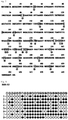
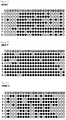
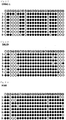
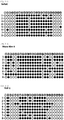
- the cancer marker nucleotide sequence pertaining to the present invention includes, more specifically, the nucleotide sequence represented by SEQ ID NO: 1 (in Fig. 7 , the nucleotide sequences of circle 6 to circle 21); the nucleotide sequence represented by SEQ ID NO: 2 (in Fig. 7 , the nucleotide sequences of circle 8 to circle 17); the nucleotide sequence represented by SEQ ID NO: 3 (in Fig.
- nucleotide sequences of circle 13 to circle 17 a continuous nucleotide sequence consisting of the nucleotide sequence represented by SEQ ID NO: 2, and 23 nucleotides, 40 nucleotides, 54 nucleotides, or 72 nucleotides adjacent to the 3' side of the nucleotide sequence (in Fig.
- nucleotide sequence represented by SEQ ID NO: 1 the nucleotide sequence represented by SEQ ID NO: 2, the nucleotide sequence represented by SEQ ID NO: 3, and the like, are preferable, and the nucleotide sequence represented by SEQ ID NO: 2, the nucleotide sequence represented by SEQ ID NO: 3, and the like, are more preferable, and the nucleotide sequence represented by SEQ ID NO: 3 is further preferable.
- the cancer marker nucleotide sequence pertaining to the present invention can be used as the same cancer marker, as long as cytosine of the -CG- sequence contained in the sequence is the same, the specific nucleotide sequence may contain a portion of or all of the nucleotide sequence up to one nucleotide before cytosine of the next -CG-sequence toward the 5'-terminal or/and toward the 3'-terminal.
- the nucleotide sequence represented by SEQ ID NO: 1 may comprise at least one nucleotide adjacent to SEQ ID NO:1 out of 53 nucleotides adjacent to the 5' side or/and at least one nucleotide adjacent to SEQ ID NO:1 out of 38 nucleotides adjacent to the 3' side.
- the nucleotide sequence represented by SEQ ID NO: 2 may comprise at least one nucleotide adjacent to SEQ ID NO: 2 out of 10 nucleotides adjacent to the 5' side or/and at least one nucleotide adjacent to SEQ ID NO: 2 out of 22 nucleotides adjacent to the 3' side.
- the nucleotide sequence represented by SEQ ID NO: 3 may comprise at least one nucleotide adjacent to SEQ ID NO: 3 out of 7 nucleotides adjacent to the 5' side or/and at least one nucleotide adjacent to SEQ ID NO: 3 out of 22 nucleotides adjacent to the 3' side.
- cancer marker nucleotide sequence pertaining to the present invention is the nucleotide sequence represented by SEQ ID NO: 2 or the nucleotide sequence represented by SEQ ID NO: 3, cytosines of the -CG- sequence in the cancer marker are the one in which 40% or more, preferably 50% or more, and more preferably 60% or more thereof is methylated.
- the nucleotide sequence represented by the SEQ ID NO: 1 has been described in the nucleotide numbers 106812-106961 of Genbank Accession No. AL353637.
- the nucleotide sequence represented by the SEQ ID NO: 2 has been described as nucleotide numbers 106833-106889 in Genbank Accession No. AL353637.
- the nucleotide sequence represented by the SEQ ID NO: 3 has been described as nucleotide numbers 106868-106889 in Genbank Accession No. AL353637.
- nucleotide sequences represented by SEQ ID NO: 1 and 2 encompass the one in which deletion, replacement, or addition of nucleotide has occurred by mutations caused by species difference of organism, individual difference, or cell or tissue difference.
- the FOXB2 gene in the cancer markers of the present invention may be the one derived from cells, and the type of the cells is selected in response to cancer to be determined.
- gene derived from hepatic cells may be used, and in the case of determining prostate cancer, gene derived from prostate cells may be used.
- gene derived from leukocytes may be used.
- Cells from which the FOXB2 gene are derived are preferably derived from mammal, and those derived from human are particularly preferable.
- Cells to be used suitably include, for example, neuroblast, kidney, uterus, liver, mammary gland, ovary, large intestine (colon, rectum), prostate, lung, pancreas, bone marrow cells, T cells, and the like.
- Methylation ratio of cytosine of the -CG- sequence present in the cancer marker nucleotide sequence pertaining to the present invention is calculated on the basis of number of methylated cytosine of the -CG-sequence, which is obtained by subjecting the cancer marker nucleotide sequence pertaining to the present invention to a bisulfite reaction, and detecting the methylated cytosine of the -CG- sequence.
- the cancer marker nucleotide sequence pertaining to the present invention is subjected to the bisulfite reaction, unmethylated cytosine is converted to uracil, but methylated cytosine is not converted to uracil.
- methylated cytosine can be detected, and by dividing number of methylated cytosine in the -CG- sequence by number of cytosine in the -CG- sequence, it is possible to calculate methylation ratio. It should be noted that, details of the bisulfite reaction will be described later in the section of the determination method for canceration of the present invention.
- the cancer markers of the present invention can be obtained, for example, by obtaining the cancer marker nucleotide sequence pertaining to the present invention from the genomic DNA, after obtaining the genomic DNA from mammalian cells.
- the method for obtaining the genomic DNA from the cells can be carried out, for example, according to a well-known DNA extraction method, such as an alkaline SDS method described in " Labo Manual for Genetic Engineering” (Maruzen Co., Ltd. ), and “ Handbook of Gene Technology” (Yodosha Co., Ltd. ), or the like, or by extracting it from cells, microorganisms, viruses, and the like, using a commercially available extraction kit of the genomic DNA.
- a well-known DNA extraction method such as an alkaline SDS method described in " Labo Manual for Genetic Engineering” (Maruzen Co., Ltd. ), and “ Handbook of Gene Technology” (Yodosha Co., Ltd. ), or the like, or by extracting it from cells, microorganisms, viruses, and the like, using a commercially available extraction kit of the genomic DNA.
- the method for obtaining the cancer marker nucleotide sequence pertaining to the present invention, from the genomic DNA obtained above, may be a method known per se, usually used in this field, and there is included, for example, a method for obtaining it, by the PCR, after designing primers capable of obtaining the objective nucleotide sequence, or the like.
- the primers to be used in this case include, for example, the followings.
- a specific method of the PCR may be carried out according to the PCR reaction described in the section of [Acquisition of DNA having the objective nucleotide sequence pertaining to the present invention] to be described later.
- the determination method for canceration of the present invention is carried out by measuring, by the bisulfite reaction, methylation ratio of a portion of or all of cytosines of the -CG- sequence present in the nucleotide sequence represented by SEQ ID NO: 1 in the FOXB2 gene derived from cells (hereinafter, sometimes, abbreviated as the objective nucleotide sequence pertaining to the present invention), and determining canceration of cells on the basis of the methylation ratio. Specifically, in the case where the methylation ratio is 30% or more, preferably 40% or more, and more preferably 50% or more, it is determined that cells are cancerous.
- the objective nucleotide sequence pertaining to the present invention includes the same ones as the cancer marker nucleotide sequence pertaining to the present invention, and among them, the nucleotide sequence represented by SEQ ID NO: 2, and the nucleotide sequence represented by SEQ ID NO: 3 are preferable, and the nucleotide sequence represented by SEQ ID NO: 2 is more preferable.
- cytosines of the -CG- sequences to be used for determination of cancer are selected as appropriate, and methylation ratio of these cytosines may be measured.
- Combinations of cytosines of the -CG- sequences to be used for determination of cancer include, for example, in Fig.
- circle 7 a combination of circle 7 to circle 16, circle 7 to circle 17, circle 8 to circle 16, circle 8 to circle 17, circle 13 to circle 16 , circle 13 to circle 17, circle 7 to circle 10 and circle 13 to circle 16; a combination of circle 7 to circle 10 and circle 13 to circle 17; a combination of circle 8 to circle 10 and circle 13 to circle 16; and a combination of circle 8 to circle 10 and circle 13 to circle 17; and among them, circle 8 to circle 17 (corresponding to the nucleotide sequence represented by SEQ ID NO: 2), circle 13 to circle 17 (corresponding to the nucleotide sequence represented by SEQ ID NO: 3), and the like, are preferable, and circle 13 to circle 17, and the like, are more preferable.
- methylation of cytosines of the -CG-sequences of the circle 8 to circle 17 or circle 13 to circle 17 is measured, or in the case where a portion of the nucleotide sequence represented by SEQ ID NO: 1 is the nucleotide sequence represented by SEQ ID NO: 2 or the nucleotide sequence represented by SEQ ID NO: 3, in the determination method for canceration of the present invention, it is determined that cells are cancerous when methylation ratio of cytosines of the -CG- sequences present in the nucleotide sequence is 40% or more, preferably 50% or more, and more preferably 60% or more.
- DNA having the objective nucleotide sequence pertaining to the present invention is obtained, after subjecting the genomic DNA of the FOXB2 gene derived from cells to the bisulfite reaction. After that, methylation ratio for all of cytosines of the -CG- sequences present in the nucleotide sequence is measured, or, a portion of cytosines of the -CG-sequences present in the nucleotide sequence is selected as described above, and methylation ratio of the selected cytosines is measured. Then canceration of cells is determined based on the resulting methylation ratio.
- the genomic DNA of the FOXB2 gene derived from cells can be obtained, for example, by a well-known DNA extraction method, such as alkaline SDS method, described in "Labo Manual for Genetic Engineering” (Maruzen Co., Ltd.), and “Handbook of Gene Technology” (Yodosha Co., Ltd.), or the like, or by extracting it from the objective cells using a commercially available genomic DNA extraction kit.
- the objective cells may be selected as appropriate, according to cancer to be determined.
- those derived from mammals are preferable, and those derived from human are particularly preferable.
- the cells may be either cultured cells or cells collected from mammals, and the collected cells may be either cells collected directly, or cells collected from body fluid, such as blood.
- the bisulfite reaction in the determination method for canceration of the present invention, may be carried out according to a bisulfite method known per se, and specifically, it may be carried out, for example, by subjecting the genomic DNA obtained above to single strand formation treatment, and after sulfonation of cytosine by a reaction with a bisulfite, making sulfonated cytosine hydrolyzed, and further desulfonated in the presence of an alkali. According to the reaction, methylated cytosine remains as it is without a reaction, and only non-methylated cytosine is converted to uracil.
- the bisulfite reaction may be carried out in the presence of at least one kind of compounds shown by the following general formulae [1] to [8] described in WO2013/089063 .
- substituents (R 1 to R 39 ) in these compounds, specific examples of the compounds, use amount of the compounds, a use method thereof, and the like, of that case, may be set and carried out according to the description of WO2013/089063 .
- the genomic DNA in the bisulfite reaction may be provided as a solution dissolving the genomic DNA, and the solution includes the one having, for example, a pH of 6 to 8, and dissolving it in a Good's buffer solution, such as MES, HEPES, a phosphate buffer solution, a TRIS buffer solution, a glycin buffer solution, a borate buffer solution, a sodium hydrogen carbonate buffer solution, sterilized water, or the like, and among them, the one dissolving it in sterilized water is preferable.
- DNA content in the solution is not especially limited, and is usually 10 to 100 ng in 1 to 10 ⁇ L of the solution.
- Single strand formation treatment of the genomic DNA in the bisulfide reaction may be carried out according to single strand formation treatment known per se. It includes thermal treatment which is carried out, for example, by heating at usually 80 to 100 °C, and preferably 85 to 95 °C, for usually 30 seconds to 10 minutes, and preferably 1 to 3 minutes, or alkali treatment which is carried out, for example, by making DNA contacted with an alkali, or the like, and heat treatment is preferable.
- thermal treatment which is carried out, for example, by heating at usually 80 to 100 °C, and preferably 85 to 95 °C, for usually 30 seconds to 10 minutes, and preferably 1 to 3 minutes
- alkali treatment which is carried out, for example, by making DNA contacted with an alkali, or the like, and heat treatment is preferable.
- the bisulfite reaction is carried out in the presence of the compounds shown by the general formulae [1] to [8]
- the reaction can be proceeded without decomposition of DNA, even reaction temperature is raised to 80 to 100
- the genomic DNA may be subjected to the bisulfite reaction at 80 to 100 °C.
- Single strand formation treatment and the bisulfite reaction may be proceeded simultaneously, by which treatment is simplified, and therefore, this method is more preferable in carrying out single strand formation treatment.
- the alkali treatment is specifically carried out, for example, by adjusting the solution to an alkaline state, having usually a pH of 10 to 14, and preferably a pH of 12 to 14, by the addition of an alkali or an aqueous solution thereof, to the genomic DNA, or a solution containing the genomic DNA.
- the alkali includes an alkali metal hydroxide, for example, sodium hydroxide, potassium hydroxide, or the like; an alkaline earth metal hydroxide, for example, barium hydroxide, magnesium hydroxide, calcium hydroxide, or the like; an alkali metal carbonate, for example, sodium carbonate, or the like; ammonia, amines, and among them, the alkali metal hydroxide, for example, sodium hydroxide, potassium hydroxide, or the like, is preferable, and further among them, sodium hydroxide is particularly preferable.
- an alkali metal hydroxide for example, sodium hydroxide, potassium hydroxide, or the like
- an alkaline earth metal hydroxide for example, barium hydroxide, magnesium hydroxide, calcium hydroxide, or the like
- an alkali metal carbonate for example, sodium carbonate, or the like
- ammonia, amines, and among them the alkali metal hydroxide, for example, sodium hydroxide, potassium hydroxide, or the
- the sulfite in the reaction of DNA and the sulfite includes, for example, sodium hydrogen sulfite, ammonium sulfite, or the like, and sodium hydrogen sulfite is preferable. Use amount thereof is usually added, so that final concentration in the reaction solution attains 1 to 6 mol / L, relative to 1 to 500 ⁇ L of the solution containing 50 to 500 ng of DNA.
- the reaction of the DNA and the sulfite is carried out usually at 30 to 100 °C, preferably 50 to 100 °C, and more preferably 80 to 95 °C, for usually 60 minutes to 20 hours, preferably 60 minutes to 5 hours, and more preferably 60 minutes to 120 minutes. Cytosine is sulfonated by the reaction.
- Hydrolysis of thus sulfonated cytosine in the bisulfite reaction is not especially limited, as long as it is a method usually carried out in this field, and it may be carried out by heating at usually 30 to 100 °C, and preferably 80 to 95 °C, for usually 60 minutes to 20 hours, preferably 60 minutes to 5 hours, and more preferably 60 minutes to 120 minutes. It should be noted that the hydrolysis treatment may be carried out simultaneously with the reaction of DNA and the sulfite. In that case, reaction temperature and reaction time in the reaction of DNA and the sulfite may be set in accordance with hydrolysis condition of sulfonated cytosine.
- the hydrolyzed DNA is preferably subjected to purification treatment before carrying out desulfonation treatment.
- the purification treatment is carried out for the purpose of removing high concentration sulfite, or the like, to be used in the bisulfite reaction, and may be carried out according to a purification method for DNA usually carried out in this field.
- a chaotropic agent such as guanidine hydrochloride, sodium iodide, or the like
- a chaotropic agent such as guanidine hydrochloride, sodium iodide, or the like
- HPLC method or the like
- extraction and purification using a mixed solution of phenol/ chloroform/ isoamyl alcohol an alcohol precipitation method; purification by a column packed with silica gel; a filter filtration method, or the like, and among them, the alcohol precipitation method is preferable.
- the alcohol precipitation method is specifically carried out as follows.
- a solution containing DNA after hydrolysis treatment usually 40 to 110 ⁇ L of alcohol, and 30 to 100 ⁇ L of a buffer solution are added, and then centrifugal separation is carried out. After centrifugal separation, DNA can be separated and purified by removing the supernatant, and washing it with alcohol.
- 0.1 to 1 ⁇ L of ethachinmate or glycogen may be added to 10 ⁇ L of the solution containing DNA, to make removal of the supernatant easy after separation.
- the alcohol includes ethanol, isopropanol, butanol, or the like, and isopropanol is particularly preferable.
- the buffer solution includes, for example, a Good's buffer solution, such as MES, HEPES, or the like; a phosphate buffer solution; a TRIS buffer solution; a glycin buffer solution; a borate buffer solution; a sodium hydrogen carbonate buffer solution, or the like, and among them, the Good's buffer solution, such as MES, HEPES, or the like, the TRIS buffer solution, or the like, is preferable, and the TRIS buffer solution is particularly preferable.
- a Good's buffer solution such as MES, HEPES, or the like
- TRIS buffer solution is preferable
- the TRIS buffer solution is particularly preferable.
- pH of these buffer solutions is usually 7 to 8, and preferably 7 to 7.5
- buffer agent concentration in the buffer solution is usually in a range of 0.1 to 5 mol/ L, and preferably 0.1 to 2 mol/ L.
- the centrifugal separation is not especially limited, as long as it is an aspect usually carried out in this field, and is usually carried out under 12,000 to 22,000 G for 10 to 30 minutes.
- the desulfonation reaction in the presence of an alkali in the bisulfite reaction, includes the same method as alkali treatment in the section of the single strand formation treatment, and a preferable aspect thereof also includes the same one. Specifically, for example, it may be carried out as follows.
- DNA is extracted from target cells using a DNA extraction kit, or the like, and then 1 ⁇ g of DNA is dissolved, for example, in 5 to 15 ⁇ L of sterilized water.
- a DNA extraction kit or the like
- 1 ⁇ g of DNA is dissolved, for example, in 5 to 15 ⁇ L of sterilized water.
- the compounds shown by the general formulae [1] to [8] or 1 to 12 ⁇ L of an aqueous solution containing them are added, so that concentration in a reaction solution attains 3 to 10%, when the compounds shown by the general formulae [1] to [8] are liquids, and concentration in the reaction solution attains 1 to 1000 mmol / L, when the compounds represented by the general formulae [1] to [8] are solids, and then heated at 80 to 100°C, for 60 to 120 minutes.
- the genomic DNA becomes single-stranded DNA
- cytosine in the single-stranded DNA is sulfonated, and simultaneously, sulfonated cytosine can be hydrolyzed.
- the 1 mol/ L TRIS buffer solution pH: 7.0 to 8.0
- isopropanol are added each in 5 to 10 times amount of the solution after hydrolysis, in a ratio of 40: 60 to 60: 40, and preferably 40: 60 to 50: 50, to precipitate DNA after hydrolysis.
- 1 to 3 ⁇ L of ethachinmate or glycogen is added, confirmation of DNA precipitation becomes easy.
- DNA after hydrolysis can be extracted and purified. Further, 1 ⁇ g of the resulting DNA is dissolved in, for example, 30 to 40 ⁇ L of sterilized water, and 5 to 20 ⁇ L of 1 to 3 mol/ L sodium hydroxide solution is added to the solution, and the solution is subjected to a reaction at 30 to 40 °C, for 20 to 60 minutes for desulfonation. Then, if necessary, purification is carried out to remove low molecular weight DNA, by using, for example, a commercially available kit, or the like.
- uracilated DNA DNA, where non-methylated cytosine in the genomic DNA is efficiently converted to uracil (hereinafter it may be abbreviated as uracilated DNA), is obtained.
- the acquisition method for DNA having the objective nucleotide sequence relevant to the present invention (nucleotide sequence comprising a part of or all of the nucleotide sequence shown in sequence number 1), from the genomic DNA which has been subjected to the bisulfite reaction, is carried out, by subjecting the uracilated DNA to the PCR reaction, using a primer designed to amplify DNA having the target base sequence relevant to the present invention. According to this method, it is possible to obtain a DNA amplified substance having the objective nucleotide sequence, in which non-methylated cytosine is converted to uracil.
- the PCR reaction may be carried out according to a known method per se, for example, the method described in Nucleic Acids Research, 1991, Vol. 19, 3749 , and Bio Techniques, 1994, Vol. 16, 1134-1137 , and is specifically carried out as follows.
- the uracilated DNA can be amplified by amplification of 1 to 100 ng of nucleic acid amount of the uracilated DNA as a template, by the addition of 2 kinds of primers each usually in 0.1 to 100 pmol, and preferably 0.1 to 50 pmol, and DNA polymerase usually in 1 to 10 units, preferably 2.5 to 5 units, as well as 4 kinds of mixed deoxyribonucleotide triphosphates (dNTPs) usually in 0.01 to 20 ⁇ mol, and preferably 0.01 to 10 ⁇ mol, and in the buffer solution, for example, a tricine buffer solution, a TRIS hydrochloride buffer solution, or the like, having a pH of 7 to 9, by carrying out 20 to 40 cycles, by setting as 1 cycle, for example, (1) 93 to 98 °C, 1 to 10 minutes ⁇ (2) 93 to 98 °C, 10 to 30 seconds ⁇ (3) 50 to 60 °C, 10 to 30 seconds ⁇ (4) 68 to 72 °C, 30 seconds to
- the resulting DNA is purified after the reaction, by a purification method usually carried out in this field, for example, by a method for extraction with a mixed solvent of phenol/chloroform/isoamyl alcohol, alcohol precipitation, column purification, filter filtration, or the like.
- DNA having the target base pair (bp) is extracted after the purification.
- the extraction method includes a known method per se, for example, a method using agarose gel electrophoresis, a method using liquid chromatography, a method using electrophoresis on polyacrylamide gel described in an enlarged edition of Labo-manual genetic engineering, 1990, 27-28 , or the like.
- DNA obtained by the PCR reaction (PCR product) may be subjected further to the PCR reaction under similar conditions to yield more quantity.
- Two kinds of primers in the PCR reaction may be those designed to amplify DNA having the objective nucleotide sequence relevant to the present invention.
- Number of the nucleotides are usually 20 to 45, preferably 22 to 40, and more preferably 25 to 35.
- Specific examples of the two kinds of the primers include, for example, the following ones.
- the DNA polymerase in the PCR reaction may be any DNA polymerase, as long as it is usually used in this field, and, the one having 5' ⁇ 3' polymerase activity is preferable, and among them, the one having exonuclease activity but does not have 3' ⁇ 5' exonuclease activity is more preferable.
- a mutant type Taq DNA polymerase such as KAPA2G polymerase, Taq DNA polymerase, or Tth DNA polymerase, is preferable, and among them the KAPA2G polymerase is particularly preferable.
- the dNTPs in the PCR reaction are not especially limited, as long as they are a mixture of four kinds of deoxyribonucleotide triphosphates (dATP, dCTP, dGTP, dTTP), usually used in this field.
- dATP deoxyribonucleotide triphosphates
- the genomic DNA is subjected to single strand formation treatment, and then subjected to the bisulfite reaction to obtain uracilated DNA. Thereafter, the resulting uracilated DNA was subjected to the PCR reaction, using primers designed to amplify the DNA having the objective nucleotide sequence pertaining to the present invention.
- the uracilated DNA is amplified, and the DNA having the objective nucleotide sequence pertaining to the present invention, in which unmethylated cytosine has been converted into uracil (hereinafter, it may sometimes be referred to as the DNA having the uracilated objective nucleotide sequence) can be obtained.
- a further reaction at 68 to 72°C for 30 seconds to 5 minutes may be carried out, after completion of the reaction cycles.
- the amplified DNA is subjected to electrophoresis using, for example, agarose gel or non-denaturing polyacrylamide gel, and the DNA having desired chain length is extracted.
- the resulting DNA may be purified, for example, by extraction with a mixed solution of phenol/chloroform/isoamyl alcohol, or the like.
- the measurement of methylation ratio of cytosine of the -CG-sequence is carried out, by subjecting the DNA having the uracilated objective nucleotide sequence to nucleotide sequence analysis by a sequencer or the like, comparing the resulting nucleotide sequence with the normal nucleotide sequence, measuring number of methylated cytosine of the -CG- sequence of the objective nucleotide sequence pertaining to the present invention, or measuring number of methylation of cytosine of the specific -CG- sequence in the objective nucleotide sequence pertaining to the present invention, and calculating methylation ratio, based on the values.
- the determination method for canceration when methylation ratio thereof is 30% or more, preferably 40% or more, and more preferably 50% or more, it is determined that cells are cancerated.
- the objective nucleotide sequence pertaining to the present invention is the nucleotide sequence represented by SEQ ID NO: 2, or the nucleotide sequence represented by SEQ ID NO: 3, or when methylation of cytosines of the -CG- sequences of the circle 8 to circle 17 or circle 13 to circle 17 in Fig.7 is measured, and at a methylation ratio of 40% or more, preferably 50% or more, and more preferably 60% or more, it can be determined that cells are cancerous, and determination of cancer can be carried out in better precision.
- the nucleotide sequence analysis is not especially limited, as long as it is a method for analyzing nucleotide sequence usually carried out in this field, and for example, it may be carried out according to a usual method, such as a fluorescent dye terminator method, the Sanger's method, described in Lab Manual for Genetic Engineering, and Handbook of Gene Technology, or the like.
- it may be carried out by incorporating the DNA having the uracilated objective nucleotide sequence in a vector, and transfecting the resulting recombinant vector into competent cells, culturing the competent cells, and extracting a plasmid containing the DNA having the uracilated objective nucleotide sequence therefrom, and decoding, for example, by a sequencer, or the like, using the plasmid.
- the method for incorporating the DNA having the uracilated objective nucleotide sequence into a vector includes, specifically, for example, a method for inserting the DNA having the uracilated objective nucleotide sequence into a vector, using T4 DNA ligase, after the vector, such as plasmid, cosmid, and phagemid, and the DNA having the uracilated objective nucleotide sequence, are blunt-ended by T4 DNA polymerase, or the like, or a TA cloning method, in which adenine (A) is added to the DNA having the uracilated objective nucleotide sequence, and the adenine-added DNA having the uracilated objective nucleotide sequence is incorporated into a thymine base-added vector, using T4 DNA ligase.
- the TA cloning method is preferable because it does not require cleaving of both the DNA to be inserted and the vector, by a restriction enzyme, and
- the TA cloning method is carried out, specifically, for example, as follows. That is, 1 to 5 units of Taq DNA polymerase are added, relative to 100 ng of the DNA having the uracilated objective nucleotide sequence after the PCR reaction, and by subjecting it to a reaction at 55 to 75°C for 10 to 30 minutes, adenine is added to the 3'-terminal of the DNA having the uracilated objective nucleotide sequence. It should be noted that, in the PCR reaction, when the DNA polymerase having adenine-adding activity of the 3'-terminal is used, the adenine addition step is not necessary.
- 0.01 to 20 nmol of dATP may be added to the reaction solution, however, by adding Taq DNA polymerase to the PCR reaction solution, this addition step can be skipped.
- 0.01 to 20 nmol of dATP relative to 100 ng of the DNA having the uracilated objective nucleotide sequence, may be added to the reaction solution.
- adenine-added DNA having the uracilated objective nucleotide sequence it is preferable to purify the resulting DNA after the synthesis reaction, by a method, such as extraction with a mixed solution of phenol/chloroform/isoamyl alcohol, alcohol precipitation, column purification, filtration by a filter, or the like. Subsequently, a recombinant vector, in which the DNA having the uracilated objective nucleotide sequence is incorporated, can be obtained by the addition of a thymine base-added vector for E.
- a method for transforming the recombinant vector into the competent cells includes, for example, a heat shock method for heating at 35 to 45°C for 20 to 90 seconds, or an electroporation method in which an electric pulse of 1.5 to 2.5 kV is applied, or the like.
- a heat shock method for heating at 35 to 45°C for 20 to 90 seconds or an electroporation method in which an electric pulse of 1.5 to 2.5 kV is applied, or the like.
- an electroporation method in which an electric pulse of 1.5 to 2.5 kV is applied or the like.
- the competent cells to be used herein anyone can be used, as long as it is usually used E. coli or B. subtilis or the like, and its use amount may be set as appropriate within a range usually used.
- Cultivation of the competent cells is carried out, for example, on a medium, such as an LB agar medium containing 30 to 150 ⁇ g/mL of ampicillin, or an M9 agar medium, or the like, containing 30 to 150 ⁇ g/mL of ampicillin, at 30 to 40°C for 12 to 20 hours.
- a medium such as an LB agar medium containing 30 to 150 ⁇ g/mL of ampicillin, or an M9 agar medium, or the like, containing 30 to 150 ⁇ g/mL of ampicillin, at 30 to 40°C for 12 to 20 hours.
- the medium either one of a natural medium or a synthetic medium, or the like, may be employed, as long as it contains a carbon source, a nitrogen source and inorganic salts which are nutritional sources of bacteria, and yeast extract as a growth factor, and it enables to culture the transformant efficiently.
- the carbon source includes carbohydrates, such as glucose, fructose, sucrose and starch; organic acids, such as acetic acid and propionic acid; and alcohols such as ethanol and propanol.
- the nitrogen source includes ammonia, an ammonium salt of an inorganic acid or an organic acid, such as ammonium chloride, ammonium sulfate, ammonium acetate, and ammonium phosphate; or other nitrogen-containing compounds, as well as, peptone, tryptone, meat extract, Corn Steep Liquor, or the like.
- the inorganic salts include monobasic potassium phosphate, dibasic potassium phosphate, magnesium phosphate, magnesium sulfate, sodium chloride, ferrous sulfate, manganese sulfate, copper sulfate, calcium carbonate, and the like.
- the DNA derived from the plasmid in a colony which has the DNA having the uracilated objective nucleotide sequence
- the method may be carried out by confirming whether the objective plasmid is amplified in the colony, for example, by an electrophoresis method, and by extraction of the objective plasmid from the colony, where insertion of the objective plasmid was confirmed.
- the colony PCR method is carried out, for example, as follows. That is, to the cultured colony, each usually 0.1 to 100 pmol, and preferably 0.1 to 50 pmol of 2 kinds of PCR primers for detection of the objective nucleotide sequence pertaining to the present invention, usually 0.01 to 20 nmol, and preferably 0.01 to 10 nmol of 4 kinds of mixed deoxyribonucleotide triphosphates (dNTPs), and usually 1 to 10 units, and preferably 1 to 5 units of DNA polymerase are added.
- dNTPs mixed deoxyribonucleotide triphosphates
- a buffer solution such as a Tricine buffer solution, a Tris hydrochloric acid buffer solution, or the like, for example, by setting a reaction (1) at 93 to 98°C, for 1 to 10 minutes ⁇ (2) at 93 to 98°C, for 10 to 30 seconds ⁇ (3) at 50 to 60°C, for 10 to 30 seconds ⁇ (4) at 68 to 72°C, for 30 seconds to 5 minutes, as 1 cycle, 25 to 40 cycles of the reaction are carried out.
- a buffer solution such as a Tricine buffer solution, a Tris hydrochloric acid buffer solution, or the like
- Two kinds of the primers include the one which is designed to be capable to amplifying the objective DNA, that is, the one containing all of or a portion of the DNA having the uracilated objective nucleotide sequence, or the sequence derived from the vector which locate at both ends of the inserted DNA having the uracilated objective nucleotide sequence.
- the sequences derived from the vector, which locate in the both end of the DNA having the uracilated objective nucleotide sequence are preferable.
- the DNA having the uracilated objective nucleotide sequence result in to be composed of 3 nucleotides when all cytosines are unmethylated cytosines. Therefore, in order to carry out the PCR reaction efficiently, the sequence derived from the vector, located at the both ends of the DNA having the uracilated objective nucleotide sequence, which can be composed of 4 nucleotides, is preferable.
- the DNA polymerase may be any DNA polymerase, as long as it is usually used in this field, and includes specifically, for example, a Taq DNA polymerase, a Tth DNA polymerase, and a KOD DNA polymerase, or the like, and among them, the Taq DNA polymerase, the KOD DNA polymerase, or the like is preferable.
- the electrophoresis method to be carried out after the colony PCR reaction, may be any electrophoresis method, usually used in this field, as long as it is capable of determining number of nucleotides based on mobility.
- an agarose gel electrophoresis method is preferable.
- the electrophoretic condition in the electrophoresis method may be set as appropriate according to a well-known method.
- the plasmid may be extracted by a well-known plasmid extraction method, for example, an alkaline SDS method after shaking culture, described in Lab Manual for Genetic Engineering (Maruzen Co., Ltd.), and Handbook of Gene Technology (Yodosha Co., Ltd.). or the like. It should be noted that, the extraction of the plasmid may be carried out using a commercially available kit.
- the culture medium in the shaking culture the same medium as described in the section of culture of the competent cells can be used, except for preparing a solution without using agarose, and preferable culture time and culture temperature are also the same range as described in the section of the competent cells.
- Methylated cytosine can be detected by comparing the nucleotide sequence subjected to the bisulfite reaction, obtained by the nucleotide sequence analysis, and the nucleotide sequence of normal DNA in which cytosine is not methylated. That is, in the bisulfite reaction pertaining to the present invention, since all cytosines other than methylated cytosine (unmethylated cytosine) are uracilated, by finding out cytosine not uracilated in the resulting nucleotide sequence, methylated cytosine can be detected.
- Methylation ratio is calculated by dividing number of methylated cytosines in the -CG- sequence of the objective nucleotide sequence pertaining to the present invention, by number of cytosines of the -CG- sequence.
- methylation ratio thereof is 30% or more, preferably 40% or more, and more preferably 50% or more, cells are determined to be cancerous.
- the objective nucleotide sequence pertaining to the present invention is the nucleotide sequence represented by SEQ ID NO: 2, or the nucleotide sequence represented by SEQ ID NO: 3, as well as, in the case where methylation of cytosines of the -CG- sequences of circle 8 to circle 17 or circle 13 to circle 17 in Fig. 7 is measured, when methylation ratio is 40%, preferably 50%, and more preferably 60% or more, cells are determined to be cancerous, and determination of cancer can be made in better precision.
- the genomic DNA is subjected to single strand formation treatment, then subjected to the bisulfite reaction and the PCR reaction in this order, and the DNA having the uracilated objective nucleotide sequence is obtained.
- sterile water, or the like containing 10 to 100 ng of the DNA having the uracilated objective nucleotide sequence, 1 to 3 ⁇ L of the 10 to 100 ng thymine-added vector for E.
- coli transformation and 1 to 3 ⁇ L of 300 to 3000 units of T4 DNA ligase are added and subjected to a reaction at 10 to 20°C for 30 to 240 minutes to obtain a recombinant vector incorporated with the DNA having the uracilated objective nucleotide sequence.
- a DNA polymerase having no adenine-adding activity for example, ⁇ -DNA polymerase is used, adenine is added to the DNA having the uracilated objective nucleotide sequence, prior to incorporation into the vector.
- the adenine adding method may be carried out, for example, by the addition of 0.5 to 1 ⁇ L of 1 to 5 units Taq DNA polymerase, to 5 to 10 ⁇ L of the PCR reaction solution containing 100 ng to 1 ⁇ g of the DNA having the objective nucleotide sequence pertaining to the present invention, and subjecting it to a reaction at 55 to 75°C for 10 to 30 minutes, and thus adding adenine to the 3'-terminal of the DNA having the objective nucleotide sequence pertaining to the present invention. It should be noted that, after the adenine reaction, it is desirable to subject it to purification operation.
- 10 to 100 ng of the resulting recombinant vector is added to 10 8 to 10 9 cells of the competent cells, and transformation is carried out by heating at 35 to 45°C for 20 to 90 seconds. Furthermore, the cells are cultured on an agar medium containing, for example, 30 to 150 ⁇ g/mL of ampicillin, 1% (w/v) of tryptone, 0.5% (w/v) of yeast extract, and 1% (w/v) of sodium chloride, at 30 to 40°C for 12 to 20 hours. Subsequently, the resulting culture is subjected to the colony PCR.
- each 1 to 5 ⁇ L of 2 kinds of 1 to 10 ⁇ mol/L of PCR primers which are designed to be capable of amplifying the objective DNA
- usually 1 to 5 ⁇ L of 1 to 5 mmol/L of 4 kinds of mixed deoxyribonucleotide triphosphates (dNTPs), as well as 0.5 to 1 ⁇ L of 1 to 5 units Taq DNA polymerase are added.
- a buffer solution such as a Tricine buffer solution or a Tris hydrochloric acid buffer solution, at pH 7 to 9, by setting a reaction (1) at 93 to 98°C, for 1 to 10 minutes ⁇ (2) at 93 to 98°C, for 10 to 30 seconds ⁇ (3) at 50 to 60°C, for 10 to 30 seconds ⁇ (4) at 68 to 72°C, for 30 seconds to 5 minutes, as 1 cycle, 25 to 40 cycles of the reaction are carried out.
- the objective DNA is taken out from the culture fluid using, for example, a commercially available plasmid extraction kit, or the like, and the nucleotide sequence of the DNA is analyzed by a sequencer, or the like.
- a sequencer or the like.
- the genomic DNA was extracted by QuickGene SP kit DNA tissue (produced by Kurabo Industries Ltd.), according to the attached instruction manual.
- Nucleotide sequences of each primer are as follows. Amplification chain length generated by these primers is 493 bp.
- Each reaction solution was set to a thermal cycler, and a reaction was carried out under the following conditions. at 94°C for 2 minutes, by setting at 94°C for 20 seconds ⁇ at 55°C for 20 seconds ⁇ at 72°C for 30 seconds, as one cycle, for 36 cycles, at 72°C for 2 minutes.
- the forward primer the one having the following sequence, that is the PCR forward primer, to which the restriction enzyme-recognition site (Hind III: an underlined part in the sequence) was added, was used; and as the reverse primer, the one having the following sequence, that is the PCR forward primer to which the restriction enzyme recognition site (BamH I: underlined part in the sequence) was added, was used.
- reaction solutions were set to the thermal cycler, and the reaction was carried out under the following conditions at 94°C for 2 minutes, by setting at 94°C for 20 seconds ⁇ at 55°C for 20 seconds ⁇ at 72°C for 30 seconds as one cycle, for 36 cycles, at 72°C for 2 minutes.
- distilled water was added to make 43 ⁇ L, further, 1 ⁇ L of Hind III (produced by Nippon Gene Co., Ltd.), and 1 ⁇ L of BamH I (produced by Nippon Gene Co., Ltd.) were added and mixed, then incubated at 37°C for 1 hour.
- a binding Buffer 5.5 M guanidine hydrochloride (produced by Wako Pure Chemical Industries, Ltd.), and 20 mM Tris-HCl, pH 6.6 (produced by Wako Pure Chemical Industries, Ltd.) was added and mixed, and then transferred it to an Econospin (manufactured by GeneDesign, Inc.) and centrifugally separated at 12000 x G, at room temperature for 1 minute to remove the solution in the tube.
- Econospin manufactured by GeneDesign, Inc.
- restriction enzyme-treated PCR amplification product To 1 ⁇ L of each restriction enzyme-treated PCR amplification product, restriction enzyme-treated pUC19, and 2 ⁇ L of a DNA Ligation Kit (Mighty Mix) (produced by Takara Bio Inc.) were added and mixed, and incubated at 16°C for 1 hour. Next, the entire amount was transfected into 4 ⁇ L of ECOSTM Competent E. coli DH5 ⁇ (produced by Nippon Gene Co., Ltd.), and spread on an ampicillin-added LB agar medium. After that, the colonies were cultured in the ampicillin-added LB medium at 37°C for 16 hours. Further, extraction of a plasmid was carried out using a Plasmid Kit SII (produced by Kurabo Industries Ltd.), according to the attached instruction manual.
- Plasmid Kit SII produced by Kurabo Industries Ltd.
- the nucleotide sequence was analyzed using contract sequencing service by Takara Bio Inc.
- Fig. 1 to Fig. 6 diagrams showing whether cytosine of CpG dinucleotide is unmethylated cytosine or methylated cytosine are shown in Fig. 1 to Fig. 6 . It should be noted that, O in the diagrams indicates that cytosine of CpG dinucleotide is unmethylated, ⁇ indicates that cytosine of CpG dinucleotide is methylated.
- FIG. 1 Normal human skin fibroblast cells (hiPS)
- Fig. 2 Normal human skin fibroblast cells (HDF)
- Fig. 3 Normal human lung fibroblast cells (WI-38)
- Fig. 4 Normal human lung diploid cells (CCD-8Lu)
- Fig. 5 Normal human fetal cells (HE23)
- Fig. 6 Leucocyte (whole blood)
- cytosines of the circled numbers in Figs. 1 to 6 were indicated in the nucleotide sequence of the FOXB2 promoter region described in Fig. 7 (the PCR amplification region, GenBank Accession No. AL353637: 106566-107058: SEQ ID NO: 10).
- Methylation ratio of cytosines of CpG dinucleotides corresponding to the region of SEQ ID NO: 2 (circle 8 to circle 17 in the figure), and methylation ratio of cytosines of CpG dinucleotides corresponding to the region of SEQ ID NO: 1 (circle 6 to circle 21 in the figure), which were calculated based on the results of Fig. 1 to Fig. 6 , are shown in Table 3 together with the results of Example 2.
- the genomic DNA was extracted by QuickGene SP kit DNA tissue (produced by Kurabo Industries Ltd.), according to the attached instruction manual. Subsequent processing was carried out similarly as the method described in (2) to (6) in Example 1, and the nucleotide sequences of the FOXB2 gene of various cancer cells were analyzed.
- Fig. 8 to Fig. 32 diagrams showing whether cytosine of CpG dinucleotides is unmethylated cytosine or methylated cytosine are shown in Fig. 8 to Fig. 32 . It should be noted that, positions of cytosines of circled numbers in the figures are as described in Fig. 7 . In addition, O in the diagram indicates that cytosine of CpG dinucleotide is unmethylated, ⁇ indicates that cytosine of CpG dinucleotide is methylated.
- MCF-7 human breast cancer cells
- Fig. 26 PANC-1 (human pancreatic adenocarcinoma cells)
- Fig. 14 HCC2998 (human large intestine adenocarcinoma cells)
- Fig. 27 CFPAC-1 (human pancreatic adenocarcinoma)
- Fig. 15 HCT-15 (human colon adenocarcinoma cells)
- Fig. 28 DAUDI (human Burkitt's lymphoma cells)
- Fig. 16 HCT 116 human colon adenocarcinoma cells
- Fig. 29 HL60 human promyelocytic leukemi cells
- Methylation ratio of cytosines of CpG dinucleotides corresponding to the region of SEQ ID NO: 2 (circle 8 to circle 17 in Fig. 7 ), and methylation ratio of cytosines of CpG dinucleotides corresponding to the region of SEQ ID NO: 1 (circle 6 to circle 21 in Fig. 7 ), which were calculated based on the results of Figs. 8 to 32 , are shown in the following Table 3; and methylation ratio of cytosines of CpG dinucleotides corresponding to the region of SEQ ID NO: 3 (circle 13 to circle 17 in Fig. 7 ), which were calculated based on the results of Fig. 8 to Fig. 32 , are shown in the following Table 4.
- cells can be determined to be non-cancerous normal cells when methylation ratio of cytosine of CpG dinucleotide present in SEQ ID NO: 2, or SEQ ID NO: 3 is 20% or less.
- cells can be determined to be non-cancerous normal cells when methylation ratio of cytosine of CpG dinucleotide present in SEQ ID NO: 1 is 15% or less.
- cells can be determined to be cancerous when methylation ratio of cytosine of CpG dinucleotide present in SEQ ID NO: 2 or SEQ ID NO: 3 is 60% or more.
- cells can be determined to be cancerous when methylation ratio of cytosine of CpG dinucleotide present in SEQ ID NO: 1 is 50% or more. Therefore, it has been revealed that, in consideration of the fact that methylation ratio of cytosine in normal cells is at least less 20% or lower, canceration can be determined in very high precision.
- cancer marker of the present invention or according to the method of the present invention, it is possible to determine canceration of cells in various cells.
Landscapes
- Chemical & Material Sciences (AREA)
- Life Sciences & Earth Sciences (AREA)
- Organic Chemistry (AREA)
- Health & Medical Sciences (AREA)
- Proteomics, Peptides & Aminoacids (AREA)
- Engineering & Computer Science (AREA)
- Wood Science & Technology (AREA)
- Zoology (AREA)
- Genetics & Genomics (AREA)
- Analytical Chemistry (AREA)
- Immunology (AREA)
- General Engineering & Computer Science (AREA)
- Bioinformatics & Cheminformatics (AREA)
- Biotechnology (AREA)
- Biophysics (AREA)
- Molecular Biology (AREA)
- Microbiology (AREA)
- Physics & Mathematics (AREA)
- Biochemistry (AREA)
- General Health & Medical Sciences (AREA)
- Pathology (AREA)
- Hospice & Palliative Care (AREA)
- Oncology (AREA)
- Biomedical Technology (AREA)
- Chemical Kinetics & Catalysis (AREA)
- Plant Pathology (AREA)
- Measuring Or Testing Involving Enzymes Or Micro-Organisms (AREA)
Applications Claiming Priority (3)
| Application Number | Priority Date | Filing Date | Title |
|---|---|---|---|
| JP2014166249 | 2014-08-18 | ||
| JP2014166457 | 2014-08-19 | ||
| PCT/JP2015/073083 WO2016027794A1 (ja) | 2014-08-18 | 2015-08-18 | 癌マーカー及び癌の判定方法 |
Publications (2)
| Publication Number | Publication Date |
|---|---|
| EP3184635A1 true EP3184635A1 (de) | 2017-06-28 |
| EP3184635A4 EP3184635A4 (de) | 2018-01-24 |
Family
ID=55350738
Family Applications (1)
| Application Number | Title | Priority Date | Filing Date |
|---|---|---|---|
| EP15833168.6A Withdrawn EP3184635A4 (de) | 2014-08-18 | 2015-08-18 | Krebsmarker und krebsbestimmungsverfahren |
Country Status (6)
| Country | Link |
|---|---|
| US (1) | US20170321247A1 (de) |
| EP (1) | EP3184635A4 (de) |
| JP (1) | JPWO2016027794A1 (de) |
| KR (1) | KR20170041693A (de) |
| CN (1) | CN106661572A (de) |
| WO (1) | WO2016027794A1 (de) |
Cited By (1)
| Publication number | Priority date | Publication date | Assignee | Title |
|---|---|---|---|---|
| EP3418392A4 (de) * | 2016-02-17 | 2019-10-16 | Fujifilm Wako Pure Chemical Corporation | Verfahren zur bestimmung von krebszellen unter verwendung des foxb2-gens |
Families Citing this family (2)
| Publication number | Priority date | Publication date | Assignee | Title |
|---|---|---|---|---|
| CN105766795A (zh) * | 2016-03-22 | 2016-07-20 | 朱玫玫 | 基因工程鼠提高Foxb2表达水平的新功能 |
| EP3508588A4 (de) * | 2016-09-02 | 2020-05-27 | Fujifilm Wako Pure Chemical Corporation | Verfahren zur amplifikation von methylierter dna, verfahren zur bestimmung der methylierung von dna und verfahren zur bestimmung des auftretens von krebs |
Family Cites Families (4)
| Publication number | Priority date | Publication date | Assignee | Title |
|---|---|---|---|---|
| JP2008283947A (ja) * | 2007-04-19 | 2008-11-27 | Tokyo Medical & Dental Univ | 食道癌の判別方法 |
| WO2011002029A1 (ja) * | 2009-07-03 | 2011-01-06 | 国立大学法人東京大学 | 癌細胞の存否を判定する方法および癌患者の予後を判定する方法 |
| WO2012142656A1 (en) * | 2011-04-18 | 2012-10-26 | Garvan Institute Of Medical Research | Method of diagnosing cancer |
| EP2891720B1 (de) * | 2012-08-31 | 2020-04-08 | National Defense Medical Center | Screeningverfahren für krebs |
-
2015
- 2015-08-18 KR KR1020177001338A patent/KR20170041693A/ko not_active Withdrawn
- 2015-08-18 US US15/501,709 patent/US20170321247A1/en not_active Abandoned
- 2015-08-18 EP EP15833168.6A patent/EP3184635A4/de not_active Withdrawn
- 2015-08-18 WO PCT/JP2015/073083 patent/WO2016027794A1/ja not_active Ceased
- 2015-08-18 JP JP2016544210A patent/JPWO2016027794A1/ja active Pending
- 2015-08-18 CN CN201580043534.5A patent/CN106661572A/zh active Pending
Cited By (1)
| Publication number | Priority date | Publication date | Assignee | Title |
|---|---|---|---|---|
| EP3418392A4 (de) * | 2016-02-17 | 2019-10-16 | Fujifilm Wako Pure Chemical Corporation | Verfahren zur bestimmung von krebszellen unter verwendung des foxb2-gens |
Also Published As
| Publication number | Publication date |
|---|---|
| JPWO2016027794A1 (ja) | 2017-06-01 |
| US20170321247A1 (en) | 2017-11-09 |
| WO2016027794A1 (ja) | 2016-02-25 |
| EP3184635A4 (de) | 2018-01-24 |
| KR20170041693A (ko) | 2017-04-17 |
| CN106661572A (zh) | 2017-05-10 |
Similar Documents
| Publication | Publication Date | Title |
|---|---|---|
| AU2012318752B2 (en) | Modified nucleosides, nucleotides, and nucleic acids, and uses thereof | |
| JP6550649B2 (ja) | 耐熱性のミスマッチエンドヌクレアーゼの利用方法 | |
| JP6216416B2 (ja) | 耐熱性のミスマッチエンドヌクレアーゼの利用方法 | |
| EP3653730B1 (de) | Verfahren und kit zur isolierung von mutanter zellfreier dna | |
| US20170321247A1 (en) | Cancer marker and cancer determination method | |
| EP2698437B1 (de) | Verfahren zum nachweis von 5-hydroxymethylcytosin in nukleinsäuren | |
| JP6131857B2 (ja) | バイサルファイト反応を利用したメチル化シトシンの検出方法 | |
| US20250320545A1 (en) | Improved crispr-cas technologies | |
| Göringer et al. | [50] 5S RNA structure and function | |
| CN113584104A (zh) | 一种生物催化合成磷酸氟达拉滨的方法 | |
| EP2660321A1 (de) | Verfahren zum nachweis methylierter cytosine | |
| EP3418392A1 (de) | Verfahren zur bestimmung von krebszellen unter verwendung des foxb2-gens | |
| Banerjee et al. | Inhibition of the herpes simplex virus thymidine kinase gene transfection in L tk-cells by potential Z-DNA forming polymers | |
| CN104164484B (zh) | 检测miR-129-2甲基化的试剂在制备检测肺癌试剂盒中的应用 | |
| CN112239793A (zh) | 一种人乳头瘤病毒核酸检测试剂盒 | |
| CN121518473A (zh) | 半滑舌鳎cyp19a1基因的DNA去甲基化编辑的sgRNAs及编辑系统与应用 | |
| Sychla | DamID Profiling of CTCF and TEAD3 Binding within Chromosome 9p21 | |
| Majumder et al. | Generation of bacteriophage T3 mRNAs by post-transcriptional processing by RNase III | |
| a Significant | The Oxidized Deoxynucleoside |
Legal Events
| Date | Code | Title | Description |
|---|---|---|---|
| PUAI | Public reference made under article 153(3) epc to a published international application that has entered the european phase |
Free format text: ORIGINAL CODE: 0009012 |
|
| 17P | Request for examination filed |
Effective date: 20170201 |
|
| AK | Designated contracting states |
Kind code of ref document: A1 Designated state(s): AL AT BE BG CH CY CZ DE DK EE ES FI FR GB GR HR HU IE IS IT LI LT LU LV MC MK MT NL NO PL PT RO RS SE SI SK SM TR |
|
| AX | Request for extension of the european patent |
Extension state: BA ME |
|
| DAV | Request for validation of the european patent (deleted) | ||
| DAX | Request for extension of the european patent (deleted) | ||
| A4 | Supplementary search report drawn up and despatched |
Effective date: 20180102 |
|
| RIC1 | Information provided on ipc code assigned before grant |
Ipc: C12Q 1/68 20180101ALI20171219BHEP Ipc: C12N 15/09 20060101AFI20171219BHEP |
|
| RAP1 | Party data changed (applicant data changed or rights of an application transferred) |
Owner name: FUJIFILM WAKO PURE CHEMICAL CORPORATION |
|
| 17Q | First examination report despatched |
Effective date: 20181207 |
|
| GRAP | Despatch of communication of intention to grant a patent |
Free format text: ORIGINAL CODE: EPIDOSNIGR1 |
|
| INTG | Intention to grant announced |
Effective date: 20190619 |
|
| STAA | Information on the status of an ep patent application or granted ep patent |
Free format text: STATUS: THE APPLICATION IS DEEMED TO BE WITHDRAWN |
|
| 18D | Application deemed to be withdrawn |
Effective date: 20191030 |