EP3184110A1 - Pharmaceutical compositions comprising 7-(1h-imidazol-4-ylmethyl)-5,6,7,8-tetrahydro-quinoline - Google Patents
Pharmaceutical compositions comprising 7-(1h-imidazol-4-ylmethyl)-5,6,7,8-tetrahydro-quinoline Download PDFInfo
- Publication number
- EP3184110A1 EP3184110A1 EP17156230.9A EP17156230A EP3184110A1 EP 3184110 A1 EP3184110 A1 EP 3184110A1 EP 17156230 A EP17156230 A EP 17156230A EP 3184110 A1 EP3184110 A1 EP 3184110A1
- Authority
- EP
- European Patent Office
- Prior art keywords
- pharmaceutical composition
- imidazol
- ylmethyl
- tetrahydro
- quinoline
- Prior art date
- Legal status (The legal status is an assumption and is not a legal conclusion. Google has not performed a legal analysis and makes no representation as to the accuracy of the status listed.)
- Granted
Links
Images




Classifications
-
- A—HUMAN NECESSITIES
- A61—MEDICAL OR VETERINARY SCIENCE; HYGIENE
- A61K—PREPARATIONS FOR MEDICAL, DENTAL OR TOILETRY PURPOSES
- A61K31/00—Medicinal preparations containing organic active ingredients
- A61K31/33—Heterocyclic compounds
- A61K31/395—Heterocyclic compounds having nitrogen as a ring hetero atom, e.g. guanethidine or rifamycins
- A61K31/435—Heterocyclic compounds having nitrogen as a ring hetero atom, e.g. guanethidine or rifamycins having six-membered rings with one nitrogen as the only ring hetero atom
- A61K31/47—Quinolines; Isoquinolines
- A61K31/4709—Non-condensed quinolines and containing further heterocyclic rings
-
- A—HUMAN NECESSITIES
- A61—MEDICAL OR VETERINARY SCIENCE; HYGIENE
- A61K—PREPARATIONS FOR MEDICAL, DENTAL OR TOILETRY PURPOSES
- A61K9/00—Medicinal preparations characterised by special physical form
- A61K9/0012—Galenical forms characterised by the site of application
- A61K9/0014—Skin, i.e. galenical aspects of topical compositions
-
- A—HUMAN NECESSITIES
- A61—MEDICAL OR VETERINARY SCIENCE; HYGIENE
- A61K—PREPARATIONS FOR MEDICAL, DENTAL OR TOILETRY PURPOSES
- A61K9/00—Medicinal preparations characterised by special physical form
- A61K9/0012—Galenical forms characterised by the site of application
- A61K9/0019—Injectable compositions; Intramuscular, intravenous, arterial, subcutaneous administration; Compositions to be administered through the skin in an invasive manner
-
- A—HUMAN NECESSITIES
- A61—MEDICAL OR VETERINARY SCIENCE; HYGIENE
- A61P—SPECIFIC THERAPEUTIC ACTIVITY OF CHEMICAL COMPOUNDS OR MEDICINAL PREPARATIONS
- A61P17/00—Drugs for dermatological disorders
-
- A—HUMAN NECESSITIES
- A61—MEDICAL OR VETERINARY SCIENCE; HYGIENE
- A61P—SPECIFIC THERAPEUTIC ACTIVITY OF CHEMICAL COMPOUNDS OR MEDICINAL PREPARATIONS
- A61P27/00—Drugs for disorders of the senses
- A61P27/02—Ophthalmic agents
-
- A—HUMAN NECESSITIES
- A61—MEDICAL OR VETERINARY SCIENCE; HYGIENE
- A61P—SPECIFIC THERAPEUTIC ACTIVITY OF CHEMICAL COMPOUNDS OR MEDICINAL PREPARATIONS
- A61P27/00—Drugs for disorders of the senses
- A61P27/02—Ophthalmic agents
- A61P27/14—Decongestants or antiallergics
-
- A—HUMAN NECESSITIES
- A61—MEDICAL OR VETERINARY SCIENCE; HYGIENE
- A61P—SPECIFIC THERAPEUTIC ACTIVITY OF CHEMICAL COMPOUNDS OR MEDICINAL PREPARATIONS
- A61P9/00—Drugs for disorders of the cardiovascular system
Definitions
- the present invention relates to a method for treating skin diseases and skin conditions in a patient in need thereof which comprises administering a pharmaceutical composition comprising a therapeutically effective amount of 7-(1 H-imidazol-4-ylmethyl)-5,6,7,8-tetrahydro-quinoline or the enantiomers thereof, or the tautomers thereof, or pharmaceutically acceptable salts thereof.
- Alpha adrenergic receptors Three alpha 1 and three alpha 2 adrenergic receptors have been characterized by molecular and pharmacological methods. Activation of these alpha receptors evokes physiological responses having useful therapeutic actions.
- Alpha adrenergic agonists act on the peripheral vasculature to cause vasoconstriction and thereby ameliorate the symptoms of inflammatory skin disorders, including erythema or redness.
- Alpha adrenergic agonists are useful for ocular mucosal tissue to treat conjunctival redness (hyperemia), for nasal mucosa, as a decongestant for the treatment of allergic rhinitis, and for rectal mucosal administration suitable for treating and curing hemorrhoids.
- U.S. Patent No. 6,680,062 discloses topical cosmetic and pharmaceutical compositions for the treatment of the skin.
- U.S. Patent No. 7,812,049 discloses a method for treating erythema resulting from rosacea comprising oxymetazoline.
- Oxymetazoline is a selective alpha-1 agonist and partial alpha-2 agonist topical decongestant.
- Compound 7-(1H-imidazol-4-ylmethyl)-5,6,7,8-tetrahydro-quinoline is known as a potent alpha 1 and alpha 2 adrenergic receptor pan agonist.
- the racemic mixture and the two enantiomers of 7-(1H-imidazol-4-ylmethyl)-5,6,7,8-tetrahydro-quinoline are disclosed in U.S. Patent Number 7,323,477 B2 .
- Patent Number 7,943,641 discloses a composition comprising ( S )-(+)-7-(1H-Imidazol-4-ylmethyl)-5,6,7,8-tetrahydro-quinoline for the treatment of glaucoma or ocular hypertension.
- compositions of ( S )-(+)-7-(1H-Imidazol-4-ylmethyl)-5,6,7,8-tetrahydro-quinoline are useful for the treatment of skin diseases and skin conditions.
- the present invention relates to pharmaceutical compositions containing as active ingredient 7-(1H-Imidazol-4-ylmethyl)-5,6,7,8-tetrahydro-quinoline for treatment of skin diseases and skin conditions.
- the present invention relates to pharmaceutical compositions containing as active ingredient ( S )-(+)-7-(1H-Imidazol-4-ylmethyl)-5,6,7,8-tetrahydro-quinoline for treatment of skin diseases and skin conditions.
- the present invention relates to pharmaceutical compositions containing as active ingredient ( R )-(-)-7-(1H-Imidazol-4-ylmethyl)-5,6,7,8-tetrahydro-quinoline for treatment of skin diseases and skin conditions.
- the present invention relates to a method for treating skin diseases in a patient in need thereof which comprises administering a pharmaceutical composition comprising a therapeutically effective amount of 7-(1H-imidazol-4-ylmethyl)-5,6,7,8-tetrahydro-quinoline or a pharmaceutically acceptable salt thereof.
- the present invention relates to a method for treating skin diseases in a patient in need thereof which comprises administering a pharmaceutical composition comprising a therapeutically effective amount of ( S )-(+)-7-(1H-Imidazol-4-ylmethyl)-5,6,7,8-tetrahydro-quinoline or a pharmaceutically acceptable salt thereof.
- the present invention relates to a method for treating skin diseases in a patient in need thereof which comprises administering a pharmaceutical composition comprising a therapeutically effective amount of ( R )-(-)-7-(1H-Imidazol-4-ylmethyl)-5,6,7,8-tetrahydro-quinoline or a pharmaceutically acceptable salt thereof.
- the present invention relates to a method for improving skin diseases in a patient in need thereof which comprises administering a pharmaceutical composition comprising a therapeutically effective amount of 7-(1H-Imidazol-4-ylmethyl)-5,6,7,8-tetrahydro-quinoline or a pharmaceutically acceptable salt thereof.
- the present invention relates to a method for improving skin diseases in a patient in need thereof which comprises administering a pharmaceutical composition comprising a therapeutically effective amount of ( S )-(+)-7-(1H-Imidazol-4-ylmethyl)-5,6,7,8-tetrahydro-quinoline or a pharmaceutically acceptable salt thereof.
- the present invention relates to a method for improving skin diseases in a patient in need thereof which comprises administering a pharmaceutical composition comprising a therapeutically effective amount of ( R )-(-)-7-(1H-Imidazol-4-ylmethyl)-5,6,7,8-tetrahydro-quinoline or a pharmaceutically acceptable salt thereof.
- the compound may be administered through different routes, including but not limited to, topical dermatological application of an effective dose, direct injection, or formulations that may further enhance the long duration of action such as slow releasing pellets, suspensions, gels, solutions, creams, ointments, foams, emulsions, microemulsions, milks, patches, serums, aerosols, sprays, dispersions, microcapsules, vesicles, microparticles, wet cloths, dry cloths, facial cloths, or sustained delivery devices such as any suitable drug delivery system known in the art.
- topical dermatological application of an effective dose such as slow releasing pellets, suspensions, gels, solutions, creams, ointments, foams, emulsions, microemulsions, milks, patches, serums, aerosols, sprays, dispersions, microcapsules, vesicles, microparticles, wet cloths, dry cloths, facial cloths, or sustained delivery devices such as any suitable drug delivery system
- a method for treating skin diseases and skin conditions in a patient in need thereof which comprises, consists essentially of or consists of administering a therapeutically effective amount of a pharmaceutical composition comprising, consisting essentially of or consisting of a therapeutically effective amount of 7-(1H-imidazol-4-ylmethyl)-5,6,7,8-tetrahydro-quinoline, or the enantiomers thereof, or the tautomers thereof, or pharmaceutically acceptable salts thereof.
- a method for treating skin diseases and skin conditions in a patient in need thereof which comprises, consists essentially of or consists of administering a therapeutically effective amount of a pharmaceutical composition comprising, consisting essentially of or consisting of a therapeutically effective amount of ( S )-(+)-7-(1H-Imidazol-4-ylmethyl)-5,6,7,8-tetrahydro-quinoline, or the tautomers thereof, or pharmaceutically acceptable salts thereof.
- a method for treating skin diseases and skin conditions in a patient in need thereof which comprises, consists essentially of or consists of administering a therapeutically effective amount of a pharmaceutical composition comprising, consisting essentially of or consisting of a therapeutically effective amount of ( R )-(-)-7-(1H-Imidazol-4-ylmethyl)-5,6,7,8-tetrahydro-quinoline, or the tautomers thereof, or pharmaceutically acceptable salts thereof.
- skin diseases any condition, complaint or affliction associated with the listed diseases.
- Skin diseases and skin conditions which may be treated with pharmaceutical compositions containing as active ingredient 7-(1H-Imidazol-4-ylmethyl)-5,6,7,8-tetrahydro-quinoline or its enantiomers either: ( S )-(+)-7-(1H-Imidazol-4-ylmethyl)-5,6,7,8-tetrahydro-quinoline or ( R )-(-)-7-(1H-Imidazol-4-ylmethyl)-5,6,7,8-tetrahydro-quinoline include, but are not limited to: rosacea, rosacea fulminans, sunburn, psoriasis, menopause-associated hot flashes, flushing and redness associated with hot flashes, erythema associated with hot flashes, hot flashes resulting from orchiectomyatopic dermatitis, treatment of redness and itch from insect bites, photoaging, seborrheic dermatitis, acne, allergic dermatitis,
- Skin conditions which result in rosacea can be induced by intake of spicy food, of alcohol, of chocolate, of hot or alcoholic drinks, temperature variations, heat, exposure to ultraviolet or infrared radiation, exposure to low relative humidity, exposure of the skin to strong winds or currents of air, exposure of the skin to surfactants, irritants, irritant dermatological topical agents, and cosmetics or psychological stress.
- the actual amount of the compound to be administered in any given case will be determined by a physician taking into account the relevant circumstances, such as the severity of the condition, the age and weight of the patient, the patient's general physical condition, the cause of the condition, and the route of administration.
- the pharmaceutical composition comprising, consisting essentially of or consisting of a therapeutically effective amount of 4-bromo-N-(imidazolidin-2-ylidene)-1 H-benzimidazol-5-amine, is selected from topical skin application comprising suspensions, gels, solutions, creams, lotions, ointments, foams, emulsions, microemulsions, milks, serums, aerosols, sprays, dispersions, microcapsules, vesicles, microparticles, wet cloths, dry cloths, facial cloths, applications and formulations that may further enhance the long duration of actions such as a slow releasing pellets, direct injection, or sustained delivery devices such as any suitable drug delivery systems known in the art.
- compositions of the present invention can be used for the topical administration including solutions, gels, lotions creams, ointments, foams, mousses, emulsions, microemulsions, milks, serums, aerosols, sprays, dispersions, patches, micelles, liposomes, microcapsules, vesicles and microparticles thereof.
- Emulsions such as creams and lotions that can be used as topical carriers and their preparation are disclosed in Remington: The Science and Practice of Pharmacy 282-291 (Alfonso R. Gennaro Ed. 19th ed. 1995 ) hereby incorporated herein by reference.
- Suitable gels for use in the invention are disclosed in Remington: The Science and Practice of Pharmacy 1517-1518 (Alfonso R. Gennaro Ed. 19th ed. 1995 ) hereby incorporated herein by reference.
- Other suitable gels for use within the invention are disclosed in U.S. Pat. No. 6,387,383 , U.S. Pat. No. 6,517,847 and U.S. Pat. No. 6,468,989 .
- a method for improving skin diseases by administering to a patient in need thereof a pharmaceutical composition containing as active ingredient 7-(1H-Imidazol-4-ylmethyl)-5,6,7,8-tetrahydro-quinoline, including but not limited to: rosacea, rosacea fulminans, sunburn, psoriasis, menopause-associated hot flashes, flushing and redness associated with hot flashes, erythema associated with hot flashes, hot flashes resulting from orchiectomyatopic dermatitis, treatment of redness and itch from insect bites, photoaging, seborrheic dermatitis, acne, allergic dermatitis, telangiectasia (dilations of previously existing small blood vessels) of the face, angioectasias, rhinophyma (hypertrophy of the nose with follicular dilation), acne-like skin eruptions (may ooze or crust), burning or stinging sensation,
- a method for improving skin diseases by administering to a patient in need thereof a pharmaceutical composition containing as active ingredient ( S )-(+)-7-(1H-Imidazol-4-ylmethyl)-5,6,7,8-tetrahydro-quinoline, including but not limited to: rosacea, rosacea fulminans, sunburn, psoriasis, menopause-associated hot flashes, flushing and redness associated with hot flashes, erythema associated with hot flashes, hot flashes resulting from orchiectomyatopic dermatitis, treatment of redness and itch from insect bites, photoaging, seborrheic dermatitis, acne, allergic dermatitis, telangiectasia (dilations of previously existing small blood vessels) of the face, angioectasias, rhinophyma (hypertrophy of the nose with follicular dilation), acne-like skin eruptions (may ooze or crust),
- a method for improving skin diseases by administering to a patient in need thereof a pharmaceutical composition containing as active ingredient ( R )-(-)-7-(1H-Imidazol-4-ylmethyl)-5,6,7,8-tetrahydro-quinoline, including but not limited to: rosacea, rosacea fulminans, sunburn, psoriasis, menopause-associated hot flashes, flushing and redness associated with hot flashes, erythema associated with hot flashes, hot flashes resulting from orchiectomyatopic dermatitis, treatment of redness and itch from insect bites, photoaging, seborrheic dermatitis, acne, allergic dermatitis, telangiectasia (dilations of previously existing small blood vessels) of the face, angioectasias, rhinophyma (hypertrophy of the nose with follicular dilation), acne-like skin eruptions (may ooze or crust),
- a method of decreasing the irritation of skin associated with rosacea treatment regimen of topically applied a therapeutically effective amount of 7-(1H-Imidazol-4-ylmethyl)-5,6,7,8-tetrahydro-quinoline the method of treating telangiectasia or angioectasias with a therapeutically effective amount of 7-(1H-Imidazol-4-ylmethyl)-5,6,7,8-tetrahydro-quinoline, and therefore, it also includes the method of reducing redness associated with the appearance of rosacea.
- a method of decreasing the irritation of skin associated with rosacea treatment regimen of topically applied a therapeutically effective amount of ( S )-(+)-7-(1H-imidazol-4-ylmethyl)-5,6,7,8-tetrahydro-quinoline the method of treating telangiectasia or angioectasias with a therapeutically effective amount of ( S )-(+)-7-(1H-Imidazol-4-ylmethyl)-5,6,7,8-tetrahydro-quinoline, and therefore, it also includes the method of reducing redness associated with the appearance of rosacea.
- a method of decreasing the irritation of skin associated with rosacea treatment regimen of topically applied a therapeutically effective amount of ( R )-(-)-7-(1H-Imidazol-4-ylmethyl)-5,6,7,8-tetrahydro-quinoline the method of treating telangiectasia or angioectasias with a therapeutically effective amount of ( R )-(-)-7-(1H-Imidazol-4-ylmethyl)-5,6,7,8-tetrahydro-quinoline, and therefore, it also includes the method of reducing redness associated with the appearance of rosacea.
- a method for treating skin diseases including but not limited to: rosacea induced by intake of spicy food, chocolate, alcohol, hot or alcoholic drinks, temperature variations, heat, exposure to ultraviolet or infrared radiation, exposure to low relative humidity, exposure of the skin to strong winds or currents of air, exposure of the skin to surfactants, irritants, irritant dermatological topical agents, and cosmetics or psychological stress.
- an article of manufacture comprising packaging material and a pharmaceutical agent contained within said packaging material, wherein the pharmaceutical agent is therapeutically effective for treating a skin disease and wherein the packaging material comprises a label which indicates the pharmaceutical agent can be used for treating a skin disease and wherein said pharmaceutical agent comprises an effective amount of 7-(1H-Imidazol-4-ylmethyl)-5,6,7,8-tetrahydro-quinoline or a salt thereof.
- an article of manufacture comprising packaging material and a pharmaceutical agent contained within said packaging material, wherein the pharmaceutical agent is therapeutically effective for treating a skin disease and wherein the packaging material comprises a label which indicates the pharmaceutical agent can be used for treating a skin disease and wherein said pharmaceutical agent comprises an effective amount of ( S )-(+)-7-(1H-Imidazol-4-ylmethyl)-5,6,7,8-tetrahydro-quinoline or a salt thereof.
- an article of manufacture comprising packaging material and a pharmaceutical agent contained within said packaging material, wherein the pharmaceutical agent is therapeutically effective for treating a skin disease and wherein the packaging material comprises a label which indicates the pharmaceutical agent can be used for treating a skin disease and wherein said pharmaceutical agent comprises an effective amount of ( R )-(-)-7-(1H-Imidazol-4-ylmethyl)-5,6,7,8-tetrahydro-quinoline or a salt thereof.
- a method for treating ocular diseases and conditions in a patient in need thereof which comprises, consists essentially of or consists of administering a therapeutically effective amount of a pharmaceutical composition comprising, consisting essentially of or consisting of a therapeutically effective amount of 7-(1H-Imidazol-4-ylmethyl)-5,6,7,8-tetrahydro-quinoline, or the enantiomers thereof, or the tautomers thereof, or pharmaceutically acceptable salts thereof.
- a method for treating ocular diseases and conditions in a patient in need thereof which comprises, consists essentially of or consists of administering a therapeutically effective amount of a pharmaceutical composition comprising, consisting essentially of or consisting of a therapeutically effective amount of ( S )-(+)-7-(1H-Imidazol-4-ylmethyl)-5,6,7,8-tetrahydro-quinoline, or the tautomers thereof, or pharmaceutically acceptable salts thereof.
- a method for treating ocular diseases and conditions in a patient in need thereof which comprises, consists essentially of or consists of administering a therapeutically effective amount of a pharmaceutical composition comprising, consisting essentially of or consisting of a therapeutically effective amount of ( R )-(-)-7-(1H-Imidazol-4-ylmethyl)-5,6,7,8-tetrahydro-quinoline, or the tautomers thereof, or pharmaceutically acceptable salts thereof.
- Ocular diseases and conditions which may be treated with pharmaceutical compositions containing as active ingredient 7-(1H-Imidazol-4-ylmethyl)-5,6,7,8-tetrahydro-quinoline or its enantiomers either: ( S )-(+)-7-(1H-Imidazol-4-ylmethyl)-5,6,7,8-tetrahydro-quinoline or ( R )-(-)-7-(1H-Imidazol-4-ylmethyl)-5,6,7,8-tetrahydro-quinoline include, but are not limited to: ocular rosacea, pterygium, redness, hyperemia, conjunctival hyperemia, corneal neovascularization, ocular cicatricial pemphygoid and Stevens-Johnson syndrome.
- the ( S )-(+)-7-(1H-Imidazol-4-ylmethyl)-5,6,7,8-tetrahydro-quinoline compound has physiochemical and pharmacokinetic properties that are beneficial for sustained activity, particularly when the drug is delivered continuously (e.g. to the skin by a dermal patch).
- “Pharmaceutical composition,” as used here, means a composition that is suitable for administering to human patients for disease treatment.
- the compound of the invention is formulated as a pharmaceutically acceptable salt which further includes one or more organic or inorganic carriers or excipients suitable for dermatological applications.
- the pharmaceutically acceptable excipients may include one or more skin-penetrating agents, moisturizers, preservatives, gelling agents, protective agents, oil-in-water, water-in-oil, water-in-oil-in-water, and oil-in-water-in-silicon emulsions.
- the pharmaceutical composition may comprise excipients, binders, lubricants, solvents, disintegrants, or enhancers of cutenous penetration and will be administered preferably topically.
- the active ingredient is used in an amount of about 0.01% up to about 20% and preferably about 0.1% to about 10% by weight based on the total weight of the composition.
- “Pharmaceutically acceptable salt” refers to those salts which retain the biological effectiveness and properties of the free base and which are obtained by reaction with inorganic acids such as hydrochloric acid, hydrobromic acid, sulfuric acid, nitric acid, phosphoric acid, or an organic acid such as for example, acetic acid, hydroxyacetic acid, propanoic acid, lactic acid, pyruvic acid, malonic acid, fumaric acid, maleic acid, oxalic acid, tartaric acid, succinic acid, malic acid, ascorbic acid, benzoic acid, tannic acid, pamoic acid, citric acid, methylsulfonic acid, ethanesulfonic acid, benzenesulfonic acid, formic and, salicylic acid and the like ( Handbook of Pharmaceutical Salts, P.Heinrich Stahal& Camille G. Wermuth (Eds), Verlag Helvetica Chemica Acta- Zurich, 2002, 329-345 ).
- the pharmaceutical composition comprising, consisting essentially of, or consisting of a therapeutically effective amount of 7-(1H-Imidazol-4-ylmethyl)-5,6,7,8-tetrahydro-quinoline is selected from topical skin application, direct injection, applications and formulations that may further enhance the long duration of actions such as a slow releasing pellet, suspension, gel, solution, cream, ointment, foams, emulsions, microemulsions, milks, serums, aerosols, sprays, dispersions, microcapsules, vesicles, microparticles, wet cloths, dry cloths, facial cloths.
- the pharmaceutical composition comprising, consisting essentially of, or consisting of a therapeutically effective amount of 7-(1H-Imidazol-4-ylmethyl)-5,6,7,8-tetrahydro-quinoline is selected from topical skin application, direct injection, applications and formulations that may further enhance the long duration of actions such as a slow releasing pellet, suspension, gel
- the pharmaceutical composition comprising, consisting essentially of, or consisting of a therapeutically effective amount of ( R )-(-)-7-(1H-Imidazol-4-ylmethyl)-5,6,7,8-tetrahydro-quinoline is selected from topical skin application, direct injection, applications and formulations that may further enhance the long duration of actions such as a slow releasing pellet, suspension, gel, solution, cream, ointment, foams, emulsions, microemulsions, milks, serums, aerosols, sprays, dispersions, microcapsules, vesicles, microparticles, wet cloths, dry cloths, facial cloths.
- the pharmaceutical composition comprising, consisting essentially of, or consisting of a therapeutically effective amount of ( S )-(+)-7-(1H-Imidazol-4-ylmethyl)-5,6,7,8-tetrahydro-quinoline is selected from topical skin application, direct injection, applications and formulations that may further enhance the long duration of actions such as a slow releasing pellet, suspension, gel, solution, lotion, cream, ointment, foams, emulsions, microemulsions, milks, serums, aerosols, sprays, dispersions, microcapsules, vesicles, microparticles, wet cloths, soaps, cleansing bars, dry cloths, facial cloths.
- the present invention may be used in conjunction with rosacea treatments of topically applied agents such as macrocyclic lactones of the avermectin family, macrolides known as milbemycins, other alpha 1 or alpha 2 receptor agonists, retinoids, phytosphingosine, green tea extract, azaleic acid.
- topically applied agents such as macrocyclic lactones of the avermectin family, macrolides known as milbemycins, other alpha 1 or alpha 2 receptor agonists, retinoids, phytosphingosine, green tea extract, azaleic acid.
- topically applied agents such as macrocyclic lactones of the avermectin family, macrolides known as milbemycins, other alpha 1 or alpha 2 receptor agonists, retinoids, phytosphingosine, green tea extract, azaleic acid.
- the present invention may also be used in conjunction with other classes of compounds such as:
- Rosacea can be triggered by heat exposure.
- the physiological sympathetic nervous system-mediated response to body cooling is cutaneous vasoconstriction and the response to body warming is cutaneous vasodilation.
- ⁇ -adrenergic agonists that act on the sympathetic nervous system outflow can regulate cutaneous blood flow in response to temperature changes.
- LDP laser Doppler flowmetry technique
- test articles 15 ⁇ L was applied topically once, or repeatedly (once daily for 4 consecutive days) to one hind foot pad of anaesthetized hairless CD rats and 15 ⁇ L of vehicle was applied to the other footpad.
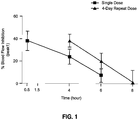
- Figure 1 shows topical ( S )-(+)-7-(1H-Imidazol-4-ylmethyl)-5,6,7,8-tetrahydro-quinoline significantly inhibits 37°C induced vessel dilation for up to 4 hrs following single topical dosing to the skin at a concentration of 0.1%. Following 4 days of topical dosing (once per day), the duration of statistically significant inhibition is increased to at least 6 hrs.
- the % blood flow inhibition is calculated as the % difference in the AUC of peak 1 (first 8 min heating and cooling interval) of the laser doppler recordings between the drug-treated and vehicle-treated paws. Data are the mean % inhibition values from 8-10 rats per group.
- topical ( S )-(+)-7-(1H-Imidazol-4-ylmethyl)-5,6,7,8-tetrahydro-quinoline can inhibit heat-induced cutaneous blood vessel dilation (or overall cutaneous blood flow) in rats, and the effect of one topical application (15 ⁇ l of a 0.1% gel) lasts for at least 4 hours. There is an extended duration of at least 6 hrs following 4-day repeat dosing.
- Human, ex vivo, trunk skin was cut into multiple smaller sections large enough to fit on nominal 2 cm 2 static Franz diffusion cells.
- the dermal receptor compartment was filled to capacity with receptor solution consisting of 0.1 X phosphate buffered solution with 0.1% Oleth-20, and the epidermal chamber (chimney) is left open to ambient laboratory environment.
- the cells were placed in a diffusion apparatus in which the receptor solution in contact with the underside of the dermis was stirred magnetically at ⁇ 600 RPM and its temperature maintained to achieve a skin surface temperature of 32.0 ⁇ 1.0 °C.
- the receptor solution was removed in its entirety, and a predetermined volume aliquot saved for subsequent analysis.
- the donor compartment (chimney) was removed, and the surface of the skin was cleansed twice to collect any un-absorbed formulation from the skin surface.
- the skin was tape stripped to remove the stratum corneum. The tape strips were extracted overnight in acetonitrile and analyzed for content of the compound of interest. The skin was then removed from the diffusion cell, split into epidermis and dermis, and each skin sample extracted overnight in 50%:50% (v/v) ethanol/water or 50%:50% (v/v) methanol water for epidermis and dermis, respectively.
- the skin section samples were analyzed for content of ( S )-(+)-7-(1 H-Imidazol-4-ylmethyl)-5,6,7,8-tetrahydro-quinoline. All samples were stored at ⁇ -20 °C ( ⁇ 15 °C) pending analysis. Quantitation of ( S )-(+)-7-(1H-Imidazol-4-ylmethyl)-5,6,7,8-tetrahydro-quinoline was analyzed by liquid chromatography with tandem mass spectrometry (PLC/MS).
- Figure 2 shows the rate of percutaneous absorption as the flux of ( S )-(+)-7-(1H-Imidazol-4-ylmethyl)-5,6,7,8-tetrahydro-quinoline that appears in the receptor solution under the skin after a 0.58% (w/w) dose.
- Figure 3 shows the distribution of ( S )-(+)-7-(1H-Imidazol-4-ylmethyl)-5,6,7,8-tetrahydro-quinoline in each skin layer following a 48 hour dose exposure of a 0.58% (w/w) dose to ex vivo human trunk skin as a mass recovered.
- Rosacea skin is associated with increased levels of LL-37 cathelicidin compared to normal skin. Intradermal injection of LL-37 into mice induces skin inflammation that is similar to that seen in rosacea skin (Yamasaki 2007).
- Ear thickness measurements were made with a digital caliper (Mitutoyo) at various timepoints up to 8 hrs post-injection with LL-37. Ear swelling is an indicator of inflammation.
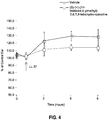
- Figure 4 shows statistically significant inhibition of LL-37-induced skin inflammation at 6 and 9 hrs after topical treatment with (S)-(+)-7-(1H-Imidazol-4-ylmethyl)-5,6,7,8-tetrahydro-quinoline.
- the data are the mean values from 9-10 mice per group.
- Rosacea can be triggered by exposure to ultraviolet (UV) light. Exposure of hairless mice to UVB irradiation results in a sunburn-like response characterized by erythema, cutaneous blood vessel dilation, tactile hypersensitivity and inflammation that persists for at least 48 hrs.
- UV ultraviolet
Landscapes
- Health & Medical Sciences (AREA)
- Public Health (AREA)
- Animal Behavior & Ethology (AREA)
- Veterinary Medicine (AREA)
- Chemical & Material Sciences (AREA)
- General Health & Medical Sciences (AREA)
- Pharmacology & Pharmacy (AREA)
- Medicinal Chemistry (AREA)
- Life Sciences & Earth Sciences (AREA)
- Epidemiology (AREA)
- General Chemical & Material Sciences (AREA)
- Bioinformatics & Cheminformatics (AREA)
- Nuclear Medicine, Radiotherapy & Molecular Imaging (AREA)
- Organic Chemistry (AREA)
- Chemical Kinetics & Catalysis (AREA)
- Engineering & Computer Science (AREA)
- Dermatology (AREA)
- Ophthalmology & Optometry (AREA)
- Heart & Thoracic Surgery (AREA)
- Cardiology (AREA)
- Pharmaceuticals Containing Other Organic And Inorganic Compounds (AREA)
- Cosmetics (AREA)
- Medicinal Preparation (AREA)
Abstract
Description
- This application is a divisional of
EP 12 784 857.0 - The present invention relates to a method for treating skin diseases and skin conditions in a patient in need thereof which comprises administering a pharmaceutical composition comprising a therapeutically effective amount of 7-(1 H-imidazol-4-ylmethyl)-5,6,7,8-tetrahydro-quinoline or the enantiomers thereof, or the tautomers thereof, or pharmaceutically acceptable salts thereof.
- Three
alpha 1 and threealpha 2 adrenergic receptors have been characterized by molecular and pharmacological methods. Activation of these alpha receptors evokes physiological responses having useful therapeutic actions. Alpha adrenergic agonists act on the peripheral vasculature to cause vasoconstriction and thereby ameliorate the symptoms of inflammatory skin disorders, including erythema or redness. Alpha adrenergic agonists are useful for ocular mucosal tissue to treat conjunctival redness (hyperemia), for nasal mucosa, as a decongestant for the treatment of allergic rhinitis, and for rectal mucosal administration suitable for treating and curing hemorrhoids. - H. E. Baldwin describes the diagnosis and the actual treatments of rosacea and related skin diseases, in the Journal of Drugs in Dermatology 2012, Vol. 11(6) pages 725-730.
-
U.S. Patent No. 6,680,062 discloses topical cosmetic and pharmaceutical compositions for the treatment of the skin. -
U.S. Patent Application Publication No. 2012/0035123 describes combinations of compounds for treating skin diseases. -
U.S. Patent No. 7,812,049 discloses a method for treating erythema resulting from rosacea comprising oxymetazoline. Oxymetazoline is a selective alpha-1 agonist and partial alpha-2 agonist topical decongestant. - Compound 7-(1H-imidazol-4-ylmethyl)-5,6,7,8-tetrahydro-quinoline is known as a
potent alpha 1 andalpha 2 adrenergic receptor pan agonist. The racemic mixture and the two enantiomers of 7-(1H-imidazol-4-ylmethyl)-5,6,7,8-tetrahydro-quinoline are disclosed inU.S. Patent Number 7,323,477 B2 .U.S. Patent Number 7,943,641 discloses a composition comprising (S)-(+)-7-(1H-Imidazol-4-ylmethyl)-5,6,7,8-tetrahydro-quinoline for the treatment of glaucoma or ocular hypertension.
- It has now been discovered that the pharmaceutical compositions of (S)-(+)-7-(1H-Imidazol-4-ylmethyl)-5,6,7,8-tetrahydro-quinoline are useful for the treatment of skin diseases and skin conditions.
- The present invention relates to pharmaceutical compositions containing as active ingredient 7-(1H-Imidazol-4-ylmethyl)-5,6,7,8-tetrahydro-quinoline for treatment of skin diseases and skin conditions.
- In another aspect the present invention relates to pharmaceutical compositions containing as active ingredient (S)-(+)-7-(1H-Imidazol-4-ylmethyl)-5,6,7,8-tetrahydro-quinoline for treatment of skin diseases and skin conditions.
- In another aspect the present invention relates to pharmaceutical compositions containing as active ingredient (R)-(-)-7-(1H-Imidazol-4-ylmethyl)-5,6,7,8-tetrahydro-quinoline for treatment of skin diseases and skin conditions.
In another aspect the present invention relates to a method for treating skin diseases in a patient in need thereof which comprises administering a pharmaceutical composition comprising a therapeutically effective amount of 7-(1H-imidazol-4-ylmethyl)-5,6,7,8-tetrahydro-quinoline or a pharmaceutically acceptable salt thereof. - In another aspect the present invention relates to a method for treating skin diseases in a patient in need thereof which comprises administering a pharmaceutical composition comprising a therapeutically effective amount of (S)-(+)-7-(1H-Imidazol-4-ylmethyl)-5,6,7,8-tetrahydro-quinoline or a pharmaceutically acceptable salt thereof.
- In another aspect the present invention relates to a method for treating skin diseases in a patient in need thereof which comprises administering a pharmaceutical composition comprising a therapeutically effective amount of (R)-(-)-7-(1H-Imidazol-4-ylmethyl)-5,6,7,8-tetrahydro-quinoline or a pharmaceutically acceptable salt thereof.
- In another aspect the present invention relates to a method for improving skin diseases in a patient in need thereof which comprises administering a pharmaceutical composition comprising a therapeutically effective amount of 7-(1H-Imidazol-4-ylmethyl)-5,6,7,8-tetrahydro-quinoline or a pharmaceutically acceptable salt thereof.
- In another aspect the present invention relates to a method for improving skin diseases in a patient in need thereof which comprises administering a pharmaceutical composition comprising a therapeutically effective amount of (S)-(+)-7-(1H-Imidazol-4-ylmethyl)-5,6,7,8-tetrahydro-quinoline or a pharmaceutically acceptable salt thereof.
- In another aspect the present invention relates to a method for improving skin diseases in a patient in need thereof which comprises administering a pharmaceutical composition comprising a therapeutically effective amount of (R)-(-)-7-(1H-Imidazol-4-ylmethyl)-5,6,7,8-tetrahydro-quinoline or a pharmaceutically acceptable salt thereof.
The compound may be administered through different routes, including but not limited to, topical dermatological application of an effective dose, direct injection, or formulations that may further enhance the long duration of action such as slow releasing pellets, suspensions, gels, solutions, creams, ointments, foams, emulsions, microemulsions, milks, patches, serums, aerosols, sprays, dispersions, microcapsules, vesicles, microparticles, wet cloths, dry cloths, facial cloths, or sustained delivery devices such as any suitable drug delivery system known in the art. -
-
Figure 1 shows topical (S)-(+)-7-(1H-Imidazol-4-ylmethyl)-5,6,7,8-tetrahydro-quinoline inhibits 37°C-induced cutaneous vessel dilation in rat paws for at least 4 hrs post-treatment following a single application and for at least 6 hrs post-treatment following 4 daily applications. -
Figure 2 shows the rate of percutaneous absorption as the flux of (S)-(+)-7-(1H-Imidazol-4-ylmethyl)-5,6,7,8-tetrahydro-quinoline that appears in the receptor solution under the skin in an ex vivo human trunk skin preparation -
Figure 3 shows the distribution of (S)-(+)-7-(1H-Imidazol-4-ylmethyl)-5,6,7,8-tetrahydro-quinoline following a 48 hour dose exposure to ex vivo human trunk skin as a mass recovered -
Figure 4 shows Inhibition of LL-37-induced mouse skin inflammation after topical treatment with (S)-(+)-7-(1 H-Imidazol-4-ylmethyl)-5,6,7,8-tetrahydro-quinoline -
Figure 5 shows reduction of UVB-induced mouse skin erythema (redness) for at least 48 hrs following treatment with(S)-(+)-7-(1H-Imidazol-4-ylmethyl)-5,6,7,8-tetrahydro-quinoline. -
Figure 6 shows reduction of UVB-induced cutaneous vessel dilation in mouse ears for at least 48 hrs following treatment with(S)-(+)-7-(1H-Imidazol-4-ylmethyl)-5,6,7,8-tetrahydro-quinoline. -
Figure 7 shows reduction of tactile hypersensitivity in UVB exposedmouse skin 4 hrs following treatment with(S)-(+)-7-(1H-Imidazol-4-ylmethyl)-5,6,7,8-tetrahydro-quinoline. - In one aspect of the invention, there is provided a method for treating skin diseases and skin conditions in a patient in need thereof which comprises, consists essentially of or consists of administering a therapeutically effective amount of a pharmaceutical composition comprising, consisting essentially of or consisting of a therapeutically effective amount of 7-(1H-imidazol-4-ylmethyl)-5,6,7,8-tetrahydro-quinoline, or the enantiomers thereof, or the tautomers thereof, or pharmaceutically acceptable salts thereof.
- In another aspect of the invention, there is provided a method for treating skin diseases and skin conditions in a patient in need thereof which comprises, consists essentially of or consists of administering a therapeutically effective amount of a pharmaceutical composition comprising, consisting essentially of or consisting of a therapeutically effective amount of (S)-(+)-7-(1H-Imidazol-4-ylmethyl)-5,6,7,8-tetrahydro-quinoline, or the tautomers thereof, or pharmaceutically acceptable salts thereof.
- In another aspect of the invention, there is provided a method for treating skin diseases and skin conditions in a patient in need thereof which comprises, consists essentially of or consists of administering a therapeutically effective amount of a pharmaceutical composition comprising, consisting essentially of or consisting of a therapeutically effective amount of (R)-(-)-7-(1H-Imidazol-4-ylmethyl)-5,6,7,8-tetrahydro-quinoline, or the tautomers thereof, or pharmaceutically acceptable salts thereof.
- By "skin diseases" it should be understood any condition, complaint or affliction associated with the listed diseases.
- Skin diseases and skin conditions which may be treated with pharmaceutical compositions containing as active ingredient 7-(1H-Imidazol-4-ylmethyl)-5,6,7,8-tetrahydro-quinoline or its enantiomers either: (S)-(+)-7-(1H-Imidazol-4-ylmethyl)-5,6,7,8-tetrahydro-quinoline or (R)-(-)-7-(1H-Imidazol-4-ylmethyl)-5,6,7,8-tetrahydro-quinoline include, but are not limited to: rosacea, rosacea fulminans, sunburn, psoriasis, menopause-associated hot flashes, flushing and redness associated with hot flashes, erythema associated with hot flashes, hot flashes resulting from orchiectomyatopic dermatitis, treatment of redness and itch from insect bites, photoaging, seborrheic dermatitis, acne, allergic dermatitis, telangiectasia (dilations of previously existing small blood vessels) of the face, angioectasias, rhinophyma (hypertrophy of the nose with follicular dilation), acne-like skin eruptions (may ooze or crust), burning or stinging sensation, erythema of the skin, cutaneous hyperactivity with dilation of blood vessels of the skin, Lyell's syndrome, Stevens-Johnson syndrome, local itching and discomfort associated with hemorrhoids, hemorrhoids, erythema multiforme minor, erythema multiforme major, erythema nodosum, eye puffiness, urticaria, pruritis, purpura, varicose veins, contact dermatitis, atopic dermatitis, nummular dermatitis, generalized exfoliative dermatitis, stasis dermatitis, lichen simplex chronicus, perioral dermatitis, pseudofolliculitis barbae, granuloma annulare, actinic keratosis, basal cell carcinoma, squamous cell carcinoma, eczema.
- Skin conditions which result in rosacea can be induced by intake of spicy food, of alcohol, of chocolate, of hot or alcoholic drinks, temperature variations, heat, exposure to ultraviolet or infrared radiation, exposure to low relative humidity, exposure of the skin to strong winds or currents of air, exposure of the skin to surfactants, irritants, irritant dermatological topical agents, and cosmetics or psychological stress.
- The actual amount of the compound to be administered in any given case will be determined by a physician taking into account the relevant circumstances, such as the severity of the condition, the age and weight of the patient, the patient's general physical condition, the cause of the condition, and the route of administration.
- In another aspect of the invention, there is provided a method for treating skin diseases wherein the pharmaceutical composition comprising, consisting essentially of or consisting of a therapeutically effective amount of 4-bromo-N-(imidazolidin-2-ylidene)-1 H-benzimidazol-5-amine, is selected from topical skin application comprising suspensions, gels, solutions, creams, lotions, ointments, foams, emulsions, microemulsions, milks, serums, aerosols, sprays, dispersions, microcapsules, vesicles, microparticles, wet cloths, dry cloths, facial cloths, applications and formulations that may further enhance the long duration of actions such as a slow releasing pellets, direct injection, or sustained delivery devices such as any suitable drug delivery systems known in the art. Pharmaceutical compositions of the present invention can be used for the topical administration including solutions, gels, lotions creams, ointments, foams, mousses, emulsions, microemulsions, milks, serums, aerosols, sprays, dispersions, patches, micelles, liposomes, microcapsules, vesicles and microparticles thereof.
- Emulsions, such as creams and lotions that can be used as topical carriers and their preparation are disclosed in Remington: The Science and Practice of Pharmacy 282-291 (Alfonso R. Gennaro Ed. 19th ed. 1995) hereby incorporated herein by reference.
- Suitable gels for use in the invention are disclosed in Remington: The Science and Practice of Pharmacy 1517-1518 (Alfonso R. Gennaro Ed. 19th ed. 1995) hereby incorporated herein by reference. Other suitable gels for use within the invention are disclosed in
U.S. Pat. No. 6,387,383 ,U.S. Pat. No. 6,517,847 andU.S. Pat. No. 6,468,989 . - In another aspect of the invention, there is provided a method for improving skin diseases, by administering to a patient in need thereof a pharmaceutical composition containing as active ingredient 7-(1H-Imidazol-4-ylmethyl)-5,6,7,8-tetrahydro-quinoline, including but not limited to: rosacea, rosacea fulminans, sunburn, psoriasis, menopause-associated hot flashes, flushing and redness associated with hot flashes, erythema associated with hot flashes, hot flashes resulting from orchiectomyatopic dermatitis, treatment of redness and itch from insect bites, photoaging, seborrheic dermatitis, acne, allergic dermatitis, telangiectasia (dilations of previously existing small blood vessels) of the face, angioectasias, rhinophyma (hypertrophy of the nose with follicular dilation), acne-like skin eruptions (may ooze or crust), burning or stinging sensation, erythema of the skin, cutaneous hyperactivity with dilation of blood vessels of the skin, Lyell's syndrome, Stevens-Johnson syndrome, local itching and discomfort associated with hemorrhoids, hemorrhoids, erythema multiforme minor, erythema multiforme major, erythema nodosum, eye puffiness, urticaria, pruritis, purpura, varicose veins, contact dermatitis, atopic dermatitis, nummular dermatitis, generalized exfoliative dermatitis, stasis dermatitis, lichen simplex chronicus, perioral dermatitis, pseudofolliculitis barbae, granuloma annulare, actinic keratosis, basal cell carcinoma, squamous cell carcinoma, eczema.
- In another aspect of the invention, there is provided a method for improving skin diseases, by administering to a patient in need thereof a pharmaceutical composition containing as active ingredient (S)-(+)-7-(1H-Imidazol-4-ylmethyl)-5,6,7,8-tetrahydro-quinoline, including but not limited to: rosacea, rosacea fulminans, sunburn, psoriasis, menopause-associated hot flashes, flushing and redness associated with hot flashes, erythema associated with hot flashes, hot flashes resulting from orchiectomyatopic dermatitis, treatment of redness and itch from insect bites, photoaging, seborrheic dermatitis, acne, allergic dermatitis, telangiectasia (dilations of previously existing small blood vessels) of the face, angioectasias, rhinophyma (hypertrophy of the nose with follicular dilation), acne-like skin eruptions (may ooze or crust), burning or stinging sensation, erythema of the skin, cutaneous hyperactivity with dilation of blood vessels of the skin, Lyell's syndrome, Stevens-Johnson syndrome, local itching and discomfort associated with hemorrhoids, hemorrhoids, erythema multiforme minor, erythema multiforme major, erythema nodosum, eye puffiness, urticaria, pruritis, purpura, varicose veins, contact dermatitis, atopic dermatitis, nummular dermatitis, generalized exfoliative dermatitis, stasis dermatitis, lichen simplex chronicus, perioral dermatitis, pseudofolliculitis barbae, granuloma annulare, actinic keratosis, basal cell carcinoma, squamous cell carcinoma, eczema.
- In another aspect of the invention, there is provided a method for improving skin diseases, by administering to a patient in need thereof a pharmaceutical composition containing as active ingredient (R)-(-)-7-(1H-Imidazol-4-ylmethyl)-5,6,7,8-tetrahydro-quinoline, including but not limited to: rosacea, rosacea fulminans, sunburn, psoriasis, menopause-associated hot flashes, flushing and redness associated with hot flashes, erythema associated with hot flashes, hot flashes resulting from orchiectomyatopic dermatitis, treatment of redness and itch from insect bites, photoaging, seborrheic dermatitis, acne, allergic dermatitis, telangiectasia (dilations of previously existing small blood vessels) of the face, angioectasias, rhinophyma (hypertrophy of the nose with follicular dilation), acne-like skin eruptions (may ooze or crust), burning or stinging sensation, erythema of the skin, cutaneous hyperactivity with dilation of blood vessels of the skin, Lyell's syndrome, Stevens-Johnson syndrome, local itching and discomfort associated with hemorrhoids, hemorrhoids, erythema multiforme minor, erythema multiforme major, erythema nodosum, eye puffiness, urticaria, pruritis, purpura, varicose veins, contact dermatitis, atopic dermatitis, nummular dermatitis, generalized exfoliative dermatitis, stasis dermatitis, lichen simplex chronicus, perioral dermatitis, pseudofolliculitis barbae, granuloma annulare, actinic keratosis, basal cell carcinoma, squamous cell carcinoma, eczema.
- In another aspect of the invention, there is provided a method of decreasing the irritation of skin associated with rosacea treatment regimen of topically applied a therapeutically effective amount of 7-(1H-Imidazol-4-ylmethyl)-5,6,7,8-tetrahydro-quinoline, the method of treating telangiectasia or angioectasias with a therapeutically effective amount of 7-(1H-Imidazol-4-ylmethyl)-5,6,7,8-tetrahydro-quinoline, and therefore, it also includes the method of reducing redness associated with the appearance of rosacea.
- In another aspect of the invention, there is provided a method of decreasing the irritation of skin associated with rosacea treatment regimen of topically applied a therapeutically effective amount of (S)-(+)-7-(1H-imidazol-4-ylmethyl)-5,6,7,8-tetrahydro-quinoline, the method of treating telangiectasia or angioectasias with a therapeutically effective amount of (S)-(+)-7-(1H-Imidazol-4-ylmethyl)-5,6,7,8-tetrahydro-quinoline, and therefore, it also includes the method of reducing redness associated with the appearance of rosacea.
- In another aspect of the invention, there is provided a method of decreasing the irritation of skin associated with rosacea treatment regimen of topically applied a therapeutically effective amount of (R)-(-)-7-(1H-Imidazol-4-ylmethyl)-5,6,7,8-tetrahydro-quinoline, the method of treating telangiectasia or angioectasias with a therapeutically effective amount of (R)-(-)-7-(1H-Imidazol-4-ylmethyl)-5,6,7,8-tetrahydro-quinoline, and therefore, it also includes the method of reducing redness associated with the appearance of rosacea.
- In another aspect of the invention, there is provided a method for treating skin diseases including but not limited to: rosacea induced by intake of spicy food, chocolate, alcohol, hot or alcoholic drinks, temperature variations, heat, exposure to ultraviolet or infrared radiation, exposure to low relative humidity, exposure of the skin to strong winds or currents of air, exposure of the skin to surfactants, irritants, irritant dermatological topical agents, and cosmetics or psychological stress.
- (S)-(+)-7-(1H-Imidazol-4-ylmethyl)-5,6,7,8-tetrahydro-quinoline may be formulated with efficacy enhancing components as disclosed in
U.S. Patent Number 7,491,383 B2 . - In another aspect of the invention, there is provided an article of manufacture comprising packaging material and a pharmaceutical agent contained within said packaging material, wherein the pharmaceutical agent is therapeutically effective for treating a skin disease and wherein the packaging material comprises a label which indicates the pharmaceutical agent can be used for treating a skin disease and wherein said pharmaceutical agent comprises an effective amount of 7-(1H-Imidazol-4-ylmethyl)-5,6,7,8-tetrahydro-quinoline or a salt thereof.
- In another aspect of the invention, there is provided an article of manufacture comprising packaging material and a pharmaceutical agent contained within said packaging material, wherein the pharmaceutical agent is therapeutically effective for treating a skin disease and wherein the packaging material comprises a label which indicates the pharmaceutical agent can be used for treating a skin disease and wherein said pharmaceutical agent comprises an effective amount of (S)-(+)-7-(1H-Imidazol-4-ylmethyl)-5,6,7,8-tetrahydro-quinoline or a salt thereof.
- In another aspect of the invention, there is provided an article of manufacture comprising packaging material and a pharmaceutical agent contained within said packaging material, wherein the pharmaceutical agent is therapeutically effective for treating a skin disease and wherein the packaging material comprises a label which indicates the pharmaceutical agent can be used for treating a skin disease and wherein said pharmaceutical agent comprises an effective amount of (R)-(-)-7-(1H-Imidazol-4-ylmethyl)-5,6,7,8-tetrahydro-quinoline or a salt thereof.
- In another aspect of the invention, there is provided a method for treating ocular diseases and conditions in a patient in need thereof which comprises, consists essentially of or consists of administering a therapeutically effective amount of a pharmaceutical composition comprising, consisting essentially of or consisting of a therapeutically effective amount of 7-(1H-Imidazol-4-ylmethyl)-5,6,7,8-tetrahydro-quinoline, or the enantiomers thereof, or the tautomers thereof, or pharmaceutically acceptable salts thereof.
- In another aspect of the invention, there is provided a method for treating ocular diseases and conditions in a patient in need thereof which comprises, consists essentially of or consists of administering a therapeutically effective amount of a pharmaceutical composition comprising, consisting essentially of or consisting of a therapeutically effective amount of (S)-(+)-7-(1H-Imidazol-4-ylmethyl)-5,6,7,8-tetrahydro-quinoline, or the tautomers thereof, or pharmaceutically acceptable salts thereof.
- In another aspect of the invention, there is provided a method for treating ocular diseases and conditions in a patient in need thereof which comprises, consists essentially of or consists of administering a therapeutically effective amount of a pharmaceutical composition comprising, consisting essentially of or consisting of a therapeutically effective amount of (R)-(-)-7-(1H-Imidazol-4-ylmethyl)-5,6,7,8-tetrahydro-quinoline, or the tautomers thereof, or pharmaceutically acceptable salts thereof.
- By "ocular diseases" it should be understood any condition, complaint or affliction associated with the listed diseases.
- Ocular diseases and conditions which may be treated with pharmaceutical compositions containing as active ingredient 7-(1H-Imidazol-4-ylmethyl)-5,6,7,8-tetrahydro-quinoline or its enantiomers either: (S)-(+)-7-(1H-Imidazol-4-ylmethyl)-5,6,7,8-tetrahydro-quinoline or (R)-(-)-7-(1H-Imidazol-4-ylmethyl)-5,6,7,8-tetrahydro-quinoline include, but are not limited to: ocular rosacea, pterygium, redness, hyperemia, conjunctival hyperemia, corneal neovascularization, ocular cicatricial pemphygoid and Stevens-Johnson syndrome.
- The (S)-(+)-7-(1H-Imidazol-4-ylmethyl)-5,6,7,8-tetrahydro-quinoline compound has physiochemical and pharmacokinetic properties that are beneficial for sustained activity, particularly when the drug is delivered continuously (e.g. to the skin by a dermal patch).
- "Pharmaceutical composition," as used here, means a composition that is suitable for administering to human patients for disease treatment. In one embodiment the compound of the invention is formulated as a pharmaceutically acceptable salt which further includes one or more organic or inorganic carriers or excipients suitable for dermatological applications. The pharmaceutically acceptable excipients may include one or more skin-penetrating agents, moisturizers, preservatives, gelling agents, protective agents, oil-in-water, water-in-oil, water-in-oil-in-water, and oil-in-water-in-silicon emulsions. The pharmaceutical composition may comprise excipients, binders, lubricants, solvents, disintegrants, or enhancers of cutenous penetration and will be administered preferably topically. The active ingredient is used in an amount of about 0.01% up to about 20% and preferably about 0.1% to about 10% by weight based on the total weight of the composition.
- "Pharmaceutically acceptable salt" refers to those salts which retain the biological effectiveness and properties of the free base and which are obtained by reaction with inorganic acids such as hydrochloric acid, hydrobromic acid, sulfuric acid, nitric acid, phosphoric acid, or an organic acid such as for example, acetic acid, hydroxyacetic acid, propanoic acid, lactic acid, pyruvic acid, malonic acid, fumaric acid, maleic acid, oxalic acid, tartaric acid, succinic acid, malic acid, ascorbic acid, benzoic acid, tannic acid, pamoic acid, citric acid, methylsulfonic acid, ethanesulfonic acid, benzenesulfonic acid, formic and, salicylic acid and the like (Handbook of Pharmaceutical Salts, P.Heinrich Stahal& Camille G. Wermuth (Eds), Verlag Helvetica Chemica Acta- Zurich, 2002, 329-345).
- In another aspect of the invention, there is provided a method for treating skin diseases and skin conditions wherein the pharmaceutical composition comprising, consisting essentially of, or consisting of a therapeutically effective amount of 7-(1H-Imidazol-4-ylmethyl)-5,6,7,8-tetrahydro-quinoline is selected from topical skin application, direct injection, applications and formulations that may further enhance the long duration of actions such as a slow releasing pellet, suspension, gel, solution, cream, ointment, foams, emulsions, microemulsions, milks, serums, aerosols, sprays, dispersions, microcapsules, vesicles, microparticles, wet cloths, dry cloths, facial cloths.
- In another aspect of the invention, there is provided a method for treating skin diseases and skin conditions wherein the pharmaceutical composition comprising, consisting essentially of, or consisting of a therapeutically effective amount of (R)-(-)-7-(1H-Imidazol-4-ylmethyl)-5,6,7,8-tetrahydro-quinoline is selected from topical skin application, direct injection, applications and formulations that may further enhance the long duration of actions such as a slow releasing pellet, suspension, gel, solution, cream, ointment, foams, emulsions, microemulsions, milks, serums, aerosols, sprays, dispersions, microcapsules, vesicles, microparticles, wet cloths, dry cloths, facial cloths.
- In another aspect of the invention, there is provided a method for treating skin diseases and skin conditions wherein the pharmaceutical composition comprising, consisting essentially of, or consisting of a therapeutically effective amount of (S)-(+)-7-(1H-Imidazol-4-ylmethyl)-5,6,7,8-tetrahydro-quinoline is selected from topical skin application, direct injection, applications and formulations that may further enhance the long duration of actions such as a slow releasing pellet, suspension, gel, solution, lotion, cream, ointment, foams, emulsions, microemulsions, milks, serums, aerosols, sprays, dispersions, microcapsules, vesicles, microparticles, wet cloths, soaps, cleansing bars, dry cloths, facial cloths.
- The present invention may be used in conjunction with rosacea treatments of topically applied agents such as macrocyclic lactones of the avermectin family, macrolides known as milbemycins,
other alpha 1 oralpha 2 receptor agonists, retinoids, phytosphingosine, green tea extract, azaleic acid.
The present invention may also be used in conjunction with other classes of compounds such as: - Antimicrobials (such as antiparasitic, antibacterial, antifungal, antiviral);
- Metronidazole, ivermectin, clindamycin, erythromycin, tetracycline, doxycycline, minocycline;
- Steroidal and non-steroidal anti-inflammatory agents (such as corticosteroids, tacrolimus, pimecrolimus, cyclosporine A);
- Antiangiogenesis agents;
- Antimycobacterial agents (such as dapsone);
- Sunscreensor sunblocks or anything that functions like a sunscreen/sunblock (such as titanium dioxide, zinc oxide, avobenzone);
- Antioxidants (such as Vitamins C, E, quercetin, resveratrol);
- Other alpha agonists (such as brimonidine, oxymetazoline, clonidine);
- Beta blockers (such as nadolol, propanolol, carvedilol);
- Antihistamines;
- Retinoids (such as tretinoin, adapalene, tazarotene, isotretinoin, retinaldehyde) Benzoyl peroxide;
- Menthol and other "cooling" agents;
- Sodium sulfacetamide and derivatives;
- Antifungal agents (such as imidazole derivatives, ployene compounds, allylamine compounds);
- Serine protease (kallikrein) inhibitors (such as aminocaproic acid);
- The present invention is not to be limited in scope by the exemplified embodiments, which are only intended as illustrations of specific aspects of the invention. Various modifications of the invention, in addition to those disclosed herein, will be apparent to those skilled in the art by a careful reading of the specification, including the claims, as originally filed. It is intended that all such modifications will fall within the scope of the appended claims.
- Rosacea can be triggered by heat exposure. The physiological sympathetic nervous system-mediated response to body cooling is cutaneous vasoconstriction and the response to body warming is cutaneous vasodilation. α-adrenergic agonists that act on the sympathetic nervous system outflow can regulate cutaneous blood flow in response to temperature changes.
- A laser Doppler microvascular perfusion monitor (laser Doppler flowmetry technique, LDP) was used to monitor red blood cell perfusion in the microvasculature of the hind foot pad. The laser doppler flowmetry (LDP) is an OxyFlo Microvascular Perfusion Monitor, from Oxford Optronix LTd. UK.
- Briefly, 15 µL of test articles was applied topically once, or repeatedly (once daily for 4 consecutive days) to one hind foot pad of anaesthetized hairless CD rats and 15 µL of vehicle was applied to the other footpad.
- At various timepoints up to 8 hrs following the last test article administration, dynamic blood flow changes were measured and recorded every 15 seconds for 4 minutes per temperature interval for 5 intervals (22°C→37°C→4°C→37°C→22°C). Rats were placed on a 37°C heat pad to increase their temperature and on an ice pad to decrease their temperature to 4°C. The levels of blood flow in the two paws were compared.
-
Figure 1 shows topical (S)-(+)-7-(1H-Imidazol-4-ylmethyl)-5,6,7,8-tetrahydro-quinoline significantly inhibits 37°C induced vessel dilation for up to 4 hrs following single topical dosing to the skin at a concentration of 0.1%. Following 4 days of topical dosing (once per day), the duration of statistically significant inhibition is increased to at least 6 hrs. The % blood flow inhibition is calculated as the % difference in the AUC of peak 1 (first 8 min heating and cooling interval) of the laser doppler recordings between the drug-treated and vehicle-treated paws. Data are the mean % inhibition values from 8-10 rats per group. - This data demonstrates that topical (S)-(+)-7-(1H-Imidazol-4-ylmethyl)-5,6,7,8-tetrahydro-quinoline can inhibit heat-induced cutaneous blood vessel dilation (or overall cutaneous blood flow) in rats, and the effect of one topical application (15 µl of a 0.1% gel) lasts for at least 4 hours. There is an extended duration of at least 6 hrs following 4-day repeat dosing.
- Human, ex vivo, trunk skin was cut into multiple smaller sections large enough to fit on nominal 2 cm2 static Franz diffusion cells. The dermal receptor compartment was filled to capacity with receptor solution consisting of 0.1 X phosphate buffered solution with 0.1% Oleth-20, and the epidermal chamber (chimney) is left open to ambient laboratory environment. The cells were placed in a diffusion apparatus in which the receptor solution in contact with the underside of the dermis was stirred magnetically at ∼600 RPM and its temperature maintained to achieve a skin surface temperature of 32.0 ± 1.0 °C.
- To assure the integrity of each skin section, its permeability to tritiated water was determined before application of the test products. Skin specimens in which absorption of 3H2O was less than 1.56 µL- equ/cm2 were considered acceptable.
- (S)-(+)-7-(1H-Imidazol-4-ylmethyl)-5,6,7,8-tetrahydro-quinoline was applied to three (3) replicate sections of the same donor skin for each donor, evaluating three (3) donors for the designated dose duration. A dose of 5 mg formulation/cm2/skin section was evenly dispersed and rubbed into the skin surface using a glass rod.
- At designated time points and at the end of the study dose duration, the receptor solution was removed in its entirety, and a predetermined volume aliquot saved for subsequent analysis. After the last receptor sample was collected, the donor compartment (chimney) was removed, and the surface of the skin was cleansed twice to collect any un-absorbed formulation from the skin surface. Following the surface cleanse, the skin was tape stripped to remove the stratum corneum. The tape strips were extracted overnight in acetonitrile and analyzed for content of the compound of interest. The skin was then removed from the diffusion cell, split into epidermis and dermis, and each skin sample extracted overnight in 50%:50% (v/v) ethanol/water or 50%:50% (v/v) methanol water for epidermis and dermis, respectively. The skin section samples were analyzed for content of (S)-(+)-7-(1 H-Imidazol-4-ylmethyl)-5,6,7,8-tetrahydro-quinoline. All samples were stored at ∼ -20 °C (± 15 °C) pending analysis. Quantitation of (S)-(+)-7-(1H-Imidazol-4-ylmethyl)-5,6,7,8-tetrahydro-quinoline was analyzed by liquid chromatography with tandem mass spectrometry (PLC/MS).
- Replicates within donors were averaged and the standard deviation calculated for each key parameter. Within donor averages were then collated and the across donor population mean with standard error of the mean calculated.
-
Figure 2 shows the rate of percutaneous absorption as the flux of (S)-(+)-7-(1H-Imidazol-4-ylmethyl)-5,6,7,8-tetrahydro-quinoline that appears in the receptor solution under the skin after a 0.58% (w/w) dose. -
Figure 3 shows the distribution of (S)-(+)-7-(1H-Imidazol-4-ylmethyl)-5,6,7,8-tetrahydro-quinoline in each skin layer following a 48 hour dose exposure of a 0.58% (w/w) dose to ex vivo human trunk skin as a mass recovered. - The data indicate that (S)-(+)-7-(1H-Imidazol-4-ylmethyl)-5,6,7,8-tetrahydro-quinoline does penetrate into and through ex vivo human trunk skin using the in vitro Franz diffusion cell. The increased rate of flux at the 18 and 36 hr timepoints (
Figure 2 ) and the higher concentration in the epidermis (Figure 3 ) suggests that the drug depots in the skin, which is consistent with a long duration of action and extended duration following repeated dosing. - Rosacea skin is associated with increased levels of LL-37 cathelicidin compared to normal skin. Intradermal injection of LL-37 into mice induces skin inflammation that is similar to that seen in rosacea skin (Yamasaki 2007).
- (S)-(+)-7-(1H-Imidazol-4-ylmethyl)-5,6,7,8-tetrahydro-quinoline gel or its corresponding vehicle was applied to the dorsal surface of the ears of BALB/c mice.
- One hour following application, the left ear was intradermally injected with LL-37 peptide and the right ear was injected with phosphate-buffered saline (PBS). Ear thickness measurements were made with a digital caliper (Mitutoyo) at various timepoints up to 8 hrs post-injection with LL-37. Ear swelling is an indicator of inflammation.
-
Figure 4 shows statistically significant inhibition of LL-37-induced skin inflammation at 6 and 9 hrs after topical treatment with (S)-(+)-7-(1H-Imidazol-4-ylmethyl)-5,6,7,8-tetrahydro-quinoline. The data are the mean values from 9-10 mice per group. - The data indicates that topical administration of (S)-(+)-7-(1H-Imidazol-4-ylmethyl)-5,6,7,8-tetrahydro-quinoline has an anti-inflammatory effect that is relevant to the treatment of rosacea.
- Rosacea can be triggered by exposure to ultraviolet (UV) light. Exposure of hairless mice to UVB irradiation results in a sunburn-like response characterized by erythema, cutaneous blood vessel dilation, tactile hypersensitivity and inflammation that persists for at least 48 hrs.
- SKH1 hairless mice, lying on their stomachs with their left sides covered, were exposed to UVB at an intensity of 120 mJ/cm2 for 91 sec. Approximately 30 min after irradiation, (S)-(+)-7-(1H-Imidazol-4-ylmethyl)-5,6,7,8-tetrahydro-quinoline gel or its corresponding vehicle was applied topically to a region of the back and the dorsal surface of the ears. At various timepoints up to 48 hrs post UVB-irradiation, the following assessments were made:
- 1. Vasculature area in the exposed and unexposed ears by image analysis of digital photos using ImagePro Premier (Media Cybernetics) software. Images are converted to gray-scale, expanded and thresholding, based on each ear's baseline pixel values, is applied to the images. Thresholding differentiates the desired "object" features (i.e. vasculature network) from the background (i.e. skin tissue). The "object" pixels are then quantified and reported as the vasculature area.
- 2. Erythema on the exposed and unexposed back using a Chromameter (Konica Minolta).
- 3. Tactile hypersensitivity assessment using a paint brush test. The hypersensitivity is assessed by light stroking of the flank of the mice with a small paint brush every 5 min over 35 min. The behavioral response is scored as follows: 0, no response; 1, mild squeaking with attempts to move away from the brush; 2, vigorous squeaking evoked by the brush, biting at the brush and strong efforts to escape. The scores at the eight time points are summed so the maximum hypersensitivity score for each mouse can be 16. The exposed (right) and unexposed (left) flanks were scored independently.
Figure 5 shows that topical dosing of (S)-(+)-7-(1H-Imidazol-4-ylmethyl)-5,6,7,8-tetrahydro-quinoline to the back 30 min following UVB exposure results in a statistically significant reduction of erythema (measured with a chromameter) to nearly baseline levels that lasts for at least 48 hrs. Data are the mean of values from 6 mice per group.
Figure 6 shows that topical dosing of (S)-(+)-7-(1H-Imidazol-4-ylmethyl)-5,6,7,8-tetrahydro-quinoline to theear 30 min following UVB exposure results in statistically significant cutaneous vasoconstriction (measured as a reduction of cutaneous vasculature area) to nearly baseline levels that lasts for at least 48 hrs. Data are the mean of values from 6 mice per group.
Figure 7 shows that topical dosing of (S)-(+)-7-(1H-Imidazol-4-ylmethyl)-5,6,7,8-tetrahydro-quinoline to the back 30 min following UVB exposure results in a statistically significant reduction of tactile hypersensitivity (scored by the response to stroking with a paint brush) assessed 4 hrs following UVB irradiation. There was a reduction in hypersensitivity on both the UV-exposed and control sides. Data are the mean of values from 6 mice per group. - The data indicate that topical administration of (S)-(+)-7-(1H-Imidazol-4-ylmethyl)-5,6,7,8-tetrahydro-quinoline has a long-lasting beneficial effect on inflammation, erythema (redness) and hypersensitivity, which are signs and symptoms of many skin diseases and conditions. The findings have particular relevance to the treatment of sunburn, rosacea and psoriasis.
- It should be understood that the subject-matter of the originally filed claims in the earlier application is hereby incorporated into this divisional. For the avoidance of any doubt, that subject-matter is as follows:
- 1. A method for treating skin conditions in a patient suffering thereof, which comprises treating said patient with a pharmaceutical composition comprising a therapeutically effective amount of 7-(1H-Imidazol-4-ylmethyl)-5,6,7,8-tetrahydro-quinoline, or the individual enantiomers thereof, or the individual tautomers thereof, or a pharmaceutically acceptable salt thereof.
- 2. The method according to
embodiment 1, wherein the pharmaceutical composition comprises (R)-(-)-7-(1H-Imidazol-4-ylmethyl)-5,6,7,8-tetrahydro-quinoline. - 3. The method according to
embodiment 1, wherein the pharmaceutical composition comprises (S)-(+)-7-(1H-Imidazol-4-ylmethyl)-5,6,7,8-tetrahydro-quinoline. - 4. The method according to
embodiment 1, wherein the treated condition is selected from: rosacea, rosacea fulminans, sunburn, psoriasis, menopause-associated hot flashes, flushing and redness associated with hot flashes, erythema associated with hot flashes, hot flashes resulting from orchiectomyatopic dermatitis, treatment of redness and itch from insect bites, photoaging, seborrheic dermatitis, acne, allergic dermatitis, telangiectasia (dilations of previously existing small blood vessels) of the face, angioectasias, rhinophyma (hypertrophy of the nose with follicular dilation), acne-like skin eruptions (may ooze or crust), burning or stinging sensation, erythema of the skin, cutaneous hyperactivity with dilation of blood vessels of the skin, Lyell's syndrome, Stevens-Johnson syndrome, local itching and discomfort associated with hemorrhoids, hemorrhoids, erythema multiforme minor, erythema multiforme major, erythema nodosum, eye puffiness, urticaria, pruritis, purpura, varicose veins, contact dermatitis, atopic dermatitis, nummular dermatitis, generalized exfoliative dermatitis, stasis dermatitis, lichen simplex chronicus, perioral dermatitis, pseudofolliculitis barbae, granuloma annulare, actinic keratosis, basal cell carcinoma, squamous cell carcinoma, and eczema. - 5. The method according to
embodiment 1, wherein the condition is rosacea. - 6. The method according to
embodiment 1, wherein the condition is psoriasis. - 7. The method according to
embodiment 1, wherein the condition is rosacea fulminans. - 8. The method according to
embodiment 1, wherein the condition is telangiectasia of the face. - 9. The method according to
embodiment 1, wherein the condition is erythema of the skin. - 10. The method of
embodiment 1, wherein said pharmaceutical composition is in a formulation suitable for topical dermatological administration, suspensions, gels, solutions, creams, lotions, ointments, foams, emulsions, microemulsions, milks, serums, aerosols, sprays, dispersions, microcapsules, vesicles, microparticles, wet cloths, dry cloths, facial cloths or direct injection. - 11. An article of manufacture comprising packaging material and a pharmaceutical agent contained within said packaging material, wherein the pharmaceutical agent is therapeutically effective for treating a skin condition and wherein the packaging material comprises a label which indicates the pharmaceutical agent can be used for treating a skin condition and wherein said pharmaceutical agent comprises a therapeutically effective amount of 7-(1H-Imidazol-4-ylmethyl)-5,6,7,8-tetrahydro-quinoline or an enantiomer thereof.
- 12. The article of manufacture according to embodiment 11, wherein said pharmaceutical agent comprises a therapeutically effective amount of (S)-(+)-7-(1H-Imidazol-4-ylmethyl)-5,6,7,8-tetrahydro-quinoline.
- 13. A method for treating ocular rosacea, pterygium or conjunctival hyperemia in a patient suffering thereof, which comprises treating said patient with a pharmaceutical composition comprising a therapeutically effective amount of 7-(1H-Imidazol-4-ylmethyl)-5,6,7,8-tetrahydro-quinoline, or the individual enantiomers thereof, or the individual tautomers thereof, or a pharmaceutically acceptable salt thereof.
- 14. The method according to embodiment 13, wherein the pharmaceutical composition comprises (R)-(-)-7-(1H-Imidazol-4-ylmethyl)-5,6,7,8-tetrahydro-quinoline.
- 15. The method according to embodiment 13, wherein the pharmaceutical composition comprises (S)-(+)-7-(1H-Imidazol-4-ylmethyl)-5,6,7,8-tetrahydro-quinoline.
Claims (13)
- A pharmaceutical composition for use in a method of treating ocular diseases, wherein the composition comprises a therapeutically effective amount of 7-(1H-Imidazol-4-ylmethyl)-5,6,7,8-tetrahydro-quinoline, or the individual enantiomers thereof, or the individual tautomers thereof, or a pharmaceutically acceptable salt thereof.
- The pharmaceutical composition for use according to claim 1, wherein the pharmaceutical composition comprises (R)-(-)-7-(1H-Imidazol-4-ylmethyl)-5,6,7,8-tetrahydro-quinoline.
- The pharmaceutical composition for use according to claim 1, wherein the pharmaceutical composition comprises (S)-(+)-7-(1H-Imidazol-4-ylmethyl)-5,6,7,8-tetrahydro-quinoline.
- The pharmaceutical composition for use according to any one of claims 1 to 3, wherein the treated condition is selected from: ocular rosacea, pterygium, redness, hyperemia, conjunctival hyperemia, corneal neovascularization, ocular cicatricial pemphygoid and Stevens-Johnson syndrome.
- The pharmaceutical composition for use according to any one of claims 1 to 3, wherein the treated condition is ocular rosacea.
- The pharmaceutical composition for use according to any one of claims 1 to 3, wherein the treated condition is pterygium.
- The pharmaceutical composition for use according to any one of claims 1 to 3, wherein the treated condition is redness.
- The pharmaceutical composition for use according to any one of claims 1 to 3, wherein the treated condition is hyperemia.
- The pharmaceutical composition for use according to any one of claims 1 to 3, wherein the treated condition is conjunctival hyperemia.
- The pharmaceutical composition for use according to any one of claims 1 to 3, wherein the treated condition is corneal neovascularization.
- The pharmaceutical composition for use according to any one of claims 1 to 3, wherein the treated condition is ocular cicatricial pemphigoid.
- The pharmaceutical composition for use according to any one of claims 1 to 3, wherein the treated condition is Stevens-Johnson syndrome.
- The pharmaceutical composition for use according to any one of claims 1 to 12, wherein said pharmaceutical composition is formulated as a suspension, gel, solution, cream, lotion, ointment, emulsion, microemulsion, dispersion, microcapsule, vesicle, microparticle, or direct injection.
Priority Applications (1)
| Application Number | Priority Date | Filing Date | Title |
|---|---|---|---|
| EP20193075.7A EP3763370A1 (en) | 2011-11-10 | 2012-11-08 | Pharmaceutical compositions comprising 7-(1h-imidazol-4-ylmethyl)-5,6,7,8-tetrahydro-quinoline |
Applications Claiming Priority (3)
| Application Number | Priority Date | Filing Date | Title |
|---|---|---|---|
| US201161558104P | 2011-11-10 | 2011-11-10 | |
| PCT/US2012/064075 WO2013070861A1 (en) | 2011-11-10 | 2012-11-08 | Pharmaceutical compositions comprising 7-(1h-imidazol-4-ylmethyl)-5,6,7,8-tetrahydro-quinoline for treating skin diseases and conditions |
| EP12784857.0A EP2776034B1 (en) | 2011-11-10 | 2012-11-08 | Pharmaceutical compositions comprising (s)-(+)-7-(1h-imidazol-4-ylmethyl)-5,6,7,8-tetrahydro-quinoline for treating skin diseases and conditions |
Related Parent Applications (2)
| Application Number | Title | Priority Date | Filing Date |
|---|---|---|---|
| EP12784857.0A Division EP2776034B1 (en) | 2011-11-10 | 2012-11-08 | Pharmaceutical compositions comprising (s)-(+)-7-(1h-imidazol-4-ylmethyl)-5,6,7,8-tetrahydro-quinoline for treating skin diseases and conditions |
| EP12784857.0A Division-Into EP2776034B1 (en) | 2011-11-10 | 2012-11-08 | Pharmaceutical compositions comprising (s)-(+)-7-(1h-imidazol-4-ylmethyl)-5,6,7,8-tetrahydro-quinoline for treating skin diseases and conditions |
Related Child Applications (2)
| Application Number | Title | Priority Date | Filing Date |
|---|---|---|---|
| EP20193075.7A Division-Into EP3763370A1 (en) | 2011-11-10 | 2012-11-08 | Pharmaceutical compositions comprising 7-(1h-imidazol-4-ylmethyl)-5,6,7,8-tetrahydro-quinoline |
| EP20193075.7A Division EP3763370A1 (en) | 2011-11-10 | 2012-11-08 | Pharmaceutical compositions comprising 7-(1h-imidazol-4-ylmethyl)-5,6,7,8-tetrahydro-quinoline |
Publications (2)
| Publication Number | Publication Date |
|---|---|
| EP3184110A1 true EP3184110A1 (en) | 2017-06-28 |
| EP3184110B1 EP3184110B1 (en) | 2020-10-07 |
Family
ID=47178364
Family Applications (3)
| Application Number | Title | Priority Date | Filing Date |
|---|---|---|---|
| EP12784857.0A Active EP2776034B1 (en) | 2011-11-10 | 2012-11-08 | Pharmaceutical compositions comprising (s)-(+)-7-(1h-imidazol-4-ylmethyl)-5,6,7,8-tetrahydro-quinoline for treating skin diseases and conditions |
| EP20193075.7A Withdrawn EP3763370A1 (en) | 2011-11-10 | 2012-11-08 | Pharmaceutical compositions comprising 7-(1h-imidazol-4-ylmethyl)-5,6,7,8-tetrahydro-quinoline |
| EP17156230.9A Active EP3184110B1 (en) | 2011-11-10 | 2012-11-08 | Pharmaceutical compositions comprising 7-(1h-imidazol-4-ylmethyl)-5,6,7,8-tetrahydro-quinoline |
Family Applications Before (2)
| Application Number | Title | Priority Date | Filing Date |
|---|---|---|---|
| EP12784857.0A Active EP2776034B1 (en) | 2011-11-10 | 2012-11-08 | Pharmaceutical compositions comprising (s)-(+)-7-(1h-imidazol-4-ylmethyl)-5,6,7,8-tetrahydro-quinoline for treating skin diseases and conditions |
| EP20193075.7A Withdrawn EP3763370A1 (en) | 2011-11-10 | 2012-11-08 | Pharmaceutical compositions comprising 7-(1h-imidazol-4-ylmethyl)-5,6,7,8-tetrahydro-quinoline |
Country Status (22)
| Country | Link |
|---|---|
| US (4) | US20130123303A1 (en) |
| EP (3) | EP2776034B1 (en) |
| JP (2) | JP6359456B2 (en) |
| KR (1) | KR102004563B1 (en) |
| CN (1) | CN104136029A (en) |
| AR (1) | AR088845A1 (en) |
| AU (2) | AU2012335803B2 (en) |
| BR (1) | BR112014011336A2 (en) |
| CA (1) | CA2855005C (en) |
| CL (1) | CL2014001242A1 (en) |
| DK (1) | DK2776034T3 (en) |
| ES (1) | ES2635421T3 (en) |
| IL (3) | IL232483B (en) |
| MX (1) | MX350662B (en) |
| MY (1) | MY182553A (en) |
| PH (1) | PH12014501051A1 (en) |
| RU (2) | RU2630978C2 (en) |
| SG (3) | SG11201402246RA (en) |
| TW (3) | TWI708604B (en) |
| UA (1) | UA109359C2 (en) |
| WO (1) | WO2013070861A1 (en) |
| ZA (1) | ZA201403396B (en) |
Families Citing this family (4)
| Publication number | Priority date | Publication date | Assignee | Title |
|---|---|---|---|---|
| US9283217B2 (en) | 2011-11-10 | 2016-03-15 | Allergan, Inc. | Pharmaceutical compositions comprising 7-(1 H-imidazol-4-ylmethyl)-5,6,7,8-tetrahydro-quinoline for treating skin diseases and conditions |
| EP2994120B1 (en) * | 2013-05-06 | 2019-10-09 | Allergan, Inc. | Alpha adrenergic agonists for the treatment of tissue trauma |
| FR3061434B1 (en) * | 2017-01-04 | 2019-07-12 | Pierre Fabre Dermo-Cosmetique | COSMETIC COMPOSITION COMPRISING AN ASSOCIATION OF PONGAMIA OIL AND PENTYLENE GLYCOL 4-T-BUTYLCYCLOHEXANOL FOR CONTROLLING ROSACEA |
| RU2727695C1 (en) * | 2020-02-13 | 2020-07-22 | Мурад Умарович Магомедов | Method of complex treatment of rhinophyma |
Citations (10)
| Publication number | Priority date | Publication date | Assignee | Title |
|---|---|---|---|---|
| US6387383B1 (en) | 2000-08-03 | 2002-05-14 | Dow Pharmaceutical Sciences | Topical low-viscosity gel composition |
| US6468989B1 (en) | 2000-07-13 | 2002-10-22 | Dow Pharmaceutical Sciences | Gel compositions containing metronidazole |
| US6680062B2 (en) | 2001-10-05 | 2004-01-20 | Color Access, Inc. | Anti-irritating rosacea treatment |
| WO2007084473A2 (en) * | 2006-01-17 | 2007-07-26 | Allergan, Inc. | The use of memantine and brimonidine to attenuate vitreoretinal vascular endothelial growth factor (vegf) protein levels in animals |
| US7323477B2 (en) | 2006-02-02 | 2008-01-29 | Allergan, Inc. | 7-((1H-imidazol-4-yl)methyl)-5,6,7,8-tetrahydroquinoline |
| US7491383B2 (en) | 2001-05-03 | 2009-02-17 | Allergan, Inc. | Compositions having enhanced pharmacokinetic characteristics |
| US7812049B2 (en) | 2004-01-22 | 2010-10-12 | Vicept Therapeutics, Inc. | Method and therapeutic/cosmetic topical compositions for the treatment of rosacea and skin erythema using α1-adrenoceptor agonists |
| WO2011075617A1 (en) * | 2009-12-17 | 2011-06-23 | Alpha Synergy Development, Inc. | Compositions and methods for eye whitening |
| WO2012017077A1 (en) * | 2010-08-06 | 2012-02-09 | Galderma Research & Development | Combination of compounds for treating or preventing skin diseases |
| US20120035123A1 (en) | 2009-02-16 | 2012-02-09 | Galderma Research & Development | Combination of compounds for treating or preventing skin diseases |
Family Cites Families (18)
| Publication number | Priority date | Publication date | Assignee | Title |
|---|---|---|---|---|
| DK1676579T3 (en) * | 1998-05-08 | 2009-03-16 | Univ Miami | Use of sub-antimicrobial tetracyclines for the treatment of ocular rosacea |
| US6242442B1 (en) * | 1998-12-17 | 2001-06-05 | Alcon Laboratories, Inc. | Brinzolamide and brimonidine for treating ocular conditions |
| US20010049369A1 (en) * | 2000-02-10 | 2001-12-06 | Jablonski Monica M. | Brimonidine compositions and methods for retinal degeneration |
| US7030149B2 (en) * | 2002-04-19 | 2006-04-18 | Allergan, Inc. | Combination of brimonidine timolol for topical ophthalmic use |
| US20040146539A1 (en) * | 2003-01-24 | 2004-07-29 | Gupta Shyam K. | Topical Nutraceutical Compositions with Selective Body Slimming and Tone Firming Antiaging Benefits |
| US7439241B2 (en) * | 2003-05-27 | 2008-10-21 | Galderma Laboratories, Inc. | Compounds, formulations, and methods for treating or preventing rosacea |
| US20050020600A1 (en) * | 2003-07-23 | 2005-01-27 | Scherer Warren J. | Methods of treating cutaneous flushing using selective alpha-2-adrenergic receptor agonists |
| CN100558360C (en) * | 2003-11-20 | 2009-11-11 | 奥特拉控股公司 | Use of hydroxylamine composition in the preparation of medicines for alleviating macular degeneration and other ophthalmic diseases |
| ES2424644T3 (en) * | 2004-05-25 | 2013-10-07 | Galderma Pharma S.A. | Compounds, formulations and methods to treat or prevent inflammatory skin disorders |
| RU2321399C1 (en) * | 2006-06-01 | 2008-04-10 | Федеральное государственное учреждение "Нижегородский научно-исследовательский кожно-венерологический институт Федерального агентства по здравоохранению и социальному развитию" | Method for treating patients for rosacea |
| WO2008124151A2 (en) * | 2007-04-09 | 2008-10-16 | Avicena Group, Inc. | Use of creatine compounds for the treatment of eye disorders |
| US20090061020A1 (en) * | 2007-08-31 | 2009-03-05 | Theobald Klaus P | Brimonidine Compositions for Treating Erythema |
| US8455548B2 (en) * | 2007-10-18 | 2013-06-04 | Allergan, Inc. | Method of treating sensorimotor disorders with alpha-2 adrenergic receptor agonists |
| US20100028266A1 (en) * | 2008-08-01 | 2010-02-04 | Alpha Synergy Development. Inc. | Composition and methods for treating allergic response |
| MX2012004890A (en) * | 2009-10-26 | 2012-09-28 | Galderma Pharma Sa | Methods of treating or preventing acute erythema. |
| US8394800B2 (en) * | 2009-11-19 | 2013-03-12 | Galderma Laboratories, L.P. | Method for treating psoriasis |
| WO2011117378A2 (en) * | 2010-03-26 | 2011-09-29 | Galderma Research & Development | Improved methods and compositions for safe and effective treatment of telangiectasia |
| CN103298472A (en) * | 2010-03-26 | 2013-09-11 | 盖尔德马研究及发展公司 | Improved methods and compositions for safe and effective treatment of erythema |
-
2012
- 2012-08-11 UA UAA201406109A patent/UA109359C2/en unknown
- 2012-11-08 CN CN201280065945.0A patent/CN104136029A/en active Pending
- 2012-11-08 MX MX2014005640A patent/MX350662B/en active IP Right Grant
- 2012-11-08 EP EP12784857.0A patent/EP2776034B1/en active Active
- 2012-11-08 EP EP20193075.7A patent/EP3763370A1/en not_active Withdrawn
- 2012-11-08 ES ES12784857.0T patent/ES2635421T3/en active Active
- 2012-11-08 BR BR112014011336A patent/BR112014011336A2/en not_active Application Discontinuation
- 2012-11-08 RU RU2014122758A patent/RU2630978C2/en active
- 2012-11-08 DK DK12784857.0T patent/DK2776034T3/en active
- 2012-11-08 SG SG11201402246RA patent/SG11201402246RA/en unknown
- 2012-11-08 RU RU2017131492A patent/RU2667645C1/en active
- 2012-11-08 SG SG10201609145PA patent/SG10201609145PA/en unknown
- 2012-11-08 JP JP2014541225A patent/JP6359456B2/en not_active Expired - Fee Related
- 2012-11-08 MY MYPI2014001376A patent/MY182553A/en unknown
- 2012-11-08 EP EP17156230.9A patent/EP3184110B1/en active Active
- 2012-11-08 SG SG10201809506TA patent/SG10201809506TA/en unknown
- 2012-11-08 WO PCT/US2012/064075 patent/WO2013070861A1/en not_active Ceased
- 2012-11-08 KR KR1020147015533A patent/KR102004563B1/en not_active Expired - Fee Related
- 2012-11-08 PH PH1/2014/501051A patent/PH12014501051A1/en unknown
- 2012-11-08 US US13/672,475 patent/US20130123303A1/en not_active Abandoned
- 2012-11-08 AU AU2012335803A patent/AU2012335803B2/en not_active Ceased
- 2012-11-08 CA CA2855005A patent/CA2855005C/en active Active
- 2012-11-09 TW TW106103338A patent/TWI708604B/en not_active IP Right Cessation
- 2012-11-09 TW TW108123351A patent/TW202014189A/en unknown
- 2012-11-09 TW TW101141967A patent/TWI580424B/en not_active IP Right Cessation
- 2012-11-12 AR ARP120104260A patent/AR088845A1/en unknown
-
2014
- 2014-05-07 IL IL232483A patent/IL232483B/en active IP Right Grant
- 2014-05-12 ZA ZA2014/03396A patent/ZA201403396B/en unknown
- 2014-05-12 CL CL2014001242A patent/CL2014001242A1/en unknown
-
2015
- 2015-05-01 US US14/702,219 patent/US9308201B2/en active Active
- 2015-10-30 US US14/927,948 patent/US20160051534A1/en not_active Abandoned
-
2016
- 2016-08-17 AU AU2016216627A patent/AU2016216627B2/en not_active Ceased
- 2016-11-16 US US15/353,262 patent/US20170095466A1/en not_active Abandoned
-
2017
- 2017-05-08 JP JP2017092572A patent/JP6526737B2/en not_active Expired - Fee Related
-
2018
- 2018-08-21 IL IL261269A patent/IL261269A/en unknown
-
2019
- 2019-08-18 IL IL26875719A patent/IL268757A/en unknown
Patent Citations (12)
| Publication number | Priority date | Publication date | Assignee | Title |
|---|---|---|---|---|
| US6468989B1 (en) | 2000-07-13 | 2002-10-22 | Dow Pharmaceutical Sciences | Gel compositions containing metronidazole |
| US6387383B1 (en) | 2000-08-03 | 2002-05-14 | Dow Pharmaceutical Sciences | Topical low-viscosity gel composition |
| US6517847B2 (en) | 2000-08-03 | 2003-02-11 | Dow Pharmaceutical Sciences | Topical gel delivery system |
| US7491383B2 (en) | 2001-05-03 | 2009-02-17 | Allergan, Inc. | Compositions having enhanced pharmacokinetic characteristics |
| US6680062B2 (en) | 2001-10-05 | 2004-01-20 | Color Access, Inc. | Anti-irritating rosacea treatment |
| US7812049B2 (en) | 2004-01-22 | 2010-10-12 | Vicept Therapeutics, Inc. | Method and therapeutic/cosmetic topical compositions for the treatment of rosacea and skin erythema using α1-adrenoceptor agonists |
| WO2007084473A2 (en) * | 2006-01-17 | 2007-07-26 | Allergan, Inc. | The use of memantine and brimonidine to attenuate vitreoretinal vascular endothelial growth factor (vegf) protein levels in animals |
| US7323477B2 (en) | 2006-02-02 | 2008-01-29 | Allergan, Inc. | 7-((1H-imidazol-4-yl)methyl)-5,6,7,8-tetrahydroquinoline |
| US7943641B2 (en) | 2006-02-02 | 2011-05-17 | Allergan, Inc. | 7-((1H-imidazol-4-yl)methyl)-5,6,7,8-tetrahydroquinoline |
| US20120035123A1 (en) | 2009-02-16 | 2012-02-09 | Galderma Research & Development | Combination of compounds for treating or preventing skin diseases |
| WO2011075617A1 (en) * | 2009-12-17 | 2011-06-23 | Alpha Synergy Development, Inc. | Compositions and methods for eye whitening |
| WO2012017077A1 (en) * | 2010-08-06 | 2012-02-09 | Galderma Research & Development | Combination of compounds for treating or preventing skin diseases |
Non-Patent Citations (4)
| Title |
|---|
| "Handbook of Pharmaceutical Salts", 2002, VERLAG HELVETICA CHEMICA ACTA- ZURICH, pages: 329 - 345 |
| "Remington: The Science and Practice of Pharmacy", 1995, pages: 1517 - 1518 |
| "Remington: The Science and Practice of Pharmacy", 1995, pages: 282 - 291 |
| JOURNAL OF DRUGS IN DERMATOLOGY, vol. 11, no. 6, 2012, pages 725 - 730 |
Also Published As
Similar Documents
| Publication | Publication Date | Title |
|---|---|---|
| ES2376172T3 (en) | COMPOUNDS, FORMULATIONS AND METHODS TO TREAT OR PREVENT ROSA? CEA. | |
| AU2016216627B2 (en) | Pharmaceutical compositions comprising 7-(1H-Imidazol-4-ylmethyl)-5,6,7,8-tetrahydro-quinoline for treating skin diseases and conditions | |
| US10201535B2 (en) | Pharmaceutical compositions comprising 7-(1H-imidazol-4-ylmethyl)-5,6,7,8-tetrahydro-quinoline for treating skin diseases and conditions | |
| US20140235685A1 (en) | Pharmaceutical compositions comprising 4-bromo-n-(imidazolidin-2-ylidene)-1h-benzimidazol-5-amine for treating skin diseases | |
| NZ624771B2 (en) | Pharmaceutical compositions comprising 7-(1h-imidazol-4-ylmethyl)-5,6,7,8-tetrahydro-quinoline for treating skin diseases and conditions |
Legal Events
| Date | Code | Title | Description |
|---|---|---|---|
| PUAI | Public reference made under article 153(3) epc to a published international application that has entered the european phase |
Free format text: ORIGINAL CODE: 0009012 |
|
| STAA | Information on the status of an ep patent application or granted ep patent |
Free format text: STATUS: REQUEST FOR EXAMINATION WAS MADE |
|
| 17P | Request for examination filed |
Effective date: 20170215 |
|
| AC | Divisional application: reference to earlier application |
Ref document number: 2776034 Country of ref document: EP Kind code of ref document: P |
|
| AK | Designated contracting states |
Kind code of ref document: A1 Designated state(s): AL AT BE BG CH CY CZ DE DK EE ES FI FR GB GR HR HU IE IS IT LI LT LU LV MC MK MT NL NO PL PT RO RS SE SI SK SM TR |
|
| RIN1 | Information on inventor provided before grant (corrected) |
Inventor name: DONELLO, JOHN E. Inventor name: HSIA, EDWARD C. Inventor name: DIBAS, MOHAMMED I. Inventor name: GIL, DANIEL W. |
|
| STAA | Information on the status of an ep patent application or granted ep patent |
Free format text: STATUS: EXAMINATION IS IN PROGRESS |
|
| 17Q | First examination report despatched |
Effective date: 20180419 |
|
| GRAP | Despatch of communication of intention to grant a patent |
Free format text: ORIGINAL CODE: EPIDOSNIGR1 |
|
| STAA | Information on the status of an ep patent application or granted ep patent |
Free format text: STATUS: GRANT OF PATENT IS INTENDED |
|
| INTG | Intention to grant announced |
Effective date: 20200416 |
|
| GRAS | Grant fee paid |
Free format text: ORIGINAL CODE: EPIDOSNIGR3 |
|
| GRAA | (expected) grant |
Free format text: ORIGINAL CODE: 0009210 |
|
| STAA | Information on the status of an ep patent application or granted ep patent |
Free format text: STATUS: THE PATENT HAS BEEN GRANTED |
|
| AC | Divisional application: reference to earlier application |
Ref document number: 2776034 Country of ref document: EP Kind code of ref document: P |
|
| AK | Designated contracting states |
Kind code of ref document: B1 Designated state(s): AL AT BE BG CH CY CZ DE DK EE ES FI FR GB GR HR HU IE IS IT LI LT LU LV MC MK MT NL NO PL PT RO RS SE SI SK SM TR |
|
| REG | Reference to a national code |
Ref country code: GB Ref legal event code: FG4D |
|
| REG | Reference to a national code |
Ref country code: CH Ref legal event code: EP Ref country code: AT Ref legal event code: REF Ref document number: 1320421 Country of ref document: AT Kind code of ref document: T Effective date: 20201015 |
|
| REG | Reference to a national code |
Ref country code: DE Ref legal event code: R096 Ref document number: 602012072745 Country of ref document: DE |
|
| REG | Reference to a national code |
Ref country code: IE Ref legal event code: FG4D |
|
| REG | Reference to a national code |
Ref country code: NL Ref legal event code: MP Effective date: 20201007 |
|
| REG | Reference to a national code |
Ref country code: AT Ref legal event code: MK05 Ref document number: 1320421 Country of ref document: AT Kind code of ref document: T Effective date: 20201007 |
|
| PG25 | Lapsed in a contracting state [announced via postgrant information from national office to epo] |
Ref country code: GR Free format text: LAPSE BECAUSE OF FAILURE TO SUBMIT A TRANSLATION OF THE DESCRIPTION OR TO PAY THE FEE WITHIN THE PRESCRIBED TIME-LIMIT Effective date: 20210108 Ref country code: FI Free format text: LAPSE BECAUSE OF FAILURE TO SUBMIT A TRANSLATION OF THE DESCRIPTION OR TO PAY THE FEE WITHIN THE PRESCRIBED TIME-LIMIT Effective date: 20201007 Ref country code: NL Free format text: LAPSE BECAUSE OF FAILURE TO SUBMIT A TRANSLATION OF THE DESCRIPTION OR TO PAY THE FEE WITHIN THE PRESCRIBED TIME-LIMIT Effective date: 20201007 Ref country code: NO Free format text: LAPSE BECAUSE OF FAILURE TO SUBMIT A TRANSLATION OF THE DESCRIPTION OR TO PAY THE FEE WITHIN THE PRESCRIBED TIME-LIMIT Effective date: 20210107 Ref country code: PT Free format text: LAPSE BECAUSE OF FAILURE TO SUBMIT A TRANSLATION OF THE DESCRIPTION OR TO PAY THE FEE WITHIN THE PRESCRIBED TIME-LIMIT Effective date: 20210208 Ref country code: RS Free format text: LAPSE BECAUSE OF FAILURE TO SUBMIT A TRANSLATION OF THE DESCRIPTION OR TO PAY THE FEE WITHIN THE PRESCRIBED TIME-LIMIT Effective date: 20201007 |
|
| REG | Reference to a national code |
Ref country code: LT Ref legal event code: MG4D |
|
| PG25 | Lapsed in a contracting state [announced via postgrant information from national office to epo] |
Ref country code: SE Free format text: LAPSE BECAUSE OF FAILURE TO SUBMIT A TRANSLATION OF THE DESCRIPTION OR TO PAY THE FEE WITHIN THE PRESCRIBED TIME-LIMIT Effective date: 20201007 Ref country code: LV Free format text: LAPSE BECAUSE OF FAILURE TO SUBMIT A TRANSLATION OF THE DESCRIPTION OR TO PAY THE FEE WITHIN THE PRESCRIBED TIME-LIMIT Effective date: 20201007 Ref country code: PL Free format text: LAPSE BECAUSE OF FAILURE TO SUBMIT A TRANSLATION OF THE DESCRIPTION OR TO PAY THE FEE WITHIN THE PRESCRIBED TIME-LIMIT Effective date: 20201007 Ref country code: IS Free format text: LAPSE BECAUSE OF FAILURE TO SUBMIT A TRANSLATION OF THE DESCRIPTION OR TO PAY THE FEE WITHIN THE PRESCRIBED TIME-LIMIT Effective date: 20210207 Ref country code: BG Free format text: LAPSE BECAUSE OF FAILURE TO SUBMIT A TRANSLATION OF THE DESCRIPTION OR TO PAY THE FEE WITHIN THE PRESCRIBED TIME-LIMIT Effective date: 20210107 Ref country code: ES Free format text: LAPSE BECAUSE OF FAILURE TO SUBMIT A TRANSLATION OF THE DESCRIPTION OR TO PAY THE FEE WITHIN THE PRESCRIBED TIME-LIMIT Effective date: 20201007 Ref country code: AT Free format text: LAPSE BECAUSE OF FAILURE TO SUBMIT A TRANSLATION OF THE DESCRIPTION OR TO PAY THE FEE WITHIN THE PRESCRIBED TIME-LIMIT Effective date: 20201007 |
|
| PG25 | Lapsed in a contracting state [announced via postgrant information from national office to epo] |
Ref country code: HR Free format text: LAPSE BECAUSE OF FAILURE TO SUBMIT A TRANSLATION OF THE DESCRIPTION OR TO PAY THE FEE WITHIN THE PRESCRIBED TIME-LIMIT Effective date: 20201007 |
|
| REG | Reference to a national code |
Ref country code: CH Ref legal event code: PL |
|
| REG | Reference to a national code |
Ref country code: DE Ref legal event code: R097 Ref document number: 602012072745 Country of ref document: DE |
|
| PG25 | Lapsed in a contracting state [announced via postgrant information from national office to epo] |
Ref country code: EE Free format text: LAPSE BECAUSE OF FAILURE TO SUBMIT A TRANSLATION OF THE DESCRIPTION OR TO PAY THE FEE WITHIN THE PRESCRIBED TIME-LIMIT Effective date: 20201007 Ref country code: CZ Free format text: LAPSE BECAUSE OF FAILURE TO SUBMIT A TRANSLATION OF THE DESCRIPTION OR TO PAY THE FEE WITHIN THE PRESCRIBED TIME-LIMIT Effective date: 20201007 Ref country code: SM Free format text: LAPSE BECAUSE OF FAILURE TO SUBMIT A TRANSLATION OF THE DESCRIPTION OR TO PAY THE FEE WITHIN THE PRESCRIBED TIME-LIMIT Effective date: 20201007 Ref country code: LU Free format text: LAPSE BECAUSE OF NON-PAYMENT OF DUE FEES Effective date: 20201108 Ref country code: LT Free format text: LAPSE BECAUSE OF FAILURE TO SUBMIT A TRANSLATION OF THE DESCRIPTION OR TO PAY THE FEE WITHIN THE PRESCRIBED TIME-LIMIT Effective date: 20201007 Ref country code: MC Free format text: LAPSE BECAUSE OF FAILURE TO SUBMIT A TRANSLATION OF THE DESCRIPTION OR TO PAY THE FEE WITHIN THE PRESCRIBED TIME-LIMIT Effective date: 20201007 Ref country code: SK Free format text: LAPSE BECAUSE OF FAILURE TO SUBMIT A TRANSLATION OF THE DESCRIPTION OR TO PAY THE FEE WITHIN THE PRESCRIBED TIME-LIMIT Effective date: 20201007 Ref country code: RO Free format text: LAPSE BECAUSE OF FAILURE TO SUBMIT A TRANSLATION OF THE DESCRIPTION OR TO PAY THE FEE WITHIN THE PRESCRIBED TIME-LIMIT Effective date: 20201007 |
|
| REG | Reference to a national code |
Ref country code: BE Ref legal event code: MM Effective date: 20201130 |
|
| PLBE | No opposition filed within time limit |
Free format text: ORIGINAL CODE: 0009261 |
|
| STAA | Information on the status of an ep patent application or granted ep patent |
Free format text: STATUS: NO OPPOSITION FILED WITHIN TIME LIMIT |
|
| PG25 | Lapsed in a contracting state [announced via postgrant information from national office to epo] |
Ref country code: CH Free format text: LAPSE BECAUSE OF NON-PAYMENT OF DUE FEES Effective date: 20201130 Ref country code: LI Free format text: LAPSE BECAUSE OF NON-PAYMENT OF DUE FEES Effective date: 20201130 Ref country code: DK Free format text: LAPSE BECAUSE OF FAILURE TO SUBMIT A TRANSLATION OF THE DESCRIPTION OR TO PAY THE FEE WITHIN THE PRESCRIBED TIME-LIMIT Effective date: 20201007 |
|
| 26N | No opposition filed |
Effective date: 20210708 |
|
| PG25 | Lapsed in a contracting state [announced via postgrant information from national office to epo] |
Ref country code: IE Free format text: LAPSE BECAUSE OF NON-PAYMENT OF DUE FEES Effective date: 20201108 Ref country code: AL Free format text: LAPSE BECAUSE OF FAILURE TO SUBMIT A TRANSLATION OF THE DESCRIPTION OR TO PAY THE FEE WITHIN THE PRESCRIBED TIME-LIMIT Effective date: 20201007 Ref country code: IT Free format text: LAPSE BECAUSE OF FAILURE TO SUBMIT A TRANSLATION OF THE DESCRIPTION OR TO PAY THE FEE WITHIN THE PRESCRIBED TIME-LIMIT Effective date: 20201007 |
|
| PG25 | Lapsed in a contracting state [announced via postgrant information from national office to epo] |
Ref country code: SI Free format text: LAPSE BECAUSE OF FAILURE TO SUBMIT A TRANSLATION OF THE DESCRIPTION OR TO PAY THE FEE WITHIN THE PRESCRIBED TIME-LIMIT Effective date: 20201007 |
|
| PG25 | Lapsed in a contracting state [announced via postgrant information from national office to epo] |
Ref country code: IS Free format text: LAPSE BECAUSE OF FAILURE TO SUBMIT A TRANSLATION OF THE DESCRIPTION OR TO PAY THE FEE WITHIN THE PRESCRIBED TIME-LIMIT Effective date: 20210207 Ref country code: TR Free format text: LAPSE BECAUSE OF FAILURE TO SUBMIT A TRANSLATION OF THE DESCRIPTION OR TO PAY THE FEE WITHIN THE PRESCRIBED TIME-LIMIT Effective date: 20201007 Ref country code: MT Free format text: LAPSE BECAUSE OF FAILURE TO SUBMIT A TRANSLATION OF THE DESCRIPTION OR TO PAY THE FEE WITHIN THE PRESCRIBED TIME-LIMIT Effective date: 20201007 Ref country code: CY Free format text: LAPSE BECAUSE OF FAILURE TO SUBMIT A TRANSLATION OF THE DESCRIPTION OR TO PAY THE FEE WITHIN THE PRESCRIBED TIME-LIMIT Effective date: 20201007 |
|
| PG25 | Lapsed in a contracting state [announced via postgrant information from national office to epo] |
Ref country code: MK Free format text: LAPSE BECAUSE OF FAILURE TO SUBMIT A TRANSLATION OF THE DESCRIPTION OR TO PAY THE FEE WITHIN THE PRESCRIBED TIME-LIMIT Effective date: 20201007 |
|
| PG25 | Lapsed in a contracting state [announced via postgrant information from national office to epo] |
Ref country code: BE Free format text: LAPSE BECAUSE OF NON-PAYMENT OF DUE FEES Effective date: 20201130 |
|
| P01 | Opt-out of the competence of the unified patent court (upc) registered |
Effective date: 20230331 |
|
| PGFP | Annual fee paid to national office [announced via postgrant information from national office to epo] |
Ref country code: GB Payment date: 20231013 Year of fee payment: 12 |
|
| PGFP | Annual fee paid to national office [announced via postgrant information from national office to epo] |
Ref country code: FR Payment date: 20231010 Year of fee payment: 12 Ref country code: DE Payment date: 20231010 Year of fee payment: 12 |
|
| REG | Reference to a national code |
Ref country code: DE Ref legal event code: R119 Ref document number: 602012072745 Country of ref document: DE |
|
| GBPC | Gb: european patent ceased through non-payment of renewal fee |
Effective date: 20241108 |
|
| PG25 | Lapsed in a contracting state [announced via postgrant information from national office to epo] |
Ref country code: DE Free format text: LAPSE BECAUSE OF NON-PAYMENT OF DUE FEES Effective date: 20250603 |
|
| PG25 | Lapsed in a contracting state [announced via postgrant information from national office to epo] |
Ref country code: GB Free format text: LAPSE BECAUSE OF NON-PAYMENT OF DUE FEES Effective date: 20241108 |
|
| PG25 | Lapsed in a contracting state [announced via postgrant information from national office to epo] |
Ref country code: FR Free format text: LAPSE BECAUSE OF NON-PAYMENT OF DUE FEES Effective date: 20241130 |