EP3183439B1 - Vehicle noise suppression method - Google Patents
Vehicle noise suppression method Download PDFInfo
- Publication number
- EP3183439B1 EP3183439B1 EP15760103.0A EP15760103A EP3183439B1 EP 3183439 B1 EP3183439 B1 EP 3183439B1 EP 15760103 A EP15760103 A EP 15760103A EP 3183439 B1 EP3183439 B1 EP 3183439B1
- Authority
- EP
- European Patent Office
- Prior art keywords
- noise
- vehicle
- action
- modification
- controller
- Prior art date
- Legal status (The legal status is an assumption and is not a legal conclusion. Google has not performed a legal analysis and makes no representation as to the accuracy of the status listed.)
- Active
Links
Images

Classifications
-
- F—MECHANICAL ENGINEERING; LIGHTING; HEATING; WEAPONS; BLASTING
- F01—MACHINES OR ENGINES IN GENERAL; ENGINE PLANTS IN GENERAL; STEAM ENGINES
- F01N—GAS-FLOW SILENCERS OR EXHAUST APPARATUS FOR MACHINES OR ENGINES IN GENERAL; GAS-FLOW SILENCERS OR EXHAUST APPARATUS FOR INTERNAL-COMBUSTION ENGINES
- F01N1/00—Silencing apparatus characterised by method of silencing
- F01N1/06—Silencing apparatus characterised by method of silencing by using interference effect
- F01N1/065—Silencing apparatus characterised by method of silencing by using interference effect by using an active noise source, e.g. speakers
-
- B—PERFORMING OPERATIONS; TRANSPORTING
- B60—VEHICLES IN GENERAL
- B60W—CONJOINT CONTROL OF VEHICLE SUB-UNITS OF DIFFERENT TYPE OR DIFFERENT FUNCTION; CONTROL SYSTEMS SPECIALLY ADAPTED FOR HYBRID VEHICLES; ROAD VEHICLE DRIVE CONTROL SYSTEMS FOR PURPOSES NOT RELATED TO THE CONTROL OF A PARTICULAR SUB-UNIT
- B60W10/00—Conjoint control of vehicle sub-units of different type or different function
- B60W10/30—Conjoint control of vehicle sub-units of different type or different function including control of auxiliary equipment, e.g. air-conditioning compressors or oil pumps
-
- B—PERFORMING OPERATIONS; TRANSPORTING
- B60—VEHICLES IN GENERAL
- B60K—ARRANGEMENT OR MOUNTING OF PROPULSION UNITS OR OF TRANSMISSIONS IN VEHICLES; ARRANGEMENT OR MOUNTING OF PLURAL DIVERSE PRIME-MOVERS IN VEHICLES; AUXILIARY DRIVES FOR VEHICLES; INSTRUMENTATION OR DASHBOARDS FOR VEHICLES; ARRANGEMENTS IN CONNECTION WITH COOLING, AIR INTAKE, GAS EXHAUST OR FUEL SUPPLY OF PROPULSION UNITS IN VEHICLES
- B60K13/00—Arrangement in connection with combustion air intake or gas exhaust of propulsion units
- B60K13/04—Arrangement in connection with combustion air intake or gas exhaust of propulsion units concerning exhaust
-
- B—PERFORMING OPERATIONS; TRANSPORTING
- B60—VEHICLES IN GENERAL
- B60Q—ARRANGEMENT OF SIGNALLING OR LIGHTING DEVICES, THE MOUNTING OR SUPPORTING THEREOF OR CIRCUITS THEREFOR, FOR VEHICLES IN GENERAL
- B60Q5/00—Arrangement or adaptation of acoustic signal devices
-
- B—PERFORMING OPERATIONS; TRANSPORTING
- B60—VEHICLES IN GENERAL
- B60Q—ARRANGEMENT OF SIGNALLING OR LIGHTING DEVICES, THE MOUNTING OR SUPPORTING THEREOF OR CIRCUITS THEREFOR, FOR VEHICLES IN GENERAL
- B60Q5/00—Arrangement or adaptation of acoustic signal devices
- B60Q5/005—Arrangement or adaptation of acoustic signal devices automatically actuated
- B60Q5/008—Arrangement or adaptation of acoustic signal devices automatically actuated for signaling silent vehicles, e.g. for warning that a hybrid or electric vehicle is approaching
-
- F—MECHANICAL ENGINEERING; LIGHTING; HEATING; WEAPONS; BLASTING
- F01—MACHINES OR ENGINES IN GENERAL; ENGINE PLANTS IN GENERAL; STEAM ENGINES
- F01N—GAS-FLOW SILENCERS OR EXHAUST APPARATUS FOR MACHINES OR ENGINES IN GENERAL; GAS-FLOW SILENCERS OR EXHAUST APPARATUS FOR INTERNAL-COMBUSTION ENGINES
- F01N1/00—Silencing apparatus characterised by method of silencing
- F01N1/16—Silencing apparatus characterised by method of silencing by using movable parts
-
- G—PHYSICS
- G10—MUSICAL INSTRUMENTS; ACOUSTICS
- G10K—SOUND-PRODUCING DEVICES; METHODS OR DEVICES FOR PROTECTING AGAINST, OR FOR DAMPING, NOISE OR OTHER ACOUSTIC WAVES IN GENERAL; ACOUSTICS NOT OTHERWISE PROVIDED FOR
- G10K11/00—Methods or devices for transmitting, conducting or directing sound in general; Methods or devices for protecting against, or for damping, noise or other acoustic waves in general
-
- G—PHYSICS
- G10—MUSICAL INSTRUMENTS; ACOUSTICS
- G10K—SOUND-PRODUCING DEVICES; METHODS OR DEVICES FOR PROTECTING AGAINST, OR FOR DAMPING, NOISE OR OTHER ACOUSTIC WAVES IN GENERAL; ACOUSTICS NOT OTHERWISE PROVIDED FOR
- G10K11/00—Methods or devices for transmitting, conducting or directing sound in general; Methods or devices for protecting against, or for damping, noise or other acoustic waves in general
- G10K11/16—Methods or devices for protecting against, or for damping, noise or other acoustic waves in general
- G10K11/175—Methods or devices for protecting against, or for damping, noise or other acoustic waves in general using interference effects; Masking sound
- G10K11/178—Methods or devices for protecting against, or for damping, noise or other acoustic waves in general using interference effects; Masking sound by electro-acoustically regenerating the original acoustic waves in anti-phase
- G10K11/1783—Methods or devices for protecting against, or for damping, noise or other acoustic waves in general using interference effects; Masking sound by electro-acoustically regenerating the original acoustic waves in anti-phase handling or detecting of non-standard events or conditions, e.g. changing operating modes under specific operating conditions
-
- G—PHYSICS
- G10—MUSICAL INSTRUMENTS; ACOUSTICS
- G10K—SOUND-PRODUCING DEVICES; METHODS OR DEVICES FOR PROTECTING AGAINST, OR FOR DAMPING, NOISE OR OTHER ACOUSTIC WAVES IN GENERAL; ACOUSTICS NOT OTHERWISE PROVIDED FOR
- G10K11/00—Methods or devices for transmitting, conducting or directing sound in general; Methods or devices for protecting against, or for damping, noise or other acoustic waves in general
- G10K11/16—Methods or devices for protecting against, or for damping, noise or other acoustic waves in general
- G10K11/175—Methods or devices for protecting against, or for damping, noise or other acoustic waves in general using interference effects; Masking sound
- G10K11/178—Methods or devices for protecting against, or for damping, noise or other acoustic waves in general using interference effects; Masking sound by electro-acoustically regenerating the original acoustic waves in anti-phase
- G10K11/1787—General system configurations
- G10K11/17873—General system configurations using a reference signal without an error signal, e.g. pure feedforward
-
- G—PHYSICS
- G10—MUSICAL INSTRUMENTS; ACOUSTICS
- G10K—SOUND-PRODUCING DEVICES; METHODS OR DEVICES FOR PROTECTING AGAINST, OR FOR DAMPING, NOISE OR OTHER ACOUSTIC WAVES IN GENERAL; ACOUSTICS NOT OTHERWISE PROVIDED FOR
- G10K15/00—Acoustics not otherwise provided for
- G10K15/02—Synthesis of acoustic waves
-
- H—ELECTRICITY
- H04—ELECTRIC COMMUNICATION TECHNIQUE
- H04R—LOUDSPEAKERS, MICROPHONES, GRAMOPHONE PICK-UPS OR LIKE ACOUSTIC ELECTROMECHANICAL TRANSDUCERS; ELECTRIC HEARING AIDS; PUBLIC ADDRESS SYSTEMS
- H04R29/00—Monitoring arrangements; Testing arrangements
- H04R29/001—Monitoring arrangements; Testing arrangements for loudspeakers
-
- H—ELECTRICITY
- H04—ELECTRIC COMMUNICATION TECHNIQUE
- H04R—LOUDSPEAKERS, MICROPHONES, GRAMOPHONE PICK-UPS OR LIKE ACOUSTIC ELECTROMECHANICAL TRANSDUCERS; ELECTRIC HEARING AIDS; PUBLIC ADDRESS SYSTEMS
- H04R3/00—Circuits for transducers
- H04R3/12—Circuits for transducers for distributing signals to two or more loudspeakers
-
- B—PERFORMING OPERATIONS; TRANSPORTING
- B60—VEHICLES IN GENERAL
- B60W—CONJOINT CONTROL OF VEHICLE SUB-UNITS OF DIFFERENT TYPE OR DIFFERENT FUNCTION; CONTROL SYSTEMS SPECIALLY ADAPTED FOR HYBRID VEHICLES; ROAD VEHICLE DRIVE CONTROL SYSTEMS FOR PURPOSES NOT RELATED TO THE CONTROL OF A PARTICULAR SUB-UNIT
- B60W2540/00—Input parameters relating to occupants
- B60W2540/10—Accelerator pedal position
-
- B—PERFORMING OPERATIONS; TRANSPORTING
- B60—VEHICLES IN GENERAL
- B60W—CONJOINT CONTROL OF VEHICLE SUB-UNITS OF DIFFERENT TYPE OR DIFFERENT FUNCTION; CONTROL SYSTEMS SPECIALLY ADAPTED FOR HYBRID VEHICLES; ROAD VEHICLE DRIVE CONTROL SYSTEMS FOR PURPOSES NOT RELATED TO THE CONTROL OF A PARTICULAR SUB-UNIT
- B60W2540/00—Input parameters relating to occupants
- B60W2540/30—Driving style
-
- G—PHYSICS
- G10—MUSICAL INSTRUMENTS; ACOUSTICS
- G10K—SOUND-PRODUCING DEVICES; METHODS OR DEVICES FOR PROTECTING AGAINST, OR FOR DAMPING, NOISE OR OTHER ACOUSTIC WAVES IN GENERAL; ACOUSTICS NOT OTHERWISE PROVIDED FOR
- G10K2210/00—Details of active noise control [ANC] covered by G10K11/178 but not provided for in any of its subgroups
- G10K2210/10—Applications
- G10K2210/128—Vehicles
- G10K2210/1282—Automobiles
-
- G—PHYSICS
- G10—MUSICAL INSTRUMENTS; ACOUSTICS
- G10K—SOUND-PRODUCING DEVICES; METHODS OR DEVICES FOR PROTECTING AGAINST, OR FOR DAMPING, NOISE OR OTHER ACOUSTIC WAVES IN GENERAL; ACOUSTICS NOT OTHERWISE PROVIDED FOR
- G10K2210/00—Details of active noise control [ANC] covered by G10K11/178 but not provided for in any of its subgroups
- G10K2210/10—Applications
- G10K2210/128—Vehicles
- G10K2210/1282—Automobiles
- G10K2210/12822—Exhaust pipes or mufflers
-
- H—ELECTRICITY
- H04—ELECTRIC COMMUNICATION TECHNIQUE
- H04R—LOUDSPEAKERS, MICROPHONES, GRAMOPHONE PICK-UPS OR LIKE ACOUSTIC ELECTROMECHANICAL TRANSDUCERS; ELECTRIC HEARING AIDS; PUBLIC ADDRESS SYSTEMS
- H04R2499/00—Aspects covered by H04R or H04S not otherwise provided for in their subgroups
- H04R2499/10—General applications
- H04R2499/13—Acoustic transducers and sound field adaptation in vehicles
Definitions
- the present invention relates to vehicles equipped with noise modification apparatus, and methods and a controller for controlling such apparatus.
- Such systems typically comprise one of two types - Active Noise systems, in which one or more speaker units are fitted to exhaust systems or elsewhere in a vehicle such as in the occupant cabin, and Active Exhaust systems, in which typically one or more bypass valves are provided within an exhaust system to physically alter the flow path of exhaust gasses through different parts of the exhaust system.
- the speakers in Active Noise systems are used to provide noise waveforms, usually related to and/or derived from the 'natural' noise generated by the exhaust system. These noise waveforms are typically used to 'cancel out', minimise or suppress native exhaust notes, but may also be used to enhance them.
- bypass valves In Active Exhaust systems, operation of the bypass valves typically allows either a 'normal' exhaust note, or, when the exhaust gasses are bypassed either to a specially tuned exhaust section or such that the exhaust system becomes more akin to a 'straight through' system, a more 'sporty' (ie: louder and more aggressive, sometimes referred to as 'throatier') exhaust note.
- a vehicle is provided with various driving modes.
- Such modes may comprise, for example, 'Normal,' 'Sport,' and 'Dynamic' modes, but may also comprise further modes such as 'Track'.
- An Active Noise or Active Exhaust system may be arranged to enhance exhaust (and/or engine) noise in certain modes (such as 'sport' or 'dynamic' modes), but in other modes (ie 'Normal') they are arranged to be off, or in the case of Active Noise systems even to damp or cancel out or otherwise minimise the exhaust noise. It is an aim of the present invention to provide improvements upon the prior art.
- US2012257763 describes a sound modification system and a method of managing sound in a vehicle.
- the system includes an active noise reduction (ANR) controller, an engine sound enhancement (ESE) controller and a sound modification controller.
- ANR active noise reduction
- ESE engine sound enhancement
- the sound modification controller activates the ANR controller and deactivates the ESE controller.
- the sound modification controller activates the ESE controller and deactivates the ANR controller.
- the sound modification controller activates and deactivates the ANR and ESE controllers at a rate that is not noticeable to a human.
- the system utilizes the ANR and ESE controllers to achieve an optimal passenger cabin experience for the driver during any driving condition.
- An active silencer is described in JPH0844372 .
- This device is composed of a microphone arranged at an upstream side of a secondary sound source in a silencer space, a delay means delaying an electric signal from the microphone so that phase lag caused by the distance between the secondary sound source and the microphone and intrinsic phase lag of the secondary sound source are dissolved, and an inversion means reversing an electric signal delayed by the delay means and outputting it to the secondary sound source.
- this device is composed of a forward side microphone and an upstream side microphone arranged at forward and upstream of the secondary sound source in a silencer space, an addition means adding electric signals from the forward side microphone and the upstream side microphone, and an inversion means reversing an electric signal added by the addition means and outputting it to the secondary sound source.
- aspects of the present invention relate to a controller for controlling a noise modification system, methods of control of a noise modification system, a noise modification system, an exhaust system and a vehicle.
- a controller arranged to control a noise modification system of a vehicle provided with an exhaust system, wherein the controller is adapted to receive a noise signal from a noise sensor providing a measurement of noise in the exhaust system, and adapted to select a noise modification action of the noise modification system in dependence upon determination of a driving style of a driver of the vehicle and in dependence upon said measurement of noise, and operable to transmit a control signal to cause one or more speakers to modify noise in the exhaust system in dependence on said noise modification action. Modifying the sound emitted by the exhaust system provides for a more natural sound.
- the noise sensor and/or speakers may be acoustically connected so as to output sound into at least a portion of the exhaust system.
- the controller may be operable to transmit the control signal to cause said one or more speakers to modify said measured noise in the exhaust system.
- the noise signal from the noise sensor may provide a measurement of noise in the exhaust system modified by said noise modification action. Closed loop noise modification advantageously offers improved accuracy, bandwidth and flexibility over open loop noise modification.
- a controller arranged to control a noise modification system of a vehicle provided with an exhaust system, the controller arranged to select a noise modification action of the noise modification system in dependence upon a selected driving mode of the vehicle, wherein the controller is further arranged to select an alternative noise modification action of the noise modification system in dependence upon a driving style of a driver of the vehicle, and operable to transmit a control signal to cause one or more speakers to modify noise in the exhaust system in dependence on said noise modification action.
- the alternative noise modification action may be selected whilst the driving mode of the vehicle remains unchanged.
- a noise modification system adapted for use with an exhaust system of a vehicle, comprising:
- a noise modification system adapted for use with an exhaust system of a vehicle, comprising:
- a noise modification system adapted for use with an exhaust system of a vehicle, comprising:
- the noise modification system may comprise an Active Noise system.
- the noise modification system may comprise an Active Exhaust system.
- the noise modification system may comprise an Active Noise system and an Active Exhaust system. It may be that there are a number of noise modification actions available - no action; noise suppression (where engine or exhaust noise in at least one tonal range is made quieter to some degree); noise cancelling (where engine or exhaust noise is in at least one tonal range reduced substantially to zero); or noise enhancement (where at least one aspect of engine/exhaust noise is increased - for example, made louder, or certain tonal ranges enhanced, enabled, or made louder).
- the noise management system is able to act such that an Active Noise system may suppress or cancel noise in some circumstances and an Active Exhaust system may be used to enhance noise in other circumstances; or that Active Noise and Active Exhaust systems may together enhance noise in certain circumstances.
- an Active Noise system may suppress or cancel noise in some circumstances and an Active Exhaust system may be used to enhance noise in other circumstances; or that Active Noise and Active Exhaust systems may together enhance noise in certain circumstances.
- various combinations of noise modification activity may be provided by various arrangements of noise modification systems, and that all these may fall within the ambit of the present invention.
- the exhaust system will emit a noise which is in keeping with the current way the vehicle is being driven.
- a vehicle mode ie: 'normal' or 'dynamic'
- the noise modification system will be operating in a fashion associated purely with that vehicle mode.
- the engine noise it is possible for the engine noise to be representative of the way the vehicle is being driven, either irrespective of the vehicle mode that is selected, or in conjunction with it.
- a 'sport' mode may be selected and the engine/exhaust note is correspondingly continuously loud and aggressive as a result of noise enhancement from the noise modification system, whilst that mode is selected.
- this enhancement will still then be active if the vehicle is simply being driven at a steady 30mph, for example, through a residential area.
- the noise modification system may perform different functions independent, or at least partly independent, of the vehicle mode which is selected.
- the noise modification system would default to an enhanced, for example throaty exhaust note, but if it is then noted by for example a controller of the vehicle that the vehicle is simply moving at a steady 30mph for more than a minute or two (and thus, perhaps, is moving through a residential area), the noise modification system may become inactive or may even actively change its action so as to suppress engine/exhaust noise. Should the driver then accelerate sharply, such as may occur for example on transition from a residential 30mph zone to an open road 60mph zone, the noise modification system may then switch back to an enhancement mode.
- 'normal' mode of the vehicle may be selected, in which the noise modification system is either off or operating to suppress exhaust/engine noise.
- the noise modification system remains off or acting to suppress. If the vehicle then accelerates at a comparatively low rate of acceleration, the noise modification system continues to remain 'off' or acts to suppress. However, if the vehicle is then accelerated at a comparatively high rate of acceleration and/or, for example, the driver pushes an accelerator pedal 'flat to the floor' (or otherwise to the limit of its travel), the noise modification system may during that period of acceleration act to enhance the engine noise. Upon cessation of the acceleration, the noise modification returns to 'off' or 'suppress' as nominally associated with the 'normal' vehicle mode.
- the enhancement action of the noise modification system may be enabled. Should such driving then cease, or have ceased for a certain period of time (such as may be consistent with having come off a smaller, winding road and having then entered a motorway or expressway or similar and then maintaining a steady straight-line (or nearly straight-line) speed, the noise modification system may be deactivated, or may even begin a noise suppression action so as to provide a more relaxing and comfortable experience for the driver.
- a 'normal' or even 'hush' (or 'quiet' or 'stealth') vehicle mode may be selected, and the noise modification system will remain inactive - or alternatively, may act to suppress noise in the 30mph zone but then simply be turned off during the period of acceleration - allowing for more noise but not actively enhancing it.
- the activity of the noise modification system is to at least some degree, or even totally, independent of the selected drive mode of the vehicle, although it may be influenced by the selected drive mode.
- the action of the noise modification system is in neither case fully determined by the selected vehicle drive mode and may even exhibit the full possible range of active / partially active / inactive states in various driving conditions whilst the vehicle remains in a single selected vehicle drive mode, the relative activity state depending on the momentary or on a time-based analysis of driving style or driver behaviour, ie: a driving style determination.
- the driving style determination may be made based on a momentary driving style or may be made based on a determination of driving style over a period of time.
- a momentary driving style may be determined by, for example, use of a throttle/accelerator pedal.
- a maximum accelerator pedal depression or displacement (driver's foot pushing a pedal all the way down), may be taken as evidence of 'sporty' driving, at which an enhanced engine/exhaust noise may be appropriate.
- a rate at which the pedal is pressed may be the determinant - if the pedal is pressed down quickly (say at least half of the pedal travel traversed in less than a second), a noise enhancement action may be activated where previously the noise modification system was 'off'; but if the pedal is pressed down slowly (half travel in a second or more), no activation of the enhancement action of the sound modification system may occur. It may be that if throttle use is particularly slow (half travel in more than 3 seconds, for example), then the noise modification system may in fact then be activated so as to suppress or cancel engine/exhaust noise.
- determinants of momentary driving style may be similarly or equivalently applied, and may comprise:
- Comparatively fast steering inputs, gear changes, speeds, brake applications, or rates of change of same, or other actions that indicate sporty, enthusiastic or influenced driving, may trigger a noise enhancement action of the noise modification system, whereas slower or absent such indicators may not trigger an enhancement or may trigger noise suppression/cancellation.
- a determinant of driving style may comprise xv/ a determination of driving style by a further system of the vehicle, optionally a transmission control system.
- a determination of driving style over a period of time may take the form of, for example, an analysis of throttle pedal behaviour over a period of time. If there have been a number of changes of throttle pedal state, say 5 separate incidences of throttle pedal depression and subsequent throttle pedal release, within a one-minute period of time, then this may be taken to be indicative of enthusiastic driving.
- determinants of driving style over a period of time may include:
- driver control inputs that may be taken into consideration may include:
- the noise modification system is then nominally arranged to enhance the engine/exhaust noise during enthusiastic driving. If the vehicle is in a 'hush/quiet/stealth' mode, in which mode the noise modification system may nominally be set to noise suppression or cancel, such enthusiastic driving may, at least during the period of enthusiastic driving, turn the noise modification system off.
- the noise modification system is responsive to a driving style of the driver at any given moment or over a period of time, whilst the vehicle is in any particular vehicle driving mode - and yet, the responsiveness of the noise modification system to driving style does not totally override the characteristics that might be expected of the vehicle when it is in a particular vehicle driving mode.
- a vehicle may be provided with three driving modes - 'normal', 'sport' and 'dynamic', and the noise modification system may be able to modify the noise in one of three ways - noise suppression, 'off', or 'enhance'.
- the noise modification system may only ever switch between the noise suppression action/state and the 'off' state; whilst in the 'sport' mode, all three states (suppress, off, and enhance) may be used; and finally, whilst in the 'dynamic' mode, the noise modification system may be in 'enhance' state nearly all the time and just occasionally 'off'.
- the action of the noise modification system whilst in the various modes is determined as previously described herein.
- noise suppression may be provided by an Active Noise system and noise enhancement may be provided by an Active Exhaust, both sub-types of noise modification being present on the vehicle.
- Figure 1 Such an embodiment is shown in Figure 1 .
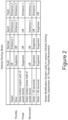
- Figure 2 gives a simple illustrative example of how a noise modification system may be set up to respond to one particular driver input - in this case, Throttle Pedal Movement, whilst the vehicle is in various Vehicle Driving Modes.
- the table indicates the activity state or modification action of the noise modification system in various combinations.
- Throttle states may be considered as well as other Vehicle driving modes.
- the set response of the noise modification system may also vary with each combination depending on the desired characteristics of the vehicle.
- the noise modification system response map is amenable to change by a user of the vehicle, either via a Human Machine Interface (HMI) of the vehicle or by connection of the vehicle or a vehicle system to an external unit, such as a laptop, tablet, or similar electronic device.
- HMI Human Machine Interface
- a vehicle user may then be able to 'download' any one of a series of pre-set noise modification system response maps into the vehicle or a system of the vehicle and thus change its response any number of times during the lifetime of the vehicle.
- noise modification system response maps may vary depending on vehicle type and the desired characteristics envisaged during vehicle development.
- a controller arranged to control a noise modification system of a vehicle provided with an exhaust system, wherein the controller is adapted to select a noise modification action of the noise modification system in dependence upon a driving style of a driver of the vehicle.
- a controller arranged to control a noise modification system of a vehicle provided with an exhaust system, the controller arranged to select a noise modification action of the noise modification system in dependence upon a selected driving mode of the vehicle, wherein the controller is further arranged to select an alternative noise modification action of the noise modification system in dependence upon a driving style of a driver of the vehicle.
- the alternative noise modification action may be selected whilst the driving mode of the vehicle remains unchanged.
- a method of control of a noise modification system adapted for use with an exhaust system of a vehicle comprising the steps;
- controller described herein can comprise a control unit or computational device having one or more electronic processors.
- a vehicle and/or a system thereof may comprise a single control unit or electronic controller or alternatively different functions of the controller may be embodied in, or hosted in, different control units or controllers.
- control unit will be understood to include both a single control unit or controller and a plurality of control units or controllers collectively operating to provide the required control functionality.
- a set of instructions could be provided which, when executed, cause said controller(s) or control unit(s) to implement the control techniques described herein (including the method(s) described below).
- the set of instructions may be embedded in one or more electronic processors, or alternatively, the set of instructions could be provided as software to be executed by one or more electronic processor(s).
- a first controller may be implemented in software run on one or more electronic processors, and one or more other controllers may also be implemented in software run on or more electronic processors, optionally the same one or more processors as the first controller. It will be appreciated, however, that other arrangements are also useful, and therefore, the present invention is not intended to be limited to any particular arrangement.
- the set of instructions described above may be embedded in a computer-readable storage medium (e.g., a non-transitory storage medium) that may comprise any mechanism for storing information in a form readable by a machine or electronic processors/computational device, including, without limitation: a magnetic storage medium (e.g., floppy diskette); optical storage medium (e.g., CD-ROM); magneto optical storage medium; read only memory (ROM); random access memory (RAM); erasable programmable memory (e.g., EPROM ad EEPROM); flash memory; or electrical or other types of medium for storing such information/instructions.
- a computer-readable storage medium e.g., a non-transitory storage medium
- a magnetic storage medium e.g., floppy diskette
- optical storage medium e.g., CD-ROM
- magneto optical storage medium e.g., magneto optical storage medium
- ROM read only memory
- RAM random access memory
- a vehicle 100 which is provided with an engine 200, wheels 310, 320, 330, 340, an exhaust system 400 comprising manifolds 410, centre section 420 comprising muffler/box 430, and a rear section 440 comprising rear muffler/box 450.
- the exhaust system is provided with a noise modification system 500 which comprises both an Active Noise system 510 and an Active Exhaust system 520.
- the Active Noise system 510 comprises control unit 501, speakers 511 and a noise sensor 512.
- Noise sensor 512 is arranged to 'pick up' engine/exhaust noise from centre section 420 and supply a noise signal to controller 501.
- the controller 501 is adapted to provide a control signal to speakers 511. In one modification action, controller 501 inverts the noise signal from sensor 512 and controls speakers 511 such that they provide a noise cancellation effect which reduces the overall engine/exhaust noise emitted by the exhaust system 400. This is the 'Suppression' noise modification action as referenced in Figure 2 .
- controller 501 provides an amplification to the noise signal from sensor 512 and controls speakers 511 such that they add to/increase the overall engine/exhaust noise emitted by the exhaust system 400. This is the 'Enhance 1' noise modification action as further referenced in Figure 2 .
- the speakers are not active - this is noted as 'Off' in reference to Figure 2 .
- the Active Exhaust system 520 comprises control unit 501, exhaust box 450, and valve 521.
- Control unit 501 is adapted to control the valve 521.
- the valve 521 is arranged such that when it is closed, exhaust gasses from the engine 200 run straight through exit pipe 451. When valve 521 is open, a proportion of the exhaust gases are able to enter echo box 452 and then exit through opening 453 back into the exit pipe 451.
- the remainder of exhaust box 450 as illustrated in section of exhaust box 454, is provided with noise deadening material 455.
- exhaust box 450 produces a louder sound and with different characteristics than when gasses are passing through exit pipe 451 alone, and so opening the valve 521 acts to enhance exhaust noise. This is the 'Enhance 2' noise modification action of the noise modification system 500 as further referenced in Figure 2 .
- the noise modification system 500 of the vehicle 100 is able to perform four different noise modification actions - namely, Suppress, Off, Enhance 1 and Enhance 2, by the various actions of the Active Noise 510 and Active Exhaust 520 sub-systems of the noise modification system 500.
- Active Noise sensors and speakers may be provided at other points within a vehicle, such as in an occupant cabin, for example, as well as at other points on an exhaust system.
- the overall noise of the engine/exhaust system may be controlled specifically via multiple speakers or sets of speakers so as to provide differing noise levels and sensations to those within a vehicle as compared to those outside of the vehicle. Differing noise levels/sensations may even be provided to multiple occupants of the occupant cabin of a vehicle, for example, a driver of the vehicle may be provided with differing sensations to those of passengers.
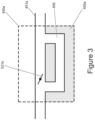
- An Active Exhaust system may include an arrangement comprising an exhaust box 450a such as the alternative noted in Figure 3 , wherein when valve 521a is closed, exhaust gases pass through exhaust pipe 456 which is surrounded by noise deadening material 455a, but when valve 521a is open, all or most of the exhaust gasses pass via 'straight through' exit pipe 451a, which thus provides a concomitantly louder exhaust noise.
- Figure 3 arrangement may provide a further advantage in that when acting as a 'straight through' pipe, the exhaust box 450a is likely to provide lesser exhaust backpressure and thus potentially allow the engine to generate more power - this may be particularly advantageous when in a 'Track' or similar mode, when rules, laws or regulations on noise may be less stringent than in a public road environment.
- the vehicle 100 is further provided with a driving mode selector 600, which is operable by a driver to select one of four driving modes.
- Various characteristics of the vehicle are altered by the selection of the various driving modes, affecting such things as transmission shift maps and suspension response. However, associated with each of these modes is also an expectation of the noise that the vehicle is going to make whilst in that mode. Accordingly, there are four modes available, 'Track', where the vehicle is set up for racing; 'Sport', where the vehicle is set up for enthusiastic driving on public roads; 'Normal', where the vehicle is set up for normal, everyday driving, and 'Hush', where the vehicle is specifically set up to be as quiet as possible, for example for late-night driving in residential areas.
- Hybrid vehicles may be particularly apposite for use with Hybrid vehicles, and it will be recognised that elements of the invention are equally applicable to a hybrid-electric (HEV) or even electric (EV) vehicle, where noise from electric machines may also be affected by a noise management system, in particular by an Active Noise system.
- HEV hybrid-electric
- EV electric
- the noise modification system in 'Hush' mode, is largely set to either suppress noise (by use of the Active Noise sub-system) or to be 'Off'.
- the noise modification system In 'Normal' mode, the noise modification system is largely inactive.
- One departure is when the throttle pedal (700) is moved rapidly, whereupon the Active Noise system is set to enhance the engine/exhaust noise, and thus 'Enhance 1' appears on the table.
- Another departure is when the pedal has been static for 30 seconds or more, possibly indicating steady-state driving, when the noise modification system is set to 'Suppress' by activation of the Active Noise system, to provide a comfortable driving experience for an extended period.
- the default action of the noise modification system is for the Active Noise system to provide enhancement, and so 'Enhance 1' appears in the table twice.
- the accelerator pedal is static and in the upper part of pedal travel, or if the pedal is static for over 30 seconds, it is assumed that the driver is at least momentarily not driving enthusiastically or at speed, and so the Active Noise sub-system is turned off and so the noise modification action is set to 'Off'. If there is rapid accelerator/throttle pedal movement, however, the bypass valve 521 is opened and the 'Enhance 2' noise modification action is active, wherein both noise modification systems, Active Noise and Active Exhaust, are enhancing the noise.
- the noise modification system is nominally acting to use both the Active Noise and Active Exhaust systems to enhance the engine noise, and so 'Enhance 2' is the default. If the pedal is instantly static or static for over 30 seconds, 'Enhance 1' is active, and it is only in the situation where the pedal is static for over 60 seconds that the noise modification system is in the 'Off' arrangement. It can be seen that in 'Track' mode, the noise modification system is never in the 'Suppress' configuration.
Landscapes
- Engineering & Computer Science (AREA)
- Acoustics & Sound (AREA)
- Physics & Mathematics (AREA)
- Mechanical Engineering (AREA)
- Multimedia (AREA)
- Combustion & Propulsion (AREA)
- Chemical & Material Sciences (AREA)
- General Health & Medical Sciences (AREA)
- Health & Medical Sciences (AREA)
- General Engineering & Computer Science (AREA)
- Otolaryngology (AREA)
- Signal Processing (AREA)
- Audiology, Speech & Language Pathology (AREA)
- Transportation (AREA)
- Exhaust Silencers (AREA)
- Soundproofing, Sound Blocking, And Sound Damping (AREA)
Description
- The present invention relates to vehicles equipped with noise modification apparatus, and methods and a controller for controlling such apparatus.
- It is known to provide noise modification systems in motor vehicles. Such systems typically comprise one of two types - Active Noise systems, in which one or more speaker units are fitted to exhaust systems or elsewhere in a vehicle such as in the occupant cabin, and Active Exhaust systems, in which typically one or more bypass valves are provided within an exhaust system to physically alter the flow path of exhaust gasses through different parts of the exhaust system.
- The speakers in Active Noise systems, in conjunction with various control means and methods, are used to provide noise waveforms, usually related to and/or derived from the 'natural' noise generated by the exhaust system. These noise waveforms are typically used to 'cancel out', minimise or suppress native exhaust notes, but may also be used to enhance them.
- In Active Exhaust systems, operation of the bypass valves typically allows either a 'normal' exhaust note, or, when the exhaust gasses are bypassed either to a specially tuned exhaust section or such that the exhaust system becomes more akin to a 'straight through' system, a more 'sporty' (ie: louder and more aggressive, sometimes referred to as 'throatier') exhaust note.
- In known systems, a vehicle is provided with various driving modes. Such modes may comprise, for example, 'Normal,' 'Sport,' and 'Dynamic' modes, but may also comprise further modes such as 'Track'. An Active Noise or Active Exhaust system may be arranged to enhance exhaust (and/or engine) noise in certain modes (such as 'sport' or 'dynamic' modes), but in other modes (ie 'Normal') they are arranged to be off, or in the case of Active Noise systems even to damp or cancel out or otherwise minimise the exhaust noise. It is an aim of the present invention to provide improvements upon the prior art.
- One known system is described in
US2012257763 .US2012257763 describes a sound modification system and a method of managing sound in a vehicle. The system includes an active noise reduction (ANR) controller, an engine sound enhancement (ESE) controller and a sound modification controller. When the vehicle is in a steady state driving condition, the sound modification controller activates the ANR controller and deactivates the ESE controller. In contrast, when the vehicle is in a non-steady state driving condition, the sound modification controller activates the ESE controller and deactivates the ANR controller. Preferably, when the vehicle switches between the steady state and non-steady state driving conditions, the sound modification controller activates and deactivates the ANR and ESE controllers at a rate that is not noticeable to a human. In summary, the system utilizes the ANR and ESE controllers to achieve an optimal passenger cabin experience for the driver during any driving condition. - An active silencer is described in
JPH0844372 - Aspects of the present invention relate to a controller for controlling a noise modification system, methods of control of a noise modification system, a noise modification system, an exhaust system and a vehicle.
- According to an aspect of the present invention there is provided a method, a noise modification system, a controller, and a vehicle according to claims 1-7.
- According to some, but not necessarily all examples of the disclosure there is provided a controller arranged to control a noise modification system of a vehicle provided with an exhaust system, wherein the controller is adapted to receive a noise signal from a noise sensor providing a measurement of noise in the exhaust system, and adapted to select a noise modification action of the noise modification system in dependence upon determination of a driving style of a driver of the vehicle and in dependence upon said measurement of noise, and operable to transmit a control signal to cause one or more speakers to modify noise in the exhaust system in dependence on said noise modification action. Modifying the sound emitted by the exhaust system provides for a more natural sound. The noise sensor and/or speakers may be acoustically connected so as to output sound into at least a portion of the exhaust system.
- The controller may be operable to transmit the control signal to cause said one or more speakers to modify said measured noise in the exhaust system. The noise signal from the noise sensor may provide a measurement of noise in the exhaust system modified by said noise modification action. Closed loop noise modification advantageously offers improved accuracy, bandwidth and flexibility over open loop noise modification.
- According to some, but not necessarily all examples of the disclosure there is provided a controller arranged to control a noise modification system of a vehicle provided with an exhaust system, the controller arranged to select a noise modification action of the noise modification system in dependence upon a selected driving mode of the vehicle, wherein the controller is further arranged to select an alternative noise modification action of the noise modification system in dependence upon a driving style of a driver of the vehicle, and operable to transmit a control signal to cause one or more speakers to modify noise in the exhaust system in dependence on said noise modification action. The alternative noise modification action may be selected whilst the driving mode of the vehicle remains unchanged.
- According to some, but not necessarily all examples of the disclosure there is provided a method of control of a noise modification system adapted for use with an exhaust system of a vehicle, comprising:
- Determining a driving style of a driver of said vehicle;
- Selecting a noise modification action of the noise modification system in dependence on the said driving style; and
- Causing, at least in part, modification of noise in the exhaust system in dependence on said noise modification action.
- According to some, but not necessarily all examples of the disclosure there is provided a method of control of a noise modification system adapted for use with an exhaust system of a vehicle, comprising:
- Selecting a vehicle Driving Mode;
- Determining a driving style of a driver of the vehicle;
- Selecting a noise modification action of the noise modification system in dependence on the said driving style; and
- Causing, at least in part, modification of noise in the exhaust system in dependence on said noise modification action.
- According to some, but not necessarily all examples of the disclosure there is provided a method of control of a noise modification system
adapted for use with an exhaust system of a vehicle, comprising: - Selecting a vehicle Driving Mode;
- Selecting a noise modification action of the noise modification system associated with said Driving Mode;
- Determining a driving style of a driver of the vehicle;
- Changing the noise modification action of the noise modification system in dependence on the said driving style; and
- Causing, at least in part, noise in the exhaust system in dependence on said noise modification action.
- In embodiments, the noise modification system may comprise an Active Noise system.
- In embodiments, the noise modification system may comprise an Active Exhaust system.
- In embodiments, the noise modification system may comprise an Active Noise system and an Active Exhaust system. It may be that there are a number of noise modification actions available - no action; noise suppression (where engine or exhaust noise in at least one tonal range is made quieter to some degree); noise cancelling (where engine or exhaust noise is in at least one tonal range reduced substantially to zero); or noise enhancement (where at least one aspect of engine/exhaust noise is increased - for example, made louder, or certain tonal ranges enhanced, enabled, or made louder). It may be that the noise management system is able to act such that an Active Noise system may suppress or cancel noise in some circumstances and an Active Exhaust system may be used to enhance noise in other circumstances; or that Active Noise and Active Exhaust systems may together enhance noise in certain circumstances. The skilled person will recognise that various combinations of noise modification activity may be provided by various arrangements of noise modification systems, and that all these may fall within the ambit of the present invention.
- The advantage of this is that the exhaust system will emit a noise which is in keeping with the current way the vehicle is being driven. In the prior art, a vehicle mode (ie: 'normal' or 'dynamic') is selected and the noise modification system will be operating in a fashion associated purely with that vehicle mode. In the present invention, it is possible for the engine noise to be representative of the way the vehicle is being driven, either irrespective of the vehicle mode that is selected, or in conjunction with it.
- Thus, for example, in the prior art, a 'sport' mode may be selected and the engine/exhaust note is correspondingly continuously loud and aggressive as a result of noise enhancement from the noise modification system, whilst that mode is selected. However, this enhancement will still then be active if the vehicle is simply being driven at a steady 30mph, for example, through a residential area. In the present invention, in contrasting example, the noise modification system may perform different functions independent, or at least partly independent, of the vehicle mode which is selected.
- So, for example, if 'sport' mode is selected, the noise modification system would default to an enhanced, for example throaty exhaust note, but if it is then noted by for example a controller of the vehicle that the vehicle is simply moving at a steady 30mph for more than a minute or two (and thus, perhaps, is moving through a residential area), the noise modification system may become inactive or may even actively change its action so as to suppress engine/exhaust noise. Should the driver then accelerate sharply, such as may occur for example on transition from a residential 30mph zone to an open road 60mph zone, the noise modification system may then switch back to an enhancement mode.
- Under the same road circumstances, 'normal' mode of the vehicle may be selected, in which the noise modification system is either off or operating to suppress exhaust/engine noise. In such case, if it is noted that the vehicle is behaving as if in a 30mph residential zone, the noise modification system remains off or acting to suppress. If the vehicle then accelerates at a comparatively low rate of acceleration, the noise modification system continues to remain 'off' or acts to suppress. However, if the vehicle is then accelerated at a comparatively high rate of acceleration and/or, for example, the driver pushes an accelerator pedal 'flat to the floor' (or otherwise to the limit of its travel), the noise modification system may during that period of acceleration act to enhance the engine noise. Upon cessation of the acceleration, the noise modification returns to 'off' or 'suppress' as nominally associated with the 'normal' vehicle mode.
- In a scenario, if the vehicle is being driven in a manner such that rapid accelerations, steering wheel inputs, and/or braking are frequent, or any other indications are present that enthusiastic driving is being undertaken, the enhancement action of the noise modification system may be enabled. Should such driving then cease, or have ceased for a certain period of time (such as may be consistent with having come off a smaller, winding road and having then entered a motorway or expressway or similar and then maintaining a steady straight-line (or nearly straight-line) speed, the noise modification system may be deactivated, or may even begin a noise suppression action so as to provide a more relaxing and comfortable experience for the driver.
- In an alternative scenario, where a driver performs the action of accelerating sharply (on transition from a 30mph to a 70mph zone, for example), a 'normal' or even 'hush' (or 'quiet' or 'stealth') vehicle mode may be selected, and the noise modification system will remain inactive - or alternatively, may act to suppress noise in the 30mph zone but then simply be turned off during the period of acceleration - allowing for more noise but not actively enhancing it.
- It can thus be seen that the activity of the noise modification system is to at least some degree, or even totally, independent of the selected drive mode of the vehicle, although it may be influenced by the selected drive mode.
- The action of the noise modification system is in neither case fully determined by the selected vehicle drive mode and may even exhibit the full possible range of active / partially active / inactive states in various driving conditions whilst the vehicle remains in a single selected vehicle drive mode, the relative activity state depending on the momentary or on a time-based analysis of driving style or driver behaviour, ie: a driving style determination.
- In embodiments, the driving style determination may be made based on a momentary driving style or may be made based on a determination of driving style over a period of time.
- A momentary driving style may be determined by, for example, use of a throttle/accelerator pedal. For example, a maximum accelerator pedal depression or displacement (driver's foot pushing a pedal all the way down), may be taken as evidence of 'sporty' driving, at which an enhanced engine/exhaust noise may be appropriate. Alternatively, a rate at which the pedal is pressed may be the determinant - if the pedal is pressed down quickly (say at least half of the pedal travel traversed in less than a second), a noise enhancement action may be activated where previously the noise modification system was 'off'; but if the pedal is pressed down slowly (half travel in a second or more), no activation of the enhancement action of the sound modification system may occur. It may be that if throttle use is particularly slow (half travel in more than 3 seconds, for example), then the noise modification system may in fact then be activated so as to suppress or cancel engine/exhaust noise.
- Other determinants of momentary driving style may be similarly or equivalently applied, and may comprise:
- i/ a throttle position or rate of change of throttle position
- ii/ an engine speed
- iii/ a rate of change of engine speed
- iv/ a steering angle
- v/ a rate of change of steering angle
- vi/ a gear change or selection
- vii/ a rate of gear change or selection
- viii/ a vehicle speed
- ix/ a rate of change of vehicle speed
- x/ a brake pedal position
- xi/ a brake application
- xii/ a rate of brake application
- xiii/ an engine load
- xiv/ a rate of change of engine load
- Comparatively fast steering inputs, gear changes, speeds, brake applications, or rates of change of same, or other actions that indicate sporty, enthusiastic or spirited driving, may trigger a noise enhancement action of the noise modification system, whereas slower or absent such indicators may not trigger an enhancement or may trigger noise suppression/cancellation.
- In some vehicles, there are provided systems for control of, for example, a transmission system of the vehicle. Such a system, in using a particular transmission 'shift map', may make its own determination of driver behaviour/driving style in order to determine which of a plurality of shift maps to use. In embodiments of the invention, therefore, a determinant of driving style may comprise
xv/ a determination of driving style by a further system of the vehicle, optionally a transmission control system. - A determination of driving style over a period of time may take the form of, for example, an analysis of throttle pedal behaviour over a period of time. If there have been a number of changes of throttle pedal state, say 5 separate incidences of throttle pedal depression and subsequent throttle pedal release, within a one-minute period of time, then this may be taken to be indicative of enthusiastic driving.
- Other determinants of driving style over a period of time may include:
- i/ a number of changes of a driver control input over the period of time
- ii/ the period of time since a driver control input
- iii/ a number of changes of any two or more driver control inputs over the period of time
- iv/ variance in vehicle speed over the period of time
- v/ changes in vehicle direction over the period of time.
- The driver control inputs that may be taken into consideration may include:
- i/ a throttle input; optionally its magnitude or rate of change
- ii/ a steering input; optionally its magnitude or rate of change
- iii/ a gear change or selection
- iv/ a braking input; optionally its magnitude or rate of change
- It may be that if the vehicle is in a 'normal', 'sport', 'dynamic' or, especially, a 'track' driving mode, the noise modification system is then nominally arranged to enhance the engine/exhaust noise during enthusiastic driving. If the vehicle is in a 'hush/quiet/stealth' mode, in which mode the noise modification system may nominally be set to noise suppression or cancel, such enthusiastic driving may, at least during the period of enthusiastic driving, turn the noise modification system off.
- In this way it can be seen that in embodiments the noise modification system is responsive to a driving style of the driver at any given moment or over a period of time, whilst the vehicle is in any particular vehicle driving mode - and yet, the responsiveness of the noise modification system to driving style does not totally override the characteristics that might be expected of the vehicle when it is in a particular vehicle driving mode.
- So, for example, a vehicle may be provided with three driving modes - 'normal', 'sport' and 'dynamic', and the noise modification system may be able to modify the noise in one of three ways - noise suppression, 'off', or 'enhance'. In the 'normal' vehicle driving mode, the noise modification system may only ever switch between the noise suppression action/state and the 'off' state; whilst in the 'sport' mode, all three states (suppress, off, and enhance) may be used; and finally, whilst in the 'dynamic' mode, the noise modification system may be in 'enhance' state nearly all the time and just occasionally 'off'. The action of the noise modification system whilst in the various modes is determined as previously described herein. In this particular example, noise suppression may be provided by an Active Noise system and noise enhancement may be provided by an Active Exhaust, both sub-types of noise modification being present on the vehicle. Such an embodiment is shown in
Figure 1 . -
Figure 2 gives a simple illustrative example of how a noise modification system may be set up to respond to one particular driver input - in this case, Throttle Pedal Movement, whilst the vehicle is in various Vehicle Driving Modes. The table indicates the activity state or modification action of the noise modification system in various combinations. - It will be recognised by one skilled in the art that this is merely a representative rather than a prescriptive model, and that other Throttle states may be considered as well as other Vehicle driving modes. The set response of the noise modification system may also vary with each combination depending on the desired characteristics of the vehicle.
- It will also be appreciated that there will be an interaction of various driver inputs; for example the response of the noise modification system to throttle pedal movement may also vary according to the accompanying planned response of the noise modification system to brake pedal movement or steering wheel movement. It will be appreciated that this may require the use of a larger table or map, quite possibly multidimensional, in order to represent the modification activity of the noise modification system at any particular time in response to a multiplicity of such possible combinations of inputs. Such a map may be held in electronic format within the controller or elsewhere in the vehicle, in a computing or other electronic device or within some format of electronic memory. It may be that the noise modification system response map is amenable to change by a user of the vehicle, either via a Human Machine Interface (HMI) of the vehicle or by connection of the vehicle or a vehicle system to an external unit, such as a laptop, tablet, or similar electronic device. A vehicle user may then be able to 'download' any one of a series of pre-set noise modification system response maps into the vehicle or a system of the vehicle and thus change its response any number of times during the lifetime of the vehicle.
- It will be recognised that the setting up of such noise modification system response maps may vary depending on vehicle type and the desired characteristics envisaged during vehicle development.
- According to some, but not necessarily all examples there is provided a controller arranged to control a noise modification system of a vehicle provided with an exhaust system, wherein the controller is adapted to select a noise modification action of the noise modification system in dependence upon a driving style of a driver of the vehicle.
- According to some, but not necessarily all examples there is provided a controller arranged to control a noise modification system of a vehicle provided with an exhaust system, the controller arranged to select a noise modification action of the noise modification system in dependence upon a selected driving mode of the vehicle, wherein the controller is further arranged to select an alternative noise modification action of the noise modification system in dependence upon a driving style of a driver of the vehicle. The alternative noise modification action may be selected whilst the driving mode of the vehicle remains unchanged.
- According to some, but not necessarily all examples there is provided a method of control of a noise modification system adapted for use with an exhaust system of a vehicle, comprising the steps:
- Determining a driving style of a driver of said vehicle, and;
- Selecting a noise modification action of the noise modification system in dependence on the said driving style.
- According to some, but not necessarily all examples there is provided a method of control of a noise modification system adapted for use with an exhaust system of a vehicle, comprising the steps:
- Selecting a vehicle Driving Mode;
- Determining a driving style of a driver of the vehicle, and;
- Selecting a noise modification action of the noise modification system in dependence on the said driving style.
- According to some, but not necessarily all examples there is provided a method of control of a noise modification system adapted for use with an exhaust system of a vehicle, comprising the steps;
- Selecting a vehicle Driving Mode;
- Selecting a noise modification action of the noise modification system associated with said Driving Mode;
- Determining a driving style of a driver of the vehicle, and;
- Changing the noise modification action of the noise modification system in dependence on the said driving style.
- For purposes of this disclosure, it is to be understood that the controller described herein can comprise a control unit or computational device having one or more electronic processors.
- A vehicle and/or a system thereof may comprise a single control unit or electronic controller or alternatively different functions of the controller may be embodied in, or hosted in, different control units or controllers.
- As used herein, the term "control unit" will be understood to include both a single control unit or controller and a plurality of control units or controllers collectively operating to provide the required control functionality.
- A set of instructions could be provided which, when executed, cause said controller(s) or control unit(s) to implement the control techniques described herein (including the method(s) described below). The set of instructions may be embedded in one or more electronic processors, or alternatively, the set of instructions could be provided as software to be executed by one or more electronic processor(s). For example, a first controller may be implemented in software run on one or more electronic processors, and one or more other controllers may also be implemented in software run on or more electronic processors, optionally the same one or more processors as the first controller. It will be appreciated, however, that other arrangements are also useful, and therefore, the present invention is not intended to be limited to any particular arrangement. In any event, the set of instructions described above may be embedded in a computer-readable storage medium (e.g., a non-transitory storage medium) that may comprise any mechanism for storing information in a form readable by a machine or electronic processors/computational device, including, without limitation: a magnetic storage medium (e.g., floppy diskette); optical storage medium (e.g., CD-ROM); magneto optical storage medium; read only memory (ROM); random access memory (RAM); erasable programmable memory (e.g., EPROM ad EEPROM); flash memory; or electrical or other types of medium for storing such information/instructions.
- Within the scope of this application it is expressly envisaged that the various aspects, embodiments, examples and alternatives set out in the preceding paragraphs, in the claims and/or in the following description and drawings, and in particular the individual features thereof, may be taken independently or in any combination. Features described in connection with one embodiment are applicable to all embodiments, unless such features are incompatible.
- One or more embodiments of the invention will now be described, by way of example only, with reference to the accompanying drawings, in which:
-
Figure 1 shows a schematic representation of a vehicle provided with a noise modification system, comprising Active Noise and Active Exhaust systems, in accordance with embodiments of the invention, in combination with an exhaust system as may typically be found on a vehicle; -
Figure 2 shows a table indicating an activity mode of a noise modification system in response to a particular driver input, in this case Throttle Pedal Movement, whilst the vehicle is in various Vehicle Driving Modes. -
Figure 3 shows a schematic representation of an alternative Active Exhaust system to that shown inFigure 1 . - An embodiment of the present invention is described herein with reference to the accompanying
Figures 1 ,2 and3 . - With reference to
Figure 1 , there is avehicle 100 which is provided with anengine 200,wheels exhaust system 400 comprisingmanifolds 410,centre section 420 comprising muffler/box 430, and arear section 440 comprising rear muffler/box 450. The exhaust system is provided with anoise modification system 500 which comprises both anActive Noise system 510 and anActive Exhaust system 520. - The
Active Noise system 510 comprisescontrol unit 501,speakers 511 and anoise sensor 512.Noise sensor 512 is arranged to 'pick up' engine/exhaust noise fromcentre section 420 and supply a noise signal tocontroller 501. Thecontroller 501 is adapted to provide a control signal tospeakers 511. In one modification action,controller 501 inverts the noise signal fromsensor 512 andcontrols speakers 511 such that they provide a noise cancellation effect which reduces the overall engine/exhaust noise emitted by theexhaust system 400. This is the 'Suppression' noise modification action as referenced inFigure 2 . In an alternative modification action,controller 501 provides an amplification to the noise signal fromsensor 512 andcontrols speakers 511 such that they add to/increase the overall engine/exhaust noise emitted by theexhaust system 400. This is the 'Enhance 1' noise modification action as further referenced inFigure 2 . In a third modification action, the speakers are not active - this is noted as 'Off' in reference toFigure 2 . - The
Active Exhaust system 520 comprisescontrol unit 501,exhaust box 450, andvalve 521.Control unit 501 is adapted to control thevalve 521. Thevalve 521 is arranged such that when it is closed, exhaust gasses from theengine 200 run straight throughexit pipe 451. Whenvalve 521 is open, a proportion of the exhaust gases are able to enterecho box 452 and then exit throughopening 453 back into theexit pipe 451. The remainder ofexhaust box 450, as illustrated in section ofexhaust box 454, is provided withnoise deadening material 455. When there are gasses passing throughecho box 452,exhaust box 450 produces a louder sound and with different characteristics than when gasses are passing throughexit pipe 451 alone, and so opening thevalve 521 acts to enhance exhaust noise. This is the 'Enhance 2' noise modification action of thenoise modification system 500 as further referenced inFigure 2 . - Accordingly, the
noise modification system 500 of thevehicle 100 is able to perform four different noise modification actions - namely, Suppress, Off, Enhance 1 and Enhance 2, by the various actions of theActive Noise 510 andActive Exhaust 520 sub-systems of thenoise modification system 500. - The skilled person will realise that this embodiment is just by way of example, and that alternative arrangements of Active Noise and/or Active Exhaust systems are possible and may be used whilst still remaining within the ambit of the invention. Further Active Noise sensors and speakers may be provided at other points within a vehicle, such as in an occupant cabin, for example, as well as at other points on an exhaust system. The overall noise of the engine/exhaust system may be controlled specifically via multiple speakers or sets of speakers so as to provide differing noise levels and sensations to those within a vehicle as compared to those outside of the vehicle. Differing noise levels/sensations may even be provided to multiple occupants of the occupant cabin of a vehicle, for example, a driver of the vehicle may be provided with differing sensations to those of passengers. An Active Exhaust system may include an arrangement comprising an
exhaust box 450a such as the alternative noted inFigure 3 , wherein whenvalve 521a is closed, exhaust gases pass throughexhaust pipe 456 which is surrounded bynoise deadening material 455a, but whenvalve 521a is open, all or most of the exhaust gasses pass via 'straight through'exit pipe 451a, which thus provides a concomitantly louder exhaust noise. The skilled person will recognise that theFigure 3 arrangement may provide a further advantage in that when acting as a 'straight through' pipe, theexhaust box 450a is likely to provide lesser exhaust backpressure and thus potentially allow the engine to generate more power - this may be particularly advantageous when in a 'Track' or similar mode, when rules, laws or regulations on noise may be less stringent than in a public road environment. - The
vehicle 100 is further provided with a drivingmode selector 600, which is operable by a driver to select one of four driving modes. Various characteristics of the vehicle are altered by the selection of the various driving modes, affecting such things as transmission shift maps and suspension response. However, associated with each of these modes is also an expectation of the noise that the vehicle is going to make whilst in that mode. Accordingly, there are four modes available, 'Track', where the vehicle is set up for racing; 'Sport', where the vehicle is set up for enthusiastic driving on public roads; 'Normal', where the vehicle is set up for normal, everyday driving, and 'Hush', where the vehicle is specifically set up to be as quiet as possible, for example for late-night driving in residential areas. This latter setting may be particularly apposite for use with Hybrid vehicles, and it will be recognised that elements of the invention are equally applicable to a hybrid-electric (HEV) or even electric (EV) vehicle, where noise from electric machines may also be affected by a noise management system, in particular by an Active Noise system. - Referring now to
Figure 2 , which comprises the Table below:Hush Normal Sport Track Throttle Rapid Off Enhance 1 Enhance 2 Enhance 2 Slow Suppress Off Enhance 1 Enhance 2 Pedal Static instant (upper part of pedal travel) Suppress Off Off Enhance 1 Movement Static instant (lower half of pedal travel) Off Off Enhance 1 Enhance 2 Static > 30 seconds Suppress Suppress Off Enhance 1 Static > 60 seconds Suppress Suppress Suppress Off - In the present embodiment, it can be seen that in 'Hush' mode, the noise modification system is largely set to either suppress noise (by use of the Active Noise sub-system) or to be 'Off'.
- In 'Normal' mode, the noise modification system is largely inactive. One departure is when the throttle pedal (700) is moved rapidly, whereupon the Active Noise system is set to enhance the engine/exhaust noise, and thus 'Enhance 1' appears on the table. Another departure is when the pedal has been static for 30 seconds or more, possibly indicating steady-state driving, when the noise modification system is set to 'Suppress' by activation of the Active Noise system, to provide a comfortable driving experience for an extended period.
- In 'Sport' mode, it can be seen that the default action of the noise modification system is for the Active Noise system to provide enhancement, and so 'Enhance 1' appears in the table twice. However, if the accelerator pedal is static and in the upper part of pedal travel, or if the pedal is static for over 30 seconds, it is assumed that the driver is at least momentarily not driving enthusiastically or at speed, and so the Active Noise sub-system is turned off and so the noise modification action is set to 'Off'. If there is rapid accelerator/throttle pedal movement, however, the
bypass valve 521 is opened and the 'Enhance 2' noise modification action is active, wherein both noise modification systems, Active Noise and Active Exhaust, are enhancing the noise. If the driver makes no change in input to the throttle (ie it is static) for more than 60 seconds, however, steady-state driving is assumed and as for 'Normal' mode, the Active Noise sub-system of the noise modification system is activated, thus providing a noise modification action of 'Suppress'. - Finally, in 'Track' mode, the noise modification system is nominally acting to use both the Active Noise and Active Exhaust systems to enhance the engine noise, and so 'Enhance 2' is the default. If the pedal is instantly static or static for over 30 seconds, 'Enhance 1' is active, and it is only in the situation where the pedal is static for over 60 seconds that the noise modification system is in the 'Off' arrangement. It can be seen that in 'Track' mode, the noise modification system is never in the 'Suppress' configuration.
- It will be appreciated that various changes and modifications can be made to the present invention without departing from the scope of the present application.
Claims (7)
- A controller (501) arranged to control a noise modification system (500) of a vehicle (100) provided with an exhaust system (400), the controller (501) arranged to select a noise modification action of the noise modification system (500) in dependence upon a selected driving mode of the vehicle (100), and a determined throttle pedal movement of the vehicle (100), wherein when the selected driving mode is a first driving mode the noise modification action is selected from a first set of a plurality of actions which comprises a noise enhancement action but not a noise suppression action, characterized in that:
when the selected driving mode is a second driving mode the noise modification action is selected from a second set of a plurality of actions which comprises a noise suppression action but not a noise enhancement action, and wherein the controller is operable to transmit a control signal to cause one or more speakers (511) to modify noise in the exhaust system (400) in dependence on said noise modification action. - A controller as claimed in claim 1, wherein the one or more speakers are configured to be fitted to the exhaust system upstream of a rear muffler of the exhaust system, to modify noise in the exhaust system.
- A controller (501) as claimed in any preceding claim wherein the controller (501) is operable to transmit the control signal to cause said one or more speakers (511) to modify said measured noise in the exhaust system (400) and/or the noise signal from the noise sensor (512) provides a measurement of noise in the exhaust system (400) modified by said noise modification action.
- A controller (501) as claimed in claim 2 wherein the noise modification action is selected whilst the driving mode of the vehicle (100) remains unchanged.
- A method of control of a noise modification system (500) adapted for use with an exhaust system (400) of a vehicle (100), comprising:selecting a vehicle (100) Driving Mode;selecting a noise modification action of the noise modification system (500) associated with said Driving Mode;determining a throttle pedal movement of the vehicle (100);changing the noise modification action of the noise modification system (500) in dependence on the said throttle pedal movement, wherein when the selected driving mode is a first driving mode the changed noise modification action is selected from a first set of a plurality of actions which comprises a noise enhancement action but not a noise suppression action, characterized in that: when the selected driving mode is a second driving mode the changed noise modification action is selected from a second set of a plurality of actions which comprises a noise suppression action but not a noise enhancement action; and causing, at least in part, modification of noise in the exhaust system (400) in dependence on said noise modification action.
- A noise modification system (500) provided with; a controller (501) as claimed in any of claims 1 to 4, wherein optionally, one or more speakers (511), and a noise sensor (512) configured to pick up noise generated by the ICE exhaust system (400) and transmit a noise signal to the controller (501), wherein the controller (501) is arranged to transmit a control signal to cause said one or more speakers (511) to modify ICE exhaust noise in dependence on the noise signal.
- A vehicle (100) provided with a controller (501) as claimed in claims 1 to 4, or a noise modification system (500) as claimed in claim 6.
Applications Claiming Priority (2)
| Application Number | Priority Date | Filing Date | Title |
|---|---|---|---|
| GBGB1414761.5A GB201414761D0 (en) | 2014-08-20 | 2014-08-20 | Vehicle noise suppression method |
| PCT/EP2015/069030 WO2016026890A1 (en) | 2014-08-20 | 2015-08-19 | Vehicle noise suppression method |
Publications (2)
| Publication Number | Publication Date |
|---|---|
| EP3183439A1 EP3183439A1 (en) | 2017-06-28 |
| EP3183439B1 true EP3183439B1 (en) | 2025-04-30 |
Family
ID=51662685
Family Applications (1)
| Application Number | Title | Priority Date | Filing Date |
|---|---|---|---|
| EP15760103.0A Active EP3183439B1 (en) | 2014-08-20 | 2015-08-19 | Vehicle noise suppression method |
Country Status (4)
| Country | Link |
|---|---|
| US (1) | US10174653B2 (en) |
| EP (1) | EP3183439B1 (en) |
| GB (2) | GB201414761D0 (en) |
| WO (1) | WO2016026890A1 (en) |
Families Citing this family (19)
| Publication number | Priority date | Publication date | Assignee | Title |
|---|---|---|---|---|
| ITUB20159781A1 (en) * | 2015-01-13 | 2017-06-30 | Ask Ind Spa | ENGINE SOUND ENHANCEMENT SYSTEM IN A VEHICLE. |
| GB2535731B (en) * | 2015-02-25 | 2019-05-08 | Jaguar Land Rover Ltd | Active noise control for vehicles |
| DE102016100542A1 (en) * | 2016-01-14 | 2017-07-20 | Faurecia Emissions Control Technologies, Germany Gmbh | Method for generating a drive signal for a loudspeaker arranged in a motor vehicle and exhaust system for an engine and sound system for a passenger compartment |
| DE102016002449A1 (en) | 2016-02-27 | 2017-08-31 | Audi Ag | Motor vehicle with a control device for at least one speaker of an exhaust system of the motor vehicle |
| CN105872908A (en) * | 2016-05-23 | 2016-08-17 | 北京长安汽车工程技术研究有限责任公司 | Denoising method and device for brake system |
| DE102016220172B4 (en) * | 2016-10-14 | 2024-06-20 | Bayerische Motoren Werke Aktiengesellschaft | Method and control unit for adjusting the noise emission of a vehicle |
| IT201700004557A1 (en) * | 2017-01-17 | 2018-07-17 | Ferrari Spa | METHOD OF CONTROL OF A TURBOCHARGER PROVIDED WITH ELECTRIC IMPLEMENTATION IN AN OVERALLY OVER-COMBUSTION INTERNAL COMBUSTION ENGINE |
| US10273845B2 (en) * | 2017-02-23 | 2019-04-30 | GM Global Technology Operations LLC | Vehicle including cabin disturbance mitigation system |
| IT201700047852A1 (en) * | 2017-05-04 | 2018-11-04 | Magneti Marelli Spa | METHOD OF CONTROL OF A HYBRID PROPULSION SYSTEM FOR A ROAD VEHICLE |
| US10679603B2 (en) | 2018-07-11 | 2020-06-09 | Cnh Industrial America Llc | Active noise cancellation in work vehicles |
| EP3657494A1 (en) * | 2018-11-20 | 2020-05-27 | Alpine Electronics, Inc. | Adaptive engine sound |
| DE102019209438B4 (en) * | 2019-06-28 | 2022-01-13 | Audi Ag | Motor vehicle with a system for reducing a sound pressure level in a motor vehicle interior and method for reducing the sound pressure level |
| US12623595B2 (en) | 2019-07-01 | 2026-05-12 | Harman International Industries, Incorporated | Drive mode optimized engine order cancellation |
| CN110197653B (en) * | 2019-07-03 | 2023-11-24 | 吉林大学 | A space active noise reduction test device and method |
| CN110539693A (en) * | 2019-08-16 | 2019-12-06 | 爱驰汽车有限公司 | Warning sounding method and device for electric automobile |
| US11401847B2 (en) * | 2019-09-09 | 2022-08-02 | Ford Global Technologies, Llc | Methods and systems for an exhaust tuning valve |
| CN113470606A (en) * | 2020-03-30 | 2021-10-01 | 上海擎感智能科技有限公司 | Method, system, medium and device for realizing active noise reduction in vehicle |
| CN113847118B (en) * | 2021-09-10 | 2022-10-18 | 浙江吉利控股集团有限公司 | System and method for actively sounding exhaust silencer assembly |
| CN116044543B (en) * | 2023-01-17 | 2024-04-09 | 重庆长安汽车股份有限公司 | Exhaust sound quality adjusting system, method and vehicle |
Citations (3)
| Publication number | Priority date | Publication date | Assignee | Title |
|---|---|---|---|---|
| JPH0844372A (en) * | 1994-07-26 | 1996-02-16 | Calsonic Corp | Active silencer |
| US20120257763A1 (en) * | 2011-04-07 | 2012-10-11 | Visteon Global Technologies, Inc. | Sound Modification System And Method |
| DE102012023643A1 (en) * | 2011-12-02 | 2013-06-06 | J. Eberspächer GmbH & Co. KG | Active design of exhaust noise |
Family Cites Families (23)
| Publication number | Priority date | Publication date | Assignee | Title |
|---|---|---|---|---|
| US5097923A (en) | 1988-02-19 | 1992-03-24 | Noise Cancellation Technologies, Inc. | Active sound attenation system for engine exhaust systems and the like |
| US5386472A (en) * | 1990-08-10 | 1995-01-31 | General Motors Corporation | Active noise control system |
| US5550334A (en) * | 1991-10-30 | 1996-08-27 | Noise Cancellation Technologies, Inc. | Actively sound reduced muffler having a venturi effect configuration |
| US5321759A (en) * | 1992-04-29 | 1994-06-14 | General Motors Corporation | Active noise control system for attenuating engine generated noise |
| US5359662A (en) | 1992-04-29 | 1994-10-25 | General Motors Corporation | Active noise control system |
| US5336856A (en) * | 1992-07-07 | 1994-08-09 | Arvin Industries, Inc. | Electronic muffler assembly with exhaust bypass |
| WO1994022403A1 (en) * | 1993-03-24 | 1994-10-13 | Noise Cancellation Technologies, Inc. | Non-integral active muffler |
| JP3099217B2 (en) * | 1994-04-28 | 2000-10-16 | 株式会社ユニシアジェックス | Active noise control system for automobiles |
| US5693918A (en) * | 1994-09-06 | 1997-12-02 | Digisonix, Inc. | Active exhaust silencer |
| US5848168A (en) * | 1996-11-04 | 1998-12-08 | Tenneco Automotive Inc. | Active noise conditioning system |
| DE19832979C1 (en) * | 1998-07-22 | 1999-11-04 | Friedmund Nagel | Exhaust noise suppresser for motor vehicle |
| US20020039422A1 (en) * | 2000-09-20 | 2002-04-04 | Daly Paul D. | Driving mode for active noise cancellation |
| US20040086135A1 (en) | 2002-11-01 | 2004-05-06 | Siemens Vdo Automotive Inc. | Active noise control system using pure feedforward method with order-based offline calibration |
| US7501934B2 (en) | 2004-09-15 | 2009-03-10 | At&T Intellectual Property I, Lp | System and methods for vehicle sound font creation, playback, and networking |
| US7337609B2 (en) * | 2006-05-11 | 2008-03-04 | Gm Global Technology Operations, Inc. | Diesel exhaust system variable backpressure muffler |
| JP4384681B2 (en) * | 2007-07-25 | 2009-12-16 | 本田技研工業株式会社 | Active sound effect generator |
| EP2110523A1 (en) * | 2008-04-16 | 2009-10-21 | Robert Bosch GmbH | A device and method for active noise cancellation in an exhaust gas channel of a combustion engine |
| US20110010269A1 (en) | 2009-07-07 | 2011-01-13 | Ballard Claudio R | Vehicle audio system for producing synthetic engine sound |
| US9214153B2 (en) | 2010-09-29 | 2015-12-15 | GM Global Technology Operations LLC | Aural smoothing of a vehicle |
| EP2797075B1 (en) * | 2013-04-26 | 2018-09-12 | Eberspächer Exhaust Technology GmbH & Co. KG | System for influencing exhaust noise, engine noise and/or intake noise |
| WO2015054412A1 (en) * | 2013-10-09 | 2015-04-16 | Tula Technology, Inc. | Noise/vibration reduction control |
| US10443479B2 (en) * | 2014-10-30 | 2019-10-15 | Roush Enterprises, Inc. | Exhaust control system |
| US9629189B2 (en) * | 2014-11-17 | 2017-04-18 | GM Global Technology Operations LLC | System and method for enabling a user to adjust the operation of a powertrain in a vehicle, to adjust the appearance of a user interface device in the vehicle, and/or to adjust vehicle noise |
-
2014
- 2014-08-20 GB GBGB1414761.5A patent/GB201414761D0/en not_active Ceased
-
2015
- 2015-08-19 EP EP15760103.0A patent/EP3183439B1/en active Active
- 2015-08-19 US US15/504,895 patent/US10174653B2/en active Active
- 2015-08-19 WO PCT/EP2015/069030 patent/WO2016026890A1/en not_active Ceased
- 2015-08-19 GB GB1514704.4A patent/GB2531637B/en active Active
Patent Citations (3)
| Publication number | Priority date | Publication date | Assignee | Title |
|---|---|---|---|---|
| JPH0844372A (en) * | 1994-07-26 | 1996-02-16 | Calsonic Corp | Active silencer |
| US20120257763A1 (en) * | 2011-04-07 | 2012-10-11 | Visteon Global Technologies, Inc. | Sound Modification System And Method |
| DE102012023643A1 (en) * | 2011-12-02 | 2013-06-06 | J. Eberspächer GmbH & Co. KG | Active design of exhaust noise |
Also Published As
| Publication number | Publication date |
|---|---|
| GB2531637B (en) | 2018-05-23 |
| US10174653B2 (en) | 2019-01-08 |
| WO2016026890A1 (en) | 2016-02-25 |
| US20170234180A1 (en) | 2017-08-17 |
| GB2531637A (en) | 2016-04-27 |
| GB201514704D0 (en) | 2015-09-30 |
| EP3183439A1 (en) | 2017-06-28 |
| GB201414761D0 (en) | 2014-10-01 |
Similar Documents
| Publication | Publication Date | Title |
|---|---|---|
| US10174653B2 (en) | Vehicle noise suppression method | |
| US8542844B2 (en) | Sound modification system and method | |
| US9437185B2 (en) | Active sound effect generating apparatus | |
| US20220319491A1 (en) | Vehicle sound generation device | |
| JP2012056541A (en) | Vehicle control system | |
| JP2013203341A (en) | Travel control device | |
| US10060310B2 (en) | Use of active noise system | |
| US20190118707A1 (en) | Hybrid vehicle control method for controlling vehicle noise | |
| JP4864656B2 (en) | Vehicle motion control device | |
| JP2007276542A (en) | Vehicle travel control device | |
| JP6805120B2 (en) | Vehicle with sound controller | |
| JP2009149173A (en) | Auto-cruise device | |
| KR102232205B1 (en) | A method for generating a virtual driving sound of a vehicle | |
| JP2013086632A (en) | Vehicle control device | |
| JP2007137148A (en) | Vehicle travel control device | |
| JP2006521953A (en) | Vehicle speed controller and method | |
| JPWO2012111110A1 (en) | VEHICLE CONTROL DEVICE AND MANUFACTURING METHOD THEREOF | |
| JP2010188874A (en) | Inter-vehicle control device | |
| JP2006137324A (en) | Acceleration / deceleration controller | |
| JP2019043479A (en) | Vehicle control device | |
| JP4432872B2 (en) | Vehicle travel control device | |
| JP2014104953A (en) | Vehicle approach notification device | |
| JP6137742B2 (en) | Brake control device | |
| CN119872543B (en) | A torque control method, device, vehicle, and storage medium for cruise control mode | |
| JP3932861B2 (en) | Vehicle travel control device |
Legal Events
| Date | Code | Title | Description |
|---|---|---|---|
| STAA | Information on the status of an ep patent application or granted ep patent |
Free format text: STATUS: THE INTERNATIONAL PUBLICATION HAS BEEN MADE |
|
| PUAI | Public reference made under article 153(3) epc to a published international application that has entered the european phase |
Free format text: ORIGINAL CODE: 0009012 |
|
| STAA | Information on the status of an ep patent application or granted ep patent |
Free format text: STATUS: REQUEST FOR EXAMINATION WAS MADE |
|
| 17P | Request for examination filed |
Effective date: 20170320 |
|
| AK | Designated contracting states |
Kind code of ref document: A1 Designated state(s): AL AT BE BG CH CY CZ DE DK EE ES FI FR GB GR HR HU IE IS IT LI LT LU LV MC MK MT NL NO PL PT RO RS SE SI SK SM TR |
|
| AX | Request for extension of the european patent |
Extension state: BA ME |
|
| DAV | Request for validation of the european patent (deleted) | ||
| DAX | Request for extension of the european patent (deleted) | ||
| STAA | Information on the status of an ep patent application or granted ep patent |
Free format text: STATUS: EXAMINATION IS IN PROGRESS |
|
| 17Q | First examination report despatched |
Effective date: 20181127 |
|
| P01 | Opt-out of the competence of the unified patent court (upc) registered |
Effective date: 20230528 |
|
| REG | Reference to a national code |
Ref country code: DE Ref legal event code: R079 Free format text: PREVIOUS MAIN CLASS: F01N0001060000 Ipc: G10K0015020000 Ref country code: DE Ref legal event code: R079 Ref document number: 602015091541 Country of ref document: DE Free format text: PREVIOUS MAIN CLASS: F01N0001060000 Ipc: G10K0015020000 |
|
| GRAP | Despatch of communication of intention to grant a patent |
Free format text: ORIGINAL CODE: EPIDOSNIGR1 |
|
| STAA | Information on the status of an ep patent application or granted ep patent |
Free format text: STATUS: GRANT OF PATENT IS INTENDED |
|
| RIC1 | Information provided on ipc code assigned before grant |
Ipc: F01N 1/16 20060101ALI20241105BHEP Ipc: F01N 1/06 20060101ALI20241105BHEP Ipc: G10K 11/178 20060101ALI20241105BHEP Ipc: G10K 15/02 20060101AFI20241105BHEP |
|
| INTG | Intention to grant announced |
Effective date: 20241119 |
|
| GRAS | Grant fee paid |
Free format text: ORIGINAL CODE: EPIDOSNIGR3 |
|
| GRAA | (expected) grant |
Free format text: ORIGINAL CODE: 0009210 |
|
| STAA | Information on the status of an ep patent application or granted ep patent |
Free format text: STATUS: THE PATENT HAS BEEN GRANTED |
|
| AK | Designated contracting states |
Kind code of ref document: B1 Designated state(s): AL AT BE BG CH CY CZ DE DK EE ES FI FR GB GR HR HU IE IS IT LI LT LU LV MC MK MT NL NO PL PT RO RS SE SI SK SM TR |
|
| REG | Reference to a national code |
Ref country code: CH Ref legal event code: EP Ref country code: GB Ref legal event code: FG4D |
|
| REG | Reference to a national code |
Ref country code: IE Ref legal event code: FG4D |
|
| REG | Reference to a national code |
Ref country code: DE Ref legal event code: R096 Ref document number: 602015091541 Country of ref document: DE |
|
| REG | Reference to a national code |
Ref country code: NL Ref legal event code: MP Effective date: 20250430 |
|
| REG | Reference to a national code |
Ref country code: AT Ref legal event code: MK05 Ref document number: 1790825 Country of ref document: AT Kind code of ref document: T Effective date: 20250430 |
|
| PG25 | Lapsed in a contracting state [announced via postgrant information from national office to epo] |
Ref country code: FI Free format text: LAPSE BECAUSE OF FAILURE TO SUBMIT A TRANSLATION OF THE DESCRIPTION OR TO PAY THE FEE WITHIN THE PRESCRIBED TIME-LIMIT Effective date: 20250430 Ref country code: ES Free format text: LAPSE BECAUSE OF FAILURE TO SUBMIT A TRANSLATION OF THE DESCRIPTION OR TO PAY THE FEE WITHIN THE PRESCRIBED TIME-LIMIT Effective date: 20250430 Ref country code: PT Free format text: LAPSE BECAUSE OF FAILURE TO SUBMIT A TRANSLATION OF THE DESCRIPTION OR TO PAY THE FEE WITHIN THE PRESCRIBED TIME-LIMIT Effective date: 20250901 |
|
| PGFP | Annual fee paid to national office [announced via postgrant information from national office to epo] |
Ref country code: DE Payment date: 20250820 Year of fee payment: 11 |
|
| REG | Reference to a national code |
Ref country code: LT Ref legal event code: MG9D |
|
| PG25 | Lapsed in a contracting state [announced via postgrant information from national office to epo] |
Ref country code: NO Free format text: LAPSE BECAUSE OF FAILURE TO SUBMIT A TRANSLATION OF THE DESCRIPTION OR TO PAY THE FEE WITHIN THE PRESCRIBED TIME-LIMIT Effective date: 20250730 Ref country code: GR Free format text: LAPSE BECAUSE OF FAILURE TO SUBMIT A TRANSLATION OF THE DESCRIPTION OR TO PAY THE FEE WITHIN THE PRESCRIBED TIME-LIMIT Effective date: 20250731 |
|
| PG25 | Lapsed in a contracting state [announced via postgrant information from national office to epo] |
Ref country code: NL Free format text: LAPSE BECAUSE OF FAILURE TO SUBMIT A TRANSLATION OF THE DESCRIPTION OR TO PAY THE FEE WITHIN THE PRESCRIBED TIME-LIMIT Effective date: 20250430 Ref country code: PL Free format text: LAPSE BECAUSE OF FAILURE TO SUBMIT A TRANSLATION OF THE DESCRIPTION OR TO PAY THE FEE WITHIN THE PRESCRIBED TIME-LIMIT Effective date: 20250430 |
|
| PG25 | Lapsed in a contracting state [announced via postgrant information from national office to epo] |
Ref country code: BG Free format text: LAPSE BECAUSE OF FAILURE TO SUBMIT A TRANSLATION OF THE DESCRIPTION OR TO PAY THE FEE WITHIN THE PRESCRIBED TIME-LIMIT Effective date: 20250430 |
|
| PGFP | Annual fee paid to national office [announced via postgrant information from national office to epo] |
Ref country code: GB Payment date: 20250820 Year of fee payment: 11 |
|
| PG25 | Lapsed in a contracting state [announced via postgrant information from national office to epo] |
Ref country code: HR Free format text: LAPSE BECAUSE OF FAILURE TO SUBMIT A TRANSLATION OF THE DESCRIPTION OR TO PAY THE FEE WITHIN THE PRESCRIBED TIME-LIMIT Effective date: 20250430 |
|
| PG25 | Lapsed in a contracting state [announced via postgrant information from national office to epo] |
Ref country code: AT Free format text: LAPSE BECAUSE OF FAILURE TO SUBMIT A TRANSLATION OF THE DESCRIPTION OR TO PAY THE FEE WITHIN THE PRESCRIBED TIME-LIMIT Effective date: 20250430 |
|
| PGFP | Annual fee paid to national office [announced via postgrant information from national office to epo] |
Ref country code: FR Payment date: 20250829 Year of fee payment: 11 |
|
| PG25 | Lapsed in a contracting state [announced via postgrant information from national office to epo] |
Ref country code: RS Free format text: LAPSE BECAUSE OF FAILURE TO SUBMIT A TRANSLATION OF THE DESCRIPTION OR TO PAY THE FEE WITHIN THE PRESCRIBED TIME-LIMIT Effective date: 20250731 |
|
| PG25 | Lapsed in a contracting state [announced via postgrant information from national office to epo] |
Ref country code: IS Free format text: LAPSE BECAUSE OF FAILURE TO SUBMIT A TRANSLATION OF THE DESCRIPTION OR TO PAY THE FEE WITHIN THE PRESCRIBED TIME-LIMIT Effective date: 20250830 |
|
| PG25 | Lapsed in a contracting state [announced via postgrant information from national office to epo] |
Ref country code: LV Free format text: LAPSE BECAUSE OF FAILURE TO SUBMIT A TRANSLATION OF THE DESCRIPTION OR TO PAY THE FEE WITHIN THE PRESCRIBED TIME-LIMIT Effective date: 20250430 |
|
| PG25 | Lapsed in a contracting state [announced via postgrant information from national office to epo] |
Ref country code: DK Free format text: LAPSE BECAUSE OF FAILURE TO SUBMIT A TRANSLATION OF THE DESCRIPTION OR TO PAY THE FEE WITHIN THE PRESCRIBED TIME-LIMIT Effective date: 20250430 Ref country code: SM Free format text: LAPSE BECAUSE OF FAILURE TO SUBMIT A TRANSLATION OF THE DESCRIPTION OR TO PAY THE FEE WITHIN THE PRESCRIBED TIME-LIMIT Effective date: 20250430 |
|
| PG25 | Lapsed in a contracting state [announced via postgrant information from national office to epo] |
Ref country code: CZ Free format text: LAPSE BECAUSE OF FAILURE TO SUBMIT A TRANSLATION OF THE DESCRIPTION OR TO PAY THE FEE WITHIN THE PRESCRIBED TIME-LIMIT Effective date: 20250430 |
|
| PG25 | Lapsed in a contracting state [announced via postgrant information from national office to epo] |
Ref country code: EE Free format text: LAPSE BECAUSE OF FAILURE TO SUBMIT A TRANSLATION OF THE DESCRIPTION OR TO PAY THE FEE WITHIN THE PRESCRIBED TIME-LIMIT Effective date: 20250430 |
|
| PG25 | Lapsed in a contracting state [announced via postgrant information from national office to epo] |
Ref country code: SK Free format text: LAPSE BECAUSE OF FAILURE TO SUBMIT A TRANSLATION OF THE DESCRIPTION OR TO PAY THE FEE WITHIN THE PRESCRIBED TIME-LIMIT Effective date: 20250430 Ref country code: RO Free format text: LAPSE BECAUSE OF FAILURE TO SUBMIT A TRANSLATION OF THE DESCRIPTION OR TO PAY THE FEE WITHIN THE PRESCRIBED TIME-LIMIT Effective date: 20250430 |
|
| PG25 | Lapsed in a contracting state [announced via postgrant information from national office to epo] |
Ref country code: IT Free format text: LAPSE BECAUSE OF FAILURE TO SUBMIT A TRANSLATION OF THE DESCRIPTION OR TO PAY THE FEE WITHIN THE PRESCRIBED TIME-LIMIT Effective date: 20250430 |
|
| REG | Reference to a national code |
Ref country code: DE Ref legal event code: R097 Ref document number: 602015091541 Country of ref document: DE |
|
| PLBE | No opposition filed within time limit |
Free format text: ORIGINAL CODE: 0009261 |
|
| STAA | Information on the status of an ep patent application or granted ep patent |
Free format text: STATUS: NO OPPOSITION FILED WITHIN TIME LIMIT |
|
| REG | Reference to a national code |
Ref country code: CH Ref legal event code: L10 Free format text: ST27 STATUS EVENT CODE: U-0-0-L10-L00 (AS PROVIDED BY THE NATIONAL OFFICE) Effective date: 20260311 |
|
| REG | Reference to a national code |
Ref country code: CH Ref legal event code: H13 Free format text: ST27 STATUS EVENT CODE: U-0-0-H10-H13 (AS PROVIDED BY THE NATIONAL OFFICE) Effective date: 20260324 |
|
| PG25 | Lapsed in a contracting state [announced via postgrant information from national office to epo] |
Ref country code: MC Free format text: LAPSE BECAUSE OF FAILURE TO SUBMIT A TRANSLATION OF THE DESCRIPTION OR TO PAY THE FEE WITHIN THE PRESCRIBED TIME-LIMIT Effective date: 20250430 |
|
| 26N | No opposition filed |
Effective date: 20260202 |
|
| PG25 | Lapsed in a contracting state [announced via postgrant information from national office to epo] |
Ref country code: LU Free format text: LAPSE BECAUSE OF NON-PAYMENT OF DUE FEES Effective date: 20250819 |
|
| PG25 | Lapsed in a contracting state [announced via postgrant information from national office to epo] |
Ref country code: CH Free format text: LAPSE BECAUSE OF NON-PAYMENT OF DUE FEES Effective date: 20250831 |