EP3177055A1 - Relay selection routing method and relay selection routing apparatus based on direct communication of terminal - Google Patents
Relay selection routing method and relay selection routing apparatus based on direct communication of terminal Download PDFInfo
- Publication number
- EP3177055A1 EP3177055A1 EP14898644.1A EP14898644A EP3177055A1 EP 3177055 A1 EP3177055 A1 EP 3177055A1 EP 14898644 A EP14898644 A EP 14898644A EP 3177055 A1 EP3177055 A1 EP 3177055A1
- Authority
- EP
- European Patent Office
- Prior art keywords
- terminal
- topological structure
- database
- channel measurement
- direct communication
- Prior art date
- Legal status (The legal status is an assumption and is not a legal conclusion. Google has not performed a legal analysis and makes no representation as to the accuracy of the status listed.)
- Granted
Links
Images


Classifications
-
- H—ELECTRICITY
- H04—ELECTRIC COMMUNICATION TECHNIQUE
- H04W—WIRELESS COMMUNICATION NETWORKS
- H04W40/00—Communication routing or communication path finding
- H04W40/24—Connectivity information management, e.g. connectivity discovery or connectivity update
- H04W40/246—Connectivity information discovery
-
- H—ELECTRICITY
- H04—ELECTRIC COMMUNICATION TECHNIQUE
- H04L—TRANSMISSION OF DIGITAL INFORMATION, e.g. TELEGRAPHIC COMMUNICATION
- H04L45/00—Routing or path finding of packets in data switching networks
- H04L45/02—Topology update or discovery
-
- H—ELECTRICITY
- H04—ELECTRIC COMMUNICATION TECHNIQUE
- H04L—TRANSMISSION OF DIGITAL INFORMATION, e.g. TELEGRAPHIC COMMUNICATION
- H04L45/00—Routing or path finding of packets in data switching networks
- H04L45/26—Route discovery packet
-
- H—ELECTRICITY
- H04—ELECTRIC COMMUNICATION TECHNIQUE
- H04W—WIRELESS COMMUNICATION NETWORKS
- H04W16/00—Network planning, e.g. coverage or traffic planning tools; Network deployment, e.g. resource partitioning or cells structures
- H04W16/14—Spectrum sharing arrangements between different networks
-
- H—ELECTRICITY
- H04—ELECTRIC COMMUNICATION TECHNIQUE
- H04W—WIRELESS COMMUNICATION NETWORKS
- H04W4/00—Services specially adapted for wireless communication networks; Facilities therefor
- H04W4/70—Services for machine-to-machine communication [M2M] or machine type communication [MTC]
-
- H—ELECTRICITY
- H04—ELECTRIC COMMUNICATION TECHNIQUE
- H04W—WIRELESS COMMUNICATION NETWORKS
- H04W40/00—Communication routing or communication path finding
- H04W40/24—Connectivity information management, e.g. connectivity discovery or connectivity update
- H04W40/248—Connectivity information update
-
- H—ELECTRICITY
- H04—ELECTRIC COMMUNICATION TECHNIQUE
- H04W—WIRELESS COMMUNICATION NETWORKS
- H04W76/00—Connection management
- H04W76/10—Connection setup
- H04W76/14—Direct-mode setup
-
- H—ELECTRICITY
- H04—ELECTRIC COMMUNICATION TECHNIQUE
- H04W—WIRELESS COMMUNICATION NETWORKS
- H04W8/00—Network data management
- H04W8/005—Discovery of network devices, e.g. terminals
-
- H—ELECTRICITY
- H04—ELECTRIC COMMUNICATION TECHNIQUE
- H04L—TRANSMISSION OF DIGITAL INFORMATION, e.g. TELEGRAPHIC COMMUNICATION
- H04L45/00—Routing or path finding of packets in data switching networks
- H04L45/42—Centralised routing
-
- H—ELECTRICITY
- H04—ELECTRIC COMMUNICATION TECHNIQUE
- H04W—WIRELESS COMMUNICATION NETWORKS
- H04W40/00—Communication routing or communication path finding
- H04W40/02—Communication route or path selection, e.g. power-based or shortest path routing
- H04W40/12—Communication route or path selection, e.g. power-based or shortest path routing based on transmission quality or channel quality
-
- H—ELECTRICITY
- H04—ELECTRIC COMMUNICATION TECHNIQUE
- H04W—WIRELESS COMMUNICATION NETWORKS
- H04W40/00—Communication routing or communication path finding
- H04W40/24—Connectivity information management, e.g. connectivity discovery or connectivity update
- H04W40/30—Connectivity information management, e.g. connectivity discovery or connectivity update for proactive routing
-
- H—ELECTRICITY
- H04—ELECTRIC COMMUNICATION TECHNIQUE
- H04W—WIRELESS COMMUNICATION NETWORKS
- H04W84/00—Network topologies
- H04W84/18—Self-organising networks, e.g. ad-hoc networks or sensor networks
-
- H—ELECTRICITY
- H04—ELECTRIC COMMUNICATION TECHNIQUE
- H04W—WIRELESS COMMUNICATION NETWORKS
- H04W88/00—Devices specially adapted for wireless communication networks, e.g. terminals, base stations or access point devices
- H04W88/02—Terminal devices
- H04W88/04—Terminal devices adapted for relaying to or from another terminal or user
Definitions
- the present invention relates to the technical field of terminals, and particularly to a relay selection routing method based on direct communication of a terminal and a relay selection routing apparatus based on the direct communication of the terminal.
- Routing algorithms are the core technology of an Internet network layer, which mainly solves the problem of how to select an appropriate path and an appropriate router to forward data in an IP network.
- the current routing algorithms are divided into an active routing algorithm (a table-driven routing protocol) and on-demand routing (a reactive routing protocol).
- Active routing protocol an active routing discovery strategy is similar to the traditional routing protocol, that is, each node of the network should periodically send the latest routing information to other nodes, and each node should maintain one or more routing tables to store the routing information. When a network topological structure changes, the node will broadcast routing update information in the whole network, and thus each node can continuously acquire network information.
- Representative protocols of the active routing protocol include DSDV (Destination-Sequenced Distance.
- the representative protocols thereof include: a DSR (dynamic source routing protocol), an AODV (Ad hoc on-demand distance vector routing protocol), a TORA (temporally ordered routing algorithm).
- the routing problem of a distributed system is usually processed, that is, there is no centralized control node between routers to uniformly maintain and process the routing tables.
- D2D Direct communication network
- Device to Device the network topological structure changes, and terminals in the direct communication network work under the centralized control (or partial control) of a telecommunication network. Therefore, related routing discovery and routing maintenance mechanisms in the routing algorithm need to be changed correspondingly to adapt to data relay node and path selection of a D2D data sharing network.
- UEs (terminals) A, B are a data source UE and a data destination receiving UE respectively; and UEs C, D, E are potential data relay UEs.
- the channel states between the UEs can be acquired by initiating a Discovery flow between the UEs or measuring pilot frequency. It can be seen from Fig.1 that, according to a channel detection result, a link C-to-B has worse quality, and thus cannot establish direct communication. Links A-to-C, A-to-D, D-to-E, E-to-B meet the requirements of the direct communication, and thus can establish the direct communication.
- each node periodically transmits a local routing table to neighboring nodes, or transmits the routing information thereof to the neighboring nodes, when the routing table thereof changes.
- the present invention provides a novel technical solution, which can avoid massive signaling overheads caused by flooding routing in the existing routing algorithms, reduce unnecessary signaling overheads caused by broadcast in an overlarge range when a topological structure is established, and improve the timeliness of a database of the topological structure.
- the present invention provides a relay selection routing method based on direct communication of a terminal, applied to a base station, including: establishing a database of a topological structure of a direct communication terminal on a network side; when a change of the topological structure is detected, updating the database of the topological structure; when a direct communication service request is received, determining a data sending path and a destination relay node corresponding to the direct communication service request according to the database of the topological structure, sender information and receiver information of the direct communication service request and a preset selection principle; and establishing a direct communication data sharing network corresponding to the direct communication service request according to the data sending path and the destination relay node.
- the database of the topological structure is established on the network side by a topology discovery process, and when the topological structure changes, the database is updated by a topology update process.
- a path selection and relay selection process is carried out according to the existing database, and the establishment of the direct communication data sharing network is completed at last, in this way, massive signaling overheads caused by flooding routing in the existing routing algorithms can be avoided, and unnecessary signaling overheads caused by broadcast in an overlarge range when the topological structure is established can be reduced.
- the establishing a database of a topological structure of a direct communication terminal on a network side specifically includes: sending a topology discovery request to at least one terminal within the coverage of the base station, so that the at least one terminal carries out channel measurement according to the topology discovery request; receiving topology discovery response fed back by the at least one terminal after carrying out the channel measurement; and establishing the database of the topological structure of the direct communication terminal according to the topology discovery response.
- the topology discovery request contains at least one of or a combination of a relevant threshold constraining the topology discovery response, time-frequency domain resources of the channel measurement, a potential channel measurement range and a channel measurement mode.
- the database of the topological structure of the direct communication terminal is established on the network side by the topology discovery process, wherein the topology discovery process can be directly triggered by the network side, that is, the topology discovery request is triggered by a network side (e.g., the base station) event or periodically, the topology discovery request is released to at least one terminal within the jurisdiction, and the topology discovery request has the following features: 1, the topology discovery request contains the relevant threshold constraining the topology discovery response.
- the channel is marked as a first priority channel; if the quality of the channel is less than the threshold M and is greater than or equal to a threshold N, the channel is marked as a second priority channel; 2, the topology discovery request contains the time-frequency domain resources of the channel measurement, such as the time-frequency domain resources where a channel detection discovery signal is located (including a Discovery sending period or the like) or the time-frequency domain resources where measurement pilot frequency is located (including a pilot frequency period or the like); and 3, the topology discovery request contains the potential channel measurement range, and this step can be implemented by just activating a measured/measurement terminal within a specific range to send the Discovery or special pilot frequency; the base station can confirm an approximate range of the channel measurement according to position information in advance, for example, only carries out the channel measurement on the terminal that is away from a terminal A within a range of F meters; and the channel measurement is only carried out on a part of terminals according to an upper layer strategy. For example, the
- the establishing a database of a topological structure of a direct communication terminal on a network side specifically includes: setting a topology discovery parameter for at least one terminal within the coverage of the base station, so that the at least one terminal carries out channel measurement according to the topology discovery parameter; receiving topology discovery response fed back by the at least one terminal after carrying out the channel measurement; and establishing the database of the topological structure according to the topology discovery response.
- the topology discovery parameter contains at least one of or a combination of a triggering period of the topology discovery response, time-frequency domain resources of the channel measurement, a triggering condition of the topology discovery response and a channel measurement mode.
- the database of the topological structure of the direct communication terminal is established on the network side by the topology discovery process, wherein the topology discovery process can be triggered by the terminal, and the terminal actively initiates the topology discovery process according to the parameter set by the base station through "topology discovery parameter setting".
- the topology discovery parameter contains at least one of: 1, the triggering period; 2, preset time-frequency domain resources of the channel measurement, such as the time-frequency domain resources where the channel detection discovery signal is located (including the Discovery sending period or the like) or the time-frequency domain resources where the measurement pilot frequency is located (including the pilot frequency period or the like); and 3, the event triggering condition.
- the terminal A has data greater than or equal to a threshold E mega to be sent.
- the channel measurement mode includes an active channel measurement mode and a passive channel measurement mode, when the channel measurement mode is the active channel measurement mode, each of the at least one terminal actively sends discovery information, and other terminals surrounding each terminal respectively reply discovery response to the corresponding terminal after receiving the discovery information, so that each terminal carries out channel evaluation according to the discovery response; and when the channel measurement mode is the passive channel measurement mode, each of the at least one terminal passively receives the discovery information sent by the surrounding other terminals, so that each terminal carries out channel evaluation according to the discovery information.
- the detection thereof has active and passive detection mechanisms.
- the passive detection mechanism is that a discovery party passively receives the discovery information sent by the surrounding terminals, knows which terminals are nearby after receiving the information and can approximately know the channel quality.
- the active detection mechanism is that the discovery party actively sends the discovery information, and the surrounding terminals reply the response after receiving the discovery information, to notify the discovery party of their existence surrounding the same.
- the topology discovery response includes node identifier information of a measurement terminal and a measured terminal, which carry out the channel measurement, a time label of the channel measurement, channel feature information and failure feature information.
- the topology discovery response includes, but not limited to, the node identifier information of the measurement terminal and the measured terminal, which carry out the channel measurement, the time label of the channel measurement, the channel feature information and the failure feature information, wherein node identifiers feed back the node identifier information of the measurement terminal and the measured terminal.
- the time label is time information indicating the completion of the current measurement, and the information can be either absolute time information or relative time information (e.g., increasing serial numbers of maintenance).
- Failure features are used for representing relevant parameters of the timeliness of the current channel measurement, for example, a moving speed of the terminal and the like, and the network side controls the update frequency of the topological structure maintained by the network side according to the information.
- the channel feature information is used for representing the state of the channel, and can include pilot frequency receiving quality/strength, a delay evaluation value, etc.
- the relay selection routing method further includes: parsing the failure feature information from the topology discovery response, and judging the time or frequency of updating the database of the topological structure according to the failure feature information.
- the topological structure when a position change on the terminal side is larger, and when the network side can judge that the position change causes the change of the topological structure, the topological structure can be directly updated, but when the position change on the terminal side is smaller, and when the network side cannot directly judge the change of the topological structure, the time or frequency of updating the database of the topological structure is judged.
- the establishing a data sharing network for direct communication of the terminal corresponding to the data service sharing request according to the data sending path and the destination relay node specifically includes: releasing a path establishment command according to the data sending path and the destination relay node to establish the data sharing network for the direct communication of the terminal corresponding to the data service sharing request according to the released path establishment command.
- the path establishment command includes an identifier of the destination relay node, time-frequency resources where the direct communication of the terminal is located and an effective time of the data sending path.
- the network side releases the time-frequency resources where the direct communication of the terminal is located and the effective time of the data sending path, so that a relay terminal can successfully establish the data sharing network according to the time-frequency resources and the effective time of the data sending path.
- the preset selection principle includes a minimum hop principle, a maximum throughput principle and/or a minimum delay principle.
- the network side carries out path selection according to the maintained database of the topological structure and relevant link feature information.
- the network side can carry out the path selection according to the following principles or the combination of multiple principles: the minimum hop principle, the maximum throughput principle and the minimum delay principle, etc.
- the relay selection routing method further includes: sending the database of the topological structure to the database of a superior topological structure of the network side through interfaces between the base stations periodically or in a time triggered manner, and receiving the database of the superior topological structure sent by the database of the superior topological structure of the network side; and if there is no data sending path corresponding to the direct communication service request in a current service area corresponding to the network side, sending a path discovery request to the database of the superior topological structure of the network side; or, if there is no data sending path corresponding to the direct communication service request in the current service area corresponding to the network side, broadcasting the path discovery request to the other base stations; or, sending the database of the topological structure to the other base stations through the interfaces between the base stations periodically or in a time triggered manner, and receiving the databases of the corresponding topological structures sent by the other base stations to realize the synchronization of information of the topological structures.
- the path discovery request when there is no available path of a relevant destination terminal in the current service area, the path discovery request is sent to the database of the superior topological structure of the network side to acquire a cross-regional topological structure; or when there is no available path of the relevant destination terminal in the current service area, the path discovery request is broadcasted to neighbor base stations; or the mastered topological information is mutually synchronized through the interfaces between the base stations periodically or in a time triggered manner, so that the service base station has more comprehensive global topological structure information.
- a path update request is sent to transfer to other available paths to carry out data sharing so as to guarantee smooth data sharing.
- a relay selection routing apparatus based on direct communication of a terminal is further provided, applied to a base station, including: a database establishment unit, used for establishing a database of a topological structure of a direct communication terminal on a network side; an update unit used for, when a change of the topological structure is detected, updating the database of the topological structure; a determining unit used for, when a direct communication service request is received, determining a data sending path and a destination relay node corresponding to the direct communication service request according to the database of the topological structure, sender information and receiver information of the direct communication service request and a preset selection principle; and a network establishment unit, used for establishing a direct communication data sharing network corresponding to the direct communication service request according to the data sending path and the destination relay node.
- the database of the topological structure is established on the network side by a topology discovery process, and when the topological structure changes, the database is updated by a topology update process.
- a path selection and relay selection process is carried out according to the existing database, and the establishment of the direct communication data sharing network is completed at last, in this way, massive signaling overheads caused by flooding routing in the existing routing algorithms can be avoided, and unnecessary signaling overheads caused by broadcast in an overlarge range when the topological structure is established can be reduced.
- the database establishment unit includes: a request sending unit, used for sending a topology discovery request to at least one terminal within the coverage of the base station, so that the at least one terminal carries out channel measurement according to the topology discovery request; a receiving unit, used for receiving topology discovery response fed back by the at least one terminal after carrying out the channel measurement; and an establishment unit, used for establishing the database of the topological structure according to the topology discovery response.
- the topology discovery request contains at least one of or a combination of a relevant threshold constraining the topology discovery response, time-frequency domain resources of the channel measurement, a potential channel measurement range and a channel measurement mode.
- the database of the topological structure of the direct communication terminal is established on the network side by the topology discovery process, wherein the topology discovery process can be directly triggered by the network side, that is, the topology discovery request is triggered by a network side (e.g., the base station) event or periodically, the topology discovery request is released to at least one terminal within the jurisdiction, and the topology discovery request has the following features: 1, the topology discovery request contains the relevant threshold constraining the topology discovery response.
- the channel is marked as a first priority channel; if the quality of the channel is less than the threshold M and is greater than or equal to a threshold N, the channel is marked as a second priority channel; 2, the topology discovery request contains the time-frequency domain resources of the channel measurement, such as the time-frequency domain resources where a channel detection discovery signal is located (including a Discovery sending period or the like) or the time-frequency domain resources where measurement pilot frequency is located (including a pilot frequency period or the like); and 3, the topology discovery request contains the potential channel measurement range, and this step can be implemented by just activating a measured/measurement terminal within a specific range to send the Discovery or special pilot frequency; the base station can confirm an approximate range of the channel measurement according to position information in advance, for example, only carries out the channel measurement on the terminal that is away from a terminal A within a range of F meters; and the channel measurement is only carried out on a part of terminals according to an upper layer strategy. For example, the
- the database establishment unit includes: a setting unit, used for setting a topology discovery parameter for at least one terminal within the coverage of the base station, so that the at least one terminal carries out channel measurement according to the topology discovery parameter; a receiving unit, used for receiving topology discovery response fed back by the at least one terminal after carrying out the channel measurement; and an establishment unit, used for establishing the database of the topological structure according to the topology discovery response.
- the topology discovery parameter contains at least one of or a combination of a triggering period of the topology discovery response, time-frequency domain resources of the channel measurement, a triggering condition of the topology discovery response and a channel measurement mode.
- the database of the topological structure of the direct communication terminal is established on the network side by the topology discovery process, wherein the topology discovery process can be triggered by the terminal, and the terminal actively initiates the topology discovery process according to the parameter set by the base station through "topology discovery parameter setting".
- the topology discovery parameter contains at least one of: 1, the triggering period; 2, preset time-frequency domain resources of the channel measurement, such as the time-frequency domain resources where the channel detection discovery signal is located (including the Discovery sending period or the like) or the time-frequency domain resources where the measurement pilot frequency is located (including the pilot frequency period or the like); and 3, the event triggering condition.
- the terminal A has data greater than or equal to a threshold E mega to be sent.
- the channel measurement mode includes an active channel measurement mode and a passive channel measurement mode, when the channel measurement mode is the active channel measurement mode, each of the at least one terminal actively sends discovery information, and other terminals surrounding each terminal respectively reply discovery response to the corresponding terminal after receiving the discovery information, so that each terminal carries out channel evaluation according to the discovery response; and when the channel measurement mode is the passive channel measurement mode, each of the at least one terminal passively receives the discovery information sent by the surrounding other terminals, so that each terminal carries out channel evaluation according to the discovery information.
- the detection thereof has active and passive detection mechanisms.
- the passive detection mechanism is that a discovery party passively receives the discovery information sent by the surrounding terminals, knows which terminals are nearby after receiving the information and can approximately know the channel quality.
- the active detection mechanism is that the discovery party actively sends the discovery information, and the surrounding terminals reply the response after receiving the discovery information, to notify the discovery party of their existence surrounding the same.
- the topology discovery response includes node identifier information of a measurement terminal and a measured terminal, which carry out the channel measurement, a time label of the channel measurement, channel feature information and failure feature information.
- the topology discovery response includes, but not limited to, the node identifier information of the measurement terminal and the measured terminal, which carry out the channel measurement, the time label of the channel measurement, the channel feature information and the failure feature information, wherein node identifiers feed back the node identifier information of the measurement terminal and the measured terminal.
- the time label is time information indicating the completion of the current measurement, and the information can be either absolute time information or relative time information (e.g., increasing serial numbers of maintenance).
- Failure features are used for representing relevant parameters of the timeliness of the current channel measurement, for example, a moving speed of the terminal and the like, and the network side controls the update frequency of the topological structure maintained by the network side according to the information.
- the channel feature information is used for representing the state of the channel, and can include pilot frequency receiving quality/strength, a delay evaluation value, etc.
- the relay selection routing apparatus further includes: a parsing unit, used for parsing the failure feature information from the topology discovery response, and judging the time or frequency of updating the database of the topological structure according to the failure feature information.
- the topological structure when a position change on the terminal side is larger, and when the network side can judge that the position change causes the change of the topological structure, the topological structure can be directly updated, but when the position change on the terminal side is smaller, and when the network side cannot directly judge the change of the topological structure, the time or frequency of updating the database of the topological structure is judged.
- the network establishment unit is specifically used for: releasing a path establishment command according to the data sending path and the destination relay node to establish the data sharing network for the direct communication of the terminal corresponding to the data service sharing request according to the released path establishment command.
- the path establishment command includes an identifier of the destination relay node, time-frequency resources where the direct communication of the terminal is located and an effective time of the data sending path.
- the network side releases the time-frequency resources where the direct communication of the terminal is located and the effective time of the data sending path, so that a relay terminal can successfully establish the data sharing network according to the time-frequency resources and the effective time of the data sending path.
- the preset selection principle includes a minimum hop principle, a maximum throughput principle and/or a minimum delay principle.
- the network side carries out path selection according to the maintained database of the topological structure and relevant link feature information.
- the network side can carry out the path selection according to the following principles or the combination of multiple principles: the minimum hop principle, the maximum throughput principle and the minimum delay principle, etc.
- the relay selection routing apparatus further includes: an interaction unit, used for sending the database of the topological structure to the database of a superior topological structure of the network side through interfaces between the base stations periodically or in a time triggered manner, and receiving the database of the superior topological structure sent by the database of the superior topological structure of the network side; and if there is no data sending path corresponding to the direct communication service request in a current service area corresponding to the network side, sending a path discovery request to the database of the superior topological structure of the network side, or, if there is no data sending path corresponding to the direct communication service request in the current service area corresponding to the network side, broadcasting the path discovery request to the other base stations, or, sending the database of the topological structure to the other base stations through the interfaces between the base stations periodically or in a time triggered manner, and receiving the databases of the corresponding topological structures sent by the other base stations to realize the synchronization of information of the topological structures.
- an interaction unit used for sending the database of the topological structure to the database of
- the path discovery request when there is no available path of a relevant destination terminal in the current service area, the path discovery request is sent to the database of the superior topological structure of the network side to acquire a cross-regional topological structure; or when there is no available path of the relevant destination terminal in the current service area, the path discovery request is broadcasted to neighbor base stations; or the mastered topological information is mutually synchronized through the interfaces between the base stations periodically or in a time triggered manner, so that the service base station has more comprehensive global topological structure information.
- a path update request is sent to transfer to other available paths to carry out data sharing so as to guarantee smooth data sharing.
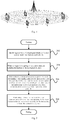
- Fig.2 shows a flowchart of a relay selection routing method according to an embodiment of the present invention.
- the relay selection routing method includes: step 202, establishing a database of a topological structure of a direct communication terminal on a network side; step 204, when a change of the topological structure is detected, updating the database of the topological structure; step 206, when a direct communication service request is received, determining a data sending path and a destination relay node corresponding to the direct communication service request according to the database of the topological structure, sender information and receiver information of the direct communication service request and a preset selection principle; and step 208, establishing a direct communication data sharing network corresponding to the direct communication service request according to the data sending path and the destination relay node.
- the database of the topological structure is established on the network side by a topology discovery process, and when the topological structure changes, the database is updated by a topology update process.
- a path selection and relay selection process is carried out according to the existing database, and the establishment of the direct communication data sharing network is completed at last, in this way, massive signaling overheads caused by flooding routing in the existing routing algorithms can be avoided, and unnecessary signaling overheads caused by broadcast in an overlarge range when the topological structure is established can be reduced.
- step 202 specifically includes: sending a topology discovery request to at least one terminal within the coverage of the base station, so that the at least one terminal carries out channel measurement according to the topology discovery request; receiving topology discovery response fed back by the at least one terminal after carrying out the channel measurement; and establishing the database of the topological structure of the direct communication terminal according to the topology discovery response.
- the topology discovery request contains at least one of or a combination of a relevant threshold constraining the topology discovery response, time-frequency domain resources of the channel measurement, a potential channel measurement range and a channel measurement mode.
- the database of the topological structure of the direct communication terminal is established on the network side by the topology discovery process, wherein the topology discovery process can be directly triggered by the network side, that is, the topology discovery request is triggered by a network side (e.g., the base station) event or periodically, the topology discovery request is released to at least one terminal within the jurisdiction, and the topology discovery request has the following features: 1, the topology discovery request contains the relevant threshold constraining the topology discovery response.
- the channel is marked as a first priority channel; if the quality of the channel is less than the threshold M and is greater than or equal to a threshold N, the channel is marked as a second priority channel; 2, the topology discovery request contains the time-frequency domain resources of the channel measurement, such as the time-frequency domain resources where a channel detection discovery signal is located (including a Discovery sending period or the like) or the time-frequency domain resources where measurement pilot frequency is located (including a pilot frequency period or the like); and 3, the topology discovery request contains the potential channel measurement range, and this step can be implemented by just activating a measured/measurement terminal within a specific range to send the Discovery or special pilot frequency; the base station can confirm an approximate range of the channel measurement according to position information in advance, for example, only carries out the channel measurement on the terminal that is away from a terminal A within a range of F meters; and the channel measurement is only carried out on a part of terminals according to an upper layer strategy. For example, the
- step 202 specifically includes: setting a topology discovery parameter for at least one terminal within the coverage of the base station, so that the at least one terminal carries out channel measurement according to the topology discovery parameter; receiving topology discovery response fed back by the at least one terminal after carrying out the channel measurement; and establishing the database of the topological structure according to the topology discovery response.
- the topology discovery parameter contains at least one of or a combination of a triggering period of the topology discovery response, time-frequency domain resources of the channel measurement, a triggering condition of the topology discovery response and a channel measurement mode.
- the database of the topological structure of the direct communication terminal is established on the network side by the topology discovery process, wherein the topology discovery process can be triggered by the terminal, and the terminal actively initiates the topology discovery process according to the parameter set by the base station through "topology discovery parameter setting".
- the topology discovery parameter contains at least one of: 1, the triggering period; 2, preset time-frequency domain resources of the channel measurement, such as the time-frequency domain resources where the channel detection discovery signal is located (including the Discovery sending period or the like) or the time-frequency domain resources where the measurement pilot frequency is located (including the pilot frequency period or the like); and 3, the event triggering condition.
- the terminal A has data greater than or equal to a threshold E mega to be sent.
- the channel measurement mode includes an active channel measurement mode and a passive channel measurement mode, when the channel measurement mode is the active channel measurement mode, each of the at least one terminal actively sends discovery information, and other terminals surrounding each terminal respectively reply discovery response to the corresponding terminal after receiving the discovery information, so that each terminal carries out channel evaluation according to the discovery response; and when the channel measurement mode is the passive channel measurement mode, each of the at least one terminal passively receives the discovery information sent by the surrounding other terminals, so that each terminal carries out channel evaluation according to the discovery information.
- the detection thereof has active and passive detection mechanisms.
- the passive detection mechanism is that a discovery party passively receives the discovery information sent by the surrounding terminals, knows which terminals are nearby after receiving the information and can approximately know the channel quality.
- the active detection mechanism is that the discovery party actively sends the discovery information, and the surrounding terminals reply the response after receiving the discovery information, to notify the discovery party of their existence surrounding the same.
- the topology discovery response includes node identifier information of a measurement terminal and a measured terminal, which carry out the channel measurement, a time label of the channel measurement, channel feature information and failure feature information.
- the topology discovery response includes, but not limited to, the node identifier information of the measurement terminal and the measured terminal, which carry out the channel measurement, the time label of the channel measurement, the channel feature information and the failure feature information, wherein node identifiers feed back the node identifier information of the measurement terminal and the measured terminal.
- the time label is time information indicating the completion of the current measurement, and the information can be either absolute time information or relative time information (e.g., increasing serial numbers of maintenance).
- Failure features are used for representing relevant parameters of the timeliness of the current channel measurement, for example, a moving speed of the terminal and the like, and the network side controls the update frequency of the topological structure maintained by the network side according to the information.
- the channel feature information is used for representing the state of the channel, and can include pilot frequency receiving quality/strength, a delay evaluation value, etc.
- the relay selection routing method further includes: parsing the failure feature information from the topology discovery response, and judging the time or frequency of updating the database of the topological structure according to the failure feature information.
- the topological structure when a position change on the terminal side is larger, and when the network side can judge that the position change causes the change of the topological structure, the topological structure can be directly updated, but when the position change on the terminal side is smaller, and when the network side cannot directly judge the change of the topological structure, the time or frequency of updating the database of the topological structure is judged.
- step 208 specifically includes: releasing a path establishment command according to the data sending path and the destination relay node to establish the data sharing network for the direct communication of the terminal corresponding to the data service sharing request according to the released path establishment command.
- the path establishment command includes an identifier of the destination relay node, time-frequency resources where the direct communication of the terminal is located and an effective time of the data sending path.
- the network side releases the time-frequency resources where the direct communication of the terminal is located and the effective time of the data sending path, so that a relay terminal can successfully establish the data sharing network according to the time-frequency resources and the effective time of the data sending path.
- the preset selection principle includes a minimum hop principle, a maximum throughput principle and/or a minimum delay principle.
- the network side carries out path selection according to the maintained database of the topological structure and relevant link feature information.
- the network side can carry out the path selection according to the following principles or the combination of multiple principles: the minimum hop principle, the maximum throughput principle and the minimum delay principle, etc.
- the relay selection routing method further includes: sending the database of the topological structure to the database of a superior topological structure of the network side through interfaces between the base stations periodically or in a time triggered manner, and receiving the database of the superior topological structure sent by the database of the superior topological structure of the network side; and if there is no data sending path corresponding to the direct communication service request in a current service area corresponding to the network side, sending a path discovery request to the database of the superior topological structure of the network side; or, if there is no data sending path corresponding to the direct communication service request in the current service area corresponding to the network side, broadcasting the path discovery request to the other base stations; or, sending the database of the topological structure to the other base stations through the interfaces between the base stations periodically or in a time triggered manner, and receiving the databases of the corresponding topological structures sent by the other base stations to realize the synchronization of information of the topological structures.
- the path discovery request when there is no available path of a relevant destination terminal in the current service area, the path discovery request is sent to the database of the superior topological structure of the network side to acquire a cross-regional topological structure; or when there is no available path of the relevant destination terminal in the current service area, the path discovery request is broadcasted to neighbor base stations; or the mastered topological information is mutually synchronized through the interfaces between the base stations periodically or in a time triggered manner, so that the service base station has more comprehensive global topological structure information.
- Fig.3 shows a block diagram of a relay selection routing apparatus according to an embodiment of the present invention.
- the relay selection routing apparatus 300 includes: a database establishment unit 302, used for establishing a database of a topological structure of a direct communication terminal on a network side; an update unit 304 used for, when a change of the topological structure is detected, updating the database of the topological structure; a determining unit 306 used for, when a direct communication service request is received, determining a data sending path and a destination relay node corresponding to the direct communication service request according to the database of the topological structure, sender information and receiver information of the direct communication service request and a preset selection principle; and a network establishment unit 308, used for establishing a direct communication data sharing network corresponding to the direct communication service request according to the data sending path and the destination relay node.
- a database establishment unit 302 used for establishing a database of a topological structure of a direct communication terminal on a network side
- an update unit 304 used for, when a change of the topological structure is detected, updating the database of the topological structure
- a determining unit 306 used
- the database of the topological structure is established on the network side by a topology discovery process, and when the topological structure changes, the database is updated by a topology update process.
- a path selection and relay selection process is carried out according to the existing database, and the establishment of the direct communication data sharing network is completed at last, in this way, massive signaling overheads caused by flooding routing in the existing routing algorithms can be avoided, and unnecessary signaling overheads caused by broadcast in an overlarge range when the topological structure is established can be reduced.
- the database establishment unit 302 includes: a request sending unit 3022, used for sending a topology discovery request to at least one terminal within the coverage of the base station, so that the at least one terminal carries out channel measurement according to the topology discovery request; a receiving unit 3024, used for receiving topology discovery response fed back by the at least one terminal after carrying out the channel measurement; and an establishment unit 3026, used for establishing the database of the topological structure according to the topology discovery response.
- the topology discovery request contains at least one of or a combination of a relevant threshold constraining the topology discovery response, time-frequency domain resources of the channel measurement, a potential channel measurement range and a channel measurement mode.
- the database of the topological structure of the direct communication terminal is established on the network side by the topology discovery process, wherein the topology discovery process can be directly triggered by the network side, that is, the topology discovery request is triggered by a network side (e.g., the base station) event or periodically, the topology discovery request is released to at least one terminal within the jurisdiction, and the topology discovery request has the following features: 1, the topology discovery request contains the relevant threshold constraining the topology discovery response.
- the channel is marked as a first priority channel; if the quality of the channel is less than the threshold M and is greater than or equal to a threshold N, the channel is marked as a second priority channel; 2, the topology discovery request contains the time-frequency domain resources of the channel measurement, such as the time-frequency domain resources where a channel detection discovery signal is located (including a Discovery sending period or the like) or the time-frequency domain resources where measurement pilot frequency is located (including a pilot frequency period or the like); and 3, the topology discovery request contains the potential channel measurement range, and this step can be implemented by just activating a measured/measurement terminal within a specific range to send the Discovery or special pilot frequency; the base station can confirm an approximate range of the channel measurement according to position information in advance, for example, only carries out the channel measurement on the terminal that is away from a terminal A within a range of F meters; and the channel measurement is only carried out on a part of terminals according to an upper layer strategy. For example, the
- the database establishment unit 302 includes: a setting unit 3028, used for setting a topology discovery parameter for at least one terminal within the coverage of the base station, so that the at least one terminal carries out channel measurement according to the topology discovery parameter; a receiving unit 3024, used for receiving topology discovery response fed back by the at least one terminal after carrying out the channel measurement; and an establishment unit 3026, used for establishing the database of the topological structure according to the topology discovery response.
- the topology discovery parameter contains at least one of or a combination of a triggering period of the topology discovery response, time-frequency domain resources of the channel measurement, a triggering condition of the topology discovery response and a channel measurement mode.
- the database of the topological structure of the direct communication terminal is established on the network side by the topology discovery process, wherein the topology discovery process can be triggered by the terminal, and the terminal actively initiates the topology discovery process according to the parameter set by the base station through "topology discovery parameter setting".
- the topology discovery parameter contains at least one of: 1, the triggering period; 2, preset time-frequency domain resources of the channel measurement, such as the time-frequency domain resources where the channel detection discovery signal is located (including the Discovery sending period or the like) or the time-frequency domain resources where the measurement pilot frequency is located (including the pilot frequency period or the like); and 3, the event triggering condition.
- the terminal A has data greater than or equal to a threshold E mega to be sent.
- the channel measurement mode includes an active channel measurement mode and a passive channel measurement mode, when the channel measurement mode is the active channel measurement mode, each of the at least one terminal actively sends discovery information, and other terminals surrounding each terminal respectively reply discovery response to the corresponding terminal after receiving the discovery information, so that each terminal carries out channel evaluation according to the discovery response; and when the channel measurement mode is the passive channel measurement mode, each of the at least one terminal passively receives the discovery information sent by the surrounding other terminals, so that each terminal carries out channel evaluation according to the discovery information.
- the detection thereof has active and passive detection mechanisms.
- the passive detection mechanism is that a discovery party passively receives the discovery information sent by the surrounding terminals, knows which terminals are nearby after receiving the information and can approximately know the channel quality.
- the active detection mechanism is that the discovery party actively sends the discovery information, and the surrounding terminals reply the response after receiving the discovery information, to notify the discovery party of their existence surrounding the same.
- the topology discovery response includes node identifier information of a measurement terminal and a measured terminal, which carry out the channel measurement, a time label of the channel measurement, channel feature information and failure feature information.
- the topology discovery response includes, but not limited to, the node identifier information of the measurement terminal and the measured terminal, which carry out the channel measurement, the time label of the channel measurement, the channel feature information and the failure feature information, wherein node identifiers feed back the node identifier information of the measurement terminal and the measured terminal.
- the time label is time information indicating the completion of the current measurement, and the information can be either absolute time information or relative time information (e.g., increasing serial numbers of maintenance).
- Failure features are used for representing relevant parameters of the timeliness of the current channel measurement, for example, a moving speed of the terminal and the like, and the network side controls the update frequency of the topological structure maintained by the network side according to the information.
- the channel feature information is used for representing the state of the channel, and can include pilot frequency receiving quality/strength, a delay evaluation value, etc.
- the relay selection routing apparatus further includes: a parsing unit 310, used for parsing the failure feature information from the topology discovery response, and judging the time or frequency of updating the database of the topological structure according to the failure feature information.
- the topological structure when a position change on the terminal side is larger, and when the network side can judge that the position change causes the change of the topological structure, the topological structure can be directly updated, but when the position change on the terminal side is smaller, and when the network side cannot directly judge the change of the topological structure, the time or frequency of updating the database of the topological structure is judged.
- the network establishment unit 308 is specifically used for: releasing a path establishment command according to the data sending path and the destination relay node to establish the data sharing network for the direct communication of the terminal corresponding to the data service sharing request according to the released path establishment command.
- the path establishment command includes an identifier of the destination relay node, time-frequency resources where the direct communication of the terminal is located and an effective time of the data sending path.
- the network side releases the time-frequency resources where the direct communication of the terminal is located and the effective time of the data sending path, so that a relay terminal can successfully establish the data sharing network according to the time-frequency resources and the effective time of the data sending path.
- the preset selection principle includes a minimum hop principle, a maximum throughput principle and/or a minimum delay principle.
- the network side carries out path selection according to the maintained database of the topological structure and relevant link feature information.
- the network side can carry out the path selection according to the following principles or the combination of multiple principles: the minimum hop principle, the maximum throughput principle and the minimum delay principle, etc.
- the relay selection routing apparatus further includes: an interaction unit 312, used for sending the database of the topological structure to the database of a superior topological structure of the network side through interfaces between the base stations periodically or in a time triggered manner, and receiving the database of the superior topological structure sent by the database of the superior topological structure of the network side; and if there is no data sending path corresponding to the direct communication service request in a current service area corresponding to the network side, sending a path discovery request to the database of the superior topological structure of the network side, or, if there is no data sending path corresponding to the direct communication service request in the current service area corresponding to the network side, broadcasting the path discovery request to the other base stations, or, sending the database of the topological structure to the other base stations through the interfaces between the base stations periodically or in a time triggered manner, and receiving the databases of the corresponding topological structures sent by the other base stations to realize the synchronization of information of the topological structures.
- an interaction unit 312 used for sending the database of the topological structure to the
- the path discovery request when there is no available path of a relevant destination terminal in the current service area, the path discovery request is sent to the database of the superior topological structure of the network side to acquire a cross-regional topological structure; or when there is no available path of the relevant destination terminal in the current service area, the path discovery request is broadcasted to neighbor base stations; or the mastered topological information is mutually synchronized through the interfaces between the base stations periodically or in a time triggered manner, so that the service base station has more comprehensive global topological structure information.
- a path update request is sent to transfer to other available paths to carry out data sharing so as to guarantee smooth data sharing.
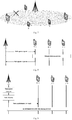
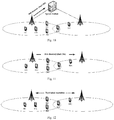
- the database of the topological structure is established on the network side by a topology discovery process 402, and when the topological structure changes, the database is updated by a topology update process 404.
- a path selection and relay selection process 406 is carried out according to the existing database, and the establishment 408 of the direct communication data sharing network is completed at last. The specific steps are as follows:
- the topology discovery process 402 is a process for determining the topology discovery process 402:
- the "topology discovery process” is defined in the present invention. According to different triggers, the triggering can be divided into “UE (terminal) triggering” and “network triggering”. The detailed steps are listed as follows:
- the topology maintenance process 404 The topology maintenance process 404:
- topology maintenance process 404" is defined in the present invention.
- the network side When the network side needs to update the network topology according to the "failure features", or when the topological structure changes due to the movement of the UE, but the network side does not initiate the "topology maintenance process 404", the network side or the UE triggers the topology maintenance process 404.
- the network side can trigger a path update request to indicate the UE to carry out a channel detection process.
- the UE triggers a path update response message actively or according to network indication information.
- the base station when the UE initiates data service sharing, the base station triggers a path establishment process based on the network topological structure maintained by the network side.
- the specific steps are as follows:
- the base station can also carry out information interaction of the topological structure with other base stations.
- the path discovery request can be sent to the database of a superior topological structure of the network side to acquire a cross-regional topological structure.
- the base station can send the database of the topological structure to the database of the superior topological structure of the network side through interfaces between the base stations periodically or in a time triggered manner, and receive the database of the superior topological structure of the network side sent by the database of the superior topological structure of the network side.
- the path discovery request can also be broadcasted to neighbor base stations.
- the base stations can also mutually synchronize the mastered topological information through the interfaces between the base stations periodically or in a time triggered manner, so that the service base station has more comprehensive global topological structure information.
Landscapes
- Engineering & Computer Science (AREA)
- Computer Networks & Wireless Communication (AREA)
- Signal Processing (AREA)
- Databases & Information Systems (AREA)
- Mobile Radio Communication Systems (AREA)
Abstract
Description
- The present invention relates to the technical field of terminals, and particularly to a relay selection routing method based on direct communication of a terminal and a relay selection routing apparatus based on the direct communication of the terminal.
- Routing algorithms are the core technology of an Internet network layer, which mainly solves the problem of how to select an appropriate path and an appropriate router to forward data in an IP network. The current routing algorithms are divided into an active routing algorithm (a table-driven routing protocol) and on-demand routing (a reactive routing protocol).
- Active routing protocol: an active routing discovery strategy is similar to the traditional routing protocol, that is, each node of the network should periodically send the latest routing information to other nodes, and each node should maintain one or more routing tables to store the routing information. When a network topological structure changes, the node will broadcast routing update information in the whole network, and thus each node can continuously acquire network information. Representative protocols of the active routing protocol include DSDV (Destination-Sequenced Distance. Vector, destination-sequenced distance vector), HSR (Hierarchical State Routing, hierarchical state routing), and the like; and on-demand routing protocol: unlike the active routing protocol, the on-demand routing is created by a source node only when the routing is required, so the topological structure and routing table contents are established according to demands, and may be only a part of the entire topological structure information. The routing is maintained in a communication process and is not maintained anymore after the communication is completed. The representative protocols thereof include: a DSR (dynamic source routing protocol), an AODV (Ad hoc on-demand distance vector routing protocol), a TORA (temporally ordered routing algorithm).
- In these current routing algorithms, the routing problem of a distributed system is usually processed, that is, there is no centralized control node between routers to uniformly maintain and process the routing tables.
- In a direct communication network (D2D, Device to Device), the network topological structure changes, and terminals in the direct communication network work under the centralized control (or partial control) of a telecommunication network. Therefore, related routing discovery and routing maintenance mechanisms in the routing algorithm need to be changed correspondingly to adapt to data relay node and path selection of a D2D data sharing network.
- As shown in
Fig.1 , a possible topological structure in the D2D data sharing network is represented. UEs (terminals) A, B are a data source UE and a data destination receiving UE respectively; and UEs C, D, E are potential data relay UEs. - The channel states between the UEs can be acquired by initiating a Discovery flow between the UEs or measuring pilot frequency. It can be seen from
Fig.1 that, according to a channel detection result, a link C-to-B has worse quality, and thus cannot establish direct communication. Links A-to-C, A-to-D, D-to-E, E-to-B meet the requirements of the direct communication, and thus can establish the direct communication. - If the aforementioned selection of an available path and a relay node is completed according to the "on-demand routing protocol" algorithm (e.g., the DSR, the AODV) of the current Ad-Hoc (point-to-point network), the following steps need to be implemented:
- when needing to send data, a terminal A initiates a routing discovery flow, that is, sends a broadcast to all accessible UEs and inquires whether there is an available routing path accessing to a terminal B.
- 1. If the UE (e.g., UE D) receiving a routing discovery data packet does not have the available path accessing to the terminal B, it can forward the broadcast as well until the usable path accessing to the B is found; and
- 2. if the UE (e.g., UE E) receiving the routing discovery data packet has the available path accessing to the terminal B, the terminal feeds back a reply message so as to establish a path from the A to the B.
- If according to the "active routing protocol algorithm" of the current Ad-Hoc, each node periodically transmits a local routing table to neighboring nodes, or transmits the routing information thereof to the neighboring nodes, when the routing table thereof changes.
- No matter which aforementioned routing algorithm is adopted, due to massive invalid broadcasts generated during the routing discovery broadcast process, a larger signaling cost burden will be caused. Moreover, the process is unlikely to converge, and thus a larger delay will be generated in the entire process of path selection. Therefore, a novel technical solution is needed to avoid massive signaling overheads caused by flooding routing in the existing routing algorithms, reduce unnecessary signaling overheads caused by broadcast in an overlarge range when the topological structure is established, and improve the timeliness of a database of the topological structure.
- Based on the aforementioned problems, the present invention provides a novel technical solution, which can avoid massive signaling overheads caused by flooding routing in the existing routing algorithms, reduce unnecessary signaling overheads caused by broadcast in an overlarge range when a topological structure is established, and improve the timeliness of a database of the topological structure.
- In view of this, the present invention provides a relay selection routing method based on direct communication of a terminal, applied to a base station, including: establishing a database of a topological structure of a direct communication terminal on a network side; when a change of the topological structure is detected, updating the database of the topological structure; when a direct communication service request is received, determining a data sending path and a destination relay node corresponding to the direct communication service request according to the database of the topological structure, sender information and receiver information of the direct communication service request and a preset selection principle; and establishing a direct communication data sharing network corresponding to the direct communication service request according to the data sending path and the destination relay node.
- In the technical solution, the database of the topological structure is established on the network side by a topology discovery process, and when the topological structure changes, the database is updated by a topology update process. When service demands triggered by a network or initiated by the terminal arrive, a path selection and relay selection process is carried out according to the existing database, and the establishment of the direct communication data sharing network is completed at last, in this way, massive signaling overheads caused by flooding routing in the existing routing algorithms can be avoided, and unnecessary signaling overheads caused by broadcast in an overlarge range when the topological structure is established can be reduced.
- In the aforementioned technical solution, preferably, the establishing a database of a topological structure of a direct communication terminal on a network side specifically includes: sending a topology discovery request to at least one terminal within the coverage of the base station, so that the at least one terminal carries out channel measurement according to the topology discovery request; receiving topology discovery response fed back by the at least one terminal after carrying out the channel measurement; and establishing the database of the topological structure of the direct communication terminal according to the topology discovery response.
- In the aforementioned technical solution, preferably, the topology discovery request contains at least one of or a combination of a relevant threshold constraining the topology discovery response, time-frequency domain resources of the channel measurement, a potential channel measurement range and a channel measurement mode.
- In the technical solution, the database of the topological structure of the direct communication terminal is established on the network side by the topology discovery process, wherein the topology discovery process can be directly triggered by the network side, that is, the topology discovery request is triggered by a network side (e.g., the base station) event or periodically, the topology discovery request is released to at least one terminal within the jurisdiction, and the topology discovery request has the following features: 1, the topology discovery request contains the relevant threshold constraining the topology discovery response. If the quality of a channel is greater than or equal to a certain threshold M, the channel is marked as a first priority channel; if the quality of the channel is less than the threshold M and is greater than or equal to a threshold N, the channel is marked as a second priority channel; 2, the topology discovery request contains the time-frequency domain resources of the channel measurement, such as the time-frequency domain resources where a channel detection discovery signal is located (including a Discovery sending period or the like) or the time-frequency domain resources where measurement pilot frequency is located (including a pilot frequency period or the like); and 3, the topology discovery request contains the potential channel measurement range, and this step can be implemented by just activating a measured/measurement terminal within a specific range to send the Discovery or special pilot frequency; the base station can confirm an approximate range of the channel measurement according to position information in advance, for example, only carries out the channel measurement on the terminal that is away from a terminal A within a range of F meters; and the channel measurement is only carried out on a part of terminals according to an upper layer strategy. For example, the channel measurement is only carried out on a part of trusty terminals according to a certain data relay node selection limiting rule.
- In the aforementioned technical solution, preferably, the establishing a database of a topological structure of a direct communication terminal on a network side specifically includes: setting a topology discovery parameter for at least one terminal within the coverage of the base station, so that the at least one terminal carries out channel measurement according to the topology discovery parameter; receiving topology discovery response fed back by the at least one terminal after carrying out the channel measurement; and establishing the database of the topological structure according to the topology discovery response.
- In the aforementioned technical solution, preferably, the topology discovery parameter contains at least one of or a combination of a triggering period of the topology discovery response, time-frequency domain resources of the channel measurement, a triggering condition of the topology discovery response and a channel measurement mode.
- In the technical solution, the database of the topological structure of the direct communication terminal is established on the network side by the topology discovery process, wherein the topology discovery process can be triggered by the terminal, and the terminal actively initiates the topology discovery process according to the parameter set by the base station through "topology discovery parameter setting". The topology discovery parameter contains at least one of: 1, the triggering period; 2, preset time-frequency domain resources of the channel measurement, such as the time-frequency domain resources where the channel detection discovery signal is located (including the Discovery sending period or the like) or the time-frequency domain resources where the measurement pilot frequency is located (including the pilot frequency period or the like); and 3, the event triggering condition. For example, the terminal A has data greater than or equal to a threshold E mega to be sent.
- In the aforementioned technical solution, preferably, the channel measurement mode includes an active channel measurement mode and a passive channel measurement mode, when the channel measurement mode is the active channel measurement mode, each of the at least one terminal actively sends discovery information, and other terminals surrounding each terminal respectively reply discovery response to the corresponding terminal after receiving the discovery information, so that each terminal carries out channel evaluation according to the discovery response; and when the channel measurement mode is the passive channel measurement mode, each of the at least one terminal passively receives the discovery information sent by the surrounding other terminals, so that each terminal carries out channel evaluation according to the discovery information.
- In the technical solution, no matter the topology discovery process is triggered by the terminal or the network side, when the terminal carries out channel detection, the detection thereof has active and passive detection mechanisms. The passive detection mechanism is that a discovery party passively receives the discovery information sent by the surrounding terminals, knows which terminals are nearby after receiving the information and can approximately know the channel quality. The active detection mechanism is that the discovery party actively sends the discovery information, and the surrounding terminals reply the response after receiving the discovery information, to notify the discovery party of their existence surrounding the same.
- In the aforementioned technical solution, preferably, the topology discovery response includes node identifier information of a measurement terminal and a measured terminal, which carry out the channel measurement, a time label of the channel measurement, channel feature information and failure feature information.
- In the technical solution, the topology discovery response includes, but not limited to, the node identifier information of the measurement terminal and the measured terminal, which carry out the channel measurement, the time label of the channel measurement, the channel feature information and the failure feature information, wherein node identifiers feed back the node identifier information of the measurement terminal and the measured terminal. The time label is time information indicating the completion of the current measurement, and the information can be either absolute time information or relative time information (e.g., increasing serial numbers of maintenance). Failure features are used for representing relevant parameters of the timeliness of the current channel measurement, for example, a moving speed of the terminal and the like, and the network side controls the update frequency of the topological structure maintained by the network side according to the information. The channel feature information is used for representing the state of the channel, and can include pilot frequency receiving quality/strength, a delay evaluation value, etc.
- In the aforementioned technical solution, preferably, the relay selection routing method further includes: parsing the failure feature information from the topology discovery response, and judging the time or frequency of updating the database of the topological structure according to the failure feature information.
- In the technical solution, when a position change on the terminal side is larger, and when the network side can judge that the position change causes the change of the topological structure, the topological structure can be directly updated, but when the position change on the terminal side is smaller, and when the network side cannot directly judge the change of the topological structure, the time or frequency of updating the database of the topological structure is judged.
- In the aforementioned technical solution, preferably, the establishing a data sharing network for direct communication of the terminal corresponding to the data service sharing request according to the data sending path and the destination relay node specifically includes: releasing a path establishment command according to the data sending path and the destination relay node to establish the data sharing network for the direct communication of the terminal corresponding to the data service sharing request according to the released path establishment command.
- In the aforementioned technical solution, preferably, the path establishment command includes an identifier of the destination relay node, time-frequency resources where the direct communication of the terminal is located and an effective time of the data sending path.
- In the technical solution, the network side releases the time-frequency resources where the direct communication of the terminal is located and the effective time of the data sending path, so that a relay terminal can successfully establish the data sharing network according to the time-frequency resources and the effective time of the data sending path.
- In the aforementioned technical solution, preferably, the preset selection principle includes a minimum hop principle, a maximum throughput principle and/or a minimum delay principle.
- In the technical solution, the network side carries out path selection according to the maintained database of the topological structure and relevant link feature information.
- The network side can carry out the path selection according to the following principles or the combination of multiple principles: the minimum hop principle, the maximum throughput principle and the minimum delay principle, etc.
- In the aforementioned technical solution, preferably, the relay selection routing method further includes: sending the database of the topological structure to the database of a superior topological structure of the network side through interfaces between the base stations periodically or in a time triggered manner, and receiving the database of the superior topological structure sent by the database of the superior topological structure of the network side; and if there is no data sending path corresponding to the direct communication service request in a current service area corresponding to the network side, sending a path discovery request to the database of the superior topological structure of the network side; or, if there is no data sending path corresponding to the direct communication service request in the current service area corresponding to the network side, broadcasting the path discovery request to the other base stations; or, sending the database of the topological structure to the other base stations through the interfaces between the base stations periodically or in a time triggered manner, and receiving the databases of the corresponding topological structures sent by the other base stations to realize the synchronization of information of the topological structures.
- In the technical solution, when there is no available path of a relevant destination terminal in the current service area, the path discovery request is sent to the database of the superior topological structure of the network side to acquire a cross-regional topological structure; or when there is no available path of the relevant destination terminal in the current service area, the path discovery request is broadcasted to neighbor base stations; or the mastered topological information is mutually synchronized through the interfaces between the base stations periodically or in a time triggered manner, so that the service base station has more comprehensive global topological structure information.
- Specifically, after the data sharing network is established, in a data sharing process, if the change of the topological structure is detected and the change influences the path having been selected by the current user, a path update request is sent to transfer to other available paths to carry out data sharing so as to guarantee smooth data sharing.
- According to another aspect of the present invention, a relay selection routing apparatus based on direct communication of a terminal is further provided, applied to a base station, including: a database establishment unit, used for establishing a database of a topological structure of a direct communication terminal on a network side; an update unit used for, when a change of the topological structure is detected, updating the database of the topological structure; a determining unit used for, when a direct communication service request is received, determining a data sending path and a destination relay node corresponding to the direct communication service request according to the database of the topological structure, sender information and receiver information of the direct communication service request and a preset selection principle; and a network establishment unit, used for establishing a direct communication data sharing network corresponding to the direct communication service request according to the data sending path and the destination relay node.
- In the technical solution, the database of the topological structure is established on the network side by a topology discovery process, and when the topological structure changes, the database is updated by a topology update process. When service demands triggered by a network or initiated by UEs arrives, a path selection and relay selection process is carried out according to the existing database, and the establishment of the direct communication data sharing network is completed at last, in this way, massive signaling overheads caused by flooding routing in the existing routing algorithms can be avoided, and unnecessary signaling overheads caused by broadcast in an overlarge range when the topological structure is established can be reduced.
- In the aforementioned technical solution, preferably, the database establishment unit includes: a request sending unit, used for sending a topology discovery request to at least one terminal within the coverage of the base station, so that the at least one terminal carries out channel measurement according to the topology discovery request; a receiving unit, used for receiving topology discovery response fed back by the at least one terminal after carrying out the channel measurement; and an establishment unit, used for establishing the database of the topological structure according to the topology discovery response.
- In the aforementioned technical solution, preferably, the topology discovery request contains at least one of or a combination of a relevant threshold constraining the topology discovery response, time-frequency domain resources of the channel measurement, a potential channel measurement range and a channel measurement mode.
- In the technical solution, the database of the topological structure of the direct communication terminal is established on the network side by the topology discovery process, wherein the topology discovery process can be directly triggered by the network side, that is, the topology discovery request is triggered by a network side (e.g., the base station) event or periodically, the topology discovery request is released to at least one terminal within the jurisdiction, and the topology discovery request has the following features: 1, the topology discovery request contains the relevant threshold constraining the topology discovery response. If the quality of a channel is greater than or equal to a certain threshold M, the channel is marked as a first priority channel; if the quality of the channel is less than the threshold M and is greater than or equal to a threshold N, the channel is marked as a second priority channel; 2, the topology discovery request contains the time-frequency domain resources of the channel measurement, such as the time-frequency domain resources where a channel detection discovery signal is located (including a Discovery sending period or the like) or the time-frequency domain resources where measurement pilot frequency is located (including a pilot frequency period or the like); and 3, the topology discovery request contains the potential channel measurement range, and this step can be implemented by just activating a measured/measurement terminal within a specific range to send the Discovery or special pilot frequency; the base station can confirm an approximate range of the channel measurement according to position information in advance, for example, only carries out the channel measurement on the terminal that is away from a terminal A within a range of F meters; and the channel measurement is only carried out on a part of terminals according to an upper layer strategy. For example, the channel measurement is only carried out on a part of trusted UEs according to a certain data relay node selection limiting rule.
- In the aforementioned technical solution, preferably, the database establishment unit includes: a setting unit, used for setting a topology discovery parameter for at least one terminal within the coverage of the base station, so that the at least one terminal carries out channel measurement according to the topology discovery parameter; a receiving unit, used for receiving topology discovery response fed back by the at least one terminal after carrying out the channel measurement; and an establishment unit, used for establishing the database of the topological structure according to the topology discovery response.
- In the aforementioned technical solution, preferably, the topology discovery parameter contains at least one of or a combination of a triggering period of the topology discovery response, time-frequency domain resources of the channel measurement, a triggering condition of the topology discovery response and a channel measurement mode.
- In the technical solution, the database of the topological structure of the direct communication terminal is established on the network side by the topology discovery process, wherein the topology discovery process can be triggered by the terminal, and the terminal actively initiates the topology discovery process according to the parameter set by the base station through "topology discovery parameter setting". The topology discovery parameter contains at least one of: 1, the triggering period; 2, preset time-frequency domain resources of the channel measurement, such as the time-frequency domain resources where the channel detection discovery signal is located (including the Discovery sending period or the like) or the time-frequency domain resources where the measurement pilot frequency is located (including the pilot frequency period or the like); and 3, the event triggering condition. For example, the terminal A has data greater than or equal to a threshold E mega to be sent.
- In the aforementioned technical solution, preferably, the channel measurement mode includes an active channel measurement mode and a passive channel measurement mode, when the channel measurement mode is the active channel measurement mode, each of the at least one terminal actively sends discovery information, and other terminals surrounding each terminal respectively reply discovery response to the corresponding terminal after receiving the discovery information, so that each terminal carries out channel evaluation according to the discovery response; and when the channel measurement mode is the passive channel measurement mode, each of the at least one terminal passively receives the discovery information sent by the surrounding other terminals, so that each terminal carries out channel evaluation according to the discovery information.
- In the technical solution, no matter the topology discovery process is triggered by the terminal or the network side, when the terminal carries out channel detection, the detection thereof has active and passive detection mechanisms. The passive detection mechanism is that a discovery party passively receives the discovery information sent by the surrounding terminals, knows which terminals are nearby after receiving the information and can approximately know the channel quality. The active detection mechanism is that the discovery party actively sends the discovery information, and the surrounding terminals reply the response after receiving the discovery information, to notify the discovery party of their existence surrounding the same.
- In the aforementioned technical solution, preferably, the topology discovery response includes node identifier information of a measurement terminal and a measured terminal, which carry out the channel measurement, a time label of the channel measurement, channel feature information and failure feature information.
- In the technical solution, the topology discovery response includes, but not limited to, the node identifier information of the measurement terminal and the measured terminal, which carry out the channel measurement, the time label of the channel measurement, the channel feature information and the failure feature information, wherein node identifiers feed back the node identifier information of the measurement terminal and the measured terminal. The time label is time information indicating the completion of the current measurement, and the information can be either absolute time information or relative time information (e.g., increasing serial numbers of maintenance). Failure features are used for representing relevant parameters of the timeliness of the current channel measurement, for example, a moving speed of the terminal and the like, and the network side controls the update frequency of the topological structure maintained by the network side according to the information. The channel feature information is used for representing the state of the channel, and can include pilot frequency receiving quality/strength, a delay evaluation value, etc.
- In the aforementioned technical solution, preferably, the relay selection routing apparatus further includes: a parsing unit, used for parsing the failure feature information from the topology discovery response, and judging the time or frequency of updating the database of the topological structure according to the failure feature information.
- In the technical solution, when a position change on the terminal side is larger, and when the network side can judge that the position change causes the change of the topological structure, the topological structure can be directly updated, but when the position change on the terminal side is smaller, and when the network side cannot directly judge the change of the topological structure, the time or frequency of updating the database of the topological structure is judged.
- In the aforementioned technical solution, preferably, the network establishment unit is specifically used for: releasing a path establishment command according to the data sending path and the destination relay node to establish the data sharing network for the direct communication of the terminal corresponding to the data service sharing request according to the released path establishment command.
- In the aforementioned technical solution, preferably, the path establishment command includes an identifier of the destination relay node, time-frequency resources where the direct communication of the terminal is located and an effective time of the data sending path.
- In the technical solution, the network side releases the time-frequency resources where the direct communication of the terminal is located and the effective time of the data sending path, so that a relay terminal can successfully establish the data sharing network according to the time-frequency resources and the effective time of the data sending path.
- In the aforementioned technical solution, preferably, the preset selection principle includes a minimum hop principle, a maximum throughput principle and/or a minimum delay principle.
- In the technical solution, the network side carries out path selection according to the maintained database of the topological structure and relevant link feature information. The network side can carry out the path selection according to the following principles or the combination of multiple principles: the minimum hop principle, the maximum throughput principle and the minimum delay principle, etc.
- In the aforementioned technical solution, preferably, the relay selection routing apparatus further includes: an interaction unit, used for sending the database of the topological structure to the database of a superior topological structure of the network side through interfaces between the base stations periodically or in a time triggered manner, and receiving the database of the superior topological structure sent by the database of the superior topological structure of the network side; and if there is no data sending path corresponding to the direct communication service request in a current service area corresponding to the network side, sending a path discovery request to the database of the superior topological structure of the network side, or, if there is no data sending path corresponding to the direct communication service request in the current service area corresponding to the network side, broadcasting the path discovery request to the other base stations, or, sending the database of the topological structure to the other base stations through the interfaces between the base stations periodically or in a time triggered manner, and receiving the databases of the corresponding topological structures sent by the other base stations to realize the synchronization of information of the topological structures.
- In the technical solution, when there is no available path of a relevant destination terminal in the current service area, the path discovery request is sent to the database of the superior topological structure of the network side to acquire a cross-regional topological structure; or when there is no available path of the relevant destination terminal in the current service area, the path discovery request is broadcasted to neighbor base stations; or the mastered topological information is mutually synchronized through the interfaces between the base stations periodically or in a time triggered manner, so that the service base station has more comprehensive global topological structure information.
- Specifically, after the data sharing network is established, in a data sharing process, if the change of the topological structure is detected and the change influences the path having been selected by the current user, a path update request is sent to transfer to other available paths to carry out data sharing so as to guarantee smooth data sharing. By means of the above technical solutions, massive signaling overheads caused by flooding routing in the existing routing algorithms can be avoided, unnecessary signaling overheads caused by broadcast in an overlarge range when the topological structure is established can be reduced, and the timeliness of the database of the topological structure can be improved.
-
-
Fig.1 shows a schematic diagram of a topological structure of a data sharing network for direct communication of a terminal in relevant technology; -
Fig.2 shows a flowchart of a relay selection routing method according to an embodiment of the present invention; -
Fig.3 shows a block diagram of a relay selection routing apparatus according to an embodiment of the present invention; -
Fig.4 shows a specific flowchart of a relay selection routing method according to an embodiment of the present invention; -
Fig.5 shows a schematic diagram of a topology discovery process triggered by a network side according to an embodiment of the present invention; -
Fig.6 shows a schematic diagram of a topology discovery process triggered by a terminal side according to an embodiment of the present invention; -
Fig.7 shows a schematic diagram when a topological structure according to an embodiment of the present invention changes; -
Fig.8 shows a schematic diagram of a topology maintenance flow according to an embodiment of the present invention changes; -
Fig.9 shows a schematic diagram of a path establishment and relay selection process according to an embodiment of the present invention; -
Fig.10 to Fig.12 show schematic diagrams of information interaction of a topological structure according to an embodiment of the present invention. - In order that the aforementioned purposes, features and advantages of the present invention can be understood more clearly, a further detailed description of the present invention will be given below in combination with accompanying drawings and specific implementations. It should be noted that embodiments in the present application and the features in the embodiments can be combined with each other as long as no conflict is generated.
- A lot of specific details are described in the description below to fully understand the present invention, but the present invention can also be implemented in other manners different from what is described herein, therefore the protection scope of the present invention is not limited to the specific embodiments disclosed below.
-
Fig.2 shows a flowchart of a relay selection routing method according to an embodiment of the present invention. - As shown in
Fig.2 , the relay selection routing method according to the embodiment of the present invention includes:step 202, establishing a database of a topological structure of a direct communication terminal on a network side;step 204, when a change of the topological structure is detected, updating the database of the topological structure;step 206, when a direct communication service request is received, determining a data sending path and a destination relay node corresponding to the direct communication service request according to the database of the topological structure, sender information and receiver information of the direct communication service request and a preset selection principle; and step 208, establishing a direct communication data sharing network corresponding to the direct communication service request according to the data sending path and the destination relay node. - In the technical solution, the database of the topological structure is established on the network side by a topology discovery process, and when the topological structure changes, the database is updated by a topology update process. When service demands triggered by a network or initiated by the terminal arrive, a path selection and relay selection process is carried out according to the existing database, and the establishment of the direct communication data sharing network is completed at last, in this way, massive signaling overheads caused by flooding routing in the existing routing algorithms can be avoided, and unnecessary signaling overheads caused by broadcast in an overlarge range when the topological structure is established can be reduced.
- In the aforementioned technical solution, preferably, step 202 specifically includes: sending a topology discovery request to at least one terminal within the coverage of the base station, so that the at least one terminal carries out channel measurement according to the topology discovery request; receiving topology discovery response fed back by the at least one terminal after carrying out the channel measurement; and establishing the database of the topological structure of the direct communication terminal according to the topology discovery response.
- In the aforementioned technical solution, preferably, the topology discovery request contains at least one of or a combination of a relevant threshold constraining the topology discovery response, time-frequency domain resources of the channel measurement, a potential channel measurement range and a channel measurement mode.
- In the technical solution, the database of the topological structure of the direct communication terminal is established on the network side by the topology discovery process, wherein the topology discovery process can be directly triggered by the network side, that is, the topology discovery request is triggered by a network side (e.g., the base station) event or periodically, the topology discovery request is released to at least one terminal within the jurisdiction, and the topology discovery request has the following features: 1, the topology discovery request contains the relevant threshold constraining the topology discovery response. If the quality of a channel is greater than or equal to a certain threshold M, the channel is marked as a first priority channel; if the quality of the channel is less than the threshold M and is greater than or equal to a threshold N, the channel is marked as a second priority channel; 2, the topology discovery request contains the time-frequency domain resources of the channel measurement, such as the time-frequency domain resources where a channel detection discovery signal is located (including a Discovery sending period or the like) or the time-frequency domain resources where measurement pilot frequency is located (including a pilot frequency period or the like); and 3, the topology discovery request contains the potential channel measurement range, and this step can be implemented by just activating a measured/measurement terminal within a specific range to send the Discovery or special pilot frequency; the base station can confirm an approximate range of the channel measurement according to position information in advance, for example, only carries out the channel measurement on the terminal that is away from a terminal A within a range of F meters; and the channel measurement is only carried out on a part of terminals according to an upper layer strategy. For example, the channel measurement is only carried out on a part of trusty terminals according to a certain data relay node selection limiting rule.
- In the aforementioned technical solution, preferably, step 202 specifically includes: setting a topology discovery parameter for at least one terminal within the coverage of the base station, so that the at least one terminal carries out channel measurement according to the topology discovery parameter; receiving topology discovery response fed back by the at least one terminal after carrying out the channel measurement; and establishing the database of the topological structure according to the topology discovery response.
- In the aforementioned technical solution, preferably, the topology discovery parameter contains at least one of or a combination of a triggering period of the topology discovery response, time-frequency domain resources of the channel measurement, a triggering condition of the topology discovery response and a channel measurement mode.
- In the technical solution, the database of the topological structure of the direct communication terminal is established on the network side by the topology discovery process, wherein the topology discovery process can be triggered by the terminal, and the terminal actively initiates the topology discovery process according to the parameter set by the base station through "topology discovery parameter setting". The topology discovery parameter contains at least one of: 1, the triggering period; 2, preset time-frequency domain resources of the channel measurement, such as the time-frequency domain resources where the channel detection discovery signal is located (including the Discovery sending period or the like) or the time-frequency domain resources where the measurement pilot frequency is located (including the pilot frequency period or the like); and 3, the event triggering condition. For example, the terminal A has data greater than or equal to a threshold E mega to be sent.
- In the aforementioned technical solution, preferably, the channel measurement mode includes an active channel measurement mode and a passive channel measurement mode, when the channel measurement mode is the active channel measurement mode, each of the at least one terminal actively sends discovery information, and other terminals surrounding each terminal respectively reply discovery response to the corresponding terminal after receiving the discovery information, so that each terminal carries out channel evaluation according to the discovery response; and when the channel measurement mode is the passive channel measurement mode, each of the at least one terminal passively receives the discovery information sent by the surrounding other terminals, so that each terminal carries out channel evaluation according to the discovery information.
- In the technical solution, no matter the topology discovery process is triggered by the terminal or the network side, when the terminal carries out channel detection, the detection thereof has active and passive detection mechanisms. The passive detection mechanism is that a discovery party passively receives the discovery information sent by the surrounding terminals, knows which terminals are nearby after receiving the information and can approximately know the channel quality. The active detection mechanism is that the discovery party actively sends the discovery information, and the surrounding terminals reply the response after receiving the discovery information, to notify the discovery party of their existence surrounding the same.
- In the aforementioned technical solution, preferably, the topology discovery response includes node identifier information of a measurement terminal and a measured terminal, which carry out the channel measurement, a time label of the channel measurement, channel feature information and failure feature information.
- In the technical solution, the topology discovery response includes, but not limited to, the node identifier information of the measurement terminal and the measured terminal, which carry out the channel measurement, the time label of the channel measurement, the channel feature information and the failure feature information, wherein node identifiers feed back the node identifier information of the measurement terminal and the measured terminal. The time label is time information indicating the completion of the current measurement, and the information can be either absolute time information or relative time information (e.g., increasing serial numbers of maintenance). Failure features are used for representing relevant parameters of the timeliness of the current channel measurement, for example, a moving speed of the terminal and the like, and the network side controls the update frequency of the topological structure maintained by the network side according to the information. The channel feature information is used for representing the state of the channel, and can include pilot frequency receiving quality/strength, a delay evaluation value, etc.
- In the aforementioned technical solution, preferably, the relay selection routing method further includes: parsing the failure feature information from the topology discovery response, and judging the time or frequency of updating the database of the topological structure according to the failure feature information.
- In the technical solution, when a position change on the terminal side is larger, and when the network side can judge that the position change causes the change of the topological structure, the topological structure can be directly updated, but when the position change on the terminal side is smaller, and when the network side cannot directly judge the change of the topological structure, the time or frequency of updating the database of the topological structure is judged.
- In the aforementioned technical solution, preferably, step 208 specifically includes: releasing a path establishment command according to the data sending path and the destination relay node to establish the data sharing network for the direct communication of the terminal corresponding to the data service sharing request according to the released path establishment command.
- In the aforementioned technical solution, preferably, the path establishment command includes an identifier of the destination relay node, time-frequency resources where the direct communication of the terminal is located and an effective time of the data sending path.
- In the technical solution, the network side releases the time-frequency resources where the direct communication of the terminal is located and the effective time of the data sending path, so that a relay terminal can successfully establish the data sharing network according to the time-frequency resources and the effective time of the data sending path.
- In the aforementioned technical solution, preferably, the preset selection principle includes a minimum hop principle, a maximum throughput principle and/or a minimum delay principle.
- In the technical solution, the network side carries out path selection according to the maintained database of the topological structure and relevant link feature information. The network side can carry out the path selection according to the following principles or the combination of multiple principles: the minimum hop principle, the maximum throughput principle and the minimum delay principle, etc.
- In the aforementioned technical solution, preferably, the relay selection routing method further includes: sending the database of the topological structure to the database of a superior topological structure of the network side through interfaces between the base stations periodically or in a time triggered manner, and receiving the database of the superior topological structure sent by the database of the superior topological structure of the network side; and if there is no data sending path corresponding to the direct communication service request in a current service area corresponding to the network side, sending a path discovery request to the database of the superior topological structure of the network side; or, if there is no data sending path corresponding to the direct communication service request in the current service area corresponding to the network side, broadcasting the path discovery request to the other base stations; or, sending the database of the topological structure to the other base stations through the interfaces between the base stations periodically or in a time triggered manner, and receiving the databases of the corresponding topological structures sent by the other base stations to realize the synchronization of information of the topological structures.
- In the technical solution, when there is no available path of a relevant destination terminal in the current service area, the path discovery request is sent to the database of the superior topological structure of the network side to acquire a cross-regional topological structure; or when there is no available path of the relevant destination terminal in the current service area, the path discovery request is broadcasted to neighbor base stations; or the mastered topological information is mutually synchronized through the interfaces between the base stations periodically or in a time triggered manner, so that the service base station has more comprehensive global topological structure information.
- Specifically, after the data sharing network is established, in a data sharing process, if the change of the topological structure is detected and the change influences the path having been selected by the current user, a path update request is sent to transfer to other available paths to carry out data sharing so as to guarantee smooth data sharing.
Fig.3 shows a block diagram of a relay selection routing apparatus according to an embodiment of the present invention. - As shown in
Fig.3 , the relay selection routing apparatus 300 according to the embodiment of the present invention includes: adatabase establishment unit 302, used for establishing a database of a topological structure of a direct communication terminal on a network side; anupdate unit 304 used for, when a change of the topological structure is detected, updating the database of the topological structure; a determiningunit 306 used for, when a direct communication service request is received, determining a data sending path and a destination relay node corresponding to the direct communication service request according to the database of the topological structure, sender information and receiver information of the direct communication service request and a preset selection principle; and anetwork establishment unit 308, used for establishing a direct communication data sharing network corresponding to the direct communication service request according to the data sending path and the destination relay node. - In the technical solution, the database of the topological structure is established on the network side by a topology discovery process, and when the topological structure changes, the database is updated by a topology update process. When service demands triggered by a network or initiated by the terminal arrive, a path selection and relay selection process is carried out according to the existing database, and the establishment of the direct communication data sharing network is completed at last, in this way, massive signaling overheads caused by flooding routing in the existing routing algorithms can be avoided, and unnecessary signaling overheads caused by broadcast in an overlarge range when the topological structure is established can be reduced.
- In the aforementioned technical solution, preferably, the
database establishment unit 302 includes: arequest sending unit 3022, used for sending a topology discovery request to at least one terminal within the coverage of the base station, so that the at least one terminal carries out channel measurement according to the topology discovery request; areceiving unit 3024, used for receiving topology discovery response fed back by the at least one terminal after carrying out the channel measurement; and anestablishment unit 3026, used for establishing the database of the topological structure according to the topology discovery response. - In the aforementioned technical solution, preferably, the topology discovery request contains at least one of or a combination of a relevant threshold constraining the topology discovery response, time-frequency domain resources of the channel measurement, a potential channel measurement range and a channel measurement mode.
- In the technical solution, the database of the topological structure of the direct communication terminal is established on the network side by the topology discovery process, wherein the topology discovery process can be directly triggered by the network side, that is, the topology discovery request is triggered by a network side (e.g., the base station) event or periodically, the topology discovery request is released to at least one terminal within the jurisdiction, and the topology discovery request has the following features: 1, the topology discovery request contains the relevant threshold constraining the topology discovery response. If the quality of a channel is greater than or equal to a certain threshold M, the channel is marked as a first priority channel; if the quality of the channel is less than the threshold M and is greater than or equal to a threshold N, the channel is marked as a second priority channel; 2, the topology discovery request contains the time-frequency domain resources of the channel measurement, such as the time-frequency domain resources where a channel detection discovery signal is located (including a Discovery sending period or the like) or the time-frequency domain resources where measurement pilot frequency is located (including a pilot frequency period or the like); and 3, the topology discovery request contains the potential channel measurement range, and this step can be implemented by just activating a measured/measurement terminal within a specific range to send the Discovery or special pilot frequency; the base station can confirm an approximate range of the channel measurement according to position information in advance, for example, only carries out the channel measurement on the terminal that is away from a terminal A within a range of F meters; and the channel measurement is only carried out on a part of terminals according to an upper layer strategy. For example, the channel measurement is only carried out on a part of trusty terminals according to a certain data relay node selection limiting rule.
- In the aforementioned technical solution, preferably, the
database establishment unit 302 includes: asetting unit 3028, used for setting a topology discovery parameter for at least one terminal within the coverage of the base station, so that the at least one terminal carries out channel measurement according to the topology discovery parameter; areceiving unit 3024, used for receiving topology discovery response fed back by the at least one terminal after carrying out the channel measurement; and anestablishment unit 3026, used for establishing the database of the topological structure according to the topology discovery response. - In the aforementioned technical solution, preferably, the topology discovery parameter contains at least one of or a combination of a triggering period of the topology discovery response, time-frequency domain resources of the channel measurement, a triggering condition of the topology discovery response and a channel measurement mode.
- In the technical solution, the database of the topological structure of the direct communication terminal is established on the network side by the topology discovery process, wherein the topology discovery process can be triggered by the terminal, and the terminal actively initiates the topology discovery process according to the parameter set by the base station through "topology discovery parameter setting". The topology discovery parameter contains at least one of: 1, the triggering period; 2, preset time-frequency domain resources of the channel measurement, such as the time-frequency domain resources where the channel detection discovery signal is located (including the Discovery sending period or the like) or the time-frequency domain resources where the measurement pilot frequency is located (including the pilot frequency period or the like); and 3, the event triggering condition. For example, the terminal A has data greater than or equal to a threshold E mega to be sent.
- In the aforementioned technical solution, preferably, the channel measurement mode includes an active channel measurement mode and a passive channel measurement mode, when the channel measurement mode is the active channel measurement mode, each of the at least one terminal actively sends discovery information, and other terminals surrounding each terminal respectively reply discovery response to the corresponding terminal after receiving the discovery information, so that each terminal carries out channel evaluation according to the discovery response; and when the channel measurement mode is the passive channel measurement mode, each of the at least one terminal passively receives the discovery information sent by the surrounding other terminals, so that each terminal carries out channel evaluation according to the discovery information.
- In the technical solution, no matter the topology discovery process is triggered by the terminal or the network side, when the terminal carries out channel detection, the detection thereof has active and passive detection mechanisms. The passive detection mechanism is that a discovery party passively receives the discovery information sent by the surrounding terminals, knows which terminals are nearby after receiving the information and can approximately know the channel quality. The active detection mechanism is that the discovery party actively sends the discovery information, and the surrounding terminals reply the response after receiving the discovery information, to notify the discovery party of their existence surrounding the same.
- In the aforementioned technical solution, preferably, the topology discovery response includes node identifier information of a measurement terminal and a measured terminal, which carry out the channel measurement, a time label of the channel measurement, channel feature information and failure feature information.
- In the technical solution, the topology discovery response includes, but not limited to, the node identifier information of the measurement terminal and the measured terminal, which carry out the channel measurement, the time label of the channel measurement, the channel feature information and the failure feature information, wherein node identifiers feed back the node identifier information of the measurement terminal and the measured terminal. The time label is time information indicating the completion of the current measurement, and the information can be either absolute time information or relative time information (e.g., increasing serial numbers of maintenance). Failure features are used for representing relevant parameters of the timeliness of the current channel measurement, for example, a moving speed of the terminal and the like, and the network side controls the update frequency of the topological structure maintained by the network side according to the information. The channel feature information is used for representing the state of the channel, and can include pilot frequency receiving quality/strength, a delay evaluation value, etc.
- In the aforementioned technical solution, preferably, the relay selection routing apparatus further includes: a parsing
unit 310, used for parsing the failure feature information from the topology discovery response, and judging the time or frequency of updating the database of the topological structure according to the failure feature information. - In the technical solution, when a position change on the terminal side is larger, and when the network side can judge that the position change causes the change of the topological structure, the topological structure can be directly updated, but when the position change on the terminal side is smaller, and when the network side cannot directly judge the change of the topological structure, the time or frequency of updating the database of the topological structure is judged.
- In the aforementioned technical solution, preferably, the
network establishment unit 308 is specifically used for: releasing a path establishment command according to the data sending path and the destination relay node to establish the data sharing network for the direct communication of the terminal corresponding to the data service sharing request according to the released path establishment command. - In the aforementioned technical solution, preferably, the path establishment command includes an identifier of the destination relay node, time-frequency resources where the direct communication of the terminal is located and an effective time of the data sending path.
- In the technical solution, the network side releases the time-frequency resources where the direct communication of the terminal is located and the effective time of the data sending path, so that a relay terminal can successfully establish the data sharing network according to the time-frequency resources and the effective time of the data sending path.
- In the aforementioned technical solution, preferably, the preset selection principle includes a minimum hop principle, a maximum throughput principle and/or a minimum delay principle.
- In the technical solution, the network side carries out path selection according to the maintained database of the topological structure and relevant link feature information. The network side can carry out the path selection according to the following principles or the combination of multiple principles: the minimum hop principle, the maximum throughput principle and the minimum delay principle, etc.
- In the aforementioned technical solution, preferably, the relay selection routing apparatus further includes: an
interaction unit 312, used for sending the database of the topological structure to the database of a superior topological structure of the network side through interfaces between the base stations periodically or in a time triggered manner, and receiving the database of the superior topological structure sent by the database of the superior topological structure of the network side; and if there is no data sending path corresponding to the direct communication service request in a current service area corresponding to the network side, sending a path discovery request to the database of the superior topological structure of the network side, or, if there is no data sending path corresponding to the direct communication service request in the current service area corresponding to the network side, broadcasting the path discovery request to the other base stations, or, sending the database of the topological structure to the other base stations through the interfaces between the base stations periodically or in a time triggered manner, and receiving the databases of the corresponding topological structures sent by the other base stations to realize the synchronization of information of the topological structures. - In the technical solution, when there is no available path of a relevant destination terminal in the current service area, the path discovery request is sent to the database of the superior topological structure of the network side to acquire a cross-regional topological structure; or when there is no available path of the relevant destination terminal in the current service area, the path discovery request is broadcasted to neighbor base stations; or the mastered topological information is mutually synchronized through the interfaces between the base stations periodically or in a time triggered manner, so that the service base station has more comprehensive global topological structure information.
- Specifically, after the data sharing network is established, in a data sharing process, if the change of the topological structure is detected and the change influences the path having been selected by the current user, a path update request is sent to transfer to other available paths to carry out data sharing so as to guarantee smooth data sharing.
- The technical solutions of the present invention will be illustrated below in detail in combination with
Fig.4 to Fig.9 . - As shown in
Fig.4 , in the present invention, the database of the topological structure is established on the network side by atopology discovery process 402, and when the topological structure changes, the database is updated by atopology update process 404. When service demands triggered by a network or initiated by the terminal arrive, a path selection andrelay selection process 406 is carried out according to the existing database, and theestablishment 408 of the direct communication data sharing network is completed at last. The specific steps are as follows: - The topology discovery process 402:
- In order to find an appropriate relay node and an appropriate path in the direct communication network, the "topology discovery process" is defined in the present invention. According to different triggers, the triggering can be divided into "UE (terminal) triggering" and "network triggering". The detailed steps are listed as follows:
- I. Triggering of the topology discovery process
- 1. Network triggering
As shown inFig.5 , a topology discovery request is triggered by a network side (e.g., the base station) event or periodically, the signaling is released to at least one UE within the jurisdiction, and the signaling has the following features:- (1) the signaling contains a relevant threshold constraining topology discovery response. If the quality of a channel is greater than or equal to a certain threshold M, the channel is marked as a first priority channel; if the quality of the channel is less than the threshold M and is greater than or equal to a threshold N, the channel is marked as a second priority channel;
- (2) the signaling contains time-frequency domain resources of channel measurement, such as the time-frequency domain resources where a channel detection discovery signal is located (including a Discovery sending period or the like) or the time-frequency domain resources where measurement pilot frequency is located (including a pilot frequency period or the like); and
- (3) the signaling contains the potential channel measurement range. The step can be implemented by just activating measured/measurement UEs within a specific range to send the Discovery or special pilot frequency;
- (a) the base station can confirm an approximate range of the channel measurement according to position information in advance, for example, only carries out the channel measurement on the UEs that are away from a terminal A within a range of F meters;
- (b) the channel measurement is only carried out on a part of terminals according to an upper layer strategy. For example, the channel measurement is only carried out on a part of trusty UEs according to a certain data relay node selection limiting rule;
- 2. UE triggering:
- as shown in
Fig.6 , a UE actively initiates the topology discovery process according to the parameter set by the base station through "topology discovery parameter setting". The topology discovery parameter contains at least one of the following items:- (1) a triggering period
- (2) preset time-frequency domain resources of the channel measurement, such as the time-frequency domain resources where the channel detection discovery signal is located (including the Discovery sending period or the like) or the time-frequency domain resources where the measurement pilot frequency is located (including the pilot frequency period or the like); and
- (3) an event triggering condition. For example, UE A has data greater than or equal to a threshold E mega to be sent.
- as shown in
- 1. Network triggering
- II. A measurement UE and a measured UE carry out a channel measurement process. The measurement UE completes the channel measurement of at least one measured UE and receives channel state feedback information from the measured UE.
- III. Topology discovery response. The measurement UE feeds back a "topology discovery response" message to the network side. The message contains the following features:
- 1. node identifiers: feeding back the node identifier information of the measurement UE and the measured UE.
- 2. Time label: time information indicating the completion of the current measurement. The information can be either absolute time information or relative time information (e.g., increasing serial numbers of maintenance).
- 3. Failure features: used for representing relevant parameters of the timeliness of the current channel measurement, for example, a moving speed of the UE and the like. The network side controls the update frequency of the topological structure maintained by the network side according to the information.
- 4. Channel feature information: used for representing the state of the channel. It can include pilot frequency receiving quality/strength, a delay evaluation value, etc.
- IV. Establishment of the database of the topological structure. The network side maintains the database of the topological structure according to the "topology discovery response" message reported by the UE:
- 1. The network side compares the time label of a corresponding link in the database according to the time label fed back in certain measurement and retains the data of the latest version for path and node selection.
- 2. The network side initiates the "
topology maintenance process 404" according to the failure feature information of a certain link fed back by the measurement.
- The topology maintenance process 404:
- To deal with the failure of an existing path resulting from the change of the topological structure (e.g., position change of the UE), as shown in
Fig.7 , the "topology maintenance process 404" is defined in the present invention. - When the network side needs to update the network topology according to the "failure features", or when the topological structure changes due to the movement of the UE, but the network side does not initiate the "
topology maintenance process 404", the network side or the UE triggers thetopology maintenance process 404. - As shown in
Fig.8 , according to the failure features, the network side can trigger a path update request to indicate the UE to carry out a channel detection process. The UE triggers a path update response message actively or according to network indication information. - Path establishment and relay selection process 406:
- As shown in
Fig.9 , when the UE initiates data service sharing, the base station triggers a path establishment process based on the network topological structure maintained by the network side. The specific steps are as follows: - 1. Path selection is carried out according to the existing database of the topological structure.
- 2. Path selection: the network side carries out the path selection according to the maintained database of the topological structure and relevant link feature information. The network side can carry out the path selection according to the following principles or the combination of multiple principles:
- (1) a minimum hop principle;
- (2) a maximum throughput principle; and
- (3) a minimum delay principle.
- 3. The network side releases a path establishment command. The command contains the following information:
- (1) the selected data relay node identifier
- (2) the time-frequency resources where D2D communication is located
- 4. A D2D data sharing network is established. The network is established according to the existing D2D communication physical layer establishment process.
- In addition, in order that the service base station has more comprehensive global topological structure information, the base station can also carry out information interaction of the topological structure with other base stations.
- As shown in
Fig. 10 , when there is no available path of relevant destination UEs in the current service area, the path discovery request can be sent to the database of a superior topological structure of the network side to acquire a cross-regional topological structure. - Specifically, the base station can send the database of the topological structure to the database of the superior topological structure of the network side through interfaces between the base stations periodically or in a time triggered manner, and receive the database of the superior topological structure of the network side sent by the database of the superior topological structure of the network side.
- As shown in
Fig.11 , when there is no available path of the relevant destination UEs in the current service area, the path discovery request can also be broadcasted to neighbor base stations. - As shown in
Fig.12 , the base stations can also mutually synchronize the mastered topological information through the interfaces between the base stations periodically or in a time triggered manner, so that the service base station has more comprehensive global topological structure information. - The technical solutions of the present invention have been illustrated above in detail in combination with the accompany drawings. By means of the technical solutions of the present invention, massive signaling overheads caused by flooding routing in the existing routing algorithms are avoided by the discovery process of a centralized topological structure, unnecessary signaling overheads caused by broadcast in an overlarge range when the topological structure is established are reduced by means of the constraints of physical position information, and meanwhile the timeliness of the database of the topological structure is improved by using the time label and the failure feature information.
- The foregoing descriptions are merely preferred embodiments of the present invention, rather than limiting the present invention. For those skilled in the art, the present invention can have a variety of changes and modifications. Any modifications, equivalent substitutions, improvements and the like made within the spirit and principle of the present invention shall all fall within the protection scope of the present invention.
Claims (26)
- A relay selection routing method based on direct communication of a terminal, applied to a base station, comprising:establishing a database of a topological structure of a direct communication terminal on a network side;when a change of the topological structure is detected, updating the database of the topological structure;when a direct communication service request is received, determining a data sending path and a destination relay node corresponding to the direct communication service request according to the database of the topological structure, sender information and receiver information of the direct communication service request and a preset selection principle; andestablishing a direct communication data sharing network corresponding to the direct communication service request according to the data sending path and the destination relay node.
- The relay selection routing method of claim 1, wherein the establishing a database of a topological structure of a direct communication terminal on a network side specifically comprises:sending a topology discovery request to at least one terminal within the coverage of the base station, so that the at least one terminal carries out channel measurement according to the topology discovery request;receiving topology discovery response fed back by the at least one terminal after carrying out the channel measurement; andestablishing the database of the topological structure of the direct communication terminal according to the topology discovery response.
- The relay selection routing method of claim 2, wherein the topology discovery request contains at least one of or a combination of:a relevant threshold constraining the topology discovery response, time-frequency domain resources of the channel measurement, a potential channel measurement range and a channel measurement mode.
- The relay selection routing method of claim 1, wherein the establishing a database of a topological structure of a direct communication terminal on a network side specifically comprises:setting a topology discovery parameter for at least one terminal within the coverage of the base station, so that the at least one terminal carries out channel measurement according to the topology discovery parameter;receiving topology discovery response fed back by the at least one terminal after carrying out the channel measurement; andestablishing the database of the topological structure according to the topology discovery response.
- The relay selection routing method of claim 4, wherein the topology discovery parameter contains at least one of or a combination of:a triggering period of the topology discovery response, time-frequency domain resources of the channel measurement, a triggering condition of the topology discovery response and a channel measurement mode.
- The relay selection routing method of claim 3 or 5, wherein the channel measurement mode comprises an active channel measurement mode and a passive channel measurement mode,
when the channel measurement mode is the active channel measurement mode, each of the at least one terminal actively sends discovery information, and other terminals surrounding each terminal respectively reply discovery response to the corresponding terminal after receiving the discovery information, so that each terminal carries out channel evaluation according to the discovery response; and
when the channel measurement mode is the passive channel measurement mode, each of the at least one terminal passively receives the discovery information sent by the surrounding other terminals, so that each terminal carries out channel evaluation according to the discovery information. - The relay selection routing method of claim 1, wherein the topology discovery response comprises node identifier information of a measurement terminal and a measured terminal, which carry out the channel measurement, a time label of the channel measurement, channel feature information and failure feature information.
- The relay selection routing method of claim 1, further comprising:parsing the failure feature information from the topology discovery response, and judging the time or frequency of updating the database of the topological structure according to the failure feature information.
- The relay selection routing method of claim 1, wherein the establishing a data sharing network for direct communication of the terminal corresponding to the data service sharing request according to the data sending path and the destination relay node specifically comprises:releasing a path establishment command according to the data sending path and the destination relay node to establish the data sharing network for the direct communication of the terminal corresponding to the data service sharing request according to the released path establishment command.
- The relay selection routing method of claim 9, wherein the path establishment command comprises an identifier of the destination relay node, time-frequency resources where the direct communication of the terminal is located and an effective time of the data sending path.
- The relay selection routing method of any of claims 1-5 and 7-10, wherein the preset selection principle comprises a minimum hop principle, a maximum throughput principle and/or a minimum delay principle.
- The relay selection routing method of any of claims 1-5 and 7-10, further comprising:sending the database of the topological structure to the database of a superior topological structure of the network side through interfaces between the base stations periodically or in a time triggered manner, and receiving the database of the superior topological structure sent by the database of the superior topological structure of the network side; andif there is no data sending path corresponding to the direct communication service request in a current service area corresponding to the network side, sending a path discovery request to the database of the superior topological structure of the network side; orif there is no data sending path corresponding to the direct communication service request in the current service area corresponding to the network side, broadcasting the path discovery request to the other base stations; orsending the database of the topological structure to the other base stations through the interfaces between the base stations periodically or in a time triggered manner, and receiving the databases of the corresponding topological structures sent by the other base stations to realize the synchronization of information of the topological structures.
- The relay selection routing method of any of claims 1-5 and 7-10, further comprising:judging whether the channel quality of any path in the database of the topological structure is lower than a preset channel quality threshold, and determining that the topological structure changes when the judgment result is yes.
- A relay selection routing apparatus based on direct communication of a terminal, applied to a base station, comprising:a database establishment unit, used for establishing a database of a topological structure of a direct communication terminal on a network side;an update unit used for, when a change of the topological structure is detected, updating the database of the topological structure;a determining unit used for, when a direct communication service request is received, determining a data sending path and a destination relay node corresponding to the direct communication service request according to the database of the topological structure, sender information and receiver information of the direct communication service request and a preset selection principle; anda network establishment unit, used for establishing a direct communication data sharing network corresponding to the direct communication service request according to the data sending path and the destination relay node.
- The relay selection routing apparatus of claim 14, wherein the database establishment unit comprises:a request sending unit, used for sending a topology discovery request to at least one terminal within the coverage of the base station, so that the at least one terminal carries out channel measurement according to the topology discovery request;a receiving unit, used for receiving topology discovery response fed back by the at least one terminal after carrying out the channel measurement; andan establishment unit, used for establishing the database of the topological structure according to the topology discovery response.
- The relay selection routing apparatus of claim 14, wherein the topology discovery request contains at least one of or a combination of:a relevant threshold constraining the topology discovery response, time-frequency domain resources of the channel measurement, a potential channel measurement range and a channel measurement mode.
- The relay selection routing apparatus of claim 14, wherein the database establishment unit comprises:a setting unit, used for setting a topology discovery parameter for at least one terminal within the coverage of the base station, so that the at least one terminal carries out channel measurement according to the topology discovery parameter;a receiving unit, used for receiving topology discovery response fed back by the at least one terminal after carrying out the channel measurement; andan establishment unit, used for establishing the database of the topological structure according to the topology discovery response.
- The relay selection routing apparatus of claim 17, wherein the topology discovery parameter contains at least one of or a combination of:a triggering period of the topology discovery response, time-frequency domain resources of the channel measurement, a triggering condition of the topology discovery response and a channel measurement mode.
- The relay selection routing apparatus of claim 16 or 18, wherein the channel measurement mode comprises an active channel measurement mode and a passive channel measurement mode,
when the channel measurement mode is the active channel measurement mode, each of the at least one terminal actively sends discovery information, and other terminals surrounding each terminal respectively reply discovery response to the corresponding terminal after receiving the discovery information, so that each terminal carries out channel evaluation according to the discovery response; and
when the channel measurement mode is the passive channel measurement mode, each of the at least one terminal passively receives the discovery information sent by the surrounding other terminals, so that each terminal carries out channel evaluation according to the discovery information. - The relay selection routing apparatus of claim 14, wherein the topology discovery response comprises node identifier information of a measurement terminal and a measured terminal, which carry out the channel measurement, a time label of the channel measurement, channel feature information and failure feature information.
- The relay selection routing apparatus of claim 14, further comprising:a parsing unit, used for parsing the failure feature information from the topology discovery response, and judging the time or frequency of updating the database of the topological structure according to the failure feature information.
- The relay selection routing apparatus of claim 14, wherein the network establishment unit is specifically used for:releasing a path establishment command according to the data sending path and the destination relay node to establish the data sharing network for the direct communication of the terminal corresponding to the data service sharing request according to the released path establishment command.
- The relay selection routing apparatus of claim 22, wherein the path establishment command comprises an identifier of the destination relay node, time-frequency resources where the direct communication of the terminal is located and an effective time of the data sending path.
- The relay selection routing apparatus of any of claims 14-18 and 20-23, wherein the preset selection principle comprises a minimum hop principle, a maximum throughput principle and/or a minimum delay principle.
- The relay selection routing apparatus of any of claims 14-18 and 20-23, further comprising:an interaction unit, used for sending the database of the topological structure to the database of a superior topological structure of the network side through interfaces between the base stations periodically or in a time triggered manner, and receiving the database of the superior topological structure sent by the database of the superior topological structure of the network side; andif there is no data sending path corresponding to the direct communication service request in a current service area corresponding to the network side, sending a path discovery request to the database of the superior topological structure of the network side, orif there is no data sending path corresponding to the direct communication service request in the current service area corresponding to the network side, broadcasting the path discovery request to the other base stations, orsending the database of the topological structure to the other base stations through the interfaces between the base stations periodically or in a time triggered manner, and receiving the databases of the corresponding topological structures sent by the other base stations to realize the synchronization of information of the topological structures.
- The relay selection routing apparatus of any of claims 14-18 and 20-23, wherein the update unit is further used for:judging whether the channel quality of any path in the database of the topological structure is lower than a preset channel quality threshold, and determining that the topological structure changes when the judgment result is yes.
Applications Claiming Priority (2)
| Application Number | Priority Date | Filing Date | Title |
|---|---|---|---|
| CN201410375036.8A CN104125620A (en) | 2014-07-31 | 2014-07-31 | Relay selection routing method and relay selection routing device based on terminal device-to-device communication |
| PCT/CN2014/087841 WO2016015379A1 (en) | 2014-07-31 | 2014-09-29 | Relay selection routing method and relay selection routing apparatus based on direct communication of terminal |
Publications (3)
| Publication Number | Publication Date |
|---|---|
| EP3177055A1 true EP3177055A1 (en) | 2017-06-07 |
| EP3177055A4 EP3177055A4 (en) | 2018-03-14 |
| EP3177055B1 EP3177055B1 (en) | 2020-11-11 |
Family
ID=51770851
Family Applications (1)
| Application Number | Title | Priority Date | Filing Date |
|---|---|---|---|
| EP14898644.1A Active EP3177055B1 (en) | 2014-07-31 | 2014-09-29 | Relay selection routing method and relay selection routing apparatus based on direct communication of terminal |
Country Status (4)
| Country | Link |
|---|---|
| US (1) | US10405188B2 (en) |
| EP (1) | EP3177055B1 (en) |
| CN (1) | CN104125620A (en) |
| WO (1) | WO2016015379A1 (en) |
Cited By (1)
| Publication number | Priority date | Publication date | Assignee | Title |
|---|---|---|---|---|
| EP3883159A4 (en) * | 2018-12-05 | 2022-01-05 | Huawei Technologies Co., Ltd. | PROCESS FOR MEASURING THE QUALITY OF THE LATERAL LINK AND COMMUNICATION DEVICE |
Families Citing this family (31)
| Publication number | Priority date | Publication date | Assignee | Title |
|---|---|---|---|---|
| CN105763456A (en) * | 2014-12-15 | 2016-07-13 | 华为技术有限公司 | Path selection method, device and system |
| CN104768122B (en) * | 2015-03-16 | 2018-08-24 | 深圳酷派技术有限公司 | Data sharing method, device based on the direct-connected communication of terminal and terminal |
| CN106303915B (en) * | 2015-06-08 | 2021-05-28 | 索尼公司 | Wireless communication device and wireless communication method |
| CN105208662A (en) * | 2015-08-31 | 2015-12-30 | 宇龙计算机通信科技(深圳)有限公司 | D2D communication method, user equipment and base station |
| CN107950073A (en) * | 2015-08-31 | 2018-04-20 | 华为技术有限公司 | Send data, the method and apparatus for receiving data |
| CN105764106B (en) * | 2016-02-03 | 2019-06-11 | 宇龙计算机通信科技(深圳)有限公司 | A kind of update method of transmission path, terminal and system |
| US20170295531A1 (en) * | 2016-04-12 | 2017-10-12 | Industrial Technology Research Institute | Device to device mobility management method, user equipment and network entity using the same |
| CN106230983A (en) * | 2016-09-09 | 2016-12-14 | 郑州云海信息技术有限公司 | A kind of control device and method |
| CN107846718B (en) * | 2016-09-18 | 2021-07-09 | 华为技术有限公司 | Data transmission method and relay node |
| CN106446220A (en) * | 2016-09-30 | 2017-02-22 | 乐视控股(北京)有限公司 | File sharing method and system of mobile device |
| CN107889081A (en) * | 2016-09-30 | 2018-04-06 | 联芯科技有限公司 | D2D Ad Hocs are by method and system |
| WO2018072157A1 (en) * | 2016-10-19 | 2018-04-26 | 华为技术有限公司 | Method for controlling device-to-device discovery and related device |
| CN109392078B (en) * | 2017-08-11 | 2021-11-02 | 中兴通讯股份有限公司 | Signal detection and transmission method and device, and remote user equipment |
| CN107959957B (en) * | 2017-11-10 | 2020-01-14 | 中通服咨询设计研究院有限公司 | Relay selection method for realizing directional distribution of LTE network resources |
| CN110868704B (en) * | 2018-08-27 | 2023-04-25 | 中国移动通信集团山东有限公司 | A D2D relay-based IoT coverage enhancement processing method and device |
| EP3675561A1 (en) * | 2018-12-31 | 2020-07-01 | Bull SAS | Method for dynamic routing in interconnected networks of connected objects |
| FR3095917B1 (en) * | 2019-05-06 | 2022-05-20 | Bull Sas | Dynamic routing method in interconnected networks of connected objects |
| CN111836333B (en) | 2019-04-22 | 2022-07-19 | 华为技术有限公司 | Communication method, communication device and terminal equipment |
| CN110519817B (en) * | 2019-09-30 | 2020-12-04 | 西安科技大学 | A wireless mesh network protocol design method for underground communication in coal mines |
| CN112788783B (en) * | 2019-11-07 | 2023-04-25 | 维沃移动通信有限公司 | A method and device for establishing a relay connection |
| CN114846841B (en) * | 2019-11-07 | 2025-07-25 | 交互数字专利控股公司 | Method and apparatus for direct discovery and communication using WTRU-to-WTRU relay |
| CN114007204B (en) * | 2020-07-28 | 2024-06-04 | 华为技术有限公司 | Communication selection method and device based on relay communication and direct communication |
| CN112953826B (en) * | 2020-11-22 | 2022-10-28 | 广州技象科技有限公司 | Data skip selection method and device for Internet of things terminal |
| CN114339702B (en) * | 2021-02-23 | 2024-11-26 | 深圳市鼎元智能科技有限公司 | A short distance communication method and system |
| CN113059569A (en) * | 2021-04-09 | 2021-07-02 | 北京云迹科技有限公司 | Multi-terminal interaction method, device and system |
| CN115865690A (en) * | 2022-04-27 | 2023-03-28 | 中兴通讯股份有限公司 | Information interaction method, network device, signal relay node and storage medium |
| CN115550238B (en) * | 2022-08-30 | 2024-01-05 | 中盈优创资讯科技有限公司 | Topology realization method, device and equipment based on wireless network and IPV6 |
| CN116055502B (en) * | 2023-01-30 | 2026-03-17 | 广州广哈通信股份有限公司 | A decentralized communication method, medium, and system |
| CN121014224A (en) * | 2023-03-31 | 2025-11-25 | 华为技术有限公司 | Communication systems and methods |
| CN116980969B (en) * | 2023-09-22 | 2023-12-19 | 北京佳格天地科技有限公司 | Informationized management method and system for residence data |
| CN119276711A (en) * | 2024-09-30 | 2025-01-07 | 广州贝斯德自动化科技有限公司 | Data communication optimization method for fully automatic production line based on distributed network topology |
Family Cites Families (10)
| Publication number | Priority date | Publication date | Assignee | Title |
|---|---|---|---|---|
| JP4034497B2 (en) * | 2000-05-08 | 2008-01-16 | 富士通株式会社 | Network system |
| JP2006115354A (en) * | 2004-10-15 | 2006-04-27 | Ntt Docomo Inc | Mobile terminal, control device, and mobile communication method |
| US8072902B2 (en) * | 2006-08-07 | 2011-12-06 | Cisco Technology, Inc. | Techniques for distributing data among mobile nodes based on dynamically generated data objects in a distributed object-oriented database |
| US8624727B2 (en) * | 2008-01-28 | 2014-01-07 | Saigh And Son, Llc | Personal safety mobile notification system |
| US8509105B2 (en) * | 2010-06-23 | 2013-08-13 | Nokia Corporation | Method and apparatus for device-to-device network coordination |
| CN103477571B (en) * | 2011-02-15 | 2017-05-10 | 三星电子株式会社 | Method and apparatus for peer-to-peer service in wireless communication system |
| CN103650624B (en) * | 2011-06-02 | 2018-04-24 | 安华高科技通用Ip(新加坡)公司 | Apparatus and method for device-to-device communication route establishment in mobile communication system |
| CN103096503B (en) * | 2011-11-04 | 2016-03-30 | 华为技术有限公司 | Communication matching process, subscriber equipment and base station |
| CN103379501A (en) * | 2012-04-26 | 2013-10-30 | 财团法人工业技术研究院 | Resource management method for device-to-device communication |
| US11496948B2 (en) * | 2012-10-19 | 2022-11-08 | Samsung Electronics Co., Ltd. | System and method for ad-hoc/network assisted device discovery protocol for device to device communications |
-
2014
- 2014-07-31 CN CN201410375036.8A patent/CN104125620A/en active Pending
- 2014-09-29 EP EP14898644.1A patent/EP3177055B1/en active Active
- 2014-09-29 WO PCT/CN2014/087841 patent/WO2016015379A1/en not_active Ceased
-
2017
- 2017-01-24 US US15/414,471 patent/US10405188B2/en active Active
Cited By (2)
| Publication number | Priority date | Publication date | Assignee | Title |
|---|---|---|---|---|
| EP3883159A4 (en) * | 2018-12-05 | 2022-01-05 | Huawei Technologies Co., Ltd. | PROCESS FOR MEASURING THE QUALITY OF THE LATERAL LINK AND COMMUNICATION DEVICE |
| US11903010B2 (en) | 2018-12-05 | 2024-02-13 | Huawei Technologies Co., Ltd. | Sidelink quality measurement method and communications apparatus |
Also Published As
| Publication number | Publication date |
|---|---|
| EP3177055B1 (en) | 2020-11-11 |
| CN104125620A (en) | 2014-10-29 |
| WO2016015379A1 (en) | 2016-02-04 |
| US10405188B2 (en) | 2019-09-03 |
| US20170142594A1 (en) | 2017-05-18 |
| EP3177055A4 (en) | 2018-03-14 |
Similar Documents
| Publication | Publication Date | Title |
|---|---|---|
| US10405188B2 (en) | Relay selection routing method and relay selection routing apparatus based on direct communication of terminal | |
| US10798634B2 (en) | Routing method and system for a wireless network | |
| US10349335B2 (en) | Methods and apparatus for use in selecting a connection path for low-latency, deterministic multi-hop D2D communications | |
| US7856001B2 (en) | Wireless mesh routing protocol utilizing hybrid link state algorithms | |
| EP1982201B1 (en) | System and method for multihop packet forwarding | |
| US20170019833A1 (en) | Methods and devices for sending or receiving routing information, and system for processing routing information | |
| US20080137556A1 (en) | Mesh networking auto configuration method, virtual link setting method, packet transmission method in multi-hop wireless lan, and terminal thereof | |
| KR100810662B1 (en) | Method and apparatus for routing a wireless network | |
| KR20080075151A (en) | Wireless communication route improvement method and system | |
| KR20070032717A (en) | System and method for improving the performance of the on-demand routing protocol in wireless networks | |
| CN102802228A (en) | AdHoc network multipath routing method oriented to link stability | |
| WO2015175118A2 (en) | Reducing broadcast duplication in hybrid wireless mesh protocol routing | |
| CN109547348B (en) | A method and device for establishing communication and routing | |
| CN101621450B (en) | Method and device for centralized topology control in mesh network and method and device for regulating power | |
| KR20040095152A (en) | Apparatus and method for establishment of routing path in wpan | |
| CN105072586B (en) | To the management method of the forwarding of broadcast message in embedded radio self-organizing network | |
| CN103945413B (en) | Multi-hop data transmission method that cavity is avoided, apparatus and system | |
| KR100621402B1 (en) | Handoff Method Using Edge Node in Mobile Ad-hoc Network | |
| CN105101098A (en) | MANET (Mobile Ad Hoc Network) physical layer synchronizing method | |
| CN102395174B (en) | Anti-interference routing method used for ad hoc network | |
| CN103929789A (en) | Automatic selection method for MANET network master control node based on active routing algorithm | |
| JP2004336786A (en) | Routine route setting apparatus and method in personal communication wireless network | |
| CN106685836B (en) | HWMP on-demand routing broadcast packet suppression method | |
| CN101375171A (en) | Systems and methods for multi-hop packet forwarding | |
| US10912149B2 (en) | Communication device |
Legal Events
| Date | Code | Title | Description |
|---|---|---|---|
| STAA | Information on the status of an ep patent application or granted ep patent |
Free format text: STATUS: THE INTERNATIONAL PUBLICATION HAS BEEN MADE |
|
| 17P | Request for examination filed |
Effective date: 20170207 |
|
| AK | Designated contracting states |
Kind code of ref document: A1 Designated state(s): AL AT BE BG CH CY CZ DE DK EE ES FI FR GB GR HR HU IE IS IT LI LT LU LV MC MK MT NL NO PL PT RO RS SE SI SK SM TR |
|
| AX | Request for extension of the european patent |
Extension state: BA ME |
|
| PUAI | Public reference made under article 153(3) epc to a published international application that has entered the european phase |
Free format text: ORIGINAL CODE: 0009012 |
|
| STAA | Information on the status of an ep patent application or granted ep patent |
Free format text: STATUS: REQUEST FOR EXAMINATION WAS MADE |
|
| DAX | Request for extension of the european patent (deleted) | ||
| RAP1 | Party data changed (applicant data changed or rights of an application transferred) |
Owner name: NANCHANG COOLPAD INTELLIGENT TECHNOLOGY COMPANY LI |
|
| A4 | Supplementary search report drawn up and despatched |
Effective date: 20180208 |
|
| RIC1 | Information provided on ipc code assigned before grant |
Ipc: H04W 16/14 20090101ALN20180202BHEP Ipc: H04W 40/24 20090101ALI20180202BHEP Ipc: H04W 40/12 20090101ALN20180202BHEP Ipc: H04L 12/717 20130101ALN20180202BHEP Ipc: H04W 24/10 20090101ALI20180202BHEP Ipc: H04W 76/00 20180101AFI20180202BHEP Ipc: H04W 40/30 20090101ALN20180202BHEP |
|
| STAA | Information on the status of an ep patent application or granted ep patent |
Free format text: STATUS: EXAMINATION IS IN PROGRESS |
|
| 17Q | First examination report despatched |
Effective date: 20190923 |
|
| REG | Reference to a national code |
Ref country code: DE Ref legal event code: R079 Ref document number: 602014072372 Country of ref document: DE Free format text: PREVIOUS MAIN CLASS: H04W0016140000 Ipc: H04W0076140000 |
|
| GRAP | Despatch of communication of intention to grant a patent |
Free format text: ORIGINAL CODE: EPIDOSNIGR1 |
|
| STAA | Information on the status of an ep patent application or granted ep patent |
Free format text: STATUS: GRANT OF PATENT IS INTENDED |
|
| RIC1 | Information provided on ipc code assigned before grant |
Ipc: H04W 40/12 20090101ALN20200416BHEP Ipc: H04L 12/751 20130101ALI20200416BHEP Ipc: H04W 40/30 20090101ALN20200416BHEP Ipc: H04W 88/04 20090101ALN20200416BHEP Ipc: H04W 84/18 20090101ALN20200416BHEP Ipc: H04W 8/00 20090101ALI20200416BHEP Ipc: H04W 76/14 20180101AFI20200416BHEP Ipc: H04W 40/24 20090101ALI20200416BHEP Ipc: H04W 4/70 20180101ALI20200416BHEP Ipc: H04L 12/721 20130101ALI20200416BHEP Ipc: H04L 12/717 20130101ALN20200416BHEP |
|
| INTG | Intention to grant announced |
Effective date: 20200507 |
|
| GRAS | Grant fee paid |
Free format text: ORIGINAL CODE: EPIDOSNIGR3 |
|
| GRAA | (expected) grant |
Free format text: ORIGINAL CODE: 0009210 |
|
| STAA | Information on the status of an ep patent application or granted ep patent |
Free format text: STATUS: THE PATENT HAS BEEN GRANTED |
|
| AK | Designated contracting states |
Kind code of ref document: B1 Designated state(s): AL AT BE BG CH CY CZ DE DK EE ES FI FR GB GR HR HU IE IS IT LI LT LU LV MC MK MT NL NO PL PT RO RS SE SI SK SM TR |
|
| REG | Reference to a national code |
Ref country code: GB Ref legal event code: FG4D |
|
| REG | Reference to a national code |
Ref country code: CH Ref legal event code: EP |
|
| REG | Reference to a national code |
Ref country code: AT Ref legal event code: REF Ref document number: 1334676 Country of ref document: AT Kind code of ref document: T Effective date: 20201115 |
|
| REG | Reference to a national code |
Ref country code: DE Ref legal event code: R096 Ref document number: 602014072372 Country of ref document: DE |
|
| REG | Reference to a national code |
Ref country code: IE Ref legal event code: FG4D |
|
| REG | Reference to a national code |
Ref country code: NL Ref legal event code: MP Effective date: 20201111 |
|
| REG | Reference to a national code |
Ref country code: AT Ref legal event code: MK05 Ref document number: 1334676 Country of ref document: AT Kind code of ref document: T Effective date: 20201111 |
|
| PG25 | Lapsed in a contracting state [announced via postgrant information from national office to epo] |
Ref country code: NO Free format text: LAPSE BECAUSE OF FAILURE TO SUBMIT A TRANSLATION OF THE DESCRIPTION OR TO PAY THE FEE WITHIN THE PRESCRIBED TIME-LIMIT Effective date: 20210211 Ref country code: PT Free format text: LAPSE BECAUSE OF FAILURE TO SUBMIT A TRANSLATION OF THE DESCRIPTION OR TO PAY THE FEE WITHIN THE PRESCRIBED TIME-LIMIT Effective date: 20210311 Ref country code: RS Free format text: LAPSE BECAUSE OF FAILURE TO SUBMIT A TRANSLATION OF THE DESCRIPTION OR TO PAY THE FEE WITHIN THE PRESCRIBED TIME-LIMIT Effective date: 20201111 Ref country code: FI Free format text: LAPSE BECAUSE OF FAILURE TO SUBMIT A TRANSLATION OF THE DESCRIPTION OR TO PAY THE FEE WITHIN THE PRESCRIBED TIME-LIMIT Effective date: 20201111 Ref country code: GR Free format text: LAPSE BECAUSE OF FAILURE TO SUBMIT A TRANSLATION OF THE DESCRIPTION OR TO PAY THE FEE WITHIN THE PRESCRIBED TIME-LIMIT Effective date: 20210212 |
|
| PG25 | Lapsed in a contracting state [announced via postgrant information from national office to epo] |
Ref country code: SE Free format text: LAPSE BECAUSE OF FAILURE TO SUBMIT A TRANSLATION OF THE DESCRIPTION OR TO PAY THE FEE WITHIN THE PRESCRIBED TIME-LIMIT Effective date: 20201111 Ref country code: LV Free format text: LAPSE BECAUSE OF FAILURE TO SUBMIT A TRANSLATION OF THE DESCRIPTION OR TO PAY THE FEE WITHIN THE PRESCRIBED TIME-LIMIT Effective date: 20201111 Ref country code: PL Free format text: LAPSE BECAUSE OF FAILURE TO SUBMIT A TRANSLATION OF THE DESCRIPTION OR TO PAY THE FEE WITHIN THE PRESCRIBED TIME-LIMIT Effective date: 20201111 Ref country code: IS Free format text: LAPSE BECAUSE OF FAILURE TO SUBMIT A TRANSLATION OF THE DESCRIPTION OR TO PAY THE FEE WITHIN THE PRESCRIBED TIME-LIMIT Effective date: 20210311 Ref country code: BG Free format text: LAPSE BECAUSE OF FAILURE TO SUBMIT A TRANSLATION OF THE DESCRIPTION OR TO PAY THE FEE WITHIN THE PRESCRIBED TIME-LIMIT Effective date: 20210211 Ref country code: AT Free format text: LAPSE BECAUSE OF FAILURE TO SUBMIT A TRANSLATION OF THE DESCRIPTION OR TO PAY THE FEE WITHIN THE PRESCRIBED TIME-LIMIT Effective date: 20201111 |
|
| REG | Reference to a national code |
Ref country code: LT Ref legal event code: MG9D |
|
| PG25 | Lapsed in a contracting state [announced via postgrant information from national office to epo] |
Ref country code: HR Free format text: LAPSE BECAUSE OF FAILURE TO SUBMIT A TRANSLATION OF THE DESCRIPTION OR TO PAY THE FEE WITHIN THE PRESCRIBED TIME-LIMIT Effective date: 20201111 |
|
| PG25 | Lapsed in a contracting state [announced via postgrant information from national office to epo] |
Ref country code: SK Free format text: LAPSE BECAUSE OF FAILURE TO SUBMIT A TRANSLATION OF THE DESCRIPTION OR TO PAY THE FEE WITHIN THE PRESCRIBED TIME-LIMIT Effective date: 20201111 Ref country code: RO Free format text: LAPSE BECAUSE OF FAILURE TO SUBMIT A TRANSLATION OF THE DESCRIPTION OR TO PAY THE FEE WITHIN THE PRESCRIBED TIME-LIMIT Effective date: 20201111 Ref country code: LT Free format text: LAPSE BECAUSE OF FAILURE TO SUBMIT A TRANSLATION OF THE DESCRIPTION OR TO PAY THE FEE WITHIN THE PRESCRIBED TIME-LIMIT Effective date: 20201111 Ref country code: SM Free format text: LAPSE BECAUSE OF FAILURE TO SUBMIT A TRANSLATION OF THE DESCRIPTION OR TO PAY THE FEE WITHIN THE PRESCRIBED TIME-LIMIT Effective date: 20201111 Ref country code: CZ Free format text: LAPSE BECAUSE OF FAILURE TO SUBMIT A TRANSLATION OF THE DESCRIPTION OR TO PAY THE FEE WITHIN THE PRESCRIBED TIME-LIMIT Effective date: 20201111 Ref country code: EE Free format text: LAPSE BECAUSE OF FAILURE TO SUBMIT A TRANSLATION OF THE DESCRIPTION OR TO PAY THE FEE WITHIN THE PRESCRIBED TIME-LIMIT Effective date: 20201111 |
|
| REG | Reference to a national code |
Ref country code: DE Ref legal event code: R097 Ref document number: 602014072372 Country of ref document: DE |
|
| PG25 | Lapsed in a contracting state [announced via postgrant information from national office to epo] |
Ref country code: DK Free format text: LAPSE BECAUSE OF FAILURE TO SUBMIT A TRANSLATION OF THE DESCRIPTION OR TO PAY THE FEE WITHIN THE PRESCRIBED TIME-LIMIT Effective date: 20201111 |
|
| PLBE | No opposition filed within time limit |
Free format text: ORIGINAL CODE: 0009261 |
|
| STAA | Information on the status of an ep patent application or granted ep patent |
Free format text: STATUS: NO OPPOSITION FILED WITHIN TIME LIMIT |
|
| 26N | No opposition filed |
Effective date: 20210812 |
|
| PG25 | Lapsed in a contracting state [announced via postgrant information from national office to epo] |
Ref country code: IT Free format text: LAPSE BECAUSE OF FAILURE TO SUBMIT A TRANSLATION OF THE DESCRIPTION OR TO PAY THE FEE WITHIN THE PRESCRIBED TIME-LIMIT Effective date: 20201111 Ref country code: NL Free format text: LAPSE BECAUSE OF FAILURE TO SUBMIT A TRANSLATION OF THE DESCRIPTION OR TO PAY THE FEE WITHIN THE PRESCRIBED TIME-LIMIT Effective date: 20201111 Ref country code: AL Free format text: LAPSE BECAUSE OF FAILURE TO SUBMIT A TRANSLATION OF THE DESCRIPTION OR TO PAY THE FEE WITHIN THE PRESCRIBED TIME-LIMIT Effective date: 20201111 |
|
| PG25 | Lapsed in a contracting state [announced via postgrant information from national office to epo] |
Ref country code: SI Free format text: LAPSE BECAUSE OF FAILURE TO SUBMIT A TRANSLATION OF THE DESCRIPTION OR TO PAY THE FEE WITHIN THE PRESCRIBED TIME-LIMIT Effective date: 20201111 |
|
| PG25 | Lapsed in a contracting state [announced via postgrant information from national office to epo] |
Ref country code: ES Free format text: LAPSE BECAUSE OF FAILURE TO SUBMIT A TRANSLATION OF THE DESCRIPTION OR TO PAY THE FEE WITHIN THE PRESCRIBED TIME-LIMIT Effective date: 20201111 |
|
| REG | Reference to a national code |
Ref country code: CH Ref legal event code: PL |
|
| REG | Reference to a national code |
Ref country code: BE Ref legal event code: MM Effective date: 20210930 |
|
| PG25 | Lapsed in a contracting state [announced via postgrant information from national office to epo] |
Ref country code: IS Free format text: LAPSE BECAUSE OF FAILURE TO SUBMIT A TRANSLATION OF THE DESCRIPTION OR TO PAY THE FEE WITHIN THE PRESCRIBED TIME-LIMIT Effective date: 20210311 Ref country code: MC Free format text: LAPSE BECAUSE OF FAILURE TO SUBMIT A TRANSLATION OF THE DESCRIPTION OR TO PAY THE FEE WITHIN THE PRESCRIBED TIME-LIMIT Effective date: 20201111 |
|
| PG25 | Lapsed in a contracting state [announced via postgrant information from national office to epo] |
Ref country code: LU Free format text: LAPSE BECAUSE OF NON-PAYMENT OF DUE FEES Effective date: 20210929 Ref country code: IE Free format text: LAPSE BECAUSE OF NON-PAYMENT OF DUE FEES Effective date: 20210929 Ref country code: BE Free format text: LAPSE BECAUSE OF NON-PAYMENT OF DUE FEES Effective date: 20210930 |
|
| PG25 | Lapsed in a contracting state [announced via postgrant information from national office to epo] |
Ref country code: LI Free format text: LAPSE BECAUSE OF NON-PAYMENT OF DUE FEES Effective date: 20210930 Ref country code: CH Free format text: LAPSE BECAUSE OF NON-PAYMENT OF DUE FEES Effective date: 20210930 |
|
| PG25 | Lapsed in a contracting state [announced via postgrant information from national office to epo] |
Ref country code: HU Free format text: LAPSE BECAUSE OF FAILURE TO SUBMIT A TRANSLATION OF THE DESCRIPTION OR TO PAY THE FEE WITHIN THE PRESCRIBED TIME-LIMIT; INVALID AB INITIO Effective date: 20140929 |
|
| PG25 | Lapsed in a contracting state [announced via postgrant information from national office to epo] |
Ref country code: CY Free format text: LAPSE BECAUSE OF FAILURE TO SUBMIT A TRANSLATION OF THE DESCRIPTION OR TO PAY THE FEE WITHIN THE PRESCRIBED TIME-LIMIT Effective date: 20201111 |
|
| PG25 | Lapsed in a contracting state [announced via postgrant information from national office to epo] |
Ref country code: MK Free format text: LAPSE BECAUSE OF FAILURE TO SUBMIT A TRANSLATION OF THE DESCRIPTION OR TO PAY THE FEE WITHIN THE PRESCRIBED TIME-LIMIT Effective date: 20201111 |
|
| PG25 | Lapsed in a contracting state [announced via postgrant information from national office to epo] |
Ref country code: TR Free format text: LAPSE BECAUSE OF FAILURE TO SUBMIT A TRANSLATION OF THE DESCRIPTION OR TO PAY THE FEE WITHIN THE PRESCRIBED TIME-LIMIT Effective date: 20201111 |
|
| PG25 | Lapsed in a contracting state [announced via postgrant information from national office to epo] |
Ref country code: MT Free format text: LAPSE BECAUSE OF FAILURE TO SUBMIT A TRANSLATION OF THE DESCRIPTION OR TO PAY THE FEE WITHIN THE PRESCRIBED TIME-LIMIT Effective date: 20201111 |
|
| PGFP | Annual fee paid to national office [announced via postgrant information from national office to epo] |
Ref country code: DE Payment date: 20240912 Year of fee payment: 11 |
|
| PGFP | Annual fee paid to national office [announced via postgrant information from national office to epo] |
Ref country code: GB Payment date: 20250919 Year of fee payment: 12 |
|
| PGFP | Annual fee paid to national office [announced via postgrant information from national office to epo] |
Ref country code: FR Payment date: 20250929 Year of fee payment: 12 |