EP3175714B1 - Synegistic insecticidal composition comprising thiamethoxam and n-butyl-n-acetyl-3-ethylamine propionate - Google Patents
Synegistic insecticidal composition comprising thiamethoxam and n-butyl-n-acetyl-3-ethylamine propionate Download PDFInfo
- Publication number
- EP3175714B1 EP3175714B1 EP15306929.9A EP15306929A EP3175714B1 EP 3175714 B1 EP3175714 B1 EP 3175714B1 EP 15306929 A EP15306929 A EP 15306929A EP 3175714 B1 EP3175714 B1 EP 3175714B1
- Authority
- EP
- European Patent Office
- Prior art keywords
- composition
- composition according
- thiamethoxam
- insecticide
- therapeutic use
- Prior art date
- Legal status (The legal status is an assumption and is not a legal conclusion. Google has not performed a legal analysis and makes no representation as to the accuracy of the status listed.)
- Not-in-force
Links
- 239000000203 mixture Substances 0.000 title claims description 41
- 239000005941 Thiamethoxam Substances 0.000 title claims description 25
- NWWZPOKUUAIXIW-FLIBITNWSA-N thiamethoxam Chemical compound [O-][N+](=O)\N=C/1N(C)COCN\1CC1=CN=C(Cl)S1 NWWZPOKUUAIXIW-FLIBITNWSA-N 0.000 title claims description 24
- 230000000749 insecticidal effect Effects 0.000 title claims description 3
- XBDQKXXYIPTUBI-UHFFFAOYSA-M Propionate Chemical compound CCC([O-])=O XBDQKXXYIPTUBI-UHFFFAOYSA-M 0.000 title description 2
- 239000002917 insecticide Substances 0.000 claims description 31
- 241000255925 Diptera Species 0.000 claims description 23
- 241000238631 Hexapoda Species 0.000 claims description 17
- 208000011312 Vector Borne disease Diseases 0.000 claims description 8
- 239000002728 pyrethroid Substances 0.000 claims description 7
- 239000012747 synergistic agent Substances 0.000 claims description 7
- 241001465754 Metazoa Species 0.000 claims description 6
- 239000004744 fabric Substances 0.000 claims description 5
- 241000256118 Aedes aegypti Species 0.000 claims description 4
- 239000004480 active ingredient Substances 0.000 claims description 4
- 239000003795 chemical substances by application Substances 0.000 claims description 4
- 125000004494 ethyl ester group Chemical group 0.000 claims description 4
- 241000256182 Anopheles gambiae Species 0.000 claims description 3
- 241000258937 Hemiptera Species 0.000 claims description 3
- 241000255777 Lepidoptera Species 0.000 claims description 3
- 241000238814 Orthoptera Species 0.000 claims description 3
- 239000007788 liquid Substances 0.000 claims description 3
- 241000709823 Dictyoptera <beetle genus> Species 0.000 claims description 2
- 239000003094 microcapsule Substances 0.000 claims description 2
- 239000002088 nanocapsule Substances 0.000 claims description 2
- 239000012074 organic phase Substances 0.000 claims description 2
- 230000001225 therapeutic effect Effects 0.000 claims 6
- OYPRJOBELJOOCE-UHFFFAOYSA-N Calcium Chemical compound [Ca] OYPRJOBELJOOCE-UHFFFAOYSA-N 0.000 description 27
- 239000011575 calcium Substances 0.000 description 27
- 229910052791 calcium Inorganic materials 0.000 description 27
- 230000000694 effects Effects 0.000 description 21
- 230000003834 intracellular effect Effects 0.000 description 21
- 210000002569 neuron Anatomy 0.000 description 18
- 239000000077 insect repellent Substances 0.000 description 12
- MMOXZBCLCQITDF-UHFFFAOYSA-N N,N-diethyl-m-toluamide Chemical compound CCN(CC)C(=O)C1=CC=CC(C)=C1 MMOXZBCLCQITDF-UHFFFAOYSA-N 0.000 description 11
- 229960001673 diethyltoluamide Drugs 0.000 description 9
- 239000005871 repellent Substances 0.000 description 9
- FAPWRFPIFSIZLT-UHFFFAOYSA-M Sodium chloride Chemical compound [Na+].[Cl-] FAPWRFPIFSIZLT-UHFFFAOYSA-M 0.000 description 7
- 230000002940 repellent Effects 0.000 description 7
- 239000013598 vector Substances 0.000 description 7
- 208000001490 Dengue Diseases 0.000 description 6
- 206010012310 Dengue fever Diseases 0.000 description 6
- HEMHJVSKTPXQMS-UHFFFAOYSA-M Sodium hydroxide Chemical compound [OH-].[Na+] HEMHJVSKTPXQMS-UHFFFAOYSA-M 0.000 description 6
- 208000025729 dengue disease Diseases 0.000 description 6
- 238000002474 experimental method Methods 0.000 description 6
- 238000003384 imaging method Methods 0.000 description 6
- 201000004792 malaria Diseases 0.000 description 6
- 230000036982 action potential Effects 0.000 description 5
- 230000000052 comparative effect Effects 0.000 description 5
- 231100000673 dose–response relationship Toxicity 0.000 description 5
- 230000002269 spontaneous effect Effects 0.000 description 5
- 241001674044 Blattodea Species 0.000 description 4
- 201000009182 Chikungunya Diseases 0.000 description 4
- 230000003187 abdominal effect Effects 0.000 description 4
- 230000001419 dependent effect Effects 0.000 description 4
- 238000012402 patch clamp technique Methods 0.000 description 4
- 239000011780 sodium chloride Substances 0.000 description 4
- RXDGYXFSRKKYRC-UHFFFAOYSA-N 2-(hexanoylamino)propanoic acid Chemical compound CCCCCC(=O)NC(C)C(O)=O RXDGYXFSRKKYRC-UHFFFAOYSA-N 0.000 description 3
- 208000003098 Ganglion Cysts Diseases 0.000 description 3
- 241000238675 Periplaneta americana Species 0.000 description 3
- 208000005400 Synovial Cyst Diseases 0.000 description 3
- 210000005056 cell body Anatomy 0.000 description 3
- 230000028161 membrane depolarization Effects 0.000 description 3
- 238000000034 method Methods 0.000 description 3
- 210000005036 nerve Anatomy 0.000 description 3
- 230000001537 neural effect Effects 0.000 description 3
- 239000002831 pharmacologic agent Substances 0.000 description 3
- 239000000243 solution Substances 0.000 description 3
- 239000000126 substance Substances 0.000 description 3
- 230000002195 synergetic effect Effects 0.000 description 3
- JKMHFZQWWAIEOD-UHFFFAOYSA-N 2-[4-(2-hydroxyethyl)piperazin-1-yl]ethanesulfonic acid Chemical compound OCC[NH+]1CCN(CCS([O-])(=O)=O)CC1 JKMHFZQWWAIEOD-UHFFFAOYSA-N 0.000 description 2
- 108090000312 Calcium Channels Proteins 0.000 description 2
- 102000003922 Calcium Channels Human genes 0.000 description 2
- KXDHJXZQYSOELW-UHFFFAOYSA-M Carbamate Chemical compound NC([O-])=O KXDHJXZQYSOELW-UHFFFAOYSA-M 0.000 description 2
- 239000007995 HEPES buffer Substances 0.000 description 2
- TWRXJAOTZQYOKJ-UHFFFAOYSA-L Magnesium chloride Chemical compound [Mg+2].[Cl-].[Cl-] TWRXJAOTZQYOKJ-UHFFFAOYSA-L 0.000 description 2
- ISRUGXGCCGIOQO-UHFFFAOYSA-N Rhoden Chemical compound CNC(=O)OC1=CC=CC=C1OC(C)C ISRUGXGCCGIOQO-UHFFFAOYSA-N 0.000 description 2
- 241000607479 Yersinia pestis Species 0.000 description 2
- RYYVLZVUVIJVGH-UHFFFAOYSA-N caffeine Chemical compound CN1C(=O)N(C)C(=O)C2=C1N=CN2C RYYVLZVUVIJVGH-UHFFFAOYSA-N 0.000 description 2
- 210000004027 cell Anatomy 0.000 description 2
- 238000010494 dissociation reaction Methods 0.000 description 2
- 230000005593 dissociations Effects 0.000 description 2
- 230000007831 electrophysiology Effects 0.000 description 2
- 238000002001 electrophysiology Methods 0.000 description 2
- 230000005284 excitation Effects 0.000 description 2
- 239000011521 glass Substances 0.000 description 2
- 239000000463 material Substances 0.000 description 2
- RMHMFHUVIITRHF-UHFFFAOYSA-N pirenzepine Chemical compound C1CN(C)CCN1CC(=O)N1C2=NC=CC=C2NC(=O)C2=CC=CC=C21 RMHMFHUVIITRHF-UHFFFAOYSA-N 0.000 description 2
- 229960004633 pirenzepine Drugs 0.000 description 2
- 238000002360 preparation method Methods 0.000 description 2
- 230000008261 resistance mechanism Effects 0.000 description 2
- MEXAGTSTSPYCEP-NUBCRITNSA-N (2r)-2,6-diaminohexanoic acid;hydrobromide Chemical compound Br.NCCCC[C@@H](N)C(O)=O MEXAGTSTSPYCEP-NUBCRITNSA-N 0.000 description 1
- 206010003399 Arthropod bite Diseases 0.000 description 1
- UXVMQQNJUSDDNG-UHFFFAOYSA-L Calcium chloride Chemical compound [Cl-].[Cl-].[Ca+2] UXVMQQNJUSDDNG-UHFFFAOYSA-L 0.000 description 1
- 102000005702 Calcium-Activated Potassium Channels Human genes 0.000 description 1
- 108010045489 Calcium-Activated Potassium Channels Proteins 0.000 description 1
- BVKZGUZCCUSVTD-UHFFFAOYSA-L Carbonate Chemical compound [O-]C([O-])=O BVKZGUZCCUSVTD-UHFFFAOYSA-L 0.000 description 1
- 241001502567 Chikungunya virus Species 0.000 description 1
- 239000005892 Deltamethrin Substances 0.000 description 1
- LPHGQDQBBGAPDZ-UHFFFAOYSA-N Isocaffeine Natural products CN1C(=O)N(C)C(=O)C2=C1N(C)C=N2 LPHGQDQBBGAPDZ-UHFFFAOYSA-N 0.000 description 1
- 102000004316 Oxidoreductases Human genes 0.000 description 1
- 108090000854 Oxidoreductases Proteins 0.000 description 1
- CZMRCDWAGMRECN-UGDNZRGBSA-N Sucrose Chemical compound O[C@H]1[C@H](O)[C@@H](CO)O[C@@]1(CO)O[C@@H]1[C@H](O)[C@@H](O)[C@H](O)[C@@H](CO)O1 CZMRCDWAGMRECN-UGDNZRGBSA-N 0.000 description 1
- 229930006000 Sucrose Natural products 0.000 description 1
- 241000251539 Vertebrata <Metazoa> Species 0.000 description 1
- 241000120645 Yellow fever virus group Species 0.000 description 1
- 230000009471 action Effects 0.000 description 1
- 230000002411 adverse Effects 0.000 description 1
- 239000000556 agonist Substances 0.000 description 1
- 239000005557 antagonist Substances 0.000 description 1
- 238000013459 approach Methods 0.000 description 1
- 230000008901 benefit Effects 0.000 description 1
- 230000015572 biosynthetic process Effects 0.000 description 1
- 230000002051 biphasic effect Effects 0.000 description 1
- 239000005388 borosilicate glass Substances 0.000 description 1
- QLHULAHOXSSASE-UHFFFAOYSA-N butan-2-yl 2-(2-hydroxyethyl)piperidine-1-carboxylate Chemical compound CCC(C)OC(=O)N1CCCCC1CCO QLHULAHOXSSASE-UHFFFAOYSA-N 0.000 description 1
- 229960001948 caffeine Drugs 0.000 description 1
- VJEONQKOZGKCAK-UHFFFAOYSA-N caffeine Natural products CN1C(=O)N(C)C(=O)C2=C1C=CN2C VJEONQKOZGKCAK-UHFFFAOYSA-N 0.000 description 1
- 239000001110 calcium chloride Substances 0.000 description 1
- 229910001628 calcium chloride Inorganic materials 0.000 description 1
- 235000011148 calcium chloride Nutrition 0.000 description 1
- 230000009460 calcium influx Effects 0.000 description 1
- 210000000170 cell membrane Anatomy 0.000 description 1
- 210000003169 central nervous system Anatomy 0.000 description 1
- 230000000295 complement effect Effects 0.000 description 1
- 238000009109 curative therapy Methods 0.000 description 1
- 229960002483 decamethrin Drugs 0.000 description 1
- OWZREIFADZCYQD-NSHGMRRFSA-N deltamethrin Chemical compound CC1(C)[C@@H](C=C(Br)Br)[C@H]1C(=O)O[C@H](C#N)C1=CC=CC(OC=2C=CC=CC=2)=C1 OWZREIFADZCYQD-NSHGMRRFSA-N 0.000 description 1
- 201000010099 disease Diseases 0.000 description 1
- 208000037265 diseases, disorders, signs and symptoms Diseases 0.000 description 1
- 238000002224 dissection Methods 0.000 description 1
- 229940079593 drug Drugs 0.000 description 1
- 239000003814 drug Substances 0.000 description 1
- 230000006862 enzymatic digestion Effects 0.000 description 1
- VPSRLGDRGCKUTK-UHFFFAOYSA-N fura-2-acetoxymethyl ester Chemical compound CC(=O)OCOC(=O)CN(CC(=O)OCOC(C)=O)C1=CC=C(C)C=C1OCCOC(C(=C1)N(CC(=O)OCOC(C)=O)CC(=O)OCOC(C)=O)=CC2=C1OC(C=1OC(=CN=1)C(=O)OCOC(C)=O)=C2 VPSRLGDRGCKUTK-UHFFFAOYSA-N 0.000 description 1
- 230000005484 gravity Effects 0.000 description 1
- 230000036541 health Effects 0.000 description 1
- 102000040854 high voltage-gated calcium channel activity Human genes 0.000 description 1
- 108091092197 high voltage-gated calcium channel activity Proteins 0.000 description 1
- 229950011440 icaridin Drugs 0.000 description 1
- 238000005470 impregnation Methods 0.000 description 1
- 238000002955 isolation Methods 0.000 description 1
- 229910001629 magnesium chloride Inorganic materials 0.000 description 1
- 230000010534 mechanism of action Effects 0.000 description 1
- 239000012528 membrane Substances 0.000 description 1
- 102000006240 membrane receptors Human genes 0.000 description 1
- 108020004084 membrane receptors Proteins 0.000 description 1
- 210000003205 muscle Anatomy 0.000 description 1
- 244000045947 parasite Species 0.000 description 1
- 230000010412 perfusion Effects 0.000 description 1
- 230000000144 pharmacologic effect Effects 0.000 description 1
- 230000002265 prevention Effects 0.000 description 1
- 102000005962 receptors Human genes 0.000 description 1
- 108020003175 receptors Proteins 0.000 description 1
- 230000009467 reduction Effects 0.000 description 1
- 241000894007 species Species 0.000 description 1
- 238000001228 spectrum Methods 0.000 description 1
- 238000005507 spraying Methods 0.000 description 1
- 239000005720 sucrose Substances 0.000 description 1
- 230000009044 synergistic interaction Effects 0.000 description 1
- 230000001988 toxicity Effects 0.000 description 1
- 231100000419 toxicity Toxicity 0.000 description 1
- 230000001052 transient effect Effects 0.000 description 1
- 229960005486 vaccine Drugs 0.000 description 1
- 229910052724 xenon Inorganic materials 0.000 description 1
- FHNFHKCVQCLJFQ-UHFFFAOYSA-N xenon atom Chemical compound [Xe] FHNFHKCVQCLJFQ-UHFFFAOYSA-N 0.000 description 1
- XJKFZICVAPPHCK-NZPQQUJLSA-N ω cgtx Chemical compound C([C@@H](C(=O)N[C@@H]([C@H](O)C)C(=O)N[C@@H](CCCCN)C(=O)N[C@@H](CCCNC(N)=N)C(=O)N[C@@H](CS)C(=O)N[C@@H](CC=1C=CC(O)=CC=1)C(N)=O)NC(=O)[C@H]1N(C[C@H](O)C1)C(=O)[C@H](CC(N)=O)NC(=O)[C@H](CS)NC(=O)[C@H](CO)NC(=O)[C@H](CCCNC(N)=N)NC(=O)[C@H](CS)NC(=O)[C@H](CS)NC(=O)[C@H](CC(N)=O)NC(=O)[C@H](CC=1C=CC(O)=CC=1)NC(=O)[C@H](CO)NC(=O)[C@@H](NC(=O)[C@H]1N(C[C@H](O)C1)C(=O)[C@H](CO)NC(=O)[C@H](CS)NC(=O)[C@H](CO)NC(=O)[C@H](CO)NC(=O)CNC(=O)[C@H]1N(C[C@H](O)C1)C(=O)[C@H](CO)NC(=O)[C@H](CCCCN)NC(=O)[C@@H](N)CS)[C@@H](C)O)C1=CC=C(O)C=C1 XJKFZICVAPPHCK-NZPQQUJLSA-N 0.000 description 1
- KNJNGVKTAFTUFL-OCMUWRIYSA-N ω-conotoxin Chemical compound N([C@@H](CO)C(=O)N[C@@H](CCCN=C(N)N)C(=O)N[C@@H](CC(C)C)C(=O)N[C@@H](CCSC)C(=O)N[C@@H](CC=1C=CC(O)=CC=1)C(=O)N[C@@H](CC(O)=O)C(=O)N[C@H]1C(N[C@@H](CSSC1)C(=O)N[C@@H]([C@@H](C)O)C(=O)NCC(=O)N[C@@H](CO)C(=O)N[C@@H]1C(N[C@@H](CCCN=C(N)N)C(=O)N[C@H](CO)C(=O)NCC(=O)N[C@H](CCCCN)C(=O)N[C@H](CSSC1)C(N)=O)=O)=O)C(=O)[C@@H]1CSSC[C@@H](N)C(=O)N[C@H](CCCCN)C(=O)NCC(=O)N[C@H](CCCCN)C(=O)NCC(=O)N[C@H](C)C(=O)N[C@@H](CCCCN)C(=O)N1 KNJNGVKTAFTUFL-OCMUWRIYSA-N 0.000 description 1
- 108091058550 ω-conotoxin Proteins 0.000 description 1
Images

Classifications
-
- A—HUMAN NECESSITIES
- A01—AGRICULTURE; FORESTRY; ANIMAL HUSBANDRY; HUNTING; TRAPPING; FISHING
- A01N—PRESERVATION OF BODIES OF HUMANS OR ANIMALS OR PLANTS OR PARTS THEREOF; BIOCIDES, e.g. AS DISINFECTANTS, AS PESTICIDES OR AS HERBICIDES; PEST REPELLANTS OR ATTRACTANTS; PLANT GROWTH REGULATORS
- A01N51/00—Biocides, pest repellants or attractants, or plant growth regulators containing organic compounds having the sequences of atoms O—N—S, X—O—S, N—N—S, O—N—N or O-halogen, regardless of the number of bonds each atom has and with no atom of these sequences forming part of a heterocyclic ring
-
- A—HUMAN NECESSITIES
- A01—AGRICULTURE; FORESTRY; ANIMAL HUSBANDRY; HUNTING; TRAPPING; FISHING
- A01N—PRESERVATION OF BODIES OF HUMANS OR ANIMALS OR PLANTS OR PARTS THEREOF; BIOCIDES, e.g. AS DISINFECTANTS, AS PESTICIDES OR AS HERBICIDES; PEST REPELLANTS OR ATTRACTANTS; PLANT GROWTH REGULATORS
- A01N25/00—Biocides, pest repellants or attractants, or plant growth regulators, characterised by their forms, or by their non-active ingredients or by their methods of application, e.g. seed treatment or sequential application; Substances for reducing the noxious effect of the active ingredients to organisms other than pests
- A01N25/26—Biocides, pest repellants or attractants, or plant growth regulators, characterised by their forms, or by their non-active ingredients or by their methods of application, e.g. seed treatment or sequential application; Substances for reducing the noxious effect of the active ingredients to organisms other than pests in coated particulate form
- A01N25/28—Microcapsules or nanocapsules
-
- A—HUMAN NECESSITIES
- A01—AGRICULTURE; FORESTRY; ANIMAL HUSBANDRY; HUNTING; TRAPPING; FISHING
- A01N—PRESERVATION OF BODIES OF HUMANS OR ANIMALS OR PLANTS OR PARTS THEREOF; BIOCIDES, e.g. AS DISINFECTANTS, AS PESTICIDES OR AS HERBICIDES; PEST REPELLANTS OR ATTRACTANTS; PLANT GROWTH REGULATORS
- A01N37/00—Biocides, pest repellants or attractants, or plant growth regulators containing organic compounds containing a carbon atom having three bonds to hetero atoms with at the most two bonds to halogen, e.g. carboxylic acids
- A01N37/18—Biocides, pest repellants or attractants, or plant growth regulators containing organic compounds containing a carbon atom having three bonds to hetero atoms with at the most two bonds to halogen, e.g. carboxylic acids containing the group —CO—N<, e.g. carboxylic acid amides or imides; Thio analogues thereof
-
- A—HUMAN NECESSITIES
- A01—AGRICULTURE; FORESTRY; ANIMAL HUSBANDRY; HUNTING; TRAPPING; FISHING
- A01N—PRESERVATION OF BODIES OF HUMANS OR ANIMALS OR PLANTS OR PARTS THEREOF; BIOCIDES, e.g. AS DISINFECTANTS, AS PESTICIDES OR AS HERBICIDES; PEST REPELLANTS OR ATTRACTANTS; PLANT GROWTH REGULATORS
- A01N37/00—Biocides, pest repellants or attractants, or plant growth regulators containing organic compounds containing a carbon atom having three bonds to hetero atoms with at the most two bonds to halogen, e.g. carboxylic acids
- A01N37/44—Biocides, pest repellants or attractants, or plant growth regulators containing organic compounds containing a carbon atom having three bonds to hetero atoms with at the most two bonds to halogen, e.g. carboxylic acids containing at least one carboxylic group or a thio analogue, or a derivative thereof, and a nitrogen atom attached to the same carbon skeleton by a single or double bond, this nitrogen atom not being a member of a derivative or of a thio analogue of a carboxylic group, e.g. amino-carboxylic acids
Definitions
- the present invention relates to new insecticide compositions, in the vector control and particularly against mosquito-borne diseases.
- DEET N,N-diethyl-3-methylbenzamide, previously named N,N-diethyl-m-toluamide
- Other known insect repellents are Icaridin (KBR) and IR3535® (3-[N-Butyl-N-acetyl]-aminopropionic acid, ethyl ester).
- KBR Icaridin
- IR3535® 3-[N-Butyl-N-acetyl]-aminopropionic acid, ethyl ester.
- insecticide synthetic molecules which are widespread used against mosquitoes, molecules are chosen in the pyrethroid, carbamate or organophosphate families.
- mosquitoes have become more and more resistant to these chemicals, in particular to the pyrethroid insecticides which have been widely used for house spraying and impregnation of mosquito nets for instance for malaria control. New insecticide candidates are thus searched for.
- WO 2005/079577 discloses also synergistic insecticidal compositions comprising (A) a carbonate insecticide, namely propoxur and (B) the insect repellent N-butyl-N-acetyl-3-ethylamine propionate.
- a first aim of the invention is to provide a new composition which can be used in the control of pyrethroid resistant mosquitoes.
- Another aim of the invention is to provide a composition which can help controlling the mosquito-borne diseases such as malaria, dengue and chikungunya.
- Another aim of the invention is to provide an insecticide composition having an optimized insecticide treatment efficacy while reducing doses.
- the present invention relates to an insecticide composition wherein the active ingredient comprises the combination of:
- the molar ratio of said synergist agent to the thiamethoxam molecule is preferably comprised between 0.005 and 0.1, more preferably between 0.01 and 0.1.
- said thiamethoxam is present at a very low concentration, between 10 -7 M and 10 -5 M, and preferably comprised between 10 -7 M and 3.10 -6 M in the composition. Consequently, such a concentration will lessen toxicity for humans or non-target animals.
- the synthetic insecticide molecule thiamethoxam from the neonicotino ⁇ d family has never been used alone against mosquitoes and consequently never used for controlling the mosquito-borne diseases such as malaria, dengue and chikungunya.
- Said synergistic agent 3-[N-Butyl-N-acetyl]-aminopropionic acid, ethyl ester may be present at very low concentrations, comprised between 3. 10 -9 M and 3.10 -8 M in the composition. At these concentrations, IR3535® is at a sub-repellent concentrations against insects, i.e. it has no repellent efficacy and no insecticide efficacy alone against insects and particularly against mosquitoes.
- the insecticide composition of the present invention may be in a liquid form, the active ingredient being solubilized in an organic phase and/or encapsulated in nano- or micro-capsules. It may be configured to be sprayed on, deposited on, or impregnated into a support such as net, fabrics, cloth, tent, or any other material to prevent insects to reach their targets.
- the present invention also relates to uses of the above insecticide composition, wherein said composition is sprayed on, deposited on, or impregnated into a support such as net (for instance mosquito net), fabrics, clothes or tent.
- the insecticide composition of the invention can therefore be used against insects which are harmful to human, to animals and/or to crops, in particular against insects from the group: diptera, dictyoptera, lepidoptera, orthoptera and hemiptera, thus providing ways of controlling insect vector-borne diseases.
- composition of the invention can be used against pyrethro ⁇ d resistant mosquitoes, preferably against Anopheles gambiae (main vector of malaria) and Aedes aegypti (main vector of dengue fever, chikungunya and yellow fever viruses).
- composition of the invention is efficient against mosquitoes which are resistant to pyrethroid insecticides.
- this strategy could also be used in the crop protection context.
- cockroach Dorsal Unpaired Median (DUM) neurons Experiments were carried out on cockroach Dorsal Unpaired Median (DUM) neurons. Cockroach neuronal preparations are commonly used as biomedical models for vertebrates and invertebrates and DUM neurons are, furthermore, electrophysiologically and pharmacologically well characterized since most of the biophysical and pharmacological properties of ionic currents and receptors underlying and modulating their spontaneous action potentials have been established by using the well -known patch-clamp technique .
- ventral nerve cord and its terminal abdominal ganglion are carefully dissected under a binocular microscope and placed in normal cockroach saline containing (in mM) 200 NaCl, 3.1 KCI, 5 CaCI2, 4 MgCI2, 50 sucrose, and 10 N-2-hydroxymethylpiperazine-N9-2-ethanesulfonic acid (HEPES); pH was adjusted to 7.4 with NaOH.
- Isolation of adult DUM neuron cell bodies are performed under sterile conditions using enzymatic digestion and mechanical dissociation of the median parts of the TAG as previously described in Lapied et al.
- Imaging experiments are performed with an inverted microscope (Nikon) equipped with epifluorescence. Excitation light is provided by a 75-W integral xenon lamp. Excitation wavelengths (340nm and 380nm) are applied using a computer driven a monochromator (Sutter Instruments Company, Lambda DG4) with a digital charge-coupled device (CCD) camera (Hamamatsu Orca R 2 ) and they are recorded in the computer with calcium imaging software (Imaging Workbench 6, Indec BioSystem). Exposure times at 340nm and 380nm are usually 150ms, and images are collected at various frequencies. Data are expressed as the ratio of emitted fluorescence (340nm/380nm). Different concentrations of the insect repellent IR3535® ranging from 10 -9 M to 10 -5 M have been tested.
- Patch-clamp electrodes are pulled from borosilicate glass capillary tubes (GC150T-10) using a P-97 model puller. Patch pipettes have resistances ranging from 1 to 1.2 M ⁇ when filled with internal pipette solution. The liquid junction potential between extracellular and intracellular solutions is always corrected before the formation of a giga Ohm seal (>3G ⁇ ). Signals are recorded with an Axopatch 200A amplifier.
- Ionic currents induced by thiamethoxam are displayed on a computer with software control pClamp connected to a digidata acquisition system (digidata 1320A).
- DUM neuron somata are voltage-clamped at a steady state holding potential of -50mV to measure the effects of thiamethoxam applied alone and after pretreatment with IR3535® (10 -8 M). Experiments are carried out at room temperature.
- Figure 2B to D represent spectrum of the intracellular calcium concentration rises induced by IR3535® tested at 10 -8 M, 3.10 -6 M and 10 -5 M, respectively.
- Zone II corresponds to an additional elevation of intracellular calcium concentration obtained for IR3535® used in the concentration range from 10 -7 M to 3.10 -6 M ( Fig. 2A and 2C ).
- zone III corresponds to the maximum effect produced by IR3535® used at very high concentration (3.10 -5 M) ( Fig. 2A and 2D ).
- FIG. 3 Histograms of Fig. 3 show the comparative effects of IR3535® used at 10 -8 M ( Fig. 3A ) and 10 -5 M ( Fig. 3B ) on the intracellular calcium concentration in the presence of different pharmacological agents such as caffeine, omegaconotoxin ( ⁇ -ctx) and pirenzepine (PZP).
- IR3535® used at very low concentration on the intracellular calcium concentration in DUM neurons.
- IR3535® by acting on M1/M3 mAChR sub-types, inhibits background calcium-activated potassium channels resulting in the small depolarization observed. This membrane depolarization is sufficient to stimulate N-type high-voltage activated calcium channels involved in the calcium influx through the membrane.
- DEET insect repellent DEET onto insect neurons produces a biphasic effect on the intracellular calcium concentration changes.
- DEET induces an elevation of the intracellular calcium concentration reaching a maximum at 10 -7 M DEET (ratio of emitted fluorescence (340nm/380nm) ranging from 0.4 to 0.6 with a maximum value of 0.7).
- DEET For higher concentrations than 10 -7 M, DEET produces an opposite effect (i.e., an important decrease of the intracellular calcium concentration).
- preferred concentrations of DEET as synergist agent should be chosen between 3. 10-8 M and 3. 10-7 M where the ratio of emitted fluorescence (340nm/380nm) is above 0.6.
- the neonicotino ⁇ d insecticide thiamethoxam has been tested alone and after pretreatment with IR3535® (10 -8 M) on DUM neurons using the patch-clamp technique, under voltage clamp condition ( Fig. 5 ).
- the complementary approaches such as calcium imaging and electrophysiology reveal that the neonicotino ⁇ d insecticide thiamethoxam acts like an agonist able to induce an inward current with a small amplitude.
- the inward current amplitude produces by thiamethoxam is more important.
- IR3535® as synergistic agent, which can increase the effect of thiamethoxam via an increase of intracellular calcium concentration.
Landscapes
- Life Sciences & Earth Sciences (AREA)
- Health & Medical Sciences (AREA)
- General Health & Medical Sciences (AREA)
- Dentistry (AREA)
- Plant Pathology (AREA)
- Engineering & Computer Science (AREA)
- Pest Control & Pesticides (AREA)
- Agronomy & Crop Science (AREA)
- Wood Science & Technology (AREA)
- Zoology (AREA)
- Environmental Sciences (AREA)
- Toxicology (AREA)
- Agricultural Chemicals And Associated Chemicals (AREA)
Description
- The present invention relates to new insecticide compositions, in the vector control and particularly against mosquito-borne diseases.
- Climatic and social changes influence the distribution and the dynamics of mosquito-borne diseases thus contributing to the risk of emergence and resurgence of epidemics (malaria, dengue, chikungunya). For most mosquito-borne diseases, there is to date no vaccine and no curative treatment. The vector control and the prevention of mosquito bites are particularly based on the safe and efficacious use of chemicals. Because mosquitoes become resistant, it is essential to develop new strategies against insects to increase treatment efficacy and to circumvent resistance mechanisms.
- Chemicals which have been classically used, up to now, are classified into two main categories, according to their mode of action. In the first category are insect repellent molecules which prevent mosquitoes of approaching their target and in the second category are insecticide molecules which "kill" the mosquitoes.
- In the repellent molecule category, the broadly used insect repellent in the world is DEET (N,N-diethyl-3-methylbenzamide, previously named N,N-diethyl-m-toluamide). Other known insect repellents are Icaridin (KBR) and IR3535® (3-[N-Butyl-N-acetyl]-aminopropionic acid, ethyl ester). To be effective against most mosquitoes implies that they have to be usually employed at relatively high concentrations in the compositions to be applied for instance on clothes or nets. However a compromise should be found between efficacy and adverse effects.
- As insecticide synthetic molecules, which are widespread used against mosquitoes, molecules are chosen in the pyrethroid, carbamate or organophosphate families. However mosquitoes have become more and more resistant to these chemicals, in particular to the pyrethroid insecticides which have been widely used for house spraying and impregnation of mosquito nets for instance for malaria control. New insecticide candidates are thus searched for.
- Recent studies (Bonnet J. et al. (2009) Multi-function oxidases are responsible for the synergistic interactions occurring between repellents and insecticides in mosquitoes. Parasites & Vectors 2:17) have described the efficiency of the combination of a non-pyrethroid insecticide (propoxur from the carbamate family) with a repellent (DEET) against the main dengue vector mosquito Aedes aegypti.
-
WO 2005/079577 discloses also synergistic insecticidal compositions comprising (A) a carbonate insecticide, namely propoxur and (B) the insect repellent N-butyl-N-acetyl-3-ethylamine propionate. - A first aim of the invention is to provide a new composition which can be used in the control of pyrethroid resistant mosquitoes.
- The publication of F. Darriet et al. in "Pest Management science", Vol. 69, n°8, 4 Dec. 2012, pages 905-910, describes synergistic compositions comprising (A) at least one of six neonicotinoid insecticides such as thiamethoxam and (B) deltamethrin.
- Another aim of the invention is to provide a composition which can help controlling the mosquito-borne diseases such as malaria, dengue and chikungunya.
- Another aim of the invention is to provide an insecticide composition having an optimized insecticide treatment efficacy while reducing doses.
- Within the inventors' search works to understand the mechanism of action of these molecules against mosquitoes, in particular against dengue, malaria and chikungunya mosquito vectors, it has now been found, surprisingly, that a combination of a specific molecule from the neonicotinoïd family (usually used for pests control in crops and inefficient alone against mosquitoes) and an insect repellent at very low concentration may be active as insecticide composition against mosquitoes.
- Consequently, the present invention relates to an insecticide composition wherein the active ingredient comprises the combination of:
- thiamethoxam as synthetic insecticide molecule from the neonicotinoïd family, and
- 3-[N-Butyl-N-acetyl]-aminopropionic acid, ethyl ester as synergistic agent, which is present at a sub-repellent concentration against insect and at a molar ratio of said synergistic agent to thiamethoxam comprised between 0.001 and
0.2 in the composition. - More particularly, in the composition of the invention, the molar ratio of said synergist agent to the thiamethoxam molecule is preferably comprised between 0.005 and 0.1, more preferably between 0.01 and 0.1.
- For instance, said thiamethoxam is present at a very low concentration, between 10-7 M and 10-5 M, and preferably comprised between 10-7 M and 3.10-6 M in the composition. Consequently, such a concentration will lessen toxicity for humans or non-target animals.
- The synthetic insecticide molecule thiamethoxam from the neonicotinoïd family has never been used alone against mosquitoes and consequently never used for controlling the mosquito-borne diseases such as malaria, dengue and chikungunya.
- Said synergistic agent 3-[N-Butyl-N-acetyl]-aminopropionic acid, ethyl ester (IR3535®) may be present at very low concentrations, comprised between 3. 10-9 M and 3.10-8 M in the composition. At these concentrations, IR3535® is at a sub-repellent concentrations against insects, i.e. it has no repellent efficacy and no insecticide efficacy alone against insects and particularly against mosquitoes.
- The insecticide composition of the present invention may be in a liquid form, the active ingredient being solubilized in an organic phase and/or encapsulated in nano- or micro-capsules. It may be configured to be sprayed on, deposited on, or impregnated into a support such as net, fabrics, cloth, tent, or any other material to prevent insects to reach their targets. The present invention also relates to uses of the above insecticide composition, wherein said composition is sprayed on, deposited on, or impregnated into a support such as net (for instance mosquito net), fabrics, clothes or tent.
- The insecticide composition of the invention can therefore be used against insects which are harmful to human, to animals and/or to crops, in particular against insects from the group: diptera, dictyoptera, lepidoptera, orthoptera and hemiptera, thus providing ways of controlling insect vector-borne diseases.
- More particularly, the composition of the invention can be used against pyrethroïd resistant mosquitoes, preferably against Anopheles gambiae (main vector of malaria) and Aedes aegypti (main vector of dengue fever, chikungunya and yellow fever viruses).
- The resulting main advantage is a better protection with low dose, and therefore an expected reduction of side-effects for humans and non-target animals. Moreover the composition of the invention is efficient against mosquitoes which are resistant to pyrethroid insecticides. In addition, this strategy could also be used in the crop protection context.
- The invention will be further described in the below embodiments given with reference to the accompanying drawings, in which:
-
Figure 1 illustrates the cockroach Periplaneta americana central nervous system used in the experiments; -
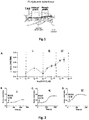
Figure 2 (A to D) are curves showing the complex dose-dependent effects of IR3535® on DUM neuron intracellular calcium concentration; -
Figure 3A and Figure 3B are comparative histograms illustrating the effects of IR3535® used at 10-8 M (A) and 10-5 M (B) on the intracellular calcium concentration in the presence of different pharmacological agents; -
Figure 4A illustrates the effect of IR3535® used at 10-8 M on the DUM neuron spontaneous electrical activity andFigure 4B shows comparative histogram of the effects of IR3535® used at 10-8 M on action potential discharge frequency; -
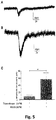
Figure 5 illustrates the effect of thiamethoxam-induced inward currents (10-6 M), recorded under voltage-clamp condition, before (A) and after pretreatment with IR3535® used at 10-8 M (B), (C) illustrates comparative histogram of the effect of IR3535® (10-8 M) on the thiamethoxam-induced inward current amplitude. - Experiments were carried out on cockroach Dorsal Unpaired Median (DUM) neurons. Cockroach neuronal preparations are commonly used as biomedical models for vertebrates and invertebrates and DUM neurons are, furthermore, electrophysiologically and pharmacologically well characterized since most of the biophysical and pharmacological properties of ionic currents and receptors underlying and modulating their spontaneous action potentials have been established by using the well -known patch-clamp technique .
- Adult male cockroaches, Periplaneta americana (see
figure 1 ), are taken from our laboratory colonies, which are maintained under standard conditions (29°C, photoperiod of 12h light/12h dark). Animals are immobilized dorsal-side up on a dissection dish. The dorsal cuticle, gut and some dorso-longitudinal muscles are removed to allow access to the ventral nerve cord. The abdominal nerve cord and its terminal abdominal ganglion (TAG), carefully dissected under a binocular microscope, are placed in normal saline. Animal care and handling procedures are in accordance with French institutional and national health guidelines. - The ventral nerve cord and its terminal abdominal ganglion (TAG) are carefully dissected under a binocular microscope and placed in normal cockroach saline containing (in mM) 200 NaCl, 3.1 KCI, 5 CaCI2, 4 MgCI2, 50 sucrose, and 10 N-2-hydroxymethylpiperazine-N9-2-ethanesulfonic acid (HEPES); pH was adjusted to 7.4 with NaOH. Isolation of adult DUM neuron cell bodies are performed under sterile conditions using enzymatic digestion and mechanical dissociation of the median parts of the TAG as previously described in Lapied et al. (Ionic species involved in the electrical activity of single adult aminergic neurones isolated from sixth abdominal ganglion of cockroach Periplaneta americana J Exp Biol 144:535-49, 1989). The isolated neuron cell bodies are used for recordings 24h after dissociation.
- Falcon 1006 Petri dishes with glass coverslips are coated with poly-D-lysine hydrobromide (mol. wt. 70,000-150,000), and isolated DUM neuron cell bodies are plated. External recording solution contains (in mM): 200 NaCl; 3.1 KCl; 5 CaCl2; 4 MgCl2, and 10 HEPES buffer; pH is adjusted to 7.4 with NaOH. The cells are incubated in the dark with 10µM Fura-2 pentakis (acetoxy-methyl) ester for 60min at 37°C. After loading, cells are washed three times in saline. The glass coverslips are then mounted in a recording chamber (Warner Instruments, Hamden, CT) connected to a gravity perfusion system allowing drug application. Imaging experiments are performed with an inverted microscope (Nikon) equipped with epifluorescence. Excitation light is provided by a 75-W integral xenon lamp. Excitation wavelengths (340nm and 380nm) are applied using a computer driven a monochromator (Sutter Instruments Company, Lambda DG4) with a digital charge-coupled device (CCD) camera (Hamamatsu Orca R2) and they are recorded in the computer with calcium imaging software (Imaging Workbench 6, Indec BioSystem). Exposure times at 340nm and 380nm are usually 150ms, and images are collected at various frequencies. Data are expressed as the ratio of emitted fluorescence (340nm/380nm). Different concentrations of the insect repellent IR3535® ranging from 10-9 M to 10-5 M have been tested.
- Electrical activity and neonicotinoid-induced inward currents are recorded using the patch clamp technique in the whole-cell recording configuration under current-clamp and voltage-clamp mode, respectively. Patch-clamp electrodes are pulled from borosilicate glass capillary tubes (GC150T-10) using a P-97 model puller. Patch pipettes have resistances ranging from 1 to 1.2 MΩ when filled with internal pipette solution. The liquid junction potential between extracellular and intracellular solutions is always corrected before the formation of a giga Ohm seal (>3GΩ). Signals are recorded with an Axopatch 200A amplifier. Ionic currents induced by thiamethoxam are displayed on a computer with software control pClamp connected to a digidata acquisition system (digidata 1320A). Under voltage-clamp conditions, DUM neuron somata are voltage-clamped at a steady state holding potential of -50mV to measure the effects of thiamethoxam applied alone and after pretreatment with IR3535® (10-8 M). Experiments are carried out at room temperature.
- Using calcium imaging, it has been possible to study the effect of the insect repellent IR3535®, on the intracellular calcium concentration in DUM neurons. Bath application of IR3535® induces a complex multiphasic dose-dependent effect on the intracellular calcium concentration (see
Fig. 2 ). -
Figure 2 A shows the dose-response curve illustrating changes in intracellular calcium concentration depending on the different concentrations of IR3535® tested. Intracellular calcium concentration variations (presented as ratios 340/380) have been calculated from mean values obtained for each IR3535® concentration tested (n=5).Figure 2B to D represent spectrum of the intracellular calcium concentration rises induced by IR3535® tested at 10-8 M, 3.10-6 M and 10-5 M, respectively. - In the zone I (
Fig. 2A and 2B ), it is possible to observe a transient increase of intracellular calcium concentration between 3.10-9 M and 3.10-8 M, reaching a maximum for IR3535® used at 10-8 M, i.e. at a very low concentration. - Zone II corresponds to an additional elevation of intracellular calcium concentration obtained for IR3535® used in the concentration range from 10-7 M to 3.10-6 M (
Fig. 2A and 2C ). Finally, zone III corresponds to the maximum effect produced by IR3535® used at very high concentration (3.10-5 M) (Fig. 2A and 2D ). These results demonstrate that the insect repellent IR3535® exerts its effect through an elevation of intracellular calcium concentration in insect neurons. - To determine the origin of the intracellular calcium concentration rise (i.e., intracellular and/or extracellular origin), different specific blockers and/or antagonists of calcium channels and membrane receptors have been tested. Histograms of
Fig. 3 show the comparative effects of IR3535® used at 10-8 M (Fig. 3A ) and 10-5 M (Fig. 3B ) on the intracellular calcium concentration in the presence of different pharmacological agents such as caffeine, omegaconotoxin (ω-ctx) and pirenzepine (PZP). - From these results inventors have determined that the effect of IR3535® used at 10-8 M results from extracellular calcium through plasma membrane voltage-dependent calcium channels via M1/M3 mAChR sub-type modulation. For higher concentrations of IR3535®, both extracellular calcium and calcium released from internal stores are involved in the effects of the repellent in insect neurons.
- From the data presented just above, it appears that 10-8 M is the lower concentration of IR3535®, which produces a significant elevation of intracellular calcium concentration in DUM neurons. Consequently, the following experiments have been performed using 10-8 M IR3535®. Using the patch clamp technique in the whole-cell recording configuration, it has been possible to show that IR3535® (10-8 M) induces a significant membrane depolarization associated with an increase of the spontaneous action potential discharge frequency (
Fig. 4A ). The correspondingfigure 4B illustrates comparative histogram of the effect of IR3535® (10-8 M) on the spontaneous action potential discharge frequency. - According to the results presented above, using different pharmacological agents, calcium imaging and electrophysiological technique, and based on previous results obtained on the same neuronal preparation, it is possible to summarize the effect of IR3535® used at very low concentration on the intracellular calcium concentration in DUM neurons. IR3535®, by acting on M1/M3 mAChR sub-types, inhibits background calcium-activated potassium channels resulting in the small depolarization observed. This membrane depolarization is sufficient to stimulate N-type high-voltage activated calcium channels involved in the calcium influx through the membrane.
- Application of the insect repellent DEET onto insect neurons produces a biphasic effect on the intracellular calcium concentration changes. In the low concentration range (from 10-9 M to 10-7 M), DEET induces an elevation of the intracellular calcium concentration reaching a maximum at 10-7 M DEET (ratio of emitted fluorescence (340nm/380nm) ranging from 0.4 to 0.6 with a maximum value of 0.7).
- For higher concentrations than 10-7 M, DEET produces an opposite effect (i.e., an important decrease of the intracellular calcium concentration).
- Therefore, preferred concentrations of DEET as synergist agent should be chosen between 3. 10-8 M and 3. 10-7 M where the ratio of emitted fluorescence (340nm/380nm) is above 0.6.
- The neonicotinoïd insecticide thiamethoxam has been tested alone and after pretreatment with IR3535® (10-8 M) on DUM neurons using the patch-clamp technique, under voltage clamp condition (
Fig. 5 ). - Application of thiamethoxam (10-6 M) alone induces an inward current with small amplitudes (see
Fig. 5A and 5C : recorded under voltage-clamp condition, at a holding potential of -50mV, means + S.E.M., **, p < 0,01; n= 3-4). - By contrast, after pretreatment of DUM neuron with the repellent IR3535® used at 10-8 M, an important increase of the thiamethoxam-induced inward current amplitude is observed. In this case, the mean current amplitude is about 6-fold more important than the current amplitude obtained with thiamethoxam applied alone (
Fig. 5B and 5C ). - In conclusion, the complementary approaches such as calcium imaging and electrophysiology reveal that the neonicotinoïd insecticide thiamethoxam acts like an agonist able to induce an inward current with a small amplitude. When DUM neurons are pretreated with low concentration of IR3535®, the inward current amplitude produces by thiamethoxam is more important. This confirms the role of IR3535® as synergistic agent, which can increase the effect of thiamethoxam via an increase of intracellular calcium concentration. These results confirm that combining the repellent IR3535® with the molecule thiamethoxam could be an interesting alternative to 1) circumvent resistance mechanisms developed by mosquitoes-borne diseases and 2) increase insecticide efficacy while reducing doses.
Claims (17)
- Insecticide composition wherein the active ingredient comprises the combination of- thiamethoxam as synthetic insecticidal molecule, and- 3-[N-Butyl-N-acetyl]-aminopropionic acid, ethyl ester as synergistic agent, which is present at a molar ratio of said synergistic agent to thiamethoxam comprised between 0.001 and 0.2 in the composition.
- Insecticide composition according to claim 1, wherein the molar ratio of said synergist agent to thiamethoxam in the composition is comprised between 0.005 and 0.1.
- Insecticide composition according to claim 1, wherein the molar ratio of said synergist agent to thiamethoxam in the composition is comprised between 0.01 and 0.1.
- Insecticide composition according to any claim 1 to 3, wherein thiamethoxam is present at a concentration comprised between 10-7 M and 3.10-6 M in the composition.
- Insecticide composition according to claim 4, wherein the synergistic agent is present at a concentration comprised between 3. 10-9 M and 3. 10-8 M in the composition.
- insecticide composition according to any of the preceding claims, wherein said composition is in a liquid form, the active ingredient being solubilized in an organic phase and/or encapsulated in nano- or micro-capsules.
- A non-therapeutic use of the insecticide composition according to any of the preceding claims, wherein said composition is sprayed or deposited on, or impregnates a support.
- A non-therapeutic use of the insecticide composition according to claim 7, wherein said composition is sprayed or deposited on, or impregnates net, fabrics, cloth or tent.
- A non-therapeutic use of the composition according to any of the claims 1 to 6, against insects which are harmful to human, to animals and/or to crops.
- A non-therapeutic use according to claim 9 against insects chosen from the group: diptera, dictyoptera, lepidoptera, orthoptera and hemiptera.
- A non-therapeutic use according to claim 9 or 10 against pyrethroid resistant mosquitoes.
- A non-therapeutic use according to any of claims 9 to 11 against Aedes aegypti or Anopheles gambiae.
- Use according to any of claims 9 to 12 in controlling mosquito-borne diseases in crops.
- Composition according to any of claims 1 to 6 for use against insects chosen from the group: diptera, dictyopteran, lepidoptera, orthoptera and hemiptera.
- Composition according the claim 14 for use against pyrethroid resistant mosquitoes.
- Composition according to any of claims 14 and 15 for use against Aedes aegypti or Anopheles gambiae.
- Composition according to any of claims 14 to 16 for use in controlling mosquito-borne diseases.
Priority Applications (7)
| Application Number | Priority Date | Filing Date | Title |
|---|---|---|---|
| EP15306929.9A EP3175714B1 (en) | 2015-12-04 | 2015-12-04 | Synegistic insecticidal composition comprising thiamethoxam and n-butyl-n-acetyl-3-ethylamine propionate |
| EP16805148.0A EP3383184A1 (en) | 2015-12-04 | 2016-12-02 | Insecticide composition including thiamethoxam and a synergistic agent |
| BR112018010932A BR112018010932A2 (en) | 2015-12-04 | 2016-12-02 | insecticidal composition including thiametoxam and a synergist |
| CN201680066865.5A CN108366569A (en) | 2015-12-04 | 2016-12-02 | Include the insecticides of Diacloden and synergist |
| PCT/EP2016/079608 WO2017093494A1 (en) | 2015-12-04 | 2016-12-02 | Insecticide composition including thiamethoxam and a synergistic agent |
| JP2018529163A JP6800228B2 (en) | 2015-12-04 | 2016-12-02 | Insecticide composition containing thiamethoxam and synergists |
| US15/780,881 US10390532B2 (en) | 2015-12-04 | 2016-12-02 | Insecticide composition including thiamethoxam and a synergistic agent |
Applications Claiming Priority (1)
| Application Number | Priority Date | Filing Date | Title |
|---|---|---|---|
| EP15306929.9A EP3175714B1 (en) | 2015-12-04 | 2015-12-04 | Synegistic insecticidal composition comprising thiamethoxam and n-butyl-n-acetyl-3-ethylamine propionate |
Publications (2)
| Publication Number | Publication Date |
|---|---|
| EP3175714A1 EP3175714A1 (en) | 2017-06-07 |
| EP3175714B1 true EP3175714B1 (en) | 2019-01-16 |
Family
ID=54783549
Family Applications (2)
| Application Number | Title | Priority Date | Filing Date |
|---|---|---|---|
| EP15306929.9A Not-in-force EP3175714B1 (en) | 2015-12-04 | 2015-12-04 | Synegistic insecticidal composition comprising thiamethoxam and n-butyl-n-acetyl-3-ethylamine propionate |
| EP16805148.0A Withdrawn EP3383184A1 (en) | 2015-12-04 | 2016-12-02 | Insecticide composition including thiamethoxam and a synergistic agent |
Family Applications After (1)
| Application Number | Title | Priority Date | Filing Date |
|---|---|---|---|
| EP16805148.0A Withdrawn EP3383184A1 (en) | 2015-12-04 | 2016-12-02 | Insecticide composition including thiamethoxam and a synergistic agent |
Country Status (6)
| Country | Link |
|---|---|
| US (1) | US10390532B2 (en) |
| EP (2) | EP3175714B1 (en) |
| JP (1) | JP6800228B2 (en) |
| CN (1) | CN108366569A (en) |
| BR (1) | BR112018010932A2 (en) |
| WO (1) | WO2017093494A1 (en) |
Family Cites Families (12)
| Publication number | Priority date | Publication date | Assignee | Title |
|---|---|---|---|---|
| DE10301906A1 (en) | 2003-01-17 | 2004-07-29 | Bayer Healthcare Ag | Arthropod repellent, especially useful for repelling ticks, fleas, mosquitoes and fleas from humans or animals, contains combination of pyrethroid or pyrethrin and nicotinic agonist |
| DE10320505A1 (en) * | 2003-05-08 | 2004-11-25 | Bayer Healthcare Ag | Means for controlling parasites on animals |
| DE10347440A1 (en) | 2003-10-13 | 2005-05-04 | Bayer Cropscience Ag | Synergistic insecticidal mixtures |
| US20050132500A1 (en) * | 2003-12-22 | 2005-06-23 | Basf Aktiengesellschaft | Composition for impregnation of fibers, fabrics and nettings imparting a protective activity against pests |
| FR2867946B1 (en) * | 2004-03-25 | 2007-07-20 | Inst Rech Pour Le Dev I R D Et | NOVEL INSECTICIDE COMPOSITION AND USE, IN PARTICULAR FOR THE IMPREGNATION OF MOSQUITO NETS |
| ITMI20050730A1 (en) * | 2005-04-22 | 2006-10-23 | Chemia S P A | PREPARATION OF COMPOSITIONS WITH HIGH ACTIVITY INSECTICIDE |
| CA2682179C (en) * | 2007-03-28 | 2013-05-14 | Contech Enterprises Inc. | Allyl sulfide compounds, and compositions and methods using said compounds for repelling blood-feeding arthropods |
| WO2009018188A2 (en) * | 2007-07-30 | 2009-02-05 | E. I. Du Pont De Nemours And Company | Flea control method |
| JP2010195766A (en) * | 2009-01-29 | 2010-09-09 | Sds Biotech Corp | Method for controlling pyrethroid-resistant insect pest |
| AU2013237746B2 (en) * | 2009-02-20 | 2015-05-14 | Deepak Pranjivandas Shah | A novel water dispersible granular composition |
| CN103651427B (en) * | 2012-09-21 | 2015-02-11 | 上海韬鸿化工科技有限公司 | Mosquito repellent cream, mosquito repellent mat and preparation method thereof |
| CN105191931B (en) * | 2015-08-18 | 2018-01-16 | 诺农(北京)国际生物技术有限公司 | A kind of composition of agricultural synergist and anabasine insecticide |
-
2015
- 2015-12-04 EP EP15306929.9A patent/EP3175714B1/en not_active Not-in-force
-
2016
- 2016-12-02 BR BR112018010932A patent/BR112018010932A2/en not_active Application Discontinuation
- 2016-12-02 JP JP2018529163A patent/JP6800228B2/en not_active Expired - Fee Related
- 2016-12-02 EP EP16805148.0A patent/EP3383184A1/en not_active Withdrawn
- 2016-12-02 WO PCT/EP2016/079608 patent/WO2017093494A1/en not_active Ceased
- 2016-12-02 CN CN201680066865.5A patent/CN108366569A/en active Pending
- 2016-12-02 US US15/780,881 patent/US10390532B2/en not_active Expired - Fee Related
Non-Patent Citations (1)
| Title |
|---|
| "Regulation (EU) n° 528/2012 concerning the making available on the market and use of biocidal products. Ethyl butylacetylaminopropionate-product type 19 (insect repellent)", 13 March 2014 * |
Also Published As
| Publication number | Publication date |
|---|---|
| EP3383184A1 (en) | 2018-10-10 |
| US20180271101A1 (en) | 2018-09-27 |
| EP3175714A1 (en) | 2017-06-07 |
| CN108366569A (en) | 2018-08-03 |
| BR112018010932A2 (en) | 2018-12-04 |
| WO2017093494A1 (en) | 2017-06-08 |
| JP6800228B2 (en) | 2020-12-16 |
| JP2019501149A (en) | 2019-01-17 |
| US10390532B2 (en) | 2019-08-27 |
Similar Documents
| Publication | Publication Date | Title |
|---|---|---|
| Blenau et al. | Plant essential oils and formamidines as insecticides/acaricides: what are the molecular targets? | |
| Zhu et al. | Nepetalactones from essential oil of Nepeta cataria represent a stable fly feeding and oviposition repellent | |
| Xu et al. | Methyl eugenol bioactivities as a new potential botanical insecticide against major insect pests and their natural enemies on rice (Oriza sativa) | |
| BRPI0910269B1 (en) | COMPOSITIONS AND METHODS OF PEST CONTROL | |
| Navarro-Roldán et al. | Sublethal effects of neonicotinoid insecticide on calling behavior and pheromone production of tortricid moths | |
| US9951110B2 (en) | Neuropeptides useful as insecticides | |
| WO2009152261A1 (en) | Methods of insect control by inhibiting or modulating the trpa1 ion gated channel or family members | |
| Sukumaran et al. | Knockdown and repellent effect of permethrin-impregnated army uniform cloth against Aedes aegypti after different cycles of washings | |
| ES2877680T3 (en) | Mixes of sabadilla alkaloids and azadirachtin and their uses | |
| Gugliuzzo et al. | Lethal and sublethal effects of synthetic and bioinsecticides toward the invasive ambrosia beetle Xylosandrus compactus | |
| Gautier et al. | Calcium-activated potassium channels in insect pacemaker neurons as unexpected target site for the novel fumigant dimethyl disulfide | |
| US20200170253A1 (en) | Insecticide composition including a synergistic agent | |
| Yang et al. | Bioactivities and modes of action of VUAA1 | |
| US10492491B2 (en) | Insecticide composition including a synergistic agent | |
| BR112018077087B1 (en) | MOSQUITO, COCKROACH, BED BUG AND HOUSEFLY CONTROL METHODS | |
| Sariosseiri et al. | In vitro acaricidal effect of Melia azedarach ripe fruit extract against Dermanyssus gallinae (Acari: Dermanyssidae) | |
| US10390532B2 (en) | Insecticide composition including thiamethoxam and a synergistic agent | |
| US11375708B2 (en) | Methods and apparatus for management of mosquito populations with habitat sharing heterospecific insects carrying insect growth regulators | |
| Vetter et al. | Efficacy of several pesticide products on brown widow spider (Araneae: Theridiidae) egg sacs and their penetration through the egg sac silk | |
| Brugman et al. | 13. Semiochemical tools for a new generation of livestock pest control | |
| Katali et al. | Structure-activity studies on the hypertrehalosemic hormone II of the stick insect Carausius morosus (Phasmatodea): carbohydrate-mobilization and cardio-stimulatory activities | |
| White | The Deployed Warfighter Protection Research Program: finding new methods to vanquish old foes | |
| Garud et al. | Annona squamosa: A review on its larvicidal oviposition deterrent and insect repellent potency | |
| Park et al. | Diversity of spider communities in a pesticide-treated pine (Pinus densiflora) forest | |
| Mao et al. | Screening and structure–activity relationship analysis of benzoate repellents against Solenopsis invicta targeting odorant‐binding protein GP‐9 |
Legal Events
| Date | Code | Title | Description |
|---|---|---|---|
| AK | Designated contracting states |
Kind code of ref document: A1 Designated state(s): AL AT BE BG CH CY CZ DE DK EE ES FI FR GB GR HR HU IE IS IT LI LT LU LV MC MK MT NL NO PL PT RO RS SE SI SK SM TR |
|
| AX | Request for extension of the european patent |
Extension state: BA ME |
|
| PUAI | Public reference made under article 153(3) epc to a published international application that has entered the european phase |
Free format text: ORIGINAL CODE: 0009012 |
|
| STAA | Information on the status of an ep patent application or granted ep patent |
Free format text: STATUS: THE APPLICATION HAS BEEN PUBLISHED |
|
| STAA | Information on the status of an ep patent application or granted ep patent |
Free format text: STATUS: REQUEST FOR EXAMINATION WAS MADE |
|
| 17P | Request for examination filed |
Effective date: 20170920 |
|
| RBV | Designated contracting states (corrected) |
Designated state(s): AL AT BE BG CH CY CZ DE DK EE ES FI FR GB GR HR HU IE IS IT LI LT LU LV MC MK MT NL NO PL PT RO RS SE SI SK SM TR |
|
| STAA | Information on the status of an ep patent application or granted ep patent |
Free format text: STATUS: EXAMINATION IS IN PROGRESS |
|
| 17Q | First examination report despatched |
Effective date: 20180116 |
|
| GRAP | Despatch of communication of intention to grant a patent |
Free format text: ORIGINAL CODE: EPIDOSNIGR1 |
|
| STAA | Information on the status of an ep patent application or granted ep patent |
Free format text: STATUS: GRANT OF PATENT IS INTENDED |
|
| INTG | Intention to grant announced |
Effective date: 20180814 |
|
| GRAS | Grant fee paid |
Free format text: ORIGINAL CODE: EPIDOSNIGR3 |
|
| GRAA | (expected) grant |
Free format text: ORIGINAL CODE: 0009210 |
|
| STAA | Information on the status of an ep patent application or granted ep patent |
Free format text: STATUS: THE PATENT HAS BEEN GRANTED |
|
| AK | Designated contracting states |
Kind code of ref document: B1 Designated state(s): AL AT BE BG CH CY CZ DE DK EE ES FI FR GB GR HR HU IE IS IT LI LT LU LV MC MK MT NL NO PL PT RO RS SE SI SK SM TR |
|
| REG | Reference to a national code |
Ref country code: GB Ref legal event code: FG4D |
|
| REG | Reference to a national code |
Ref country code: CH Ref legal event code: EP |
|
| REG | Reference to a national code |
Ref country code: IE Ref legal event code: FG4D |
|
| REG | Reference to a national code |
Ref country code: DE Ref legal event code: R096 Ref document number: 602015023561 Country of ref document: DE |
|
| REG | Reference to a national code |
Ref country code: AT Ref legal event code: REF Ref document number: 1089005 Country of ref document: AT Kind code of ref document: T Effective date: 20190215 |
|
| REG | Reference to a national code |
Ref country code: NL Ref legal event code: MP Effective date: 20190116 |
|
| REG | Reference to a national code |
Ref country code: LT Ref legal event code: MG4D |
|
| PG25 | Lapsed in a contracting state [announced via postgrant information from national office to epo] |
Ref country code: NL Free format text: LAPSE BECAUSE OF FAILURE TO SUBMIT A TRANSLATION OF THE DESCRIPTION OR TO PAY THE FEE WITHIN THE PRESCRIBED TIME-LIMIT Effective date: 20190116 |
|
| REG | Reference to a national code |
Ref country code: AT Ref legal event code: MK05 Ref document number: 1089005 Country of ref document: AT Kind code of ref document: T Effective date: 20190116 |
|
| PG25 | Lapsed in a contracting state [announced via postgrant information from national office to epo] |
Ref country code: NO Free format text: LAPSE BECAUSE OF FAILURE TO SUBMIT A TRANSLATION OF THE DESCRIPTION OR TO PAY THE FEE WITHIN THE PRESCRIBED TIME-LIMIT Effective date: 20190416 Ref country code: FI Free format text: LAPSE BECAUSE OF FAILURE TO SUBMIT A TRANSLATION OF THE DESCRIPTION OR TO PAY THE FEE WITHIN THE PRESCRIBED TIME-LIMIT Effective date: 20190116 Ref country code: SE Free format text: LAPSE BECAUSE OF FAILURE TO SUBMIT A TRANSLATION OF THE DESCRIPTION OR TO PAY THE FEE WITHIN THE PRESCRIBED TIME-LIMIT Effective date: 20190116 Ref country code: PT Free format text: LAPSE BECAUSE OF FAILURE TO SUBMIT A TRANSLATION OF THE DESCRIPTION OR TO PAY THE FEE WITHIN THE PRESCRIBED TIME-LIMIT Effective date: 20190516 Ref country code: ES Free format text: LAPSE BECAUSE OF FAILURE TO SUBMIT A TRANSLATION OF THE DESCRIPTION OR TO PAY THE FEE WITHIN THE PRESCRIBED TIME-LIMIT Effective date: 20190116 Ref country code: LT Free format text: LAPSE BECAUSE OF FAILURE TO SUBMIT A TRANSLATION OF THE DESCRIPTION OR TO PAY THE FEE WITHIN THE PRESCRIBED TIME-LIMIT Effective date: 20190116 Ref country code: PL Free format text: LAPSE BECAUSE OF FAILURE TO SUBMIT A TRANSLATION OF THE DESCRIPTION OR TO PAY THE FEE WITHIN THE PRESCRIBED TIME-LIMIT Effective date: 20190116 |
|
| PG25 | Lapsed in a contracting state [announced via postgrant information from national office to epo] |
Ref country code: LV Free format text: LAPSE BECAUSE OF FAILURE TO SUBMIT A TRANSLATION OF THE DESCRIPTION OR TO PAY THE FEE WITHIN THE PRESCRIBED TIME-LIMIT Effective date: 20190116 Ref country code: RS Free format text: LAPSE BECAUSE OF FAILURE TO SUBMIT A TRANSLATION OF THE DESCRIPTION OR TO PAY THE FEE WITHIN THE PRESCRIBED TIME-LIMIT Effective date: 20190116 Ref country code: HR Free format text: LAPSE BECAUSE OF FAILURE TO SUBMIT A TRANSLATION OF THE DESCRIPTION OR TO PAY THE FEE WITHIN THE PRESCRIBED TIME-LIMIT Effective date: 20190116 Ref country code: GR Free format text: LAPSE BECAUSE OF FAILURE TO SUBMIT A TRANSLATION OF THE DESCRIPTION OR TO PAY THE FEE WITHIN THE PRESCRIBED TIME-LIMIT Effective date: 20190417 Ref country code: IS Free format text: LAPSE BECAUSE OF FAILURE TO SUBMIT A TRANSLATION OF THE DESCRIPTION OR TO PAY THE FEE WITHIN THE PRESCRIBED TIME-LIMIT Effective date: 20190516 Ref country code: BG Free format text: LAPSE BECAUSE OF FAILURE TO SUBMIT A TRANSLATION OF THE DESCRIPTION OR TO PAY THE FEE WITHIN THE PRESCRIBED TIME-LIMIT Effective date: 20190416 |
|
| REG | Reference to a national code |
Ref country code: DE Ref legal event code: R097 Ref document number: 602015023561 Country of ref document: DE |
|
| PG25 | Lapsed in a contracting state [announced via postgrant information from national office to epo] |
Ref country code: DK Free format text: LAPSE BECAUSE OF FAILURE TO SUBMIT A TRANSLATION OF THE DESCRIPTION OR TO PAY THE FEE WITHIN THE PRESCRIBED TIME-LIMIT Effective date: 20190116 Ref country code: AT Free format text: LAPSE BECAUSE OF FAILURE TO SUBMIT A TRANSLATION OF THE DESCRIPTION OR TO PAY THE FEE WITHIN THE PRESCRIBED TIME-LIMIT Effective date: 20190116 Ref country code: EE Free format text: LAPSE BECAUSE OF FAILURE TO SUBMIT A TRANSLATION OF THE DESCRIPTION OR TO PAY THE FEE WITHIN THE PRESCRIBED TIME-LIMIT Effective date: 20190116 Ref country code: RO Free format text: LAPSE BECAUSE OF FAILURE TO SUBMIT A TRANSLATION OF THE DESCRIPTION OR TO PAY THE FEE WITHIN THE PRESCRIBED TIME-LIMIT Effective date: 20190116 Ref country code: CZ Free format text: LAPSE BECAUSE OF FAILURE TO SUBMIT A TRANSLATION OF THE DESCRIPTION OR TO PAY THE FEE WITHIN THE PRESCRIBED TIME-LIMIT Effective date: 20190116 Ref country code: IT Free format text: LAPSE BECAUSE OF FAILURE TO SUBMIT A TRANSLATION OF THE DESCRIPTION OR TO PAY THE FEE WITHIN THE PRESCRIBED TIME-LIMIT Effective date: 20190116 Ref country code: SK Free format text: LAPSE BECAUSE OF FAILURE TO SUBMIT A TRANSLATION OF THE DESCRIPTION OR TO PAY THE FEE WITHIN THE PRESCRIBED TIME-LIMIT Effective date: 20190116 Ref country code: AL Free format text: LAPSE BECAUSE OF FAILURE TO SUBMIT A TRANSLATION OF THE DESCRIPTION OR TO PAY THE FEE WITHIN THE PRESCRIBED TIME-LIMIT Effective date: 20190116 |
|
| PLBE | No opposition filed within time limit |
Free format text: ORIGINAL CODE: 0009261 |
|
| STAA | Information on the status of an ep patent application or granted ep patent |
Free format text: STATUS: NO OPPOSITION FILED WITHIN TIME LIMIT |
|
| PG25 | Lapsed in a contracting state [announced via postgrant information from national office to epo] |
Ref country code: SM Free format text: LAPSE BECAUSE OF FAILURE TO SUBMIT A TRANSLATION OF THE DESCRIPTION OR TO PAY THE FEE WITHIN THE PRESCRIBED TIME-LIMIT Effective date: 20190116 |
|
| 26N | No opposition filed |
Effective date: 20191017 |
|
| PG25 | Lapsed in a contracting state [announced via postgrant information from national office to epo] |
Ref country code: SI Free format text: LAPSE BECAUSE OF FAILURE TO SUBMIT A TRANSLATION OF THE DESCRIPTION OR TO PAY THE FEE WITHIN THE PRESCRIBED TIME-LIMIT Effective date: 20190116 |
|
| PG25 | Lapsed in a contracting state [announced via postgrant information from national office to epo] |
Ref country code: TR Free format text: LAPSE BECAUSE OF FAILURE TO SUBMIT A TRANSLATION OF THE DESCRIPTION OR TO PAY THE FEE WITHIN THE PRESCRIBED TIME-LIMIT Effective date: 20190116 |
|
| REG | Reference to a national code |
Ref country code: BE Ref legal event code: MM Effective date: 20191231 |
|
| PG25 | Lapsed in a contracting state [announced via postgrant information from national office to epo] |
Ref country code: MC Free format text: LAPSE BECAUSE OF FAILURE TO SUBMIT A TRANSLATION OF THE DESCRIPTION OR TO PAY THE FEE WITHIN THE PRESCRIBED TIME-LIMIT Effective date: 20190116 |
|
| PG25 | Lapsed in a contracting state [announced via postgrant information from national office to epo] |
Ref country code: LU Free format text: LAPSE BECAUSE OF NON-PAYMENT OF DUE FEES Effective date: 20191204 Ref country code: IE Free format text: LAPSE BECAUSE OF NON-PAYMENT OF DUE FEES Effective date: 20191204 |
|
| PG25 | Lapsed in a contracting state [announced via postgrant information from national office to epo] |
Ref country code: BE Free format text: LAPSE BECAUSE OF NON-PAYMENT OF DUE FEES Effective date: 20191231 |
|
| PGFP | Annual fee paid to national office [announced via postgrant information from national office to epo] |
Ref country code: DE Payment date: 20201209 Year of fee payment: 6 Ref country code: CH Payment date: 20201216 Year of fee payment: 6 Ref country code: FR Payment date: 20201228 Year of fee payment: 6 Ref country code: GB Payment date: 20201217 Year of fee payment: 6 |
|
| PG25 | Lapsed in a contracting state [announced via postgrant information from national office to epo] |
Ref country code: CY Free format text: LAPSE BECAUSE OF FAILURE TO SUBMIT A TRANSLATION OF THE DESCRIPTION OR TO PAY THE FEE WITHIN THE PRESCRIBED TIME-LIMIT Effective date: 20190116 |
|
| PG25 | Lapsed in a contracting state [announced via postgrant information from national office to epo] |
Ref country code: HU Free format text: LAPSE BECAUSE OF FAILURE TO SUBMIT A TRANSLATION OF THE DESCRIPTION OR TO PAY THE FEE WITHIN THE PRESCRIBED TIME-LIMIT; INVALID AB INITIO Effective date: 20151204 Ref country code: MT Free format text: LAPSE BECAUSE OF FAILURE TO SUBMIT A TRANSLATION OF THE DESCRIPTION OR TO PAY THE FEE WITHIN THE PRESCRIBED TIME-LIMIT Effective date: 20190116 |
|
| PG25 | Lapsed in a contracting state [announced via postgrant information from national office to epo] |
Ref country code: MK Free format text: LAPSE BECAUSE OF FAILURE TO SUBMIT A TRANSLATION OF THE DESCRIPTION OR TO PAY THE FEE WITHIN THE PRESCRIBED TIME-LIMIT Effective date: 20190116 |
|
| REG | Reference to a national code |
Ref country code: DE Ref legal event code: R119 Ref document number: 602015023561 Country of ref document: DE |
|
| REG | Reference to a national code |
Ref country code: CH Ref legal event code: PL |
|
| GBPC | Gb: european patent ceased through non-payment of renewal fee |
Effective date: 20211204 |
|
| PG25 | Lapsed in a contracting state [announced via postgrant information from national office to epo] |
Ref country code: GB Free format text: LAPSE BECAUSE OF NON-PAYMENT OF DUE FEES Effective date: 20211204 Ref country code: DE Free format text: LAPSE BECAUSE OF NON-PAYMENT OF DUE FEES Effective date: 20220701 |
|
| PG25 | Lapsed in a contracting state [announced via postgrant information from national office to epo] |
Ref country code: FR Free format text: LAPSE BECAUSE OF NON-PAYMENT OF DUE FEES Effective date: 20211231 |
|
| PG25 | Lapsed in a contracting state [announced via postgrant information from national office to epo] |
Ref country code: LI Free format text: LAPSE BECAUSE OF NON-PAYMENT OF DUE FEES Effective date: 20211231 Ref country code: CH Free format text: LAPSE BECAUSE OF NON-PAYMENT OF DUE FEES Effective date: 20211231 |