EP3174267B1 - Interaktionsmuster für eine mobiltelekommunikationsvorrichtung - Google Patents
Interaktionsmuster für eine mobiltelekommunikationsvorrichtung Download PDFInfo
- Publication number
- EP3174267B1 EP3174267B1 EP15197016.7A EP15197016A EP3174267B1 EP 3174267 B1 EP3174267 B1 EP 3174267B1 EP 15197016 A EP15197016 A EP 15197016A EP 3174267 B1 EP3174267 B1 EP 3174267B1
- Authority
- EP
- European Patent Office
- Prior art keywords
- data
- data fields
- metadata
- fields
- backend server
- Prior art date
- Legal status (The legal status is an assumption and is not a legal conclusion. Google has not performed a legal analysis and makes no representation as to the accuracy of the status listed.)
- Active
Links
Images



Classifications
-
- H—ELECTRICITY
- H04—ELECTRIC COMMUNICATION TECHNIQUE
- H04L—TRANSMISSION OF DIGITAL INFORMATION, e.g. TELEGRAPHIC COMMUNICATION
- H04L67/00—Network arrangements or protocols for supporting network services or applications
- H04L67/01—Protocols
- H04L67/04—Protocols specially adapted for terminals or networks with limited capabilities; specially adapted for terminal portability
-
- G—PHYSICS
- G06—COMPUTING OR CALCULATING; COUNTING
- G06F—ELECTRIC DIGITAL DATA PROCESSING
- G06F9/00—Arrangements for program control, e.g. control units
- G06F9/06—Arrangements for program control, e.g. control units using stored programs, i.e. using an internal store of processing equipment to receive or retain programs
- G06F9/44—Arrangements for executing specific programs
- G06F9/451—Execution arrangements for user interfaces
- G06F9/452—Remote windowing, e.g. X-Window System, desktop virtualisation
-
- G—PHYSICS
- G06—COMPUTING OR CALCULATING; COUNTING
- G06F—ELECTRIC DIGITAL DATA PROCESSING
- G06F9/00—Arrangements for program control, e.g. control units
- G06F9/06—Arrangements for program control, e.g. control units using stored programs, i.e. using an internal store of processing equipment to receive or retain programs
- G06F9/46—Multiprogramming arrangements
- G06F9/54—Interprogram communication
-
- G—PHYSICS
- G06—COMPUTING OR CALCULATING; COUNTING
- G06F—ELECTRIC DIGITAL DATA PROCESSING
- G06F9/00—Arrangements for program control, e.g. control units
- G06F9/06—Arrangements for program control, e.g. control units using stored programs, i.e. using an internal store of processing equipment to receive or retain programs
- G06F9/46—Multiprogramming arrangements
- G06F9/54—Interprogram communication
- G06F9/547—Remote procedure calls [RPC]; Web services
-
- H—ELECTRICITY
- H04—ELECTRIC COMMUNICATION TECHNIQUE
- H04L—TRANSMISSION OF DIGITAL INFORMATION, e.g. TELEGRAPHIC COMMUNICATION
- H04L67/00—Network arrangements or protocols for supporting network services or applications
- H04L67/01—Protocols
- H04L67/02—Protocols based on web technology, e.g. hypertext transfer protocol [HTTP]
-
- H—ELECTRICITY
- H04—ELECTRIC COMMUNICATION TECHNIQUE
- H04L—TRANSMISSION OF DIGITAL INFORMATION, e.g. TELEGRAPHIC COMMUNICATION
- H04L67/00—Network arrangements or protocols for supporting network services or applications
- H04L67/50—Network services
- H04L67/60—Scheduling or organising the servicing of application requests, e.g. requests for application data transmissions using the analysis and optimisation of the required network resources
-
- G—PHYSICS
- G06—COMPUTING OR CALCULATING; COUNTING
- G06F—ELECTRIC DIGITAL DATA PROCESSING
- G06F2209/00—Indexing scheme relating to G06F9/00
- G06F2209/54—Indexing scheme relating to G06F9/54
- G06F2209/541—Client-server
Definitions
- the present invention relates to a telecommunication method for operating a mobile telecommunication device.
- the present invention further relates to a mobile telecommunication device and a telecommunication system for performing the respective method.
- a mobile telecommunication device like e.g. a smartphone, may be used for inputting and displaying data, while calculations necessary for processing the inputted data and generating data to be displayed are performed on a backend server.
- a message exchange pattern based on a unidirectional request-response-protocol may be used.
- the smartphone requests processed data from the backend server, the backend server responses by transmitting data according to the request.
- the smartphone has no insight into this data processing.
- the smartphone may request all possible results, e.g. the entire data structure provided by the backend server. This may lead to a transmission of large amounts of data resulting in a considerable latency of communication as well as high power consumption by the smartphone.
- US 8,726,230 B1 describes a method performed by one or more processing devices including receiving a request to generate a computer program; generating, in response to receiving the request, a first user interface that when rendered on a display device renders: one or more first visual representations of one or more first fields of the first resource; and one or more second visual representations of one or more second fields of the second resource; receiving, through the first user interface, a selection of: at least one of the one or more first visual representations; and at least one of the one or more second visual representations; receiving, through a seconduser interface, data specifying the one or more operations; and updating, based on the received data, the computer program with one or more third instructions to perform the one or more operations.
- US 8,751,568 B1 describes a computer-implemented method for data loss prevention including 1) identifying a hypertext-transfer-protocol POST request from a client system to a hypertext-transfer-protocol server, 2) identifying metadata relating to the hypertext-transfer-protocol POST request differentiating at least one user-editable field within the hypertext-transfer-protocol POST request from at least one non-user-edited field within the hypertext-transfer-protocol POST request, 3) subjecting the user-editable field, based on the metadata, to a data-loss-prevention analysis and omitting the non-user-edited field from the data-loss-prevention analysis, and 4) performing a data-loss-prevention action based on the data-loss-prevention analysis.
- an efficient method for operating a mobile telecommunication device is required.
- a method for operating the mobile telecommunication enabling an efficient communication with a backend server using a unidirectional request-response-protocol.
- the present invention as described by the subject matter of the independent claims provides a telecommunication method for efficiently operating a mobile telecommunication device as well as a mobile telecommunication device and a telecommunication system for performing the respective method.
- Various advantageous embodiments are described in the independent claims.
- the invention relates to telecommunication method for operating a mobile telecommunication device being coupleable to a wireless digital telecommunication network.
- the mobile telecommunication device comprises a first processor, a display device, an input device, and a first memory.
- the first memory comprises a first application and a first data structure, wherein the first data structure comprises first data fields.
- the first application comprises first instructions that, when executed on the first processor, cause the display device to display a graphical user interface configured for displaying selectable first data fields, for displaying data input inputted into the selected data fields and for displaying data content stored in first data fields.
- Each first data field is assigned to a second data field of a second data structure comprised by a backend server.
- the mobile telecommunication device is connectable to the respective backend server via the wireless digital telecommunication network.
- the mobile telecommunication device and the backend server communicate with each other using a unidirectional request-response-protocol.
- the backend server comprises a second processor and a second memory.
- the second memory comprises a second application and the respective second data structure.
- the second application comprises second instructions that, when executed on the second processor, cause the backend server to execute a data processing logic on the second data structure upon receiving data input from the mobile telecommunication device.
- the data processing logic establishes a correlation between the data contents of two or more of the second data fields.
- the method performed by the mobile telecommunication device comprises:
- This method may allow for an efficient data exchange between the mobile telecommunication device and the backend server via the wireless telecommunication network using a unidirectional request-response-protocol.
- the mobile telecommunication device is used for inputting and displaying data.
- the mobile telecommunication device displays a graphical user interface with a plurality of first data fields of the first data structure.
- One or more of the displayed data fields may be selectable for inputting data, i.e. data values, into the same.
- One or more of the displayed data fields may not be selectable for inputting data, but may only display data content, i.e. data values, stored in the first data structure.
- the mobile telecommunication device enables a user to select one of the selectable first data fields and to input data into the selected data field.
- the backend server comprises a second data structure corresponding to the first data structure in that each of the first data fields is assigned to one of the second data fields. According to embodiments each of the second data fields is assigned to one of the first data fields. According to embodiments the number of data fields of the first data structure may equal the number of data fields of the second data structure.
- the data input received by the mobile telecommunication device is sent to the backend server by a first request.
- the backend server stores the received data input in a second data field which is assigned to the selected first data field to which the data input has been inputted, i.e. the selected second data field.
- the backend server processes the received data input by executing a data processing logic on the second data structure comprising the data input provided by the mobile telecommunication device.
- new data contents for one or more of the second data fields to which a first data field is assigned may be generated and stored therein and/or the data contents of one or more of the second data fields to which a first data field is assigned may be updated by the backend server.
- the data input received from the mobile telecommunication device may be amended by the processing logic. In some cases, neither new contents nor updates resulting in an amendment of any data contents may be generated.
- One or more of the selectable first data fields may be provided with first metadata indicating a dependency between the selected first data field and one or more dependent first data fields, i.e. data fields of the first data structure identified by the first metadata.
- the first metadata may e.g. be implemented in form of an extension of field control properties, like e.g. mandatory, visible, read-only, etc.
- the respective dependency results from a correlation established by the data processing logic of the backend server between the data content of a selected second data field of the second data fields which is assigned to the selected first data field and the data content of one or more dependent second data fields of the second data fields.
- the data input of the selected first data field is provided to the backend server by the first request and stored in the selected second data field as its data content.
- This data content of the selected second data field provided by the mobile telecommunication device is processed by the processing logic of the backend server.
- the application of the processing logic on the respective data content results in new data content for one or more of the second data fields and/or updated data contents of one or more of the second data fields, i.e. the respective one or more dependent second data fields.
- the first metadata indicates the first data fields to which the one or more second data fields are assigned, i.e. the second data fields which contents may be amended due to applying the processing logic on the data stored in the selected second data field.
- the mobile telecommunication device In order to display each first data field with an up-to-date data content, i.e. the data content of the second data field assigned to the respective first data field which results from applying the processing logic, the mobile telecommunication device has to request up-to-date data contents from the backend server.
- the amount of data transferred from the backend server in response is reduced to only those data contents which may have possibly been amendment and/or generated by the data processing logic.
- the amount of data request from the backend server which has not been generated and/or amended by applying the data processing logic may be minimized and/or even avoided entirely.
- the efficiency of the data communication may be increased by decreasing the amount of data transferred.
- a smaller amount of data to be transferred via the wireless mobile telecommunication device reduces the latency of the communication and reduces the power consumption of the mobile telecommunication device receiving the respective amount of data.
- the energy consumption of the mobile telecommunication device may be reduced by receiving less data to be stored and displayed, thus e.g. requiring updating only a portion the graphical user interface. This reduction of energy consumption may be particularly advantageous for a battery-powered mobile telecommunication device by extending the battery runtime.
- Embodiments may thus allow for an efficient communication between the mobile telecommunication device and the backend sever using a unidirectional interaction pattern, e.g. according to the HTTP client-server paradigm, wherein requests are sent by the mobile telecommunication device, i.e. client, while responses are sent by the backend server.
- a unidirectional interaction pattern e.g. according to the HTTP client-server paradigm, wherein requests are sent by the mobile telecommunication device, i.e. client, while responses are sent by the backend server.
- Embodiments further may allow reducing maintenance costs by executing the data processing logic on the backend server.
- the risk of getting into maintenance issues due to a distribution of the data processing logic on two different systems, like e.g. the mobile telecommunication device and the backend server, may be avoided.
- the graphical user interface has to send requests, e.g. HTTP/HTTPS requests, to the backend server for providing new data input to the backend server.
- New data input may lead to changes of additional data fields, when being processed by the data processing logic.
- the mobile telecommunication device has to explicitly request each of the respective updates from the backend server.
- changes on one set and/or field may trigger a complex processing logic resulting in further changes of additional data sets and/or data fields, e.g. on different hierarchical levels.
- Changing some data of a, e.g. hierarchically structured, first data structure on the graphical user interface of a mobile telecommunication device may require processing the changed data by the data processing logic on the backend server. This may results in changes, also referred to as side effects, to the set of data fields comprising the changed data and/or to depending data fields of second sets of data fields. These changes resulting from applying the processing logic need to be returned to the graphical user interface in order to display a valid, consistent, and/or enriched first data structure.
- the updates of the data contents stored in the second data structure of the backend server may be performed with a first request, e.g. an HTTP 'PUT' request.
- the server may response to this request with '200 ok' and/or an updated data input resulting from processing by the data processing logic the data input provided by the mobile telecommunication device. According to embodiments, the response may even be empty.
- a data input and/or data content of a set of data fields is sent to the backend server using a 'PUT' request, the data content of the entire set of data fields resulting from applying the data processing logic may be returned.
- For sending multiple HTTP 'PUT' requests requesting to store multiple data inputs e.g.
- the OData protocol may be used allowing for bundling these multiple 'PUT's in a common request message in form of a single HTTP POST '$batch' request.
- a 'GET' for each of the dependent second data fields and/or sets of data fields determined using the first metadata may be required.
- this may for example be realized with an appropriate '$expand' clause of the HTTP 'GET' request.
- the respective HTTP 'GET' itself may be added to the above-mentioned '$batch' request.
- a telecommunication device as used herein is a mobile device that is able to wireless transmit telephonic, electronic, digital, cellular, or radio communications to a network, which transfers the respective communications to another device.
- a mobile telecommunication device may for example without limitation be a mobile phone, in particular a smartphone, a tablet computer, a personal digital assistant (PDA), an eBook reader, a laptop, a smartwatch, a head device like smartglasses, or the like.
- the mobile telecommunication device may be battery-powered.
- a digital network may be any kind of digital information network.
- a network may be such that it can be implemented to work in a telecommunication system, i.e. as a telecommunication network for communication, i.e. information exchange, between two entities of the system.
- the telecommunication network may be compliant with any one of the following: TCP/IP, Ethernet, ATM, CDMA, GSM, HSCSD, GPRS, WCDMA, EDGE, Bluetooth, UMTS, HSPA+, Teldesic, Iridium, Inmarsat, WLAN, LTE, LTE-Advanced, WiMAX, WiMAX-Advanced, and i-mode.
- a telecommunication network as used herein is a collection of terminals, links, and processes which connect together so that communication can be made.
- the digital telecommunication network may be a wireless network, i.e. the mobile telecommunication device connects the respective telecommunication network wireless.
- the respective telecommunication network may e.g. be a mobile telecommunication network also known as a cellular telecommunication network distributed over land areas called cells, each served by at least one fixed-location transceiver, known as a cell site or base station.
- a mobile wireless cellular digital telecommunication network is a telecommunication network that provides services by using a large number of base stations, each covering only a limited area. It may allow a number of mobile telecommunication devices to communicate with each other and with other devices of a telecommunication system anywhere in the network.
- the cellular network may use the global system for mobile communication (GSM), code division multiple access (CDMA) or other technologies.
- GSM global system for mobile communication
- CDMA code division multiple access
- a communication link between the respective entities may be implemented as a point-to-point data communication channel over a data network between two computer application programs of the respective entities, such as the mobile telecommunication device and the backend server or the telecommunication control server and the second telecommunication devices.
- the communication link may be established for example using TCP/IP communication protocol and sockets.
- application programs may communicate with each other using for example remote procedure calls.
- Sending and receiving data by the respective members of the network may for example be performed using a network identification address.
- the network identification address may comprise for example an HTTP URL address.
- a communication link may be a secure data link, e.g. comprising a secure hypertext transfer protocol (HTTPS) connection. This may provide a secure way for transmitting data.
- HTTPS secure hypertext transfer protocol
- an authentication of the mobile telecommunication device may be performed by the backend server before accepting data from and/or providing data to the mobile telecommunication device.
- the authentication may for example be performed by checking if an ID of the mobile telecommunication device is locally stored at the backend server as a trusted ID, i.e. the backend server may only respond to requests submitted by mobile telecommunication devices having a trusted ID.
- a data structure as used herein may be any data structure comprising a plurality of data fields, each data field configured to comprise a data content also referred to as a data value.
- the data structure may be systematically organized, e.g. in a hierarchical form.
- Data fields of the data structure may form sets, each set comprising a plurality of data fields.
- the respective sets of data fields may be ordered hierarchically.
- One or more of the data fields may be assigned with metadata.
- An application program also known as application, refers to a computer program designed to perform a group of coordinated functions, tasks, or activities on a computer device.
- a graphical user interface or user interface as used herein refers to an interface generated by a program for displaying information on a display device with selectable user interface elements.
- User interface elements as used herein may be understood as a user interface object, or a set of user interface objects, displayed on a display screen of a device.
- a user interface element may e.g. comprise a button, a text box, a tab, an icon, a text field, a pane, a check-box item, a menu bar, a title bar, an action bar or item group or the like.
- a user interface element may likewise be an image, a display of an alphanumeric character and a combination thereof.
- a user interface element may comprise one or more data fields of a data structure. The respective one or more data fields may be selectable for inputting data into the same and/or may be configured for displaying data values stored in the same.
- a display or display device as used herein for displaying a graphical user interface encompasses an output device or a user interface adapted for displaying images or data.
- a display may output visual and/or tactile data. Examples of a display include, but are not limited to: a computer monitor, a touch screen, a tactile electronic display, a braille screen, a bistable display, an electronic paper, a vector display, a flat panel display, a vacuum fluorescent display (VF), a light-emitting diode (LED) displays, an electroluminescent display (ELD), a plasma display panels (PDP), a liquid crystal display (LCD), an organic light-emitting diode displays (OLED), a projector, or a head-mounted display.
- VF vacuum fluorescent display
- LED light-emitting diode
- ELD electroluminescent display
- PDP plasma display panels
- LCD liquid crystal display
- OLED organic light-emitting diode displays
- the Open Data Protocol is an open protocol allowing the creation and consumption of queryable and interoperable RESTful APIs, i.e. it is an application-level protocol for interacting with data via RESTful web services.
- the OData protocol supports the description of data models and the editing and querying of data according to those models providing a uniform way to describe both the data and the data model. Thus semantic interoperability between systems is improved and an ecosystem enabled.
- the OData protocol may comprise a metadata document describing the types, sets, functions and actions understood by an OData service. Clients may use the metadata document to understand how to query and interact with other entities in the OData service
- REST Representational State Transfer
- RESTful A system conforming to the constraints of REST may be called RESTful.
- a RESTful system may e.g. communicate over HTTP with the same HTTP verbs, like GET, POST, PUT, DELETE, etc., which web browsers use to retrieve web pages and to send data to remote servers.
- REST interfaces with external systems using resources identified by URI may be operated upon using standard verbs.
- An API Application Programming Interface
- An API may express software components in terms of their operations, inputs, outputs, and underlying types.
- an API may refer to a specification of remote calls exposed to an API user.
- a stateless protocol is a communications protocol that treats each request as an independent transaction that is unrelated to any previous request so that the communication consists of independent pairs of request and response.
- a stateless protocol does not require the server to retain session information or status about each communications partner for the duration of multiple requests.
- a protocol which requires keeping of the internal state on the server is known as a stateful protocol. Examples for stateless protocols are HTTP and HTTPS.
- the resulting client-server communication is constrained by no client context being stored on the server between requests.
- Each request from any client contains all the information necessary to service the request, and session state is held in the client.
- the session state can be transferred by the server to another service such as a database to maintain a persistent state for a period and allow authentication.
- the client begins sending requests when it is ready to make the transition to a new state.
- the stateless design simplifies the server design because there is no need to dynamically allocate storage to deal with conversations in progress.
- the first data structure comprises a plurality of sets of first data fields, each of the respective sets comprises one or more of the first data fields, the selected first data field being comprised by a first one of the respective sets, the one or more dependent first data fields being comprised by one or more dependent second ones of the respective sets, the second request sent by the mobile telecommunication device further requesting in addition to the data content of the selected first data field to return after execution of the data processing logic the data contents of the second data fields assigned to the additional first data fields comprised by the respective first set.
- the first data structure may comprise a plurality of sets of data fields.
- Each set may comprise a plurality of first data fields which are intended to receive data inputs and/or store data contents which are correlated to each other.
- the respective correlation may be established by the data processing logic which is applied by the backend server to the second data fields assigned to the first data fields of the respective set.
- the intra-set correlations i.e. the correlations between the data fields of the same set, may be taken into account by requesting to return after execution of the data processing logic the data contents of the second data fields assigned to the additional first data fields comprised by the respective first set.
- the sets of first data fields may form pre-defined combinations of data fields for which processed data is requested in combination, if a data input is received for a selected data field comprised by the respective set. This may have the beneficial effect of reducing the amount and/or complexity of first metadata assigned to the first data structure.
- the first metadata indicates the dependency between the selected first data field and the one or more dependent first data fields by indicating a dependency between the respective selected first data field and one or more dependent second sets comprising the respective dependent first data fields
- the second request sent by the mobile telecommunication device further requesting to return the data contents of the one or more dependent second data fields by requesting to return after execution of the data processing logic the data contents of each second data field assigned to one of the first data fields of the one or more dependent second sets of first data fields.
- first metadata implement inter-set correlations, i.e. dependencies between data fields of different data sets.
- first data structure is a hierarchical data structure comprising a plurality of sets of first data fields assigned to different levels of the hierarchy.
- the second request sent by the mobile telecommunication device further requests to return after execution of the data processing logic the data content stored in the selected second data field.
- the method further comprises:
- the storing requests for the respective plurality of data inputs may be bundled into one first request in form of a request message comprising a plurality of individual requests.
- the backend server may process the individual storing requests according to the order of the individual respective requests comprised by the first request. Requesting by a single request message the data contents of all the dependent second data fields for a plurality of selected second data fields and receiving the requested data contents comprised by a single response message may reduce the total overhead of the messages necessary for transmitting the data.
- the sending of the first and second request further comprises combining the first and the second request into one common request message and sending the respective common request message to the backend server.
- This may have the beneficial effect that the total overhead of the messages necessary for transmitting the requests may be reduced. Thereby, the latency of the communication is reduced.
- the receiving of the requested data contents further comprises receiving a common response message comprising a storing confirmation in reply to the first request and the requested data contents in reply to the second request.
- the first data structure is hierarchically structured.
- the second data structure may be hierarchically structured as well.
- the method further comprises in order to assign the one or more of the first data fields with the first metadata:
- first metadata may automatically and efficiently be assigned to first data fields of the first data structure by the mobile telecommunication device.
- the hierarchical structure of the data may be implemented by assigning each of the first data fields to one or more data fields of a higher level of hierarchy and/or to one or more data fields of a lower level of hierarchy.
- the mobile telecommunication device may determine for one or more of the selectable first data fields which first data fields of one or more higher and/or one or more lower levels of hierarchy are directly or indirectly assigned to the respective first data field.
- a data field may be assigned indirectly to another data field, when both data fields are directly assigned to the same third data field.
- the analysis may be performed for each selectable first data field.
- the method further comprises in order to assign the one or more of the first data fields with the first metadata:
- the backend server may analyze the data processing logic and determining for one or more of the second data fields for the calculation of which other second data field(s) they are used.
- the respective other second data fields determined by this analysis are identified as dependent second data fields depending on the respective one or more second data fields for which the analysis is performed.
- the one or more first data fields assigned to the respective one or more second data fields for which the analysis is performed are assigned with the first metadata.
- the first metadata identifies for each of the respective one or more first data fields the dependent first data fields which are assigned to one of the one or more dependent second data fields determined by the analysis.
- the analysis may be performed for each second data field assigned to a selectable first data field.
- one more of the first data fields are assigned with second metadata indicating a level of importance of the respective first data field, the method further comprises:
- the second metadata may e.g. be implemented in form of an extension of field control properties, like e.g. mandatory, visible, read-only, etc
- the method further comprises:
- the data inputs are provided to the backend server with less delay than in case of data inputs with a lower level of importance.
- the respective inputs may be collected and sent to backend server using a common request message rather than sending one after another a plurality of individual request messages comprising a single request each.
- a new metadata property 'importance level' indicating the importance of a single data field with respect to the execution of data processing logic on the backend server is introduced by the second metadata.
- These values may be summed, if the corresponding data fields to which they are assigned receive a data input. Once the sum exceeds a pre-defined threshold, the backend data processing logic is called, i.e. first and second requests are sent to the backend server, while resetting the sum to 0.
- a binary approach may be used allowing only values of 0 and values larger than the pre-defined threshold for the second metadata. Inputting data to a data field assigned with a second metadata of 0 may never trigger a first request, while inputting data to a data field assigned with a second metadata lager than the pre-defined threshold may always trigger a first request. According to embodiments, such a triggered first request may only request to store the data input which has triggered the request. According to embodiments, such a triggered first request may request to store all the data input which has been received since the last time a first request has been triggered, i.e. all data input taken into account by the sum exceeding the pre-defined threshold.
- the second metadata assigned to at least one first data field is larger than the pre-defined threshold.
- second metadata is assigned to each selectable first data fields.
- the method further comprises in order to assign the one or more of the first data fields with the second metadata:
- second metadata may automatically and efficiently be assigned to first data fields of the first data structure by the mobile telecommunication device.
- the level of importance assigned to a first data field may depend on the number and/or level of importance of those first data fields of one or more lower levels of hierarchy which are assigned directly and/or indirectly to the respective first data field due to the hierarchical structure.
- the method further comprises in order to assign the one or more of the first data fields with the second metadata:
- the respective first metadata may automatically and efficiently be assignable to first data fields of the first data structure.
- the level of importance assigned to a first data field may depend on the number and/or level of importance of those first data fields correlated to the respective first data field due to the data processing logic of the backend server.
- the invention relates to a mobile telecommunication device, wherein the mobile telecommunication device is configured for performing any of the telecommunication methods described above.
- the invention in another aspect, relates to a telecommunication system comprising a mobile telecommunication device and a backend server, wherein the mobile telecommunication device and the backend server are configured for performing any of the telecommunication methods described above.
- the backend server may be specially configured for the required purposes, or it may comprise a general term computer device configured for telecommunication which is selectively activated or reconfigured for the required purposes by a computer program stored in the computer device.
- a computer program may be stored in a computer readable storage medium, such as, but is not limited to, any type of disk including floppy disks, optical disks, CD-ROMs, and magnetic-optical disks, read-only memories (ROMs), random access memories (RAMs) such as dynamic RAM (DRAM), EPROMs, EEPROMs, magnetic or optical cards, or any type of media suitable for storing electronic instructions, and each coupled to a computer system bus.
- the telecommunication system further comprises an intermediate server, the intermediate server being connected to the mobile telecommunication device via the wireless digital telecommunication network, the backend server being connected to the wireless digital telecommunication network and the mobile telecommunication device via the intermediate server, the intermediate server comprising a third processor and a third memory with a third application, the third application comprising third instructions that, when executed on the third processor, cause the intermediate server to:
- the intermediate server which may e.g. be provided by a webserver, may efficiently receive and process common request messages by extract individual requests comprised by the common request messages and transfer the extracted requests to the backend server. Further, a plurality of responses to the extracted plurality of requests may be efficiently combined into a common response message which is sent to the mobile telecommunication device via the wireless digital telecommunication network. Thereby, the exchange of a plurality of requests and a plurality of responses may be combined into the exchange of one common request massage and one common response message managed by the intermediate server on the remote side, i.e. the backend side of the telecommunication system.
- the intermediate server may be connectable to the backend server by a second network.
- the second network may be a wired or wireless network.
- the intermediate server is part of the same computer system as the backend server.
- the intermediate server is implemented by software only running on the same computer system and/or computer device as the backend server.
- the respective software in form of the third application comprising third instructions may be stored on the second memory of the backend server and executed by the second processor of the backend server.
- a webserver as used herein may refer to a server processing requests via HTTP or HTTPS and providing responses to the respective requests.
- the term may refer to a hardware computer system, a computer appliance, i.e. a separate and discrete hardware device with integrated software and/or firmware, specifically designed to provide a specific computing resource like accepting and supervising HTTP/HTTPS requests, or a software that accepts and supervises the HTTP/HTTPS requests.
- a server may refer to a computer system, computer appliance or software that waits for requests from other computer systems, computer appliances or software, i.e. clients, and responds to them.
- the intermediate server may be specially configured for the required purposes, or it may comprise a general term computer device configured for telecommunication which is selectively activated or reconfigured for the required purposes by a computer program stored in the computer device.
- a computer program may be stored in a computer readable storage medium, such as, but is not limited to, any type of disk including floppy disks, optical disks, CD-ROMs, and magnetic-optical disks, read-only memories (ROMs), random access memories (RAMs) such as dynamic RAM (DRAM), EPROMs, EEPROMs, magnetic or optical cards, or any type of media suitable for storing electronic instructions, and each coupled to a computer system bus.
- Embodiments may comprise a computer program product comprising a computer readable storage medium having machine executable instructions embodied therewith, the machine executable instructions being executable by a processor of a mobile telecommunication device, execution of the machine readable instructions on the processor causing the processor to control the mobile telecommunication device to perform any of the telecommunication methods described above.
- the functions or algorithms described herein are implemented in hardware, software or a combination of software and hardware in some embodiments.
- the software comprises computer executable instructions stored on computer readable media such as memory or other type of storage devices. Further, described functions may correspond to modules, which may be software, hardware, firmware, or any combination thereof. Multiple functions are performed in one or more modules as desired, and the embodiments described are merely examples.
- the software is executed on a digital signal processor, ASIC, microprocessor, or other type of processor operating on a system, such as a personal computer, server, a router, or other device capable of processing data including network interconnection devices.
- Some embodiments implement the functions in two or more specific interconnected hardware modules or devices with related control and data signals communicated between and through the modules, or as portions of an application-specific integrated circuit.
- the exemplary process flow is applicable to software, firmware, and hardware implementations.
- Various embodiments herein include one or more of systems, method, software, and data structures that are utilized in presenting data within graphical user interfaces of mobile telecommunication devices.
- Some embodiments may be considered as spanning two layers of a technical data processing infrastructure: 1) a backend data server e.g. of an enterprise for data processing, such as an enterprise resource planning (ERP) system, customer relationship management (CRM) system, and the like; according to examples, this layer may also comprise an intermediate server that operates between the backend server and mobile telecommunication devices of users to proxy data processing requests from the mobile telecommunication devices to the backend server; and 2) telecommunication devices that present data to users and receive input with regard to data and data processing activities.
- the intermediate server may further be configured to transform data of the backend server into presentation-friendly forms for the mobile telecommunication device.
- the mobile telecommunication devices as described and illustrated herein include tablet computing devices, smartphones, computing devices, and the like. However, telecommunication devices may also include devices with applications that execute within web browsers, mobile display devices, or smart controllers within automobiles, and other devices that are executing respective applications.
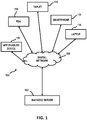
- FIG. 1 shows a first schematic diagram illustrating an exemplary telecommunication system 100.
- the system 100 is an example computing environment within which various embodiments may be implemented.
- the system 100 includes a backend server 102 e.g. of an enterprise, such as one or more of an enterprise resource planning (ERP) system, customer relationship management (CRM) system, human resources management (HRM) system, a transaction processing system, an order processing system, a banking system, and the like.
- ERP enterprise resource planning
- CRM customer relationship management
- HRM human resources management
- the backend server 102 may further be connected to a database (not shown) comprising a plurality of data structures stored therein.
- the backend server 102 and the database may both be parts of a common unit or parts of separate units.
- the backend server 102 may be accessed by one or more mobile telecommunication devices 110, 112, 114, 116, 120 via the wireless telecommunication network 108, which e.g. may be a cellular telecommunication network.
- the mobile telecommunication devices 110, 112, 114, 116, 120 may be configured as thick-clients or thin-clients.
- the backend server 102 may communicate with the telecommunication devices 110, 112, 114, 116, 120 either directly or via an intermediate server (not shown) via a communication link of the wireless telecommunication network 108.
- the digital network 108 is a wireless digital telecommunication network capable of transmitting data between computing devices of the various functional data processing elements of the system 100, such as the backend server 102 and various mobile telecommunication devices 110, 112, 114, 116, 120.
- the wireless telecommunication network 108 may be one or more of virtually any type of network capable of transmitting data as described, such as one or more of a local area network, a wide area network, a system area network, a value added network, a virtual private network, a cellular network, the Internet, and other such networks.
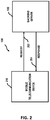
- FIG. 2 shows a second schematic diagram illustrating an exemplary telecommunication system 100.
- the telecommunication system 100 comprises a mobile telecommunication device 210, e.g. any of the various mobile telecommunication devices 110, 112, 114, 116, 120 of FIG. 1 , connected to backend server 102 via a digital telecommunication network.
- the telecommunication device 210 and the backend server 102 communicate with each other using a unidirectional request-response-protocol like HTTP or HTTPS.
- the telecommunication device 210 sends requests 202 to the backend server 102 and receives responses 204 from the backend server 102.
- telecommunication device 210 only receives messages responding to direct requests previously sent to the backend server 102.
- the backend server 102 neither autonomously initiates a communication nor does it autonomously sent messages to the backend server 102.
- a stateless protocol may be used for the respective communication.
- FIG. 3 shows a schematic diagram illustrating an exemplary mobile telecommunication device 210.
- the telecommunication device 300 may comprise a processing unit 302, also referred to as a processor. It may further comprise e.g. a memory 304 including volatile memory 308 and/or non-volatile memory 310, removable storage 312, and/or non-removable storage 314.
- the telecommunication device 210 may be configured as a handheld battery-powered mobile end user telecommunication device like e.g. be a smartphone, a tablet, a PDA, a smartwatch or the like.
- the various exemplary data storage elements are illustrated as part of the mobile telecommunication device 210, the storage elements may also or alternatively include cloud-based storage accessible via a network, such as the Internet.
- the mobile telecommunication device 210 may include or have access to a computer environment that includes a variety of computer-readable media, such as e.g. volatile memory 308 and non-volatile memory 310, removable storage 312 and non-removable storage 314.
- Computer storage comprised by or accessible to the mobile telecommunication device 210 may include random access memory (RAM), read-only memory (ROM), erasable programmable read-only memory (EPROM), electrically erasable programmable read only memory (EEPROM), flash memory or other memory technologies.
- RAM random access memory
- ROM read-only memory
- EPROM erasable programmable read-only memory
- EEPROM electrically erasable programmable read only memory
- flash memory or other memory technologies.
- the mobile telecommunication device 210 may have access e.g.
- the mobile telecommunication device 210 may comprise or have access to a computer environment that includes an input device 318, an output device 320, and a telecommunication interface 316, like e.g. a transceiver, for communicating via a wireless digital telecommunication network, e.g. a mobile cellular telecommunication network.
- the telecommunication interface 316 may further be configured to communicate via other types of wireless digital telecommunication networks like Wi-Fi, Bluetooth and the like.
- the input device 318 may include one or more of a touchscreen, touchpad, keypad, camera, microphone and other input devices.
- the mobile telecommunication device 210 may operate in a networked environment using the telecommunication interface 316 to connect to one or more remote computer systems like a backend server. Further exemplary remote computer systems may include personal computers, networked PCs, a router, a peer device or other common network nodes, or the like.
- the communication interface 316 may be a network interface device such as an Ethernet card and/or a wireless card or circuit that may be connectable to a network.
- the network may for example include one or more of a local area network (LAN), a wide area network (WAN), the Internet and other networks.
- the network may for example include one of the following digital cellular technologies, including: Global System for Mobile Communications (GSM), General Packet Radio Service (GPRS), cdmaOne, CDMA2000, Evolution-Data Optimized (EV-DO), Enhanced Data Rates for GSM Evolution (EDGE), Universal Mobile Telecommunications System (UMTS), Digital Enhanced Cordless Telecommunications (DECT), Digital AMPS (IS-136/TDMA), or Integrated Digital Enhanced Network (iDEN).
- GSM Global System for Mobile Communications
- GPRS General Packet Radio Service
- cdmaOne CDMA2000
- EV-DO Evolution-Data Optimized
- EDGE Enhanced Data Rates for GSM Evolution
- UMTS Universal Mobile Telecommunications System
- DECT Digital Enhanced Cordless Telecommunications
- iDEN Integrated Digital Enhanced Network
- the output device 320 may comprise a display device for displaying a graphical user interface, a loudspeaker, and the like.
- the output device 320 and the input device 318 may be implemented by a common device configured for inputting data as well as displaying data like e.g. touchscreen.
- Computer-readable instructions stored on a computer-readable medium are executable by the processing unit 302 of the mobile telecommunication device 210.
- various computer programs or applications such as one or more applications and modules implementing one or more of the methods illustrated and described herein or an application that is executed on the mobile telecommunication device 210 or is accessible via a web browser, may be stored on a non-transitory computer-readable medium.
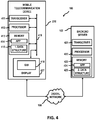
- FIG. 4 shows a schematic diagram illustrating an exemplary telecommunication system 100, comprising an exemplary mobile telecommunication device 210 and backend server 102.
- the mobile telecommunication device 210 may communicate with the backend server 102 via a digital telecommunication network 108.
- the mobile telecommunication device 210 may comprise a transceiver 411, a processor 412, a memory 413, e.g. a main memory, each capable of communicating with one or more components of mobile telecommunication device 210. For example, all components are coupled to a bidirectional system bus 419.
- the processor 412 may be a microprocessor, a semi-processor, a multi-core processor or the like.
- the processor 412 may control the operation of the mobile telecommunication device 210.
- the transceiver 411 may be implemented as a transmitting component of the mobile telecommunication device 210.
- the mobile telecommunication device 210 may further comprise a display device 417 which displays characters, images and the like.
- the display device 417 may be configured to display a graphical user interface (GUI) 418.
- GUI graphical user interface
- the display device 417 may be a touchscreen.
- the memory 413 may comprise an application 414 which is configured to generate a graphical user interface 418 to be displayed by the display device 417 and to control the communicate with the backend server 102.
- the memory 413 may further comprise a first data structure 415 comprising a plurality of first data fields.
- the first data structure 415 may be a hierarchical structure which is displayed by the graphical user interface 418.
- the first data fields may be displayed by the graphical user interface 418, wherein one or more of the displayed fields are selectable for inputting a data input.
- the data input may be stored in the memory 413 as part of the first data structure 415 and displayed by the graphical user interface 418.
- the graphical user interface 418 may display the data content of one or more first data fields which are not selectable and to which no data input may be provided by the mobile telecommunication device 210.
- These first data fields may e.g. comprise data which is provided by the backend server 102 resulting from an execution of an application 424 comprising a data processing logic for processing a second data structure 425 or pre-defined data.
- the mobile telecommunication device 210 may be connected via the wireless digital telecommunication network 108 to the backend server 102.
- the backend server 102 may be implemented in form of a computer system comprising one or more computer devices or by a single computer device.
- the telecommunication device 210 may use the transceiver 411 for exchanging data with the backend server 102 via the network 108, e.g. according to a unidirectional request-response-protocol.
- the backend server 102 may comprise a transceiver 421 for communication with the telecommunication device 210, a processor 422 for controlling the backend server 102, a memory 423 comprising an application 424 in form of computer-executable program instructions as well as a second data structure 425.
- the computer instructions 424 when being executed by the processor 422, may control the backend server 102 to communicate with the mobile telecommunication device 210 and to apply a data processing logic to the second data structure 425.
- FIG. 5 shows a schematic diagram illustrating an exemplary first data structure 415.
- the first data structure 415 is a hierarchical data structure comprising e.g. three levels of hierarchy. There is a set of data fields on each level, i.e. a header set 510 on a 1 st level, an item set 520 on a 2 nd level and a subitem set 530 on a 3 rd level.
- the header set 510 of the exemplary data structure shown in Fig. 5 comprises four data fields like data field 516, i.e. header data fields 1 to 4, the item set 520 comprises five data fields like data field 526, i.e.
- the subitem set 530 comprises 3 data fields like data field 536, i.e. subitem data fields 1 to 3.
- the first header data field 516 is for example assigned with first metadata 514 'items' indicating that the item set 510, i.e. item data fields 1 to 5 are depending on the first header data field 516.
- the third item data field 528 is for example assigned with first metadata 524 'header' indicating that the header set, i.e. header data fields 1 to 4 are depending on the third item data field 524.
- the mobile telecommunication device may store the received data input in the selected field, i.e. first header field 516, and display the data input.
- the mobile telecommunication device may further determine using the first metadata 514 that the item set 510, i.e. item data fields 1 to 5 are depending on the selected data field.
- the mobile telecommunication device may send to the backend server a first request requesting to store the received data input in the second data field assigned to the first header field 516.
- the mobile telecommunication device may send a second request requesting to return after execution of the data processing logic the data contents the second data fields assigned to the depending item data fields 1 to 5.
- the received data contents are stored in item data fields 1 to 5 displayed by the graphical user interface.
- the second request may further request to return after execution of the data processing logic the data contents of the additional data fields of the header set 510, i.e. header data field 2 to 4.
- the second request may further request to return after execution of the data processing logic the data content stored in the second data field assigned to the selected first header field 516.
- the respective data content stored in the second data field assigned to the selected first header field 516 may be the result of applying the data processing logic to the data input received from the first data structure 415.
- the mobile telecommunication device may store the data input in the third item field 528 and determine the header set 510 to be depending on the respective selected third item field 528. Therefore, the second data request may request to return after execution of the data processing logic the data contents of the header set, i.e. header data fields 1 to 4. In response to receiving the requested data contents of the respective second data fields, the received data contents are stored in header data fields 1 to 4 and displayed by the graphical user interface. According to examples, the second request may further request to return after execution of the data processing logic the data contents of the additional field of the item set 520, i.e. item data fields 1, 2, 4 and 5.
- the second request may further request to return after execution of the data processing logic the data content stored in the second data field assigned to the selected third item field 528.
- the respective data content stored in the second data field assigned to the selected third item field 528 may be the result of applying the data processing logic to the data input received from the first data structure 415.
- the second request may further request to return after execution of the data processing logic the data content stored in the second data field assigned to the selected first subitem field 536.
- the second request may further request to return after execution of the data processing logic the data contents of the additional field of the subitem set, i.e. subitem data fields 2 and 3.
- the respective data content stored in the second data may be the result of applying the data processing logic to the data input received from the first data structure 415.
- the first data structure comprises second metadata indicating the level of importance of the respective data fields.
- each data field is assigned with second metadata like 512, 522, 532 according to the following table: Header data field 1 2 3 4 Second metadata 10 2 0 0 Item data field 1 2 3 4 5 Second metadata 3 5 2 1 12 Subitem data field 1 2 3 Second metadata 1 0 8
- the numerical value of the second metadata assigned to the data field receiving the data input is added to a sum of second metadata value.
- second metadata are summed up until a pre-defined threshold, like e.g. 7, is exceeded.
- a first request requesting to store each of the received data inputs in the second data structure is sent to the backend server.
- the sum of the second metadata is reset to zero and the summing of second metadata restarts with the next data input received.
- a pre-defined threshold of 7 the first header data field, the fifth item data field and the fourth subitem data field are larger than the respective threshold.
- the level of importance of these data fields is high enough such that a request for storing the data input received by one of these data fields is sent upon receive of the data input without further delay by waiting for further data inputs.
- Other data fields like e.g. the third or fourth header data fields are assigned with a second metadata value of zero, i.e. these fields are of limited importance and do not contribute to triggering a sending of a request to the backend server. This may e.g. be due to the fact that data inputs received by these data fields are neglected by the data process logic of the backend server. In other words, they e.g. may not have any influence on other data values.
- An analogous second data structure 425 may be assigned to the first data structure 415 and comprised by a backend server.
- FIG. 6 shows a schematic diagram illustrating an exemplary graphical user interface 418.
- the graphical user interface 418 displays a plurality of data fields, i.e. fields 1 to 13, of a first data structure. For some of the data fields, like e.g. 602 and 606, only the data contents of the respective data fields are displayed, while the respective fields are not selectable for inputting data. Other data fields, like e.g. 604, may be selectable for inputting data.
- the fields 1 to 3 may for example display pre-defined data contents of three data fields of the data structure.
- the fields 4 to 10 as well as 12 and 13 may be selectable for inputting data which is stored in the respective fields of the data structure and transmitted to the backend server for being processed by a data processing logic of the backend server.
- Field 11 may for example be dependent on field 10.
- the data content of field 11 may be requested from the backend server upon transmitting a data input of field 10.
- the data content for field 11 received from the backend server as a result of applying the data processing logic may be stored in the respective data field 606 and displayed by the graphical user interface 418.
- FIG. 7 shows a fourth schematic diagram illustrating an exemplary telecommunication system 100.
- the system 100 comprises a mobile telecommunication device 210, an intermediate server in form of a webserver 220 and a backend server 102.
- the mobile telecommunication device 210 communicates with the backend server 102 via the webserver 220.
- the mobile telecommunication device 210 may be connected to the webserver 220 via a wireless digital telecommunication network, while the webserver 220 may be connected to the backend server 102 directly via a wired or wireless connection or via a further network.
- the intermediate server 220 may operate in the networked environment of the system 100 between the backend server 102 and mobile telecommunication devices 210.
- the intermediate server 220 may be configured as a webserver controlling the communication between the mobile telecommunication device 210 and the backend server 102.
- the intermediate server 220 may be implemented as an add-on module to the backend server 102 and operate on the same or a different hardware system.
- the webserver 220 may be deployed as a standalone program that executes on one or more computing devices or virtual machines distinct from the backend server 102.
- the webserver 220 is hosted by a third party, such as in a cloud-computing type arrangement.
- the webserver 220 may receive a plurality of requests combined in a common request message from the mobile telecommunication device 210, extract the respective requests from the received message, and send the extracted requests to the backend server 102. In responds to sending the extracted requests to the backend server 102, the webserver 220 may receive a plurality of responses, combine the received responses into a common response message, and send the respective response message to the telecommunication device 210 via the wireless digital telecommunication network.
- FIG. 8 shows a first schematic flow diagram of a method of operating a telecommunication device 210.
- a data input is received for a selected first data field selected via the graphical user interface.
- one or more dependent first data fields of the first data fields are determined using the first metadata assigned to the selected first data field.
- a common request message is generated by the mobile telecommunication device and sent to the backend server.
- the common request message may comprise a first request requesting to store the data input of the selected first data field in a selected second data field of the second data structure, wherein the respective selected second data field is assigned to the respective selected first data field.
- the common request message may further comprise one or more second requests requesting to return after execution of the data processing logic the data contents of one or more dependent second data fields of the second data structure, wherein the respective one or more dependent second data fields are assigned to the determined one or more dependent first data fields.
- the requests may for example be HTTP requests using 'PUT' and 'GET'.
- the common request message may be generated in form of a single $batch-request: 'POST www.backendserver.org/$batch'.
- the first and second requests may for example be comprised by the HTTP body:
- the first 'PUT' request comprised by the HTTP body may request to store the data input.
- the first 'GET' request may request to return after execution of the data processing logic the data resulting from processing the stored data input.
- the second 'GET' request may request to return after execution of the data processing logic the data contents of the one or more dependent second data fields.
- the common request message may be received by a webserver, which extracts individual requests from the HTTP body and transmits them to the backend server. In response, the webserver receives the responses by the backend server to the individual requests and generates a common response message comprising the respective responses.
- the common response message comprising the responses i.e. the processed data
- the mobile telecommunication device receives the common response message comprising the responses, i.e. the processed data
- the processed data after extraction from the common response message and storing in the first data structure by the mobile telecommunication device, are displayed by the graphical user interface.
- FIG. 9 shows a second schematic flow diagram of a method of operating a telecommunication device 210.
- a data input is received for a selected first data field selected via the graphical user interface.
- the value of the second metadata assigned to the selected first data field is added to a sum of second metadata.
- the method continues with block 906, wherein the sum of second metadata is reset to zero.
- the dependent first data fields for each of the selected first data fields which have contributed to the sum of second metadata, i.e. which have received a data input are determined.
- a common request message is generated by the mobile telecommunication device and sent to the backend server.
- the common request message comprises a request, e.g. in form of a 'PUT' request, for each of the selected first data fields which have received a data input.
- the common request message may further comprise one or more second requests requesting to return after execution of the data processing logic the data contents of all the dependent second data fields of the second data structure which are assigned to one of the determined one or more dependent first data fields.
- a common response message comprising the responses to the requests is received by the mobile telecommunication device.
- the processed data, after extraction from the common response message and storing in the first data structure by the mobile telecommunication device are displayed by the graphical user interface.
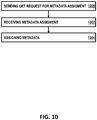
- FIG. 10 shows a third schematic flow diagram of a method of operating a telecommunication device 210.
- a request message is sent to the backend sever requesting a metadata assignment for the first data structure, e.g. an assignment of first metadata.
- This request may for example be sent in form of a HTTP 'GET' request.
- the metadata assignment may be automatically generated by the backend server analyzing the data processing logic. For example, for each second data field of the second data structure that is assigned to a first data field it may be analyzed to the processing of which additional second data fields the data content comprised by the respective second data field contributes. These additional second data fields may be determined to be dependent on the respective second data field.
- the first data fields to which the additional second data fields are assigned may be determined to be dependent on the first data field to which the respective second data field, for which the analysis is performed, is assigned.
- the requested metadata assignment is received by the mobile telecommunication device.
- metadata is assigned to the first data structure according to the received metadata assignment.
- a metadata assignment of the second metadata may be requested from the backend server analogously.
Landscapes
- Engineering & Computer Science (AREA)
- Software Systems (AREA)
- Theoretical Computer Science (AREA)
- Computer Networks & Wireless Communication (AREA)
- Signal Processing (AREA)
- Physics & Mathematics (AREA)
- General Engineering & Computer Science (AREA)
- General Physics & Mathematics (AREA)
- Human Computer Interaction (AREA)
- Information Transfer Between Computers (AREA)
- Telephonic Communication Services (AREA)
Claims (15)
- Telekommunikationsverfahren zum Betreiben einer mobilen Telekommunikationsvorrichtung (210), die mit einem drahtlosen digitalen Telekommunikationsnetz (108) koppelbar ist, wobei die mobile Telekommunikationsvorrichtung (210) Folgendes umfasst: einen ersten Prozessor (412), eine Anzeigevorrichtung (417), eine Eingabevorrichtung und einen ersten Speicher (413), wobei der erste Speicher (413) eine erste Anwendung (414) und eine erste Datenstruktur (415) umfasst, die erste Datenstruktur (415) erste Datenfelder umfasst, die erste Anwendung (414) erste Befehle umfasst, welche, wenn sie auf dem ersten Prozessor (412) ausgeführt werden, die Anzeigevorrichtung (417) veranlassen, eine grafische Benutzerschnittstelle (418) anzuzeigen, die konfiguriert ist, auswählbare erste Datenfelder anzuzeigen, zum Anzeigen von Dateneingabe, die in die ausgewählten Datenfelder eingegeben wurde, und zum Anzeigen von in den ersten Datenfeldern gespeichertem Dateninhalt, wobei jedes erste Datenfeld einem zweiten Datenfeld einer zweiten Datenstruktur (425) zugewiesen wird, die von einem Backend-Server (102) umfasst wird,
wobei die mobile Telekommunikationsvorrichtung (210) mit dem jeweiligen Backend-Server (102) über das drahtlose digitale Telekommunikationsnetz (108) verbindbar ist und die mobile Telekommunikationsvorrichtung (210) und der Backend-Server (102) unter Verwendung eines unidirektionalen Anfrage-Antwort-Protokolls miteinander kommunizieren,
wobei der Backend-Server (102) einen zweiten Prozessor (422) und einen zweiten Speicher (423) umfasst, der zweite Speicher (423) eine zweite Anwendung (424) und die jeweilige zweite Datenstruktur (425) umfasst, die zweite Anwendung (424) zweite Befehle umfasst, die, wenn sie auf dem zweiten Prozessor (422) ausgeführt werden, den Backend-Server (102) veranlassen, eine Datenverarbeitungslogik auf der zweiten Datenstruktur (425) bei Empfangen der Dateneingabe von der mobilen Telekommunikationsvorrichtung (210) auszuführen, wobei die Datenverarbeitungslogik eine Wechselbeziehung zwischen den Dateninhalten von zweien oder mehreren aus den zweiten Datenfeldern herstellt,
wobei das Verfahren durch die mobile Telekommunikationsvorrichtung (210) Folgendes umfasst:• Empfangen, von der Eingabevorrichtung, einer Dateneingabe für ein erstes Datenfeld, das über die grafische Benutzerschnittstelle (418) ausgewählt wurde, wobei dem ausgewählten ersten Datenfeld erste Metadaten zugewiesen werden, die eine Abhängigkeit zwischen dem ausgewählten ersten Datenfeld und einem oder mehreren abhängigen ersten Datenfeldern aus den ersten Datenfeldern anzeigen, wobei sich die jeweilige Abhängigkeit der abhängigen ersten Datenfelder aus der Wechselbeziehung ergibt, die durch die Datenverarbeitungslogik des Backend-Servers (102) zwischen dem Dateninhalt eines ausgewählten zweiten Datenfelds aus den zweiten Datenfeldern, das dem ausgewählten ersten Datenfeld zuwiesen ist, und dem Dateninhalt eines oder mehrerer abhängiger zweiter Datenfelder aus den zweiten Datenfeldern hergestellt wurde, wobei jedes abhängige zweite Datenfeld einem aus dem einen oder den mehreren abhängigen ersten Datenfeldern zugewiesen wird,• in Reaktion auf Empfangen der Dateneingabe, Speichern und Anzeigen der empfangenen Dateneingabe des ausgewählten ersten Datenfelds.• Senden, an den Backend-Server (102), einer ersten Anforderung mit der Anforderung, die empfangene Dateneingabe in dem jeweiligen ausgewählten zweiten Datenfeld zu speichern,• Bestimmen des einen oder der mehreren abhängigen ersten Datenfelder, die durch die ersten Metadaten angezeigt wurden.• Senden, an den Backend-Server (102) einer zweiten Anforderung mit der Anforderung, nach Ausführung der Datenverarbeitungslogik die Dateninhalte des einen oder der mehreren abhängigen zweiten Datenfelder, die dem bestimmten einen oder den mehreren abhängigen ersten Datenfeldern zugewiesen wurden, zurückzugeben,• in Reaktion auf Senden der zweiten Anforderung, Empfangen der angeforderten Dateninhalte,• in Reaktion auf Empfangen der angeforderten Dateninhalte, Speichern und Anzeigen der empfangenen Dateninhalte. - Telekommunikationsverfahren nach Anspruch 1, wobei die erste Datenstruktur (415) mehrere Sätze von ersten Datenfeldern umfasst, wobei jeder der jeweiligen Sätze eins oder mehrere aus den ersten Datenfeldern umfasst,
das ausgewählte erste Datenfeld von einem ersten aus den jeweiligen Sätzen umfasst wird, wobei das eine oder die mehreren abhängigen ersten Datenfelder von einem oder mehreren abhängigen zweiten aus den jeweiligen Sätzen umfasst werden,
die zweite von der mobilen Telekommunikationsvorrichtung (210) gesendete Anforderung ferner zusätzlich zum Dateninhalt des ausgewählten ersten Datenfelds anfordert, nach Ausführung der Datenverarbeitungslogik die Dateninhalte der zweiten Datenfelder, die den zusätzlichen ersten Datenfeldern zugewiesen waren und vom jeweiligen ersten Satz umfasst sind, zurückzugeben. - Telekommunikationsverfahren nach Anspruch 2, wobei die ersten Metadaten die Abhängigkeit zwischen dem ausgewählten ersten Datenfeld und dem einen oder den mehreren abhängigen ersten Datenfeldern anzeigen durch Anzeigen einer Abhängigkeit zwischen dem jeweiligen ausgewählten ersten Datenfeld und einem oder mehreren abhängigen zweiten Sätzen, die die jeweiligen abhängigen ersten Datenfelder umfassen,
wobei die zweite von der mobilen Telekommunikationsvorrichtung (210) gesendete Anforderung ferner anfordert, die Dateninhalte des einen oder der mehreren abhängigen zweiten Datenfelder zurückzugeben durch Anfordern, nach Ausführung der Datenverarbeitungslogik die Dateninhalte jedes zweiten Datenfelds, das einem der ersten Datenfelder des einen oder der mehreren abhängigen zweiten Sätze von ersten Datenfeldern zugewiesen ist, zurückzugeben. - Telekommunikationsverfahren nach einem der Ansprüche 1 bis 3, wobei die zweite von der mobilen Telekommunikationsvorrichtung (210) gesendete Anforderung ferner anfordert, nach Ausführung der Datenverarbeitungslogik den in dem ausgewählten zweiten Datenfeld gespeicherten Dateninhalt zurückzugeben.
- Telekommunikationsverfahren nach einem der Ansprüche 1 bis 4, wobei das Verfahren ferner Folgendes umfasst:• Empfangen, von der Eingabevorrichtung, eines Satzes von Dateneingaben für einen ausgewählten dritten Satz von ersten Datenfeldern, die über die grafische Benutzerschnittstelle (418) ausgewählt wurden, wobei jedem der ausgewählten ersten Datenfelder erste Metadaten zugewiesen werden, die eine Abhängigkeit zwischen dem jeweiligen ausgewählten ersten Datenfeld und einem oder mehreren abhängigen ersten Datenfeldern anzeigen, wobei sich die jeweilige Abhängigkeit aus der Wechselbeziehung ergibt, die von der Datenverarbeitungslogik des Backend-Servers (102) zwischen dem Dateninhalt eines ausgewählten zweiten Datenfelds aus den zweiten Datenfeldern, der dem jeweiligen ausgewählten ersten Datenfeld zugewiesen wird, und dem Dateninhalt eines oder mehrerer abhängiger zweiter Datenfelder aus den zweiten Datenfeldern hergestellt wurde, wobei jedes der jeweiligen abhängigen zweiten Datenfelder einem aus dem einen oder den mehreren aus den jeweiligen abhängigen ersten Datenfeldern zugewiesen wird,• in Reaktion auf Empfangen jeder Dateneingabe, Speichern und Anzeigen der empfangenen Dateneingabe des jeweiligen ausgewählten ersten Datenfelds,• wobei die erste von der mobilen Telekommunikationsvorrichtung (210) gesendete Anforderung ferner anfordert, jede der empfangenen Dateneingaben in einem ausgewählten zweiten Datenfeld aus den zweiten Datenfeldern zu speichern, welches dem ausgewählten ersten Datenfeld der jeweiligen Dateneingabe zugewiesen ist.• Bestimmen, für jedes der ausgewählten ersten Datenfelder, des einen oder der mehreren abhängigen ersten Datenfelder, die durch die ersten Metadaten des jeweiligen ausgewählten ersten Datenfelds angezeigt wurden,• wobei die zweite von der mobilen Telekommunikationsvorrichtung (210) gesendete Anforderung ferner anfordert, nach Ausführung der Datenverarbeitungslogik den Dateninhalt jedes der abhängigen zweiten Datenfelder, das einem aus den bestimmten einen oder mehreren abhängigen ersten Datenfeldern zugewiesen wurde, zurückzugeben,• in Reaktion auf Senden der zweiten Anforderung, Empfangen der angeforderten Dateninhalte,• in Reaktion auf Empfangen der angeforderten Dateninhalte, Speichern und Anzeigen der empfangenen Dateninhalte.
- Telekommunikationsverfahren nach einem der Ansprüche 1 bis 5, wobei die erste Datenstruktur (415) hierarchisch strukturiert ist und das Verfahren ferner Folgendes umfasst, um dem einen oder den mehreren aus den ersten Datenfeldern die ersten Metadaten zuzuweisen:Durchführen einer automatischen Analyse an der hierarchischen Struktur der ersten Datenstruktur (415) durch die mobile Telekommunikationsvorrichtung (210), die erste Metadaten für das eine oder die mehreren ersten Datenfelder ergibt,Zuweisen der sich ergebenden ersten Metadaten an das eine oder die mehreren ersten Datenfelder.
- Telekommunikationsverfahren nach einem der Ansprüche 1 bis 6, wobei das Verfahren ferner Folgendes umfasst, um dem einen oder den mehreren ersten Datenfeldern die ersten Metadaten zuzuweisen:• Senden, an den Backend-Server (102), einer dritten Anforderung, die anfordert, dass erste Metadaten einem oder mehreren aus den ersten Datenfeldern zugewiesen werden,• in Reaktion auf Senden der dritten Anforderung, Empfangen der ersten Metadaten für das eine oder die mehreren ersten Datenfelder, wobei sich die empfangenen ersten Metadaten aus einer automatischen Analyse von dem Backend-Server (102) über die Wechselbeziehung ergeben, die von der Verarbeitungslogik zwischen den Dateninhalten zweier oder mehrerer der zweiten Datenfelder hergestellt wurde.• in Reaktion auf Empfangen der ersten Metadaten, Zuweisen der empfangenen ersten Metadaten an das eine oder die mehreren Datenfelder.
- Telekommunikationsverfahren nach einem der Ansprüche 1 bis 7, wobei einem oder mehreren der ersten Datenfelder zweite Metadaten zugewiesen werden, die eine Wichtigkeitsstufe des jeweiligen ersten Datenfelds anzeigen, wobei das Verfahren ferner umfasst:• Senden der ersten Anforderung in Reaktion auf Bestimmen, dass die Wichtigkeitsstufen des einen oder der mehreren ausgewählten ersten Datenfelder ein vordefiniertes Kriterium erfüllen.
- Telekommunikationsverfahren nach Anspruch 8, wobei die zweiten Metadaten nummerische Werte umfassen, wobei das Verfahren ferner Folgendes umfasst:• Aufsummieren der zweiten Metadaten des einen oder der mehreren ausgewählten ersten Datenfelder, wobei das vordefinierte Kriterium dadurch erfüllt wird, dass die Summe der zweiten Metadaten einen vordefinierten Schwellenwert überschreitet,• Bei Senden der ersten Anforderung, Rücksetzen der Summe der zweiten Metadaten auf Null.
- Telekommunikationsverfahren nach Anspruch 9, wobei die zweiten Metadaten, die mindestens einem ersten Datenfeld zugewiesen wurden, größer sind als der vordefinierte Schwellenwert.
- Telekommunikationsverfahren nach einem der Ansprüche 8 bis 10, wobei das Verfahren ferner Folgendes umfasst, um die zweiten Metadaten dem einen oder den mehreren ersten Datenfeldern zuzuweisen:Durchführen einer automatischen Analyse an der hierarchischen Struktur der ersten Datenstruktur (415) durch die mobile Telekommunikationsvorrichtung (210), wodurch sich zweite Metadaten für das eine oder die mehreren ersten Datenfelder ergeben,Zuweisen der sich ergebenden zweiten Metadaten an das eine oder die mehreren ersten Datenfelder.
- Telekommunikationsverfahren nach einem der Ansprüche 8 bis 10, wobei das Verfahren ferner Folgendes umfasst, um die zweiten Metadaten dem einen oder den mehreren ersten Datenfeldern zuzuweisen:• Senden, an den Backend-Server (102) einer vierten Anforderung, in der zweite Metadaten angefordert werden, um dem einen oder den mehreren ersten Datenfeldern zugewiesen zu werden,• in Reaktion auf Senden der vierten Anforderung, Empfangen der zweiten Metadaten für das eine oder die mehreren ersten Datenfelder, wobei sich die empfangenen zweiten Metadaten aus einer automatischen Analyse durch den Backend-Server (102) über die Wechselbeziehung ergeben, die von der Verarbeitungslogik zwischen den Dateninhalten von zwei oder mehreren der zweiten Datenfelder hergestellt wurde,• in Reaktion auf Empfangen der zweiten Metadaten, Zuweisen der empfangenen zweiten Metadaten an das eine oder die mehreren ersten Datenfelder.
- Mobile Telekommunikationsvorrichtung (210), wobei die mobile Telekommunikationsvorrichtung (210) konfiguriert ist, das Telekommunikationsverfahren nach einem der Ansprüche 1 bis 12 durchzuführen.
- Telekommunikationssystem (100), umfassend eine mobile Telekommunikationsvorrichtung (210) und einen Backend-Server (102), wobei die mobile Telekommunikationsvorrichtung (210) und der Backend-Server (102) konfiguriert sind, das Telekommunikationsverfahren nach einem der Ansprüche 1 bis 12 durchzuführen.
- Telekommunikationssystem (100) nach Anspruch 14, wobei das System (100) ferner einen Zwischenserver (220) umfasst, wobei der Zwischenserver (220) mit der mobilen Telekommunikationsvorrichtung (210) über das drahtlose digitale Telekommunikationsnetz (108) verbunden ist, der Backend-Server (102) mit dem drahtlosen digitalen Telekommunikationsnetz (108) und der mobilen Telekommunikationsvorrichtung (210) über den Zwischenserver (220) verbunden ist,
wobei der Zwischenserver (220) einen dritten Prozessor und einen dritten Speicher mit einer dritten Anwendung umfasst, die dritte Anwendung dritte Befehle umfasst, die, wenn sie auf dem dritten Prozessor ausgeführt werden, den Zwischenserver (220) zu Folgendem veranlassen:Empfangen mehrerer, in einer gemeinsamen Anforderungsnachricht kombinierter Anforderungen, Extrahieren der jeweiligen Anforderungen und Übertragen der extrahierten Anforderungen an den Backend-Server (102),in Reaktion auf Übertragen der extrahierten Anforderungen an den Backend-Server (102), Empfangen mehrerer Antworten, Kombinieren der empfangenen Antworten in einer gemeinsamen Antwortnachricht und Senden der jeweiligen Antwortnachricht an die mobile Telekommunikationsvorrichtung (210) über das drahtlose digitale Telekommunikationsnetz (108).
Priority Applications (2)
| Application Number | Priority Date | Filing Date | Title |
|---|---|---|---|
| EP15197016.7A EP3174267B1 (de) | 2015-11-30 | 2015-11-30 | Interaktionsmuster für eine mobiltelekommunikationsvorrichtung |
| US15/363,525 US10362140B2 (en) | 2015-11-30 | 2016-11-29 | Interaction pattern for a mobile telecommunication device |
Applications Claiming Priority (1)
| Application Number | Priority Date | Filing Date | Title |
|---|---|---|---|
| EP15197016.7A EP3174267B1 (de) | 2015-11-30 | 2015-11-30 | Interaktionsmuster für eine mobiltelekommunikationsvorrichtung |
Publications (2)
| Publication Number | Publication Date |
|---|---|
| EP3174267A1 EP3174267A1 (de) | 2017-05-31 |
| EP3174267B1 true EP3174267B1 (de) | 2018-11-07 |
Family
ID=54782482
Family Applications (1)
| Application Number | Title | Priority Date | Filing Date |
|---|---|---|---|
| EP15197016.7A Active EP3174267B1 (de) | 2015-11-30 | 2015-11-30 | Interaktionsmuster für eine mobiltelekommunikationsvorrichtung |
Country Status (2)
| Country | Link |
|---|---|
| US (1) | US10362140B2 (de) |
| EP (1) | EP3174267B1 (de) |
Families Citing this family (12)
| Publication number | Priority date | Publication date | Assignee | Title |
|---|---|---|---|---|
| US10646289B2 (en) | 2015-12-29 | 2020-05-12 | Koninklijke Philips N.V. | System, controller and method using virtual reality device for robotic surgery |
| US10402210B2 (en) * | 2016-08-23 | 2019-09-03 | Sap Se | Optimizing user interface requests for backend processing |
| CN113273160B (zh) | 2018-11-14 | 2024-08-13 | 三星电子株式会社 | 无线通信网络的seal系统中提供服务间通信的seal系统和方法 |
| US10972551B1 (en) * | 2019-10-14 | 2021-04-06 | Sap Se | Building mobile applications on stateful backend systems |
| CN111104577B (zh) * | 2019-10-31 | 2023-11-14 | 北京金堤科技有限公司 | 数据处理方法、装置、计算机可读存储介质及电子设备 |
| US12079284B2 (en) | 2021-08-16 | 2024-09-03 | Sap Se | Generating data regulation compliant data from application interface data |
| US12568480B2 (en) * | 2021-09-23 | 2026-03-03 | Apple Inc. | Techniques for activity based wireless device coexistence |
| US12153644B2 (en) | 2022-03-10 | 2024-11-26 | Hexagon Technology Center Gmbh | System and method for validating a protocol-compliant uniform resource locator |
| US11995296B2 (en) | 2022-03-10 | 2024-05-28 | Hexagon Technology Center Gmbh | System and method for creating a single-entity protocol-compliant uniform resource locator |
| US12461920B2 (en) | 2022-03-10 | 2025-11-04 | Hexagon Technology Center Gmbh | System and method for creating a filtering protocol-compliant uniform resource locator |
| US12307083B2 (en) | 2022-03-10 | 2025-05-20 | Hexagon Technology Center Gmbh | System and method for specifying properties for a protocol-compliant uniform resource locator |
| US11570230B1 (en) * | 2022-03-10 | 2023-01-31 | Hexagon Technology Center Gmbh | System and method for creating a protocol-compliant uniform resource locator |
Family Cites Families (5)
| Publication number | Priority date | Publication date | Assignee | Title |
|---|---|---|---|---|
| US7873710B2 (en) * | 2007-02-06 | 2011-01-18 | 5O9, Inc. | Contextual data communication platform |
| US8510373B2 (en) * | 2010-08-30 | 2013-08-13 | Sap Ag | Data synchronization and disablement of dependent data fields |
| US8726230B1 (en) * | 2011-10-07 | 2014-05-13 | Google Inc. | Generating a user interface for sending data among resources |
| US8751568B1 (en) * | 2012-02-13 | 2014-06-10 | Symantec Corporation | Systems and methods for data loss prevention |
| US9471414B2 (en) * | 2014-08-12 | 2016-10-18 | Apollo Education Group, Inc. | Service response detection and management on a mobile application |
-
2015
- 2015-11-30 EP EP15197016.7A patent/EP3174267B1/de active Active
-
2016
- 2016-11-29 US US15/363,525 patent/US10362140B2/en active Active
Non-Patent Citations (1)
| Title |
|---|
| None * |
Also Published As
| Publication number | Publication date |
|---|---|
| US10362140B2 (en) | 2019-07-23 |
| EP3174267A1 (de) | 2017-05-31 |
| US20170155736A1 (en) | 2017-06-01 |
Similar Documents
| Publication | Publication Date | Title |
|---|---|---|
| US10362140B2 (en) | Interaction pattern for a mobile telecommunication device | |
| US10567346B2 (en) | Remote browsing session management | |
| EP3391616B1 (de) | Vorrichtungsverwaltung mit tunnelierung | |
| US10091282B2 (en) | Metadata-driven dynamic load balancing in multi-tenant systems | |
| EP3148144B1 (de) | Datenübertragung für telekommunikationsvorrichtung | |
| AU2017314838A1 (en) | Executing remote commands | |
| US20260012446A1 (en) | Hosted services with account switching for multiple user accounts in a web browser session | |
| US9774660B2 (en) | Method and system for seamless webpage browsing | |
| WO2021042815A1 (zh) | Http重定向状态码捕获方法、装置和计算机设备 | |
| US11902239B2 (en) | Unified application messaging service | |
| CN103618665A (zh) | 一种向客户端推送消息的方法 | |
| US20060168079A1 (en) | System and method for automatically connecting a client computer to a server | |
| US9521106B2 (en) | Method, system and device for obtaining potential friends information | |
| US10917292B2 (en) | Architectural design to enable bidirectional service registration and interaction among clusters | |
| US10713278B2 (en) | Flexible configuration of offline synchronization scope | |
| JP5410487B2 (ja) | キャッシュサーバ、ウェブサーバ及び方法 | |
| US20150350121A1 (en) | A method and system for providing multithreaded communication | |
| US10574618B1 (en) | Processing client devices | |
| US20160086245A1 (en) | Communications server apparatus and methods of operation thereof | |
| US9550119B2 (en) | Method, apparatus, and system for webgame interaction | |
| US20260052131A1 (en) | Data processing method and electronic device | |
| CN104468718B (zh) | 一种信息的互联方法、装置及系统 | |
| US11086954B1 (en) | Method and system for data testing | |
| US10341178B1 (en) | Configuring client devices | |
| US20160156600A1 (en) | Methods for universal resource identifier (‘uri’) integration |
Legal Events
| Date | Code | Title | Description |
|---|---|---|---|
| PUAI | Public reference made under article 153(3) epc to a published international application that has entered the european phase |
Free format text: ORIGINAL CODE: 0009012 |
|
| 17P | Request for examination filed |
Effective date: 20170404 |
|
| AK | Designated contracting states |
Kind code of ref document: A1 Designated state(s): AL AT BE BG CH CY CZ DE DK EE ES FI FR GB GR HR HU IE IS IT LI LT LU LV MC MK MT NL NO PL PT RO RS SE SI SK SM TR |
|
| AX | Request for extension of the european patent |
Extension state: BA ME |
|
| GRAP | Despatch of communication of intention to grant a patent |
Free format text: ORIGINAL CODE: EPIDOSNIGR1 |
|
| INTG | Intention to grant announced |
Effective date: 20180614 |
|
| GRAS | Grant fee paid |
Free format text: ORIGINAL CODE: EPIDOSNIGR3 |
|
| GRAA | (expected) grant |
Free format text: ORIGINAL CODE: 0009210 |
|
| AK | Designated contracting states |
Kind code of ref document: B1 Designated state(s): AL AT BE BG CH CY CZ DE DK EE ES FI FR GB GR HR HU IE IS IT LI LT LU LV MC MK MT NL NO PL PT RO RS SE SI SK SM TR |
|
| REG | Reference to a national code |
Ref country code: GB Ref legal event code: FG4D |
|
| REG | Reference to a national code |
Ref country code: CH Ref legal event code: EP Ref country code: AT Ref legal event code: REF Ref document number: 1063457 Country of ref document: AT Kind code of ref document: T Effective date: 20181115 |
|
| REG | Reference to a national code |
Ref country code: DE Ref legal event code: R096 Ref document number: 602015019434 Country of ref document: DE |
|
| REG | Reference to a national code |
Ref country code: IE Ref legal event code: FG4D |
|
| REG | Reference to a national code |
Ref country code: NL Ref legal event code: MP Effective date: 20181107 |
|
| REG | Reference to a national code |
Ref country code: LT Ref legal event code: MG4D |
|
| REG | Reference to a national code |
Ref country code: AT Ref legal event code: MK05 Ref document number: 1063457 Country of ref document: AT Kind code of ref document: T Effective date: 20181107 |
|
| PG25 | Lapsed in a contracting state [announced via postgrant information from national office to epo] |
Ref country code: LV Free format text: LAPSE BECAUSE OF FAILURE TO SUBMIT A TRANSLATION OF THE DESCRIPTION OR TO PAY THE FEE WITHIN THE PRESCRIBED TIME-LIMIT Effective date: 20181107 Ref country code: AT Free format text: LAPSE BECAUSE OF FAILURE TO SUBMIT A TRANSLATION OF THE DESCRIPTION OR TO PAY THE FEE WITHIN THE PRESCRIBED TIME-LIMIT Effective date: 20181107 Ref country code: ES Free format text: LAPSE BECAUSE OF FAILURE TO SUBMIT A TRANSLATION OF THE DESCRIPTION OR TO PAY THE FEE WITHIN THE PRESCRIBED TIME-LIMIT Effective date: 20181107 Ref country code: LT Free format text: LAPSE BECAUSE OF FAILURE TO SUBMIT A TRANSLATION OF THE DESCRIPTION OR TO PAY THE FEE WITHIN THE PRESCRIBED TIME-LIMIT Effective date: 20181107 Ref country code: NO Free format text: LAPSE BECAUSE OF FAILURE TO SUBMIT A TRANSLATION OF THE DESCRIPTION OR TO PAY THE FEE WITHIN THE PRESCRIBED TIME-LIMIT Effective date: 20190207 Ref country code: IS Free format text: LAPSE BECAUSE OF FAILURE TO SUBMIT A TRANSLATION OF THE DESCRIPTION OR TO PAY THE FEE WITHIN THE PRESCRIBED TIME-LIMIT Effective date: 20190307 Ref country code: FI Free format text: LAPSE BECAUSE OF FAILURE TO SUBMIT A TRANSLATION OF THE DESCRIPTION OR TO PAY THE FEE WITHIN THE PRESCRIBED TIME-LIMIT Effective date: 20181107 Ref country code: BG Free format text: LAPSE BECAUSE OF FAILURE TO SUBMIT A TRANSLATION OF THE DESCRIPTION OR TO PAY THE FEE WITHIN THE PRESCRIBED TIME-LIMIT Effective date: 20190207 Ref country code: HR Free format text: LAPSE BECAUSE OF FAILURE TO SUBMIT A TRANSLATION OF THE DESCRIPTION OR TO PAY THE FEE WITHIN THE PRESCRIBED TIME-LIMIT Effective date: 20181107 |
|
| PG25 | Lapsed in a contracting state [announced via postgrant information from national office to epo] |
Ref country code: RS Free format text: LAPSE BECAUSE OF FAILURE TO SUBMIT A TRANSLATION OF THE DESCRIPTION OR TO PAY THE FEE WITHIN THE PRESCRIBED TIME-LIMIT Effective date: 20181107 Ref country code: SE Free format text: LAPSE BECAUSE OF FAILURE TO SUBMIT A TRANSLATION OF THE DESCRIPTION OR TO PAY THE FEE WITHIN THE PRESCRIBED TIME-LIMIT Effective date: 20181107 Ref country code: AL Free format text: LAPSE BECAUSE OF FAILURE TO SUBMIT A TRANSLATION OF THE DESCRIPTION OR TO PAY THE FEE WITHIN THE PRESCRIBED TIME-LIMIT Effective date: 20181107 Ref country code: PT Free format text: LAPSE BECAUSE OF FAILURE TO SUBMIT A TRANSLATION OF THE DESCRIPTION OR TO PAY THE FEE WITHIN THE PRESCRIBED TIME-LIMIT Effective date: 20190307 Ref country code: NL Free format text: LAPSE BECAUSE OF FAILURE TO SUBMIT A TRANSLATION OF THE DESCRIPTION OR TO PAY THE FEE WITHIN THE PRESCRIBED TIME-LIMIT Effective date: 20181107 Ref country code: GR Free format text: LAPSE BECAUSE OF FAILURE TO SUBMIT A TRANSLATION OF THE DESCRIPTION OR TO PAY THE FEE WITHIN THE PRESCRIBED TIME-LIMIT Effective date: 20190208 |
|
| REG | Reference to a national code |
Ref country code: CH Ref legal event code: PL |
|
| PG25 | Lapsed in a contracting state [announced via postgrant information from national office to epo] |
Ref country code: DK Free format text: LAPSE BECAUSE OF FAILURE TO SUBMIT A TRANSLATION OF THE DESCRIPTION OR TO PAY THE FEE WITHIN THE PRESCRIBED TIME-LIMIT Effective date: 20181107 Ref country code: PL Free format text: LAPSE BECAUSE OF FAILURE TO SUBMIT A TRANSLATION OF THE DESCRIPTION OR TO PAY THE FEE WITHIN THE PRESCRIBED TIME-LIMIT Effective date: 20181107 Ref country code: CZ Free format text: LAPSE BECAUSE OF FAILURE TO SUBMIT A TRANSLATION OF THE DESCRIPTION OR TO PAY THE FEE WITHIN THE PRESCRIBED TIME-LIMIT Effective date: 20181107 Ref country code: IT Free format text: LAPSE BECAUSE OF FAILURE TO SUBMIT A TRANSLATION OF THE DESCRIPTION OR TO PAY THE FEE WITHIN THE PRESCRIBED TIME-LIMIT Effective date: 20181107 Ref country code: LU Free format text: LAPSE BECAUSE OF NON-PAYMENT OF DUE FEES Effective date: 20181130 |
|
| REG | Reference to a national code |
Ref country code: DE Ref legal event code: R097 Ref document number: 602015019434 Country of ref document: DE |
|
| REG | Reference to a national code |
Ref country code: BE Ref legal event code: MM Effective date: 20181130 |
|
| REG | Reference to a national code |
Ref country code: IE Ref legal event code: MM4A |
|
| PG25 | Lapsed in a contracting state [announced via postgrant information from national office to epo] |
Ref country code: CH Free format text: LAPSE BECAUSE OF NON-PAYMENT OF DUE FEES Effective date: 20181130 Ref country code: LI Free format text: LAPSE BECAUSE OF NON-PAYMENT OF DUE FEES Effective date: 20181130 Ref country code: RO Free format text: LAPSE BECAUSE OF FAILURE TO SUBMIT A TRANSLATION OF THE DESCRIPTION OR TO PAY THE FEE WITHIN THE PRESCRIBED TIME-LIMIT Effective date: 20181107 Ref country code: EE Free format text: LAPSE BECAUSE OF FAILURE TO SUBMIT A TRANSLATION OF THE DESCRIPTION OR TO PAY THE FEE WITHIN THE PRESCRIBED TIME-LIMIT Effective date: 20181107 Ref country code: SM Free format text: LAPSE BECAUSE OF FAILURE TO SUBMIT A TRANSLATION OF THE DESCRIPTION OR TO PAY THE FEE WITHIN THE PRESCRIBED TIME-LIMIT Effective date: 20181107 Ref country code: MC Free format text: LAPSE BECAUSE OF FAILURE TO SUBMIT A TRANSLATION OF THE DESCRIPTION OR TO PAY THE FEE WITHIN THE PRESCRIBED TIME-LIMIT Effective date: 20181107 Ref country code: SK Free format text: LAPSE BECAUSE OF FAILURE TO SUBMIT A TRANSLATION OF THE DESCRIPTION OR TO PAY THE FEE WITHIN THE PRESCRIBED TIME-LIMIT Effective date: 20181107 |
|
| PLBE | No opposition filed within time limit |
Free format text: ORIGINAL CODE: 0009261 |
|
| STAA | Information on the status of an ep patent application or granted ep patent |
Free format text: STATUS: NO OPPOSITION FILED WITHIN TIME LIMIT |
|
| 26N | No opposition filed |
Effective date: 20190808 |
|
| PG25 | Lapsed in a contracting state [announced via postgrant information from national office to epo] |
Ref country code: SI Free format text: LAPSE BECAUSE OF FAILURE TO SUBMIT A TRANSLATION OF THE DESCRIPTION OR TO PAY THE FEE WITHIN THE PRESCRIBED TIME-LIMIT Effective date: 20181107 Ref country code: IE Free format text: LAPSE BECAUSE OF NON-PAYMENT OF DUE FEES Effective date: 20181130 |
|
| PG25 | Lapsed in a contracting state [announced via postgrant information from national office to epo] |
Ref country code: BE Free format text: LAPSE BECAUSE OF NON-PAYMENT OF DUE FEES Effective date: 20181130 |
|
| PG25 | Lapsed in a contracting state [announced via postgrant information from national office to epo] |
Ref country code: MT Free format text: LAPSE BECAUSE OF NON-PAYMENT OF DUE FEES Effective date: 20181130 |
|
| PG25 | Lapsed in a contracting state [announced via postgrant information from national office to epo] |
Ref country code: TR Free format text: LAPSE BECAUSE OF FAILURE TO SUBMIT A TRANSLATION OF THE DESCRIPTION OR TO PAY THE FEE WITHIN THE PRESCRIBED TIME-LIMIT Effective date: 20181107 |
|
| PG25 | Lapsed in a contracting state [announced via postgrant information from national office to epo] |
Ref country code: MK Free format text: LAPSE BECAUSE OF NON-PAYMENT OF DUE FEES Effective date: 20181107 Ref country code: HU Free format text: LAPSE BECAUSE OF FAILURE TO SUBMIT A TRANSLATION OF THE DESCRIPTION OR TO PAY THE FEE WITHIN THE PRESCRIBED TIME-LIMIT; INVALID AB INITIO Effective date: 20151130 Ref country code: CY Free format text: LAPSE BECAUSE OF FAILURE TO SUBMIT A TRANSLATION OF THE DESCRIPTION OR TO PAY THE FEE WITHIN THE PRESCRIBED TIME-LIMIT Effective date: 20181107 |
|
| REG | Reference to a national code |
Ref country code: DE Ref legal event code: R079 Ref document number: 602015019434 Country of ref document: DE Free format text: PREVIOUS MAIN CLASS: H04L0029080000 Ipc: H04L0065000000 |
|
| PGFP | Annual fee paid to national office [announced via postgrant information from national office to epo] |
Ref country code: DE Payment date: 20251119 Year of fee payment: 11 |
|
| PGFP | Annual fee paid to national office [announced via postgrant information from national office to epo] |
Ref country code: GB Payment date: 20251120 Year of fee payment: 11 |
|
| PGFP | Annual fee paid to national office [announced via postgrant information from national office to epo] |
Ref country code: FR Payment date: 20251126 Year of fee payment: 11 |