EP3174262A1 - Artificial intelligence based voiceprint login method and device - Google Patents
Artificial intelligence based voiceprint login method and device Download PDFInfo
- Publication number
- EP3174262A1 EP3174262A1 EP15885968.6A EP15885968A EP3174262A1 EP 3174262 A1 EP3174262 A1 EP 3174262A1 EP 15885968 A EP15885968 A EP 15885968A EP 3174262 A1 EP3174262 A1 EP 3174262A1
- Authority
- EP
- European Patent Office
- Prior art keywords
- user
- login
- string
- information
- speech
- Prior art date
- Legal status (The legal status is an assumption and is not a legal conclusion. Google has not performed a legal analysis and makes no representation as to the accuracy of the status listed.)
- Granted
Links
Images


Classifications
-
- G—PHYSICS
- G06—COMPUTING OR CALCULATING; COUNTING
- G06F—ELECTRIC DIGITAL DATA PROCESSING
- G06F21/00—Security arrangements for protecting computers, components thereof, programs or data against unauthorised activity
- G06F21/30—Authentication, i.e. establishing the identity or authorisation of security principals
- G06F21/31—User authentication
- G06F21/32—User authentication using biometric data, e.g. fingerprints, iris scans or voiceprints
-
- H—ELECTRICITY
- H04—ELECTRIC COMMUNICATION TECHNIQUE
- H04L—TRANSMISSION OF DIGITAL INFORMATION, e.g. TELEGRAPHIC COMMUNICATION
- H04L9/00—Cryptographic mechanisms or cryptographic arrangements for secret or secure communications; Network security protocols
- H04L9/32—Cryptographic mechanisms or cryptographic arrangements for secret or secure communications; Network security protocols including means for verifying the identity or authority of a user of the system or for message authentication, e.g. authorization, entity authentication, data integrity or data verification, non-repudiation, key authentication or verification of credentials
- H04L9/3226—Cryptographic mechanisms or cryptographic arrangements for secret or secure communications; Network security protocols including means for verifying the identity or authority of a user of the system or for message authentication, e.g. authorization, entity authentication, data integrity or data verification, non-repudiation, key authentication or verification of credentials using a predetermined code, e.g. password, passphrase or PIN
- H04L9/3231—Biological data, e.g. fingerprint, voice or retina
-
- G—PHYSICS
- G06—COMPUTING OR CALCULATING; COUNTING
- G06F—ELECTRIC DIGITAL DATA PROCESSING
- G06F21/00—Security arrangements for protecting computers, components thereof, programs or data against unauthorised activity
- G06F21/30—Authentication, i.e. establishing the identity or authorisation of security principals
- G06F21/31—User authentication
-
- G—PHYSICS
- G06—COMPUTING OR CALCULATING; COUNTING
- G06N—COMPUTING ARRANGEMENTS BASED ON SPECIFIC COMPUTATIONAL MODELS
- G06N20/00—Machine learning
-
- G—PHYSICS
- G06—COMPUTING OR CALCULATING; COUNTING
- G06N—COMPUTING ARRANGEMENTS BASED ON SPECIFIC COMPUTATIONAL MODELS
- G06N7/00—Computing arrangements based on specific mathematical models
- G06N7/01—Probabilistic graphical models, e.g. probabilistic networks
-
- G—PHYSICS
- G10—MUSICAL INSTRUMENTS; ACOUSTICS
- G10L—SPEECH ANALYSIS TECHNIQUES OR SPEECH SYNTHESIS; SPEECH RECOGNITION; SPEECH OR VOICE PROCESSING TECHNIQUES; SPEECH OR AUDIO CODING OR DECODING
- G10L15/00—Speech recognition
- G10L15/08—Speech classification or search
- G10L15/16—Speech classification or search using artificial neural networks
-
- G—PHYSICS
- G10—MUSICAL INSTRUMENTS; ACOUSTICS
- G10L—SPEECH ANALYSIS TECHNIQUES OR SPEECH SYNTHESIS; SPEECH RECOGNITION; SPEECH OR VOICE PROCESSING TECHNIQUES; SPEECH OR AUDIO CODING OR DECODING
- G10L15/00—Speech recognition
- G10L15/22—Procedures used during a speech recognition process, e.g. man-machine dialogue
-
- G—PHYSICS
- G10—MUSICAL INSTRUMENTS; ACOUSTICS
- G10L—SPEECH ANALYSIS TECHNIQUES OR SPEECH SYNTHESIS; SPEECH RECOGNITION; SPEECH OR VOICE PROCESSING TECHNIQUES; SPEECH OR AUDIO CODING OR DECODING
- G10L15/00—Speech recognition
- G10L15/26—Speech to text systems
-
- G—PHYSICS
- G10—MUSICAL INSTRUMENTS; ACOUSTICS
- G10L—SPEECH ANALYSIS TECHNIQUES OR SPEECH SYNTHESIS; SPEECH RECOGNITION; SPEECH OR VOICE PROCESSING TECHNIQUES; SPEECH OR AUDIO CODING OR DECODING
- G10L17/00—Speaker identification or verification techniques
- G10L17/02—Preprocessing operations, e.g. segment selection; Pattern representation or modelling, e.g. based on linear discriminant analysis [LDA] or principal components; Feature selection or extraction
-
- G—PHYSICS
- G10—MUSICAL INSTRUMENTS; ACOUSTICS
- G10L—SPEECH ANALYSIS TECHNIQUES OR SPEECH SYNTHESIS; SPEECH RECOGNITION; SPEECH OR VOICE PROCESSING TECHNIQUES; SPEECH OR AUDIO CODING OR DECODING
- G10L17/00—Speaker identification or verification techniques
- G10L17/04—Training, enrolment or model building
-
- G—PHYSICS
- G10—MUSICAL INSTRUMENTS; ACOUSTICS
- G10L—SPEECH ANALYSIS TECHNIQUES OR SPEECH SYNTHESIS; SPEECH RECOGNITION; SPEECH OR VOICE PROCESSING TECHNIQUES; SPEECH OR AUDIO CODING OR DECODING
- G10L17/00—Speaker identification or verification techniques
- G10L17/22—Interactive procedures; Man-machine interfaces
- G10L17/24—Interactive procedures; Man-machine interfaces the user being prompted to utter a password or a predefined phrase
-
- H—ELECTRICITY
- H04—ELECTRIC COMMUNICATION TECHNIQUE
- H04L—TRANSMISSION OF DIGITAL INFORMATION, e.g. TELEGRAPHIC COMMUNICATION
- H04L9/00—Cryptographic mechanisms or cryptographic arrangements for secret or secure communications; Network security protocols
- H04L9/40—Network security protocols
-
- G—PHYSICS
- G10—MUSICAL INSTRUMENTS; ACOUSTICS
- G10L—SPEECH ANALYSIS TECHNIQUES OR SPEECH SYNTHESIS; SPEECH RECOGNITION; SPEECH OR VOICE PROCESSING TECHNIQUES; SPEECH OR AUDIO CODING OR DECODING
- G10L15/00—Speech recognition
- G10L15/08—Speech classification or search
- G10L2015/088—Word spotting
Definitions
- Embodiments of the present disclosure generally relate to a login authentication technology field, and more particularly, to a voiceprint login method and apparatus based on artificial intelligence.
- identity authentication is generally performed by inputting an account and a password (or a gesture) by the user. After the authentication is successful, the login is performed.
- the login method based on the password or the gesture input has following problems: once the password or the gesture is known by another person, the other person can also complete the login, and thus there exists safety risk; moreover, in order to increase safety, the user generally sets different passwords with special characters for different objects, thus obviously bringing great memory burden to the user.
- Embodiments of the present disclosure seek to solve at least one of the problems existing in the related art to at least some extent.
- a first objective of the present disclosure is to provide a voiceprint login method based artificial intelligence.
- the method on one hand, by using the voiceprint authentication method combining the voiceprint and the character replacement reference information set by the user, the safety of the voiceprint password is increased, and on the other hand, some characters are hidden according the user's preferences, which satisfies the user's psychological demand of not wishing the password to be displayed explicitly, thus improving the user experience and increasing the safety of the password.
- a second objective of the present disclosure is to provide a voiceprint login apparatus based on artificial intelligence.
- embodiments of a first aspect of the present disclosure provide a voiceprint login method based on artificial intelligence, including: S1, receiving a login request of a user, and obtaining user information of the user; S2, generating a login string, and replacing at least one character of the login string according to character replacement reference information corresponding to the user information; S3, providing the login string after replacement to the user, and receiving speech information of the user reading the login string; and S4, performing a login authentication on the user according to the speech information of the user reading the login string.
- the login request of the user may be received first and the user information of the user may be obtained, and then the login string may be generated, at least one character of the login string may be replaced according to the character replacement reference information corresponding to the user information, the login string after replacement is provided to the user, the speech information of the user reading the login string is received, and the login authentication is performed on the user according to the speech information of the user reading the login string.
- the method has at least following advantages: (1) by using the voiceprint authentication method combining the voiceprint and the character replacement reference information set by the user, an additive effect of the safety of the voiceprint and the safety of the conventional password can be achieved, and the safety of the voiceprint password is increased; (2) some characters are hidden according the user's preferences, thus satisfying the user's psychological demand of not wishing the password to be displayed explicitly, and moreover, the user only needs to set some replacement characters without the need of remembering a long password, thus improving the user experience and increasing the safety of the password.
- a voiceprint login apparatus based on artificial intelligence, including: an obtaining module, configured to receive a login request of a user, and to obtain user information of the user; a replacing module, configured to generate a login string, and to replace at least one character of the login string according to character replacement reference information corresponding to the user information; a first providing module, configured to provide the login string after replacement to the user; a first receiving module, configured to receive speech information of the user reading the login string; and an authentication module, configured to perform a login authentication on the user according to the speech information of the user reading the login string.
- the obtaining module may receive the login request of the user and obtain the user information of the user, the replacing module may generate the login string, and replace at least one character of the login string according to the character replacement reference information corresponding to the user information, the first providing module provides the login string after replacement to the user, the first receiving module receives speech information of the user reading the login string, and the authentication module performs the login authentication on the user according to the speech information of the user reading the login string, which at least has following advantages: (1) by using the voiceprint authentication method combining the voiceprint and the character replacement reference information set by the user, an additive effect of the safety of the voiceprint and the safety of the conventional password can be achieved, and the safety of the voiceprint password is increased; (2) some characters are hidden according the user's preferences, thus satisfying the user's psychological demand of not wishing the password to be displayed explicitly, and moreover, the user only needs to set some replacement characters without the need of remembering a long password, thus improving the user experience and increasing the
- Embodiments of the present disclosure provide a voiceprint login method based on artificial intelligence, including: S1, receiving a login request of a user, and obtaining user information of the user; S2, generating a login string, and replacing at least one character of the login string according to character replacement reference information corresponding to the user information; S3, providing the login string after replacement to the user, and receiving speech information of the user reading the login string; and S4, performing a login authentication on the user according to the speech information of the user reading the login string.
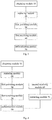
- Fig. 1 is a flow chart of a voiceprint login method based on artificial intelligence according to an embodiment of the present disclosure. As shown in Fig. 1 , the voiceprint login method based on artificial intelligence may include following steps.
- step S101 a login request of a user is received, and user information of the user is obtained.
- the voiceprint login method based on artificial intelligence is applied in the login system of the website.
- the user may send the login request to the login system via the client, and the login system obtains the user information of the user after obtaining the login request sent by the user via the client.
- the user information may include but be not limited to account/user name and user ID.
- the user before the user logins, the user may first registers.
- the voiceprint login method based on artificial intelligence may further include: receiving a registration request of the user, and providing a registration string to the user; receiving speech information of the user reading the registration string, and extracting a voiceprint of the user.
- the registration string may be a numerical string generated randomly. In addition, in order to cover a larger sample space, any number in the registration string only occurs once.
- the voiceprint login method based on artificial intelligence is applied in the login system of the website.
- the user may send the registration request to the login system via the client, and the login system may generate a registration string randomly after receiving the registration request sent by the user and provide the registration string to the user.
- the speech information generated by the user through reading the provided registration string can be received, and the speech recognition is performed on the speech information to generate corresponding text information, and then the text information is matched with the registration string text pre-stored in the system. If the matching is not successful, a matching error is returned to the user and the user is reminded of reading the registration string again. If the matching is successful, it is determined that the user registration is successful.
- an extraction may be performed on the speech information of the user reading the registration string by using the identity-vector (i-vector) modeling method so as to obtain the voiceprint of the user, and a correspondence between the user information of the user and the voiceprint is established and stored.
- the user may complete the registration via speech, thus simplifying the operation steps of the user.
- the i-vector modeling method may include following steps: performing an extraction on the speech information of the user reading the registration string; performing a Baum-Welch statistic on acoustic features of multiple speech segments in the speech information of the user reading the registration string in the condition of universal background model (UBM), and extracting multiple i-vectors of the multiple speech segments; obtaining a registration i-vector of the user according to the multiple i-vectors of the multiple speech segments.
- the i-vector modeling method may include two stages of signal processing and modeling.
- the signal processing includes signal pre-enhancement, voice activity detection (VDA), acoustic feature extraction, and feature processing, etc.
- the Baum-Welch statistic is performed on the acoustic feature (for example, MFCC) of each speech segment in the condition of UBM, to calculate the posterior probability, which follows the Gaussian distribution, and the expectation of the posterior probability is the i-vector.
- MFCC acoustic feature
- one speech segment u is divided into L-frame acoustic feature ⁇ y 1 , y 2 ,... y L ⁇ , a feature dimension of which is D.
- , c 1, 2,..., C is an index of the Gaussian model, P( c
- F is a CD ⁇ 1 vector consisting of all 1-order statistics F c
- T and ⁇ are a transfer matrix and a variance matrix of the i-vector extractor respectively, which are obtained by factorization during training and can be directly obtained herein
- operator () t represents the matrix transposition
- I is an unit matrix.
- operator norm() indicates the length normalization, i.e., changing the modulus of the vector in () to 1.
- the extraction is performed on the speech information of the user reading the registration string by using the above i-vector modeling method, to obtain the voiceprint of the user.
- the user may set replacement characters according to demands and preferences during the user registration.
- the voiceprint login method based on artificial intelligence may further include: providing an edit interface, and providing in the edit interface replacement symbols for replacing characters in the string; and receiving characters to be replaced and corresponding replacement symbols selected by the user to generate the character replacement reference information.
- the replacement symbol may be but not limited to the character (for example, !@#$% ⁇ &*()), picture (for example, water, fire and wind) and Chinese character (for example, " ", " ", and " ").
- the password may be friendlier, and the usability of the password is increased.
- an edit interface may be provided to the user before the registration string is provided to the user, and replacement symbols for replacing characters in the string may be provided in the edit interface, in which the replacement symbols may be special characters in the keyboard, Chinese characters or pictures, and the user may select the character to be replaced and the corresponding replacement symbol according to his needs and preferences.
- the character replacement reference information may be generated according to the user's selection. For example, the user may replace character 2 with symbol ? and replace character 8 with symbol & according to his preferences. For another example, the user may replace character 1 with symbol # and replace character 6 with symbol @ according to his preferences.
- the character replacement reference information may be generated according to the user settings, i.e., the character 2 is replaced with symbol ?, character 8 is replaced with symbol &, character 1 is replaced with symbol #, and character 6 is replaced with symbol @.
- the registration string may include the character to be replaced which are selected by the user.
- the characters for example, characters 1 and 6
- the registration string 32149658 is replaced with 32#49@58
- the registration string 32#49@58 after replacement is provided to the user, and when the user reads the registration string, he may read the replacement symbols # and @ in the registration string as the corresponding characters 1 and 6 according to the replacement symbols set by himself, i.e., the user reads the registration string 32#49@58 as 32149658.
- a login string is generated, and at least one character in the login string is replaced according to the character replacement reference information corresponding to the user information.
- the login string may be a numerical string.
- a login string may be generated randomly for the user, and the character replacement reference information set by the user previously may be found according to the user information, and the characters in the login string generated randomly may be replaced according to the character replacement reference information, in which the characters to be replaced and the characters after replacements are all from the character replacement reference information set by the user previously.
- the character replacement reference information of the user includes replacing character 1 with symbol # and replacing character 6 with symbol @, and the login string generated randomly is 91765, then the login string can be replaced as 9#7@5 according to the character replacement reference information.
- numbers in the login string generated randomly may be different from each other, and numbers in the registration string generated randomly may be different from each other.
- each number in the login string only occurs once, and the login string has the numbers to be replaced which are selected by the user.
- step S103 the login string after replacement is provided to the user, and speech information of the user reading the login string is received.
- the login string after replacement may be provided to the user, and the user may read the login string following the tips. After it is detected that the reading completes, the speech information of the user reading the login string is received.
- a login authentication is performed on the user according to the speech information of the user reading the login string.
- a speech recognition may be performed on the speech information of the user reading the login string to obtain text information corresponding to the speech information; the text information is matched with the login string; if the text information is consistent with the login string, a voiceprint matching is further performed on the speech information of the user reading the login string; and if the voiceprint matching is successful, it is determined that the user passes the login authentication.
- the speech recognition is performed on the speech information to obtain the corresponding text information, and then the text information is matched with the login string generated in advance. If the matching is not successful, an error is returned to the user and the user is reminded of reading the login string again, and only if the matching is successful, the voiceprint matching is further performed according to the speech information. If the voiceprint in the speech information is matched with the pre-stored voiceprint of the user, it may be determined that the user passes the login authentication, otherwise the authentication is regarded as failure.
- the voiceprint matching process for the speech information of the user reading the login string is realized as follows: performing an extraction on the speech information of the user reading the login string; performing a Baum-Welch statistic on acoustic features of speech in the speech information of the user reading the login string in the condition of universal background model, and extracting an identity-vector of the speech as a login identity-vector of the user; and comparing the login identity-vector with the registration identity-vector for determining whether the voiceprints are matched.
- the voiceprint matching process may include three stages of signal processing, voiceprint comparing and consistence determining.
- the signal processing in the voiceprint matching process is totally same as the signal processing in the registration process, and will not be elaborated herein.
- the i-vector generated at the login process and the i-vector generated at the registration process are compared and scored, in which methods such as cosine distance, support vector machine (SVM), Bayes classifier, and Gaussian Probability and Linear Discriminant Analysis (GPLDA) may be used.
- SVM support vector machine
- GPLDA Gaussian Probability and Linear Discriminant Analysis
- ⁇ r represents the i-vector of the r th person observed
- ⁇ is the true value of the voiceprint of the speaker
- ⁇ is a hidden variable and cannot be obtained directly
- ⁇ is a transfer matrix
- ⁇ r is an observation error and follows the Gaussian distribution of N(0, ⁇ ).
- a score fusion of multiple classifiers may be supported during the voiceprint authentication according to embodiments of the present disclosure.
- multiple classification algorithms may be used in the authentication process, for example, three classifiers such as SVM, GPLDA and cosine distance are used, and then the scores of these three classifiers are fused to obtain a final score.
- a multi-feature fusion may also be supported in the voiceprint authentication process according to embodiments of the present disclosure.
- multiple acoustic features may be extracted, and then same or different classifiers are used to score, and then the scores are fused together.
- MFCC and PLP features are extracted for one speech, and then i-vectors are obtained respectively based on MFCC and PLP and then input into the GPLDA classifier to obtain 2 scores, and finally the 2 scores are fused to one score.
- the above score obtained may be determined with a predetermined threshold, if the score is greater than the threshold, it is determined as the same speaker (i.e., the same user), i.e., it is determined that the user login is successful, otherwise it is determined as different speakers, i.e., it is determined that the user login fails.
- the registration string and the login string are generated randomly, such that the location of the replaced character in the registration string and the login string provided to the user after replacement is randomly distributed.
- the user reads the registration string and the login string, he reads the replacement character in the registration string and the login string as the character set by him.
- some characters are hidden according to the user's needs and preferences, which satisfies the user's psychological demand of not wishing the password to be displayed explicitly, thus improving the user experience.
- the edit interface may be first provided to the user, and in this edit interface, replacement symbols for replacing characters in the string are provided.
- the edit interface may have two attributes of "characters" and "displayed as”, and the user may set which characters need to be replaced with the replacement symbols in the edit interface, for example, replacing character 2 with symbol ? and replacing character 8 with symbol &.
- the character replacement reference information is generated according to the settings of the user.
- the registration string (for example, 67925843) is generated randomly, and characters in the registration string are replaced according to the character replacement reference information, and the registration string after replacement is provided to the user, such as the registration string 679?5&43 provided to the user after replacement, as shown in Fig. 2(b) .
- the user only needs to replace the replacement symbols in the string with the pronunciation of the characters set by him when reading, i.e., makes a pronunciation corresponding to 67925843 when reading.
- the voiceprint of the user may be extracted according to the speech of the user, for use in the later login authentication.
- a login string is generated randomly, for example, 915238.
- the login string 915238 is replaced according to the character replacement reference information corresponding to the user information, and the login string after replacement is provided to the user, such as the login string 915?3& provided to the user after replacement, as shown in Fig. 2(c) .
- the user only needs to replace the replacement symbols in the string with the pronunciation of the characters set by him when reading, i.e., makes a pronunciation corresponding to 915238 when reading. If the speech information of the user reading the login string is detected to be correct, the voiceprint authentication is further performed according to the speech, and if the voiceprint matching is successful, it is determined that the user login is successful.
- the login request of the user may be received first and the user information of the user may be obtained, and then the login string may be generated, at least one character of the login string may be replaced according to the character replacement reference information corresponding to the user information, the login string after replacement is provided to the user, the speech information of the user reading the login string is received, and the login authentication is performed on the user according to the speech information of the user reading the login string.
- the method has at least following advantages: (1) by using the voiceprint authentication method combining the voiceprint and the character replacement reference information set by the user, an additive effect of the safety of the voiceprint and the safety of the conventional password can be achieved, and the safety of the voiceprint password is increased; (2) some characters are hidden according the user's preferences, thus satisfying the user's psychological demand of not wishing the password to be displayed explicitly, and moreover, the user only needs to set some replacement characters without the need of remembering a long password, thus improving the user experience and increasing the safety of the password.
- the present disclosure also provides a voiceprint login apparatus based on artificial intelligence.
- the apparatus includes: an obtaining module, configured to receive a login request of a user, and to obtain user information of the user; a replacing module, configured to generate a login string, and to replace at least one character of the login string according to character replacement reference information corresponding to the user information; a first providing module, configured to provide the login string after replacement to the user; a first receiving module, configured to receive speech information of the user reading the login string; and an authentication module, configured to perform a login authentication on the user according to the speech information of the user reading the login string.
- Fig. 3 is a block diagram of a voiceprint login apparatus based on artificial intelligence according to an embodiment of the present disclosure.
- the voiceprint login apparatus based on artificial intelligence may include an obtaining module 10, a replacing module 20, a first providing module 30, a first receiving module 40 and an authentication module 50.
- the obtaining module 10 may be configured to receive a login request of a user, and to obtain user information of the user.
- the voiceprint login apparatus based on artificial intelligence according to embodiments of the present disclosure is applied in the login system of the website.
- the user may send the login request to the login system via the client, and the obtaining module 10 obtains the user information of the user after obtaining the login request sent by the user via the client.
- the user information may include but be not limited to account/user name and user ID.
- the replacing module 20 may be configured to generate a login string and to replace at least one character of the login string according to character replacement reference information corresponding to the user information.
- the login string may be a numerical string generated randomly.
- the replacing module 20 may generate a login string randomly for the user, find the character replacement reference information according to the user information, and replace characters in the login string generated randomly according to the character replacement reference information, in which all of the characters replaced and the characters after replacement come from the character replacement reference information.
- the character replacement reference information of the user include replacing character 1 with symbol # and replacing character 6 with symbol @, the login string generated randomly is 91765, then the login string may be replaced as 9#7@5 according to the character replacement reference information.
- each number in the login string can only occur once, and the login string should have the replaced numbers selected by the user.
- the first providing module 30 may be configured to provide the login string after replacement to the user.
- the first receiving module 40 may be configured to receive speech information of the user reading the login string. More specifically, the first providing module 30 may provide the login string after replacement to the user, and the user may read the login string following the tips. After the first receiving module 40 detects that the reading completes, it can receive the speech information of the user reading the login string.
- the authentication module 50 may be configured to perform a login authentication on the user according to the speech information of the user reading the login string.
- the process performed by the authentication module 50 for performing the login authentication on the user according to the speech information of the user reading the login string may be as follows: performing a speech recognition on the speech information of the user reading the login string to obtain text information corresponding to the speech information; matching the text information with the login string; if the text information is consistent with the login string, further performing a voiceprint matching on the speech information of the user reading the login string; and if the voiceprint matching is successful, determining that the user passes the login authentication.
- the speech recognition is performed on the speech information to obtain the corresponding text information, and then the text information is matched with the login string generated in advance. If the matching is not successful, an error is returned to the user and the user is reminded of reading the login string again, and only if the matching is successful, the voiceprint matching is further performed according to the speech information. If the voiceprint in the speech information is matched with the pre-stored voiceprint of the user, it may be determined that the user passes the login authentication, otherwise the authentication is regarded as failure.
- the authentication module 50 realizes voiceprint matching process for the speech information of the user reading the login string as follows: performing an extraction on the speech information of the user reading the login string; performing a Baum-Welch statistic on acoustic features of speech in the speech information of the user reading the login string in the condition of universal background model, and extracting an identity-vector of the speech as a login identity-vector of the user; and comparing the login identity-vector with the registration identity-vector for determining whether the voiceprints are matched.
- the special process reference may be made to the description in the voiceprint login method based on artificial intelligence according to embodiments of the present disclosure, which is not elaborated herein.
- the voiceprint login apparatus based on artificial intelligence may further include a second receiving module 60 and an extracting module 70.
- the second receiving module 60 may be configured to receive a registration request of the user and provide a registration string to the user before the obtaining module 10 receives the login request of the user and obtains the user information of the user.
- the extracting module 70 may be configured to receive speech information of the user reading the registration string and to extract a voiceprint of the user.
- the registration string may be a numerical string generated randomly.
- any number in the registration string only occurs once. It can be understood that, in embodiments of the present disclosure, numbers in the login string generated randomly may be different from each other, and numbers in the registration string may also be different from each other.
- the voiceprint login apparatus based on artificial intelligence is applied in the login system of the website.
- the user may send a registration request to the login system via the client, and a registration string may be generated randomly after the second receiving module 60 receives the registration request of the user, and the registration string is provided to the user.
- the extracting module 70 receives the speech information generated by the user through reading the provided registration string, and performs the speech recognition on the speech information to generate corresponding text information, and then matches the text information with the registration string text pre-stored in the system. If the matching is not successful, a matching error is returned to the user and the user is reminded of reading the registration string again.
- the extracting module 70 may perform the extraction on the speech information of the user reading the registration string by using the identity-vector (i-vector) modeling method so as to obtain the voiceprint of the user, and establish and store a correspondence between the user information of the user and the voiceprint.
- the user may complete the registration via speech, thus simplifying the operation steps of the user.
- the i-vector modeling method may include following steps: performing an extraction on the speech information of the user reading the registration string; performing a Baum-Welch statistic on acoustic features of multiple speech segments in the speech information of the user reading the registration string in the condition of universal background model (UBM), and extracting multiple i-vectors of the multiple speech segments; obtaining a registration i-vector of the user according to the multiple i-vectors of the multiple speech segments.
- UBM universal background model
- the voiceprint login apparatus based on artificial intelligence may further include a second providing module 80 and a generating module 90.
- the second providing module 80 may be configured to provide an edit interface and to provide in the edit interface replacement symbols for replacing characters in the string.
- the generating module 90 may be configured to receive characters and corresponding replacement symbols selected by the user, so as to generate the character replacement reference information.
- the replacement symbol may be but not limited to the character (for example, !@#$% ⁇ &*()), picture (for example, water, fire and wind) and Chinese character (for example, " ", " ", and " ").
- the password may be friendlier, and the usability of the password is increased.
- the second providing module 80 may provide an edit interface to the user and provide replacement symbols for replacing characters in the string in the edit interface, in which the replacement symbols may be special characters in the keyboard, Chinese characters or pictures, and the user may select the character to be replaced and the corresponding replacement symbol according to his needs and preferences.
- the generating module 90 may generate the character replacement reference information according to the user's selection. For example, the user may replace character 2 with symbol ? and replace character 8 with symbol & according to his preferences. For another example, the user may replace character 1 with symbol # and replace character 6 with symbol @ according to his preferences.
- the character replacement reference information may be generated according to the user settings, i.e., the character 2 is replaced with symbol ?, character 8 is replaced with symbol &, character 1 is replaced with symbol #, and character 6 is replaced with symbol @.
- the registration string may include the character to be replaced which are selected by the user.
- the characters for example, characters 1 and 6
- the registration string 32149658 is replaced with 32#49@58
- the registration string 32#49@58 after replacement is provided to the user, and when the user reads the registration string, he may read the replacement symbols # and @ in the registration string as the corresponding characters 1 and 6 according to the replacement symbols set by himself, i.e., the user reads the registration string 32#49@58 as 32149658.
- the registration string and the login string are generated randomly, such that the location of the replaced character in the registration string and the login string provided to the user after replacement is randomly distributed.
- the user reads the registration string and the login string, he reads the replacement character in the registration string and the login string as the character set by him.
- some characters are hidden according to the user's needs and preferences, which satisfies the user's psychological demand of not wishing the password to be displayed explicitly, thus improving the user experience.
- the obtaining module may receive the login request of the user and obtain the user information of the user, the replacing module may generate the login string, and replace at least one character of the login string according to the character replacement reference information corresponding to the user information, the first providing module provides the login string after replacement to the user, the first receiving module receives speech information of the user reading the login string, and the authentication module performs the login authentication on the user according to the speech information of the user reading the login string, which at least has following advantages: (1) by using the voiceprint authentication method combining the voiceprint and the character replacement reference information set by the user, an additive effect of the safety of the voiceprint and the safety of the conventional password can be achieved, and the safety of the voiceprint password is increased; (2) some characters are hidden according the user's preferences, thus satisfying the user's psychological demand of not wishing the password to be displayed explicitly, and moreover, the user only needs to set some replacement characters without the need of remembering a long password, thus improving the user experience and increasing the
- first and second are used herein for purposes of description and are not intended to indicate or imply relative importance or significance or imply the number of technical features.
- the feature defined by “first” or “second” may indicate or imply including at least one feature.
- at least one refers to one or more and “a plurality of” refers to two or more unless otherwise specified.
- Any process or method described in a flow chart or described herein in other ways may be understood to include one or more modules, segments or portions of codes of executable instructions for achieving specific logical functions or steps in the process, and the scope of a preferred embodiment of the present disclosure includes other implementations, in which the functions may be executed in other orders instead of the order illustrated or discussed, including in a basically simultaneous manner or in a reverse order, which should be understood by those skilled in the art.
- any process or method described in a flow chart or described herein in other ways may be understood to be a sequence table of executable instructions for achieving logical functions, which may be realized in any computer-readable medium for being used by the instruction execution system, device or apparatus (for example, the system based on the computer, the system including the processor or other systems capable of reading instructions from the instruction execution system, device or apparatus and executing the instructions) or being used in combination with the instruction execution system, device or apparatus.
- "computer-readable medium” may be any device including, storing, communicating, broadcasting or transmitting programs for being used by the instruction execution system, device or apparatus or being used in combination with the instruction execution system, device or apparatus.
- the computer-readable medium include: electrical connection (electronic device) having one or one wires, portable computer disk box (magnetic device), random access memory (RAM), read only memory (ROM), electrically programmable read-only-memory (EPROM or flash memory), fiber device, and portable CD-ROM.
- the computer-readable medium may even to paper on which programs can be printed or other appropriate medium, this is because optical scanning may be performed on the paper or the other medium, and then edit, interpretation or any other appropriate way if necessary are performed to electrically obtain the programs, and then the programs are stored in the computer storage.
- each part of the present disclosure may be realized by the hardware, software, firmware or their combination.
- a plurality of steps or methods may be realized by the software or firmware stored in the memory and executed by the appropriate instruction execution system.
- the steps or methods may be realized by one or a combination of the following techniques known in the art: a discrete logic circuit having a logic gate circuit for realizing a logic function of a data signal, an application-specific integrated circuit having an appropriate combination logic gate circuit, a programmable gate array (PGA), a field programmable gate array (FPGA), etc.
- each function cell of the embodiments of the present disclosure may be integrated in a processing module, or these cells may be separate physical existence, or two or more cells are integrated in a processing module.
- the integrated module may be realized in a form of hardware or in a form of software function modules. When the integrated module is realized in a form of software function module and is sold or used as a standalone product, the integrated module may be stored in a computer readable storage medium.
- the storage medium mentioned above may be read-only memories, magnetic disks or CD, etc.
Landscapes
- Engineering & Computer Science (AREA)
- Physics & Mathematics (AREA)
- Computer Security & Cryptography (AREA)
- Theoretical Computer Science (AREA)
- Health & Medical Sciences (AREA)
- Software Systems (AREA)
- General Physics & Mathematics (AREA)
- Acoustics & Sound (AREA)
- Human Computer Interaction (AREA)
- Audiology, Speech & Language Pathology (AREA)
- Multimedia (AREA)
- General Engineering & Computer Science (AREA)
- Computer Hardware Design (AREA)
- Computational Linguistics (AREA)
- Evolutionary Computation (AREA)
- Artificial Intelligence (AREA)
- Signal Processing (AREA)
- Computer Networks & Wireless Communication (AREA)
- Computer Vision & Pattern Recognition (AREA)
- Data Mining & Analysis (AREA)
- Mathematical Physics (AREA)
- Computing Systems (AREA)
- Biodiversity & Conservation Biology (AREA)
- General Health & Medical Sciences (AREA)
- Biomedical Technology (AREA)
- Life Sciences & Earth Sciences (AREA)
- Medical Informatics (AREA)
- Mathematical Analysis (AREA)
- Computational Mathematics (AREA)
- Mathematical Optimization (AREA)
- Pure & Applied Mathematics (AREA)
- Algebra (AREA)
- Probability & Statistics with Applications (AREA)
- Telephonic Communication Services (AREA)
- Information Transfer Between Computers (AREA)
- User Interface Of Digital Computer (AREA)
- Management, Administration, Business Operations System, And Electronic Commerce (AREA)
Abstract
Description
- This application claims priority to Chinese Patent Application No. "
201510125685.7 - Embodiments of the present disclosure generally relate to a login authentication technology field, and more particularly, to a voiceprint login method and apparatus based on artificial intelligence.
- Currently, for login systems of websites (or devices), identity authentication is generally performed by inputting an account and a password (or a gesture) by the user. After the authentication is successful, the login is performed. However, the login method based on the password or the gesture input has following problems: once the password or the gesture is known by another person, the other person can also complete the login, and thus there exists safety risk; moreover, in order to increase safety, the user generally sets different passwords with special characters for different objects, thus obviously bringing great memory burden to the user.
- In addition, there have appeared methods in which voiceprint is used as the password for login authentication. However, the conventional voiceprint password is easily affected by factors such as environment noise and channel difference, and thus the reliability is not good, and especially in the field such as finance and the field related to secret, there exists safety problems.
- Embodiments of the present disclosure seek to solve at least one of the problems existing in the related art to at least some extent.
- Accordingly, a first objective of the present disclosure is to provide a voiceprint login method based artificial intelligence. With the method, on one hand, by using the voiceprint authentication method combining the voiceprint and the character replacement reference information set by the user, the safety of the voiceprint password is increased, and on the other hand, some characters are hidden according the user's preferences, which satisfies the user's psychological demand of not wishing the password to be displayed explicitly, thus improving the user experience and increasing the safety of the password.
- A second objective of the present disclosure is to provide a voiceprint login apparatus based on artificial intelligence.
- In order to achieve above objectives, embodiments of a first aspect of the present disclosure provide a voiceprint login method based on artificial intelligence, including: S1, receiving a login request of a user, and obtaining user information of the user; S2, generating a login string, and replacing at least one character of the login string according to character replacement reference information corresponding to the user information; S3, providing the login string after replacement to the user, and receiving speech information of the user reading the login string; and S4, performing a login authentication on the user according to the speech information of the user reading the login string.
- With the voiceprint login method based on artificial intelligence according to embodiments of the present disclosure, the login request of the user may be received first and the user information of the user may be obtained, and then the login string may be generated, at least one character of the login string may be replaced according to the character replacement reference information corresponding to the user information, the login string after replacement is provided to the user, the speech information of the user reading the login string is received, and the login authentication is performed on the user according to the speech information of the user reading the login string. The method has at least following advantages: (1) by using the voiceprint authentication method combining the voiceprint and the character replacement reference information set by the user, an additive effect of the safety of the voiceprint and the safety of the conventional password can be achieved, and the safety of the voiceprint password is increased; (2) some characters are hidden according the user's preferences, thus satisfying the user's psychological demand of not wishing the password to be displayed explicitly, and moreover, the user only needs to set some replacement characters without the need of remembering a long password, thus improving the user experience and increasing the safety of the password.
- In order to achieve above objectives, embodiments of a second aspect of the present disclosure provide a voiceprint login apparatus based on artificial intelligence, including: an obtaining module, configured to receive a login request of a user, and to obtain user information of the user; a replacing module, configured to generate a login string, and to replace at least one character of the login string according to character replacement reference information corresponding to the user information; a first providing module, configured to provide the login string after replacement to the user; a first receiving module, configured to receive speech information of the user reading the login string; and an authentication module, configured to perform a login authentication on the user according to the speech information of the user reading the login string.
- With the voiceprint login apparatus based on artificial intelligence according to embodiments of the present disclosure, the obtaining module may receive the login request of the user and obtain the user information of the user, the replacing module may generate the login string, and replace at least one character of the login string according to the character replacement reference information corresponding to the user information, the first providing module provides the login string after replacement to the user, the first receiving module receives speech information of the user reading the login string, and the authentication module performs the login authentication on the user according to the speech information of the user reading the login string, which at least has following advantages: (1) by using the voiceprint authentication method combining the voiceprint and the character replacement reference information set by the user, an additive effect of the safety of the voiceprint and the safety of the conventional password can be achieved, and the safety of the voiceprint password is increased; (2) some characters are hidden according the user's preferences, thus satisfying the user's psychological demand of not wishing the password to be displayed explicitly, and moreover, the user only needs to set some replacement characters without the need of remembering a long password, thus improving the user experience and increasing the safety of the password.
- Additional aspects and advantages of embodiments of present disclosure will be given in part in the following descriptions, become apparent in part from the following descriptions, or be learned from the practice of the embodiments of the present disclosure.
- These and other aspects and advantages of embodiments of the present disclosure will become apparent and more readily appreciated from the following descriptions made with reference to the accompanying drawings, in which:
-
Fig. 1 is a flow chart of a voiceprint login method based on artificial intelligence according to an embodiment of the present disclosure; -
Fig. 2(a) is a schematic diagram of an edit interface provided for a user according to an embodiment of the present disclosure; -
Fig. 2(b) is a schematic diagram of a registration string provided for a user after replacement according to an embodiment of the present disclosure; -
Fig. 2(c) is a schematic diagram of a login string provided for a user after replacement according to an embodiment of the present disclosure; -
Fig. 3 is a block diagram of a voiceprint login apparatus based on artificial intelligence according to an embodiment of the present disclosure; -
Fig. 4 is a block diagram of a voiceprint login apparatus based on artificial intelligence according to another embodiment of the present disclosure; and -
Fig. 5 is a block diagram of a voiceprint login apparatus based on artificial intelligence according to yet another embodiment of the present disclosure. - Reference will be made in detail to embodiments of the present disclosure. Embodiments of the present disclosure will be shown in drawings, in which the same or similar elements and the elements having same or similar functions are denoted by like reference numerals throughout the descriptions. The embodiments described herein according to drawings are explanatory and illustrative, not construed to limit the present disclosure.
- A voiceprint login method and apparatus based on artificial intelligence according to embodiments of the present disclosure will be described in the following with reference to drawings.
- Embodiments of the present disclosure provide a voiceprint login method based on artificial intelligence, including: S1, receiving a login request of a user, and obtaining user information of the user; S2, generating a login string, and replacing at least one character of the login string according to character replacement reference information corresponding to the user information; S3, providing the login string after replacement to the user, and receiving speech information of the user reading the login string; and S4, performing a login authentication on the user according to the speech information of the user reading the login string.
-
Fig. 1 is a flow chart of a voiceprint login method based on artificial intelligence according to an embodiment of the present disclosure. As shown inFig. 1 , the voiceprint login method based on artificial intelligence may include following steps. - At step S101, a login request of a user is received, and user information of the user is obtained.
- For example, assume that the voiceprint login method based on artificial intelligence according to embodiments of the present disclosure is applied in the login system of the website. When the user opens the website to login, the user may send the login request to the login system via the client, and the login system obtains the user information of the user after obtaining the login request sent by the user via the client. In embodiments of the present disclosure, the user information may include but be not limited to account/user name and user ID.
- Further, in an embodiment of the present disclosure, before the user logins, the user may first registers. In other words, before receiving the login request of the user and obtaining the user information of the user (step S101), the voiceprint login method based on artificial intelligence may further include: receiving a registration request of the user, and providing a registration string to the user; receiving speech information of the user reading the registration string, and extracting a voiceprint of the user. In embodiments of the present disclosure, the registration string may be a numerical string generated randomly. In addition, in order to cover a larger sample space, any number in the registration string only occurs once.
- Specifically, assume that the voiceprint login method based on artificial intelligence according to embodiments of the present disclosure is applied in the login system of the website. When the user opens the website to register, the user may send the registration request to the login system via the client, and the login system may generate a registration string randomly after receiving the registration request sent by the user and provide the registration string to the user. Then, the speech information generated by the user through reading the provided registration string can be received, and the speech recognition is performed on the speech information to generate corresponding text information, and then the text information is matched with the registration string text pre-stored in the system. If the matching is not successful, a matching error is returned to the user and the user is reminded of reading the registration string again. If the matching is successful, it is determined that the user registration is successful. Moreover, an extraction may be performed on the speech information of the user reading the registration string by using the identity-vector (i-vector) modeling method so as to obtain the voiceprint of the user, and a correspondence between the user information of the user and the voiceprint is established and stored. Thus, the user may complete the registration via speech, thus simplifying the operation steps of the user.
- In embodiments of the present disclosure, the i-vector modeling method may include following steps: performing an extraction on the speech information of the user reading the registration string; performing a Baum-Welch statistic on acoustic features of multiple speech segments in the speech information of the user reading the registration string in the condition of universal background model (UBM), and extracting multiple i-vectors of the multiple speech segments; obtaining a registration i-vector of the user according to the multiple i-vectors of the multiple speech segments. Specifically, the i-vector modeling method may include two stages of signal processing and modeling. The signal processing includes signal pre-enhancement, voice activity detection (VDA), acoustic feature extraction, and feature processing, etc. At the modeling stage, the Baum-Welch statistic is performed on the acoustic feature (for example, MFCC) of each speech segment in the condition of UBM, to calculate the posterior probability, which follows the Gaussian distribution, and the expectation of the posterior probability is the i-vector.
- For example, one speech segment u is divided into L-frame acoustic feature {y 1,y 2,...yL }, a feature dimension of which is D. The 0-order Baum-Welch statistic and the 1-order Baum-Welch statistic are calculated on the UBM model Ω including C Gaussian, which is as follows:


- Assume that the speech information of the user reading the registration string during the registration has K sentences, and from each of which, one independent i-vector is extracted. When it is detected the user has read the whole numerical string, these K i-vectors are combined to calculate a unique i-vector of the user, which is used to represent the voiceprint characteristic of the user, and is calculated as follows:


- Thus, the extraction is performed on the speech information of the user reading the registration string by using the above i-vector modeling method, to obtain the voiceprint of the user.
- Further, in an embodiment of the present disclosure, the user may set replacement characters according to demands and preferences during the user registration. Specifically, the voiceprint login method based on artificial intelligence may further include: providing an edit interface, and providing in the edit interface replacement symbols for replacing characters in the string; and receiving characters to be replaced and corresponding replacement symbols selected by the user to generate the character replacement reference information. In embodiments of the present disclosure, the replacement symbol may be but not limited to the character (for example, !@#$%^&*()), picture (for example, water, fire and wind) and Chinese character (for example, "", "
 ", and "
 "). Thus, by combing special symbols such as characters, pictures and Chinese characters, the password may be friendlier, and the usability of the password is increased.
- More specifically, during the user registration, an edit interface may be provided to the user before the registration string is provided to the user, and replacement symbols for replacing characters in the string may be provided in the edit interface, in which the replacement symbols may be special characters in the keyboard, Chinese characters or pictures, and the user may select the character to be replaced and the corresponding replacement symbol according to his needs and preferences. After receiving the characters to be replaced and the corresponding replacement symbols selected by the user, the character replacement reference information may be generated according to the user's selection. For example, the user may replace
character 2 with symbol ? and replacecharacter 8 with symbol & according to his preferences. For another example, the user may replace character 1 with symbol # and replace character 6 with symbol @ according to his preferences. Thus, the character replacement reference information may be generated according to the user settings, i.e., thecharacter 2 is replaced with symbol ?,character 8 is replaced with symbol &, character 1 is replaced with symbol #, and character 6 is replaced with symbol @. - It should be noted that, in an embodiment of the present disclosure, the registration string may include the character to be replaced which are selected by the user. Thus, after the character replacement reference information is generated, when the registration string is generated randomly, the characters (for example, characters 1 and 6) to be replaced which are selected by the user in the registration string (for example, 32149658) may be replaced according to the character replacement reference information, i.e., the registration string 32149658 is replaced with 32#49@58, and the registration string 32#49@58 after replacement is provided to the user, and when the user reads the registration string, he may read the replacement symbols # and @ in the registration string as the corresponding characters 1 and 6 according to the replacement symbols set by himself, i.e., the user reads the registration string 32#49@58 as 32149658.
- At step S102, a login string is generated, and at least one character in the login string is replaced according to the character replacement reference information corresponding to the user information. In embodiments of the present disclosure, the login string may be a numerical string. Thus, the recording deception may be avoided, and the login safety is increased.
- Specifically, after the login request of the user is received and the user information of the user is obtained, a login string may be generated randomly for the user, and the character replacement reference information set by the user previously may be found according to the user information, and the characters in the login string generated randomly may be replaced according to the character replacement reference information, in which the characters to be replaced and the characters after replacements are all from the character replacement reference information set by the user previously. For example, the character replacement reference information of the user includes replacing character 1 with symbol # and replacing character 6 with symbol @, and the login string generated randomly is 91765, then the login string can be replaced as 9#7@5 according to the character replacement reference information. It can be understood that, in embodiments of the present disclosure, numbers in the login string generated randomly may be different from each other, and numbers in the registration string generated randomly may be different from each other. In addition, in order to make the numerical string read by the user during the login authentication as close to the voiceprint characteristic registered by the user as possible, each number in the login string only occurs once, and the login string has the numbers to be replaced which are selected by the user.
- At step S103, the login string after replacement is provided to the user, and speech information of the user reading the login string is received.
- Specifically, the login string after replacement may be provided to the user, and the user may read the login string following the tips. After it is detected that the reading completes, the speech information of the user reading the login string is received.
- At step S104, a login authentication is performed on the user according to the speech information of the user reading the login string.
- Specifically, in an embodiment of the present disclosure, a speech recognition may be performed on the speech information of the user reading the login string to obtain text information corresponding to the speech information; the text information is matched with the login string; if the text information is consistent with the login string, a voiceprint matching is further performed on the speech information of the user reading the login string; and if the voiceprint matching is successful, it is determined that the user passes the login authentication.
- More specifically, after the speech information of the user reading the login string is received, the speech recognition is performed on the speech information to obtain the corresponding text information, and then the text information is matched with the login string generated in advance. If the matching is not successful, an error is returned to the user and the user is reminded of reading the login string again, and only if the matching is successful, the voiceprint matching is further performed according to the speech information. If the voiceprint in the speech information is matched with the pre-stored voiceprint of the user, it may be determined that the user passes the login authentication, otherwise the authentication is regarded as failure.
- Since the login string is a series of numbers, the user generally reads the whole string in one breath when reading the string, i.e., there is only one speech segment in the speech information generated. Taking the speech information having one speech segment as an example, in an embodiment of the present disclosure, the voiceprint matching process for the speech information of the user reading the login string is realized as follows: performing an extraction on the speech information of the user reading the login string; performing a Baum-Welch statistic on acoustic features of speech in the speech information of the user reading the login string in the condition of universal background model, and extracting an identity-vector of the speech as a login identity-vector of the user; and comparing the login identity-vector with the registration identity-vector for determining whether the voiceprints are matched. Specifically, the voiceprint matching process may include three stages of signal processing, voiceprint comparing and consistence determining. The signal processing in the voiceprint matching process is totally same as the signal processing in the registration process, and will not be elaborated herein. At the voiceprint matching stage, the i-vector generated at the login process and the i-vector generated at the registration process are compared and scored, in which methods such as cosine distance, support vector machine (SVM), Bayes classifier, and Gaussian Probability and Linear Discriminant Analysis (GPLDA) may be used. In the following, the GPLDA method is used to describe the voiceprint matching process.
- Assume that the i-vector from the authentication process is η1 and the i-vector of the voiceprint registered by the user on the server is η2 then there are two assumptions: H1, both of them belong to a same speaker; H0, they belong to different speakers. Thus, the log-likelihood ratio score of this hypothesis testing is obtained as:


- In addition, a score fusion of multiple classifiers may be supported during the voiceprint authentication according to embodiments of the present disclosure. In other words, multiple classification algorithms may be used in the authentication process, for example, three classifiers such as SVM, GPLDA and cosine distance are used, and then the scores of these three classifiers are fused to obtain a final score.
- Moreover, a multi-feature fusion may also be supported in the voiceprint authentication process according to embodiments of the present disclosure. In other words, multiple acoustic features may be extracted, and then same or different classifiers are used to score, and then the scores are fused together. For example, both MFCC and PLP features are extracted for one speech, and then i-vectors are obtained respectively based on MFCC and PLP and then input into the GPLDA classifier to obtain 2 scores, and finally the 2 scores are fused to one score.
- Finally, at the consistence determining stage in the voiceprint matching process, the above score obtained may be determined with a predetermined threshold, if the score is greater than the threshold, it is determined as the same speaker (i.e., the same user), i.e., it is determined that the user login is successful, otherwise it is determined as different speakers, i.e., it is determined that the user login fails.
- It should be noted that, in embodiments of the present disclosure, the registration string and the login string are generated randomly, such that the location of the replaced character in the registration string and the login string provided to the user after replacement is randomly distributed. When the user reads the registration string and the login string, he reads the replacement character in the registration string and the login string as the character set by him. Thus, some characters are hidden according to the user's needs and preferences, which satisfies the user's psychological demand of not wishing the password to be displayed explicitly, thus improving the user experience.
- In order to make those skilled in the art clearly understand the present disclosure, below examples will be given.
- For example, when the registration request of the user is received, the edit interface may be first provided to the user, and in this edit interface, replacement symbols for replacing characters in the string are provided. As shown in
Fig. 2(a) , the edit interface may have two attributes of "characters" and "displayed as", and the user may set which characters need to be replaced with the replacement symbols in the edit interface, for example, replacingcharacter 2 with symbol ? and replacingcharacter 8 with symbol &. After the user completes the setting, the character replacement reference information is generated according to the settings of the user. Then, the registration string (for example, 67925843) is generated randomly, and characters in the registration string are replaced according to the character replacement reference information, and the registration string after replacement is provided to the user, such as theregistration string 679?5&43 provided to the user after replacement, as shown inFig. 2(b) . The user only needs to replace the replacement symbols in the string with the pronunciation of the characters set by him when reading, i.e., makes a pronunciation corresponding to 67925843 when reading. Moreover, the voiceprint of the user may be extracted according to the speech of the user, for use in the later login authentication. When the login request of the user is received, a login string is generated randomly, for example, 915238. Then, the login string 915238 is replaced according to the character replacement reference information corresponding to the user information, and the login string after replacement is provided to the user, such as thelogin string 915?3& provided to the user after replacement, as shown inFig. 2(c) . Similarly, the user only needs to replace the replacement symbols in the string with the pronunciation of the characters set by him when reading, i.e., makes a pronunciation corresponding to 915238 when reading. If the speech information of the user reading the login string is detected to be correct, the voiceprint authentication is further performed according to the speech, and if the voiceprint matching is successful, it is determined that the user login is successful. - With the voiceprint login method based on artificial intelligence according to embodiments of the present disclosure, the login request of the user may be received first and the user information of the user may be obtained, and then the login string may be generated, at least one character of the login string may be replaced according to the character replacement reference information corresponding to the user information, the login string after replacement is provided to the user, the speech information of the user reading the login string is received, and the login authentication is performed on the user according to the speech information of the user reading the login string. The method has at least following advantages: (1) by using the voiceprint authentication method combining the voiceprint and the character replacement reference information set by the user, an additive effect of the safety of the voiceprint and the safety of the conventional password can be achieved, and the safety of the voiceprint password is increased; (2) some characters are hidden according the user's preferences, thus satisfying the user's psychological demand of not wishing the password to be displayed explicitly, and moreover, the user only needs to set some replacement characters without the need of remembering a long password, thus improving the user experience and increasing the safety of the password.
- In order to achieve above embodiments, the present disclosure also provides a voiceprint login apparatus based on artificial intelligence. The apparatus includes: an obtaining module, configured to receive a login request of a user, and to obtain user information of the user; a replacing module, configured to generate a login string, and to replace at least one character of the login string according to character replacement reference information corresponding to the user information; a first providing module, configured to provide the login string after replacement to the user; a first receiving module, configured to receive speech information of the user reading the login string; and an authentication module, configured to perform a login authentication on the user according to the speech information of the user reading the login string.
-
Fig. 3 is a block diagram of a voiceprint login apparatus based on artificial intelligence according to an embodiment of the present disclosure. As shown inFig. 3 , the voiceprint login apparatus based on artificial intelligence may include an obtainingmodule 10, a replacingmodule 20, a first providingmodule 30, afirst receiving module 40 and anauthentication module 50. - Specifically, the obtaining
module 10 may be configured to receive a login request of a user, and to obtain user information of the user. For example, assume that the voiceprint login apparatus based on artificial intelligence according to embodiments of the present disclosure is applied in the login system of the website. When the user opens the website to login, the user may send the login request to the login system via the client, and the obtainingmodule 10 obtains the user information of the user after obtaining the login request sent by the user via the client. In embodiments of the present disclosure, the user information may include but be not limited to account/user name and user ID. - The replacing
module 20 may be configured to generate a login string and to replace at least one character of the login string according to character replacement reference information corresponding to the user information. In embodiments of the present disclosure, the login string may be a numerical string generated randomly. Thus, the recording fraud may be avoided and the safety of the login may be increased. More specifically, after the obtainingmodule 10 receives the login request of the user and receives the user information of the user, the replacingmodule 20 may generate a login string randomly for the user, find the character replacement reference information according to the user information, and replace characters in the login string generated randomly according to the character replacement reference information, in which all of the characters replaced and the characters after replacement come from the character replacement reference information. For example, the character replacement reference information of the user include replacing character 1 with symbol # and replacing character 6 with symbol @, the login string generated randomly is 91765, then the login string may be replaced as 9#7@5 according to the character replacement reference information. In order to make the numerical string read by the user during the login authentication as closer to the voiceprint feature registered by the user as possible, each number in the login string can only occur once, and the login string should have the replaced numbers selected by the user. - The first providing
module 30 may be configured to provide the login string after replacement to the user. Thefirst receiving module 40 may be configured to receive speech information of the user reading the login string. More specifically, the first providingmodule 30 may provide the login string after replacement to the user, and the user may read the login string following the tips. After thefirst receiving module 40 detects that the reading completes, it can receive the speech information of the user reading the login string. - The
authentication module 50 may be configured to perform a login authentication on the user according to the speech information of the user reading the login string. Specifically, in embodiments of the present disclosure, the process performed by theauthentication module 50 for performing the login authentication on the user according to the speech information of the user reading the login string may be as follows: performing a speech recognition on the speech information of the user reading the login string to obtain text information corresponding to the speech information; matching the text information with the login string; if the text information is consistent with the login string, further performing a voiceprint matching on the speech information of the user reading the login string; and if the voiceprint matching is successful, determining that the user passes the login authentication. - More specifically, after the
authentication module 50 receives the speech information of the user reading the login string, the speech recognition is performed on the speech information to obtain the corresponding text information, and then the text information is matched with the login string generated in advance. If the matching is not successful, an error is returned to the user and the user is reminded of reading the login string again, and only if the matching is successful, the voiceprint matching is further performed according to the speech information. If the voiceprint in the speech information is matched with the pre-stored voiceprint of the user, it may be determined that the user passes the login authentication, otherwise the authentication is regarded as failure. - Since the login string is a series of numbers, the user generally reads the whole string in one breath when reading the string, i.e., there is only one speech segment in the speech information generated. Taking the speech information having one speech segment as an example, in an embodiment of the present disclosure, the
authentication module 50 realizes voiceprint matching process for the speech information of the user reading the login string as follows: performing an extraction on the speech information of the user reading the login string; performing a Baum-Welch statistic on acoustic features of speech in the speech information of the user reading the login string in the condition of universal background model, and extracting an identity-vector of the speech as a login identity-vector of the user; and comparing the login identity-vector with the registration identity-vector for determining whether the voiceprints are matched. With respect to the special process, reference may be made to the description in the voiceprint login method based on artificial intelligence according to embodiments of the present disclosure, which is not elaborated herein. - Further, in an embodiment of the present disclosure, and as shown in
Fig. 4 , the voiceprint login apparatus based on artificial intelligence may further include asecond receiving module 60 and an extractingmodule 70. Specifically, thesecond receiving module 60 may be configured to receive a registration request of the user and provide a registration string to the user before the obtainingmodule 10 receives the login request of the user and obtains the user information of the user. The extractingmodule 70 may be configured to receive speech information of the user reading the registration string and to extract a voiceprint of the user. In embodiments of the present disclosure, the registration string may be a numerical string generated randomly. In addition, in order to cover a greater sample space, any number in the registration string only occurs once. It can be understood that, in embodiments of the present disclosure, numbers in the login string generated randomly may be different from each other, and numbers in the registration string may also be different from each other. - More specifically, assume that the voiceprint login apparatus based on artificial intelligence according to embodiments of the present disclosure is applied in the login system of the website. When the user opens the website to register, the user may send a registration request to the login system via the client, and a registration string may be generated randomly after the
second receiving module 60 receives the registration request of the user, and the registration string is provided to the user. Then, the extractingmodule 70 receives the speech information generated by the user through reading the provided registration string, and performs the speech recognition on the speech information to generate corresponding text information, and then matches the text information with the registration string text pre-stored in the system. If the matching is not successful, a matching error is returned to the user and the user is reminded of reading the registration string again. If the matching is successful, it is determined that the user registration is successful. Moreover, the extractingmodule 70 may perform the extraction on the speech information of the user reading the registration string by using the identity-vector (i-vector) modeling method so as to obtain the voiceprint of the user, and establish and store a correspondence between the user information of the user and the voiceprint. Thus, the user may complete the registration via speech, thus simplifying the operation steps of the user. - In embodiments of the present disclosure, the i-vector modeling method may include following steps: performing an extraction on the speech information of the user reading the registration string; performing a Baum-Welch statistic on acoustic features of multiple speech segments in the speech information of the user reading the registration string in the condition of universal background model (UBM), and extracting multiple i-vectors of the multiple speech segments; obtaining a registration i-vector of the user according to the multiple i-vectors of the multiple speech segments. With respect to the process, reference may be made to the description in the voiceprint login method based on artificial intelligence according to embodiments of the present disclosure, which is not elaborated herein.
- Further, in an embodiment of the present disclosure, and as shown in
Fig. 5 , the voiceprint login apparatus based on artificial intelligence may further include a second providingmodule 80 and agenerating module 90. Specifically, the second providingmodule 80 may be configured to provide an edit interface and to provide in the edit interface replacement symbols for replacing characters in the string. The generatingmodule 90 may be configured to receive characters and corresponding replacement symbols selected by the user, so as to generate the character replacement reference information. In embodiments of the present disclosure, the replacement symbol may be but not limited to the character (for example, !@#$%^&*()), picture (for example, water, fire and wind) and Chinese character (for example, "", "", and ""). Thus, by combing special symbols such as characters, pictures and Chinese characters, the password may be friendlier, and the usability of the password is increased. - More specifically, during the user registration, before the
second receiving module 60 provides the registration string to the user, the second providingmodule 80 may provide an edit interface to the user and provide replacement symbols for replacing characters in the string in the edit interface, in which the replacement symbols may be special characters in the keyboard, Chinese characters or pictures, and the user may select the character to be replaced and the corresponding replacement symbol according to his needs and preferences. After thegenerating module 90 receives the characters to be replaced and the corresponding replacement symbols selected by the user, it may generate the character replacement reference information according to the user's selection. For example, the user may replacecharacter 2 with symbol ? and replacecharacter 8 with symbol & according to his preferences. For another example, the user may replace character 1 with symbol # and replace character 6 with symbol @ according to his preferences. Thus, the character replacement reference information may be generated according to the user settings, i.e., thecharacter 2 is replaced with symbol ?,character 8 is replaced with symbol &, character 1 is replaced with symbol #, and character 6 is replaced with symbol @. - It should be noted that, in an embodiment of the present disclosure, the registration string may include the character to be replaced which are selected by the user. Thus, after the
generating module 90 generates the character replacement reference information, and when thesecond receiving module 60 generates the registration string randomly, the characters (for example, characters 1 and 6) to be replaced which are selected by the user in the registration string (for example, 32149658) may be replaced according to the character replacement reference information, i.e., the registration string 32149658 is replaced with 32#49@58, and the registration string 32#49@58 after replacement is provided to the user, and when the user reads the registration string, he may read the replacement symbols # and @ in the registration string as the corresponding characters 1 and 6 according to the replacement symbols set by himself, i.e., the user reads the registration string 32#49@58 as 32149658. - It should be noted that, in embodiments of the present disclosure, the registration string and the login string are generated randomly, such that the location of the replaced character in the registration string and the login string provided to the user after replacement is randomly distributed. When the user reads the registration string and the login string, he reads the replacement character in the registration string and the login string as the character set by him. Thus, some characters are hidden according to the user's needs and preferences, which satisfies the user's psychological demand of not wishing the password to be displayed explicitly, thus improving the user experience.
- With the voiceprint login apparatus based on artificial intelligence according to embodiments of the present disclosure, the obtaining module may receive the login request of the user and obtain the user information of the user, the replacing module may generate the login string, and replace at least one character of the login string according to the character replacement reference information corresponding to the user information, the first providing module provides the login string after replacement to the user, the first receiving module receives speech information of the user reading the login string, and the authentication module performs the login authentication on the user according to the speech information of the user reading the login string, which at least has following advantages: (1) by using the voiceprint authentication method combining the voiceprint and the character replacement reference information set by the user, an additive effect of the safety of the voiceprint and the safety of the conventional password can be achieved, and the safety of the voiceprint password is increased; (2) some characters are hidden according the user's preferences, thus satisfying the user's psychological demand of not wishing the password to be displayed explicitly, and moreover, the user only needs to set some replacement characters without the need of remembering a long password, thus improving the user experience and increasing the safety of the password.
- It should be noted that, in the description of the present disclosure, terms such as "first" and "second" are used herein for purposes of description and are not intended to indicate or imply relative importance or significance or imply the number of technical features. Furthermore, the feature defined by "first" or "second" may indicate or imply including at least one feature. In the description of the present disclosure, "at least one" refers to one or more and "a plurality of" refers to two or more unless otherwise specified.
- Reference throughout this specification to "an embodiment," "some embodiments," "one embodiment", "another example," "an example," "a specific example," or "some examples," means that a particular feature, structure, material, or characteristic described in connection with the embodiment or example is included in at least one embodiment or example of the present disclosure. Thus, the appearances of the phrases such as "in some embodiments," "in one embodiment", "in an embodiment", "in another example," "in an example," "in a specific example," or "in some examples," in various places throughout this specification are not necessarily referring to the same embodiment or example of the present disclosure. Furthermore, the particular features, structures, materials, or characteristics may be combined in any suitable manner in one or more embodiments or examples.
- Any process or method described in a flow chart or described herein in other ways may be understood to include one or more modules, segments or portions of codes of executable instructions for achieving specific logical functions or steps in the process, and the scope of a preferred embodiment of the present disclosure includes other implementations, in which the functions may be executed in other orders instead of the order illustrated or discussed, including in a basically simultaneous manner or in a reverse order, which should be understood by those skilled in the art.
- Any process or method described in a flow chart or described herein in other ways may be understood to be a sequence table of executable instructions for achieving logical functions, which may be realized in any computer-readable medium for being used by the instruction execution system, device or apparatus (for example, the system based on the computer, the system including the processor or other systems capable of reading instructions from the instruction execution system, device or apparatus and executing the instructions) or being used in combination with the instruction execution system, device or apparatus. In the specification, "computer-readable medium" may be any device including, storing, communicating, broadcasting or transmitting programs for being used by the instruction execution system, device or apparatus or being used in combination with the instruction execution system, device or apparatus. Specific examples of the computer-readable medium (non-exhaustiveness list) include: electrical connection (electronic device) having one or one wires, portable computer disk box (magnetic device), random access memory (RAM), read only memory (ROM), electrically programmable read-only-memory (EPROM or flash memory), fiber device, and portable CD-ROM. In addition, the computer-readable medium may even to paper on which programs can be printed or other appropriate medium, this is because optical scanning may be performed on the paper or the other medium, and then edit, interpretation or any other appropriate way if necessary are performed to electrically obtain the programs, and then the programs are stored in the computer storage.
- It should be understood that each part of the present disclosure may be realized by the hardware, software, firmware or their combination. In the above embodiments, a plurality of steps or methods may be realized by the software or firmware stored in the memory and executed by the appropriate instruction execution system. For example, if it is realized by the hardware, likewise in another embodiment, the steps or methods may be realized by one or a combination of the following techniques known in the art: a discrete logic circuit having a logic gate circuit for realizing a logic function of a data signal, an application-specific integrated circuit having an appropriate combination logic gate circuit, a programmable gate array (PGA), a field programmable gate array (FPGA), etc.
- Those skilled in the art shall understand that all or parts of the steps in the above exemplifying method of the present disclosure may be achieved by commanding the related hardware with programs. The programs may be stored in a computer readable storage medium, and the programs include one or a combination of the steps in the method embodiments of the present disclosure when run on a computer.
- In addition, each function cell of the embodiments of the present disclosure may be integrated in a processing module, or these cells may be separate physical existence, or two or more cells are integrated in a processing module. The integrated module may be realized in a form of hardware or in a form of software function modules. When the integrated module is realized in a form of software function module and is sold or used as a standalone product, the integrated module may be stored in a computer readable storage medium.
- The storage medium mentioned above may be read-only memories, magnetic disks or CD, etc.
- Although explanatory embodiments have been shown and described, it would be appreciated by those skilled in the art that the above embodiments cannot be construed to limit the present disclosure, and changes, alternatives, and modifications can be made in the embodiments without departing from scope of the present disclosure.
Claims (22)
- A voiceprint login method based on artificial intelligence, comprising:S1, receiving a login request of a user, and obtaining user information of the user;S2, generating a login string, and replacing at least one character of the login string according to character replacement reference information corresponding to the user information;S3, providing the login string after replacement to the user, and receiving speech information of the user reading the login string; andS4, performing a login authentication on the user according to the speech information of the user reading the login string.
- The method according to claim 1, wherein performing a login authentication on the user according to the speech information of the user reading the login string comprises:S41, performing a speech recognition on the speech information of the user reading the login string to obtain text information corresponding to the speech information;S42, matching the text information with the login string;S43, if the text information is consistent with the login string, further performing a voiceprint matching on the speech information of the user reading the login string; andS44, if the voiceprint matching is successful, determining that the user passes the login authentication.
- The method according to claim 1 or 2, before step S1, further comprising:S5, receiving a registration request of the user, and providing a registration string to the user; andS6, receiving speech information of the user reading the registration string, and extracting a voiceprint of the user.
- The method according to claim 3, further comprising:S7, providing an edit interface, and providing in the edit interface replacement symbols for replacing characters in the string; andS8, receiving characters to be replaced and corresponding replacement symbols selected by the user, to generate the character replacement reference information.
- The method according to claim 4, wherein the replacement symbols comprise characters, pictures and Chinese characters.
- The method according to claim 3, wherein the login string and the registration string are numerical strings generated randomly, in which numbers in the login string are different from each other, and numbers in the registration string are different from each other.
- The method according to claim 6, wherein the registration string comprises characters to be replaced which are selected by the user.
- The method according to claim 3, wherein the voiceprint of the user is extracted by an identity-vector modeling method.
- The method according to claim 8, wherein the identity-vector modeling method comprises:performing an extraction on the speech information of the user reading the registration string;performing a Baum-Welch statistic on acoustic features of multiple speech segments in the speech information of the user reading the registration string in the condition of universal background model, and extracting multiple identity-vectors of the multiple speech segments;obtaining a registration identity-vector of the user according to the multiple identity-vectors of the multiple speech segments.
- The method according to claim 6, wherein the login string comprises characters to be replaced which are selected by the user.
- The method according to claim 9, wherein performing a voiceprint matching on the speech information of the user reading the login string comprises:performing an extraction on the speech information of the user reading the login string;performing a Baum-Welch statistic on acoustic features of speech in the speech information of the user reading the login string in the condition of universal background model, and extracting an identity-vector of the speech as a login identity-vector of the user; andcomparing the login identity-vector with the registration identity-vector for determining whether the voiceprints are matched.
- A voiceprint login apparatus based on artificial intelligence, comprising:an obtaining module, configured to receive a login request of a user, and to obtain user information of the user;a replacing module, configured to generate a login string, and to replace at least one character of the login string according to character replacement reference information corresponding to the user information;a first providing module, configured to provide the login string after replacement to the user;a first receiving module, configured to receive speech information of the user reading the login string; andan authentication module, configured to perform a login authentication on the user according to the speech information of the user reading the login string.
- The apparatus according to claim 12, wherein the authentication module is configured to:perform a speech recognition on the speech information of the user reading the login string to obtain text information corresponding to the speech information;match the text information with the login string;if the text information is consistent with the login string, further perform a voiceprint matching on the speech information of the user reading the login string; andif the voiceprint matching is successful, determine that the user passes the login authentication.
- The apparatus according to claim 12 or 13, further comprising:a second receiving module, configured to receive a registration request of the user and to provide a registration string to the user, before the obtaining module receives the login request of the user and obtains the user information of the user; andan extracting module, configured to receive speech information of the user reading the registration string, and to extract a voiceprint of the user.
- The apparatus according to claim 14, further comprising:a second providing module, configured to provide an edit interface, and to provide in the edit interface replacement symbols for replacing characters in the string; anda generating module, configured to receive characters to be replaced and corresponding replacement symbols selected by the user, to generate the character replacement reference information.
- The apparatus according to claim 15, wherein the replacement symbols comprise characters, pictures and Chinese characters.
- The apparatus according to claim 14, wherein the login string and the registration string are numerical strings generated randomly, in which numbers in the login string are different from each other and numbers in the registration string are different from each other.
- The apparatus according to claim 17, wherein the registration string comprises characters to be replaced which are selected by the user.
- The apparatus according to claim 14, wherein the extracting module is configured to extract the voiceprint of the user by an identity-vector modeling method.
- The apparatus according to claim 19, wherein the identity-vector modeling method comprises:performing an extraction on the speech information of the user reading the registration string;performing a Baum-Welch statistic on acoustic features of multiple speech segments in the speech information of the user reading the registration string in the condition of universal background model, and extracting multiple identity-vectors of the multiple speech segments;obtaining a registration identity-vector of the user according to the multiple identity-vectors of the multiple speech segments.
- The apparatus according to claim 17, wherein the login string comprises characters to be replaced which are selected by the user.
- The apparatus according to claim 20, wherein the authentication module is configured to:perform an extraction on the speech information of the user reading the login string;perform a Baum-Welch statistic on acoustic features of speech in the speech information of the user reading the login string in the condition of universal background model, and extract an identity-vector of the speech as a login identity-vector of the user; andcompare the login identity-vector with the registration identity-vector for determining whether the voiceprints are matched.
Applications Claiming Priority (2)
| Application Number | Priority Date | Filing Date | Title |
|---|---|---|---|
| CN201510125685.7A CN104821934B (en) | 2015-03-20 | 2015-03-20 | Vocal print login method and device based on artificial intelligence |
| PCT/CN2015/084038 WO2016150032A1 (en) | 2015-03-20 | 2015-07-15 | Artificial intelligence based voiceprint login method and device |
Publications (3)
| Publication Number | Publication Date |
|---|---|
| EP3174262A1 true EP3174262A1 (en) | 2017-05-31 |
| EP3174262A4 EP3174262A4 (en) | 2018-01-17 |
| EP3174262B1 EP3174262B1 (en) | 2020-06-17 |
Family
ID=53732097
Family Applications (1)
| Application Number | Title | Priority Date | Filing Date |
|---|---|---|---|
| EP15885968.6A Active EP3174262B1 (en) | 2015-03-20 | 2015-07-15 | Voiceprint login method and apparatus based on artificial intelligence |
Country Status (6)
| Country | Link |
|---|---|
| US (1) | US10380332B2 (en) |
| EP (1) | EP3174262B1 (en) |
| JP (1) | JP6567040B2 (en) |
| KR (1) | KR101908711B1 (en) |
| CN (1) | CN104821934B (en) |
| WO (1) | WO2016150032A1 (en) |
Cited By (1)
| Publication number | Priority date | Publication date | Assignee | Title |
|---|---|---|---|---|
| CN112054997A (en) * | 2020-08-06 | 2020-12-08 | 上海博泰悦臻电子设备制造有限公司 | A voiceprint login authentication method and related products |
Families Citing this family (85)
| Publication number | Priority date | Publication date | Assignee | Title |
|---|---|---|---|---|
| US9318108B2 (en) | 2010-01-18 | 2016-04-19 | Apple Inc. | Intelligent automated assistant |
| US8977255B2 (en) | 2007-04-03 | 2015-03-10 | Apple Inc. | Method and system for operating a multi-function portable electronic device using voice-activation |
| US8676904B2 (en) | 2008-10-02 | 2014-03-18 | Apple Inc. | Electronic devices with voice command and contextual data processing capabilities |
| US10057736B2 (en) | 2011-06-03 | 2018-08-21 | Apple Inc. | Active transport based notifications |
| US10417037B2 (en) | 2012-05-15 | 2019-09-17 | Apple Inc. | Systems and methods for integrating third party services with a digital assistant |
| EP4560630A3 (en) | 2013-02-07 | 2025-08-06 | Apple Inc. | Voice trigger for a digital assistant |
| EP3008641A1 (en) | 2013-06-09 | 2016-04-20 | Apple Inc. | Device, method, and graphical user interface for enabling conversation persistence across two or more instances of a digital assistant |
| US10170123B2 (en) | 2014-05-30 | 2019-01-01 | Apple Inc. | Intelligent assistant for home automation |
| US9715875B2 (en) | 2014-05-30 | 2017-07-25 | Apple Inc. | Reducing the need for manual start/end-pointing and trigger phrases |
| US9338493B2 (en) | 2014-06-30 | 2016-05-10 | Apple Inc. | Intelligent automated assistant for TV user interactions |
| US9886953B2 (en) | 2015-03-08 | 2018-02-06 | Apple Inc. | Virtual assistant activation |
| US10460227B2 (en) | 2015-05-15 | 2019-10-29 | Apple Inc. | Virtual assistant in a communication session |
| US20160378747A1 (en) | 2015-06-29 | 2016-12-29 | Apple Inc. | Virtual assistant for media playback |
| US10331312B2 (en) | 2015-09-08 | 2019-06-25 | Apple Inc. | Intelligent automated assistant in a media environment |
| US10747498B2 (en) | 2015-09-08 | 2020-08-18 | Apple Inc. | Zero latency digital assistant |
| US10671428B2 (en) | 2015-09-08 | 2020-06-02 | Apple Inc. | Distributed personal assistant |
| US11587559B2 (en) | 2015-09-30 | 2023-02-21 | Apple Inc. | Intelligent device identification |
| CN105227557A (en) * | 2015-10-10 | 2016-01-06 | 北京云知声信息技术有限公司 | A kind of account number processing method and device |
| US10691473B2 (en) | 2015-11-06 | 2020-06-23 | Apple Inc. | Intelligent automated assistant in a messaging environment |
| CN105450665B (en) * | 2015-12-30 | 2018-11-06 | 宇龙计算机通信科技(深圳)有限公司 | Safe login method and device, terminal |
| CN105631295A (en) * | 2015-12-30 | 2016-06-01 | 宇龙计算机通信科技(深圳)有限公司 | Method and device for decrypting based on voice print information |
| CN105656887A (en) * | 2015-12-30 | 2016-06-08 | 百度在线网络技术(北京)有限公司 | Artificial intelligence-based voiceprint authentication method and device |
| CN107104922B (en) * | 2016-02-22 | 2020-07-03 | 阿里巴巴集团控股有限公司 | A method and device for rights management and resource control |
| US10446143B2 (en) * | 2016-03-14 | 2019-10-15 | Apple Inc. | Identification of voice inputs providing credentials |
| CN108604268B (en) * | 2016-03-30 | 2019-11-26 | 华为技术有限公司 | A kind of voice unlocking method and terminal of terminal |
| KR102558139B1 (en) * | 2016-04-28 | 2023-07-21 | 에스케이플래닛 주식회사 | Method for transmitting security message using personalized template and apparatus using the same |
| CN106057206B (en) * | 2016-06-01 | 2019-05-03 | 腾讯科技(深圳)有限公司 | Voiceprint model training method, voiceprint recognition method and device |
| CN105933323B (en) | 2016-06-01 | 2019-05-31 | 百度在线网络技术(北京)有限公司 | Voiceprint registration, authentication method and device |
| US12223282B2 (en) | 2016-06-09 | 2025-02-11 | Apple Inc. | Intelligent automated assistant in a home environment |
| US10586535B2 (en) | 2016-06-10 | 2020-03-10 | Apple Inc. | Intelligent digital assistant in a multi-tasking environment |
| DK201670540A1 (en) | 2016-06-11 | 2018-01-08 | Apple Inc | Application integration with a digital assistant |
| US12197817B2 (en) | 2016-06-11 | 2025-01-14 | Apple Inc. | Intelligent device arbitration and control |
| CA3033675C (en) | 2016-07-11 | 2022-11-15 | FTR Labs Pty Ltd | Method and system for automatically diarising a sound recording |
| US10607148B1 (en) * | 2016-12-21 | 2020-03-31 | Facebook, Inc. | User identification with voiceprints on online social networks |
| US11204787B2 (en) | 2017-01-09 | 2021-12-21 | Apple Inc. | Application integration with a digital assistant |
| DK180048B1 (en) | 2017-05-11 | 2020-02-04 | Apple Inc. | MAINTAINING THE DATA PROTECTION OF PERSONAL INFORMATION |
| DK179496B1 (en) | 2017-05-12 | 2019-01-15 | Apple Inc. | USER-SPECIFIC Acoustic Models |
| DK201770428A1 (en) | 2017-05-12 | 2019-02-18 | Apple Inc. | Low-latency intelligent automated assistant |
| DK201770411A1 (en) | 2017-05-15 | 2018-12-20 | Apple Inc. | MULTI-MODAL INTERFACES |
| DK179549B1 (en) | 2017-05-16 | 2019-02-12 | Apple Inc. | Far-field extension for digital assistant services |
| US10303715B2 (en) | 2017-05-16 | 2019-05-28 | Apple Inc. | Intelligent automated assistant for media exploration |
| US10445519B2 (en) * | 2017-08-29 | 2019-10-15 | Blackberry Limited | System and method for data input resistant to capture |
| KR102087202B1 (en) * | 2017-09-13 | 2020-03-10 | (주)파워보이스 | Method for Providing Artificial Intelligence Secretary Service, and Voice Recognition Device Used Therein |
| CN107863108B (en) * | 2017-11-16 | 2021-03-23 | 百度在线网络技术(北京)有限公司 | Information output method and device |
| CN107977557A (en) * | 2017-11-30 | 2018-05-01 | 广州势必可赢网络科技有限公司 | Electronic contract signing service authentication protocol and server based on voiceprint recognition |
| KR102443632B1 (en) | 2017-12-18 | 2022-09-15 | 삼성전자주식회사 | Electronic apparatus, electronic system and control method thereof |
| US10929258B1 (en) * | 2017-12-21 | 2021-02-23 | Innovative Defense Technologies, LLC | Method and system for model-based event-driven anomalous behavior detection |
| US10818288B2 (en) | 2018-03-26 | 2020-10-27 | Apple Inc. | Natural assistant interaction |
| CN108682414A (en) * | 2018-04-20 | 2018-10-19 | 深圳小祺智能科技有限公司 | Sound control method, voice system, equipment and storage medium |
| US10928918B2 (en) | 2018-05-07 | 2021-02-23 | Apple Inc. | Raise to speak |
| US11145294B2 (en) | 2018-05-07 | 2021-10-12 | Apple Inc. | Intelligent automated assistant for delivering content from user experiences |
| DK179822B1 (en) | 2018-06-01 | 2019-07-12 | Apple Inc. | Voice interaction at a primary device to access call functionality of a companion device |
| DK180639B1 (en) | 2018-06-01 | 2021-11-04 | Apple Inc | DISABILITY OF ATTENTION-ATTENTIVE VIRTUAL ASSISTANT |
| DK201870355A1 (en) | 2018-06-01 | 2019-12-16 | Apple Inc. | Virtual assistant operation in multi-device environments |
| CN108932946B (en) * | 2018-06-29 | 2020-03-13 | 百度在线网络技术(北京)有限公司 | Voice interaction method and device for customer-on-demand service |
| KR102637339B1 (en) * | 2018-08-31 | 2024-02-16 | 삼성전자주식회사 | Method and apparatus of personalizing voice recognition model |
| US11462215B2 (en) | 2018-09-28 | 2022-10-04 | Apple Inc. | Multi-modal inputs for voice commands |
| JP7326033B2 (en) * | 2018-10-05 | 2023-08-15 | パナソニック インテレクチュアル プロパティ コーポレーション オブ アメリカ | Speaker recognition device, speaker recognition method, and program |
| CN111199729B (en) * | 2018-11-19 | 2023-09-26 | 阿里巴巴集团控股有限公司 | Voiceprint recognition method and device |
| CN109473108A (en) * | 2018-12-15 | 2019-03-15 | 深圳壹账通智能科技有限公司 | Auth method, device, equipment and storage medium based on Application on Voiceprint Recognition |
| EP4369229A3 (en) * | 2018-12-31 | 2024-09-25 | INTEL Corporation | Securing systems employing artificial intelligence |
| CN109801634B (en) * | 2019-01-31 | 2021-05-18 | 北京声智科技有限公司 | A method and device for fusion of voiceprint features |
| US11348573B2 (en) | 2019-03-18 | 2022-05-31 | Apple Inc. | Multimodality in digital assistant systems |
| US11307752B2 (en) | 2019-05-06 | 2022-04-19 | Apple Inc. | User configurable task triggers |
| DK201970509A1 (en) | 2019-05-06 | 2021-01-15 | Apple Inc | Spoken notifications |
| US11140099B2 (en) | 2019-05-21 | 2021-10-05 | Apple Inc. | Providing message response suggestions |
| US11227599B2 (en) | 2019-06-01 | 2022-01-18 | Apple Inc. | Methods and user interfaces for voice-based control of electronic devices |
| CN114175149A (en) * | 2019-07-01 | 2022-03-11 | 谷歌有限责任公司 | Adaptive log model and user interface |
| CN110491389B (en) * | 2019-08-19 | 2021-12-14 | 效生软件科技(上海)有限公司 | A voiceprint recognition method for a traffic system |
| CN110689906A (en) * | 2019-11-05 | 2020-01-14 | 江苏网进科技股份有限公司 | Law enforcement detection method and system based on voice processing technology |
| CN111090846B (en) * | 2019-12-06 | 2023-07-21 | 中信银行股份有限公司 | Login authentication method, login authentication device, electronic equipment and computer readable storage medium |
| KR102227418B1 (en) * | 2020-01-13 | 2021-03-12 | (주)인에이블 | Method for certificating of speaker |
| US12301635B2 (en) | 2020-05-11 | 2025-05-13 | Apple Inc. | Digital assistant hardware abstraction |
| US11043220B1 (en) | 2020-05-11 | 2021-06-22 | Apple Inc. | Digital assistant hardware abstraction |
| US11061543B1 (en) | 2020-05-11 | 2021-07-13 | Apple Inc. | Providing relevant data items based on context |
| US11490204B2 (en) | 2020-07-20 | 2022-11-01 | Apple Inc. | Multi-device audio adjustment coordination |
| US11438683B2 (en) | 2020-07-21 | 2022-09-06 | Apple Inc. | User identification using headphones |
| CN112101947A (en) * | 2020-08-27 | 2020-12-18 | 江西台德智慧科技有限公司 | Method for improving voice payment security |
| CN112613017B (en) * | 2020-12-25 | 2025-04-22 | 深圳市鹰硕技术有限公司 | A user account management method and system based on stroke order, OCR and artificial intelligence |
| CN113129904B (en) * | 2021-03-30 | 2022-08-23 | 北京百度网讯科技有限公司 | Voiceprint determination method, apparatus, system, device and storage medium |
| CN113257266B (en) * | 2021-05-21 | 2021-12-24 | 特斯联科技集团有限公司 | Complex environment access control method and device based on voiceprint multi-feature fusion |
| US11545159B1 (en) | 2021-06-10 | 2023-01-03 | Nice Ltd. | Computerized monitoring of digital audio signals |
| CN113936664A (en) * | 2021-10-09 | 2022-01-14 | 合肥讯飞读写科技有限公司 | Voiceprint registration method and device, electronic equipment and storage medium |
| KR102871901B1 (en) * | 2022-10-13 | 2025-10-17 | 국립부경대학교 산학협력단 | Apparatus and method for improving complexity and security of text-based encryption using artificial neural networks |
| KR20250123646A (en) * | 2024-02-08 | 2025-08-18 | 엘지전자 주식회사 | Electonic device and system including the same |
Family Cites Families (36)
| Publication number | Priority date | Publication date | Assignee | Title |
|---|---|---|---|---|
| JPH0237456A (en) | 1988-07-27 | 1990-02-07 | Nec Corp | Password exchange system |
| JPH0816189A (en) | 1994-06-28 | 1996-01-19 | Alpha Corp | Voice recognition lock device and voice recognition unlocking method |
| JP2871561B2 (en) * | 1995-11-30 | 1999-03-17 | 株式会社エイ・ティ・アール音声翻訳通信研究所 | Unspecified speaker model generation device and speech recognition device |
| US6640211B1 (en) * | 1999-10-22 | 2003-10-28 | First Genetic Trust Inc. | Genetic profiling and banking system and method |
| US8812319B2 (en) | 2001-01-31 | 2014-08-19 | Ibiometrics, Inc. | Dynamic pass phrase security system (DPSS) |
| JP4574889B2 (en) * | 2001-04-13 | 2010-11-04 | 富士通株式会社 | Speaker authentication device |
| US20030037004A1 (en) * | 2001-08-14 | 2003-02-20 | Chuck Buffum | Dialog-based voiceprint security for business transactions |
| US20050018054A1 (en) * | 2003-07-22 | 2005-01-27 | Akihiro Kato | Chroma compensation circuit and its method |
| US7231019B2 (en) * | 2004-02-12 | 2007-06-12 | Microsoft Corporation | Automatic identification of telephone callers based on voice characteristics |
| US20070219801A1 (en) * | 2006-03-14 | 2007-09-20 | Prabha Sundaram | System, method and computer program product for updating a biometric model based on changes in a biometric feature of a user |
| JP4742022B2 (en) | 2006-12-26 | 2011-08-10 | Necカシオモバイルコミュニケーションズ株式会社 | Mobile terminal and program |
| JP2008176407A (en) * | 2007-01-16 | 2008-07-31 | Toshiba Corp | Biometric authentication system, apparatus and program |
| US20080256613A1 (en) * | 2007-03-13 | 2008-10-16 | Grover Noel J | Voice print identification portal |
| JP5121009B2 (en) | 2007-11-19 | 2013-01-16 | 日本電信電話株式会社 | Authentication method and system |
| US9225531B2 (en) * | 2009-06-18 | 2015-12-29 | Visa International Service Association | Automated test to tell computers and humans apart |
| CN102254559A (en) * | 2010-05-20 | 2011-11-23 | 盛乐信息技术(上海)有限公司 | Identity authentication system and method based on vocal print |
| CN102413100A (en) * | 2010-09-25 | 2012-04-11 | 盛乐信息技术(上海)有限公司 | Voiceprint authentication system for voiceprint password picture prompt and implementation method thereof |
| JP5641058B2 (en) * | 2010-12-28 | 2014-12-17 | 富士通株式会社 | Program, information processing apparatus and method |
| GB2489527B (en) * | 2011-04-01 | 2014-01-01 | Voicevault Ltd | Voice verification system |
| US9042867B2 (en) | 2012-02-24 | 2015-05-26 | Agnitio S.L. | System and method for speaker recognition on mobile devices |
| US20140046664A1 (en) * | 2012-08-13 | 2014-02-13 | Plantronics, Inc. | Secure Device Pairing Using Voice Input |
| WO2014040124A1 (en) * | 2012-09-11 | 2014-03-20 | Auraya Pty Ltd | Voice authentication system and method |
| US9372602B2 (en) * | 2012-11-04 | 2016-06-21 | International Business Machines Corporation | Password presentation management |
| US8978121B2 (en) * | 2013-01-04 | 2015-03-10 | Gary Stephen Shuster | Cognitive-based CAPTCHA system |
| CN103973441B (en) * | 2013-01-29 | 2016-03-09 | 腾讯科技(深圳)有限公司 | Based on user authen method and the device of audio frequency and video |
| US8694315B1 (en) * | 2013-02-05 | 2014-04-08 | Visa International Service Association | System and method for authentication using speaker verification techniques and fraud model |
| CN104036780B (en) | 2013-03-05 | 2017-05-24 | 阿里巴巴集团控股有限公司 | Man-machine identification method and system |
| US9336779B1 (en) * | 2013-04-10 | 2016-05-10 | Google Inc. | Dynamic image-based voice entry of unlock sequence |
| CN103714626B (en) * | 2013-05-01 | 2017-09-08 | 汪风珍 | Multi-password early warning and different card control bank card |
| US9171143B2 (en) * | 2013-12-19 | 2015-10-27 | Verizon Patent And Licensing Inc. | System for and method of generating visual passwords |
| US10192219B2 (en) * | 2014-01-09 | 2019-01-29 | Capital One Services, Llc | Voice recognition to authenticate a mobile payment |
| WO2015186195A1 (en) * | 2014-06-03 | 2015-12-10 | パスロジ株式会社 | Transaction system |
| US11206266B2 (en) * | 2014-06-03 | 2021-12-21 | Passlogy Co., Ltd. | Transaction system, transaction method, and information recording medium |
| CN105306209B (en) * | 2014-07-30 | 2019-08-09 | 阿里巴巴集团控股有限公司 | Password setting method, login method and equipment |
| CN104168270B (en) | 2014-07-31 | 2016-01-13 | 腾讯科技(深圳)有限公司 | Auth method, server, client and system |
| CN107302539B (en) * | 2014-09-01 | 2021-04-13 | 登录易(深圳)科技有限公司 | Electronic identity registration and authentication login method and system |
-
2015
- 2015-03-20 CN CN201510125685.7A patent/CN104821934B/en active Active
- 2015-07-15 KR KR1020167033617A patent/KR101908711B1/en not_active Expired - Fee Related
- 2015-07-15 JP JP2017506899A patent/JP6567040B2/en not_active Expired - Fee Related
- 2015-07-15 EP EP15885968.6A patent/EP3174262B1/en active Active
- 2015-07-15 WO PCT/CN2015/084038 patent/WO2016150032A1/en not_active Ceased
- 2015-07-15 US US15/317,139 patent/US10380332B2/en active Active
Cited By (1)
| Publication number | Priority date | Publication date | Assignee | Title |
|---|---|---|---|---|
| CN112054997A (en) * | 2020-08-06 | 2020-12-08 | 上海博泰悦臻电子设备制造有限公司 | A voiceprint login authentication method and related products |
Also Published As
| Publication number | Publication date |
|---|---|
| CN104821934A (en) | 2015-08-05 |
| WO2016150032A1 (en) | 2016-09-29 |
| CN104821934B (en) | 2018-11-20 |
| KR101908711B1 (en) | 2018-10-16 |
| EP3174262B1 (en) | 2020-06-17 |
| US20170124311A1 (en) | 2017-05-04 |
| JP6567040B2 (en) | 2019-08-28 |
| KR20160147280A (en) | 2016-12-22 |
| EP3174262A4 (en) | 2018-01-17 |
| JP2017530387A (en) | 2017-10-12 |
| US10380332B2 (en) | 2019-08-13 |
Similar Documents
| Publication | Publication Date | Title |
|---|---|---|
| EP3174262B1 (en) | Voiceprint login method and apparatus based on artificial intelligence | |
| US10699716B2 (en) | Artificial intelligence-based method and device for voiceprint authentication | |
| KR101757990B1 (en) | Method and device for voiceprint indentification | |
| US20210327431A1 (en) | 'liveness' detection system | |
| CN110782921B (en) | Speech assessment method and device, storage medium and electronic device | |
| US9405893B2 (en) | Biometric authentication | |
| US20170236520A1 (en) | Generating Models for Text-Dependent Speaker Verification | |
| US9646613B2 (en) | Methods and systems for splitting a digital signal | |
| CN107492379A (en) | A kind of voice-print creation and register method and device | |
| CN106098068A (en) | A kind of method for recognizing sound-groove and device | |
| CN106302330A (en) | Auth method, device and system | |
| JP2014191823A (en) | Method and system for validating personalized account identifiers using biometric authentication and self-learning algorithms | |
| US11437044B2 (en) | Information processing apparatus, control method, and program | |
| CN111613230A (en) | Voiceprint verification method, voiceprint verification device, voiceprint verification equipment and storage medium | |
| US10546106B2 (en) | Biometric verification | |
| US20180096625A1 (en) | System and method for assessing reading skills | |
| Plchot et al. | Analysis and Description of ABC Submission to NIST SRE 2016. | |
| CN117852007A (en) | Identity authentication method, device, equipment and storage medium integrating human face and voiceprint | |
| Lopez‐Otero et al. | Influence of speaker de‐identification in depression detection | |
| US10699592B2 (en) | System and method for assessing reading skills | |
| WO2021257000A1 (en) | Cross-modal speaker verification | |
| US20230131359A1 (en) | System and Method for Generating Synthetic Cohorts Using Generative Modeling | |
| CN111785280B (en) | Identity authentication method and device, storage medium and electronic equipment | |
| US12041148B2 (en) | System and method for facilitating performing of tasks optimally using software applications | |
| Layton | Detection of Synthetic and AI-Generated Content: Methods, Datasets, and Real-World Applicability |
Legal Events
| Date | Code | Title | Description |
|---|---|---|---|
| STAA | Information on the status of an ep patent application or granted ep patent |
Free format text: STATUS: THE INTERNATIONAL PUBLICATION HAS BEEN MADE |
|
| PUAI | Public reference made under article 153(3) epc to a published international application that has entered the european phase |
Free format text: ORIGINAL CODE: 0009012 |
|
| STAA | Information on the status of an ep patent application or granted ep patent |
Free format text: STATUS: REQUEST FOR EXAMINATION WAS MADE |
|
| 17P | Request for examination filed |
Effective date: 20161207 |
|
| AK | Designated contracting states |
Kind code of ref document: A1 Designated state(s): AL AT BE BG CH CY CZ DE DK EE ES FI FR GB GR HR HU IE IS IT LI LT LU LV MC MK MT NL NO PL PT RO RS SE SI SK SM TR |
|
| AX | Request for extension of the european patent |
Extension state: BA ME |
|
| A4 | Supplementary search report drawn up and despatched |
Effective date: 20171219 |
|
| RIC1 | Information provided on ipc code assigned before grant |
Ipc: G06F 21/31 20130101ALI20171213BHEP Ipc: G10L 17/24 20130101ALI20171213BHEP Ipc: G10L 17/04 20130101ALI20171213BHEP Ipc: G10L 15/26 20060101ALI20171213BHEP Ipc: G06N 99/00 20100101ALI20171213BHEP Ipc: G06F 21/32 20130101AFI20171213BHEP Ipc: G10L 17/02 20130101ALI20171213BHEP Ipc: H04L 29/06 20060101ALI20171213BHEP Ipc: G06N 7/00 20060101ALI20171213BHEP |
|
| DAV | Request for validation of the european patent (deleted) | ||
| DAX | Request for extension of the european patent (deleted) | ||
| REG | Reference to a national code |
Ref country code: DE Ref legal event code: R079 Ref document number: 602015054565 Country of ref document: DE Free format text: PREVIOUS MAIN CLASS: H04L0029060000 Ipc: G06F0021320000 |
|
| GRAP | Despatch of communication of intention to grant a patent |
Free format text: ORIGINAL CODE: EPIDOSNIGR1 |
|
| STAA | Information on the status of an ep patent application or granted ep patent |
Free format text: STATUS: GRANT OF PATENT IS INTENDED |
|
| RIC1 | Information provided on ipc code assigned before grant |
Ipc: G10L 17/04 20130101ALI20191205BHEP Ipc: G06N 7/00 20060101ALI20191205BHEP Ipc: G06F 21/32 20130101AFI20191205BHEP Ipc: G06N 99/00 20190101ALI20191205BHEP Ipc: G10L 15/26 20060101ALI20191205BHEP Ipc: G10L 17/24 20130101ALI20191205BHEP Ipc: G06F 21/31 20130101ALI20191205BHEP Ipc: H04L 29/06 20060101ALI20191205BHEP Ipc: G10L 17/02 20130101ALI20191205BHEP |
|
| INTG | Intention to grant announced |
Effective date: 20200108 |
|
| GRAS | Grant fee paid |
Free format text: ORIGINAL CODE: EPIDOSNIGR3 |
|
| GRAA | (expected) grant |
Free format text: ORIGINAL CODE: 0009210 |
|
| STAA | Information on the status of an ep patent application or granted ep patent |
Free format text: STATUS: THE PATENT HAS BEEN GRANTED |
|
| AK | Designated contracting states |
Kind code of ref document: B1 Designated state(s): AL AT BE BG CH CY CZ DE DK EE ES FI FR GB GR HR HU IE IS IT LI LT LU LV MC MK MT NL NO PL PT RO RS SE SI SK SM TR |
|
| REG | Reference to a national code |
Ref country code: GB Ref legal event code: FG4D |
|
| REG | Reference to a national code |
Ref country code: CH Ref legal event code: EP |
|
| REG | Reference to a national code |
Ref country code: IE Ref legal event code: FG4D |
|
| REG | Reference to a national code |
Ref country code: DE Ref legal event code: R096 Ref document number: 602015054565 Country of ref document: DE |
|
| REG | Reference to a national code |
Ref country code: AT Ref legal event code: REF Ref document number: 1282220 Country of ref document: AT Kind code of ref document: T Effective date: 20200715 |
|
| PG25 | Lapsed in a contracting state [announced via postgrant information from national office to epo] |
Ref country code: GR Free format text: LAPSE BECAUSE OF FAILURE TO SUBMIT A TRANSLATION OF THE DESCRIPTION OR TO PAY THE FEE WITHIN THE PRESCRIBED TIME-LIMIT Effective date: 20200918 Ref country code: FI Free format text: LAPSE BECAUSE OF FAILURE TO SUBMIT A TRANSLATION OF THE DESCRIPTION OR TO PAY THE FEE WITHIN THE PRESCRIBED TIME-LIMIT Effective date: 20200617 Ref country code: NO Free format text: LAPSE BECAUSE OF FAILURE TO SUBMIT A TRANSLATION OF THE DESCRIPTION OR TO PAY THE FEE WITHIN THE PRESCRIBED TIME-LIMIT Effective date: 20200917 Ref country code: SE Free format text: LAPSE BECAUSE OF FAILURE TO SUBMIT A TRANSLATION OF THE DESCRIPTION OR TO PAY THE FEE WITHIN THE PRESCRIBED TIME-LIMIT Effective date: 20200617 Ref country code: LT Free format text: LAPSE BECAUSE OF FAILURE TO SUBMIT A TRANSLATION OF THE DESCRIPTION OR TO PAY THE FEE WITHIN THE PRESCRIBED TIME-LIMIT Effective date: 20200617 |
|
| REG | Reference to a national code |
Ref country code: LT Ref legal event code: MG4D |
|
| REG | Reference to a national code |
Ref country code: NL Ref legal event code: MP Effective date: 20200617 |
|
| PG25 | Lapsed in a contracting state [announced via postgrant information from national office to epo] |
Ref country code: RS Free format text: LAPSE BECAUSE OF FAILURE TO SUBMIT A TRANSLATION OF THE DESCRIPTION OR TO PAY THE FEE WITHIN THE PRESCRIBED TIME-LIMIT Effective date: 20200617 Ref country code: BG Free format text: LAPSE BECAUSE OF FAILURE TO SUBMIT A TRANSLATION OF THE DESCRIPTION OR TO PAY THE FEE WITHIN THE PRESCRIBED TIME-LIMIT Effective date: 20200917 Ref country code: LV Free format text: LAPSE BECAUSE OF FAILURE TO SUBMIT A TRANSLATION OF THE DESCRIPTION OR TO PAY THE FEE WITHIN THE PRESCRIBED TIME-LIMIT Effective date: 20200617 Ref country code: HR Free format text: LAPSE BECAUSE OF FAILURE TO SUBMIT A TRANSLATION OF THE DESCRIPTION OR TO PAY THE FEE WITHIN THE PRESCRIBED TIME-LIMIT Effective date: 20200617 |
|
| REG | Reference to a national code |
Ref country code: AT Ref legal event code: MK05 Ref document number: 1282220 Country of ref document: AT Kind code of ref document: T Effective date: 20200617 |
|
| PG25 | Lapsed in a contracting state [announced via postgrant information from national office to epo] |
Ref country code: NL Free format text: LAPSE BECAUSE OF FAILURE TO SUBMIT A TRANSLATION OF THE DESCRIPTION OR TO PAY THE FEE WITHIN THE PRESCRIBED TIME-LIMIT Effective date: 20200617 Ref country code: AL Free format text: LAPSE BECAUSE OF FAILURE TO SUBMIT A TRANSLATION OF THE DESCRIPTION OR TO PAY THE FEE WITHIN THE PRESCRIBED TIME-LIMIT Effective date: 20200617 |
|
| PG25 | Lapsed in a contracting state [announced via postgrant information from national office to epo] |
Ref country code: ES Free format text: LAPSE BECAUSE OF FAILURE TO SUBMIT A TRANSLATION OF THE DESCRIPTION OR TO PAY THE FEE WITHIN THE PRESCRIBED TIME-LIMIT Effective date: 20200617 Ref country code: EE Free format text: LAPSE BECAUSE OF FAILURE TO SUBMIT A TRANSLATION OF THE DESCRIPTION OR TO PAY THE FEE WITHIN THE PRESCRIBED TIME-LIMIT Effective date: 20200617 Ref country code: AT Free format text: LAPSE BECAUSE OF FAILURE TO SUBMIT A TRANSLATION OF THE DESCRIPTION OR TO PAY THE FEE WITHIN THE PRESCRIBED TIME-LIMIT Effective date: 20200617 Ref country code: IT Free format text: LAPSE BECAUSE OF FAILURE TO SUBMIT A TRANSLATION OF THE DESCRIPTION OR TO PAY THE FEE WITHIN THE PRESCRIBED TIME-LIMIT Effective date: 20200617 Ref country code: SM Free format text: LAPSE BECAUSE OF FAILURE TO SUBMIT A TRANSLATION OF THE DESCRIPTION OR TO PAY THE FEE WITHIN THE PRESCRIBED TIME-LIMIT Effective date: 20200617 Ref country code: CZ Free format text: LAPSE BECAUSE OF FAILURE TO SUBMIT A TRANSLATION OF THE DESCRIPTION OR TO PAY THE FEE WITHIN THE PRESCRIBED TIME-LIMIT Effective date: 20200617 Ref country code: RO Free format text: LAPSE BECAUSE OF FAILURE TO SUBMIT A TRANSLATION OF THE DESCRIPTION OR TO PAY THE FEE WITHIN THE PRESCRIBED TIME-LIMIT Effective date: 20200617 Ref country code: PT Free format text: LAPSE BECAUSE OF FAILURE TO SUBMIT A TRANSLATION OF THE DESCRIPTION OR TO PAY THE FEE WITHIN THE PRESCRIBED TIME-LIMIT Effective date: 20201019 |
|
| PG25 | Lapsed in a contracting state [announced via postgrant information from national office to epo] |
Ref country code: PL Free format text: LAPSE BECAUSE OF FAILURE TO SUBMIT A TRANSLATION OF THE DESCRIPTION OR TO PAY THE FEE WITHIN THE PRESCRIBED TIME-LIMIT Effective date: 20200617 Ref country code: SK Free format text: LAPSE BECAUSE OF FAILURE TO SUBMIT A TRANSLATION OF THE DESCRIPTION OR TO PAY THE FEE WITHIN THE PRESCRIBED TIME-LIMIT Effective date: 20200617 Ref country code: IS Free format text: LAPSE BECAUSE OF FAILURE TO SUBMIT A TRANSLATION OF THE DESCRIPTION OR TO PAY THE FEE WITHIN THE PRESCRIBED TIME-LIMIT Effective date: 20201017 |
|
| REG | Reference to a national code |
Ref country code: CH Ref legal event code: PL |
|
| REG | Reference to a national code |
Ref country code: DE Ref legal event code: R097 Ref document number: 602015054565 Country of ref document: DE |
|
| PG25 | Lapsed in a contracting state [announced via postgrant information from national office to epo] |
Ref country code: MC Free format text: LAPSE BECAUSE OF FAILURE TO SUBMIT A TRANSLATION OF THE DESCRIPTION OR TO PAY THE FEE WITHIN THE PRESCRIBED TIME-LIMIT Effective date: 20200617 |
|
| PLBE | No opposition filed within time limit |
Free format text: ORIGINAL CODE: 0009261 |
|
| STAA | Information on the status of an ep patent application or granted ep patent |
Free format text: STATUS: NO OPPOSITION FILED WITHIN TIME LIMIT |
|
| REG | Reference to a national code |
Ref country code: BE Ref legal event code: MM Effective date: 20200731 |
|
| PG25 | Lapsed in a contracting state [announced via postgrant information from national office to epo] |
Ref country code: LI Free format text: LAPSE BECAUSE OF NON-PAYMENT OF DUE FEES Effective date: 20200731 Ref country code: LU Free format text: LAPSE BECAUSE OF NON-PAYMENT OF DUE FEES Effective date: 20200715 Ref country code: CH Free format text: LAPSE BECAUSE OF NON-PAYMENT OF DUE FEES Effective date: 20200731 Ref country code: DK Free format text: LAPSE BECAUSE OF FAILURE TO SUBMIT A TRANSLATION OF THE DESCRIPTION OR TO PAY THE FEE WITHIN THE PRESCRIBED TIME-LIMIT Effective date: 20200617 |
|
| 26N | No opposition filed |
Effective date: 20210318 |
|
| PG25 | Lapsed in a contracting state [announced via postgrant information from national office to epo] |
Ref country code: BE Free format text: LAPSE BECAUSE OF NON-PAYMENT OF DUE FEES Effective date: 20200731 Ref country code: SI Free format text: LAPSE BECAUSE OF FAILURE TO SUBMIT A TRANSLATION OF THE DESCRIPTION OR TO PAY THE FEE WITHIN THE PRESCRIBED TIME-LIMIT Effective date: 20200617 |
|
| PG25 | Lapsed in a contracting state [announced via postgrant information from national office to epo] |
Ref country code: FR Free format text: LAPSE BECAUSE OF NON-PAYMENT OF DUE FEES Effective date: 20200817 |
|
| PG25 | Lapsed in a contracting state [announced via postgrant information from national office to epo] |
Ref country code: IE Free format text: LAPSE BECAUSE OF NON-PAYMENT OF DUE FEES Effective date: 20200715 |
|
| PG25 | Lapsed in a contracting state [announced via postgrant information from national office to epo] |
Ref country code: TR Free format text: LAPSE BECAUSE OF FAILURE TO SUBMIT A TRANSLATION OF THE DESCRIPTION OR TO PAY THE FEE WITHIN THE PRESCRIBED TIME-LIMIT Effective date: 20200617 Ref country code: MT Free format text: LAPSE BECAUSE OF FAILURE TO SUBMIT A TRANSLATION OF THE DESCRIPTION OR TO PAY THE FEE WITHIN THE PRESCRIBED TIME-LIMIT Effective date: 20200617 Ref country code: CY Free format text: LAPSE BECAUSE OF FAILURE TO SUBMIT A TRANSLATION OF THE DESCRIPTION OR TO PAY THE FEE WITHIN THE PRESCRIBED TIME-LIMIT Effective date: 20200617 |
|
| PG25 | Lapsed in a contracting state [announced via postgrant information from national office to epo] |
Ref country code: MK Free format text: LAPSE BECAUSE OF FAILURE TO SUBMIT A TRANSLATION OF THE DESCRIPTION OR TO PAY THE FEE WITHIN THE PRESCRIBED TIME-LIMIT Effective date: 20200617 |
|
| P01 | Opt-out of the competence of the unified patent court (upc) registered |
Effective date: 20230523 |
|
| PGFP | Annual fee paid to national office [announced via postgrant information from national office to epo] |
Ref country code: GB Payment date: 20230622 Year of fee payment: 9 |
|
| PGFP | Annual fee paid to national office [announced via postgrant information from national office to epo] |
Ref country code: DE Payment date: 20230627 Year of fee payment: 9 |
|
| REG | Reference to a national code |
Ref country code: DE Ref legal event code: R119 Ref document number: 602015054565 Country of ref document: DE |
|
| GBPC | Gb: european patent ceased through non-payment of renewal fee |
Effective date: 20240715 |
|
| PG25 | Lapsed in a contracting state [announced via postgrant information from national office to epo] |
Ref country code: DE Free format text: LAPSE BECAUSE OF NON-PAYMENT OF DUE FEES Effective date: 20250201 |
|
| PG25 | Lapsed in a contracting state [announced via postgrant information from national office to epo] |
Ref country code: GB Free format text: LAPSE BECAUSE OF NON-PAYMENT OF DUE FEES Effective date: 20240715 |