EP3173898B1 - Screen protection method and apparatus - Google Patents
Screen protection method and apparatus Download PDFInfo
- Publication number
- EP3173898B1 EP3173898B1 EP16199153.4A EP16199153A EP3173898B1 EP 3173898 B1 EP3173898 B1 EP 3173898B1 EP 16199153 A EP16199153 A EP 16199153A EP 3173898 B1 EP3173898 B1 EP 3173898B1
- Authority
- EP
- European Patent Office
- Prior art keywords
- force bearing
- predetermined
- screen
- pressure value
- standard
- Prior art date
- Legal status (The legal status is an assumption and is not a legal conclusion. Google has not performed a legal analysis and makes no representation as to the accuracy of the status listed.)
- Active
Links
Images


Classifications
-
- G—PHYSICS
- G06—COMPUTING OR CALCULATING; COUNTING
- G06F—ELECTRIC DIGITAL DATA PROCESSING
- G06F21/00—Security arrangements for protecting computers, components thereof, programs or data against unauthorised activity
- G06F21/70—Protecting specific internal or peripheral components, in which the protection of a component leads to protection of the entire computer
- G06F21/82—Protecting input, output or interconnection devices
- G06F21/84—Protecting input, output or interconnection devices output devices, e.g. displays or monitors
-
- G—PHYSICS
- G01—MEASURING; TESTING
- G01L—MEASURING FORCE, STRESS, TORQUE, WORK, MECHANICAL POWER, MECHANICAL EFFICIENCY, OR FLUID PRESSURE
- G01L1/00—Measuring force or stress, in general
- G01L1/26—Auxiliary measures taken, or devices used, in connection with the measurement of force, e.g. for preventing influence of transverse components of force, for preventing overload
-
- G—PHYSICS
- G06—COMPUTING OR CALCULATING; COUNTING
- G06F—ELECTRIC DIGITAL DATA PROCESSING
- G06F1/00—Details not covered by groups G06F3/00 - G06F13/00 and G06F21/00
- G06F1/16—Constructional details or arrangements
- G06F1/1613—Constructional details or arrangements for portable computers
- G06F1/1633—Constructional details or arrangements of portable computers not specific to the type of enclosures covered by groups G06F1/1615 - G06F1/1626
- G06F1/1637—Details related to the display arrangement, including those related to the mounting of the display in the housing
-
- G—PHYSICS
- G06—COMPUTING OR CALCULATING; COUNTING
- G06F—ELECTRIC DIGITAL DATA PROCESSING
- G06F3/00—Input arrangements for transferring data to be processed into a form capable of being handled by the computer; Output arrangements for transferring data from processing unit to output unit, e.g. interface arrangements
- G06F3/01—Input arrangements or combined input and output arrangements for interaction between user and computer
- G06F3/03—Arrangements for converting the position or the displacement of a member into a coded form
- G06F3/041—Digitisers, e.g. for touch screens or touch pads, characterised by the transducing means
- G06F3/0414—Digitisers, e.g. for touch screens or touch pads, characterised by the transducing means using force sensing means to determine a position
-
- G—PHYSICS
- G06—COMPUTING OR CALCULATING; COUNTING
- G06F—ELECTRIC DIGITAL DATA PROCESSING
- G06F3/00—Input arrangements for transferring data to be processed into a form capable of being handled by the computer; Output arrangements for transferring data from processing unit to output unit, e.g. interface arrangements
- G06F3/14—Digital output to display device ; Cooperation and interconnection of the display device with other functional units
- G06F3/147—Digital output to display device ; Cooperation and interconnection of the display device with other functional units using display panels
-
- G—PHYSICS
- G08—SIGNALLING
- G08B—SIGNALLING SYSTEMS, e.g. PERSONAL CALLING SYSTEMS; ORDER TELEGRAPHS; ALARM SYSTEMS
- G08B21/00—Alarms responsive to a single specified undesired or abnormal condition and not otherwise provided for
- G08B21/18—Status alarms
- G08B21/182—Level alarms, e.g. alarms responsive to variables exceeding a threshold
-
- G—PHYSICS
- G06—COMPUTING OR CALCULATING; COUNTING
- G06F—ELECTRIC DIGITAL DATA PROCESSING
- G06F2203/00—Indexing scheme relating to G06F3/00 - G06F3/048
- G06F2203/041—Indexing scheme relating to G06F3/041 - G06F3/045
- G06F2203/04105—Pressure sensors for measuring the pressure or force exerted on the touch surface without providing the touch position
Definitions
- the present invention relates to the technical field of screen protection, and more particularly, to a screen protection method and apparatus.
- US 2014/0327643 A1 discloses an overpressure sensing mechanism protecting display panels on mobile computing devices from inadvertent external overpressures.
- the mechanism uses one or more pressure sensors to determine when to trigger an alarm.
- US 2010/0309146 A1 discloses a similar system in which a touch panel includes at least one warning sensor. When an external force applied onto the touch panel reaches a predetermined strength so as to contact a top warning electrode to a bottom warning electrode, the warning sensor is turned on in order to warn the user.
- Embodiments of the present invention provide a screen protection method and apparatus as follows.
- a screen protection method comprises the steps of
- the step of determining the predetermined pressure value standard according to the number of force bearing points comprises:
- the first sub-standard comprises: the pressure value at the force bearing point being equal to or greater than a first predetermined pressure value; and the second sub-standard comprises: a pressure value at at least one of the force bearing points being greater than or equal to the first predetermined pressure value; or each of the pressure values at the at least four force bearing points being greater than or equal to a second predetermined pressure value.
- the pressure state further comprises a force bearing duration of the or each force bearing point; and the step of determining the predetermined pressure value standard according to the number of force bearing points comprises: determining the predetermined pressure value standard as a fourth sub-standard, upon the force bearing duration of the force bearing point, or one of the force bearing points, being greater than a predetermined duration.
- the step of performing the alarm operation comprises at least one of the following operations:
- a screen protection apparatus comprising:
- the determining submodule is further configured to: determine the predetermined pressure value standard as a first sub-standard when the number of the force bearing points equals one; or determine the predetermined pressure value standard as a second sub-standard when the number of the force bearing points is greater than or equal to four.
- the first sub-standard comprises: the pressure value at the force bearing point being equal to or greater than a first predetermined pressure value; and the second sub-standard comprises: a pressure value at at least one of the force bearing points being greater than or equal to the first predetermined pressure value; or each of the pressure values at the at least four force bearing points being greater than or equal to a second predetermined pressure value.
- the pressure state further comprises a force bearing duration of the or each force bearing point; and the determining submodule is further configured to: determine the predetermined pressure value standard as a fourth sub-standard, upon the force bearing duration of the force bearing point, or one of the force bearing points, being greater than a predetermined duration.
- the alarming module comprises at least one of the following submodules:
- modules are referred to in apparatus embodiments for carrying out various steps of the described method(s) it will be understood that these modules may be implemented in hardware, in software, or a combination of the two.
- the modules When implemented in hardware, the modules may be implemented as one or more hardware modules, such as one or more application specific integrated circuits.
- the modules When implemented in software, the modules may be implemented as one or more computer programs that are executed on one or more processors.
- a screen protection apparatus is provided according to claim 11.
- the above technical solutions provide a screen protection technique, by which an alarm operation may be performed according to a pressure state being experienced by a screen and a predetermined forewarning rule. This enables a user to timely know whether the screen is subjected to a pressure in a predetermined state and makes it easier for the user to timely take measures to reduce the pressure, thereby preventing the screen from cracking due to an excessive pressure borne by the screen, preventing economic loss from being caused to the user, and preventing the user's use of a smart device from being affected by the cracking of its screen.
- the steps of the screen protection method are determined by computer program instructions.
- the invention is also directed to a computer program for executing the steps of a screen protection method as described above when this program is executed by a computer.
- This program can use any programming language and take the form of source code, object code or a code intermediate between source code and object code, such as a partially compiled form, or any other desirable form.
- the invention is also directed to a computer-readable information medium containing instructions of a computer program as described above.
- the information medium can be any entity or device capable of storing the program.
- the support can include storage means such as a ROM, for example a CD ROM or a microelectronic circuit ROM, or magnetic storage means, for example a diskette (floppy disk) or a hard disk.
- the information medium can be an integrated circuit in which the program is incorporated, the circuit being adapted to execute the method in question or to be used in its execution.
- Fig. 1 illustrates a screen protection method according to an exemplary embodiment of the present invention, which may be applied in a device equipped with a screen.
- the screen may be a touch screen or a liquid crystal screen.
- the method may comprise the following steps S101 to S103.
- step S101 a pressure state being experienced by a screen is acquired, wherein the pressure state comprises one or more force bearing points and pressure values at the force bearing points.
- step S102 it is judged (determined) whether the pressure state being experienced by the screen reaches a predetermined state.
- step S103 an alarm operation is performed when the pressure state being experienced by the screen reaches the predetermined state.
- the screen supports pressure detection. For example, currently, there are some screens that support pressure detection or support returning pressure parameter values.
- the acquiring the pressure state being experienced by the screen may be acquiring a value of a pressure being borne by at least one force bearing point.
- the force bearing point may be located at the center, the edge, or any other position on the screen.
- an alarm operation may be performed according to the pressure state being experienced by the screen and a predetermined forewarning rule.
- step S 102 may be implemented as steps S201 to S202.
- step S201 a predetermined pressure value standard is determined according to a number of the force bearing points.
- step S202 it is judged whether the pressure values at the force bearing points reach the predetermined pressure value standard, and if so it is judged that the predetermined state is reached.
- predetermined pressure value standards may be defined for different numbers of the force bearing points. If a predetermined pressure value standard is satisfied, it indicates that the predetermined state is reached.
- the pressure state being experienced by the screen may further comprise a distance between force bearing points, or may further comprise a force bearing duration of a force bearing point.
- step S201 different implementations of step S201 will be described respectively with respect to different pressure states.
- step 201 may be implemented as: determining the predetermined pressure value standard as a first substandard when the number of the force bearing points is one.
- the first substandard relates to a predetermined value of a pressure which a force bearing point is capable of bearing at most.
- the force bearing point may be a central position of the screen. Since the central position of the screen is far away from its frame support portion, the screen is more fragile at its central position than at other positions.
- the pressure value at the central position of the screen is greater than or equal to the first substandard, it may be judged that the predetermined state is reached, and then an alarm operation may be performed. As such, a user may be timely prompted, making it convenient for the user to timely take measures to reduce the pressure. This prevents the screen from cracking due to an excessive pressure borne by the screen, prevents economic loss from being caused to the user, and prevents the user's use of a smart device from being affected by the cracking of its screen.
- the force bearing point may also be any other position on the screen.
- the first substandard may be: the pressure value at the force bearing point being equal to or greater than a first predetermined pressure value.
- the first predetermined pressure value may be a predetermined numerical value, which is set by the user himself/herself or by the system for example.
- the first predetermined pressure value may be a screen crack pressure value times a first predetermined number, wherein the first predetermined number is equal to or less than 1 and the screen crack pressure value refers to a minimum pressure value causing the screen to crack.
- the first predetermined number may be set by the user himself/herself or by the system. To prevent the screen from being pressed to crack and to perform an alarm operation at a suitable time, the first predetermined number may be set to be greater than or equal to 0.2 and less than 1, for example, 0.6, 0.7, 0.8, and 0.9.
- step 201 may be implemented as: determining the predetermined pressure value standard as a second substandard when the number of the force bearing points is greater than or equal to 4.
- the second substandard relates to a predetermined value of a pressure which at least one or each of the at least four force bearing points is capable of bearing at most.
- the second substandard comprises: a pressure value at at least one of the force bearing points being greater than or equal to the first predetermined pressure value; or each of pressure values at the at least four force bearing points being greater than or equal to a second predetermined pressure value.
- the at least one of the force bearing point may be a central position of the screen. Since the central position of the screen is far away from its frame support portion, the screen is more fragile at its central position than at other positions.
- the pressure value at the central position of the screen is greater than or equal to the first predetermined pressure value, it may be judged that the predetermined state is reached, and then an alarm operation may be performed. As such, a user may be timely prompted, making it easier for the user to timely take measures to reduce the pressure. This prevents the screen from cracking due to excessive pressure borne by the screen, prevents economic loss from being caused to the user, and prevents the user's use of a smart device from being affected by the cracking of its screen.
- the force bearing point may also be any other position on the screen.
- the positions of the at least four force bearing points may be at least four predetermined positions where the screen is relatively fragile, for example, four positions at the central region of the screen.
- the central region may be a circular region having the center of the screen as its center and a predetermined length as its radius. Any four points in the circular region are determined as the at least four force bearing points.
- the second predetermined pressure value is a predetermined numerical value, which may be set by the user himself/herself or by the system for example.
- the second predetermined pressure value may be a predetermined value of a pressure borne by the screen when a user normally touches the screen times a second predetermined number, wherein the second predetermined number is greater than or equal to 1.
- the value of pressure borne by the screen when the user normally touches the screen may be acquired by performing physical measurements.
- the second predetermined number may be a predetermined numerical value.
- the second predetermined number may be set as a suitable value, such that N*T2*A ⁇ T1 for example, wherein N denotes the number of the force bearing points, T2 denotes the value of the pressure borne by the screen when the user normally touches the screen, A denotes the second predetermined number, and T1 denotes the above-mentioned first predetermined pressure value.
- A may be equal to a value such as 2, 3, 4 or the like.
- an alarm operation may be performed.
- a user may be timely prompted, making it convenient for the user to timely take measures to reduce the pressure. This prevents the screen from cracking due to excessive pressure borne by the screen, prevents economic loss from being caused to the user, and prevents the user's use of a smart device from being affected by the cracking of its screen.
- step S201 may be implemented as: determining the predetermined pressure value standard as a third substandard when the number of the force bearing points is greater than or equal to 2 and a distance between two of the force bearing points is less than a predetermined distance.
- the third substandard relates to a predetermined value of a pressure which at least one or each of the two or more force bearing points is capable of bearing at most.
- the third substandard may be the same as or different from the above-mentioned first substandard.
- the number of the force bearing points is greater than or equal to 2 and the distance between two of the force bearing points is less than the predetermined distance, it indicates that a small region on the screen is bearing a pressure.
- an alarm operation is performed to prompt the user to take measures timely, thereby preventing the screen from cracking due to an excessive pressure borne by the screen, preventing economic loss to be caused to the user, and preventing the user's use of a smart device from being affected by the cracking of its screen.
- step S201 may be implemented as: determining the predetermined pressure value standard as a fourth substandard when there is at least one force bearing point and a force bearing duration of the force bearing point is greater than a predetermined duration.
- the fourth substandard relates to a predetermined value of a pressure which the at least one force bearing point is capable of bearing at most.
- the fourth substandard may be the same as or different from the second substandard.
- the performing the alarm operation comprises any one or more of the following operations.
- One operation is highlighting a force bearing point on the screen which reaches the predetermined state, such as lighting the force bearing point reaching the predetermined state, circling the force bearing point reaching the predetermined state, or indicating the force bearing point reaching the predetermined state by any kind of marker. This enables the user to know not only the pressure condition being experienced by the screen but also which position on the screen is bearing a high pressure, making it convenient for the user to take measures to reduce the pressure.
- the alarm information may be a description of a force bearing point on the screen which reaches the predetermined state and comprise any one or both of text information and voice information. This enables the user to know not only the pressure being borne by the screen but also which position on the screen is bearing a high pressure, making it convenient for the user to take measures to reduce the pressure.
- an embodiment of the present invention also provides a screen protection apparatus.
- the apparatus comprises:
- the judging module 32 comprises:
- the determining submodule 321 is further configured to: determine the predetermined pressure value standard as a first substandard when the number of the force bearing points is one; or determine the predetermined pressure value standard as a second substandard when the number of the force bearing points is greater than or equal to 4.
- the first substandard comprises: the pressure value at the force bearing point being equal to or greater than a first predetermined pressure value; and the second substandard comprises: a pressure value at at least one of the force bearing points being greater than or equal to the first predetermined pressure value; or each of pressure values at the at least four force bearing points being greater than or equal to a second predetermined pressure value.
- the pressure state further comprises a distance between force bearing points.
- the determining submodule 321 is further configured to: determine the predetermined pressure value standard as a third substandard when the number of the force bearing points is greater than or equal to 2 and a distance between two of the force bearing points is less than a predetermined distance.
- the pressure state further comprises a force bearing duration of a force bearing point.
- the determining submodule 321 is further configured to: determine the predetermined pressure value standard as a fourth substandard when there is at least one force bearing point and a force bearing duration of the force bearing point is greater than a predetermined duration.
- the alarming module 33 comprises any one or more of the following submodules:
- a screen protection apparatus comprises:
- Fig. 6 is a block diagram illustrating a screen protection apparatus 600 according to an exemplary embodiment of the present invention, which is applicable to a terminal device.
- the apparatus 600 may be a mobile phone, a computer, a digital broadcast terminal, a messaging device, a gaming console, a tablet, a medical device, exercise equipment, a personal digital assistant, and the like.
- the apparatus 600 may include one or at least two of the following components: a processing component 602, a memory 604, a power component 606, a multimedia component 608, an audio component 610, an input/output (I/O) interface 612, a sensor component 614, and a communication component 616.
- a processing component 602 a memory 604, a power component 606, a multimedia component 608, an audio component 610, an input/output (I/O) interface 612, a sensor component 614, and a communication component 616.
- the processing component 602 typically controls overall operations of the apparatus 600, such as the operations associated with display, telephone calls, data communications, camera operations, and recording operations.
- the processing component 602 may include one or at least two processors 620 to execute instructions to perform all or a part of the steps in the above-described methods.
- the processing component 602 may include one or at least two modules which facilitate the interaction between the processing component 602 and other components.
- the processing component 602 may include a multimedia module to facilitate the interaction between the multimedia component 608 and the processing component 602.
- the memory 604 is configured to store various types of data to support the operations of the apparatus 600. Examples of such data include instructions for any storage object or method operated on the apparatus 600, contact data, phonebook data, messages, pictures, videos, and the like.
- the memory 604 may be implemented using any type of volatile or non-volatile memory devices, or a combination thereof, such as a static random access memory (SRAM), an electrically erasable programmable read-only memory (EEPROM), an erasable programmable read-only memory (EPROM), a programmable read-only memory (PROM), a read-only memory (ROM), a magnetic memory, a flash memory, a magnetic or optical disk.
- SRAM static random access memory
- EEPROM electrically erasable programmable read-only memory
- EPROM erasable programmable read-only memory
- PROM programmable read-only memory
- ROM read-only memory
- magnetic memory a magnetic memory
- flash memory a flash memory
- magnetic or optical disk a
- the power component 606 provides power to various components of the apparatus 600.
- the power component 606 may include a power management system, one or at least two power supplies, and other components associated with the generation, management, and distribution of power in the apparatus 600.
- the multimedia component 608 includes a screen providing an output interface between the apparatus 600 and the user.
- the screen may include a liquid crystal display (LCD) and a touch panel (TP). If the screen includes the touch panel, the screen may be implemented as a touch screen to receive input signals from the user.
- the touch panel includes one or at least two touch sensors to sense touches, swipes, and gestures on the touch panel. The touch sensors may not only sense a boundary of a touch or swipe action, but also sense a period of time and a pressure associated with the touch or swipe action.
- the multimedia component 608 includes a front camera and/or a rear camera. The front camera and/or the rear camera may receive external multimedia data when the apparatus 600 is in an operation mode, such as a photographing mode or a video mode. Each of the front camera and the rear camera may be a fixed optical lens system or have focus and optical zoom capability.
- the audio component 610 is configured to output and/or input audio signals.
- the audio component 610 includes a microphone (MIC) configured to receive an external audio signal when the apparatus 600 is in an operation mode, such as a call mode, a recording mode, or a voice recognition mode.
- the received audio signal may be further stored in the memory 604 or transmitted via the communication component 616.
- the audio component 610 further includes a speaker to output audio signals.
- the I/O interface 612 provides an interface between the processing component 602 and a peripheral interface module, such as a keyboard, a click wheel, a button, or the like.
- a peripheral interface module such as a keyboard, a click wheel, a button, or the like.
- the buttons may include, but are not limited to, a home button, a volume button, a starting button, and a locking button.
- the sensor component 614 includes one or at least two sensors to provide status assessments of various aspects of the apparatus 600.
- the sensor component 614 may detect an open/closed status of the apparatus 600, relative positioning of components, e.g., the display and the keypad, of the apparatus 600; and the sensor component 614 may further detect a change in position of the apparatus 600 or a component of the apparatus 600, a presence or absence of user contact with the apparatus 600, an orientation or an acceleration/deceleration of the apparatus 600, and a change in temperature of the apparatus 600.
- the sensor component 614 may include a proximity sensor configured to detect the presence of nearby objects without any physical contact.
- the sensor component 614 may also include a light sensor, such as a CMOS or CCD image sensor, for use in imaging applications.
- the sensor component 614 may also include an accelerometer sensor, a gyroscope sensor, a magnetic sensor, a pressure sensor, or a temperature sensor.
- the communication component 616 is configured to facilitate communications, wired or wirelessly, between the apparatus 600 and other devices.
- the apparatus 600 may access a wireless network based on a communication standard, such as WiFi, 2G, or 3G, or a combination thereof.
- the communication component 616 receives a broadcast signal or broadcast associated information from an external broadcast management system via a broadcast channel.
- the communication component 616 further includes a near field communication (NFC) module to facilitate short-range communications.
- the NFC module may be implemented based on a radio frequency identification (RFID) technology, an infrared data association (IrDA) technology, an ultra-wideband (UWB) technology, a Bluetooth (BT) technology, and other technologies.
- RFID radio frequency identification
- IrDA infrared data association
- UWB ultra-wideband
- BT Bluetooth
- the apparatus 600 may be implemented with one or at least two application specific integrated circuits (ASICs), digital signal processors (DSPs), digital signal processing devices (DSPDs), programmable logic devices (PLDs), field programmable gate arrays (FPGAs), controllers, micro-controllers, microprocessors, or other electronic components, for performing the above-described methods.
- ASICs application specific integrated circuits
- DSPs digital signal processors
- DSPDs digital signal processing devices
- PLDs programmable logic devices
- FPGAs field programmable gate arrays
- controllers micro-controllers, microprocessors, or other electronic components, for performing the above-described methods.
- non-transitory computer-readable storage medium including instructions, such as included in the memory 604, executable by the processor 620 in the apparatus 600, for performing the above-described methods.
- the non-transitory computer-readable storage medium may be a ROM, a random access memory (RAM), a compact disc read-only memory (CD-ROM), a magnetic tape, a floppy disc, an optical data storage device, or the like.
- the method comprises:
Landscapes
- Engineering & Computer Science (AREA)
- Theoretical Computer Science (AREA)
- General Physics & Mathematics (AREA)
- Physics & Mathematics (AREA)
- General Engineering & Computer Science (AREA)
- Computer Hardware Design (AREA)
- Human Computer Interaction (AREA)
- Computer Security & Cryptography (AREA)
- Software Systems (AREA)
- Business, Economics & Management (AREA)
- Emergency Management (AREA)
- User Interface Of Digital Computer (AREA)
- Telephone Function (AREA)
- Protection Of Static Devices (AREA)
- Testing Relating To Insulation (AREA)
Description
- The present invention relates to the technical field of screen protection, and more particularly, to a screen protection method and apparatus.
- At present, smart devices with screens are playing a more and more important role in peoples' lives. However, due to its fragility, a screen will crack when it is subjected to an excessive pressure. As a result, a user's smart device cannot be used and the user is hindered from handling matters using the smart device, thus not only causing economic loss to the user but also wasting the user's time.
-
US 2014/0327643 A1 discloses an overpressure sensing mechanism protecting display panels on mobile computing devices from inadvertent external overpressures. The mechanism uses one or more pressure sensors to determine when to trigger an alarm. -
US 2010/0309146 A1 discloses a similar system in which a touch panel includes at least one warning sensor. When an external force applied onto the touch panel reaches a predetermined strength so as to contact a top warning electrode to a bottom warning electrode, the warning sensor is turned on in order to warn the user. - Embodiments of the present invention provide a screen protection method and apparatus as follows.
- According to a first aspect of embodiments of the present invention, a screen protection method is provided. The method comprises the steps of
- acquiring a pressure state being experienced by a screen, the screen comprising a plurality of pressure detection points and at least one force bearing point, a force bearing point being a pressure detection point being subjected to a non-zero pressure, the pressure state comprising the number of force bearing points and pressure values at each force bearing point, and, upon the number of force bearing points being greater than or equal to two, a distance between force bearing points;
- determining whether the pressure state being experienced by the screen reaches a predetermined state, comprising:
- determining a predetermined pressure value standard according to the number of force bearing points, and further comprising:
upon the number of force bearing points being greater than or equal to two, determining the predetermined pressure value standard as a sub-standard, according to a distance between two of the force bearing points being less than a predetermined distance; and - determining whether the pressure value at the or each force bearing point reaches the predetermined pressure value standard and, when determined, the predetermined pressure value sub-standard, and if so determining that the pressure state of the screen has reached the predetermined state; and
- performing an alarm operation, upon the pressure state being experienced by the screen reaching the predetermined state.
- determining a predetermined pressure value standard according to the number of force bearing points, and further comprising:
- Optionally, the step of determining the predetermined pressure value standard according to the number of force bearing points comprises:
- determining the predetermined pressure value standard as a first substandard when the number of force bearing points equals one; or
- determining the predetermined pressure value standard as a second substandard when the number of the force bearing points is greater than or equal to four.
- Optionally, the first sub-standard comprises: the pressure value at the force bearing point being equal to or greater than a first predetermined pressure value; and
the second sub-standard comprises: a pressure value at at least one of the force bearing points being greater than or equal to the first predetermined pressure value; or each of the pressure values at the at least four force bearing points being greater than or equal to a second predetermined pressure value. - Optionally, the pressure state further comprises a force bearing duration of the or each force bearing point; and
the step of determining the predetermined pressure value standard according to the number of force bearing points comprises:
determining the predetermined pressure value standard as a fourth sub-standard, upon the force bearing duration of the force bearing point, or one of the force bearing points, being greater than a predetermined duration. - Optionally, the step of performing the alarm operation comprises at least one of the following operations:
- highlighting a force bearing point on the screen which reaches the predetermined state; and
- outputting alarm information, the alarm information describing a position of the force bearing point on the screen which reaches the predetermined state, and the alarm information comprising text information and/or voice information.
- According to a second aspect of embodiments of the present invention, a screen protection apparatus is provided. The apparatus comprises:
- an acquiring module configured to acquire a pressure state being experienced by a screen, the screen comprising a plurality of pressure detection points and at least one force bearing point, a force bearing point being a pressure detection point being subjected to a non-zero pressure, the pressure state comprising the number of force bearing points and pressure values at the or each force bearing point, and, upon the number of force bearing points being greater than or equal to two, a distance between the force bearing points;
- a determining module configured to determine whether the pressure state being experienced by the screen acquired by the acquiring module reaches a predetermined state, comprising: a determining submodule configured to: determine a predetermined pressure value standard according to the number of force bearing points; and further to, upon the number of the force bearing points being greater than or equal to two, determine the predetermined pressure value standard as a sub-standard, according to a distance between two of the force bearing points being less than a predetermined distance; and a first judging submodule configured to determine whether the pressure values at the or each force bearing point reaches the predetermined pressure value standard determined by the determining submodule and, when determined, the predetermined pressure value sub-standard, and if so determine that the pressure state of the screen reaches the predetermined state; and
- an alarming module configured to perform an alarm operation, when the determining module determines that the pressure state being experienced by the screen reaches the predetermined state.
- Optionally, the determining submodule is further configured to: determine the predetermined pressure value standard as a first sub-standard when the number of the force bearing points equals one; or determine the predetermined pressure value standard as a second sub-standard when the number of the force bearing points is greater than or equal to four.
- Optionally, the first sub-standard comprises: the pressure value at the force bearing point being equal to or greater than a first predetermined pressure value; and
the second sub-standard comprises: a pressure value at at least one of the force bearing points being greater than or equal to the first predetermined pressure value; or each of the pressure values at the at least four force bearing points being greater than or equal to a second predetermined pressure value. - In one embodiment, the pressure state further comprises a force bearing duration of the or each force bearing point; and
the determining submodule is further configured to: determine the predetermined pressure value standard as a fourth sub-standard, upon the force bearing duration of the force bearing point, or one of the force bearing points, being greater than a predetermined duration. - Optionally, the alarming module comprises at least one of the following submodules:
- a first alarming submodule configured to highlight a force bearing point on the screen which reaches the predetermined state; and/or
- a second alarming submodule configured to output alarm information, the alarm information describing a position of the force bearing point on the screen which reaches the predetermined state, and the alarm information comprising text information and/or voice information.
- Where functional modules are referred to in apparatus embodiments for carrying out various steps of the described method(s) it will be understood that these modules may be implemented in hardware, in software, or a combination of the two. When implemented in hardware, the modules may be implemented as one or more hardware modules, such as one or more application specific integrated circuits. When implemented in software, the modules may be implemented as one or more computer programs that are executed on one or more processors.
- According to a third aspect of embodiments of the present invention, a screen protection apparatus is provided according to claim 11.
- The technical solutions according to the embodiments of the present invention may achieve the following beneficial effects.
- The above technical solutions provide a screen protection technique, by which an alarm operation may be performed according to a pressure state being experienced by a screen and a predetermined forewarning rule. This enables a user to timely know whether the screen is subjected to a pressure in a predetermined state and makes it easier for the user to timely take measures to reduce the pressure, thereby preventing the screen from cracking due to an excessive pressure borne by the screen, preventing economic loss from being caused to the user, and preventing the user's use of a smart device from being affected by the cracking of its screen.
- In one particular embodiment, the steps of the screen protection method are determined by computer program instructions.
- Consequently, according to a third aspect, the invention is also directed to a computer program for executing the steps of a screen protection method as described above when this program is executed by a computer.
- This program can use any programming language and take the form of source code, object code or a code intermediate between source code and object code, such as a partially compiled form, or any other desirable form.
- The invention is also directed to a computer-readable information medium containing instructions of a computer program as described above.
- The information medium can be any entity or device capable of storing the program. For example, the support can include storage means such as a ROM, for example a CD ROM or a microelectronic circuit ROM, or magnetic storage means, for example a diskette (floppy disk) or a hard disk.
- Alternatively, the information medium can be an integrated circuit in which the program is incorporated, the circuit being adapted to execute the method in question or to be used in its execution.
- It shall be appreciated that the above general description and the detailed description hereinafter are only illustrative and interpretative but not for limiting the present invention.
- The accompanying drawings herein, which are incorporated into and constitute a part of the specification, illustrate embodiments consistent with the present invention, and together with the specification, serve to explain the principles of the present invention.
-
Fig. 1 is a flowchart illustrating a screen protection method according to an exemplary embodiment of the present invention; -
Fig. 2 is a flowchart illustrating another screen protection method according to an exemplary embodiment of the present invention; -
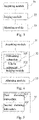
Fig. 3 is a block diagram illustrating a screen protection apparatus according to an exemplary embodiment of the present invention; -
Fig. 4 is a block diagram illustrating another screen protection apparatus according to an exemplary embodiment of the present invention; -
Fig. 5 is a block diagram illustrating still another screen protection apparatus according to an exemplary embodiment of the present invention; and -
Fig. 6 is a block diagram illustrating a screen protection apparatus according to an exemplary embodiment of the present invention. - Reference will now be made in detail to exemplary embodiments, examples of which are illustrated in the accompanying drawings. The following description refers to the accompanying drawings in which the same numbers in different drawings represent the same or similar elements unless otherwise represented. The implementations set forth in the following description of exemplary embodiments do not represent all implementations consistent with the present invention. Instead, they are merely examples of apparatuses and methods consistent with aspects related to the present invention as recited in the appended claims.
-
Fig. 1 illustrates a screen protection method according to an exemplary embodiment of the present invention, which may be applied in a device equipped with a screen. The screen may be a touch screen or a liquid crystal screen. As illustrated inFig. 1 , the method may comprise the following steps S101 to S103. - In step S101, a pressure state being experienced by a screen is acquired, wherein the pressure state comprises one or more force bearing points and pressure values at the force bearing points.
- In step S102, it is judged (determined) whether the pressure state being experienced by the screen reaches a predetermined state.
- In step S103, an alarm operation is performed when the pressure state being experienced by the screen reaches the predetermined state.
- The screen supports pressure detection. For example, currently, there are some screens that support pressure detection or support returning pressure parameter values.
- In one embodiment, the acquiring the pressure state being experienced by the screen (that is, step S101) may be acquiring a value of a pressure being borne by at least one force bearing point. There may be arranged at least one pressure detection point on the screen. When a pressure at the position of a pressure detection point is not zero, the position corresponding to the pressure detection point is a force bearing point. The force bearing point may be located at the center, the edge, or any other position on the screen.
- With the above method according to the embodiment of the present invention, an alarm operation may be performed according to the pressure state being experienced by the screen and a predetermined forewarning rule. This enables a user to timely know whether the screen is subjected to a pressure in the predetermined state and makes it easier for the user to timely take measures to reduce the pressure, thereby preventing the screen from cracking due to an excessive pressure borne by the screen, preventing economic loss from being caused to the user, and preventing the user's use of a smart device from being affected by the cracking of its screen.
- In one embodiment, as illustrated in
Fig. 2 ,step S 102 may be implemented as steps S201 to S202. - In step S201, a predetermined pressure value standard is determined according to a number of the force bearing points.
- In step S202, it is judged whether the pressure values at the force bearing points reach the predetermined pressure value standard, and if so it is judged that the predetermined state is reached. To be specific, in the embodiment of the present invention, different predetermined pressure value standards may be defined for different numbers of the force bearing points. If a predetermined pressure value standard is satisfied, it indicates that the predetermined state is reached.
- Besides, in addition to the number of the force bearing points and the pressure values at the force bearing points, the pressure state being experienced by the screen may further comprise a distance between force bearing points, or may further comprise a force bearing duration of a force bearing point. Hereinafter, different implementations of step S201 will be described respectively with respect to different pressure states.
- When the pressure state comprises the number of the force bearing points and the pressure values at the force bearing points, if the number of the force bearing points is one,
step 201 may be implemented as: determining the predetermined pressure value standard as a first substandard when the number of the force bearing points is one. - The first substandard relates to a predetermined value of a pressure which a force bearing point is capable of bearing at most.
- In one embodiment, the force bearing point may be a central position of the screen. Since the central position of the screen is far away from its frame support portion, the screen is more fragile at its central position than at other positions. When the pressure value at the central position of the screen is greater than or equal to the first substandard, it may be judged that the predetermined state is reached, and then an alarm operation may be performed. As such, a user may be timely prompted, making it convenient for the user to timely take measures to reduce the pressure. This prevents the screen from cracking due to an excessive pressure borne by the screen, prevents economic loss from being caused to the user, and prevents the user's use of a smart device from being affected by the cracking of its screen. Of course, the force bearing point may also be any other position on the screen.
- In one embodiment, the first substandard may be: the pressure value at the force bearing point being equal to or greater than a first predetermined pressure value. The first predetermined pressure value may be a predetermined numerical value, which is set by the user himself/herself or by the system for example. Preferably, the first predetermined pressure value may be a screen crack pressure value times a first predetermined number, wherein the first predetermined number is equal to or less than 1 and the screen crack pressure value refers to a minimum pressure value causing the screen to crack. The first predetermined number may be set by the user himself/herself or by the system. To prevent the screen from being pressed to crack and to perform an alarm operation at a suitable time, the first predetermined number may be set to be greater than or equal to 0.2 and less than 1, for example, 0.6, 0.7, 0.8, and 0.9.
- When the pressure state comprises the number of the force bearing points and the pressure values at the force bearing points, if the number of the force bearing points is greater than or equal to 4, step 201 may be implemented as: determining the predetermined pressure value standard as a second substandard when the number of the force bearing points is greater than or equal to 4.
- The second substandard relates to a predetermined value of a pressure which at least one or each of the at least four force bearing points is capable of bearing at most. In one embodiment, the second substandard comprises: a pressure value at at least one of the force bearing points being greater than or equal to the first predetermined pressure value; or each of pressure values at the at least four force bearing points being greater than or equal to a second predetermined pressure value.
- In one embodiment, the at least one of the force bearing point may be a central position of the screen. Since the central position of the screen is far away from its frame support portion, the screen is more fragile at its central position than at other positions. When the pressure value at the central position of the screen is greater than or equal to the first predetermined pressure value, it may be judged that the predetermined state is reached, and then an alarm operation may be performed. As such, a user may be timely prompted, making it easier for the user to timely take measures to reduce the pressure. This prevents the screen from cracking due to excessive pressure borne by the screen, prevents economic loss from being caused to the user, and prevents the user's use of a smart device from being affected by the cracking of its screen. Of course, the force bearing point may also be any other position on the screen.
- In one embodiment, the positions of the at least four force bearing points may be at least four predetermined positions where the screen is relatively fragile, for example, four positions at the central region of the screen. The central region may be a circular region having the center of the screen as its center and a predetermined length as its radius. Any four points in the circular region are determined as the at least four force bearing points. The second predetermined pressure value is a predetermined numerical value, which may be set by the user himself/herself or by the system for example. Preferably, the second predetermined pressure value may be a predetermined value of a pressure borne by the screen when a user normally touches the screen times a second predetermined number, wherein the second predetermined number is greater than or equal to 1. The value of pressure borne by the screen when the user normally touches the screen may be acquired by performing physical measurements. The second predetermined number may be a predetermined numerical value. Preferably, to prevent the screen from cracking due to excessive pressure borne by the screen, the second predetermined number may be set as a suitable value, such that N*T2*A < T1 for example, wherein N denotes the number of the force bearing points, T2 denotes the value of the pressure borne by the screen when the user normally touches the screen, A denotes the second predetermined number, and T1 denotes the above-mentioned first predetermined pressure value. A may be equal to a value such as 2, 3, 4 or the like.
- When each of the pressure values at at least four force bearing points on the screen is greater than or equal to the second predetermined pressure value, an alarm operation may be performed. As such, a user may be timely prompted, making it convenient for the user to timely take measures to reduce the pressure. This prevents the screen from cracking due to excessive pressure borne by the screen, prevents economic loss from being caused to the user, and prevents the user's use of a smart device from being affected by the cracking of its screen.
- When the pressure state further comprises a distance between force bearing points in addition to the number of the force bearing points and the pressure values at the force bearing points, step S201 may be implemented as: determining the predetermined pressure value standard as a third substandard when the number of the force bearing points is greater than or equal to 2 and a distance between two of the force bearing points is less than a predetermined distance.
- The third substandard relates to a predetermined value of a pressure which at least one or each of the two or more force bearing points is capable of bearing at most. The third substandard may be the same as or different from the above-mentioned first substandard.
- In one embodiment, when the number of the force bearing points is greater than or equal to 2 and the distance between two of the force bearing points is less than the predetermined distance, it indicates that a small region on the screen is bearing a pressure. When the pressure values at the force bearing points satisfy the third substandard, an alarm operation is performed to prompt the user to take measures timely, thereby preventing the screen from cracking due to an excessive pressure borne by the screen, preventing economic loss to be caused to the user, and preventing the user's use of a smart device from being affected by the cracking of its screen.
- When the pressure state further comprises a force bearing duration of a force bearing point in addition to the number of the force bearing points and the pressure values at the force bearing points, step S201 may be implemented as: determining the predetermined pressure value standard as a fourth substandard when there is at least one force bearing point and a force bearing duration of the force bearing point is greater than a predetermined duration.
- The fourth substandard relates to a predetermined value of a pressure which the at least one force bearing point is capable of bearing at most. The fourth substandard may be the same as or different from the second substandard.
- When there are at least one force bearing point and the force bearing duration of the force bearing point is greater than the predetermined duration, it indicates that the screen is bearing a sustained pressure. When the pressure value at the force bearing point satisfies the fourth substandard, an alarm operation is performed to prompt the user to take measures timely, thereby preventing the screen from cracking due to an excessive pressure borne by the screen, preventing economic loss from being caused to the user, and preventing the user's use of a smart device from being affected by the cracking of its screen.
- In any one of the above embodiments, the performing the alarm operation comprises any one or more of the following operations.
- One operation is highlighting a force bearing point on the screen which reaches the predetermined state, such as lighting the force bearing point reaching the predetermined state, circling the force bearing point reaching the predetermined state, or indicating the force bearing point reaching the predetermined state by any kind of marker. This enables the user to know not only the pressure condition being experienced by the screen but also which position on the screen is bearing a high pressure, making it convenient for the user to take measures to reduce the pressure.
- Another operation is outputting alarm information. The alarm information may be a description of a force bearing point on the screen which reaches the predetermined state and comprise any one or both of text information and voice information. This enables the user to know not only the pressure being borne by the screen but also which position on the screen is bearing a high pressure, making it convenient for the user to take measures to reduce the pressure.
- Correspondingly to the above method according to an embodiment of the present invention, an embodiment of the present invention also provides a screen protection apparatus. As illustrated in
Fig. 3 , the apparatus comprises: - an acquiring
module 31 configured to acquire a pressure state being experienced by a screen, the pressure state comprising one or more force bearing points and pressure values at the force bearing points; - a judging
module 32 configured to judge whether the pressure state being experienced by the screen acquired by the acquiringmodule 31 reaches a predetermined state; and - an
alarming module 33 configured to perform an alarm operation when the judgingmodule 32 judges that the pressure state being experienced by the screen reaches the predetermined state. - In one embodiment, as illustrated in
Fig. 4 , the judgingmodule 32 comprises: - a determining
submodule 321 configured to determine a predetermined pressure value standard according to a number of the force bearing points; and - a judging
submodule 322 configured to judge whether the pressure values at the force bearing points reach the predetermined pressure value standard determined by the determiningsubmodule 321 and if so judge that the predetermined pressure value standard is reached. - In one embodiment, the determining
submodule 321 is further configured to: determine the predetermined pressure value standard as a first substandard when the number of the force bearing points is one; or determine the predetermined pressure value standard as a second substandard when the number of the force bearing points is greater than or equal to 4. - In one embodiment, the first substandard comprises: the pressure value at the force bearing point being equal to or greater than a first predetermined pressure value; and the second substandard comprises: a pressure value at at least one of the force bearing points being greater than or equal to the first predetermined pressure value; or each of pressure values at the at least four force bearing points being greater than or equal to a second predetermined pressure value.
- In one embodiment, the pressure state further comprises a distance between force bearing points.
- Correspondingly, the determining
submodule 321 is further configured to: determine the predetermined pressure value standard as a third substandard when the number of the force bearing points is greater than or equal to 2 and a distance between two of the force bearing points is less than a predetermined distance. - In one embodiment, the pressure state further comprises a force bearing duration of a force bearing point.
- Correspondingly, the determining
submodule 321 is further configured to: determine the predetermined pressure value standard as a fourth substandard when there is at least one force bearing point and a force bearing duration of the force bearing point is greater than a predetermined duration. - In one embodiment, as illustrated in
Fig. 5 , thealarming module 33 comprises any one or more of the following submodules: - a first alarming submodule 331 configured to highlight a force bearing point on the screen which reaches the predetermined state; and/or
- a second
alarming module 332 configured to output alarm information, the alarm information describing a position of the force bearing point on the screen which reaches the predetermined state, and the alarm information comprising text information and/or voice information. - According to a third aspect of embodiments of the present invention, a screen protection apparatus is provided. The apparatus comprises:
- a processor; and
- a memory for storing instructions executable by the processor,
- wherein the processor is configured to:
- acquire a pressure state being experienced by a screen, the pressure state comprising one or more force bearing points and pressure values at the force bearing points;
- judge whether the pressure state being experienced by the screen reaches a predetermined state; and
- perform an alarm operation when the pressure state being experienced by the screen reaches the predetermined state.
-
Fig. 6 is a block diagram illustrating ascreen protection apparatus 600 according to an exemplary embodiment of the present invention, which is applicable to a terminal device. For example, theapparatus 600 may be a mobile phone, a computer, a digital broadcast terminal, a messaging device, a gaming console, a tablet, a medical device, exercise equipment, a personal digital assistant, and the like. - Referring to
Fig. 6 , theapparatus 600 may include one or at least two of the following components: aprocessing component 602, amemory 604, apower component 606, amultimedia component 608, anaudio component 610, an input/output (I/O)interface 612, asensor component 614, and acommunication component 616. - The
processing component 602 typically controls overall operations of theapparatus 600, such as the operations associated with display, telephone calls, data communications, camera operations, and recording operations. Theprocessing component 602 may include one or at least twoprocessors 620 to execute instructions to perform all or a part of the steps in the above-described methods. In addition, theprocessing component 602 may include one or at least two modules which facilitate the interaction between theprocessing component 602 and other components. For example, theprocessing component 602 may include a multimedia module to facilitate the interaction between themultimedia component 608 and theprocessing component 602. - The
memory 604 is configured to store various types of data to support the operations of theapparatus 600. Examples of such data include instructions for any storage object or method operated on theapparatus 600, contact data, phonebook data, messages, pictures, videos, and the like. Thememory 604 may be implemented using any type of volatile or non-volatile memory devices, or a combination thereof, such as a static random access memory (SRAM), an electrically erasable programmable read-only memory (EEPROM), an erasable programmable read-only memory (EPROM), a programmable read-only memory (PROM), a read-only memory (ROM), a magnetic memory, a flash memory, a magnetic or optical disk. - The
power component 606 provides power to various components of theapparatus 600. Thepower component 606 may include a power management system, one or at least two power supplies, and other components associated with the generation, management, and distribution of power in theapparatus 600. - The
multimedia component 608 includes a screen providing an output interface between theapparatus 600 and the user. In some embodiments, the screen may include a liquid crystal display (LCD) and a touch panel (TP). If the screen includes the touch panel, the screen may be implemented as a touch screen to receive input signals from the user. The touch panel includes one or at least two touch sensors to sense touches, swipes, and gestures on the touch panel. The touch sensors may not only sense a boundary of a touch or swipe action, but also sense a period of time and a pressure associated with the touch or swipe action. In some embodiments, themultimedia component 608 includes a front camera and/or a rear camera. The front camera and/or the rear camera may receive external multimedia data when theapparatus 600 is in an operation mode, such as a photographing mode or a video mode. Each of the front camera and the rear camera may be a fixed optical lens system or have focus and optical zoom capability. - The
audio component 610 is configured to output and/or input audio signals. For example, theaudio component 610 includes a microphone (MIC) configured to receive an external audio signal when theapparatus 600 is in an operation mode, such as a call mode, a recording mode, or a voice recognition mode. The received audio signal may be further stored in thememory 604 or transmitted via thecommunication component 616. In some embodiments, theaudio component 610 further includes a speaker to output audio signals. - The I/
O interface 612 provides an interface between theprocessing component 602 and a peripheral interface module, such as a keyboard, a click wheel, a button, or the like. The buttons may include, but are not limited to, a home button, a volume button, a starting button, and a locking button. - The
sensor component 614 includes one or at least two sensors to provide status assessments of various aspects of theapparatus 600. For example, thesensor component 614 may detect an open/closed status of theapparatus 600, relative positioning of components, e.g., the display and the keypad, of theapparatus 600; and thesensor component 614 may further detect a change in position of theapparatus 600 or a component of theapparatus 600, a presence or absence of user contact with theapparatus 600, an orientation or an acceleration/deceleration of theapparatus 600, and a change in temperature of theapparatus 600. Thesensor component 614 may include a proximity sensor configured to detect the presence of nearby objects without any physical contact. Thesensor component 614 may also include a light sensor, such as a CMOS or CCD image sensor, for use in imaging applications. In some embodiments, thesensor component 614 may also include an accelerometer sensor, a gyroscope sensor, a magnetic sensor, a pressure sensor, or a temperature sensor. - The
communication component 616 is configured to facilitate communications, wired or wirelessly, between theapparatus 600 and other devices. Theapparatus 600 may access a wireless network based on a communication standard, such as WiFi, 2G, or 3G, or a combination thereof. In one exemplary embodiment, thecommunication component 616 receives a broadcast signal or broadcast associated information from an external broadcast management system via a broadcast channel. In one exemplary embodiment, thecommunication component 616 further includes a near field communication (NFC) module to facilitate short-range communications. For example, the NFC module may be implemented based on a radio frequency identification (RFID) technology, an infrared data association (IrDA) technology, an ultra-wideband (UWB) technology, a Bluetooth (BT) technology, and other technologies. - In exemplary embodiments, the
apparatus 600 may be implemented with one or at least two application specific integrated circuits (ASICs), digital signal processors (DSPs), digital signal processing devices (DSPDs), programmable logic devices (PLDs), field programmable gate arrays (FPGAs), controllers, micro-controllers, microprocessors, or other electronic components, for performing the above-described methods. - In exemplary embodiments, there is also provided a non-transitory computer-readable storage medium including instructions, such as included in the
memory 604, executable by theprocessor 620 in theapparatus 600, for performing the above-described methods. For example, the non-transitory computer-readable storage medium may be a ROM, a random access memory (RAM), a compact disc read-only memory (CD-ROM), a magnetic tape, a floppy disc, an optical data storage device, or the like. - A non-transitory computer-readable storage medium including instructions, which when executed by the processor of the
apparatus 600 cause theapparatus 600 to perform a screen protection method. The method comprises: - acquiring a pressure state being experienced by a screen, the pressure state including one or more force bearing points and pressure values at the force bearing points;
- judging whether the pressure state being experienced by the screen reaches a predetermined state; and
- performing an alarm operation when the pressure state being experienced by the screen reaches the predetermined state.
- Other embodiments of the present invention will be apparent to those skilled in the art from consideration of the specification and practice of the embodiments disclosed herein. This application is intended to cover any variations, uses, or adaptations of the present invention following the general principles thereof and including such departures from the present invention as coming within common knowledge or customary technical means in the art. It is intended that the specification and embodiments be considered as exemplary only.
- It will be appreciated that the present invention is not limited to the exact construction that has been described above and illustrated in the accompanying drawings, and that various modifications and changes can be made.
Claims (11)
- A screen protection method, comprising the steps ofacquiring (S101) a pressure state being experienced by a screen, the screen comprising a plurality of pressure detection points and at least one force bearing point, a force bearing point being a pressure detection point being subjected to a non-zero pressure, the pressure state comprising the number of force bearing points and pressure values at each force bearing point, and, upon the number of force bearing points being greater than or equal to two, a distance between force bearing points;determining (S102) whether the pressure state being experienced by the screen reaches a predetermined state, comprising:determining (S201) a predetermined pressure value standard according to the number of force bearing points, and further comprising:
upon the number of force bearing points being greater than or equal to two, determining the predetermined pressure value standard as a sub-standard, according to a distance between two of the force bearing points being less than a predetermined distance; anddetermining (S202) whether the pressure value at the or each force bearing point reaches the predetermined pressure value standard and, when determined, the predetermined pressure value sub-standard, and if so determining that the pressure state of the screen has reached the predetermined state; andperforming an alarm operation (S103), upon the pressure state being experienced by the screen reaching the predetermined state. - The method according to claim 1, wherein, the step of determining (S201) the predetermined pressure value standard according to the number of force bearing points comprises:determining the predetermined pressure value standard as a first sub-standard, when the number of force bearing points equals one; ordetermining the predetermined pressure value standard as a second sub-standard, when the number of the force bearing points is greater than or equal to four.
- The method according to claim 2, wherein,the first sub-standard comprises: the pressure value at the force bearing point being equal to or greater than a first predetermined pressure value; andthe second sub-standard comprises: a pressure value at at least one of the force bearing points being greater than or equal to the first predetermined pressure value; or each of the pressure values at the at least four force bearing points being greater than or equal to a second predetermined pressure value.
- The method according to any of claims 1 to 3, wherein the pressure state further comprises a force bearing duration of the or each force bearing point; and
the step of determining the predetermined pressure value standard according to the number of force bearing points comprises:
determining the predetermined pressure value standard as a fourth sub-standard, upon the force bearing duration of the force bearing point, or one of the force bearing points, being greater than a predetermined duration. - The method according to any of claims 1 to 4, wherein the step of performing the alarm operation (S103) comprises at least one of the following operations:highlighting a force bearing point on the screen which reaches the predetermined state; andoutputting alarm information, the alarm information describing a position of the force bearing point on the screen which reaches the predetermined state, and the alarm information comprising text information and/or voice information.
- A screen protection apparatus, comprisingan acquiring module (31) configured to acquire a pressure state being experienced by a screen, the screen comprising a plurality of pressure detection points and at least one force bearing point, a force bearing point being a pressure detection point being subjected to a non-zero pressure, the pressure state comprising the number of force bearing points and pressure values at the or each force bearing point, and, upon the number of force bearing points being greater than or equal to two, a distance between the force bearing points;a determining module (32) configured to determine whether the pressure state being experienced by the screen acquired by the acquiring module reaches a predetermined state, comprising:a determining submodule (321) configured to:
determine a predetermined pressure value standard according to the number of force bearing points; and further to, upon the number of the force bearing points being greater than or equal to two, determine the predetermined pressure value standard as a sub-standard, according to a distance between two of the force bearing points being less than a predetermined distance; anda first judging submodule (322) configured to determine whether the pressure values at the or each force bearing point reaches the predetermined pressure value standard determined by the determining submodule (321) and, when determined, the predetermined pressure value sub-standard, and if so determine that the pressure state of the screen reaches the predetermined state; andan alarming module (33) configured to perform an alarm operation when the determining module determines that the pressure state being experienced by the screen reaches the predetermined state. - The apparatus according to claim 6, wherein, the determining submodule (321) is further configured to:determine the predetermined pressure value standard as a first sub-standard when the number of the force bearing points is one; ordetermine the predetermined pressure value standard as a second sub-standard when the number of the force bearing points is greater than or equal to 4.
- The apparatus according to claim 7, wherein,the first sub-standard comprises: the pressure value at the force bearing point being equal to or greater than a first predetermined pressure value; andthe second sub-standard comprises: a pressure value at at least one of the force bearing points being greater than or equal to the first predetermined pressure value; or each of the pressure values at the at least four force bearing points being greater than or equal to a second predetermined pressure value.
- The apparatus according to any of claims 6, 7 or 8, wherein the pressure state further comprises a force bearing duration of the or each force bearing point; and
the determining submodule (321) is further configured to: determine the predetermined pressure value standard as a fourth sub-standard, upon the force bearing duration of the force bearing point, or one of the force bearing points being greater than a predetermined duration. - The apparatus according to any of claims 6 to 9, wherein the alarming module comprises at least one of the following submodules:a first alarming submodule (331) configured to highlight a force bearing point on the screen which reaches the predetermined state; anda second alarming submodule (332) configured to output alarm information, the alarm information describing a position of the force bearing point on the screen which reaches the predetermined state, and the alarm information comprising text information and/or voice information.
- A screen protection apparatus, characterized by comprising:a processor (620); anda memory (604) for storing instructions executable by the processor,wherein the processor is configured to carry out the method of any of claims 1 to 5.
Applications Claiming Priority (1)
| Application Number | Priority Date | Filing Date | Title |
|---|---|---|---|
| CN201510834522.6A CN105469003B (en) | 2015-11-25 | 2015-11-25 | screen protection method and device |
Publications (2)
| Publication Number | Publication Date |
|---|---|
| EP3173898A1 EP3173898A1 (en) | 2017-05-31 |
| EP3173898B1 true EP3173898B1 (en) | 2023-03-15 |
Family
ID=55606682
Family Applications (1)
| Application Number | Title | Priority Date | Filing Date |
|---|---|---|---|
| EP16199153.4A Active EP3173898B1 (en) | 2015-11-25 | 2016-11-16 | Screen protection method and apparatus |
Country Status (8)
| Country | Link |
|---|---|
| US (1) | US10026293B2 (en) |
| EP (1) | EP3173898B1 (en) |
| JP (1) | JP6377151B2 (en) |
| KR (1) | KR101824825B1 (en) |
| CN (1) | CN105469003B (en) |
| MX (1) | MX368630B (en) |
| RU (1) | RU2671300C2 (en) |
| WO (1) | WO2017088259A1 (en) |
Families Citing this family (7)
| Publication number | Priority date | Publication date | Assignee | Title |
|---|---|---|---|---|
| CN105930169A (en) * | 2016-05-13 | 2016-09-07 | 深圳天珑无线科技有限公司 | Screen break effect displaying method and system of screen capable of sensing pressure |
| CN106303881B (en) * | 2016-08-11 | 2019-06-11 | 华为技术有限公司 | A kind of ear coupling detection method and terminal |
| CN106385505B (en) * | 2016-09-20 | 2019-06-28 | 广东小天才科技有限公司 | Pressure prevention method and device for mobile terminal |
| CN106681888A (en) * | 2016-11-30 | 2017-05-17 | 杨善忠 | Mobile equipment screen protection device and method |
| CN108182137B (en) * | 2018-01-31 | 2022-09-20 | 杭州魁客科技有限公司 | Screen safety early warning method, mobile terminal and computer readable storage medium |
| CN109615831A (en) * | 2018-11-29 | 2019-04-12 | 河南职业技术学院 | Computer screen security early warning method and security early warning device |
| CN109862189A (en) * | 2019-02-25 | 2019-06-07 | 维沃移动通信有限公司 | A prompting method, device and mobile terminal |
Citations (2)
| Publication number | Priority date | Publication date | Assignee | Title |
|---|---|---|---|---|
| US20120105358A1 (en) * | 2010-11-03 | 2012-05-03 | Qualcomm Incorporated | Force sensing touch screen |
| US20130154842A1 (en) * | 2010-08-19 | 2013-06-20 | Kyocera Corporation | Input apparatus |
Family Cites Families (22)
| Publication number | Priority date | Publication date | Assignee | Title |
|---|---|---|---|---|
| JPH10319852A (en) * | 1997-05-21 | 1998-12-04 | Toshiba Corp | Panel breakage prevention device for portable information equipment |
| JP2003188962A (en) * | 2001-12-14 | 2003-07-04 | Nec Corp | Foldable cellular telephone |
| JP2005323011A (en) * | 2004-05-06 | 2005-11-17 | Nec Saitama Ltd | System and method for operating additional function of mobile telephone set |
| TWI293434B (en) * | 2005-08-17 | 2008-02-11 | Asustek Comp Inc | Alarm foldable electronic apparatus and display apparatus |
| CN1921739A (en) * | 2005-08-24 | 2007-02-28 | 华硕电脑股份有限公司 | Foldable electronic device and display device with alarm sound |
| US9477342B2 (en) * | 2008-08-26 | 2016-10-25 | Google Technology Holdings LLC | Multi-touch force sensing touch-screen devices and methods |
| JP5245766B2 (en) * | 2008-11-27 | 2013-07-24 | 日本電気株式会社 | Touch panel protection device, touch panel protection method, and touch panel protection program |
| JP2010250468A (en) * | 2009-04-14 | 2010-11-04 | Nec Corp | Folding type portable terminal equipment and method for controlling folding type portable terminal equipment |
| JP5404166B2 (en) * | 2009-04-30 | 2014-01-29 | 技嘉科技股▲ふん▼有限公司 | Resistive touch panel protection method and computer-readable recording medium and electronic device using the method |
| TWI469002B (en) * | 2009-06-05 | 2015-01-11 | Au Optronics Corp | Touch panel and display device |
| JP2011053974A (en) * | 2009-09-02 | 2011-03-17 | Sony Corp | Device and method for controlling operation, and computer program |
| KR20110028834A (en) * | 2009-09-14 | 2011-03-22 | 삼성전자주식회사 | Method and device for providing user interface using touch pressure of mobile terminal with touch screen |
| CN102103451A (en) * | 2009-12-17 | 2011-06-22 | 深圳富泰宏精密工业有限公司 | System and method for protecting resistance-type touch screen |
| TWI469031B (en) * | 2010-02-01 | 2015-01-11 | Chi Mei Comm Systems Inc | System and method for protecting the resistive touch screen of a mobile phone |
| WO2011101899A1 (en) * | 2010-02-17 | 2011-08-25 | 富士通株式会社 | Information processing device, and protection method and protection program therefor |
| KR20110113931A (en) * | 2010-04-12 | 2011-10-19 | 삼성전자주식회사 | Apparatus and method for operating a touch screen panel of a mobile terminal |
| JP2012123695A (en) * | 2010-12-10 | 2012-06-28 | Hitachi Omron Terminal Solutions Corp | Touch type input panel device and sensitivity adjustment method thereof |
| CN103077105A (en) * | 2011-10-25 | 2013-05-01 | 宏碁股份有限公司 | Screen squeeze protector and method thereof |
| US9582178B2 (en) * | 2011-11-07 | 2017-02-28 | Immersion Corporation | Systems and methods for multi-pressure interaction on touch-sensitive surfaces |
| JP2013258478A (en) * | 2012-06-11 | 2013-12-26 | Nec Casio Mobile Communications Ltd | Portable electronic apparatus, input operation control method, and program |
| KR102061072B1 (en) | 2013-03-12 | 2019-12-31 | 삼성전자주식회사 | Method for checking sealing condition of housing and apparatus for the same |
| US20140327643A1 (en) * | 2013-05-02 | 2014-11-06 | Nvidia Corporation | Display panel protection with overpressure sensor on mobile device |
-
2015
- 2015-11-25 CN CN201510834522.6A patent/CN105469003B/en active Active
- 2015-12-29 MX MX2016005794A patent/MX368630B/en active IP Right Grant
- 2015-12-29 RU RU2016134774A patent/RU2671300C2/en active
- 2015-12-29 JP JP2016522785A patent/JP6377151B2/en not_active Expired - Fee Related
- 2015-12-29 WO PCT/CN2015/099613 patent/WO2017088259A1/en not_active Ceased
- 2015-12-29 KR KR1020167010362A patent/KR101824825B1/en active Active
-
2016
- 2016-11-16 EP EP16199153.4A patent/EP3173898B1/en active Active
- 2016-11-23 US US15/360,615 patent/US10026293B2/en active Active
Patent Citations (2)
| Publication number | Priority date | Publication date | Assignee | Title |
|---|---|---|---|---|
| US20130154842A1 (en) * | 2010-08-19 | 2013-06-20 | Kyocera Corporation | Input apparatus |
| US20120105358A1 (en) * | 2010-11-03 | 2012-05-03 | Qualcomm Incorporated | Force sensing touch screen |
Also Published As
| Publication number | Publication date |
|---|---|
| KR20170074217A (en) | 2017-06-29 |
| EP3173898A1 (en) | 2017-05-31 |
| RU2671300C2 (en) | 2018-10-30 |
| JP2018503270A (en) | 2018-02-01 |
| US10026293B2 (en) | 2018-07-17 |
| MX2016005794A (en) | 2017-11-30 |
| RU2016134774A (en) | 2018-03-01 |
| RU2016134774A3 (en) | 2018-03-01 |
| MX368630B (en) | 2019-10-08 |
| WO2017088259A1 (en) | 2017-06-01 |
| CN105469003A (en) | 2016-04-06 |
| JP6377151B2 (en) | 2018-08-22 |
| CN105469003B (en) | 2017-06-23 |
| KR101824825B1 (en) | 2018-02-02 |
| US20170148301A1 (en) | 2017-05-25 |
Similar Documents
| Publication | Publication Date | Title |
|---|---|---|
| US10026293B2 (en) | Screen protection method and apparatus, and storage medium | |
| EP3163404B1 (en) | Method and device for preventing accidental touch of terminal with touch screen | |
| EP3220615B1 (en) | Method and device for setting brightness of screen | |
| EP3413549B1 (en) | Method and device for displaying notification information | |
| EP3306441B1 (en) | Temperature control method and apparatus | |
| EP2958018B1 (en) | Method and device for prompting application removal | |
| EP2950044B1 (en) | Method and terminal for measuring angle | |
| EP3046212B1 (en) | Method and apparatus for controlling charging of terminal device | |
| EP2985991B1 (en) | Method and device for time-lapse photographing | |
| EP3176776A1 (en) | Luminance adjusting method and apparatus, computer program and recording medium | |
| EP3046016A1 (en) | Method and apparatus for switching display mode | |
| EP3048526B1 (en) | Voice prompting method and apparatus | |
| EP3136216A1 (en) | Method for controlling mobile terminal and mobile terminal | |
| US20170344177A1 (en) | Method and device for determining operation mode of terminal | |
| EP3016048B1 (en) | Method and device for displaying a reminder based on geographic criteria | |
| EP3249505B1 (en) | Method and electronic device for controlling a state of a touch screen | |
| EP3232301B1 (en) | Mobile terminal and virtual key processing method | |
| EP3012725A1 (en) | Method, device and electronic device for displaying descriptive icon information | |
| EP3109741B1 (en) | Method and device for determining character | |
| EP3156984A1 (en) | Vehicle alarming method and device, computer program and recording medium | |
| US9641737B2 (en) | Method and device for time-delay photographing | |
| US20160139770A1 (en) | Method for presenting prompt on mobile terminal and the same mobile terminal | |
| US9753319B2 (en) | Liquid crystal display including display panel that includes wires and protruding spacers | |
| US20160173668A1 (en) | Method and device for activating an operating state of a mobile terminal | |
| US10057762B2 (en) | Method and device for acquiring information of relay router |
Legal Events
| Date | Code | Title | Description |
|---|---|---|---|
| PUAI | Public reference made under article 153(3) epc to a published international application that has entered the european phase |
Free format text: ORIGINAL CODE: 0009012 |
|
| STAA | Information on the status of an ep patent application or granted ep patent |
Free format text: STATUS: THE APPLICATION HAS BEEN PUBLISHED |
|
| AK | Designated contracting states |
Kind code of ref document: A1 Designated state(s): AL AT BE BG CH CY CZ DE DK EE ES FI FR GB GR HR HU IE IS IT LI LT LU LV MC MK MT NL NO PL PT RO RS SE SI SK SM TR |
|
| AX | Request for extension of the european patent |
Extension state: BA ME |
|
| STAA | Information on the status of an ep patent application or granted ep patent |
Free format text: STATUS: REQUEST FOR EXAMINATION WAS MADE |
|
| 17P | Request for examination filed |
Effective date: 20171129 |
|
| RBV | Designated contracting states (corrected) |
Designated state(s): AL AT BE BG CH CY CZ DE DK EE ES FI FR GB GR HR HU IE IS IT LI LT LU LV MC MK MT NL NO PL PT RO RS SE SI SK SM TR |
|
| STAA | Information on the status of an ep patent application or granted ep patent |
Free format text: STATUS: EXAMINATION IS IN PROGRESS |
|
| 17Q | First examination report despatched |
Effective date: 20210215 |
|
| GRAP | Despatch of communication of intention to grant a patent |
Free format text: ORIGINAL CODE: EPIDOSNIGR1 |
|
| STAA | Information on the status of an ep patent application or granted ep patent |
Free format text: STATUS: GRANT OF PATENT IS INTENDED |
|
| INTG | Intention to grant announced |
Effective date: 20220930 |
|
| GRAS | Grant fee paid |
Free format text: ORIGINAL CODE: EPIDOSNIGR3 |
|
| GRAA | (expected) grant |
Free format text: ORIGINAL CODE: 0009210 |
|
| STAA | Information on the status of an ep patent application or granted ep patent |
Free format text: STATUS: THE PATENT HAS BEEN GRANTED |
|
| AK | Designated contracting states |
Kind code of ref document: B1 Designated state(s): AL AT BE BG CH CY CZ DE DK EE ES FI FR GB GR HR HU IE IS IT LI LT LU LV MC MK MT NL NO PL PT RO RS SE SI SK SM TR |
|
| REG | Reference to a national code |
Ref country code: CH Ref legal event code: EP Ref country code: GB Ref legal event code: FG4D |
|
| REG | Reference to a national code |
Ref country code: DE Ref legal event code: R096 Ref document number: 602016078289 Country of ref document: DE |
|
| REG | Reference to a national code |
Ref country code: IE Ref legal event code: FG4D |
|
| REG | Reference to a national code |
Ref country code: AT Ref legal event code: REF Ref document number: 1554376 Country of ref document: AT Kind code of ref document: T Effective date: 20230415 |
|
| P01 | Opt-out of the competence of the unified patent court (upc) registered |
Effective date: 20230523 |
|
| REG | Reference to a national code |
Ref country code: LT Ref legal event code: MG9D |
|
| REG | Reference to a national code |
Ref country code: NL Ref legal event code: MP Effective date: 20230315 |
|
| PG25 | Lapsed in a contracting state [announced via postgrant information from national office to epo] |
Ref country code: RS Free format text: LAPSE BECAUSE OF FAILURE TO SUBMIT A TRANSLATION OF THE DESCRIPTION OR TO PAY THE FEE WITHIN THE PRESCRIBED TIME-LIMIT Effective date: 20230315 Ref country code: NO Free format text: LAPSE BECAUSE OF FAILURE TO SUBMIT A TRANSLATION OF THE DESCRIPTION OR TO PAY THE FEE WITHIN THE PRESCRIBED TIME-LIMIT Effective date: 20230615 Ref country code: LV Free format text: LAPSE BECAUSE OF FAILURE TO SUBMIT A TRANSLATION OF THE DESCRIPTION OR TO PAY THE FEE WITHIN THE PRESCRIBED TIME-LIMIT Effective date: 20230315 Ref country code: LT Free format text: LAPSE BECAUSE OF FAILURE TO SUBMIT A TRANSLATION OF THE DESCRIPTION OR TO PAY THE FEE WITHIN THE PRESCRIBED TIME-LIMIT Effective date: 20230315 Ref country code: HR Free format text: LAPSE BECAUSE OF FAILURE TO SUBMIT A TRANSLATION OF THE DESCRIPTION OR TO PAY THE FEE WITHIN THE PRESCRIBED TIME-LIMIT Effective date: 20230315 |
|
| REG | Reference to a national code |
Ref country code: AT Ref legal event code: MK05 Ref document number: 1554376 Country of ref document: AT Kind code of ref document: T Effective date: 20230315 |
|
| PG25 | Lapsed in a contracting state [announced via postgrant information from national office to epo] |
Ref country code: SE Free format text: LAPSE BECAUSE OF FAILURE TO SUBMIT A TRANSLATION OF THE DESCRIPTION OR TO PAY THE FEE WITHIN THE PRESCRIBED TIME-LIMIT Effective date: 20230315 Ref country code: NL Free format text: LAPSE BECAUSE OF FAILURE TO SUBMIT A TRANSLATION OF THE DESCRIPTION OR TO PAY THE FEE WITHIN THE PRESCRIBED TIME-LIMIT Effective date: 20230315 Ref country code: GR Free format text: LAPSE BECAUSE OF FAILURE TO SUBMIT A TRANSLATION OF THE DESCRIPTION OR TO PAY THE FEE WITHIN THE PRESCRIBED TIME-LIMIT Effective date: 20230616 Ref country code: FI Free format text: LAPSE BECAUSE OF FAILURE TO SUBMIT A TRANSLATION OF THE DESCRIPTION OR TO PAY THE FEE WITHIN THE PRESCRIBED TIME-LIMIT Effective date: 20230315 |
|
| PG25 | Lapsed in a contracting state [announced via postgrant information from national office to epo] |
Ref country code: SM Free format text: LAPSE BECAUSE OF FAILURE TO SUBMIT A TRANSLATION OF THE DESCRIPTION OR TO PAY THE FEE WITHIN THE PRESCRIBED TIME-LIMIT Effective date: 20230315 Ref country code: RO Free format text: LAPSE BECAUSE OF FAILURE TO SUBMIT A TRANSLATION OF THE DESCRIPTION OR TO PAY THE FEE WITHIN THE PRESCRIBED TIME-LIMIT Effective date: 20230315 Ref country code: PT Free format text: LAPSE BECAUSE OF FAILURE TO SUBMIT A TRANSLATION OF THE DESCRIPTION OR TO PAY THE FEE WITHIN THE PRESCRIBED TIME-LIMIT Effective date: 20230717 Ref country code: ES Free format text: LAPSE BECAUSE OF FAILURE TO SUBMIT A TRANSLATION OF THE DESCRIPTION OR TO PAY THE FEE WITHIN THE PRESCRIBED TIME-LIMIT Effective date: 20230315 Ref country code: EE Free format text: LAPSE BECAUSE OF FAILURE TO SUBMIT A TRANSLATION OF THE DESCRIPTION OR TO PAY THE FEE WITHIN THE PRESCRIBED TIME-LIMIT Effective date: 20230315 Ref country code: CZ Free format text: LAPSE BECAUSE OF FAILURE TO SUBMIT A TRANSLATION OF THE DESCRIPTION OR TO PAY THE FEE WITHIN THE PRESCRIBED TIME-LIMIT Effective date: 20230315 Ref country code: AT Free format text: LAPSE BECAUSE OF FAILURE TO SUBMIT A TRANSLATION OF THE DESCRIPTION OR TO PAY THE FEE WITHIN THE PRESCRIBED TIME-LIMIT Effective date: 20230315 |
|
| PG25 | Lapsed in a contracting state [announced via postgrant information from national office to epo] |
Ref country code: SK Free format text: LAPSE BECAUSE OF FAILURE TO SUBMIT A TRANSLATION OF THE DESCRIPTION OR TO PAY THE FEE WITHIN THE PRESCRIBED TIME-LIMIT Effective date: 20230315 Ref country code: PL Free format text: LAPSE BECAUSE OF FAILURE TO SUBMIT A TRANSLATION OF THE DESCRIPTION OR TO PAY THE FEE WITHIN THE PRESCRIBED TIME-LIMIT Effective date: 20230315 Ref country code: IS Free format text: LAPSE BECAUSE OF FAILURE TO SUBMIT A TRANSLATION OF THE DESCRIPTION OR TO PAY THE FEE WITHIN THE PRESCRIBED TIME-LIMIT Effective date: 20230715 |
|
| REG | Reference to a national code |
Ref country code: DE Ref legal event code: R097 Ref document number: 602016078289 Country of ref document: DE |
|
| PLBE | No opposition filed within time limit |
Free format text: ORIGINAL CODE: 0009261 |
|
| STAA | Information on the status of an ep patent application or granted ep patent |
Free format text: STATUS: NO OPPOSITION FILED WITHIN TIME LIMIT |
|
| PG25 | Lapsed in a contracting state [announced via postgrant information from national office to epo] |
Ref country code: SI Free format text: LAPSE BECAUSE OF FAILURE TO SUBMIT A TRANSLATION OF THE DESCRIPTION OR TO PAY THE FEE WITHIN THE PRESCRIBED TIME-LIMIT Effective date: 20230315 Ref country code: DK Free format text: LAPSE BECAUSE OF FAILURE TO SUBMIT A TRANSLATION OF THE DESCRIPTION OR TO PAY THE FEE WITHIN THE PRESCRIBED TIME-LIMIT Effective date: 20230315 |
|
| 26N | No opposition filed |
Effective date: 20231218 |
|
| PG25 | Lapsed in a contracting state [announced via postgrant information from national office to epo] |
Ref country code: IT Free format text: LAPSE BECAUSE OF FAILURE TO SUBMIT A TRANSLATION OF THE DESCRIPTION OR TO PAY THE FEE WITHIN THE PRESCRIBED TIME-LIMIT Effective date: 20230315 |
|
| REG | Reference to a national code |
Ref country code: CH Ref legal event code: PL |
|
| PG25 | Lapsed in a contracting state [announced via postgrant information from national office to epo] |
Ref country code: MC Free format text: LAPSE BECAUSE OF FAILURE TO SUBMIT A TRANSLATION OF THE DESCRIPTION OR TO PAY THE FEE WITHIN THE PRESCRIBED TIME-LIMIT Effective date: 20230315 |
|
| PG25 | Lapsed in a contracting state [announced via postgrant information from national office to epo] |
Ref country code: LU Free format text: LAPSE BECAUSE OF NON-PAYMENT OF DUE FEES Effective date: 20231116 |
|
| PG25 | Lapsed in a contracting state [announced via postgrant information from national office to epo] |
Ref country code: CH Free format text: LAPSE BECAUSE OF NON-PAYMENT OF DUE FEES Effective date: 20231130 |
|
| PG25 | Lapsed in a contracting state [announced via postgrant information from national office to epo] |
Ref country code: MC Free format text: LAPSE BECAUSE OF FAILURE TO SUBMIT A TRANSLATION OF THE DESCRIPTION OR TO PAY THE FEE WITHIN THE PRESCRIBED TIME-LIMIT Effective date: 20230315 Ref country code: LU Free format text: LAPSE BECAUSE OF NON-PAYMENT OF DUE FEES Effective date: 20231116 Ref country code: CH Free format text: LAPSE BECAUSE OF NON-PAYMENT OF DUE FEES Effective date: 20231130 |
|
| REG | Reference to a national code |
Ref country code: BE Ref legal event code: MM Effective date: 20231130 |
|
| REG | Reference to a national code |
Ref country code: IE Ref legal event code: MM4A |
|
| PG25 | Lapsed in a contracting state [announced via postgrant information from national office to epo] |
Ref country code: IE Free format text: LAPSE BECAUSE OF NON-PAYMENT OF DUE FEES Effective date: 20231116 |
|
| PG25 | Lapsed in a contracting state [announced via postgrant information from national office to epo] |
Ref country code: BE Free format text: LAPSE BECAUSE OF NON-PAYMENT OF DUE FEES Effective date: 20231130 |
|
| PG25 | Lapsed in a contracting state [announced via postgrant information from national office to epo] |
Ref country code: IE Free format text: LAPSE BECAUSE OF NON-PAYMENT OF DUE FEES Effective date: 20231116 Ref country code: BE Free format text: LAPSE BECAUSE OF NON-PAYMENT OF DUE FEES Effective date: 20231130 |
|
| PG25 | Lapsed in a contracting state [announced via postgrant information from national office to epo] |
Ref country code: BG Free format text: LAPSE BECAUSE OF FAILURE TO SUBMIT A TRANSLATION OF THE DESCRIPTION OR TO PAY THE FEE WITHIN THE PRESCRIBED TIME-LIMIT Effective date: 20230315 |
|
| PG25 | Lapsed in a contracting state [announced via postgrant information from national office to epo] |
Ref country code: BG Free format text: LAPSE BECAUSE OF FAILURE TO SUBMIT A TRANSLATION OF THE DESCRIPTION OR TO PAY THE FEE WITHIN THE PRESCRIBED TIME-LIMIT Effective date: 20230315 |
|
| PGFP | Annual fee paid to national office [announced via postgrant information from national office to epo] |
Ref country code: DE Payment date: 20241121 Year of fee payment: 9 |
|
| PGFP | Annual fee paid to national office [announced via postgrant information from national office to epo] |
Ref country code: FR Payment date: 20241128 Year of fee payment: 9 |
|
| PG25 | Lapsed in a contracting state [announced via postgrant information from national office to epo] |
Ref country code: CY Free format text: LAPSE BECAUSE OF FAILURE TO SUBMIT A TRANSLATION OF THE DESCRIPTION OR TO PAY THE FEE WITHIN THE PRESCRIBED TIME-LIMIT; INVALID AB INITIO Effective date: 20161116 |
|
| PG25 | Lapsed in a contracting state [announced via postgrant information from national office to epo] |
Ref country code: HU Free format text: LAPSE BECAUSE OF FAILURE TO SUBMIT A TRANSLATION OF THE DESCRIPTION OR TO PAY THE FEE WITHIN THE PRESCRIBED TIME-LIMIT; INVALID AB INITIO Effective date: 20161116 |
|
| PG25 | Lapsed in a contracting state [announced via postgrant information from national office to epo] |
Ref country code: TR Free format text: LAPSE BECAUSE OF FAILURE TO SUBMIT A TRANSLATION OF THE DESCRIPTION OR TO PAY THE FEE WITHIN THE PRESCRIBED TIME-LIMIT Effective date: 20230315 |
|
| PGFP | Annual fee paid to national office [announced via postgrant information from national office to epo] |
Ref country code: GB Payment date: 20251120 Year of fee payment: 10 |