EP3172396B1 - System und verfahren für den zugang zu einem bohrloch - Google Patents
System und verfahren für den zugang zu einem bohrloch Download PDFInfo
- Publication number
- EP3172396B1 EP3172396B1 EP15736245.0A EP15736245A EP3172396B1 EP 3172396 B1 EP3172396 B1 EP 3172396B1 EP 15736245 A EP15736245 A EP 15736245A EP 3172396 B1 EP3172396 B1 EP 3172396B1
- Authority
- EP
- European Patent Office
- Prior art keywords
- spool
- passage
- hanger
- valve
- longitudinal passage
- Prior art date
- Legal status (The legal status is an assumption and is not a legal conclusion. Google has not performed a legal analysis and makes no representation as to the accuracy of the status listed.)
- Active
Links
Images




Classifications
-
- E—FIXED CONSTRUCTIONS
- E21—EARTH OR ROCK DRILLING; MINING
- E21B—EARTH OR ROCK DRILLING; OBTAINING OIL, GAS, WATER, SOLUBLE OR MELTABLE MATERIALS OR A SLURRY OF MINERALS FROM WELLS
- E21B34/00—Valve arrangements for boreholes or wells
- E21B34/02—Valve arrangements for boreholes or wells in well heads
-
- E—FIXED CONSTRUCTIONS
- E21—EARTH OR ROCK DRILLING; MINING
- E21B—EARTH OR ROCK DRILLING; OBTAINING OIL, GAS, WATER, SOLUBLE OR MELTABLE MATERIALS OR A SLURRY OF MINERALS FROM WELLS
- E21B33/00—Sealing or packing boreholes or wells
- E21B33/02—Surface sealing or packing
- E21B33/03—Well heads; Setting-up thereof
-
- E—FIXED CONSTRUCTIONS
- E21—EARTH OR ROCK DRILLING; MINING
- E21B—EARTH OR ROCK DRILLING; OBTAINING OIL, GAS, WATER, SOLUBLE OR MELTABLE MATERIALS OR A SLURRY OF MINERALS FROM WELLS
- E21B33/00—Sealing or packing boreholes or wells
- E21B33/02—Surface sealing or packing
- E21B33/03—Well heads; Setting-up thereof
- E21B33/035—Well heads; Setting-up thereof specially adapted for underwater installations
- E21B33/0353—Horizontal or spool trees, i.e. without production valves in the vertical main bore
-
- E—FIXED CONSTRUCTIONS
- E21—EARTH OR ROCK DRILLING; MINING
- E21B—EARTH OR ROCK DRILLING; OBTAINING OIL, GAS, WATER, SOLUBLE OR MELTABLE MATERIALS OR A SLURRY OF MINERALS FROM WELLS
- E21B33/00—Sealing or packing boreholes or wells
- E21B33/02—Surface sealing or packing
- E21B33/03—Well heads; Setting-up thereof
- E21B33/04—Casing heads; Suspending casings or tubings in well heads
-
- E—FIXED CONSTRUCTIONS
- E21—EARTH OR ROCK DRILLING; MINING
- E21B—EARTH OR ROCK DRILLING; OBTAINING OIL, GAS, WATER, SOLUBLE OR MELTABLE MATERIALS OR A SLURRY OF MINERALS FROM WELLS
- E21B33/00—Sealing or packing boreholes or wells
- E21B33/02—Surface sealing or packing
- E21B33/03—Well heads; Setting-up thereof
- E21B33/04—Casing heads; Suspending casings or tubings in well heads
- E21B33/043—Casing heads; Suspending casings or tubings in well heads specially adapted for underwater well heads
-
- E—FIXED CONSTRUCTIONS
- E21—EARTH OR ROCK DRILLING; MINING
- E21B—EARTH OR ROCK DRILLING; OBTAINING OIL, GAS, WATER, SOLUBLE OR MELTABLE MATERIALS OR A SLURRY OF MINERALS FROM WELLS
- E21B33/00—Sealing or packing boreholes or wells
- E21B33/02—Surface sealing or packing
- E21B33/03—Well heads; Setting-up thereof
- E21B33/04—Casing heads; Suspending casings or tubings in well heads
- E21B33/047—Casing heads; Suspending casings or tubings in well heads for plural tubing strings
-
- E—FIXED CONSTRUCTIONS
- E21—EARTH OR ROCK DRILLING; MINING
- E21B—EARTH OR ROCK DRILLING; OBTAINING OIL, GAS, WATER, SOLUBLE OR MELTABLE MATERIALS OR A SLURRY OF MINERALS FROM WELLS
- E21B33/00—Sealing or packing boreholes or wells
- E21B33/02—Surface sealing or packing
- E21B33/03—Well heads; Setting-up thereof
- E21B33/068—Well heads; Setting-up thereof having provision for introducing objects or fluids into, or removing objects from, wells
-
- E—FIXED CONSTRUCTIONS
- E21—EARTH OR ROCK DRILLING; MINING
- E21B—EARTH OR ROCK DRILLING; OBTAINING OIL, GAS, WATER, SOLUBLE OR MELTABLE MATERIALS OR A SLURRY OF MINERALS FROM WELLS
- E21B33/00—Sealing or packing boreholes or wells
- E21B33/02—Surface sealing or packing
- E21B33/03—Well heads; Setting-up thereof
- E21B33/035—Well heads; Setting-up thereof specially adapted for underwater installations
Definitions
- oil and natural gas have a profound effect on modern economies and societies. Indeed, devices and systems that depend on oil and natural gas are ubiquitous. For instance, oil and natural gas are used for fuel in a wide variety of vehicles, such as cars, airplanes, boats, and the like. Further, oil and natural gas are frequently used to heat homes during winter, to generate electricity, and to manufacture an astonishing array of everyday products.
- drilling and production systems are often employed to access and extract the resource.
- These systems may be located onshore or offshore depending on the location of a desired resource.
- Such systems generally include a wellhead assembly through which the resource is extracted.
- These wellhead assemblies may include a wide variety of components, such as various casings, hangers, valves, fluid conduits, and the like, that control drilling and/or extraction operations.
- WO2013/027081 A1 disclose systems for accessing a well.
- US 2007/204999 describes a completion suspension valve system which allows a well to be suspended and de-suspended remotely without a dual bore riser to the surface. This is achieved by incorporating a remotely actuatable valve into the production bore of a tubing hanger.
- the valve is hydraulically operable and may be controlled via the tubing hanger running tool or via the Xmas tree. The valve can be closed and tested after the tubing hanger has been installed, thereby isolating the well.
- the dual bore riser and running tool are retrievable.
- Various arrangements of production control valves may be coupled to a wellhead in an assembly generally known as a tree, such as a vertical tree or a horizontal tree.
- a vertical tree With a vertical tree, after the tubing hanger and production tubing are installed in the high pressure wellhead housing or a spool such as a tubing spool, a blowout prevent (BOP) may be removed and the vertical tree may be locked and sealed onto the wellhead.
- BOP blowout prevent
- the vertical tree includes one or more production passages containing actuated valves that extend vertically to respective lateral production fluid outlets in the vertical tree. The production passages and production valves are thus in-line with the production tubing.
- the tree With a vertical tree, the tree may be removed while leaving the completion (e.g., the production tubing and hanger) in place.
- the completion e.g., the production tubing and hanger
- the vertical tree must be removed and replaced with a BOP, which involves setting and testing plugs or relying on down-hole valves, which may be unreliable due to lack of use and/or testing.
- removal and installation of the tree and BOP assembly generally requires robust lifting equipment, such as a rig, that may have high daily rental rates, for instance.
- the well is also in a vulnerable condition while the vertical tree and BOP are being exchanged and neither of these pressure-control devices is in position.
- trees with the arrangement of production control valves offset from the production tubing may be utilized.
- a spool tree also locks and seals onto the wellhead housing.
- the tubing hanger instead of being located in the wellhead, locks and seals in the tree passage.
- a production passage extends through the tubing hanger, and seals to prevent fluid leakage, thereby facilitating a flow of production fluid into a corresponding production passage in the tree.
- a locking mechanism above the production seals locks the tubing hanger in place in the tree.
- the production tubing hanger and production tubing may be removed from the tree without having to remove the spool tree from the wellhead housing.
- the entire completion must also be removed, which takes considerable time and also involves setting and testing plugs or relying on down-hole valves, which may be unreliable due to lack of use and/or testing.
- the locking mechanism on the tubing hanger is above and blocks access to the production port seals, the entire completion must be pulled to service the seals.
- an operator may select equipment best suited for the expected type of maintenance. For example, a well operator may predict whether there will be a greater need in the future to pull the tree from the well for repair, or pull the completion, either for repair or for additional work in the well. Depending on the predicted maintenance events, an operator will decide whether the horizontal or vertical tree, each with its own advantages and disadvantages, is best suited for the expected conditions. For instance, with a vertical tree, it is more efficient to pull the tree and leave the completion in place. However, if the completion needs to be pulled, the tree must be pulled as well, increasing the time and expense of pulling the completion. Conversely, with a spool tree, it is more efficient to pull the completion, leaving the tree in place.
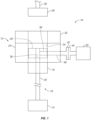
- FIG. 1 is a block diagram that illustrates an exemplary well completion system 10 that does not fall within the scope of the present invention.
- the illustrated well completion system 10 can be configured to extract various minerals and natural resources, including hydrocarbons (e.g., oil and/or natural gas), or configured to inject substances into the earth.
- the well completion system 10 is land-based (e.g., a surface system) or subsea (e.g., a subsea system).
- the system 10 is a subsea system that includes a wellhead 12 coupled to a mineral deposit 14 via a well 16, wherein the well 16 includes a wellhead hub 18, which can be a high pressure wellhead housing and a well bore 20.
- the wellhead hub 18 generally includes a large diameter hub that is disposed at the termination of the well bore 20.
- the wellhead hub 18 provides for the connection of the wellhead 12 to the well 16.
- the well completion system 10 may also be used as surface system.
- the wellhead 12 typically includes multiple components that control and regulate activities and conditions associated with the well 16.
- the wellhead 12 generally includes bodies, valves, and seals that route produced minerals from the mineral deposit 14, provide for regulating pressure in the well 16, and provide for the injection of chemicals into the well bore 20 (downhole).
- the wellhead 12 includes a subsea tree 22, a spool 24 (e.g., a tubing spool), and a tubing hanger 26.
- the system 10 may include other devices that are coupled to the wellhead 12, and devices that are used to assemble and control various components of the wellhead 12.
- the system 10 includes a tubing hanger running tool (THRT) 28 suspended from a drill string 30.
- THRT tubing hanger running tool
- the THRT 28 is lowered (e.g., run) from an offshore vessel to the well 16 and/or the wellhead 12.
- a blowout preventer (BOP) 32 may also be included, and may include a variety of valves, fittings and controls to block oil, gas, or other fluid from exiting the well in the event of an unintentional release of pressure or an overpressure condition.
- the spool 24 is coupled to the wellhead hub 18.
- the spool 24 is one of many components in a modular subsea or surface completion system 10 that is run from an offshore vessel or surface system.
- the spool 24 includes a longitudinal passage 34 configured to support the tubing hanger 26.
- the passage 34 may provide access to the well bore 20 for various completion and workover procedures.
- components can be run down to the wellhead 12 and disposed in the spool passage 34 to seal-off the well bore 20, to inject chemicals down-hole, to suspend tools down-hole, to retrieve tools down-hole, and the like.
- the well bore 20 may contain elevated pressures.
- the well bore 20 may include pressures that exceed 70 MPa (10,000 pounds per square inch (PSI)), that exceed 103 MPa (15,000 PSI), and/or that even exceed 140 MPa (20,000 PSI).
- well completion systems 10 employ various mechanisms, such as mandrels, seals, plugs and valves, to control and regulate the well 16.
- the illustrated tubing hanger 26 is typically disposed within the wellhead 12 to secure tubing suspended in the well bore 20, and to provide a path for hydraulic control fluid, chemical injections, and the like.
- the hanger 26 includes a longitudinal bore 36 that extends through the center of the hanger 26, and that is in fluid communication with the well bore 20. As illustrated in the example of FIG.
- the hanger 26 also includes a lateral flow passage 38 in fluid communication with the longitudinal passage 36.
- the lateral flow passage 38 of the tubing hanger 26 is configured to transfer product (e.g., oil, natural gas, etc.) from the longitudinal tubing hanger passage 36 to a lateral flow passage 40 of the spool 24.
- the lateral flow passage 40 of the spool 24 extends from the longitudinal spool passage 34 to a hub connection 42.
- the hub connection 42 is configured to interface with a mating hub connection 44 of the subsea tree 22, thereby establishing a flow path from the longitudinal passage 36 of the tubing hanger 26 through the lateral flow passages 38 and 40 and into the subsea tree 22. While the interface between the hub connection 42 and the mating hub connection 44 is oriented along a plane substantially parallel to the longitudinal passage 34 of the spool 24, it should be appreciated that alternative examples may employ an interface along a plane substantially perpendicular to the longitudinal passage 34.
- FIG. 2 is a cross-sectional side view of an example of a spool 24 and subsea tree 22 that does not fall within the scope of the present invention and that may be used in the completion system 10.
- the spool 24 is configured to be positioned between the wellhead hub 18 and the BOP 32. Consequently, the spool 24 includes a first end 46 configured to interface with the wellhead hub 18, and a second end 48 configured to interface with the BOP 32.
- the longitudinal passage 34 extends in an axial direction 45 between the first end 46 and the second end 48, thereby establishing a flow path through the spool 24.
- a collet connector 50 serves to secure the first end 46 of the spool 24 to the wellhead hub 18.
- a cap 52 (e.g., an internal tree cap) is disposed within the longitudinal passage 34 between the tubing hanger 26 and the second end 48 to block fluid flow into and out of the spool 24.
- the cap 52 includes a fluid barrier 54, such as a wireline plug, and a seal 56, such as a rubber o-ring, for example. More than one fluid barrier 54 may also be used.
- the cap 52 may include a locking mechanism configured to secure the cap 52 to the longitudinal passage 34 of the spool 24. Consequently, the cap 52 may be retrieved by releasing the locking mechanism, and then extracting the cap 52 from the passage 34.
- the plug may be removable (e.g., via a wireline) to provide fluid communication with the longitudinal passage 34.
- the fluid barrier 54 may be an adjustable barrier, such as an actuatable valve.
- the valve may be any suitable valve, such as by non-limiting example, a ball valve, a sliding sleeve valve, a shuttle valve, or a gate valve.
- the adjustable barrier(s) can thus open and close a longitudinal passage running through the cap 52 to allow mechanical and circulation access through the cap during workover operations, without having to pull plugs in the cap 52.
- More than one fluid barrier 54 may also be used in the cap 52 and the fluid barriers 54 may be different types, such as one plug and one valve.
- the tubing hanger 26 is configured to support a tubing string 57 that extends down the well bore 20 to the mineral deposit 14.
- an annulus 58 of the spool 24 surrounds the tubing string 57 and may be filled with completion fluid.
- a fluid barrier 60 such as a plug or an adjustable barrier, is disposed within the longitudinal passage 36 of the tubing hanger 26 and serves as a barrier between the product extracted from the mineral deposit 14 and the completion fluid within the annulus 58.
- the tubing hanger 26 may also include a profile for installing a fluid barrier 60 in the hanger longitudinal passage 36.
- a fluid barrier 60 such as a plug or an actuatable valve may be interchangeable in the profile. More than one barrier 60 may also be used.
- the barrier 60 may block the flow of fluid up through the top of the tubing hanger 26.
- the barrier 60 may be an adjustable barrier such as an actuatable valve.
- the valve may be any suitable valve, such as by non-limiting example, a ball valve, a sliding sleeve valve, a shuttle valve, or a gate valve.
- the valve may be actuated electrically, hydraulically, mechanically, or by any other suitable means. More than one barrier 60 may also be used.
- the valve can thus open and close the longitudinal passage 36 of the tubing hanger 26 to allow direct downhole mechanical and circulation access during workover operations, without having to pull crown plugs in the tubing hanger 26.
- At least one of the barriers 54, 60 is an adjustable barrier. If a barrier 54 or 60 is not an adjustable barrier, it is a non-adjustable barrier, such as a removable plug. Any combination of barriers where at least one of the barriers is adjustable may be used. For example, all of the barriers 54, 60 may be adjustable barriers.
- the tubing hanger 26 includes a seal 62 (e.g., rubber o-ring) disposed against the longitudinal passage 34 of the spool 24 and configured to block fluid flow around the tubing hanger 26.
- the illustrated wellhead configuration also includes an isolation sleeve 64 disposed within the passage 34 and extending from the first end 46 of the spool 24 to the wellhead hub 18.
- the isolation sleeve 64 includes a first seal 66 (e.g., rubber o-ring) in contact with the passage of the wellhead hub 18, and a second seal 68 (e.g., rubber o-ring) in contact with the passage 34 of the spool 24.
- the isolation sleeve 64 may facilitate pressure testing of the seal between the wellhead hub 18 and the spool 24.
- the isolation sleeve 64 may also serve as an additional barrier to block a flow of completion fluid from exiting the wellhead 12 through the interface between the spool 24 and the wellhead hub 18.
- the tubing hanger 26 includes a first seal 70 positioned adjacent to the passage 34 of the spool 24 and located in a downward direction 71 from the lateral flow passage 38.
- the tubing hanger 26 also includes a second seal 72 positioned adjacent to the passage 34 and located in an upward direction 73 from the lateral flow passage 38.
- the seals 70 and 72 are configured to block flow of completion fluid into the lateral flow passage 38, and to block flow of product (e.g., oil and/or natural gas) into the annulus 58. Consequently, a flow path will be established between the tubing string 57 and the lateral flow passage 40 of the spool 24, thereby facilitating the flow of product to the subsea tree 22.
- product will flow from the tubing string 57 in the upward direction 73 into the longitudinal passage 36 of the tubing hanger 26. Because the actuatable valve 60 blocks the flow of product from exiting the top of the tubing hanger 26, the product will be directed through the lateral flow passage 38 of the tubing hanger 26 and into the lateral flow passage 40 of the spool 24. The product will then flow into the subsea tree 22 via the interface between the hub connection 42 and the mating hub connection 44. While the actuatable valve 60 serves to block the flow of product out of the top of the tubing hanger 26, it should be appreciated that the plug 54 within the cap 52 serves as a backup seal to block product from exiting the spool 24, thereby providing a dual barrier between the product and the environment.
- the spool 24 includes one or more valves 74, such as production valves, coupled to the lateral flow passage 40. As shown, the spool includes both production valves 74 but it should also be appreciated that only one production valve 74 may be included. It should also be appreciated that the term "production" as used to describe valve 74 is for convenience and that the valve 74 may be used to regulate flow in either direction and for injection as well as production.
- the production valves 74 are configured to control the flow of product between the spool 24 and the tree 22. For example, one or both of the production valves 74 may be closed prior to retrieving the tree 22, thereby blocking the flow of product from entering the environment.
- valves 74 may be opened to facilitate product flow to the subsea tree 22.
- two production valves 74 are used and both in respective closed positions, two barriers are provided between the product flow and the environment, even when the tree 22 is removed.
- the present example includes valves 74, it should be appreciated that alternative examples may employ any suitable device (e.g., wireline plug) configured to substantially block production flow from the well 16 to the hub connection 42.
- the hub connection 42 coupled to the mating hub connection 44
- the lateral flow passage 40 of the spool 24 is in fluid communication with a product flow passage 75 of the subsea tree 22.
- the hub connection 42 is coupled to the mating hub connection 44 with a clamp 77, such as a manual clamp or a hydraulic connector.
- the product flow passage 75 includes a first valve 76 and a second valve 78. As illustrated in FIG. 2 , the first valve 76 is positioned upstream of an annulus crossover valve 80, and the second valve 78 is positioned downstream from the annulus crossover valve 80. Valves 76 and 78 may be first and second production valves. As discussed in detail below, the valves 76, 78 and 80 may be controlled to vary fluid flow into and out of the annulus 58 and tubing string 57. In addition, the product flow passage 75 includes a choke 82 positioned downstream from the valves 76 and 78 and configured to regulate pressure and/or flow rate of product through the flow passage 75.
- the flow passage 75 also includes a flowline isolation valve 84 configured to selectively block fluid flow between the tree 22 and the surface. As illustrated, the product flow passage 75 terminates at a flowline hub 86 configured to interface with a conduit or manifold that conveys the product from the wellhead 12 to a surface vessel or platform.
- the spool 24 includes an upper annulus flow passage 88 and a lower annulus flow passage 90 to regulate completion fluid pressure within an upper region 89 above the tubing hanger 26 and a lower region 91 below the tubing hanger 26, respectively.
- the upper annulus flow passage 88 extends from the upper region 89 to a lateral flow passage 92
- the lower annulus flow passage 90 extends from the lateral flow passage 92 to the lower region 91.
- completion fluid may be supplied and/or removed from each region 89 and 91 of the annulus 58.
- the upper annulus flow passage 88 includes an upper annulus valve 94
- the lower annulus flow passage 90 includes a lower annulus valve 96.
- the valves 94 and 96 are configured to control fluid flow to the upper region 89 and lower region 91, respectively.
- the lateral annulus flow passage 92 extends through the hub connection 42 and interfaces with an annulus flow passage 97 of the subsea tree 22, thereby establishing a completion fluid flow path between the spool 24 and the subsea tree 22.
- the annulus flow passage 97 includes an annulus valve 98 positioned upstream of the annulus crossover valve 80, and an annulus monitor valve 100 positioned downstream from the annulus crossover valve 80.
- the annulus valves 98 and 100 may be controlled along with the valves 76 and 78 and the annulus crossover valve 80 to adjust fluid flow to and from the annulus 58 and the tubing string 57.
- the tubing hanger 26 includes a valve 63, or other closure element below the lateral flow passage 38.
- the valve 63 is configured to selectively block product flow to the subsea tree 22 and may be operated hydraulically or otherwise.
- the valve 63 may also be included in a sub or other extension below the tubing hanger 26.
- the valve 63 works together with the barrier 60 but also with the valve 102 (discussed below) to provide an environmental barrier to fluid flow, such as production fluid flow, when either the subsea tree 22 or the cap 52 are not installed.
- the tubing string 57 includes a downhole valve 102, such as for example a surface-controlled subsurface safety valve (SCSSV) 102 configured to selectively block product flow to the subsea tree 22.
- a downhole valve 102 such as for example a surface-controlled subsurface safety valve (SCSSV) 102 configured to selectively block product flow to the subsea tree 22.
- SCSSV surface-controlled subsurface safety valve
- the valve 102 may be hydrauhcally operated and biased toward a closed position (i.e., failsafe closed) to ensure that the SCSSV closes if the system experiences a reduction in hydraulic pressure.
- a closed position i.e., failsafe closed
- the SCSSV 102 is hydrauhcally controlled via a conduit 104 extending from the hub connection 42 to the SCSSV 102.
- the conduit 104 connects with a conduit 110 within the subsea tree 22 when the hub connection 42 is mounted to the mating hub connection 44, , thereby establishing a fluid connection between the conduit 104 within the spool 24 and the conduit 110 within the subsea tree 22.
- the connection may be any type of sealing connection, such as a stab connection.
- the connection may also be configured to substantially block fluid flow into and out of the respective conduits 104 and 110 when disengaged.
- the conduit 110 is coupled to a valve 112 configured to selectively block hydraulic fluid flow to the downhole valve 102.
- the spool 24 also includes a vent/test conduit 114 configured to regulate fluid flow to certain regions of the tubing hanger 26.
- the conduit 114 connects with a conduit 120 within the subsea tree 22 when the hub connection 42 is mounted to the mating hub connection 44, thereby establishing a fluid connection between the conduit 114 within the spool 24 and the conduit 120 within the subsea tree 22.
- the connection may be any type of sealing connection, such as a stab connection.
- the connection may also be configured to substantially block fluid flow into and out of the respective conduits 114 and 120 when disengaged.
- the conduit 120 is coupled to a valve 122 configured to selectively block fluid flow to the vent/test conduit 114.
- the spool 24 also includes a chemical injection conduit 124 configured to inject chemicals, such as methanol, polymers, surfactants, etc., into the well bore 20 to improve recovery.
- the conduit 124 connects with a conduit 130 within the subsea tree 22 when the hub connection 42 is mounted to the mating hub connection 44, thereby establishing a fluid connection between the conduit 124 within the spool 24 and the conduit 130 within the subsea tree 22.
- the connection may be any type of sealing connection, such as a stab connection.
- the connection may also be configured to substantially block fluid flow into and out of the respective conduits 124 and 130 when disengaged.
- the conduit 130 is coupled to a valve 132 configured to selectively block the flow of chemicals into the well bore 20.
- the spool 24 also includes another hydraulic conduit 134 configured to operate a sliding sleeve within the tubing string 57.
- the tubing string 57 may terminate in a first region of the mineral deposit 14 and the sliding sleeve may be aligned with a second region of the mineral deposit 14.
- the tubing string 57 may extract product from the first region.
- the sliding sleeve is in an open position, the tubing string 57 may extract product from the second region. Consequently, product may be selectively extracted from various regions of the mineral deposit 14 with a single tubing string 57.
- the conduit 134 connects with a conduit 140 within the subsea tree 22 when the hub connection 42 is mounted to the mating hub connection 44, thereby establishing a fluid connection between the conduit 134 within the spool 24 and the conduit 140 within the subsea tree 22.
- the connection may be any type of sealing connection, such as a stab connection.
- the connection may also be configured to substantially block fluid flow into and out of the respective conduits 134 and 140 when disengaged.
- the conduit 140 is coupled to a valve 142 configured to selectively block hydraulic fluid flow to the sliding sleeve.
- conduits 104, 114, 124 and 134 extending from the subsea tree 22 to the spool 24, it should be appreciated that alternative examples may include more or fewer conduits. For example, certain examples may include additional valves controlled by additional hydraulic conduits, additional sliding sleeves controlled by additional conduits and/or additional chemical injection conduits.
- the tree 22 may be pulled by a ship, thereby substantially reducing maintenance costs compared to spool tree configurations in which a rig is employed to retrieve the spool tree.
- the tubing hanger 26 may be retrieved without removing the subsea tree 22.
- the well bore 20 may be plugged to block the flow of product into the environment.
- the cap 52 may be removed to provide access to the tubing hanger 26.
- the tubing hanger 26 and attached tubing string 57 may be retrieved via a rig, for example. Because the subsea tree 22 does not block access to the longitudinal passage 34 of the spool 24, the tree 22 may remain attached to the spool 24 during the tubing hanger retrieval process. Consequently, maintenance costs may be significantly reduced compared to vertical tree configurations in which the vertical tree is removed prior to accessing the tubing hanger 26.
- FIG. 2 may be used a subsea or surface system.
- FIG. 3 is a cross-sectional side view of another example of the spool 24 and subsea tree 22 that may be used in the completion system 10 of FIG. 1 .
- the subsea tree 22 includes a structure that is circumferentially disposed about the spool 24, as compared to the examples described above, in which the subsea tree structure is positioned at one circumferential location radially outward from the spool 24.
- the structure of the subsea tree 22 may be substantially equally balanced in the radial direction 47, thereby facilitating the running and/or retrieval processes.
- a remote operated vehicle (ROV) may have enhanced access to valve actuators. While a cap 52 is employed in this example with a plug 54, it should be appreciated that the tubing hanger 26 includes a fluid barrier 60 above the lateral flow passage 38 creating a dual-barrier configuration.
- ROV remote operated vehicle
- the subsea tree 22 is separated into a production valve block 151 and an annulus valve block 152.
- both valve blocks 151 and 152 are disposed radially outward from the spool 24, with each valve block located at a different circumferential position.
- production valve block is not meant to limit the valve block 151 only to production, as it may also be used for injection.
- the production valve block 151 is supported by a frame that circumferentially extends about the spool 24.
- the production valve block 151 includes the production flow passage 75 and the SCSSV hydraulic conduit 110, while the annulus valve block 152 includes the annulus flow passage 97, the vent/test conduit 120, the chemical injection conduit 130, and the sliding sleeve hydraulic conduit 140.
- the conduits 110, 120, 130 and 140 may be disposed within a different valve block in alternative examples.
- the production valve block 151 may contain each of the conduits 110, 120, 130 and 140, while the annulus valve block 152 only includes the annulus flow passage 97.
- the annulus valve block 152 may contain each of the conduits 110, 120, 130 and 140, while the production valve block 151 only includes the production flow passage 75.
- corresponding lines extending from the subsea tree 22 to the surface may be connected to the appropriate valve block to establish a fluid connection with the conduits 110, 120, 130 and 140.
- the production valve block 151 includes the mating hub connection 44 configured to interface with the hub connection 42.
- the hub connection 42 interfaces with the mating hub connection 44 along a plane 149 substantially perpendicular to the longitudinal passage 34 of the spool 24.
- the hub connection 42 may interface with the mating hub connection 44 along a plane substantially parallel to the longitudinal passage 34 in alternative examples.
- the interface between the hub connection 42 and the mating hub connection 44 establishes fluid connections between the lateral flow passage 40 and the production flow passage 75, and between the SCSSV conduits 104 and 110.
- the annulus valve block 152 includes an annulus connector 154 configured to interface with an annulus hub 156 of the spool 24.
- the annulus hub 156 interfaces with the annulus connector 154 along a plane 149 substantially perpendicular to the longitudinal passage 34 of the spool 24.
- the annulus hub 156 may interface with the annulus connector 154 along a plane substantially parallel to the longitudinal passage 34 in alternative examples.
- the interface between the annulus hub 156 and the annulus connector 154 establishes fluid connections between the annulus lateral flow passage 92 and the annulus flow passage 97 within the subsea tree 22.
- connections are established between the vent/test conduits 114 and 120, between the chemical injection conduits 124 and 130, and between the sliding sleeve hydraulic conduits 134 and 140. Consequently, each conduit within the spool 24 is fluidly coupled to a corresponding conduit with the subsea tree 22.
- the subsea tree 22 includes an annulus crossover loop 158 extending between the annulus valve block 152 and the production valve block 151.
- the annulus crossover loop 158 contains an annulus conduit 160 extending between the annulus flow passage 97 and the annulus crossover valve 80, thereby establishing a fluid connection between the annulus 58 and the tubing string 57.
- the subsea tree 22 also includes a fluid flow loop 162 extending between the production valve block 151 and a production choke assembly 164.
- the production choke assembly 164 includes the choke 82 and the flowline isolation valve 84.
- the flow loop 162 contains the flow passage 75, thereby establishing a fluid connection between the valve 78 and the choke 82.
- the flowline connection hub 86 is coupled to the choke assembly 164 to facilitate fluid flow between the subsea tree 22 and the surface. Because the components of the subsea tree 22 are circumferentially distributed about the spool 24, the tree 22 may be substantially balanced, thereby facilitating running and retrieving operations. However, in this example, a cap 52 includes a fluid barrier 54, and it should be appreciated that the tubing hanger 26 also includes a fluid barrier 60 to create the dual-barrier configuration.
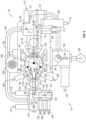
- FIG. 4 is a top view of the spool 24 and subsea tree 22 shown in FIG. 3 .
- the subsea tree 22 includes a frame 166 circumferentially disposed about the spool 24 and configured to support the production valve block 151.
- the frame 166 also supports the choke assembly 164 and an electronic control pod 168.
- the annulus valve block 152 is supported by the annulus cross over loop 158 and the annulus connector 154.
- the weight of the valve block 152 may not induce significant stress within the loop 158 or the connector 154. Because the structure of the subsea tree 22 is circumferentially disposed about the spool 24, the subsea tree 22 may be substantially balanced, thereby facilitating running and retrieving operations.
- the production valve block 151 includes a production valve actuator 170 configured to control the production valve 78, an annulus crossover valve actuator 172 configured to control the annulus crossover valve 80, and an SCSSV valve actuator 174 configured to control the SCSSV valve 112.
- the choke assembly 164 includes a flowline isolation valve actuator 176 configured to control the flowline isolation valve 84.
- the annulus valve block 152 includes an annulus valve actuator 178 configured to control the annulus valve 98, an annulus monitor valve actuator 179 configured to control the annulus monitor valve 100, a vent/test valve actuator 180 configured to control the vent/test valve 122, a chemical injection valve actuator 182 configured to control the chemical injection valve 132, and a sliding sleeve valve actuator 184 configured to control the sliding sleeve valve 142.
- the spool 24 includes valve actuators configured to control the valves within the spool 24.
- the spool 24 includes a production valve actuator 186 configured to control the production valve 74, an upper annulus valve actuator 188 configured to control the upper annulus valve 94, and a lower annulus valve actuator 190 configured to control the lower annulus valve 96.
- FIGS. 3 and 4 may be used a subsea or surface system.
- FIG. 5 another example is presented including fluid barriers 54 in the cap 52 and fluid barriers 60 in the tubing hanger 26, similar to the example shown in FIG. 2 . It should be appreciated that the following discussion regarding fluid barriers may also be used in an example similar to the example shown in FIGS. 3 and 4 .
- the tubing hanger 26 may also include a profile for installing a fluid barrier 60 in the hanger longitudinal passage 36.
- a fluid barrier 60 such as a plug or an actuatable valve may be interchangeable in the profile.
- more than one barrier 54 is shown in the cap 52 and more than one barrier 60 is shown in the tubing hanger 26.
- barriers 60 are both shown above the lateral flow passage 38 in the tubing hanger 26, it should be appreciated that one or both of the barriers may also be located below the lateral flow passage 38.
- more than one of the barriers 54, 60 may be an adjustable fluid barrier, such as an actuatable valve.
- at least one of the barriers 54, 60 is an adjustable barrier. If not an adjustable barrier, the remaining barriers 54, 60 are non- adjustable barriers, such as removable plugs. Any combination of barriers where at least one of the barriers is adjustable may be used. For example, all of the barriers 54, 60 may be adjustable barriers. Additionally, if the tubing hanger 26 includes two barriers 60, then the cap 52 is not necessary and need not be used.
- the adjustable barrier may include a valve (or valves) that serve as the fluid barrier that can open and close the passage in the cap 52 and or the longitudinal passage 36 in the tubing hanger 26 to allow direct downhole access during a subsea workover operation. In at least some configurations, this can be done without having to pull plugs when the tubing hanger passage is open, thus allowing passage to the production tubing.
- a valve or valves
- an alternate downhole fluid path for well circulation can be achieved by opening the valve(s) 54 in the cap longitudinal passage. With the valve(s) open, fluid may be pumped down through the cap 52 to above the tubing hanger 26 and into an opened annulus crossover circulation loop in the tree.
- the annulus crossover circulation loop connects to the production master valve passage run extending through the tree and hanger and then connecting to the tubing hanger vertical passage just below a tubing hanger barrier and therefore down into the production tubing.
- fluid may flow through the barriers 54 as communicated with the production tubing annulus 58 through the upper annulus flow passage 88 and a lower annulus flow passage 90 in the spool 24.
- having a valve that can open and close the longitudinal passage in the tubing hanger passage will allow direct down hole mechanical and circulation access during a subsea workover operation, without having to pull plugs.
- the master valve located in the tubing head spool could be now located in the upper tree section.
- FIG. 5 may be used a subsea or surface system.
- annulus access valve(s) 55 located in an annulus access passage in the cap 52 separate from and adjacent to the longitudinal passage will also allow well circulation. This is achieved by pumping fluid through the choke and kill lines located below closed rams and through the riser down to the cap. The valve(s) 55 in the cap 52 is then opened allowing the fluid (or gas) to circulate below the cap 52 as discussed above.
- annulus access valve(s) 61 in annulus access passage 65 not located in the tubing hanger longitudinal passage 36 but adjacent to it will also allow annulus access from above the tubing hanger 26 to below the tubing hanger 26.
- fluid may circulate between above the cap 52 and the production tubing annulus 58 going through the tubing hanger 26 itself. This would eliminate the need for an annulus route typically located in the tree or spool body which by-passes the tubing hanger 26.
- FIG. 6 may be used as a subsea or surface system.
- FIG. 7 another example is presented including fluid barriers 60 in the tubing hanger 26, similar to the example shown in FIG. 5 .
- the tubing hanger 26 may also include a profile for installing a fluid barrier 60 in the hanger longitudinal passage 36.
- a fluid barrier 60 such as a plug or an actuatable valve may be interchangeable in the profile.
- the tubing hanger 24 is landed in the spool 24 and a subsea vertical tree 22 is connected with the spool 24.
- the vertical subsea tree 22 is in fluid communication with the tubing hanger longitudinal passage 36 to transfer the fluid between the spool 24 to the vertical subsea tree 22.
- the spool 24 may either be a tubing head spool or a high pressure wellhead housing.
- More than one barrier 60 is shown in the longitudinal passage 36 of the tubing hanger 26. As mentioned in the discussion above with respect to FIG. 5 , more than one of the barriers 60 may be an adjustable fluid barrier, such as an actuatable valve. Additionally, at least one of the barriers 60 is an adjustable barrier. If not an adjustable barrier, the remaining barriers 60 are non-adjustable barriers, such as removable plugs. Any combination of barriers where at least one of the barriers is adjustable may be used. For example, all of the barriers 60 may be adjustable barriers.
- the adjustable barrier may include a valve (or valves) that serve as the fluid barrier that can open and close the passage in the longitudinal passage 36 in the tubing hanger 26 to allow direct downhole access during a subsea workover operation. In at least some configurations, this can be done without having to pull plugs when the tubing hanger passage is open, thus allowing passage to the production tubing.
- a valve or valves
- the tubing hanger 26 includes a fluid barrier 63, such as an actuatable valve or other closure element below the tubing hanger 26.
- the valve 63 is configured to selectively block product flow to the subsea tree 22 and may be operated hydraulically or otherwise.
- the valve 63 may also be included in a sub or other extension below the tubing hanger 26.
- the valve 63 works together with the barrier(s) 60 but also with the valve 102 (not shown) to provide an environmental barrier to production fluid flow when the subsea tree 22 is not installed.
- annulus access valve(s) 61 in annulus access passage 65 not located in the tubing hanger longitudinal passage 36 but adjacent to it will also allow annulus access from above the tubing hanger 26 to below the tubing hanger 26.
- Annulus access valve(s) 61 would eliminate the need for an annulus route typically located in the tree or spool body which by-passes the tubing hanger 26.
- the spool 24 may also include an upper annulus flow passage and a lower annulus flow passage as discussed above to regulate pressure within an upper region 89 above the tubing hanger 26 and a lower region 91 below the tubing hanger 26, respectively.
- an alternate downhole fluid path for well circulation can be achieved by opening the adjustable barriers 60, 61 in the tubing hanger 26. With the valve(s) open, fluid may flow through the hanger longitudinal passage 36 and the annulus access passage 65 to circulate fluid in the well.
- having a valve that can open and close the production passage in the tubing hanger passage will allow direct down hole mechanical and circulation access during a subsea workover operation, without having to pull plugs.
- FIG. 7 may be used a subsea or surface system.
Landscapes
- Life Sciences & Earth Sciences (AREA)
- Engineering & Computer Science (AREA)
- Geology (AREA)
- Mining & Mineral Resources (AREA)
- Physics & Mathematics (AREA)
- Environmental & Geological Engineering (AREA)
- Fluid Mechanics (AREA)
- General Life Sciences & Earth Sciences (AREA)
- Geochemistry & Mineralogy (AREA)
- Earth Drilling (AREA)
- Farming Of Fish And Shellfish (AREA)
- General Factory Administration (AREA)
Claims (11)
- System für den Zugang zu einem Bohrloch, umfassend:einen Doppelflansch (24), der einen Längskanal (34) und ein oberes Längsende (48) umfasst, wobei der Doppelflansch (24) ferner einen Doppelflanschkragenanschluss (42) und einen Doppelflansch-Seitenströmungskanal (40), der sich durch den Doppelflansch hindurch aus dem Doppelflansch-Längskanal (34) zum Doppelflanschkragenanschluss (42) erstreckt, umfasst, wobei der Doppelflanschkragenanschluss (42) dazu ausgelegt ist, mit einem Gegenkragenanschluss (44) eines horizontalen Eruptionskreuzes (22) eine Schnittstelle zu bilden, wobei der Doppelflanschkragenanschluss (42) dazu ausgelegt ist, einen Strömungsweg aus dem Doppelflansch-Seitenströmungskanal (40) und in das horizontale Eruptionskreuz (22) herzustellen, wenn der Doppelflanschkragenanschluss (42) mit dem Gegenkragenanschluss (44) gekoppelt wird;einen im Doppelflansch-Längskanal (34) installierten und getragenen Steigrohrhänger (26), der einen Hänger-Längskanal (36) durch den Steigrohrhänger (26) hindurch umfasst, wobei der Steigrohrhänger (26) einen sich durch den Steigrohrhänger hindurch erstreckenden und in fluidtechnischer Verbindung mit dem Hänger-Längskanal (36) stehenden Seitenströmungskanal (38) umfasst, wobei der Hänger-Seitenströmungskanal (38) dazu ausgelegt ist, ein Produkt aus dem Hänger-Längskanal (36) zum Doppelflansch-Seitenkanal (40) zu transportieren, wobei ein oberes Ende des Hänger-Längskanals (36) in fluidtechnischer Verbindung mit dem Doppelflansch-Längskanal (34) steht;Fluidbarrieren (60) im Hänger-Längskanal (36), um den Zugang zum Bohrloch zu steuern, wobei wenigstens eine der Fluidbarrieren (60) eine einstellbare Barriere umfasst, wobei die einstellbare Barriere eine betätigbare Armatur umfasst;eine Kappe (52), die dazu ausgelegt ist, im Doppelflansch-Längskanal (34) zwischen dem Steigrohrhänger (26) und dem oberen Längsende (48) angeordnet zu werden, wobei die Kappe (52) einen Kappenlängskanal durch die Kappe (52) hindurch umfasst, wobei ein oberes Ende und ein unteres Ende des Kappenlängskanals in fluidtechnischer Verbindung mit dem Doppelflansch-Längskanal (34) stehen; undeine einstellbare Barriere (54), die sich im Kappenlängskanal befindet, um den Zugang zum Bohrloch zu steuern,
dadurch gekennzeichnet, dass die Kappe (52) ferner eine betätigbare Armatur (55) in einem sich durch die Kappe (52) hindurch entlang des Kappenlängskanals und separat vom Kappenlängskanal erstreckenden Ringraumzugangskanal umfasst, wobei ein oberes Ende und ein unteres Ende des Kappenringraumzugangskanals in fluidtechnischer Verbindung mit dem Doppelflansch-Längskanal (34) steht,wobei, wenn die betätigbare Armatur (55) im Kappenringraumkanal geöffnet ist, ein Fluid von oberhalb der Kappe (52) und nach unten durch die Kappe (52) hindurch bis oberhalb des Steigrohrhängers (26) gepumpt werden kann. - System nach Anspruch 1, ferner umfassend mehr als eine betätigbare Armatur (60) im Hänger-Längskanal (36) des Steigrohrhängers (26).
- System nach Anspruch 1, wobei die einstellbare Barriere (54) im Kappenlängskanal eine betätigbare Armatur umfasst.
- System nach Anspruch 3, ferner umfassend mehr als eine betätigbare Armatur im Kappenringraumzugangskanal.
- System nach Anspruch 1, ferner umfassend eine betätigbare Armatur (61) in einem sich durch den Steigrohrhänger (26) hindurch entlang des Hänger-Längskanals (36) und separat vom Hänger-Längskanal (36) erstreckenden Ringraumzugangskanal.
- System nach Anspruch 1, ferner umfassend einen aus dem Steigrohrhänger (26) abgehängten Fördersteigrohrstrang (57), wobei ein Inneres des Fördersteigrohrstrangs (57) in fluidtechnischer Verbindung mit dem Hänger-Längskanal (36) und dem eine Untertagearmatur (102) umfassenden Fördersteigrohrstrang (57) steht.
- System nach Anspruch 1, ferner umfassend:einen aus dem Steigrohrhänger (26) abgehängten Fördersteigrohrstrang (57), wobei ein Inneres des Fördersteigrohrstrangs (57) in fluidtechnischer Verbindung mit dem Hänger-Längskanal (36) steht; undwobei der Doppelflansch (24) einen Ringraumströmungskanal (88, 90) umfasst, der offen ist zu und sich erstreckt zwischen einem oberen Bereich oberhalb des Steigrohrhängers (26) und einem unteren Bereich unterhalb des Steigrohrhängers (26) in fluidtechnischer Verbindung mit einem das Äußere des Fördersteigrohrstrang (57) umgebenden Bereich.
- System nach Anspruch 1, ferner umfassend eine Armatur (74) im Doppelflansch-Seitenströmungskanal (40).
- System nach Anspruch 1, ferner umfassend:einen aus dem Steigrohrhänger (26) abgehängten Fördersteigrohrstrang (57), wobei ein Inneres des Fördersteigrohrstrangs (57) in fluidtechnischer Verbindung mit dem Steigrohrhänger-Längskanal (36) steht; undeine weitere Fluidbarriere (60) im Steigrohrhänger-Längskanal (36) unterhalb des Steigrohr-Seitenströmungskanals (38) in fluidtechnischer Verbindung mit dem Hänger-Längskanal (36).
- System nach Anspruch 1, wobei der Doppelflansch (24) Teil einer Hochdruck-Bohrlochkopfanordnung (10) ist.
- System nach Anspruch 1, wobei die Doppelflansch (24) mit einem separaten Hochdruck-Bohrlochkopfgehäuse (18) verbunden ist.
Applications Claiming Priority (2)
| Application Number | Priority Date | Filing Date | Title |
|---|---|---|---|
| US14/339,294 US10309190B2 (en) | 2014-07-23 | 2014-07-23 | System and method for accessing a well |
| PCT/EP2015/065635 WO2016012245A2 (en) | 2014-07-23 | 2015-07-08 | A system and method for accessing a well |
Publications (2)
| Publication Number | Publication Date |
|---|---|
| EP3172396A2 EP3172396A2 (de) | 2017-05-31 |
| EP3172396B1 true EP3172396B1 (de) | 2023-04-26 |
Family
ID=53540748
Family Applications (1)
| Application Number | Title | Priority Date | Filing Date |
|---|---|---|---|
| EP15736245.0A Active EP3172396B1 (de) | 2014-07-23 | 2015-07-08 | System und verfahren für den zugang zu einem bohrloch |
Country Status (4)
| Country | Link |
|---|---|
| US (1) | US10309190B2 (de) |
| EP (1) | EP3172396B1 (de) |
| BR (1) | BR112017000842A2 (de) |
| WO (1) | WO2016012245A2 (de) |
Families Citing this family (20)
| Publication number | Priority date | Publication date | Assignee | Title |
|---|---|---|---|---|
| US10309190B2 (en) * | 2014-07-23 | 2019-06-04 | Onesubsea Ip Uk Limited | System and method for accessing a well |
| US9909380B2 (en) | 2015-02-25 | 2018-03-06 | Onesubsea Ip Uk Limited | System and method for accessing a well |
| EP3662134B1 (de) * | 2017-08-01 | 2021-10-27 | FMC Technologies, Inc. | Grosse bohrung offenen wasser schmierungseinrichtung |
| US10900315B2 (en) * | 2019-03-04 | 2021-01-26 | Saudi Arabian Oil Company | Tubing hanger system |
| NO20201162A1 (en) | 2019-10-29 | 2021-04-30 | Dril Quip Inc | Reduced stroke gate valve |
| US12291939B2 (en) | 2019-10-29 | 2025-05-06 | Innovex International, Inc. | Electrical actuation of a valve in a wellhead assembly |
| US11371326B2 (en) | 2020-06-01 | 2022-06-28 | Saudi Arabian Oil Company | Downhole pump with switched reluctance motor |
| US11499563B2 (en) | 2020-08-24 | 2022-11-15 | Saudi Arabian Oil Company | Self-balancing thrust disk |
| US11920469B2 (en) | 2020-09-08 | 2024-03-05 | Saudi Arabian Oil Company | Determining fluid parameters |
| US11719065B2 (en) * | 2020-11-13 | 2023-08-08 | Onesubsea Ip Uk Limited | Configurable coupling assembly |
| US11644351B2 (en) | 2021-03-19 | 2023-05-09 | Saudi Arabian Oil Company | Multiphase flow and salinity meter with dual opposite handed helical resonators |
| US11591899B2 (en) | 2021-04-05 | 2023-02-28 | Saudi Arabian Oil Company | Wellbore density meter using a rotor and diffuser |
| US11913464B2 (en) | 2021-04-15 | 2024-02-27 | Saudi Arabian Oil Company | Lubricating an electric submersible pump |
| US11994016B2 (en) | 2021-12-09 | 2024-05-28 | Saudi Arabian Oil Company | Downhole phase separation in deviated wells |
| US12085687B2 (en) | 2022-01-10 | 2024-09-10 | Saudi Arabian Oil Company | Model-constrained multi-phase virtual flow metering and forecasting with machine learning |
| US12012824B2 (en) * | 2022-03-15 | 2024-06-18 | Baker Hughes Oilfield Operations Llc | Through-tubing electrical submersible pump for live wells and method of deployment |
| CA3256085A1 (en) * | 2022-04-26 | 2023-11-02 | Conocophillips Company | TEMPORARY SUSPENSION OF COMPLETED HYDROCARBON WELLS |
| BR102023012935A2 (pt) * | 2022-08-16 | 2024-03-12 | Dril-Quip, Inc. | Disposição de barreira em conjunto de cabeça de poço |
| US12163396B2 (en) * | 2022-10-21 | 2024-12-10 | Chevron U.S.A. Inc. | Systems and methods for independent control and operations of tubing and annulus at the wellhead |
| GB2627074A (en) * | 2023-01-31 | 2024-08-14 | Dril Quip Inc | A system including an electrical actuator for a valve in a wellhead assembly |
Citations (1)
| Publication number | Priority date | Publication date | Assignee | Title |
|---|---|---|---|---|
| WO2005071221A1 (en) * | 2004-01-23 | 2005-08-04 | Enovate Systems Limited | Completion suspension valve system |
Family Cites Families (25)
| Publication number | Priority date | Publication date | Assignee | Title |
|---|---|---|---|---|
| US4804045A (en) * | 1986-11-06 | 1989-02-14 | Reed Lehman T | Oil and gas well diversionary spool assembly |
| GB8801850D0 (en) | 1988-01-28 | 1988-02-24 | British Petroleum Co Plc | Tubing hanger shut-off mechanism |
| US5148865A (en) * | 1991-04-08 | 1992-09-22 | Reed Lehman T | Multi-conversion wellhead assembly |
| EP0719905B2 (de) * | 1992-06-01 | 2009-04-08 | Cooper Cameron Corporation | Bohrlochkopf |
| US5577556A (en) * | 1995-01-17 | 1996-11-26 | Reed; Lehman T. | Unitary diversionary-tubing hanger and energizable rod seal |
| GB2319795B (en) * | 1996-11-22 | 2001-01-10 | Vetco Gray Inc Abb | Insert tree |
| GB2320937B (en) * | 1996-12-02 | 2000-09-20 | Vetco Gray Inc Abb | Horizontal tree block for subsea wellhead |
| US6082460A (en) * | 1997-01-21 | 2000-07-04 | Cooper Cameron Corporation | Apparatus and method for controlling hydraulic control fluid circuitry for a tubing hanger |
| US6227300B1 (en) | 1997-10-07 | 2001-05-08 | Fmc Corporation | Slimbore subsea completion system and method |
| AT408869B (de) | 1998-01-30 | 2002-03-25 | Tesma Motoren Getriebetechnik | Verschlussdeckel |
| BR0009965A (pt) * | 1999-02-11 | 2002-03-26 | Fmc Corp | Aparelho de acabamento submarino e sistema de perfuração e produção |
| CA2328666A1 (en) * | 2000-01-11 | 2001-07-11 | Cooper Cameron Corporation | Wellhead assembly |
| US6494257B2 (en) * | 2000-03-24 | 2002-12-17 | Fmc Technologies, Inc. | Flow completion system |
| US6520263B2 (en) * | 2001-05-18 | 2003-02-18 | Cooper Cameron Corporation | Retaining apparatus for use in a wellhead assembly and method for using the same |
| US6755254B2 (en) * | 2001-05-25 | 2004-06-29 | Dril-Quip, Inc. | Horizontal spool tree assembly |
| US6729392B2 (en) | 2002-02-08 | 2004-05-04 | Dril-Quip, Inc. | Tubing hanger with ball valve in the annulus bore |
| US6966383B2 (en) * | 2002-12-12 | 2005-11-22 | Dril-Quip, Inc. | Horizontal spool tree with improved porting |
| GB2397312B (en) * | 2003-01-17 | 2005-07-27 | Fmc Technologies | Well completion system |
| US20040262010A1 (en) * | 2003-06-26 | 2004-12-30 | Milberger Lionel J. | Horizontal tree assembly |
| US7121346B2 (en) * | 2003-11-18 | 2006-10-17 | Cameron International Corporation | Intervention spool for subsea use |
| US7331396B2 (en) * | 2004-03-16 | 2008-02-19 | Dril-Quip, Inc. | Subsea production systems |
| NO333955B1 (no) | 2007-11-23 | 2013-10-28 | Fmc Kongsberg Subsea As | Undersjøisk horisontalt juletre |
| US8794334B2 (en) * | 2010-08-25 | 2014-08-05 | Cameron International Corporation | Modular subsea completion |
| WO2013027081A1 (en) * | 2011-08-23 | 2013-02-28 | Total Sa | A subsea wellhead assembly, a subsea installation using said wellhead assembly, and a method for completing a wellhead assembly |
| US10309190B2 (en) * | 2014-07-23 | 2019-06-04 | Onesubsea Ip Uk Limited | System and method for accessing a well |
-
2014
- 2014-07-23 US US14/339,294 patent/US10309190B2/en active Active
-
2015
- 2015-07-08 WO PCT/EP2015/065635 patent/WO2016012245A2/en not_active Ceased
- 2015-07-08 EP EP15736245.0A patent/EP3172396B1/de active Active
- 2015-07-08 BR BR112017000842A patent/BR112017000842A2/pt not_active Application Discontinuation
Patent Citations (2)
| Publication number | Priority date | Publication date | Assignee | Title |
|---|---|---|---|---|
| WO2005071221A1 (en) * | 2004-01-23 | 2005-08-04 | Enovate Systems Limited | Completion suspension valve system |
| US20070204999A1 (en) * | 2004-01-23 | 2007-09-06 | Cleveland Clinic Foundation, The | Completion Suspension Valve System |
Also Published As
| Publication number | Publication date |
|---|---|
| WO2016012245A2 (en) | 2016-01-28 |
| EP3172396A2 (de) | 2017-05-31 |
| WO2016012245A3 (en) | 2016-03-17 |
| US20160024878A1 (en) | 2016-01-28 |
| US10309190B2 (en) | 2019-06-04 |
| BR112017000842A2 (pt) | 2017-12-05 |
Similar Documents
| Publication | Publication Date | Title |
|---|---|---|
| EP3172396B1 (de) | System und verfahren für den zugang zu einem bohrloch | |
| US9631460B2 (en) | Modular subsea completion | |
| US9540894B2 (en) | Tubing hanger running tool with integrated landing features | |
| US9869147B2 (en) | Subsea completion with crossover passage | |
| US8662184B2 (en) | Multi-section tree completion system | |
| US8668004B2 (en) | Tubing hanger running tool with integrated pressure release valve | |
| US9976372B2 (en) | Universal frac sleeve | |
| US9051824B2 (en) | Multiple annulus universal monitoring and pressure relief assembly for subsea well completion systems and method of using same | |
| US20100252251A1 (en) | Safety device for retrieving component within wellhead | |
| GB2523695B (en) | Subsea completion with a tubing spool connection system | |
| EP3262275B1 (de) | System und verfahren für den zugang zu einem bohrloch |
Legal Events
| Date | Code | Title | Description |
|---|---|---|---|
| STAA | Information on the status of an ep patent application or granted ep patent |
Free format text: STATUS: THE INTERNATIONAL PUBLICATION HAS BEEN MADE |
|
| PUAI | Public reference made under article 153(3) epc to a published international application that has entered the european phase |
Free format text: ORIGINAL CODE: 0009012 |
|
| STAA | Information on the status of an ep patent application or granted ep patent |
Free format text: STATUS: REQUEST FOR EXAMINATION WAS MADE |
|
| 17P | Request for examination filed |
Effective date: 20170111 |
|
| AK | Designated contracting states |
Kind code of ref document: A2 Designated state(s): AL AT BE BG CH CY CZ DE DK EE ES FI FR GB GR HR HU IE IS IT LI LT LU LV MC MK MT NL NO PL PT RO RS SE SI SK SM TR |
|
| AX | Request for extension of the european patent |
Extension state: BA ME |
|
| RIN1 | Information on inventor provided before grant (corrected) |
Inventor name: KOCUREK, CHRISTOPHER G. Inventor name: JUNE, DAVID R. Inventor name: BHAT, VENKATESH |
|
| DAV | Request for validation of the european patent (deleted) | ||
| DAX | Request for extension of the european patent (deleted) | ||
| STAA | Information on the status of an ep patent application or granted ep patent |
Free format text: STATUS: EXAMINATION IS IN PROGRESS |
|
| 17Q | First examination report despatched |
Effective date: 20180608 |
|
| GRAP | Despatch of communication of intention to grant a patent |
Free format text: ORIGINAL CODE: EPIDOSNIGR1 |
|
| STAA | Information on the status of an ep patent application or granted ep patent |
Free format text: STATUS: GRANT OF PATENT IS INTENDED |
|
| INTG | Intention to grant announced |
Effective date: 20211209 |
|
| GRAJ | Information related to disapproval of communication of intention to grant by the applicant or resumption of examination proceedings by the epo deleted |
Free format text: ORIGINAL CODE: EPIDOSDIGR1 |
|
| STAA | Information on the status of an ep patent application or granted ep patent |
Free format text: STATUS: EXAMINATION IS IN PROGRESS |
|
| INTC | Intention to grant announced (deleted) | ||
| GRAP | Despatch of communication of intention to grant a patent |
Free format text: ORIGINAL CODE: EPIDOSNIGR1 |
|
| STAA | Information on the status of an ep patent application or granted ep patent |
Free format text: STATUS: GRANT OF PATENT IS INTENDED |
|
| INTG | Intention to grant announced |
Effective date: 20220607 |
|
| GRAJ | Information related to disapproval of communication of intention to grant by the applicant or resumption of examination proceedings by the epo deleted |
Free format text: ORIGINAL CODE: EPIDOSDIGR1 |
|
| STAA | Information on the status of an ep patent application or granted ep patent |
Free format text: STATUS: EXAMINATION IS IN PROGRESS |
|
| INTC | Intention to grant announced (deleted) | ||
| GRAP | Despatch of communication of intention to grant a patent |
Free format text: ORIGINAL CODE: EPIDOSNIGR1 |
|
| STAA | Information on the status of an ep patent application or granted ep patent |
Free format text: STATUS: GRANT OF PATENT IS INTENDED |
|
| INTG | Intention to grant announced |
Effective date: 20221121 |
|
| GRAS | Grant fee paid |
Free format text: ORIGINAL CODE: EPIDOSNIGR3 |
|
| GRAA | (expected) grant |
Free format text: ORIGINAL CODE: 0009210 |
|
| STAA | Information on the status of an ep patent application or granted ep patent |
Free format text: STATUS: THE PATENT HAS BEEN GRANTED |
|
| AK | Designated contracting states |
Kind code of ref document: B1 Designated state(s): AL AT BE BG CH CY CZ DE DK EE ES FI FR GB GR HR HU IE IS IT LI LT LU LV MC MK MT NL NO PL PT RO RS SE SI SK SM TR |
|
| REG | Reference to a national code |
Ref country code: GB Ref legal event code: FG4D |
|
| REG | Reference to a national code |
Ref country code: CH Ref legal event code: EP |
|
| REG | Reference to a national code |
Ref country code: DE Ref legal event code: R096 Ref document number: 602015083310 Country of ref document: DE |
|
| REG | Reference to a national code |
Ref country code: AT Ref legal event code: REF Ref document number: 1562931 Country of ref document: AT Kind code of ref document: T Effective date: 20230515 |
|
| REG | Reference to a national code |
Ref country code: IE Ref legal event code: FG4D |
|
| REG | Reference to a national code |
Ref country code: LT Ref legal event code: MG9D |
|
| REG | Reference to a national code |
Ref country code: NL Ref legal event code: MP Effective date: 20230426 |
|
| REG | Reference to a national code |
Ref country code: AT Ref legal event code: MK05 Ref document number: 1562931 Country of ref document: AT Kind code of ref document: T Effective date: 20230426 |
|
| PG25 | Lapsed in a contracting state [announced via postgrant information from national office to epo] |
Ref country code: NL Free format text: LAPSE BECAUSE OF FAILURE TO SUBMIT A TRANSLATION OF THE DESCRIPTION OR TO PAY THE FEE WITHIN THE PRESCRIBED TIME-LIMIT Effective date: 20230426 |
|
| PG25 | Lapsed in a contracting state [announced via postgrant information from national office to epo] |
Ref country code: SE Free format text: LAPSE BECAUSE OF FAILURE TO SUBMIT A TRANSLATION OF THE DESCRIPTION OR TO PAY THE FEE WITHIN THE PRESCRIBED TIME-LIMIT Effective date: 20230426 Ref country code: PT Free format text: LAPSE BECAUSE OF FAILURE TO SUBMIT A TRANSLATION OF THE DESCRIPTION OR TO PAY THE FEE WITHIN THE PRESCRIBED TIME-LIMIT Effective date: 20230828 Ref country code: NO Free format text: LAPSE BECAUSE OF FAILURE TO SUBMIT A TRANSLATION OF THE DESCRIPTION OR TO PAY THE FEE WITHIN THE PRESCRIBED TIME-LIMIT Effective date: 20230726 Ref country code: ES Free format text: LAPSE BECAUSE OF FAILURE TO SUBMIT A TRANSLATION OF THE DESCRIPTION OR TO PAY THE FEE WITHIN THE PRESCRIBED TIME-LIMIT Effective date: 20230426 Ref country code: AT Free format text: LAPSE BECAUSE OF FAILURE TO SUBMIT A TRANSLATION OF THE DESCRIPTION OR TO PAY THE FEE WITHIN THE PRESCRIBED TIME-LIMIT Effective date: 20230426 |
|
| PG25 | Lapsed in a contracting state [announced via postgrant information from national office to epo] |
Ref country code: RS Free format text: LAPSE BECAUSE OF FAILURE TO SUBMIT A TRANSLATION OF THE DESCRIPTION OR TO PAY THE FEE WITHIN THE PRESCRIBED TIME-LIMIT Effective date: 20230426 Ref country code: PL Free format text: LAPSE BECAUSE OF FAILURE TO SUBMIT A TRANSLATION OF THE DESCRIPTION OR TO PAY THE FEE WITHIN THE PRESCRIBED TIME-LIMIT Effective date: 20230426 Ref country code: LV Free format text: LAPSE BECAUSE OF FAILURE TO SUBMIT A TRANSLATION OF THE DESCRIPTION OR TO PAY THE FEE WITHIN THE PRESCRIBED TIME-LIMIT Effective date: 20230426 Ref country code: LT Free format text: LAPSE BECAUSE OF FAILURE TO SUBMIT A TRANSLATION OF THE DESCRIPTION OR TO PAY THE FEE WITHIN THE PRESCRIBED TIME-LIMIT Effective date: 20230426 Ref country code: IS Free format text: LAPSE BECAUSE OF FAILURE TO SUBMIT A TRANSLATION OF THE DESCRIPTION OR TO PAY THE FEE WITHIN THE PRESCRIBED TIME-LIMIT Effective date: 20230826 Ref country code: HR Free format text: LAPSE BECAUSE OF FAILURE TO SUBMIT A TRANSLATION OF THE DESCRIPTION OR TO PAY THE FEE WITHIN THE PRESCRIBED TIME-LIMIT Effective date: 20230426 Ref country code: GR Free format text: LAPSE BECAUSE OF FAILURE TO SUBMIT A TRANSLATION OF THE DESCRIPTION OR TO PAY THE FEE WITHIN THE PRESCRIBED TIME-LIMIT Effective date: 20230727 |
|
| PG25 | Lapsed in a contracting state [announced via postgrant information from national office to epo] |
Ref country code: FI Free format text: LAPSE BECAUSE OF FAILURE TO SUBMIT A TRANSLATION OF THE DESCRIPTION OR TO PAY THE FEE WITHIN THE PRESCRIBED TIME-LIMIT Effective date: 20230426 |
|
| PG25 | Lapsed in a contracting state [announced via postgrant information from national office to epo] |
Ref country code: SK Free format text: LAPSE BECAUSE OF FAILURE TO SUBMIT A TRANSLATION OF THE DESCRIPTION OR TO PAY THE FEE WITHIN THE PRESCRIBED TIME-LIMIT Effective date: 20230426 |
|
| P01 | Opt-out of the competence of the unified patent court (upc) registered |
Effective date: 20231212 |
|
| REG | Reference to a national code |
Ref country code: DE Ref legal event code: R097 Ref document number: 602015083310 Country of ref document: DE |
|
| PG25 | Lapsed in a contracting state [announced via postgrant information from national office to epo] |
Ref country code: SM Free format text: LAPSE BECAUSE OF FAILURE TO SUBMIT A TRANSLATION OF THE DESCRIPTION OR TO PAY THE FEE WITHIN THE PRESCRIBED TIME-LIMIT Effective date: 20230426 Ref country code: SK Free format text: LAPSE BECAUSE OF FAILURE TO SUBMIT A TRANSLATION OF THE DESCRIPTION OR TO PAY THE FEE WITHIN THE PRESCRIBED TIME-LIMIT Effective date: 20230426 Ref country code: RO Free format text: LAPSE BECAUSE OF FAILURE TO SUBMIT A TRANSLATION OF THE DESCRIPTION OR TO PAY THE FEE WITHIN THE PRESCRIBED TIME-LIMIT Effective date: 20230426 Ref country code: EE Free format text: LAPSE BECAUSE OF FAILURE TO SUBMIT A TRANSLATION OF THE DESCRIPTION OR TO PAY THE FEE WITHIN THE PRESCRIBED TIME-LIMIT Effective date: 20230426 Ref country code: DK Free format text: LAPSE BECAUSE OF FAILURE TO SUBMIT A TRANSLATION OF THE DESCRIPTION OR TO PAY THE FEE WITHIN THE PRESCRIBED TIME-LIMIT Effective date: 20230426 Ref country code: CZ Free format text: LAPSE BECAUSE OF FAILURE TO SUBMIT A TRANSLATION OF THE DESCRIPTION OR TO PAY THE FEE WITHIN THE PRESCRIBED TIME-LIMIT Effective date: 20230426 |
|
| REG | Reference to a national code |
Ref country code: DE Ref legal event code: R119 Ref document number: 602015083310 Country of ref document: DE |
|
| PG25 | Lapsed in a contracting state [announced via postgrant information from national office to epo] |
Ref country code: MC Free format text: LAPSE BECAUSE OF FAILURE TO SUBMIT A TRANSLATION OF THE DESCRIPTION OR TO PAY THE FEE WITHIN THE PRESCRIBED TIME-LIMIT Effective date: 20230426 |
|
| PG25 | Lapsed in a contracting state [announced via postgrant information from national office to epo] |
Ref country code: MC Free format text: LAPSE BECAUSE OF FAILURE TO SUBMIT A TRANSLATION OF THE DESCRIPTION OR TO PAY THE FEE WITHIN THE PRESCRIBED TIME-LIMIT Effective date: 20230426 |
|
| REG | Reference to a national code |
Ref country code: CH Ref legal event code: PL |
|
| PLBE | No opposition filed within time limit |
Free format text: ORIGINAL CODE: 0009261 |
|
| STAA | Information on the status of an ep patent application or granted ep patent |
Free format text: STATUS: NO OPPOSITION FILED WITHIN TIME LIMIT |
|
| REG | Reference to a national code |
Ref country code: BE Ref legal event code: MM Effective date: 20230731 |
|
| PG25 | Lapsed in a contracting state [announced via postgrant information from national office to epo] |
Ref country code: LU Free format text: LAPSE BECAUSE OF NON-PAYMENT OF DUE FEES Effective date: 20230708 |
|
| GBPC | Gb: european patent ceased through non-payment of renewal fee |
Effective date: 20230726 |
|
| PG25 | Lapsed in a contracting state [announced via postgrant information from national office to epo] |
Ref country code: LU Free format text: LAPSE BECAUSE OF NON-PAYMENT OF DUE FEES Effective date: 20230708 |
|
| 26N | No opposition filed |
Effective date: 20240129 |
|
| REG | Reference to a national code |
Ref country code: IE Ref legal event code: MM4A |
|
| PG25 | Lapsed in a contracting state [announced via postgrant information from national office to epo] |
Ref country code: DE Free format text: LAPSE BECAUSE OF NON-PAYMENT OF DUE FEES Effective date: 20240201 Ref country code: GB Free format text: LAPSE BECAUSE OF NON-PAYMENT OF DUE FEES Effective date: 20230726 Ref country code: CH Free format text: LAPSE BECAUSE OF NON-PAYMENT OF DUE FEES Effective date: 20230731 |
|
| PG25 | Lapsed in a contracting state [announced via postgrant information from national office to epo] |
Ref country code: SI Free format text: LAPSE BECAUSE OF FAILURE TO SUBMIT A TRANSLATION OF THE DESCRIPTION OR TO PAY THE FEE WITHIN THE PRESCRIBED TIME-LIMIT Effective date: 20230426 |
|
| PG25 | Lapsed in a contracting state [announced via postgrant information from national office to epo] |
Ref country code: SI Free format text: LAPSE BECAUSE OF FAILURE TO SUBMIT A TRANSLATION OF THE DESCRIPTION OR TO PAY THE FEE WITHIN THE PRESCRIBED TIME-LIMIT Effective date: 20230426 Ref country code: IT Free format text: LAPSE BECAUSE OF FAILURE TO SUBMIT A TRANSLATION OF THE DESCRIPTION OR TO PAY THE FEE WITHIN THE PRESCRIBED TIME-LIMIT Effective date: 20230426 Ref country code: FR Free format text: LAPSE BECAUSE OF NON-PAYMENT OF DUE FEES Effective date: 20230731 Ref country code: BE Free format text: LAPSE BECAUSE OF NON-PAYMENT OF DUE FEES Effective date: 20230731 |
|
| PG25 | Lapsed in a contracting state [announced via postgrant information from national office to epo] |
Ref country code: IE Free format text: LAPSE BECAUSE OF NON-PAYMENT OF DUE FEES Effective date: 20230708 |
|
| PG25 | Lapsed in a contracting state [announced via postgrant information from national office to epo] |
Ref country code: IE Free format text: LAPSE BECAUSE OF NON-PAYMENT OF DUE FEES Effective date: 20230708 |
|
| PG25 | Lapsed in a contracting state [announced via postgrant information from national office to epo] |
Ref country code: BG Free format text: LAPSE BECAUSE OF FAILURE TO SUBMIT A TRANSLATION OF THE DESCRIPTION OR TO PAY THE FEE WITHIN THE PRESCRIBED TIME-LIMIT Effective date: 20230426 |
|
| PG25 | Lapsed in a contracting state [announced via postgrant information from national office to epo] |
Ref country code: BG Free format text: LAPSE BECAUSE OF FAILURE TO SUBMIT A TRANSLATION OF THE DESCRIPTION OR TO PAY THE FEE WITHIN THE PRESCRIBED TIME-LIMIT Effective date: 20230426 |
|
| PG25 | Lapsed in a contracting state [announced via postgrant information from national office to epo] |
Ref country code: CY Free format text: LAPSE BECAUSE OF FAILURE TO SUBMIT A TRANSLATION OF THE DESCRIPTION OR TO PAY THE FEE WITHIN THE PRESCRIBED TIME-LIMIT; INVALID AB INITIO Effective date: 20150708 |
|
| PG25 | Lapsed in a contracting state [announced via postgrant information from national office to epo] |
Ref country code: HU Free format text: LAPSE BECAUSE OF FAILURE TO SUBMIT A TRANSLATION OF THE DESCRIPTION OR TO PAY THE FEE WITHIN THE PRESCRIBED TIME-LIMIT; INVALID AB INITIO Effective date: 20150708 |
|
| PG25 | Lapsed in a contracting state [announced via postgrant information from national office to epo] |
Ref country code: TR Free format text: LAPSE BECAUSE OF FAILURE TO SUBMIT A TRANSLATION OF THE DESCRIPTION OR TO PAY THE FEE WITHIN THE PRESCRIBED TIME-LIMIT Effective date: 20230426 |