EP3171435A1 - Electrodes, batteries, electrode production methods, and battery production methods - Google Patents
Electrodes, batteries, electrode production methods, and battery production methods Download PDFInfo
- Publication number
- EP3171435A1 EP3171435A1 EP16203618.0A EP16203618A EP3171435A1 EP 3171435 A1 EP3171435 A1 EP 3171435A1 EP 16203618 A EP16203618 A EP 16203618A EP 3171435 A1 EP3171435 A1 EP 3171435A1
- Authority
- EP
- European Patent Office
- Prior art keywords
- electrode
- lead
- conductive
- conductive core
- sheet
- Prior art date
- Legal status (The legal status is an assumption and is not a legal conclusion. Google has not performed a legal analysis and makes no representation as to the accuracy of the status listed.)
- Withdrawn
Links
Images




Classifications
-
- H—ELECTRICITY
- H01—ELECTRIC ELEMENTS
- H01M—PROCESSES OR MEANS, e.g. BATTERIES, FOR THE DIRECT CONVERSION OF CHEMICAL ENERGY INTO ELECTRICAL ENERGY
- H01M4/00—Electrodes
- H01M4/02—Electrodes composed of, or comprising, active material
- H01M4/64—Carriers or collectors
- H01M4/70—Carriers or collectors characterised by shape or form
- H01M4/72—Grids
- H01M4/73—Grids for lead-acid accumulators, e.g. frame plates
-
- H—ELECTRICITY
- H01—ELECTRIC ELEMENTS
- H01M—PROCESSES OR MEANS, e.g. BATTERIES, FOR THE DIRECT CONVERSION OF CHEMICAL ENERGY INTO ELECTRICAL ENERGY
- H01M10/00—Secondary cells; Manufacture thereof
- H01M10/06—Lead-acid accumulators
-
- H—ELECTRICITY
- H01—ELECTRIC ELEMENTS
- H01M—PROCESSES OR MEANS, e.g. BATTERIES, FOR THE DIRECT CONVERSION OF CHEMICAL ENERGY INTO ELECTRICAL ENERGY
- H01M4/00—Electrodes
- H01M4/02—Electrodes composed of, or comprising, active material
- H01M4/04—Processes of manufacture in general
-
- H—ELECTRICITY
- H01—ELECTRIC ELEMENTS
- H01M—PROCESSES OR MEANS, e.g. BATTERIES, FOR THE DIRECT CONVERSION OF CHEMICAL ENERGY INTO ELECTRICAL ENERGY
- H01M4/00—Electrodes
- H01M4/02—Electrodes composed of, or comprising, active material
- H01M4/04—Processes of manufacture in general
- H01M4/0402—Methods of deposition of the material
-
- H—ELECTRICITY
- H01—ELECTRIC ELEMENTS
- H01M—PROCESSES OR MEANS, e.g. BATTERIES, FOR THE DIRECT CONVERSION OF CHEMICAL ENERGY INTO ELECTRICAL ENERGY
- H01M4/00—Electrodes
- H01M4/02—Electrodes composed of, or comprising, active material
- H01M4/14—Electrodes for lead-acid accumulators
-
- H—ELECTRICITY
- H01—ELECTRIC ELEMENTS
- H01M—PROCESSES OR MEANS, e.g. BATTERIES, FOR THE DIRECT CONVERSION OF CHEMICAL ENERGY INTO ELECTRICAL ENERGY
- H01M4/00—Electrodes
- H01M4/02—Electrodes composed of, or comprising, active material
- H01M4/14—Electrodes for lead-acid accumulators
- H01M4/16—Processes of manufacture
-
- H—ELECTRICITY
- H01—ELECTRIC ELEMENTS
- H01M—PROCESSES OR MEANS, e.g. BATTERIES, FOR THE DIRECT CONVERSION OF CHEMICAL ENERGY INTO ELECTRICAL ENERGY
- H01M4/00—Electrodes
- H01M4/02—Electrodes composed of, or comprising, active material
- H01M4/14—Electrodes for lead-acid accumulators
- H01M4/16—Processes of manufacture
- H01M4/22—Forming of electrodes
-
- H—ELECTRICITY
- H01—ELECTRIC ELEMENTS
- H01M—PROCESSES OR MEANS, e.g. BATTERIES, FOR THE DIRECT CONVERSION OF CHEMICAL ENERGY INTO ELECTRICAL ENERGY
- H01M4/00—Electrodes
- H01M4/02—Electrodes composed of, or comprising, active material
- H01M4/64—Carriers or collectors
-
- H—ELECTRICITY
- H01—ELECTRIC ELEMENTS
- H01M—PROCESSES OR MEANS, e.g. BATTERIES, FOR THE DIRECT CONVERSION OF CHEMICAL ENERGY INTO ELECTRICAL ENERGY
- H01M4/00—Electrodes
- H01M4/02—Electrodes composed of, or comprising, active material
- H01M4/64—Carriers or collectors
- H01M4/66—Selection of materials
- H01M4/661—Metal or alloys, e.g. alloy coatings
-
- H—ELECTRICITY
- H01—ELECTRIC ELEMENTS
- H01M—PROCESSES OR MEANS, e.g. BATTERIES, FOR THE DIRECT CONVERSION OF CHEMICAL ENERGY INTO ELECTRICAL ENERGY
- H01M4/00—Electrodes
- H01M4/02—Electrodes composed of, or comprising, active material
- H01M4/64—Carriers or collectors
- H01M4/66—Selection of materials
- H01M4/665—Composites
-
- H—ELECTRICITY
- H01—ELECTRIC ELEMENTS
- H01M—PROCESSES OR MEANS, e.g. BATTERIES, FOR THE DIRECT CONVERSION OF CHEMICAL ENERGY INTO ELECTRICAL ENERGY
- H01M4/00—Electrodes
- H01M4/02—Electrodes composed of, or comprising, active material
- H01M4/64—Carriers or collectors
- H01M4/66—Selection of materials
- H01M4/665—Composites
- H01M4/667—Composites in the form of layers, e.g. coatings
-
- H—ELECTRICITY
- H01—ELECTRIC ELEMENTS
- H01M—PROCESSES OR MEANS, e.g. BATTERIES, FOR THE DIRECT CONVERSION OF CHEMICAL ENERGY INTO ELECTRICAL ENERGY
- H01M4/00—Electrodes
- H01M4/02—Electrodes composed of, or comprising, active material
- H01M4/64—Carriers or collectors
- H01M4/66—Selection of materials
- H01M4/68—Selection of materials for use in lead-acid accumulators
-
- H—ELECTRICITY
- H01—ELECTRIC ELEMENTS
- H01M—PROCESSES OR MEANS, e.g. BATTERIES, FOR THE DIRECT CONVERSION OF CHEMICAL ENERGY INTO ELECTRICAL ENERGY
- H01M4/00—Electrodes
- H01M4/02—Electrodes composed of, or comprising, active material
- H01M4/64—Carriers or collectors
- H01M4/70—Carriers or collectors characterised by shape or form
- H01M4/76—Containers for holding the active material, e.g. tubes, capsules
-
- H—ELECTRICITY
- H01—ELECTRIC ELEMENTS
- H01M—PROCESSES OR MEANS, e.g. BATTERIES, FOR THE DIRECT CONVERSION OF CHEMICAL ENERGY INTO ELECTRICAL ENERGY
- H01M4/00—Electrodes
- H01M4/02—Electrodes composed of, or comprising, active material
- H01M2004/026—Electrodes composed of, or comprising, active material characterised by the polarity
- H01M2004/028—Positive electrodes
-
- H—ELECTRICITY
- H01—ELECTRIC ELEMENTS
- H01M—PROCESSES OR MEANS, e.g. BATTERIES, FOR THE DIRECT CONVERSION OF CHEMICAL ENERGY INTO ELECTRICAL ENERGY
- H01M50/00—Constructional details or processes of manufacture of the non-active parts of electrochemical cells other than fuel cells, e.g. hybrid cells
- H01M50/50—Current conducting connections for cells or batteries
- H01M50/531—Electrode connections inside a battery casing
- H01M50/54—Connection of several leads or tabs of plate-like electrode stacks, e.g. electrode pole straps or bridges
- H01M50/541—Connection of several leads or tabs of plate-like electrode stacks, e.g. electrode pole straps or bridges for lead-acid accumulators
-
- Y—GENERAL TAGGING OF NEW TECHNOLOGICAL DEVELOPMENTS; GENERAL TAGGING OF CROSS-SECTIONAL TECHNOLOGIES SPANNING OVER SEVERAL SECTIONS OF THE IPC; TECHNICAL SUBJECTS COVERED BY FORMER USPC CROSS-REFERENCE ART COLLECTIONS [XRACs] AND DIGESTS
- Y02—TECHNOLOGIES OR APPLICATIONS FOR MITIGATION OR ADAPTATION AGAINST CLIMATE CHANGE
- Y02E—REDUCTION OF GREENHOUSE GAS [GHG] EMISSIONS, RELATED TO ENERGY GENERATION, TRANSMISSION OR DISTRIBUTION
- Y02E60/00—Enabling technologies; Technologies with a potential or indirect contribution to GHG emissions mitigation
- Y02E60/10—Energy storage using batteries
-
- Y—GENERAL TAGGING OF NEW TECHNOLOGICAL DEVELOPMENTS; GENERAL TAGGING OF CROSS-SECTIONAL TECHNOLOGIES SPANNING OVER SEVERAL SECTIONS OF THE IPC; TECHNICAL SUBJECTS COVERED BY FORMER USPC CROSS-REFERENCE ART COLLECTIONS [XRACs] AND DIGESTS
- Y02—TECHNOLOGIES OR APPLICATIONS FOR MITIGATION OR ADAPTATION AGAINST CLIMATE CHANGE
- Y02P—CLIMATE CHANGE MITIGATION TECHNOLOGIES IN THE PRODUCTION OR PROCESSING OF GOODS
- Y02P70/00—Climate change mitigation technologies in the production process for final industrial or consumer products
- Y02P70/50—Manufacturing or production processes characterised by the final manufactured product
-
- Y—GENERAL TAGGING OF NEW TECHNOLOGICAL DEVELOPMENTS; GENERAL TAGGING OF CROSS-SECTIONAL TECHNOLOGIES SPANNING OVER SEVERAL SECTIONS OF THE IPC; TECHNICAL SUBJECTS COVERED BY FORMER USPC CROSS-REFERENCE ART COLLECTIONS [XRACs] AND DIGESTS
- Y10—TECHNICAL SUBJECTS COVERED BY FORMER USPC
- Y10T—TECHNICAL SUBJECTS COVERED BY FORMER US CLASSIFICATION
- Y10T29/00—Metal working
- Y10T29/49—Method of mechanical manufacture
- Y10T29/49002—Electrical device making
- Y10T29/49108—Electric battery cell making
Definitions
- the present disclosure relates to electrodes, batteries, electrode production methods, and battery production methods.
- the disclosure relates to Rechargeable Batteries, Lead-Acid Batteries, Battery Components, and Battery Methods.
- Particular embodiments of the disclosure relate to novel electrode constructions and/or methods of manufacturing electrodes.
- Rechargeable batteries such as lead-acid batteries can include one or more cathodic electrodes that may be constructed by casting lead, expanding lead sheet, or creating a lead alloy foil with punched grid pattern. Typically the cathodic electrode is comprised of 100% lead or lead alloy. Rechargeable batteries such as lead-acid batteries also can include one or more anodic electrodes that utilize a lead oxide, or derivative, pasted onto a traditional lead battery electrode substrate.
- the electrodes of the present disclosure can be configured to be utilized in standard lead acid battery manufacturing processes and equipment.
- the present disclosure provides low cost, light weight, and advanced battery electrodes for use in lead acid batteries.
- the electrodes may be utilized as a negative electrode and can provide for improved negative-active-material utilization, more uniform current distribution, and enhanced cycle life performance.
- Battery electrodes are provided that can include a conductive core supported by a polymeric frame.
- Methods for manufacturing battery electrodes can include: providing a sheet of conductive material; and framing the sheet of conductive material with a polymeric material.
- Batteries can include a plurality of electrodes, with individual ones of the electrodes comprising a conductive core supported by a polymeric frame.
- Electrodes, batteries, electrode production methods, battery production methods, rechargeable batteries, lead acid batteries, battery components, and battery methods of the disclosure will be described with reference to Figs. 1-10 .
- a method for manufacturing a battery electrode can include providing a sheet of conductive material 2.
- Material 2 can be a sheet, extruded, diecast, or thixomolded as well of electrically conductive metals or alloy of the same.
- Material 2 can have another material 4 applied thereto.
- Material 4 can provide an acid protective barrier to material 2.
- Material 4 can be inert to acid solutions such as those used for lead/acid batteries.
- Material 4 can be a lead material such as electroplated lead.
- Material 4 can be a conductive ink or polymer that is inert to acid for example.
- Material 4 can provide a homogeneous coating of sufficient thickness to prevent molecules of the conductive metals from migrating into the acid electrolyte of a lead/acid battery.
- Material 4 can provide a homogeneous acid protective barrier over the conductive material 2.
- material 4 may also provide structural or architectural support. One or both of the materials 2 and/or 4 can then be framed with a polymeric material 6.
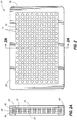
- a component of a battery is depicted as electrode substrate 12 and a cross section of same is shown in Fig. 2A .
- This substrate can be a three-dimensional structure that may be stamp molded, injection molded, and/or otherwise fashioned to a final geometric shape as desired.
- the substrate can be substantially planar having planar side 13 and edge 15, for example.
- Substrate 12 can vary in shape as desirable and may be dependent upon the final battery design. As shown, substrate 12 does not include a tab or post, but other embodiments may include same as well as other features that may facilitate production and/or use.
- Substrate 12 can be described to have at least two portions with one of the two portions being configured to extend into battery solute and the second of the two portions being configured to reside outside the battery solute such as one or more tabs 52 that may be configured to couple to a connecting post, for example (see, e.g., Figs 5-8 ).
- methods for production of the electrodes can include forming a contact tab 52 along an edge of the sheet of conductive material 18, for example.
- the contact tab may be at least partially encased with the polymeric material 22.
- the tab location, size and/or shape may change commensurate with battery design as desired.
- the substrate or portions thereof, particularly the portion within the battery solute may be inert wherein it may be inert to conditions typically present in batteries, such as, for example, current flows, heat, dissipation of heat, and/or acidic conditions relating to the battery solute, for example.
- Substrate 12 may include recesses such as openings 14. Openings 14 may be spaced randomly throughout substrate 12 and may be utilized as a support feature to facilitate the binding of materials such as lead paste material to substrate 12 at a later stage of electrode preparation processing. Openings 14 can have sidewalls 17 extending between planar surfaces 13 of electrode 12, for example. At least a portion of the sidewalls 17 and surfaces 13 can be considered edges of the openings 14 and these edges may be angled and/or beveled, for example. Accordingly, methods for producing electrodes can include providing a plurality of openings within the sheet of conductive material 18.
- substrate 12 may have openings therein, or it may not have openings therein.
- the electrode may include additional materials in the form of layers and/or lines deposited and/or etched thereon. These materials may extend via the openings between opposing surfaces of the substrate.
- materials such as conductive materials, lead oxide, and/or lead paste materials may be associated with planar surfaces (sides) 13 as well as sidewalls 17.
- one or more of these materials may extend through openings 14 closing opening 14.
- lead paste material can extend through opening 14 effectively closing opening 14.
- lead paste material may extend through opening 14 leaving access through opening 14, for example.
- substrate 12 can include a core member 18 of conductive material.
- the electrode can include a conductive core supported by a polymeric frame.
- This conductive material can be copper, aluminum, and/or magnesium in the form of a sheet, for example.
- Member 18 can be as thin as about 0.004 inches or from about 0.006 inches to about 0.010 inches thick and/or may be at least about 0.016 inches thick. The sheet can be punched or coined to provide three dimensional shapes as desired. Member 18 may have a flat or planar surface as well.
- member 18 may also be a conductive material other than lead, for example, copper, aluminum, silver, gold, nickel, magnesium, and/or alloys of same.
- Lead material 19 may be provided over member 18, for example. Material 19 is shown associated with both sides of member 18. Material 19 may be provided to cover and/or encase member 18. Material 19 can be one or more of a substantially pure lead material, lead oxide material, and/or lead alloy material. Alloys of the lead material can include tin alloys, for example. Accordingly, the conductive core can include lead electroplated copper.
- the lead electroplated copper of the conductive core can be comprised by a sheet being at least about 0.018 inches thick in one cross section. According to other examples, the sheet can be from about 0.019 to about 0.021 inches thick in the one cross section.
- Polymeric material 22 can be provided to one or both of member 18 and material 19.
- Material 22 can include one or more polymeric materials that are inert to acidic conditions such as those that exist in a battery. Polyolefins, polycarbonates, polypropylene, and/or fluoropolymers may be utilized.
- material 22 may be overmolded onto one or both of member 18 and material 19. According to an example aspect, the overmolding may provide material 22 in sufficient amount to support the structural integrity of member 18 and material 19, keeping both these components in a substantially planar form.
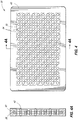
- substrate 12A is provided to include a support structure for lead paste.
- Material 22 can be further overmolded to support one or both of member 18 and material 19 as well as form a lattice structure.
- This lattice structure can be configured to support lead paste, the application of which can form a completed electrode. As shown the lattice structure is in a "diamond" formation, however other formations are contemplated, including but not limited to, horizontal/vertical supports.
- lead paste material can be associated with and/or supported by substrate 12 and/or 12A.
- the lead paste material may cover all or a portion of the substrate and it may cover all or a portion of lead material 19 encasing member 18 where applied.
- the lead paste material can be applied to both sides of the substrate. In accordance with example implementations, this application may be to only one side.
- the substrate may have one or more recesses such as openings extending there through. These recesses such as openings can be filled with the lead paste material and extend through the openings leaving at least a portion of the openings clear, or for example, completely close the openings.
- the formulation of this lead paste material is known to persons of ordinary skill in the art of lead-acid battery production and is not critical to the present disclosure.
- the lead paste material may include additives, for example, that can be used to increase surface area.
- lead paste material can be considered porous when compared to the lead material described above.
- the substantially pure lead, lead oxide and/or lead alloys of the lead material can be substantially homogenous thereby preventing battery solutes from contacting the conductive material.
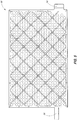
- member 38 in accordance with yet another embodiment, can be completely overmolded with a conductive yet acidic inert polymeric material 42.
- Material 42 can be a polymeric material that includes carbon for example, giving the material some conductivity.
- Material 42 can be overmolded onto member 38 to support member 38 as well as provide support for lead paste material described.
- Such support structures can include but are not limited to indentations and/or extensions.
- Substrate 30 can include a planar surface 33 as well as openings 34.
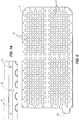
- FIG. 5 another example substrate 50 is depicted that includes tab 52 as well as lug 54.
- Tab 52 can be an extension of the member of substrate 50 and can be utilized as a post of the completed electrode.
- Lug 54 can be an extension of the polymeric material and can be used during the processing phase and removed before use as an electrode, for example.
- methods of forming the electrodes can include forming a polymeric tab along at least one edge of frame and/or include forming a contact tab along and at least one opposing edge of the frame. Processing the electrode can include conveying the electrode using the polymeric tab and/or contact tab as dogs.
- a detailed depiction of conductive material 2 is shown as a sheet of copper.
- material 2 can have openings 14 therein as well as tab 52.
- material 2 is shown at another stage of processing.
- the electrode includes polymeric material frame 6 encompassing conductive core 2.
- a section of the electrode is shown to detail perimeter opening sizing differences, such as opening 72. These differences may be exploited to assist with electroplating of material 2, for example.
- Some perimeter openings 71 can have a diameter of about 0.062 inches while other openings can have a diameter of about 0.075 inches.
- Material 6 can be provided to extend outwardly from the larger openings, such as 72 for example.
- Fig. 8 a more detailed view of tab 52 at least partially encased in material 2 is shown.
- conductive material 2 may have a thickness of from about 0.014 to about 0.016 inches and lead material 4 can have a thickness of about 0.001 inches, giving the combination of conductive material 2 (0.016) and lead material and overall thickness of about 0.018 inches.
- Lead paste material 8 can be provided to the electrode to a thickness of from about 0.020 to about 0.025 inches giving an overall thickness of the electrode of about 0.058 inches. Accordingly to example embodiments, this electrode thickness has never been operatively achieved and substantially changes the overall weight and/or performance of the battery using one or more of these electrodes.
- an example battery 60 that includes a plurality of electrodes 62.
- One or more of the electrodes 62 can be configured as described herein.
- Batteries described herein can include flat-plate, tubular, circular, and/or bi-polar batteries.
- the battery can be at least one of a plurality of batteries within a bank of batteries, for example.
- the battery can be configured as a bank of individual batteries.
- storing electricity within these batteries can include providing electrical current to the battery.
- the battery can have an electrode that is both inert to the battery solute and include non-conductive material.
- the electrical current can be provided to one or more post components in electrical communication with one or more of the plurality of electrodes of like polarity.
- the battery can include a plurality of electrodes, individual ones of the electrodes including a conductive core supported by a polymeric frame. At least one of these electrodes can define a conductive tab electrically coupled to the conductive core
- the present invention provides a battery electrode that includes a conductive core supported by a polymeric frame.
- the conductive core comprises copper.
- the copper of the conductive core is comprises by a sheet being at least about 0.016 inches thick in one cross section.
- the conductive core comprises lead electroplated copper.
- the lead electroplated copper of the conductive core is comprised by a sheet being at least about 0.018 inches thick in one cross section. More preferably the sheet is from about 0.019 to about 0.021 inches thick in the one cross section.
- the electrode further comprises a lead paste encompassing the conductive core.
- the electrode further comprises openings extending through the conductive core.
- the polymeric frame comprises polypropylene.
- the electrode further comprises polymeric material extending between interior edges of the frame.
- the present invention provides a method for manufacturing a battery electrode comprising:
- the method further comprises forming a contact tab along an edge of the sheet of conductive material.
- the method further comprises framing the contact tab with the polymeric material, the framing exposing a portion of the tab.
- the method further comprises forming a polymeric tab along at least one edge of the frame.
- the method further comprises forming a contact tab along at least one opposing edge of the frame.
- the method further comprises conveying the electrode using the polymeric tab and/or contact tab as dogs.
- the method further comprises providing a plurality of openings within the sheet of conductive material.
- the method further comprises electroplating the conductive material.
- the present invention provides a battery comprising a plurality of electrodes, individual ones of the electrodes comprising a conductive core supported by a polymeric frame.
- At least one of the electrodes defines a conductive tab electrically coupled to the conductive core.
Landscapes
- Chemical & Material Sciences (AREA)
- Chemical Kinetics & Catalysis (AREA)
- Electrochemistry (AREA)
- General Chemical & Material Sciences (AREA)
- Engineering & Computer Science (AREA)
- Materials Engineering (AREA)
- Manufacturing & Machinery (AREA)
- Composite Materials (AREA)
- Cell Electrode Carriers And Collectors (AREA)
- Connection Of Batteries Or Terminals (AREA)
- Battery Mounting, Suspending (AREA)
Abstract
Description
- This application claims priority to
U.S. Provisional Patent Application Serial No. 61/617,200 - The present disclosure relates to electrodes, batteries, electrode production methods, and battery production methods. In more particular embodiments the disclosure relates to Rechargeable Batteries, Lead-Acid Batteries, Battery Components, and Battery Methods. Particular embodiments of the disclosure relate to novel electrode constructions and/or methods of manufacturing electrodes.
- Rechargeable batteries such as lead-acid batteries can include one or more cathodic electrodes that may be constructed by casting lead, expanding lead sheet, or creating a lead alloy foil with punched grid pattern. Typically the cathodic electrode is comprised of 100% lead or lead alloy. Rechargeable batteries such as lead-acid batteries also can include one or more anodic electrodes that utilize a lead oxide, or derivative, pasted onto a traditional lead battery electrode substrate.
- The electrodes of the present disclosure can be configured to be utilized in standard lead acid battery manufacturing processes and equipment.
- The present disclosure provides low cost, light weight, and advanced battery electrodes for use in lead acid batteries. The electrodes may be utilized as a negative electrode and can provide for improved negative-active-material utilization, more uniform current distribution, and enhanced cycle life performance.
- Battery electrodes are provided that can include a conductive core supported by a polymeric frame.
- Methods for manufacturing battery electrodes are provided that can include: providing a sheet of conductive material; and framing the sheet of conductive material with a polymeric material.
- Batteries are provided that can include a plurality of electrodes, with individual ones of the electrodes comprising a conductive core supported by a polymeric frame.
- Embodiments of the disclosure are described below with reference to the following accompanying drawings.
-
Fig. 1 is a fragment of an electrode according to a process of the disclosure. -
Fig. 2 is an electrode substrate according to an embodiment of the disclosure. -
Fig. 2A is a cross section of the electrode ofFig. 2 according to an embodiment of the disclosure. -
Fig. 3 is an electrode substrate according to an embodiment of the disclosure. -
Fig. 3A is a cross section of the electrode ofFig. 3 according to an embodiment of the disclosure. -
Fig. 4 is an electrode substrate according to an embodiment of the disclosure. -
Fig. 4A is a cross section of the electrode ofFig. 4 according to an embodiment of the disclosure. -
Fig. 5 is an electrode substrate according to an embodiment of the disclosure. -
Fig. 6 is a portion of an electrode substrate according to an embodiment of the disclosure. -
Fig. 7 is an electrode substrate according to an embodiment of the disclosure. -
Fig. 7A is a section of the electrode substrate ofFig. 7 according to an embodiment of the disclosure. -
Fig. 8 is a portion of an electrode substrate according to an embodiment of the disclosure. -
Fig. 9 is a section of an electrode substrate according to an embodiment of the disclosure. -
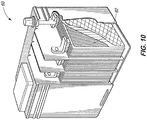
Fig. 10 is a battery including electrodes according to an embodiment of the disclosure. - The electrodes, batteries, electrode production methods, battery production methods, rechargeable batteries, lead acid batteries, battery components, and battery methods of the disclosure will be described with reference to
Figs. 1-10 . - Referring first to
Fig. 1 , an example portion of an electrode of the present disclosure is shown at stages of processing according to an embodiment of the disclosure. Accordingly, a method for manufacturing a battery electrode is provided that can include providing a sheet ofconductive material 2.Material 2 can be a sheet, extruded, diecast, or thixomolded as well of electrically conductive metals or alloy of the same.Material 2 can have anothermaterial 4 applied thereto. -
Material 4 can provide an acid protective barrier tomaterial 2.Material 4 can be inert to acid solutions such as those used for lead/acid batteries.Material 4 can be a lead material such as electroplated lead.Material 4 can be a conductive ink or polymer that is inert to acid for example.Material 4 can provide a homogeneous coating of sufficient thickness to prevent molecules of the conductive metals from migrating into the acid electrolyte of a lead/acid battery.Material 4 can provide a homogeneous acid protective barrier over theconductive material 2. As a polymer,material 4 may also provide structural or architectural support. One or both of thematerials 2 and/or 4 can then be framed with apolymeric material 6. - Referring to
Figs. 2 and 2A , a component of a battery is depicted aselectrode substrate 12 and a cross section of same is shown inFig. 2A . This substrate can be a three-dimensional structure that may be stamp molded, injection molded, and/or otherwise fashioned to a final geometric shape as desired. The substrate can be substantially planar havingplanar side 13 andedge 15, for example.Substrate 12 can vary in shape as desirable and may be dependent upon the final battery design. As shown,substrate 12 does not include a tab or post, but other embodiments may include same as well as other features that may facilitate production and/or use. -
Substrate 12 can be described to have at least two portions with one of the two portions being configured to extend into battery solute and the second of the two portions being configured to reside outside the battery solute such as one ormore tabs 52 that may be configured to couple to a connecting post, for example (see, e.g.,Figs 5-8 ). Accordingly, methods for production of the electrodes can include forming acontact tab 52 along an edge of the sheet ofconductive material 18, for example. The contact tab may be at least partially encased with thepolymeric material 22. The tab location, size and/or shape may change commensurate with battery design as desired. The substrate or portions thereof, particularly the portion within the battery solute may be inert wherein it may be inert to conditions typically present in batteries, such as, for example, current flows, heat, dissipation of heat, and/or acidic conditions relating to the battery solute, for example. -
Substrate 12 may include recesses such asopenings 14.Openings 14 may be spaced randomly throughoutsubstrate 12 and may be utilized as a support feature to facilitate the binding of materials such as lead paste material tosubstrate 12 at a later stage of electrode preparation processing.Openings 14 can havesidewalls 17 extending betweenplanar surfaces 13 ofelectrode 12, for example. At least a portion of thesidewalls 17 and surfaces 13 can be considered edges of theopenings 14 and these edges may be angled and/or beveled, for example. Accordingly, methods for producing electrodes can include providing a plurality of openings within the sheet ofconductive material 18. - In accordance with example implementations,
substrate 12 may have openings therein, or it may not have openings therein. Where openings are present, the electrode may include additional materials in the form of layers and/or lines deposited and/or etched thereon. These materials may extend via the openings between opposing surfaces of the substrate. For example, materials, such as conductive materials, lead oxide, and/or lead paste materials may be associated with planar surfaces (sides) 13 as well assidewalls 17. In accordance with example implementations, one or more of these materials may extend throughopenings 14 closingopening 14. For example, lead paste material can extend throughopening 14 effectively closingopening 14. In accordance with other embodiments, lead paste material may extend throughopening 14 leaving access throughopening 14, for example. - In accordance with an example embodiment,
substrate 12 can include acore member 18 of conductive material. Accordingly, the electrode can include a conductive core supported by a polymeric frame. This conductive material can be copper, aluminum, and/or magnesium in the form of a sheet, for example.Member 18 can be as thin as about 0.004 inches or from about 0.006 inches to about 0.010 inches thick and/or may be at least about 0.016 inches thick. The sheet can be punched or coined to provide three dimensional shapes as desired.Member 18 may have a flat or planar surface as well. In accordance with example implementations,member 18 may also be a conductive material other than lead, for example, copper, aluminum, silver, gold, nickel, magnesium, and/or alloys of same. -
Lead material 19 may be provided overmember 18, for example.Material 19 is shown associated with both sides ofmember 18.Material 19 may be provided to cover and/or encasemember 18.Material 19 can be one or more of a substantially pure lead material, lead oxide material, and/or lead alloy material. Alloys of the lead material can include tin alloys, for example. Accordingly, the conductive core can include lead electroplated copper. The lead electroplated copper of the conductive core can be comprised by a sheet being at least about 0.018 inches thick in one cross section. According to other examples, the sheet can be from about 0.019 to about 0.021 inches thick in the one cross section. -
Polymeric material 22 can be provided to one or both ofmember 18 andmaterial 19.Material 22 can include one or more polymeric materials that are inert to acidic conditions such as those that exist in a battery. Polyolefins, polycarbonates, polypropylene, and/or fluoropolymers may be utilized. In accordance with example implementations,material 22 may be overmolded onto one or both ofmember 18 andmaterial 19. According to an example aspect, the overmolding may providematerial 22 in sufficient amount to support the structural integrity ofmember 18 andmaterial 19, keeping both these components in a substantially planar form. - Referring to
Figs. 3 and 3A , in accordance with an alternative embodiment, substrate 12A is provided to include a support structure for lead paste.Material 22 can be further overmolded to support one or both ofmember 18 andmaterial 19 as well as form a lattice structure. This lattice structure can be configured to support lead paste, the application of which can form a completed electrode. As shown the lattice structure is in a "diamond" formation, however other formations are contemplated, including but not limited to, horizontal/vertical supports. - As discussed, lead paste material can be associated with and/or supported by
substrate 12 and/or 12A. The lead paste material may cover all or a portion of the substrate and it may cover all or a portion oflead material 19 encasingmember 18 where applied. The lead paste material can be applied to both sides of the substrate. In accordance with example implementations, this application may be to only one side. - The substrate may have one or more recesses such as openings extending there through. These recesses such as openings can be filled with the lead paste material and extend through the openings leaving at least a portion of the openings clear, or for example, completely close the openings. The formulation of this lead paste material is known to persons of ordinary skill in the art of lead-acid battery production and is not critical to the present disclosure. The lead paste material may include additives, for example, that can be used to increase surface area. In accordance with example configurations, lead paste material can be considered porous when compared to the lead material described above. The substantially pure lead, lead oxide and/or lead alloys of the lead material can be substantially homogenous thereby preventing battery solutes from contacting the conductive material.
- Referring to
Fig. 4 and 4A , in accordance with yet another embodiment,member 38, as described above, can be completely overmolded with a conductive yet acidic inertpolymeric material 42.Material 42 can be a polymeric material that includes carbon for example, giving the material some conductivity.Material 42 can be overmolded ontomember 38 to supportmember 38 as well as provide support for lead paste material described. Such support structures can include but are not limited to indentations and/or extensions.Substrate 30 can include aplanar surface 33 as well asopenings 34. - Referring to
Fig. 5 , anotherexample substrate 50 is depicted that includestab 52 as well aslug 54.Tab 52 can be an extension of the member ofsubstrate 50 and can be utilized as a post of the completed electrode.Lug 54 can be an extension of the polymeric material and can be used during the processing phase and removed before use as an electrode, for example. Accordingly, methods of forming the electrodes can include forming a polymeric tab along at least one edge of frame and/or include forming a contact tab along and at least one opposing edge of the frame. Processing the electrode can include conveying the electrode using the polymeric tab and/or contact tab as dogs. - Referring to
Fig. 6 , a detailed depiction ofconductive material 2 is shown as a sheet of copper. In accordance with example implementations,material 2 can haveopenings 14 therein as well astab 52. Referring toFigs. 7 and7A material 2 is shown at another stage of processing. Accordingly, the electrode includespolymeric material frame 6 encompassingconductive core 2. Referring toFig. 7A , a section of the electrode is shown to detail perimeter opening sizing differences, such asopening 72. These differences may be exploited to assist with electroplating ofmaterial 2, for example. Someperimeter openings 71 can have a diameter of about 0.062 inches while other openings can have a diameter of about 0.075 inches.Material 6 can be provided to extend outwardly from the larger openings, such as 72 for example. Referring toFig. 8 , a more detailed view oftab 52 at least partially encased inmaterial 2 is shown. - Referring to
Fig 9 an example electrode fragment is shown to demonstrate the overall thickness and contribution of this thickness of the various materials. Accordingly,conductive material 2 may have a thickness of from about 0.014 to about 0.016 inches andlead material 4 can have a thickness of about 0.001 inches, giving the combination of conductive material 2 (0.016) and lead material and overall thickness of about 0.018 inches. Leadpaste material 8 can be provided to the electrode to a thickness of from about 0.020 to about 0.025 inches giving an overall thickness of the electrode of about 0.058 inches. Accordingly to example embodiments, this electrode thickness has never been operatively achieved and substantially changes the overall weight and/or performance of the battery using one or more of these electrodes. - Referring to
Fig. 10 , anexample battery 60 is shown that includes a plurality ofelectrodes 62. One or more of theelectrodes 62 can be configured as described herein. Batteries described herein can include flat-plate, tubular, circular, and/or bi-polar batteries. The battery can be at least one of a plurality of batteries within a bank of batteries, for example. As another example, the battery can be configured as a bank of individual batteries. In accordance with example implementations, storing electricity within these batteries can include providing electrical current to the battery. The battery can have an electrode that is both inert to the battery solute and include non-conductive material. The electrical current can be provided to one or more post components in electrical communication with one or more of the plurality of electrodes of like polarity. The battery can include a plurality of electrodes, individual ones of the electrodes including a conductive core supported by a polymeric frame. At least one of these electrodes can define a conductive tab electrically coupled to the conductive core - Viewed from a first aspect the present invention provides a battery electrode that includes a conductive core supported by a polymeric frame.
- Preferably the conductive core comprises copper. Particularly preferably the copper of the conductive core is comprises by a sheet being at least about 0.016 inches thick in one cross section.
- Preferably the conductive core comprises lead electroplated copper. Particularly preferably the lead electroplated copper of the conductive core is comprised by a sheet being at least about 0.018 inches thick in one cross section. More preferably the sheet is from about 0.019 to about 0.021 inches thick in the one cross section.
- Preferably the electrode further comprises a lead paste encompassing the conductive core.
- Preferably the electrode further comprises openings extending through the conductive core.
- Preferably the polymeric frame comprises polypropylene.
- Preferably the electrode further comprises polymeric material extending between interior edges of the frame.
- Viewed from a further aspect the present invention provides a method for manufacturing a battery electrode comprising:
- providing a sheet of conductive material; and
- framing the sheet of conductive material with a polymeric material.
- Preferably the method further comprises forming a contact tab along an edge of the sheet of conductive material. Particularly preferably the method further comprises framing the contact tab with the polymeric material, the framing exposing a portion of the tab.
- Preferably the method further comprises forming a polymeric tab along at least one edge of the frame. Particularly preferably the method further comprises forming a contact tab along at least one opposing edge of the frame. More preferably the method further comprises conveying the electrode using the polymeric tab and/or contact tab as dogs.
- Preferably the method further comprises providing a plurality of openings within the sheet of conductive material.
- Preferably the method further comprises electroplating the conductive material.
- Viewed from a yet further aspect the present invention provides a battery comprising a plurality of electrodes, individual ones of the electrodes comprising a conductive core supported by a polymeric frame.
- Preferably at least one of the electrodes defines a conductive tab electrically coupled to the conductive core.
Claims (12)
- A battery electrode that includes:a conductive core having a planar surface and a planar edge, the conductive core being supported and framed by a polymeric frame that is overmolded onto the conductive core;openings extending through the conductive core; anda lead material over the conductive core and through the openings.
- The electrode of claim 1 wherein the conductive core comprises copper.
- The electrode of claim 2 wherein the copper of the conductive core is comprised by a sheet being at least about 0.016 inches thick in one cross section.
- The electrode of claim 1 wherein the conductive core comprises lead electroplated copper.
- The electrode of claim 4 wherein the lead electroplated copper of the conductive core is comprised by a sheet being at least about 0.018 inches thick in one cross section.
- The electrode of claim 5 wherein the sheet is from about 0.019 to about 0.021 inches thick in the one cross section.
- The electrode of claim 1 wherein the polymeric frame comprises polypropylene.
- The electrode of claim 1 further comprising polymeric material extending between interior edges of the frame.
- A method for manufacturing a battery electrode comprising:providing a sheet of conductive material, the conductive material extending to form contact tab;framing the sheet of conductive material with a polymeric material, the framing at least partially encased by the polymeric material;extending a lug from the polymeric material, the lug axially aligned with the contact tab to act as dogs; andconveying the electrode using the polymeric tab and/or contact tab as dogs.
- The method of claim 9 further comprising providing a plurality of openings within the sheet of conductive material.
- The method of claim 9 further comprising electroplating the conductive material.
- The method of claim 9 further comprising providing lead material upon the conductive core.
Applications Claiming Priority (2)
| Application Number | Priority Date | Filing Date | Title |
|---|---|---|---|
| US201261617200P | 2012-03-29 | 2012-03-29 | |
| EP13768089.8A EP2831941B1 (en) | 2012-03-29 | 2013-03-25 | Electrodes, batteries, electrode production methods, and battery production methods |
Related Parent Applications (2)
| Application Number | Title | Priority Date | Filing Date |
|---|---|---|---|
| EP13768089.8A Division-Into EP2831941B1 (en) | 2012-03-29 | 2013-03-25 | Electrodes, batteries, electrode production methods, and battery production methods |
| EP13768089.8A Division EP2831941B1 (en) | 2012-03-29 | 2013-03-25 | Electrodes, batteries, electrode production methods, and battery production methods |
Publications (1)
| Publication Number | Publication Date |
|---|---|
| EP3171435A1 true EP3171435A1 (en) | 2017-05-24 |
Family
ID=49235464
Family Applications (2)
| Application Number | Title | Priority Date | Filing Date |
|---|---|---|---|
| EP13768089.8A Not-in-force EP2831941B1 (en) | 2012-03-29 | 2013-03-25 | Electrodes, batteries, electrode production methods, and battery production methods |
| EP16203618.0A Withdrawn EP3171435A1 (en) | 2012-03-29 | 2013-03-25 | Electrodes, batteries, electrode production methods, and battery production methods |
Family Applications Before (1)
| Application Number | Title | Priority Date | Filing Date |
|---|---|---|---|
| EP13768089.8A Not-in-force EP2831941B1 (en) | 2012-03-29 | 2013-03-25 | Electrodes, batteries, electrode production methods, and battery production methods |
Country Status (8)
| Country | Link |
|---|---|
| US (6) | US9299980B2 (en) |
| EP (2) | EP2831941B1 (en) |
| KR (1) | KR20150016212A (en) |
| CN (2) | CN104303342B (en) |
| CA (1) | CA2868031A1 (en) |
| HK (1) | HK1246004A1 (en) |
| MX (1) | MX363721B (en) |
| WO (1) | WO2013148606A1 (en) |
Families Citing this family (8)
| Publication number | Priority date | Publication date | Assignee | Title |
|---|---|---|---|---|
| US9299980B2 (en) | 2012-03-29 | 2016-03-29 | Copperwatts Llc | Electrodes, batteries, electrode production methods, and production methods |
| US12451493B2 (en) | 2017-01-27 | 2025-10-21 | Cps Technology Holdings Llc | Battery grid |
| US11936032B2 (en) | 2017-06-09 | 2024-03-19 | Cps Technology Holdings Llc | Absorbent glass mat battery |
| EP3635805B1 (en) | 2017-06-09 | 2023-09-06 | CPS Technology Holdings LLC | Lead-acid battery |
| US12548760B2 (en) | 2017-12-07 | 2026-02-10 | Enevate Corporation | Silicon particles for battery electrodes |
| US10686214B2 (en) | 2017-12-07 | 2020-06-16 | Enevate Corporation | Sandwich electrodes and methods of making the same |
| KR102855942B1 (en) | 2017-12-07 | 2025-09-04 | 에네베이트 코포레이션 | Composite comprising silicon carbide and carbon particles |
| CN109755563B (en) * | 2018-12-27 | 2020-09-29 | 浙江天能动力能源有限公司 | A kind of negative lead paste of lead-acid battery and preparation method thereof |
Citations (5)
| Publication number | Priority date | Publication date | Assignee | Title |
|---|---|---|---|---|
| US3738871A (en) * | 1971-05-06 | 1973-06-12 | Scholle Corp | Storage battery plates of plastic and lead |
| EP0538645A1 (en) * | 1991-10-23 | 1993-04-28 | VARTA Batterie Aktiengesellschaft | Grid for negative electrode of lead accumulator |
| US5223354A (en) * | 1990-04-30 | 1993-06-29 | Yuasa Battery Co., Ltd. | Lead-acid battery plate and its manufacturing method |
| US5498496A (en) * | 1993-12-14 | 1996-03-12 | Yuasa Corporation | Lead acid battery |
| JPH08124565A (en) * | 1994-10-24 | 1996-05-17 | Shin Kobe Electric Mach Co Ltd | Anode plate for lead acid battery |
Family Cites Families (16)
| Publication number | Priority date | Publication date | Assignee | Title |
|---|---|---|---|---|
| DE538645C (en) * | 1930-07-18 | 1931-11-16 | R & Dr O Weil Chemisch Pharmaz | Production of colloidal manganese dioxide solutions |
| DE3240711A1 (en) * | 1982-11-04 | 1984-05-10 | Rheinisch-Westfälisches Elektrizitätswerk AG, 4300 Essen | PROFILE-DESIGNED GRID ELECTRODE AND METHOD FOR THEIR PRODUCTION |
| US5093970A (en) | 1990-04-30 | 1992-03-10 | Keiji Senoo | Lead-acid battery plate and its manufacturing method |
| US5098799A (en) | 1990-11-27 | 1992-03-24 | Globe-Union Inc. | Battery electrode growth accommodation |
| DE4134878A1 (en) | 1991-10-23 | 1993-04-29 | Deere & Co | METHOD FOR PRODUCING A SUSPENDING SUSPENSION STRIP FOR A CHOPPING DEVICE, SEPARATION BAR AND CHOPPING DEVICE |
| CA2098248C (en) | 1993-06-11 | 1999-03-16 | Jeffrey Raymond Dahn | Electron acceptor substituted carbons for use as anodes in rechargeable lithium batteries |
| US5508131A (en) * | 1994-04-07 | 1996-04-16 | Globe-Union Inc. | Injection molded battery containment for bipolar batteries |
| JP3355858B2 (en) * | 1994-05-24 | 2002-12-09 | 松下電器産業株式会社 | Lead storage battery and method of manufacturing the same |
| US6017653A (en) * | 1996-03-11 | 2000-01-25 | Gnb Technologies, Inc. | Method of manufacturing modular molded components for a bipolar battery and the resulting bipolar battery |
| WO2005083817A1 (en) | 2004-02-26 | 2005-09-09 | Pacific Marine Batteries Pty Limited | Grids for batteries |
| SE531492C2 (en) * | 2007-02-16 | 2009-04-28 | Nilar Int Ab | A gasket, a bipolar battery and a method of manufacturing a gasket |
| WO2009150485A1 (en) * | 2008-06-09 | 2009-12-17 | Commissariat A L'energie Atomique | Electrode for lead-acid battery and method for producing such an electrode |
| CN101393983A (en) * | 2008-11-07 | 2009-03-25 | 清华大学 | A positive plate of a thin-tube lead-acid battery |
| EP3021389B1 (en) * | 2008-11-18 | 2018-07-11 | Johnson Controls Technology Company | Electrical power storage devices |
| EP2389698B1 (en) | 2009-01-21 | 2017-10-04 | Advanced Battery Concepts, Llc | Bipolar battery assembly |
| US9299980B2 (en) | 2012-03-29 | 2016-03-29 | Copperwatts Llc | Electrodes, batteries, electrode production methods, and production methods |
-
2013
- 2013-03-11 US US13/794,599 patent/US9299980B2/en not_active Expired - Fee Related
- 2013-03-25 CN CN201380018081.1A patent/CN104303342B/en not_active Expired - Fee Related
- 2013-03-25 WO PCT/US2013/033765 patent/WO2013148606A1/en not_active Ceased
- 2013-03-25 EP EP13768089.8A patent/EP2831941B1/en not_active Not-in-force
- 2013-03-25 MX MX2014011452A patent/MX363721B/en active IP Right Grant
- 2013-03-25 EP EP16203618.0A patent/EP3171435A1/en not_active Withdrawn
- 2013-03-25 CN CN201710627092.XA patent/CN107492662B/en not_active Expired - Fee Related
- 2013-03-25 CA CA2868031A patent/CA2868031A1/en not_active Abandoned
- 2013-03-25 KR KR1020147027937A patent/KR20150016212A/en not_active Ceased
-
2015
- 2015-06-18 US US14/743,949 patent/US9583758B2/en not_active Expired - Fee Related
-
2016
- 2016-03-28 US US15/082,874 patent/US9508985B2/en not_active Expired - Fee Related
-
2017
- 2017-02-27 US US15/444,141 patent/US9899684B2/en not_active Expired - Fee Related
- 2017-12-12 US US15/839,780 patent/US10541420B2/en not_active Expired - Fee Related
-
2018
- 2018-04-25 HK HK18105425.4A patent/HK1246004A1/en unknown
-
2020
- 2020-01-20 US US16/747,474 patent/US11211614B2/en not_active Expired - Fee Related
Patent Citations (5)
| Publication number | Priority date | Publication date | Assignee | Title |
|---|---|---|---|---|
| US3738871A (en) * | 1971-05-06 | 1973-06-12 | Scholle Corp | Storage battery plates of plastic and lead |
| US5223354A (en) * | 1990-04-30 | 1993-06-29 | Yuasa Battery Co., Ltd. | Lead-acid battery plate and its manufacturing method |
| EP0538645A1 (en) * | 1991-10-23 | 1993-04-28 | VARTA Batterie Aktiengesellschaft | Grid for negative electrode of lead accumulator |
| US5498496A (en) * | 1993-12-14 | 1996-03-12 | Yuasa Corporation | Lead acid battery |
| JPH08124565A (en) * | 1994-10-24 | 1996-05-17 | Shin Kobe Electric Mach Co Ltd | Anode plate for lead acid battery |
Also Published As
| Publication number | Publication date |
|---|---|
| EP2831941B1 (en) | 2017-05-10 |
| EP2831941A4 (en) | 2015-09-02 |
| HK1246004A1 (en) | 2018-08-31 |
| US9508985B2 (en) | 2016-11-29 |
| KR20150016212A (en) | 2015-02-11 |
| US10541420B2 (en) | 2020-01-21 |
| HK1206486A1 (en) | 2016-01-08 |
| US11211614B2 (en) | 2021-12-28 |
| CN104303342B (en) | 2017-08-25 |
| US20200152991A1 (en) | 2020-05-14 |
| US9899684B2 (en) | 2018-02-20 |
| MX2014011452A (en) | 2015-03-10 |
| US20170170484A1 (en) | 2017-06-15 |
| CA2868031A1 (en) | 2013-10-03 |
| US20150287979A1 (en) | 2015-10-08 |
| MX363721B (en) | 2019-03-29 |
| US9299980B2 (en) | 2016-03-29 |
| US20160211508A1 (en) | 2016-07-21 |
| CN104303342A (en) | 2015-01-21 |
| US9583758B2 (en) | 2017-02-28 |
| WO2013148606A1 (en) | 2013-10-03 |
| EP2831941A1 (en) | 2015-02-04 |
| CN107492662B (en) | 2020-11-20 |
| US20180102548A1 (en) | 2018-04-12 |
| CN107492662A (en) | 2017-12-19 |
| US20130260235A1 (en) | 2013-10-03 |
Similar Documents
| Publication | Publication Date | Title |
|---|---|---|
| US11211614B2 (en) | Lead/acid batteries | |
| EP2896080B1 (en) | Battery module and method for producing the same | |
| EP2433322A1 (en) | Composite current collector and methods therefor | |
| KR20200031564A (en) | Solid battery cell and method for manufacturing solid battery | |
| WO2008036734A3 (en) | Forming solid electrolyte interface layer on lithium-ion polymer battery electrode | |
| US12451493B2 (en) | Battery grid | |
| US8347468B2 (en) | Method of making a current collector | |
| ITVI20100333A1 (en) | METHOD OF REALIZING AN ELECTRODE WITH HIGH ENERGETIC DENSITY AND ELECTRODE OBTAINED WITH THIS METHOD | |
| WO2015107475A2 (en) | Electrodes for use in electrorefining and electrowinning | |
| HK1206486B (en) | Electrodes, batteries, electrode production methods, and battery production methods | |
| EP3145006B1 (en) | Battery grid and method of making | |
| JP4655657B2 (en) | Winded lead acid battery | |
| KR20210056402A (en) | Method for manufacturing an electric battery having a separator material on a current collector base | |
| JP2008198839A (en) | Chip-type solid electrolytic capacitor and manufacturing method thereof | |
| SE463536B (en) | PROVIDED TO MAKE AN AGREEMENT OF ANNEX UNITS AND SUBJECT BEFORE IMPLEMENTING THE SET |
Legal Events
| Date | Code | Title | Description |
|---|---|---|---|
| PUAI | Public reference made under article 153(3) epc to a published international application that has entered the european phase |
Free format text: ORIGINAL CODE: 0009012 |
|
| STAA | Information on the status of an ep patent application or granted ep patent |
Free format text: STATUS: THE APPLICATION HAS BEEN PUBLISHED |
|
| AC | Divisional application: reference to earlier application |
Ref document number: 2831941 Country of ref document: EP Kind code of ref document: P |
|
| AK | Designated contracting states |
Kind code of ref document: A1 Designated state(s): AL AT BE BG CH CY CZ DE DK EE ES FI FR GB GR HR HU IE IS IT LI LT LU LV MC MK MT NL NO PL PT RO RS SE SI SK SM TR |
|
| STAA | Information on the status of an ep patent application or granted ep patent |
Free format text: STATUS: REQUEST FOR EXAMINATION WAS MADE |
|
| 17P | Request for examination filed |
Effective date: 20171114 |
|
| RBV | Designated contracting states (corrected) |
Designated state(s): AL AT BE BG CH CY CZ DE DK EE ES FI FR GB GR HR HU IE IS IT LI LT LU LV MC MK MT NL NO PL PT RO RS SE SI SK SM TR |
|
| STAA | Information on the status of an ep patent application or granted ep patent |
Free format text: STATUS: EXAMINATION IS IN PROGRESS |
|
| 17Q | First examination report despatched |
Effective date: 20180118 |
|
| STAA | Information on the status of an ep patent application or granted ep patent |
Free format text: STATUS: THE APPLICATION IS DEEMED TO BE WITHDRAWN |
|
| 18D | Application deemed to be withdrawn |
Effective date: 20190503 |