EP3170370B1 - Lighting system - Google Patents
Lighting system Download PDFInfo
- Publication number
- EP3170370B1 EP3170370B1 EP15736505.7A EP15736505A EP3170370B1 EP 3170370 B1 EP3170370 B1 EP 3170370B1 EP 15736505 A EP15736505 A EP 15736505A EP 3170370 B1 EP3170370 B1 EP 3170370B1
- Authority
- EP
- European Patent Office
- Prior art keywords
- light
- emission period
- controller
- lighting system
- spectrum
- Prior art date
- Legal status (The legal status is an assumption and is not a legal conclusion. Google has not performed a legal analysis and makes no representation as to the accuracy of the status listed.)
- Active
Links
Images


Classifications
-
- H—ELECTRICITY
- H05—ELECTRIC TECHNIQUES NOT OTHERWISE PROVIDED FOR
- H05B—ELECTRIC HEATING; ELECTRIC LIGHT SOURCES NOT OTHERWISE PROVIDED FOR; CIRCUIT ARRANGEMENTS FOR ELECTRIC LIGHT SOURCES, IN GENERAL
- H05B47/00—Circuit arrangements for operating light sources in general, i.e. where the type of light source is not relevant
- H05B47/10—Controlling the light source
- H05B47/105—Controlling the light source in response to determined parameters
- H05B47/11—Controlling the light source in response to determined parameters by determining the brightness or colour temperature of ambient light
-
- A—HUMAN NECESSITIES
- A61—MEDICAL OR VETERINARY SCIENCE; HYGIENE
- A61M—DEVICES FOR INTRODUCING MEDIA INTO, OR ONTO, THE BODY; DEVICES FOR TRANSDUCING BODY MEDIA OR FOR TAKING MEDIA FROM THE BODY; DEVICES FOR PRODUCING OR ENDING SLEEP OR STUPOR
- A61M21/00—Other devices or methods to cause a change in the state of consciousness; Devices for producing or ending sleep by mechanical, optical, or acoustical means, e.g. for hypnosis
-
- A—HUMAN NECESSITIES
- A61—MEDICAL OR VETERINARY SCIENCE; HYGIENE
- A61N—ELECTROTHERAPY; MAGNETOTHERAPY; RADIATION THERAPY; ULTRASOUND THERAPY
- A61N5/00—Radiation therapy
- A61N5/06—Radiation therapy using light
- A61N5/0613—Apparatus adapted for a specific treatment
- A61N5/0618—Psychological treatment
-
- H—ELECTRICITY
- H05—ELECTRIC TECHNIQUES NOT OTHERWISE PROVIDED FOR
- H05B—ELECTRIC HEATING; ELECTRIC LIGHT SOURCES NOT OTHERWISE PROVIDED FOR; CIRCUIT ARRANGEMENTS FOR ELECTRIC LIGHT SOURCES, IN GENERAL
- H05B44/00—Circuit arrangements for operating electroluminescent light sources
-
- H—ELECTRICITY
- H05—ELECTRIC TECHNIQUES NOT OTHERWISE PROVIDED FOR
- H05B—ELECTRIC HEATING; ELECTRIC LIGHT SOURCES NOT OTHERWISE PROVIDED FOR; CIRCUIT ARRANGEMENTS FOR ELECTRIC LIGHT SOURCES, IN GENERAL
- H05B45/00—Circuit arrangements for operating light-emitting diodes [LED]
- H05B45/10—Controlling the intensity of the light
-
- H—ELECTRICITY
- H05—ELECTRIC TECHNIQUES NOT OTHERWISE PROVIDED FOR
- H05B—ELECTRIC HEATING; ELECTRIC LIGHT SOURCES NOT OTHERWISE PROVIDED FOR; CIRCUIT ARRANGEMENTS FOR ELECTRIC LIGHT SOURCES, IN GENERAL
- H05B45/00—Circuit arrangements for operating light-emitting diodes [LED]
- H05B45/20—Controlling the colour of the light
-
- H—ELECTRICITY
- H05—ELECTRIC TECHNIQUES NOT OTHERWISE PROVIDED FOR
- H05B—ELECTRIC HEATING; ELECTRIC LIGHT SOURCES NOT OTHERWISE PROVIDED FOR; CIRCUIT ARRANGEMENTS FOR ELECTRIC LIGHT SOURCES, IN GENERAL
- H05B47/00—Circuit arrangements for operating light sources in general, i.e. where the type of light source is not relevant
- H05B47/10—Controlling the light source
- H05B47/105—Controlling the light source in response to determined parameters
-
- H—ELECTRICITY
- H05—ELECTRIC TECHNIQUES NOT OTHERWISE PROVIDED FOR
- H05B—ELECTRIC HEATING; ELECTRIC LIGHT SOURCES NOT OTHERWISE PROVIDED FOR; CIRCUIT ARRANGEMENTS FOR ELECTRIC LIGHT SOURCES, IN GENERAL
- H05B47/00—Circuit arrangements for operating light sources in general, i.e. where the type of light source is not relevant
- H05B47/10—Controlling the light source
- H05B47/16—Controlling the light source by timing means
-
- A—HUMAN NECESSITIES
- A61—MEDICAL OR VETERINARY SCIENCE; HYGIENE
- A61M—DEVICES FOR INTRODUCING MEDIA INTO, OR ONTO, THE BODY; DEVICES FOR TRANSDUCING BODY MEDIA OR FOR TAKING MEDIA FROM THE BODY; DEVICES FOR PRODUCING OR ENDING SLEEP OR STUPOR
- A61M21/00—Other devices or methods to cause a change in the state of consciousness; Devices for producing or ending sleep by mechanical, optical, or acoustical means, e.g. for hypnosis
- A61M2021/0005—Other devices or methods to cause a change in the state of consciousness; Devices for producing or ending sleep by mechanical, optical, or acoustical means, e.g. for hypnosis by the use of a particular sense, or stimulus
- A61M2021/0044—Other devices or methods to cause a change in the state of consciousness; Devices for producing or ending sleep by mechanical, optical, or acoustical means, e.g. for hypnosis by the use of a particular sense, or stimulus by the sight sense
-
- A—HUMAN NECESSITIES
- A61—MEDICAL OR VETERINARY SCIENCE; HYGIENE
- A61M—DEVICES FOR INTRODUCING MEDIA INTO, OR ONTO, THE BODY; DEVICES FOR TRANSDUCING BODY MEDIA OR FOR TAKING MEDIA FROM THE BODY; DEVICES FOR PRODUCING OR ENDING SLEEP OR STUPOR
- A61M21/00—Other devices or methods to cause a change in the state of consciousness; Devices for producing or ending sleep by mechanical, optical, or acoustical means, e.g. for hypnosis
- A61M21/02—Other devices or methods to cause a change in the state of consciousness; Devices for producing or ending sleep by mechanical, optical, or acoustical means, e.g. for hypnosis for inducing sleep or relaxation, e.g. by direct nerve stimulation, hypnosis, analgesia
-
- A—HUMAN NECESSITIES
- A61—MEDICAL OR VETERINARY SCIENCE; HYGIENE
- A61N—ELECTROTHERAPY; MAGNETOTHERAPY; RADIATION THERAPY; ULTRASOUND THERAPY
- A61N5/00—Radiation therapy
- A61N5/06—Radiation therapy using light
- A61N2005/0626—Monitoring, verifying, controlling systems and methods
-
- A—HUMAN NECESSITIES
- A61—MEDICAL OR VETERINARY SCIENCE; HYGIENE
- A61N—ELECTROTHERAPY; MAGNETOTHERAPY; RADIATION THERAPY; ULTRASOUND THERAPY
- A61N5/00—Radiation therapy
- A61N5/06—Radiation therapy using light
- A61N2005/065—Light sources therefor
- A61N2005/0651—Diodes
-
- A—HUMAN NECESSITIES
- A61—MEDICAL OR VETERINARY SCIENCE; HYGIENE
- A61N—ELECTROTHERAPY; MAGNETOTHERAPY; RADIATION THERAPY; ULTRASOUND THERAPY
- A61N5/00—Radiation therapy
- A61N5/06—Radiation therapy using light
- A61N2005/0658—Radiation therapy using light characterised by the wavelength of light used
- A61N2005/0662—Visible light
- A61N2005/0663—Coloured light
-
- Y—GENERAL TAGGING OF NEW TECHNOLOGICAL DEVELOPMENTS; GENERAL TAGGING OF CROSS-SECTIONAL TECHNOLOGIES SPANNING OVER SEVERAL SECTIONS OF THE IPC; TECHNICAL SUBJECTS COVERED BY FORMER USPC CROSS-REFERENCE ART COLLECTIONS [XRACs] AND DIGESTS
- Y02—TECHNOLOGIES OR APPLICATIONS FOR MITIGATION OR ADAPTATION AGAINST CLIMATE CHANGE
- Y02B—CLIMATE CHANGE MITIGATION TECHNOLOGIES RELATED TO BUILDINGS, e.g. HOUSING, HOUSE APPLIANCES OR RELATED END-USER APPLICATIONS
- Y02B20/00—Energy efficient lighting technologies, e.g. halogen lamps or gas discharge lamps
- Y02B20/40—Control techniques providing energy savings, e.g. smart controller or presence detection
Definitions
- the invention relates to a lighting system, a display apparatus comprising the lighting system, a method of controlling a light source and a computer program product.
- the human eye comprises a receptor located in the retina that is based on the photopigment melanopsin (the "melanopsin receptor").
- the melanopsin phototpigment has, for humans, a peak wavelength sensitivity for the blue portion of the visible spectrum.
- the human eye contains a sensory system that comprises several other photopigments (rods and cones) next to melanopsin.
- the light impinging on these receptors regulates the circadian system of humans and other mammals, as well as the acute effects of light (e.g. an increased alertness and melatonin suppression).
- Melatonin is a hormone that varies in a daily cycle, allowing the chronobiological entrainment of the circadian rhythm of several biological functions.
- European patent application publication number EP 1,886,708 A1 discloses a method of controlling a lamp to support circadian rhythm.
- the light is emitted with a spectral composition and intensity that is a function of the time of day between sunrise and sunset.
- WO 2009/090596 A1 relates to a lighting device for generating a wake-up stimulus and discloses a lighting device comprising one or more light sources arranged to generate light, an accommodating device having an external boundary which is at least partly translucent and is arranged to accommodate the one or more light sources and a controller.
- the lighting device can generate two types of light.
- One or more lighting parameters selected from the group consisting of the first luminous intensity of the first type of light, the second luminous intensity of the second type of light, the color point of the first type of light and the color point of the second type of light can be controlled. This allows task lighting and atmosphere lighting.
- the document also discloses a method of providing a wake-up stimulus by means of such a lighting device.
- WO 2008/110959 A1 relates to a lighting system for stimulating a user's energy by emitting bluish wake-up light and tuning the bluish light towards a daytime-like white light.
- a lighting system for illuminating a space, the lighting system comprising: at least one light source; and at least one controller configured to: receive an indication of a pre-selected duration of an emission period for which the at least one light source is to emit light, control the at least one light source to emit light for the duration of the emission period, select a first spectrum in dependence on the duration of the emission period, and control the at least one light source to emit the light with the first spectrum during at least part of the emission period.
- the at least one controller may be configured to control the lighting system to select the first spectrum in further dependence on an intensity of the light to be emitted during the emission period and/or the time of day during which the emission period lies.
- the at least one controller may be configured to control the lighting system to select the first spectrum in further dependence on: an intensity and/or spectrum from one or more other sources illuminating an area adjacent to the space illuminated by the lighting system, and/or a duration of the light emitted from the one or more other sources and/or the state of the circadian clock of a user within said space during the emission period.
- the at least one controller is configured to select a first spectrum in dependence on the duration of the emission period by selecting spectral components of light to be emitted and intensities thereof.
- the intensity of the light emitted during the emission period may be pre-selected prior to the determination of the first spectrum, the first spectrum being selected in response to the pre-selected intensity.
- the duration of the emission period is pre-selected.
- the duration of the emission period and/or the intensity of the light to be emitted during the emission period may be pre-selected by a user.
- the emission period may be pre-selected from a range between 5 seconds and 2 hours.
- the intensity of the first spectrum may be less than 18m-lux and, in dependence on this intensity, the at least one controller may be configured to include a spectral component having a wavelength of 505nm.
- the at least one controller may be configured to generate the first spectrum in dependence on whether the light is to be emitted continuously or discontinuously during the emission period.
- the light may be emitted discontinuously in pulses of 10 minutes and the spectral composition of light is matched to an m-cone absorption spectrum.
- the at least one controller may be configured to generate the light so as to suppress spectral components responsible for melatonin suppression in humans.
- the at least one controller may be operable to set a start and/or end point of the emission period.
- a method of controlling at least one light source comprising: receiving an indication of a pre-selected duration of an emission period for which the at least one light source is to emit light, controlling the at least one light source to emit light for the duration of the emission period, selecting a first spectrum in dependence on the duration of the emission period, and controlling the at least one light source to emit the light with the first spectrum during at least part of the emission period.
- Non-visual responses to light are mediated by retinal transduction pathways that have a non-constant reaction to impinging light. Instead, the response of the retinal transduction pathways varies with the intensity and duration of the light exposure. Therefore the action spectrum for these responses is not fixed.
- a lighting system located in an area can be configured to engender a targeted biological reaction in a user located in that area.
- the following discloses a system in which the composition of a light spectrum (which can comprise at least one of the selection of spectral components and the intensity of each spectral component) produced by a lighting system can be adapted in dependence on the exposure duration used or set.
- the system allows a user (e.g. an end-user or a designer of the system) to pre-select a predetermined time program for controlling the lighting for some other reason than its photo-biological effect.
- the user may set a certain wake-up light scheduled to come on around the time the user plans to wake up (e.g. the light may be programmed to come on once with a continuous emission or in pulses of a few minutes to gradually wake up the user).
- the system will then automatically adapt the spectrum of this light to additionally provide a more optimal photo-biological effect such as suppressing the secretion of the hormone melatonin.
- the user triggers the lights to turn on or dim up, either explicitly by activating an explicit user control, or by triggering a presence sensor which in turn triggers the lights when the user is detected to be present. If the user leaves the lights on or dimmed up for longer than a certain threshold duration of time, or remains present so that the presence sensor continues to keep the lights on or dimmed up for longer that a certain threshold duration of time, the system may adapt the spectrum of the light to produce a more optimal photo-biological effect given the length of time the lights have been on or dimmed up.
- the system may also allow a user to select the intensity of the light emitted by the lighting system, and a combination of the exposure duration and the selected intensity of light to be emitted may influence the selection of a composition of a light spectrum to be emitted by a lighting system.
- FIG. 1 schematically shows a block diagram of a lighting system.
- the lighting system comprises at least one light source 101 and at least one controller 102 that drives the light source 101 to emit light with a varying spectrum.
- the light source 101 may comprise a plurality of lighting elements such as LEDs which emit different colours, allowing the spectrum to be controlled by turning the different coloured elements (e.g. LEDs) on and off in different combinations, and/or controlling their relative intensities.
- the controller 102 comprises a driver which receives an input voltage and supplies a current and/or voltage DS to the light source 101.
- the driver receives the AC mains voltage Vm and has an electronic circuit for controlling the current through or the voltage across the light source 101.
- the controller 102 is thus able to control when the light source 101 turns on and off, and/or the intensity with which it emits light when on.
- the controller 102 is also able to control the spectrum with which the light source 101 emits light when on. For example if the light source 101 comprises different coloured LEDs, the spectrum of the combined light can be varied by changing the ratio of currents through or voltages across the LEDs. Usually, LEDs are current driven.
- circuits that vary the spectrum of a single lamp by, for example, changing the frequency of duty-cycle of the current through or the duration across the single lamp, can be used to control the spectrum of combined light from multiple lamps.
- the controller 102 also comprises control functionality for controlling the timing with which the light source 101 is turned on and off and/or varies its intensity, and also for selecting the spectrum with which the light source 101 emits (via the driver circuitry discussed above).
- the control functionality may be implemented in software stored in one or more storage media of the system, and arranged for execution on one or more processors of the system; or alternatively the control functionality may be implemented in dedicated hardware circuitry, or configurable or reconfigurable circuitry such as a pin grid array or Field Programmable Gate Array; or any combination of such software and circuitry.
- the control functionality of the controller 102 comprises a timer (implemented in hardware or software) arranged to control the light source 101 to emit for a first, defined period of time, an emission period, and also to control the spectrum (intensity and/or components thereof) with which the light source 101 emits its light during the emission period in dependence on a pre-selected duration of the emission period.
- a timer implemented in hardware or software
- the control functionality of the controller 102 comprises a timer (implemented in hardware or software) arranged to control the light source 101 to emit for a first, defined period of time, an emission period, and also to control the spectrum (intensity and/or components thereof) with which the light source 101 emits its light during the emission period in dependence on a pre-selected duration of the emission period.
- the (at least one) light source 101 is controlled to emit during an emission period, this may mean either turning the light source 101 on or dimming it up, having been turned off or dimmed down immediately prior to the emission period and also being turned off or dimmed down immediately following the emission period.
- the light source may be controlled to emit continuously during the emission period, or the light source may be controlled to emit light in a train of light pulses during the emission period.
- the light source 101 may be controlled to emit with a single, constant spectrum of light during the emission period, or may be controlled to emit such that the spectrum of light varies during the emission period. In the case of a train of pulses, the light source may be controlled to emit no light between each light pulse in the train, or emit at a dimmed-down level.
- the light pulses may have the same spectrum as each other or a different spectrum to each other. Examples of these various embodiments are described below.
- the controller may control the light source 101 to emit light having the selected spectrum during the entire emission period.
- the controller may control the light source 101 to emit light having a selected spectrum for just a part of the emission period (e.g. a later part). For example, where the controller receives an advance notification that light will be emitted for at least 10 minutes, the controller 102 determines in advance that the spectrum is to be varied after, for example, 7 minutes to engender a particular NIF response using certain receptors.
- the controller may determine to periodically or aperiodically vary the spectrum in that emission period so as to cause a pulsing colour light to be emitted from the light source 101 (alternatively or in addition to pulses in intensity, e.g. on-off pulses). During that emission period, there may or may not be instances in which no light is being emitted. For example, where the spectrum is to be varied, the light source 101 may be controlled to emit no light before emitting the changed spectrum.
- control functionality of the controller may be configured to provide a static and/or a time-varying control of a light source in dependence on the duration for which the light source emits light over an emission period.
- the static spectrum or time-varying profile of the spectrum is determined in advance based on knowledge of a pre-selected (e.g. user-selected) duration for which the light source is going to emit light.
- This control may involve selecting at least a first spectrum (including spectral components and (optionally) individually selecting intensities of the spectral components) in dependence on the duration of the emission period.
- the timer (implemented in hardware or software) may also be operable to set the starting instant and/or end instant of the emission period mentioned above.
- the controller may comprise an input for receiving a command setting the duration of the emission period, or indicating that an emission period of a selected duration should begin.
- the command may be a user command, which may be input to the controller via a user interface.
- the controller 102 is configured to control the at least one light source 101 to emit light according to a predetermined time program defining at least the duration of the emission period, and optionally the start and/or end points of the emission period, and/or times or durations of other periods when the light source is on or off or dimmed up or down.
- said schedule may further define an off period immediately prior to and/or after the emission period, during which the at least one controller turns off the at least one light source.
- the controller 102 may be arranged to receive an indication of the time schedule including at least the duration of the emission period (and any other timing of the light source) from a user via a user interface to which the controller 102 is connected.
- the time schedule may set the timing of a wake-up light, or a daily light profile in an environment such as a school, hospital or elderly care institution.
- the user has set the time schedule of the lighting for some other reason such as to provide a wake-up light in the morning or prior to work, or to save energy by only turning on the lights at certain times.
- the controller 102 additionally adapts the spectrum of the light to provide a more appropriate biological response given the timing that the user has selected (e.g. enhancing or reducing stimulation of melanopsin, or other photopigments, as a result of the light exposure).
- the controller 102 is configured to trigger the start of the emission period ("on" period) in response to an event, and to dynamically adapt the spectrum in response to how long the lights stay on.
- the controller 102 may receive a user input via an explicit user control indicating that the light source 101 is to be turned on or dimmed up, and in response the first timer period also starts running.
- the controller 102 If the controller 102 does not receive a complementary user input to turn off or dim down the light source 101 before a certain time has elapsed, such that the emission period has exceeded a certain threshold, then the controller 102 adapts the spectrum of the light to produce a more appropriate biological effect given the length of time the lights have been on so far (e.g to enhance or reduce stimulation of melanopsin, or other photopigments, as a result of the light exposure).
- the controller 102 is connected to a presence sensor which can detect the presence of a user. The controller 102 automatically turns on or dims up the light source 101 when it detects the user presence or user action, and automatically turns off or dims down the light source 101 if no user presence is detected.
- the controller 102 can also begin timing the emission period when presence is detected (and so when the lights are turned on or dimmed up). If the user is detected to remain present for longer than a certain time, such that the lights have remained on and the emission period has exceeded a certain threshold, the controller 102 again adapts the spectrum of the light output accordingly.
- the controller 102 may be further configured to control the lighting system to generate the first spectrum of light during the emission period in dependence on at least one of: a preselected intensity of the first spectrum of light, a light source emission in the immediate vicinity of the lighting system, a light exposure duration in the immediate vicinity of the lighting system during a time period immediately prior to the emission period and/or the time of day in the immediate locality of the light source controlled by the lighting system.
- Immediate vicinity means the light from another source encroaches on the space illuminated by the lighting system and/or falls in a region immediately outside of the space illuminated by the lighting system. For an example of the latter case, one may consider how a light in a previous room (such as a corridor) affects the user's response to new light in a new room when selecting a spectrum for the new light.
- the controller 102 may be further configured to control the light source 101 to generate a spectrum selected for the emission period in further dependence on whether the emitted light is pulsed or continuous during the emission period.
- Melanopsin receptors i.e. melanopsin containing retinal ganglion cells (RGCs - nerve cells whose body is outside the central nervous system)
- RRCs retinal ganglion cells
- the melanopsin action spectrum in humans shows a peak sensitivity at about 460-480nm.
- the retinal-transduction pathway response to impinging light depends on the time of day, circadian phase, light history and the intensity and duration of the light exposure.
- Various photoreceptors including rods, cones and melanopsin receptors, contribute to signal formation to the suprachiasmatic nucleus (SCN) (the SCN plays a role in the brain in the circadian rhythm) that results from a complex interplay between these different retinal photoreceptors.
- SCN suprachiasmatic nucleus
- the pupil response is under the control of both the cones and the melanopsin (third receptor).
- figure 2 demonstrates the relative influence of cones and melanopsin receptors on pupil size (y-axis) as a function of logarithmic irradiance (in photons/cm 2 /s) along the x-axis.
- the pulse durations increase (i.e. as the cumulative irradiance doses increases)
- the melanopsin receptors have a much greater influence on the pupil size than the cone receptors.
- the cone receptors At lower levels of irradiance, the cone receptors have a greater influence on the pupil size than the melanopsin receptors.
- mice that have been genetically modified to comprise red cones (modified using knock in, a genetic engineering method that involves the insertion of a protein coding cDNA sequence at a particular locus in an organism's chromosome)
- the cones account for all pupil responses at low irradiances ( ⁇ 10 12 photons/cm 2 /s: for 4000K light, this photon density corresponds to about 2 lux).
- cones play a reduced role. It is at this point that melanopsin phototransduction in the retinal-transduction pathways via melanopsin receptors becomes the dominant driver for pupil response. For longer exposure durations, the red cone contribution to the pupil response drops and the melanopsin sensitivity increases.
- the synchronisation of the circadian rhythm is mediated by direct input from the intrinsically photosensitive retinal ganglion cells (ipRGCs) in the eye.
- ipRGCs intrinsically photosensitive retinal ganglion cells
- Rods, cones and melanopsin receptors can all contribute to the input coming out of the ipRGCs.
- the functional contributions of rods, cones and retinal circuits to these ipRGCs are not fully understood
- rods were solely responsible for photoentrainment (i.e. alignment of a circadian rhythm of an organism to light) at low light levels. This means that at low light intensities the action spectrum for photoentrainment is dominated by the rod action spectrum. This peaks at roughly 505nm in humans.
- Rods are also capable of driving circadian photoentrainment at photopic intensities (i.e. intensities used in normal daylight) at which they are incapable of supporting visually guided behaviour.
- photopic intensities i.e. intensities used in normal daylight
- cone photoreceptors were ablated, it was found that rods signal through cones at high light intensities but not at low light intensities.
- rods use two distinct retinal circuits to drive ipRGC function to support circadian photoentrainment across a wide range of light intensities.
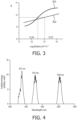
- Figure 3 depicts circadian phase shifts in response to retinal exposure to 460nm (blue light, indicated as 301) and 555nm (green light, indicated as 302) of various photon densities.
- the horizontal dashed line depicts the half-maximal phase-shift response.
- the vertical dashed lines depict the corresponding log half-maximum-response-values (ED50), which are indicated on Figure 3 adjacent to their respective dashed line.
- ED50 log half-maximum-response-values
- Rods can react to light in approximately 20ms. However, it can take melanopsin receptors about 50ms to react to changes in light. Further, cones can decrease the reaction of time of melanopsin receptors to the presence of light whilst rods can improve it. This is because the melanopsin receptors are very slow at switching off after light exposure, and cones do not saturate for high light exposures. Cones react fastest when detecting the absence of light and then act on the melanopsin system to signal that the lights are off. In contrast, rods are sensitive at very low light levels and provide a signal to the melanopsin system that the light is on.
- the rods, cones and melanopsin receptors react in different ways depending on the intensity and/or duration of the light exposure.
- the rods have a relatively constant response to the newly incident light, contributing a flat-line signal in the formation of the signal output to the SCN.
- the cone response has an initial spike shortly after the lights are switched on. This spike decreases linearly with time and/or intensity.
- the melanopsin receptors start to provide a response shortly after the spike in the cone response.
- the melanopsin receptor response starts from zero and increases linearly with time. At some point in time, the signal contribution to the SCN from the melanopsin receptors overtakes the signal contribution to the SCN from the cones.
- NIF non-image forming
- the photoreceptor pathways for different NIF functions may also depend on different subtypes of retinal ganglion cells.
- Table 1 Contributions of the different photoreceptors to ipRCG mediated non-image forming responses for different light exposures
- the system when used at a certain exposure duration of light level, it is configured to automatically select a spectral composition (which may include automatically selecting respective intensities for the selected spectral components) that matches the action spectrum of the photoreceptors that is most active for this light condition in determining the non-image forming response.
- a spectral composition which may include automatically selecting respective intensities for the selected spectral components
- This system can take into account the information provided in table 1 regarding the relative contributions of rods, cones and melanopsin containing retinal ganglion cells as a function of light intensity (and/or duration).
- the lights-on signal i.e. when the light intensity is suddenly increased
- the "lights-on" rod signal continues to be of relevance for the duration of the light pulse.
- the "lights-off' signal (i.e. when the light is removed or is otherwise suddenly reduced) is given by cones.
- cones At higher light intensities, where cones are activated, cones play a role in signalling irradiance for NIF functions However, this is rapidly taken over by melanopsin receptors, making melanopsin receptors the main photoreceptor input to the SCN signaled by the retinal ganglion cells (RGCs).
- Rods may play the predominant role in driving responses at night and around dawn/dusk, with melanopsin taking over throughout most daylight. Light adaptation would limit cone influence under most conditions. However, this may allow cones to encode a somewhat different aspect of the light environment. Thus, the relatively sluggish adaptation recorded herein for melanopsin receptors would, in effect, introduce a high-pass filter, reducing the influence of the tonic component of cone activity under continuous illumination in favour of more phasic responses to sudden changes in irradiance. This would free cones to provide higher-frequency modulation of pupil size.
- the circadian clock because of its long integration time for photic information, would be relatively refractory to these transient cone signals except under conditions of high temporal contrast i.e.
- pulsing or otherwise discontinuous light.
- the light pulses may be periodic or aperiodic. It is also understood that the duration of each light pulse may vary. This would be advantageous if the targeted biological reaction of the user located in the area served by the lighting system changes over time.
- Table 2 specifies the light conditions used. Table 2: Light conditions used in the monochromatic irradiance - duration studies Wavelengths studied ⁇ max 437, 479, 555 nm Light duration (min) Photon flux (photons/cm 2 /s) IM Total photon content (photons/cm 2 ) TP 10 3.0 ⁇ 10 13 1.8 ⁇ 10 16 20 3.0 ⁇ 10 13 3.6 ⁇ 10 16 30 3.0 ⁇ 10 13 5.4 ⁇ 10 16 10 9.0 ⁇ 10 13 5.4 ⁇ 10 16 20 4.5 ⁇ 10 13 5.4 ⁇ 10 16
- FIGS. 5A to 5C depict a percentage melatonin suppression (mean ⁇ SEM) over time during irradiance or total photon content matched ⁇ max 437, 479 and 555 nm light pulses of different durations.
- Figure 5A corresponds to a thirty minute pulse duration with an intensity irradiance of 3 ⁇ 10 13 photons/cm 2 /s.
- the x-axis represents the time since the start of the light pulse in minutes.
- the y-axis represents a percentage of Melatonin suppression.
- 479nm is a more effective wavelength than 437nm for suppressing melatonin.
- Figure 5B corresponds to a ten minute pulse duration with an intensity irradiance of 3 ⁇ 10 13 photons/cm 2 /s.
- the x-axis represents the time since the start of the light pulse in minutes.
- the y-axis represents a percentage of Melatonin suppression.
- 437nm is a more effective wavelength than 479nm at supressing nocturnal melatonin.
- Figure 5C corresponds to a twenty minute pulse duration with an intensity irradiance of 3 ⁇ 10 13 photons/cm 2 /s.
- the x-axis represents the time since the start of the light pulse in minutes.
- the y-axis represents a percentage of Melatonin suppression. In this example, 437nm and 479nm wavelengths are about equally effective at suppressing nocturnal melatonin.
- cone photoreceptors appear to contribute more to non-visual (or non-image forming) responses at the beginning of a light exposure and at low irradiances.
- melanopsin appears to be the primary photopigment driving circadian responses.
- the spectral composition of a light exposure can be set for enhancing a particular biological effect.
- This spectral composition can be set using wavelength, duration and intensity.
- a controller 102 for controlling the lighting of an area, and in particular the spectral composition of the lighting.
- the controller 102 is configured to control the spectral composition and/or the intensity of the light produced by the lighting system in dependence on the duration of the light exposure, e.g. the intended duration of use as indicated by a user of the lighting system.
- the spectrum and/or intensity of the light output may depend on the temporal contrast of the lighting, for example depending on whether the light output comprises discontinuous light stimuli or light pulses.
- the light pulses may be less that 10 minutes and may be repeated. This can be selected by a user or may be otherwise configured to match an absorption spectrum of, for example, the m-cone (i.e. the cone that responds best to medium-wavelength light).
- the predetermined time program may comprise a first time interval of between 5 seconds and 5 minutes.
- the predetermined program may comprise a first time interval of between 5 seconds and 30 minutes.
- the predetermined program may comprise a first time interval of between 5 seconds and 2 hours. In this first time interval, the spectrum may be enriched with rod activating light (approximately 505nm).
- the spectrum and/or intensity of the light output may also depend on the light intensity of the area to be lit by the lighting system.
- the controller 102 is configured to select a spectral composition with the aim of maximising melatonin suppression in a user located within the lighting area controlled via the predetermined time program for different light exposure durations. Consequently, a predetermined time period of the pulse length is taken as the predetermined emission period for configuring the spectral composition.
- the devices When the pulse duration is short (i.e. less than 10 min) and low intensity the devices automatically uses 437 nm light.
- the device When the pulse duration is long (more than 30 min), the device automatically uses 479 nm light. This arrangement exploits an effect displayed in Figures 5A to 5C .
- the controller 102 is configured to change the spectral composition over time with the aim of maximising melatonin suppression in a user within the lighting area controlled via the predetermined time program.
- the device automatically uses 437 nm light. After 10 minutes, the device may automatically switch to 479nm light. This technique exploits the effect displayed in Figures 5A to 5C .
- the device automatically uses 437nm light for the entire duration.
- alertness can develop differently from melatonin suppression. It has been found that for exposures longer than 10 minutes, light having components around 437 nm are more effective at inducing alertness than other wavelengths.
- a predetermined time program is pre-configured based on knowledge of the emission duration taken into account as a method step performed by the system designer at the design stage.
- the predetermined program is configured to change the spectral composition over time with the aim of maximising melatonin suppression in a user within the lighting area controlled via the predetermined time program.
- This system aims to use rods to support the ipRGCs response to newly incident light (i.e. during a "lights-on" scenario).
- the user has set the time of the emission period to cover at least three intervals: the first interval, the intermediate period and the second interval detailed below.
- the predetermined program is configured to cause 437 nm and 505 nm spectral components to be used by the lighting system.
- the latter (505 nm) component is selected to use rods for extra ipRCG support.
- After the first time interval there is an intermediate period in which the predetermined program uses light having a spectral component of around 437 nm.
- An intermediate period starts after expiry of the first interval and lasts for up to 5 minutes.
- the lighting system is configured to have light having a spectral component of 479nm. This type of arrangement exploits the effects outlined in relation to Table 1.
- the predetermined time program is configured to change the spectral composition over time with the aim of restricting the nocturnal melatonin suppression in a user within a lighting system. It may do this by recruiting cones to support the ipRGC response to the absence of light.
- the predetermined time program may be configured to include extra 555 nm spectral components in the light emitted by the lighting system. This spectral component utilises cones to signal the end of the light exposure by means an extra "lights off" cone input pathway to the ipRGCs. When any melanopsin activation has occurred, this has the effect of reducing the melanopsin activation in a shorter time period after ending the pulse.
- This technique is advantageously applied for light pulses that are designed to minimise or otherwise reduce melatonin suppression, for instance a light pulse that avoids using any blue light around 480nm, or one that uses only light having a wavelength greater than 530nm light.
- the last interval may have its own associated duration of between 1 and 5 minutes from the end of the emission period.
- the predetermined time program is configured to change the spectral composition over time, in dependence on the duration for which the light source is configured to emit light, to restrict or enhance the nocturnal melatonin suppression by a lighting system that emits white light.
- Example 5 is similar to the examples mentioned above. However, there is an additional cone or rod input receptive to light pulses of white light of various colour temperatures.
- the spectral composition and intensity can be changed over time to enhance circadian phase shifting by a lighting system e.g. a light system that includes a discontinuous cone (m-cone, with 545 nm absorption peak) addressing light component with an emission period of less than 10 minutes.
- the cone component may be inactive for at least 50% of the time.
- the cone component may be inactive for at least 30% of the time.
- the lighting system takes the form of a system for illuminating a space such as a room or outdoor space.
- the system may also be implemented in other forms.
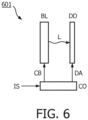
- Figure 6 schematically shows an alternative implementation in a display apparatus.
- the display apparatus 601 comprises the backlight unit BL, a pixilated display device DD, and a controller CO.
- the controller CO receives the input signal IS, which represents an image, and supplies data and control signals DA to the display device DD, and a control signal CB to the backlight unit BL.
- the image may be a natural scene (photo, video) or may be computer generated.
- the control signal CB controls the spectrum of the light source(s) 1 in the backlight unit BL.
- the controller CO may comprise a timer to control the timing of the different phases of the sequence of the different spectra Sl and S2.
- the backlight unit BL may comprise the controller 102 (see Figure 1 ), which provides the current/voltage to the light source(s) 101 to obtain the light L for illuminating the display device DD.
- the display device DD is an LCD or DMD.
- the back light unit may comprise fluorescent tube(s) and/or LEDs.
- the present lighting system and apparatus described herein may be implemented in several applications, such as for example: office lighting (e.g. to improve early morning activity and to reduce after-lunch fatigue), hospital lighting (e.g. to reduce sleep inertia of medical staff upon nocturnal wake-up), care home lighting (e.g. to reduce day-time napping of elderly to improve nocturnal sleep duration and sleep quality), control rooms (e.g. to obtain sustained alertness during 24 hours operation and night shift work) and automotive lighting (e.g. alternating in-car exposure to low intensity red and blue LEDs to improve driver alertness).
- the particular biological response in a user located within the area to be lit by the lighting system is used to select the spectrum (in addition to the duration).
- the particular biological response may be input by an intended user of the system (e.g. the user intended to experience the particular biological response).
- the particular biological response may be input by a system administrator who is not the intended recipient of the particular biological response.
- the light sources may comprise a full spectrum light emitting device and (switchable) filters to generate the different spectra.
- filters may comprise electrochrome, electrophoretic, liquid crystal cells comprising (dichroic) dyes or based on electrowetting.
- the present system may be combined with existing dynamic lighting systems. For example, a sequence of sub-sequences is added in the morning to further improve the alertness of the subject.
- the first sub-sequence of this sequence has the three phases, while the successive sub-sequences have three or two phases.
- Such existing dynamic lighting systems vary the color temperature and intensity of a light source over the day.
- these prior art lighting systems do not provide the sequences of the three phases, and change the color temperature of the emitted light very slowly during transition periods of one hour or more.
- any reference signs placed between parentheses shall not be construed as limiting the claim.
- Use of the verb "comprise” and its conjugations does not exclude the presence of elements or steps other than those stated in a claim.
- the article “a” or “an” preceding an element does not exclude the presence of a plurality of such elements.
- the invention may be implemented by means of hardware comprising several distinct elements, and by means of a suitably programmed computer. In the device claim enumerating several means, several of these means may be embodied by one and the same item of hardware.
Landscapes
- Health & Medical Sciences (AREA)
- Engineering & Computer Science (AREA)
- Biomedical Technology (AREA)
- Physics & Mathematics (AREA)
- Life Sciences & Earth Sciences (AREA)
- Veterinary Medicine (AREA)
- Psychology (AREA)
- Public Health (AREA)
- General Health & Medical Sciences (AREA)
- Animal Behavior & Ethology (AREA)
- Optics & Photonics (AREA)
- Microelectronics & Electronic Packaging (AREA)
- Social Psychology (AREA)
- Radiology & Medical Imaging (AREA)
- Nuclear Medicine, Radiotherapy & Molecular Imaging (AREA)
- Pathology (AREA)
- Psychiatry (AREA)
- Hospice & Palliative Care (AREA)
- Acoustics & Sound (AREA)
- Anesthesiology (AREA)
- Heart & Thoracic Surgery (AREA)
- Hematology (AREA)
- Developmental Disabilities (AREA)
- Child & Adolescent Psychology (AREA)
- Circuit Arrangement For Electric Light Sources In General (AREA)
Applications Claiming Priority (2)
| Application Number | Priority Date | Filing Date | Title |
|---|---|---|---|
| EP14177533 | 2014-07-17 | ||
| PCT/EP2015/065898 WO2016008826A2 (en) | 2014-07-17 | 2015-07-10 | Lighting system |
Publications (2)
| Publication Number | Publication Date |
|---|---|
| EP3170370A2 EP3170370A2 (en) | 2017-05-24 |
| EP3170370B1 true EP3170370B1 (en) | 2024-12-25 |
Family
ID=51178808
Family Applications (1)
| Application Number | Title | Priority Date | Filing Date |
|---|---|---|---|
| EP15736505.7A Active EP3170370B1 (en) | 2014-07-17 | 2015-07-10 | Lighting system |
Country Status (6)
| Country | Link |
|---|---|
| US (1) | US10932345B2 (enExample) |
| EP (1) | EP3170370B1 (enExample) |
| JP (1) | JP6738796B2 (enExample) |
| CN (1) | CN107079546B (enExample) |
| RU (1) | RU2707881C2 (enExample) |
| WO (1) | WO2016008826A2 (enExample) |
Families Citing this family (14)
| Publication number | Priority date | Publication date | Assignee | Title |
|---|---|---|---|---|
| CN106678575A (zh) * | 2017-02-28 | 2017-05-17 | 漳州立达信光电子科技有限公司 | 灯具装置跟发光模组块 |
| EP3395402A1 (en) * | 2017-04-24 | 2018-10-31 | Koninklijke Philips N.V. | Light therapy system and method |
| EP3626030B1 (en) | 2017-05-15 | 2022-09-28 | Signify Holding B.V. | Lighting system that maintains melanopic lux levels at the eye regardless of distance to user |
| JP6893327B2 (ja) * | 2017-08-10 | 2021-06-23 | パナソニックIpマネジメント株式会社 | 照明制御システム、照明システム、照明制御方法及びプログラム |
| EP3490344A1 (en) * | 2017-11-23 | 2019-05-29 | BrainLit AB | A method for generating a database |
| EP3718378B1 (en) | 2017-11-28 | 2024-04-24 | Signify Holding B.V. | Equivalent melanopic lux (eml) quotas |
| EP3735572A1 (en) | 2018-01-02 | 2020-11-11 | Signify Holding B.V. | Light melanopic activity indicator |
| US20190209858A1 (en) * | 2018-01-10 | 2019-07-11 | Abl Ip Holding Llc | Circadian stimulus via image processing or algorithm |
| EP3560554A1 (en) | 2018-04-24 | 2019-10-30 | Koninklijke Philips N.V. | Light therapy system and method |
| CN110636679B (zh) * | 2018-06-25 | 2022-05-03 | 通用电气照明解决方案有限公司 | 人体感应方法,人体感应装置及照明系统 |
| US20210290973A1 (en) * | 2018-07-13 | 2021-09-23 | Circadian Zirclight Inc. | Circadian optimized polychromatic light |
| EP3880330B1 (en) * | 2018-11-12 | 2025-02-12 | Signify Holding B.V. | A control system for controlling one or more lighting devices and a method thereof |
| JP7706899B2 (ja) * | 2021-03-04 | 2025-07-14 | ソウル セミコンダクター カンパニー リミテッド | 白色光源の使用方法および白色光源 |
| JP7679562B2 (ja) * | 2022-04-25 | 2025-05-19 | シグニファイ ホールディング ビー ヴィ | メラノピック光センシティビティ |
Citations (3)
| Publication number | Priority date | Publication date | Assignee | Title |
|---|---|---|---|---|
| US20080170476A1 (en) * | 2007-01-16 | 2008-07-17 | Katherine Hurst | Suprachiasmatic Nucleus Inducing, Melatonin Suppressing Light Emitting Device to Enhance Wake Cycle |
| US20090207028A1 (en) * | 2008-02-19 | 2009-08-20 | Alan Kubey | REM-Sleep Directed Visual Alarm System and Method |
| US20130328501A1 (en) * | 2012-06-08 | 2013-12-12 | Kabushiki Kaisha Toshiba | Control device and illumination device |
Family Cites Families (15)
| Publication number | Priority date | Publication date | Assignee | Title |
|---|---|---|---|---|
| US6888779B2 (en) * | 2001-11-20 | 2005-05-03 | Pulsar Informatics, Inc. | Method and apparatus for a waking control system |
| JP4335210B2 (ja) | 2003-03-28 | 2009-09-30 | シャープ株式会社 | 表示装置 |
| JP2007534349A (ja) | 2003-07-14 | 2007-11-29 | エイ. ツェイスラー,チャールズ | 短波長光を利用したサーカディアンサイクルの修正方法 |
| CN101420999B (zh) * | 2006-04-11 | 2013-05-08 | 皇家飞利浦电子股份有限公司 | 用光控制光合生理效应 |
| DE102006037222A1 (de) * | 2006-08-09 | 2008-02-14 | Zumtobel Lighting Gmbh | Leuchte mit "Melatonin-schonender" Wirkung |
| EP2094064A4 (en) | 2006-12-08 | 2011-11-09 | Sharp Kk | LIGHT SOURCE, LIGHT SOURCE SYSTEM AND LIGHTING DEVICE |
| EP2117648B1 (en) | 2007-03-09 | 2015-08-26 | Koninklijke Philips N.V. | Lighting system for energy stimulation |
| JP2010527680A (ja) * | 2007-05-25 | 2010-08-19 | コーニンクレッカ フィリップス エレクトロニクス エヌ ヴィ | 照明システム |
| RU2491105C2 (ru) * | 2007-05-31 | 2013-08-27 | Конинклейке Филипс Электроникс, Н.В. | Способ и система для предоставления световых и физиологических раздражителей |
| CN105674135B (zh) * | 2008-01-17 | 2019-02-19 | 皇家飞利浦电子股份有限公司 | 照明装置 |
| JP2012513616A (ja) | 2008-12-23 | 2012-06-14 | フラウンホーファー−ゲゼルシャフト ツア フォルデルング デア アンゲヴァンテン フォルシュング エー ファウ | 人間に概日効果をもたらす表示システム |
| JP6155189B2 (ja) | 2010-07-21 | 2017-06-28 | コーニンクレッカ フィリップス エヌ ヴェKoninklijke Philips N.V. | 日周リズムによる動的照明システム |
| US9024536B2 (en) * | 2011-12-05 | 2015-05-05 | Biological Illumination, Llc | Tunable LED lamp for producing biologically-adjusted light and associated methods |
| US9782605B2 (en) | 2010-10-22 | 2017-10-10 | Sharp Laboratories Of America, Inc. | Adaptive therapeutic light control system |
| US20120209358A1 (en) * | 2011-02-15 | 2012-08-16 | Feng Xiao-Fan | Color adaptive therapeutic light control system |
-
2015
- 2015-07-10 JP JP2017502588A patent/JP6738796B2/ja active Active
- 2015-07-10 CN CN201580038761.9A patent/CN107079546B/zh active Active
- 2015-07-10 WO PCT/EP2015/065898 patent/WO2016008826A2/en not_active Ceased
- 2015-07-10 US US15/326,921 patent/US10932345B2/en active Active
- 2015-07-10 RU RU2017104925A patent/RU2707881C2/ru active
- 2015-07-10 EP EP15736505.7A patent/EP3170370B1/en active Active
Patent Citations (3)
| Publication number | Priority date | Publication date | Assignee | Title |
|---|---|---|---|---|
| US20080170476A1 (en) * | 2007-01-16 | 2008-07-17 | Katherine Hurst | Suprachiasmatic Nucleus Inducing, Melatonin Suppressing Light Emitting Device to Enhance Wake Cycle |
| US20090207028A1 (en) * | 2008-02-19 | 2009-08-20 | Alan Kubey | REM-Sleep Directed Visual Alarm System and Method |
| US20130328501A1 (en) * | 2012-06-08 | 2013-12-12 | Kabushiki Kaisha Toshiba | Control device and illumination device |
Also Published As
| Publication number | Publication date |
|---|---|
| JP2017521835A (ja) | 2017-08-03 |
| CN107079546A (zh) | 2017-08-18 |
| WO2016008826A3 (en) | 2016-03-24 |
| WO2016008826A2 (en) | 2016-01-21 |
| US10932345B2 (en) | 2021-02-23 |
| RU2017104925A3 (enExample) | 2019-02-11 |
| JP6738796B2 (ja) | 2020-08-12 |
| RU2707881C2 (ru) | 2019-12-02 |
| US20170208673A1 (en) | 2017-07-20 |
| EP3170370A2 (en) | 2017-05-24 |
| RU2017104925A (ru) | 2018-08-17 |
| CN107079546B (zh) | 2020-04-21 |
Similar Documents
| Publication | Publication Date | Title |
|---|---|---|
| US10932345B2 (en) | Lighting system | |
| US9635732B2 (en) | Dynamic lighting system with a daily rhythm | |
| US8378574B2 (en) | Lighting system for creating a biological effect | |
| CN102438689B (zh) | 用于减少睡眠惯性或控制警觉的照明设备及方法 | |
| EP3235342B1 (en) | Lighting device, lighting system and use thereof | |
| RU2468838C2 (ru) | Осветительная система для энергетической стимуляции | |
| WO2018130403A1 (en) | Lighting system that maintains the melanopic dose during dimming or color tuning | |
| WO2009090596A1 (en) | Lighting device | |
| JP6876976B2 (ja) | 照明システム及び移動体 | |
| CN114158151A (zh) | 基于人因照明的节律照明系统及该系统的光谱调节方法 | |
| CN113329540B (zh) | 过渡调色调光方法以及照明装置 | |
| KR20170092820A (ko) | 지연 점등과 소등 기능을 구비한 공간 조명장치 및 그 제어방법 | |
| JP2024070471A (ja) | 照明制御システム |
Legal Events
| Date | Code | Title | Description |
|---|---|---|---|
| STAA | Information on the status of an ep patent application or granted ep patent |
Free format text: STATUS: THE INTERNATIONAL PUBLICATION HAS BEEN MADE |
|
| PUAI | Public reference made under article 153(3) epc to a published international application that has entered the european phase |
Free format text: ORIGINAL CODE: 0009012 |
|
| STAA | Information on the status of an ep patent application or granted ep patent |
Free format text: STATUS: REQUEST FOR EXAMINATION WAS MADE |
|
| 17P | Request for examination filed |
Effective date: 20170217 |
|
| AK | Designated contracting states |
Kind code of ref document: A2 Designated state(s): AL AT BE BG CH CY CZ DE DK EE ES FI FR GB GR HR HU IE IS IT LI LT LU LV MC MK MT NL NO PL PT RO RS SE SI SK SM TR |
|
| AX | Request for extension of the european patent |
Extension state: BA ME |
|
| RIN1 | Information on inventor provided before grant (corrected) |
Inventor name: SCHLANGEN, LUCAS JOSEF MARIA Inventor name: GIMENEZ, MARINA CECILIA Inventor name: HOMMES, VANJA |
|
| DAV | Request for validation of the european patent (deleted) | ||
| DAX | Request for extension of the european patent (deleted) | ||
| RAP1 | Party data changed (applicant data changed or rights of an application transferred) |
Owner name: PHILIPS LIGHTING HOLDING B.V. |
|
| RAP1 | Party data changed (applicant data changed or rights of an application transferred) |
Owner name: SIGNIFY HOLDING B.V. |
|
| STAA | Information on the status of an ep patent application or granted ep patent |
Free format text: STATUS: EXAMINATION IS IN PROGRESS |
|
| 17Q | First examination report despatched |
Effective date: 20200115 |
|
| REG | Reference to a national code |
Ref country code: DE Ref legal event code: R079 Free format text: PREVIOUS MAIN CLASS: H05B0033080000 Ref country code: DE Ref legal event code: R079 Ref document number: 602015090699 Country of ref document: DE Free format text: PREVIOUS MAIN CLASS: H05B0033080000 Ipc: H05B0047105000 |
|
| GRAP | Despatch of communication of intention to grant a patent |
Free format text: ORIGINAL CODE: EPIDOSNIGR1 |
|
| STAA | Information on the status of an ep patent application or granted ep patent |
Free format text: STATUS: GRANT OF PATENT IS INTENDED |
|
| RIC1 | Information provided on ipc code assigned before grant |
Ipc: H05B 47/105 20200101AFI20240709BHEP |
|
| INTG | Intention to grant announced |
Effective date: 20240717 |
|
| P01 | Opt-out of the competence of the unified patent court (upc) registered |
Free format text: CASE NUMBER: APP_54983/2024 Effective date: 20241007 |
|
| GRAS | Grant fee paid |
Free format text: ORIGINAL CODE: EPIDOSNIGR3 |
|
| GRAA | (expected) grant |
Free format text: ORIGINAL CODE: 0009210 |
|
| STAA | Information on the status of an ep patent application or granted ep patent |
Free format text: STATUS: THE PATENT HAS BEEN GRANTED |
|
| AK | Designated contracting states |
Kind code of ref document: B1 Designated state(s): AL AT BE BG CH CY CZ DE DK EE ES FI FR GB GR HR HU IE IS IT LI LT LU LV MC MK MT NL NO PL PT RO RS SE SI SK SM TR |
|
| REG | Reference to a national code |
Ref country code: GB Ref legal event code: FG4D |
|
| REG | Reference to a national code |
Ref country code: CH Ref legal event code: EP |
|
| REG | Reference to a national code |
Ref country code: DE Ref legal event code: R096 Ref document number: 602015090699 Country of ref document: DE |
|
| REG | Reference to a national code |
Ref country code: IE Ref legal event code: FG4D |
|
| REG | Reference to a national code |
Ref country code: LT Ref legal event code: MG9D |
|
| PG25 | Lapsed in a contracting state [announced via postgrant information from national office to epo] |
Ref country code: FI Free format text: LAPSE BECAUSE OF FAILURE TO SUBMIT A TRANSLATION OF THE DESCRIPTION OR TO PAY THE FEE WITHIN THE PRESCRIBED TIME-LIMIT Effective date: 20241225 |
|
| PG25 | Lapsed in a contracting state [announced via postgrant information from national office to epo] |
Ref country code: BG Free format text: LAPSE BECAUSE OF FAILURE TO SUBMIT A TRANSLATION OF THE DESCRIPTION OR TO PAY THE FEE WITHIN THE PRESCRIBED TIME-LIMIT Effective date: 20241225 |
|
| PG25 | Lapsed in a contracting state [announced via postgrant information from national office to epo] |
Ref country code: NO Free format text: LAPSE BECAUSE OF FAILURE TO SUBMIT A TRANSLATION OF THE DESCRIPTION OR TO PAY THE FEE WITHIN THE PRESCRIBED TIME-LIMIT Effective date: 20250325 |
|
| PG25 | Lapsed in a contracting state [announced via postgrant information from national office to epo] |
Ref country code: GR Free format text: LAPSE BECAUSE OF FAILURE TO SUBMIT A TRANSLATION OF THE DESCRIPTION OR TO PAY THE FEE WITHIN THE PRESCRIBED TIME-LIMIT Effective date: 20250326 Ref country code: LV Free format text: LAPSE BECAUSE OF FAILURE TO SUBMIT A TRANSLATION OF THE DESCRIPTION OR TO PAY THE FEE WITHIN THE PRESCRIBED TIME-LIMIT Effective date: 20241225 |
|
| PG25 | Lapsed in a contracting state [announced via postgrant information from national office to epo] |
Ref country code: RS Free format text: LAPSE BECAUSE OF FAILURE TO SUBMIT A TRANSLATION OF THE DESCRIPTION OR TO PAY THE FEE WITHIN THE PRESCRIBED TIME-LIMIT Effective date: 20250325 |
|
| REG | Reference to a national code |
Ref country code: NL Ref legal event code: MP Effective date: 20241225 |
|
| PG25 | Lapsed in a contracting state [announced via postgrant information from national office to epo] |
Ref country code: NL Free format text: LAPSE BECAUSE OF FAILURE TO SUBMIT A TRANSLATION OF THE DESCRIPTION OR TO PAY THE FEE WITHIN THE PRESCRIBED TIME-LIMIT Effective date: 20241225 |
|
| REG | Reference to a national code |
Ref country code: AT Ref legal event code: MK05 Ref document number: 1755246 Country of ref document: AT Kind code of ref document: T Effective date: 20241225 |
|
| PG25 | Lapsed in a contracting state [announced via postgrant information from national office to epo] |
Ref country code: SM Free format text: LAPSE BECAUSE OF FAILURE TO SUBMIT A TRANSLATION OF THE DESCRIPTION OR TO PAY THE FEE WITHIN THE PRESCRIBED TIME-LIMIT Effective date: 20241225 |
|
| PG25 | Lapsed in a contracting state [announced via postgrant information from national office to epo] |
Ref country code: PL Free format text: LAPSE BECAUSE OF FAILURE TO SUBMIT A TRANSLATION OF THE DESCRIPTION OR TO PAY THE FEE WITHIN THE PRESCRIBED TIME-LIMIT Effective date: 20241225 |
|
| PG25 | Lapsed in a contracting state [announced via postgrant information from national office to epo] |
Ref country code: ES Free format text: LAPSE BECAUSE OF FAILURE TO SUBMIT A TRANSLATION OF THE DESCRIPTION OR TO PAY THE FEE WITHIN THE PRESCRIBED TIME-LIMIT Effective date: 20241225 |
|
| PG25 | Lapsed in a contracting state [announced via postgrant information from national office to epo] |
Ref country code: IS Free format text: LAPSE BECAUSE OF FAILURE TO SUBMIT A TRANSLATION OF THE DESCRIPTION OR TO PAY THE FEE WITHIN THE PRESCRIBED TIME-LIMIT Effective date: 20250425 |
|
| PG25 | Lapsed in a contracting state [announced via postgrant information from national office to epo] |
Ref country code: PT Free format text: LAPSE BECAUSE OF FAILURE TO SUBMIT A TRANSLATION OF THE DESCRIPTION OR TO PAY THE FEE WITHIN THE PRESCRIBED TIME-LIMIT Effective date: 20250428 |
|
| PG25 | Lapsed in a contracting state [announced via postgrant information from national office to epo] |
Ref country code: EE Free format text: LAPSE BECAUSE OF FAILURE TO SUBMIT A TRANSLATION OF THE DESCRIPTION OR TO PAY THE FEE WITHIN THE PRESCRIBED TIME-LIMIT Effective date: 20241225 |
|
| PG25 | Lapsed in a contracting state [announced via postgrant information from national office to epo] |
Ref country code: AT Free format text: LAPSE BECAUSE OF FAILURE TO SUBMIT A TRANSLATION OF THE DESCRIPTION OR TO PAY THE FEE WITHIN THE PRESCRIBED TIME-LIMIT Effective date: 20241225 Ref country code: RO Free format text: LAPSE BECAUSE OF FAILURE TO SUBMIT A TRANSLATION OF THE DESCRIPTION OR TO PAY THE FEE WITHIN THE PRESCRIBED TIME-LIMIT Effective date: 20241225 |
|
| PG25 | Lapsed in a contracting state [announced via postgrant information from national office to epo] |
Ref country code: SK Free format text: LAPSE BECAUSE OF FAILURE TO SUBMIT A TRANSLATION OF THE DESCRIPTION OR TO PAY THE FEE WITHIN THE PRESCRIBED TIME-LIMIT Effective date: 20241225 |
|
| PG25 | Lapsed in a contracting state [announced via postgrant information from national office to epo] |
Ref country code: CZ Free format text: LAPSE BECAUSE OF FAILURE TO SUBMIT A TRANSLATION OF THE DESCRIPTION OR TO PAY THE FEE WITHIN THE PRESCRIBED TIME-LIMIT Effective date: 20241225 |
|
| PG25 | Lapsed in a contracting state [announced via postgrant information from national office to epo] |
Ref country code: IT Free format text: LAPSE BECAUSE OF FAILURE TO SUBMIT A TRANSLATION OF THE DESCRIPTION OR TO PAY THE FEE WITHIN THE PRESCRIBED TIME-LIMIT Effective date: 20241225 |
|
| PG25 | Lapsed in a contracting state [announced via postgrant information from national office to epo] |
Ref country code: SE Free format text: LAPSE BECAUSE OF FAILURE TO SUBMIT A TRANSLATION OF THE DESCRIPTION OR TO PAY THE FEE WITHIN THE PRESCRIBED TIME-LIMIT Effective date: 20241225 |
|
| REG | Reference to a national code |
Ref country code: DE Ref legal event code: R097 Ref document number: 602015090699 Country of ref document: DE |
|
| PG25 | Lapsed in a contracting state [announced via postgrant information from national office to epo] |
Ref country code: DK Free format text: LAPSE BECAUSE OF FAILURE TO SUBMIT A TRANSLATION OF THE DESCRIPTION OR TO PAY THE FEE WITHIN THE PRESCRIBED TIME-LIMIT Effective date: 20241225 |
|
| PGFP | Annual fee paid to national office [announced via postgrant information from national office to epo] |
Ref country code: DE Payment date: 20250926 Year of fee payment: 11 |
|
| PGFP | Annual fee paid to national office [announced via postgrant information from national office to epo] |
Ref country code: GB Payment date: 20250722 Year of fee payment: 11 |
|
| PGFP | Annual fee paid to national office [announced via postgrant information from national office to epo] |
Ref country code: FR Payment date: 20250725 Year of fee payment: 11 |
|
| PLBE | No opposition filed within time limit |
Free format text: ORIGINAL CODE: 0009261 |
|
| STAA | Information on the status of an ep patent application or granted ep patent |
Free format text: STATUS: NO OPPOSITION FILED WITHIN TIME LIMIT |
|
| REG | Reference to a national code |
Ref country code: CH Ref legal event code: L10 Free format text: ST27 STATUS EVENT CODE: U-0-0-L10-L00 (AS PROVIDED BY THE NATIONAL OFFICE) Effective date: 20251105 |
|
| 26N | No opposition filed |
Effective date: 20250926 |
|
| REG | Reference to a national code |
Ref country code: CH Ref legal event code: H13 Free format text: ST27 STATUS EVENT CODE: U-0-0-H10-H13 (AS PROVIDED BY THE NATIONAL OFFICE) Effective date: 20260224 |
|
| PG25 | Lapsed in a contracting state [announced via postgrant information from national office to epo] |
Ref country code: LU Free format text: LAPSE BECAUSE OF NON-PAYMENT OF DUE FEES Effective date: 20250710 |
|
| REG | Reference to a national code |
Ref country code: BE Ref legal event code: MM Effective date: 20250731 |
|
| PG25 | Lapsed in a contracting state [announced via postgrant information from national office to epo] |
Ref country code: HR Free format text: LAPSE BECAUSE OF FAILURE TO SUBMIT A TRANSLATION OF THE DESCRIPTION OR TO PAY THE FEE WITHIN THE PRESCRIBED TIME-LIMIT Effective date: 20241225 |
|
| PG25 | Lapsed in a contracting state [announced via postgrant information from national office to epo] |
Ref country code: BE Free format text: LAPSE BECAUSE OF NON-PAYMENT OF DUE FEES Effective date: 20250731 |
|
| PG25 | Lapsed in a contracting state [announced via postgrant information from national office to epo] |
Ref country code: CH Free format text: LAPSE BECAUSE OF NON-PAYMENT OF DUE FEES Effective date: 20250731 |
|
| PG25 | Lapsed in a contracting state [announced via postgrant information from national office to epo] |
Ref country code: LT Free format text: LAPSE BECAUSE OF FAILURE TO SUBMIT A TRANSLATION OF THE DESCRIPTION OR TO PAY THE FEE WITHIN THE PRESCRIBED TIME-LIMIT Effective date: 20241225 |
|
| PG25 | Lapsed in a contracting state [announced via postgrant information from national office to epo] |
Ref country code: IE Free format text: LAPSE BECAUSE OF NON-PAYMENT OF DUE FEES Effective date: 20250710 |
|
| PG25 | Lapsed in a contracting state [announced via postgrant information from national office to epo] |
Ref country code: MC Free format text: LAPSE BECAUSE OF FAILURE TO SUBMIT A TRANSLATION OF THE DESCRIPTION OR TO PAY THE FEE WITHIN THE PRESCRIBED TIME-LIMIT Effective date: 20241225 |
|
| PG25 | Lapsed in a contracting state [announced via postgrant information from national office to epo] |
Ref country code: CY Free format text: LAPSE BECAUSE OF FAILURE TO SUBMIT A TRANSLATION OF THE DESCRIPTION OR TO PAY THE FEE WITHIN THE PRESCRIBED TIME-LIMIT Effective date: 20241225 |