EP3162896B1 - Transformant, method for producing same, and method for producing c4-dicarboxylic acid - Google Patents
Transformant, method for producing same, and method for producing c4-dicarboxylic acid Download PDFInfo
- Publication number
- EP3162896B1 EP3162896B1 EP15814080.6A EP15814080A EP3162896B1 EP 3162896 B1 EP3162896 B1 EP 3162896B1 EP 15814080 A EP15814080 A EP 15814080A EP 3162896 B1 EP3162896 B1 EP 3162896B1
- Authority
- EP
- European Patent Office
- Prior art keywords
- gene
- genes
- artificial sequence
- seq
- transformant
- Prior art date
- Legal status (The legal status is an assumption and is not a legal conclusion. Google has not performed a legal analysis and makes no representation as to the accuracy of the status listed.)
- Active
Links
- 238000004519 manufacturing process Methods 0.000 title claims description 60
- 108090000623 proteins and genes Proteins 0.000 claims description 268
- 108010053763 Pyruvate Carboxylase Proteins 0.000 claims description 113
- 238000000034 method Methods 0.000 claims description 109
- 235000011090 malic acid Nutrition 0.000 claims description 92
- BJEPYKJPYRNKOW-REOHCLBHSA-N (S)-malic acid Chemical compound OC(=O)[C@@H](O)CC(O)=O BJEPYKJPYRNKOW-REOHCLBHSA-N 0.000 claims description 91
- BJEPYKJPYRNKOW-UHFFFAOYSA-N alpha-hydroxysuccinic acid Natural products OC(=O)C(O)CC(O)=O BJEPYKJPYRNKOW-UHFFFAOYSA-N 0.000 claims description 91
- 239000001630 malic acid Substances 0.000 claims description 91
- 102100039895 Pyruvate carboxylase, mitochondrial Human genes 0.000 claims description 90
- 108010026217 Malate Dehydrogenase Proteins 0.000 claims description 76
- 230000000694 effects Effects 0.000 claims description 72
- 125000003275 alpha amino acid group Chemical group 0.000 claims description 62
- OFOBLEOULBTSOW-UHFFFAOYSA-N Malonic acid Chemical compound OC(=O)CC(O)=O OFOBLEOULBTSOW-UHFFFAOYSA-N 0.000 claims description 61
- 210000000349 chromosome Anatomy 0.000 claims description 39
- 229920001184 polypeptide Polymers 0.000 claims description 37
- 102000004196 processed proteins & peptides Human genes 0.000 claims description 37
- 108090000765 processed proteins & peptides Proteins 0.000 claims description 37
- KHPXUQMNIQBQEV-UHFFFAOYSA-N oxaloacetic acid Chemical compound OC(=O)CC(=O)C(O)=O KHPXUQMNIQBQEV-UHFFFAOYSA-N 0.000 claims description 17
- DTBNBXWJWCWCIK-UHFFFAOYSA-N phosphoenolpyruvic acid Chemical compound OC(=O)C(=C)OP(O)(O)=O DTBNBXWJWCWCIK-UHFFFAOYSA-N 0.000 claims description 16
- 241000235347 Schizosaccharomyces pombe Species 0.000 claims description 15
- 125000004432 carbon atom Chemical group C* 0.000 claims description 12
- 229930029653 phosphoenolpyruvate Natural products 0.000 claims description 12
- 239000012228 culture supernatant Substances 0.000 claims description 7
- 238000012258 culturing Methods 0.000 claims description 7
- 101710108550 NAD-dependent malic enzyme, mitochondrial Proteins 0.000 claims description 2
- 102100032457 NAD-dependent malic enzyme, mitochondrial Human genes 0.000 claims description 2
- 101710195735 Pyruvate decarboxylase 2 Proteins 0.000 claims description 2
- 102100037579 D-3-phosphoglycerate dehydrogenase Human genes 0.000 claims 1
- 239000013598 vector Substances 0.000 description 145
- 230000014509 gene expression Effects 0.000 description 90
- LFQSCWFLJHTTHZ-UHFFFAOYSA-N Ethanol Chemical compound CCO LFQSCWFLJHTTHZ-UHFFFAOYSA-N 0.000 description 82
- 238000012217 deletion Methods 0.000 description 70
- 230000037430 deletion Effects 0.000 description 70
- 102000013460 Malate Dehydrogenase Human genes 0.000 description 52
- 239000012634 fragment Substances 0.000 description 51
- 239000000243 solution Substances 0.000 description 40
- 230000009849 deactivation Effects 0.000 description 33
- 101100129345 Schizosaccharomyces pombe (strain 972 / ATCC 24843) mae2 gene Proteins 0.000 description 32
- 210000004027 cell Anatomy 0.000 description 32
- 238000000855 fermentation Methods 0.000 description 32
- 230000004151 fermentation Effects 0.000 description 32
- 230000000813 microbial effect Effects 0.000 description 32
- WQZGKKKJIJFFOK-GASJEMHNSA-N Glucose Natural products OC[C@H]1OC(O)[C@H](O)[C@@H](O)[C@@H]1O WQZGKKKJIJFFOK-GASJEMHNSA-N 0.000 description 29
- 240000004808 Saccharomyces cerevisiae Species 0.000 description 29
- 235000014680 Saccharomyces cerevisiae Nutrition 0.000 description 29
- 239000008103 glucose Substances 0.000 description 29
- 239000007788 liquid Substances 0.000 description 25
- LCTONWCANYUPML-UHFFFAOYSA-N Pyruvic acid Chemical compound CC(=O)C(O)=O LCTONWCANYUPML-UHFFFAOYSA-N 0.000 description 24
- 101150096049 pyc gene Proteins 0.000 description 23
- 102000004190 Enzymes Human genes 0.000 description 22
- 108090000790 Enzymes Proteins 0.000 description 22
- 230000006798 recombination Effects 0.000 description 21
- 238000005215 recombination Methods 0.000 description 21
- 101150058595 MDH gene Proteins 0.000 description 19
- 101150031265 PCK gene Proteins 0.000 description 17
- 150000001413 amino acids Chemical class 0.000 description 16
- 230000006801 homologous recombination Effects 0.000 description 16
- 238000002744 homologous recombination Methods 0.000 description 16
- 238000007792 addition Methods 0.000 description 14
- 238000012790 confirmation Methods 0.000 description 14
- 238000003752 polymerase chain reaction Methods 0.000 description 14
- 238000006467 substitution reaction Methods 0.000 description 14
- 241000588724 Escherichia coli Species 0.000 description 13
- 101150060020 mae2 gene Proteins 0.000 description 13
- 239000003550 marker Substances 0.000 description 13
- 239000002609 medium Substances 0.000 description 13
- 102000004169 proteins and genes Human genes 0.000 description 13
- 101150110652 PDC2 gene Proteins 0.000 description 12
- 229940107700 pyruvic acid Drugs 0.000 description 12
- 238000012262 fermentative production Methods 0.000 description 11
- 230000035772 mutation Effects 0.000 description 11
- ISAKRJDGNUQOIC-UHFFFAOYSA-N Uracil Chemical compound O=C1C=CNC(=O)N1 ISAKRJDGNUQOIC-UHFFFAOYSA-N 0.000 description 10
- 230000008859 change Effects 0.000 description 10
- 230000010076 replication Effects 0.000 description 10
- 108700026244 Open Reading Frames Proteins 0.000 description 9
- LCTONWCANYUPML-UHFFFAOYSA-M Pyruvate Chemical compound CC(=O)C([O-])=O LCTONWCANYUPML-UHFFFAOYSA-M 0.000 description 9
- 229940076788 pyruvate Drugs 0.000 description 9
- 108091008146 restriction endonucleases Proteins 0.000 description 9
- 101100335626 Caenorhabditis elegans fum-1 gene Proteins 0.000 description 8
- 101710104378 Putative malate oxidoreductase [NAD] Proteins 0.000 description 8
- 230000012010 growth Effects 0.000 description 8
- 230000001965 increasing effect Effects 0.000 description 8
- 230000000977 initiatory effect Effects 0.000 description 8
- VZCYOOQTPOCHFL-OWOJBTEDSA-N Fumaric acid Chemical compound OC(=O)\C=C\C(O)=O VZCYOOQTPOCHFL-OWOJBTEDSA-N 0.000 description 7
- 241001138401 Kluyveromyces lactis Species 0.000 description 7
- 108010011939 Pyruvate Decarboxylase Proteins 0.000 description 7
- 150000001991 dicarboxylic acids Chemical class 0.000 description 7
- 238000010353 genetic engineering Methods 0.000 description 7
- 238000005259 measurement Methods 0.000 description 7
- 238000002360 preparation method Methods 0.000 description 7
- 230000008569 process Effects 0.000 description 7
- 230000009466 transformation Effects 0.000 description 7
- 241000235036 Debaryomyces hansenii Species 0.000 description 6
- 241001508814 Lodderomyces elongisporus Species 0.000 description 6
- 241000235033 Zygosaccharomyces rouxii Species 0.000 description 6
- 230000000295 complement effect Effects 0.000 description 6
- 125000004122 cyclic group Chemical group 0.000 description 6
- 238000012224 gene deletion Methods 0.000 description 6
- 235000000346 sugar Nutrition 0.000 description 6
- 108700026220 vif Genes Proteins 0.000 description 6
- 229930006000 Sucrose Natural products 0.000 description 5
- CZMRCDWAGMRECN-UGDNZRGBSA-N Sucrose Chemical compound O[C@H]1[C@H](O)[C@@H](CO)O[C@@]1(CO)O[C@@H]1[C@H](O)[C@@H](O)[C@H](O)[C@@H](CO)O1 CZMRCDWAGMRECN-UGDNZRGBSA-N 0.000 description 5
- 238000010348 incorporation Methods 0.000 description 5
- 244000005700 microbiome Species 0.000 description 5
- 239000013612 plasmid Substances 0.000 description 5
- 239000005720 sucrose Substances 0.000 description 5
- 238000012360 testing method Methods 0.000 description 5
- 238000011426 transformation method Methods 0.000 description 5
- 229940035893 uracil Drugs 0.000 description 5
- IKHGUXGNUITLKF-UHFFFAOYSA-N Acetaldehyde Chemical compound CC=O IKHGUXGNUITLKF-UHFFFAOYSA-N 0.000 description 4
- IJGRMHOSHXDMSA-UHFFFAOYSA-N Atomic nitrogen Chemical compound N#N IJGRMHOSHXDMSA-UHFFFAOYSA-N 0.000 description 4
- VTYYLEPIZMXCLO-UHFFFAOYSA-L Calcium carbonate Chemical compound [Ca+2].[O-]C([O-])=O VTYYLEPIZMXCLO-UHFFFAOYSA-L 0.000 description 4
- 241000493790 Photobacterium leiognathi Species 0.000 description 4
- 241000607475 Yersinia bercovieri Species 0.000 description 4
- 241000222126 [Candida] glabrata Species 0.000 description 4
- ZSLZBFCDCINBPY-ZSJPKINUSA-N acetyl-CoA Chemical compound O[C@@H]1[C@H](OP(O)(O)=O)[C@@H](COP(O)(=O)OP(O)(=O)OCC(C)(C)[C@@H](O)C(=O)NCCC(=O)NCCSC(=O)C)O[C@H]1N1C2=NC=NC(N)=C2N=C1 ZSLZBFCDCINBPY-ZSJPKINUSA-N 0.000 description 4
- 239000002253 acid Substances 0.000 description 4
- WQZGKKKJIJFFOK-VFUOTHLCSA-N beta-D-glucose Chemical compound OC[C@H]1O[C@@H](O)[C@H](O)[C@@H](O)[C@@H]1O WQZGKKKJIJFFOK-VFUOTHLCSA-N 0.000 description 4
- 208000032343 candida glabrata infection Diseases 0.000 description 4
- 238000006243 chemical reaction Methods 0.000 description 4
- 238000004128 high performance liquid chromatography Methods 0.000 description 4
- 238000006386 neutralization reaction Methods 0.000 description 4
- 230000037361 pathway Effects 0.000 description 4
- 235000002639 sodium chloride Nutrition 0.000 description 4
- 238000002415 sodium dodecyl sulfate polyacrylamide gel electrophoresis Methods 0.000 description 4
- 230000002123 temporal effect Effects 0.000 description 4
- VZCYOOQTPOCHFL-UHFFFAOYSA-N trans-butenedioic acid Natural products OC(=O)C=CC(O)=O VZCYOOQTPOCHFL-UHFFFAOYSA-N 0.000 description 4
- 101150109287 ura4 gene Proteins 0.000 description 4
- 229920000936 Agarose Polymers 0.000 description 3
- 241000205042 Archaeoglobus fulgidus Species 0.000 description 3
- 241000228245 Aspergillus niger Species 0.000 description 3
- 101001082813 Bacillus subtilis (strain 168) Pyruvate carboxylase Proteins 0.000 description 3
- 241000193764 Brevibacillus brevis Species 0.000 description 3
- 241000436311 Candida orthopsilosis Species 0.000 description 3
- 241000222178 Candida tropicalis Species 0.000 description 3
- OKTJSMMVPCPJKN-UHFFFAOYSA-N Carbon Chemical compound [C] OKTJSMMVPCPJKN-UHFFFAOYSA-N 0.000 description 3
- 108010078791 Carrier Proteins Proteins 0.000 description 3
- 241000588917 Citrobacter koseri Species 0.000 description 3
- 241000865250 Congregibacter litoralis Species 0.000 description 3
- 241001135265 Cronobacter sakazakii Species 0.000 description 3
- 241001600125 Delftia acidovorans Species 0.000 description 3
- 102000016862 Dicarboxylic Acid Transporters Human genes 0.000 description 3
- 108010092943 Dicarboxylic Acid Transporters Proteins 0.000 description 3
- RTZKZFJDLAIYFH-UHFFFAOYSA-N Diethyl ether Chemical compound CCOCC RTZKZFJDLAIYFH-UHFFFAOYSA-N 0.000 description 3
- 241000607471 Edwardsiella tarda Species 0.000 description 3
- 241000588720 Escherichia fergusonii Species 0.000 description 3
- XEKOWRVHYACXOJ-UHFFFAOYSA-N Ethyl acetate Chemical compound CCOC(C)=O XEKOWRVHYACXOJ-UHFFFAOYSA-N 0.000 description 3
- 241000287828 Gallus gallus Species 0.000 description 3
- 241000206595 Halomonas elongata Species 0.000 description 3
- 241000481961 Lachancea thermotolerans Species 0.000 description 3
- 241001123225 Naumovozyma castellii Species 0.000 description 3
- 241001123224 Naumovozyma dairenensis Species 0.000 description 3
- 101150034686 PDC gene Proteins 0.000 description 3
- 101150101193 PDC4 gene Proteins 0.000 description 3
- 241000588701 Pectobacterium carotovorum Species 0.000 description 3
- 241000588777 Providencia rettgeri Species 0.000 description 3
- 235000018370 Saccharomyces delbrueckii Nutrition 0.000 description 3
- 241000198063 Saccharomyces kudriavzevii Species 0.000 description 3
- 241000607694 Serratia odorifera Species 0.000 description 3
- 241000863432 Shewanella putrefaciens Species 0.000 description 3
- 241000751880 Tetrapisispora blattae Species 0.000 description 3
- 244000288561 Torulaspora delbrueckii Species 0.000 description 3
- 235000014681 Torulaspora delbrueckii Nutrition 0.000 description 3
- 241001489220 Vanderwaltozyma polyspora Species 0.000 description 3
- 241001135140 Vibrio orientalis Species 0.000 description 3
- 241001148039 Vibrio tubiashii Species 0.000 description 3
- 241000235015 Yarrowia lipolytica Species 0.000 description 3
- 241001148128 Yersinia rohdei Species 0.000 description 3
- 238000002835 absorbance Methods 0.000 description 3
- 239000013592 cell lysate Substances 0.000 description 3
- KRKNYBCHXYNGOX-UHFFFAOYSA-N citric acid Chemical compound OC(=O)CC(O)(C(O)=O)CC(O)=O KRKNYBCHXYNGOX-UHFFFAOYSA-N 0.000 description 3
- 230000029087 digestion Effects 0.000 description 3
- 101150007729 fum-1 gene Proteins 0.000 description 3
- 239000001530 fumaric acid Substances 0.000 description 3
- 101150108859 maeB gene Proteins 0.000 description 3
- 239000011159 matrix material Substances 0.000 description 3
- 239000002243 precursor Substances 0.000 description 3
- 239000002994 raw material Substances 0.000 description 3
- 230000001105 regulatory effect Effects 0.000 description 3
- 150000003839 salts Chemical class 0.000 description 3
- 238000000926 separation method Methods 0.000 description 3
- PKAUICCNAWQPAU-UHFFFAOYSA-N 2-(4-chloro-2-methylphenoxy)acetic acid;n-methylmethanamine Chemical compound CNC.CC1=CC(Cl)=CC=C1OCC(O)=O PKAUICCNAWQPAU-UHFFFAOYSA-N 0.000 description 2
- QKNYBSVHEMOAJP-UHFFFAOYSA-N 2-amino-2-(hydroxymethyl)propane-1,3-diol;hydron;chloride Chemical compound Cl.OCC(N)(CO)CO QKNYBSVHEMOAJP-UHFFFAOYSA-N 0.000 description 2
- KPULXFNPTWGJQH-UHFFFAOYSA-N 3-hydroxy-4-oxo-4-propan-2-yloxybutanoic acid Chemical compound CC(C)OC(=O)C(O)CC(O)=O KPULXFNPTWGJQH-UHFFFAOYSA-N 0.000 description 2
- FWMNVWWHGCHHJJ-SKKKGAJSSA-N 4-amino-1-[(2r)-6-amino-2-[[(2r)-2-[[(2r)-2-[[(2r)-2-amino-3-phenylpropanoyl]amino]-3-phenylpropanoyl]amino]-4-methylpentanoyl]amino]hexanoyl]piperidine-4-carboxylic acid Chemical compound C([C@H](C(=O)N[C@H](CC(C)C)C(=O)N[C@H](CCCCN)C(=O)N1CCC(N)(CC1)C(O)=O)NC(=O)[C@H](N)CC=1C=CC=CC=1)C1=CC=CC=C1 FWMNVWWHGCHHJJ-SKKKGAJSSA-N 0.000 description 2
- 108010021809 Alcohol dehydrogenase Proteins 0.000 description 2
- QGZKDVFQNNGYKY-UHFFFAOYSA-N Ammonia Chemical compound N QGZKDVFQNNGYKY-UHFFFAOYSA-N 0.000 description 2
- NLXLAEXVIDQMFP-UHFFFAOYSA-N Ammonia chloride Chemical compound [NH4+].[Cl-] NLXLAEXVIDQMFP-UHFFFAOYSA-N 0.000 description 2
- 101710088194 Dehydrogenase Proteins 0.000 description 2
- 102000005548 Hexokinase Human genes 0.000 description 2
- 108700040460 Hexokinases Proteins 0.000 description 2
- 101150069639 LEU1 gene Proteins 0.000 description 2
- TWRXJAOTZQYOKJ-UHFFFAOYSA-L Magnesium chloride Chemical compound [Mg+2].[Cl-].[Cl-] TWRXJAOTZQYOKJ-UHFFFAOYSA-L 0.000 description 2
- CSNNHWWHGAXBCP-UHFFFAOYSA-L Magnesium sulfate Chemical compound [Mg+2].[O-][S+2]([O-])([O-])[O-] CSNNHWWHGAXBCP-UHFFFAOYSA-L 0.000 description 2
- 101150050255 PDC1 gene Proteins 0.000 description 2
- 101150040763 PDC3 gene Proteins 0.000 description 2
- 108091005804 Peptidases Proteins 0.000 description 2
- 108090000472 Phosphoenolpyruvate carboxykinase (ATP) Proteins 0.000 description 2
- 108020005115 Pyruvate Kinase Proteins 0.000 description 2
- 241000235346 Schizosaccharomyces Species 0.000 description 2
- UIIMBOGNXHQVGW-UHFFFAOYSA-M Sodium bicarbonate Chemical compound [Na+].OC([O-])=O UIIMBOGNXHQVGW-UHFFFAOYSA-M 0.000 description 2
- FAPWRFPIFSIZLT-UHFFFAOYSA-M Sodium chloride Chemical compound [Na+].[Cl-] FAPWRFPIFSIZLT-UHFFFAOYSA-M 0.000 description 2
- KDYFGRWQOYBRFD-UHFFFAOYSA-N Succinic acid Natural products OC(=O)CCC(O)=O KDYFGRWQOYBRFD-UHFFFAOYSA-N 0.000 description 2
- QAOWNCQODCNURD-UHFFFAOYSA-N Sulfuric acid Chemical compound OS(O)(=O)=O QAOWNCQODCNURD-UHFFFAOYSA-N 0.000 description 2
- 241000700605 Viruses Species 0.000 description 2
- 238000009825 accumulation Methods 0.000 description 2
- KDYFGRWQOYBRFD-NUQCWPJISA-N butanedioic acid Chemical compound O[14C](=O)CC[14C](O)=O KDYFGRWQOYBRFD-NUQCWPJISA-N 0.000 description 2
- 229910000019 calcium carbonate Inorganic materials 0.000 description 2
- 238000003776 cleavage reaction Methods 0.000 description 2
- 238000010367 cloning Methods 0.000 description 2
- 238000012136 culture method Methods 0.000 description 2
- 238000005520 cutting process Methods 0.000 description 2
- 238000001514 detection method Methods 0.000 description 2
- 230000007613 environmental effect Effects 0.000 description 2
- 238000002474 experimental method Methods 0.000 description 2
- 239000001963 growth medium Substances 0.000 description 2
- 238000010191 image analysis Methods 0.000 description 2
- 238000002347 injection Methods 0.000 description 2
- 239000007924 injection Substances 0.000 description 2
- 238000003780 insertion Methods 0.000 description 2
- 230000037431 insertion Effects 0.000 description 2
- 238000002156 mixing Methods 0.000 description 2
- 239000003471 mutagenic agent Substances 0.000 description 2
- 231100000707 mutagenic chemical Toxicity 0.000 description 2
- 230000003505 mutagenic effect Effects 0.000 description 2
- 229930027945 nicotinamide-adenine dinucleotide Natural products 0.000 description 2
- BOPGDPNILDQYTO-NNYOXOHSSA-N nicotinamide-adenine dinucleotide Chemical compound C1=CCC(C(=O)N)=CN1[C@H]1[C@H](O)[C@H](O)[C@@H](COP(O)(=O)OP(O)(=O)OC[C@@H]2[C@H]([C@@H](O)[C@@H](O2)N2C3=NC=NC(N)=C3N=C2)O)O1 BOPGDPNILDQYTO-NNYOXOHSSA-N 0.000 description 2
- 229910052757 nitrogen Inorganic materials 0.000 description 2
- 108020004707 nucleic acids Proteins 0.000 description 2
- 150000007523 nucleic acids Chemical class 0.000 description 2
- 102000039446 nucleic acids Human genes 0.000 description 2
- 238000007500 overflow downdraw method Methods 0.000 description 2
- 239000000047 product Substances 0.000 description 2
- 238000011160 research Methods 0.000 description 2
- 230000007017 scission Effects 0.000 description 2
- 239000002904 solvent Substances 0.000 description 2
- 238000003786 synthesis reaction Methods 0.000 description 2
- 230000001131 transforming effect Effects 0.000 description 2
- 238000013519 translation Methods 0.000 description 2
- NWUYHJFMYQTDRP-UHFFFAOYSA-N 1,2-bis(ethenyl)benzene;1-ethenyl-2-ethylbenzene;styrene Chemical compound C=CC1=CC=CC=C1.CCC1=CC=CC=C1C=C.C=CC1=CC=CC=C1C=C NWUYHJFMYQTDRP-UHFFFAOYSA-N 0.000 description 1
- OWEGMIWEEQEYGQ-UHFFFAOYSA-N 100676-05-9 Natural products OC1C(O)C(O)C(CO)OC1OCC1C(O)C(O)C(O)C(OC2C(OC(O)C(O)C2O)CO)O1 OWEGMIWEEQEYGQ-UHFFFAOYSA-N 0.000 description 1
- 229930024421 Adenine Natural products 0.000 description 1
- GFFGJBXGBJISGV-UHFFFAOYSA-N Adenine Chemical compound NC1=NC=NC2=C1N=CN2 GFFGJBXGBJISGV-UHFFFAOYSA-N 0.000 description 1
- VWEWCZSUWOEEFM-WDSKDSINSA-N Ala-Gly-Ala-Gly Chemical compound C[C@H](N)C(=O)NCC(=O)N[C@@H](C)C(=O)NCC(O)=O VWEWCZSUWOEEFM-WDSKDSINSA-N 0.000 description 1
- 102000007698 Alcohol dehydrogenase Human genes 0.000 description 1
- USFZMSVCRYTOJT-UHFFFAOYSA-N Ammonium acetate Chemical compound N.CC(O)=O USFZMSVCRYTOJT-UHFFFAOYSA-N 0.000 description 1
- 239000005695 Ammonium acetate Substances 0.000 description 1
- 101100082594 Arabidopsis thaliana PDC4 gene Proteins 0.000 description 1
- 241000228197 Aspergillus flavus Species 0.000 description 1
- 101000765308 Aspergillus niger N-(5'-phosphoribosyl)anthranilate isomerase Proteins 0.000 description 1
- 240000006439 Aspergillus oryzae Species 0.000 description 1
- 235000002247 Aspergillus oryzae Nutrition 0.000 description 1
- 241000894006 Bacteria Species 0.000 description 1
- 108090000489 Carboxy-Lyases Proteins 0.000 description 1
- 108020004705 Codon Proteins 0.000 description 1
- 101710177611 DNA polymerase II large subunit Proteins 0.000 description 1
- 101710184669 DNA polymerase II small subunit Proteins 0.000 description 1
- 229930091371 Fructose Natural products 0.000 description 1
- 239000005715 Fructose Substances 0.000 description 1
- RFSUNEUAIZKAJO-ARQDHWQXSA-N Fructose Chemical compound OC[C@H]1O[C@](O)(CO)[C@@H](O)[C@@H]1O RFSUNEUAIZKAJO-ARQDHWQXSA-N 0.000 description 1
- 108010017464 Fructose-Bisphosphatase Proteins 0.000 description 1
- 108010004889 Heat-Shock Proteins Proteins 0.000 description 1
- 241000282414 Homo sapiens Species 0.000 description 1
- 101000959738 Homo sapiens Annexin A1 Proteins 0.000 description 1
- GUBGYTABKSRVRQ-PICCSMPSSA-N Maltose Natural products O[C@@H]1[C@@H](O)[C@H](O)[C@@H](CO)O[C@@H]1O[C@@H]1[C@@H](CO)OC(O)[C@H](O)[C@H]1O GUBGYTABKSRVRQ-PICCSMPSSA-N 0.000 description 1
- 229930193140 Neomycin Natural products 0.000 description 1
- 101100028920 Neurospora crassa (strain ATCC 24698 / 74-OR23-1A / CBS 708.71 / DSM 1257 / FGSC 987) cfp gene Proteins 0.000 description 1
- 101150043338 Nmt1 gene Proteins 0.000 description 1
- 108010055012 Orotidine-5'-phosphate decarboxylase Proteins 0.000 description 1
- 229910019142 PO4 Inorganic materials 0.000 description 1
- 241000985522 Penicillium sclerotiorum Species 0.000 description 1
- 239000001888 Peptone Substances 0.000 description 1
- 108010080698 Peptones Proteins 0.000 description 1
- 108010010974 Proteolipids Proteins 0.000 description 1
- 102000016202 Proteolipids Human genes 0.000 description 1
- 102000013009 Pyruvate Kinase Human genes 0.000 description 1
- 101710195736 Pyruvate decarboxylase 1 Proteins 0.000 description 1
- 101710195734 Pyruvate decarboxylase 3 Proteins 0.000 description 1
- 101710195733 Pyruvate decarboxylase 4 Proteins 0.000 description 1
- 101100355128 Schizosaccharomyces pombe (strain 972 / ATCC 24843) ura4 gene Proteins 0.000 description 1
- JZRWCGZRTZMZEH-UHFFFAOYSA-N Thiamine Natural products CC1=C(CCO)SC=[N+]1CC1=CN=C(C)N=C1N JZRWCGZRTZMZEH-UHFFFAOYSA-N 0.000 description 1
- 239000003377 acid catalyst Substances 0.000 description 1
- 230000002378 acidificating effect Effects 0.000 description 1
- 229960000643 adenine Drugs 0.000 description 1
- 230000002776 aggregation Effects 0.000 description 1
- 238000004220 aggregation Methods 0.000 description 1
- 229910021529 ammonia Inorganic materials 0.000 description 1
- 229940043376 ammonium acetate Drugs 0.000 description 1
- 235000019257 ammonium acetate Nutrition 0.000 description 1
- 235000019270 ammonium chloride Nutrition 0.000 description 1
- 150000003863 ammonium salts Chemical class 0.000 description 1
- 210000004102 animal cell Anatomy 0.000 description 1
- 239000003242 anti bacterial agent Substances 0.000 description 1
- 239000011324 bead Substances 0.000 description 1
- 108010051210 beta-Fructofuranosidase Proteins 0.000 description 1
- GUBGYTABKSRVRQ-QUYVBRFLSA-N beta-maltose Chemical compound OC[C@H]1O[C@H](O[C@H]2[C@H](O)[C@@H](O)[C@H](O)O[C@@H]2CO)[C@H](O)[C@@H](O)[C@@H]1O GUBGYTABKSRVRQ-QUYVBRFLSA-N 0.000 description 1
- 230000003115 biocidal effect Effects 0.000 description 1
- 230000015572 biosynthetic process Effects 0.000 description 1
- 159000000007 calcium salts Chemical class 0.000 description 1
- 229940041514 candida albicans extract Drugs 0.000 description 1
- 229910052799 carbon Inorganic materials 0.000 description 1
- 238000005119 centrifugation Methods 0.000 description 1
- 230000000052 comparative effect Effects 0.000 description 1
- 238000010276 construction Methods 0.000 description 1
- 238000000354 decomposition reaction Methods 0.000 description 1
- 230000003247 decreasing effect Effects 0.000 description 1
- 230000006866 deterioration Effects 0.000 description 1
- 238000011161 development Methods 0.000 description 1
- 150000001990 dicarboxylic acid derivatives Chemical class 0.000 description 1
- 230000004069 differentiation Effects 0.000 description 1
- 238000004821 distillation Methods 0.000 description 1
- 238000004520 electroporation Methods 0.000 description 1
- 238000005516 engineering process Methods 0.000 description 1
- 230000002708 enhancing effect Effects 0.000 description 1
- 239000013604 expression vector Substances 0.000 description 1
- 235000012041 food component Nutrition 0.000 description 1
- -1 for example Substances 0.000 description 1
- 230000002068 genetic effect Effects 0.000 description 1
- 238000011331 genomic analysis Methods 0.000 description 1
- 239000011521 glass Substances 0.000 description 1
- 230000004153 glucose metabolism Effects 0.000 description 1
- 230000002414 glycolytic effect Effects 0.000 description 1
- 230000036571 hydration Effects 0.000 description 1
- 238000006703 hydration reaction Methods 0.000 description 1
- 239000012535 impurity Substances 0.000 description 1
- 230000005764 inhibitory process Effects 0.000 description 1
- 238000011835 investigation Methods 0.000 description 1
- 239000003456 ion exchange resin Substances 0.000 description 1
- 229920003303 ion-exchange polymer Polymers 0.000 description 1
- 238000009630 liquid culture Methods 0.000 description 1
- XIXADJRWDQXREU-UHFFFAOYSA-M lithium acetate Chemical compound [Li+].CC([O-])=O XIXADJRWDQXREU-UHFFFAOYSA-M 0.000 description 1
- 229910003002 lithium salt Inorganic materials 0.000 description 1
- 159000000002 lithium salts Chemical class 0.000 description 1
- 229910001629 magnesium chloride Inorganic materials 0.000 description 1
- GVALZJMUIHGIMD-UHFFFAOYSA-H magnesium phosphate Chemical compound [Mg+2].[Mg+2].[Mg+2].[O-]P([O-])([O-])=O.[O-]P([O-])([O-])=O GVALZJMUIHGIMD-UHFFFAOYSA-H 0.000 description 1
- 239000004137 magnesium phosphate Substances 0.000 description 1
- 229960002261 magnesium phosphate Drugs 0.000 description 1
- 229910000157 magnesium phosphate Inorganic materials 0.000 description 1
- 235000010994 magnesium phosphates Nutrition 0.000 description 1
- 229910052943 magnesium sulfate Inorganic materials 0.000 description 1
- 235000019341 magnesium sulphate Nutrition 0.000 description 1
- 230000001404 mediated effect Effects 0.000 description 1
- 239000012528 membrane Substances 0.000 description 1
- 230000004060 metabolic process Effects 0.000 description 1
- 150000007522 mineralic acids Chemical class 0.000 description 1
- 229960004927 neomycin Drugs 0.000 description 1
- 230000003472 neutralizing effect Effects 0.000 description 1
- 150000007524 organic acids Chemical class 0.000 description 1
- FKCRAVPPBFWEJD-XVFCMESISA-N orotidine Chemical compound O[C@@H]1[C@H](O)[C@@H](CO)O[C@H]1N1C(=O)NC(=O)C=C1C(O)=O FKCRAVPPBFWEJD-XVFCMESISA-N 0.000 description 1
- FKCRAVPPBFWEJD-UHFFFAOYSA-N orotidine Natural products OC1C(O)C(CO)OC1N1C(=O)NC(=O)C=C1C(O)=O FKCRAVPPBFWEJD-UHFFFAOYSA-N 0.000 description 1
- 235000019319 peptone Nutrition 0.000 description 1
- 239000003208 petroleum Substances 0.000 description 1
- NBIIXXVUZAFLBC-UHFFFAOYSA-K phosphate Chemical compound [O-]P([O-])([O-])=O NBIIXXVUZAFLBC-UHFFFAOYSA-K 0.000 description 1
- 239000010452 phosphate Substances 0.000 description 1
- 239000013600 plasmid vector Substances 0.000 description 1
- 238000003906 pulsed field gel electrophoresis Methods 0.000 description 1
- 238000000746 purification Methods 0.000 description 1
- 230000009467 reduction Effects 0.000 description 1
- 230000003362 replicative effect Effects 0.000 description 1
- 230000000717 retained effect Effects 0.000 description 1
- 238000012216 screening Methods 0.000 description 1
- 238000010187 selection method Methods 0.000 description 1
- 229910000030 sodium bicarbonate Inorganic materials 0.000 description 1
- 239000011780 sodium chloride Substances 0.000 description 1
- 238000003756 stirring Methods 0.000 description 1
- 150000008163 sugars Chemical class 0.000 description 1
- 230000004083 survival effect Effects 0.000 description 1
- KYMBYSLLVAOCFI-UHFFFAOYSA-N thiamine Chemical compound CC1=C(CCO)SCN1CC1=CN=C(C)N=C1N KYMBYSLLVAOCFI-UHFFFAOYSA-N 0.000 description 1
- 229960003495 thiamine Drugs 0.000 description 1
- 235000019157 thiamine Nutrition 0.000 description 1
- 239000011721 thiamine Substances 0.000 description 1
- 238000006257 total synthesis reaction Methods 0.000 description 1
- 230000005026 transcription initiation Effects 0.000 description 1
- 239000012138 yeast extract Substances 0.000 description 1
Images




Classifications
-
- C—CHEMISTRY; METALLURGY
- C12—BIOCHEMISTRY; BEER; SPIRITS; WINE; VINEGAR; MICROBIOLOGY; ENZYMOLOGY; MUTATION OR GENETIC ENGINEERING
- C12P—FERMENTATION OR ENZYME-USING PROCESSES TO SYNTHESISE A DESIRED CHEMICAL COMPOUND OR COMPOSITION OR TO SEPARATE OPTICAL ISOMERS FROM A RACEMIC MIXTURE
- C12P7/00—Preparation of oxygen-containing organic compounds
- C12P7/40—Preparation of oxygen-containing organic compounds containing a carboxyl group including Peroxycarboxylic acids
- C12P7/44—Polycarboxylic acids
- C12P7/46—Dicarboxylic acids having four or less carbon atoms, e.g. fumaric acid, maleic acid
-
- C—CHEMISTRY; METALLURGY
- C12—BIOCHEMISTRY; BEER; SPIRITS; WINE; VINEGAR; MICROBIOLOGY; ENZYMOLOGY; MUTATION OR GENETIC ENGINEERING
- C12N—MICROORGANISMS OR ENZYMES; COMPOSITIONS THEREOF; PROPAGATING, PRESERVING, OR MAINTAINING MICROORGANISMS; MUTATION OR GENETIC ENGINEERING; CULTURE MEDIA
- C12N15/00—Mutation or genetic engineering; DNA or RNA concerning genetic engineering, vectors, e.g. plasmids, or their isolation, preparation or purification; Use of hosts therefor
- C12N15/09—Recombinant DNA-technology
-
- C—CHEMISTRY; METALLURGY
- C12—BIOCHEMISTRY; BEER; SPIRITS; WINE; VINEGAR; MICROBIOLOGY; ENZYMOLOGY; MUTATION OR GENETIC ENGINEERING
- C12N—MICROORGANISMS OR ENZYMES; COMPOSITIONS THEREOF; PROPAGATING, PRESERVING, OR MAINTAINING MICROORGANISMS; MUTATION OR GENETIC ENGINEERING; CULTURE MEDIA
- C12N9/00—Enzymes; Proenzymes; Compositions thereof; Processes for preparing, activating, inhibiting, separating or purifying enzymes
- C12N9/0004—Oxidoreductases (1.)
- C12N9/0006—Oxidoreductases (1.) acting on CH-OH groups as donors (1.1)
-
- C—CHEMISTRY; METALLURGY
- C12—BIOCHEMISTRY; BEER; SPIRITS; WINE; VINEGAR; MICROBIOLOGY; ENZYMOLOGY; MUTATION OR GENETIC ENGINEERING
- C12N—MICROORGANISMS OR ENZYMES; COMPOSITIONS THEREOF; PROPAGATING, PRESERVING, OR MAINTAINING MICROORGANISMS; MUTATION OR GENETIC ENGINEERING; CULTURE MEDIA
- C12N9/00—Enzymes; Proenzymes; Compositions thereof; Processes for preparing, activating, inhibiting, separating or purifying enzymes
- C12N9/88—Lyases (4.)
-
- C—CHEMISTRY; METALLURGY
- C12—BIOCHEMISTRY; BEER; SPIRITS; WINE; VINEGAR; MICROBIOLOGY; ENZYMOLOGY; MUTATION OR GENETIC ENGINEERING
- C12N—MICROORGANISMS OR ENZYMES; COMPOSITIONS THEREOF; PROPAGATING, PRESERVING, OR MAINTAINING MICROORGANISMS; MUTATION OR GENETIC ENGINEERING; CULTURE MEDIA
- C12N9/00—Enzymes; Proenzymes; Compositions thereof; Processes for preparing, activating, inhibiting, separating or purifying enzymes
- C12N9/93—Ligases (6)
-
- C—CHEMISTRY; METALLURGY
- C12—BIOCHEMISTRY; BEER; SPIRITS; WINE; VINEGAR; MICROBIOLOGY; ENZYMOLOGY; MUTATION OR GENETIC ENGINEERING
- C12Y—ENZYMES
- C12Y101/00—Oxidoreductases acting on the CH-OH group of donors (1.1)
- C12Y101/01—Oxidoreductases acting on the CH-OH group of donors (1.1) with NAD+ or NADP+ as acceptor (1.1.1)
- C12Y101/01037—Malate dehydrogenase (1.1.1.37)
-
- C—CHEMISTRY; METALLURGY
- C12—BIOCHEMISTRY; BEER; SPIRITS; WINE; VINEGAR; MICROBIOLOGY; ENZYMOLOGY; MUTATION OR GENETIC ENGINEERING
- C12Y—ENZYMES
- C12Y401/00—Carbon-carbon lyases (4.1)
- C12Y401/01—Carboxy-lyases (4.1.1)
- C12Y401/01031—Phosphoenolpyruvate carboxylase (4.1.1.31)
-
- C—CHEMISTRY; METALLURGY
- C12—BIOCHEMISTRY; BEER; SPIRITS; WINE; VINEGAR; MICROBIOLOGY; ENZYMOLOGY; MUTATION OR GENETIC ENGINEERING
- C12Y—ENZYMES
- C12Y604/00—Ligases forming carbon-carbon bonds (6.4)
- C12Y604/01—Ligases forming carbon-carbon bonds (6.4.1)
- C12Y604/01001—Pyruvate carboxylase (6.4.1.1)
Definitions
- the present application discloses a transformant, a method for manufacturing the same, and a method for manufacturing a dicarboxylic acid having 4 carbon atoms (C4 dicarboxylic acid). More specifically, the present application discloses a transformant, which is obtained by incorporating one or more foreign genes of one or more kinds selected from the group consisting of a Phosphoenolpyruvate carboxykinase (hereinafter, referred to PCK as well) gene, a Pyruvate carboxylase (hereinafter, referred to as PYC as well) gene, and a Malate dehydrogenase (hereinafter, referred to as MDH as well) gene into Schizosaccharomyces pombe (hereinafter, referred to as S.
- PCK Phosphoenolpyruvate carboxykinase
- PYC Pyruvate carboxylase
- MDH Malate dehydrogenase
- pombe as well
- PDC Pyruvate decarboxylase
- MAE Malic enzyme
- Malic acid (HOOCCH(OH)CH 2 COOH) is a dicarboxylic acid consisting of 4 carbon atoms (C4 dicarboxylic acid). Generally, malic acid is commercially manufactured through chemical synthesis from raw materials derived from petroleum or through microbial fermentation from renewable feedstocks.
- Non-Patent Document 1 a method of producing malic acid by culturing Aspergillus flavus (Non-Patent Document 1) and Penicillium sclerotiorum (Non-Patent Document 2) has been disclosed.
- Patent Document 1 describes that a C4 dicarboxylic acid producibility is improved by introducing a C4 dicarboxylic acid transporter into filamentous bacteria such as Aspergillus oryzae.
- malic acid is produced using a transformant which is obtained by deleting a PDC gene from Saccharomyces cerevisiae and introducing a PYC gene or a Phosphoenolpyruvate carboxykinase (hereinafter, referred to PCK as well) gene, an MDH gene, and a malic acid transporter protein gene into the Saccharomyces cerevisiae.
- a transformant which is obtained by deleting a PDC gene from Saccharomyces cerevisiae and introducing a PYC gene or a Phosphoenolpyruvate carboxykinase (hereinafter, referred to PCK as well) gene, an MDH gene, and a malic acid transporter protein gene into the Saccharomyces cerevisiae.
- Non-Patent Document 3 malic acid is produced using a transformant which is obtained by deleting a PDC gene from Saccharomyces cerevisiae and introducing a PYC gene, an MDH gene, and a malic acid transporter protein gene into the Saccharomyces cerevisiae.
- malic acid is produced using a transformant which is obtained by deleting a PDC enzyme gene, a pyruvate kinase (PYK) gene, and a hexokinase (HXK) gene from Saccharomyces cerevisiae and introducing a PYC gene, an MDH gene, a malic acid transporter protein gene, and a PCK gene into the Saccharomyces cerevisiae.
- PYK pyruvate kinase
- HXK hexokinase
- Non-Patent Document 4 a transformant is manufactured whose malic acid producibility is improved by deactivating a plurality of enzymes in E. coli that is involved in pathways other than a pathway through which malic acid is produced from pyruvic acid.
- Non-Patent Document 4 discloses that between a deletion strain of a malic enzyme gene maeB and a non-deletion strain thereof, the maeB gene non-deletion strain has a higher malic acid production rate.
- the maeB gene of E. coli corresponds to a malic enzyme gene mae2 of S. Pombe.
- An object of the present invention is to provide a Schizosaccharomyces pombe transformant, which can excellently produce a C4 dicarboxylic acid through microbial fermentation from renewable feedstocks.
- a method for manufacturing the transformant is also described.
- Another object of the present invention is to provide a method for manufacturing a C4 dicarboxylic acid including malic acid by using the transformant.
- a transformant according to the present invention is a transformant which uses Schizosaccharomyces pombe as a host and, into which one or more foreign genes of one or more kinds selected from the group consisting of a phosphoenolpyruvate carboxykinase gene and a pyruvate carboxylase gene are incorporated, and in which some of the genes in a group of pyruvate decarboxylase-encoding genes of the Schizosaccharomyces pombe host have undergone deletion or deactivation.
- the Phosphoenolpyruvate carboxykinase gene encodes a polypeptide which includes an amino acid sequence represented by any of SEQ ID NOS: 94 to 113, a polypeptide which includes an amino acid sequence obtained by substitution, addition, or deletion of one or a plurality of amino acids in an amino acid sequence represented by any of SEQ ID NOS: 94 to 113 and has a phosphoenolpyruvate carboxykinase activity, or a polypeptide which includes an amino acid sequence sharing a sequence identity of equal to or higher than 80% with an amino acid sequence represented by any of SEQ ID NOS: 94 to 113 and has phosphoenolpyruvate carboxykinase activity
- the pyruvate carboxylase gene encodes a polypeptide which includes an amino acid sequence represented by any of SEQ ID NOS: 1 to 16, a polypeptide which includes an amino acid sequence obtained by the substitution, addition, or deletion of one or a plurality of amino acids in an amino acid sequence represented
- one or more foreign malate dehydrogenase genes are further incorporated into the transformant according to the present invention.
- the malate dehydrogenase genes are genes encoding a polypeptide which includes an amino acid sequence represented by any of SEQ ID NOS: 17 to 21, a polypeptide which includes an amino acid sequence obtained by the substitution, addition, or deletion of one or a plurality of amino acids in an amino acid sequence represented by any of SEQ ID NOS: 17 to 21 and has malate dehydrogenase activity, or a polypeptide which includes an amino acid sequence sharing sequence identity of equal to or higher than 80% with an amino acid sequence represented by any of SEQ ID NOS: 17 to 21 and has malate dehydrogenase activity.
- malic enzyme genes have also undergone deletion or deactivation.
- one or more foreign phosphoenolpyruvate carboxykinase genes or one or more foreign pyruvate carboxylase genes and one or more foreign malate dehydrogenase genes are incorporated, and all of the pdc2 genes and the malic enzyme gene have undergone deletion or deactivation.
- the foreign genes are incorporated into a chromosome of the host.
- a method for manufacturing a dicarboxylic acid having 4 carbon atoms according to the present invention includes culturing the transformant in a culture solution and obtaining a dicarboxylic acid having 4 carbon atoms from the cultured transformant or a culture supernatant.
- the dicarboxylic acid having 4 carbon atoms is malic acid or oxaloacetic acid.
- the schizosaccharomyces pombe transformant according to the present invention can produce a C4 dicarboxylic acid including malic acid at a high production rate that was not achieved in the related art.
- the transformant can be obtained in a more simple manner by the method for manufacturing a transformant.
- the method for manufacturing a C4 dicarboxylic acid according to the present invention makes it possible to manufacture a C4 dicarboxylic acid with higher produtivity through microbial fermentation.
- the transformant according described herein is a transformant which uses schizosaccharomyces pombe as a host, into which one or more foreign genes selected from the group consisting of a phosphoenolpyruvate carboxykinase (PCK) gene and a pyruvate carboxylase (PYC) gene are incorporated, and in which some of the genes in gene group pyruvate decarboxylase-encoding genes of the schizosaccharomyces pombe host have undergone deletion or deactivation.
- PCK phosphoenolpyruvate carboxykinase
- PYC pyruvate carboxylase
- a foreign gene means a structural gene which is not a structure gene inherent to a host (a structural gene contained in a chromosome of a natural-type host having not undergone transformation) but a structural gene introduced into a host through a transformation operation or the like.
- a gene inherent to a host is also included in a foreign gene of the present invention as long as the gene is introduced into the host through a transformation operation or the like.
- Oxaloacetic acid is a sort of C4 dicarboxylic acid.
- S. pombe oxaloacetic acid is important as a raw material for the synthesis of other C4 dicarboxylic acids such as malic acid.
- oxaloacetic acid is synthesized mainly through a pathway in which oxaloacetic acid is directly synthesized from phosphoenolpyruvic acid by PCK and synthesized by PYC through pyruvic acid. Therefore, if PCK activity and PYC activity are enhanced, an amount of oxaloacetic acid produced from S. pombe could be increased.
- Pyruvic acid is important in ethanol fermentation. Pyruvic acid is converted into acetaldehyde by pyruvate decarboxylase, and then the acetaldehyde is converted into ethanol by alcohol dehydrogenase. That is, because pyruvic acid is used as a raw material of ethanol fermentation, in order to increase an amount of oxaloacetic acid produced, not only the enhancement of PCK activity and PYC activity, but also the inhibition of ethanol fermentation needs to be achieved.
- the transformant according to the present invention at least one of the foreign genes including the PCK gene and the PYC gene is incorporated. Furthermore, in the transformant according to the present invention, at least one of the PCK activity and the PYC activity is enhanced, some or the genes in a group of pyruvate decarboxylase-encoding genes have undergone deletion or deactivation, and ethanol fermentation efficiency is reduced.
- the transformant according to the present invention ethanol fermentation is inhibited, and an amount of pyruvic acid usable as a matrix of PYC is increased. Therefore, the transformant has excellent oxaloacetic acid producibility and excellent producibility of other C4 dicarboxylic acids synthesized from oxaloacetic acid.
- At least one PCK gene or at least one PYC gene should be introduced as a foreign gene.
- the number of PYC genes to be introduced is not limited to 1 and may be equal to or greater than 2. The more the foreign genes to be introduced, the higher then PYC activity of the obtained transformant.
- PYC genes of the same kind may be introduced, or two or more kinds of PYC genes may be introduced.
- 1 PCK gene may be introduced, or 2 or more PCK genes of the same kind or different kinds may be introduced.
- a transformant which is obtained by incorporating at least one of the foreign genes including a PCK gene and a PYC gene and one or more foreign MDH genes into S. pombe as a host, and in which some of the genes in a group of pyruvate decarboxylase-encoding genes and malic enzyme genes have undergone deletion or deactivation.
- the aforementioned transformant is a transformant into which foreign genes such as at least either the PCK gene or the PYC gene and the MDH genes are incorporated, and in which at least either the PCK activity or the PYC activity and the MDH activity are enhanced, some of the genes in a group pyruvate decarboxylase-encoding genes have undergone deletion or deactivation, and ethanol fermentation efficiency is reduced. That is, in the transformant, malic acid fermentation is accelerated while ethanol fermentation is inhibited. Therefore, the transformant has excellent malic acid producibility.
- 1 MDH gene or 2 or more MDH genes of the same kind or different kinds may be introduced into the transformant according to the present invention.
- At least 1 PCK gene, at least 1 PYC gene, and at least 1 MDH gene are introduced as foreign genes into the transformant according to the present invention.
- foreign genes such as the PCK gene, the PYC gene, and the MDH gene, malic acid producibility is further improved.
- S. pombe used as a host is yeast (fission yeast) of the genus Schizosaccharomyces, and is a microorganism having particularly excellent acid resistance compared to other yeasts. Because S. pombe inherently has an mae1 (C4 dicarboxylic acid transporter) gene, even in a case where an amount of C4 dicarboxylic acid produced in the microbial cells is increased, an excess of C4 dicarboxylic acid is inhibited from affecting the growth or the like of the microbial cells. Therefore, compared to other yeasts not having the Mae1 gene, such as Saccharomyces cerevisiae, S. pombe is suitable for producing a C4 dicarboxylic acid.
- the entire base sequence of a chromosomes of S. pombe has been publicized by being listed as "Schizosaccharomyces pombe Gene DB (http://www.genedb.org/genedb/pombe/)" in the database "Gene DB” of Sanger Institute.
- the gene sequence data of S. pombe described in the present specification can be obtained through the search by the gene name or the aforementioned strain name from the database described above.
- the group of pyruvate decarboxylase-encoding genes (pyruvate decarboxylase genes, hereinafter, referred to as "PDC genes” as well) in S. pombe consists of 4 kinds of genes including a gene encoding pyruvate decarboxylase 1 (hereinafter, referred to as a "PDC1 gene”), a gene encoding pyruvate decarboxylase 2 (hereinafter, referred to as a "PDC2 gene”), a gene encoding pyruvate decarboxylase 3 (hereinafter, referred to as a "PDC3 gene”), and a gene encoding pyruvate decarboxylase 4 (hereinafter, referred to as a "PDC4 gene”).
- the PDC2 gene and the PDC4 gene are PDC genes that play a key functional role in S. pombe.
- the strain name of each of the PDC genes is as follows.
- the PDC gene sequence data can be obtained through the search by the gene name or the strain name from the aforementioned S. pombe gene database.
- the transformant according to the present invention has a chromosome in which some of the genes in a group of pyruvate decarboxylase-encoding genes have undergone deletion or deactivation. Due to the deletion or deactivation of some of the genes in the group of PDC genes of the transformant, the ethanol fermentation efficiency of the transformant is reduced, and the amount of pyruvic acid to be converted into ethanol is decreased. Therefore, the productivity of a C4 dicarboxylic acid including malic acid is improved.
- the group of PDC genes is totally deleted or deactivated, ethanol fermentation is not performed at all, and the growth of the transformant is inhibited. Accordingly, only some of the genes in the group of PDC genes should be deleted or deactivated.
- the PDC genes to be deleted or deactivated are particularly preferably PDC2 genes.
- the PDC2 genes are PDC genes that particularly play a key functional role.
- An amino acid sequence of PDC2 (SpoPDC2) encoded by the PDC2 genes of S. pombe is represented by SEQ ID NO: 22.
- the deletion or deactivation of the PDC genes must be performed by maintaining an ethanol fermentation ability necessary for the growth so as to obtain a sufficient amount of transformant and simultaneously by lowering the ethanol fermentation ability so as to improve fermentation efficiency of a C4 dicarboxylic acid.
- the inventors of the present invention conducted investigation. As a result, they found that if PDC2 genes are deleted or deactivated, PDC4 genes are activated to some extent, and the ethanol fermentation ability enough for obtaining a sufficient amount of transformant and the production of a C4 dicarboxylic acid with high fermentation efficiency can be accomplished simultaneously.
- a malic enzyme-endcoding gene (malic enzyme gene, hereinafter, referred to as an "mae gene” as well) in S. pombe is a gene encoding malic enzyme 2 (hereinafter, referred to as an "mae2 gene").
- the strain name of the mae2 gene is as follows. mae2 gene (mae2); SPCC794. 12c
- the mae2 gene sequence data can be obtained through the search by the gene name or the strain name from the aforementioned S. pombe gene database.
- An amino acid sequence of mae2 (Spomae2) encoded by the mae2 gene of S. pombe is represented by SEQ ID NO: 23.
- the deletion or deactivation of the PDC genes and the mae2 genes can be performed by a known method. For example, by using a Latour method (described in the journal of Nucleic Acids Research, 2006, Vol. 34, p. e11 , PCT International Publication No. WO2007/063919 , and the like), the PDC genes and the like can be deleted.
- the PDC genes and the like can be deactivated. Only one of the mutations including deletion, insertion, substitution, and addition may be induced, or two or more mutations among the above may be induced.
- a mutation separation method using a mutagen ( Experimental Method of Yeast Molecular Genetics, 1996, Gakkai Shuppan Center ) and a random mutation method using a polymerase chain reaction (PCR) (the journal of PCR Methods Application, Vol. 2, pp. 28-33, 1992 ) can be used.
- PCR polymerase chain reaction
- the PDC genes that carry the mutation introduced into a portion thereof may be genes expressing temperature-sensitive mutant-type pyruvate decarboxylase.
- the temperature-sensitive mutant-type pyruvate decarboxylase is an enzyme which shows activity equivalent to the activity of wild-type pyruvate decarboxylase at a certain culture temperature but undergoes the loss or deterioration of the activity at a temperature equal to or higher than a specific culture temperature.
- a mutant strain expressing the mutant-type pyruvate decarboxylase can be obtained by being selected from strains whose growth rate is equivalent to the growth rate of the wild-type yeast under the conditions in which the activity is not limited by the temperature but is greatly reduced under specific temperature conditions in which the activity is limited.
- mae2 genes that carry the mutation introduced into a portion thereof may be genes expressing temperature-sensitive mutant-type mae2.
- the deletion or deactivation of genes does not mean only the deletion or deactivation of structural genes. Not only a case where structural genes are deleted, but also a case where even if a protein is encoded by a structural gene and the structural gene is expressed, the protein is not an enzyme having activity means that the genes are deactivated.
- the PDC genes or the mae2 genes to be deleted or deactivated may be either or both of a structural domain and a regulatory domain of the PDC genes or the mae2 genes.
- the PYC genes introduced as foreign genes into the transformant according to the present invention should be structural genes which can express a protein performing PYC activity in a case where the structural genes are introduced into S. pombe, and may be derived from any of the biospecies.
- PYC encoded by the PYC genes introduced as foreign genes examples include PYC derived from Aspergillus niger (AniPYC) (AC. No. : CAC19838. 1.) (SEQ ID NO: 1), PYC derived from Brevibacillus brevis (BbrPYC) (SEQ ID NO: 2), PYC derived from Debaryomyces hansenii (DhaPYC) (AC. No. : CAG86153.
- SEQ ID NO: 12 PYC derived from S. pombe (SpoPYC) (AC. No. :BAA11239. 1., CAB52809. 1.) (SEQ ID NO: 13), PYC derived from Tetrapisispora blattae (TblPYC) (AC. No. :CCH58779. 1.) (SEQ ID NO: 14), PYC derived from Torulaspora delbrueckii (TdePYC) (AC. No. :CCE93722. 1.) (SEQ ID NO: 15), and PYC derived from Zygosaccharomyces rouxii (ZroPYC) (AC. No. :CAR26934. 1.) (SEQ ID NO: 16).
- the PYC genes may be genes encoding a polypeptide which includes an amino acid sequence obtained by the substitution, addition, or deletion of one or a plurality of amino acids in amino acid sequences (SEQ ID NOS: 1 to 16) of the above PYCs and has PYC activity.
- the PYC genes may be genes encoding a polypeptide which includes an amino acid sequence sharing a sequence identity of equal to or higher than 80%, preferably equal to or higher than 85%, more preferably equal to or higher than 90%, and even more preferably equal to or higher than 95% with the amino acid sequences (SEQ ID NOS: 1 to 16) of the above PYCs and has PYC activity.
- AC. No means an accession number of a database GenBank of National Center for Biotechnology Information (NCBI).
- pluriality of amino acids mean 2 to 20 amino acids and are preferably 2 to 10 amino acids.
- the PYC genes introduced into the transformant according to the present invention are preferably genes encoding PYC which is the same as BbrPYC, KlaPYC, LelPYC, ScePYC, SpoPYC, or TblPYC or has an amino acid sequence similar to that of the above PYCs.
- the PYC genes are preferably genes encoding a polypeptide which includes amino acid sequences represented by SEQ ID NOS: 2, 4 to 7, and 12 to 14, a polypeptide which includes an amino acid sequence obtained by the substitution, addition, or deletion of one or a plurality of amino acids in amino acid sequences represented by SEQ ID NOS: 2, 4 to 7, and 12 to 14 and has PYC activity, or a polypeptide which includes an amino acid sequence sharing a sequence identity of equal to or higher than 80% with amino acid sequences represented by SEQ ID NOS: 2, 4 to 7, and 12 to 14 and has PYC activity.
- the PYC genes are more preferably a polypeptide which is represented by SEQ ID NO: 7, a polypeptide which includes an amino acid sequence obtained by the substitution, addition, or deletion of one or a plurality of amino acids in an amino acid sequence represented by SEQ ID NO: 7 and has PYC activity, or a polypeptide which includes an amino acid sequence sharing a sequence identity of equal to or higher than 80% with an amino acid sequence represented by SEQ ID NO: 7 and has PYC activity.
- the PYC genes are even more preferably a polypeptide which is represented by SEQ ID NO: 7 or a polypeptide which includes an amino acid sequence obtained by the substitution, addition, or deletion of one or a plurality of amino acids in an amino acid sequence represented by SEQ ID NO: 7 and has PYC activity.
- the MDH genes introduced as foreign genes into the transformant according to the present invention should be structural genes which can express a protein performing MDH activity in a case where the structural genes are introduced into S. pombe, and may be derived from any biospecies.
- MDH encoded by the MDH genes introduced as foreign genes examples include MDH derived from Archaeoglobus fulgidus (AfuMDH) (SEQ ID NO: 17), MDH derived from Congregibacter litoralis (CliMDH) (SEQ ID NO: 18), MDH derived from Delftia acidovorans (DacMDH) (SEQ ID NO: 19), MDH derived from Halomonas elongata (HelMDH) (SEQ ID NO: 20), and MDH derived from Shewanella putrefaciens (SpuMDH) (SEQ ID NO: 21).
- the MDH genes may be genes encoding a polypeptide which includes an amino acid sequence obtained by the substitution, addition, or deletion of one or a aplurality of amino acids in amino acid sequences (SEQ ID NOS: 17 to 21) of the above MDHs and has MDH activity. Furthermore, the MDH genes may be genes encoding a polypeptide which includes an amino acid sequence sharing a sequence identity of equal to or higher than 80%, preferably equal to or higher than 85%, more preferably equal to or higher than 90%, and even more preferably equal to or higher than 95% with amino acid sequences (SEQ ID NOS: 17 to 21) of the above MDHs and has MDH activity.
- the MDH genes introduced into the transformant according to the present invention are preferably genes encoding MDH which is the same as CliMDH, DacMDH, or HelMDH or has an amino acid sequence similar to that of the above MDHs.
- the MDH genes are preferably genes encoding a polypeptide which includes amino acid sequences represented by SEQ ID NOS: 18 to 20, a polypeptide which includes an amino acid sequence obtained by the substitution, addition, or deletion of one or a plurality of amino acids in amino acid sequences represented by SEQ ID NOS: 18 to 20 and has MDH activity, or a polypeptide which includes an amino acid sequence sharing a sequence identity of equal to or higher than 80% with amino acid sequences represented by SEQ ID NOS: 18 to 20 and has MDH activity.
- the MDH genes are more preferably genes encoding a polypeptide represented by SEQ ID NO: 19, a polypeptide which includes an amino acid sequence obtained by the substitution, addition, or deletion of one or a plurality of amino acids in an amino acid sequence represented by SEQ ID NO: 19 and has MDH activity, or a polypeptide which includes an amino acid sequence sharing a sequence identity of equal to or higher than 80% with an amino acid sequence represented by SEQ ID NO: 19 and has MDH activity.
- the MDH genes are even more preferably a polypeptide represented by SEQ ID NO: 19 or a polypeptide which includes an amino acid sequence obtained by the substitution, addition, or deletion of one or a plurality of amino acids in an amino acid sequence represented by SEQ ID NO: 19 and has MDH activity.
- the PCK genes introduced as foreign genes into the transformant according the present invention should be structural genes which can express a protein performing PCK activity in a case where the structural genes are introduced into S. pombe, and may be derived from any biospecies.
- PCK encoded by the PCK genes introduced as foreign genes examples include PCK derived from Candida glabrata (CglPCK) (AC. No. :CAG60017. 1) (SEQ ID NO: 94), PCK derived from Citrobacter koseri (CkoPCK) (AC. No. :KGY18702. 1) (SEQ ID NO: 95), PCK derived from Cronobacter sakazakii (CsaPCK) (AC. No. :EGL73852. 1) (SEQ ID NO: 96), PCK derived from Debaryomyces hansenii (DhaPCK) (AC. No. :CAG88379.
- the PCK genes may be genes encoding a polypeptide which includes an amino acid sequence obtained by the substitution, addition, or deletion of one or a plurality of amino acids in amino acid sequences (SEQ ID NOS: 94 to 113) of the above PCKs and has PCK activity. Furthermore, the PCK genes may be genes encoding a polypeptide which includes an amino acid sequence sharing a sequence identity of equal to or higher than 80%, preferably equal to or higher than 85%, more preferably equal to or higher than 90%, and even more preferably equal to or higher than 95% with amino acid sequences (SEQ ID NOS: 94 to 113) of the above PCKs and has PCK activity.
- PCK derived from Escherichia coli (AC. No. :AAA58200. 1) (SEQ ID NO: 154), PYC derived from Gallus gallus (GglPYC) (AC. No. :AAM92771. 1.) (SEQ ID NO: 155), and MDH derived from Escherichia coli (EcoMDH) (AC. No. :AAA58038. 1) (SEQ ID NO: 156) are known.
- the transformant according to the present invention is obtained by using S. pombe, in which some of the genes in a group of PDC genes have undergone deletion or deactivation, as a host and introducing at least one of the foreign genes including a PCK gene and a PYC gene into the host by a genetic engineering method. Furthermore, the transformant according to the present invention can also be obtained by deleting or deactivating some of the genes in a group of PDC genes of a transformant which is obtained by introducing at least one of the foreign genes including a PCK gene and a PYC gene into S. pombe used as a host by a genetic engineering method.
- the transformant according to the present invention into which foreign MDH genes are introduced and in which mae2 genes have undergone deletion or the like can be obtained by using S. pombe, in which some of the genes in a group of PDC genes have undergone deletion or deactivation, as a host, introducing at least one of the foreign genes including a PCK gene and a PYC gene and at least one foreign MDH gene into the host by a genetic engineering method, and deleting or deactivating an mae2 gene of the host.
- S. pombe in which some of the genes in a group of PDC genes have undergone deletion or deactivation may be used as a host, an mae2 gene of the host may be deleted or deactivated, and then at least one of the foreign genes including a PCK gene and a PYC gene and at least one foreign MDH gene may be incorporated into the host by a genetic engineering method.
- the transformant according to the present invention can also be obtained by deleting or deactivating some of the genes in a group of PDC genes and an mae2 gene of a transformant which is obtained by introducing at least one of the foreign genes including a PCK gene and a PYC gene and at least one foreign MDH gene into S. pombe used as a host by genetic engineering method.
- all of the foreign genes may be introduced into the host at the same time or sequentially introduced into the host (in random order).
- the method for manufacturing the transformant will be described based on, for example, a method of using S. pombe, in which some of the genes in a group of PDC genes have undergone deletion or deactivation, as a host, introducing a PYC gene and an MDH gene into the host, and then deleting or deactivating an mae2 gene.
- the S. pombe used as a host may be a wild type or a mutant type in which specific genes have undergone deletion or deactivation according to the purpose.
- a method for deleting or deactivating the specific genes a known method can be used. Specifically, by using the Latour method described above, the genes can be deleted.
- the portion in which the deletion or deactivation of specific genes is performed may be an open reading frame (ORF) portion or an expression regulatory sequence portion. It is particularly preferable to use a deletion or deactivation method by a PCR-mediated homologous recombination method (the journal of Yeast, Vol. 14, pp. 943-951, 1998 ) in which an ORF portion of a structural gene is substituted with a marker gene.
- ORF open reading frame
- a mutant in which PDC genes have undergone deletion or deactivation can be preferably used as a host for manufacturing the transformant according to the present invention.
- the S. pombe in which the PDC genes and specific genes other than PDC genes have undergone deletion or deactivation, can also be used as a host.
- the deletion or deactivation of a protease gene and the like the expression efficiency of heterologous proteins can be improved, and if the host obtained in this way is used as a host in the present invention, the production efficiency of a C4 dicarboxylic acid such as malic acid could be improved.
- S. pombe used as a host it is preferable to use those having a marker for selecting a transformant.
- a host which essentially requires a specific nutritional component for growth due to the lack of certain genes.
- the auxotrophy of the host disappears in the transformant.
- S. pombe which becomes uracil auxotrophic due to the deletion or deactivation of an orotidine phosphate decarboxylase gene (ura4 gene)
- ura4 gene an orotidine phosphate decarboxylase gene
- the missing gene that makes the host auxotrophic is not limited to the ura4 gene as long as the gene can be used for selecting a transformant, and may be an isopropylmalate dehydrogenase gene (leu1 gene) or the like.
- the S. pombe in which a group of PDC genes have not undergone deletion or deactivation can be used as a host for manufacturing a transformant.
- a host it is possible to use a host in which the aforementioned gene (an auxotrophic marker, a protease gene, or the like) other than the PDC genes has undergone deletion or deactivation.
- a known method can be used as a host and structural genes of heterologous proteins are introduced into the host.
- S. pombe is used as a host and structural genes of heterologous proteins are introduced into the host, for example, it is possible to use the methods described in Japanese Unexamined Patent Application, First Publication No. H05-15380 , PCT International Publication No. WO95/09914 , Japanese Unexamined Patent Application, First Publication No. H10-234375 , Japanese Unexamined Patent Application, First Publication No. 2000-262284 , Japanese Unexamined Patent Application, First Publication No. 2005-198612 , PCT International Publication No. WO2011/021629 , and the like.
- An expression cassette is a combination of DNA necessary for expressing a target protein, and includes a structural gene which encodes the target protein and a promoter and a terminator which function in a host.
- An expression cassette used for manufacturing the transformant according to the present invention includes at least either a PYC gene or an MDH gene as well as a promoter and a terminator which function in S. pombe.
- the expression cassette may include any one or more domains among a 5'-untraslated domain and a 3'-untraslated domain. Furthermore, the cassette may include the aforementioned complementary auxotrophic marker. A plurality of foreign genes may be present in a single expression cassette. The number of foreign genes in a single expression cassette is preferably 1 to 8, and more preferably 1 to 5.
- the cassette may include two or more kinds of foreign genes.
- an expression cassette is preferable which includes one or a plurality of PYC genes and MDH genes, a promoter, a terminator, a 5'-untraslated domain, a 3'-untraslated domain, and a complementary auxotrophic marker.
- the PYC genes and the MDH genes may be introduced into the host by different expression cassettes or by a single expression cassette.
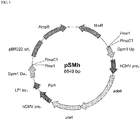
- an expression cassette including the PYC genes and the MDH genes, for example, an expression cassette is preferable which includes a promoter, PYC genes, a cleavage sequence, a complementary auxotrophic marker (for example, a Ura4 gene), MDH genes, and a terminator from the 5' terminal side.
- a gene sequence of the PYC genes or the MDH genes included in the expression cassette a gene encoded by a wild type may be used as it is.
- the gene sequence of the wild type may be modified into a codon used at a high frequency in S. pombe.
- the promoter and the terminator functioning in S. pombe should be able to function in a transformant and maintain the expression of a protein encoded by foreign genes, even if an acidic condition (pH of equal to or less than 6) is created due to the accumulation of a C4 dicarboxylic acid by the transformant according to the present invention.
- an acidic condition pH of equal to or less than 6
- the promoter functioning in S. pombe it is possible to use a promoter (preferably a promoter having high transcription initiation activity) inherent to S. pombe or a promoter (such as a promoter derived from a virus) not being inherent to S. pombe.
- two or more kinds of promoter may be present in a vector.
- Examples of the promoter inherent to S. pombe include an alcohol dehydrogenase gene promoter, an nmt1 gene promoter involved in the thiamine metabolism, fructose-1,6-bisphosphatase gene promoter involved in the glucose metabolism, an invertase gene promoter involved in the catabolite repression (see PCT International Publication No. WO99/23223 ), a heat-shock protein gene promoter (see PCT International Publication No. WO2007/26617 ), and the like.
- promoters not being inherent to S. pombe include promoters derived from animal cell viruses, described in Japanese Unexamined Patent Application, First Publication No. H05-15380 , Japanese Unexamined Patent Application, First Publication No. H07-163373 , and Japanese Unexamined Patent Application, First Publication No. H10-234375 .
- promoters an hCMV promoter and an SV40 promoter are preferable.
- terminator functioning in S. pombe, it is possible to use a terminator inherent to S. pombe or a terminator not being inherent to S. pombe.
- two or more kinds of terminator may be present in a vector.
- Examples of the terminator include terminators derived from human beings, described in Japanese Unexamined Patent Application, First Publication No. H05-15380 , Japanese Unexamined Patent Application, First Publication No. H07-163373 , and Japanese Unexamined Patent Application, First Publication No. H10-234375 .
- terminators a terminator of human lipocortin I is preferable.
- the transformant described herein has an expression cassette, which includes foreign genes, in a chromosome or has an expression cassette as an extrachromosomal gene.
- Having the expression cassette in a chromosome means a state where the expression cassette is incorporated into one or more sites in a chromosome of the host cell.
- Having the expression cassette as an extrachromosomal gene means a state where the transformant has a plasmid including the expression cassette in a cell.
- the transformant having each expression cassette is obtained by transforming S. pombe as a host by using a vector including each expression cassette.
- the vector can be manufactured by incorporating the expression cassette into a vector having a cyclic DNA structure or a linear DNA structure.
- the vector is preferably a plasmid including a sequence to be replicated in the host cell, that is, an Autonomously Replicating Sequence (ARS).
- ARS Autonomously Replicating Sequence
- the vector is preferably a vector which has a linear DNA structure, does not have ARS, and is introduced into the host cell.
- the vector may be a vector consisting of linear DNA or a vector having a cyclic DNA structure that has a restriction enzyme recognition sequence for cutting and opening the vector into linear DNA when being introduced into the host.
- a linear DNA structure can be established by deleting the ARS portion or by deactivating the function of ARS by cleaving the ARS portion, and then the vector can be introduced into a host.
- the vector preferably has a marker for selecting a transformant.
- the marker include a ura4 gene (complementary auxotrophic marker) and an isopropylmalate dehydrogenase gene (leu1 gene).
- Each foreign gene is preferably introduced into a chromosome of S. pombe.
- a transformant which is excellently stably maintained in a passage is obtained.
- a plurality of foreign genes can be introduced into the chromosome.
- the number of PYC genes incorporated into a chromosome is preferably 1 to 20 and particularly preferably 1 to 8.
- the number of MDH genes incorporated into a chromosome of the transformant is preferably 1 to 20 and particularly preferably 1 to 8.
- a method for introducing foreign genes into a chromosome a known method can be used. For example, by the method described in Japanese Unexamined Patent Application, First Publication No. 2000-262284 , a plurality of foreign genes can be introduced into a chromosome. By the same method, a single foreign gene can be introduced into a chromosome. Furthermore, as will be described later, one or a plurality of foreign genes can be introduced into a plurality of sites of a chromosome.
- a method for introducing foreign genes into a chromosome of S. pombe a method is preferable in which the foreign genes are introduced by a homologous recombination method by using a vector having an expression cassette, which has the foreign genes, and a recombination site.
- the recombination site of a vector is a site having a base sequence that can cause homologous recombination with a target site of homologous recombination in a chromosome of S. pombe.
- the target site is a site into which an expression cassette is incorporated in a chromosome of S. pombe.
- the target site can be freely set by designing the base sequence of the recombination site of the vector such that the recombination site can cause homologous recombination with the target site.
- the base sequence of the recombination site and the base sequence of the target site need to share identity of equal to or higher than 70%. Furthermore, in view of facilitating the occurrence of homologous recombination, the identity shared between the base sequence of the recombination site and the base sequence of the target site is preferably equal to or higher than 90%, and more preferably equal to or higher than 95%.
- an expression cassette can be incorporated into the target site through homologous recombination.
- the length (number of bases) of the recombination site is preferably 20 bp to 2,000 bp. If the length of the recombination site is equal to or greater than 20 bp, homologous recombination easily occurs. If the length of the recombination site is equal to or less than 2,000 bp, it is easy to prevent a case where the vector becomes too long and thus the homologous recombination does not easily occur.
- the length of the recombination site is more preferably equal to or greater than 100 bp, and even more preferably equal to or greater than 200 bp. In addition, the length of the recombination site is more preferably equal to or less than 800 bp, and even more preferably equal to or less than 400 bp.
- the vector may have other DNA domains in addition to the aforementioned expression cassette and recombination site.
- the DNA domains include a replication initiation domain called "ori" that is necessary for the replication in E. coli and an antibiotic resistance gene (a neomycin resistance gene or the like). These are genes generally required in a case where a vector is constructed using E. coli.
- the replication initiation domain is removed when the vector is incorporated into a chromosome of a host as will be described later.
- the vector preferably has a linear DNA structure when being introduced into a cell of S. pombe. That is, in a case where the vector has a cyclic DNA structure such as plasmid DNA that is generally used, it is preferable that the vector is introduced into the cell of S. pombe after being cut and opened to become linear by a restriction enzyme.
- a position in which the vector having a cyclic DNA structure is cut and opened is in the recombination site.
- the recombination site is partially present, and through homologous recombination, the entirety of the vector is incorporated into a target site of a chromosome.
- the vector may be constructed by a method other than the method of cutting and opening the vector having a cyclic DNA structure.
- plasmids derived from E. coli such as pBR 322, pBR 325, pUC 118, pUC 119, pUC 18, and pUC 19, can be suitably used.
- a replication initiation domain called "ori" necessary for the replication in E. coli is removed from the plasmid vector used at the time of homologous recombination. In this way, when the aforementioned vector is incorporated into a chromosome, the incorporation efficiency can be improved.
- a method for constructing a vector, from which the replication initiation domain has been removed is not particularly limited, but it is preferable to use the method described in Japanese Unexamined Patent Application, First Publication No. 2000-262284 . That is, it is preferable to use a method of constructing in advance a precursor vector in which a replication initiation domain is inserted into a cleavage site in a recombination site such that the vector has the linear DNA structure described above and the replication initiation domain is cut off. By this method, a vector from which a replication initiation domain has been removed can be easily obtained.
- a precursor vector having an expression cassette and a recombination site is constructed by using the expression vector described in Japanese Unexamined Patent Application, First Publication No. H05-15380 , Japanese Unexamined Patent Application, First Publication No. H07-163373 , PCT International Publication No. WO96/23890 , Japanese Unexamined Patent Application, First Publication No. H10-234375 , and the like or using the construction method thereof, and a replication initiation domain is removed from the precursor vector by a general genetic engineering method so as to obtain a vector used for homologous recombination.
- the target site into which the vector is incorporated may be present in only one site or two or more sites in a chromosome of S. pombe. In a case where two or more target sites are present, the vector is incorporated into two or more sites of a chromosome of S. pombe. In a case where a plurality of foreign genes is included in a single expression cassette, the plurality of foreign genes can be incorporated into one target site.
- the expression cassette can be incorporated into two or more kinds of target site.
- a plurality of foreign genes can be incorporated into a chromosome of S. pombe.
- an expression amount of PYC or MDH encoded by the foreign genes can be increased, and the productivity of a C4 dicarboxylic acid can be improved.
- an expression cassette including a PYC gene into a vector having a first target site
- incorporating an expression cassette including an MDH gene into a vector having a second target site performing transformation by using the vectors and S. pombe, in which some of the genes in a group of PDC genes have undergone deletion or deactivation, as a host, and then deleting or deactivating mae2 genes of the obtained transformant, the transformant described herein is obtained.
- an expression cassette is incorporated into one target site, for example, it is possible to use the target site shown in the method described in Japanese Unexamined Patent Application, First Publication No. 2000-262284 .
- the vectors can be incorporated into different target sites respectively.
- the above method is complicated for incorporating vectors into two or more sites of a chromosome.
- a vector can be incorporated into each of the plurality of target sites, the vector can be incorporated into two or more sites in the chromosome by using one kind of vector.
- the base sequences substantially the same as each other mean that the sequences share identity of equal to or higher than 90%.
- the identity shared between the target sites is preferably equal to or higher than 95%.
- the length of each of the base sequences substantially the same as each other is a length including the recombination site of the aforementioned vector, which is preferably equal to or greater than 1,000 bp.
- Tf2 is a transposon gene present in a total of 13 sites in each triple-strand (monoploid) chromosome of S. pombe.
- the length (number of bases) thereof is known to be about 4,900 bp, and the base sequence identity shared between the genes thereof is known to be 99.7% (see the following documents).
- a vector into only one of the Tf2's present in 13 sites in a chromosome.
- a vector having two or more foreign genes By incorporating a vector having two or more foreign genes, a transformant having two or more foreign genes can be obtained.
- a vector having two or more foreign genes can be obtained.
- a transformant having more foreign genes can be obtained. If a vector is incorporated into all of the 13 Tf2's, too much burden may be imposed on the survival or growth of the transformant. Therefore, the vector is preferably incorporated into 8 or less of the 13 Tf2's, and more preferably incorporated into 5 or less Tf2's.
- any of known transformation methods can be used.
- the transformation method include the methods known in the related art, such as a lithium acetate method, an electroporation method, a spheroplast method, and a glass bead method, and the method described in Japanese Unexamined Patent Application, First Publication No. 2005-198612 .
- commercially available yeast transformation kits may be used.
- a known homologous recombination method can be used.
- a transformation method at the time of manufacturing the transformant according to the present invention a method is preferable wherein S. pombe in which some of the genes in a group of PDC genes described above have undergone deletion or deactivation is used as a host, and an expression cassette is incorporated into a chromosome of S. pombe through homologous recombination by using the vector described above.
- the obtained transformant is selected.
- the selection method for example, the following method can be used.
- screening is carried out, thereby selecting a plurality of transformants from the obtained colony.
- each of the transformants is individually subjected to liquid culture. Thereafter, an expression amount of a heterologous protein in each culture solution is investigated, and transformants showing a greater expression amount of the heterologous protein are selected.
- genomic analysis is performed on the selected transformants, and in this way, the number of vectors or expression cassettes incorporated into a chromosome is investigated.
- the number of vectors incorporated into a chromosome can be adjusted to some extent by adjusting the incorporation conditions or the like. It is considered that the incorporation efficiency or the number of vectors incorporated may vary with the size (number of bases) or structure of the vector.
- the transformant according to the present invention has malic acid producibility that is better than ever.
- a malic acid production rate of the transformant is preferably equal to or higher than 2.0 g/(L ⁇ h), more preferably equal to or higher than 5.0 g/(L ⁇ h), even more preferably equal to or higher than 10 g/(L ⁇ h), and particularly preferably 15 g/(L ⁇ h) to 30 g/(L ⁇ h).
- a method for manufacturing a C4 dicarboxylic acid according to the present invention includes culturing the transformant according to the present invention in a culture solution and obtaining a C4 dicarboxylic acid from the culture solution.
- oxaloacetic acid is produced from pyruvic acid obtained from the sugar by a glycolytic system with the aid of PYC or produced from phosphoenolpyruvic acid with the aid of PCK. From the produced oxaloacetic cid, malic acid is produced with the aid of MDH, and from the produced malic acid, other C4 dicarboxylic acids are produced as well.
- C4 dicarboxylic acids including the produced malic acid are accumulated in the microbial cell, some of them are released to a culture supernatant due to Mae1 (C4 dicarboxylic acid transporter).
- C4 dicarboxylic acids transporter By obtaining C4 dicarboxylic acids from the cultured transformant or the culture supernatant, it is possible to manufacture C4 dicarboxylic acids.
- Examples of C4 dicarboxylic acids manufactured from the transformant include oxaloacetic acid, malic acid, fumaric acid, succinic acid, and the like, and among these, oxaloacetic acid or malic acid is preferable.
- the culture solution used for manufacturing a C4 dicarboxylic acid a known sugar-containing culture medium for yeast can be used. Furthermore, the culture medium should contain a nitrogen source, inorganic salts, and the like that S. pombe can utilize and should enable S. pombe to be efficiently cultured. As the culture solution, a natural medium or a synthetic medium may be used.
- sugars such as glucose, fructose, sucrose, and maltose.
- nitrogen source include ammonia, an ammonium salt of an inorganic or organic acid, such as ammonium chloride or ammonium acetate, peptone, casamino acid, yeast extract, and the like.
- inorganic salts include magnesium phosphate, magnesium sulfate, sodium chloride, and the like. It is also possible to further add a fermentation accelerating factor such as proteolipid.
- a culture solution particularly containing glucose or sucrose as sugar.
- a concentration of glucose or sucrose in the culture solution (100% by mass) at the initial stage of culture is preferably equal to or greater than 1% by mass, more preferably 1% by mass to 50% by mass, and even more preferably 2% by mass to 16% by mass.
- the glucose concentration or the sucrose concentration is reduced due to culture, it is preferable to continue the culture by adding glucose as necessary.
- the glucose concentration or the like may become equal to or less than 1% by mass.
- the glucose concentration or the like In a case where continuous culture is performed by circulating the culture solution in a state of separating a C4 dicarboxylic acid, it is preferable to maintain the glucose concentration or the like. If the glucose concentration is set to be equal to or greater than 2% by mass, the productivity of a C4 dicarboxylic acid is further improved. Furthermore, if the concentration of glucose or sucrose in the culture solution is set to be equal to or less than 16% by mass, the production efficiency of a C4 dicarboxylic acid is further improved.
- the initial microbial cell concentration of the transformant in the culture solution is preferably set to be 0.1 g/L to 100 g/L.
- the initial microbial cell concentration of the transformant in the culture solution is more preferably set to be 20 g/L to 60 g/L. If the initial microbial cell concentration is set to be high, high productivity can be achieved within a short period of time. Furthermore, if the initial microbial cell concentration is too high, a problem such as the aggregation of microbial cells or the reduction of purification efficiency may occur.
- the microbial cell concentration described in examples and the like, which will be described later, is a value converted from an absorbance (OD 660 ) of light having a wavelength of 660 nm measured by a visible-ultraviolet spectrometer V550 manufactured by JASCO Corporation.
- the value of 1 that equals OD 660 at 660 nm corresponds to a dry weight of 0.2 g and a wet weight of 0.8 g of fission yeast.
- a known yeast culture method can be used.
- shake culture or stirring culture can be performed.
- the culture temperature is preferably 23°C to 37°C, and the culture time can be appropriately determined.
- the culture may be batch culture or continuous culture.
- a culture solution containing a C4 dicarboxylic acid can be obtained.
- examples of the continuous culture method include a method of continuously performing culture by repeating a process of taking out a portion of the culture solution from a culture tank in which culture is being performed, separating a C4 dicarboxylic acid from the taken culture solution and recovering the culture supernatant, adding glucose or a new culture solution to the culture supernatant, and returning the culture supernatant to the culture tank.
- the transformant according to the present invention has particularly excellent acid resistance. Therefore, even at a low pH (about pH 2 to 4) resulting from the accumulation of a C4 dicarboxylic acid, the transformant can produce a C4 dicarboxylic acid without being subjected to neutralization. Accordingly, even after the pH of the culture solution becomes equal to or less than 3.5, it is possible to manufacture a C4 dicarboxylic acid by continuous culture in which culture is continued.
- the pH of the last stage of culture and the pH during the continuous culture is preferably equal to or less than 3.5 and particularly preferably 2.3 to 3.5. In some cases, culture may be finished before the pH of the culture solution becomes equal to or less than 3.5.
- a C4 dicarboxylic acid can be obtained from the culture solution by a known method.
- the method include a method in which microbial cells are separated by centrifugation from the culture solution after the end of the culture, and a C4 dicarboxylic acid is extracted using diethyl ether or ethyl acetate after the pH becomes equal to or less than 1; a method in which the culture solution is absorbed onto an ion exchange resin and washed, and then a C4 dicarboxylic acid is eluted; a method in which impurities are removed using activated carbon; a method in which the culture solution is reacted with alcohol in the presence of an acid catalyst and then subjected to distillation; and a method in which a C4 dicarboxylic acid is separated using a separation membrane.
- a C4 dicarboxylic acid by neutralizing a C4 dicarboxylic acid in the culture solution and then separating a C4 dicarboxylic acid salt from the culture solution, a C4 dicarboxylic acid can be obtained.
- a C4 dicarboxylic acid by a method of converting a C4 dicarboxylic acid in the culture solution into a calcium salt or a lithium salt and crystallizing the neutralized salt, a C4 dicarboxylic acid can also be obtained.
- the method for manufacturing a C4 dicarboxylic acid according to the present invention described above makes it possible to manufacture a C4 dicarboxylic acid with high productivity in a simple manner by using a transformant that uses S. pombe as a host. According to the manufacturing method, a production rate of a C4 dicarboxylic acid easily becomes equal to or higher than 5 g/L/h, and in some cases, the production rate of a C4 dicarboxylic acid becomes equal to or higher than 15 g/L/h.
- the method for manufacturing a C4 dicarboxylic acid according to the present invention is also suitable for high-density culture that is performed in the presence of high-concentration glucose by using a high-concentration transformant.
- a uracil auxotrophic ARC019 strain of S. pombe (genotype: h - , leu1-32, ura4-D18, Ade6-M216) (Strain name: JY741, NBRPID: FY7512) was transformed according to a Latour method (described in the journal of Nucleic Acids Research, 2006, Vol. 34, p. e11 , PCT International Publication No. WO2007/063919 ), thereby preparing a deletion strain (IGF836 strain) from which PDC2 genes (strain name: SPAC1F8. 07c) were deleted.
- a UP domain was prepared using UF and UR
- an OL domain was prepared using OF and OR
- a DN domain was prepared using DF and DR.
- a full-length deletion fragment was prepared by the same PCR method using FF and FR respectively.
- 2 kinds of synthetic oligo DNA manufactured by Operon Biotechnologies having the base sequences shown in Table 2 were used, and the total genomic DNA prepared from the ARC032 strain in the same manner as above was used as a template.
- the obtained PDC2 gene deletion strain of S. pombe (IGF836 strain, h - leu1-32 ura4-D18 ade6-M216 pdc2-D23) was transformed, thereby obtaining an ASP4590 strain in which uracil auxotrophy and adenine auxotrophy were restored.
- Transformants of pombe were prepared (Table 24) into which PYC derived from Aspergillus niger (AniPYC) (SEQ ID NO: 1), PYC derived from Brevibacillus brevis (BbrPYC) (SEQ ID NO: 2), PYC derived from Debaryomyces hansenii (DhaPYC) (SEQ ID NO: 3), PYC derived from Kluyveromyces lactis (KlaPYC) (SEQ ID NO: 4), PYC derived from Lachancea thermotolerans (LthPYC) (SEQ ID NO: 5), PYC derived from Lodderomyces elongisporus (LelPYC) (SEQ ID NO: 6), PYC derived from Saccharomyces cerevisiae (ScePYC) (SEQ ID NO: 7), PYC derived from Candida orthopsilosis (CorPYC) (SEQ ID NO: 8
- the IGF836 strain (gene deletion strain of S. pombe) prepared in Example 1 was transformed according to the method of Bahler et al. (the journal of Yeast, 1998, Vol. 14, pp. 943-951 ) by using a digest of a restriction enzyme BsiWI of a monodentate integrative recombinant vector pSLh-AniPYC retaining an AniPYC gene expression cassette, a monodentate integrative recombinant vector pSLh-BbrPYC retaining a BbrPYC gene expression cassette, a monodentate integrative recombinant vector pSLh-DhaPYC retaining a DhaPYC gene expression cassette, a monodentate integrative recombinant vector pSLh-KlaPYC retaining a KlaPYC gene expression cassette, a monodentate integrative recombinant vector pSLh-LthPYC retaining an LthPYC gene expression
- the monodentate integrative recombinant vector pSMh can be prepared through the following process. First, a fragment obtained by digestion of a DNA fragment (Fr. 1), which was prepared by total synthesis of DNA and had a base sequence represented by SEQ ID NO: 34, with a restriction enzyme BsiWI and a DNA fragment, which was obtained by the digestion of a pSE vector with a restriction enzyme BsiWI and the double digestion of the obtained digest with restriction enzymes Kpnl and SnaBI, were subjected to ligation, thereby preparing pSMh (8,849 bp, FIG. 1 ) having a base sequence (5' ⁇ 3', cyclic) represented by SEQ ID NO: 35.
- pSLh-AniPYC was prepared through the following process.
- the obtained amplified fragment was incorporated into pSLh, thereby preparing pSLh-AniPYC.
- the In-Fusion method was performed according to the manual included in the kit. That is, the obtained PCR product was purified using a spin column, added to an In-Fusion reaction solution together with pSLh, and reacted for 15 minutes at 50°C.
- a monodentate integrative recombinant vector pSLh-BbrPYC a monodentate integrative recombinant vector pSLh-DhaPYC, a monodentate integrative recombinant vector pSLh-KlaPYC, a monodentate integrative recombinant vector pSLh-LthPYC, a monodentate integrative recombinant vector pSLh-LelPYC, a monodentate integrative recombinant vector pSLh-ScePYC, a monodentate integrative recombinant vector pSLh-CorPYC, a monodentate integrative recombinant vector pSLh-CtrPYC, a monodentate integrative recombinant vector pSLh-NcaPYC, a monodentate integrative recombinant vector pSLh-NdaPYC, a monodentate
- the ASP4590 strain was transformed using the monodentate integrative recombinant vector pSLh-ScePYC and the monodentate integrative recombinant vector pSMh-DacMDH, thereby obtaining an ASP4491 strain into which an ScePYC gene and a DacMDH gene were introduced.
- the aforementioned purified enzyme liquid was mixed with a reaction solution kept at 30°C (100 mM Tris-HCl (pH 7.5), 2 mM ATP, 100 mM MgCl 2 , 100 mM KCl, 5 mM Pyruvic acid, 5 mM NaHCO 3 , 0.1 mM Acetyl-CoA, 0.15 mM NADH), and then measured over time by using an absorptiometer having a mixing function. From the obtained temporal change of absorbance, a relative activity (mU/mL) per enzyme liquid was calculated. The results of the PYC activity per enzyme liquid calculated for each of the transformants are shown in FIG. 3 . The results show that the PYC activity was confirmed in all of the transformants.
- the aforementioned purified enzyme liquid was mixed with a reaction solution kept at 30°C (90 mM Tris-HCl (pH 9.0), 0.5 mM Oxaloacetate, 0.25 mM NADH) and then measured over time by using an absorptiometer having a mixing function. From the obtained temporal change of absorbance, a relative activity (mU/mL) per enzyme liquid was calculated. The results of the MDH activity per enzyme liquid calculated for each of the transformants are shown in FIG. 5 . The results show that the MDH activity was confirmed in all of the transformants.
- a deletion strain By deleting an mae2 gene from the ASP4491 strain into which an ScePYC gene and a DacMDH gene were introduced, a deletion strain (ASP4964 strain) was prepared. A method for preparing an mae2 deletion fragment was the same as the method for preparing the deletion fragment from which pdc2 was deleted.
- the ASP4491 strain (genotype: h - , leu1-32, ura4-D18, Ade6-M216, ⁇ pdc2, +ScePYC, +DacMDH) of S. pombe was transformed according to the Latour method, thereby preparing an ASP4964 strain from which an mae2 gene (strain name: SPCC794. 12c) was deleted.
- Oligo DNA for preparing name2 deletion fragment Oligo DNA Base sequence SEQ ID NO: UF 5'-AGGCTTTGATAGCCACTGGT-3' 78 UR 5' -TGGGATTTGTAGCTAAGCTTTAAAATAAAAGGCFTTTATAC-3' 79 OF 5'-TTCGTCAATATCACAAGCTTAGGTCGACTGGGCTAATCG-3' 80 OR 5'-TAAAATAAAAGGCTTTATACAGGCATTTTCAAACTTCAAG-3' 81 DF 5'-CTTGAAGTTTGAAAATGCCTGTATAAAGCCTTTTATTTTA-3' 82 DR 5' -TTCATTCAATACATAACGGTTTACGGT-3' 83 FF 5'-ATTCGTGAAATGAGCAAGCA-3' 84 FR 5'-TGCGATTTACTATTTGTTTGTTTCA-3' 85
- fum1 is an enzyme which produces fumaric acid by using malic acid as a matrix.
- a method for preparing an fum1 deletion fragment is the same as the method for preparing the deletion fragment from which pdc2 was deleted.
- the ASP4491 strain of S. pombe was transformed according to the Latour method, thereby preparing an ASP4933 strain from which an fum1 gene (strain name: SPCC18. 18c/SPCC290. 01c) was deleted.
- Oligo DNA for preparing fum1 deletion fragment Oligo DNA Base sequence SEQ ID NO: UF 5' -CTCAAGTAATGGGCAATCATGCCA-3' 86 UR 5'-TGGGATTTGTAGCTAAGCTTAGAGTGGTAAAAAATTATAC-3' 87 OF 5'-TTCGTCAATATCACAAGCTTAATAAAATACACAAAACTGT-3' 88 OR 5'-AGAGTGGTAAAAAATTATACAGCCATGTGGGTTATTTTAA-3' 89 DF 5'-TTAAAATAACCCACATGGCTGTATAATTTTTTACCACTCT-3' 90 DR 5'-GAGCAACCGAATATCAAGGAAATACACA-3' 91 FF 5'-AGGCGAATTGATCCTTCCTGCTA-3' 92 FR 5'-TGGTAAGCCTGGTATGAGTTCTATACTAT-3' 93
- a malic acid production rate was investigated for a wild strain (ARC010 strain) of S. pombe, the PDC2 gene deletion strain (ASP4590 strain, ⁇ PDC2), the ASP4491 strain obtained by introducing an ScePYC gene and a DacMDH gene into the ASP4590 strain, the ASP4964 strain ( ⁇ PDC2, ⁇ mae2, +ScePYC, +DacMDH) obtained by deleting an mae2 gene from the ASP4491 strain, and the ASP4933 strain ( ⁇ PDC2, ⁇ fum1, +ScePYC, +DacMDH) obtained by deleting an fum1 gene from the ASP4491 strain, a malic acid production rate was investigated.
- the microbial cells were seeded into a YES plate and cultured for 96 hours at 30°C, thereby obtaining a colony.
- the obtained colony was subcultured in 5 mL of a YES medium (test tube) and shake-cultured for 24 hours at 30°C.
- the obtained microbial solution was subcultured in 100 mL of a YPD6 medium (Sakaguchi flask) and shake-cultured for 44 hours at 30°C.
- the microbial cells obtained in this way were collected, added to 3 mL of a fermentation medium (100 g/L glucose, 111 g/L calcium carbonate) in the test tube so as to yield 36 g (weight of dry microbial cell)/L, and fermented at 30°C under shaking conditions. A sample was collected in time from the fermented liquid.
- a fermentation medium 100 g/L glucose, 111 g/L calcium carbonate
- a glucose concentration and an ethanol concentration were measured using a biosensor BF-7 (manufactured by Oji Scientific Instruments) based on an enzyme electrode method, and a malic acid concentration was measured by HPLC.
- HPLC measurement a high-performance liquid chromatograph Prominence (manufactured by Shimadzu Corporation) was used, Aminex HPX-87H 300 ⁇ 7.8 mm (manufactured by Bio-Rad Laboratories, Inc.) was used as a column, an injection volume was set to be 10 ⁇ L, 10 mM H 2 SO 4 was used as a solvent, a flow rate was set to be 0.6 mL/min, a measurement time was set to be 35 minutes, a measurement temperature was set to be 60°C, and diode array detector (210 nm) and a differential refractometric detector were used for detection. Each concentration is a concentration per culture solution or fermented liquid.
- the measured results of the glucose concentration (g/L), the ethanol concentration (g/L), and a malic acid concentration (g/L) are shown in FIGS.6 to 10 .
- the results show that the production of malic acid was confirmed only in the ASP4964 strain ( ⁇ PDC2, ⁇ mae2,+ScePYC, +DacMDH).
- each strain was fermented in the same manner as in ⁇ Confirmation of malic acid producibility>, a sample was collected in time from the fermented liquid, and a glucose concentration and a malic acid concentration were measured. The measured results are shown in FIG. 11 .
- "Glu-4892” and "Glu-4491” show a temporal change of a glucose concentration of the ASP4892 strain and the ASP4491 strain respectively
- "MA-4892” and “MA-4491” show a temporal change of a malic acid concentration of the ASP4892 strain and the ASP4491 strain respectively.
- Transformants of pombe were prepaerd (Table 47) into which PCK derived from Candida glabrata (CglPCK) (SEQ ID NO: 94), PCK derived from Citrobacter koseri (CkoPCK) (SEQ ID NO: 95), PCK derived from Cronobacter sakazakii (CsaPCK) (SEQ ID NO: 96), PCK derived from Debaryomyces hansenii (DhaPCK) (SEQ ID NO: 97), PCK derived from Escherichia fergusonii (EfePCK) (SEQ ID NO: 98), PCK derived from Edwardsiella tarda (EtaPCK) (SEQ ID NO: 99), PCK derived from Kluyveromyces lactis (KlaPCK) (SEQ ID NO: 100), PCK derived from Lodderomyces elongisporus (LelPCK) (SEQ ID NO: 101), PCK derived from
- the IGF836 strain (gene deletion strain of S. pombe) prepared in Example 1 was transformed according to the method of Bahler et al. (the journal of Yeast, 1998, Vol. 14, pp. 943-951 ) by using a digest of a restriction enzyme BsiWI of each monodentate integrative recombinant vector retaining each expression cassette of the PCK gene described in Table 47.
- pSLh-CglPCK was prepared through the following process.
- a monodentate integrative recombinant vector pSLh-CkoPCK a monodentate integrative recombinant vector pSLh-CsaPCK, a monodentate integrative recombinant vector pSLh-DhaPCK, a monodentate integrative recombinant vector pSLh-EfePCK, a monodentate integrative recombinant vector pSLh-EtaPCK, a monodentate integrative recombinant vector pSLh-KlaPCK, a monodentate integrative recombinant vector pSLh-LelPCK, a monodentate integrative recombinant vector pSLh-PcaPCK, a monodentate integrative recombinant vector pSLh-PlePCK, a monodentate integrative recombinant vector pSLh-PrePCK, a monodentate integrative recombinant vector pSLh-PrePCK,
- Transformants of pombe were prepared into which PCK derived from Escherichia coli (EcoPCK) (SEQ ID NO: 154), PYC derived from Gallus gallus (GglPYC) (SEQ ID NO: 155), and MDH derived from Escherichia coli (EcoMDH) (SEQ ID NO: 156) were introduced.
- EcoPCK Escherichia coli
- GglPYC PYC derived from Gallus gallus
- EuMDH MDH derived from Escherichia coli
- the IGF836 strain (gene deletion strain of S. pombe) prepared in Example 1 was transformed according to the method of Bahler et al. (the journal of Yeast, 1998, Vol. 14, pp. 943-951 ) by using a digest of a restriction enzyme BsiWI of a monodentate integrative recombinant vector pSNh-EcoPCK retaining an EcoPCK gene expression cassette, a monodentate integrative recombinant vector pSLh-GglPYC retaining a GglPYC gene expression cassette, or a monodentate integrative recombinant vector pSMh-EcoMDH retaining an EcoMDH gene expression cassette.
- pSNh-EcoPCK was prepared through the following process.
- the obtained amplified fragment was incorporated into pSNh, thereby preparing pSNh-EcoPCK.
- the In-Fusion method was performed according to the manual included in the kit. That is, the obtained PCR product was purified using a spin column, added to an In-Fusion reaction solution together with pSNh, and reacted for 15 minutes at 50°C.
- transformants shown in Table 52 were prepared.
- Table 52 Name of transformant strain Name of host strain Name of introduced foreign genes or name of deleted genes ASP5127 IGF836 ⁇ mae2 ASP5125 IGF836 SoePYC, ⁇ mae2 ASP5126 IGF836 DacMDH, ⁇ mae2 ASP5087 IGF836 SoePCK, DacMDH, ⁇ mae2 AS P5088 IGF836 PlePCK, DacMDH, ⁇ mae2 ASP5089 IG F836 YbePCK, DacMDH, ⁇ mae2 ASP5132 IGF836 KlaPYC, DacMDH, ⁇ mae2 ASP5135 IGF836 SpoPYC, DacMDH, ⁇ mae2 ASP5215 IGF836 CliMDH, SoePYC, ⁇ mae2 ASP5216 IGF836 HelMDH, ScePYC, ⁇ mae
- fermentative production of malic acid was performed using the ASP4491 strain, the ASP4964 strain, the ASP4933 strain, and the ASP5127 strain.
- the microbial cells were seeded into a YES plate and cultured for 96 hours at 30°C, thereby obtaining a colony.
- the obtained colony was subcultured in 5 mL of a YES medium (test tube) and shake-cultured for 24 hours at 30°C.
- the obtained microbial solution was subcultured in 100 mL of a YPD6 medium (Sakaguchi flask) and shake-cultured for 44 hours at 30°C.
- the microbial cells obtained in this way were collected, added to 3 mL of a fermentation medium (100 g/L glucose, 111 g/L calcium carbonate) in the test tube so as to yield 36 g (weight of dry microbial cell)/L, and fermented at 30°C under shaking conditions. A sample was collected in time from the fermented liquid.
- a fermentation medium 100 g/L glucose, 111 g/L calcium carbonate
- a glucose concentration and an ethanol concentration were measured using a biosensor BF-7 (manufactured by Oji Scientific Instruments) based on an enzyme electrode method, and a malic acid concentration was measured by HPLC.
- HPLC measurement a high-performance liquid chromatograph Prominence (manufactured by Shimadzu Corporation) was used, Aminex HPX-87H 300 ⁇ 7.8 mm (manufactured by Bio-Rad Laboratories, Inc.) was used as a column, an injection volume was set to be 10 ⁇ L, 10 mM H 2 SO 4 was used as a solvent, a flow rate was set to be 0.6 mL/min, a measurement time was set to be 35 minutes, a measurement temperature was set to be 60°C, and diode array detector (210 nm) and a differential refractometric detector were used for detection.
- Each concentration is a concentration per culture solution or fermented liquid.
- Table 53 Strain name Fermentation time [hour] Glucose concentration [g/L] Ethanol concentration [g/L] Malie acid concentration [g/L] ASP4491 0 100.0 0.0 0.0 1 33,2 21.1 2.9 3 0.0 34.3 0.0 20 0.0 24.7 0.0 ASP4964 0 1 00.0 0.0 0.0 1 26.6 13.8 19.0 3 0.4 19.2 26.7 20 0.3 8.0 28.1 ASP4933 0 100.0 0.0 0.0 1 57.9 10.6 0.0 3 11.8 27.2 3.0 20 0.0 23.4 0.0 ASP5127 0 100.0 0.0 0.0 1 27.0 23.3 2.0 2 0.1 32.9 3.0 31 0.1 0.0 5.3
- fermentative production of malic acid was performed using the ASP5126 strain, the ASP5087 strain, the ASP5088 strain, and the ASP5089 strain.
- fermentative production of malic acid was performed using the ASP5126 strain, the ASP4964 strain, the ASP5132 strain, and the ASP5135 strain.
- fermentative production of malic acid was performed using the ASP5125 strain, the ASP5215 strain, the ASP5216 strain, the ASP5127 strain, the ASP4964 strain, the ASP5129 strain, and the ASP5131 strain.
- fermentative production of malic acid was performed using the ASP4964 strain and the ASP5235 strain.
- fermentative production of malic acid was performed using the ASP4964 strain and the ASP5235 strain.
- microbial cells grown by the same method as in Example 7 were added to 3 mL of a fermentation medium (100 g/L glucose) in a test tube so as to yield 36 g (weight of dry microbial cells)/L, and fermented at 30°C under shaking conditions. A sample was collected in time from the fermented liquid.
- a fermentation medium 100 g/L glucose
- the obtained sample was measured in the same manner as in Example 7. The results are shown in Table 58. As a result, it was confirmed that all of the strains produced malic acid under non-neutralization conditions.
- the pH of the ASP4964 strain sample that was collected after fermentation was performed for 1 hour was 3.5, and the pH of the sample that was collected after fermentation was performed for 2 hours was 3.0.
- the pH of the ASP5235 strain sample that was collected after fermentation was performed for 1 hour was 3.0, and the pH of the sample that was collected after fermentation was performed for 2 hours was 2.8.
Landscapes
- Chemical & Material Sciences (AREA)
- Organic Chemistry (AREA)
- Life Sciences & Earth Sciences (AREA)
- Health & Medical Sciences (AREA)
- Engineering & Computer Science (AREA)
- Zoology (AREA)
- Wood Science & Technology (AREA)
- Genetics & Genomics (AREA)
- Bioinformatics & Cheminformatics (AREA)
- General Engineering & Computer Science (AREA)
- Biochemistry (AREA)
- General Health & Medical Sciences (AREA)
- Biotechnology (AREA)
- Microbiology (AREA)
- Biomedical Technology (AREA)
- Molecular Biology (AREA)
- Medicinal Chemistry (AREA)
- Chemical Kinetics & Catalysis (AREA)
- General Chemical & Material Sciences (AREA)
- Physics & Mathematics (AREA)
- Biophysics (AREA)
- Plant Pathology (AREA)
- Micro-Organisms Or Cultivation Processes Thereof (AREA)
- Preparation Of Compounds By Using Micro-Organisms (AREA)
- Peptides Or Proteins (AREA)
Description
- The present application discloses a transformant, a method for manufacturing the same, and a method for manufacturing a dicarboxylic acid having 4 carbon atoms (C4 dicarboxylic acid). More specifically, the present application discloses a transformant, which is obtained by incorporating one or more foreign genes of one or more kinds selected from the group consisting of a Phosphoenolpyruvate carboxykinase (hereinafter, referred to PCK as well) gene, a Pyruvate carboxylase (hereinafter, referred to as PYC as well) gene, and a Malate dehydrogenase (hereinafter, referred to as MDH as well) gene into Schizosaccharomyces pombe (hereinafter, referred to as S. pombe as well) and in which some of the genes in a group of Pyruvate decarboxylase (hereinafter, referred to as PDC as well)-encoding genes and Malic enzyme (hereinafter, referred to as MAE as well) genes have undergone deletion or deactivation, a method for manufacturing the transformant, and a method for manufacturing a C4 dicarboxylic acid in which the transformant is cultured in a culture solution and a C4 dicarboxylic acid is obtained from the culture solution.
- Malic acid (HOOCCH(OH)CH2COOH) is a dicarboxylic acid consisting of 4 carbon atoms (C4 dicarboxylic acid). Generally, malic acid is commercially manufactured through chemical synthesis from raw materials derived from petroleum or through microbial fermentation from renewable feedstocks.
- Many natural or genetic recombinant microorganisms are known to be able to produce malic acid as the main fermentative organisms. For example, as a method of using wild-type microorganisms, a method of producing malic acid by culturing Aspergillus flavus (Non-Patent Document 1) and Penicillium sclerotiorum (Non-Patent Document 2) has been disclosed.
- Regarding a microorganism whose malic acid producibility is improved by gene recombination,
Patent Document 1 describes that a C4 dicarboxylic acid producibility is improved by introducing a C4 dicarboxylic acid transporter into filamentous bacteria such as Aspergillus oryzae. - In
Patent Document 2, malic acid is produced using a transformant which is obtained by deleting a PDC gene from Saccharomyces cerevisiae and introducing a PYC gene or a Phosphoenolpyruvate carboxykinase (hereinafter, referred to PCK as well) gene, an MDH gene, and a malic acid transporter protein gene into the Saccharomyces cerevisiae. - In
Non-Patent Document 3, malic acid is produced using a transformant which is obtained by deleting a PDC gene from Saccharomyces cerevisiae and introducing a PYC gene, an MDH gene, and a malic acid transporter protein gene into the Saccharomyces cerevisiae. InPatent Document 3, malic acid is produced using a transformant which is obtained by deleting a PDC enzyme gene, a pyruvate kinase (PYK) gene, and a hexokinase (HXK) gene from Saccharomyces cerevisiae and introducing a PYC gene, an MDH gene, a malic acid transporter protein gene, and a PCK gene into the Saccharomyces cerevisiae. - In
Non-Patent Document 4, a transformant is manufactured whose malic acid producibility is improved by deactivating a plurality of enzymes in E. coli that is involved in pathways other than a pathway through which malic acid is produced from pyruvic acid. Non-PatentDocument 4 discloses that between a deletion strain of a malic enzyme gene maeB and a non-deletion strain thereof, the maeB gene non-deletion strain has a higher malic acid production rate. The maeB gene of E. coli corresponds to a malic enzyme gene mae2 of S. Pombe. -
- [Patent Document 1] Published Japanese Translation No.
2013-503631 of the PCT - [Patent Document 2] Published Japanese Translation No.
2009-516526 of the PCT - [Patent Document 3]
PCT International Publication No. WO2009/011974 -
- [Non-Patent Document 1] Battat et al., Biotechnology and Bioengineering, 1991, vol. 37, p. 1108-1116.
- [Non-Patent Document 2] Wang et al., Bioresource Technology, 2013, vol. 143, p. 674-677.
- [Non-Patent Document 3] Zelle et al., Applied and Environmental Microbiology, 2008, vol. 74, p. 2766-2777.
- [Non-Patent Document 4] Zhang et al., Applied and Environmental Microbiology, 2011, vol. 77, p. 427-434.
- All of the transformants disclosed in
Patent Document 1 to 3 andNon-Patent Document - An object of the present invention is to provide a Schizosaccharomyces pombe transformant, which can excellently produce a C4 dicarboxylic acid through microbial fermentation from renewable feedstocks. A method for manufacturing the transformant is also described.
- Another object of the present invention is to provide a method for manufacturing a C4 dicarboxylic acid including malic acid by using the transformant.
- A transformant according to the present invention is a transformant which uses Schizosaccharomyces pombe as a host and, into which one or more foreign genes of one or more kinds selected from the group consisting of a phosphoenolpyruvate carboxykinase gene and a pyruvate carboxylase gene are incorporated, and in which some of the genes in a group of pyruvate decarboxylase-encoding genes of the Schizosaccharomyces pombe host have undergone deletion or deactivation. The Phosphoenolpyruvate carboxykinase gene encodes a polypeptide which includes an amino acid sequence represented by any of SEQ ID NOS: 94 to 113, a polypeptide which includes an amino acid sequence obtained by substitution, addition, or deletion of one or a plurality of amino acids in an amino acid sequence represented by any of SEQ ID NOS: 94 to 113 and has a phosphoenolpyruvate carboxykinase activity, or a polypeptide which includes an amino acid sequence sharing a sequence identity of equal to or higher than 80% with an amino acid sequence represented by any of SEQ ID NOS: 94 to 113 and has phosphoenolpyruvate carboxykinase activity, the pyruvate carboxylase gene encodes a polypeptide which includes an amino acid sequence represented by any of SEQ ID NOS: 1 to 16, a polypeptide which includes an amino acid sequence obtained by the substitution, addition, or deletion of one or a plurality of amino acids in an amino acid sequence represented by any of SEQ ID NOS: 1 to 16 and has pyruvate carboxylase activity, or a polypeptide which includes an amino acid sequence sharing a sequence identity of equal to or higher than 80% with an amino acid sequence represented by any of SEQ ID NOS: 1 to 16 and has pyruvate carboxylase activity, and the pyruvate decarboxylase-endocing genes that have undergone deletion or deactivation are pdc2 genes.
- It is preferable that one or more foreign malate dehydrogenase genes are further incorporated into the transformant according to the present invention.
- It is preferable that in the transformant, the malate dehydrogenase genes are genes encoding a polypeptide which includes an amino acid sequence represented by any of SEQ ID NOS: 17 to 21, a polypeptide which includes an amino acid sequence obtained by the substitution, addition, or deletion of one or a plurality of amino acids in an amino acid sequence represented by any of SEQ ID NOS: 17 to 21 and has malate dehydrogenase activity, or a polypeptide which includes an amino acid sequence sharing sequence identity of equal to or higher than 80% with an amino acid sequence represented by any of SEQ ID NOS: 17 to 21 and has malate dehydrogenase activity.
- It is preferable that in the transformant, malic enzyme genes have also undergone deletion or deactivation.
- It is preferable that in the transformant, one or more foreign phosphoenolpyruvate carboxykinase genes or one or more foreign pyruvate carboxylase genes and one or more foreign malate dehydrogenase genes are incorporated, and all of the pdc2 genes and the malic enzyme gene have undergone deletion or deactivation.
- In the transformant according to the present invention, the foreign genes are incorporated into a chromosome of the host.
- A method for manufacturing a dicarboxylic acid having 4 carbon atoms according to the present invention includes culturing the transformant in a culture solution and obtaining a dicarboxylic acid having 4 carbon atoms from the cultured transformant or a culture supernatant.
- It is preferable that in the method for manufacturing a dicarboxylic acid having 4 carbon atoms according to the present invention, the dicarboxylic acid having 4 carbon atoms is malic acid or oxaloacetic acid.
- It is preferable that in the method for manufacturing a dicarboxylic acid having 4 carbon atoms according to the present invention, culturing is continued even after the pH of the culture solution becomes equal to or less than 3.5.
The invention is defined by the claims. - The schizosaccharomyces pombe transformant according to the present invention can produce a C4 dicarboxylic acid including malic acid at a high production rate that was not achieved in the related art.
- The transformant can be obtained in a more simple manner by the method for manufacturing a transformant.
- The method for manufacturing a C4 dicarboxylic acid according to the present invention makes it possible to manufacture a C4 dicarboxylic acid with higher produtivity through microbial fermentation.
-
-
FIG. 1 is a view showing a constitution of a monodentate integrative recombinant vector pSMh. -
FIG. 2 is a view showing relative values of a PYC expression amount of 16 kinds of transformant into which a PYC gene is introduced. -
FIG. 3 is a view showing relative PYC activity per enzyme liquid (mU/mL) of 8 kinds of transformant into which a PYC gene is introduced. -
FIG. 4 is a view showing relative values of an MDH expression amount of 5 kinds of transformant into which an MDH gene is introduced. -
FIG. 5 is a view showing MDH activity per enzyme liquid (mU/mL) of 3 kinds of transformant into which an MDH gene is introduced. -
FIG. 6 is a view showing how a glucose concentration (g/L), an ethanol concentration (g/L), and a malic acid concentration (g/L) of a wild-type strain (ARC010 strain) change over time. -
FIG. 7 is a view showing how a glucose concentration (g/L), an ethanol concentration (g/L), and a malic acid concentration (g/L) of an ASP4590 strain (Δpdc2) change over time. -
FIG. 8 is a view showing how a glucose concentration (g/L), an ethanol concentration (g/L), and a malic acid concentration (g/L) of an ASP4491 strain (Δpdc2, +ScePYC, +DacMDH) change over time. -
FIG. 9 is a view showing how a glucose concentration (g/L), an ethanol concentration (g/L), and a malic acid concentration (g/L) of an ASP4964 strain (Δpdc2, Δmae2, +ScePYC, +DacMDH) change over time. -
FIG. 10 is a view showing how a glucose concentration (g/L), an ethanol concentration (g/L), and a malic acid concentration (g/L) of an ASP4933 strain (Δpdc2, Δfum1, +ScePYC, +DacMDH) change over time. -
FIG. 11 is a view how a glucose concentration (g/L) and a malic acid concentration (g/L) of a culture solution of each of an ASP4491 strain and an ASP4892 strain change over time. -
FIG. 12 is a view showing relative values of a PCK expression amount of 20 kinds of transformant into which a PCK gene is introduced. - The transformant according described herein is a transformant which uses schizosaccharomyces pombe as a host, into which one or more foreign genes selected from the group consisting of a phosphoenolpyruvate carboxykinase (PCK) gene and a pyruvate carboxylase (PYC) gene are incorporated, and in which some of the genes in gene group pyruvate decarboxylase-encoding genes of the schizosaccharomyces pombe host have undergone deletion or deactivation.
- In the present invention and the specification of the present application, a foreign gene means a structural gene which is not a structure gene inherent to a host (a structural gene contained in a chromosome of a natural-type host having not undergone transformation) but a structural gene introduced into a host through a transformation operation or the like. A gene inherent to a host is also included in a foreign gene of the present invention as long as the gene is introduced into the host through a transformation operation or the like.
- Oxaloacetic acid is a sort of C4 dicarboxylic acid. In S. pombe, oxaloacetic acid is important as a raw material for the synthesis of other C4 dicarboxylic acids such as malic acid. In wild-type S. pombe, oxaloacetic acid is synthesized mainly through a pathway in which oxaloacetic acid is directly synthesized from phosphoenolpyruvic acid by PCK and synthesized by PYC through pyruvic acid. Therefore, if PCK activity and PYC activity are enhanced, an amount of oxaloacetic acid produced from S. pombe could be increased.
- Pyruvic acid is important in ethanol fermentation. Pyruvic acid is converted into acetaldehyde by pyruvate decarboxylase, and then the acetaldehyde is converted into ethanol by alcohol dehydrogenase. That is, because pyruvic acid is used as a raw material of ethanol fermentation, in order to increase an amount of oxaloacetic acid produced, not only the enhancement of PCK activity and PYC activity, but also the inhibition of ethanol fermentation needs to be achieved.
- Into the transformant according to the present invention, at least one of the foreign genes including the PCK gene and the PYC gene is incorporated. Furthermore, in the transformant according to the present invention, at least one of the PCK activity and the PYC activity is enhanced, some or the genes in a group of pyruvate decarboxylase-encoding genes have undergone deletion or deactivation, and ethanol fermentation efficiency is reduced.
- That is, in the transformant according to the present invention, ethanol fermentation is inhibited, and an amount of pyruvic acid usable as a matrix of PYC is increased. Therefore, the transformant has excellent oxaloacetic acid producibility and excellent producibility of other C4 dicarboxylic acids synthesized from oxaloacetic acid.
- In wild-type S. pombe, through a pathway in which aerobic pyruvic acid is converted into acetyl CoA, citric acid, succinic acid, and the like, malic acid is produced through fumaric acid hydration by fumarate dehydrase. Oxaloacetic acid is produced by anaerobic PYC, and malic acid is produced from the oxaloacetic acid by malate dehydrogenase (MDH). In the transformant according to the present invention, an amount of oxaloacetic acid produced is increased. Therefore, the transformant also has excellent malic acid producibility.
- Into the transformant according to the present invention, at least one PCK gene or at least one PYC gene should be introduced as a foreign gene. The number of PYC genes to be introduced is not limited to 1 and may be equal to or greater than 2. The more the foreign genes to be introduced, the higher then PYC activity of the obtained transformant.
- In a case where 2 or more PYC genes are introduced, PYC genes of the same kind may be introduced, or two or more kinds of PYC genes may be introduced. Similarly, into the transformant according to the present invention, 1 PCK gene may be introduced, or 2 or more PCK genes of the same kind or different kinds may be introduced.
- In order to cause the transformant according to the present invention to have particularly high malic acid producibility, it is preferable to inhibit the decomposition of malic acid by enhancing MDH activity.
- Specifically, a transformant is preferable which is obtained by incorporating at least one of the foreign genes including a PCK gene and a PYC gene and one or more foreign MDH genes into S. pombe as a host, and in which some of the genes in a group of pyruvate decarboxylase-encoding genes and malic enzyme genes have undergone deletion or deactivation. The aforementioned transformant is a transformant into which foreign genes such as at least either the PCK gene or the PYC gene and the MDH genes are incorporated, and in which at least either the PCK activity or the PYC activity and the MDH activity are enhanced, some of the genes in a group pyruvate decarboxylase-encoding genes have undergone deletion or deactivation, and ethanol fermentation efficiency is reduced. That is, in the transformant, malic acid fermentation is accelerated while ethanol fermentation is inhibited. Therefore, the transformant has excellent malic acid producibility.
- In a case where at least 1 MDH gene is introduced as a foreign gene into the transformant according to the present invention, 1 MDH gene or 2 or more MDH genes of the same kind or different kinds may be introduced into the transformant according to the present invention.
- It is preferable that at least 1 PCK gene, at least 1 PYC gene, and at least 1 MDH gene are introduced as foreign genes into the transformant according to the present invention. By the incorporation of foreign genes such as the PCK gene, the PYC gene, and the MDH gene, malic acid producibility is further improved.
- S. pombe used as a host is yeast (fission yeast) of the genus Schizosaccharomyces, and is a microorganism having particularly excellent acid resistance compared to other yeasts. Because S. pombe inherently has an mae1 (C4 dicarboxylic acid transporter) gene, even in a case where an amount of C4 dicarboxylic acid produced in the microbial cells is increased, an excess of C4 dicarboxylic acid is inhibited from affecting the growth or the like of the microbial cells. Therefore, compared to other yeasts not having the Mae1 gene, such as Saccharomyces cerevisiae, S. pombe is suitable for producing a C4 dicarboxylic acid.
- The entire base sequence of a chromosomes of S. pombe has been publicized by being listed as "Schizosaccharomyces pombe Gene DB (http://www.genedb.org/genedb/pombe/)" in the database "Gene DB" of Sanger Institute. The gene sequence data of S. pombe described in the present specification can be obtained through the search by the gene name or the aforementioned strain name from the database described above.
- The group of pyruvate decarboxylase-encoding genes (pyruvate decarboxylase genes, hereinafter, referred to as "PDC genes" as well) in S. pombe consists of 4 kinds of genes including a gene encoding pyruvate decarboxylase 1 (hereinafter, referred to as a "PDC1 gene"), a gene encoding pyruvate decarboxylase 2 (hereinafter, referred to as a "PDC2 gene"), a gene encoding pyruvate decarboxylase 3 (hereinafter, referred to as a "PDC3 gene"), and a gene encoding pyruvate decarboxylase 4 (hereinafter, referred to as a "PDC4 gene"). Among these, the PDC2 gene and the PDC4 gene are PDC genes that play a key functional role in S. pombe.
- The strain name of each of the PDC genes is as follows.
- PDC1 gene (pdc1); SPAC13A11. 06
- PDC2 gene (pdc2); SPAC1F8. 07c
- PDC3 gene (pdc3); SPAC186. 09
- PDC4 gene (pdc4); SPAC3G9. 11c
- The PDC gene sequence data can be obtained through the search by the gene name or the strain name from the aforementioned S. pombe gene database.
- The transformant according to the present invention has a chromosome in which some of the genes in a group of pyruvate decarboxylase-encoding genes have undergone deletion or deactivation. Due to the deletion or deactivation of some of the genes in the group of PDC genes of the transformant, the ethanol fermentation efficiency of the transformant is reduced, and the amount of pyruvic acid to be converted into ethanol is decreased. Therefore, the productivity of a C4 dicarboxylic acid including malic acid is improved. Here, if the group of PDC genes is totally deleted or deactivated, ethanol fermentation is not performed at all, and the growth of the transformant is inhibited. Accordingly, only some of the genes in the group of PDC genes should be deleted or deactivated.
- The PDC genes to be deleted or deactivated are particularly preferably PDC2 genes. The PDC2 genes are PDC genes that particularly play a key functional role. An amino acid sequence of PDC2 (SpoPDC2) encoded by the PDC2 genes of S. pombe is represented by SEQ ID NO: 22.
- As described above, if all of the PDC genes are deleted or deactivated, the transformant does not perform ethanol fermentation, and thus the growth of the transformant is hindered. Therefore, the deletion or deactivation of the PDC genes must be performed by maintaining an ethanol fermentation ability necessary for the growth so as to obtain a sufficient amount of transformant and simultaneously by lowering the ethanol fermentation ability so as to improve fermentation efficiency of a C4 dicarboxylic acid.
- In order to delete or deactivate the PDC genes as described above, the inventors of the present invention conducted investigation. As a result, they found that if PDC2 genes are deleted or deactivated, PDC4 genes are activated to some extent, and the ethanol fermentation ability enough for obtaining a sufficient amount of transformant and the production of a C4 dicarboxylic acid with high fermentation efficiency can be accomplished simultaneously.
- A malic enzyme-endcoding gene (malic enzyme gene, hereinafter, referred to as an "mae gene" as well) in S. pombe is a gene encoding malic enzyme 2 (hereinafter, referred to as an "mae2 gene"). The strain name of the mae2 gene is as follows.
mae2 gene (mae2); SPCC794. 12c - The mae2 gene sequence data can be obtained through the search by the gene name or the strain name from the aforementioned S. pombe gene database. An amino acid sequence of mae2 (Spomae2) encoded by the mae2 gene of S. pombe is represented by SEQ ID NO: 23.
- In the wild-type S. pombe, some of malic acids produced are converted into pyruvic acid by mae2. In the transformant according to the present invention in which the mae2 gene has undergone deletion or deactivation, malic acid produced in the transformant is not converted into pyruvic acid, and hence the amount of malic acid produced significantly increases.
- The deletion or deactivation of the PDC genes and the mae2 genes can be performed by a known method. For example, by using a Latour method (described in the journal of Nucleic Acids Research, 2006, Vol. 34, p. e11,
PCT International Publication No. WO2007/063919 , and the like), the PDC genes and the like can be deleted. - Furthermore, through the deletion, insertion, substitution, or addition induced in a portion of a base sequence of the PDC genes and the like, the PDC genes and the like can be deactivated. Only one of the mutations including deletion, insertion, substitution, and addition may be induced, or two or more mutations among the above may be induced.
- As the method for introducing the mutation into a portion of the PDC genes and the like, a known method can be used.
- For example, a mutation separation method using a mutagen (Experimental Method of Yeast Molecular Genetics, 1996, Gakkai Shuppan Center) and a random mutation method using a polymerase chain reaction (PCR) (the journal of PCR Methods Application, Vol. 2, pp. 28-33, 1992) can be used.
- The PDC genes that carry the mutation introduced into a portion thereof may be genes expressing temperature-sensitive mutant-type pyruvate decarboxylase. The temperature-sensitive mutant-type pyruvate decarboxylase is an enzyme which shows activity equivalent to the activity of wild-type pyruvate decarboxylase at a certain culture temperature but undergoes the loss or deterioration of the activity at a temperature equal to or higher than a specific culture temperature.
- A mutant strain expressing the mutant-type pyruvate decarboxylase can be obtained by being selected from strains whose growth rate is equivalent to the growth rate of the wild-type yeast under the conditions in which the activity is not limited by the temperature but is greatly reduced under specific temperature conditions in which the activity is limited.
- Similarly, the mae2 genes that carry the mutation introduced into a portion thereof may be genes expressing temperature-sensitive mutant-type mae2.
- The deletion or deactivation of genes does not mean only the deletion or deactivation of structural genes. Not only a case where structural genes are deleted, but also a case where even if a protein is encoded by a structural gene and the structural gene is expressed, the protein is not an enzyme having activity means that the genes are deactivated.
- In a case where even if a structural domain of a gene encodes an enzyme having activity, a protein of the structural domain of the gene is not expressed due to the deletion of genes encoding a regulatory domain or the mutation of the sequence of the genes, it means that the genes are "deleted or deactivated". Therefore, the PDC genes or the mae2 genes to be deleted or deactivated may be either or both of a structural domain and a regulatory domain of the PDC genes or the mae2 genes.
- The PYC genes introduced as foreign genes into the transformant according to the present invention should be structural genes which can express a protein performing PYC activity in a case where the structural genes are introduced into S. pombe, and may be derived from any of the biospecies.
- Examples of PYC encoded by the PYC genes introduced as foreign genes include PYC derived from Aspergillus niger (AniPYC) (AC. No. : CAC19838. 1.) (SEQ ID NO: 1), PYC derived from Brevibacillus brevis (BbrPYC) (SEQ ID NO: 2), PYC derived from Debaryomyces hansenii (DhaPYC) (AC. No. : CAG86153. 2.) (SEQ ID NO: 3), PYC derived from Kluyveromyces lactis (KlaPYC) (SEQ ID NO: 4), PYC derived from Lachancea thermotolerans (LthPYC) (SEQ ID NO: 5), PYC derived from Lodderomyces elongisporus (LelPYC) (SEQ ID NO: 6), PYC derived from Saccharomyces cerevisiae (ScePYC) (SEQ ID NO: 7), PYC derived from Candida orthopsilosis (CorPYC) (AC. No. : CCG23801. 1.) (SEQ ID NO: 8), PYC derived from Candida tropicalis (CtrPYC) (AC. No. : EER35520. 1.) (SEQ ID NO: 9), PYC derived from Naumovozyma castellii (NcaPYC) (AC. No. : CCC71457. 1.) (SEQ ID NO: 10), PYC derived from Naumovozyma dairenensis (NdaPYC) (AC. No. : CCD26740. 1.) (SEQ ID NO: 11), PYC derived from Saccharomyces kudriavzevii (SkuPYC) (AC. No. :EJT41260. 1.) (SEQ ID NO: 12), PYC derived from S. pombe (SpoPYC) (AC. No. :BAA11239. 1., CAB52809. 1.) (SEQ ID NO: 13), PYC derived from Tetrapisispora blattae (TblPYC) (AC. No. :CCH58779. 1.) (SEQ ID NO: 14), PYC derived from Torulaspora delbrueckii (TdePYC) (AC. No. :CCE93722. 1.) (SEQ ID NO: 15), and PYC derived from Zygosaccharomyces rouxii (ZroPYC) (AC. No. :CAR26934. 1.) (SEQ ID NO: 16).
- The PYC genes may be genes encoding a polypeptide which includes an amino acid sequence obtained by the substitution, addition, or deletion of one or a plurality of amino acids in amino acid sequences (SEQ ID NOS: 1 to 16) of the above PYCs and has PYC activity.
- The PYC genes may be genes encoding a polypeptide which includes an amino acid sequence sharing a sequence identity of equal to or higher than 80%, preferably equal to or higher than 85%, more preferably equal to or higher than 90%, and even more preferably equal to or higher than 95% with the amino acid sequences (SEQ ID NOS: 1 to 16) of the above PYCs and has PYC activity.
- In the specification of the present application, "AC. No." means an accession number of a database GenBank of National Center for Biotechnology Information (NCBI).
- In the present invention and the specification of the present application, "plurality of amino acids" mean 2 to 20 amino acids and are preferably 2 to 10 amino acids.
- The PYC genes introduced into the transformant according to the present invention are preferably genes encoding PYC which is the same as BbrPYC, KlaPYC, LelPYC, ScePYC, SpoPYC, or TblPYC or has an amino acid sequence similar to that of the above PYCs.
- Specifically, the PYC genes are preferably genes encoding a polypeptide which includes amino acid sequences represented by SEQ ID NOS: 2, 4 to 7, and 12 to 14, a polypeptide which includes an amino acid sequence obtained by the substitution, addition, or deletion of one or a plurality of amino acids in amino acid sequences represented by SEQ ID NOS: 2, 4 to 7, and 12 to 14 and has PYC activity, or a polypeptide which includes an amino acid sequence sharing a sequence identity of equal to or higher than 80% with amino acid sequences represented by SEQ ID NOS: 2, 4 to 7, and 12 to 14 and has PYC activity.
- The PYC genes are more preferably a polypeptide which is represented by SEQ ID NO: 7, a polypeptide which includes an amino acid sequence obtained by the substitution, addition, or deletion of one or a plurality of amino acids in an amino acid sequence represented by SEQ ID NO: 7 and has PYC activity, or a polypeptide which includes an amino acid sequence sharing a sequence identity of equal to or higher than 80% with an amino acid sequence represented by SEQ ID NO: 7 and has PYC activity. The PYC genes are even more preferably a polypeptide which is represented by SEQ ID NO: 7 or a polypeptide which includes an amino acid sequence obtained by the substitution, addition, or deletion of one or a plurality of amino acids in an amino acid sequence represented by SEQ ID NO: 7 and has PYC activity.
- The MDH genes introduced as foreign genes into the transformant according to the present invention should be structural genes which can express a protein performing MDH activity in a case where the structural genes are introduced into S. pombe, and may be derived from any biospecies.
- Examples of MDH encoded by the MDH genes introduced as foreign genes include MDH derived from Archaeoglobus fulgidus (AfuMDH) (SEQ ID NO: 17), MDH derived from Congregibacter litoralis (CliMDH) (SEQ ID NO: 18), MDH derived from Delftia acidovorans (DacMDH) (SEQ ID NO: 19), MDH derived from Halomonas elongata (HelMDH) (SEQ ID NO: 20), and MDH derived from Shewanella putrefaciens (SpuMDH) (SEQ ID NO: 21).
- The MDH genes may be genes encoding a polypeptide which includes an amino acid sequence obtained by the substitution, addition, or deletion of one or a aplurality of amino acids in amino acid sequences (SEQ ID NOS: 17 to 21) of the above MDHs and has MDH activity. Furthermore, the MDH genes may be genes encoding a polypeptide which includes an amino acid sequence sharing a sequence identity of equal to or higher than 80%, preferably equal to or higher than 85%, more preferably equal to or higher than 90%, and even more preferably equal to or higher than 95% with amino acid sequences (SEQ ID NOS: 17 to 21) of the above MDHs and has MDH activity.
- The MDH genes introduced into the transformant according to the present invention are preferably genes encoding MDH which is the same as CliMDH, DacMDH, or HelMDH or has an amino acid sequence similar to that of the above MDHs.
- Specifically, the MDH genes are preferably genes encoding a polypeptide which includes amino acid sequences represented by SEQ ID NOS: 18 to 20, a polypeptide which includes an amino acid sequence obtained by the substitution, addition, or deletion of one or a plurality of amino acids in amino acid sequences represented by SEQ ID NOS: 18 to 20 and has MDH activity, or a polypeptide which includes an amino acid sequence sharing a sequence identity of equal to or higher than 80% with amino acid sequences represented by SEQ ID NOS: 18 to 20 and has MDH activity.
- The MDH genes are more preferably genes encoding a polypeptide represented by SEQ ID NO: 19, a polypeptide which includes an amino acid sequence obtained by the substitution, addition, or deletion of one or a plurality of amino acids in an amino acid sequence represented by SEQ ID NO: 19 and has MDH activity, or a polypeptide which includes an amino acid sequence sharing a sequence identity of equal to or higher than 80% with an amino acid sequence represented by SEQ ID NO: 19 and has MDH activity. The MDH genes are even more preferably a polypeptide represented by SEQ ID NO: 19 or a polypeptide which includes an amino acid sequence obtained by the substitution, addition, or deletion of one or a plurality of amino acids in an amino acid sequence represented by SEQ ID NO: 19 and has MDH activity.
- The PCK genes introduced as foreign genes into the transformant according the present invention should be structural genes which can express a protein performing PCK activity in a case where the structural genes are introduced into S. pombe, and may be derived from any biospecies.
- Examples of PCK encoded by the PCK genes introduced as foreign genes include PCK derived from Candida glabrata (CglPCK) (AC. No. :CAG60017. 1) (SEQ ID NO: 94), PCK derived from Citrobacter koseri (CkoPCK) (AC. No. :KGY18702. 1) (SEQ ID NO: 95), PCK derived from Cronobacter sakazakii (CsaPCK) (AC. No. :EGL73852. 1) (SEQ ID NO: 96), PCK derived from Debaryomyces hansenii (DhaPCK) (AC. No. :CAG88379. 1) (SEQ ID NO: 97), PCK derived from Escherichia fergusonii (EfePCK) (AC. No. :EGC96802. 1) (SEQ ID NO: 98), PCK derived from Edwardsiella tarda (EtaPCK) (Ac. No. :GAC66070. 1) (SEQ ID NO: 99), PCK derived from Kluyveromyces lactis (KlaPCK) (AC. No. :AAC27661. 1) (SEQ ID NO: 100), PCK derived from Lodderomyces elongisporus (LelPCK) (Ac. No. :EDK41877. 1) (SEQ ID NO: 101), PCK derived from Pectobacterium carotovorum (PcaPCK) (Ac. No. :ACT14911. 1) (SEQ ID NO: 102), PCK derived from Photobacterium leiognathi (PlePCK) (Ac. No. :GAA03015. 1) (SEQ ID NO: 103), PCK derived from Providencia rettgeri (PrePCK) (Ac. No. :EFE52670. 1) (SEQ ID NO: 104), PCK derived from Saccharomyces cerevisiae (ScePCK) (Ac. No. :CAA31488. 1) (SEQ ID NO: 105), PCK derived from Serratia odorifera (SodPCK) (Ac. No. :EFE97343. 1) (SEQ ID NO: 106), PCK derived from Vibrio orientalis (VorPCK) (Ac. No. :EGU52194. 1) (SEQ ID NO: 107), PCK derived from Vanderwaltozyma polyspora (VpoPCK) (Ac. No. :EDO17884. 1) (SEQ ID NO: 108), PCK derived from Vibrio tubiashii (VtuPCK) (Ac. No. :EIF04922. 1) (SEQ ID NO: 109), PCK derived from Yersinia bercovieri (YbePCK) (Ac. No. :EEQ07887. 1) (SEQ ID NO: 110), PCK derived from Yarrowia lipolytica (YliPCK) (Ac. No. :CAG82248. 1) (SEQ ID NO: 111), PCK derived from Yersinia rohdei (YroPCK) (Ac. No. :AJJ11585. 1) (SEQ ID NO: 112), and PCK derived from Zygosaccharomyces rouxii (ZroPCK) (Ac. No. :CAR26716. 1) (SEQ ID NO: 113).
- The PCK genes may be genes encoding a polypeptide which includes an amino acid sequence obtained by the substitution, addition, or deletion of one or a plurality of amino acids in amino acid sequences (SEQ ID NOS: 94 to 113) of the above PCKs and has PCK activity. Furthermore, the PCK genes may be genes encoding a polypeptide which includes an amino acid sequence sharing a sequence identity of equal to or higher than 80%, preferably equal to or higher than 85%, more preferably equal to or higher than 90%, and even more preferably equal to or higher than 95% with amino acid sequences (SEQ ID NOS: 94 to 113) of the above PCKs and has PCK activity.
- As PCK, PYC, and MDH having high activity, PCK derived from Escherichia coli (EcoPCK) (AC. No. :AAA58200. 1) (SEQ ID NO: 154), PYC derived from Gallus gallus (GglPYC) (AC. No. :AAM92771. 1.) (SEQ ID NO: 155), and MDH derived from Escherichia coli (EcoMDH) (AC. No. :AAA58038. 1) (SEQ ID NO: 156) are known.
- The transformant according to the present invention is obtained by using S. pombe, in which some of the genes in a group of PDC genes have undergone deletion or deactivation, as a host and introducing at least one of the foreign genes including a PCK gene and a PYC gene into the host by a genetic engineering method. Furthermore, the transformant according to the present invention can also be obtained by deleting or deactivating some of the genes in a group of PDC genes of a transformant which is obtained by introducing at least one of the foreign genes including a PCK gene and a PYC gene into S. pombe used as a host by a genetic engineering method.
- The transformant according to the present invention into which foreign MDH genes are introduced and in which mae2 genes have undergone deletion or the like can be obtained by using S. pombe, in which some of the genes in a group of PDC genes have undergone deletion or deactivation, as a host, introducing at least one of the foreign genes including a PCK gene and a PYC gene and at least one foreign MDH gene into the host by a genetic engineering method, and deleting or deactivating an mae2 gene of the host.
- In addition, S. pombe in which some of the genes in a group of PDC genes have undergone deletion or deactivation may be used as a host, an mae2 gene of the host may be deleted or deactivated, and then at least one of the foreign genes including a PCK gene and a PYC gene and at least one foreign MDH gene may be incorporated into the host by a genetic engineering method.
- Furthermore, the transformant according to the present invention can also be obtained by deleting or deactivating some of the genes in a group of PDC genes and an mae2 gene of a transformant which is obtained by introducing at least one of the foreign genes including a PCK gene and a PYC gene and at least one foreign MDH gene into S. pombe used as a host by genetic engineering method. In a case where a plurality of foreign genes is introduced, all of the foreign genes may be introduced into the host at the same time or sequentially introduced into the host (in random order).
- The method for manufacturing the transformant will be described based on, for example, a method of using S. pombe, in which some of the genes in a group of PDC genes have undergone deletion or deactivation, as a host, introducing a PYC gene and an MDH gene into the host, and then deleting or deactivating an mae2 gene.
- The S. pombe used as a host may be a wild type or a mutant type in which specific genes have undergone deletion or deactivation according to the purpose. As a method for deleting or deactivating the specific genes, a known method can be used. Specifically, by using the Latour method described above, the genes can be deleted.
- Furthermore, by a mutation separation method using a mutagen (Experimental Method of Yeast Molecular Genetics, 1996, Gakkai Shuppan Center), a random mutation method using PCR (the journal of PCR Methods Application, Vol. 2, pp. 28-33, 1992), and the like, a mutation is introduced into some of the genes, thereby deactivating the genes. The yeast host of the genus Schizosaccharomyces in which specific genes have undergone deletion or deactivation is described in, for example,
PCT International Publication No. WO2002/101038 andPCT International Publication No. WO2007/015470 . - The portion in which the deletion or deactivation of specific genes is performed may be an open reading frame (ORF) portion or an expression regulatory sequence portion. It is particularly preferable to use a deletion or deactivation method by a PCR-mediated homologous recombination method (the journal of Yeast, Vol. 14, pp. 943-951, 1998) in which an ORF portion of a structural gene is substituted with a marker gene.
- A mutant in which PDC genes have undergone deletion or deactivation can be preferably used as a host for manufacturing the transformant according to the present invention. Furthermore, the S. pombe, in which the PDC genes and specific genes other than PDC genes have undergone deletion or deactivation, can also be used as a host. By the deletion or deactivation of a protease gene and the like, the expression efficiency of heterologous proteins can be improved, and if the host obtained in this way is used as a host in the present invention, the production efficiency of a C4 dicarboxylic acid such as malic acid could be improved.
- As S. pombe used as a host, it is preferable to use those having a marker for selecting a transformant. For example, it is preferable to use a host which essentially requires a specific nutritional component for growth due to the lack of certain genes. In a case where a transformant is prepared by transformation using a vector including a target gene sequence, if the lacked gene (complementary auxotrophic marker) is incorporated in advance into the vector, the auxotrophy of the host disappears in the transformant. By the difference in auxotrophy between the host and the transformant, it is possible to make a differentiation between a host and a transformant and to obtain a transformant.
- For example, by using S. pombe, which becomes uracil auxotrophic due to the deletion or deactivation of an orotidine phosphate decarboxylase gene (ura4 gene), as a host, performing transformation using a vector having a ura4 gene (complementary auxotrophic marker), and then selecting a transformant in which uracil auxotrophy has disappeared, a transformant into which the vector is incorporated can be obtained. The missing gene that makes the host auxotrophic is not limited to the ura4 gene as long as the gene can be used for selecting a transformant, and may be an isopropylmalate dehydrogenase gene (leu1 gene) or the like.
- In addition, the S. pombe in which a group of PDC genes have not undergone deletion or deactivation can be used as a host for manufacturing a transformant. In this case, as a host, it is possible to use a host in which the aforementioned gene (an auxotrophic marker, a protease gene, or the like) other than the PDC genes has undergone deletion or deactivation. By manufacturing a transformant by using the host and then deleting or deactivating some of the genes in a group of PDC genes of the obtained transformant, the transformant according to the present invention can be obtained.
- As a method for introducing foreign genes into a host by a genetic engineering method, a known method can be used. As a method in which S. pombe is used as a host and structural genes of heterologous proteins are introduced into the host, for example, it is possible to use the methods described in Japanese Unexamined Patent Application, First Publication No.
H05-15380 PCT International Publication No. WO95/09914 H10-234375 2000-262284 2005-198612 PCT International Publication No. WO2011/021629 , and the like. - An expression cassette is a combination of DNA necessary for expressing a target protein, and includes a structural gene which encodes the target protein and a promoter and a terminator which function in a host. An expression cassette used for manufacturing the transformant according to the present invention includes at least either a PYC gene or an MDH gene as well as a promoter and a terminator which function in S. pombe.
- The expression cassette may include any one or more domains among a 5'-untraslated domain and a 3'-untraslated domain. Furthermore, the cassette may include the aforementioned complementary auxotrophic marker. A plurality of foreign genes may be present in a single expression cassette. The number of foreign genes in a single expression cassette is preferably 1 to 8, and more preferably 1 to 5.
- In a case where a plurality of foreign genes is included in a single expression cassette, the cassette may include two or more kinds of foreign genes. As the expression cassette, an expression cassette is preferable which includes one or a plurality of PYC genes and MDH genes, a promoter, a terminator, a 5'-untraslated domain, a 3'-untraslated domain, and a complementary auxotrophic marker.
- In manufacturing the transformant according to the present invention, the PYC genes and the MDH genes may be introduced into the host by different expression cassettes or by a single expression cassette. As the expression cassette including the PYC genes and the MDH genes, for example, an expression cassette is preferable which includes a promoter, PYC genes, a cleavage sequence, a complementary auxotrophic marker (for example, a Ura4 gene), MDH genes, and a terminator from the 5' terminal side.
- As a gene sequence of the PYC genes or the MDH genes included in the expression cassette, a gene encoded by a wild type may be used as it is. In order to increase the expression amount in S. pombe used as a host, the gene sequence of the wild type may be modified into a codon used at a high frequency in S. pombe.
- The promoter and the terminator functioning in S. pombe should be able to function in a transformant and maintain the expression of a protein encoded by foreign genes, even if an acidic condition (pH of equal to or less than 6) is created due to the accumulation of a C4 dicarboxylic acid by the transformant according to the present invention. As the promoter functioning in S. pombe, it is possible to use a promoter (preferably a promoter having high transcription initiation activity) inherent to S. pombe or a promoter (such as a promoter derived from a virus) not being inherent to S. pombe. Herein, two or more kinds of promoter may be present in a vector.
- Examples of the promoter inherent to S. pombe include an alcohol dehydrogenase gene promoter, an nmt1 gene promoter involved in the thiamine metabolism, fructose-1,6-bisphosphatase gene promoter involved in the glucose metabolism, an invertase gene promoter involved in the catabolite repression (see
PCT International Publication No. WO99/23223 PCT International Publication No. WO2007/26617 - Examples of the promoter not being inherent to S. pombe include promoters derived from animal cell viruses, described in Japanese Unexamined Patent Application, First Publication No.
H05-15380 H07-163373 H10-234375 - As the terminator functioning in S. pombe, it is possible to use a terminator inherent to S. pombe or a terminator not being inherent to S. pombe. Herein, two or more kinds of terminator may be present in a vector.
- Examples of the terminator include terminators derived from human beings, described in Japanese Unexamined Patent Application, First Publication No.
H05-15380 H07-163373 H10-234375 - The transformant described herein has an expression cassette, which includes foreign genes, in a chromosome or has an expression cassette as an extrachromosomal gene. Having the expression cassette in a chromosome means a state where the expression cassette is incorporated into one or more sites in a chromosome of the host cell. Having the expression cassette as an extrachromosomal gene means a state where the transformant has a plasmid including the expression cassette in a cell. The transformant having each expression cassette is obtained by transforming S. pombe as a host by using a vector including each expression cassette.
- The vector can be manufactured by incorporating the expression cassette into a vector having a cyclic DNA structure or a linear DNA structure. In a case where a transformant in which the expression cassette is retained as an extrachromosomal gene in a host cell is prepared, the vector is preferably a plasmid including a sequence to be replicated in the host cell, that is, an Autonomously Replicating Sequence (ARS).
- In contrast, in a case where a transformant in which the expression cassette is incorporated into a chromosome of a host cell is prepared, the vector is preferably a vector which has a linear DNA structure, does not have ARS, and is introduced into the host cell. For example, the vector may be a vector consisting of linear DNA or a vector having a cyclic DNA structure that has a restriction enzyme recognition sequence for cutting and opening the vector into linear DNA when being introduced into the host. In a case where the vector is a plasmid having ARS, a linear DNA structure can be established by deleting the ARS portion or by deactivating the function of ARS by cleaving the ARS portion, and then the vector can be introduced into a host.
- The vector preferably has a marker for selecting a transformant. Examples of the marker include a ura4 gene (complementary auxotrophic marker) and an isopropylmalate dehydrogenase gene (leu1 gene).
- Each foreign gene is preferably introduced into a chromosome of S. pombe. By the introduction of the foreign gene into the chromosome, a transformant which is excellently stably maintained in a passage is obtained. Furthermore, a plurality of foreign genes can be introduced into the chromosome. In the transformant according to the present invention, the number of PYC genes incorporated into a chromosome is preferably 1 to 20 and particularly preferably 1 to 8. In addition, the number of MDH genes incorporated into a chromosome of the transformant is preferably 1 to 20 and particularly preferably 1 to 8.
- As a method for introducing foreign genes into a chromosome, a known method can be used. For example, by the method described in Japanese Unexamined Patent Application, First Publication No.
2000-262284 - As a method for introducing foreign genes into a chromosome of S. pombe, a method is preferable in which the foreign genes are introduced by a homologous recombination method by using a vector having an expression cassette, which has the foreign genes, and a recombination site.
- The recombination site of a vector is a site having a base sequence that can cause homologous recombination with a target site of homologous recombination in a chromosome of S. pombe. The target site is a site into which an expression cassette is incorporated in a chromosome of S. pombe. The target site can be freely set by designing the base sequence of the recombination site of the vector such that the recombination site can cause homologous recombination with the target site.
- The base sequence of the recombination site and the base sequence of the target site need to share identity of equal to or higher than 70%. Furthermore, in view of facilitating the occurrence of homologous recombination, the identity shared between the base sequence of the recombination site and the base sequence of the target site is preferably equal to or higher than 90%, and more preferably equal to or higher than 95%. By using the vector having the recombination site described above, an expression cassette can be incorporated into the target site through homologous recombination.
- The length (number of bases) of the recombination site is preferably 20 bp to 2,000 bp. If the length of the recombination site is equal to or greater than 20 bp, homologous recombination easily occurs. If the length of the recombination site is equal to or less than 2,000 bp, it is easy to prevent a case where the vector becomes too long and thus the homologous recombination does not easily occur. The length of the recombination site is more preferably equal to or greater than 100 bp, and even more preferably equal to or greater than 200 bp. In addition, the length of the recombination site is more preferably equal to or less than 800 bp, and even more preferably equal to or less than 400 bp.
- The vector may have other DNA domains in addition to the aforementioned expression cassette and recombination site. Examples of the DNA domains include a replication initiation domain called "ori" that is necessary for the replication in E. coli and an antibiotic resistance gene (a neomycin resistance gene or the like). These are genes generally required in a case where a vector is constructed using E. coli. Here, it is preferable that the replication initiation domain is removed when the vector is incorporated into a chromosome of a host as will be described later.
- In a case where foreign genes are incorporated into a chromosome, the vector preferably has a linear DNA structure when being introduced into a cell of S. pombe. That is, in a case where the vector has a cyclic DNA structure such as plasmid DNA that is generally used, it is preferable that the vector is introduced into the cell of S. pombe after being cut and opened to become linear by a restriction enzyme.
- In this case, a position in which the vector having a cyclic DNA structure is cut and opened is in the recombination site. As a result, in each of both ends of the cut and opened vector, the recombination site is partially present, and through homologous recombination, the entirety of the vector is incorporated into a target site of a chromosome.
- As long as a linear DNA structure can be established for the vector such that a portion of the recombination site is present in each of both ends thereof, the vector may be constructed by a method other than the method of cutting and opening the vector having a cyclic DNA structure.
- As the vector, for example, plasmids derived from E. coli, such as pBR 322, pBR 325, pUC 118, pUC 119,
pUC 18, andpUC 19, can be suitably used. - In this case, it is preferable that a replication initiation domain called "ori" necessary for the replication in E. coli is removed from the plasmid vector used at the time of homologous recombination. In this way, when the aforementioned vector is incorporated into a chromosome, the incorporation efficiency can be improved.
- A method for constructing a vector, from which the replication initiation domain has been removed, is not particularly limited, but it is preferable to use the method described in Japanese Unexamined Patent Application, First Publication No.
2000-262284 - Furthermore, it is also preferable to use a method in which a precursor vector having an expression cassette and a recombination site is constructed by using the expression vector described in Japanese Unexamined Patent Application, First Publication No.
H05-15380 H07-163373 PCT International Publication No. WO96/23890 H10-234375 - The target site into which the vector is incorporated may be present in only one site or two or more sites in a chromosome of S. pombe. In a case where two or more target sites are present, the vector is incorporated into two or more sites of a chromosome of S. pombe. In a case where a plurality of foreign genes is included in a single expression cassette, the plurality of foreign genes can be incorporated into one target site.
- In addition, by using two or more kinds of vector having a recombination site corresponding to each of the target sites, the expression cassette can be incorporated into two or more kinds of target site. By this method, a plurality of foreign genes can be incorporated into a chromosome of S. pombe. As a result, an expression amount of PYC or MDH encoded by the foreign genes can be increased, and the productivity of a C4 dicarboxylic acid can be improved.
- For example, by incorporating an expression cassette including a PYC gene into a vector having a first target site, incorporating an expression cassette including an MDH gene into a vector having a second target site, performing transformation by using the vectors and S. pombe, in which some of the genes in a group of PDC genes have undergone deletion or deactivation, as a host, and then deleting or deactivating mae2 genes of the obtained transformant, the transformant described herein is obtained.
- In a case where an expression cassette is incorporated into one target site, for example, it is possible to use the target site shown in the method described in Japanese Unexamined Patent Application, First Publication No.
2000-262284 - As long as a plurality of portions, which is present in a chromosome and has base sequences substantially the same as each other, can be used as target sites, and a vector can be incorporated into each of the plurality of target sites, the vector can be incorporated into two or more sites in the chromosome by using one kind of vector.
- The base sequences substantially the same as each other mean that the sequences share identity of equal to or higher than 90%. The identity shared between the target sites is preferably equal to or higher than 95%. The length of each of the base sequences substantially the same as each other is a length including the recombination site of the aforementioned vector, which is preferably equal to or greater than 1,000 bp.
- In a case where foreign genes are incorporated into a plurality of target sites in a dispersed state, even if the same number of foreign genes are incorporated into the target sites, a phenomenon in which the foreign genes are broken away all at once from a chromosome when the transformant grows occurs less than in a case where a plurality of foreign genes is incorporated into a single target site. Therefore, the transformant is more stably maintained in passage.
- As the plurality of target sites present in a chromosome, a transposon gene Tf2 is preferable. Tf2 is a transposon gene present in a total of 13 sites in each triple-strand (monoploid) chromosome of S. pombe. The length (number of bases) thereof is known to be about 4,900 bp, and the base sequence identity shared between the genes thereof is known to be 99.7% (see the following documents).
- Nathan J. Bowen et al, "Retrotransposons and Their Recognition of pol II Promoters: A Comprehensive Survey of the Transposable Elements from the Complete Genome Sequence of Schizosaccharomyces pombe", Genome Res. 2003 13: 1984-1997
- It is possible to incorporate a vector into only one of the Tf2's present in 13 sites in a chromosome. In this case, by incorporating a vector having two or more foreign genes, a transformant having two or more foreign genes can be obtained. Furthermore, by incorporating a vector into two or more Tf2's, a transformant having two or more foreign genes can be obtained. In this case, by incorporating the vector having two or more foreign genes, a transformant having more foreign genes can be obtained. If a vector is incorporated into all of the 13 Tf2's, too much burden may be imposed on the survival or growth of the transformant. Therefore, the vector is preferably incorporated into 8 or less of the 13 Tf2's, and more preferably incorporated into 5 or less Tf2's.
- As a transformation method, any of known transformation methods can be used. Examples of the transformation method include the methods known in the related art, such as a lithium acetate method, an electroporation method, a spheroplast method, and a glass bead method, and the method described in Japanese Unexamined Patent Application, First Publication No.
2005-198612 - As a method for transforming the S. pombe host by a homologous recombination method, a known homologous recombination method can be used. As a transformation method at the time of manufacturing the transformant according to the present invention, a method is preferable wherein S. pombe in which some of the genes in a group of PDC genes described above have undergone deletion or deactivation is used as a host, and an expression cassette is incorporated into a chromosome of S. pombe through homologous recombination by using the vector described above.
- At the time of manufacturing the transformant, generally, after homologous recombination is performed, the obtained transformant is selected. As the selection method, for example, the following method can be used. By using a medium which makes it possible to select transformants by using the aforementioned auxotrophic marker, screening is carried out, thereby selecting a plurality of transformants from the obtained colony.
- Then, each of the transformants is individually subjected to liquid culture. Thereafter, an expression amount of a heterologous protein in each culture solution is investigated, and transformants showing a greater expression amount of the heterologous protein are selected. Through a pulse field gel electrophoresis method, genomic analysis is performed on the selected transformants, and in this way, the number of vectors or expression cassettes incorporated into a chromosome is investigated.
- The number of vectors incorporated into a chromosome can be adjusted to some extent by adjusting the incorporation conditions or the like. It is considered that the incorporation efficiency or the number of vectors incorporated may vary with the size (number of bases) or structure of the vector.
- The transformant according to the present invention has malic acid producibility that is better than ever. A malic acid production rate of the transformant is preferably equal to or higher than 2.0 g/(L·h), more preferably equal to or higher than 5.0 g/(L·h), even more preferably equal to or higher than 10 g/(L·h), and particularly preferably 15 g/(L·h) to 30 g/(L·h).
- A method for manufacturing a C4 dicarboxylic acid according to the present invention includes culturing the transformant according to the present invention in a culture solution and obtaining a C4 dicarboxylic acid from the culture solution.
- By culturing of the transformant according to the present invention in a sugar-containing culture solution, oxaloacetic acid is produced from pyruvic acid obtained from the sugar by a glycolytic system with the aid of PYC or produced from phosphoenolpyruvic acid with the aid of PCK. From the produced oxaloacetic cid, malic acid is produced with the aid of MDH, and from the produced malic acid, other C4 dicarboxylic acids are produced as well.
- Although the C4 dicarboxylic acids including the produced malic acid are accumulated in the microbial cell, some of them are released to a culture supernatant due to Mae1 (C4 dicarboxylic acid transporter). By obtaining C4 dicarboxylic acids from the cultured transformant or the culture supernatant, it is possible to manufacture C4 dicarboxylic acids. Examples of C4 dicarboxylic acids manufactured from the transformant include oxaloacetic acid, malic acid, fumaric acid, succinic acid, and the like, and among these, oxaloacetic acid or malic acid is preferable.
- As the culture solution used for manufacturing a C4 dicarboxylic acid, a known sugar-containing culture medium for yeast can be used. Furthermore, the culture medium should contain a nitrogen source, inorganic salts, and the like that S. pombe can utilize and should enable S. pombe to be efficiently cultured. As the culture solution, a natural medium or a synthetic medium may be used.
- Examples of the sugar as a carbon source include sugars such as glucose, fructose, sucrose, and maltose. Examples of the nitrogen source include ammonia, an ammonium salt of an inorganic or organic acid, such as ammonium chloride or ammonium acetate, peptone, casamino acid, yeast extract, and the like. Examples of the inorganic salts include magnesium phosphate, magnesium sulfate, sodium chloride, and the like. It is also possible to further add a fermentation accelerating factor such as proteolipid.
- In the method for manufacturing a C4 dicarboxylic acid according to the present invention, it is preferable to use a culture solution particularly containing glucose or sucrose as sugar. A concentration of glucose or sucrose in the culture solution (100% by mass) at the initial stage of culture is preferably equal to or greater than 1% by mass, more preferably 1% by mass to 50% by mass, and even more preferably 2% by mass to 16% by mass. After the glucose concentration or the sucrose concentration is reduced due to culture, it is preferable to continue the culture by adding glucose as necessary. At the final stage of culture, the glucose concentration or the like may become equal to or less than 1% by mass.
- In a case where continuous culture is performed by circulating the culture solution in a state of separating a C4 dicarboxylic acid, it is preferable to maintain the glucose concentration or the like. If the glucose concentration is set to be equal to or greater than 2% by mass, the productivity of a C4 dicarboxylic acid is further improved. Furthermore, if the concentration of glucose or sucrose in the culture solution is set to be equal to or less than 16% by mass, the production efficiency of a C4 dicarboxylic acid is further improved.
- In order to improve the productivity of manufacturing of a C4 dicarboxylic acid, it is preferable to perform high-density culture. During the high-density culture, the initial microbial cell concentration of the transformant in the culture solution, expressed in terms of a weight of dry microbial cells, is preferably set to be 0.1 g/L to 100 g/L. The initial microbial cell concentration of the transformant in the culture solution, expressed in terms of a weight of dry microbial cells, is more preferably set to be 20 g/L to 60 g/L. If the initial microbial cell concentration is set to be high, high productivity can be achieved within a short period of time. Furthermore, if the initial microbial cell concentration is too high, a problem such as the aggregation of microbial cells or the reduction of purification efficiency may occur.
- The microbial cell concentration described in examples and the like, which will be described later, is a value converted from an absorbance (OD660) of light having a wavelength of 660 nm measured by a visible-ultraviolet spectrometer V550 manufactured by JASCO Corporation. The value of 1 that equals OD660 at 660 nm corresponds to a dry weight of 0.2 g and a wet weight of 0.8 g of fission yeast.
- For the culture, a known yeast culture method can be used. For example, shake culture or stirring culture can be performed.
- The culture temperature is preferably 23°C to 37°C, and the culture time can be appropriately determined.
- The culture may be batch culture or continuous culture. For example, after culture is performed by batch culture, by separating the microbial cells from the culture solution, a culture solution containing a C4 dicarboxylic acid can be obtained. In addition, examples of the continuous culture method include a method of continuously performing culture by repeating a process of taking out a portion of the culture solution from a culture tank in which culture is being performed, separating a C4 dicarboxylic acid from the taken culture solution and recovering the culture supernatant, adding glucose or a new culture solution to the culture supernatant, and returning the culture supernatant to the culture tank. By performing the continuous culture, the productivity of a C4 dicarboxylic acid is further improved.
- The transformant according to the present invention has particularly excellent acid resistance. Therefore, even at a low pH (about
pH 2 to 4) resulting from the accumulation of a C4 dicarboxylic acid, the transformant can produce a C4 dicarboxylic acid without being subjected to neutralization. Accordingly, even after the pH of the culture solution becomes equal to or less than 3.5, it is possible to manufacture a C4 dicarboxylic acid by continuous culture in which culture is continued. The pH of the last stage of culture and the pH during the continuous culture is preferably equal to or less than 3.5 and particularly preferably 2.3 to 3.5. In some cases, culture may be finished before the pH of the culture solution becomes equal to or less than 3.5. - A C4 dicarboxylic acid can be obtained from the culture solution by a known method. Examples of the method include a method in which microbial cells are separated by centrifugation from the culture solution after the end of the culture, and a C4 dicarboxylic acid is extracted using diethyl ether or ethyl acetate after the pH becomes equal to or less than 1; a method in which the culture solution is absorbed onto an ion exchange resin and washed, and then a C4 dicarboxylic acid is eluted; a method in which impurities are removed using activated carbon; a method in which the culture solution is reacted with alcohol in the presence of an acid catalyst and then subjected to distillation; and a method in which a C4 dicarboxylic acid is separated using a separation membrane.
- Furthermore, in some cases, by neutralizing a C4 dicarboxylic acid in the culture solution and then separating a C4 dicarboxylic acid salt from the culture solution, a C4 dicarboxylic acid can be obtained. For example, by a method of converting a C4 dicarboxylic acid in the culture solution into a calcium salt or a lithium salt and crystallizing the neutralized salt, a C4 dicarboxylic acid can also be obtained.
- The method for manufacturing a C4 dicarboxylic acid according to the present invention described above makes it possible to manufacture a C4 dicarboxylic acid with high productivity in a simple manner by using a transformant that uses S. pombe as a host. According to the manufacturing method, a production rate of a C4 dicarboxylic acid easily becomes equal to or higher than 5 g/L/h, and in some cases, the production rate of a C4 dicarboxylic acid becomes equal to or higher than 15 g/L/h. The method for manufacturing a C4 dicarboxylic acid according to the present invention is also suitable for high-density culture that is performed in the presence of high-concentration glucose by using a high-concentration transformant.
- Hereinafter, the present invention will be specifically described by showing examples and comparative examples. In the present examples, unless otherwise specified, "%" means "% by mass".
- A uracil auxotrophic ARC019 strain of S. pombe (genotype: h-, leu1-32, ura4-D18, Ade6-M216) (Strain name: JY741, NBRPID: FY7512) was transformed according to a Latour method (described in the journal of Nucleic Acids Research, 2006, Vol. 34, p. e11,
PCT International Publication No. WO2007/063919 ), thereby preparing a deletion strain (IGF836 strain) from which PDC2 genes (strain name: SPAC1F8. 07c) were deleted. - For preparing a deletion fragment, total genomic DNA prepared from an ARC032 strain of S. pombe (genotype: h-) (see
PCT International Publication No. WO2007/015470 ) by using DNeasy (manufactured by QUIAGEN) was used as a template, and 8 kinds of synthetic oligo DNA (manufactured by Operon Biotechnologies) having the base sequences shown in Table 1 were used.
- Specifically, by a PCR method using KOD-Dash (manufactured by TOYOBO CO., LTD.), a UP domain was prepared using UF and UR, an OL domain was prepared using OF and OR, and a DN domain was prepared using DF and DR. Then, by using these as templates, a full-length deletion fragment was prepared by the same PCR method using FF and FR respectively. At the time of preparing the full-length deletion fragment, 2 kinds of synthetic oligo DNA (manufactured by Operon Biotechnologies) having the base sequences shown in Table 2 were used, and the total genomic DNA prepared from the ARC032 strain in the same manner as above was used as a template. Furthermore, a fragment of a domain of a uracil auxotrophic marker ura4 of S. pombe (strain name listed in GeneDB: SPCC330.05c, orotidine-5'-phosphate decarboxylase gene) prepared by the same PCR method was also used in combination as a template.
[Table 2] Oligo DNA for preparing um4 fragment Oligo DNA Base sequence SEQ ID NO F 5'-AGCTTAGCTACAAATCCCACT-3' 32 R 5'-AGCTTGTGATATTGACGAAACTT-3' 33 - By using a DNA fragment obtained by treating a pSHh vector with a restriction enzyme PmaCI, the obtained PDC2 gene deletion strain of S. pombe (IGF836 strain, h-leu1-32 ura4-D18 ade6-M216 pdc2-D23) was transformed, thereby obtaining an ASP4590 strain in which uracil auxotrophy and adenine auxotrophy were restored.
- Transformants of pombe were prepared (Table 24) into which PYC derived from Aspergillus niger (AniPYC) (SEQ ID NO: 1), PYC derived from Brevibacillus brevis (BbrPYC) (SEQ ID NO: 2), PYC derived from Debaryomyces hansenii (DhaPYC) (SEQ ID NO: 3), PYC derived from Kluyveromyces lactis (KlaPYC) (SEQ ID NO: 4), PYC derived from Lachancea thermotolerans (LthPYC) (SEQ ID NO: 5), PYC derived from Lodderomyces elongisporus (LelPYC) (SEQ ID NO: 6), PYC derived from Saccharomyces cerevisiae (ScePYC) (SEQ ID NO: 7), PYC derived from Candida orthopsilosis (CorPYC) (SEQ ID NO: 8), PYC derived from Candida tropicalis (CtrPYC) (SEQ ID NO: 9), PYC derived from Naumovozyma castellii (NcaPYC) (SEQ ID NO: 10), PYC derived from Naumovozyma dairenensis (NdaPYC) (SEQ ID NO: 11), PYC derived from Saccharomyces kudriavzevii (SkuPYC) (SEQ ID NO: 12), PYC derived from S. pombe (SpoPYC) (SEQ ID NO: 13), PYC derived from Tetrapisispora blattae (TblPYC) (SEQ ID NO: 14), PYC derived from Torulaspora delbrueckii (TdePYC) (SEQ ID NO: 15), PYC derived from Zygosaccharomyces rouxii (ZroPYC) (SEQ ID NO: 16), MDH derived from Archaeoglobus fulgidus (AfuMDH) (SEQ ID NO: 17), MDH derived from Congregibacter litoralis (CliMDH) (SEQ ID NO: 18), MDH derived from Delftia acidovorans (DacMDH) (SEQ ID NO: 19), MDH derived from Halomonas elongata (HelMDH) (SEQ ID NO: 20), or MDH derived from Shewanella putrefaciens (SpuMDH) (SEQ ID NO: 21) was introduced.
- Specifically, The IGF836 strain (gene deletion strain of S. pombe) prepared in Example 1 was transformed according to the method of Bahler et al. (the journal of Yeast, 1998, Vol. 14, pp. 943-951) by using a digest of a restriction enzyme BsiWI of a monodentate integrative recombinant vector pSLh-AniPYC retaining an AniPYC gene expression cassette, a monodentate integrative recombinant vector pSLh-BbrPYC retaining a BbrPYC gene expression cassette, a monodentate integrative recombinant vector pSLh-DhaPYC retaining a DhaPYC gene expression cassette, a monodentate integrative recombinant vector pSLh-KlaPYC retaining a KlaPYC gene expression cassette, a monodentate integrative recombinant vector pSLh-LthPYC retaining an LthPYC gene expression cassette, a monodentate integrative recombinant vector pSLh-LelPYC retaining an LelPYC gene expression cassette, a monodentate integrative recombinant vector pSLh-ScePYC retaining an ScePYC gene expression cassette, a monodentate integrative recombinant vector pSLh-CorPYC retaining a CorPYC gene expression cassette, a monodentate integrative recombinant vector pSLh-CtrPYC retaining a CtrPYC gene expression cassette, a monodentate integrative recombinant vector pSLh-NcaPYC retaining an NcaPYC gene expression cassette, a monodentate integrative recombinant vector pSLh-NdaPYC retaining an NdaPYC gene expression cassette, a monodentate integrative recombinant vector pSLh-SkuPYC retaining an SkuPYC gene expression cassette, a monodentate integrative recombinant vector pSLh-SpoPYC retaining an SpoPYC gene expression cassette, a monodentate integrative recombinant vector pSLh-TblPYC retaining a TblPYC gene expression cassette, a monodentate integrative recombinant vector pSLh-TdePYC retaining a TdePYC gene expression cassette, a monodentate integrative recombinant vector pSLh-ZroPYC retaining a ZroPYC gene expression cassette, a monodentate integrative recombinant vector pSMh-AfuMDH retaining an AfuMDH gene expression cassette, a monodentate integrative recombinant vector pSMh-CliMDH retaining a CliMDH gene expression cassette, a monodentate integrative recombinant vector pSMh-DacMDH retaining a DacMDH gene expression cassette, a monodentate integrative recombinant vector pSMh-HelMDH retaining an HelMDH gene expression cassette, or a monodentate integrative recombinant vector pSMh-SpuMDH retaining an SpuMDH gene expression cassette.
- The monodentate integrative recombinant vector pSMh can be prepared through the following process. First, a fragment obtained by digestion of a DNA fragment (Fr. 1), which was prepared by total synthesis of DNA and had a base sequence represented by SEQ ID NO: 34, with a restriction enzyme BsiWI and a DNA fragment, which was obtained by the digestion of a pSE vector with a restriction enzyme BsiWI and the double digestion of the obtained digest with restriction enzymes Kpnl and SnaBI, were subjected to ligation, thereby preparing pSMh (8,849 bp,
FIG. 1 ) having a base sequence (5'→3', cyclic) represented by SEQ ID NO: 35. - pSLh-AniPYC was prepared through the following process. First, by using total genomic DNA prepared by DNeasy (manufactured by QUIAGEN) from the culture of Aspergillus niger as a template and using 2 kinds of synthetic oligo DNA (AniPYC-F and AniPYC-R manufactured by Operon Biotechnologies) described in Table 3, an ORF fragment of an AniPYC gene was obtained by a PCR method using KOD-Dash (manufactured by TOYOBO CO., LTD.). The ORF fragment encoded AniPYC (SEQ ID NO: 1).
[Table 3] Sequence SEQ ID NO: AniPYC-F 5'-GACACTTTTTCAAACATGGCTGCTCCCCGCC-3' 36 AniPYC-R 5'-ATCATCCTTGTAATCGGCCTTGACGATCTTGCAGAC-3' 37 AniPYC 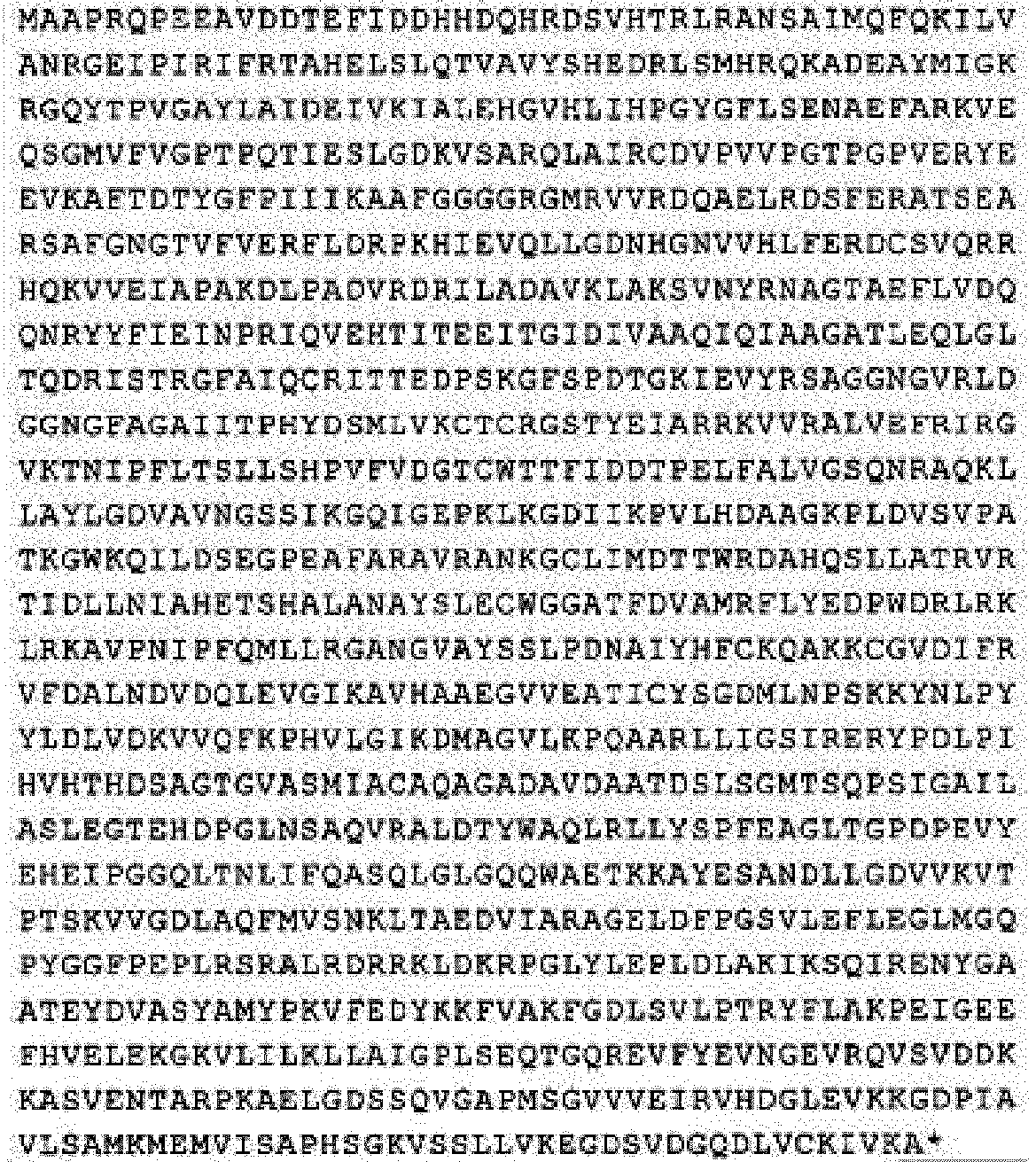
1 - By using an In-Fusion (registered trademark) HD Cloning Kit (manufactured by Clontech Laboratories, Inc.), the obtained amplified fragment was incorporated into pSLh, thereby preparing pSLh-AniPYC. The In-Fusion method was performed according to the manual included in the kit. That is, the obtained PCR product was purified using a spin column, added to an In-Fusion reaction solution together with pSLh, and reacted for 15 minutes at 50°C.
- By the same method as described above, a monodentate integrative recombinant vector pSLh-BbrPYC, a monodentate integrative recombinant vector pSLh-DhaPYC, a monodentate integrative recombinant vector pSLh-KlaPYC, a monodentate integrative recombinant vector pSLh-LthPYC, a monodentate integrative recombinant vector pSLh-LelPYC, a monodentate integrative recombinant vector pSLh-ScePYC, a monodentate integrative recombinant vector pSLh-CorPYC, a monodentate integrative recombinant vector pSLh-CtrPYC, a monodentate integrative recombinant vector pSLh-NcaPYC, a monodentate integrative recombinant vector pSLh-NdaPYC, a monodentate integrative recombinant vector pSLh-SkuPYC, a monodentate integrative recombinant vector pSLh-SpoPYC, a monodentate integrative recombinant vector pSLh-TblPYC, a monodentate integrative recombinant vector pSLh-TdePYC, a monodentate integrative recombinant vector pSLh-ZroPYC, a monodentate integrative recombinant vector pSMh-AfuMDH, a monodentate integrative recombinant vector pSMh-CliMDH, a monodentate integrative recombinant vector pSMh-DacMDH, a monodentate integrative recombinant vector pSMh-HelMDH, and a monodentate integrative recombinant vector pSMh-SpuMDH were prepared. Primer sets using the respective vectors will be listed below.
- The ASP4590 strain was transformed using the monodentate integrative recombinant vector pSLh-ScePYC and the monodentate integrative recombinant vector pSMh-DacMDH, thereby obtaining an ASP4491 strain into which an ScePYC gene and a DacMDH gene were introduced.
[Table 4] Sequence SEQ ID NO: BbrPYC- F 
38 BbrPYC-R 5'-ATCATCCTTGTAATCCTCCATTTCAATGAGCAGATCACCA-3' 39 BbrPYC 
2 [Table 5] Sequence SEQ ID NO: DhaPYC- F 
40 DhaPYC- R 
41 DhaPYC 
3 [Table 6] Sequence SEQ ID NO: KlaPYC-F 5'-GACACTTTTTCAAACATGTCATCTCAACTAGCTGGATTGC-3' 42 KlaPYC-R 5'-ATCATCCTTGTAATCTTCCTTAGCTGGAGCTTCTTCC-3' 43 KlaPYC 
4 [Table 7] Sequence SEQ ID NO: LthPYC-F 5'-GACACTTTTTCAAACATGTCCAAACTGGCAGGACTG-3' 44 LthPYC-R 5'-ATCATCCTTGTAATCTTCTTTTGGTGGGACAGATTCCTC-3' 45 LthPYC 
5 [Table 8] Sequence SEQ ID NO: LelPYC-F 
46 LelPYC-R 
47 LelPYC 
6 [Table 9] Sequence SEQ ID NO. ScePYC-F 5'-GACACTTTTTCAAACATGTCGCAAAGAAAATTCGCCG-3' 48 ScePYC-R 5'-ATCATCCTTGTAATCTGCCTTAGTTTCAACAGGAACTTGG-3' 49 ScePYC 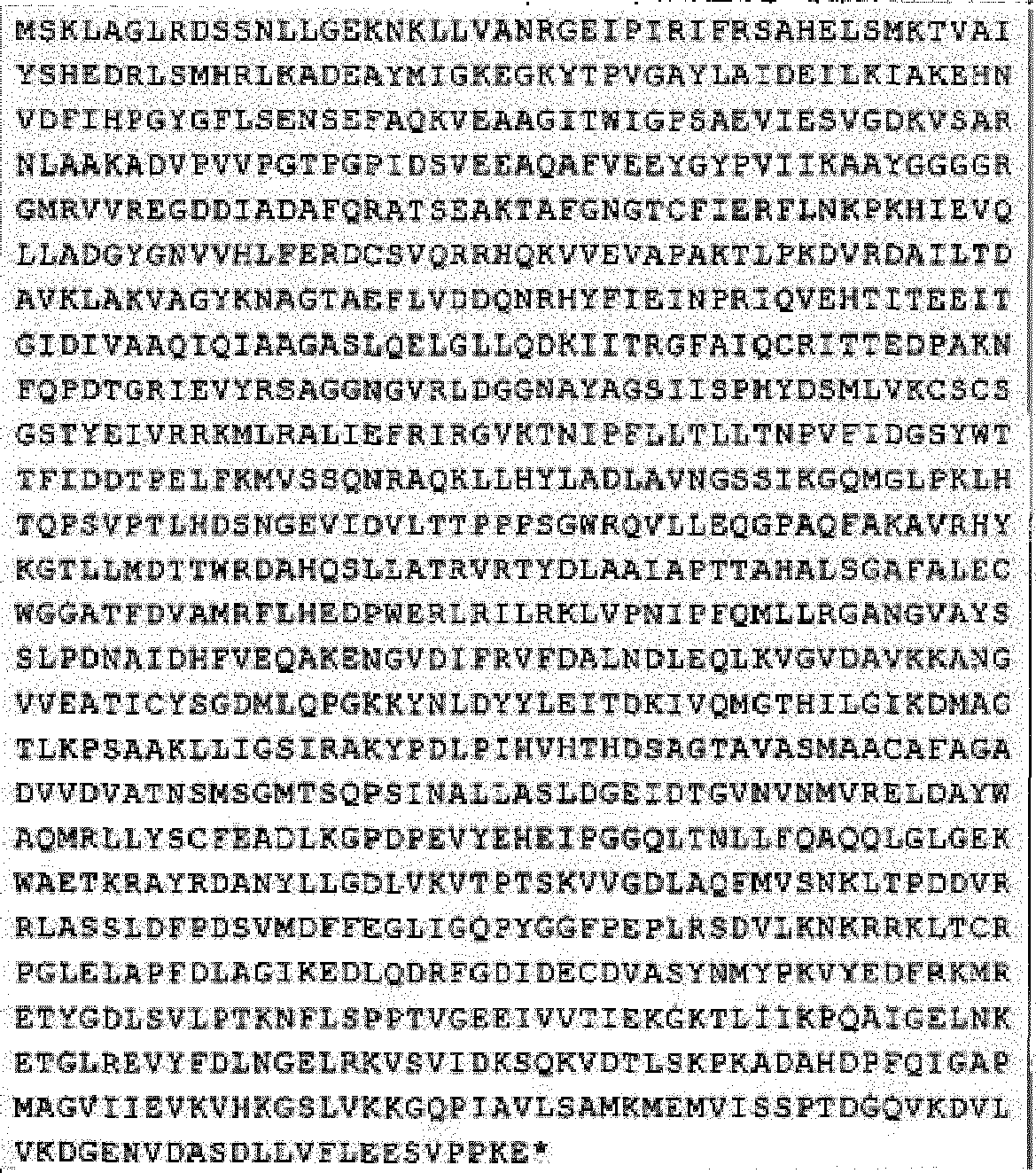
7 [Table 10] Sequence SEQ ID NO. CorPYC-F 
50 CorPYC-R 
51 CorPYC 
8 [Table 11] Sequence SEQ ID NO. CtrPYC-F 5'-CACTTTTTCAAAcATGTCTGTACCAGTCCAAAAAGCTAAC-3' 52 CtrPYC-R 
53 CtrPYC 
9 [Table 12] Sequence SEQ ID NO. NcaPYC-F 
54 NcaPYC-R 
55 NcaPYC 
10 [Table 13] Sequence SEQ ID NO. NdaPYC-F 
56 SdaPYC-a 
57 NdaPYC 
11 [Table 14] Sequence SEQ ID NO: SkuPYC-F 5'-CACTTTTTCAAAcATGTCGCAAAAGAAATTCGCTGG-3' 58 SkuPYC-R 
59 SkuPYC 
12 [Table 15] Sequence SEQ ID NO. SpoPYC- F 
60 SpoPYC-R 5'-ATCATCCTTGTAATCCTCGTGTTCAAGAACAGCACACA-3' 61 SpoPYC 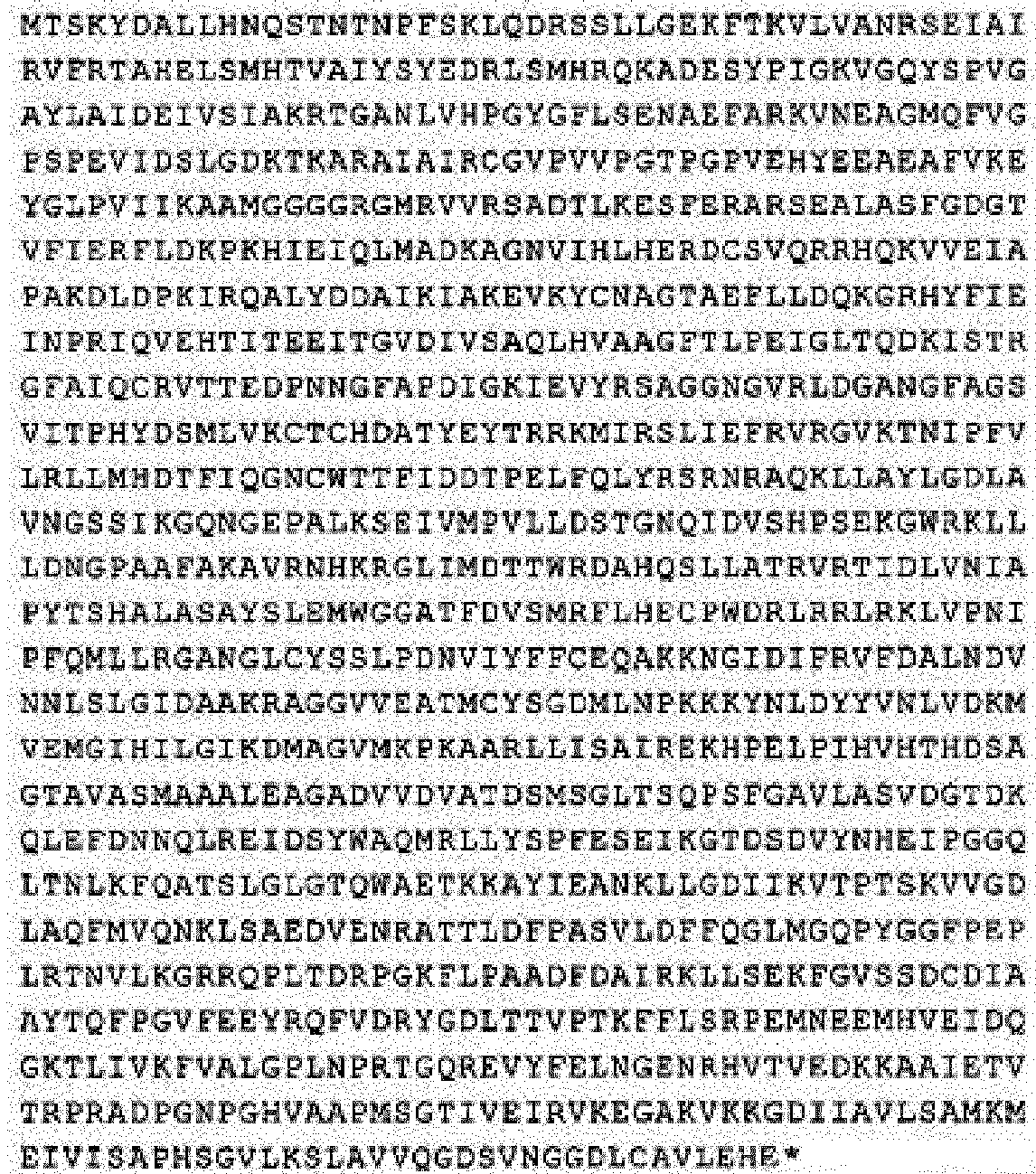
13 [Table 16] Sequence SEQ ID NO. TblPYC-F 
62 TblPYC-R 
63 TblPYC 
14 [Table 17] Sequence SEQ ID NO: TdePYC-F 5'-CACTTTTTCAAAcATGTCCAAGAACAAGAGGTTTGCT-3' 64 TdaPYC-R 5'-ATCATCCTTGTAATCGTTTTCAGCTGGGACAGCCTC-3' 65 TdePYC 
15 [Table 18] Sequence SEQ ID NO. ZroPYC-F 5'-CACTTTTTCAAAcATGAGTACCAAGAAGTTCTCTGGTCT-3' 66 ZroPYC-R 5'-ATCATCCTTGTAATCATTCTCCTTTGGTGGGACGG-3' 67 ZroPYC 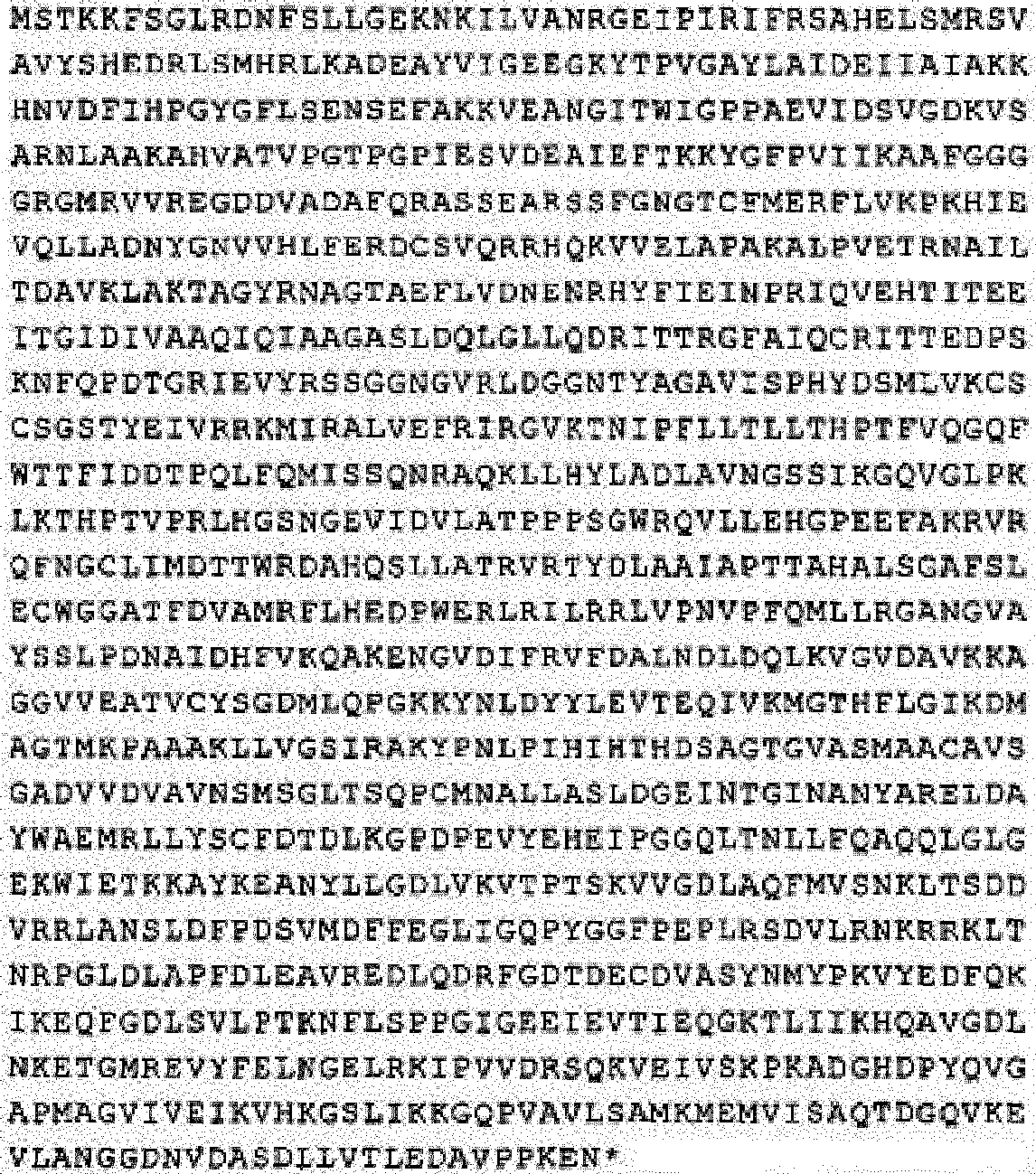
16 [Table 19] Sequence SEQ ID NO: AfuMDH-F 5'-ACTTTTTCAAACATGAAACTCGGTTTTGTTGGTGC-3' 68 AfuMDH-R 
69 AfuMDH 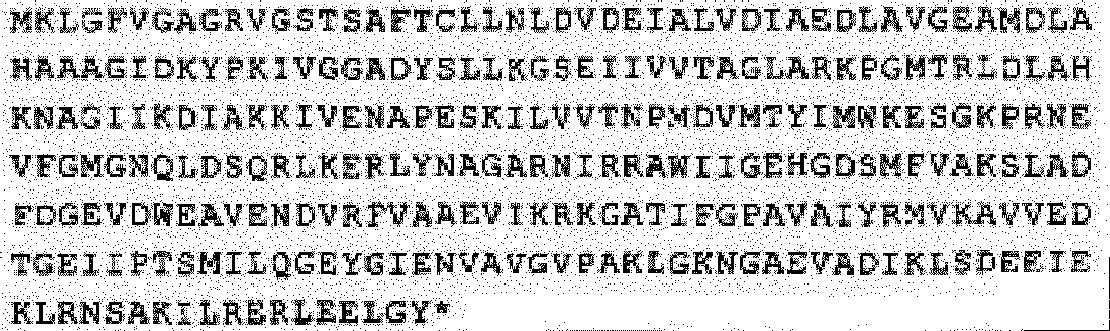
17 [Table 20] Sequence SEQ ID NO: CliMDH-F 5'-ACTTTTTCAAACATGAAAGCACCTGTTCGCGT-3' 70 CliNDH-R 5'-ATCATCATCATCCTTGTAATCGGGCAGAAGGTCTGCCACG-3' 71 CliMDH 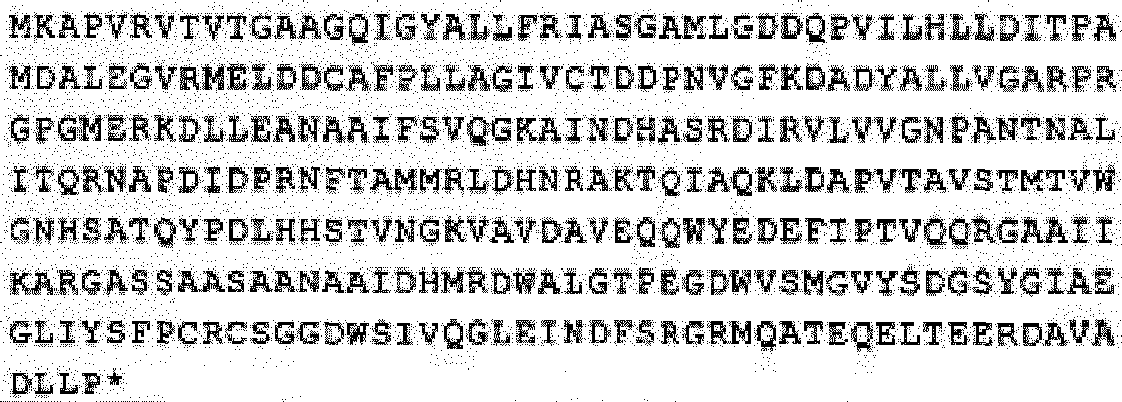
18 [Table 21] Sequence SEQ ID NO: DacMDH-F 5' -ACTTTTTCAAACATGAGCAAGAAGCCCGTTCG-3' 72 DacMDH-R 5'-ATCATCATCATCCTTGTAATCCAGCAGGTGCTTGACGCC-3' 73 DacMDH 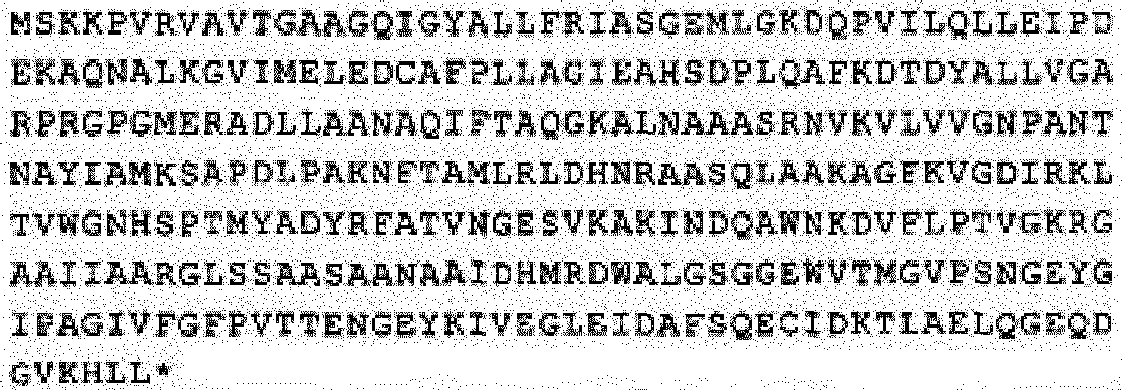
19 [Table 22] Sequence SEQ ID NO: HelMDH-F 5'-ACTTTTTCAAACATGAAAGACCCCGTCCGTCCGTATAGC-3' 74 HelMDH-R 5'-ATCATCATCATCCTTGTAATCGCCAAGCAGATGCTCGACG-3' 75 HelMDH 
20 [Table 23] Sequence SEQ ID NO: SpuMDH-F 5'-ACTTTTTCAAACATGAAAGTTGCTGTACTTGGTGC-3' 76 SpuMDH-R 
77 SpuMDH 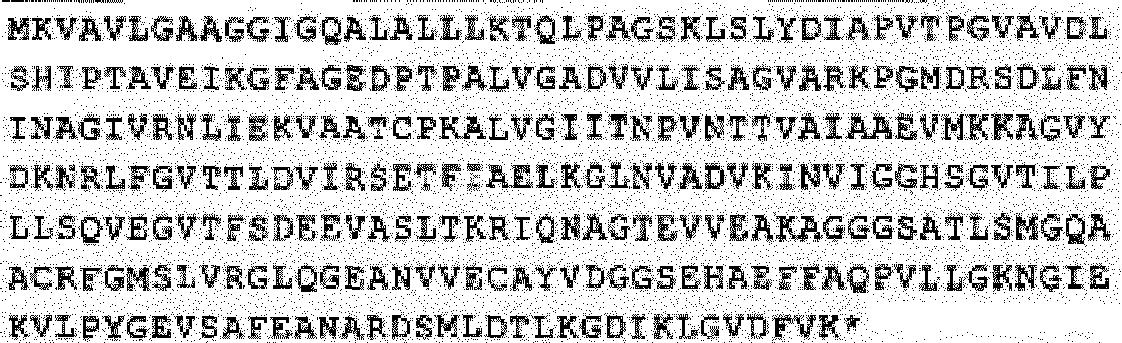
21 - The name and host of each of the manufactured transformants and the name of the introduced foreign gene are shown in Table 24.

- For 16 kinds of transformant into which only the PYC gene was introduced, an expression amount of PYC was confirmed. Specifically, each of the transformants was shake-cultured for 44 hours in 20 mL of a YPD6 medium, and the grown microbial cells were then collected and pulverized using a multibead shocker. The obtained microbial cell lysate was purified according to a protocol by using ANTI-FLAG (registered trademark) M1 Agarose Affinity Gel (manufactured by Sigma-Aldrich Co. LLC.). SDS-PAGE was performed using a purified enzyme liquid, and the detected band was digitized using an image analysis device LAS 4000, thereby calculating a relative expression amount. The results of the PYC expression amount (relative values) for each of the transformants are shown in
FIG. 2 . The results show that the expression of PYC was confirmed in all of the transformants. - Among the 16 kinds of transformant into which only the PYC gene was introduced, 8 kinds of transformant caused to express BbrPYC, KluPYC, LthPYC, LelPYC, ScePYC, SkuPYC, SpoPYC, or TblPYC were investigated regarding PYC activity. Specifically, the aforementioned purified enzyme liquid was mixed with a reaction solution kept at 30°C (100 mM Tris-HCl (pH 7.5), 2 mM ATP, 100 mM MgCl2, 100 mM KCl, 5 mM Pyruvic acid, 5 mM NaHCO3, 0.1 mM Acetyl-CoA, 0.15 mM NADH), and then measured over time by using an absorptiometer having a mixing function. From the obtained temporal change of absorbance, a relative activity (mU/mL) per enzyme liquid was calculated. The results of the PYC activity per enzyme liquid calculated for each of the transformants are shown in
FIG. 3 . The results show that the PYC activity was confirmed in all of the transformants. - For 5 kinds of transformant into which only the MDH gene was introduced, an expression amount of MDH was confirmed. Specifically, each of the transformants was cultured in the same manner as described in <Confirmation of PYC expression>, a purified enzyme liquid was prepared, SDS-PAGE was performed using the enzyme liquid, and a relative expression amount was calculated. The results of the MDH expression amount (relative values) for each of the transformants are shown in
FIG. 4 . The results show that the expression of MDH was confirmed in all of the transformants. - Among 5 kinds of transformant into which only the MDH gene was introduced, 3 kinds of transformant caused to express CliMDH, DacMDH, or HelMDH were investigated regarding MDH activity. Specifically, the aforementioned purified enzyme liquid was mixed with a reaction solution kept at 30°C (90 mM Tris-HCl (pH 9.0), 0.5 mM Oxaloacetate, 0.25 mM NADH) and then measured over time by using an absorptiometer having a mixing function. From the obtained temporal change of absorbance, a relative activity (mU/mL) per enzyme liquid was calculated. The results of the MDH activity per enzyme liquid calculated for each of the transformants are shown in
FIG. 5 . The results show that the MDH activity was confirmed in all of the transformants. - By deleting an mae2 gene from the ASP4491 strain into which an ScePYC gene and a DacMDH gene were introduced, a deletion strain (ASP4964 strain) was prepared. A method for preparing an mae2 deletion fragment was the same as the method for preparing the deletion fragment from which pdc2 was deleted.
- The ASP4491 strain (genotype: h-, leu1-32, ura4-D18, Ade6-M216, Δpdc2, +ScePYC, +DacMDH) of S. pombe was transformed according to the Latour method, thereby preparing an ASP4964 strain from which an mae2 gene (strain name: SPCC794. 12c) was deleted.
- For preparing a deletion fragment, total genomic DNA prepared from an ARC032 strain of S. pombe by using DNeasy (manufactured by QUIAGEN) was used as a template, and 8 kinds of synthetic oligo DNA (manufactured by Operon Biotechnologies) having the base sequences shown in Table 25 were used.
[Table 25] Oligo DNA for preparing name2 deletion fragment Oligo DNA Base sequence SEQ ID NO: UF 5'-AGGCTTTGATAGCCACTGGT-3' 78 UR 5' -TGGGATTTGTAGCTAAGCTTTAAAATAAAAGGCFTTTATAC-3' 79 OF 5'-TTCGTCAATATCACAAGCTTAGGTCGACTGGGCTAATCG-3' 80 OR 5'-TAAAATAAAAGGCTTTATACAGGCATTTTCAAACTTCAAG-3' 81 DF 5'-CTTGAAGTTTGAAAATGCCTGTATAAAGCCTTTTATTTTA-3' 82 DR 5' -TTCATTCAATACATAACGGTTTACGGT-3' 83 FF 5'-ATTCGTGAAATGAGCAAGCA-3' 84 FR 5'-TGCGATTTACTATTTGTTTGTTTCA-3' 85 - By deleting a fum1 gene from the ASP4491 strain into which an ScePYC gene and a DacMDH gene were introduced, a deletion strain (ASP4933 strain) was prepared. fum1 is an enzyme which produces fumaric acid by using malic acid as a matrix. A method for preparing an fum1 deletion fragment is the same as the method for preparing the deletion fragment from which pdc2 was deleted.
- The ASP4491 strain of S. pombe was transformed according to the Latour method, thereby preparing an ASP4933 strain from which an fum1 gene (strain name: SPCC18. 18c/SPCC290. 01c) was deleted.
- For preparing a deletion fragment, total genomic DNA prepared from an ARC032 strain of S. pombe by using DNeasy (manufactured by QUIAGEN) was used as a template, and 8 kinds of synthetic oligo DNA (manufactured by Operon Biotechnologies) having the base sequences shown in Table 26 were used.
[Table 26] Oligo DNA for preparing fum1 deletion fragment Oligo DNA Base sequence SEQ ID NO: UF 5' -CTCAAGTAATGGGCAATCATGCCA-3' 86 UR 5'-TGGGATTTGTAGCTAAGCTTAGAGTGGTAAAAAATTATAC-3' 87 OF 5'-TTCGTCAATATCACAAGCTTAATAAAATACACAAAACTGT-3' 88 OR 5'-AGAGTGGTAAAAAATTATACAGCCATGTGGGTTATTTTAA-3' 89 DF 5'-TTAAAATAACCCACATGGCTGTATAATTTTTTACCACTCT-3' 90 DR 5'-GAGCAACCGAATATCAAGGAAATACACA-3' 91 FF 5'-AGGCGAATTGATCCTTCCTGCTA-3' 92 FR 5'-TGGTAAGCCTGGTATGAGTTCTATACTAT-3' 93 - For a wild strain (ARC010 strain) of S. pombe, the PDC2 gene deletion strain (ASP4590 strain, ΔPDC2), the ASP4491 strain obtained by introducing an ScePYC gene and a DacMDH gene into the ASP4590 strain, the ASP4964 strain (ΔPDC2, Δmae2, +ScePYC, +DacMDH) obtained by deleting an mae2 gene from the ASP4491 strain, and the ASP4933 strain (ΔPDC2, Δfum1, +ScePYC, +DacMDH) obtained by deleting an fum1 gene from the ASP4491 strain, a malic acid production rate was investigated.
- Specifically, the microbial cells were seeded into a YES plate and cultured for 96 hours at 30°C, thereby obtaining a colony. The obtained colony was subcultured in 5 mL of a YES medium (test tube) and shake-cultured for 24 hours at 30°C. The obtained microbial solution was subcultured in 100 mL of a YPD6 medium (Sakaguchi flask) and shake-cultured for 44 hours at 30°C.
- The microbial cells obtained in this way were collected, added to 3 mL of a fermentation medium (100 g/L glucose, 111 g/L calcium carbonate) in the test tube so as to yield 36 g (weight of dry microbial cell)/L, and fermented at 30°C under shaking conditions. A sample was collected in time from the fermented liquid.
- For the obtained sample, a glucose concentration and an ethanol concentration were measured using a biosensor BF-7 (manufactured by Oji Scientific Instruments) based on an enzyme electrode method, and a malic acid concentration was measured by HPLC. During the HPLC measurement, a high-performance liquid chromatograph Prominence (manufactured by Shimadzu Corporation) was used, Aminex HPX-
87H 300 × 7.8 mm (manufactured by Bio-Rad Laboratories, Inc.) was used as a column, an injection volume was set to be 10 µL, 10 mM H2SO4 was used as a solvent, a flow rate was set to be 0.6 mL/min, a measurement time was set to be 35 minutes, a measurement temperature was set to be 60°C, and diode array detector (210 nm) and a differential refractometric detector were used for detection. Each concentration is a concentration per culture solution or fermented liquid. - The measured results of the glucose concentration (g/L), the ethanol concentration (g/L), and a malic acid concentration (g/L) are shown in
FIGS.6 to 10 . The results show that the production of malic acid was confirmed only in the ASP4964 strain (ΔPDC2, Δmae2,+ScePYC, +DacMDH). - For the ASP4491 strain (ΔPDC2, +ScePYC, +DacMDH) and the ASP4892 strain (ΔPDC2, Δmae2,+ScePYC, +DacMDH), a malic acid production rate was measured.
- Specifically, each strain was fermented in the same manner as in <Confirmation of malic acid producibility>, a sample was collected in time from the fermented liquid, and a glucose concentration and a malic acid concentration were measured. The measured results are shown in
FIG. 11 . InFIG. 11 , "Glu-4892" and "Glu-4491" show a temporal change of a glucose concentration of the ASP4892 strain and the ASP4491 strain respectively, and "MA-4892" and "MA-4491" show a temporal change of a malic acid concentration of the ASP4892 strain and the ASP4491 strain respectively. As a result, it was confirmed that at a point in time when 1 hour elapsed from the beginning of fermentation, a malic acid concentration of the fermented liquid of the ASP4892 strain exceeded 20 g/L, and a malic acid production rate thereof was equal to or higher than 20 g/(L·h). Furthermore, at a point in time when 2 hours elapsed, a malic acid concentration of the fermented liquid became 28.9 g/L. In contrast, in the fermented liquid of the ASP4491 strain, a malic acid concentration was 3.9 g/L at a point in time when 2 hours elapsed. - Transformants of pombe were prepaerd (Table 47) into which PCK derived from Candida glabrata (CglPCK) (SEQ ID NO: 94), PCK derived from Citrobacter koseri (CkoPCK) (SEQ ID NO: 95), PCK derived from Cronobacter sakazakii (CsaPCK) (SEQ ID NO: 96), PCK derived from Debaryomyces hansenii (DhaPCK) (SEQ ID NO: 97), PCK derived from Escherichia fergusonii (EfePCK) (SEQ ID NO: 98), PCK derived from Edwardsiella tarda (EtaPCK) (SEQ ID NO: 99), PCK derived from Kluyveromyces lactis (KlaPCK) (SEQ ID NO: 100), PCK derived from Lodderomyces elongisporus (LelPCK) (SEQ ID NO: 101), PCK derived from Pectobacterium carotovorum (PcaPCK) (SEQ ID NO: 102), PCK derived from Photobacterium leiognathi (PlePCK) (SEQ ID NO: 103), PCK derived from Providencia rettgeri (PrePCK) (SEQ ID NO: 104), PCK derived from Saccharomyces cerevisiae (ScePCK) (SEQ ID NO: 105), PCK derived from Serratia odorifera (SodPCK) (SEQ ID NO: 106), PCK derived from Vibrio orientalis (VorPCK) (SEQ ID NO: 107), PCK derived from Vanderwaltozyma polyspora (VpoPCK) (SEQ ID NO: 108), PCK derived from Vibrio tubiashii (VtuPCK) (SEQ ID NO: 109), PCK derived from Yersinia bercovieri (YbePCK) (SEQ ID NO: 110), PCK derived from Yarrowia lipolytica (YliPCK) (SEQ ID NO: 111), PCK derived from Yersinia rohdei (YroPCK) (SEQ ID NO: 112), or PCK derived from Zygosaccharomyces rouxii (ZroPCK) (SEQ ID NO: 113) was introduced.
- Specifically, the IGF836 strain (gene deletion strain of S. pombe) prepared in Example 1 was transformed according to the method of Bahler et al. (the journal of Yeast, 1998, Vol. 14, pp. 943-951) by using a digest of a restriction enzyme BsiWI of each monodentate integrative recombinant vector retaining each expression cassette of the PCK gene described in Table 47.
- pSLh-CglPCK was prepared through the following process. First, by using total genomic DNA prepared by DNeasy (manufactured by QUIAGEN) from the culture of Candida glabrata as a template and using 2 kinds of synthetic oligo DNA (CglPCK-F and CglPCK-R, manufactured by Operon Biotechnologies) described in Table 27, an ORF fragment of a CglPCK gene was obtained by a PCR method using KOD-Dash (manufactured by TOYOBO CO., LTD.). The ORF fragment encoded CglPCK (SEQ ID NO: 94).
[Table 27] Sequence SEQ ID NO: CglPCK-F 
114 CglPCK-R 5'-GAAATCAACTTTTGTTCCAATTGTGGACCAGCAGCCAA-3' 115 CglPCK 
94 - By the same method as described above, a monodentate integrative recombinant vector pSLh-CkoPCK, a monodentate integrative recombinant vector pSLh-CsaPCK, a monodentate integrative recombinant vector pSLh-DhaPCK, a monodentate integrative recombinant vector pSLh-EfePCK, a monodentate integrative recombinant vector pSLh-EtaPCK, a monodentate integrative recombinant vector pSLh-KlaPCK, a monodentate integrative recombinant vector pSLh-LelPCK, a monodentate integrative recombinant vector pSLh-PcaPCK, a monodentate integrative recombinant vector pSLh-PlePCK, a monodentate integrative recombinant vector pSLh-PrePCK, a monodentate integrative recombinant vector pSLh-ScePCK, a monodentate integrative recombinant vector pSLh-SodPCK, a monodentate integrative recombinant vector pSLh-VorPCK, a monodentate integrative recombinant vector pSLh-VpoPCK, a monodentate integrative recombinant vector pSLh-VtuPCK, a monodentate integrative recombinant vector pSLh-YbePCK, a monodentate integrative recombinant vector pSMh-YliPCK, a monodentate integrative recombinant vector pSMh-YroPCK, and a monodentate integrative recombinant vector pSMh-ZroPCK were prepared. Primer sets using the respective vectors will be listed below.
[Table 28] Sequence SEQ ID NO: CkoPCK-F 5'-GACACTTTTTCAAAATGCGCGTTAACAGCTTAACCC-3' 116 CkoPCK-R 5'-GAAATCAACTTTTGTTCCAGCTTCGGCCCGGC-3' 117 CkoPGK 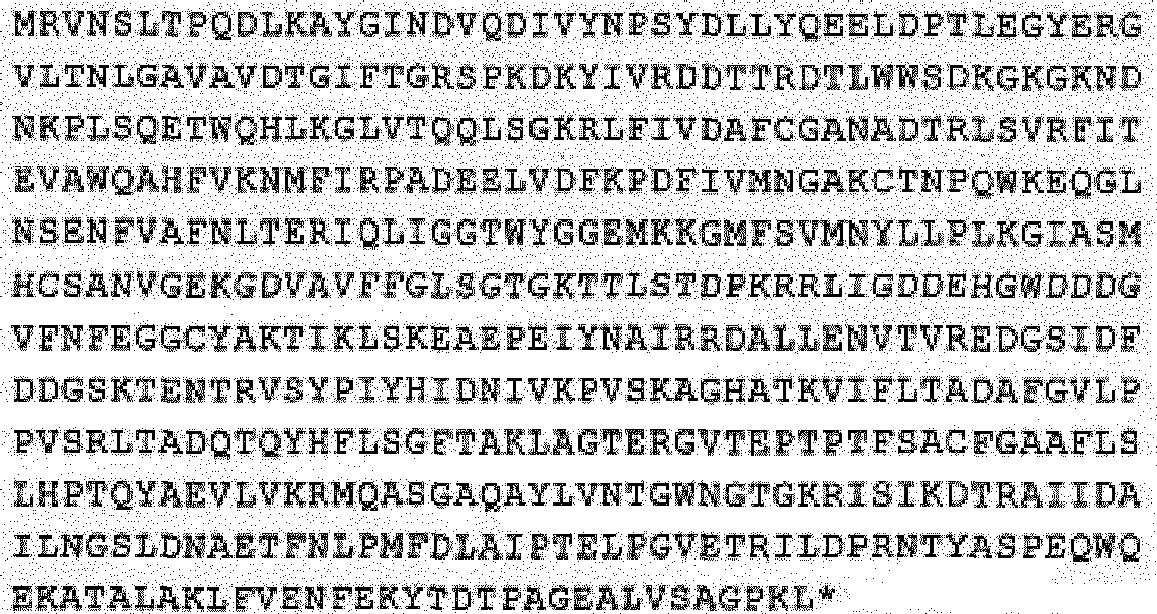
95 [Table 29] Sequence SEQ ID NO. CsaPCK-F 5'-GACACTTTTTCAAAATGCGAGTTACAGGCATAACCC-3' 118 CsaPCK-R 5'-GAAATCAACTTTTGTTCGCGCTGTGGGCCTGC-3' 119 CsaPCK 
96 [Table 30] Sequence SEQ ID NO: DhaPCK-F 5'-GACACTTTTTCAAAATGACACCTCCTACTGCTGTTGA-3' 120 DhaPCK-R 5'-GAAATCAACTTTTGTTCAGCATCAGGACCAGCAGC-3' 121 PhaPCK 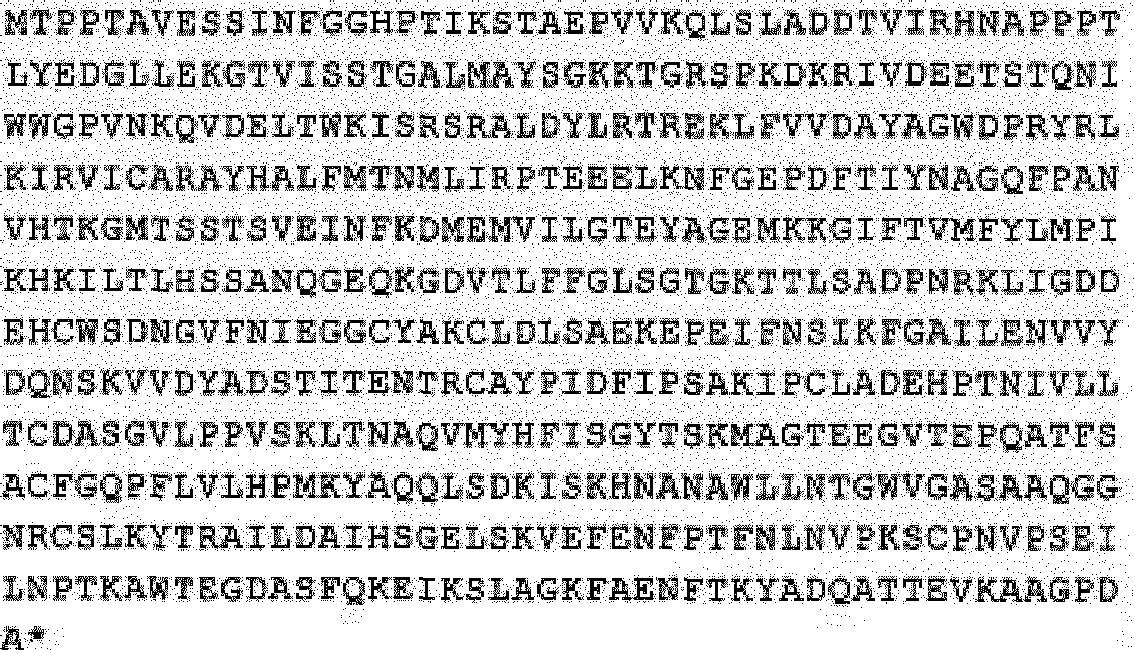
97 [Table 31] Sequence SEQ ID NO: EfePCK-F 5'-GACACTTTTTCAAAATGCGCGTGAACAAAAGTTTAACC-3' 122 EfePCK-R 
123 EfePCK 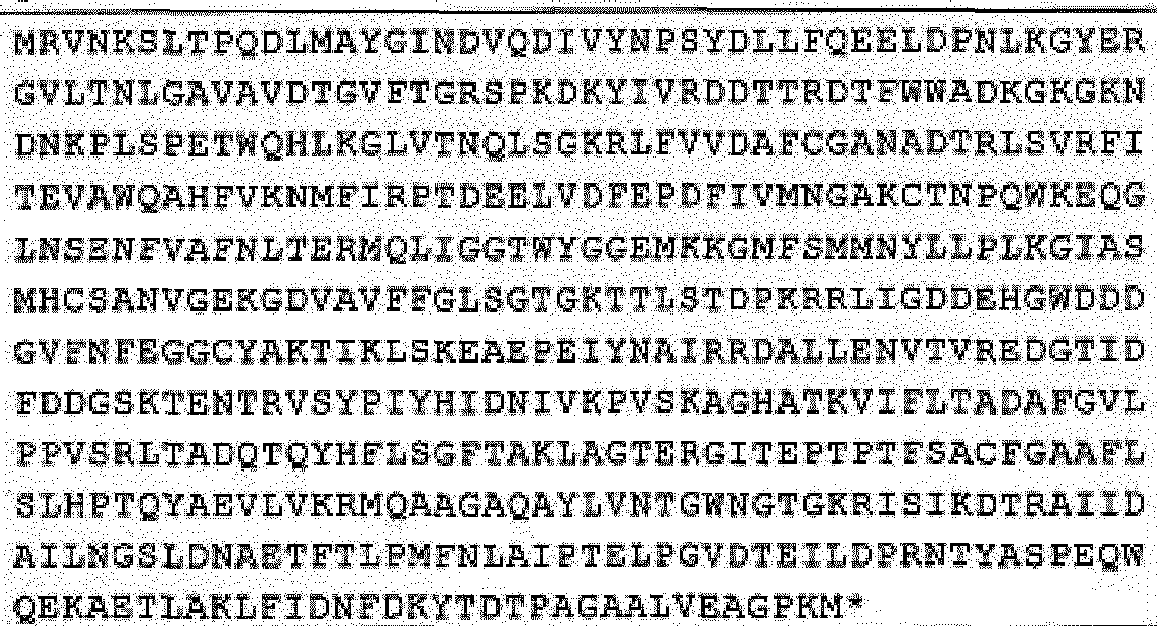
98 [Table 32] Sequence SEQ ID NO: EtaPCK-F 5'-GACACTTTTTTCAAAATGCATGCCACTGGCTTAACT-3' 124 EtaPCK-R 5'-GAAATCAACTTTTGTTCACGTTGTGGGCCGGCA-3' 125 EtaPCK 
99 [Table 33] Sequence SEQ ID NO: KlaPCK-F 
126 KlaPCK-R 
127 KlaPCK 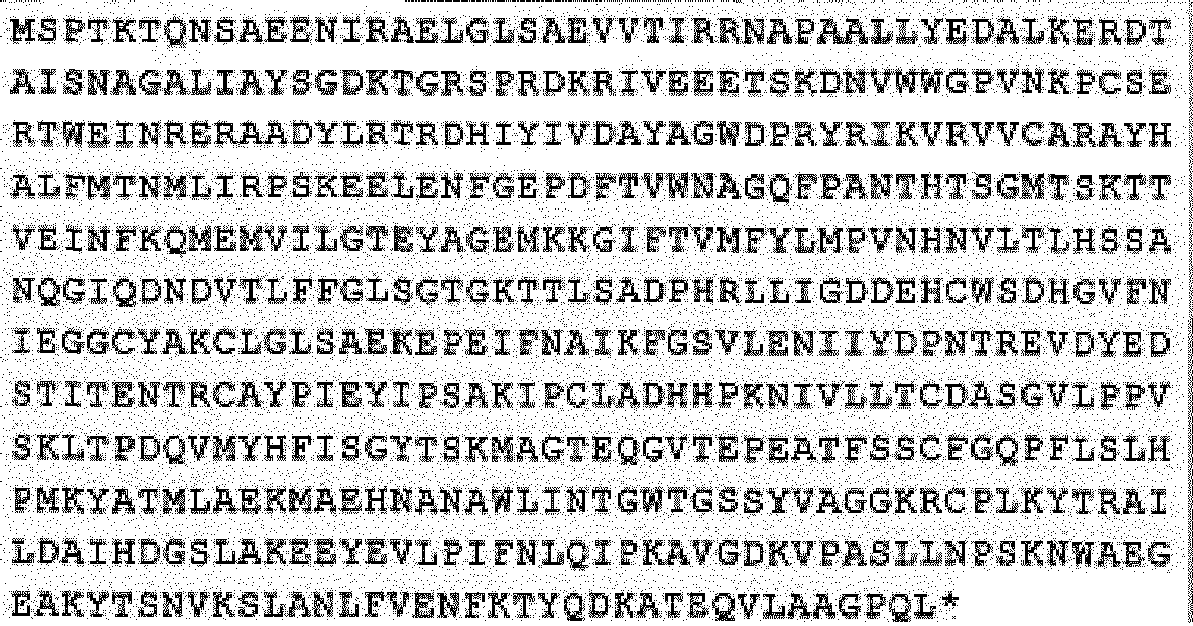
100 [Table 34] Sequence SEQ ID NO: LelPCK-F 5'-GACACTTTTTCAAAATGGCACCCCCAGCAGTA -3' 128 LelPGK-R 5'-GAAATCAACTTTTGTTCAACATCGGGTCCAGCAGCT -3' 129 LelPCK 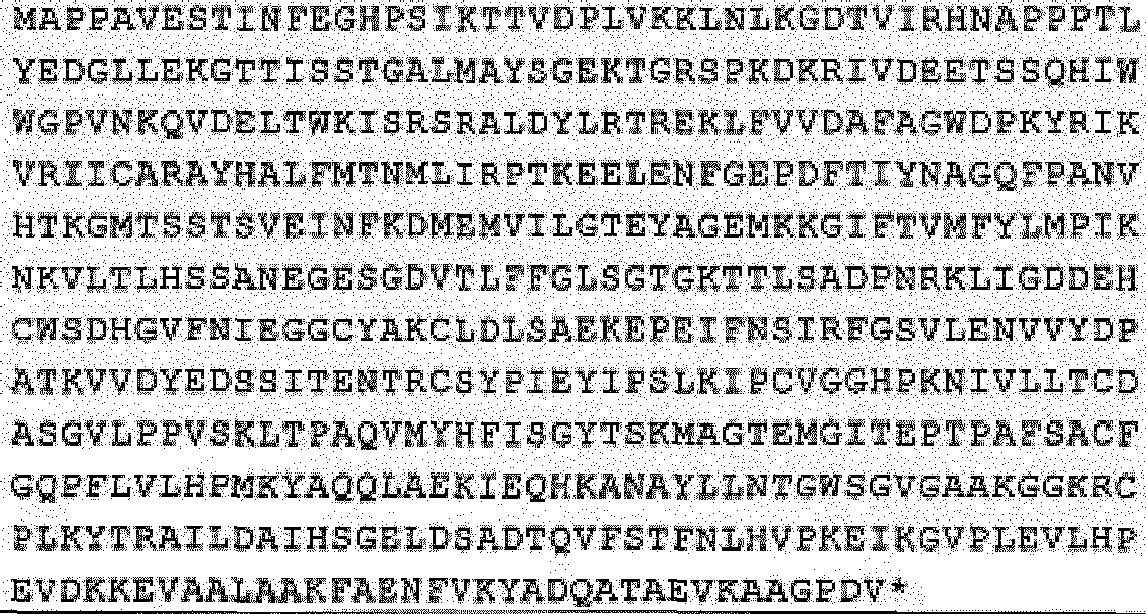
101 [Table 35] Sequence SEQ ID NO: PcaPCK-F 5'-GACACTTTTTCAAAATGCAGATCAACGGTATTACCCC-3' 130 PcaPCK-R 5'-GAAATCAACTTTTGTTCGCGCTTCGGCCCTGC-3' 131 PcaPCK 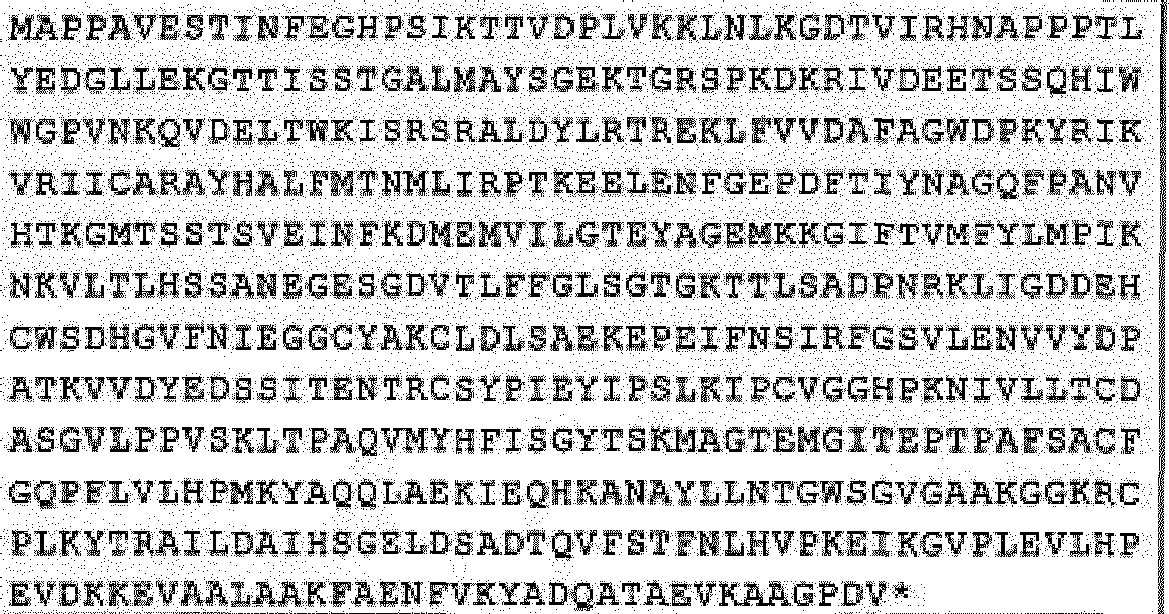
102 [Table 36] Sequence SEQ ID NO: PlePCK-F 
132 PlePCK-R 
133 PlePCK 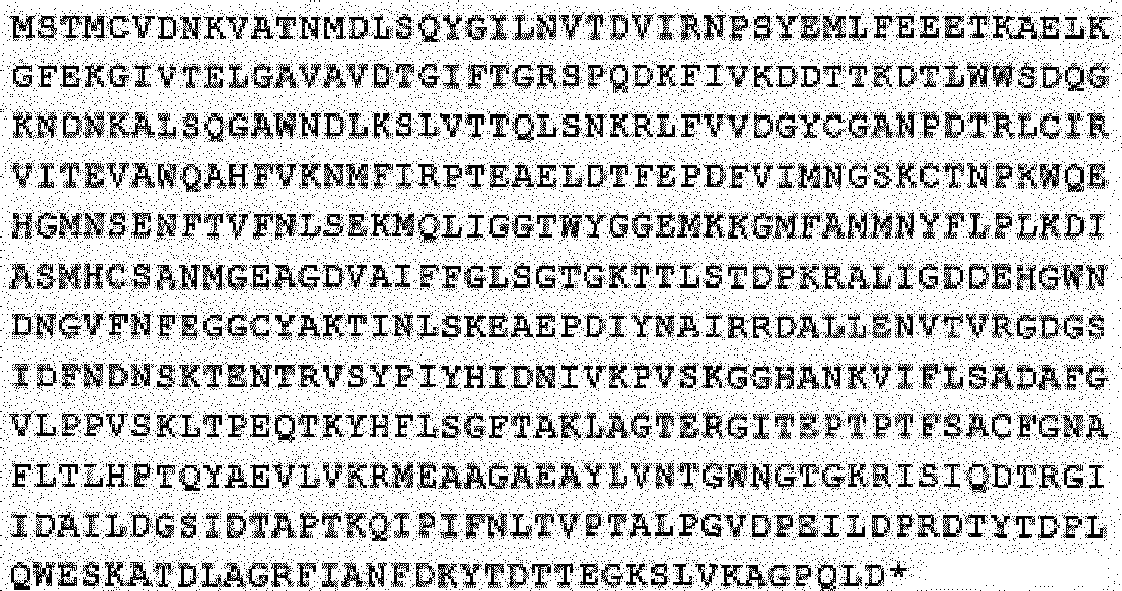
103 [Table 37] Sequence SEQ ID NO: PrePCK-F 5'-GACACTTTTTCAAAATGAGCGCTAAAAGCATTACCCT-3' 134 PrePCK-R 5'-GAAATCAACTTTTGTTCCAGTTTTGGCCCTGCTTTCAC-3' 135 PrePCK 
104 [Table 38] Sequence SEQ ID NO: ScePCK-F 
136 ScePCK-R 5'- GAAATCAACTTTTGTTCCTCGAATTGAGGACCAGCGGC -3' 137 ScePCK 
105 [Table 39] Sequence SEQ ID NO: SodPCK-F 5'-GACACTTTTTCAAAATGCGTGCTAAAGGTATCACCC-3' 138 SodPCK-R 5'-GAAATCAACTTTTGTTCCAGCTTCGGCCGGCG-3' 139 SodPCK 
106 [Table 40] Sequence SEQ ID NO: VorPCK-F 
140 VorPCK-R 5'- GAAATCAACTTTTGTTCATCTAGCTGAGGACCTGCAGC -3' 141 vorPCK 
107 [Table 41] Sequence SEQ ID NO: VpoPCK-F 
142 VpoPCK-R 5'- GAAATCAACTTTTGTTCTAGGGCTGGACCAGCTGC -3' 143 VpoPCK 
108 [Table 42] Sequence SEQ ID NO: VtuPCK-F 
144 VtuPCK-R 5'-GAAATCAACTTTTGTTCATCTAGCTGAGGTCCAGCCG-3' 145 VtuPCK 
109 [Table 43] Sequence SEQ ID NO: YbePCK-F 
146 YbePCK-R 5' - GAAATCAACTTTTGTTCGATCTTCGGCCCTGCGCT -3' 147 YbePCK 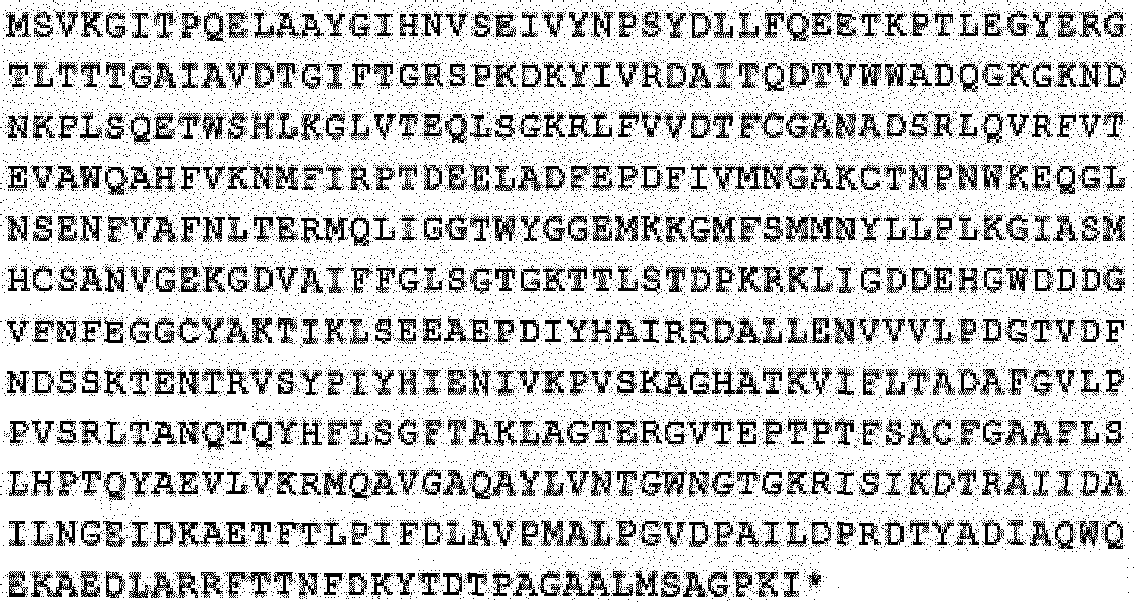
110 [Table 44] Sequence SEQ ID NO: YliPCK-F 5'-GACACTTTTTCAAAATGTCTCCCCCCGTCAACC-3' 148 YliPCK-R 5'-GAAATCAACTTTTGTTCAGCCTTAGGGCCGGCA-3' 149 YliPCK 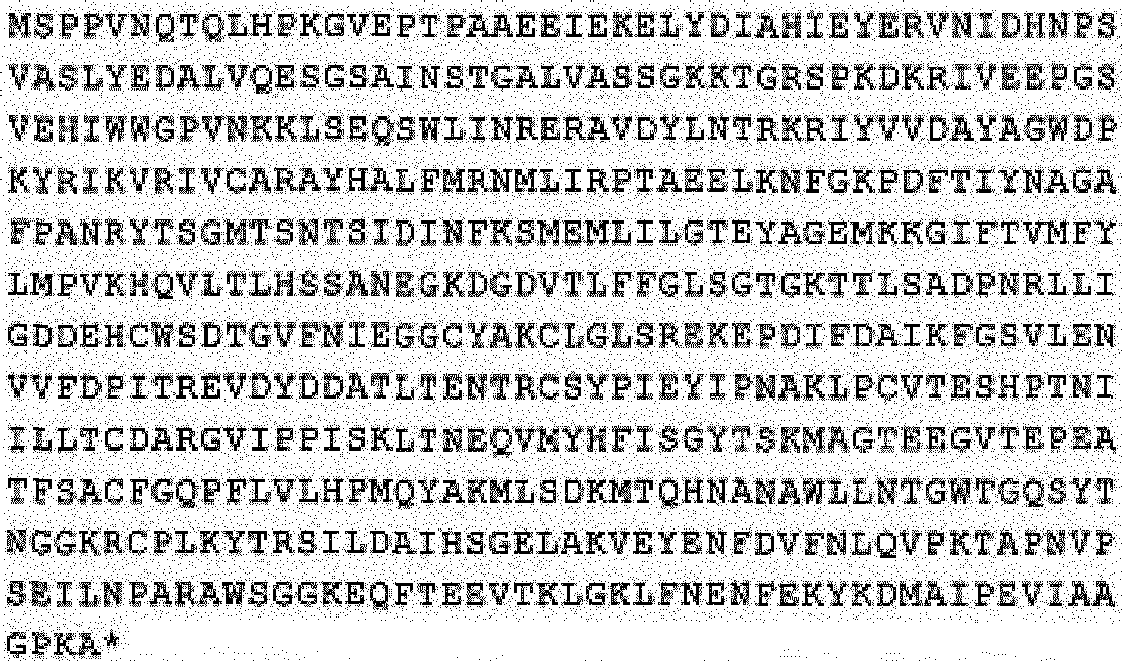
111 [Table 45] Sequence SEQ ID NO: YroPCK-F 
150 YroPCK-R 5'-GAAATCAACTTTTGTTCGACTTTTGGCCCAGCACTGA-3' 151 YroPCK 
112 [Table 46] Sequence SEQ ID NO: ZroPCK-F 5'-GACACTTTTTCAAAATGTCGCCCTCCAAAGTTCC-3' 152 ZroPCK-R 
153 ZroPCK 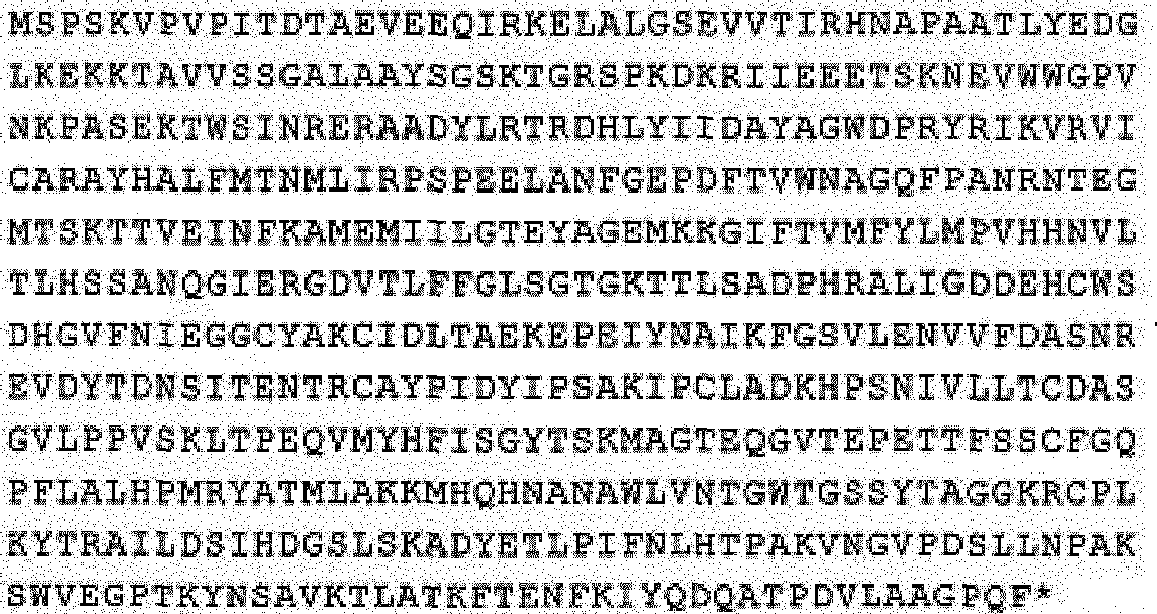
113 [Table 47] Name of transformant strain Name of host strain Name of introduced foreign genes 22 IGF836 CgIPCK 23 IGF836 CkoPCK 24 IGF836 CsaPCK 25 IGF836 DhaPCK 26 IGF836 EfePC K 27 IGF836 EtaPCK 28 IGF836 KlePCK 29 IGF836 LeIPCK 30 IGF836 PoaPCK 31 IGF836 PlePCK 32 IGF836 PrePCK 33 IGF836 ScePCK 34 IGF836 SodPCK 35 IGF836 VorPCK 36 IGF836 VpoPCK 37 IGF836 VtuPCK 38 IGF836 YbePCK 39 IGF836 YIIPCK 40 IQF836 YroPCK 41 IGF836 ZroPCK - For 20 kinds of transformant into which only the PCK gene was introduced, an expression amount of PCK was confirmed. Specifically, each of the transformants was shake-cultured for 44 hours in 20 mL of a YPD6 medium, and the grown microbial cells were then collected and pulverized using a multibead shocker. The obtained microbial cell lysate was purified according to a protocol by using ANTI-FLAG (registered trademark) M1 Agarose Affinity Gel (manufactured by Sigma-Aldrich Co. LLC.). SDS-PAGE was performed using a purified enzyme liquid, and the detected band was digitized using an image analysis device LAS 4000, thereby calculating a relative expression amount. The results of the PCK expression amount (relative value) calculated for each of the transformants are shown in
FIG. 12 . The results show that the expression of PCK was confirmed in all of the transformants. - Transformants of pombe were prepared into which PCK derived from Escherichia coli (EcoPCK) (SEQ ID NO: 154), PYC derived from Gallus gallus (GglPYC) (SEQ ID NO: 155), and MDH derived from Escherichia coli (EcoMDH) (SEQ ID NO: 156) were introduced.
- Specifically, the IGF836 strain (gene deletion strain of S. pombe) prepared in Example 1 was transformed according to the method of Bahler et al. (the journal of Yeast, 1998, Vol. 14, pp. 943-951) by using a digest of a restriction enzyme BsiWI of a monodentate integrative recombinant vector pSNh-EcoPCK retaining an EcoPCK gene expression cassette, a monodentate integrative recombinant vector pSLh-GglPYC retaining a GglPYC gene expression cassette, or a monodentate integrative recombinant vector pSMh-EcoMDH retaining an EcoMDH gene expression cassette.
- pSNh-EcoPCK was prepared through the following process. First, by using total genomic DNA prepared by DNeasy (manufactured by QUIAGEN) from the culture of Escherichia coli as a template and using 2 kinds of synthetic oligo DNA (EcoPCK-F and EcoPCK-R, manufactured by Operon Biotechnologies) described in Table 48, an ORF fragment of an EcoPCK gene was obtained by a PCR method using KOD-Dash (manufactured by TOYOBO CO., LTD.). The ORF fragment encoded EcoPCK (SEQ ID NO: 154).
[Table 48] Sequence SEQ ID NO: EcoPCK-F 
157 EcoPCK-R 5'-GAAATCAACTTTTGTTCCAGCTTCGGACCAGC-3' 158 EcoPCK 
154 - By using an In-Fusion (registered trademark) HD Cloning Kit (manufactured by Clontech Laboratories, Inc.), the obtained amplified fragment was incorporated into pSNh, thereby preparing pSNh-EcoPCK. The In-Fusion method was performed according to the manual included in the kit. That is, the obtained PCR product was purified using a spin column, added to an In-Fusion reaction solution together with pSNh, and reacted for 15 minutes at 50°C.
- By the same method as described above, a monodentate integrative recombinant vector pSLh-GalPYC and a monodentate integrative recombinant vector pSMh-EcoMDH were prepared. Primer sets using the respective vectors will be listed below.
[Table 49] Sequence SEQ ID NO: GglPYC F 5'-CATCTTTTTCAAACATGTCGCAGCTGTGTGTCCC-3' 159 GglPYC-R 
160 GglPYC 
155 [Table 50] Sequence SEQ ID NO: EcoMDH-F 5'-ACTTTTTCAAACATGAAAGTCGCAGTCCTCGG-3' 161 EcoMDH-R 
162 EcoMDH 
156 - The name and host of each of the manufactured transformants and the name of the introduced foreign genes are shown in Table 51.
[Table 51] Name of transformant strain Name of host strain Introduced foreign genes 42 IGF836 EcoPCK 43 IGF836 GglPYC 44 IGF836 EcoMDH - For 3 kinds of transformant into which only the PCK gene, the PYC gene, or the MDH gene was introduced, an expression amount of PCK, PYC, or MDH was confirmed. Specifically, each of the transformants was shake-cultured for 44 hours in 20 mL of a YPD6 medium, and the grown microbial cells were then collected and pulverized using a multibead shocker. The obtained microbial cell lysate was purified according to a protocol by using ANTI-FLAG (registered trademark) M1 Agarose Affinity Gel (manufactured by Sigma-Aldrich Co. LLC.). SDS-PAGE was performed using a purified enzyme liquid. As a result, no band was detected in any of the enzyme liquids. This result shows that even if the EcoPCK gene, the GglPYC gene, or the EcoMDH gene is introduced into S. pombe, these enzymes are not expressed, and hence effective activity is not obtained.
- According the method described in Examples 2, 3, and 5, transformants shown in Table 52 were prepared.
[Table 52] Name of transformant strain Name of host strain Name of introduced foreign genes or name of deleted genes ASP5127 IGF836 Δ mae2 ASP5125 IGF836 SoePYC, Δ mae2 ASP5126 IGF836 DacMDH, Δ mae2 ASP5087 IGF836 SoePCK, DacMDH, Δ mae2 AS P5088 IGF836 PlePCK, DacMDH, Δ mae2 ASP5089 IG F836 YbePCK, DacMDH, Δ mae2 ASP5132 IGF836 KlaPYC, DacMDH, Δ mae2 ASP5135 IGF836 SpoPYC, DacMDH, Δ mae2 ASP5215 IGF836 CliMDH, SoePYC, Δ mae2 ASP5216 IGF836 HelMDH, ScePYC, Δ mae2 ASP5217 IGF836 SpuMDH, ScePYC, Δ mae2 ASP5129 IGF836 CliMDH, ScePYC, Δ mae2 ASP5131 IGF836 SpuMDH, ScePYC, Δ mae2 ASP5235 IGF836 ScePYC, LelPYC, DacMDH, HelMDH, Δ mae2 - In order to confirm the effect resulting from the deletion of mae2, fermentative production of malic acid was performed using the ASP4491 strain, the ASP4964 strain, the ASP4933 strain, and the ASP5127 strain.
- Specifically, the microbial cells were seeded into a YES plate and cultured for 96 hours at 30°C, thereby obtaining a colony. The obtained colony was subcultured in 5 mL of a YES medium (test tube) and shake-cultured for 24 hours at 30°C. The obtained microbial solution was subcultured in 100 mL of a YPD6 medium (Sakaguchi flask) and shake-cultured for 44 hours at 30°C.
- The microbial cells obtained in this way were collected, added to 3 mL of a fermentation medium (100 g/L glucose, 111 g/L calcium carbonate) in the test tube so as to yield 36 g (weight of dry microbial cell)/L, and fermented at 30°C under shaking conditions. A sample was collected in time from the fermented liquid.
- For the obtained sample, a glucose concentration and an ethanol concentration were measured using a biosensor BF-7 (manufactured by Oji Scientific Instruments) based on an enzyme electrode method, and a malic acid concentration was measured by HPLC. During the HPLC measurement, a high-performance liquid chromatograph Prominence (manufactured by Shimadzu Corporation) was used, Aminex HPX-
87H 300 × 7.8 mm (manufactured by Bio-Rad Laboratories, Inc.) was used as a column, an injection volume was set to be 10 µL, 10 mM H2SO4 was used as a solvent, a flow rate was set to be 0.6 mL/min, a measurement time was set to be 35 minutes, a measurement temperature was set to be 60°C, and diode array detector (210 nm) and a differential refractometric detector were used for detection. Each concentration is a concentration per culture solution or fermented liquid. The results are shown in Table 53.[Table 53] Strain name Fermentation time [hour] Glucose concentration [g/L] Ethanol concentration [g/L] Malie acid concentration [g/L] ASP4491 0 100.0 0.0 0.0 1 33,2 21.1 2.9 3 0.0 34.3 0.0 20 0.0 24.7 0.0 ASP4964 0 1 00.0 0.0 0.0 1 26.6 13.8 19.0 3 0.4 19.2 26.7 20 0.3 8.0 28.1 ASP4933 0 100.0 0.0 0.0 1 57.9 10.6 0.0 3 11.8 27.2 3.0 20 0.0 23.4 0.0 ASP5127 0 100.0 0.0 0.0 1 27.0 23.3 2.0 2 0.1 32.9 3.0 31 0.1 0.0 5.3 - As a result, in the ASP4964 strain from which mae2 was deleted, the amount of malic acid produced further increased by about 10 fold than in the ASP4491 strain. In contrast, in the ASP4933 strain obtained by deleting fum1, which uses malic acid as a matrix just like mae2, from the ASP4491 strain, the amount of malic acid produced practically did not increase. Furthermore, in the ASP5127 strain from which only mae2 and pdc2 were deleted and into which PYC and MDH were not introduced, the production of malic acid in an amount of about 5 g/L was confirmed.
- In order to confirm the effect resulting from the introduction of PCK, fermentative production of malic acid was performed using the ASP5126 strain, the ASP5087 strain, the ASP5088 strain, and the ASP5089 strain.
- The fermentative production of malic acid was performed in the same manner as in Example 7. The results are shown in Table 54.
[Table 54] Strain name Fermentation time [hour] Glucose concentration [g/L] Ethanol concentration [g/L] Malic acid concentration [g/L] ASP5126 0 100.0 0.0 0.0 1 36.8 19.2 12.5 2 3.5 30.8 19.5 31 0.0 0.0 22.2 ASP5087 0 100.0 0.0 0.0 1 78.6 5.8 8.7 2 45.9 12.9 18.5 4 2.7 22.8 31.1 ASP5088 0 100.0 0.0 0.0 1 44.8 9.7 13.3 3 0.5 20.4 22.2 20 0.3 2.0 23.6 ASP5089 0 100.0 0.0 0.0 1 38.3 11.7 13.6 3 0.3 20.6 20.4 20 0.3 4.3 21.3 - It was confirmed that in the ASP5087 strain into which PCK derived from Saccharomyces cerevisiae (ScePCK) was introduced, the ASP5088 strain into which PCK derived from Photobacterium leiognathi (PlePCK) was introduced, and the ASP5089 strain into which PCK derived from Yersinia bercovieri (YbePCK) was introduced, a malic acid production rate and a final concentration of malic acid were further improved than in the ASP5126 strain into which none of PCK and PYC were introduced.
- In order to confirm the effect resulting from the introduction of PYC, fermentative production of malic acid was performed using the ASP5126 strain, the ASP4964 strain, the ASP5132 strain, and the ASP5135 strain.
- The fermentative production of malic acid was performed in the same manner as in Example 7. The results are shown in Table 55.
[Table 55] Strain name Fermentation time [hour] Glucose concentration [g/L] Ethanol concentration [g/L] Malic acid concentration [g/L] ASP5126 0 100.0 0.0 0.0 1 36.8 19.2 12.5 2 3.5 30.8 19.5 31 0.0 0.0 22.2 ASP4964 0 100.0 0.0 1 20.6 14.1 26.9 2 0.1 18.5 35.3 4 0.0 14.6 35.1 ASP5132 0 100.0 0.0 0.0 1 25.9 8.6 29.7 2 0.0 15.9 42.8 4 0.0 12.0 42.8 ASP5135 0 100.0 0.0 0.0 1 41.6 6.5 27.8 2 9.6 13.0 50.4 4 0.4 14.0 54.5 - It was confirmed that in the ASP4964 strain into which PYC derived from Saccharomyces cerevisiae was introduced, the ASP5132 strain into which PYC derived from Kluyveromyces lactis was introduced (KlaPYC), and the ASP5135 strain into which PYC derived from S. pombe (SpoPYC) was introduced, a malic acid production rate and a final concentration of malic acid were further improved than in the ASP5126 strain into which none of PCK and PYC were introduced.
- In order to confirm the effect resulting from the introduction of MDH, fermentative production of malic acid was performed using the ASP5125 strain, the ASP5215 strain, the ASP5216 strain, the ASP5127 strain, the ASP4964 strain, the ASP5129 strain, and the ASP5131 strain.
- The fermentative production of malic acid was performed in the same manner as in Example 7. The results are shown in Table 56.
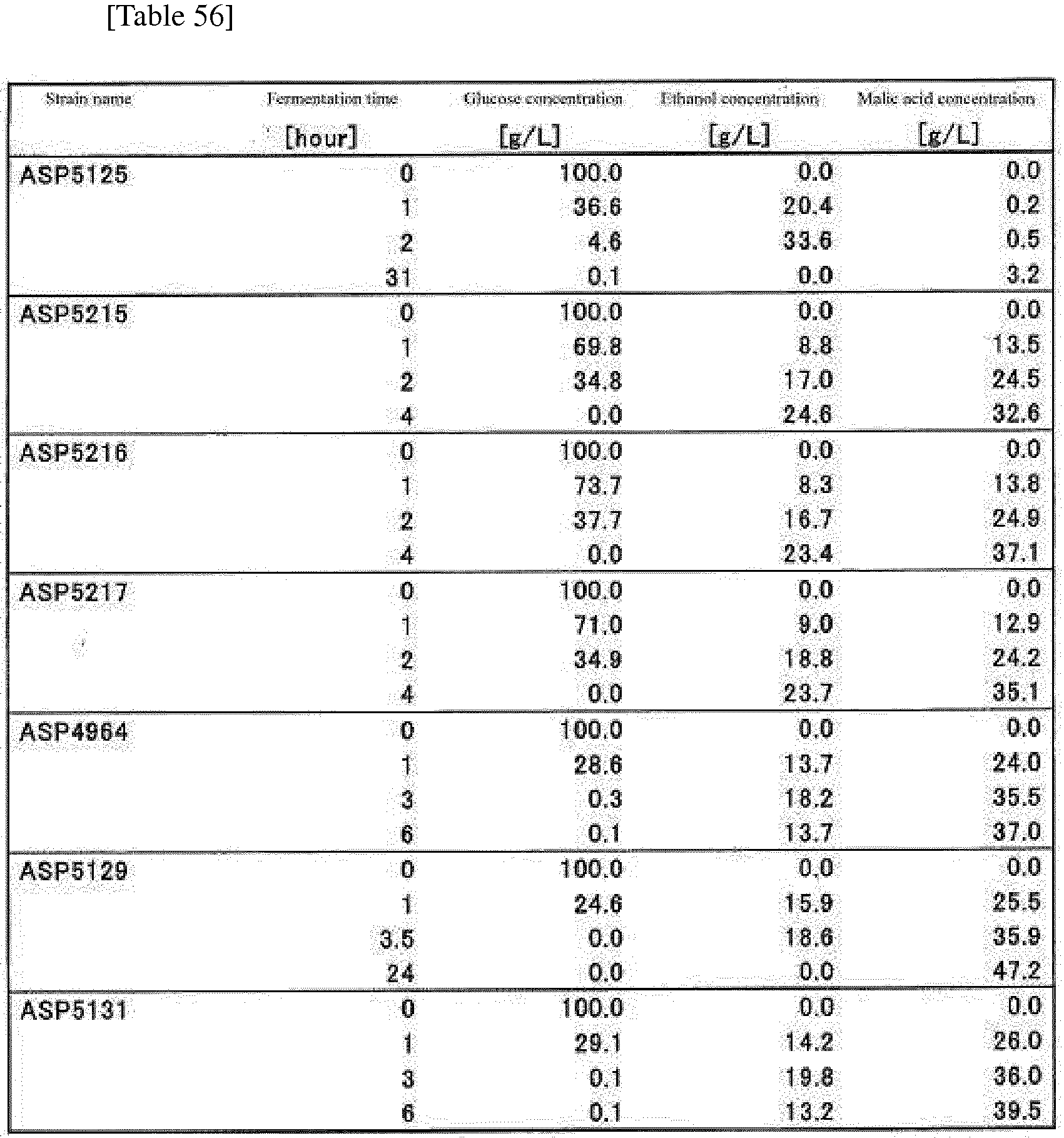
- It was confirmed that in the ASP5215 strain into which CliMDH and PCK were introduced, the ASP5216 strain into which HelMDH and PCK were introduced, the ASP5217 strain into which SpuMDH and PCK were introduced, the ASP4964 strain into which HelMDH and PYC were introduced, the ASP5129 strain into which CliMDH and PYC were introduced, and the ASP5131 strain into which SpuMDH and PYC were introduced, a malic acid production rate and a final concentration of malic acid were further improved than in the ASP5125 strain into which MDH was not introduced but PYC was introduced.
- In order to confirm the effect resulting from increasing the number of copies of the introduced genes, fermentative production of malic acid was performed using the ASP4964 strain and the ASP5235 strain.
- The fermentative production of malic acid was performed in the same manner as in Example 7. The results are shown in Table 57.
[Table 57] Strain name Fermentation time [hour] Glucose concentration [g/L] Ethanol concentration [g/L] Malic acid concentration [g/L] ASP4964 0 100.0 0.0 0.0 1 35.5 15.0 22.2 2 0.0 22.6 36.9 4 0.0 19.1 38.4 ASP5235 0 100.0 0.0 0.0 1 49.7 28.4 2 3.7 19.4 53.6 4 0.0 17.7 56.9 - It was confirmed that in the ASP5235 strain into which 2 copies of PYC and 2 copies of MDH were introduced, a malic acid production rate and a final concentration of malic acid were further improved than in the ASP4964 strain into which one copy of PYC and one copy of MDH were introduced.
- In order to confirm the production of malic acid under non-neutralization conditions, fermentative production of malic acid was performed using the ASP4964 strain and the ASP5235 strain.
- Specifically, microbial cells grown by the same method as in Example 7 were added to 3 mL of a fermentation medium (100 g/L glucose) in a test tube so as to yield 36 g (weight of dry microbial cells)/L, and fermented at 30°C under shaking conditions. A sample was collected in time from the fermented liquid.
- The obtained sample was measured in the same manner as in Example 7. The results are shown in Table 58. As a result, it was confirmed that all of the strains produced malic acid under non-neutralization conditions. The pH of the ASP4964 strain sample that was collected after fermentation was performed for 1 hour was 3.5, and the pH of the sample that was collected after fermentation was performed for 2 hours was 3.0. Furthermore, the pH of the ASP5235 strain sample that was collected after fermentation was performed for 1 hour was 3.0, and the pH of the sample that was collected after fermentation was performed for 2 hours was 2.8.

- Priority is claimed on Japanese Patent Application No.
2014-135043, filed on June 30, 2014 -
- <110> ASAHI GLASS COMPANY, LIMITED
- <120> TRANSFORMANT AND PROCESS FOR PRODUCTION THEREOF, AND PROCESS FOR
PRODUCTION OF C4 DICARBOXYLIC ACID - <130> F20150192
- <150>
JP2014-135043
<151> 2014-06-30 - <160> 162
- <210> 1
<211> 1192
<212> PRT
<213> Aspergillus niger - <220>
<223> AniPYC - <400> 1
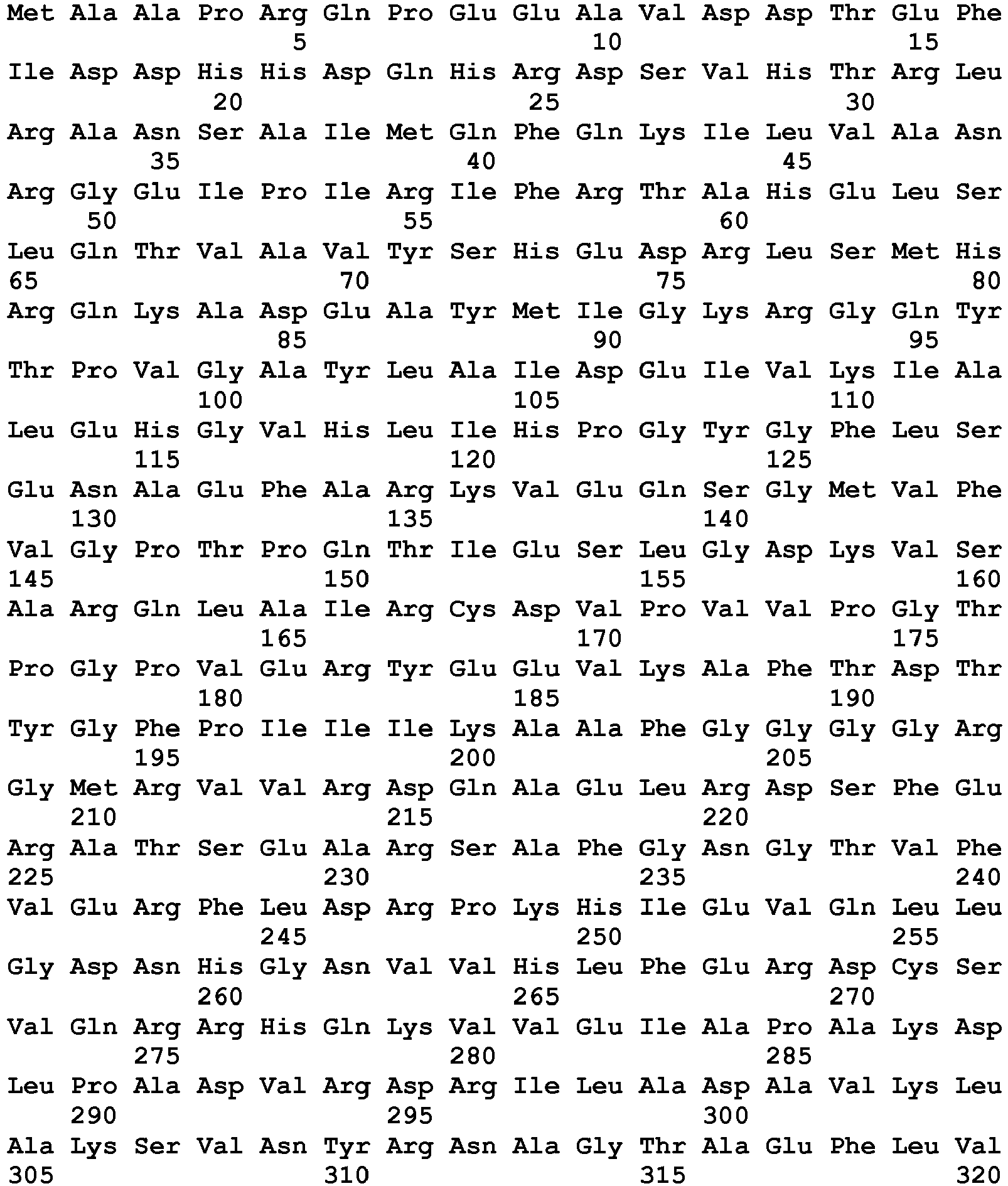

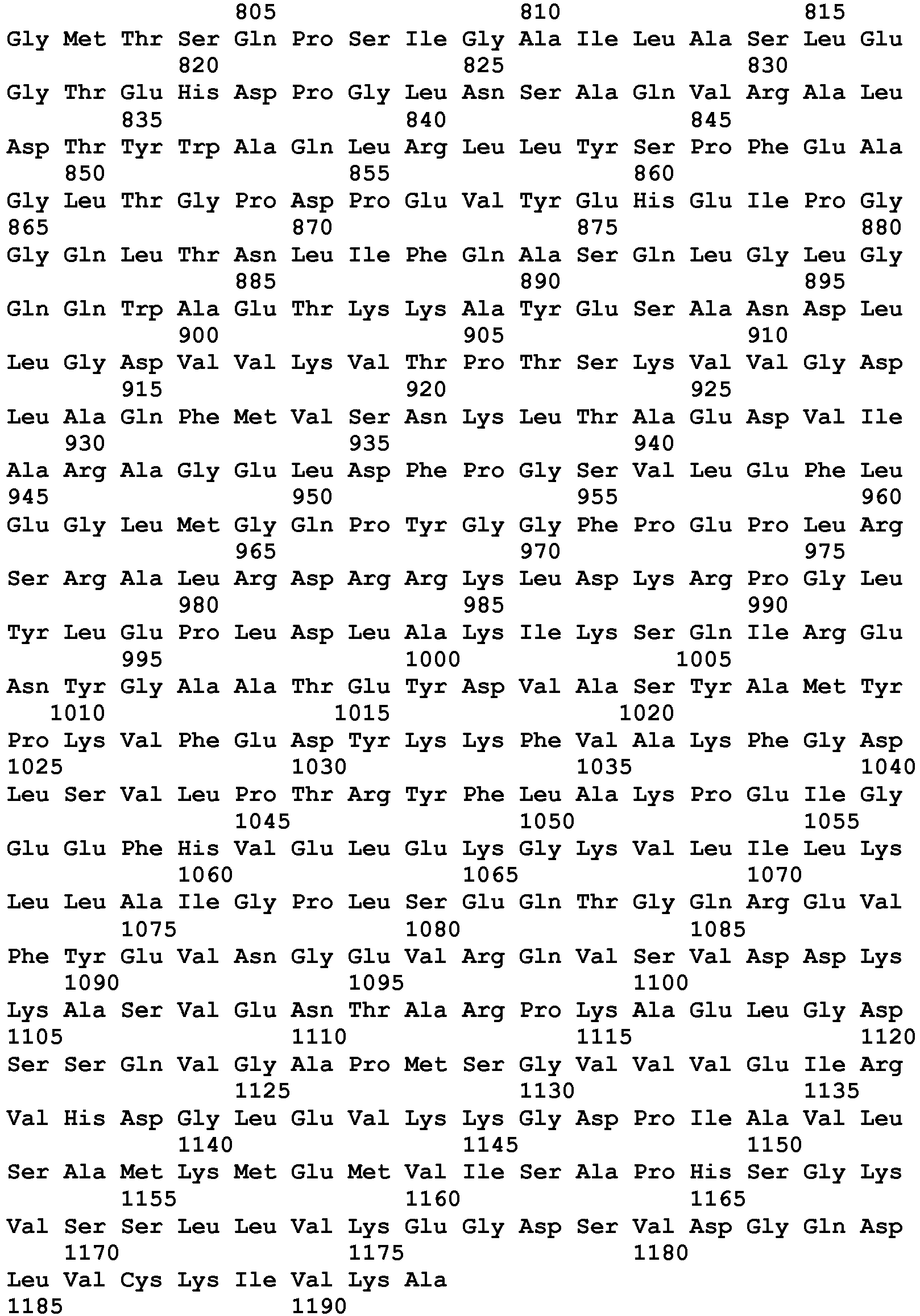
- <210> 2
<211> 1148
<212> PRT
<213> Brevibacillus brevis - <220>
<223> BbrPYC - <400> 2

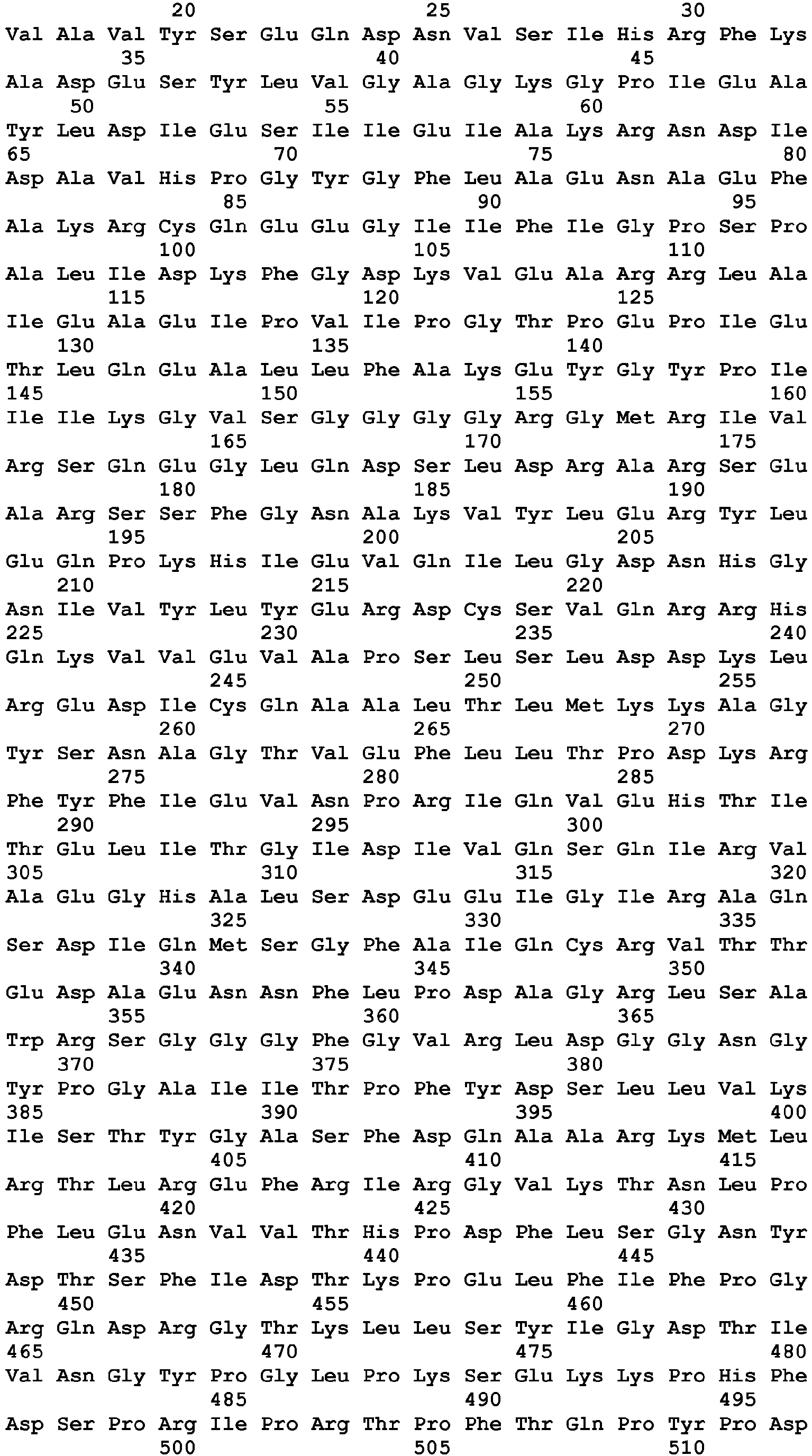


- <210> 3
<211> 1173
<212> PRT
<213> Debaryomyces hansenii - <220>
<223> DhaPYC - <400> 3
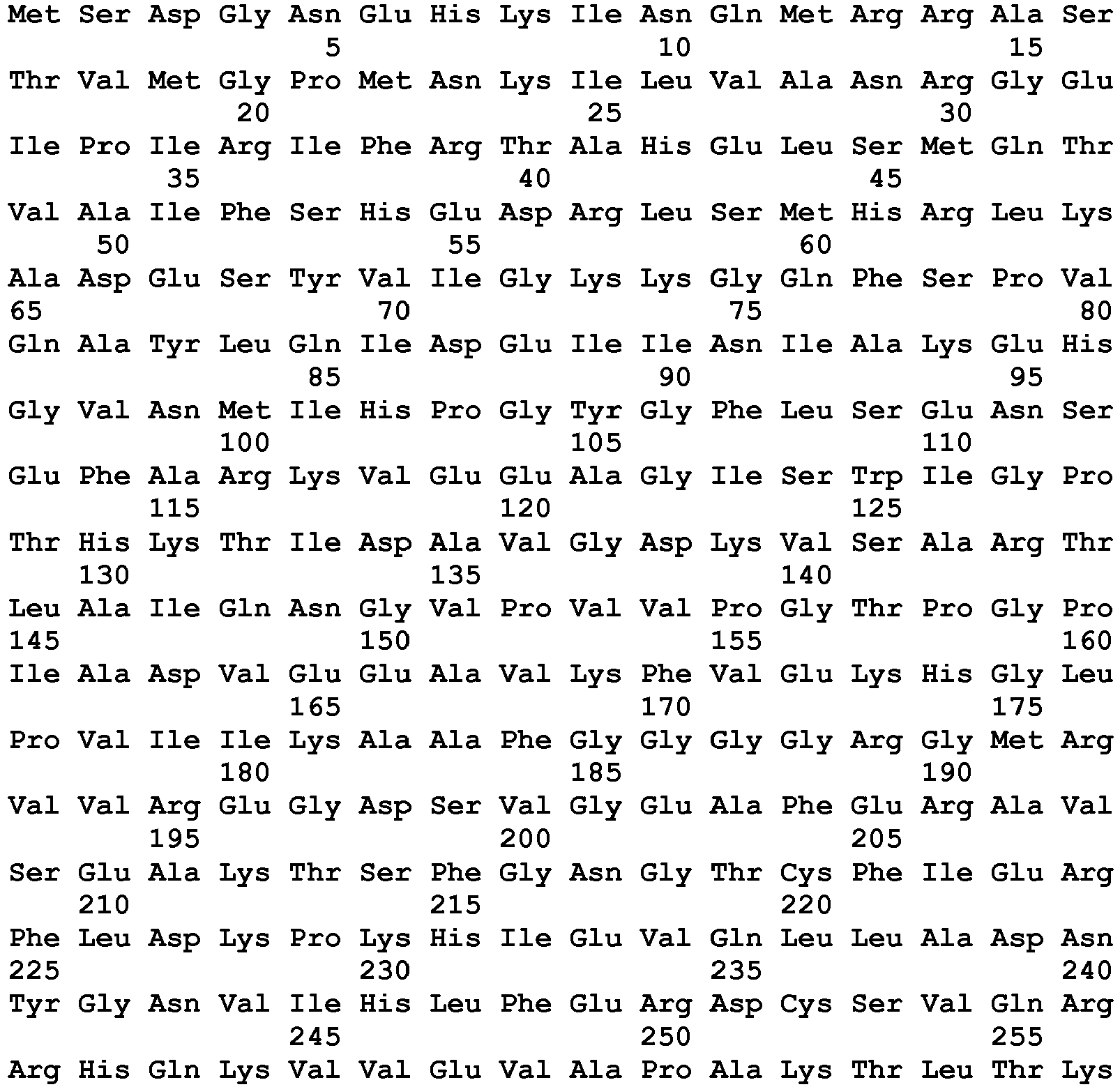

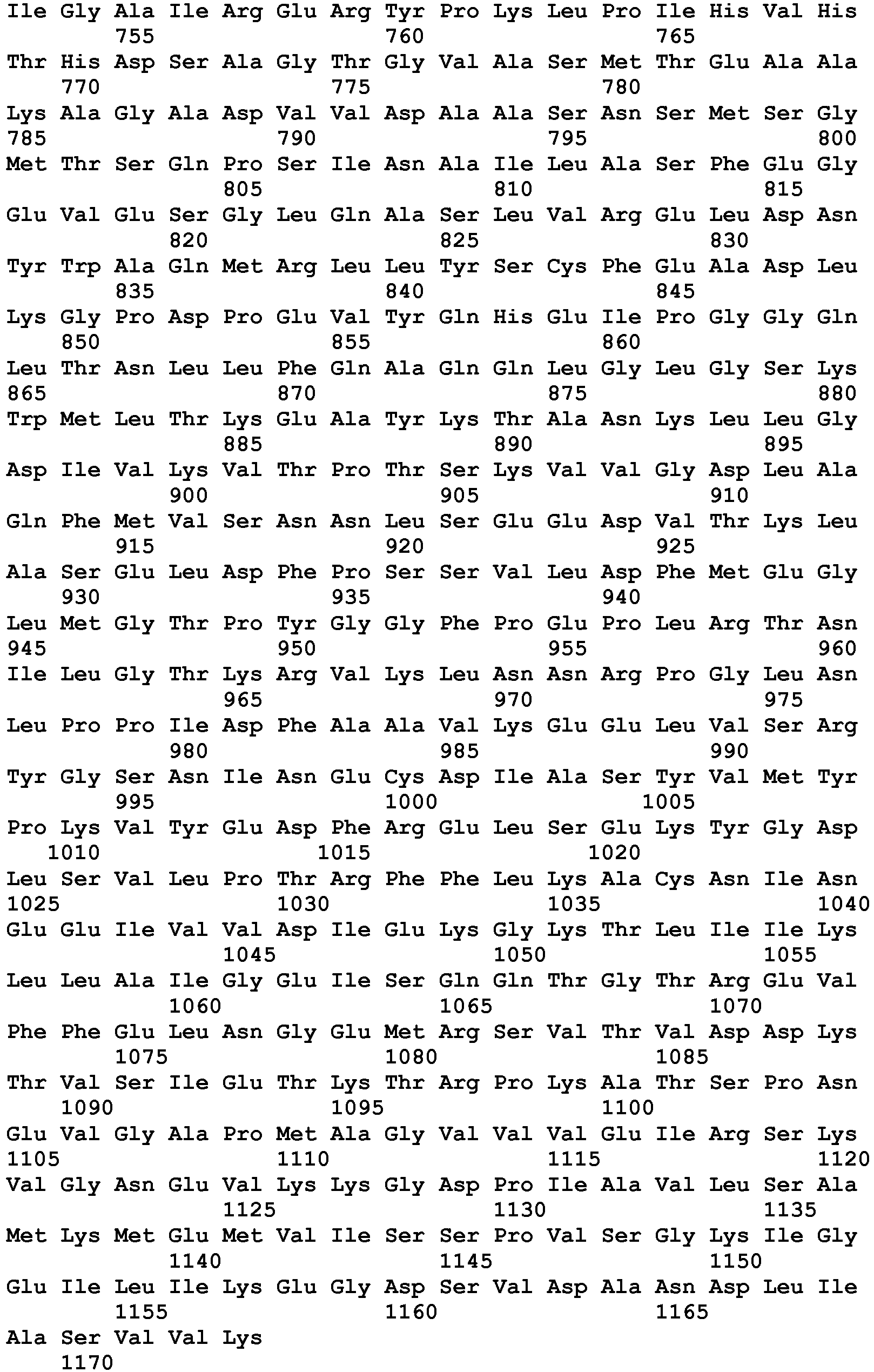
- <210> 4
<211> 1173
<212> PRT
<213> Kluyveromyces lactis - <220>
<223> KlaPYC - <400> 4


- <210> 5
<211> 1174
<212> PRT
<213> Lachancea thermotolerans - <220>
<223> LthPYC - <400> 5


- <210> 6
<211> 1179
<212> PRT
<213> Lodderomyces elongisporus - <220>
<223> LelPYC - <400> 6

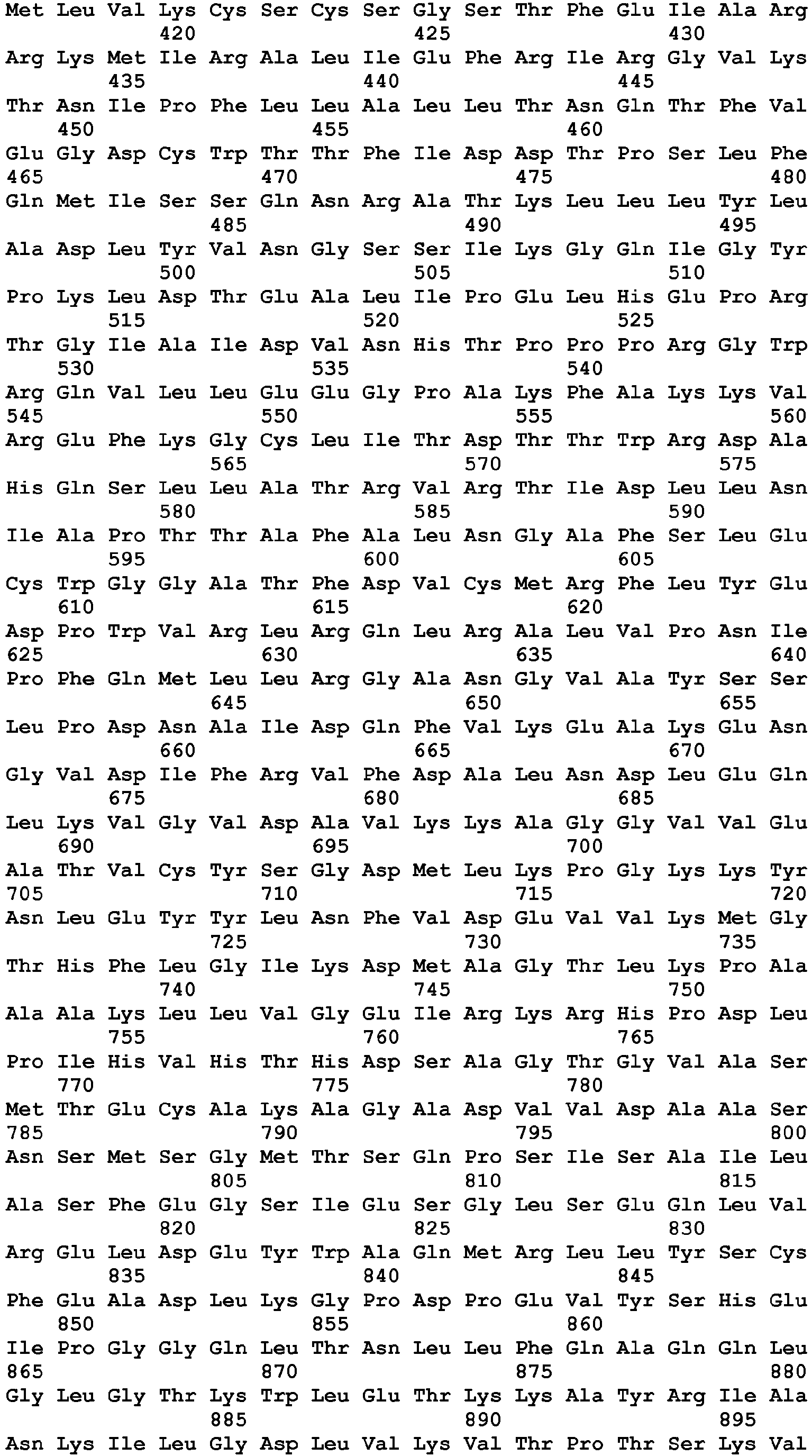
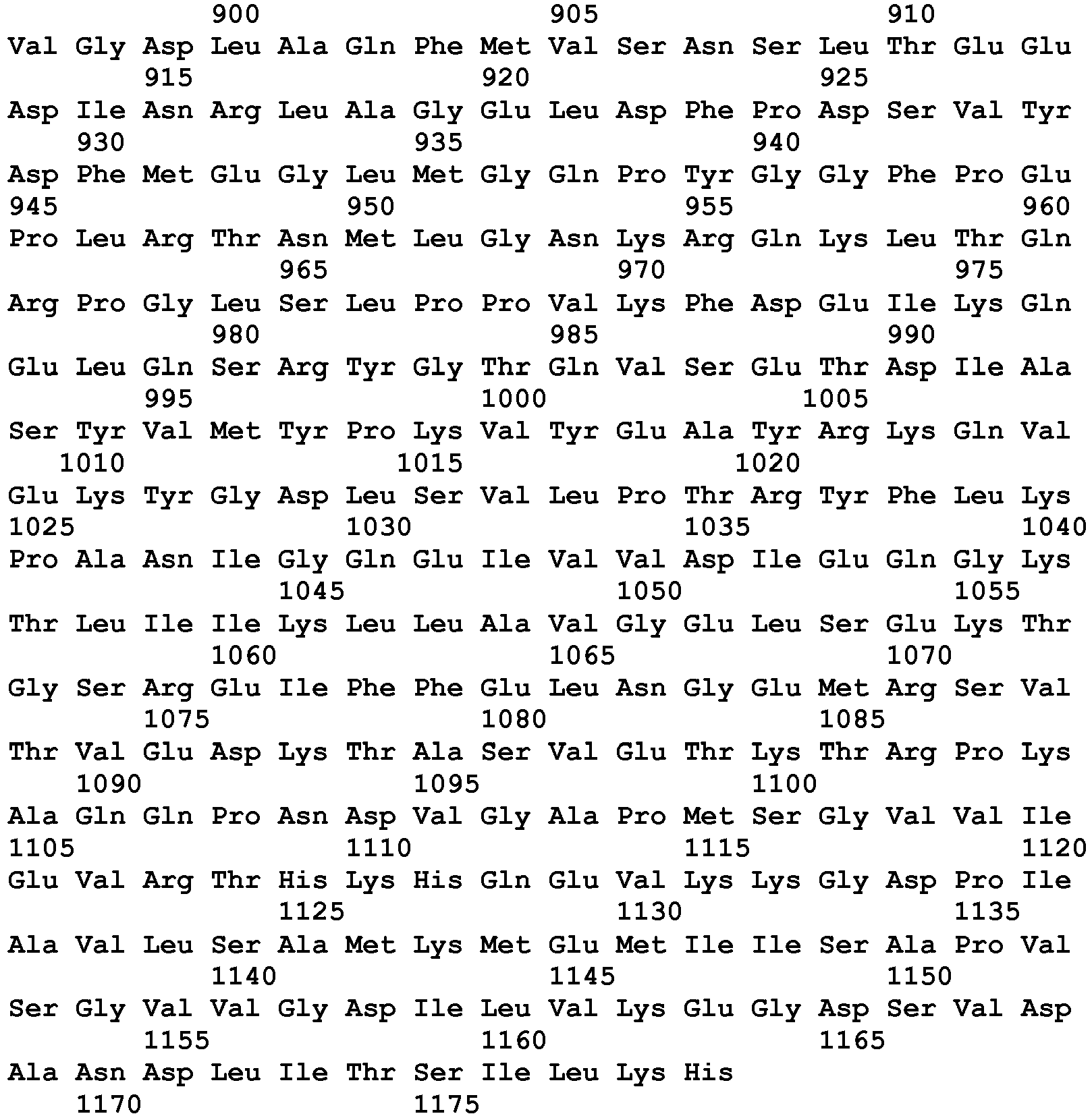
- <210> 7
<211> 1174
<212> PRT
<213> Saccharomyces cerevisiae - <220>
<223> ScePYC - <400> 7


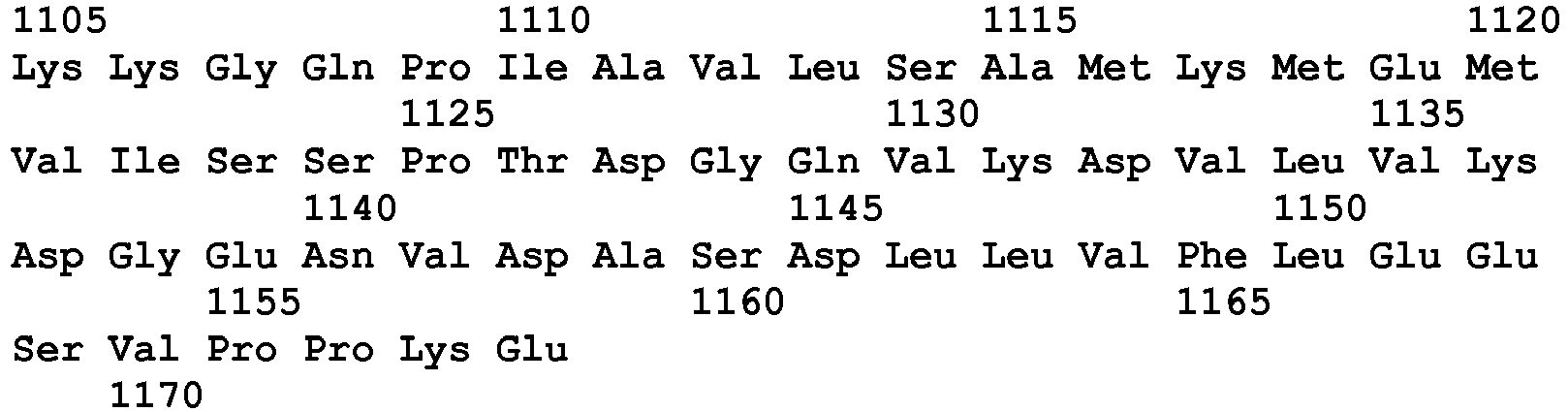
- <210> 8
<211> 1216
<212> PRT
<213> Candida orthopsilosis - <220>
<223> CorPYC - <400> 8
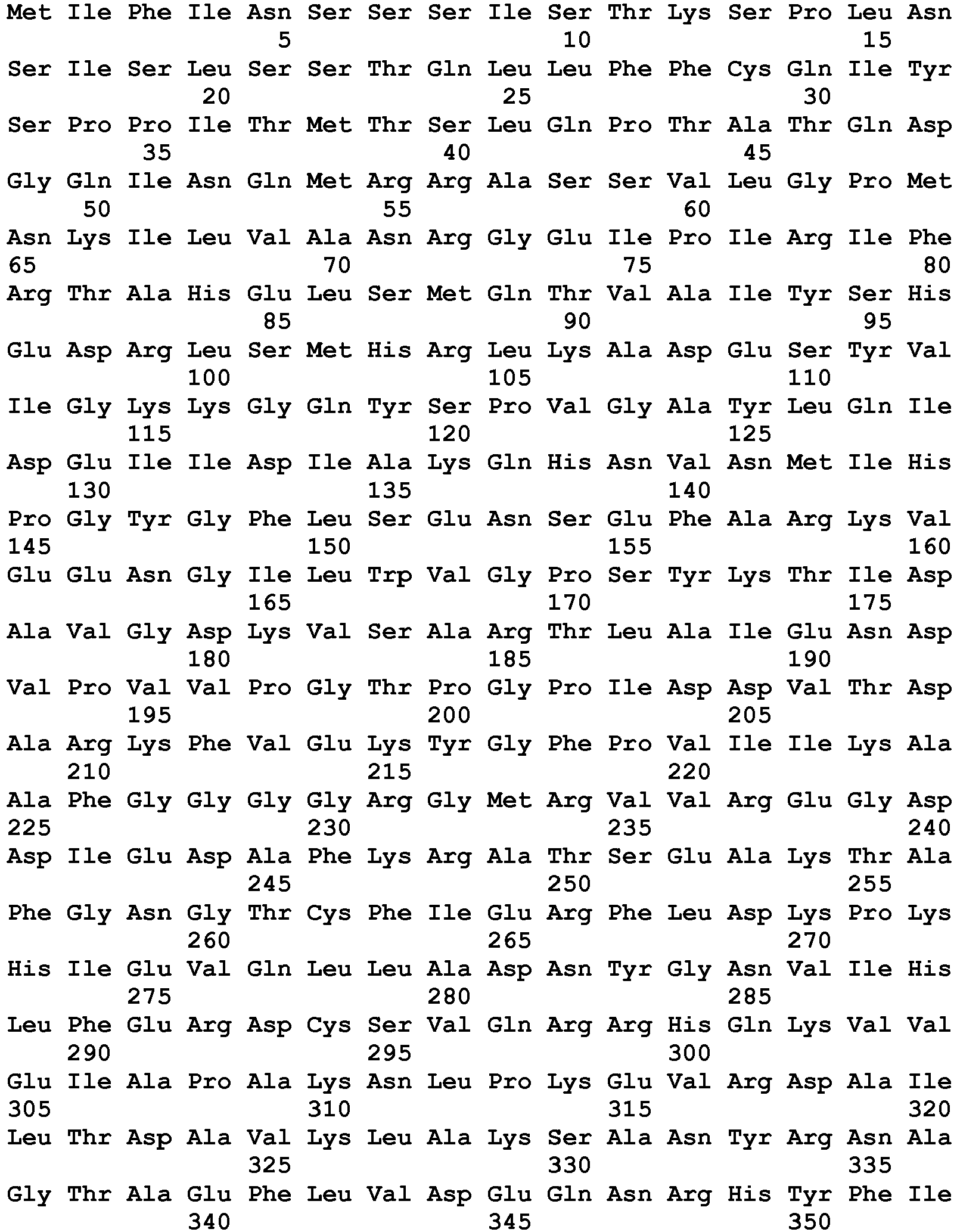

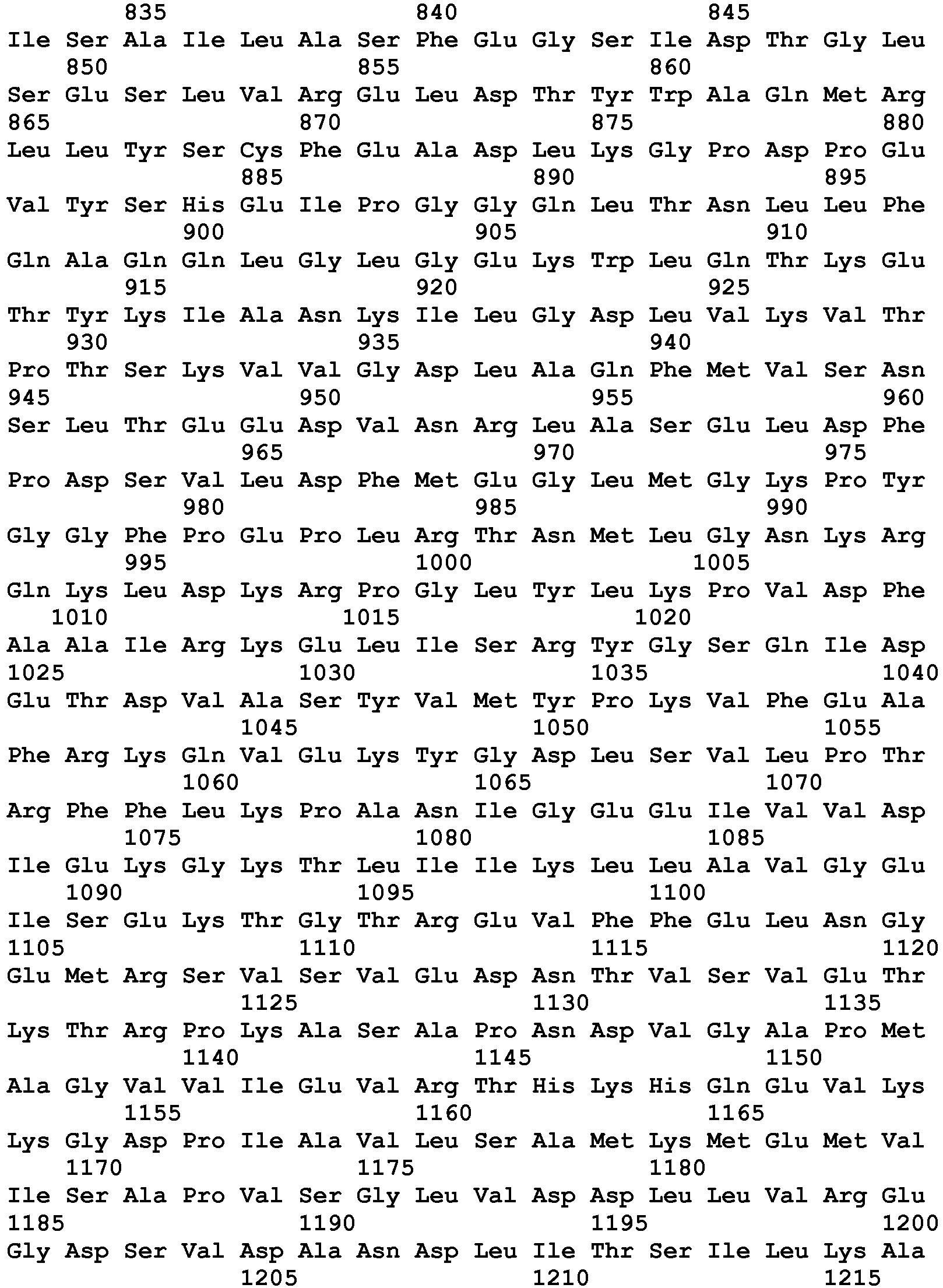
- <210> 9
<211> 1180
<212> PRT
<213> Candida tropicalis - <220>
<223> CtrPYC - <400> 9

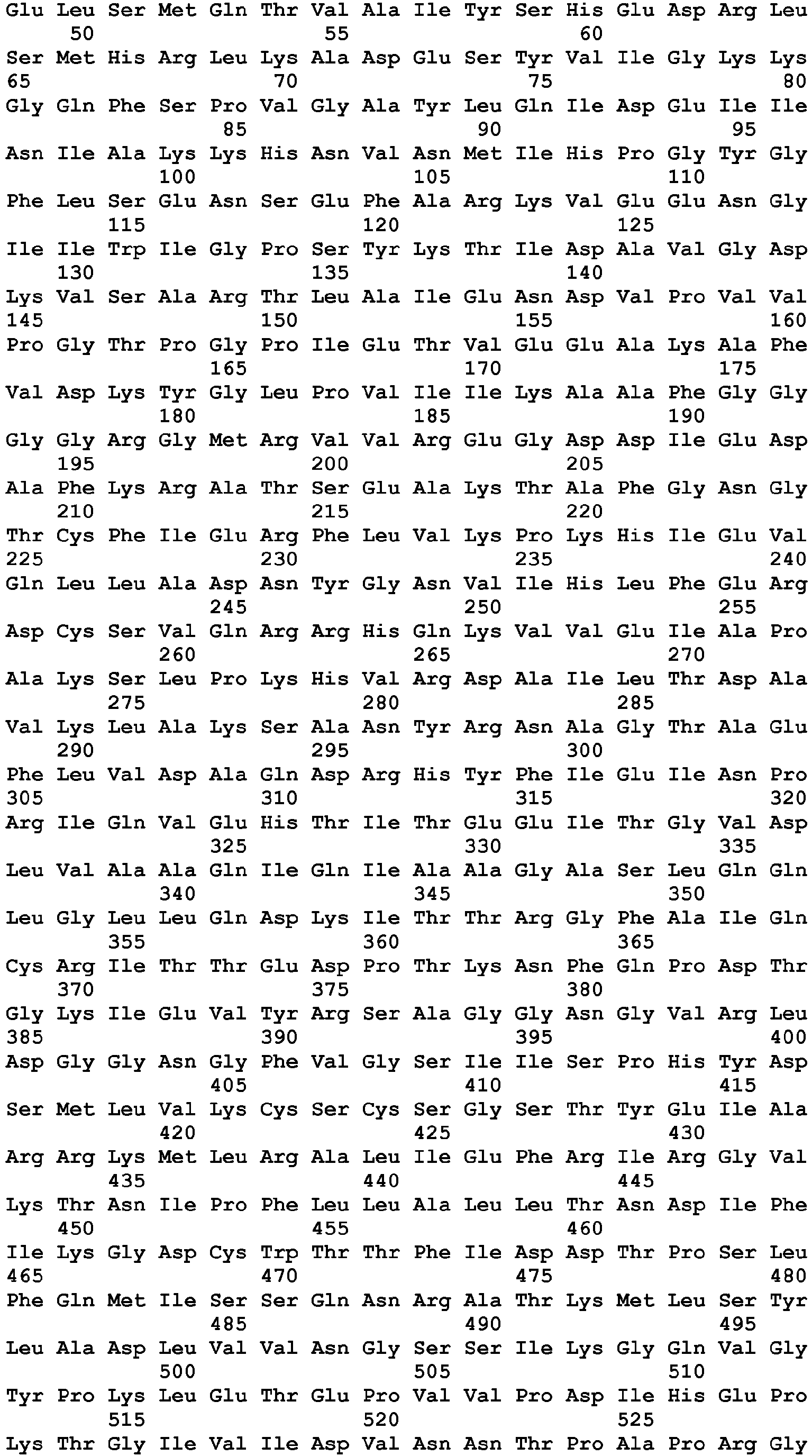


- <210> 10
<211> 1176
<212> PRT
<213> Naumovozyma castellii - <220>
<223> NcaPYC - <400> 10


- <210> 11
<211> 1178
<212> PRT
<213> Naumovozyma dairenensis - <220>
<223> NdaPYC - <400> 11

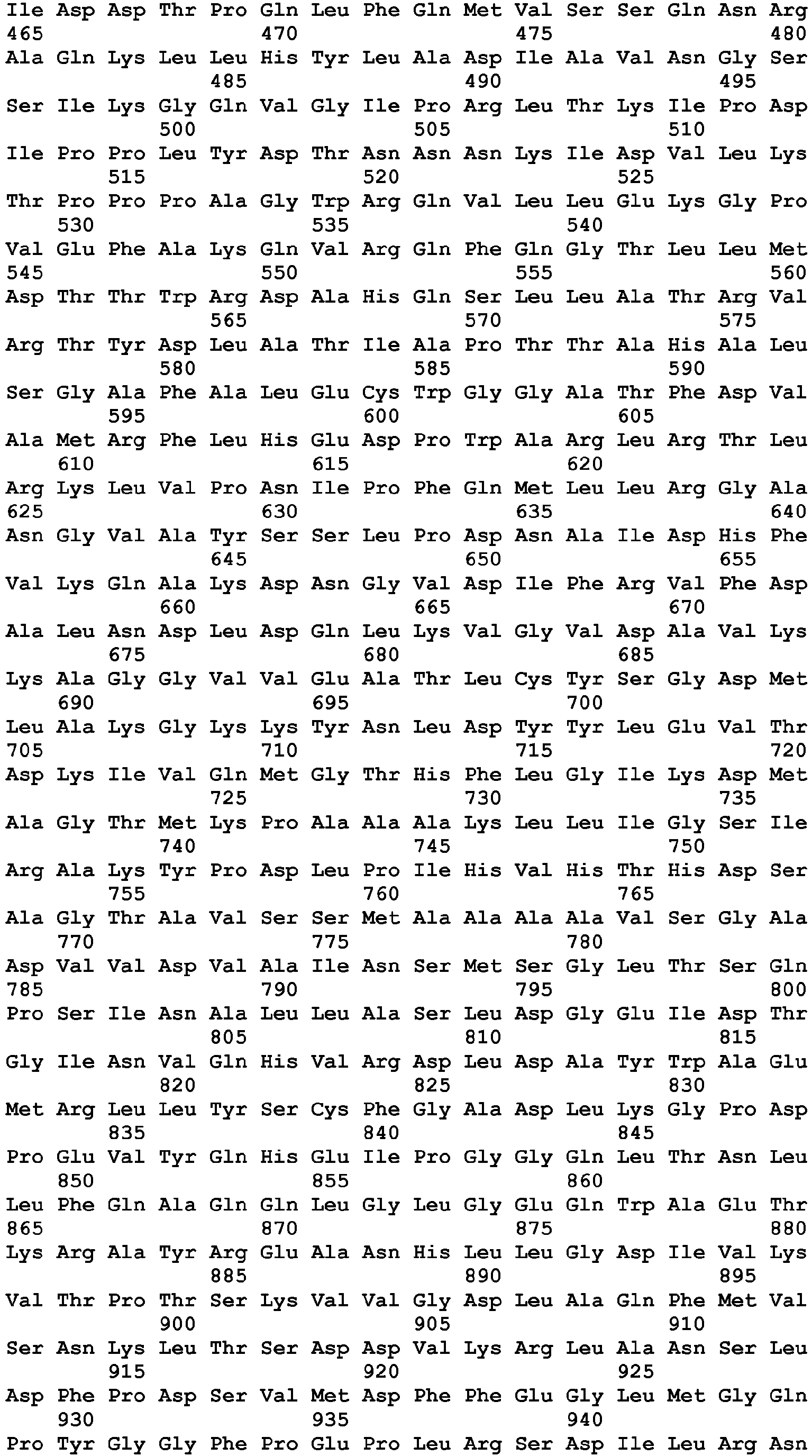

- <210> 12
<211> 1178
<212> PRT
<213> Saccharomyces kudriavzevii - <220>
<223> SkuPYC - <400> 12


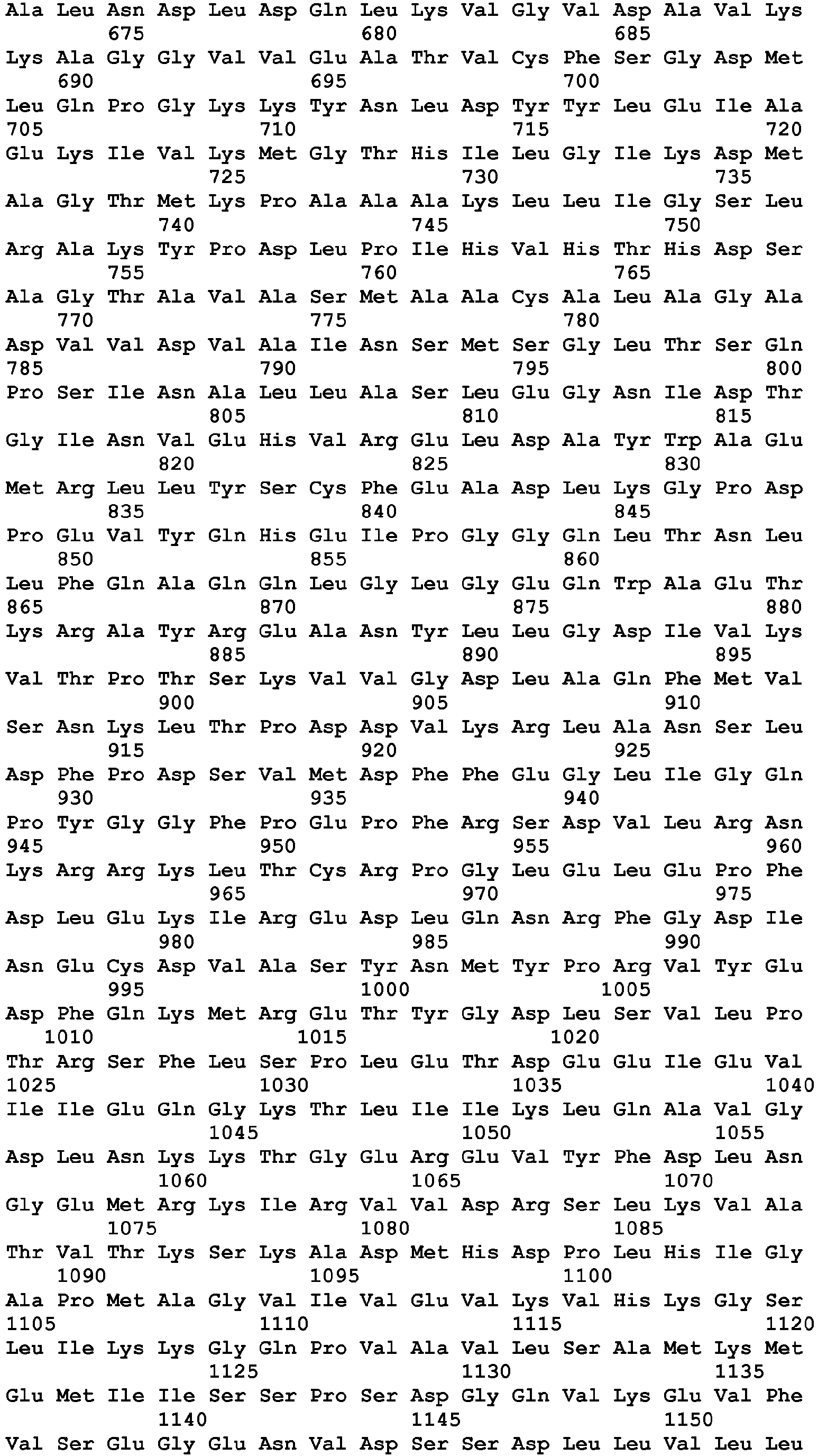

- <210> 13
<211> 1185
<212> PRT
<213> Schizosaccharomyces pombe - <220>
<223> SpoPYC - <400> 13


- <210> 14
<211> 1175
<212> PRT
<213> Tetrapisispora blattae - <220>
<223> TblPYC - <400> 14

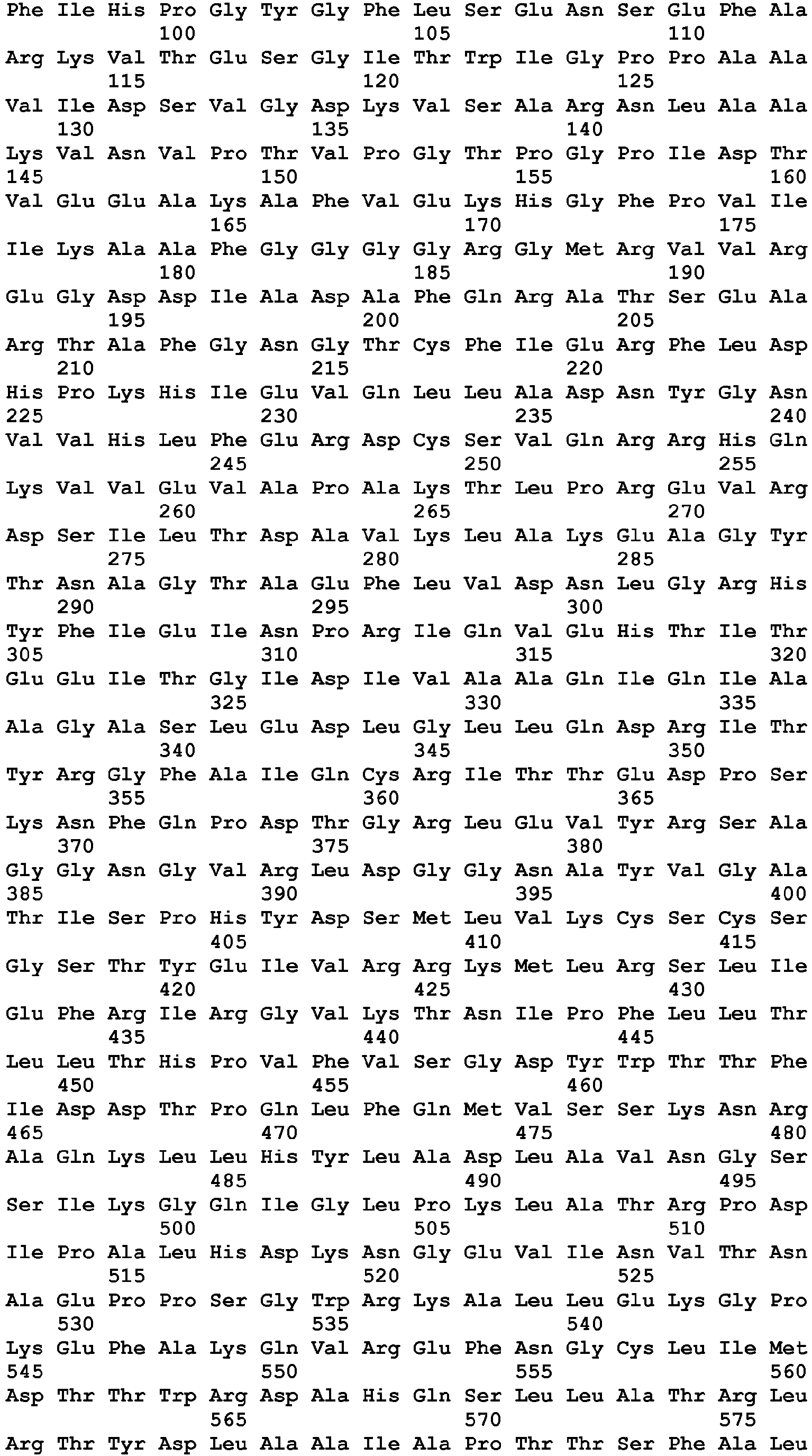

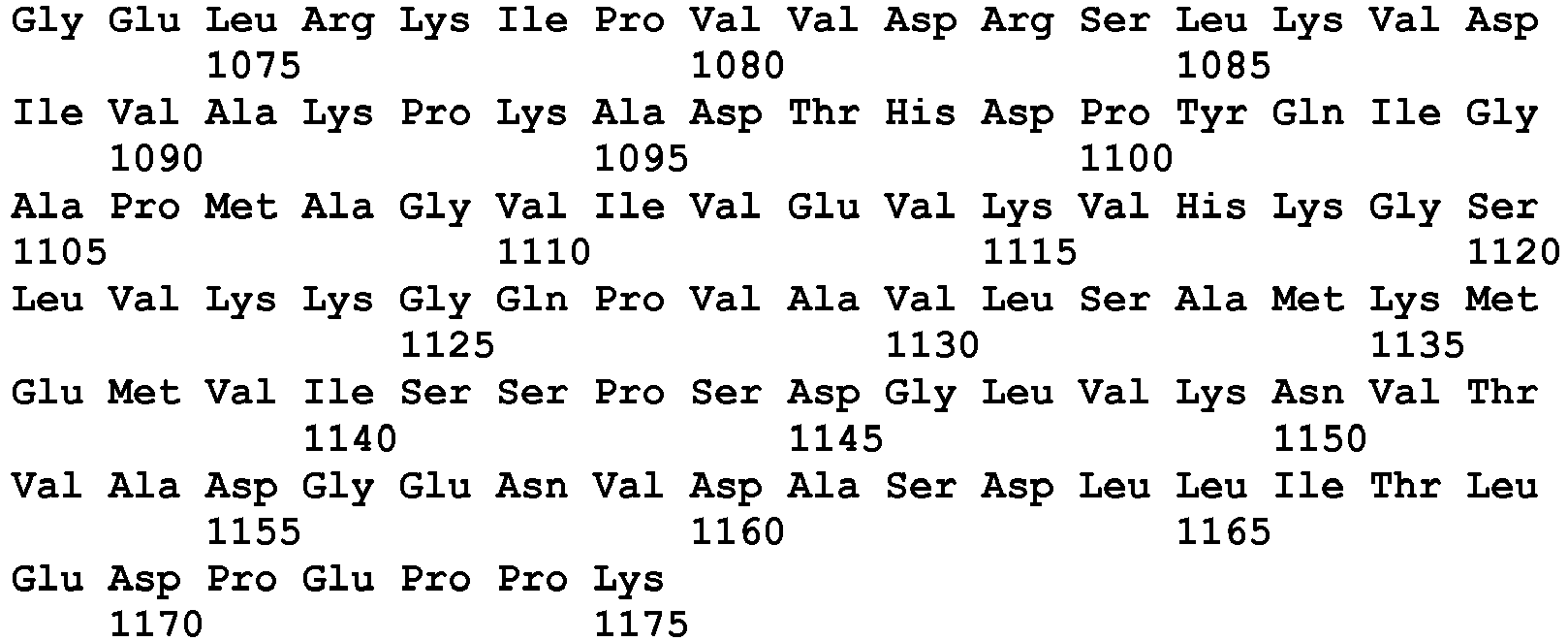
- <210> 15
<211> 1177
<212> PRT
<213> Torulaspora delbrueckii - <220>
<223> TdePYC - <400> 15
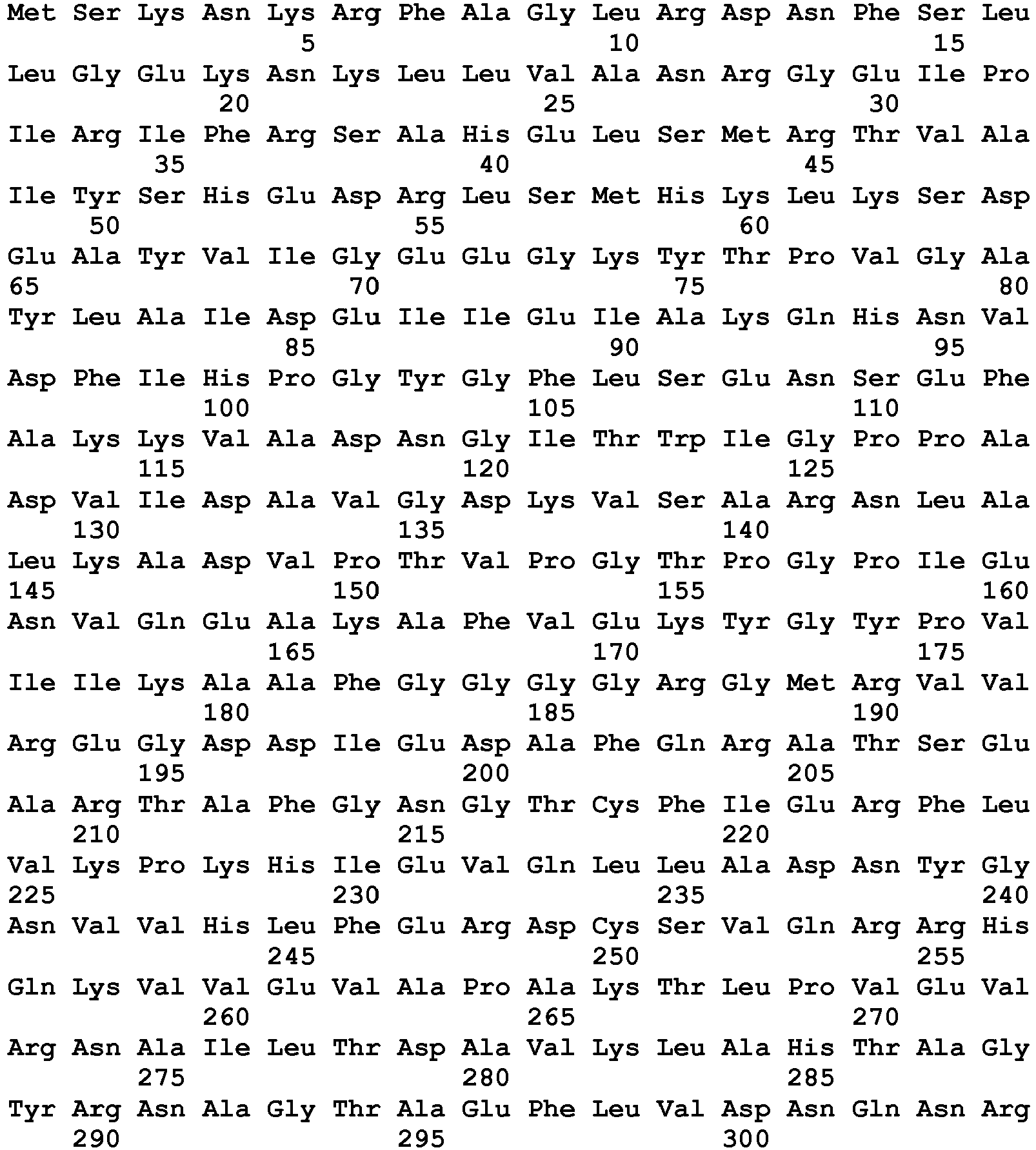


- <210> 16
<211> 1177
<212> PRT
<213> Zygosaccharomyces rouxii - <220>
<223> ZroPYC - <400> 16

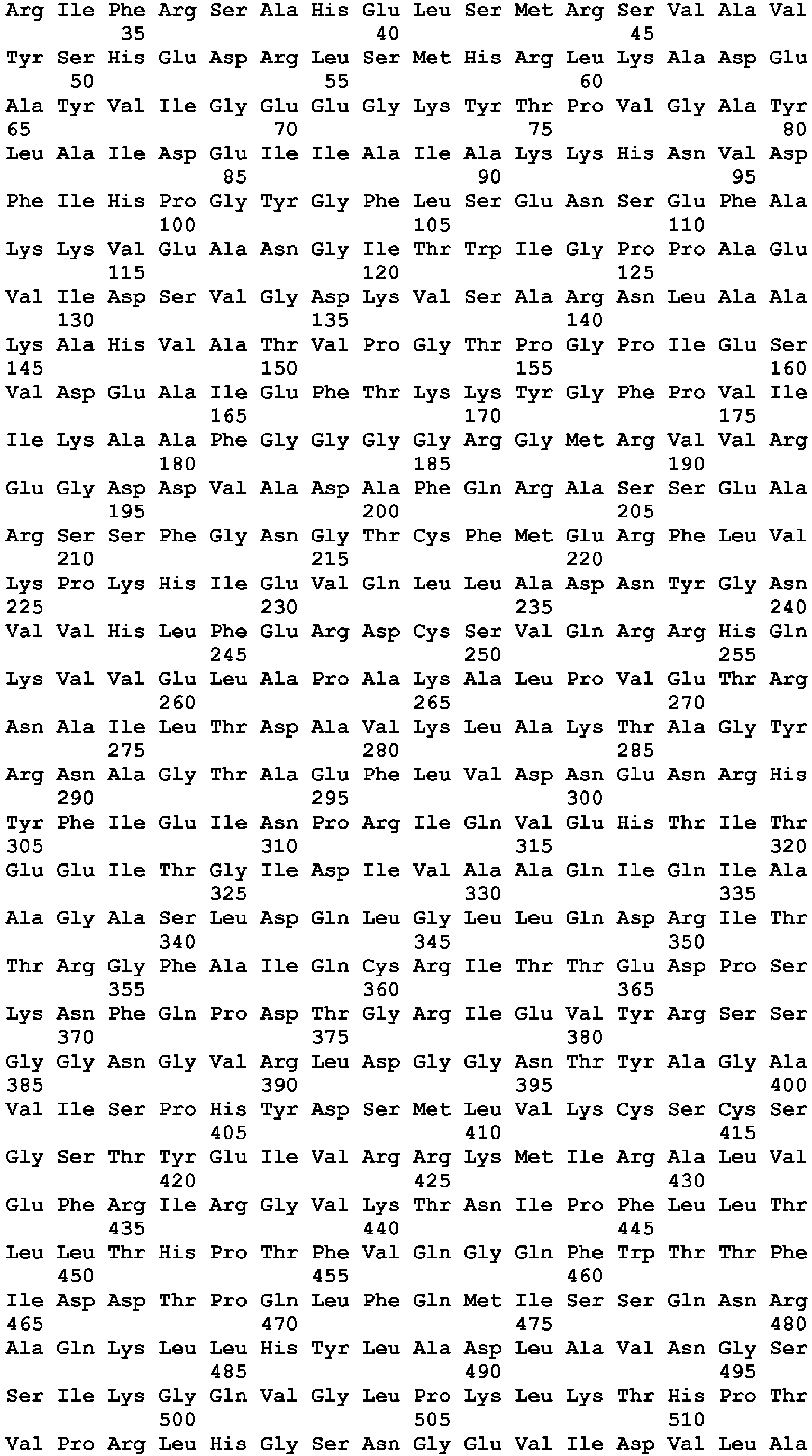


- <210> 17
<211> 294
<212> PRT
<213> Archaeoglobus fulgidus - <220>
<223> AfuMDH - <400> 17

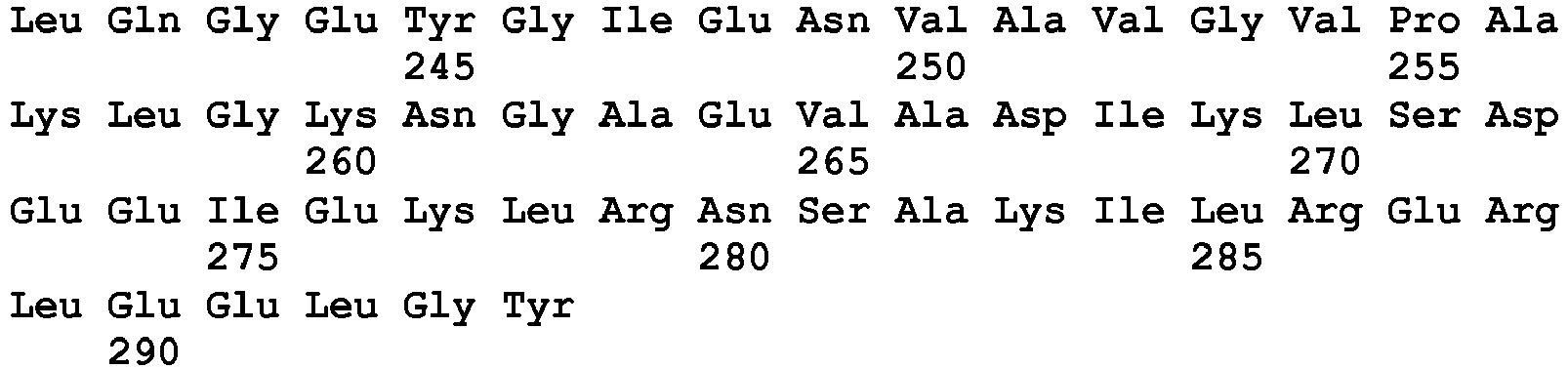
- <210> 18
<211> 326
<212> PRT
<213> Congregibacter litoralis - <220>
<223> CliMDH - <400> 18

- <210> 19
<211> 328
<212> PRT
<213> Delftia acidovorans - <220>
<223> DacMDH - <400> 19

- <210> 20
<211> 324
<212> PRT
<213> Halomonas elongata - <220>
<223> HelMDH - <400> 20


- <210> 21
<211> 311
<212> PRT
<213> Shewanella putrefaciens - <220>
<223> SpuMDH - <400> 21

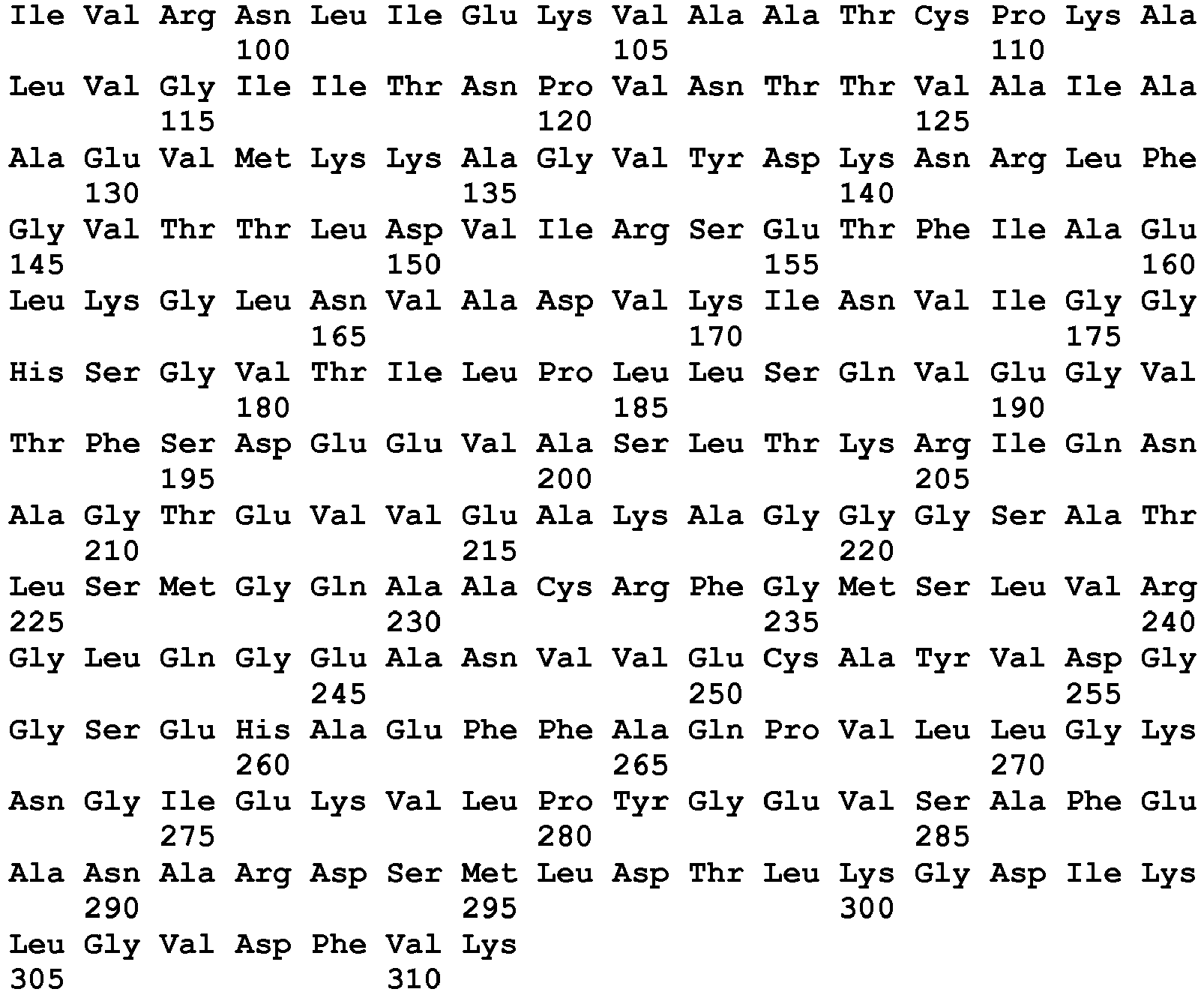
- <210> 22
<211> 569
<212> PRT
<213> Schizosaccharomyces pombe - <220>
<223> SpoPDC2 - <400> 22


- <210> 23
<211> 565
<212> PRT
<213> Schizosaccharomyces pombe - <220>
<223> Spomae2 - <400> 23


- <210> 24
<211> 21
<212> DNA
<213> Artificial Sequence - <220>
<223> Description of Artificial Sequence: UF for pdc2-deleted fragment - <400> 24
ctctccagct ccatccataag 21 - <210> 25
<211> 45
<212> DNA
<213> Artificial Sequence - <220>
<223> Description of Artificial Sequence: UR for pdc2-deleted fragment - <400> 25
gacacaactt cctaccaaaa agcctttctg cccatgtttt ctgtc 45 - <210> 26
<211> 23
<212> DNA
<213> Artificial Sequence - <220>
<223> Description of Artificial Sequence: OF for pdc2-deleted fragment - <400> 26
gctttttggt aggaagttgt gtc 23 - <210> 27
<211> 43
<212> DNA
<213> Artificial Sequence - <220>
<223> Description of Artificial Sequence: OR for pdc2-deleted fragment - <400> 27
agtgggattt gtagctaagc tgtatccatt tcagccgttt gtg 43 - <210> 28
<211> 45
<212> DNA
<213> Artificial Sequence - <220>
<223> Description of Artificial Sequence: DF for pdc2-deleted fragment - <400> 28
aagtttcgtc aatatcacaa gctgacagaa aacatgggca gaaag 45 - <210> 29
<211> 24
<212> DNA
<213> Artificial Sequence - <220>
<223> Description of Artificial Sequence: DR for pdc2-deleted fragment - <400> 29
gttccttaga aaaagcaact ttgg 24 - <210> 30
<211> 20
<212> DNA
<213> Artificial Sequence - <220>
<223> Description of Artificial Sequence: FF for pdc2-deleted fragment - <400> 30
cataagcttg ccaccacttc 20 - <210> 31
<211> 24
<212> DNA
<213> Artificial Sequence - <220>
<223> Description of Artificial Sequence: FR for pdc2-deleted fragment - <400> 31
gaaaaagcaa ctttggtatt ctgc 24 - <210> 32
<211> 21
<212> DNA
<213> Artificial Sequence - <220>
<223> Description of Artificial Sequence: F for ura4 fragment - <400> 32
agcttagcta caaatcccact 21 - <210> 33
<211> 23
<212> DNA
<213> Artificial Sequence - <220>
<223> Description of Artificial Sequence: R for ura4 fragment - <400> 33
agcttgtgat attgacgaaa ctt 23 - <210> 34
<211> 5400
<212> DNA
<213> Artificial Sequence - <220>
<223> Description of Artificial Sequence: Fr.1 for pSMh - <400> 34
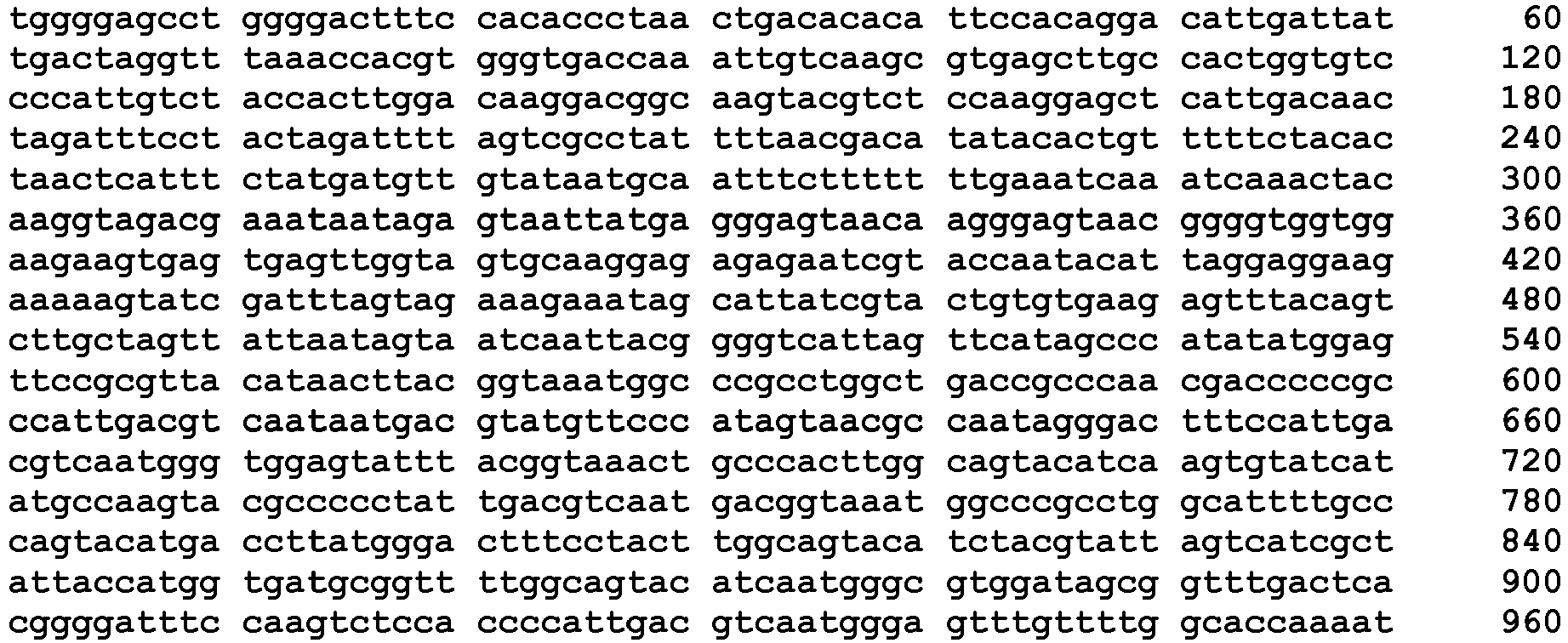


- <210> 35
<211> 8849
<212> DNA
<213> Artificial Sequence - <220>
<223> Description of Artificial Sequence: pSMh - <400> 35


- <210> 36
<211> 31
<212> DNA
<213> Artificial Sequence - <220>
<223> Description of Artificial Sequence: AniPYC-F - <400> 36
gacacttttt caaacatggc tgctccccgcc 31 - <210> 37
<211> 36
<212> DNA
<213> Artificial Sequence - <220>
<223> Description of Artificial Sequence: AniPYC-R - <400> 37
atcatccttg taatcggcct tgacgatctt gcagac 36 - <210> 38
<211> 45
<212> DNA
<213> Artificial Sequence - <220>
<223> Description of Artificial Sequence: BbrPYC-F - <400> 38
gacacttttt caaacatgaa aaagagaaaa atcaatcgcc tactg 45 - <210> 39
<211> 40
<212> DNA
<213> Artificial Sequence - <220>
<223> Description of Artificial Sequence: BbrPYC-R - <400> 39
atcatccttg taatcctcca tttcaatgag cagatcacca 40 - <210> 40
<211> 44
<212> DNA
<213> Artificial Sequence - <220>
<223> Description of Artificial Sequence: DhaPYC-F - <400> 40
gacacttttt caaacatgag tgacggtaat gaacataaga tcaa 44 - <210> 41
<211> 45
<212> DNA
<213> Artificial Sequence - <220>
<223> Description of Artificial Sequence: DhaPYC-R - <400> 41
atcatccttg taatctttaa caacacttgc aatcaaatcg ttagc 45 - <210> 42
<211> 40
<212> DNA
<213> Artificial Sequence - <220>
<223> Description of Artificial Sequence: KlaPYC-F - <400> 42
gacacttttt caaacatgtc atctcaacta gctggattgc 40 - <210> 43
<211> 37
<212> DNA
<213> Artificial Sequence - <220>
<223> Description of Artificial Sequence: KlaPYC-R - <400> 43
atcatccttg taatcttcct tagctggagc ttcttcc 37 - <210> 44
<211> 36
<212> DNA
<213> Artificial Sequence - <220>
<223> Description of Artificial Sequence: LthPYC-F - <400> 44
gacacttttt caaacatgtc caaactggca ggactg 36 - <210> 45
<211> 39
<212> DNA
<213> Artificial Sequence - <220>
<223> Description of Artificial Sequence: LthPYC-R - <400> 45
atcatccttg taatcttctt ttggtgggac agattcctc 39 - <210> 46
<211> 43
<212> DNA
<213> Artificial Sequence - <220>
<223> Description of Artificial Sequence: LelPYC-F - <400> 46
gacacttttt caaacatgac atcaattgct tcatcaaaca ctc 43 - <210> 47
<211> 47
<212> DNA
<213> Artificial Sequence - <220>
<223> Description of Artificial Sequence: LelPYC-R - <400> 47
atcatccttg taatcatgtt tcaaaatact ggtgatcaaa tcatttg 47 - <210> 48
<211> 37
<212> DNA
<213> Artificial Sequence - <220>
<223> Description of Artificial Sequence: ScePYC-F - <400> 48
gacacttttt caaacatgtc gcaaagaaaa ttcgccg 37 - <210> 49
<211> 40
<212> DNA
<213> Artificial Sequence - <220>
<223> Description of Artificial Sequence: ScePYC-R - <400> 49
atcatccttg taatctgcct tagtttcaac aggaacttgg 40 - <210> 50
<211> 54
<212> DNA
<213> Artificial Sequence - <220>
<223> Description of Artificial Sequence: CorPYC-F - <400> 50
cactttttca aacatgattt ttataaattc atcatcaatt tctacaaaat ctcc 54 - <210> 51
<211> 47
<212> DNA
<213> Artificial Sequence - <220>
<223> Description of Artificial Sequence: CorPYC-R - <400> 51
atcatccttg taatcggctt tcaaaatact ggtgattaaa tcattag 47 - <210> 52
<211> 40
<212> DNA
<213> Artificial Sequence - <220>
<223> Description of Artificial Sequence: CtrPYC-F - <400> 52
cactttttca aacatgtctg taccagtcca aaaagctaac 40 - <210> 53
<211> 51
<212> DNA
<213> Artificial Sequence - <220>
<223> Description of Artificial Sequence: CtrPYC-R - <400> 53
atcatccttg taatcatgtt gaataatgtt agtaatcaaa tcattagcat c 51 - <210> 54
<211> 41
<212> DNA
<213> Artificial Sequence - <220>
<223> Description of Artificial Sequence: NcaPYC-F - <400> 54
cactttttca aacatgtcca taaacaaaaa actaaacggcc 41 - <210> 55
<211> 42
<212> DNA
<213> Artificial Sequence - <220>
<223> Description of Artificial Sequence: NcaPYC-R - <400> 55
atcatccttg taatcagatg gaggcgtaga ttcttctaaa ag 42 - <210> 56
<211> 44
<212> DNA
<213> Artificial Sequence - <220>
<223> Description of Artificial Sequence: NdaPYC-F - <400> 56
cactttttca aacatgtcga acaaaaaatt caatggtatc agag 44 - <210> 57
<211> 41
<212> DNA
<213> Artificial Sequence - <220>
<223> Description of Artificial Sequence: NdaPYC-R - <400> 57
atcatccttg taatctgctt cttccggaat ttcagtttctt 41 - <210> 58
<211> 36
<212> DNA
<213> Artificial Sequence - <220>
<223> Description of Artificial Sequence: SkuPYC-F - <400> 58
cactttttca aacatgtcgc aaaagaaatt cgctgg 36 - <210> 59
<211> 41
<212> DNA
<213> Artificial Sequence - <220>
<223> Description of Artificial Sequence: SkuPYC-R - <400> 59
atcatccttg taatctgctt tagtttcagc tggaacttgat 41 - <210> 60
<211> 41
<212> DNA
<213> Artificial Sequence - <220>
<223> Description of Artificial Sequence: SpoPYC-F - <400> 60
cactttttca aacatgactt ctaaatatga tgcgttgttgc 41 - <210> 61
<211> 38
<212> DNA
<213> Artificial Sequence - <220>
<223> Description of Artificial Sequence: SpoPYC-R - <400> 61
atcatccttg taatcctcgt gttcaagaac agcacaca 38 - <210> 62
<211> 45
<212> DNA
<213> Artificial Sequence - <220>
<223> Description of Artificial Sequence: TblPYC-F - <400> 62
cactttttca aacatgacaa ataagaaatt ctctggtcta agaga 45 - <210> 63
<211> 43
<212> DNA
<213> Artificial Sequence - <220>
<223> Description of Artificial Sequence: TblPYC-R - <400> 63
atcatccttg taatcttttg gtggttctgg atcttctaat gtg 43 - <210> 64
<211> 37
<212> DNA
<213> Artificial Sequence - <220>
<223> Description of Artificial Sequence: TdePYC-F - <400> 64
cactttttca aacatgtcca agaacaagag gtttgct 37 - <210> 65
<211> 36
<212> DNA
<213> Artificial Sequence - <220>
<223> Description of Artificial Sequence: TdePYC-R - <400> 65
atcatccttg taatcgtttt cagctgggac agcctc 36 - <210> 66
<211> 39
<212> DNA
<213> Artificial Sequence - <220>
<223> Description of Artificial Sequence: ZroPYC-F - <400> 66
cactttttca aacatgagta ccaagaagtt ctctggtct 39 - <210> 67
<211> 35
<212> DNA
<213> Artificial Sequence - <220>
<223> Description of Artificial Sequence: ZroPYC-R - <400> 67
atcatccttg taatcattct cctttggtgg gacgg 35 - <210> 68
<211> 35
<212> DNA
<213> Artificial Sequence - <220>
<223> Description of Artificial Sequence: AfuMDH-F - <400> 68
actttttcaa acatgaaact cggttttgtt ggtgc 35 - <210> 69
<211> 45
<212> DNA
<213> Artificial Sequence - <220>
<223> Description of Artificial Sequence: AfuMDH-R - <400> 69
atcatcatca tccttgtaat catatccgag ttcctcaagc ctctc 45 - <210> 70
<211> 32
<212> DNA
<213> Artificial Sequence - <220>
<223> Description of Artificial Sequence: CliMDH-F - <400> 70
actttttcaa acatgaaagc acctgttcgcgt 32 - <210> 71
<211> 40
<212> DNA
<213> Artificial Sequence - <220>
<223> Description of Artificial Sequence: CliMDH-R - <400> 71
atcatcatca tccttgtaat cgggcagaag gtctgccacg 40 - <210> 72
<211> 32
<212> DNA
<213> Artificial Sequence - <220>
<223> Description of Artificial Sequence: DacMDH-F - <400> 72
actttttcaa acatgagcaa gaagcccgttcg 32 - <210> 73
<211> 39
<212> DNA
<213> Artificial Sequence - <220>
<223> Description of Artificial Sequence: DacMDH-R - <400> 73
atcatcatca tccttgtaat ccagcaggtg cttgacgcc 39 - <210> 74
<211> 35
<212> DNA
<213> Artificial Sequence - <220>
<223> Description of Artificial Sequence: HelMDH-F - <400> 74
actttttcaa acatgaaaga ccccgtccgt atagc 35 - <210> 75
<211> 40
<212> DNA
<213> Artificial Sequence - <220>
<223> Description of Artificial Sequence: HelMDH-R - <400> 75
atcatcatca tccttgtaat cgccaagcag atgctcgacg 40 - <210> 76
<211> 35
<212> DNA
<213> Artificial Sequence - <220>
<223> Description of Artificial Sequence: SpuMDH-F - <400> 76
actttttcaa acatgaaagt tgctgtactt ggtgc 35 - <210> 77
<211> 46
<212> DNA
<213> Artificial Sequence - <220>
<223> Description of Artificial Sequence: SpuMDH-R - <400> 77
atcatcatca tccttgtaat ctttaacgaa atcaacgcct agtttg 46 - <210> 78
<211> 20
<212> DNA
<213> Artificial Sequence - <220>
<223> Description of Artificial Sequence: UF for mae2-deleted fragment - <400> 78
aggctttgat agccactggt 20 - <210> 79
<211> 40
<212> DNA
<213> Artificial Sequence - <220>
<223> Description of Artificial Sequence: UR for mae2-deleted fragment - <400> 79
tgggatttgt agctaagctt taaaataaaa ggctttatac 40 - <210> 80
<211> 39
<212> DNA
<213> Artificial Sequence - <220>
<223> Description of Artificial Sequence: OF for mae2-deleted fragment - <400> 80
ttcgtcaata tcacaagctt aggtcgactg ggctaatcg 39 - <210> 81
<211> 40
<212> DNA
<213> Artificial Sequence - <220>
<223> Description of Artificial Sequence: OR for mae2-deleted fragment - <400> 81
taaaataaaa ggctttatac aggcattttc aaacttcaag 40 - <210> 82
<211> 40
<212> DNA
<213> Artificial Sequence - <220>
<223> Description of Artificial Sequence: DF for mae2-deleted fragment - <400> 82
cttgaagttt gaaaatgcct gtataaagcc ttttatttta 40 - <210> 83
<211> 27
<212> DNA
<213> Artificial Sequence - <220>
<223> Description of Artificial Sequence: DR for mae2-deleted fragment - <400> 83
ttcattcaat acataacggt ttacggt 27 - <210> 84
<211> 20
<212> DNA
<213> Artificial Sequence - <220>
<223> Description of Artificial Sequence: FF for mae2-deleted fragment - <400> 84
attcgtgaaa tgagcaagca 20 - <210> 85
<211> 25
<212> DNA
<213> Artificial Sequence - <220>
<223> Description of Artificial Sequence: FR for mae2-deleted fragment - <400> 85
tgcgatttac tatttgtttg tttca 25 - <210> 86
<211> 24
<212> DNA
<213> Artificial Sequence - <220>
<223> Description of Artificial Sequence: UF for fum1-deleted fragment - <400> 86
ctcaagtaat gggcaatcat gcca 24 - <210> 87
<211> 40
<212> DNA
<213> Artificial Sequence - <220>
<223> Description of Artificial Sequence: UR for fum1-deleted fragment - <400> 87
tgggatttgt agctaagctt agagtggtaa aaaattatac 40 - <210> 88
<211> 40
<212> DNA
<213> Artificial Sequence - <220>
<223> Description of Artificial Sequence: OF for fum1-deleted fragment - <400> 88
ttcgtcaata tcacaagctt aataaaatac acaaaactgt 40 - <210> 89
<211> 40
<212> DNA
<213> Artificial Sequence - <220>
<223> Description of Artificial Sequence: OR for fum1-deleted fragment - <400> 89
agagtggtaa aaaattatac agccatgtgg gttattttaa 40 - <210> 90
<211> 40
<212> DNA
<213> Artificial Sequence - <220>
<223> Description of Artificial Sequence: DF for fum1-deleted fragment - <400> 90
ttaaaataac ccacatggct gtataatttt ttaccactct 40 - <210> 91
<211> 28
<212> DNA
<213> Artificial Sequence - <220>
<223> Description of Artificial Sequence: DR for fum1-deleted fragment - <400> 91
gagcaaccga atatcaagga aatacaca 28 - <210> 92
<211> 23
<212> DNA
<213> Artificial Sequence - <220>
<223> Description of Artificial Sequence: FF for fum1-deleted fragment - <400> 92
aggcgaattg atccttcctgcta 23 - <210> 93
<211> 29
<212> DNA
<213> Artificial Sequence - <220>
<223> Description of Artificial Sequence: FR for fum1-deleted fragment - <400> 93
tggtaagcct ggtatgagtt ctatactat 29 - <210> 94
<211> 544
<212> PRT
<213> Candida glabrata - <220>
<223> CglPCK - <400> 94
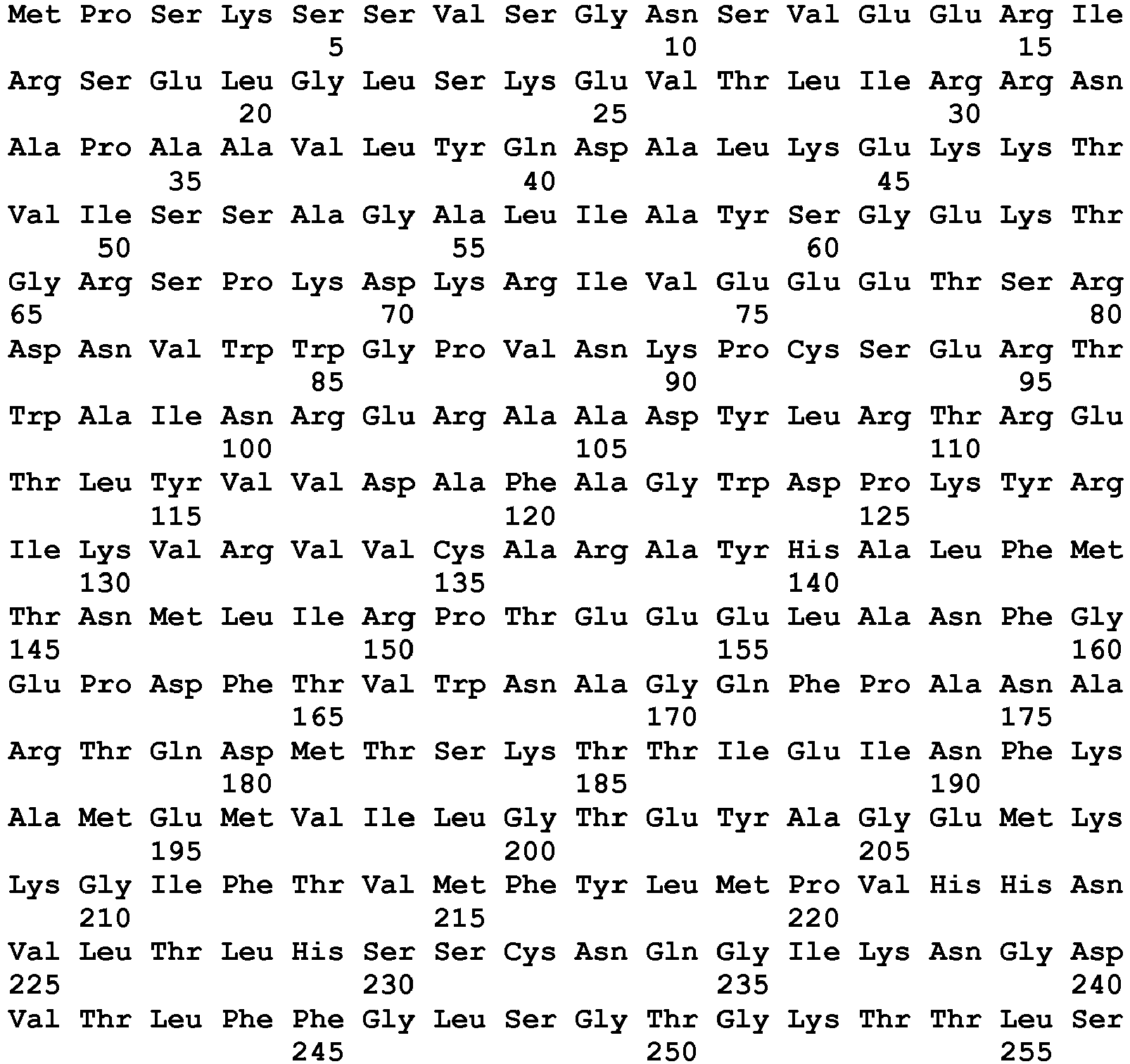

- <210> 95
<211> 539
<212> PRT
<213> Citrobacter koseri - <220>
<223> CkoPCK - <400> 95


- <210> 96
<211> 539
<212> PRT
<213> Cronobacter sakazakii - <220>
<223> CsaPCK - <400> 96

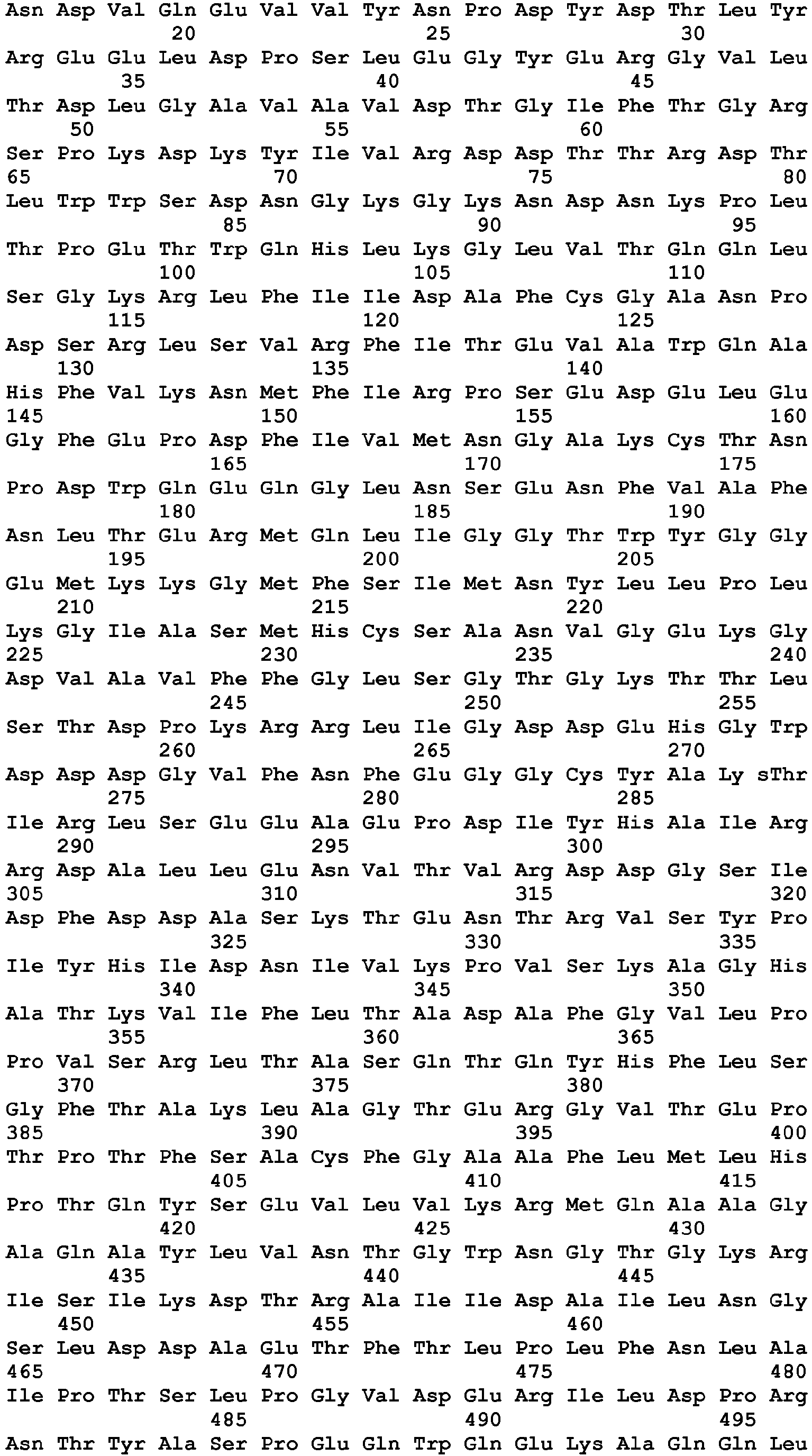

- <210> 97
<211> 553
<212> PRT
<213> Debaryomyces hansenii - <220>
<223> DhaPCK - <400> 97
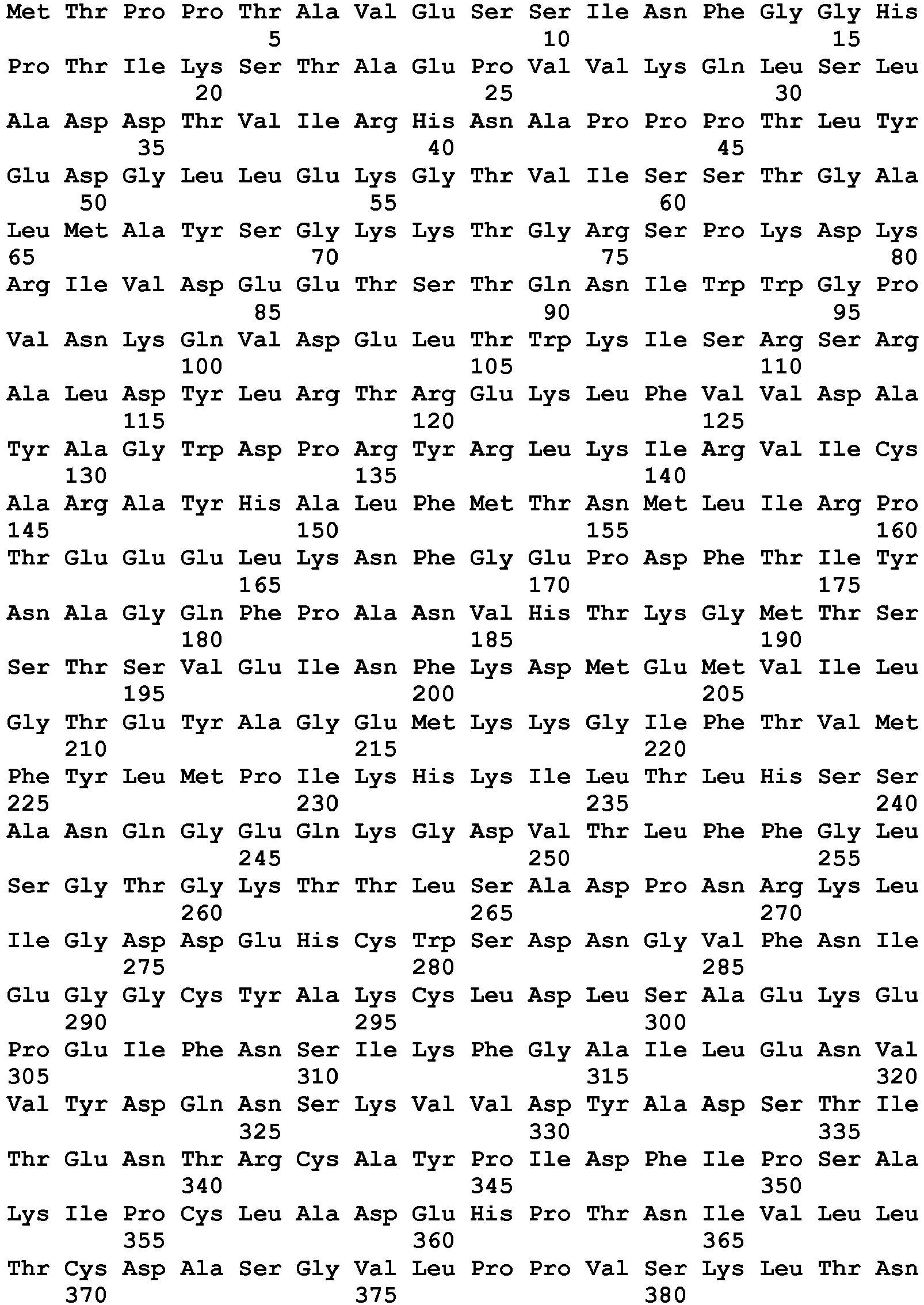

- <210> 98
<211> 540
<212> PRT
<213> Escherichia fergusonii - <220>
<223> EfePCK - <400> 98


- <210> 99
<211> 539
<212> PRT
<213> Edwardsiella tarda - <220>
<223> EtaPCK - <400> 99


- <210> 100
<211> 543
<212> PRT
<213> Kluyveromyces lactis - <220>
<223> KlaPCK - <400> 100

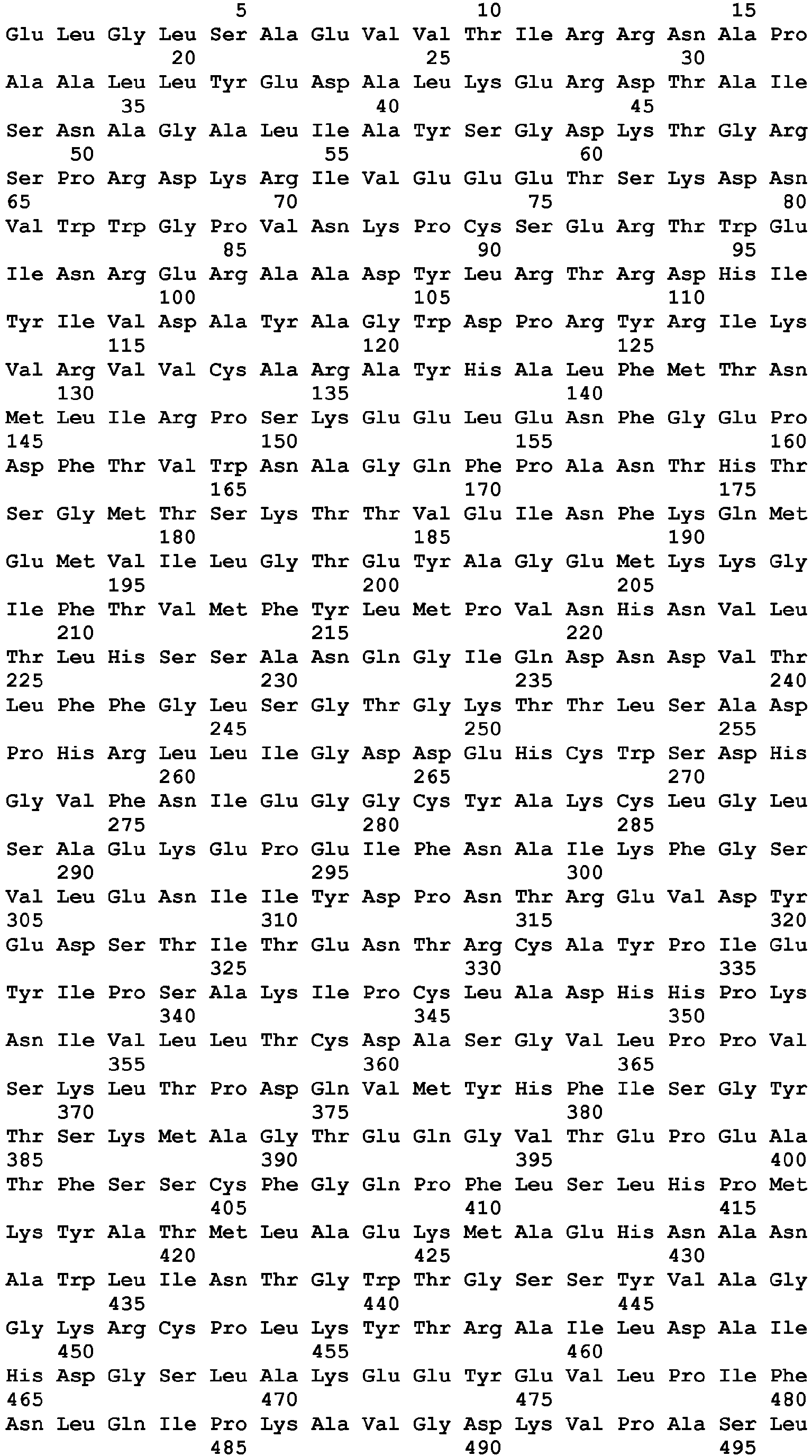

- <210> 101
<211> 542
<212> PRT
<213> Lodderomyces elongisporus - <220>
<223> LelPCK - <400> 101


- <210> 102
<211> 542
<212> PRT
<213> Pectobacterium carotovorum - <220>
<223> PcaPCK - <400> 102
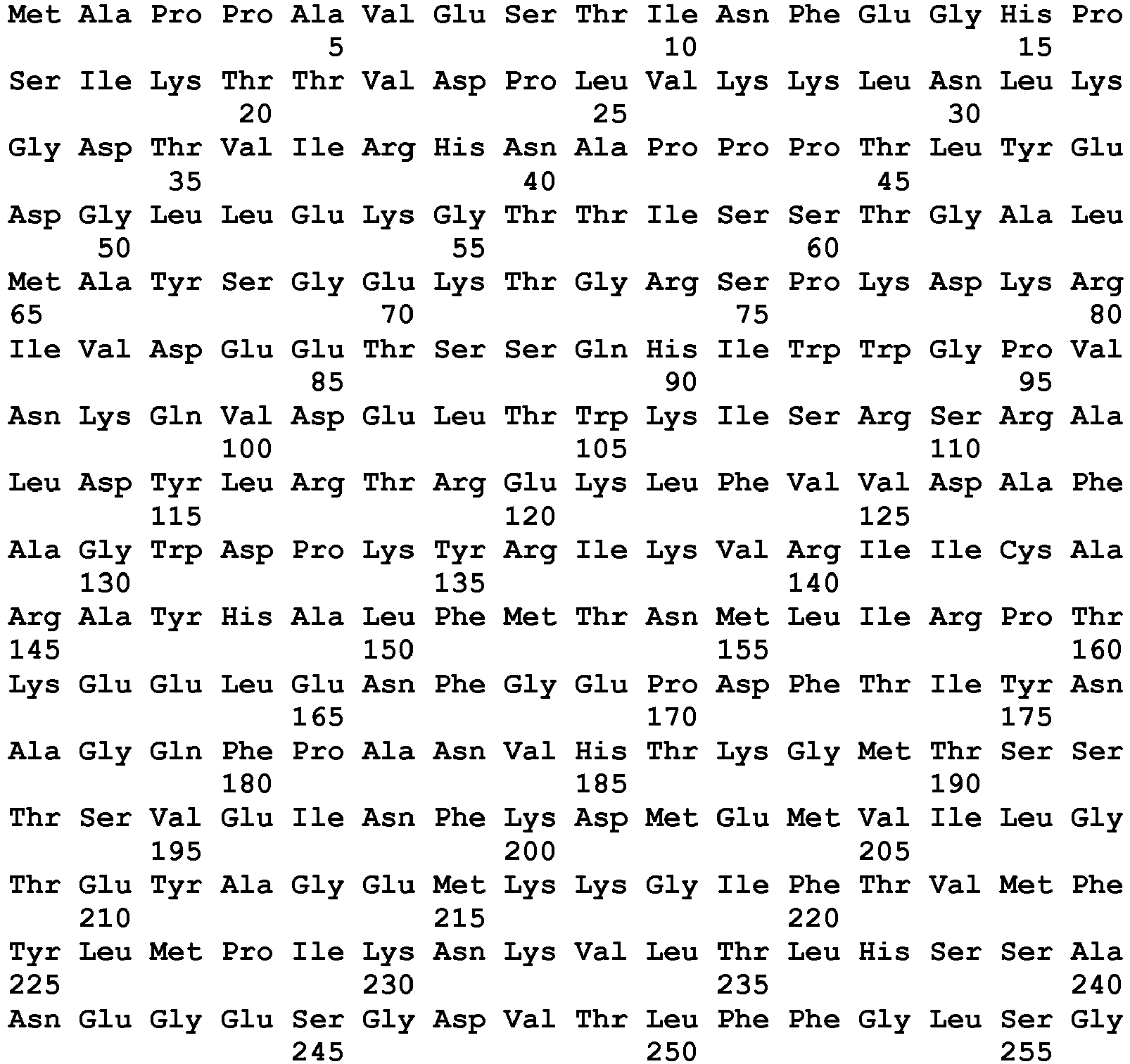

- <210> 103
<211> 543
<212> PRT
<213> Photobacterium leiognathi - <220>
<223> PlePCK - <400> 103

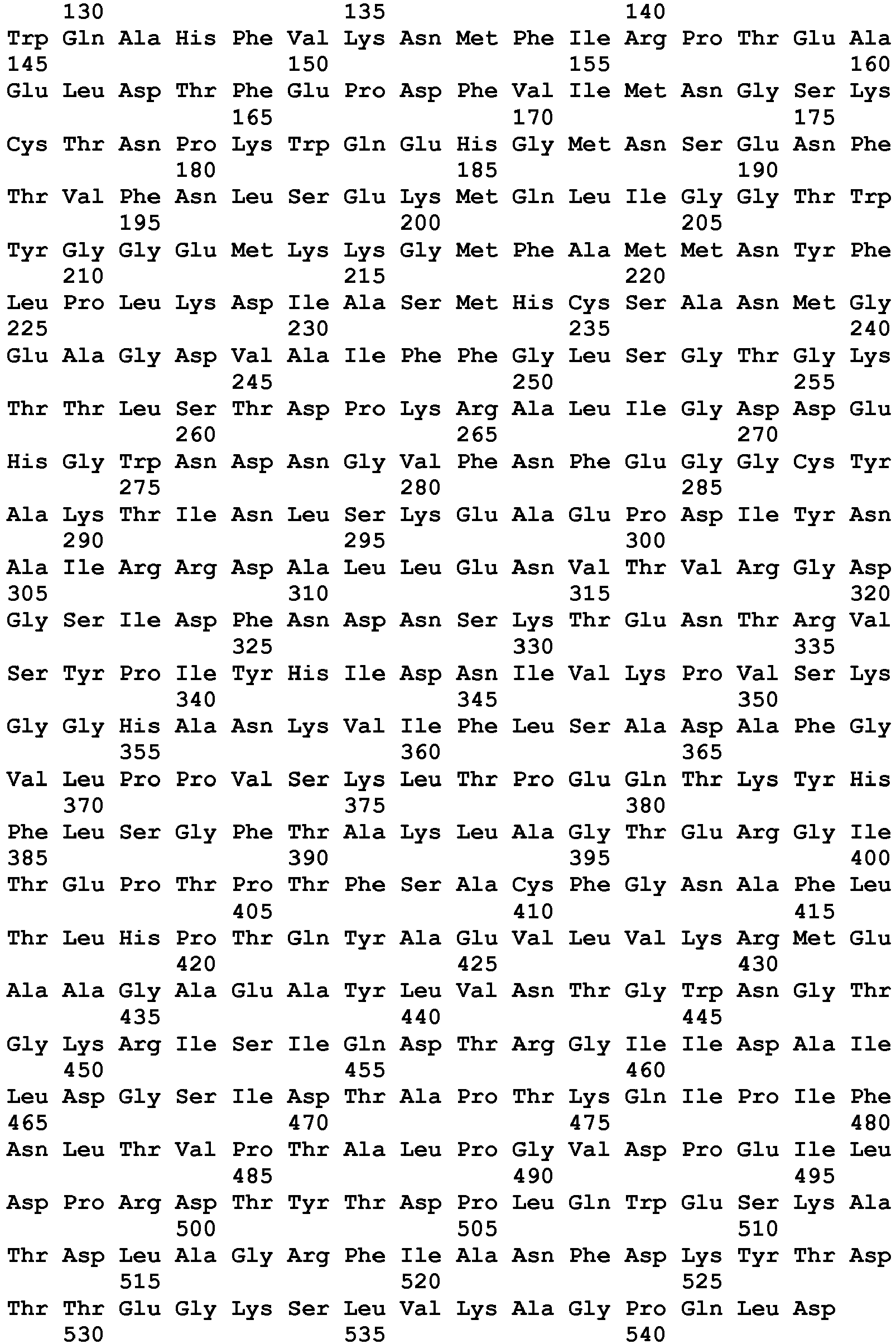
- <210> 104
<211> 539
<212> PRT
<213> Providencia rettgeri - <220>
<223> PrePCK - <400> 104


- <210> 105
<211> 549
<212> PRT
<213> Saccharomyces cerevisiae - <220>
<223> ScePCK - <400> 105

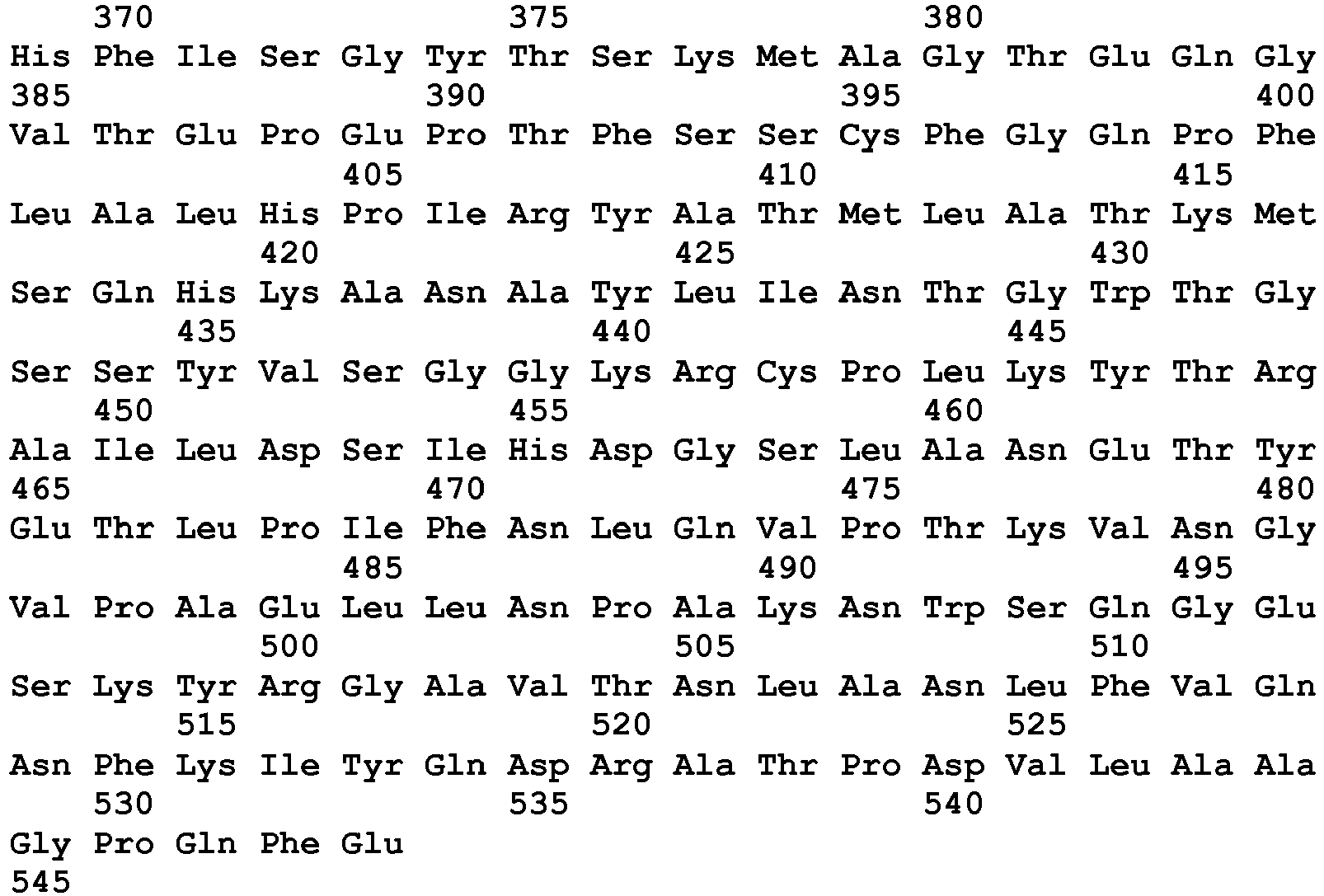
- <210> 106
<211> 539
<212> PRT
<213> Serratia odorifera - <220>
<223> SodPCK - <400> 106


- <210> 107
<211> 543
<212> PRT
<213> Vibrio orientalis - <220>
<223> VorPCK - <400> 107


- <210> 108
<211> 558
<212> PRT
<213> Vanderwaltozyma polyspora - <220>
<223> VpoPCK - <400> 108

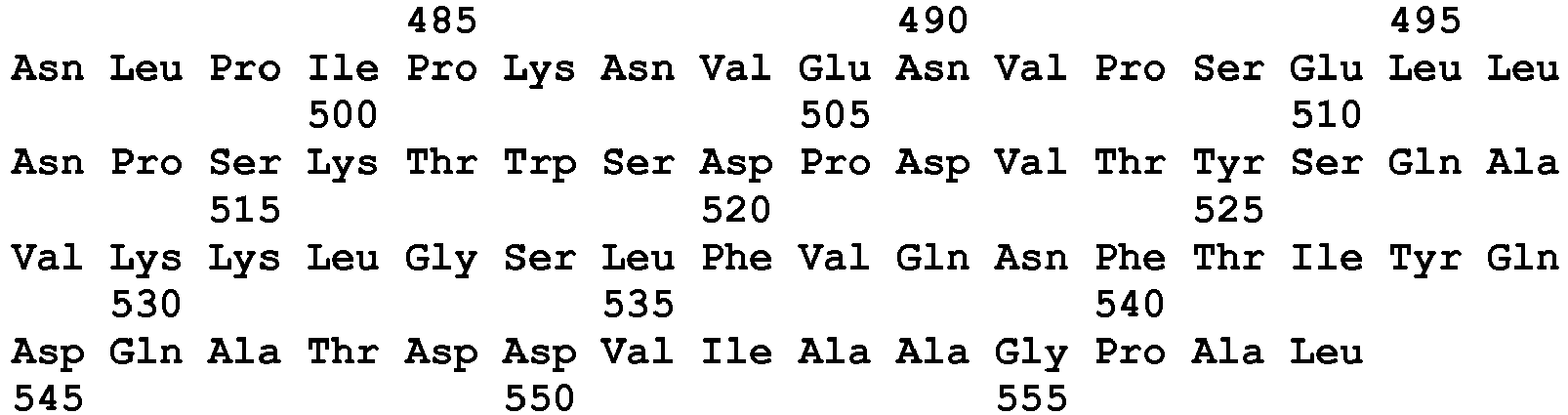
- <210> 109
<211> 543
<212> PRT
<213> Vibrio tubiashii - <220>
<223> VtuPCK - <400> 109


- <210> 110
<211> 539
<212> PRT
<213> Yersinia bercovieri - <220>
<223> YbePCK - <400> 110


- <210> 111
<211> 556
<212> PRT
<213> Yarrowia lipolytica - <220>
<223> YliPCK - <400> 111

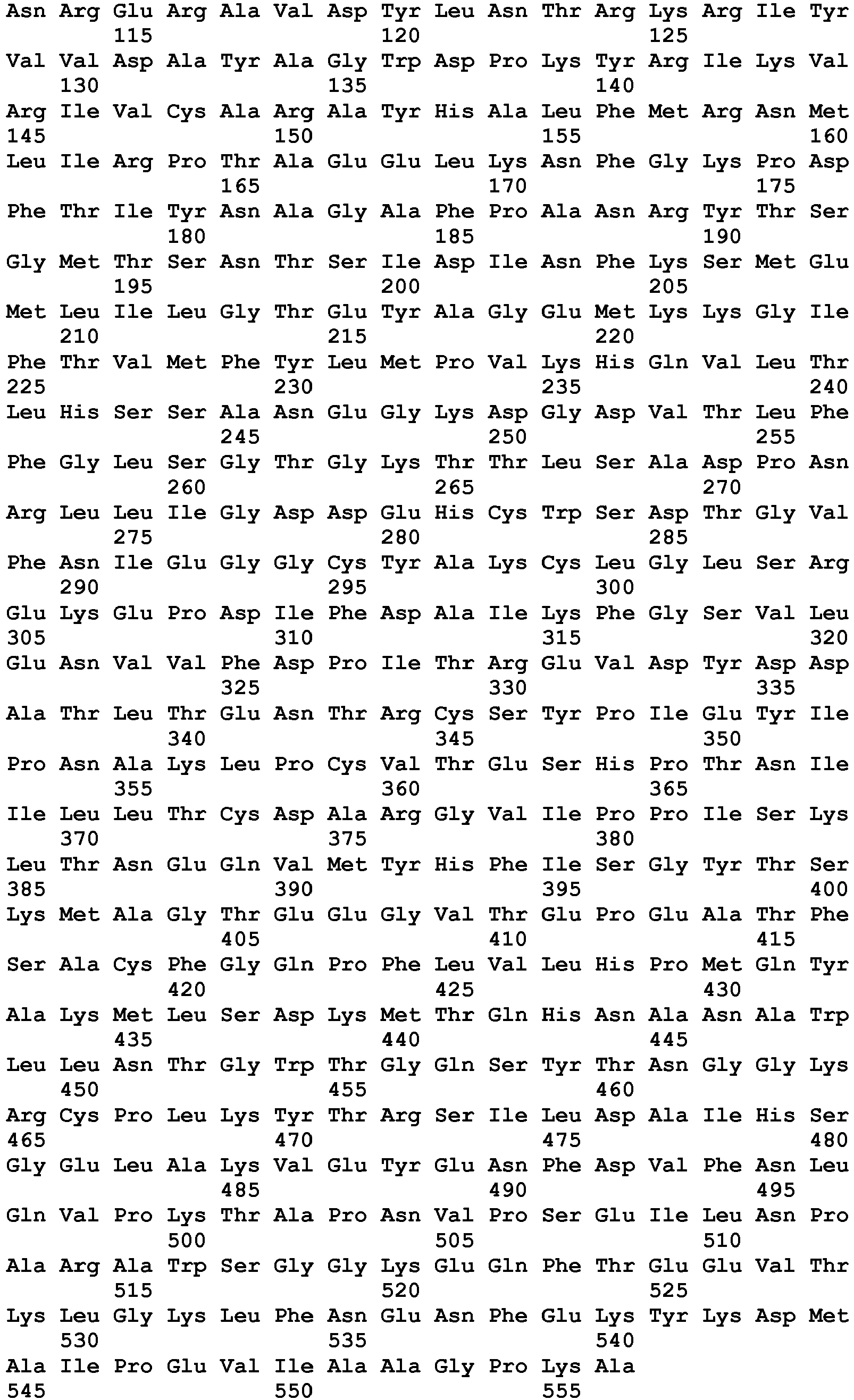
- <210> 112
<211> 539
<212> PRT
<213> Yersinia rohdei - <220>
<223> YroPCK - <400> 112


- <210> 113
<211> 548
<212> PRT
<213> Zygosaccharomyces rouxii - <220>
<223> ZroPCK - <400> 113

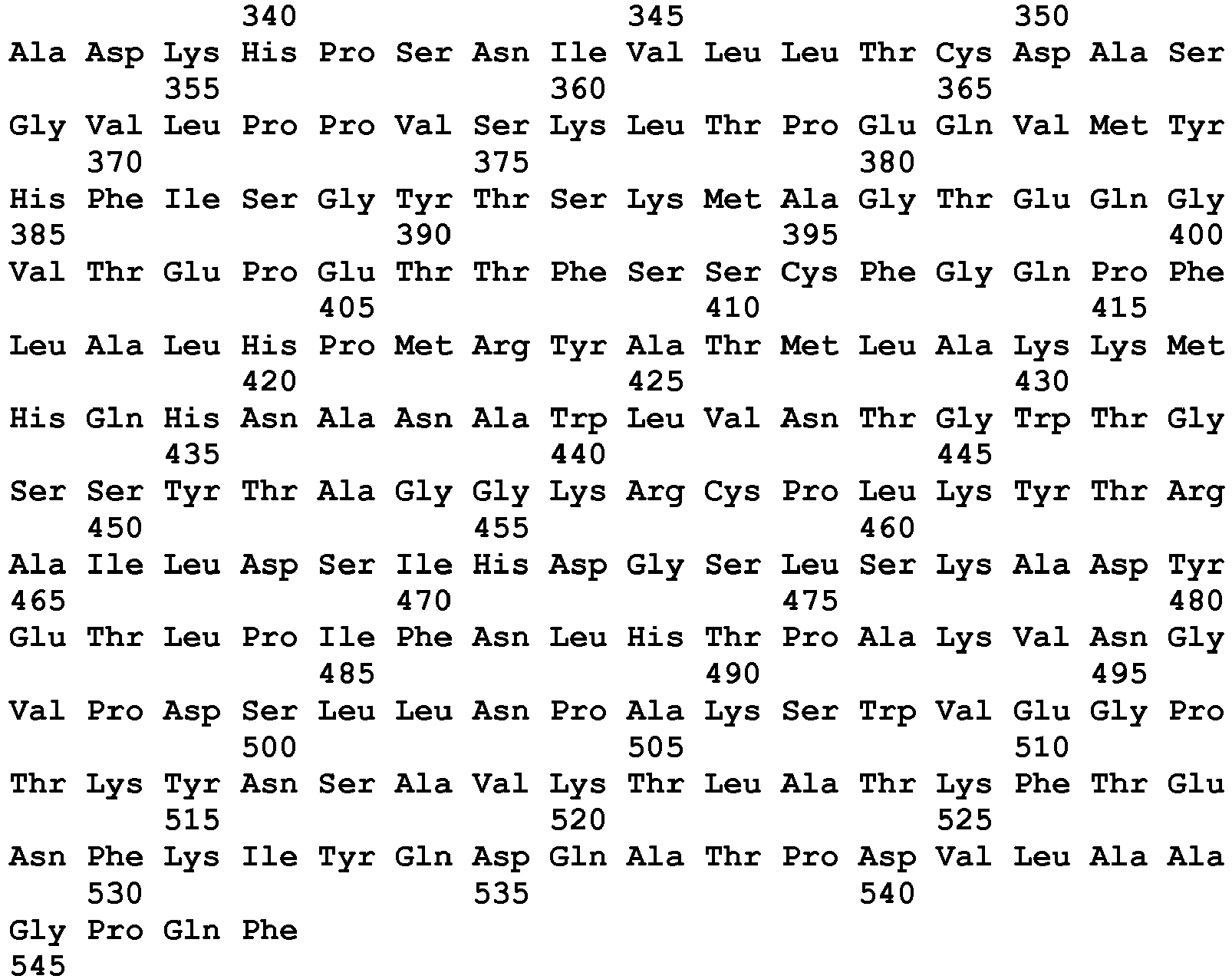
- <210> 114
<211> 41
<212> DNA
<213> Artificial Sequence - <220>
<223> Description of Artificial Sequence: CglPCK-F - <400> 114
gacacttttt caaaatgcca tctaaatcta gtgtttctggg 41 - <210> 115
<211> 38
<212> DNA
<213> Artificial Sequence - <220>
<223> Description of Artificial Sequence: CglPCK-R - <400> 115
gaaatcaact tttgttccaa ttgtggacca gcagccaa 38 - <210> 116
<211> 36
<212> DNA
<213> Artificial Sequence - <220>
<223> Description of Artificial Sequence: CkoPCK-F - <400> 116
gacacttttt caaaatgcgc gttaacagct taaccc 36 - <210> 117
<211> 32
<212> DNA
<213> Artificial Sequence - <220>
<223> Description of Artificial Sequence: CkoPCK-R - <400> 117
gaaatcaact tttgttccag cttcggcccg gc 32 - <210> 118
<211> 36
<212> DNA
<213> Artificial Sequence - <220>
<223> Description of Artificial Sequence: CsaPCK-F - <400> 118
gacacttttt caaaatgcga gttacaggca taaccc 36 - <210> 119
<211> 32
<212> DNA
<213> Artificial Sequence - <220>
<223> Description of Artificial Sequence: CsaPCK-R - <400> 119
gaaatcaact tttgttcgcg ctgtgggcct gc 32 - <210> 120
<211> 37
<212> DNA
<213> Artificial Sequence - <220>
<223> Description of Artificial Sequence: DhaPCK-F - <400> 120
gacacttttt caaaatgaca cctcctactg ctgttga 37 - <210> 121
<211> 35
<212> DNA
<213> Artificial Sequence - <220>
<223> Description of Artificial Sequence: DhaPCK-R - <400> 121
gaaatcaact tttgttcagc atcaggacca gcagc 35 - <210> 122
<211> 38
<212> DNA
<213> Artificial Sequence - <220>
<223> Description of Artificial Sequence: EfePCK-F - <400> 122
gacacttttt caaaatgcgc gtgaacaaaa gtttaacc 38 - <210> 123
<211> 40
<212> DNA
<213> Artificial Sequence - <220>
<223> Description of Artificial Sequence: EfePCK-R - <400> 123
gaaatcaact tttgttccat cttcggacct gcttctacca 40 - <210> 124
<211> 35
<212> DNA
<213> Artificial Sequence - <220>
<223> Description of Artificial Sequence: EtaPCK-F - <400> 124
gacacttttt caaaatgcat gccactggct taact 35 - <210> 125
<211> 33
<212> DNA
<213> Artificial Sequence - <220>
<223> Description of Artificial Sequence: EtaPCK-R - <400> 125
gaaatcaact tttgttcacg ttgtgggccg gca 33 - <210> 126
<211> 42
<212> DNA
<213> Artificial Sequence - <220>
<223> Description of Artificial Sequence: KlaPCK-F - <400> 126
gacacttttt caaaatgtca ccaactaaga cacaaaattc tg 42 - <210> 127
<211> 39
<212> DNA
<213> Artificial Sequence - <220>
<223> Description of Artificial Sequence: KlaPCK-R - <400> 127
gaaatcaact tttgttctaa ttgcggacca gcagctaag 39 - <210> 128
<211> 32
<212> DNA
<213> Artificial Sequence - <220>
<223> Description of Artificial Sequence: LelPCK-F - <400> 128
gacacttttt caaaatggca cccccagcag ta 32 - <210> 129
<211> 36
<212> DNA
<213> Artificial Sequence - <220>
<223> Description of Artificial Sequence: LelPCK-R - <400> 129
gaaatcaact tttgttcaac atcgggtcca gcagct 36 - <210> 130
<211> 37
<212> DNA
<213> Artificial Sequence - <220>
<223> Description of Artificial Sequence: PcaPCK-F - <400> 130
gacacttttt caaaatgcag atcaacggta ttacccc 37 - <210> 131
<211> 32
<212> DNA
<213> Artificial Sequence - <220>
<223> Description of Artificial Sequence: PcaPCK-R - <400> 131
gaaatcaact tttgttcgcg cttcggccct gc 32 - <210> 132
<211> 40
<212> DNA
<213> Artificial Sequence - <220>
<223> Description of Artificial Sequence: PlePCK-F - <400> 132
gacacttttt caaaatgagc acgatgtgtg tcgataataa 40 - <210> 133
<211> 41
<212> DNA
<213> Artificial Sequence - <220>
<223> Description of Artificial Sequence: PlePCK-R - <400> 133
gaaatcaact tttgttcgtc taactgtggt ccggctttaac 41 - <210> 134
<211> 37
<212> DNA
<213> Artificial Sequence - <220>
<223> Description of Artificial Sequence: PrePCK-F - <400> 134
gacacttttt caaaatgagc gctaaaagca ttaccct 37 - <210> 135
<211> 38
<212> DNA
<213> Artificial Sequence - <220>
<223> Description of Artificial Sequence: PrePCK-R - <400> 135
gaaatcaact tttgttccag ttttggccct gctttcac 38 - <210> 136
<211> 42
<212> DNA
<213> Artificial Sequence - <220>
<223> Description of Artificial Sequence: ScePCK-F - <400> 136
gacacttttt caaaatgtcc ccttctaaaa tgaatgctac ag 42 - <210> 137
<211> 38
<212> DNA
<213> Artificial Sequence - <220>
<223> Description of Artificial Sequence: ScePCK-R - <400> 137
gaaatcaact tttgttcctc gaattgagga ccagcggc 38 - <210> 138
<211> 36
<212> DNA
<213> Artificial Sequence - <220>
<223> Description of Artificial Sequence: SodPCK-F - <400> 138
gacacttttt caaaatgcgt gctaaaggta tcaccc 36 - <210> 139
<211> 33
<212> DNA
<213> Artificial Sequence - <220>
<223> Description of Artificial Sequence: SodPCK-R - <400> 139
gaaatcaact tttgttccag cttcggaccg gcg 33 - <210> 140
<211> 40
<212> DNA
<213> Artificial Sequence - <220>
<223> Description of Artificial Sequence: VorPCK-F - <400> 140
gacacttttt caaaatgacc gttatggaac atactaaggc 40 - <210> 141
<211> 38
<212> DNA
<213> Artificial Sequence - <220>
<223> Description of Artificial Sequence: VorPCK-R - <400> 141
gaaatcaact tttgttcatc tagctgagga cctgcagc 38 - <210> 142
<211> 44
<212> DNA
<213> Artificial Sequence - <220>
<223> Description of Artificial Sequence: VpoPCK-F - <400> 142
gacacttttt caaaatggct ccaactaaaa tagaagatta ctct 44 - <210> 143
<211> 35
<212> DNA
<213> Artificial Sequence - <220>
<223> Description of Artificial Sequence: VpoPCK-R - <400> 143
gaaatcaact tttgttctag ggctggacca gctgc 35 - <210> 144
<211> 40
<212> DNA
<213> Artificial Sequence - <220>
<223> Description of Artificial Sequence: VtuPCK-F - <400> 144
gacacttttt caaaatgacc gttatggaac atacaaaggc 40 - <210> 145
<211> 37
<212> DNA
<213> Artificial Sequence - <220>
<223> Description of Artificial Sequence: VtuPCK-R - <400> 145
gaaatcaact tttgttcatc tagctgaggt ccagccg 37 - <210> 146
<211> 39
<212> DNA
<213> Artificial Sequence - <220>
<223> Description of Artificial Sequence: YbePCK-F - <400> 146
gacacttttt caaaatgagt gttaaaggaa ttaccccgc 39 - <210> 147
<211> 35
<212> DNA
<213> Artificial Sequence - <220>
<223> Description of Artificial Sequence: YbePCK-R - <400> 147
gaaatcaact tttgttcgat cttcggccct gcgct 35 - <210> 148
<211> 33
<212> DNA
<213> Artificial Sequence - <220>
<223> Description of Artificial Sequence: YliPCK-F - <400> 148
gacacttttt caaaatgtct ccccccgtcaacc 33 - <210> 149
<211> 33
<212> DNA
<213> Artificial Sequence - <220>
<223> Description of Artificial Sequence: YliPCK-R - <400> 149
gaaatcaact tttgttcagc cttagggccg gca 33 - <210> 150
<211> 39
<212> DNA
<213> Artificial Sequence - <220>
<223> Description of Artificial Sequence: YroPCK-F - <400> 150
gacacttttt caaaatgagt gttaaaggaa ttaccccgc 39 - <210> 151
<211> 37
<212> DNA
<213> Artificial Sequence - <220>
<223> Description of Artificial Sequence: YroPCK-R - <400> 151
gaaatcaact tttgttcgac ttttggccca gcactga 37 - <210> 152
<211> 34
<212> DNA
<213> Artificial Sequence - <220>
<223> Description of Artificial Sequence: ZroPCK-F - <400> 152
gacacttttt caaaatgtcg ccctccaaag ttcc 34 - <210> 153
<211> 40
<212> DNA
<213> Artificial Sequence - <220>
<223> Description of Artificial Sequence: ZroPCK-R - <400> 153
gaaatcaact tttgttcgaa ttgaggacca gctgcaagaa 40 - <210> 154
<211> 540
<212> PRT
<213> Escherichia coli - <220>
<223> EcoPCK - <400> 154

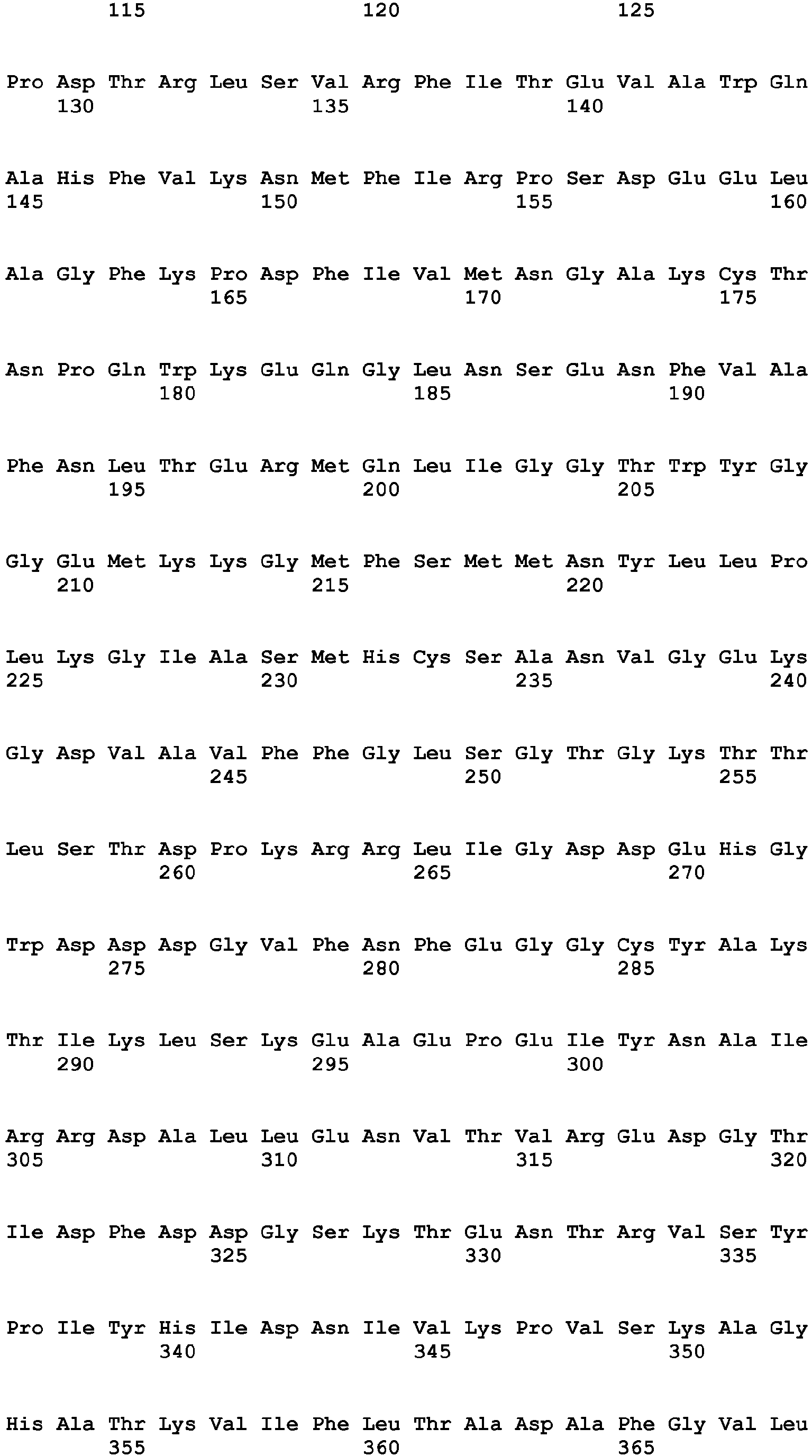

- <210> 155
<211> 1178
<212> PRT
<213> Gallus gallus - <220>
<221> misc_feature
<222> (566) .. (566)
<223> Xaa can be any naturally occurring amino acid
<223> GglPYC - <400> 155


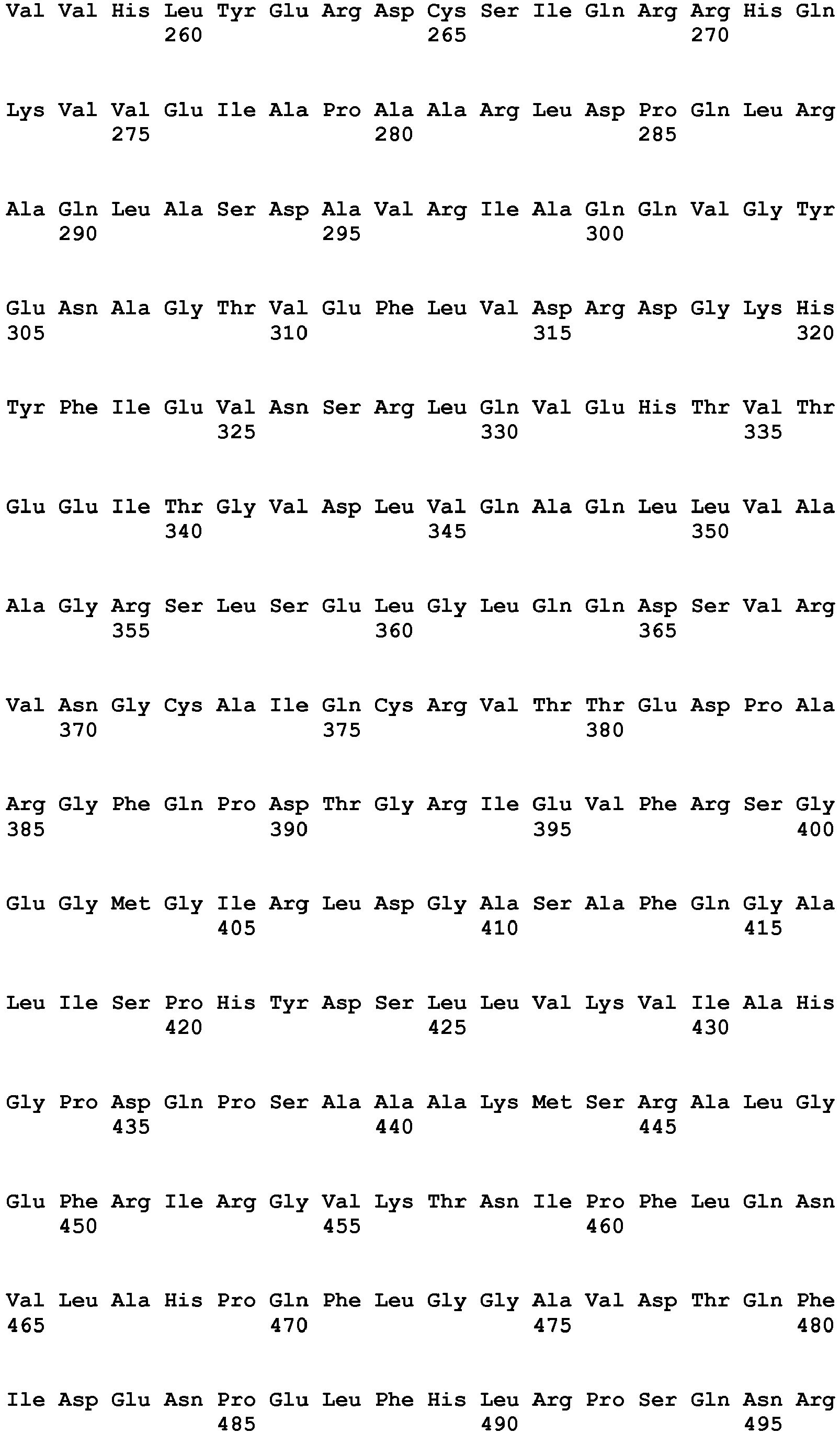


- <210> 156
<211> 312
<212> PRT
<213> Escherichia coli - <220>
<223> EcoMDH - <400> 156


- <210> 157
<211> 38
<212> DNA
<213> Artificial Sequence - <220>
<223> Description of Artificial Sequence: EcoPCK-F - <400> 157
gacacttttt caaaatgcgc gttaacaatg gtttgacc 38 - <210> 158
<211> 32
<212> DNA
<213> Description of Artificial Sequence: EcoPCK-R - <400> 158
gaaatcaact tttgttccag cttcggacca gc 32 - <210> 159
<211> 34
<212> DNA
<213> Description of Artificial Sequence: GglPYC-F - <400> 159
catctttttc aaacatgtcg cagctgtgtg tccc 34 - <210> 160
<211> 37
<212> DNA
<213> Description of Artificial Sequence: GglPYC-R - <400> 160
atcatcatca tccttgtaat cctcgatctc ggcgatg 37 - <210> 161
<211> 32
<212> DNA
<213> Description of Artificial Sequence: EcoMDH-F - <400> 161
actttttcaa acatgaaagt cgcagtcctc gg 32 - <210> 162
<211> 43
<212> DNA
<213> Description of Artificial Sequence: EcoMDH-R - <400> 162
atcatcatca tccttgtaat ccttattaac gaactcttcg ccc 43
Claims (7)
- A transformant comprising one or more foreign genes of one or more kinds selected from the group consisting of a phosphoenolpyruvate carboxykinase gene and a pyruvate carboxylase gene which are incorporated into a chromosome of Schizosaccharomyces pombe as a host,
wherein a gene encoding pyruvate decarboxylase 2 in the host has been deleted or deactivated,
the phosphoenolpyruvate carboxykinase gene encodes a polypeptide which includes an amino acid sequence represented by any of SEQ ID NOS: 94 to 113, or a polypeptide which includes an amino acid sequence sharing a sequence identity of equal to or higher than 80% with an amino acid sequence represented by any of SEQ ID NOS: 94 to 113 and has phosphoenolpyruvate carboxykinase activity,
the pyruvate carboxylase gene encodes a polypeptide which includes an amino acid sequence represented by any of SEQ ID NOS: 1 to 16, or a polypeptide which includes an amino acid sequence sharing a sequence identity of equal to or higher than 80% with an amino acid sequence represented by any of SEQ ID NOS: 1 to 16 and has pyruvate carboxylase activity, and
a gene encoding malic enzyme 2 in the host has further been deleted or deactivated. - The transformant according to claim 1, wherein one or more foreign malate dehydrogenase genes are further incorporated therein.
- The transformant according to claim 2, wherein the malate dehydrogenase genes encode a polypeptide which includes an amino acid sequence represented by any of SEQ ID NOS: 17 to 21, or a polypeptide which includes an amino acid sequence sharing a sequence identity of equal to or higher than 80% with an amino acid sequence represented by any of SEQ ID NOS: 17 to 21 and has malate dehydrogenase activity.
- The transformant according to claim 1, wherein one or more foreign phosphoenolpyruvate carboxykinase genes or one or more foreign pyruvate carboxylase genes and one or more foreign malate dehydrogenase genes are incorporated into the chromosome of the host.
- A method for manufacturing a dicarboxylic acid having 4 carbon atoms, comprising:culturing the transformant according to any one of claims 1 to 4 in a culture solution; andobtaining a dicarboxylic acid having 4 carbon atoms from the cultured transformant or a culture supernatant.
- The method for manufacturing a dicarboxylic acid having 4 carbon atoms according to claim 5, wherein the dicarboxylic acid having 4 carbon atoms is malic acid or oxaloacetic acid.
- The method for manufacturing a dicarboxylic acid having 4 carbon atoms according to claim 5 or 6, wherein the culturing is continued even after a pH of the culture solution becomes equal to or less than 3.5.
Applications Claiming Priority (2)
| Application Number | Priority Date | Filing Date | Title |
|---|---|---|---|
| JP2014135043 | 2014-06-30 | ||
| PCT/JP2015/068589 WO2016002680A1 (en) | 2014-06-30 | 2015-06-26 | Transformant, method for producing same, and method for producing c4-dicarboxylic acid |
Publications (3)
| Publication Number | Publication Date |
|---|---|
| EP3162896A1 EP3162896A1 (en) | 2017-05-03 |
| EP3162896A4 EP3162896A4 (en) | 2018-01-10 |
| EP3162896B1 true EP3162896B1 (en) | 2020-05-13 |
Family
ID=55019216
Family Applications (1)
| Application Number | Title | Priority Date | Filing Date |
|---|---|---|---|
| EP15814080.6A Active EP3162896B1 (en) | 2014-06-30 | 2015-06-26 | Transformant, method for producing same, and method for producing c4-dicarboxylic acid |
Country Status (5)
| Country | Link |
|---|---|
| US (1) | US20170253895A1 (en) |
| EP (1) | EP3162896B1 (en) |
| JP (1) | JP6620373B2 (en) |
| ES (1) | ES2811926T3 (en) |
| WO (1) | WO2016002680A1 (en) |
Family Cites Families (12)
| Publication number | Priority date | Publication date | Assignee | Title |
|---|---|---|---|---|
| US20080090273A1 (en) * | 2005-11-21 | 2008-04-17 | Aaron Adriaan Winkler | Malic Acid Production in Recombinant Yeast |
| US20110045559A1 (en) * | 2007-05-18 | 2011-02-24 | Aaron Adriaan Winkler | Malic acid production in recombinant yeast |
| US20110039327A1 (en) * | 2007-05-18 | 2011-02-17 | Aaron Adriaan Winkler | Organic acid production by fungal cells |
| WO2009065778A1 (en) * | 2007-11-20 | 2009-05-28 | Dsm Ip Assets B.V. | Succinic acid production in a eukaryotic cell |
| WO2009155382A1 (en) * | 2008-06-17 | 2009-12-23 | Genomatica, Inc. | Microorganisms and methods for the biosynthesis of fumarate, malate, and acrylate |
| EP2619314A1 (en) * | 2010-09-24 | 2013-07-31 | DSM IP Assets B.V. | Dicarboxylic acid production process |
| EP2495304A1 (en) * | 2010-12-03 | 2012-09-05 | DSM IP Assets B.V. | Dicarboxylic acid production in a yeast cell |
| WO2012103261A2 (en) * | 2011-01-25 | 2012-08-02 | Finley Kenneth R | Compositions and methods for succinate production |
| PL2726624T3 (en) * | 2011-07-01 | 2017-06-30 | Dsm Ip Assets B.V. | Process for producing dicarboxylic acids employing fungal cells |
| EP3901248A1 (en) * | 2012-07-25 | 2021-10-27 | Cargill, Incorporated | Yeast cells having reductive tca pathway from pyruvate to succinate and overexpressing an exogenous nad(p)+ transhydrogenase enzyme |
| CN105378093A (en) * | 2013-07-18 | 2016-03-02 | 帝斯曼知识产权资产管理有限公司 | Fermentation process |
| JP6090090B2 (en) * | 2013-09-30 | 2017-03-08 | 株式会社デンソー | Remote control for water heater |
-
2015
- 2015-06-26 WO PCT/JP2015/068589 patent/WO2016002680A1/en not_active Ceased
- 2015-06-26 US US15/316,005 patent/US20170253895A1/en not_active Abandoned
- 2015-06-26 ES ES15814080T patent/ES2811926T3/en active Active
- 2015-06-26 EP EP15814080.6A patent/EP3162896B1/en active Active
- 2015-06-26 JP JP2016531344A patent/JP6620373B2/en not_active Expired - Fee Related
Non-Patent Citations (1)
| Title |
|---|
| None * |
Also Published As
| Publication number | Publication date |
|---|---|
| JP6620373B2 (en) | 2019-12-18 |
| ES2811926T3 (en) | 2021-03-15 |
| US20170253895A1 (en) | 2017-09-07 |
| WO2016002680A1 (en) | 2016-01-07 |
| JPWO2016002680A1 (en) | 2017-04-27 |
| EP3162896A4 (en) | 2018-01-10 |
| EP3162896A1 (en) | 2017-05-03 |
Similar Documents
| Publication | Publication Date | Title |
|---|---|---|
| EP2468860B1 (en) | Transformant and process for production thereof, and process for production of lactic acid | |
| US11655478B2 (en) | Promoter derived from organic acid-resistant yeast and method for expression of target gene by using same | |
| US9617570B2 (en) | Acid resistant yeast cell and use thereof | |
| EP3808852A1 (en) | Recombinant acid-resistant yeast with inhibited lactate metabolism and alcohol production and method of producing lactic acid using the same | |
| CN112789353A (en) | Recombinant acid-resistant yeast inhibiting ethanol production and method for preparing lactic acid using same | |
| CN104583396A (en) | Transformant and method for producing same, and method for producing lactic acid | |
| JP2021171060A (en) | Recombinant acid-resistant yeast with suppressed glycerol production and method of producing lactic acid using the same | |
| EP3205721B1 (en) | Transformant and method for producing same, and method for producing lactic acid | |
| JP5813977B2 (en) | Mutant yeast belonging to the genus Kluyveromyces and method for producing ethanol using the same | |
| US9309542B2 (en) | Recombinant Caldicellulosiruptor bescii and methods of use | |
| US20220348966A1 (en) | System and method for increased alcohol tolerance and production in yeast | |
| CN108424859B (en) | Construction and application of gene engineering bacteria for producing citicoline | |
| EP3162896A1 (en) | Transformant, method for producing same, and method for producing c4-dicarboxylic acid | |
| KR101773123B1 (en) | Genetically engineered yeast cell producing 2,3-butanediol and method of producing 2,3-butanediol using the same | |
| EP3072955B1 (en) | Transformant and process for production thereof, and process for production of lactic acid | |
| JP5828447B2 (en) | Ethanol production method | |
| JP6236209B2 (en) | Method for producing butanol | |
| JP2009254264A (en) | Transformation system of microorganism belonging to issatchenkia orientalis |
Legal Events
| Date | Code | Title | Description |
|---|---|---|---|
| STAA | Information on the status of an ep patent application or granted ep patent |
Free format text: STATUS: THE INTERNATIONAL PUBLICATION HAS BEEN MADE |
|
| PUAI | Public reference made under article 153(3) epc to a published international application that has entered the european phase |
Free format text: ORIGINAL CODE: 0009012 |
|
| STAA | Information on the status of an ep patent application or granted ep patent |
Free format text: STATUS: REQUEST FOR EXAMINATION WAS MADE |
|
| 17P | Request for examination filed |
Effective date: 20161202 |
|
| AK | Designated contracting states |
Kind code of ref document: A1 Designated state(s): AL AT BE BG CH CY CZ DE DK EE ES FI FR GB GR HR HU IE IS IT LI LT LU LV MC MK MT NL NO PL PT RO RS SE SI SK SM TR |
|
| AX | Request for extension of the european patent |
Extension state: BA ME |
|
| DAV | Request for validation of the european patent (deleted) | ||
| DAX | Request for extension of the european patent (deleted) | ||
| A4 | Supplementary search report drawn up and despatched |
Effective date: 20171211 |
|
| RIC1 | Information provided on ipc code assigned before grant |
Ipc: C12P 7/46 20060101ALI20171205BHEP Ipc: C12N 15/09 20060101AFI20171205BHEP Ipc: C12N 1/19 20060101ALI20171205BHEP Ipc: C12N 9/88 20060101ALI20171205BHEP Ipc: C12N 9/04 20060101ALI20171205BHEP Ipc: C12N 9/00 20060101ALI20171205BHEP |
|
| STAA | Information on the status of an ep patent application or granted ep patent |
Free format text: STATUS: EXAMINATION IS IN PROGRESS |
|
| 17Q | First examination report despatched |
Effective date: 20190206 |
|
| GRAP | Despatch of communication of intention to grant a patent |
Free format text: ORIGINAL CODE: EPIDOSNIGR1 |
|
| STAA | Information on the status of an ep patent application or granted ep patent |
Free format text: STATUS: GRANT OF PATENT IS INTENDED |
|
| INTG | Intention to grant announced |
Effective date: 20191206 |
|
| GRAS | Grant fee paid |
Free format text: ORIGINAL CODE: EPIDOSNIGR3 |
|
| GRAA | (expected) grant |
Free format text: ORIGINAL CODE: 0009210 |
|
| STAA | Information on the status of an ep patent application or granted ep patent |
Free format text: STATUS: THE PATENT HAS BEEN GRANTED |
|
| AK | Designated contracting states |
Kind code of ref document: B1 Designated state(s): AL AT BE BG CH CY CZ DE DK EE ES FI FR GB GR HR HU IE IS IT LI LT LU LV MC MK MT NL NO PL PT RO RS SE SI SK SM TR |
|
| REG | Reference to a national code |
Ref country code: GB Ref legal event code: FG4D |
|
| REG | Reference to a national code |
Ref country code: CH Ref legal event code: EP |
|
| REG | Reference to a national code |
Ref country code: DE Ref legal event code: R096 Ref document number: 602015052833 Country of ref document: DE |
|
| REG | Reference to a national code |
Ref country code: AT Ref legal event code: REF Ref document number: 1270313 Country of ref document: AT Kind code of ref document: T Effective date: 20200615 |
|
| REG | Reference to a national code |
Ref country code: NL Ref legal event code: FP |
|
| REG | Reference to a national code |
Ref country code: LT Ref legal event code: MG4D |
|
| PG25 | Lapsed in a contracting state [announced via postgrant information from national office to epo] |
Ref country code: LT Free format text: LAPSE BECAUSE OF FAILURE TO SUBMIT A TRANSLATION OF THE DESCRIPTION OR TO PAY THE FEE WITHIN THE PRESCRIBED TIME-LIMIT Effective date: 20200513 Ref country code: NO Free format text: LAPSE BECAUSE OF FAILURE TO SUBMIT A TRANSLATION OF THE DESCRIPTION OR TO PAY THE FEE WITHIN THE PRESCRIBED TIME-LIMIT Effective date: 20200813 Ref country code: FI Free format text: LAPSE BECAUSE OF FAILURE TO SUBMIT A TRANSLATION OF THE DESCRIPTION OR TO PAY THE FEE WITHIN THE PRESCRIBED TIME-LIMIT Effective date: 20200513 Ref country code: SE Free format text: LAPSE BECAUSE OF FAILURE TO SUBMIT A TRANSLATION OF THE DESCRIPTION OR TO PAY THE FEE WITHIN THE PRESCRIBED TIME-LIMIT Effective date: 20200513 Ref country code: IS Free format text: LAPSE BECAUSE OF FAILURE TO SUBMIT A TRANSLATION OF THE DESCRIPTION OR TO PAY THE FEE WITHIN THE PRESCRIBED TIME-LIMIT Effective date: 20200913 Ref country code: GR Free format text: LAPSE BECAUSE OF FAILURE TO SUBMIT A TRANSLATION OF THE DESCRIPTION OR TO PAY THE FEE WITHIN THE PRESCRIBED TIME-LIMIT Effective date: 20200814 Ref country code: PT Free format text: LAPSE BECAUSE OF FAILURE TO SUBMIT A TRANSLATION OF THE DESCRIPTION OR TO PAY THE FEE WITHIN THE PRESCRIBED TIME-LIMIT Effective date: 20200914 |
|
| PG25 | Lapsed in a contracting state [announced via postgrant information from national office to epo] |
Ref country code: HR Free format text: LAPSE BECAUSE OF FAILURE TO SUBMIT A TRANSLATION OF THE DESCRIPTION OR TO PAY THE FEE WITHIN THE PRESCRIBED TIME-LIMIT Effective date: 20200513 Ref country code: RS Free format text: LAPSE BECAUSE OF FAILURE TO SUBMIT A TRANSLATION OF THE DESCRIPTION OR TO PAY THE FEE WITHIN THE PRESCRIBED TIME-LIMIT Effective date: 20200513 Ref country code: LV Free format text: LAPSE BECAUSE OF FAILURE TO SUBMIT A TRANSLATION OF THE DESCRIPTION OR TO PAY THE FEE WITHIN THE PRESCRIBED TIME-LIMIT Effective date: 20200513 Ref country code: BG Free format text: LAPSE BECAUSE OF FAILURE TO SUBMIT A TRANSLATION OF THE DESCRIPTION OR TO PAY THE FEE WITHIN THE PRESCRIBED TIME-LIMIT Effective date: 20200813 |
|
| REG | Reference to a national code |
Ref country code: AT Ref legal event code: MK05 Ref document number: 1270313 Country of ref document: AT Kind code of ref document: T Effective date: 20200513 |
|
| PG25 | Lapsed in a contracting state [announced via postgrant information from national office to epo] |
Ref country code: AL Free format text: LAPSE BECAUSE OF FAILURE TO SUBMIT A TRANSLATION OF THE DESCRIPTION OR TO PAY THE FEE WITHIN THE PRESCRIBED TIME-LIMIT Effective date: 20200513 |
|
| PG25 | Lapsed in a contracting state [announced via postgrant information from national office to epo] |
Ref country code: CZ Free format text: LAPSE BECAUSE OF FAILURE TO SUBMIT A TRANSLATION OF THE DESCRIPTION OR TO PAY THE FEE WITHIN THE PRESCRIBED TIME-LIMIT Effective date: 20200513 Ref country code: SM Free format text: LAPSE BECAUSE OF FAILURE TO SUBMIT A TRANSLATION OF THE DESCRIPTION OR TO PAY THE FEE WITHIN THE PRESCRIBED TIME-LIMIT Effective date: 20200513 Ref country code: RO Free format text: LAPSE BECAUSE OF FAILURE TO SUBMIT A TRANSLATION OF THE DESCRIPTION OR TO PAY THE FEE WITHIN THE PRESCRIBED TIME-LIMIT Effective date: 20200513 Ref country code: DK Free format text: LAPSE BECAUSE OF FAILURE TO SUBMIT A TRANSLATION OF THE DESCRIPTION OR TO PAY THE FEE WITHIN THE PRESCRIBED TIME-LIMIT Effective date: 20200513 Ref country code: AT Free format text: LAPSE BECAUSE OF FAILURE TO SUBMIT A TRANSLATION OF THE DESCRIPTION OR TO PAY THE FEE WITHIN THE PRESCRIBED TIME-LIMIT Effective date: 20200513 Ref country code: EE Free format text: LAPSE BECAUSE OF FAILURE TO SUBMIT A TRANSLATION OF THE DESCRIPTION OR TO PAY THE FEE WITHIN THE PRESCRIBED TIME-LIMIT Effective date: 20200513 |
|
| REG | Reference to a national code |
Ref country code: CH Ref legal event code: PL |
|
| REG | Reference to a national code |
Ref country code: DE Ref legal event code: R097 Ref document number: 602015052833 Country of ref document: DE |
|
| PG25 | Lapsed in a contracting state [announced via postgrant information from national office to epo] |
Ref country code: PL Free format text: LAPSE BECAUSE OF FAILURE TO SUBMIT A TRANSLATION OF THE DESCRIPTION OR TO PAY THE FEE WITHIN THE PRESCRIBED TIME-LIMIT Effective date: 20200513 Ref country code: MC Free format text: LAPSE BECAUSE OF FAILURE TO SUBMIT A TRANSLATION OF THE DESCRIPTION OR TO PAY THE FEE WITHIN THE PRESCRIBED TIME-LIMIT Effective date: 20200513 Ref country code: SK Free format text: LAPSE BECAUSE OF FAILURE TO SUBMIT A TRANSLATION OF THE DESCRIPTION OR TO PAY THE FEE WITHIN THE PRESCRIBED TIME-LIMIT Effective date: 20200513 |
|
| REG | Reference to a national code |
Ref country code: ES Ref legal event code: FG2A Ref document number: 2811926 Country of ref document: ES Kind code of ref document: T3 Effective date: 20210315 |
|
| PLBE | No opposition filed within time limit |
Free format text: ORIGINAL CODE: 0009261 |
|
| STAA | Information on the status of an ep patent application or granted ep patent |
Free format text: STATUS: NO OPPOSITION FILED WITHIN TIME LIMIT |
|
| PG25 | Lapsed in a contracting state [announced via postgrant information from national office to epo] |
Ref country code: LU Free format text: LAPSE BECAUSE OF NON-PAYMENT OF DUE FEES Effective date: 20200626 |
|
| 26N | No opposition filed |
Effective date: 20210216 |
|
| PG25 | Lapsed in a contracting state [announced via postgrant information from national office to epo] |
Ref country code: LI Free format text: LAPSE BECAUSE OF NON-PAYMENT OF DUE FEES Effective date: 20200630 Ref country code: CH Free format text: LAPSE BECAUSE OF NON-PAYMENT OF DUE FEES Effective date: 20200630 Ref country code: IE Free format text: LAPSE BECAUSE OF NON-PAYMENT OF DUE FEES Effective date: 20200626 |
|
| PG25 | Lapsed in a contracting state [announced via postgrant information from national office to epo] |
Ref country code: SI Free format text: LAPSE BECAUSE OF FAILURE TO SUBMIT A TRANSLATION OF THE DESCRIPTION OR TO PAY THE FEE WITHIN THE PRESCRIBED TIME-LIMIT Effective date: 20200513 |
|
| PGFP | Annual fee paid to national office [announced via postgrant information from national office to epo] |
Ref country code: DE Payment date: 20210616 Year of fee payment: 7 Ref country code: NL Payment date: 20210517 Year of fee payment: 7 Ref country code: IT Payment date: 20210611 Year of fee payment: 7 Ref country code: FR Payment date: 20210429 Year of fee payment: 7 |
|
| PGFP | Annual fee paid to national office [announced via postgrant information from national office to epo] |
Ref country code: BE Payment date: 20210628 Year of fee payment: 7 Ref country code: GB Payment date: 20210622 Year of fee payment: 7 |
|
| REG | Reference to a national code |
Ref country code: DE Ref legal event code: R081 Ref document number: 602015052833 Country of ref document: DE Owner name: JAPAN MATERIAL TECHNOLOGIES CORPORATION, JP Free format text: FORMER OWNER: JMTC ENZYME CORPORATION, TOKYO, JP |
|
| REG | Reference to a national code |
Ref country code: BE Ref legal event code: PD Owner name: JAPAN MATERIAL TECHNOLOGIES CORPORATION; JP Free format text: DETAILS ASSIGNMENT: CHANGE OF OWNER(S), MERGE; FORMER OWNER NAME: JMTC ENZYME CORPORATION Effective date: 20211021 |
|
| PGFP | Annual fee paid to national office [announced via postgrant information from national office to epo] |
Ref country code: ES Payment date: 20210707 Year of fee payment: 7 |
|
| REG | Reference to a national code |
Ref country code: GB Ref legal event code: 732E Free format text: REGISTERED BETWEEN 20211104 AND 20211110 |
|
| REG | Reference to a national code |
Ref country code: NL Ref legal event code: PD Owner name: JAPAN MATERIAL TECHNOLOGIES CORPORATION; JP Free format text: DETAILS ASSIGNMENT: CHANGE OF OWNER(S), MERGE; FORMER OWNER NAME: JMTC ENZYME CORPORATION Effective date: 20211117 |
|
| REG | Reference to a national code |
Ref country code: ES Ref legal event code: PC2A Owner name: JAPAN MATERIAL TECHNOLOGIES CORPORATION Effective date: 20220107 |
|
| PG25 | Lapsed in a contracting state [announced via postgrant information from national office to epo] |
Ref country code: TR Free format text: LAPSE BECAUSE OF FAILURE TO SUBMIT A TRANSLATION OF THE DESCRIPTION OR TO PAY THE FEE WITHIN THE PRESCRIBED TIME-LIMIT Effective date: 20200513 Ref country code: MT Free format text: LAPSE BECAUSE OF FAILURE TO SUBMIT A TRANSLATION OF THE DESCRIPTION OR TO PAY THE FEE WITHIN THE PRESCRIBED TIME-LIMIT Effective date: 20200513 Ref country code: CY Free format text: LAPSE BECAUSE OF FAILURE TO SUBMIT A TRANSLATION OF THE DESCRIPTION OR TO PAY THE FEE WITHIN THE PRESCRIBED TIME-LIMIT Effective date: 20200513 |
|
| PG25 | Lapsed in a contracting state [announced via postgrant information from national office to epo] |
Ref country code: MK Free format text: LAPSE BECAUSE OF FAILURE TO SUBMIT A TRANSLATION OF THE DESCRIPTION OR TO PAY THE FEE WITHIN THE PRESCRIBED TIME-LIMIT Effective date: 20200513 |
|
| REG | Reference to a national code |
Ref country code: DE Ref legal event code: R119 Ref document number: 602015052833 Country of ref document: DE |
|
| REG | Reference to a national code |
Ref country code: NL Ref legal event code: MM Effective date: 20220701 |
|
| REG | Reference to a national code |
Ref country code: BE Ref legal event code: MM Effective date: 20220630 |
|
| GBPC | Gb: european patent ceased through non-payment of renewal fee |
Effective date: 20220626 |
|
| PG25 | Lapsed in a contracting state [announced via postgrant information from national office to epo] |
Ref country code: NL Free format text: LAPSE BECAUSE OF NON-PAYMENT OF DUE FEES Effective date: 20220701 |
|
| PG25 | Lapsed in a contracting state [announced via postgrant information from national office to epo] |
Ref country code: FR Free format text: LAPSE BECAUSE OF NON-PAYMENT OF DUE FEES Effective date: 20220630 |
|
| PG25 | Lapsed in a contracting state [announced via postgrant information from national office to epo] |
Ref country code: GB Free format text: LAPSE BECAUSE OF NON-PAYMENT OF DUE FEES Effective date: 20220626 Ref country code: DE Free format text: LAPSE BECAUSE OF NON-PAYMENT OF DUE FEES Effective date: 20230103 Ref country code: BE Free format text: LAPSE BECAUSE OF NON-PAYMENT OF DUE FEES Effective date: 20220630 |
|
| PG25 | Lapsed in a contracting state [announced via postgrant information from national office to epo] |
Ref country code: IT Free format text: LAPSE BECAUSE OF NON-PAYMENT OF DUE FEES Effective date: 20220626 |
|
| REG | Reference to a national code |
Ref country code: ES Ref legal event code: FD2A Effective date: 20230801 |
|
| PG25 | Lapsed in a contracting state [announced via postgrant information from national office to epo] |
Ref country code: ES Free format text: LAPSE BECAUSE OF NON-PAYMENT OF DUE FEES Effective date: 20220627 |