EP3162357A1 - Cosmetic product with liposomal growth factors - Google Patents
Cosmetic product with liposomal growth factors Download PDFInfo
- Publication number
- EP3162357A1 EP3162357A1 EP14895569.3A EP14895569A EP3162357A1 EP 3162357 A1 EP3162357 A1 EP 3162357A1 EP 14895569 A EP14895569 A EP 14895569A EP 3162357 A1 EP3162357 A1 EP 3162357A1
- Authority
- EP
- European Patent Office
- Prior art keywords
- growth factors
- liposomated
- liposomes
- cosmetic product
- factor
- Prior art date
- Legal status (The legal status is an assumption and is not a legal conclusion. Google has not performed a legal analysis and makes no representation as to the accuracy of the status listed.)
- Granted
Links
Images




Classifications
-
- A—HUMAN NECESSITIES
- A61—MEDICAL OR VETERINARY SCIENCE; HYGIENE
- A61K—PREPARATIONS FOR MEDICAL, DENTAL OR TOILETRY PURPOSES
- A61K8/00—Cosmetics or similar toiletry preparations
- A61K8/02—Cosmetics or similar toiletry preparations characterised by special physical form
- A61K8/14—Liposomes; Vesicles
-
- A—HUMAN NECESSITIES
- A61—MEDICAL OR VETERINARY SCIENCE; HYGIENE
- A61K—PREPARATIONS FOR MEDICAL, DENTAL OR TOILETRY PURPOSES
- A61K38/00—Medicinal preparations containing peptides
- A61K38/16—Peptides having more than 20 amino acids; Gastrins; Somatostatins; Melanotropins; Derivatives thereof
- A61K38/17—Peptides having more than 20 amino acids; Gastrins; Somatostatins; Melanotropins; Derivatives thereof from animals; from humans
- A61K38/19—Cytokines; Lymphokines; Interferons
- A61K38/191—Tumor necrosis factors [TNF], e.g. lymphotoxin [LT], i.e. TNF-beta
-
- A—HUMAN NECESSITIES
- A61—MEDICAL OR VETERINARY SCIENCE; HYGIENE
- A61K—PREPARATIONS FOR MEDICAL, DENTAL OR TOILETRY PURPOSES
- A61K38/00—Medicinal preparations containing peptides
- A61K38/16—Peptides having more than 20 amino acids; Gastrins; Somatostatins; Melanotropins; Derivatives thereof
- A61K38/17—Peptides having more than 20 amino acids; Gastrins; Somatostatins; Melanotropins; Derivatives thereof from animals; from humans
- A61K38/19—Cytokines; Lymphokines; Interferons
- A61K38/193—Colony stimulating factors [CSF]
-
- A—HUMAN NECESSITIES
- A61—MEDICAL OR VETERINARY SCIENCE; HYGIENE
- A61K—PREPARATIONS FOR MEDICAL, DENTAL OR TOILETRY PURPOSES
- A61K38/00—Medicinal preparations containing peptides
- A61K38/16—Peptides having more than 20 amino acids; Gastrins; Somatostatins; Melanotropins; Derivatives thereof
- A61K38/17—Peptides having more than 20 amino acids; Gastrins; Somatostatins; Melanotropins; Derivatives thereof from animals; from humans
- A61K38/22—Hormones
- A61K38/31—Somatostatins
-
- A—HUMAN NECESSITIES
- A61—MEDICAL OR VETERINARY SCIENCE; HYGIENE
- A61K—PREPARATIONS FOR MEDICAL, DENTAL OR TOILETRY PURPOSES
- A61K8/00—Cosmetics or similar toiletry preparations
- A61K8/18—Cosmetics or similar toiletry preparations characterised by the composition
- A61K8/30—Cosmetics or similar toiletry preparations characterised by the composition containing organic compounds
- A61K8/64—Proteins; Peptides; Derivatives or degradation products thereof
-
- A—HUMAN NECESSITIES
- A61—MEDICAL OR VETERINARY SCIENCE; HYGIENE
- A61K—PREPARATIONS FOR MEDICAL, DENTAL OR TOILETRY PURPOSES
- A61K8/00—Cosmetics or similar toiletry preparations
- A61K8/18—Cosmetics or similar toiletry preparations characterised by the composition
- A61K8/96—Cosmetics or similar toiletry preparations characterised by the composition containing materials, or derivatives thereof of undetermined constitution
- A61K8/97—Cosmetics or similar toiletry preparations characterised by the composition containing materials, or derivatives thereof of undetermined constitution from algae, fungi, lichens or plants; from derivatives thereof
- A61K8/9783—Angiosperms [Magnoliophyta]
- A61K8/9789—Magnoliopsida [dicotyledons]
-
- A—HUMAN NECESSITIES
- A61—MEDICAL OR VETERINARY SCIENCE; HYGIENE
- A61K—PREPARATIONS FOR MEDICAL, DENTAL OR TOILETRY PURPOSES
- A61K9/00—Medicinal preparations characterised by special physical form
- A61K9/10—Dispersions; Emulsions
- A61K9/127—Synthetic bilayered vehicles, e.g. liposomes or liposomes with cholesterol as the only non-phosphatidyl surfactant
-
- A—HUMAN NECESSITIES
- A61—MEDICAL OR VETERINARY SCIENCE; HYGIENE
- A61Q—SPECIFIC USE OF COSMETICS OR SIMILAR TOILETRY PREPARATIONS
- A61Q19/00—Preparations for care of the skin
-
- A—HUMAN NECESSITIES
- A61—MEDICAL OR VETERINARY SCIENCE; HYGIENE
- A61Q—SPECIFIC USE OF COSMETICS OR SIMILAR TOILETRY PREPARATIONS
- A61Q19/00—Preparations for care of the skin
- A61Q19/08—Anti-ageing preparations
Definitions
- the proposed invention relates to a novel cosmetic product with properties for repairing and rejuvenating the skin which includes in the composition thereof plant growth factors, in addition to antioxidants, anti-wrinkle peptides and stem cells and which is applicable to the sector of beauty, cosmetic and dermatology centers.
- compositions have been known hitherto which have effects for rejuvenating and repairing the skin, but preparations are not known that include liposomes with active ingredients such as high purity plant growth factors together with liposomated antioxidants, anti-wrinkle peptides and stem cells.
- the product which the invention proposes consists of a liposomated preparation in which the liposomes incorporate, as fundamental active ingredients, high purity plant growth factors and antioxidants, in addition to including, without liposomating, anti-wrinkle peptides and stem cells.
- the growth factors are natural proteins which stimulate cell growth, proliferation and differentiation. They play an important role in maintaining a structure of healthy skin, upon intervening in the communication between the epidermic and dermic cells by means of bonding to specific receptors on the surface of the cell.
- the main advantage of the product of the present invention is that it concerns high purity plant growth factors which, as they are incorporated in liposomes, their penetration through the skin and their stability is improved while avoiding their degradation like proteins that they are.
- HGH human growth hormone
- Nicotiana benthamiana Sh-Polypeptide-7 a plant growth factor included in the composition
- GM-CSF Granulocyte Macrophage Colony-Stimulating Factor
- Nicotiana benthamiana Sh-Polypeptide-45 a plant growth factor included in the composition
- TGFb2 Tumor growth factor beta 2
- Nicotiana benthamiana Sh-Polypeptide-7 is a single chain recombinant human peptide, produced in a transitory manner in the expression of Nicotiana benthamiana in plants.
- the starting gene is a copy synthesized from the human gene which codes for the growth hormone (GH) used as such or adapted to the host. It contains a maximum of 197 amino acids.
- the protein consists of the appropriate sequence of the 20 standard amino acids.
- Nicotiana benthamiana Sh-Polypeptide-45 is a single chain of recombinant human peptide, produced in a transitory manner in the expression of Nicotiana benthamiana in plants.
- the starting gene is a synthetic copy of the human gene which codes for the factor for stimulating colonies of granulocytes and macrophages used as such or adapted for the production of the host. It contains a maximum of 127 amino acids which may contain disulfide bonds and/or glycosylation.
- the protein consists of the appropriate sequence of the 20 standard amino acids.
- Nicotiana benthamiana Hexapeptide-40 sh-Polypeptide-76 contains two identical polypeptide chains joined by a single disulfide bond. They are produced in a transitory manner in the expression of Nicotiana benthamiana in plants.
- the starting gene is a synthetic copy of the human gene which codes for the transforming beta 2 growth factor used as such or adapted for the production of the host. It contains a maximum of 237 amino acids which may contain disulfide bonds and/or glycosylation.
- the protein consists of the appropriate sequence of the 20 standard amino acids.
- liposomated antioxidants which are included in the composition there are ergothioneine, quercetin and pterostilbene and among the anti-wrinkle peptides, also liposomated, there are Centella asiatica extract, palmitoyl tripeptide-3 and caprooyl tetrapeptide-3.
- the product also incorporates as the active ingredient, without liposomating, extracts of stem cells of Malus domestica.
- a liposomated cosmetic product which has different cosmetic forms such as nutritive cream, solution, serum, emulsion, suspension, etc. in which the different components may be found in the case of the cream in the following proportions of active ingredients and of liposomes: INCI DESIGNATION % % LIPOSOMES WATER 50-75 CAPRYLIC/CAPRIC TRIGLYCERIDE 1-5 SHEA BUTTER EXTRACT 1-5 PROPANEDIOL 1-5 SWEET ALMOND OIL 1-5 DIMETICONE 1-5 CETYL ALCOHOL 1-5 GLYCERYLSTEARATE 1-5 LECITHIN 1-5 CETEARYL ALCOHOL 0.1-1 TOCOPHERYL ACETATE 0.1-1 ALCOHOL 0.1-1 PEG-75 STEARATE 0.1-1 PHENOXYETHANOL 0.1-1 POLYSORBATE 20 0.1-1 CETETH-20 0.1-1 STEARETH-20 0.1-1 XANTHAN GUM 0.1-1 TRIETHANOLAMINE 0.1
- Another preferred embodiment is in the case of the serum where the different ingredients are found in the following proportions: INCI DESIGNATION % % LIPOSOMES WATER 75-100 GLYCERIN 5-10 BIS-PEG-18 METHYL ETHER DIMETHYL SILANE 1-5 PROPANEDIOL 1-5 LECITHIN 1-5 ALCOHOL 1-5 HYDROGENATED CASTER OIL PEG-40 0.1-1 PHENOXYETHANOL 0.1-1 POLYSORBATE 20 0.1-1 TOCOPHERYL ACETATE 0.1-1 TRIETHANOLAMINE 0.1-1 ACRYLATES/C10-30 ALKYL ACRYLATE CROSSPOL 0.1-1 DISODIUM EDTA 0.1-1 ETHYLHEXYLGLYCERIN 0.1-1 SODIUM CHLORIDE 0.1-1 PERFUME 0.1-1 MALUS DOMESTICA STEM CELL EXTRACT 0.1-1 SODIUM CHOLATE 0.1-1 PTEROSTILBENE 0.1-1 LIP.PTER
- This assay is based on metabolic reduction of bromide 3-(4,5-dimethylthiazol-2-yl)-2,5-diphenyltetrazolium (MTT) carried out by the mitochondrial succinate dehydrogenase enzyme in a blue colored compound (formazan), allowing the mitochondrial functionality of the treated cells to be determined.
- MTT bromide 3-(4,5-dimethylthiazol-2-yl)-2,5-diphenyltetrazolium
- the quantity of live cells is proportional to the quantity of formazan produced. This method was developed by Mosmann in 1983, modified in 1986 by Francois Denizot and Rita Lang.
- the viability percentage is obtained in the following manner: % viability ⁇ DO cells treated ⁇ 100 / DO control cells
- the objective of the wound healing assay is the study of cell migration. It is based on observing the behavior of a confluent cell monolayer on which a hole or wound has been previously made. The cells at the border of the hole move towards the opening until new cell-cell contacts are established, thus closing the wound.
- the basic steps involve creating the wound or cell free area on the cell monolayer, the capture of images periodically during the experiment and the comparison of all the images to determine the velocity of cell migration.
- PCR in real time or quantitative PCR is a variation of standard PCR used for quantifying DNA or messenger RNA (mRNA) of a sample.
- mRNA messenger RNA
- RTPCR retro-transcription or RT reaction
- the mRNA quantity of a sample may be determined by means of a relative quantification. Said quantification is termed relative if the relative quantity or ratio of mRNA of a specific gene is compared with respect to the mRNA quantity of a constitutive gene (endogenous control, GAPDH in this case) among different samples.
- the quantification method which has been used is ⁇ Ct in which the Cts of the tested gene and reference gene ( ⁇ Ct) are compared directly in each sample and subsequently the ( ⁇ Ct) of the experimental samples are compared with respect to the control sample, in order to apply said method it is necessary for the efficiencies of both genes to be similar.
- both the free and the liposomated factor generate cell proliferation of 20-40% above the untreated cells (which indicate 100% proliferation) at low concentrations (0.01 ng/ml - 0.5 ng/ml).
- concentrations greater than 1 ng/ml a high decrease of the cell viability is observed with the liposomated factor, but not with the free factor which maintains the cell proliferation around 20% above the untreated cells.
- the liposomes do not induce proliferation at low concentrations (0.01 ng/ml - 0.5 ng/ml), although they do induce a high decrease of the cell viability at concentrations greater than or equal to 1 ng/ml.
- both the free and the liposomated factor generate cell proliferation of 20% above the untreated cells (which indicate 100% proliferation) at low concentrations (0.01 ng/ml - 0.5 ng/ml).
- concentrations greater than 1 ng/ml a high decrease of the cell viability is observed with the liposomated factor, but not with the free factor which maintains the cell proliferation around 20% above the untreated cells.
- the liposomes do not induce proliferation at low concentrations (0.01 ng/ml - 0.5 ng/ml), although they do induce a high decrease of the cell viability at concentrations greater than or equal to 1 ng/ml.
- the free factor and the liposomated factor generate cell proliferation of 100% above the untreated cells (which indicate 100% proliferation) at low concentrations (0.01 ng/ml - 0.5 ng/ml).
- concentrations greater than 1 ng/ml a decrease of the cell viability of 50-60% is observed with the liposomated factor, but not with the free factor which maintains cell proliferation around 60% above the untreated cells.
- the liposomes do not induce proliferation at low concentrations (0.01 ng/ml - 0.5 ng/ml), although they do induce a decrease of the cell viability of 50-60% at concentrations greater than or equal to 1 ng/ml.
- both the free factor and the liposomated factor generate cell proliferation of 60-70% above the untreated cells (which indicate 100% proliferation) at low concentrations (0.01 ng/ml).
- the free factor generates a proliferation of 40%, while the liposomated factor does not generate proliferation.
- concentrations greater than 1 ng/ml a decrease of the cell viability of 50% is observed with the liposomated factor, but not with the free factor which maintains cell proliferation around the control.
- the liposomes do not induce proliferation at low concentrations (0.01 ng/ml - 05 ng/ml), although they do induce a decrease of the cell viability at concentrations greater than 0.5 ng/ml.
Landscapes
- Health & Medical Sciences (AREA)
- Life Sciences & Earth Sciences (AREA)
- Animal Behavior & Ethology (AREA)
- General Health & Medical Sciences (AREA)
- Public Health (AREA)
- Veterinary Medicine (AREA)
- Epidemiology (AREA)
- Chemical & Material Sciences (AREA)
- Engineering & Computer Science (AREA)
- Pharmacology & Pharmacy (AREA)
- Medicinal Chemistry (AREA)
- Zoology (AREA)
- Immunology (AREA)
- Proteomics, Peptides & Aminoacids (AREA)
- Gastroenterology & Hepatology (AREA)
- Bioinformatics & Cheminformatics (AREA)
- Birds (AREA)
- Dermatology (AREA)
- Endocrinology (AREA)
- Biotechnology (AREA)
- Botany (AREA)
- Microbiology (AREA)
- Mycology (AREA)
- Dispersion Chemistry (AREA)
- Gerontology & Geriatric Medicine (AREA)
- Cosmetics (AREA)
- Medicines That Contain Protein Lipid Enzymes And Other Medicines (AREA)
- Medicinal Preparation (AREA)
Abstract
Description
- The proposed invention relates to a novel cosmetic product with properties for repairing and rejuvenating the skin which includes in the composition thereof plant growth factors, in addition to antioxidants, anti-wrinkle peptides and stem cells and which is applicable to the sector of beauty, cosmetic and dermatology centers.
- Many cosmetic preparations have been known hitherto which have effects for rejuvenating and repairing the skin, but preparations are not known that include liposomes with active ingredients such as high purity plant growth factors together with liposomated antioxidants, anti-wrinkle peptides and stem cells.
- The product which the invention proposes consists of a liposomated preparation in which the liposomes incorporate, as fundamental active ingredients, high purity plant growth factors and antioxidants, in addition to including, without liposomating, anti-wrinkle peptides and stem cells.
- The growth factors are natural proteins which stimulate cell growth, proliferation and differentiation. They play an important role in maintaining a structure of healthy skin, upon intervening in the communication between the epidermic and dermic cells by means of bonding to specific receptors on the surface of the cell.
- It is well known that the growth factors play an important role for reversing the effects of aging of the skin, the topical application in individuals of growth factors has been demonstrated which acts at a local level and stimulates cell renovation, the reduction of wrinkles and the increase of collagen synthesis.
- The main advantage of the product of the present invention is that it concerns high purity plant growth factors which, as they are incorporated in liposomes, their penetration through the skin and their stability is improved while avoiding their degradation like proteins that they are.
- Among the plant growth factors included in the composition, there are the factors: HGH (human growth hormone), Nicotiana benthamiana Sh-Polypeptide-7, GM-CSF (Granulocyte Macrophage Colony-Stimulating Factor) Nicotiana benthamiana Sh-Polypeptide-45 and TGFb2 (Tumor growth factor beta 2) Nicotiana benthamiana Hexapeptide-40 Sh-Polypeptide-76.
- Nicotiana benthamiana Sh-Polypeptide-7 is a single chain recombinant human peptide, produced in a transitory manner in the expression of Nicotiana benthamiana in plants. The starting gene is a copy synthesized from the human gene which codes for the growth hormone (GH) used as such or adapted to the host. It contains a maximum of 197 amino acids. The protein consists of the appropriate sequence of the 20 standard amino acids.
- Nicotiana benthamiana Sh-Polypeptide-45 is a single chain of recombinant human peptide, produced in a transitory manner in the expression of Nicotiana benthamiana in plants. The starting gene is a synthetic copy of the human gene which codes for the factor for stimulating colonies of granulocytes and macrophages used as such or adapted for the production of the host. It contains a maximum of 127 amino acids which may contain disulfide bonds and/or glycosylation. The protein consists of the appropriate sequence of the 20 standard amino acids.
- Nicotiana benthamiana Hexapeptide-40 sh-Polypeptide-76 contains two identical polypeptide chains joined by a single disulfide bond. They are produced in a transitory manner in the expression of Nicotiana benthamiana in plants. The starting gene is a synthetic copy of the human gene which codes for the transforming
beta 2 growth factor used as such or adapted for the production of the host. It contains a maximum of 237 amino acids which may contain disulfide bonds and/or glycosylation. The protein consists of the appropriate sequence of the 20 standard amino acids. - In addition, among the liposomated antioxidants which are included in the composition there are ergothioneine, quercetin and pterostilbene and among the anti-wrinkle peptides, also liposomated, there are Centella asiatica extract, palmitoyl tripeptide-3 and caprooyl tetrapeptide-3.
- Lastly, the product also incorporates as the active ingredient, without liposomating, extracts of stem cells of Malus domestica.
- In the tests carried out, the data of which is stated below, it is checked that these growth factors in the form of liposomes maintain the same activity as the factor in free form, but their penetration through the skin and their stability is improved.
- As a preferred embodiment, a liposomated cosmetic product is proposed which has different cosmetic forms such as nutritive cream, solution, serum, emulsion, suspension, etc. in which the different components may be found in the case of the cream in the following proportions of active ingredients and of liposomes:
INCI DESIGNATION % % LIPOSOMES WATER 50-75 CAPRYLIC/CAPRIC TRIGLYCERIDE 1-5 SHEA BUTTER EXTRACT 1-5 PROPANEDIOL 1-5 SWEET ALMOND OIL 1-5 DIMETICONE 1-5 CETYL ALCOHOL 1-5 GLYCERYLSTEARATE 1-5 LECITHIN 1-5 CETEARYL ALCOHOL 0.1-1 TOCOPHERYL ACETATE 0.1-1 ALCOHOL 0.1-1 PEG-75 STEARATE 0.1-1 PHENOXYETHANOL 0.1-1 POLYSORBATE 20 0.1-1 CETETH-20 0.1-1 STEARETH-20 0.1-1 XANTHAN GUM 0.1-1 TRIETHANOLAMINE 0.1-1 ACRYLATES/C10-30 ALKYL ACRYLATE CROSSPOL 0.1-1 ETHYLHEXYLGLYCERIN 0.1-1 SODIUM CHLORIDE 0.1-1 MALUS DOMESTICA STEM CELL EXTRACT 0-0.1 GLYCERIN 0-0.1 DISODIUM EDTA 0-0.1 PERFUME 0-0.1 SODIUM CHOLATE 0-0.1 PTEROSTILBENE 0-0.1 LIP.PTEROSTILBENE 1%CENTELLA ASIATICA EXTRACT 0-0.1 LIP.CENTELLA ASIATICA EXTRACT 1.25% PALMITOYL TRIPEPTIDE-3 0-0.1 LIP.PALMITOYL TRIPEPTIDE -3 3.5% CAPROOYL TETRAPEPTIDE-3 0-0.1 LIP.CAPROOYL TETRAPEPTIDE -3 1.25% QUERCETIN 0-0.1 LIP.QUERCETIN 1%DEXTRAN 0-0.1 TROMETHAMINE 0-0.1 HYDROCHLORIC ACID 0-0.1 ERGOTHIONEINE 0-0.1 LIP.ERGOTHIONEINE 1%DIPOTASSIUM PHOSPHATE 0-0.1 POTASSIUM PHOSPHATE 0-0.1 NICOTIANA BETHANIANA SH-POLYPEPTIDE-7 0-0.1 LIP.NICOTIANA BETHANIANA SH-POLYPEPTIDE-7 5% NICOTIANA BENTHAMIANA HEXAPEPTIDE-40 SH-POLYPEPTIDE-76 0-0.1 LIP. NICOTIANA BENTHAMIANA HEXAPEPTIDE-40 SH-POLYPEPTIDE-76 5% NICOTIANA BETHAMIANA SH-POLYPEPTIDE-45 0-0.1 LIP.NICOTIANA BETHAMIANA SH-POLYPEPTIDE-45 5% - Another preferred embodiment is in the case of the serum where the different ingredients are found in the following proportions:
INCI DESIGNATION % % LIPOSOMES WATER 75-100 GLYCERIN 5-10 BIS-PEG-18 METHYL ETHER DIMETHYL SILANE 1-5 PROPANEDIOL 1-5 LECITHIN 1-5 ALCOHOL 1-5 HYDROGENATED CASTER OIL PEG-40 0.1-1 PHENOXYETHANOL 0.1-1 POLYSORBATE 20 0.1-1 TOCOPHERYL ACETATE 0.1-1 TRIETHANOLAMINE 0.1-1 ACRYLATES/C10-30 ALKYL ACRYLATE CROSSPOL 0.1-1 DISODIUM EDTA 0.1-1 ETHYLHEXYLGLYCERIN 0.1-1 SODIUM CHLORIDE 0.1-1 PERFUME 0.1-1 MALUS DOMESTICA STEM CELL EXTRACT 0.1-1 SODIUM CHOLATE 0.1-1 PTEROSTILBENE 0.1-1 LIP.PTEROSTILBENE 1%XANTHAN GUM 0.1-1 CENTELLA ASIATICA EXTRACT 0.1-1 LIP.CENTELLA ASIATICA EXTRACT 1.25% PALMITOYL TRIPEPTIDE-3 0.1-1 LIP.PALMITOYL TRIPEPTIDE -3 3.5% CAPROOYL TETRAPEPTIDE-3 0-0.1 LIP.CAPROOYL TETRAPEPTIDE -3 1.25% QUERCETIN 0-0.1 LIP.QUERCETIN 1%DEXTRAN 0-0.1 TROMETHAMINE 0-0.1 HYDROCHLORIC ACID 0-0.1 ERGOTHIONEINE 0-0.1 LIP.ERGOTHIONEINE 1%DIPOTASSIUM PHOSPHATE 0-0.1 POTASSIUM PHOSPHATE 0-0.1 NICOTIANA BENTHAMIANA HEXAPEPTIDE-40 SH-POLYPEPTIDE-76 0-0.1 LIP. NICOTIANA BENTHAMIANA HEXAPEPTIDE-40 SH-POLYPEPTIDE-76 8% NICOTIANA BETHANIANA SH-POLYPEPTIDE-7 0-0.1 LIP.NICOTIANA BETHANIANA SH-POLYPEPTIDE-7 5% NICOTIANA BETHAMIANA SH-POLYPEPTIDE-45 0-0.1 LIP.NICOTIANA BETHAMIANA SH-POLYPEPTIDE-45 5% - Factors analyzed:
- Factors GM-CSF (Granulocyte Macrophage Colony-Stimulating Factor), HGH (human growth hormone), TGFb2 (Tumor growth factor beta 2) and follistatin.
- Factors GM-CSF, HGH, TGFb2 and follistatin encapsulated in liposomes.
- Methods used:
- Cell proliferation
- Collagen elastin/synthesis by means of quantitative PCR
- Migration
- Anti-inflammatory effect by means of quantitative PCR
- This assay is based on metabolic reduction of bromide 3-(4,5-dimethylthiazol-2-yl)-2,5-diphenyltetrazolium (MTT) carried out by the mitochondrial succinate dehydrogenase enzyme in a blue colored compound (formazan), allowing the mitochondrial functionality of the treated cells to be determined. This method has been very widely used to measure cell survival and proliferation.
- The quantity of live cells is proportional to the quantity of formazan produced. This method was developed by Mosmann in 1983, modified in 1986 by Francois Denizot and Rita Lang.
-
- 1. Using trypsin, separate the cells and re-suspend them in supplemented culture medium (10% of bovine fetal serum and antibiotic).
- 2. Determine the number of cells required per well using a Neubauer camera (HaCaT: 5,000 cells/96 well, 30,000 cells/24 well; HSF: 4,000 cells/96 well, 30,000 cells/24 well.
- 3. Incubate at 37°C and 5% of CO2 for 24 hours to allow for the adherence thereof.
- 4. Prepare the mixtures of free and liposomated factor at the indicated concentrations, remove the medium and add the mixtures.
- 5. Incubate at 37°C and 5% of CO2 for 72 hours.
- 6. Add MTT (1.9 mg/ml) in PBS solution (25 µl total) over the medium
- 7. Incubate for 3 hours at 37°C to allow for the formation of formazan crystals.
- 8. Then remove the supernatant and add 100 µl of DMSO.
- 9. Incubate for 30 minutes at 37°C to allow for the formazan crystals to dissolve
- 10. The optical density reading (OD) is carried out in a spectrophotometer at a wavelength of 570 nm.
- The viability percentage is obtained in the following manner:

- The objective of the wound healing assay is the study of cell migration. It is based on observing the behavior of a confluent cell monolayer on which a hole or wound has been previously made. The cells at the border of the hole move towards the opening until new cell-cell contacts are established, thus closing the wound.
- The basic steps involve creating the wound or cell free area on the cell monolayer, the capture of images periodically during the experiment and the comparison of all the images to determine the velocity of cell migration.
-
- 1. Cultivate the cells until confluence (100% approx.) in plates of 6 wells (HaCaT: 500,000 cells/6 well; HSF: 500,000 cells/6 well)
- 2. Incubate at 37°C and 5% of CO2 for 24 hours.
- 3. Scaling of the wounds (2 wounds per horizontal trajectory well using yellow sterile points (P200). They are dragged along the monolayer with an angle of inclination of 30 degrees (not perpendicular to the plate) and guided with a previously marked section. Mark three points for taking measurements.

- 4. Leave to rest for 15 minutes before adding the treatment.
- 5. Prepare the mixtures of free and liposomated factors at a concentration of 1 ng/ml, the medium is removed and add the mixtures.
- 6. Incubate at 37°C and 5% of CO2 for 72 hours.
- 7. Take measurements at the
times 0, 24, 48 and 72 hours. - The percentage of migration is obtained in the following manner:

- PCR in real time or quantitative PCR is a variation of standard PCR used for quantifying DNA or messenger RNA (mRNA) of a sample. Using specific sequence primers, it is possible to determine the number of copies or the relative quantity of a determined DNA or RNA sequence.
When PCR in real time is combined with a retro-transcription or RT reaction (RTPCR), the mRNA quantity of a sample may be determined by means of a relative quantification. Said quantification is termed relative if the relative quantity or ratio of mRNA of a specific gene is compared with respect to the mRNA quantity of a constitutive gene (endogenous control, GAPDH in this case) among different samples. This is what is termed as normalization of the specific gene expression or normalizing with respect to the different total concentration of RNA of the samples since if the quantity of endogenous control varies it is due to changes in the total RNA quantity used in the synthesis of cDNA, not to changes in its expression. For the quantification, the quantity of amplicon produced is measured in each cycle of PCR. The quantification of the product is produced by means of the addition of fluorophores which join to the amplicon in a quantitative manner such that the greater the product, the greater the fluorescence that will be emitted. - The quantification method which has been used is ΔΔCt in which the Cts of the tested gene and reference gene (ΔCt) are compared directly in each sample and subsequently the (ΔCt) of the experimental samples are compared with respect to the control sample, in order to apply said method it is necessary for the efficiencies of both genes to be similar.
-
- 1. Using trypsin, separate the cells and re-suspend them in supplemented culture medium (10% of bovine fetal serum and antibiotic).
- 2. Determine the number of cells required per well using a Neubauer camera (HaCaT: 9,000 cells/96 well; HSF: 9,000 cells/96 well)
- 3. Incubate at 37°C and 5% of CO2 for 24 hours to allow for the adherence thereof.
- 4. Prepare the mixtures of free and liposomated factor at the indicated concentrations, remove the medium and add the mixtures.
- 5. Incubate at 37°C and 5% of CO2 for 72 hours.
- 6. RNA extraction using the kit: E.Z.N.A.® Total RNA (Omega Bio-Tek, Inc., United States) following the manufacturer instructions. The isolated RNA was kept at -80°C until its use. A microgram of RNA, estimated by the spectrophotometry NanoDrop 200 c (Thermo FisherScientific Inc.) was used for obtaining cDNA using M-MLV reverse transcriptase (Invitrogen) according to the traditional procedures.
- 7. The PCRq assays were carried out using the ABI PRISM 7300 system (Applied Biosystems, NJ, USA) and SYBR green. The reactions were carried out in a volume of 20 µl in which there was 2 µl of cDNA, 900 nm of each primer, 200 nm of probe and 10 µl of the TaqMan universal mix master (Applied Biosystems) or SYBR green. The conditions of the cycles were 50°C for 2 minutes and 95°C for 10 mins, followed by 40 cycles at 95°C for 15 seconds and 60°C for 1 minute. The expression was analyzed by the method of 2-DCt where ΔCt is determined by subtracting the value of ΔCt from the GAPDH gene, used as the endogenous control, at the value of the objective Ct.
- In
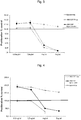
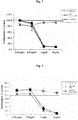
Figure 1 , it may be observed that in human keratinocytes, both the free and the liposomated factor generate cell proliferation of 20-40% above the untreated cells (which indicate 100% proliferation) at low concentrations (0.01 ng/ml - 0.5 ng/ml). However, at concentrations greater than 1 ng/ml, a high decrease of the cell viability is observed with the liposomated factor, but not with the free factor which maintains the cell proliferation around 20% above the untreated cells. In addition, the liposomes do not induce proliferation at low concentrations (0.01 ng/ml - 0.5 ng/ml), although they do induce a high decrease of the cell viability at concentrations greater than or equal to 1 ng/ml. - In addition in
Figure 2 , it may be observed that in human fibroblasts, the free factor does not generate proliferation, being maintained around 100%. However, at concentrations greater than 1 ng/ml, a high decrease of the cell viability is observed with the liposomated factor, but not with the free factor which is maintained around 100%. In addition, the liposomes induce a decrease of the cell viability (20%) at low concentrations (0.01 ng/ml - 05 ng/ml) and a high decrease of the cell viability at concentrations greater than or equal to 1 ng/ml. - In
Figure 3 , it may be observed that in human keratinocytes, both the free and the liposomated factor generate cell proliferation of 20% above the untreated cells (which indicate 100% proliferation) at low concentrations (0.01 ng/ml - 0.5 ng/ml). However, at concentrations greater than 1 ng/ml, a high decrease of the cell viability is observed with the liposomated factor, but not with the free factor which maintains the cell proliferation around 20% above the untreated cells. In addition, the liposomes do not induce proliferation at low concentrations (0.01 ng/ml - 0.5 ng/ml), although they do induce a high decrease of the cell viability at concentrations greater than or equal to 1 ng/ml. - In addition in
Figure 4 , it may be observed that in human fibroblasts, the free factor and the liposomated factor generate cell proliferation of 100% above the untreated cells (which indicate 100% proliferation) at low concentrations (0.01 ng/ml - 0.5 ng/ml). However, at concentrations greater than 1 ng/ml, a decrease of the cell viability of 50-60% is observed with the liposomated factor, but not with the free factor which maintains cell proliferation around 60% above the untreated cells. In addition, the liposomes do not induce proliferation at low concentrations (0.01 ng/ml - 0.5 ng/ml), although they do induce a decrease of the cell viability of 50-60% at concentrations greater than or equal to 1 ng/ml. - In
Figure 5 , it may be observed that in human fibroblasts, both the free factor and the liposomated factor generate cell proliferation of 60-70% above the untreated cells (which indicate 100% proliferation) at low concentrations (0.01 ng/ml). However, at a concentration of 0.5 ng/ml, the free factor generates a proliferation of 40%, while the liposomated factor does not generate proliferation. In addition, at concentrations greater than 1 ng/ml, a decrease of the cell viability of 50% is observed with the liposomated factor, but not with the free factor which maintains cell proliferation around the control. In addition, the liposomes do not induce proliferation at low concentrations (0.01 ng/ml - 05 ng/ml), although they do induce a decrease of the cell viability at concentrations greater than 0.5 ng/ml. - In
Figure 6 , a rapid repair velocity of the wound is observed with the free factor in human keratinocytes since at 24 hours of treatment, the wound had closed 40% more quickly than in the control cells and at 48 hours it was already completely closed. However, it is observed that the liposomated factor makes it difficult to close the wound, it being closed more slowly than in the control cells. However, inFigure 7 , it is observed that in human fibroblasts there is hardly any difference seen in the repair velocity of the wound among the cells treated with free factor and the control cells. - In
Figure 8 , a slight increase in the repair velocity of the wound is observed in human keratinocytes with respect to the control cells since at 24 hours of the treatment the wound had closed 13% more quickly than the control and at 48 hours it was already completely closed. However, it is observed that the liposomated factor makes it difficult to close the wound, it being closed more slowly than in the control cells. In addition, inFigure 9 it is observed that in human fibroblasts the cells treated with free factor show greater repair velocity of the wound, 20% more quickly with respect to the control. However, like the other cases, the liposomated factor makes it difficult to close the wound, it being closed more slowly than in the control cells. - It should be highlighted that the results obtained with the migration assays are similar to those obtained in the cell proliferation assays and therefore they corroborate them.
- In
Figures 10 and11 , an increase in the synthesis of elastin is observed in the cells treated both with the free factor and with the liposomated factor with respect to the control cells (indicated by the horizontal line = value 1), both in fibroblasts and in keratinocytes. This increase is dose dependent, increasing as the concentration of the factor is increased. - In
Figures 12 and13 , an increase in the synthesis of elastin is observed in the cells treated both with the free factor and with the liposomated factor with respect to the control cells (indicated by the horizontal line = value 1), both in fibroblasts and in keratinocytes. This increase is dose dependent, increasing as the concentration of the factor is increased. - In this assay on the cells, a mild inflammation was induced on them with LPS prior to the treatment. To this end, medium with 200 ng/ml LPS was added to them, for three hours, it was removed and the medium with the factors was added.
- In the
Figures 14 and15 , a decrease of the inflammation is observed, that is to say, the transcript levels of TNFa and IL6 in the cells treated with the free factor or with the liposomated factor after prior inflammation with LPS (LPS c bars) having been induced in them. These results indicate the anti-inflammatory effect of the HGH factor, both free and liposomated. This decrease is dose dependent, increasing as the concentration of the factor is increased. - In
Figure 16 , a decrease of the inflammation is observed, that is to say, the transcript levels of TNFa and IL6 in the cells treated with the free factor or with the liposomated factor after prior inflammation with LPS (LPS c bars) having been induced in them. These results indicate the anti-inflammatory effect of the GM-CSF factor, both free and liposomated. This decrease is dose dependent, increasing as the concentration of the factor is increased. - With the nature of the present invention sufficiently described, all that remains to be added is that said invention may undergo certain variations in terms of components and percentages, provided that said alterations do not substantially vary the characteristics which are claimed below.
Claims (8)
- A cosmetic product with liposomated growth factors which comprises:- an active ingredient which consists of a mixture of liposomes which contain plant growth factors HGH, GM-CSF and TGFb2.- a second active ingredient which consists of a mixture of liposomes which incorporate in their interior antioxidants such as ergothioneine, quercetin and pterostilbene.- a third active ingredient consists of a mixture of liposomes of anti-wrinkle peptides- a fourth active ingredient consists of stem cell extract with liposomating.
- The cosmetic product with liposomated growth factors according to claim 1, characterized in that the liposomes encapsulate each one of the growth factors, antioxidants and anti-wrinkle peptides separately.
- The cosmetic product with liposomated growth factors according to claim 1, characterized in that the growth factors included in the liposomes have a purity greater than 95%.
- The cosmetic product with liposomated growth factors according to claim 1, characterized in that the percentages of liposomes with growth factors are the following:HGH liposomes (human growth hormone) Nicotiana benthamiana Sh-Polypeptide-7 of 4 to 10%.GM-CSF liposomes (Granulocyte Macrophage Colony-Stimulating Factor) Nicotiana benthamiana Sh-Polypeptide-45 of 2 to 7%.TGFb2 liposomes (Tumor growth factor beta 2) Nicotiana benthamiana Hexapeptide-40 Sh-Polypeptide-76 of 2 to 10%.
- The cosmetic product with liposomated growth factors according to claim 1, characterized in that the percentages of liposomes with antioxidants in the interior is of 1 to 3%.
- The cosmetic product with liposomated growth factors according to claim 1, characterized in that the anti-wrinkle peptides are palmitoyl tripeptide-3, caprooyl tetrapeptide-3 and centella asiatica extract.
- The cosmetic product with liposomated growth factors according to claim 1 and 6, characterized in that the percentages of liposomes with anti-wrinkle peptides in the interior is of 1 to 4.5%.
- The cosmetic product with liposomated growth factors according to claim 1, characterized in that the percentage of Malus domestica stem cell extract is of 0.1 to 1.5%.
Applications Claiming Priority (1)
| Application Number | Priority Date | Filing Date | Title |
|---|---|---|---|
| PCT/ES2014/070513 WO2015197877A1 (en) | 2014-06-24 | 2014-06-24 | Cosmetic product with liposomal growth factors |
Publications (4)
| Publication Number | Publication Date |
|---|---|
| EP3162357A1 true EP3162357A1 (en) | 2017-05-03 |
| EP3162357A4 EP3162357A4 (en) | 2018-01-10 |
| EP3162357C0 EP3162357C0 (en) | 2025-12-03 |
| EP3162357B1 EP3162357B1 (en) | 2025-12-03 |
Family
ID=54937411
Family Applications (1)
| Application Number | Title | Priority Date | Filing Date |
|---|---|---|---|
| EP14895569.3A Active EP3162357B1 (en) | 2014-06-24 | 2014-06-24 | Cosmetic product with liposomal growth factors |
Country Status (6)
| Country | Link |
|---|---|
| US (1) | US20170157000A1 (en) |
| EP (1) | EP3162357B1 (en) |
| BR (1) | BR112016029654B1 (en) |
| ES (1) | ES3055768T3 (en) |
| MX (1) | MX2016016229A (en) |
| WO (1) | WO2015197877A1 (en) |
Cited By (1)
| Publication number | Priority date | Publication date | Assignee | Title |
|---|---|---|---|---|
| US20230337852A1 (en) * | 2020-06-19 | 2023-10-26 | De' Longhi Appliances S.R.L. | Coffee machine and method for dispensing a milk emulsion with said coffee machine |
Families Citing this family (5)
| Publication number | Priority date | Publication date | Assignee | Title |
|---|---|---|---|---|
| PL436869A1 (en) * | 2021-02-04 | 2022-08-08 | Laboratoria Polfa Łódź Spółka Z Ograniczoną Odpowiedzialnością | Composition and method of non-therapeutic exfoliation of the epidermis |
| TW202345814A (en) * | 2022-01-28 | 2023-12-01 | 日商三得利控股股份有限公司 | Composition, method for microorganism growth suppression in composition for oral use, and agent for potentiation of microorganism-growth-suppressing effect of quercetin or glycoside thereof |
| CN115040420A (en) * | 2022-07-18 | 2022-09-13 | 云南贝泰妮生物科技集团股份有限公司 | Pterostilbene liposome and preparation method thereof |
| WO2024059286A1 (en) * | 2022-09-16 | 2024-03-21 | Topix Pharmaceuticals, Inc. | Growth factor formulation |
| CN118477012B (en) * | 2024-05-07 | 2025-01-21 | 广州品域美妆创新科技有限公司 | A collagen-containing anti-wrinkle and firming composition and its application in cosmetics |
Family Cites Families (4)
| Publication number | Priority date | Publication date | Assignee | Title |
|---|---|---|---|---|
| US20040265268A1 (en) * | 2001-08-18 | 2004-12-30 | Deepak Jain | Compositions and methods for skin rejuvenation and repair |
| CN1939534B (en) * | 2005-09-27 | 2010-12-01 | 长春金赛药业股份有限公司 | A preparation for external use containing human growth hormone or human granulocyte-macrophage-stimulating factor for the treatment of injuries and ulcers |
| CN101835449A (en) * | 2007-08-31 | 2010-09-15 | Dsmip资产有限公司 | Use of 4-amidinobenzylamines for cosmetic and/or dermatological use |
| BRPI0913983A2 (en) * | 2008-06-30 | 2015-10-20 | Orf Liftaekni Hf | cosmetic and / or therapeutic composition, and method for making a topical skin care product |
-
2014
- 2014-06-24 WO PCT/ES2014/070513 patent/WO2015197877A1/en not_active Ceased
- 2014-06-24 MX MX2016016229A patent/MX2016016229A/en unknown
- 2014-06-24 BR BR112016029654-0A patent/BR112016029654B1/en active IP Right Grant
- 2014-06-24 US US15/320,497 patent/US20170157000A1/en not_active Abandoned
- 2014-06-24 EP EP14895569.3A patent/EP3162357B1/en active Active
- 2014-06-24 ES ES14895569T patent/ES3055768T3/en active Active
Cited By (1)
| Publication number | Priority date | Publication date | Assignee | Title |
|---|---|---|---|---|
| US20230337852A1 (en) * | 2020-06-19 | 2023-10-26 | De' Longhi Appliances S.R.L. | Coffee machine and method for dispensing a milk emulsion with said coffee machine |
Also Published As
| Publication number | Publication date |
|---|---|
| EP3162357C0 (en) | 2025-12-03 |
| WO2015197877A1 (en) | 2015-12-30 |
| MX2016016229A (en) | 2017-04-06 |
| EP3162357B1 (en) | 2025-12-03 |
| BR112016029654B1 (en) | 2020-12-08 |
| EP3162357A4 (en) | 2018-01-10 |
| US20170157000A1 (en) | 2017-06-08 |
| ES3055768T3 (en) | 2026-02-16 |
| BR112016029654A2 (en) | 2017-08-22 |
Similar Documents
| Publication | Publication Date | Title |
|---|---|---|
| EP3162357B1 (en) | Cosmetic product with liposomal growth factors | |
| JP4824901B2 (en) | Active ingredient for stimulating type 2 or type 3 human β-defensin, and cosmetic composition and pharmaceutical composition containing the active ingredient | |
| TWI579002B (en) | Modulation of dynein in skin | |
| US12269865B2 (en) | Recombinant elastin and production thereof | |
| EP2987534B1 (en) | Method of treating skin with microRNA modulators | |
| EP2618808B1 (en) | Cosmetic use of dermicidin and fragments thereof | |
| WO2011059866A2 (en) | Composition and methods for improving skin appearance | |
| US20250345265A1 (en) | Active principle comprising a particular extract of punica granatum and uses for preventing and/or treating acne | |
| CN115227774A (en) | Use of Phalaenopsis amabilis extract for preparing composition for inhibiting formation of saccharification final product | |
| TW201323005A (en) | Modulation of thymosin beta-4 in skin | |
| EP4615463A1 (en) | Compositions and methods for skincare | |
| KR20140033344A (en) | Bleomycin hydrolase production promoting agent | |
| TWI634123B (en) | Peptide, method and composition for stimulating melanogenesis | |
| JP7024004B2 (en) | Screening method for preventive / ameliorating agents for keratin plug formation | |
| EP2510112B1 (en) | Method for screening active agents that stimulate the expression of cert to improve the skin's barrier function | |
| FR2965357A1 (en) | Use of at least one amino acid sequence encoded by a nucleic acid sequence or of nucleic acid sequence, as a biomarker of a state of aged skin and/or signs of aging, optionally associated with dry skin | |
| US20140220069A1 (en) | Active ingredient derived from torulaspora delbrueckii and cosmetic use for improving and/or repairing the barrier function of the skin | |
| FR2965358A1 (en) | Use of at least one amino acid sequence encoded by a nucleic acid sequence or of nucleic acid sequence, as a biomarker of a state of aged skin and/or signs of aging, optionally associated with dry skin | |
| JP7263573B2 (en) | Screening method for keratotic plug formation preventive/improving agent | |
| JP2024004732A (en) | Desmoplakin expression enhancer | |
| Ballout | The role of MBTPS2 in epidermal proliferation and differentiation | |
| JP2022064914A (en) | Screening method for preventive/ameliorating agent for keratin plug formation | |
| WO2025258681A1 (en) | Semaphorin 3a expression promoter | |
| WO2014093053A1 (en) | Modulation of thymosin beta-4 in skin | |
| Carlavan | 163 Epidermal barrier improvement after Excipial application in atopic xerosis is revealed by non-invasive proteome analysis |
Legal Events
| Date | Code | Title | Description |
|---|---|---|---|
| STAA | Information on the status of an ep patent application or granted ep patent |
Free format text: STATUS: THE INTERNATIONAL PUBLICATION HAS BEEN MADE |
|
| PUAI | Public reference made under article 153(3) epc to a published international application that has entered the european phase |
Free format text: ORIGINAL CODE: 0009012 |
|
| STAA | Information on the status of an ep patent application or granted ep patent |
Free format text: STATUS: REQUEST FOR EXAMINATION WAS MADE |
|
| 17P | Request for examination filed |
Effective date: 20170113 |
|
| AK | Designated contracting states |
Kind code of ref document: A1 Designated state(s): AL AT BE BG CH CY CZ DE DK EE ES FI FR GB GR HR HU IE IS IT LI LT LU LV MC MK MT NL NO PL PT RO RS SE SI SK SM TR |
|
| AX | Request for extension of the european patent |
Extension state: BA ME |
|
| DAX | Request for extension of the european patent (deleted) | ||
| A4 | Supplementary search report drawn up and despatched |
Effective date: 20171211 |
|
| RIC1 | Information provided on ipc code assigned before grant |
Ipc: A61K 8/64 20060101AFI20171205BHEP Ipc: A61K 38/31 20060101ALI20171205BHEP Ipc: A61K 8/14 20060101ALI20171205BHEP Ipc: A61K 9/12 20060101ALI20171205BHEP Ipc: A61K 38/19 20060101ALI20171205BHEP Ipc: A61Q 19/08 20060101ALI20171205BHEP Ipc: A61Q 19/00 20060101ALI20171205BHEP Ipc: A61K 8/97 20170101ALI20171205BHEP |
|
| STAA | Information on the status of an ep patent application or granted ep patent |
Free format text: STATUS: EXAMINATION IS IN PROGRESS |
|
| 17Q | First examination report despatched |
Effective date: 20190827 |
|
| REG | Reference to a national code |
Ref country code: DE Ref legal event code: R079 Free format text: PREVIOUS MAIN CLASS: A61K0008640000 Ipc: A61K0008978900 Ref country code: DE Ref legal event code: R079 Ref document number: 602014092605 Country of ref document: DE Free format text: PREVIOUS MAIN CLASS: A61K0008640000 Ipc: A61K0008978900 |
|
| RIC1 | Information provided on ipc code assigned before grant |
Ipc: A61K 38/31 20060101ALI20250507BHEP Ipc: A61K 8/64 20060101ALI20250507BHEP Ipc: A61K 38/19 20060101ALI20250507BHEP Ipc: A61K 8/9789 20170101AFI20250507BHEP |
|
| GRAP | Despatch of communication of intention to grant a patent |
Free format text: ORIGINAL CODE: EPIDOSNIGR1 |
|
| STAA | Information on the status of an ep patent application or granted ep patent |
Free format text: STATUS: GRANT OF PATENT IS INTENDED |
|
| RAP3 | Party data changed (applicant data changed or rights of an application transferred) |
Owner name: DERMOPARTNERS, S.L. |
|
| INTG | Intention to grant announced |
Effective date: 20250704 |
|
| GRAS | Grant fee paid |
Free format text: ORIGINAL CODE: EPIDOSNIGR3 |
|
| GRAA | (expected) grant |
Free format text: ORIGINAL CODE: 0009210 |
|
| STAA | Information on the status of an ep patent application or granted ep patent |
Free format text: STATUS: THE PATENT HAS BEEN GRANTED |
|
| AK | Designated contracting states |
Kind code of ref document: B1 Designated state(s): AL AT BE BG CH CY CZ DE DK EE ES FI FR GB GR HR HU IE IS IT LI LT LU LV MC MK MT NL NO PL PT RO RS SE SI SK SM TR |
|
| REG | Reference to a national code |
Ref country code: CH Ref legal event code: F10 Free format text: ST27 STATUS EVENT CODE: U-0-0-F10-F00 (AS PROVIDED BY THE NATIONAL OFFICE) Effective date: 20251203 Ref country code: GB Ref legal event code: FG4D |
|
| REG | Reference to a national code |
Ref country code: DE Ref legal event code: R096 Ref document number: 602014092605 Country of ref document: DE |
|
| REG | Reference to a national code |
Ref country code: IE Ref legal event code: FG4D |
|
| U01 | Request for unitary effect filed |
Effective date: 20251211 |
|
| U07 | Unitary effect registered |
Designated state(s): AT BE BG DE DK EE FI FR IT LT LU LV MT NL PT RO SE SI Effective date: 20251217 |
|
| REG | Reference to a national code |
Ref country code: ES Ref legal event code: FG2A Ref document number: 3055768 Country of ref document: ES Kind code of ref document: T3 Effective date: 20260216 |
|
| PG25 | Lapsed in a contracting state [announced via postgrant information from national office to epo] |
Ref country code: NO Free format text: LAPSE BECAUSE OF FAILURE TO SUBMIT A TRANSLATION OF THE DESCRIPTION OR TO PAY THE FEE WITHIN THE PRESCRIBED TIME-LIMIT Effective date: 20260303 |
|
| PG25 | Lapsed in a contracting state [announced via postgrant information from national office to epo] |
Ref country code: HR Free format text: LAPSE BECAUSE OF FAILURE TO SUBMIT A TRANSLATION OF THE DESCRIPTION OR TO PAY THE FEE WITHIN THE PRESCRIBED TIME-LIMIT Effective date: 20251203 |
|
| PG25 | Lapsed in a contracting state [announced via postgrant information from national office to epo] |
Ref country code: RS Free format text: LAPSE BECAUSE OF FAILURE TO SUBMIT A TRANSLATION OF THE DESCRIPTION OR TO PAY THE FEE WITHIN THE PRESCRIBED TIME-LIMIT Effective date: 20260303 |
|
| PG25 | Lapsed in a contracting state [announced via postgrant information from national office to epo] |
Ref country code: PL Free format text: LAPSE BECAUSE OF FAILURE TO SUBMIT A TRANSLATION OF THE DESCRIPTION OR TO PAY THE FEE WITHIN THE PRESCRIBED TIME-LIMIT Effective date: 20251203 |
|
| PG25 | Lapsed in a contracting state [announced via postgrant information from national office to epo] |
Ref country code: SM Free format text: LAPSE BECAUSE OF FAILURE TO SUBMIT A TRANSLATION OF THE DESCRIPTION OR TO PAY THE FEE WITHIN THE PRESCRIBED TIME-LIMIT Effective date: 20251203 |
|
| PG25 | Lapsed in a contracting state [announced via postgrant information from national office to epo] |
Ref country code: IS Free format text: LAPSE BECAUSE OF FAILURE TO SUBMIT A TRANSLATION OF THE DESCRIPTION OR TO PAY THE FEE WITHIN THE PRESCRIBED TIME-LIMIT Effective date: 20260403 |
|
| PG25 | Lapsed in a contracting state [announced via postgrant information from national office to epo] |
Ref country code: CZ Free format text: LAPSE BECAUSE OF FAILURE TO SUBMIT A TRANSLATION OF THE DESCRIPTION OR TO PAY THE FEE WITHIN THE PRESCRIBED TIME-LIMIT Effective date: 20251203 |
|
| U20 | Renewal fee for the european patent with unitary effect paid |
Year of fee payment: 13 Effective date: 20260616 |
|
| PG25 | Lapsed in a contracting state [announced via postgrant information from national office to epo] |
Ref country code: SK Free format text: LAPSE BECAUSE OF FAILURE TO SUBMIT A TRANSLATION OF THE DESCRIPTION OR TO PAY THE FEE WITHIN THE PRESCRIBED TIME-LIMIT Effective date: 20251203 |