EP3162067B1 - Method and device for processing images - Google Patents
Method and device for processing images Download PDFInfo
- Publication number
- EP3162067B1 EP3162067B1 EP15729836.5A EP15729836A EP3162067B1 EP 3162067 B1 EP3162067 B1 EP 3162067B1 EP 15729836 A EP15729836 A EP 15729836A EP 3162067 B1 EP3162067 B1 EP 3162067B1
- Authority
- EP
- European Patent Office
- Prior art keywords
- hdr
- ldr
- temporal
- images
- band
- Prior art date
- Legal status (The legal status is an assumption and is not a legal conclusion. Google has not performed a legal analysis and makes no representation as to the accuracy of the status listed.)
- Active
Links
Images


Classifications
-
- H—ELECTRICITY
- H04—ELECTRIC COMMUNICATION TECHNIQUE
- H04N—PICTORIAL COMMUNICATION, e.g. TELEVISION
- H04N19/00—Methods or arrangements for coding, decoding, compressing or decompressing digital video signals
- H04N19/50—Methods or arrangements for coding, decoding, compressing or decompressing digital video signals using predictive coding
- H04N19/503—Methods or arrangements for coding, decoding, compressing or decompressing digital video signals using predictive coding involving temporal prediction
- H04N19/51—Motion estimation or motion compensation
- H04N19/513—Processing of motion vectors
- H04N19/521—Processing of motion vectors for estimating the reliability of the determined motion vectors or motion vector field, e.g. for smoothing the motion vector field or for correcting motion vectors
-
- H—ELECTRICITY
- H04—ELECTRIC COMMUNICATION TECHNIQUE
- H04N—PICTORIAL COMMUNICATION, e.g. TELEVISION
- H04N19/00—Methods or arrangements for coding, decoding, compressing or decompressing digital video signals
- H04N19/10—Methods or arrangements for coding, decoding, compressing or decompressing digital video signals using adaptive coding
- H04N19/102—Methods or arrangements for coding, decoding, compressing or decompressing digital video signals using adaptive coding characterised by the element, parameter or selection affected or controlled by the adaptive coding
- H04N19/117—Filters, e.g. for pre-processing or post-processing
-
- H—ELECTRICITY
- H04—ELECTRIC COMMUNICATION TECHNIQUE
- H04N—PICTORIAL COMMUNICATION, e.g. TELEVISION
- H04N19/00—Methods or arrangements for coding, decoding, compressing or decompressing digital video signals
- H04N19/10—Methods or arrangements for coding, decoding, compressing or decompressing digital video signals using adaptive coding
- H04N19/134—Methods or arrangements for coding, decoding, compressing or decompressing digital video signals using adaptive coding characterised by the element, parameter or criterion affecting or controlling the adaptive coding
- H04N19/136—Incoming video signal characteristics or properties
- H04N19/14—Coding unit complexity, e.g. amount of activity or edge presence estimation
-
- H—ELECTRICITY
- H04—ELECTRIC COMMUNICATION TECHNIQUE
- H04N—PICTORIAL COMMUNICATION, e.g. TELEVISION
- H04N19/00—Methods or arrangements for coding, decoding, compressing or decompressing digital video signals
- H04N19/10—Methods or arrangements for coding, decoding, compressing or decompressing digital video signals using adaptive coding
- H04N19/169—Methods or arrangements for coding, decoding, compressing or decompressing digital video signals using adaptive coding characterised by the coding unit, i.e. the structural portion or semantic portion of the video signal being the object or the subject of the adaptive coding
-
- H—ELECTRICITY
- H04—ELECTRIC COMMUNICATION TECHNIQUE
- H04N—PICTORIAL COMMUNICATION, e.g. TELEVISION
- H04N19/00—Methods or arrangements for coding, decoding, compressing or decompressing digital video signals
- H04N19/10—Methods or arrangements for coding, decoding, compressing or decompressing digital video signals using adaptive coding
- H04N19/169—Methods or arrangements for coding, decoding, compressing or decompressing digital video signals using adaptive coding characterised by the coding unit, i.e. the structural portion or semantic portion of the video signal being the object or the subject of the adaptive coding
- H04N19/187—Methods or arrangements for coding, decoding, compressing or decompressing digital video signals using adaptive coding characterised by the coding unit, i.e. the structural portion or semantic portion of the video signal being the object or the subject of the adaptive coding the unit being a scalable video layer
-
- H—ELECTRICITY
- H04—ELECTRIC COMMUNICATION TECHNIQUE
- H04N—PICTORIAL COMMUNICATION, e.g. TELEVISION
- H04N19/00—Methods or arrangements for coding, decoding, compressing or decompressing digital video signals
- H04N19/10—Methods or arrangements for coding, decoding, compressing or decompressing digital video signals using adaptive coding
- H04N19/169—Methods or arrangements for coding, decoding, compressing or decompressing digital video signals using adaptive coding characterised by the coding unit, i.e. the structural portion or semantic portion of the video signal being the object or the subject of the adaptive coding
- H04N19/1883—Methods or arrangements for coding, decoding, compressing or decompressing digital video signals using adaptive coding characterised by the coding unit, i.e. the structural portion or semantic portion of the video signal being the object or the subject of the adaptive coding the unit relating to sub-band structure, e.g. hierarchical level, directional tree, e.g. low-high [LH], high-low [HL], high-high [HH]
-
- H—ELECTRICITY
- H04—ELECTRIC COMMUNICATION TECHNIQUE
- H04N—PICTORIAL COMMUNICATION, e.g. TELEVISION
- H04N19/00—Methods or arrangements for coding, decoding, compressing or decompressing digital video signals
- H04N19/30—Methods or arrangements for coding, decoding, compressing or decompressing digital video signals using hierarchical techniques, e.g. scalability
- H04N19/31—Methods or arrangements for coding, decoding, compressing or decompressing digital video signals using hierarchical techniques, e.g. scalability in the temporal domain
-
- H—ELECTRICITY
- H04—ELECTRIC COMMUNICATION TECHNIQUE
- H04N—PICTORIAL COMMUNICATION, e.g. TELEVISION
- H04N19/00—Methods or arrangements for coding, decoding, compressing or decompressing digital video signals
- H04N19/30—Methods or arrangements for coding, decoding, compressing or decompressing digital video signals using hierarchical techniques, e.g. scalability
- H04N19/36—Scalability techniques involving formatting the layers as a function of picture distortion after decoding, e.g. signal-to-noise [SNR] scalability
-
- H—ELECTRICITY
- H04—ELECTRIC COMMUNICATION TECHNIQUE
- H04N—PICTORIAL COMMUNICATION, e.g. TELEVISION
- H04N19/00—Methods or arrangements for coding, decoding, compressing or decompressing digital video signals
- H04N19/60—Methods or arrangements for coding, decoding, compressing or decompressing digital video signals using transform coding
- H04N19/61—Methods or arrangements for coding, decoding, compressing or decompressing digital video signals using transform coding in combination with predictive coding
- H04N19/615—Methods or arrangements for coding, decoding, compressing or decompressing digital video signals using transform coding in combination with predictive coding using motion compensated temporal filtering [MCTF]
-
- H—ELECTRICITY
- H04—ELECTRIC COMMUNICATION TECHNIQUE
- H04N—PICTORIAL COMMUNICATION, e.g. TELEVISION
- H04N19/00—Methods or arrangements for coding, decoding, compressing or decompressing digital video signals
- H04N19/85—Methods or arrangements for coding, decoding, compressing or decompressing digital video signals using pre-processing or post-processing specially adapted for video compression
- H04N19/86—Methods or arrangements for coding, decoding, compressing or decompressing digital video signals using pre-processing or post-processing specially adapted for video compression involving reduction of coding artifacts, e.g. of blockiness
-
- H—ELECTRICITY
- H04—ELECTRIC COMMUNICATION TECHNIQUE
- H04N—PICTORIAL COMMUNICATION, e.g. TELEVISION
- H04N19/00—Methods or arrangements for coding, decoding, compressing or decompressing digital video signals
- H04N19/10—Methods or arrangements for coding, decoding, compressing or decompressing digital video signals using adaptive coding
- H04N19/169—Methods or arrangements for coding, decoding, compressing or decompressing digital video signals using adaptive coding characterised by the coding unit, i.e. the structural portion or semantic portion of the video signal being the object or the subject of the adaptive coding
- H04N19/17—Methods or arrangements for coding, decoding, compressing or decompressing digital video signals using adaptive coding characterised by the coding unit, i.e. the structural portion or semantic portion of the video signal being the object or the subject of the adaptive coding the unit being an image region, e.g. an object
- H04N19/172—Methods or arrangements for coding, decoding, compressing or decompressing digital video signals using adaptive coding characterised by the coding unit, i.e. the structural portion or semantic portion of the video signal being the object or the subject of the adaptive coding the unit being an image region, e.g. an object the region being a picture, frame or field
-
- H—ELECTRICITY
- H04—ELECTRIC COMMUNICATION TECHNIQUE
- H04N—PICTORIAL COMMUNICATION, e.g. TELEVISION
- H04N19/00—Methods or arrangements for coding, decoding, compressing or decompressing digital video signals
- H04N19/10—Methods or arrangements for coding, decoding, compressing or decompressing digital video signals using adaptive coding
- H04N19/169—Methods or arrangements for coding, decoding, compressing or decompressing digital video signals using adaptive coding characterised by the coding unit, i.e. the structural portion or semantic portion of the video signal being the object or the subject of the adaptive coding
- H04N19/182—Methods or arrangements for coding, decoding, compressing or decompressing digital video signals using adaptive coding characterised by the coding unit, i.e. the structural portion or semantic portion of the video signal being the object or the subject of the adaptive coding the unit being a pixel
Definitions
- the present invention relates to a method and an apparatus for processing images of a video sequence.
- the present invention relates to processing of a sequence of images in which LDR images are obtained from HDR images, for example by applying a tone mapping process.
- the variation of light in a scene captured by an imaging device can vary greatly. For example, objects located in a shadow of the scene can appear very dark compared to an object illuminated by direct sunlight.
- LDR low dynamic range
- the limited dynamic range and colour gamut provided by traditional low dynamic range (LDR) images often do not provide a sufficient range for accurate reproduction of the changes in luminance and colour within such scenes.
- the values of components of LDR images representing the luminance or colour of pixels of the image are represented by a limited number of bits (typically 8, 10 or 12 bits).
- the limited range of luminance provided by such representation does not enable small signal variations to be effectively reproduced, in particular in bright and dark ranges of luminance.
- High dynamic range imaging (also referred to as HDR or HDRI) enables a greater dynamic range of luminance between light and dark areas of a scene compared to traditional LDR images. This is achieved in HDR imaging by extending the signal representation to a wider dynamic range in order to provide high signal accuracy across the entire range.
- component values of pixels are usually represented with a greater number of bits (for example from 16 bits to 64 bits) including in floating-point format (for example 32-bit or 16-bit for each component, namely float or half-float), the most popular format being openEXR half-float format (16-bit per RGB component, i.e. 48 bits per pixel) or in integers with a long representation, typically at least 16 bits.
- Tone mapping is a technique used to map one set of colors to another in order to approximate the appearance of high dynamic range images in a medium that has a more limited dynamic range. Tone Mapping Operators (TMOs) enables the wide range of values available in a HDR image to be reproduced on a LDR display (Low Dynamic Range).
- TMOs global and local operators.
- Flickering artifacts are due to the TMO and are caused by rapid changes of the tone mapping in successive frames. As a consequence, similar HDR luminance values are mapped to different LDR values. Such flickering artifacts due to the TMO are undesirable and should be reduced.
- Temporal brightness incoherency includes short-term and long-term temporal brightness incoherency. Short-term temporal brightness incoherency appears when rapid changes of illumination condition (global or local) occur in a HDR scene. Applying a TMO without taking into account temporally close frames results in different HDR values being mapped to similar LDR values. Consequently, the tone mapping loses information on the scene that should have been preserved.
- long-term temporal brightness incoherency occurs when the brightness of the relative HDR frames are not preserved during the course of the tone mapping process. Consequently, frames perceived as the brightest in the HDR sequence are not necessarily the brightest in the LDR sequence. Unlike flickering artifacts and short-term temporal brightness incoherency, long-term temporal brightness incoherency does not necessarily appear through successive frames.
- these techniques only work for global TMOs, since local TMOs have a non-linear and spatially varying tone mapping curve.
- these techniques filter both illumination conditions together resulting in tone mapping in a transition state that corresponds to neither of the illumination conditions of the original HDR scene.
- this technique performs a pixel-wise motion estimation for each pair of successive HDR frames and the resulting motion field is then used as a constraint of temporal coherency for the corresponding LDR frames. This constraint ensures that two pixels, associated through a motion vector, are tone mapped similarly.
- this solution depends on the robustness of the motion estimation.
- this estimation fails (occlusion of objects)
- the temporal coherency constraint is applied to pixels belonging to different objects, usually resulting in ghosting artifacts.
- Such a motion estimation problem will be referred to as non-coherent motion vector.
- This issue also arises when Short-term temporal brightness incoherency occurs.
- the technique levels the tone mapped value to be closer to the one in the previous frame in the LDR sequence.
- this technique is designed for only one local TMO, the GDC operator, and cannot be extended to other TMOs.
- Guthier et al Guthier, B., Kopf, S., Eble, M., & Effelsberg, W. (2011). Flicker reduction in tone mapped high dynamic range video.
- EI Electronic Imaging
- p. 78660C-78660C-15 Displaying, Processing, Hardcopy, and Applications
- This method compares the geometric mean (which is an indication of the overall brightness of a picture) between successive frames of a video sequence. A flickering artifact is detected if this difference is greater than a threshold. As soon as an artifact is located, it is reduced using an iterative brightness adjustment until reaching the brightness threshold.
- LI Y ET AL (“Compressing and companding high dynamic range images with subband architectures", ACM TRANSACTIONS ON GRAPHICS (TOG), ACM, US. vol. 24, no. 3, 1 July 2005 (2005-07-01), pages 836-844 , discloses correction of LDR image so to provide temporal brightness Z coherency.
- a general aspect of the invention comprises temporally decomposing successive frames of the HDR source and the corresponding frames of the LDR tone mapped sequence and performing a comparison between the HDR and LDR frequency sub-bands.
- a device for processing images of a video sequence as set out in claim 7.
- Temporal incoherency artifacts are global or local changes (or lack of) of brightness in successive frames of a video sequence.
- Two types of temporal incoherency which may be addressed by embodiments of the invention as described herein are flickering artifacts (in which there is a lack of change of brightness in the HDR sequence while a change of brightness occurs in the LDR sequence) and short-term brightness incoherencies (in which there is a change of brightness in the HDR sequence while no change of brightness occurs in the LDR sequence).
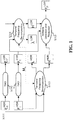
- Figure 1 is a schematic block diagram illustrating steps of a method for processing images of a video sequence in accordance with a first embodiment of the invention.
- the method begins in step S101 with the acquisition of HDR image data.
- the HDR image data in the present example is representative of a video sequence of images.
- the HDR image data may, for example, be acquired directly from an imaging device such as a video camera, acquired from memory on which it is stored, the memory may be located locally or remotely, or received via a wireless or wired communication line.
- HDR image or “HDR frame” refers to any HDR image or frame that comprises high dynamic range data in floating point (float or half float), fixed point or long representation integer format typically represented in by a number of bits greater than 16.
- two temporally successive HDR frames F HDR t-1 and F HDR t are acquired from a HDR video sequence for processing: a current HDR frame F HDR t (at time t) and its temporally preceding HDR frame F HDR t-1 (at time t-1).
- step S102 the two temporally successive HDR frames F HDR t-1 and F HDR t are tone mapped by a tone mapping process using any TMO to obtain two corresponding tone mapped LDR images, F LDR t-1 and F LDR t: a current LDR frame F LDR t (at time t) and its temporally preceding LDR frame F LDR t-1 (at time t-1).
- the preceding tone mapped frame (F LDR t-1 ) may have already undergone temporal incoherency reduction, as a current LDR frame in a previous iteration of the process according to embodiments of the invention, in which case it is denoted (F LDR* t-1 in Fig.1 ).
- Motion estimation is performed between the preceding HDR frame F HDR t-1 and the current HDR frame F HDR t of the HDR video sequence.
- the Motion vectors (Mv) obtained from the motion estimation are used to perform Motion Compensated Temporal Filtering (MCTF) in step S103 on the two successive HDR frames F HDR t-1 and F HDR t of the HDR video sequence.
- MCTF Motion Compensated Temporal Filtering
- This process involves decomposing the two successive HDR frames F HDR t-1 and F HDR t into two temporal frequency sub-bands: a higher frequency sub-band, noted generally as a high frequency sub-band (H HDR ) and a lower frequency sub-band, noted generally as a low frequency sub-band (L HDR ).
- H HDR high frequency sub-band
- L HDR low frequency sub-band
- MCTF is performed in step S104 on the preceding and current frames F LOR* t-1 and F LDR t of the tone mapped LDR video sequence corresponding to the two successive HDR frames F HDR t-1 and F HDR t .
- the MCTF applied to the preceding and current frames F LDR* t-1 and F LDR t of the tone mapped LDR video sequence uses the same Motion vectors as those applied in the MCTF of the corresponding two successive HDR frames F HDR t-1 and F HDR t of the HDR video sequence. Consequently two temporal frequency sub-bands are obtained for the LDR frames: a higher (high) frequency sub-band (H LDR ) and a lower (low) frequency sub-band (L LDR ).
- the motion vectors may be obtained from motion estimation performed on two successive LDR frames.
- the high frequency temporal-frequency sub-bands obtained from both the LDR sequence and the HDR sequence are used in step S105 to detect temporal incoherency artifacts. Using this detection, the current LDR frame of the video sequence F LDR t is modified to reduce those artifacts. A processed current tone mapped frame F LDR* t is obtained. It may be noted that further processing of the low frequency temporal frequency sub-bands resulting from the sub-band decomposition is not mandatory.
- the process of temporal-frequency decomposition of HDR frames F HDR t-1 and F HDR t or corresponding tone mapped LDR frames F LDR t-1 and F LDR t comprises applying orthonormal transforms using a backward motion vector , v b and a forward motion vector v f , obtained from Motion estimation between the preceding HDR frame F HDR t-1 and the current HDR frame F HDR t , to obtain respectively in steps S201 and S202 the high temporal-frequency subband H and low temporal-frequency subband L:
- H n F t n ⁇ F t ⁇ 1 n + v b 2
- L p 2 ⁇ F t ⁇ 1 p ⁇ H p + v f
- H and L are respectively the high and low temporal-frequency sub-bands obtained at the LDR level or the HDR level
- v b and v f are respectively the high and low temporal-frequency sub-bands obtained at the LDR level or the HDR
- the two edge maps are then compared with one another in step S330 to detect for edge differences and if a difference is detected, then it is considered that a temporal incoherency artifact is present.
- Table 1 Detection of temporal incoherency E HDR ( n ) E LDR ( n ) Problem? 0 0 No issue 0 1 A difference that was not present in the HDR sequence was created during the tone mapping process. Flickering Artifact! 1 0 A difference that was present in the HDR sequence has been suppressed during the tone mapping process. Short-term Brightness incoherency! 1 1 No issue
- the current tone mapped frame (F LDR t ) is corrected in step S340 at each required pixel location (x,y) so as to reduce a flickering artifact below the threshold or a short-term brightness incoherency over the threshold.
- table 1 presents an example of binary edge maps in which the obtained values for E HDR ( n ) and E LDR ( n ) are either 1 or 0, it will be appreciated that in other embodiments of the invention, a plurality of thresholds may be applied to the HDR and LDR high temporal-frequency sub-bands to obtain the corresponding edge maps. In the case where a plurality of different thresholds are used to obtain each edge map, respective HDR and LDR edge maps indicating the strength of the edges are obtained. If the strength is different between the HDR and LDR high frequency subband, then the current LDR image is modified on the basis of the difference in strength differences.
- the HDR Threshold and LDR threshold may be computed in several ways.
- the thresholds are user-defined.
- the thresholds are derived respectively from the two low frequency sub-bands (L HDR and L LDR ). In such a case, there is a threshold per pixel depending on the value in the low frequency sub-band.
- artifacts are reduced in such a way that both HDR and LDR edge maps E HDR and E LDR have the same value.
- F t LDR ⁇ is the post-processed current LDR frame in which artifacts have been reduced and is computed as follows:
- F t LDR ⁇ fa LDR Threshold ⁇ 2 + F t ⁇ 1 LDR fa + fav b
- F t LDR ⁇ bi LDR Threshold ⁇ 2 + F t ⁇ 1 LDR bi + biv b + delta
- "fa”, and "bi" represent the pixels where flickering artifacts "FA” and temporal brightness incoherency artifacts "BI”, respectively have been detected.
- the illustrated modules correspond to functional units, which may or may not correspond to distinguishable physical units.
- a plurality of such modules may be associated in a unique component or circuit, or correspond to a software module.
- a module may potentially be composed of separate physical entities or software functionalities.
- Devices compatible with embodiments of the invention may be implemented either solely by hardware, solely by software or by a combination of hardware and software.
- hardware for example dedicated hardware, may be used, such as, for example ASIC « Application Specific Integrated Circuit » FPGA « Field-Programmable Gate Array »or VLSI, « Very Large Scale Integration »; or by using several integrated electronic components embedded in a device or from a combination of hardware and software components.
- an edge detection technique is applied to detect the edges present in the HDR and LDR high frequency temporal sub-bands (H LDR and H HDR ) to obtain respective edge maps
- a Canny filter is used.
- a canny filter enables edge detection and provides a more precise localization of edges compared with a Laplace filter for example.
- the first step of the Canny filter process involves the reduction of noise in the image by smoothing.
- the smoothing may be performed for example by applying a Gaussian.
- edges are detected by applying a gradient.
- thresholding is applied;
- the threshold can be modified for example by a factor ⁇ .
- the detected edges are refined by interpolation in order to find where the gradient normal has a local maximum. Non-maximas can be suppressed, and the HDR and LDR edge maps are obtained for comparison for detection and correction of artifacts in step S105.
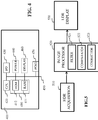
- Figure 4 is a schematic block diagram representing functional components of an electronic device 400 in which one or more embodiments of the invention may be implemented.
- the electronic device 400 includes memory 410, one or more processing units (CPUs) 420, an input/output interface 430 for transfer of data from and to an application and an interface port 470 for connection to an external device or network.
- the components communicate over one or more communication buses 450.
- Memory may include high speed random access memory (RAM) 411 and read only memory (ROM) 412.
- a register of memory may correspond to portion of low capacity (some bits) or to a high capacity portion (for example entire computer program code or large amounts of compressed or uncompressed data) of any of the memories of the device.
- ROM 412 stores at least program code and parameters. Algorithms of the methods for processing a sequence of images according to embodiments of the invention may be stored in ROM 412.
- the one or more CPUs 420 run various software programs and/or sets of instructions stored in memory 410 to perform functions of the processing device 400 and to process data.
- RAM 411 comprises, in a register, a program executed by the CPU 420 and uploaded after switch on of the device 400, input data in a register, intermediate data at different states of the algorithm in a register, and other variables used for the execution of the algorithm in a register.
- the CPU 420 uploads a software program from the RAM 411 and executes the corresponding instructions.
- Images to be processed in accordance with embodiments of the invention may be stored in the memory 410.
- Processed images obtained from the methods in accordance with embodiments of the invention may be stored in the memory 410.
- Memory 410 may include non-volatile memory, such as one or more magnetic disk storage devices, flash memory devices or other non-volatile solid state memory devices.
- the memory may further include storage remotely located from the one or more CPUs 420. For example storage accessible via an interface and/or a communication network.
- the device is provided with a power source such as a battery 440.
- the power source may be external to the device.
- the device may be provided with a display 460, for example a LDR compatible display for display of the processed LDR images obtained from methods according to embodiments of the invention.
- the display is located remotely to the device 400 and processed images are transferred to the display, for example by the port 470 via a wired or wireless data communication interface or via a wired or wireless network connection.
- the HDR images may be received by the port 470 via a wired or wireless communication interface or via a wired or wireless network connection.
- FIG. 5 is a schematic block diagram illustrating components of an electronic system in which embodiments of the invention may be implemented.
- the electronic system comprises an image acquisition module 510 for acquiring HDR images, an image processor 520 for processing the HDR images in accordance with one or more embodiments of the invention and a display device compatible with the display of LDR images.
- the HDR acquisition device 510 may be for example a video recorder configured to acquire images in a HDR format, or a medium on which HDR images are stored.
- the image processor 520 comprises a filter 521 for performing temporal frequency decomposition of two temporally successive HDR images F HDR t-1 and F HDR t , comprising a current HDR image F HDR t-1 and F HDR t and a preceding HDR image F HDR t-1 to obtain a high HDR temporal frequency sub-band H HDR and a low HDR temporal frequency sub-band L HDR ; and temporal frequency decomposition of two temporally successive LDR images F LDR t-1 and F LDR t , obtained respectively from the two temporally successive HDR images, to obtain a high LDR temporal-frequency sub-band H LDR and a low LDR temporal-frequency sub-band L LDR ; a comparator 522 for performing a comparison between the high HDR temporal-frequency sub-band and the high LDR temporal-frequency sub-band H HDR and H LDR ; and an image corrector 523 for modifying the current LDR image F LDR t on the basis
- Embodiments of the invention enable detection of flickering artifacts and short-term brightness incoherencies and reduction of such effects. Moreover, embodiments of the invention can be used to distinguish flickering artifacts from short-term brightness coherency.
- the invention is generic to any tone mapping or other HDR-LDR scaling technique. In the case of tone mapping embodiments of the invention help to detect ghosting artifacts that have been introduced by the tone mapping operator used in the tone mapping process.
- tone mapping techniques for transforming a HDR image into a LDR image
- the invention is not limited to tone mapping techniques and may be applied to any technique for converting a HDR image to a LDR compatible image.
- a method of processing images of a video sequence comprising acquiring High Dynamic Range (HDR) images, representative of the images of the video sequences; performing a tone mapping process on the HDR images to obtain tone mapped Low Dynamic Range (LDR) images corresponding to the HDR images; performing temporal frequency decomposition of two temporally successive HDR images, comprising a current HDR image and a preceding HDR image to obtain a high HDR temporal frequency sub-band and a low HDR temporal frequency sub-band; performing temporal frequency decomposition of two temporally successive LDR images, comprising a current LDR image and a preceding LDR image, comprising a current LDR image and a preceding LDR image, obtained respectively from the two temporally successive HDR images, to obtain a high LDR frequency sub-band and a low LDR frequency sub-band; obtaining a HDR edge map from the high HDR temporal-frequency sub-band, and a LDR edge map from
- Comparison between the HDR and LDR frequency sub-bands enables detection of temporal incoherency on a pixel-wise basis. Temporal incoherency in successive frames of a tone-mapped video sequence, for example, can be reduced. Comparison of the frequency sub-bands also enables the appearance of ghosting artifacts to be reduced.
- High temporal frequency sub-band for HDR or LDR signifies a temporal frequency sub-band of higher frequency range than the low temporal frequency sub-band. It follows that low temporal frequency sub-band for HDR or LDR signifies a temporal frequency sub-band of lower frequency range than the high temporal frequency sub-band.
- the HDR edge map (S311) is obtained, based on at least one HDR threshold, from the high HDR temporal-frequency sub-band, and the LDR edge map is obtained, based on at least one LDR threshold, from the high LDR temporal-frequency sub-band.
- the HDR edge map is obtained, by applying a Canny filter to the high HDR temporal-frequency sub-band
- the LDR edge map is obtained, by applying a Canny filter to the high LDR temporal-frequency sub-band.
- edge detection by applying a Canny filter includes steps of smoothing, thresholding and interpolation.
- performing temporal frequency decomposition comprises performing motion compensated temporal filtering on the basis of motion vectors determined from motion estimation of two temporally successive HDR frames or corresponding LDR frames.
- the motion vectors are obtained from motion estimation of two temporally successive HDR frames. This provides more accurate motion estimation.
- the method includes performing motion estimation between the two temporally successive HDR images to provide motion vectors for performing the temporal frequency decomposition of the HDR images and the temporal frequency decomposition tone mapped LDR images.
- motion estimation enables detection of temporal incoherency artifacts throughout the spatial and temporal domain.
- modifying the current LDR image comprises reducing a flickering artifact below the LDR threshold or increasing a short-term brightness coherency over the LDR threshold.
- the invention may be applied to any process for obtaining a LDR image from a HDR image.
- Any dynamic range scaling process may be applied to obtain an LDR image from a corresponding HDR image.
- the current LDR image and the preceding LDR image are each obtained respectively from the current HDR image and the preceding HDR image by a tone mapping process. It will be appreciated that in such embodiments any tone mapping operator may be applied.
- a device for processing images of a video sequence comprising - means for capturing High Dynamic Range (HDR) images, representative of the images of the video sequences;
- HDR High Dynamic Range
- the edge map generator is configured to obtain an HDR edge map, based on at least one HDR threshold, from the high HDR temporal-frequency sub-band, and the LDR edge map based on at least one LDR threshold, from the high LDR temporal-frequency sub-band.
- the edge map generator comprises a Canny filter.
- the Canny filter includes a smoothing module, a thresholding module and an edge interpolation modulator.
- the filter is configured to perform temporal frequency decomposition by performing motion compensated temporal filtering on the basis of motion vectors determined from motion estimation of two temporally successive HDR frames or two temporally successive corresponding LDR frames.
- a display device comprising a device in accordance with any embodiment of the second aspect of the invention for processing images of a video sequence; and a display for displaying LDR images.
- Embodiments of the invention help to address both flickering artifacts and short-term incoherency artifacts since it uses the HDR sub-band to detect the temporal changes (or lack of) illumination condition (global or local) in the HDR sequence to preserve them in the LDR sequence.
- the present invention may take the form of an entirely hardware embodiment, an entirely software embodiment (including firmware, resident software, micro-code, etc.) or an embodiment combining software and hardware aspects that may all generally be referred to herein as a "circuit", "module” or "system”.
- the present invention may take the form of a computer program product embodied in any tangible medium of expression having computer usable program code embodied in the medium.
- a tangible carrier medium may comprise a storage medium such as a floppy disk, a CD-ROM, a hard disk drive, a magnetic tape device or a solid state memory device and the like.
- a transient carrier medium may include a signal such as an electrical signal, an electronic signal, an optical signal, an acoustic signal, a magnetic signal or an electromagnetic signal, e.g. a microwave or RE signal.
Landscapes
- Engineering & Computer Science (AREA)
- Multimedia (AREA)
- Signal Processing (AREA)
- Picture Signal Circuits (AREA)
- Image Processing (AREA)
- Transforming Electric Information Into Light Information (AREA)
- Television Systems (AREA)
- Apparatus For Radiation Diagnosis (AREA)
- Closed-Circuit Television Systems (AREA)
Applications Claiming Priority (3)
| Application Number | Priority Date | Filing Date | Title |
|---|---|---|---|
| EP14305998.8A EP2961169A1 (en) | 2014-06-25 | 2014-06-25 | Method and device for processing images |
| EP14306016 | 2014-06-27 | ||
| PCT/EP2015/063523 WO2015197436A1 (en) | 2014-06-25 | 2015-06-17 | Method and device for processing images |
Publications (2)
| Publication Number | Publication Date |
|---|---|
| EP3162067A1 EP3162067A1 (en) | 2017-05-03 |
| EP3162067B1 true EP3162067B1 (en) | 2021-03-31 |
Family
ID=53433202
Family Applications (1)
| Application Number | Title | Priority Date | Filing Date |
|---|---|---|---|
| EP15729836.5A Active EP3162067B1 (en) | 2014-06-25 | 2015-06-17 | Method and device for processing images |
Country Status (7)
| Country | Link |
|---|---|
| US (1) | US10334270B2 (enExample) |
| EP (1) | EP3162067B1 (enExample) |
| JP (1) | JP6640122B2 (enExample) |
| KR (1) | KR102445762B1 (enExample) |
| CN (1) | CN106537911B (enExample) |
| TW (1) | TWI678914B (enExample) |
| WO (1) | WO2015197436A1 (enExample) |
Families Citing this family (7)
| Publication number | Priority date | Publication date | Assignee | Title |
|---|---|---|---|---|
| US10225485B1 (en) * | 2014-10-12 | 2019-03-05 | Oliver Markus Haynold | Method and apparatus for accelerated tonemapping |
| EP3319013A1 (en) * | 2016-11-03 | 2018-05-09 | Thomson Licensing | Method and device for estimating cast shadow regions and/or highlight regions in images |
| CN111970564B (zh) | 2020-08-26 | 2023-03-24 | 展讯通信(上海)有限公司 | Hdr视频显示处理的优化方法及装置、存储介质、终端 |
| CN113395599B (zh) * | 2020-12-03 | 2024-07-23 | 腾讯科技(深圳)有限公司 | 一种视频处理方法、装置、电子设备及介质 |
| EP4274207A4 (en) | 2021-04-13 | 2024-07-10 | Samsung Electronics Co., Ltd. | ELECTRONIC DEVICE AND ITS CONTROL METHOD |
| KR20220141543A (ko) * | 2021-04-13 | 2022-10-20 | 삼성전자주식회사 | 전자 장치 및 그 제어 방법 |
| TWI874099B (zh) * | 2024-01-12 | 2025-02-21 | 瑞昱半導體股份有限公司 | 具校正功能的動態影像補償系統與其參數校正方法 |
Family Cites Families (20)
| Publication number | Priority date | Publication date | Assignee | Title |
|---|---|---|---|---|
| CN1271567C (zh) * | 2000-11-30 | 2006-08-23 | 佳能株式会社 | 图像处理装置、图像处理方法、存储介质及程序 |
| AUPR222500A0 (en) | 2000-12-21 | 2001-01-25 | Unisearch Limited | Method for efficient scalable compression of video |
| US7257273B2 (en) | 2001-04-09 | 2007-08-14 | Mingjing Li | Hierarchical scheme for blur detection in digital image using wavelet transform |
| JP3754933B2 (ja) * | 2001-06-19 | 2006-03-15 | キヤノン株式会社 | 画像処理装置、画像処理システム、画像処理方法、プログラム及び記憶媒体 |
| US7483486B2 (en) | 2004-07-02 | 2009-01-27 | Max-Planck-Gesellschaft Zur Forderung Der Wissenschaften E.V. | Method and apparatus for encoding high dynamic range video |
| JP4837365B2 (ja) * | 2005-11-16 | 2011-12-14 | オリンパス株式会社 | 画像処理システム、画像処理プログラム |
| US8537893B2 (en) | 2006-01-23 | 2013-09-17 | Max-Planck-Gesellschaft Zur Forderung Der Wissenschaften E.V. | High dynamic range codecs |
| US7636496B2 (en) * | 2006-05-17 | 2009-12-22 | Xerox Corporation | Histogram adjustment for high dynamic range image mapping |
| JP2010055194A (ja) * | 2008-08-26 | 2010-03-11 | Sony Corp | 画像処理装置および方法、学習装置および方法、並びにプログラム |
| US8326046B2 (en) | 2009-02-11 | 2012-12-04 | Ecole De Technologie Superieure | Method and system for determining structural similarity between images |
| WO2010105036A1 (en) | 2009-03-13 | 2010-09-16 | Dolby Laboratories Licensing Corporation | Layered compression of high dynamic range, visual dynamic range, and wide color gamut video |
| JP5544764B2 (ja) * | 2009-06-09 | 2014-07-09 | ソニー株式会社 | 画像処理装置および方法、並びにプログラム |
| JP5397059B2 (ja) * | 2009-07-17 | 2014-01-22 | ソニー株式会社 | 画像処理装置および方法、プログラム、並びに記録媒体 |
| WO2011042229A1 (en) | 2009-10-08 | 2011-04-14 | International Business Machines Corporation | Method and system for transforming a digital image from a low dynamic range (ldr) image to a high dynamic range (hdr) image |
| US8606009B2 (en) | 2010-02-04 | 2013-12-10 | Microsoft Corporation | High dynamic range image generation and rendering |
| WO2011102887A1 (en) | 2010-02-19 | 2011-08-25 | Thomson Licensing | Parameters interpolation for high dynamic range video tone mapping |
| US8983206B2 (en) * | 2011-05-04 | 2015-03-17 | Ecole de Techbologie Superieure | Method and system for increasing robustness of visual quality metrics using spatial shifting |
| US9332156B2 (en) | 2011-06-09 | 2016-05-03 | Hewlett-Packard Development Company, L.P. | Glare and shadow mitigation by fusing multiple frames |
| GB201201230D0 (en) * | 2012-01-25 | 2012-03-07 | Univ Delft Tech | Adaptive multi-dimensional data decomposition |
| WO2014077827A1 (en) * | 2012-11-16 | 2014-05-22 | Thomson Licensing | Processing high dynamic range images |
-
2015
- 2015-06-17 KR KR1020167035986A patent/KR102445762B1/ko active Active
- 2015-06-17 JP JP2016573858A patent/JP6640122B2/ja active Active
- 2015-06-17 US US15/322,111 patent/US10334270B2/en active Active
- 2015-06-17 EP EP15729836.5A patent/EP3162067B1/en active Active
- 2015-06-17 CN CN201580038082.1A patent/CN106537911B/zh active Active
- 2015-06-17 WO PCT/EP2015/063523 patent/WO2015197436A1/en not_active Ceased
- 2015-06-24 TW TW104120216A patent/TWI678914B/zh active
Non-Patent Citations (1)
| Title |
|---|
| None * |
Also Published As
| Publication number | Publication date |
|---|---|
| US10334270B2 (en) | 2019-06-25 |
| TWI678914B (zh) | 2019-12-01 |
| JP2017528018A (ja) | 2017-09-21 |
| TW201611579A (zh) | 2016-03-16 |
| KR102445762B1 (ko) | 2022-09-22 |
| KR20170026375A (ko) | 2017-03-08 |
| WO2015197436A1 (en) | 2015-12-30 |
| EP3162067A1 (en) | 2017-05-03 |
| CN106537911B (zh) | 2019-11-01 |
| JP6640122B2 (ja) | 2020-02-05 |
| CN106537911A (zh) | 2017-03-22 |
| US20170134745A1 (en) | 2017-05-11 |
Similar Documents
| Publication | Publication Date | Title |
|---|---|---|
| EP3162067B1 (en) | Method and device for processing images | |
| CN108694705B (zh) | 一种多帧图像配准与融合去噪的方法 | |
| EP3168809B1 (en) | Image processing for hdr images | |
| US10277919B2 (en) | Noise reduction for image sequences | |
| US9202263B2 (en) | System and method for spatio video image enhancement | |
| US8933985B1 (en) | Method, apparatus, and manufacture for on-camera HDR panorama | |
| Ko et al. | Artifact-free low-light video enhancement using temporal similarity and guide map | |
| Gryaditskaya et al. | Motion aware exposure bracketing for HDR video | |
| US20160142593A1 (en) | Method for tone-mapping a video sequence | |
| CN105205787A (zh) | 用于对ldr视频序列进行动态范围扩展的方法和设备 | |
| Buades et al. | Enhancement of noisy and compressed videos by optical flow and non-local denoising | |
| EP2961169A1 (en) | Method and device for processing images | |
| Boitard et al. | Temporal coherency in video tone mapping, a survey | |
| Sadaka et al. | Efficient perceptual attentive super-resolution | |
| Yin et al. | A block based temporal spatial nonlocal mean algorithm for video denoising with multiple resolution | |
| Sadaka et al. | Efficient super-resolution driven by saliency selectivity | |
| Kanj et al. | Color deflickering for high-speed video in the presence of artificial lighting | |
| CN109636759B (zh) | 图像处理方法 | |
| Zheng et al. | A hybrid patching scheme for high dynamic range imaging | |
| Ma et al. | A study on removal algorithm of flicker noise on old film sequences | |
| Tech | A Novel Blind SR Method to Improve the Spatial Resolution of Real Life Video Sequences | |
| Narayana et al. | User Aided Approach for Shadow and Ghost Removal in Robust Video Analytics | |
| HK1194185B (en) | Image processing for hdr images | |
| HK1194185A (en) | Image processing for hdr images |
Legal Events
| Date | Code | Title | Description |
|---|---|---|---|
| STAA | Information on the status of an ep patent application or granted ep patent |
Free format text: STATUS: THE INTERNATIONAL PUBLICATION HAS BEEN MADE |
|
| PUAI | Public reference made under article 153(3) epc to a published international application that has entered the european phase |
Free format text: ORIGINAL CODE: 0009012 |
|
| STAA | Information on the status of an ep patent application or granted ep patent |
Free format text: STATUS: REQUEST FOR EXAMINATION WAS MADE |
|
| 17P | Request for examination filed |
Effective date: 20161219 |
|
| AK | Designated contracting states |
Kind code of ref document: A1 Designated state(s): AL AT BE BG CH CY CZ DE DK EE ES FI FR GB GR HR HU IE IS IT LI LT LU LV MC MK MT NL NO PL PT RO RS SE SI SK SM TR |
|
| AX | Request for extension of the european patent |
Extension state: BA ME |
|
| DAV | Request for validation of the european patent (deleted) | ||
| DAX | Request for extension of the european patent (deleted) | ||
| RAP1 | Party data changed (applicant data changed or rights of an application transferred) |
Owner name: INTERDIGITAL VC HOLDINGS, INC. |
|
| STAA | Information on the status of an ep patent application or granted ep patent |
Free format text: STATUS: EXAMINATION IS IN PROGRESS |
|
| 17Q | First examination report despatched |
Effective date: 20191105 |
|
| RAP1 | Party data changed (applicant data changed or rights of an application transferred) |
Owner name: INTERDIGITAL VC HOLDINGS, INC. |
|
| GRAP | Despatch of communication of intention to grant a patent |
Free format text: ORIGINAL CODE: EPIDOSNIGR1 |
|
| STAA | Information on the status of an ep patent application or granted ep patent |
Free format text: STATUS: GRANT OF PATENT IS INTENDED |
|
| INTG | Intention to grant announced |
Effective date: 20200429 |
|
| GRAJ | Information related to disapproval of communication of intention to grant by the applicant or resumption of examination proceedings by the epo deleted |
Free format text: ORIGINAL CODE: EPIDOSDIGR1 |
|
| STAA | Information on the status of an ep patent application or granted ep patent |
Free format text: STATUS: EXAMINATION IS IN PROGRESS |
|
| INTC | Intention to grant announced (deleted) | ||
| GRAP | Despatch of communication of intention to grant a patent |
Free format text: ORIGINAL CODE: EPIDOSNIGR1 |
|
| STAA | Information on the status of an ep patent application or granted ep patent |
Free format text: STATUS: GRANT OF PATENT IS INTENDED |
|
| INTG | Intention to grant announced |
Effective date: 20201008 |
|
| GRAS | Grant fee paid |
Free format text: ORIGINAL CODE: EPIDOSNIGR3 |
|
| GRAA | (expected) grant |
Free format text: ORIGINAL CODE: 0009210 |
|
| STAA | Information on the status of an ep patent application or granted ep patent |
Free format text: STATUS: THE PATENT HAS BEEN GRANTED |
|
| AK | Designated contracting states |
Kind code of ref document: B1 Designated state(s): AL AT BE BG CH CY CZ DE DK EE ES FI FR GB GR HR HU IE IS IT LI LT LU LV MC MK MT NL NO PL PT RO RS SE SI SK SM TR |
|
| REG | Reference to a national code |
Ref country code: GB Ref legal event code: FG4D Ref country code: CH Ref legal event code: EP |
|
| REG | Reference to a national code |
Ref country code: DE Ref legal event code: R096 Ref document number: 602015067450 Country of ref document: DE Ref country code: AT Ref legal event code: REF Ref document number: 1378296 Country of ref document: AT Kind code of ref document: T Effective date: 20210415 |
|
| REG | Reference to a national code |
Ref country code: IE Ref legal event code: FG4D |
|
| REG | Reference to a national code |
Ref country code: NL Ref legal event code: FP |
|
| REG | Reference to a national code |
Ref country code: DE Ref legal event code: R081 Ref document number: 602015067450 Country of ref document: DE Owner name: INTERDIGITAL MADISON PATENT HOLDINGS, SAS, FR Free format text: FORMER OWNER: INTERDIGITAL VC HOLDINGS, INC., WILMINGTON, DE, US |
|
| RAP2 | Party data changed (patent owner data changed or rights of a patent transferred) |
Owner name: INTERDIGITAL MADISON PATENT HOLDINGS, SAS |
|
| REG | Reference to a national code |
Ref country code: NL Ref legal event code: PD Owner name: INTERDIGITAL MADISON PATENT HOLDINGS, SAS; FR Free format text: DETAILS ASSIGNMENT: CHANGE OF OWNER(S), ASSIGNMENT; FORMER OWNER NAME: INTERDIGITAL VC HOLDINGS, INC. Effective date: 20210615 |
|
| REG | Reference to a national code |
Ref country code: LT Ref legal event code: MG9D |
|
| PG25 | Lapsed in a contracting state [announced via postgrant information from national office to epo] |
Ref country code: HR Free format text: LAPSE BECAUSE OF FAILURE TO SUBMIT A TRANSLATION OF THE DESCRIPTION OR TO PAY THE FEE WITHIN THE PRESCRIBED TIME-LIMIT Effective date: 20210331 Ref country code: FI Free format text: LAPSE BECAUSE OF FAILURE TO SUBMIT A TRANSLATION OF THE DESCRIPTION OR TO PAY THE FEE WITHIN THE PRESCRIBED TIME-LIMIT Effective date: 20210331 Ref country code: NO Free format text: LAPSE BECAUSE OF FAILURE TO SUBMIT A TRANSLATION OF THE DESCRIPTION OR TO PAY THE FEE WITHIN THE PRESCRIBED TIME-LIMIT Effective date: 20210630 Ref country code: BG Free format text: LAPSE BECAUSE OF FAILURE TO SUBMIT A TRANSLATION OF THE DESCRIPTION OR TO PAY THE FEE WITHIN THE PRESCRIBED TIME-LIMIT Effective date: 20210630 |
|
| PG25 | Lapsed in a contracting state [announced via postgrant information from national office to epo] |
Ref country code: SE Free format text: LAPSE BECAUSE OF FAILURE TO SUBMIT A TRANSLATION OF THE DESCRIPTION OR TO PAY THE FEE WITHIN THE PRESCRIBED TIME-LIMIT Effective date: 20210331 Ref country code: RS Free format text: LAPSE BECAUSE OF FAILURE TO SUBMIT A TRANSLATION OF THE DESCRIPTION OR TO PAY THE FEE WITHIN THE PRESCRIBED TIME-LIMIT Effective date: 20210331 Ref country code: LV Free format text: LAPSE BECAUSE OF FAILURE TO SUBMIT A TRANSLATION OF THE DESCRIPTION OR TO PAY THE FEE WITHIN THE PRESCRIBED TIME-LIMIT Effective date: 20210331 |
|
| REG | Reference to a national code |
Ref country code: GB Ref legal event code: 732E Free format text: REGISTERED BETWEEN 20210812 AND 20210818 |
|
| REG | Reference to a national code |
Ref country code: AT Ref legal event code: MK05 Ref document number: 1378296 Country of ref document: AT Kind code of ref document: T Effective date: 20210331 |
|
| PG25 | Lapsed in a contracting state [announced via postgrant information from national office to epo] |
Ref country code: SM Free format text: LAPSE BECAUSE OF FAILURE TO SUBMIT A TRANSLATION OF THE DESCRIPTION OR TO PAY THE FEE WITHIN THE PRESCRIBED TIME-LIMIT Effective date: 20210331 Ref country code: AT Free format text: LAPSE BECAUSE OF FAILURE TO SUBMIT A TRANSLATION OF THE DESCRIPTION OR TO PAY THE FEE WITHIN THE PRESCRIBED TIME-LIMIT Effective date: 20210331 Ref country code: CZ Free format text: LAPSE BECAUSE OF FAILURE TO SUBMIT A TRANSLATION OF THE DESCRIPTION OR TO PAY THE FEE WITHIN THE PRESCRIBED TIME-LIMIT Effective date: 20210331 Ref country code: EE Free format text: LAPSE BECAUSE OF FAILURE TO SUBMIT A TRANSLATION OF THE DESCRIPTION OR TO PAY THE FEE WITHIN THE PRESCRIBED TIME-LIMIT Effective date: 20210331 Ref country code: LT Free format text: LAPSE BECAUSE OF FAILURE TO SUBMIT A TRANSLATION OF THE DESCRIPTION OR TO PAY THE FEE WITHIN THE PRESCRIBED TIME-LIMIT Effective date: 20210331 |
|
| PG25 | Lapsed in a contracting state [announced via postgrant information from national office to epo] |
Ref country code: ES Free format text: LAPSE BECAUSE OF FAILURE TO SUBMIT A TRANSLATION OF THE DESCRIPTION OR TO PAY THE FEE WITHIN THE PRESCRIBED TIME-LIMIT Effective date: 20210331 Ref country code: PL Free format text: LAPSE BECAUSE OF FAILURE TO SUBMIT A TRANSLATION OF THE DESCRIPTION OR TO PAY THE FEE WITHIN THE PRESCRIBED TIME-LIMIT Effective date: 20210331 Ref country code: PT Free format text: LAPSE BECAUSE OF FAILURE TO SUBMIT A TRANSLATION OF THE DESCRIPTION OR TO PAY THE FEE WITHIN THE PRESCRIBED TIME-LIMIT Effective date: 20210802 Ref country code: SK Free format text: LAPSE BECAUSE OF FAILURE TO SUBMIT A TRANSLATION OF THE DESCRIPTION OR TO PAY THE FEE WITHIN THE PRESCRIBED TIME-LIMIT Effective date: 20210331 Ref country code: RO Free format text: LAPSE BECAUSE OF FAILURE TO SUBMIT A TRANSLATION OF THE DESCRIPTION OR TO PAY THE FEE WITHIN THE PRESCRIBED TIME-LIMIT Effective date: 20210331 Ref country code: IS Free format text: LAPSE BECAUSE OF FAILURE TO SUBMIT A TRANSLATION OF THE DESCRIPTION OR TO PAY THE FEE WITHIN THE PRESCRIBED TIME-LIMIT Effective date: 20210731 |
|
| REG | Reference to a national code |
Ref country code: DE Ref legal event code: R097 Ref document number: 602015067450 Country of ref document: DE |
|
| PG25 | Lapsed in a contracting state [announced via postgrant information from national office to epo] |
Ref country code: AL Free format text: LAPSE BECAUSE OF FAILURE TO SUBMIT A TRANSLATION OF THE DESCRIPTION OR TO PAY THE FEE WITHIN THE PRESCRIBED TIME-LIMIT Effective date: 20210331 Ref country code: MC Free format text: LAPSE BECAUSE OF FAILURE TO SUBMIT A TRANSLATION OF THE DESCRIPTION OR TO PAY THE FEE WITHIN THE PRESCRIBED TIME-LIMIT Effective date: 20210331 Ref country code: DK Free format text: LAPSE BECAUSE OF FAILURE TO SUBMIT A TRANSLATION OF THE DESCRIPTION OR TO PAY THE FEE WITHIN THE PRESCRIBED TIME-LIMIT Effective date: 20210331 |
|
| REG | Reference to a national code |
Ref country code: CH Ref legal event code: PL |
|
| PLBE | No opposition filed within time limit |
Free format text: ORIGINAL CODE: 0009261 |
|
| STAA | Information on the status of an ep patent application or granted ep patent |
Free format text: STATUS: NO OPPOSITION FILED WITHIN TIME LIMIT |
|
| 26N | No opposition filed |
Effective date: 20220104 |
|
| REG | Reference to a national code |
Ref country code: BE Ref legal event code: MM Effective date: 20210630 |
|
| PG25 | Lapsed in a contracting state [announced via postgrant information from national office to epo] |
Ref country code: LU Free format text: LAPSE BECAUSE OF NON-PAYMENT OF DUE FEES Effective date: 20210617 |
|
| PG25 | Lapsed in a contracting state [announced via postgrant information from national office to epo] |
Ref country code: LI Free format text: LAPSE BECAUSE OF NON-PAYMENT OF DUE FEES Effective date: 20210630 Ref country code: IE Free format text: LAPSE BECAUSE OF NON-PAYMENT OF DUE FEES Effective date: 20210617 Ref country code: CH Free format text: LAPSE BECAUSE OF NON-PAYMENT OF DUE FEES Effective date: 20210630 |
|
| PG25 | Lapsed in a contracting state [announced via postgrant information from national office to epo] |
Ref country code: IS Free format text: LAPSE BECAUSE OF FAILURE TO SUBMIT A TRANSLATION OF THE DESCRIPTION OR TO PAY THE FEE WITHIN THE PRESCRIBED TIME-LIMIT Effective date: 20210731 |
|
| PG25 | Lapsed in a contracting state [announced via postgrant information from national office to epo] |
Ref country code: IT Free format text: LAPSE BECAUSE OF FAILURE TO SUBMIT A TRANSLATION OF THE DESCRIPTION OR TO PAY THE FEE WITHIN THE PRESCRIBED TIME-LIMIT Effective date: 20210331 Ref country code: BE Free format text: LAPSE BECAUSE OF NON-PAYMENT OF DUE FEES Effective date: 20210630 |
|
| PG25 | Lapsed in a contracting state [announced via postgrant information from national office to epo] |
Ref country code: HU Free format text: LAPSE BECAUSE OF FAILURE TO SUBMIT A TRANSLATION OF THE DESCRIPTION OR TO PAY THE FEE WITHIN THE PRESCRIBED TIME-LIMIT; INVALID AB INITIO Effective date: 20150617 |
|
| P01 | Opt-out of the competence of the unified patent court (upc) registered |
Effective date: 20230514 |
|
| PG25 | Lapsed in a contracting state [announced via postgrant information from national office to epo] |
Ref country code: CY Free format text: LAPSE BECAUSE OF FAILURE TO SUBMIT A TRANSLATION OF THE DESCRIPTION OR TO PAY THE FEE WITHIN THE PRESCRIBED TIME-LIMIT Effective date: 20210331 |
|
| PG25 | Lapsed in a contracting state [announced via postgrant information from national office to epo] |
Ref country code: GR Free format text: LAPSE BECAUSE OF FAILURE TO SUBMIT A TRANSLATION OF THE DESCRIPTION OR TO PAY THE FEE WITHIN THE PRESCRIBED TIME-LIMIT Effective date: 20210331 |
|
| PG25 | Lapsed in a contracting state [announced via postgrant information from national office to epo] |
Ref country code: MK Free format text: LAPSE BECAUSE OF FAILURE TO SUBMIT A TRANSLATION OF THE DESCRIPTION OR TO PAY THE FEE WITHIN THE PRESCRIBED TIME-LIMIT Effective date: 20210331 |
|
| PG25 | Lapsed in a contracting state [announced via postgrant information from national office to epo] |
Ref country code: TR Free format text: LAPSE BECAUSE OF FAILURE TO SUBMIT A TRANSLATION OF THE DESCRIPTION OR TO PAY THE FEE WITHIN THE PRESCRIBED TIME-LIMIT Effective date: 20210331 |
|
| PG25 | Lapsed in a contracting state [announced via postgrant information from national office to epo] |
Ref country code: MT Free format text: LAPSE BECAUSE OF FAILURE TO SUBMIT A TRANSLATION OF THE DESCRIPTION OR TO PAY THE FEE WITHIN THE PRESCRIBED TIME-LIMIT Effective date: 20210331 |
|
| PGFP | Annual fee paid to national office [announced via postgrant information from national office to epo] |
Ref country code: DE Payment date: 20250626 Year of fee payment: 11 |
|
| PGFP | Annual fee paid to national office [announced via postgrant information from national office to epo] |
Ref country code: GB Payment date: 20250617 Year of fee payment: 11 |
|
| PGFP | Annual fee paid to national office [announced via postgrant information from national office to epo] |
Ref country code: NL Payment date: 20250624 Year of fee payment: 11 |
|
| PGFP | Annual fee paid to national office [announced via postgrant information from national office to epo] |
Ref country code: FR Payment date: 20250624 Year of fee payment: 11 |