EP3160064A1 - Broadcast reception device and alternative broadcast channel check method - Google Patents
Broadcast reception device and alternative broadcast channel check method Download PDFInfo
- Publication number
- EP3160064A1 EP3160064A1 EP16194355.0A EP16194355A EP3160064A1 EP 3160064 A1 EP3160064 A1 EP 3160064A1 EP 16194355 A EP16194355 A EP 16194355A EP 3160064 A1 EP3160064 A1 EP 3160064A1
- Authority
- EP
- European Patent Office
- Prior art keywords
- tuner
- check
- reception quality
- broadcast channel
- alternative
- Prior art date
- Legal status (The legal status is an assumption and is not a legal conclusion. Google has not performed a legal analysis and makes no representation as to the accuracy of the status listed.)
- Ceased
Links
Images




Classifications
-
- H—ELECTRICITY
- H04—ELECTRIC COMMUNICATION TECHNIQUE
- H04H—BROADCAST COMMUNICATION
- H04H20/00—Arrangements for broadcast or for distribution combined with broadcast
- H04H20/20—Arrangements for broadcast or distribution of identical information via plural systems
- H04H20/22—Arrangements for broadcast of identical information via plural broadcast systems
-
- H—ELECTRICITY
- H04—ELECTRIC COMMUNICATION TECHNIQUE
- H04H—BROADCAST COMMUNICATION
- H04H20/00—Arrangements for broadcast or for distribution combined with broadcast
- H04H20/26—Arrangements for switching distribution systems
-
- H—ELECTRICITY
- H04—ELECTRIC COMMUNICATION TECHNIQUE
- H04H—BROADCAST COMMUNICATION
- H04H2201/00—Aspects of broadcast communication
- H04H2201/10—Aspects of broadcast communication characterised by the type of broadcast system
- H04H2201/13—Aspects of broadcast communication characterised by the type of broadcast system radio data system/radio broadcast data system [RDS/RBDS]
-
- H—ELECTRICITY
- H04—ELECTRIC COMMUNICATION TECHNIQUE
- H04H—BROADCAST COMMUNICATION
- H04H2201/00—Aspects of broadcast communication
- H04H2201/60—Aspects of broadcast communication characterised in that the receiver comprises more than one tuner
Definitions
- the present invention relates to network following technology in a broadcast reception device.
- radio broadcast for performing audio broadcast with data such as a radio data system (RDS) is known.
- the data broadcasted by the radio broadcast includes information of a frequency channel broadcasting the same program, called AF.
- a radio reception device receiving the radio broadcast executes an AF check for sequentially checking individual reception states of other frequency channels broadcasting the same program as a frequency channel during reception by referring to AF and executes a network following (NF) operation for changing the received frequency channel to a frequency channel having a superior reception state among other frequency channels broadcasting the same program as the frequency channel during reception, when the reception state of the frequency channel during reception is deteriorated.
- AF check for sequentially checking individual reception states of other frequency channels broadcasting the same program as a frequency channel during reception by referring to AF
- NF network following
- a radio reception device receiving a program from one frequency channel by a phase diversity method using two tuners and using one tuner for receiving the program and the other tuner for executing the AF check, when a reception state of the frequency channel during reception is deteriorated, is known (for example, refer to Patent Literature 1).
- the first tuner and the second tuner are used for receiving the different programs, and the third tuner is used for executing the AF check, if the third tuner is used for only the AF check of a frequency channel received by one of the first tuner and the second tuner, the AF check of a frequency channel received by the other tuner cannot be executed and an NF operation for the other tuner cannot be executed.
- the AF check of the frequency channel received by the first tuner and the AF check of the frequency channel received by the second tuner are executed sequentially by the third tuner, a relatively long time is needed until the AF check of the second tuner is completed.
- the NF operation of the second tuner cannot be executed until the AF check of the second tuner is completed, the NF operation of the second tuner cannot be quickly executed when a reception state of the second tuner is deteriorated before the AF check of the second tuner is completed.
- an object of the present invention is to, when a reception state of a first tuner or a second tuner is deteriorated in a broadcast reception device including three tuners of first, second, and third tuners and using the first tuner and the second tuner for receiving different broadcast channels, change the broadcast channel received by the tuner having the deteriorated reception state to other broadcast channel broadcasting the same program as the broadcast channel during reception and having a superior reception state quickly.
- the invention relates to broadcast reception devices and methods according to the independent claims. Embodiments are disclosed in the dependent claims.
- a broadcast reception device including a first tuner, a second tuner, and a third tuner.
- the broadcast reception device includes an alternative broadcast channel check unit which checks a reception quality of a first tuner alternative broadcast channel to be a broadcast channel broadcasting the same content as a broadcast channel being received by the first tuner and checks a reception quality of a second tuner alternative broadcast channel to be a broadcast channel broadcasting the same content as a broadcast channel being received by the second tuner, using the third tuner, when the first tuner and the second tuner receive different broadcast channels; and a network following execution unit which changes the broadcast channel received by the first tuner to the first tuner alternative broadcast channel where the reception quality checked by the alternative broadcast channel check unit is superior at a first predetermined opportunity and changes the broadcast channel received by the second tuner to the second tuner alternative broadcast channel where the reception quality checked by the alternative broadcast channel check unit is superior at a second predetermined opportunity.
- the alternative broadcast channel check unit executes the check of the reception quality of the first tuner alternative broadcast channel using the third tuner at the frequency higher than the frequency of the check of the reception quality of the second tuner alternative broadcast channel using the third tuner, at least when a level of a reception quality of the first tuner is not sufficiently superior and a level of a reception quality of the second tuner is sufficiently superior.
- the alternative broadcast channel check unit executes the check of the reception quality of the second tuner alternative broadcast channel using the third tuner at the frequency higher than the frequency of the check of the reception quality of the first tuner alternative broadcast channel using the third tuner, at least when the level of the reception quality of the first tuner is sufficiently superior and the level of the reception quality of the second tuner is not sufficiently superior.
- the broadcast reception device in the case in which the first tuner and the second tuner receive the different broadcast channels, when the check of the reception quality of the first tuner alternative broadcast channel to be the broadcast channel broadcasting the same content as the broadcast channel being received by the first tuner and the check of the reception quality of the second tuner alternative broadcast channel to be the broadcast channel broadcasting the same content as the broadcast channel being received by the second tuner are executed using the third tuner, the check of the reception quality of the alternative broadcast channel of the tuner having the deteriorated reception quality in the first tuner and the second tuner is executed at the higher frequency. Therefore, it can be anticipated that the check of the reception quality of the alternative broadcast channel of the tuner having the deteriorated reception quality is completed more quickly.
- the probability that network following should be performed in the near future is high as compared with the other tuner, when the reception quality of the other tuner is sufficiently superior.
- the broadcast reception device it can be anticipated that the network following is quickly executed on the tuner having the deteriorated reception quality, even when the reception quality of any one of the first tuner and the second tuner is deteriorated.
- a broadcast reception device wherein the alternative broadcast channel check unit executes the check of the reception quality of the first tuner alternative broadcast channel using the third tuner and the check of the reception quality of the second tuner alternative broadcast channel using the third tuner alternately and repetitively, the alternative broadcast channel check unit sets a time length when the check of the reception quality of the first tuner alternative broadcast channel is executed to be longer than a time length when the check of the reception quality of the second tuner alternative broadcast channel is executed, at least when the level of the reception quality of the first tuner is not sufficiently superior and the level of the reception quality of the second tuner is sufficiently superior, and the alternative broadcast channel check unit sets the time length when the check of the reception quality of the second tuner alternative broadcast channel is executed to be longer than the time length when the check of the reception quality of the first tuner alternative broadcast channel is executed, at least when the level of the reception quality of the first tuner is sufficiently superior and the level of the reception quality of the second tuner is not sufficiently superior.
- a broadcast reception device wherein the alternative broadcast channel check unit executes the check of the reception quality of the first tuner alternative broadcast channel using the third tuner and the check of the reception quality of the second tuner alternative broadcast channel using the third tuner alternately and repetitively, the alternative broadcast channel check unit sets a ratio of a time length when the check of the reception quality of the first tuner alternative broadcast channel is executed to a time length when the check of the reception quality of the second tuner alternative broadcast channel is executed to be larger than a ratio of the number of first tuner alternative broadcast channels to the number of second tuner alternative broadcast channels, at least when the level of the reception quality of the first tuner is not sufficiently superior and the level of the reception quality of the second tuner is sufficiently superior, and the alternative broadcast channel check unit sets a ratio of the time length when the check of the reception quality of the second tuner alternative broadcast channel is executed to the time length when the check of the reception quality of the first tuner alternative broadcast channel is executed to be larger than a ratio of the number of second tuner alternative broadcast
- the broadcast reception device that alternately executes the check of the reception quality of the first tuner alternative broadcast channel and the check of the reception quality of the second tuner alternative broadcast channel is preferably configured such that the alternative broadcast channel check unit executes the first check of the reception quality of the first tuner alternative broadcast channel before the first check of the reception quality of the second tuner alternative broadcast channel, at least when the level of the reception quality of the first tuner is not sufficiently superior and the level of the reception quality of the second tuner is sufficiently superior, and executes the first check of the reception quality of the second tuner alternative broadcast channel before the first check of the reception quality of the first tuner alternative broadcast channel, at least when the level of the reception quality of the first tuner is sufficiently superior and the level of the reception quality of the second tuner is not sufficiently superior.
- the alternative broadcast channel check unit executes the check of the reception quality of the first tuner alternative broadcast channel using the third tuner at the same frequency as the check of the reception quality of the second tuner alternative broadcast channel using the third tuner, at least when both levels of the reception quality of the first tuner and the reception quality of the second tuner are sufficiently superior.
- a broadcast reception device wherein the alternative broadcast channel check unit executes the check of the reception quality of the first tuner alternative broadcast channel using the third tuner at the same frequency as the check of the reception quality of the second tuner alternative broadcast channel using the third tuner, at least when both the levels of the reception quality of the first tuner and the reception quality of the second tuner are not sufficiently superior.
- a broadcast reception device wherein the alternative broadcast channel check unit executes the check of the reception quality of the first tuner alternative broadcast channel using the third tuner at the frequency higher than the frequency of the check of the reception quality of the second tuner alternative broadcast channel using the third tuner, at least when both the levels of the reception quality of the first tuner and the reception quality of the second tuner are not sufficiently superior.
- a broadcast reception device including a first tuner, a second tuner, and a third tuner.
- the broadcast reception device includes an alternative broadcast channel check unit which checks a reception quality of a first tuner alternative broadcast channel to be a broadcast channel broadcasting the same content as a broadcast channel being received by the first tuner and checks a reception quality of a second tuner alternative broadcast channel to be a broadcast channel broadcasting the same content as a broadcast channel being received by the second tuner, using the third tuner, when the first tuner and the second tuner receive different broadcast channels; and a network following execution unit which changes the broadcast channel received by the first tuner to the first tuner alternative broadcast channel where the reception quality checked by the alternative broadcast channel check unit is superior at a first predetermined opportunity and changes the broadcast channel received by the second tuner to the second tuner alternative broadcast channel where the reception quality checked by the alternative broadcast channel check unit is superior at a second predetermined opportunity.
- the alternative broadcast channel check unit executes the check of the reception quality of the first tuner alternative broadcast channel using the third tuner and the check of the reception quality of the second tuner alternative broadcast channel using the third tuner alternately.
- the alternative broadcast channel check unit executes the first check of the reception quality of the first tuner alternative broadcast channel before the first check of the reception quality of the second tuner alternative broadcast channel, at least when a level of a reception quality of the first tuner is not sufficiently superior and a level of a reception quality of the second tuner is sufficiently superior.
- the alternative broadcast channel check unit executes the first check of the reception quality of the second tuner alternative broadcast channel before the first check of the reception quality of the first tuner alternative broadcast channel, at least when the level of the reception quality of the first tuner is sufficiently superior and the level of the reception quality of the second tuner is not sufficiently superior.
- the broadcast reception device in the case in which the first tuner and the second tuner receive the different broadcast channels, when the check of the reception quality of the first tuner alternative broadcast channel to be the broadcast channel broadcasting the same content as the broadcast channel being received by the first tuner and the check of the reception quality of the second tuner alternative broadcast channel to be the broadcast channel broadcasting the same content as the broadcast channel being received by the second tuner are executed alternately using the third tuner, the check of the reception quality of the alternative broadcast channel of the tuner having the deteriorated reception quality in the first tuner and the second tuner starts before the check of the reception quality of the alternative broadcast channel of the other tuner. Therefore, it can be anticipated that the check of the reception quality of the alternative broadcast channel of the tuner having the deteriorated reception quality is completed more quickly.
- the probability that network following should be performed in the near future is high as compared with the other tuner, when the reception quality of the other tuner is sufficiently superior.
- the broadcast reception device it can be anticipated that the network following is quickly executed on the tuner having the deteriorated reception quality, even when the reception quality of any one of the first tuner and the second tuner is deteriorated.
- each broadcast reception device described above may be a broadcast reception device that is mounted on a vehicle.
- each broadcast reception device described above may be a broadcast reception device that receives FM radio broadcast broadcasted after data is multiplexed on audio by a radio data system (RDS).
- RDS radio data system
- the broadcast channel is a frequency channel of the FM radio broadcast.
- the broadcast channel received by the tuner having the deteriorated reception state can be quickly changed to other broadcast channel broadcasting the same program as the broadcast channel during reception and having a superior reception state.
- the radio broadcast reception system is a radio broadcast reception system of which a position varies, such as a radio broadcast reception system mounted on a vehicle.
- Fig. 1 illustrates a configuration of the radio broadcast reception system according to this embodiment.
- the radio broadcast reception system includes a foreground tuner unit 1, a background tuner 2, an amplifier 3, a communication interface 4, a control unit 5, an operation unit 6, a display unit 7, a memory 8, an output selector 9, a speaker 100, and a rear audio output system 101.
- the foreground tuner unit 1 includes a first tuner 11 and a second tuner 12.
- the first tuner 11 of the foreground tuner unit 1 includes a front end 111 receiving a frequency channel set as an FM reception channel and outputting an intermediate frequency signal, a synthesis unit 112, a selector 113, an FM demodulation unit 114, and an RDS decoder 115.
- the front end 111 outputs the intermediate frequency signal to the selector 113 and the synthesis unit 112.
- the synthesis unit 112 performs phase diversity for adjusting phases of the intermediate frequency signal input from the front end 111 and an intermediate frequency signal input from a front end 121 of the second tuner 12 to be described below and synthesizing the intermediate frequency signals and outputs a synthesized intermediate frequency signal to the selector 113.
- the selector 113 outputs one of the intermediate frequency signal input from the front end 111 and the intermediate frequency signal input from the synthesis unit 112 to the FM demodulation unit 114 and the FM demodulation unit 114 executes FM demodulation on the intermediate frequency signal output from the selector 113 and outputs a demodulated audio signal to the output selector 9.
- the RDS decoder 115 decodes data from the data signal and transmits the data to the control unit 5.
- a program identifier PI to be an identifier of a program FM-broadcasted from a station of the frequency channel set as the FM reception channel and AF showing a frequency of a frequency channel broadcasting the same program are included in the data obtained by decoding the data signal.
- the front end 111 transmits information regarding a reception quality of FM broadcast of the FM reception channel, such as reception field strength and an SN ratio of the FM reception channel, multipath noise, and adjacent noise, as reception quality information to the control unit 5.
- a reception quality of FM broadcast of the FM reception channel such as reception field strength and an SN ratio of the FM reception channel, multipath noise, and adjacent noise
- the second tuner 12 of the foreground tuner unit 1 includes a front end 121 receiving a frequency channel set as an FM reception channel and outputting an intermediate frequency signal, an FM demodulation unit 122, and an RDS decoder 123.
- the front end 121 outputs the intermediate frequency signal to the synthesis unit 112 of the first tuner 11 and the FM demodulation unit 122.
- the FM demodulation unit 122 executes FM demodulation on the intermediate frequency signal output from the front end 121 and outputs a demodulated audio signal to the output selector 9.
- the RDS decoder 123 decodes data from a data signal and transmits the data to the control unit 5.
- the front end 121 transmits information regarding a reception quality of FM broadcast of the FM reception channel, such as reception field strength and an SN ratio of the FM reception channel, multipath noise, and adjacent noise, as reception quality information to the control unit 5.
- the output selector 9 can selectively output one of the audio signal output by the FM demodulation unit 114 of the first tuner 11 and the audio signal output by the FM demodulation unit 122 of the second tuner 12 to the amplifier 3 and the amplifier 3 amplifies the audio signal output from the output selector 9 and outputs the audio signal from the speaker 100.
- the output selector 9 can selectively output one of the audio signal output by the FM demodulation unit 114 of the first tuner 11 and the audio signal output by the FM demodulation unit 122 of the second tuner 12 to the communication interface 4.
- the communication interface 4 transmits the audio signal output from the output selector 9 to the rear audio output system 101 and the rear audio output system 101 outputs the transmitted audio signal to a user of a rear seat of a vehicle. More specifically, the rear audio output system 101 outputs the audio signal transmitted from the communication interface 4 to a headphone for the user of the rear seat.
- the background tuner 2 includes a front end 31 that receives a frequency channel set as an FM reception channel and outputs an intermediate frequency signal, an FM demodulation unit 32 that executes FM demodulation on the intermediate frequency signal output from the front end 31, and an RDS decoder 33.
- the RDS decoder 33 decodes data from the data signal and transmits the data to the control unit 5.
- the front end 31 transmits information regarding a reception quality of FM broadcast of the FM reception channel, such as reception field strength and an SN ratio of the FM reception channel, multipath noise, and adjacent noise, as reception quality information to the control unit 5.
- a reception quality of FM broadcast of the FM reception channel such as reception field strength and an SN ratio of the FM reception channel, multipath noise, and adjacent noise
- the control unit 5 sets the frequency channel designated by the user as the FM reception channel to the front end 111 of the first tuner 11 and the front end 121 of the second tuner 12, causes the selector 113 of the first tuner 11 to output the intermediate frequency signal input from the synthesis unit 112 to the FM demodulation unit 114 of the first tuner 11, and causes the output selector 9 to output the audio signal input from the FM demodulation unit 114 of the first tuner 11 to the amplifier 3.
- reception of the frequency channel designated by the user and an output of audio of a program received by the frequency channel from the speaker 100 are performed using a phase diversity method using the first tuner 11 and the second tuner 12.
- the control unit 5 sets the frequency channel designated by the user as the FM reception channel to the front end 111 of the first tuner 11 and the front end 121 of the second tuner 12, causes the selector 113 of the first tuner 11 to output the intermediate frequency signal input from the synthesis unit 112 to the FM demodulation unit 114 of the first tuner 11, and causes the output selector 9 to output the audio signal input from the FM demodulation unit 114 of the first tuner 11 to the communication interface 4.
- reception of the frequency channel designated by the user and an output of audio of a program received by the frequency channel from the rear audio output system 101 are performed using the phase diversity method using the first tuner 11 and the second tuner 12.
- the control unit 5 sets the first frequency channel as the FM reception channel to the front end 111 of the first tuner 11 and causes the selector 113 of the first tuner 11 to output the intermediate frequency signal input from the front end 111 of the first tuner 11 to the FM demodulation unit 114 of the first tuner 11.
- the control unit 5 sets the second frequency channel as the FM reception channel to the front end 121 of the second tuner 12 and causes the output selector 9 to output the audio signal input from the FM demodulation unit 114 of the first tuner 11 to the amplifier 3 and to output the audio signal input from the FM demodulation unit 122 of the second tuner 12 to the communication interface 4.
- reception of the first frequency channel using the first tuner 11, an output of the audio of the program received by the frequency channel from the speaker 100, reception of the second frequency channel using the second tuner 12, and an output of the audio of the program received by the frequency channel from the rear audio output system 101 are performed.
- Fig. 2 illustrates a station list, a first tuner AF list, and a second tuner AF list stored in the memory 8 in this embodiment.
- the station list is a list in which a frequency and a reception quality of each frequency channel are registered for each frequency channel that can be received at the present time.
- the first tuner AF list is a table in which an alternative frequency to be a frequency of each frequency channel and a reception quality of each frequency channel are registered for each frequency channel that broadcasts the same program as the frequency channel received by the first tuner 11.
- the second tuner AF list is a table in which an alternative frequency to be a frequency of each frequency channel and a reception quality of each frequency channel are registered for each frequency channel that broadcasts the same program as the frequency channel received by the second tuner 12.
- control unit 5 executes a process for investigating the frequencies and the reception qualities of the frequency channels, which can be received at the present time, using the background tuner 2 and registering the frequencies and the reception qualities in the station list.
- control unit 5 executes the following operation during a period of time slots TS allocated to the station search among time slots TS allocated alternately to the AF check and the station search in advance.
- control unit 5 sequentially sets each frequency channel to a target channel, sets the target channel as the FM reception channel to the front end 31 of the background tuner 2, and executes a reception operation of the target channel.
- the control unit 5 executes an operation for registering the frequency of the target channel and the calculated reception quality in the station list during the period of the time slots TS allocated to the station search.
- control unit 5 executes a process for displaying a list of frequencies of broadcast stations registered in the station list on the display unit 7 and receiving a frequency of a broadcast station selected from the list by the user as the frequency of the frequency channel received by the first tuner 11 or the second tuner 12, according to a user operation of the operation unit 6.
- control unit 5 executes a process for investigating a frequency and a reception quality of a frequency channel broadcasting the same program as the frequency channels received by the first tuner 11 and the second tuner 12 and registering the frequency and the reception quality in the first tuner AF list or the second tuner AF list, using the background tuner 2.
- the control unit 5 specifies the frequency of the frequency channel broadcasting the same program as the frequency channel received by the first tuner 11 from AF or PI transmitted from the RDS decoder 115 of the first tuner 11 and registers the frequency in the first tuner AF list.
- the control unit 5 executes the following first tuner AF check operation. That is, if a current time becomes a start time of a first time slot TS allocated to the AF check, the control unit 5 starts the first tuner AF check operation and if the current time becomes an end time of the first time slot TS allocated to the AF check, the control unit 5 temporarily stops the first tuner AF check operation.
- the control unit 5 resumes the temporarily stopped first tuner AF check operation and if the current time becomes the end time of the time slot TS, the control unit 5 temporarily stops the first tuner AF check operation.
- the control unit 5 executes the above process repetitively thereafter.
- the control unit 5 sets a frequency channel of a frequency registered in a head of the first tuner AF list as the target channel, sets the target channel as the FM reception channel to the front end 31 of the background tuner 2, and executes the reception operation of the target channel.
- the control unit 5 calculates the reception quality of the target channel from the reception quality information transmitted from the front end 31 and registers the calculated reception quality of the target channel as the reception quality of the frequency channel set as the target channel in the first tuner AF list.
- the control unit 5 updates the target channel with a frequency channel of a frequency registered in the first tuner AF list after the target channel, sets the target channel as the FM reception channel to the front end 31 of the background tuner 2, and executes the reception operation of the target channel.
- the control unit 5 calculates the reception quality of the target channel from the reception quality information transmitted from the front end 31 and registers the calculated reception quality of the target channel as the reception quality of the frequency channel set as the target channel in the first tuner AF list.
- the control unit 5 executes the above process repetitively thereafter.
- the target channel is a frequency channel of a frequency registered in a tail of the first tuner AF list
- a frequency channel of a frequency registered in the first tuner AF list after the target channel that is, a frequency channel set as a next target channel is set as the frequency channel of the frequency registered in the head of the first tuner AF list.
- the control unit 5 executes a process for investigating a frequency and a reception quality of a frequency channel broadcasting the same program as the frequency channels received by the first tuner 11 and the second tuner 12 and registering the frequency and the reception quality in the first tuner AF list and the second tuner AF list, using the background tuner 2, as follows.
- control unit 5 first specifies the frequency of the frequency channel broadcasting the same program as the frequency channel received by the first tuner 11 from AF or PI transmitted from the RDS decoder 115 of the first tuner 11 and registers the frequency in the first tuner AF list.
- control unit 5 specifies the frequency of the frequency channel broadcasting the same program as the frequency channel received by the second tuner 12 from AF or PI transmitted from the RDS decoder 123 of the second tuner 12 and registers the frequency in the second tuner AF list.
- control unit 5 starts an AF check mode setting process.
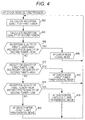
- Fig. 4 illustrates a sequence of the AF check mode setting process.
- the control unit 5 calculates a current reception quality of the first tuner 11 from the reception quality information transmitted from the front end 111 of the first tuner 11 (step 402) and calculates a current reception quality of the second tuner 12 from the reception quality information transmitted from the front end 121 of the second tuner 12 (step 404).
- control unit 5 determines whether both levels of the current reception quality of the first tuner 11 and the current reception quality of the second tuner 12 are "high” (step 406).
- a level of "high” and a level of “low” are used as the levels of the reception quality.
- the level of "high” is a level where broadcast can be received in a sufficiently superior state and the level of "low” is a level where the broadcast can be normally received, but the reception quality is inferior to the reception quality in the case of the level of "high".
- control unit 5 sets an equal mode as the AF check mode (step 408) and returns to the process from step 402.
- the control unit 5 determines whether the level of the current reception quality of the first tuner 11 is "low” and the level of the current reception quality of the second tuner 12 is "high” (step 410). When a determination result is yes, the control unit 5 sets a first tuner preferential mode as the AF check mode (step 412) and returns to the process from step 402.
- the control unit 5 determines whether the level of the current reception quality of the first tuner 11 is "high” and the level of the current reception quality of the second tuner 12 is "low” (step 414). When a determination result is yes, the control unit 5 sets a second tuner preferential mode as the AF check mode (step 416) and returns to the process from step 402.
- step 414 when the level of the current reception quality of the first tuner 11 is not “high” or the level of the current reception quality of the second tuner 12 is not “low” (step 414), that is, when both the levels of the current reception quality of the first tuner 11 and the current reception quality of the second tuner 12 are "low", the control unit 5 sets the first tuner preferential mode as the AF check mode (step 418) and returns to the process from step 402.
- the equal mode may be set as the AF check mode.
- the control unit 5 starts an AF check process.
- the AF check process is executed according to the set AF check mode.
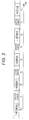
- the control unit 5 alternately allocates the individual time slots TS allocated to the AF check among the time slots TS allocated alternately to the AF check and the station search in advance as illustrated in Fig. 3 to time slots TS for a first tuner AF check and time slots TS for a second tuner AF check as illustrated in Fig. 5A .
- the first tuner AF check operation is executed during a period of the time slots TS for the first tuner AF check and the second tuner AF check operation is executed during a period of the time slots TS for the second tuner AF check.
- the control unit 5 starts the first tuner AF check operation and if the current time becomes an end time of the first time slot TS for the first tuner AF check, the control unit 5 temporarily stops the first tuner AF check operation. Then, if the current time becomes the start time of the time slot TS for the first tuner AF check, the control unit 5 resumes the temporarily stopped first tuner AF check operation and if the current time becomes the end time of the time slot TS for the first tuner AF check, the control unit 5 temporarily stops the first tuner AF check operation. The control unit 5 executes the above process repetitively thereafter.
- the control unit 5 starts the second tuner AF check operation and if the current time becomes an end time of the first time slot TS for the second tuner AF check, the control unit 5 temporarily stops the second tuner AF check operation. Then, if the current time becomes the start time of the time slot TS for the second tuner AF check, the control unit 5 resumes the temporarily stopped second tuner AF check operation and if the current time becomes the end time of the time slot TS for the second tuner AF check, the control unit 5 temporarily stops the second tuner AF check operation. The control unit 5 executes the above process repetitively thereafter.
- the control unit 5 sets a frequency channel of a frequency registered in a head of the second tuner AF list as the target channel, sets the target channel as the FM reception channel to the front end 31 of the background tuner 2, and executes the reception operation of the target channel.
- the control unit 5 calculates the reception quality of the target channel from the reception quality information transmitted from the front end 31 and registers the calculated reception quality of the target channel as the reception quality of the frequency channel set as the target channel in the second tuner AF list.
- the control unit 5 updates the target channel with a frequency channel of a frequency registered in the second tuner AF list after the target channel, sets the target channel as the FM reception channel to the front end 31 of the background tuner 2, and executes the reception operation of the target channel.
- the control unit 5 calculates the reception quality of the target channel from the reception quality information transmitted from the front end 31 and registers the calculated reception quality of the target channel as the reception quality of the frequency channel set as the target channel in the second tuner AF list.
- the control unit 5 executes the above process repetitively thereafter.
- the target channel is a frequency channel of a frequency registered in a tail of the second tuner AF list
- a frequency channel of a frequency registered in the second tuner AF list after the target channel that is, a frequency channel set as a next target channel is set as the frequency channel of the frequency registered in the head of the second tuner AF list.
- the control unit 5 allocates the individual time slots TS allocated to the AF check among the time slots TS allocated alternately to the AF check and the station search in advance as illustrated in Fig. 3 to the time slots TS for the first tuner AF check and the time slots TS for the second tuner AF check as illustrated in Fig. 5B .
- the allocation of the time slots TS for the first tuner AF check and the time slots TS for the second tuner AF check is performed such that a ratio of the number of time slots TS for the first tuner AF check appearing during a predetermined period and the number of time slots TS for the second tuner AF check appearing during the predetermined period becomes n : m (however, n > m). That is, the number of time slots TS for the first tuner AF check appearing during the predetermined period is set to be larger than the number of time slots TS for the second tuner AF check appearing during the predetermined period.
- values of n and m are previously determined to satisfy n > m.
- the time slot TS for the first tuner AF check is first allocated to the time slot TS for the AF check.
- the above-mentioned first tuner AF check operation is executed in a period of the time slots TS for the first tuner AF check and the above-mentioned second tuner AF check operation is executed during a period of the time slots TS for the second tuner AF check.
- the control unit 5 allocates the individual time slots TS allocated to the AF check among the time slots TS allocated alternately to the AF check and the station search in advance as illustrated in Fig. 3 to the time slots TS for the first tuner AF check and the time slots TS for the second tuner AF check as illustrated in Fig. 5C .
- the allocation of the time slots TS for the first tuner AF check and the time slots TS for the second tuner AF check is performed such that a ratio of the number of time slots TS for the first tuner AF check appearing during the predetermined period and the number of time slots TS for the second tuner AF check appearing during the predetermined period becomes m:n (however, n > m). That is, the number of time slots TS for the second tuner AF check appearing during the predetermined period is set to be larger than the number of time slots TS for the first tuner AF check appearing during the predetermined period.
- values of n and m are previously determined to satisfy n > m.
- the time slot TS for the second tuner AF check is first allocated to the time slot TS for the AF check.
- the above-mentioned first tuner AF check operation is executed in the period of the time slots TS for the first tuner AF check and the above-mentioned second tuner AF check operation is executed during the period of the time slots TS for the second tuner AF check.
- the allocation of the time slots TS for the first tuner AF check and the time slots TS for the second tuner AF check in the first tuner preferential mode and the second tuner preferential mode is performed, so that the AF check of the tuner having a deteriorated reception quality in the first tuner 11 and the second tuner 12 is performed at the higher frequency. Therefore, it can be anticipated that the AF check of the tuner having the deteriorated reception quality is completed more quickly.
- the probability that network following should be performed in the near future is high as compared with the other tuner. Therefore, the allocation of the time slots TS is performed as described above. Thereby, it can be anticipated that a network following (NF) operation is quickly executed on the tuner having the deteriorated reception quality, even when the reception quality of any one of the first tuner 11 and the second tuner 12 is deteriorated.
- the NF operation is described in detail later.
- the control unit 5 may perform the allocation of the time slots TS for the first tuner AF check and the time slots TS for the second tuner AF check, as illustrated in Fig. 6A .
- the control unit 5 may perform the allocation of the time slots TS for the first tuner AF check and the time slots TS for the second tuner AF check, as illustrated in Fig. 6B .
- the time slots TS are alternately allocated to the AF check and the station search, as illustrated in Fig. 6A .
- the individual time slots TS allocated to the AF check are alternately allocated to the time slots TS for the first tuner AF check and the time slots TS for the second tuner AF check.
- a time length of the time slot TS for the first tuner AF check and a time length of the time slot TS for the second tuner AF check are set such that a ratio of the time length of the time slot TS for the first tuner AF check and the time length of the time slot TS for the second tuner AF check becomes n:m (however, n > m), that is, the time length of the time slot TS for the first tuner AF check becomes longer than the time length of the time slot TS for the second tuner AF check.
- the time slot TS for the first tuner AF check is first allocated to the time slot TS of the AF check.
- the time slots TS are alternately allocated to the AF check and the station search, as illustrated in Fig. 6B .
- the individual time slots TS allocated to the AF check are alternately allocated to the time slots TS for the first tuner AF check and the time slots TS for the second tuner AF check.
- the time length of the time slot TS for the first tuner AF check and the time length of the time slot TS for the second tuner AF check are set such that a ratio of the time length of the time slot TS for the first tuner AF check and the time length of the time slot TS for the second tuner AF check becomes m:n (however, n > m), that is, the time length of the time slot TS for the second tuner AF check becomes longer than the time length of the time slot TS for the first tuner AF check.
- the time slot TS for the second tuner AF check is first allocated to the time slot TS of the AF check.
- the AF check of the tuner having a deteriorated reception quality in the first tuner 11 and the second tuner 12 is performed at the higher frequency. Therefore, similar to the case illustrated in Fig. 5 , it can be anticipated that the NF (network following) operation is quickly executed on the tuner having the deteriorated reception quality, even when the reception quality of any one of the first tuner 11 and the second tuner 12 is deteriorated.
- the control unit 5 may perform allocation of the time slots TS for the first tuner AF check and the time slots TS for the second tuner AF check, as follows.
- the time slots TS are alternately allocated to the AF check and the station search and the individual time slots TS allocated to the AF check are alternately allocated to the time slots TS for the first tuner AF check and the time slots TS for the second tuner AF check.
- a time length T1 of the time slot TS for the first tuner AF check and a time length T2 of the time slot TS for the second tuner AF check are set such that the ratio of the time length T1 and the time length T2 becomes T1/T2 > k1/k2.
- k1 shows the number of frequency channels (frequencies) registered in the first tuner AF list
- k2 shows the number of frequency channels (frequencies) registered in the second tuner AF list.
- the time slot TS for the first tuner AF check is first allocated to the time slot TS of the AF check.
- the time slots TS are alternately allocated to the AF check and the station search and the individual time slots TS allocated to the AF check are alternately allocated to the time slots TS for the first tuner AF check and the time slots TS for the second tuner AF check.
- the time length T1 of the time slot TS for the first tuner AF check and the time length T2 of the time slot TS for the second tuner AF check are set such that a ratio of the time length T1 and the time length T2 becomes T2/T1 > k2/k1.
- the time slot TS for the second tuner AF check is first allocated to the time slot TS of the AF check.
- the allocation of the time slots TS for the first tuner AF check and the time slots TS for the second tuner AF check in the first tuner preferential mode and the second tuner preferential mode is performed, so that it can be guaranteed that the check of the entire reception qualities of the frequency channels registered in the AF list of the tuner having a deteriorated reception quality in the first tuner 11 and the second tuner 12 is completed before the check of the entire reception qualities of the frequency channels registered in the AF list of the other tuner.
- the control unit 5 may perform allocation of the time slots TS for the first tuner AF check and the time slots TS for the second tuner AF check, as illustrated in Fig. 7A .
- the control unit 5 may perform allocation of the time slots TS for the first tuner AF check and the time slots TS for the second tuner AF check, as illustrated in Fig. 7B .
- the time slots TS are alternately allocated to the AF check and the station search.
- the individual time slots TS allocated to the AF check are alternately allocated to the time slots TS for the first tuner AF check and the time slots TS for the second tuner AF check.
- a time length of the time slot TS for the first tuner AF check is set as a time necessary when the reception quality of each of the entire frequency channels (frequencies) registered in the first tuner AF list is detected once and is registered in the first tuner AF list, by the first tuner AF check operation
- a time length of the time slot TS for the second tuner AF check is set as a time necessary when the reception quality of each of the entire frequency channels (frequencies) registered in the second tuner AF list is detected once and is registered in the second tuner AF list.
- the time slot TS for the first tuner AF check is first allocated to the time slot TS of the AF check.
- the time slots TS are alternately allocated to the AF check and the station search.
- the individual time slots TS allocated to the AF check are alternately allocated to the time slots TS for the first tuner AF check and the time slots TS for the second tuner AF check.
- the time length of the time slot TS for the first tuner AF check is set as a time necessary when the reception quality of each of the entire frequency channels (frequencies) registered in the first tuner AF list is detected once and is registered in the first tuner AF list, by the first tuner AF check operation
- the time length of the time slot TS for the second tuner AF check is set as a time necessary when the reception quality of each of the entire frequency channels (frequencies) registered in the second tuner AF list is detected once and is registered in the second tuner AF list.
- the time slot TS for the second tuner AF check is first allocated to the time slot TS of the AF check.
- control unit 5 executes the above-mentioned NF operation as follows, using the first tuner AF list and the second tuner AF list.
- the control unit 5 updates the FM reception channel of the front end 111 of the first tuner 11 with a frequency channel of a frequency having a best reception quality registered in the first tuner AF list and when a level of the reception quality calculated from the reception quality information transmitted from the front end 121 of the second tuner 12 is lower than the predetermined level, the control unit 5 updates the FM reception channel of the front end 121 of the second tuner 12 with a frequency channel of a frequency having a best reception quality registered in the second tuner AF list.
- the predetermined level is a level obtained by adding a predetermined margin to, for example, a level of a reception quality where a frequency channel cannot be normally received.
- the control unit 5 updates the FM reception channel of the front end 111 of the first tuner 11 and the FM reception channel of the front end 121 of the second tuner 12 with the frequency channel of the frequency having the best reception quality registered in the first tuner AF list.
- an embodiment of the present invention is described using an example of the application to the radio broadcast reception system for receiving the FM radio broadcast broadcasted after the data signal is multiplexed on the audio by the RDS (radio data system).
- this embodiment is equally applicable to digital radio broadcast performing simultaneous broadcast such as DAB and DAB+ and digital television broadcast performing other simultaneous broadcast.
Landscapes
- Engineering & Computer Science (AREA)
- Signal Processing (AREA)
- Circuits Of Receivers In General (AREA)
- Radio Transmission System (AREA)
- Testing, Inspecting, Measuring Of Stereoscopic Televisions And Televisions (AREA)
- Two-Way Televisions, Distribution Of Moving Picture Or The Like (AREA)
Abstract
Description
- The present invention relates to network following technology in a broadcast reception device.
- Conventionally, radio broadcast for performing audio broadcast with data such as a radio data system (RDS) is known. The data broadcasted by the radio broadcast includes information of a frequency channel broadcasting the same program, called AF. A radio reception device receiving the radio broadcast executes an AF check for sequentially checking individual reception states of other frequency channels broadcasting the same program as a frequency channel during reception by referring to AF and executes a network following (NF) operation for changing the received frequency channel to a frequency channel having a superior reception state among other frequency channels broadcasting the same program as the frequency channel during reception, when the reception state of the frequency channel during reception is deteriorated.
- As the radio reception device to execute the NF operation, a radio reception device receiving a program from one frequency channel by a phase diversity method using two tuners and using one tuner for receiving the program and the other tuner for executing the AF check, when a reception state of the frequency channel during reception is deteriorated, is known (for example, refer to Patent Literature 1).
- In addition, technology in which three tuners of first to third tuners are included in a television/radio reception device, the first tuner and the second tuner are used for receiving two different programs, and the third tuner is used for searching a channel broadcasting the same program as a program received by one of the first tuner and the second tuner is known (for example, refer to Patent Literature 2).
-
- Patent Literature 1:
JP 2007-288631 A - Patent Literature 2:
JP 2006-304073 A - In the case in which the three tuners of the first, second, and third tuners are included in the radio reception device, the first tuner and the second tuner are used for receiving the different programs, and the third tuner is used for executing the AF check, if the third tuner is used for only the AF check of a frequency channel received by one of the first tuner and the second tuner, the AF check of a frequency channel received by the other tuner cannot be executed and an NF operation for the other tuner cannot be executed.
- Meanwhile, if the AF check of the frequency channel received by the first tuner and the AF check of the frequency channel received by the second tuner are executed sequentially by the third tuner, a relatively long time is needed until the AF check of the second tuner is completed. In addition, because the NF operation of the second tuner cannot be executed until the AF check of the second tuner is completed, the NF operation of the second tuner cannot be quickly executed when a reception state of the second tuner is deteriorated before the AF check of the second tuner is completed.
- Accordingly, an object of the present invention is to, when a reception state of a first tuner or a second tuner is deteriorated in a broadcast reception device including three tuners of first, second, and third tuners and using the first tuner and the second tuner for receiving different broadcast channels, change the broadcast channel received by the tuner having the deteriorated reception state to other broadcast channel broadcasting the same program as the broadcast channel during reception and having a superior reception state quickly.
- The invention relates to broadcast reception devices and methods according to the independent claims. Embodiments are disclosed in the dependent claims.
- According to an embodiment of the present invention, there is provided a broadcast reception device including a first tuner, a second tuner, and a third tuner. The broadcast reception device includes an alternative broadcast channel check unit which checks a reception quality of a first tuner alternative broadcast channel to be a broadcast channel broadcasting the same content as a broadcast channel being received by the first tuner and checks a reception quality of a second tuner alternative broadcast channel to be a broadcast channel broadcasting the same content as a broadcast channel being received by the second tuner, using the third tuner, when the first tuner and the second tuner receive different broadcast channels; and a network following execution unit which changes the broadcast channel received by the first tuner to the first tuner alternative broadcast channel where the reception quality checked by the alternative broadcast channel check unit is superior at a first predetermined opportunity and changes the broadcast channel received by the second tuner to the second tuner alternative broadcast channel where the reception quality checked by the alternative broadcast channel check unit is superior at a second predetermined opportunity. The alternative broadcast channel check unit executes the check of the reception quality of the first tuner alternative broadcast channel using the third tuner at the frequency higher than the frequency of the check of the reception quality of the second tuner alternative broadcast channel using the third tuner, at least when a level of a reception quality of the first tuner is not sufficiently superior and a level of a reception quality of the second tuner is sufficiently superior. The alternative broadcast channel check unit executes the check of the reception quality of the second tuner alternative broadcast channel using the third tuner at the frequency higher than the frequency of the check of the reception quality of the first tuner alternative broadcast channel using the third tuner, at least when the level of the reception quality of the first tuner is sufficiently superior and the level of the reception quality of the second tuner is not sufficiently superior.
- According to the broadcast reception device, in the case in which the first tuner and the second tuner receive the different broadcast channels, when the check of the reception quality of the first tuner alternative broadcast channel to be the broadcast channel broadcasting the same content as the broadcast channel being received by the first tuner and the check of the reception quality of the second tuner alternative broadcast channel to be the broadcast channel broadcasting the same content as the broadcast channel being received by the second tuner are executed using the third tuner, the check of the reception quality of the alternative broadcast channel of the tuner having the deteriorated reception quality in the first tuner and the second tuner is executed at the higher frequency. Therefore, it can be anticipated that the check of the reception quality of the alternative broadcast channel of the tuner having the deteriorated reception quality is completed more quickly.
- Meanwhile, in the tuner not having a sufficiently superior reception quality in the first tuner and the second tuner, the probability that network following should be performed in the near future is high as compared with the other tuner, when the reception quality of the other tuner is sufficiently superior.
- Therefore, according to the broadcast reception device, it can be anticipated that the network following is quickly executed on the tuner having the deteriorated reception quality, even when the reception quality of any one of the first tuner and the second tuner is deteriorated.
- According to an embodiment, there may be provided a broadcast reception device, wherein the alternative broadcast channel check unit executes the check of the reception quality of the first tuner alternative broadcast channel using the third tuner and the check of the reception quality of the second tuner alternative broadcast channel using the third tuner alternately and repetitively, the alternative broadcast channel check unit sets a time length when the check of the reception quality of the first tuner alternative broadcast channel is executed to be longer than a time length when the check of the reception quality of the second tuner alternative broadcast channel is executed, at least when the level of the reception quality of the first tuner is not sufficiently superior and the level of the reception quality of the second tuner is sufficiently superior, and the alternative broadcast channel check unit sets the time length when the check of the reception quality of the second tuner alternative broadcast channel is executed to be longer than the time length when the check of the reception quality of the first tuner alternative broadcast channel is executed, at least when the level of the reception quality of the first tuner is sufficiently superior and the level of the reception quality of the second tuner is not sufficiently superior.
- According to an embodiment, there may be provided a broadcast reception device, wherein the alternative broadcast channel check unit executes the check of the reception quality of the first tuner alternative broadcast channel using the third tuner and the check of the reception quality of the second tuner alternative broadcast channel using the third tuner alternately and repetitively, the alternative broadcast channel check unit sets a ratio of a time length when the check of the reception quality of the first tuner alternative broadcast channel is executed to a time length when the check of the reception quality of the second tuner alternative broadcast channel is executed to be larger than a ratio of the number of first tuner alternative broadcast channels to the number of second tuner alternative broadcast channels, at least when the level of the reception quality of the first tuner is not sufficiently superior and the level of the reception quality of the second tuner is sufficiently superior, and the alternative broadcast channel check unit sets a ratio of the time length when the check of the reception quality of the second tuner alternative broadcast channel is executed to the time length when the check of the reception quality of the first tuner alternative broadcast channel is executed to be larger than a ratio of the number of second tuner alternative broadcast channels to the number of first tuner alternative broadcast channels, at least when the level of the reception quality of the first tuner is sufficiently superior and the level of the reception quality of the second tuner is not sufficiently superior.
- In this way, when the reception quality of one of the first tuner and the second tuner is not sufficiently superior and the reception quality of the other tuner is sufficiently superior, it can be guaranteed that the check of the entire reception qualities of the alternative broadcast channels of the tuner not having the sufficiently superior reception quality is completed before the check of the entire reception qualities of the alternative broadcast channels of the other tuner.
- Here, the broadcast reception device that alternately executes the check of the reception quality of the first tuner alternative broadcast channel and the check of the reception quality of the second tuner alternative broadcast channel is preferably configured such that the alternative broadcast channel check unit executes the first check of the reception quality of the first tuner alternative broadcast channel before the first check of the reception quality of the second tuner alternative broadcast channel, at least when the level of the reception quality of the first tuner is not sufficiently superior and the level of the reception quality of the second tuner is sufficiently superior, and executes the first check of the reception quality of the second tuner alternative broadcast channel before the first check of the reception quality of the first tuner alternative broadcast channel, at least when the level of the reception quality of the first tuner is sufficiently superior and the level of the reception quality of the second tuner is not sufficiently superior.
- It is preferable that there is provided the broadcast reception device, wherein the alternative broadcast channel check unit executes the check of the reception quality of the first tuner alternative broadcast channel using the third tuner at the same frequency as the check of the reception quality of the second tuner alternative broadcast channel using the third tuner, at least when both levels of the reception quality of the first tuner and the reception quality of the second tuner are sufficiently superior.
- According to an embodiment, there may be provided a broadcast reception device, wherein the alternative broadcast channel check unit executes the check of the reception quality of the first tuner alternative broadcast channel using the third tuner at the same frequency as the check of the reception quality of the second tuner alternative broadcast channel using the third tuner, at least when both the levels of the reception quality of the first tuner and the reception quality of the second tuner are not sufficiently superior.
- According to an embodiment, there may be provided a broadcast reception device, wherein the alternative broadcast channel check unit executes the check of the reception quality of the first tuner alternative broadcast channel using the third tuner at the frequency higher than the frequency of the check of the reception quality of the second tuner alternative broadcast channel using the third tuner, at least when both the levels of the reception quality of the first tuner and the reception quality of the second tuner are not sufficiently superior.
- According to another embodiment of the present invention, there is provided a broadcast reception device including a first tuner, a second tuner, and a third tuner. The broadcast reception device includes an alternative broadcast channel check unit which checks a reception quality of a first tuner alternative broadcast channel to be a broadcast channel broadcasting the same content as a broadcast channel being received by the first tuner and checks a reception quality of a second tuner alternative broadcast channel to be a broadcast channel broadcasting the same content as a broadcast channel being received by the second tuner, using the third tuner, when the first tuner and the second tuner receive different broadcast channels; and a network following execution unit which changes the broadcast channel received by the first tuner to the first tuner alternative broadcast channel where the reception quality checked by the alternative broadcast channel check unit is superior at a first predetermined opportunity and changes the broadcast channel received by the second tuner to the second tuner alternative broadcast channel where the reception quality checked by the alternative broadcast channel check unit is superior at a second predetermined opportunity. The alternative broadcast channel check unit executes the check of the reception quality of the first tuner alternative broadcast channel using the third tuner and the check of the reception quality of the second tuner alternative broadcast channel using the third tuner alternately. The alternative broadcast channel check unit executes the first check of the reception quality of the first tuner alternative broadcast channel before the first check of the reception quality of the second tuner alternative broadcast channel, at least when a level of a reception quality of the first tuner is not sufficiently superior and a level of a reception quality of the second tuner is sufficiently superior. The alternative broadcast channel check unit executes the first check of the reception quality of the second tuner alternative broadcast channel before the first check of the reception quality of the first tuner alternative broadcast channel, at least when the level of the reception quality of the first tuner is sufficiently superior and the level of the reception quality of the second tuner is not sufficiently superior.
- According to the broadcast reception device, in the case in which the first tuner and the second tuner receive the different broadcast channels, when the check of the reception quality of the first tuner alternative broadcast channel to be the broadcast channel broadcasting the same content as the broadcast channel being received by the first tuner and the check of the reception quality of the second tuner alternative broadcast channel to be the broadcast channel broadcasting the same content as the broadcast channel being received by the second tuner are executed alternately using the third tuner, the check of the reception quality of the alternative broadcast channel of the tuner having the deteriorated reception quality in the first tuner and the second tuner starts before the check of the reception quality of the alternative broadcast channel of the other tuner. Therefore, it can be anticipated that the check of the reception quality of the alternative broadcast channel of the tuner having the deteriorated reception quality is completed more quickly.
- Meanwhile, in the tuner not having a sufficiently superior reception quality in the first tuner and the second tuner, the probability that network following should be performed in the near future is high as compared with the other tuner, when the reception quality of the other tuner is sufficiently superior.
- Therefore, according to the broadcast reception device, it can be anticipated that the network following is quickly executed on the tuner having the deteriorated reception quality, even when the reception quality of any one of the first tuner and the second tuner is deteriorated.
- Here, each broadcast reception device described above may be a broadcast reception device that is mounted on a vehicle.
- In addition, each broadcast reception device described above may be a broadcast reception device that receives FM radio broadcast broadcasted after data is multiplexed on audio by a radio data system (RDS). In this case, the broadcast channel is a frequency channel of the FM radio broadcast.
- As described above, according to the present invention, when a reception state of a first tuner or a second tuner is deteriorated in a broadcast reception device including three tuners of first, second, and third tuners and using the first tuner and the second tuner for receiving different broadcast channels, the broadcast channel received by the tuner having the deteriorated reception state can be quickly changed to other broadcast channel broadcasting the same program as the broadcast channel during reception and having a superior reception state.
-
-
Fig. 1 is a block diagram illustrating a configuration of a radio broadcast reception system according to an embodiment of the present invention. -
Fig. 2 is a diagram illustrating a station list and an AF list according to an embodiment of the present invention. -
Fig. 3 is a diagram illustrating an example of an AF check operation according to an embodiment of the present invention. -
Fig. 4 is a flowchart illustrating an AF check mode setting process according to an embodiment of the present invention. -
Fig. 5 is a diagram illustrating an example of an AF check operation according to an embodiment of the present invention. -
Fig. 6 is a diagram illustrating an example of an AF check operation according to an embodiment of the present invention. -
Fig. 7 is a diagram illustrating an example of an AF check operation according to an embodiment of the present invention. - Hereinafter, embodiments of the present invention will be described using an example of an application to a radio broadcast reception system for receiving FM radio broadcast broadcasted after a data signal is multiplexed on audio by a radio data system (RDS).
- Here, the radio broadcast reception system according to this embodiment is a radio broadcast reception system of which a position varies, such as a radio broadcast reception system mounted on a vehicle.
-
Fig. 1 illustrates a configuration of the radio broadcast reception system according to this embodiment. - As illustrated in
Fig. 1 , the radio broadcast reception system includes aforeground tuner unit 1, abackground tuner 2, anamplifier 3, acommunication interface 4, acontrol unit 5, anoperation unit 6, adisplay unit 7, amemory 8, anoutput selector 9, aspeaker 100, and a rearaudio output system 101. - In addition, the
foreground tuner unit 1 includes afirst tuner 11 and asecond tuner 12. - In addition, the
first tuner 11 of theforeground tuner unit 1 includes afront end 111 receiving a frequency channel set as an FM reception channel and outputting an intermediate frequency signal, asynthesis unit 112, aselector 113, anFM demodulation unit 114, and anRDS decoder 115. - Here, the
front end 111 outputs the intermediate frequency signal to theselector 113 and thesynthesis unit 112. Thesynthesis unit 112 performs phase diversity for adjusting phases of the intermediate frequency signal input from thefront end 111 and an intermediate frequency signal input from afront end 121 of thesecond tuner 12 to be described below and synthesizing the intermediate frequency signals and outputs a synthesized intermediate frequency signal to theselector 113. - The
selector 113 outputs one of the intermediate frequency signal input from thefront end 111 and the intermediate frequency signal input from thesynthesis unit 112 to theFM demodulation unit 114 and theFM demodulation unit 114 executes FM demodulation on the intermediate frequency signal output from theselector 113 and outputs a demodulated audio signal to theoutput selector 9. - In addition, when a data signal transmitted after being multiplexed on an audio signal by the RDS (radio data system) is included in the signal demodulated by the
FM demodulation unit 114, theRDS decoder 115 decodes data from the data signal and transmits the data to thecontrol unit 5. Here, a program identifier PI to be an identifier of a program FM-broadcasted from a station of the frequency channel set as the FM reception channel and AF showing a frequency of a frequency channel broadcasting the same program are included in the data obtained by decoding the data signal. - In addition, the
front end 111 transmits information regarding a reception quality of FM broadcast of the FM reception channel, such as reception field strength and an SN ratio of the FM reception channel, multipath noise, and adjacent noise, as reception quality information to thecontrol unit 5. - Next, the
second tuner 12 of theforeground tuner unit 1 includes afront end 121 receiving a frequency channel set as an FM reception channel and outputting an intermediate frequency signal, an FM demodulation unit 122, and anRDS decoder 123. - Here, the
front end 121 outputs the intermediate frequency signal to thesynthesis unit 112 of thefirst tuner 11 and the FM demodulation unit 122. In addition, the FM demodulation unit 122 executes FM demodulation on the intermediate frequency signal output from thefront end 121 and outputs a demodulated audio signal to theoutput selector 9. - In addition, when the data signal described above is included in the signal demodulated by the FM demodulation unit 122, the
RDS decoder 123 decodes data from a data signal and transmits the data to thecontrol unit 5. In addition, thefront end 121 transmits information regarding a reception quality of FM broadcast of the FM reception channel, such as reception field strength and an SN ratio of the FM reception channel, multipath noise, and adjacent noise, as reception quality information to thecontrol unit 5. - Next, the
output selector 9 can selectively output one of the audio signal output by theFM demodulation unit 114 of thefirst tuner 11 and the audio signal output by the FM demodulation unit 122 of thesecond tuner 12 to theamplifier 3 and theamplifier 3 amplifies the audio signal output from theoutput selector 9 and outputs the audio signal from thespeaker 100. - In addition, the
output selector 9 can selectively output one of the audio signal output by theFM demodulation unit 114 of thefirst tuner 11 and the audio signal output by the FM demodulation unit 122 of thesecond tuner 12 to thecommunication interface 4. Thecommunication interface 4 transmits the audio signal output from theoutput selector 9 to the rearaudio output system 101 and the rearaudio output system 101 outputs the transmitted audio signal to a user of a rear seat of a vehicle. More specifically, the rearaudio output system 101 outputs the audio signal transmitted from thecommunication interface 4 to a headphone for the user of the rear seat. - Next, the
background tuner 2 includes afront end 31 that receives a frequency channel set as an FM reception channel and outputs an intermediate frequency signal, anFM demodulation unit 32 that executes FM demodulation on the intermediate frequency signal output from thefront end 31, and anRDS decoder 33. - Here, when the data signal described above is included in the signal demodulated by the
FM demodulation unit 32, theRDS decoder 33 decodes data from the data signal and transmits the data to thecontrol unit 5. - In addition, the
front end 31 transmits information regarding a reception quality of FM broadcast of the FM reception channel, such as reception field strength and an SN ratio of the FM reception channel, multipath noise, and adjacent noise, as reception quality information to thecontrol unit 5. - In this configuration, when an output of a frequency channel designated by the user from only the
speaker 100 is commanded by the user through theoperation unit 6, thecontrol unit 5 sets the frequency channel designated by the user as the FM reception channel to thefront end 111 of thefirst tuner 11 and thefront end 121 of thesecond tuner 12, causes theselector 113 of thefirst tuner 11 to output the intermediate frequency signal input from thesynthesis unit 112 to theFM demodulation unit 114 of thefirst tuner 11, and causes theoutput selector 9 to output the audio signal input from theFM demodulation unit 114 of thefirst tuner 11 to theamplifier 3. - As a result, reception of the frequency channel designated by the user and an output of audio of a program received by the frequency channel from the
speaker 100 are performed using a phase diversity method using thefirst tuner 11 and thesecond tuner 12. - In addition, when an output of the frequency channel designated by the user from only the rear
audio output system 101 is commanded by the user through theoperation unit 6, thecontrol unit 5 sets the frequency channel designated by the user as the FM reception channel to thefront end 111 of thefirst tuner 11 and thefront end 121 of thesecond tuner 12, causes theselector 113 of thefirst tuner 11 to output the intermediate frequency signal input from thesynthesis unit 112 to theFM demodulation unit 114 of thefirst tuner 11, and causes theoutput selector 9 to output the audio signal input from theFM demodulation unit 114 of thefirst tuner 11 to thecommunication interface 4. - As a result, reception of the frequency channel designated by the user and an output of audio of a program received by the frequency channel from the rear
audio output system 101 are performed using the phase diversity method using thefirst tuner 11 and thesecond tuner 12. - In addition, when an output of a first frequency channel designated by the user from the
speaker 100 and an output of a second frequency channel designated by the user from the rearaudio output system 101 are commanded by the user through theoperation unit 6, thecontrol unit 5 sets the first frequency channel as the FM reception channel to thefront end 111 of thefirst tuner 11 and causes theselector 113 of thefirst tuner 11 to output the intermediate frequency signal input from thefront end 111 of thefirst tuner 11 to theFM demodulation unit 114 of thefirst tuner 11. Thecontrol unit 5 sets the second frequency channel as the FM reception channel to thefront end 121 of thesecond tuner 12 and causes theoutput selector 9 to output the audio signal input from theFM demodulation unit 114 of thefirst tuner 11 to theamplifier 3 and to output the audio signal input from the FM demodulation unit 122 of thesecond tuner 12 to thecommunication interface 4. - As a result, reception of the first frequency channel using the
first tuner 11, an output of the audio of the program received by the frequency channel from thespeaker 100, reception of the second frequency channel using thesecond tuner 12, and an output of the audio of the program received by the frequency channel from the rearaudio output system 101 are performed. - Next,
Fig. 2 illustrates a station list, a first tuner AF list, and a second tuner AF list stored in thememory 8 in this embodiment. - As illustrated in
Fig. 2A , the station list is a list in which a frequency and a reception quality of each frequency channel are registered for each frequency channel that can be received at the present time. - In addition, as illustrated in
Fig. 2B1 , the first tuner AF list is a table in which an alternative frequency to be a frequency of each frequency channel and a reception quality of each frequency channel are registered for each frequency channel that broadcasts the same program as the frequency channel received by thefirst tuner 11. - In addition, as illustrated in
Fig. 2B2 , the second tuner AF list is a table in which an alternative frequency to be a frequency of each frequency channel and a reception quality of each frequency channel are registered for each frequency channel that broadcasts the same program as the frequency channel received by thesecond tuner 12. - In a configuration of the radio broadcast reception system, the
control unit 5 executes a process for investigating the frequencies and the reception qualities of the frequency channels, which can be received at the present time, using thebackground tuner 2 and registering the frequencies and the reception qualities in the station list. - That is, as illustrated in
Fig. 3 , thecontrol unit 5 executes the following operation during a period of time slots TS allocated to the station search among time slots TS allocated alternately to the AF check and the station search in advance. - That is, the
control unit 5 sequentially sets each frequency channel to a target channel, sets the target channel as the FM reception channel to thefront end 31 of thebackground tuner 2, and executes a reception operation of the target channel. Thereby, as described above, when a reception quality of the target channel is calculated from the reception quality information transmitted from thefront end 31 and the reception quality is at a level where broadcast can be normally received, thecontrol unit 5 executes an operation for registering the frequency of the target channel and the calculated reception quality in the station list during the period of the time slots TS allocated to the station search. - In addition, the
control unit 5 executes a process for displaying a list of frequencies of broadcast stations registered in the station list on thedisplay unit 7 and receiving a frequency of a broadcast station selected from the list by the user as the frequency of the frequency channel received by thefirst tuner 11 or thesecond tuner 12, according to a user operation of theoperation unit 6. - Next, the
control unit 5 executes a process for investigating a frequency and a reception quality of a frequency channel broadcasting the same program as the frequency channels received by thefirst tuner 11 and thesecond tuner 12 and registering the frequency and the reception quality in the first tuner AF list or the second tuner AF list, using thebackground tuner 2. - That is, when the same frequency channel is received by the
first tuner 11 and thesecond tuner 12, first, thecontrol unit 5 specifies the frequency of the frequency channel broadcasting the same program as the frequency channel received by thefirst tuner 11 from AF or PI transmitted from theRDS decoder 115 of thefirst tuner 11 and registers the frequency in the first tuner AF list. - In addition, as illustrated in
Fig. 3 , during the period of the time slots TS allocated to the AF check among the time slots TS allocated alternately to the AF check and the station search in advance, thecontrol unit 5 executes the following first tuner AF check operation. That is, if a current time becomes a start time of a first time slot TS allocated to the AF check, thecontrol unit 5 starts the first tuner AF check operation and if the current time becomes an end time of the first time slot TS allocated to the AF check, thecontrol unit 5 temporarily stops the first tuner AF check operation. Then, if the current time becomes the start time of the time slot TS, thecontrol unit 5 resumes the temporarily stopped first tuner AF check operation and if the current time becomes the end time of the time slot TS, thecontrol unit 5 temporarily stops the first tuner AF check operation. Thecontrol unit 5 executes the above process repetitively thereafter. - In the first tuner AF check operation, first, the
control unit 5 sets a frequency channel of a frequency registered in a head of the first tuner AF list as the target channel, sets the target channel as the FM reception channel to thefront end 31 of thebackground tuner 2, and executes the reception operation of the target channel. Thereby, as described above, thecontrol unit 5 calculates the reception quality of the target channel from the reception quality information transmitted from thefront end 31 and registers the calculated reception quality of the target channel as the reception quality of the frequency channel set as the target channel in the first tuner AF list. Then, thecontrol unit 5 updates the target channel with a frequency channel of a frequency registered in the first tuner AF list after the target channel, sets the target channel as the FM reception channel to thefront end 31 of thebackground tuner 2, and executes the reception operation of the target channel. Thereby, as described above, thecontrol unit 5 calculates the reception quality of the target channel from the reception quality information transmitted from thefront end 31 and registers the calculated reception quality of the target channel as the reception quality of the frequency channel set as the target channel in the first tuner AF list. Thecontrol unit 5 executes the above process repetitively thereafter. However, when the target channel is a frequency channel of a frequency registered in a tail of the first tuner AF list, a frequency channel of a frequency registered in the first tuner AF list after the target channel, that is, a frequency channel set as a next target channel is set as the frequency channel of the frequency registered in the head of the first tuner AF list. - Meanwhile, when different frequency channels are received by the
first tuner 11 and thesecond tuner 12, thecontrol unit 5 executes a process for investigating a frequency and a reception quality of a frequency channel broadcasting the same program as the frequency channels received by thefirst tuner 11 and thesecond tuner 12 and registering the frequency and the reception quality in the first tuner AF list and the second tuner AF list, using thebackground tuner 2, as follows. - That is, the
control unit 5 first specifies the frequency of the frequency channel broadcasting the same program as the frequency channel received by thefirst tuner 11 from AF or PI transmitted from theRDS decoder 115 of thefirst tuner 11 and registers the frequency in the first tuner AF list. In addition, thecontrol unit 5 specifies the frequency of the frequency channel broadcasting the same program as the frequency channel received by thesecond tuner 12 from AF or PI transmitted from theRDS decoder 123 of thesecond tuner 12 and registers the frequency in the second tuner AF list. - Next, the
control unit 5 starts an AF check mode setting process. -
Fig. 4 illustrates a sequence of the AF check mode setting process. - As illustrated in
Fig. 4 , in this process, first, thecontrol unit 5 calculates a current reception quality of thefirst tuner 11 from the reception quality information transmitted from thefront end 111 of the first tuner 11 (step 402) and calculates a current reception quality of thesecond tuner 12 from the reception quality information transmitted from thefront end 121 of the second tuner 12 (step 404). - In addition, the
control unit 5 determines whether both levels of the current reception quality of thefirst tuner 11 and the current reception quality of thesecond tuner 12 are "high" (step 406). - Here, in this embodiment, a level of "high" and a level of "low" are used as the levels of the reception quality. The level of "high" is a level where broadcast can be received in a sufficiently superior state and the level of "low" is a level where the broadcast can be normally received, but the reception quality is inferior to the reception quality in the case of the level of "high".
- In addition, when both levels of the current reception quality of the
first tuner 11 and the current reception quality of thesecond tuner 12 are "high" (step 406), thecontrol unit 5 sets an equal mode as the AF check mode (step 408) and returns to the process fromstep 402. - Meanwhile, when both levels of the current reception quality of the
first tuner 11 and the current reception quality of thesecond tuner 12 are not "high", thecontrol unit 5 determines whether the level of the current reception quality of thefirst tuner 11 is "low" and the level of the current reception quality of thesecond tuner 12 is "high" (step 410). When a determination result is yes, thecontrol unit 5 sets a first tuner preferential mode as the AF check mode (step 412) and returns to the process fromstep 402. - In addition, when the level of the current reception quality of the
first tuner 11 is not "low" or the level of the current reception quality of thesecond tuner 12 is not "high" (step 410), thecontrol unit 5 determines whether the level of the current reception quality of thefirst tuner 11 is "high" and the level of the current reception quality of thesecond tuner 12 is "low" (step 414). When a determination result is yes, thecontrol unit 5 sets a second tuner preferential mode as the AF check mode (step 416) and returns to the process fromstep 402. - In addition, when the level of the current reception quality of the
first tuner 11 is not "high" or the level of the current reception quality of thesecond tuner 12 is not "low" (step 414), that is, when both the levels of the current reception quality of thefirst tuner 11 and the current reception quality of thesecond tuner 12 are "low", thecontrol unit 5 sets the first tuner preferential mode as the AF check mode (step 418) and returns to the process fromstep 402. However, instep 418, the equal mode may be set as the AF check mode. - The AF check mode setting process executed by the
control unit 5 has been described. - If the first AF check mode is set by the AF check mode setting process, the
control unit 5 starts an AF check process. - Here, the AF check process is executed according to the set AF check mode.
- That is, in the AF check process, when the equal mode is set as the AF check mode, the
control unit 5 alternately allocates the individual time slots TS allocated to the AF check among the time slots TS allocated alternately to the AF check and the station search in advance as illustrated inFig. 3 to time slots TS for a first tuner AF check and time slots TS for a second tuner AF check as illustrated inFig. 5A . - In addition, the first tuner AF check operation is executed during a period of the time slots TS for the first tuner AF check and the second tuner AF check operation is executed during a period of the time slots TS for the second tuner AF check.
- That is, if a current time becomes a start time of a first time slot TS for the first tuner AF check, the
control unit 5 starts the first tuner AF check operation and if the current time becomes an end time of the first time slot TS for the first tuner AF check, thecontrol unit 5 temporarily stops the first tuner AF check operation. Then, if the current time becomes the start time of the time slot TS for the first tuner AF check, thecontrol unit 5 resumes the temporarily stopped first tuner AF check operation and if the current time becomes the end time of the time slot TS for the first tuner AF check, thecontrol unit 5 temporarily stops the first tuner AF check operation. Thecontrol unit 5 executes the above process repetitively thereafter. - Likewise, if the current time becomes a start time of a first time slot TS for the second tuner AF check, the
control unit 5 starts the second tuner AF check operation and if the current time becomes an end time of the first time slot TS for the second tuner AF check, thecontrol unit 5 temporarily stops the second tuner AF check operation. Then, if the current time becomes the start time of the time slot TS for the second tuner AF check, thecontrol unit 5 resumes the temporarily stopped second tuner AF check operation and if the current time becomes the end time of the time slot TS for the second tuner AF check, thecontrol unit 5 temporarily stops the second tuner AF check operation. Thecontrol unit 5 executes the above process repetitively thereafter. - Here, in the second tuner AF check operation, first, the
control unit 5 sets a frequency channel of a frequency registered in a head of the second tuner AF list as the target channel, sets the target channel as the FM reception channel to thefront end 31 of thebackground tuner 2, and executes the reception operation of the target channel. Thereby, as described above, thecontrol unit 5 calculates the reception quality of the target channel from the reception quality information transmitted from thefront end 31 and registers the calculated reception quality of the target channel as the reception quality of the frequency channel set as the target channel in the second tuner AF list. Then, thecontrol unit 5 updates the target channel with a frequency channel of a frequency registered in the second tuner AF list after the target channel, sets the target channel as the FM reception channel to thefront end 31 of thebackground tuner 2, and executes the reception operation of the target channel. Thereby, as described above, thecontrol unit 5 calculates the reception quality of the target channel from the reception quality information transmitted from thefront end 31 and registers the calculated reception quality of the target channel as the reception quality of the frequency channel set as the target channel in the second tuner AF list. Thecontrol unit 5 executes the above process repetitively thereafter. However, when the target channel is a frequency channel of a frequency registered in a tail of the second tuner AF list, a frequency channel of a frequency registered in the second tuner AF list after the target channel, that is, a frequency channel set as a next target channel is set as the frequency channel of the frequency registered in the head of the second tuner AF list. - Next, in the AF check process, when the first tuner preferential mode is set as the AF check mode, the
control unit 5 allocates the individual time slots TS allocated to the AF check among the time slots TS allocated alternately to the AF check and the station search in advance as illustrated inFig. 3 to the time slots TS for the first tuner AF check and the time slots TS for the second tuner AF check as illustrated inFig. 5B . Here, the allocation of the time slots TS for the first tuner AF check and the time slots TS for the second tuner AF check is performed such that a ratio of the number of time slots TS for the first tuner AF check appearing during a predetermined period and the number of time slots TS for the second tuner AF check appearing during the predetermined period becomes n : m (however, n > m). That is, the number of time slots TS for the first tuner AF check appearing during the predetermined period is set to be larger than the number of time slots TS for the second tuner AF check appearing during the predetermined period. Here, values of n and m are previously determined to satisfy n > m. InFig. 5B , n = 2 and m = 1 are set and the ratio of the number of time slots TS for the first tuner AF check and the number of time slots TS for the second tuner AF check is 2:1. - In addition, in the allocation of the time slots TS for the first tuner AF check and the time slots TS for the second tuner AF check, the time slot TS for the first tuner AF check is first allocated to the time slot TS for the AF check.
- In addition, the above-mentioned first tuner AF check operation is executed in a period of the time slots TS for the first tuner AF check and the above-mentioned second tuner AF check operation is executed during a period of the time slots TS for the second tuner AF check.
- Next, in the AF check process, when the second tuner preferential mode is set as the AF check mode, the
control unit 5 allocates the individual time slots TS allocated to the AF check among the time slots TS allocated alternately to the AF check and the station search in advance as illustrated inFig. 3 to the time slots TS for the first tuner AF check and the time slots TS for the second tuner AF check as illustrated inFig. 5C . Here, the allocation of the time slots TS for the first tuner AF check and the time slots TS for the second tuner AF check is performed such that a ratio of the number of time slots TS for the first tuner AF check appearing during the predetermined period and the number of time slots TS for the second tuner AF check appearing during the predetermined period becomes m:n (however, n > m). That is, the number of time slots TS for the second tuner AF check appearing during the predetermined period is set to be larger than the number of time slots TS for the first tuner AF check appearing during the predetermined period. Here, values of n and m are previously determined to satisfy n > m. InFig. 5C , n = 2 and m = 1 are set and the ratio of the number of time slots TS for the first tuner AF check and the number of time slots TS for the second tuner AF check is 1:2. - In addition, in the allocation of the time slots TS for the first tuner AF check and the time slots TS for the second tuner AF check, the time slot TS for the second tuner AF check is first allocated to the time slot TS for the AF check.
- In addition, the above-mentioned first tuner AF check operation is executed in the period of the time slots TS for the first tuner AF check and the above-mentioned second tuner AF check operation is executed during the period of the time slots TS for the second tuner AF check.
- As such, the allocation of the time slots TS for the first tuner AF check and the time slots TS for the second tuner AF check in the first tuner preferential mode and the second tuner preferential mode is performed, so that the AF check of the tuner having a deteriorated reception quality in the
first tuner 11 and thesecond tuner 12 is performed at the higher frequency. Therefore, it can be anticipated that the AF check of the tuner having the deteriorated reception quality is completed more quickly. - Meanwhile, in the tuner having the deteriorated reception quality in the
first tuner 11 and thesecond tuner 12, the probability that network following should be performed in the near future is high as compared with the other tuner. Therefore, the allocation of the time slots TS is performed as described above. Thereby, it can be anticipated that a network following (NF) operation is quickly executed on the tuner having the deteriorated reception quality, even when the reception quality of any one of thefirst tuner 11 and thesecond tuner 12 is deteriorated. The NF operation is described in detail later. - The process for registering the frequencies and the reception qualities in the first tuner AF list and the second tuner AF list by the
control unit 5 has been described. - Meanwhile, in the AF check process, when the first tuner preferential mode is set as the AF check mode, the
control unit 5 may perform the allocation of the time slots TS for the first tuner AF check and the time slots TS for the second tuner AF check, as illustrated inFig. 6A . When the second tuner preferential mode is set as the AF check mode, thecontrol unit 5 may perform the allocation of the time slots TS for the first tuner AF check and the time slots TS for the second tuner AF check, as illustrated inFig. 6B . - That is, when the first tuner preferential mode is set as the AF check mode, the time slots TS are alternately allocated to the AF check and the station search, as illustrated in
Fig. 6A . In addition, the individual time slots TS allocated to the AF check are alternately allocated to the time slots TS for the first tuner AF check and the time slots TS for the second tuner AF check. In addition, a time length of the time slot TS for the first tuner AF check and a time length of the time slot TS for the second tuner AF check are set such that a ratio of the time length of the time slot TS for the first tuner AF check and the time length of the time slot TS for the second tuner AF check becomes n:m (however, n > m), that is, the time length of the time slot TS for the first tuner AF check becomes longer than the time length of the time slot TS for the second tuner AF check. In addition, in the allocation of the time slots TS for the first tuner AF check and the time slots TS for the second tuner AF check, the time slot TS for the first tuner AF check is first allocated to the time slot TS of the AF check. - In addition, when the second tuner preferential mode is set as the AF check mode, the time slots TS are alternately allocated to the AF check and the station search, as illustrated in
Fig. 6B . In addition, the individual time slots TS allocated to the AF check are alternately allocated to the time slots TS for the first tuner AF check and the time slots TS for the second tuner AF check. In addition, the time length of the time slot TS for the first tuner AF check and the time length of the time slot TS for the second tuner AF check are set such that a ratio of the time length of the time slot TS for the first tuner AF check and the time length of the time slot TS for the second tuner AF check becomes m:n (however, n > m), that is, the time length of the time slot TS for the second tuner AF check becomes longer than the time length of the time slot TS for the first tuner AF check. In addition, in the allocation of the time slots TS for the first tuner AF check and the time slots TS for the second tuner AF check, the time slot TS for the second tuner AF check is first allocated to the time slot TS of the AF check. - As illustrated in
Fig. 6 , even though the allocation of the time slots TS for the first tuner AF check and the time slots TS for the second tuner AF check is performed, the AF check of the tuner having a deteriorated reception quality in thefirst tuner 11 and thesecond tuner 12 is performed at the higher frequency. Therefore, similar to the case illustrated inFig. 5 , it can be anticipated that the NF (network following) operation is quickly executed on the tuner having the deteriorated reception quality, even when the reception quality of any one of thefirst tuner 11 and thesecond tuner 12 is deteriorated. - In addition, in the AF check process, when the first tuner preferential mode is set as the AF check mode and when the second tuner preferential mode is set as the AF check mode, the
control unit 5 may perform allocation of the time slots TS for the first tuner AF check and the time slots TS for the second tuner AF check, as follows. - That is, when the first tuner preferential mode is set as the AF check mode, similar to
Fig. 6A , the time slots TS are alternately allocated to the AF check and the station search and the individual time slots TS allocated to the AF check are alternately allocated to the time slots TS for the first tuner AF check and the time slots TS for the second tuner AF check. In addition, a time length T1 of the time slot TS for the first tuner AF check and a time length T2 of the time slot TS for the second tuner AF check are set such that the ratio of the time length T1 and the time length T2 becomes T1/T2 > k1/k2. Here, k1 shows the number of frequency channels (frequencies) registered in the first tuner AF list and k2 shows the number of frequency channels (frequencies) registered in the second tuner AF list. In addition, in the allocation of the time slots TS for the first tuner AF check and the time slots TS for the second tuner AF check, the time slot TS for the first tuner AF check is first allocated to the time slot TS of the AF check. - In addition, when the second tuner preferential mode is set as the AF check mode, similar to
Fig. 6B , the time slots TS are alternately allocated to the AF check and the station search and the individual time slots TS allocated to the AF check are alternately allocated to the time slots TS for the first tuner AF check and the time slots TS for the second tuner AF check. In addition, the time length T1 of the time slot TS for the first tuner AF check and the time length T2 of the time slot TS for the second tuner AF check are set such that a ratio of the time length T1 and the time length T2 becomes T2/T1 > k2/k1. In addition, in the allocation of the time slots TS for the first tuner AF check and the time slots TS for the second tuner AF check, the time slot TS for the second tuner AF check is first allocated to the time slot TS of the AF check. - As such, the allocation of the time slots TS for the first tuner AF check and the time slots TS for the second tuner AF check in the first tuner preferential mode and the second tuner preferential mode is performed, so that it can be guaranteed that the check of the entire reception qualities of the frequency channels registered in the AF list of the tuner having a deteriorated reception quality in the
first tuner 11 and thesecond tuner 12 is completed before the check of the entire reception qualities of the frequency channels registered in the AF list of the other tuner. - In addition, in the AF check process, when the first tuner preferential mode is set as the AF check mode, the
control unit 5 may perform allocation of the time slots TS for the first tuner AF check and the time slots TS for the second tuner AF check, as illustrated inFig. 7A . When the second tuner preferential mode is set as the AF check mode, thecontrol unit 5 may perform allocation of the time slots TS for the first tuner AF check and the time slots TS for the second tuner AF check, as illustrated inFig. 7B . - That is, when the first tuner preferential mode is set as the AF check mode, as illustrated in
Fig. 7A , the time slots TS are alternately allocated to the AF check and the station search. In addition, the individual time slots TS allocated to the AF check are alternately allocated to the time slots TS for the first tuner AF check and the time slots TS for the second tuner AF check. In addition, a time length of the time slot TS for the first tuner AF check is set as a time necessary when the reception quality of each of the entire frequency channels (frequencies) registered in the first tuner AF list is detected once and is registered in the first tuner AF list, by the first tuner AF check operation, and a time length of the time slot TS for the second tuner AF check is set as a time necessary when the reception quality of each of the entire frequency channels (frequencies) registered in the second tuner AF list is detected once and is registered in the second tuner AF list. In addition, in the allocation of the time slots TS for the first tuner AF check and the time slots TS for the second tuner AF check, the time slot TS for the first tuner AF check is first allocated to the time slot TS of the AF check. - In addition, when the second tuner preferential mode is set as the AF check mode, as illustrated in
Fig. 7B , the time slots TS are alternately allocated to the AF check and the station search. In addition, the individual time slots TS allocated to the AF check are alternately allocated to the time slots TS for the first tuner AF check and the time slots TS for the second tuner AF check. In addition, the time length of the time slot TS for the first tuner AF check is set as a time necessary when the reception quality of each of the entire frequency channels (frequencies) registered in the first tuner AF list is detected once and is registered in the first tuner AF list, by the first tuner AF check operation, and the time length of the time slot TS for the second tuner AF check is set as a time necessary when the reception quality of each of the entire frequency channels (frequencies) registered in the second tuner AF list is detected once and is registered in the second tuner AF list. In addition, in the allocation of the time slots TS for the first tuner AF check and the time slots TS for the second tuner AF check, the time slot TS for the second tuner AF check is first allocated to the time slot TS of the AF check. - As illustrated in
Fig. 7 , even though the allocation of the time slots TS for the first tuner AF check and the time slots TS for the second tuner AF check in the first tuner preferential mode and the second tuner preferential mode is performed, it can be guaranteed that the check of the entire reception qualities of the frequency channels registered in the AF list of the tuner having a deteriorated reception quality in thefirst tuner 11 and thesecond tuner 12 is completed before the check of the entire reception qualities of the frequency channels registered in the AF list of the other tuner. - Next, the
control unit 5 executes the above-mentioned NF operation as follows, using the first tuner AF list and the second tuner AF list. - That is, in the case in which the different frequency channels are received by the
first tuner 11 and thesecond tuner 12, when a level of the reception quality calculated from the reception quality information transmitted from thefront end 111 of thefirst tuner 11 is lower than a predetermined level, thecontrol unit 5 updates the FM reception channel of thefront end 111 of thefirst tuner 11 with a frequency channel of a frequency having a best reception quality registered in the first tuner AF list and when a level of the reception quality calculated from the reception quality information transmitted from thefront end 121 of thesecond tuner 12 is lower than the predetermined level, thecontrol unit 5 updates the FM reception channel of thefront end 121 of thesecond tuner 12 with a frequency channel of a frequency having a best reception quality registered in the second tuner AF list. - Here, the predetermined level is a level obtained by adding a predetermined margin to, for example, a level of a reception quality where a frequency channel cannot be normally received.
- In addition, in the case in which the same frequency channel is received by the
first tuner 11 and thesecond tuner 12, when any one of a level of the reception quality calculated from the reception quality information transmitted from thefront end 111 of thefirst tuner 11 and a level of the reception quality calculated from the reception quality information transmitted from thefront end 121 of thesecond tuner 12 is lower than the predetermined level, thecontrol unit 5 updates the FM reception channel of thefront end 111 of thefirst tuner 11 and the FM reception channel of thefront end 121 of thesecond tuner 12 with the frequency channel of the frequency having the best reception quality registered in the first tuner AF list. - Embodiments of the present invention have been described.
- In the above description, an embodiment of the present invention is described using an example of the application to the radio broadcast reception system for receiving the FM radio broadcast broadcasted after the data signal is multiplexed on the audio by the RDS (radio data system). However, this embodiment is equally applicable to digital radio broadcast performing simultaneous broadcast such as DAB and DAB+ and digital television broadcast performing other simultaneous broadcast.
-
- 1
- foreground tuner unit
- 2
- background tuner
- 3
- amplifier
- 4
- communication interface
- 5
- control unit
- 6
- operation unit
- 7
- display unit
- 8
- memory
- 9
- output selector
- 11
- first tuner
- 12
- second tuner
- 31
- front end
- 32
- FM demodulation unit
- 33
- RDS decoder
- 100
- speaker
- 101
- rear audio output system
- 111
- front end
- 112
- synthesis unit
- 113
- selector
- 114
- FM demodulation unit
- 115
- RDS decoder
- 121
- front end
- 122
- FM demodulation unit
- 123
- RDS decoder
Claims (12)
- A broadcast reception device including a first tuner (11), a second tuner (12), and a third tuner, comprising:an alternative broadcast channel check unit which is configured to check a reception quality of a first tuner alternative broadcast channel to be a broadcast channel broadcasting the same content as a broadcast channel being received by the first tuner (11) and to check a reception quality of a second tuner alternative broadcast channel to be a broadcast channel broadcasting the same content as a broadcast channel being received by the second tuner (12), using the third tuner, when the first tuner (11) and the second tuner (12) receive different broadcast channels; anda network following execution unit which is configured to change the broadcast channel received by the first tuner (11) to the first tuner alternative broadcast channel where the reception quality checked by the alternative broadcast channel check unit is superior at a first predetermined opportunity and to change the broadcast channel received by the second tuner (12) to the second tuner alternative broadcast channel where the reception quality checked by the alternative broadcast channel check unit is superior at a second predetermined opportunity,wherein the alternative broadcast channel check unit is configured to execute the check of the reception quality of the first tuner alternative broadcast channel using the third tuner at the frequency higher than the frequency of the check of the reception quality of the second tuner alternative broadcast channel using the third tuner, at least when a level of a reception quality of the first tuner (11) is not sufficiently superior and a level of a reception quality of the second tuner (12) is sufficiently superior, and
the alternative broadcast channel check unit is configured to execute the check of the reception quality of the second tuner alternative broadcast channel using the third tuner at the frequency higher than the frequency of the check of the reception quality of the first tuner alternative broadcast channel using the third tuner, at least when the level of the reception quality of the first tuner (11) is sufficiently superior and the level of the reception quality of the second tuner (12) is not sufficiently superior. - The broadcast reception device according to claim 1, wherein
the alternative broadcast channel check unit is configured to execute the check of the reception quality of the first tuner alternative broadcast channel using the third tuner and the check of the reception quality of the second tuner alternative broadcast channel using the third tuner alternately and repetitively,
the alternative broadcast channel check unit is configured to set a time length when the check of the reception quality of the first tuner alternative broadcast channel is executed to be longer than a time length when the check of the reception quality of the second tuner alternative broadcast channel is executed, at least when the level of the reception quality of the first tuner (11) is not sufficiently superior and the level of the reception quality of the second tuner (12) is sufficiently superior, and
the alternative broadcast channel check unit is configured to set the time length when the check of the reception quality of the second tuner alternative broadcast channel is executed to be longer than the time length when the check of the reception quality of the first tuner alternative broadcast channel is executed, at least when the level of the reception quality of the first tuner (11) is sufficiently superior and the level of the reception quality of the second tuner (12) is not sufficiently superior. - The broadcast reception device according to claim 1, wherein
the alternative broadcast channel check unit is configured to execute the check of the reception quality of the first tuner alternative broadcast channel using the third tuner and the check of the reception quality of the second tuner alternative broadcast channel using the third tuner alternately and repetitively,
the alternative broadcast channel check unit is configured to set a ratio of a time length when the check of the reception quality of the first tuner alternative broadcast channel is executed to a time length when the check of the reception quality of the second tuner alternative broadcast channel is executed to be larger than a ratio of the number of first tuner alternative broadcast channels to the number of second tuner alternative broadcast channels, at least when the level of the reception quality of the first tuner (11) is not sufficiently superior and the level of the reception quality of the second tuner (12) is sufficiently superior, and
the alternative broadcast channel check unit is configured to set a ratio of the time length when the check of the reception quality of the second tuner alternative broadcast channel is executed to the time length when the check of the reception quality of the first tuner alternative broadcast channel is executed to be larger than a ratio of the number of second tuner alternative broadcast channels to the number of first tuner alternative broadcast channels, at least when the level of the reception quality of the first tuner (11) is sufficiently superior and the level of the reception quality of the second tuner (12) is not sufficiently superior. - The broadcast reception device according to claim 2 or 3, wherein
the alternative broadcast channel check unit is configured to execute the first check of the reception quality of the first tuner alternative broadcast channel before the first check of the reception quality of the second tuner alternative broadcast channel, at least when the level of the reception quality of the first tuner (11) is not sufficiently superior and the level of the reception quality of the second tuner (12) is sufficiently superior, and
the alternative broadcast channel check unit is configured to execute the first check of the reception quality of the second tuner alternative broadcast channel before the first check of the reception quality of the first tuner alternative broadcast channel, at least when the level of the reception quality of the first tuner (11) is sufficiently superior and the level of the reception quality of the second tuner (12) is not sufficiently superior. - The broadcast reception device according to any one of claims 1 to 4, wherein
the alternative broadcast channel check unit is configured to execute the check of the reception quality of the first tuner alternative broadcast channel using the third tuner at the same frequency as the check of the reception quality of the second tuner alternative broadcast channel using the third tuner, at least when both levels of the reception quality of the first tuner (11) and the reception quality of the second tuner (12) are sufficiently superior. - The broadcast reception device according to any one of claims 1 to 5, wherein
the alternative broadcast channel check unit is configured to execute the check of the reception quality of the first tuner alternative broadcast channel using the third tuner at the same frequency as the check of the reception quality of the second tuner alternative broadcast channel using the third tuner, at least when both the levels of the reception quality of the first tuner (11) and the reception quality of the second tuner (12) are not sufficiently superior. - The broadcast reception device according to any one of claims 1 to 5, wherein
the alternative broadcast channel check unit is configured to execute the check of the reception quality of the first tuner alternative broadcast channel using the third tuner at the frequency higher than the frequency of the check of the reception quality of the second tuner alternative broadcast channel using the third tuner, at least when both the levels of the reception quality of the first tuner (11) and the reception quality of the second tuner (12) are not sufficiently superior. - A broadcast reception device including a first tuner (11), a second tuner (12), and a third tuner, comprising:an alternative broadcast channel check unit which is configured to check a reception quality of a first tuner alternative broadcast channel to be a broadcast channel broadcasting the same content as a broadcast channel being received by the first tuner (11) and to check a reception quality of a second tuner alternative broadcast channel to be a broadcast channel broadcasting the same content as a broadcast channel being received by the second tuner (12), using the third tuner, when the first tuner (11) and the second tuner (12) receive different broadcast channels; anda network following execution unit which is configured to change the broadcast channel received by the first tuner (11) to the first tuner alternative broadcast channel where the reception quality checked by the alternative broadcast channel check unit is superior at a first predetermined opportunity and to change the broadcast channel received by the second tuner (12) to the second tuner alternative broadcast channel where the reception quality checked by the alternative broadcast channel check unit is superior at a second predetermined opportunity,wherein the alternative broadcast channel check unit is configured to execute the check of the reception quality of the first tuner alternative broadcast channel using the third tuner and the check of the reception quality of the second tuner alternative broadcast channel using the third tuner alternately,
the alternative broadcast channel check unit is configured to execute the first check of the reception quality of the first tuner alternative broadcast channel before the first check of the reception quality of the second tuner alternative broadcast channel, at least when a level of a reception quality of the first tuner (11) is not sufficiently superior and a level of a reception quality of the second tuner (12) is sufficiently superior, and
the alternative broadcast channel check unit is configured to execute the first check of the reception quality of the second tuner alternative broadcast channel before the first check of the reception quality of the first tuner alternative broadcast channel, at least when the level of the reception quality of the first tuner (11) is sufficiently superior and the level of the reception quality of the second tuner (12) is not sufficiently superior. - The broadcast reception device according to any one of claims 1 to 8, wherein
the broadcast reception device is a broadcast reception device that is mounted on a vehicle. - The broadcast reception device according to any one of claims 1 to 9, wherein
the broadcast reception device is a broadcast reception device that receives FM radio broadcast broadcasted after data is multiplexed on audio by a radio data system (RDS), and
the broadcast channel is a frequency channel of the FM radio broadcast. - An alternative broadcast channel check method for checking a reception quality of a first tuner alternative broadcast channel to be a broadcast channel broadcasting the same content as a broadcast channel being received by a first tuner (11) and checking a reception quality of a second tuner alternative broadcast channel to be a broadcast channel broadcasting the same content as a broadcast channel being received by a second tuner (12), using a third tuner, when the first tuner (11) and the second tuner (12) receive different broadcast channels, in a broadcast reception device including the first tuner (11), the second tuner (12), and the third tuner, the alternative broadcast channel check method comprising:a detection step of detecting a level of the reception quality of the first tuner (11) and a level of the reception quality of the second tuner (12) in the broadcast reception device; anda check step of executing the check of the reception quality of the first tuner alternative broadcast channel using the third tuner at the frequency higher than the frequency of the check of the reception quality of the second tuner alternative broadcast channel using the third tuner, when the level of the reception quality of the first tuner (11) is not sufficiently superior and the level of the reception quality of the second tuner (12) is sufficiently superior in the broadcast reception device, and executing the check of the reception quality of the second tuner alternative broadcast channel using the third tuner at the frequency higher than the frequency of the check of the reception quality of the first tuner alternative broadcast channel using the third tuner, when the level of the reception quality of the first tuner (11) is sufficiently superior and the level of the reception quality of the second tuner (12) is not sufficiently superior.
- An alternative broadcast channel check method for checking a reception quality of a first tuner alternative broadcast channel to be a broadcast channel broadcasting the same content as a broadcast channel being received by a first tuner (11) and checking a reception quality of a second tuner alternative broadcast channel to be a broadcast channel broadcasting the same content as a broadcast channel being received by a second tuner (12), using a third tuner, when the first tuner (11) and the second tuner (12) receive different broadcast channels, in a broadcast reception device including the first tuner (11), the second tuner (12), and the third tuner, the alternative broadcast channel check method comprising:a detection step of detecting a level of the reception quality of the first tuner (11) and a level of the reception quality of the second tuner (12) in the broadcast reception device; anda check step of executing the check of the reception quality of the first tuner alternative broadcast channel using the third tuner and the check of the reception quality of the second tuner alternative broadcast channel using the third tuner alternately,wherein, in the check step, when the level of the reception quality of the first tuner (11) is not sufficiently superior and the level of the reception quality of the second tuner (12) is sufficiently superior, the first check of the reception quality of the first tuner alternative broadcast channel is executed before the first check of the reception quality of the second tuner alternative broadcast channel and when the level of the reception quality of the first tuner (11) is sufficiently superior and the level of the reception quality of the second tuner (12) is not sufficiently superior, the first check of the reception quality of the second tuner alternative broadcast channel is executed before the first check of the reception quality of the first tuner alternative broadcast channel.
Applications Claiming Priority (1)
| Application Number | Priority Date | Filing Date | Title |
|---|---|---|---|
| JP2015208303A JP6587496B2 (en) | 2015-10-22 | 2015-10-22 | Broadcast receiving apparatus and alternative broadcast channel checking method |
Publications (1)
| Publication Number | Publication Date |
|---|---|
| EP3160064A1 true EP3160064A1 (en) | 2017-04-26 |
Family
ID=57153349
Family Applications (1)
| Application Number | Title | Priority Date | Filing Date |
|---|---|---|---|
| EP16194355.0A Ceased EP3160064A1 (en) | 2015-10-22 | 2016-10-18 | Broadcast reception device and alternative broadcast channel check method |
Country Status (2)
| Country | Link |
|---|---|
| EP (1) | EP3160064A1 (en) |
| JP (1) | JP6587496B2 (en) |
Families Citing this family (1)
| Publication number | Priority date | Publication date | Assignee | Title |
|---|---|---|---|---|
| JP6866842B2 (en) * | 2017-12-21 | 2021-04-28 | 株式会社Jvcケンウッド | Broadcast receiving device and broadcasting receiving method |
Citations (6)
| Publication number | Priority date | Publication date | Assignee | Title |
|---|---|---|---|---|
| DE19954281A1 (en) * | 1999-11-11 | 2001-06-07 | Bosch Gmbh Robert | Method and device for controlling a radio device with several tuner devices |
| EP1434371A2 (en) * | 2002-12-06 | 2004-06-30 | Bose Corporation | Supplemental broadcast data processing |
| JP2006304073A (en) | 2005-04-22 | 2006-11-02 | Matsushita Electric Ind Co Ltd | Mobile broadcast receiving / recording / reproducing apparatus |
| US20070123200A1 (en) * | 2001-07-13 | 2007-05-31 | Stefan Gierl | Radio reception system with automatic tuning |
| JP2007288631A (en) | 2006-04-19 | 2007-11-01 | Sony Corp | Diversity receiver |
| EP2285024A2 (en) * | 2009-07-08 | 2011-02-16 | Toyota Jidosha Kabushiki Kaisha | Radio receiver and method of controlling the same |
Family Cites Families (3)
| Publication number | Priority date | Publication date | Assignee | Title |
|---|---|---|---|---|
| JP2014204274A (en) * | 2013-04-04 | 2014-10-27 | パイオニア株式会社 | Broadcast receiving device and broadcast receiving method |
| JP6021763B2 (en) * | 2013-08-30 | 2016-11-09 | 三菱電機株式会社 | Broadcast receiving apparatus and alternative station search method |
| JP6177679B2 (en) * | 2013-12-14 | 2017-08-09 | アルパイン株式会社 | Broadcast receiver |
-
2015
- 2015-10-22 JP JP2015208303A patent/JP6587496B2/en active Active
-
2016
- 2016-10-18 EP EP16194355.0A patent/EP3160064A1/en not_active Ceased
Patent Citations (6)
| Publication number | Priority date | Publication date | Assignee | Title |
|---|---|---|---|---|
| DE19954281A1 (en) * | 1999-11-11 | 2001-06-07 | Bosch Gmbh Robert | Method and device for controlling a radio device with several tuner devices |
| US20070123200A1 (en) * | 2001-07-13 | 2007-05-31 | Stefan Gierl | Radio reception system with automatic tuning |
| EP1434371A2 (en) * | 2002-12-06 | 2004-06-30 | Bose Corporation | Supplemental broadcast data processing |
| JP2006304073A (en) | 2005-04-22 | 2006-11-02 | Matsushita Electric Ind Co Ltd | Mobile broadcast receiving / recording / reproducing apparatus |
| JP2007288631A (en) | 2006-04-19 | 2007-11-01 | Sony Corp | Diversity receiver |
| EP2285024A2 (en) * | 2009-07-08 | 2011-02-16 | Toyota Jidosha Kabushiki Kaisha | Radio receiver and method of controlling the same |
Also Published As
| Publication number | Publication date |
|---|---|
| JP2017085198A (en) | 2017-05-18 |
| JP6587496B2 (en) | 2019-10-09 |
Similar Documents
| Publication | Publication Date | Title |
|---|---|---|
| CN107005257A (en) | Method and radio reception equipment for receiving radio signals in vehicle | |
| EP3160064A1 (en) | Broadcast reception device and alternative broadcast channel check method | |
| JP5787788B2 (en) | Reception device, broadcast station display method, and display program | |
| EP2866363B1 (en) | Digital broadcast receiving apparatus and digital broadcast receiving method | |
| JP2012070184A (en) | Broadcast receiver | |
| JP2010157984A (en) | Digital broadcasting receiver unit, and method of receiving digital broadcasting | |
| EP2693668A1 (en) | Radio receiver | |
| JP6013689B2 (en) | Broadcast receiver for vehicle | |
| JP2007288603A (en) | Broadcast receiver | |
| JP5082323B2 (en) | Receiving apparatus and receiving method | |
| EP4203489A2 (en) | Broadcast receiver and broadcast receiving program | |
| EP3018846A1 (en) | Broadcast receiver | |
| JP4745211B2 (en) | Digital broadcast receiving system | |
| EP3174226B1 (en) | Broadcasting reception device and broadcasting reception control method | |
| JP2009021689A (en) | Digital broadcast receiver | |
| JP2008187353A (en) | Digital broadcast receiving apparatus, digital broadcast receiving method, and digital broadcast receiving program | |
| JP6275612B2 (en) | Digital broadcast receiver | |
| JP2006157818A (en) | Digital broadcast receiving apparatus, digital broadcast receiving program, and digital broadcast receiving method | |
| EP2627017A1 (en) | Radio receiver that avoids updating stored frequency lists in tunnels | |
| JP2006173760A (en) | Mobile digital broadcast receiving apparatus, digital broadcast receiving method, and digital broadcast receiving program | |
| JP6449118B2 (en) | Digital broadcast receiver | |
| JP5548097B2 (en) | Receiving apparatus and receiving method | |
| JP2018007160A (en) | Broadcast receiver | |
| JP2009060243A (en) | Receiver and receiving method | |
| JP2014049791A (en) | Broadcast receiver, method, and program |
Legal Events
| Date | Code | Title | Description |
|---|---|---|---|
| PUAI | Public reference made under article 153(3) epc to a published international application that has entered the european phase |
Free format text: ORIGINAL CODE: 0009012 |
|
| STAA | Information on the status of an ep patent application or granted ep patent |
Free format text: STATUS: THE APPLICATION HAS BEEN PUBLISHED |
|
| AK | Designated contracting states |
Kind code of ref document: A1 Designated state(s): AL AT BE BG CH CY CZ DE DK EE ES FI FR GB GR HR HU IE IS IT LI LT LU LV MC MK MT NL NO PL PT RO RS SE SI SK SM TR |
|
| AX | Request for extension of the european patent |
Extension state: BA ME |
|
| STAA | Information on the status of an ep patent application or granted ep patent |
Free format text: STATUS: REQUEST FOR EXAMINATION WAS MADE |
|
| 17P | Request for examination filed |
Effective date: 20171024 |
|
| RBV | Designated contracting states (corrected) |
Designated state(s): AL AT BE BG CH CY CZ DE DK EE ES FI FR GB GR HR HU IE IS IT LI LT LU LV MC MK MT NL NO PL PT RO RS SE SI SK SM TR |
|
| STAA | Information on the status of an ep patent application or granted ep patent |
Free format text: STATUS: EXAMINATION IS IN PROGRESS |
|
| 17Q | First examination report despatched |
Effective date: 20200506 |
|
| STAA | Information on the status of an ep patent application or granted ep patent |
Free format text: STATUS: THE APPLICATION HAS BEEN REFUSED |
|
| 18R | Application refused |
Effective date: 20220527 |