EP3159059A1 - Chemical scavenging component for a fuel system - Google Patents
Chemical scavenging component for a fuel system Download PDFInfo
- Publication number
- EP3159059A1 EP3159059A1 EP16194416.0A EP16194416A EP3159059A1 EP 3159059 A1 EP3159059 A1 EP 3159059A1 EP 16194416 A EP16194416 A EP 16194416A EP 3159059 A1 EP3159059 A1 EP 3159059A1
- Authority
- EP
- European Patent Office
- Prior art keywords
- cerium oxide
- fuel
- component
- screen
- recited
- Prior art date
- Legal status (The legal status is an assumption and is not a legal conclusion. Google has not performed a legal analysis and makes no representation as to the accuracy of the status listed.)
- Granted
Links
Images
Classifications
-
- F—MECHANICAL ENGINEERING; LIGHTING; HEATING; WEAPONS; BLASTING
- F02—COMBUSTION ENGINES; HOT-GAS OR COMBUSTION-PRODUCT ENGINE PLANTS
- F02M—SUPPLYING COMBUSTION ENGINES IN GENERAL WITH COMBUSTIBLE MIXTURES OR CONSTITUENTS THEREOF
- F02M37/00—Apparatus or systems for feeding liquid fuel from storage containers to carburettors or fuel-injection apparatus; Arrangements for purifying liquid fuel specially adapted for, or arranged on, internal-combustion engines
- F02M37/22—Arrangements for purifying liquid fuel specially adapted for, or arranged on, internal-combustion engines, e.g. arrangements in the feeding system
- F02M37/32—Arrangements for purifying liquid fuel specially adapted for, or arranged on, internal-combustion engines, e.g. arrangements in the feeding system characterised by filters or filter arrangements
- F02M37/34—Arrangements for purifying liquid fuel specially adapted for, or arranged on, internal-combustion engines, e.g. arrangements in the feeding system characterised by filters or filter arrangements by the filter structure, e.g. honeycomb, mesh or fibrous
-
- B—PERFORMING OPERATIONS; TRANSPORTING
- B01—PHYSICAL OR CHEMICAL PROCESSES OR APPARATUS IN GENERAL
- B01J—CHEMICAL OR PHYSICAL PROCESSES, e.g. CATALYSIS OR COLLOID CHEMISTRY; THEIR RELEVANT APPARATUS
- B01J23/00—Catalysts comprising metals or metal oxides or hydroxides, not provided for in group B01J21/00
- B01J23/002—Mixed oxides other than spinels, e.g. perovskite
-
- B—PERFORMING OPERATIONS; TRANSPORTING
- B01—PHYSICAL OR CHEMICAL PROCESSES OR APPARATUS IN GENERAL
- B01J—CHEMICAL OR PHYSICAL PROCESSES, e.g. CATALYSIS OR COLLOID CHEMISTRY; THEIR RELEVANT APPARATUS
- B01J23/00—Catalysts comprising metals or metal oxides or hydroxides, not provided for in group B01J21/00
- B01J23/10—Catalysts comprising metals or metal oxides or hydroxides, not provided for in group B01J21/00 of rare earths
-
- B—PERFORMING OPERATIONS; TRANSPORTING
- B01—PHYSICAL OR CHEMICAL PROCESSES OR APPARATUS IN GENERAL
- B01J—CHEMICAL OR PHYSICAL PROCESSES, e.g. CATALYSIS OR COLLOID CHEMISTRY; THEIR RELEVANT APPARATUS
- B01J35/00—Catalysts, in general, characterised by their form or physical properties
- B01J35/50—Catalysts, in general, characterised by their form or physical properties characterised by their shape or configuration
- B01J35/58—Fabrics or filaments
-
- B—PERFORMING OPERATIONS; TRANSPORTING
- B01—PHYSICAL OR CHEMICAL PROCESSES OR APPARATUS IN GENERAL
- B01J—CHEMICAL OR PHYSICAL PROCESSES, e.g. CATALYSIS OR COLLOID CHEMISTRY; THEIR RELEVANT APPARATUS
- B01J37/00—Processes, in general, for preparing catalysts; Processes, in general, for activation of catalysts
- B01J37/02—Impregnation, coating or precipitation
- B01J37/0215—Coating
-
- B—PERFORMING OPERATIONS; TRANSPORTING
- B01—PHYSICAL OR CHEMICAL PROCESSES OR APPARATUS IN GENERAL
- B01J—CHEMICAL OR PHYSICAL PROCESSES, e.g. CATALYSIS OR COLLOID CHEMISTRY; THEIR RELEVANT APPARATUS
- B01J37/00—Processes, in general, for preparing catalysts; Processes, in general, for activation of catalysts
- B01J37/02—Impregnation, coating or precipitation
- B01J37/0215—Coating
- B01J37/0225—Coating of metal substrates
-
- B—PERFORMING OPERATIONS; TRANSPORTING
- B01—PHYSICAL OR CHEMICAL PROCESSES OR APPARATUS IN GENERAL
- B01J—CHEMICAL OR PHYSICAL PROCESSES, e.g. CATALYSIS OR COLLOID CHEMISTRY; THEIR RELEVANT APPARATUS
- B01J37/00—Processes, in general, for preparing catalysts; Processes, in general, for activation of catalysts
- B01J37/08—Heat treatment
- B01J37/082—Decomposition and pyrolysis
- B01J37/088—Decomposition of a metal salt
-
- C—CHEMISTRY; METALLURGY
- C01—INORGANIC CHEMISTRY
- C01F—COMPOUNDS OF THE METALS BERYLLIUM, MAGNESIUM, ALUMINIUM, CALCIUM, STRONTIUM, BARIUM, RADIUM, THORIUM, OR OF THE RARE-EARTH METALS
- C01F17/00—Compounds of rare earth metals
- C01F17/20—Compounds containing only rare earth metals as the metal element
- C01F17/206—Compounds containing only rare earth metals as the metal element oxide or hydroxide being the only anion
- C01F17/224—Oxides or hydroxides of lanthanides
- C01F17/235—Cerium oxides or hydroxides
-
- C—CHEMISTRY; METALLURGY
- C10—PETROLEUM, GAS OR COKE INDUSTRIES; TECHNICAL GASES CONTAINING CARBON MONOXIDE; FUELS; LUBRICANTS; PEAT
- C10G—CRACKING HYDROCARBON OILS; PRODUCTION OF LIQUID HYDROCARBON MIXTURES, e.g. BY DESTRUCTIVE HYDROGENATION, OLIGOMERISATION, POLYMERISATION; RECOVERY OF HYDROCARBON OILS FROM OIL-SHALE, OIL-SAND, OR GASES; REFINING MIXTURES MAINLY CONSISTING OF HYDROCARBONS; REFORMING OF NAPHTHA; MINERAL WAXES
- C10G25/00—Refining of hydrocarbon oils in the absence of hydrogen, with solid sorbents
- C10G25/003—Specific sorbent material, not covered by C10G25/02 or C10G25/03
-
- C—CHEMISTRY; METALLURGY
- C10—PETROLEUM, GAS OR COKE INDUSTRIES; TECHNICAL GASES CONTAINING CARBON MONOXIDE; FUELS; LUBRICANTS; PEAT
- C10G—CRACKING HYDROCARBON OILS; PRODUCTION OF LIQUID HYDROCARBON MIXTURES, e.g. BY DESTRUCTIVE HYDROGENATION, OLIGOMERISATION, POLYMERISATION; RECOVERY OF HYDROCARBON OILS FROM OIL-SHALE, OIL-SAND, OR GASES; REFINING MIXTURES MAINLY CONSISTING OF HYDROCARBONS; REFORMING OF NAPHTHA; MINERAL WAXES
- C10G31/00—Refining of hydrocarbon oils, in the absence of hydrogen, by methods not otherwise provided for
-
- C—CHEMISTRY; METALLURGY
- C10—PETROLEUM, GAS OR COKE INDUSTRIES; TECHNICAL GASES CONTAINING CARBON MONOXIDE; FUELS; LUBRICANTS; PEAT
- C10L—FUELS NOT OTHERWISE PROVIDED FOR; NATURAL GAS; SYNTHETIC NATURAL GAS OBTAINED BY PROCESSES NOT COVERED BY SUBCLASSES C10G OR C10K; LIQUIFIED PETROLEUM GAS; USE OF ADDITIVES TO FUELS OR FIRES; FIRE-LIGHTERS
- C10L1/00—Liquid carbonaceous fuels
-
- F—MECHANICAL ENGINEERING; LIGHTING; HEATING; WEAPONS; BLASTING
- F02—COMBUSTION ENGINES; HOT-GAS OR COMBUSTION-PRODUCT ENGINE PLANTS
- F02M—SUPPLYING COMBUSTION ENGINES IN GENERAL WITH COMBUSTIBLE MIXTURES OR CONSTITUENTS THEREOF
- F02M61/00—Fuel-injectors not provided for in groups F02M39/00 - F02M57/00 or F02M67/00
- F02M61/16—Details not provided for in, or of interest apart from, the apparatus of groups F02M61/02 - F02M61/14
-
- F—MECHANICAL ENGINEERING; LIGHTING; HEATING; WEAPONS; BLASTING
- F23—COMBUSTION APPARATUS; COMBUSTION PROCESSES
- F23K—FEEDING FUEL TO COMBUSTION APPARATUS
- F23K5/00—Feeding or distributing other fuel to combustion apparatus
- F23K5/02—Liquid fuel
- F23K5/08—Preparation of fuel
-
- B—PERFORMING OPERATIONS; TRANSPORTING
- B01—PHYSICAL OR CHEMICAL PROCESSES OR APPARATUS IN GENERAL
- B01J—CHEMICAL OR PHYSICAL PROCESSES, e.g. CATALYSIS OR COLLOID CHEMISTRY; THEIR RELEVANT APPARATUS
- B01J2523/00—Constitutive chemical elements of heterogeneous catalysts
-
- B—PERFORMING OPERATIONS; TRANSPORTING
- B01—PHYSICAL OR CHEMICAL PROCESSES OR APPARATUS IN GENERAL
- B01J—CHEMICAL OR PHYSICAL PROCESSES, e.g. CATALYSIS OR COLLOID CHEMISTRY; THEIR RELEVANT APPARATUS
- B01J35/00—Catalysts, in general, characterised by their form or physical properties
- B01J35/50—Catalysts, in general, characterised by their form or physical properties characterised by their shape or configuration
- B01J35/56—Foraminous structures having flow-through passages or channels, e.g. grids or three-dimensional [3D] monoliths
-
- C—CHEMISTRY; METALLURGY
- C10—PETROLEUM, GAS OR COKE INDUSTRIES; TECHNICAL GASES CONTAINING CARBON MONOXIDE; FUELS; LUBRICANTS; PEAT
- C10G—CRACKING HYDROCARBON OILS; PRODUCTION OF LIQUID HYDROCARBON MIXTURES, e.g. BY DESTRUCTIVE HYDROGENATION, OLIGOMERISATION, POLYMERISATION; RECOVERY OF HYDROCARBON OILS FROM OIL-SHALE, OIL-SAND, OR GASES; REFINING MIXTURES MAINLY CONSISTING OF HYDROCARBONS; REFORMING OF NAPHTHA; MINERAL WAXES
- C10G2300/00—Aspects relating to hydrocarbon processing covered by groups C10G1/00 - C10G99/00
- C10G2300/20—Characteristics of the feedstock or the products
- C10G2300/201—Impurities
- C10G2300/202—Heteroatoms content, i.e. S, N, O, P
Definitions
- Hydrocarbon fuels may pick up oxygen from the environment.
- the oxygen dissolves in the fuel and can potentially promote fuel reactions that form carbonaceous deposits, sometimes referred to as coking deposits or varnish.
- Fuel systems can include a fuel deoxygenator device to remove dissolved oxygen and thus reduce the potential for forming the deposits.
- a chemical scavenging component for a fuel system includes:
- a chemical scavenging component for a fuel system includes a porous body that has a radical-scavenging material.
- the radical-scavenging material has a composition that includes cerium oxide that is chemically active with regard to oxygen-containing radicals.
- the porous body is a filter mesh.
- the filter mesh includes particles fixed therein, and the particles include the cerium oxide.
- the porous body is a packed bed with media particles that include the cerium oxide.
- the porous body is a monolithic screen formed of the cerium oxide.
- the porous body includes a substrate and a coating fixed on the substrate, the coating including the cerium oxide.
- the porous body is selected from the group consisting of a filter mesh that includes particles of the cerium oxide fixed therein, a monolithic screen formed of the cerium oxide, and a packed bed with media particles that include the cerium oxide.
- a chemical scavenging component for a fuel system includes a substrate and a radical-scavenging coating fixed on the substrate.
- the radical-scavenging coating has a composition that includes cerium oxide that is chemically active with regard to oxygen-containing radicals in hydrocarbon fuel.
- the substrate is a screen.
- the screen is a wire mesh.
- the screen is a perforated sheet.
- the screen is formed of stainless steel.
- the substrate is a fuel tube.
- the composition consists essentially of the cerium oxide.
- the chemical activity of the cerium oxide is reversible in the hydrocarbon fuel.
- the cerium oxide includes nanocrystallites.
- a fuel system includes fuel tank, at least one fuel injector, at least one fuel tube that connects the fuel tank with the fuel injector, and a screen fixed in the at least one fuel tube.
- the screen includes a radical-scavenging material.
- the radical-scavenging material has a composition that includes cerium oxide that is chemically active with regard to oxygen-containing radicals.
- the fuel tube includes a fueldraulic circuit, and the screen is fixed in the fueldraulic circuit.
- the screen is a wire mesh or a perforated sheet, with a coating of the cerium oxide material.
- the screen is formed of stainless steel.
- the radical-scavenging material or coating comprises, consists of or consists essentially of, the cerium oxide.
- the coating is a coating of radical-scavenging material.
- Fuel system deoxygenator devices or even molecular oxygen scavengers can remove dissolved oxygen (O 2 ) from hydrocarbon-based fuels, such as but not limited to, jet fuels and diesel fuels.
- the dissolved oxygen reacts with fuel hydrocarbons prior to treatment by the deoxygenator device or the molecular oxygen scavenger (e.g., in an aircraft, a non-aircraft storage such as a fuel farm, or handling unit such as a fuel-dispensing terminal)
- the reaction can form alkyl hydroperoxides (ROOH, where R is an alkyl group originating from hydrocarbon fuel molecules) and related oxygen-containing radicals originating from the fuel, such as alkyl peroxyl (ROO•), alkoxy (RO•), hydroperoxyl (HOO•), and hydroxyl (HO•) radicals.
- ROOH alkyl hydroperoxides
- the alkyl hydroperoxides and oxygen-containing radicals can potentially further react with the fuel to auto-accelerate the formation of carbonaceous deposits, such as coke or varnish, on fuel system components. These deposits can degrade the performance of fuel system components, including valves, filters, and bearings.
- Oxygen-containing radicals can be removed as disclosed herein by radical scavengers that are exposed to liquid fuel.
- the radical scavengers contain one or more active radical scavenger ceria crystallites.
- the ceria crystallites may be provided in a coating on a substrate, as a monolithic material component, or as particles fixed on a filter element, filter media, or other support.
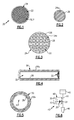
- FIG. 1 schematically illustrates a chemical scavenging component 20 for a fuel system.
- the component 20 includes a radical-scavenging material that can remove oxygen-containing radicals from fuel, such as liquid hydrocarbon-based fuel, and thus facilitate the reduction of carbonaceous deposits in fuel systems.
- the component 20 includes a porous body 22 that is formed in the geometry of a functional fuel system component.
- the porous body 22 is a non-moving component that, in addition to treating fuel for removal of oxygen-containing radicals, also serves one or more other fuel treatment functions.
- the porous body 22 is a screen 24 that serves to filter relatively large contaminant particles out of the fuel.
- the screen 24 is substantially flat, but could alternatively be curved or bent.
- the screen 24 is a composite structure that includes a (structural) substrate and a coating that includes the radical-scavenging material.
- the screen 24 is formed of a stainless steel substrate that serves as a structural support for a conformal coating with the radical-scavenging material.
- the substrate is not limited to screens and could alternatively be a different or additional functional component, such as but not limited to, a fuel tube, a filter element, filter media particles, or the like.
- the radical-scavenging material can additionally be used in upstream fuel components.
- Figure 2 illustrates a cross-section through a portion of the screen 24.
- the screen 24 is a porous wire mesh 24a.
- the screen 24 is a perforated sheet 124a that has a pattern of through-holes 126.
- the screen 24 has a radical-scavenging coating 28 fixed thereon. The radical-scavenging coating 28 is conformal to the geometry of the substrate.
- the coating 28 has a composition that includes cerium oxide as the radical-scavenging material.
- the coating 28 is primarily composed of cerium oxide (>50% by weight).
- the coating 28 is substantially fully formed of cerium oxide and unintended impurities not purposely added.
- the cerium oxide may optionally be doped with one or more dopant elements, such as zirconium, to modify the properties of the coating 28. Such dopants may include transition metal or rare earth elements.
- the cerium oxide is mixed or dispersed with a binder matrix material, such as but not limited to, an aluminosilicate sol-gel or an amorphous silicon material.
- the composition of the binder matrix can be tailored for strong adhesion and a matched coefficient of thermal expansion with a substrate.
- the thickness of the coating 28 is sufficient to substantially fully cover the surfaces of the substrate.
- the coating thickness is approximately 0.2 to 1 micrometers. Below approximately 0.2 micrometers there may be a potential for incomplete coating coverage or defects, which could leave the underlying substrate susceptible to environmental exposure. Above approximately 1 micrometer there may be potential to plug the wire mesh or the holes in the perforated sheet. For example, the mesh/holes are approximately 40 to 100 micrometers in size.
- the coating 28 has good adhesion with the stainless steel of the screen 24. However, if enhanced adhesion is needed, either for stainless steel or other substrate material, one or more primer layers may be used between the coating 28 and the surface of the substrate.
- the cerium oxide is chemically active with regard to oxygen-containing radicals, and thus acts as a catalyst that facilitates removal of such radicals from fuel that is exposed to the cerium oxide.
- the porous body 22, such as the screen 24, is a particularly useful structure because it has a relatively high surface area for contact with the fuel in comparison to a non-porous body. The fuel is thus readily exposed to the cerium oxide for removal of oxygen-containing radicals.
- the chemical activity of the cerium oxide catalyst is tailored to enhance reactivity with oxygen-containing radicals and hydrocarbon fragments (i.e., coke or varnish deposit precursors).
- oxygen-containing radicals and hydrocarbon fragments i.e., coke or varnish deposit precursors.
- the chemical activity of the cerium oxide with regard to radicals and, more specifically, the reversibility of the chemical activity depends on the flexibility of the lattice structure of the cerium oxide for accommodating reaction sites that can form oxygen vacancies by locally changing the cerium oxidation state.
- the reversible oxidation-reduction of the cerium oxide catalyst is promoted by facile bulk oxygen diffusivity and the bifunctional nature of the reaction sites.
- Cerium oxide can diffuse oxygen atoms in its lattice by moving an oxygen atom through a chain of reaction sites that cycle between a cerium(III) state (with a higher Ce:O stoichiometry, such as Ce 2 O 3 ) and a cerium(IV) state (with the typical Ce:O stoichiometry of CeO 2 ).
- One reaction site functionality is to scavenge an oxygen atom from an oxygen-bearing radical by oxidizing a reaction site with cerium(III) to a cerium(IV) state. Subsequently, the oxygen atom can diffuse within the bulk lattice to oxidize another nearby cerium(III) site, enabling the original site to return to a cerium(III) state, and so forth.
- the oxygen atom becomes part of a cerium(IV) site that reacts with a hydrocarbon fragment, resulting in the fragment oxidation and gasification to neutral products, such as carbon dioxide gas and water vapor (CO 2 and H 2 O, respectively).
- This second functionality results in the reduction of he cerium(IV) site and restores the net oxidation-reduction balance of the catalyst reaction sites, enabling the catalyst turnover for another series of reactions.
- the cerium oxide catalyst deactivates and converts the radical species to prevent the formation of coke or varnish deposits.
- the cerium oxide has an atomic structure that is made up of crystallites.
- a crystallite is a cluster of cerium oxide units (i.e., a unit is CeO 2 ), and a coating or particle of the cerium oxide can contain clusters of crystallites. If the crystallites are relatively large and are of high purity, the atoms of the cerium(IV) oxide arrange in a fluorite atomic structure, which is stable and does not permit the cerium(IV) oxide to easily convert back to cerium(III) oxide in the typical conditions in a fuel system.
- the atomic structure may differ, and is less stable, such that the reversible oxidation-reduction reactions and facile oxygen mobility is more favorable at the typical conditions in the fuel system.
- the incorporation of one or more dopants in the cerium oxide lattice creates local defect sites that can more readily accommodate oxygen vacancies.
- the cerium oxide nanocrystallites have a size ranging from 1 to 2 nanometers in maximum length and have approximately four to several hundreds of cerium oxide units in a fluorite structure with a monoclinic distortion.
- mixed ceria-zirconia-titania nanocrystallites have a size ranging from 2 to 5 nanometers in maximum length with approximately 100 to 800 cerium oxide units in a tetragonally distorted fluorite structure.
- the coating 28 with cerium oxide in the nanocrystallite structure can be fabricated using a spray pyrolysis technique.
- the technique includes pyrolyzing a spray of aqueous cerium nitrate in nitrogen carrier gas onto a substrate.
- the substrate is maintained at a temperature of approximately 100-200 °C, which evaporates the water and facilitates deposition of the cerium as cerium nitrate rather than as oxide.
- the substrate with the cerium nitrate coating is then thermally treated at a temperature above the decomposition temperature of the nitrate (approximately 450 °C) in an oxygen-containing environment to convert the cerium to cerium(IV) oxide in the final coating 28.
- the oxygen-containing environment can be atmospheric air or a nitrogen-enriched air ( ⁇ 21% oxygen).
- the duration of the thermal treatment may be varied, but approximately 2 hours may be sufficient for a coating thickness of 1 micrometer or less.
- Other techniques for depositing the cerium oxide may alternatively be used as long as the techniques are able to produce the relatively small crystallite structure.
- the porous body 22 is monolithic cerium oxide.
- a porous body 22 that is monolithic cerium oxide has a homogenous composition.
- Such a homogenous composition can consist only of pure cerium oxide, substantially pure cerium oxide with unintended impurities not purposely added, or cerium oxide uniformly dispersed with one or more other materials.
- the one or more other materials can include, but are not limited to, processing aids, additives, and/or binder materials that are relatively uniformly dispersed with the cerium oxide.
- the porous body 22 of monolithic cerium oxide can be fabricated by additive manufacturing or ceramic processing techniques.
- additive manufacturing a powder containing the cerium oxide in the crystallite structure is selectively consolidated according to a Computer-Aided Design model of the component being formed.
- the powder can include, in addition to the cerium oxide, processing aids, additives, and/or binder materials.
- a powder containing the cerium oxide in the crystallite structure is formed or pressed into a disk or sheet.
- the powder can include, in addition to the cerium oxide, processing aids, additives, and/or binder materials.
- the disk or sheet is then sintered to consolidate the cerium oxide. Either before or after being consolidated, the disk or sheet can be machined or laser drilled to form through-holes in the porous body 22.
- a fully dense nanocrystallite cerium oxide structure may be obtained by sintering at moderate temperatures (e.g., approximately 1000° C), using transition metal oxide sintering aids.
- Example transition metal oxide sintering aids can include, but are not limited to, cobalt oxide (CoO 3 ), yttrium oxide (Y 2 O 3 ), and combinations thereof.
- the nanocrystallite cerium oxide structure is desirable in order to maintain high reactivity with peroxides and radicals, as well as sufficient oxygen storage capacity.
- a cerium oxide disk or sheet can be prepared by classic or laser sintering methods, followed by machining or laser drilling to form through-holes in the porous body 22.
- FIG 4 illustrates a further example in which the porous body 22, such as the screen 24, is fixed in a fuel tube 30.
- the fuel tube 30 is also shown in a sectioned view in Figure 5 .
- the fuel tube 30 is formed of a wall 30a that defines interior passage 32 for the conveyance of fuel.
- the coating 28 is also fixed on the interior of the wall 30a (substrate) to thus line the passage 32.
- the fuel therefore has a greater potential for exposure to the cerium oxide.
- the coating 28 could additionally or alternatively be provided on other substrate fuel tubes or passages.
- FIG. 6 illustrates an example fuel system 40 in which the component 20 is employed.
- the fuel system 40 includes a fuel tank 42, at least one fuel tube 44 for transporting the fuel to one or more fuel injectors 46, and the component 20 (e.g., including the porous body 22 with cerium oxide) is fixed in the fuel tube 44.
- the porous body 22 is the screen 24 described herein.
- the fuel tube 44 includes a fueldraulic circuit 48, which is the portion of the fuel tube 44 in the dashed box in the figure.
- a hydraulic circuit operates by liquid water or oil moving in a confined space under pressure.
- a fueldraulic circuit operates by fuel moving in a confined space under pressure.
- the sub-systems 50 can be, but are not limited to, valve actuators, variable stator vanes, and active clearance control mechanisms.
- the component 20 is located in the fueldraulic circuit 48.
- the fuel tube 44 could alternatively include the component 20 in a location outside of the fueldraulic circuit 48, and the fuel system 40 could include additional components 20 at multiple different locations.
- the cerium oxide can be incorporated into other types of functional fuel system components.
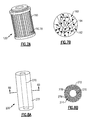
- Figure 7A illustrates another example chemical scavenging component 120.
- the component 120 is a fuel filter that includes a filter element 160 that, in addition to removing oxygen-containing radicals, serves to remove small particles from liquid fuel.
- the filter element 160 can be, but is not limited to, a pleated fibrous filter sheet.
- the filter element 160 includes a filter (fiber) mesh 162 with particles 164 of cerium oxide fixed therein.
- the cerium oxide includes the crystallite structure.
- the particles 164 can be pure cerium oxide, substantially pure cerium oxide with unintended impurities not purposely added, or cerium oxide uniformly dispersed with one or more other materials.
- the one or more other materials can include, but are not limited to, processing aids, additives, and/or binder materials that are relatively uniformly dispersed with the cerium oxide.
- the particles 164 can include the cerium oxide as a coating fixed on and/or in a substrate support particle, a monolithic particle of cerium oxide, or a mixture of cerium oxide and one or more other materials in the form of a particle.
- the fuel filter can be secured in a fuel passage to treat the fuel.
- the fuel filter may include gaskets or other components to facilitate incorporation into a fuel system. Fuel passes through filter mesh 162 and is exposed to the cerium oxide.
- Figure 8A illustrates another example chemical scavenging component 220.
- the component 220 is a fuel filter cartridge.
- the fuel filter cartridge can be, but is not limited to, a cartridge trap in fuel dispensing system or supply terminal, a cartridge float or suspension system in a fuel tank or container.
- the fuel filter cartridge includes a perforated central tube 270, a bag 272, and a packed bed 274 of media particles 276.
- Each of the media particles 276 includes cerium oxide 278.
- the cerium oxide 278 can be pure cerium oxide, substantially pure cerium oxide with unintended impurities not purposely added, or cerium oxide uniformly dispersed with one or more other materials.
- the one or more other materials can include, but are not limited to, processing aids, additives, and/or binder materials that are relatively uniformly dispersed with the cerium oxide.
- the cerium oxide 278 of the media particles 276 can be a coating fixed on and/or in a substrate support granule, a monolithic granule of cerium oxide, or a mixture of cerium oxide and one or more other materials in the form of a granule.
- the fuel filter cartridge can be secured in a fuel passage to treat the fuel.
- the fuel filter cartridge may include gaskets or other components to facilitate incorporation into a fuel system.
- Fuel passes through the outer bag 272 and flows through the packed bed 274 into the perforated tube 270. As the fuel flows through the packed bed 274 it is exposed to the cerium oxide 278.
- the outer bag 272 with the packed bed 274 may be removable and replaceable.
Landscapes
- Chemical & Material Sciences (AREA)
- Engineering & Computer Science (AREA)
- Organic Chemistry (AREA)
- Chemical Kinetics & Catalysis (AREA)
- Materials Engineering (AREA)
- Oil, Petroleum & Natural Gas (AREA)
- Mechanical Engineering (AREA)
- Combustion & Propulsion (AREA)
- General Engineering & Computer Science (AREA)
- General Chemical & Material Sciences (AREA)
- Physics & Mathematics (AREA)
- Thermal Sciences (AREA)
- Life Sciences & Earth Sciences (AREA)
- Geology (AREA)
- Inorganic Chemistry (AREA)
- Catalysts (AREA)
- Other Surface Treatments For Metallic Materials (AREA)
Abstract
Description
- Hydrocarbon fuels may pick up oxygen from the environment. The oxygen dissolves in the fuel and can potentially promote fuel reactions that form carbonaceous deposits, sometimes referred to as coking deposits or varnish. Fuel systems can include a fuel deoxygenator device to remove dissolved oxygen and thus reduce the potential for forming the deposits.
- A chemical scavenging component for a fuel system, according to an example of the present disclosure includes:
- a) a porous body comprising a radical-scavenging material; and/or
- b) a substrate with a coating comprising a radical-scavenging material fixed on the substrate;
- A chemical scavenging component for a fuel system, according to an example of the present disclosure, includes a porous body that has a radical-scavenging material. The radical-scavenging material has a composition that includes cerium oxide that is chemically active with regard to oxygen-containing radicals.
- In a further embodiment of any of the forgoing embodiments, the porous body is a filter mesh.
- In a further embodiment of any of the forgoing embodiments, the filter mesh includes particles fixed therein, and the particles include the cerium oxide.
- In a further embodiment of any of the forgoing embodiments, the porous body is a packed bed with media particles that include the cerium oxide.
- In a further embodiment of any of the forgoing embodiments, the porous body is a monolithic screen formed of the cerium oxide.
- In a further embodiment of any of the forgoing embodiments, the porous body includes a substrate and a coating fixed on the substrate, the coating including the cerium oxide.
- In a further embodiment of any of the forgoing embodiments, the porous body is selected from the group consisting of a filter mesh that includes particles of the cerium oxide fixed therein, a monolithic screen formed of the cerium oxide, and a packed bed with media particles that include the cerium oxide.
- A chemical scavenging component for a fuel system, according to an example of the present disclosure, includes a substrate and a radical-scavenging coating fixed on the substrate. The radical-scavenging coating has a composition that includes cerium oxide that is chemically active with regard to oxygen-containing radicals in hydrocarbon fuel.
- In a further embodiment of any of the forgoing embodiments, the substrate is a screen.
- In a further embodiment of any of the forgoing embodiments, the screen is a wire mesh.
- In a further embodiment of any of the forgoing embodiments, the screen is a perforated sheet.
- In a further embodiment of any of the forgoing embodiments, the screen is formed of stainless steel.
- In a further embodiment of any of the forgoing embodiments, the substrate is a fuel tube.
- In a further embodiment of any of the forgoing embodiments, the composition consists essentially of the cerium oxide.
- In a further embodiment of any of the forgoing embodiments, the chemical activity of the cerium oxide is reversible in the hydrocarbon fuel.
- In a further embodiment of any of the forgoing embodiments, the cerium oxide includes nanocrystallites.
- A fuel system according to an example of the present disclosure includes fuel tank, at least one fuel injector, at least one fuel tube that connects the fuel tank with the fuel injector, and a screen fixed in the at least one fuel tube. The screen includes a radical-scavenging material. The radical-scavenging material has a composition that includes cerium oxide that is chemically active with regard to oxygen-containing radicals.
- In a further embodiment of any of the forgoing embodiments, the fuel tube includes a fueldraulic circuit, and the screen is fixed in the fueldraulic circuit.
- In a further embodiment of any of the forgoing embodiments, the screen is a wire mesh or a perforated sheet, with a coating of the cerium oxide material.
- In a further embodiment of any of the forgoing embodiments, the screen is formed of stainless steel.
- In a further embodiment of any of the forgoing embodiments the radical-scavenging material or coating comprises, consists of or consists essentially of, the cerium oxide.
- In a further embodiment of any of the forgoing embodiments the coating is a coating of radical-scavenging material.
- The various features and advantages of the present disclosure will become apparent to those skilled in the art from the following detailed description. The drawings that accompany the detailed description can be briefly described as follows.
-
Figure 1 illustrates an example chemical scavenging component that has a radical-scavenging material. -
Figure 2 illustrates a cross-section through a portion of the chemical scavenging component ofFigure 1 . -
Figure 3 illustrates another example chemical scavenging component that includes a perforated sheet. -
Figure 4 illustrates another example chemical scavenging component that includes a fuel tube, and the interior of the fuel tube includes a radical-scavenging coating. -
Figure 5 illustrates a cross-section through the fuel tube. -
Figure 6 illustrates an example fuel system with a chemical scavenging component. -
Figure 7A illustrates a fuel filter chemical scavenging component. -
Figure 7B illustrates a magnified view of a portion of a fuel filter. -
Figure 8A illustrates a fuel filter cartridge chemical scavenging component. -
Figure 8B illustrates sectioned view of a fuel filter cartridge. - Fuel system deoxygenator devices or even molecular oxygen scavengers can remove dissolved oxygen (O2) from hydrocarbon-based fuels, such as but not limited to, jet fuels and diesel fuels. However, if the dissolved oxygen reacts with fuel hydrocarbons prior to treatment by the deoxygenator device or the molecular oxygen scavenger (e.g., in an aircraft, a non-aircraft storage such as a fuel farm, or handling unit such as a fuel-dispensing terminal), the reaction can form alkyl hydroperoxides (ROOH, where R is an alkyl group originating from hydrocarbon fuel molecules) and related oxygen-containing radicals originating from the fuel, such as alkyl peroxyl (ROO•), alkoxy (RO•), hydroperoxyl (HOO•), and hydroxyl (HO•) radicals. The alkyl hydroperoxides and oxygen-containing radicals can potentially further react with the fuel to auto-accelerate the formation of carbonaceous deposits, such as coke or varnish, on fuel system components. These deposits can degrade the performance of fuel system components, including valves, filters, and bearings.
- Although deoxygenator devices and molecular oxygen scavengers remove O2, such devices are not capable of removing the oxygen-containing radicals. Oxygen-containing radicals can be removed as disclosed herein by radical scavengers that are exposed to liquid fuel. The radical scavengers contain one or more active radical scavenger ceria crystallites. As will be described in more detail, the ceria crystallites may be provided in a coating on a substrate, as a monolithic material component, or as particles fixed on a filter element, filter media, or other support.
-
Figure 1 schematically illustrates achemical scavenging component 20 for a fuel system. Thecomponent 20 includes a radical-scavenging material that can remove oxygen-containing radicals from fuel, such as liquid hydrocarbon-based fuel, and thus facilitate the reduction of carbonaceous deposits in fuel systems. In this example, thecomponent 20 includes aporous body 22 that is formed in the geometry of a functional fuel system component. For instance, theporous body 22 is a non-moving component that, in addition to treating fuel for removal of oxygen-containing radicals, also serves one or more other fuel treatment functions. In the illustrated example, theporous body 22 is ascreen 24 that serves to filter relatively large contaminant particles out of the fuel. Thescreen 24 is substantially flat, but could alternatively be curved or bent. - In this example, the
screen 24 is a composite structure that includes a (structural) substrate and a coating that includes the radical-scavenging material. For instance, thescreen 24 is formed of a stainless steel substrate that serves as a structural support for a conformal coating with the radical-scavenging material. As can be appreciated, the substrate is not limited to screens and could alternatively be a different or additional functional component, such as but not limited to, a fuel tube, a filter element, filter media particles, or the like. Where thescreen 24 is a "last chance filter," the radical-scavenging material can additionally be used in upstream fuel components. -
Figure 2 illustrates a cross-section through a portion of thescreen 24. In this example, thescreen 24 is aporous wire mesh 24a. In one alternative example shown inFigure 3 , thescreen 24 is aperforated sheet 124a that has a pattern of through-holes 126. In each example, thescreen 24 has a radical-scavengingcoating 28 fixed thereon. The radical-scavengingcoating 28 is conformal to the geometry of the substrate. - The
coating 28 has a composition that includes cerium oxide as the radical-scavenging material. In one further example, thecoating 28 is primarily composed of cerium oxide (>50% by weight). In a further example, thecoating 28 is substantially fully formed of cerium oxide and unintended impurities not purposely added. Additionally, the cerium oxide may optionally be doped with one or more dopant elements, such as zirconium, to modify the properties of thecoating 28. Such dopants may include transition metal or rare earth elements. In further examples, the cerium oxide is mixed or dispersed with a binder matrix material, such as but not limited to, an aluminosilicate sol-gel or an amorphous silicon material. The composition of the binder matrix can be tailored for strong adhesion and a matched coefficient of thermal expansion with a substrate. - The thickness of the
coating 28 is sufficient to substantially fully cover the surfaces of the substrate. For instance, for use of thescreen 24 in an aircraft fuel system, the coating thickness is approximately 0.2 to 1 micrometers. Below approximately 0.2 micrometers there may be a potential for incomplete coating coverage or defects, which could leave the underlying substrate susceptible to environmental exposure. Above approximately 1 micrometer there may be potential to plug the wire mesh or the holes in the perforated sheet. For example, the mesh/holes are approximately 40 to 100 micrometers in size. - The
coating 28 has good adhesion with the stainless steel of thescreen 24. However, if enhanced adhesion is needed, either for stainless steel or other substrate material, one or more primer layers may be used between thecoating 28 and the surface of the substrate. - The cerium oxide is chemically active with regard to oxygen-containing radicals, and thus acts as a catalyst that facilitates removal of such radicals from fuel that is exposed to the cerium oxide. In this regard, the
porous body 22, such as thescreen 24, is a particularly useful structure because it has a relatively high surface area for contact with the fuel in comparison to a non-porous body. The fuel is thus readily exposed to the cerium oxide for removal of oxygen-containing radicals. - For use in liquid hydrocarbon fuel systems the chemical activity of the cerium oxide catalyst is tailored to enhance reactivity with oxygen-containing radicals and hydrocarbon fragments (i.e., coke or varnish deposit precursors). For example, the chemical activity of the cerium oxide with regard to radicals and, more specifically, the reversibility of the chemical activity, depends on the flexibility of the lattice structure of the cerium oxide for accommodating reaction sites that can form oxygen vacancies by locally changing the cerium oxidation state. The reversible oxidation-reduction of the cerium oxide catalyst is promoted by facile bulk oxygen diffusivity and the bifunctional nature of the reaction sites. Cerium oxide can diffuse oxygen atoms in its lattice by moving an oxygen atom through a chain of reaction sites that cycle between a cerium(III) state (with a higher Ce:O stoichiometry, such as Ce2O3) and a cerium(IV) state (with the typical Ce:O stoichiometry of CeO2). One reaction site functionality is to scavenge an oxygen atom from an oxygen-bearing radical by oxidizing a reaction site with cerium(III) to a cerium(IV) state. Subsequently, the oxygen atom can diffuse within the bulk lattice to oxidize another nearby cerium(III) site, enabling the original site to return to a cerium(III) state, and so forth. Ultimately, the oxygen atom becomes part of a cerium(IV) site that reacts with a hydrocarbon fragment, resulting in the fragment oxidation and gasification to neutral products, such as carbon dioxide gas and water vapor (CO2 and H2O, respectively). This second functionality results in the reduction of he cerium(IV) site and restores the net oxidation-reduction balance of the catalyst reaction sites, enabling the catalyst turnover for another series of reactions. In this manner, the cerium oxide catalyst deactivates and converts the radical species to prevent the formation of coke or varnish deposits.
- The cerium oxide has an atomic structure that is made up of crystallites. A crystallite is a cluster of cerium oxide units (i.e., a unit is CeO2), and a coating or particle of the cerium oxide can contain clusters of crystallites. If the crystallites are relatively large and are of high purity, the atoms of the cerium(IV) oxide arrange in a fluorite atomic structure, which is stable and does not permit the cerium(IV) oxide to easily convert back to cerium(III) oxide in the typical conditions in a fuel system. However, with nanocrystallites with a higher surface area to volume ratio, the atomic structure may differ, and is less stable, such that the reversible oxidation-reduction reactions and facile oxygen mobility is more favorable at the typical conditions in the fuel system. The incorporation of one or more dopants in the cerium oxide lattice creates local defect sites that can more readily accommodate oxygen vacancies. In one example, the cerium oxide nanocrystallites have a size ranging from 1 to 2 nanometers in maximum length and have approximately four to several hundreds of cerium oxide units in a fluorite structure with a monoclinic distortion. In a further example, mixed ceria-zirconia-titania nanocrystallites have a size ranging from 2 to 5 nanometers in maximum length with approximately 100 to 800 cerium oxide units in a tetragonally distorted fluorite structure.
- The
coating 28 with cerium oxide in the nanocrystallite structure can be fabricated using a spray pyrolysis technique. For example, the technique includes pyrolyzing a spray of aqueous cerium nitrate in nitrogen carrier gas onto a substrate. The substrate is maintained at a temperature of approximately 100-200 °C, which evaporates the water and facilitates deposition of the cerium as cerium nitrate rather than as oxide. The substrate with the cerium nitrate coating is then thermally treated at a temperature above the decomposition temperature of the nitrate (approximately 450 °C) in an oxygen-containing environment to convert the cerium to cerium(IV) oxide in thefinal coating 28. The oxygen-containing environment can be atmospheric air or a nitrogen-enriched air (< 21% oxygen). The duration of the thermal treatment may be varied, but approximately 2 hours may be sufficient for a coating thickness of 1 micrometer or less. Other techniques for depositing the cerium oxide may alternatively be used as long as the techniques are able to produce the relatively small crystallite structure. - In a modified example, rather than a composite that includes a substrate and the cerium oxide in the
coating 28 on the substrate, theporous body 22 is monolithic cerium oxide. Aporous body 22 that is monolithic cerium oxide has a homogenous composition. Such a homogenous composition can consist only of pure cerium oxide, substantially pure cerium oxide with unintended impurities not purposely added, or cerium oxide uniformly dispersed with one or more other materials. The one or more other materials can include, but are not limited to, processing aids, additives, and/or binder materials that are relatively uniformly dispersed with the cerium oxide. - The
porous body 22 of monolithic cerium oxide can be fabricated by additive manufacturing or ceramic processing techniques. In one example of additive manufacturing, a powder containing the cerium oxide in the crystallite structure is selectively consolidated according to a Computer-Aided Design model of the component being formed. The powder can include, in addition to the cerium oxide, processing aids, additives, and/or binder materials. - In one example of a ceramic processing technique, a powder containing the cerium oxide in the crystallite structure is formed or pressed into a disk or sheet. The powder can include, in addition to the cerium oxide, processing aids, additives, and/or binder materials. The disk or sheet is then sintered to consolidate the cerium oxide. Either before or after being consolidated, the disk or sheet can be machined or laser drilled to form through-holes in the
porous body 22. - In further examples, a fully dense nanocrystallite cerium oxide structure may be obtained by sintering at moderate temperatures (e.g., approximately 1000° C), using transition metal oxide sintering aids. Example transition metal oxide sintering aids can include, but are not limited to, cobalt oxide (CoO3), yttrium oxide (Y2O3), and combinations thereof. The nanocrystallite cerium oxide structure is desirable in order to maintain high reactivity with peroxides and radicals, as well as sufficient oxygen storage capacity. A cerium oxide disk or sheet can be prepared by classic or laser sintering methods, followed by machining or laser drilling to form through-holes in the
porous body 22. -
Figure 4 illustrates a further example in which theporous body 22, such as thescreen 24, is fixed in afuel tube 30. Thefuel tube 30 is also shown in a sectioned view inFigure 5 . Thefuel tube 30 is formed of awall 30a that definesinterior passage 32 for the conveyance of fuel. In this example, thecoating 28 is also fixed on the interior of thewall 30a (substrate) to thus line thepassage 32. The fuel therefore has a greater potential for exposure to the cerium oxide. As can be appreciated, thecoating 28 could additionally or alternatively be provided on other substrate fuel tubes or passages. -
Figure 6 illustrates anexample fuel system 40 in which thecomponent 20 is employed. Thefuel system 40 includes afuel tank 42, at least onefuel tube 44 for transporting the fuel to one ormore fuel injectors 46, and the component 20 (e.g., including theporous body 22 with cerium oxide) is fixed in thefuel tube 44. For example, theporous body 22 is thescreen 24 described herein. - In this example, the
fuel tube 44 includes afueldraulic circuit 48, which is the portion of thefuel tube 44 in the dashed box in the figure. A hydraulic circuit operates by liquid water or oil moving in a confined space under pressure. In contrast, a fueldraulic circuit operates by fuel moving in a confined space under pressure. For instance, the fuel flowing through thefueldraulic circuit 48 powers movement of one ormore sub-systems 50. Thesub-systems 50 can be, but are not limited to, valve actuators, variable stator vanes, and active clearance control mechanisms. In this example, thecomponent 20 is located in thefueldraulic circuit 48. As can be appreciated, thefuel tube 44 could alternatively include thecomponent 20 in a location outside of thefueldraulic circuit 48, and thefuel system 40 could includeadditional components 20 at multiple different locations. - Additionally or alternatively, the cerium oxide can be incorporated into other types of functional fuel system components.
Figure 7A illustrates another example chemical scavenging component 120. In this example, the component 120 is a fuel filter that includes afilter element 160 that, in addition to removing oxygen-containing radicals, serves to remove small particles from liquid fuel. For instance, thefilter element 160 can be, but is not limited to, a pleated fibrous filter sheet. - As shown in
Figure 7B , thefilter element 160 includes a filter (fiber)mesh 162 withparticles 164 of cerium oxide fixed therein. The cerium oxide includes the crystallite structure. Theparticles 164 can be pure cerium oxide, substantially pure cerium oxide with unintended impurities not purposely added, or cerium oxide uniformly dispersed with one or more other materials. The one or more other materials can include, but are not limited to, processing aids, additives, and/or binder materials that are relatively uniformly dispersed with the cerium oxide. Theparticles 164 can include the cerium oxide as a coating fixed on and/or in a substrate support particle, a monolithic particle of cerium oxide, or a mixture of cerium oxide and one or more other materials in the form of a particle. - The fuel filter can be secured in a fuel passage to treat the fuel. In this regard, the fuel filter may include gaskets or other components to facilitate incorporation into a fuel system. Fuel passes through
filter mesh 162 and is exposed to the cerium oxide. -
Figure 8A illustrates another example chemical scavenging component 220. In this example, the component 220 is a fuel filter cartridge. For instance, the fuel filter cartridge can be, but is not limited to, a cartridge trap in fuel dispensing system or supply terminal, a cartridge float or suspension system in a fuel tank or container. In this example, the fuel filter cartridge includes a perforatedcentral tube 270, abag 272, and a packedbed 274 ofmedia particles 276. Each of themedia particles 276 includescerium oxide 278. For example, thecerium oxide 278 can be pure cerium oxide, substantially pure cerium oxide with unintended impurities not purposely added, or cerium oxide uniformly dispersed with one or more other materials. The one or more other materials can include, but are not limited to, processing aids, additives, and/or binder materials that are relatively uniformly dispersed with the cerium oxide. Thecerium oxide 278 of themedia particles 276 can be a coating fixed on and/or in a substrate support granule, a monolithic granule of cerium oxide, or a mixture of cerium oxide and one or more other materials in the form of a granule. - The fuel filter cartridge can be secured in a fuel passage to treat the fuel. In this regard, the fuel filter cartridge may include gaskets or other components to facilitate incorporation into a fuel system. Fuel passes through the
outer bag 272 and flows through the packedbed 274 into theperforated tube 270. As the fuel flows through the packedbed 274 it is exposed to thecerium oxide 278. Theouter bag 272 with the packedbed 274 may be removable and replaceable. - Although a combination of features is shown in the illustrated examples, not all of them need to be combined to realize the benefits of various embodiments of this disclosure. In other words, a system designed according to an embodiment of this disclosure will not necessarily include all of the features shown in any one of the Figures or all of the portions schematically shown in the Figures. Moreover, selected features of one example embodiment may be combined with selected features of other example embodiments.
- Certain preferred embodiments of the present disclosure are as follows:
- 1. A chemical scavenging component for a fuel system, the component comprising:
- a porous body including a radical-scavenging material, the radical-scavenging material having a composition including cerium oxide that is chemically active with regard to oxygen-containing radicals.
- 2. The component as recited in embodiment 1, wherein the porous body is a filter mesh.
- 3. The component as recited in embodiment 2, wherein the filter mesh includes particles fixed therein, and the particles include the cerium oxide.
- 4. The component as recited in embodiment 1, wherein the porous body is a packed bed with media particles that include the cerium oxide.
- 5. The component as recited in embodiment 1, wherein the porous body is a monolithic screen formed of the cerium oxide.
- 6. The component as recited in embodiment 1, wherein the porous body includes a substrate and a coating fixed on the substrate, the coating including the cerium oxide.
- 7. The component as recited in embodiment 1, wherein the porous body is selected from the group consisting of a filter mesh that includes particles of the cerium oxide fixed therein, a monolithic screen formed of the cerium oxide, and a packed bed with media particles that include the cerium oxide.
- 8. A chemical scavenging component for a fuel system, the component comprising:
- a substrate; and
- a radical-scavenging coating fixed on the substrate, and the radical-scavenging coating has a composition that includes cerium oxide that is chemically active with regard to oxygen-containing radicals in hydrocarbon fuel.
- 9. The component as recited in embodiment 8, wherein the substrate is a screen.
- 10. The component as recited in embodiment 9, wherein the screen is a wire mesh.
- 11. The component as recited in embodiment 9, wherein the screen is a perforated sheet.
- 12. The component as recited in embodiment 9, wherein the screen is formed of stainless steel.
- 13. The component as recited in embodiment 8, wherein the substrate is a fuel tube.
- 14. The component as recited in embodiment 8, wherein the composition consists essentially of the cerium oxide.
- 15. The component as recited in embodiment 8, wherein the chemical activity of the cerium oxide is reversible in the hydrocarbon fuel.
- 16. The component as recited in embodiment 8, wherein the cerium oxide includes nanocrystallites.
- 17. A fuel system comprising:
- fuel tank;
- at least one fuel injector;
- at least one fuel tube that connects the fuel tank with the at least one fuel injector; and
- a screen fixed in the at least one fuel tube, the screen including a radical-scavenging material, and the radical-scavenging material has a composition including cerium oxide that is chemically active with regard to oxygen-containing radicals.
- 18. The fuel system as recited in embodiment 17, wherein the at least one fuel tube includes a fueldraulic circuit, and the screen is fixed in the fueldraulic circuit.
- 19. The fuel system as recited in embodiment 17, wherein the screen is a wire mesh or a perforated sheet, with a coating of the cerium oxide material.
- 20. The fuel system as recited in embodiment 17, wherein the screen is formed of stainless steel.
- The preceding description is exemplary rather than limiting in nature. Variations and modifications to the disclosed examples may become apparent to those skilled in the art that do not necessarily depart from this disclosure. The scope of legal protection given to this disclosure can only be determined by studying the following claims.
Claims (15)
- A chemical scavenging component for a fuel system, the component comprising:a) a porous body comprising a radical-scavenging material; and/orb) a substrate with a coating comprising a radical-scavenging material fixed on the substrate;wherein said radical-scavenging material has a composition including cerium oxide that is chemically active with regard to oxygen-containing radicals.
- The chemical scavenging component as claimed in claim 1 comprising:a porous body including a radical-scavenging material, the radical-scavenging material having a composition including cerium oxide that is chemically active with regard to oxygen-containing radicals.
- The component as recited in claim 1 or claim 2, wherein the porous body is a filter mesh, preferably wherein the filter mesh includes particles fixed therein, and the particles include the cerium oxide.
- The component as recited in claim 1 or claim 2, wherein the porous body is a packed bed with media particles that include the cerium oxide.
- The component as recited in claim 1 or claim 2, wherein the porous body is a monolithic screen formed of the cerium oxide.
- The component as recited in any preceding claim, wherein the porous body includes a substrate and a coating fixed on the substrate, the coating including the cerium oxide.
- A chemical scavenging component as claimed in claim 1 or claim 6 comprising:a substrate; anda radical-scavenging coating fixed on the substrate, and the radical-scavenging coating has a composition that includes cerium oxide that is chemically active with regard to oxygen-containing radicals in hydrocarbon fuel.
- The component as recited in claim 6 or claim 7, wherein the substrate is a screen, preferably wherein the screen is a wire mesh or a perforated sheet.
- The component as recited in claim 8, wherein the screen is formed of stainless steel.
- The component as recited in any one of claims 1-9, wherein the substrate is a fuel tube.
- The component as recited in any one of claims 1-10, wherein the composition consists essentially of the cerium oxide, and/or wherein the chemical activity of the cerium oxide is reversible in the hydrocarbon fuel.
- The component as recited in any one of claims 1-11, wherein the cerium oxide includes nanocrystallites.
- A fuel system comprising:fuel tank;at least one fuel injector;at least one fuel tube that connects the fuel tank with the at least one fuel injector; anda screen fixed in the at least one fuel tube, the screen including a radical-scavenging material as defined in any one of the preceding claims.
- The fuel system as recited in claim 13, wherein the at least one fuel tube includes a fueldraulic circuit, and the screen is fixed in the fueldraulic circuit.
- The fuel system as recited in claim 13 or claim 14, wherein the screen is a wire mesh or a perforated sheet, with a coating of the cerium oxide material, and/or wherein the screen is formed of stainless steel.
Applications Claiming Priority (1)
| Application Number | Priority Date | Filing Date | Title |
|---|---|---|---|
| US14/887,218 US9920724B2 (en) | 2015-10-19 | 2015-10-19 | Chemical scavenging component for a fuel system |
Publications (2)
| Publication Number | Publication Date |
|---|---|
| EP3159059A1 true EP3159059A1 (en) | 2017-04-26 |
| EP3159059B1 EP3159059B1 (en) | 2022-04-06 |
Family
ID=57280958
Family Applications (1)
| Application Number | Title | Priority Date | Filing Date |
|---|---|---|---|
| EP16194416.0A Active EP3159059B1 (en) | 2015-10-19 | 2016-10-18 | Fuel system |
Country Status (2)
| Country | Link |
|---|---|
| US (2) | US9920724B2 (en) |
| EP (1) | EP3159059B1 (en) |
Cited By (2)
| Publication number | Priority date | Publication date | Assignee | Title |
|---|---|---|---|---|
| EP3502218A1 (en) * | 2017-12-22 | 2019-06-26 | United Technologies Corporation | Radical-neutralizing coating for a lubricant system |
| US10451211B2 (en) | 2015-10-19 | 2019-10-22 | United Technologies Corporation | Radical-neutralizing coating for a lubricant system |
Families Citing this family (3)
| Publication number | Priority date | Publication date | Assignee | Title |
|---|---|---|---|---|
| TWI648474B (en) | 2017-09-20 | 2019-01-21 | 建準電機工業股份有限公司 | Fan frame and its fan |
| CN111173662B (en) * | 2019-12-27 | 2022-08-16 | 成立航空股份有限公司 | Design method of net-shaped oil filter of fuel nozzle |
| CN118407843A (en) * | 2023-01-27 | 2024-07-30 | 通用电气公司 | Oxygen Reduction Systems for Hydrocarbon Fluids |
Citations (4)
| Publication number | Priority date | Publication date | Assignee | Title |
|---|---|---|---|---|
| US20090071848A1 (en) * | 2005-05-27 | 2009-03-19 | University Of Central Florida | Cerium oxide nanoparticle regenerative free radical sensor |
| US20100230359A1 (en) * | 2009-03-16 | 2010-09-16 | Molycorp Minerals, Llc | Porous and durable ceramic filter monolith coated with a rare earth for removing contaminants from water |
| US20110016775A1 (en) * | 2000-06-29 | 2011-01-27 | Neuftec Limited | Fuel additive |
| US20130048748A1 (en) * | 2011-08-30 | 2013-02-28 | Continental Automotive Systems Us, Inc. | Catalytic coating to prevent carbon deposits on gasoline direct injector tips |
Family Cites Families (20)
| Publication number | Priority date | Publication date | Assignee | Title |
|---|---|---|---|---|
| US5805973A (en) | 1991-03-25 | 1998-09-08 | General Electric Company | Coated articles and method for the prevention of fuel thermal degradation deposits |
| US5891584A (en) | 1991-03-25 | 1999-04-06 | General Electric Company | Coated article for hot hydrocarbon fluid and method of preventing fuel thermal degradation deposits |
| US5336560A (en) | 1991-12-20 | 1994-08-09 | United Technologies Corporation | Gas turbine elements bearing alumina-silica coating to inhibit coking |
| US5315822A (en) | 1991-12-20 | 1994-05-31 | United Technologies Corporation | Gas turbine elements rearing coke inhibiting coatings of titanium compounds |
| US5971759A (en) | 1995-10-13 | 1999-10-26 | Richeda; Fred A. | Dental post and pin repair |
| CA2253504C (en) | 1997-03-14 | 2002-11-19 | Matsushita Electric Works, Ltd. | Antifouling silicone emulsion coating composition,a process for producing the same, and an article coated with the same |
| US5833141A (en) | 1997-05-30 | 1998-11-10 | General Electric Company | Anti-coking dual-fuel nozzle for a gas turbine combustor |
| US6123273A (en) | 1997-09-30 | 2000-09-26 | General Electric Co. | Dual-fuel nozzle for inhibiting carbon deposition onto combustor surfaces in a gas turbine |
| US6511760B1 (en) | 1998-02-27 | 2003-01-28 | Restek Corporation | Method of passivating a gas vessel or component of a gas transfer system using a silicon overlay coating |
| JP3567732B2 (en) | 1998-04-28 | 2004-09-22 | 株式会社日立製作所 | Fuel injection valve |
| US6145763A (en) | 1998-12-30 | 2000-11-14 | Ford Global Technologies, Inc. | Carbonaceous deposit-resistant coating for fuel injectors |
| US6444326B1 (en) | 1999-03-05 | 2002-09-03 | Restek Corporation | Surface modification of solid supports through the thermal decomposition and functionalization of silanes |
| US6630244B1 (en) | 2001-03-23 | 2003-10-07 | Delavan Inc. | Carbon resistant surface coating |
| US7723257B2 (en) * | 2001-10-10 | 2010-05-25 | Dominique Bosteels | Process for the catalytic control of radial reaction |
| US20060233691A1 (en) * | 2005-03-28 | 2006-10-19 | Vanderspurt Thomas H | Durable catalyst for processing carbonaceous fuel, and the method of making |
| GB0301599D0 (en) * | 2003-01-23 | 2003-02-26 | Oxonica Ltd | Cerium oxide nanoparticles as fuel additives |
| US7070833B2 (en) | 2003-03-05 | 2006-07-04 | Restek Corporation | Method for chemical vapor deposition of silicon on to substrates for use in corrosive and vacuum environments |
| WO2008030815A2 (en) * | 2006-09-05 | 2008-03-13 | Cerion Technology, Inc. | Method of preparing cerium dioxide nanoparticles |
| EP2631281A3 (en) * | 2012-02-27 | 2013-09-18 | Rolls-Royce plc | An apparatus and method for conditioning a hydrocarbon fuel containing oxygen |
| CN103861662B (en) | 2012-12-13 | 2016-12-21 | 通用电气公司 | Anti-coking catalyst coat with aluminium oxide barrier layer |
-
2015
- 2015-10-19 US US14/887,218 patent/US9920724B2/en active Active
-
2016
- 2016-10-18 EP EP16194416.0A patent/EP3159059B1/en active Active
-
2018
- 2018-03-02 US US15/910,093 patent/US10330067B2/en active Active
Patent Citations (4)
| Publication number | Priority date | Publication date | Assignee | Title |
|---|---|---|---|---|
| US20110016775A1 (en) * | 2000-06-29 | 2011-01-27 | Neuftec Limited | Fuel additive |
| US20090071848A1 (en) * | 2005-05-27 | 2009-03-19 | University Of Central Florida | Cerium oxide nanoparticle regenerative free radical sensor |
| US20100230359A1 (en) * | 2009-03-16 | 2010-09-16 | Molycorp Minerals, Llc | Porous and durable ceramic filter monolith coated with a rare earth for removing contaminants from water |
| US20130048748A1 (en) * | 2011-08-30 | 2013-02-28 | Continental Automotive Systems Us, Inc. | Catalytic coating to prevent carbon deposits on gasoline direct injector tips |
Cited By (2)
| Publication number | Priority date | Publication date | Assignee | Title |
|---|---|---|---|---|
| US10451211B2 (en) | 2015-10-19 | 2019-10-22 | United Technologies Corporation | Radical-neutralizing coating for a lubricant system |
| EP3502218A1 (en) * | 2017-12-22 | 2019-06-26 | United Technologies Corporation | Radical-neutralizing coating for a lubricant system |
Also Published As
| Publication number | Publication date |
|---|---|
| US20170107960A1 (en) | 2017-04-20 |
| US10330067B2 (en) | 2019-06-25 |
| EP3159059B1 (en) | 2022-04-06 |
| US9920724B2 (en) | 2018-03-20 |
| US20180187639A1 (en) | 2018-07-05 |
Similar Documents
| Publication | Publication Date | Title |
|---|---|---|
| US10330067B2 (en) | Chemical scavenging component for a fuel system | |
| JP5165677B2 (en) | Improvements in diesel particulate control. | |
| EP2044999B1 (en) | Particulate Filter | |
| US9687819B2 (en) | Catalyst and method of manufacture | |
| DE102011121222B4 (en) | A product comprising a particulate filter comprising a perovskite catalyst and a NOx storage material, and use of the same | |
| WO2010120623A1 (en) | Method for reducing pressure drop through filters, and filter exhibiting reduced pressure drop | |
| DE2212616A1 (en) | catalyst | |
| US7399728B2 (en) | Catalyst formulation, exhaust system, and gas treatment device | |
| US20200055039A1 (en) | Exhaust gas purifying filter and production method thereof | |
| US20130280150A1 (en) | Catalytically active particulate filter and use thereof | |
| JP4724860B2 (en) | Method for producing hydrogen production catalyst | |
| EP2008713A2 (en) | Nanoalloys in emissions control after-treatment system | |
| CN101820976A (en) | Introducing the structured purification structure of the electrochemical catalyst system | |
| Chen et al. | Readily processed multifunctional SiC catalytic filter for industrial emissions control | |
| Tummino et al. | Sr0. 85Ce0. 15Fe0. 67Co0. 33-xCuxO3 perovskite oxides: effect of B-site copper codoping on the physicochemical, catalytic and antibacterial properties upon UV or thermal activation | |
| JP2011093756A (en) | Noble metal supporting silicon carbide particle and method for producing the same, catalyst containing the same and method for producing the same | |
| CN112041062A (en) | Exhaust gas purifying catalyst and method for producing same | |
| JP5196656B2 (en) | Exhaust gas purification catalyst and method for producing the same | |
| CA2614755A1 (en) | Oxygen-donor and catalytic coatings of metal oxides and metals | |
| JP5052401B2 (en) | Manufacturing method of oxidation catalyst device for exhaust gas purification | |
| JP5330044B2 (en) | Oxidation catalyst equipment for exhaust gas purification | |
| CN104043330B (en) | The method of oxidation carbonaceous material, diesel particulate trap and exhaust apparatus | |
| CN112023935A (en) | Multilayer cubic LaCoO3Preparation method of diesel engine tail gas oxidation catalyst | |
| EP2474358B1 (en) | Catalyst and Method of Manufacture | |
| JP5396722B2 (en) | Fuel additives and composite fuels |
Legal Events
| Date | Code | Title | Description |
|---|---|---|---|
| PUAI | Public reference made under article 153(3) epc to a published international application that has entered the european phase |
Free format text: ORIGINAL CODE: 0009012 |
|
| STAA | Information on the status of an ep patent application or granted ep patent |
Free format text: STATUS: THE APPLICATION HAS BEEN PUBLISHED |
|
| AK | Designated contracting states |
Kind code of ref document: A1 Designated state(s): AL AT BE BG CH CY CZ DE DK EE ES FI FR GB GR HR HU IE IS IT LI LT LU LV MC MK MT NL NO PL PT RO RS SE SI SK SM TR |
|
| AX | Request for extension of the european patent |
Extension state: BA ME |
|
| STAA | Information on the status of an ep patent application or granted ep patent |
Free format text: STATUS: REQUEST FOR EXAMINATION WAS MADE |
|
| 17P | Request for examination filed |
Effective date: 20171026 |
|
| RBV | Designated contracting states (corrected) |
Designated state(s): AL AT BE BG CH CY CZ DE DK EE ES FI FR GB GR HR HU IE IS IT LI LT LU LV MC MK MT NL NO PL PT RO RS SE SI SK SM TR |
|
| STAA | Information on the status of an ep patent application or granted ep patent |
Free format text: STATUS: EXAMINATION IS IN PROGRESS |
|
| 17Q | First examination report despatched |
Effective date: 20200120 |
|
| RAP1 | Party data changed (applicant data changed or rights of an application transferred) |
Owner name: RAYTHEON TECHNOLOGIES CORPORATION |
|
| GRAP | Despatch of communication of intention to grant a patent |
Free format text: ORIGINAL CODE: EPIDOSNIGR1 |
|
| STAA | Information on the status of an ep patent application or granted ep patent |
Free format text: STATUS: GRANT OF PATENT IS INTENDED |
|
| RIC1 | Information provided on ipc code assigned before grant |
Ipc: F02M 37/34 20190101ALI20211014BHEP Ipc: C01F 17/235 20200101ALI20211014BHEP Ipc: C10G 31/00 20060101ALI20211014BHEP Ipc: C10G 25/00 20060101ALI20211014BHEP Ipc: B01J 37/08 20060101ALI20211014BHEP Ipc: B01J 23/00 20060101ALI20211014BHEP Ipc: F23K 5/08 20060101ALI20211014BHEP Ipc: F02M 37/00 20060101ALI20211014BHEP Ipc: C10L 1/00 20060101ALI20211014BHEP Ipc: B01J 35/06 20060101ALI20211014BHEP Ipc: B01J 35/04 20060101ALI20211014BHEP Ipc: B01J 23/10 20060101ALI20211014BHEP Ipc: B01J 37/02 20060101AFI20211014BHEP |
|
| INTG | Intention to grant announced |
Effective date: 20211108 |
|
| GRAS | Grant fee paid |
Free format text: ORIGINAL CODE: EPIDOSNIGR3 |
|
| GRAA | (expected) grant |
Free format text: ORIGINAL CODE: 0009210 |
|
| STAA | Information on the status of an ep patent application or granted ep patent |
Free format text: STATUS: THE PATENT HAS BEEN GRANTED |
|
| AK | Designated contracting states |
Kind code of ref document: B1 Designated state(s): AL AT BE BG CH CY CZ DE DK EE ES FI FR GB GR HR HU IE IS IT LI LT LU LV MC MK MT NL NO PL PT RO RS SE SI SK SM TR |
|
| REG | Reference to a national code |
Ref country code: GB Ref legal event code: FG4D |
|
| REG | Reference to a national code |
Ref country code: CH Ref legal event code: EP |
|
| REG | Reference to a national code |
Ref country code: AT Ref legal event code: REF Ref document number: 1480795 Country of ref document: AT Kind code of ref document: T Effective date: 20220415 |
|
| REG | Reference to a national code |
Ref country code: IE Ref legal event code: FG4D |
|
| REG | Reference to a national code |
Ref country code: DE Ref legal event code: R096 Ref document number: 602016070716 Country of ref document: DE |
|
| REG | Reference to a national code |
Ref country code: LT Ref legal event code: MG9D |
|
| REG | Reference to a national code |
Ref country code: NL Ref legal event code: MP Effective date: 20220406 |
|
| REG | Reference to a national code |
Ref country code: AT Ref legal event code: MK05 Ref document number: 1480795 Country of ref document: AT Kind code of ref document: T Effective date: 20220406 |
|
| PG25 | Lapsed in a contracting state [announced via postgrant information from national office to epo] |
Ref country code: NL Free format text: LAPSE BECAUSE OF FAILURE TO SUBMIT A TRANSLATION OF THE DESCRIPTION OR TO PAY THE FEE WITHIN THE PRESCRIBED TIME-LIMIT Effective date: 20220406 |
|
| PG25 | Lapsed in a contracting state [announced via postgrant information from national office to epo] |
Ref country code: SE Free format text: LAPSE BECAUSE OF FAILURE TO SUBMIT A TRANSLATION OF THE DESCRIPTION OR TO PAY THE FEE WITHIN THE PRESCRIBED TIME-LIMIT Effective date: 20220406 Ref country code: PT Free format text: LAPSE BECAUSE OF FAILURE TO SUBMIT A TRANSLATION OF THE DESCRIPTION OR TO PAY THE FEE WITHIN THE PRESCRIBED TIME-LIMIT Effective date: 20220808 Ref country code: NO Free format text: LAPSE BECAUSE OF FAILURE TO SUBMIT A TRANSLATION OF THE DESCRIPTION OR TO PAY THE FEE WITHIN THE PRESCRIBED TIME-LIMIT Effective date: 20220706 Ref country code: LT Free format text: LAPSE BECAUSE OF FAILURE TO SUBMIT A TRANSLATION OF THE DESCRIPTION OR TO PAY THE FEE WITHIN THE PRESCRIBED TIME-LIMIT Effective date: 20220406 Ref country code: HR Free format text: LAPSE BECAUSE OF FAILURE TO SUBMIT A TRANSLATION OF THE DESCRIPTION OR TO PAY THE FEE WITHIN THE PRESCRIBED TIME-LIMIT Effective date: 20220406 Ref country code: GR Free format text: LAPSE BECAUSE OF FAILURE TO SUBMIT A TRANSLATION OF THE DESCRIPTION OR TO PAY THE FEE WITHIN THE PRESCRIBED TIME-LIMIT Effective date: 20220707 Ref country code: FI Free format text: LAPSE BECAUSE OF FAILURE TO SUBMIT A TRANSLATION OF THE DESCRIPTION OR TO PAY THE FEE WITHIN THE PRESCRIBED TIME-LIMIT Effective date: 20220406 Ref country code: ES Free format text: LAPSE BECAUSE OF FAILURE TO SUBMIT A TRANSLATION OF THE DESCRIPTION OR TO PAY THE FEE WITHIN THE PRESCRIBED TIME-LIMIT Effective date: 20220406 Ref country code: BG Free format text: LAPSE BECAUSE OF FAILURE TO SUBMIT A TRANSLATION OF THE DESCRIPTION OR TO PAY THE FEE WITHIN THE PRESCRIBED TIME-LIMIT Effective date: 20220706 Ref country code: AT Free format text: LAPSE BECAUSE OF FAILURE TO SUBMIT A TRANSLATION OF THE DESCRIPTION OR TO PAY THE FEE WITHIN THE PRESCRIBED TIME-LIMIT Effective date: 20220406 |
|
| PG25 | Lapsed in a contracting state [announced via postgrant information from national office to epo] |
Ref country code: RS Free format text: LAPSE BECAUSE OF FAILURE TO SUBMIT A TRANSLATION OF THE DESCRIPTION OR TO PAY THE FEE WITHIN THE PRESCRIBED TIME-LIMIT Effective date: 20220406 Ref country code: PL Free format text: LAPSE BECAUSE OF FAILURE TO SUBMIT A TRANSLATION OF THE DESCRIPTION OR TO PAY THE FEE WITHIN THE PRESCRIBED TIME-LIMIT Effective date: 20220406 Ref country code: LV Free format text: LAPSE BECAUSE OF FAILURE TO SUBMIT A TRANSLATION OF THE DESCRIPTION OR TO PAY THE FEE WITHIN THE PRESCRIBED TIME-LIMIT Effective date: 20220406 Ref country code: IS Free format text: LAPSE BECAUSE OF FAILURE TO SUBMIT A TRANSLATION OF THE DESCRIPTION OR TO PAY THE FEE WITHIN THE PRESCRIBED TIME-LIMIT Effective date: 20220806 |
|
| REG | Reference to a national code |
Ref country code: DE Ref legal event code: R097 Ref document number: 602016070716 Country of ref document: DE |
|
| PG25 | Lapsed in a contracting state [announced via postgrant information from national office to epo] |
Ref country code: SM Free format text: LAPSE BECAUSE OF FAILURE TO SUBMIT A TRANSLATION OF THE DESCRIPTION OR TO PAY THE FEE WITHIN THE PRESCRIBED TIME-LIMIT Effective date: 20220406 Ref country code: SK Free format text: LAPSE BECAUSE OF FAILURE TO SUBMIT A TRANSLATION OF THE DESCRIPTION OR TO PAY THE FEE WITHIN THE PRESCRIBED TIME-LIMIT Effective date: 20220406 Ref country code: RO Free format text: LAPSE BECAUSE OF FAILURE TO SUBMIT A TRANSLATION OF THE DESCRIPTION OR TO PAY THE FEE WITHIN THE PRESCRIBED TIME-LIMIT Effective date: 20220406 Ref country code: EE Free format text: LAPSE BECAUSE OF FAILURE TO SUBMIT A TRANSLATION OF THE DESCRIPTION OR TO PAY THE FEE WITHIN THE PRESCRIBED TIME-LIMIT Effective date: 20220406 Ref country code: DK Free format text: LAPSE BECAUSE OF FAILURE TO SUBMIT A TRANSLATION OF THE DESCRIPTION OR TO PAY THE FEE WITHIN THE PRESCRIBED TIME-LIMIT Effective date: 20220406 Ref country code: CZ Free format text: LAPSE BECAUSE OF FAILURE TO SUBMIT A TRANSLATION OF THE DESCRIPTION OR TO PAY THE FEE WITHIN THE PRESCRIBED TIME-LIMIT Effective date: 20220406 |
|
| PLBE | No opposition filed within time limit |
Free format text: ORIGINAL CODE: 0009261 |
|
| STAA | Information on the status of an ep patent application or granted ep patent |
Free format text: STATUS: NO OPPOSITION FILED WITHIN TIME LIMIT |
|
| 26N | No opposition filed |
Effective date: 20230110 |
|
| PG25 | Lapsed in a contracting state [announced via postgrant information from national office to epo] |
Ref country code: AL Free format text: LAPSE BECAUSE OF FAILURE TO SUBMIT A TRANSLATION OF THE DESCRIPTION OR TO PAY THE FEE WITHIN THE PRESCRIBED TIME-LIMIT Effective date: 20220406 |
|
| PG25 | Lapsed in a contracting state [announced via postgrant information from national office to epo] |
Ref country code: SI Free format text: LAPSE BECAUSE OF FAILURE TO SUBMIT A TRANSLATION OF THE DESCRIPTION OR TO PAY THE FEE WITHIN THE PRESCRIBED TIME-LIMIT Effective date: 20220406 Ref country code: MC Free format text: LAPSE BECAUSE OF FAILURE TO SUBMIT A TRANSLATION OF THE DESCRIPTION OR TO PAY THE FEE WITHIN THE PRESCRIBED TIME-LIMIT Effective date: 20220406 |
|
| REG | Reference to a national code |
Ref country code: CH Ref legal event code: PL |
|
| REG | Reference to a national code |
Ref country code: BE Ref legal event code: MM Effective date: 20221031 |
|
| P01 | Opt-out of the competence of the unified patent court (upc) registered |
Effective date: 20230520 |
|
| PG25 | Lapsed in a contracting state [announced via postgrant information from national office to epo] |
Ref country code: LU Free format text: LAPSE BECAUSE OF NON-PAYMENT OF DUE FEES Effective date: 20221018 |
|
| PG25 | Lapsed in a contracting state [announced via postgrant information from national office to epo] |
Ref country code: LI Free format text: LAPSE BECAUSE OF NON-PAYMENT OF DUE FEES Effective date: 20221031 Ref country code: CH Free format text: LAPSE BECAUSE OF NON-PAYMENT OF DUE FEES Effective date: 20221031 |
|
| PG25 | Lapsed in a contracting state [announced via postgrant information from national office to epo] |
Ref country code: BE Free format text: LAPSE BECAUSE OF NON-PAYMENT OF DUE FEES Effective date: 20221031 |
|
| PG25 | Lapsed in a contracting state [announced via postgrant information from national office to epo] |
Ref country code: IE Free format text: LAPSE BECAUSE OF NON-PAYMENT OF DUE FEES Effective date: 20221018 |
|
| PG25 | Lapsed in a contracting state [announced via postgrant information from national office to epo] |
Ref country code: IT Free format text: LAPSE BECAUSE OF FAILURE TO SUBMIT A TRANSLATION OF THE DESCRIPTION OR TO PAY THE FEE WITHIN THE PRESCRIBED TIME-LIMIT Effective date: 20220406 |
|
| PG25 | Lapsed in a contracting state [announced via postgrant information from national office to epo] |
Ref country code: HU Free format text: LAPSE BECAUSE OF FAILURE TO SUBMIT A TRANSLATION OF THE DESCRIPTION OR TO PAY THE FEE WITHIN THE PRESCRIBED TIME-LIMIT; INVALID AB INITIO Effective date: 20161018 |
|
| PG25 | Lapsed in a contracting state [announced via postgrant information from national office to epo] |
Ref country code: CY Free format text: LAPSE BECAUSE OF FAILURE TO SUBMIT A TRANSLATION OF THE DESCRIPTION OR TO PAY THE FEE WITHIN THE PRESCRIBED TIME-LIMIT Effective date: 20220406 |
|
| PG25 | Lapsed in a contracting state [announced via postgrant information from national office to epo] |
Ref country code: MK Free format text: LAPSE BECAUSE OF FAILURE TO SUBMIT A TRANSLATION OF THE DESCRIPTION OR TO PAY THE FEE WITHIN THE PRESCRIBED TIME-LIMIT Effective date: 20220406 |
|
| PG25 | Lapsed in a contracting state [announced via postgrant information from national office to epo] |
Ref country code: TR Free format text: LAPSE BECAUSE OF FAILURE TO SUBMIT A TRANSLATION OF THE DESCRIPTION OR TO PAY THE FEE WITHIN THE PRESCRIBED TIME-LIMIT Effective date: 20220406 |
|
| PG25 | Lapsed in a contracting state [announced via postgrant information from national office to epo] |
Ref country code: MT Free format text: LAPSE BECAUSE OF FAILURE TO SUBMIT A TRANSLATION OF THE DESCRIPTION OR TO PAY THE FEE WITHIN THE PRESCRIBED TIME-LIMIT Effective date: 20220406 |
|
| PG25 | Lapsed in a contracting state [announced via postgrant information from national office to epo] |
Ref country code: BG Free format text: LAPSE BECAUSE OF FAILURE TO SUBMIT A TRANSLATION OF THE DESCRIPTION OR TO PAY THE FEE WITHIN THE PRESCRIBED TIME-LIMIT Effective date: 20220406 |
|
| PG25 | Lapsed in a contracting state [announced via postgrant information from national office to epo] |
Ref country code: BG Free format text: LAPSE BECAUSE OF FAILURE TO SUBMIT A TRANSLATION OF THE DESCRIPTION OR TO PAY THE FEE WITHIN THE PRESCRIBED TIME-LIMIT Effective date: 20220406 |
|
| REG | Reference to a national code |
Ref country code: DE Ref legal event code: R081 Ref document number: 602016070716 Country of ref document: DE Owner name: RTX CORPORATION (N.D.GES.D. STAATES DELAWARE),, US Free format text: FORMER OWNER: RAYTHEON TECHNOLOGIES CORPORATION, FARMINGTON, CT, US |
|
| PGFP | Annual fee paid to national office [announced via postgrant information from national office to epo] |
Ref country code: GB Payment date: 20250923 Year of fee payment: 10 |
|
| PGFP | Annual fee paid to national office [announced via postgrant information from national office to epo] |
Ref country code: FR Payment date: 20250923 Year of fee payment: 10 |
|
| PGFP | Annual fee paid to national office [announced via postgrant information from national office to epo] |
Ref country code: DE Payment date: 20250923 Year of fee payment: 10 |