EP3153490A1 - Method for preparing paraxylene with co-production of propylene with high selectivity - Google Patents
Method for preparing paraxylene with co-production of propylene with high selectivity Download PDFInfo
- Publication number
- EP3153490A1 EP3153490A1 EP14894165.1A EP14894165A EP3153490A1 EP 3153490 A1 EP3153490 A1 EP 3153490A1 EP 14894165 A EP14894165 A EP 14894165A EP 3153490 A1 EP3153490 A1 EP 3153490A1
- Authority
- EP
- European Patent Office
- Prior art keywords
- reaction
- reaction zone
- catalyst
- methanol
- xylene
- Prior art date
- Legal status (The legal status is an assumption and is not a legal conclusion. Google has not performed a legal analysis and makes no representation as to the accuracy of the status listed.)
- Granted
Links
Images



Classifications
-
- C—CHEMISTRY; METALLURGY
- C07—ORGANIC CHEMISTRY
- C07C—ACYCLIC OR CARBOCYCLIC COMPOUNDS
- C07C2/00—Preparation of hydrocarbons from hydrocarbons containing a smaller number of carbon atoms
- C07C2/86—Preparation of hydrocarbons from hydrocarbons containing a smaller number of carbon atoms by condensation between a hydrocarbon and a non-hydrocarbon
- C07C2/862—Preparation of hydrocarbons from hydrocarbons containing a smaller number of carbon atoms by condensation between a hydrocarbon and a non-hydrocarbon the non-hydrocarbon contains only oxygen as hetero-atoms
- C07C2/864—Preparation of hydrocarbons from hydrocarbons containing a smaller number of carbon atoms by condensation between a hydrocarbon and a non-hydrocarbon the non-hydrocarbon contains only oxygen as hetero-atoms the non-hydrocarbon is an alcohol
-
- B—PERFORMING OPERATIONS; TRANSPORTING
- B01—PHYSICAL OR CHEMICAL PROCESSES OR APPARATUS IN GENERAL
- B01J—CHEMICAL OR PHYSICAL PROCESSES, e.g. CATALYSIS OR COLLOID CHEMISTRY; THEIR RELEVANT APPARATUS
- B01J29/00—Catalysts comprising molecular sieves
- B01J29/04—Catalysts comprising molecular sieves having base-exchange properties, e.g. crystalline zeolites
- B01J29/06—Crystalline aluminosilicate zeolites; Isomorphous compounds thereof
- B01J29/40—Crystalline aluminosilicate zeolites; Isomorphous compounds thereof of the pentasil type, e.g. types ZSM-5, ZSM-8 or ZSM-11, as exemplified by patent documents US3702886, GB1334243 and US3709979, respectively
-
- B—PERFORMING OPERATIONS; TRANSPORTING
- B01—PHYSICAL OR CHEMICAL PROCESSES OR APPARATUS IN GENERAL
- B01J—CHEMICAL OR PHYSICAL PROCESSES, e.g. CATALYSIS OR COLLOID CHEMISTRY; THEIR RELEVANT APPARATUS
- B01J8/00—Chemical or physical processes in general, conducted in the presence of fluids and solid particles; Apparatus for such processes
- B01J8/02—Chemical or physical processes in general, conducted in the presence of fluids and solid particles; Apparatus for such processes with stationary particles, e.g. in fixed beds
-
- B—PERFORMING OPERATIONS; TRANSPORTING
- B01—PHYSICAL OR CHEMICAL PROCESSES OR APPARATUS IN GENERAL
- B01J—CHEMICAL OR PHYSICAL PROCESSES, e.g. CATALYSIS OR COLLOID CHEMISTRY; THEIR RELEVANT APPARATUS
- B01J8/00—Chemical or physical processes in general, conducted in the presence of fluids and solid particles; Apparatus for such processes
- B01J8/18—Chemical or physical processes in general, conducted in the presence of fluids and solid particles; Apparatus for such processes with fluidised particles
-
- C—CHEMISTRY; METALLURGY
- C07—ORGANIC CHEMISTRY
- C07C—ACYCLIC OR CARBOCYCLIC COMPOUNDS
- C07C11/00—Aliphatic unsaturated hydrocarbons
- C07C11/02—Alkenes
- C07C11/06—Propene
-
- C—CHEMISTRY; METALLURGY
- C07—ORGANIC CHEMISTRY
- C07C—ACYCLIC OR CARBOCYCLIC COMPOUNDS
- C07C15/00—Cyclic hydrocarbons containing only six-membered aromatic rings as cyclic parts
- C07C15/02—Monocyclic hydrocarbons
- C07C15/067—C8H10 hydrocarbons
- C07C15/08—Xylenes
-
- C—CHEMISTRY; METALLURGY
- C07—ORGANIC CHEMISTRY
- C07C—ACYCLIC OR CARBOCYCLIC COMPOUNDS
- C07C2/00—Preparation of hydrocarbons from hydrocarbons containing a smaller number of carbon atoms
- C07C2/86—Preparation of hydrocarbons from hydrocarbons containing a smaller number of carbon atoms by condensation between a hydrocarbon and a non-hydrocarbon
- C07C2/862—Preparation of hydrocarbons from hydrocarbons containing a smaller number of carbon atoms by condensation between a hydrocarbon and a non-hydrocarbon the non-hydrocarbon contains only oxygen as hetero-atoms
- C07C2/865—Preparation of hydrocarbons from hydrocarbons containing a smaller number of carbon atoms by condensation between a hydrocarbon and a non-hydrocarbon the non-hydrocarbon contains only oxygen as hetero-atoms the non-hydrocarbon is an ether
-
- C—CHEMISTRY; METALLURGY
- C07—ORGANIC CHEMISTRY
- C07C—ACYCLIC OR CARBOCYCLIC COMPOUNDS
- C07C2/00—Preparation of hydrocarbons from hydrocarbons containing a smaller number of carbon atoms
- C07C2/86—Preparation of hydrocarbons from hydrocarbons containing a smaller number of carbon atoms by condensation between a hydrocarbon and a non-hydrocarbon
- C07C2/88—Growth and elimination reactions
-
- C—CHEMISTRY; METALLURGY
- C07—ORGANIC CHEMISTRY
- C07F—ACYCLIC, CARBOCYCLIC OR HETEROCYCLIC COMPOUNDS CONTAINING ELEMENTS OTHER THAN CARBON, HYDROGEN, HALOGEN, OXYGEN, NITROGEN, SULFUR, SELENIUM OR TELLURIUM
- C07F7/00—Compounds containing elements of Groups 4 or 14 of the Periodic Table
- C07F7/02—Silicon compounds
- C07F7/025—Silicon compounds without C-silicon linkages
-
- B—PERFORMING OPERATIONS; TRANSPORTING
- B01—PHYSICAL OR CHEMICAL PROCESSES OR APPARATUS IN GENERAL
- B01J—CHEMICAL OR PHYSICAL PROCESSES, e.g. CATALYSIS OR COLLOID CHEMISTRY; THEIR RELEVANT APPARATUS
- B01J2229/00—Aspects of molecular sieve catalysts not covered by B01J29/00
- B01J2229/30—After treatment, characterised by the means used
- B01J2229/32—Reaction with silicon compounds, e.g. TEOS, siliconfluoride
-
- B—PERFORMING OPERATIONS; TRANSPORTING
- B01—PHYSICAL OR CHEMICAL PROCESSES OR APPARATUS IN GENERAL
- B01J—CHEMICAL OR PHYSICAL PROCESSES, e.g. CATALYSIS OR COLLOID CHEMISTRY; THEIR RELEVANT APPARATUS
- B01J29/00—Catalysts comprising molecular sieves
- B01J29/90—Regeneration or reactivation
-
- B—PERFORMING OPERATIONS; TRANSPORTING
- B01—PHYSICAL OR CHEMICAL PROCESSES OR APPARATUS IN GENERAL
- B01J—CHEMICAL OR PHYSICAL PROCESSES, e.g. CATALYSIS OR COLLOID CHEMISTRY; THEIR RELEVANT APPARATUS
- B01J38/00—Regeneration or reactivation of catalysts, in general
- B01J38/04—Gas or vapour treating; Treating by using liquids vaporisable upon contacting spent catalyst
- B01J38/12—Treating with free oxygen-containing gas
-
- C—CHEMISTRY; METALLURGY
- C07—ORGANIC CHEMISTRY
- C07C—ACYCLIC OR CARBOCYCLIC COMPOUNDS
- C07C2529/00—Catalysts comprising molecular sieves
- C07C2529/04—Catalysts comprising molecular sieves having base-exchange properties, e.g. crystalline zeolites, pillared clays
- C07C2529/06—Crystalline aluminosilicate zeolites; Isomorphous compounds thereof
- C07C2529/40—Crystalline aluminosilicate zeolites; Isomorphous compounds thereof of the pentasil type, e.g. types ZSM-5, ZSM-8 or ZSM-11
-
- C—CHEMISTRY; METALLURGY
- C07—ORGANIC CHEMISTRY
- C07C—ACYCLIC OR CARBOCYCLIC COMPOUNDS
- C07C2529/00—Catalysts comprising molecular sieves
- C07C2529/04—Catalysts comprising molecular sieves having base-exchange properties, e.g. crystalline zeolites, pillared clays
- C07C2529/06—Crystalline aluminosilicate zeolites; Isomorphous compounds thereof
- C07C2529/80—Mixtures of different zeolites
-
- Y—GENERAL TAGGING OF NEW TECHNOLOGICAL DEVELOPMENTS; GENERAL TAGGING OF CROSS-SECTIONAL TECHNOLOGIES SPANNING OVER SEVERAL SECTIONS OF THE IPC; TECHNICAL SUBJECTS COVERED BY FORMER USPC CROSS-REFERENCE ART COLLECTIONS [XRACs] AND DIGESTS
- Y02—TECHNOLOGIES OR APPLICATIONS FOR MITIGATION OR ADAPTATION AGAINST CLIMATE CHANGE
- Y02P—CLIMATE CHANGE MITIGATION TECHNOLOGIES IN THE PRODUCTION OR PROCESSING OF GOODS
- Y02P20/00—Technologies relating to chemical industry
- Y02P20/50—Improvements relating to the production of bulk chemicals
- Y02P20/52—Improvements relating to the production of bulk chemicals using catalysts, e.g. selective catalysts
-
- Y—GENERAL TAGGING OF NEW TECHNOLOGICAL DEVELOPMENTS; GENERAL TAGGING OF CROSS-SECTIONAL TECHNOLOGIES SPANNING OVER SEVERAL SECTIONS OF THE IPC; TECHNICAL SUBJECTS COVERED BY FORMER USPC CROSS-REFERENCE ART COLLECTIONS [XRACs] AND DIGESTS
- Y02—TECHNOLOGIES OR APPLICATIONS FOR MITIGATION OR ADAPTATION AGAINST CLIMATE CHANGE
- Y02P—CLIMATE CHANGE MITIGATION TECHNOLOGIES IN THE PRODUCTION OR PROCESSING OF GOODS
- Y02P20/00—Technologies relating to chemical industry
- Y02P20/50—Improvements relating to the production of bulk chemicals
- Y02P20/582—Recycling of unreacted starting or intermediate materials
-
- Y—GENERAL TAGGING OF NEW TECHNOLOGICAL DEVELOPMENTS; GENERAL TAGGING OF CROSS-SECTIONAL TECHNOLOGIES SPANNING OVER SEVERAL SECTIONS OF THE IPC; TECHNICAL SUBJECTS COVERED BY FORMER USPC CROSS-REFERENCE ART COLLECTIONS [XRACs] AND DIGESTS
- Y02—TECHNOLOGIES OR APPLICATIONS FOR MITIGATION OR ADAPTATION AGAINST CLIMATE CHANGE
- Y02P—CLIMATE CHANGE MITIGATION TECHNOLOGIES IN THE PRODUCTION OR PROCESSING OF GOODS
- Y02P20/00—Technologies relating to chemical industry
- Y02P20/50—Improvements relating to the production of bulk chemicals
- Y02P20/584—Recycling of catalysts
Definitions
- P-xylene (hereinafter referred to as PX) and propylene are both important and valuable raw materials essential for chemical industry.
- p-xylene is mainly obtained by an aromatic hydrocarbon combination apparatus.
- a reformate containing aromatic hydrocarbons is prepared by continuous reforming of naphtha, and a PX product is then maximally obtained via units of aromatic extraction, aromatic fractional distillation, disproportionation and transalkylation, xylene isomerization, and adsorptive separation, etc.
- USP 3,965,207 discloses that a ZSM-5 molecular sieve is used as a catalyst to perform methylation reaction of toluene, wherein the highest selectivity of p-xylene at a reaction temperature of 600°C is about 90%; USP 3,965,208 uses a ZSM-5 molecular sieve modified with VA element as a catalyst, and the generation of m-xylene is inhibited and p-xylene and o-xylene are mainly generated, wherein the highest selectivity of p-xylene at a reaction temperature of 600°C is about 90%; USP 4,250,345 uses a ZSM-5 molecular sieve modified with two elements phosphorus and magnesium as a catalyst, wherein the optimal selectivity of p-xylene at a
- USP 4,444,989 uses a crystalline pure silicon molecular sieve, which is modified with compounds of arsenic, phosphorus, magnesium, boron and, tellurium, and the selectivity of p-xylene is improved.
- USP 4,491,678 uses combined components of a crystalline borosilicate and elements of Group IIA and IIIA as well as silicon and phosphorus, and the selectivity of p-xylene may be greatly improved and the service life of the catalyst can be improved.
- USP 5,034,362 uses ZSM-5 and ZSM-11 wherein SiO 2 /Al 2 O 3 ⁇ 12 as catalysts and performs calcination under a condition of higher than 650°C, and the selectivity of p-dialkylbenzenes may be improved.
- USP 5,563,310 uses an acidic molecular sieve containing an element of Group IVB, which is modified with a metal of Group VIB, and the selectivity of p-dialkylbenzenes in alkylation reaction of toluene and methanol may be improved.
- An object of this invention is to provide a method for preparing p-xylene and co-producing propylene with a high selectivity from toluene and methanol and/or dimethyl ether.
- this invention provides a method for preparing p-xylene and co-producing propylene with a high selectivity, comprising the steps of:
- the reaction system comprises a first reaction zone and a second reaction zone, and the method comprises the steps of:
- the reaction system comprises a first reaction zone and a second reaction zone, and the method comprises the steps of:
- the catalyst I and the catalyst II are the same or different modified zeolite molecular sieve catalyst(s).
- the amount of Si loaded by siloxanyl compound modification is 1-10wt% based on the total weight of the modified zeolite molecular sieve catalyst.
- the conditions for the hydrothermal treatment are treating under an atmosphere of saturated steam at 500-700°C for 3-6 hours.
- the siloxanyl compound used in the siloxanyl compound modification has a structural formula as shown by the following formula: wherein R 1 , R 2 , R 3 , and R 4 are each independently a C 1-10 alkyl group.
- the siloxanyl compound is tetraethyl orthosilicate.
- the reaction zone comprises a reactor or a plurality of reactors connected in series and/or in parallel; and preferably, the reactor is one or more selected from a fixed bed reactor, a fluidized bed reactor, and a moving bed reactor.
- the first reaction zone and the second reaction zone are in the same reactor; and preferably, the reactor is one or more selected from a fixed bed reactor, a fluidized bed reactor, and a moving bed reactor.
- the raw materials include toluene and methanol and/or dimethyl ether, indicating that the raw materials may be a mixture of toluene, methanol, and dimethyl ether, a mixture of toluene and methanol, or a mixture of toluene and dimethyl ether.
- Suitable kinds and compositional ratios of raw materials may be selected by the person skilled in the art according to requirements of actual production.
- a reaction process flow of a method according to this invention is as shown in Fig. 3 .
- the reaction system is composed of two parallel reaction zones, wherein the main reaction in the first reaction zone is alkylation reaction of toluene and methanol and/or dimethyl ether, and the main reaction in the second reaction zone is alkylation reaction between ethylene (a byproduct of the first reaction zone) and methanol and/or dimethyl ether.
- a reaction process flow of a method according to this invention is as shown in Fig. 4 .
- the reaction process is the same as the above process described for Fig. 3 , except that the reaction system is composed of two reaction zones in the same reactor, and verbose words are omitted herein.
- This reaction system may be achieved by multi-sectional feeding.
- the preparation process for the catalyst used in this invention is as follows.
- the siloxanyl compound used is tetraethyl orthosilicate.
- the reaction temperature of alkylation of toluene and methanol and/or dimethyl ether, the reaction temperature of alkylation of ethylene and methanol and/or dimethyl ether are in the range 300-600°C.
- the reaction temperature of alkylation of toluene and methanol and/or dimethyl ether is preferably 400-500°C, and the preferred reaction temperature of alkylation of ethylene and methanol and/or dimethyl ether is 350-450°C.
- the mass hourly space velocity of alkylation reaction of toluene and methanol and/or dimethyl ether is 0.1-10h -1 , and preferably 1-5h -1 , in terms of toluene.
- the feed molar ratio of toluene to methanol and/or dimethyl ether may be in a range of 0.1-10, preferably 0.2-5; and in alkylation reaction of ethylene and methanol and/or dimethyl ether, the molar ratio of ethylene to methanol and/or dimethyl ether may be in a range of 0.1-10, preferably 0.5-5.
- the C 2 - component refers to a component of which the molecular formula has a carbon atom number less than or equal to 2, and includes ethylene, ethane, methane, CO, CO 2 , together with H 2 , etc.
- the purge gas is mainly ethane, methane, CO, CO 2 , together with H 2 , etc.
- the C 6 + component refers to a component of which the molecular formula has a carbon atom number greater than or equal to 6, and includes p-xylene and other aromatic hydrocarbons and derivatives thereof, etc.
- composition of products is analyzed online by a gas chromatograph, and the analysis conditions are:
- catalyst samples of catalysts TMPC-06, TMPC-07, and TMPC-08 prepared in Examples 1 and 2 were subjected to tablet compression molding and 40-60 mesh target catalysts were obtained by cracking and sieving, each of the catalysts was charged to each of two reaction zones of a fixed bed reactor (10 g for each reaction zone). Conversion reaction of toluene and methanol was carried out in a first reaction zone, wherein the molar ratios of toluene/methanol can be seen in Table 1 below. Alkylation reaction of ethylene and methanol was carried out in a second reaction zone.
- a TMPC-06 catalyst prepared in Example 1 was subjected to tablet compression molding and a 40-60 mesh target catalyst sample was obtained by cracking and sieving. 10 g of the catalyst was charged to a reactor for performing conversion reaction of toluene and methanol. Molar ratios of toluene/methanol were 4/1, 2/1, 1/1, and 1/2 respectively. Once a reaction with a certain ratio therein was completed, nitrogen gas was introduced online for purging and then switched to air to regenerate the catalysts under a condition of 550°C for 5 hours. The temperature was decreased with nitrogen gas purging to a reaction temperature for performing a conversion reaction of toluene and methanol with another ratio.
- reaction conditions the mass hourly space velocity of toluene was 2h -1 and the reaction temperature was 480°C.
- the composition of products was analyzed online by using a gas chromatograph. The product distribution was as shown in Table 5 after resultant water was removed.
Landscapes
- Chemical & Material Sciences (AREA)
- Organic Chemistry (AREA)
- Chemical Kinetics & Catalysis (AREA)
- Engineering & Computer Science (AREA)
- Crystallography & Structural Chemistry (AREA)
- Materials Engineering (AREA)
- Combustion & Propulsion (AREA)
- Organic Low-Molecular-Weight Compounds And Preparation Thereof (AREA)
- Catalysts (AREA)
- Low-Molecular Organic Synthesis Reactions Using Catalysts (AREA)
Abstract
Description
- This invention relates to a method for preparing p-xylene and co-producing propylene with a high selectivity from toluene and methanol and/or dimethyl ether, and pertains to the fields of chemistry and chemical industry.
- P-xylene (hereinafter referred to as PX) and propylene are both important and valuable raw materials essential for chemical industry. At present, p-xylene is mainly obtained by an aromatic hydrocarbon combination apparatus. A reformate containing aromatic hydrocarbons is prepared by continuous reforming of naphtha, and a PX product is then maximally obtained via units of aromatic extraction, aromatic fractional distillation, disproportionation and transalkylation, xylene isomerization, and adsorptive separation, etc. Since the content of p-xylene among three isomers is thermodynamically controlled, and p-xylene comprises only about 23% in C8 mixed aromatic hydrocarbons, the amount of recycling process is large, equipment is bulky, and the operational cost is high during the whole PX production process. Particularly, the differences between boiling points of three isomers of xylene are very small, high-purity p-xylene cannot be obtained with typical distillation techniques, and an expensive process for adsorptive separation has to be used. Propylene is mainly derived from byproducts in petroleum refineries and also from the production of ethylene by steam cracking of naphtha, or is produced by using propane as a raw material, which is prepared by processing of natural gas. p-Xylene is mainly used in the production of polyesters, and propylene is extremely useful in the preparation of polypropylene and acrylonitrile as well as 1,3-propylene glycol required in the production of polyesters. The rapid development of the global economy increasingly demands for p-xylene and propylene as essential chemical feedstock.
- In recent years, there are a number of domestic and foreign patents that disclose new routes for the production of p-xylene, and among these, methylation of toluene may produce p-xylene with a high selectivity. USP
3,965,207 discloses that a ZSM-5 molecular sieve is used as a catalyst to perform methylation reaction of toluene, wherein the highest selectivity of p-xylene at a reaction temperature of 600°C is about 90%; USP3,965,208 uses a ZSM-5 molecular sieve modified with VA element as a catalyst, and the generation of m-xylene is inhibited and p-xylene and o-xylene are mainly generated, wherein the highest selectivity of p-xylene at a reaction temperature of 600°C is about 90%; USP4,250,345 uses a ZSM-5 molecular sieve modified with two elements phosphorus and magnesium as a catalyst, wherein the optimal selectivity of p-xylene at a reaction temperature of 450°C is up to 98%; USP4,670,616 prepares a catalyst by using a borosilicate molecular sieve and silicon oxide or aluminum oxide, wherein the selectivity of p-xylene is 50-60%; USP4,276,438 , and4,278,827 use a molecular sieve having a special structure (SiO2/Al2O3 ≧ 12), which is modified with copper, silver, gold, germanium, tin, lead, etc., and a p-dialkylbenzene with a high selectivity can be obtained. USP4,444,989 uses a crystalline pure silicon molecular sieve, which is modified with compounds of arsenic, phosphorus, magnesium, boron and, tellurium, and the selectivity of p-xylene is improved. USP4,491,678 uses combined components of a crystalline borosilicate and elements of Group IIA and IIIA as well as silicon and phosphorus, and the selectivity of p-xylene may be greatly improved and the service life of the catalyst can be improved. USP5,034,362 uses ZSM-5 and ZSM-11 wherein SiO2/Al2O3 ≧ 12 as catalysts and performs calcination under a condition of higher than 650°C, and the selectivity of p-dialkylbenzenes may be improved. USP5,563,310 uses an acidic molecular sieve containing an element of Group IVB, which is modified with a metal of Group VIB, and the selectivity of p-dialkylbenzenes in alkylation reaction of toluene and methanol may be improved. USP6,504,072 uses a mesoporous molecular sieve, preferably ZSM-5, which is treated in steam higher than 950°C and then modified with phosphorus oxides, and proposes the influence of the diffusion effect of catalyst micropores on the selectivity of p-xylene. USP6,613,708 uses an organic metal compound to modify a catalyst, and the selectivity of p-dialkylbenzenes may be greatly improved. - Chinese Patents
ZL200610011662.4 ZL200710176269.5 ZL 200710176274.6 ZL 200710179408.X ZL 200710179409.4 ZL 200710179410.7 -
CN102464549 A discloses a method for producing propylene and p-xylene, comprising preparing propylene by the comproportionation of ethylene and C4 hydrocarbons, wherein the process for preparing propylene by the alkylation of ethylene and methanol/dimethyl ether is not involved.CN102464550 A discloses a method for co-production of light olefins and p-xylene, comprising preparing olefins by passing C4 and C5 hydrocarbons into a first reaction zone, which is a process of preparing olefins by cracking of C4 or liquefied gas, wherein the process for preparing propylene by the alkylation of ethylene and methanol/dimethyl ether is not involved either. - An object of this invention is to provide a method for preparing p-xylene and co-producing propylene with a high selectivity from toluene and methanol and/or dimethyl ether.
- To this end, this invention provides a method for preparing p-xylene and co-producing propylene with a high selectivity, comprising the steps of:
- a) bringing a raw material containing toluene and methanol and/or dimethyl ether into contact with a catalyst in a reaction system for reaction, returning an ethylene-enriched C2 - component discharged from the reaction system to the reaction system, and continuing the reaction with the raw material on the catalyst to produce propylene;
- b) separating a C6 + component discharged from the reaction system to obtain a product p-xylene; and
- c) separating a C3 component discharged from the reaction system to obtain a product propylene.
- Preferably, the catalyst is a modified zeolite molecular sieve catalyst, which is obtained from ZSM-5 and/or ZSM-11 zeolite molecular sieves by hydrothermal treatment and surface modification of a siloxanyl compound. More preferably, in the modified zeolite molecular sieve catalyst, the amount of Si loaded by siloxanyl compound modification is 1-10wt% based on the total weight of the modified zeolite molecular sieve catalyst.
- In one preferred embodiment, the reaction system comprises a first reaction zone and a second reaction zone, and the method comprises the steps of:
- a) passing a raw material containing toluene and methanol and/or dimethyl ether through the first reaction zone to be in contact with a catalyst I for reaction, and then into the second reaction zone to be in contact with a catalyst II for reaction; returning an ethylene-enriched C2 - component discharged from the second reaction zone to the second reaction zone, and continuing reaction with methanol and/or dimethyl ether within the second reaction zone on the catalyst II to produce propylene;
- b) further separating a C6 + component discharged from the second reaction zone to obtain a product p-xylene; and
- c) further separating a C3 component discharged from the second reaction zone to obtain propylene.
- In one preferred embodiment, the reaction system comprises a first reaction zone and a second reaction zone, and the method comprises the steps of:
- a) passing a raw material containing toluene and methanol and/or dimethyl ether through the first reaction zone to be in contact with a catalyst I for reaction to obtain a resultant A, and then passing through the second reaction zone to be in contact with a catalyst II for reaction to obtain a resultant B; passing an ethylene-enriched C2 - component in the resultant A and the resultant B into the second reaction zone, and continuing reaction with methanol and/or dimethyl ether within the second reaction zone on the catalyst II to produce propylene;
- b) further separating a C6 + component in the resultant A and the resultant B to obtain a product p-xylene; and
- c) further separating a C3 component in the resultant A and the resultant B to obtain a product propylene.
- In one preferred embodiment, the catalyst I and the catalyst II are the same or different modified zeolite molecular sieve catalyst(s).
- In one preferred embodiment, the modified zeolite molecular sieve catalyst is obtained from ZSM-5 and/or ZSM-11 zeolite molecular sieves via hydrothermal treatment and modification of a siloxanyl compound.
- In one preferred embodiment, in the modified zeolite molecular sieve catalyst, the amount of Si loaded by siloxanyl compound modification is 1-10wt% based on the total weight of the modified zeolite molecular sieve catalyst.
- In one preferred embodiment, the conditions for the hydrothermal treatment are treating under an atmosphere of saturated steam at 500-700°C for 3-6 hours.
- In one preferred embodiment, the siloxanyl compound used in the siloxanyl compound modification has a structural formula as shown by the following formula:

- In one preferred embodiment, the siloxanyl compound is tetraethyl orthosilicate.
- In one preferred embodiment, the reaction zone comprises a reactor or a plurality of reactors connected in series and/or in parallel; and preferably, the reactor is one or more selected from a fixed bed reactor, a fluidized bed reactor, and a moving bed reactor.
- In one preferred embodiment, the first reaction zone and the second reaction zone are in the same reactor; and preferably, the reactor is one or more selected from a fixed bed reactor, a fluidized bed reactor, and a moving bed reactor.
- In one preferred embodiment, the first reaction zone comprises a reactor or a plurality of reactors connected in series and/or in parallel; the second reaction zone comprises a reactor or a plurality of reactors connected in series and/or in parallel; and the first reaction zone and the second reaction zone are connected in series or in parallel; and preferably, the reactor is one or more optionally selected from a fixed bed reactor, a fluidized bed reactor, and a moving bed reactor.
- The advantageous effects of this invention include, but are not limited to, the following aspects: this invention provides a new method for preparing p-xylene and co-producing propylene with a high selectivity via the reaction of toluene and methanol and/or dimethyl ether. In the method of this invention, a specific modified molecular sieve catalyst is used, an ethylene-enriched C2 - component in resultant products is returned to the reaction system and subjected to an alkylation reaction with methanol and/or dimethyl ether to further produce propylene, and p-xylene and propylene are finally obtained with a high selectivity. On one hand, high cost for separation of the ethylene product is avoided, and on the other hand, the production of propylene product with larger market demand may be further increased, such that the economy of this technique may be effectively improved.
-
-
Fig. 1 is a flow chart of a method of an embodiment according to this invention. -
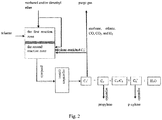
Fig. 2 is a flow chart of a method of another embodiment according to this invention. -
Fig. 3 is a flow chart of a method of another embodiment according to this invention. -
Fig. 4 is a flow chart of a method of another embodiment according to this invention. - In the method of this invention, two reaction processes, an alkylation reaction of toluene and methanol and/or dimethyl ether and an alkylation reaction of ethylene with methanol and/or dimethyl ether are coupled, meanwhile p-xylene and propylene are co-produced with a high selectivity. Specifically, a reaction process flow of the method of this invention is as shown in
Fig. 1 . Toluene and methanol and/or dimethyl ether as raw materials are brought into contact with a catalyst (the catalyst is present in a reactor) in a reaction system, and resultant products are passed into a separation system (for example, a fractionating tower, etc.) for separation; after separation by a separation system, a C6 + component, a C4-C5 component (hydrocarbons having carbon numbers of 4 and 5), a C3 component, an ethylene-enriched C2 - component, and water (H2O) are obtained, wherein, the ethylene-enriched C2 - component is returned to the reaction system, the C6 + component is subjected to further separation (for example, a rectification column, a crystallization separation system, etc.) to obtain p-xylene, the C3 component is subjected to further separation (for example, a rectification column, etc.) to obtain propylene, and a small amount of the C4-C5 component and H2O are collected and used for other purposes, where the reaction system may be a separate reaction zone, or may be a combination of two or more reaction zones. A plurality of reaction zones may be in the same reactor, or may be in a plurality of reactors connected in series or in parallel. Preferably, the reactor is any one or more of a fixed bed, a fluidized bed, or a moving bed. - In this invention, the raw materials include toluene and methanol and/or dimethyl ether, indicating that the raw materials may be a mixture of toluene, methanol, and dimethyl ether, a mixture of toluene and methanol, or a mixture of toluene and dimethyl ether. Suitable kinds and compositional ratios of raw materials may be selected by the person skilled in the art according to requirements of actual production.
- In one preferred embodiment, a reaction process flow of a method according to this invention is as shown in
Fig. 2 . InFig. 2 , the reaction system is composed of one reactor having two reaction zones, wherein the main reaction in the first reaction zone is alkylation reaction of toluene and methanol and/or dimethyl ether, and the main reaction in the second reaction zone is alkylation reaction between ethylene (a byproduct of the first reaction zone) and methanol and/or dimethyl ether. Toluene and methanol and/or dimethyl ether as raw materials are passed through the first reaction zone to be in contact with a catalyst I therein for reaction, and then passed through the second reaction zone to be in contact with a catalyst II therein for reaction, and resultant products are passed into a separation system for separation; a C6 + component, a C4-C5 component, a C3 component, a C2 - component, and H2O are obtained after separation by a separation system, wherein the ethylene-enriched C2 - component is returned to the second reaction zone and subjected to reaction with methanol and/or dimethyl ether that are passed into the second reaction zone in contact with the catalyst II therein; the C6 + component is subjected to further separation to obtain p-xylene, and the C3 component is subjected to further separation to obtain propylene. - In one preferred embodiment, a reaction process flow of a method according to this invention is as shown in
Fig. 3 . InFig. 3 , the reaction system is composed of two parallel reaction zones, wherein the main reaction in the first reaction zone is alkylation reaction of toluene and methanol and/or dimethyl ether, and the main reaction in the second reaction zone is alkylation reaction between ethylene (a byproduct of the first reaction zone) and methanol and/or dimethyl ether. Toluene and methanol and/or dimethyl ether are brought into contact with a catalyst I in a first reaction zone to generate a resultant A, and the resultant A is passed into a separation system for separation; an ethylene-enriched C2 - component from the separation system is returned to a second reaction zone and reacts with methanol and/or dimethyl ether as raw materials that are directly passed into the second reaction zone on a catalyst II therein to generate a resultant B, and the resultant B is passed into a separation system for separation together with the resultant A; after separation by the separation system, the ethylene-enriched C2 - component therein is returned to the second reaction zone, a C6 + component, which is obtained after the resultant A and the resultant B are separated by a separation system, is subjected to further separation to obtain p-xylene, and the C3 component is subjected to further separation to obtain propylene. - In one preferred embodiment, a reaction process flow of a method according to this invention is as shown in
Fig. 4 . InFig. 4 , the reaction process is the same as the above process described forFig. 3 , except that the reaction system is composed of two reaction zones in the same reactor, and verbose words are omitted herein. This reaction system may be achieved by multi-sectional feeding. - In this invention, the catalyst used contains ZSM-5 and/or ZSM-11 zeolite molecular sieves, more preferably modified ZSM-5 and/or ZSM-11 zeolite molecular sieves obtained from ZSM-5 and/or ZSM-11 zeolite molecular sieves by hydrothermal treatment and modification of the surface acidity and the pore structure with a siloxanyl compound. Most preferably, after modification with a siloxanyl compound, the loading amount of Si is 1-10wt% based on the total weight of this catalyst. When there are two reaction zones, the catalyst I and the catalyst II present therein respectively may be catalysts having the same or component(s). For example, in one preferred embodiment, the catalyst I and the catalyst II are the same kind of catalysts or the same catalyst.
- In one preferred embodiment, the preparation process for the catalyst used in this invention is as follows.
- (1) ZSM-5 and/or ZSM-11 zeolite molecular sieve raw powders are prepared into acidic zeolite molecular sieves by NH4 + ion exchange and calcination;
- (2) the above acidic zeolite molecular sieves are subjected to hydrothermal treatment to obtain modified zeolite molecular sieves. Preferably, the condition of the hydrothermal treatment is treating under an atmosphere of saturated steam at 500-700°C for 3-6 hours.
- (3) the above modified zeolite molecular sieves are subjected to a surface modification by using a siloxanyl agent to further adjust the outer surface acidity and the pore structure of the molecular sieves so as to obtain modified zeolite molecular sieve catalysts.
- Preferably, the siloxanyl compound used in this invention has a formula as shown by the following formula:

- Preferably, the siloxanyl compound used is tetraethyl orthosilicate.
- Preferably, in either the first reaction zone or the second reaction zone in this invention, a fixed bed reaction process may be used, meanwhile a fluidized bed or moving bed reaction process in conjunction with a regenerator may be used. The first reaction zone and the second reaction zone may be respectively in one reactor or a plurality of reactors connected in series or in parallel, being the same or different, and are achieved by multi-sectional feeding.
- In the method of this invention, the reaction temperature of alkylation of toluene and methanol and/or dimethyl ether, the reaction temperature of alkylation of ethylene and methanol and/or dimethyl ether are in the range 300-600°C. The reaction temperature of alkylation of toluene and methanol and/or dimethyl ether is preferably 400-500°C, and the preferred reaction temperature of alkylation of ethylene and methanol and/or dimethyl ether is 350-450°C. The mass hourly space velocity of alkylation reaction of toluene and methanol and/or dimethyl ether is 0.1-10h-1, and preferably 1-5h-1, in terms of toluene.
- As for the method of this invention, in alkylation reaction of toluene and methanol and/or dimethyl ether, the feed molar ratio of toluene to methanol and/or dimethyl ether may be in a range of 0.1-10, preferably 0.2-5; and in alkylation reaction of ethylene and methanol and/or dimethyl ether, the molar ratio of ethylene to methanol and/or dimethyl ether may be in a range of 0.1-10, preferably 0.5-5.
- Furthermore, in the method of this invention, the ratio of p-xylene to propylene in products can be controlled in a certain range by adjusting conditions such as the reaction temperature, the feed ratio of toluene to methanol and/or dimethyl ether, and the ratio of ethylene to methanol and/or dimethyl ether.
- In this invention, the C2 - component refers to a component of which the molecular formula has a carbon atom number less than or equal to 2, and includes ethylene, ethane, methane, CO, CO2, together with H2, etc. The purge gas is mainly ethane, methane, CO, CO2, together with H2, etc.
- In this invention, the C3 component refers to a compound of which the molecular formula has a carbon atom number equal to 3, and includes propylene, propane, etc.
- In this invention, the C4-C5 component refers to a component of which the molecular formula has a carbon atom number equal to 4 and 5, and includes isobutane, isobutene, butane, 1-butene, 2-butene, isopentane, neopentane, n-pentane, 1-pentene, 2-pentene, etc.
- In this invention, the C6 + component refers to a component of which the molecular formula has a carbon atom number greater than or equal to 6, and includes p-xylene and other aromatic hydrocarbons and derivatives thereof, etc.
- This present invention will be described in detail below by Examples, but this invention is not limited to these Examples.
- The composition of products is analyzed online by a gas chromatograph, and the analysis conditions are:
- Model: Varian CP3800
- Column: CP Wax 52 CB capillary chromatographic column
- Carrier gas: helium gas, 5ml/min
- Temperature of column box: 60-220°C, programmed temperature increasing at 15 °C/min
- Temperature of feed port: 260°C
- Detector: hydrogen flame ionization detector (FID)
- Temperature of detector: 300°C
- 500g of ZSM-5 zeolite molecular sieve raw powder (SiO2/Al2O3=68) (Catalyst Plant of Fushun Petrochemical Company) and 500g of ZSM-11 zeolite molecular sieve raw powder (SiO2/Al2O3=50) (Catalyst Plant of Nankai University) were calcined respectively at 550°C to remove template agents, exchanged with 0.5 molar equivalents of an ammonium nitrate solution in a water bath at 80°C for 4 times, dried at 120°C in the air after exchange, and calcined at 550°C for 4 hours so as to obtain a HZSM-5 zeolite molecular sieve and a HZSM-11 zeolite molecular sieve respectively.
- The HZSM-5 zeolite molecular sieve and the HZSM-11 zeolite molecular sieve were modified by hydrothermal treatment respectively as follows: 100g of each of the HZSM-5 zeolite molecular sieve and the HZSM-11 zeolite molecular sieve was placed in a quartz reactor respectively, water was introduced at a flow rate of 5ml/min after the temperature was increased to 650°C, and a homothermal treatment was performed for 4 hours to obtain a hydrothermally modified HZSM-5 zeolite molecular sieve and a hydrothermally modified HZSM-11 zeolite molecular sieve. Surface modification was respectively performed on the hydrothermally modified HZSM-5 zeolite molecular sieve and HZSM-11 zeolite molecular sieve by using tetraethyl orthosilicate as a siloxane agent, and the steps were as follow: the hydrothermally modified HZSM-5 zeolite molecular sieve and HZSM-11 zeolite molecular sieve were respectively placed into 150 g of tetraethyl orthosilicate and soaked overnight, dried at 120°C after liquid was decanted, and calcined in the air at 550°C for 4 hours to obtain a modified Si-HZSM-5 zeolite molecular sieve catalyst and a hydrothermally modified Si-HZSM-11 zeolite molecular sieve catalyst respectively. They were named as catalysts TMPC-06 and TMPC-07.
- 200g of ZSM-5 zeolite molecular sieve raw powder (SiO2/Al2O3=61) (Fushun Catalyst Plant) and 300g of ZSM-11 zeolite molecular sieve raw powder (SiO2/Al2O3=50) were calcined at 550°C to remove template agents, exchanged with 0.5 molar equivalents of an ammonium nitrate solution in a water bath at 80°C for 4 times, dried at 120°C in the air after exchange, and calcined at 550°C for 4 hours so as to obtain a HZSM-5/HZSM-11 zeolite molecular sieve.
- The HZSM-5/HZSM-11 zeolite molecular sieve was modified by hydrothermal treatment as follows: 100g of the HZSM-5/HZSM-11 molecular sieve was placed in a quartz reactor, water was introduced at a flow rate of 5ml/min after the temperature was increased to 650°C, and a homothermal treatment was performed for 4 hours to obtain a hydrothermally modified HZSM-5/HZSM-11 zeolite molecular sieve.
- Surface modification was performed on the hydrothermally modified HZSM-5/HZSM-11 zeolite molecular sieve by using tetraethyl orthosilicate as a siloxane agent, and the steps were as follow: the hydrothermally modified HZSM-5/HZSM-11 zeolite molecular sieve was placed into 150 g of tetraethyl orthosilicate and soaked overnight, dried at 120°C after liquid was decanted, and calcined in the air at 550°C for 4 hours to obtain a modified Si-HZSM-5/HZSM-11 zeolite molecular sieve catalyst. It was named as catalyst TMPC-08.
- According to the reaction process flow shown in
Fig. 2 , catalyst samples of catalysts TMPC-06, TMPC-07, and TMPC-08 prepared in Examples 1 and 2 were subjected to tablet compression molding and 40-60 mesh target catalysts were obtained by cracking and sieving, each of the catalysts was charged to each of two reaction zones of a fixed bed reactor (10 g for each reaction zone). Conversion reaction of toluene and methanol was carried out in a first reaction zone, wherein the molar ratios of toluene/methanol can be seen in Table 1 below. Alkylation reaction of ethylene and methanol was carried out in a second reaction zone. When a reaction with a certain ratio therein was finished, nitrogen gas was introduced online for purging and then switched to air to regenerate the catalysts under a condition of 550°C for 5 hours, where an ethylene-enriched C2 - component and methanol in the reaction product distribution of alkylation of toluene and methanol in the first reaction zone were passed together into the second reaction zone for reaction, wherein the molar ratio of ethylene/methanol was 1/1. - Reaction conditions: in the first reaction zone, the mass hourly space velocity of toluene was 2h-1 and the reaction temperature was 480°C; in the second reaction zone, the reaction temperature was 420°C. The composition of mixed products in the reaction zones was analyzed online by using a gas chromatograph. The product distribution was as shown in Table 1 after resultant water was removed, and the product distribution was as shown in Table 2 after the C2 - component was further removed.
- It can be seen from the data of Table 2 that on catalysts TMPC-06, TMPC-07, and TMPC-08, when feed molar ratios of toluene/methanol were 2/1, 1/1, and 1/2 respectively, the selectivities of propylene in total products were 26.19 wt%, 31.75 wt%, and 41.28 wt% respectively, and the selectivities of p-xylene were 62.38 wt%, 56.66 wt%, and 45.45 wt% respectively; and the overall selectivities of propylene and p-xylene were 88.57 wt%, 88.41 wt%, and 86.73 wt% respectively. The selectivities of p-xylene in xylene isomers were 98.34 wt%, 98.15 wt%, and 97.63 wt% respectively.
Table 1 Catalyst TMPC-06 TMPC-07 TMPC-08 Feeding time (hour) 1 1 1 Toluene/methanol (molar ratio) in the first reaction zone 2/1 1/1 1/2 Ethylene/methanol (molar ratio) in the second reaction zone 1/1 1/1 1/1 Product distribution (wt%)* CH4 0.91 1.09 1.38 C2H4 11.51 13.80 19.01 C2H6 0.29 0.21 0.24 C3H6 22.86 26.96 32.76 C3H8 0.52 0.55 0.58 C4 1.44 1.96 2.69 C5 0.57 0.71 0.89 Benzene 0.06 0.03 0.10 Ethylbenzene 0.21 0.15 0.19 p-Xylene 54.46 48.10 36.07 m-Xylene 0.34 0.25 0.32 o-Xylene 0.58 0.66 0.55 ≧ C9 6.27 5.54 5.21 Total 100.00 100.00 100.00 *wt%, weight percentage composition of products, the same shall apply hereinafter. Table 2 Catalyst TMPC-06 TMPC-07 TMPC-08 Feeding time (hour) 1 1 1 Toluene/methanol (molar ratio) in the first reaction zone 2/1 1/1 1/2 Ethylene/methanol (molar ratio) in the second reaction zone 1/1 1/1 1/1 Product distribution (wt%) C3H6 26.19 31.75 41.28 C3H8 0.59 0.65 0.74 C4 1.64 2.30 3.38 C5 0.65 0.83 1.12 Benzene 0.07 0.04 0.13 Ethylbenzene 0.24 0.18 0.24 p-Xylene 62.38 56.66 45.45 m-Xylene 0.39 0.30 0.41 o-Xylene 0.66 0.77 0.70 ≧ C9 7.18 6.52 6.57 Total 100.00 100.00 100.00 - According to the reaction process flow shown in
Fig. 3 or4 , a TMPC-06 catalyst prepared in Example 1 was subjected to tablet compression molding and a 40-60 mesh target catalyst sample was obtained by cracking and sieving, the catalyst was charged to each of two reaction zones of a fixed bed reactor (10 g for each reaction zone). Conversion reaction of toluene and methanol was carried out in a first reaction zone, wherein the molar ratios of toluene/methanol were 4/1, 2/1, 1/1, and 1/2 respectively (see Table 3 below). Alkylation reaction of ethylene and methanol was carried out in a second reaction zone, where an ethylene-enriched C2 - component and methanol in the reaction product distribution of alkylation of toluene and methanol in the first reaction zone were passed together into the second reaction zone for reaction, wherein the molar ratio of ethylene/methanol was 1/1. - Once a reaction with a certain ratio therein was completed, nitrogen gas was introduced to both the first reaction zone and the second reaction zone online for purging, and then switched to air to regenerate the catalysts under a condition of 550°C for 5 hours. The temperature was decreased with nitrogen gas purging to a reaction temperature for performing a conversion reaction of toluene and methanol with another ratio and alkylation reaction of ethylene and methanol. Other reaction conditions: in the first reaction zone, the mass hourly space velocity of toluene was 2h-1 and the reaction temperature was 480°C; in the second reaction zone, the reaction temperature was 400°C. The composition of a mixed product of the first reaction zone and the second reaction zone was analyzed online by using a gas chromatograph respectively. The product distribution was as shown in Table 3 after resultant water was removed, and the product distribution was as shown in Table 4 after the C2 - component was further removed.
- It can be seen from Table 4 that when feed molar ratios of toluene/methanol were 4/1, 2/1, 1/1, and 1/2 respectively, the selectivities of propylene in total products were 24.32 wt%, 27.64 wt%, 33.32 wt%, and 43.12 wt% respectively, and the selectivities of p-xylene were 67.18 wt%, 64.26 wt%, 58.51 wt%, and 47.35 wt% respectively; and the overall selectivities of propylene and p-xylene were 91.50 wt%, 91.90 wt%, 91.83 wt%, and 90.47 wt% respectively. The selectivities of p-xylene in xylene isomers were 99.31 wt%, 99.26 wt%, 99.21 wt%, and 99.14 wt% respectively.
Table 3 Catalyst TMPC-06 Feeding time (hour) 1 1 1 1 Toluene/methanol (molar ratio) in the first reaction zone 4/1 2/1 1/1 1/2 Ethylene/methanol (molar ratio) in the second reaction zone 1/1 1/1 1/1 1/1 Selectivity of p-xylene in xylene isomers (wt%) 99.31 99.26 99.21 99.14 Product distribution (wt%) CH4 1.44 0.81 0.98 1.17 C2H4 10.66 12.54 15.68 20.89 C2H6 0.07 0.09 0.11 0.11 C3H6 21.36 23.93 27.73 33.56 C3H8 0.11 0.12 0.15 0.18 C4 1.22 1.44 1.94 2.67 C5 0.49 0.57 0.70 0.88 Benzene 0.14 0.06 0.03 0.10 Ethylbenzene 0.13 0.11 0.10 0.09 p-Xylene 59.00 55.62 48.70 36.85 m-Xylene 0.03 0.04 0.04 0.04 o-Xylene 0.38 0.38 0.35 0.28 ≧ C9 4.97 4.29 3.48 3.18 Total 100.00 100.00 100.00 100.00 Table 4 Catalyst TMPC-06 Feeding time (hour) 1 1 1 1 Toluene/methanol (molar ratio) in the first reaction zone 4/1 2/1 1/1 1/2 Ethylene/methanol (molar ratio) in the second reaction zone 1/1 1/1 1/1 1/1 Selectivity of propylene + p-xylene (wt%) 91.50 91.90 91.83 90.47 Selectivity of p-xylene in xylene isomers (wt%) 99.31 99.09 99.21 99.14 Product distribution (wt%) C3H6 24.32 27.64 33.32 43.12 C3H8 0.12 0.13 0.18 0.23 C4 1.39 1.66 2.33 3.43 C5 0.56 0.66 0.84 1.12 Benzene 0.16 0.07 0.04 0.13 Ethylbenzene 0.14 0.13 0.12 0.11 p-Xylene 67.18 64.26 58.51 47.35 m-Xylene 0.04 0.04 0.04 0.05 o-Xylene 0.43 0.44 0.42 0.36 ≧ C9 5.66 4.96 4.18 4.09 Total 100.00 100.00 100.00 100.00 - A TMPC-06 catalyst prepared in Example 1 was subjected to tablet compression molding and a 40-60 mesh target catalyst sample was obtained by cracking and sieving. 10 g of the catalyst was charged to a reactor for performing conversion reaction of toluene and methanol. Molar ratios of toluene/methanol were 4/1, 2/1, 1/1, and 1/2 respectively. Once a reaction with a certain ratio therein was completed, nitrogen gas was introduced online for purging and then switched to air to regenerate the catalysts under a condition of 550°C for 5 hours. The temperature was decreased with nitrogen gas purging to a reaction temperature for performing a conversion reaction of toluene and methanol with another ratio. Other reaction conditions: the mass hourly space velocity of toluene was 2h-1 and the reaction temperature was 480°C. The composition of products was analyzed online by using a gas chromatograph. The product distribution was as shown in Table 5 after resultant water was removed.
- When feed molar ratios of toluene/methanol were 4/1, 2/1, 1/1, and 1/2 respectively, the selectivities of propylene in products were 2.93 wt%, 4.66 wt%, 7.89 wt%, and 13.17 wt% respectively.
Table 5 Catalyst TMPC-06 Feeding time (hour) 1 1 1 1 Toluene/methanol (molar ratio) in the first reactor 4/1 2/1 1/1 1/2 Conversion rate of methanol (%) 100 100 94.36 90.23 Conversion rate of methanol toluene (%) 14.04 23.47 31.74 36.21 Selectivity of p-xylene in xylene isomers (wt%) 99.35 99.46 99.23 99.16 Product distribution (wt%) CH4 0.11 0.18 0.30 0.49 C2H4 4.92 6.58 10.34 17.52 C2H6 0.01 0.01 0.02 0.02 C3H6 2.93 4.66 7.89 13.17 C3H8 0.04 0.07 0.11 0.15 C4 0.39 0.65 1.07 2.06 C5 0.25 0.27 0.43 0.64 Benzene 0.19 0.09 0.04 0.15 Ethylbenzene 0.17 0.16 0.14 0.13 p-Xylene 83.54 81.21 73.92 60.13 m-Xylene 0.02 0.02 0.05 0.06 o-Xylene 0.52 0.42 0.52 0.45 ≧ C9 6.91 5.69 5.16 5.03 Total 100.00 100.00 100.00 100.00 - This invention has been described in detail above, but this invention is not limited to specific embodiments described herein. It will be understood by the person skilled in the art that other modifications and variations can be made without departing from the scope of the invention. The scope of the invention is defined by the appended claims.
Claims (10)
- A method for preparing p-xylene and co-producing propylene with a high selectivity, comprising the steps of:a) bringing a raw material containing toluene and methanol and/or dimethyl ether into contact with a catalyst in a reaction system for reaction; returning an ethylene-enriched C2 - component discharged from the reaction system to the reaction system, and continuing the reaction with the raw material on the catalyst to produce propylene;b) separating a C6 + component discharged from the reaction system to obtain a product p-xylene; andc) separating a C3 component discharged from the reaction system to obtain a product propylene.
- The method according to claim 1, wherein the reaction system comprises a first reaction zone and a second reaction zone, and the method comprises the steps of:a) passing a raw material containing toluene and methanol and/or dimethyl ether through the first reaction zone to be in contact with a catalyst I for reaction, and then into the second reaction zone to be in contact with a catalyst II for reaction; returning an ethylene-enriched C2 - component discharged from the second reaction zone to the second reaction zone, and continuing reaction with methanol and/or dimethyl ether within the second reaction zone on the catalyst II to produce propylene;b) further separating a C6 + component discharged from the second reaction zone to obtain a product p-xylene; andc) further separating a C3 component discharged from the second reaction zone to obtain propylene.
- The method according to claim 1, wherein the reaction system comprises a first reaction zone and a second reaction zone, and the method comprises the steps of:a) passing a raw material containing toluene and methanol and/or dimethyl ether through the first reaction zone to be in contact with a catalyst I for reaction to obtain a resultant A, and then passing through the second reaction zone to be in contact with a catalyst II for reaction to obtain a resultant B; passing an ethylene-enriched C2 - component in the resultant A and the resultant B into the second reaction zone, and continuing reaction with methanol and/or dimethyl ether within the second reaction zone on the catalyst II to produce propylene;b) further separating a C6 + component in the resultant A and the resultant B to obtain a product p-xylene; andc) further separating a C3 component in the resultant A and the resultant B to obtain a product propylene.
- The method according to claim 1, 2, or 3, wherein the catalyst, the catalyst I, and the catalyst II contain the same or different modified zeolite molecular sieve catalyst(s).
- The method according to claim 4, wherein the modified zeolite molecular sieve catalyst is obtained from ZSM-5 and/or ZSM-11 zeolite molecular sieves via hydrothermal treatment and modification of a siloxanyl compound.
- The method according to claim 5, wherein the siloxanyl compound used in the siloxanyl compound modification has a structural formula as shown below:

- The method according to claim 1, wherein the reaction system comprises a reactor or a plurality of reactors connected in series and/or in parallel.
- The method according to claim 2 or 3, wherein the first reaction zone and the second reaction zone are in the same reactor.
- The method according to claim 2 or 3, wherein the first reaction zone comprises a reactor or a plurality of reactors connected in series and/or in parallel; the second reaction zone comprises a reactor or a plurality of reactors connected in series and/or in parallel; and the first reaction zone and the second reaction zone are connected in series or in parallel.
- The method according to claim 7, 8, or 9, wherein the reactor is one or more selected from a fixed bed reactor, a fluidized bed reactor, and a moving bed reactor.
Applications Claiming Priority (1)
| Application Number | Priority Date | Filing Date | Title |
|---|---|---|---|
| PCT/CN2014/079144 WO2015184600A1 (en) | 2014-06-04 | 2014-06-04 | Method for preparing paraxylene with co-production of propylene with high selectivity |
Publications (3)
| Publication Number | Publication Date |
|---|---|
| EP3153490A1 true EP3153490A1 (en) | 2017-04-12 |
| EP3153490A4 EP3153490A4 (en) | 2018-02-07 |
| EP3153490B1 EP3153490B1 (en) | 2019-11-27 |
Family
ID=54765941
Family Applications (1)
| Application Number | Title | Priority Date | Filing Date |
|---|---|---|---|
| EP14894165.1A Active EP3153490B1 (en) | 2014-06-04 | 2014-06-04 | Method for preparing paraxylene with co-production of propylene with high selectivity |
Country Status (7)
| Country | Link |
|---|---|
| US (1) | US10099973B2 (en) |
| EP (1) | EP3153490B1 (en) |
| JP (1) | JP6408612B2 (en) |
| KR (1) | KR101912398B1 (en) |
| MY (1) | MY188942A (en) |
| SG (1) | SG11201610150PA (en) |
| WO (1) | WO2015184600A1 (en) |
Families Citing this family (5)
| Publication number | Priority date | Publication date | Assignee | Title |
|---|---|---|---|---|
| DE112017007489B4 (en) | 2017-04-27 | 2026-05-07 | Dalian Institute Of Chemical Physics, Chinese Academy Of Sciences | In-situ manufacturing process for catalyst for the production of at least one of Tutol, paraxylene and light olefins and reaction process |
| US11712675B2 (en) * | 2017-11-30 | 2023-08-01 | Dalian Institute Of Chemical Physics, Chinese Academy Of Sciences | Molecular sieve-based catalyst modification apparatus, and method |
| CN111187134A (en) * | 2018-11-15 | 2020-05-22 | 中国科学院大连化学物理研究所 | Method for preparing paraxylene and co-produced gasoline from methanol and/or dimethyl ether |
| CN110743607A (en) * | 2019-09-24 | 2020-02-04 | 陕西煤化工技术工程中心有限公司 | Catalyst for preparing p-xylene by directly alkylating crude benzene |
| WO2023064684A1 (en) * | 2021-10-12 | 2023-04-20 | Exxonmobil Chemical Patents Inc. | Staged alkylation for producing xylene products |
Family Cites Families (30)
| Publication number | Priority date | Publication date | Assignee | Title |
|---|---|---|---|---|
| US3965208A (en) | 1975-01-06 | 1976-06-22 | Mobil Oil Corporation | Methylation of toluene |
| US3965207A (en) | 1975-01-06 | 1976-06-22 | Mobil Oil Corporation | Selective production of para-xylene |
| US4250345A (en) | 1978-01-10 | 1981-02-10 | Mobil Oil Corporation | Selective production of para-xylene |
| US5034362A (en) | 1979-01-31 | 1991-07-23 | Mobil Oil Corporation | Zeolitic catalyst composition of improved shape selectivity |
| US4444989A (en) | 1979-04-20 | 1984-04-24 | E. I. Du Pont De Nemours And Company | Methylation of toluene to para-xylene catalyzed by crystalline silica |
| US4276438A (en) | 1980-05-27 | 1981-06-30 | Mobil Oil Corporation | Shape selective reactions with group IB modified zeolite catalysts |
| US4278827A (en) | 1980-04-07 | 1981-07-14 | Mobil Oil Corporation | Shape selective reactions with zeolite catalyst modified with group IVB metal |
| JPS59216833A (en) * | 1983-05-26 | 1984-12-06 | Idemitsu Kosan Co Ltd | Process for simultaneous production of p-xylene and ethylene |
| US4491678A (en) | 1982-10-19 | 1985-01-01 | Idemitsu Kosan Company Limited | Process for the production of para-xylene |
| US4670616A (en) | 1985-11-25 | 1987-06-02 | Amoco Corporation | AMS-1B crystalline borosilicate molecular sieve-based catalyst compositions and process for toluene methylation |
| US5563310A (en) | 1993-09-14 | 1996-10-08 | Mobil Oil Corporation | Toluene alkylation with methanol |
| US6423879B1 (en) | 1997-10-02 | 2002-07-23 | Exxonmobil Oil Corporation | Selective para-xylene production by toluene methylation |
| KR100598270B1 (en) * | 1999-01-11 | 2006-07-07 | 카살레 케미칼스 에스.에이. | Process for preparing light olefins from methanol in a fluidized bed reactor |
| US6613708B1 (en) | 1999-06-07 | 2003-09-02 | Exxonmobil Chemical Patents Inc. | Catalyst selectivation |
| CN100391915C (en) | 2006-04-13 | 2008-06-04 | 中国科学院大连化学物理研究所 | A kind of on-line modification method of toluene methylation preparation p-xylene catalyst |
| US7834227B2 (en) * | 2006-12-29 | 2010-11-16 | Uop Llc | Aromatics co-production in a methanol-to-propylene unit |
| CN101239867B (en) * | 2007-02-07 | 2012-01-25 | 中国石油化工股份有限公司 | Method for increasing yield of propylene |
| CN101417236B (en) | 2007-10-24 | 2012-03-28 | 中国科学院大连化学物理研究所 | A fluidized-bed catalyst for producing p-xylene and light olefins by alkylation of toluene with methanol |
| CN101417235B (en) | 2007-10-24 | 2011-05-04 | 中国科学院大连化学物理研究所 | Movable bed catalyst for alkylation of toluene and methanol to produce paraxylene and low-carbon olefin |
| CN101456785B (en) * | 2007-12-12 | 2012-05-23 | 中国科学院大连化学物理研究所 | Method for co-production of low-carbon olefin by high-selectivity preparation of p-xylene |
| CN101456784B (en) * | 2007-12-12 | 2012-03-28 | 中国科学院大连化学物理研究所 | Method for producing p-xylene and co-producing low-carbon olefins with toluene and methylating reagent |
| CN101456786B (en) | 2007-12-12 | 2011-12-07 | 中国科学院大连化学物理研究所 | Method for preparing p-xylene and co-producing light olefins by toluene and methylating reagent |
| CN101607858B (en) * | 2009-07-24 | 2013-07-24 | 中国海洋石油总公司 | Method for preparing aromatic hydrocarbons and propylene simultaneously employing methanol/dimethyl ether |
| CN101602643B (en) * | 2009-07-24 | 2013-07-24 | 中国海洋石油总公司 | Method for preparing ethylene and propylene and co-producing p-xylene through methanol/dimethyl ether conversion |
| CN102190546B (en) * | 2010-03-03 | 2013-09-18 | 中国石油化工股份有限公司 | Method for preparing propylene and aromatic hydrocarbon by virtue of conversion of methanol |
| CN102464549B (en) * | 2010-11-17 | 2013-12-25 | 中国石油化工股份有限公司 | Method for producing propylene and p-xylene |
| CN102464550B (en) | 2010-11-17 | 2014-03-05 | 中国石油化工股份有限公司 | Method for co-producing low carbon olefin and paraxylene |
| CN103157502B (en) * | 2011-12-19 | 2015-04-15 | 中国科学院大连化学物理研究所 | Catalyst of preparing ethylene and propylene by carbinol and / or dimethyl ether, preparing method and application thereof |
| WO2013091337A1 (en) * | 2011-12-19 | 2013-06-27 | 中国科学院大连化学物理研究所 | Catalyst for preparing paraxylene by mutual conversion of methyl alcohol and/or dimethyl ether and c4 liquefied gas, and preparation method and application therefor |
| WO2014058609A1 (en) * | 2012-10-09 | 2014-04-17 | Exxonmobil Chemical Patents Inc. | Recovery of olefins from para-xylene process |
-
2014
- 2014-06-04 JP JP2016571213A patent/JP6408612B2/en active Active
- 2014-06-04 KR KR1020177000245A patent/KR101912398B1/en active Active
- 2014-06-04 MY MYPI2016704499A patent/MY188942A/en unknown
- 2014-06-04 SG SG11201610150PA patent/SG11201610150PA/en unknown
- 2014-06-04 WO PCT/CN2014/079144 patent/WO2015184600A1/en not_active Ceased
- 2014-06-04 US US15/315,603 patent/US10099973B2/en active Active
- 2014-06-04 EP EP14894165.1A patent/EP3153490B1/en active Active
Also Published As
| Publication number | Publication date |
|---|---|
| JP6408612B2 (en) | 2018-10-17 |
| EP3153490B1 (en) | 2019-11-27 |
| JP2017518995A (en) | 2017-07-13 |
| WO2015184600A1 (en) | 2015-12-10 |
| US20170152197A1 (en) | 2017-06-01 |
| MY188942A (en) | 2022-01-13 |
| KR101912398B1 (en) | 2018-10-26 |
| KR20170013988A (en) | 2017-02-07 |
| EP3153490A4 (en) | 2018-02-07 |
| US10099973B2 (en) | 2018-10-16 |
| SG11201610150PA (en) | 2017-01-27 |
Similar Documents
| Publication | Publication Date | Title |
|---|---|---|
| EP3153489B1 (en) | Method for preparing paraxylene and propylene by methanol and/or dimethyl ether | |
| JP5873570B2 (en) | Catalyst for producing paraxylene by mixed conversion of methanol and / or dimethyl ether and C4 liquefied gas, and its production method and use | |
| KR102326358B1 (en) | In situ production method and reaction process of catalyst for producing at least one of toluene, P-xylene and light olefins | |
| EP3153490B1 (en) | Method for preparing paraxylene with co-production of propylene with high selectivity | |
| CN101767038B (en) | Catalyst for preparing p-xylene by conversion of methanol and its preparation method and application | |
| EP2690160A1 (en) | Method for producing single-ring aromatic hydrocarbons | |
| US9844770B2 (en) | Catalyst used in the production of ethylene and propylene from methanol and/or dimethyl ether, method for preparing the same and method for using the same | |
| EP2986584B1 (en) | Treating c8-c10 aromatic feed streams to prepare and recover trimethylated benzenes | |
| CN104710265B (en) | A kind of method preparing xylol and propylene | |
| CN101456785B (en) | Method for co-production of low-carbon olefin by high-selectivity preparation of p-xylene | |
| CN104710266B (en) | A kind of methanol is or/and the method for dimethyl ether xylol co-producing light olefins | |
| CN104710267B (en) | A kind of methanol or/and the method for dimethyl ether paraxylene and propylene | |
| CN105272798B (en) | A kind of method of high selectivity production of para-xylene propylene simultaneously | |
| CN105294374B (en) | A kind of methanol and/or dimethyl ether for paraxylene and propylene method | |
| CN111187134A (en) | Method for preparing paraxylene and co-produced gasoline from methanol and/or dimethyl ether | |
| CN109776246A (en) | Moving bed process method for co-production of light olefins with methanol and/or dimethyl ether for the preparation of para-xylene | |
| Tangestanifard et al. | Methylation of toluene with methanol in sub/supercritical toluene using H-beta zeolite as catalyst | |
| JP7018174B2 (en) | Method for producing aromatic hydrocarbons | |
| TWI871643B (en) | Production of p-xylene by liquid-phase isomerization in the presence of c9+ aromatic hydrocarbons and separation thereof | |
| JP7829569B2 (en) | Method and system for processing gasoline components | |
| TWI911531B (en) | Production of p-xylene by liquid-phase isomerization and separation thereof | |
| JP6977453B2 (en) | Method for producing aromatic compounds | |
| CN104710268B (en) | Method for preparing p-xylene and co-producing low-carbon olefin through benzene and methanol or/and dimethyl ether | |
| CN111187141A (en) | Method for preparing paraxylene and co-produced gasoline from methanol and/or dimethyl ether | |
| WO2020098002A1 (en) | Method for preparing p-xylene co-produced gasoline from methanol and/or dimethyl ether |
Legal Events
| Date | Code | Title | Description |
|---|---|---|---|
| STAA | Information on the status of an ep patent application or granted ep patent |
Free format text: STATUS: THE INTERNATIONAL PUBLICATION HAS BEEN MADE |
|
| PUAI | Public reference made under article 153(3) epc to a published international application that has entered the european phase |
Free format text: ORIGINAL CODE: 0009012 |
|
| STAA | Information on the status of an ep patent application or granted ep patent |
Free format text: STATUS: REQUEST FOR EXAMINATION WAS MADE |
|
| 17P | Request for examination filed |
Effective date: 20170102 |
|
| AK | Designated contracting states |
Kind code of ref document: A1 Designated state(s): AL AT BE BG CH CY CZ DE DK EE ES FI FR GB GR HR HU IE IS IT LI LT LU LV MC MK MT NL NO PL PT RO RS SE SI SK SM TR |
|
| AX | Request for extension of the european patent |
Extension state: BA ME |
|
| DAX | Request for extension of the european patent (deleted) | ||
| A4 | Supplementary search report drawn up and despatched |
Effective date: 20180108 |
|
| RIC1 | Information provided on ipc code assigned before grant |
Ipc: C07C 15/08 20060101AFI20180102BHEP Ipc: C07C 11/06 20060101ALI20180102BHEP Ipc: C07C 2/88 20060101ALI20180102BHEP |
|
| GRAP | Despatch of communication of intention to grant a patent |
Free format text: ORIGINAL CODE: EPIDOSNIGR1 |
|
| STAA | Information on the status of an ep patent application or granted ep patent |
Free format text: STATUS: GRANT OF PATENT IS INTENDED |
|
| INTG | Intention to grant announced |
Effective date: 20190814 |
|
| GRAS | Grant fee paid |
Free format text: ORIGINAL CODE: EPIDOSNIGR3 |
|
| GRAA | (expected) grant |
Free format text: ORIGINAL CODE: 0009210 |
|
| STAA | Information on the status of an ep patent application or granted ep patent |
Free format text: STATUS: THE PATENT HAS BEEN GRANTED |
|
| AK | Designated contracting states |
Kind code of ref document: B1 Designated state(s): AL AT BE BG CH CY CZ DE DK EE ES FI FR GB GR HR HU IE IS IT LI LT LU LV MC MK MT NL NO PL PT RO RS SE SI SK SM TR |
|
| REG | Reference to a national code |
Ref country code: GB Ref legal event code: FG4D |
|
| REG | Reference to a national code |
Ref country code: CH Ref legal event code: EP |
|
| REG | Reference to a national code |
Ref country code: AT Ref legal event code: REF Ref document number: 1206511 Country of ref document: AT Kind code of ref document: T Effective date: 20191215 |
|
| REG | Reference to a national code |
Ref country code: DE Ref legal event code: R096 Ref document number: 602014057658 Country of ref document: DE |
|
| REG | Reference to a national code |
Ref country code: IE Ref legal event code: FG4D |
|
| REG | Reference to a national code |
Ref country code: NL Ref legal event code: FP |
|
| REG | Reference to a national code |
Ref country code: LT Ref legal event code: MG4D |
|
| PG25 | Lapsed in a contracting state [announced via postgrant information from national office to epo] |
Ref country code: LT Free format text: LAPSE BECAUSE OF FAILURE TO SUBMIT A TRANSLATION OF THE DESCRIPTION OR TO PAY THE FEE WITHIN THE PRESCRIBED TIME-LIMIT Effective date: 20191127 Ref country code: GR Free format text: LAPSE BECAUSE OF FAILURE TO SUBMIT A TRANSLATION OF THE DESCRIPTION OR TO PAY THE FEE WITHIN THE PRESCRIBED TIME-LIMIT Effective date: 20200228 Ref country code: NO Free format text: LAPSE BECAUSE OF FAILURE TO SUBMIT A TRANSLATION OF THE DESCRIPTION OR TO PAY THE FEE WITHIN THE PRESCRIBED TIME-LIMIT Effective date: 20200227 Ref country code: SE Free format text: LAPSE BECAUSE OF FAILURE TO SUBMIT A TRANSLATION OF THE DESCRIPTION OR TO PAY THE FEE WITHIN THE PRESCRIBED TIME-LIMIT Effective date: 20191127 Ref country code: LV Free format text: LAPSE BECAUSE OF FAILURE TO SUBMIT A TRANSLATION OF THE DESCRIPTION OR TO PAY THE FEE WITHIN THE PRESCRIBED TIME-LIMIT Effective date: 20191127 Ref country code: BG Free format text: LAPSE BECAUSE OF FAILURE TO SUBMIT A TRANSLATION OF THE DESCRIPTION OR TO PAY THE FEE WITHIN THE PRESCRIBED TIME-LIMIT Effective date: 20200227 Ref country code: FI Free format text: LAPSE BECAUSE OF FAILURE TO SUBMIT A TRANSLATION OF THE DESCRIPTION OR TO PAY THE FEE WITHIN THE PRESCRIBED TIME-LIMIT Effective date: 20191127 |
|
| PG25 | Lapsed in a contracting state [announced via postgrant information from national office to epo] |
Ref country code: RS Free format text: LAPSE BECAUSE OF FAILURE TO SUBMIT A TRANSLATION OF THE DESCRIPTION OR TO PAY THE FEE WITHIN THE PRESCRIBED TIME-LIMIT Effective date: 20191127 Ref country code: IS Free format text: LAPSE BECAUSE OF FAILURE TO SUBMIT A TRANSLATION OF THE DESCRIPTION OR TO PAY THE FEE WITHIN THE PRESCRIBED TIME-LIMIT Effective date: 20200327 Ref country code: HR Free format text: LAPSE BECAUSE OF FAILURE TO SUBMIT A TRANSLATION OF THE DESCRIPTION OR TO PAY THE FEE WITHIN THE PRESCRIBED TIME-LIMIT Effective date: 20191127 |
|
| PG25 | Lapsed in a contracting state [announced via postgrant information from national office to epo] |
Ref country code: AL Free format text: LAPSE BECAUSE OF FAILURE TO SUBMIT A TRANSLATION OF THE DESCRIPTION OR TO PAY THE FEE WITHIN THE PRESCRIBED TIME-LIMIT Effective date: 20191127 |
|
| PG25 | Lapsed in a contracting state [announced via postgrant information from national office to epo] |
Ref country code: DK Free format text: LAPSE BECAUSE OF FAILURE TO SUBMIT A TRANSLATION OF THE DESCRIPTION OR TO PAY THE FEE WITHIN THE PRESCRIBED TIME-LIMIT Effective date: 20191127 Ref country code: EE Free format text: LAPSE BECAUSE OF FAILURE TO SUBMIT A TRANSLATION OF THE DESCRIPTION OR TO PAY THE FEE WITHIN THE PRESCRIBED TIME-LIMIT Effective date: 20191127 Ref country code: PT Free format text: LAPSE BECAUSE OF FAILURE TO SUBMIT A TRANSLATION OF THE DESCRIPTION OR TO PAY THE FEE WITHIN THE PRESCRIBED TIME-LIMIT Effective date: 20200419 Ref country code: RO Free format text: LAPSE BECAUSE OF FAILURE TO SUBMIT A TRANSLATION OF THE DESCRIPTION OR TO PAY THE FEE WITHIN THE PRESCRIBED TIME-LIMIT Effective date: 20191127 Ref country code: ES Free format text: LAPSE BECAUSE OF FAILURE TO SUBMIT A TRANSLATION OF THE DESCRIPTION OR TO PAY THE FEE WITHIN THE PRESCRIBED TIME-LIMIT Effective date: 20191127 Ref country code: CZ Free format text: LAPSE BECAUSE OF FAILURE TO SUBMIT A TRANSLATION OF THE DESCRIPTION OR TO PAY THE FEE WITHIN THE PRESCRIBED TIME-LIMIT Effective date: 20191127 |
|
| REG | Reference to a national code |
Ref country code: DE Ref legal event code: R097 Ref document number: 602014057658 Country of ref document: DE |
|
| PG25 | Lapsed in a contracting state [announced via postgrant information from national office to epo] |
Ref country code: SK Free format text: LAPSE BECAUSE OF FAILURE TO SUBMIT A TRANSLATION OF THE DESCRIPTION OR TO PAY THE FEE WITHIN THE PRESCRIBED TIME-LIMIT Effective date: 20191127 Ref country code: SM Free format text: LAPSE BECAUSE OF FAILURE TO SUBMIT A TRANSLATION OF THE DESCRIPTION OR TO PAY THE FEE WITHIN THE PRESCRIBED TIME-LIMIT Effective date: 20191127 |
|
| REG | Reference to a national code |
Ref country code: AT Ref legal event code: MK05 Ref document number: 1206511 Country of ref document: AT Kind code of ref document: T Effective date: 20191127 |
|
| PLBE | No opposition filed within time limit |
Free format text: ORIGINAL CODE: 0009261 |
|
| STAA | Information on the status of an ep patent application or granted ep patent |
Free format text: STATUS: NO OPPOSITION FILED WITHIN TIME LIMIT |
|
| 26N | No opposition filed |
Effective date: 20200828 |
|
| PG25 | Lapsed in a contracting state [announced via postgrant information from national office to epo] |
Ref country code: AT Free format text: LAPSE BECAUSE OF FAILURE TO SUBMIT A TRANSLATION OF THE DESCRIPTION OR TO PAY THE FEE WITHIN THE PRESCRIBED TIME-LIMIT Effective date: 20191127 Ref country code: PL Free format text: LAPSE BECAUSE OF FAILURE TO SUBMIT A TRANSLATION OF THE DESCRIPTION OR TO PAY THE FEE WITHIN THE PRESCRIBED TIME-LIMIT Effective date: 20191127 Ref country code: SI Free format text: LAPSE BECAUSE OF FAILURE TO SUBMIT A TRANSLATION OF THE DESCRIPTION OR TO PAY THE FEE WITHIN THE PRESCRIBED TIME-LIMIT Effective date: 20191127 |
|
| PG25 | Lapsed in a contracting state [announced via postgrant information from national office to epo] |
Ref country code: MC Free format text: LAPSE BECAUSE OF FAILURE TO SUBMIT A TRANSLATION OF THE DESCRIPTION OR TO PAY THE FEE WITHIN THE PRESCRIBED TIME-LIMIT Effective date: 20191127 |
|
| REG | Reference to a national code |
Ref country code: CH Ref legal event code: PL |
|
| PG25 | Lapsed in a contracting state [announced via postgrant information from national office to epo] |
Ref country code: LU Free format text: LAPSE BECAUSE OF NON-PAYMENT OF DUE FEES Effective date: 20200604 |
|
| REG | Reference to a national code |
Ref country code: BE Ref legal event code: MM Effective date: 20200630 |
|
| PG25 | Lapsed in a contracting state [announced via postgrant information from national office to epo] |
Ref country code: IE Free format text: LAPSE BECAUSE OF NON-PAYMENT OF DUE FEES Effective date: 20200604 Ref country code: CH Free format text: LAPSE BECAUSE OF NON-PAYMENT OF DUE FEES Effective date: 20200630 Ref country code: LI Free format text: LAPSE BECAUSE OF NON-PAYMENT OF DUE FEES Effective date: 20200630 |
|
| PG25 | Lapsed in a contracting state [announced via postgrant information from national office to epo] |
Ref country code: BE Free format text: LAPSE BECAUSE OF NON-PAYMENT OF DUE FEES Effective date: 20200630 |
|
| PG25 | Lapsed in a contracting state [announced via postgrant information from national office to epo] |
Ref country code: MT Free format text: LAPSE BECAUSE OF FAILURE TO SUBMIT A TRANSLATION OF THE DESCRIPTION OR TO PAY THE FEE WITHIN THE PRESCRIBED TIME-LIMIT Effective date: 20191127 Ref country code: CY Free format text: LAPSE BECAUSE OF FAILURE TO SUBMIT A TRANSLATION OF THE DESCRIPTION OR TO PAY THE FEE WITHIN THE PRESCRIBED TIME-LIMIT Effective date: 20191127 |
|
| PG25 | Lapsed in a contracting state [announced via postgrant information from national office to epo] |
Ref country code: MK Free format text: LAPSE BECAUSE OF FAILURE TO SUBMIT A TRANSLATION OF THE DESCRIPTION OR TO PAY THE FEE WITHIN THE PRESCRIBED TIME-LIMIT Effective date: 20191127 |
|
| P01 | Opt-out of the competence of the unified patent court (upc) registered |
Effective date: 20230513 |
|
| PGFP | Annual fee paid to national office [announced via postgrant information from national office to epo] |
Ref country code: GB Payment date: 20240621 Year of fee payment: 11 |
|
| PGFP | Annual fee paid to national office [announced via postgrant information from national office to epo] |
Ref country code: NL Payment date: 20240619 Year of fee payment: 11 |
|
| PGFP | Annual fee paid to national office [announced via postgrant information from national office to epo] |
Ref country code: FR Payment date: 20240628 Year of fee payment: 11 |
|
| PGFP | Annual fee paid to national office [announced via postgrant information from national office to epo] |
Ref country code: TR Payment date: 20240524 Year of fee payment: 11 |
|
| PGFP | Annual fee paid to national office [announced via postgrant information from national office to epo] |
Ref country code: IT Payment date: 20240625 Year of fee payment: 11 |
|
| PGFP | Annual fee paid to national office [announced via postgrant information from national office to epo] |
Ref country code: DE Payment date: 20240724 Year of fee payment: 11 |
|
| REG | Reference to a national code |
Ref country code: DE Ref legal event code: R119 Ref document number: 602014057658 Country of ref document: DE |
|
| REG | Reference to a national code |
Ref country code: NL Ref legal event code: MM Effective date: 20250701 |
|
| GBPC | Gb: european patent ceased through non-payment of renewal fee |
Effective date: 20250604 |
|
| PG25 | Lapsed in a contracting state [announced via postgrant information from national office to epo] |
Ref country code: NL Free format text: LAPSE BECAUSE OF NON-PAYMENT OF DUE FEES Effective date: 20250701 |
|
| PG25 | Lapsed in a contracting state [announced via postgrant information from national office to epo] |
Ref country code: GB Free format text: LAPSE BECAUSE OF NON-PAYMENT OF DUE FEES Effective date: 20250604 |
|
| PG25 | Lapsed in a contracting state [announced via postgrant information from national office to epo] |
Ref country code: DE Free format text: LAPSE BECAUSE OF NON-PAYMENT OF DUE FEES Effective date: 20260101 |
|
| PG25 | Lapsed in a contracting state [announced via postgrant information from national office to epo] |
Ref country code: IT Free format text: LAPSE BECAUSE OF NON-PAYMENT OF DUE FEES Effective date: 20250604 |
|
| PG25 | Lapsed in a contracting state [announced via postgrant information from national office to epo] |
Ref country code: FR Free format text: LAPSE BECAUSE OF NON-PAYMENT OF DUE FEES Effective date: 20250630 |