EP3150699B2 - Medium containing uridine and n-acetyl-d-mannosamine - Google Patents
Medium containing uridine and n-acetyl-d-mannosamine Download PDFInfo
- Publication number
- EP3150699B2 EP3150699B2 EP15800498.6A EP15800498A EP3150699B2 EP 3150699 B2 EP3150699 B2 EP 3150699B2 EP 15800498 A EP15800498 A EP 15800498A EP 3150699 B2 EP3150699 B2 EP 3150699B2
- Authority
- EP
- European Patent Office
- Prior art keywords
- glycoprotein
- medium
- cells
- mammalian cells
- culturing
- Prior art date
- Legal status (The legal status is an assumption and is not a legal conclusion. Google has not performed a legal analysis and makes no representation as to the accuracy of the status listed.)
- Active
Links
Images



Classifications
-
- C—CHEMISTRY; METALLURGY
- C12—BIOCHEMISTRY; BEER; SPIRITS; WINE; VINEGAR; MICROBIOLOGY; ENZYMOLOGY; MUTATION OR GENETIC ENGINEERING
- C12N—MICROORGANISMS OR ENZYMES; COMPOSITIONS THEREOF; PROPAGATING, PRESERVING, OR MAINTAINING MICROORGANISMS; MUTATION OR GENETIC ENGINEERING; CULTURE MEDIA
- C12N5/00—Undifferentiated human, animal or plant cells, e.g. cell lines; Tissues; Cultivation or maintenance thereof; Culture media therefor
- C12N5/0018—Culture media for cell or tissue culture
-
- C—CHEMISTRY; METALLURGY
- C07—ORGANIC CHEMISTRY
- C07K—PEPTIDES
- C07K14/00—Peptides having more than 20 amino acids; Gastrins; Somatostatins; Melanotropins; Derivatives thereof
- C07K14/435—Peptides having more than 20 amino acids; Gastrins; Somatostatins; Melanotropins; Derivatives thereof from animals; from humans
- C07K14/475—Growth factors; Growth regulators
- C07K14/505—Erythropoietin [EPO]
-
- C—CHEMISTRY; METALLURGY
- C07—ORGANIC CHEMISTRY
- C07K—PEPTIDES
- C07K14/00—Peptides having more than 20 amino acids; Gastrins; Somatostatins; Melanotropins; Derivatives thereof
- C07K14/435—Peptides having more than 20 amino acids; Gastrins; Somatostatins; Melanotropins; Derivatives thereof from animals; from humans
- C07K14/575—Hormones
- C07K14/59—Follicle-stimulating hormone [FSH]; Chorionic gonadotropins, e.g.hCG [human chorionic gonadotropin]; Luteinising hormone [LH]; Thyroid-stimulating hormone [TSH]
-
- C—CHEMISTRY; METALLURGY
- C12—BIOCHEMISTRY; BEER; SPIRITS; WINE; VINEGAR; MICROBIOLOGY; ENZYMOLOGY; MUTATION OR GENETIC ENGINEERING
- C12N—MICROORGANISMS OR ENZYMES; COMPOSITIONS THEREOF; PROPAGATING, PRESERVING, OR MAINTAINING MICROORGANISMS; MUTATION OR GENETIC ENGINEERING; CULTURE MEDIA
- C12N15/00—Mutation or genetic engineering; DNA or RNA concerning genetic engineering, vectors, e.g. plasmids, or their isolation, preparation or purification; Use of hosts therefor
- C12N15/09—Recombinant DNA-technology
-
- C—CHEMISTRY; METALLURGY
- C12—BIOCHEMISTRY; BEER; SPIRITS; WINE; VINEGAR; MICROBIOLOGY; ENZYMOLOGY; MUTATION OR GENETIC ENGINEERING
- C12P—FERMENTATION OR ENZYME-USING PROCESSES TO SYNTHESISE A DESIRED CHEMICAL COMPOUND OR COMPOSITION OR TO SEPARATE OPTICAL ISOMERS FROM A RACEMIC MIXTURE
- C12P21/00—Preparation of peptides or proteins
- C12P21/005—Glycopeptides, glycoproteins
-
- C—CHEMISTRY; METALLURGY
- C12—BIOCHEMISTRY; BEER; SPIRITS; WINE; VINEGAR; MICROBIOLOGY; ENZYMOLOGY; MUTATION OR GENETIC ENGINEERING
- C12P—FERMENTATION OR ENZYME-USING PROCESSES TO SYNTHESISE A DESIRED CHEMICAL COMPOUND OR COMPOSITION OR TO SEPARATE OPTICAL ISOMERS FROM A RACEMIC MIXTURE
- C12P21/00—Preparation of peptides or proteins
- C12P21/02—Preparation of peptides or proteins having a known sequence of two or more amino acids, e.g. glutathione
-
- C—CHEMISTRY; METALLURGY
- C07—ORGANIC CHEMISTRY
- C07K—PEPTIDES
- C07K2319/00—Fusion polypeptide
- C07K2319/01—Fusion polypeptide containing a localisation/targetting motif
- C07K2319/09—Fusion polypeptide containing a localisation/targetting motif containing a nuclear localisation signal
-
- C—CHEMISTRY; METALLURGY
- C07—ORGANIC CHEMISTRY
- C07K—PEPTIDES
- C07K2319/00—Fusion polypeptide
- C07K2319/40—Fusion polypeptide containing a tag for immunodetection, or an epitope for immunisation
- C07K2319/41—Fusion polypeptide containing a tag for immunodetection, or an epitope for immunisation containing a Myc-tag
-
- C—CHEMISTRY; METALLURGY
- C12—BIOCHEMISTRY; BEER; SPIRITS; WINE; VINEGAR; MICROBIOLOGY; ENZYMOLOGY; MUTATION OR GENETIC ENGINEERING
- C12N—MICROORGANISMS OR ENZYMES; COMPOSITIONS THEREOF; PROPAGATING, PRESERVING, OR MAINTAINING MICROORGANISMS; MUTATION OR GENETIC ENGINEERING; CULTURE MEDIA
- C12N2500/00—Specific components of cell culture medium
- C12N2500/30—Organic components
- C12N2500/32—Amino acids
-
- C—CHEMISTRY; METALLURGY
- C12—BIOCHEMISTRY; BEER; SPIRITS; WINE; VINEGAR; MICROBIOLOGY; ENZYMOLOGY; MUTATION OR GENETIC ENGINEERING
- C12N—MICROORGANISMS OR ENZYMES; COMPOSITIONS THEREOF; PROPAGATING, PRESERVING, OR MAINTAINING MICROORGANISMS; MUTATION OR GENETIC ENGINEERING; CULTURE MEDIA
- C12N2500/00—Specific components of cell culture medium
- C12N2500/30—Organic components
- C12N2500/34—Sugars
-
- C—CHEMISTRY; METALLURGY
- C12—BIOCHEMISTRY; BEER; SPIRITS; WINE; VINEGAR; MICROBIOLOGY; ENZYMOLOGY; MUTATION OR GENETIC ENGINEERING
- C12N—MICROORGANISMS OR ENZYMES; COMPOSITIONS THEREOF; PROPAGATING, PRESERVING, OR MAINTAINING MICROORGANISMS; MUTATION OR GENETIC ENGINEERING; CULTURE MEDIA
- C12N2500/00—Specific components of cell culture medium
- C12N2500/30—Organic components
- C12N2500/40—Nucleotides, nucleosides or bases
Definitions
- the present invention relates to a cell culture medium containing uridine and N-acethyl-D-mannosamine, and methods for production of a glycoprotein comprising culturing cells using the cell culture medium.
- N-glycosidic bonds where N-acethyl-D-glucosamine is covalently linked to the asparagine residue composing the protein
- O-glycosidic bonds where N-acethyl-D-galactosamine is covalently linked to the serine or the threonine residue composing the protein (O-linked glycan, O-glycoside-linked sugar chain)
- N-glycosidic bond-linked sugar chains of glycoproteins are those attached to asparagine residues of the proteins, through a complex pathway involving various enzymes, while the proteins, after translated from RNA, are transferred through the lumen of an endoplasmic reticulum to Golgi bodies.
- the major types of N-glycosidic bond-linked sugar chains are complex-type sugar chains and high mannose-type sugar chains.
- Complex-type sugar chains, while there are various types of them, are characterized in that their non-reducing ends consist of sialic acid residues. An example of them is shown in structural formula 1 below.
- mammalian cells such as Chinese hamster ovary cells (CHO cells)
- CHO cells Chinese hamster ovary cells
- sialic acid residues thus will occur at the non-reducing ends of the sugar chains of such a recombinant glycoprotein.
- stability in the blood of a recombinant protein administered to a body is increased if complex-type sugar chains, which have a sialic acid residues at their non-reducing ends, are attached to the protein (cf. Patent Document 1).
- one of the objective of the present invention is to provide a medium for culturing mammalian cells containing uridine and N-acethyl-D-mannosamine at predetermined concentrations for elevating the content of sialic acid in a glycoprotein expressed by using the cells transformed with a gene encoding the glycoprotein.
- a highly sialylated erythropoietin is obtained by culturing mammalian cells (CHO cells) transformed with a gene encoding erythopoletin in the medium containing uridine and N-acethyl-D-mannosamine.
- the present invention enables production of a highly sialylated glycoprotein.
- the highly sialylated glycoprotein exhibits prolonged half-life in blood when administered into human blood as a medicament, therefore the glycoprotein produced thereby can be provided as a long-term stable medicament.
- glycoprotein means the generic name for a group of molecules made up by a covalent linkage between a protein and a sugar.
- the covalent linkage between the sugar and the protein includes N-glycosidic bond where N-acethyl-D-glucosamine is covalently linked to asparagine residue composing the protein (N-linked glycan), and O-glycosidic bond where N-acethyl-D-galactosamine is covalently linked to serine or threonine residue composing the protein (O-linked glycan), but the mode of linkage between the sugar and the protein in the present invention is not particularly limited.
- a glycoprotein containing either N-linked glycan of O-linked glycan, and a glycoprotein containing both of them are also categorized as the glycoproteins in the present invention.
- glycoproteins include; lysosomal enzymes such as ⁇ -galactosidase A, acid sphingomyelinase, lysosomal acid lipase, N-acetylgalactosamine-4-sulfatase, hexosaminidase, ⁇ -N-acetylgalactosaminidase, ⁇ -mannosidase, iduronate-2-sulfatase, glucocerebrosidase, galsulfase, ⁇ -L-iduronidase, sialidase, and acid ⁇ -glucosidase; tissue plasminogen activator(t-PA); blood coagulation factors such as blood coagulation factor VII, blood coagulation factors VIII, and blood coagulation factor IX; lymphokines such as interleukin-6; growth factors such as granulocyte-colony stimulating factor(G-CSF), granulocyte macrophage colony-stimulating
- the glycoprotein of the present invention preferably contains sialic acid in its glycan.
- the average number of molecules of sialic acid per glycoprotein molecule is preferably one or more.
- a gene encoding a glycoprotein or “an exogenous DNA encoding a glycoprotein” when the term "a gene encoding a glycoprotein” or “an exogenous DNA encoding a glycoprotein” is referred, there is no particular limitation as to the origin of the gene or the exogenous DNA, but preferably the origin is mammalians including human, bovine, horse, other domestic animals, dog, cat, and other pet animals. Most practically the origin is human.
- the term "a gene encoding a glycoprotein” or “an exogenous DNA encoding a glycoprotein” further includes a gene or an exogenous DNA introduced wherein a mutation for the purpose, for example, to optimize the amount of an expressed glycoprotein encoded by the gene or the exogenous DNA
- glycoprotein includes not only a naturally occurring glycoprotein, but also an analogue of the naturally occurring glycoprotein wherein one or more of amino acid residues are substituted for, deleted from, inserted into, or/and added to.
- glycoprotein in the present invention further includes, for example, a chimeric protein wherein the domains derived from two or more of naturally occurring glycoproteins or the analogues thereof are combined, and a protein which does not naturally exist, provided that a glycan and a protein are covalently combined therein.
- the term "recombinant glycoprotein protein” means the glycoprotein produced by using the cells which are artificially constructed to let the gene or the exogenous DNA encoding the glycoprotein strongly express and to let the expression status maintain.
- the gene or the exogenous DNA to be strongly expressed may be introduced by transforming the mammalian cells, with the expression vector into which the gene or the exogenous DNA is incorporated.
- the gene to be strongly expressed may also be a endogenous gene artificially modified to achieve potent expression.
- An example for the method of artificially modifying the endogenous gene may be, but are not limited to, the method wherein the endogenous gene in itself is modified.
- induction of strong expression of the gene may be achieved by substituting the promoter inducing strong gene expression for the endogenous promoter located upstream of the endogenous gene.
- Such examples have been disclosed in several prior arts (e.g., WO94/12650 , and WO95/31560 ).
- a expression vector for an expression of either a gene or an exogenous DNA encoding the glycoprotein it is a general practice to employ the expression vector in which a gene encoding a glycoprotein of interested is incorporated downstream of a gene regulatory site that induces a potent expression of a gene, such as a cytomegalovirus (CMV)-derived promoter, SV40 early promoter (SV40 enhancer/promoter), elongation factor 1 ⁇ (EF-1 ⁇ ) promoter, and human ubiquitin C promoter.
- CMV cytomegalovirus
- SV40 early promoter SV40 enhancer/promoter
- EF-1 ⁇ elongation factor 1 ⁇
- human ubiquitin C promoter human ubiquitin C promoter
- promoters to be used for the induction of a strong gene expression examples include a cytomegalovirus (CMV)-derived promoter, SV40 early promoter (SV40 enhancer/promoter), elongation factor 1 ⁇ (EF-1 ⁇ ) promoter, and human ubiquitin C promoter.
- CMV cytomegalovirus
- SV40 early promoter SV40 enhancer/promoter
- EF-1 ⁇ elongation factor 1 ⁇
- human ubiquitin C promoter human ubiquitin C promoter.
- mammalian cells as the cells to be transformed with an expression vector incorporating either a gene or exogenous DNA encoding a glycoprotein or as the cells to be modified for potent expression of the endogenous gene by introducing modification to its endogenous gene. That is, in the present invention, when referred simply as "cell", the term means a mammalian cell.
- mammalian cells there is no particular limitation as to mammalian cells to be used so long as they can express an intended recombinant glycoprotein. They may be primary culture cells of those collected from organs, muscle tissues, skin tissues, connective tissue, nerve tissue, blood, bone marrow, and the like excised from the body, or their subcultured cells or cell lines established so as to keep their characteristics through repeated subcultures. Those cells may be either normal cells or the cells which have become cancerous.
- the cells which can be used particularly preferably are CHO cells derived from the ovary of a Chinese hamster; NS/0 cells derived from the mouse myeloma; human fibroblasts; and COS cells derived from the renal fibroblast of an African green monkey.
- CHO cells derived from the ovary of a Chinese hamster
- NS/0 cells derived from the mouse myeloma
- human fibroblasts and COS cells derived from the renal fibroblast of an African green monkey.
- the medium used for culturing mammalian cells for the expression of a glycoprotein is the medium supplemented with uridine and N-acethyl-D-mannosamine.
- the basic medium supplemented with N-acethyl-D-mannosamine but not with uridine may also be used as the medium for culturing cells to express the glycoprotein.
- a serum free medium may be preferably used.
- serum-free media as describe above is a medium comprises; 3 to 700mg/mL of amino acids, 0.001 to 50mg/L of vitamins, 0.3 to 10g/L of monosaccharides, 0.1 to 10000mg/L of inorganic salts, 0.001 to 0.1 mg/L of trace elements, 0.1 to 50mg/L of nucleosides, 0.001 to 10 mg/L of fatty acids, 0.01 to 1 mg/L of biotin, 0.1 to 20 micrograms/L of hydrocortisone, 0.1 to 20 mg/L of insulin, 0.1 to 10 mg/L of vitamin B 12 , 0.01 to 1 mg/L of putrescine, 10 to 500 mg/L of sodium pyruvate, and water-soluble iron compounds. As desired, it may also include thymidine, hypoxanthine, a conventional pH indicator, and antibiotics.
- DMEM/F12 medium a mixed medium consisting of DMEM and F12
- DMEM(HG)HAM modified (R5) medium may be used, too, which contains sodium hydrogen carbonate, L-glutamine, D-glucose, insulin, sodium selenite, diaminobutane, hydrocortisone, ferric (II) sulfate, asparagine, aspartic acid, serine, and polyvinyl alcohol.
- a commercially available serum-free medium may also be used as a basic medium, such as CD OptiCHO TM medium, CHO-S-SFM II medium, CD CHO medium (Life Technologies Inc.), EX-CELL TM 302 medium, EX-CELL TM 325-PF medium (SAFC Biosciences Inc.), and the like.
- the concentration of serum in the medium is preferably 5 to 20%(v/v), and more preferably 8 to 12%(v/v).
- Uridine to be added to the basic medium may be the salt thereof.
- the amount of uridine added to the basic medium should be properly adjusted depending on the types of the cell to be used, the expression vector to be used, and the glycoprotein to be expressed, but uridine is added at a concentration of preferably 0.5 to 10mM, more preferably 1 to 8mM, still more preferably 2 to 5mM, and further more preferably 3mM in the basic medium.
- N-acethyl-D-mannosamine to be added to the basic medium may be the salt thereof.
- N-acethyl-D-mannosamine added to the basic medium should be properly adjusted depending on the types of the cell to be used, the expression vector to be used, and the glycoprotein to be expressed, but N-acethyl-D-mannosamine is added at a concentration of preferably 1 to 15mM, more preferably 4 to 12mM, still more preferably 5 to 10mM, further more preferably 5 to 8mM, and particularly preferably 8mM in the basic medium.
- L-alanyl-L-glutamine or the salt thereof may be added to the basic medium in addition to uridine and N-acethyl-D-mannosamine.
- the amount of L-alanyl-L-glutamine added to the basic medium should be properly adjusted depending on the types of the cell to be used, the expression vector to be used, and the glycoprotein to be expressed, but L-alanyl-L-glutamine is added at a concentration of preferably 0.5 to 5mM, more preferably 1 to 3mM, still more preferably 1.5 to 2.5mM, and particularly preferably 2mM in the basic medium.
- the culture temperature should be properly adjusted depending on the types of the cells to be used, the expression vector to be used, and the glycoprotein to be expressed. However the temperature is adjusted preferably to 30 to 37°C, and more preferably to 36 to 37°C.
- the culture temperature may be either maintained constant or lowered in a stepwise manner during the culture.
- the culture temperature may be adjusted to 36 to 37°C at the start of the culture, and then may be lowered to preferably 30 to 35°C, and more preferably 31 to 33°C, such as 32°C, during the culture period.
- the supernatant containing the recombinant glycoprotein can be obtained by correcting the culture after incubation and removing the mammalian cells from the corrected culture.
- the recombinant glycoprotein can be purified from the culture supernatant by such a method as chromatography.
- cDNA encoding human erythropoietin was PCR amplified from human fetal liver cDNA library (Clontech Inc.) using the following set of primers: Primer EPO-5', synthetic sequence (SEQ ID NO:1) and Primer EPO-3', synthetic sequence (SEQ ID NO:2).
- nucleotides 3-8 correspond to an EcoRI site
- nucleotides 9-28 correspond to the first 20 nucleotides of the coding region.
- nucleotides 12-17 correspond to a BglII site
- nucleotides 18-30 correspond to the nucleotides 774-762 of the cDNA.
- PCR reaction was cycled 30 times with denaturation step at 95°C for 1 minute, annealing step at 60°C for 1 minute, and elongation step at 72°C for 2 minutes.
- Amplified cDNA was digested with EcoRI and HindIII, and then subcloned between the EcoRI and HindIII sites of the multicloning site of pBluescript vector (pBS: Stratagene Inc.).
- the resulting vector was digested with BglII, then blunt-ended by T4 DNA polymerase, and subsequently a fragment of human erythropoietin gene was excised by EcoRI digestion.
- nucleotide sequences of the obtained fragment of hEPO gene and the encoded amino acid sequence are shown in SEQ ID NO:3 and NO:4, respectively.
- the nucleotides 9-587 correspond to the region encoding amino acids
- nucleotides 3-8 correspond to EcoRI site
- nucleotides 775 to 780 correspond to BglII site.
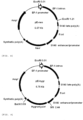
- the obtained fragment of hEPO gene was ligated between EcoRI and SmaI sites of pCI-neo vector (Promega Inc., FIG. 1 ) using DNA ligation kit ver.2 (TAKARA Inc.), and the resulting recombinant vector as shown in FIG. 2 was used as human erythropoietin expression vector pCI-neo(hEPO).
- CHO cells (CH0-K1) were purchased from RIKEN, Japan. 1X10 7 CHO cells were transformed with 20 ⁇ g of the above human erythropoietin expression vector using Lipofectamine-2000 (Invitrogen Inc.) in a conventional manner, then the cells were selective-cultured in the Ham-F12 medium (Invitrogen Inc.) supplemented with 10% of fetal bovine serum (FBS) and 0.8mg/mL of G418 (SIGMA Inc.) to obtain stable transformants which were resistant to neomycin.
- FBS fetal bovine serum
- G418 G418
- the cells were transferred to a commercially available serum-free EX-CELL302 medium (JRH Inc.) supplemented with 4mM of L-glutamine, 10mg/L of hypoxanthine, 4mg/L of thymidine, and 0.12mg/mL of G418, and continuously cultured until the growth of cells became stable.
- the resulting cells were suspended in Ham-F12 medium supplemented with 10% of FBS and 10% of DMSO, and stored in liquid nitrogen as master cells.
- the above master cells stored in liquid nitrogen were quickly thawed in 37°C thermostatic bath, and suspended in a basic medium, the CD Opti CHO TM medium (Life Technologies Inc.) supplemented with 2mM of GlutaMAX (Life Technologies Inc.)and 1 ⁇ HT Supplement (Life Technologies Inc.). Then, the cells were precipitated by centrifugation and corrected. The corrected cells were suspended with the basic medium to obtain the cell suspension, and the number of the living cells was counted. The cell suspension was diluted to the living cell density of 2 ⁇ 10 5 cells/mL with the basic medium. The cell suspension was dispensed into culture vessels by 120mL each to generate four groups and incubated for five days at 37°C under 5% CO 2 .
- the concentrated solution of each of the groups was subjected capillary electrophoresis by using Bare Fused-Silica Capillary (50 ⁇ m ID,375 ⁇ m OD, 50cm length, Beckmann Coulter Inc.) attached to capillary electrophoresis system (P/ACE TM system MDQ, Beckmann Coulter Inc.).
- P/ACE TM system MDQ capillary electrophoresis system
- 10mM Tris buffer(pH4.5) containing 10mM of sodium chloride, 500mM of sodium acetate, 7M urea, and 2.5mM of putrescine was used as an electrophoresis buffer, and the electrophoresis was performed at constant current of 24 ⁇ A for 50 minutes. Further the wave length at 214nm was monitored by an UV detector to detect the recombinant human erythropoietin subjected to the electrophoresis.
- the isoform showing the lowest isoelectric point among the isoforms showing different isoelectric points when detected by the capillary electrophoresis above was named as type I, and further the isoforms were named as type II and type III in ascending order of isoelectric point.
- the ratios of type I, type II, and type III to sum of all of detected isoforms were calculated, respectively. And the ratios were compared between the groups. The ratios of type I, type II, and type III in each group were shown in FIG. 3 .
- the ratios of type I, type II, and type III in the recombinant human erythropoietin of the group 1 obtained by culturing the cells in the basic medium were about 0.7%, about 5%, and about 15%, respectively ( FIG. 3 ).
- the ratios of type I, type II, and type III were about 1.2%, about 7%, and about 20.7%, respectively ( FIG. 3 ).
- the isoelectric point of isoforms of the recombinant human erythropoietin is lowered in accordance with the increase of the number of sialic acid molecules added per molecule of recombinant human erythropoietin.
- the ratios of type I, type II, and type III were about 1.1%, about 7%, and about 21.5%, respectively ( FIG. 3 ).
- the group 4 exceeds the group 2, which indicates that the number of molecules of sialic acid added per molecule of recombinant human erythropoietin can be further increased by adding 8mM of N-acethyl-D-mannosamine concomitantly with 3mM of uridine ( FIG. 4 ).
- the number of molecules of sialic acid added per molecule of recombinant human erythropoietin may be increased by the combination of the method of culturing the cells in these medium and another method, for example, a method of culturing cells with the temperature lowered in a stepwise manner during cell culture period.
- pEF/myc/nuc Vector (Invitrogen Inc.) was digested with KpnI and Ncol to cut out a region including the EF-1 ⁇ promoter and its first intron, which then was blunt-ended with T4 DNA polymerase.
- Vector pCl-neo (Invitrogen Inc.) was digested with BgIII and EcoRI to cut out a region including the CMV enhancer/promoter and the intron, which then was blunt-ended with T4 DNA polymerase. Into this was inserted the above-mentioned region including the EF-1 ⁇ promoter and its first intron to give pE-neo vector ( FIG. 5 ).
- the vector pE-neo was digested with SfiI and BstXI to remove a region of about 1 kbp including the neomycin resistance gene ( FIG. 6 ).
- the hygromycin gene was amplified by PCR with primer Hyg-Sfi (SEQ ID NO: 5) and primer Hyg-BstX (SEQ ID NO:6) ( FIG. 6 ).
- the hygromycin gene thus amplified was digested with SfiI and BstXI, and then inserted into the aforementioned pE-neo vector to form pE-hygr vector ( FIG. 6 ).
- a primary PCR was performed with primer HCG-A-F (SEQ ID NO:7) and primer HCG-A-R (SEQ ID NO:8).
- a secondary PCR was performed to amplify the human FSH ⁇ chain cDNA, with primer HCGA-ORF-F (SEQ ID NO:9), which had a sequence located a little downstream of 3'-end of primer HCG-A-F used in the primary PCR, and with primer HCGA-ORF-R (SEQ ID NO:10), which had a sequence located a little upstream of 5'-end of primer HCG-A-R used in the primary PCR.
- PCR was performed to amplify the human FSH ⁇ chain cDNA, with primary primers FSH-F (SEQ ID NO:11) and FSH-R (SEQ ID NO:12) and then secondary primers FSH-F2 (SEQ ID NO:13) and FSH-R2 (SEQ ID NO: 14).
- the primary PCR for human FSH ⁇ chain was performed using 100ng of the human placenta cDNA library as a template and running 40 cycles of reactions each of which consisted of "95°C/10 sec, 55°C/10 sec, and 72°C/10 sec".
- the secondary PCT was performed using 1 ⁇ L of the reaction mixture of the primary PCR as a template and running 30 cycles of reactions each of which consisted of "95°C/10 sec, 60°C/10 sec, and 72°C/10 sec”.
- the primary PCR for human FSH ⁇ chain was performed using 10 ng of a human pituitary gland cDNA library as a template and running 40 cycles of reactions each of which consisted of "98°C/2 sec, 60°C/10 sec, and 72°C/10 sec”.
- the secondary PCR was performed using 1 ⁇ L of the reaction mixture of the primary PCR as a template and running 30 cycles of reactions each of which consisted of "98°C/2 sec, 60°C/10 sec, and 72°C/10 sec”.
- the human FSH ⁇ chain cDNA thus amplified was digested with EcoRI and inserted into the EcoRI site of pBluescriptIISK(-) (pBS: Stratagene Inc.) which had been digested with EcoRI.
- the plasmid DNA thus obtained was digested with XbaI and EcoRV to cut out human FSH ⁇ -chain cDNA, which then was inserted into the pE-neo vector that had been digested with XbaI and SmaI to form human FSH ⁇ -chain expression vector pE-neo (hCG ⁇ ) ( FIG. 7 ) .
- the human FSH ⁇ -chain cDNA amplified above was digested with EcoRI and NotI, and then introduced into pBluescriptIISK(-) which had been digested with EcoRI and NotI.
- the plasmid DNA thus obtained was digested with EcoRI and, after blunt-ended with T4 DNA polymerase, further digested with NotI to cut out human FSH ⁇ -chain cDNA.
- the pE-hygr vector was digested with XbaI and, after blunt-ended with T4 DNA polymerase, further digested with NotI.
- human FSH ⁇ -chain cDNA to form human FSH ⁇ expression vector pE-hygr(FSH ⁇ ) ( FIG. 8 ).
- CHO cells (CHO-K1: purchased from American Type Culture Collection) was transfected with the above-mentioned expression vector pE-neo (hCG ⁇ ) and pE-hygr(FSH ⁇ ) using Lipofectamine-2000 (Invitrogen Inc.) according to the following method. On the day before transfection, CHO-K1 cells were seeded in a 3.5-cm culture dish so that a cell density might be close to that of a confluent state, and the cells were cultured overnight at 37°C under a flow of air containing 5% carbon dioxide gas.
- the cells were washed twice with PBS(-), and the medium was replaced with 1 mL of serum-free D-MEM/F12 medium (Invitrogen Inc.). 200 ⁇ L of a 1:1 mixture solution consisting of Lipofectamine-2000 solution diluted 20 times with Opti-MEM I medium (Invitrogen Inc.) and a plasmid DNA solution containing 13.2 ⁇ g/mL of pE-neo(hCG ⁇ ) and 6.6 ⁇ g/mL of pE-hygr(FSH ⁇ ) was added, and transfection was performed at 37°C for five hours.
- Opti-MEM I medium Invitrogen Inc.
- the medium was replaced with D-MEM/F12 medium containing 5% FCS (D-MEM/F12/5% FCS), and culture was carried out for 2 days at 37°C under a flow of air containing 5% carbon dioxide.
- the medium then was replaced with the D-MEM/F12/5% FCS medium containing 0.6 mg/mL G418 and 0.4 mg/mL hygromycin B, and selective culture was carried out at 37°C under a flow of air containing 5% carbon dioxide.
- Cells that had grown in the medium for selective culture were subjected to several successive rounds of subculture in the medium to give recombinant cells.
- the recombinant cells were seeded on a 96-well plate in such a manner that not more than one cell might be seeded per well, and the cells were cultured for about 10 days to let each of them form a clonal colony.
- the culture supernatant in each of the wells where a clonal colony was formed was sampled and examined by ELIZA for the amount of expressed human FSH, and cell lines which were found expressing a high amount of human FSH were selected.
- the selected cell lines were successively cultured in a commercially available serum-free medium, EX-CELL302 medium (JRH Inc.) supplemented with 4mM of L-glutamine, 10mg/L of hypoxanthine, 4mg/L of thymidine, 120mg/L of G148, and 80mg/L of hygromycin B, until the growth rate of the cells stabilized. Then, the medium was replaced with IS CHO-V-GS medium and the culture was successively carried out until the growth rate of the cells stabilized, and the cells were suspended in IS CHO-V-GS medium supplemented with 10% DMSO, and stored as seed cells in liquid nitrogen.
- EX-CELL302 medium JRH Inc.
- the above master cells stored in liquid nitrogen were quickly thawed in 37°C thermostatic bath, and suspended in a basic medium, the CD Opti CHO TM medium (Life Technologies Inc.) supplemented with 2mM of GlutaMAX (Life Technologies Inc.) and 1 ⁇ HT Supplement (Life Technologies Inc.). Then, the cells were precipitated by centrifugation and corrected. The corrected cells were suspended with the basic medium to obtain cell suspension, and the number of the living cells was counted. The cell suspension was diluted to the living cell density of 2 ⁇ 10 5 cells/mL with the basic medium.
- the cell suspension was dispensed into culture vessels by 120mL each to generate four groups and incubated for five days at 37°C under 5% CO 2 .
- This incubation was conducted by using Bio Jr.8 (100mL ⁇ 8 vessels culture device, AbleBiott Inc.), and pH of the medium was kept at 6.9 and the dissolved oxygen level (DO) was kept at 40% during the incubation.
- uridine and N-acethyl-D-mannosamine were added at the concentration shown in Table 1 to each of the groups (group 1 to group 4). The incubation of each of the groups was repeated once.
- the eluted fractions were diluted with water and repeatedly concentrated by using Amicon Ultra-4 Centrifugal Filter Units (molecular weight cut off:3kDa, Millipore Inc.). Finally the eluted fractions were concentrated to 100 ⁇ L of volume to obtain the concentrated solutions of the purified recombinant human FSH for each of the groups (the group 1 to the group 4). The concentration of recombinant human FSH in the purified recombinant human FSH was adjusted to 1mg/mL.
- reaction solutions thus obtained were used as sample solutions.
- sialic acid was concurrently treated with the same manner, and the standard of fluorescence-labeled sialic acid was obtained.
- the standard thus obtained was analyzed by HPLC using COSMOSIL 5C 18 -PAQ as reverse phase column, and the elution time of sialic acid, the time when the peak corresponding to sialic acid appeared, was measured. And each of the sample solutions was analyzed by HPLC and the area of peak corresponding to sialic acid was calculated.
- the peak area of the group 3, wherein the cells were cultured in the medium added with 8mM N-acethyl-D-mannosamine and 3mM uridine to the basic medium was about 121%, showing that the average number of sialic acid molecules per molecule of recombinant human FSH obtained by culturing the cells in the medium added with 8mM of N-acethyl-D-mannosamine and 3mM of uridine was increased by about 20%, when comparing with that of recombinant human FSH obtained by culturing the cells in the basic medium.
- both of recombinant human erythropoietin and recombinant human FSH obtained by culturing the cells in the medium containing 8mM of N-acethyl-D-mannosamine and 3mM of uridine, showed higher sialic acid content than those obtained by using the basic medium, indicating that by culturing the cells in the medium supplemented with these two elements for the production of a recombinant glycoprotein, the number of molecules of sialic acid added per the molecule can be increased regardless of the types of glycoproteins.
- the number of sialic acid molecules added per molecule of recombinant glycoprotein can be increased by culturing the cells transformed with a gene or an exogenous DNA encoding a glycoprotein of interest in a medium added with 8mM of N-acethyl-D-mannosamine and 3mM of uridine. It is considered that the number of molecules of sialic acid added per molecule of recombinant glycoprotein may be increased by the combination of the method of culturing the cells in such a medium and another method, for example, a method of culturing the cells with the temperature lowered in a stepwise manner during the culture period.
- a long-term stable pharmaceutical comprising a glycoprotein as an active ingredient and showing a prolonged half-life in blood when administered to a body.
Landscapes
- Health & Medical Sciences (AREA)
- Life Sciences & Earth Sciences (AREA)
- Chemical & Material Sciences (AREA)
- Organic Chemistry (AREA)
- Engineering & Computer Science (AREA)
- Zoology (AREA)
- Genetics & Genomics (AREA)
- Wood Science & Technology (AREA)
- Biotechnology (AREA)
- General Health & Medical Sciences (AREA)
- Biochemistry (AREA)
- Bioinformatics & Cheminformatics (AREA)
- Molecular Biology (AREA)
- General Engineering & Computer Science (AREA)
- Biomedical Technology (AREA)
- Microbiology (AREA)
- Proteomics, Peptides & Aminoacids (AREA)
- Biophysics (AREA)
- Chemical Kinetics & Catalysis (AREA)
- General Chemical & Material Sciences (AREA)
- Gastroenterology & Hepatology (AREA)
- Medicinal Chemistry (AREA)
- Toxicology (AREA)
- Endocrinology (AREA)
- Cell Biology (AREA)
- Physics & Mathematics (AREA)
- Plant Pathology (AREA)
- Reproductive Health (AREA)
- Preparation Of Compounds By Using Micro-Organisms (AREA)
- Micro-Organisms Or Cultivation Processes Thereof (AREA)
Description
- The present invention relates to a cell culture medium containing uridine and N-acethyl-D-mannosamine, and methods for production of a glycoprotein comprising culturing cells using the cell culture medium.
- As a predominant mode of linkage between a protein and a glycan in a glycoprotein, there are N-glycosidic bonds where N-acethyl-D-glucosamine is covalently linked to the asparagine residue composing the protein (N-linked glycan, N-glycoside-linked sugar chain), and O-glycosidic bonds where N-acethyl-D-galactosamine is covalently linked to the serine or the threonine residue composing the protein (O-linked glycan, O-glycoside-linked sugar chain)
- In mammalian cells, N-glycosidic bond-linked sugar chains of glycoproteins are those attached to asparagine residues of the proteins, through a complex pathway involving various enzymes, while the proteins, after translated from RNA, are transferred through the lumen of an endoplasmic reticulum to Golgi bodies. The major types of N-glycosidic bond-linked sugar chains are complex-type sugar chains and high mannose-type sugar chains. Complex-type sugar chains, while there are various types of them, are characterized in that their non-reducing ends consist of sialic acid residues. An example of them is shown in
structural formula 1 below.
- If mammalian cells, such as Chinese hamster ovary cells (CHO cells), are used in producing a recombinant glycoprotein, a large part of the sugar chains of the protein thus obtained will be a complex-type in their structure, and sialic acid residues thus will occur at the non-reducing ends of the sugar chains of such a recombinant glycoprotein. It is known that stability in the blood of a recombinant protein administered to a body is increased if complex-type sugar chains, which have a sialic acid residues at their non-reducing ends, are attached to the protein (cf. Patent Document 1). Thus, when recombinant glycoproteins are to be produced which exhibit their effects while circulating in the blood, production methods using CHO cells are utilized, with which sugar chains are produced having sialic acid residues at their non-reducing ends, expecting elongation of their half-lives in the blood, and thereby augmentation of their pharmacological effects. Erythropoietin and follicle-stimulating hormone (FSH) are typical examples of such recombinant glycoproteins (cf.
Patent Documents 2 and 3). - And as a half-life of a glycoprotein in blood is expected to be prolonged when more sialic residues are added to sugar chain of the glycoprotein, several methods are reported objective of which is to add more sialic residues to the glycoprotein. For example, a method is reported for the production of a recombinant glycoprotein by using host cells transformed with sialyltransferase having ability to add a sialic acid to the end of sugar chains (cf. Patent Document 4). Further, reported is that a recombinant glycoprotein added with more sialic acid residues are to be obtained by culturing mammalian cells transformed with a gene encoding a glycoprotein with the temperature lowered in a stepwise manner (cf. Patent Document 5).
- Further several cell culture media are reported which are to be used for adding more sialic acids to a sugar chain of a glycoprotein. For example, reported is that the molar ratio of sialic acids to a recombinant glycoprotein expressed by cells can be adjusted by adding alkanoic acid such as butylic acid or the salt thereof at a predetermined concentration when the cells are cultured (cf. Patent Document 6). And it has been reported that a recombinant glycoprotein having a specific degree of sialylation can be produced by adding a precursor of sialic acid such as ManNAc, acetyl-ManNAc, peracetyl-ManNAc, or fetuin to a medium (cf. Patent Document 7). And it has been reported that sialylation level of a recombinant glycoprotein can be increased by adding monosaccharides, for example in the combination of glucose, mannose, and galactose, to a medium (cf. Patent Document 8).
-
- [Patent Document 1]
JP H08-027181 - [Patent Document 2]
JP 2001-525342 - [Patent Document 3]
WO2009/127826 - [Patent Document 4]
JP H05-071934 - [Patent Document 5]
JP 2006-520186 - [Patent Document 6]
JP H11-507523 - [Patent Document 7]
JP 2007-522179 - [Patent Document 8]
JP 2001-525342 - Against the above background, one of the objective of the present invention is to provide a medium for culturing mammalian cells containing uridine and N-acethyl-D-mannosamine at predetermined concentrations for elevating the content of sialic acid in a glycoprotein expressed by using the cells transformed with a gene encoding the glycoprotein.
- In the study directed to the above objective, the present inventors found that a highly sialylated erythropoietin is obtained by culturing mammalian cells (CHO cells) transformed with a gene encoding erythopoletin in the medium containing uridine and N-acethyl-D-mannosamine.
- Thus, the present invention relates to the subject matter as defined in the claims.
- The present invention enables production of a highly sialylated glycoprotein. In general the highly sialylated glycoprotein exhibits prolonged half-life in blood when administered into human blood as a medicament, therefore the glycoprotein produced thereby can be provided as a long-term stable medicament.
- The figures show:
-
FIG. 1 illustrates pCl-neo vector into which a DNA encoding human erythropoietin is to be incorporated. -
FIG. 2 illustrates pCl-neo(hEPO) vector incorporated a DNA encoding human erythropoietin. -
FIG. 3 shows the ratios of each of isoforms (type 1 to type 3) in the recombinant human erythropoietin obtained by culturing cells for expression of recombinant human erythropoietin in a variety of mediums. The vertical axis shows the ratios of isoforms (%) . Error bars indicate standard deviations (n=4). Graph (1) shows that obtained by culturing in the basic medium, Graph (2) shows that obtained by culturing in the basic medium added with 8mM of N-acethyl-D-mannosamine, Graph (3) shows that obtained by culturing in the basic medium added with 3mM of uridine, Graph (4) shows that obtained by culturing in the basic medium added with 8mM of N-acethyl-D-mannosamine and 3mM of uridine, respectively. -
FIG. 4 shows the sum of the ratio ofisoforms type 1 totype 3 in the recombinant human erythropoietin obtained by culturing cells for the expression of recombinant human erythropoietin in a variety of mediums. The vertical axis shows the ratios(%). Graph (1) shows that obtained by culturing in the basic medium, Graph (2) shows that obtained by culturing in the basic medium added with 8mM of N-acethyl-D-mannosamine, Graph (3) shows that obtained by culturing in the basic medium added with 3mM of uridine, Graph (4) shows that obtained by culturing in the basic medium added with 8mM of N-acethyl-D-mannosamine and 3mM of uridine, respectively. -
FIG. 5 shows the flow diagram of the method for constructing pE-neo vector. -
FIG. 6 shows the flow diagram of the method for constructing pE-hygr vector. -
FIG. 7 illustrates pE-Neo(FSHα) vector incorporated a DNA encoding α chain of human FSH α-chain. -
FIG. 8 illustrates pE-hygr(FSHβ) vector incorporated a DNA encoding β chain of human FSH β-chain. -
FIG. 9 shows the relative value (%) of sialic acid content in recombinant human FSH obtained by culturing cells for the expression of recombinant human FSH in a variety of mediums, when the sialic acid content in recombinant human FSH obtained by culturing in the basic medium is referred to as 100%. Graph (1) shows that obtained by culturing in the basic medium, Graph (2) shows that obtained by culturing in the basic medium added with 8mM of N-acethyl-D-mannosamine, Graph (3) shows that obtained by culturing in the basic medium added with 3mM of uridine, Graph (4) shows that obtained by culturing in the basic medium added with 8mM of N-acethyl-D-mannosamine and 3mM of uridine, respectively. - In the present invention, the term "glycoprotein" means the generic name for a group of molecules made up by a covalent linkage between a protein and a sugar. The covalent linkage between the sugar and the protein includes N-glycosidic bond where N-acethyl-D-glucosamine is covalently linked to asparagine residue composing the protein (N-linked glycan), and O-glycosidic bond where N-acethyl-D-galactosamine is covalently linked to serine or threonine residue composing the protein (O-linked glycan), but the mode of linkage between the sugar and the protein in the present invention is not particularly limited. A glycoprotein containing either N-linked glycan of O-linked glycan, and a glycoprotein containing both of them are also categorized as the glycoproteins in the present invention.
- Such glycoproteins include; lysosomal enzymes such as α-galactosidase A, acid sphingomyelinase, lysosomal acid lipase, N-acetylgalactosamine-4-sulfatase, hexosaminidase, α-N-acetylgalactosaminidase, α-mannosidase, iduronate-2-sulfatase, glucocerebrosidase, galsulfase, α-L-iduronidase, sialidase, and acid α-glucosidase; tissue plasminogen activator(t-PA); blood coagulation factors such as blood coagulation factor VII, blood coagulation factors VIII, and blood coagulation factor IX; lymphokines such as interleukin-6; growth factors such as granulocyte-colony stimulating factor(G-CSF), granulocyte macrophage colony-stimulating factor(GM-CSF), and macrophage colony-stimulating factor(M-CSF); erythropoietin; interferon; thrombomodulin; follicle stimulating hormone; DNaseI; thyroid stimulating hormone(TSH); mouse antibodies, humanized mouse antibody, human/mouse chimeric antibodies, human antibodies, and such antibodies including a variety of antibody drugs; PD-1; PD-1 ligand; and follicle stimulating hormone, but are not limited to them.
- The glycoprotein of the present invention preferably contains sialic acid in its glycan. The average number of molecules of sialic acid per glycoprotein molecule is preferably one or more.
- And in the present invention, when the term "a gene encoding a glycoprotein" or "an exogenous DNA encoding a glycoprotein" is referred, there is no particular limitation as to the origin of the gene or the exogenous DNA, but preferably the origin is mammalians including human, bovine, horse, other domestic animals, dog, cat, and other pet animals. Most practically the origin is human. And the term "a gene encoding a glycoprotein" or "an exogenous DNA encoding a glycoprotein" further includes a gene or an exogenous DNA introduced wherein a mutation for the purpose, for example, to optimize the amount of an expressed glycoprotein encoded by the gene or the exogenous DNA
- In the present invention, the term "glycoprotein" includes not only a naturally occurring glycoprotein, but also an analogue of the naturally occurring glycoprotein wherein one or more of amino acid residues are substituted for, deleted from, inserted into, or/and added to. The term "glycoprotein" in the present invention further includes, for example, a chimeric protein wherein the domains derived from two or more of naturally occurring glycoproteins or the analogues thereof are combined, and a protein which does not naturally exist, provided that a glycan and a protein are covalently combined therein.
- In the present invention, the term "recombinant glycoprotein protein" means the glycoprotein produced by using the cells which are artificially constructed to let the gene or the exogenous DNA encoding the glycoprotein strongly express and to let the expression status maintain. In general, the gene or the exogenous DNA to be strongly expressed may be introduced by transforming the mammalian cells, with the expression vector into which the gene or the exogenous DNA is incorporated. But not limited to this, the gene to be strongly expressed may also be a endogenous gene artificially modified to achieve potent expression. An example for the method of artificially modifying the endogenous gene may be, but are not limited to, the method wherein the endogenous gene in itself is modified. For example, induction of strong expression of the gene may be achieved by substituting the promoter inducing strong gene expression for the endogenous promoter located upstream of the endogenous gene. Such examples have been disclosed in several prior arts (e.g.,
WO94/12650 WO95/31560 - In the present invention, as a expression vector for an expression of either a gene or an exogenous DNA encoding the glycoprotein, it is a general practice to employ the expression vector in which a gene encoding a glycoprotein of interested is incorporated downstream of a gene regulatory site that induces a potent expression of a gene, such as a cytomegalovirus (CMV)-derived promoter, SV40 early promoter (SV40 enhancer/promoter), elongation factor 1α (EF-1α) promoter, and human ubiquitin C promoter. Examples of promoters to be used for the induction of a strong gene expression, that promoters may be substituted for an endogenous promoter to achieve the potent expression of the endogenous gene, include a cytomegalovirus (CMV)-derived promoter, SV40 early promoter (SV40 enhancer/promoter), elongation factor 1α (EF-1α) promoter, and human ubiquitin C promoter.
- It is a general practice to use mammalian cells as the cells to be transformed with an expression vector incorporating either a gene or exogenous DNA encoding a glycoprotein or as the cells to be modified for potent expression of the endogenous gene by introducing modification to its endogenous gene. That is, in the present invention, when referred simply as "cell", the term means a mammalian cell.
- There is no particular limitation as to mammalian cells to be used so long as they can express an intended recombinant glycoprotein. They may be primary culture cells of those collected from organs, muscle tissues, skin tissues, connective tissue, nerve tissue, blood, bone marrow, and the like excised from the body, or their subcultured cells or cell lines established so as to keep their characteristics through repeated subcultures. Those cells may be either normal cells or the cells which have become cancerous. The cells which can be used particularly preferably are CHO cells derived from the ovary of a Chinese hamster; NS/0 cells derived from the mouse myeloma; human fibroblasts; and COS cells derived from the renal fibroblast of an African green monkey. When a recombinant glycoprotein is expressed by using CHO cells, ordinarily a recombinant glycoprotein can be obtained having N-glycoside-linked sugar chain.
- The medium used for culturing mammalian cells for the expression of a glycoprotein is the medium supplemented with uridine and N-acethyl-D-mannosamine. However, as needed, the basic medium supplemented with N-acethyl-D-mannosamine but not with uridine may also be used as the medium for culturing cells to express the glycoprotein. Though there is no particular limitation as to which medium is to be employed as the basic medium, as far as it can be used for culturing mammalian cells to express a glycoprotein, but a serum free medium may be preferably used.
- An example of serum-free media as describe above is a medium comprises; 3 to 700mg/mL of amino acids, 0.001 to 50mg/L of vitamins, 0.3 to 10g/L of monosaccharides, 0.1 to 10000mg/L of inorganic salts, 0.001 to 0.1 mg/L of trace elements, 0.1 to 50mg/L of nucleosides, 0.001 to 10 mg/L of fatty acids, 0.01 to 1 mg/L of biotin, 0.1 to 20 micrograms/L of hydrocortisone, 0.1 to 20 mg/L of insulin, 0.1 to 10 mg/L of vitamin B12, 0.01 to 1 mg/L of putrescine, 10 to 500 mg/L of sodium pyruvate, and water-soluble iron compounds. As desired, it may also include thymidine, hypoxanthine, a conventional pH indicator, and antibiotics.
- Further, DMEM/F12 medium, a mixed medium consisting of DMEM and F12, may also be used as a basic serum-free medium. Both of these media are well known to those skilled in the art. As a serum-free medium, DMEM(HG)HAM modified (R5) medium may be used, too, which contains sodium hydrogen carbonate, L-glutamine, D-glucose, insulin, sodium selenite, diaminobutane, hydrocortisone, ferric (II) sulfate, asparagine, aspartic acid, serine, and polyvinyl alcohol. Furthermore, a commercially available serum-free medium may also be used as a basic medium, such as CD OptiCHO™ medium, CHO-S-SFM II medium, CD CHO medium (Life Technologies Inc.), EX-CELL™302 medium, EX-CELL™325-PF medium (SAFC Biosciences Inc.), and the like.
- When a medium containing serum (fetal bovine serum) is used as a basic medium, the concentration of serum in the medium is preferably 5 to 20%(v/v), and more preferably 8 to 12%(v/v).
- Uridine to be added to the basic medium may be the salt thereof. The amount of uridine added to the basic medium should be properly adjusted depending on the types of the cell to be used, the expression vector to be used, and the glycoprotein to be expressed, but uridine is added at a concentration of preferably 0.5 to 10mM, more preferably 1 to 8mM, still more preferably 2 to 5mM, and further more preferably 3mM in the basic medium. And N-acethyl-D-mannosamine to be added to the basic medium may be the salt thereof. The amount of N-acethyl-D-mannosamine added to the basic medium should be properly adjusted depending on the types of the cell to be used, the expression vector to be used, and the glycoprotein to be expressed, but N-acethyl-D-mannosamine is added at a concentration of preferably 1 to 15mM, more preferably 4 to 12mM, still more preferably 5 to 10mM, further more preferably 5 to 8mM, and particularly preferably 8mM in the basic medium.
- L-alanyl-L-glutamine or the salt thereof may be added to the basic medium in addition to uridine and N-acethyl-D-mannosamine. The amount of L-alanyl-L-glutamine added to the basic medium should be properly adjusted depending on the types of the cell to be used, the expression vector to be used, and the glycoprotein to be expressed, but L-alanyl-L-glutamine is added at a concentration of preferably 0.5 to 5mM, more preferably 1 to 3mM, still more preferably 1.5 to 2.5mM, and particularly preferably 2mM in the basic medium.
- In the present invention, when a recombinant glycoprotein is produced by culturing mammalian cells transformed with either a gene or an exogenous DNA encoding a glycoprotein, or mammalian cells of which an endogenous promoter is substituted so as to make the endogenous gene strongly express, and by letting the glycoprotein expressed, the culture temperature should be properly adjusted depending on the types of the cells to be used, the expression vector to be used, and the glycoprotein to be expressed. However the temperature is adjusted preferably to 30 to 37°C, and more preferably to 36 to 37°C. The culture temperature may be either maintained constant or lowered in a stepwise manner during the culture. When the culture temperature is lowered in a stepwise manner, the culture temperature, for example, may be adjusted to 36 to 37°C at the start of the culture, and then may be lowered to preferably 30 to 35°C, and more preferably 31 to 33°C, such as 32°C, during the culture period. As most of recombinant glycoproteins are secreted from the cells into the medium, the supernatant containing the recombinant glycoprotein can be obtained by correcting the culture after incubation and removing the mammalian cells from the corrected culture. The recombinant glycoprotein can be purified from the culture supernatant by such a method as chromatography.
- Though the present invention will be described in further detail below with reference to an example, it is not intended that the present invention be limited to the example.
- cDNA encoding human erythropoietin was PCR amplified from human fetal liver cDNA library (Clontech Inc.) using the following set of primers:
Primer EPO-5', synthetic sequence (SEQ ID NO:1) and Primer EPO-3', synthetic sequence (SEQ ID NO:2). - In the sequence set forth as SEQ ID NO: 1, nucleotides 3-8 correspond to an EcoRI site, and the nucleotides 9-28 correspond to the first 20 nucleotides of the coding region.
- In the sequence set forth as SEQ ID NO: 2, nucleotides 12-17 correspond to a BglII site, and nucleotides 18-30 correspond to the nucleotides 774-762 of the cDNA.
- PCR reaction was cycled 30 times with denaturation step at 95°C for 1 minute, annealing step at 60°C for 1 minute, and elongation step at 72°C for 2 minutes. Amplified cDNA was digested with EcoRI and HindIII, and then subcloned between the EcoRI and HindIII sites of the multicloning site of pBluescript vector (pBS: Stratagene Inc.). The resulting vector was digested with BglII, then blunt-ended by T4 DNA polymerase, and subsequently a fragment of human erythropoietin gene was excised by EcoRI digestion. The nucleotide sequences of the obtained fragment of hEPO gene and the encoded amino acid sequence are shown in SEQ ID NO:3 and NO:4, respectively. In SEQ ID NO:3, the nucleotides 9-587 correspond to the region encoding amino acids, nucleotides 3-8 correspond to EcoRI site, and nucleotides 775 to 780 correspond to BglII site. The obtained fragment of hEPO gene was ligated between EcoRI and SmaI sites of pCI-neo vector (Promega Inc.,
FIG. 1 ) using DNA ligation kit ver.2 (TAKARA Inc.), and the resulting recombinant vector as shown inFIG. 2 was used as human erythropoietin expression vector pCI-neo(hEPO). - CHO cells (CH0-K1) were purchased from RIKEN, Japan. 1X10⁷ CHO cells were transformed with 20µg of the above human erythropoietin expression vector using Lipofectamine-2000 (Invitrogen Inc.) in a conventional manner, then the cells were selective-cultured in the Ham-F12 medium (Invitrogen Inc.) supplemented with 10% of fetal bovine serum (FBS) and 0.8mg/mL of G418 (SIGMA Inc.) to obtain stable transformants which were resistant to neomycin. Then, for habituation of the cells to a serum free medium, the cells were transferred to a commercially available serum-free EX-CELL302 medium (JRH Inc.) supplemented with 4mM of L-glutamine, 10mg/L of hypoxanthine, 4mg/L of thymidine, and 0.12mg/mL of G418, and continuously cultured until the growth of cells became stable. The resulting cells were suspended in Ham-F12 medium supplemented with 10% of FBS and 10% of DMSO, and stored in liquid nitrogen as master cells.
- The above master cells stored in liquid nitrogen were quickly thawed in 37°C thermostatic bath, and suspended in a basic medium, the CD Opti CHO™ medium (Life Technologies Inc.) supplemented with 2mM of GlutaMAX (Life Technologies Inc.)and 1 × HT Supplement (Life Technologies Inc.). Then, the cells were precipitated by centrifugation and corrected. The corrected cells were suspended with the basic medium to obtain the cell suspension, and the number of the living cells was counted. The cell suspension was diluted to the living cell density of 2 × 10⁵ cells/mL with the basic medium. The cell suspension was dispensed into culture vessels by 120mL each to generate four groups and incubated for five days at 37°C under 5% CO2. This incubation was conducted by using Bio Jr.8 (100mL × 8 vessels culture device, AbleBiott Inc.), and pH of the medium was kept at 6.9 and the dissolved oxygen level (DO) was kept at 40% during the incubation. At this time, uridine and N-acethyl-D-mannosamine were added at the concentration as shown in Table 1 to each of the groups (
group 1 to group 4). The incubation of each of the groups was repeated once. -
TABLE 1. Concentrations of uridine and N-acethyt-D-mannosamine in the medium of each of the groups (mM) group N-acethyl-D- mannosamine uridine 1 0 0 2 8 0 3 0 3 4 8 3 - On the fifth day of the incubation above, 10mL of each of the cultures were corrected to centrifuging tubes and centrifuged at 3,000rpm for 10 minutes. Then, the culture supernatants were corrected and diluted 1.5 times with distilled water. Then, 7.5 mL of each of these diluted culture supernatants was loaded on Capto™ adhere column, a multi-modal anion exchange resin (column volume:1mL, GE Healthcare Bioscience Inc.) pre-equilibrated with 20mM Tris buffer(pH 7.5). After washing the column with 5 column volumes of 20mM Tris buffer (pH 7.5), recombinant human erythropoietin adsorbed by the resin was eluted with 20mM Tris buffer(pH 7.5) containing 200mM of NaCl to obtain eluted fractions. And the eluted fractions were concentrated by Amicon Ultra-4 Centrifugal Filter Units (molecular weight cut off:3kDa, Millipore Inc.) to 100µL of volume.
- The concentrated solution of each of the groups was subjected capillary electrophoresis by using Bare Fused-Silica Capillary (50µm ID,375µm OD, 50cm length, Beckmann Coulter Inc.) attached to capillary electrophoresis system (P/ACE™ system MDQ, Beckmann Coulter Inc.). In doing this, 10mM Tris buffer(pH4.5) containing 10mM of sodium chloride, 500mM of sodium acetate, 7M urea, and 2.5mM of putrescine was used as an electrophoresis buffer, and the electrophoresis was performed at constant current of 24µA for 50 minutes. Further the wave length at 214nm was monitored by an UV detector to detect the recombinant human erythropoietin subjected to the electrophoresis.
- The isoform showing the lowest isoelectric point among the isoforms showing different isoelectric points when detected by the capillary electrophoresis above was named as type I, and further the isoforms were named as type II and type III in ascending order of isoelectric point. The ratios of type I, type II, and type III to sum of all of detected isoforms were calculated, respectively. And the ratios were compared between the groups. The ratios of type I, type II, and type III in each group were shown in
FIG. 3 . The ratios of type I, type II, and type III in the recombinant human erythropoietin of thegroup 1 obtained by culturing the cells in the basic medium were about 0.7%, about 5%, and about 15%, respectively (FIG. 3 ). - In contrast, in the
group 2 obtained by culturing the cells in the basic medium added with only 8mM of N-acethyl-D-mannosamine, the ratios of type I, type II, and type III were about 1.2%, about 7%, and about 20.7%, respectively (FIG. 3 ). The isoelectric point of isoforms of the recombinant human erythropoietin is lowered in accordance with the increase of the number of sialic acid molecules added per molecule of recombinant human erythropoietin. Therefore the above results shows that the number of sialic acid molecules added per molecule of recombinant human erythropoietin of thegroup 2 obtained by adding 8mM of N-acethyl-D-mannosamine to the basic medium is more than that obtained by using the basic medium. - In contrast of this, in the
group 3 obtained by culturing the cells in the basic medium added with only 3mM of uridine, the ratios of type I, type II, and type III markedly decreased when compared with those of thegroup 3 obtained by culturing the cells in the basic medium, and became about 0.3%, about 3.5%, and about 13%, respectively (FIG. 3 ). These results show that the number of molecules of sialic acid added per molecule of recombinant human erythropoietin of thegroup 3 obtained by adding 3mM of uridine to the basic medium decreases when compared with that obtained by using the basic medium. - Furthermore, in the
group 4 obtained by culturing the cells in the basic medium added with 8mM N-acethyl-D-mannosamine and 3mM of uridine, the ratios of type I, type II, and type III were about 1.1%, about 7%, and about 21.5%, respectively (FIG. 3 ). When comparing the sum of the ratios of type I, type II, and type III between thegroup 4 and thegroup 2, thegroup 4 exceeds thegroup 2, which indicates that the number of molecules of sialic acid added per molecule of recombinant human erythropoietin can be further increased by adding 8mM of N-acethyl-D-mannosamine concomitantly with 3mM of uridine (FIG. 4 ). Such a synergistic effect of N-acethyl-D-mannosamine and uridine is surprising when considering that the number of molecules of sialic acid added per molecule of recombinant human erythropoietin of thegroup 3 obtained by adding only 3mM of uridine to the medium is less than that obtained by using the basic medium. - From the results of the analysis shown above, it has been elucidated that the number of molecules of sialic acid added per molecule of recombinant human erythropoietin can be increased by culturing the cells transformed with the gene of recombinant human erythropoietin in the medium added with 8mM of N-acethyl-D-mannosamine or with 8mM of N-acethyl-D-mannosamine and 3mM of uridine. It is considered that the number of molecules of sialic acid added per molecule of recombinant human erythropoietin may be increased by the combination of the method of culturing the cells in these medium and another method, for example, a method of culturing cells with the temperature lowered in a stepwise manner during cell culture period.
- pEF/myc/nuc Vector (Invitrogen Inc.) was digested with KpnI and Ncol to cut out a region including the EF-1α promoter and its first intron, which then was blunt-ended with T4 DNA polymerase. Vector pCl-neo (Invitrogen Inc.) was digested with BgIII and EcoRI to cut out a region including the CMV enhancer/promoter and the intron, which then was blunt-ended with T4 DNA polymerase. Into this was inserted the above-mentioned region including the EF-1αpromoter and its first intron to give pE-neo vector (
FIG. 5 ). - The vector pE-neo was digested with SfiI and BstXI to remove a region of about 1 kbp including the neomycin resistance gene (
FIG. 6 ). Using pcDNA3.1/Hygro(+) (Invitrogen Inc.) as a template, the hygromycin gene was amplified by PCR with primer Hyg-Sfi (SEQ ID NO: 5) and primer Hyg-BstX (SEQ ID NO:6) (FIG. 6 ). The hygromycin gene thus amplified was digested with SfiI and BstXI, and then inserted into the aforementioned pE-neo vector to form pE-hygr vector (FIG. 6 ). - Using a human placenta cDNA library (Takara Bio Inc.) as a template, a primary PCR was performed with primer HCG-A-F (SEQ ID NO:7) and primer HCG-A-R (SEQ ID NO:8). Then, using the PCR product thus obtained, a secondary PCR was performed to amplify the human FSHα chain cDNA, with primer HCGA-ORF-F (SEQ ID NO:9), which had a sequence located a little downstream of 3'-end of primer HCG-A-F used in the primary PCR, and with primer HCGA-ORF-R (SEQ ID NO:10), which had a sequence located a little upstream of 5'-end of primer HCG-A-R used in the primary PCR. In the same manner, using a human pituitary gland cDNA library (Takara Bio Inc.) as a template, PCR was performed to amplify the human FSHβ chain cDNA, with primary primers FSH-F (SEQ ID NO:11) and FSH-R (SEQ ID NO:12) and then secondary primers FSH-F2 (SEQ ID NO:13) and FSH-R2 (SEQ ID NO: 14).
- The primary PCR for human FSHα chain was performed using 100ng of the human placenta cDNA library as a template and running 40 cycles of reactions each of which consisted of "95°C/10 sec, 55°C/10 sec, and 72°C/10 sec". The secondary PCT was performed using 1µL of the reaction mixture of the primary PCR as a template and running 30 cycles of reactions each of which consisted of "95°C/10 sec, 60°C/10 sec, and 72°C/10 sec". And the primary PCR for human FSHβ chain was performed using 10 ng of a human pituitary gland cDNA library as a template and running 40 cycles of reactions each of which consisted of "98°C/2 sec, 60°C/10 sec, and 72°C/10 sec". The secondary PCR was performed using 1µL of the reaction mixture of the primary PCR as a template and running 30 cycles of reactions each of which consisted of "98°C/2 sec, 60°C/10 sec, and 72°C/10 sec".
- The human FSHα chain cDNA thus amplified was digested with EcoRI and inserted into the EcoRI site of pBluescriptIISK(-) (pBS: Stratagene Inc.) which had been digested with EcoRI. The plasmid DNA thus obtained was digested with XbaI and EcoRV to cut out human FSHα-chain cDNA, which then was inserted into the pE-neo vector that had been digested with XbaI and SmaI to form human FSHα-chain expression vector pE-neo (hCGα) (
FIG. 7 ) . - The human FSHβ-chain cDNA amplified above was digested with EcoRI and NotI, and then introduced into pBluescriptIISK(-) which had been digested with EcoRI and NotI. The plasmid DNA thus obtained was digested with EcoRI and, after blunt-ended with T4 DNA polymerase, further digested with NotI to cut out human FSHβ-chain cDNA. The pE-hygr vector was digested with XbaI and, after blunt-ended with T4 DNA polymerase, further digested with NotI. To this pE-hygr vector was introduced human FSHβ-chain cDNA to form human FSHβ expression vector pE-hygr(FSHβ) (
FIG. 8 ). - CHO cells (CHO-K1: purchased from American Type Culture Collection) was transfected with the above-mentioned expression vector pE-neo (hCGα) and pE-hygr(FSHβ) using Lipofectamine-2000 (Invitrogen Inc.) according to the following method. On the day before transfection, CHO-K1 cells were seeded in a 3.5-cm culture dish so that a cell density might be close to that of a confluent state, and the cells were cultured overnight at 37°C under a flow of air containing 5% carbon dioxide gas. On the following day, the cells were washed twice with PBS(-), and the medium was replaced with 1 mL of serum-free D-MEM/F12 medium (Invitrogen Inc.). 200µL of a 1:1 mixture solution consisting of Lipofectamine-2000 solution diluted 20 times with Opti-MEM I medium (Invitrogen Inc.) and a plasmid DNA solution containing 13.2µg/mL of pE-neo(hCGα) and 6.6µg/mL of pE-hygr(FSHβ) was added, and transfection was performed at 37°C for five hours.
- After transfection above, the medium was replaced with D-MEM/F12 medium containing 5% FCS (D-MEM/F12/5% FCS), and culture was carried out for 2 days at 37°C under a flow of air containing 5% carbon dioxide. The medium then was replaced with the D-MEM/F12/5% FCS medium containing 0.6 mg/mL G418 and 0.4 mg/mL hygromycin B, and selective culture was carried out at 37°C under a flow of air containing 5% carbon dioxide. Cells that had grown in the medium for selective culture were subjected to several successive rounds of subculture in the medium to give recombinant cells.
- Then, according to the limiting dilution technique, the recombinant cells were seeded on a 96-well plate in such a manner that not more than one cell might be seeded per well, and the cells were cultured for about 10 days to let each of them form a clonal colony. The culture supernatant in each of the wells where a clonal colony was formed was sampled and examined by ELIZA for the amount of expressed human FSH, and cell lines which were found expressing a high amount of human FSH were selected.
- For habituation to serum-free suspended cell culture, the selected cell lines were successively cultured in a commercially available serum-free medium, EX-CELL302 medium (JRH Inc.) supplemented with 4mM of L-glutamine, 10mg/L of hypoxanthine, 4mg/L of thymidine, 120mg/L of G148, and 80mg/L of hygromycin B, until the growth rate of the cells stabilized. Then, the medium was replaced with IS CHO-V-GS medium and the culture was successively carried out until the growth rate of the cells stabilized, and the cells were suspended in IS CHO-V-GS medium supplemented with 10% DMSO, and stored as seed cells in liquid nitrogen.
- The above master cells stored in liquid nitrogen were quickly thawed in 37°C thermostatic bath, and suspended in a basic medium, the CD Opti CHO™ medium (Life Technologies Inc.) supplemented with 2mM of GlutaMAX (Life Technologies Inc.) and 1 × HT Supplement (Life Technologies Inc.). Then, the cells were precipitated by centrifugation and corrected. The corrected cells were suspended with the basic medium to obtain cell suspension, and the number of the living cells was counted. The cell suspension was diluted to the living cell density of 2 × 10⁵ cells/mL with the basic medium.
- The cell suspension was dispensed into culture vessels by 120mL each to generate four groups and incubated for five days at 37°C under 5% CO2. This incubation was conducted by using Bio Jr.8 (100mL × 8 vessels culture device, AbleBiott Inc.), and pH of the medium was kept at 6.9 and the dissolved oxygen level (DO) was kept at 40% during the incubation. At this time,, uridine and N-acethyl-D-mannosamine were added at the concentration shown in Table 1 to each of the groups (
group 1 to group 4). The incubation of each of the groups was repeated once. -
TABLE 2. Concentrations of uridine and N-acethyl-D-mannosamine in the medium of each of the groups (mM) group N-acethyl-D- mannosamine uridine 1 0 0 2 8 0 3 0 3 4 8 3 - On the fifth day of the incubation above, 10mL of the cultures were corrected to centrifuging tubes and centrifuged at 3,000rpm for 10 minutes to correct the culture supernatants. Then, 20mL of each of the culture supernatants were loaded on CaptureSelect™ FSH, a FSH affinity resin (column volume:lmL, Life Technologies Inc.) pre-equilibrated with PBS(pH 7.4). After washing the column with five column volumes of PBS(pH 7.4), recombinant human FSH adsorbed by the resin was eluted with 20mM Tris buffer(pH 7.4) containing 2M of MgCl2 to obtain eluted fractions. The eluted fractions were diluted with water and repeatedly concentrated by using Amicon Ultra-4 Centrifugal Filter Units (molecular weight cut off:3kDa, Millipore Inc.). Finally the eluted fractions were concentrated to 100µL of volume to obtain the concentrated solutions of the purified recombinant human FSH for each of the groups (the
group 1 to the group 4). The concentration of recombinant human FSH in the purified recombinant human FSH was adjusted to 1mg/mL. - 50µL of The concentrated solutions of the purified recombinant human FSH of each of the groups was alkali-treated with 0.3M sodium hydroxide at 37°C for 30 minutes, subsequently was acid-treated with 0.05M hydrochloric acid at 80°C for 60 minutes to make glycans composing recombinant human FSH hydrolyzed to monosaccharides. Then, the solution were added with fluorescence reagent (a solution containing 9.6mM of 1,2-diamino-4,5-methylene-dioxybenzene dihydrochloride, 24mM of sodium hydrosulfite, and 1M of 2-mercaptoethanol), and heated at 50°C for 150 minutes to fluorescently label the monosaccharides obtained by the hydrolysis. The reaction solutions thus obtained were used as sample solutions. As a standard, sialic acid was concurrently treated with the same manner, and the standard of fluorescence-labeled sialic acid was obtained. The standard thus obtained was analyzed by HPLC using COSMOSIL 5C18-PAQ as reverse phase column, and the elution time of sialic acid, the time when the peak corresponding to sialic acid appeared, was measured. And each of the sample solutions was analyzed by HPLC and the area of peak corresponding to sialic acid was calculated.
- Relative values (%) of peak areas of the
group 2 and thegroup 3 were calculated relative to the peak area of thegroup 1, obtained by culturing the cells in the basic medium, that peak area was regarded as 100% (FIG. 9 ). As the result, the peak area of thegroup 2, wherein the cells were cultured in the basic medium added with 8mM of N-acethyl-D-mannosamine, was nearly about 100%. In contrast, peak area of thegroup 3, wherein the cells were cultured in the medium added with 3mM of uridine was about 112%, showing that the average number of sialic acid molecules per molecule of recombinant human FSH increased by about 10% when the cells were cultured in the medium added with 3mM of uridine. Further, the peak area of thegroup 3, wherein the cells were cultured in the medium added with 8mM N-acethyl-D-mannosamine and 3mM uridine to the basic medium, was about 121%, showing that the average number of sialic acid molecules per molecule of recombinant human FSH obtained by culturing the cells in the medium added with 8mM of N-acethyl-D-mannosamine and 3mM of uridine was increased by about 20%, when comparing with that of recombinant human FSH obtained by culturing the cells in the basic medium. - In the case of recombinant human erythropoietin, the number of molecules of sialic acid added per molecule of recombinant human erythropoietin of the
group 3, wherein only 3mM of uridine was added to the medium, decreased when compared with that obtained by culturing in the basic medium. In contrast, in the case of recombinant human FSH, the number of molecules of sialic acid added per molecule of recombinant human FSH of thegroup 3, wherein only 3mM of uridine was added to the medium, increased when compared with that obtained by culturing in the basic medium. On the other hand, the number of molecules of sialic acid added per molecule of recombinant human FSH of thegroup 2, wherein only 8mM of N-acethyl-D-mannosamine was added to the medium, was almost equal to that obtained by culturing in the basic medium. - However, both of recombinant human erythropoietin and recombinant human FSH, obtained by culturing the cells in the medium containing 8mM of N-acethyl-D-mannosamine and 3mM of uridine, showed higher sialic acid content than those obtained by using the basic medium, indicating that by culturing the cells in the medium supplemented with these two elements for the production of a recombinant glycoprotein, the number of molecules of sialic acid added per the molecule can be increased regardless of the types of glycoproteins.
- From the results of the analysis shown above, it has been elucidated that the number of sialic acid molecules added per molecule of recombinant glycoprotein can be increased by culturing the cells transformed with a gene or an exogenous DNA encoding a glycoprotein of interest in a medium added with 8mM of N-acethyl-D-mannosamine and 3mM of uridine. It is considered that the number of molecules of sialic acid added per molecule of recombinant glycoprotein may be increased by the combination of the method of culturing the cells in such a medium and another method, for example, a method of culturing the cells with the temperature lowered in a stepwise manner during the culture period.
- According to the present invention, there is provided a long-term stable pharmaceutical comprising a glycoprotein as an active ingredient and showing a prolonged half-life in blood when administered to a body.
- SEQ ID NO:1 = Primer EPO-5', synthetic sequence
- SEQ ID NO:2 = Primer EPO-3', synthetic sequence
- SEQ ID NO:3 = PCR product amplified by Primer EPO-5' and Primer EPO-3'
- SEQ ID NO:5 = Primer Hyg-Sfi, synthetic sequence
- SEQ ID NO:6 = Primer Hyg-BstX, synthetic sequence
- SEQ ID NO:7 = Primer HCG-A-F, synthetic sequence
- SEQ ID NO:8 = Primer HCG-A-R, synthetic sequence
- SEQ ID NO:9 = Primer HCGA-ORF-F, synthetic sequence
- SEQ ID NO:10 = Primer HCGA-ORF-R, synthetic sequence
- SEQ ID NO:11 = Primer FSH-F, synthetic sequence
- SEQ ID NO:12 = Primer FSH-R, synthetic sequence
- SEQ ID NO:13 = Primer FSH-F2, synthetic sequence
- SEQ ID NO:14 = Primer FSH-R2, synthetic sequence
-
- <110> JCR Pharmaceuticals Co., Ltd.
- <120> Medium containing uridine and N-acetyl-D-Mannosamine
- <130> 1195P
- <150>
JP 2014-124742
<151> 2014-05-31 - <160> 14
- <170> PatentIn version 3.5
- <210> 1
<211> 28
<212> DNA
<213> Artificial Sequence - <220>
<223> Primer EPO-5', synthetic sequence - <400> 1
ccgaattcat gggggtgcac gaatgtcc 28 - <210> 2
<211> 30
<212> DNA
<213> Artificial Sequence - <220>
<223> Primer EPO-3', synthetic sequence - <400> 2
tcaagcttct tagatctcag agttgctctc 30 - <210> 3
<211> 791
<212> DNA
<213> Artificial Sequence - <220>
<223> PCR product amplified by Primer EPO-5' and Primer EPO-3' - <400> 3

- <210> 4
<211> 193
<212> PRT
<213> Homo sapiens - <400> 4

- <210> 5
<211> 20
<212> DNA
<213> Artificial Sequence - <220>
<223> Primer Hyg-Sfi, synthetic sequence - <400> 5
gaggccgcct cggcctctga 20 - <210> 6
<211> 29
<212> DNA
<213> Artificial Sequence - <220>
<223> Primer Hyg-BstX, synthetic sequence - <400> 6
aaccatcgtg atgggtgcta ttcctttgc 29 - <210> 7
<211> 20
<212> DNA
<213> Artificial Sequence - <220>
<223> Primer HCG-A-F, synthetic sequence - <400> 7
atcctgcaaa aagcccagag 20 - <210> 8
<211> 20
<212> DNA
<213> Artificial Sequence - <220>
<223> Primer HCG-A-R, synthetic sequence - <400> 8
cttgaagcgt gtcaaagtgg 20 - <210> 9
<211> 30
<212> DNA
<213> Artificial Sequence - <220>
<223> Primer HCGA-ORF-F, synthetic sequence - <400> 9
gcgaattcgc caccatggat tactacagaa 30 - <210> 10
<211> 25
<212> DNA
<213> Artificial Sequence - <220>
<223> Primer HCGA-ORF-R, synthetic sequence - <400> 10
gcgaattctt aagatttgtg ataat 25 - <210> 11
<211> 20
<212> DNA
<213> Artificial Sequence - <220>
<223> Primer FSH-F, synthetic sequence - <400> 11
gaccacaggt gagtcttggc 20 - <210> 12
<211> 20
<212> DNA
<213> Artificial Sequence - <220>
<223> Primer FSH-R, synthetic sequence - <400> 12
tggtccttca ggacaagggt 20 - <210> 13
<211> 30
<212> DNA
<213> Artificial Sequence - <220>
<223> Primer FSH-F2, synthetic sequence - <400> 13
gcgaattcgc caccatgaag acactccagt 30 - <210> 14
<211> 30
<212> DNA
<213> Artificial Sequence - <220>
<223> Primer FSH-R2, synthetic sequence - <400> 14
taagaatgcg gccgcccact gatctttatt 30
Claims (15)
- A medium comprising uridine at a concentration of 0.5 to 10 mM and N-acetyl-D-mannosamine at a concentration of 1 to 15 mM for expressing a glycoprotein by culturing mammalian cells.
- The medium according to claim 1, further comprising L-alanyl-L-glutamine.
- The medium according to claim 2, wherein the concentration of L-alanyl-L-glutamine is 0.5 to 5 mM, preferably 1 to 3 mM, more preferably about 2 mM.
- The medium according to one of claims 1 to 3, wherein the medium does not comprise serum.
- The medium according to one of claims 1 to 4, wherein the mammalian cells are CHO cells.
- A method for production of a glycoprotein, comprising culturing mammalian cells transformed with an exogenous DNA encoding the glycoprotein in the medium according to one of claims 1 to 5.
- The method for production according to claim 6, wherein the exogenous DNA encoding the glycoprotein is incorporated into an expression vector to let the glycoprotein express in the transformed mammalian cells.
- The method for production according to claim 6 or 7, wherein the exogenous DNA encoding the glycoprotein is a human-derived DNA.
- A method for production of a glycoprotein comprising culturingmammalian cells transformed with an exogenous DNA encoding a glycoprotein ormammalian cells in which an endogenous promoter located upstream of an endogenous gene is substituted by a promoter inducing strong gene expression in the medium according to claim 5, wherein preferably the exogenous DNA encoding the glycoprotein is a human-derived DNA.
- The method for production according to claim 9, wherein the exogenous DNA encoding the glycoprotein is incorporated into an expression vector to let the glycoprotein express in the transformed mammalian cells, and wherein preferably the exogenous DNA encoding the glycoprotein is a human-derived DNA.
- The method for production according to claim 9 or 10, wherein the mammalian cells are incubated at temperature of 36 to 37°C, and then incubated at temperature of 30 to 35°C, wherein preferably the mammalian cells are incubated at temperature of 36 to 37°C, and then incubated at temperature of 31 to 33°C, wherein more preferably the mammalian cells are incubated at temperature of 36 to 37°C, and then incubated at temperature of about 32°C.
- The method for production according to one of claims 6 to 11, wherein the glycoprotein is selected from the group consisting of; lysosomal enzymes such as α-galactosidase A, acid sphingomyelinase, lysosomal acid lipase, N-acetylgalactosamine-4-sulfatase, hexosaminidase, α-N-acetylgalactosaminidase, α-mannosidase, iduronate-2-sulfatase, glucocerebrosidase, galsulfase, α-L-iduronidase, sialidase, and acid α-glucosidase; tissue plasminogen activator (t-PA); blood coagulation factors such as blood coagulation factor VII, blood coagulation factor VIII, blood coagulation factor IX; lymphokines such as interleukin-6; growth factors such as granulocyte-colony stimulating factor (G-CSF), granulocyte macrophage colony-stimulating factor (GM-CSF), and macrophage colony-stimulating factor (M-CSF); erythropoietin; interferon; thrombomodulin; follicle stimulating hormone; DNase I; thyroid stimulating hormone (TSH); mouse antibody; humanized mouse antibody; human/mouse chimeric antibody; human antibody; PD-1; PD-1 ligand; and follicle stimulating hormone.
- The method for production according to one of claims 6 to 11, wherein the glycoprotein is erythropoietin or follicle stimulating hormone.
- The method for production according to one of claims 6 to 13, wherein the glycoprotein contains sialic acid in its glycan.
- The method for production according to one of claims 6 to 14, further comprising a step for collecting a culture after the culturing, and subsequently removing the mammalian cells from the collected culture to prepare a culture supernatant containing the glycoprotein.
Applications Claiming Priority (2)
| Application Number | Priority Date | Filing Date | Title |
|---|---|---|---|
| JP2014124742 | 2014-05-31 | ||
| PCT/JP2015/066123 WO2015182792A1 (en) | 2014-05-31 | 2015-05-27 | Culture medium containing uridine and n-acetyl-d-mannosamine |
Publications (4)
| Publication Number | Publication Date |
|---|---|
| EP3150699A1 EP3150699A1 (en) | 2017-04-05 |
| EP3150699A4 EP3150699A4 (en) | 2017-11-29 |
| EP3150699B1 EP3150699B1 (en) | 2019-09-25 |
| EP3150699B2 true EP3150699B2 (en) | 2024-08-21 |
Family
ID=54699109
Family Applications (1)
| Application Number | Title | Priority Date | Filing Date |
|---|---|---|---|
| EP15800498.6A Active EP3150699B2 (en) | 2014-05-31 | 2015-05-27 | Medium containing uridine and n-acetyl-d-mannosamine |
Country Status (7)
| Country | Link |
|---|---|
| US (2) | US10273448B2 (en) |
| EP (1) | EP3150699B2 (en) |
| JP (1) | JP6652334B2 (en) |
| KR (1) | KR102247994B1 (en) |
| CN (1) | CN106459900B (en) |
| DK (1) | DK3150699T4 (en) |
| WO (1) | WO2015182792A1 (en) |
Families Citing this family (6)
| Publication number | Priority date | Publication date | Assignee | Title |
|---|---|---|---|---|
| GB201508025D0 (en) | 2015-05-11 | 2015-06-24 | Ucl Business Plc | Fabry disease gene therapy |
| CN110923194B (en) * | 2019-12-23 | 2021-08-13 | 广东依浦赛生物科技有限公司 | A method of primary cell culture |
| CN115537445A (en) * | 2022-11-07 | 2022-12-30 | 无锡药明生物技术股份有限公司 | Modulation of mannan glycoforms with media containing uridine and N-acetylglucosamine |
| CN116121170B (en) * | 2023-02-09 | 2025-11-25 | 上海药明生物技术有限公司 | A method for reducing the level of high-mannose glycoproteins produced by mammalian cell expression systems and its application. |
| CN117757683B (en) * | 2023-12-26 | 2024-06-18 | 善恩康生物科技(苏州)有限公司 | Bacillus coagulans high-density fermentation metabolism regulation and control process |
| WO2026009803A1 (en) * | 2024-07-05 | 2026-01-08 | 国立大学法人九州大学 | Method for producing heparin-like substance |
Citations (2)
| Publication number | Priority date | Publication date | Assignee | Title |
|---|---|---|---|---|
| WO2001059089A2 (en) † | 2000-02-08 | 2001-08-16 | Genentech, Inc. | Improved galactosylation of recombinant glycoproteins |
| CA2363297C (en) † | 1999-03-02 | 2011-08-09 | Michael J. Betenbaugh | Engineering intracellular sialylation pathways |
Family Cites Families (15)
| Publication number | Priority date | Publication date | Assignee | Title |
|---|---|---|---|---|
| JPH0571934A (en) | 1991-09-13 | 1993-03-23 | Mitsubishi Rayon Co Ltd | Surface defect inspection device |
| JPH0827181A (en) | 1994-07-19 | 1996-01-30 | Teikoku Hormone Mfg Co Ltd | Method for purifying glycoprotein containing sialic acid |
| US5705364A (en) | 1995-06-06 | 1998-01-06 | Genentech, Inc. | Mammalian cell culture process |
| BR9811542A (en) | 1997-07-23 | 2000-08-22 | Roche Diagnostics Gmbh | Identification of human cell lines for the production of human proteins through endogenous gene activation |
| KR100622203B1 (en) | 1997-07-23 | 2006-09-07 | 로셰 디아그노스틱스 게엠베하 | How to identify human cell lines that produce human proteins by endogenous gene activation |
| US6391633B1 (en) | 1997-07-23 | 2002-05-21 | Roche Diagnostics Gmbh | Production of erythropoietin by endogenous gene activation |
| US6548296B1 (en) | 1997-07-23 | 2003-04-15 | Roche Diagnostics Gmbh | Methods for identifying human cell lines useful for endogenous gene activation, isolated human lines identified thereby, and uses thereof |
| WO1999028455A1 (en) | 1997-12-03 | 1999-06-10 | Roche Diagnostics Gmbh | Method for preparing polypeptides with appropriate glycosilation |
| AU744086B2 (en) | 1997-12-03 | 2002-02-14 | Roche Diagnostics Gmbh | Erythropoietin with high specific activity |
| CA2492267C (en) * | 2002-07-15 | 2013-09-10 | Immunex Corporation | Methods and media for controlling sialylation of proteins produced by mammalian cells |
| EP1575998A4 (en) | 2002-12-23 | 2007-07-25 | Bristol Myers Squibb Co | Mammalian cell culture processes for protein production |
| CA2557725C (en) | 2004-02-13 | 2015-06-30 | Glycotope Gmbh | Highly active glycoproteins-process conditions and an efficient method for their production |
| US20090298120A1 (en) * | 2004-05-04 | 2009-12-03 | National University Of Singapore | Method for expressing sialylated glycoproteins in mammalian cells and cells thereof |
| GB0615327D0 (en) | 2006-03-30 | 2006-09-13 | Univ Edinburgh | Culture medium containing kinase inhibitors and uses thereof |
| TWI488640B (en) * | 2008-04-16 | 2015-06-21 | 菲瑞茵國際中心股份有限公司 | Pharmaceutical preparation |
-
2015
- 2015-05-25 JP JP2015118713A patent/JP6652334B2/en active Active
- 2015-05-27 CN CN201580029017.2A patent/CN106459900B/en active Active
- 2015-05-27 EP EP15800498.6A patent/EP3150699B2/en active Active
- 2015-05-27 WO PCT/JP2015/066123 patent/WO2015182792A1/en not_active Ceased
- 2015-05-27 KR KR1020167036796A patent/KR102247994B1/en active Active
- 2015-05-27 DK DK15800498.6T patent/DK3150699T4/en active
-
2016
- 2016-11-30 US US15/365,331 patent/US10273448B2/en active Active
-
2019
- 2019-03-26 US US16/364,304 patent/US10557115B2/en active Active
Patent Citations (2)
| Publication number | Priority date | Publication date | Assignee | Title |
|---|---|---|---|---|
| CA2363297C (en) † | 1999-03-02 | 2011-08-09 | Michael J. Betenbaugh | Engineering intracellular sialylation pathways |
| WO2001059089A2 (en) † | 2000-02-08 | 2001-08-16 | Genentech, Inc. | Improved galactosylation of recombinant glycoproteins |
Non-Patent Citations (14)
| Title |
|---|
| BORK ET AL.: "Enhanced sialylation of EPO by overexpression of UDP-GlcNAc 2-epimerase/ManAc kinase containing a sialuria mutation in CHO cells", FEBS LETTERS, vol. 581, 2007, pages 4195 - 4198, DOI: 10.1016/j.febslet.2007.07.060 † |
| Catalog for GlutaMAX™ I, GIBCO, September 2010 † |
| CHO Cell Line General Information and Resources (2021) displaying information on CHO doubling time † |
| Egri et al. 2001 † |
| GRAMER ET AL.: "Modulation of Antibody Galactosylation Through Feeding of Uridine, Manganese Chloride, and Galactose", BIOTECHNOLOGY AND BIOENGINEERING, vol. 108, no. 7, 2011, pages 1591 - 1602, DOI: 10.1002/bit.23075 † |
| GU ET AL.: "Improvement of interferon-y sialylation in Chinese Hamster Ovary cell culture by feeding of N- acetylmannosamine", BIOTECHNOLOGY AND BIOENGINEERING, vol. 58, no. 6, 1998, pages 642 - 648, DOI: 10.1002/(SICI)1097-0290(19980620)58:6<642::AID-BIT10>3.0.CO;2-9 † |
| LI ET AL.: "Cell Culture processes for monoclonal antibody production", MABS, vol. 2, no. 5, 2010, pages 466 - 477, DOI: 10.4161/mabs.2.5.12720 † |
| MARKELY: "High-Throughput Quantification of Glycoprotein Sialylation", PROQUEST, UMI DISSERTATIONS PUBLISHING, 1 January 2011 (2011-01-01), Retrieved from the Internet <URL:http://search.proquest.com/docview/904414202> † |
| RESTELLI V, BUTLER M: "THE EFFECT OF CELL CULTURE PARAMETERS ON PROTEIN GLYCOSYLATION", CELL ENGINEERING, XX, XX, vol. 03, 1 January 2002 (2002-01-01), XX, pages 61 - 92 † |
| SELWYN C YORKE: "The application of N-acetylmannosamine to the mammalian cell culture production of recombinant human glycoproteins", CHEMISTRY IN NEW ZEALAND, 1 January 2013 (2013-01-01), pages 18 - 20, Retrieved from the Internet <URL:https://www.nzp.co.nz/images/News/CiNZJan2013_Yorke.pdf> [retrieved on 20210113] † |
| Wikipedia entry on "N-Linked Glycosylation" (last edited 1 April 2021 ) † |
| Wong et al., "Impact of dynamic online fed-batch strategies on metabolism, productivity and N-glycosylation quality in CHO cell cultures" Biotechnology and Bioengineering, 2004 † |
| YASUFUMI IMAMOTO ET AL: "Advantages of AlaGln as an additive to cell culture medium: use with anti-CD20 chimeric antibody-producing POTELLIGENT™ CHO cell lines", CYTOTECHNOLOGY, KLUWER ACADEMIC PUBLISHERS, DO, vol. 65, no. 1, 14 June 2012 (2012-06-14), Do, pages 135 - 143, ISSN: 1573-0778, DOI: 10.1007/s10616-012-9468-8 † |
| Yorke et al., "N-Acetylmannosamine and Mammalian Cell Culture Production of Recombinant Therapeutic Human Glycoproteins" New Zealand Pharmaceuticals Limited, 2014 † |
Also Published As
| Publication number | Publication date |
|---|---|
| JP6652334B2 (en) | 2020-02-19 |
| EP3150699A1 (en) | 2017-04-05 |
| JP2016005454A (en) | 2016-01-14 |
| KR20170010862A (en) | 2017-02-01 |
| KR102247994B1 (en) | 2021-05-07 |
| US20190352599A1 (en) | 2019-11-21 |
| US10557115B2 (en) | 2020-02-11 |
| WO2015182792A1 (en) | 2015-12-03 |
| EP3150699B1 (en) | 2019-09-25 |
| DK3150699T3 (en) | 2019-10-21 |
| CN106459900A (en) | 2017-02-22 |
| EP3150699A4 (en) | 2017-11-29 |
| DK3150699T4 (en) | 2024-10-14 |
| US10273448B2 (en) | 2019-04-30 |
| CN106459900B (en) | 2020-01-07 |
| US20170073633A1 (en) | 2017-03-16 |
Similar Documents
| Publication | Publication Date | Title |
|---|---|---|
| US10557115B2 (en) | Medium containing uridine and N-acetyl-D-mannosamine | |
| AU2019203609B2 (en) | Methods of producing long acting CTP-modified growth hormone polypeptides | |
| JP4384400B2 (en) | Process for producing appropriately glycosylated polypeptides | |
| EP2628797A1 (en) | Method for producing glycoprotein having mannose residue as non-reducing end of sugar chain | |
| WO2015128793A1 (en) | A process for modifying high mannose and galactosylation content of a glycoprotein composition | |
| JP7437865B2 (en) | A purified pharmaceutical composition comprising a highly glycosylated human chorionic gonadotropin carboxy-terminal peptide (CTP) modified human growth hormone (hGH) polypeptide | |
| EP2427557B1 (en) | Cho/cert cell lines | |
| KR20170132784A (en) | Eukaryotic expression vectors containing regulatory elements of the globin gene cluster | |
| KR20220083784A (en) | Method for producing a fusion protein of serum albumin and growth hormone | |
| Takamatsu et al. | Monitoring of the tissue distribution of fibroblast growth factor containing a high mannose-type sugar chain produced in mutant yeast | |
| US12516361B2 (en) | Genetically engineered eukaryotic cells producing sialylated glycoproteins | |
| KR102007930B1 (en) | A method for controlling glycosylation of recombinant glycoprotein | |
| EP3484910B1 (en) | Glycoprotein with reduced acetylation rate of sialic acid residues | |
| RU2842288C2 (en) | Methods for producing long-acting ctp-modified polypeptides of growth hormone |
Legal Events
| Date | Code | Title | Description |
|---|---|---|---|
| STAA | Information on the status of an ep patent application or granted ep patent |
Free format text: STATUS: THE INTERNATIONAL PUBLICATION HAS BEEN MADE |
|
| PUAI | Public reference made under article 153(3) epc to a published international application that has entered the european phase |
Free format text: ORIGINAL CODE: 0009012 |
|
| STAA | Information on the status of an ep patent application or granted ep patent |
Free format text: STATUS: REQUEST FOR EXAMINATION WAS MADE |
|
| 17P | Request for examination filed |
Effective date: 20161020 |
|
| AK | Designated contracting states |
Kind code of ref document: A1 Designated state(s): AL AT BE BG CH CY CZ DE DK EE ES FI FR GB GR HR HU IE IS IT LI LT LU LV MC MK MT NL NO PL PT RO RS SE SI SK SM TR |
|
| AX | Request for extension of the european patent |
Extension state: BA ME |
|
| DAV | Request for validation of the european patent (deleted) | ||
| DAX | Request for extension of the european patent (deleted) | ||
| A4 | Supplementary search report drawn up and despatched |
Effective date: 20171030 |
|
| RIC1 | Information provided on ipc code assigned before grant |
Ipc: C07K 14/505 20060101ALI20171024BHEP Ipc: C12P 21/02 20060101ALI20171024BHEP Ipc: C12N 5/02 20060101AFI20171024BHEP Ipc: C12N 5/00 20060101ALN20171024BHEP Ipc: C12N 15/09 20060101ALI20171024BHEP Ipc: C12N 5/07 20100101ALI20171024BHEP Ipc: C12P 21/00 20060101ALN20171024BHEP |
|
| STAA | Information on the status of an ep patent application or granted ep patent |
Free format text: STATUS: EXAMINATION IS IN PROGRESS |
|
| 17Q | First examination report despatched |
Effective date: 20190212 |
|
| GRAP | Despatch of communication of intention to grant a patent |
Free format text: ORIGINAL CODE: EPIDOSNIGR1 |
|
| STAA | Information on the status of an ep patent application or granted ep patent |
Free format text: STATUS: GRANT OF PATENT IS INTENDED |
|
| RIC1 | Information provided on ipc code assigned before grant |
Ipc: C12N 5/07 20100101ALI20190320BHEP Ipc: C12P 21/00 20060101ALN20190320BHEP Ipc: C12N 15/09 20060101ALI20190320BHEP Ipc: C12N 5/02 20060101AFI20190320BHEP Ipc: C07K 14/505 20060101ALI20190320BHEP Ipc: C12P 21/02 20060101ALI20190320BHEP Ipc: C12N 5/00 20060101ALN20190320BHEP |
|
| INTG | Intention to grant announced |
Effective date: 20190412 |
|
| GRAS | Grant fee paid |
Free format text: ORIGINAL CODE: EPIDOSNIGR3 |
|
| GRAA | (expected) grant |
Free format text: ORIGINAL CODE: 0009210 |
|
| STAA | Information on the status of an ep patent application or granted ep patent |
Free format text: STATUS: THE PATENT HAS BEEN GRANTED |
|
| AK | Designated contracting states |
Kind code of ref document: B1 Designated state(s): AL AT BE BG CH CY CZ DE DK EE ES FI FR GB GR HR HU IE IS IT LI LT LU LV MC MK MT NL NO PL PT RO RS SE SI SK SM TR |
|
| REG | Reference to a national code |
Ref country code: GB Ref legal event code: FG4D |
|
| REG | Reference to a national code |
Ref country code: CH Ref legal event code: EP Ref country code: CH Ref legal event code: NV Representative=s name: BOHEST AG, CH |
|
| REG | Reference to a national code |
Ref country code: DE Ref legal event code: R096 Ref document number: 602015038733 Country of ref document: DE |
|
| REG | Reference to a national code |
Ref country code: AT Ref legal event code: REF Ref document number: 1183857 Country of ref document: AT Kind code of ref document: T Effective date: 20191015 |
|
| REG | Reference to a national code |
Ref country code: IE Ref legal event code: FG4D |
|
| REG | Reference to a national code |
Ref country code: DK Ref legal event code: T3 Effective date: 20191017 |
|
| REG | Reference to a national code |
Ref country code: SE Ref legal event code: TRGR |
|
| REG | Reference to a national code |
Ref country code: NL Ref legal event code: FP |
|
| PG25 | Lapsed in a contracting state [announced via postgrant information from national office to epo] |
Ref country code: NO Free format text: LAPSE BECAUSE OF FAILURE TO SUBMIT A TRANSLATION OF THE DESCRIPTION OR TO PAY THE FEE WITHIN THE PRESCRIBED TIME-LIMIT Effective date: 20191225 Ref country code: FI Free format text: LAPSE BECAUSE OF FAILURE TO SUBMIT A TRANSLATION OF THE DESCRIPTION OR TO PAY THE FEE WITHIN THE PRESCRIBED TIME-LIMIT Effective date: 20190925 Ref country code: LT Free format text: LAPSE BECAUSE OF FAILURE TO SUBMIT A TRANSLATION OF THE DESCRIPTION OR TO PAY THE FEE WITHIN THE PRESCRIBED TIME-LIMIT Effective date: 20190925 Ref country code: BG Free format text: LAPSE BECAUSE OF FAILURE TO SUBMIT A TRANSLATION OF THE DESCRIPTION OR TO PAY THE FEE WITHIN THE PRESCRIBED TIME-LIMIT Effective date: 20191225 Ref country code: HR Free format text: LAPSE BECAUSE OF FAILURE TO SUBMIT A TRANSLATION OF THE DESCRIPTION OR TO PAY THE FEE WITHIN THE PRESCRIBED TIME-LIMIT Effective date: 20190925 |
|
| REG | Reference to a national code |
Ref country code: LT Ref legal event code: MG4D |
|
| PG25 | Lapsed in a contracting state [announced via postgrant information from national office to epo] |
Ref country code: GR Free format text: LAPSE BECAUSE OF FAILURE TO SUBMIT A TRANSLATION OF THE DESCRIPTION OR TO PAY THE FEE WITHIN THE PRESCRIBED TIME-LIMIT Effective date: 20191226 Ref country code: LV Free format text: LAPSE BECAUSE OF FAILURE TO SUBMIT A TRANSLATION OF THE DESCRIPTION OR TO PAY THE FEE WITHIN THE PRESCRIBED TIME-LIMIT Effective date: 20190925 Ref country code: RS Free format text: LAPSE BECAUSE OF FAILURE TO SUBMIT A TRANSLATION OF THE DESCRIPTION OR TO PAY THE FEE WITHIN THE PRESCRIBED TIME-LIMIT Effective date: 20190925 |
|
| REG | Reference to a national code |
Ref country code: AT Ref legal event code: MK05 Ref document number: 1183857 Country of ref document: AT Kind code of ref document: T Effective date: 20190925 |
|
| PG25 | Lapsed in a contracting state [announced via postgrant information from national office to epo] |
Ref country code: RO Free format text: LAPSE BECAUSE OF FAILURE TO SUBMIT A TRANSLATION OF THE DESCRIPTION OR TO PAY THE FEE WITHIN THE PRESCRIBED TIME-LIMIT Effective date: 20190925 Ref country code: PT Free format text: LAPSE BECAUSE OF FAILURE TO SUBMIT A TRANSLATION OF THE DESCRIPTION OR TO PAY THE FEE WITHIN THE PRESCRIBED TIME-LIMIT Effective date: 20200127 Ref country code: AL Free format text: LAPSE BECAUSE OF FAILURE TO SUBMIT A TRANSLATION OF THE DESCRIPTION OR TO PAY THE FEE WITHIN THE PRESCRIBED TIME-LIMIT Effective date: 20190925 Ref country code: AT Free format text: LAPSE BECAUSE OF FAILURE TO SUBMIT A TRANSLATION OF THE DESCRIPTION OR TO PAY THE FEE WITHIN THE PRESCRIBED TIME-LIMIT Effective date: 20190925 Ref country code: PL Free format text: LAPSE BECAUSE OF FAILURE TO SUBMIT A TRANSLATION OF THE DESCRIPTION OR TO PAY THE FEE WITHIN THE PRESCRIBED TIME-LIMIT Effective date: 20190925 Ref country code: ES Free format text: LAPSE BECAUSE OF FAILURE TO SUBMIT A TRANSLATION OF THE DESCRIPTION OR TO PAY THE FEE WITHIN THE PRESCRIBED TIME-LIMIT Effective date: 20190925 Ref country code: EE Free format text: LAPSE BECAUSE OF FAILURE TO SUBMIT A TRANSLATION OF THE DESCRIPTION OR TO PAY THE FEE WITHIN THE PRESCRIBED TIME-LIMIT Effective date: 20190925 |
|
| PG25 | Lapsed in a contracting state [announced via postgrant information from national office to epo] |
Ref country code: IS Free format text: LAPSE BECAUSE OF FAILURE TO SUBMIT A TRANSLATION OF THE DESCRIPTION OR TO PAY THE FEE WITHIN THE PRESCRIBED TIME-LIMIT Effective date: 20200224 Ref country code: CZ Free format text: LAPSE BECAUSE OF FAILURE TO SUBMIT A TRANSLATION OF THE DESCRIPTION OR TO PAY THE FEE WITHIN THE PRESCRIBED TIME-LIMIT Effective date: 20190925 Ref country code: SM Free format text: LAPSE BECAUSE OF FAILURE TO SUBMIT A TRANSLATION OF THE DESCRIPTION OR TO PAY THE FEE WITHIN THE PRESCRIBED TIME-LIMIT Effective date: 20190925 Ref country code: SK Free format text: LAPSE BECAUSE OF FAILURE TO SUBMIT A TRANSLATION OF THE DESCRIPTION OR TO PAY THE FEE WITHIN THE PRESCRIBED TIME-LIMIT Effective date: 20190925 |
|
| REG | Reference to a national code |
Ref country code: DE Ref legal event code: R026 Ref document number: 602015038733 Country of ref document: DE |
|
| PLBI | Opposition filed |
Free format text: ORIGINAL CODE: 0009260 |
|
| PLAX | Notice of opposition and request to file observation + time limit sent |
Free format text: ORIGINAL CODE: EPIDOSNOBS2 |
|
| 26 | Opposition filed |
Opponent name: MAIWALD PATENT- UND RECHTSANWALTSGESELLSCHAFT MBH Effective date: 20200625 |
|
| PG2D | Information on lapse in contracting state deleted |
Ref country code: IS |
|
| PG25 | Lapsed in a contracting state [announced via postgrant information from national office to epo] |
Ref country code: IS Free format text: LAPSE BECAUSE OF FAILURE TO SUBMIT A TRANSLATION OF THE DESCRIPTION OR TO PAY THE FEE WITHIN THE PRESCRIBED TIME-LIMIT Effective date: 20200126 |
|
| PLBB | Reply of patent proprietor to notice(s) of opposition received |
Free format text: ORIGINAL CODE: EPIDOSNOBS3 |
|
| PG25 | Lapsed in a contracting state [announced via postgrant information from national office to epo] |
Ref country code: SI Free format text: LAPSE BECAUSE OF FAILURE TO SUBMIT A TRANSLATION OF THE DESCRIPTION OR TO PAY THE FEE WITHIN THE PRESCRIBED TIME-LIMIT Effective date: 20190925 |
|
| PG25 | Lapsed in a contracting state [announced via postgrant information from national office to epo] |
Ref country code: MC Free format text: LAPSE BECAUSE OF FAILURE TO SUBMIT A TRANSLATION OF THE DESCRIPTION OR TO PAY THE FEE WITHIN THE PRESCRIBED TIME-LIMIT Effective date: 20190925 |
|
| PLAB | Opposition data, opponent's data or that of the opponent's representative modified |
Free format text: ORIGINAL CODE: 0009299OPPO |
|
| REG | Reference to a national code |
Ref country code: BE Ref legal event code: MM Effective date: 20200531 |
|
| R26 | Opposition filed (corrected) |
Opponent name: MAIWALD PATENT- UND RECHTSANWALTSGESELLSCHAFT MBH Effective date: 20200625 |
|
| PG25 | Lapsed in a contracting state [announced via postgrant information from national office to epo] |
Ref country code: IE Free format text: LAPSE BECAUSE OF NON-PAYMENT OF DUE FEES Effective date: 20200527 |
|
| PG25 | Lapsed in a contracting state [announced via postgrant information from national office to epo] |
Ref country code: BE Free format text: LAPSE BECAUSE OF NON-PAYMENT OF DUE FEES Effective date: 20200531 |
|
| APAH | Appeal reference modified |
Free format text: ORIGINAL CODE: EPIDOSCREFNO |
|
| APBM | Appeal reference recorded |
Free format text: ORIGINAL CODE: EPIDOSNREFNO |
|
| APBP | Date of receipt of notice of appeal recorded |
Free format text: ORIGINAL CODE: EPIDOSNNOA2O |
|
| PG25 | Lapsed in a contracting state [announced via postgrant information from national office to epo] |
Ref country code: TR Free format text: LAPSE BECAUSE OF FAILURE TO SUBMIT A TRANSLATION OF THE DESCRIPTION OR TO PAY THE FEE WITHIN THE PRESCRIBED TIME-LIMIT Effective date: 20190925 Ref country code: MT Free format text: LAPSE BECAUSE OF FAILURE TO SUBMIT A TRANSLATION OF THE DESCRIPTION OR TO PAY THE FEE WITHIN THE PRESCRIBED TIME-LIMIT Effective date: 20190925 Ref country code: CY Free format text: LAPSE BECAUSE OF FAILURE TO SUBMIT A TRANSLATION OF THE DESCRIPTION OR TO PAY THE FEE WITHIN THE PRESCRIBED TIME-LIMIT Effective date: 20190925 |
|
| APBQ | Date of receipt of statement of grounds of appeal recorded |
Free format text: ORIGINAL CODE: EPIDOSNNOA3O |
|
| PG25 | Lapsed in a contracting state [announced via postgrant information from national office to epo] |
Ref country code: MK Free format text: LAPSE BECAUSE OF FAILURE TO SUBMIT A TRANSLATION OF THE DESCRIPTION OR TO PAY THE FEE WITHIN THE PRESCRIBED TIME-LIMIT Effective date: 20190925 |
|
| PLAB | Opposition data, opponent's data or that of the opponent's representative modified |
Free format text: ORIGINAL CODE: 0009299OPPO |
|
| R26 | Opposition filed (corrected) |
Opponent name: MAIWALD GMBH Effective date: 20200625 |
|
| P01 | Opt-out of the competence of the unified patent court (upc) registered |
Effective date: 20230522 |
|
| APBU | Appeal procedure closed |
Free format text: ORIGINAL CODE: EPIDOSNNOA9O |
|
| PUAH | Patent maintained in amended form |
Free format text: ORIGINAL CODE: 0009272 |
|
| STAA | Information on the status of an ep patent application or granted ep patent |
Free format text: STATUS: PATENT MAINTAINED AS AMENDED |
|
| 27A | Patent maintained in amended form |
Effective date: 20240821 |
|
| AK | Designated contracting states |
Kind code of ref document: B2 Designated state(s): AL AT BE BG CH CY CZ DE DK EE ES FI FR GB GR HR HU IE IS IT LI LT LU LV MC MK MT NL NO PL PT RO RS SE SI SK SM TR |
|
| REG | Reference to a national code |
Ref country code: DE Ref legal event code: R102 Ref document number: 602015038733 Country of ref document: DE |
|
| REG | Reference to a national code |
Ref country code: SE Ref legal event code: RPEO |
|
| REG | Reference to a national code |
Ref country code: NL Ref legal event code: FP |
|
| REG | Reference to a national code |
Ref country code: DK Ref legal event code: T4 Effective date: 20241008 |
|
| PGFP | Annual fee paid to national office [announced via postgrant information from national office to epo] |
Ref country code: GB Payment date: 20260323 Year of fee payment: 12 |
|
| PGFP | Annual fee paid to national office [announced via postgrant information from national office to epo] |
Ref country code: NL Payment date: 20260408 Year of fee payment: 12 |
|
| REG | Reference to a national code |
Ref country code: CH Ref legal event code: U11 Free format text: ST27 STATUS EVENT CODE: U-0-0-U10-U11 (AS PROVIDED BY THE NATIONAL OFFICE) Effective date: 20260601 |
|
| PGFP | Annual fee paid to national office [announced via postgrant information from national office to epo] |
Ref country code: LU Payment date: 20260519 Year of fee payment: 12 |
|
| PGFP | Annual fee paid to national office [announced via postgrant information from national office to epo] |
Ref country code: DK Payment date: 20260513 Year of fee payment: 12 |
|
| PGFP | Annual fee paid to national office [announced via postgrant information from national office to epo] |
Ref country code: IT Payment date: 20260422 Year of fee payment: 12 |
|
| PGFP | Annual fee paid to national office [announced via postgrant information from national office to epo] |
Ref country code: DE Payment date: 20260402 Year of fee payment: 12 |
|
| PGFP | Annual fee paid to national office [announced via postgrant information from national office to epo] |
Ref country code: SE Payment date: 20260402 Year of fee payment: 12 |
|
| PGFP | Annual fee paid to national office [announced via postgrant information from national office to epo] |
Ref country code: CH Payment date: 20260601 Year of fee payment: 12 |
|
| PGFP | Annual fee paid to national office [announced via postgrant information from national office to epo] |
Ref country code: FR Payment date: 20260401 Year of fee payment: 12 |