EP3141626A1 - Low magnetorestriction oriented electromagnetic steel sheet with low iron loss - Google Patents
Low magnetorestriction oriented electromagnetic steel sheet with low iron loss Download PDFInfo
- Publication number
- EP3141626A1 EP3141626A1 EP15788697.9A EP15788697A EP3141626A1 EP 3141626 A1 EP3141626 A1 EP 3141626A1 EP 15788697 A EP15788697 A EP 15788697A EP 3141626 A1 EP3141626 A1 EP 3141626A1
- Authority
- EP
- European Patent Office
- Prior art keywords
- steel sheet
- grain
- oriented electrical
- electrical steel
- insulation coating
- Prior art date
- Legal status (The legal status is an assumption and is not a legal conclusion. Google has not performed a legal analysis and makes no representation as to the accuracy of the status listed.)
- Granted
Links
Images
Classifications
-
- B—PERFORMING OPERATIONS; TRANSPORTING
- B23—MACHINE TOOLS; METAL-WORKING NOT OTHERWISE PROVIDED FOR
- B23K—SOLDERING OR UNSOLDERING; WELDING; CLADDING OR PLATING BY SOLDERING OR WELDING; CUTTING BY APPLYING HEAT LOCALLY, e.g. FLAME CUTTING; WORKING BY LASER BEAM
- B23K26/00—Working by laser beam, e.g. welding, cutting or boring
- B23K26/08—Devices involving relative movement between laser beam and workpiece
-
- C—CHEMISTRY; METALLURGY
- C21—METALLURGY OF IRON
- C21D—MODIFYING THE PHYSICAL STRUCTURE OF FERROUS METALS; GENERAL DEVICES FOR HEAT TREATMENT OF FERROUS OR NON-FERROUS METALS OR ALLOYS; MAKING METAL MALLEABLE, e.g. BY DECARBURISATION OR TEMPERING
- C21D8/00—Modifying the physical properties of ferrous metals or ferrous alloys by deformation combined with, or followed by, heat treatment
- C21D8/12—Modifying the physical properties of ferrous metals or ferrous alloys by deformation combined with, or followed by, heat treatment during manufacturing of articles with special electromagnetic properties
-
- B—PERFORMING OPERATIONS; TRANSPORTING
- B23—MACHINE TOOLS; METAL-WORKING NOT OTHERWISE PROVIDED FOR
- B23K—SOLDERING OR UNSOLDERING; WELDING; CLADDING OR PLATING BY SOLDERING OR WELDING; CUTTING BY APPLYING HEAT LOCALLY, e.g. FLAME CUTTING; WORKING BY LASER BEAM
- B23K26/00—Working by laser beam, e.g. welding, cutting or boring
- B23K26/20—Bonding
- B23K26/206—Laser sealing
-
- C—CHEMISTRY; METALLURGY
- C21—METALLURGY OF IRON
- C21D—MODIFYING THE PHYSICAL STRUCTURE OF FERROUS METALS; GENERAL DEVICES FOR HEAT TREATMENT OF FERROUS OR NON-FERROUS METALS OR ALLOYS; MAKING METAL MALLEABLE, e.g. BY DECARBURISATION OR TEMPERING
- C21D10/00—Modifying the physical properties by methods other than heat treatment or deformation
- C21D10/005—Modifying the physical properties by methods other than heat treatment or deformation by laser shock processing
-
- C—CHEMISTRY; METALLURGY
- C21—METALLURGY OF IRON
- C21D—MODIFYING THE PHYSICAL STRUCTURE OF FERROUS METALS; GENERAL DEVICES FOR HEAT TREATMENT OF FERROUS OR NON-FERROUS METALS OR ALLOYS; MAKING METAL MALLEABLE, e.g. BY DECARBURISATION OR TEMPERING
- C21D8/00—Modifying the physical properties of ferrous metals or ferrous alloys by deformation combined with, or followed by, heat treatment
- C21D8/12—Modifying the physical properties of ferrous metals or ferrous alloys by deformation combined with, or followed by, heat treatment during manufacturing of articles with special electromagnetic properties
- C21D8/1277—Modifying the physical properties of ferrous metals or ferrous alloys by deformation combined with, or followed by, heat treatment during manufacturing of articles with special electromagnetic properties involving a particular surface treatment
- C21D8/1283—Application of a separating or insulating coating
-
- C—CHEMISTRY; METALLURGY
- C21—METALLURGY OF IRON
- C21D—MODIFYING THE PHYSICAL STRUCTURE OF FERROUS METALS; GENERAL DEVICES FOR HEAT TREATMENT OF FERROUS OR NON-FERROUS METALS OR ALLOYS; MAKING METAL MALLEABLE, e.g. BY DECARBURISATION OR TEMPERING
- C21D8/00—Modifying the physical properties of ferrous metals or ferrous alloys by deformation combined with, or followed by, heat treatment
- C21D8/12—Modifying the physical properties of ferrous metals or ferrous alloys by deformation combined with, or followed by, heat treatment during manufacturing of articles with special electromagnetic properties
- C21D8/1277—Modifying the physical properties of ferrous metals or ferrous alloys by deformation combined with, or followed by, heat treatment during manufacturing of articles with special electromagnetic properties involving a particular surface treatment
- C21D8/1288—Application of a tension-inducing coating
-
- C—CHEMISTRY; METALLURGY
- C21—METALLURGY OF IRON
- C21D—MODIFYING THE PHYSICAL STRUCTURE OF FERROUS METALS; GENERAL DEVICES FOR HEAT TREATMENT OF FERROUS OR NON-FERROUS METALS OR ALLOYS; MAKING METAL MALLEABLE, e.g. BY DECARBURISATION OR TEMPERING
- C21D8/00—Modifying the physical properties of ferrous metals or ferrous alloys by deformation combined with, or followed by, heat treatment
- C21D8/12—Modifying the physical properties of ferrous metals or ferrous alloys by deformation combined with, or followed by, heat treatment during manufacturing of articles with special electromagnetic properties
- C21D8/1294—Modifying the physical properties of ferrous metals or ferrous alloys by deformation combined with, or followed by, heat treatment during manufacturing of articles with special electromagnetic properties involving a localised treatment
-
- C—CHEMISTRY; METALLURGY
- C21—METALLURGY OF IRON
- C21D—MODIFYING THE PHYSICAL STRUCTURE OF FERROUS METALS; GENERAL DEVICES FOR HEAT TREATMENT OF FERROUS OR NON-FERROUS METALS OR ALLOYS; MAKING METAL MALLEABLE, e.g. BY DECARBURISATION OR TEMPERING
- C21D9/00—Heat treatment, e.g. annealing, hardening, quenching or tempering, adapted for particular articles; Furnaces therefor
- C21D9/46—Heat treatment, e.g. annealing, hardening, quenching or tempering, adapted for particular articles; Furnaces therefor for sheet metals
-
- C—CHEMISTRY; METALLURGY
- C22—METALLURGY; FERROUS OR NON-FERROUS ALLOYS; TREATMENT OF ALLOYS OR NON-FERROUS METALS
- C22C—ALLOYS
- C22C38/00—Ferrous alloys, e.g. steel alloys
-
- C—CHEMISTRY; METALLURGY
- C22—METALLURGY; FERROUS OR NON-FERROUS ALLOYS; TREATMENT OF ALLOYS OR NON-FERROUS METALS
- C22C—ALLOYS
- C22C38/00—Ferrous alloys, e.g. steel alloys
- C22C38/02—Ferrous alloys, e.g. steel alloys containing silicon
-
- H—ELECTRICITY
- H01—ELECTRIC ELEMENTS
- H01F—MAGNETS; INDUCTANCES; TRANSFORMERS; SELECTION OF MATERIALS FOR THEIR MAGNETIC PROPERTIES
- H01F1/00—Magnets or magnetic bodies characterised by the magnetic materials therefor; Selection of materials for their magnetic properties
- H01F1/01—Magnets or magnetic bodies characterised by the magnetic materials therefor; Selection of materials for their magnetic properties of inorganic materials
- H01F1/03—Magnets or magnetic bodies characterised by the magnetic materials therefor; Selection of materials for their magnetic properties of inorganic materials characterised by their coercivity
- H01F1/12—Magnets or magnetic bodies characterised by the magnetic materials therefor; Selection of materials for their magnetic properties of inorganic materials characterised by their coercivity of soft-magnetic materials
- H01F1/14—Magnets or magnetic bodies characterised by the magnetic materials therefor; Selection of materials for their magnetic properties of inorganic materials characterised by their coercivity of soft-magnetic materials metals or alloys
- H01F1/16—Magnets or magnetic bodies characterised by the magnetic materials therefor; Selection of materials for their magnetic properties of inorganic materials characterised by their coercivity of soft-magnetic materials metals or alloys in the form of sheets
-
- H—ELECTRICITY
- H01—ELECTRIC ELEMENTS
- H01F—MAGNETS; INDUCTANCES; TRANSFORMERS; SELECTION OF MATERIALS FOR THEIR MAGNETIC PROPERTIES
- H01F1/00—Magnets or magnetic bodies characterised by the magnetic materials therefor; Selection of materials for their magnetic properties
- H01F1/01—Magnets or magnetic bodies characterised by the magnetic materials therefor; Selection of materials for their magnetic properties of inorganic materials
- H01F1/03—Magnets or magnetic bodies characterised by the magnetic materials therefor; Selection of materials for their magnetic properties of inorganic materials characterised by their coercivity
- H01F1/12—Magnets or magnetic bodies characterised by the magnetic materials therefor; Selection of materials for their magnetic properties of inorganic materials characterised by their coercivity of soft-magnetic materials
- H01F1/14—Magnets or magnetic bodies characterised by the magnetic materials therefor; Selection of materials for their magnetic properties of inorganic materials characterised by their coercivity of soft-magnetic materials metals or alloys
- H01F1/16—Magnets or magnetic bodies characterised by the magnetic materials therefor; Selection of materials for their magnetic properties of inorganic materials characterised by their coercivity of soft-magnetic materials metals or alloys in the form of sheets
- H01F1/18—Magnets or magnetic bodies characterised by the magnetic materials therefor; Selection of materials for their magnetic properties of inorganic materials characterised by their coercivity of soft-magnetic materials metals or alloys in the form of sheets with insulating coating
-
- C—CHEMISTRY; METALLURGY
- C21—METALLURGY OF IRON
- C21D—MODIFYING THE PHYSICAL STRUCTURE OF FERROUS METALS; GENERAL DEVICES FOR HEAT TREATMENT OF FERROUS OR NON-FERROUS METALS OR ALLOYS; MAKING METAL MALLEABLE, e.g. BY DECARBURISATION OR TEMPERING
- C21D2201/00—Treatment for obtaining particular effects
- C21D2201/05—Grain orientation
Definitions
- the present invention relates to a grain-oriented electrical steel sheet used in the core of a transformer or the like, and more particularly, to a grain-oriented electrical steel sheet which contributes to a reduction in noise as well as a reduction in core loss of a core and causes low core loss and low magnetostriction.
- a grain-oriented electrical steel sheet is generally used in a stationary induction apparatus represented by a transformer. Characteristics to be satisfied by the grain-oriented electrical steel sheet include low core loss, ease of excitation, low magnetostriction, and the like.
- a transformer is continuously excited over a long period of time from installation to disuse and thus continuously generates energy losses. Due to these characteristics, low core loss is particularly required.
- core losses have been improved by metallurgical methods such as increasing the degree of integration along a (110) [001] orientation called the Goss orientation, reducing the amount of impurities in a steel sheet product, reducing the size of grains, and applying a coating that imparts surface tension to a steel sheet.
- these methods have limitations, and a reduction in core loss using other methods is required.
- a grain-oriented electrical steel sheet used in the core of a transformer also requires low magnetostriction as well as low core loss.
- Laser irradiation for reducing core losses causes the introduction of residual strain and is effective in refining magnetic domain widths.
- laser irradiation becomes a source of magnetostriction.
- Patent Document 1 discloses that as factors for determining magnetostriction, the tension of a primary film, the tension of a tension insulation coating, and the application of micro-strain through laser irradiation are very important, and by controlling these factors, a grain-oriented electrical steel sheet which has magnetostriction characteristics for low noise and causes low core loss can be provided.
- Patent Document 1 discloses that pulse laser irradiation was performed to cause the total tension of the primary film and a secondary coating applied thereafter on a steel sheet to be 1 MPa to 8 MPa and cause the amount of heat input per unit area of the steel sheet to be 1 mJ/mm 2 to 2 mJ/mm 2 , otherwise the pulse laser irradiation being performed to cause the tension to be 14 MPa or higher and the amount of heat input to be 1.5 mJ/mm 2 to 3 mJ/mm 2 .
- Patent Document 2 discloses a grain-oriented electrical steel sheet having a forsterite film and a tension coating, in which, in order to prevent the deterioration of magnetostriction characteristics due to damage to the coatings in a case where magnetic domain refinement is performed through laser irradiation, the total tension A applied to the steel sheet in a rolling direction from the forsterite film and the tension coating is 10.0 MPa or higher, the total tension B in a direction perpendicular to the rolling direction is 5.0 MPa or higher, and the ratio A/B between the total tensions A and B is set to 1.0 to 5.0.
- Patent Document 3 discloses a technique in which, when magnetic domain control is performed by irradiating a grain-oriented electrical steel sheet with a laser, the thickness of a solidified layer of a laser irradiated portion is set to 4 ⁇ m at the maximum to cause strain to be introduced only into a narrow range in a rolling direction, thereby reducing core losses and simultaneously suppressing magnetostrictive deformation.
- Patent Document 4 discloses a technique in which, before laser irradiation is performed on a grain-oriented electrical steel sheet, the amount of a primary film and the amount of a tension insulation coating are detected, and the laser irradiation is performed under appropriate irradiation conditions depending on the detected amounts, thereby reducing core losses and simultaneously reducing magnetostriction and noise in a transformer.
- the present invention has been made taking the foregoing circumstances into consideration, and an object thereof is to provide a grain-oriented electrical steel sheet which allows low core loss and low magnetostriction to be compatible with each other.
- the core losses of a grain-oriented electrical steel sheet are reduced by minimizing the sum of eddy-current loss and hysteresis loss.
- the eddy-current loss and the hysteresis loss are subjected to having complex variation with respect to various material parameters.
- the magnetostrictive deformation of the grain-oriented electrical steel sheet is also subjected to having complex variation with respect to various material parameters.
- stress is applied to a base steel sheet by coatings (a tension insulation coating and a primary film (glass coating)) applied to a grain-oriented electrical steel sheet, and stress is applied to the base steel sheet also by laser irradiation for magnetic domain control.
- coatings a tension insulation coating and a primary film (glass coating)
- stress is applied to the base steel sheet also by laser irradiation for magnetic domain control.
- the inventors found that a range of stress applied due to film tension and a laser in which the core loss and the magnetostriction were minimized with a good balance was present depending on the degree of an effect of such a stress distribution.
- the inventors evaluated the stress according to variation in the warpage amount of a grain-oriented electrical steel sheet and found a range in which magnetostriction was optimized.
- the gist of the present invention is as follows.
- a grain-oriented electrical steel sheet which is excellent in both core loss and magnetostriction can be provided.
- the grain-oriented electrical steel sheet in which one surface is subjected to a magnetic domain refining treatment through laser irradiation receives stress due to film tension and stress due to the laser irradiation.
- magnetostriction is significantly affected by stress applied to a magnetic steel sheet. According to the magnitudes of the two types of stress described above, the degree of an effect on magnetostriction varies.
- the inventors examined the degree of an effect of film tension caused by a primary film and a tension insulation coating on magnetostriction and the degree of an effect of stress caused by laser irradiation on magnetostriction in further detail.
- the inventors evaluated stress caused by film tension and stress caused by laser irradiation in terms of the warpage amount of a grain-oriented electrical steel sheet, and found that by adjusting variation in the warpage amount based on the stress caused by film tension, the stress caused by film tension and variation in the warpage amount based on the stress caused by laser irradiation, a range in which optimized magnetostriction was present.
- a cold-rolled steel sheet which contained 3.2 mass% of Si and was rolled to a sheet thickness of 0.23 mm was subjected to decarburization annealing and a primary recrystallization annealing by changing the dew point. Thereafter, finish annealing was performed on the resultant in a state in which an annealing separator primarily containing MgO was applied to the surface of the steel sheet, and grain-oriented electrical steel sheet materials having primary films (glass coatings) with various thicknesses were obtained.
- a number of samples were cut from the obtained grain-oriented electrical steel sheet materials, and a coating treatment liquid containing colloidal silica and aluminum phosphate was applied thereto.
- the coating weight of the coating treatment liquid varied with samples.
- the samples to which the coating treatment liquid was applied were baked at a temperature of 800°C, thereby forming tension insulation coatings (secondary coatings) with various thicknesses.
- one surface of each of the samples was subjected to a magnetic domain refining treatment by emitting continuous wave lasers with different irradiation energies (amounts of heat input).
- the core loss W 17/50 is a core loss at an excitation flux density of 1.7 T, 50 Hz and was measured using a single sheet tester (SST).
- the magnetostriction ⁇ 0-p was calculated by the following expression (1) using a material length L at the maximum excitation flux density and a material length L 0 at a flux density of 0, for example, during excitation at 50 Hz.
- ⁇ 0 ⁇ p L ⁇ L 0 / L 0
- strip-like samples having a length of 300 mm in the direction parallel to the rolling direction and a length of 60 mm in the direction parallel to the transverse direction were extracted, and one surface of the sample or both surfaces of the sample was pickled in the following modes a to c.
- pickling the samples a range from the surface of the tension insulation coating to a depth position of 5 ⁇ m toward the base steel sheet side from the interface between the base steel sheet and the primary film was removed. Thereafter, the warpage amount of the tip end of each of the samples was measured.
- the warpage amount after the pickling was obtained by vertically placing the sample in a state in which 30 mm of one end of the sample in a longitudinal direction was nipped by a clamp, and measuring the amount of displacement (warpage amount) of one end on the opposite side.
- warpage amount the amount of displacement of one end on the opposite side.
- warpage in the same direction as that of the pickled surface was expressed as a positive value
- warpage in the same direction as that in the mode a was expressed as a positive value.
- the measurement results are summarized from the viewpoint of an effect of tension applied by the coatings (film tension) and an effect of stress applied by the film tension and laser irradiation (stress applied by the film tension and the laser) regarding the base steel sheet from which the coatings were not formed and an effect of strain caused by laser irradiation was removed.
- the warpage amount ( ⁇ m) of the grain-oriented electrical steel sheet when only one surface on the side subjected to laser irradiation is pickled is S A
- the warpage amount ( ⁇ m) of the grain-oriented electrical steel sheet when only one surface on the side opposite to the side subjected to laser irradiation is pickled is S B
- the warpage amount ( ⁇ m) of the grain-oriented electrical steel sheet when both surfaces are pickled is S C
- ⁇ S C S A ⁇ S C
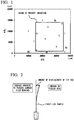
- FIG. 1 The results are shown in FIG. 1 .
- a case where the core loss W 17/50 was 0.75 W/kg or less and the magnetostriction ⁇ 0-p in a case of no load stress was 0.25 ⁇ 10 -6 or less was represented as G (Good) as both low core loss and low magnetostriction being satisfied
- a case where the core loss W 17/50 was higher than 0.75 W/kg or the magnetostriction ⁇ 0-p was higher than 0.25 ⁇ 10 -6 was represented as F (Fair) as only one of low core loss and low magnetostriction being satisfied
- a case where the core loss W 17/50 was higher than 0.75 W/kg and the magnetostriction ⁇ 0-p was higher than 0.25 ⁇ 10 -6 was represented as NG (Not Good) as both low core loss and low magnetostriction being unsatisfied.
- the embodiment is the result of examinations described above, and requirements of the embodiment and preferable requirements will be further described.
- An object of the embodiment is a grain-oriented electrical steel sheet which has a primary film (representatively a forsterite film) formed on both surfaces of a base steel sheet during finish annealing in a production process and a tension insulation coating applied onto the resultant and baked, and is subjected to magnetic domain control by irradiating one surface with a laser.
- a primary film representedatively a forsterite film
- the base steel sheet may be produced by performing hot rolling and cold rolling on a silicon steel material containing 1.0 mass% to 4.0 mass% of Si to form a steel sheet having a predetermined sheet thickness, and thereafter performing decarburization annealing, application of an annealing separator, and finish annealing on the resultant. A detailed production method will be described later.
- samples were extracted from the grain-oriented electrical steel sheet by adjusting coating forming conditions for the primary film, the tension insulation coating and laser irradiation conditions, and one surface of the sample or both surfaces of the sample were pickled in the modes a to c.
- ⁇ S C defined as S A - S C to be in a range of 15,000 ⁇ m to 35,000 ⁇ m
- ⁇ S L defined as S B + S C to be in a range of 900 ⁇ m to 14,000 ⁇ m
- this condition is obtained as a condition that enables a grain-oriented electrical steel sheet in which low core loss and low magnetostriction are compatible with each other, as a result of producing a number of grain-oriented electrical steel sheet with different warpage amounts by changing the coating forming conditions and laser irradiation conditions, evaluating the warpage amounts using ⁇ S C and ⁇ S L , and examining the relationship between the core loss and the magnetostriction of the grain-oriented electrical steel sheets.
- the surface of the grain-oriented electrical steel sheet is pickled to remove a range from the surface of the tension insulation coating to a depth position of 5 ⁇ m toward the base steel sheet side from the interface between the base steel sheet and the primary film.
- the sheet thickness of the grain-oriented electrical steel sheet is too thin to ensure sufficient measurement accuracy during the measurement of the warpage amount of the like. Therefore, when pickling is performed on the surface of the grain-oriented electrical steel sheet, it is preferable that the deepest position (upper limit) of the base steel sheet removed through the pickling is less than 50 ⁇ m from the interface toward the base steel sheet side.
- the pickling of the grain-oriented electrical steel sheet may be performed, for example, in the following method.
- the grain-oriented electrical steel sheet is immersed in an aqueous solution of sodium hydroxide containing 10 mass% of NaOH and 90 mass% of H 2 O at a high temperature for a predetermined time.
- the grain-oriented electrical steel sheet is immersed in an aqueous solution of sulfuric acid containing 10 mass% of H 2 SO 4 and 90 mass% of H 2 O at a high temperature for a predetermined time.
- the grain-oriented electrical steel sheet is immersed in an aqueous solution of nitric acid containing 10 mass% of HNO 3 and 90 mass% of H 2 O at room temperature for a predetermined time so as to be cleaned.
- the grain-oriented electrical steel sheet is dried with a warm air blower for less than one minute. By adjusting the immersion temperatures and immersion times, the amount of the surface removed from the grain-oriented electrical steel sheet may be controlled.
- the warpage amount of the grain-oriented electrical steel sheet is obtained by extracting a strip-like sample having a length of 300 mm in the direction parallel to the rolling direction and a length of 60 mm in the direction parallel to the transverse direction from the grain-oriented electrical steel sheet, performing the pickling, vertically placing the sample in a state in which 30 mm of one end of the sample in the longitudinal direction is nipped by a clamp as shown in FIG. 2 , and measuring the amount of displacement (warpage amount) of one end on the opposite side.
- the grain-oriented electrical steel sheet is curved due to the film tension of the surface that is not pickled.
- the warpage amount in this case is proportional to the film tension.
- the grain-oriented electrical steel sheet is curved due to the stress applied by the film tension and the laser to the surface that is not pickled.
- the warpage amount in this case is proportional to the sum of the film tension and the stress applied by the laser.
- the inventors confirmed that the upper limit (14,000 ⁇ m) of ⁇ S L corresponds to a laser irradiation energy intensity of 2.0 mJ/mm 2 at which magnetostriction does not become excessive, and the lower limit (900 ⁇ m) of ⁇ S L corresponds to a laser irradiation energy density of 0.8 mJ/mm 2 at which a core loss improving effect can be obtained.
- the coating forming conditions, laser type, and laser irradiation conditions need to be adjusted.
- the insulation resistance between the grain-oriented electrical steel sheets and the space factor of the entirety thereof need to satisfy predetermined conditions. Therefore, the coating amount is determined by the insulation resistance between the grain-oriented electrical steel sheets and the space factor of the entirety thereof.
- the tension insulation coating may be applied to both surfaces of the grain-oriented electrical steel sheet having the primary film to cause the coating amount to be in a range of 1.0 g/m 2 to 4.5 g/m 2 , the resultant may be baked, and one surface may be irradiated with a laser at an irradiation energy density of 0.8 mJ/mm 2 to 2.0 mJ/mm 2 .
- the coating amount of the tension insulation coating is set to be in the above-described range.
- the grain-oriented electrical steel sheet according to the embodiment is excellent in both core loss and magnetostriction. However, it is preferable that the grain-oriented electrical steel sheet is excellent also in space factor in addition to low core loss and low magnetostriction.
- the sheet thickness of the base steel sheet in the grain-oriented electrical steel sheet is reduced. Core loss is improved by reducing the sheet thickness of the base steel sheet.
- the core of a transformer is configured by laminating grain-oriented electrical steel sheets.
- the ratio of the volume of iron (steel) to the volume of the entire core is reduced.
- a reduction in space factor has an influence on the effect of reducing energy loss. That is, in order to increase the space factor, it is preferable that the film thickness of the coatings of the grain-oriented electrical steel sheet is small.
- the inventors intensively studied and as a result, found that by controlling the warpage amounts: ⁇ S C and ⁇ S L to be in the above-described range and controlling the ratio R between the average thickness d t of the tension insulation coating and the average thickness d p of the primary film (the average thickness d t of the tension insulation coating / the average thickness d p of the primary film) in the unit of ⁇ m to be 0.1 or higher and 3.0 or lower, the effect of improving core loss and magnetostriction can be ensured, and simultaneously, the space factor can be further increased. Specifically, it was found that when each of the above conditions is satisfied, the effect of improving core loss and magnetostriction is ensured and simultaneously, a space factor of 97% or more can be obtained. That is, it was found that even in a case where the sheet thickness of the base steel sheet is reduced in order to reduce eddy-current loss, the volume fraction of the base steel sheet in the grain-oriented electrical steel sheet can be 97% or higher.
- the volume fraction of the base steel sheet in the grain-oriented electrical steel sheet is preferably 98% or higher and more preferably 99% or higher.
- the tension insulation coating is formed of phosphate, colloidal silica, and the like
- the primary film is formed of forsterite Mg 2 SiO 4 and the like. Due to the difference between the materials, there is a difference in physical properties between the tension insulation coating and the primary film. It is thought that a range of the ratio R between the film thicknesses of the tension insulation coating and the primary film having different physical properties in which the above-described technical characteristics are preferably controlled is present, and it becomes possible to simultaneously improve the technical characteristics which conflict with each other by optimally controlling the ratio R.
- the grain-oriented electrical steel sheet has an excellent vibration damping ratio in addition to low core loss and low magnetostriction.
- vibration damping ratio of the grain-oriented electrical steel sheet is high, vibration in apparatuses for electromagnetic application such as a transformer can be further reduced.
- the inventors intensively studied and as a result, found that by controlling the ratio R (the average thickness d t of the tension insulation coating / the average thickness d p of the primary film) to be 0.1 or higher and 1.5 or lower, the vibration damping ratio as well as the space factor of the grain-oriented electrical steel sheet can be improved.
- the grain-oriented electrical steel sheet has an excellent heat dissipating property in addition to low core loss and low magnetostriction.
- the generation of heat (Joule heat) in a transformer is suppressed, and it becomes possible to achieve an increase in the efficiency and a reduction in the size of an electrical device.
- the inventors intensively studied and as a result, found that by controlling the ratio R (the average thickness d t of the tension insulation coating / the average thickness d p of the primary film) to be 0.1 or higher and 1.0 or lower, the heat dissipating property of the grain-oriented electrical steel sheet can also be improved. It is thought that this effect can be also obtained by the difference in physical properties between the tension insulation coating and the primary film.
- the warpage amounts: ⁇ S C and ⁇ S L to be in the above-described range and then controlling the ratio R to be 0.1 or higher and 3.0 or lower, the effect of improving core loss and magnetostriction can be ensured, and simultaneously, the space factor can be preferably increased.
- the vibration damping ratio in addition to the space factor can be preferably improved.
- the heat dissipating property in addition to the vibration damping ratio and the space factor can be preferably improved.
- ratio R By controlling the ratio R to be 0.1 or higher and 0.8 or lower, more preferable space factor, vibration damping ratio, and heat dissipating property can be obtained. By controlling the ratio R to be 0.1 or higher and 0.3 or lower, even more preferable space factor, vibration damping ratio, and heat dissipating property can be obtained.
- the ratio R between the average thickness d t of the tension insulation coating and the average thickness d p of the primary film is lower than 0.1 and higher than 3.0, preferable space factor, vibration damping ratio, and heat dissipating property cannot be obtained.
- the average thickness of the tension insulation coating is 0.5 ⁇ m or greater and 4.5 ⁇ m or smaller.
- the average thickness of the tension insulation coating is more preferably 2.0 ⁇ m or smaller, 1.5 ⁇ m or smaller, 1.0 ⁇ m or smaller, and 0.8 ⁇ m or smaller.
- the total tension applied to the base steel sheet from the primary film and the tension insulation coating is 1 MPa or higher and 10 MPa or lower.
- the total tension applied to the base steel sheet from the primary film and the tension insulation coating is 1 MPa or higher and 10 MPa or lower.
- an averaging method through sectional observation may be used as a method of measuring the average thickness d t of the tension insulation coating and the average thickness d p of the primary film.
- the sections of the tension insulation coating and the primary film are observed using a scanning electron microscope (SEM) and the film thicknesses of arbitrary ten points are measured.
- SEM scanning electron microscope
- the average thickness d t of the tension insulation coating and the average thickness d p of the primary film the average value of the measured film thicknesses of the ten points is used.
- observation is performed using a COMPO image (reflection electron compositional image) and thus the tension insulation coating and the primary film can be easily distinguished from each other.
- a Calotest (registered trademark) method or the like may be used as the method of measuring the average thickness d t of the tension insulation coating and the average thickness d p of the primary film.
- voids contained in the coating are excluded from the film thickness measurement and calculation.
- the film thickness of the tension insulation coating at this measurement point is set to 2 ⁇ m.
- sectional observation is preferably performed in the following order.
- the grain-oriented electrical steel sheet is cut such that the cutting direction and the thickness direction are parallel to each other.
- the cut surface is carefully polished so as not to allow the tension insulation coating and the primary film to be peeled off and fallen off.
- the polished surface is etched using a preferable etchant as necessary, and the sectional observation is performed.
- a silicon steel material containing 1.0 mass% to 4.0 mass% of Si is subjected to hot rolling and cold rolling, thereby producing a steel sheet having a predetermined sheet thickness.
- the silicon steel material may contain, as representative chemical components, in terms of mass fraction: Si: 1.0% to 4.0%, C: more than 0% to 0.085%, acid-soluble Al: 0% to 0.065%, N: 0% to 0.012%, Mn: 0% to 1%, Cr: 0% to 0.3%, Cu: 0% to 0.4%, P: 0% to 0.5%, Sn: 0% to 0.3%, Sb: 0% to 0.3%, Ni: 0% to 1%, S: 0% to 0.015%, Se: 0% to 0.015%, and the remainder of Fe and impurities.
- decarburization annealing is performed on the steel sheet.
- the decarburization annealing is performed for the purpose of removing C from steel and improving magnetic properties.
- Si in the steel is oxidized and silica SiO 2 is formed on the surface of the steel sheet.
- Silica reacts with magnesia MgO, which will be described later, such that forsterite Mg 2 SiO 4 for forming the primary film is formed.
- the concentration of C is preferably limited to be 30 ppm or lower and more preferably 20 ppm or lower.
- the film thickness of the primary film can be adjusted. Specifically, the film thickness of the primary film can be decreased by decreasing the dew point during the decarburization annealing, and the film thickness of the primary film can be increased by increasing the dew point during the decarburization annealing.
- the dew point during the decarburization annealing is not particularly limited, and for example, a range of the value of PH 2 O/PH 2 may be 0.3 to 0.5.
- the annealing separator is applied to the surface of the steel sheet, and the resultant is subjected to finish annealing at a temperature of 1100°C or higher.
- the finish annealing is performed for the purpose of secondary recrystallization, and in this process, the primary film including forsterite is formed.
- inhibitor formation elements are discharged to the outside of the system. Therefore, in a grain-oriented electrical steel sheet that is finally obtained, the concentrations of N and S are significantly reduced and become 50 ppm or lower.
- the concentrations of N and S are preferably limited to be 20 ppm or lower, more preferably 10 ppm or lower, even more preferably 9 ppm or lower, and particularly preferably 6 ppm or lower.
- a method of applying the annealing separator as a water slurry to the steel sheet using a roll coater or the like, a method of causing powder to adhere to the steel sheet through electrostatic coating, or the like is preferable.
- the water slurry of the annealing separator contains a solid content primarily containing magnesia, and by adjusting the amount of the solid content in the water slurry and the amount of the magnesia in the solid content, the film thickness of the primary film can be adjusted. Specifically, the film thickness of the primary film can be reduced by reducing the amount of the solid content in the water slurry of the annealing separator and the amount of the magnesia in the solid content.
- additives other than the magnesia are also used.
- the additives those that participate in the reaction between silica and magnesia, those that cause silica on the surface of the steel sheet formed after the decarburization annealing to move into the annealing separator so as to promote the removal of silica, and the like may be employed.
- alkali metal salts such as Li, Na, K, and Rb may be employed.
- the alkali metal salts are added to the annealing separator, in the process of the finish annealing, the alkali metal salts act on the silica on the surface of the steel sheet formed during the decarburization annealing. Accordingly, the melting point of at least a portion of the silica decreases, and the silica shows fluidity.
- the silica with increased fluidity is likely to move into the annealing separator (into magnesia powder), and the silica moved into the annealing separator is removed when the annealing separator is removed after the finish annealing. That is, the silica moved into the annealing separator does not participate in the formation of the primary film containing magnesium silicate and consequently can limit the amount of Mg.
- the silica that shows fluidity due to the action of the alkali metal salts moves into the annealing separator, that is, into the magnesia powder.
- the silica reacts therewith and loses its fluidity.
- TiO 2 is less likely to react with the silica than magnesia. Therefore, when TiO 2 is present, silica does not react with TiO 2 and can move on the surface such that a larger amount of silica can be absorbed by the annealing separator.
- the film thickness of the primary film can be adjusted by adjusting the amount of TiO 2 in the annealing separator. Specifically, the film thickness of the primary film can be reduced by reducing the amount of TiO 2 in the annealing separator.
- the amount of TiO 2 in the annealing separator is determined by the balance with the amount of the alkali metal salts and is not particularly limited.
- the amount of TiO 2 in the annealing separator is 1 mass% to 10 mass%.
- the tension insulation coating is formed on the surface of the steel sheet.
- the tension insulation coating include a coating formed by applying a water-based application solution containing a phosphate and colloidal silica.
- examples of the phosphate include phosphates such as Ca, Al, Mg, and Sr.
- a method of forming the tension insulation coating is not particularly limited, and the tension insulation coating can be formed by applying the water-based application solution to the surface of the steel sheet using a grooved application roll or the like and baking the resultant in air.
- the film thickness of the tension insulation coating can be adjusted by adjusting the interval and depth of groove pitches of the grooved application roll. Specifically, by reducing the groove pitches of the grooved application roll and reducing the depth thereof, the film thickness of the tension insulation coating can be reduced.
- the film thickness of the tension insulation coating can be slightly adjusted. Specifically, by causing the baking temperature to be a high temperature and causing the baking time to be a long period of time during the formation of the tension insulation coating, the film thickness of the tension insulation coating can be reduced as a trend.
- the baking temperature and baking time during the formation of the tension insulation coating are not particularly limited.
- the baking temperature may be 700°C to 900°C, and the baking time may be 10 seconds to 120 seconds.
- a laser may be emitted in a continuous line form in the transverse direction with intervals in the rolling direction.
- a CO 2 laser, a YAG laser, a fiber laser, or the like may be used.
- the laser is preferably a continuous wave laser. It is thought that while a pulse laser applies stress to the steel sheet due to an impact reaction force of the laser, the continuous wave laser applies stress to the steel sheet primarily due to a thermal effect, the distributed state of the stress varies, and thus warpage is suppressed compared to the pulse laser.
- the output during the laser irradiation may be constant, or the output during the laser irradiation may be different between a center portion and an end portion in an irradiation line longitudinal direction.
- the laser output is not particularly limited, and for example, may be 0.8 mJ/mm 2 to 2.0 mJ/mm 2 .
- the output during the laser irradiation is not particularly limited.
- the center portion in the irradiation line longitudinal direction may be irradiated with the laser at an output of 1.2 mJ/mm 2 to 2.0 mJ/mm 2 during the laser irradiation
- the end portion in the irradiation line longitudinal direction may be irradiated with the laser at an output of 0.8 mJ/mm 2 to 1.6 mJ/mm 2 during the laser irradiation.
- the end portion in the irradiation line longitudinal direction indicates a range of 1/3 in a case where the length of the irradiation line in the longitudinal direction is 1, and the center portion in the irradiation line longitudinal direction indicates a range outside of the range.
- the direction of the laser light scanning a center position may be a direction perpendicular to the rolled surface, or may be shifted from the direction perpendicular to the rolled surface by a range of 1° to 10°.
- shifting the scanning direction of the laser light from the direction perpendicular to the rolling direction by a range of 1° to 10° lower magnetostriction characteristics can be obtained.
- the production method of the grain-oriented electrical steel sheet may be appropriately selected depending on desired ⁇ S C and ⁇ S L , the film thickness of the primary film, and the film thickness of the tension insulation coating.
- a cold-rolled sheet which was produced using a silicon steel material containing 3 mass% of Si to have a sheet thickness of 0.23 mm was subjected to decarburization annealing, an annealing separator primarily containing MgO was applied to the resultant and finish annealing was performed thereon, thereby obtaining a grain-oriented electrical steel sheet having a primary film.
- a coating treatment liquid containing colloidal silica, aluminum phosphate, and magnesium phosphate was applied to the steel sheet, and the steel sheet was baked, thereby forming a tension insulation coating. At this time, the coating amount of the tension insulation coating on the front and rear surfaces of the steel sheet were varied by varying the coating weight of the coating treatment liquid.
- a magnetic domain refining treatment of further irradiating one surface of the steel sheet after the tension insulation coating was formed with a continuous wave laser having different irradiation energies.
- the laser is a CO 2 laser, and the irradiation was performed with an interval of 5 mm in a direction perpendicular to a rolling direction under the condition that the length of an irradiation line in the rolling direction was 0.1 mm, the output was 2 kW, and the scanning speed was 100 m/s to 600 m/s.
- the core loss W 17/50 and the magnetostriction ⁇ 0-p of the obtained grain-oriented electrical steel sheets of Nos. 1 to 7 were measured.
- the core loss W 17/50 was measured using a single sheet tester (SST).
- the magnetostriction ⁇ 0-p was calculated from the length L of a material at the maximum excitation flux density and the length L 0 of the material at a flux density of 0.
- the average thickness d t of the tension insulation coating and the average thickness d p of the primary film were measured using an averaging method through sectional observation. Specifically, the sections of the tension insulation coating and the primary film were observed using a scanning electron microscope, the film thicknesses of arbitrary ten points were measured, and the average value of the measured film thicknesses of the ten points was used.
- the space factor of the grain-oriented electrical steel sheet was measured in a method according to JIS C 2550:2011.
- the coating amount of the tension insulation coating shown in Table 1 represents the coating amount per one surface of the steel sheet.
- the space factor is preferably improved, in a case where the ratio d t /d p is 0.1 to 1.5, the vibration damping ratio as well as the space factor is preferably improved, and in a case where the ratio d t /d p is 0.1 to 1.0, the heat dissipating property in addition to the vibration damping ratio and the space factor is preferably improved.
- the vibration damping ratio as well as the space factor
- the heat dissipating property in addition to the vibration damping ratio and the space factor is preferably improved.
- the vibration damping ratio was increased by 20% and the heat dissipating rate in a lamination direction was increased by 15% compared to those of the sample of No. 7 (the ratio d t /d p is 3.20).
- a grain-oriented electrical steel sheet which is excellent in both core loss and magnetostriction can be provided.
Landscapes
- Chemical & Material Sciences (AREA)
- Engineering & Computer Science (AREA)
- Physics & Mathematics (AREA)
- Mechanical Engineering (AREA)
- Organic Chemistry (AREA)
- Metallurgy (AREA)
- Materials Engineering (AREA)
- Thermal Sciences (AREA)
- Crystallography & Structural Chemistry (AREA)
- Optics & Photonics (AREA)
- Manufacturing & Machinery (AREA)
- Electromagnetism (AREA)
- Dispersion Chemistry (AREA)
- Power Engineering (AREA)
- Plasma & Fusion (AREA)
- Manufacturing Of Steel Electrode Plates (AREA)
- Chemical Treatment Of Metals (AREA)
- Soft Magnetic Materials (AREA)
Abstract
Description
- The present invention relates to a grain-oriented electrical steel sheet used in the core of a transformer or the like, and more particularly, to a grain-oriented electrical steel sheet which contributes to a reduction in noise as well as a reduction in core loss of a core and causes low core loss and low magnetostriction.
- Priority is claimed on
Japanese Patent Application No. 2014-97685, filed on May 9, 2014 - A grain-oriented electrical steel sheet is generally used in a stationary induction apparatus represented by a transformer. Characteristics to be satisfied by the grain-oriented electrical steel sheet include low core loss, ease of excitation, low magnetostriction, and the like.
- A transformer is continuously excited over a long period of time from installation to disuse and thus continuously generates energy losses. Due to these characteristics, low core loss is particularly required.
- In order to reduce the core losses of a grain-oriented electrical steel sheet, core losses have been improved by metallurgical methods such as increasing the degree of integration along a (110) [001] orientation called the Goss orientation, reducing the amount of impurities in a steel sheet product, reducing the size of grains, and applying a coating that imparts surface tension to a steel sheet. However, these methods have limitations, and a reduction in core loss using other methods is required.
- For such a problem, a method of refining magnetic domains themselves has been developed. Currently, a technique of irradiating the surface of a steel sheet with a laser to introduce strain into the steel sheet and reducing the widths of magnetic domains thereby reducing the core loss has been widely used.
- As described above, core loss of a grain-oriented electrical steel sheet has been significantly improved. On the other hand, a reduction in noise and vibration is further required by apparatuses for electromagnetic application such as a transformer. Therefore, a grain-oriented electrical steel sheet used in the core of a transformer also requires low magnetostriction as well as low core loss.
- Laser irradiation for reducing core losses causes the introduction of residual strain and is effective in refining magnetic domain widths. However, it is known that laser irradiation becomes a source of magnetostriction.
- Therefore, techniques in which, when magnetic domain control is performed by irradiating a grain-oriented electrical steel sheet, on which a coating is formed, with a laser, magnetostriction is reduced by adjusting laser irradiation conditions and film tension, thereby allowing low core loss and low magnetostriction to be compatible with each other are disclosed in Patent Documents 1 to 4.
- Patent Document 1 discloses that as factors for determining magnetostriction, the tension of a primary film, the tension of a tension insulation coating, and the application of micro-strain through laser irradiation are very important, and by controlling these factors, a grain-oriented electrical steel sheet which has magnetostriction characteristics for low noise and causes low core loss can be provided.
- Patent Document 1 discloses that pulse laser irradiation was performed to cause the total tension of the primary film and a secondary coating applied thereafter on a steel sheet to be 1 MPa to 8 MPa and cause the amount of heat input per unit area of the steel sheet to be 1 mJ/mm2 to 2 mJ/mm2, otherwise the pulse laser irradiation being performed to cause the tension to be 14 MPa or higher and the amount of heat input to be 1.5 mJ/mm2 to 3 mJ/mm2.
- Patent Document 2 discloses a grain-oriented electrical steel sheet having a forsterite film and a tension coating, in which, in order to prevent the deterioration of magnetostriction characteristics due to damage to the coatings in a case where magnetic domain refinement is performed through laser irradiation, the total tension A applied to the steel sheet in a rolling direction from the forsterite film and the tension coating is 10.0 MPa or higher, the total tension B in a direction perpendicular to the rolling direction is 5.0 MPa or higher, and the ratio A/B between the total tensions A and B is set to 1.0 to 5.0.
- Patent Document 3 discloses a technique in which, when magnetic domain control is performed by irradiating a grain-oriented electrical steel sheet with a laser, the thickness of a solidified layer of a laser irradiated portion is set to 4 µm at the maximum to cause strain to be introduced only into a narrow range in a rolling direction, thereby reducing core losses and simultaneously suppressing magnetostrictive deformation.
- Patent Document 4 discloses a technique in which, before laser irradiation is performed on a grain-oriented electrical steel sheet, the amount of a primary film and the amount of a tension insulation coating are detected, and the laser irradiation is performed under appropriate irradiation conditions depending on the detected amounts, thereby reducing core losses and simultaneously reducing magnetostriction and noise in a transformer.
-
- [Patent Document 1]
Japanese Unexamined Patent Application, First Publication No. 2002-356750 - [Patent Document 2]
Japanese Unexamined Patent Application, First Publication No. 2012-031498 - [Patent Document 3]
Japanese Unexamined Patent Application, First Publication No. 2007-002334 - [Patent Document 4]
Japanese Unexamined Patent Application, First Publication No. 2012-031519 - As described above, techniques in which, when magnetic domain control is performed by irradiating a grain-oriented electrical steel sheet, on which a coating is formed, with a laser, the film tension and laser irradiation conditions are adjusted and thus low core loss and low magnetostriction are allowed to be compatible with each other have been disclosed. However, from the viewpoint of further enhancing magnetostriction characteristics in a state in which a high core loss reduction effect is maintained by laser irradiation, a further improvement is preferable.
- The present invention has been made taking the foregoing circumstances into consideration, and an object thereof is to provide a grain-oriented electrical steel sheet which allows low core loss and low magnetostriction to be compatible with each other.
- The core losses of a grain-oriented electrical steel sheet are reduced by minimizing the sum of eddy-current loss and hysteresis loss. In addition, the eddy-current loss and the hysteresis loss are subjected to having complex variation with respect to various material parameters. In addition, the magnetostrictive deformation of the grain-oriented electrical steel sheet is also subjected to having complex variation with respect to various material parameters.
- For example, stress is applied to a base steel sheet by coatings (a tension insulation coating and a primary film (glass coating)) applied to a grain-oriented electrical steel sheet, and stress is applied to the base steel sheet also by laser irradiation for magnetic domain control.
- The inventors found that a range of stress applied due to film tension and a laser in which the core loss and the magnetostriction were minimized with a good balance was present depending on the degree of an effect of such a stress distribution.
- In addition, the inventors evaluated the stress according to variation in the warpage amount of a grain-oriented electrical steel sheet and found a range in which magnetostriction was optimized.
- The gist of the present invention is as follows.
- (1) According to an aspect of the present invention, a grain-oriented electrical steel sheet includes: a base steel sheet; a primary film formed on a surface of the base steel sheet; and a tension insulation coating formed on a surface of the primary film, in which a magnetic domain control is performed by irradiating the tension insulation coating with a laser from above. When a strip-like sample having a length of 300 mm in a direction parallel to a rolling direction of the grain-oriented electrical steel sheet and a length of 60 mm in a direction parallel to a transverse direction is extracted from the grain-oriented electrical steel sheet, a range from a surface of the tension insulation coating to a depth position of 5 µm toward the base steel sheet side from an interface between the base steel sheet and the primary film is removed by pickling at least one surface of the sample, and a warpage amount of the sample is thereafter measured, the warpage amount satisfies the following expressions A and B.


Here, SA, SB, and SC are described below.- SA: a warpage amount of the grain-oriented electrical steel sheet in the unit of µm when only one surface subjected to laser irradiation is pickled,
- SB: a warpage amount of the grain-oriented electrical steel sheet in the unit of µm when only one surface on a side opposite to the side subjected to laser irradiation is pickled, and
- SC: a warpage amount of the grain-oriented electrical steel sheet in the unit of µm when both surfaces are pickled,
- here, warpage in the same direction as that of the pickled surface during measurement of SA and SB is expressed as a positive value, and warpage in SC in the same direction as that of SA is expressed as a positive value.
- (2) In the grain-oriented electrical steel sheet described in (1), a value dt/dp obtained by dividing an average thickness dt of the tension insulation coating in the unit of µm by an average thickness dp of the primary film in the unit of µm may be 0.1 or higher and 3.0 or lower.
- (3) In the grain-oriented electrical steel sheet described in (1), a value d1/dp obtained by dividing an average thickness dt of the tension insulation coating in the unit of µm by an average thickness dp of the primary film in the unit of µm may be 0.1 or higher and 1.5 or lower.
- (4) In the grain-oriented electrical steel sheet described in (1), a value dt/dp obtained by dividing an average thickness dt of the tension insulation coating in the unit of µm by an average thickness dp of the primary film in the unit of µm may be 0.1 or higher and 1.0 or lower.
- (5) In the grain-oriented electrical steel sheet described in any one of (1) to (4), the average thickness of the tension insulation coating may be 0.5 µm or greater and 4.5 µm or smaller.
- (6) In the grain-oriented electrical steel sheet described in any one of (1) to (5), a total tension applied to the base steel sheet from the primary film and the tension insulation coating may be 1 MPa or higher and 10 MPa or lower.
- According to the present invention, a grain-oriented electrical steel sheet which is excellent in both core loss and magnetostriction can be provided.
-
-
FIG. 1 is a diagram showing the relationship between the warpage amount, core loss, and magnetostriction of a grain-oriented electrical steel sheet in a case where the surface of the grain-oriented electrical steel sheet is removed. -
FIG. 2 is a view showing a method of measuring the amount of displacement (warpage amount) of the tip end of a sample. - Hereinafter, a preferred embodiment of the present invention will be described in detail.
- In a grain-oriented electrical steel sheet having a primary film (glass coating) and a tension insulation coating formed on both surfaces thereof, the grain-oriented electrical steel sheet in which one surface is subjected to a magnetic domain refining treatment through laser irradiation receives stress due to film tension and stress due to the laser irradiation.
- It is well known that magnetostriction is significantly affected by stress applied to a magnetic steel sheet. According to the magnitudes of the two types of stress described above, the degree of an effect on magnetostriction varies.
- The inventors examined the degree of an effect of film tension caused by a primary film and a tension insulation coating on magnetostriction and the degree of an effect of stress caused by laser irradiation on magnetostriction in further detail.
- As a result, the inventors evaluated stress caused by film tension and stress caused by laser irradiation in terms of the warpage amount of a grain-oriented electrical steel sheet, and found that by adjusting variation in the warpage amount based on the stress caused by film tension, the stress caused by film tension and variation in the warpage amount based on the stress caused by laser irradiation, a range in which optimized magnetostriction was present.
- First, the experiment in which such knowledge was obtained will be described.
- A cold-rolled steel sheet which contained 3.2 mass% of Si and was rolled to a sheet thickness of 0.23 mm was subjected to decarburization annealing and a primary recrystallization annealing by changing the dew point. Thereafter, finish annealing was performed on the resultant in a state in which an annealing separator primarily containing MgO was applied to the surface of the steel sheet, and grain-oriented electrical steel sheet materials having primary films (glass coatings) with various thicknesses were obtained.
- Next, a number of samples were cut from the obtained grain-oriented electrical steel sheet materials, and a coating treatment liquid containing colloidal silica and aluminum phosphate was applied thereto. The coating weight of the coating treatment liquid varied with samples. The samples to which the coating treatment liquid was applied were baked at a temperature of 800°C, thereby forming tension insulation coatings (secondary coatings) with various thicknesses. Thereafter, one surface of each of the samples was subjected to a magnetic domain refining treatment by emitting continuous wave lasers with different irradiation energies (amounts of heat input).
- Accordingly, a number of grain-oriented electrical steel sheets with different coating forming conditions and different laser irradiation conditions were obtained.
- From the obtained grain-oriented electrical steel sheet, samples having a length of 500 mm in a direction parallel to a rolling direction and a length of 100 mm in a direction parallel to a transverse direction were cut, and a core loss W17/50 and a magnetostriction λ0-p were measured.
- Here, the core loss W17/50 is a core loss at an excitation flux density of 1.7 T, 50 Hz and was measured using a single sheet tester (SST).
- In addition, the magnetostriction λ0-p was calculated by the following expression (1) using a material length L at the maximum excitation flux density and a material length L0 at a flux density of 0, for example, during excitation at 50 Hz.

- Next, from the grain-oriented electrical steel sheet, strip-like samples having a length of 300 mm in the direction parallel to the rolling direction and a length of 60 mm in the direction parallel to the transverse direction were extracted, and one surface of the sample or both surfaces of the sample was pickled in the following modes a to c. By pickling the samples, a range from the surface of the tension insulation coating to a depth position of 5 µm toward the base steel sheet side from the interface between the base steel sheet and the primary film was removed. Thereafter, the warpage amount of the tip end of each of the samples was measured.
- a. pickling only one surface of the sample subjected to laser irradiation
- b. pickling only one surface of the sample on the side opposite to the side subjected to laser irradiation
- c. pickling both surfaces of the sample
- As shown in
FIG. 2 , the warpage amount after the pickling was obtained by vertically placing the sample in a state in which 30 mm of one end of the sample in a longitudinal direction was nipped by a clamp, and measuring the amount of displacement (warpage amount) of one end on the opposite side. Regarding the measurement, during measurement in the modes a and b, warpage in the same direction as that of the pickled surface was expressed as a positive value, and during measurement in the mode c, warpage in the same direction as that in the mode a was expressed as a positive value. - The measurement results are summarized from the viewpoint of an effect of tension applied by the coatings (film tension) and an effect of stress applied by the film tension and laser irradiation (stress applied by the film tension and the laser) regarding the base steel sheet from which the coatings were not formed and an effect of strain caused by laser irradiation was removed. That is, when it is assumed that
the warpage amount (µm) of the grain-oriented electrical steel sheet when only one surface on the side subjected to laser irradiation is pickled is SA,
the warpage amount (µm) of the grain-oriented electrical steel sheet when only one surface on the side opposite to the side subjected to laser irradiation is pickled is SB, and
the warpage amount (µm) of the grain-oriented electrical steel sheet when both surfaces are pickled is SC,
using

- The results are shown in
FIG. 1 . InFIG. 1 , in each of the samples used for the measurement, a case where the core loss W17/50 was 0.75 W/kg or less and the magnetostriction λ0-p in a case of no load stress was 0.25 × 10⁻⁶ or less was represented as G (Good) as both low core loss and low magnetostriction being satisfied, a case where the core loss W17/50 was higher than 0.75 W/kg or the magnetostriction λ0-p was higher than 0.25 × 10⁻⁶ was represented as F (Fair) as only one of low core loss and low magnetostriction being satisfied, and a case where the core loss W17/50 was higher than 0.75 W/kg and the magnetostriction λ0-p was higher than 0.25 × 10⁻⁶ was represented as NG (Not Good) as both low core loss and low magnetostriction being unsatisfied. - From
FIG. 1 , when both ΔSC and ΔSL were in ranges of - ΔSC: 15,000 µm to 35,000 µm, and
- ΔSL: 900 µm to 14,000 µm,
- The embodiment is the result of examinations described above, and requirements of the embodiment and preferable requirements will be further described.
- An object of the embodiment is a grain-oriented electrical steel sheet which has a primary film (representatively a forsterite film) formed on both surfaces of a base steel sheet during finish annealing in a production process and a tension insulation coating applied onto the resultant and baked, and is subjected to magnetic domain control by irradiating one surface with a laser.
- As disclosed in
Japanese Unexamined Patent Application, First Publication No. S54-43115 - The base steel sheet may be produced by performing hot rolling and cold rolling on a silicon steel material containing 1.0 mass% to 4.0 mass% of Si to form a steel sheet having a predetermined sheet thickness, and thereafter performing decarburization annealing, application of an annealing separator, and finish annealing on the resultant. A detailed production method will be described later.
- In this embodiment, regarding the grain-oriented electrical steel sheet, samples were extracted from the grain-oriented electrical steel sheet by adjusting coating forming conditions for the primary film, the tension insulation coating and laser irradiation conditions, and one surface of the sample or both surfaces of the sample were pickled in the modes a to c. When the warpage amount after the pickling was measured, by controlling ΔSC defined as SA - SC to be in a range of 15,000 µm to 35,000 µm and controlling ΔSL defined as SB + SC to be in a range of 900 µm to 14,000 µm, both core loss and magnetostriction can be reduced.
- As shown in the example of
FIG. 1 described above, this condition is obtained as a condition that enables a grain-oriented electrical steel sheet in which low core loss and low magnetostriction are compatible with each other, as a result of producing a number of grain-oriented electrical steel sheet with different warpage amounts by changing the coating forming conditions and laser irradiation conditions, evaluating the warpage amounts using ΔSC and ΔSL, and examining the relationship between the core loss and the magnetostriction of the grain-oriented electrical steel sheets. - Here, during the removal of the surface of the grain-oriented electrical steel sheet through pickling for the measurement of the warpage amount, it is preferable to remove the entire residual strain portion caused by laser irradiation of the primary film, the tension insulation coating, and the base steel sheet. Therefore, the surface of the grain-oriented electrical steel sheet is pickled to remove a range from the surface of the tension insulation coating to a depth position of 5 µm toward the base steel sheet side from the interface between the base steel sheet and the primary film.
- Through the pickling, it is preferable to remove a range from the interface to a depth position of 10 µm toward the base steel sheet side, and it is more preferable to remove a range from the interface to a depth position of 15 µm toward the base steel sheet side.
- Here, when a range from the interface to a depth position of 50 µm toward the base steel sheet side is removed through the pickling, the sheet thickness of the grain-oriented electrical steel sheet is too thin to ensure sufficient measurement accuracy during the measurement of the warpage amount of the like. Therefore, when pickling is performed on the surface of the grain-oriented electrical steel sheet, it is preferable that the deepest position (upper limit) of the base steel sheet removed through the pickling is less than 50 µm from the interface toward the base steel sheet side.
- In addition, the pickling of the grain-oriented electrical steel sheet may be performed, for example, in the following method. The grain-oriented electrical steel sheet is immersed in an aqueous solution of sodium hydroxide containing 10 mass% of NaOH and 90 mass% of H2O at a high temperature for a predetermined time. Next, the grain-oriented electrical steel sheet is immersed in an aqueous solution of sulfuric acid containing 10 mass% of H2SO4 and 90 mass% of H2O at a high temperature for a predetermined time. Thereafter, the grain-oriented electrical steel sheet is immersed in an aqueous solution of nitric acid containing 10 mass% of HNO3 and 90 mass% of H2O at room temperature for a predetermined time so as to be cleaned. Last, the grain-oriented electrical steel sheet is dried with a warm air blower for less than one minute. By adjusting the immersion temperatures and immersion times, the amount of the surface removed from the grain-oriented electrical steel sheet may be controlled.
- In addition, the warpage amount of the grain-oriented electrical steel sheet is obtained by extracting a strip-like sample having a length of 300 mm in the direction parallel to the rolling direction and a length of 60 mm in the direction parallel to the transverse direction from the grain-oriented electrical steel sheet, performing the pickling, vertically placing the sample in a state in which 30 mm of one end of the sample in the longitudinal direction is nipped by a clamp as shown in
FIG. 2 , and measuring the amount of displacement (warpage amount) of one end on the opposite side. - When the residual strain portion caused by the laser irradiation of the primary film, the tension insulation coating, and the base steel sheet is removed (in the mode a) by pickling only one surface on the side of the grain-oriented electrical steel sheet subjected to laser irradiation, the grain-oriented electrical steel sheet is curved due to the film tension of the surface that is not pickled. The warpage amount in this case is proportional to the film tension.
- In addition, when the coatings of only the surface on the side of the grain-oriented electrical steel sheet opposite to the side subjected to the laser irradiation is removed (in the mode b), the grain-oriented electrical steel sheet is curved due to the stress applied by the film tension and the laser to the surface that is not pickled. The warpage amount in this case is proportional to the sum of the film tension and the stress applied by the laser.
- The inventors confirmed that the upper limit (35,000 µm) of ΔSC corresponds to a case of applying the tension insulation coating in a coating amount of 4.5 g/m2, and the lower limit (15,000 µm) of ΔSC corresponds to a case of applying the tension insulation coating in a coating amount of 1.0 g/m2.
- In addition, the inventors confirmed that the upper limit (14,000 µm) of ΔSL corresponds to a laser irradiation energy intensity of 2.0 mJ/mm2 at which magnetostriction does not become excessive, and the lower limit (900 µm) of ΔSL corresponds to a laser irradiation energy density of 0.8 mJ/mm2 at which a core loss improving effect can be obtained.
- In order to cause ΔSC and ΔSL to be in the above range, the coating forming conditions, laser type, and laser irradiation conditions need to be adjusted. On the other hand, in a case where the grain-oriented electrical steel sheets are laminated on a core, the insulation resistance between the grain-oriented electrical steel sheets and the space factor of the entirety thereof need to satisfy predetermined conditions. Therefore, the coating amount is determined by the insulation resistance between the grain-oriented electrical steel sheets and the space factor of the entirety thereof. By causing the coating amount to be in a preferable range and then adjusting the coating forming conditions and laser irradiation conditions, the warpage amounts ΔSC and ΔSL of the grain-oriented electrical steel sheet are adjusted to be in the above-described range.
- Specifically, it is confirmed that the tension insulation coating may be applied to both surfaces of the grain-oriented electrical steel sheet having the primary film to cause the coating amount to be in a range of 1.0 g/m2 to 4.5 g/m2, the resultant may be baked, and one surface may be irradiated with a laser at an irradiation energy density of 0.8 mJ/mm2 to 2.0 mJ/mm2.
- In a case where the coating amount of the tension insulation coating is less than 1.0 g/m2, when a core is produced by laminating the grain-oriented electrical steel sheets, the insulation resistance between the grain-oriented electrical steel sheets is insufficient. On the other hand, in a case where the coating amount of the tension insulation coating is more than 4.5 g/m2, when a core is produced by laminating the grain-oriented electrical steel sheets, the space factor is reduced. In any of a case where the coating amount of the tension insulation coating is less than 1.0 g/m2 and a case where the coating amount thereof is more than 4.5 g/m2, the energy loss of a transformer is deteriorated. Therefore, the coating amount of the tension insulation coating is set to be in the above-described range.
- In addition, a production method of the tension insulation coating will be described later.
- As described above, the grain-oriented electrical steel sheet according to the embodiment is excellent in both core loss and magnetostriction. However, it is preferable that the grain-oriented electrical steel sheet is excellent also in space factor in addition to low core loss and low magnetostriction.
- In general, in order to reduce eddy-current loss and improve core loss, the sheet thickness of the base steel sheet in the grain-oriented electrical steel sheet is reduced. Core loss is improved by reducing the sheet thickness of the base steel sheet. However, in a case where a transformer is produced with a base steel sheet having a small sheet thickness, an effect of significantly reducing energy loss is not necessarily achieved. This is caused by a space factor. The core of a transformer is configured by laminating grain-oriented electrical steel sheets. In a case where the sheet thickness of the base steel sheet is reduced without changing the film thickness of coatings, the ratio of the volume of iron (steel) to the volume of the entire core (called a space factor) is reduced. A reduction in space factor has an influence on the effect of reducing energy loss. That is, in order to increase the space factor, it is preferable that the film thickness of the coatings of the grain-oriented electrical steel sheet is small.
- However, when the film thickness of the coatings of the grain-oriented electrical steel sheet is small, tension applied to the base steel sheet becomes insufficient, and thus an effect of improving core loss and magnetostriction cannot be sufficiently obtained. As described above, an improvement in core loss and magnetostriction and an improvement in space factor have a trade-off relationship and it is technically difficult to be compatible with each other with a good balance.
- The inventors intensively studied and as a result, found that by controlling the warpage amounts: ΔSC and ΔSL to be in the above-described range and controlling the ratio R between the average thickness dt of the tension insulation coating and the average thickness dp of the primary film (the average thickness dt of the tension insulation coating / the average thickness dp of the primary film) in the unit of µm to be 0.1 or higher and 3.0 or lower, the effect of improving core loss and magnetostriction can be ensured, and simultaneously, the space factor can be further increased. Specifically, it was found that when each of the above conditions is satisfied, the effect of improving core loss and magnetostriction is ensured and simultaneously, a space factor of 97% or more can be obtained. That is, it was found that even in a case where the sheet thickness of the base steel sheet is reduced in order to reduce eddy-current loss, the volume fraction of the base steel sheet in the grain-oriented electrical steel sheet can be 97% or higher.
- In addition, the volume fraction of the base steel sheet in the grain-oriented electrical steel sheet is preferably 98% or higher and more preferably 99% or higher.
- It is thought that this effect is cause by the difference in physical properties between the tension insulation coating and the primary film. The tension insulation coating is formed of phosphate, colloidal silica, and the like, and the primary film is formed of forsterite Mg2SiO4 and the like. Due to the difference between the materials, there is a difference in physical properties between the tension insulation coating and the primary film. It is thought that a range of the ratio R between the film thicknesses of the tension insulation coating and the primary film having different physical properties in which the above-described technical characteristics are preferably controlled is present, and it becomes possible to simultaneously improve the technical characteristics which conflict with each other by optimally controlling the ratio R.
- In addition, it is preferable that the grain-oriented electrical steel sheet has an excellent vibration damping ratio in addition to low core loss and low magnetostriction. In a case where the vibration damping ratio of the grain-oriented electrical steel sheet is high, vibration in apparatuses for electromagnetic application such as a transformer can be further reduced.
- The inventors intensively studied and as a result, found that by controlling the ratio R (the average thickness dt of the tension insulation coating / the average thickness dp of the primary film) to be 0.1 or higher and 1.5 or lower, the vibration damping ratio as well as the space factor of the grain-oriented electrical steel sheet can be improved.
- In a core in which grain-oriented electrical steel sheets having a base steel sheet with a small sheet thickness are laminated, vibration in the core due to magnetostriction is less likely to be attenuated. However, by appropriately controlling the ratio R between the film thicknesses of the tension insulation coating and the primary film to which strain (stress) is applied through laser irradiation, vibration is significantly attenuated. The detailed reason is not clear, but it is thought that in a case of a grain-oriented electrical steel sheet having a base steel sheet with a small sheet thickness, in addition to vibration due to stretching and contraction of the grain-oriented electrical steel sheet, vibration due to bending is likely to occur, and the stress state of the surface layer of the grain-oriented electrical steel sheet contributes to the attenuation of vibration. It is thought that the tension insulation coating and the primary film have different physical properties as described above and thus have different formation temperatures, and strain (stress) is further applied through laser irradiation, resulting in a unique stress state. Although the application of numerical analysis using FEM or the like is expected from the detailed description, it is thought that each of the conditions of the grain-oriented electrical steel sheet according to the embodiment is controlled to achieve a state in which the vibration damping ratio is high by controlling the ratio R to be 0.1 or higher and 3.0 or lower.
- In addition, it is preferable that the grain-oriented electrical steel sheet has an excellent heat dissipating property in addition to low core loss and low magnetostriction. In a case where the grain-oriented electrical steel sheet has a significant heat dissipating property, the generation of heat (Joule heat) in a transformer is suppressed, and it becomes possible to achieve an increase in the efficiency and a reduction in the size of an electrical device.
- The inventors intensively studied and as a result, found that by controlling the ratio R (the average thickness dt of the tension insulation coating / the average thickness dp of the primary film) to be 0.1 or higher and 1.0 or lower, the heat dissipating property of the grain-oriented electrical steel sheet can also be improved. It is thought that this effect can be also obtained by the difference in physical properties between the tension insulation coating and the primary film.
- As described above, by controlling the warpage amounts: ΔSC and ΔSL to be in the above-described range and then controlling the ratio R to be 0.1 or higher and 3.0 or lower, the effect of improving core loss and magnetostriction can be ensured, and simultaneously, the space factor can be preferably increased. In addition, by controlling the ratio R to be 0.1 or higher and 1.5 or lower, the vibration damping ratio in addition to the space factor can be preferably improved. In addition, by controlling the ratio R to be 0.1 or higher and 1.0 or lower, the heat dissipating property in addition to the vibration damping ratio and the space factor can be preferably improved.
- By controlling the ratio R to be 0.1 or higher and 0.8 or lower, more preferable space factor, vibration damping ratio, and heat dissipating property can be obtained. By controlling the ratio R to be 0.1 or higher and 0.3 or lower, even more preferable space factor, vibration damping ratio, and heat dissipating property can be obtained.
- In a case where the ratio R between the average thickness dt of the tension insulation coating and the average thickness dp of the primary film is lower than 0.1 and higher than 3.0, preferable space factor, vibration damping ratio, and heat dissipating property cannot be obtained.
- In order to limit the ratio R between the average thickness dt of the tension insulation coating and the average thickness dp of the primary film to be 0.1 or higher and 3.0 or lower, it is preferable that the average thickness of the tension insulation coating is 0.5 µm or greater and 4.5 µm or smaller.
- The average thickness of the tension insulation coating is more preferably 2.0 µm or smaller, 1.5 µm or smaller, 1.0 µm or smaller, and 0.8 µm or smaller.
- Furthermore, it is preferable that the total tension applied to the base steel sheet from the primary film and the tension insulation coating is 1 MPa or higher and 10 MPa or lower. By limiting the total tension applied to the base steel sheet from the primary film and the tension insulation coating to 1 MPa or higher and 10 MPa or lower, the magnetostriction and core loss of the grain-oriented electrical steel sheet can be simultaneously reduced.
- In addition, as a method of measuring the average thickness dt of the tension insulation coating and the average thickness dp of the primary film, an averaging method through sectional observation may be used. In the averaging method through sectional observation, the sections of the tension insulation coating and the primary film are observed using a scanning electron microscope (SEM) and the film thicknesses of arbitrary ten points are measured. As the average thickness dt of the tension insulation coating and the average thickness dp of the primary film, the average value of the measured film thicknesses of the ten points is used. In addition, during the measurement, observation is performed using a COMPO image (reflection electron compositional image) and thus the tension insulation coating and the primary film can be easily distinguished from each other.
- As the method of measuring the average thickness dt of the tension insulation coating and the average thickness dp of the primary film, in addition to the averaging method using the sectional observation, a Calotest (registered trademark) method or the like may be used.
- In addition, voids contained in the coating are excluded from the film thickness measurement and calculation. For example, in a case where the thickness from the surface of the tension insulation coating to the interface with the primary film is 3 µm and 1 µm of voids are included in the thickness, the film thickness of the tension insulation coating at this measurement point is set to 2 µm.
- In addition, the sectional observation is preferably performed in the following order. The grain-oriented electrical steel sheet is cut such that the cutting direction and the thickness direction are parallel to each other. The cut surface is carefully polished so as not to allow the tension insulation coating and the primary film to be peeled off and fallen off. The polished surface is etched using a preferable etchant as necessary, and the sectional observation is performed.
- Next, a production method of the grain-oriented electrical steel sheet according to the embodiment will be described.
- A silicon steel material containing 1.0 mass% to 4.0 mass% of Si is subjected to hot rolling and cold rolling, thereby producing a steel sheet having a predetermined sheet thickness. In addition, the silicon steel material may contain, as representative chemical components, in terms of mass fraction: Si: 1.0% to 4.0%, C: more than 0% to 0.085%, acid-soluble Al: 0% to 0.065%, N: 0% to 0.012%, Mn: 0% to 1%, Cr: 0% to 0.3%, Cu: 0% to 0.4%, P: 0% to 0.5%, Sn: 0% to 0.3%, Sb: 0% to 0.3%, Ni: 0% to 1%, S: 0% to 0.015%, Se: 0% to 0.015%, and the remainder of Fe and impurities.
- After the cold rolling ends, decarburization annealing is performed on the steel sheet. The decarburization annealing is performed for the purpose of removing C from steel and improving magnetic properties. During the decarburization annealing, Si in the steel is oxidized and silica SiO2 is formed on the surface of the steel sheet. Silica reacts with magnesia MgO, which will be described later, such that forsterite Mg2SiO4 for forming the primary film is formed.
- During the decarburization annealing, the concentration of C is preferably limited to be 30 ppm or lower and more preferably 20 ppm or lower.
- When the dew point (oxidation degree PH2O/PH2) during the decarburization annealing increases, an oxidation reaction of C and Si easily proceeds. Therefore, a larger amount of silica is formed as the dew point increases, and the amount of silica formed decreases when the dew point decreases.
- That is, by adjusting the dew point during the decarburization annealing, the film thickness of the primary film can be adjusted. Specifically, the film thickness of the primary film can be decreased by decreasing the dew point during the decarburization annealing, and the film thickness of the primary film can be increased by increasing the dew point during the decarburization annealing.
- The dew point during the decarburization annealing is not particularly limited, and for example, a range of the value of PH2O/PH2 may be 0.3 to 0.5.
- After the decarburization annealing, the annealing separator is applied to the surface of the steel sheet, and the resultant is subjected to finish annealing at a temperature of 1100°C or higher. The finish annealing is performed for the purpose of secondary recrystallization, and in this process, the primary film including forsterite is formed. In addition, during the finish annealing, inhibitor formation elements are discharged to the outside of the system. Therefore, in a grain-oriented electrical steel sheet that is finally obtained, the concentrations of N and S are significantly reduced and become 50 ppm or lower. In addition, the concentrations of N and S are preferably limited to be 20 ppm or lower, more preferably 10 ppm or lower, even more preferably 9 ppm or lower, and particularly preferably 6 ppm or lower.
- As an application method of the annealing separator, well-known methods may be used. Particularly, a method of applying the annealing separator as a water slurry to the steel sheet using a roll coater or the like, a method of causing powder to adhere to the steel sheet through electrostatic coating, or the like is preferable.
- The water slurry of the annealing separator contains a solid content primarily containing magnesia, and by adjusting the amount of the solid content in the water slurry and the amount of the magnesia in the solid content, the film thickness of the primary film can be adjusted. Specifically, the film thickness of the primary film can be reduced by reducing the amount of the solid content in the water slurry of the annealing separator and the amount of the magnesia in the solid content.
- In the solid content of the annealing separator, additives other than the magnesia are also used. As the additives, those that participate in the reaction between silica and magnesia, those that cause silica on the surface of the steel sheet formed after the decarburization annealing to move into the annealing separator so as to promote the removal of silica, and the like may be employed. As the latter additives, alkali metal salts such as Li, Na, K, and Rb may be employed.
- Since the alkali metal salts are added to the annealing separator, in the process of the finish annealing, the alkali metal salts act on the silica on the surface of the steel sheet formed during the decarburization annealing. Accordingly, the melting point of at least a portion of the silica decreases, and the silica shows fluidity. The silica with increased fluidity is likely to move into the annealing separator (into magnesia powder), and the silica moved into the annealing separator is removed when the annealing separator is removed after the finish annealing. That is, the silica moved into the annealing separator does not participate in the formation of the primary film containing magnesium silicate and consequently can limit the amount of Mg.
- By adding TiO2 to the annealing separator, the effect of the alkali metal salts described above becomes more significant.
- The silica that shows fluidity due to the action of the alkali metal salts moves into the annealing separator, that is, into the magnesia powder. However, when the silica comes into contact with the surface of magnesia particles, the silica reacts therewith and loses its fluidity. On the other hand, TiO2 is less likely to react with the silica than magnesia. Therefore, when TiO2 is present, silica does not react with TiO2 and can move on the surface such that a larger amount of silica can be absorbed by the annealing separator.
- For the above-described reason, the film thickness of the primary film can be adjusted by adjusting the amount of TiO2 in the annealing separator. Specifically, the film thickness of the primary film can be reduced by reducing the amount of TiO2 in the annealing separator.
- The amount of TiO2 in the annealing separator is determined by the balance with the amount of the alkali metal salts and is not particularly limited. For example, the amount of TiO2 in the annealing separator is 1 mass% to 10 mass%.
- After the finish annealing, the tension insulation coating is formed on the surface of the steel sheet. Examples of the tension insulation coating include a coating formed by applying a water-based application solution containing a phosphate and colloidal silica. In this case, examples of the phosphate include phosphates such as Ca, Al, Mg, and Sr.
- A method of forming the tension insulation coating is not particularly limited, and the tension insulation coating can be formed by applying the water-based application solution to the surface of the steel sheet using a grooved application roll or the like and baking the resultant in air.
- Here, the film thickness of the tension insulation coating can be adjusted by adjusting the interval and depth of groove pitches of the grooved application roll. Specifically, by reducing the groove pitches of the grooved application roll and reducing the depth thereof, the film thickness of the tension insulation coating can be reduced.
- Even by adjusting the baking temperature and baking time during the formation of the tension insulation coating, the film thickness of the tension insulation coating can be slightly adjusted. Specifically, by causing the baking temperature to be a high temperature and causing the baking time to be a long period of time during the formation of the tension insulation coating, the film thickness of the tension insulation coating can be reduced as a trend.
- The baking temperature and baking time during the formation of the tension insulation coating are not particularly limited. For example, the baking temperature may be 700°C to 900°C, and the baking time may be 10 seconds to 120 seconds.
- After the tension insulation coating is formed, laser irradiation is performed on the grain-oriented electrical steel sheet.
- During the laser irradiation, a laser may be emitted in a continuous line form in the transverse direction with intervals in the rolling direction. As the type of the laser, a CO2 laser, a YAG laser, a fiber laser, or the like may be used.
- In order to suppress an effect of the laser irradiation on the warpage of the steel sheet, the laser is preferably a continuous wave laser. It is thought that while a pulse laser applies stress to the steel sheet due to an impact reaction force of the laser, the continuous wave laser applies stress to the steel sheet primarily due to a thermal effect, the distributed state of the stress varies, and thus warpage is suppressed compared to the pulse laser.
- When the laser irradiation is performed, the output during the laser irradiation may be constant, or the output during the laser irradiation may be different between a center portion and an end portion in an irradiation line longitudinal direction. By changing the output during the laser irradiation between the center portion and the end portion in the irradiation line longitudinal direction, core loss characteristics and magnetostriction characteristics in the transverse direction can be uniformized.
- In a case where the output during the laser irradiation is constant, the laser output is not particularly limited, and for example, may be 0.8 mJ/mm2 to 2.0 mJ/mm2.
- In a case where the output during the laser irradiation is changed between the center portion and the end portion in the irradiation line longitudinal direction, the output during the laser irradiation is not particularly limited. For example, the center portion in the irradiation line longitudinal direction may be irradiated with the laser at an output of 1.2 mJ/mm2 to 2.0 mJ/mm2 during the laser irradiation, and the end portion in the irradiation line longitudinal direction may be irradiated with the laser at an output of 0.8 mJ/mm2 to 1.6 mJ/mm2 during the laser irradiation.
- Here, the end portion in the irradiation line longitudinal direction indicates a range of 1/3 in a case where the length of the irradiation line in the longitudinal direction is 1, and the center portion in the irradiation line longitudinal direction indicates a range outside of the range.
- In the embodiment, during the laser irradiation, the direction of the laser light scanning a center position may be a direction perpendicular to the rolled surface, or may be shifted from the direction perpendicular to the rolled surface by a range of 1° to 10°. By shifting the scanning direction of the laser light from the direction perpendicular to the rolling direction by a range of 1° to 10°, lower magnetostriction characteristics can be obtained.
- The production method of the grain-oriented electrical steel sheet may be appropriately selected depending on desired ΔSC and ΔSL, the film thickness of the primary film, and the film thickness of the tension insulation coating.
- Hereinafter, aspects of the present invention will be described in detail according to Examples. Examples are only examples for confirming the effects of the present invention and do not limit the present invention.
- A cold-rolled sheet which was produced using a silicon steel material containing 3 mass% of Si to have a sheet thickness of 0.23 mm was subjected to decarburization annealing, an annealing separator primarily containing MgO was applied to the resultant and finish annealing was performed thereon, thereby obtaining a grain-oriented electrical steel sheet having a primary film. Next, a coating treatment liquid containing colloidal silica, aluminum phosphate, and magnesium phosphate was applied to the steel sheet, and the steel sheet was baked, thereby forming a tension insulation coating. At this time, the coating amount of the tension insulation coating on the front and rear surfaces of the steel sheet were varied by varying the coating weight of the coating treatment liquid. Thereafter, a magnetic domain refining treatment of further irradiating one surface of the steel sheet after the tension insulation coating was formed with a continuous wave laser having different irradiation energies. The laser is a CO2 laser, and the irradiation was performed with an interval of 5 mm in a direction perpendicular to a rolling direction under the condition that the length of an irradiation line in the rolling direction was 0.1 mm, the output was 2 kW, and the scanning speed was 100 m/s to 600 m/s.
- The core loss W17/50 and the magnetostriction λ0-p of the obtained grain-oriented electrical steel sheets of Nos. 1 to 7 were measured.
- The core loss W17/50 was measured using a single sheet tester (SST).
- The magnetostriction λ0-p was calculated from the length L of a material at the maximum excitation flux density and the length L0 of the material at a flux density of 0.
- In addition, three strip-like samples having a length of 300 mm in a direction parallel to the rolling direction and a length of 60 mm in a direction parallel to a transverse direction were extracted from each of the grain-oriented electrical steel sheets of Nos. 1 to 7. The extracted samples were pickled to produce samples A in which only one surface subjected to laser irradiation was pickled, samples B in which only one surface on the side opposite to the side subjected to laser irradiation, and samples C in which both surfaces were pickled, and the warpage amounts SA, SB, and SC thereof were measured in the same manner as the case in which
FIG. 1 was obtained. - The average thickness dt of the tension insulation coating and the average thickness dp of the primary film were measured using an averaging method through sectional observation. Specifically, the sections of the tension insulation coating and the primary film were observed using a scanning electron microscope, the film thicknesses of arbitrary ten points were measured, and the average value of the measured film thicknesses of the ten points was used.
- In addition, the space factor of the grain-oriented electrical steel sheet was measured in a method according to JIS C 2550:2011.
- Regarding the grain-oriented electrical steel sheets of Nos. 1 to 7, the average thickness dp of the primary film, the average thickness dt of the tension insulation coating, dt/dp, the coating amount of the tension insulation coating, the laser irradiation energy, the warpage amounts SA, SB, and SC of the steel sheet, ΔSC (= SA - Sc), ΔSL (= SB + SC), the core loss W17/50, the magnetostriction λ0-p, and the space factor were collectively shown in Table 1.
- In addition, the coating amount of the tension insulation coating shown in Table 1 represents the coating amount per one surface of the steel sheet.
- As a result, it was confirmed that when the values of ΔSC and ΔSL are in the range specified in the present invention, low core loss and low magnetostriction can be compatible with each other. On the other hand, in comparative examples, at least any one of core loss and magnetostriction was deteriorated.
[Table 1] No. AVERAGE THICKNESS dp OF PRIMARY FILM (µm) AVERAGE THICKNESS dt OF TENSION INSULATION COATING (µm) dt/dp AMOUNT OF TENSION INSULATION COATING (g/m2) LASER ENERGY (mJ/mm2) SA (µm) SB (µm) SC (µm) ΔSC (µm) ΔSL (µm) CORE LOSS W17/50 (W/kg) MAGNETO-STRICTION λ0-p (× 10-6) SPACE FACTOR (%) REMARK 1 2.8 0.8 0.29 1.0 1.3 16000 7000 200 15800 7200 0.74 0.23 98.3 EXAMPLE OF PRESENT INVENTION 2 1.6 1.6 1.00 2.7 1.1 29000 13600 300 28700 13900 0.73 0.20 97.8 EXAMPLE OF PRESENT INVENTION 3 1.9 1.2 0.63 2.0 1.8 21000 1200 -200 21200 1000 0.72 0.24 98.2 EXAMPLE OF PRESENT INTENTION 4 3.6 2.1 0.58 3.6 1.5 30000 7300 -100 30100 7200 0.74 0.21 97.6 EXAMPLE OF PRESENT INVENTION 5 1.2 2.5 2.08 4.2 1.4 34700 8500 400 34300 8900 0.73 0.23 97.9 EXAMPLE OF PRESENT INVENTION 6 3.5 0.3 0.09 0.5 0.9 13400 3700 -200 13600 3500 0.77 0.28 96.8 COMPARATIVE EXAMPLE 7 1.0 3.2 3.20 5.0 1.6 37600 15800 500 37100 16300 0.72 0.31 96.0 COMPARATIVE EXAMPLE - From the results of Table 1 and the other experimental results, it was found that in a case where the ratio dt/dp between the average thickness dt of the tension insulation coating and the average thickness dp of the primary film is 0.1 to 3.0, the space factor is preferably improved, in a case where the ratio dt/dp is 0.1 to 1.5, the vibration damping ratio as well as the space factor is preferably improved, and in a case where the ratio dt/dp is 0.1 to 1.0, the heat dissipating property in addition to the vibration damping ratio and the space factor is preferably improved. For example, in the sample of No. 3 (the ratio dt/dp is 0.63), the vibration damping ratio was increased by 20% and the heat dissipating rate in a lamination direction was increased by 15% compared to those of the sample of No. 7 (the ratio dt/dp is 3.20).
- According to the present invention, a grain-oriented electrical steel sheet which is excellent in both core loss and magnetostriction can be provided.
Claims (6)
- A grain-oriented electrical steel sheet comprising:a base steel sheet;a primary film formed on a surface of the base steel sheet; anda tension insulation coating formed on a surface of the primary film,wherein a magnetic domain control is performed by irradiating the tension insulation coating with a laser from above,when a strip-like sample having a length of 300 mm in a direction parallel to a rolling direction of the grain-oriented electrical steel sheet and a length of 60 mm in a direction parallel to a transverse direction is extracted from the grain-oriented electrical steel sheet, a range from a surface of the tension insulation coating to a depth position of 5 µm toward the base steel sheet side from an interface between the base steel sheet and the primary film is removed by pickling at least one surface of the sample, and a warpage amount of the sample is thereafter measured, the warpage amount satisfies the following expressions A and B.Here, SA, SB, and SC are described below.

 SA: a warpage amount of the grain-oriented electrical steel sheet in the unit of µm when only one surface subjected to laser irradiation is pickled,SB: a warpage amount of the grain-oriented electrical steel sheet in the unit of µm when only one surface on a side opposite to the side subjected to laser irradiation is pickled, andSC: a warpage amount of the grain-oriented electrical steel sheet in the unit of µm when both surfaces are pickled,here, warpage in the same direction as that of the pickled surface during measurement of SA and SB is expressed as a positive value, and warpage in SC in the same direction as that of SA is expressed as a positive value.
 - The grain-oriented electrical steel sheet according to claim 1,
wherein a value dt/dp obtained by dividing an average thickness dt of the tension insulation coating in the unit of µm by an average thickness dp of the primary film in the unit of µm is 0.1 or higher and 3.0 or lower. - The grain-oriented electrical steel sheet according to claim 1,
wherein a value dt/dp obtained by dividing an average thickness dt of the tension insulation coating in the unit of µm by an average thickness dp of the primary film in the unit of µm is 0.1 or higher and 1.5 or lower. - The grain-oriented electrical steel sheet according to claim 1,
wherein a value dt/dp obtained by dividing an average thickness dt of the tension insulation coating in the unit of µm by an average thickness dp of the primary film in the unit of µm is 0.1 or higher and 1.0 or lower. - The grain-oriented electrical steel sheet according to any one of claims 1 to 4,
wherein the average thickness of the tension insulation coating is 0.5 µm or greater and 4.5 µm or smaller. - The grain-oriented electrical steel sheet according to any one of claims 1 to 5,
wherein a total tension applied to the base steel sheet from the primary film and the tension insulation coating is 1 MPa or higher and 10 MPa or lower.
Priority Applications (1)
| Application Number | Priority Date | Filing Date | Title |
|---|---|---|---|
| PL15788697T PL3141626T3 (en) | 2014-05-09 | 2015-05-08 | Low magnetorestriction oriented electromagnetic steel sheet with low iron loss |
Applications Claiming Priority (2)
| Application Number | Priority Date | Filing Date | Title |
|---|---|---|---|
| JP2014097685 | 2014-05-09 | ||
| PCT/JP2015/063357 WO2015170755A1 (en) | 2014-05-09 | 2015-05-08 | Low magnetorestriction oriented electromagnetic steel sheet with low iron loss |
Publications (3)
| Publication Number | Publication Date |
|---|---|
| EP3141626A1 true EP3141626A1 (en) | 2017-03-15 |
| EP3141626A4 EP3141626A4 (en) | 2017-11-22 |
| EP3141626B1 EP3141626B1 (en) | 2020-02-26 |
Family
ID=54392603
Family Applications (1)
| Application Number | Title | Priority Date | Filing Date |
|---|---|---|---|
| EP15788697.9A Active EP3141626B1 (en) | 2014-05-09 | 2015-05-08 | Low magnetorestriction oriented electromagnetic steel sheet with low iron loss |
Country Status (9)
| Country | Link |
|---|---|
| US (1) | US10610964B2 (en) |
| EP (1) | EP3141626B1 (en) |
| JP (1) | JP6315084B2 (en) |
| KR (1) | KR101907768B1 (en) |
| CN (1) | CN106460111B (en) |
| BR (1) | BR112016025466B1 (en) |
| PL (1) | PL3141626T3 (en) |
| RU (1) | RU2665666C2 (en) |
| WO (1) | WO2015170755A1 (en) |
Cited By (1)
| Publication number | Priority date | Publication date | Assignee | Title |
|---|---|---|---|---|
| EP4570926A1 (en) * | 2023-12-13 | 2025-06-18 | Thyssenkrupp Electrical Steel Gmbh | Grain-oriented flat steel product and method for the production thereof |
Families Citing this family (14)
| Publication number | Priority date | Publication date | Assignee | Title |
|---|---|---|---|---|
| KR101762339B1 (en) * | 2015-12-22 | 2017-07-27 | 주식회사 포스코 | Grain oriented electrical steel sheet, and method for manufacturing grain oriented electrical steel sheet |
| KR101751525B1 (en) | 2015-12-24 | 2017-07-11 | 주식회사 포스코 | Grain oriented electrical steel sheet and method for manufacturing the same |
| CN107326379A (en) * | 2017-06-06 | 2017-11-07 | 唐山钢铁集团有限责任公司 | The method of pushing acid washing unit pickling electrical steel |
| KR102091631B1 (en) * | 2018-08-28 | 2020-03-20 | 주식회사 포스코 | Grain oriented electrical steel sheet and method for refining magnetic domains therein |
| JP6939766B2 (en) * | 2018-12-27 | 2021-09-22 | Jfeスチール株式会社 | Annealing separator for grain-oriented electrical steel sheets and manufacturing method of grain-oriented electrical steel sheets |
| JP6939767B2 (en) * | 2018-12-27 | 2021-09-22 | Jfeスチール株式会社 | Annealing separator for grain-oriented electrical steel sheets and manufacturing method of grain-oriented electrical steel sheets |
| EP3715480A1 (en) * | 2019-03-26 | 2020-09-30 | Thyssenkrupp Electrical Steel Gmbh | Iron-silicon material suitable for medium frequency applications |
| KR102709639B1 (en) * | 2019-09-19 | 2024-09-26 | 닛폰세이테츠 가부시키가이샤 | Directional electrical steel sheet |
| CN114930557A (en) * | 2019-12-25 | 2022-08-19 | 日铁化学材料株式会社 | Magnetostrictive element for power generation and magnetostrictive power generation equipment |
| MX2023002632A (en) * | 2020-09-04 | 2023-03-22 | Jfe Steel Corp | Grain-oriented electromagnetic steel sheet. |
| MX2023006262A (en) * | 2020-11-27 | 2023-06-12 | Jfe Steel Corp | Grain-oriented electromagnetic steel sheet and method for manufacturing same. |
| KR102597512B1 (en) * | 2020-12-22 | 2023-11-01 | 주식회사 포스코 | Grain oriented electrical steel sheet and method for manufacturing the same |
| CN114762911B (en) | 2021-01-11 | 2023-05-09 | 宝山钢铁股份有限公司 | A kind of low magnetostriction oriented silicon steel and its manufacturing method |
| CN117265361A (en) * | 2022-06-13 | 2023-12-22 | 宝山钢铁股份有限公司 | A manufacturing method of low magnetostriction oriented silicon steel plate and oriented silicon steel plate |
Family Cites Families (19)
| Publication number | Priority date | Publication date | Assignee | Title |
|---|---|---|---|---|
| JPS63286521A (en) | 1987-05-20 | 1988-11-24 | Nippon Steel Corp | Method for coating annealing and separating agent to grain oriented silicon steel sheet |
| JP2671088B2 (en) | 1992-11-12 | 1997-10-29 | 新日本製鐵株式会社 | High magnetic flux density grain-oriented electrical steel sheet with excellent magnetic properties and remarkably excellent iron core workability, and manufacturing method thereof |
| JPH08222423A (en) * | 1995-02-13 | 1996-08-30 | Kawasaki Steel Corp | Low-loss grain-oriented silicon steel sheet and method for manufacturing the same |
| KR100442099B1 (en) | 2000-05-12 | 2004-07-30 | 신닛뽄세이테쯔 카부시키카이샤 | Low iron loss and low noise grain-oriented electrical steel sheet and a method for producing the same |
| JP4216488B2 (en) * | 2000-05-12 | 2009-01-28 | 新日本製鐵株式会社 | Oriented electrical steel sheet and manufacturing method thereof |
| JP2002220642A (en) * | 2001-01-29 | 2002-08-09 | Kawasaki Steel Corp | Grain-oriented electrical steel sheet with low iron loss and method of manufacturing the same |
| JP2005317683A (en) * | 2004-04-27 | 2005-11-10 | Nippon Steel Corp | Oriented electrical steel sheet for 3-phase iron cores |
| JP4846429B2 (en) | 2005-05-09 | 2011-12-28 | 新日本製鐵株式会社 | Low iron loss grain-oriented electrical steel sheet and manufacturing method thereof |
| TWI305548B (en) * | 2005-05-09 | 2009-01-21 | Nippon Steel Corp | Low core loss grain-oriented electrical steel sheet and method for producing the same |
| CN101946017B (en) | 2008-02-19 | 2013-06-05 | 新日铁住金株式会社 | Method of manufacturing low core loss grain-oriented electrical steel plate |
| JP5531785B2 (en) | 2010-05-27 | 2014-06-25 | 新日鐵住金株式会社 | Directional electrical steel sheet and tension insulating film coated directional electrical steel sheet |
| JP4949539B2 (en) * | 2010-06-25 | 2012-06-13 | 新日本製鐵株式会社 | Manufacturing method of unidirectional electrical steel sheet |
| JP5927754B2 (en) | 2010-06-29 | 2016-06-01 | Jfeスチール株式会社 | Oriented electrical steel sheet and manufacturing method thereof |
| JP6084351B2 (en) * | 2010-06-30 | 2017-02-22 | Jfeスチール株式会社 | Oriented electrical steel sheet and manufacturing method thereof |
| JP5923882B2 (en) | 2010-06-30 | 2016-05-25 | Jfeスチール株式会社 | Oriented electrical steel sheet and manufacturing method thereof |
| JP5594252B2 (en) | 2010-08-05 | 2014-09-24 | Jfeスチール株式会社 | Method for producing grain-oriented electrical steel sheet |
| BR112013002874B1 (en) | 2010-08-06 | 2022-05-24 | Jfe Steel Corporation | Grain-oriented electric steel sheet and method of manufacturing the same |
| JP5754097B2 (en) | 2010-08-06 | 2015-07-22 | Jfeスチール株式会社 | Oriented electrical steel sheet and manufacturing method thereof |
| JP5447738B2 (en) | 2011-12-26 | 2014-03-19 | Jfeスチール株式会社 | Oriented electrical steel sheet |
-
2015
- 2015-05-08 KR KR1020167031158A patent/KR101907768B1/en active Active
- 2015-05-08 RU RU2016144288A patent/RU2665666C2/en active
- 2015-05-08 CN CN201580023695.8A patent/CN106460111B/en active Active
- 2015-05-08 JP JP2016517949A patent/JP6315084B2/en active Active
- 2015-05-08 US US15/308,781 patent/US10610964B2/en active Active
- 2015-05-08 WO PCT/JP2015/063357 patent/WO2015170755A1/en not_active Ceased
- 2015-05-08 PL PL15788697T patent/PL3141626T3/en unknown
- 2015-05-08 BR BR112016025466-0A patent/BR112016025466B1/en active IP Right Grant
- 2015-05-08 EP EP15788697.9A patent/EP3141626B1/en active Active
Cited By (1)
| Publication number | Priority date | Publication date | Assignee | Title |
|---|---|---|---|---|
| EP4570926A1 (en) * | 2023-12-13 | 2025-06-18 | Thyssenkrupp Electrical Steel Gmbh | Grain-oriented flat steel product and method for the production thereof |
Also Published As
| Publication number | Publication date |
|---|---|
| PL3141626T3 (en) | 2020-07-27 |
| US10610964B2 (en) | 2020-04-07 |
| BR112016025466A2 (en) | 2017-08-15 |
| CN106460111B (en) | 2019-01-22 |
| EP3141626B1 (en) | 2020-02-26 |
| WO2015170755A1 (en) | 2015-11-12 |
| RU2016144288A3 (en) | 2018-06-13 |
| KR101907768B1 (en) | 2018-10-12 |
| EP3141626A4 (en) | 2017-11-22 |
| KR20160145654A (en) | 2016-12-20 |
| RU2016144288A (en) | 2018-06-13 |
| JPWO2015170755A1 (en) | 2017-04-20 |
| RU2665666C2 (en) | 2018-09-03 |
| CN106460111A (en) | 2017-02-22 |
| JP6315084B2 (en) | 2018-04-25 |
| US20170182591A1 (en) | 2017-06-29 |
| BR112016025466B1 (en) | 2021-02-23 |
Similar Documents
| Publication | Publication Date | Title |
|---|---|---|
| EP3141626B1 (en) | Low magnetorestriction oriented electromagnetic steel sheet with low iron loss | |
| KR101677883B1 (en) | Grain-oriented electrical steel sheet, and method for manufacturing same | |
| KR102572634B1 (en) | Grain-oriented electrical steel sheet, method of forming insulation film on grain-oriented electrical steel sheet, and manufacturing method of grain-oriented electrical steel sheet | |
| KR101530450B1 (en) | Grain oriented electrical steel sheet | |
| JP7269505B2 (en) | Manufacturing method of grain-oriented electrical steel sheet | |
| RU2771318C1 (en) | Method for producing electrical steel sheet with oriented grain structure | |
| JP7269504B2 (en) | Manufacturing method of grain-oriented electrical steel sheet | |
| CN113396231B (en) | Grain-oriented electrical steel sheet, method for forming insulating film on grain-oriented electrical steel sheet, and method for producing grain-oriented electrical steel sheet | |
| JP7553869B2 (en) | Grain-oriented electrical steel sheet | |
| KR102070129B1 (en) | Grain-oriented electrical steel sheet and manufacturing method therefor | |
| CN113631734A (en) | Grain-oriented electromagnetic steel sheet and method for producing same | |
| EP3913074A1 (en) | Grain-oriented electromagnetic steel sheet, and steel sheet which can be used as raw material sheet for grain-oriented electromagnetic steel | |
| CN111566232B (en) | Grain-oriented electromagnetic steel sheet | |
| KR102709639B1 (en) | Directional electrical steel sheet | |
| JP7719342B2 (en) | Grain-oriented electrical steel sheet and its manufacturing method | |
| KR102567401B1 (en) | Grain-oriented electrical steel sheet and manufacturing method thereof | |
| JP7348524B2 (en) | A steel plate processing method that eliminates grooves formed on the surface of grain-oriented electrical steel sheets | |
| KR102582914B1 (en) | Manufacturing method of grain-oriented electrical steel sheet | |
| RU2771767C1 (en) | Method for producing electrical steel sheet with oriented grain structure | |
| WO2025009598A1 (en) | Grain-oriented electromagnetic steel sheet and method for manufacturing same | |
| EP4703489A1 (en) | Grain-oriented electromagnetic steel sheet and manufacturing method therefor |
Legal Events
| Date | Code | Title | Description |
|---|---|---|---|
| STAA | Information on the status of an ep patent application or granted ep patent |
Free format text: STATUS: THE INTERNATIONAL PUBLICATION HAS BEEN MADE |
|
| PUAI | Public reference made under article 153(3) epc to a published international application that has entered the european phase |
Free format text: ORIGINAL CODE: 0009012 |
|
| STAA | Information on the status of an ep patent application or granted ep patent |
Free format text: STATUS: REQUEST FOR EXAMINATION WAS MADE |
|
| 17P | Request for examination filed |
Effective date: 20161202 |
|
| AK | Designated contracting states |
Kind code of ref document: A1 Designated state(s): AL AT BE BG CH CY CZ DE DK EE ES FI FR GB GR HR HU IE IS IT LI LT LU LV MC MK MT NL NO PL PT RO RS SE SI SK SM TR |
|
| AX | Request for extension of the european patent |
Extension state: BA ME |
|
| DAV | Request for validation of the european patent (deleted) | ||
| DAX | Request for extension of the european patent (deleted) | ||
| A4 | Supplementary search report drawn up and despatched |
Effective date: 20171024 |
|
| RIC1 | Information provided on ipc code assigned before grant |
Ipc: B23K 26/08 20140101ALI20171018BHEP Ipc: C22C 38/00 20060101AFI20171018BHEP Ipc: C22C 38/20 20060101ALI20171018BHEP Ipc: C22C 38/06 20060101ALI20171018BHEP Ipc: C22C 38/08 20060101ALI20171018BHEP Ipc: C22C 38/04 20060101ALI20171018BHEP Ipc: C22C 38/02 20060101ALI20171018BHEP Ipc: C21D 9/46 20060101ALI20171018BHEP Ipc: H01F 1/16 20060101ALI20171018BHEP Ipc: B23K 26/20 20140101ALI20171018BHEP Ipc: H01F 1/18 20060101ALI20171018BHEP Ipc: C22C 38/60 20060101ALI20171018BHEP Ipc: C21D 8/12 20060101ALI20171018BHEP Ipc: C22C 38/40 20060101ALI20171018BHEP |
|
| STAA | Information on the status of an ep patent application or granted ep patent |
Free format text: STATUS: EXAMINATION IS IN PROGRESS |
|
| 17Q | First examination report despatched |
Effective date: 20190204 |
|
| RAP1 | Party data changed (applicant data changed or rights of an application transferred) |
Owner name: NIPPON STEEL CORPORATION |
|
| REG | Reference to a national code |
Ref country code: DE Ref legal event code: R079 Ref document number: 602015047782 Country of ref document: DE Free format text: PREVIOUS MAIN CLASS: C22C0038000000 Ipc: H01F0001160000 |
|
| RIC1 | Information provided on ipc code assigned before grant |
Ipc: B23K 26/20 20140101ALI20190723BHEP Ipc: C21D 9/46 20060101ALI20190723BHEP Ipc: C22C 38/00 20060101ALI20190723BHEP Ipc: H01F 1/16 20060101AFI20190723BHEP Ipc: H01F 1/18 20060101ALI20190723BHEP Ipc: B23K 26/08 20140101ALI20190723BHEP Ipc: C22C 38/02 20060101ALI20190723BHEP Ipc: C21D 8/12 20060101ALI20190723BHEP |
|
| GRAP | Despatch of communication of intention to grant a patent |
Free format text: ORIGINAL CODE: EPIDOSNIGR1 |
|
| STAA | Information on the status of an ep patent application or granted ep patent |
Free format text: STATUS: GRANT OF PATENT IS INTENDED |
|
| RIN1 | Information on inventor provided before grant (corrected) |
Inventor name: MURAKAMI KENICHI Inventor name: MIZOKAMI MASATO Inventor name: FUJII NORIKAZU Inventor name: HAMAMURA HIDEYUKI Inventor name: ARAI SATOSHI Inventor name: FUJII HIROYASU Inventor name: KOBAYASHI HIDEYUKI |
|
| INTG | Intention to grant announced |
Effective date: 20190911 |
|
| GRAS | Grant fee paid |
Free format text: ORIGINAL CODE: EPIDOSNIGR3 |
|
| GRAA | (expected) grant |
Free format text: ORIGINAL CODE: 0009210 |
|
| STAA | Information on the status of an ep patent application or granted ep patent |
Free format text: STATUS: THE PATENT HAS BEEN GRANTED |
|
| AK | Designated contracting states |
Kind code of ref document: B1 Designated state(s): AL AT BE BG CH CY CZ DE DK EE ES FI FR GB GR HR HU IE IS IT LI LT LU LV MC MK MT NL NO PL PT RO RS SE SI SK SM TR |
|
| REG | Reference to a national code |
Ref country code: GB Ref legal event code: FG4D |
|
| REG | Reference to a national code |
Ref country code: CH Ref legal event code: EP |
|
| REG | Reference to a national code |
Ref country code: DE Ref legal event code: R096 Ref document number: 602015047782 Country of ref document: DE |
|
| REG | Reference to a national code |
Ref country code: AT Ref legal event code: REF Ref document number: 1238636 Country of ref document: AT Kind code of ref document: T Effective date: 20200315 |
|
| REG | Reference to a national code |
Ref country code: IE Ref legal event code: FG4D |
|
| PG25 | Lapsed in a contracting state [announced via postgrant information from national office to epo] |
Ref country code: FI Free format text: LAPSE BECAUSE OF FAILURE TO SUBMIT A TRANSLATION OF THE DESCRIPTION OR TO PAY THE FEE WITHIN THE PRESCRIBED TIME-LIMIT Effective date: 20200226 Ref country code: NO Free format text: LAPSE BECAUSE OF FAILURE TO SUBMIT A TRANSLATION OF THE DESCRIPTION OR TO PAY THE FEE WITHIN THE PRESCRIBED TIME-LIMIT Effective date: 20200526 Ref country code: RS Free format text: LAPSE BECAUSE OF FAILURE TO SUBMIT A TRANSLATION OF THE DESCRIPTION OR TO PAY THE FEE WITHIN THE PRESCRIBED TIME-LIMIT Effective date: 20200226 |
|
| REG | Reference to a national code |
Ref country code: NL Ref legal event code: MP Effective date: 20200226 |
|
| REG | Reference to a national code |
Ref country code: LT Ref legal event code: MG4D |
|
| PG25 | Lapsed in a contracting state [announced via postgrant information from national office to epo] |
Ref country code: GR Free format text: LAPSE BECAUSE OF FAILURE TO SUBMIT A TRANSLATION OF THE DESCRIPTION OR TO PAY THE FEE WITHIN THE PRESCRIBED TIME-LIMIT Effective date: 20200527 Ref country code: BG Free format text: LAPSE BECAUSE OF FAILURE TO SUBMIT A TRANSLATION OF THE DESCRIPTION OR TO PAY THE FEE WITHIN THE PRESCRIBED TIME-LIMIT Effective date: 20200526 Ref country code: IS Free format text: LAPSE BECAUSE OF FAILURE TO SUBMIT A TRANSLATION OF THE DESCRIPTION OR TO PAY THE FEE WITHIN THE PRESCRIBED TIME-LIMIT Effective date: 20200626 Ref country code: HR Free format text: LAPSE BECAUSE OF FAILURE TO SUBMIT A TRANSLATION OF THE DESCRIPTION OR TO PAY THE FEE WITHIN THE PRESCRIBED TIME-LIMIT Effective date: 20200226 Ref country code: LV Free format text: LAPSE BECAUSE OF FAILURE TO SUBMIT A TRANSLATION OF THE DESCRIPTION OR TO PAY THE FEE WITHIN THE PRESCRIBED TIME-LIMIT Effective date: 20200226 Ref country code: SE Free format text: LAPSE BECAUSE OF FAILURE TO SUBMIT A TRANSLATION OF THE DESCRIPTION OR TO PAY THE FEE WITHIN THE PRESCRIBED TIME-LIMIT Effective date: 20200226 |
|
| PG25 | Lapsed in a contracting state [announced via postgrant information from national office to epo] |
Ref country code: NL Free format text: LAPSE BECAUSE OF FAILURE TO SUBMIT A TRANSLATION OF THE DESCRIPTION OR TO PAY THE FEE WITHIN THE PRESCRIBED TIME-LIMIT Effective date: 20200226 |
|
| PG25 | Lapsed in a contracting state [announced via postgrant information from national office to epo] |
Ref country code: RO Free format text: LAPSE BECAUSE OF FAILURE TO SUBMIT A TRANSLATION OF THE DESCRIPTION OR TO PAY THE FEE WITHIN THE PRESCRIBED TIME-LIMIT Effective date: 20200226 Ref country code: PT Free format text: LAPSE BECAUSE OF FAILURE TO SUBMIT A TRANSLATION OF THE DESCRIPTION OR TO PAY THE FEE WITHIN THE PRESCRIBED TIME-LIMIT Effective date: 20200719 Ref country code: CZ Free format text: LAPSE BECAUSE OF FAILURE TO SUBMIT A TRANSLATION OF THE DESCRIPTION OR TO PAY THE FEE WITHIN THE PRESCRIBED TIME-LIMIT Effective date: 20200226 Ref country code: LT Free format text: LAPSE BECAUSE OF FAILURE TO SUBMIT A TRANSLATION OF THE DESCRIPTION OR TO PAY THE FEE WITHIN THE PRESCRIBED TIME-LIMIT Effective date: 20200226 Ref country code: ES Free format text: LAPSE BECAUSE OF FAILURE TO SUBMIT A TRANSLATION OF THE DESCRIPTION OR TO PAY THE FEE WITHIN THE PRESCRIBED TIME-LIMIT Effective date: 20200226 Ref country code: SM Free format text: LAPSE BECAUSE OF FAILURE TO SUBMIT A TRANSLATION OF THE DESCRIPTION OR TO PAY THE FEE WITHIN THE PRESCRIBED TIME-LIMIT Effective date: 20200226 Ref country code: EE Free format text: LAPSE BECAUSE OF FAILURE TO SUBMIT A TRANSLATION OF THE DESCRIPTION OR TO PAY THE FEE WITHIN THE PRESCRIBED TIME-LIMIT Effective date: 20200226 Ref country code: SK Free format text: LAPSE BECAUSE OF FAILURE TO SUBMIT A TRANSLATION OF THE DESCRIPTION OR TO PAY THE FEE WITHIN THE PRESCRIBED TIME-LIMIT Effective date: 20200226 Ref country code: DK Free format text: LAPSE BECAUSE OF FAILURE TO SUBMIT A TRANSLATION OF THE DESCRIPTION OR TO PAY THE FEE WITHIN THE PRESCRIBED TIME-LIMIT Effective date: 20200226 |
|
| REG | Reference to a national code |
Ref country code: AT Ref legal event code: MK05 Ref document number: 1238636 Country of ref document: AT Kind code of ref document: T Effective date: 20200226 |
|
| REG | Reference to a national code |
Ref country code: DE Ref legal event code: R097 Ref document number: 602015047782 Country of ref document: DE |
|
| PLBE | No opposition filed within time limit |
Free format text: ORIGINAL CODE: 0009261 |
|
| STAA | Information on the status of an ep patent application or granted ep patent |
Free format text: STATUS: NO OPPOSITION FILED WITHIN TIME LIMIT |
|
| PG25 | Lapsed in a contracting state [announced via postgrant information from national office to epo] |
Ref country code: MC Free format text: LAPSE BECAUSE OF FAILURE TO SUBMIT A TRANSLATION OF THE DESCRIPTION OR TO PAY THE FEE WITHIN THE PRESCRIBED TIME-LIMIT Effective date: 20200226 Ref country code: CH Free format text: LAPSE BECAUSE OF NON-PAYMENT OF DUE FEES Effective date: 20200531 Ref country code: LI Free format text: LAPSE BECAUSE OF NON-PAYMENT OF DUE FEES Effective date: 20200531 Ref country code: AT Free format text: LAPSE BECAUSE OF FAILURE TO SUBMIT A TRANSLATION OF THE DESCRIPTION OR TO PAY THE FEE WITHIN THE PRESCRIBED TIME-LIMIT Effective date: 20200226 Ref country code: IT Free format text: LAPSE BECAUSE OF FAILURE TO SUBMIT A TRANSLATION OF THE DESCRIPTION OR TO PAY THE FEE WITHIN THE PRESCRIBED TIME-LIMIT Effective date: 20200226 |
|
| 26N | No opposition filed |
Effective date: 20201127 |
|
| PG25 | Lapsed in a contracting state [announced via postgrant information from national office to epo] |
Ref country code: SI Free format text: LAPSE BECAUSE OF FAILURE TO SUBMIT A TRANSLATION OF THE DESCRIPTION OR TO PAY THE FEE WITHIN THE PRESCRIBED TIME-LIMIT Effective date: 20200226 |
|
| REG | Reference to a national code |
Ref country code: BE Ref legal event code: MM Effective date: 20200531 |
|
| PG25 | Lapsed in a contracting state [announced via postgrant information from national office to epo] |
Ref country code: LU Free format text: LAPSE BECAUSE OF NON-PAYMENT OF DUE FEES Effective date: 20200508 |
|
| PG25 | Lapsed in a contracting state [announced via postgrant information from national office to epo] |
Ref country code: IE Free format text: LAPSE BECAUSE OF NON-PAYMENT OF DUE FEES Effective date: 20200508 |
|
| PG25 | Lapsed in a contracting state [announced via postgrant information from national office to epo] |
Ref country code: BE Free format text: LAPSE BECAUSE OF NON-PAYMENT OF DUE FEES Effective date: 20200531 |
|
| PG25 | Lapsed in a contracting state [announced via postgrant information from national office to epo] |
Ref country code: TR Free format text: LAPSE BECAUSE OF FAILURE TO SUBMIT A TRANSLATION OF THE DESCRIPTION OR TO PAY THE FEE WITHIN THE PRESCRIBED TIME-LIMIT Effective date: 20200226 Ref country code: MT Free format text: LAPSE BECAUSE OF FAILURE TO SUBMIT A TRANSLATION OF THE DESCRIPTION OR TO PAY THE FEE WITHIN THE PRESCRIBED TIME-LIMIT Effective date: 20200226 Ref country code: CY Free format text: LAPSE BECAUSE OF FAILURE TO SUBMIT A TRANSLATION OF THE DESCRIPTION OR TO PAY THE FEE WITHIN THE PRESCRIBED TIME-LIMIT Effective date: 20200226 |
|
| PG25 | Lapsed in a contracting state [announced via postgrant information from national office to epo] |
Ref country code: MK Free format text: LAPSE BECAUSE OF FAILURE TO SUBMIT A TRANSLATION OF THE DESCRIPTION OR TO PAY THE FEE WITHIN THE PRESCRIBED TIME-LIMIT Effective date: 20200226 Ref country code: AL Free format text: LAPSE BECAUSE OF FAILURE TO SUBMIT A TRANSLATION OF THE DESCRIPTION OR TO PAY THE FEE WITHIN THE PRESCRIBED TIME-LIMIT Effective date: 20200226 |
|
| REG | Reference to a national code |
Ref country code: FR Ref legal event code: PLFP Year of fee payment: 9 |
|
| PGFP | Annual fee paid to national office [announced via postgrant information from national office to epo] |
Ref country code: GB Payment date: 20250327 Year of fee payment: 11 |
|
| PGFP | Annual fee paid to national office [announced via postgrant information from national office to epo] |
Ref country code: PL Payment date: 20250414 Year of fee payment: 11 Ref country code: DE Payment date: 20250402 Year of fee payment: 11 |
|
| PGFP | Annual fee paid to national office [announced via postgrant information from national office to epo] |
Ref country code: FR Payment date: 20250401 Year of fee payment: 11 |