EP3133556A2 - Verfahren zur programmierung eines primitiven aufbaus in einer 3d-grafikdatenpipeline und vorrichtungen damit - Google Patents
Verfahren zur programmierung eines primitiven aufbaus in einer 3d-grafikdatenpipeline und vorrichtungen damit Download PDFInfo
- Publication number
- EP3133556A2 EP3133556A2 EP15192150.9A EP15192150A EP3133556A2 EP 3133556 A2 EP3133556 A2 EP 3133556A2 EP 15192150 A EP15192150 A EP 15192150A EP 3133556 A2 EP3133556 A2 EP 3133556A2
- Authority
- EP
- European Patent Office
- Prior art keywords
- primitive
- thread
- primitives
- information
- shader
- Prior art date
- Legal status (The legal status is an assumption and is not a legal conclusion. Google has not performed a legal analysis and makes no representation as to the accuracy of the status listed.)
- Ceased
Links
Images


Classifications
-
- G—PHYSICS
- G06—COMPUTING OR CALCULATING; COUNTING
- G06T—IMAGE DATA PROCESSING OR GENERATION, IN GENERAL
- G06T15/00—3D [Three Dimensional] image rendering
- G06T15/005—General purpose rendering architectures
-
- G—PHYSICS
- G06—COMPUTING OR CALCULATING; COUNTING
- G06T—IMAGE DATA PROCESSING OR GENERATION, IN GENERAL
- G06T1/00—General purpose image data processing
- G06T1/20—Processor architectures; Processor configuration, e.g. pipelining
Definitions
- the present invention relates to 3D (three-dimensional) graphics processing, and in particular, it relates to methods for a programmable primitive setup in a 3D graphics pipeline and apparatuses using the same.
- Primitives including triangles, lines and points, are required to set up their topology and attribute functions in a 3D (three-dimensional) hardware pipeline, and then they are rastered into tiles based on the topology functions, and the final colors are computed in the pixel shader based on the attribute functions.
- the primitive setup stages are handled by the hardware FIX (fixed) module.
- the traditional FIX module consumes excessive gate-count costs to realize the primitive setup operations.
- methods for a programmable primitive setup in a 3D graphics pipeline and apparatuses using the same are introduced to overcome the drawbacks.
- An embodiment of a method for a programmable primitive setup in a 3D graphics pipeline is introduced to contain at least the following steps.
- Information about first and third primitives is obtained from a buffer.
- the information about all or a portion of the first primitives is packed and sent to an SS (Setup Shader) thread, enabling the SS thread being executed to output the information about the first primitives to a SP (Stream Processor) for constructing a primitive topology in parallel.
- Information about a second primitive to be clipped is packed and sent to a GBS (Guard-Band-clipping Shader) thread, enabling the GBS thread being executed to output the information about the second primitive to the SP for clipping the second primitives.
- the information about all or a portion of the third primitives is packed and sent to an AS (Attribute Shader) thread, enabling the AS thread being executed to output the information about the third primitives to the SP for executing an attribute function in parallel.
- An embodiment of an apparatus for programmable primitive setup in 3D graphics pipeline contains at least a buffer, a SP, a SSTC (Setup Shader Thread Constructor), a GBTC (Guard-Band-clipping shader Thread Constructor) and an ASTC (Attribute Shader Thread Constructor).
- the SSTC obtains information about first primitives from the buffer, and packs and sends the information about all or a portion of the first primitives to an SS thread, enabling the SS thread being executed to output the information about the first primitives to the SP for constructing a primitive topology in parallel.
- the GBTC packs and sends information about a second primitive to be clipped to a GBS thread, enabling the GBS thread being executed to output the information about the second primitive to the SP for clipping the second primitives.
- the ASTC obtains information about third primitives from the buffer, and packs and sends the information about all or a portion of the third primitives to an AS thread, enabling the AS thread being executed to output the information about the third primitives to the SP for executing an attribute function in parallel.
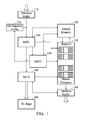
- FIG. 1 is the hardware architecture of the 3D (three-dimensional) graphics processing apparatus according to an embodiment of the invention.
- the SSTC (Setup Shader Thread Constructor) 140 reads information about primitives from the primitive buffer 110 or the GB (Guard-Band-clipping) primitive buffer 170, packs and sends the primitive information to the SS (Setup Shader) thread, enabling the SS thread being executed to output the primitive information to the SP (Stream Processor) 120 for constructing the primitive topology in parallel.
- the SSTC 140 requests an allocation of memory space to the shared memory 130 for each primitive, enabling the SP 120 to output the computation results to the shared memory 130.
- the GBTC Guard-Band-clipping shader Thread Constructor
- GBS Guard-Band-clipping Shader
- the ASTC (Attribute Shader Thread Constructor) 160 reads information about primitives from the primitive buffer 110 or GB primitive buffer 170, packs and sends the primitive information to the AS (Attribute Shader) thread, enabling the AS thread being executed to output the primitive information to the SP 120 for executing attribute functions in parallel.
- the ASTC 160 requests an allocation of memory space to the shared memory 130 for each primitive, enabling the SP 120 to output the computation results to the shared memory 130.
- the AS thread may further store the computation results in the attribute buffer 180.
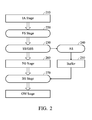
- FIG. 2 is a schematic diagram illustrating the primitive setup of the 3D graphics pipeline according to an embodiment of the invention.
- the IA (input assembler) stage 210 may read data from buffers and assemble the data into primitives that will be used by the other pipeline stages. Specifically, the IA stage 210 may assemble vertices into several different primitive types, such as points, lines and/or triangles.
- the FS (Front Stage) 220 may contain the well-known VS (Vertex Shader), HS (Hull Shader), DS (Domain Shader), GS (Geometry Shader) or any combinations thereof.
- the embodiments introduce several shaders capable of being executed in parallel by the SP 120, which include SS, GBS and AS, instead of the conventional hardware FIX module.
- the SP 120 may be the SIMD (Single Instruction Multiple Data) processor.
- the SS 230 provides the capability of constructing the primitive topology.
- the GBS 230 provides capability of clipping primitives.
- the AS 240 provides capability of executing the attribute functions for the primitives.
- the gate-count costs can be reduced by implementing the aforementioned functions by shaders, and after the chip is tape-out, newly discovered errors can be corrected and new features can be added by modifying program code of the shaders.
- Drivers may check the primitive types out of the FS 220 and notify compilers to generate relevant shader codes to handle points, lines and/or triangles. Furthermore, the shaders may use the parallel computation ability to handle multiple primitives at one time, so that the performance of primitive setup improves with the increased number of SP units.
- the number of primitives which can be processed in one hardware thread depends on the capability of SP units, such as 16 or 32 or 64 data are computed once.
- the computation results by the SS and the GBS 230 are output to the TG (Tile Generation) stage 260.
- the computation results by the AS 240 are output to the BS (Back Stage) 270.
- the BS 270 may contain the well-known PS (Pixel Shader).
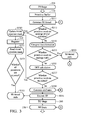
- FIG. 3 is a flowchart illustrating the method for programmable primitive setup in 3D graphics pipeline according to an embodiment of the invention.
- Results of the FS 220 may be output and stored in the primitive buffer 110.
- the compiler instructs the SSTC 140 to generate an SS thread (step S311).
- the SSTC 140 may be implemented in designated circuits having less gate-count costs than the FIX module.
- the SSTC 140 may be alternatively implemented in firmware or software code and the SP 120 loads and executes relevant program code of the SSTC 140 to generate the SS thread. The following steps are performed to construct the primitive topology when the SS thread is executed.
- the SS thread determines whether the primitive needs to undergo the trivial rejection (step S313).
- the primitives may be obtained from the primitive buffer 110 or the GB primitive buffer 170.
- the SIMD units of the SP 120 load the primitives of the same type and each SIMD unit determines whether the loaded primitive is entirely out of the display screen. If so, it indicates that the primitive has no need to render and the corresponding bit of the trivial rejection mask is updated (step S315). Otherwise, the primitive is undergone the viewport transformation (step S319).
- the trivial rejection mask may be implemented in the register 310. In step S315, for example, the trivial rejection mask may contain a designated number of bits and all bits are initially set to logic "0".
- the 0 th bit of the trivial rejection mask is set to logic "1" when the 0 th primitive needs to undergo the trivial rejection.
- the viewport transformation converts the primitive into 2D (two-dimensional) coordinates on the display screen according to relevant information, such as 3D coordinates of the primitive.
- the SS thread further determines whether the primitive needs to undergo the GBC (Guard-Band Clipping) (step S331).
- GBC Guard-Band Clipping
- step S331 specifically, the SIMD units of the SP 120 load the primitives need to be processed and each SIMD unit determines whether the loaded primitive is needed to undergo the GBC. If any, all of the remaining primitives needs to be processed by the GBS 230 and the SS thread ends (step S333).
- step S335 may calculate determinants for each remaining primitive, such as the dimension of triangle, information indicating that the primitive is located on the correct or opposite side of the display screen, etc.
- step S337 specifically, the SIMD units of the SP 120 load the primitives need to be processed and each SIMD unit determines whether the loaded primitive is located on the opposite side of the display screen. If so, it indicates that the primitive has no need to render and the corresponding bit of the trivial rejection mask is updated (step S315).
- the attributes required by the AS 240 are generated (step S339).
- the 10 th bit of the trivial rejection mask is set to logic "1" when the 10 th primitive needs to cull.
- the SS thread executes the TF (Topology Function) and outputs the results to the TG stage 260 (step S351).
- the SS thread further periodically reads values of the trivial rejection mask from the register 310 (step S371) and determines whether all primitives are rejected (step S373). If so, the SS thread ends (step S353). In steps S371 and S373, for example, the SS thread determines whether all bits of the trivial rejection mask are logic "1". If so, it indicates that all primitives are rejected and have no need to render.
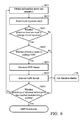
- FIGS. 4A and 4B are flowcharts illustrating the method for generating an SS thread according to an embodiment of the invention.
- the SSTC 140 periodically executes a loop for obtaining information about one primitive from the primitive buffer 110 or the GB primitive buffer 170 (step S411) and determines whether the primitive information is complete (step S413). If so, the SSTC 140 requests an allocation of memory space to the shared memory 130 (step S415). Otherwise, the primitive information is ignored (step S417).
- the memory controller of the shared memory 130 determines whether the shared memory 130 has sufficient space (step S471). If so, the success message including an address of the allocated space is replied (step S473).
- the SSTC 140 determines whether the allocation of memory space is successful (step S431). When the allocation of memory space is successful (the "Yes" path of step S431), the SSTC 140 packs and sends the primitive information to the SS thread (step S433). Otherwise (the "No" path of step S431), the SSTC 140 determines whether the request has expired (step S435). When the request has expired (the "Yes" path of step S435), the SS thread is executed. Otherwise, the SSTC 140 continues to request an allocation of memory space to the shared memory 130 (step S415).
- the SSTC 140 ends (step S455) and the SS thread is executed.
- the SSTC 140 obtains information about the next primitive from the primitive buffer 110 or the GB primitive buffer 170 (step S411).
- the SS thread being executed outputs the information about the designated number of primitives to the SP 120 for computing the information in parallel and stores the computation result corresponding to each primitive in the allocated memory space of the shared memory 130.
- FIG. 5 is a flowchart illustrating the method for programmable primitive setup in 3D graphics pipeline according to an embodiment of the invention.
- the compiler instructs the GBTC 150 to generate a GBS thread (step S511).
- the GBTC 150 may be implemented in designated circuits having less gate-count costs than the FIX module.
- the GBTC 150 may be alternatively implemented in firmware or software code and the SP 120 loads and executes relevant program code of the GBTC 150 to generate the GBS thread. The following steps are performed to realize the GBC when the GBS thread is executed.
- the GBS thread For each primitive that needs to be clipped, the GBS thread divides the primitive into smaller primitives falling within the display screen, for example, dividing one triangle into smaller triangles falling within the display screen, and stores the divided ones in the GB primitive buffer 170 (step S513). Next, the GBS thread ends (step S515).
- FIG. 6 is a flowchart illustrating the method for generating a GBS thread according to an embodiment of the invention.
- the GBTC 150 periodically executes a loop for obtaining information about one primitive from the primitive buffer 110 (step S611), reads the content of the trivial rejection mask (step S613) and determines whether the primitive does not need to undergo the trivial rejection according the corresponding bit of the trivial rejection mask (step S631). If so (the "Yes" path of step S631), it is further determined whether the primitive needs to undergo the GBC (step S633). If so (the "Yes" path of step S633), the GBTC 150 generates the GBS thread (step S651) and executes the GBS thread (step S653).
- the GBS thread being executed divides the primitive into one or more smaller primitives falling within the display screen and stores the divided one(s) in the GB primitive buffer 170.
- any of the determinations is "No” (the "No" path of step S631 or the "No” path of step S633), it is determined whether the primitives of the obtained information has reached the predetermined number (step S655). If so, the GBTC 150 obtains information about the next primitive from the primitive buffer 110 (step S611).
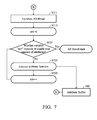
- FIG. 7 is a flowchart illustrating the method for programmable primitive setup in 3D graphics pipeline according to an embodiment of the invention.
- the compiler instructs the ASTC 160 to generate an AS thread (step S711) and sets the variable "attr” to 0 (step S713).
- a loop is repeatedly executed (steps S731 to S735) until the variable "attr" exceeds or equals the total amount of the attributes (the "Yes" path of step S731).
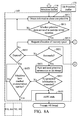
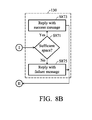
- FIGS. 8A and 8B are flowcharts illustrating the method for generating an AS thread according to an embodiment of the invention.
- the ASTC 160 periodically executes a loop for obtaining information about one primitive from the primitive buffer 110 or the GB primitive buffer 170 (step S811) and determines whether the primitive does not need to undergo the trivial rejection (step S813). If so, the ASTC 160 requests an allocation of memory space to the shared memory 130 (step S815). Otherwise, information about the next primitive is obtained (step S811). After receiving the request (step S815), the memory controller of the shared memory 130 determines whether the shared memory 130 has sufficient space (step S871). If so, the success message including an address of the allocated space is replied (step S873).
- the ASTC 160 determines whether the allocation of memory space is successful (step S831). When the allocation of memory space is successful (the "Yes" path of step S831), the ASTC 160 packs and sends the primitive information to the AS thread (step S833). Otherwise (the "No" path of step S831), the ASTC 160 determines whether the request has expired (step S835). When the request has expired (the "Yes" path of step S835), the AS thread is executed. Otherwise, the ASTC 160 continues to request an allocation of memory space to the shared memory 130 (step S815).
- the ASTC 160 ends (step S855) and the AS thread is executed.
- the ASTC 160 obtains information about the next primitive from the primitive buffer 110 or the GB primitive buffer 170 (step S811).
- the AS thread being executed outputs the information about the designated number of primitives to the SP 120 for computing the information in parallel and stores the computation result corresponding to each primitive in the allocated memory space of the shared memory 130.
- FIG. 1 Although the embodiments have been described in FIG. 1 as having specific elements, it should be noted that additional elements may be included to achieve better performance without departing from the spirit of the invention. While the process flows described in FIGS. 3 to 8 include a number of operations that appear to occur in a specific order, it should be apparent that these processes can include more or fewer operations, which can be executed serially or in parallel, e.g., using parallel processors or a multi-threading environment.
Landscapes
- Engineering & Computer Science (AREA)
- Physics & Mathematics (AREA)
- General Physics & Mathematics (AREA)
- Theoretical Computer Science (AREA)
- Computer Graphics (AREA)
- Image Generation (AREA)
- Image Processing (AREA)
Applications Claiming Priority (1)
| Application Number | Priority Date | Filing Date | Title |
|---|---|---|---|
| CN201510511346.2A CN105118089B (zh) | 2015-08-19 | 2015-08-19 | 三维图形管道中的可程序化像素设定方法及使用其的装置 |
Publications (2)
| Publication Number | Publication Date |
|---|---|
| EP3133556A2 true EP3133556A2 (de) | 2017-02-22 |
| EP3133556A3 EP3133556A3 (de) | 2018-01-17 |
Family
ID=54477845
Family Applications (1)
| Application Number | Title | Priority Date | Filing Date |
|---|---|---|---|
| EP15192150.9A Ceased EP3133556A3 (de) | 2015-08-19 | 2015-10-29 | Verfahren zur programmierung eines primitiven aufbaus in einer 3d-grafikdatenpipeline und vorrichtungen damit |
Country Status (4)
| Country | Link |
|---|---|
| US (1) | US9892541B2 (de) |
| EP (1) | EP3133556A3 (de) |
| CN (1) | CN105118089B (de) |
| TW (1) | TWI602151B (de) |
Family Cites Families (25)
| Publication number | Priority date | Publication date | Assignee | Title |
|---|---|---|---|---|
| US6052129A (en) | 1997-10-01 | 2000-04-18 | International Business Machines Corporation | Method and apparatus for deferred clipping of polygons |
| WO2000011603A2 (en) * | 1998-08-20 | 2000-03-02 | Apple Computer, Inc. | Graphics processor with pipeline state storage and retrieval |
| US7257814B1 (en) * | 1998-12-16 | 2007-08-14 | Mips Technologies, Inc. | Method and apparatus for implementing atomicity of memory operations in dynamic multi-streaming processors |
| US6359630B1 (en) * | 1999-06-14 | 2002-03-19 | Sun Microsystems, Inc. | Graphics system using clip bits to decide acceptance, rejection, clipping |
| US6919908B2 (en) * | 2003-08-06 | 2005-07-19 | Ati Technologies, Inc. | Method and apparatus for graphics processing in a handheld device |
| US8643659B1 (en) * | 2003-12-31 | 2014-02-04 | 3Dlabs Inc., Ltd. | Shader with global and instruction caches |
| US7385607B2 (en) * | 2004-04-12 | 2008-06-10 | Nvidia Corporation | Scalable shader architecture |
| US20070091088A1 (en) * | 2005-10-14 | 2007-04-26 | Via Technologies, Inc. | System and method for managing the computation of graphics shading operations |
| US7880745B2 (en) * | 2006-06-20 | 2011-02-01 | Via Technologies, Inc. | Systems and methods for border color handling in a graphics processing unit |
| US7928990B2 (en) * | 2006-09-27 | 2011-04-19 | Qualcomm Incorporated | Graphics processing unit with unified vertex cache and shader register file |
| US7940261B2 (en) * | 2007-01-10 | 2011-05-10 | Qualcomm Incorporated | Automatic load balancing of a 3D graphics pipeline |
| CN101325063B (zh) * | 2007-06-12 | 2011-02-16 | 建兴电子科技股份有限公司 | 全息储存系统中寻找定位点位置的方法 |
| US8174534B2 (en) * | 2007-12-06 | 2012-05-08 | Via Technologies, Inc. | Shader processing systems and methods |
| US8963930B2 (en) * | 2007-12-12 | 2015-02-24 | Via Technologies, Inc. | Triangle setup and attribute setup integration with programmable execution unit |
| US8599202B1 (en) * | 2008-09-29 | 2013-12-03 | Nvidia Corporation | Computing tessellation coordinates using dedicated hardware |
| US20110043518A1 (en) * | 2009-08-21 | 2011-02-24 | Nicolas Galoppo Von Borries | Techniques to store and retrieve image data |
| US8760460B1 (en) * | 2009-10-15 | 2014-06-24 | Nvidia Corporation | Hardware-managed virtual buffers using a shared memory for load distribution |
| TWI474280B (zh) * | 2010-04-21 | 2015-02-21 | Via Tech Inc | 增進繪圖處理單元之總處理量的方法與系統 |
| US8681162B2 (en) * | 2010-10-15 | 2014-03-25 | Via Technologies, Inc. | Systems and methods for video processing |
| US9442780B2 (en) * | 2011-07-19 | 2016-09-13 | Qualcomm Incorporated | Synchronization of shader operation |
| US8872838B2 (en) * | 2011-09-09 | 2014-10-28 | Microsoft Corporation | Primitive composition |
| US9495721B2 (en) * | 2012-12-21 | 2016-11-15 | Nvidia Corporation | Efficient super-sampling with per-pixel shader threads |
| GB2511817A (en) * | 2013-03-14 | 2014-09-17 | Imagination Tech Ltd | Rendering in computer graphics systems |
| GB2520076B (en) * | 2013-11-11 | 2020-07-29 | Advanced Risc Mach Ltd | Rasterisation in graphics processing systems |
| US9672298B2 (en) * | 2014-05-01 | 2017-06-06 | Oracle International Corporation | Precise excecution of versioned store instructions |
-
2015
- 2015-08-19 CN CN201510511346.2A patent/CN105118089B/zh active Active
- 2015-10-22 US US14/919,799 patent/US9892541B2/en active Active
- 2015-10-22 TW TW104134626A patent/TWI602151B/zh active
- 2015-10-29 EP EP15192150.9A patent/EP3133556A3/de not_active Ceased
Non-Patent Citations (1)
| Title |
|---|
| None |
Also Published As
| Publication number | Publication date |
|---|---|
| CN105118089A (zh) | 2015-12-02 |
| TWI602151B (zh) | 2017-10-11 |
| TW201709151A (zh) | 2017-03-01 |
| CN105118089B (zh) | 2018-03-20 |
| US20170053429A1 (en) | 2017-02-23 |
| US9892541B2 (en) | 2018-02-13 |
| EP3133556A3 (de) | 2018-01-17 |
Similar Documents
| Publication | Publication Date | Title |
|---|---|---|
| US10706608B2 (en) | Tree traversal with backtracking in constant time | |
| US9293109B2 (en) | Technique for storing shared vertices | |
| CN110008009B (zh) | 在运行时绑定常量以提高资源利用率 | |
| EP3183714B1 (de) | Shader-programmausführung zur verwendung in der grafikverarbeitung | |
| CN110262907B (zh) | 用于统一应用编程接口和模型的系统和方法 | |
| US9418616B2 (en) | Technique for storing shared vertices | |
| KR102459322B1 (ko) | 자동으로 컴파일되는 컴퓨트 셰이더를 사용하는 프리미티브 컬링 | |
| US11715262B2 (en) | Optimizing primitive shaders | |
| US9830741B2 (en) | Setting downstream render state in an upstream shader | |
| CN105247478B (zh) | 用于存储命令的方法及相关装置 | |
| KR101956197B1 (ko) | 그래픽 처리 유닛을 이용한 데이터 처리 방법 및 장치 | |
| CN110084738B (zh) | 在扩展的图形处理管线中表示和处理几何形状的技术 | |
| JP7121019B2 (ja) | アウトオブオーダのピクセルシェーダのエクスポート | |
| US9779537B2 (en) | Method and apparatus for ray tracing | |
| EP3133556A2 (de) | Verfahren zur programmierung eines primitiven aufbaus in einer 3d-grafikdatenpipeline und vorrichtungen damit | |
| US12159344B2 (en) | Accelerated processing via a physically based rendering engine | |
| US11830123B2 (en) | Accelerated processing via a physically based rendering engine | |
| US11853764B2 (en) | Accelerated processing via a physically based rendering engine | |
| US11875444B2 (en) | Accelerated processing via a physically based rendering engine | |
| US20220366632A1 (en) | Accelerated processing via a physically based rendering engine |
Legal Events
| Date | Code | Title | Description |
|---|---|---|---|
| PUAI | Public reference made under article 153(3) epc to a published international application that has entered the european phase |
Free format text: ORIGINAL CODE: 0009012 |
|
| STAA | Information on the status of an ep patent application or granted ep patent |
Free format text: STATUS: THE APPLICATION HAS BEEN PUBLISHED |
|
| AK | Designated contracting states |
Kind code of ref document: A2 Designated state(s): AL AT BE BG CH CY CZ DE DK EE ES FI FR GB GR HR HU IE IS IT LI LT LU LV MC MK MT NL NO PL PT RO RS SE SI SK SM TR |
|
| AX | Request for extension of the european patent |
Extension state: BA ME |
|
| PUAL | Search report despatched |
Free format text: ORIGINAL CODE: 0009013 |
|
| AK | Designated contracting states |
Kind code of ref document: A3 Designated state(s): AL AT BE BG CH CY CZ DE DK EE ES FI FR GB GR HR HU IE IS IT LI LT LU LV MC MK MT NL NO PL PT RO RS SE SI SK SM TR |
|
| AX | Request for extension of the european patent |
Extension state: BA ME |
|
| RIC1 | Information provided on ipc code assigned before grant |
Ipc: G06T 15/00 20110101AFI20171213BHEP Ipc: G06T 1/20 20060101ALI20171213BHEP |
|
| STAA | Information on the status of an ep patent application or granted ep patent |
Free format text: STATUS: REQUEST FOR EXAMINATION WAS MADE |
|
| 17P | Request for examination filed |
Effective date: 20180717 |
|
| RBV | Designated contracting states (corrected) |
Designated state(s): AL AT BE BG CH CY CZ DE DK EE ES FI FR GB GR HR HU IE IS IT LI LT LU LV MC MK MT NL NO PL PT RO RS SE SI SK SM TR |
|
| STAA | Information on the status of an ep patent application or granted ep patent |
Free format text: STATUS: EXAMINATION IS IN PROGRESS |
|
| 17Q | First examination report despatched |
Effective date: 20210212 |
|
| RAP1 | Party data changed (applicant data changed or rights of an application transferred) |
Owner name: GLENFLY TECH CO., LTD. |
|
| APBK | Appeal reference recorded |
Free format text: ORIGINAL CODE: EPIDOSNREFNE |
|
| APBN | Date of receipt of notice of appeal recorded |
Free format text: ORIGINAL CODE: EPIDOSNNOA2E |
|
| APBR | Date of receipt of statement of grounds of appeal recorded |
Free format text: ORIGINAL CODE: EPIDOSNNOA3E |
|
| APAF | Appeal reference modified |
Free format text: ORIGINAL CODE: EPIDOSCREFNE |
|
| APBT | Appeal procedure closed |
Free format text: ORIGINAL CODE: EPIDOSNNOA9E |
|
| STAA | Information on the status of an ep patent application or granted ep patent |
Free format text: STATUS: THE APPLICATION HAS BEEN REFUSED |
|
| 18R | Application refused |
Effective date: 20250226 |