EP3133472A2 - Adaptive benutzerschnittstelle für ein hlk-system - Google Patents
Adaptive benutzerschnittstelle für ein hlk-system Download PDFInfo
- Publication number
- EP3133472A2 EP3133472A2 EP16184631.6A EP16184631A EP3133472A2 EP 3133472 A2 EP3133472 A2 EP 3133472A2 EP 16184631 A EP16184631 A EP 16184631A EP 3133472 A2 EP3133472 A2 EP 3133472A2
- Authority
- EP
- European Patent Office
- Prior art keywords
- user
- computing device
- voice communication
- display
- component
- Prior art date
- Legal status (The legal status is an assumption and is not a legal conclusion. Google has not performed a legal analysis and makes no representation as to the accuracy of the status listed.)
- Granted
Links
Images

Classifications
-
- G—PHYSICS
- G06—COMPUTING OR CALCULATING; COUNTING
- G06F—ELECTRIC DIGITAL DATA PROCESSING
- G06F3/00—Input arrangements for transferring data to be processed into a form capable of being handled by the computer; Output arrangements for transferring data from processing unit to output unit, e.g. interface arrangements
- G06F3/16—Sound input; Sound output
- G06F3/167—Audio in a user interface, e.g. using voice commands for navigating, audio feedback
-
- F—MECHANICAL ENGINEERING; LIGHTING; HEATING; WEAPONS; BLASTING
- F24—HEATING; RANGES; VENTILATING
- F24F—AIR-CONDITIONING; AIR-HUMIDIFICATION; VENTILATION; USE OF AIR CURRENTS FOR SCREENING
- F24F11/00—Control or safety arrangements
- F24F11/30—Control or safety arrangements for purposes related to the operation of the system, e.g. for safety or monitoring
-
- F—MECHANICAL ENGINEERING; LIGHTING; HEATING; WEAPONS; BLASTING
- F24—HEATING; RANGES; VENTILATING
- F24F—AIR-CONDITIONING; AIR-HUMIDIFICATION; VENTILATION; USE OF AIR CURRENTS FOR SCREENING
- F24F11/00—Control or safety arrangements
- F24F11/50—Control or safety arrangements characterised by user interfaces or communication
- F24F11/52—Indication arrangements, e.g. displays
- F24F11/526—Indication arrangements, e.g. displays giving audible indications
-
- F—MECHANICAL ENGINEERING; LIGHTING; HEATING; WEAPONS; BLASTING
- F24—HEATING; RANGES; VENTILATING
- F24F—AIR-CONDITIONING; AIR-HUMIDIFICATION; VENTILATION; USE OF AIR CURRENTS FOR SCREENING
- F24F11/00—Control or safety arrangements
- F24F11/50—Control or safety arrangements characterised by user interfaces or communication
- F24F11/56—Remote control
-
- F—MECHANICAL ENGINEERING; LIGHTING; HEATING; WEAPONS; BLASTING
- F24—HEATING; RANGES; VENTILATING
- F24F—AIR-CONDITIONING; AIR-HUMIDIFICATION; VENTILATION; USE OF AIR CURRENTS FOR SCREENING
- F24F11/00—Control or safety arrangements
- F24F11/62—Control or safety arrangements characterised by the type of control or by internal processing, e.g. using fuzzy logic, adaptive control or estimation of values
-
- G—PHYSICS
- G05—CONTROLLING; REGULATING
- G05B—CONTROL OR REGULATING SYSTEMS IN GENERAL; FUNCTIONAL ELEMENTS OF SUCH SYSTEMS; MONITORING OR TESTING ARRANGEMENTS FOR SUCH SYSTEMS OR ELEMENTS
- G05B15/00—Systems controlled by a computer
- G05B15/02—Systems controlled by a computer electric
-
- G—PHYSICS
- G05—CONTROLLING; REGULATING
- G05D—SYSTEMS FOR CONTROLLING OR REGULATING NON-ELECTRIC VARIABLES
- G05D23/00—Control of temperature
- G05D23/19—Control of temperature characterised by the use of electric means
- G05D23/1902—Control of temperature characterised by the use of electric means characterised by the use of a variable reference value
- G05D23/1905—Control of temperature characterised by the use of electric means characterised by the use of a variable reference value associated with tele control
-
- G—PHYSICS
- G06—COMPUTING OR CALCULATING; COUNTING
- G06F—ELECTRIC DIGITAL DATA PROCESSING
- G06F3/00—Input arrangements for transferring data to be processed into a form capable of being handled by the computer; Output arrangements for transferring data from processing unit to output unit, e.g. interface arrangements
- G06F3/01—Input arrangements or combined input and output arrangements for interaction between user and computer
- G06F3/048—Interaction techniques based on graphical user interfaces [GUI]
-
- G—PHYSICS
- G06—COMPUTING OR CALCULATING; COUNTING
- G06F—ELECTRIC DIGITAL DATA PROCESSING
- G06F3/00—Input arrangements for transferring data to be processed into a form capable of being handled by the computer; Output arrangements for transferring data from processing unit to output unit, e.g. interface arrangements
- G06F3/16—Sound input; Sound output
- G06F3/165—Management of the audio stream, e.g. setting of volume, audio stream path
-
- F—MECHANICAL ENGINEERING; LIGHTING; HEATING; WEAPONS; BLASTING
- F24—HEATING; RANGES; VENTILATING
- F24F—AIR-CONDITIONING; AIR-HUMIDIFICATION; VENTILATION; USE OF AIR CURRENTS FOR SCREENING
- F24F11/00—Control or safety arrangements
- F24F11/50—Control or safety arrangements characterised by user interfaces or communication
- F24F11/52—Indication arrangements, e.g. displays
-
- F—MECHANICAL ENGINEERING; LIGHTING; HEATING; WEAPONS; BLASTING
- F24—HEATING; RANGES; VENTILATING
- F24F—AIR-CONDITIONING; AIR-HUMIDIFICATION; VENTILATION; USE OF AIR CURRENTS FOR SCREENING
- F24F11/00—Control or safety arrangements
- F24F11/62—Control or safety arrangements characterised by the type of control or by internal processing, e.g. using fuzzy logic, adaptive control or estimation of values
- F24F11/63—Electronic processing
-
- F—MECHANICAL ENGINEERING; LIGHTING; HEATING; WEAPONS; BLASTING
- F24—HEATING; RANGES; VENTILATING
- F24F—AIR-CONDITIONING; AIR-HUMIDIFICATION; VENTILATION; USE OF AIR CURRENTS FOR SCREENING
- F24F2110/00—Control inputs relating to air properties
-
- F—MECHANICAL ENGINEERING; LIGHTING; HEATING; WEAPONS; BLASTING
- F24—HEATING; RANGES; VENTILATING
- F24F—AIR-CONDITIONING; AIR-HUMIDIFICATION; VENTILATION; USE OF AIR CURRENTS FOR SCREENING
- F24F2120/00—Control inputs relating to users or occupants
-
- F—MECHANICAL ENGINEERING; LIGHTING; HEATING; WEAPONS; BLASTING
- F24—HEATING; RANGES; VENTILATING
- F24F—AIR-CONDITIONING; AIR-HUMIDIFICATION; VENTILATION; USE OF AIR CURRENTS FOR SCREENING
- F24F2130/00—Control inputs relating to environmental factors not covered by group F24F2110/00
- F24F2130/40—Noise
-
- G—PHYSICS
- G05—CONTROLLING; REGULATING
- G05B—CONTROL OR REGULATING SYSTEMS IN GENERAL; FUNCTIONAL ELEMENTS OF SUCH SYSTEMS; MONITORING OR TESTING ARRANGEMENTS FOR SUCH SYSTEMS OR ELEMENTS
- G05B2219/00—Program-control systems
- G05B2219/20—Pc systems
- G05B2219/26—Pc applications
- G05B2219/2614—HVAC, heating, ventillation, climate control
-
- G—PHYSICS
- G10—MUSICAL INSTRUMENTS; ACOUSTICS
- G10L—SPEECH ANALYSIS TECHNIQUES OR SPEECH SYNTHESIS; SPEECH RECOGNITION; SPEECH OR VOICE PROCESSING TECHNIQUES; SPEECH OR AUDIO CODING OR DECODING
- G10L25/00—Speech or voice analysis techniques not restricted to a single one of groups G10L15/00 - G10L21/00
- G10L25/48—Speech or voice analysis techniques not restricted to a single one of groups G10L15/00 - G10L21/00 specially adapted for particular use
Definitions
- the present disclosure relates to an adaptive user interface for an HVAC system.
- HVAC heating, ventilation, and air conditioning
- a user e.g., worker, operator, manager, etc.
- the user may need to perform different tests on different components of the HVAC system.
- the user may need to be at a specific location (e.g., within an arm's length of the component and/or where the component is installed) where the user can directly operate the component(s) being tested.
- the user may need access to a computer-based HVAC control system (e.g., an HVAC control software application or system) running on the user's laptop, smart phone, or other computing device, so that the user can enter information (e.g., data) into, and/or observe information from, the system during the test.
- a computer-based HVAC control system e.g., an HVAC control software application or system
- information e.g., data
- the environment e.g., room(s) in which the HVAC system components are located may prevent the HVAC control system from running on the user's laptop or smart phone.
- the HVAC control system may run over a data network, which may not be available (e.g., accessible) in the environment in which the HVAC system components are located.
- the environment in which the HVAC system components are located may be too small and/or cramped for the user to be able to use his laptop or smart phone.
- the user may have to leave his laptop or smart phone in one (e.g., fixed) location during the testing, and constantly go (e.g., walk) back and forth between the laptop or smart phone and the location of the test (e.g., the location of the component(s) being tested) in order to conduct the test (e.g., enter and/or observe the needed information).
- the location of the test e.g., the location of the component(s) being tested
- one or more embodiments include a user interface configured to display information associated with a component of a heating, ventilation, and air conditioning (HVAC) system, a wireless interface, wherein the wireless interface is configured to receive a voice communication from a user, wherein the voice communication includes information associated with the component of the HVAC system, a memory, and a processor configured to execute executable instructions stored in the memory to enter the information associated with the component of the HVAC system included in the voice communication from the user in the display on the user interface.
- HVAC heating, ventilation, and air conditioning
- An adaptive user interface for a heating, ventilation, and air conditioning (HVAC) system in accordance with the present disclosure can allow a user to perform tests on components of an HVAC system in a quicker, easier, and/or more efficient manner than previous HVAC system testing approaches.
- HVAC heating, ventilation, and air conditioning
- an adaptive user interface for an HVAC system in accordance with the present disclosure can allow a user to stay in one location while testing a component(s) of an HVAC system (e.g., the user may not have to leave his computing device in one location, and go back and forth between that location and the location of the component(s) being tested).
- an adaptive user interface for an HVAC system in accordance with the present disclosure can successfully operate in a noisy environment.
- an adaptive user interface for an HVAC system in accordance with the present disclosure can successfully operate in an environment that includes a large amount and/or different types of background noise.
- a or "a number of” something can refer to one or more such things.
- a number of components can refer to one or more components.
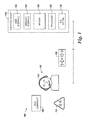
- FIG. 1 illustrates an example of a system 100 that includes an adaptive user interface for a heating, ventilation, and air conditioning (HVAC) system in accordance with one or more embodiments of the present disclosure.
- system 100 can include a headset 104 and a computing device 120.
- HVAC heating, ventilation, and air conditioning
- Headset 104 can communicate with (e.g., send communications to) computing device 120.
- headset 104 can be a wireless headset, such as, for instance, a Bluetooth earpiece, that can communicate with computing device 120 over a radio frequency.
- embodiments of the present disclosure are not limited to a particular type of headset.
- headset 104 is being worn by user 102 (e.g., user 102 is using headset 104 to communicate with computing device 120).
- User 102 can be a person performing a test on one or more components of the HVAC system (e.g., component 106, as will be further described herein).
- user 102 can be a worker, operator, or manager of the HVAC system, among other types of users.
- Computing device 120 can be, for example, a laptop or mobile device (e.g., smart phone, tablet, etc.) of user 102. However, embodiments of the present disclosure are not limited to a particular type of computing device.
- Computing device 120 can be used by user 102 to control the HVAC system (e.g., the components of the HVAC system).
- computing device 120 can run a computer-based HVAC control system (e.g., an HVAC control software application or system) that can be used by user 102 while performing tests on the components of the HVAC system (e.g., component 106, as will be further described herein).
- User 102 can enter information (e.g., data) into, and/or observe information from, the control system during the test, as will be further described herein.
- computing device 120 can include a user interface 122.
- a user e.g., user 102 of computing device 120 can interact with computing device 120 via user interface 122.
- user interface 122 can provide (e.g., display and/or present) information to, and/or receive information from (e.g., input by), the user of computing device 120, such as, for instance, information associated with a component of the HVAC system during a test of that component, as will be further described herein.
- user interface 122 can be a graphical user interface (GUI) that can include a display (e.g., a screen) that can provide and/or receive information to and/or from the user of computing device 120.
- the display can be, for instance, a touch-screen (e.g., the GUI can include touch-screen capabilities).
- GUI graphical user interface
- user interface 122 can include a keyboard and/or mouse the user can use to input (e.g., enter) information into computing device 120 (e.g., into user interface 122).
- user 102 can enter information into the display of user interface 122 using the touch-screen capabilities, keyboard, and/or mouse when the user is located at or near computing device 120 (e.g., within arm's length of computing device 120).
- Embodiments of the present disclosure are not limited to a particular type(s) of user interface.
- user interface 122 can display information (e.g., data values, operating parameters, readings, statuses, actions, etc.) associated with a component of the HVAC system during a test of the component.
- the component can be, for example, HVAC component 106 illustrated in Figure 1 .
- Component 106 can be, for example an object, control component, equipment, device, network, sensor, and/or actuator of the HVAC system such as, for instance, valves such as a heating and/or cooling valves, chillers (e.g., chiller plant), boilers (e.g., boiler plant), pumps such as hot water and/or chilled water pumps, fans, compressors, air dampers such as a variable air volume (VAV) damper, air handling units (AHUs) (e.g., AHU plant), coils such as a heating and/or cooling coil, air filters, and/or cooling towers, among other components.
- VAV variable air volume
- AHUs air handling units
- coils such as a heating and/or cooling coil, air filters, and/or cooling towers, among other components.
- component 106 illustrated in Figure 1 can represent any number of components of the HVAC system, and/or connections between the components, such as a chain of equipment (e.g., duct work, pipes, ventilation, and/or electrical and/or gas distribution equipment) that connects the components, among other connections.
- a chain of equipment e.g., duct work, pipes, ventilation, and/or electrical and/or gas distribution equipment
- computing device 120 can include a wireless interface 124.
- Wireless interface 124 can receive communications from headset 104 (e.g., user 102).
- headset 104 e.g., user 102
- wireless interface 124 can be and/or include an antenna that can receive communications from headset 104 over a radio frequency. That is, wireless interface 124 can receive radio frequency signals from headset 104.
- wireless interface 124 can receive a voice communication 108 from (e.g., spoken by) user 102 over a radio frequency via headset 104.
- Voice communication 108 can include information associated with HVAC component 106.
- the information can include, for example, data values, operating parameters, readings, statuses, and/or actions read, observed, and/or determined by user 102 during testing of component 106, and/or a query, instruction, or command related thereto.
- Voice communication 108 can be spoken by user 102, and received by wireless interface 124, while user 102 is at the location of component 106 (e.g., within arm's length of component 106 and/or where component 106 is installed), which may be a distance D from computing device 120, as illustrated in Figure 1 .
- the distance D between user 102 and computing device 120 may be further than arm's length (e.g., more than 18 inches).
- the distance D between user 102 and computing device 120 may be in the range of a few feet to a hundred feet. That is, user 102 may not be located at or near (e.g., may be located away from) computing device 120 when providing the information associated with component 106 to computing device 120.
- user 102 may not have to go (e.g., walk) back and forth between component 106 and computing device 120 to conduct the test (e.g., to obtain the information associated with component 106 and provide the information to computing device 120). That is, user 102 can remain at the location of component 106 while conducting the test.
- Voice communication 108 may also include (e.g., capture) background noise 110 that may be present at the location of HVAC component 106 while user 102 is speaking.
- Background noise 110 can include a number of different types of background noise.
- background noise 110 can include a number of different noise levels that come from a number of different sources, such as, for example, noisy equipment, among other sources.
- Voice communication 108 may also include a command (e.g., trigger phrase) from user 102 to activate wireless interface 124 and/or MUI system 130. That is, user 102 can activate wireless interface 124 and/or MUI system 130 using the command (e.g., wireless interface 124 and/or MUI system 130 can activate upon receiving the command). MUI system 130 will be further described herein.
- the command can be, for example, "start voice control". However, embodiments of the present disclosure are not limited to a particular command.
- computing device 120 can include a memory 126 and a processor 128.
- Memory 126 can be any type of storage medium that can be accessed by processor 128 to perform various examples of the present disclosure.
- memory 126 can be a non-transitory computer readable medium having computer readable instructions (e.g., computer program instructions) stored thereon that are executable by processor 128 to provide and/or operate an adaptive user interface for an HVAC system in accordance with the present disclosure. That is, processor 128 can execute the executable instructions stored in memory 126 to provide and/or operate an adaptive user interface for an HVAC system in accordance with the present disclosure.
- Memory 126 can be volatile or nonvolatile memory. Memory 126 can also be removable (e.g., portable) memory, or non-removable (e.g., internal) memory.
- memory 126 can be random access memory (RAM) (e.g., dynamic random access memory (DRAM) and/or phase change random access memory (PCRAM)), read-only memory (ROM) (e.g., electrically erasable programmable read-only memory (EEPROM) and/or compact-disk read-only memory (CD-ROM)), flash memory, a laser disk, a digital versatile disk (DVD) or other optical disk storage, and/or a magnetic medium such as magnetic cassettes, tapes, or disks, among other types of memory.
- RAM random access memory
- DRAM dynamic random access memory
- PCRAM phase change random access memory
- ROM read-only memory
- EEPROM electrically erasable programmable read-only memory
- CD-ROM compact-disk read-only memory
- flash memory a laser disk,
- memory 126 is illustrated as being located in computing device 120, embodiments of the present disclosure are not so limited.
- memory 126 can also be located internal to another computing resource (e.g., enabling computer readable instructions to be downloaded over the Internet or another wired or wireless connection).
- computing device 120 can include an adaptive multimodal user interface (MUI) system 130.
- MUI system 130 can provide and/or operate an adaptive user interface for an HVAC system in accordance with the present disclosure.
- MUI system 130 can enter the information associated with HVAC component 106 included in voice communication 108 from user 102 in the information display on user interface 122.
- MUI system 130 can translate the spoken words of user 102 into a proper data format, and enter it into the information display on user interface 122 as if user 102 had typed it into the display using a keyboard or selected it from a menu using a mouse.
- MUI system 130, and the adaptive user interface provided and/or operated by MUI system 130 will be further described herein (e.g., in connection with Figure 2 ).
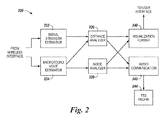
- FIG 2 illustrates an example of an adaptive multimodal user interface (MUI) system 230 in accordance with one or more embodiments of the present disclosure.
- MUI system 230 can provide and/or operate an adaptive user interface for an HVAC system in accordance with the present disclosure.
- MUI system 230 can be, for example, MUI system 130 previously described in connection with Figure 1 .
- MUI system 230 can include a signal strength estimator 232.
- Signal strength estimator 232 can be, for example, a Bluetooth receiver.
- Voice communication 108 (e.g., the signal that includes the voice communication) received by wireless interface 122 from user 102 previously described in connection with Figure 1 can be input into signal strength estimator 232, as illustrated in Figure 2 , and signal strength estimator 232 can determine the strength of voice communication 108. That is, signal strength estimator 232 can determine the strength of the signal (e.g., the radio frequency signal) that includes voice communication 108.
- signal strength estimator 232 can determine the strength of the signal (e.g., the radio frequency signal) that includes voice communication 108.
- MUI system 230 can include a background noise estimator 234.
- Background noise estimator 234 can be, for example, an automatic speech recognizer (ASR) engine.
- ASR automatic speech recognizer
- Voice communication 108 (e.g., the signal that includes the voice communication) received by wireless interface 122 from user 102 can also be input into background noise estimator 234, as illustrated in Figure 2 .
- Background noise estimator 234 can filter out background noise 110 from voice communication 108 (e.g., from the signal that includes the voice communication) to recognize the information associated with HVAC component 106 included in voice communication 108.
- background noise estimator 234 can separate (e.g., distinguish) the information associated with HVAC component 106 in the signal from background noise 110 in the signal. That is, background noise estimator 234 can isolate and discard background noise 110 from the signal (e.g., the radio frequency signal) that includes voice communication 108 to recognize the information associated with HVAC component 106.
- background noise estimator 234 can distinguish between each of the different types of background noise.
- Background noise estimator 234 can also determine the quality of voice communication 108 based on its recognition confidence of the voice communication (e.g., its level of confidence that it has correctly recognized the information associated with HVAC component 106 included in the voice communication). For example, the greater the recognition confidence, the greater the quality of the voice communication.
- the recognition confidence of background noise estimator 234 can depend on background noise 110 (e.g., the amount and/or number of different types of background noise).
- MUI system 230 can include a distance analyzer module 236 and a noise analyzer module 238.
- a “module” can include computer readable instructions that can be executed by a processing resource (e.g., processor 128 previously described in connection with Figure 1 ) to perform a particular function.
- a module can also include hardware, firmware, and/or logic that can perform a particular function.
- logic is an alternative or additional processing resource to execute the actions and/or functions, described herein, which includes hardware (e.g., various forms of transistor logic, application specific integrated circuits (ASICs)), as opposed to computer executable instructions (e.g., software, firmware) stored in memory and executable by a processing resource.
- the strength of voice communication 108 determined by signal strength estimator 232, and the quality of voice communication 108 determined by background noise estimator 234, can be input into distance analyzer module 236, as illustrated in Figure 2 , and distance analyzer module 236 can determine the distance between user 102 can computing device 120 (e.g., distance D illustrated in Figure 1 ) based on the determined strength and/or quality of voice communication 108. For example, the lower the strength and/or the lower the quality of voice communication 108, the greater the distance may be between user 102 and computing device 120.
- noise analyzer module 2308 can determine the amount (e.g., level) of the background noise.
- Noise analyzer module 238 can also determine whether the amount of background noise meets or exceeds a predetermined threshold, such as, for instance, a predetermined signal-to-noise ratio threshold.
- MUI interface 230 can dynamically select (e.g., adjust) a visualization format 240 for the information display on user interface 122 previously described in connection with Figure 1 based on the distance between computing device 120 and user 102 determined by distance analyzer module 236, and enter the information associated with HVAC component 106 filtered by background noise estimator 238 in the display on the user interface.
- Visualization format 240 can refer to and/or include the style template of the information display on user interface 122, such as, for instance, the density of the information in the display, which can include the amount information included in the display (e.g., the number of data elements, icons, menu items, screen fields, etc.
- the display and/or the size (e.g., font size) of the information in the display, and/or the color (e.g., brightness) of the information in the display.
- the greater the distance between computing device 120 and user 102 the lower the density (e.g., the lower the amount and/or greater the size) and/or the brighter the color of the information in the display, such that the information is easier to see from far away.
- Dynamically selecting the visualization format 240 can include adjusting the visualization format for the information display from a first visualization format to a second visualization format based on a change in the distance between user 102 and computing device 120. For example, if distance analyzer 236 determines that the distance between user 102 and computing device 120 has increased (e.g., user 102 has moved far away from computing device 120), MUI system 230 can reduce the number of data elements in the display from over 100 icons and/or pull-down menu items to half a dozen screen fields, with the font sizes increased proportionally, so that the data can be seen by user 102 at the farther distance.
- An example of such a visualization format adjustment will be further described herein (e.g., in connection with Figures 3A and 3B ).
- MUI interface 230 can also dynamically select the visualization format 240 for the information display on user interface 122 based on the amount of background noise determined by noise analyzer module 238. For example, the greater the amount of background noise, the lower the density and/or the brighter the color of the information in the display.
- MUI interface 230 can provide an audio communication (e.g., audio feedback) 242 to user 102 using text-to-speech (TTS) engine 244 after the information associated with HVAC component 106 received from user 102 has been entered in the display on user interface 122.
- Audio communication 242 can include, for example, a confirmation that the information has been entered in the display.
- audio communication 242 can include a beep (e.g., positive beep tone) confirming that the information has been entered, or audio communication 242 can repeat some or all the information back to user 102 to confirm that the information has been entered.
- Audio communication 242 can also include information from (e.g., already in and/or previously entered in) the display that may be related (e.g., relevant to) the information received from user 102.
- audio communication 242 can include information from data fields in the display that may be related to HVAC component 106.
- MUI interface 230 can select a dialog format (e.g., mode) for audio communication 242 based on the distance between computing device 120 and user 102 determined by distance analyzer module 236.
- the dialog format for audio communication 242 may be terse if user 102 is located near (e.g., within a few feet of) computing device 120, and the dialog format for audio communication 242 may be complex if user 102 is located far (e.g., more than a few feet) from computing device 120.
- MUI interface 230 can also select the dialog format for audio communication 242 based on the amount of background noise determined by noise analyzer module 238.
- the dialog format may be terse if there is a low level of background noise (e.g., if the level of background noise does not meet or exceed the predetermined threshold), and the dialog format may be complex if there is a high level of background noise (e.g., if the level of background noise meets or exceeds the predetermined threshold).
- MUI interface 230 can select the volume of audio communication 242 based on the amount of background noise determined by noise analyzer module 238. For example, the greater the amount of background noise, the higher the volume of audio communication 242.
- MUI interface 230 can automatically repeat, using TTS engine 244, audio communication 242, or ask, using TTS engine 244, user 202 if he would like audio communication 242 repeated. This can be done in case user 202 did not initially hear audio communication 242 due to a high level of background noise at the user's location.
- voice communication 108 received from user 102 may include a command to "Go to controller twenty one.” If distance analyzer module 236 determines that user 102 is located near computing device 120, and/or if background noise analyzer module 238 determines the level of background noise at the location of user 102 is low, audio communication 242 may include a beep to confirm that information associated with controller twenty one is being displayed on user interface 122. If distance analyzer module 236 determines that user 102 is located far from computing device 120, and/or if background noise analyzer module 238 determines the level of background noise at the location of user 102 is high, audio communication 242 may repeat "Controller twenty one" to confirm that information associated with controller twenty one is being displayed on user interface 122.
- audio communication 242 may include a beep to confirm that sensor one has been selected in the display on user interface 122, and may include a statement of "Heat discharge in west entrance”.
- audio communication 242 may include a statement of "Sensor one has a label, heat discharge in west entrance. Say repeat if you want to hear this again.”
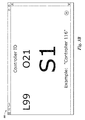
- Figures 3A-3B illustrate an example of an adjustment of the visualization format (e.g., visualization format 240 previously described in connection with Figure 2 ) for information displayed on an adaptive user interface in accordance with one or more embodiments of the present disclosure.
- Display 350 shown in Figure 3A is an example of a visualization format used when the distance between user 102 and computing device 120 previously described in connection with Figure 1 is small (e.g., less than a few feet), and display 352 shown in Figure 3B is an example of a visualization format used when the distance between user 102 and computing device 120 is large (e.g., more than a few feet).
- Displays 350 and 352 can be displayed on user interface 122, as previously described herein.
- display 350 which includes a large amount of information about outstation 21 displayed in a small size, may be displayed if the distance between user 102 and computing device 120 is determined to be small. However, if it is subsequently determined that the distance between user 102 and computing device 120 has increased (e.g., user 102 has moved far away from computing device 120) the display can be adjusted to display 352, which includes a small amount of information about outstation 21 displayed in a large size.
Landscapes
- Engineering & Computer Science (AREA)
- General Engineering & Computer Science (AREA)
- Physics & Mathematics (AREA)
- Theoretical Computer Science (AREA)
- Human Computer Interaction (AREA)
- General Physics & Mathematics (AREA)
- Mechanical Engineering (AREA)
- Chemical & Material Sciences (AREA)
- Combustion & Propulsion (AREA)
- Health & Medical Sciences (AREA)
- General Health & Medical Sciences (AREA)
- Audiology, Speech & Language Pathology (AREA)
- Multimedia (AREA)
- Automation & Control Theory (AREA)
- Fuzzy Systems (AREA)
- Mathematical Physics (AREA)
- Signal Processing (AREA)
- User Interface Of Digital Computer (AREA)
- Air Conditioning Control Device (AREA)
- Selective Calling Equipment (AREA)
Applications Claiming Priority (1)
| Application Number | Priority Date | Filing Date | Title |
|---|---|---|---|
| US14/831,174 US20170051932A1 (en) | 2015-08-20 | 2015-08-20 | Adaptive user interface for an hvac system |
Publications (3)
| Publication Number | Publication Date |
|---|---|
| EP3133472A2 true EP3133472A2 (de) | 2017-02-22 |
| EP3133472A3 EP3133472A3 (de) | 2017-04-19 |
| EP3133472B1 EP3133472B1 (de) | 2021-02-17 |
Family
ID=57205985
Family Applications (1)
| Application Number | Title | Priority Date | Filing Date |
|---|---|---|---|
| EP16184631.6A Active EP3133472B1 (de) | 2015-08-20 | 2016-08-17 | Adaptive benutzerschnittstelle für ein hlk-system |
Country Status (2)
| Country | Link |
|---|---|
| US (1) | US20170051932A1 (de) |
| EP (1) | EP3133472B1 (de) |
Cited By (1)
| Publication number | Priority date | Publication date | Assignee | Title |
|---|---|---|---|---|
| WO2024233145A3 (en) * | 2023-05-09 | 2025-01-02 | Apple Inc. | Multi-modal digital assistant |
Families Citing this family (6)
| Publication number | Priority date | Publication date | Assignee | Title |
|---|---|---|---|---|
| WO2019144021A1 (en) * | 2018-01-19 | 2019-07-25 | Schneider Electric Buildings, Llc | Intelligent commissioning of building automation controllers |
| CA3041383A1 (en) | 2018-01-19 | 2019-07-19 | Babak Haghayeghi | Intelligent commissioning of building automation controllers |
| US11713895B2 (en) | 2019-01-14 | 2023-08-01 | Research Products Corporation | Multi-zone environmental control system |
| USD977996S1 (en) | 2020-12-18 | 2023-02-14 | Research Products Corporation | Heating ventilation and air conditioning controller |
| USD977343S1 (en) | 2021-03-09 | 2023-02-07 | Research Products Corporation | Heating ventilation and air conditioning controller |
| US20230077780A1 (en) * | 2021-09-16 | 2023-03-16 | International Business Machines Corporation | Audio command corroboration and approval |
Family Cites Families (13)
| Publication number | Priority date | Publication date | Assignee | Title |
|---|---|---|---|---|
| US6697894B1 (en) * | 1999-03-29 | 2004-02-24 | Siemens Dematic Postal Automation, L.P. | System, apparatus and method for providing maintenance instructions to a user at a remote location |
| US6413079B1 (en) * | 2000-04-10 | 2002-07-02 | Heat-N-Glo Fireplace Products, Inc. | Voice activated fireplace control system |
| US8332178B2 (en) * | 2004-04-13 | 2012-12-11 | Honeywell International Inc. | Remote testing of HVAC systems |
| US8041025B2 (en) * | 2006-08-07 | 2011-10-18 | International Business Machines Corporation | Systems and arrangements for controlling modes of audio devices based on user selectable parameters |
| US8700405B2 (en) * | 2010-02-16 | 2014-04-15 | Honeywell International Inc | Audio system and method for coordinating tasks |
| US8870087B2 (en) * | 2011-09-12 | 2014-10-28 | Siemens Industry, Inc. | Thermostat control device with integrated feedback and notification capability |
| CA2853033C (en) * | 2011-10-21 | 2019-07-16 | Nest Labs, Inc. | User-friendly, network connected learning thermostat and related systems and methods |
| US10088853B2 (en) * | 2012-05-02 | 2018-10-02 | Honeywell International Inc. | Devices and methods for interacting with an HVAC controller |
| US9459176B2 (en) * | 2012-10-26 | 2016-10-04 | Azima Holdings, Inc. | Voice controlled vibration data analyzer systems and methods |
| US20140200718A1 (en) * | 2013-01-16 | 2014-07-17 | Honeywell International Inc. | Systems and methods for facilitating diagnostic testing of an hvac system |
| US20140228983A1 (en) * | 2013-02-08 | 2014-08-14 | Trane International Inc. | HVAC Customer Support System |
| CN105659179B (zh) * | 2013-08-21 | 2018-07-17 | 霍尼韦尔国际公司 | 用于与hvac控制器相交互的设备和方法 |
| WO2015156762A1 (en) * | 2014-04-07 | 2015-10-15 | Hewlett-Packard Development Company, L.P. | Adjusting display brightness based on user distance |
-
2015
- 2015-08-20 US US14/831,174 patent/US20170051932A1/en not_active Abandoned
-
2016
- 2016-08-17 EP EP16184631.6A patent/EP3133472B1/de active Active
Non-Patent Citations (1)
| Title |
|---|
| None |
Cited By (1)
| Publication number | Priority date | Publication date | Assignee | Title |
|---|---|---|---|---|
| WO2024233145A3 (en) * | 2023-05-09 | 2025-01-02 | Apple Inc. | Multi-modal digital assistant |
Also Published As
| Publication number | Publication date |
|---|---|
| EP3133472B1 (de) | 2021-02-17 |
| US20170051932A1 (en) | 2017-02-23 |
| EP3133472A3 (de) | 2017-04-19 |
Similar Documents
| Publication | Publication Date | Title |
|---|---|---|
| EP3133472B1 (de) | Adaptive benutzerschnittstelle für ein hlk-system | |
| US10453457B2 (en) | Method for performing voice control on device with microphone array, and device thereof | |
| US20230352021A1 (en) | Electronic device and controlling method thereof | |
| US11094323B2 (en) | Electronic device and method for processing audio signal by electronic device | |
| US11003163B2 (en) | Voice control of components of a facility | |
| EP3347894B1 (de) | Arbitrierung zwischen sprachaktivierten vorrichtungen | |
| US9729984B2 (en) | Dynamic calibration of an audio system | |
| EP2996113A1 (de) | Identifizierung von nicht gespeicherten sprachbefehlen | |
| US9451362B2 (en) | Adaptive beam forming devices, methods, and systems | |
| CN105654949B (zh) | 一种语音唤醒方法及装置 | |
| EP3091537B1 (de) | Rauschunterdrückung zur sprachaktivierung | |
| WO2019112468A1 (en) | Multi-microphone noise reduction method, apparatus and terminal device | |
| US20160125880A1 (en) | Method and system for identifying location associated with voice command to control home appliance | |
| CN108028979B (zh) | 用于产生音频输出的方法、设备和计算机可读介质 | |
| EP2898510B1 (de) | Verfahren, system und computerprogramm zur adaptiven anpassung einer auf ein audio signal angewendeten verstärkung | |
| KR102795172B1 (ko) | 음성 인식 장치 및 방법 | |
| US11908464B2 (en) | Electronic device and method for controlling same | |
| JP2021501356A (ja) | 暗黙的ルーティングを使用したモジュール式会話の作成 | |
| CN106572228A (zh) | 音量调整方法、音量调整装置和移动终端 | |
| WO2020015283A1 (zh) | 设备的控制方法及装置、存储介质和电子装置 | |
| CN110853631A (zh) | 智能家居的语音识别方法及装置 | |
| US9208781B2 (en) | Adapting speech recognition acoustic models with environmental and social cues | |
| CN110534105A (zh) | 一种语音控制方法及装置 | |
| CN115376521A (zh) | 声纹识别方法、装置和计算机可读存储介质 | |
| US12087283B2 (en) | Electronic apparatus and controlling method thereof |
Legal Events
| Date | Code | Title | Description |
|---|---|---|---|
| PUAI | Public reference made under article 153(3) epc to a published international application that has entered the european phase |
Free format text: ORIGINAL CODE: 0009012 |
|
| STAA | Information on the status of an ep patent application or granted ep patent |
Free format text: STATUS: REQUEST FOR EXAMINATION WAS MADE |
|
| 17P | Request for examination filed |
Effective date: 20160817 |
|
| AK | Designated contracting states |
Kind code of ref document: A2 Designated state(s): AL AT BE BG CH CY CZ DE DK EE ES FI FR GB GR HR HU IE IS IT LI LT LU LV MC MK MT NL NO PL PT RO RS SE SI SK SM TR |
|
| AX | Request for extension of the european patent |
Extension state: BA ME |
|
| PUAL | Search report despatched |
Free format text: ORIGINAL CODE: 0009013 |
|
| AK | Designated contracting states |
Kind code of ref document: A3 Designated state(s): AL AT BE BG CH CY CZ DE DK EE ES FI FR GB GR HR HU IE IS IT LI LT LU LV MC MK MT NL NO PL PT RO RS SE SI SK SM TR |
|
| AX | Request for extension of the european patent |
Extension state: BA ME |
|
| RIC1 | Information provided on ipc code assigned before grant |
Ipc: G10L 15/22 20060101ALI20170316BHEP Ipc: G06F 3/01 20060101AFI20170316BHEP Ipc: G06F 3/16 20060101ALI20170316BHEP Ipc: G05D 23/19 20060101ALI20170316BHEP Ipc: G06F 3/048 20130101ALI20170316BHEP |
|
| STAA | Information on the status of an ep patent application or granted ep patent |
Free format text: STATUS: EXAMINATION IS IN PROGRESS |
|
| 17Q | First examination report despatched |
Effective date: 20180302 |
|
| GRAP | Despatch of communication of intention to grant a patent |
Free format text: ORIGINAL CODE: EPIDOSNIGR1 |
|
| STAA | Information on the status of an ep patent application or granted ep patent |
Free format text: STATUS: GRANT OF PATENT IS INTENDED |
|
| INTG | Intention to grant announced |
Effective date: 20201019 |
|
| GRAS | Grant fee paid |
Free format text: ORIGINAL CODE: EPIDOSNIGR3 |
|
| GRAA | (expected) grant |
Free format text: ORIGINAL CODE: 0009210 |
|
| STAA | Information on the status of an ep patent application or granted ep patent |
Free format text: STATUS: THE PATENT HAS BEEN GRANTED |
|
| AK | Designated contracting states |
Kind code of ref document: B1 Designated state(s): AL AT BE BG CH CY CZ DE DK EE ES FI FR GB GR HR HU IE IS IT LI LT LU LV MC MK MT NL NO PL PT RO RS SE SI SK SM TR |
|
| REG | Reference to a national code |
Ref country code: GB Ref legal event code: FG4D |
|
| REG | Reference to a national code |
Ref country code: CH Ref legal event code: EP |
|
| REG | Reference to a national code |
Ref country code: DE Ref legal event code: R096 Ref document number: 602016052481 Country of ref document: DE |
|
| REG | Reference to a national code |
Ref country code: AT Ref legal event code: REF Ref document number: 1362313 Country of ref document: AT Kind code of ref document: T Effective date: 20210315 |
|
| REG | Reference to a national code |
Ref country code: IE Ref legal event code: FG4D |
|
| REG | Reference to a national code |
Ref country code: LT Ref legal event code: MG9D |
|
| REG | Reference to a national code |
Ref country code: NL Ref legal event code: MP Effective date: 20210217 |
|
| PG25 | Lapsed in a contracting state [announced via postgrant information from national office to epo] |
Ref country code: BG Free format text: LAPSE BECAUSE OF FAILURE TO SUBMIT A TRANSLATION OF THE DESCRIPTION OR TO PAY THE FEE WITHIN THE PRESCRIBED TIME-LIMIT Effective date: 20210517 Ref country code: FI Free format text: LAPSE BECAUSE OF FAILURE TO SUBMIT A TRANSLATION OF THE DESCRIPTION OR TO PAY THE FEE WITHIN THE PRESCRIBED TIME-LIMIT Effective date: 20210217 Ref country code: HR Free format text: LAPSE BECAUSE OF FAILURE TO SUBMIT A TRANSLATION OF THE DESCRIPTION OR TO PAY THE FEE WITHIN THE PRESCRIBED TIME-LIMIT Effective date: 20210217 Ref country code: GR Free format text: LAPSE BECAUSE OF FAILURE TO SUBMIT A TRANSLATION OF THE DESCRIPTION OR TO PAY THE FEE WITHIN THE PRESCRIBED TIME-LIMIT Effective date: 20210518 Ref country code: LT Free format text: LAPSE BECAUSE OF FAILURE TO SUBMIT A TRANSLATION OF THE DESCRIPTION OR TO PAY THE FEE WITHIN THE PRESCRIBED TIME-LIMIT Effective date: 20210217 Ref country code: NO Free format text: LAPSE BECAUSE OF FAILURE TO SUBMIT A TRANSLATION OF THE DESCRIPTION OR TO PAY THE FEE WITHIN THE PRESCRIBED TIME-LIMIT Effective date: 20210517 Ref country code: PT Free format text: LAPSE BECAUSE OF FAILURE TO SUBMIT A TRANSLATION OF THE DESCRIPTION OR TO PAY THE FEE WITHIN THE PRESCRIBED TIME-LIMIT Effective date: 20210617 |
|
| REG | Reference to a national code |
Ref country code: AT Ref legal event code: MK05 Ref document number: 1362313 Country of ref document: AT Kind code of ref document: T Effective date: 20210217 |
|
| PG25 | Lapsed in a contracting state [announced via postgrant information from national office to epo] |
Ref country code: SE Free format text: LAPSE BECAUSE OF FAILURE TO SUBMIT A TRANSLATION OF THE DESCRIPTION OR TO PAY THE FEE WITHIN THE PRESCRIBED TIME-LIMIT Effective date: 20210217 Ref country code: RS Free format text: LAPSE BECAUSE OF FAILURE TO SUBMIT A TRANSLATION OF THE DESCRIPTION OR TO PAY THE FEE WITHIN THE PRESCRIBED TIME-LIMIT Effective date: 20210217 Ref country code: NL Free format text: LAPSE BECAUSE OF FAILURE TO SUBMIT A TRANSLATION OF THE DESCRIPTION OR TO PAY THE FEE WITHIN THE PRESCRIBED TIME-LIMIT Effective date: 20210217 Ref country code: LV Free format text: LAPSE BECAUSE OF FAILURE TO SUBMIT A TRANSLATION OF THE DESCRIPTION OR TO PAY THE FEE WITHIN THE PRESCRIBED TIME-LIMIT Effective date: 20210217 Ref country code: PL Free format text: LAPSE BECAUSE OF FAILURE TO SUBMIT A TRANSLATION OF THE DESCRIPTION OR TO PAY THE FEE WITHIN THE PRESCRIBED TIME-LIMIT Effective date: 20210217 |
|
| PG25 | Lapsed in a contracting state [announced via postgrant information from national office to epo] |
Ref country code: IS Free format text: LAPSE BECAUSE OF FAILURE TO SUBMIT A TRANSLATION OF THE DESCRIPTION OR TO PAY THE FEE WITHIN THE PRESCRIBED TIME-LIMIT Effective date: 20210617 |
|
| PG25 | Lapsed in a contracting state [announced via postgrant information from national office to epo] |
Ref country code: CZ Free format text: LAPSE BECAUSE OF FAILURE TO SUBMIT A TRANSLATION OF THE DESCRIPTION OR TO PAY THE FEE WITHIN THE PRESCRIBED TIME-LIMIT Effective date: 20210217 Ref country code: EE Free format text: LAPSE BECAUSE OF FAILURE TO SUBMIT A TRANSLATION OF THE DESCRIPTION OR TO PAY THE FEE WITHIN THE PRESCRIBED TIME-LIMIT Effective date: 20210217 Ref country code: AT Free format text: LAPSE BECAUSE OF FAILURE TO SUBMIT A TRANSLATION OF THE DESCRIPTION OR TO PAY THE FEE WITHIN THE PRESCRIBED TIME-LIMIT Effective date: 20210217 Ref country code: SM Free format text: LAPSE BECAUSE OF FAILURE TO SUBMIT A TRANSLATION OF THE DESCRIPTION OR TO PAY THE FEE WITHIN THE PRESCRIBED TIME-LIMIT Effective date: 20210217 |
|
| REG | Reference to a national code |
Ref country code: DE Ref legal event code: R097 Ref document number: 602016052481 Country of ref document: DE |
|
| PG25 | Lapsed in a contracting state [announced via postgrant information from national office to epo] |
Ref country code: DK Free format text: LAPSE BECAUSE OF FAILURE TO SUBMIT A TRANSLATION OF THE DESCRIPTION OR TO PAY THE FEE WITHIN THE PRESCRIBED TIME-LIMIT Effective date: 20210217 Ref country code: ES Free format text: LAPSE BECAUSE OF FAILURE TO SUBMIT A TRANSLATION OF THE DESCRIPTION OR TO PAY THE FEE WITHIN THE PRESCRIBED TIME-LIMIT Effective date: 20210217 Ref country code: SK Free format text: LAPSE BECAUSE OF FAILURE TO SUBMIT A TRANSLATION OF THE DESCRIPTION OR TO PAY THE FEE WITHIN THE PRESCRIBED TIME-LIMIT Effective date: 20210217 Ref country code: RO Free format text: LAPSE BECAUSE OF FAILURE TO SUBMIT A TRANSLATION OF THE DESCRIPTION OR TO PAY THE FEE WITHIN THE PRESCRIBED TIME-LIMIT Effective date: 20210217 |
|
| PLBE | No opposition filed within time limit |
Free format text: ORIGINAL CODE: 0009261 |
|
| STAA | Information on the status of an ep patent application or granted ep patent |
Free format text: STATUS: NO OPPOSITION FILED WITHIN TIME LIMIT |
|
| 26N | No opposition filed |
Effective date: 20211118 |
|
| PG25 | Lapsed in a contracting state [announced via postgrant information from national office to epo] |
Ref country code: AL Free format text: LAPSE BECAUSE OF FAILURE TO SUBMIT A TRANSLATION OF THE DESCRIPTION OR TO PAY THE FEE WITHIN THE PRESCRIBED TIME-LIMIT Effective date: 20210217 |
|
| PG25 | Lapsed in a contracting state [announced via postgrant information from national office to epo] |
Ref country code: SI Free format text: LAPSE BECAUSE OF FAILURE TO SUBMIT A TRANSLATION OF THE DESCRIPTION OR TO PAY THE FEE WITHIN THE PRESCRIBED TIME-LIMIT Effective date: 20210217 |
|
| REG | Reference to a national code |
Ref country code: CH Ref legal event code: PL |
|
| PG25 | Lapsed in a contracting state [announced via postgrant information from national office to epo] |
Ref country code: MC Free format text: LAPSE BECAUSE OF FAILURE TO SUBMIT A TRANSLATION OF THE DESCRIPTION OR TO PAY THE FEE WITHIN THE PRESCRIBED TIME-LIMIT Effective date: 20210217 |
|
| REG | Reference to a national code |
Ref country code: BE Ref legal event code: MM Effective date: 20210831 |
|
| PG25 | Lapsed in a contracting state [announced via postgrant information from national office to epo] |
Ref country code: LI Free format text: LAPSE BECAUSE OF NON-PAYMENT OF DUE FEES Effective date: 20210831 Ref country code: IT Free format text: LAPSE BECAUSE OF FAILURE TO SUBMIT A TRANSLATION OF THE DESCRIPTION OR TO PAY THE FEE WITHIN THE PRESCRIBED TIME-LIMIT Effective date: 20210217 Ref country code: CH Free format text: LAPSE BECAUSE OF NON-PAYMENT OF DUE FEES Effective date: 20210831 |
|
| PG25 | Lapsed in a contracting state [announced via postgrant information from national office to epo] |
Ref country code: IS Free format text: LAPSE BECAUSE OF FAILURE TO SUBMIT A TRANSLATION OF THE DESCRIPTION OR TO PAY THE FEE WITHIN THE PRESCRIBED TIME-LIMIT Effective date: 20210617 Ref country code: LU Free format text: LAPSE BECAUSE OF NON-PAYMENT OF DUE FEES Effective date: 20210817 |
|
| PG25 | Lapsed in a contracting state [announced via postgrant information from national office to epo] |
Ref country code: IE Free format text: LAPSE BECAUSE OF NON-PAYMENT OF DUE FEES Effective date: 20210817 Ref country code: BE Free format text: LAPSE BECAUSE OF NON-PAYMENT OF DUE FEES Effective date: 20210831 |
|
| PG25 | Lapsed in a contracting state [announced via postgrant information from national office to epo] |
Ref country code: HU Free format text: LAPSE BECAUSE OF FAILURE TO SUBMIT A TRANSLATION OF THE DESCRIPTION OR TO PAY THE FEE WITHIN THE PRESCRIBED TIME-LIMIT; INVALID AB INITIO Effective date: 20160817 |
|
| P01 | Opt-out of the competence of the unified patent court (upc) registered |
Effective date: 20230523 |
|
| PG25 | Lapsed in a contracting state [announced via postgrant information from national office to epo] |
Ref country code: CY Free format text: LAPSE BECAUSE OF FAILURE TO SUBMIT A TRANSLATION OF THE DESCRIPTION OR TO PAY THE FEE WITHIN THE PRESCRIBED TIME-LIMIT Effective date: 20210217 |
|
| PG25 | Lapsed in a contracting state [announced via postgrant information from national office to epo] |
Ref country code: MK Free format text: LAPSE BECAUSE OF FAILURE TO SUBMIT A TRANSLATION OF THE DESCRIPTION OR TO PAY THE FEE WITHIN THE PRESCRIBED TIME-LIMIT Effective date: 20210217 |
|
| PG25 | Lapsed in a contracting state [announced via postgrant information from national office to epo] |
Ref country code: MT Free format text: LAPSE BECAUSE OF FAILURE TO SUBMIT A TRANSLATION OF THE DESCRIPTION OR TO PAY THE FEE WITHIN THE PRESCRIBED TIME-LIMIT Effective date: 20210217 |
|
| PGFP | Annual fee paid to national office [announced via postgrant information from national office to epo] |
Ref country code: DE Payment date: 20250827 Year of fee payment: 10 |
|
| PGFP | Annual fee paid to national office [announced via postgrant information from national office to epo] |
Ref country code: GB Payment date: 20250826 Year of fee payment: 10 |
|
| PGFP | Annual fee paid to national office [announced via postgrant information from national office to epo] |
Ref country code: FR Payment date: 20250825 Year of fee payment: 10 |
|
| PG25 | Lapsed in a contracting state [announced via postgrant information from national office to epo] |
Ref country code: TR Free format text: LAPSE BECAUSE OF FAILURE TO SUBMIT A TRANSLATION OF THE DESCRIPTION OR TO PAY THE FEE WITHIN THE PRESCRIBED TIME-LIMIT Effective date: 20210217 |