EP3127024B1 - Automatic determination of appropriate medical products according to wound classification - Google Patents
Automatic determination of appropriate medical products according to wound classification Download PDFInfo
- Publication number
- EP3127024B1 EP3127024B1 EP14734218.2A EP14734218A EP3127024B1 EP 3127024 B1 EP3127024 B1 EP 3127024B1 EP 14734218 A EP14734218 A EP 14734218A EP 3127024 B1 EP3127024 B1 EP 3127024B1
- Authority
- EP
- European Patent Office
- Prior art keywords
- wound
- values
- determining
- class
- identification
- Prior art date
- Legal status (The legal status is an assumption and is not a legal conclusion. Google has not performed a legal analysis and makes no representation as to the accuracy of the status listed.)
- Active
Links
Images
Classifications
-
- G—PHYSICS
- G16—INFORMATION AND COMMUNICATION TECHNOLOGY [ICT] SPECIALLY ADAPTED FOR SPECIFIC APPLICATION FIELDS
- G16H—HEALTHCARE INFORMATICS, i.e. INFORMATION AND COMMUNICATION TECHNOLOGY [ICT] SPECIALLY ADAPTED FOR THE HANDLING OR PROCESSING OF MEDICAL OR HEALTHCARE DATA
- G16H50/00—ICT specially adapted for medical diagnosis, medical simulation or medical data mining; ICT specially adapted for detecting, monitoring or modelling epidemics or pandemics
- G16H50/70—ICT specially adapted for medical diagnosis, medical simulation or medical data mining; ICT specially adapted for detecting, monitoring or modelling epidemics or pandemics for mining of medical data, e.g. analysing previous cases of other patients
-
- G—PHYSICS
- G16—INFORMATION AND COMMUNICATION TECHNOLOGY [ICT] SPECIALLY ADAPTED FOR SPECIFIC APPLICATION FIELDS
- G16H—HEALTHCARE INFORMATICS, i.e. INFORMATION AND COMMUNICATION TECHNOLOGY [ICT] SPECIALLY ADAPTED FOR THE HANDLING OR PROCESSING OF MEDICAL OR HEALTHCARE DATA
- G16H50/00—ICT specially adapted for medical diagnosis, medical simulation or medical data mining; ICT specially adapted for detecting, monitoring or modelling epidemics or pandemics
- G16H50/20—ICT specially adapted for medical diagnosis, medical simulation or medical data mining; ICT specially adapted for detecting, monitoring or modelling epidemics or pandemics for computer-aided diagnosis, e.g. based on medical expert systems
Definitions
- the invention relates to the medical domain and aims at assisting a person in determining the appropriate products, e.g. dressings, for healing a wound.
- Wounds are injuries impacting the tissues of the skin and, sometimes, of the underlying flesh. They can results from various causes: surgical procedure, infectious disease, falls, object or weapon impacts, animal bites, etc.
- the wounds may be of different sorts and require appropriate healing means adapted to their specificity.
- a diagnosis is therefore performed by a medical professional in order to characterize the wound and decide on the adapted medical products and healing procedure.
- the medical professional decides on the appropriate healing product according to his/her own professional knowledge and expertise.
- the product consists on an off-the-shelf products package, e.g. dressings' package, which is handed over to the injured person.
- Drawback for such a solution is manifold and comprises relying on the expertise of an experienced medical professional and relying on existing off-the-shelf products package.
- US 2009/216553 A1 discloses methods involving providing a database of wound dressings and dressing information, observing and recording characteristics of a patient's wound, comparing them to the database, and displaying a list of dressings to a user for treating the wound.
- the object of the present invention is to alleviate at least partly the above mentioned drawbacks.
- the invention aims to develop a system which allows billing per wound instead of billing per product.
- a treatment protocol with treatment kits for all types of wounds and treatment phases has been developed.
- An IT system will be provided as well in order to support nursing staff in the evaluation of the wound, to monitor the wound and to follow wound care costs.
- Preferred embodiments comprise one or more of the following features, which can be taken separately or together, either in partial combination or in full combination.
- Another aspect of the invention relates to a computer program product comprising a computer readable medium, having thereon a computer program comprising program instructions, the computer program being loadable into a data processing unit and adapted to cause execution of the method previously described when the computer program is run by the data processing unit.
- Still another aspect of the invention concerns a system for assisting a person determining appropriate products adapted for healing a wound, comprising:
- Preferred embodiments comprise one or more of the following features, which can be taken separately or together, either in partial combination or in full combination.
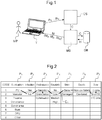
- FIG. 1 represents an embodiment for a deployment of the invention.
- the person MP may be a physician, a nurse, a pharmacist, a physician assistant, or any appropriate person according to the local professional regulations and of the urgent nature of the medical care to be provided. In some situation, the invention may also be deployed on the field, in particular in urgent situations.
- An advantage of the invention is that the person is assisted so that the required level of expertise may be lowered.
- the person determines values p 1 , p 2 , p 3 ...p N of a set of physical properties of the wound to be healed. These physical properties are chosen to allow a meaningful classification of the wound.
- these physical properties correspond to medical characteristics which are visually determinable by the person. These physical properties may within a group made of: etiology of the wound, signs of infection, bed source, level of exudate, peri-ulceral skin, depth and size, as depicted on FIG. 2
- the physical properties p 1 , p 2 ...p N are represented as columns of a table.
- the rows of the table represent the different values that each property can take.
- the first physical parameter p 1 corresponds to the etiology of the wound, which can be, for examples, Pressure Ulcer (PU), vascular, Trauma, Dehiscence, Donor area, Burn, DFU (Diabetic Foot Ulcer), Other. Of course, other typologies of the wound can be designed.
- PU Pressure Ulcer
- Trauma Trauma
- Dehiscence Donor area
- Burn DFU (Diabetic Foot Ulcer)
- Other Diabetic Foot Ulcer
- the second physical parameter p 2 corresponds to the visible signs of infection of the wound and it can take only two values: yes or no.
- the third physical parameter p 3 correspond to the Bed source and can take as possible values: Necrotic tissue, Sloughy wounds, Granulation or Epitelisation.
- the fourth physical parameter p 4 correspond to the level of Exudation, which can take as possible values: No, Low, Medium, High.
- the fifth physical parameter p 5 correspond to the aspect of the peri-ulceral skin and can take as values: Healthy or Damaged.
- the six physical parameter p 6 correspond to the Cavity of the wound and can take as values: No cavity or Cavity.
- the seventh physical parameter p 4 correspond to the size of the wound and can take as values : ⁇ 10cm 2 or >10cm 2
- the possible values that can be taken by each of the physical parameters are examples only. It should be understood that many other possibilities can be designed. For instance, for the size of the wound, p 7 , the threshold 5 and 10 cms can be adapted, as well as the number of possible intervals (here 2).
- the observation can be direct, during a visit of the injured person to the medical facility for instance.
- the observation can also be indirect, for instance on a photography or through a video or other technical means allowing the person to provide medical care on a remote location.
- the values of all or some of the physical parameters may be measured thanks to measurement means, in order to acquire better assessment of the wound's characteristic.
- the type of measurement means depends of course on the physical parameter to measure.
- the observed or measured values of the physical parameters can be then entered into the automatic classification system CS, through a communication terminal T.
- the communication terminal is any electronic device having a man-machine interface able to input data, and communication means allowing transferring the inputted data to the automatic classification system.
- the automatic classification system CS, the terminal T and the automatic matching system MS are embedded into a same data processing system.
- the communication means between the terminal and the classification and matching systems are internal communication means, basically software means.
- the automatic matching system MS and the automatic classification system CS are embedded in a first data processing system (a "server"), whereas the terminal T constitutes a distinct, and possibly remote, second processing system.
- the communication means maybe any type of networking solution, including Ethernet, Wifi, WLAN, etc.
- the terminal T may be a desktop computer, a laptop computer, a smartphone, a tablet, or any other similar devices.
- the Man machine interface can be a regular keyboard, a virtual keyboard displayed on a touchscreen, a vocal commanded input mechanism, etc.
- the automatic classification system CS receives the values inputted by the person MP, and can then determine a class C for the wound corresponding to these values.
- the class can be simply determined by a combination of the values of the physical parameters: the values form a vector which identifies a unique class C.
- each possible value is assigned to a digital code, shown on the first column "1".
- the code ranges from 1 to 8.
- each combination of values of the physical parameters p 1 , p 2 ...p 7 can correspond to a vector of such codes.
- the combination C1 depicted as a line linking values over each physical parameter, can be written as a vector "1212112".
- a class can be assigned to the combination of values in different ways.
- the assignment can be straightforward, so that the class C is directly indicated by the vector (e.g. 1212112).
- a correspondence can be provided, as a mathematical formula (e.g. a hashing mechanism) or matching table.
- This class C can then be inputted into the automatic matching system MS for determining an identification Id of a kit corresponding to this class. This determination is based on a database DB associating classes C and identifications of kits.
- This database can be provisioned in advance according to the available kits on the market, and may be customized according to the know-how of a responsible person.
- kits are associated within the database DB. Additional information can also be associated for internal purpose but also for being displayed to the person. This additional information may comprise indication about the severity of the wound, indication about a next visit of the injured person, a usual name for the wound, etc.
- the person can be notified in case of wrong evolution of the wound or treatment. If in a determine time the wound is not progressing, the he or she will receive an alert and it will be offered him/her to send the wound data to an expert for advice. Or if the person is using a treatment for a too long or an inappropriate time, he/she will receive an alert for the wrong use, for example the silver treatment should not be applied more than 2 weeks.
- kits comprise at least one product adapted for healing the wound corresponding to the class C.
- the product is basically a dressing or a set of dressings, but other products are possible like bandages, creams, balms, etc.
- the dressing is accurately adapted to the wound to match its physical parameters (size, etc.)
- kits may be as in the following table: Id Description 1 Necrotic/sloughy wound - damaged perilesional skin - deep (cavitated) 2 Necrotic/sloughy wound - deep (cavitated) 3 Necrotic/sloughy wound 4 Necrotic/sloughy wound with compression therapy 5 Granulating wound - medium/high exudate 6 Granulating wound - medium/high exudate with compression therapy 7 Granulating wound - medium/high exudate-damaged perilesional skin-Cavitated wound 8 Granulating wound - Cavitated wound - medium/high exudate 9 Granulating wound Cavitated wound - low exudate 10 Granulating wound - Cavitated wound - low exudate with compression therapy 11 Burns without signs of infection 12 Burns - Burns without infections signs-medium exudate 13 Necrotic/sloughy wound - damaged perilesional skin - cavitated wound - high exudate with signs of infection 14 Necrotic/sl
- the databases DB makes the association between the classes C and the identification Id of kits.
- the identification Id can then be provided to person. For instance, it can be provided through the same terminal T, and by making use of its man-machine interface.
- Reading it on the screen of the terminal T for instance, the person can simply pick up off shelf the kit which is so identified and either use it actually, or hand it over to the injured person.
- a prediction system in order to evaluate clinically at least a future state for the wound. Taking as input the class C provided by the automatic classification system CS, it can determine a most probable state for the wound, in the form, for instance, as a subsequent class, or subsequent classes. This prediction is based on professional know-how and can be implemented as an expert system or as a database matching a given class with a subsequent class.
- the subsequent class is provided a "most probable class" only, given the fact that the evolution may depart from these prediction under the influence of many factors, including external factors.
- the combination C1 would probably evolve according to the arrows toward a new combination.
- This new combination corresponds to the vector "1222111".
- this vector "1222111” corresponds to a class C associated within the database DB to the identification "2".
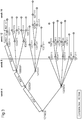
- FIG. 3 depicts a tree representing possible evolutions of a wound, for the example of a wound "121322". Each "column” represents an additional depth inside the tree, corresponding to the time (here counted as weeks). Each branch corresponds to a possible evolution leading to a possible combination, associated with a vector
- the person can then not only pick up the appropriate kit for the present time, but also for the probable future states of the wound. S/he can hand it over to the injured person which can then get dressings appropriate for an extended period of time.
- the person can provide to the injured person the kits number 2 and 3.
- Another embodiment of the invention consists in establishing a like between the automatic matching system and a stock management system.
- the identification Id 1 , Id 2 ... Id M are provided to this stock management system which can check availability of the identified kits and trigger delivery to a provided address.
- Such a stock management system may be linked to an e-commerce solution for billing and payment.
Landscapes
- Engineering & Computer Science (AREA)
- Data Mining & Analysis (AREA)
- Health & Medical Sciences (AREA)
- Medical Informatics (AREA)
- Public Health (AREA)
- Biomedical Technology (AREA)
- Databases & Information Systems (AREA)
- Pathology (AREA)
- Epidemiology (AREA)
- General Health & Medical Sciences (AREA)
- Primary Health Care (AREA)
- Medical Treatment And Welfare Office Work (AREA)
Description
- The invention relates to the medical domain and aims at assisting a person in determining the appropriate products, e.g. dressings, for healing a wound.
- Wounds are injuries impacting the tissues of the skin and, sometimes, of the underlying flesh. They can results from various causes: surgical procedure, infectious disease, falls, object or weapon impacts, animal bites, etc.
- Consequently, the wounds may be of different sorts and require appropriate healing means adapted to their specificity. A diagnosis is therefore performed by a medical professional in order to characterize the wound and decide on the adapted medical products and healing procedure.
- Generally, then, the medical professional decides on the appropriate healing product according to his/her own professional knowledge and expertise. The product consists on an off-the-shelf products package, e.g. dressings' package, which is handed over to the injured person.
- Drawback for such a solution is manifold and comprises relying on the expertise of an experienced medical professional and relying on existing off-the-shelf products package.
- The major issue about these existing packages is notably that they comprise an important number of products, e.g. dressings, of a same type, whereas a wound can evolve in the time such that a product adapted at the time of the visit may become unappropriated some days later. Health professional are at the same time overwhelmed by the large range of products available in their storehouse and they are not trained for all products. Consequently, most of the products are wasted and the injured person may become soon without any appropriate healing means.
- Wound care world is complex and not necessarily well controlled by professional. Costs are also uncontrolled as there is not following of wounds neither of the product consumption per wound.
-
US 2009/216553 A1 discloses methods involving providing a database of wound dressings and dressing information, observing and recording characteristics of a patient's wound, comparing them to the database, and displaying a list of dressings to a user for treating the wound. - The object of the present invention is to alleviate at least partly the above mentioned drawbacks.
- More particularly, the invention aims to develop a system which allows billing per wound instead of billing per product. For this purpose a treatment protocol with treatment kits for all types of wounds and treatment phases has been developed. An IT system will be provided as well in order to support nursing staff in the evaluation of the wound, to monitor the wound and to follow wound care costs.
- This object is achieved with a method for determining appropriate products adapted for healing a wound, comprising steps of:
- Determining values (p1, p2 ...pN) for physical properties of said wound, visually or by measurements, and entering said values into an automatic classification system (CS) through a communication terminal (T);
- Preferred embodiments comprise one or more of the following features, which can be taken separately or together, either in partial combination or in full combination.
- said physical parameters correspond to medical characteristics visually determinable by a person;
- said physical parameters are within a group made of: type of wound, signs of infection, bed source, exudation, state of peri-ulceral skin, cavity and size;
- the method further comprises evaluating an evolution for said wound and providing indication for a next visit.
- said identification is provided to a stock management system for delivering said kit.
- Another aspect of the invention relates to a computer program product comprising a computer readable medium, having thereon a computer program comprising program instructions, the computer program being loadable into a data processing unit and adapted to cause execution of the method previously described when the computer program is run by the data processing unit.
- Still another aspect of the invention concerns a system for assisting a person determining appropriate products adapted for healing a wound, comprising:
- an automatic classification system (CS) adapted to receive values for physical properties of said wound and to determine a classification for said wound corresponding to said values by forming a vector with said values which identifies a unique class
- an automatic matching system (MS) adapted for determining an identification (Id) of a kit corresponding to said class according to a database (DB) associating classes for wounds and identifications of kits, each of said kit comprising at least one product adapted for healing said wound, and for providing said identification (Id) to said person,
- Preferred embodiments comprise one or more of the following features, which can be taken separately or together, either in partial combination or in full combination.
- said physical parameters correspond to medical characteristics visually determinable by said person.
- said physical parameters are within a group made of: type of wound, infection, bed source, exudation, state of skin, depth and size.
- The system further comprises evaluating an evolution for said wound and providing said person with indication for a next visit.
- said identification is provided to a stock management system for delivering said kit.
- The system further comprises communication means with a terminal adapted to receive values and transmit them to said automatic classification system.
- Further features and advantages of the invention will appear from the following description of embodiments of the invention, given as nonlimiting examples, with reference to the accompanying drawings listed hereunder.
-
-
Fig. 1 shows an example of embodiment for the invention. -
Fig. 2 shows an example of physical parameters and possible values. -
Fig. 3 shows a tree of possible evolutions for an example wound - The invention may be deployed within a medical facility and handled by person.
FIG. 1 represents an embodiment for a deployment of the invention. - The person MP may be a physician, a nurse, a pharmacist, a physician assistant, or any appropriate person according to the local professional regulations and of the urgent nature of the medical care to be provided. In some situation, the invention may also be deployed on the field, in particular in urgent situations.
- An advantage of the invention is that the person is assisted so that the required level of expertise may be lowered.
- According to the invention, the person determines values p1, p2, p3...pN of a set of physical properties of the wound to be healed. These physical properties are chosen to allow a meaningful classification of the wound.
- Various possible physical properties may be used for doing such a classification.
- In a preferred embodiment, these physical properties correspond to medical characteristics which are visually determinable by the person. These physical properties may within a group made of: etiology of the wound, signs of infection, bed source, level of exudate, peri-ulceral skin, depth and size, as depicted on
FIG. 2 - On
FIG. 2 , the physical properties p1, p2...pN are represented as columns of a table. The rows of the table represent the different values that each property can take. - The first physical parameter p1 corresponds to the etiology of the wound, which can be, for examples, Pressure Ulcer (PU), vascular, Trauma, Dehiscence, Donor area, Burn, DFU (Diabetic Foot Ulcer), Other. Of course, other typologies of the wound can be designed.
- The second physical parameter p2 corresponds to the visible signs of infection of the wound and it can take only two values: yes or no.
- The third physical parameter p3 correspond to the Bed source and can take as possible values: Necrotic tissue, Sloughy wounds, Granulation or Epitelisation.
- The fourth physical parameter p4 correspond to the level of Exudation, which can take as possible values: No, Low, Medium, High.
- The fifth physical parameter p5 correspond to the aspect of the peri-ulceral skin and can take as values: Healthy or Damaged.
- The six physical parameter p6 correspond to the Cavity of the wound and can take as values: No cavity or Cavity.
- The seventh physical parameter p4 correspond to the size of the wound and can take as values : <10cm2 or >10cm2
- The possible values that can be taken by each of the physical parameters are examples only. It should be understood that many other possibilities can be designed. For instance, for the size of the wound, p7, the
threshold - Similarly, in these example, 7 physical parameters (N=7) are used, but the invention may be embodied with fewer or more physical parameters.
- The determination of these values can be made clinically by the person by simple observation of the wound.
- The observation can be direct, during a visit of the injured person to the medical facility for instance. The observation can also be indirect, for instance on a photography or through a video or other technical means allowing the person to provide medical care on a remote location.
- Also, the values of all or some of the physical parameters may be measured thanks to measurement means, in order to acquire better assessment of the wound's characteristic. The type of measurement means depends of course on the physical parameter to measure.
- The observed or measured values of the physical parameters can be then entered into the automatic classification system CS, through a communication terminal T.
- The communication terminal is any electronic device having a man-machine interface able to input data, and communication means allowing transferring the inputted data to the automatic classification system.
- In some embodiments, the automatic classification system CS, the terminal T and the automatic matching system MS are embedded into a same data processing system. The communication means between the terminal and the classification and matching systems are internal communication means, basically software means.
- In other embodiments, the automatic matching system MS and the automatic classification system CS are embedded in a first data processing system (a "server"), whereas the terminal T constitutes a distinct, and possibly remote, second processing system. In this case, the communication means maybe any type of networking solution, including Ethernet, Wifi, WLAN, etc.
- The terminal T may be a desktop computer, a laptop computer, a smartphone, a tablet, or any other similar devices.
- The Man machine interface can be a regular keyboard, a virtual keyboard displayed on a touchscreen, a vocal commanded input mechanism, etc.
- The automatic classification system CS receives the values inputted by the person MP, and can then determine a class C for the wound corresponding to these values.
- The class can be simply determined by a combination of the values of the physical parameters: the values form a vector which identifies a unique class C.
- In the example depicted on
FIG. 2 , each possible value is assigned to a digital code, shown on the first column "1". In this example, the code ranges from 1 to 8. - Accordingly, each combination of values of the physical parameters p1, p2...p7 can correspond to a vector of such codes. For instance, the combination C1, depicted as a line linking values over each physical parameter, can be written as a vector "1212112".
- Such an embodiment simplifies the representation of the data within the automatic classification system and automatic matching system, but obviously other embodiments and data representations are designable by the man skilled in the art.
- A class can be assigned to the combination of values in different ways.
- For example, the assignment can be straightforward, so that the class C is directly indicated by the vector (e.g. 1212112). Alternatively, a correspondence can be provided, as a mathematical formula (e.g. a hashing mechanism) or matching table.
- In the example depicted on
FIG. 2 , there are 2016 possible vectors, and thus classes. - This class C can then be inputted into the automatic matching system MS for determining an identification Id of a kit corresponding to this class. This determination is based on a database DB associating classes C and identifications of kits.
- This database can be provisioned in advance according to the available kits on the market, and may be customized according to the know-how of a responsible person.
- For, ideally, all or a substantive part of the possible classes, at least a kit is associated within the database DB. Additional information can also be associated for internal purpose but also for being displayed to the person. This additional information may comprise indication about the severity of the wound, indication about a next visit of the injured person, a usual name for the wound, etc.
- Accordingly, the person can be notified in case of wrong evolution of the wound or treatment. If in a determine time the wound is not progressing, the he or she will receive an alert and it will be offered him/her to send the wound data to an expert for advice. Or if the person is using a treatment for a too long or an inappropriate time, he/she will receive an alert for the wrong use, for example the silver treatment should not be applied more than 2 weeks.
- The kits comprise at least one product adapted for healing the wound corresponding to the class C.
- The product is basically a dressing or a set of dressings, but other products are possible like bandages, creams, balms, etc.
- Accordingly, the dressing is accurately adapted to the wound to match its physical parameters (size, etc.)
- Examples for kits may be as in the following table:
Id Description 1 Necrotic/sloughy wound - damaged perilesional skin - deep (cavitated) 2 Necrotic/sloughy wound - deep (cavitated) 3 Necrotic/ sloughy wound 4 Necrotic/sloughy wound with compression therapy 5 Granulating wound - medium/ high exudate 6 Granulating wound - medium/high exudate with compression therapy 7 Granulating wound - medium/high exudate-damaged perilesional skin- Cavitated wound 8 Granulating wound - Cavitated wound - medium/high exudate 9 Granulating wound Cavitated wound - low exudate 10 Granulating wound - Cavitated wound - low exudate with compression therapy 11 Burns without signs of infection 12 Burns - Burns without infections signs-medium exudate 13 Necrotic/sloughy wound - damaged perilesional skin - cavitated wound - high exudate with signs of infection 14 Necrotic/sloughy wound - cavitated wound - high exudate with signs of infection 15 Granulating wound - medium/high exudate with signs of infection 16 Granulating wound - damaged perilesional skin - Cavitated wound - medium/high exudate with signs of infection 17 Granulating wound - Cavitated wound - medium/high exudate with signs of infection 18 Burns with signs/risks of infection - The databases DB makes the association between the classes C and the identification Id of kits.
- It can look like in the following example:
C Id Description 1211211 1 Necrotic/sloughy wound - damaged perilesional skin - deep (cavitated) 1211111 2 Necrotic/sloughy wound - deep (cavitated) 1212112 3 Necrotic/sloughy wound 1111211 4 Necrotic/sloughy wound with compression therapy 1111111 5 Granulating wound - medium/high exudate - The identification Id can then be provided to person. For instance, it can be provided through the same terminal T, and by making use of its man-machine interface.
- Reading it on the screen of the terminal T, for instance, the person can simply pick up off shelf the kit which is so identified and either use it actually, or hand it over to the injured person.
- According to the invention, a prediction system is provided in order to evaluate clinically at least a future state for the wound. Taking as input the class C provided by the automatic classification system CS, it can determine a most probable state for the wound, in the form, for instance, as a subsequent class, or subsequent classes. This prediction is based on professional know-how and can be implemented as an expert system or as a database matching a given class with a subsequent class.
- The subsequent class is provided a "most probable class" only, given the fact that the evolution may depart from these prediction under the influence of many factors, including external factors.
- These subsequent classes may be inputted into the automatic matching system MS, which can then determine subsequent identifications Id1, Id2... IdM of kits corresponding to the future state or states.
- In the example depicted on
FIG. 2 , the combination C1 would probably evolve according to the arrows toward a new combination. This new combination corresponds to the vector "1222111". Turning back to the table provided here-above, this vector "1222111" corresponds to a class C associated within the database DB to the identification "2". -
FIG. 3 depicts a tree representing possible evolutions of a wound, for the example of a wound "121322". Each "column" represents an additional depth inside the tree, corresponding to the time (here counted as weeks). Each branch corresponds to a possible evolution leading to a possible combination, associated with a vector - The subsequent identification(s) can then be provided to the person, as previously explained.
- The person can then not only pick up the appropriate kit for the present time, but also for the probable future states of the wound. S/he can hand it over to the injured person which can then get dressings appropriate for an extended period of time.
- In the example, then, the person can provide to the injured person the
kits number - Consequently, the person is assisted in determining which medical products, e.g. dressings, should be provided by determining simple and visible physical parameters.
- In addition, he or she is provided with medical products, e.g. dressings, according to predictions of the evolution of the wound. Therefore, only the appropriate number of products can be provided, and waste of unused medical product is prevented.
- For instance, instead of selling packs of dressing, only the appropriate number of dressing can be sold or prescribed, together with indication to use them properly (i.e. which one corresponds to which state of the wound, and which timing).
- Another embodiment of the invention consists in establishing a like between the automatic matching system and a stock management system. The identification Id1, Id2... IdM are provided to this stock management system which can check availability of the identified kits and trigger delivery to a provided address. Such a stock management system may be linked to an e-commerce solution for billing and payment.
- The invention has been described with reference to preferred embodiments. However, many variations are possible within the scope of the invention.
Inputting said class into an automatic matching system (MS) for determining an identification (Id) of a kit corresponding to said class according to a database (DB) associating classes for wounds and identifications of kits, each of said kit comprising at least one product adapted for healing said wound;
Providing said identification (Id),
wherein the method further comprises the steps of:
Evaluating by a prediction system at least a future state for said wound and determining subsequent classes corresponding to said at least a future state on the basis of the determined class of the wound;
Inputting said subsequent classes into the automatic matching system (MS);
Determining and providing subsequent identifications (Id1, ..., IdM) of kits corresponding to said at least a future state.
Claims (9)
- Method for determining appropriate products adapted for healing a wound, comprising steps of:Determining values (p1, p2...pN) for physical properties of said wound, visually or by measurements, and entering said values into an automatic classification system (CS) through a communication terminal (T);Determining by said automatic classification system a class (C) for said wound corresponding to said values, by forming a vector with said values which identifies a unique class;Inputting said class into an automatic matching system (MS) for determining an identification (Id) of a kit corresponding to said class according to a database (DB) associating classes for wounds and identifications of kits, each of said kit comprising at least one product adapted for healing said wound;Providing said identification (Id),wherein the method further comprises the steps of:Evaluating by a prediction system at least a future state for said wound and determining subsequent classes corresponding to said at least a future state on the basis of the determined class of the wound;Inputting said subsequent classes into the automatic matching system (MS);Determining and providing subsequent identifications (Id1, ..., IdM) of kits corresponding to said at least a future state.
- Method according to the previous claim; wherein said physical parameters are within a group made of: type of wound, signs of infection, bed source, exudation, state of peri-ulceral skin, cavity and size.
- Method according to any of the previous claims, wherein said identification (Id) and subsequent identifications (Id1, ..., IdM) are provided to a stock management system for delivering said kits.
- Computer program product comprising a computer readable medium, having thereon a computer program comprising program instructions, the computer program being loadable into a data processing unit and adapted to cause execution of the method according to any of the claims 1 to 3 when the computer program is run by the data processing unit.
- System for assisting a person determining appropriate products adapted for healing a wound, comprising:- an automatic classification system (CS) adapted to receive values for physical properties of said wound and to determine a classification for said wound corresponding to said values by forming a vector with said values which identifies a unique class- an automatic matching system (MS) adapted for determining an identification (Id) of a kit corresponding to said class according to a database (DB) associating classes for wounds and identifications of kits, each of said kit comprising at least one product adapted for healing said wound, and for providing said identification (Id) to said person,wherein the system further comprises a prediction system for evaluating at least a future state for a wound and determining subsequent classifications corresponding to said at least a future state on the basis of a determined classification of the wound.
- System according to claim 5, wherein said physical parameters correspond to medical characteristics visually determinable by said person.
- System according to the previous claim; wherein said physical parameters are within a group made of: type of wound, infection, bed source, exudation, state of skin, depth and size.
- System according to any of the claims 5 to 7, wherein said identification (Id) is provided to a stock management system for delivering said kit.
- System according to any of the claims 5 to 8, further comprising communication means with a terminal (T) adapted to receive values and transmit them to said automatic classification system (CS).
Applications Claiming Priority (1)
| Application Number | Priority Date | Filing Date | Title |
|---|---|---|---|
| PCT/IB2014/000794 WO2015150852A1 (en) | 2014-04-02 | 2014-04-02 | Automatic determination of appropriate medical products according to wound classification |
Publications (2)
| Publication Number | Publication Date |
|---|---|
| EP3127024A1 EP3127024A1 (en) | 2017-02-08 |
| EP3127024B1 true EP3127024B1 (en) | 2018-09-19 |
Family
ID=51033235
Family Applications (1)
| Application Number | Title | Priority Date | Filing Date |
|---|---|---|---|
| EP14734218.2A Active EP3127024B1 (en) | 2014-04-02 | 2014-04-02 | Automatic determination of appropriate medical products according to wound classification |
Country Status (3)
| Country | Link |
|---|---|
| EP (1) | EP3127024B1 (en) |
| ES (1) | ES2697688T3 (en) |
| WO (1) | WO2015150852A1 (en) |
Cited By (1)
| Publication number | Priority date | Publication date | Assignee | Title |
|---|---|---|---|---|
| US11992602B2 (en) | 2018-12-14 | 2024-05-28 | T.J.Smith And Nephew, Limited | Changing therapy devices or wound dressings in reduced pressure wound therapy |
Families Citing this family (3)
| Publication number | Priority date | Publication date | Assignee | Title |
|---|---|---|---|---|
| IT201700084813A1 (en) | 2017-07-25 | 2019-01-25 | Torino Politecnico | METHOD OF CLASSIFICATION AND CORRELATION BETWEEN THE PATHOLOGICAL STATE OF THE SKIN AND THE CORRESPONDING THERAPY AND DOSAGE |
| AU2019405685B2 (en) * | 2018-12-18 | 2025-06-05 | Mölnlycke Health Care Ab | A method for selecting a wound product for a patient |
| CN110135130B (en) * | 2019-04-25 | 2021-03-12 | 武汉虹信科技发展有限责任公司 | Method and system for preventing embedded equipment software from being modified |
Family Cites Families (4)
| Publication number | Priority date | Publication date | Assignee | Title |
|---|---|---|---|---|
| WO2000041714A1 (en) * | 1999-01-19 | 2000-07-20 | Bristol-Myers Squibb Company | Method for determining care and prevention pathways for clinical management of wounds |
| US8407065B2 (en) * | 2002-05-07 | 2013-03-26 | Polyremedy, Inc. | Wound care treatment service using automatic wound dressing fabricator |
| US8595026B2 (en) * | 2008-02-21 | 2013-11-26 | Global Health Products, Inc. | System and methods of obtaining reimbursements for patient treatment |
| US20100241447A1 (en) * | 2008-04-25 | 2010-09-23 | Polyremedy, Inc. | Customization of wound dressing using rule-based algorithm |
-
2014
- 2014-04-02 ES ES14734218T patent/ES2697688T3/en active Active
- 2014-04-02 WO PCT/IB2014/000794 patent/WO2015150852A1/en not_active Ceased
- 2014-04-02 EP EP14734218.2A patent/EP3127024B1/en active Active
Non-Patent Citations (1)
| Title |
|---|
| None * |
Cited By (3)
| Publication number | Priority date | Publication date | Assignee | Title |
|---|---|---|---|---|
| US11992602B2 (en) | 2018-12-14 | 2024-05-28 | T.J.Smith And Nephew, Limited | Changing therapy devices or wound dressings in reduced pressure wound therapy |
| US12303633B2 (en) | 2018-12-14 | 2025-05-20 | T.J.Smith And Nephew, Limited | Changing therapy devices or wound dressings in reduced pressure wound therapy |
| EP4667026A3 (en) * | 2018-12-14 | 2026-02-18 | T.J. Smith & Nephew, Limited | Changing therapy devices or wound dressings in reduced pressure wound therapy |
Also Published As
| Publication number | Publication date |
|---|---|
| EP3127024A1 (en) | 2017-02-08 |
| ES2697688T3 (en) | 2019-01-25 |
| WO2015150852A1 (en) | 2015-10-08 |
Similar Documents
| Publication | Publication Date | Title |
|---|---|---|
| JP7787166B2 (en) | Systems, methods, and computer program products for placement of vascular access devices | |
| CA2810924C (en) | Automatic association of medical elements | |
| US20180150604A1 (en) | Method and System for Determining The Nursing Workload of Care Workers | |
| US20210069390A1 (en) | Apparatuses and systems for monitoring wound closure and delivering local treatment agents | |
| US20130120157A1 (en) | Adhesive bandage and a method for controlling patient information | |
| JP6868423B2 (en) | Dosing support devices, methods and programs | |
| KR102849936B1 (en) | How to Choose Wound Care Products for Your Patients | |
| CN205230050U (en) | Long -range system in hospital of diagnosing | |
| KR102354629B1 (en) | An apparatus for wound management and operations thereof | |
| CN115602312A (en) | Postoperative rehabilitation scheme generation method and device, electronic equipment and storage medium | |
| WO2014164660A1 (en) | System and methods for proving medical care algorithms to a user | |
| WO2015150852A1 (en) | Automatic determination of appropriate medical products according to wound classification | |
| US11547351B2 (en) | Body condition managing device and body condition managing method | |
| JP7161688B2 (en) | Post-surgery infection prediction device, post-surgery infection prediction device production method, post-surgery infection prediction method and program | |
| US20240122528A1 (en) | Sepsis monitoring | |
| Cavanagh et al. | Nonsurgical strategies for healing and preventing recurrence of diabetic foot ulcers | |
| US20200143917A1 (en) | Systems and methods for monitoring and managing cancer patients risk for acute care utilization and/or for improving treatment tolerability | |
| US20140149140A1 (en) | System and method for patient identification index | |
| KR102558521B1 (en) | Server for recommending solution based on user health information and mehtod thereof | |
| WO2020085103A1 (en) | Support device, support method, and recording medium | |
| US20180303427A1 (en) | Eye pressure determination from contact with an eyelid using a moble device | |
| KR101462635B1 (en) | Method and apparatus for providing nursing plan | |
| CN114366378A (en) | Injury processing method, electronic device and storage medium | |
| JP2017220005A (en) | Information processing apparatus, information processing method, program, and information processing system | |
| US20240038372A1 (en) | Information processing device, information processing method, and recording medium |
Legal Events
| Date | Code | Title | Description |
|---|---|---|---|
| PUAI | Public reference made under article 153(3) epc to a published international application that has entered the european phase |
Free format text: ORIGINAL CODE: 0009012 |
|
| STAA | Information on the status of an ep patent application or granted ep patent |
Free format text: STATUS: REQUEST FOR EXAMINATION WAS MADE |
|
| 17P | Request for examination filed |
Effective date: 20161001 |
|
| AK | Designated contracting states |
Kind code of ref document: A1 Designated state(s): AL AT BE BG CH CY CZ DE DK EE ES FI FR GB GR HR HU IE IS IT LI LT LU LV MC MK MT NL NO PL PT RO RS SE SI SK SM TR |
|
| AX | Request for extension of the european patent |
Extension state: BA ME |
|
| DAX | Request for extension of the european patent (deleted) | ||
| REG | Reference to a national code |
Ref country code: DE Ref legal event code: R079 Ref document number: 602014032528 Country of ref document: DE Free format text: PREVIOUS MAIN CLASS: G06F0019000000 Ipc: G16H0050700000 |
|
| GRAP | Despatch of communication of intention to grant a patent |
Free format text: ORIGINAL CODE: EPIDOSNIGR1 |
|
| STAA | Information on the status of an ep patent application or granted ep patent |
Free format text: STATUS: GRANT OF PATENT IS INTENDED |
|
| RIC1 | Information provided on ipc code assigned before grant |
Ipc: G16H 50/70 20180101AFI20180410BHEP |
|
| INTG | Intention to grant announced |
Effective date: 20180507 |
|
| GRAS | Grant fee paid |
Free format text: ORIGINAL CODE: EPIDOSNIGR3 |
|
| GRAA | (expected) grant |
Free format text: ORIGINAL CODE: 0009210 |
|
| STAA | Information on the status of an ep patent application or granted ep patent |
Free format text: STATUS: THE PATENT HAS BEEN GRANTED |
|
| AK | Designated contracting states |
Kind code of ref document: B1 Designated state(s): AL AT BE BG CH CY CZ DE DK EE ES FI FR GB GR HR HU IE IS IT LI LT LU LV MC MK MT NL NO PL PT RO RS SE SI SK SM TR |
|
| REG | Reference to a national code |
Ref country code: GB Ref legal event code: FG4D |
|
| REG | Reference to a national code |
Ref country code: CH Ref legal event code: EP |
|
| REG | Reference to a national code |
Ref country code: AT Ref legal event code: REF Ref document number: 1044174 Country of ref document: AT Kind code of ref document: T Effective date: 20181015 |
|
| REG | Reference to a national code |
Ref country code: IE Ref legal event code: FG4D |
|
| REG | Reference to a national code |
Ref country code: DE Ref legal event code: R096 Ref document number: 602014032528 Country of ref document: DE |
|
| REG | Reference to a national code |
Ref country code: NL Ref legal event code: MP Effective date: 20180919 |
|
| REG | Reference to a national code |
Ref country code: ES Ref legal event code: FG2A Ref document number: 2697688 Country of ref document: ES Kind code of ref document: T3 Effective date: 20190125 |
|
| PG25 | Lapsed in a contracting state [announced via postgrant information from national office to epo] |
Ref country code: BG Free format text: LAPSE BECAUSE OF FAILURE TO SUBMIT A TRANSLATION OF THE DESCRIPTION OR TO PAY THE FEE WITHIN THE PRESCRIBED TIME-LIMIT Effective date: 20181219 Ref country code: LT Free format text: LAPSE BECAUSE OF FAILURE TO SUBMIT A TRANSLATION OF THE DESCRIPTION OR TO PAY THE FEE WITHIN THE PRESCRIBED TIME-LIMIT Effective date: 20180919 Ref country code: RS Free format text: LAPSE BECAUSE OF FAILURE TO SUBMIT A TRANSLATION OF THE DESCRIPTION OR TO PAY THE FEE WITHIN THE PRESCRIBED TIME-LIMIT Effective date: 20180919 Ref country code: NO Free format text: LAPSE BECAUSE OF FAILURE TO SUBMIT A TRANSLATION OF THE DESCRIPTION OR TO PAY THE FEE WITHIN THE PRESCRIBED TIME-LIMIT Effective date: 20181219 Ref country code: SE Free format text: LAPSE BECAUSE OF FAILURE TO SUBMIT A TRANSLATION OF THE DESCRIPTION OR TO PAY THE FEE WITHIN THE PRESCRIBED TIME-LIMIT Effective date: 20180919 Ref country code: FI Free format text: LAPSE BECAUSE OF FAILURE TO SUBMIT A TRANSLATION OF THE DESCRIPTION OR TO PAY THE FEE WITHIN THE PRESCRIBED TIME-LIMIT Effective date: 20180919 |
|
| REG | Reference to a national code |
Ref country code: LT Ref legal event code: MG4D |
|
| PG25 | Lapsed in a contracting state [announced via postgrant information from national office to epo] |
Ref country code: HR Free format text: LAPSE BECAUSE OF FAILURE TO SUBMIT A TRANSLATION OF THE DESCRIPTION OR TO PAY THE FEE WITHIN THE PRESCRIBED TIME-LIMIT Effective date: 20180919 Ref country code: AL Free format text: LAPSE BECAUSE OF FAILURE TO SUBMIT A TRANSLATION OF THE DESCRIPTION OR TO PAY THE FEE WITHIN THE PRESCRIBED TIME-LIMIT Effective date: 20180919 Ref country code: LV Free format text: LAPSE BECAUSE OF FAILURE TO SUBMIT A TRANSLATION OF THE DESCRIPTION OR TO PAY THE FEE WITHIN THE PRESCRIBED TIME-LIMIT Effective date: 20180919 |
|
| REG | Reference to a national code |
Ref country code: AT Ref legal event code: MK05 Ref document number: 1044174 Country of ref document: AT Kind code of ref document: T Effective date: 20180919 |
|
| PG25 | Lapsed in a contracting state [announced via postgrant information from national office to epo] |
Ref country code: AT Free format text: LAPSE BECAUSE OF FAILURE TO SUBMIT A TRANSLATION OF THE DESCRIPTION OR TO PAY THE FEE WITHIN THE PRESCRIBED TIME-LIMIT Effective date: 20180919 Ref country code: IS Free format text: LAPSE BECAUSE OF FAILURE TO SUBMIT A TRANSLATION OF THE DESCRIPTION OR TO PAY THE FEE WITHIN THE PRESCRIBED TIME-LIMIT Effective date: 20190119 Ref country code: NL Free format text: LAPSE BECAUSE OF FAILURE TO SUBMIT A TRANSLATION OF THE DESCRIPTION OR TO PAY THE FEE WITHIN THE PRESCRIBED TIME-LIMIT Effective date: 20180919 Ref country code: EE Free format text: LAPSE BECAUSE OF FAILURE TO SUBMIT A TRANSLATION OF THE DESCRIPTION OR TO PAY THE FEE WITHIN THE PRESCRIBED TIME-LIMIT Effective date: 20180919 Ref country code: RO Free format text: LAPSE BECAUSE OF FAILURE TO SUBMIT A TRANSLATION OF THE DESCRIPTION OR TO PAY THE FEE WITHIN THE PRESCRIBED TIME-LIMIT Effective date: 20180919 Ref country code: CZ Free format text: LAPSE BECAUSE OF FAILURE TO SUBMIT A TRANSLATION OF THE DESCRIPTION OR TO PAY THE FEE WITHIN THE PRESCRIBED TIME-LIMIT Effective date: 20180919 Ref country code: PL Free format text: LAPSE BECAUSE OF FAILURE TO SUBMIT A TRANSLATION OF THE DESCRIPTION OR TO PAY THE FEE WITHIN THE PRESCRIBED TIME-LIMIT Effective date: 20180919 |
|
| PG25 | Lapsed in a contracting state [announced via postgrant information from national office to epo] |
Ref country code: PT Free format text: LAPSE BECAUSE OF FAILURE TO SUBMIT A TRANSLATION OF THE DESCRIPTION OR TO PAY THE FEE WITHIN THE PRESCRIBED TIME-LIMIT Effective date: 20190119 Ref country code: SM Free format text: LAPSE BECAUSE OF FAILURE TO SUBMIT A TRANSLATION OF THE DESCRIPTION OR TO PAY THE FEE WITHIN THE PRESCRIBED TIME-LIMIT Effective date: 20180919 Ref country code: SK Free format text: LAPSE BECAUSE OF FAILURE TO SUBMIT A TRANSLATION OF THE DESCRIPTION OR TO PAY THE FEE WITHIN THE PRESCRIBED TIME-LIMIT Effective date: 20180919 |
|
| REG | Reference to a national code |
Ref country code: DE Ref legal event code: R097 Ref document number: 602014032528 Country of ref document: DE |
|
| PLBE | No opposition filed within time limit |
Free format text: ORIGINAL CODE: 0009261 |
|
| STAA | Information on the status of an ep patent application or granted ep patent |
Free format text: STATUS: NO OPPOSITION FILED WITHIN TIME LIMIT |
|
| PG25 | Lapsed in a contracting state [announced via postgrant information from national office to epo] |
Ref country code: DK Free format text: LAPSE BECAUSE OF FAILURE TO SUBMIT A TRANSLATION OF THE DESCRIPTION OR TO PAY THE FEE WITHIN THE PRESCRIBED TIME-LIMIT Effective date: 20180919 |
|
| 26N | No opposition filed |
Effective date: 20190620 |
|
| PG25 | Lapsed in a contracting state [announced via postgrant information from national office to epo] |
Ref country code: SI Free format text: LAPSE BECAUSE OF FAILURE TO SUBMIT A TRANSLATION OF THE DESCRIPTION OR TO PAY THE FEE WITHIN THE PRESCRIBED TIME-LIMIT Effective date: 20180919 |
|
| REG | Reference to a national code |
Ref country code: CH Ref legal event code: PL |
|
| REG | Reference to a national code |
Ref country code: BE Ref legal event code: MM Effective date: 20190430 |
|
| PG25 | Lapsed in a contracting state [announced via postgrant information from national office to epo] |
Ref country code: MC Free format text: LAPSE BECAUSE OF FAILURE TO SUBMIT A TRANSLATION OF THE DESCRIPTION OR TO PAY THE FEE WITHIN THE PRESCRIBED TIME-LIMIT Effective date: 20180919 Ref country code: LU Free format text: LAPSE BECAUSE OF NON-PAYMENT OF DUE FEES Effective date: 20190402 |
|
| PG25 | Lapsed in a contracting state [announced via postgrant information from national office to epo] |
Ref country code: LI Free format text: LAPSE BECAUSE OF NON-PAYMENT OF DUE FEES Effective date: 20190430 Ref country code: CH Free format text: LAPSE BECAUSE OF NON-PAYMENT OF DUE FEES Effective date: 20190430 |
|
| PG25 | Lapsed in a contracting state [announced via postgrant information from national office to epo] |
Ref country code: BE Free format text: LAPSE BECAUSE OF NON-PAYMENT OF DUE FEES Effective date: 20190430 |
|
| PG25 | Lapsed in a contracting state [announced via postgrant information from national office to epo] |
Ref country code: TR Free format text: LAPSE BECAUSE OF FAILURE TO SUBMIT A TRANSLATION OF THE DESCRIPTION OR TO PAY THE FEE WITHIN THE PRESCRIBED TIME-LIMIT Effective date: 20180919 |
|
| PG25 | Lapsed in a contracting state [announced via postgrant information from national office to epo] |
Ref country code: IE Free format text: LAPSE BECAUSE OF NON-PAYMENT OF DUE FEES Effective date: 20190402 |
|
| PG25 | Lapsed in a contracting state [announced via postgrant information from national office to epo] |
Ref country code: CY Free format text: LAPSE BECAUSE OF FAILURE TO SUBMIT A TRANSLATION OF THE DESCRIPTION OR TO PAY THE FEE WITHIN THE PRESCRIBED TIME-LIMIT Effective date: 20180919 |
|
| PG25 | Lapsed in a contracting state [announced via postgrant information from national office to epo] |
Ref country code: GR Free format text: LAPSE BECAUSE OF FAILURE TO SUBMIT A TRANSLATION OF THE DESCRIPTION OR TO PAY THE FEE WITHIN THE PRESCRIBED TIME-LIMIT Effective date: 20180919 |
|
| PG25 | Lapsed in a contracting state [announced via postgrant information from national office to epo] |
Ref country code: MT Free format text: LAPSE BECAUSE OF FAILURE TO SUBMIT A TRANSLATION OF THE DESCRIPTION OR TO PAY THE FEE WITHIN THE PRESCRIBED TIME-LIMIT Effective date: 20180919 Ref country code: HU Free format text: LAPSE BECAUSE OF FAILURE TO SUBMIT A TRANSLATION OF THE DESCRIPTION OR TO PAY THE FEE WITHIN THE PRESCRIBED TIME-LIMIT; INVALID AB INITIO Effective date: 20140402 |
|
| PG25 | Lapsed in a contracting state [announced via postgrant information from national office to epo] |
Ref country code: MK Free format text: LAPSE BECAUSE OF FAILURE TO SUBMIT A TRANSLATION OF THE DESCRIPTION OR TO PAY THE FEE WITHIN THE PRESCRIBED TIME-LIMIT Effective date: 20180919 |
|
| P01 | Opt-out of the competence of the unified patent court (upc) registered |
Effective date: 20230425 |
|
| P02 | Opt-out of the competence of the unified patent court (upc) changed |
Effective date: 20230425 |
|
| PGFP | Annual fee paid to national office [announced via postgrant information from national office to epo] |
Ref country code: DE Payment date: 20250429 Year of fee payment: 12 |
|
| PGFP | Annual fee paid to national office [announced via postgrant information from national office to epo] |
Ref country code: ES Payment date: 20250505 Year of fee payment: 12 Ref country code: GB Payment date: 20250428 Year of fee payment: 12 |
|
| PGFP | Annual fee paid to national office [announced via postgrant information from national office to epo] |
Ref country code: IT Payment date: 20250422 Year of fee payment: 12 |
|
| PGFP | Annual fee paid to national office [announced via postgrant information from national office to epo] |
Ref country code: FR Payment date: 20250425 Year of fee payment: 12 |