EP3126528B1 - Methods for determining responsiveness to mek/erk inhibitors - Google Patents
Methods for determining responsiveness to mek/erk inhibitors Download PDFInfo
- Publication number
- EP3126528B1 EP3126528B1 EP15773840.2A EP15773840A EP3126528B1 EP 3126528 B1 EP3126528 B1 EP 3126528B1 EP 15773840 A EP15773840 A EP 15773840A EP 3126528 B1 EP3126528 B1 EP 3126528B1
- Authority
- EP
- European Patent Office
- Prior art keywords
- mutation
- adam12
- patient
- gene
- inhibitor
- Prior art date
- Legal status (The legal status is an assumption and is not a legal conclusion. Google has not performed a legal analysis and makes no representation as to the accuracy of the status listed.)
- Active
Links
Images




Classifications
-
- C—CHEMISTRY; METALLURGY
- C12—BIOCHEMISTRY; BEER; SPIRITS; WINE; VINEGAR; MICROBIOLOGY; ENZYMOLOGY; MUTATION OR GENETIC ENGINEERING
- C12Q—MEASURING OR TESTING PROCESSES INVOLVING ENZYMES, NUCLEIC ACIDS OR MICROORGANISMS; COMPOSITIONS OR TEST PAPERS THEREFOR; PROCESSES OF PREPARING SUCH COMPOSITIONS; CONDITION-RESPONSIVE CONTROL IN MICROBIOLOGICAL OR ENZYMOLOGICAL PROCESSES
- C12Q1/00—Measuring or testing processes involving enzymes, nucleic acids or microorganisms; Compositions therefor; Processes of preparing such compositions
- C12Q1/68—Measuring or testing processes involving enzymes, nucleic acids or microorganisms; Compositions therefor; Processes of preparing such compositions involving nucleic acids
- C12Q1/6876—Nucleic acid products used in the analysis of nucleic acids, e.g. primers or probes
- C12Q1/6883—Nucleic acid products used in the analysis of nucleic acids, e.g. primers or probes for diseases caused by alterations of genetic material
- C12Q1/6886—Nucleic acid products used in the analysis of nucleic acids, e.g. primers or probes for diseases caused by alterations of genetic material for cancer
-
- A—HUMAN NECESSITIES
- A61—MEDICAL OR VETERINARY SCIENCE; HYGIENE
- A61P—SPECIFIC THERAPEUTIC ACTIVITY OF CHEMICAL COMPOUNDS OR MEDICINAL PREPARATIONS
- A61P35/00—Antineoplastic agents
-
- C—CHEMISTRY; METALLURGY
- C12—BIOCHEMISTRY; BEER; SPIRITS; WINE; VINEGAR; MICROBIOLOGY; ENZYMOLOGY; MUTATION OR GENETIC ENGINEERING
- C12Q—MEASURING OR TESTING PROCESSES INVOLVING ENZYMES, NUCLEIC ACIDS OR MICROORGANISMS; COMPOSITIONS OR TEST PAPERS THEREFOR; PROCESSES OF PREPARING SUCH COMPOSITIONS; CONDITION-RESPONSIVE CONTROL IN MICROBIOLOGICAL OR ENZYMOLOGICAL PROCESSES
- C12Q2600/00—Oligonucleotides characterized by their use
- C12Q2600/106—Pharmacogenomics, i.e. genetic variability in individual responses to drugs and drug metabolism
-
- C—CHEMISTRY; METALLURGY
- C12—BIOCHEMISTRY; BEER; SPIRITS; WINE; VINEGAR; MICROBIOLOGY; ENZYMOLOGY; MUTATION OR GENETIC ENGINEERING
- C12Q—MEASURING OR TESTING PROCESSES INVOLVING ENZYMES, NUCLEIC ACIDS OR MICROORGANISMS; COMPOSITIONS OR TEST PAPERS THEREFOR; PROCESSES OF PREPARING SUCH COMPOSITIONS; CONDITION-RESPONSIVE CONTROL IN MICROBIOLOGICAL OR ENZYMOLOGICAL PROCESSES
- C12Q2600/00—Oligonucleotides characterized by their use
- C12Q2600/156—Polymorphic or mutational markers
Definitions
- the present invention generally relates to methods for determining the responsiveness of a subject to treatment with a MEK or ERK inhibitor.
- MEK/ERK pathway The Ras-Raf-MEK-ERK signaling cascade (MEK/ERK pathway) is one of key pro-proliferation and pro-survival pathways. Mutations in the MEK/ERK pathway have been found to lead to uncontrolled growth in many cancers (e.g., melanoma). Compounds that inhibit steps in the MEP/ERK pathway have been used to treat cancer. However, some patients that harbor mutations in MEK/ERK pathway show resistance to MEK or ERK inhibitors.
- the U.S patent US2014024539 (A1 ) discloses inter alia methods for predicting or diagnosing a predisposition, existence, progression, sensitivity to chemotherapies and recurrence of a triple negative cancer subtype, in particular, a triple negative subtype of breast cancer (TNBC) also revealing downstream therapeutic implications such as dual activation of RAS/RAF/MEK/ERK and PI3K/AKT/mTOR signaling pathways in mTNBC.
- TNBC triple negative subtype of breast cancer
- the present disclosure provides a method for predicting the responsiveness of a cancer cell to an MEK inhibitor.
- the method comprises detecting the presence of at least one mutation in the ADAM12 gene in the cancer cell with at least one oligonucleotide which allows specific detection of the mutation; wherein presence of mutation in ADAM12 is indicative of decreased responsiveness of the cancer cell to the MEK inhibitor.
- the cancer cell is derived from a cancer patient.
- the MEK inhibitor is Trametinib.
- the mutation in ADAM12 is selected from the group consisting of mutation Q650K, R240L, C440Y, Q228E, H247D, M322I, T97fs, P168L and G308E in ADAM12.
- the detecting step comprises amplifying at least a portion of the gene with the oligonucleotide as primer, and detecting the amplification product and thereby determining the presence of the mutation in the gene.
- the detecting step comprises contacting the nucleic acid sample with the oligonucleotide which specifically hybridizes to the mutation of the gene to form a complex, and detecting the formation of the complex and thereby determining the presence of the mutation in the gene.
- the present disclosure provides a method of identifying a likely responder or a likely non-responder to an MEK inhibitor, comprising detecting the presence of at least one mutation in ADAM12 in a sample from the patient, by contacting the sample with at least one oligonucleotide which allows specific detection of the mutation; identifying the patient as a likely non-responder to the MEK inhibitor if at least one mutation in ADAM12 is detected in the sample.
- the MEK inhibitor is Trametinib.
- the mutation in ADAM12 is selected from the group consisting of mutation Q650K, R240L, C440Y, Q228E, H247D, M322I, T97fs, P168L and G308E in ADAM12.
- the method further comprises recommending the patient who is identified as a likely non-responder not to be treated with a monotherapy of the ERK inhibitor, or not to be treated with an MEK inhibitor.
- the method further comprises recommending the patient who is identified as a likely non-responder to be treated with a different MEK inhibitor, or to be treated with a combined therapy of a different MEK inhibitor and an additional therapeutic agent of distinct mechanism.
- the method further comprises recommending the patient who is identified as a likely responder to be treated with the MEK inhibitor.
- the sample is a cancer cell or tissue derived from the patient.
- the present disclosure provides a method for predicting the responsiveness of a cancer cell to a ERK inhibitor, comprising detecting the presence of at least one mutation in ADAM12 in the cancer cell, by contacting a nucleic acid sample derived from the cancer cell with at least one oligonucleotide which allows specific detection of the mutation; wherein presence of the mutation in ADAM12 is indicative of decreased responsiveness of the cancer cell to the ERK inhibitor.
- the cancer cell is derived from a cancer patient.
- the ERK inhibitor is SCH772984.
- the mutation in ADAM12 is selected from the group consisting of mutation Q650K, R240L, C440Y, Q228E, H247D, M322I, T97fs, P168L and G308E.
- the detecting step comprises amplifying at least a portion of the gene with the oligonucleotide as primer, and detecting the amplification product and thereby determining the presence of the mutation in the gene.
- the detecting step comprises contacting the nucleic acid sample with the oligonucleotide which specifically hybridizes to the mutation of the gene to form a complex, and detecting the formation of the complex and thereby determining the presence of the mutation in the gene.
- the present disclosure provides a method of identifying a likely responder or a likely non-responder to an ERK inhibitor, comprising detecting the presence of at least one mutation in ADAM12 in a sample from the patient, by contacting the sample with at least one oligonucleotide which allows specific detection of the mutation; identifying the patient as a likely non-responder to the ERK inhibitor if at least one mutation in ADAM12 is detected in the sample.
- the ERK inhibitor is SCH772984.
- the mutation in ADAM12 is selected from the group consisting of mutation Q650K, R240L, C440Y, Q228E, H247D, M322I, T97fs, P168L and G308E.
- the method further comprises recommending the patient who is identified as a likely non-responder not to be treated with a monotherapy of the ERK inhibitor, or not to be treated with an ERK inhibitor.
- the method further comprises recommending the patient who is identified as a likely non-responder to be treated with a different ERK inhibitor, or to be treated with a combined therapy of a different ERK inhibitor and an additional therapeutic agent of distinct mechanism.
- the sample is a cancer cell or tissue derived from the patient.
- the present disclosure provides use of a kit for predicting the responsiveness of a cancer cell to an MEK inhibitor comprising at least one oligonucleotide useful for determining the presence of at least one mutation in ADAM12.
- the at least one oligonucleotide comprises a pair of primer useful for amplifying at least a portion of the gene sequence, or comprises a probe useful for specifically hybridizing to the mutation of the gene to form a complex.
- the present disclosure provides use of at least one oligonucleotide in the manufacture of a kit for predicting the responsiveness of a cancer cell or a cancer patient to an MEK inhibitor, wherein the oligonucleotide is useful for detecting the presence of at least one mutation in ADAM12.
- the present disclosure provides use of at least one oligonucleotide in the manufacture of a kit for predicting the responsiveness of a cancer cell or a cancer patient to an ERK inhibitor, wherein the oligonucleotide is useful for detecting the presence of at least one mutation in ADAM12.
- the present disclosure provides use of the kit as above, wherein the use comprises hybridizing at least one oligonucleotide to ADAM 12 nucleic acid sequence encoding at least one mutation selected from Q650K, R240L, C440Y, Q228E, H247D, M322I, T97fs, P168L and G308E.
- the present disclosure provides a method for predicting the responsiveness of a cancer cell to an MEK inhibitor.
- the method comprises detecting the presence of at least one mutation in the ADAM12 gene in the cancer cell, by contacting a nucleic acid sample derived from the cancer cell with at least one oligonucleotide which allows specific detection of the mutation; wherein presence of mutation in ADAM12 is indicative of decreased responsiveness of the cancer cell to the ERK inhibitor.
- the mitogen-activated extracellular signal-regulated kinase (MEK)-extracellular regulated protein kinases (ERK) cascade also known as Ras-Raf-MEK-ERK signaling pathway, is one of the key signaling pathways involved in tumor oncogenic growth and progression.
- the signal pathway starts when a signaling molecule (e.g., a growth factor) binds to the receptor on the cell surface. This triggers Ras (a GTPase) to sap its GDP for a GTP.
- the GTP-bound Ras then activate Raf, which activates MEK, which activates ERK.
- ERK then activates some proteins, such as myc, that control cell division and cell survival.
- MEK inhibitors include without limitation Trametinib (GSK1120212), Selumetinib, Binimetinib (MEK162), PD-325901, Cobimetinib (GDC-0973, XL518), and CI-1040 (PD035901).
- MEK inhibitors include without limitation SCH772984, FR180204, GDC-0994.
- the MEK inhibitor is Trametinib.
- Trametinib (trade name Mekinist) has chemical name N -(3- ⁇ 3-Cyclopropyl-5-[(2-fluoro-4-iodophenyl)amino]-6,8-dimethyl-2,4,7-trioxo-3,4,6,7-tetrahydropyrido[4,3-d]pyrimidin-1(2 H )-yl ⁇ phenyl)acetamide.
- Mekinist trade name Mekinist
- N The structure of Trametinib is illustrated below.
- the term "responsiveness" refers to the likeliness of a cell/individual/patient/subject responding to the treatment of MEK or ERK inhibitor, i.e. showing decreased proliferation/growth and/or increased cell death after being treated with a MEK or ERK inhibitor.
- the responsiveness can be scaled as insensitive (i.e., less likely to respond), sensitive (likely to respond) and uncertain.
- the cell/individual/patient/subject is less likely to respond to a treatment of MEK or ER inhibitor when the cell/individual/patient/subject shows a decreased likeliness that a pathological complete response (pcR), i.e. absence of invasive cancer, will occur.
- pcR pathological complete response
- the deceased likeliness means about 70%, 60%, 50%, 40%, 30%, 20%, 10% likeliness of the pcR occurred in a reference patient (e.g., a patient without mutation in the gene of interest).
- responsiveness of a cell can be evaluated by measuring IC50 of the cell to a MEK or ERK inhibitor.
- mutation refers to the deviation of a genomic DNA from a normal reference (e.g., wild-type genomic DNA), for example, additions, deletions, insertions, rearrangements, inversions, transitions, transversions, frame-shift mutations, nonsense mutations, missense mutations, translocations, and single nucleotide polymorphisms.
- MALDI-TOF MALDI-TOF
- HPLC HPLC
- enzymatic methods SSPC (single strand conformation polymorphism analysis (see Pathol Int (1996) 46, 801-804 )
- hybridization-based assay e.g., Northern-blot, Southern blot, 5'-exonuclease (TaqManTM) probe, molecular beacons, fluorescence energy transfer probes, Scorpion probes).
- the method may include enzymatic amplification of DNA or cDNA fragments of the gene to be evaluated by PCR.
- the resulting PCR products may be subjected to either conventional Sanger-based dideoxy nucleotide sequencing methods or parallel sequencing methods ("next generation sequencing") such as those marketed by Roche (454 technology), Illumina (Solexa technology) ABI (Solid technology) or Invitrogen (IonTorrent). Mutations may be identified from sequence reads by comparison with publicly available gene sequence databases. Alternatively, mutations may be identified by incorporation of allele-specific probes that can either be detected using enzymatic detection reactions, fluorescence, mass spectrometry or others.
- the method may include amplifying DNA or cDNA fragments of the gene of interest using primers specifically bind to only one of normal and mutated sequence.
- primers specifically bind to only one of normal and mutated sequence.
- amplification product can only be found in one of normal and mutated genes.
- the presence of the mutation in the gene can be determined by detecting the presence of the amplification product.
- the method may include contacting the nucleic acid sample with an oligonucleotide probe which specifically hybridizes to the mutation of the gene to form a complex.
- the oligonucleotide probe can be designed as not hybridizing to the normal sequence of the gene.
- the presence of the hybridization complex can be detected using reporter signals, e.g., fluorescence. As a result, the presence of the mutation in the gene can be determined by detecting the formation of the complex.
- the mutation is present in an exon of the gene. In certain embodiment, the presence of the mutation leads to the amino acid change of the polypeptide encoded by the gene.
- Table 3 shows exemplary nucleic acid sequences of the mutations to be determined in accordance to the present invention. As used herein, a specific mutation is annotated as the resulted amino acid change.
- mutation Q650K refers to a codon/triplet encoding amino acid K at position 650 of the gene, where amino acid G exists in wild type sequence.
- ADAM12 gene (Gene ID: 8038) encodes a member of the ADAM (a disintegrin and metaloprotease) protein family.
- ADAM a disintegrin and metaloprotease
- Members of the ADAM family are membrane-anchored proteins structurally related to snake venom disintegrins, and have been found involved in cell-cell and cell-matrix interactions.
- ADAM12 gene has two alternative spliced transcripts: a shorter secreted form and a longer member-bound form .
- COL14A1 gene (Gene ID: 7373) encodes the alpha chain of type XIV collage, a member of the FACIT (fibril-associated collagens with interrupted triple helices) collagen family.
- Type XIV collagen interacts with the fibril surface and is involved in the regulation of fribrillogenesis.
- the mutation in ADAM12 is selected from the group consisting of mutation Q650K, R240L, C440Y, Q228E, H247D, M322I, T97fs, P168L and G308E in ADAM12, "fs" means the mutations leads to frame shift.
- the cancer cell maybe, for example, derived from lung cancer, non small cell lung (NSCL) cancer, bronchioloalviolar cell lung cancer, bone cancer, pancreatic cancer, skin cancer, cancer of the head or neck, cutaneous or intraocular melanoma, uterine cancer, ovarian cancer, rectal cancer, cancer of the anal region, stomach cancer, gastric cancer, colon cancer, breast cancer, uterine cancer, carcinoma of the fallopian tubes, carcinoma of the endometrium, carcinoma of the cervix, carcinoma of the vagina, carcinoma of the vulva, Hodgkin's Disease, cancer of the esophagus, cancer of the small intestine, cancer of the endocrine system, cancer of the thyroid gland, cancer of the parathyroid gland, cancer of the adrenal gland, sarcoma of soft tissue, cancer of the urethra, cancer of the penis, prostate cancer, cancer of the bladder, cancer of the kidney or ureter, renal cell carcinoma, carcinoma of the renal pelvis, mesotheliom
- the cancer cell is derived from a cancer patient.
- the present disclosure provides a method of identifying a likely responder or a likely non-responder to an MEK inhibitor, comprising detecting the presence of at least one mutation in ADAM12 in a sample from the patient, by contacting the sample with at least one oligonucleotide which allows specific detection of the mutation; identifying the patient as a likely non-responder to the MEK inhibitor if at least one mutation in ADAM12 is detected in the sample.
- the term "responder” can refer to an individual/patient/subject that is more likely to respond to a treatment using a MEK or ERK inhibitor.
- More likely to respond refers to an increased likeliness that a pathological complete response will occur in a patient treated with a MEK or ERK inhibitor.
- non-responder can refer to an individual/patient/subject that is less likely to respond to a treatment using a MEK or ERK inhibitor.
- Less likely to respond refers to an decreased likeliness that a pathological complete response will occur in a patient treated with a MEK or ERK inhibitor.
- said patient in cases where it is assessed that the patient is a likely "responder,” said patient is recommended to be treated with an MEK or ERK inhibitor.
- the patient is identified as a likely non-responder, said patient is recommended not to be treated with a monotherapy of the MEK or ERK inhibitor, or not to be treated with an MEK or ERK inhibitor.
- the patient is recommended to be treated with a different MEK inhibitor, or to be treated with a combined therapy of a different MEK inhibitor and an additional therapeutic agent of distinct mechanism.
- an MEK inhibitor different from Trametinib include, without limitation, Selumetinib, Binimetinib (MEK162), PD-325901, Cobimetinib (GDC-0973, XL518), and CI-1040 (PD035901).
- the additional therapeutic agent of distinct mechanism can be an agent targeting PI3K-Akt-mTOR signaling pathway.
- the agents targeting P13K-Akt-mTOR signaling pathway are known in the art and comprise, without limitation, fused pyrimidine derivatives as disclosed in US8022205 (B2) or fused pyrrolopyrimidine derivatives as disclosed in WO2009/099163 .
- the additional agent of distinct mechanism can include c-Met inhibitors (e.g., ARQ197 (taventinib, developed by Daichi Sankyo and ArQule), AMG458 (developed by Amgen), GSK1363089 (also known as XL880 or foretinib, developed GSK), crizotinib (also known as PF2341066, developed by Pfizer), PF04217903 (developed by Pfizer), INCB28060 (developed by Incyte), E7050 (developed by Eisai), MK-2461 (developed by Merck), BMS-777607 (developed by BMS), JNJ-38877605 (developed by Johnson & Johnson), XL184 (developed by BMS/Exelixis)).
- ARQ197 taventinib, developed by Daichi Sankyo and ArQule
- AMG458 developed by Amgen
- GSK1363089 also known as XL880 or foretinib, developed GSK
- the additional therapeutic agent of distinct mechanism can be chemotherapeutic agents (e.g., cyclophosphamide (CTX; e.g. cytoxan®), chlorambucil (CHL; e.g. leukeran®), cisplatin (CisP; e.g. platinol®) busulfan (e.g. myleran®), melphalan, carmustine (BCNU), streptozotocin, triethylenemelamine (TEM), mitomycin C)
- CTL chlorambucil
- CisP cisplatin
- melphalan melphalan
- BCNU carmustine
- TEM triethylenemelamine
- the additional therapeutic agent of distinct mechanism can be anti-metabolites, such as methotrexate (MTX), etoposide (VP16; e.g. vepesid®), 6-mercaptopurine (6MP), 6-thiocguanine (6TG), cytarabine (Ara-C), 5-fluorouracil (5-FU), capecitabine (e.g.Xeloda®), dacarbazine (DTIC)).
- MTX methotrexate
- VP16 etoposide
- 6MP 6-mercaptopurine
- 6MP 6-thiocguanine
- 6TG cytarabine
- 5-FU 5-fluorouracil
- capecitabine e.g.Xeloda®
- the additional therapeutic agent of distinct mechanism can be other antitumor agents, such as paclitaxel (e.g. taxol®) and pactitaxel derivatives, the cytostatic agents, glucocorticoids such as dexamethasone (DEX; e.g. decadron®) and corticosteroids such as prednisone, nucleoside enzyme inhibitors such as hydroxyurea, amino acid depleting enzymes such as asparaginase, leucovorin, folinic acid, raltitrexed, and other folic acid derivatives, and similar, diverse antitumor agents.
- paclitaxel e.g. taxol®
- pactitaxel derivatives pactitaxel derivatives
- the cytostatic agents such as glucocorticoids such as dexamethasone (DEX; e.g. decadron®) and corticosteroids such as prednisone
- nucleoside enzyme inhibitors such as
- the additional therapeutic agent of distinct mechanism can be anti-hormonal agents (e.g., steroid receptor antagonists, anti-estrogens such as tamoxifen, raloxifene, aromatase inhibiting 4(5)-imidazoles, other aromatase inhibitors, 42-hydroxytamoxifen, trioxifene, keoxifene, LY 117018, onapristone, and toremifene (e.g., anti-hormonal agents (e.g., steroid receptor antagonists, anti-estrogens such as tamoxifen, raloxifene, aromatase inhibiting 4(5)-imidazoles, other aromatase inhibitors, 42-hydroxytamoxifen, trioxifene, keoxifene, LY 117018, onapristone, and toremifene (e.g.
- anti-hormonal agents e.g., steroid receptor antagonists, anti-estrogens
- anti-androgens such as flutamide, nilutamide, bicalutamide, leuprolide, and goserelin; and pharmaceutically acceptable salts, acids or derivatives of any of the above; agonists and/or antagonists of glycoprotein hormones such as follicle stimulating hormone (FSH), thyroid stimulating hormone (TSH), and luteinizing hormone (LH) and LHRH (leuteinizing hormone-releasing hormone); the LHRH agonist goserelin acetate, commercially available as Zoladex® (AstraZeneca); the LHRH antagonist D-alaninamide N-acetyl-3-(2-naphthalenyl)-D-alanyl-4-chloro-D-phenylalanyl-3-(3-pyridinyl)-D-alanyl-L-seryl-N6-(3-pyridinylcarbonyl)-L-lysyl-N6-(3-pyridinylcarbonyl)-L
- the additional therapeutic agent of distinct mechanism can be angiogenesis inhibitors (e.g., VEGFR inhibitors, such as SU-5416 and SU-6668 (Sugen Inc. of South San Francisco, Calif., USA), or as described in, for example International Application Nos.
- VEGFR inhibitors e.g., VEGFR inhibitors, such as SU-5416 and SU-6668 (Sugen Inc. of South San Francisco, Calif., USA)
- VEGFR inhibitors such as SU-5416 and SU-6668 (Sugen Inc. of South San Francisco, Calif., USA)
- WO 99/24440 WO 99/62890 , WO 95/21613 , WO 99/61422 , WO 98/50356 , WO 99/10349 , WO 97/32856 , WO 97/22596 , WO 98/54093 , WO 98/02438 , WO 99/16755 , and WO 98/02437 , and US5883113 (A ) , US5886020 (A ), US5792783 (A ), US5834504 (A ) and US6235764 (B1); VEGF inhibitors such as IM862 (Cytran Inc.
- IM862 Cytran Inc.
- VEGF vascular endothelial growth factor
- bevacizumab e.g. AvastinTM, Genentech, South San Francisco, Calif.
- integrin receptor antagonists and integrin antagonists such as to ⁇ v ⁇ 3 , ⁇ v ⁇ 5 and ⁇ v ⁇ 6 integrins, and subtypes thereof, e.g.
- cilengitide EMD 121974
- anti-integrin antibodies such as for example ⁇ v ⁇ 3 specific humanized antibodies (e.g. Vitaxin®); factors such as IFN-alpha US4530901 (A ), US4503035 (A ), and US5231176 (A )); angiostatin and plasminogen fragments (e.g. kringle 14, kringle 5, kringle 1-3 ( O'Reilly, M. S. et al. (1994) Cell 79:315-328 ; Cao et al. (1996) J. Biol. Chem. 271: 29461-29467 ; Cao et al. (1997) J. Biol. Chem.
- ⁇ v ⁇ 3 specific humanized antibodies e.g. Vitaxin®
- factors such as IFN-alpha US4530901 (A ), US4503035 (A ), and US5231176 (A )
- angiostatin and plasminogen fragments e
- PF4 platelet factor 4
- plasminogen activator/urokinase inhibitors plasminogen activator/urokinase inhibitors
- urokinase receptor antagonists heparinases
- fumagillin analogs such as TNP-4701
- suramin and suramin analogs angiostatic steroids
- bFGF antagonists flk-1 and flt-1 antagonists
- anti-angiogenesis agents such as MMP-2 (matrix-metalloprotienase 2) inhibitors and MMP-9 (matrix-metalloprotienase 9) inhibitors).
- the sample is a cancer cell or tissue derived from the patient.
- the present disclosure provides a method for predicting the responsiveness of a cancer cell to a ERK inhibitor, comprising detecting the presence of at least one mutation in ADAM12 in the cancer cell, by contacting a nucleic acid sample derived from the cancer cell with at least one oligonucleotide which allows specific detection of the mutation; wherein presence of the mutation in ADAM12 is indicative of decreased responsiveness of the cancer cell to the ERK inhibitor.
- the cancer cell is derived from a cancer patient.
- the ERK inhibitor is SCH772984.
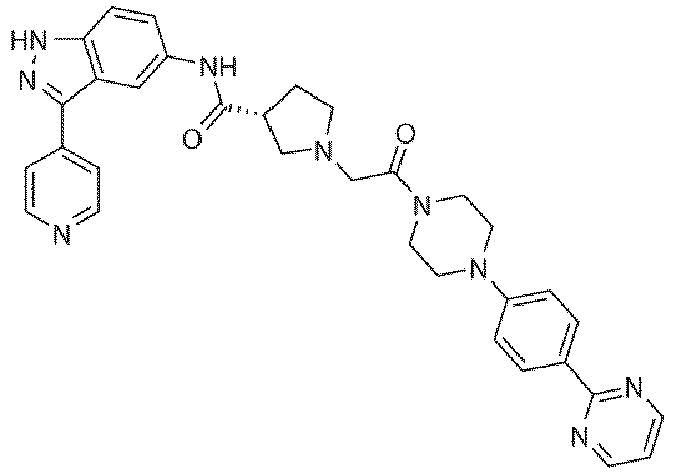
- SCH772984 with chemical name (R)-1-(2-oxo-2-(4-(4-(pyrimidin-2-yl)phenyl)piperazin-1-yl)ethyl)-N-(3-(pyridin-4-yl)-1H-indazol-5-yl)pyrrolidine-3-carboxamide, is a novel, selective and ATP competitive inhibitor of ERK1/2 (see Morris EJ et al., Discovery of a novel ERK inhibitor with activity in models of acquired resistance to BRAF and MEK inhibitors, Cancer Discov. 20133(7): 742-50 ).
- the structure of SCH772984 is illustrated as below.
- the mutation in ADAM12 is selected from the group consisting of mutation Q650K, R240L, C440Y, Q228E, H247D, M322I, T97fs, P168L and G308E in ADAM12.
- the detecting step comprises amplifying at least a portion of the gene with the oligonucleotide as primer, and detecting the amplification product and thereby determining the presence of the mutation in the gene.
- the detecting step comprises contacting the nucleic acid sample with the oligonucleotide which specifically hybridizes to the mutation of the gene to form a complex, and detecting the formation of the complex and thereby determining the presence of the mutation in the gene.
- the present disclosure provides a method of identifying a likely responder or a likely non-responder to an ERK inhibitor, comprising detecting the presence of at least one mutation in ADAM12 in a sample from the patient, by contacting the sample with at least one oligonucleotide which allows specific detection of the mutation; identifying the patient as a likely non-responder to the ERK inhibitor if at least one mutation in ADAM12 is detected in the sample.
- the method further comprises recommending the patient who is identified as a likely non-responder not to be treated with a monotherapy of the ERK inhibitor, or not to be treated with an ERK inhibitor.
- the method further comprises recommending the patient who is identified as a likely non-responder to be treated with a different ERK inhibitor, or to be treated with a combined therapy of a different ERK inhibitor and an additional therapeutic agent of distinct mechanism.
- ERK inhibitors other than SCH772984 include FR180204, GDC-0994.
- the present disclosure provides a kit comprising at least one oligonucleotide useful for determining the presence of at least one mutation in ADAM12.
- the at least one oligonucleotide comprises a pair of primer useful for amplifying at least a portion of the gene sequence.
- the at least one oligonucleotide comprises a probe useful for specifically hybridizing to the mutation of the gene to form a complex.
- the present disclosure provides use of at least one oligonucleotide in the manufacture of a kit for predicting the responsiveness of a cancer cell or a cancer patient to an ERK inhibitor, wherein the oligonucleotide is useful for detecting the presence of at least one mutation in ADAM12.
- the present disclosure provides use of at least one oligonucleotide in the manufacture of a kit for predicting the responsiveness of a cancer cell or a cancer patient to a MEK inhibitor, wherein the oligonucleotide is useful for detecting the presence of at least one mutation in ADAM12.
- the following is an example of identifying genes correlated with sensitivity to MEK inhibitors and/or ERK inhibitors.
- Adherent RPMI-1640 Liver 3.1 Hep G2 243 Adherent EMEM 3.2 HuCCT1 396 Adherent RPMI-1640 3.3 SK-HEP-1 171 Adherent MEM + 0.1mMNEAA 3.4 SNU-387 287 Adherent RPMI-1640 4.
- All the cells will be cultured in the media supplemented with 10% FBS except for which are marked specially, in the temperature of 37°C, 5% CO 2 and 95% humidity.
- Cell viability is assayed by using CellTiter-Glo® Luminescent Cell Viability Assay Kit (Cat. No.: G7572, Promega. Store at -20°C).
- the CellTiter-Glo Buffer was thawed and equilibrated to room temperature prior to use.
- the CellTiter-Glo Buffer may be thawed and stored at room temperature for up to 48 hours prior to use.
- the lyophilized CellTiter-Glo Substrate is equilibrated to room temperature prior to use.
- the appropriate volume (100ml) of CellTiter-Glo Buffer is transferred into the amber bottle containing CellTiter-Glo Substrate to reconstitute the lyophilized enzyme/substrate mixture, which forms the CellTiter-Glo Reagent.
- the entire liquid volume of the CellTiter-Glo Buffer bottle may be added to the CellTiter-Glo Substrate vial. Mix by gently vortexing, swirling or by inverting the contents to obtain a homogeneous solution.
- the CellTiter-Glo Substrate should go into solution easily in less than one minute.
- MEK inhibitor Trametinib was purchased from Selleckchem (Cat No. S2673) and stored at -20 °C before use.
- ERK1/2 inhibitor SCH772984 was purchased from Selleckchem (Cat No. S7101) and stored at -20 °C before use.
- EnVision Multi Label Reader 2104-0010A PerkinElmer(USA); Countstar, Inno-Alliance Biotech (USA); Forma Series II Water Jacket CO2 Incubator, Thermo Scientific (USA); Biological safety Cabinet, Thermo Scientific, (USA); Inverted Microscope, Olympus CKX41SF (Japan).
- 90 ⁇ l cell suspensions were added to two 96-well plates (plates A and B) with the final cell density of 4 ⁇ 10 3 cells/well for 3-day CTG assay (the cell density was optimized before actual study; cell density used in the test may vary for different cell lines).
- the plate A and B group were incubated for overnight in humidified incubator at 37° C with 5% CO 2 .
- test articles and positive controls were dissolved at the concentration indicated at Test Article Dilution map.
- 100 ⁇ solution in PBS was prepared and then diluted with appropriate culture media (1:10) into 10 ⁇ working solutions.
- 10 ⁇ l (10 ⁇ ) drug solutions were dispensed in each well (triplicate for each drug concentration) of the plate B group according to plate inoculation map.
- the test plates were incubated for 4 days in the humidified incubator at 37° with 5% CO 2 .
- CellTiter-Glo® Reagent was added at equal volume of cell culture medium present in each well (e.g., add 100 ⁇ l of reagent to 100 ⁇ l of medium containing cells for a 96 -well plate). Contents were mixed for 2 minutes on an orbital shaker to induce cell lysis. The plate was allowed to incubate at room temperature for 10 minutes to stabilize luminescent signal. Backseal black sticker was placed to the bottom of each plate. Luminescence was recorded using EnVision Multi Label Reader.
- the data were displayed graphically using GraphPad Prism 5.0.
- IC50s a dose-response curve was fitted using a nonlinear regression model with a sigmoidal dose response.
- the formula for calculating surviving rate was shown below; Absolute IC50 is calculated where Y axis set at 50% using GraphPad Prism 5.0.
- the surviving rate % Lum Test article ⁇ Lum Medium control / Lum None treated ⁇ Lum Medium control ⁇ 100 % .
- Lum None treated -Lum Medium control is set as 100% and Lum Medium control is set for 0% surviving rate. T0 value was presented as percentage of Lum None treated .
- the 63 cell lines were divided into 3 groups (See Table 1): a sensitive group (IC50 values were less than 1), an insensitive group (IC50 values are greater than 10), and an uncertain group (the rest). Accordingly, we got 25 sensitive and 22 insensitive cell lines for SCH772984, and 34 sensitive and 24 insensitive cell lines for Trametinib. Only cell lines with genomic data were used in subsequent analysis. The differentially expressed genes and enriched pathways were analysed using GSEA software, the genes with different mutation types were detected using Fisher's exact test.
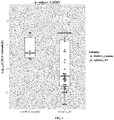
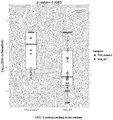
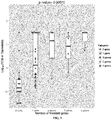
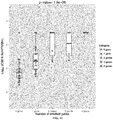
- 32 sensitive and 23 insensitive cell lines have gene expression profiled by Affymetrix U219 arrays, 34 gene sets are significantly enriched at nominal p-value ⁇ 1% (See Table S2). 29 sensitive and 20 insensitive cell lines have mutation information, and ADAM12 (, COL14A1, TNN and TP53; not according to invention) were identified by P-value cutoff of 0.01 (See Table 3 and FIG. 1-5 ).
Landscapes
- Chemical & Material Sciences (AREA)
- Health & Medical Sciences (AREA)
- Life Sciences & Earth Sciences (AREA)
- Organic Chemistry (AREA)
- Proteomics, Peptides & Aminoacids (AREA)
- Pathology (AREA)
- Immunology (AREA)
- Zoology (AREA)
- Wood Science & Technology (AREA)
- Engineering & Computer Science (AREA)
- Analytical Chemistry (AREA)
- Genetics & Genomics (AREA)
- General Health & Medical Sciences (AREA)
- Hospice & Palliative Care (AREA)
- Bioinformatics & Cheminformatics (AREA)
- Oncology (AREA)
- General Engineering & Computer Science (AREA)
- Biochemistry (AREA)
- Molecular Biology (AREA)
- Microbiology (AREA)
- Physics & Mathematics (AREA)
- Biophysics (AREA)
- Biotechnology (AREA)
- Animal Behavior & Ethology (AREA)
- Chemical Kinetics & Catalysis (AREA)
- Public Health (AREA)
- Medicinal Chemistry (AREA)
- Pharmacology & Pharmacy (AREA)
- Veterinary Medicine (AREA)
- Nuclear Medicine, Radiotherapy & Molecular Imaging (AREA)
- General Chemical & Material Sciences (AREA)
- Measuring Or Testing Involving Enzymes Or Micro-Organisms (AREA)
- Medicines That Contain Protein Lipid Enzymes And Other Medicines (AREA)
- Pharmaceuticals Containing Other Organic And Inorganic Compounds (AREA)
Description
- This application claims priority to
Chinese patent application no. 201410135569.9, filed April 4, 2014 - The present invention generally relates to methods for determining the responsiveness of a subject to treatment with a MEK or ERK inhibitor.
- The Ras-Raf-MEK-ERK signaling cascade (MEK/ERK pathway) is one of key pro-proliferation and pro-survival pathways. Mutations in the MEK/ERK pathway have been found to lead to uncontrolled growth in many cancers (e.g., melanoma). Compounds that inhibit steps in the MEP/ERK pathway have been used to treat cancer. However, some patients that harbor mutations in MEK/ERK pathway show resistance to MEK or ERK inhibitors. The U.S patent
US2014024539 (A1 ) discloses inter alia methods for predicting or diagnosing a predisposition, existence, progression, sensitivity to chemotherapies and recurrence of a triple negative cancer subtype, in particular, a triple negative subtype of breast cancer (TNBC) also revealing downstream therapeutic implications such as dual activation of RAS/RAF/MEK/ERK and PI3K/AKT/mTOR signaling pathways in mTNBC. - There is a further need for an effective means of determining which patients having mutations in MEK/ERK pathway will resist to treatment of MEK or ERK inhibitors and for incorporating such determination into effective treatment.
- In one aspect, the present disclosure provides a method for predicting the responsiveness of a cancer cell to an MEK inhibitor. In certain embodiments, the method comprises detecting the presence of at least one mutation in the ADAM12 gene in the cancer cell with at least one oligonucleotide which allows specific detection of the mutation; wherein presence of mutation in ADAM12 is indicative of decreased responsiveness of the cancer cell to the MEK inhibitor.
- In certain embodiments, the cancer cell is derived from a cancer patient.
- In certain embodiments, the MEK inhibitor is Trametinib.
- In certain embodiments, the mutation in ADAM12 is selected from the group consisting of mutation Q650K, R240L, C440Y, Q228E, H247D, M322I, T97fs, P168L and G308E in ADAM12.
- In certain embodiments, the detecting step comprises amplifying at least a portion of the gene with the oligonucleotide as primer, and detecting the amplification product and thereby determining the presence of the mutation in the gene.
- In certain embodiments, the detecting step comprises contacting the nucleic acid sample with the oligonucleotide which specifically hybridizes to the mutation of the gene to form a complex, and detecting the formation of the complex and thereby determining the presence of the mutation in the gene.
- In anther aspect, the present disclosure provides a method of identifying a likely responder or a likely non-responder to an MEK inhibitor, comprising detecting the presence of at least one mutation in ADAM12 in a sample from the patient, by contacting the sample with at least one oligonucleotide which allows specific detection of the mutation; identifying the patient as a likely non-responder to the MEK inhibitor if at least one mutation in ADAM12 is detected in the sample.
- In certain embodiments, the MEK inhibitor is Trametinib.
- In certain embodiments, the mutation in ADAM12 is selected from the group consisting of mutation Q650K, R240L, C440Y, Q228E, H247D, M322I, T97fs, P168L and G308E in ADAM12.
- In certain embodiments, the method further comprises recommending the patient who is identified as a likely non-responder not to be treated with a monotherapy of the ERK inhibitor, or not to be treated with an MEK inhibitor.
- In certain embodiments, the method further comprises recommending the patient who is identified as a likely non-responder to be treated with a different MEK inhibitor, or to be treated with a combined therapy of a different MEK inhibitor and an additional therapeutic agent of distinct mechanism.
- In certain embodiments, the method further comprises recommending the patient who is identified as a likely responder to be treated with the MEK inhibitor.
- In certain embodiments, the sample is a cancer cell or tissue derived from the patient.
- In another aspect, the present disclosure provides a method for predicting the responsiveness of a cancer cell to a ERK inhibitor, comprising detecting the presence of at least one mutation in ADAM12 in the cancer cell, by contacting a nucleic acid sample derived from the cancer cell with at least one oligonucleotide which allows specific detection of the mutation; wherein presence of the mutation in ADAM12 is indicative of decreased responsiveness of the cancer cell to the ERK inhibitor.
- In certain embodiments, the cancer cell is derived from a cancer patient.
- In certain embodiments, the ERK inhibitor is SCH772984.
- In certain embodiments, the mutation in ADAM12 is selected from the group consisting of mutation Q650K, R240L, C440Y, Q228E, H247D, M322I, T97fs, P168L and G308E.
- In certain embodiments, the detecting step comprises amplifying at least a portion of the gene with the oligonucleotide as primer, and detecting the amplification product and thereby determining the presence of the mutation in the gene.
- In certain embodiments, the detecting step comprises contacting the nucleic acid sample with the oligonucleotide which specifically hybridizes to the mutation of the gene to form a complex, and detecting the formation of the complex and thereby determining the presence of the mutation in the gene.
- In yet another aspect, the present disclosure provides a method of identifying a likely responder or a likely non-responder to an ERK inhibitor, comprising detecting the presence of at least one mutation in ADAM12 in a sample from the patient, by contacting the sample with at least one oligonucleotide which allows specific detection of the mutation; identifying the patient as a likely non-responder to the ERK inhibitor if at least one mutation in ADAM12 is detected in the sample.
- In certain embodiments, the ERK inhibitor is SCH772984.
- In certain embodiments, the mutation in ADAM12 is selected from the group consisting of mutation Q650K, R240L, C440Y, Q228E, H247D, M322I, T97fs, P168L and G308E.
- In certain embodiments, the method further comprises recommending the patient who is identified as a likely non-responder not to be treated with a monotherapy of the ERK inhibitor, or not to be treated with an ERK inhibitor.
- In certain embodiments, the method further comprises recommending the patient who is identified as a likely non-responder to be treated with a different ERK inhibitor, or to be treated with a combined therapy of a different ERK inhibitor and an additional therapeutic agent of distinct mechanism.
- In certain embodiments, the sample is a cancer cell or tissue derived from the patient.
- In another aspect, the present disclosure provides use of a kit for predicting the responsiveness of a cancer cell to an MEK inhibitor comprising at least one oligonucleotide useful for determining the presence of at least one mutation in ADAM12.
- In certain embodiments, the at least one oligonucleotide comprises a pair of primer useful for amplifying at least a portion of the gene sequence, or comprises a probe useful for specifically hybridizing to the mutation of the gene to form a complex.
- In another aspect, the present disclosure provides use of at least one oligonucleotide in the manufacture of a kit for predicting the responsiveness of a cancer cell or a cancer patient to an MEK inhibitor, wherein the oligonucleotide is useful for detecting the presence of at least one mutation in ADAM12.
- In another aspect, the present disclosure provides use of at least one oligonucleotide in the manufacture of a kit for predicting the responsiveness of a cancer cell or a cancer patient to an ERK inhibitor, wherein the oligonucleotide is useful for detecting the presence of at least one mutation in ADAM12.
- In another aspect, the present disclosure provides use of the kit as above, wherein the use comprises hybridizing at least one oligonucleotide to ADAM 12 nucleic acid sequence encoding at least one mutation selected from Q650K, R240L, C440Y, Q228E, H247D, M322I, T97fs, P168L and G308E.
-
-
FIG. 1 illustrates the increased sensitivity to MEK inhibitor Trametinib in cells harboring mutations in ADAM12 gene. -
FIG. 2 illustrates the decreased sensitivity to MEK inhibitor Trametinib in cells harboring mutations in COL14A1 gene (not according to invention). -
FIG. 3 illustrates the increased sensitivity to MEK inhibitor Trametinib in cells harboring mutations in TNN gene (not according to invention). -
FIG. 4 illustrates the increased sensitivity to MEK inhibitor Trametinib in cells harboring mutations in TP53 gene (not according to invention). -
FIG. 5 illustrates the increased sensitivity to MEK inhibitor Trametinib in cells harboring multiple mutations in ADAM12, COL14A1, TNN, and TP53 gene. -
FIG. 6 illustrates the increased sensitivity to ERK inhibitor SCH772984 in cells harboring mutations in ADAM12 gene. -
FIG. 7 illustrates the increased sensitivity to ERK inhibitor SCH772984 in cells harboring mutations in PEX5L gene (not according to invention). -
FIG. 8 illustrates the increased sensitivity to ERK inhibitor SCH772984 in cells harboring mutations in TNN gene (not according to invention). -
FIG. 9 illustrates the increased sensitivity to ERK inhibitor SCH772984 in cells harboring mutations in TP53 gene (not according to invention). -
FIG. 10 illustrates the increased sensitivity to ERK inhibitor SCH772984 in cells harboring multiple mutations in ADAM 12, PEX5L, TNN and TP53 gene. - In one aspect, the present disclosure provides a method for predicting the responsiveness of a cancer cell to an MEK inhibitor. In certain embodiments, the method comprises detecting the presence of at least one mutation in the ADAM12 gene in the cancer cell, by contacting a nucleic acid sample derived from the cancer cell with at least one oligonucleotide which allows specific detection of the mutation; wherein presence of mutation in ADAM12 is indicative of decreased responsiveness of the cancer cell to the ERK inhibitor.
- The mitogen-activated extracellular signal-regulated kinase (MEK)-extracellular regulated protein kinases (ERK) cascade, also known as Ras-Raf-MEK-ERK signaling pathway, is one of the key signaling pathways involved in tumor oncogenic growth and progression. The signal pathway starts when a signaling molecule (e.g., a growth factor) binds to the receptor on the cell surface. This triggers Ras (a GTPase) to sap its GDP for a GTP. The GTP-bound Ras then activate Raf, which activates MEK, which activates ERK. ERK then activates some proteins, such as myc, that control cell division and cell survival. When one or more proteins in the pathway, such as Ras, are mutated, it can lead to the signaling pathway stuck in the activated status, which is a necessary step in the development of many cancers. As a result, inhibitors of the MEK/ERK signaling pathway have been developed to treat cancer. Certain patients have been found resistant to MEK or ERK inhibitors. The mechanisms underlying resistance to these inhibitors are unclear.
- Multiple MEK and ERK1/2 inhibitors are currently under clinical investigation for cancer treatment and more agents targeting MEK or ERK1/2 are under preclinical development. Examples of MEK inhibitors include without limitation Trametinib (GSK1120212), Selumetinib, Binimetinib (MEK162), PD-325901, Cobimetinib (GDC-0973, XL518), and CI-1040 (PD035901). ERK inhibitors include without limitation SCH772984, FR180204, GDC-0994.
- In certain embodiments, the MEK inhibitor is Trametinib. Trametinib (trade name Mekinist) has chemical name N-(3-{3-Cyclopropyl-5-[(2-fluoro-4-iodophenyl)amino]-6,8-dimethyl-2,4,7-trioxo-3,4,6,7-tetrahydropyrido[4,3-d]pyrimidin-1(2H)-yl}phenyl)acetamide. The structure of Trametinib is illustrated below.

- As used herein, the term "responsiveness" refers to the likeliness of a cell/individual/patient/subject responding to the treatment of MEK or ERK inhibitor, i.e. showing decreased proliferation/growth and/or increased cell death after being treated with a MEK or ERK inhibitor. In certain embodiments, the responsiveness can be scaled as insensitive (i.e., less likely to respond), sensitive (likely to respond) and uncertain. In certain embodiments, the cell/individual/patient/subject is less likely to respond to a treatment of MEK or ER inhibitor when the cell/individual/patient/subject shows a decreased likeliness that a pathological complete response (pcR), i.e. absence of invasive cancer, will occur. In certain embodiments, the deceased likeliness means about 70%, 60%, 50%, 40%, 30%, 20%, 10% likeliness of the pcR occurred in a reference patient (e.g., a patient without mutation in the gene of interest). In certain embodiments, responsiveness of a cell can be evaluated by measuring IC50 of the cell to a MEK or ERK inhibitor.
- As used herein, the term "mutation" refers to the deviation of a genomic DNA from a normal reference (e.g., wild-type genomic DNA), for example, additions, deletions, insertions, rearrangements, inversions, transitions, transversions, frame-shift mutations, nonsense mutations, missense mutations, translocations, and single nucleotide polymorphisms.
- Methods of detecting the presence of a mutation in a gene are described herein and known in the art (in general, see e.g., Molecular Cloning A Laboratory Manual, 2nd Ed., ed. By Sambrook, Fritsch and Maniatis, Cold Spring Harbor Laboratory Press, 1989). Examples of the method include, without limitation, sequencing of nucleic acids (e.g., Sanger di-deoxy sequencing, "next generation" sequencing methods and single molecule sequencing), PCR (polymerase chain reaction)-based assay (real-time RCR, PCR-RFLP assay (see Cancer Research 59 (1999), 5169-5175), mass-spectrometric genotyping (e.g. MALDI-TOF), HPLC, enzymatic methods and SSPC (single strand conformation polymorphism analysis (see Pathol Int (1996) 46, 801-804)), hybridization-based assay (e.g., Northern-blot, Southern blot, 5'-exonuclease (TaqMan™) probe, molecular beacons, fluorescence energy transfer probes, Scorpion probes).
- In certain embodiments, the method may include enzymatic amplification of DNA or cDNA fragments of the gene to be evaluated by PCR. The resulting PCR products may be subjected to either conventional Sanger-based dideoxy nucleotide sequencing methods or parallel sequencing methods ("next generation sequencing") such as those marketed by Roche (454 technology), Illumina (Solexa technology) ABI (Solid technology) or Invitrogen (IonTorrent). Mutations may be identified from sequence reads by comparison with publicly available gene sequence databases. Alternatively, mutations may be identified by incorporation of allele-specific probes that can either be detected using enzymatic detection reactions, fluorescence, mass spectrometry or others.
- In certain embodiments, the method may include amplifying DNA or cDNA fragments of the gene of interest using primers specifically bind to only one of normal and mutated sequence. As a result, amplification product can only be found in one of normal and mutated genes. As such, the presence of the mutation in the gene can be determined by detecting the presence of the amplification product.
- In certain embodiments, the method may include contacting the nucleic acid sample with an oligonucleotide probe which specifically hybridizes to the mutation of the gene to form a complex. The oligonucleotide probe can be designed as not hybridizing to the normal sequence of the gene. The presence of the hybridization complex can be detected using reporter signals, e.g., fluorescence. As a result, the presence of the mutation in the gene can be determined by detecting the formation of the complex.
- In certain embodiments, the mutation is present in an exon of the gene. In certain embodiment, the presence of the mutation leads to the amino acid change of the polypeptide encoded by the gene. Table 3 shows exemplary nucleic acid sequences of the mutations to be determined in accordance to the present invention. As used herein, a specific mutation is annotated as the resulted amino acid change. For example, mutation Q650K refers to a codon/triplet encoding amino acid K at position 650 of the gene, where amino acid G exists in wild type sequence.
- ADAM12 gene (Gene ID: 8038) encodes a member of the ADAM (a disintegrin and metaloprotease) protein family. Members of the ADAM family are membrane-anchored proteins structurally related to snake venom disintegrins, and have been found involved in cell-cell and cell-matrix interactions. ADAM12 gene has two alternative spliced transcripts: a shorter secreted form and a longer member-bound form .
- COL14A1 gene (Gene ID: 7373) encodes the alpha chain of type XIV collage, a member of the FACIT (fibril-associated collagens with interrupted triple helices) collagen family. Type XIV collagen interacts with the fibril surface and is involved in the regulation of fribrillogenesis.
- In certain embodiments, the mutation in ADAM12 is selected from the group consisting of mutation Q650K, R240L, C440Y, Q228E, H247D, M322I, T97fs, P168L and G308E in ADAM12, "fs" means the mutations leads to frame shift.
- The cancer cell maybe, for example, derived from lung cancer, non small cell lung (NSCL) cancer, bronchioloalviolar cell lung cancer, bone cancer, pancreatic cancer, skin cancer, cancer of the head or neck, cutaneous or intraocular melanoma, uterine cancer, ovarian cancer, rectal cancer, cancer of the anal region, stomach cancer, gastric cancer, colon cancer, breast cancer, uterine cancer, carcinoma of the fallopian tubes, carcinoma of the endometrium, carcinoma of the cervix, carcinoma of the vagina, carcinoma of the vulva, Hodgkin's Disease, cancer of the esophagus, cancer of the small intestine, cancer of the endocrine system, cancer of the thyroid gland, cancer of the parathyroid gland, cancer of the adrenal gland, sarcoma of soft tissue, cancer of the urethra, cancer of the penis, prostate cancer, cancer of the bladder, cancer of the kidney or ureter, renal cell carcinoma, carcinoma of the renal pelvis, mesothelioma, hepatocellular cancer, biliary cancer, chronic or acute leukemia, lymphocytic lymphomas, neoplasms of the central nervous system (CNS), spinal axis tumors, brain stem glioma, glioblastoma multiforme, astrocytomas, schwanomas, ependymonas, medulloblastomas, meningiomas, squamous cell carcinomas, pituitary adenoma, including refractory versions of any of the above cancers, or a combination of one or more of the above cancers.
- In certain embodiments, the cancer cell is derived from a cancer patient.
- In anther aspect, the present disclosure provides a method of identifying a likely responder or a likely non-responder to an MEK inhibitor, comprising detecting the presence of at least one mutation in ADAM12 in a sample from the patient, by contacting the sample with at least one oligonucleotide which allows specific detection of the mutation; identifying the patient as a likely non-responder to the MEK inhibitor if at least one mutation in ADAM12 is detected in the sample.
- As used herein, the term "responder" can refer to an individual/patient/subject that is more likely to respond to a treatment using a MEK or ERK inhibitor.
- " More likely to respond" as used herein refers to an increased likeliness that a pathological complete response will occur in a patient treated with a MEK or ERK inhibitor. The term "non-responder" can refer to an individual/patient/subject that is less likely to respond to a treatment using a MEK or ERK inhibitor. "Less likely to respond" as used herein refers to an decreased likeliness that a pathological complete response will occur in a patient treated with a MEK or ERK inhibitor.
- In certain embodiments, in cases where it is assessed that the patient is a likely "responder," said patient is recommended to be treated with an MEK or ERK inhibitor.
- In cases where the patient is identified as a likely non-responder, said patient is recommended not to be treated with a monotherapy of the MEK or ERK inhibitor, or not to be treated with an MEK or ERK inhibitor.
- In certain embodiments, wherein the patient is identified as a likely non-responder to a MEK inhibitor, the patient is recommended to be treated with a different MEK inhibitor, or to be treated with a combined therapy of a different MEK inhibitor and an additional therapeutic agent of distinct mechanism. Examples of an MEK inhibitor different from Trametinib include, without limitation, Selumetinib, Binimetinib (MEK162), PD-325901, Cobimetinib (GDC-0973, XL518), and CI-1040 (PD035901).
- In certain embodiments, the additional therapeutic agent of distinct mechanism can be an agent targeting PI3K-Akt-mTOR signaling pathway. The agents targeting P13K-Akt-mTOR signaling pathway are known in the art and comprise, without limitation, fused pyrimidine derivatives as disclosed in
US8022205 (B2) or fused pyrrolopyrimidine derivatives as disclosed inWO2009/099163 . - The additional agent of distinct mechanism can include c-Met inhibitors (e.g., ARQ197 (taventinib, developed by Daichi Sankyo and ArQule), AMG458 (developed by Amgen), GSK1363089 (also known as XL880 or foretinib, developed GSK), crizotinib (also known as PF2341066, developed by Pfizer), PF04217903 (developed by Pfizer), INCB28060 (developed by Incyte), E7050 (developed by Eisai), MK-2461 (developed by Merck), BMS-777607 (developed by BMS), JNJ-38877605 (developed by Johnson & Johnson), XL184 (developed by BMS/Exelixis)).
- The additional therapeutic agent of distinct mechanism can be chemotherapeutic agents (e.g., cyclophosphamide (CTX; e.g. cytoxan®), chlorambucil (CHL; e.g. leukeran®), cisplatin (CisP; e.g. platinol®) busulfan (e.g. myleran®), melphalan, carmustine (BCNU), streptozotocin, triethylenemelamine (TEM), mitomycin C)
- The additional therapeutic agent of distinct mechanism can be anti-metabolites, such as methotrexate (MTX), etoposide (VP16; e.g. vepesid®), 6-mercaptopurine (6MP), 6-thiocguanine (6TG), cytarabine (Ara-C), 5-fluorouracil (5-FU), capecitabine (e.g.Xeloda®), dacarbazine (DTIC)).
- The additional therapeutic agent of distinct mechanism can be other antitumor agents, such as paclitaxel (e.g. taxol®) and pactitaxel derivatives, the cytostatic agents, glucocorticoids such as dexamethasone (DEX; e.g. decadron®) and corticosteroids such as prednisone, nucleoside enzyme inhibitors such as hydroxyurea, amino acid depleting enzymes such as asparaginase, leucovorin, folinic acid, raltitrexed, and other folic acid derivatives, and similar, diverse antitumor agents.
- The additional therapeutic agent of distinct mechanism can be anti-hormonal agents (e.g., steroid receptor antagonists, anti-estrogens such as tamoxifen, raloxifene, aromatase inhibiting 4(5)-imidazoles, other aromatase inhibitors, 42-hydroxytamoxifen, trioxifene, keoxifene, LY 117018, onapristone, and toremifene (e.g. Fareston®); anti-androgens such as flutamide, nilutamide, bicalutamide, leuprolide, and goserelin; and pharmaceutically acceptable salts, acids or derivatives of any of the above; agonists and/or antagonists of glycoprotein hormones such as follicle stimulating hormone (FSH), thyroid stimulating hormone (TSH), and luteinizing hormone (LH) and LHRH (leuteinizing hormone-releasing hormone); the LHRH agonist goserelin acetate, commercially available as Zoladex® (AstraZeneca); the LHRH antagonist D-alaninamide N-acetyl-3-(2-naphthalenyl)-D-alanyl-4-chloro-D-phenylalanyl-3-(3-pyridinyl)-D-alanyl-L-seryl-N6-(3-pyridinylcarbonyl)-L-lysyl-N6-(3-pyridinylcarbonyl)-D-lysyl-L-leucyl-N6-(1-methylethyl)-L-lysyl-L-proline (e.g Antide®, Ares-Serono); the LHRH antagonist ganirelix acetate; the steroidal anti-androgens cyproterone acetate (CPA) and megestrol acetate, commercially available as Megace® (Bristol-Myers Oncology); the nonsteroidal anti-androgen flutamide (2-methyl-N-[4, 20-nitro-3-(trifluoromethyl)phenylpropanamide), commercially available as Eulexin® (Schering Corp.); the non-steroidal anti-androgen nilutamide, (5,5-dimethyl-3-[4-nitro-3-(trifluoromethyl-4'-nitrophenyl)-4,4-dimethyl-imidazolidine-dione); and antagonists for other non-permissive receptors, such as antagonists for RAR, RXR, TR, VDR, and the like).
- The additional therapeutic agent of distinct mechanism can be angiogenesis inhibitors (e.g., VEGFR inhibitors, such as SU-5416 and SU-6668 (Sugen Inc. of South San Francisco, Calif., USA), or as described in, for example
International Application Nos. WO 99/24440 WO 99/62890 WO 95/21613 WO 99/61422 WO 98/50356 WO 99/10349 WO 97/32856 WO 97/22596 WO 98/54093 WO 98/02438 WO 99/16755 WO 98/02437 US5883113 (A ) ,US5886020 (A ),US5792783 (A ),US5834504 (A ) andUS6235764 (B1); VEGF inhibitors such as IM862 (Cytran Inc. of Kirkland, Wash., USA); angiozyme, a synthetic ribozyme from Ribozyme (Boulder, Colo.) and Chiron (Emeryville, Calif.); and antibodies to VEGF, such as bevacizumab (e.g. Avastin™, Genentech, South San Francisco, Calif.), a recombinant humanized antibody to VEGF; integrin receptor antagonists and integrin antagonists, such as to αvβ3, αvβ5 and αvβ6 integrins, and subtypes thereof, e.g. cilengitide (EMD 121974), or the anti-integrin antibodies, such as for example αvβ3 specific humanized antibodies (e.g. Vitaxin®); factors such as IFN-alphaUS4530901 (A ),US4503035 (A ), andUS5231176 (A )); angiostatin and plasminogen fragments (e.g. kringle 14, kringle 5, kringle 1-3 (O'Reilly, M. S. et al. (1994) Cell 79:315-328; Cao et al. (1996) J. Biol. Chem. 271: 29461-29467; Cao et al. (1997) J. Biol. Chem. 272:22924-22928); endostatin (O'Reilly, M. S. et al. (1997) Cell 88:277; andInternational Patent Publication No. WO 97/15666 - In certain embodiments, the sample is a cancer cell or tissue derived from the patient.
- In another aspect, the present disclosure provides a method for predicting the responsiveness of a cancer cell to a ERK inhibitor, comprising detecting the presence of at least one mutation in ADAM12 in the cancer cell, by contacting a nucleic acid sample derived from the cancer cell with at least one oligonucleotide which allows specific detection of the mutation; wherein presence of the mutation in ADAM12 is indicative of decreased responsiveness of the cancer cell to the ERK inhibitor.
- In certain embodiments, the cancer cell is derived from a cancer patient.
- In certain embodiments, the ERK inhibitor is SCH772984. SCH772984, with chemical name (R)-1-(2-oxo-2-(4-(4-(pyrimidin-2-yl)phenyl)piperazin-1-yl)ethyl)-N-(3-(pyridin-4-yl)-1H-indazol-5-yl)pyrrolidine-3-carboxamide, is a novel, selective and ATP competitive inhibitor of ERK1/2 (see Morris EJ et al., Discovery of a novel ERK inhibitor with activity in models of acquired resistance to BRAF and MEK inhibitors, Cancer Discov. 20133(7): 742-50). The structure of SCH772984 is illustrated as below.
- In certain embodiments, the mutation in ADAM12 is selected from the group consisting of mutation Q650K, R240L, C440Y, Q228E, H247D, M322I, T97fs, P168L and G308E in ADAM12.
- In certain embodiments, the detecting step comprises amplifying at least a portion of the gene with the oligonucleotide as primer, and detecting the amplification product and thereby determining the presence of the mutation in the gene.
- In certain embodiments, the detecting step comprises contacting the nucleic acid sample with the oligonucleotide which specifically hybridizes to the mutation of the gene to form a complex, and detecting the formation of the complex and thereby determining the presence of the mutation in the gene.
- In yet another aspect, the present disclosure provides a method of identifying a likely responder or a likely non-responder to an ERK inhibitor, comprising detecting the presence of at least one mutation in ADAM12 in a sample from the patient, by contacting the sample with at least one oligonucleotide which allows specific detection of the mutation; identifying the patient as a likely non-responder to the ERK inhibitor if at least one mutation in ADAM12 is detected in the sample.
- In certain embodiments, the method further comprises recommending the patient who is identified as a likely non-responder not to be treated with a monotherapy of the ERK inhibitor, or not to be treated with an ERK inhibitor.
- In certain embodiments, the method further comprises recommending the patient who is identified as a likely non-responder to be treated with a different ERK inhibitor, or to be treated with a combined therapy of a different ERK inhibitor and an additional therapeutic agent of distinct mechanism. Examples of ERK inhibitors other than SCH772984 include FR180204, GDC-0994.
- In another aspect, the present disclosure provides a kit comprising at least one oligonucleotide useful for determining the presence of at least one mutation in ADAM12.
- In certain embodiments, the at least one oligonucleotide comprises a pair of primer useful for amplifying at least a portion of the gene sequence.
- In certain embodiments, the at least one oligonucleotide comprises a probe useful for specifically hybridizing to the mutation of the gene to form a complex.
- In another aspect, the present disclosure provides use of at least one oligonucleotide in the manufacture of a kit for predicting the responsiveness of a cancer cell or a cancer patient to an ERK inhibitor, wherein the oligonucleotide is useful for detecting the presence of at least one mutation in ADAM12.
- In another aspect, the present disclosure provides use of at least one oligonucleotide in the manufacture of a kit for predicting the responsiveness of a cancer cell or a cancer patient to a MEK inhibitor, wherein the oligonucleotide is useful for detecting the presence of at least one mutation in ADAM12.
- The following is an example of identifying genes correlated with sensitivity to MEK inhibitors and/or ERK inhibitors.
- We examined the anti-proliferation activity of a MEK inhibitor, trametinib, and an ERK1/2 inhibitor, SCH772984, in a panel of 50 cell lines (see Table 1).
Table 1. Cell lines used in the screen Cancer Type No. Cell line Ras/raf mutation Growth P. Medium 1. Breast 1.1 BT474 150 Adherent DMEM+0.01mg/ml bovine insulin 1.2 DU4475 423 Suspension RPMI-1640 1.3 MDA-MB-231 576 Adherent L15 1.4 ZR-75-1 493 Adherent RPMI-1640 2. Colorectal 2.1 COLO 205 591 Adherent RPMI-1640 2.2 DLD-1 164 Adherent RPMI-1640 2.3 HCT-116 444 Adherent McCoys' 5a 2.4 HCT-15 627 Adherent RPMI-1640 2.5 HCT-8 354 Adherent RPMI-1640 2.6 HT-29 504 Adherent McCoys' 5a 2.7 KM12 L4 779 Adherent DMEM 2.8 LoVo 737 Adherent F12K 2.9 LS513 775 Adherent RPMI-1640 2.1 RKO 44 Adherent MEM 2.11 SW1116 42 Adherent L15 2.12 SW480 237 Adherent L15 2.13 SW620 590 Adherent L15 3. Liver 3.1 Hep G2 243 Adherent EMEM 3.2 HuCCT1 396 Adherent RPMI-1640 3.3 SK-HEP-1 171 Adherent MEM + 0.1mMNEAA 3.4 SNU-387 287 Adherent RPMI-1640 4. Lung 4.1 A549 101 Adherent F12K 4.2 Calu-6 254 Adherent EMEM 4.3 NCI-H1155 584 Suspension ACL-4 4.4 NCI-H1299 577 Adherent RPMI-1640 4.5 NCI-H1373 360 Adherent RPMI-1640 4.6 NCI-H1395 386 Adherent RPMI-1640 4.7 NCI-H1573 426 Adherent ACL-4 4.8 NCI-H1651 429 Adherent ACL-4 4.9 NCI-H1666 425 Adherent ACL-4 4.1 NCI-H1792 400 Adherent RPMI-1640 4.11 NCI-H2009 513 Adherent HITES+10%FBS 4.12 NCI-H2227 501 Adh.&Susp. HITES+10%FBS 4.13 NCI-H23 380 Adherent RPMI-1640 4.14 NCI-H358 571 Adherent RPMI-1640 4.15 NCI-H441 759 Adherent RPMI-1640 4.16 NCI-H460 24 Adherent RPMI-1640 4.17 SK-LU-1 403 Adherent EMEM 4.18 SW1271 471 Adherent L15 5. Pancreas 5.1 AsPC-1 736 Adherent RPMI-1640 5.2 Capan-1 731 Adherent IMDM+20%FBS 5.3 CFPAC-1 43 Adherent IMDM+20%FBS 5.4 MIA PaCa-2 167 Adherent DMEM+10%FBS+2.5%H S 5.5 PANC-1 156 Adherent DMEM 6.Skin 6.1 PL45 422 Adherent DMEM 6.2 A2058 420 Adherent DMEM 6.3 A-375 716 Adherent DMEM 6.4 SK-MEL-5 154 Adherent MEM+10%FBS+0.01mM NEAA 7. Stomach 7.1 AGS 295 Adherent F12K 7.2 SNU-1 292 Suspension RPMI-1640 7.3 SNU-719 552 Adherent RPMI-1640 - All the cells will be cultured in the media supplemented with 10% FBS except for which are marked specially, in the temperature of 37°C, 5% CO2 and 95% humidity.
- Cell viability is assayed by using CellTiter-Glo® Luminescent Cell Viability Assay Kit (Cat. No.: G7572, Promega. Store at -20°C). To prepare the CellTiter_Glo Reagent, the CellTiter-Glo Buffer was thawed and equilibrated to room temperature prior to use. For convenience the CellTiter-Glo Buffer may be thawed and stored at room temperature for up to 48 hours prior to use. The lyophilized CellTiter-Glo Substrate is equilibrated to room temperature prior to use. The appropriate volume (100ml) of CellTiter-Glo Buffer is transferred into the amber bottle containing CellTiter-Glo Substrate to reconstitute the lyophilized enzyme/substrate mixture, which forms the CellTiter-Glo Reagent. In certain cases, the entire liquid volume of the CellTiter-Glo Buffer bottle may be added to the CellTiter-Glo Substrate vial. Mix by gently vortexing, swirling or by inverting the contents to obtain a homogeneous solution. The CellTiter-Glo Substrate should go into solution easily in less than one minute.
- MEK inhibitor Trametinib was purchased from Selleckchem (Cat No. S2673) and stored at -20 °C before use. ERK1/2 inhibitor SCH772984 was purchased from Selleckchem (Cat No. S7101) and stored at -20 °C before use.
- The following equipment was used in the experiments: EnVision Multi Label Reader 2104-0010A, PerkinElmer(USA); Countstar, Inno-Alliance Biotech (USA); Forma Series II Water Jacket CO2 Incubator, Thermo Scientific (USA); Biological safety Cabinet, Thermo Scientific, (USA); Inverted Microscope, Olympus CKX41SF (Japan).
- The day before the experiment (Day -1), cells were dissociated during the logarithmic growth period with Cell Disassociation Buffer (Gibco 13151-014) and mixed with appropriate cell media and centrifuge at 1000 rpm for 3 minutes. The cells were resuspended and counted using Countstar before adjusting cell concentrations to optimized density (i.e. 4.44×10⁴ cells/ml) with respective culture medium listed in Table 1 for 3-day CTG assay (The cell density was optimized before actual study; cell density used in the test may vary for different cell lines). 90µl cell suspensions were added to two 96-well plates (plates A and B) with the final cell density of 4×10³ cells/well for 3-day CTG assay (the cell density was optimized before actual study; cell density used in the test may vary for different cell lines). The plate A and B group were incubated for overnight in humidified incubator at 37° C with 5% CO2.
- On
Day 0, for plate A group, 10µl culture medium was added to each well for TO reading. CellTiter-Glo® Reagent was added at equal volume of cell culture medium present in each well (e.g., add 100µl of reagent to 100µl of medium containing cells for a 96-well plate). Contents were mixed for 2 minutes on an orbital shaker to facilitate cell lysis. The plate was allowed to incubate at room temperature for 10 minutes to stabilize luminescent signal. Backseal black sticker was added to the bottom of each plate. Luminescence was recorded using EnVision Multi Label Reader. This formed the basis for TO value. - On
Day 0, the test articles and positive controls were dissolved at the concentration indicated at Test Article Dilution map. 100× solution in PBS was prepared and then diluted with appropriate culture media (1:10) into 10×working solutions. 10µl (10×) drug solutions were dispensed in each well (triplicate for each drug concentration) of the plate B group according to plate inoculation map. The test plates were incubated for 4 days in the humidified incubator at 37° with 5% CO2. - On Day3, CellTiter-Glo® Reagent was added at equal volume of cell culture medium present in each well (e.g., add 100µl of reagent to 100µl of medium containing cells for a 96 -well plate). Contents were mixed for 2 minutes on an orbital shaker to induce cell lysis. The plate was allowed to incubate at room temperature for 10 minutes to stabilize luminescent signal. Backseal black sticker was placed to the bottom of each plate. Luminescence was recorded using EnVision Multi Label Reader.
- The data were displayed graphically using GraphPad Prism 5.0. In order to calculate IC50s, a dose-response curve was fitted using a nonlinear regression model with a sigmoidal dose response. The formula for calculating surviving rate was shown below; Absolute IC50 is calculated where Y axis set at 50% using GraphPad Prism 5.0. Software.

- LumNone treated-LumMedium control is set as 100% and LumMedium control is set for 0% surviving rate. T0 value was presented as percentage of LumNone treated.
- We divided the 63 cell lines into sensitive, insensitive, and uncertain groups according to their IC50's for SCH772984 and Trametinib, respectively, then detected genes with differential expression or different mutation types between sensitive and insensitive groups. These genes were enriched in several cancer related pathways.
- The 63 cell lines were divided into 3 groups (See Table 1): a sensitive group (IC50 values were less than 1), an insensitive group (IC50 values are greater than 10), and an uncertain group (the rest). Accordingly, we got 25 sensitive and 22 insensitive cell lines for SCH772984, and 34 sensitive and 24 insensitive cell lines for Trametinib. Only cell lines with genomic data were used in subsequent analysis. The differentially expressed genes and enriched pathways were analysed using GSEA software, the genes with different mutation types were detected using Fisher's exact test.
- For Trametinib, 32 sensitive and 23 insensitive cell lines have gene expression profiled by Affymetrix U219 arrays, 34 gene sets are significantly enriched at nominal p-value < 1% (See Table S2). 29 sensitive and 20 insensitive cell lines have mutation information, and ADAM12 (, COL14A1, TNN and TP53; not according to invention) were identified by P-value cutoff of 0.01 (See Table 3 and
FIG. 1-5 ). - For SCH772984, 23 sensitive and 22 insensitive cell lines have gene expression profiled by Affymetrix U219 arrays, 10 gene sets are significantly enriched at nominal p-value < 1%. 21 sensitive and 18 insensitive cell lines have mutation information, and ADAM12 (, PEX5L, TNN and TP53; not according to invention) were identified by P-value cutoff of 0.01 (See Table 3 and
FIG. 6-10 ).

Table 3. Gene Mutations Detected in MEK/ERK inhibitor insensitive cell lines. Gene Variant Classification Variant Type Tumor Sample Genome Change cDNA_Change Codon_Change Protein_Change ADAM12 Missense SNP DU145 g.chr10:127734680G>T c.1948C>A c.(1948-1950)CAA>AAA p.Q650K ADAM12 Missense SNP DU145 g.chr10:127797193C>A c.719G>T c.(718-720)CGA>CTA p.R240L ADAM12 Missense SNP NCIH1573 g.chr10:127760059C>T c.1319G>A c.(1318-1320)TGT>TAT p.C440Y ADAM12 Missense SNP NCIH1573 g.chr10:127797230G>C c.682C>G c.(682-684)CAG>GAG p.Q228E ADAM12 Missense SNP NCIH1703 g.chr10:127797173G>C c.739C>G c.(739-741)CAC>GAC P.H247D ADAM12 Missense SNP RKO g.chr10:127787024C>T c.966G>A c.(964-966)ATG>ATA p.M322I ADAM12 Frame Shift Del DEL RKO g.chr10:127843846_127843846deIT c.289_289deIA c.(289-291)ACCfs p.T97fs ADAM12 Missense SNP SW480 g.chr10:127806716G>A c.503C>T c.(502-504)CCA>CTA p.P168L ADAM12 Missense SNP HCT15 g.chr10:127787067C>T c.923G>A c.(922-924)GGG>GAG p.G308E - While the invention has been particularly shown and described with reference to specific embodiments (some of which are preferred embodiments), it should be understood by those having skill in the art that various changes in form and detail may be made therein.
-
- <110> Crown Bioscience, Inc. (Taicang)
- <120> Methods for determining responsiveness to MEK/ERK inhibitors
- <130> 061557-8005WO01
- <150>
CN201410135569.9
<151> 2014-04-04 - <160> 10
- <170> PatentIn version 3.5
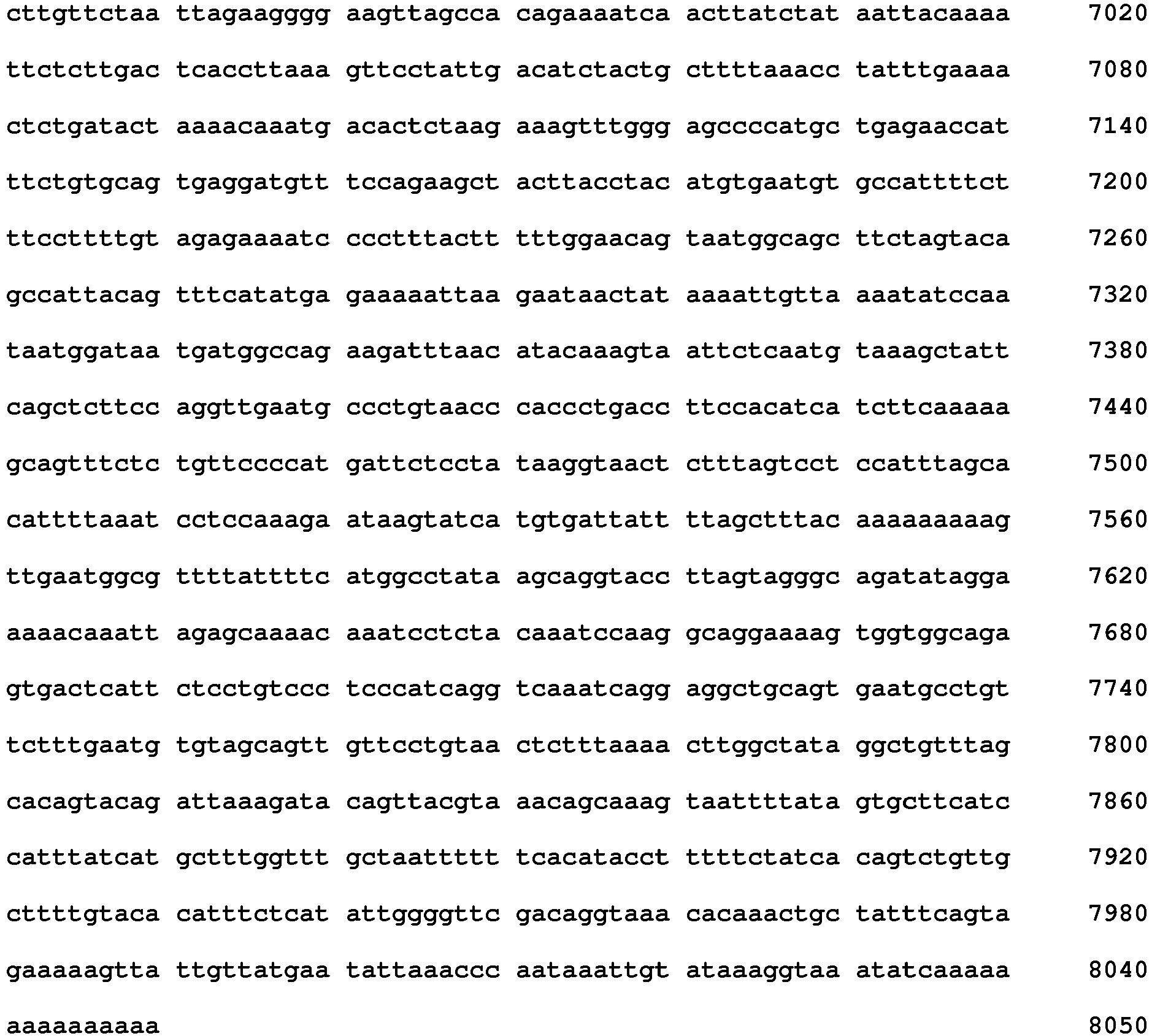
- <210> 1
<211> 8050
<212> DNA
<213> Homo sapiens - <400> 1


- <210> 2
<211> 909
<212> PRT
<213> Homo sapiens - <400> 2


- <210> 3
<211> 6464
<212> DNA
<213> Homo sapiens - <400> 3


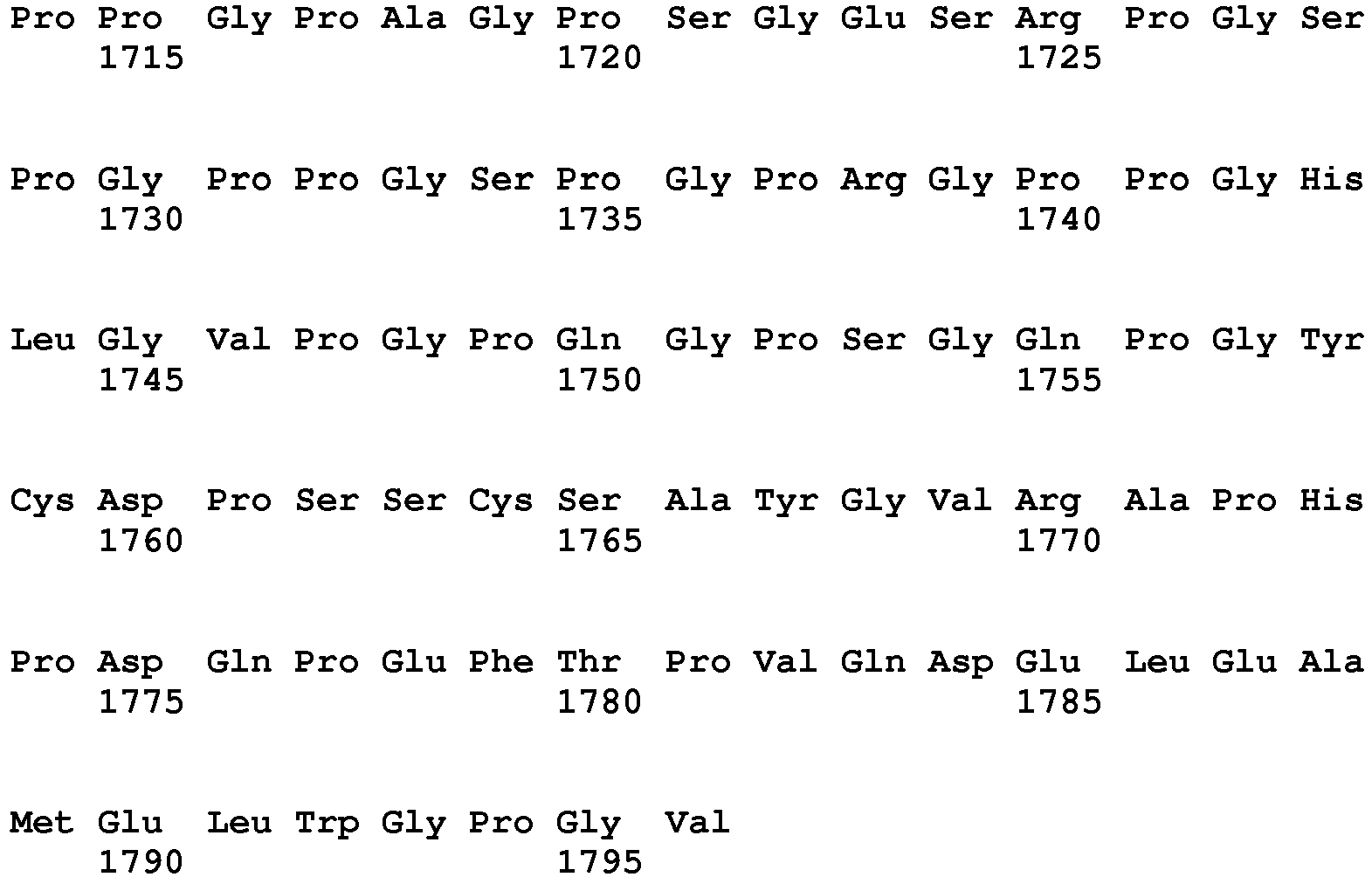
- <210> 4
<211> 1796
<212> PRT
<213> Homo sapiens - <400> 4


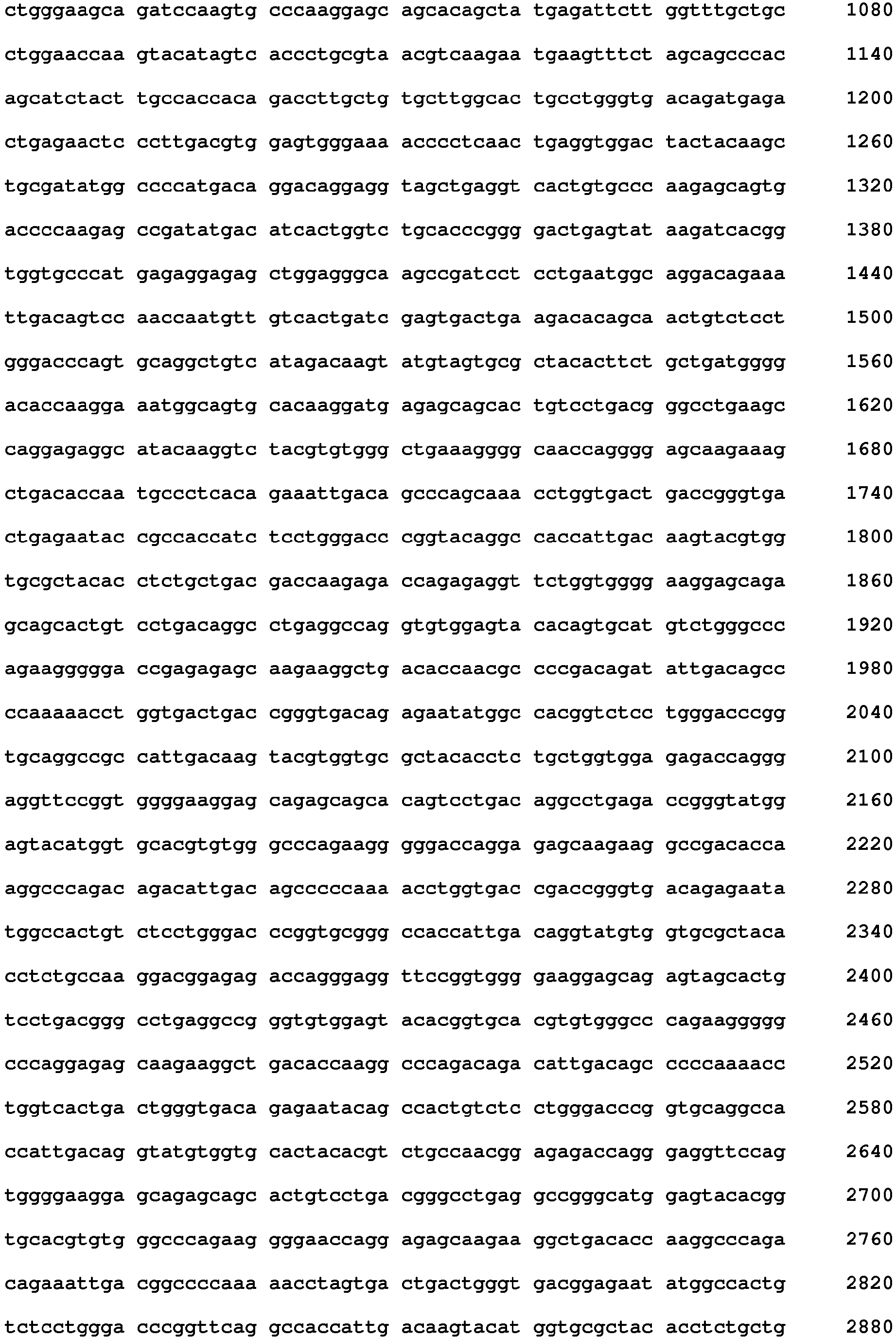
- <210> 5
<211> 5008
<212> DNA
<213> Homo sapiens - <400> 5



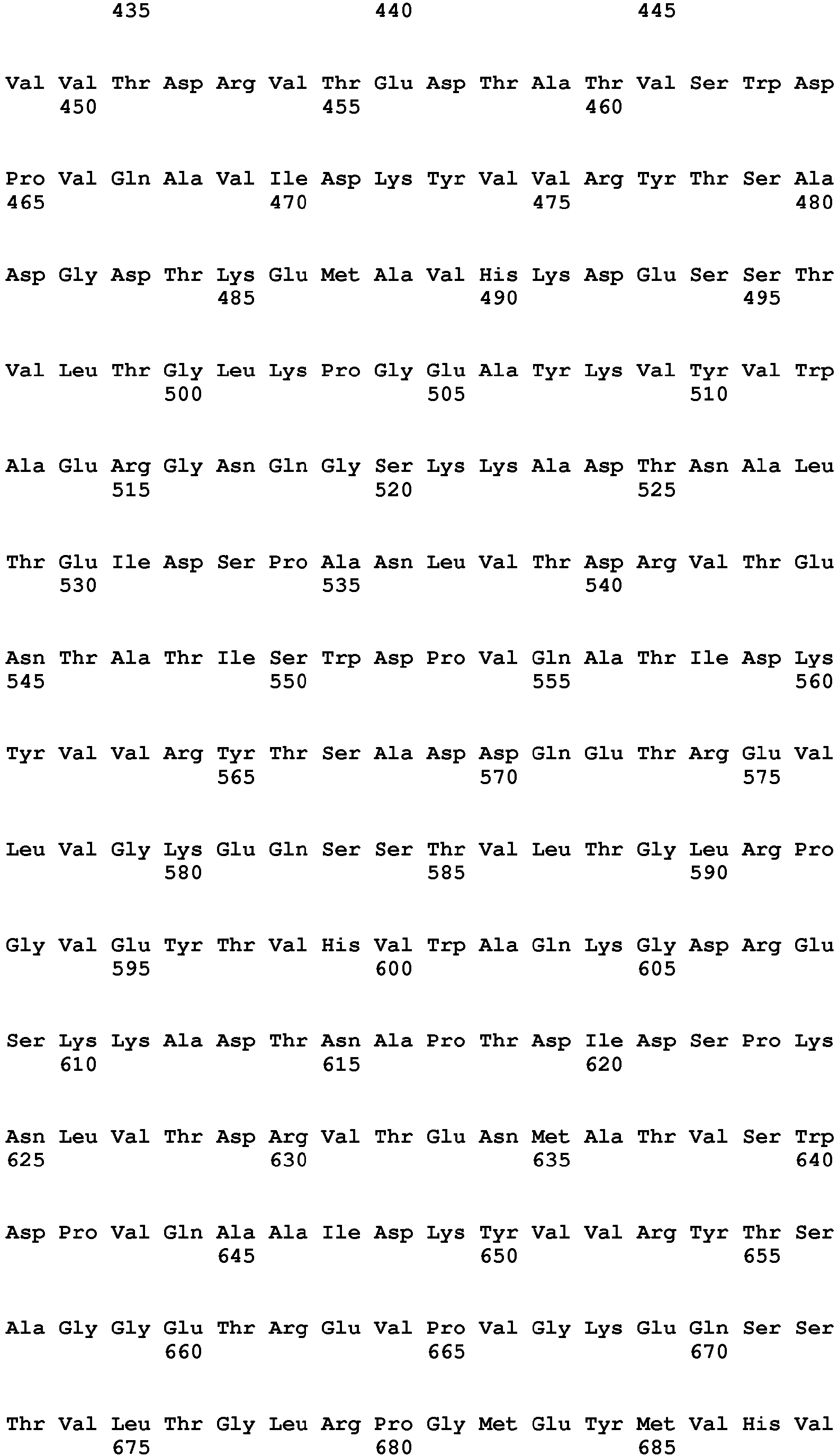
- <210> 6
<211> 1299
<212> PRT
<213> Homo sapiens - <400> 6




- <210> 7
<211> 2588
<212> DNA
<213> Homo sapiens - <400> 7


- <210> 8
<211> 393
<212> PRT
<213> Homo sapiens - <400> 8


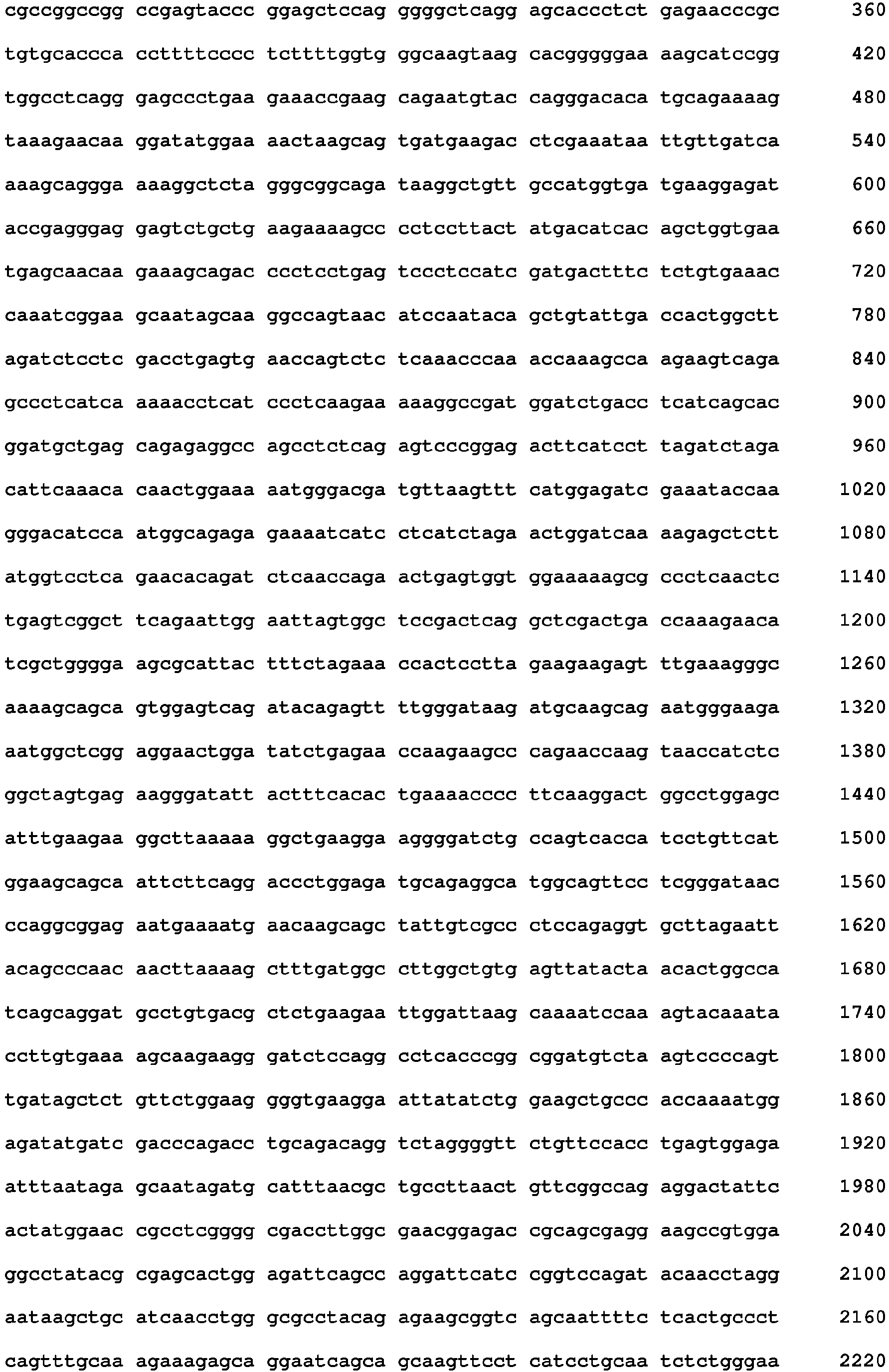
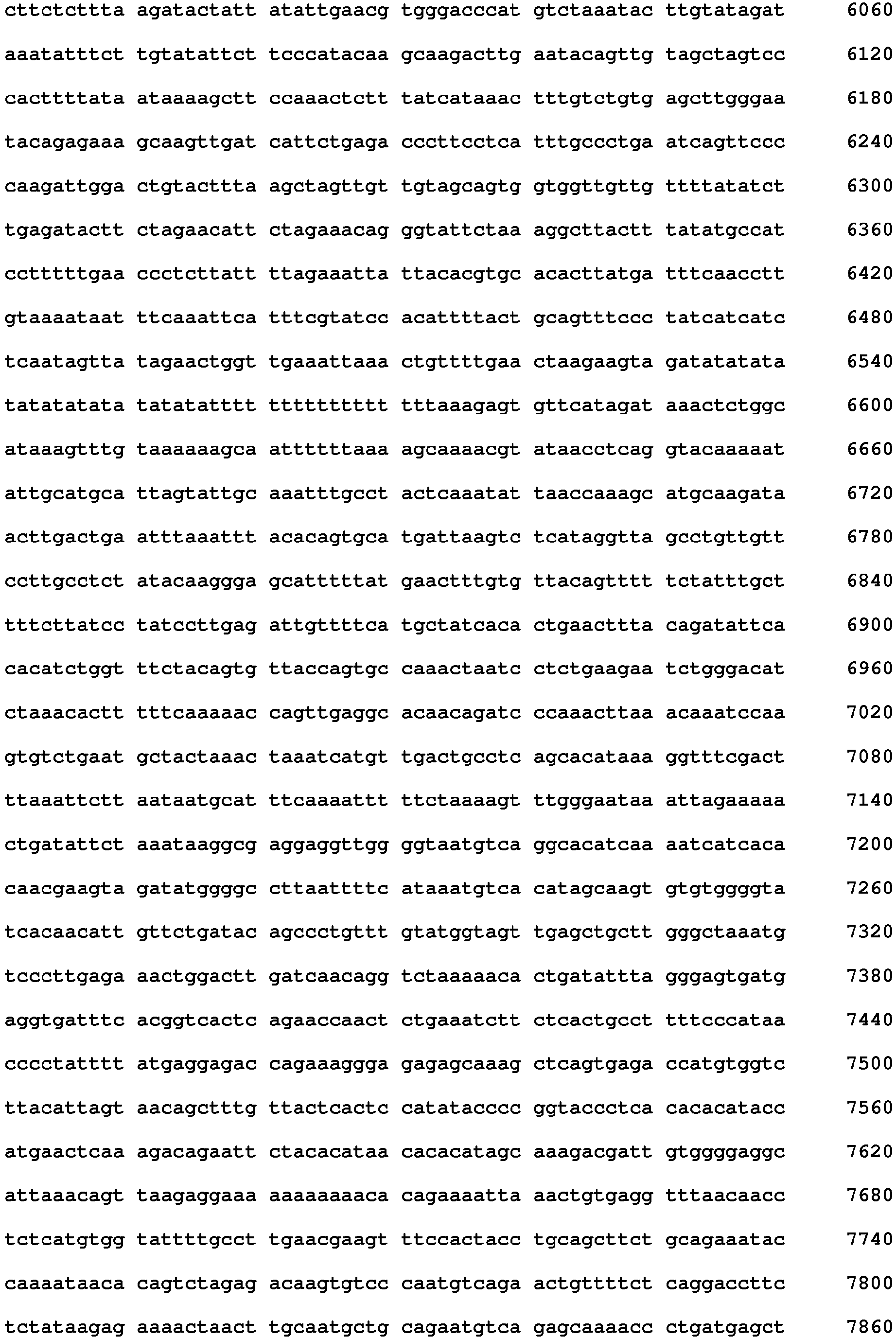
- <210> 9
<211> 9205
<212> DNA
<213> Homo sapiens - <400> 9




- <210> 10
<211> 626
<212> PRT
<213> Homo sapiens - <400> 10


Claims (14)
- A method for predicting the responsiveness of a cancer cell to an MEK inhibitor, comprising:detecting the presence of at least one mutation in ADAM12 in the cancer cell, by contacting a nucleic acid sample derived from the cancer cell with at least one oligonucleotide which allows specific detection of the mutation;wherein presence of mutation in ADAM12 is indicative of decreased responsiveness of the cancer cell to the MEK inhibitor.
- The method of claim 1, wherein the cancer cell is derived from a cancer patient; or wherein the MEK inhibitor is Trametinib.
- The method of claim 1, wherein the mutation in ADAM12 is selected from the group consisting of mutation Q650K, R240L, C440Y, Q228E, H247D, M322I, T97fs, P168L and G308E in ADAM12.
- The method of claim 1, wherein the detecting step comprises amplifying at least a portion of the gene with the oligonucleotide as primer, and detecting the amplification product and thereby determining the presence of the mutation in the gene.
- The method of claim 1, wherein the detecting step comprises contacting the nucleic acid sample with the oligonucleotide which specifically hybridizes to the mutation of the gene to form a complex, and detecting the formation of the complex and thereby determining the presence of the mutation in the gene.
- A method of identifying a likely responder or a likely non-responder to an MEK inhibitor, comprising:a) detecting the presence of at least one mutation in ADAM12 in a sample from the patient, by contacting the sample with at least one oligonucleotide which allows specific detection of the mutation;b) identifying the patient as a likely non-responder to the MEK inhibitor if at least one mutation in ADAM12 is detected in the sample.
- The method of claim 6,
wherein the MEK inhibitor is Trametinib; or
wherein the mutation in ADAM12 is selected from the group consisting of mutation Q650K, R240L, C440Y, Q228E, H247D, M322I, T97fs, P168L and G308E in ADAM12; or
wherein the method further comprises recommending the patient who is identified as a likely non-responder not to be treated with a monotherapy of the MEK inhibitor, or not to be treated with an MEK inhibitor; or
wherein the method further comprises recommending the patient who is identified as a likely non-responder to be treated with a different MEK inhibitor, or to be treated with a combined therapy of a different MEK inhibitor and an additional therapeutic agent of distinct mechanism; or
wherein the method further comprises recommending the patient who is identified as a likely responder to be treated with the MEK inhibitor; or
wherein the sample is a cancer cell or tissue derived from the patient. - A method for predicting the responsiveness of a cancer cell to an ERK inhibitor, comprising:detecting the presence of at least one mutation in ADAM12 in the cancer cell, by contacting a nucleic acid sample derived from the cancer cell with at least one oligonucleotide which allows specific detection of the mutation;wherein presence of the mutation in ADAM12 is indicative of decreased responsiveness of the cancer cell to the ERK inhibitor.
- The method of claim 8,
wherein the cancer cell is derived from a cancer patient; or
wherein the ERK inhibitor is SCH772984; or
wherein the mutation in ADAM12 is selected from the group consisting of mutation Q650K, R240L, C440Y, Q228E, H247D, M322I, T97fs, P168L and G308E in ADAM12;; or
wherein the detecting step comprises amplifying at least a portion of the gene with the oligonucleotide as primer, and detecting the amplification product and thereby determining the presence of the mutation in the gene; or
wherein the detecting step comprises contacting the nucleic acid sample with the oligonucleotide which specifically hybridizes to the mutation of the gene to form a complex, and detecting the formation of the complex and thereby determining the presence of the mutation in the gene. - A method of identifying a likely responder or a likely non-responder to an ERK inhibitor, comprising:a) detecting the presence of at least one mutation in ADAM12 in a sample from the patient, by contacting the sample with at least one oligonucleotide which allows specific detection of the mutation;b) identifying the patient as a likely non-responder to the ERK inhibitor if at least one mutation in ADAM12 is detected in the sample.
- The method of claim 9,
wherein the ERK inhibitor is SCH772984; or
wherein the mutation in ADAM12 is selected from the group consisting of mutation Q650K, R240L, C440Y, Q228E, H247D, M322I, T97fs, P168L and G308E in ADAM12; or
wherein the method further comprises recommending the patient who is identified as a likely non-responder not to be treated with a monotherapy of the ERK inhibitor, or not to be treated with an ERK inhibitor; or
wherein the method further comprises recommending the patient who is identified as a likely non-responder to be treated with a different ERK inhibitor, or to be treated with a combined therapy of a different ERK inhibitor and an additional therapeutic agent of distinct mechanism; or
wherein the sample is a cancer cell or tissue derived from the patient. - Use of a kit for predicting the responsiveness of a cancer cell to an MEK inhibitor comprising at least one oligonucleotide useful in determining the presence of at least one mutation in ADAM12.
- The use of a kit of claim 12, comprising hybridizing at least one oligonucleotide to ADAM 12 nucleic acid sequence encoding at least one mutation selected from Q650K, R240L, C440Y, Q228E, H247D, M322I, T97fs, P168L and G308E.
- The use of a kit of claim 13, wherein the at least one oligonucleotide comprises a pair of primer useful for amplifying at least a portion of the gene sequence, or comprises a probe useful for specifically hybridizing to the mutation of the gene to form a complex.
Priority Applications (1)
| Application Number | Priority Date | Filing Date | Title |
|---|---|---|---|
| EP21170371.5A EP4012049A3 (en) | 2014-04-04 | 2015-04-03 | Methods for determining responsiveness to mek/erk inhibitors |
Applications Claiming Priority (2)
| Application Number | Priority Date | Filing Date | Title |
|---|---|---|---|
| CN201410135569 | 2014-04-04 | ||
| PCT/CN2015/075884 WO2015149721A1 (en) | 2014-04-04 | 2015-04-03 | Methods for determining responsiveness to mek/erk inhibitors |
Related Child Applications (2)
| Application Number | Title | Priority Date | Filing Date |
|---|---|---|---|
| EP21170371.5A Division EP4012049A3 (en) | 2014-04-04 | 2015-04-03 | Methods for determining responsiveness to mek/erk inhibitors |
| EP21170371.5A Division-Into EP4012049A3 (en) | 2014-04-04 | 2015-04-03 | Methods for determining responsiveness to mek/erk inhibitors |
Publications (3)
| Publication Number | Publication Date |
|---|---|
| EP3126528A1 EP3126528A1 (en) | 2017-02-08 |
| EP3126528A4 EP3126528A4 (en) | 2018-02-21 |
| EP3126528B1 true EP3126528B1 (en) | 2021-08-18 |
Family
ID=54239415
Family Applications (3)
| Application Number | Title | Priority Date | Filing Date |
|---|---|---|---|
| EP15773840.2A Active EP3126528B1 (en) | 2014-04-04 | 2015-04-03 | Methods for determining responsiveness to mek/erk inhibitors |
| EP15772589.6A Active EP3126521B1 (en) | 2014-04-04 | 2015-04-03 | Hnf4g-rspo2 fusion gene |
| EP21170371.5A Withdrawn EP4012049A3 (en) | 2014-04-04 | 2015-04-03 | Methods for determining responsiveness to mek/erk inhibitors |
Family Applications After (2)
| Application Number | Title | Priority Date | Filing Date |
|---|---|---|---|
| EP15772589.6A Active EP3126521B1 (en) | 2014-04-04 | 2015-04-03 | Hnf4g-rspo2 fusion gene |
| EP21170371.5A Withdrawn EP4012049A3 (en) | 2014-04-04 | 2015-04-03 | Methods for determining responsiveness to mek/erk inhibitors |
Country Status (7)
| Country | Link |
|---|---|
| US (3) | US10683550B2 (en) |
| EP (3) | EP3126528B1 (en) |
| CN (3) | CN106536753B (en) |
| DK (2) | DK3126528T3 (en) |
| ES (2) | ES2896404T3 (en) |
| PT (2) | PT3126521T (en) |
| WO (2) | WO2015149720A1 (en) |
Families Citing this family (4)
| Publication number | Priority date | Publication date | Assignee | Title |
|---|---|---|---|---|
| US20200255901A1 (en) * | 2016-08-04 | 2020-08-13 | Shizuoka Prefecture | Method for determining presence or absence of risk of developing cancer |
| CN110139875B (en) * | 2016-09-30 | 2023-03-03 | 武汉华大吉诺因生物科技有限公司 | COL14A 1-derived tumor antigen polypeptide and application thereof |
| JP2022517563A (en) * | 2019-01-02 | 2022-03-09 | チョーチアン クラウンマブ バイオテック カンパニー リミテッド | Treatment of cancer with multi-target kinase inhibitors in combination with protein kinase biomarkers |
| CN111434353A (en) * | 2019-02-02 | 2020-07-21 | 中国科学院上海营养与健康研究所 | RAS inhibitor screening and therapeutic effect marker |
Family Cites Families (31)
| Publication number | Priority date | Publication date | Assignee | Title |
|---|---|---|---|---|
| US4503035B1 (en) | 1978-11-24 | 1996-03-19 | Hoffmann La Roche | Protein purification process and product |
| US4530901A (en) | 1980-01-08 | 1985-07-23 | Biogen N.V. | Recombinant DNA molecules and their use in producing human interferon-like polypeptides |
| US5231176A (en) | 1984-08-27 | 1993-07-27 | Genentech, Inc. | Distinct family DNA encoding of human leukocyte interferons |
| EP0390323B2 (en) * | 1989-03-29 | 2012-08-08 | Johns Hopkins University | Detection of loss of the wild-type p53 gene |
| US6582908B2 (en) * | 1990-12-06 | 2003-06-24 | Affymetrix, Inc. | Oligonucleotides |
| US6177401B1 (en) | 1992-11-13 | 2001-01-23 | Max-Planck-Gesellschaft Zur Forderung Der Wissenschaften | Use of organic compounds for the inhibition of Flk-1 mediated vasculogenesis and angiogenesis |
| US5880141A (en) | 1995-06-07 | 1999-03-09 | Sugen, Inc. | Benzylidene-Z-indoline compounds for the treatment of disease |
| JP3840262B2 (en) | 1995-10-23 | 2006-11-01 | ザ チルドレンズ メディカル センター コーポレイション | Therapeutic anti-angiogenic compositions and methods |
| ES2217328T3 (en) | 1995-11-23 | 2004-11-01 | Cancer Research Campaign Technology Limited | MATERIALS AND PROCEDURES RELATED TO THE IDENTIFICATION AND SEQUENCING OF THE SUSCEPTIBILITY GENE TO CANCER BRCA2 AND USES THEREOF. |
| GB9624482D0 (en) | 1995-12-18 | 1997-01-15 | Zeneca Phaema S A | Chemical compounds |
| ES2169355T3 (en) | 1996-03-05 | 2002-07-01 | Astrazeneca Ab | DERIVATIVES OF 4-ANILINOQUINAZOLINA. |
| EA199900021A1 (en) | 1996-07-13 | 1999-08-26 | Глаксо, Груп Лимитед | BICYCLIC HETEROAROMATIC COMPOUNDS AS PROTEINTHYROSINKINASE INHIBITORS |
| HRP970371A2 (en) | 1996-07-13 | 1998-08-31 | Kathryn Jane Smith | Heterocyclic compounds |
| CA2289102A1 (en) | 1997-05-07 | 1998-11-12 | Sugen, Inc. | 2-indolinone derivatives as modulators of protein kinase activity |
| JP2002501532A (en) | 1997-05-30 | 2002-01-15 | メルク エンド カンパニー インコーポレーテッド | Novel angiogenesis inhibitors |
| ATE368665T1 (en) | 1997-08-22 | 2007-08-15 | Astrazeneca Ab | OXINDOLYLQUINAZOLINE DERIVATIVES AS ANGIOGENESIS INHIBITORS |
| JP2001518470A (en) | 1997-09-26 | 2001-10-16 | メルク エンド カムパニー インコーポレーテッド | Novel angiogenesis inhibitors |
| WO1999024440A1 (en) | 1997-11-11 | 1999-05-20 | Pfizer Products Inc. | Thienopyrimidine and thienopyridine derivatives useful as anticancer agents |
| IL139934A0 (en) | 1998-05-29 | 2002-02-10 | Sugen Inc | Pyrrole substituted 2-indolinone derivatives and pharmaceutical compositions containing the same |
| UA60365C2 (en) | 1998-06-04 | 2003-10-15 | Пфайзер Продактс Інк. | Isothiazole derivatives, a method for preparing thereof, a pharmaceutical composition and a method for treatment of hyperproliferative disease of mammal |
| US7250496B2 (en) | 2002-11-14 | 2007-07-31 | Rosetta Genomics Ltd. | Bioinformatically detectable group of novel regulatory genes and uses thereof |
| US8022205B2 (en) | 2006-08-08 | 2011-09-20 | Chugai Seiyaku Kabushiki Kaisha | Pyrimidine derivatives as PI3K inhibitor and use thereof |
| EP2074226A2 (en) * | 2006-09-19 | 2009-07-01 | Novartis AG | Biomarkers of target modulation, efficacy, diagnosis and/or prognosis for raf inhibitors |
| TW200938201A (en) | 2008-02-07 | 2009-09-16 | Chugai Pharmaceutical Co Ltd | Pyrrolopyrimidine derivative as PI3K inhibitor and use thereof |
| CN101524529B (en) * | 2008-03-04 | 2011-09-28 | 中国人民解放军第二军医大学 | Treatment on human malignant solid tumor by HNF4 alpha inducement and differentiation |
| US9458213B2 (en) * | 2009-02-19 | 2016-10-04 | Cornell University | Compositions and methods for diagnosing prostate cancer based on detection of SLC45A3-ELK4 fusion transcript |
| AU2010245011B2 (en) * | 2009-04-27 | 2015-09-03 | Oncomed Pharmaceuticals, Inc. | Method for making heteromultimeric molecules |
| WO2012068468A1 (en) * | 2010-11-19 | 2012-05-24 | Glaxosmithkline Llc | Method of treatment with braf inhibitor |
| US8945556B2 (en) * | 2010-11-19 | 2015-02-03 | The Regents Of The University Of Michigan | RAF gene fusions |
| US20140024539A1 (en) | 2011-02-02 | 2014-01-23 | Translational Genomics Research Institute | Biomarkers and methods of use thereof |
| CN103571848B (en) * | 2012-08-10 | 2016-06-29 | 安徽医科大学第一附属医院 | Disease-causing gene of keratosis punctata palmoplantaris and application thereof |
-
2015
- 2015-04-03 CN CN201580028218.0A patent/CN106536753B/en active Active
- 2015-04-03 PT PT15772589T patent/PT3126521T/en unknown
- 2015-04-03 US US15/301,381 patent/US10683550B2/en active Active
- 2015-04-03 US US15/301,379 patent/US10501805B2/en active Active
- 2015-04-03 ES ES15773840T patent/ES2896404T3/en active Active
- 2015-04-03 WO PCT/CN2015/075882 patent/WO2015149720A1/en not_active Ceased
- 2015-04-03 WO PCT/CN2015/075884 patent/WO2015149721A1/en not_active Ceased
- 2015-04-03 DK DK15773840.2T patent/DK3126528T3/en active
- 2015-04-03 EP EP15773840.2A patent/EP3126528B1/en active Active
- 2015-04-03 DK DK15772589.6T patent/DK3126521T3/en active
- 2015-04-03 EP EP15772589.6A patent/EP3126521B1/en active Active
- 2015-04-03 EP EP21170371.5A patent/EP4012049A3/en not_active Withdrawn
- 2015-04-03 CN CN201580029656.9A patent/CN106460060B/en active Active
- 2015-04-03 PT PT157738402T patent/PT3126528T/en unknown
- 2015-04-03 ES ES15772589T patent/ES2727374T3/en active Active
- 2015-04-03 CN CN202010591503.6A patent/CN111808957A/en active Pending
-
2019
- 2019-10-30 US US16/667,932 patent/US20200123622A1/en not_active Abandoned
Non-Patent Citations (1)
| Title |
|---|
| None * |
Also Published As
| Publication number | Publication date |
|---|---|
| US20180282814A1 (en) | 2018-10-04 |
| EP3126528A4 (en) | 2018-02-21 |
| CN106536753A (en) | 2017-03-22 |
| CN106536753B (en) | 2020-07-21 |
| CN111808957A (en) | 2020-10-23 |
| EP3126521B1 (en) | 2019-03-20 |
| EP4012049A3 (en) | 2022-08-24 |
| ES2896404T3 (en) | 2022-02-24 |
| US10501805B2 (en) | 2019-12-10 |
| PT3126521T (en) | 2019-06-27 |
| DK3126521T3 (en) | 2019-06-17 |
| WO2015149721A1 (en) | 2015-10-08 |
| US10683550B2 (en) | 2020-06-16 |
| CN106460060B (en) | 2020-02-11 |
| EP3126528A1 (en) | 2017-02-08 |
| DK3126528T3 (en) | 2021-11-08 |
| ES2727374T3 (en) | 2019-10-15 |
| CN106460060A (en) | 2017-02-22 |
| EP3126521A1 (en) | 2017-02-08 |
| EP4012049A2 (en) | 2022-06-15 |
| PT3126528T (en) | 2021-09-09 |
| US20170114414A1 (en) | 2017-04-27 |
| EP3126521A4 (en) | 2017-11-08 |
| WO2015149720A1 (en) | 2015-10-08 |
| US20200123622A1 (en) | 2020-04-23 |
Similar Documents
| Publication | Publication Date | Title |
|---|---|---|
| JP7231326B2 (en) | Therapeutic and diagnostic methods for IL-33-mediated disorders | |
| US20200123622A1 (en) | Methods for determining responsiveness to mek/erk inhibitors | |
| TW201938796A (en) | Methods of cancer treatment using an ATR inhibitor | |
| EP2688907B1 (en) | Dominant negative hsp110 mutant and its use in prognosing and treating cancers | |
| JP2009521904A (en) | Single nucleotide polymorphism associated with stenosis, detection method and use thereof | |
| US20250108050A1 (en) | Combination of egfr inhibitor and mek inhibitor for use in the treatment of nras mutated cancer | |
| EA028080B1 (en) | MUTATION IN MEK1, GIVING RESISTANCE TO RAF AND MEK INHIBITORS | |
| US20170233818A1 (en) | Multiple target nucleic acid detection method using clamping probe and detection probe | |
| Rodrigues et al. | Leptin receptor expression and Gln223Arg polymorphism as prognostic markers in oral and oropharyngeal cancer | |
| EP2894231B1 (en) | Responsiveness to angiogenesis inhibitors | |
| US10722578B2 (en) | Methods and compositions for treating neuroblastoma | |
| CA2854568A1 (en) | Responsiveness to angiogenesis inhibitors | |
| Wadler et al. | Effects of perturbations of pools of deoxyribonucleoside triphosphates on expression of ribonucleotide reductase, a G1/S transition state enzyme, in p53-mutated cells | |
| Biskobing et al. | c-fms mRNA is regulated posttranscriptionally by 1, 25 (OH) 2D3 in HL-60 cells | |
| Zhao et al. | A natural “GA” insertion mutation in the sequence encoding the 3′ UTR of CXCL12/SDF-1α: Identification, characterization, and functional impact on mRNA splicing | |
| Vieira et al. | Absence of activating mutations in the hot spots of the LH receptor and Gs-α genes in Leydig cell tumors | |
| EP2348131A1 (en) | Low levels of cytidine deaminase as a marker for genetic predisposition to develop cancer | |
| Visser | Supplementary Methods | |
| Takamori et al. | Leptin receptor expression and Gln223Arg polymorphism as prognostic markers in oral and oropharyngeal cancer PRS Rodrigues1, LL Maia2, M. Santos3, GT Peterle2, LU Alves1 | |
| US20050032163A1 (en) | Methods and compositions for diagnosing and treating disorders involving angiogenesis | |
| NZ624442B2 (en) | Responsiveness to angiogenesis inhibitors |
Legal Events
| Date | Code | Title | Description |
|---|---|---|---|
| STAA | Information on the status of an ep patent application or granted ep patent |
Free format text: STATUS: THE INTERNATIONAL PUBLICATION HAS BEEN MADE |
|
| PUAI | Public reference made under article 153(3) epc to a published international application that has entered the european phase |
Free format text: ORIGINAL CODE: 0009012 |
|
| STAA | Information on the status of an ep patent application or granted ep patent |
Free format text: STATUS: REQUEST FOR EXAMINATION WAS MADE |
|
| 17P | Request for examination filed |
Effective date: 20161012 |
|
| AK | Designated contracting states |
Kind code of ref document: A1 Designated state(s): AL AT BE BG CH CY CZ DE DK EE ES FI FR GB GR HR HU IE IS IT LI LT LU LV MC MK MT NL NO PL PT RO RS SE SI SK SM TR |
|
| AX | Request for extension of the european patent |
Extension state: BA ME |
|
| DAV | Request for validation of the european patent (deleted) | ||
| DAX | Request for extension of the european patent (deleted) | ||
| RIC1 | Information provided on ipc code assigned before grant |
Ipc: C12Q 1/68 20060101AFI20171017BHEP Ipc: A61K 45/00 20060101ALI20171017BHEP Ipc: A61P 35/00 20060101ALI20171017BHEP |
|
| A4 | Supplementary search report drawn up and despatched |
Effective date: 20180124 |
|
| RIC1 | Information provided on ipc code assigned before grant |
Ipc: C12Q 1/68 20180101AFI20180118BHEP Ipc: A61P 35/00 20060101ALI20180118BHEP Ipc: A61K 45/00 20060101ALI20180118BHEP |
|
| STAA | Information on the status of an ep patent application or granted ep patent |
Free format text: STATUS: EXAMINATION IS IN PROGRESS |
|
| 17Q | First examination report despatched |
Effective date: 20181203 |
|
| REG | Reference to a national code |
Ref country code: DE Ref legal event code: R079 Ref document number: 602015072393 Country of ref document: DE Free format text: PREVIOUS MAIN CLASS: C12Q0001680000 Ipc: C12Q0001688600 |
|
| GRAP | Despatch of communication of intention to grant a patent |
Free format text: ORIGINAL CODE: EPIDOSNIGR1 |
|
| STAA | Information on the status of an ep patent application or granted ep patent |
Free format text: STATUS: GRANT OF PATENT IS INTENDED |
|
| RIC1 | Information provided on ipc code assigned before grant |
Ipc: C12Q 1/6886 20180101AFI20200925BHEP |
|
| INTG | Intention to grant announced |
Effective date: 20201014 |
|
| GRAJ | Information related to disapproval of communication of intention to grant by the applicant or resumption of examination proceedings by the epo deleted |
Free format text: ORIGINAL CODE: EPIDOSDIGR1 |
|
| STAA | Information on the status of an ep patent application or granted ep patent |
Free format text: STATUS: EXAMINATION IS IN PROGRESS |
|
| INTC | Intention to grant announced (deleted) | ||
| GRAP | Despatch of communication of intention to grant a patent |
Free format text: ORIGINAL CODE: EPIDOSNIGR1 |
|
| STAA | Information on the status of an ep patent application or granted ep patent |
Free format text: STATUS: GRANT OF PATENT IS INTENDED |
|
| INTG | Intention to grant announced |
Effective date: 20210407 |
|
| GRAS | Grant fee paid |
Free format text: ORIGINAL CODE: EPIDOSNIGR3 |
|
| GRAA | (expected) grant |
Free format text: ORIGINAL CODE: 0009210 |
|
| STAA | Information on the status of an ep patent application or granted ep patent |
Free format text: STATUS: THE PATENT HAS BEEN GRANTED |
|
| AK | Designated contracting states |
Kind code of ref document: B1 Designated state(s): AL AT BE BG CH CY CZ DE DK EE ES FI FR GB GR HR HU IE IS IT LI LT LU LV MC MK MT NL NO PL PT RO RS SE SI SK SM TR |
|
| REG | Reference to a national code |
Ref country code: GB Ref legal event code: FG4D |
|
| REG | Reference to a national code |
Ref country code: FI Ref legal event code: FGE |
|
| REG | Reference to a national code |
Ref country code: CH Ref legal event code: EP |
|
| REG | Reference to a national code |
Ref country code: PT Ref legal event code: SC4A Ref document number: 3126528 Country of ref document: PT Date of ref document: 20210909 Kind code of ref document: T Free format text: AVAILABILITY OF NATIONAL TRANSLATION Effective date: 20210903 Ref country code: DE Ref legal event code: R096 Ref document number: 602015072393 Country of ref document: DE |
|
| REG | Reference to a national code |
Ref country code: IE Ref legal event code: FG4D Ref country code: AT Ref legal event code: REF Ref document number: 1421693 Country of ref document: AT Kind code of ref document: T Effective date: 20210915 |
|
| REG | Reference to a national code |
Ref country code: SE Ref legal event code: TRGR |
|
| REG | Reference to a national code |
Ref country code: DK Ref legal event code: T3 Effective date: 20211102 |
|
| REG | Reference to a national code |
Ref country code: NO Ref legal event code: T2 Effective date: 20210818 |
|
| REG | Reference to a national code |
Ref country code: LT Ref legal event code: MG9D |
|
| REG | Reference to a national code |
Ref country code: NL Ref legal event code: FP |
|
| PG25 | Lapsed in a contracting state [announced via postgrant information from national office to epo] |
Ref country code: RS Free format text: LAPSE BECAUSE OF FAILURE TO SUBMIT A TRANSLATION OF THE DESCRIPTION OR TO PAY THE FEE WITHIN THE PRESCRIBED TIME-LIMIT Effective date: 20210818 Ref country code: HR Free format text: LAPSE BECAUSE OF FAILURE TO SUBMIT A TRANSLATION OF THE DESCRIPTION OR TO PAY THE FEE WITHIN THE PRESCRIBED TIME-LIMIT Effective date: 20210818 Ref country code: BG Free format text: LAPSE BECAUSE OF FAILURE TO SUBMIT A TRANSLATION OF THE DESCRIPTION OR TO PAY THE FEE WITHIN THE PRESCRIBED TIME-LIMIT Effective date: 20211118 Ref country code: LT Free format text: LAPSE BECAUSE OF FAILURE TO SUBMIT A TRANSLATION OF THE DESCRIPTION OR TO PAY THE FEE WITHIN THE PRESCRIBED TIME-LIMIT Effective date: 20210818 |
|
| REG | Reference to a national code |
Ref country code: ES Ref legal event code: FG2A Ref document number: 2896404 Country of ref document: ES Kind code of ref document: T3 Effective date: 20220224 |
|
| PG25 | Lapsed in a contracting state [announced via postgrant information from national office to epo] |
Ref country code: PL Free format text: LAPSE BECAUSE OF FAILURE TO SUBMIT A TRANSLATION OF THE DESCRIPTION OR TO PAY THE FEE WITHIN THE PRESCRIBED TIME-LIMIT Effective date: 20210818 Ref country code: LV Free format text: LAPSE BECAUSE OF FAILURE TO SUBMIT A TRANSLATION OF THE DESCRIPTION OR TO PAY THE FEE WITHIN THE PRESCRIBED TIME-LIMIT Effective date: 20210818 Ref country code: GR Free format text: LAPSE BECAUSE OF FAILURE TO SUBMIT A TRANSLATION OF THE DESCRIPTION OR TO PAY THE FEE WITHIN THE PRESCRIBED TIME-LIMIT Effective date: 20211119 |
|
| REG | Reference to a national code |
Ref country code: DE Ref legal event code: R097 Ref document number: 602015072393 Country of ref document: DE |
|
| PG25 | Lapsed in a contracting state [announced via postgrant information from national office to epo] |
Ref country code: SM Free format text: LAPSE BECAUSE OF FAILURE TO SUBMIT A TRANSLATION OF THE DESCRIPTION OR TO PAY THE FEE WITHIN THE PRESCRIBED TIME-LIMIT Effective date: 20210818 Ref country code: SK Free format text: LAPSE BECAUSE OF FAILURE TO SUBMIT A TRANSLATION OF THE DESCRIPTION OR TO PAY THE FEE WITHIN THE PRESCRIBED TIME-LIMIT Effective date: 20210818 Ref country code: RO Free format text: LAPSE BECAUSE OF FAILURE TO SUBMIT A TRANSLATION OF THE DESCRIPTION OR TO PAY THE FEE WITHIN THE PRESCRIBED TIME-LIMIT Effective date: 20210818 Ref country code: EE Free format text: LAPSE BECAUSE OF FAILURE TO SUBMIT A TRANSLATION OF THE DESCRIPTION OR TO PAY THE FEE WITHIN THE PRESCRIBED TIME-LIMIT Effective date: 20210818 Ref country code: CZ Free format text: LAPSE BECAUSE OF FAILURE TO SUBMIT A TRANSLATION OF THE DESCRIPTION OR TO PAY THE FEE WITHIN THE PRESCRIBED TIME-LIMIT Effective date: 20210818 Ref country code: AL Free format text: LAPSE BECAUSE OF FAILURE TO SUBMIT A TRANSLATION OF THE DESCRIPTION OR TO PAY THE FEE WITHIN THE PRESCRIBED TIME-LIMIT Effective date: 20210818 |
|
| PLBE | No opposition filed within time limit |
Free format text: ORIGINAL CODE: 0009261 |
|
| STAA | Information on the status of an ep patent application or granted ep patent |
Free format text: STATUS: NO OPPOSITION FILED WITHIN TIME LIMIT |
|
| 26N | No opposition filed |
Effective date: 20220519 |
|
| PG25 | Lapsed in a contracting state [announced via postgrant information from national office to epo] |
Ref country code: SI Free format text: LAPSE BECAUSE OF FAILURE TO SUBMIT A TRANSLATION OF THE DESCRIPTION OR TO PAY THE FEE WITHIN THE PRESCRIBED TIME-LIMIT Effective date: 20210818 |
|
| REG | Reference to a national code |
Ref country code: AT Ref legal event code: UEP Ref document number: 1421693 Country of ref document: AT Kind code of ref document: T Effective date: 20210818 |
|
| PG25 | Lapsed in a contracting state [announced via postgrant information from national office to epo] |
Ref country code: HU Free format text: LAPSE BECAUSE OF FAILURE TO SUBMIT A TRANSLATION OF THE DESCRIPTION OR TO PAY THE FEE WITHIN THE PRESCRIBED TIME-LIMIT; INVALID AB INITIO Effective date: 20150403 |
|
| PG25 | Lapsed in a contracting state [announced via postgrant information from national office to epo] |
Ref country code: MK Free format text: LAPSE BECAUSE OF FAILURE TO SUBMIT A TRANSLATION OF THE DESCRIPTION OR TO PAY THE FEE WITHIN THE PRESCRIBED TIME-LIMIT Effective date: 20210818 Ref country code: CY Free format text: LAPSE BECAUSE OF FAILURE TO SUBMIT A TRANSLATION OF THE DESCRIPTION OR TO PAY THE FEE WITHIN THE PRESCRIBED TIME-LIMIT Effective date: 20210818 |
|
| REG | Reference to a national code |
Ref country code: DE Ref legal event code: R082 Ref document number: 602015072393 Country of ref document: DE Representative=s name: STRAUS, ALEXANDER, DIPL.-CHEM.UNIV. DR.PHIL., DE |
|
| PG25 | Lapsed in a contracting state [announced via postgrant information from national office to epo] |
Ref country code: MT Free format text: LAPSE BECAUSE OF FAILURE TO SUBMIT A TRANSLATION OF THE DESCRIPTION OR TO PAY THE FEE WITHIN THE PRESCRIBED TIME-LIMIT Effective date: 20210818 |
|
| PGFP | Annual fee paid to national office [announced via postgrant information from national office to epo] |
Ref country code: FI Payment date: 20250421 Year of fee payment: 11 |
|
| PGFP | Annual fee paid to national office [announced via postgrant information from national office to epo] |
Ref country code: DE Payment date: 20250204 Year of fee payment: 11 |
|
| PGFP | Annual fee paid to national office [announced via postgrant information from national office to epo] |
Ref country code: ES Payment date: 20250506 Year of fee payment: 11 Ref country code: DK Payment date: 20250411 Year of fee payment: 11 |
|
| PGFP | Annual fee paid to national office [announced via postgrant information from national office to epo] |
Ref country code: NO Payment date: 20250409 Year of fee payment: 11 |
|
| PGFP | Annual fee paid to national office [announced via postgrant information from national office to epo] |
Ref country code: PT Payment date: 20250402 Year of fee payment: 11 |
|
| PGFP | Annual fee paid to national office [announced via postgrant information from national office to epo] |
Ref country code: CH Payment date: 20250501 Year of fee payment: 11 |
|
| PGFP | Annual fee paid to national office [announced via postgrant information from national office to epo] |
Ref country code: AT Payment date: 20250325 Year of fee payment: 11 |
|
| PG25 | Lapsed in a contracting state [announced via postgrant information from national office to epo] |
Ref country code: TR Free format text: LAPSE BECAUSE OF FAILURE TO SUBMIT A TRANSLATION OF THE DESCRIPTION OR TO PAY THE FEE WITHIN THE PRESCRIBED TIME-LIMIT Effective date: 20210818 |
|
| PGFP | Annual fee paid to national office [announced via postgrant information from national office to epo] |
Ref country code: NL Payment date: 20260227 Year of fee payment: 12 |
|
| PGFP | Annual fee paid to national office [announced via postgrant information from national office to epo] |
Ref country code: SE Payment date: 20260227 Year of fee payment: 12 |
|
| PGFP | Annual fee paid to national office [announced via postgrant information from national office to epo] |
Ref country code: GB Payment date: 20260223 Year of fee payment: 12 |
|
| PGFP | Annual fee paid to national office [announced via postgrant information from national office to epo] |
Ref country code: MC Payment date: 20260325 Year of fee payment: 12 |
|
| PGFP | Annual fee paid to national office [announced via postgrant information from national office to epo] |
Ref country code: IE Payment date: 20260224 Year of fee payment: 12 |
|
| PGFP | Annual fee paid to national office [announced via postgrant information from national office to epo] |
Ref country code: BE Payment date: 20260317 Year of fee payment: 12 Ref country code: LU Payment date: 20260326 Year of fee payment: 12 Ref country code: IT Payment date: 20260320 Year of fee payment: 12 |
|
| PGFP | Annual fee paid to national office [announced via postgrant information from national office to epo] |
Ref country code: FR Payment date: 20260223 Year of fee payment: 12 |
|
| REG | Reference to a national code |
Ref country code: CH Ref legal event code: U11 Free format text: ST27 STATUS EVENT CODE: U-0-0-U10-U11 (AS PROVIDED BY THE NATIONAL OFFICE) Effective date: 20260501 |