EP3124901A1 - Temperature regulating method and temperature regulating device - Google Patents
Temperature regulating method and temperature regulating device Download PDFInfo
- Publication number
- EP3124901A1 EP3124901A1 EP16169980.6A EP16169980A EP3124901A1 EP 3124901 A1 EP3124901 A1 EP 3124901A1 EP 16169980 A EP16169980 A EP 16169980A EP 3124901 A1 EP3124901 A1 EP 3124901A1
- Authority
- EP
- European Patent Office
- Prior art keywords
- target
- refrigerator
- food
- user
- target user
- Prior art date
- Legal status (The legal status is an assumption and is not a legal conclusion. Google has not performed a legal analysis and makes no representation as to the accuracy of the status listed.)
- Granted
Links
Images



Classifications
-
- F—MECHANICAL ENGINEERING; LIGHTING; HEATING; WEAPONS; BLASTING
- F25—REFRIGERATION OR COOLING; COMBINED HEATING AND REFRIGERATION SYSTEMS; HEAT PUMP SYSTEMS; MANUFACTURE OR STORAGE OF ICE; LIQUEFACTION SOLIDIFICATION OF GASES
- F25D—REFRIGERATORS; COLD ROOMS; ICE-BOXES; COOLING OR FREEZING APPARATUS NOT OTHERWISE PROVIDED FOR
- F25D29/00—Arrangement or mounting of control or safety devices
-
- F—MECHANICAL ENGINEERING; LIGHTING; HEATING; WEAPONS; BLASTING
- F25—REFRIGERATION OR COOLING; COMBINED HEATING AND REFRIGERATION SYSTEMS; HEAT PUMP SYSTEMS; MANUFACTURE OR STORAGE OF ICE; LIQUEFACTION SOLIDIFICATION OF GASES
- F25D—REFRIGERATORS; COLD ROOMS; ICE-BOXES; COOLING OR FREEZING APPARATUS NOT OTHERWISE PROVIDED FOR
- F25D29/00—Arrangement or mounting of control or safety devices
- F25D29/005—Mounting of control devices
-
- G—PHYSICS
- G05—CONTROLLING; REGULATING
- G05B—CONTROL OR REGULATING SYSTEMS IN GENERAL; FUNCTIONAL ELEMENTS OF SUCH SYSTEMS; MONITORING OR TESTING ARRANGEMENTS FOR SUCH SYSTEMS OR ELEMENTS
- G05B15/00—Systems controlled by a computer
- G05B15/02—Systems controlled by a computer electric
-
- G—PHYSICS
- G05—CONTROLLING; REGULATING
- G05D—SYSTEMS FOR CONTROLLING OR REGULATING NON-ELECTRIC VARIABLES
- G05D23/00—Control of temperature
- G05D23/19—Control of temperature characterised by the use of electric means
- G05D23/1917—Control of temperature characterised by the use of electric means using digital means
-
- F—MECHANICAL ENGINEERING; LIGHTING; HEATING; WEAPONS; BLASTING
- F25—REFRIGERATION OR COOLING; COMBINED HEATING AND REFRIGERATION SYSTEMS; HEAT PUMP SYSTEMS; MANUFACTURE OR STORAGE OF ICE; LIQUEFACTION SOLIDIFICATION OF GASES
- F25D—REFRIGERATORS; COLD ROOMS; ICE-BOXES; COOLING OR FREEZING APPARATUS NOT OTHERWISE PROVIDED FOR
- F25D2600/00—Control issues
- F25D2600/02—Timing
-
- F—MECHANICAL ENGINEERING; LIGHTING; HEATING; WEAPONS; BLASTING
- F25—REFRIGERATION OR COOLING; COMBINED HEATING AND REFRIGERATION SYSTEMS; HEAT PUMP SYSTEMS; MANUFACTURE OR STORAGE OF ICE; LIQUEFACTION SOLIDIFICATION OF GASES
- F25D—REFRIGERATORS; COLD ROOMS; ICE-BOXES; COOLING OR FREEZING APPARATUS NOT OTHERWISE PROVIDED FOR
- F25D2600/00—Control issues
- F25D2600/04—Controlling heat transfer
-
- F—MECHANICAL ENGINEERING; LIGHTING; HEATING; WEAPONS; BLASTING
- F25—REFRIGERATION OR COOLING; COMBINED HEATING AND REFRIGERATION SYSTEMS; HEAT PUMP SYSTEMS; MANUFACTURE OR STORAGE OF ICE; LIQUEFACTION SOLIDIFICATION OF GASES
- F25D—REFRIGERATORS; COLD ROOMS; ICE-BOXES; COOLING OR FREEZING APPARATUS NOT OTHERWISE PROVIDED FOR
- F25D2600/00—Control issues
- F25D2600/06—Controlling according to a predetermined profile
-
- F—MECHANICAL ENGINEERING; LIGHTING; HEATING; WEAPONS; BLASTING
- F25—REFRIGERATION OR COOLING; COMBINED HEATING AND REFRIGERATION SYSTEMS; HEAT PUMP SYSTEMS; MANUFACTURE OR STORAGE OF ICE; LIQUEFACTION SOLIDIFICATION OF GASES
- F25D—REFRIGERATORS; COLD ROOMS; ICE-BOXES; COOLING OR FREEZING APPARATUS NOT OTHERWISE PROVIDED FOR
- F25D2700/00—Means for sensing or measuring; Sensors therefor
- F25D2700/04—Sensors detecting the presence of a person
-
- F—MECHANICAL ENGINEERING; LIGHTING; HEATING; WEAPONS; BLASTING
- F25—REFRIGERATION OR COOLING; COMBINED HEATING AND REFRIGERATION SYSTEMS; HEAT PUMP SYSTEMS; MANUFACTURE OR STORAGE OF ICE; LIQUEFACTION SOLIDIFICATION OF GASES
- F25D—REFRIGERATORS; COLD ROOMS; ICE-BOXES; COOLING OR FREEZING APPARATUS NOT OTHERWISE PROVIDED FOR
- F25D2700/00—Means for sensing or measuring; Sensors therefor
- F25D2700/06—Sensors detecting the presence of a product
Definitions
- the present disclosure generally relates to the field of control technology, and more particularly, to a temperature regulating method and a temperature regulating device.
- refrigerators as one kind of household appliance have been widely used in families.
- regulation of temperature in a refrigerator has a certain degree of intelligence.
- the user can set a temperature for a region inside the refrigerator, such as, set refrigeration temperature for the refrigerating region. Then, the refrigerator can automatically regulate the temperature of the refrigerating region to reach the set refrigeration temperature.
- the user can log in an application (APP) for managing the refrigerator, the APP being bound with the refrigerator in advance.
- the user can set different temperatures for different regions of the refrigerator. Then, the refrigerator can regulate the temperatures accordingly according to the different temperatures set by the user.
- APP application
- the intelligent regulation of the temperature of the refrigerator still requires manually setting first by the user, then regulating temperature according to the set temperature by the refrigerator.
- the intelligence degree is low, and the user experience is poor.
- the present disclosure provides a temperature regulating method and a temperature regulating device, to solve the problem that the intelligence degree is low in temperature regulation of a refrigerator.
- a temperature regulating method which is applied in a refrigerator, wherein the method includes:
- determining a target user who intends to use the refrigerator includes:
- Two devices may be considered bound if a direct communication path exists between them, established by the exchange of data between the two devices.
- a binding relationship may therefore establish a correspondence, pairing, coupling or association that connects, and allows communication between, the application APP and the refrigerator.
- determining a target user who intends to use the refrigerator includes:
- determining a target user who intends to use the refrigerator includes:
- determining a target user who intends to use the refrigerator includes:
- determining a target user who intends to use the refrigerator includes:
- acquiring target preference information of the target user on food includes:
- determining target food from food currently stored in the refrigerator includes:
- a temperature regulating device which is applied in a refrigerator, wherein the device includes:
- the first determining module includes:
- the first determining module includes:
- the first determining module includes:
- the first determining module includes:
- the first determining module includes:
- the acquiring module includes:
- the second determining sub-module includes:
- the target preference information further contains a target food amount for a meal; and the device further includes:
- a temperature regulating device which is applied in a refrigerator, wherein the device includes: a processor; and a memory for storing instructions executable by the processor; wherein the processor is configured to perform:
- a program product having stored therein instructions that, when executed by one or more processors of a device applied in a refrigerator, causes the device to perform:
- the program product may also have instructions stored therein that cause the device to perform the method of temperature regulation as described herein.
- a computer program which, when being executed on a processor of a device applied in a refrigerator, performs the above method according to the first aspect.
- the refrigerator can automatically acquire target preference information about the target user who wants to use the refrigerator, and regulate temperature based on the acquired target preference information, such that the target user can obtain from the refrigerator at a target dinging time point, target food which is in a target food state desired by the target user.
- the refrigerator can improve the intelligence of the temperature regulation of the refrigerator and improve user experience.
- the refrigerator can determine the target user of the refrigerator in various manners. Further, the target preference information about the target user can be acquired from historic preference information previously stored in the refrigerator, or by searching through a local area network to which the refrigerator is connected. Then, the refrigerator can automatically regulate temperatures in its different regions to meet the preference of the target user. Thereby, it can improve the intelligence degree of the refrigerator, and improve the user experience.
- the refrigerator can automatically decide whether the amount of the target food wanted by the target user is sufficient. If the amount is not sufficient, a notice message can be sent to the target user, for the user to timely supplement the target food. Thereby, it can improve the intelligence degree of the refrigerator, and improve the user experience.
- first element can also be referred to as a second element.
- second element can also be referred to as a first element.
- a term “if” as used herein can be interpreted as "when", “where” or "in response to”.
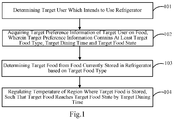
- Fig. 1 is a flow chart illustrating a temperature regulating method according to an exemplary embodiment. As shown in Fig. 1 , the method is applied in a refrigerator, and includes the following steps.
- step 101 a target user who intends to use the refrigerator is determined.
- the target user can be determined through one or more of the following manners.
- a first user who has logged in an application APP for managing the refrigerator is determined as the target user, wherein the application APP for managing the refrigerator has been previously bound with the refrigerator.
- the refrigerator can acquire user information about the first user, so as to determine the first user as the target user.
- the second user who has logged in the local area network at home can be determined as the target user who intends to use the refrigerator.
- the refrigerator can be connected to the local area network, such that the refrigerator can automatically acquire the second user who is online in the local area network, and can take the acquired second user as the target user.
- the target user is determined through a Global Positioning System.
- the step 101 can include the following steps (not shown in Fig. 1 ).
- step 101-1 location information about a current location of a terminal is acquired through a Global Positioning System, wherein the terminal has been previously bound with the refrigerator.
- location information about a current location of at least one terminal can be acquired through a Global Positioning System, the at least one terminal having been previously bound with the refrigerator.
- step 101-2 it is decided whether the terminal is located within a preset distance range from the refrigerator based on the location information. When the terminal is located within the preset distance range, it proceeds to step 101-3.
- the terminal based on the location information, it can be decided whether the terminal is located within the preset distance range. If the terminal is located within the preset distance range, it means that the user of the terminal can arrive at home within a short time such as one hour.
- step 101-3 a third user of the terminal is determined as the target user.
- the third user who can arrive at home within a short time is taken as the target user who intends to use the refrigerator.
- the target user is acquired through a camera connected to the refrigerator.
- a user can be determined as currently at home through the camera connected to the refrigerator.
- a camera disposed outside of the refrigerator, for example on top of the refrigerator, or an existing camera at home can be utilized. Thereby, a fifth user at home is taken as the target user.
- a sixth user who has used the refrigerator in a recent time can be determined and taken as the target user.
- a fourth user who intends to have a meal is determined as the target user.
- the refrigerator can inquire family members' schedules, chats, e-mails or the like, to decide whether someone will come to have a meal today. For example, a visitor will come to the house to have meal, and the fourth user who will have a meal is taken as the target user.
- step 102 target preference information of the target user on food is acquired, the target preference information containing at least a target food type, a target dining time and a target food state.
- the step 102 can include the following steps (not shown in Fig. 1 ).
- step 102-1 it is decided whether the target user has used the refrigerator.
- the refrigerator can automatically decide whether the target user has used the refrigerator based on previously stored user information about users who have used the refrigerator. If the target user has used the refrigerator, it proceeds to step 102-2, otherwise it proceeds to step 102-3.
- step 102-2 historic preference information of the target user, which is pre-stored in the refrigerator, is acquired as the target preference information.
- the target preference information at least includes a target food type, a target dining time and a target food state.
- the refrigerator can retrieve a food type selected by the target user when he previously opened the refrigerator as the target food type, retrieve a time point when the target user previously opened the refrigerator to select food as the target dining time, and retrieve a state of the food selected by the user when he previously opened the refrigerator as the target food state.
- the target user once took a yellow banana from the refrigerator at 9:00 am. Then, it can be determined that among the target preference information, the target food type is banana, the target dining time is 9:00 am, and the target food state is well matured. However, in order to further improve the user experience, the target food type can be further enlarged as fruit. Thus, once the refrigerator does not store banana, but contains other types of fruits such as an apple, it will nevertheless meet the demand of the target user.
- step 102-3 the target preference information of the target user is searched for, through a local area network to which the refrigerator is connected.
- the refrigerator When the target user determined by the refrigerator has never used the refrigerator, the refrigerator has no record relevant to the target user. At this time, the refrigerator can search for information such as food types previously favored by the target user through the connected local area network, as the target preference information.
- the target user once searches for a certain type of food through the local area network, for example, a recipe of steaks.
- the refrigerator can acquire historic accessing information of the browser through the local area network, so as to determine the target preference information of the target user.
- step 103 target food is determined from food currently stored in the refrigerator based on the target food type.
- the target food can be determined from the currently stored food through a camera disposed inside the refrigerator.
- food currently stored in the refrigerator includes: banana, steak, celery, milk, and other food.
- target preference information including a target food type which includes fruit and vegetable, the banana and the celery can be determined from the food currently stored in the refrigerator as the target food.
- the target preference information also includes a target food amount for a meal.
- the method also includes the following steps (not shown in Fig. 1 ).
- step 103-1 it is decided whether the currently stored amount of the target food in the refrigerator is sufficient based on the target food amount for a meal. When the currently stored amount of the target food is not sufficient, it proceeds to step 103-2.
- the refrigerator can decide that the currently stored amount of the target food is not sufficient, and perform step 103-2.
- step 103-2 a notice message is sent to the target user informing that the currently stored amount of the target food is not sufficient.
- the refrigerator can generate a corresponding notice message, prompting the target user to supplement the corresponding target food, and send the notice message to the target user via a connected local area network.
- step 104 a temperature of a region where the target food is stored is regulated, such that the target food reaches the target food state by the target dining time.
- the temperature of the region where the target food is located is dynamically regulated.
- the target user can obtain from the refrigerator the target food in the target food state at the target dinging time point.
- the target user usually eats a matured yellow banana at 9:00 am.
- the refrigerator currently only stores an under-matured green banana.
- the refrigerator can regulate the temperature of the refrigerating region, and keep deciding whether the banana reaches a matured state by means of the camera inside the refrigerator, to ensure that when the target user opens the refrigerator at 9:00 am, the green banana has reached a matured state.
- the target user wants to obtain an unfrozen steak at 12:30 am.
- the refrigerator can regulated the temperature of the freezing region, and raise the temperature of the freezing region before 12:30 am, and keep deciding whether the steak has reached the unfrozen state by means of the camera inside the refrigerator, to ensure that when the target user opens the refrigerator at 12:30 am, the steak is already unfrozen.
- the refrigerator can automatically acquire target preference information about the target user who wants to use the refrigerator, and regulate temperature based on the acquired target preference information, such that the target user can obtain from the refrigerator at a target dinging time point, target food which is in a target food state desired by the target user.
- the refrigerator can improve the intelligence degree of the temperature regulation of the refrigerator and improve user experience.
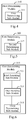
- Fig. 2 is a flow chart illustrating a temperature regulating method according to an exemplary embodiment. As shown in Fig. 2 , the method is applied in a refrigerator, and includes the following steps.
- step 201 a target user who intends to use the refrigerator is determined.
- a first user who has logged in an application APP for managing the refrigerator can be determined as the target user, where the application APP for managing the refrigerator has been previously bound with the refrigerator; a second user who is currently online through a local area network at home as the target user; location information about a location of a terminal of a user can be acquired through a Global Positioning System, and a third user who will arrive at home in a short time can be finally determined as the target user; a user who is currently at home or has previously used the refrigerator as acquired by means of a camera connected to the refrigerator, can be determined as the target user; or a fourth user who intends to have a meal can be determined as the target user.
- the process of determining the target user is similar to the process described in the above step 101, which will not be repeated herein.
- step 202 it is decided whether the target user has used the refrigerator.
- the refrigerator can automatically decide whether the target user has used the refrigerator based on previously stored user information about users who have used the refrigerator. If the target user has used the refrigerator, it proceeds to step 203, otherwise it proceeds to step 204.
- step 203 historic preference information of the target user, which is pre-stored in the refrigerator, is acquired as the target preference information.
- the target preference information at least includes a target food type, a target dining time and a target food state.
- the refrigerator can retrieve a food type selected by the target user when he previously opened the refrigerator as the target food type, retrieve a time point when the target user previously opened the refrigerator to select food as the target dining time, and retrieve a state of the food selected by the user when he previously opened the refrigerator as the target food state.
- step 204 the target preference information of the target user is searched for, through a local area network to which the refrigerator is connected.
- the refrigerator When the target user determined by the refrigerator has never used the refrigerator, the refrigerator has no record relevant to the target user. At this time, the refrigerator can search for information such as food types previously favored by the target user through the connected local area network, as the target preference information. For example, the target user once searches for a certain type of food through the local area network, for example, a recipe of steaks. Correspondingly, the refrigerator can acquire historic accessing information of the browser through the local area network, so as to determine the target preference information of the target user.
- step 205 target food is determined from food currently stored in the refrigerator based on the acquired target food type.
- the target food can be determined from the currently stored food through a camera disposed inside the refrigerator.
- food currently stored in the refrigerator includes: banana, steak, celery, milk, and other food.
- target preference information including a target food type which includes fruit and vegetable, the banana and the celery can be determined from the food currently stored in the refrigerator as the target food.
- step 206 it is decided whether a currently stored amount of the target food in the refrigerator is sufficient based on the target food amount for a meal. When the currently stored amount is not sufficient, it proceeds to step 207, otherwise it directly proceeds to step 208.
- the refrigerator decides whether a currently stored amount of the target food in the refrigerator is sufficient based on the target food amount for a meal.
- the refrigerator decides that the currently stored amount is not sufficient, it can proceed to step 207.
- step 207 a notice message is sent to the target user informing that the currently stored amount of the target food is not sufficient.
- the refrigerator can generate a corresponding notice message, prompting the target user to supplement the corresponding target food, and send the notice message to the target user via a connected local area network.
- a temperature of a region where the target food is stored is regulated, such that the target food reaches the target food state by the target dining time.
- temperature of the region where the target food is located is dynamically regulated.
- the target user can obtain from the refrigerator the target food in the target food state at the target dinging time point.
- the refrigerator determines currently on-line users through a connected local area network as including User A and User B. Also, location information of a terminal of User C can be determined through a Global Positioning System, and based on the location information, it can be decided whether the terminal is located within a preset distance range from the refrigerator. When the terminal is located within the preset distance range, it can be determined that User C can arrive at home in a short time. In addition, the refrigerator inquires the schedule of the family members and acquires that User D will come for dinner. Finally, the refrigerator determines that the target users including User A, User B, User C and User D.
- the refrigerator determines that User A, User B and User C have used the refrigerator, and acquires historic preference information of the target users, which is pre-stored in the refrigerator, as the target preference information.
- User A wants to obtain vegetable from the refrigerator at 6:00 pm
- User B wants to obtain 2 pieces of matured fruit from the refrigerator at 7:00 pm
- User C wants to obtain a bottle of cool milk from the refrigerator at 11:00 pm
- User D never uses the refrigerator, but a chat record of User D and User A shows that User D wants to obtain 2 pieces of unfrozen steaks from the refrigerator at 6:30 pm.
- the refrigerator determines celery, apples, milk and steaks as the target food from food currently stored in the refrigerator. At this time, it can be further determined whether the currently stored amount of the target food in the refrigerator is sufficient based on target food amount for a meal. If the refrigerator currently stores only 1 piece of fruit, a notice message can be generated to inform the user that the amount of the fruit is not sufficient, and the refrigerator sends the notice message to User B through the local area network.
- the refrigerator can regulate temperatures in different regions based on the previously determined target preference information. For example, the refrigerator raises temperature of the freezing region before 6:30 pm, for User D can obtain unfrozen steaks from the freezing region, to meet the target user's demand.
- the refrigerator can determine the target user of the refrigerator in various manners. Further, the target preference information about the target user can be acquired from historic preference information previously stored in the refrigerator, or by searching through a local area network to which the refrigerator is connected. Then, the refrigerator can automatically regulate temperatures in its different regions to meet the preference of the target user. In addition, the refrigerator can automatically decide whether the amount of the target food wanted by the target user is sufficient. If the amount is not sufficient, a notice message can be sent to the target user, for the user to timely supplement the target food. Thereby, it can improve the intelligence degree of the refrigerator, and improve the user experience.
- the present disclosure also provides device embodiments.
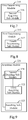
- Fig. 3 is a block diagram illustrating a temperature regulating device according to an exemplary embodiment of the present disclosure.
- the device is applied in a refrigerator, and includes: a first determining module 310, an acquiring module 320, a regulating module 330 and a regulating module 340.
- the first determining module 310 is configured to determine a target user who intends to use the refrigerator; the acquiring module 320 is configured to acquire target preference information of the target user on food, where the target preference information contains at least a target food type, a target dining time and a target food state; the second determining module 330 is configured to determine target food from food currently stored in the refrigerator based on the target food type; and the regulating module 340 is configured to regulate a temperature of a region where the target food is stored, such that the target food reaches the target food state by the target dining time.
- the refrigerator can automatically acquire target preference information about the target user who wants to use the refrigerator, and regulate temperature based on the acquired target preference information, such that the target user can obtain from the refrigerator at a target dinging time point, target food which is in a target food state desired by the target user.
- the refrigerator can improve the intelligence degree of the temperature regulation of the refrigerator and improve user experience.
- Fig. 4 is a block diagram illustrating another temperature regulating device according to an exemplary embodiment of the present disclosure. As shown in Fig. 4 , the embodiment is based on the embodiment as shown in Fig. 3 .
- the first determining module 310 includes: a first determining sub-module 311.
- the first determining sub-module 311 is configured to determine a first user who has logged in an application APP for managing the refrigerator as the target user, wherein the application APP for managing the refrigerator has been previously bound with the refrigerator.
- the refrigerator can acquire user information about a first user who has logged in the application APP for managing the refrigerator, then the refrigerator determines the first user as the target user. Thereby, it can improve the intelligence degreed of temperature regulation, and improve user experience.
- Fig. 5 is a block diagram illustrating another temperature regulating device according to an exemplary embodiment of the present disclosure. As shown in Fig. 5 , the embodiment is based on the embodiment as shown in Fig. 3 .
- the first determining module 310 includes: a second determining sub-module 312.
- the second determining sub-module 312 is configured to determine a second user who is online through a local area network to which the refrigerator is connected, as the target user.
- the refrigerator can determine the second user who is currently on line through the local area network in which the refrigerator is connected as the target user. Thereby, it can improve the intelligence degreed of temperature regulation, and improve user experience.
- Fig. 6 is a block diagram illustrating another temperature regulating device according to an exemplary embodiment of the present disclosure. As shown in Fig. 6 , the embodiment is based on the embodiment as shown in Fig. 3 .
- the first determining module 310 includes: a first acquiring sub-module 313, a first deciding sub-module 314 and a third determining sub-module 315.
- the first acquiring sub-module 313 is configured to acquire location information about a current location of a terminal through a Global Positioning System, where the terminal has been previously bound with the refrigerator; the first deciding sub-module 314 is configured to decide whether the terminal is located within a preset distance range from the refrigerator based on the location information; and the third determining sub-module 315 is configured to, when the terminal is within the preset distance range, determine a third user of the terminal as the target user.
- the refrigerator can acquire a location of a terminal through the Global Positioning System, and determine the third user who can arrive at home in a short time as the target user. Thereby, it can improve the intelligence degree of temperature regulation, and improve user experience.
- Fig. 7 is a block diagram illustrating another temperature regulating device according to an exemplary embodiment of the present disclosure. As shown in Fig. 7 , the embodiment is based on the embodiment as shown in Fig. 3 .
- the first determining module 310 includes: a second acquiring sub-module 316.
- the second acquiring sub-module 316 is configured to acquire the target user through a camera connected to the refrigerator.
- the refrigerator can determine the fifth user who is currently at home through the camera connected to the refrigerator as the target user, or can acquire a fifth user who opened the refrigerator in a most recent time through the camera as the target user. Thereby, it can improve the intelligence degreed of temperature regulation, and improve user experience.
- Fig. 8 is a block diagram illustrating another temperature regulating device according to an exemplary embodiment of the present disclosure. As shown in Fig. 8 , the embodiment is based on the embodiment as shown in Fig. 3 .
- the first determining module 310 includes: a fourth determining sub-module 317.
- the fourth determining sub-module 317 is configured to determine a fourth user who intends to have a meal as the target user.
- the refrigerator can inquire schedules, chat records or emails of the family members through the connected local area network, and can decide whether someone will come for dinner, for example, whether a visitor will come to the house for dinner, and the refrigerator takes the fourth user as the target user. Thereby, it can improve the intelligence degreed of temperature regulation, and improve user experience.
- Fig. 9 is a block diagram illustrating another temperature regulating device according to an exemplary embodiment of the present disclosure. As shown in Fig. 9 , the embodiment is based on the embodiment as shown in Fig. 3 .
- the acquiring module 320 includes: a second deciding sub-module 321, a third acquiring sub-module 322 and a searching sub-module 323.
- the second deciding sub-module 321 is configured to decide whether the target user has used the refrigerator;
- the third acquiring sub-module 322 is configured to, when the target user has used the refrigerator, acquire historic preference information of the target user, which is pre-stored in the refrigerator, as the target preference information;
- the searching sub-module 323 is configured to, when the target user has never used the refrigerator, search for the target preference information of the target user through a local area network to which the refrigerator is connected.
- the refrigerator can decide whether the target user has used the refrigerator, and determine the target preference information about the target user through various manners. Thereby, it can ensure the accuracy of the target preference information and improve user experience.
- Fig. 10 is a block diagram illustrating another temperature regulating device according to an exemplary embodiment of the present disclosure. As shown in Fig. 10 , the embodiment is based on the embodiment as shown in Fig. 3 .
- the second determining sub-module 330 includes: a fifth determining sub-module 331.
- the fifth determining sub-module 331 is configured to determine the target food from the currently stored food by means of a camera disposed inside the refrigerator.
- the refrigerator can determine the target food from the currently stored food through the camera provided inside the refrigerator, and thereby it can improve the intelligence degree of the temperature regulation of the refrigerator.
- Fig. 11 is a block diagram illustrating another temperature regulating device according to an exemplary embodiment of the present disclosure. As shown in Fig. 11 , the embodiment is based on the embodiment as shown in Fig. 3 .
- the target preference information further contains a target food amount for a meal; and the device further includes: a deciding module 350 and a sending module 360.
- the deciding module 350 is configured to decide whether a currently stored amount of the target food in the refrigerator is sufficient based on the target food amount for a meal; and the sending module 360 is configured to, when the currently stored amount is not sufficient, send a notice message to the target user informing that the currently stored amount of the target food is not sufficient.
- the refrigerator can automatically determine whether the amount of the target food needed by the target user is sufficient. If the amount is not sufficient, a notice message can be sent to the target user for the target user to timely supplement the target food. Thereby, it can improve the intelligence degreed of temperature regulation, and improve user experience.
- the device embodiments since they correspond to the method embodiments, they can be referred to the related part of the description of the method embodiments.
- the device embodiments described above are merely illustrative.
- the units described as separate may be or may not be physically separate, and the components illustrated as a units may be or may not be physical units, and may be at the same location, or may be distributed to multiple units over the network.
- a part of or all of the modules can be selected to achieve the objective of the present disclosure as desired.
- One skilled in the art can understand and practice the embodiments without paying creative labor.
- the present disclosure provides a temperature regulating device, which is applied in a refrigerator, wherein the device includes: a processor; and a memory for storing instructions executable by the processor; wherein the processor is configured to perform:
- Fig. 12 is a block diagram of a device 1200 for regulating temperature according to an exemplary embodiment.
- the device 1200 may be provided as a refrigerator.
- the device 1200 includes a processing component 1222 that further includes one or more processors, and memory resources represented by a memory 1232 for storing instructions executable by the processing component 1222, such as application programs.
- the application programs stored in the memory 1232 may include one or more modules each corresponding to a set of instructions.
- the processing component 1222 is configured to execute the instructions to perform the above described method for regulating temperature.
- the device 1200 may also include a power component 1226 configured to perform power management of the device 1200, wired or wireless network interface(s) 1250 configured to connect the device 1200 to a network, and an input/output (I/O) interface 1258.
- the device 1200 may operate based on an operating system stored in the memory 1232, such as Windows ServerTM, Mac OS XTM, UnixTM, LinuxTM, FreeBSDTM, or the like.
Landscapes
- Engineering & Computer Science (AREA)
- Physics & Mathematics (AREA)
- General Engineering & Computer Science (AREA)
- Chemical & Material Sciences (AREA)
- Combustion & Propulsion (AREA)
- Mechanical Engineering (AREA)
- Thermal Sciences (AREA)
- General Physics & Mathematics (AREA)
- Automation & Control Theory (AREA)
- Cold Air Circulating Systems And Constructional Details In Refrigerators (AREA)
- Devices That Are Associated With Refrigeration Equipment (AREA)
Abstract
Description
- The present disclosure generally relates to the field of control technology, and more particularly, to a temperature regulating method and a temperature regulating device.
- With development of technology and improvement of people's life quality, refrigerators as one kind of household appliance have been widely used in families. In the related art, regulation of temperature in a refrigerator has a certain degree of intelligence. For example, the user can set a temperature for a region inside the refrigerator, such as, set refrigeration temperature for the refrigerating region. Then, the refrigerator can automatically regulate the temperature of the refrigerating region to reach the set refrigeration temperature. Alternatively, the user can log in an application (APP) for managing the refrigerator, the APP being bound with the refrigerator in advance. The user can set different temperatures for different regions of the refrigerator. Then, the refrigerator can regulate the temperatures accordingly according to the different temperatures set by the user.
- However, in the related art, the intelligent regulation of the temperature of the refrigerator still requires manually setting first by the user, then regulating temperature according to the set temperature by the refrigerator. The intelligence degree is low, and the user experience is poor.
- In view of the above, the present disclosure provides a temperature regulating method and a temperature regulating device, to solve the problem that the intelligence degree is low in temperature regulation of a refrigerator.
- According to a first aspect of embodiments of the present disclosure, there is provided a temperature regulating method, which is applied in a refrigerator, wherein the method includes:
- determining a target user who intends to use the refrigerator;
- acquiring target preference information of the target user on food, wherein the target preference information contains at least a target food type, a target dining time and a target food state;
- determining target food from food currently stored in the refrigerator based on the target food type; and
- regulating a temperature of a region where the target food is stored, such that the target food reaches the target food state by the target dining time.
- Optionally, determining a target user who intends to use the refrigerator includes:
- determining a first user who has logged-in to an application APP for managing the refrigerator as the target user, wherein the application APP for managing the refrigerator has been previously bound with the refrigerator.
- Two devices may be considered bound if a direct communication path exists between them, established by the exchange of data between the two devices. A binding relationship may therefore establish a correspondence, pairing, coupling or association that connects, and allows communication between, the application APP and the refrigerator.
- Optionally, determining a target user who intends to use the refrigerator includes:
- determining a second user who is online through a local area network to which the refrigerator is connected, as the target user.
- Optionally, determining a target user who intends to use the refrigerator includes:
- acquiring location information about a current location of a terminal through a Global Positioning System, wherein the terminal has been previously bound with the refrigerator;
- deciding whether the terminal is located within a preset distance range from the refrigerator based on the location information; and
- when the terminal is within the preset distance range, determining a third user of the terminal as the target user.
- Optionally, determining a target user who intends to use the refrigerator includes:
- acquiring the target user through a camera connected to the refrigerator.
- Optionally, determining a target user who intends to use the refrigerator includes:
- determining a fourth user who intends to have a meal as the target user.
- Optionally, acquiring target preference information of the target user on food includes:
- deciding whether the target user has used the refrigerator;
- when the target user has used the refrigerator, acquiring historic preference information of the target user, which is pre-stored in the refrigerator, as the target preference information; and
- when the target user has never used the refrigerator, searching for the target preference information of the target user through a local area network to which the refrigerator is connected.
- Optionally, determining target food from food currently stored in the refrigerator includes:
- determining the target food from the currently stored food by means of a camera disposed inside the refrigerator.
- Optionally, the target preference information further contains a target food amount for a meal; and
- the method further includes:
- deciding whether a currently stored amount of the target food in the refrigerator is sufficient based on the target food amount for a meal; and
- when the currently stored amount is not sufficient, sending a notice message to the target user informing the target user that the currently stored amount of the target food is not sufficient.
- According to a second aspect of embodiments of the present disclosure, there is provided a temperature regulating device, which is applied in a refrigerator, wherein the device includes:
- a first determining module configured to determine a target user who intends to use the refrigerator;
- an acquiring module configured to acquire target preference information of the target user on food, wherein the target preference information contains at least a target food type, a target dining time and a target food state;
- a second determining module configured to determine target food from food currently stored in the refrigerator based on the target food type; and
- a regulating module configured to regulate a temperature of a region where the target food is stored, such that the target food reaches the target food state by the target dining time.
- Optionally, the first determining module includes:
- a first determining sub-module configured to determine a first user who has logged in an application APP for managing the refrigerator as the target user, wherein the application APP for managing the refrigerator has been previously bound with the refrigerator.
- Optionally, the first determining module includes:
- a second determining sub-module configured to determine a second user who is online through a local area network to which the refrigerator is connected, as the target user.
- Optionally, the first determining module includes:
- a first acquiring sub-module configured to acquire location information about a current location of a terminal through a Global Positioning System, wherein the terminal has been previously bound with the refrigerator;
- a first deciding sub-module configured to decide whether the terminal is located within a preset distance range from the refrigerator based on the location information; and
- a third determining sub-module configured to, when the terminal is within the preset distance range, determine a third user of the terminal as the target user.
- Optionally, the first determining module includes:
- a second acquiring sub-module configured to acquire the target user through a camera connected to the refrigerator.
- Optionally, the first determining module includes:
- a fourth determining sub-module configured to determine a fourth user who intends to have a meal as the target user.
- Optionally, the acquiring module includes:
- a second deciding sub-module configured to decide whether the target user has used the refrigerator;
- a third acquiring sub-module configured to, when the target user has used the refrigerator, acquire historic preference information of the target user, which is pre-stored in the refrigerator, as the target preference information; and
- a searching sub-module configured to, when the target user has never used the refrigerator, search for the target preference information of the target user through a local area network to which the refrigerator is connected.
- Optionally, the second determining sub-module includes:
- a fifth determining sub-module configured to determine the target food from the currently stored food by means of a camera disposed inside the refrigerator.
- Optionally, the target preference information further contains a target food amount for a meal; and
the device further includes: - a deciding module configured to decide whether a currently stored amount of the target food in the refrigerator is sufficient based on the target food amount for a meal; and
- a sending module configured to, when the currently stored amount is not sufficient, send a notice message to the target user informing the target user that the currently stored amount of the target food is not sufficient.
- According to a third aspect of embodiments of the present disclosure, there is provided a temperature regulating device, which is applied in a refrigerator, wherein the device includes: a processor; and a memory for storing instructions executable by the processor;
wherein the processor is configured to perform: - determining a target user who intends to use the refrigerator;
- acquiring target preference information of the target user on food, wherein the target preference information contains at least a target food type, a target dining time and a target food state;
- determining target food from food currently stored in the refrigerator based on the target food type; and
- regulating a temperature of a region where the target food is stored, such that the target food reaches the target food state by the target dining time.
- According to a fourth aspect of the embodiment of the present disclosure, there is provided a program product, having stored therein instructions that, when executed by one or more processors of a device applied in a refrigerator, causes the device to perform:
- determining a target user who intends to use the refrigerator;
- acquiring target preference information of the target user on food, wherein the target preference information contains at least a target food type, a target dining time and a target food state;
- determining target food from food currently stored in the refrigerator based on the target food type; and
- regulating a temperature of a region where the target food is stored, such that the target food reaches the target food state by the target dining time.
- The program product may also have instructions stored therein that cause the device to perform the method of temperature regulation as described herein.
- According to a fifth aspect of the embodiment of the present disclosure, there is provided a computer program which, when being executed on a processor of a device applied in a refrigerator, performs the above method according to the first aspect.
- The technical solution according to embodiments of the present disclosure may have the following beneficial effects.
- In the above embodiment, the refrigerator can automatically acquire target preference information about the target user who wants to use the refrigerator, and regulate temperature based on the acquired target preference information, such that the target user can obtain from the refrigerator at a target dinging time point, target food which is in a target food state desired by the target user. Thereby, it can improve the intelligence of the temperature regulation of the refrigerator and improve user experience.
- In the above embodiment, the refrigerator can determine the target user of the refrigerator in various manners. Further, the target preference information about the target user can be acquired from historic preference information previously stored in the refrigerator, or by searching through a local area network to which the refrigerator is connected. Then, the refrigerator can automatically regulate temperatures in its different regions to meet the preference of the target user. Thereby, it can improve the intelligence degree of the refrigerator, and improve the user experience.
- In the above embodiment, additionally, the refrigerator can automatically decide whether the amount of the target food wanted by the target user is sufficient. If the amount is not sufficient, a notice message can be sent to the target user, for the user to timely supplement the target food. Thereby, it can improve the intelligence degree of the refrigerator, and improve the user experience.
- It is to be understood that both the foregoing general description and the following detailed description are exemplary and explanatory only and are not restrictive of the invention, as claimed.
- The accompanying drawings, which are incorporated in and constitute a part of this specification, illustrate embodiments consistent with the invention and, together with the description, serve to explain the principles of the invention.
-
Fig. 1 is a flow chart illustrating a temperature regulating method according to an exemplary embodiment of the present disclosure; -
Fig. 2 is a flow chart illustrating another temperature regulating method according to an exemplary embodiment of the present disclosure; -
Fig. 3 is a block diagram illustrating a temperature regulating device according to an exemplary embodiment of the present disclosure; -
Fig. 4 is a block diagram illustrating another temperature regulating device according to an exemplary embodiment of the present disclosure; -
Fig. 5 is a block diagram illustrating another temperature regulating device according to an exemplary embodiment of the present disclosure; -
Fig. 6 is a block diagram illustrating another temperature regulating device according to an exemplary embodiment of the present disclosure; -
Fig. 7 is a block diagram illustrating another temperature regulating device according to an exemplary embodiment of the present disclosure; -
Fig. 8 is a block diagram illustrating another temperature regulating device according to an exemplary embodiment of the present disclosure; -
Fig. 9 is a block diagram illustrating another temperature regulating device according to an exemplary embodiment of the present disclosure; -
Fig. 10 is a block diagram illustrating another temperature regulating device according to an exemplary embodiment of the present disclosure; -
Fig. 11 is a block diagram illustrating another temperature regulating device according to an exemplary embodiment of the present disclosure; and -
Fig. 12 is a block diagram illustrating a temperature regulating device according to an exemplary embodiment of the present disclosure. - Reference will now be made in detail to exemplary embodiments, examples of which are illustrated in the accompanying drawings. The following description refers to the accompanying drawings in which the same numbers in different drawings represent the same or similar elements unless otherwise represented. The implementations set forth in the following description of exemplary embodiments do not represent all implementations consistent with the invention. Instead, they are merely examples of apparatuses and methods consistent with aspects related to the invention as recited in the appended claims.
- The terms used herein are merely for describing a particular embodiment, rather than limiting the present disclosure. As used in the present disclosure and the appended claims, terms in singular forms such as "a", "said" and "the" are intended to also include plural forms, unless explicitly dictated otherwise. It should also be understood that the term "and / or" used herein means any one or any possible combination of one or more associated listed items.
- It should be understood that, although it may describe an element with a term first, second, or third, etc., the element is not limited by these terms. These terms are merely for distinguishing among elements of the same kind. For example, without departing from the scope of the present disclosure, a first element can also be referred to as a second element. Similarly, a second element can also be referred to as a first element. Depending on the context, a term "if" as used herein can be interpreted as "when", "where" or "in response to".
-
Fig. 1 is a flow chart illustrating a temperature regulating method according to an exemplary embodiment. As shown inFig. 1 , the method is applied in a refrigerator, and includes the following steps. - In
step 101, a target user who intends to use the refrigerator is determined. - In the present step, the target user can be determined through one or more of the following manners.
- <First Manner> A first user who has logged in an application APP for managing the refrigerator is determined as the target user, wherein the application APP for managing the refrigerator has been previously bound with the refrigerator.
- When the first user logs in the application APP for managing the refrigerator, which has been previously bound with the refrigerator, the refrigerator can acquire user information about the first user, so as to determine the first user as the target user.
- <Second Manner> A second user who is online through a local area network to which the refrigerator is connected, is determined as the target user.
- In the embodiment of the present disclosure, the second user who has logged in the local area network at home can be determined as the target user who intends to use the refrigerator. Optionally, the refrigerator can be connected to the local area network, such that the refrigerator can automatically acquire the second user who is online in the local area network, and can take the acquired second user as the target user.
- <Third Manner> The target user is determined through a Global Positioning System.
- Optionally, the
step 101 can include the following steps (not shown inFig. 1 ). - In step 101-1, location information about a current location of a terminal is acquired through a Global Positioning System, wherein the terminal has been previously bound with the refrigerator.
- Based on relevant technology, location information about a current location of at least one terminal can be acquired through a Global Positioning System, the at least one terminal having been previously bound with the refrigerator.
- In step 101-2, it is decided whether the terminal is located within a preset distance range from the refrigerator based on the location information. When the terminal is located within the preset distance range, it proceeds to step 101-3.
- In the present step, based on the location information, it can be decided whether the terminal is located within the preset distance range. If the terminal is located within the preset distance range, it means that the user of the terminal can arrive at home within a short time such as one hour.
- In step 101-3, a third user of the terminal is determined as the target user.
- In the embodiment of the present disclosure, the third user who can arrive at home within a short time is taken as the target user who intends to use the refrigerator.
- <Fourth Manner> The target user is acquired through a camera connected to the refrigerator.
- In this manner, a user can be determined as currently at home through the camera connected to the refrigerator. Where, a camera disposed outside of the refrigerator, for example on top of the refrigerator, or an existing camera at home can be utilized. Thereby, a fifth user at home is taken as the target user.
- In the embodiment of the present disclosure, optionally, through the camera disposed on top of the refrigerator, a sixth user who has used the refrigerator in a recent time can be determined and taken as the target user.
- <Fifth Manner> A fourth user who intends to have a meal is determined as the target user.
- In this manner, the refrigerator can inquire family members' schedules, chats, e-mails or the like, to decide whether someone will come to have a meal today. For example, a visitor will come to the house to have meal, and the fourth user who will have a meal is taken as the target user.
- In
step 102, target preference information of the target user on food is acquired, the target preference information containing at least a target food type, a target dining time and a target food state. - Optionally, the
step 102 can include the following steps (not shown inFig. 1 ). - In step 102-1, it is decided whether the target user has used the refrigerator.
- In the present step, the refrigerator can automatically decide whether the target user has used the refrigerator based on previously stored user information about users who have used the refrigerator. If the target user has used the refrigerator, it proceeds to step 102-2, otherwise it proceeds to step 102-3.
- In step 102-2, historic preference information of the target user, which is pre-stored in the refrigerator, is acquired as the target preference information.
- Among the preference information of the users previously stored in the refrigerator, historic preference information corresponding to the target user is taken as the target preference information. Optionally, the target preference information at least includes a target food type, a target dining time and a target food state. The refrigerator can retrieve a food type selected by the target user when he previously opened the refrigerator as the target food type, retrieve a time point when the target user previously opened the refrigerator to select food as the target dining time, and retrieve a state of the food selected by the user when he previously opened the refrigerator as the target food state.
- For example, the target user once took a yellow banana from the refrigerator at 9:00 am. Then, it can be determined that among the target preference information, the target food type is banana, the target dining time is 9:00 am, and the target food state is well matured. However, in order to further improve the user experience, the target food type can be further enlarged as fruit. Thus, once the refrigerator does not store banana, but contains other types of fruits such as an apple, it will nevertheless meet the demand of the target user.
- In step 102-3, the target preference information of the target user is searched for, through a local area network to which the refrigerator is connected.
- When the target user determined by the refrigerator has never used the refrigerator, the refrigerator has no record relevant to the target user. At this time, the refrigerator can search for information such as food types previously favored by the target user through the connected local area network, as the target preference information.
- For example, the target user once searches for a certain type of food through the local area network, for example, a recipe of steaks. Correspondingly, the refrigerator can acquire historic accessing information of the browser through the local area network, so as to determine the target preference information of the target user.
- In
step 103, target food is determined from food currently stored in the refrigerator based on the target food type. - Optionally, the target food can be determined from the currently stored food through a camera disposed inside the refrigerator. For example, it is acquired through the camera disposed inside the refrigerator that food currently stored in the refrigerator includes: banana, steak, celery, milk, and other food. If the target preference information including a target food type which includes fruit and vegetable, the banana and the celery can be determined from the food currently stored in the refrigerator as the target food.
- In the embodiment of the present disclosure, in order to improve the intelligence degree of the refrigerator and improve the user experience, it can prompt the target user when the stored amount of target food required by the target food is not sufficient, for the user to timely supplement the target food. The target preference information also includes a target food amount for a meal.
- Optionally, the method also includes the following steps (not shown in
Fig. 1 ). - In step 103-1, it is decided whether the currently stored amount of the target food in the refrigerator is sufficient based on the target food amount for a meal. When the currently stored amount of the target food is not sufficient, it proceeds to step 103-2.
- In the present step, based on the target food amount for a meal, it can be decided whether the amount of the target food currently stored in the refrigerator is sufficient. For example, the target food wanted by the target user is steak, and the amount of the target food is 2 pieces. In such case, if currently there is 1 piece of steak stored in the refrigerator, then the refrigerator can decide that the currently stored amount of the target food is not sufficient, and perform step 103-2.
- In step 103-2, a notice message is sent to the target user informing that the currently stored amount of the target food is not sufficient.
- Optionally, the refrigerator can generate a corresponding notice message, prompting the target user to supplement the corresponding target food, and send the notice message to the target user via a connected local area network.
- In
step 104, a temperature of a region where the target food is stored is regulated, such that the target food reaches the target food state by the target dining time. - After the refrigerator determines the target food, the temperature of the region where the target food is located is dynamically regulated. As a result, the target user can obtain from the refrigerator the target food in the target food state at the target dinging time point.
- For example, the target user usually eats a matured yellow banana at 9:00 am. The refrigerator currently only stores an under-matured green banana. In this case, the refrigerator can regulate the temperature of the refrigerating region, and keep deciding whether the banana reaches a matured state by means of the camera inside the refrigerator, to ensure that when the target user opens the refrigerator at 9:00 am, the green banana has reached a matured state.
- Alternatively, the target user wants to obtain an unfrozen steak at 12:30 am. In this case, the refrigerator can regulated the temperature of the freezing region, and raise the temperature of the freezing region before 12:30 am, and keep deciding whether the steak has reached the unfrozen state by means of the camera inside the refrigerator, to ensure that when the target user opens the refrigerator at 12:30 am, the steak is already unfrozen.
- In the above embodiment, the refrigerator can automatically acquire target preference information about the target user who wants to use the refrigerator, and regulate temperature based on the acquired target preference information, such that the target user can obtain from the refrigerator at a target dinging time point, target food which is in a target food state desired by the target user. Thereby, it can improve the intelligence degree of the temperature regulation of the refrigerator and improve user experience.
-
Fig. 2 is a flow chart illustrating a temperature regulating method according to an exemplary embodiment. As shown inFig. 2 , the method is applied in a refrigerator, and includes the following steps. - In
step 201, a target user who intends to use the refrigerator is determined. - In the present step, a first user who has logged in an application APP for managing the refrigerator can be determined as the target user, where the application APP for managing the refrigerator has been previously bound with the refrigerator; a second user who is currently online through a local area network at home as the target user; location information about a location of a terminal of a user can be acquired through a Global Positioning System, and a third user who will arrive at home in a short time can be finally determined as the target user; a user who is currently at home or has previously used the refrigerator as acquired by means of a camera connected to the refrigerator, can be determined as the target user; or a fourth user who intends to have a meal can be determined as the target user. Where, the process of determining the target user is similar to the process described in the
above step 101, which will not be repeated herein. - In
step 202, it is decided whether the target user has used the refrigerator. - In the present step, the refrigerator can automatically decide whether the target user has used the refrigerator based on previously stored user information about users who have used the refrigerator. If the target user has used the refrigerator, it proceeds to step 203, otherwise it proceeds to step 204.
- In
step 203, historic preference information of the target user, which is pre-stored in the refrigerator, is acquired as the target preference information. - Among the preference information of the users previously stored in the refrigerator, historic preference information corresponding to the target user is taken as the target preference information. Optionally, the target preference information at least includes a target food type, a target dining time and a target food state. The refrigerator can retrieve a food type selected by the target user when he previously opened the refrigerator as the target food type, retrieve a time point when the target user previously opened the refrigerator to select food as the target dining time, and retrieve a state of the food selected by the user when he previously opened the refrigerator as the target food state.
- In
step 204, the target preference information of the target user is searched for, through a local area network to which the refrigerator is connected. - When the target user determined by the refrigerator has never used the refrigerator, the refrigerator has no record relevant to the target user. At this time, the refrigerator can search for information such as food types previously favored by the target user through the connected local area network, as the target preference information. For example, the target user once searches for a certain type of food through the local area network, for example, a recipe of steaks. Correspondingly, the refrigerator can acquire historic accessing information of the browser through the local area network, so as to determine the target preference information of the target user.
- In
step 205, target food is determined from food currently stored in the refrigerator based on the acquired target food type. - Optionally, the target food can be determined from the currently stored food through a camera disposed inside the refrigerator. For example, it is acquired through the camera disposed inside the refrigerator that food currently stored in the refrigerator includes: banana, steak, celery, milk, and other food. If the target preference information including a target food type which includes fruit and vegetable, the banana and the celery can be determined from the food currently stored in the refrigerator as the target food.
- In
step 206, it is decided whether a currently stored amount of the target food in the refrigerator is sufficient based on the target food amount for a meal. When the currently stored amount is not sufficient, it proceeds to step 207, otherwise it directly proceeds to step 208. - In the present step, it can be decided whether a currently stored amount of the target food in the refrigerator is sufficient based on the target food amount for a meal. When the refrigerator decides that the currently stored amount is not sufficient, it can proceed to step 207.
- In
step 207, a notice message is sent to the target user informing that the currently stored amount of the target food is not sufficient. - Optionally, the refrigerator can generate a corresponding notice message, prompting the target user to supplement the corresponding target food, and send the notice message to the target user via a connected local area network.
- In
step 208, a temperature of a region where the target food is stored is regulated, such that the target food reaches the target food state by the target dining time. - After the refrigerator determines the target food, temperature of the region where the target food is located is dynamically regulated. As a result, the target user can obtain from the refrigerator the target food in the target food state at the target dinging time point.
- The above process will be described in detail with an example.
- The refrigerator determines currently on-line users through a connected local area network as including User A and User B. Also, location information of a terminal of User C can be determined through a Global Positioning System, and based on the location information, it can be decided whether the terminal is located within a preset distance range from the refrigerator. When the terminal is located within the preset distance range, it can be determined that User C can arrive at home in a short time. In addition, the refrigerator inquires the schedule of the family members and acquires that User D will come for dinner. Finally, the refrigerator determines that the target users including User A, User B, User C and User D.
- The refrigerator determines that User A, User B and User C have used the refrigerator, and acquires historic preference information of the target users, which is pre-stored in the refrigerator, as the target preference information. Where, User A wants to obtain vegetable from the refrigerator at 6:00 pm; User B wants to obtain 2 pieces of matured fruit from the refrigerator at 7:00 pm; User C wants to obtain a bottle of cool milk from the refrigerator at 11:00 pm; and User D never uses the refrigerator, but a chat record of User D and User A shows that User D wants to obtain 2 pieces of unfrozen steaks from the refrigerator at 6:30 pm.
- Based on the above target preference information, the refrigerator determines celery, apples, milk and steaks as the target food from food currently stored in the refrigerator. At this time, it can be further determined whether the currently stored amount of the target food in the refrigerator is sufficient based on target food amount for a meal. If the refrigerator currently stores only 1 piece of fruit, a notice message can be generated to inform the user that the amount of the fruit is not sufficient, and the refrigerator sends the notice message to User B through the local area network.
- The refrigerator can regulate temperatures in different regions based on the previously determined target preference information. For example, the refrigerator raises temperature of the freezing region before 6:30 pm, for User D can obtain unfrozen steaks from the freezing region, to meet the target user's demand.
- In the above embodiment, the refrigerator can determine the target user of the refrigerator in various manners. Further, the target preference information about the target user can be acquired from historic preference information previously stored in the refrigerator, or by searching through a local area network to which the refrigerator is connected. Then, the refrigerator can automatically regulate temperatures in its different regions to meet the preference of the target user. In addition, the refrigerator can automatically decide whether the amount of the target food wanted by the target user is sufficient. If the amount is not sufficient, a notice message can be sent to the target user, for the user to timely supplement the target food. Thereby, it can improve the intelligence degree of the refrigerator, and improve the user experience.
- Corresponding to the above method embodiments, the present disclosure also provides device embodiments.
-
Fig. 3 is a block diagram illustrating a temperature regulating device according to an exemplary embodiment of the present disclosure. The device is applied in a refrigerator, and includes: a first determiningmodule 310, an acquiringmodule 320, aregulating module 330 and aregulating module 340. - Where, the first determining
module 310 is configured to determine a target user who intends to use the refrigerator;
the acquiringmodule 320 is configured to acquire target preference information of the target user on food, where the target preference information contains at least a target food type, a target dining time and a target food state;
the second determiningmodule 330 is configured to determine target food from food currently stored in the refrigerator based on the target food type; and
theregulating module 340 is configured to regulate a temperature of a region where the target food is stored, such that the target food reaches the target food state by the target dining time. - In the above embodiment, the refrigerator can automatically acquire target preference information about the target user who wants to use the refrigerator, and regulate temperature based on the acquired target preference information, such that the target user can obtain from the refrigerator at a target dinging time point, target food which is in a target food state desired by the target user. Thereby, it can improve the intelligence degree of the temperature regulation of the refrigerator and improve user experience.
-
Fig. 4 is a block diagram illustrating another temperature regulating device according to an exemplary embodiment of the present disclosure. As shown inFig. 4 , the embodiment is based on the embodiment as shown inFig. 3 . The first determiningmodule 310 includes: a first determiningsub-module 311. - Where, the first determining
sub-module 311 is configured to determine a first user who has logged in an application APP for managing the refrigerator as the target user, wherein the application APP for managing the refrigerator has been previously bound with the refrigerator. - In the above embodiment, the refrigerator can acquire user information about a first user who has logged in the application APP for managing the refrigerator, then the refrigerator determines the first user as the target user. Thereby, it can improve the intelligence degreed of temperature regulation, and improve user experience.
-
Fig. 5 is a block diagram illustrating another temperature regulating device according to an exemplary embodiment of the present disclosure. As shown inFig. 5 , the embodiment is based on the embodiment as shown inFig. 3 . The first determiningmodule 310 includes: a second determiningsub-module 312. - Where the second determining
sub-module 312 is configured to determine a second user who is online through a local area network to which the refrigerator is connected, as the target user. - In the above embodiment, the refrigerator can determine the second user who is currently on line through the local area network in which the refrigerator is connected as the target user. Thereby, it can improve the intelligence degreed of temperature regulation, and improve user experience.
-
Fig. 6 is a block diagram illustrating another temperature regulating device according to an exemplary embodiment of the present disclosure. As shown inFig. 6 , the embodiment is based on the embodiment as shown inFig. 3 . The first determiningmodule 310 includes: a first acquiring sub-module 313, a first decidingsub-module 314 and a third determiningsub-module 315. - Where the first acquiring sub-module 313 is configured to acquire location information about a current location of a terminal through a Global Positioning System, where the terminal has been previously bound with the refrigerator;
the first decidingsub-module 314 is configured to decide whether the terminal is located within a preset distance range from the refrigerator based on the location information; and
the third determining sub-module 315 is configured to, when the terminal is within the preset distance range, determine a third user of the terminal as the target user. - In the above embodiment, the refrigerator can acquire a location of a terminal through the Global Positioning System, and determine the third user who can arrive at home in a short time as the target user. Thereby, it can improve the intelligence degree of temperature regulation, and improve user experience.
-
Fig. 7 is a block diagram illustrating another temperature regulating device according to an exemplary embodiment of the present disclosure. As shown inFig. 7 , the embodiment is based on the embodiment as shown inFig. 3 . The first determiningmodule 310 includes: a second acquiringsub-module 316. - Wherein the second acquiring sub-module 316 is configured to acquire the target user through a camera connected to the refrigerator.
- In the above embodiment, the refrigerator can determine the fifth user who is currently at home through the camera connected to the refrigerator as the target user, or can acquire a fifth user who opened the refrigerator in a most recent time through the camera as the target user. Thereby, it can improve the intelligence degreed of temperature regulation, and improve user experience.
-
Fig. 8 is a block diagram illustrating another temperature regulating device according to an exemplary embodiment of the present disclosure. As shown inFig. 8 , the embodiment is based on the embodiment as shown inFig. 3 . The first determiningmodule 310 includes: a fourth determiningsub-module 317. - Where the fourth determining sub-module 317 is configured to determine a fourth user who intends to have a meal as the target user.
- In the above embodiment, the refrigerator can inquire schedules, chat records or emails of the family members through the connected local area network, and can decide whether someone will come for dinner, for example, whether a visitor will come to the house for dinner, and the refrigerator takes the fourth user as the target user. Thereby, it can improve the intelligence degreed of temperature regulation, and improve user experience.
-
Fig. 9 is a block diagram illustrating another temperature regulating device according to an exemplary embodiment of the present disclosure. As shown inFig. 9 , the embodiment is based on the embodiment as shown inFig. 3 . The acquiringmodule 320 includes: a second deciding sub-module 321, a third acquiring sub-module 322 and a searchingsub-module 323. - Wherein the second deciding
sub-module 321 is configured to decide whether the target user has used the refrigerator;
the third acquiring sub-module 322 is configured to, when the target user has used the refrigerator, acquire historic preference information of the target user, which is pre-stored in the refrigerator, as the target preference information; and
the searching sub-module 323 is configured to, when the target user has never used the refrigerator, search for the target preference information of the target user through a local area network to which the refrigerator is connected. - In the above embodiment, the refrigerator can decide whether the target user has used the refrigerator, and determine the target preference information about the target user through various manners. Thereby, it can ensure the accuracy of the target preference information and improve user experience.
-
Fig. 10 is a block diagram illustrating another temperature regulating device according to an exemplary embodiment of the present disclosure. As shown inFig. 10 , the embodiment is based on the embodiment as shown inFig. 3 . The second determiningsub-module 330 includes: a fifth determiningsub-module 331. - Wherein, the fifth determining sub-module 331 is configured to determine the target food from the currently stored food by means of a camera disposed inside the refrigerator.
- In the above embodiment, the refrigerator can determine the target food from the currently stored food through the camera provided inside the refrigerator, and thereby it can improve the intelligence degree of the temperature regulation of the refrigerator.
-
Fig. 11 is a block diagram illustrating another temperature regulating device according to an exemplary embodiment of the present disclosure. As shown inFig. 11 , the embodiment is based on the embodiment as shown inFig. 3 . The target preference information further contains a target food amount for a meal; and
the device further includes: a decidingmodule 350 and a sendingmodule 360. - Where the deciding
module 350 is configured to decide whether a currently stored amount of the target food in the refrigerator is sufficient based on the target food amount for a meal; and
the sendingmodule 360 is configured to, when the currently stored amount is not sufficient, send a notice message to the target user informing that the currently stored amount of the target food is not sufficient. - In the above embodiment, the refrigerator can automatically determine whether the amount of the target food needed by the target user is sufficient. If the amount is not sufficient, a notice message can be sent to the target user for the target user to timely supplement the target food. Thereby, it can improve the intelligence degreed of temperature regulation, and improve user experience.
- Implementation of the functions and operations of the modules in the above devices can be specifically referred to the implementation of the corresponding steps in the above methods, which will not be repeated herein.
- For the device embodiments, since they correspond to the method embodiments, they can be referred to the related part of the description of the method embodiments. The device embodiments described above are merely illustrative. The units described as separate may be or may not be physically separate, and the components illustrated as a units may be or may not be physical units, and may be at the same location, or may be distributed to multiple units over the network. A part of or all of the modules can be selected to achieve the objective of the present disclosure as desired. One skilled in the art can understand and practice the embodiments without paying creative labor.
- Correspondingly, the present disclosure provides a temperature regulating device, which is applied in a refrigerator, wherein the device includes: a processor; and a memory for storing instructions executable by the processor;
wherein the processor is configured to perform: - determining a target user who intends to use the refrigerator;
- acquiring target preference information of the target user on food, wherein the target preference information contains at least a target food type, a target dining time and a target food state;
- determining target food from food currently stored in the refrigerator based on the target food type; and
- regulating a temperature of a region where the target food is stored, such that the target food reaches the target food state by the target dining time.
-
Fig. 12 is a block diagram of adevice 1200 for regulating temperature according to an exemplary embodiment. For example, thedevice 1200 may be provided as a refrigerator. Referring toFig. 12 , thedevice 1200 includes a processing component 1222 that further includes one or more processors, and memory resources represented by amemory 1232 for storing instructions executable by the processing component 1222, such as application programs. The application programs stored in thememory 1232 may include one or more modules each corresponding to a set of instructions. Further, the processing component 1222 is configured to execute the instructions to perform the above described method for regulating temperature. - The
device 1200 may also include apower component 1226 configured to perform power management of thedevice 1200, wired or wireless network interface(s) 1250 configured to connect thedevice 1200 to a network, and an input/output (I/O)interface 1258. Thedevice 1200 may operate based on an operating system stored in thememory 1232, such as Windows Server™, Mac OS X™, Unix™, Linux™, FreeBSD™, or the like.
Claims (12)
- A temperature regulating method, which is applied in a refrigerator, characterized in that the method comprises:determining (101) a target user who intends to use the refrigerator;acquiring (102) target preference information of the target user on food, wherein the target preference information contains at least a target food type, a target dining time and a target food state;determining (103) target food from food currently stored in the refrigerator based on the target food type; andregulating (104) a temperature of a region where the target food is stored, such that the target food reaches the target food state by the target dining time.
- The method of claim 1, wherein the step of determining a target user who intends to use the refrigerator comprises:determining a first user who has logged-in to an application APP for managing the refrigerator as the target user, wherein the application APP for managing the refrigerator has been previously bound with the refrigerator;
or,determining a second user who is online through a local area network to which the refrigerator is connected, as the target user;
or,acquiring location information about a current location of a terminal through a Global Positioning System, wherein the terminal has been previously bound with the refrigerator;deciding whether the terminal is located within a preset distance range from the refrigerator based on the location information; andwhen the terminal is within the preset distance range, determining a third user of the terminal as the target user;
or,acquiring the target user through a camera connected to the refrigerator;
or,determining a fourth user who intends to have a meal as the target user. - The method of claim 1 or 2, wherein the step of acquiring target preference information of the target user on food comprises:deciding whether the target user has used the refrigerator;when the target user has used the refrigerator, acquiring historic preference information of the target user, which is pre-stored in the refrigerator, as the target preference information; andwhen the target user has never used the refrigerator, searching for the target preference information of the target user through a local area network to which the refrigerator is connected.
- The method of claim 1, 2 or 3, wherein the step of determining target food from food currently stored in the refrigerator comprises:determining the target food from the currently stored food by means of a camera disposed inside the refrigerator.
- The method of any of the preceding claims, wherein the target preference information further contains a target food amount for a meal; and
the method further comprises:deciding whether a currently stored amount of the target food in the refrigerator is sufficient based on the target food amount for a meal; andwhen the currently stored amount is not sufficient, sending a notice message to the target user informing the target user that the currently stored amount of the target food is not sufficient. - A temperature regulating device, which is applied in a refrigerator, characterized in that the device comprises:a first determining module (310) configured to determine a target user who intends to use the refrigerator;an acquiring module (320) configured to acquire target preference information of the target user on food, wherein the target preference information contains at least a target food type, a target dining time and a target food state;a second determining module (330) configured to determine target food from food currently stored in the refrigerator based on the target food type; anda regulating module (340) configured to regulate a temperature of a region where the target food is stored, such that the target food reaches the target food state by the target dining time.
- The device of claim 6, wherein the first determining module (310) comprises:a first determining sub-module (311) configured to determine a first user who has logged-in to an application APP for managing the refrigerator as the target user, wherein the application APP for managing the refrigerator has been previously bound with the refrigerator;
or,a second determining sub-module (312) configured to determine a second user who is online through a local area network to which the refrigerator is connected, as the target user;
or,a first acquiring sub-module (313) configured to acquire location information about a current location of a terminal through a Global Positioning System, wherein the terminal has been previously bound with the refrigerator;a first deciding sub-module (314) configured to decide whether the terminal is located within a preset distance range from the refrigerator based on the location information; anda third determining sub-module (315) configured to, when the terminal is within the preset distance range, determine a third user of the terminal as the target user;
or,a second acquiring sub-module (316) configured to acquire the target user through a camera connected to the refrigerator;
or,a fourth determining sub-module (317) configured to determine a fourth user who intends to have a meal as the target user. - The device of claim 6 or 7, wherein the acquiring module (320) comprises:a second deciding sub-module (321) configured to decide whether the target user has used the refrigerator;a third acquiring sub-module (322) configured to, when the target user has used the refrigerator, acquire historic preference information of the target user, which is pre-stored in the refrigerator, as the target preference information; anda searching sub-module (323) configured to, when the target user has never used the refrigerator, search for the target preference information of the target user through a local area network to which the refrigerator is connected.
- The device of claim 6, 7 or 8, wherein the second determining sub-module (330) comprises:a fifth determining sub-module (331) configured to determine the target food from the currently stored food by means of a camera disposed inside the refrigerator.
- The device of claim 6, 7, 8, or 9, wherein the target preference information further contains a target food amount for a meal; and
the device further comprises:a deciding module (350) configured to decide whether a currently stored amount of the target food in the refrigerator is sufficient based on the target food amount for a meal; anda sending module (360) configured to, when the currently stored amount is not sufficient, send a notice message to the target user informing the target user that the currently stored amount of the target food is not sufficient. - A program product having stored therein instructions that, when executed by one or more processors of a device applied in a refrigerator, causes the device to perform the method of any of claims 1 to 5.
- A computer program which, when being executed on a processor of a device applied in a refrigerator, performs the method according to any of claims 1-5.
Applications Claiming Priority (1)
| Application Number | Priority Date | Filing Date | Title |
|---|---|---|---|
| CN201510464741.XA CN104990364B (en) | 2015-07-31 | 2015-07-31 | Temperature control method and device |
Publications (2)
| Publication Number | Publication Date |
|---|---|
| EP3124901A1 true EP3124901A1 (en) | 2017-02-01 |
| EP3124901B1 EP3124901B1 (en) | 2018-09-19 |
Family
ID=54302209
Family Applications (1)
| Application Number | Title | Priority Date | Filing Date |
|---|---|---|---|
| EP16169980.6A Active EP3124901B1 (en) | 2015-07-31 | 2016-05-17 | Temperature regulating method and refrigerator including a temperature regulating device |
Country Status (8)
| Country | Link |
|---|---|
| US (1) | US20170030630A1 (en) |
| EP (1) | EP3124901B1 (en) |
| JP (1) | JP6336211B2 (en) |
| KR (1) | KR20170023758A (en) |
| CN (1) | CN104990364B (en) |
| MX (1) | MX380209B (en) |
| RU (1) | RU2628439C1 (en) |
| WO (1) | WO2017020505A1 (en) |
Cited By (3)
| Publication number | Priority date | Publication date | Assignee | Title |
|---|---|---|---|---|
| US20210199371A1 (en) * | 2019-12-31 | 2021-07-01 | Lg Electronics Inc. | An artificial intelligence enabled food refrigerating device |
| CN113251617A (en) * | 2021-05-13 | 2021-08-13 | 青岛海尔空调器有限总公司 | Control method and device for air conditioner and air conditioner |
| US11796263B2 (en) | 2017-09-27 | 2023-10-24 | Zhejiang Sanhua Automotive Components Co., Ltd. | Valve assembly, heat exchange assembly, and oil temperature regulation system for gearbox |
Families Citing this family (15)
| Publication number | Priority date | Publication date | Assignee | Title |
|---|---|---|---|---|
| CN104990364B (en) * | 2015-07-31 | 2017-08-15 | 小米科技有限责任公司 | Temperature control method and device |
| WO2018027758A1 (en) * | 2016-08-11 | 2018-02-15 | 王志远 | Method for recording water temperature according to mobile phone number, and hot water system |
| CN106369910B (en) * | 2016-11-23 | 2019-04-16 | Tcl家用电器(合肥)有限公司 | Refrigerator and refrigerator control method |
| CN107341350A (en) * | 2017-07-05 | 2017-11-10 | 百度在线网络技术(北京)有限公司 | Food materials intelligent management and device, server, intelligent refrigerator, storage medium |
| CN108151434B (en) * | 2017-12-15 | 2020-09-11 | 北京小米移动软件有限公司 | Food material fresh-keeping method and system, server, refrigerator and terminal |
| CN110864493B (en) * | 2019-11-20 | 2021-07-16 | 青岛海尔科技有限公司 | Temperature adjustment method and apparatus, refrigerator, and computer-readable storage medium |
| CN113093966B (en) * | 2019-12-23 | 2022-08-02 | 佛山市云米电器科技有限公司 | Refrigerator control method, terminal device and computer-readable storage medium |
| CN113124637B (en) * | 2020-01-15 | 2022-06-24 | 青岛海尔电冰箱有限公司 | Refrigerator food material management method, refrigerator and storage medium |
| CN111338223B (en) * | 2020-03-03 | 2024-01-19 | 青岛海尔空调器有限总公司 | Intelligent air environment adjustment method and environmental adjustment system |
| CN111290287B (en) * | 2020-03-03 | 2024-01-16 | 青岛海尔空调器有限总公司 | Intelligent air environment adjustment method and environmental adjustment system |
| CN111550960B (en) * | 2020-03-25 | 2022-11-15 | 合肥荣事达电子电器集团有限公司 | A modular refrigerator cooling control system based on data analysis and its working method |
| CN112902535B (en) * | 2021-02-08 | 2023-04-14 | 广州富港万嘉智能科技有限公司 | Smart refrigerator control method and device, smart refrigerator |
| CN116147274B (en) * | 2022-12-20 | 2024-11-08 | 珠海格力电器股份有限公司 | Temperature control method and device for refrigerator, electronic equipment and storage medium |
| CN117268037A (en) * | 2023-10-27 | 2023-12-22 | 珠海格力电器股份有限公司 | Control methods, devices, equipment and storage media |
| CN120176393B (en) * | 2025-05-19 | 2025-08-26 | 宁波惠康工业科技股份有限公司 | Health management method and system for intelligent refrigerator |
Citations (2)
| Publication number | Priority date | Publication date | Assignee | Title |
|---|---|---|---|---|
| CA2771745A1 (en) * | 2011-03-17 | 2012-09-17 | Sears Brands, Llc | Methods and systems for coupon service applications |
| DE102012017188A1 (en) * | 2012-08-30 | 2014-03-06 | Liebherr-Hausgeräte Ochsenhausen GmbH | Cooling and freezing apparatus has sensors for detecting one or more signals, so that detected signals of sensors are transmitted from transmission unit to analyzing device which is not an integral component of apparatus |
Family Cites Families (21)
| Publication number | Priority date | Publication date | Assignee | Title |
|---|---|---|---|---|
| FR1543666A (en) * | 1966-10-26 | 1900-01-01 | Method for temperature regulation of refrigerating or similar apparatus | |
| RU2191956C2 (en) * | 1997-09-29 | 2002-10-27 | Гурова Елена Владимировна | Refrigerator temperature control system (versions) |
| JP2002228154A (en) * | 2001-01-31 | 2002-08-14 | Masato Harada | Electric appliance capable of freezing, refrigerating and heating treatments |
| US6676014B2 (en) * | 2001-03-31 | 2004-01-13 | Koninklijke Philips Electronics N.V. | Machine readable label system with offline capture and processing |
| DE10230693A1 (en) * | 2002-07-06 | 2004-01-22 | BSH Bosch und Siemens Hausgeräte GmbH | Refrigerator or freezer |
| KR100529878B1 (en) * | 2002-11-08 | 2005-11-22 | 엘지전자 주식회사 | Internet refrigerator with Web pad |
| JP2004271060A (en) * | 2003-03-10 | 2004-09-30 | Fujitsu Ltd | Food preservation management method |
| JP2005164054A (en) * | 2003-11-28 | 2005-06-23 | Toshiba Corp | Health care refrigerator and health care system |
| BRPI0403128A (en) * | 2004-08-02 | 2006-03-14 | Multibras Eletrodomesticos Sa | system for adjusting the temperature in a refrigeration appliance |
| KR100660699B1 (en) * | 2005-05-03 | 2006-12-21 | 엘지전자 주식회사 | Refrigerator with user symbol pattern recognition |
| KR101140710B1 (en) * | 2006-01-14 | 2012-05-03 | 삼성전자주식회사 | Refrigerator and cooling control method thereof |
| CN102170382A (en) * | 2011-03-31 | 2011-08-31 | 中山大学深圳研究院 | System of monitoring household terminal device by intelligent network in digital house |
| CN202548625U (en) * | 2012-03-30 | 2012-11-21 | 澳柯玛股份有限公司 | Intelligent instrumented refrigerating appliance with stored article management function |
| US9733012B2 (en) * | 2012-08-23 | 2017-08-15 | Trumed Systems, Inc. | Smart storage of temperature sensitive pharmaceuticals |
| CN103268085B (en) * | 2013-04-11 | 2016-05-25 | 四川长虹电器股份有限公司 | A kind of method of work of the intelligent appliance interaction systems based on individual Yun Pingtai |
| JP6194468B2 (en) * | 2013-06-07 | 2017-09-13 | パナソニックIpマネジメント株式会社 | Freezer refrigerator |
| CN103822431B (en) * | 2014-02-25 | 2016-02-10 | 四川长虹电器股份有限公司 | A kind of refrigerator |
| CN103884151A (en) * | 2014-02-26 | 2014-06-25 | 四川长虹电器股份有限公司 | Method, refrigerator, user terminal and system for pushing menus according to user requirements |
| CN104181893A (en) * | 2014-08-29 | 2014-12-03 | 河南富业建筑装饰有限公司 | Smart home environment system and smart control method |
| CN204115391U (en) * | 2014-09-19 | 2015-01-21 | 合肥美的电冰箱有限公司 | A kind of intelligent thermoregulating refrigerator |
| CN104990364B (en) * | 2015-07-31 | 2017-08-15 | 小米科技有限责任公司 | Temperature control method and device |
-
2015
- 2015-07-31 CN CN201510464741.XA patent/CN104990364B/en active Active
- 2015-12-24 KR KR1020167004825A patent/KR20170023758A/en not_active Ceased
- 2015-12-24 RU RU2016113963A patent/RU2628439C1/en active
- 2015-12-24 JP JP2017531953A patent/JP6336211B2/en active Active
- 2015-12-24 WO PCT/CN2015/098714 patent/WO2017020505A1/en not_active Ceased
- 2015-12-24 MX MX2016003890A patent/MX380209B/en unknown
-
2016
- 2016-05-17 EP EP16169980.6A patent/EP3124901B1/en active Active
- 2016-06-02 US US15/171,345 patent/US20170030630A1/en not_active Abandoned
Patent Citations (2)
| Publication number | Priority date | Publication date | Assignee | Title |
|---|---|---|---|---|
| CA2771745A1 (en) * | 2011-03-17 | 2012-09-17 | Sears Brands, Llc | Methods and systems for coupon service applications |
| DE102012017188A1 (en) * | 2012-08-30 | 2014-03-06 | Liebherr-Hausgeräte Ochsenhausen GmbH | Cooling and freezing apparatus has sensors for detecting one or more signals, so that detected signals of sensors are transmitted from transmission unit to analyzing device which is not an integral component of apparatus |
Non-Patent Citations (4)
| Title |
|---|
| ARTHURS DEBORAH: "Back away from the butter! The talking diet fridge that keeps your weight in check", 11 January 2012 (2012-01-11), XP055315161, Retrieved from the Internet <URL:http://www.dailymail.co.uk/femail/article-2084729/ThinQ-Smart-refrigerator-Talking-diet-fridge-keeps-weight-check.html> [retrieved on 20161031] * |
| JENNIFER WELSH: "Fridge of the Future Predicts We Will Be Lazy - Discoblog", 28 December 2010 (2010-12-28), XP055315061, Retrieved from the Internet <URL:http://blogs.discovermagazine.com/discoblog/2010/12/28/fridge-of-the-future-is-predicting-we-will-be-lazy/#.WBcXBHrdfSh> [retrieved on 20161031] * |
| MOSES ASHER: "LG smart fridge tells you what to buy, cook and eat", LAS VEGAS, 11 January 2012 (2012-01-11), XP055315353, Retrieved from the Internet <URL:http://www.smh.com.au/digital-life/hometech/lg-smart-fridge-tells-you-what-to-buy-cook-and-eat-20120109-1ps9z.html> [retrieved on 20161101] * |
| SAFFER DAN: "The Wonderful Possibilities of Connecting Your Fridge to the Internet", 29 October 2014 (2014-10-29), XP055315340, Retrieved from the Internet <URL:https://www.wired.com/2014/10/is-your-refrigerator-running/> [retrieved on 20161101] * |
Cited By (4)
| Publication number | Priority date | Publication date | Assignee | Title |
|---|---|---|---|---|
| US11796263B2 (en) | 2017-09-27 | 2023-10-24 | Zhejiang Sanhua Automotive Components Co., Ltd. | Valve assembly, heat exchange assembly, and oil temperature regulation system for gearbox |
| US20210199371A1 (en) * | 2019-12-31 | 2021-07-01 | Lg Electronics Inc. | An artificial intelligence enabled food refrigerating device |
| US12130078B2 (en) * | 2019-12-31 | 2024-10-29 | Lg Electronics Inc. | Artificial intelligence enabled food refrigerating device |
| CN113251617A (en) * | 2021-05-13 | 2021-08-13 | 青岛海尔空调器有限总公司 | Control method and device for air conditioner and air conditioner |
Also Published As
| Publication number | Publication date |
|---|---|
| CN104990364B (en) | 2017-08-15 |
| MX380209B (en) | 2025-03-12 |
| CN104990364A (en) | 2015-10-21 |
| JP6336211B2 (en) | 2018-06-06 |
| MX2016003890A (en) | 2017-04-27 |
| JP2017529512A (en) | 2017-10-05 |
| US20170030630A1 (en) | 2017-02-02 |
| KR20170023758A (en) | 2017-03-06 |
| RU2628439C1 (en) | 2017-08-16 |
| EP3124901B1 (en) | 2018-09-19 |
| WO2017020505A1 (en) | 2017-02-09 |
Similar Documents
| Publication | Publication Date | Title |
|---|---|---|
| EP3124901A1 (en) | Temperature regulating method and temperature regulating device | |
| US10655907B2 (en) | Content and context aware microscopic cooling optimization for refrigerators | |
| EP3211836B1 (en) | Cooking state alerting method and apparatus, computer program and recording medium | |
| US10823496B2 (en) | Content and context aware regional cooling optimization for refrigerators | |
| CN106931700B (en) | Recommended recipes and recommended cooking method, system and refrigerator | |
| US9989942B2 (en) | Preemptively triggering a device action in an Internet of Things (IoT) environment based on a motion-based prediction of a user initiating the device action | |
| CN105929713A (en) | Control method and device of cooking electric appliance, and cooking electric appliance | |
| CN108201049A (en) | Thawing control method, device, medium, server and refrigerator for refrigerator food | |
| CN107606870A (en) | A kind of Intelligent refrigeration method and refrigerator | |
| US20160138858A1 (en) | Refrigerator, terminal, management system and management method for refrigerator contents | |
| WO2019192305A1 (en) | Method and apparatus for controlling smart device | |
| US11006657B2 (en) | Meat aging chamber and system utilizing a communications network | |
| CN103822431B (en) | A kind of refrigerator | |
| US20170284733A1 (en) | Remote food management system | |
| US10895863B2 (en) | Electronic device and method for controlling the same | |
| EP3654118B1 (en) | Electronic device and method for controlling the same | |
| US12333889B2 (en) | Food preparation apparatus having a virtual data bus | |
| CN109765806B (en) | Control method, server, storage medium and system | |
| EP3428859A1 (en) | Recipe implementation via appliance network with remote capabilities | |
| CN105402967A (en) | Defrosting control method and device for unit | |
| CN104777753A (en) | Equipment state control method and device | |
| JP2015007851A (en) | Ingredient consumption information providing method, ingredient consumption information providing apparatus, period information display method, and period information display apparatus | |
| CN113127726A (en) | Method and device for menu recommendation and refrigerator | |
| CN116147254A (en) | Intelligent cooking equipment, intelligent fresh-keeping equipment and food cooking method | |
| CN114253312A (en) | Temperature control method and device for storage equipment, storage medium and electronic device |
Legal Events
| Date | Code | Title | Description |
|---|---|---|---|
| PUAI | Public reference made under article 153(3) epc to a published international application that has entered the european phase |
Free format text: ORIGINAL CODE: 0009012 |
|
| STAA | Information on the status of an ep patent application or granted ep patent |
Free format text: STATUS: THE APPLICATION HAS BEEN PUBLISHED |
|
| STAA | Information on the status of an ep patent application or granted ep patent |
Free format text: STATUS: REQUEST FOR EXAMINATION WAS MADE |
|
| AK | Designated contracting states |
Kind code of ref document: A1 Designated state(s): AL AT BE BG CH CY CZ DE DK EE ES FI FR GB GR HR HU IE IS IT LI LT LU LV MC MK MT NL NO PL PT RO RS SE SI SK SM TR |
|
| AX | Request for extension of the european patent |
Extension state: BA ME |
|
| 17P | Request for examination filed |
Effective date: 20170119 |
|
| RBV | Designated contracting states (corrected) |
Designated state(s): AL AT BE BG CH CY CZ DE DK EE ES FI FR GB GR HR HU IE IS IT LI LT LU LV MC MK MT NL NO PL PT RO RS SE SI SK SM TR |
|
| STAA | Information on the status of an ep patent application or granted ep patent |
Free format text: STATUS: EXAMINATION IS IN PROGRESS |
|
| 17Q | First examination report despatched |
Effective date: 20170628 |
|
| GRAP | Despatch of communication of intention to grant a patent |
Free format text: ORIGINAL CODE: EPIDOSNIGR1 |
|
| STAA | Information on the status of an ep patent application or granted ep patent |
Free format text: STATUS: GRANT OF PATENT IS INTENDED |
|
| INTG | Intention to grant announced |
Effective date: 20180319 |
|
| GRAS | Grant fee paid |
Free format text: ORIGINAL CODE: EPIDOSNIGR3 |
|
| GRAA | (expected) grant |
Free format text: ORIGINAL CODE: 0009210 |
|
| STAA | Information on the status of an ep patent application or granted ep patent |
Free format text: STATUS: THE PATENT HAS BEEN GRANTED |
|
| AK | Designated contracting states |
Kind code of ref document: B1 Designated state(s): AL AT BE BG CH CY CZ DE DK EE ES FI FR GB GR HR HU IE IS IT LI LT LU LV MC MK MT NL NO PL PT RO RS SE SI SK SM TR |
|
| REG | Reference to a national code |
Ref country code: GB Ref legal event code: FG4D |
|
| REG | Reference to a national code |
Ref country code: CH Ref legal event code: EP |
|
| REG | Reference to a national code |
Ref country code: DE Ref legal event code: R096 Ref document number: 602016005655 Country of ref document: DE |
|
| REG | Reference to a national code |
Ref country code: AT Ref legal event code: REF Ref document number: 1043726 Country of ref document: AT Kind code of ref document: T Effective date: 20181015 |
|
| REG | Reference to a national code |
Ref country code: IE Ref legal event code: FG4D |
|
| REG | Reference to a national code |
Ref country code: NL Ref legal event code: MP Effective date: 20180919 |
|
| PG25 | Lapsed in a contracting state [announced via postgrant information from national office to epo] |
Ref country code: SE Free format text: LAPSE BECAUSE OF FAILURE TO SUBMIT A TRANSLATION OF THE DESCRIPTION OR TO PAY THE FEE WITHIN THE PRESCRIBED TIME-LIMIT Effective date: 20180919 Ref country code: NO Free format text: LAPSE BECAUSE OF FAILURE TO SUBMIT A TRANSLATION OF THE DESCRIPTION OR TO PAY THE FEE WITHIN THE PRESCRIBED TIME-LIMIT Effective date: 20181219 Ref country code: RS Free format text: LAPSE BECAUSE OF FAILURE TO SUBMIT A TRANSLATION OF THE DESCRIPTION OR TO PAY THE FEE WITHIN THE PRESCRIBED TIME-LIMIT Effective date: 20180919 Ref country code: FI Free format text: LAPSE BECAUSE OF FAILURE TO SUBMIT A TRANSLATION OF THE DESCRIPTION OR TO PAY THE FEE WITHIN THE PRESCRIBED TIME-LIMIT Effective date: 20180919 Ref country code: BG Free format text: LAPSE BECAUSE OF FAILURE TO SUBMIT A TRANSLATION OF THE DESCRIPTION OR TO PAY THE FEE WITHIN THE PRESCRIBED TIME-LIMIT Effective date: 20181219 Ref country code: LT Free format text: LAPSE BECAUSE OF FAILURE TO SUBMIT A TRANSLATION OF THE DESCRIPTION OR TO PAY THE FEE WITHIN THE PRESCRIBED TIME-LIMIT Effective date: 20180919 Ref country code: GR Free format text: LAPSE BECAUSE OF FAILURE TO SUBMIT A TRANSLATION OF THE DESCRIPTION OR TO PAY THE FEE WITHIN THE PRESCRIBED TIME-LIMIT Effective date: 20181220 |
|
| REG | Reference to a national code |
Ref country code: LT Ref legal event code: MG4D |
|
| PG25 | Lapsed in a contracting state [announced via postgrant information from national office to epo] |
Ref country code: AL Free format text: LAPSE BECAUSE OF FAILURE TO SUBMIT A TRANSLATION OF THE DESCRIPTION OR TO PAY THE FEE WITHIN THE PRESCRIBED TIME-LIMIT Effective date: 20180919 Ref country code: LV Free format text: LAPSE BECAUSE OF FAILURE TO SUBMIT A TRANSLATION OF THE DESCRIPTION OR TO PAY THE FEE WITHIN THE PRESCRIBED TIME-LIMIT Effective date: 20180919 Ref country code: HR Free format text: LAPSE BECAUSE OF FAILURE TO SUBMIT A TRANSLATION OF THE DESCRIPTION OR TO PAY THE FEE WITHIN THE PRESCRIBED TIME-LIMIT Effective date: 20180919 |
|
| REG | Reference to a national code |
Ref country code: AT Ref legal event code: MK05 Ref document number: 1043726 Country of ref document: AT Kind code of ref document: T Effective date: 20180919 |
|
| PG25 | Lapsed in a contracting state [announced via postgrant information from national office to epo] |
Ref country code: PL Free format text: LAPSE BECAUSE OF FAILURE TO SUBMIT A TRANSLATION OF THE DESCRIPTION OR TO PAY THE FEE WITHIN THE PRESCRIBED TIME-LIMIT Effective date: 20180919 Ref country code: NL Free format text: LAPSE BECAUSE OF FAILURE TO SUBMIT A TRANSLATION OF THE DESCRIPTION OR TO PAY THE FEE WITHIN THE PRESCRIBED TIME-LIMIT Effective date: 20180919 Ref country code: AT Free format text: LAPSE BECAUSE OF FAILURE TO SUBMIT A TRANSLATION OF THE DESCRIPTION OR TO PAY THE FEE WITHIN THE PRESCRIBED TIME-LIMIT Effective date: 20180919 Ref country code: IS Free format text: LAPSE BECAUSE OF FAILURE TO SUBMIT A TRANSLATION OF THE DESCRIPTION OR TO PAY THE FEE WITHIN THE PRESCRIBED TIME-LIMIT Effective date: 20190119 Ref country code: EE Free format text: LAPSE BECAUSE OF FAILURE TO SUBMIT A TRANSLATION OF THE DESCRIPTION OR TO PAY THE FEE WITHIN THE PRESCRIBED TIME-LIMIT Effective date: 20180919 Ref country code: ES Free format text: LAPSE BECAUSE OF FAILURE TO SUBMIT A TRANSLATION OF THE DESCRIPTION OR TO PAY THE FEE WITHIN THE PRESCRIBED TIME-LIMIT Effective date: 20180919 Ref country code: IT Free format text: LAPSE BECAUSE OF FAILURE TO SUBMIT A TRANSLATION OF THE DESCRIPTION OR TO PAY THE FEE WITHIN THE PRESCRIBED TIME-LIMIT Effective date: 20180919 Ref country code: CZ Free format text: LAPSE BECAUSE OF FAILURE TO SUBMIT A TRANSLATION OF THE DESCRIPTION OR TO PAY THE FEE WITHIN THE PRESCRIBED TIME-LIMIT Effective date: 20180919 Ref country code: RO Free format text: LAPSE BECAUSE OF FAILURE TO SUBMIT A TRANSLATION OF THE DESCRIPTION OR TO PAY THE FEE WITHIN THE PRESCRIBED TIME-LIMIT Effective date: 20180919 |
|
| PG25 | Lapsed in a contracting state [announced via postgrant information from national office to epo] |
Ref country code: SM Free format text: LAPSE BECAUSE OF FAILURE TO SUBMIT A TRANSLATION OF THE DESCRIPTION OR TO PAY THE FEE WITHIN THE PRESCRIBED TIME-LIMIT Effective date: 20180919 Ref country code: PT Free format text: LAPSE BECAUSE OF FAILURE TO SUBMIT A TRANSLATION OF THE DESCRIPTION OR TO PAY THE FEE WITHIN THE PRESCRIBED TIME-LIMIT Effective date: 20190119 Ref country code: SK Free format text: LAPSE BECAUSE OF FAILURE TO SUBMIT A TRANSLATION OF THE DESCRIPTION OR TO PAY THE FEE WITHIN THE PRESCRIBED TIME-LIMIT Effective date: 20180919 |
|
| REG | Reference to a national code |
Ref country code: DE Ref legal event code: R097 Ref document number: 602016005655 Country of ref document: DE |
|
| PLBE | No opposition filed within time limit |
Free format text: ORIGINAL CODE: 0009261 |
|
| STAA | Information on the status of an ep patent application or granted ep patent |
Free format text: STATUS: NO OPPOSITION FILED WITHIN TIME LIMIT |
|
| PG25 | Lapsed in a contracting state [announced via postgrant information from national office to epo] |
Ref country code: DK Free format text: LAPSE BECAUSE OF FAILURE TO SUBMIT A TRANSLATION OF THE DESCRIPTION OR TO PAY THE FEE WITHIN THE PRESCRIBED TIME-LIMIT Effective date: 20180919 |
|
| 26N | No opposition filed |
Effective date: 20190620 |
|
| PG25 | Lapsed in a contracting state [announced via postgrant information from national office to epo] |
Ref country code: SI Free format text: LAPSE BECAUSE OF FAILURE TO SUBMIT A TRANSLATION OF THE DESCRIPTION OR TO PAY THE FEE WITHIN THE PRESCRIBED TIME-LIMIT Effective date: 20180919 |
|
| REG | Reference to a national code |
Ref country code: CH Ref legal event code: PL |
|
| PG25 | Lapsed in a contracting state [announced via postgrant information from national office to epo] |
Ref country code: MC Free format text: LAPSE BECAUSE OF FAILURE TO SUBMIT A TRANSLATION OF THE DESCRIPTION OR TO PAY THE FEE WITHIN THE PRESCRIBED TIME-LIMIT Effective date: 20180919 Ref country code: CH Free format text: LAPSE BECAUSE OF NON-PAYMENT OF DUE FEES Effective date: 20190531 Ref country code: LI Free format text: LAPSE BECAUSE OF NON-PAYMENT OF DUE FEES Effective date: 20190531 |
|
| REG | Reference to a national code |
Ref country code: BE Ref legal event code: MM Effective date: 20190531 |
|
| PG25 | Lapsed in a contracting state [announced via postgrant information from national office to epo] |
Ref country code: LU Free format text: LAPSE BECAUSE OF NON-PAYMENT OF DUE FEES Effective date: 20190517 |
|
| PG25 | Lapsed in a contracting state [announced via postgrant information from national office to epo] |
Ref country code: TR Free format text: LAPSE BECAUSE OF FAILURE TO SUBMIT A TRANSLATION OF THE DESCRIPTION OR TO PAY THE FEE WITHIN THE PRESCRIBED TIME-LIMIT Effective date: 20180919 |
|
| PG25 | Lapsed in a contracting state [announced via postgrant information from national office to epo] |
Ref country code: IE Free format text: LAPSE BECAUSE OF NON-PAYMENT OF DUE FEES Effective date: 20190517 |
|
| PG25 | Lapsed in a contracting state [announced via postgrant information from national office to epo] |
Ref country code: BE Free format text: LAPSE BECAUSE OF NON-PAYMENT OF DUE FEES Effective date: 20190531 |
|
| PG25 | Lapsed in a contracting state [announced via postgrant information from national office to epo] |
Ref country code: CY Free format text: LAPSE BECAUSE OF FAILURE TO SUBMIT A TRANSLATION OF THE DESCRIPTION OR TO PAY THE FEE WITHIN THE PRESCRIBED TIME-LIMIT Effective date: 20180919 |
|
| PG25 | Lapsed in a contracting state [announced via postgrant information from national office to epo] |
Ref country code: HU Free format text: LAPSE BECAUSE OF FAILURE TO SUBMIT A TRANSLATION OF THE DESCRIPTION OR TO PAY THE FEE WITHIN THE PRESCRIBED TIME-LIMIT; INVALID AB INITIO Effective date: 20160517 Ref country code: MT Free format text: LAPSE BECAUSE OF FAILURE TO SUBMIT A TRANSLATION OF THE DESCRIPTION OR TO PAY THE FEE WITHIN THE PRESCRIBED TIME-LIMIT Effective date: 20180919 |
|
| PG25 | Lapsed in a contracting state [announced via postgrant information from national office to epo] |
Ref country code: MK Free format text: LAPSE BECAUSE OF FAILURE TO SUBMIT A TRANSLATION OF THE DESCRIPTION OR TO PAY THE FEE WITHIN THE PRESCRIBED TIME-LIMIT Effective date: 20180919 |
|
| P01 | Opt-out of the competence of the unified patent court (upc) registered |
Effective date: 20230523 |
|
| PGFP | Annual fee paid to national office [announced via postgrant information from national office to epo] |
Ref country code: FR Payment date: 20240528 Year of fee payment: 9 |
|
| PGFP | Annual fee paid to national office [announced via postgrant information from national office to epo] |
Ref country code: DE Payment date: 20250521 Year of fee payment: 10 |
|
| PGFP | Annual fee paid to national office [announced via postgrant information from national office to epo] |
Ref country code: GB Payment date: 20250521 Year of fee payment: 10 |
|
| PG25 | Lapsed in a contracting state [announced via postgrant information from national office to epo] |
Ref country code: FR Free format text: LAPSE BECAUSE OF NON-PAYMENT OF DUE FEES Effective date: 20250531 |