EP3124368A1 - Method and device for making a balancing transporter stay-put - Google Patents
Method and device for making a balancing transporter stay-put Download PDFInfo
- Publication number
- EP3124368A1 EP3124368A1 EP16165204.5A EP16165204A EP3124368A1 EP 3124368 A1 EP3124368 A1 EP 3124368A1 EP 16165204 A EP16165204 A EP 16165204A EP 3124368 A1 EP3124368 A1 EP 3124368A1
- Authority
- EP
- European Patent Office
- Prior art keywords
- balancing transporter
- stay
- balancing
- transporter
- mode
- Prior art date
- Legal status (The legal status is an assumption and is not a legal conclusion. Google has not performed a legal analysis and makes no representation as to the accuracy of the status listed.)
- Granted
Links
Images


Classifications
-
- B—PERFORMING OPERATIONS; TRANSPORTING
- B60—VEHICLES IN GENERAL
- B60W—CONJOINT CONTROL OF VEHICLE SUB-UNITS OF DIFFERENT TYPE OR DIFFERENT FUNCTION; CONTROL SYSTEMS SPECIALLY ADAPTED FOR HYBRID VEHICLES; ROAD VEHICLE DRIVE CONTROL SYSTEMS FOR PURPOSES NOT RELATED TO THE CONTROL OF A PARTICULAR SUB-UNIT
- B60W30/00—Purposes of road vehicle drive control systems not related to the control of a particular sub-unit, e.g. of systems using conjoint control of vehicle sub-units
- B60W30/08—Active safety systems predicting or avoiding probable or impending collision or attempting to minimise its consequences
- B60W30/09—Taking automatic action to avoid collision, e.g. braking and steering
-
- B—PERFORMING OPERATIONS; TRANSPORTING
- B60—VEHICLES IN GENERAL
- B60K—ARRANGEMENT OR MOUNTING OF PROPULSION UNITS OR OF TRANSMISSIONS IN VEHICLES; ARRANGEMENT OR MOUNTING OF PLURAL DIVERSE PRIME-MOVERS IN VEHICLES; AUXILIARY DRIVES FOR VEHICLES; INSTRUMENTATION OR DASHBOARDS FOR VEHICLES; ARRANGEMENTS IN CONNECTION WITH COOLING, AIR INTAKE, GAS EXHAUST OR FUEL SUPPLY OF PROPULSION UNITS IN VEHICLES
- B60K31/00—Vehicle fittings, acting on a single sub-unit only, for automatically controlling vehicle speed, i.e. preventing speed from exceeding an arbitrarily established velocity or maintaining speed at a particular velocity, as selected by the vehicle operator
- B60K31/0008—Vehicle fittings, acting on a single sub-unit only, for automatically controlling vehicle speed, i.e. preventing speed from exceeding an arbitrarily established velocity or maintaining speed at a particular velocity, as selected by the vehicle operator including means for detecting potential obstacles in vehicle path
-
- B—PERFORMING OPERATIONS; TRANSPORTING
- B62—LAND VEHICLES FOR TRAVELLING OTHERWISE THAN ON RAILS
- B62J—CYCLE SADDLES OR SEATS; AUXILIARY DEVICES OR ACCESSORIES SPECIALLY ADAPTED TO CYCLES AND NOT OTHERWISE PROVIDED FOR, e.g. ARTICLE CARRIERS OR CYCLE PROTECTORS
- B62J45/00—Electrical equipment arrangements specially adapted for use as accessories on cycles, not otherwise provided for
- B62J45/20—Cycle computers as cycle accessories
-
- B—PERFORMING OPERATIONS; TRANSPORTING
- B62—LAND VEHICLES FOR TRAVELLING OTHERWISE THAN ON RAILS
- B62K—CYCLES; CYCLE FRAMES; CYCLE STEERING DEVICES; RIDER-OPERATED TERMINAL CONTROLS SPECIALLY ADAPTED FOR CYCLES; CYCLE AXLE SUSPENSIONS; CYCLE SIDECARS, FORECARS, OR THE LIKE
- B62K11/00—Motorcycles, engine-assisted cycles or motor scooters with one or two wheels
- B62K11/007—Automatic balancing machines with single main ground engaging wheel or coaxial wheels supporting a rider
-
- B—PERFORMING OPERATIONS; TRANSPORTING
- B60—VEHICLES IN GENERAL
- B60W—CONJOINT CONTROL OF VEHICLE SUB-UNITS OF DIFFERENT TYPE OR DIFFERENT FUNCTION; CONTROL SYSTEMS SPECIALLY ADAPTED FOR HYBRID VEHICLES; ROAD VEHICLE DRIVE CONTROL SYSTEMS FOR PURPOSES NOT RELATED TO THE CONTROL OF A PARTICULAR SUB-UNIT
- B60W2300/00—Indexing codes relating to the type of vehicle
-
- B—PERFORMING OPERATIONS; TRANSPORTING
- B60—VEHICLES IN GENERAL
- B60W—CONJOINT CONTROL OF VEHICLE SUB-UNITS OF DIFFERENT TYPE OR DIFFERENT FUNCTION; CONTROL SYSTEMS SPECIALLY ADAPTED FOR HYBRID VEHICLES; ROAD VEHICLE DRIVE CONTROL SYSTEMS FOR PURPOSES NOT RELATED TO THE CONTROL OF A PARTICULAR SUB-UNIT
- B60W2300/00—Indexing codes relating to the type of vehicle
- B60W2300/36—Cycles; Motorcycles; Scooters
-
- B—PERFORMING OPERATIONS; TRANSPORTING
- B60—VEHICLES IN GENERAL
- B60W—CONJOINT CONTROL OF VEHICLE SUB-UNITS OF DIFFERENT TYPE OR DIFFERENT FUNCTION; CONTROL SYSTEMS SPECIALLY ADAPTED FOR HYBRID VEHICLES; ROAD VEHICLE DRIVE CONTROL SYSTEMS FOR PURPOSES NOT RELATED TO THE CONTROL OF A PARTICULAR SUB-UNIT
- B60W2554/00—Input parameters relating to objects
-
- B—PERFORMING OPERATIONS; TRANSPORTING
- B62—LAND VEHICLES FOR TRAVELLING OTHERWISE THAN ON RAILS
- B62D—MOTOR VEHICLES; TRAILERS
- B62D37/00—Stabilising vehicle bodies without controlling suspension arrangements
-
- Y—GENERAL TAGGING OF NEW TECHNOLOGICAL DEVELOPMENTS; GENERAL TAGGING OF CROSS-SECTIONAL TECHNOLOGIES SPANNING OVER SEVERAL SECTIONS OF THE IPC; TECHNICAL SUBJECTS COVERED BY FORMER USPC CROSS-REFERENCE ART COLLECTIONS [XRACs] AND DIGESTS
- Y02—TECHNOLOGIES OR APPLICATIONS FOR MITIGATION OR ADAPTATION AGAINST CLIMATE CHANGE
- Y02T—CLIMATE CHANGE MITIGATION TECHNOLOGIES RELATED TO TRANSPORTATION
- Y02T10/00—Road transport of goods or passengers
- Y02T10/60—Other road transportation technologies with climate change mitigation effect
- Y02T10/72—Electric energy management in electromobility
Definitions
- the present invention generally relates to balancing transporter, and more particularly, to method and device for making a balancing transporter stay-put.
- a method and device for making a balancing transporter stay put are provided in the invention.
- the illustrated embodiments are explained as below.
- a method for making a balancing transporter stay put including: acquiring distances between the balancing transporter and obstacles around the balancing transporter; determining, among the distances, a number of distances each of which has a value smaller than a predefined threshold; and starting a stay-put mode of the balancing transporter if the number reaches a predefined number, the balancing transporter being automatically kept balanced under the stay-put mode.
- the balancing transporter may measure a finite number of distances between the balancing transporter and its surroundings, each distance of the finite number of distances being associated with a direction.
- the method may further include: prior to starting the stay-put mode of the balancing transporter, receiving a trigger signal sent by a surrounding device, the trigger signal being a signal sent to the balancing transporter by the surrounding device after the balancing transporter enters a predefined area, wherein the predefined area is a communication area within which the surrounding device and the balancing transporter communicate with each other.
- the method may further include: presenting prompting information, the prompting information being used to prompt that the balancing transporter will enter the stay-put mode; detecting whether a rejection signal is received within a predefined time period, the rejection signal being used to indicate not to start the stay-put mode of the balancing transporter temporarily; suspending the start of the stay-put mode, if the rejection signal is received; and performing an operation of starting the stay-put mode of the balancing transporter, if the rejection signal is not received.
- the starting may include: starting an auto-balancing system of the balancing transporter; and/or activating a braking function of the balancing transporter.
- the method may further include: receiving an ending signal; and ending the stay-put mode of the balancing transporter, after receiving the ending signal.
- a device for making a balancing transporter stay put including: a distance acquisition module configured to acquire distances between the balancing transporter and obstacles around the balancing transporter; a number determination module configured to determine, among the distances, a number of distances each of which has a value smaller than a predefined threshold; and a mode start module configured to start a stay-put mode of the balancing transporter if the number reaches a predefined number, the balancing transporter being automatically kept balanced under the stay-put mode.
- the device may further include a first reception module configured to receive a trigger signal sent by a surrounding device prior to starting the stay-put mode of the balancing transporter, the trigger signal being a signal sent to the balancing transporter by the surrounding device after the balancing transporter enters a predefined area, wherein the predefined area is a communication area within which the surrounding device and the balancing transporter communicate with each other.
- a first reception module configured to receive a trigger signal sent by a surrounding device prior to starting the stay-put mode of the balancing transporter, the trigger signal being a signal sent to the balancing transporter by the surrounding device after the balancing transporter enters a predefined area, wherein the predefined area is a communication area within which the surrounding device and the balancing transporter communicate with each other.
- the device may further include: an information presentation module configured to present prompting information, the prompting information being used to prompt that the balancing transporter will enter the stay-put mode; a detection module configured to detect whether a rejection signal is received within a predefined time period, the rejection signal being used to indicate not to start the stay-put mode of the balancing transporter temporarily; and a start suspension module configured to suspend the start of the stay-put mode if the detection module detects that the rejection signal is received, wherein the mode start module is further configured to perform an operation of starting the stay-put mode of the balancing transporter if the detection module detects that the rejection signal is not received.
- an information presentation module configured to present prompting information, the prompting information being used to prompt that the balancing transporter will enter the stay-put mode
- a detection module configured to detect whether a rejection signal is received within a predefined time period, the rejection signal being used to indicate not to start the stay-put mode of the balancing transporter temporarily
- a start suspension module configured to suspend the start of
- the mode start module may include: a first start sub-module configured to start an auto-balancing system of the balancing transporter; and/or a second start sub-module configured to activate a braking function of the balancing transporter.
- the device may further include: a second reception module configured to receive an ending signal; and a mode end module configured to end the stay-put mode of the balancing transporter after receiving the ending signal.
- a device for making a balancing transporter stay put including: a processor; and a memory for storing processor-executable instructions, wherein the processor is configured to: acquire distances between the balancing transporter and obstacles around the balancing transporter; determine, among the distances, a number of distances each of which has a value smaller than a predefined threshold; and start a stay-put mode of the balancing transporter if the number reaches a predefined number, the balancing transporter being automatically kept balanced under the stay-put mode.
- a computer program including instructions for executing the steps of a method for making a balancing transporter stay put as defined above when said program is executed by a computer.
- This program can use any programming language and take the form of source code, object code or a code intermediate between source code and object code, such as a partially compiled form, or any other desirable form.
- a recording medium readable by a computer and having recorded thereon a computer program including instructions for executing the steps of a method for making a balancing transporter stay put as defined above.
- the information medium can be any entity or device capable of storing the program.
- the support can include storage means such as a ROM, for example a CD ROM or a microelectronic circuit ROM, or magnetic storage means, for example a diskette (floppy disk) or a hard disk.
- the information medium can be an integrated circuit in which the program is incorporated, the circuit being adapted to execute the method in question or to be used in its execution.
- the invention also provides a balancing transporter comprising a device as defined above.
- Embodiments of the invention may provide at least some of the following beneficial effects: by acquiring distances between a balancing transporter and obstacles around the balancing transporter, and automatically starting a stay-put mode of the balancing transporter if among the distances a number of distances each of which has a value smaller than a predefined threshold reaches a predefined number, the balancing transporter can be automatically kept balanced under the stay-put mode. Therefore such a problem in the related art is solved that when a person enters a narrow space on a balancing transporter, it would be difficult for the person to keep the balancing transporter in a balanced state by waggling his or her body. As a result, a technical effect that a balancing transporter can be automatically kept balanced when the balancing transporter enters a narrow space is achieved.
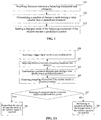
- Fig. 1 is a flow diagram illustrating a method for making a balancing transporter stay put according to an exemplary embodiment. As shown in Fig. 1 , this method for making a balancing transporter stay put may include the following steps.
- step 101 distances between the balancing transporter and obstacles around the balancing transporter are acquired.
- step 102 among the distances, a number of distances, each of which has a value smaller than a predefined threshold, is determined.
- step 103 if the number reaches a predefined number, a stay-put mode of the balancing transporter may be started, and the balancing transporter will be automatically kept balanced under the stay-put mode.
- the method for making a balancing transporter stay put as provided in the present embodiment of the invention by acquiring distances between the balancing transporter and obstacles around the balancing transporter, and automatically starting a stay-put mode of the balancing transporter if among the distances a number of distances each of which has a value smaller than a predefined threshold reaches a predefined number, the balancing transporter can be automatically kept balanced under the stay-put mode. Accordingly such a problem in the related art is solved that when a person enters a narrow space on a balancing transporter, it would be difficult for the person to keep the balancing transporter in a balanced state by waggling his or her body. As a result, a technical effect that a balancing transporter can be automatically kept balanced when the balancing transporter enters a narrow space is achieved.
- Fig. 2A is a flow diagram illustrating a method for making a balancing transporter stay put according to another exemplary embodiment. As shown in Fig. 2A , the method for making a balancing transporter stay put may include the following steps.
- a trigger signal sent by a surrounding device is received, and the trigger signal is a signal that is sent to the balancing transporter by the surrounding device after the balancing transporter enters a predefined area, the predefined area being a communication area within which the surrounding device and the balancing transporter communicate.
- a communication protocol may be preconfigured between the balancing transporter and the surrounding device.
- the balancing transporter may receive the trigger signal sent by the surrounding device.
- the surrounding device may be a device capable of forming a closed space within which a person may be carried. The size of this closed space may be smaller than the size of the predefined area.
- the surrounding device may be an elevator, a subway car, or a train.
- the balancing transporter's receiving the trigger signal sent by the surrounding device may include: the balancing transporter sending a detection signal, receiving a response signal fed back from the surrounding device, and taking the response signal as a trigger signal.
- the balancing transporter may receive a trigger signal which is actively sent by the surrounding device.
- the surrounding device is an elevator, for example.
- the balancing transporter may receive a trigger signal sent by the elevator.
- the predefined area is in this case a communication area within which the elevator and the balancing transporter can communicate with each other.
- step 202 distances between the balancing transporter and obstacles around the balancing transporter are acquired.
- the balancing transporter may acquire the distances to its surrounding obstacles in real time, or may acquire these distances after receiving the trigger signal of step 201.
- the present invention is not limited in this respect.
- the balancing transporter may be provided with an infrared module, by which the distances to the obstacles around the balancing transporter may be measured. For instance, the balancing transporter may acquire the distances between itself and the obstacles in its four directions of front, back, left and right, via the infrared module. Using an infrared module to measure the distances to the obstacles is just an example of the embodiments; the balancing transporter may also measure the distances between itself and the obstacles by other measurement approaches, and the present invention is not limited in this respect.
- step 203 among the distances, a number of distances, each of which has a value smaller than a predefined threshold, may be calculated.
- step 204 if the number reaches a predefined number, prompting information is presented to prompt that the balancing transporter will enter the stay-put mode.
- the balancing transporter may present the prompting information to prompt that the balancing transporter will enter the stay-put mode.
- the balancing transporter may present this prompting information within an information presentation area in the balancing transporter, such as a display screen in a handle part of the balancing transporter, etc.
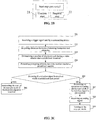
- the balancing transporter may also issue this prompting information through voice. Referring to Fig. 2B , for example, the balancing transporter may display "Start stay-put mode?" in the display screen.
- the balancing transporter may present the prompting information through both voice and display screen. For example, the balancing transporter may beep while displaying the prompting information as shown in Fig. 2B .
- the predefined number may be an integer larger than or equal to 3. For example, if the balancing transporter detects that the distances between itself and obstacles in at least three directions are smaller than the predefined threshold, the balancing transporter may determine that it has entered an elevator, and the balancing transporter may present the prompting information at this moment.
- step 205 it is detected whether a rejection signal is received within a predefined time period.
- the rejection signal is used to indicate not to start the stay-put mode of the balancing transporter for the moment.
- the balancing transporter may start up a timer and monitor operations of the user. Whether the rejection signal is received within the predefined time period is determined based on the monitored operations of the user. If the balancing transporter receives the rejection signal within the predefined time period, step 206 will be performed; otherwise, step 207 will be performed.
- the user may select option 21 of "Confirm start” if the user wants the balancing transporter to enter the stay-put mode, and may select option 22 of "Suspend start” if the user does not want the balancing transporter to enter the stay-put mode. Accordingly, the balancing transporter may receive a signal on the user's selection.
- step 206 the start of stay-put mode is suspended if the rejection signal is received.
- the balancing transporter If the balancing transporter receives the rejection signal within the predefined time period, it indicates that the user does not want the balancing transporter to enter the stay-put mode. At this time, the start of the balancing transporter's stay-put mode may be suspended. Alternatively, after receiving the rejection signal, the balancing transporter may start up a timer and for a preset period the stay-put mode will not be started.
- step 207 if the rejection signal is not received, an operation of starting the stay-put mode of the balancing transporter is performed.
- the stay-put mode of the balancing transporter will be started.
- the balancing transporter may start the stay-put mode immediately; however, if the balancing transporter does not receive any signal within the predefined time period, the balancing transporter may start the stay-put mode at the end of the predefined time period. Under the stay-put mode, the balancing transporter may be automatically kept balanced.
- This step may include the following two possible implementations.
- an auto-balancing system of the balancing transporter may be started.
- the balancing transporter may start its auto-balancing system, so that the balancing transporter may be automatically kept balanced.
- a braking function of the balancing transporter may be activated.
- the balancing transporter After activating the braking function, the balancing transporter may be automatically kept balanced under the restriction of the braking function.
- step 201 is optional, and may be absent in practice. Moreover, in the illustrate embodiment, it is merely an example that step 201 is performed as the first step. Step 201 may be performed anywhere before step 207, and the present invention is not limited in this respect.
- steps 204-206 are also optional.
- the balancing transporter may start the stay-put mode directly, i.e., performing step 207 directly; the present invention is not limited in this respect.
- the method for making the balancing transporter stay put may include the following.
- step 208 an ending signal is received.
- the balancing transporter After the balancing transporter starts the stay-put mode, if the user wants to continue using this balancing transporter, the user may apply an ending signal to turn off the stay-put mode of the balancing transporter. Accordingly, the balancing transporter may receive this ending signal.
- the balancing transporter may be provided with a physical button, which is used to turn off the stay-put mode.
- the user may press this physical button, and the balancing transporter may take the received pressure signal as the ending signal.
- the balancing transporter may receive this ending signal through other approaches, and the present invention is not limited in this respect.
- step 209 after receiving the ending signal, the stay-put mode of the balancing transporter is ended.
- the balancing transporter may turn off the stay-put mode. Subsequently, the user may keep the balance of the balancing transporter by waggling his or her body, and thus the balancing transporter may be normally manipulated.
- a balancing transporter may measure the distances between itself and the obstacles around the balancing transporter via an infrared module.
- a number of distances (each of which has a value smaller than a predefined threshold) among the measured distances of the balancing transporter reaches 3 (referring to Fig. 2D , as an example, the balancing transporter detects that the distances to the obstacles on its left side, right side, and back side are all smaller than a predefined threshold), it indicates that a user has entered the elevator on the balancing transporter.
- the balancing transporter may start a stay-put mode to be automatically kept balanced (in this manner, after the user riding the balancing transporter enters the elevator, the balancing transporter may start the stay-put mode before the close of the elevator, and the experience of the user is improved).
- the balancing transporter may display prompting information for prompting the start of the stay-put mode of the balancing transporter through a display screen on a handle of the balancing transporter, and start the stay-put mode if a rejection signal is not received within a predefined time period.
- the rejection signal has been received within the predefined time period, it indicates that the user is probably waiting outside the elevator and does not want to start the stay-put mode of the balancing transporter.
- the balancing transporter may then do not start the stay-put mode for the moment.
- the method for making a balancing transporter stay put as provided in the present embodiment of the invention, by acquiring distances between the balancing transporter and the obstacles around the balancing transporter, and automatically starting a stay-put mode of the balancing transporter if among the distances a number of distances each of which has a value smaller than a predefined threshold reaches a predefined number, the balancing transporter can be automatically kept balanced under the stay-put mode. Accordingly such a problem in the related art is solved that when a person on a balancing transporter enters a narrow space, it would be difficult for the person to keep the balancing transporter in a balanced state by waggling his or her body. As a result, a technical effect that a balancing transporter can be automatically kept balanced when the balancing transporter enters a narrow space is achieved.
- the processing complexity may be reduced in the balancing transporter when the balancing transporter acquires the distances to the obstacles around the balancing transporter after receiving the trigger signal, rather than acquire these distances in real time.
- the balancing transporter may start the stay-put mode once it is detected that among these distances the number of distances each of which has a value smaller than the predefined threshold reaches a predefined number, without the need of waiting for all the distances being smaller than the predefined threshold. As a result, the stay-put mode of the balancing transporter can be started promptly.
- the user may turn off or end the stay-put mode of the balancing transporter when the user wants to manipulate the balancing transporter normally, and thus usage of the balancing transporter by the user can be made more convenient.
- the following embodiments are devices that may be used to perform the methods disclosed in the above embodiments of the invention.
- the methods above may be referred to for any undisclosed details of the devices of the following embodiments.
- Fig. 3 is a block diagram illustrating a device for making a balancing transporter stay put according to an exemplary embodiment. As shown in Fig. 3 , this device may include, but is not limited to: a distance acquisition module 301, a number determination module 302, and a mode start module 303.
- the distance acquisition module 301 is configured to acquire distances between the balancing transporter and obstacles around the balancing transporter.
- the number determination module 302 is configured to determine, among the distances, a number of distances each of which has a value smaller than a predefined threshold.
- the mode start module 303 is configured to start a stay-put mode of the balancing transporter if the number determined in the number determination module 302 reaches a predefined number, wherein the balancing transporter may be automatically kept balanced under the stay-put mode.
- the device for making a balancing transporter stay put as provided in the present embodiment of the invention, by acquiring distances between the balancing transporter and obstacles around the balancing transporter, and automatically starting a stay-put mode of the balancing transporter if among the distances a number of distances each of which has a value smaller than a predefined threshold reaches a predefined number, the balancing transporter can be automatically kept balanced under the stay-put mode. Accordingly such a problem in the related art is solved that when a person on a balancing transporter enters a narrow space, it would be difficult for the person to keep the balancing transporter in a balanced state by waggling his or her body. As a result, a technical effect that a balancing transporter can be automatically kept balanced when the balancing transporter enters a narrow space is achieved.
- Fig. 4 is a block diagram illustrating a device for making a balancing transporter stay put according to another exemplary embodiment. As shown in Fig. 4 , this device may include, but is not limited to: a distance acquisition module 401, a number determination module 402, and a mode start module 403.
- the distance acquisition module 401 is configured to acquire distances between the balancing transporter and obstacles around the balancing transporter.
- the number determination module 402 is configured to determine, among the distances, a number of distances each of which has a value smaller than a predefined threshold.
- the mode start module 403 is configured to start a stay-put mode of the balancing transporter if the number determined in the number determination module 402 reaches a predefined number, wherein the balancing transporter may automatically be kept balanced under the stay-put mode.
- the device may further include: a first reception module 404, which is configured to receive a trigger signal sent by a surrounding device prior to the mode start module 403 starting the stay-put mode of the balancing transporter, the trigger signal being a signal sent to the balancing transporter by the surrounding device after the balancing transporter enters a predefined area, wherein the predefined area is a communication area within which the surrounding device and the balancing transporter communicate with each other.
- a first reception module 404 which is configured to receive a trigger signal sent by a surrounding device prior to the mode start module 403 starting the stay-put mode of the balancing transporter, the trigger signal being a signal sent to the balancing transporter by the surrounding device after the balancing transporter enters a predefined area, wherein the predefined area is a communication area within which the surrounding device and the balancing transporter communicate with each other.
- the device may further include: an information presentation module 405 configured to present prompting information, the prompting information being used to prompt that the balancing transporter will enter the stay-put mode; a detection module 406 configured to detect whether a rejection signal is received within a predefined time period, the rejection signal being used to indicate not to start the stay-put mode of the balancing transporter temporarily; and a start suspension module 407 configured to suspend the start of the stay-put mode if the detection module 406 detects that the rejection signal is received, wherein the mode start module 403 is further configured to perform an operation of starting the stay-put mode of the balancing transporter if the detection module 406 detects that the detection result of the detection module 406 is that the rejection signal is not received.
- an information presentation module 405 configured to present prompting information, the prompting information being used to prompt that the balancing transporter will enter the stay-put mode
- a detection module 406 configured to detect whether a rejection signal is received within a predefined time period, the rejection signal being used to indicate not to
- the mode start module 403 may include: a first start sub-module 403a configured to start an auto-balancing system of the balancing transporter; and/or a second start sub-module 403b configured to activate a braking function of the balancing transporter.
- the device may further include: a second reception module 408 configured to receive an ending signal; and a mode end module 409 configured to end the stay-put mode of the balancing transporter after the second reception module 408 receives the ending signal.
- a second reception module 408 configured to receive an ending signal
- a mode end module 409 configured to end the stay-put mode of the balancing transporter after the second reception module 408 receives the ending signal.
- the device for making a balancing transporter stay put as provided in the present embodiment of the invention, by acquiring distances between the balancing transporter and obstacles around the balancing transporter, and automatically starting a stay-put mode of the balancing transporter if among the distances a number of distances each of which has a value smaller than a predefined threshold reaches a predefined number, the balancing transporter can be automatically kept balanced under the stay-put mode. Accordingly such a problem in the related art is solved that when a person on a balancing transporter enters a narrow space, it would be difficult for the person to keep the balancing transporter in a balanced state by waggling his or her body. As a result, a technical effect that a balancing transporter can be automatically kept balanced when the balancing transporter enters a narrow space is achieved.
- the processing complexity may be reduced in the balancing transporter when the balancing transporter acquires the distances to the obstacles around the balancing transporter after receiving the trigger signal, rather than acquire these distances in real time.
- the balancing transporter may start the stay-put mode once it is detected that among these distances the number of distances each of which has a value smaller than the predefined threshold reaches a predefined number, without the need of waiting for all the distances being smaller than the predefined threshold. As a result, the stay-put mode of the balancing transporter can be started promptly.
- the user may turn off or end the stay-put mode of the balancing transporter when the user wants to manipulate the balancing transporter normally, and thus usage of the balancing transporter by the user can be made more convenient.
- a device for making a balancing transporter stay put is provided in an exemplary embodiment of the invention.
- the device may implement the method for making a balancing transporter stay put as provided in the invention, and may include a processor and a memory for storing processor-executable instructions, wherein the processor is configured to: acquire distances between the balancing transporter and obstacles around the balancing transporter; determine, among the distances, a number of distances each of which has a value smaller than a predefined threshold; and start a stay-put mode of the balancing transporter if the number reaches a predefined number, the balancing transporter being automatically kept balanced under the stay-put mode.
Landscapes
- Engineering & Computer Science (AREA)
- Mechanical Engineering (AREA)
- Transportation (AREA)
- Automation & Control Theory (AREA)
- Combustion & Propulsion (AREA)
- Chemical & Material Sciences (AREA)
- Control Of Driving Devices And Active Controlling Of Vehicle (AREA)
- Traffic Control Systems (AREA)
- Motorcycle And Bicycle Frame (AREA)
- Human Computer Interaction (AREA)
- Remote Sensing (AREA)
- Power Engineering (AREA)
- Physics & Mathematics (AREA)
- Mathematical Physics (AREA)
- Radar, Positioning & Navigation (AREA)
- Elevator Control (AREA)
- Control Of Position, Course, Altitude, Or Attitude Of Moving Bodies (AREA)
- Invalid Beds And Related Equipment (AREA)
Abstract
Description
- The present invention generally relates to balancing transporter, and more particularly, to method and device for making a balancing transporter stay-put.
- With the development of technologies, using of balancing transporters has been popular in daily life.
- When a person uses a balancing transporter, the person usually needs to waggle his or her body to keep the balancing transporter in a balanced state. However, when the person enters a narrow space on the balancing transporter, it would be difficult for the person to keep the balancing transporter balanced by waggling his or her body.
- A method and device for making a balancing transporter stay put are provided in the invention. The illustrated embodiments are explained as below.
- According to a first aspect of the present invention, a method for making a balancing transporter stay put is provided, including: acquiring distances between the balancing transporter and obstacles around the balancing transporter; determining, among the distances, a number of distances each of which has a value smaller than a predefined threshold; and starting a stay-put mode of the balancing transporter if the number reaches a predefined number, the balancing transporter being automatically kept balanced under the stay-put mode.
- For example, the balancing transporter may measure a finite number of distances between the balancing transporter and its surroundings, each distance of the finite number of distances being associated with a direction.
- According to an exemplary embodiment, the method may further include: prior to starting the stay-put mode of the balancing transporter, receiving a trigger signal sent by a surrounding device, the trigger signal being a signal sent to the balancing transporter by the surrounding device after the balancing transporter enters a predefined area, wherein the predefined area is a communication area within which the surrounding device and the balancing transporter communicate with each other.
- According to an exemplary embodiment, the method may further include: presenting prompting information, the prompting information being used to prompt that the balancing transporter will enter the stay-put mode; detecting whether a rejection signal is received within a predefined time period, the rejection signal being used to indicate not to start the stay-put mode of the balancing transporter temporarily; suspending the start of the stay-put mode, if the rejection signal is received; and performing an operation of starting the stay-put mode of the balancing transporter, if the rejection signal is not received.
- According to an exemplary embodiment, the starting may include: starting an auto-balancing system of the balancing transporter; and/or activating a braking function of the balancing transporter.
- According to an exemplary embodiment, the method may further include: receiving an ending signal; and ending the stay-put mode of the balancing transporter, after receiving the ending signal.
- According to a second aspect of the present invention, a device for making a balancing transporter stay put is provided, including: a distance acquisition module configured to acquire distances between the balancing transporter and obstacles around the balancing transporter; a number determination module configured to determine, among the distances, a number of distances each of which has a value smaller than a predefined threshold; and a mode start module configured to start a stay-put mode of the balancing transporter if the number reaches a predefined number, the balancing transporter being automatically kept balanced under the stay-put mode.
- According to an exemplary embodiment, the device may further include a first reception module configured to receive a trigger signal sent by a surrounding device prior to starting the stay-put mode of the balancing transporter, the trigger signal being a signal sent to the balancing transporter by the surrounding device after the balancing transporter enters a predefined area, wherein the predefined area is a communication area within which the surrounding device and the balancing transporter communicate with each other.
- According to an exemplary embodiment, the device may further include: an information presentation module configured to present prompting information, the prompting information being used to prompt that the balancing transporter will enter the stay-put mode; a detection module configured to detect whether a rejection signal is received within a predefined time period, the rejection signal being used to indicate not to start the stay-put mode of the balancing transporter temporarily; and a start suspension module configured to suspend the start of the stay-put mode if the detection module detects that the rejection signal is received, wherein the mode start module is further configured to perform an operation of starting the stay-put mode of the balancing transporter if the detection module detects that the rejection signal is not received.
- According to an exemplary embodiment, the mode start module may include: a first start sub-module configured to start an auto-balancing system of the balancing transporter; and/or a second start sub-module configured to activate a braking function of the balancing transporter.
- According to an exemplary embodiment, the device may further include: a second reception module configured to receive an ending signal; and a mode end module configured to end the stay-put mode of the balancing transporter after receiving the ending signal.
- According to a third aspect of the present invention, a device for making a balancing transporter stay put is provided, including: a processor; and a memory for storing processor-executable instructions, wherein the processor is configured to: acquire distances between the balancing transporter and obstacles around the balancing transporter; determine, among the distances, a number of distances each of which has a value smaller than a predefined threshold; and start a stay-put mode of the balancing transporter if the number reaches a predefined number, the balancing transporter being automatically kept balanced under the stay-put mode.
- According to a fourth aspect of the present invention, there is provided a computer program including instructions for executing the steps of a method for making a balancing transporter stay put as defined above when said program is executed by a computer.
- This program can use any programming language and take the form of source code, object code or a code intermediate between source code and object code, such as a partially compiled form, or any other desirable form.
- According to a fifth aspect of the present invention, there is provided a recording medium readable by a computer and having recorded thereon a computer program including instructions for executing the steps of a method for making a balancing transporter stay put as defined above.
- The information medium can be any entity or device capable of storing the program. For example, the support can include storage means such as a ROM, for example a CD ROM or a microelectronic circuit ROM, or magnetic storage means, for example a diskette (floppy disk) or a hard disk.
- Alternatively, the information medium can be an integrated circuit in which the program is incorporated, the circuit being adapted to execute the method in question or to be used in its execution.
- The invention also provides a balancing transporter comprising a device as defined above.
- Embodiments of the invention may provide at least some of the following beneficial effects: by acquiring distances between a balancing transporter and obstacles around the balancing transporter, and automatically starting a stay-put mode of the balancing transporter if among the distances a number of distances each of which has a value smaller than a predefined threshold reaches a predefined number, the balancing transporter can be automatically kept balanced under the stay-put mode. Therefore such a problem in the related art is solved that when a person enters a narrow space on a balancing transporter, it would be difficult for the person to keep the balancing transporter in a balanced state by waggling his or her body. As a result, a technical effect that a balancing transporter can be automatically kept balanced when the balancing transporter enters a narrow space is achieved.
- It is to be understood that both the forgoing general description and the following detailed description are exemplary only, and are not restrictive of the present invention.
- The accompanying drawings, which are incorporated in and constitute a part of this specification, illustrate embodiments consistent with the invention and, together with the description, serve to explain the principles of the invention.
-
Fig. 1 is a flow diagram illustrating a method for making a balancing transporter stay put according to an exemplary embodiment. -
Fig. 2A is a flow diagram illustrating a method for making a balancing transporter stay put according to another exemplary embodiment. -
Fig. 2B is a schematic diagram illustrating prompting information according to another exemplary embodiment. -
Fig. 2C is another flow diagram illustrating a method for making a balancing transporter stay put according to another exemplary embodiment. -
Fig. 2D is a schematic diagram illustrating an environment, in which a balancing transporter is situated when the balancing transporter starts a stay-put mode, according to another exemplary embodiment. -
Fig. 3 is a block diagram illustrating a device for making a balancing transporter stay put according to an exemplary embodiment. -
Fig. 4 is a block diagram illustrating a device for making a balancing transporter stay put according to another exemplary embodiment. - Reference will now be made in detail to exemplary embodiments, examples of which are illustrated in the accompanying drawings. The following description refers to the accompanying drawings in which same numbers in different drawings represent same or similar elements unless otherwise described. The implementations set forth in the following description of exemplary embodiments do not represent all implementations consistent with the invention. Instead, they are merely examples of devices and methods consistent with aspects related to the invention as recited in the appended claims.
-
Fig. 1 is a flow diagram illustrating a method for making a balancing transporter stay put according to an exemplary embodiment. As shown inFig. 1 , this method for making a balancing transporter stay put may include the following steps. - In
step 101, distances between the balancing transporter and obstacles around the balancing transporter are acquired. - In
step 102, among the distances, a number of distances, each of which has a value smaller than a predefined threshold, is determined. - In
step 103, if the number reaches a predefined number, a stay-put mode of the balancing transporter may be started, and the balancing transporter will be automatically kept balanced under the stay-put mode. - In general, with the method for making a balancing transporter stay put as provided in the present embodiment of the invention, by acquiring distances between the balancing transporter and obstacles around the balancing transporter, and automatically starting a stay-put mode of the balancing transporter if among the distances a number of distances each of which has a value smaller than a predefined threshold reaches a predefined number, the balancing transporter can be automatically kept balanced under the stay-put mode. Accordingly such a problem in the related art is solved that when a person enters a narrow space on a balancing transporter, it would be difficult for the person to keep the balancing transporter in a balanced state by waggling his or her body. As a result, a technical effect that a balancing transporter can be automatically kept balanced when the balancing transporter enters a narrow space is achieved.
-
Fig. 2A is a flow diagram illustrating a method for making a balancing transporter stay put according to another exemplary embodiment. As shown inFig. 2A , the method for making a balancing transporter stay put may include the following steps. - In
step 201, a trigger signal sent by a surrounding device is received, and the trigger signal is a signal that is sent to the balancing transporter by the surrounding device after the balancing transporter enters a predefined area, the predefined area being a communication area within which the surrounding device and the balancing transporter communicate. - A communication protocol may be preconfigured between the balancing transporter and the surrounding device. In this manner, as soon as the balancing transporter enters the communication area where the balancing transporter can communicate with the surrounding device, the balancing transporter may receive the trigger signal sent by the surrounding device. More particularly, the surrounding device may be a device capable of forming a closed space within which a person may be carried. The size of this closed space may be smaller than the size of the predefined area. For instance, the surrounding device may be an elevator, a subway car, or a train.
- The balancing transporter's receiving the trigger signal sent by the surrounding device may include: the balancing transporter sending a detection signal, receiving a response signal fed back from the surrounding device, and taking the response signal as a trigger signal. Alternatively, the balancing transporter may receive a trigger signal which is actively sent by the surrounding device.
- Suppose the surrounding device is an elevator, for example. As a user enters a predefined area on a balancing transporter when the balancing transporter can communicate with the elevator, the balancing transporter may receive a trigger signal sent by the elevator. The predefined area is in this case a communication area within which the elevator and the balancing transporter can communicate with each other.
- In
step 202, distances between the balancing transporter and obstacles around the balancing transporter are acquired. - The balancing transporter may acquire the distances to its surrounding obstacles in real time, or may acquire these distances after receiving the trigger signal of
step 201. The present invention is not limited in this respect. - The balancing transporter may be provided with an infrared module, by which the distances to the obstacles around the balancing transporter may be measured. For instance, the balancing transporter may acquire the distances between itself and the obstacles in its four directions of front, back, left and right, via the infrared module. Using an infrared module to measure the distances to the obstacles is just an example of the embodiments; the balancing transporter may also measure the distances between itself and the obstacles by other measurement approaches, and the present invention is not limited in this respect.
- In
step 203, among the distances, a number of distances, each of which has a value smaller than a predefined threshold, may be calculated. - In
step 204, if the number reaches a predefined number, prompting information is presented to prompt that the balancing transporter will enter the stay-put mode. - When the balancing transporter detects that the number of distances having values smaller than the predefined threshold reaches the predefined number, the balancing transporter may present the prompting information to prompt that the balancing transporter will enter the stay-put mode.
- The balancing transporter may present this prompting information within an information presentation area in the balancing transporter, such as a display screen in a handle part of the balancing transporter, etc. The balancing transporter may also issue this prompting information through voice. Referring to
Fig. 2B , for example, the balancing transporter may display "Start stay-put mode?" in the display screen. The balancing transporter may present the prompting information through both voice and display screen. For example, the balancing transporter may beep while displaying the prompting information as shown inFig. 2B . - The predefined number may be an integer larger than or equal to 3. For example, if the balancing transporter detects that the distances between itself and obstacles in at least three directions are smaller than the predefined threshold, the balancing transporter may determine that it has entered an elevator, and the balancing transporter may present the prompting information at this moment.
- In
step 205, it is detected whether a rejection signal is received within a predefined time period. The rejection signal is used to indicate not to start the stay-put mode of the balancing transporter for the moment. - After presenting the prompting information, the balancing transporter may start up a timer and monitor operations of the user. Whether the rejection signal is received within the predefined time period is determined based on the monitored operations of the user. If the balancing transporter receives the rejection signal within the predefined time period, step 206 will be performed; otherwise, step 207 will be performed.
- Referring to
Fig. 2B again, after the prompting information is presented by the balancing transporter, the user may selectoption 21 of "Confirm start" if the user wants the balancing transporter to enter the stay-put mode, and may selectoption 22 of "Suspend start" if the user does not want the balancing transporter to enter the stay-put mode. Accordingly, the balancing transporter may receive a signal on the user's selection. - In
step 206, the start of stay-put mode is suspended if the rejection signal is received. - If the balancing transporter receives the rejection signal within the predefined time period, it indicates that the user does not want the balancing transporter to enter the stay-put mode. At this time, the start of the balancing transporter's stay-put mode may be suspended. Alternatively, after receiving the rejection signal, the balancing transporter may start up a timer and for a preset period the stay-put mode will not be started.
- In
step 207, if the rejection signal is not received, an operation of starting the stay-put mode of the balancing transporter is performed. - If the balancing transporter does not receive the rejection signal within the predefined time period, the stay-put mode of the balancing transporter will be started.
- In an embodiment, if the balancing transporter receives a confirmation signal to confirm the start of the stay-put mode, the balancing transporter may start the stay-put mode immediately; however, if the balancing transporter does not receive any signal within the predefined time period, the balancing transporter may start the stay-put mode at the end of the predefined time period. Under the stay-put mode, the balancing transporter may be automatically kept balanced.
- This step may include the following two possible implementations.
- As a first possible implementation, an auto-balancing system of the balancing transporter may be started.
- The balancing transporter may start its auto-balancing system, so that the balancing transporter may be automatically kept balanced.
- As a second implementation, a braking function of the balancing transporter may be activated.
- After activating the braking function, the balancing transporter may be automatically kept balanced under the restriction of the braking function.
- It is to be noted that
step 201 is optional, and may be absent in practice. Moreover, in the illustrate embodiment, it is merely an example that step 201 is performed as the first step. Step 201 may be performed anywhere beforestep 207, and the present invention is not limited in this respect. - It is also to be noted that steps 204-206 are also optional. In practice, when the number of distances having values smaller than the predefined threshold reaches the predefined number, the balancing transporter may start the stay-put mode directly, i.e., performing
step 207 directly; the present invention is not limited in this respect. - Referring to
Fig. 2C , the method for making the balancing transporter stay put may include the following. - In
step 208, an ending signal is received. - After the balancing transporter starts the stay-put mode, if the user wants to continue using this balancing transporter, the user may apply an ending signal to turn off the stay-put mode of the balancing transporter. Accordingly, the balancing transporter may receive this ending signal.
- The balancing transporter may be provided with a physical button, which is used to turn off the stay-put mode. When the user wants to end the stay-put mode, the user may press this physical button, and the balancing transporter may take the received pressure signal as the ending signal. The balancing transporter may receive this ending signal through other approaches, and the present invention is not limited in this respect.
- In
step 209, after receiving the ending signal, the stay-put mode of the balancing transporter is ended. - After receiving the ending signal, the balancing transporter may turn off the stay-put mode. Subsequently, the user may keep the balance of the balancing transporter by waggling his or her body, and thus the balancing transporter may be normally manipulated.
- In an exemplary application scenario of the embodiments, after receiving a trigger signal sent by an elevator, a balancing transporter may measure the distances between itself and the obstacles around the balancing transporter via an infrared module. When a number of distances (each of which has a value smaller than a predefined threshold) among the measured distances of the balancing transporter reaches 3 (referring to
Fig. 2D , as an example, the balancing transporter detects that the distances to the obstacles on its left side, right side, and back side are all smaller than a predefined threshold), it indicates that a user has entered the elevator on the balancing transporter. At this time, the balancing transporter may start a stay-put mode to be automatically kept balanced (in this manner, after the user riding the balancing transporter enters the elevator, the balancing transporter may start the stay-put mode before the close of the elevator, and the experience of the user is improved). Alternatively, before starting the stay-put mode, the balancing transporter may display prompting information for prompting the start of the stay-put mode of the balancing transporter through a display screen on a handle of the balancing transporter, and start the stay-put mode if a rejection signal is not received within a predefined time period. If the rejection signal has been received within the predefined time period, it indicates that the user is probably waiting outside the elevator and does not want to start the stay-put mode of the balancing transporter. The balancing transporter may then do not start the stay-put mode for the moment. - In general, with the method for making a balancing transporter stay put as provided in the present embodiment of the invention, by acquiring distances between the balancing transporter and the obstacles around the balancing transporter, and automatically starting a stay-put mode of the balancing transporter if among the distances a number of distances each of which has a value smaller than a predefined threshold reaches a predefined number, the balancing transporter can be automatically kept balanced under the stay-put mode. Accordingly such a problem in the related art is solved that when a person on a balancing transporter enters a narrow space, it would be difficult for the person to keep the balancing transporter in a balanced state by waggling his or her body. As a result, a technical effect that a balancing transporter can be automatically kept balanced when the balancing transporter enters a narrow space is achieved.
- By starting the stay-put mode after receiving the trigger signal from the surrounding device, unnecessary start of the stay-put mode of the balancing transporter in some unnecessary scenarios is avoided and accordingly the user's normal use of the balancing transporter may not be disturbed. Meanwhile, the processing complexity may be reduced in the balancing transporter when the balancing transporter acquires the distances to the obstacles around the balancing transporter after receiving the trigger signal, rather than acquire these distances in real time.
- The balancing transporter may start the stay-put mode once it is detected that among these distances the number of distances each of which has a value smaller than the predefined threshold reaches a predefined number, without the need of waiting for all the distances being smaller than the predefined threshold. As a result, the stay-put mode of the balancing transporter can be started promptly.
- By presenting the prompting information before the balancing transporter starts the stay-put mode, and selecting to either suspend the stay-put mode or start the stay-put mode with the participation of the user, requirements of users may be better satisfied and according user experience may be improved.
- Moreover, after the balancing transporter starts the stay-put mode, the user may turn off or end the stay-put mode of the balancing transporter when the user wants to manipulate the balancing transporter normally, and thus usage of the balancing transporter by the user can be made more convenient.
- The following embodiments are devices that may be used to perform the methods disclosed in the above embodiments of the invention. The methods above may be referred to for any undisclosed details of the devices of the following embodiments.
-
Fig. 3 is a block diagram illustrating a device for making a balancing transporter stay put according to an exemplary embodiment. As shown inFig. 3 , this device may include, but is not limited to: adistance acquisition module 301, anumber determination module 302, and amode start module 303. - The
distance acquisition module 301 is configured to acquire distances between the balancing transporter and obstacles around the balancing transporter. - The
number determination module 302 is configured to determine, among the distances, a number of distances each of which has a value smaller than a predefined threshold. - The
mode start module 303 is configured to start a stay-put mode of the balancing transporter if the number determined in thenumber determination module 302 reaches a predefined number, wherein the balancing transporter may be automatically kept balanced under the stay-put mode. - In general, with the device for making a balancing transporter stay put as provided in the present embodiment of the invention, by acquiring distances between the balancing transporter and obstacles around the balancing transporter, and automatically starting a stay-put mode of the balancing transporter if among the distances a number of distances each of which has a value smaller than a predefined threshold reaches a predefined number, the balancing transporter can be automatically kept balanced under the stay-put mode. Accordingly such a problem in the related art is solved that when a person on a balancing transporter enters a narrow space, it would be difficult for the person to keep the balancing transporter in a balanced state by waggling his or her body. As a result, a technical effect that a balancing transporter can be automatically kept balanced when the balancing transporter enters a narrow space is achieved.
-
Fig. 4 is a block diagram illustrating a device for making a balancing transporter stay put according to another exemplary embodiment. As shown inFig. 4 , this device may include, but is not limited to: adistance acquisition module 401, anumber determination module 402, and amode start module 403. - The
distance acquisition module 401 is configured to acquire distances between the balancing transporter and obstacles around the balancing transporter. - The
number determination module 402 is configured to determine, among the distances, a number of distances each of which has a value smaller than a predefined threshold. - The
mode start module 403 is configured to start a stay-put mode of the balancing transporter if the number determined in thenumber determination module 402 reaches a predefined number, wherein the balancing transporter may automatically be kept balanced under the stay-put mode. - Optionally, the device may further include: a
first reception module 404, which is configured to receive a trigger signal sent by a surrounding device prior to themode start module 403 starting the stay-put mode of the balancing transporter, the trigger signal being a signal sent to the balancing transporter by the surrounding device after the balancing transporter enters a predefined area, wherein the predefined area is a communication area within which the surrounding device and the balancing transporter communicate with each other. - Optionally, the device may further include: an
information presentation module 405 configured to present prompting information, the prompting information being used to prompt that the balancing transporter will enter the stay-put mode; adetection module 406 configured to detect whether a rejection signal is received within a predefined time period, the rejection signal being used to indicate not to start the stay-put mode of the balancing transporter temporarily; and astart suspension module 407 configured to suspend the start of the stay-put mode if thedetection module 406 detects that the rejection signal is received, wherein themode start module 403 is further configured to perform an operation of starting the stay-put mode of the balancing transporter if thedetection module 406 detects that the detection result of thedetection module 406 is that the rejection signal is not received. - The
mode start module 403 may include: a first start sub-module 403a configured to start an auto-balancing system of the balancing transporter; and/or a second start sub-module 403b configured to activate a braking function of the balancing transporter. - Optionally, the device may further include: a
second reception module 408 configured to receive an ending signal; and amode end module 409 configured to end the stay-put mode of the balancing transporter after thesecond reception module 408 receives the ending signal. - In general, with the device for making a balancing transporter stay put as provided in the present embodiment of the invention, by acquiring distances between the balancing transporter and obstacles around the balancing transporter, and automatically starting a stay-put mode of the balancing transporter if among the distances a number of distances each of which has a value smaller than a predefined threshold reaches a predefined number, the balancing transporter can be automatically kept balanced under the stay-put mode. Accordingly such a problem in the related art is solved that when a person on a balancing transporter enters a narrow space, it would be difficult for the person to keep the balancing transporter in a balanced state by waggling his or her body. As a result, a technical effect that a balancing transporter can be automatically kept balanced when the balancing transporter enters a narrow space is achieved.
- By starting the stay-put mode after receiving the trigger signal from the surrounding device, unnecessary start of the stay-put mode of the balancing transporter in some unnecessary scenarios is avoided and accordingly the user's normal use of the balancing transporter may not be disturbed. Meanwhile, the processing complexity may be reduced in the balancing transporter when the balancing transporter acquires the distances to the obstacles around the balancing transporter after receiving the trigger signal, rather than acquire these distances in real time.
- The balancing transporter may start the stay-put mode once it is detected that among these distances the number of distances each of which has a value smaller than the predefined threshold reaches a predefined number, without the need of waiting for all the distances being smaller than the predefined threshold. As a result, the stay-put mode of the balancing transporter can be started promptly.
- By presenting the prompting information before the balancing transporter starts the stay-put mode, and selecting to either suspend the stay-put mode or start the stay-put mode with the participation of the user, requirements of users may be better satisfied and according the user experience may be improved.
- Moreover, after the balancing transporter starts the stay-put mode, the user may turn off or end the stay-put mode of the balancing transporter when the user wants to manipulate the balancing transporter normally, and thus usage of the balancing transporter by the user can be made more convenient.
- With respect to the devices in the above embodiments, the specific manners that the respective modules perform operations have been described in detail in the embodiments regarding the relevant methods, and will not be elaborated herein.
- A device for making a balancing transporter stay put is provided in an exemplary embodiment of the invention. The device may implement the method for making a balancing transporter stay put as provided in the invention, and may include a processor and a memory for storing processor-executable instructions, wherein the processor is configured to: acquire distances between the balancing transporter and obstacles around the balancing transporter; determine, among the distances, a number of distances each of which has a value smaller than a predefined threshold; and start a stay-put mode of the balancing transporter if the number reaches a predefined number, the balancing transporter being automatically kept balanced under the stay-put mode.
- It will be appreciated that the inventive concept is not limited to the exact construction that has been described above and illustrated in the accompanying drawings, and that various modifications and changes can be made without departing from the scope thereof. It is intended that the scope of the invention only be limited by the appended claims.
Claims (14)
- A method for making a balancing transporter stay put, characterized in that it comprises:acquiring (101, 202) distances between the balancing transporter and obstacles around the balancing transporter;determining (102, 203), among the distances, a number of distances each of which has a value smaller than a predefined threshold; andstarting (103) a stay-put mode of the balancing transporter if the number reaches a predefined number, the balancing transporter being automatically kept balanced under the stay-put mode.
- The method of claim 1, further comprising:prior to starting (103) the stay-put mode of the balancing transporter, receiving (201) a trigger signal sent by a surrounding device, the trigger signal being a signal sent to the balancing transporter by the surrounding device after the balancing transporter enters a predefined area, wherein the predefined area is a communication area within which the surrounding device and the balancing transporter communicate with each other.
- The method of claim 1, further comprising:presenting (204) prompting information, the prompting information being used to prompt that the balancing transporter will enter the stay-put mode;detecting (205) whether a rejection signal is received within a predefined time period, the rejection signal being used to indicate not to start the stay-put mode of the balancing transporter temporarily;suspending (206) the start of the stay-put mode, if the rejection signal is received; andperforming (207) an operation of starting the stay-put mode of the balancing transporter, if the rejection signal is not received.
- The method of claim 1, wherein the starting comprises:starting an auto-balancing system of the balancing transporter; and/oractivating a braking function of the balancing transporter.
- The method of any one of claims 1-4, further comprising:receiving (208) an ending signal; andending (209) the stay-put mode of the balancing transporter, after receiving (208) the ending signal.
- A device of making a balancing transporter stay put, characterized in that it comprises:a distance acquisition module (301, 401) configured to acquire distances between the balancing transporter and obstacles around the balancing transporter;a number determination module (302, 402) configured to determine, among the distances, a number of distances each of which has a value smaller than a predefined threshold; anda mode start module (303, 403) configured to start a stay-put mode of the balancing transporter if the number reaches a predefined number, the balancing transporter being automatically kept balanced under the stay-put mode.
- The device of claim 6, further comprising:a first reception module (404) configured to receive a trigger signal sent by a surrounding device prior to starting the stay-put mode of the balancing transporter, the trigger signal being a signal sent to the balancing transporter by the surrounding device after the balancing transporter enters a predefined area, wherein the predefined area is a communication area within which the surrounding device and the balancing transporter communicate with each other.
- The device of claim 6, further comprising:an information presentation module (405) configured to present prompting information, the prompting information being used to prompt that the balancing transporter will enter the stay-put mode;a detection module (406) configured to detect whether a rejection signal is received within a predefined time period, the rejection signal being used to indicate not to start the stay-put mode of the balancing transporter temporarily; anda start suspension module (407) configured to suspend the start of the stay-put mode if the detection module (406) detects that the rejection signal is received,wherein the mode start module (403) is further configured to perform an operation of starting the stay-put mode of the balancing transporter if the detection module (406) detects that the rejection signal is not received.
- The device of claim 6, wherein the mode start module (403) comprises:a first start sub-module (403a) configured to start an auto-balancing system of the balancing transporter; and/ora second start sub-module (403b) configured to activate a braking function of the balancing transporter.
- The device of any one of claims 6-9, further comprising:a second reception module (408) configured to receive an ending signal; anda mode end module (409) configured to end the stay-put mode of the balancing transporter after receiving the ending signal.
- A device for making a balancing transporter stay put, comprising:a processor; anda memory for storing processor-executable instructions,characterized in that the processor is configured to:acquire distances between the balancing transporter and obstacles around the balancing transporter;determine, among the distances, a number of distances each of which has a value smaller than a predefined threshold; andstart a stay-put mode of the balancing transporter if the number reaches a predefined number, the balancing transporter being automatically kept balanced under the stay-put mode.
- A computer program including instructions for executing the steps of a method for making a balancing transporter stay put according to any one of claims 1 to 5 when said program is executed by a computer.
- A recording medium readable by a computer and having recorded thereon a computer program including instructions for executing the steps of a method for making a balancing transporter stay put according to any one of claims 1 to 5.
- A balancing transporter comprising a device according to any one of claims 6 to 11.
Applications Claiming Priority (1)
| Application Number | Priority Date | Filing Date | Title |
|---|---|---|---|
| CN201510455016.6A CN105129004B (en) | 2015-07-29 | 2015-07-29 | Balance car staying method and device |
Publications (2)
| Publication Number | Publication Date |
|---|---|
| EP3124368A1 true EP3124368A1 (en) | 2017-02-01 |
| EP3124368B1 EP3124368B1 (en) | 2017-11-29 |
Family
ID=54714697
Family Applications (1)
| Application Number | Title | Priority Date | Filing Date |
|---|---|---|---|
| EP16165204.5A Not-in-force EP3124368B1 (en) | 2015-07-29 | 2016-04-14 | Method and device for making a balancing transporter stay-put |
Country Status (8)
| Country | Link |
|---|---|
| US (1) | US20170029059A1 (en) |
| EP (1) | EP3124368B1 (en) |
| JP (1) | JP6205533B2 (en) |
| KR (1) | KR101811550B1 (en) |
| CN (1) | CN105129004B (en) |
| MX (1) | MX382689B (en) |
| RU (1) | RU2628251C1 (en) |
| WO (1) | WO2017016157A1 (en) |
Cited By (1)
| Publication number | Priority date | Publication date | Assignee | Title |
|---|---|---|---|---|
| CN114715264A (en) * | 2022-03-22 | 2022-07-08 | 浙江吉利控股集团有限公司 | Vehicle auxiliary steering control method and related equipment thereof |
Families Citing this family (12)
| Publication number | Priority date | Publication date | Assignee | Title |
|---|---|---|---|---|
| CN105129004B (en) * | 2015-07-29 | 2017-10-20 | 小米科技有限责任公司 | Balance car staying method and device |
| CN106292667B (en) * | 2016-08-30 | 2019-06-18 | 深圳市汲众科技开发有限公司 | A kind of method and apparatus of balance car automatic parking |
| WO2018039909A1 (en) * | 2016-08-30 | 2018-03-08 | 尚艳燕 | Automatic parking method and apparatus for balance vehicle in narrow space |
| WO2018039908A1 (en) * | 2016-08-30 | 2018-03-08 | 尚艳燕 | Method and device for automatically parking balancing vehicle |
| CN106371437B (en) * | 2016-08-30 | 2020-02-11 | 尚艳燕 | Automatic parking method and device for balance car in narrow space |
| KR102280080B1 (en) | 2016-12-27 | 2021-07-23 | 에스에이치피피 글로벌 테크놀러지스 비.브이. | New die design for improved properties |
| JP7030181B2 (en) * | 2018-02-27 | 2022-03-04 | 本田技研工業株式会社 | Boarding type mobile |
| CN109243441B (en) * | 2018-09-26 | 2023-01-20 | 广东小天才科技有限公司 | Guiding method, guiding device, guiding terminal and storage medium for adjusting voice acquisition distance |
| CN110316185A (en) * | 2019-07-01 | 2019-10-11 | 百度在线网络技术(北京)有限公司 | Control method, device, equipment and the readable storage medium storing program for executing of car speed |
| CN112394655B (en) * | 2019-08-01 | 2022-12-13 | 纳恩博(北京)科技有限公司 | Balance car, method for controlling balance car and storage medium |
| CN114043982B (en) * | 2021-10-21 | 2023-09-26 | 奇瑞汽车股份有限公司 | Autonomous parking man-machine interaction interface control method and device |
| CN115056900A (en) * | 2022-06-22 | 2022-09-16 | 南通大学 | A new type of balance car using infrared emergency braking system and its working method |
Citations (2)
| Publication number | Priority date | Publication date | Assignee | Title |
|---|---|---|---|---|
| JP2006123854A (en) * | 2004-11-01 | 2006-05-18 | Matsushita Electric Ind Co Ltd | Luggage transport robot |
| US20120166048A1 (en) * | 2010-12-15 | 2012-06-28 | Bosch Corporation | Inverted pendulum type moving body |
Family Cites Families (15)
| Publication number | Priority date | Publication date | Assignee | Title |
|---|---|---|---|---|
| JP2000345877A (en) * | 1999-06-01 | 2000-12-12 | Mitsubishi Electric Corp | Engine stop / start device |
| JP2004276727A (en) * | 2003-03-14 | 2004-10-07 | Matsushita Electric Works Ltd | Mobile equipment for person, and its braking method |
| DE102004053158A1 (en) * | 2004-11-03 | 2006-05-04 | Robert Bosch Gmbh | Vehicle e.g. passenger car, parking assisting device, has electronic unit to determine direction of movement of vehicle based on stored distance data and distance data received by unit before discontinuation in process of receiving data |
| JP2006160082A (en) * | 2004-12-07 | 2006-06-22 | Sony Corp | Traveling apparatus and control method thereof |
| EP1901257A4 (en) * | 2005-06-24 | 2013-02-20 | Equos Res Co Ltd | VEHICLE |
| FR2916539B1 (en) * | 2007-05-24 | 2009-08-21 | Peugeot Citroen Automobiles Sa | PARKING AID DEVICE FOR A MOTOR VEHICLE |
| JP5350157B2 (en) * | 2009-09-25 | 2013-11-27 | コーア株式会社 | Walking assistance vehicle |
| RU2456195C2 (en) * | 2010-10-06 | 2012-07-20 | Павел Сергеевич Сулимов | One-wheel vehicle and vehicle stabiliser |
| TW201226243A (en) * | 2010-12-30 | 2012-07-01 | Hua Chuang Automobile Information Technical Ct Co Ltd | System for actively displaying surroundings of vehicle |
| CN103192414B (en) * | 2012-01-06 | 2015-06-03 | 沈阳新松机器人自动化股份有限公司 | Robot anti-collision protection device and method based on machine vision |
| KR20140093022A (en) * | 2013-01-17 | 2014-07-25 | 유제우 | Paddle motorcycle |
| JP6249746B2 (en) * | 2013-12-02 | 2017-12-20 | 三菱電機株式会社 | Obstacle detection device |
| CN104386062A (en) * | 2014-11-21 | 2015-03-04 | 无锡科思电子科技有限公司 | Automobile collision avoidance system based on pulse counting infrared distance measurement device |
| CN104443140A (en) * | 2014-12-10 | 2015-03-25 | 柳州铁道职业技术学院 | Balance car obstacle detecting device |
| CN105129004B (en) * | 2015-07-29 | 2017-10-20 | 小米科技有限责任公司 | Balance car staying method and device |
-
2015
- 2015-07-29 CN CN201510455016.6A patent/CN105129004B/en active Active
- 2015-12-23 KR KR1020167004648A patent/KR101811550B1/en not_active Expired - Fee Related
- 2015-12-23 RU RU2016110526A patent/RU2628251C1/en active
- 2015-12-23 WO PCT/CN2015/098417 patent/WO2017016157A1/en not_active Ceased
- 2015-12-23 JP JP2017530397A patent/JP6205533B2/en not_active Expired - Fee Related
- 2015-12-23 MX MX2016003680A patent/MX382689B/en unknown
-
2016
- 2016-04-14 EP EP16165204.5A patent/EP3124368B1/en not_active Not-in-force
- 2016-06-27 US US15/193,581 patent/US20170029059A1/en not_active Abandoned
Patent Citations (2)
| Publication number | Priority date | Publication date | Assignee | Title |
|---|---|---|---|---|
| JP2006123854A (en) * | 2004-11-01 | 2006-05-18 | Matsushita Electric Ind Co Ltd | Luggage transport robot |
| US20120166048A1 (en) * | 2010-12-15 | 2012-06-28 | Bosch Corporation | Inverted pendulum type moving body |
Cited By (1)
| Publication number | Priority date | Publication date | Assignee | Title |
|---|---|---|---|---|
| CN114715264A (en) * | 2022-03-22 | 2022-07-08 | 浙江吉利控股集团有限公司 | Vehicle auxiliary steering control method and related equipment thereof |
Also Published As
| Publication number | Publication date |
|---|---|
| JP6205533B2 (en) | 2017-09-27 |
| EP3124368B1 (en) | 2017-11-29 |
| RU2628251C1 (en) | 2017-08-15 |
| CN105129004A (en) | 2015-12-09 |
| MX2016003680A (en) | 2018-06-22 |
| US20170029059A1 (en) | 2017-02-02 |
| KR20170023754A (en) | 2017-03-06 |
| MX382689B (en) | 2025-03-13 |
| WO2017016157A1 (en) | 2017-02-02 |
| CN105129004B (en) | 2017-10-20 |
| JP2017524850A (en) | 2017-08-31 |
| KR101811550B1 (en) | 2017-12-26 |
Similar Documents
| Publication | Publication Date | Title |
|---|---|---|
| EP3124368B1 (en) | Method and device for making a balancing transporter stay-put | |
| US20170123644A1 (en) | Interface display method and device | |
| JP2015526168A5 (en) | ||
| CN103827728B (en) | Identify objects of interest using optical occlusion | |
| US10379602B2 (en) | Method and device for switching environment picture | |
| CN105975550B (en) | Question searching method and device of intelligent equipment | |
| KR20170066054A (en) | Method and apparatus for providing audio | |
| JP2014149829A5 (en) | ||
| KR20180116843A (en) | Method for detecting motion and electronic device implementing the same | |
| KR20150066352A (en) | Mobile for pairing hearing apparatus and pairing method of mobile | |
| JP2012060235A5 (en) | User device, server, and operating condition setting system. | |
| US10466958B2 (en) | Automated video recording based on physical motion estimation | |
| US10824242B2 (en) | Method for operating electronic device, electronic device and computer-readable recording medium thereof | |
| GB2562245B (en) | System and method of locating a controller | |
| JP2019066553A (en) | Karaoke device | |
| WO2024106317A1 (en) | Information processing device and information processing method for presenting virtual content to a user | |
| JP2015055978A (en) | Server device and program | |
| KR20160132746A (en) | Electronic apparatus and Method for controlling recording thereof | |
| KR102283257B1 (en) | Apparatus, method and system for walk-donation | |
| JP7606956B2 (en) | Information terminal, information processing method and program | |
| CN109460149B (en) | System management tool, display method, VR device, and computer-readable medium | |
| KR20180137140A (en) | Electronic device recognizing sim card and method of operating the same | |
| HK1247366A1 (en) | Method and mobile device for activating eye tracking function | |
| CN104660784B (en) | Information processing method and electronic equipment | |
| KR101881443B1 (en) | Method for calculating route accuracy of conntextness service |
Legal Events
| Date | Code | Title | Description |
|---|---|---|---|
| PUAI | Public reference made under article 153(3) epc to a published international application that has entered the european phase |
Free format text: ORIGINAL CODE: 0009012 |
|
| AK | Designated contracting states |
Kind code of ref document: A1 Designated state(s): AL AT BE BG CH CY CZ DE DK EE ES FI FR GB GR HR HU IE IS IT LI LT LU LV MC MK MT NL NO PL PT RO RS SE SI SK SM TR |
|
| AX | Request for extension of the european patent |
Extension state: BA ME |
|
| 17P | Request for examination filed |
Effective date: 20170113 |
|
| RBV | Designated contracting states (corrected) |
Designated state(s): AL AT BE BG CH CY CZ DE DK EE ES FI FR GB GR HR HU IE IS IT LI LT LU LV MC MK MT NL NO PL PT RO RS SE SI SK SM TR |
|
| RIC1 | Information provided on ipc code assigned before grant |
Ipc: B62K 11/00 20060101AFI20170504BHEP |
|
| GRAP | Despatch of communication of intention to grant a patent |
Free format text: ORIGINAL CODE: EPIDOSNIGR1 |
|
| INTG | Intention to grant announced |
Effective date: 20170623 |
|
| GRAS | Grant fee paid |
Free format text: ORIGINAL CODE: EPIDOSNIGR3 |
|
| GRAA | (expected) grant |
Free format text: ORIGINAL CODE: 0009210 |
|
| AK | Designated contracting states |
Kind code of ref document: B1 Designated state(s): AL AT BE BG CH CY CZ DE DK EE ES FI FR GB GR HR HU IE IS IT LI LT LU LV MC MK MT NL NO PL PT RO RS SE SI SK SM TR |
|
| REG | Reference to a national code |
Ref country code: CH Ref legal event code: EP |
|
| REG | Reference to a national code |
Ref country code: AT Ref legal event code: REF Ref document number: 950104 Country of ref document: AT Kind code of ref document: T Effective date: 20171215 |
|
| REG | Reference to a national code |
Ref country code: IE Ref legal event code: FG4D |
|
| REG | Reference to a national code |
Ref country code: DE Ref legal event code: R096 Ref document number: 602016000932 Country of ref document: DE |
|
| REG | Reference to a national code |
Ref country code: NL Ref legal event code: MP Effective date: 20171129 |
|
| REG | Reference to a national code |
Ref country code: LT Ref legal event code: MG4D |
|
| REG | Reference to a national code |
Ref country code: AT Ref legal event code: MK05 Ref document number: 950104 Country of ref document: AT Kind code of ref document: T Effective date: 20171129 |
|
| REG | Reference to a national code |
Ref country code: FR Ref legal event code: PLFP Year of fee payment: 3 |
|
| PG25 | Lapsed in a contracting state [announced via postgrant information from national office to epo] |
Ref country code: ES Free format text: LAPSE BECAUSE OF FAILURE TO SUBMIT A TRANSLATION OF THE DESCRIPTION OR TO PAY THE FEE WITHIN THE PRESCRIBED TIME-LIMIT Effective date: 20171129 Ref country code: FI Free format text: LAPSE BECAUSE OF FAILURE TO SUBMIT A TRANSLATION OF THE DESCRIPTION OR TO PAY THE FEE WITHIN THE PRESCRIBED TIME-LIMIT Effective date: 20171129 Ref country code: SE Free format text: LAPSE BECAUSE OF FAILURE TO SUBMIT A TRANSLATION OF THE DESCRIPTION OR TO PAY THE FEE WITHIN THE PRESCRIBED TIME-LIMIT Effective date: 20171129 Ref country code: NO Free format text: LAPSE BECAUSE OF FAILURE TO SUBMIT A TRANSLATION OF THE DESCRIPTION OR TO PAY THE FEE WITHIN THE PRESCRIBED TIME-LIMIT Effective date: 20180228 Ref country code: LT Free format text: LAPSE BECAUSE OF FAILURE TO SUBMIT A TRANSLATION OF THE DESCRIPTION OR TO PAY THE FEE WITHIN THE PRESCRIBED TIME-LIMIT Effective date: 20171129 |
|
| PG25 | Lapsed in a contracting state [announced via postgrant information from national office to epo] |
Ref country code: AT Free format text: LAPSE BECAUSE OF FAILURE TO SUBMIT A TRANSLATION OF THE DESCRIPTION OR TO PAY THE FEE WITHIN THE PRESCRIBED TIME-LIMIT Effective date: 20171129 Ref country code: LV Free format text: LAPSE BECAUSE OF FAILURE TO SUBMIT A TRANSLATION OF THE DESCRIPTION OR TO PAY THE FEE WITHIN THE PRESCRIBED TIME-LIMIT Effective date: 20171129 Ref country code: HR Free format text: LAPSE BECAUSE OF FAILURE TO SUBMIT A TRANSLATION OF THE DESCRIPTION OR TO PAY THE FEE WITHIN THE PRESCRIBED TIME-LIMIT Effective date: 20171129 Ref country code: GR Free format text: LAPSE BECAUSE OF FAILURE TO SUBMIT A TRANSLATION OF THE DESCRIPTION OR TO PAY THE FEE WITHIN THE PRESCRIBED TIME-LIMIT Effective date: 20180301 Ref country code: BG Free format text: LAPSE BECAUSE OF FAILURE TO SUBMIT A TRANSLATION OF THE DESCRIPTION OR TO PAY THE FEE WITHIN THE PRESCRIBED TIME-LIMIT Effective date: 20180228 Ref country code: RS Free format text: LAPSE BECAUSE OF FAILURE TO SUBMIT A TRANSLATION OF THE DESCRIPTION OR TO PAY THE FEE WITHIN THE PRESCRIBED TIME-LIMIT Effective date: 20171129 |
|
| PG25 | Lapsed in a contracting state [announced via postgrant information from national office to epo] |
Ref country code: NL Free format text: LAPSE BECAUSE OF FAILURE TO SUBMIT A TRANSLATION OF THE DESCRIPTION OR TO PAY THE FEE WITHIN THE PRESCRIBED TIME-LIMIT Effective date: 20171129 |
|
| PG25 | Lapsed in a contracting state [announced via postgrant information from national office to epo] |
Ref country code: CZ Free format text: LAPSE BECAUSE OF FAILURE TO SUBMIT A TRANSLATION OF THE DESCRIPTION OR TO PAY THE FEE WITHIN THE PRESCRIBED TIME-LIMIT Effective date: 20171129 Ref country code: SK Free format text: LAPSE BECAUSE OF FAILURE TO SUBMIT A TRANSLATION OF THE DESCRIPTION OR TO PAY THE FEE WITHIN THE PRESCRIBED TIME-LIMIT Effective date: 20171129 Ref country code: DK Free format text: LAPSE BECAUSE OF FAILURE TO SUBMIT A TRANSLATION OF THE DESCRIPTION OR TO PAY THE FEE WITHIN THE PRESCRIBED TIME-LIMIT Effective date: 20171129 Ref country code: CY Free format text: LAPSE BECAUSE OF FAILURE TO SUBMIT A TRANSLATION OF THE DESCRIPTION OR TO PAY THE FEE WITHIN THE PRESCRIBED TIME-LIMIT Effective date: 20171129 Ref country code: EE Free format text: LAPSE BECAUSE OF FAILURE TO SUBMIT A TRANSLATION OF THE DESCRIPTION OR TO PAY THE FEE WITHIN THE PRESCRIBED TIME-LIMIT Effective date: 20171129 |
|
| REG | Reference to a national code |
Ref country code: DE Ref legal event code: R097 Ref document number: 602016000932 Country of ref document: DE |
|
| PG25 | Lapsed in a contracting state [announced via postgrant information from national office to epo] |
Ref country code: RO Free format text: LAPSE BECAUSE OF FAILURE TO SUBMIT A TRANSLATION OF THE DESCRIPTION OR TO PAY THE FEE WITHIN THE PRESCRIBED TIME-LIMIT Effective date: 20171129 Ref country code: IT Free format text: LAPSE BECAUSE OF FAILURE TO SUBMIT A TRANSLATION OF THE DESCRIPTION OR TO PAY THE FEE WITHIN THE PRESCRIBED TIME-LIMIT Effective date: 20171129 Ref country code: PL Free format text: LAPSE BECAUSE OF FAILURE TO SUBMIT A TRANSLATION OF THE DESCRIPTION OR TO PAY THE FEE WITHIN THE PRESCRIBED TIME-LIMIT Effective date: 20171129 Ref country code: SM Free format text: LAPSE BECAUSE OF FAILURE TO SUBMIT A TRANSLATION OF THE DESCRIPTION OR TO PAY THE FEE WITHIN THE PRESCRIBED TIME-LIMIT Effective date: 20171129 |
|
| PLBE | No opposition filed within time limit |
Free format text: ORIGINAL CODE: 0009261 |
|
| STAA | Information on the status of an ep patent application or granted ep patent |
Free format text: STATUS: NO OPPOSITION FILED WITHIN TIME LIMIT |
|
| 26N | No opposition filed |
Effective date: 20180830 |
|
| PG25 | Lapsed in a contracting state [announced via postgrant information from national office to epo] |
Ref country code: MC Free format text: LAPSE BECAUSE OF FAILURE TO SUBMIT A TRANSLATION OF THE DESCRIPTION OR TO PAY THE FEE WITHIN THE PRESCRIBED TIME-LIMIT Effective date: 20171129 |
|
| REG | Reference to a national code |
Ref country code: BE Ref legal event code: MM Effective date: 20180430 |
|
| REG | Reference to a national code |
Ref country code: IE Ref legal event code: MM4A |
|
| PG25 | Lapsed in a contracting state [announced via postgrant information from national office to epo] |
Ref country code: LU Free format text: LAPSE BECAUSE OF NON-PAYMENT OF DUE FEES Effective date: 20180414 |
|
| PG25 | Lapsed in a contracting state [announced via postgrant information from national office to epo] |
Ref country code: BE Free format text: LAPSE BECAUSE OF NON-PAYMENT OF DUE FEES Effective date: 20180430 |
|
| PG25 | Lapsed in a contracting state [announced via postgrant information from national office to epo] |
Ref country code: IE Free format text: LAPSE BECAUSE OF NON-PAYMENT OF DUE FEES Effective date: 20180414 |
|
| REG | Reference to a national code |
Ref country code: CH Ref legal event code: PL |
|
| PG25 | Lapsed in a contracting state [announced via postgrant information from national office to epo] |
Ref country code: MT Free format text: LAPSE BECAUSE OF NON-PAYMENT OF DUE FEES Effective date: 20180414 Ref country code: LI Free format text: LAPSE BECAUSE OF NON-PAYMENT OF DUE FEES Effective date: 20190430 Ref country code: CH Free format text: LAPSE BECAUSE OF NON-PAYMENT OF DUE FEES Effective date: 20190430 |
|
| PG25 | Lapsed in a contracting state [announced via postgrant information from national office to epo] |
Ref country code: TR Free format text: LAPSE BECAUSE OF FAILURE TO SUBMIT A TRANSLATION OF THE DESCRIPTION OR TO PAY THE FEE WITHIN THE PRESCRIBED TIME-LIMIT Effective date: 20171129 |
|
| PG25 | Lapsed in a contracting state [announced via postgrant information from national office to epo] |
Ref country code: PT Free format text: LAPSE BECAUSE OF FAILURE TO SUBMIT A TRANSLATION OF THE DESCRIPTION OR TO PAY THE FEE WITHIN THE PRESCRIBED TIME-LIMIT Effective date: 20171129 |
|
| PG25 | Lapsed in a contracting state [announced via postgrant information from national office to epo] |
Ref country code: MK Free format text: LAPSE BECAUSE OF NON-PAYMENT OF DUE FEES Effective date: 20171129 Ref country code: HU Free format text: LAPSE BECAUSE OF FAILURE TO SUBMIT A TRANSLATION OF THE DESCRIPTION OR TO PAY THE FEE WITHIN THE PRESCRIBED TIME-LIMIT; INVALID AB INITIO Effective date: 20160414 |
|
| PG25 | Lapsed in a contracting state [announced via postgrant information from national office to epo] |
Ref country code: AL Free format text: LAPSE BECAUSE OF FAILURE TO SUBMIT A TRANSLATION OF THE DESCRIPTION OR TO PAY THE FEE WITHIN THE PRESCRIBED TIME-LIMIT Effective date: 20171129 Ref country code: IS Free format text: LAPSE BECAUSE OF FAILURE TO SUBMIT A TRANSLATION OF THE DESCRIPTION OR TO PAY THE FEE WITHIN THE PRESCRIBED TIME-LIMIT Effective date: 20180329 |
|
| PG25 | Lapsed in a contracting state [announced via postgrant information from national office to epo] |
Ref country code: SI Free format text: LAPSE BECAUSE OF NON-PAYMENT OF DUE FEES Effective date: 20180414 |
|
| REG | Reference to a national code |
Ref country code: DE Ref legal event code: R082 Ref document number: 602016000932 Country of ref document: DE Representative=s name: CBDL PATENTANWAELTE GBR, DE Ref country code: DE Ref legal event code: R082 Ref document number: 602016000932 Country of ref document: DE Representative=s name: CBDL PATENTANWAELTE EGBR, DE |
|
| P01 | Opt-out of the competence of the unified patent court (upc) registered |
Effective date: 20230523 |
|
| PGFP | Annual fee paid to national office [announced via postgrant information from national office to epo] |
Ref country code: DE Payment date: 20220620 Year of fee payment: 8 |
|
| PGFP | Annual fee paid to national office [announced via postgrant information from national office to epo] |
Ref country code: GB Payment date: 20240419 Year of fee payment: 9 |
|
| PGFP | Annual fee paid to national office [announced via postgrant information from national office to epo] |
Ref country code: FR Payment date: 20240425 Year of fee payment: 9 |
|
| REG | Reference to a national code |
Ref country code: DE Ref legal event code: R119 Ref document number: 602016000932 Country of ref document: DE |
|
| GBPC | Gb: european patent ceased through non-payment of renewal fee |
Effective date: 20250414 |
|
| PG25 | Lapsed in a contracting state [announced via postgrant information from national office to epo] |
Ref country code: DE Free format text: LAPSE BECAUSE OF NON-PAYMENT OF DUE FEES Effective date: 20251104 |
|
| PG25 | Lapsed in a contracting state [announced via postgrant information from national office to epo] |
Ref country code: GB Free format text: LAPSE BECAUSE OF NON-PAYMENT OF DUE FEES Effective date: 20250414 |
|
| PG25 | Lapsed in a contracting state [announced via postgrant information from national office to epo] |
Ref country code: FR Free format text: LAPSE BECAUSE OF NON-PAYMENT OF DUE FEES Effective date: 20250430 |