EP3120519B1 - Verfahren zum betreiben eines cache auf einem übertragungsweg zwischen client-terminals und mindestens einen server, und entsprechende cache angeordnet. - Google Patents
Verfahren zum betreiben eines cache auf einem übertragungsweg zwischen client-terminals und mindestens einen server, und entsprechende cache angeordnet. Download PDFInfo
- Publication number
- EP3120519B1 EP3120519B1 EP15709680.1A EP15709680A EP3120519B1 EP 3120519 B1 EP3120519 B1 EP 3120519B1 EP 15709680 A EP15709680 A EP 15709680A EP 3120519 B1 EP3120519 B1 EP 3120519B1
- Authority
- EP
- European Patent Office
- Prior art keywords
- cache
- representation
- request
- ongoing
- dane
- Prior art date
- Legal status (The legal status is an assumption and is not a legal conclusion. Google has not performed a legal analysis and makes no representation as to the accuracy of the status listed.)
- Active
Links
Images



Classifications
-
- H—ELECTRICITY
- H04—ELECTRIC COMMUNICATION TECHNIQUE
- H04N—PICTORIAL COMMUNICATION, e.g. TELEVISION
- H04N21/00—Selective content distribution, e.g. interactive television or video on demand [VOD]
- H04N21/20—Servers specifically adapted for the distribution of content, e.g. VOD servers; Operations thereof
- H04N21/23—Processing of content or additional data; Elementary server operations; Server middleware
- H04N21/231—Content storage operation, e.g. caching movies for short term storage, replicating data over plural servers, prioritizing data for deletion
- H04N21/23106—Content storage operation, e.g. caching movies for short term storage, replicating data over plural servers, prioritizing data for deletion involving caching operations
-
- H—ELECTRICITY
- H04—ELECTRIC COMMUNICATION TECHNIQUE
- H04L—TRANSMISSION OF DIGITAL INFORMATION, e.g. TELEGRAPHIC COMMUNICATION
- H04L65/00—Network arrangements, protocols or services for supporting real-time applications in data packet communication
- H04L65/80—Responding to QoS
-
- H—ELECTRICITY
- H04—ELECTRIC COMMUNICATION TECHNIQUE
- H04L—TRANSMISSION OF DIGITAL INFORMATION, e.g. TELEGRAPHIC COMMUNICATION
- H04L65/00—Network arrangements, protocols or services for supporting real-time applications in data packet communication
- H04L65/60—Network streaming of media packets
- H04L65/61—Network streaming of media packets for supporting one-way streaming services, e.g. Internet radio
- H04L65/612—Network streaming of media packets for supporting one-way streaming services, e.g. Internet radio for unicast
-
- H—ELECTRICITY
- H04—ELECTRIC COMMUNICATION TECHNIQUE
- H04L—TRANSMISSION OF DIGITAL INFORMATION, e.g. TELEGRAPHIC COMMUNICATION
- H04L67/00—Network arrangements or protocols for supporting network services or applications
- H04L67/50—Network services
- H04L67/56—Provisioning of proxy services
- H04L67/568—Storing data temporarily at an intermediate stage, e.g. caching
-
- H—ELECTRICITY
- H04—ELECTRIC COMMUNICATION TECHNIQUE
- H04N—PICTORIAL COMMUNICATION, e.g. TELEVISION
- H04N21/00—Selective content distribution, e.g. interactive television or video on demand [VOD]
- H04N21/20—Servers specifically adapted for the distribution of content, e.g. VOD servers; Operations thereof
- H04N21/23—Processing of content or additional data; Elementary server operations; Server middleware
- H04N21/234—Processing of video elementary streams, e.g. splicing of video streams or manipulating encoded video stream scene graphs
- H04N21/2343—Processing of video elementary streams, e.g. splicing of video streams or manipulating encoded video stream scene graphs involving reformatting operations of video signals for distribution or compliance with end-user requests or end-user device requirements
- H04N21/234345—Processing of video elementary streams, e.g. splicing of video streams or manipulating encoded video stream scene graphs involving reformatting operations of video signals for distribution or compliance with end-user requests or end-user device requirements the reformatting operation being performed only on part of the stream, e.g. a region of the image or a time segment
-
- H—ELECTRICITY
- H04—ELECTRIC COMMUNICATION TECHNIQUE
- H04N—PICTORIAL COMMUNICATION, e.g. TELEVISION
- H04N21/00—Selective content distribution, e.g. interactive television or video on demand [VOD]
- H04N21/20—Servers specifically adapted for the distribution of content, e.g. VOD servers; Operations thereof
- H04N21/23—Processing of content or additional data; Elementary server operations; Server middleware
- H04N21/234—Processing of video elementary streams, e.g. splicing of video streams or manipulating encoded video stream scene graphs
- H04N21/2343—Processing of video elementary streams, e.g. splicing of video streams or manipulating encoded video stream scene graphs involving reformatting operations of video signals for distribution or compliance with end-user requests or end-user device requirements
- H04N21/23439—Processing of video elementary streams, e.g. splicing of video streams or manipulating encoded video stream scene graphs involving reformatting operations of video signals for distribution or compliance with end-user requests or end-user device requirements for generating different versions
-
- H—ELECTRICITY
- H04—ELECTRIC COMMUNICATION TECHNIQUE
- H04N—PICTORIAL COMMUNICATION, e.g. TELEVISION
- H04N21/00—Selective content distribution, e.g. interactive television or video on demand [VOD]
- H04N21/20—Servers specifically adapted for the distribution of content, e.g. VOD servers; Operations thereof
- H04N21/23—Processing of content or additional data; Elementary server operations; Server middleware
- H04N21/24—Monitoring of processes or resources, e.g. monitoring of server load, available bandwidth, upstream requests
- H04N21/2402—Monitoring of the downstream path of the transmission network, e.g. bandwidth available
-
- H—ELECTRICITY
- H04—ELECTRIC COMMUNICATION TECHNIQUE
- H04N—PICTORIAL COMMUNICATION, e.g. TELEVISION
- H04N21/00—Selective content distribution, e.g. interactive television or video on demand [VOD]
- H04N21/80—Generation or processing of content or additional data by content creator independently of the distribution process; Content per se
- H04N21/83—Generation or processing of protective or descriptive data associated with content; Content structuring
- H04N21/845—Structuring of content, e.g. decomposing content into time segments
-
- H—ELECTRICITY
- H04—ELECTRIC COMMUNICATION TECHNIQUE
- H04N—PICTORIAL COMMUNICATION, e.g. TELEVISION
- H04N21/00—Selective content distribution, e.g. interactive television or video on demand [VOD]
- H04N21/80—Generation or processing of content or additional data by content creator independently of the distribution process; Content per se
- H04N21/83—Generation or processing of protective or descriptive data associated with content; Content structuring
- H04N21/845—Structuring of content, e.g. decomposing content into time segments
- H04N21/8456—Structuring of content, e.g. decomposing content into time segments by decomposing the content in the time domain, e.g. in time segments
-
- H—ELECTRICITY
- H04—ELECTRIC COMMUNICATION TECHNIQUE
- H04L—TRANSMISSION OF DIGITAL INFORMATION, e.g. TELEGRAPHIC COMMUNICATION
- H04L67/00—Network arrangements or protocols for supporting network services or applications
- H04L67/01—Protocols
- H04L67/02—Protocols based on web technology, e.g. hypertext transfer protocol [HTTP]
Definitions
- the present invention relates generally to the domain of the adaptive streaming technology over, for instance but not exclusively, HTTP (HyperText Transfer Protocol) and, in particular, to the management of the behavior of a cache arranged along the transmission path between client terminals and remote servers.
- HTTP HyperText Transfer Protocol
- Adaptive streaming over HTTP (also called multi-bitrate switching) is quickly becoming a major technology for multimedia content distribution.
- HTTP adaptive streaming protocols which are already used, the most famous are the HTTP Live Streaming (HLS) from Apple, the Silverlight Smooth Streaming (SSS) from Microsoft, the Adobe Dynamic Streaming (ADS) from Adobe and the Dynamic Adaptive Streaming over HTTP (DASH) developed by 3GPP within the SA4 group.
- HLS HTTP Live Streaming
- SSS Silverlight Smooth Streaming
- ADS Adobe Dynamic Streaming
- DASH Dynamic Adaptive Streaming over HTTP
- a client terminal When a client terminal wishes to play an audiovisual content (or A/V content) in adaptive streaming, it first has to get a file describing how this A/V content might be obtained. This is generally done through the HTTP protocol by getting a descripting file, so-called manifest, from an URL (Uniform Resource Locator), but can be also achieved by other means (e.g. broadcast, e-mail, SMS and so on).
- the manifest basically lists the available representations (also called instances or versions) of such an A/V content (in terms of bitrate, resolution and other properties); one representation per quality level (bitrate).
- Each representation is made of a series of segments (also called chunks) of equal duration - accessible by a separate URL - and has a set of descriptive elements attached for selection by the client.
- Said manifest is generated in advance and delivered to the client terminal by, for instance, a remote server.
- the stream of data corresponding to the A/V content is available on an HTTP server with different qualities.
- the highest quality is associated with a high bitrate; the lowest quality is associated with a low bitrate. This allows distribution to many different terminals which might be subject to highly varying network conditions.
- the whole data stream of each representation is divided into segments of equal duration which are made such that a client terminal may smoothly switch from one quality level to another between two segments.
- the video quality may vary while playing but rarely suffers from interruptions (also called freezes).
- the segments are selected based on a measure of the available bandwidth of the transmission path.
- a client terminal usually requests the representation of a segment corresponding to a bitrate encoding and thus a quality compliant with the measured bandwidth.
- one representation of a given segment may already be stored in said cache, in case another client has previously requested the same segment with the same representation or in case a Content Delivery Network (CDN) has already provisioned the segment in the cache.
- CDN Content Delivery Network
- Usual HTTP caches are designed to serve content transparently by making efforts to ensure that content delivered to any client will be the same as if the content came directly from the server.
- a HAS content e.g. a DASH content
- all video representations of a given time slot are equivalent for the end user (namely they correspond to the same audio and video content), but differ in video (and possibly audio) quality.
- technical limitations of the network do not allow to maintain the best quality, so it is considered as normal to use segment representations of various quality levels.
- advanced caches also called smart caches
- legacy cache Upon receipt of a request (called Ra) for a given resource (called X, X being an URL), if the requested content is not cached (e.g. previously downloaded and stored for further reuse), it initiates a request towards the remote server and starts forwarding the response to the client as soon as it begins receiving it from the server. Upon arrival of a second request (called Rb) - before the end of the current request (Ra) - for the same resource (X), after an optional revalidation step of the response contents with the server, the same response content will start being forwarded to the second client.
- Ra request
- X X being an URL
- a known cache enqueues requests (Ra, Rb) for the same resource (X), whereas it handles unrelated requests in a fully parallel fashion (Rc versus Ra, Rb). This is highly desirable for obvious performance and bandwidth efficiency reasons.
- the present invention overcomes at least some of the above mentioned drawbacks.
- the invention concerns a method, according to independent method claim 1, for operating a cache configured to be arranged along a transmission path between client terminals and at least one server, said cache being configured to receive requests from client terminals for segments of a multimedia content available at several representations, wherein the method comprises:
- said method may further comprise:
- the cache can be made aware of the interdependency of requests having matched preferred representation and/or alternative representations. It can create more opportunities to match requests and to serialize them, reducing the amount of traffic with the servers.
- the matched ongoing representation associated with the highest usefulness value may be transmitted when said usefulness value meets the performance criterion.
- the preferred representation of the first request can be requested by the cache to the server when none of the matched ongoing representations has a usefulness value which meets said performance criterion.
- the performance criterion can be met when the value of the usefulness function exceeds zero.
- the usefulness function may depend on a mode of operation belonging to a group of modes comprising at least:
- the mode of operation may be determined in function of at least one network parameter.
- the mode of operation is chosen by the first client terminal and is indicated within said first request.
- the present invention also concerns a network equipment, according to independent claim 9, comprising a cache adapted to be located along a transmission path between client terminals and at least one server and configured to receive requests from client terminals for segments of a multimedia content available at several representations, wherein the cache comprises:
- said cache may further comprise a calculator adapted to determine a value of a usefulness function associated with a matched ongoing representation of the given segment identified by said matching module.
- said cache may further comprise a comparator configured to determine the matched ongoing representation already requested by said smart cache having the highest value of the usefulness function, in case several ongoing representations matched with the preferred representation and alternative representations of the first request. Also, and according to the embodiment of dependent claim 12, said comparator can be further configured to check whether the determined value of the usefulness function of a matched ongoing representation meets a performance criterion or not.
- the usefulness function can depend on a mode of operation belonging to a group of modes comprising at least:
- the present invention is depicted with regard to the HTTP adaptive streaming protocol (or HAS).
- HTTP adaptive streaming protocol or HAS
- the invention is not restricted to such a particular environment and other adaptive streaming protocol could of course be considered and implemented.
- the Client-Server network architecture supported by one or several networks N (only one is represented in the Figures), wherein the present invention might be implemented, comprises one or several client terminals CT, one or more HTTP servers SE, plurality of smart caches DANE and one or more legacy caches RNE.
- client terminals CT client terminals
- HTTP servers SE HTTP servers
- smart caches DANE client terminals
- legacy caches RNE legacy caches
- servers SE are also named Media Origin. They generate for instance the media presentation description (or MPD), so called manifest.
- MPD media presentation description
- a smart cache DANE is a caching element in the network N that is configured to understand that HAS content is delivered. Using MPEG-DASH terminology, a smart cache is considered as DASH Aware Network Element (DANE).
- DANE DASH Aware Network Element
- a legacy cache RNE is a caching element in the network N which has no knowledge of the type of data that transits through it, or at least it does not understand the HAS aspects.
- a legacy cache is considered as Regular Network Element (RNE).
- the client terminal CT wishes to obtain a multimedia content from one of the HTTP servers SE. Said multimedia content is divided into a plurality of segments. It is assumed that the multimedia content is available at different representations at a server SE.
- the HTTP server SE is able to stream segments to the client terminal CT, upon the client request, using HTTP adaptive streaming protocol over one or more TCP/IP connections.
- the client terminal CT is a portable media device, a mobile phone, a tablet or a laptop, a TV set, a Set Top Box, a game device or an integrated circuit.
- the client terminal CT might not comprise a complete video player, but only some sub-elements such as the ones for demultiplexing and decoding the media content and might rely upon an external means to display the decoded content to the end user.
- the client terminal CT is a HTTP Adaptive Streaming (HAS) capable video decoder, such as a set-top box.
- HTTP Adaptive Streaming HAS
- a smart cache DANE comprises:
- the client terminal CT comprises at least:
- a given client terminal CT sends a first request on the network N to obtain a given segment of a multimedia content.
- Said first request comprises a preferred requested representation and one or more alternative requested representations.
- Such a type of request is, for instance, described in the European patent application EP13305909.7 filed by the Applicant, wherein said request may use one "altlist" additional directive to list alternative representations.
- the smart cache DANE also comprises:
- the smart cache DANE may also comprise a bandwidth estimator 8 configured to determine the bandwidth along the transmission path between a smart cache DANE and a server SE.
- the bandwidth estimator 8 may, for instance, count the number of received bytes on the path. The bandwidth is then estimated by dividing the number of received bytes over a period of time.
- any other mechanisms may be used to estimate such a bandwidth.
- the bandwidth estimator 8 might be integrated within the calculator 6.
- the usefulness function U depends on a mode of operation which is associated with the smart cache DANE or the client terminal CT.
- the mode may be determined by the owner of the smart cache DANE or, in a variant, in function of one or several network parameters (such as, the bandwidth along the path between the smart cache and a given server).
- the client terminal may indicate the desired mode of operation in its request for a segment (e.g. by providing additional information to the altlist header of the request); according to end user personal preferences or after the payment of subscription fees allowing improved services.
- the mode of operation of the smart cache DANE may be stored in the storage module 3 (e.g. a random access memory (RAM), a local memory (e.g. a Hard Disk or Flash memory)).
- the storage module 3 e.g. a random access memory (RAM), a local memory (e.g. a Hard Disk or Flash memory)).
- the mode of operation is chosen amongst an aggressive mode, a fast mode or a quality mode.
- the value of usefulness function U is equal to a constant.
- the desired effect from the smart cache DANE is to maximize the cache hit rate and to reduce the server to cache traffic to its bare minimum, by matching the preferred and alternative representations of the first request with the ongoing representations.
- the first request will be scheduled to be served upon reception of the matched ongoing representation.
- only one representation may advantageously be downloaded from the server SE.
- the usefulness function U depends on the delivery time from the server SE of the preferred representation of said first request and the delivery time of a matched ongoing representation already requested by the smart cache DANE.
- the delivery time may be easily computed by dividing the number of bytes of a request by the estimated bandwidth between the smart cache DANE and the server SE.
- the delivery time may be computed by dividing the number of remaining bytes to be transferred by the bandwidth between the smart cache DANE and the server SE.
- the usefulness function U is defined by the difference between the delivery time from the server SE of the preferred representation of the first request and the delivery time of a matched ongoing representation already requested by the smart cache DANE.
- the calculator 6 When the fast mode is selected, the calculator 6 is able to compute projected arrival times of representations of the given segment.
- the fast mode prevents the downloading of a matched ongoing representation from lasting longer than the requesting and downloading of the preferred representation of the first request. Thus long processing requests will be backed by an additional, shorter request. Nevertheless, when a large request associated with a matched ongoing representation is almost finished, the smart cache DANE will wait for its completion instead of triggering another fast request for retrieving, for instance, the preferred representation of the first request.
- the usefulness function U depends on the quality of the preferred representation and the quality of a matched ongoing representation already requested by said cache. More particularly, the usefulness function U of the quality mode is defined by the difference between the quality (e.g. the bitrate) of the preferred representation of the first request and the quality of a considered ongoing representation already requested by the smart cache DANE.
- the quality mode relies on quality, meaning that an ongoing representation matching with a representation of the first request of the client terminal CT is served only when quality of this ongoing representation is higher than or equal to the quality of the preferred representation of the first request.
- the smart cache DANE needs to know the relative quality of the representations.
- DASH content usually the higher bit rates correspond to a higher quality, but obviously a separate signaling means could also be used (e.g. metadata added to the representations). It is then assumed the use of a quality metric for comparing representations.
- the smart cache DANE is configured to select a representation of a given segment of a multimedia content to deliver to a client terminal CT according to its request and a determined mode of operation.
- the smart cache DANE can implement the following mechanism M comprising:
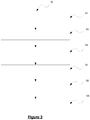
- the time diagram shown in Figure 4 represents the requests sent by client terminals CT1, CT2 for a segment (Get rep4, alt [rep6, rep5], Get rep6, alt [rep5, rep4]), a request sent by the smart cache DANE (Get rep4) for an ongoing representation, the response sent by the server SE (rep4) and the responses sent by the cache DANE to the client terminals CT1, CT2 (rep4).
- the client terminal CT 2 - assumed to correspond to the first terminal as previously mentioned - sends a request for a preferred representation (rep6) and alternative representations (rep5, rep4).
- Representation 6 (rep6) is also assumed to be of a better quality than representation 4 (rep4).
- the client terminal CT2 receives the alternative representation "rep4", since said alternative representation was in the process of downloading (in response to a previous request of a further client terminal CT1) when its request reached the smart cache DANE.
- the time diagram shown in Figure 5 depicts the requests and responses exchanged between client terminals CT1, CT2, a smart cache DANE and a server SE.
- the client terminal CT2 sends a request for a preferred representation (rep2) and alternative representations (rep4, rep3).
- rep2 a preferred representation
- rep4 alternative representations
- the expected delivery time of the preferred representation (rep 2) requested by the client terminal CT2 is earlier than the delivery time of the matched ongoing representation (rep 4) already requested, so that the smart cache DANE will request said preferred representation (rep2) for the client terminal CT2.
- the time diagram of Figure 6 also shows the requests and responses exchanged between client terminals CT1, CT2, a smart cache DANE and a server SE.
- the client terminal CT2 sends a request for a preferred representation (rep6) and alternative representations (rep5, rep4).
- representation 6 (rep6) is assumed to be of a better quality than representation 4 (rep4).
- representation 4 (rep4) is one ongoing representation (rep4) - already requested by the smart cache DANE - matching an alternative representation of the request of the client terminal CT2.
- the smart cache DANE will request said preferred representation (rep6) for the client terminal CT2.
- the preferred embodiment consists in considering a request from a client terminal CT, comprising a preferred representation and its alternatives as a whole, to be matched against the operations already in progress in order to determine the usefulness of issuing another request towards a server SE.
- the smart cache DANE performs a computation to determine whether the request will be handled by issuing a new request towards the server SE or serialized after an ongoing request (e.g. served with the result of the ongoing request) to reduce the amount of traffic with the servers.
- the smart cache DANE may be integrated in a proxy, in a gateway or in any other suitable network equipment.
- each block in the flowchart or block diagrams may represent a module, segment, or portion of code, which comprises one or more executable instructions for implementing the specified logical function(s).
- the functions noted in the block may occur out of the order noted in the figures. For example, two blocks shown in succession may, in fact, be executed substantially concurrently, or the blocks may sometimes be executed in the reverse order, or blocks may be executed in an alternative order, depending upon the functionality involved.
- each block of the block diagrams and/or flowchart illustration, and combinations of the blocks in the block diagrams and/or flowchart illustration can be implemented by special purpose hardware-based systems that perform the specified functions or acts, or combinations of special purpose hardware and computer instructions.
- aspects of the present principles can take the form of an entirely hardware embodiment, an entirely software embodiment (including firmware, resident software, micro-code, and so forth), or an embodiment combining software and hardware aspects that can all generally be referred to herein as a "circuit,” “module”, or “system.”
Landscapes
- Engineering & Computer Science (AREA)
- Multimedia (AREA)
- Signal Processing (AREA)
- Computer Networks & Wireless Communication (AREA)
- Two-Way Televisions, Distribution Of Moving Picture Or The Like (AREA)
- Information Transfer Between Computers (AREA)
- Data Exchanges In Wide-Area Networks (AREA)
Claims (13)
- Verfahren zum Betreiben eines Caches (DANE), der dafür konfiguriert ist, entlang eines Übertragungswegs zwischen Client-Endgeräten (CT) und mindestens einem Server (SE) angeordnet zu werden, wobei der Cache (DANE) dafür konfiguriert ist, Anforderungen von Client-Endgeräten (CT) für Segmente eines in mehreren Darstellungen verfügbaren Multimediainhalts zu empfangen,
wobei das Verfahren umfasst:- Empfangen (S1) einer ersten Anforderung für eine bevorzugte Darstellung und für mindestens eine alternative Darstellung eines gegebenen Segments des Multimediainhalts von einem ersten Client-Endgerät (CT),
wobei das Verfahren ferner durch die folgenden nachfolgenden Schritte gekennzeichnet ist:- Bestimmen (S2) einer aktuellen Darstellung des gegebenen Segments, die bereits durch den Cache von dem Server (SE) für ein weiteres Client-Endgerät (CT) angefordert worden ist und die gegenwärtig in den Cache heruntergeladen wird, die an die bevorzugte Darstellung oder an eine alternative Darstellung der ersten Anforderung angepasst ist. - Verfahren nach Anspruch 1, das ferner umfasst:- Bestimmen (S3) eines Werts einer Nützlichkeitsfunktion, der einer angepassten aktuellen Darstellung des gegebenen Segments, die bereits durch den Cache (DANE) für ein weiteres Client-Endgerät (CT) angefordert worden ist, zugeordnet ist;- Senden (S5) der angepassten aktuellen Darstellung, die bereits durch den Cache (DANE) angefordert worden ist, an das erste Client-Endgerät (CT), wenn der Wert der Nützlichkeitsfunktion ein Leistungskriterium erfüllt.
- Verfahren nach Anspruch 2, wobei, falls durch den Cache (DANE) bereits mindestens zwei aktuelle Darstellungen, die an die zwei unterschiedlichen Darstellungen der ersten Anforderung angepasst sind, für weitere Client-Endgeräte (CT) angefordert worden sind, diejenige angepasste aktuelle Darstellung, der der höchste Nützlichkeitswert zugeordnet ist, gesendet wird, wenn der Nützlichkeitswert das Leistungskriterium erfüllt.
- Verfahren nach Anspruch 2 oder 3, wobei, falls mindestens zwei aktuelle Darstellungen, die an zwei unterschiedliche Darstellungen der ersten Anforderung angepasst sind, bereits durch den Cache (DANE) für weitere Client-Endgeräte (CT) angefordert worden sind, durch den Cache (DANE) die bevorzugte Darstellung der ersten Anforderung für den Server (SE) angefordert wird, wenn keine der angepassten aktuellen Darstellungen einen Nützlichkeitswert aufweist, der das Leistungskriterium erfüllt.
- Verfahren nach einem der Ansprüche 2 bis 4, wobei das Leistungskriterium erfüllt ist, wenn der Wert der Nützlichkeitsfunktion null übersteigt.
- Verfahren nach einem der Ansprüche 2 bis 5, wobei die Nützlichkeitsfunktion von einer Betriebsart abhängt, die zu einer Gruppe von Betriebsarten gehört, die mindestens umfasst:- eine aggressive Betriebsart, in der der Wert der Nützlichkeitsfunktion gleich einer Konstanten ist;- eine schnelle Betriebsart, in der die Nützlichkeitsfunktion von der Lieferzeit der bevorzugten Darstellung der ersten Anforderung von dem Server (SE) und von der Lieferzeit einer angepassten aktuellen Darstellung, die bereits durch den Cache (DANE) angefordert worden ist, abhängt;- eine Qualitätsbetriebsart, in der die Nützlichkeitsfunktion von der Qualität der bevorzugten Darstellung der ersten Anforderung und von der Qualität einer angepassten aktuellen Darstellung, die bereits durch den Cache (DANE) angefordert worden ist, abhängt.
- Verfahren nach Anspruch 6, wobei die Betriebsart in Abhängigkeit von mindestens einem Netzparameter bestimmt wird.
- Verfahren nach Anspruch 6, wobei die Betriebsart durch das erste Client-Endgerät gewählt wird und in der ersten Anforderung angegeben wird.
- Netzausrüstung, die einen Cache umfasst, der dafür ausgelegt ist, entlang eines Übertragungswegs zwischen Client-Endgeräten (CT) und mindestens einem Server (SE) angeordnet zu werden, und der dafür konfiguriert ist, Anforderungen von Client-Endgeräten (CT) für Segmente eines in mehreren Darstellungen verfügbaren Multimediainhalts zu empfangen,
wobei der Cache umfasst:- eine Schnittstelle einer Verbindung (1) zum Empfangen einer ersten Anforderung für eine bevorzugte Darstellung und für mindestens eine alternative Darstellung eines gegebenen Segments des Multimediainhalts von einem ersten Client-Endgerät (CT),
wobei die Netzausrüstung dadurch gekennzeichnet ist, dass der Cache ferner umfasst:- ein Anpassungsmodul (5), das dafür konfiguriert ist zu bestimmen, ob mindestens eine aktuelle Darstellung des gegebenen Segments, die bereits durch den Cache (DANE) von einem Server (SE) für ein weiteres Client-Endgerät (CT) angefordert worden ist und die gegenwärtig in den Cache heruntergeladen wird, an die bevorzugte Darstellung oder an eine alternative Darstellung der ersten Anforderung angepasst ist. - Netzausrüstung nach Anspruch 9, wobei der Cache ferner einen Rechner (6) umfasst, der dafür ausgelegt ist, einen Wert einer Nützlichkeitsfunktion zu bestimmen, die einer angepassten aktuellen Darstellung des durch das Anpassungsmodul (5) identifizierten gegebenen Segments zugeordnet ist.
- Netzausrüstung nach Anspruch 9 oder 10, wobei der Cache ferner einen Komparator (7) umfasst, der dafür konfiguriert ist, die bereits durch den intelligenten Cache (DANE) angeforderte angepasste aktuelle Darstellung mit dem höchsten Wert der Nützlichkeitsfunktion zu bestimmen, falls an die bevorzugte Darstellung und an alternative Darstellungen der ersten Anforderung mehrere aktuelle Darstellungen angepasst sind.
- Netzausrüstung nach Anspruch 11, wobei der Komparator (7) ferner dafür konfiguriert ist zu prüfen, ob der bestimmte Wert der Nützlichkeitsfunktion einer angepassten aktuellen Darstellung ein Leistungskriterium erfüllt.
- Netzausrüstung nach Anspruch 11 oder 12, wobei die Nützlichkeitsfunktion von einer Betriebsart abhängt, die zu einer Gruppe von Betriebsarten gehört, die mindestens umfasst:- eine aggressive Betriebsart, in der der Wert der Nützlichkeitsfunktion gleich einer Konstanten ist;- eine schnelle Betriebsart, in der die Nützlichkeitsfunktion von der Lieferzeit der bevorzugten Darstellung der ersten Anforderung von dem Server (SE) und von der Lieferzeit einer angepassten aktuellen Darstellung, die bereits durch den Cache (DANE) angefordert worden ist, abhängt;- eine Qualitätsbetriebsart, in der die Nützlichkeitsfunktion von der Qualität der bevorzugten Darstellung der ersten Anforderung und von der Qualität einer angepassten aktuellen Darstellung, die bereits durch den Cache (DANE) angefordert worden ist, abhängt.
Applications Claiming Priority (2)
| Application Number | Priority Date | Filing Date | Title |
|---|---|---|---|
| EP14305393.2A EP2922266A1 (de) | 2014-03-20 | 2014-03-20 | Verfahren zum Betreiben eines Cache auf einem Übertragungsweg zwischen Client-Terminals und mindestens einen Server, und entsprechende Cache angeordnet. |
| PCT/EP2015/055221 WO2015140050A1 (en) | 2014-03-20 | 2015-03-12 | Method for operating a cache arranged along a transmission path between client terminals and at least one server, and corresponding cache |
Publications (2)
| Publication Number | Publication Date |
|---|---|
| EP3120519A1 EP3120519A1 (de) | 2017-01-25 |
| EP3120519B1 true EP3120519B1 (de) | 2021-05-05 |
Family
ID=50439302
Family Applications (2)
| Application Number | Title | Priority Date | Filing Date |
|---|---|---|---|
| EP14305393.2A Withdrawn EP2922266A1 (de) | 2014-03-20 | 2014-03-20 | Verfahren zum Betreiben eines Cache auf einem Übertragungsweg zwischen Client-Terminals und mindestens einen Server, und entsprechende Cache angeordnet. |
| EP15709680.1A Active EP3120519B1 (de) | 2014-03-20 | 2015-03-12 | Verfahren zum betreiben eines cache auf einem übertragungsweg zwischen client-terminals und mindestens einen server, und entsprechende cache angeordnet. |
Family Applications Before (1)
| Application Number | Title | Priority Date | Filing Date |
|---|---|---|---|
| EP14305393.2A Withdrawn EP2922266A1 (de) | 2014-03-20 | 2014-03-20 | Verfahren zum Betreiben eines Cache auf einem Übertragungsweg zwischen Client-Terminals und mindestens einen Server, und entsprechende Cache angeordnet. |
Country Status (7)
| Country | Link |
|---|---|
| US (1) | US10856015B2 (de) |
| EP (2) | EP2922266A1 (de) |
| JP (1) | JP6542346B2 (de) |
| KR (1) | KR102356621B1 (de) |
| CN (1) | CN106105145B (de) |
| TW (1) | TW201537934A (de) |
| WO (1) | WO2015140050A1 (de) |
Families Citing this family (6)
| Publication number | Priority date | Publication date | Assignee | Title |
|---|---|---|---|---|
| WO2016204815A1 (en) * | 2015-06-16 | 2016-12-22 | Intel IP Corporation | Adaptive video streaming using dynamic radio access network information |
| US11375284B2 (en) | 2016-07-15 | 2022-06-28 | Koninklijke Kpn N.V. | Streaming virtual reality video |
| CN109964467B (zh) * | 2016-11-10 | 2022-02-25 | 索尼集团公司 | 支持流传输的方法、流传输客户端、节点、通信系统 |
| EP3687176A1 (de) | 2019-01-22 | 2020-07-29 | InterDigital CE Patent Holdings | Client und verfahren zum verwalten, im client, einer multimedia streaming sitzung |
| EP3997888A1 (de) | 2019-07-12 | 2022-05-18 | Carrier Corporation | Ein system und ein verfahren zum streamen von videos durch die erzeugung von objekt-urls beim client |
| US20240236432A1 (en) * | 2021-04-08 | 2024-07-11 | Interdigital Ce Patent Holdings, Sas | Fine tuning of video data in a streaming application |
Family Cites Families (9)
| Publication number | Priority date | Publication date | Assignee | Title |
|---|---|---|---|---|
| US7171469B2 (en) | 2002-09-16 | 2007-01-30 | Network Appliance, Inc. | Apparatus and method for storing data in a proxy cache in a network |
| WO2006081032A2 (en) | 2005-01-24 | 2006-08-03 | Citrix Systems, Inc. | Systems and methods for performing caching of dynamically generated objects in a network |
| WO2011139305A1 (en) | 2010-05-04 | 2011-11-10 | Azuki Systems, Inc. | Method and apparatus for carrier controlled dynamic rate adaptation and client playout rate reduction |
| CN103384994B (zh) | 2011-02-11 | 2016-07-06 | 交互数字专利控股公司 | 用于内容分配和接收的方法和装置 |
| US8812621B2 (en) * | 2011-05-03 | 2014-08-19 | Cisco Technology, Inc. | Reducing fetching load on cache servers in adaptive streaming |
| US8977704B2 (en) * | 2011-12-29 | 2015-03-10 | Nokia Corporation | Method and apparatus for flexible caching of delivered media |
| EP2819367A1 (de) | 2013-06-28 | 2014-12-31 | Thomson Licensing | Verfahren zum Abrufen, durch ein Client-Endgerät, eines Inhaltsteils eines Multimediainhalts |
| EP2819368A1 (de) | 2013-06-28 | 2014-12-31 | Thomson Licensing | Verfahren zur Bereitstellung eines Inhaltsteils eines Multimediainhalts an ein Client-Endgerät, zugehöriger Chache |
| US9716668B2 (en) * | 2013-12-31 | 2017-07-25 | Echostar Technologies L.L.C. | Aggregated adaptive bit rate streaming |
-
2014
- 2014-03-20 EP EP14305393.2A patent/EP2922266A1/de not_active Withdrawn
-
2015
- 2015-03-12 CN CN201580015256.2A patent/CN106105145B/zh active Active
- 2015-03-12 JP JP2017500145A patent/JP6542346B2/ja active Active
- 2015-03-12 EP EP15709680.1A patent/EP3120519B1/de active Active
- 2015-03-12 US US15/127,718 patent/US10856015B2/en active Active
- 2015-03-12 WO PCT/EP2015/055221 patent/WO2015140050A1/en not_active Ceased
- 2015-03-12 KR KR1020167029006A patent/KR102356621B1/ko active Active
- 2015-03-13 TW TW104107996A patent/TW201537934A/zh unknown
Also Published As
| Publication number | Publication date |
|---|---|
| KR20160134802A (ko) | 2016-11-23 |
| EP3120519A1 (de) | 2017-01-25 |
| US20180176613A1 (en) | 2018-06-21 |
| CN106105145B (zh) | 2020-04-07 |
| WO2015140050A1 (en) | 2015-09-24 |
| EP2922266A1 (de) | 2015-09-23 |
| KR102356621B1 (ko) | 2022-01-28 |
| US10856015B2 (en) | 2020-12-01 |
| JP2017514416A (ja) | 2017-06-01 |
| JP6542346B2 (ja) | 2019-07-10 |
| TW201537934A (zh) | 2015-10-01 |
| CN106105145A (zh) | 2016-11-09 |
Similar Documents
| Publication | Publication Date | Title |
|---|---|---|
| EP3120519B1 (de) | Verfahren zum betreiben eines cache auf einem übertragungsweg zwischen client-terminals und mindestens einen server, und entsprechende cache angeordnet. | |
| US20150200992A1 (en) | Method for downloading, at a client terminal, an upcoming sequence of segments of a multimedia content, and corresponding terminal | |
| US11057445B2 (en) | Method for adapting the downloading behavior of a client terminal configured, to receive multimedia content, and corresponding terminal | |
| EP2963896B1 (de) | Verfahren zum betrieb eines zwischenspeichers entlang eines übertragungsweges zwischen client-endgeräten und mindestens einem server sowie zugehöriger zwischenspeicher | |
| EP2953315B1 (de) | Verfahren zum betreiben eines zwischenspeichers entlang eines übertragungsweges zwischen client-endgeräten und mindestens einem server und entsprechender zwischenspeicher | |
| US10735544B2 (en) | Method for providing a content part of a multimedia content to a client terminal, corresponding cache | |
| EP2819368A1 (de) | Verfahren zur Bereitstellung eines Inhaltsteils eines Multimediainhalts an ein Client-Endgerät, zugehöriger Chache | |
| EP3014835B1 (de) | Verfahren zum abrufen, durch ein client-endgerät, eines inhaltsteils eines multimediainhalts | |
| CN112823527A (zh) | 在能够运行一个自适应流传输会话的设备处实现的方法以及对应的设备 |
Legal Events
| Date | Code | Title | Description |
|---|---|---|---|
| STAA | Information on the status of an ep patent application or granted ep patent |
Free format text: STATUS: THE INTERNATIONAL PUBLICATION HAS BEEN MADE |
|
| PUAI | Public reference made under article 153(3) epc to a published international application that has entered the european phase |
Free format text: ORIGINAL CODE: 0009012 |
|
| STAA | Information on the status of an ep patent application or granted ep patent |
Free format text: STATUS: REQUEST FOR EXAMINATION WAS MADE |
|
| 17P | Request for examination filed |
Effective date: 20160914 |
|
| AK | Designated contracting states |
Kind code of ref document: A1 Designated state(s): AL AT BE BG CH CY CZ DE DK EE ES FI FR GB GR HR HU IE IS IT LI LT LU LV MC MK MT NL NO PL PT RO RS SE SI SK SM TR |
|
| AX | Request for extension of the european patent |
Extension state: BA ME |
|
| DAV | Request for validation of the european patent (deleted) | ||
| DAX | Request for extension of the european patent (deleted) | ||
| STAA | Information on the status of an ep patent application or granted ep patent |
Free format text: STATUS: EXAMINATION IS IN PROGRESS |
|
| 17Q | First examination report despatched |
Effective date: 20180104 |
|
| RAP1 | Party data changed (applicant data changed or rights of an application transferred) |
Owner name: INTERDIGITAL CE PATENT HOLDINGS |
|
| GRAP | Despatch of communication of intention to grant a patent |
Free format text: ORIGINAL CODE: EPIDOSNIGR1 |
|
| STAA | Information on the status of an ep patent application or granted ep patent |
Free format text: STATUS: GRANT OF PATENT IS INTENDED |
|
| INTG | Intention to grant announced |
Effective date: 20201013 |
|
| GRAS | Grant fee paid |
Free format text: ORIGINAL CODE: EPIDOSNIGR3 |
|
| GRAA | (expected) grant |
Free format text: ORIGINAL CODE: 0009210 |
|
| STAA | Information on the status of an ep patent application or granted ep patent |
Free format text: STATUS: THE PATENT HAS BEEN GRANTED |
|
| AK | Designated contracting states |
Kind code of ref document: B1 Designated state(s): AL AT BE BG CH CY CZ DE DK EE ES FI FR GB GR HR HU IE IS IT LI LT LU LV MC MK MT NL NO PL PT RO RS SE SI SK SM TR |
|
| REG | Reference to a national code |
Ref country code: GB Ref legal event code: FG4D |
|
| REG | Reference to a national code |
Ref country code: CH Ref legal event code: EP |
|
| REG | Reference to a national code |
Ref country code: AT Ref legal event code: REF Ref document number: 1391249 Country of ref document: AT Kind code of ref document: T Effective date: 20210515 |
|
| REG | Reference to a national code |
Ref country code: DE Ref legal event code: R096 Ref document number: 602015068918 Country of ref document: DE |
|
| REG | Reference to a national code |
Ref country code: IE Ref legal event code: FG4D |
|
| REG | Reference to a national code |
Ref country code: NL Ref legal event code: FP |
|
| REG | Reference to a national code |
Ref country code: LT Ref legal event code: MG9D |
|
| REG | Reference to a national code |
Ref country code: AT Ref legal event code: MK05 Ref document number: 1391249 Country of ref document: AT Kind code of ref document: T Effective date: 20210505 |
|
| PG25 | Lapsed in a contracting state [announced via postgrant information from national office to epo] |
Ref country code: HR Free format text: LAPSE BECAUSE OF FAILURE TO SUBMIT A TRANSLATION OF THE DESCRIPTION OR TO PAY THE FEE WITHIN THE PRESCRIBED TIME-LIMIT Effective date: 20210505 Ref country code: BG Free format text: LAPSE BECAUSE OF FAILURE TO SUBMIT A TRANSLATION OF THE DESCRIPTION OR TO PAY THE FEE WITHIN THE PRESCRIBED TIME-LIMIT Effective date: 20210805 Ref country code: AT Free format text: LAPSE BECAUSE OF FAILURE TO SUBMIT A TRANSLATION OF THE DESCRIPTION OR TO PAY THE FEE WITHIN THE PRESCRIBED TIME-LIMIT Effective date: 20210505 Ref country code: FI Free format text: LAPSE BECAUSE OF FAILURE TO SUBMIT A TRANSLATION OF THE DESCRIPTION OR TO PAY THE FEE WITHIN THE PRESCRIBED TIME-LIMIT Effective date: 20210505 Ref country code: LT Free format text: LAPSE BECAUSE OF FAILURE TO SUBMIT A TRANSLATION OF THE DESCRIPTION OR TO PAY THE FEE WITHIN THE PRESCRIBED TIME-LIMIT Effective date: 20210505 |
|
| REG | Reference to a national code |
Ref country code: DE Ref legal event code: R079 Ref document number: 602015068918 Country of ref document: DE Free format text: PREVIOUS MAIN CLASS: H04L0029060000 Ipc: H04L0065000000 |
|
| PG25 | Lapsed in a contracting state [announced via postgrant information from national office to epo] |
Ref country code: SE Free format text: LAPSE BECAUSE OF FAILURE TO SUBMIT A TRANSLATION OF THE DESCRIPTION OR TO PAY THE FEE WITHIN THE PRESCRIBED TIME-LIMIT Effective date: 20210505 Ref country code: RS Free format text: LAPSE BECAUSE OF FAILURE TO SUBMIT A TRANSLATION OF THE DESCRIPTION OR TO PAY THE FEE WITHIN THE PRESCRIBED TIME-LIMIT Effective date: 20210505 Ref country code: ES Free format text: LAPSE BECAUSE OF FAILURE TO SUBMIT A TRANSLATION OF THE DESCRIPTION OR TO PAY THE FEE WITHIN THE PRESCRIBED TIME-LIMIT Effective date: 20210505 Ref country code: PT Free format text: LAPSE BECAUSE OF FAILURE TO SUBMIT A TRANSLATION OF THE DESCRIPTION OR TO PAY THE FEE WITHIN THE PRESCRIBED TIME-LIMIT Effective date: 20210906 Ref country code: NO Free format text: LAPSE BECAUSE OF FAILURE TO SUBMIT A TRANSLATION OF THE DESCRIPTION OR TO PAY THE FEE WITHIN THE PRESCRIBED TIME-LIMIT Effective date: 20210805 Ref country code: PL Free format text: LAPSE BECAUSE OF FAILURE TO SUBMIT A TRANSLATION OF THE DESCRIPTION OR TO PAY THE FEE WITHIN THE PRESCRIBED TIME-LIMIT Effective date: 20210505 Ref country code: GR Free format text: LAPSE BECAUSE OF FAILURE TO SUBMIT A TRANSLATION OF THE DESCRIPTION OR TO PAY THE FEE WITHIN THE PRESCRIBED TIME-LIMIT Effective date: 20210806 Ref country code: IS Free format text: LAPSE BECAUSE OF FAILURE TO SUBMIT A TRANSLATION OF THE DESCRIPTION OR TO PAY THE FEE WITHIN THE PRESCRIBED TIME-LIMIT Effective date: 20210905 Ref country code: LV Free format text: LAPSE BECAUSE OF FAILURE TO SUBMIT A TRANSLATION OF THE DESCRIPTION OR TO PAY THE FEE WITHIN THE PRESCRIBED TIME-LIMIT Effective date: 20210505 |
|
| PG25 | Lapsed in a contracting state [announced via postgrant information from national office to epo] |
Ref country code: RO Free format text: LAPSE BECAUSE OF FAILURE TO SUBMIT A TRANSLATION OF THE DESCRIPTION OR TO PAY THE FEE WITHIN THE PRESCRIBED TIME-LIMIT Effective date: 20210505 Ref country code: CZ Free format text: LAPSE BECAUSE OF FAILURE TO SUBMIT A TRANSLATION OF THE DESCRIPTION OR TO PAY THE FEE WITHIN THE PRESCRIBED TIME-LIMIT Effective date: 20210505 Ref country code: EE Free format text: LAPSE BECAUSE OF FAILURE TO SUBMIT A TRANSLATION OF THE DESCRIPTION OR TO PAY THE FEE WITHIN THE PRESCRIBED TIME-LIMIT Effective date: 20210505 Ref country code: DK Free format text: LAPSE BECAUSE OF FAILURE TO SUBMIT A TRANSLATION OF THE DESCRIPTION OR TO PAY THE FEE WITHIN THE PRESCRIBED TIME-LIMIT Effective date: 20210505 Ref country code: SK Free format text: LAPSE BECAUSE OF FAILURE TO SUBMIT A TRANSLATION OF THE DESCRIPTION OR TO PAY THE FEE WITHIN THE PRESCRIBED TIME-LIMIT Effective date: 20210505 Ref country code: SM Free format text: LAPSE BECAUSE OF FAILURE TO SUBMIT A TRANSLATION OF THE DESCRIPTION OR TO PAY THE FEE WITHIN THE PRESCRIBED TIME-LIMIT Effective date: 20210505 |
|
| REG | Reference to a national code |
Ref country code: DE Ref legal event code: R097 Ref document number: 602015068918 Country of ref document: DE |
|
| PLBE | No opposition filed within time limit |
Free format text: ORIGINAL CODE: 0009261 |
|
| STAA | Information on the status of an ep patent application or granted ep patent |
Free format text: STATUS: NO OPPOSITION FILED WITHIN TIME LIMIT |
|
| 26N | No opposition filed |
Effective date: 20220208 |
|
| PG25 | Lapsed in a contracting state [announced via postgrant information from national office to epo] |
Ref country code: IS Free format text: LAPSE BECAUSE OF FAILURE TO SUBMIT A TRANSLATION OF THE DESCRIPTION OR TO PAY THE FEE WITHIN THE PRESCRIBED TIME-LIMIT Effective date: 20210905 Ref country code: AL Free format text: LAPSE BECAUSE OF FAILURE TO SUBMIT A TRANSLATION OF THE DESCRIPTION OR TO PAY THE FEE WITHIN THE PRESCRIBED TIME-LIMIT Effective date: 20210505 |
|
| PG25 | Lapsed in a contracting state [announced via postgrant information from national office to epo] |
Ref country code: IT Free format text: LAPSE BECAUSE OF FAILURE TO SUBMIT A TRANSLATION OF THE DESCRIPTION OR TO PAY THE FEE WITHIN THE PRESCRIBED TIME-LIMIT Effective date: 20210505 |
|
| PG25 | Lapsed in a contracting state [announced via postgrant information from national office to epo] |
Ref country code: MC Free format text: LAPSE BECAUSE OF FAILURE TO SUBMIT A TRANSLATION OF THE DESCRIPTION OR TO PAY THE FEE WITHIN THE PRESCRIBED TIME-LIMIT Effective date: 20210505 |
|
| REG | Reference to a national code |
Ref country code: CH Ref legal event code: PL |
|
| REG | Reference to a national code |
Ref country code: BE Ref legal event code: MM Effective date: 20220331 |
|
| PG25 | Lapsed in a contracting state [announced via postgrant information from national office to epo] |
Ref country code: LU Free format text: LAPSE BECAUSE OF NON-PAYMENT OF DUE FEES Effective date: 20220312 Ref country code: LI Free format text: LAPSE BECAUSE OF NON-PAYMENT OF DUE FEES Effective date: 20220331 Ref country code: IE Free format text: LAPSE BECAUSE OF NON-PAYMENT OF DUE FEES Effective date: 20220312 Ref country code: CH Free format text: LAPSE BECAUSE OF NON-PAYMENT OF DUE FEES Effective date: 20220331 |
|
| PG25 | Lapsed in a contracting state [announced via postgrant information from national office to epo] |
Ref country code: BE Free format text: LAPSE BECAUSE OF NON-PAYMENT OF DUE FEES Effective date: 20220331 |
|
| P01 | Opt-out of the competence of the unified patent court (upc) registered |
Effective date: 20230511 |
|
| PG25 | Lapsed in a contracting state [announced via postgrant information from national office to epo] |
Ref country code: HU Free format text: LAPSE BECAUSE OF FAILURE TO SUBMIT A TRANSLATION OF THE DESCRIPTION OR TO PAY THE FEE WITHIN THE PRESCRIBED TIME-LIMIT; INVALID AB INITIO Effective date: 20150312 |
|
| PG25 | Lapsed in a contracting state [announced via postgrant information from national office to epo] |
Ref country code: MK Free format text: LAPSE BECAUSE OF FAILURE TO SUBMIT A TRANSLATION OF THE DESCRIPTION OR TO PAY THE FEE WITHIN THE PRESCRIBED TIME-LIMIT Effective date: 20210505 Ref country code: CY Free format text: LAPSE BECAUSE OF FAILURE TO SUBMIT A TRANSLATION OF THE DESCRIPTION OR TO PAY THE FEE WITHIN THE PRESCRIBED TIME-LIMIT Effective date: 20210505 |
|
| PG25 | Lapsed in a contracting state [announced via postgrant information from national office to epo] |
Ref country code: MT Free format text: LAPSE BECAUSE OF FAILURE TO SUBMIT A TRANSLATION OF THE DESCRIPTION OR TO PAY THE FEE WITHIN THE PRESCRIBED TIME-LIMIT Effective date: 20210505 |
|
| PG25 | Lapsed in a contracting state [announced via postgrant information from national office to epo] |
Ref country code: TR Free format text: LAPSE BECAUSE OF FAILURE TO SUBMIT A TRANSLATION OF THE DESCRIPTION OR TO PAY THE FEE WITHIN THE PRESCRIBED TIME-LIMIT Effective date: 20210505 |
|
| PGFP | Annual fee paid to national office [announced via postgrant information from national office to epo] |
Ref country code: GB Payment date: 20260319 Year of fee payment: 12 |
|
| PGFP | Annual fee paid to national office [announced via postgrant information from national office to epo] |
Ref country code: DE Payment date: 20260320 Year of fee payment: 12 |
|
| PGFP | Annual fee paid to national office [announced via postgrant information from national office to epo] |
Ref country code: NL Payment date: 20260323 Year of fee payment: 12 |
|
| PGFP | Annual fee paid to national office [announced via postgrant information from national office to epo] |
Ref country code: FR Payment date: 20260323 Year of fee payment: 12 |