EP3119266B1 - Methods for augmented reality - Google Patents
Methods for augmented reality Download PDFInfo
- Publication number
- EP3119266B1 EP3119266B1 EP15705626.8A EP15705626A EP3119266B1 EP 3119266 B1 EP3119266 B1 EP 3119266B1 EP 15705626 A EP15705626 A EP 15705626A EP 3119266 B1 EP3119266 B1 EP 3119266B1
- Authority
- EP
- European Patent Office
- Prior art keywords
- value
- wearer
- accommodation
- visualization
- acc
- Prior art date
- Legal status (The legal status is an assumption and is not a legal conclusion. Google has not performed a legal analysis and makes no representation as to the accuracy of the status listed.)
- Active
Links
Images



Classifications
-
- G—PHYSICS
- G02—OPTICS
- G02B—OPTICAL ELEMENTS, SYSTEMS OR APPARATUS
- G02B27/00—Optical systems or apparatus not provided for by any of the groups G02B1/00 - G02B26/00, G02B30/00
- G02B27/01—Head-up displays
- G02B27/0179—Display position adjusting means not related to the information to be displayed
-
- A—HUMAN NECESSITIES
- A61—MEDICAL OR VETERINARY SCIENCE; HYGIENE
- A61B—DIAGNOSIS; SURGERY; IDENTIFICATION
- A61B3/00—Apparatus for testing the eyes; Instruments for examining the eyes
- A61B3/02—Subjective types, i.e. testing apparatus requiring the active assistance of the patient
- A61B3/09—Subjective types, i.e. testing apparatus requiring the active assistance of the patient for testing accommodation
-
- G—PHYSICS
- G02—OPTICS
- G02B—OPTICAL ELEMENTS, SYSTEMS OR APPARATUS
- G02B27/00—Optical systems or apparatus not provided for by any of the groups G02B1/00 - G02B26/00, G02B30/00
- G02B27/01—Head-up displays
- G02B27/017—Head mounted
-
- G—PHYSICS
- G02—OPTICS
- G02B—OPTICAL ELEMENTS, SYSTEMS OR APPARATUS
- G02B27/00—Optical systems or apparatus not provided for by any of the groups G02B1/00 - G02B26/00, G02B30/00
- G02B27/01—Head-up displays
- G02B27/017—Head mounted
- G02B27/0172—Head mounted characterised by optical features
-
- G—PHYSICS
- G06—COMPUTING OR CALCULATING; COUNTING
- G06F—ELECTRIC DIGITAL DATA PROCESSING
- G06F1/00—Details not covered by groups G06F3/00 - G06F13/00 and G06F21/00
- G06F1/16—Constructional details or arrangements
- G06F1/1613—Constructional details or arrangements for portable computers
- G06F1/163—Wearable computers, e.g. on a belt
-
- G—PHYSICS
- G06—COMPUTING OR CALCULATING; COUNTING
- G06F—ELECTRIC DIGITAL DATA PROCESSING
- G06F1/00—Details not covered by groups G06F3/00 - G06F13/00 and G06F21/00
- G06F1/16—Constructional details or arrangements
- G06F1/1613—Constructional details or arrangements for portable computers
- G06F1/1633—Constructional details or arrangements of portable computers not specific to the type of enclosures covered by groups G06F1/1615 - G06F1/1626
- G06F1/1637—Details related to the display arrangement, including those related to the mounting of the display in the housing
-
- G—PHYSICS
- G02—OPTICS
- G02B—OPTICAL ELEMENTS, SYSTEMS OR APPARATUS
- G02B27/00—Optical systems or apparatus not provided for by any of the groups G02B1/00 - G02B26/00, G02B30/00
- G02B27/01—Head-up displays
- G02B27/017—Head mounted
- G02B2027/0178—Eyeglass type
-
- G—PHYSICS
- G02—OPTICS
- G02B—OPTICAL ELEMENTS, SYSTEMS OR APPARATUS
- G02B27/00—Optical systems or apparatus not provided for by any of the groups G02B1/00 - G02B26/00, G02B30/00
- G02B27/01—Head-up displays
- G02B27/0179—Display position adjusting means not related to the information to be displayed
- G02B2027/0181—Adaptation to the pilot/driver
Definitions
- the invention relates to methods for augmented reality.
- the invention relates more particularly to methods for improving the visual comfort of a wearer equipped with a display head-mounted device, especially for situations wherein the wearer visualizes both a 'real' display from the wearer environment and a 'virtual' display of computer-generated content displayed by the head-mounted device.
- Head-mounted display devices are known in the art. Such devices include so-called 'smart glasses', which allow the wearer thereof to visualize information content such as images or text for augmented reality.
- the wearer When wearing such head-mounted device, the wearer may find himself/herself in situations of 'dual' visualization. Namely, the wearer may wish to look at a 'real' object from the environment (for example, a monument or a traffic sign) and at a virtual display provided/generated by the HMD (for example, information about the monument or driving directions).
- a 'real' object from the environment (for example, a monument or a traffic sign) and at a virtual display provided/generated by the HMD (for example, information about the monument or driving directions).
- the wearer should be able to switch rapidly and comfortably between the visualization of the 'real' world (environment of the wearer) and the visualization of the 'virtual' display provided by the HMD. Therefore, the HMD should be designed in such a way that minimal accommodation efforts are required for the wearer in such situation.
- EP0716329A1 discloses a HMD wherein the display system can be adjusted so as to set the visualization distance of the virtual image.
- the proximity of the virtual display and that of the 'real' display are always the same. This system is inconvenient for the wearer, since it requires constant adjustment. Further, it lacks flexibility in that it does not contemplate situations wherein the 'distance' to the virtual display differs from that of the 'real' object visualized by the wearer.
- US 6 048 064 A relates to an optometric apparatus for correcting the refraction of an eye to be examined, which allows even a person who is inexperienced and unfamiliar with optometry to easily obtain appropriate prescription values, and conduct analysis of the visual function.
- the optometric apparatus has a rotary prism for imparting a prism power to the eye to be examined. An appropriate examination is conducted by using the rotary prism in accordance with a program stored in a memory to obtain the prism power of an expected state, and a result of examination is displayed.
- US 3 460 530 A relates to an orthoptic exercising device.
- the HMD can be optimized so that the wearer can comfortably switch from a 'real' visualization (that can be one or more objects in one or more of the following vision fields: far vision, near vision, intermediate vision) to a 'virtual' visualization (that can be at a set/fixed virtual distance of visualization, which occurs for example if the HMD comprises a LOE; or not set/fixed, as is the case for adjustable/settable systems) and vice-versa.
- the display HMD may be customized to the wearer.
- the present invention relies on a step of assessing the wearer's dynamic accommodative facility.
- the present invention generally provides:
- the present invention provides a method for determining a virtual distance of visualization of information content displayed by a HMD.
- a method for the determination of the value (D_v) of a virtual distance of visualization of computer-generated information content displayed by a head-mounted display device intended to be worn by a wearer and comprising a pair of glasses comprising two ophthalmic lenses, one of which comprises a light-guide optical element comprises the steps of:
- Step (ii) is designed to simulate the situation of the wearer switching between the visualization of a virtual display of information content displayed by said head-mounted display device and the visualization of a real object from the wearer environment.
- the values (d_1), (d_2) can be selected so as to simulate said situation.
- the method comprises:
- steps (ii-a) to (ii-c) can be repeated with a decreased gap value between said first value and said second value, i.e. between (d_1) and (d_2).
- step (ii-c) further comprises one of a qualitative assessment from the wearer and a quantitative assessment comprising one or more cyclic measurements
- step (ii-c) comprises an accommodative rock test with lens flippers defining said dynamic test conditions with rotations of the lens flippers on a cyclic basis to switch from one pair of lens flippers to another one.
- step (i) performing one or more measurements of said value of comfort amplitude of accommodation (Acc_c) is carried out according to the Push-Up method.
- the disclosure provides a method for the determination of a virtual amplitude of accommodation (Acc_v) for the visualization by a wearer of computer-generated information content displayed by a head-mounted display device, comprising a method for the determination of a value (D_v) of virtual distance of visualization as described herein.
- the present invention provides a method for the design of a head-mounted display device as recited in claim 4.
- the value D_v or Acc_v is also used to determine the design of the front side of the lens.
- the present invention provides a method for the manufacture of a head-mounted display device intended to be worn by a wearer as defined in appended claim 5.
- the present disclosure provides computer program products and computer readable media that cause to perform any one of the methods as described herein.
- the present disclosure provides a method as described herein, wherein the method is computer-implemented.
- the present disclosure provides a (non-transitory) computer program product comprising one or more stored sequence(s) of instructions that is accessible to a processor and which, when executed by the processor, causes the processor to carry out the steps of any one of the methods as described herein.
- the present disclosure provides a (non-transitory) computer readable medium carrying out one or more sequences of instructions of said computer program product.
- the phenomenon of accommodation is known in the art. Irrespective of the age or of the possible ametropia of the wearer, the present invention provides for the determination (definition) of a space in the real-vision zone, wherein the visualization by the wearer of a real object and/or virtual object/display can be performed comfortably, namely with a restricted accommodation that is sufficient and non-spasmodic.
- the skilled person has common knowledge regarding the definition of accommodation, amplitude of accommodation, and how visualization distances are analyzed in this context.
- Head-mounted display devices are known in the art. Such devices are to be worn on or about the head of a wearer, including helmet-mounted displays, optical head-mounted displays, head-worn displays and the like. They include optical means for displaying (computer-generated) information content for visualization by the wearer.
- the HMD can provide for the display of computer-generated information content, advantageously with the superimposed visualization of computer-generated information content and of a 'real-life' vision field.
- the HMD may be monocular (single eye) or binocular (both eyes).
- the HMD can take various forms, including spectacles, masks such as skiing or diving masks, goggles, etc.
- the HMD may comprise one or more lenses. Said lenses can be selected from prescription lenses.
- the HMD is a pair of spectacles provided with lenses, wherein one of the lenses comprise a Light-guide Optical Element LOE.
- the HMD generally comprises a pod.
- Said pod can be a housing that contains optical and electronic components capable, in conjunction with the LOE, of generating (providing) a virtual display.
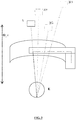
- An example of a lens L comprising a LOE is shown at Figure 2 .
- the lens L has a front face F facing the 'real world' (environment of the wearer) and a rear face R facing the wearer.
- the LOE is embedded within the lens L.
- the pod POD is connected to the LOE.
- the visual field of a wearer equipped with a HMD is depicted at Figure 3 . It shows that the wearer can be in a situation where s/he is to visualize a virtual display V provided by the HMD and 'real' objects from the environment R1 R2, R3.
- the virtual display is 'located' at a visualization distance D_v.
- the light path for visualization is POD ⁇ 7 LOE ⁇ Rear face of lens ⁇ Eye of wearer, whereas for a 'real' display (real object), the path is Object ⁇ Front face of lens ⁇ Rear face of lens ⁇ Eye of the wearer.
- the present invention provides methods for determining suitable values of D_v, by taking into account the wearer's dynamic accommodative facility.
- the present invention thus provide methods for determining ranges of distances for the display of a computer-generated information content by the HMD, within which the wearer may comfortably visualize the display provided by the HMD, keep visualizing the 'real-world' including objects situated in the far-vision, intermediate and near-vision fields, as well as comfortably switching between the virtual display and the visualizing of the 'real-world', without incurring undue visual fatigue, thus experiencing high levels of visual comfort.
- the invention relies on the following:
- the invention relies on the following:
- step (i) of claim 1 The methods for determining the comfort amplitude of accommodation that can be used for the purpose of the present invention are defined in step (i) of claim 1. These can result from a computation (estimation) or an actual measurement (ex: push-up method, as defined in claim 3). Suitable methods for step (i) include modeling as a function of the age of the wearer and measurement as detailed in the examples given thereafter.
- the invention involves a step of assessing the ability of a wearer to switch visualization between at least two visual targets.
- Said visual targets e.g. displays
- the values of d_1 and d_2 can be selected so as to mimic (simulate) the situation of a wearer switching between the visualization of a virtual display (e.g., d_1) and that of a real object (e.g., d_2).
- the first display and the second display may or may not be in the same gaze direction.
- the gaze direction can be defined as known in the art.
- the wearer's dynamic accommodative facility may be assessed by switching visualization between three or more displays 1, 2, 3...
- distances d_1, d_2 and d_3 can be set at same or different values, and/or in the same or different gaze directions.
- the visualization switch can for example be performed as follows: 1, 2, 3, 2, 1 ...
- the assessment of the wearer's accommodative facility under dynamic test conditions is performed according to the invention on a qualitative or quantitative basis as recited in claim 2; for example by using a proxymeter.
- An example of proxymeter is described at http://www.varilux-university.org/FR/Pages/Proxim%C3%A8tre.aspx.
- Step (ii) may be performed through an optometric measurement.
- step (ii) according to the invention is performed with one pair of spectacles as recited in claim 1, and may include lens flippers as recited in claim 2.
- An example of a lens flipper is shown at Figure 5 .
- Example 1 determining comfort amplitude of accommodation of wearer: determining Acc_c as per step (i)
- Examples 1.1 and 1.2 illustrate a method according to the invention (example 1.1) and a method not according to the invention (example 1.2) for the determination of Acc_c. Irrespective of the method used for determining Acc_c, it is preferred that Acc_v ⁇ Acc_c.
- Example 1.1 model of the invention for the computation of Acc_c as a function of age Reference is made to FR2903503A1 and US7857444B2.
- the visualization distance for which no effort is required is of 1m.
- the maximal amplitude of accommodation decreases with the age of the subject.
- the comfort amount of accommodation (that can be 'implemented' without undue strain for the subject) is about 2/3 of the maximal amplitude.
- the 'effortless' (fatigue-less) value of accommodation decreases along with age.
- This maximum amplitude of comfort accommodation is established for near-vision by using the apparent proximity factor. This amplitude is less for a virtual display or for focusing on the far-vision zone for a non-corrected hypermetrope subject. ** At around the age of 60, this amplitude rather results from the depth of field (can typically be about 1D).
- Example 1.2 model not according to the invention for the computation of Acc_c as a function of age, taking into account tonic accommodation
- This model incorporates the tonic evolution as a function of age. This advantageously provides for a more accurate estimate.
- the vertical axis represents Accommodation (D), while the horizontal axis shows age (Years). It illustrates the model for residual accommodation as a function of age.
- Example 1.3 determination of Acc_c by computing maximal amplitude of accommodation
- This determination not according to the invention relies on a model for the computation of the maximum amplitude of accommodation as a function of the age of the subject. It can be determined using one of the models as follows (accommodation value in diopters, age in years):
- Example 1.4 determination of Acc_c using the Push-Up method (PPA method)
- the Push-Up method is advantageous in that it is simple, quick, personalized and requires few instruments.
- the test may be first conducted for binocular vision, and then for monocular vision of one or both eyes of the subject.
- This comparative example enables to check that the comfort proximity (defined by the base curve of the lens, i.e. by the power of the rear face) of the wearer is equal or less than the display distance of the virtual display.
- Example 2 Assessing accommodative facility of wearer under dynamic test conditions, as per step (ii), using an accommodative rock test
- This example illustrates the method of the invention for the assessment of the wearer's capability to switch visualization of a virtual display (within virtual amplitude of accommodation, Acc_v) and visualization of another (real) display situated within a comfortable vision field of real visual targets.
- This test is an accommodative rock test. It makes use of lens flippers, an example of which is represented at Figure 5 .
- the side thereof can be + or - 2.00D.
- the lenses are flipped (rotated) on a cyclic basis to switch from one pair of lens to the other.
- the parameters of the test can be as follows:
- the test generally allows to assess the rapidity and the resistance to fatigue of the ciliary muscle, of the crystalline lens, and/or the appropriate functioning of the efferent neurons involved in the accommodation process.
- the test may be performed with various sphere values, so as to simulate the various distances (accommodation situations) that the wearer is likely to face.
- the test may be performed with a pair of smart glasses, or even with a set of several smart glasses.
- Min, Avg The values of number of rotations per time unit (Min, Avg) can be determined by the skilled person as a function of the nature of the equipment used.
- the eye care specialist may perform a qualitative assessment of the visual behavior of the subject with respect to dynamic accommodation.
- Example 3 Assessing accommodative facility of wearer under dynamic test conditions, as per step (ii), for different types of prescription lenses
- the lenses are prescription lenses having a LOE embedded therein, for example as per Figure 2 .
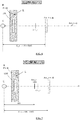
- Figures 6-9 show visualization situations with different ophthalmic lenses.
- - SV single vision lens
- PAL progressive addition lens
- NV near vision
- FV far vision
- - L lens
- E eye
- - B lens base curve
- P power
- - LOE light-guide optical element
- RD reading distance
- - Acc_c comfort accommodation
- - Acc_r real accommodation (visualization of real display)
- - Acc_v virtual accommodation (visualization of virtual (HMD-generated) display)
- - DVO distance between the eye and the lens (back vertex distance)
- - D_v virtual distance, distance of display of virtual information content.
- comfort accommodation Acc_c is located in an informal manner, and it could be set and placed equal to the accommodation involved at the reading distance.
- the value of real accommodation Acc_r depends on the reading distance RD, in average of 40 cm.
- the dioptric modulation cycles allow to assess the capability of the subject to switch from visualizing a virtual display (e.g. at distance D_v or d_1) to a real display (e.g. at distance d_2 corresponding to Acc_r, for example within Acc_c, in NV or FV zones), with vergences included.
- a virtual display e.g. at distance D_v or d_1
- a real display e.g. at distance d_2 corresponding to Acc_r, for example within Acc_c, in NV or FV zones
- the virtual display can be projected in various locations (gaze directions) of the visual field, as a function of the location of the LOE within the lens.
- the wearer may thus be in one of the following situations:
- the wearer can visualize a real scene (real objects) through the virtual display. In that situation or if the virtual display is located in another part of the lens, the accommodation values to be implemented when switching from one to the other are very close. The same test principle can then be used.
- Distance D_v can be determined by taking into account different gaze directions, as illustrated at Figure 10 .
- CRO center of rotation of the eye.
- the lens may be manufactured specifically for the wearer.
- the lens is made with the desired base curve, so as to ensure a conjugation between the projection (display) system and the rear face of the lens. This allows comfort visualization for the wearer. Additional information can be found in WO2011/076604 and US 2010-045927 .
Landscapes
- Physics & Mathematics (AREA)
- Engineering & Computer Science (AREA)
- General Physics & Mathematics (AREA)
- Health & Medical Sciences (AREA)
- Life Sciences & Earth Sciences (AREA)
- Optics & Photonics (AREA)
- Computer Hardware Design (AREA)
- Theoretical Computer Science (AREA)
- Human Computer Interaction (AREA)
- General Engineering & Computer Science (AREA)
- Biomedical Technology (AREA)
- Animal Behavior & Ethology (AREA)
- Biophysics (AREA)
- Heart & Thoracic Surgery (AREA)
- Medical Informatics (AREA)
- Molecular Biology (AREA)
- Surgery (AREA)
- Ophthalmology & Optometry (AREA)
- General Health & Medical Sciences (AREA)
- Public Health (AREA)
- Veterinary Medicine (AREA)
- Eyeglasses (AREA)
- Eye Examination Apparatus (AREA)
- User Interface Of Digital Computer (AREA)
Description
- The invention relates to methods for augmented reality.
- The invention relates more particularly to methods for improving the visual comfort of a wearer equipped with a display head-mounted device, especially for situations wherein the wearer visualizes both a 'real' display from the wearer environment and a 'virtual' display of computer-generated content displayed by the head-mounted device.
- Head-mounted display devices (HMDs) are known in the art. Such devices include so-called 'smart glasses', which allow the wearer thereof to visualize information content such as images or text for augmented reality.
- When wearing such head-mounted device, the wearer may find himself/herself in situations of 'dual' visualization. Namely, the wearer may wish to look at a 'real' object from the environment (for example, a monument or a traffic sign) and at a virtual display provided/generated by the HMD (for example, information about the monument or driving directions). Thus, the wearer should be able to switch rapidly and comfortably between the visualization of the 'real' world (environment of the wearer) and the visualization of the 'virtual' display provided by the HMD. Therefore, the HMD should be designed in such a way that minimal accommodation efforts are required for the wearer in such situation.
-
EP0716329A1 discloses a HMD wherein the display system can be adjusted so as to set the visualization distance of the virtual image. The proximity of the virtual display and that of the 'real' display are always the same. This system is inconvenient for the wearer, since it requires constant adjustment. Further, it lacks flexibility in that it does not contemplate situations wherein the 'distance' to the virtual display differs from that of the 'real' object visualized by the wearer. -
US 6 048 064 A relates to an optometric apparatus for correcting the refraction of an eye to be examined, which allows even a person who is inexperienced and unfamiliar with optometry to easily obtain appropriate prescription values, and conduct analysis of the visual function. The optometric apparatus has a rotary prism for imparting a prism power to the eye to be examined. An appropriate examination is conducted by using the rotary prism in accordance with a program stored in a memory to obtain the prism power of an expected state, and a result of examination is displayed. -
US 3 460 530 A relates to an orthoptic exercising device. - According to the invention, the HMD can be optimized so that the wearer can comfortably switch from a 'real' visualization (that can be one or more objects in one or more of the following vision fields: far vision, near vision, intermediate vision) to a 'virtual' visualization (that can be at a set/fixed virtual distance of visualization, which occurs for example if the HMD comprises a LOE; or not set/fixed, as is the case for adjustable/settable systems) and vice-versa. Further, according to the present invention, the display HMD may be customized to the wearer.
- In broad terms, the present invention relies on a step of assessing the wearer's dynamic accommodative facility.
- The present invention generally provides:
- a method for determining a virtual distance of visualization of information content displayed by a HMD as defined in appended
claim 1, - a method for designing a HMD as defined in appended claim 4, and
- a method for manufacturing a HMD as defined in appended
claim 5. - According to one aspect, the present invention provides a method for determining a virtual distance of visualization of information content displayed by a HMD.
- As defined in appended
claim 1, a method for the determination of the value (D_v) of a virtual distance of visualization of computer-generated information content displayed by a head-mounted display device intended to be worn by a wearer and comprising a pair of glasses comprising two ophthalmic lenses, one of which comprises a light-guide optical element, comprises the steps of: - (i) Determining a value of amplitude of accommodation (Acc_c) for comfortable vision of the wearer, or comfort amplitude of accommodation, comprising :
- computing said value of comfort amplitude of accommodation (Acc_c) based upon the age of the wearer, by
- a) determining by a model, as a function of the age of the wearer, a maximal amplitude of accommodation at a punctum proximum defining the closest visible point for the wearer, and
- b) calculating the value of the comfort amplitude of accommodation (Acc_c) by multiplying the maximal amplitude of accommodation determined in a) by 2/3; or
- performing one measurement of said value of comfort amplitude of accommodation (Acc_c), on a monocular or binocular basis, by
- a) drawing the attention of the wearer to a visual target and asking the wearer to maintain focus,
- b) slowly and progressively bringing the target closer, in order to create a regular change in the accommodative response,
- c) stopping the measurement as soon as the wearer perceives a first constant blur and noting the distance, and
- d) calculating the value of comfort amplitude of accommodation (Acc_c) by multiplying the maximal amplitude of accommodation measured in c) by 2/3;
- computing said value of comfort amplitude of accommodation (Acc_c) based upon the age of the wearer, by
- (ii) Assessing the wearer's accommodative facility under dynamic test conditions on a cyclic basis, by switching between the visualization of a first virtual display of information content displayed by said head-mounted display device and the visualization of a second real display of a real object from the wearer environment, wherein the second display is situated within the comfort amplitude of accommodation (Acc_c) of the wearer, and
wherein step (ii) comprises:- (ii-a) setting a first value (d_1) of visualization distance of the first display;
- (ii-b) setting a second value (d_2) of visualization distance of the second display situated within the wearer's comfort amplitude of accommodation; and
- (ii-c) assessing the wearer's accommodative facility during switching between the visualization of the first display situated at a distance having the first value (d_1), and the visualization of the second display situated at distance having the second value (d_2);
- (iii) Determining said value (D_v) of a virtual distance of visualization based on the results of (i) and (ii), by .
- from the value of comfort amplitude of accommodation of the wearer (Acc_c) determined in (i), deducing an accommodation value linked to a virtual display (Acc_v) which represents said value (D_v) of a virtual distance of visualization, and
- depending on the switching capacity of the wearer assessed in (ii), validating or changing the accommodation value linked to a virtual display (Acc_v) which corresponds to said first value, so as to reduce the gap between said first value and said second value and to thus determine said value (D_v) of a virtual distance of visualization.
- Step (ii) is designed to simulate the situation of the wearer switching between the visualization of a virtual display of information content displayed by said head-mounted display device and the visualization of a real object from the wearer environment. For example the values (d_1), (d_2) can be selected so as to simulate said situation.
- In some comparative examples which do not form part of the invention, the method comprises:
- repeating step (i) and step (ii), or
- repeating step (ii), or
- repeating step (i) and steps (ii-a) to (ii-c), or
- repeating steps (ii-a) to (ii-c);
- In some comparative examples which do not form part of the invention, steps (ii-a) to (ii-c) can be repeated with a decreased gap value between said first value and said second value, i.e. between (d_1) and (d_2).
- As defined in appended
dependent claim 2, step (ii-c) further comprises one of a qualitative assessment from the wearer and a quantitative assessment comprising one or more cyclic measurements, and step (ii-c) comprises an accommodative rock test with lens flippers defining said dynamic test conditions with rotations of the lens flippers on a cyclic basis to switch from one pair of lens flippers to another one. - As defined in appended
claim 3, in step (i) performing one or more measurements of said value of comfort amplitude of accommodation (Acc_c) is carried out according to the Push-Up method. - According to other comparative examples which do not form part of the invention, the disclosure provides a method for the determination of a virtual amplitude of accommodation (Acc_v) for the visualization by a wearer of computer-generated information content displayed by a head-mounted display device, comprising a method for the determination of a value (D_v) of virtual distance of visualization as described herein.
- According to another aspect claimed herein, the present invention provides a method for the design of a head-mounted display device as recited in claim 4.
- In some comparative examples which do not form part of the invention, the value D_v or Acc_v is also used to determine the design of the front side of the lens.
- According to another aspect claimed herein, the present invention provides a method for the manufacture of a head-mounted display device intended to be worn by a wearer as defined in appended
claim 5. - According to other comparative examples which do not form part of the invention, the present disclosure provides computer program products and computer readable media that cause to perform any one of the methods as described herein.
- In some comparative examples which do not form part of the invention, the present disclosure provides a method as described herein, wherein the method is computer-implemented.
- In some comparative examples which do not form part of the invention, the present disclosure provides a (non-transitory) computer program product comprising one or more stored sequence(s) of instructions that is accessible to a processor and which, when executed by the processor, causes the processor to carry out the steps of any one of the methods as described herein.
- In some comparative examples which do not form part of the invention, the present disclosure provides a (non-transitory) computer readable medium carrying out one or more sequences of instructions of said computer program product.
-
-
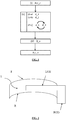
Figure 1 shows an illustrative flowchart of the methods of the invention. -
Figure 2 shows a schematic representation of part of an illustrative HMD. -
Figure 3 shows a schematic representation of the visualization situation of a wearer equipped with a HMD. -
Figure 4 shows a graphic representation of a model for determining the residual accommodation of a subject. -
Figure 5 shows an example of a lens flipper that can be useful according to the present invention. -
Figures 6-10 show graphic representation of various visualization situations of a wearer equipped with a HMD, wherein the HMD comprises a prescription lens. - The phenomenon of accommodation is known in the art. Irrespective of the age or of the possible ametropia of the wearer, the present invention provides for the determination (definition) of a space in the real-vision zone, wherein the visualization by the wearer of a real object and/or virtual object/display can be performed comfortably, namely with a restricted accommodation that is sufficient and non-spasmodic. The skilled person has common knowledge regarding the definition of accommodation, amplitude of accommodation, and how visualization distances are analyzed in this context.
- Head-mounted display devices (HMD) are known in the art. Such devices are to be worn on or about the head of a wearer, including helmet-mounted displays, optical head-mounted displays, head-worn displays and the like. They include optical means for displaying (computer-generated) information content for visualization by the wearer. The HMD can provide for the display of computer-generated information content, advantageously with the superimposed visualization of computer-generated information content and of a 'real-life' vision field. The HMD may be monocular (single eye) or binocular (both eyes). The HMD can take various forms, including spectacles, masks such as skiing or diving masks, goggles, etc. The HMD may comprise one or more lenses. Said lenses can be selected from prescription lenses.
- According to the methods of the invention as claimed herein, the HMD is a pair of spectacles provided with lenses, wherein one of the lenses comprise a Light-guide Optical Element LOE. The HMD generally comprises a pod. Said pod can be a housing that contains optical and electronic components capable, in conjunction with the LOE, of generating (providing) a virtual display. An example of a lens L comprising a LOE is shown at
Figure 2 . The lens L has a front face F facing the 'real world' (environment of the wearer) and a rear face R facing the wearer. The LOE is embedded within the lens L. The pod POD is connected to the LOE. - The visual field of a wearer equipped with a HMD is depicted at
Figure 3 . It shows that the wearer can be in a situation where s/he is to visualize a virtual display V provided by the HMD and 'real' objects from the environment R1 R2, R3. The virtual display is 'located' at a visualization distance D_v. - In general terms, for a virtual display, the light path for visualization is POD →7 LOE → Rear face of lens → Eye of wearer, whereas for a 'real' display (real object), the path is Object →Front face of lens → Rear face of lens → Eye of the wearer.
- The present invention provides methods for determining suitable values of D_v, by taking into account the wearer's dynamic accommodative facility. The present invention thus provide methods for determining ranges of distances for the display of a computer-generated information content by the HMD, within which the wearer may comfortably visualize the display provided by the HMD, keep visualizing the 'real-world' including objects situated in the far-vision, intermediate and near-vision fields, as well as comfortably switching between the virtual display and the visualizing of the 'real-world', without incurring undue visual fatigue, thus experiencing high levels of visual comfort.
- The invention relies on the following:
- determining a value of comfort amplitude of accommodation (Acc_c) of the wearer,
- assessing the wearer's accommodative facility under dynamic conditions, between a virtual display and a real display,
- based on the above, determining a suitable range of distances for virtual displays.
- In other terms, the invention relies on the following:
- determining a value of comfort accommodation of the wearer (Acc_c) so as to deduce an accommodation value linked to a virtual display (Acc_v),
- assessing the capacity of the wearer to switch from this virtual accommodation (Acc_v, corresponding to a virtual visualization distance) to a second accommodation value linked to a real display (Acc_r, corresponding to a real visualization distance) through the HMD,
- depending on the switching capacity of the wearer, validate the value Acc_v (corresponding to virtual distance) or else change the value for Acc_v_bis (corresponding to another value of virtual distance) so as to reduce the gap between Acc_v_bis and Acc_r.
- The methods for determining the comfort amplitude of accommodation that can be used for the purpose of the present invention are defined in step (i) of
claim 1. These can result from a computation (estimation) or an actual measurement (ex: push-up method, as defined in claim 3). Suitable methods for step (i) include modeling as a function of the age of the wearer and measurement as detailed in the examples given thereafter. - In general terms, the invention involves a step of assessing the ability of a wearer to switch visualization between at least two visual targets. This corresponds to step (ii) as recited above. Said visual targets (e.g. displays) can be respectively visualized at respective distances d_1 and d_2, as recited above. The values of d_1 and d_2 can be selected so as to mimic (simulate) the situation of a wearer switching between the visualization of a virtual display (e.g., d_1) and that of a real object (e.g., d_2). In accordance with the invention, the first display and the second display may or may not be in the same gaze direction. The gaze direction can be defined as known in the art. Further, in comparative examples which do not form part of the invention, the wearer's dynamic accommodative facility may be assessed by switching visualization between three or
more displays - The assessment of the wearer's accommodative facility under dynamic test conditions is performed according to the invention on a qualitative or quantitative basis as recited in
claim 2; for example by using a proxymeter. An example of proxymeter is described at http://www.varilux-university.org/FR/Pages/Proxim%C3%A8tre.aspx. Step (ii) may be performed through an optometric measurement. Further, step (ii) according to the invention is performed with one pair of spectacles as recited inclaim 1, and may include lens flippers as recited inclaim 2. An example of a lens flipper is shown atFigure 5 . - The invention is illustrated by the following non-limiting examples.
- In comparative examples which do not form part of the invention, measurements related to comfort accommodation take into account the depth of field. Measurements according to these comparative examples can allow access to the following quantities:
- Punctum remotum (PR, furthest visible point, which is translated into diopters D), which corresponds to an accommodation of zero;
- Punctum proximum (PP, closest visible point, translated into D), which corresponds to the maximal accommodation Acc_max;
- Comfort accommodation can be defined as Acc_c = (2/3) Acc_max;
- « Tonic accommodation » (value in D situated between PR and PP, also called resting accommodation).
- These quantities vary from one wearer to another, but are also a function of age. Age is regarded as a relevant factor for the determination of step (i) according to the invention . The below Examples 1.1 and 1.2 illustrate a method according to the invention (example 1.1) and a method not according to the invention (example 1.2) for the determination of Acc_c. Irrespective of the method used for determining Acc_c, it is preferred that Acc_v ≤ Acc_c.
- For an emmetrope eye, the visualization distance for which no effort is required is of 1m. The maximal amplitude of accommodation decreases with the age of the subject. The comfort amount of accommodation (that can be 'implemented' without undue strain for the subject) is about 2/3 of the maximal amplitude. Thus the 'effortless' (fatigue-less) value of accommodation that may be used by the subject, decreases along with age.
Age (vrs) 40 45 50 60 Acc_max (D) * 5 3 1.5 1 Acc_c (D) 3 2 0.5 0.25** * This maximum amplitude of comfort accommodation is established for near-vision by using the apparent proximity factor. This amplitude is less for a virtual display or for focusing on the far-vision zone for a non-corrected hypermetrope subject.
** At around the age of 60, this amplitude rather results from the depth of field (can typically be about 1D). - This model incorporates the tonic evolution as a function of age. This advantageously provides for a more accurate estimate.
- Values of accommodation (D):
Age (vr) 40 45 50 55 60 Punctum Remotum PR 0 0 0 0 0 Tonic accomm TA 1 0.67 0.16 0.12 0.083 Puntum proxi comfort PPc 3 2 0.5 0.3 0.25 Punctum proximum PP 5 3 1.5 1.2 1 - These values are shown on
Figure 4 . The vertical axis represents Accommodation (D), while the horizontal axis shows age (Years). It illustrates the model for residual accommodation as a function of age. - For an ametrope wearer, the same values can be used not according to the invention, it suffices to use the same values and to deduct the prescribed value to obtain the values to be used.
- Following examples 1.3 (not according to the invention) and 1.4 (according to the invention) illustrate the determination of the comfort amplitude of accommodation Acc_c using first a determination of the maximal amplitude of accommodation Acc_max. In such case, one can determine Acc_c as two-thirds of Acc_max:

- This determination not according to the invention relies on a model for the computation of the maximum amplitude of accommodation as a function of the age of the subject. It can be determined using one of the models as follows (accommodation value in diopters, age in years):
- model n°1 (higher values) Acc_max = 25 - 0.40age
- model n°2 (average values) Acc_max = 18.5 - 0.30age
- model n°3 (lower values) Acc_max = 15 - 0.25age
- Example: for a subject who is 50-years old, using model n°3: Acc_max =2.5
Acc_c = (2/3)∗Acc_max = 1.67
P_c = 1/Acc_c = 60cm: a display located at 60cm or more from the wearer will always be comfortably visualized. - The Push-Up method is advantageous in that it is simple, quick, personalized and requires few instruments.
- 0.80 BCVA (80% best corrected visual acuity, i.e. of the best acuity obtained with the best correction): in the test, the visual target is selected so as lead to 80% of the best acuity,
- Optimal compensation of the refraction,
- A metered (e.g. millimeters) ruler, on which the dioptric equivalencies can be marked for the proximities and the minimal amplitudes as a function of age.
-
- Use of the trial frame,
- This test advantageously takes into account the depth of field of the subject,
- The measurements can be performed on a monocular or binocular basis.
-
- The attention of the subject is drawn to the visual target (for example, a printed text) and the subject is asked to maintain focus as long and as precisely as possible.
- The left eye is hidden and the measurement can start for the right eye.
- The target is slowly and progressively brought closer, for example at about 0.25 to 0.50 δ per second in order to create a regular change in the accommodative response. The closer the target, the more slowly it should be brought closer, so as to keep a constant progression in diopters.
- Stop as soon as the subject perceives a first constant blur and note the distance,
- In comparative examples which do not form part of the invention, the process is to be repeated 3 times to obtain an average and observe the quality of accommodation.
- Repeat for left eye and both eyes.
- In comparative examples which do not form part of the invention, alternatively, the test may be first conducted for binocular vision, and then for monocular vision of one or both eyes of the subject.
- Comparative example: The test provides a measured distance => Acc_max.
Acc_c = 2/3 Acc_max; P_c = 1/Acc_c. - This comparative example enables to check that the comfort proximity (defined by the base curve of the lens, i.e. by the power of the rear face) of the wearer is equal or less than the display distance of the virtual display.
- This example illustrates the method of the invention for the assessment of the wearer's capability to switch visualization of a virtual display (within virtual amplitude of accommodation, Acc_v) and visualization of another (real) display situated within a comfortable vision field of real visual targets.
- This test is an accommodative rock test. It makes use of lens flippers, an example of which is represented at
Figure 5 . The side thereof can be + or - 2.00D. The lenses are flipped (rotated) on a cyclic basis to switch from one pair of lens to the other. - The parameters of the test can be as follows:
- RD: reading distance,
- 0.80 BCVA (80% best corrected visual acuity, i.e. of the best acuity obtained with the best correction),
- Minimum number of rotations (cycles) to be performed (reached) per time unit (min),
- Average number of rotations (cycles) to be performed per time unit (avg),
- The test can be performed on a monocular or binocular basis.
- The test generally allows to assess the rapidity and the resistance to fatigue of the ciliary muscle, of the crystalline lens, and/or the appropriate functioning of the efferent neurons involved in the accommodation process.
- The test may be performed with various sphere values, so as to simulate the various distances (accommodation situations) that the wearer is likely to face. The test may be performed with a pair of smart glasses, or even with a set of several smart glasses.
- The values of number of rotations per time unit (Min, Avg) can be determined by the skilled person as a function of the nature of the equipment used.
- Illustrative example of accommodative rock test on a monocular (amblyope) or binocular basis:
- 0,8xBCVA,
- Min: 12cpm (cpm: cycle per minute)
- Avg: 17cpm.
- More generally, besides possible quantitative determinations, the eye care specialist may perform a qualitative assessment of the visual behavior of the subject with respect to dynamic accommodation.
- In this example, it is assumed that the wearer's ametropia is corrected. The lenses are prescription lenses having a LOE embedded therein, for example as per
Figure 2 . -
Figures 6-9 show visualization situations with different ophthalmic lenses. - The legend of the figures is as follows:
- SV: single vision lens; PAL: progressive addition lens, - NV: near vision; FV: far vision, - L: lens; E: eye, - B: lens base curve; P: power, - LOE: light-guide optical element, - RD: reading distance, - Acc_c: comfort accommodation, - Acc_r: real accommodation (visualization of real display), - Acc_v: virtual accommodation (visualization of virtual (HMD-generated) display), - Box delimited with dash-lines and filled with hatched lines: virtual objet, HMD-generated information content display, corresponding to the projection by the HMD POD through the LOE after conjugation through the rear face of the lens, - DVO: distance between the eye and the lens (back vertex distance), - D_v: virtual distance, distance of display of virtual information content. - On the figures, the value for comfort accommodation Acc_c is located in an informal manner, and it could be set and placed equal to the accommodation involved at the reading distance. The value of real accommodation Acc_r depends on the reading distance RD, in average of 40 cm.
- For non-presbyopic ametropic wearer, one should check that the wearer is capable, from a virtual value of accommodation Acc_v (defined by the lens base), to:
- Mobilize additional accommodation required for clear and comfortable vision at the reading distance,
- Relax the virtual accommodation Acc_v for a clear and comfortable vision (in far vision for example).
- For presbyopic wearers, one should check that the wearer is capable, from a virtual value of accommodation Acc_v, to relax this residual accommodation or depth of field, for a clear and comfortable vision at the reading distance and in far vision.
- When performing step (ii), the dioptric modulation cycles allow to assess the capability of the subject to switch from visualizing a virtual display (e.g. at distance D_v or d_1) to a real display (e.g. at distance d_2 corresponding to Acc_r, for example within Acc_c, in NV or FV zones), with vergences included.
- The virtual display can be projected in various locations (gaze directions) of the visual field, as a function of the location of the LOE within the lens. The wearer may thus be in one of the following situations:
- The virtual display is located in the upper part of the lens (far vision),
- The virtual display is located in the lower part of the lens (near vision),
- The virtual display is located in a part of the lens that is not used much by the wearer.
- In some situations, the wearer can visualize a real scene (real objects) through the virtual display. In that situation or if the virtual display is located in another part of the lens, the accommodation values to be implemented when switching from one to the other are very close. The same test principle can then be used.
- Distance D_v can be determined by taking into account different gaze directions, as illustrated at
Figure 10 . Legend is as before, and CRO = center of rotation of the eye. -
- If the accommodative rock test (or other assessment of step (ii)) is successful (for example, sufficient number of cycles per minute), and/or if the wearer does not complain about fatigue or discomfort or pulling sensation, then a device (LOE+POD) can be designed so as display (project) the virtual display at a distance that should be comfortable and suitable for the wearer. The value Acc_v (or value D_v) is set for designing and manufacturing the HMD.
- If the accommodative rock test (or other assessment of step (ii)) is not successful, then the value Acc v (or value of D_v or d_1) can be altered so as to reduce the gap between d_1 and d_2 (Acc_v and Acc_r). It is then possible to modify the base curve of the lens that contains the LOE. The virtual display will then be displayed at a farther distance (after conjugation with the rear face) and the accommodation required for a clear and comfortable vision will be decreased.
- By way of example:
Subject is 48 years-old. Acc_max = 3D, so that Acc_c = 2D (50 cm). - Lens has a base curve of 2; so that Acc_v = 1.90D: rock between the infinite (far vision) and 53cm. If not OK, the lens can be of
base curve 1, which allows to test between the infinite and 103cm. - The lens may be manufactured specifically for the wearer.
- By way of example (lens with LOE and POD), the lens is made with the desired base curve, so as to ensure a conjugation between the projection (display) system and the rear face of the lens. This allows comfort visualization for the wearer. Additional information can be found in
WO2011/076604 andUS 2010-045927 .
Claims (5)
- Method for the determination of the value (D_v) of a virtual distance of visualization of computer-generated information content displayed by a head-mounted display device intended to be worn by a wearer and comprising a pair of glasses comprising two ophthalmic lenses, one of which comprises a light-guide optical element, wherein said method comprises the steps of:(i) Determining a value of amplitude of accommodation (Acc_c) for comfortable vision of the wearer, or comfort amplitude of accommodation, comprising :- computing said value of comfort amplitude of accommodation (Acc_c) based upon the age of the wearer, bya) determining by a model, as a function of the age of the wearer, a maximal amplitude of accommodation at a punctum proximum defining the closest visible point for the wearer, andb) calculating the value of the comfort amplitude of accommodation (Acc_c) by multiplying the maximal amplitude of accommodation determined in a) by 2/3; or- performing one measurement of said value of comfort amplitude of accommodation (Acc_c), on a monocular or binocular basis, bya) drawing the attention of the wearer to a visual target and asking the wearer to maintain focus,b) slowly and progressively bringing the target closer, in order to create a regular change in the accommodative response,c) stopping the measurement as soon as the wearer perceives a first constant blur and noting the distance, andd) calculating the value of comfort amplitude of accommodation (Acc_c) by multiplying the maximal amplitude of accommodation measured in c) by 2/3;(ii) Assessing the wearer's accommodative facility under dynamic test conditions on a cyclic basis, by switching between the visualization of a first virtual display of information content displayed by said head-mounted display device and the visualization of a second real display of a real object from the wearer environment, wherein the second display is situated within the comfort amplitude of accommodation (Acc_c) of the wearer, and
wherein step (ii) comprises:(ii-a) setting a first value of visualization distance of the first display;(ii-b) setting a second value of visualization distance of the second display situated within the wearer's comfort amplitude of accommodation; and(ii-c) assessing the wearer's accommodative facility during switching between the visualization of the first display situated at a distance having the first value, and the visualization of the second display situated at distance having the second value;(iii) Determining said value (D_v) of a virtual distance of visualization based on the results of (i) and (ii), by .- from the value of comfort amplitude of accommodation of the wearer (Acc_c) determined in (i), deducing an accommodation value linked to a virtual display (Acc_v) which represents said value (D_v) of a virtual distance of visualization, and- depending on the switching capacity of the wearer assessed in (ii), validating or changing the accommodation value linked to a virtual display (Acc_v) which corresponds to said first value, so as to reduce the gap between said first value and said second value and to thus determine said value (D_v) of a virtual distance of visualization. - Method according to claim 1, wherein step (ii-c) further comprises one of a qualitative assessment from the wearer and a quantitative assessment comprising one or more cyclic measurements, wherein step (ii-c) comprises an accommodative rock test with lens flippers defining said dynamic test conditions with rotations of the lens flippers on a cyclic basis to switch from one pair of lens flippers to another one.
- Method according to any of claims 1-2, wherein in step (i) performing one or more measurements of said value of comfort amplitude of accommodation (Acc_c) is carried out according to the Push-Up method.
- Method for the design of a head-mounted display device intended to be worn by a wearer and capable of displaying computer-generated information content, wherein- the device is a pair of glasses comprising two ophthalmic lenses, selected from prescription lenses, such as single-vision lenses, multi-focal lenses and progressive lenses,- one of said ophthalmic lenses comprises a light-guide optical element, andwherein the design method comprises the following steps (i), (ii), (iii) for the determination of a value (D_v) of a virtual distance of visualization of the computer-generated information content displayed by the head-mounted display device:(i) Determining a value of amplitude of accommodation (Acc_c) for comfortable vision of the wearer, or comfort amplitude of accommodation, comprising:- computing said value of comfort amplitude of accommodation (Acc_c) based upon the age of the wearer, bya) determining by a model, as a function of the age of the wearer, a maximal amplitude of accommodation at a punctum proximum defining the closest visible point for the wearer, andb) calculating the value of the comfort amplitude of accommodation (Acc_c) by multiplying the maximal amplitude of accommodation determined in a) by 2/3;
or- performing one measurement of said value of comfort amplitude of accommodation (Acc_c), on a monocular or binocular basis, bya) drawing the attention of the wearer to a visual target and asking the wearer to maintain focus,b) slowly and progressively bringing the target closer, in order to create a regular change in the accommodative response,c) stopping the measurement as soon as the wearer perceives a first constant blur and noting the distance, andd) calculating the value of comfort amplitude of accommodation (Acc_c) by multiplying the maximal amplitude of accommodation measured in c) by 2/3;(ii) Assessing the wearer's accommodative facility under dynamic test conditions on a cyclic basis, by switching between the visualization of a first virtual display of information content displayed by said head-mounted display device and the visualization of a second real display of a real object from the wearer environment, wherein the second display is situated within the comfort amplitude of accommodation (Acc_c) of the wearer, and wherein step (ii) comprises:(ii-a) setting a first value of visualization distance of the first display;(ii-b) setting a second value of visualization distance of the second display situated within the wearer's comfort amplitude of accommodation; and(ii-c) assessing the wearer's accommodative facility during switching between the visualization of the first display situated at a distance having the first value, and the visualization of the second display situated at distance having the second value;(iii) Determining said value (D_v) of a virtual distance of visualization based on the results of (i) and (ii), by .wherein the steps (i), (ii) and (iii) are performed at least twice, with different gaze directions for the visualization of the first display and/or with different gaze directions for the visualization of the second display, and- from the value of comfort amplitude of accommodation of the wearer (Acc_c) determined in (i), deducing an accommodation value linked to a virtual display (Acc_v) which represents said value (D_v) of a virtual distance of visualization, and- depending on the switching capacity of the wearer assessed in (ii), validating or changing the accommodation value linked to a virtual display (Acc_v) which corresponds to said first value, so as to reduce the gap between said first value and said second value and to thus determine said value (D_v) of a virtual distance of visualization;
wherein the design method further comprises a step (iv) of determining one optical parameter of the ophthalmic lenses such as a base curve thereof, based on said value (D_v) of a virtual distance of visualization determined in step (iii). - Method for the manufacture of a head-mounted display device intended to be worn by a wearer, wherein the device is capable of displaying computer-generated information content, the manufacturing method comprising:- the steps (i) to (iv) of the method for the design of the head-mounted display device according to claim 4, and- manufacturing said pair of glasses comprising said two ophthalmic lenses, with said light-guide optical element, the lenses being manufactured with said base curve.
Applications Claiming Priority (2)
| Application Number | Priority Date | Filing Date | Title |
|---|---|---|---|
| EP14305397 | 2014-03-20 | ||
| PCT/EP2015/053754 WO2015139919A1 (en) | 2014-03-20 | 2015-02-23 | Methods for augmented reality |
Publications (2)
| Publication Number | Publication Date |
|---|---|
| EP3119266A1 EP3119266A1 (en) | 2017-01-25 |
| EP3119266B1 true EP3119266B1 (en) | 2021-04-14 |
Family
ID=50389375
Family Applications (1)
| Application Number | Title | Priority Date | Filing Date |
|---|---|---|---|
| EP15705626.8A Active EP3119266B1 (en) | 2014-03-20 | 2015-02-23 | Methods for augmented reality |
Country Status (5)
| Country | Link |
|---|---|
| US (1) | US10139636B2 (en) |
| EP (1) | EP3119266B1 (en) |
| JP (1) | JP6554479B2 (en) |
| CN (1) | CN106132283B (en) |
| WO (1) | WO2015139919A1 (en) |
Families Citing this family (6)
| Publication number | Priority date | Publication date | Assignee | Title |
|---|---|---|---|---|
| JP7274724B2 (en) | 2016-12-31 | 2023-05-17 | ルムス エルティーディー. | Eye Tracker Based on Retinal Imaging Through Light-Guiding Optics |
| WO2018138714A1 (en) * | 2017-01-28 | 2018-08-02 | Lumus Ltd. | Augmented reality imaging system |
| IL259518B2 (en) | 2018-05-22 | 2023-04-01 | Lumus Ltd | Optical system and method for improvement of light field uniformity |
| US12310659B2 (en) | 2018-12-18 | 2025-05-27 | Essilor International | Method for assessing the suitability between an optical device and a user of the optical device |
| JP7558017B2 (en) * | 2020-09-30 | 2024-09-30 | ホヤ レンズ タイランド リミテッド | PROGRESSIVE ADDITION LENS DESIGN METHOD, DETERMINATION METHOD, MANUFACTURING METHOD, AND DESIGN SYSTEM |
| EP4197426A1 (en) | 2021-12-16 | 2023-06-21 | Essilor International | Methods for determining an ophthalmic lens and associated optometry device |
Family Cites Families (10)
| Publication number | Priority date | Publication date | Assignee | Title |
|---|---|---|---|---|
| US3460530A (en) * | 1965-02-18 | 1969-08-12 | Ralf W Lorenz | Orthoptic exercising device |
| EP0716329B1 (en) * | 1994-06-23 | 2003-08-27 | Seiko Epson Corporation | Head-mounted display device |
| JPH08160344A (en) * | 1994-12-05 | 1996-06-21 | Olympus Optical Co Ltd | Head mounted video display device |
| JP3599530B2 (en) * | 1997-06-30 | 2004-12-08 | 株式会社ニデック | Optometry device |
| US6771423B2 (en) * | 2001-05-07 | 2004-08-03 | Richard Geist | Head-mounted virtual display apparatus with a near-eye light deflecting element in the peripheral field of view |
| JP2003337963A (en) * | 2002-05-17 | 2003-11-28 | Seiko Epson Corp | Image processing apparatus, image processing method, image processing program, and recording medium therefor |
| FR2903503B1 (en) * | 2006-07-06 | 2009-06-12 | Essilor Int | OPHTHALMIC LENS WITH INTEGRATED OPTICAL INSERT INTENDED TO ALLOW THE PROJECTION OF INFORMATION |
| EP2343591A1 (en) | 2009-12-23 | 2011-07-13 | ESSILOR INTERNATIONAL (Compagnie Générale d'Optique) | Eyeglass adapted for providing an ophthalmic vision and a supplementary vision |
| US8113655B1 (en) * | 2010-07-22 | 2012-02-14 | Albert Tyrin | Training method for accommodative and vergence systems, and multifocal lenses therefor |
| CN103487939B (en) * | 2013-08-28 | 2016-04-20 | 成都理想境界科技有限公司 | Adjustablely wear display optical system and control method thereof |
-
2015
- 2015-02-23 JP JP2016557882A patent/JP6554479B2/en active Active
- 2015-02-23 US US15/126,558 patent/US10139636B2/en active Active
- 2015-02-23 EP EP15705626.8A patent/EP3119266B1/en active Active
- 2015-02-23 WO PCT/EP2015/053754 patent/WO2015139919A1/en not_active Ceased
- 2015-02-23 CN CN201580014254.1A patent/CN106132283B/en active Active
Non-Patent Citations (1)
| Title |
|---|
| None * |
Also Published As
| Publication number | Publication date |
|---|---|
| CN106132283B (en) | 2018-09-07 |
| US10139636B2 (en) | 2018-11-27 |
| WO2015139919A1 (en) | 2015-09-24 |
| EP3119266A1 (en) | 2017-01-25 |
| JP2017511175A (en) | 2017-04-20 |
| US20170090204A1 (en) | 2017-03-30 |
| CN106132283A (en) | 2016-11-16 |
| JP6554479B2 (en) | 2019-07-31 |
Similar Documents
| Publication | Publication Date | Title |
|---|---|---|
| US10139636B2 (en) | Methods for augmented reality | |
| CN104520756B (en) | Progressive Multifocal Lens | |
| JP2017531827A (en) | Method for determining the lens design of an optical lens adapted to the wearer | |
| CN105455774A (en) | Psychophysical measurement method for controlling lower aniseikonia on basis of interocular contrast ratio | |
| CN113613546B (en) | Apparatus and method for evaluating the performance of a visual device for a visual task | |
| US20170325682A1 (en) | Methods and Systems for Determining Refractive Corrections of Human Eyes for Eyeglasses | |
| EP3398501B1 (en) | Device for determining astigmatism of an eye of a person | |
| CN110573936B (en) | Method for determining a specific near power of an ophthalmic lens | |
| EP3109692B1 (en) | Spectacle lens supply system, program therefor, prism amount determination device, prism amount determination method, and method for producing spectacle lens | |
| US11614623B2 (en) | Holographic real space refractive system | |
| Panfili et al. | Myopia in head-worn virtual reality | |
| KR102595038B1 (en) | Methods and systems for adapting human visual and/or visual-motor behavior | |
| US20220022742A1 (en) | Method for assessing the suitability between an optical device and a user of the optical device | |
| CN109788895B (en) | Method for determining a need for updated vision correction for designing a new vision correction device | |
| Baitch et al. | Physiological correlates of spatial perceptual discordance in a virtual environment | |
| US10859855B2 (en) | Method for providing an ophthalmic lens to a wearer | |
| EP4491098A1 (en) | Device for determining a visual behaviour of a person | |
| RU2192815C1 (en) | Method for selecting optical correction of vision for reading and working with computer | |
| TW202339661A (en) | Refractive dioptric power determination method | |
| JP2024505850A (en) | Device and method for automatically evaluating visual equipment | |
| WO2022011006A1 (en) | Holographic real space refractive system | |
| Schroth et al. | Binocular vision: Correcting disparity | |
| Branch et al. | Comparison of progressive addition lens tablet-based fitting devices | |
| CN104303093A (en) | Progressive ophthalmic surface |
Legal Events
| Date | Code | Title | Description |
|---|---|---|---|
| PUAI | Public reference made under article 153(3) epc to a published international application that has entered the european phase |
Free format text: ORIGINAL CODE: 0009012 |
|
| STAA | Information on the status of an ep patent application or granted ep patent |
Free format text: STATUS: REQUEST FOR EXAMINATION WAS MADE |
|
| 17P | Request for examination filed |
Effective date: 20160913 |
|
| AK | Designated contracting states |
Kind code of ref document: A1 Designated state(s): AL AT BE BG CH CY CZ DE DK EE ES FI FR GB GR HR HU IE IS IT LI LT LU LV MC MK MT NL NO PL PT RO RS SE SI SK SM TR |
|
| AX | Request for extension of the european patent |
Extension state: BA ME |
|
| DAX | Request for extension of the european patent (deleted) | ||
| RAP1 | Party data changed (applicant data changed or rights of an application transferred) |
Owner name: ESSILOR INTERNATIONAL |
|
| STAA | Information on the status of an ep patent application or granted ep patent |
Free format text: STATUS: EXAMINATION IS IN PROGRESS |
|
| 17Q | First examination report despatched |
Effective date: 20180417 |
|
| GRAJ | Information related to disapproval of communication of intention to grant by the applicant or resumption of examination proceedings by the epo deleted |
Free format text: ORIGINAL CODE: EPIDOSDIGR1 |
|
| GRAP | Despatch of communication of intention to grant a patent |
Free format text: ORIGINAL CODE: EPIDOSNIGR1 |
|
| GRAP | Despatch of communication of intention to grant a patent |
Free format text: ORIGINAL CODE: EPIDOSNIGR1 |
|
| STAA | Information on the status of an ep patent application or granted ep patent |
Free format text: STATUS: GRANT OF PATENT IS INTENDED |
|
| INTG | Intention to grant announced |
Effective date: 20201127 |
|
| GRAS | Grant fee paid |
Free format text: ORIGINAL CODE: EPIDOSNIGR3 |
|
| GRAA | (expected) grant |
Free format text: ORIGINAL CODE: 0009210 |
|
| STAA | Information on the status of an ep patent application or granted ep patent |
Free format text: STATUS: THE PATENT HAS BEEN GRANTED |
|
| AK | Designated contracting states |
Kind code of ref document: B1 Designated state(s): AL AT BE BG CH CY CZ DE DK EE ES FI FR GB GR HR HU IE IS IT LI LT LU LV MC MK MT NL NO PL PT RO RS SE SI SK SM TR |
|
| REG | Reference to a national code |
Ref country code: GB Ref legal event code: FG4D |
|
| REG | Reference to a national code |
Ref country code: CH Ref legal event code: EP |
|
| REG | Reference to a national code |
Ref country code: DE Ref legal event code: R096 Ref document number: 602015068051 Country of ref document: DE |
|
| REG | Reference to a national code |
Ref country code: IE Ref legal event code: FG4D |
|
| REG | Reference to a national code |
Ref country code: AT Ref legal event code: REF Ref document number: 1381525 Country of ref document: AT Kind code of ref document: T Effective date: 20210515 |
|
| REG | Reference to a national code |
Ref country code: LT Ref legal event code: MG9D |
|
| REG | Reference to a national code |
Ref country code: AT Ref legal event code: MK05 Ref document number: 1381525 Country of ref document: AT Kind code of ref document: T Effective date: 20210414 |
|
| REG | Reference to a national code |
Ref country code: NL Ref legal event code: MP Effective date: 20210414 |
|
| PG25 | Lapsed in a contracting state [announced via postgrant information from national office to epo] |
Ref country code: AT Free format text: LAPSE BECAUSE OF FAILURE TO SUBMIT A TRANSLATION OF THE DESCRIPTION OR TO PAY THE FEE WITHIN THE PRESCRIBED TIME-LIMIT Effective date: 20210414 Ref country code: BG Free format text: LAPSE BECAUSE OF FAILURE TO SUBMIT A TRANSLATION OF THE DESCRIPTION OR TO PAY THE FEE WITHIN THE PRESCRIBED TIME-LIMIT Effective date: 20210714 Ref country code: HR Free format text: LAPSE BECAUSE OF FAILURE TO SUBMIT A TRANSLATION OF THE DESCRIPTION OR TO PAY THE FEE WITHIN THE PRESCRIBED TIME-LIMIT Effective date: 20210414 Ref country code: FI Free format text: LAPSE BECAUSE OF FAILURE TO SUBMIT A TRANSLATION OF THE DESCRIPTION OR TO PAY THE FEE WITHIN THE PRESCRIBED TIME-LIMIT Effective date: 20210414 Ref country code: NL Free format text: LAPSE BECAUSE OF FAILURE TO SUBMIT A TRANSLATION OF THE DESCRIPTION OR TO PAY THE FEE WITHIN THE PRESCRIBED TIME-LIMIT Effective date: 20210414 Ref country code: LT Free format text: LAPSE BECAUSE OF FAILURE TO SUBMIT A TRANSLATION OF THE DESCRIPTION OR TO PAY THE FEE WITHIN THE PRESCRIBED TIME-LIMIT Effective date: 20210414 |
|
| PG25 | Lapsed in a contracting state [announced via postgrant information from national office to epo] |
Ref country code: GR Free format text: LAPSE BECAUSE OF FAILURE TO SUBMIT A TRANSLATION OF THE DESCRIPTION OR TO PAY THE FEE WITHIN THE PRESCRIBED TIME-LIMIT Effective date: 20210715 Ref country code: LV Free format text: LAPSE BECAUSE OF FAILURE TO SUBMIT A TRANSLATION OF THE DESCRIPTION OR TO PAY THE FEE WITHIN THE PRESCRIBED TIME-LIMIT Effective date: 20210414 Ref country code: IS Free format text: LAPSE BECAUSE OF FAILURE TO SUBMIT A TRANSLATION OF THE DESCRIPTION OR TO PAY THE FEE WITHIN THE PRESCRIBED TIME-LIMIT Effective date: 20210814 Ref country code: PT Free format text: LAPSE BECAUSE OF FAILURE TO SUBMIT A TRANSLATION OF THE DESCRIPTION OR TO PAY THE FEE WITHIN THE PRESCRIBED TIME-LIMIT Effective date: 20210816 Ref country code: PL Free format text: LAPSE BECAUSE OF FAILURE TO SUBMIT A TRANSLATION OF THE DESCRIPTION OR TO PAY THE FEE WITHIN THE PRESCRIBED TIME-LIMIT Effective date: 20210414 Ref country code: NO Free format text: LAPSE BECAUSE OF FAILURE TO SUBMIT A TRANSLATION OF THE DESCRIPTION OR TO PAY THE FEE WITHIN THE PRESCRIBED TIME-LIMIT Effective date: 20210714 Ref country code: ES Free format text: LAPSE BECAUSE OF FAILURE TO SUBMIT A TRANSLATION OF THE DESCRIPTION OR TO PAY THE FEE WITHIN THE PRESCRIBED TIME-LIMIT Effective date: 20210414 Ref country code: SE Free format text: LAPSE BECAUSE OF FAILURE TO SUBMIT A TRANSLATION OF THE DESCRIPTION OR TO PAY THE FEE WITHIN THE PRESCRIBED TIME-LIMIT Effective date: 20210414 Ref country code: RS Free format text: LAPSE BECAUSE OF FAILURE TO SUBMIT A TRANSLATION OF THE DESCRIPTION OR TO PAY THE FEE WITHIN THE PRESCRIBED TIME-LIMIT Effective date: 20210414 |
|
| REG | Reference to a national code |
Ref country code: DE Ref legal event code: R097 Ref document number: 602015068051 Country of ref document: DE |
|
| PG25 | Lapsed in a contracting state [announced via postgrant information from national office to epo] |
Ref country code: RO Free format text: LAPSE BECAUSE OF FAILURE TO SUBMIT A TRANSLATION OF THE DESCRIPTION OR TO PAY THE FEE WITHIN THE PRESCRIBED TIME-LIMIT Effective date: 20210414 Ref country code: DK Free format text: LAPSE BECAUSE OF FAILURE TO SUBMIT A TRANSLATION OF THE DESCRIPTION OR TO PAY THE FEE WITHIN THE PRESCRIBED TIME-LIMIT Effective date: 20210414 Ref country code: CZ Free format text: LAPSE BECAUSE OF FAILURE TO SUBMIT A TRANSLATION OF THE DESCRIPTION OR TO PAY THE FEE WITHIN THE PRESCRIBED TIME-LIMIT Effective date: 20210414 Ref country code: EE Free format text: LAPSE BECAUSE OF FAILURE TO SUBMIT A TRANSLATION OF THE DESCRIPTION OR TO PAY THE FEE WITHIN THE PRESCRIBED TIME-LIMIT Effective date: 20210414 Ref country code: SK Free format text: LAPSE BECAUSE OF FAILURE TO SUBMIT A TRANSLATION OF THE DESCRIPTION OR TO PAY THE FEE WITHIN THE PRESCRIBED TIME-LIMIT Effective date: 20210414 Ref country code: SM Free format text: LAPSE BECAUSE OF FAILURE TO SUBMIT A TRANSLATION OF THE DESCRIPTION OR TO PAY THE FEE WITHIN THE PRESCRIBED TIME-LIMIT Effective date: 20210414 |
|
| PLBE | No opposition filed within time limit |
Free format text: ORIGINAL CODE: 0009261 |
|
| STAA | Information on the status of an ep patent application or granted ep patent |
Free format text: STATUS: NO OPPOSITION FILED WITHIN TIME LIMIT |
|
| 26N | No opposition filed |
Effective date: 20220117 |
|
| PG25 | Lapsed in a contracting state [announced via postgrant information from national office to epo] |
Ref country code: IS Free format text: LAPSE BECAUSE OF FAILURE TO SUBMIT A TRANSLATION OF THE DESCRIPTION OR TO PAY THE FEE WITHIN THE PRESCRIBED TIME-LIMIT Effective date: 20210814 Ref country code: AL Free format text: LAPSE BECAUSE OF FAILURE TO SUBMIT A TRANSLATION OF THE DESCRIPTION OR TO PAY THE FEE WITHIN THE PRESCRIBED TIME-LIMIT Effective date: 20210414 |
|
| PG25 | Lapsed in a contracting state [announced via postgrant information from national office to epo] |
Ref country code: IT Free format text: LAPSE BECAUSE OF FAILURE TO SUBMIT A TRANSLATION OF THE DESCRIPTION OR TO PAY THE FEE WITHIN THE PRESCRIBED TIME-LIMIT Effective date: 20210414 |
|
| PG25 | Lapsed in a contracting state [announced via postgrant information from national office to epo] |
Ref country code: MC Free format text: LAPSE BECAUSE OF FAILURE TO SUBMIT A TRANSLATION OF THE DESCRIPTION OR TO PAY THE FEE WITHIN THE PRESCRIBED TIME-LIMIT Effective date: 20210414 |
|
| REG | Reference to a national code |
Ref country code: CH Ref legal event code: PL |
|
| REG | Reference to a national code |
Ref country code: BE Ref legal event code: MM Effective date: 20220228 |
|
| PG25 | Lapsed in a contracting state [announced via postgrant information from national office to epo] |
Ref country code: LU Free format text: LAPSE BECAUSE OF NON-PAYMENT OF DUE FEES Effective date: 20220223 |
|
| PG25 | Lapsed in a contracting state [announced via postgrant information from national office to epo] |
Ref country code: LI Free format text: LAPSE BECAUSE OF NON-PAYMENT OF DUE FEES Effective date: 20220228 Ref country code: IE Free format text: LAPSE BECAUSE OF NON-PAYMENT OF DUE FEES Effective date: 20220223 Ref country code: CH Free format text: LAPSE BECAUSE OF NON-PAYMENT OF DUE FEES Effective date: 20220228 |
|
| PG25 | Lapsed in a contracting state [announced via postgrant information from national office to epo] |
Ref country code: BE Free format text: LAPSE BECAUSE OF NON-PAYMENT OF DUE FEES Effective date: 20220228 |
|
| P01 | Opt-out of the competence of the unified patent court (upc) registered |
Effective date: 20230525 |
|
| PG25 | Lapsed in a contracting state [announced via postgrant information from national office to epo] |
Ref country code: HU Free format text: LAPSE BECAUSE OF FAILURE TO SUBMIT A TRANSLATION OF THE DESCRIPTION OR TO PAY THE FEE WITHIN THE PRESCRIBED TIME-LIMIT; INVALID AB INITIO Effective date: 20150223 |
|
| PG25 | Lapsed in a contracting state [announced via postgrant information from national office to epo] |
Ref country code: MK Free format text: LAPSE BECAUSE OF FAILURE TO SUBMIT A TRANSLATION OF THE DESCRIPTION OR TO PAY THE FEE WITHIN THE PRESCRIBED TIME-LIMIT Effective date: 20210414 Ref country code: CY Free format text: LAPSE BECAUSE OF FAILURE TO SUBMIT A TRANSLATION OF THE DESCRIPTION OR TO PAY THE FEE WITHIN THE PRESCRIBED TIME-LIMIT Effective date: 20210414 |
|
| PG25 | Lapsed in a contracting state [announced via postgrant information from national office to epo] |
Ref country code: MT Free format text: LAPSE BECAUSE OF FAILURE TO SUBMIT A TRANSLATION OF THE DESCRIPTION OR TO PAY THE FEE WITHIN THE PRESCRIBED TIME-LIMIT Effective date: 20210414 |
|
| PG25 | Lapsed in a contracting state [announced via postgrant information from national office to epo] |
Ref country code: TR Free format text: LAPSE BECAUSE OF FAILURE TO SUBMIT A TRANSLATION OF THE DESCRIPTION OR TO PAY THE FEE WITHIN THE PRESCRIBED TIME-LIMIT Effective date: 20210414 |
|
| PGFP | Annual fee paid to national office [announced via postgrant information from national office to epo] |
Ref country code: GB Payment date: 20260227 Year of fee payment: 12 |
|
| PGFP | Annual fee paid to national office [announced via postgrant information from national office to epo] |
Ref country code: DE Payment date: 20260227 Year of fee payment: 12 |
|
| PGFP | Annual fee paid to national office [announced via postgrant information from national office to epo] |
Ref country code: FR Payment date: 20260225 Year of fee payment: 12 |