EP3118372A1 - Method for producing paper, and pitch removal agent - Google Patents
Method for producing paper, and pitch removal agent Download PDFInfo
- Publication number
- EP3118372A1 EP3118372A1 EP15762446.1A EP15762446A EP3118372A1 EP 3118372 A1 EP3118372 A1 EP 3118372A1 EP 15762446 A EP15762446 A EP 15762446A EP 3118372 A1 EP3118372 A1 EP 3118372A1
- Authority
- EP
- European Patent Office
- Prior art keywords
- pitch
- polyvinyl alcohol
- mass
- removal agent
- absorbance
- Prior art date
- Legal status (The legal status is an assumption and is not a legal conclusion. Google has not performed a legal analysis and makes no representation as to the accuracy of the status listed.)
- Granted
Links
Images



Classifications
-
- D—TEXTILES; PAPER
- D21—PAPER-MAKING; PRODUCTION OF CELLULOSE
- D21C—PRODUCTION OF CELLULOSE BY REMOVING NON-CELLULOSE SUBSTANCES FROM CELLULOSE-CONTAINING MATERIALS; REGENERATION OF PULPING LIQUORS; APPARATUS THEREFOR
- D21C9/00—After-treatment of cellulose pulp, e.g. of wood pulp, or cotton linters ; Treatment of dilute or dewatered pulp or process improvement taking place after obtaining the raw cellulosic material and not provided for elsewhere
- D21C9/08—Removal of fats, resins, pitch or waxes; Chemical or physical purification, i.e. refining, of crude cellulose by removing non-cellulosic contaminants, optionally combined with bleaching
- D21C9/086—Removal of fats, resins, pitch or waxes; Chemical or physical purification, i.e. refining, of crude cellulose by removing non-cellulosic contaminants, optionally combined with bleaching with organic compounds or compositions comprising organic compounds
-
- D—TEXTILES; PAPER
- D21—PAPER-MAKING; PRODUCTION OF CELLULOSE
- D21C—PRODUCTION OF CELLULOSE BY REMOVING NON-CELLULOSE SUBSTANCES FROM CELLULOSE-CONTAINING MATERIALS; REGENERATION OF PULPING LIQUORS; APPARATUS THEREFOR
- D21C9/00—After-treatment of cellulose pulp, e.g. of wood pulp, or cotton linters ; Treatment of dilute or dewatered pulp or process improvement taking place after obtaining the raw cellulosic material and not provided for elsewhere
- D21C9/08—Removal of fats, resins, pitch or waxes; Chemical or physical purification, i.e. refining, of crude cellulose by removing non-cellulosic contaminants, optionally combined with bleaching
-
- D—TEXTILES; PAPER
- D21—PAPER-MAKING; PRODUCTION OF CELLULOSE
- D21C—PRODUCTION OF CELLULOSE BY REMOVING NON-CELLULOSE SUBSTANCES FROM CELLULOSE-CONTAINING MATERIALS; REGENERATION OF PULPING LIQUORS; APPARATUS THEREFOR
- D21C5/00—Other processes for obtaining cellulose, e.g. cooking cotton linters ; Processes characterised by the choice of cellulose-containing starting materials
- D21C5/02—Working-up waste paper
- D21C5/025—De-inking
-
- D—TEXTILES; PAPER
- D21—PAPER-MAKING; PRODUCTION OF CELLULOSE
- D21B—FIBROUS RAW MATERIALS OR THEIR MECHANICAL TREATMENT
- D21B1/00—Fibrous raw materials or their mechanical treatment
- D21B1/04—Fibrous raw materials or their mechanical treatment by dividing raw materials into small particles, e.g. fibres
- D21B1/12—Fibrous raw materials or their mechanical treatment by dividing raw materials into small particles, e.g. fibres by wet methods, by the use of steam
- D21B1/30—Defibrating by other means
- D21B1/32—Defibrating by other means of waste paper
-
- D—TEXTILES; PAPER
- D21—PAPER-MAKING; PRODUCTION OF CELLULOSE
- D21B—FIBROUS RAW MATERIALS OR THEIR MECHANICAL TREATMENT
- D21B1/00—Fibrous raw materials or their mechanical treatment
- D21B1/04—Fibrous raw materials or their mechanical treatment by dividing raw materials into small particles, e.g. fibres
- D21B1/12—Fibrous raw materials or their mechanical treatment by dividing raw materials into small particles, e.g. fibres by wet methods, by the use of steam
- D21B1/30—Defibrating by other means
- D21B1/32—Defibrating by other means of waste paper
- D21B1/325—Defibrating by other means of waste paper de-inking devices
-
- D—TEXTILES; PAPER
- D21—PAPER-MAKING; PRODUCTION OF CELLULOSE
- D21C—PRODUCTION OF CELLULOSE BY REMOVING NON-CELLULOSE SUBSTANCES FROM CELLULOSE-CONTAINING MATERIALS; REGENERATION OF PULPING LIQUORS; APPARATUS THEREFOR
- D21C5/00—Other processes for obtaining cellulose, e.g. cooking cotton linters ; Processes characterised by the choice of cellulose-containing starting materials
- D21C5/02—Working-up waste paper
- D21C5/025—De-inking
- D21C5/027—Chemicals therefor
-
- D—TEXTILES; PAPER
- D21—PAPER-MAKING; PRODUCTION OF CELLULOSE
- D21H—PULP COMPOSITIONS; PREPARATION THEREOF NOT COVERED BY SUBCLASSES D21C OR D21D; IMPREGNATING OR COATING OF PAPER; TREATMENT OF FINISHED PAPER NOT COVERED BY CLASS B31 OR SUBCLASS D21G; PAPER NOT OTHERWISE PROVIDED FOR
- D21H11/00—Pulp or paper, comprising cellulose or lignocellulose fibres of natural origin only
- D21H11/14—Secondary fibres
-
- D—TEXTILES; PAPER
- D21—PAPER-MAKING; PRODUCTION OF CELLULOSE
- D21H—PULP COMPOSITIONS; PREPARATION THEREOF NOT COVERED BY SUBCLASSES D21C OR D21D; IMPREGNATING OR COATING OF PAPER; TREATMENT OF FINISHED PAPER NOT COVERED BY CLASS B31 OR SUBCLASS D21G; PAPER NOT OTHERWISE PROVIDED FOR
- D21H17/00—Non-fibrous material added to the pulp, characterised by its constitution; Paper-impregnating material characterised by its constitution
- D21H17/20—Macromolecular organic compounds
- D21H17/33—Synthetic macromolecular compounds
- D21H17/34—Synthetic macromolecular compounds obtained by reactions only involving carbon-to-carbon unsaturated bonds
- D21H17/36—Polyalkenyalcohols; Polyalkenylethers; Polyalkenylesters
-
- D—TEXTILES; PAPER
- D21—PAPER-MAKING; PRODUCTION OF CELLULOSE
- D21H—PULP COMPOSITIONS; PREPARATION THEREOF NOT COVERED BY SUBCLASSES D21C OR D21D; IMPREGNATING OR COATING OF PAPER; TREATMENT OF FINISHED PAPER NOT COVERED BY CLASS B31 OR SUBCLASS D21G; PAPER NOT OTHERWISE PROVIDED FOR
- D21H21/00—Non-fibrous material added to the pulp, characterised by its function, form or properties; Paper-impregnating or coating material, characterised by its function, form or properties
- D21H21/02—Agents for preventing deposition on the paper mill equipment, e.g. pitch or slime control
-
- Y—GENERAL TAGGING OF NEW TECHNOLOGICAL DEVELOPMENTS; GENERAL TAGGING OF CROSS-SECTIONAL TECHNOLOGIES SPANNING OVER SEVERAL SECTIONS OF THE IPC; TECHNICAL SUBJECTS COVERED BY FORMER USPC CROSS-REFERENCE ART COLLECTIONS [XRACs] AND DIGESTS
- Y02—TECHNOLOGIES OR APPLICATIONS FOR MITIGATION OR ADAPTATION AGAINST CLIMATE CHANGE
- Y02W—CLIMATE CHANGE MITIGATION TECHNOLOGIES RELATED TO WASTEWATER TREATMENT OR WASTE MANAGEMENT
- Y02W30/00—Technologies for solid waste management
- Y02W30/50—Reuse, recycling or recovery technologies
- Y02W30/64—Paper recycling
Definitions
- the present invention relates to a method for producing paper using waste paper and a pitch removal agent used in the method for producing paper. More specifically, it relates to a technology for removing pitch from a pulp slurry.
- polyvinyl alcohol which has hydrophobic and hydrophilic groups, prevents deposition of pitch on wire, because the hydrophobic groups bind to the pitch hydrophobically and the hydrophilic groups disperse the pitch.
- pitch control agents the block nature of the hydrophobic groups and the saponification index of polyvinyl alcohols were studied.
- the pitch removal agent according to the present invention is a pitch removal agent added to the pulp slurry during production of paper using waste paper in the step of deinking the waste paper by floatation and/or a step earlier, the pitch removal agent containing a polyvinyl alcohol having an average polymerization degree of 300 to 2500, a saponification index of 70 to 88 mol %, and an absorbance at a wavelength of 280 nm in the ultraviolet absorption spectrum of its 0.1 mass % aqueous solution of 0.1 Abs or more and satisfying, when the iodine absorbance at a wavelength of 490 nm is designated as y (Abs) and the saponification index as x (mol %), the Numerical Formula (A) above.
- an object of the present invention is to provide a method for producing paper and a pitch removal agent that can remove pitch efficiently.
- the chemical agent used is desirably a polyvinyl alcohol higher in the block nature of the residual acetic acid groups.
- the block nature of the residual acetic acid groups can be specified in a linear relationship, using the iodine absorbance and the saponification index of the polyvinyl alcohol.
- the "residual acetic acid groups,” as used herein, are the acetic acid groups that remain intact, as they are not hydrolyzed to hydroxyl groups, in the saponification step for production of the polyvinyl alcohol.
- the method for producing paper in an embodiment of the present invention is a method for producing paper using waste paper, comprising adding, to the pulp slurry in the step of deinking the waste paper by floatation and/or a step earlier, a pitch removal agent containing a polyvinyl alcohol having an average polymerization degree of 300 to 2500, a saponification index of 70 to 88 mol %, and an absorbance at a wavelength of 280 nm in the ultraviolet absorption spectrum of its 0.1 mass % aqueous solution of 0.1 Abs or more and satisfying, when the iodine absorbance at a wavelength of 490 nm is designated as y (Abs) and the saponification index as x (mol %), the Numerical Formula (A) below.
- Numerical Formula (A) is an approximation formula obtained by plotting the saponification index of the polyvinyl alcohols evaluated in Examples on X axis and the iodine absorbance thereof on Y axis.
- y ⁇ 0.0297 x + b ... A wherein , 70 ⁇ x ⁇ 88 and 2.80 ⁇ b ⁇ 3.03 .
- the polyvinyl alcohol contained in the pitch removal agent used in the method for producing paper in the present embodiment has a saponification index of 70 to 88 mol %.
- the polyvinyl alcohol contained in the pitch removal agent has a saponification index of 70 to 88 mol %.
- the polyvinyl alcohol has a saponification index of less than 70 mol %, it is excessively more hydrophobic, making the pitch removal agent less soluble in water.
- it has a saponification index of more than 88 mol % it becomes less hydrophobic, making the pitch removal agent not capable of selectively transferring the pitch into froth.
- the saponification index of the polyvinyl alcohol is preferably 73 to 88 mol %, more preferably 82 to 86 mol %, form the viewpoints of solubility in water and pitch-removing efficiency.
- the polyvinyl alcohol contained in the pitch removal agent has an average polymerization degree of 300 to 2500.
- the pitch removal agent cannot form flocks of sufficiently large size.
- the polyvinyl alcohol has an average polymerization degree of more than 2500, the flocks formed cannot easily float with foams.
- the average polymerization degree of the polyvinyl alcohol is preferably 400 to 2000, more preferably 500 to 1500, from the viewpoint of flock size and floating efficiency.
- the polyvinyl alcohol contained in the pitch removal agent has an absorbance at a wavelength of 280 nm in the ultraviolet absorption spectrum of its 0.1 mass % aqueous solution of 0.1 Abs or more.
- the absorbance at a wavelength of 280 nm is an indicator of the double bonds adjacent to terminal carbonyl groups contained in the structure of the polyvinyl alcohol and, when the value is less than 0.1 Abs, the pitch flocculation efficiency may become lowered.
- the absorbance of the polyvinyl alcohol at a wavelength of 280 nm is preferably 0.2 to 1.0 Abs, more preferably 0.3 to 0.5 Abs, for improvement of the pitch flocculation efficiency.
- the polyvinyl alcohol contained in the pitch removal agent preferably has a block nature of the residual acetic acid groups in a particular range and, in the present embodiment, a polyvinyl alcohol having a relationship between the iodine absorbance y at a wavelength of 490 nm and the saponification index x satisfying the Numerical Formula (A) is used.
- a polyvinyl alcohol having an intercept b of less than 2.80 in the relationship between the iodine absorbance y at a wavelength of 490 nm and the saponification index x and thus not satisfying the Numerical Formula (A) does not show sufficient block nature and leads to deterioration of pitch flocculation efficiency when used in the pitch removal agent.
- a polyvinyl alcohol having an intercept b of more than 3.03 in the relationship between the iodine absorbance y at a wavelength of 490 nm and the saponification index x and thus not satisfying the Numerical Formula (A) is less dispersible in water and does not sufficiently react with pitch, leading to deterioration of the pitch-removing efficiency, when used in the pitch removal agent.
- the polyvinyl alcohol described above is prepared, for example, by saponifying a vinyl ester-based polymer obtained by polymerizing one or more vinyl ester compounds.
- the vinyl ester compounds include vinyl formate, vinyl acetate, vinyl trifluoroacetate, vinyl propionate, vinyl butyrate, vinyl caprate, vinyl laurylate, vinyl versatate, vinyl palmitate, vinyl stearate, pivalic acid, and the like. These vinyl ester compounds may be used alone or in combination of two or more. Practically, use of vinyl acetate, among the vinyl ester compounds above, is preferable from the economic viewpoint.
- a polyvinyl alcohol having an absorbance of 0.1 Abs or more at a wavelength of 280 nm in the ultraviolet absorption spectrum is prepared by oxidizing the polyvinyl alcohol produced by the method described above with an oxidizing agent such as hydrogen peroxide.
- an oxidizing agent such as hydrogen peroxide.
- it can be produced, for example, by a method of polymerizing a vinyl compound in the presence of a carbonyl group-containing chain-transfer agent such as an aldehyde or a ketone and then saponifying the polymer obtained, a method of polymerizing the monomer for example in the presence of 1-methoxyvinyl acetate and saponifying the polymer, or a method of preparing polyvinyl acetate by supplying air into the polymerization system during polymerization and then saponifying the polymer obtained.
- a method for manufacturing a carbonyl group-containing polyvinyl alcohol by polymerizing vinyl acetate in the presence of a chain-transfer agent containing carbonyl group, such as an aldehyde or a ketone, and then saponifying the polyvinyl acetate obtained is particularly advantageous.
- aldehydes such as acetaldehyde, propionaldehyde, n-butyraldehyde, benzaldehyde, and crotonaldehyde
- ketones such as acetone, methyl ethyl ketone, hexanone, and cyclohexanone.
- acetaldehyde, benzaldehyde, propionaldehyde, and n-butyraldehyde are preferable, from the points of the easiness of controlling chain transfer of the vinyl acetate to the carbonyl compound.
- the addition amount of the chain-transfer agent described above may be varied properly according to the chain transfer constant and the polymerization degree of the polyvinyl alcohol produced, but normally, preferably 0.05 to 5 mass %, more preferably 0.1 to 3 mass % with respect to the raw monomer vinyl ester compounds used, such as vinyl acetate.
- the chain-transfer agent may be added all at once in the early phase of polymerization or gradually in portions during polymerization. It is possible by supplying the chain-transfer agent by an arbitrary method to control the molecular weight distribution of the polyvinyl alcohol.
- a polyvinyl alcohol having an iodine absorbance satisfying the Numerical Formula (A) above can be prepared, for example, by a method of controlling the dielectric constant of the saponification solvent used in the polyvinyl alcohol production process. Specifically in saponification of the vinyl ester-based polymer, one of the following solvents having a dielectric constant of 32 cgs esu or less is used.
- Examples of the monomers used for copolymerization with the vinyl ester monomer in preparation of the polyvinyl alcohols having a functional group introduced by copolymerization include olefins such as ethylene, propylene, isobutylene, ⁇ -octene, ⁇ -dodecene, and ⁇ -octadecene; hydroxy group-containing ⁇ -olefins such as 3-buten-1-ol, 4-penten-1-ol, 5-hexen-1-ol,3,4-dihydroxy-1-butene, and the derivatives thereof such as acrylates; unsaturated acids such as acrylic acid, methacrylic acid, crotonic acid, maleic acid, maleic anhydride, itaconic acid, and the salts thereof; monoesters and dialkyl esters; nitriles such as acrylonitrile and methacrylonitrile; amides such as diacetone acrylamide, acrylamide, and methacrylamide; o
- polyvinyl alcohols carrying a functional group introduced in the after-reaction examples include those having acetoacetyl groups introduced in reaction with diketene, those having polyalkylene oxide groups introduced in reaction with ethylene oxide, those having hydroxyalkyl groups introduced in reaction with an epoxy compound or the like, those obtained in acetalization reaction of an aldehyde compound carrying various functional groups with a polyvinyl alcohol, and the like.
- the pitch removal agent used in the method for producing paper of the present embodiment may contain components other than the polyvinyl alcohol described above in the range that does not impair the advantageous effects of the present embodiment.
- the other components contained in the pitch removal agent include antiseptics such as 2,2-dibromo-2-nitroethanol, 2-bromo-2-nitropropane-1,3-diol, dichloro-3-n-octyl-4-isothiazolin-3-one, 2-n-octyl-4-isothiazolin-3-one, 1,3-diacetoxy-2-bromo-2-nitropropane, and oxalohydroximoyl dichloride.
- These antiseptics can be contained in an amount of about 0.001 to 0.1 mass % with respect to the total mass of the pitch removal agent.
- the pitch removal agent in the present embodiment is normally used as dissolved in a solvent.
- solvents for use include pure water, diethylene glycol, diethylene glycol monomethylether, polyoxyalkylene alkyl ethers, and the like, and these solvents may be used alone or in combination of two or more.
- the concentration of the pitch removal agent in an aqueous solution during storage and transportation is normally 1 to 30 mass %, preferably 5 to 20 mass %. It is normally 0.01 to 20 mass %, preferably 0.05 to 10 mass %, when it is added to the pulp slurry. When the concentration is too low, the concentration of the raw pulp may be influenced. When it is too high, the pitch removal agent may become less dispersible in the system.
- the pitch removal agent described above is desirably added in the step of deinking waste paper by floatation and/or a step earlier, for prevention of the pitch fed into the paper-making step.
- a polyvinyl alcohol having an average polymerization degree of 300 to 2500, a saponification index of 70 to 88 mol %, and an absorbance at a wavelength of 280 nm in the ultraviolet absorption spectrum of its 0.1 mass % aqueous solution of 0.1 Abs or more and having a relationship between the iodine absorbance y at a wavelength of 490 nm and the saponification index x satisfying the Numerical Formula (A) above is used as the pitch removal agent in the method for producing paper in the present embodiment, it is possible to selectively transfer the pitch with ink into the froth and discharge it out of the system in the step of deinking waste paper, particularly in a floatator.
- the pitch and the ink contained in the raw waste paper are less floatable when they are excessive large or small.
- the size of the pitch or the ink is considered favorable when it is 4 ⁇ m or more and several hundred ⁇ m or less.
- the pitch removal agent used in the method for producing paper in the present embodiment can selectively flocculate a hardly-floating fine pitch with a size of 4 ⁇ m or less into particles of 4 ⁇ m or more and several hundred ⁇ m or less that are more reactive with the foams.
- a polyvinyl alcohol containing residual acetic acid groups higher in block nature shows an action to absorb and flocculate the pitch.
- a polyvinyl alcohol higher in the block nature of the residual acetic acid groups is used as the pitch removal agent in the method for producing paper in the present embodiment, it can form fine flocculation by absorbing the pitch and make the flocculation float easily with foams.
- the amount of the pitch contained in the final raw material decreases, leading to reduction of the pitch-based troubles in the paper-making step.
- Example 1 the pitch-removing efficiency of polyvinyl alcohols A to O prepared by the method shown below was examined.
- Polyvinyl alcohols B, D to J were prepared similarly to above, except that the amount of the catalyst and the saponification period in the saponification reaction for preparation of polyvinyl alcohol A described above were modified.
- Vinyl acetate was polymerized in methanol, to give a polyvinyl acetate methanol solution.
- the polyvinyl acetate methanol solution obtained was saponified using sodium hydroxide as catalyst, to give a polyvinyl alcohol slurry.
- the polyvinyl alcohol slurry obtained was subjected to solid liquid separation and the solid obtained was dried in a drier to give each of polyvinyl alcohols L to O.
- the absorbance of each of the polyvinyl alcohols A to O at 280 nm in the ultraviolet absorption spectrum was determined. Specifically, 0.2 mass % of polyvinyl alcohol was dispersed in water at normal temperature as the mixture was well agitated, and the mixture was heated to 75°C. Then, the dispersion was dissolved completely by agitation for 3 hours and cooled to normal temperature as agitated. After the resin content of the solution obtained was determined, the mixture was adjusted to 0.1 mass % aqueous polyvinyl alcohol solution. The sample solution adjusted was placed in a cell for determination of absorbance.
- the conformation of the residual acetic acid groups in each of the polyvinyl alcohols A to O was examined by iodine absorbance. Specifically, pure water (11 ml) was added to the 0.1 mass % aqueous polyvinyl alcohol solution (5 ml), giving a solution having a total volume of 16 ml. The solution was kept at 25°C in a constant-temperature water tank. N/1000 iodine solution (4 ml) was added thereto, and the mixture was agitated and immersed again in the constant-temperature tank for 20 minutes. The resulting colored sample solution was placed in a cell previously adjusted to 25°C and the iodine absorbance was determined at a wavelength of 490 nm.
- polyvinyl alcohols A to K which have an average polymerization degree, a saponification index, and a relationship between the saponification index x and the iodine absorbance y respectively within the ranges of the present invention, were higher in the block nature of the residual acetic acid groups.
- polyvinyl alcohols L to O which have an average polymerization degree and a saponification index within the ranges of the present invention but have a relationship between the saponification index x and the iodine absorbance y outside the range of the present invention, were lower in the block nature of the residual acetic acid groups than polyvinyl alcohols A to K.
- Figure 1 is a figure showing the relationship between the saponification index and the iodine absorbance at 490 nm.
- An acrylic adhesive REGITEX A-6001 (produced by Regitex Co., Ltd.) was dissolved in pure water as model pitch at a concentration of 10 mg/L, to give a solution.
- Each of the polyvinyl alcohols A to O shown in Table 1 above was dissolved in water as pitch removal agent, to give an aqueous solution.
- the concentration of the aqueous solution was 10 mg/L.
- the aqueous solution was added to the solution obtained above and, for dying the model pitch, Fluorol 555 (produced by Excion) was additionally added thereto in an amount of 0.5 mass % with respect to the solution containing the polyvinyl alcohol added thereto, to give each of the mixture solutions of Examples 1 to 11 and Comparative Examples 2 to 5.
- Example 2 of the present invention A floatation test was then performed in Example 2 of the present invention.
- a waste paper material of newspapers and flyers mixed at a mass ratio of 7: 3 was macerated in tap water to a Canadian standard freeness of 200 mL and a suspended substance (SS) concentration of 1 mass %, to give a test slurry.
- SS suspended substance
- the mass of the froth recovered from the floatation treatment was then determined and the amount of SS was determined according to JIS K0102.
- the pitch concentration in the froth was determined, as the pitch was extracted using a mixed solvent of chloroform (analytical grade, produced by Kishida Chemical Co., Ltd.) and benzene (analytical grade, produced by Kishida Chemical Co., Ltd.) at a ratio of 1: 1 in a high-speed solvent-extracting machine (ASE350, manufactured by Nippon Dionex K. K.).
- ASE350 high-speed solvent-extracting machine
Landscapes
- Engineering & Computer Science (AREA)
- Chemical & Material Sciences (AREA)
- Chemical Kinetics & Catalysis (AREA)
- Life Sciences & Earth Sciences (AREA)
- Wood Science & Technology (AREA)
- Health & Medical Sciences (AREA)
- General Chemical & Material Sciences (AREA)
- Toxicology (AREA)
- Mechanical Engineering (AREA)
- Paper (AREA)
- Addition Polymer Or Copolymer, Post-Treatments, Or Chemical Modifications (AREA)
Abstract
Description
- The present invention relates to a method for producing paper using waste paper and a pitch removal agent used in the method for producing paper. More specifically, it relates to a technology for removing pitch from a pulp slurry.
- Under recent increase of waste paper recovery rate, low-quality waste paper is also recycled as raw materials for paper making. For that reason, the amount of pitch introduced into paper-making system is increasing year by year in paper-making step. Proposed as the conventional methods for suppressing flocculation of pitch and deposition thereof on apparatuses in the paper-making step were methods of using polyvinyl alcohol (see, for example, Patent Documents 1 and 2).
- It is considered that polyvinyl alcohol, which has hydrophobic and hydrophilic groups, prevents deposition of pitch on wire, because the hydrophobic groups bind to the pitch hydrophobically and the hydrophilic groups disperse the pitch. Thus in the case of conventional pitch control agents, the block nature of the hydrophobic groups and the saponification index of polyvinyl alcohols were studied.
-
- [Patent Document 1]
JP-A No. S61-55294 - [Patent Document 2]
JP-A No. 2005-350807 - The method for producing paper according to the present invention is a method for producing paper using waste paper, comprising adding, to the pulp slurry in the step of deinking the waste paper by floatation and/or a step earlier, a polyvinyl alcohol having an average polymerization degree of 300 to 2500, a saponification index of 70 to 88 mol %, and an absorbance at a wavelength of 280 nm in the ultraviolet absorption spectrum of its 0.1 mass % aqueous solution of 0.1 Abs or more and satisfying, when the iodine absorbance at a wavelength of 490 nm is designated as y (Abs) and the saponification index as x (mol %), the following Numerical Formula (A):

- The pitch removal agent according to the present invention is a pitch removal agent added to the pulp slurry during production of paper using waste paper in the step of deinking the waste paper by floatation and/or a step earlier, the pitch removal agent containing a polyvinyl alcohol having an average polymerization degree of 300 to 2500, a saponification index of 70 to 88 mol %, and an absorbance at a wavelength of 280 nm in the ultraviolet absorption spectrum of its 0.1 mass % aqueous solution of 0.1 Abs or more and satisfying, when the iodine absorbance at a wavelength of 490 nm is designated as y (Abs) and the saponification index as x (mol %), the Numerical Formula (A) above.
-
-
Figure 1 is a figure showing the relationship between saponification index x and iodine absorbance y, wherein the saponification index x is plotted on the abscissa and the iodine absorbance y at 490 nm on the ordinate. -
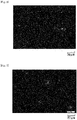
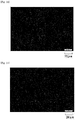
Figure 2 is a photograph showing the solution prepared in Example 1, as observed under fluorescence microscope. -
Figure 3 is a photograph showing the solution prepared in Example 2, as observed under fluorescence microscope. -
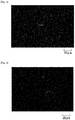
Figure 4 is a photograph showing the solution prepared in Example 3, as observed under fluorescence microscope. -
Figure 5 is a photograph showing the solution prepared in Example 4, as observed under fluorescence microscope. -
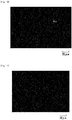
Figure 6 is a photograph showing the solution prepared in Example 5, as observed under fluorescence microscope. -
Figure 7 is a photograph showing the solution prepared in Example 6, as observed under fluorescence microscope. -
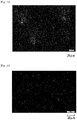
Figure 8 is a photograph showing the solution prepared in Example 7, as observed under fluorescence microscope. -
Figure 9 is a photograph showing the solution prepared in Example 8, as observed under fluorescence microscope. -
Figure 10 is a photograph showing the solution prepared in Example 9, as observed under fluorescence microscope. -
Figure 11 is a photograph showing the solution prepared in Example 10, as observed under fluorescence microscope. -
Figure 12 is a photograph showing the solution prepared in Example 11, as observed under fluorescence microscope. -
Figure 13 is a photograph showing the solution prepared in Comparative Example 1, as observed under fluorescence microscope. -
Figure 14 is a photograph showing the solution prepared in Comparative Example 2, as observed under fluorescence microscope. -
Figure 15 is a photograph showing the solution prepared in Comparative Example 3, as observed under fluorescence microscope. -
Figure 16 is a photograph showing the solution prepared in Comparative Example 4, as observed under fluorescence microscope. -
Figure 17 is a photograph showing the solution prepared in Comparative Example 5, as observed under fluorescence microscope. - Conventional pitch control agents containing polyvinyl alcohol did not show sufficient effectiveness, when added to paper-making system. The block nature of the polyvinyl alcohol is known to be influenced by the saponification index and cannot be sufficiently specified only by the amount of remaining acetic acid groups, as in the case of the pitch control agents described in Patent Document 2. As a greater amount of water is recycled and reused recently in the paper-making step, if the pitch is only dispersed in the paper-making system, the pitch recirculates with the circulation water and is concentrated therein, possibly resulting in worsening of pitch troubles.
- Thus in an embodiment of the present invention, an object of the present invention is to provide a method for producing paper and a pitch removal agent that can remove pitch efficiently.
- In the embodiment of the present invention, it is possible to remove pitch efficiently, as a polyvinyl alcohol in a particular structure is added to the pulp slurry.
- Hereinafter, favorable embodiments of the invention will be described in detail. It should be understood that the present invention is not limited to the embodiments described below.
- After intensive studies to overcome the problems described above, the inventors have found a method of discharging pitch out of the system by selectively transferring the pitch into the froth with foams in the floatation step of deinking crude waste paper material and thus reducing the amount of the pitch fed into the paper-making system. The chemical agent used then is desirably a polyvinyl alcohol higher in the block nature of the residual acetic acid groups.
- The block nature of the residual acetic acid groups can be specified in a linear relationship, using the iodine absorbance and the saponification index of the polyvinyl alcohol. The "residual acetic acid groups," as used herein, are the acetic acid groups that remain intact, as they are not hydrolyzed to hydroxyl groups, in the saponification step for production of the polyvinyl alcohol.
- Accordingly, the method for producing paper in an embodiment of the present invention is a method for producing paper using waste paper, comprising adding, to the pulp slurry in the step of deinking the waste paper by floatation and/or a step earlier, a pitch removal agent containing a polyvinyl alcohol having an average polymerization degree of 300 to 2500, a saponification index of 70 to 88 mol %, and an absorbance at a wavelength of 280 nm in the ultraviolet absorption spectrum of its 0.1 mass % aqueous solution of 0.1 Abs or more and satisfying, when the iodine absorbance at a wavelength of 490 nm is designated as y (Abs) and the saponification index as x (mol %), the Numerical Formula (A) below. The following Numerical Formula (A) is an approximation formula obtained by plotting the saponification index of the polyvinyl alcohols evaluated in Examples on X axis and the iodine absorbance thereof on Y axis.

- Hereinafter, the polyvinyl alcohol contained in the pitch removal agent used in the method for producing paper in the present embodiment will be described. The polyvinyl alcohol contained in the pitch removal agent has a saponification index of 70 to 88 mol %. When the polyvinyl alcohol has a saponification index of less than 70 mol %, it is excessively more hydrophobic, making the pitch removal agent less soluble in water. Alternatively when it has a saponification index of more than 88 mol %, it becomes less hydrophobic, making the pitch removal agent not capable of selectively transferring the pitch into froth.
- The saponification index of the polyvinyl alcohol is preferably 73 to 88 mol %, more preferably 82 to 86 mol %, form the viewpoints of solubility in water and pitch-removing efficiency.
- The polyvinyl alcohol contained in the pitch removal agent has an average polymerization degree of 300 to 2500. When the polyvinyl alcohol has an average polymerization degree of less than 300, the pitch removal agent cannot form flocks of sufficiently large size. Alternatively when the polyvinyl alcohol has an average polymerization degree of more than 2500, the flocks formed cannot easily float with foams. The average polymerization degree of the polyvinyl alcohol is preferably 400 to 2000, more preferably 500 to 1500, from the viewpoint of flock size and floating efficiency.
- The polyvinyl alcohol contained in the pitch removal agent has an absorbance at a wavelength of 280 nm in the ultraviolet absorption spectrum of its 0.1 mass % aqueous solution of 0.1 Abs or more. The absorbance at a wavelength of 280 nm is an indicator of the double bonds adjacent to terminal carbonyl groups contained in the structure of the polyvinyl alcohol and, when the value is less than 0.1 Abs, the pitch flocculation efficiency may become lowered. The absorbance of the polyvinyl alcohol at a wavelength of 280 nm is preferably 0.2 to 1.0 Abs, more preferably 0.3 to 0.5 Abs, for improvement of the pitch flocculation efficiency.
- Further, the polyvinyl alcohol contained in the pitch removal agent preferably has a block nature of the residual acetic acid groups in a particular range and, in the present embodiment, a polyvinyl alcohol having a relationship between the iodine absorbance y at a wavelength of 490 nm and the saponification index x satisfying the Numerical Formula (A) is used. A polyvinyl alcohol having an intercept b of less than 2.80 in the relationship between the iodine absorbance y at a wavelength of 490 nm and the saponification index x and thus not satisfying the Numerical Formula (A) does not show sufficient block nature and leads to deterioration of pitch flocculation efficiency when used in the pitch removal agent.
- Alternatively, a polyvinyl alcohol having an intercept b of more than 3.03 in the relationship between the iodine absorbance y at a wavelength of 490 nm and the saponification index x and thus not satisfying the Numerical Formula (A) is less dispersible in water and does not sufficiently react with pitch, leading to deterioration of the pitch-removing efficiency, when used in the pitch removal agent.
- The polyvinyl alcohol described above is prepared, for example, by saponifying a vinyl ester-based polymer obtained by polymerizing one or more vinyl ester compounds. Examples of the vinyl ester compounds include vinyl formate, vinyl acetate, vinyl trifluoroacetate, vinyl propionate, vinyl butyrate, vinyl caprate, vinyl laurylate, vinyl versatate, vinyl palmitate, vinyl stearate, pivalic acid, and the like. These vinyl ester compounds may be used alone or in combination of two or more. Practically, use of vinyl acetate, among the vinyl ester compounds above, is preferable from the economic viewpoint.
- A polyvinyl alcohol having an absorbance of 0.1 Abs or more at a wavelength of 280 nm in the ultraviolet absorption spectrum is prepared by oxidizing the polyvinyl alcohol produced by the method described above with an oxidizing agent such as hydrogen peroxide. Alternatively, it can be produced, for example, by a method of polymerizing a vinyl compound in the presence of a carbonyl group-containing chain-transfer agent such as an aldehyde or a ketone and then saponifying the polymer obtained, a method of polymerizing the monomer for example in the presence of 1-methoxyvinyl acetate and saponifying the polymer, or a method of preparing polyvinyl acetate by supplying air into the polymerization system during polymerization and then saponifying the polymer obtained.
- Industrially, a method for manufacturing a carbonyl group-containing polyvinyl alcohol by polymerizing vinyl acetate in the presence of a chain-transfer agent containing carbonyl group, such as an aldehyde or a ketone, and then saponifying the polyvinyl acetate obtained is particularly advantageous.
- Examples of the chain-transfer agents used then include aldehydes such as acetaldehyde, propionaldehyde, n-butyraldehyde, benzaldehyde, and crotonaldehyde; and ketones such as acetone, methyl ethyl ketone, hexanone, and cyclohexanone. In particular among the chain-transfer agents above, acetaldehyde, benzaldehyde, propionaldehyde, and n-butyraldehyde are preferable, from the points of the easiness of controlling chain transfer of the vinyl acetate to the carbonyl compound. The chain-transfer agents described above may be used alone or in combination of two or more.
- The addition amount of the chain-transfer agent described above may be varied properly according to the chain transfer constant and the polymerization degree of the polyvinyl alcohol produced, but normally, preferably 0.05 to 5 mass %, more preferably 0.1 to 3 mass % with respect to the raw monomer vinyl ester compounds used, such as vinyl acetate. The chain-transfer agent may be added all at once in the early phase of polymerization or gradually in portions during polymerization. It is possible by supplying the chain-transfer agent by an arbitrary method to control the molecular weight distribution of the polyvinyl alcohol.
- Alternatively, a polyvinyl alcohol having an iodine absorbance satisfying the Numerical Formula (A) above can be prepared, for example, by a method of controlling the dielectric constant of the saponification solvent used in the polyvinyl alcohol production process. Specifically in saponification of the vinyl ester-based polymer, one of the following solvents having a dielectric constant of 32 cgs esu or less is used.
- Examples of the solvents having a dielectric constant of 32 cgs esu or less include methanol (31.2 cgs esu), a mixed solvent of methyl acetate/methanol = 1/3 (mass ratio) (25.2 cgs esu), a mixed solvent of methyl acetate/methanol = 1/1 (mass ratio) (19.1 cgs esu), a mixed solvent of methyl acetate/methanol = 3/1 (mass ratio) (13.1 cgs esu), methyl acetate (7.03 cgs esu), isopropyl acetate (6.3 cgs esu), trichloroethylene (3.42 cgs esu), xylene (2.37 cgs esu), toluene (2.38 cgs esu), benzene (2.28 cgs esu), acetone (21.4 cgs esu), and the like. It is also possible to adjust the dielectric constant of the saponification solvent by adding water (86.4 cgs esu).
- In addition to the unmodified polyvinyl alcohols only containing vinyl alcohol and vinyl ester units, various modification group-containing polyvinyl alcohols can also be used.
- Examples of the monomers used for copolymerization with the vinyl ester monomer in preparation of the polyvinyl alcohols having a functional group introduced by copolymerization include olefins such as ethylene, propylene, isobutylene, α-octene, α-dodecene, and α-octadecene; hydroxy group-containing α-olefins such as 3-buten-1-ol, 4-penten-1-ol, 5-hexen-1-ol,3,4-dihydroxy-1-butene, and the derivatives thereof such as acrylates; unsaturated acids such as acrylic acid, methacrylic acid, crotonic acid, maleic acid, maleic anhydride, itaconic acid, and the salts thereof; monoesters and dialkyl esters; nitriles such as acrylonitrile and methacrylonitrile; amides such as diacetone acrylamide, acrylamide, and methacrylamide; olefin sulfonic acids such as ethylenesulfonic acid, allylsulfonic acid, methallylsulfonic acid, and the salts thereof ; cations such as diallyldimethylammonium chloride, diallyldimethylammonium bromide, diallyldiethylammonium chloride, diallyldiethylammonium bromide, diallylethylmethylammonium chloride, and diethylethylmethylammonium bromide; alkyl vinylethers; vinyl compounds such as dimethylallyl vinyl ketone, N-vinylpyrrolidone, vinyl chloride, vinyl ethylene carbonate, 2,2-dialkyl-4-vinyl-1,3-dioxolanes, glycerol monoallyl ether, and 3,4-diacetoxy-1-butene; substituted vinyl acetates such as isopropenyl acetate and 1-methoxyvinyl acetate; vinylidene chloride, 1,4-diacetoxy-2-butene, vinylene carbonate, and the like.
- Examples of the polyvinyl alcohols carrying a functional group introduced in the after-reaction include those having acetoacetyl groups introduced in reaction with diketene, those having polyalkylene oxide groups introduced in reaction with ethylene oxide, those having hydroxyalkyl groups introduced in reaction with an epoxy compound or the like, those obtained in acetalization reaction of an aldehyde compound carrying various functional groups with a polyvinyl alcohol, and the like.
- The pitch removal agent used in the method for producing paper of the present embodiment may contain components other than the polyvinyl alcohol described above in the range that does not impair the advantageous effects of the present embodiment. Examples of the other components contained in the pitch removal agent include antiseptics such as 2,2-dibromo-2-nitroethanol, 2-bromo-2-nitropropane-1,3-diol, dichloro-3-n-octyl-4-isothiazolin-3-one, 2-n-octyl-4-isothiazolin-3-one, 1,3-diacetoxy-2-bromo-2-nitropropane, and oxalohydroximoyl dichloride. These antiseptics can be contained in an amount of about 0.001 to 0.1 mass % with respect to the total mass of the pitch removal agent.
- The pitch removal agent in the present embodiment is normally used as dissolved in a solvent.
- Examples of the solvents for use include pure water, diethylene glycol, diethylene glycol monomethylether, polyoxyalkylene alkyl ethers, and the like, and these solvents may be used alone or in combination of two or more.
- The concentration of the pitch removal agent in an aqueous solution during storage and transportation is normally 1 to 30 mass %, preferably 5 to 20 mass %. It is normally 0.01 to 20 mass %, preferably 0.05 to 10 mass %, when it is added to the pulp slurry. When the concentration is too low, the concentration of the raw pulp may be influenced. When it is too high, the pitch removal agent may become less dispersible in the system.
- The pitch removal agent described above is desirably added in the step of deinking waste paper by floatation and/or a step earlier, for prevention of the pitch fed into the paper-making step.
- Because a polyvinyl alcohol having an average polymerization degree of 300 to 2500, a saponification index of 70 to 88 mol %, and an absorbance at a wavelength of 280 nm in the ultraviolet absorption spectrum of its 0.1 mass % aqueous solution of 0.1 Abs or more and having a relationship between the iodine absorbance y at a wavelength of 490 nm and the saponification index x satisfying the Numerical Formula (A) above is used as the pitch removal agent in the method for producing paper in the present embodiment, it is possible to selectively transfer the pitch with ink into the froth and discharge it out of the system in the step of deinking waste paper, particularly in a floatator.
- In the floatator step, the pitch and the ink contained in the raw waste paper are less floatable when they are excessive large or small. Generally, the size of the pitch or the ink is considered favorable when it is 4 µm or more and several hundred µm or less. In contrast, the pitch removal agent used in the method for producing paper in the present embodiment can selectively flocculate a hardly-floating fine pitch with a size of 4 µm or less into particles of 4 µm or more and several hundred µm or less that are more reactive with the foams.
- A polyvinyl alcohol containing residual acetic acid groups higher in block nature shows an action to absorb and flocculate the pitch. As a polyvinyl alcohol higher in the block nature of the residual acetic acid groups is used as the pitch removal agent in the method for producing paper in the present embodiment, it can form fine flocculation by absorbing the pitch and make the flocculation float easily with foams. As it is possible in this way to selectively transfer the pitch into froth with a floatator, the amount of the pitch contained in the final raw material decreases, leading to reduction of the pitch-based troubles in the paper-making step.
- The present embodiment may have the following aspects:
- (1) a method for producing paper using waste paper, comprising adding, to the pulp slurry in the step of deinking the waste paper by floatation and/or a step earlier, a polyvinyl alcohol having an average polymerization degree of 300 to 2500, a saponification index of 70 to 88 mol %, and an absorbance at a wavelength of 280 nm in the ultraviolet absorption spectrum of its 0.1 mass % aqueous solution of 0.1 Abs or more and satisfying, when the iodine absorbance at a wavelength of 490 nm is designated as y (Abs) and the saponification index as x (mol %), the following Numerical Formula (A):

- (2) a pitch removal agent added to a pulp slurry during production of paper using waste paper in the step of deinking the waste paper by floatation and/or a step earlier, the pitch removal agent having an average polymerization degree of 300 to 2500, a saponification index of 70 to 88 mol %, and an absorbance at a wavelength of 280 nm in the ultraviolet absorption spectrum of its 0.1 mass % aqueous solution of 0.1 Abs or more and satisfying, when the iodine absorbance at a wavelength of 490 nm is designated as y (Abs) and the saponification index as x (mol %), the Numerical Formula (A) above.
- Hereinafter, advantageous effects of the present invention will be described specifically with reference to the Examples and Comparative Examples of the present invention. However, it should be understood that the advantageous effects of the present invention are not limited to those described below.
- In Example 1, the pitch-removing efficiency of polyvinyl alcohols A to O prepared by the method shown below was examined.
- 100 parts by mass of vinyl acetate, 1.2 parts by mass of acetaldehyde, 4.7 parts by mass of methanol, and 2,2'-azobisisobutylonitrile in an amount of 0.0071 mass % with respect to the vinyl acetate were placed in a polymerization tank and, after the internal tank was substituted with nitrogen, polymerization reaction was started and allowed to proceed for 7 hours, as the mixture was heated at the boiling point, and the reaction was terminated when the polymerization rate reached 80.5 mass %.
- Then, unreacted vinyl acetate monomers were removed from the polymer solution obtained; and methyl acetate and methanol were added thereto, to give a solution (dielectric constant of entire solution: 25.3 cgs esu) containing polyvinyl acetate in an amount of 54 parts by mass, methyl acetate in an amount of 11.5 parts by mass, methanol in an amount of 34.4 parts by mass, and water in an amount of 0.14 parts by mass. The solution was then saponified in a kneader, using sodium hydroxide as catalyst; the polyvinyl alcohol slurry obtained was subjected to solid liquid separation; and the solid was dried in a drier to give a polyvinyl alcohol A.
- Polyvinyl alcohols B, D to J were prepared similarly to above, except that the amount of the catalyst and the saponification period in the saponification reaction for preparation of polyvinyl alcohol A described above were modified.
- 100 parts by mass of vinyl acetate, 1.2 parts by mass of acetaldehyde, 4.7 parts by mass of methanol, and 2,2'-azobisisobutylonitrile in an amount of 0.0071 mass % with respect to the vinyl acetate were placed in a polymerization tank. After the internal tank was substituted with nitrogen, polymerization reaction was started and allowed to proceed for 7 hours, as the mixture was heated at the boiling point, and the reaction was terminated when the polymerization rate reached 80.5 mass %.
- Then, unreacted vinyl acetate monomers were removed from the polymer solution obtained; and methyl acetate and methanol were added thereto, to give a solution (solution dielectric constant: 21.0 cgs esu) containing polyvinyl acetate in an amount of 50.0 parts by mass, methyl acetate in an amount of 21.4 parts by mass, methanol in an amount of 28.4 parts by mass, and water in an amount of 0.15 parts by mass. The solution was then saponified in a kneader, using sodium hydroxide as catalyst. The polyvinyl alcohol slurry obtained was subjected to solid liquid separation and the solid obtained was dried in a drier, to give a polyvinyl alcohol C.
- 100 parts by mass of vinyl acetate, 1.2 parts by mass of acetaldehyde, 4.7 parts by mass of methanol, and 2,2'-azobisisobutylonitrile in an amount of 0.0071 mass % with respect to the vinyl acetate were placed in a polymerization tank. After the internal tank was substituted with nitrogen, polymerization reaction was started and allowed to proceed for 7 hours, as the mixture was heated at the boiling point, and the reaction was terminated when the polymerization rate reached 80.5 mass %.
- Then, unreacted vinyl acetate monomers were removed from the polymer solution obtained; and methyl acetate and methanol were added thereto, to give a solution (dielectric constant of entire solution: 12.8 cgs esu) containing polyvinyl acetate in an amount of 29.9 parts by mass, methyl acetate in an amount of 53.8 parts by mass, methanol in an amount of 16.2 parts by mass, and water in an amount of 0.20 parts by mass. The solution was then saponified in a kneader, using sodium hydroxide as catalyst. The polyvinyl alcohol slurry obtained was subjected to solid liquid separation and the solid was dried in a drier to give a polyvinyl alcohol K.
- Vinyl acetate was polymerized in methanol, to give a polyvinyl acetate methanol solution. The polyvinyl acetate methanol solution obtained was saponified using sodium hydroxide as catalyst, to give a polyvinyl alcohol slurry. The polyvinyl alcohol slurry obtained was subjected to solid liquid separation and the solid obtained was dried in a drier to give each of polyvinyl alcohols L to O.
- The absorbance of each of the polyvinyl alcohols A to O at 280 nm in the ultraviolet absorption spectrum was determined. Specifically, 0.2 mass % of polyvinyl alcohol was dispersed in water at normal temperature as the mixture was well agitated, and the mixture was heated to 75°C. Then, the dispersion was dissolved completely by agitation for 3 hours and cooled to normal temperature as agitated. After the resin content of the solution obtained was determined, the mixture was adjusted to 0.1 mass % aqueous polyvinyl alcohol solution. The sample solution adjusted was placed in a cell for determination of absorbance.
- The conformation of the residual acetic acid groups in each of the polyvinyl alcohols A to O was examined by iodine absorbance. Specifically, pure water (11 ml) was added to the 0.1 mass % aqueous polyvinyl alcohol solution (5 ml), giving a solution having a total volume of 16 ml. The solution was kept at 25°C in a constant-temperature water tank. N/1000 iodine solution (4 ml) was added thereto, and the mixture was agitated and immersed again in the constant-temperature tank for 20 minutes. The resulting colored sample solution was placed in a cell previously adjusted to 25°C and the iodine absorbance was determined at a wavelength of 490 nm.
- The results above are summarized in the following Table 1.
[Table 1] PVA Kind Saponification index (mol %) Polymerization degree Absorbance (Abs. at 280 nm) Iodine absorbance y (Abs. at 490 nm) Intercept b Example 1 A 72.7 750 0.35 0.71 2.87 Example 2 B 76.9 750 0.36 0.61 2.89 Example 3 C 78.6 750 0.35 0.62 2.95 Example 4 D 80.4 750 0.35 0.54 2.93 Example 5 E 81.0 750 0.36 0.54 2.95 Example 6 F 82.2 750 0.34 0.42 2.86 Example 7 G 84.9 750 0.36 0.42 2.94 Example 8 H 85.6 750 0.34 0.30 2.84 Example 9 I 86.1 750 0.36 0.35 2.90 Example 10 J 87.9 750 0.34 0.33 2.94 Example 11 K 79.0 750 0.27 0.65 3.00 Comparative Example 1 - - - - - - Comparative Example 2 L 72.0 500 0.01 0.65 2.79 Comparative Example 3 M 79.7 300 0.02 0.36 2.72 Comparative Example 4 N 80.4 500 0.01 0.35 2.73 Comparative Example 5 O 87.8 550 0.01 0.15 2.76 - As shown in Table 1 above, polyvinyl alcohols A to K, which have an average polymerization degree, a saponification index, and a relationship between the saponification index x and the iodine absorbance y respectively within the ranges of the present invention, were higher in the block nature of the residual acetic acid groups. Alternatively, polyvinyl alcohols L to O, which have an average polymerization degree and a saponification index within the ranges of the present invention but have a relationship between the saponification index x and the iodine absorbance y outside the range of the present invention, were lower in the block nature of the residual acetic acid groups than polyvinyl alcohols A to K.
-
Figure 1 is a figure showing the relationship between the saponification index and the iodine absorbance at 490 nm. As shown inFigure 1 , polyvinyl alcohols A to K had a relationship between the saponification index x and the iodine absorbance y satisfying the condition of: y = -0.0297x + b (wherein, 70 ≤ x ≤ 88, 2.80 ≤ b ≤ 3.03). On the other hand, polyvinyl alcohols L to O had an intercept b outside the range of b: 2.80 ≤ b ≤ 3.03, when the saponification index x and the iodine absorbance y were assigned into the Formula: y = -0.0297x + b. - An acrylic adhesive REGITEX A-6001 (produced by Regitex Co., Ltd.) was dissolved in pure water as model pitch at a concentration of 10 mg/L, to give a solution. Each of the polyvinyl alcohols A to O shown in Table 1 above was dissolved in water as pitch removal agent, to give an aqueous solution. The concentration of the aqueous solution was 10 mg/L. The aqueous solution was added to the solution obtained above and, for dying the model pitch, Fluorol 555 (produced by Excion) was additionally added thereto in an amount of 0.5 mass % with respect to the solution containing the polyvinyl alcohol added thereto, to give each of the mixture solutions of Examples 1 to 11 and Comparative Examples 2 to 5.
- The mixture solution of Comparative Example 1 containing no polyvinyl alcohol and the mixture solutions of Examples 1 to 11 and Comparative Examples 2 to 5 prepared by the method described above were analyzed under a fluorescence microscope (BX53-34-FL-3-D manufactured by Olympus Corporation) for examination of the pitch flocculation and dispersion efficiency.
Figures 2 to 17 are fluorescence micrographs of the mixture solutions of Examples and Comparative Examples. - As shown in
Figure 13 , in the case of the mixture solution of Comparative Example 1 containing no polyvinyl alcohol, the model pitch was found to be dispersed in water. As shown inFigures 14 to 17 , similarly in the case of the mixture solutions of Comparative Examples 2 to 5, which respectively contain polyvinyl alcohols L to O not satisfying the ranges of the present invention, the model pitch was found to be dispersed in water. The size of the model pitch in Comparative Examples 2 to 5 was about 1 to 3 µm, which was almost equivalent to that of Comparative Example 1. - In contrast, as shown in
Figures 2 to 12 , in the case of the mixture solutions of Examples 1 to 11, which respectively contain polyvinyl alcohols A to K within the scope of the present invention, the model pitch was found to be flocculated. The size of the flocculation in these Examples was about several ten µm. The results above show that it is possible to convert pitch into flocculation of 4 µm or more and several hundred µm or less in size by using a polyvinyl alcohol within the scope of the present invention. - A floatation test was then performed in Example 2 of the present invention. In the present Example, a waste paper material of newspapers and flyers mixed at a mass ratio of 7: 3 was macerated in tap water to a Canadian standard freeness of 200 mL and a suspended substance (SS) concentration of 1 mass %, to give a test slurry.
- Sodium hydroxide (3.5 mass % to the pulp dry mass), a deinking agent (DI7250 produced by Kao Corporation, 0.14 mass % to the pulp dry mass), and each of the polyvinyl alcohols A to O shown in Table 1 above at a predetermined concentration were added in that order to the test slurry previously adjusted to 40°C. The mixture was subjected to floatation in a small desk-top floatator (MT-5L, manufactured by Ishikawajima Industrial Machinery Co., Ltd.) under an air flow of 2 L/minute and a medium-agitating condition for 3 minutes.
- The mass of the froth recovered from the floatation treatment was then determined and the amount of SS was determined according to JIS K0102. The pitch concentration in the froth was determined, as the pitch was extracted using a mixed solvent of chloroform (analytical grade, produced by Kishida Chemical Co., Ltd.) and benzene (analytical grade, produced by Kishida Chemical Co., Ltd.) at a ratio of 1: 1 in a high-speed solvent-extracting machine (ASE350, manufactured by Nippon Dionex K. K.). The results above are summarized in the following Table 2.
[Table 2] No. PVA Evaluation results Kind Addition amount (mg/L) SS in froth (g) Pitch concentration in froth (mg/L) 20-1 A 5 5.95 491 20-2 10 5.44 506 20-3 20 5.11 643 21-1 B 5 5.52 552 21-2 10 6.02 547 21-3 20 5.69 689 22-1 C 5 5.67 505 22-2 10 6.17 514 22-3 20 5.71 526 23-1 D 5 5.10 576 23-2 10 5.76 587 23-3 20 5.36 692 24-1 E 5 5.59 580 24-2 10 4.93 597 24-3 20 4.62 658 25-1 F 5 4.54 718 Example 25-2 10 4.50 686 25-3 20 4.11 612 26-1 G 5 4.38 688 26-2 10 4.51 699 26-3 20 4.03 564 27-1 H 5 4.37 676 27-2 10 4.56 702 27-3 20 4.42 669 28-1 I 5 5.19 564 28-2 10 5.33 605 28-3 20 5.29 659 29-1 J 5 5.43 514 29-2 10 5.98 489 29-3 20 6.33 521 30-1 K 5 4.69 546 30-2 10 4.94 522 30-3 20 5.82 665 40 - 0 6.08 365 41-1 L 5 6.08 465 41-2 10 6.13 496 41-3 20 6.52 511 42-1 M 5 6.24 514 Comparative Example 42-2 10 6.13 525 42-3 20 6.40 487 43-1 N 5 6.14 569 43-2 10 6.45 599 43-3 20 6.82 633 44-1 O 5 6.09 471 44-2 10 6.33 446 44-3 20 6.01 498 - As shown in Table 2 above, each of the slurries of Examples and Comparative Examples, which contained polyvinyl alcohol, had a pitch concentration in the recovered froth higher than that of the slurry of Comparative Example 40, which contained no polyvinyl alcohol. However, the amounts of SS in the froths of Comparative Examples 41 to 44 were equivalent to or higher than that of Comparative Example 40. In these Comparative Examples, it seems that there was no selectivity for pitch and the amount of the pitch recovered was increased by increase of foaming.
- In contrast, in Examples 20 to 30, it was possible to raise the pitch concentration in the froth to a value higher than those of Comparative Examples 41 to 44, while reducing the SS amount in the froth to a value equivalent or lower than that of Comparative Example 40.
- Pitch-removing efficiencies of the polyvinyl alcohols A to O were evaluated based on the results of Examples 1 and 2 described above. In the evaluation above, polyvinyl alcohols forming a flock containing pitch in the size that is removable with a floatator (4 µm or more) and favorable in the floatation test were considered favorable (○) and those giving finely dispersed pitch or unfavorable in the floatation test were considered unfavorable (×). The results are summarized in the following Table 3. The results obtained when no polyvinyl alcohol was added were also shown as a Comparative Example in the following Table 3.
[Table 3] Kind of PVA Pitch-removing efficiency A ○ B ○ C ○ D ○ E ○ Example F ○ G ○ H ○ I ○ J ○ K ○ Comparative Example - × L × M × N × O × - The results show that the pitch removal agent containing a polyvinyl alcohol according to the present invention can selectively transfer the pitch into froth without increasing the amount of foams in the floatator.
Claims (2)
- A method for producing paper using waste paper, comprising adding, to the pulp slurry in the step of deinking the waste paper by floatation and/or a step earlier,
a polyvinyl alcohol having an average polymerization degree of 300 to 2500, a saponification index of 70 to 88 mol %, and an absorbance at a wavelength of 280 nm in the ultraviolet absorption spectrum of its 0.1 mass % aqueous solution of 0.1 Abs or more and satisfying, when the iodine absorbance at a wavelength of 490 nm is designated as y (Abs) and the saponification index as x (mol %), the following Numerical Formula (A):
- A pitch removal agent added to a pulp slurry during production of paper using waste paper in the step of deinking the waste paper by floatation and/or a step earlier,
the pitch removal agent containing a polyvinyl alcohol having an average polymerization degree of 300 to 2500, a saponification index of 70 to 88 mol %, and an absorbance at a wavelength of 280 nm in the ultraviolet absorption spectrum of its 0.1 mass % aqueous solution of 0.1 Abs or more and satisfying, when the iodine absorbance at a wavelength of 490 nm is designated as y (Abs) and the saponification index as x (mol %), the following Numerical Formula (A):
Applications Claiming Priority (3)
| Application Number | Priority Date | Filing Date | Title |
|---|---|---|---|
| JP2014048237 | 2014-03-11 | ||
| JP2015046941A JP5875206B2 (en) | 2014-03-11 | 2015-03-10 | Paper manufacturing method and pitch remover |
| PCT/JP2015/057967 WO2015137521A1 (en) | 2014-03-11 | 2015-03-11 | Method for producing paper, and pitch removal agent |
Publications (3)
| Publication Number | Publication Date |
|---|---|
| EP3118372A1 true EP3118372A1 (en) | 2017-01-18 |
| EP3118372A4 EP3118372A4 (en) | 2017-11-29 |
| EP3118372B1 EP3118372B1 (en) | 2018-11-07 |
Family
ID=54071953
Family Applications (1)
| Application Number | Title | Priority Date | Filing Date |
|---|---|---|---|
| EP15762446.1A Active EP3118372B1 (en) | 2014-03-11 | 2015-03-11 | Method for producing paper, and pitch removal agent |
Country Status (6)
| Country | Link |
|---|---|
| US (1) | US10370794B2 (en) |
| EP (1) | EP3118372B1 (en) |
| JP (1) | JP5875206B2 (en) |
| KR (1) | KR101662981B1 (en) |
| CN (1) | CN106103845B (en) |
| WO (1) | WO2015137521A1 (en) |
Families Citing this family (3)
| Publication number | Priority date | Publication date | Assignee | Title |
|---|---|---|---|---|
| CN107012726B (en) * | 2017-05-25 | 2018-06-22 | 济宁南天农科化工有限公司 | A kind of application of cation etherificate polyvinyl alcohol in stickies control |
| JP7176998B2 (en) * | 2019-04-23 | 2022-11-22 | 油化産業株式会社 | Papermaking chemical composition and papermaking method |
| JP7347575B1 (en) | 2022-04-19 | 2023-09-20 | 栗田工業株式会社 | Estimating device, estimating system, estimating program and estimating method |
Family Cites Families (11)
| Publication number | Priority date | Publication date | Assignee | Title |
|---|---|---|---|---|
| JPS6155294A (en) * | 1984-08-22 | 1986-03-19 | 株式会社片山化学工業研究所 | Pitch dispersant |
| US4871424A (en) * | 1986-07-02 | 1989-10-03 | Betz Laboratories, Inc. | Process for controlling pitch deposition from pulp in papermaking systems |
| JP2761934B2 (en) * | 1989-04-11 | 1998-06-04 | 王子製紙株式会社 | Pitch control agent and pitch control method |
| JPH0376885A (en) * | 1989-04-11 | 1991-04-02 | Honshu Paper Co Ltd | Pitch controlling agent and method for controlling pitch |
| DE4315449A1 (en) * | 1993-05-10 | 1994-11-17 | Henkel Kgaa | Process for controlling the settling of sticky contaminants from pulp suspensions |
| PT1268923E (en) * | 2000-01-19 | 2004-11-30 | Clariant Finance Bvi Ltd | PROCESS FOR REDUCING POLISHING CONTAMINANTS IN SUSPENDED PASTE SYSTEMS CONTAINING PAPER WASTE AND COATED DEVICES |
| JP4594656B2 (en) * | 2004-06-10 | 2010-12-08 | 油化産業株式会社 | Pitch control agent |
| US20060048908A1 (en) * | 2004-09-08 | 2006-03-09 | Enzymatic Deinking Technologies, Llc | System for control of stickies in recovered and virgin paper processing |
| JP4873884B2 (en) * | 2005-05-23 | 2012-02-08 | 油化産業株式会社 | Paper manufacturing method |
| CN101333787B (en) * | 2008-07-28 | 2011-07-20 | 山东轻工业学院 | Method for controlling pitch trouble in paper-making process |
| JP2010189779A (en) * | 2009-02-16 | 2010-09-02 | Hakuto Co Ltd | Agent and method for preventing attachment of pitch |
-
2015
- 2015-03-10 JP JP2015046941A patent/JP5875206B2/en active Active
- 2015-03-11 EP EP15762446.1A patent/EP3118372B1/en active Active
- 2015-03-11 KR KR1020167021732A patent/KR101662981B1/en active Active
- 2015-03-11 US US15/123,528 patent/US10370794B2/en not_active Expired - Fee Related
- 2015-03-11 WO PCT/JP2015/057967 patent/WO2015137521A1/en not_active Ceased
- 2015-03-11 CN CN201580012028.XA patent/CN106103845B/en active Active
Also Published As
| Publication number | Publication date |
|---|---|
| JP2015187326A (en) | 2015-10-29 |
| EP3118372A4 (en) | 2017-11-29 |
| CN106103845A (en) | 2016-11-09 |
| WO2015137521A1 (en) | 2015-09-17 |
| CN106103845B (en) | 2017-05-24 |
| KR101662981B1 (en) | 2016-10-05 |
| US20170073891A1 (en) | 2017-03-16 |
| KR20160099731A (en) | 2016-08-22 |
| EP3118372B1 (en) | 2018-11-07 |
| JP5875206B2 (en) | 2016-03-02 |
| US10370794B2 (en) | 2019-08-06 |
Similar Documents
| Publication | Publication Date | Title |
|---|---|---|
| EP3118372B1 (en) | Method for producing paper, and pitch removal agent | |
| JP5479752B2 (en) | Vinyl alcohol polymer and process for producing the same | |
| US10308739B2 (en) | Method for preparing polyvinyl chloride by suspension and polymerization, and feeding device | |
| EP3699207B1 (en) | Ethylene-vinyl alcohol copolymer particles, method for producing same and use of same | |
| EP2622029B1 (en) | Deinking compositions and methods of use | |
| TWI752115B (en) | Modified vinyl alcohol-based polymer and method for producing the same | |
| DE3842820A1 (en) | METHOD FOR PRODUCING STABLE WATER-IN-OEL EMULSIONS OF HYDROLYSED POLYMERISATES OF N-VINYLAMIDES AND THE USE THEREOF | |
| CN113227162A (en) | Process for producing modified vinyl alcohol polymer particles and particles obtained by the process | |
| CN101476257B (en) | Method for extracting lignose from papermaking black liquor | |
| EP3536714B1 (en) | Dispersion assistant for suspension polymerization and method for producing vinyl-based polymer using the same | |
| DE3811201A1 (en) | METHOD FOR PRODUCING POLYVINYL ALCOHOL WITH A HIGH POLYMERIZATION LEVEL | |
| EP1519969B1 (en) | Copolymers for avoiding deposits in water supply systems, production and use thereof | |
| CN107624138B (en) | Process for deinking recycled paper | |
| JP2611026B2 (en) | Deinking agent containing polyfunctional polymer | |
| EP2687560A1 (en) | Modified vinyl alcohol polymer solution and method for producing same | |
| JPWO2018116885A1 (en) | Dispersant aqueous solution for suspension polymerization | |
| EP3950872B1 (en) | Aqueous emulsion and adhesive using same | |
| GB1562417A (en) | Manufacture of sedimentation-stable water-in-oil dispersions of acrylamide polymers | |
| TWI815186B (en) | Foam control agent | |
| JP5816680B2 (en) | Viscosity-imparting agent and method for producing hydrolyzable cellulose using the same | |
| JP2001073286A (en) | Ink-removing agent | |
| JP3654119B2 (en) | Deinking agent and method for producing waste paper pulp | |
| EP4650375A1 (en) | Polyvinyl alcohol polymer and method for producing the same | |
| CN118063909B (en) | Microporous hydrophilic sponge material and preparation method thereof | |
| SE464639B (en) | COLLECTOR INTENDED TO BE USED IN THE EVALUATION OF RETURN PAPER BASED ON A POLYESTER INCLUDING INCLUDING TALL OIL AND APPLICATION OF THIS POLYESTER AS A COLLECTOR |
Legal Events
| Date | Code | Title | Description |
|---|---|---|---|
| STAA | Information on the status of an ep patent application or granted ep patent |
Free format text: STATUS: THE INTERNATIONAL PUBLICATION HAS BEEN MADE |
|
| PUAI | Public reference made under article 153(3) epc to a published international application that has entered the european phase |
Free format text: ORIGINAL CODE: 0009012 |
|
| STAA | Information on the status of an ep patent application or granted ep patent |
Free format text: STATUS: REQUEST FOR EXAMINATION WAS MADE |
|
| 17P | Request for examination filed |
Effective date: 20160822 |
|
| AK | Designated contracting states |
Kind code of ref document: A1 Designated state(s): AL AT BE BG CH CY CZ DE DK EE ES FI FR GB GR HR HU IE IS IT LI LT LU LV MC MK MT NL NO PL PT RO RS SE SI SK SM TR |
|
| AX | Request for extension of the european patent |
Extension state: BA ME |
|
| DAV | Request for validation of the european patent (deleted) | ||
| DAX | Request for extension of the european patent (deleted) | ||
| A4 | Supplementary search report drawn up and despatched |
Effective date: 20171030 |
|
| RIC1 | Information provided on ipc code assigned before grant |
Ipc: D21H 17/36 20060101AFI20171024BHEP Ipc: D21H 11/14 20060101ALI20171024BHEP Ipc: D21C 9/08 20060101ALI20171024BHEP Ipc: D21H 21/02 20060101ALI20171024BHEP |
|
| GRAP | Despatch of communication of intention to grant a patent |
Free format text: ORIGINAL CODE: EPIDOSNIGR1 |
|
| STAA | Information on the status of an ep patent application or granted ep patent |
Free format text: STATUS: GRANT OF PATENT IS INTENDED |
|
| INTG | Intention to grant announced |
Effective date: 20180524 |
|
| GRAS | Grant fee paid |
Free format text: ORIGINAL CODE: EPIDOSNIGR3 |
|
| GRAA | (expected) grant |
Free format text: ORIGINAL CODE: 0009210 |
|
| STAA | Information on the status of an ep patent application or granted ep patent |
Free format text: STATUS: THE PATENT HAS BEEN GRANTED |
|
| AK | Designated contracting states |
Kind code of ref document: B1 Designated state(s): AL AT BE BG CH CY CZ DE DK EE ES FI FR GB GR HR HU IE IS IT LI LT LU LV MC MK MT NL NO PL PT RO RS SE SI SK SM TR |
|
| REG | Reference to a national code |
Ref country code: GB Ref legal event code: FG4D |
|
| REG | Reference to a national code |
Ref country code: CH Ref legal event code: EP Ref country code: AT Ref legal event code: REF Ref document number: 1062188 Country of ref document: AT Kind code of ref document: T Effective date: 20181115 |
|
| REG | Reference to a national code |
Ref country code: DE Ref legal event code: R096 Ref document number: 602015019561 Country of ref document: DE |
|
| REG | Reference to a national code |
Ref country code: IE Ref legal event code: FG4D |
|
| REG | Reference to a national code |
Ref country code: NL Ref legal event code: MP Effective date: 20181107 |
|
| REG | Reference to a national code |
Ref country code: LT Ref legal event code: MG4D |
|
| REG | Reference to a national code |
Ref country code: AT Ref legal event code: MK05 Ref document number: 1062188 Country of ref document: AT Kind code of ref document: T Effective date: 20181107 |
|
| PG25 | Lapsed in a contracting state [announced via postgrant information from national office to epo] |
Ref country code: BG Free format text: LAPSE BECAUSE OF FAILURE TO SUBMIT A TRANSLATION OF THE DESCRIPTION OR TO PAY THE FEE WITHIN THE PRESCRIBED TIME-LIMIT Effective date: 20190207 Ref country code: FI Free format text: LAPSE BECAUSE OF FAILURE TO SUBMIT A TRANSLATION OF THE DESCRIPTION OR TO PAY THE FEE WITHIN THE PRESCRIBED TIME-LIMIT Effective date: 20181107 Ref country code: IS Free format text: LAPSE BECAUSE OF FAILURE TO SUBMIT A TRANSLATION OF THE DESCRIPTION OR TO PAY THE FEE WITHIN THE PRESCRIBED TIME-LIMIT Effective date: 20190307 Ref country code: NO Free format text: LAPSE BECAUSE OF FAILURE TO SUBMIT A TRANSLATION OF THE DESCRIPTION OR TO PAY THE FEE WITHIN THE PRESCRIBED TIME-LIMIT Effective date: 20190207 Ref country code: AT Free format text: LAPSE BECAUSE OF FAILURE TO SUBMIT A TRANSLATION OF THE DESCRIPTION OR TO PAY THE FEE WITHIN THE PRESCRIBED TIME-LIMIT Effective date: 20181107 Ref country code: LV Free format text: LAPSE BECAUSE OF FAILURE TO SUBMIT A TRANSLATION OF THE DESCRIPTION OR TO PAY THE FEE WITHIN THE PRESCRIBED TIME-LIMIT Effective date: 20181107 Ref country code: HR Free format text: LAPSE BECAUSE OF FAILURE TO SUBMIT A TRANSLATION OF THE DESCRIPTION OR TO PAY THE FEE WITHIN THE PRESCRIBED TIME-LIMIT Effective date: 20181107 Ref country code: LT Free format text: LAPSE BECAUSE OF FAILURE TO SUBMIT A TRANSLATION OF THE DESCRIPTION OR TO PAY THE FEE WITHIN THE PRESCRIBED TIME-LIMIT Effective date: 20181107 Ref country code: ES Free format text: LAPSE BECAUSE OF FAILURE TO SUBMIT A TRANSLATION OF THE DESCRIPTION OR TO PAY THE FEE WITHIN THE PRESCRIBED TIME-LIMIT Effective date: 20181107 |
|
| REG | Reference to a national code |
Ref country code: DE Ref legal event code: R082 Ref document number: 602015019561 Country of ref document: DE Representative=s name: TBK, DE Ref country code: DE Ref legal event code: R081 Ref document number: 602015019561 Country of ref document: DE Owner name: MITSUBISHI CHEMICAL CORPORATION, JP Free format text: FORMER OWNERS: KURITA WATER INDUSTRIES, LTD., TOKYO, JP; THE NIPPON SYNTHETIC CHEMICAL INDUSTRY CO., LTD., OSAKA-SHI, OSAKA 530-0018, JP Ref country code: DE Ref legal event code: R081 Ref document number: 602015019561 Country of ref document: DE Owner name: KURITA WATER INDUSTRIES, LTD., JP Free format text: FORMER OWNERS: KURITA WATER INDUSTRIES, LTD., TOKYO, JP; THE NIPPON SYNTHETIC CHEMICAL INDUSTRY CO., LTD., OSAKA-SHI, OSAKA 530-0018, JP |
|
| PG25 | Lapsed in a contracting state [announced via postgrant information from national office to epo] |
Ref country code: PT Free format text: LAPSE BECAUSE OF FAILURE TO SUBMIT A TRANSLATION OF THE DESCRIPTION OR TO PAY THE FEE WITHIN THE PRESCRIBED TIME-LIMIT Effective date: 20190307 Ref country code: SE Free format text: LAPSE BECAUSE OF FAILURE TO SUBMIT A TRANSLATION OF THE DESCRIPTION OR TO PAY THE FEE WITHIN THE PRESCRIBED TIME-LIMIT Effective date: 20181107 Ref country code: NL Free format text: LAPSE BECAUSE OF FAILURE TO SUBMIT A TRANSLATION OF THE DESCRIPTION OR TO PAY THE FEE WITHIN THE PRESCRIBED TIME-LIMIT Effective date: 20181107 Ref country code: GR Free format text: LAPSE BECAUSE OF FAILURE TO SUBMIT A TRANSLATION OF THE DESCRIPTION OR TO PAY THE FEE WITHIN THE PRESCRIBED TIME-LIMIT Effective date: 20190208 Ref country code: AL Free format text: LAPSE BECAUSE OF FAILURE TO SUBMIT A TRANSLATION OF THE DESCRIPTION OR TO PAY THE FEE WITHIN THE PRESCRIBED TIME-LIMIT Effective date: 20181107 Ref country code: RS Free format text: LAPSE BECAUSE OF FAILURE TO SUBMIT A TRANSLATION OF THE DESCRIPTION OR TO PAY THE FEE WITHIN THE PRESCRIBED TIME-LIMIT Effective date: 20181107 |
|
| PG25 | Lapsed in a contracting state [announced via postgrant information from national office to epo] |
Ref country code: CZ Free format text: LAPSE BECAUSE OF FAILURE TO SUBMIT A TRANSLATION OF THE DESCRIPTION OR TO PAY THE FEE WITHIN THE PRESCRIBED TIME-LIMIT Effective date: 20181107 Ref country code: PL Free format text: LAPSE BECAUSE OF FAILURE TO SUBMIT A TRANSLATION OF THE DESCRIPTION OR TO PAY THE FEE WITHIN THE PRESCRIBED TIME-LIMIT Effective date: 20181107 Ref country code: IT Free format text: LAPSE BECAUSE OF FAILURE TO SUBMIT A TRANSLATION OF THE DESCRIPTION OR TO PAY THE FEE WITHIN THE PRESCRIBED TIME-LIMIT Effective date: 20181107 Ref country code: DK Free format text: LAPSE BECAUSE OF FAILURE TO SUBMIT A TRANSLATION OF THE DESCRIPTION OR TO PAY THE FEE WITHIN THE PRESCRIBED TIME-LIMIT Effective date: 20181107 |
|
| REG | Reference to a national code |
Ref country code: DE Ref legal event code: R097 Ref document number: 602015019561 Country of ref document: DE |
|
| PG25 | Lapsed in a contracting state [announced via postgrant information from national office to epo] |
Ref country code: EE Free format text: LAPSE BECAUSE OF FAILURE TO SUBMIT A TRANSLATION OF THE DESCRIPTION OR TO PAY THE FEE WITHIN THE PRESCRIBED TIME-LIMIT Effective date: 20181107 Ref country code: SM Free format text: LAPSE BECAUSE OF FAILURE TO SUBMIT A TRANSLATION OF THE DESCRIPTION OR TO PAY THE FEE WITHIN THE PRESCRIBED TIME-LIMIT Effective date: 20181107 Ref country code: SK Free format text: LAPSE BECAUSE OF FAILURE TO SUBMIT A TRANSLATION OF THE DESCRIPTION OR TO PAY THE FEE WITHIN THE PRESCRIBED TIME-LIMIT Effective date: 20181107 Ref country code: RO Free format text: LAPSE BECAUSE OF FAILURE TO SUBMIT A TRANSLATION OF THE DESCRIPTION OR TO PAY THE FEE WITHIN THE PRESCRIBED TIME-LIMIT Effective date: 20181107 |
|
| PLBE | No opposition filed within time limit |
Free format text: ORIGINAL CODE: 0009261 |
|
| STAA | Information on the status of an ep patent application or granted ep patent |
Free format text: STATUS: NO OPPOSITION FILED WITHIN TIME LIMIT |
|
| 26N | No opposition filed |
Effective date: 20190808 |
|
| PG25 | Lapsed in a contracting state [announced via postgrant information from national office to epo] |
Ref country code: MC Free format text: LAPSE BECAUSE OF FAILURE TO SUBMIT A TRANSLATION OF THE DESCRIPTION OR TO PAY THE FEE WITHIN THE PRESCRIBED TIME-LIMIT Effective date: 20181107 Ref country code: SI Free format text: LAPSE BECAUSE OF FAILURE TO SUBMIT A TRANSLATION OF THE DESCRIPTION OR TO PAY THE FEE WITHIN THE PRESCRIBED TIME-LIMIT Effective date: 20181107 |
|
| REG | Reference to a national code |
Ref country code: CH Ref legal event code: PL |
|
| GBPC | Gb: european patent ceased through non-payment of renewal fee |
Effective date: 20190311 |
|
| PG25 | Lapsed in a contracting state [announced via postgrant information from national office to epo] |
Ref country code: LU Free format text: LAPSE BECAUSE OF NON-PAYMENT OF DUE FEES Effective date: 20190311 |
|
| REG | Reference to a national code |
Ref country code: BE Ref legal event code: MM Effective date: 20190331 |
|
| REG | Reference to a national code |
Ref country code: DE Ref legal event code: R082 Ref document number: 602015019561 Country of ref document: DE Representative=s name: TBK, DE Ref country code: DE Ref legal event code: R081 Ref document number: 602015019561 Country of ref document: DE Owner name: KURITA WATER INDUSTRIES, LTD., JP Free format text: FORMER OWNERS: KURITA WATER INDUSTRIES, LTD., TOKYO, JP; MITSUBISHI CHEMICAL CORPORATION, TOKIO/TOKYO, JP |
|
| PG25 | Lapsed in a contracting state [announced via postgrant information from national office to epo] |
Ref country code: LI Free format text: LAPSE BECAUSE OF NON-PAYMENT OF DUE FEES Effective date: 20190331 Ref country code: CH Free format text: LAPSE BECAUSE OF NON-PAYMENT OF DUE FEES Effective date: 20190331 Ref country code: IE Free format text: LAPSE BECAUSE OF NON-PAYMENT OF DUE FEES Effective date: 20190311 Ref country code: GB Free format text: LAPSE BECAUSE OF NON-PAYMENT OF DUE FEES Effective date: 20190311 |
|
| PG25 | Lapsed in a contracting state [announced via postgrant information from national office to epo] |
Ref country code: BE Free format text: LAPSE BECAUSE OF NON-PAYMENT OF DUE FEES Effective date: 20190331 Ref country code: FR Free format text: LAPSE BECAUSE OF NON-PAYMENT OF DUE FEES Effective date: 20190331 |
|
| PG25 | Lapsed in a contracting state [announced via postgrant information from national office to epo] |
Ref country code: TR Free format text: LAPSE BECAUSE OF FAILURE TO SUBMIT A TRANSLATION OF THE DESCRIPTION OR TO PAY THE FEE WITHIN THE PRESCRIBED TIME-LIMIT Effective date: 20181107 |
|
| PG25 | Lapsed in a contracting state [announced via postgrant information from national office to epo] |
Ref country code: MT Free format text: LAPSE BECAUSE OF NON-PAYMENT OF DUE FEES Effective date: 20190311 |
|
| PG25 | Lapsed in a contracting state [announced via postgrant information from national office to epo] |
Ref country code: CY Free format text: LAPSE BECAUSE OF FAILURE TO SUBMIT A TRANSLATION OF THE DESCRIPTION OR TO PAY THE FEE WITHIN THE PRESCRIBED TIME-LIMIT Effective date: 20181107 |
|
| PG25 | Lapsed in a contracting state [announced via postgrant information from national office to epo] |
Ref country code: HU Free format text: LAPSE BECAUSE OF FAILURE TO SUBMIT A TRANSLATION OF THE DESCRIPTION OR TO PAY THE FEE WITHIN THE PRESCRIBED TIME-LIMIT; INVALID AB INITIO Effective date: 20150311 |
|
| PG25 | Lapsed in a contracting state [announced via postgrant information from national office to epo] |
Ref country code: MK Free format text: LAPSE BECAUSE OF FAILURE TO SUBMIT A TRANSLATION OF THE DESCRIPTION OR TO PAY THE FEE WITHIN THE PRESCRIBED TIME-LIMIT Effective date: 20181107 |
|
| P01 | Opt-out of the competence of the unified patent court (upc) registered |
Effective date: 20230517 |
|
| PGFP | Annual fee paid to national office [announced via postgrant information from national office to epo] |
Ref country code: DE Payment date: 20260323 Year of fee payment: 12 |