EP3115133A1 - Coating process and coated component - Google Patents
Coating process and coated component Download PDFInfo
- Publication number
- EP3115133A1 EP3115133A1 EP16177747.9A EP16177747A EP3115133A1 EP 3115133 A1 EP3115133 A1 EP 3115133A1 EP 16177747 A EP16177747 A EP 16177747A EP 3115133 A1 EP3115133 A1 EP 3115133A1
- Authority
- EP
- European Patent Office
- Prior art keywords
- suspension
- coating process
- coating
- solids
- less
- Prior art date
- Legal status (The legal status is an assumption and is not a legal conclusion. Google has not performed a legal analysis and makes no representation as to the accuracy of the status listed.)
- Withdrawn
Links
- 238000000576 coating method Methods 0.000 title claims abstract description 74
- 239000000725 suspension Substances 0.000 claims abstract description 59
- 239000007787 solid Substances 0.000 claims abstract description 38
- 239000002904 solvent Substances 0.000 claims abstract description 29
- 239000011248 coating agent Substances 0.000 claims abstract description 25
- 239000002086 nanomaterial Substances 0.000 claims abstract description 22
- 238000005245 sintering Methods 0.000 claims abstract description 15
- 239000011230 binding agent Substances 0.000 claims abstract description 13
- 239000002270 dispersing agent Substances 0.000 claims abstract description 13
- 239000004014 plasticizer Substances 0.000 claims abstract description 13
- 239000007788 liquid Substances 0.000 claims abstract description 8
- PXHVJJICTQNCMI-UHFFFAOYSA-N Nickel Chemical compound [Ni] PXHVJJICTQNCMI-UHFFFAOYSA-N 0.000 claims description 10
- 238000000034 method Methods 0.000 claims description 10
- 239000007921 spray Substances 0.000 claims description 6
- 229910052759 nickel Inorganic materials 0.000 claims description 5
- 239000012720 thermal barrier coating Substances 0.000 claims description 5
- 238000002844 melting Methods 0.000 claims description 4
- 230000008018 melting Effects 0.000 claims description 4
- 239000000203 mixture Substances 0.000 claims description 4
- 229910000601 superalloy Inorganic materials 0.000 claims description 4
- 230000001680 brushing effect Effects 0.000 claims description 3
- 239000000835 fiber Substances 0.000 claims description 3
- 239000000446 fuel Substances 0.000 claims description 3
- 239000000843 powder Substances 0.000 claims description 3
- -1 spheres Substances 0.000 claims description 3
- 238000005507 spraying Methods 0.000 claims description 3
- 229910001233 yttria-stabilized zirconia Inorganic materials 0.000 claims description 3
- 238000005336 cracking Methods 0.000 claims description 2
- 239000000758 substrate Substances 0.000 abstract description 10
- 238000010438 heat treatment Methods 0.000 abstract description 4
- 239000000463 material Substances 0.000 description 9
- 230000008602 contraction Effects 0.000 description 3
- 229910000951 Aluminide Inorganic materials 0.000 description 2
- 229910045601 alloy Inorganic materials 0.000 description 2
- 239000000956 alloy Substances 0.000 description 2
- 239000000919 ceramic Substances 0.000 description 2
- 238000001000 micrograph Methods 0.000 description 2
- 239000004033 plastic Substances 0.000 description 2
- 239000000654 additive Substances 0.000 description 1
- 230000000996 additive effect Effects 0.000 description 1
- XAGFODPZIPBFFR-UHFFFAOYSA-N aluminium Chemical compound [Al] XAGFODPZIPBFFR-UHFFFAOYSA-N 0.000 description 1
- 229910052782 aluminium Inorganic materials 0.000 description 1
- 230000001351 cycling effect Effects 0.000 description 1
- 230000032798 delamination Effects 0.000 description 1
- 238000012986 modification Methods 0.000 description 1
- 230000004048 modification Effects 0.000 description 1
- 239000002105 nanoparticle Substances 0.000 description 1
- 239000011241 protective layer Substances 0.000 description 1
- 239000002002 slurry Substances 0.000 description 1
Images

Classifications
-
- B—PERFORMING OPERATIONS; TRANSPORTING
- B05—SPRAYING OR ATOMISING IN GENERAL; APPLYING FLUENT MATERIALS TO SURFACES, IN GENERAL
- B05D—PROCESSES FOR APPLYING FLUENT MATERIALS TO SURFACES, IN GENERAL
- B05D1/00—Processes for applying liquids or other fluent materials
-
- C—CHEMISTRY; METALLURGY
- C09—DYES; PAINTS; POLISHES; NATURAL RESINS; ADHESIVES; COMPOSITIONS NOT OTHERWISE PROVIDED FOR; APPLICATIONS OF MATERIALS NOT OTHERWISE PROVIDED FOR
- C09D—COATING COMPOSITIONS, e.g. PAINTS, VARNISHES OR LACQUERS; FILLING PASTES; CHEMICAL PAINT OR INK REMOVERS; INKS; CORRECTING FLUIDS; WOODSTAINS; PASTES OR SOLIDS FOR COLOURING OR PRINTING; USE OF MATERIALS THEREFOR
- C09D1/00—Coating compositions, e.g. paints, varnishes or lacquers, based on inorganic substances
-
- B—PERFORMING OPERATIONS; TRANSPORTING
- B05—SPRAYING OR ATOMISING IN GENERAL; APPLYING FLUENT MATERIALS TO SURFACES, IN GENERAL
- B05D—PROCESSES FOR APPLYING FLUENT MATERIALS TO SURFACES, IN GENERAL
- B05D1/00—Processes for applying liquids or other fluent materials
- B05D1/02—Processes for applying liquids or other fluent materials performed by spraying
-
- B—PERFORMING OPERATIONS; TRANSPORTING
- B05—SPRAYING OR ATOMISING IN GENERAL; APPLYING FLUENT MATERIALS TO SURFACES, IN GENERAL
- B05D—PROCESSES FOR APPLYING FLUENT MATERIALS TO SURFACES, IN GENERAL
- B05D1/00—Processes for applying liquids or other fluent materials
- B05D1/28—Processes for applying liquids or other fluent materials performed by transfer from the surfaces of elements carrying the liquid or other fluent material, e.g. brushes, pads, rollers
-
- B—PERFORMING OPERATIONS; TRANSPORTING
- B05—SPRAYING OR ATOMISING IN GENERAL; APPLYING FLUENT MATERIALS TO SURFACES, IN GENERAL
- B05D—PROCESSES FOR APPLYING FLUENT MATERIALS TO SURFACES, IN GENERAL
- B05D3/00—Pretreatment of surfaces to which liquids or other fluent materials are to be applied; After-treatment of applied coatings, e.g. intermediate treating of an applied coating preparatory to subsequent applications of liquids or other fluent materials
- B05D3/02—Pretreatment of surfaces to which liquids or other fluent materials are to be applied; After-treatment of applied coatings, e.g. intermediate treating of an applied coating preparatory to subsequent applications of liquids or other fluent materials by baking
- B05D3/0254—After-treatment
-
- B—PERFORMING OPERATIONS; TRANSPORTING
- B05—SPRAYING OR ATOMISING IN GENERAL; APPLYING FLUENT MATERIALS TO SURFACES, IN GENERAL
- B05D—PROCESSES FOR APPLYING FLUENT MATERIALS TO SURFACES, IN GENERAL
- B05D5/00—Processes for applying liquids or other fluent materials to surfaces to obtain special surface effects, finishes or structures
-
- B—PERFORMING OPERATIONS; TRANSPORTING
- B22—CASTING; POWDER METALLURGY
- B22F—WORKING METALLIC POWDER; MANUFACTURE OF ARTICLES FROM METALLIC POWDER; MAKING METALLIC POWDER; APPARATUS OR DEVICES SPECIALLY ADAPTED FOR METALLIC POWDER
- B22F7/00—Manufacture of composite layers, workpieces, or articles, comprising metallic powder, by sintering the powder, with or without compacting wherein at least one part is obtained by sintering or compression
-
- B—PERFORMING OPERATIONS; TRANSPORTING
- B22—CASTING; POWDER METALLURGY
- B22F—WORKING METALLIC POWDER; MANUFACTURE OF ARTICLES FROM METALLIC POWDER; MAKING METALLIC POWDER; APPARATUS OR DEVICES SPECIALLY ADAPTED FOR METALLIC POWDER
- B22F9/00—Making metallic powder or suspensions thereof
-
- C—CHEMISTRY; METALLURGY
- C23—COATING METALLIC MATERIAL; COATING MATERIAL WITH METALLIC MATERIAL; CHEMICAL SURFACE TREATMENT; DIFFUSION TREATMENT OF METALLIC MATERIAL; COATING BY VACUUM EVAPORATION, BY SPUTTERING, BY ION IMPLANTATION OR BY CHEMICAL VAPOUR DEPOSITION, IN GENERAL; INHIBITING CORROSION OF METALLIC MATERIAL OR INCRUSTATION IN GENERAL
- C23C—COATING METALLIC MATERIAL; COATING MATERIAL WITH METALLIC MATERIAL; SURFACE TREATMENT OF METALLIC MATERIAL BY DIFFUSION INTO THE SURFACE, BY CHEMICAL CONVERSION OR SUBSTITUTION; COATING BY VACUUM EVAPORATION, BY SPUTTERING, BY ION IMPLANTATION OR BY CHEMICAL VAPOUR DEPOSITION, IN GENERAL
- C23C4/00—Coating by spraying the coating material in the molten state, e.g. by flame, plasma or electric discharge
- C23C4/12—Coating by spraying the coating material in the molten state, e.g. by flame, plasma or electric discharge characterised by the method of spraying
- C23C4/134—Plasma spraying
Definitions
- the present invention is directed to coatings. More particularly, the present invention is directed to coating processes and coated components.
- Ink and slurries have long been used for producing thick coatings to generate protective layers.
- Such coatings can be dense or have porosity. The thickness, density, and/or porosity can produce undesirable properties for specific intended applications.
- such techniques have not previously provided low enough roughness, have resulted in varying cross-sectional thicknesses, have not provided robust enough coatings for industrial heavy machinery, have not been able to be used as thermal barrier coating materials for hot gas path components in industrial gas turbines, have been limited in flexibility with regard to viscosity, and/or have not been sufficiently resistant to expansion and contraction (either elastic or plastic deformation).
- a coating process includes applying a suspension to an operationally-used surface, the suspension having one or more solvents, nano-materials, a plasticizer, a binder, and a dispersant suspending nano-materials within the suspension, applying heat to the suspension thereby removing liquids from the suspension, wherein solids are maintained on the surface after the applying of the heat, and sintering the solids on the surface to produce a coating.
- a coating process includes applying a suspension to a surface, the suspension having one or more solvents, nano-materials, a plasticizer, a binder, and a dispersant suspending nano-materials within the suspension, applying heat to the suspension thereby removing liquids from the suspension, the heat being at least 49 °C (120°F), wherein solids are maintained on the surface after the applying of the heat, and sintering the solids on the surface to produce a coating.
- a coated component in another embodiment, includes a substrate and a coating formed on the substrate by sintering of solids, the solids being positioned by application and heating of a suspension to an operationally-used surface, the suspension having one or more solvents, nano-materials, a plasticizer, a binder, and a dispersant suspending nano-materials within the suspension.
- Embodiments of the present disclosure for example, in comparison to concepts failing to include one or more of the features disclosed herein, provide low enough roughness, provide more uniform cross-sectional thicknesses, provide robust enough coatings for industrial heavy machinery, are able to be used as thermal barrier coating materials for hot gas path components in industrial gas turbines, have flexibility with regard to viscosity, and/or are sufficiently resistant to expansion and contraction (either elastic or plastic deformation).
- a coating process includes applying a suspension to an operationally-used surface to produce a coating 101 on a coated component 103 (see FIGS. 1-5 ).
- the process more specifically includes applying heat to the suspension, thereby removing liquids from the suspension. Solids are maintained on the operationally-used surface after the applying of the heat, the solids are sintered on the operationally-used surface to produce the coating 101.
- the operationally-used surface is any suitable material capable of being coated by the coating process. Suitable materials include, but are not limited to, ceramics, nickel, aluminum-based materials, nickel-based superalloys, NiCoCrAlY alloys (see FIGS. 1-2 ), and gel aluminides (see FIGS. 3-5 ).
- the term "operationally-used” refers to having prior exposure to conditions of use, such as, temperature and pressure for a specified purpose. For example, in one embodiment, the operationally-used surface has been exposed to pressures and temperatures of a hot gas path of a gas turbine or otherwise within turbomachinery.
- the suspension applied to the operationally-used surface has one or more solvents, nano-materials (for example, powders, spheres, fibers, and/or rods), a plasticizer, a binder, and a dispersant suspending nano-materials within the suspension.
- the suspension has a composition of, by weight, less than 1 % being the dispersant, less than 1% being the binder, and less than 1% being the plasticizer.
- the suspension is or includes a green ceramic, for example, applied line-by-line to a substrate and having variation in coating thickness or weaker spots that ultimately are at least partially mitigated upon flashing of at least a portion of the solvent.
- the solvent within the suspension includes a higher-flash solvent and a lower-flash solvent, at a concentration, by weight of the entire suspension, of less than 10% being the higher-flash solvent and greater than 25% being the lower-flash solvent.
- concentrations are between 25% and 55% lower-flash solvent, between 25% and 35% lower-flash solvent, or any suitable combination, sub-combination, range, or sub-range therein.
- the suspension is applied through any suitable technique. Suitable techniques include, but are not limited to, spraying, wiping, brushing, additive processes, and/or any technique other than high-velocity oxy fuel spray or plasma spray.
- Suitable techniques include, but are not limited to, spraying, wiping, brushing, additive processes, and/or any technique other than high-velocity oxy fuel spray or plasma spray.
- the suspension is heated, thereby removing liquids from the suspension, the heat being at a temperature greater than the higher-flash solvent flash point (for example, at least 49 °C (120°F) and/or at least 66 °C (150°F)). After the heating, the solids are maintained on the operationally-used surface.
- the solids have dimensions, structure, properties, and/or compositions suitable for the intended application. In one embodiment, the solids have a maximum dimension of less than 100 nanometers. In another embodiment, the solids have a maximum dimension of less than 800 nanometers. In one embodiment, the solids include yttria-stabilized zirconia and/or a nickel-based super alloy.
- the sintering of the solids is at a suitable temperature relative to the melting temperature of the solids and/or based upon a measurable temperature.
- the temperature is at least 80% of the melting temperature of the solids.
- the temperature is at least 1093 °C (2,000°F) or at least 1315 °C (2,400°F).
- the coating 101 is produced by the coating process.
- the coating 101 is vertically-cracked and strain-tolerant by having cracks 601 that allow for expansion and contraction without delamination.
- the term "vertically-cracked” refers to having intermittent breaks allowing material to maintain bond with a surface even in the presence of relatively large deformation where shear stress through the material thickness is considerably lower than the bond strength of the material with the substrate. For example, being vertically-cracked permits propagation from links between nano-scale particles, thereby not completely exposing the surface to the environment.
- the cracks 501 are induced by a technique, for example, using flash infrared techniques and/or furnace cycling.
- Suitable thicknesses for the coating 101 include, but are not limited to, less than 100 micrometers, less than 200 micrometers, less than 15 micrometers, or any suitable combination, sub-combination, range, or sub-range therein.
- the coating 101 is a thermal barrier coating positioned on a turbomachinery component.
Landscapes
- Chemical & Material Sciences (AREA)
- Engineering & Computer Science (AREA)
- Materials Engineering (AREA)
- Organic Chemistry (AREA)
- Physics & Mathematics (AREA)
- Inorganic Chemistry (AREA)
- Life Sciences & Earth Sciences (AREA)
- Wood Science & Technology (AREA)
- Plasma & Fusion (AREA)
- Mechanical Engineering (AREA)
- Manufacturing & Machinery (AREA)
- Composite Materials (AREA)
- Chemical Kinetics & Catalysis (AREA)
- Metallurgy (AREA)
- Application Of Or Painting With Fluid Materials (AREA)
- Turbine Rotor Nozzle Sealing (AREA)
Abstract
Description
- The present invention is directed to coatings. More particularly, the present invention is directed to coating processes and coated components.
- Ink and slurries have long been used for producing thick coatings to generate protective layers. Such coatings can be dense or have porosity. The thickness, density, and/or porosity can produce undesirable properties for specific intended applications.
- For example, such techniques have not previously provided low enough roughness, have resulted in varying cross-sectional thicknesses, have not provided robust enough coatings for industrial heavy machinery, have not been able to be used as thermal barrier coating materials for hot gas path components in industrial gas turbines, have been limited in flexibility with regard to viscosity, and/or have not been sufficiently resistant to expansion and contraction (either elastic or plastic deformation).
- In an embodiment, a coating process includes applying a suspension to an operationally-used surface, the suspension having one or more solvents, nano-materials, a plasticizer, a binder, and a dispersant suspending nano-materials within the suspension, applying heat to the suspension thereby removing liquids from the suspension, wherein solids are maintained on the surface after the applying of the heat, and sintering the solids on the surface to produce a coating.
- In another embodiment, a coating process includes applying a suspension to a surface, the suspension having one or more solvents, nano-materials, a plasticizer, a binder, and a dispersant suspending nano-materials within the suspension, applying heat to the suspension thereby removing liquids from the suspension, the heat being at least 49 °C (120°F), wherein solids are maintained on the surface after the applying of the heat, and sintering the solids on the surface to produce a coating.
- In another embodiment, a coated component includes a substrate and a coating formed on the substrate by sintering of solids, the solids being positioned by application and heating of a suspension to an operationally-used surface, the suspension having one or more solvents, nano-materials, a plasticizer, a binder, and a dispersant suspending nano-materials within the suspension.
- Other features and advantages of the present invention will be apparent from the following more detailed description, taken in conjunction with the accompanying drawings which illustrate, by way of example, the principles of the invention.
-
-
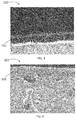
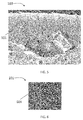
FIGS. 1-2 are micrographs of embodiments of a coated component having a substrate with a NiCoCrAlY alloy, according to the disclosure. -
FIGS. 3-5 are micrographs of embodiments of a coated component having a substrate with a gel aluminide, according to the disclosure. -
FIG. 6 shows an embodiment of a coating being vertically-cracked, according to the disclosure. - Wherever possible, the same reference numbers will be used throughout the drawings to represent the same parts.
- Provided are a coating process and a coated component. Embodiments of the present disclosure, for example, in comparison to concepts failing to include one or more of the features disclosed herein, provide low enough roughness, provide more uniform cross-sectional thicknesses, provide robust enough coatings for industrial heavy machinery, are able to be used as thermal barrier coating materials for hot gas path components in industrial gas turbines, have flexibility with regard to viscosity, and/or are sufficiently resistant to expansion and contraction (either elastic or plastic deformation).
- According to an embodiment, a coating process includes applying a suspension to an operationally-used surface to produce a
coating 101 on a coated component 103 (seeFIGS. 1-5 ). The process more specifically includes applying heat to the suspension, thereby removing liquids from the suspension. Solids are maintained on the operationally-used surface after the applying of the heat, the solids are sintered on the operationally-used surface to produce thecoating 101. - The operationally-used surface is any suitable material capable of being coated by the coating process. Suitable materials include, but are not limited to, ceramics, nickel, aluminum-based materials, nickel-based superalloys, NiCoCrAlY alloys (see
FIGS. 1-2 ), and gel aluminides (seeFIGS. 3-5 ). As used herein, the term "operationally-used" refers to having prior exposure to conditions of use, such as, temperature and pressure for a specified purpose. For example, in one embodiment, the operationally-used surface has been exposed to pressures and temperatures of a hot gas path of a gas turbine or otherwise within turbomachinery. - The suspension applied to the operationally-used surface has one or more solvents, nano-materials (for example, powders, spheres, fibers, and/or rods), a plasticizer, a binder, and a dispersant suspending nano-materials within the suspension. In one embodiment, the suspension has a composition of, by weight, less than 1 % being the dispersant, less than 1% being the binder, and less than 1% being the plasticizer. In one embodiment, the suspension is or includes a green ceramic, for example, applied line-by-line to a substrate and having variation in coating thickness or weaker spots that ultimately are at least partially mitigated upon flashing of at least a portion of the solvent.
- In one embodiment, the solvent within the suspension includes a higher-flash solvent and a lower-flash solvent, at a concentration, by weight of the entire suspension, of less than 10% being the higher-flash solvent and greater than 25% being the lower-flash solvent. Other suitable concentrations are between 25% and 55% lower-flash solvent, between 25% and 35% lower-flash solvent, or any suitable combination, sub-combination, range, or sub-range therein.
- The suspension is applied through any suitable technique. Suitable techniques include, but are not limited to, spraying, wiping, brushing, additive processes, and/or any technique other than high-velocity oxy fuel spray or plasma spray. During or after being applied, the suspension is heated, thereby removing liquids from the suspension, the heat being at a temperature greater than the higher-flash solvent flash point (for example, at least 49 °C (120°F) and/or at least 66 °C (150°F)). After the heating, the solids are maintained on the operationally-used surface.
- The solids have dimensions, structure, properties, and/or compositions suitable for the intended application. In one embodiment, the solids have a maximum dimension of less than 100 nanometers. In another embodiment, the solids have a maximum dimension of less than 800 nanometers. In one embodiment, the solids include yttria-stabilized zirconia and/or a nickel-based super alloy.
- The sintering of the solids is at a suitable temperature relative to the melting temperature of the solids and/or based upon a measurable temperature. For example, in one embodiment, the temperature is at least 80% of the melting temperature of the solids. Additionally or alternatively, in another embodiment, the temperature is at least 1093 °C (2,000°F) or at least 1315 °C (2,400°F).
- The
coating 101 is produced by the coating process. In one embodiment, as shown inFIG. 6 , thecoating 101 is vertically-cracked and strain-tolerant by havingcracks 601 that allow for expansion and contraction without delamination. As used herein, the term "vertically-cracked" refers to having intermittent breaks allowing material to maintain bond with a surface even in the presence of relatively large deformation where shear stress through the material thickness is considerably lower than the bond strength of the material with the substrate. For example, being vertically-cracked permits propagation from links between nano-scale particles, thereby not completely exposing the surface to the environment. In one embodiment, the cracks 501 are induced by a technique, for example, using flash infrared techniques and/or furnace cycling. - Suitable thicknesses for the
coating 101 include, but are not limited to, less than 100 micrometers, less than 200 micrometers, less than 15 micrometers, or any suitable combination, sub-combination, range, or sub-range therein. In one embodiment, thecoating 101 is a thermal barrier coating positioned on a turbomachinery component. - While the invention has been described with reference to one or more embodiments, it will be understood by those skilled in the art that various changes may be made and equivalents may be substituted for elements thereof without departing from the scope of the invention. In addition, many modifications may be made to adapt a particular situation or material to the teachings of the invention without departing from the essential scope thereof. Therefore, it is intended that the invention not be limited to the particular embodiment disclosed as the best mode contemplated for carrying out this invention, but that the invention will include all embodiments falling within the scope of the appended claims. In addition, all numerical values identified in the detailed description shall be interpreted as though the precise and approximate values are both expressly identified.
- Various aspects and embodiments of the present invention are defined by the following clauses:
- 1. A coating process, comprising:
- applying a suspension to an operationally-used surface, the suspension having one or more solvents, nano-materials, a plasticizer, a binder, and a dispersant suspending nano-materials within the suspension;
- applying heat to the suspension thereby removing liquids from the suspension, wherein solids are maintained on the operationally-used surface after the applying of the heat; and
- sintering the solids on the operationally-used surface to produce a coating.
- 2. The coating process of clause 1, further comprising vertically-cracking the coating.
- 3. The coating process of clause 1, wherein the suspension has a composition of, by weight, less than 1% being the dispersant, less than 1% being the binder, and less than 1% being the plasticizer.
- 4. The coating process of clause 1, wherein the solvent includes a higher-flash solvent and a lower-flash solvent, at a concentration, by weight of the entire suspension, of less than 10% being the higher-flash solvent and greater than 25% being the lower-flash solvent.
- 5. The coating process of clause 1, wherein the applying of the suspension is by spraying, wiping, or brushing.
- 6. The coating process of clause 1, wherein the sintering is at a temperature of at least 80% of the melting temperature of the solids.
- 7. The coating process of clause 1, wherein the sintering is at a temperature of at least 1315°C (2,400°F).
- 8. The coating process of clause 1, wherein the sintering is at a temperature of at least 1093°C (2,000°F).
- 9. The coating process of clause 1, wherein the solids have a maximum dimension of less than 100 nanometers.
- 10. The coating process of clause 1, wherein the solids have a maximum dimension of less than 800 nanometers.
- 11. The coating process of clause 1, wherein the solids include yttria-stabilized zirconia.
- 12. The coating process of clause 1, wherein the solids include a nickel-based super alloy.
- 13. The coating process of clause 1, wherein the nano-material includes one or more of powder, spheres, fiber, and rods.
- 14. The coating process of clause 1, wherein the coating has a thickness of less than 100 micrometers.
- 15. The coating process of clause 1, wherein the coating has a thickness of less than 200 micrometers.
- 16. The coating process of clause 1, wherein the coating has a thickness of less than 15 micrometers.
- 17. The coating process of clause 1, wherein the applying of the suspension is by a technique other than high-velocity oxy fuel spray or plasma spray.
- 18. The coating process of clause 1, wherein the coating is a thermal barrier coating positioned on a turbomachinery component.
- 19. A coating process, comprising:
- applying a suspension to an operationally-used surface, the suspension having one or more solvents, nano-materials, a plasticizer, a binder, and a dispersant suspending nano-materials within the suspension;
- applying heat to the suspension thereby removing liquids from the suspension, the heat being at least 49°C (120°F), wherein solids are maintained on the operationally-used surface after the applying of the heat; and
- sintering the solids on the operationally-used surface to produce a coating.
- 20. A coated component, comprising:
- a substrate; and
- a coating formed on the substrate by sintering of solids, the solids being positioned by application and heating of a suspension to an operationally-used surface, the suspension having one or more solvents, nano-materials, a plasticizer, a binder, and a dispersant suspending nano-materials within the suspension.
Claims (15)
- A coating process, comprising:applying a suspension to an operationally-used surface, the suspension having one or more solvents, nano-materials, a plasticizer, a binder, and a dispersant suspending nano-materials within the suspension;applying heat to the suspension thereby removing liquids from the suspension, wherein solids are maintained on the operationally-used surface after the applying of the heat; andsintering the solids on the operationally-used surface to produce a coating (101).
- The coating process of claim 1, further comprising vertically-cracking the coating (101).
- The coating process of claim 1, wherein the suspension has a composition of, by weight, less than 1% being the dispersant, less than 1% being the binder, and less than 1% being the plasticizer.
- The coating process of claim 1, wherein the solvent includes a higher-flash solvent and a lower-flash solvent, at a concentration, by weight of the entire suspension, of less than 10% being the higher-flash solvent and greater than 25% being the lower-flash solvent.
- The coating process of claim 1, wherein the applying of the suspension is by spraying, wiping, or brushing.
- The coating process of claim 1, wherein the sintering is at a temperature of at least 80% of the melting temperature of the solids.
- The coating process of claim 1, wherein the sintering is at a temperature of at least 1315 °C (2,400°F).
- The coating process of claim 1, wherein the solids have a maximum dimension of less than 100 nanometers.
- The coating process of claim 1, wherein the solids have a maximum dimension of less than 800 nanometers.
- The coating process of claim 1, wherein the solids include yttria-stabilized zirconia.
- The coating process of claim 1, wherein the solids include a nickel-based super alloy.
- The coating process of claim 1, wherein the nano-material includes one or more of powder, spheres, fiber, and rods.
- The coating process of claim 1, wherein the coating (101) has a thickness of less than 200 micrometers.
- The coating process of claim 1, wherein the applying of the suspension is by a technique other than high-velocity oxy fuel spray or plasma spray.
- The coating process of claim 1, wherein the coating (101) is a thermal barrier coating positioned on a turbomachinery component.
Applications Claiming Priority (1)
| Application Number | Priority Date | Filing Date | Title |
|---|---|---|---|
| US14/796,498 US20170009328A1 (en) | 2015-07-10 | 2015-07-10 | Coating process and coated component |
Publications (1)
| Publication Number | Publication Date |
|---|---|
| EP3115133A1 true EP3115133A1 (en) | 2017-01-11 |
Family
ID=56345049
Family Applications (1)
| Application Number | Title | Priority Date | Filing Date |
|---|---|---|---|
| EP16177747.9A Withdrawn EP3115133A1 (en) | 2015-07-10 | 2016-07-04 | Coating process and coated component |
Country Status (4)
| Country | Link |
|---|---|
| US (1) | US20170009328A1 (en) |
| EP (1) | EP3115133A1 (en) |
| JP (1) | JP2017035682A (en) |
| CN (1) | CN106334660A (en) |
Families Citing this family (16)
| Publication number | Priority date | Publication date | Assignee | Title |
|---|---|---|---|---|
| US10987735B2 (en) | 2015-12-16 | 2021-04-27 | 6K Inc. | Spheroidal titanium metallic powders with custom microstructures |
| CA3009630C (en) | 2015-12-16 | 2023-08-01 | Amastan Technologies Llc | Spheroidal dehydrogenated metals and metal alloy particles |
| CN112654444A (en) | 2018-06-19 | 2021-04-13 | 6K有限公司 | Method for producing spheroidized powder from raw material |
| SG11202111576QA (en) | 2019-04-30 | 2021-11-29 | 6K Inc | Mechanically alloyed powder feedstock |
| CA3134579A1 (en) | 2019-04-30 | 2020-11-05 | Gregory Wrobel | Lithium lanthanum zirconium oxide (llzo) powder |
| CN114641462A (en) | 2019-11-18 | 2022-06-17 | 6K有限公司 | Unique raw material for spherical powder and manufacturing method |
| US11590568B2 (en) | 2019-12-19 | 2023-02-28 | 6K Inc. | Process for producing spheroidized powder from feedstock materials |
| CA3180426A1 (en) | 2020-06-25 | 2021-12-30 | Richard K. Holman | Microcomposite alloy structure |
| AU2021349358A1 (en) | 2020-09-24 | 2023-02-09 | 6K Inc. | Systems, devices, and methods for starting plasma |
| CA3196653A1 (en) | 2020-10-30 | 2022-05-05 | Sunil Bhalchandra BADWE | Systems and methods for synthesis of spheroidized metal powders |
| AU2022206483A1 (en) | 2021-01-11 | 2023-08-31 | 6K Inc. | Methods and systems for reclamation of li-ion cathode materials using microwave plasma processing |
| WO2022212291A1 (en) | 2021-03-31 | 2022-10-06 | 6K Inc. | Systems and methods for additive manufacturing of metal nitride ceramics |
| WO2023229928A1 (en) | 2022-05-23 | 2023-11-30 | 6K Inc. | Microwave plasma apparatus and methods for processing materials using an interior liner |
| US12040162B2 (en) | 2022-06-09 | 2024-07-16 | 6K Inc. | Plasma apparatus and methods for processing feed material utilizing an upstream swirl module and composite gas flows |
| WO2024044498A1 (en) | 2022-08-25 | 2024-02-29 | 6K Inc. | Plasma apparatus and methods for processing feed material utilizing a powder ingress preventor (pip) |
| US12195338B2 (en) | 2022-12-15 | 2025-01-14 | 6K Inc. | Systems, methods, and device for pyrolysis of methane in a microwave plasma for hydrogen and structured carbon powder production |
Citations (3)
| Publication number | Priority date | Publication date | Assignee | Title |
|---|---|---|---|---|
| EP1806423A1 (en) * | 2006-01-10 | 2007-07-11 | United Technologies Corporation | Thermal barrier coating compositions, processes for applying same and articles coated with same |
| EP1837417A2 (en) * | 2006-03-22 | 2007-09-26 | General Electric Company | Method for preparing strain tolerant coatings by a sol-gel process |
| US8475705B1 (en) * | 2009-03-23 | 2013-07-02 | The United States Of America As Represented By The Secretary Of The Air Force | Bulk low cost interface-defined laminated metallic and ceramic energy barrier materials and their method of fabrication |
Family Cites Families (12)
| Publication number | Priority date | Publication date | Assignee | Title |
|---|---|---|---|---|
| US5626923A (en) * | 1995-09-19 | 1997-05-06 | Mcdonnell Douglas Corporation | Method of applying ceramic coating compositions to ceramic or metallic substrate |
| US5759932A (en) * | 1996-11-08 | 1998-06-02 | General Electric Company | Coating composition for metal-based substrates, and related processes |
| US6395406B1 (en) * | 2000-04-24 | 2002-05-28 | General Electric Company | Methods for preparing and applying coatings on metal-based substrates, and related compositions and articles |
| US6497758B1 (en) * | 2000-07-12 | 2002-12-24 | General Electric Company | Method for applying a high-temperature bond coat on a metal substrate, and related compositions and articles |
| US20030039755A1 (en) * | 2001-08-17 | 2003-02-27 | Olga Spaldon-Stewart | Coating method for improving oxidation and corrosion resistance of stainless steels |
| US20050079370A1 (en) * | 2003-10-10 | 2005-04-14 | Corderman Reed Roeder | Nano-multilayered structures, components and associated methods of manufacture |
| US7754342B2 (en) * | 2005-12-19 | 2010-07-13 | General Electric Company | Strain tolerant corrosion protecting coating and spray method of application |
| US20090162674A1 (en) * | 2007-12-20 | 2009-06-25 | Brett Allen Boutwell | Tapes comprising barrier coating compositions and components comprising the same |
| US20090274850A1 (en) * | 2008-05-01 | 2009-11-05 | United Technologies Corporation | Low cost non-line-of -sight protective coatings |
| US20110059321A1 (en) * | 2008-06-23 | 2011-03-10 | General Electric Company | Method of repairing a thermal barrier coating and repaired coating formed thereby |
| US9062564B2 (en) * | 2009-07-31 | 2015-06-23 | General Electric Company | Solvent based slurry compositions for making environmental barrier coatings and environmental barrier coatings comprising the same |
| JP5943649B2 (en) * | 2012-02-29 | 2016-07-05 | 三菱重工業株式会社 | Manufacturing method of thermal barrier coating material |
-
2015
- 2015-07-10 US US14/796,498 patent/US20170009328A1/en not_active Abandoned
-
2016
- 2016-06-30 JP JP2016129506A patent/JP2017035682A/en active Pending
- 2016-07-04 EP EP16177747.9A patent/EP3115133A1/en not_active Withdrawn
- 2016-07-08 CN CN201610535049.6A patent/CN106334660A/en active Pending
Patent Citations (3)
| Publication number | Priority date | Publication date | Assignee | Title |
|---|---|---|---|---|
| EP1806423A1 (en) * | 2006-01-10 | 2007-07-11 | United Technologies Corporation | Thermal barrier coating compositions, processes for applying same and articles coated with same |
| EP1837417A2 (en) * | 2006-03-22 | 2007-09-26 | General Electric Company | Method for preparing strain tolerant coatings by a sol-gel process |
| US8475705B1 (en) * | 2009-03-23 | 2013-07-02 | The United States Of America As Represented By The Secretary Of The Air Force | Bulk low cost interface-defined laminated metallic and ceramic energy barrier materials and their method of fabrication |
Also Published As
| Publication number | Publication date |
|---|---|
| CN106334660A (en) | 2017-01-18 |
| US20170009328A1 (en) | 2017-01-12 |
| JP2017035682A (en) | 2017-02-16 |
Similar Documents
| Publication | Publication Date | Title |
|---|---|---|
| EP3115133A1 (en) | Coating process and coated component | |
| Lima et al. | Adhesion improvements of thermal barrier coatings with HVOF thermally sprayed bond coats | |
| Jamali et al. | Comparison of thermal shock resistances of plasma-sprayed nanostructured and conventional yttria stabilized zirconia thermal barrier coatings | |
| Cabral-Miramontes et al. | Parameter Studies on High‐Velocity Oxy‐Fuel Spraying of CoNiCrAlY Coatings Used in the Aeronautical Industry | |
| CN102031477B (en) | By the method for atomizing spraying plated metal coating | |
| EP2361998A2 (en) | Method of producing a self supporting form from a coating material | |
| Ray et al. | Crack propagation studies of thermal barrier coatings under bending | |
| JP2010043351A (en) | Thermal barrier coating and method for production thereof | |
| Kim et al. | Failure mechanisms of coin-type plasma-sprayed thermal barrier coatings with thermal fatigue | |
| Wang et al. | Study on preparation technologies of thermal barrier coatings | |
| Dhineshkumar et al. | Enhanced ablation resistance through laser glazing of plasma sprayed LaTi2Al9O19-based functionally graded thermal barrier coating | |
| Bellippady et al. | Characteristics and performance of suspension plasma sprayed thermal barrier coatings on additively manufactured superalloy substrates | |
| Izadinia et al. | Effect of using unpyrolyzed powder on mechanical properties of vertically cracked thermal barrier coatings | |
| Nicholls et al. | Erosion of EB-PVD thermal barrier coatings | |
| Mishra et al. | Hot corrosion performance of LVOF sprayed Al2O3–40% TiO2 coating on Superni 601 and Superco 605 superalloys at 800 and 900 C | |
| JP2015113255A (en) | Coating structure, turbine member, gas turbine, and method of producing coating structure | |
| Fiedler et al. | Development of a CuNiCrAl bond coat for thermal barrier coatings in rocket combustion chambers | |
| Xiaofeng et al. | Properties of thermal barrier coatings made of different shapes of ZrO2-7wt% Y2O3 powders | |
| Karthikeyan et al. | Effects of thermal spray processes on the development microstructure and thermal properties of NiCrAlY bond coats deposited over superni C-263 aero engine combustor liner alloy | |
| Raza et al. | Selection of materials based on thermo-mechanical properties of thermal barrier coatings and their failures—a review | |
| Ray et al. | Characterization of rupture and fatigue resistance of TBC superalloy for combustion liners | |
| CN110359004A (en) | A gas-liquid co-deposited thermal barrier coating under atmosphere and its rapid preparation method | |
| Kim et al. | Thermal durability of thermal barrier coatings with layered bond coat in cyclic thermal exposure | |
| JP5424195B2 (en) | Raw powder for thermal spraying and film formation method using the same | |
| JP6699045B2 (en) | Coating for protecting members used at high temperature and method of manufacturing the same |
Legal Events
| Date | Code | Title | Description |
|---|---|---|---|
| PUAI | Public reference made under article 153(3) epc to a published international application that has entered the european phase |
Free format text: ORIGINAL CODE: 0009012 |
|
| AK | Designated contracting states |
Kind code of ref document: A1 Designated state(s): AL AT BE BG CH CY CZ DE DK EE ES FI FR GB GR HR HU IE IS IT LI LT LU LV MC MK MT NL NO PL PT RO RS SE SI SK SM TR |
|
| AX | Request for extension of the european patent |
Extension state: BA ME |
|
| 17P | Request for examination filed |
Effective date: 20170711 |
|
| RBV | Designated contracting states (corrected) |
Designated state(s): AL AT BE BG CH CY CZ DE DK EE ES FI FR GB GR HR HU IE IS IT LI LT LU LV MC MK MT NL NO PL PT RO RS SE SI SK SM TR |
|
| STAA | Information on the status of an ep patent application or granted ep patent |
Free format text: STATUS: THE APPLICATION IS DEEMED TO BE WITHDRAWN |
|
| 18D | Application deemed to be withdrawn |
Effective date: 20200201 |