EP3108680B1 - Verfahren zur verwaltung einer drahtlosen vorrichtung - Google Patents
Verfahren zur verwaltung einer drahtlosen vorrichtung Download PDFInfo
- Publication number
- EP3108680B1 EP3108680B1 EP14710667.8A EP14710667A EP3108680B1 EP 3108680 B1 EP3108680 B1 EP 3108680B1 EP 14710667 A EP14710667 A EP 14710667A EP 3108680 B1 EP3108680 B1 EP 3108680B1
- Authority
- EP
- European Patent Office
- Prior art keywords
- spectrum
- network node
- opportunity
- spectrum opportunity
- wireless devices
- Prior art date
- Legal status (The legal status is an assumption and is not a legal conclusion. Google has not performed a legal analysis and makes no representation as to the accuracy of the status listed.)
- Active
Links
- 238000000034 method Methods 0.000 title claims description 63
- 238000001228 spectrum Methods 0.000 claims description 247
- 238000001514 detection method Methods 0.000 claims description 96
- 230000005540 biological transmission Effects 0.000 claims description 22
- 238000004891 communication Methods 0.000 claims description 16
- 238000004590 computer program Methods 0.000 claims description 10
- 238000013523 data management Methods 0.000 claims description 5
- 108091006146 Channels Proteins 0.000 description 62
- 230000011664 signaling Effects 0.000 description 13
- 230000000694 effects Effects 0.000 description 7
- 238000010586 diagram Methods 0.000 description 5
- 230000001413 cellular effect Effects 0.000 description 4
- 230000001419 dependent effect Effects 0.000 description 3
- 230000007774 longterm Effects 0.000 description 3
- 230000008569 process Effects 0.000 description 3
- 230000008901 benefit Effects 0.000 description 2
- 230000010267 cellular communication Effects 0.000 description 2
- 230000001149 cognitive effect Effects 0.000 description 1
- 238000013461 design Methods 0.000 description 1
- 230000001627 detrimental effect Effects 0.000 description 1
- 230000006870 function Effects 0.000 description 1
- 238000004519 manufacturing process Methods 0.000 description 1
- 238000005259 measurement Methods 0.000 description 1
- 230000000737 periodic effect Effects 0.000 description 1
- 230000002085 persistent effect Effects 0.000 description 1
- 238000011160 research Methods 0.000 description 1
- 238000013468 resource allocation Methods 0.000 description 1
- 230000004044 response Effects 0.000 description 1
- 230000008054 signal transmission Effects 0.000 description 1
- 238000012360 testing method Methods 0.000 description 1
- 230000007704 transition Effects 0.000 description 1
Images



Classifications
-
- H—ELECTRICITY
- H04—ELECTRIC COMMUNICATION TECHNIQUE
- H04W—WIRELESS COMMUNICATION NETWORKS
- H04W74/00—Wireless channel access
- H04W74/08—Non-scheduled access, e.g. ALOHA
- H04W74/0808—Non-scheduled access, e.g. ALOHA using carrier sensing, e.g. carrier sense multiple access [CSMA]
-
- H—ELECTRICITY
- H04—ELECTRIC COMMUNICATION TECHNIQUE
- H04W—WIRELESS COMMUNICATION NETWORKS
- H04W16/00—Network planning, e.g. coverage or traffic planning tools; Network deployment, e.g. resource partitioning or cells structures
- H04W16/14—Spectrum sharing arrangements between different networks
-
- H—ELECTRICITY
- H04—ELECTRIC COMMUNICATION TECHNIQUE
- H04L—TRANSMISSION OF DIGITAL INFORMATION, e.g. TELEGRAPHIC COMMUNICATION
- H04L5/00—Arrangements affording multiple use of the transmission path
- H04L5/003—Arrangements for allocating sub-channels of the transmission path
- H04L5/0048—Allocation of pilot signals, i.e. of signals known to the receiver
-
- H—ELECTRICITY
- H04—ELECTRIC COMMUNICATION TECHNIQUE
- H04W—WIRELESS COMMUNICATION NETWORKS
- H04W4/00—Services specially adapted for wireless communication networks; Facilities therefor
- H04W4/70—Services for machine-to-machine communication [M2M] or machine type communication [MTC]
-
- H—ELECTRICITY
- H04—ELECTRIC COMMUNICATION TECHNIQUE
- H04W—WIRELESS COMMUNICATION NETWORKS
- H04W48/00—Access restriction; Network selection; Access point selection
- H04W48/16—Discovering, processing access restriction or access information
-
- H—ELECTRICITY
- H04—ELECTRIC COMMUNICATION TECHNIQUE
- H04W—WIRELESS COMMUNICATION NETWORKS
- H04W72/00—Local resource management
- H04W72/04—Wireless resource allocation
- H04W72/044—Wireless resource allocation based on the type of the allocated resource
- H04W72/0453—Resources in frequency domain, e.g. a carrier in FDMA
-
- H—ELECTRICITY
- H04—ELECTRIC COMMUNICATION TECHNIQUE
- H04W—WIRELESS COMMUNICATION NETWORKS
- H04W76/00—Connection management
- H04W76/20—Manipulation of established connections
- H04W76/28—Discontinuous transmission [DTX]; Discontinuous reception [DRX]
Definitions
- the present invention relates to a network node and to a method, in a network node, for managing a wireless device.
- the present invention also relates to a wireless device and to a method in a wireless device.
- MBB mobile broadband
- MD machine devices
- Machine devices are autonomous, often very small devices typically associated with equipment or apparatus as opposed to a human user.
- MDs use cellular or other types of communication networks to communicate with an application server, which may or may not be comprised within the cellular network.
- the application server receives information from the MD and configures the MD remotely. MDs thus typically access the cellular network more or less infrequently, transmitting and receiving very small amounts of data, or being polled for data.
- MDs represent a subset within the larger category of User Equipment devices (UEs), and may also be referred to as machine type communication (MTC) devices or machine to machine (M2M) devices.
- MTC machine type communication
- M2M machine to machine
- Massive machine communication (MMC) refers to the deployment of such devices on a very large scale, and MTC devices appropriate for such deployment may thus also be referred to as massive machine communication (MMC) devices.
- Opportunistic spectrum access also known as cognitive radio
- cognitive radio is an area of research seeking to achieve more efficient use of available spectrum bands. While promising results have been observed, the operation of opportunistic spectrum access is dependent upon extensive sensing and spectrum opportunity detection activities. The power consumed in conducting such activities would be highly detrimental to UE battery life. For MMC devices, which, owing to their nature and use patterns are required to be highly energy efficient, such power consumption would be devastating to device operational lifespan. Additional demands on battery power would also be contrary to the ongoing aim of improving battery life for UEs. For example, a goal of the EU METIS project is to achieve a ten times increase in device battery life.
- EP2 542 015 A1 describes a wireless communication system capable of avoiding interference even when a network including a secondary user coexists.
- the wireless communication system includes a primary user belonging to a first network, a secondary user belonging to a second network, and a coexistence manager (CM).
- the CM acquires information relating to spectrum holes that are at least temporarily not in use by the primary user.
- the CM determines whether or not usage of the spectrum holes by the first secondary user causes interference.
- a method in a network node, for managing a wireless device.
- the method comprises conducting spectrum opportunity detection within a spectrum band and indicating a result of the spectrum opportunity detection to the wireless device.
- a spectrum opportunity comprises a channel within the spectrum band which is at least temporarily available for use by the wireless device.
- aspects of the present invention thus enable a wireless device to benefit from secondary or opportunistic spectrum access by placing the burden of spectrum opportunity detection on a network node managing the wireless device.
- Spectrum opportunity detection with its inherent power consumption cost, is conducted at the network node, and a result of the spectrum opportunity detection is indicated to the wireless device.
- the wireless device is then able to make use of identified spectrum opportunities while minimising its own power consumption.
- conducting spectrum opportunity detection within a spectrum band may comprise performing at least one of: interrogating a memory of the network node, interrogating a data management entity, interrogating another network node or sensing within the spectrum band.
- interrogating a memory of the network node may comprise checking estimates for a time period when particular spectrum resources are available.
- Interrogating a data management entity may comprise performing a database lookup, for example in a register of spectrum licence holders.
- Interrogating another network node may comprise instructing another network node to conduct a database lookup, or obtaining spectrum opportunity information from the other network node.
- Sensing may comprise listening for signals transmitted on the channels of the spectrum band.
- indicating a result of the spectrum opportunity detection to the wireless device may comprise transmitting a signal to the wireless device.
- the signal may comprise a Spectrum Access Grant (SAG) message, which message may comprise an identification of the spectrum opportunity.
- SAG Spectrum Access Grant
- the signal may comprise an availability flag or may comprise a pilot signal, which pilot signal may be transmitted on the identified spectrum opportunity.
- the signal may comprise any downlink control signalling transmitted on the identified spectrum opportunity.
- if the spectrum opportunity detection does not detect a spectrum opportunity, indicating a result of the spectrum opportunity detection to the wireless device may comprise transmitting a signal to the wireless device.
- the signal may comprise a Spectrum Access Denied (SAD) message, or may comprise an availability flag.
- SAD Spectrum Access Denied
- indicating a result of the spectrum opportunity detection to the wireless device may comprise withholding transmission of a signal to the wireless device.
- the withheld signal may comprise a pilot signal or may comprise a Spectrum Access Grant message or may comprise other downlink control signalling.
- the method may further comprise instructing the wireless device to conduct one of sending an uplink transmission or listening for a downlink transmission on a detected spectrum opportunity.
- the network node and wireless device may be licensed to use a spectrum band other than the spectrum band in which spectrum opportunity detection is conducted.
- instructing the wireless device to conduct one of sending an uplink transmission or listening for a downlink transmission on a detected spectrum opportunity may comprise sending a message to the wireless device over a channel within the band in which the network node and wireless device are licensed to operate.
- the method may further comprise sending, by the network node, a downlink transmission on the detected spectrum opportunity.
- the network node may comprise a radio access node such as a base transceiver station (BTS) or a NodeB.
- the network may be an Evolved Packet System (EPS)/Long Term Evolution (LTE) network, and the network node may comprise an eNodeB.
- the network may be a device-to-device (D2D) communication or capillary network using any contention based air interface in unlicensed Industrial, Scientific and Medical (ISM) spectrum. Examples of such networks include ZigBee® and Bluetooth®.
- the wireless device may comprise a User Equipment device, and may comprise a Machine Type Communication device.
- the method may further comprise checking a discontinuous reception, DRX, cycle for the wireless device and timing the conducting of spectrum opportunity detection and indicating a result of the spectrum opportunity detection to the wireless device according to the DRX cycle of the wireless device.
- timing may comprise conducting spectrum opportunity detection immediately before DRX wake up of a managed wireless device and indicating a result of spectrum opportunity detection during wireless device wake up.
- the network node may indicate a result of spectrum opportunity detection over a period of time during which it may be calculated that the managed wireless device DRX cycle will transition to wake up.
- the spectrum band may comprise a licensed spectrum band within which the network node and wireless device are not licensed to operate, and a channel may be available for use by the wireless device if the spectrum opportunity detection determines that no licensed user is using the channel.
- the spectrum band may comprise one of a licensed spectrum band within which the network node and wireless device are licensed to operate, or an unlicensed spectrum band.
- a channel may be available for use by the wireless device if use of the channel by the wireless device would cause interference to other users of the band that would be below a threshold level.
- the spectrum band may comprise a guard band adjacent a licensed spectrum band, and a channel may be available for use by the wireless device if use of the channel by the wireless device would cause interference to users of the adjacent licensed band that would be below a threshold level.
- a method in a wireless device in a network.
- the method comprises detecting an indication of a result of spectrum opportunity detection conducted by a network node within a spectrum band, and, if the indication indicates a detected spectrum opportunity, conducting one of a transmission or reception operation on the detected spectrum opportunity.
- a spectrum opportunity comprises a channel within the spectrum band which is at least temporarily available for use by the wireless device.
- the method may further comprise, if the indication indicates a detected spectrum opportunity, retrieving an identification of the spectrum opportunity corresponding to the indication from a memory.
- the method may further comprise, if the indication indicates a detected spectrum opportunity, retrieving an identification of the spectrum opportunity corresponding to the indication from the indication.
- the indication may comprise a message.
- the indication may comprise a pilot signal received on the detected spectrum opportunity. According to further embodiments, the indication may comprise any downlink control signalling received on the detected spectrum opportunity.
- the method may further comprise checking if the wireless device has data to be sent.
- the method may further comprise, if the indication indicates no detected spectrum opportunity, resuming detection of an indication of a result of spectrum opportunity detection conducted by a network node after a threshold time period.
- the threshold time period may comprise the DRX cycle time of a wireless device, which may for example be a user equipment device such as an MTC device.
- a wireless device may go back to DRX sleep and may check again for a new indication at the next DRX wake up time.
- the wireless device may comprise a user equipment device and may comprise a Machine Type Communication device.
- a computer program product configured when run on a computer to conduct a method according to any one of the preceding aspects of the invention.
- a network node comprising an opportunity detection unit, configured to conduct spectrum opportunity detection within a spectrum band, and a communication unit, configured to indicate a result of the spectrum opportunity detection conducted by the detection unit to a wireless device managed by the network node.
- a spectrum opportunity comprises a channel within the spectrum band which is at least temporarily available for use by the wireless device.
- a wireless device comprising an indication detection unit configured to detect an indication of a result of spectrum opportunity detection conducted by a network node within a spectrum band, and a communication unit configured, if the indication indicates a detected spectrum opportunity, to conduct one of a transmission or reception operation on the detected spectrum opportunity.
- a spectrum opportunity comprises a channel within the spectrum band which is at least temporarily available for use by the wireless device.
- a network node comprising a processor and a memory, the memory containing instructions executable by the processor whereby the network node is operative to conduct spectrum opportunity detection within a spectrum band and indicate a result of the spectrum opportunity detection to the wireless device.
- a spectrum opportunity comprises a channel within the spectrum band which is at least temporarily available for use by the wireless device.
- a wireless device comprising a processor and a memory, the memory containing instructions executable by the processor whereby the wireless device is operative to detect an indication of a result of spectrum opportunity detection conducted by a network node within a spectrum band and if the indication indicates a detected spectrum opportunity, conduct one of a transmission or reception operation on the detected spectrum opportunity.
- a spectrum opportunity comprises a channel within the spectrum band which is at least temporarily available for use by the wireless device.
- the present invention provides methods, a computer program product and apparatus enabling a wireless device to profit from opportunistic spectrum access while avoiding the excessive power costs associated with such access.
- Embodiments of the invention are discussed below with reference to a machine type device operating within an Evolved Packet System (EPS)/Long Term Evolution (LTE) network, however it will be appreciated that the methods, apparatus and computer program products discussed below are equally applicable to different types of wireless device operating within different cellular networks.
- EPS Evolved Packet System
- LTE Long Term Evolution
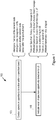
- a method 100 in a network node, for managing a wireless device such as a user equipment device or UE, comprises a first step 120 of conducting spectrum opportunity detection within a spectrum band, and a second step 140 of indicating a result of the spectrum opportunity detection to the managed UE.
- a spectrum opportunity comprises a channel within the spectrum band which is at least temporarily available for use by the UE.
- the conditions for availability of a channel may be defined according to particular use cases for the method, and/or particularities of the spectrum band use consideration.
- the spectrum band within which spectrum opportunity detection is conducted may comprise at least part of a spectrum band which is licensed to a network other than that of which the network node is a part, and thus within which the network node and UE are not licensed to operate.
- it is desirable to protect primary licensed users of the spectrum band and a channel may be considered as available for use if the spectrum opportunity detection determines that no primary licensed user is using the channel.
- An additional interference criterion may also be imposed upon the availability of a channel, for example to ensure that interference to primary users of neighbouring channels caused by use by the UE of the channel in question would remain below a threshold level.
- interference may be the primary condition for determining availability of a channel.
- the spectrum band within which spectrum opportunity detection is conducted may comprise at least a part of an unlicensed spectrum band. In such cases there are no primary users to protect and the main criterion is ensuring that interference to existing users within the spectrum band would remain below a threshold level.
- the interference that would be experienced by the UE on the channel in question as a result of other users may also be considered in order to identify channels offering acceptable or desirable levels of channel quality. Ensuring interference remains below a threshold level also assists with improving battery life, as interference collisions lead to retransmission of data, so wasting battery power.
- Interference may also be an important condition for determining channel availability when spectrum opportunity detection is conducted within a spectrum band within which the network node is licensed to operate.
- the UE represents a primary user and thus has the right to use channels within the band, but it may be desirable to select a channel causing the least interference to other primary users transmitting or receiving on neighbouring channels within the band.
- spectrum opportunity detection may be conducted within a guard band adjacent to a licensed spectrum band.
- a guard band of a mobile broadband (MBB) system may be considered for use by MTC devices.
- licensed users of the adjacent mobile broadband spectrum should be protected, and a channel may be considered available for opportunistic use by an MTC device according to embodiments of the invention if use of the channel would cause interference to licensed users of the adjacent MBB spectrum band that is below a threshold level.
- conducting spectrum opportunity detection may comprise interrogating a memory of the network node.
- the availability of spectrum resources may vary over a set time period (for example 24 hours) in a substantially stable manner.
- the network node may check the current time and interrogate an internal memory for stored estimates of channel availability at the current time.
- Maximum spectrum usage may be experienced at peak times during the day or early evening, and the network node may thus determine from checking its internal memory that no spectrum opportunities are likely to exist at such peak hours.
- the network node may determine from estimates stored in its internal memory that certain channels are available, and thus that spectrum opportunities exist.
- conducting spectrum opportunity detection may comprise interrogating a data management entity such as a database.
- Availability of some spectrum resources including for example the lower end of the spectrum used for television broadcasting, is highly geographically dependent but relatively stable over time. Details of licensed users of such resources may be held in a licensing database which discriminates by geographic location. A network node within a particular geographic location may thus for example perform a periodic interrogation of a licensing database to determine if any new license holders have been registered in its geographic area, and which channels thus remain available for use.
- conducting spectrum opportunity may comprise sensing within the spectrum band.
- the network node may sense channels within the spectrum band to establish the presence of primary or other users and to determine interference levels that could be caused by use of the sensed channels.
- conducting spectrum opportunity detection may comprise interrogating another network node, which other network node may for example have the data or functionality necessary to detect spectrum opportunities using any of the above operations.
- spectrum opportunity detection activities may be delegated to a particular network node, offering increased efficiency where several network nodes are located in close proximity.
- a network node may instruct another network node to conduct any of the above operations and so detect spectrum opportunities and inform the network node of detected spectrum opportunities.
- the network node After conducting spectrum opportunity detection within a spectrum band, the network node proceeds at step 140 to indicate a result of the spectrum opportunity detection to the managed UE. Indicating a result of spectrum opportunity detection may comprise transmitting or withholding a message or signal to the UE, as discussed in further detail below.
- indicating a result of spectrum opportunity detection may comprise sending one of a Spectrum Access Grant (SAG) or a Spectrum Access Denied (SAD) message to the UE.
- SAG and SAD messages may include details of the resources to which they apply, for example channel frequencies, or may be simple indications of a positive or negative result of spectrum opportunity detection.
- the network node may simply withhold transmission of a SAG message. Timing considerations associated with transmission of SAG and SAD messages, and withholding of SAG messages, are discussed below with reference to figure 2 .
- SAG and SAD messages may include an identification of the resources to which they apply.
- a SAG message may indicate that access to a particular channel is now granted or denied.
- the SAG and SAD messages may be more simple, indicating only a positive or negative result of spectrum opportunity detection.
- the messages may be reduced to a single bit: a simple availability flag which may be set to indicate a positive result of spectrum opportunity detection, and not set to indicate a negative result of spectrum opportunity detection.
- the UE may be programmed with an identification of a single or a plurality of channels to which the flag or flags apply. Thus the UE may interpret reception of a particular flag as granted or denied access to the channel to which the flag corresponds.
- a correspondence table of flags and channel identifiers may be stored within a memory of the UE.
- SAG and SAD messages, and availability flags may all be transmitted on channels within a licensed band of the network to which the network node belongs, for example included with a paging message in any other broadcast.
- the indication of result may be transmitted within a licensed band of the network, indicating grant or denial of access to channels outside the licensed band of the network (for example in the unlicensed band or in a band licensed to another network or operator).
- the network node may indicate a positive result of spectrum opportunity detection by transmitting a pilot signal on the detected spectrum opportunity.
- the UE may thus interpret reception of the pilot signal on the detected spectrum opportunity as grant of access to use the channel on which the pilot signal is received.
- the network node will withhold the pilot signal, ceasing its transmission of the pilot signal on that channel, and the UE will interpret the absence of the pilot signal on that channel as an indication that access to that channel has been denied.
- other downlink control signalling, or either the availability flag or the SAG message may also be transmitted on a detected spectrum opportunity, as opposed to a channel within a licensed band of the network to which the network node belongs.
- Figure 2 illustrates steps in a method 200 in a network node for managing a UE.
- the method 200 comprises additional steps with respect to the method 100, showing one way in which the functionality of the method 100 may be implemented.
- a first step 210 the network node checks for expiry of a timer. If the timer has not expired, the network node continues to check for expiry until the timer does expire. The purpose of the timer checked in step 210 is discussed below. If the network node discovers at step 210 that the timer has expired, the network node proceeds to step 220 in which spectrum opportunity detection is conducted. This may involve any combination of the spectrum opportunity detection activities discussed above with respect to Figure 1 .
- the network node determines at step 230 whether or not a spectrum opportunity has been detected. In either case ("Yes” or “No” in response to step 230), the result of the spectrum opportunity detection is indicated to the UE.
- the form that the indication takes is determined in a first instance by the result and then according to the particular example of the method running on the network node. For example if a spectrum opportunity is detected ("Yes" at step 230), the indication of result may take the form of transmission of a SAG message, transmission of a set availability flag or transmission of a pilot signal or other control signalling on the detected spectrum opportunity.
- the indication may take the form of transmission of a SAD message, transmission of an unset availability flag or withholding of a pilot signal, other control signalling or SAG message which could otherwise be transmitted on a detected spectrum opportunity.
- the timer checked in step 210 controls the timing of the conducting of spectrum opportunity detection and hence the subsequent indication of results.
- the frequency with which spectrum opportunity detection should be conducted may vary according to the spectrum band within which it is conducted and/or the nature of the UEs managed by the network node. Spectrum opportunity detection may be conducted on a short term basis, for example in situations where a high premium is placed on primary user protection, or on a more long term basis. Geographical factors may also be taken into account, for example in a network node in an inland, mountainous location, only relatively infrequent detection may be required in a band licensed to a coast guard operation. Conversely, for a network node in a coastal location, very frequent detection in the coast guard band, corresponding to very high primary user protection, may be imposed.
- opportunities in spectrum bands in which availability varies relatively rapidly should be detected more frequently than is the case for spectrum bands in which spectrum availability is very steady over time.
- the frequency with which spectrum opportunity detection is conducted may vary for example from once every hour to once every week.
- certain UEs may require spectrum resources more or less frequently than others.
- machine type devices are likely to place growing demands on spectrum resources in the coming years. However, such devices often only need to access the network relatively infrequently and for a short period of time. Thus for UEs only requiring network access once a day, a single daily spectrum opportunity detection may be sufficient.
- the timer of step 210 may serve to coordinate the conducting of spectrum opportunity detection with the DRX cycle time of the managed UE or UEs.
- the timer may enable the network node to time the conducting of spectrum opportunity detection, and indicating a result to a managed UE, according to the UE's DRX cycle.
- Machine type devices have comparatively long DRX cycles, and have only a very limited wake up time. The limited power resources available to MTC devices favour efficient operation with extended DRX cycles. It may thus be desirable to time the conducting of spectrum opportunity detection such that it takes place immediately preceding the DRX wakeup time of a managed UE, allowing the indication of an up to date result of spectrum opportunity detection to be provided during UE wake up time.
- the indication may be provided over a period of time that is sufficiently long to ensure that the all DRX cycles of managed UEs will have transitioned to the wakeup state at least once during the time period.
- an indication option it may be desirable to select an indication option according to timing constraints imposed by the use case and the UEs being managed by the network node. For example, where many UEs are being managed, and it is difficult to identify a reasonable time period within which all UEs will have transitioned to wake up state, it may be desirable to select a transmission or withholding of a pilot signal as the method of indication of result.
- the pilot signal is constantly transmitted on the detected spectrum opportunity for as long as the channel concerned remains a spectrum opportunity. Thus regardless of when a particular UE DRX cycle ends, the UE receives an unambiguous indication of result in the presence or absence of a pilot signal on a particular channel.
- the network node at which the methods 100 and 200 are conducted may for example be a radio access node via which the UE accesses the network.
- the network node may be an eNodeB.
- the network node may be a base station transceiver or NodeB, or may be any other network node capable of managing a wireless device accessing the network.
- FIG. 3 is a diagram illustrating functional units of a network node suitable for carrying out the above described methods, for example in accordance with instructions received from a computer program stored on a computer readable medium.
- the node 300 comprises an opportunity detection unit 320, configured to conduct spectrum opportunity detection within a spectrum band, and a communication unit 340, configured to indicate a result of the spectrum opportunity detection to a managed UE.
- the opportunity detection unit 320 may comprise an interrogation unit 322, configured to interrogate a memory of the network node, another network node or an external data management unit, and a sensing unit 324, configured to sense channels within the spectrum band.
- the units of the illustrated network node are functional units, and may be realised in any appropriate combination of hardware and/or software. Additional functional units may also be present in the node.
- Figure 4 illustrates process steps in a method in a wireless device, such as a UE, which may be an MTC device.
- the UE may be managed by a network node such as an eNodeB, for example according to examples of the methods 100, 200 described above.
- a network node such as an eNodeB
- the UE detects an indication of a result of spectrum opportunity detection conducted in a spectrum band, for example by the network node managing the UE.
- the UE determines, at step 460 whether the indication shows that a spectrum opportunity has been detected. If a spectrum opportunity has been detected, the UE proceeds to step 480, in which at least one of a transmit or receive operation is conducted on the detected spectrum opportunity.
- a spectrum opportunity comprises a channel within the spectrum band which is at least temporarily available for use by the UE.
- the conditions for availability of a channel may be defined according to particular use cases for the method, and/or particularities of the spectrum band user consideration, as discussed above. It will be appreciated that the UE does not have to perform any activities associated with detecting a spectrum opportunity, the UE merely detects an indication of a result of spectrum opportunity detection, and if the result is positive, makes use of the detected spectrum opportunity. Aspects of the method of Figure 4 thus enable the UE to make opportunistic use of channels within a spectrum band without having to conduct expensive spectrum opportunity detection within that band.
- the indication of a result of spectrum opportunity detection may take the form of a message or signal received from a network node, or may comprise the withholding of a particular signal.
- a full discussion of different options for indicating a result of spectrum opportunity detection is provided above with reference to Figure 1 .
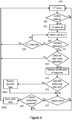
- Figure 5 illustrates one way in which the functionality of the method of Figure 4 may be implemented in a UE.
- Figure 5 is discussed below with reference to an example UE in the form of an MTC device, however it will be appreciated that this is merely for the purposes of illustration.
- the UE in a first step 510, the UE is in sleep mode and in a second step 520 the UE checks a timer to determine whether, according to the UE's DRX cycle, it is time to wake up.
- the length of the DRX cycle of the UE may vary from zero to any appropriate time length greater than zero.
- the UE proceeds to wake up and listen for downlink control signalling and/or paging from a network node at step 530.
- the UE attempts to detect an indication of a result of spectrum opportunity detection at step 540.
- the process of detecting an indication may vary according to the form of the indication.
- the UE may receive a message, such as a SAG or SAD message from a controlling radio access node.
- a resource availability flag in a message may be set or unset.
- the UE may scan a specific channel or group of channels within a particular spectrum band, to determine if a controlling radio access node (such as an eNodeB) is transmitting a pilot signal or any other downlink control signalling on any of the channels in the group.
- a controlling radio access node such as an eNodeB
- the UE then checks at step 550 whether an indication has been detected. If no indication can be detected ("No" at step 550), the UE continues to attempt to detect an indication up to a threshold time via a time check at step 555. If after the threshold time period has passed, the UE has still not detected an indication of a result of spectrum opportunity detection, the UE returns to step 510, entering sleep mode, and can try again to detect an indication after the next DRX cycle. If an indication is detected by the UE ("Yes" at step 550), the UE then determines whether or not a spectrum opportunity has been detected at step 560 (i.e. is the result of the opportunity detection positive or negative).
- the UE If a spectrum opportunity has not been detected (indicated for example by receipt of a SAD message, an unset availability flag or the absence of a pilot signal on the relevant channel), the UE returns to step 510, entering sleep mode, and will attempt to detect an indication again after the next DRX cycle, by which time a spectrum opportunity may have been detected.
- the UE retrieves an identification of the resources to which the positive indication relates at step 570.
- the resources available may be directly indicated in the message, and the UE may thus extract the identification of the detected spectrum opportunity from the indication itself, i.e. from the SAG message.
- the indication may comprise a simple flag, and the UE may consult an internal memory to obtain the identification of the spectrum resource to which the flag relates.
- the indication may comprise transmission of a pilot signal or other downlink control signalling on a detected spectrum opportunity, in which case the UE may determine that the spectrum opportunity comprises the channel on which the pilot or other signalling is received.
- the UE may refer to an internal memory to retrieve details of a pre-configured uplink channel, the availability of which is indicated by receipt of the downlink signalling on a detected spectrum opportunity. Having identified the channel which constitutes the detected spectrum opportunity, the UE then proceeds at step 575 to check whether downlink instructions have been received. Downlink instructions may for example be included within the downlink control signalling for which the UE listens on wakeup at step 530, and may instruct the UE to listen for downlink data on the detected spectrum opportunity. If downlink instructions have been received ("Yes" at step 575), the UE proceeds at step 580A to receive downlink data by listening on the appropriate channel.
- the UE then proceeds to check if it has data to send in step 590. If the UE has no data to send (“No" at step 590) the UE returns to step 510, entering sleep mode, and will repeat the process of detecting an indication and checking for instructions and uplink data in the next DRX cycle. If the UE has data to send it then checks at step 595 whether uplink instructions have been received. Uplink instructions may for example be included within control signalling for which the UE listens on wakeup at step 530, and may instruct the UE to send particular data on the detected spectrum opportunity.
- Uplink instructions may also comprise an uplink SAG message detailing a detected spectrum opportunity for uplink transmissions. If uplink instructions have been received ("Yes" at step 595), the UE proceeds to prepare and send its uplink data at step 580B.
- This uplink data may be of any nature according to the type of device and deployment situation, and the UE may prepare this data in any appropriate manner. In one example, the UE may prepare uplink data by reading from sensors or taking other equipment measurements or accumulating the relevant data from an internal memory. Having sent the uplink data, the UE then returns to step 510 and enters the sleep state until the next DRX cycle completes.
- the above described method may be contemplated, for example briefly re-entering the sleep state before sending uplink data.
- various of the above discussed method steps may be performed in a different order to that described, for example a UE may perform steps to transmit uplink data before performing steps to receive downlink data.
- the indication of result of spectrum opportunity detection may be accompanied by a scheduling grant, for example in networks such as LTE that use regular scheduling. In networks having persistent or semi-persistent scheduling, the UE would already have a grant and so would not require any further information in order to know at which resource block to transmit.
- the methods 400, 500 of Figures 4 and 5 may be realised by a computer program which may cause a wireless device, processor or apparatus to execute the steps of the methods 400, 500.
- Figure 6 is a diagram illustrating functional units of a wireless device suitable for carrying out the above described methods 400, 500, for example in accordance with instructions received from a computer program stored on a computer readable medium.
- the wireless device 600 comprises an indication detection unit 650, configured to detect an indication of a result of spectrum opportunity detection, and a communication unit 680, configured to conduct either or both of uplink or downlink operations.
- the units of the illustrated wireless device are functional units, and may be realised in any appropriate combination of hardware and/or software. Additional functional units may also be present in the UE.
- the network node and/or wireless device may be implemented as a device 700 comprising a processor 701 and a memory 702 as illustrated in Figure 7 .
- the memory 702 contains instructions executable by the processor 701 such that the device 700 is operative to conduct the steps of the methods 100, 200 or 400, 500 described above as appropriate.
- aspects of the above invention thus provide methods, apparatus and computer programs offering efficient resource access for wireless devices.
- Aspects of the invention may be particularly suited to establishing resource access for delay tolerant uplink traffic, such as may be transmitted by machine type devices, and for crowded areas of the radio frequency spectrum, such as the lower regions used for television transmissions.
- Aspects of the present invention offer advantages associated with opportunistic spectrum access while maintaining very low power consumption for individual wireless devices, and may thus support wireless network access for massive deployments of machine type devices.
- aspects of the invention may assist in the identification of resources allowing for transmission at low interference. Transmitting at low interference enables a wireless device to transmit at lower output power, so saving power and potentially eliminating the requirement for an external power amplifier. In this manner, manufacturing costs for wireless devices may be reduced. Transmitting at low interference may also help to reduce the number of retransmissions required for a wireless device to transmit its data, so also helping to maintain low power consumption in the wireless device.
- the methods of the present invention may be implemented in hardware, or as software modules running on one or more processors. The methods may also be carried out according to the instructions of a computer program, and the present invention also provides a computer readable medium having stored thereon a program for carrying out any of the methods described herein.
- a computer program embodying the invention may be stored on a computer-readable medium, or it could, for example, be in the form of a signal such as a downloadable data signal provided from an Internet website, or it could be in any other form.
Landscapes
- Engineering & Computer Science (AREA)
- Signal Processing (AREA)
- Computer Networks & Wireless Communication (AREA)
- Computer Security & Cryptography (AREA)
- Mobile Radio Communication Systems (AREA)
Claims (8)
- Verfahren (100, 200), das von einem Netzknoten zum Verwalten einer oder mehrerer drahtloser Vorrichtungen ausgeführt wird; wobei das Verfahren umfasst:Überprüfen auf Ablauf eines Zeitgebers (210), um die Durchführung einer Erkennung von Spektrumgelegenheiten mit einer Zykluszeit eines diskontinuierlichen Empfangs, DRX, der einen oder mehreren verwalteten drahtlosen Vorrichtungen zu koordinieren, so dass die Durchführung der Erkennung von Spektrumgelegenheiten unmittelbar vor einer DRX-Weckzeit der einen oder mehreren verwalteten drahtlosen Vorrichtungen stattfindet, wobei eine Spektrumgelegenheit einen Kanal innerhalb eines Frequenzbandes umfasst, der zumindest vorübergehend für die Verwendung durch die eine oder mehreren drahtlosen Vorrichtungen verfügbar ist;Durchführen (220) einer Erkennung von Spektrumgelegenheiten innerhalb eines Frequenzbandes (120, 220), wenn bestimmt wird, dass der Zeitgeber abgelaufen ist; undAngeben eines Ergebnisses der Erkennung von Spektrumgelegenheiten an die eine oder mehreren drahtlosen Vorrichtungen (140, 240) durch ständiges Übertragen eines Pilotsignals auf der erkannten Spektrumgelegenheit, solange der betreffende Kanal eine Spektrumgelegenheit bleibt.
- Verfahren nach Anspruch 1, wobei das Durchführen einer Erkennung von Spektrumgelegenheiten innerhalb eines Frequenzbandes (120, 220) das Durchführen von mindestens einem der folgenden Schritte umfasst:Abfragen eines Speichers des Netzknotens;Abfragen einer Datenverwaltungseinheit;Abfragen eines anderen Netzknotens; oderAbtasten innerhalb des Frequenzbandes.
- Verfahren nach Anspruch 1, wobei das Signal eine Spektrum-Zugriffsgenehmigungsnachricht umfasst.
- Verfahren nach Anspruch 3, wobei die Spektrum-Zugriffsgenehmigungsnachricht eine Identifizierung der Spektrumgelegenheit umfasst.
- Computerprogrammprodukt, das so konfiguriert ist, dass es, wenn es auf einem Computer ausgeführt wird, ein Verfahren nach einem der vorstehenden Ansprüche ausführt.
- Netzknoten (300), der Folgendes umfasst:eine Funktionseinheit, die konfiguriert ist, um einen Zeitgeber auf Ablaufen zu überprüfen, um die Durchführung einer Erkennung von Spektrumgelegenheiten mit einer Zykluszeit eines diskontinuierlichen Empfangs, DRX, der einen oder mehreren verwalteten drahtlosen Vorrichtungen zu koordinieren, so dass die Durchführung der Erkennung von Spektrumgelegenheiten unmittelbar vor einer DRX-Weckzeit der einen oder mehreren verwalteten drahtlosen Vorrichtungen stattfindet;eine Gelegenheitserkennungseinheit (320), die konfiguriert ist, um eine Erkennung von Spektrumgelegenheiten innerhalb eines Frequenzbandes durchzuführen, wenn bestimmt wird, dass der Zeitgeber abgelaufen ist; undeine Kommunikationseinheit (340), die konfiguriert ist, um ein Ergebnis der von der Gelegenheitserkennungseinheit (320) durchgeführten Erkennung von Spektrumgelegenheiten an eine oder mehrere vom Netzknoten verwaltete drahtlose Vorrichtungen anzugeben, indem sie konfiguriert ist, um ein Pilotsignal konstant auf der erkannten Spektrumgelegenheit zu übertragen, solange der betreffende Kanal eine Spektrumgelegenheit bleibt.
- Netzknoten (300) nach Anspruch 6, wobei die Gelegenheitserkennungseinheit (320) mindestens eine von einer Abfrageeinheit (322) oder einer Abtasteinheit (324) umfasst.
- Netzknoten (300) nach Anspruch 6 oder 7, wobei die Kommunikationseinheit (340) konfiguriert ist, um mindestens eines von Folgendem durchzuführen:Übertragen einer Spektrum-Zugriffsgenehmigungsnachricht an die eine oder mehreren drahtlosen Vorrichtungen;Übertragen einer Spektrum-Zugriffsverweigerungsnachricht an die eine oder mehreren drahtlosen Vorrichtungen;Übertragen eines Verfügbarkeitsflags an die eine oder mehreren drahtlosen Vorrichtungen;Zurückhalten der Übertragung eines Pilotsignals.
Applications Claiming Priority (1)
| Application Number | Priority Date | Filing Date | Title |
|---|---|---|---|
| PCT/SE2014/050221 WO2015126298A1 (en) | 2014-02-21 | 2014-02-21 | Method for managing a wireless device |
Publications (2)
| Publication Number | Publication Date |
|---|---|
| EP3108680A1 EP3108680A1 (de) | 2016-12-28 |
| EP3108680B1 true EP3108680B1 (de) | 2019-04-17 |
Family
ID=50288246
Family Applications (1)
| Application Number | Title | Priority Date | Filing Date |
|---|---|---|---|
| EP14710667.8A Active EP3108680B1 (de) | 2014-02-21 | 2014-02-21 | Verfahren zur verwaltung einer drahtlosen vorrichtung |
Country Status (3)
| Country | Link |
|---|---|
| US (1) | US10045377B2 (de) |
| EP (1) | EP3108680B1 (de) |
| WO (1) | WO2015126298A1 (de) |
Families Citing this family (3)
| Publication number | Priority date | Publication date | Assignee | Title |
|---|---|---|---|---|
| CN108616999B (zh) * | 2017-01-04 | 2019-09-17 | 电信科学技术研究院 | 一种数据传输方法、装置及系统 |
| CN108924913A (zh) * | 2017-03-31 | 2018-11-30 | 电信科学技术研究院 | 一种信息发送、信道监听处理方法及装置 |
| US10284999B2 (en) | 2017-05-10 | 2019-05-07 | Qualcomm Incorporated | Mobile device position determination using compatible dedicated-frequency nodes and non-dedicated-frequency nodes |
Family Cites Families (4)
| Publication number | Priority date | Publication date | Assignee | Title |
|---|---|---|---|---|
| JP5370891B2 (ja) | 2010-02-23 | 2013-12-18 | 独立行政法人情報通信研究機構 | 無線通信システム,該システムに設置される共存マネージャー,及び無線通信方法 |
| US20120134328A1 (en) * | 2010-10-11 | 2012-05-31 | Interdigital Patent Holdings, Inc. | Method and apparatus for dynamic spectrum management |
| EP2795953A1 (de) | 2011-12-22 | 2014-10-29 | Interdigital Patent Holdings, Inc. | Verfahren, vorrichtungen und systeme zur dynamischen spektrumszuweisung |
| MY156138A (en) | 2012-06-13 | 2016-01-15 | Mimos Berhad | System and method for dynamic spectrum access with coordinated primary user management |
-
2014
- 2014-02-21 EP EP14710667.8A patent/EP3108680B1/de active Active
- 2014-02-21 US US15/116,098 patent/US10045377B2/en active Active
- 2014-02-21 WO PCT/SE2014/050221 patent/WO2015126298A1/en not_active Ceased
Non-Patent Citations (1)
| Title |
|---|
| None * |
Also Published As
| Publication number | Publication date |
|---|---|
| WO2015126298A1 (en) | 2015-08-27 |
| US10045377B2 (en) | 2018-08-07 |
| US20170188386A1 (en) | 2017-06-29 |
| EP3108680A1 (de) | 2016-12-28 |
Similar Documents
| Publication | Publication Date | Title |
|---|---|---|
| US20230292242A1 (en) | Methods for updating system information and wireless transmit/receive units using thereof | |
| US9179409B2 (en) | Multiple access scheme for narrowband channels | |
| EP3449669B1 (de) | Aktualisierung der systeminformationskonfiguration in einem drahtloskommunikationsnetzwerk | |
| US8964561B2 (en) | Method and apparatus for signaling sequence root | |
| WO2017124770A1 (zh) | 信道检测方法、信道检测装置和终端 | |
| US12279266B2 (en) | Information transmission method, base station and terminal | |
| US10869266B2 (en) | Energy efficient discovery and traffic management in a mesh WAN for IoEs with a wakeup receiver | |
| US10313913B2 (en) | Overload control and supervision for wireless devices | |
| CN107534990A (zh) | 用于mtc的系统信息的选择性分发 | |
| CN116326066A (zh) | 用于新空口的跟踪参考信号增强 | |
| TW201608922A (zh) | 一種載波偵聽方法 | |
| RU2636684C2 (ru) | Сигнализация ответа на запрос доступа в системе сотовой связи | |
| CN107852232B (zh) | 一种用于通信的装置、方法及存储介质 | |
| EP3108680B1 (de) | Verfahren zur verwaltung einer drahtlosen vorrichtung | |
| EP3142438B1 (de) | Verfahren für vorrichtungsübergreifende kommunikationen, basisstation und benutzergerät | |
| EP3952482B1 (de) | Übertragungen von positionierungs-srs während eines diskontinuierlichen empfangszyklus | |
| EP2754322A1 (de) | Verfahren und vorrichtung für adaptiven funkruf in peer-to-peer-netzwerken | |
| WO2024113505A1 (en) | Systems and methods for power saving |
Legal Events
| Date | Code | Title | Description |
|---|---|---|---|
| PUAI | Public reference made under article 153(3) epc to a published international application that has entered the european phase |
Free format text: ORIGINAL CODE: 0009012 |
|
| STAA | Information on the status of an ep patent application or granted ep patent |
Free format text: STATUS: REQUEST FOR EXAMINATION WAS MADE |
|
| 17P | Request for examination filed |
Effective date: 20160919 |
|
| AK | Designated contracting states |
Kind code of ref document: A1 Designated state(s): AL AT BE BG CH CY CZ DE DK EE ES FI FR GB GR HR HU IE IS IT LI LT LU LV MC MK MT NL NO PL PT RO RS SE SI SK SM TR |
|
| AX | Request for extension of the european patent |
Extension state: BA ME |
|
| DAX | Request for extension of the european patent (deleted) | ||
| STAA | Information on the status of an ep patent application or granted ep patent |
Free format text: STATUS: EXAMINATION IS IN PROGRESS |
|
| 17Q | First examination report despatched |
Effective date: 20171127 |
|
| GRAP | Despatch of communication of intention to grant a patent |
Free format text: ORIGINAL CODE: EPIDOSNIGR1 |
|
| STAA | Information on the status of an ep patent application or granted ep patent |
Free format text: STATUS: GRANT OF PATENT IS INTENDED |
|
| GRAS | Grant fee paid |
Free format text: ORIGINAL CODE: EPIDOSNIGR3 |
|
| INTG | Intention to grant announced |
Effective date: 20190215 |
|
| RIC1 | Information provided on ipc code assigned before grant |
Ipc: H04W 72/04 20090101ALI20190205BHEP Ipc: H04W 4/70 20180101ALI20190205BHEP Ipc: H04W 16/14 20090101AFI20190205BHEP |
|
| GRAA | (expected) grant |
Free format text: ORIGINAL CODE: 0009210 |
|
| STAA | Information on the status of an ep patent application or granted ep patent |
Free format text: STATUS: THE PATENT HAS BEEN GRANTED |
|
| AK | Designated contracting states |
Kind code of ref document: B1 Designated state(s): AL AT BE BG CH CY CZ DE DK EE ES FI FR GB GR HR HU IE IS IT LI LT LU LV MC MK MT NL NO PL PT RO RS SE SI SK SM TR |
|
| REG | Reference to a national code |
Ref country code: GB Ref legal event code: FG4D |
|
| REG | Reference to a national code |
Ref country code: CH Ref legal event code: EP |
|
| REG | Reference to a national code |
Ref country code: DE Ref legal event code: R096 Ref document number: 602014044862 Country of ref document: DE |
|
| REG | Reference to a national code |
Ref country code: AT Ref legal event code: REF Ref document number: 1122891 Country of ref document: AT Kind code of ref document: T Effective date: 20190515 Ref country code: IE Ref legal event code: FG4D |
|
| REG | Reference to a national code |
Ref country code: NL Ref legal event code: MP Effective date: 20190417 |
|
| REG | Reference to a national code |
Ref country code: LT Ref legal event code: MG4D |
|
| PG25 | Lapsed in a contracting state [announced via postgrant information from national office to epo] |
Ref country code: NL Free format text: LAPSE BECAUSE OF FAILURE TO SUBMIT A TRANSLATION OF THE DESCRIPTION OR TO PAY THE FEE WITHIN THE PRESCRIBED TIME-LIMIT Effective date: 20190417 |
|
| PG25 | Lapsed in a contracting state [announced via postgrant information from national office to epo] |
Ref country code: SE Free format text: LAPSE BECAUSE OF FAILURE TO SUBMIT A TRANSLATION OF THE DESCRIPTION OR TO PAY THE FEE WITHIN THE PRESCRIBED TIME-LIMIT Effective date: 20190417 Ref country code: HR Free format text: LAPSE BECAUSE OF FAILURE TO SUBMIT A TRANSLATION OF THE DESCRIPTION OR TO PAY THE FEE WITHIN THE PRESCRIBED TIME-LIMIT Effective date: 20190417 Ref country code: LT Free format text: LAPSE BECAUSE OF FAILURE TO SUBMIT A TRANSLATION OF THE DESCRIPTION OR TO PAY THE FEE WITHIN THE PRESCRIBED TIME-LIMIT Effective date: 20190417 Ref country code: ES Free format text: LAPSE BECAUSE OF FAILURE TO SUBMIT A TRANSLATION OF THE DESCRIPTION OR TO PAY THE FEE WITHIN THE PRESCRIBED TIME-LIMIT Effective date: 20190417 Ref country code: FI Free format text: LAPSE BECAUSE OF FAILURE TO SUBMIT A TRANSLATION OF THE DESCRIPTION OR TO PAY THE FEE WITHIN THE PRESCRIBED TIME-LIMIT Effective date: 20190417 Ref country code: AL Free format text: LAPSE BECAUSE OF FAILURE TO SUBMIT A TRANSLATION OF THE DESCRIPTION OR TO PAY THE FEE WITHIN THE PRESCRIBED TIME-LIMIT Effective date: 20190417 Ref country code: PT Free format text: LAPSE BECAUSE OF FAILURE TO SUBMIT A TRANSLATION OF THE DESCRIPTION OR TO PAY THE FEE WITHIN THE PRESCRIBED TIME-LIMIT Effective date: 20190817 Ref country code: NO Free format text: LAPSE BECAUSE OF FAILURE TO SUBMIT A TRANSLATION OF THE DESCRIPTION OR TO PAY THE FEE WITHIN THE PRESCRIBED TIME-LIMIT Effective date: 20190717 |
|
| PG25 | Lapsed in a contracting state [announced via postgrant information from national office to epo] |
Ref country code: GR Free format text: LAPSE BECAUSE OF FAILURE TO SUBMIT A TRANSLATION OF THE DESCRIPTION OR TO PAY THE FEE WITHIN THE PRESCRIBED TIME-LIMIT Effective date: 20190718 Ref country code: PL Free format text: LAPSE BECAUSE OF FAILURE TO SUBMIT A TRANSLATION OF THE DESCRIPTION OR TO PAY THE FEE WITHIN THE PRESCRIBED TIME-LIMIT Effective date: 20190417 Ref country code: LV Free format text: LAPSE BECAUSE OF FAILURE TO SUBMIT A TRANSLATION OF THE DESCRIPTION OR TO PAY THE FEE WITHIN THE PRESCRIBED TIME-LIMIT Effective date: 20190417 Ref country code: RS Free format text: LAPSE BECAUSE OF FAILURE TO SUBMIT A TRANSLATION OF THE DESCRIPTION OR TO PAY THE FEE WITHIN THE PRESCRIBED TIME-LIMIT Effective date: 20190417 Ref country code: BG Free format text: LAPSE BECAUSE OF FAILURE TO SUBMIT A TRANSLATION OF THE DESCRIPTION OR TO PAY THE FEE WITHIN THE PRESCRIBED TIME-LIMIT Effective date: 20190717 |
|
| REG | Reference to a national code |
Ref country code: AT Ref legal event code: MK05 Ref document number: 1122891 Country of ref document: AT Kind code of ref document: T Effective date: 20190417 |
|
| PG25 | Lapsed in a contracting state [announced via postgrant information from national office to epo] |
Ref country code: IS Free format text: LAPSE BECAUSE OF FAILURE TO SUBMIT A TRANSLATION OF THE DESCRIPTION OR TO PAY THE FEE WITHIN THE PRESCRIBED TIME-LIMIT Effective date: 20190817 |
|
| REG | Reference to a national code |
Ref country code: DE Ref legal event code: R097 Ref document number: 602014044862 Country of ref document: DE |
|
| PG25 | Lapsed in a contracting state [announced via postgrant information from national office to epo] |
Ref country code: DK Free format text: LAPSE BECAUSE OF FAILURE TO SUBMIT A TRANSLATION OF THE DESCRIPTION OR TO PAY THE FEE WITHIN THE PRESCRIBED TIME-LIMIT Effective date: 20190417 Ref country code: AT Free format text: LAPSE BECAUSE OF FAILURE TO SUBMIT A TRANSLATION OF THE DESCRIPTION OR TO PAY THE FEE WITHIN THE PRESCRIBED TIME-LIMIT Effective date: 20190417 Ref country code: EE Free format text: LAPSE BECAUSE OF FAILURE TO SUBMIT A TRANSLATION OF THE DESCRIPTION OR TO PAY THE FEE WITHIN THE PRESCRIBED TIME-LIMIT Effective date: 20190417 Ref country code: RO Free format text: LAPSE BECAUSE OF FAILURE TO SUBMIT A TRANSLATION OF THE DESCRIPTION OR TO PAY THE FEE WITHIN THE PRESCRIBED TIME-LIMIT Effective date: 20190417 Ref country code: CZ Free format text: LAPSE BECAUSE OF FAILURE TO SUBMIT A TRANSLATION OF THE DESCRIPTION OR TO PAY THE FEE WITHIN THE PRESCRIBED TIME-LIMIT Effective date: 20190417 Ref country code: SK Free format text: LAPSE BECAUSE OF FAILURE TO SUBMIT A TRANSLATION OF THE DESCRIPTION OR TO PAY THE FEE WITHIN THE PRESCRIBED TIME-LIMIT Effective date: 20190417 |
|
| PLBE | No opposition filed within time limit |
Free format text: ORIGINAL CODE: 0009261 |
|
| STAA | Information on the status of an ep patent application or granted ep patent |
Free format text: STATUS: NO OPPOSITION FILED WITHIN TIME LIMIT |
|
| PG25 | Lapsed in a contracting state [announced via postgrant information from national office to epo] |
Ref country code: SM Free format text: LAPSE BECAUSE OF FAILURE TO SUBMIT A TRANSLATION OF THE DESCRIPTION OR TO PAY THE FEE WITHIN THE PRESCRIBED TIME-LIMIT Effective date: 20190417 Ref country code: IT Free format text: LAPSE BECAUSE OF FAILURE TO SUBMIT A TRANSLATION OF THE DESCRIPTION OR TO PAY THE FEE WITHIN THE PRESCRIBED TIME-LIMIT Effective date: 20190417 |
|
| 26N | No opposition filed |
Effective date: 20200120 |
|
| PG25 | Lapsed in a contracting state [announced via postgrant information from national office to epo] |
Ref country code: TR Free format text: LAPSE BECAUSE OF FAILURE TO SUBMIT A TRANSLATION OF THE DESCRIPTION OR TO PAY THE FEE WITHIN THE PRESCRIBED TIME-LIMIT Effective date: 20190417 |
|
| PG25 | Lapsed in a contracting state [announced via postgrant information from national office to epo] |
Ref country code: SI Free format text: LAPSE BECAUSE OF FAILURE TO SUBMIT A TRANSLATION OF THE DESCRIPTION OR TO PAY THE FEE WITHIN THE PRESCRIBED TIME-LIMIT Effective date: 20190417 |
|
| REG | Reference to a national code |
Ref country code: CH Ref legal event code: PL |
|
| REG | Reference to a national code |
Ref country code: BE Ref legal event code: MM Effective date: 20200229 |
|
| PG25 | Lapsed in a contracting state [announced via postgrant information from national office to epo] |
Ref country code: LU Free format text: LAPSE BECAUSE OF NON-PAYMENT OF DUE FEES Effective date: 20200221 Ref country code: MC Free format text: LAPSE BECAUSE OF FAILURE TO SUBMIT A TRANSLATION OF THE DESCRIPTION OR TO PAY THE FEE WITHIN THE PRESCRIBED TIME-LIMIT Effective date: 20190417 |
|
| PG25 | Lapsed in a contracting state [announced via postgrant information from national office to epo] |
Ref country code: CH Free format text: LAPSE BECAUSE OF NON-PAYMENT OF DUE FEES Effective date: 20200229 Ref country code: LI Free format text: LAPSE BECAUSE OF NON-PAYMENT OF DUE FEES Effective date: 20200229 |
|
| PG25 | Lapsed in a contracting state [announced via postgrant information from national office to epo] |
Ref country code: IE Free format text: LAPSE BECAUSE OF NON-PAYMENT OF DUE FEES Effective date: 20200221 |
|
| PG25 | Lapsed in a contracting state [announced via postgrant information from national office to epo] |
Ref country code: BE Free format text: LAPSE BECAUSE OF NON-PAYMENT OF DUE FEES Effective date: 20200229 |
|
| PG25 | Lapsed in a contracting state [announced via postgrant information from national office to epo] |
Ref country code: MT Free format text: LAPSE BECAUSE OF FAILURE TO SUBMIT A TRANSLATION OF THE DESCRIPTION OR TO PAY THE FEE WITHIN THE PRESCRIBED TIME-LIMIT Effective date: 20190417 Ref country code: CY Free format text: LAPSE BECAUSE OF FAILURE TO SUBMIT A TRANSLATION OF THE DESCRIPTION OR TO PAY THE FEE WITHIN THE PRESCRIBED TIME-LIMIT Effective date: 20190417 |
|
| PG25 | Lapsed in a contracting state [announced via postgrant information from national office to epo] |
Ref country code: MK Free format text: LAPSE BECAUSE OF FAILURE TO SUBMIT A TRANSLATION OF THE DESCRIPTION OR TO PAY THE FEE WITHIN THE PRESCRIBED TIME-LIMIT Effective date: 20190417 |
|
| P01 | Opt-out of the competence of the unified patent court (upc) registered |
Effective date: 20230523 |
|
| PGFP | Annual fee paid to national office [announced via postgrant information from national office to epo] |
Ref country code: DE Payment date: 20250227 Year of fee payment: 12 |
|
| PGFP | Annual fee paid to national office [announced via postgrant information from national office to epo] |
Ref country code: FR Payment date: 20250225 Year of fee payment: 12 |
|
| PGFP | Annual fee paid to national office [announced via postgrant information from national office to epo] |
Ref country code: GB Payment date: 20250227 Year of fee payment: 12 |