EP3107933B1 - Mimetic peptides and their use in medicine - Google Patents
Mimetic peptides and their use in medicine Download PDFInfo
- Publication number
- EP3107933B1 EP3107933B1 EP15705512.0A EP15705512A EP3107933B1 EP 3107933 B1 EP3107933 B1 EP 3107933B1 EP 15705512 A EP15705512 A EP 15705512A EP 3107933 B1 EP3107933 B1 EP 3107933B1
- Authority
- EP
- European Patent Office
- Prior art keywords
- seq
- arg
- glu
- lys
- asp
- Prior art date
- Legal status (The legal status is an assumption and is not a legal conclusion. Google has not performed a legal analysis and makes no representation as to the accuracy of the status listed.)
- Active
Links
Images





Classifications
-
- C—CHEMISTRY; METALLURGY
- C07—ORGANIC CHEMISTRY
- C07K—PEPTIDES
- C07K14/00—Peptides having more than 20 amino acids; Gastrins; Somatostatins; Melanotropins; Derivatives thereof
- C07K14/435—Peptides having more than 20 amino acids; Gastrins; Somatostatins; Melanotropins; Derivatives thereof from animals; from humans
- C07K14/705—Receptors; Cell surface antigens; Cell surface determinants
-
- A—HUMAN NECESSITIES
- A61—MEDICAL OR VETERINARY SCIENCE; HYGIENE
- A61P—SPECIFIC THERAPEUTIC ACTIVITY OF CHEMICAL COMPOUNDS OR MEDICINAL PREPARATIONS
- A61P25/00—Drugs for disorders of the nervous system
- A61P25/14—Drugs for disorders of the nervous system for treating abnormal movements, e.g. chorea, dyskinesia
- A61P25/16—Anti-Parkinson drugs
-
- A—HUMAN NECESSITIES
- A61—MEDICAL OR VETERINARY SCIENCE; HYGIENE
- A61P—SPECIFIC THERAPEUTIC ACTIVITY OF CHEMICAL COMPOUNDS OR MEDICINAL PREPARATIONS
- A61P27/00—Drugs for disorders of the senses
- A61P27/02—Ophthalmic agents
-
- A—HUMAN NECESSITIES
- A61—MEDICAL OR VETERINARY SCIENCE; HYGIENE
- A61P—SPECIFIC THERAPEUTIC ACTIVITY OF CHEMICAL COMPOUNDS OR MEDICINAL PREPARATIONS
- A61P9/00—Drugs for disorders of the cardiovascular system
-
- G—PHYSICS
- G01—MEASURING; TESTING
- G01N—INVESTIGATING OR ANALYSING MATERIALS BY DETERMINING THEIR CHEMICAL OR PHYSICAL PROPERTIES
- G01N33/00—Investigating or analysing materials by specific methods not covered by groups G01N1/00 - G01N31/00
- G01N33/48—Biological material, e.g. blood, urine; Haemocytometers
- G01N33/50—Chemical analysis of biological material, e.g. blood, urine; Testing involving biospecific ligand binding methods; Immunological testing
- G01N33/5005—Chemical analysis of biological material, e.g. blood, urine; Testing involving biospecific ligand binding methods; Immunological testing involving human or animal cells
- G01N33/5008—Chemical analysis of biological material, e.g. blood, urine; Testing involving biospecific ligand binding methods; Immunological testing involving human or animal cells for testing or evaluating the effect of chemical or biological compounds, e.g. drugs, cosmetics
-
- G—PHYSICS
- G01—MEASURING; TESTING
- G01N—INVESTIGATING OR ANALYSING MATERIALS BY DETERMINING THEIR CHEMICAL OR PHYSICAL PROPERTIES
- G01N33/00—Investigating or analysing materials by specific methods not covered by groups G01N1/00 - G01N31/00
- G01N33/48—Biological material, e.g. blood, urine; Haemocytometers
- G01N33/50—Chemical analysis of biological material, e.g. blood, urine; Testing involving biospecific ligand binding methods; Immunological testing
- G01N33/68—Chemical analysis of biological material, e.g. blood, urine; Testing involving biospecific ligand binding methods; Immunological testing involving proteins, peptides or amino acids
- G01N33/6872—Intracellular protein regulatory factors and their receptors, e.g. including ion channels
-
- G—PHYSICS
- G16—INFORMATION AND COMMUNICATION TECHNOLOGY [ICT] SPECIALLY ADAPTED FOR SPECIFIC APPLICATION FIELDS
- G16C—COMPUTATIONAL CHEMISTRY; CHEMOINFORMATICS; COMPUTATIONAL MATERIALS SCIENCE
- G16C20/00—Chemoinformatics, i.e. ICT specially adapted for the handling of physicochemical or structural data of chemical particles, elements, compounds or mixtures
- G16C20/90—Programming languages; Computing architectures; Database systems; Data warehousing
-
- G—PHYSICS
- G16—INFORMATION AND COMMUNICATION TECHNOLOGY [ICT] SPECIALLY ADAPTED FOR SPECIFIC APPLICATION FIELDS
- G16C—COMPUTATIONAL CHEMISTRY; CHEMOINFORMATICS; COMPUTATIONAL MATERIALS SCIENCE
- G16C99/00—Subject matter not provided for in other groups of this subclass
-
- A—HUMAN NECESSITIES
- A61—MEDICAL OR VETERINARY SCIENCE; HYGIENE
- A61K—PREPARATIONS FOR MEDICAL, DENTAL OR TOILETRY PURPOSES
- A61K38/00—Medicinal preparations containing peptides
-
- G—PHYSICS
- G01—MEASURING; TESTING
- G01N—INVESTIGATING OR ANALYSING MATERIALS BY DETERMINING THEIR CHEMICAL OR PHYSICAL PROPERTIES
- G01N2333/00—Assays involving biological materials from specific organisms or of a specific nature
- G01N2333/435—Assays involving biological materials from specific organisms or of a specific nature from animals; from humans
- G01N2333/705—Assays involving receptors, cell surface antigens or cell surface determinants
Definitions
- the present invention concerns the field of ion channels, and in particular relates to peptides which are suitable for use in the treatment of conditions where the L-type calcium channel density is altered.
- Ion channels are integral membrane proteins that help establish and control the small voltage gradient across the plasma membrane of living cells by allowing the flow of ions down their electrochemical gradient. They are present in the membranes that surround all biological cells regulating the flow of ions across it.
- L-Type Calcium Channels are ion channels that couple membrane depolarization to cellular Ca 2+ entry 1 . LTCCs are critical for numerous processes including cardiac action potential propagation, muscle contraction, Ca 2+ -dependent gene expression, synaptic efficacy, and cell survival by contributing to various signaling cascades.
- LTCCs play a critical role in Ca 2+ dependent signaling processes in a variety of cell types and are mostly found in skeletal muscle, smooth muscle, bone (osteoblasts), atrial and ventricular myocytes (responsible for prolonged action potential in cardiac cell; also termed DHP receptors), dendrites and dendritic spines of cortical neurons.
- LTCCs can be found in excitable cells such as cardiac and skeletal muscles, smooth muscles, neuronal cells, cells which are present in the eye and are responsible for vision.
- LTCCs are the initiators of the Ca 2+ -induced Ca 2 + release (CICR) process in the heart and are composed of different subunits: the pore-forming subunit Ca v ⁇ 1.2 and the accessory Ca v ⁇ 2 and Ca v ⁇ 2 ⁇ subunits.
- the number of functional LTCCs at the plasma membrane strongly influences the strength and duration of Ca 2+ signals triggering myocardial systolic/diastolic cycles and cardiac rhythm and changes in the LTCC density have been observed in aging and various diseases.
- Database UniProt 13 October 2009 (XP002729771)
- Database accession no. C7TQ54 corresponds to the protein sequence of the mouse Ca v ⁇ 2 subunit.
- Database UniProt 5 July 2004 (XP002729772)
- Database accession no. Q6TME0 corresponds to the protein sequence of the human Ca v ⁇ 2dN4 splice variant.
- US 2002142938 provides the amino acid sequences of transporter peptides that are related to the calcium channel transporter subfamily.
- the present invention concerns an isolated peptide consisting of the amino acid sequence of SEQ ID NO:10, and its use as a peptide binding domain.
- the amino acid sequence set forth in SEQ ID NO:10 corresponds to a previously unknown binding domain [hereafter referred to as Tail Interacting Domain (TID), see Example 1] of the Ca v ⁇ 2 target protein, which is the binding site of the peptides (set forth in SEQ ID NO:1 to 9 and SEQ ID NO:12 to 22) and which, upon binding to the TID, extend the half-life of the Ca v ⁇ 1.2 protein, pore-forming subunit of LTCCs.
- TID Tail Interacting Domain
- the invention also relates to mimetic peptides set forth in SEQ ID NO:1 to 9 and SEQ ID NO:12 to 22 that bind to the peptide binding domain TID of the Ca v ⁇ 2 protein according to SEQ ID NO:10, thus acting on the modulation of the density and function of LTCCs.
- the present invention concerns an isolated peptide having an amino acid sequence chosen from the group consisting of:
- the peptides of the present invention have the advantages of being specific for LTCCs as they bind to a pocket domain (TID, SEQ ID NO:10) in the Ca v ⁇ 2 protein, subunit of the LTCC.
- a further aspect of the present invention is the use of an isolated peptide chosen from the group consisting of SEQ ID NO:1, SEQ ID NO:2, SEQ ID NO:3, SEQ ID NO:4, SEQ ID NO:5, SEQ ID NO:6, SEQ ID NO:7, SEQ ID NO:8, SEQ ID NO:9, , SEQ ID NO:12, SEQ ID NO:13, SEQ ID NO:14, SEQ ID NO:15, SEQ ID NO:16, SEQ ID NO:17, SEQ ID NO:18, SEQ ID NO:19, SEQ ID NO:20, SEQ ID NO:21, SEQ ID NO:22 for the preparation of a medicament.
- the invention relates to the use of an isolated peptide chosen from the group consisting of SEQ ID NO:1, SEQ ID NO:2, SEQ ID NO:3, SEQ ID NO:4, SEQ ID NO:5, SEQ ID NO:6, SEQ ID NO:7, SEQ ID NO:8, SEQ ID NO:9, , SEQ ID NO:12, SEQ ID NO:13, SEQ ID NO:14, SEQ ID NO:15, SEQ ID NO:16, SEQ ID NO:17, SEQ ID NO:18, SEQ ID NO:19, SEQ ID NO:20, SEQ ID NO:21, SEQ ID NO:22 for the treatment of conditions having altered LTCC density and function.
- a further aspect of the present invention relates to a pharmaceutical composition
- a pharmaceutical composition comprising one or more peptides chosen from the group consisting of SEQ ID NO:1, SEQ ID NO:2, SEQ ID NO:3, SEQ ID NO:4, SEQ ID NO:5, SEQ ID NO:6, SEQ ID NO:7, SEQ ID NO:8, SEQ ID NO:9, , SEQ ID NO:12, SEQ ID NO:13, SEQ ID NO:14, SEQ ID NO:15, SEQ ID NO:16, SEQ ID NO:17, SEQ ID NO:18, SEQ ID NO:19, SEQ ID NO:20, SEQ ID NO:21, SEQ ID NO:22 and/or pharmaceutically acceptable carrier.
- a further aspect of the present invention relates to the use of the isolated peptide chosen from the SEQ ID NO:10 for further optimization and development of novel peptides (in addition to SEQ ID NO:1-9 and SEQ ID NO:12-22) or synthetic compounds able to bind the TID binding domain in Ca v ⁇ 2 and to modulate LTCC density and function.
- the present invention concerns an isolated peptide consisting of the amino acid sequence of SEQ ID NO:10, corresponding to the TID binding domain of the Ca v ⁇ 2 target protein.
- Ca v ⁇ 2 is the Voltage-dependent L-type calcium channel subunit beta-2, also known as CACNB2 [gene ID 783 (Homo sapiens), gene ID 12296 (Mus musculus)].
- the TID binding site of the Ca v ⁇ 2 (SEQ ID NO:10) was previously unknown and it has been here revealed as a triggering domain for the modulation of Ca v ⁇ 1.2 protein half-life.
- peptides binding to the TID induce a molecular mechanism that increases Ca v ⁇ 1.2 protein density and function at the plasma membrane.
- the invention relates to the use of the isolated peptide of SEQ ID NO:10 as a peptide binding domain.
- this peptide-binding domain in Ca v ⁇ 2 is relevant for further optimization and development of novel mimetic peptides or synthetic compounds that are more specific for the binding to the TID domain in Ca v ⁇ 2 and lead to a modulation of LTCC density and function.
- the invention concerns mimetic peptides (SEQ ID NO: 1 to 9 and SEQ ID NO:12 to 22) that bind to the TID peptide binding domain of the Ca v ⁇ 2 protein according to SEQ ID NO:10, thus acting on density and function of voltage dependent LTCCs.
- the invention concerns an isolated peptide having an amino acid sequence chosen from the group consisting of:
- each isolated peptide has a corresponding SEQ ID NO., according to the following Table 1.
- the isolated peptides of the present invention have the amino acid sequences defined in Table 1, in which the three and one letter IUPAC amino acid code is used (ie. Arg and R corresponds to the amino acid Arginine, Pro and P corresponds to the amino acid Proline). Each peptide has a peptide number and a corresponding SEQ ID NO., as above reported in the Table 1.
- the subject of the invention is therefore a novel group of low molecular weight peptides, which can be chemically synthesized.
- peptides are of synthetic origin and are therefore easy to manufacture in large quantities, and they can be modified chemically and biologically or conjugates to other moieties (i.e. carriers).
- peptides have the advantages of being of synthetic origin, and therefore do not have the disadvantages seen in natural peptides such as the tendency to induce inflammatory response and pathogen transfer due to undefined factors that cannot be eliminated by purification prior to implantation, the significant degree of variability between different lots and the difficulty of availability of large scale sources.
- the peptides according to the present invention offer advantages such as: i) good biocompatibility; ii) reduced side effects due to limited systemic toxicity or drug-drug interactions (e.g. degradation products are amino acids); iii) reduced secondary complications (e.g.
- the invention regards an isolated peptide, wherein:
- the invention relates to an isolated peptide according to the invention, chosen from the group consisting of SEQ ID NO:1, SEQ ID NO:2, SEQ ID NO:3, SEQ ID NO:4, SEQ ID NO:5, SEQ ID NO:6, SEQ ID NO:7, SEQ ID NO:8, SEQ ID NO:9, , SEQ ID NO:12, SEQ ID NO:13, SEQ ID NO:14, SEQ ID NO:15, SEQ ID NO:16, SEQ ID NO:17, SEQ ID NO:18, SEQ ID NO:19, SEQ ID NO:20, SEQ ID NO:21, SEQ ID NO:22.
- the invention relates to the use of an isolated peptide chosen from the group consisting of SEQ ID NO:1, SEQ ID NO:2, SEQ ID NO:3, SEQ ID NO:4, SEQ ID NO:5, SEQ ID NO:6, SEQ ID NO:7, SEQ ID NO:8, SEQ ID NO:9, , SEQ ID NO:12, SEQ ID NO:13, SEQ ID NO:14, SEQ ID NO:15, SEQ ID NO:16, SEQ ID NO:17, SEQ ID NO:18, SEQ ID NO:19, SEQ ID NO:20, SEQ ID NO:21, SEQ ID NO:22 for the preparation of a medicament.
- an isolated peptide chosen from the group consisting of SEQ ID NO:1, SEQ ID NO:2, SEQ ID NO:3, SEQ ID NO:4, SEQ ID NO:5, SEQ ID NO:6, SEQ ID NO:7, SEQ ID NO:8, SEQ ID NO:9, , SEQ ID NO:12, SEQ ID NO:13, SEQ ID NO:14
- peptides of the present invention surprisingly have been shown to be useful in the preparation of a medicament (Examples 4, 5, 6, and 7).
- the invention relates to the use of an isolated peptide chosen from the group consisting of SEQ ID NO:1, SEQ ID NO:2, SEQ ID NO:3, SEQ ID NO:4, SEQ ID NO:5, SEQ ID NO:6, SEQ ID NO:7, SEQ ID NO:8, SEQ ID NO:9, , SEQ ID NO:12, SEQ ID NO:13, SEQ ID NO:14, SEQ ID NO:15, SEQ ID NO:16, SEQ ID NO:17, SEQ ID NO:18, SEQ ID NO:19, SEQ ID NO:20, SEQ ID NO:21, SEQ ID NO:22 for the treatment of conditions having altered LTCC density (Examples 4, 5, 6, and 7)
- peptides of the invention may be useful in any situation involving conditions having altered LTCC density or in those conditions where an intervention for the modulation of LTCC density or intracellular Ca 2 + concentration is preferable. Such conditions may occur as a result of genetic and/or metabolic disorders, and/or other diseases and/or conditions.
- Peptides of the invention aim at augmenting LTCC protein density by extending the calcium channel half-life through a mechanism that rely on the binding of peptides to a solvent-exposed domain (TID, SEQ ID NO:10) in Ca v ⁇ 2 protein, subunit of LTCC.
- TID solvent-exposed domain
- Certain peptides of the present invention may be used to ameliorate the effects of diseases such as heart pathology.
- the invention relates to the use of an isolated peptide chosen from the group consisting of SEQ ID NO:1, SEQ ID NO:2, SEQ ID NO:3, SEQ ID NO:4, SEQ ID NO:5, SEQ ID NO:6, SEQ ID NO:7, SEQ ID NO:8, SEQ ID NO:9, , SEQ ID NO:12, SEQ ID NO:13, SEQ ID NO:14, SEQ ID NO:15, SEQ ID NO:16, SEQ ID NO:17, SEQ ID NO:18, SEQ ID NO:19, SEQ ID NO:20, SEQ ID NO:21, SEQ ID NO:22 wherein said conditions having altered LTCC density and function are cardiovascular dysfunctions selected from the group consisting of heart failure, reduction of myocardial contraction, fibrillation, diabetic cardiomyopathy, dilated cardiomyopathy, genetic-based disorders (i.e. channelopathies such as Brugada syndrome, Timothy syndrome, or short QT syndrome), cardiac hypertrophy, hypotension, hyperthyroidism, hypo
- the invention relates to the use of an isolated peptide chosen from the group consisting of SEQ ID NO:1, SEQ ID NO:2, SEQ ID NO:3, SEQ ID NO:4, SEQ ID NO:5, SEQ ID NO:6, SEQ ID NO:7, SEQ ID NO:8, SEQ ID NO:9, , SEQ ID NO:12, SEQ ID NO:13, SEQ ID NO:14, SEQ ID NO:15, SEQ ID NO:16, SEQ ID NO:17, SEQ ID NO:18, SEQ ID NO:19, SEQ ID NO:20, SEQ ID NO:21 wherein said conditions having altered LTCC density and function are ophthalmological conditions selected from the group consisting of lens transparency, and altered intraocular pressure.
- the invention relates to the use of an isolated peptide chosen from the group consisting of SEQ ID NO:1, SEQ ID NO:2, SEQ ID NO:3, SEQ ID NO:4, SEQ ID NO:5, SEQ ID NO:6, SEQ ID NO:7, SEQ ID NO:8, SEQ ID NO:9, , SEQ ID NO:12, SEQ ID NO:13, SEQ ID NO:14, SEQ ID NO:15, SEQ ID NO:16, SEQ ID NO:17, SEQ ID NO:18, SEQ ID NO:19, SEQ ID NO:20, SEQ ID NO:21, SEQ ID NO:22 wherein said conditions having altered LTCC density and function are neurological conditions selected from the group consisting of vascular dementia, Alzheimer's disease, Parkinson's disease, Prion disease and hypokalemic periodic paralysis.
- the invention relates to a pharmaceutical composition
- a pharmaceutical composition comprising one or more peptides chosen from the group consisting of SEQ ID NO:1, SEQ ID NO:2, SEQ ID NO:3, SEQ ID NO:4, SEQ ID NO:5, SEQ ID NO:6, SEQ ID NO:7, SEQ ID NO:8, SEQ ID NO:9, , SEQ ID NO:12, SEQ ID NO:13, SEQ ID NO:14, SEQ ID NO:15, SEQ ID NO:16, SEQ ID NO:17, SEQ ID NO:18, SEQ ID NO:19, SEQ ID NO:20, SEQ ID NO:21, SEQ ID NO:22 and/or pharmaceutically acceptable carrier.
- Exemplary pharmaceutically acceptable carriers or excipients include any and all solvents, dispersion media, diluents, or other liquid vehicles, dispersion or suspension aids, surface active agents, isotonic agents, thickening or emulsifying agents, preservatives, solid binders, lubricants and the like, nanoparticles, nucleic acids (i.e aptamers), cell-penetrating molecules or peptides as suited to the particular form of administration and dosage.
- solvents dispersion media, diluents, or other liquid vehicles, dispersion or suspension aids, surface active agents, isotonic agents, thickening or emulsifying agents, preservatives, solid binders, lubricants and the like, nanoparticles, nucleic acids (i.e aptamers), cell-penetrating molecules or peptides as suited to the particular form of administration and dosage.
- composition according to the present invention can be for enteral and parenteral administration (i.e. intravenous, intraperitoneal, oral, sublingual, aerosol, inhalation, spray, rectal, intraocular, topical or transdermal).
- enteral and parenteral administration i.e. intravenous, intraperitoneal, oral, sublingual, aerosol, inhalation, spray, rectal, intraocular, topical or transdermal.
- the invention relates to method of screening for a peptide or other synthetic molecule which binds the amino acid sequence of SEQ ID NO:10 comprising the steps of:
- Mimetic peptides affect LTCC protein stability and function in vitro
- Modified MP penetrates the plasma membrane and affect LTCC function in vitro
- a cell-penetrating peptide was conjugated to the MP (SEQ ID NO:03).
- the MP SEQ ID NO:03
- TAT trans-activating transcriptional activator from Human Immunodeficiency Virus 1
- TAT-MP SEQ ID N: 3
- MP was used in an inducible and cardiac specific knockout of the phosphoinositide-dependent kinase 1 (PDK1), the upstream activator of all three Akt isoforms.
- PDK1 phosphoinositide-dependent kinase 1
- DM diabetic cardiomyopathy
- mice were injected with streptozotocin (STZ), a compound that is toxic for the insulin-producing beta cells of the pancreas ( Figure 7 ).
- STZ streptozotocin
- FIG 7b cardiac dysfunction in DM mice was associated with reduced Ca v ⁇ 1.2 protein levels in DM mice compared to control mice ( Figure 7b ).
- MP SEQ ID N: 3
- scramble SEQ ID N:11
- functional analyses of cardiomyocytes isolated from the same treated mice revealed that the TAT-MP restored I Ca as well as cell contractility and systolic Ca 2+ amplitudes ( Figure 7c,d ).
- CMs cardiomyocytes
- iPSCs induced pluripotent stem cells
- MP SEQ ID N: 3
Landscapes
- Health & Medical Sciences (AREA)
- Life Sciences & Earth Sciences (AREA)
- Engineering & Computer Science (AREA)
- Chemical & Material Sciences (AREA)
- Immunology (AREA)
- Biomedical Technology (AREA)
- Molecular Biology (AREA)
- Bioinformatics & Cheminformatics (AREA)
- Medicinal Chemistry (AREA)
- General Health & Medical Sciences (AREA)
- Organic Chemistry (AREA)
- Cell Biology (AREA)
- Urology & Nephrology (AREA)
- Hematology (AREA)
- Computing Systems (AREA)
- Theoretical Computer Science (AREA)
- Biochemistry (AREA)
- Toxicology (AREA)
- Bioinformatics & Computational Biology (AREA)
- Proteomics, Peptides & Aminoacids (AREA)
- Pathology (AREA)
- Analytical Chemistry (AREA)
- General Physics & Mathematics (AREA)
- Microbiology (AREA)
- Food Science & Technology (AREA)
- Physics & Mathematics (AREA)
- Biotechnology (AREA)
- Pharmacology & Pharmacy (AREA)
- Chemical Kinetics & Catalysis (AREA)
- Veterinary Medicine (AREA)
- Public Health (AREA)
- Animal Behavior & Ethology (AREA)
- Nuclear Medicine, Radiotherapy & Molecular Imaging (AREA)
- General Chemical & Material Sciences (AREA)
- Genetics & Genomics (AREA)
- Biophysics (AREA)
- Gastroenterology & Hepatology (AREA)
- Zoology (AREA)
- Tropical Medicine & Parasitology (AREA)
- Neurology (AREA)
Description
- The present invention concerns the field of ion channels, and in particular relates to peptides which are suitable for use in the treatment of conditions where the L-type calcium channel density is altered.
- Ion channels are integral membrane proteins that help establish and control the small voltage gradient across the plasma membrane of living cells by allowing the flow of ions down their electrochemical gradient. They are present in the membranes that surround all biological cells regulating the flow of ions across it. L-Type Calcium Channels (LTCCs) are ion channels that couple membrane depolarization to cellular Ca2+ entry1. LTCCs are critical for numerous processes including cardiac action potential propagation, muscle contraction, Ca2+-dependent gene expression, synaptic efficacy, and cell survival by contributing to various signaling cascades. LTCCs play a critical role in Ca2+ dependent signaling processes in a variety of cell types and are mostly found in skeletal muscle, smooth muscle, bone (osteoblasts), atrial and ventricular myocytes (responsible for prolonged action potential in cardiac cell; also termed DHP receptors), dendrites and dendritic spines of cortical neurons. In particular LTCCs can be found in excitable cells such as cardiac and skeletal muscles, smooth muscles, neuronal cells, cells which are present in the eye and are responsible for vision. LTCCs are the initiators of the Ca2+-induced Ca2+ release (CICR) process in the heart and are composed of different subunits: the pore-forming subunit Cavα1.2 and the accessory Cavβ2 and Cavα2δ subunits. The number of functional LTCCs at the plasma membrane strongly influences the strength and duration of Ca2+ signals triggering myocardial systolic/diastolic cycles and cardiac rhythm and changes in the LTCC density have been observed in aging and various diseases. Database UniProt 13 October 2009 (XP002729771) Database accession no. C7TQ54 corresponds to the protein sequence of the mouse Cavβ2 subunit. Database UniProt 5 July 2004 (XP002729772) Database accession no. Q6TME0 corresponds to the protein sequence of the human Cavβ2dN4 splice variant.
-
US 2002142938 provides the amino acid sequences of transporter peptides that are related to the calcium channel transporter subfamily. - Indeed, a trend for the Ca2+ channel density to decline has been found with the progression of pathological hypertrophy, dilated cardiomyopathy, atrial/ventricular fibrillation, and diabetic cardiomyopathy. In addition, recent evidence has revealed that loss-of-function mutations in genes coding for subunits of the LTCC, once considered rare, are now recognized as relatively common and to be associated with a wide variety of inherited cardiac arrhythmic syndromes, including Timothy, early repolarization, short QT syndrome and Brugada syndromes. Thus, these observations highlight the pivotal role of LTCCs in health and disease and support the view that LTCCs may represent a reasonable pharmacologic target for the treatment of variety of pathological conditions that need novel therapeutic approaches to reduce their morbidity and mortality.
- In the past few years major advancements have been made in the understanding of the abnormalities of Ca2+ regulation present in human diseases and efforts are being made to turn this knowledge into novel therapeutic strategies targeting Ca2+-related ion exchangers, binding proteins and ion-channels to prevent or reverse Ca2+ handling dysfunction.
- Exhaustive understandings of the molecular mechanisms underlying LTCC structural and functional alterations occurring in cardiac pathologies as well as in other LTCC-related (or Ca2+-dependent) pathologies in general, are required.
- The need and importance is increasingly felt for the development of small molecules such as therapeutic peptides for the treatment of conditions having altered LTCC functionality, which are more target-specific and avoid adverse effects of currently available drugs.
- It is therefore object of the present invention the development of novel mimetic peptides as innovative tools, which allow to modulate the quantity of intracellular Ca2+ available for activating excitable cells (i.e. for binding and activating muscle contractile proteins).
- The present invention concerns an isolated peptide consisting of the amino acid sequence of SEQ ID NO:10, and its use as a peptide binding domain. The amino acid sequence set forth in SEQ ID NO:10 corresponds to a previously unknown binding domain [hereafter referred to as Tail Interacting Domain (TID), see Example 1] of the Cavβ2 target protein, which is the binding site of the peptides (set forth in SEQ ID NO:1 to 9 and SEQ ID NO:12 to 22) and which, upon binding to the TID, extend the half-life of the Cavα1.2 protein, pore-forming subunit of LTCCs. This modulation of LTCC density restores the intracellular Ca2+ handling in conditions where alterations of Ca2+ homeostasis in excitable cells determine the extent and severity of the disease.
- The invention also relates to mimetic peptides set forth in SEQ ID NO:1 to 9 and SEQ ID NO:12 to 22 that bind to the peptide binding domain TID of the Cavβ2 protein according to SEQ ID NO:10, thus acting on the modulation of the density and function of LTCCs.
- As will be further described in the detailed description of the invention, the present invention concerns an isolated peptide having an amino acid sequence chosen from the group consisting of:
- A- Arg-Pro-Asp-Arg-Glu-Ala-Pro-B (SEQ ID NO:1)
or - A- Arg-Pro-Asp-Arg-Asp-Ala-Pro-B (SEQ ID NO:2)
- A is an amino acid sequence chosen from the group consisting of Asp-Gln-,
and - B is an amino acid sequence which is optionally present, and if present is chosen from the group consisting of: Arg-, Arg-Ser, Arg-Ser-Gln-Ala-Glu-Glu-Glu-Pro-Cys (SEQ ID NO:23), Arg-Ser-Gln-Ala-Glu-Glu-Glu-Pro-Cys-Leu-Glu-Pro-Val-Lys-Lys (SEQ ID NO:24), Arg-Ser-Gln-Ala-Glu-Glu-Glu-Pro-Cys-Leu-Glu-Pro-Val-Lys-Lys-Ser-Gln-His-Arg (SEQ ID NO:25), Arg-Ser-Gln, or Arg-Ser-Gln-Ala-Glu-Glu-Glu-Pro-Cys-Leu-Glu-Pro (SEQ ID NO:26).
- The peptides of the present invention have the advantages of being specific for LTCCs as they bind to a pocket domain (TID, SEQ ID NO:10) in the Cavβ2 protein, subunit of the LTCC.
- A further aspect of the present invention is the use of an isolated peptide chosen from the group consisting of SEQ ID NO:1, SEQ ID NO:2, SEQ ID NO:3, SEQ ID NO:4, SEQ ID NO:5, SEQ ID NO:6, SEQ ID NO:7, SEQ ID NO:8, SEQ ID NO:9, , SEQ ID NO:12, SEQ ID NO:13, SEQ ID NO:14, SEQ ID NO:15, SEQ ID NO:16, SEQ ID NO:17, SEQ ID NO:18, SEQ ID NO:19, SEQ ID NO:20, SEQ ID NO:21, SEQ ID NO:22 for the preparation of a medicament.
- In a still further aspect the invention relates to the use of an isolated peptide chosen from the group consisting of SEQ ID NO:1, SEQ ID NO:2, SEQ ID NO:3, SEQ ID NO:4, SEQ ID NO:5, SEQ ID NO:6, SEQ ID NO:7, SEQ ID NO:8, SEQ ID NO:9, , SEQ ID NO:12, SEQ ID NO:13, SEQ ID NO:14, SEQ ID NO:15, SEQ ID NO:16, SEQ ID NO:17, SEQ ID NO:18, SEQ ID NO:19, SEQ ID NO:20, SEQ ID NO:21, SEQ ID NO:22 for the treatment of conditions having altered LTCC density and function.
- A further aspect of the present invention relates to a pharmaceutical composition comprising one or more peptides chosen from the group consisting of SEQ ID NO:1, SEQ ID NO:2, SEQ ID NO:3, SEQ ID NO:4, SEQ ID NO:5, SEQ ID NO:6, SEQ ID NO:7, SEQ ID NO:8, SEQ ID NO:9, , SEQ ID NO:12, SEQ ID NO:13, SEQ ID NO:14, SEQ ID NO:15, SEQ ID NO:16, SEQ ID NO:17, SEQ ID NO:18, SEQ ID NO:19, SEQ ID NO:20, SEQ ID NO:21, SEQ ID NO:22 and/or pharmaceutically acceptable carrier.
- A further aspect of the present invention relates to the use of the isolated peptide chosen from the SEQ ID NO:10 for further optimization and development of novel peptides (in addition to SEQ ID NO:1-9 and SEQ ID NO:12-22) or synthetic compounds able to bind the TID binding domain in Cavβ2 and to modulate LTCC density and function.
- The characteristics and advantages of the present invention will be apparent from the detailed description reported below, from the Examples given for illustrative and non-limiting purposes, and from the annexed
Figures 1-9 , wherein: -
Figure 1 : shows schematic working model of modulation of LTCC half-life in basal (top left), engineered (bottom left), and pathological (right) conditions. -
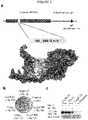
Figure 2 : shows identification of a previously unknown binding domain in Cavβ2 (TID; SEQ ID NO:10) as described in Example 1. (a, top) schematic representation of Cavβ2 [dark grey box (globular domain); dark grey line (coiled-coil); light grey box (TID); black (Akt consensus site)]. (a, bottom) 3D structure of Cavβ2 (Cavβ2 PDB code: 1T3S2) where solvent accessibility of the TID for a potential protein-protein interaction is shown in light grey; (b) Yeast two-hybrid co-trasformation: b-galactosidase activity (dark grey) in streaks of yeast cells on a culture plate, Hu=human, Ms=mus musculus; labels show the bait and/or prey plasmids transformed into the yeast cells; and (c) co-immunoprecipitation assay of identified positive clones. HEK293 and tSA-201 cells were transfected as indicated (n=4). -
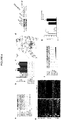
Figure 3 : shows the effects of site-specific mutagenesis in the TID binding site and Cavα1.2 stability as described in Example 1. a) Western blotting analysis (left) and densitometry measurements (right) of Cavα1.2 and GAPDH protein levels of total protein lysates from HEK293 transfected cells; b) Yeast two-hybrid co-trasformation: b-galactosidase activity (dark grey) in streaks of yeast cells on a culture plate; labels show the bait and/or prey plasmids transformed into the yeast cells; (c) Ca2+ flux analysis from HEK293 transfected cells; (d) Ca2+ current measurements in tSA-201 transfected cells. HEK293 and tSA-201 cells were transfected as indicated. Cavα1.2 protein degradation was elicited in vitro with cell starvation (serum removal). Protein levels were normalized to GAPDH. (n=4). Data are shown as the means ± SEM; *, P<0.05, **, P<0.005; ***, P<0.001. -
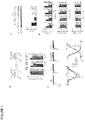
Figure 4 : shows the effects of peptides on Cavα1.2 protein stability and function as described in Example 2 and 3. a) Western blotting analysis of Cavα1.2 and GAPDH protein levels of total protein lysates; b) Intracellular Ca2+ fluxes; (c) Molecular modeling and docking of a peptide (SEQ ID NO:2, dark grey) to TID region (SEQ ID NO:10, light grey) of Cavβ2.; (d) Western blotting analysis of Cavα1.2 and GAPDH protein levels of total protein lysates; (e) Confocal analyses of adult cardiomyocytes treated with TAT-MP- and TAT-scramble-and stained with di 8-ANEPPS dye. MP = SEQ ID NO:3, scramble = SEQ ID N:11. (f) Western blotting analysis of Cavα1.2 and GAPDH protein levels of total protein lysates from HEK293 cells treated with increasing doses of MP; (g) Ca2+ current measurements in tSA-201 cells previously transfected. For Western blotting analyses, HEK293 or tSA-201 cells transfected or treated as indicated. Protein levels were normalized to GAPDH. (n=4). Data are shown as the means ± SEM; *, P<0.05, **, P<0.005; ***, P<0.001. Peptides are chosen from the group listed in Table 1. -
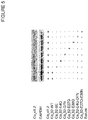
Figure 5 : shows the effects of site-specific mutagenesis in the TID binding site and Cavα1.2 stability as described in Example 2. Western blotting analysis of Cavα1.2 and GAPDH protein levels of total protein lysates from HEK293 transfected cells. Cavα1.2 protein degradation was elicited in vitro with cell starvation (serum removal). HEK293 cells were transfected as indicated. Protein levels were normalized to GAPDH. (n=4). -
Figure 6 : shows the therapeutic potential of mimetic peptide in a genetic mouse model of heart failure as described in Example 4. (a, top) Design of study. Echo, echocardiography. (a, bottom) Fractional shortening (%) as determined by echocardiography in pdk1 knockout mice treated with mimetic peptide (TAT-MP) or scramble (TAT-scramble). (b) Western blotting analysis of Cavα1.2 and GAPDH protein levels of total protein lysates from left ventricular homogenates. Protein levels were normalized to GAPDH. (n=4) MP = SEQ ID NO:3, scramble = SEQ ID N:11. Tamoxifen (TAM) and peptide was injected daily as indicated. Protein levels were normalized to GAPDH. Data are shown as the means ± SEM; *, P<0.05. -
Figure 7 : shows the therapeutic potential of mimetic peptide in a mouse model of diabetic cardiomyopathy. (a, top) Design of study. Echo, echocardiography. (a, bottom) Fractional shortening (%) as determined by echocardiography in mice treated with streptozotocin (STZ) and mimetic peptide (TAT-MP) or scramble (TAT-scramble). (n=10) (b) Western blotting analysis and densitometry of Cavα1.2 and GAPDH protein levels of total protein lysates from left ventricular homogenates. (c) Ca2+ current measurements in cardiomyocytes isolated from treated mice. (d, top) contractility and (d, middle and bottom) systolic and diastolic Ca2+ transient measurements in cardiomyocytes isolated from treated mice. Cardiomyocytes were analyzed at different pacing (Hz). MP = SEQ ID NO:3, scramble = SEQ ID N:11. Protein levels were normalized to GAPDH. STZ and peptide were injected daily as indicated. Data are shown as the means ± SEM; *, P<0.05, **, P<0.005; ***, P<0.001. -
Figure 8 : shows the therapeutic potential of mimetic peptide in a human cardiac model as described in Example 6. (a) Western blotting analysis of Cavα1.2 and GAPDH protein levels of total protein lysates from cardiomyocytes (CMs) differentiated from induced pluripotent stem cells (iPSCs) and previously derived from skin fibroblasts of healthy individuals. (n=4) Cells were untreated or treated with an Akt-inhibitor. MP = SEQ ID NO:3, scramble = SEQ ID N:11. -
Figure 9 : shows the therapeutic potential of mimetic peptide in a model of inherited cardiac arrhythmic syndrome (Brugada) as described in Example 6. ICa current density was normalized for cell capacitance. The Cavα1.2 mutation occurs within the Q420E site. HEK293 cells were transfected as indicated. MP = SEQ ID NO:3 (n = 15 cells/group). * p<0.05 vs. baseline for MP groups. - The present invention concerns an isolated peptide consisting of the amino acid sequence of SEQ ID NO:10, corresponding to the TID binding domain of the Cavβ2 target protein.
- Cavβ2 is the Voltage-dependent L-type calcium channel subunit beta-2, also known as CACNB2 [gene ID 783 (Homo sapiens), gene ID 12296 (Mus musculus)].
- The TID binding site of the Cavβ2 (SEQ ID NO:10) was previously unknown and it has been here revealed as a triggering domain for the modulation of Cavα1.2 protein half-life. In particular, peptides binding to the TID induce a molecular mechanism that increases Cavα1.2 protein density and function at the plasma membrane.
- The importance of identifying the exact binding site of the Cavβ2, (SEQ ID NO:10 Ile-Ser-Phe-Glu-Ala-Lys-Asp-Phe-Leu-His-Val-Lys-Glu-Lys-Phe-Asn-Asn-Asp-Trp-Trp-Ile-Gly-Arg-Leu-Val-Lys-Glu-Gly-Cys-Glu-Ile-Gly-Phe-Ile) and in particular the amino acids (highlighted in bold in SEQ ID NO:10 Ile-Ser-Phe-Glu-Ala-Lys-Asp-Phe-Leu-His-Val-Lys-Glu-Lys-Phe-Asn-Asn-Asp-Trp-Trp-Ile-Gly-Arg-Leu-Val-Lys-Glu-Gly-Cys-Glu-Ile-Gly-Phe-Ile (SEQ ID NO:10) and further described in example 1) which are responsible for the direct ionic bond between the TID in Cavβ2 and the activator peptides (SEQ ID NO: 1 to 9 and SEQ ID NO: 12 to 22) is widely recognized and allowed the identification of mimetic peptides which modulate the channel's density and activity.
- In a further aspect the invention relates to the use of the isolated peptide of SEQ ID NO:10 as a peptide binding domain. In particular, this peptide-binding domain in Cavβ2 is relevant for further optimization and development of novel mimetic peptides or synthetic compounds that are more specific for the binding to the TID domain in Cavβ2 and lead to a modulation of LTCC density and function.
- In a further aspect the invention concerns mimetic peptides (SEQ ID NO: 1 to 9 and SEQ ID NO:12 to 22) that bind to the TID peptide binding domain of the Cavβ2 protein according to SEQ ID NO:10, thus acting on density and function of voltage dependent LTCCs.
- In a preferred aspect the invention concerns an isolated peptide having an amino acid sequence chosen from the group consisting of:
- A- Arg-Pro-Asp-Arg-Glu-Ala-Pro-B (SEQ ID NO:1)
or - A- Arg-Pro-Asp-Arg-Asp-Ala-Pro-B (SEQ ID NO:2)
- A is an amino acid sequence chosen from the group consisting of Asp-Gln-,
and - B is an amino acid sequence which is optionally present, and if present is chosen from the group consisting of: Arg-, Arg-Ser, Arg-Ser-Gln-Ala-Glu-Glu-Glu-Pro-Cys (SEQ ID NO:23), Arg-Ser-Gln-Ala-Glu-Glu-Glu-Pro-Cys-Leu-Glu-Pro-Val-Lys-Lys (SEQ ID NO:24), Arg-Ser-Gln-Ala-Glu-Glu-Glu-Pro-Cys-Leu-Glu-Pro-Val-Lys-Lys-Ser-Gln-His-Arg (SEQ ID NO:25), Arg-Ser-Gln, or Arg-Ser-Gln-Ala-Glu-Glu-Glu-Pro-Cys-Leu-Glu-Pro (SEQ ID NO:26).
- For the purposes of the present invention, each isolated peptide has a corresponding SEQ ID NO., according to the following Table 1.
- The isolated peptides of the present invention have the amino acid sequences defined in Table 1, in which the three and one letter IUPAC amino acid code is used (ie. Arg and R corresponds to the amino acid Arginine, Pro and P corresponds to the amino acid Proline). Each peptide has a peptide number and a corresponding SEQ ID NO., as above reported in the Table 1.
- The subject of the invention is therefore a novel group of low molecular weight peptides, which can be chemically synthesized.
- These peptides are of synthetic origin and are therefore easy to manufacture in large quantities, and they can be modified chemically and biologically or conjugates to other moieties (i.e. carriers).
- These peptides have the advantages of being of synthetic origin, and therefore do not have the disadvantages seen in natural peptides such as the tendency to induce inflammatory response and pathogen transfer due to undefined factors that cannot be eliminated by purification prior to implantation, the significant degree of variability between different lots and the difficulty of availability of large scale sources.
- When compared with proteins/antibodies or even small organic molecules, the peptides according to the present invention offer advantages such as: i) good biocompatibility; ii) reduced side effects due to limited systemic toxicity or drug-drug interactions (e.g. degradation products are amino acids); iii) reduced secondary complications (e.g. minor tissue accumulation) due to a relatively short half-life of peptides (or their metabolites); (in addition, proteolysis can be prevented by chemical modifications); iv) generally less immunogenicity; v) potentially more penetrating into tissues due to smaller size; vi) good efficacy, selectivity and specificity and limited off-target binding; vii) ease of chemical synthesis and modification, free of impurities and side products; viii) low manufacturing costs.
- In addition, since the therapeutic peptide-binding site in the protein target is known and set forth in SEQ ID NO:10, this allows for further drug optimization (i.e. drug design for increased selectivity).
- In a further aspect, the invention regards an isolated peptide, wherein:
- A- Arg-Pro-Asp-Arg-Glu-Ala-Pro-B (SEQ ID NO:1)
or - A- Arg-Pro-Asp-Arg-Asp-Ala-Pro-B (SEQ ID NO:2)
- A is an amino acid sequence chosen from the group consisting of Asp-Gln-,
and - B is an amino acid sequence which is optionally present, and if present is chosen from the group consisting of: Arg-, Arg-Ser, Arg-Ser-Gln-Ala-Glu-Glu-Glu-Pro-Cys (SEQ ID NO:23), Arg-Ser-Gln-Ala-Glu-Glu-Glu-Pro-Cys-Leu-Glu-Pro-Val-Lys-Lys (SEQ ID NO:24), Arg-Ser-Gln-Ala-Glu-Glu-Glu-Pro-Cys-Leu-Glu-Pro-Val-Lys-Lys-Ser-Gln-His-Arg (SEQ ID NO:25), Arg-Ser-Gln, or Arg-Ser-Gln-Ala-Glu-Glu-Glu-Pro-Cys-Leu-Glu-Pro (SEQ ID NO:26).
- In a preferred aspect, the invention relates to an isolated peptide according to the invention, chosen from the group consisting of SEQ ID NO:1, SEQ ID NO:2, SEQ ID NO:3, SEQ ID NO:4, SEQ ID NO:5, SEQ ID NO:6, SEQ ID NO:7, SEQ ID NO:8, SEQ ID NO:9, , SEQ ID NO:12, SEQ ID NO:13, SEQ ID NO:14, SEQ ID NO:15, SEQ ID NO:16, SEQ ID NO:17, SEQ ID NO:18, SEQ ID NO:19, SEQ ID NO:20, SEQ ID NO:21, SEQ ID NO:22.
- In a further aspect the invention relates to the use of an isolated peptide chosen from the group consisting of SEQ ID NO:1, SEQ ID NO:2, SEQ ID NO:3, SEQ ID NO:4, SEQ ID NO:5, SEQ ID NO:6, SEQ ID NO:7, SEQ ID NO:8, SEQ ID NO:9, , SEQ ID NO:12, SEQ ID NO:13, SEQ ID NO:14, SEQ ID NO:15, SEQ ID NO:16, SEQ ID NO:17, SEQ ID NO:18, SEQ ID NO:19, SEQ ID NO:20, SEQ ID NO:21, SEQ ID NO:22 for the preparation of a medicament.
- The peptides of the present invention surprisingly have been shown to be useful in the preparation of a medicament (Examples 4, 5, 6, and 7).
- In a still further embodiment the invention relates to the use of an isolated peptide chosen from the group consisting of SEQ ID NO:1, SEQ ID NO:2, SEQ ID NO:3, SEQ ID NO:4, SEQ ID NO:5, SEQ ID NO:6, SEQ ID NO:7, SEQ ID NO:8, SEQ ID NO:9, , SEQ ID NO:12, SEQ ID NO:13, SEQ ID NO:14, SEQ ID NO:15, SEQ ID NO:16, SEQ ID NO:17, SEQ ID NO:18, SEQ ID NO:19, SEQ ID NO:20, SEQ ID NO:21, SEQ ID NO:22 for the treatment of conditions having altered LTCC density (Examples 4, 5, 6, and 7)
- In general, peptides of the invention may be useful in any situation involving conditions having altered LTCC density or in those conditions where an intervention for the modulation of LTCC density or intracellular Ca2+ concentration is preferable. Such conditions may occur as a result of genetic and/or metabolic disorders, and/or other diseases and/or conditions.
- Peptides of the invention aim at augmenting LTCC protein density by extending the calcium channel half-life through a mechanism that rely on the binding of peptides to a solvent-exposed domain (TID, SEQ ID NO:10) in Cavβ2 protein, subunit of LTCC.
- Certain peptides of the present invention may be used to ameliorate the effects of diseases such as heart pathology.
- In a preferred aspect the invention relates to the use of an isolated peptide chosen from the group consisting of SEQ ID NO:1, SEQ ID NO:2, SEQ ID NO:3, SEQ ID NO:4, SEQ ID NO:5, SEQ ID NO:6, SEQ ID NO:7, SEQ ID NO:8, SEQ ID NO:9, , SEQ ID NO:12, SEQ ID NO:13, SEQ ID NO:14, SEQ ID NO:15, SEQ ID NO:16, SEQ ID NO:17, SEQ ID NO:18, SEQ ID NO:19, SEQ ID NO:20, SEQ ID NO:21, SEQ ID NO:22 wherein said conditions having altered LTCC density and function are cardiovascular dysfunctions selected from the group consisting of heart failure, reduction of myocardial contraction, fibrillation, diabetic cardiomyopathy, dilated cardiomyopathy, genetic-based disorders (i.e. channelopathies such as Brugada syndrome, Timothy syndrome, or short QT syndrome), cardiac hypertrophy, hypotension, hyperthyroidism, hypothyroidism, acute heart failure, chronic heart failure, myocardial infarction.
- In a still further aspect the invention relates to the use of an isolated peptide chosen from the group consisting of SEQ ID NO:1, SEQ ID NO:2, SEQ ID NO:3, SEQ ID NO:4, SEQ ID NO:5, SEQ ID NO:6, SEQ ID NO:7, SEQ ID NO:8, SEQ ID NO:9, , SEQ ID NO:12, SEQ ID NO:13, SEQ ID NO:14, SEQ ID NO:15, SEQ ID NO:16, SEQ ID NO:17, SEQ ID NO:18, SEQ ID NO:19, SEQ ID NO:20, SEQ ID NO:21 wherein said conditions having altered LTCC density and function are ophthalmological conditions selected from the group consisting of lens transparency, and altered intraocular pressure.
- In a still further aspect the invention relates to the use of an isolated peptide chosen from the group consisting of SEQ ID NO:1, SEQ ID NO:2, SEQ ID NO:3, SEQ ID NO:4, SEQ ID NO:5, SEQ ID NO:6, SEQ ID NO:7, SEQ ID NO:8, SEQ ID NO:9, , SEQ ID NO:12, SEQ ID NO:13, SEQ ID NO:14, SEQ ID NO:15, SEQ ID NO:16, SEQ ID NO:17, SEQ ID NO:18, SEQ ID NO:19, SEQ ID NO:20, SEQ ID NO:21, SEQ ID NO:22 wherein said conditions having altered LTCC density and function are neurological conditions selected from the group consisting of vascular dementia, Alzheimer's disease, Parkinson's disease, Prion disease and hypokalemic periodic paralysis.
- In a further aspect, the invention relates to a pharmaceutical composition comprising one or more peptides chosen from the group consisting of SEQ ID NO:1, SEQ ID NO:2, SEQ ID NO:3, SEQ ID NO:4, SEQ ID NO:5, SEQ ID NO:6, SEQ ID NO:7, SEQ ID NO:8, SEQ ID NO:9, , SEQ ID NO:12, SEQ ID NO:13, SEQ ID NO:14, SEQ ID NO:15, SEQ ID NO:16, SEQ ID NO:17, SEQ ID NO:18, SEQ ID NO:19, SEQ ID NO:20, SEQ ID NO:21, SEQ ID NO:22 and/or pharmaceutically acceptable carrier.
- Exemplary pharmaceutically acceptable carriers or excipients include any and all solvents, dispersion media, diluents, or other liquid vehicles, dispersion or suspension aids, surface active agents, isotonic agents, thickening or emulsifying agents, preservatives, solid binders, lubricants and the like, nanoparticles, nucleic acids (i.e aptamers), cell-penetrating molecules or peptides as suited to the particular form of administration and dosage.
- The pharmaceutical composition according to the present invention can be for enteral and parenteral administration (i.e. intravenous, intraperitoneal, oral, sublingual, aerosol, inhalation, spray, rectal, intraocular, topical or transdermal).
- In another aspect the invention relates to method of screening for a peptide or other synthetic molecule which binds the amino acid sequence of SEQ ID NO:10 comprising the steps of:
- a) transfecting a mammalian cell with the amino acid sequence of SEQ ID NO:10;
- b) contacting said mammalian cell with a screening compound;
- c) detecting the binding of the screening compound to the mammalian cell;
or - d) virtual high throughput screening of compound library database to identify peptides or molecules of novel chemical structure that bind to the Cavβ2 macromolecular target comprising SEQ ID NO:10;
or - e) computer-aided drug design of compounds that bind to the Cavβ2 macromolecular target comprising SEQ ID NO:10.
- Results below were partially funded by Fondazione Cariplo (grant n° 2008.2504)
- Our previous in vitro findings showed that an Akt-dependent phosphorylation of Cavβ2, either directly through the kinase or by introduction of an Akt-phoshomimetic mutation (Ser to Glu, Cavβ2-SE) in the Akt consensus-site of Cavβ2 cDNA, was sufficient to enhance the Cavα1.2 (and thus LTCC) half-life and thus intracellular Ca2+ handlings and cardiomyocyte contractility (
Figure 1 )3. Based on this evidence, we designed experiments to determine the sequence of structural and molecular events that link Akt-mediated phosphorylation of Cavβ2 to the inhibition of Cavα1.2 degradation. As a first step, we investigated whether upon Akt-phosphorylation, Cavβ2 recruits additional interacting partners to inhibit Cavα1.2 degradation. We performed a yeast-two-hybrid screening using Akt-phosphomimetic Cavβ2 cDNA (Cavβ-SE) as a bait and either human or mouse heart cDNA expression libraries as preys. Remarkably, several positive clones corresponded to Cavβ2 in a region belonging to the globular domain (Figure 2a,b ), whereas no Cavβ2 clones were found when the assay was repeated with a wildtype Cavβ2-WT bait. Co-immunoprecipitation analyses of lysates obtained from HEK293 cells co-transfected with the Cavβ2-SE bait and either mouse or human Cavβ2-prey clones confirmed the specificity of the interaction (Figure 2c ). Finally, when amino acid sequences from the identified positive clones were aligned (Figure 2a , top) and analyzed for solvent accessibility (Figure 2a , bottom), we identified a minimal common region potentially binding to the Cavβ2 C-terminal region, which we named Tail Interacting Domain (TID; SEQ ID N:10). - To assess whether TID plays a direct role in the molecular mechanism that protects Cavα1.2 from protein degradation, we used site-specific mutagenesis for replacing positively charged Lysines (K) at
positions 6, 14, and 26 in the TID (SEQ ID N:10) sequence with Glutamines (Q) to destroy any potential ionic interaction between the binding domain and the coiled-coil. Whereas co-transfection of HEK293 cells with Cavα1.2 and Cavβ2-SE resulted in unaltered Cavα1.2 protein levels when Akt was not activated (i.e. upon serum removal), the introduction of the K26Q site mutation in TID strongly impaired the protective effect (Figure 3a , right panel). Similar results, but to a different extent, were obtained when the other amino acids in the TID were mutated (Figure 3a , right panel). A yeast two-hybrid assay with Cavβ2-SE as a bait and the K26Q mutated Cavβ2 as a prey showed no interaction, confirming the direct role of K26 in SEQ ID N:10 for the interaction (Figure 3b ). Subsequently, a fluorescence-based Ca2+ assay was used to analyze LTCC-mediated intracellular Ca2+ flux. Co-transfection of Cavα1.2 with any of the mutated Cavβ2-SE constructs resulted in a significant reduction in Ca2+ flux upon serum removal, down to a level that was similar to the one of the control condition (Figure 3c ). In addition, Ica measurements showed a significant reduction in current when tSA-201 cells were transfected with Cavβ2-SE-K26Q compared to Cavβ2-SE (Figure 3d ). - Based on the evidence shown in example 1, we next investigated whether mimetic peptides (MPs) might recapitulate the mechanism by which LTCCs are protected from protein degradation by binding to the TID domain. Thus, we transfected HEK293 cells with an array of partially overlapping peptides (length from 7 to 25 amino acids) belonging to the Cavβ2 terminal coiled-coil region and subsequently performed Western blot (
Figure 4a ) and intracellular Ca2+ measurements (Figure 4b ), identifying several peptides that, to different extents, were efficient in protecting LTCC protein stability and function upon serum removal. No evidence for significant apoptosis was found (Figure 4a ). - By computational docking simulation, we tested the ability of the identified MPs to recognize the TID region and predicted that MP most specifically recognize the TID region by direct interaction with the lysine residue K26 and formation of electrostatic interactions between two arginine residues and negatively charged regions of the functional core of the Cavβ2 (
Figure 4c ). In line with this, additional site-directed mutagenesis analyses in Cavβ2 further supported this prediction and found E4, D7, E27, and E30 in SEQ ID N:10 relevant for the binding MP-TID (Figure 5 ). The specificity of the selected MP (SEQ ID N: 3) was subsequently confirmed in vitro as the protective effect of the selected MP on Cavα1.2 was completely lost when specific mutations within either the MP or Cavα1.2 abolished the predicted interaction between MP and TID (Figure 4d ). - To facilitate the intracellular uptake, a cell-penetrating peptide (CPP) was conjugated to the MP (SEQ ID NO:03). To overcome any potential steric hindrance that a CPP might have when fused to the MP, we evaluated our Cavβ2-MP 3D model (
Figure 4d ) and predicted the N-terminus of MP as a suitable region for CCP fusion. Thus, the trans-activating transcriptional activator (TAT) from Human Immunodeficiency Virus 1 (HIV-1) was used. When administered to isolated cardiomyocytes, this cell-penetrating derivative of the MP peptide (TAT-MP) was shown to specifically colocalize with LTCCs (Figure 4e ), protect Cavα1.2 from protein degradation (Figure 4f ), and preserve Ca2+ current (Figure 4g ) upon serum removal. On the other hand, none of these effects were observed when a scramble peptide was used. TAT-MP = SEQ ID N: 3; TAT-scramble = scramble = SEQ ID N:11. - To explore the in vivo therapeutic potential, MP was used in an inducible and cardiac specific knockout of the phosphoinositide-dependent kinase 1 (PDK1), the upstream activator of all three Akt isoforms. As previously reported3, deletion of PDK1 by tamoxifen injection resulted with a reduction of cardiac function as evaluated by echocardiographic analysis. We then treated the mice with either cell penetrating MP or scramble peptides and followed the phenotype for the following days. Whereas animals treated with scrambles displayed progressive impairment of left ventricular function, animals treated with MP showed significant attenuation of the impairment of cardiac function that corresponded to a restoration of LTCC protein levels (
Figure 6 ). MP = SEQ ID N: 3; TAT-scramble = scramble = SEQ ID N:11. - To further explore the potential therapeutic application, we assessed the effects of the TAT-MP in a mouse model of cardiomyopathy in which LTCC density, and consequently cardiac contractility, is downregulated (i.e. diabetic cardiomyopathy, DM). Alterations in Ca2+ signaling within cardiac muscle cells are a hallmark of DM. The defects identified in the mechanical activity of hearts from diabetic animals are attributed to a reduction in ICa, a decrease in systolic Ca2+, and a lengthening of the systolic Ca2+ transient, primarily resulting from dysfunction of the SR. To induce DM, mice were injected with streptozotocin (STZ), a compound that is toxic for the insulin-producing beta cells of the pancreas (
Figure 7 ). In line with the effects of the insulin/Akt signaling on LTCCs, cardiac dysfunction in DM mice was associated with reduced Cavα1.2 protein levels in DM mice compared to control mice (Figure 7b ). Intriguingly, 4 days of treatment of DM mice with TAT-MP (MP = SEQ ID N: 3) nearly completely restored cardiac function (Figure 7a ), while no effects were obtained when vehicle or TAT-scramble (scramble = SEQ ID N:11) where administered. In addition, functional analyses of cardiomyocytes isolated from the same treated mice revealed that the TAT-MP restored ICa as well as cell contractility and systolic Ca2+ amplitudes (Figure 7c,d ). - To pursue the cardiac therapeutic potential of MP, we employed a human cardiac model that is based on cardiomyocytes (CMs) differentiated from induced pluripotent stem cells (iPSCs) and previously derived from skin fibroblasts of healthy individuals4. iPSC-CMs subjected to an Akt inhibitor showed a downregulation of Cavα1.2 protein levels that was prevented when cells were co-treated with MP (MP = SEQ ID N: 3) (
Figure 8a ). On the other hand, no rescuing effects were obtained when scramble peptide was used. Based on this, we next performed functional analyses and examined the iPSC-CM beating clusters (BCs) for Ca2+ handling properties. While administration of Akt-inhibitor to BCs showed a significant slowing of Ca2+ transient development, indicating an alteration between LTCC activity and evoked Ca2+ release from the sarcoplasmatic reticulum, MP administration was sufficient for reducing this delay (Figure 8b,c ). On the other hand, no effects were observed when BCs were co-treated with scramble. - To test whether the potential therapeutic use of the TAT-MP (MP = SEQ ID N:3) may also exert a corrective effect in conditions of patients are affected by Brugada Syndrome (BrS) and who are carriers of loss of function mutations in the CACNA1C gene encoding for the Cavα1.2 subunit of the LTCC. BrS is an inherited arrhythmogenic disease estimated to account for 20% of sudden deaths in young patients with an otherwise normal hearts. Thus, we investigated whether the loss of function in the LTCC caused by missense mutations (i.e the substitution of Glutamine at position 428 with a Glutamic Acid found in a patient diagnosed after a cardiac arrest at 32 years of age occurring at rest) in the CACNA1C gene identified in BrS patients could be reverted by the administration of TAT-MP. Membrane currents were measured using whole-cell patch clamp procedures to obtain the current-voltage (l-V) relationship. The current-voltage (l-V) relationships between WT and Q428E showed that amplitudes of current were significantly reduced as compared to WT (
Figure 8 ). Treatment of cells expressing mutant Cavα1.2 with TAT-MP nearly completely reverted the loss-of-current phenotype induced by the Cavα1.2 mutation. - From the above description and the above-noted examples, the advantage attained by the product described and obtained according to the present invention are apparent.
-
- 1 Catterall, W. A. Voltage-gated calcium channels. Cold Spring Harbor perspectives in ).
- 2 Opatowsky, Y., Chen, C. C., Campbell, K. P. & Hirsch, J. A. Structural analysis of the voltage-dependent calcium channel beta subunit functional core and its complex with the ).
- 3 Catalucci, D. et al. Akt regulates L-type Ca2+ channel activity by modulating Cavalpha1 protein stability. The Journal of cell biology 184, 923-933, doi:10.1083/jcb.200805063 (2009).
- 4 Di Pasquale, E. et al. CaMKll inhibition rectifies arrhythmic phenotype in a patient-specific model of catecholaminergic polymorphic ventricular tachycardia. Cell death & ).
-
- <110> CONSIGLIO NAZIONALE DELLE RICERCHE
- <120> MIMETIC PEPTIDES AND THEIR USE IN THE TREATMENT OF CONDITIONS HAVING
ALTERED L-TYPE CALCIUM CHANNEL DENSITY - <130> 12861PTWO
- <150> ITMI2014A000097
<151> 2014-01-24 - <160> 26
- <170> BiSSAP 1.3
- <210> 1
<211> 7
<212> PRT
<213> Homo sapiens - <400> 1

- <210> 2
<211> 7
<212> PRT
<213> Homo sapiens - <400> 2

- <210> 3
<211> 11
<212> PRT
<213> Homo sapiens - <400> 3

- <210> 4
<211> 10
<212> PRT
<213> Homo sapiens - <400> 4

- <210> 5
<211> 20
<212> PRT
<213> Homo sapiens - <400> 5

- <210> 6
<211> 26
<212> PRT
<213> Homo sapiens - <400> 6

- <210> 7
<211> 30
<212> PRT
<213> Homo sapiens - <400> 7

- <210> 8
<211> 10
<212> PRT
<213> Homo sapiens - <400> 8

- <210> 9
<211> 10
<212> PRT
<213> Homo sapiens - <400> 9

- <210> 10
<211> 34
<212> PRT
<213> Homo sapiens - <400> 10

- <210> 11
<211> 11
<212> PRT
<213> Unknown - <220>
<223> Scramble sequence - <400> 11


- <210> 12
<211> 23
<212> PRT
<213> Homo sapiens - <400> 12

- <210> 13
<211> 14
<212> PRT
<213> Homo sapiens - <400> 13

- <210> 14
<211> 11
<212> PRT
<213> Homo sapiens - <400> 14

- <210> 15
<211> 10
<212> PRT
<213> Homo sapiens - <400> 15

- <210> 16
<211> 20
<212> PRT
<213> Homo sapiens - <400> 16

- <210> 17
<211> 26
<212> PRT
<213> Homo sapiens - <400> 17

- <210> 18
<211> 30
<212> PRT
<213> Homo sapiens - <400> 18

- <210> 19
<211> 23
<212> PRT
<213> Homo sapiens - <400> 19

- <210> 20
<211> 14
<212> PRT
<213> Homo sapiens - <400> 20

- <210> 21
<211> 10
<212> PRT
<213> Homo sapiens - <400> 21

- <210> 22
<211> 10
<212> PRT
<213> Homo sapiens - <400> 22

- <210> 23
<211> 9
<212> PRT
<213> Homo sapiens - <400> 23

- <210> 24
<211> 15
<212> PRT
<213> Homo sapiens - <400> 24

- <210> 25
<211> 19
<212> PRT
<213> Homo sapiens - <400> 25

- <210> 26
<211> 12
<212> PRT
<213> Homo sapiens - <400> 26

Lys-Gln-Arg-Asp-Arg-His-Lys-Glu-Lys-Asp (SEQ ID NO:8), or, Lys-Gln-Arg-Asp-Arg-His-Lys-Asp-Lys-Asp (SEQ ID NO:9); or Lys-Gln-Arg-Ser-Arg-His-Lys-Glu-Lys-Asp (SEQ ID NO:21), or Lys-Gln-Arg-Ser-Arg-His-Lys-Asp-Lys-Asp (SEQ ID NO22),
wherein:
Lys-Gln-Arg-Asp-Arg-His-Lys-Glu-Lys-Asp (SEQ ID NO:8), or, Lys-Gln-Arg-Asp-Arg-His-Lys-Asp-Lys-Asp (SEQ ID NO:9); or Lys-Gln-Arg-Ser-Arg-His-Lys-Glu-Lys-Asp (SEQ ID NO:21), or Lys-Gln-Arg-Ser-Arg-His-Lys-Asp-Lys-Asp (SEQ ID NO:22),
wherein:
| Peptide number | SEQ ID NO. | peptide amino acid sequence (three letter code) | peptide amino acid sequence (one letter code) | |
| 1 | SEQ ID NO: 1 | Arg-Pro-Asp-Arg-Asp-Ala- | RPDRDAP | |
| 2 | SEQ ID NO: 2 | Arg-Pro-Asp-Arg-Glu-Ala- | RPDREAP | |
| 3 | SEQ ID NO: 3 |  | | |
| 4 | SEQ ID NO: 4 |  | DQRPDREAPR | |
| 5 | SEQ ID NO:5 |  | | |
| 6 | SEQ ID NO: 6 |  |  | |
| 7 | SEQ ID NO: 7 |  |  | |
| 8 | SEQ ID NO:8 |  | | |
| 9 | SEQ ID NO:9 |  | | |
| 10 | SEQ ID NO:10 | 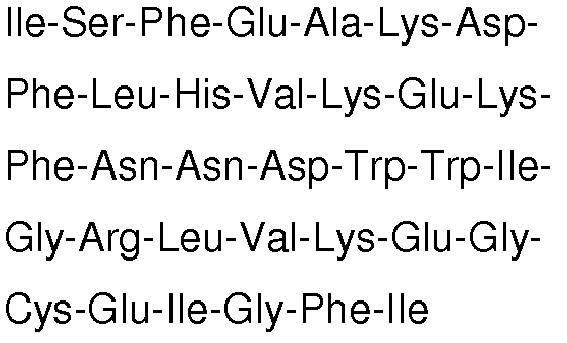 |  | |
| 11 | SEQ ID NO:11 |  | | |
| 12 | SEQ ID NO:12 |  | DQRPDREAPRSASQAEEEPCLEP | |
| 13 | SEQ ID NO:13 |  | DQRPDREAPRSASQ | |
| 14 | SEQ ID NO: 14 |  | DQRPDRDAPRS | |
| 15 | SEQ ID NO: 15 |  | DQRPDRDAPR | |
| 16 | SEQ ID NO:16 | 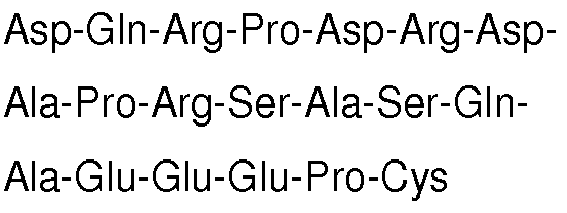 | DQRPDRDAPRSASQAEEEPC | |
| 17 | SEQ ID NO: 17 |  |  | |
| 18 | SEQ ID NO: 18 |  |  | |
| 19 | SEQ ID NO:19 |  | | |
| 20 | SEQ ID NO:20 |  | | |
| 21 | SEQ ID NO:21 |  | KQRSRHKEKD | |
| 22 | SEQ ID NO:22 | 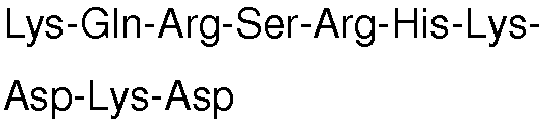 | KQRSRHKDKD | |
| 23 | SEQ ID NO:23 |  | RSQAEEEPC | |
| 24 | SEQ ID NO:24 |  | RSQAEEEPCLEPVKK | |
| 25 | SEQ ID NO:25 |  | RSQAEEEPCLEPVKKSQHR | |
| 26 | SEQ ID NO:26 |  | RSQAEEEPCLEP |
Lys-Gln-Arg-Asp-Arg-His-Lys-Glu-Lys-Asp (SEQ ID NO:8), or, Lys-Gln-Arg-Asp-Arg-His-Lys-Asp-Lys-Asp (SEQ ID NO:9); or Lys-Gln-Arg-Ser-Arg-His-Lys-Glu-Lys-Asp (SEQ ID NO:21), or Lys-Gln-Arg-Ser-Arg-His-Lys-Asp-Lys-Asp (SEQ ID NO:22),
wherein:
Claims (10)
- An isolated peptide consisting of the amino acid sequence of SEQ ID NO:10.
- The isolated peptide according to claim 1, for use as a peptide binding domain.
- An isolated peptide, having an amino acid sequence chosen from the group consisting of:A- Arg-Pro-Asp-Arg-Glu-Ala-Pro-B (SEQ ID NO:2)
orA- Arg-Pro-Asp-Arg-Asp-Ala-Pro-B (SEQ ID NO:1)or
Lys-Gln-Arg-Asp-Arg-His-Lys-Glu-Lys-Asp (SEQ ID NO:8), or, Lys-Gln-Arg-Asp-Arg-His-Lys-Asp-Lys-Asp (SEQ ID NO:9); or Lys-Gln-Arg-Ser-Arg-His-Lys-Glu-Lys-Asp (SEQ ID NO:21), or Lys-Gln-Arg-Ser-Arg-His-Lys-Asp-Lys-Asp (SEQ ID NO:22),
wherein:A is an amino acid sequence chosen from the group consisting of Asp-Gln-,
andB is an amino acid sequence which is optionally present, and if present is chosen from the group consisting of: Arg-, Arg-Ser, Arg-Ser-Gln-Ala-Glu-Glu-Glu-Pro-Cys (SEQ ID NO:23), Arg-Ser-Gln-Ala-Glu-Glu-Glu-Pro-Cys-Leu-Glu-Pro-Val-Lys-Lys (SEQ ID NO:24), Arg-Ser-Gln-Ala-Glu-Glu-Glu-Pro-Cys-Leu-Glu-Pro-Val-Lys-Lys-Ser-Gln-His-Arg (SEQ ID NO:25), Arg-Ser-Gln, or Arg-Ser-Gln-Ala-Glu-Glu-Glu-Pro-Cys-Leu-Glu-Pro (SEQ ID NO:26). - The isolated peptide according to claim 3, chosen from the group consisting of SEQ ID NO:1, SEQ ID NO:2, SEQ ID NO:3, SEQ ID NO:4, SEQ ID NO:5, SEQ ID NO:6, SEQ ID NO:7, SEQ ID NO:8, SEQ ID NO:9, , SEQ ID NO:12, SEQ ID NO:13, SEQ ID NO:14, SEQ ID NO:15, SEQ ID NO:16, SEQ ID NO:17, SEQ ID NO:18, SEQ ID NO:19, SEQ ID NO:20, SEQ ID NO:21, SEQ ID NO:22.
- Use of an isolated peptide chosen from the group consisting of SEQ ID NO:1, SEQ ID NO:2, SEQ ID NO:3, SEQ ID NO:4, SEQ ID NO:5, SEQ ID NO:6, SEQ ID NO:7, SEQ ID NO:8, SEQ ID NO:9, , SEQ ID NO:12, SEQ ID NO:13, SEQ ID NO:14, SEQ ID NO:15, SEQ ID NO:16, SEQ ID NO:17, SEQ ID NO:18, SEQ ID NO:19, SEQ ID NO:20, SEQ ID NO:21, SEQ ID NO:22 for the preparation of a medicament.
- An isolated peptide chosen from the group consisting of SEQ ID NO:1, SEQ ID NO:2, SEQ ID NO:3, SEQ ID NO:4, SEQ ID NO:5, SEQ ID NO:6, SEQ ID NO:7, SEQ ID NO:8, SEQ ID NO:9, , SEQ ID NO:12, SEQ ID NO:13, SEQ ID NO:14, SEQ ID NO:15, SEQ ID NO:16, SEQ ID NO:17, SEQ ID NO:18, SEQ ID NO:19, SEQ ID NO:20, SEQ ID NO:21, SEQ ID NO:22 for use in the treatment of conditions having altered LTCC density and function, wherein said conditions having altered LTCC density and function are cardiovascular dysfunctions selected from the group consisting of heart failure, reduction of myocardial contraction, fibrillation, diabetic cardiomyopathy, Brugada syndrome, Timothy syndrome, short QT syndrome, cardiac hypertrophy, dilated cardiomyopathy, hypotension, hyperthyroidism, hypothyroidism, acute heart failure, chronic heart failure, myocardial infarction.
- The use according to claim 6, wherein said conditions having altered LTCC density and function are ophthalmological conditions selected from the group consisting of lens transparency, and altered intraocular pressure.
- The use according to claim 6, wherein said conditions having altered LTCC density and function are neurological conditions selected from the group consisting of vascular dementia, Alzheimer's disease, Parkinson's disease, Prion disease and hypokalemic periodic paralysis.
- A pharmaceutical composition comprising one or more peptides chosen from the group consisting of SEQ ID NO:1, SEQ ID NO:2, SEQ ID NO:3, SEQ ID NO:4, SEQ ID NO:5, SEQ ID NO:6, SEQ ID NO:7, SEQ ID NO:8, SEQ ID NO:9, , SEQ ID NO:12, SEQ ID NO:13, SEQ ID NO:14, SEQ ID NO:15, SEQ ID NO:16, SEQ ID NO:17, SEQ ID NO:18, SEQ ID NO:19, SEQ ID NO:20, SEQ ID NO:21, SEQ ID NO:22 and/or pharmaceutically acceptable carrier, for enteral and parenteral administration, by intravenous, intraperitoneal, oral, sublingual, aerosol, inhalation, spray, rectal, intraocular, topical or transdermal).
- A method of screening for a peptide or synthetic molecule which binds the amino acid sequence of SEQ ID NO:10 comprising the steps of:a) transfecting a mammalian cell with the amino acid sequence of SEQ ID NO:10;b) contacting said mammalian cell with a screening compound;c) detecting the binding of the screening compound to the mammalian cell;
ord) virtual high throughput screening of compound library database to identify peptides or molecules of novel chemical structure that bind to the Cavβ2 macromolecular target consisting of SEQ ID NO:10;
ore) computer-aided drug design of compounds that bind to the Cavβ2 macromolecular target consisting of SEQ ID NO:10.
Applications Claiming Priority (2)
| Application Number | Priority Date | Filing Date | Title |
|---|---|---|---|
| ITMI20140097 | 2014-01-24 | ||
| PCT/EP2015/051376 WO2015110589A1 (en) | 2014-01-24 | 2015-01-23 | Mimetic peptides and their use in medicine |
Publications (2)
| Publication Number | Publication Date |
|---|---|
| EP3107933A1 EP3107933A1 (en) | 2016-12-28 |
| EP3107933B1 true EP3107933B1 (en) | 2020-08-12 |
Family
ID=50486974
Family Applications (1)
| Application Number | Title | Priority Date | Filing Date |
|---|---|---|---|
| EP15705512.0A Active EP3107933B1 (en) | 2014-01-24 | 2015-01-23 | Mimetic peptides and their use in medicine |
Country Status (4)
| Country | Link |
|---|---|
| US (1) | US9873725B2 (en) |
| EP (1) | EP3107933B1 (en) |
| ES (1) | ES2829927T3 (en) |
| WO (1) | WO2015110589A1 (en) |
Families Citing this family (1)
| Publication number | Priority date | Publication date | Assignee | Title |
|---|---|---|---|---|
| IT202000021292A1 (en) | 2020-09-09 | 2022-03-09 | Consiglio Nazionale Ricerche | COMPOSITION IN THE FORM OF POWDER BASED ON MICROPARTICLES INCORPORATING NANOPARTICLES FOR THE DELIVERY OF THERAPEUTIC/DIAGNOSTIC COMPOUNDS |
Family Cites Families (1)
| Publication number | Priority date | Publication date | Assignee | Title |
|---|---|---|---|---|
| US20020142938A1 (en) | 2001-03-30 | 2002-10-03 | Chunhua Yan | Isolated human transporter proteins, nucleic acid molecules encoding human transporter proteins, and uses thereof |
-
2015
- 2015-01-23 US US15/120,700 patent/US9873725B2/en active Active
- 2015-01-23 ES ES15705512T patent/ES2829927T3/en active Active
- 2015-01-23 WO PCT/EP2015/051376 patent/WO2015110589A1/en not_active Ceased
- 2015-01-23 EP EP15705512.0A patent/EP3107933B1/en active Active
Non-Patent Citations (1)
| Title |
|---|
| None * |
Also Published As
| Publication number | Publication date |
|---|---|
| US20170008946A1 (en) | 2017-01-12 |
| WO2015110589A1 (en) | 2015-07-30 |
| US9873725B2 (en) | 2018-01-23 |
| EP3107933A1 (en) | 2016-12-28 |
| ES2829927T3 (en) | 2021-06-02 |
Similar Documents
| Publication | Publication Date | Title |
|---|---|---|
| JP5801197B2 (en) | Drugs and methods for the treatment of pain | |
| JP4790624B2 (en) | Biomolecular partition motifs and their use | |
| CN107921085B (en) | Methods and compositions for treating aging-related disorders | |
| KR20050090420A (en) | Metastin derivative and use thereof | |
| JP2018535964A (en) | Treatment of steroid-induced hyperglycemia with fibroblast growth factor (FGF) 1 analog | |
| US8663936B2 (en) | Sodium channel protein type III α-subunit splice variant | |
| Levine et al. | The mitochondrial peptide humanin targets but does not denature amyloid oligomers in type II diabetes | |
| JP2010046088A (en) | New peptides | |
| WO2018232735A1 (en) | Use of piezo regulator in preparation of a medicament | |
| DE60115878T2 (en) | PAIN SIGNALING MOLECULES | |
| JP2013520166A (en) | RAGE fusion protein and method of use thereof | |
| US7491501B2 (en) | Methods for identifying modulators of intracellular aggregate formation | |
| US11351227B2 (en) | Chemokine decoy receptors of rodent gammaherpesviruses and uses thereof | |
| US9873725B2 (en) | Mimetic peptides which modulate L-type calcium channels | |
| US20210369677A1 (en) | Small molecule activators of polycystin-2 (pkd2) and uses thereof | |
| Hoppmann et al. | Expression, purification and fluorine-18 radiolabeling of recombinant S100 proteins—potential probes for molecular imaging of receptor for advanced glycation endproducts (RAGE) in vivo | |
| JP4512273B2 (en) | New peptides | |
| JPWO2003027672A1 (en) | Novel screening method using prokineticin receptor | |
| JPH10327879A (en) | CDNA clone HNFDY20 encoding a novel human 7-transmembrane receptor | |
| JP2002509693A (en) | Cadherin-derived growth factor and uses thereof | |
| Amuzescu et al. | Channelopathies and Heart Disease | |
| Vidal et al. | Enforced dimerization between XBP1s and ATF6f enhances the protective effects of the unfolded protein response (UPR) in models of neurodegeneration | |
| JP3503978B2 (en) | Peptides having glutamate release inhibitory activity and calcium channel inhibitory activity | |
| WO2025106527A1 (en) | Compositions and methods for the treatment of friedreich's ataxia | |
| WO2016038608A1 (en) | Peptides derived from angiotensin receptor and use thereof |
Legal Events
| Date | Code | Title | Description |
|---|---|---|---|
| STAA | Information on the status of an ep patent application or granted ep patent |
Free format text: STATUS: THE INTERNATIONAL PUBLICATION HAS BEEN MADE |
|
| PUAI | Public reference made under article 153(3) epc to a published international application that has entered the european phase |
Free format text: ORIGINAL CODE: 0009012 |
|
| STAA | Information on the status of an ep patent application or granted ep patent |
Free format text: STATUS: REQUEST FOR EXAMINATION WAS MADE |
|
| 17P | Request for examination filed |
Effective date: 20160822 |
|
| AK | Designated contracting states |
Kind code of ref document: A1 Designated state(s): AL AT BE BG CH CY CZ DE DK EE ES FI FR GB GR HR HU IE IS IT LI LT LU LV MC MK MT NL NO PL PT RO RS SE SI SK SM TR |
|
| AX | Request for extension of the european patent |
Extension state: BA ME |
|
| DAX | Request for extension of the european patent (deleted) | ||
| STAA | Information on the status of an ep patent application or granted ep patent |
Free format text: STATUS: EXAMINATION IS IN PROGRESS |
|
| 17Q | First examination report despatched |
Effective date: 20190212 |
|
| GRAP | Despatch of communication of intention to grant a patent |
Free format text: ORIGINAL CODE: EPIDOSNIGR1 |
|
| STAA | Information on the status of an ep patent application or granted ep patent |
Free format text: STATUS: GRANT OF PATENT IS INTENDED |
|
| RIC1 | Information provided on ipc code assigned before grant |
Ipc: A61P 25/16 20060101ALI20200124BHEP Ipc: G01N 33/50 20060101ALI20200124BHEP Ipc: C07K 14/705 20060101AFI20200124BHEP Ipc: G16C 99/00 20190101ALI20200124BHEP Ipc: A61P 9/00 20060101ALI20200124BHEP Ipc: G16C 20/90 20190101ALI20200124BHEP Ipc: C07K 7/04 20060101ALI20200124BHEP Ipc: A61P 27/02 20060101ALI20200124BHEP Ipc: A61K 38/00 20060101ALI20200124BHEP |
|
| INTG | Intention to grant announced |
Effective date: 20200304 |
|
| GRAS | Grant fee paid |
Free format text: ORIGINAL CODE: EPIDOSNIGR3 |
|
| GRAA | (expected) grant |
Free format text: ORIGINAL CODE: 0009210 |
|
| STAA | Information on the status of an ep patent application or granted ep patent |
Free format text: STATUS: THE PATENT HAS BEEN GRANTED |
|
| AK | Designated contracting states |
Kind code of ref document: B1 Designated state(s): AL AT BE BG CH CY CZ DE DK EE ES FI FR GB GR HR HU IE IS IT LI LT LU LV MC MK MT NL NO PL PT RO RS SE SI SK SM TR |
|
| RAP1 | Party data changed (applicant data changed or rights of an application transferred) |
Owner name: CONSIGLIO NAZIONALE DELLE RICERCHE |
|
| REG | Reference to a national code |
Ref country code: CH Ref legal event code: EP |
|
| REG | Reference to a national code |
Ref country code: IE Ref legal event code: FG4D |
|
| REG | Reference to a national code |
Ref country code: DE Ref legal event code: R096 Ref document number: 602015057296 Country of ref document: DE |
|
| REG | Reference to a national code |
Ref country code: AT Ref legal event code: REF Ref document number: 1301478 Country of ref document: AT Kind code of ref document: T Effective date: 20200915 |
|
| REG | Reference to a national code |
Ref country code: RO Ref legal event code: EPE |
|
| REG | Reference to a national code |
Ref country code: NL Ref legal event code: FP |
|
| REG | Reference to a national code |
Ref country code: LT Ref legal event code: MG4D |
|
| PG25 | Lapsed in a contracting state [announced via postgrant information from national office to epo] |
Ref country code: LT Free format text: LAPSE BECAUSE OF FAILURE TO SUBMIT A TRANSLATION OF THE DESCRIPTION OR TO PAY THE FEE WITHIN THE PRESCRIBED TIME-LIMIT Effective date: 20200812 Ref country code: HR Free format text: LAPSE BECAUSE OF FAILURE TO SUBMIT A TRANSLATION OF THE DESCRIPTION OR TO PAY THE FEE WITHIN THE PRESCRIBED TIME-LIMIT Effective date: 20200812 Ref country code: SE Free format text: LAPSE BECAUSE OF FAILURE TO SUBMIT A TRANSLATION OF THE DESCRIPTION OR TO PAY THE FEE WITHIN THE PRESCRIBED TIME-LIMIT Effective date: 20200812 Ref country code: NO Free format text: LAPSE BECAUSE OF FAILURE TO SUBMIT A TRANSLATION OF THE DESCRIPTION OR TO PAY THE FEE WITHIN THE PRESCRIBED TIME-LIMIT Effective date: 20201112 Ref country code: BG Free format text: LAPSE BECAUSE OF FAILURE TO SUBMIT A TRANSLATION OF THE DESCRIPTION OR TO PAY THE FEE WITHIN THE PRESCRIBED TIME-LIMIT Effective date: 20201112 Ref country code: FI Free format text: LAPSE BECAUSE OF FAILURE TO SUBMIT A TRANSLATION OF THE DESCRIPTION OR TO PAY THE FEE WITHIN THE PRESCRIBED TIME-LIMIT Effective date: 20200812 Ref country code: GR Free format text: LAPSE BECAUSE OF FAILURE TO SUBMIT A TRANSLATION OF THE DESCRIPTION OR TO PAY THE FEE WITHIN THE PRESCRIBED TIME-LIMIT Effective date: 20201113 |
|
| PG25 | Lapsed in a contracting state [announced via postgrant information from national office to epo] |
Ref country code: IS Free format text: LAPSE BECAUSE OF FAILURE TO SUBMIT A TRANSLATION OF THE DESCRIPTION OR TO PAY THE FEE WITHIN THE PRESCRIBED TIME-LIMIT Effective date: 20201212 Ref country code: RS Free format text: LAPSE BECAUSE OF FAILURE TO SUBMIT A TRANSLATION OF THE DESCRIPTION OR TO PAY THE FEE WITHIN THE PRESCRIBED TIME-LIMIT Effective date: 20200812 Ref country code: LV Free format text: LAPSE BECAUSE OF FAILURE TO SUBMIT A TRANSLATION OF THE DESCRIPTION OR TO PAY THE FEE WITHIN THE PRESCRIBED TIME-LIMIT Effective date: 20200812 |
|
| PG25 | Lapsed in a contracting state [announced via postgrant information from national office to epo] |
Ref country code: DK Free format text: LAPSE BECAUSE OF FAILURE TO SUBMIT A TRANSLATION OF THE DESCRIPTION OR TO PAY THE FEE WITHIN THE PRESCRIBED TIME-LIMIT Effective date: 20200812 Ref country code: CZ Free format text: LAPSE BECAUSE OF FAILURE TO SUBMIT A TRANSLATION OF THE DESCRIPTION OR TO PAY THE FEE WITHIN THE PRESCRIBED TIME-LIMIT Effective date: 20200812 Ref country code: EE Free format text: LAPSE BECAUSE OF FAILURE TO SUBMIT A TRANSLATION OF THE DESCRIPTION OR TO PAY THE FEE WITHIN THE PRESCRIBED TIME-LIMIT Effective date: 20200812 Ref country code: SM Free format text: LAPSE BECAUSE OF FAILURE TO SUBMIT A TRANSLATION OF THE DESCRIPTION OR TO PAY THE FEE WITHIN THE PRESCRIBED TIME-LIMIT Effective date: 20200812 |
|
| REG | Reference to a national code |
Ref country code: DE Ref legal event code: R097 Ref document number: 602015057296 Country of ref document: DE |
|
| PG25 | Lapsed in a contracting state [announced via postgrant information from national office to epo] |
Ref country code: AL Free format text: LAPSE BECAUSE OF FAILURE TO SUBMIT A TRANSLATION OF THE DESCRIPTION OR TO PAY THE FEE WITHIN THE PRESCRIBED TIME-LIMIT Effective date: 20200812 |
|
| REG | Reference to a national code |
Ref country code: ES Ref legal event code: FG2A Ref document number: 2829927 Country of ref document: ES Kind code of ref document: T3 Effective date: 20210602 |
|
| PLBE | No opposition filed within time limit |
Free format text: ORIGINAL CODE: 0009261 |
|
| STAA | Information on the status of an ep patent application or granted ep patent |
Free format text: STATUS: NO OPPOSITION FILED WITHIN TIME LIMIT |
|
| PG25 | Lapsed in a contracting state [announced via postgrant information from national office to epo] |
Ref country code: SK Free format text: LAPSE BECAUSE OF FAILURE TO SUBMIT A TRANSLATION OF THE DESCRIPTION OR TO PAY THE FEE WITHIN THE PRESCRIBED TIME-LIMIT Effective date: 20200812 |
|
| 26N | No opposition filed |
Effective date: 20210514 |
|
| PG25 | Lapsed in a contracting state [announced via postgrant information from national office to epo] |
Ref country code: SI Free format text: LAPSE BECAUSE OF FAILURE TO SUBMIT A TRANSLATION OF THE DESCRIPTION OR TO PAY THE FEE WITHIN THE PRESCRIBED TIME-LIMIT Effective date: 20200812 Ref country code: MC Free format text: LAPSE BECAUSE OF FAILURE TO SUBMIT A TRANSLATION OF THE DESCRIPTION OR TO PAY THE FEE WITHIN THE PRESCRIBED TIME-LIMIT Effective date: 20200812 |
|
| PG25 | Lapsed in a contracting state [announced via postgrant information from national office to epo] |
Ref country code: LU Free format text: LAPSE BECAUSE OF NON-PAYMENT OF DUE FEES Effective date: 20210123 |
|
| REG | Reference to a national code |
Ref country code: AT Ref legal event code: UEP Ref document number: 1301478 Country of ref document: AT Kind code of ref document: T Effective date: 20200812 |
|
| PG25 | Lapsed in a contracting state [announced via postgrant information from national office to epo] |
Ref country code: PT Free format text: LAPSE BECAUSE OF FAILURE TO SUBMIT A TRANSLATION OF THE DESCRIPTION OR TO PAY THE FEE WITHIN THE PRESCRIBED TIME-LIMIT Effective date: 20201214 |
|
| PG25 | Lapsed in a contracting state [announced via postgrant information from national office to epo] |
Ref country code: HU Free format text: LAPSE BECAUSE OF FAILURE TO SUBMIT A TRANSLATION OF THE DESCRIPTION OR TO PAY THE FEE WITHIN THE PRESCRIBED TIME-LIMIT; INVALID AB INITIO Effective date: 20150123 |
|
| PG25 | Lapsed in a contracting state [announced via postgrant information from national office to epo] |
Ref country code: CY Free format text: LAPSE BECAUSE OF FAILURE TO SUBMIT A TRANSLATION OF THE DESCRIPTION OR TO PAY THE FEE WITHIN THE PRESCRIBED TIME-LIMIT Effective date: 20200812 |
|
| PG25 | Lapsed in a contracting state [announced via postgrant information from national office to epo] |
Ref country code: MK Free format text: LAPSE BECAUSE OF FAILURE TO SUBMIT A TRANSLATION OF THE DESCRIPTION OR TO PAY THE FEE WITHIN THE PRESCRIBED TIME-LIMIT Effective date: 20200812 |
|
| PG25 | Lapsed in a contracting state [announced via postgrant information from national office to epo] |
Ref country code: TR Free format text: LAPSE BECAUSE OF FAILURE TO SUBMIT A TRANSLATION OF THE DESCRIPTION OR TO PAY THE FEE WITHIN THE PRESCRIBED TIME-LIMIT Effective date: 20200812 |
|
| PG25 | Lapsed in a contracting state [announced via postgrant information from national office to epo] |
Ref country code: MT Free format text: LAPSE BECAUSE OF FAILURE TO SUBMIT A TRANSLATION OF THE DESCRIPTION OR TO PAY THE FEE WITHIN THE PRESCRIBED TIME-LIMIT Effective date: 20200812 |
|
| PGFP | Annual fee paid to national office [announced via postgrant information from national office to epo] |
Ref country code: GB Payment date: 20251204 Year of fee payment: 12 |
|
| PGFP | Annual fee paid to national office [announced via postgrant information from national office to epo] |
Ref country code: FR Payment date: 20251128 Year of fee payment: 12 Ref country code: NL Payment date: 20251215 Year of fee payment: 12 |
|
| PGFP | Annual fee paid to national office [announced via postgrant information from national office to epo] |
Ref country code: IE Payment date: 20251209 Year of fee payment: 12 |
|
| PGFP | Annual fee paid to national office [announced via postgrant information from national office to epo] |
Ref country code: PL Payment date: 20251128 Year of fee payment: 12 |
|
| PGFP | Annual fee paid to national office [announced via postgrant information from national office to epo] |
Ref country code: RO Payment date: 20251224 Year of fee payment: 12 |
|
| REG | Reference to a national code |
Ref country code: CH Ref legal event code: U11 Free format text: ST27 STATUS EVENT CODE: U-0-0-U10-U11 (AS PROVIDED BY THE NATIONAL OFFICE) Effective date: 20260201 |
|
| PGFP | Annual fee paid to national office [announced via postgrant information from national office to epo] |
Ref country code: ES Payment date: 20260209 Year of fee payment: 12 |
|
| PGFP | Annual fee paid to national office [announced via postgrant information from national office to epo] |
Ref country code: DE Payment date: 20251203 Year of fee payment: 12 |
|
| PGFP | Annual fee paid to national office [announced via postgrant information from national office to epo] |
Ref country code: AT Payment date: 20251230 Year of fee payment: 12 |
|
| PGFP | Annual fee paid to national office [announced via postgrant information from national office to epo] |
Ref country code: BE Payment date: 20260106 Year of fee payment: 12 Ref country code: IT Payment date: 20251219 Year of fee payment: 12 |
|
| PGFP | Annual fee paid to national office [announced via postgrant information from national office to epo] |
Ref country code: CH Payment date: 20260201 Year of fee payment: 12 |