EP3107485B2 - Oral care system - Google Patents
Oral care system Download PDFInfo
- Publication number
- EP3107485B2 EP3107485B2 EP15708340.3A EP15708340A EP3107485B2 EP 3107485 B2 EP3107485 B2 EP 3107485B2 EP 15708340 A EP15708340 A EP 15708340A EP 3107485 B2 EP3107485 B2 EP 3107485B2
- Authority
- EP
- European Patent Office
- Prior art keywords
- toothbrush
- oral care
- sensor
- care system
- mobile computing
- Prior art date
- Legal status (The legal status is an assumption and is not a legal conclusion. Google has not performed a legal analysis and makes no representation as to the accuracy of the status listed.)
- Active
Links
Images

Classifications
-
- A—HUMAN NECESSITIES
- A61—MEDICAL OR VETERINARY SCIENCE; HYGIENE
- A61C—DENTISTRY; APPARATUS OR METHODS FOR ORAL OR DENTAL HYGIENE
- A61C17/00—Devices for cleaning, polishing, rinsing or drying teeth, teeth cavities or prostheses; Saliva removers; Dental appliances for receiving spittle
- A61C17/16—Power-driven cleaning or polishing devices
- A61C17/22—Power-driven cleaning or polishing devices with brushes, cushions, cups, or the like
- A61C17/221—Control arrangements therefor
-
- A—HUMAN NECESSITIES
- A46—BRUSHWARE
- A46B—BRUSHES
- A46B15/00—Other brushes; Brushes with additional arrangements
- A46B15/0002—Arrangements for enhancing monitoring or controlling the brushing process
- A46B15/0004—Arrangements for enhancing monitoring or controlling the brushing process with a controlling means
-
- A—HUMAN NECESSITIES
- A46—BRUSHWARE
- A46B—BRUSHES
- A46B15/00—Other brushes; Brushes with additional arrangements
- A46B15/0002—Arrangements for enhancing monitoring or controlling the brushing process
- A46B15/0038—Arrangements for enhancing monitoring or controlling the brushing process with signalling means
-
- G—PHYSICS
- G05—CONTROLLING; REGULATING
- G05B—CONTROL OR REGULATING SYSTEMS IN GENERAL; FUNCTIONAL ELEMENTS OF SUCH SYSTEMS; MONITORING OR TESTING ARRANGEMENTS FOR SUCH SYSTEMS OR ELEMENTS
- G05B15/00—Systems controlled by a computer
- G05B15/02—Systems controlled by a computer electric
-
- A—HUMAN NECESSITIES
- A61—MEDICAL OR VETERINARY SCIENCE; HYGIENE
- A61C—DENTISTRY; APPARATUS OR METHODS FOR ORAL OR DENTAL HYGIENE
- A61C17/00—Devices for cleaning, polishing, rinsing or drying teeth, teeth cavities or prostheses; Saliva removers; Dental appliances for receiving spittle
- A61C17/16—Power-driven cleaning or polishing devices
- A61C17/22—Power-driven cleaning or polishing devices with brushes, cushions, cups, or the like
- A61C17/224—Electrical recharging arrangements
Definitions
- the present disclosure relates to an oral care system. More particularly, the present disclosure relates to techniques, methods, systems and mechanisms for performing wireless communication between an electric toothbrush and a mobile computing device.
- Document WO 2014/016718 A1 describes a tooth cleaning device that comprises a communication element for supporting a bi-directional short range communication with a wireless range of no more than 50 cm.
- a communication controller comprises a connection controller which automatically establishes a short range communication link with an external communication entity in response to a detection of the external communication entity being within range of the communication element.
- a data communication controller communicates data to the external communication entity over the short range communication link where the data includes usage data for the tooth cleaning device.
- Document US 2013/0125326 A1 describes a personal hygiene device that includes a toothbrush; and a display for displaying interactive representations, which are controllable from the display by means of a control device. Removal of the device from a charging station is detected by detecting a decrease of current in the charging coil. Wireless protocol transmission to a display is started up.
- the invention is an oral care system in accordance with claim 1.
- an oral care system includes an electric toothbrush and a mobile computing device.
- a toothbrush any personal hygiene device, such as for example an oral irrigator, a flossing device, an electric shaver, an electric epilator, a skin treatment device, etc or any other personal hygiene device.
- toothbrushes that have manually operated heads, but include electronics are included in the term "electric" toothbrush, such as for example, a manual toothbrush with electronics embedded in the handle.
- toothbrush includes handles (motorized handles if the toothbrush has an motorized head) having other oral care implements attached thereto, such as tongue cleaners, floss attachments, gum massagers, polishing elements, etc. Therefore use of the term toothbrush includes a toothbrush handle having an attachment that may not be a "brush.”
- wireless communication between the toothbrush and the mobile computing device may be established through Bluetooth or Bluetooth LE.
- Bluetooth LE is intended to provide considerably reduced power consumption and cost while maintaining a similar communication range.
- a device that can implement both is known as Bluetooth 4.0 dual-mode devices.
- Bluetooth technology is fundamentally aimed at performing communication over a short distance, for example, within 10 m. This range can be increased to 100 m (for Bluetooth) and 50 m (for Bluetooth LE) according to the applied output power.
- data transmission using Bluetooth has a maximum rate of 64 Kbps in the case of synchronous (voice) channel transmission and a maximum rate of 723.2 Kbps in the case of asynchronous (data) channel transmission.
- Bluetooth technology uses frequency-hopping spread spectrum technology, security is improved in comparison with other existing wireless communication protocols.
- Bluetooth technology can transmit voices as well as character data using Continuous Variable Slope Delta (CVSD) modulation, voice coding is improved.
- CVSD Continuous Variable Slope Delta
- Bluetooth specifications provide for the possibility of remotely controlling a remote device over a bidirectional wireless connection.
- the remote device is usually a mobile telephone or a computer peripheral
- the Bluetooth specifications are not limited to appliances of that type and they include in particular profiles that are compatible with transmitting high-quality coded multichannel audio streams (advanced audio distribution profile (A2DP)), and also profiles that provide interoperability of Bluetooth appliances with audio and video control functions (audio video remote control profile (AVRCP)).
- A2DP advanced audio distribution profile
- AVRCP audio video remote control profile
- Bluetooth technology is particularly advantageous given its universal and evolving nature, the existence of numerous functions, and also of numerous components specially designed for implementing it, which components are also inexpensive.
- mobile computing devices having any one of the following operating systems support Bluetooth LE, iOS, Android, Windows Phone and BlackBerry, OS X and Windows 8.
- wireless connection may be implemented by means of other wireless transmission techniques, providing such techniques present a data rate that is sufficient to enable a continuous data stream to be transmitted (e.g. high-quality digital audio or video signals): this applies for example to the so-called "WiFi" IEEE 802.11 standard (ISO/IEC 8802-11).
- memory refers to a volatile or non-volatile storage media, such as ROM, SRAM, DRAM, and/or other types of RAM, flash memory, secure digital (SD) memory, registers, compact discs (CD), digital versatile discs (DVD), and/or other types of non-transitory computer-readable mediums.
- memory may include a plurality of distributed memory coupled via electrical circuitry. These non-transitory computer-readable mediums may reside within the mobile computing device and/or external to the mobile computing device. Additionally, the memory component may be configured to store operating logic and a computer application.
- mobile computing device may include a mobile telephone, personal digital assistant, laptop computer, tablet, a game console (for example, NINTENDO DS, NINTENDO 3DS or SONY PSP), smart phone (for example, iPhone ® or Android phone), netbooks, GPS devices, e-readers, iPads ® and/or other mobile device that can be connected to the Internet or one or more computer networks.
- a mobile computing device may have a memory that stores a computer application.
- a mobile computing device may also be realized by a proprietary device.
- an oral care system 100 including a rechargeable electric toothbrush 110 and a mobile computing device 200 in accordance with one embodiment of the present disclosure.
- the electric toothbrush 110 includes a charging base 115, a motorized handle 120, and a head 125.
- the toothbrush 110 is arranged to be positioned in the charging base 115 which can transfer power to the toothbrush 110 in order to charge a battery of the toothbrush 110.
- toothbrush 110 may also include a user interface, for example a button 130, that can be activated by a user.
- Toothbrush 110 may also include wireless communications capabilities to communicate with mobile computing device 200 via wireless data signals 160, 165.
- Wireless communication 160 and 165 between the toothbrush 110 and the mobile computing device 200 is a bidirectional communication allowing data to be communicated both to and from the toothbrush 110, for example through Bluetooth, WiFi, WLAN, LAN, cellular, or any type of radio communication.
- a Bluetooth module (not shown) in the toothbrush 110 performs Bluetooth communication with a Bluetooth module (not shown) of the mobile computing device 200 according to Bluetooth protocol.
- the toothbrush 110 and the mobile computing device 200 must go through an initial, one-time pairing procedure using Bluetooth LE "pairing procedure" that allows one device to associate itself with another.
- Bluetooth LE provides the possibility to exchange data without entering a PIN code.
- the user In order to "pair" the toothbrush 110 and the mobile computing device 200 according to the present disclosure, the user must first switch on toothbrush 110 and the application located on the mobile computing device 210 waits for the toothbrush 110 to save the UUID (Unique ID) of the toothbrush in order to recognize the toothbrush automatically during subsequent uses.
- UUID Unique ID
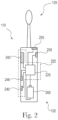
- the toothbrush 110 may also include an electronic circuit 220 that may comprise a microcontroller (not shown), at least one electric load 240, at least a first sensor 250 for providing a first signal indicating a relevant change of a first external condition and an energy source 260.
- the first sensor 250 may provide the first signal, when a respective sensor value crosses a predetermined threshold value, thus indicating the relevant change.
- the sensor is a capacitance sensor.
- the electric toothbrush 110 may include at least a second sensor for monitoring a second external condition and for providing a second signal in case the second signal has changed in a relevant manner. The second sensor is in particular different to the first sensor so that it is sensitive to a relevant change of a different external condition.
- the first sensor 250 is a capacitive sensor, the first sensor 250 is sensitive to changes in its environment, and for example, may detect the presence of the hand of a user in its close proximity.
- the electronic circuit 220 may include a microcontroller and a control circuit 225 for controlling, for example, a display or light emitting elements or an audio unit for reproduction of audible signals.
- the electronic circuit 220 includes at least two electric loads 240, 245 (for example, at least one light emitting element 245 and a display 240) or even more electric loads 240, 245, 246 (including a further light emission element 246).
- the electric load 240 may be one from the group consisting of light emitting elements, information displaying elements, and audio and/or video signal reproducing elements (for example a loudspeaker).
- the handle 120 of the electric toothbrush 115 may include the word "Bluetooth" with light emitting elements above and below the text. In embodiments with two or more electric loads, each of the electric loads may be one from the group previously listed.
- the electric toothbrush 110 may include at least a second sensor 255 for providing a second signal indicating a relevant change of a second external condition different to the first external condition.
- the relevant change may again be determined by a sensor value crossing a predetermined threshold value.
- the electronic circuit 220 may be coupled to the energy source 260 and to the first sensor 250 (and in some embodiments, to a second sensor 255).
- FIG. 1 further depicts mobile computing device 200 including an application program ("app") 210, for example an oral care or ORAL B app, for causing the mobile computing device to display information derived from the data signals 160, 165 and related to the toothbrush.
- the application program 210 may also display information not related to electric toothbrush 110 or oral care in general, but that a user finds interesting, for example, news, weather or sports information.
- apps application program
- Each operating system associated with mobile computing devices typically has its own “app” distribution system, often referred to as an "App Store”.
- APPLE sells and distributes apps through its iTunes ® online distribution platform.
- ANDROID based devices use the 'Play Store" to distribute apps.
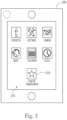
- FIG. 3 depicts an interface for accessing the ORAL B application 210.
- the mobile computing device 200 is configured to provide an interface (for example, via the operating system).
- the interface may be configured to provide the user with access to one or more computer applications 215 that are stored on the mobile computing device 200.
- the mobile computing device 200 may include and provide options to access a contacts application, a settings application, a camera application, a maps application, a calendar application, a clock application and an oral care application.
- the oral care application 210 may be accessed by selection of the ORAL B application option.
- the electric toothbrush 110 is positioned in or on charging base 115 waiting for a relevant change of an external condition. At this time, the toothbrush is in a "sleep mode."
- a sleep mode is a mode of the electric toothbrush 110 in which it at least consumes in average less energy from an energy source than in any other mode, in particular the toothbrush 110 may not consume any energy at all in the sleep mode. The provision of a sleep mode at least provides a slower discharge of the energy source in comparison to a toothbrush always being in an ON mode.
- the electronic circuit 220 may be completely switched off in the sleep mode and the first signal (for example, provided by a light sensor) may comprise enough energy content to activate the electronic circuit 220.
- the electronic circuit 220 may have switched off main energy consuming parts such as a DC-DC converter and may in the sleep mode only monitor the first sensor 250, which can be realized with very low energy consumption.
- the electric toothbrush 110 may be configured to automatically initiate a "ready mode" when a relevant change of at least a first external condition is detected.
- a ready mode is a pre-brushing mode in which the electric toothbrush 110 consumes in average more energy than in the sleep mode.
- the ready mode is initiated upon a first signal from the first sensor 250 indicating that the first external condition has changed in a relevant manner (i.e. a threshold value was crossed). Examples of relevant changes of external conditions include proximity of a user's hand or gripping of the toothbrush handle (capacitive sensor). For purposes of the present disclosure, a signal indicating a relevant change of an external condition does not include turning on the motor of the toothbrush.
- This ready mode enables establishing the wireless connection in the background and preparing the oral care system without interference to the normal brushing routine of the user.
- the motor is still switched off during this time period till the user is ready to brush after applying paste or water to the brush head.
- a series of actions may be automatically started after initialization of the ready mode.
- the ready mode may include a short activation of at least one light emission element 245 for a preset period so that, for example, the user is informed that the "toothbrush is ready" via light emitting element(s) on the handle 120 of the toothbrush 110.
- the ready mode may also include enabling a wireless communication between the toothbrush 110 and the mobile computing device 200.
- the Bluetooth software in the toothbrush
- the ready mode may also include the exchanging of data between the toothbrush 110 and the mobile computing device 200 as part of the wireless communication.
- the toothbrush 110 is talking or communicating with the mobile computing device 200 and can begin sending internal data from the toothbrush 110 to the device without starting the application 210 on the device, i.e. the application 210 is running in the background.
- Examples of the type of internal data include the speed, amplitude, or frequency of movement of a bristle holder (or toothbrush head); timing information relating to the number of times the toothbrush has been used, a duration for each use and a time for each use; the force exerted by the toothbrush on a tooth, the status of a feature or function of the toothbrush (for example, the toothbrush is energized or a feature of the toothbrush is activated or deactivated); the status of a power source (for example, a battery that is fully charged, 50% charged, or needs to be recharged or replaced); the type of brush head or cleaning elements (for example, massaging elements, polishing elements, etc.) that are coupled to the electric toothbrush, and/or the configuration of the bristle field, etc; and any aspect concerning the features of the toothbrush, the performance of the toothbrush, or the status of the toothbrush or any of its components.
- the internal or usage data may also include regimen data for a user or multiple users.
- the multiple users each with his or her own oral care implements including a motorized head, can use one motorized handle.
- the implement can include a sensor, which can identify the user along with indicating the relevant change in internal condition.
- the implement and/or the motorized handle can use RFID or NFC communication.
- the ready mode may be limited to a predetermined period of time, for example, in one embodiment the ready mode may be from about 1 second to about 30 seconds, in another embodiment from about 1 second to about 20 seconds and in another embodiment from about 1 second to about 10 seconds.
- the ready mode may also be terminated at any time by pressing button 130 to switch the toothbrush ON or placing the toothbrush 110 back on the charging base 115.
- the ready mode may also include automatically establishing a wireless communication between the toothbrush 110 and the mobile computing device 200 in response to activation of the ready mode.
- the Bluetooth module in the toothbrush 110 may turn on and begin searching for a partner, i.e. the mobile computing device 200.
- the application 210 turns on the mobile computing device's Bluetooth module and also sends commands to the toothbrush's Bluetooth module. Thereafter, the application 210 is launched to the foreground of the mobile computing device 200 as part of the ready mode.
- This automatic launching of the application provides a very desirable user experience. For example, prior to beginning to brush, the application is launched and can begin providing coaching, data, targets, goals, brushing history and other features of the application before the motor of the brush is turned on. Additionally, since the communication is bidirectional, the application 210 can transmit data back to the toothbrush 110 which can be used to configure features of the toothbrush 110 and allow the user to change or adapt the operation of the toothbrush thru use of the application 210.
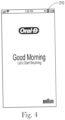
- a display of the mobile computing device 200 may output a special application screen, for example "Good Morning - - Let's start brushing", in the case where the application 210 is launched in response to a relevant change in an external condition.
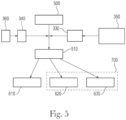
- Fig. 5 is a flow chart diagram schematically depicting an example embodiment of operating an oral care system in accordance with the present disclosure.
- the electric toothbrush In a first state 500, the electric toothbrush is in a sleep mode in which the electronic circuit in average consumes less energy than in a ready mode.
- the electric toothbrush switches into a ready mode 510.
- the electric toothbrush may switch into the ready mode 510 also on reception of a second signal from a second sensor 340 indicating a change of a second external condition 360.
- the oral care system may perform at least the following prior to a user turning the toothbrush on, switching on one or more of the electric loads for a preset period 610; enabling a wireless communication link between toothbrush and device 620; and exchanging data between toothbrush and device as part of the wireless communication 630; the latter two partially taking place as part of the environment 700 of the mobile computing device.
- a method of operating an oral care system includes the steps of a) providing an electric toothbrush 110 and a mobile computing device 200 that stores a computer application 210; b) activating a ready mode in response to a signal indicating a relevant change of an external condition; and c) triggering the system to perform at least one of the following: switching on one or more of the electric loads for a preset period; enabling or establishing a wireless communication between the electric toothbrush and the mobile computing device; or exchanging data between toothbrush and device as part of the wireless communication.
Landscapes
- Health & Medical Sciences (AREA)
- Engineering & Computer Science (AREA)
- Public Health (AREA)
- Life Sciences & Earth Sciences (AREA)
- Animal Behavior & Ethology (AREA)
- General Health & Medical Sciences (AREA)
- Epidemiology (AREA)
- Veterinary Medicine (AREA)
- Dentistry (AREA)
- General Engineering & Computer Science (AREA)
- Physics & Mathematics (AREA)
- General Physics & Mathematics (AREA)
- Automation & Control Theory (AREA)
- Brushes (AREA)
Description
- The present disclosure relates to an oral care system. More particularly, the present disclosure relates to techniques, methods, systems and mechanisms for performing wireless communication between an electric toothbrush and a mobile computing device.
- Consumers use numerous personal care products in their bathrooms, where space can be very limited. There is a desire to provide products and methods for delivering useful personal care (or other) information to consumers before, during, or after use of one or more personal care products. As is now known in the computing and mobile handset and smart phone industries, a new computing paradigm is emerging and is being driven by the proliferation of software applications now commonly known as apps for handheld or mobile devices. This proliferation is directly tied to consumer adoption of smart phones and tablets. Companies are now creating their own unique apps that relate to and in some cases interact with products and/or services offered by the company, including personal care products. Even when free, it is often difficult to achieve a high penetration rate and consumer adoption rate. As such, there remains a need for an app that works with an electric toothbrush that can provide consumers with increased flexibility, improved interoperability and improved user experience prior to the start of brushing.
- Document
WO 2014/016718 A1 describes a tooth cleaning device that comprises a communication element for supporting a bi-directional short range communication with a wireless range of no more than 50 cm. A communication controller comprises a connection controller which automatically establishes a short range communication link with an external communication entity in response to a detection of the external communication entity being within range of the communication element. A data communication controller communicates data to the external communication entity over the short range communication link where the data includes usage data for the tooth cleaning device. - Document
US 2013/0125326 A1 describes a personal hygiene device that includes a toothbrush; and a display for displaying interactive representations, which are controllable from the display by means of a control device. Removal of the device from a charging station is detected by detecting a decrease of current in the charging coil. Wireless protocol transmission to a display is started up. - The invention is an oral care system in accordance with claim 1.
- These and other features, aspects and advantages of specific embodiments will become evident to those skilled in the art from a reading of the present disclosure.
- While the specification concludes with claims which particularly point out and distinctly claim the present invention, it is believed that the present invention will be better understood from the following description of preferred embodiments, taken in conjunction with the accompanying drawings, in which like reference numerals identify identical elements and wherein:
-
FIG. 1 is an illustration of an oral care system according to one or more embodiments illustrated and described herein; -
FIG. 3 depicts an interface on a mobile computing device for accessing a computer application according to one or more embodiments illustrated and described herein; -
FIG. 4 depicts an example user interface that is displayed by a mobile computing device upon making a wireless connection according to one or more embodiments illustrated and described herein; and -
FIG. 5 is a flow chart indicating an example embodiment of operating an oral care system according to one or more embodiments illustrated and described herein. - The following text sets forth a broad description of numerous different embodiments of the present disclosure. The description is to be construed as exemplary only and does not describe every possible embodiment since describing every possible embodiment would be impractical, if not impossible.
- According to the present disclosure, one example of an oral care system includes an electric toothbrush and a mobile computing device. Although the embodiments described herein in detail are directed toward a toothbrush, the disclosure is applicable to any personal hygiene device, such as for example an oral irrigator, a flossing device, an electric shaver, an electric epilator, a skin treatment device, etc or any other personal hygiene device. In addition, toothbrushes that have manually operated heads, but include electronics, are included in the term "electric" toothbrush, such as for example, a manual toothbrush with electronics embedded in the handle. Moreover, the term toothbrush includes handles (motorized handles if the toothbrush has an motorized head) having other oral care implements attached thereto, such as tongue cleaners, floss attachments, gum massagers, polishing elements, etc. Therefore use of the term toothbrush includes a toothbrush handle having an attachment that may not be a "brush."
- In one embodiment, wireless communication between the toothbrush and the mobile computing device may be established through Bluetooth or Bluetooth LE. Bluetooth LE is intended to provide considerably reduced power consumption and cost while maintaining a similar communication range. A device that can implement both is known as Bluetooth 4.0 dual-mode devices. Bluetooth technology is fundamentally aimed at performing communication over a short distance, for example, within 10 m. This range can be increased to 100 m (for Bluetooth) and 50 m (for Bluetooth LE) according to the applied output power. According to the Bluetooth standard, data transmission using Bluetooth has a maximum rate of 64 Kbps in the case of synchronous (voice) channel transmission and a maximum rate of 723.2 Kbps in the case of asynchronous (data) channel transmission. Further, because Bluetooth technology uses frequency-hopping spread spectrum technology, security is improved in comparison with other existing wireless communication protocols. Moreover, since Bluetooth technology can transmit voices as well as character data using Continuous Variable Slope Delta (CVSD) modulation, voice coding is improved.
- The specifications of Bluetooth provide for the possibility of remotely controlling a remote device over a bidirectional wireless connection. In practice, the remote device is usually a mobile telephone or a computer peripheral, however the Bluetooth specifications are not limited to appliances of that type and they include in particular profiles that are compatible with transmitting high-quality coded multichannel audio streams (advanced audio distribution profile (A2DP)), and also profiles that provide interoperability of Bluetooth appliances with audio and video control functions (audio video remote control profile (AVRCP)).
- Bluetooth technology is particularly advantageous given its universal and evolving nature, the existence of numerous functions, and also of numerous components specially designed for implementing it, which components are also inexpensive. For example, mobile computing devices having any one of the following operating systems support Bluetooth LE, iOS, Android, Windows Phone and BlackBerry, OS X and Windows 8.
- Nevertheless, this choice of technology is not limiting in anyway, and the wireless connection may be implemented by means of other wireless transmission techniques, providing such techniques present a data rate that is sufficient to enable a continuous data stream to be transmitted (e.g. high-quality digital audio or video signals): this applies for example to the so-called "WiFi" IEEE 802.11 standard (ISO/IEC 8802-11).
- As used herein, the term "memory" refers to a volatile or non-volatile storage media, such as ROM, SRAM, DRAM, and/or other types of RAM, flash memory, secure digital (SD) memory, registers, compact discs (CD), digital versatile discs (DVD), and/or other types of non-transitory computer-readable mediums. As is well known in the art, memory may include a plurality of distributed memory coupled via electrical circuitry. These non-transitory computer-readable mediums may reside within the mobile computing device and/or external to the mobile computing device. Additionally, the memory component may be configured to store operating logic and a computer application.
- As used herein, the term "mobile computing device" may include a mobile telephone, personal digital assistant, laptop computer, tablet, a game console (for example, NINTENDO DS, NINTENDO 3DS or SONY PSP), smart phone (for example, iPhone® or Android phone), netbooks, GPS devices, e-readers, iPads® and/or other mobile device that can be connected to the Internet or one or more computer networks. A mobile computing device may have a memory that stores a computer application. A mobile computing device may also be realized by a proprietary device.
- Referring now to
FIG. 1 , anoral care system 100 is shown including a rechargeableelectric toothbrush 110 and amobile computing device 200 in accordance with one embodiment of the present disclosure. In one embodiment, theelectric toothbrush 110 includes acharging base 115, amotorized handle 120, and ahead 125. In one embodiment, thetoothbrush 110 is arranged to be positioned in thecharging base 115 which can transfer power to thetoothbrush 110 in order to charge a battery of thetoothbrush 110. In one embodiment,toothbrush 110 may also include a user interface, for example abutton 130, that can be activated by a user. Toothbrush 110 may also include wireless communications capabilities to communicate withmobile computing device 200 viawireless data signals Wireless communication toothbrush 110 and themobile computing device 200 is a bidirectional communication allowing data to be communicated both to and from thetoothbrush 110, for example through Bluetooth, WiFi, WLAN, LAN, cellular, or any type of radio communication. - In one embodiment, a Bluetooth module (not shown) in the
toothbrush 110 performs Bluetooth communication with a Bluetooth module (not shown) of themobile computing device 200 according to Bluetooth protocol. However, before toothbrush 110 andmobile computing device 200 are able to communicate with each other through Bluetooth, thetoothbrush 110 and themobile computing device 200 must go through an initial, one-time pairing procedure using Bluetooth LE "pairing procedure" that allows one device to associate itself with another. According to the present disclosure, the traditional Bluetooth pairing process where you need to enter a PIN code is not used. Bluetooth LE provides the possibility to exchange data without entering a PIN code. In order to "pair" thetoothbrush 110 and themobile computing device 200 according to the present disclosure, the user must first switch ontoothbrush 110 and the application located on themobile computing device 210 waits for thetoothbrush 110 to save the UUID (Unique ID) of the toothbrush in order to recognize the toothbrush automatically during subsequent uses. - As seen in
FIG. 2 , thetoothbrush 110 may also include anelectronic circuit 220 that may comprise a microcontroller (not shown), at least oneelectric load 240, at least afirst sensor 250 for providing a first signal indicating a relevant change of a first external condition and anenergy source 260. In one embodiment, thefirst sensor 250 may provide the first signal, when a respective sensor value crosses a predetermined threshold value, thus indicating the relevant change. The sensor is a capacitance sensor. In some embodiments, theelectric toothbrush 110 may include at least a second sensor for monitoring a second external condition and for providing a second signal in case the second signal has changed in a relevant manner. The second sensor is in particular different to the first sensor so that it is sensitive to a relevant change of a different external condition. Thefirst sensor 250 is a capacitive sensor, thefirst sensor 250 is sensitive to changes in its environment, and for example, may detect the presence of the hand of a user in its close proximity. - Still referring to
FIG. 2 , theelectronic circuit 220 may include a microcontroller and acontrol circuit 225 for controlling, for example, a display or light emitting elements or an audio unit for reproduction of audible signals. In some embodiments, theelectronic circuit 220 includes at least twoelectric loads 240, 245 (for example, at least onelight emitting element 245 and a display 240) or even moreelectric loads electric load 240 may be one from the group consisting of light emitting elements, information displaying elements, and audio and/or video signal reproducing elements (for example a loudspeaker). In one example, thehandle 120 of theelectric toothbrush 115 may include the word "Bluetooth" with light emitting elements above and below the text. In embodiments with two or more electric loads, each of the electric loads may be one from the group previously listed. - In another embodiment, the
electric toothbrush 110 may include at least asecond sensor 255 for providing a second signal indicating a relevant change of a second external condition different to the first external condition. The relevant change may again be determined by a sensor value crossing a predetermined threshold value. Theelectronic circuit 220 may be coupled to theenergy source 260 and to the first sensor 250 (and in some embodiments, to a second sensor 255). -
FIG. 1 further depictsmobile computing device 200 including an application program ("app") 210, for example an oral care or ORAL B app, for causing the mobile computing device to display information derived from the data signals 160, 165 and related to the toothbrush. In another embodiment, theapplication program 210 may also display information not related toelectric toothbrush 110 or oral care in general, but that a user finds interesting, for example, news, weather or sports information. Each operating system associated with mobile computing devices typically has its own "app" distribution system, often referred to as an "App Store". APPLE sells and distributes apps through its iTunes® online distribution platform. ANDROID based devices use the 'Play Store" to distribute apps. In addition, there are many web sites that provide the ability to download associated apps, either through direct download or a link to an associated distribution system. -
FIG. 3 depicts an interface for accessing theORAL B application 210. As illustrated, themobile computing device 200 is configured to provide an interface (for example, via the operating system). The interface may be configured to provide the user with access to one ormore computer applications 215 that are stored on themobile computing device 200. As illustrated, themobile computing device 200 may include and provide options to access a contacts application, a settings application, a camera application, a maps application, a calendar application, a clock application and an oral care application. As illustrated, theoral care application 210 may be accessed by selection of the ORAL B application option. - In one embodiment, the
electric toothbrush 110 is positioned in or on chargingbase 115 waiting for a relevant change of an external condition. At this time, the toothbrush is in a "sleep mode." A sleep mode is a mode of theelectric toothbrush 110 in which it at least consumes in average less energy from an energy source than in any other mode, in particular thetoothbrush 110 may not consume any energy at all in the sleep mode. The provision of a sleep mode at least provides a slower discharge of the energy source in comparison to a toothbrush always being in an ON mode. In some embodiments, theelectronic circuit 220 may be completely switched off in the sleep mode and the first signal (for example, provided by a light sensor) may comprise enough energy content to activate theelectronic circuit 220. Alternatively, theelectronic circuit 220 may have switched off main energy consuming parts such as a DC-DC converter and may in the sleep mode only monitor thefirst sensor 250, which can be realized with very low energy consumption. - According to the present disclosure, the
electric toothbrush 110 may be configured to automatically initiate a "ready mode" when a relevant change of at least a first external condition is detected. A ready mode is a pre-brushing mode in which theelectric toothbrush 110 consumes in average more energy than in the sleep mode. In one embodiment, the ready mode is initiated upon a first signal from thefirst sensor 250 indicating that the first external condition has changed in a relevant manner (i.e. a threshold value was crossed). Examples of relevant changes of external conditions include proximity of a user's hand or gripping of the toothbrush handle (capacitive sensor). For purposes of the present disclosure, a signal indicating a relevant change of an external condition does not include turning on the motor of the toothbrush. - Therefore it is beneficial to have a ready mode additionally to the operating mode and the sleep mode to save energy. This ready mode enables establishing the wireless connection in the background and preparing the oral care system without interference to the normal brushing routine of the user. The motor is still switched off during this time period till the user is ready to brush after applying paste or water to the brush head.
- In one embodiment, a series of actions may be automatically started after initialization of the ready mode. For example, when a relevant change of the first external condition is indicated (for example, removing the
toothbrush 110 from the charging base 115) the ready mode may include a short activation of at least onelight emission element 245 for a preset period so that, for example, the user is informed that the "toothbrush is ready" via light emitting element(s) on thehandle 120 of thetoothbrush 110. - In one embodiment, the ready mode may also include enabling a wireless communication between the
toothbrush 110 and themobile computing device 200. For example, the Bluetooth software (in the toothbrush) may turn on the antenna and begin searching for a partner, i.e. themobile computing device 200. Once thetoothbrush 110 and themobile computing device 200 are ready to connect, the ready mode may also include the exchanging of data between thetoothbrush 110 and themobile computing device 200 as part of the wireless communication. In other words, thetoothbrush 110 is talking or communicating with themobile computing device 200 and can begin sending internal data from thetoothbrush 110 to the device without starting theapplication 210 on the device, i.e. theapplication 210 is running in the background. - Examples of the type of internal data include the speed, amplitude, or frequency of movement of a bristle holder (or toothbrush head); timing information relating to the number of times the toothbrush has been used, a duration for each use and a time for each use; the force exerted by the toothbrush on a tooth, the status of a feature or function of the toothbrush (for example, the toothbrush is energized or a feature of the toothbrush is activated or deactivated); the status of a power source (for example, a battery that is fully charged, 50% charged, or needs to be recharged or replaced); the type of brush head or cleaning elements (for example, massaging elements, polishing elements, etc.) that are coupled to the electric toothbrush, and/or the configuration of the bristle field, etc; and any aspect concerning the features of the toothbrush, the performance of the toothbrush, or the status of the toothbrush or any of its components. In some embodiments, the internal or usage data may also include regimen data for a user or multiple users.
- In one embodiment, the multiple users, each with his or her own oral care implements including a motorized head, can use one motorized handle. The implement can include a sensor, which can identify the user along with indicating the relevant change in internal condition. In one example, the implement and/or the motorized handle can use RFID or NFC communication.
- In one embodiment, the ready mode may be limited to a predetermined period of time, for example, in one embodiment the ready mode may be from about 1 second to about 30 seconds, in another embodiment from about 1 second to about 20 seconds and in another embodiment from about 1 second to about 10 seconds. The ready mode may also be terminated at any time by pressing
button 130 to switch the toothbrush ON or placing thetoothbrush 110 back on the chargingbase 115. - In another embodiment, the ready mode may also include automatically establishing a wireless communication between the
toothbrush 110 and themobile computing device 200 in response to activation of the ready mode. For example, the Bluetooth module in thetoothbrush 110 may turn on and begin searching for a partner, i.e. themobile computing device 200. Theapplication 210 turns on the mobile computing device's Bluetooth module and also sends commands to the toothbrush's Bluetooth module. Thereafter, theapplication 210 is launched to the foreground of themobile computing device 200 as part of the ready mode. This automatic launching of the application provides a very desirable user experience. For example, prior to beginning to brush, the application is launched and can begin providing coaching, data, targets, goals, brushing history and other features of the application before the motor of the brush is turned on. Additionally, since the communication is bidirectional, theapplication 210 can transmit data back to thetoothbrush 110 which can be used to configure features of thetoothbrush 110 and allow the user to change or adapt the operation of the toothbrush thru use of theapplication 210. - In one embodiment, as shown in
FIG. 4 , a display of themobile computing device 200 may output a special application screen, for example "Good Morning - - Let's start brushing", in the case where theapplication 210 is launched in response to a relevant change in an external condition. -
Fig. 5 is a flow chart diagram schematically depicting an example embodiment of operating an oral care system in accordance with the present disclosure. In afirst state 500, the electric toothbrush is in a sleep mode in which the electronic circuit in average consumes less energy than in a ready mode. In the event that a change of a firstexternal condition 350 triggers afirst sensor 330 to provide a first signal, the electric toothbrush switches into aready mode 510. Optionally, the electric toothbrush may switch into theready mode 510 also on reception of a second signal from asecond sensor 340 indicating a change of a secondexternal condition 360. After activating theready mode 510, the oral care system may perform at least the following prior to a user turning the toothbrush on, switching on one or more of the electric loads for apreset period 610; enabling a wireless communication link between toothbrush anddevice 620; and exchanging data between toothbrush and device as part of thewireless communication 630; the latter two partially taking place as part of theenvironment 700 of the mobile computing device. - A method of operating an oral care system is also disclosed in the present disclosure. In one embodiment, such a method includes the steps of a) providing an
electric toothbrush 110 and amobile computing device 200 that stores acomputer application 210; b) activating a ready mode in response to a signal indicating a relevant change of an external condition; and c) triggering the system to perform at least one of the following: switching on one or more of the electric loads for a preset period; enabling or establishing a wireless communication between the electric toothbrush and the mobile computing device; or exchanging data between toothbrush and device as part of the wireless communication. - The dimensions and values disclosed herein are not to be understood as being strictly limited to the exact numerical values recited. Instead, unless otherwise specified, each such dimension is intended to mean both the recited value and a functionally equivalent range surrounding that value. For example, a dimension disclosed as "40 mm" is intended to mean "about 40 mm".
- While particular embodiments of the present invention have been illustrated and described, it would be obvious to those skilled in the art that various other changes and modifications can be made without departing from the scope of the invention. It is therefore intended to cover in the appended claims all such changes and modifications that are within the scope of this invention.
Claims (8)
- An oral care system (100), comprising:an electric toothbrush (110) having an energy source (260); an electronic circuit (220), in particular including a microcontroller, and one or more electric loads (240); and at least a first sensor (250) for providing a first signal indicating a relevant change of a first external condition; anda mobile computing device (200) that stores a computer application (210);wherein in response to a relevant change in an external condition indicated by the first signal, the electronic circuit (220) is arranged to activate a ready mode, the ready mode causing the system (100) to enable or establish a wireless communication link between toothbrush (110) and the mobile computing device (200), in particular wherein the communication is bi-directional;characterized in that the first sensor (250) is a capacitance sensor.
- The oral care system in accordance with claim 1, wherein the electric toothbrush (110) comprises a second sensor (225) for providing a second signal indicating a relevant change of a second external condition, which second sensor (225) is different to the first sensor(250).
- The oral care system in accordance with anyone of claims 1 to 2, wherein in response to a relevant change in an external condition, the electronic circuit (220) is arranged to start exchanging data between toothbrush (110) and device (200) as part of the wireless communication.
- The oral care system in accordance with anyone of claims 1 to 3, wherein in response to a relevant change in an external condition, the electronic circuit (220) is arranged to switch on one or more of the electric loads (240; 245) for a preset period.
- The oral care system in accordance with anyone of claims 1 to 4, wherein one of the one or more electric loads (240; 245; 246) is a light emission element such as an LED, a display, or an audio and/or video signal reproducing element.
- The oral care system in accordance with anyone of claims 1 to 5, wherein in response to a relevant change in an external condition, the electronic circuit (220) is arranged to trigger the launch the application (210) to the foreground of the mobile computing device (200).
- The oral care system in accordance with anyone of claims 1 to 6, wherein the electronic circuit (220) is arranged to limit the ready mode to a predetermined time, in particular where the predetermined time period is in between 1 second and 240 seconds.
- The oral care system in accordance with anyone of claims 1 to 7, wherein the relevant change is determined by a sensor value crossing a predetermined threshold value.
Applications Claiming Priority (2)
| Application Number | Priority Date | Filing Date | Title |
|---|---|---|---|
| US201461942212P | 2014-02-20 | 2014-02-20 | |
| PCT/IB2015/051267 WO2015125100A1 (en) | 2014-02-20 | 2015-02-19 | Oral care system |
Publications (3)
| Publication Number | Publication Date |
|---|---|
| EP3107485A1 EP3107485A1 (en) | 2016-12-28 |
| EP3107485B1 EP3107485B1 (en) | 2020-12-16 |
| EP3107485B2 true EP3107485B2 (en) | 2024-01-24 |
Family
ID=52629642
Family Applications (1)
| Application Number | Title | Priority Date | Filing Date |
|---|---|---|---|
| EP15708340.3A Active EP3107485B2 (en) | 2014-02-20 | 2015-02-19 | Oral care system |
Country Status (7)
| Country | Link |
|---|---|
| US (1) | US20150230899A1 (en) |
| EP (1) | EP3107485B2 (en) |
| JP (1) | JP7073042B2 (en) |
| CN (1) | CN106029003B (en) |
| CA (1) | CA2937083C (en) |
| ES (1) | ES2846743T5 (en) |
| WO (1) | WO2015125100A1 (en) |
Families Citing this family (41)
| Publication number | Priority date | Publication date | Assignee | Title |
|---|---|---|---|---|
| US9750586B2 (en) * | 2013-07-09 | 2017-09-05 | Xiusolution Co., Ltd. | Attachable toothbrush'S posture or movement tracking device |
| GB2538304B (en) | 2015-05-15 | 2017-11-22 | Dyson Technology Ltd | Cleaning appliance |
| ES2820704T3 (en) * | 2015-06-30 | 2021-04-22 | Braun Gmbh | Personal hygiene system |
| JP6690166B2 (en) * | 2015-09-25 | 2020-04-28 | サンスター株式会社 | Toothbrush module and toothbrush support system |
| US20170097758A1 (en) * | 2015-10-05 | 2017-04-06 | The Gillette Company | Systems and methods for device tuning |
| US10298471B2 (en) | 2015-10-05 | 2019-05-21 | The Gillette Company Llc | Systems and methods for providing device usage data |
| USD795419S1 (en) * | 2016-03-15 | 2017-08-22 | Onvi, Inc. | Dental instrument |
| CN105976587A (en) * | 2016-05-24 | 2016-09-28 | 张程 | System and method for acquiring tooth brushing behavior data |
| CN107432776A (en) * | 2016-05-27 | 2017-12-05 | 深圳减字科技有限公司 | A kind of intelligent electric toothbrush and intelligent electric toothbrush control system |
| US10588400B2 (en) * | 2016-06-27 | 2020-03-17 | L'oreal | System to promote optimum performance of handheld cosmetic device |
| WO2018065374A1 (en) * | 2016-10-07 | 2018-04-12 | Unilever Plc | Smart toothbrush |
| GB2555417B (en) | 2016-10-26 | 2020-01-22 | Dyson Technology Ltd | Cleaning Appliance |
| GB2555418B (en) | 2016-10-26 | 2019-03-06 | Dyson Technology Ltd | Cleaning Appliance |
| US10835028B2 (en) | 2016-11-14 | 2020-11-17 | Colgate-Palmolive Company | Oral care system and method |
| US11043141B2 (en) | 2016-11-14 | 2021-06-22 | Colgate-Palmolive Company | Oral care system and method |
| US11213120B2 (en) | 2016-11-14 | 2022-01-04 | Colgate-Palmolive Company | Oral care system and method |
| US10582764B2 (en) | 2016-11-14 | 2020-03-10 | Colgate-Palmolive Company | Oral care system and method |
| US12690664B2 (en) | 2016-11-14 | 2026-07-28 | Colgate-Palmolive Company | Oral care system and method |
| US11361672B2 (en) | 2016-11-14 | 2022-06-14 | Colgate-Palmolive Company | Oral care system and method |
| CN106618775A (en) * | 2016-11-14 | 2017-05-10 | 舒可士(深圳)科技有限公司 | Intelligent electric toothbrush system |
| EP3549261A1 (en) * | 2016-12-01 | 2019-10-09 | Koninklijke Philips N.V. | Methods and systems for a capacitive handle |
| DE102016123345B3 (en) | 2016-12-02 | 2018-05-09 | Tilman Kraus | Device for drying tooth or bone surfaces |
| WO2018115964A1 (en) * | 2016-12-19 | 2018-06-28 | Allan Coopersmith | Dental device |
| CN106725960A (en) * | 2016-12-28 | 2017-05-31 | 苏州亮磊知识产权运营有限公司 | A kind of teeth cleaning system based on user behavior management |
| KR102030421B1 (en) * | 2017-12-29 | 2019-11-18 | 동의대학교 산학협력단 | Teeth management educational system including mirror display and toothbrush |
| EP4327776A3 (en) * | 2018-01-31 | 2024-05-01 | Quip NYC Inc. | A toothbrush system |
| GB2575022B (en) | 2018-06-20 | 2020-09-30 | Dyson Technology Ltd | Dental treatment appliance |
| GB2574859B (en) | 2018-06-20 | 2020-10-28 | Dyson Technology Ltd | Motorised toothbrush with fluid delivery |
| DE102019120648B4 (en) | 2018-08-02 | 2026-02-12 | Ranir, Llc | Pressure sensor system and method for an electric toothbrush |
| US20200411161A1 (en) * | 2019-06-25 | 2020-12-31 | L'oreal | User signaling through a personal care device |
| US11642191B2 (en) * | 2019-08-20 | 2023-05-09 | Jennifer Richardson | Dental audio drill |
| EP3788956A1 (en) * | 2019-09-03 | 2021-03-10 | Koninklijke Philips N.V. | Controller |
| US20210085068A1 (en) * | 2019-09-19 | 2021-03-25 | L'oreal | Guided routines for smart personal care devices |
| CN110840608B (en) * | 2019-11-05 | 2022-05-10 | 爱马斯克(深圳)科技有限公司 | Electric toothbrush and control method thereof |
| CN110687818A (en) * | 2019-11-06 | 2020-01-14 | 浙江工商职业技术学院 | A smart home system |
| CN112842568B (en) * | 2021-03-23 | 2023-07-25 | 桂林市啄木鸟医疗器械有限公司 | Root canal preparation machine |
| CN113317899B (en) * | 2021-05-31 | 2023-05-23 | 余姚永耀光电科技有限公司 | Electric toothbrush for children in science and education |
| ES3056405T3 (en) | 2021-08-06 | 2026-02-20 | Braun Gmbh | Electric toothbrush and universal base therefor |
| CN117179936A (en) * | 2022-05-31 | 2023-12-08 | 广州星际悦动股份有限公司 | Control method, device and storage medium of oral cleaning system |
| CN117462286A (en) * | 2023-11-24 | 2024-01-30 | 广州星际悦动股份有限公司 | Interactive control methods, devices, electronic devices, oral care devices and media |
| CN118659708B (en) * | 2024-08-14 | 2025-02-25 | 深圳术叶创新科技有限公司 | Electric toothbrush control method, system, electric toothbrush and storage medium |
Family Cites Families (40)
| Publication number | Priority date | Publication date | Assignee | Title |
|---|---|---|---|---|
| JPS62190527U (en) * | 1986-05-27 | 1987-12-04 | ||
| US5561881A (en) * | 1994-03-22 | 1996-10-08 | U.S. Philips Corporation | Electric toothbrush |
| US5438726A (en) * | 1994-05-09 | 1995-08-08 | Leite; Francisca P. | Tooth cleaning system with timer and signaling means |
| US5864288A (en) * | 1996-10-11 | 1999-01-26 | Hogan; Rory G. | Talking toothbrush holder |
| DE10159395B4 (en) * | 2001-12-04 | 2010-11-11 | Braun Gmbh | Device for cleaning teeth |
| DE50113242D1 (en) * | 2001-03-14 | 2007-12-20 | Braun Gmbh | DEVICE FOR DENTAL CLEANING |
| GB2394670B (en) * | 2001-07-12 | 2005-01-12 | Water Pik Inc | Dual motor oral hygiene device |
| US20030115694A1 (en) * | 2001-12-20 | 2003-06-26 | Koninklijke Philips Electronics N.V. | Toothbrush having a brushhead portion which contains a memory device for communicating with a microcontroller in a handle portion of the toothbrush or other device |
| US20040098862A1 (en) * | 2002-08-21 | 2004-05-27 | Eveready Battery Company, Inc. | Razor system having razor sensors |
| US20050226446A1 (en) * | 2004-04-08 | 2005-10-13 | Unitron Hearing Ltd. | Intelligent hearing aid |
| US20060040246A1 (en) * | 2004-08-18 | 2006-02-23 | Min Ding | Interactive Toothbrush Game |
| US20090092955A1 (en) * | 2005-06-20 | 2009-04-09 | Jin-Sang Hwang | Tooth brushing pattern analyzing/modifying device, method and system for interactively modifying tooth brushing behavior |
| US7477753B2 (en) * | 2006-01-05 | 2009-01-13 | Insound Medical, Inc. | Hearing aid protective packaging assembly |
| US20080109973A1 (en) * | 2006-11-15 | 2008-05-15 | Farrell Mark E | Personal care products and methods |
| CA2840908C (en) * | 2006-11-15 | 2016-09-13 | The Gillette Company | Personal care products and methods |
| DE102006057492A1 (en) * | 2006-12-06 | 2008-06-12 | Braun Gmbh | Adapter, method for data transmission between a toothbrush and a terminal and electric toothbrush |
| US8201295B2 (en) * | 2007-02-16 | 2012-06-19 | Colgate-Palmolive Company | Oral care implement having user-interactive display and moving head |
| DE102007020100A1 (en) * | 2007-04-26 | 2008-10-30 | Braun Gmbh | Toothbrush and method for wireless unidirectional data transmission |
| US8159352B2 (en) * | 2007-09-11 | 2012-04-17 | Colgate-Palmolive Company | Personal care implement having a display |
| US7336182B1 (en) * | 2007-10-19 | 2008-02-26 | Awarepoint Corporation | Wireless tracking system and method with optical tag removal detection |
| US20090241278A1 (en) * | 2008-04-01 | 2009-10-01 | Marc Lemchen | Apparatus And Method For Monitoring Dental Brushing Performance With A Conventionally Manufactured Toothbrush |
| ES2639429T3 (en) * | 2008-11-20 | 2017-10-26 | Braun Gmbh | Personal hygiene device for the body |
| EP2218559B1 (en) * | 2009-02-13 | 2012-08-15 | Trisa Holding AG | Body care device |
| CA2761432C (en) | 2009-05-08 | 2015-01-20 | The Gillette Company | Personal care systems, products, and methods |
| US20110275424A1 (en) * | 2010-05-07 | 2011-11-10 | Michael Schmid | Personal hygiene system |
| WO2012162058A1 (en) * | 2011-05-20 | 2012-11-29 | Beam Technologies, Llc | Diagnostic oral health care implement and system |
| EP2550935B1 (en) * | 2011-07-25 | 2014-04-23 | Braun GmbH | Personal care device |
| US9009901B2 (en) * | 2011-09-20 | 2015-04-21 | Braun Gmbh | Oral care devices having automatic mode selection |
| WO2013044184A1 (en) * | 2011-09-23 | 2013-03-28 | Beam Technologies, Llc | Oral health care implement and system with proximity sensor |
| US9724001B2 (en) * | 2011-10-14 | 2017-08-08 | Beam Ip Lab Llc | Oral health care implement and system with oximetry sensor |
| US20130125327A1 (en) * | 2011-11-17 | 2013-05-23 | Braun Gmbh | Body Care Appliance For Personal Needs |
| US20130125326A1 (en) * | 2011-11-17 | 2013-05-23 | Braun Gmbh | Personal Hygiene Implement For Personal Use |
| EP2617319A1 (en) * | 2012-01-17 | 2013-07-24 | Braun GmbH | Head portion and handle portion of an oral care device |
| EP2618590B8 (en) * | 2012-01-20 | 2015-02-18 | Braun GmbH | A personal care appliance kit |
| US20130247321A1 (en) * | 2012-03-06 | 2013-09-26 | Gary Steven Sichau | Pressure sensing toothbrush |
| WO2014016718A1 (en) | 2012-07-25 | 2014-01-30 | Koninklijke Philips N.V. | Tooth cleaning device and method of operation therefor |
| US9498053B2 (en) * | 2013-01-22 | 2016-11-22 | Ashtel Studios, Inc. | Apparatus for capturing brushing habits |
| US9282811B2 (en) * | 2013-06-13 | 2016-03-15 | L'oreal | Indicator system for replacement of a brush portion of a power skin brush |
| US10172443B2 (en) * | 2013-08-11 | 2019-01-08 | Yong-Jing Wang | Oral care tools and systems |
| US10226314B2 (en) * | 2013-12-12 | 2019-03-12 | Koninklijke Philips N.V. | Toothbrush with variable touch selection system and method of operation thereof |
-
2015
- 2015-02-19 JP JP2016569116A patent/JP7073042B2/en active Active
- 2015-02-19 ES ES15708340T patent/ES2846743T5/en active Active
- 2015-02-19 EP EP15708340.3A patent/EP3107485B2/en active Active
- 2015-02-19 CA CA2937083A patent/CA2937083C/en active Active
- 2015-02-19 CN CN201580009618.7A patent/CN106029003B/en active Active
- 2015-02-19 WO PCT/IB2015/051267 patent/WO2015125100A1/en not_active Ceased
- 2015-02-19 US US14/625,704 patent/US20150230899A1/en not_active Abandoned
Also Published As
| Publication number | Publication date |
|---|---|
| JP7073042B2 (en) | 2022-05-23 |
| ES2846743T3 (en) | 2021-07-29 |
| US20150230899A1 (en) | 2015-08-20 |
| EP3107485A1 (en) | 2016-12-28 |
| ES2846743T5 (en) | 2024-07-09 |
| CA2937083C (en) | 2018-09-25 |
| JP2017509454A (en) | 2017-04-06 |
| CN106029003A (en) | 2016-10-12 |
| CA2937083A1 (en) | 2015-08-27 |
| WO2015125100A1 (en) | 2015-08-27 |
| EP3107485B1 (en) | 2020-12-16 |
| CN106029003B (en) | 2017-11-24 |
Similar Documents
| Publication | Publication Date | Title |
|---|---|---|
| EP3107485B1 (en) | Oral care system | |
| US10904645B2 (en) | Operating mode switching method, wireless sensor and system | |
| CN106937197B (en) | Double-ear wireless earphone and communication control method thereof | |
| KR101752378B1 (en) | Wireless device detection and communication apparatus and system | |
| CN103441784B (en) | A kind of electronic hand loop device and electronics bracelet information transferring method | |
| US20110077056A1 (en) | Method and apparatus for controlling of bluetooth headset | |
| US20140074472A1 (en) | Voice control system with portable voice control device | |
| CN108696946A (en) | A kind of data processing method, charging unit and mobile terminal | |
| CN104732265A (en) | Bluetooth intelligent card chip, Bluetooth intelligent card and Bluetooth connection activation method thereof | |
| EP2592877B1 (en) | Communication apparatus, control method for communication apparatus and program | |
| CN110545499B (en) | Communication method, device and chip, device to be charged, and system | |
| US20140254818A1 (en) | System and method for automatically switching operational modes in a bluetooth earphone | |
| CN105721686A (en) | A recording control method and device | |
| US20170179746A1 (en) | Battery shutdown method and device and mobile terminal | |
| EP3445095A1 (en) | Auxiliary base unit with independent wireless augmentation | |
| CN113545583A (en) | Control method and equipment, hairdressing equipment | |
| CN109347802B (en) | Communication protocol switching method, data transmission method, wireless sensor and system | |
| WO2017074300A1 (en) | Mobile endpoint devices for charging earbuds | |
| CN114448102B (en) | Earphone box, wireless charging method, device and storage medium | |
| CN110544965B (en) | Communication method, device and chip, device to be charged, and system | |
| CN108235820B (en) | A near field communication enabled device | |
| CN206061051U (en) | A kind of bluetooth earphone and the simultaneous interpretation system using which based on simultaneous interpretation | |
| US20200068287A1 (en) | Ear plugs with wireless sound generation and control | |
| WO2016109751A9 (en) | Modular apparatus for providing portable power and managing power consumption | |
| CA2777012C (en) | Wireless communication device and remote user interface device with automatic disconnect apparatus and method |
Legal Events
| Date | Code | Title | Description |
|---|---|---|---|
| PUAI | Public reference made under article 153(3) epc to a published international application that has entered the european phase |
Free format text: ORIGINAL CODE: 0009012 |
|
| STAA | Information on the status of an ep patent application or granted ep patent |
Free format text: STATUS: REQUEST FOR EXAMINATION WAS MADE |
|
| 17P | Request for examination filed |
Effective date: 20160721 |
|
| AK | Designated contracting states |
Kind code of ref document: A1 Designated state(s): AL AT BE BG CH CY CZ DE DK EE ES FI FR GB GR HR HU IE IS IT LI LT LU LV MC MK MT NL NO PL PT RO RS SE SI SK SM TR |
|
| AX | Request for extension of the european patent |
Extension state: BA ME |
|
| DAX | Request for extension of the european patent (deleted) | ||
| STAA | Information on the status of an ep patent application or granted ep patent |
Free format text: STATUS: EXAMINATION IS IN PROGRESS |
|
| 17Q | First examination report despatched |
Effective date: 20180914 |
|
| GRAP | Despatch of communication of intention to grant a patent |
Free format text: ORIGINAL CODE: EPIDOSNIGR1 |
|
| STAA | Information on the status of an ep patent application or granted ep patent |
Free format text: STATUS: GRANT OF PATENT IS INTENDED |
|
| INTG | Intention to grant announced |
Effective date: 20200721 |
|
| GRAS | Grant fee paid |
Free format text: ORIGINAL CODE: EPIDOSNIGR3 |
|
| GRAA | (expected) grant |
Free format text: ORIGINAL CODE: 0009210 |
|
| STAA | Information on the status of an ep patent application or granted ep patent |
Free format text: STATUS: THE PATENT HAS BEEN GRANTED |
|
| AK | Designated contracting states |
Kind code of ref document: B1 Designated state(s): AL AT BE BG CH CY CZ DE DK EE ES FI FR GB GR HR HU IE IS IT LI LT LU LV MC MK MT NL NO PL PT RO RS SE SI SK SM TR |
|
| REG | Reference to a national code |
Ref country code: GB Ref legal event code: FG4D |
|
| REG | Reference to a national code |
Ref country code: DE Ref legal event code: R096 Ref document number: 602015063491 Country of ref document: DE |
|
| REG | Reference to a national code |
Ref country code: IE Ref legal event code: FG4D |
|
| REG | Reference to a national code |
Ref country code: AT Ref legal event code: REF Ref document number: 1344873 Country of ref document: AT Kind code of ref document: T Effective date: 20210115 |
|
| REG | Reference to a national code |
Ref country code: NL Ref legal event code: FP |
|
| PG25 | Lapsed in a contracting state [announced via postgrant information from national office to epo] |
Ref country code: NO Free format text: LAPSE BECAUSE OF FAILURE TO SUBMIT A TRANSLATION OF THE DESCRIPTION OR TO PAY THE FEE WITHIN THE PRESCRIBED TIME-LIMIT Effective date: 20210316 Ref country code: FI Free format text: LAPSE BECAUSE OF FAILURE TO SUBMIT A TRANSLATION OF THE DESCRIPTION OR TO PAY THE FEE WITHIN THE PRESCRIBED TIME-LIMIT Effective date: 20201216 Ref country code: RS Free format text: LAPSE BECAUSE OF FAILURE TO SUBMIT A TRANSLATION OF THE DESCRIPTION OR TO PAY THE FEE WITHIN THE PRESCRIBED TIME-LIMIT Effective date: 20201216 Ref country code: GR Free format text: LAPSE BECAUSE OF FAILURE TO SUBMIT A TRANSLATION OF THE DESCRIPTION OR TO PAY THE FEE WITHIN THE PRESCRIBED TIME-LIMIT Effective date: 20210317 |
|
| REG | Reference to a national code |
Ref country code: AT Ref legal event code: MK05 Ref document number: 1344873 Country of ref document: AT Kind code of ref document: T Effective date: 20201216 |
|
| PG25 | Lapsed in a contracting state [announced via postgrant information from national office to epo] |
Ref country code: BG Free format text: LAPSE BECAUSE OF FAILURE TO SUBMIT A TRANSLATION OF THE DESCRIPTION OR TO PAY THE FEE WITHIN THE PRESCRIBED TIME-LIMIT Effective date: 20210316 Ref country code: SE Free format text: LAPSE BECAUSE OF FAILURE TO SUBMIT A TRANSLATION OF THE DESCRIPTION OR TO PAY THE FEE WITHIN THE PRESCRIBED TIME-LIMIT Effective date: 20201216 Ref country code: LV Free format text: LAPSE BECAUSE OF FAILURE TO SUBMIT A TRANSLATION OF THE DESCRIPTION OR TO PAY THE FEE WITHIN THE PRESCRIBED TIME-LIMIT Effective date: 20201216 |
|
| PG25 | Lapsed in a contracting state [announced via postgrant information from national office to epo] |
Ref country code: HR Free format text: LAPSE BECAUSE OF FAILURE TO SUBMIT A TRANSLATION OF THE DESCRIPTION OR TO PAY THE FEE WITHIN THE PRESCRIBED TIME-LIMIT Effective date: 20201216 |
|
| REG | Reference to a national code |
Ref country code: LT Ref legal event code: MG9D |
|
| REG | Reference to a national code |
Ref country code: ES Ref legal event code: FG2A Ref document number: 2846743 Country of ref document: ES Kind code of ref document: T3 Effective date: 20210729 |
|
| PG25 | Lapsed in a contracting state [announced via postgrant information from national office to epo] |
Ref country code: SK Free format text: LAPSE BECAUSE OF FAILURE TO SUBMIT A TRANSLATION OF THE DESCRIPTION OR TO PAY THE FEE WITHIN THE PRESCRIBED TIME-LIMIT Effective date: 20201216 Ref country code: RO Free format text: LAPSE BECAUSE OF FAILURE TO SUBMIT A TRANSLATION OF THE DESCRIPTION OR TO PAY THE FEE WITHIN THE PRESCRIBED TIME-LIMIT Effective date: 20201216 Ref country code: PT Free format text: LAPSE BECAUSE OF FAILURE TO SUBMIT A TRANSLATION OF THE DESCRIPTION OR TO PAY THE FEE WITHIN THE PRESCRIBED TIME-LIMIT Effective date: 20210416 Ref country code: LT Free format text: LAPSE BECAUSE OF FAILURE TO SUBMIT A TRANSLATION OF THE DESCRIPTION OR TO PAY THE FEE WITHIN THE PRESCRIBED TIME-LIMIT Effective date: 20201216 Ref country code: SM Free format text: LAPSE BECAUSE OF FAILURE TO SUBMIT A TRANSLATION OF THE DESCRIPTION OR TO PAY THE FEE WITHIN THE PRESCRIBED TIME-LIMIT Effective date: 20201216 Ref country code: EE Free format text: LAPSE BECAUSE OF FAILURE TO SUBMIT A TRANSLATION OF THE DESCRIPTION OR TO PAY THE FEE WITHIN THE PRESCRIBED TIME-LIMIT Effective date: 20201216 Ref country code: CZ Free format text: LAPSE BECAUSE OF FAILURE TO SUBMIT A TRANSLATION OF THE DESCRIPTION OR TO PAY THE FEE WITHIN THE PRESCRIBED TIME-LIMIT Effective date: 20201216 |
|
| PG25 | Lapsed in a contracting state [announced via postgrant information from national office to epo] |
Ref country code: PL Free format text: LAPSE BECAUSE OF FAILURE TO SUBMIT A TRANSLATION OF THE DESCRIPTION OR TO PAY THE FEE WITHIN THE PRESCRIBED TIME-LIMIT Effective date: 20201216 Ref country code: AT Free format text: LAPSE BECAUSE OF FAILURE TO SUBMIT A TRANSLATION OF THE DESCRIPTION OR TO PAY THE FEE WITHIN THE PRESCRIBED TIME-LIMIT Effective date: 20201216 |
|
| REG | Reference to a national code |
Ref country code: DE Ref legal event code: R026 Ref document number: 602015063491 Country of ref document: DE |
|
| PLBI | Opposition filed |
Free format text: ORIGINAL CODE: 0009260 |
|
| PLAX | Notice of opposition and request to file observation + time limit sent |
Free format text: ORIGINAL CODE: EPIDOSNOBS2 |
|
| PG25 | Lapsed in a contracting state [announced via postgrant information from national office to epo] |
Ref country code: MC Free format text: LAPSE BECAUSE OF FAILURE TO SUBMIT A TRANSLATION OF THE DESCRIPTION OR TO PAY THE FEE WITHIN THE PRESCRIBED TIME-LIMIT Effective date: 20201216 Ref country code: IS Free format text: LAPSE BECAUSE OF FAILURE TO SUBMIT A TRANSLATION OF THE DESCRIPTION OR TO PAY THE FEE WITHIN THE PRESCRIBED TIME-LIMIT Effective date: 20210416 |
|
| 26 | Opposition filed |
Opponent name: EHLERS, JOCHEN Effective date: 20210914 |
|
| REG | Reference to a national code |
Ref country code: BE Ref legal event code: MM Effective date: 20210228 |
|
| PG25 | Lapsed in a contracting state [announced via postgrant information from national office to epo] |
Ref country code: IT Free format text: LAPSE BECAUSE OF FAILURE TO SUBMIT A TRANSLATION OF THE DESCRIPTION OR TO PAY THE FEE WITHIN THE PRESCRIBED TIME-LIMIT Effective date: 20201216 Ref country code: AL Free format text: LAPSE BECAUSE OF FAILURE TO SUBMIT A TRANSLATION OF THE DESCRIPTION OR TO PAY THE FEE WITHIN THE PRESCRIBED TIME-LIMIT Effective date: 20201216 Ref country code: LU Free format text: LAPSE BECAUSE OF NON-PAYMENT OF DUE FEES Effective date: 20210219 |
|
| PG25 | Lapsed in a contracting state [announced via postgrant information from national office to epo] |
Ref country code: DK Free format text: LAPSE BECAUSE OF FAILURE TO SUBMIT A TRANSLATION OF THE DESCRIPTION OR TO PAY THE FEE WITHIN THE PRESCRIBED TIME-LIMIT Effective date: 20201216 |
|
| PG25 | Lapsed in a contracting state [announced via postgrant information from national office to epo] |
Ref country code: IE Free format text: LAPSE BECAUSE OF NON-PAYMENT OF DUE FEES Effective date: 20210219 |
|
| PLBB | Reply of patent proprietor to notice(s) of opposition received |
Free format text: ORIGINAL CODE: EPIDOSNOBS3 |
|
| PG25 | Lapsed in a contracting state [announced via postgrant information from national office to epo] |
Ref country code: SI Free format text: LAPSE BECAUSE OF FAILURE TO SUBMIT A TRANSLATION OF THE DESCRIPTION OR TO PAY THE FEE WITHIN THE PRESCRIBED TIME-LIMIT Effective date: 20201216 |
|
| PG25 | Lapsed in a contracting state [announced via postgrant information from national office to epo] |
Ref country code: IS Free format text: LAPSE BECAUSE OF FAILURE TO SUBMIT A TRANSLATION OF THE DESCRIPTION OR TO PAY THE FEE WITHIN THE PRESCRIBED TIME-LIMIT Effective date: 20210416 |
|
| PG25 | Lapsed in a contracting state [announced via postgrant information from national office to epo] |
Ref country code: BE Free format text: LAPSE BECAUSE OF NON-PAYMENT OF DUE FEES Effective date: 20210228 |
|
| PG25 | Lapsed in a contracting state [announced via postgrant information from national office to epo] |
Ref country code: HU Free format text: LAPSE BECAUSE OF FAILURE TO SUBMIT A TRANSLATION OF THE DESCRIPTION OR TO PAY THE FEE WITHIN THE PRESCRIBED TIME-LIMIT; INVALID AB INITIO Effective date: 20150219 |
|
| P01 | Opt-out of the competence of the unified patent court (upc) registered |
Effective date: 20230430 |
|
| PG25 | Lapsed in a contracting state [announced via postgrant information from national office to epo] |
Ref country code: CY Free format text: LAPSE BECAUSE OF FAILURE TO SUBMIT A TRANSLATION OF THE DESCRIPTION OR TO PAY THE FEE WITHIN THE PRESCRIBED TIME-LIMIT Effective date: 20201216 |
|
| PUAH | Patent maintained in amended form |
Free format text: ORIGINAL CODE: 0009272 |
|
| STAA | Information on the status of an ep patent application or granted ep patent |
Free format text: STATUS: PATENT MAINTAINED AS AMENDED |
|
| 27A | Patent maintained in amended form |
Effective date: 20240124 |
|
| AK | Designated contracting states |
Kind code of ref document: B2 Designated state(s): AL AT BE BG CH CY CZ DE DK EE ES FI FR GB GR HR HU IE IS IT LI LT LU LV MC MK MT NL NO PL PT RO RS SE SI SK SM TR |
|
| REG | Reference to a national code |
Ref country code: DE Ref legal event code: R102 Ref document number: 602015063491 Country of ref document: DE |
|
| REG | Reference to a national code |
Ref country code: NL Ref legal event code: FP |
|
| PG25 | Lapsed in a contracting state [announced via postgrant information from national office to epo] |
Ref country code: MK Free format text: LAPSE BECAUSE OF FAILURE TO SUBMIT A TRANSLATION OF THE DESCRIPTION OR TO PAY THE FEE WITHIN THE PRESCRIBED TIME-LIMIT Effective date: 20201216 |
|
| PG25 | Lapsed in a contracting state [announced via postgrant information from national office to epo] |
Ref country code: TR Free format text: LAPSE BECAUSE OF FAILURE TO SUBMIT A TRANSLATION OF THE DESCRIPTION OR TO PAY THE FEE WITHIN THE PRESCRIBED TIME-LIMIT Effective date: 20201216 |
|
| REG | Reference to a national code |
Ref country code: ES Ref legal event code: DC2A Ref document number: 2846743 Country of ref document: ES Kind code of ref document: T5 Effective date: 20240709 |
|
| PG25 | Lapsed in a contracting state [announced via postgrant information from national office to epo] |
Ref country code: MT Free format text: LAPSE BECAUSE OF FAILURE TO SUBMIT A TRANSLATION OF THE DESCRIPTION OR TO PAY THE FEE WITHIN THE PRESCRIBED TIME-LIMIT Effective date: 20201216 |
|
| PGFP | Annual fee paid to national office [announced via postgrant information from national office to epo] |
Ref country code: FR Payment date: 20251231 Year of fee payment: 12 |
|
| PGFP | Annual fee paid to national office [announced via postgrant information from national office to epo] |
Ref country code: NL Payment date: 20260106 Year of fee payment: 12 |
|
| REG | Reference to a national code |
Ref country code: CH Ref legal event code: U11 Free format text: ST27 STATUS EVENT CODE: U-0-0-U10-U11 (AS PROVIDED BY THE NATIONAL OFFICE) Effective date: 20260301 |
|
| PGFP | Annual fee paid to national office [announced via postgrant information from national office to epo] |
Ref country code: GB Payment date: 20260106 Year of fee payment: 12 |
|
| PGFP | Annual fee paid to national office [announced via postgrant information from national office to epo] |
Ref country code: ES Payment date: 20260311 Year of fee payment: 12 |
|
| PGFP | Annual fee paid to national office [announced via postgrant information from national office to epo] |
Ref country code: DE Payment date: 20251230 Year of fee payment: 12 |
|
| PGFP | Annual fee paid to national office [announced via postgrant information from national office to epo] |
Ref country code: CH Payment date: 20260301 Year of fee payment: 12 |