EP3103052B1 - Methods and systems for deleting requested information - Google Patents
Methods and systems for deleting requested information Download PDFInfo
- Publication number
- EP3103052B1 EP3103052B1 EP15705151.7A EP15705151A EP3103052B1 EP 3103052 B1 EP3103052 B1 EP 3103052B1 EP 15705151 A EP15705151 A EP 15705151A EP 3103052 B1 EP3103052 B1 EP 3103052B1
- Authority
- EP
- European Patent Office
- Prior art keywords
- entry
- key
- log record
- key table
- identified
- Prior art date
- Legal status (The legal status is an assumption and is not a legal conclusion. Google has not performed a legal analysis and makes no representation as to the accuracy of the status listed.)
- Active
Links
Images





Classifications
-
- G—PHYSICS
- G06—COMPUTING OR CALCULATING; COUNTING
- G06F—ELECTRIC DIGITAL DATA PROCESSING
- G06F21/00—Security arrangements for protecting computers, components thereof, programs or data against unauthorised activity
- G06F21/60—Protecting data
- G06F21/62—Protecting access to data via a platform, e.g. using keys or access control rules
- G06F21/6218—Protecting access to data via a platform, e.g. using keys or access control rules to a system of files or objects, e.g. local or distributed file system or database
- G06F21/6227—Protecting access to data via a platform, e.g. using keys or access control rules to a system of files or objects, e.g. local or distributed file system or database where protection concerns the structure of data, e.g. records, types, queries
-
- G—PHYSICS
- G06—COMPUTING OR CALCULATING; COUNTING
- G06F—ELECTRIC DIGITAL DATA PROCESSING
- G06F11/00—Error detection; Error correction; Monitoring
- G06F11/07—Responding to the occurrence of a fault, e.g. fault tolerance
- G06F11/14—Error detection or correction of the data by redundancy in operation
- G06F11/1402—Saving, restoring, recovering or retrying
- G06F11/1471—Saving, restoring, recovering or retrying involving logging of persistent data for recovery
-
- G—PHYSICS
- G06—COMPUTING OR CALCULATING; COUNTING
- G06F—ELECTRIC DIGITAL DATA PROCESSING
- G06F16/00—Information retrieval; Database structures therefor; File system structures therefor
- G06F16/10—File systems; File servers
- G06F16/11—File system administration, e.g. details of archiving or snapshots
- G06F16/122—File system administration, e.g. details of archiving or snapshots using management policies
- G06F16/125—File system administration, e.g. details of archiving or snapshots using management policies characterised by the use of retention policies
-
- G—PHYSICS
- G06—COMPUTING OR CALCULATING; COUNTING
- G06F—ELECTRIC DIGITAL DATA PROCESSING
- G06F16/00—Information retrieval; Database structures therefor; File system structures therefor
- G06F16/20—Information retrieval; Database structures therefor; File system structures therefor of structured data, e.g. relational data
- G06F16/22—Indexing; Data structures therefor; Storage structures
- G06F16/2228—Indexing structures
-
- G—PHYSICS
- G06—COMPUTING OR CALCULATING; COUNTING
- G06F—ELECTRIC DIGITAL DATA PROCESSING
- G06F16/00—Information retrieval; Database structures therefor; File system structures therefor
- G06F16/20—Information retrieval; Database structures therefor; File system structures therefor of structured data, e.g. relational data
- G06F16/24—Querying
- G06F16/245—Query processing
- G06F16/2457—Query processing with adaptation to user needs
- G06F16/24575—Query processing with adaptation to user needs using context
-
- G—PHYSICS
- G06—COMPUTING OR CALCULATING; COUNTING
- G06F—ELECTRIC DIGITAL DATA PROCESSING
- G06F21/00—Security arrangements for protecting computers, components thereof, programs or data against unauthorised activity
- G06F21/60—Protecting data
- G06F21/62—Protecting access to data via a platform, e.g. using keys or access control rules
- G06F21/6209—Protecting access to data via a platform, e.g. using keys or access control rules to a single file or object, e.g. in a secure envelope, encrypted and accessed using a key, or with access control rules appended to the object itself
-
- H—ELECTRICITY
- H04—ELECTRIC COMMUNICATION TECHNIQUE
- H04L—TRANSMISSION OF DIGITAL INFORMATION, e.g. TELEGRAPHIC COMMUNICATION
- H04L9/00—Cryptographic mechanisms or cryptographic arrangements for secret or secure communications; Network security protocols
- H04L9/08—Key distribution or management, e.g. generation, sharing or updating, of cryptographic keys or passwords
- H04L9/0894—Escrow, recovery or storing of secret information, e.g. secret key escrow or cryptographic key storage
-
- G—PHYSICS
- G06—COMPUTING OR CALCULATING; COUNTING
- G06F—ELECTRIC DIGITAL DATA PROCESSING
- G06F2201/00—Indexing scheme relating to error detection, to error correction, and to monitoring
- G06F2201/84—Using snapshots, i.e. a logical point-in-time copy of the data
-
- G—PHYSICS
- G06—COMPUTING OR CALCULATING; COUNTING
- G06F—ELECTRIC DIGITAL DATA PROCESSING
- G06F2221/00—Indexing scheme relating to security arrangements for protecting computers, components thereof, programs or data against unauthorised activity
- G06F2221/21—Indexing scheme relating to G06F21/00 and subgroups addressing additional information or applications relating to security arrangements for protecting computers, components thereof, programs or data against unauthorised activity
- G06F2221/2143—Clearing memory, e.g. to prevent the data from being stolen
Definitions
- Patent application US2011/055559 describes a system related to enforcement of retention policies associated with encrypted files, involving deletion of encryption keys after expiration of a file retention period.
- a method of deleting log records may include identifying, by a computing device from a log record database, a plurality of log records generated during a time period. Each log record may correspond to a user activity. The method may include, for each identified log record, determining, by the computing device, whether a delete request associated with the log record has been made, and, in response to determining that a delete request has not been received, identifying a unique identifier associated with the log record, searching a user activity table for an entry having a key table index associated with the unique identifier, where the entry is associated with a timestamp, using the key table index and the timestamp to identify a key associated with the unique identifier and the timestamp from a key table, encrypting, by the computing device, at least a portion of the log record with the identified key to generate an encrypted value, and storing the encrypted value as an entry in the log record database that is associated with the identified log record.
- a system of deleting log records may include a computing device, and a computer-readable storage medium in communication with the computing device.
- the computer-readable storage medium may include one or more programming instructions that, when executed, cause the computing device to identify a plurality of log records generated during a time period. Each log record may correspond to a user activity.
- the computer-readable storage medium may include one or more programming instructions that, when executed, cause the computing device to, for each identified log record, determine whether a delete request associated with the log record has been made, in response to determining that a delete request has not been received, identifying a unique identifier associated with the log record, searching a user activity table for an entry having a key table index associated with the unique identifier, where the entry is associated with a timestamp, using the key table index and timestamp to identify a key associated with the unique identifier and the timestamp from a key table, encrypting, by the computing device, at least a portion of the log record with the identified key to generate an encrypted value, and storing the encrypted value as an entry in the log record database that is associated with the identified log record.
- a “computing device” refers to a device that includes a processor and tangible, computer-readable memory.
- the memory may contain programming instructions that, when executed by the processor, cause the computing device to perform one or more operations according to the programming instructions.
- Examples of computing devices include personal computers, servers, mainframes, gaming systems, televisions, and portable electronic devices such as smartphones, personal digital assistants, cameras, tablet computers, laptop computers, media players and the like.
- reference to “a computing device” may include a single device, or it may refer to any number of devices having one or more processors that communicate with each other and share data and/or instructions to perform the claimed steps.
- log record refers to information pertaining to one or more user activities.
- a log record may be an electronic record or file.
- a “service provider” refers to a provider of one or more electronic services.
- Example service providers may include, without limitation, social networking service providers, email service providers, search engine service provider, and/or the like.
- User data refers to data or information associated with a user, an action or activity of a user in connection with a service, a user account and/or the like.
- a "user identifier" may be a unique identifier associated with a user of a service.
- a service provider may receive requests from a user to delete at least a portion of the user's user data.
- the service provider may have a policy in place that any user-requested delete requests be fully honored within a certain period of time (t) relative to the user deletion request ( dr ).
- t time
- log records related to a delete request must be deleted within t days of the request.
- a service provider's policy may specify that the deletion process cannot delete log records associated with activity ( a ) until they are at least i days old. As such, the deletion process must ensure that for every activity, a, the associated log records will be deleted no sooner than dr + i and no later than dr + t.
- FIG. 1 illustrates an example timeline of a deletion request according to an embodiment.
- FIG. 2 illustrates a block diagram of an example deletion system according to an embodiment.
- the system 200 may include a key table 202 , a user activity table 204 , a deletion pipeline 206 and one or more log records 208 .
- a key table 202 may be a data structure configured to store one or more keys associated with one or more user identifiers.
- a key table 202 may be a flat, singly-linked table that is indexed sequentially and contains a key field. The keys may not be unique or consistently tied to a particular user identifier, but may be randomly generated. In an embodiment, a key table 202 may include a generation number that corresponds to a particular run of the deletion pipeline. Although referred to in this disclosure as a key table, alternate types of data structures such as, for example, databases, arrays and/or the like may be used within the scope of this disclosure.
- a user activity table 204 may be a data structure configured to store one or more user activities keyed by user identifier. In an embodiment, a user activity table 204 may store delete requests made by one or more users. In an embodiment, one or more entries of a user activity table 204 may be associated with a timestamp, such as, for example, a generation number.
- a deletion pipeline 206 may be a process that reaps one or more delete requests from the user activity table 204 and applies them to the log records 208.
- a log record may be a table, a database, and array and/or the like configured to store information about one or more user activities in connection with a user account or services of a service provider.
- a log record may store a user identifier, a timestamp or other indication of when the activity occurred and/or the like.
- a key table, a user activity table and one or more log records may be stored in memory associated with one or more computing devices.
- a key table, a user activity table and log records may be stored in memory associated with the same computing device.
- a key table, a user activity table and log records may be stored in memory associated with different computing devices that communicate with one another via one or more communication networks.
- a communication network may be a local area network (LAN), a wide area network (WAN), a mobile or cellular communication network, an extranet, an intranet, the Internet and/or the like.
- a deletion pipeline may be run by a computing device that is associated with a key table, a user activity table and/or log records.
- a deletion pipeline may be run with a computing device separate from the computing device(s) associated with a key table, a user activity table and/or log records.
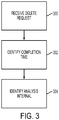
- FIG. 3 illustrates a flow chart of an example method of deleting user data according to an embodiment.
- a delete request may be received 300.
- a delete request may be received 300 from a user, and may pertain to one or more user activities in connection with a service or service provider.
- a user may request that a query the user performed be deleted by a search engine.
- a user may request that the user's entire search history for the search engine be deleted.
- a delete request may include a request that information associated with a user account be deleted, or that an entire user account be deleted. If a service provider is an email provider, a delete request may request that one or more email messages be deleted. Appropriate additional and/or alternate delete requests may also be used.
- a received delete request may be stored in a user activity table along with a user identifier associated with the user who made the request.
- a user activity table may be associated with a timestamp. For example, referring to FIG. 2 , the user activity table includes an entry 210 associated with User-id B for June that corresponds to a delete request that requests the deletion of Activity B.
- a completion time may be identified 302.
- an analysis interval time may be identified 304.
- An analysis interval time may indicate a time period during which one or more log records are to be preserved after receiving a delete request.
- a service provider may have a policy that one or more log records associated with a delete request are to be preserved for at least 30 days after a delete request is received.
- an analysis interval time may be 30 days after a delete request is received.
- an analysis interval may be 30 days, a completion time may be 60 days, and a deletion pipeline may be run on July 1.
- a log record for which a delete request was made on June 1 must be deleted no later than August 1.
- the analysis interval may be honored as well, so beginning the deletion pipeline on July 1 allows 30 days of recovery time from faults for each delete request affecting logs dated June 30 or older.
- only one day of logs may be processed per day of the analysis interval. For example, the system may process logs dated June 1 on July 1, may process logs dated June 2 on July 2 and so on.
- the process may catch-up on log records by processing multiple days' worth of log records on a single day. For example, log records from June 12, 13, 14 and 15 may be processed on July 15.
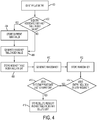
- FIG. 4 illustrates a flow chart of an example method of generating one or more keys and creating a delete list according to an embodiment.
- an index may be generated for each entry in the user activity table.
- Each index may have a unique value, and may correspond to an entry in the key table.
- An index may have a numerical value that may be generated using an incrementing counter.
- the user activity table 204 illustrated in FIG. 2 shows a snapshot of two rows of the table over a period of three months (June, July and August). As illustrated by FIG. 2 , each row or entry is associated with an index value and a corresponding timestamp (e.g., June, July or August). For example, the table entry 210 associated with User-id B for June corresponds to an index of' 1', while the updated table entry 212 associated with User-id B for August corresponds to an index of '3477'.
- an entry in the user activity table may be identified 400 . It may be determined 402 whether the identified entry is already associated with a key table index value. If an entry in the user activity table is already associated with a key table index value, the current index value may be stored 404 and identified as the value of the previous index. For example, a key table index value may be stored 404 in a temporary variable called "prev-index.” A new key table index value may be generated 406 for the entry, and the new a key table index value may be stored 408 in the user activity table so that it is associated with the entry. In an embodiment, the new a key table index value may be stored 408 in the user activity table in place of the previous index value.
- a new key table index value may be generated 406 for the entry, and the new key table index value may be stored 408 in the user activity table so that it is associated with the entry.
- a random key may be generated 410 for the entry of the user activity table and stored 412 in the key table such that it corresponds to the associated key table index of the user activity table.
- the user activity table entry 210 associated with User-id B for June corresponds to an index of'1'.
- random key Key B may be generated 410 for this user activity table entry 210 and stored 412 in the key table such that it corresponds to the index '1'.
- the key table may also store a timestamp, such as, for example, a generation number, associated with one or more user activity table entries.
- a generation number may refer to a timestamp associated with an entry in the user activity table such as, for example, a day, a week, a month and/or the like.
- a generation number may correspond to a time period during which a corresponding delete request is made.
- the generation numbers illustrated in FIG. 2 represent months, with g0 representing June, g1 representing July and g2 representing August.
- the delete request associated with User-id A and g0 is a delete request made by the user associated with the identifier User-id A in June.
- one or more entries in the key table may include a back pointer.
- a back pointer may be a reference to one or more other entries in the key table.
- a pointer may be a data type whose value refers to the index of another entry in the key table.
- a back pointer may reference one entry in the key table. When an entry in the key table is deleted, a corresponding back pointer may be adjusted to point to a different entry.
- the stored previous index value for an entry may be stored in the key table as a back pointer to the previous generation key for the associated user.
- a back pointer may point from a certain entry in the key table to a previous entry in the key table that is associated with the same user identifier. In an embodiment, a back pointer may point to the next most recent entry in the key table that is associated with the same user identifier. For example, referring to FIG. 2 , the entry 214 in the key table associated with an index value of 543 may include a back pointer to the entry 216 in the key table associated with an index value of 0 because this is the next most recent entry in the key table that is associated with the same user identifier, User-id A. If there is no previous entry in the key table that corresponds to the user identifier, then the entry may not include a back pointer as this entry may be considered the oldest entry associated with the user identifier.
- the deletion pipeline may determine 414 whether the identified entry includes a delete request that has been made since the previous generation. For example, the deletion pipeline may determine 414 whether the identified entry includes a delete request. If it does, the deletion pipeline may determine 416 whether a timestamp associated with the delete request postdates the last generation or deletion pipeline analysis. If so, the deletion pipeline may store 418 the delete request and the key table index associated with the entry in a delete list.
- a delete list may be a time-ordered list of delete requests. In an embodiment, a delete list may be ordered from oldest requests to newest requests.
- a deletion list may be any suitable data structure such as, for example, a table, a chart, a database, a list and/or the like.
- one or more of the steps of FIG. 4 may be repeated for one or more entries of the user activity table.
- each of the steps of FIG. 4 may be repeated on each entry of a user activity table until all entries have been considered.
- FIG. 5 illustrates a flow chart of an example method of deleting one or more log records according to an embodiment.
- a completion time period may be identified 500.
- a completion time period may be a certain period of time relative to a user deletion request within which a delete request is to be honored. For example, referring back to FIG. 1 , the period of time between dr and t may be considered the completion time period.
- an analysis interval may be identified 502.
- An analysis interval may be a time period before which a delete request cannot be processed. For example, referring to FIG. 1 , the time period between dr and i may be considered the analysis interval.
- the deletion pipeline may identify 504 an entry in the delete list. It may be determined 506 whether a log record associated with the identified entry is older than the identified completion time period. For example, if a completion time period is sixty days, the deletion pipeline may determine whether a log record was created more than sixty days ago.
- the deletion pipeline may use the associated key table index from the delete list to identify 508 a generation number associated with the log record.
- the deletion pipeline may use the associated key table index to identify 510 a corresponding key table entry.
- the deletion pipeline may determine 512 whether the identified key table entry corresponds to the identified generation number. If so, the deletion pipeline may delete 514 the entry in the key table, and may adjust 516 the back pointers as necessary.
- the deletion pipeline may traverse 518 one or more back pointers until it locates the entry in the key table that corresponds to the identified generation number.
- the deletion pipeline may delete 514 the entry in the key table, and may adjust 516 the back pointers as necessary.
- the user activity associated with entry 218 of the user activity table may be deleted, and this entry may be older than the analysis interval time.
- the deletion pipeline may look up its index, "544", in the user activity table, and may use this index to locate the corresponding key in the key table (i.e., Key B).
- the deletion pipeline may delete Key B associated with the entry in the key table, and may adjust the back pointers so that the subsequent entry for the user identifier 222 points back to the previous entry for the user identifier 224.
- FIG. 8 illustrates an example Key Table after the key associated with entry 220 has been deleted from the key table according to an embodiment.
- FIG. 6 illustrates a flow chart of an example method of scrubbing one or more log records according to an embodiment.
- a scrub window may be identified 600.
- a scrub window may be a time period that occurs after completion of an analysis interval but before the completion of a completion time period. For instance, if a completion time period is sixty days from a deletion request, and an analysis interval is thirty days from the deletion request, a scrub window may include one or more records that are affected by the deletion request and are more than thirty days old, but less than or equal to sixty days old.
- one or more log records that were created within the scrub window may be identified 602. For each identified log record, it may be determined 604 whether the log record is to be deleted. For example, it may be determined whether an identified log record is included on the delete list. If it is, then it may be determined 604 that the log record is to be deleted. If it is not, then it may be determined 604 that the log record is not to be deleted.
- the deletion pipeline may physically scrub 606 the log record. If the log record is not to be deleted, the deletion pipeline may look up 608 the user identifier associated with the log record in the user activity table, and use the stored index to retrieve 610 the associated key from the key table. For example, referring to FIG. 2 , the system may determine that log record 208a is not to be deleted. The deletion pipeline may use the user identifier (User A) and the generation number (g0) of the log record to retrieve the corresponding index (i.e., "0") in the user activity table.
- User A user identifier
- g0 generation number
- the deletion pipeline may use the index to retrieve 610 the corresponding key from the key table. For instance, using the above example, the deletion pipeline may use the index "0" to retrieve 610 key Key A from the key table.
- the deletion pipeline may encrypt 612 at least a portion of the log record using the retrieved key and may write 614 the encrypted value and the index value to the log record.
- other data that may be stored in a log record may be encrypted using the retrieved key such as, for example, the user identifier.
- this content may not include an index or a generation number, as this data may not be included in the encryption process.
- processing speed may be based on, at least in part, the amount of the log record content that is encrypted.
- the deletion pipeline may follow back pointers, re-link the entries and erase multiple keys as needed.
- the deletion pipeline may be the only system component to have access to the key table. This minimizes the access to keys and user data.
- the user identifier is not stored with its key. Instead, an index to the key table is stored in log records, a user activity table, and/or the like.
- the users may be provided with an opportunity to control whether programs or features collect user information, or to control whether and/or how to receive content that may be more relevant to the user.
- certain data may be treated in one or more ways before it is stored or used so that personally identifiable information is removed. For example, a user's identity may be treated so that no personally identifiable information can be determined for the user, or a user's geographic location may be generalized where location information is obtained (such as to a city, ZIP code, or state level), so that a particular location of a user cannot be determined.
- the user may have control over how information is collected and/or stored about the user and used by the system.
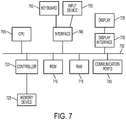
- FIG. 7 depicts a block diagram of hardware that may be used to contain or implement program instructions.
- a bus 700 serves as the main information highway interconnecting the other illustrated components of the hardware.
- CPU 705 is the central processing unit of the system, performing calculations and logic operations required to execute a program.
- CPU 705, alone or in conjunction with one or more of the other elements disclosed in FIG. 7 is an example of a computer, computing device or processor as such terms are used within this disclosure.
- Read only memory (ROM) 710 and random access memory (RAM) 715 constitute examples of non-transitory computer-readable storage media.
- a controller 720 interfaces with one or more optional non-transitory computer-readable storage media 725 to the system bus 700.
- These storage media 725 may include, for example, an external or internal DVD drive, a CD ROM drive, a hard drive, flash memory, a USB drive or the like. As indicated previously, these various drives and controllers are optional devices.
- Program instructions, software or interactive modules for providing the interface and performing any querying or analysis associated with one or more data sets may be stored in the ROM 710 and/or the RAM 715.
- the program instructions may be stored on a tangible non-transitory computer-readable medium such as a compact disk, a digital disk, flash memory, a memory card, a USB drive, an optical disc storage medium and/or other recording medium.
- An optional display interface 730 may permit information from the bus 700 to be displayed on the display 735 in audio, visual, graphic or alphanumeric format. Communication with external devices, such as a printing device, may occur using various communication ports 740.
- a communication port 740 may be attached to a communication network, such as the Internet or an intranet.
- the hardware may also include an interface 745 which allows for receipt of data from input devices such as a keyboard 750 or other input device 755 such as a mouse, a joystick, a touch screen, a remote control, a pointing device, a video input device and/or an audio input device.
- input devices such as a keyboard 750 or other input device 755 such as a mouse, a joystick, a touch screen, a remote control, a pointing device, a video input device and/or an audio input device.
Landscapes
- Engineering & Computer Science (AREA)
- Theoretical Computer Science (AREA)
- Physics & Mathematics (AREA)
- General Engineering & Computer Science (AREA)
- General Physics & Mathematics (AREA)
- Databases & Information Systems (AREA)
- Computer Security & Cryptography (AREA)
- Software Systems (AREA)
- Data Mining & Analysis (AREA)
- Computer Hardware Design (AREA)
- General Health & Medical Sciences (AREA)
- Bioethics (AREA)
- Health & Medical Sciences (AREA)
- Computer Networks & Wireless Communication (AREA)
- Signal Processing (AREA)
- Quality & Reliability (AREA)
- Computational Linguistics (AREA)
- Storage Device Security (AREA)
- Information Retrieval, Db Structures And Fs Structures Therefor (AREA)
- Debugging And Monitoring (AREA)
Applications Claiming Priority (2)
| Application Number | Priority Date | Filing Date | Title |
|---|---|---|---|
| US14/173,931 US9189641B2 (en) | 2014-02-06 | 2014-02-06 | Methods and systems for deleting requested information |
| PCT/US2015/013413 WO2015119824A1 (en) | 2014-02-06 | 2015-01-29 | Methods and systems for deleting requested information |
Publications (2)
| Publication Number | Publication Date |
|---|---|
| EP3103052A1 EP3103052A1 (en) | 2016-12-14 |
| EP3103052B1 true EP3103052B1 (en) | 2018-12-26 |
Family
ID=52478086
Family Applications (1)
| Application Number | Title | Priority Date | Filing Date |
|---|---|---|---|
| EP15705151.7A Active EP3103052B1 (en) | 2014-02-06 | 2015-01-29 | Methods and systems for deleting requested information |
Country Status (8)
| Country | Link |
|---|---|
| US (2) | US9189641B2 (enExample) |
| EP (1) | EP3103052B1 (enExample) |
| JP (1) | JP6101874B2 (enExample) |
| KR (1) | KR101757844B1 (enExample) |
| CN (1) | CN105940412B (enExample) |
| BR (1) | BR112016018070B1 (enExample) |
| ES (1) | ES2716902T3 (enExample) |
| WO (1) | WO2015119824A1 (enExample) |
Families Citing this family (32)
| Publication number | Priority date | Publication date | Assignee | Title |
|---|---|---|---|---|
| US10516567B2 (en) | 2015-07-10 | 2019-12-24 | Zerofox, Inc. | Identification of vulnerability to social phishing |
| US10061717B1 (en) * | 2016-03-25 | 2018-08-28 | EMC IP Holding Company LLC | Storing multiple encryption keys to protect data at rest |
| CN107943807B (zh) * | 2016-10-13 | 2020-06-16 | 华为技术有限公司 | 一种数据处理方法及存储设备 |
| JP6869004B2 (ja) * | 2016-10-26 | 2021-05-12 | 株式会社野村総合研究所 | 文書管理装置および文書管理方法 |
| CN108228322B (zh) * | 2016-12-12 | 2022-03-25 | 阿里巴巴集团控股有限公司 | 一种分布式链路跟踪、分析方法及服务器、全局调度器 |
| US11256812B2 (en) | 2017-01-31 | 2022-02-22 | Zerofox, Inc. | End user social network protection portal |
| US10789097B2 (en) | 2017-02-16 | 2020-09-29 | Nasdaq Technology Ab | Methods and systems of scheduling computer processes or tasks in a distributed system |
| US10776428B2 (en) | 2017-02-16 | 2020-09-15 | Nasdaq Technology Ab | Systems and methods of retrospectively determining how submitted data transaction requests operate against a dynamic data structure |
| US11394722B2 (en) | 2017-04-04 | 2022-07-19 | Zerofox, Inc. | Social media rule engine |
| WO2018233820A1 (en) | 2017-06-21 | 2018-12-27 | Huawei Technologies Co., Ltd. | Systems and methods for management of a log-structure |
| US10868824B2 (en) | 2017-07-31 | 2020-12-15 | Zerofox, Inc. | Organizational social threat reporting |
| US11165801B2 (en) | 2017-08-15 | 2021-11-02 | Zerofox, Inc. | Social threat correlation |
| US11418527B2 (en) * | 2017-08-22 | 2022-08-16 | ZeroFOX, Inc | Malicious social media account identification |
| US11403400B2 (en) * | 2017-08-31 | 2022-08-02 | Zerofox, Inc. | Troll account detection |
| US11134097B2 (en) | 2017-10-23 | 2021-09-28 | Zerofox, Inc. | Automated social account removal |
| CN110083596A (zh) * | 2018-05-16 | 2019-08-02 | 陈刚 | 一种数据历史跟踪和数据变化历史跟踪的方法 |
| US11157652B2 (en) * | 2018-05-16 | 2021-10-26 | Microsoft Technology Licensing, Llc. | Obfuscation and deletion of personal data in a loosely-coupled distributed system |
| US11210312B2 (en) | 2018-06-08 | 2021-12-28 | Microsoft Technology Licensing, Llc | Storing data items and identifying stored data items |
| US11030019B2 (en) * | 2019-04-09 | 2021-06-08 | International Business Machines Corporation | Deletion of events based on a plurality of factors in a connected car computing environment |
| US12143481B2 (en) * | 2019-09-30 | 2024-11-12 | The Governing Council Of The University Of Toronto | Method and system for key generation |
| US11762913B2 (en) * | 2019-12-31 | 2023-09-19 | Micron Technology, Inc. | Cursor seek operations using deleted record spans |
| US11468034B2 (en) * | 2020-01-10 | 2022-10-11 | Microsoft Technology Licensing, Llc | Processing delete requests based on change feed of updates |
| KR20250012739A (ko) * | 2020-11-18 | 2025-01-24 | 쿠팡 주식회사 | 가상 서버들로부터 대용량 로그 파일들을 프로세싱하는 컴퓨터 시스템 및 방법 |
| US12229303B2 (en) * | 2020-11-20 | 2025-02-18 | Shopify Inc. | System and method for processing erasure requests |
| US11914732B2 (en) | 2020-12-16 | 2024-02-27 | Stripe, Inc. | Systems and methods for hard deletion of data across systems |
| US11960625B2 (en) * | 2021-05-06 | 2024-04-16 | Jpmorgan Chase Bank, N.A. | Systems and methods for protecting sensitive data in user online activities |
| CN113297008B (zh) * | 2021-05-19 | 2023-12-12 | 阿里巴巴新加坡控股有限公司 | 数据处理方法以及系统 |
| CN113377636B (zh) * | 2021-06-07 | 2022-08-26 | 上海微盟企业发展有限公司 | 一种页面浏览量计算的方法、系统、设备及可读存储介质 |
| CN113326266B (zh) * | 2021-06-23 | 2025-09-23 | 深圳前海微众银行股份有限公司 | 一种基于表结构关系的数据同步方法及装置 |
| CN114489505B (zh) * | 2022-01-21 | 2024-02-27 | 北京安天网络安全技术有限公司 | 数据报文的存储方法、装置、计算机设备 |
| EP4595348A1 (en) | 2022-11-15 | 2025-08-06 | Quantum Bridge Technologies Inc. | System and method for distribution of key generation data in a secure network |
| CN119232752B (zh) * | 2024-11-29 | 2025-04-15 | 福建省电子政务建设运营有限公司 | 一种嵌入式定时任务日志管理方法及系统 |
Citations (2)
| Publication number | Priority date | Publication date | Assignee | Title |
|---|---|---|---|---|
| US20090177658A1 (en) * | 2008-01-07 | 2009-07-09 | Mathias Brantner | Fine-grained and concurrent access to a virtualized disk in a distributed system |
| US20120204032A1 (en) * | 2006-05-09 | 2012-08-09 | Syncup Corporation | Encryption key exchange system and method |
Family Cites Families (10)
| Publication number | Priority date | Publication date | Assignee | Title |
|---|---|---|---|---|
| JP2003157259A (ja) * | 2001-09-05 | 2003-05-30 | Fuji Xerox Co Ltd | 情報検索システム |
| JP2003150594A (ja) * | 2001-11-12 | 2003-05-23 | Hitachi Ltd | データウェアハウスシステム |
| US7440960B2 (en) * | 2003-09-03 | 2008-10-21 | International Business Machines Corporation | Result set management |
| US20060224583A1 (en) * | 2005-03-31 | 2006-10-05 | Google, Inc. | Systems and methods for analyzing a user's web history |
| US8041985B2 (en) * | 2006-08-11 | 2011-10-18 | Chicago Mercantile Exchange, Inc. | Match server for a financial exchange having fault tolerant operation |
| US7685181B2 (en) * | 2007-02-26 | 2010-03-23 | International Business Machines Corporation | Method and system for utilizing a hierarchical bitmap structure to provide a fast and reliable mechanism to represent large deleted data sets in relational databases |
| JP2008219454A (ja) * | 2007-03-05 | 2008-09-18 | Hitachi Ltd | 通信内容監査支援システム |
| US20110055559A1 (en) * | 2009-08-27 | 2011-03-03 | Jun Li | Data retention management |
| US8464350B2 (en) * | 2011-03-14 | 2013-06-11 | International Business Machines Corporation | System and method for in-private browsing |
| US8316460B1 (en) | 2011-11-22 | 2012-11-20 | Google Inc. | Private web browsing using encryption |
-
2014
- 2014-02-06 US US14/173,931 patent/US9189641B2/en active Active
-
2015
- 2015-01-29 CN CN201580006318.3A patent/CN105940412B/zh active Active
- 2015-01-29 BR BR112016018070-4A patent/BR112016018070B1/pt active IP Right Grant
- 2015-01-29 EP EP15705151.7A patent/EP3103052B1/en active Active
- 2015-01-29 WO PCT/US2015/013413 patent/WO2015119824A1/en not_active Ceased
- 2015-01-29 ES ES15705151T patent/ES2716902T3/es active Active
- 2015-01-29 JP JP2016550519A patent/JP6101874B2/ja active Active
- 2015-01-29 KR KR1020167024501A patent/KR101757844B1/ko active Active
- 2015-10-30 US US14/927,622 patent/US9373004B2/en active Active
Patent Citations (2)
| Publication number | Priority date | Publication date | Assignee | Title |
|---|---|---|---|---|
| US20120204032A1 (en) * | 2006-05-09 | 2012-08-09 | Syncup Corporation | Encryption key exchange system and method |
| US20090177658A1 (en) * | 2008-01-07 | 2009-07-09 | Mathias Brantner | Fine-grained and concurrent access to a virtualized disk in a distributed system |
Also Published As
| Publication number | Publication date |
|---|---|
| CN105940412B (zh) | 2019-02-22 |
| KR101757844B1 (ko) | 2017-07-14 |
| ES2716902T3 (es) | 2019-06-17 |
| US9373004B2 (en) | 2016-06-21 |
| US20160048699A1 (en) | 2016-02-18 |
| EP3103052A1 (en) | 2016-12-14 |
| US9189641B2 (en) | 2015-11-17 |
| CN105940412A (zh) | 2016-09-14 |
| BR112016018070A2 (enExample) | 2017-08-08 |
| BR112016018070B1 (pt) | 2023-02-28 |
| US20150220751A1 (en) | 2015-08-06 |
| KR20160110530A (ko) | 2016-09-21 |
| JP6101874B2 (ja) | 2017-03-22 |
| JP2017506388A (ja) | 2017-03-02 |
| WO2015119824A1 (en) | 2015-08-13 |
Similar Documents
| Publication | Publication Date | Title |
|---|---|---|
| EP3103052B1 (en) | Methods and systems for deleting requested information | |
| US11558360B2 (en) | Selective encryption of profile fields for multiple consumers | |
| US10762229B2 (en) | Secure searchable and shareable remote storage system and method | |
| US8429425B2 (en) | Electronic backup and restoration of encrypted data | |
| US20160306999A1 (en) | Systems, methods, and computer-readable media for de-identifying information | |
| US11625368B1 (en) | Data migration framework | |
| US9405786B2 (en) | System and method for database flow management | |
| JP2020505835A (ja) | データファイリング方法およびシステム | |
| US9201912B2 (en) | Auditable abrogation of privacy enhancements in columnar in-memory databases | |
| US12045662B2 (en) | Data re-encryption for software applications | |
| US20240089099A1 (en) | Performing depulication based on encrypted storage blocks generated using a secure enclave | |
| AU2015413372B2 (en) | Selective encryption of profile fields for multiple consumers | |
| US11803864B2 (en) | Distributed ledgers for enhanced chain of custody certification | |
| RU2693646C1 (ru) | Способ и система подбора предложений для пользователя на основании анализа его действий | |
| RU2702275C1 (ru) | Способ и система маркировки действий пользователя для последующего анализа и накопления | |
| RU2791954C1 (ru) | Способ, система и машиночитаемый носитель для подачи анонимных корпоративных жалоб | |
| Jochims et al. | Effectiveness of Mobile Wiping Applications | |
| WO2016065550A1 (zh) | 云计算的可信存储、读取方法及装置 | |
| CN119760187A (zh) | 数据查询方法、装置、电子设备及存储介质 |
Legal Events
| Date | Code | Title | Description |
|---|---|---|---|
| PUAI | Public reference made under article 153(3) epc to a published international application that has entered the european phase |
Free format text: ORIGINAL CODE: 0009012 |
|
| STAA | Information on the status of an ep patent application or granted ep patent |
Free format text: STATUS: REQUEST FOR EXAMINATION WAS MADE |
|
| 17P | Request for examination filed |
Effective date: 20160705 |
|
| AK | Designated contracting states |
Kind code of ref document: A1 Designated state(s): AL AT BE BG CH CY CZ DE DK EE ES FI FR GB GR HR HU IE IS IT LI LT LU LV MC MK MT NL NO PL PT RO RS SE SI SK SM TR |
|
| AX | Request for extension of the european patent |
Extension state: BA ME |
|
| DAX | Request for extension of the european patent (deleted) | ||
| STAA | Information on the status of an ep patent application or granted ep patent |
Free format text: STATUS: EXAMINATION IS IN PROGRESS |
|
| 17Q | First examination report despatched |
Effective date: 20170718 |
|
| RAP1 | Party data changed (applicant data changed or rights of an application transferred) |
Owner name: GOOGLE LLC |
|
| GRAP | Despatch of communication of intention to grant a patent |
Free format text: ORIGINAL CODE: EPIDOSNIGR1 |
|
| STAA | Information on the status of an ep patent application or granted ep patent |
Free format text: STATUS: GRANT OF PATENT IS INTENDED |
|
| INTG | Intention to grant announced |
Effective date: 20180220 |
|
| GRAJ | Information related to disapproval of communication of intention to grant by the applicant or resumption of examination proceedings by the epo deleted |
Free format text: ORIGINAL CODE: EPIDOSDIGR1 |
|
| STAA | Information on the status of an ep patent application or granted ep patent |
Free format text: STATUS: EXAMINATION IS IN PROGRESS |
|
| GRAP | Despatch of communication of intention to grant a patent |
Free format text: ORIGINAL CODE: EPIDOSNIGR1 |
|
| STAA | Information on the status of an ep patent application or granted ep patent |
Free format text: STATUS: GRANT OF PATENT IS INTENDED |
|
| INTC | Intention to grant announced (deleted) | ||
| INTG | Intention to grant announced |
Effective date: 20180724 |
|
| GRAS | Grant fee paid |
Free format text: ORIGINAL CODE: EPIDOSNIGR3 |
|
| GRAA | (expected) grant |
Free format text: ORIGINAL CODE: 0009210 |
|
| STAA | Information on the status of an ep patent application or granted ep patent |
Free format text: STATUS: THE PATENT HAS BEEN GRANTED |
|
| AK | Designated contracting states |
Kind code of ref document: B1 Designated state(s): AL AT BE BG CH CY CZ DE DK EE ES FI FR GB GR HR HU IE IS IT LI LT LU LV MC MK MT NL NO PL PT RO RS SE SI SK SM TR |
|
| REG | Reference to a national code |
Ref country code: GB Ref legal event code: FG4D |
|
| REG | Reference to a national code |
Ref country code: CH Ref legal event code: EP |
|
| REG | Reference to a national code |
Ref country code: AT Ref legal event code: REF Ref document number: 1082426 Country of ref document: AT Kind code of ref document: T Effective date: 20190115 |
|
| REG | Reference to a national code |
Ref country code: DE Ref legal event code: R096 Ref document number: 602015022218 Country of ref document: DE |
|
| REG | Reference to a national code |
Ref country code: IE Ref legal event code: FG4D |
|
| PG25 | Lapsed in a contracting state [announced via postgrant information from national office to epo] |
Ref country code: HR Free format text: LAPSE BECAUSE OF FAILURE TO SUBMIT A TRANSLATION OF THE DESCRIPTION OR TO PAY THE FEE WITHIN THE PRESCRIBED TIME-LIMIT Effective date: 20181226 Ref country code: LV Free format text: LAPSE BECAUSE OF FAILURE TO SUBMIT A TRANSLATION OF THE DESCRIPTION OR TO PAY THE FEE WITHIN THE PRESCRIBED TIME-LIMIT Effective date: 20181226 Ref country code: FI Free format text: LAPSE BECAUSE OF FAILURE TO SUBMIT A TRANSLATION OF THE DESCRIPTION OR TO PAY THE FEE WITHIN THE PRESCRIBED TIME-LIMIT Effective date: 20181226 Ref country code: BG Free format text: LAPSE BECAUSE OF FAILURE TO SUBMIT A TRANSLATION OF THE DESCRIPTION OR TO PAY THE FEE WITHIN THE PRESCRIBED TIME-LIMIT Effective date: 20190326 Ref country code: LT Free format text: LAPSE BECAUSE OF FAILURE TO SUBMIT A TRANSLATION OF THE DESCRIPTION OR TO PAY THE FEE WITHIN THE PRESCRIBED TIME-LIMIT Effective date: 20181226 Ref country code: NO Free format text: LAPSE BECAUSE OF FAILURE TO SUBMIT A TRANSLATION OF THE DESCRIPTION OR TO PAY THE FEE WITHIN THE PRESCRIBED TIME-LIMIT Effective date: 20190326 |
|
| REG | Reference to a national code |
Ref country code: NL Ref legal event code: MP Effective date: 20181226 |
|
| REG | Reference to a national code |
Ref country code: LT Ref legal event code: MG4D |
|
| PG25 | Lapsed in a contracting state [announced via postgrant information from national office to epo] |
Ref country code: GR Free format text: LAPSE BECAUSE OF FAILURE TO SUBMIT A TRANSLATION OF THE DESCRIPTION OR TO PAY THE FEE WITHIN THE PRESCRIBED TIME-LIMIT Effective date: 20190327 Ref country code: RS Free format text: LAPSE BECAUSE OF FAILURE TO SUBMIT A TRANSLATION OF THE DESCRIPTION OR TO PAY THE FEE WITHIN THE PRESCRIBED TIME-LIMIT Effective date: 20181226 Ref country code: AL Free format text: LAPSE BECAUSE OF FAILURE TO SUBMIT A TRANSLATION OF THE DESCRIPTION OR TO PAY THE FEE WITHIN THE PRESCRIBED TIME-LIMIT Effective date: 20181226 Ref country code: SE Free format text: LAPSE BECAUSE OF FAILURE TO SUBMIT A TRANSLATION OF THE DESCRIPTION OR TO PAY THE FEE WITHIN THE PRESCRIBED TIME-LIMIT Effective date: 20181226 |
|
| REG | Reference to a national code |
Ref country code: AT Ref legal event code: MK05 Ref document number: 1082426 Country of ref document: AT Kind code of ref document: T Effective date: 20181226 |
|
| REG | Reference to a national code |
Ref country code: ES Ref legal event code: FG2A Ref document number: 2716902 Country of ref document: ES Kind code of ref document: T3 Effective date: 20190617 |
|
| PG25 | Lapsed in a contracting state [announced via postgrant information from national office to epo] |
Ref country code: NL Free format text: LAPSE BECAUSE OF FAILURE TO SUBMIT A TRANSLATION OF THE DESCRIPTION OR TO PAY THE FEE WITHIN THE PRESCRIBED TIME-LIMIT Effective date: 20181226 |
|
| PG25 | Lapsed in a contracting state [announced via postgrant information from national office to epo] |
Ref country code: PL Free format text: LAPSE BECAUSE OF FAILURE TO SUBMIT A TRANSLATION OF THE DESCRIPTION OR TO PAY THE FEE WITHIN THE PRESCRIBED TIME-LIMIT Effective date: 20181226 Ref country code: PT Free format text: LAPSE BECAUSE OF FAILURE TO SUBMIT A TRANSLATION OF THE DESCRIPTION OR TO PAY THE FEE WITHIN THE PRESCRIBED TIME-LIMIT Effective date: 20190426 Ref country code: CZ Free format text: LAPSE BECAUSE OF FAILURE TO SUBMIT A TRANSLATION OF THE DESCRIPTION OR TO PAY THE FEE WITHIN THE PRESCRIBED TIME-LIMIT Effective date: 20181226 Ref country code: IT Free format text: LAPSE BECAUSE OF FAILURE TO SUBMIT A TRANSLATION OF THE DESCRIPTION OR TO PAY THE FEE WITHIN THE PRESCRIBED TIME-LIMIT Effective date: 20181226 |
|
| PG25 | Lapsed in a contracting state [announced via postgrant information from national office to epo] |
Ref country code: SK Free format text: LAPSE BECAUSE OF FAILURE TO SUBMIT A TRANSLATION OF THE DESCRIPTION OR TO PAY THE FEE WITHIN THE PRESCRIBED TIME-LIMIT Effective date: 20181226 Ref country code: EE Free format text: LAPSE BECAUSE OF FAILURE TO SUBMIT A TRANSLATION OF THE DESCRIPTION OR TO PAY THE FEE WITHIN THE PRESCRIBED TIME-LIMIT Effective date: 20181226 Ref country code: SM Free format text: LAPSE BECAUSE OF FAILURE TO SUBMIT A TRANSLATION OF THE DESCRIPTION OR TO PAY THE FEE WITHIN THE PRESCRIBED TIME-LIMIT Effective date: 20181226 Ref country code: IS Free format text: LAPSE BECAUSE OF FAILURE TO SUBMIT A TRANSLATION OF THE DESCRIPTION OR TO PAY THE FEE WITHIN THE PRESCRIBED TIME-LIMIT Effective date: 20190426 Ref country code: RO Free format text: LAPSE BECAUSE OF FAILURE TO SUBMIT A TRANSLATION OF THE DESCRIPTION OR TO PAY THE FEE WITHIN THE PRESCRIBED TIME-LIMIT Effective date: 20181226 |
|
| REG | Reference to a national code |
Ref country code: CH Ref legal event code: PL |
|
| REG | Reference to a national code |
Ref country code: DE Ref legal event code: R097 Ref document number: 602015022218 Country of ref document: DE |
|
| PG25 | Lapsed in a contracting state [announced via postgrant information from national office to epo] |
Ref country code: LU Free format text: LAPSE BECAUSE OF NON-PAYMENT OF DUE FEES Effective date: 20190129 |
|
| REG | Reference to a national code |
Ref country code: BE Ref legal event code: MM Effective date: 20190131 |
|
| PG25 | Lapsed in a contracting state [announced via postgrant information from national office to epo] |
Ref country code: MC Free format text: LAPSE BECAUSE OF FAILURE TO SUBMIT A TRANSLATION OF THE DESCRIPTION OR TO PAY THE FEE WITHIN THE PRESCRIBED TIME-LIMIT Effective date: 20181226 Ref country code: AT Free format text: LAPSE BECAUSE OF FAILURE TO SUBMIT A TRANSLATION OF THE DESCRIPTION OR TO PAY THE FEE WITHIN THE PRESCRIBED TIME-LIMIT Effective date: 20181226 Ref country code: DK Free format text: LAPSE BECAUSE OF FAILURE TO SUBMIT A TRANSLATION OF THE DESCRIPTION OR TO PAY THE FEE WITHIN THE PRESCRIBED TIME-LIMIT Effective date: 20181226 |
|
| PLBE | No opposition filed within time limit |
Free format text: ORIGINAL CODE: 0009261 |
|
| STAA | Information on the status of an ep patent application or granted ep patent |
Free format text: STATUS: NO OPPOSITION FILED WITHIN TIME LIMIT |
|
| PG25 | Lapsed in a contracting state [announced via postgrant information from national office to epo] |
Ref country code: BE Free format text: LAPSE BECAUSE OF NON-PAYMENT OF DUE FEES Effective date: 20190131 |
|
| 26N | No opposition filed |
Effective date: 20190927 |
|
| PG25 | Lapsed in a contracting state [announced via postgrant information from national office to epo] |
Ref country code: CH Free format text: LAPSE BECAUSE OF NON-PAYMENT OF DUE FEES Effective date: 20190131 Ref country code: LI Free format text: LAPSE BECAUSE OF NON-PAYMENT OF DUE FEES Effective date: 20190131 |
|
| PG25 | Lapsed in a contracting state [announced via postgrant information from national office to epo] |
Ref country code: SI Free format text: LAPSE BECAUSE OF FAILURE TO SUBMIT A TRANSLATION OF THE DESCRIPTION OR TO PAY THE FEE WITHIN THE PRESCRIBED TIME-LIMIT Effective date: 20181226 |
|
| PG25 | Lapsed in a contracting state [announced via postgrant information from national office to epo] |
Ref country code: TR Free format text: LAPSE BECAUSE OF FAILURE TO SUBMIT A TRANSLATION OF THE DESCRIPTION OR TO PAY THE FEE WITHIN THE PRESCRIBED TIME-LIMIT Effective date: 20181226 |
|
| PG25 | Lapsed in a contracting state [announced via postgrant information from national office to epo] |
Ref country code: MT Free format text: LAPSE BECAUSE OF NON-PAYMENT OF DUE FEES Effective date: 20190129 |
|
| PG25 | Lapsed in a contracting state [announced via postgrant information from national office to epo] |
Ref country code: CY Free format text: LAPSE BECAUSE OF FAILURE TO SUBMIT A TRANSLATION OF THE DESCRIPTION OR TO PAY THE FEE WITHIN THE PRESCRIBED TIME-LIMIT Effective date: 20181226 |
|
| PG25 | Lapsed in a contracting state [announced via postgrant information from national office to epo] |
Ref country code: HU Free format text: LAPSE BECAUSE OF FAILURE TO SUBMIT A TRANSLATION OF THE DESCRIPTION OR TO PAY THE FEE WITHIN THE PRESCRIBED TIME-LIMIT; INVALID AB INITIO Effective date: 20150129 |
|
| PG25 | Lapsed in a contracting state [announced via postgrant information from national office to epo] |
Ref country code: MK Free format text: LAPSE BECAUSE OF FAILURE TO SUBMIT A TRANSLATION OF THE DESCRIPTION OR TO PAY THE FEE WITHIN THE PRESCRIBED TIME-LIMIT Effective date: 20181226 |
|
| P01 | Opt-out of the competence of the unified patent court (upc) registered |
Effective date: 20230509 |
|
| PGFP | Annual fee paid to national office [announced via postgrant information from national office to epo] |
Ref country code: DE Payment date: 20250129 Year of fee payment: 11 |
|
| PGFP | Annual fee paid to national office [announced via postgrant information from national office to epo] |
Ref country code: ES Payment date: 20250203 Year of fee payment: 11 |
|
| PGFP | Annual fee paid to national office [announced via postgrant information from national office to epo] |
Ref country code: IE Payment date: 20250128 Year of fee payment: 11 |
|
| PGFP | Annual fee paid to national office [announced via postgrant information from national office to epo] |
Ref country code: FR Payment date: 20250127 Year of fee payment: 11 |
|
| PGFP | Annual fee paid to national office [announced via postgrant information from national office to epo] |
Ref country code: GB Payment date: 20250127 Year of fee payment: 11 |