EP3102173B1 - Method for making a pharmaceutical packaging from fused quartz tubing - Google Patents
Method for making a pharmaceutical packaging from fused quartz tubing Download PDFInfo
- Publication number
- EP3102173B1 EP3102173B1 EP15746976.8A EP15746976A EP3102173B1 EP 3102173 B1 EP3102173 B1 EP 3102173B1 EP 15746976 A EP15746976 A EP 15746976A EP 3102173 B1 EP3102173 B1 EP 3102173B1
- Authority
- EP
- European Patent Office
- Prior art keywords
- acid
- quartz
- quartz glass
- glass
- tube
- Prior art date
- Legal status (The legal status is an assumption and is not a legal conclusion. Google has not performed a legal analysis and makes no representation as to the accuracy of the status listed.)
- Active
Links
Images


Classifications
-
- C—CHEMISTRY; METALLURGY
- C03—GLASS; MINERAL OR SLAG WOOL
- C03B—MANUFACTURE, SHAPING, OR SUPPLEMENTARY PROCESSES
- C03B20/00—Processes specially adapted for the production of quartz or fused silica articles, not otherwise provided for
-
- C—CHEMISTRY; METALLURGY
- C03—GLASS; MINERAL OR SLAG WOOL
- C03B—MANUFACTURE, SHAPING, OR SUPPLEMENTARY PROCESSES
- C03B17/00—Forming molten glass by flowing-out, pushing-out, extruding or drawing downwardly or laterally from forming slits or by overflowing over lips
- C03B17/04—Forming tubes or rods by drawing from stationary or rotating tools or from forming nozzles
-
- C—CHEMISTRY; METALLURGY
- C03—GLASS; MINERAL OR SLAG WOOL
- C03B—MANUFACTURE, SHAPING, OR SUPPLEMENTARY PROCESSES
- C03B32/00—Thermal after-treatment of glass products not provided for in groups C03B19/00, C03B25/00 - C03B31/00 or C03B37/00, e.g. crystallisation, eliminating gas inclusions or other impurities; Hot-pressing vitrified, non-porous, shaped glass products
-
- C—CHEMISTRY; METALLURGY
- C03—GLASS; MINERAL OR SLAG WOOL
- C03B—MANUFACTURE, SHAPING, OR SUPPLEMENTARY PROCESSES
- C03B32/00—Thermal after-treatment of glass products not provided for in groups C03B19/00, C03B25/00 - C03B31/00 or C03B37/00, e.g. crystallisation, eliminating gas inclusions or other impurities; Hot-pressing vitrified, non-porous, shaped glass products
- C03B32/02—Thermal crystallisation, e.g. for crystallising glass bodies into glass-ceramic articles
-
- C—CHEMISTRY; METALLURGY
- C03—GLASS; MINERAL OR SLAG WOOL
- C03C—CHEMICAL COMPOSITION OF GLASSES, GLAZES OR VITREOUS ENAMELS; SURFACE TREATMENT OF GLASS; SURFACE TREATMENT OF FIBRES OR FILAMENTS MADE FROM GLASS, MINERALS OR SLAGS; JOINING GLASS TO GLASS OR OTHER MATERIALS
- C03C23/00—Other surface treatment of glass not in the form of fibres or filaments
- C03C23/0075—Cleaning of glass
-
- C—CHEMISTRY; METALLURGY
- C03—GLASS; MINERAL OR SLAG WOOL
- C03C—CHEMICAL COMPOSITION OF GLASSES, GLAZES OR VITREOUS ENAMELS; SURFACE TREATMENT OF GLASS; SURFACE TREATMENT OF FIBRES OR FILAMENTS MADE FROM GLASS, MINERALS OR SLAGS; JOINING GLASS TO GLASS OR OTHER MATERIALS
- C03C3/00—Glass compositions
- C03C3/04—Glass compositions containing silica
- C03C3/06—Glass compositions containing silica with more than 90% silica by weight, e.g. quartz
-
- C—CHEMISTRY; METALLURGY
- C03—GLASS; MINERAL OR SLAG WOOL
- C03B—MANUFACTURE, SHAPING, OR SUPPLEMENTARY PROCESSES
- C03B2201/00—Type of glass produced
- C03B2201/02—Pure silica glass, e.g. pure fused quartz
- C03B2201/03—Impurity concentration specified
-
- C—CHEMISTRY; METALLURGY
- C03—GLASS; MINERAL OR SLAG WOOL
- C03B—MANUFACTURE, SHAPING, OR SUPPLEMENTARY PROCESSES
- C03B2201/00—Type of glass produced
- C03B2201/06—Doped silica-based glasses
- C03B2201/30—Doped silica-based glasses doped with metals, e.g. Ga, Sn, Sb, Pb or Bi
-
- C—CHEMISTRY; METALLURGY
- C03—GLASS; MINERAL OR SLAG WOOL
- C03C—CHEMICAL COMPOSITION OF GLASSES, GLAZES OR VITREOUS ENAMELS; SURFACE TREATMENT OF GLASS; SURFACE TREATMENT OF FIBRES OR FILAMENTS MADE FROM GLASS, MINERALS OR SLAGS; JOINING GLASS TO GLASS OR OTHER MATERIALS
- C03C2201/00—Glass compositions
- C03C2201/02—Pure silica glass, e.g. pure fused quartz
-
- C—CHEMISTRY; METALLURGY
- C03—GLASS; MINERAL OR SLAG WOOL
- C03C—CHEMICAL COMPOSITION OF GLASSES, GLAZES OR VITREOUS ENAMELS; SURFACE TREATMENT OF GLASS; SURFACE TREATMENT OF FIBRES OR FILAMENTS MADE FROM GLASS, MINERALS OR SLAGS; JOINING GLASS TO GLASS OR OTHER MATERIALS
- C03C2201/00—Glass compositions
- C03C2201/06—Doped silica-based glasses
- C03C2201/30—Doped silica-based glasses containing metals
-
- C—CHEMISTRY; METALLURGY
- C03—GLASS; MINERAL OR SLAG WOOL
- C03C—CHEMICAL COMPOSITION OF GLASSES, GLAZES OR VITREOUS ENAMELS; SURFACE TREATMENT OF GLASS; SURFACE TREATMENT OF FIBRES OR FILAMENTS MADE FROM GLASS, MINERALS OR SLAGS; JOINING GLASS TO GLASS OR OTHER MATERIALS
- C03C2203/00—Production processes
- C03C2203/10—Melting processes
-
- C—CHEMISTRY; METALLURGY
- C03—GLASS; MINERAL OR SLAG WOOL
- C03C—CHEMICAL COMPOSITION OF GLASSES, GLAZES OR VITREOUS ENAMELS; SURFACE TREATMENT OF GLASS; SURFACE TREATMENT OF FIBRES OR FILAMENTS MADE FROM GLASS, MINERALS OR SLAGS; JOINING GLASS TO GLASS OR OTHER MATERIALS
- C03C2203/00—Production processes
- C03C2203/50—After-treatment
- C03C2203/52—Heat-treatment
Definitions
- Glass materials are often used in pharmaceutical packaging.
- biological drugs that are more "sensitive” than traditional drugs.
- the topic of drug/container interaction becomes increasingly important due to the lower stability of these drugs and their propensity to degrade during storage, especially when formulated as a liquid.
- extractable substances e.g. dissolved cations
- coming from the pharmaceutical packaging container can cause issues with regard to efficacy and purity of these drugs (including drug instability, toxicity, etc).
- a Review of Glass Types Available for Packaging S. V. Sangra, Journal of the Parenteral Drug Association, Mar.-pr., 1979, Vol. 33, No. 2, pp. 61-67 .
- Cationic extraction from traditional glasses used in pharmaceutical packaging can create issues with the purity and/or effectiveness of such protein-based drugs.
- the mechanism of cationic extraction is typically hydronium/alkali ion exchange that causes a pH increase, which is then followed by bulk dissolution, especially in Type I (e.g., borosilicate glass, such as Schott Fiolax®) and Type II (treated soda-lime silicate) glasses.
- Type I e.g., borosilicate glass, such as Schott Fiolax®
- Type II treated soda-lime silicate
- Glass particle generation due to delamination is one of the major concerns in pharmaceutical packaging industries when Type I and Type II glasses are used as the container for pharmaceutical products. Delamination occurs when top layers of a glass separate at a scale that is barely visible or invisible to the naked eyes as shown in Figure 1 of Ronald G Iacocca, "The Cause and Implications of Glass Delamination", Pharmaceutical Technology, 2011, pp s6-s9 . The particles become suspended in drug solutions, posing a serious risk to the consumer.
- Glasses without chemical modifiers such as alkali metals, borates, alkaline earth metals
- fused quartz glass are preferable from a chemical purity (low extractables) and chemical durability perspective, but it was previously believed such glasses may be difficult to manufacture due to the high processing temperatures required (typically > 2,000 °C).
- high processing temperatures required typically > 2,000 °C.
- fused quartz glasses can be melted and formed into tubing, it is then often difficult to flame convert them into pharmaceutical packages (vials, syringe barrels, ampoules, etc), due to a high working point temperature (>1,700 °C).
- a high working point temperature >1,700 °C
- 6,200,658 and 6,537,626 show that efforts have been made to coat the interior surfaces of traditional glass containers with a layer of silica to reduce extractables (e.g., Schott Type I plus®) and glass particles that are produced through delamination.
- extractables e.g., Schott Type I plus®
- Providing coated articles, however, are cumbersome and expensive and, therefore, not widely accepted in the pharmaceutical packaging market.
- glass compositions formed to be of high purity can still contain contaminants from the glass formation process. Such contaminants can still be present in a concentration that the glass would not be suitable for use in pharmaceutical applications. Thus there is a need for a robust "clean" process to ensure the surface purity of pharmaceutical packaging glasses.
- JP 2009-154090 A describes a silica glass for a photocatalyst, and a method of preparing the same.
- US 2013/095261 A1 discloses a fused quartz tubing for pharmaceutical packaging.
- the present subject matter provides a method of forming an article comprising high purity fused silica.
- the method allows for the formation of a high purity glass article suitable for use in pharmaceutical applications.
- the present invention and embodiments thereof are defined in the claims.
- Drugs are packaged in various glass pharmaceutical containers, including single-use pre-filled syringes, cartridges, ampoules, vials and the like.
- the present technology allows for the production of forming high purity silica tubing that can be used to form such containers.
- the tubing optionally does not contain appreciable amounts of traditional glass modifiers (e.g., alkali metals, alkaline earth metals, and borate ions), and the resulting packaging is thus highly resistive to cationic extraction when placed in contact with an aqueous-based solution intended for drug formulation.
- the process allows for reducing or substantially preventing the introduction of contaminants into the glass during formation of the tubing.
- the inventions provide a pharmaceutical packaging that exhibits little or no glass particle generation through delamination.
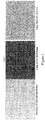
- Figures 1-3 are scanning electron microscope images of the inside portion of vials evaluated for delamination testing.
- the term “functionalized” may be used interchangeably with “surface functionalized,” “functionalized surface,” “coated,” “surface treated,” or “treated,” referring to the coating of the silica and dopant components with the dispersing agent of the invention.
- coating agent is used interchangeably with “dispersing” agent.
- the term “glass” may be used interchangeably with “quartz glass” or “quartz” or “fused quartz,” referring to a composition, a part, a product, or an article formed by melting a mixture comprising natural or synthetic sand (silica). It is well known that the viscosity of a glass will decrease as its temperature increases. Thus, as used herein, the terms “working point temperature” and “working temperature” are both used to mean the temperature at which the glass reaches a viscosity of 103 Pa ⁇ s (10 4 poise) or below, and the softening point describes the temperature where the viscosity reaches 10 6.6 Pa ⁇ s (10 7.6 poise).
- silica is used to denote compositions comprising either naturally occurring crystalline silica such as sand/rock, or synthetically derived silicon dioxide (silica), or a mixture of both.
- sand may be used interchangeably with silica, denoting either natural sand or synthetic sand, or a mixture of both.
- the present invention provides a method of forming an article comprising high purity fused silica.
- the quartz glass tube used in the method is converted into a pharmaceutical package via thermal processing.
- the method of forming an article comprising high purity fused silica comprises: (a) forming a fused quartz melt from a raw material comprising SiO 2 by heating; (b) forming a quartz glass tube from the fused quartz melt; (c) treating the quartz glass tube with a composition comprising an acid followed by a water rinse; (d) heat treating the quartz glass tube subsequent to treating with the acid composition at a temperature of from 900° C to 1250 °C; optionally treating the quartz article with an acid composition followed by a water rinse subsequent to the heat treating operation; and (e) converting the quartz glass tube into a pharmaceutical package via thermal processing.
- the method provides a quartz article that is of high purity and suitable for applications requiring high purity levels.
- the fused quartz melt is formed by heating a raw material comprising SiO 2 at a sufficiently high temperature to form a melt.
- Heating can be conducted in a reduced environment comprising nitrogen, hydrogen, deuterium, helium, or a mixture of two or more thereof. Heating is carried out at a temperature of 2,000 °C or greater. In one embodiment, heating is carried out at a temperature of from 2,000 °C to 2,600 °C; from 2,100 °C to 2,500 °C; even from 2,200 °C to 2,400 °C. Heating is conducted at a sufficient temperature and for a sufficient time to fuse the silica material.
- the melting can be conducted using a furnace system containing a melting crucible.
- the melting crucible can be formed from tungsten, molybdenum, or a combination thereof.
- the arrangement of the furnace is not particularly limited.
- a furnace system such as those described in U.S. Patent Nos. 6,422,861 or 6,739,155 can be used to form the fused silica melt.
- the silica used to make the glass and subsequent articles formed from such glass is generally not limited and can be selected as desired for a particular application or end use.
- the glass can be provided by a silica composition having a selected concentration of silica and can be doped or un-doped.
- un-doped silica is used to make the glass and subsequent pharmaceutical packaging articles.
- the silica (SiO 2 ) used in the glass compositions of the present embodiments and for forming the silica melt can be chosen as desired for a particular purpose or intended application.
- the silica can be synthetic sand, natural sand, or a mixture thereof.
- the amount of SiO 2 in the glass composition ranges from 82 to 99.9999%.
- the amount of SiO 2 in the glass composition ranges from 92 to 99.9999%; from 96 to 99.9999 wt. %; from 97 to 99.9999 wt. %; even from 98 to 99.9999 wt. %.
- the glass comprises a light-transmissive, vitreous composition with a SiO 2 content of at least 90 wt.
- the glass composition has a SiO 2 concentration of at least 97 wt. %; at least 98 wt. %; even at least 99 wt. %.
- the glass compositions and articles formed therefrom can have a SiO 2 content of 99 wt. % or greater, 99.9 wt. % or greater, 99.99 wt. % or greater, 99.999 wt. % or greater.
- the glass composition can have a SiO 2 content of 99 wt. % to 99.9999 wt.
- dopants are selected such that they reduce the working point temperature of the glass and its viscosity at a particular temperature and also such that the final glass product will exhibit low extractables and/or leaching of ions into drugs, aqueous drug formulations, or other compositions that come into contact therewith.
- Particularly suitable dopants are those that exhibit low solubility in the various (aqueous-based) contemplated drug compositions.
- Suitable dopants include Al 2 O 3 , G e O 2 , Ga 2 O 3 CeO 2 , ZrO 2 , TiO 2 , Y 2 O 3 , La 2 O 3 , Nd 2 O 3 , other rare earth oxides, and mixtures of two or more thereof.
- the dopant is neodymium oxide Nd 2 O 3 .
- the dopant is aluminum oxide by itself, e.g., Al 2 O 3 , or a mixture of aluminum oxide and other dopants.
- the dopant is CeO 2 .
- titanium oxide (TiO 2 ) may be added.
- the dopant comprises europium oxide, Eu 2 O 3 , by itself, or in combination with other dopants such as TiO 2 and CeO 2 .
- the dopant is yttrium oxide.
- the glass composition may comprise a single dopant or any suitable combination of two or more different dopants.
- the dopant is present in an amount of from 0.0001 to 8 % by weight of the total composition. In another embodiment, the dopant(s) may be present in an amount of from 0.01 to 8 wt. %, and in still another embodiment from 0.1 to 8 wt. %. In another embodiment, the dopant is present in an amount of from 0.5 to 5% by weight of the glass composition. It will be appreciated that some dopants may be added in an amount as low as 0.01 wt.%, and may be, for example, in a range of from 0.01 to 0.1 wt. % including, for example, from 0.01 to 0.05 wt. %.
- the dopants are to be added in an amount to reduce the working point temperature of the resultant quartz composition to less than 1,650 °C.
- the total amount of dopants is in the range of 0.01 to 8 wt. %. In still another embodiment, the total amount of dopant ranges from 0.1 to 8 wt. %.
- the subsequent doped fused quartz glass composition exhibits a working point in the range of from 1000 to 2,000 °C.
- the glass composition exhibits a working point of from 1400 to 1,900 °C.
- the doped fused quartz glass has a working point of 1,700 °C or less, which may be much lower than the working point of un-doped quartz glass.
- the glass compositions may have a softening point of from 500 to 1,700 °C. In one embodiment, the glass composition has a softening point of from 1,000 to 1,600 °C.
- the glass composition has a softening point of from 1,400 °C to 1,600 °C. Due to these lower working points exhibited by these doped glasses, the rods or tubes may be subsequently shaped into various pharmaceutical packaging articles more easily (by means of for instance flame conversion) than would an un-doped quartz glass.
- the fused quartz melt is then formed into a quartz glass tube.
- a glass article having a desired shape and dimensions is achieved by providing an appropriate die and core configuration.
- the outer diameter of the tube and the inner diameter of the tube can be selected as desired for a particular purpose or intended application.
- the fused quartz melt is cooled to solidify the material and form the quartz glass tube.
- the tubes can be made by any process known in the art including the Danner process, the Vello process, a continuous draw process or modified processes thereof.
- the first step an elongated, consolidated preform having an aperture is formed with a relatively thick wall.
- the second step involves heating the heavy walled tubing to a temperature sufficient high to flow the silica and drawing it freely to form a tube of a desired structure and dimension.
- the tubing can have OD ranges from 0.5 mm to 50 mm.
- tubes formed from the silica composition are not limited and can be selected as desired.
- tubes have sizes ranging from 0.1 mm to 100 mm outside diameter (OD); 0.5 mm to 50 mm; 1 mm to 10 mm; even 3 mm to 5 mm.
- the thickness of the tubing can be in the range of from 0.2 mm to 5 mm; 0.5 to 3 mm; even 1 mm to 2 mm, depending on the size of the tubing.
- the length of the tubes can be selected as desired to allow for handling and workability and can be, for example, 100 mm, 200 mm, 300 mm etc.
- the quartz glass tube can be cut to a first, desired length.
- the quartz glass tube can be cut to a particular length to allow for easier handling of the tube during processing and for forming a final article.
- the tube is treated with a composition comprising an acid.
- a composition comprising an acid.
- the acid of the composition can comprise a hydrochloric acid, a hydrofluoric acid, hydrogen bifluoride, ammonium bifluoride, nitric acid, phosphoric acid, or a combination of two or more thereof.
- the concentration of the acid in the acid composition can be from 1 percent to 60 percent, from 2 percent to 30 percent, even from 3 percent to 10 percent.
- numerical values can be combined to form new and undisclosed ranges.
- the conditions for treating the quartz glass tube with the composition comprising an acid can be chosen as desired.
- the time period for the acid wash can be from 10 seconds to 1000 minutes; 30 seconds to 500 minutes; 1 minute to 100 minutes; even 5 minutes to 10 minutes.
- numerical values can be combined to form new and undisclosed ranges.
- the treatment with the composition comprising an acid can be conducted at a temperature of from 10 °C to 100 °C, from 20 °C to 90 °C, from 30 °C to 75 °C, even from 40 °C to 60 °C.
- numerical values can be combined to form new and non-disclosed ranges.
- the quartz glass tube is washed with water to remove the residual acid from the surface of the tube.
- the water wash is conducted with deionized water and, in one embodiment, can be conducted using high purity deionized water.
- the deionized water has a resistivity of 18 M ohm•cm.
- Treating with the composition comprising an acid can be conducted once or can be conducted two or more times. Where the acid treatment step is conducted more than once, the process comprises washing the quartz glass tube with water subsequent to each acid treatment operation.
- the quartz glass tube is dried. Drying can be accomplished by any suitable method including air drying, IR heating drying, or blow drying with a clean, purified gas.
- the fused quartz glass tube is heat treated.
- the heat treatment operation can reduce the hydroxyl concentration of the quartz.
- the heat treatment is conducted at a temperature of from 900 °C to 1,250 °C, and, in one embodiment, from 1,000 °C to 1,150 °C.
- the heat treatment can be conducted under vacuum and at a pressure of 1.3332 ⁇ 10 3 Pa (10 torr) or less, 1.3332 ⁇ 10 2 Pa (1 torr) or less, even 13.332 Pa (100 mtorr) or less.
- the heat treatment is conducted at a pressure of from 13.332 Pa (100 mtorr) to 1.3332 ⁇ 10 3 Pa (10 torr).
- the heat treatment can be conducted for a period of time from 1 hour to 100 hours, from 10 hours to 90 hours, even from 25 hours to 75 hours. In one embodiment, the heat treatment can be conducted for a time period of from 1 hour to 10 hours, even 2 hours to 5 hours.
- the heat treating operation is desirably conducted in a clean environment.
- the heating apparatus comprises a high purity lining.
- suitable linings include, but are not limited to, high purity fused quartz, high purity graphite, etc.
- the quartz glass tube can be further cut, if desired, to allow for handling and/or to cut or shape into a final product.
- the method or manner of cutting the tube is not limited and can be achieved, for example, by saw cutting, waterjet cutting, laser cutting, etc.
- the tube can again be treated with an acid composition.
- the acid treatment step can be conducted using acids and operating conditions as previously discussed with respect to the acid treatment operation conducted following initial formation of the tube.
- the tube can be washed with water following acid washing treatments and the tube dried after the final water rinse.
- the various operations for forming the quartz glass tube are conducted in a clean and controlled environment.
- the acid wash and water rinse treatments are conducted in a clean and controlled environment.
- the quartz glass tube is converted into a pharmaceutical package via thermal processing.
- Products of different shapes or configurations can be produced for particular purpose or intended application.
- glass compositions in accordance with the present invention are particularly suitable for forming a pharmaceutical packaging article such as, for example, pre-filled syringes, syringe barrels, ampoules, vials, and the like.
- a pharmaceutical package or article formed from the glass compositions desirably exhibit excellent leaching characteristics, i.e., lower leaching of metals, when an inner surface of the package or article is in contact with an aqueous pharmaceutical composition including, but not limited to, drug and medicinal formulations.
- a pharmaceutical packaging article comprising the doped glass may be provided such that the article is substantially free of a coating layer disposed on the surface of the article in contact with a pharmaceutical composition.
- Articles employing a doped glass as described herein can be free of a coating and exhibit leaching characteristics when in contact with a pharmaceutical composition that is at least comparable to coated BSi or soda lime glasses and superior to uncoated BSi or soda lime glasses.
- a glass composition in accordance with the present invention can be used to form a homogenous, fused glass article.
- a glass article formed from a glass composition in accordance with the present invention may exhibit leaching characteristics superior to borosilicate (BSi) glasses and/or soda lime (Na-Ca) glasses.
- BSi borosilicate
- Na-Ca soda lime
- a glass article in accordance with the present invention exhibits superior leaching characteristics with respect to cations or metals when the glass is subjected to HCl digestion.
- HCl digestion means hydrothermally treating a 10.0 g sample of a glass article (that has been crushed into 5-10 nm in size) with 50 ml of 0.4 M HCl solution in a Parr teflon digestion bomb at 121 °C for 2 hours.
- the leaching characteristics of the glass may be represented in terms of extractable metal concentration, which refers to the concentration of metal extracted from the glass article when subjected to HCl digestion.
- a glass article formed from a glass composition has a total extractable metal concentration of 8 mg/L or less when subjected to HCl digestion, the total extractable metal concentration being represented by the total concentration of Al, B, Na, Ca, K, Li, Ba, and Mg extracted upon HCl digestion.
- a glass article formed from a glass composition has a total extractable metal concentration of 5 mg/L or less when subjected to HCl digestion, the total extractable metal concentration being represented by the total concentration of Al, B, Na, Ca, K, Li, Ba, and Mg extracted upon HCl digestion.
- a glass article formed from a glass composition has a total extractable metal concentration of 1 mg/L or less when subjected to HCl digestion, the total extractable metal concentration being represented by the total concentration of Al, B, Na, Ca, K, Li, Ba, and Mg extracted upon HCl digestion.
- the total extractable metal concentration is from 0.01 to 8 mg/L; from 0.05 to 5 mg/L; even from 0.1 to 1 mg/L.
- numerical values can be combined to form new or undisclosed ranges.
- a pharmaceutical packaging article comprising the glass composition is formed by thermal processing, such as flame conversion process.
- the article exhibits little or no alkali oxide, alkaline earth oxide, or borate formation at or near the surface of the article during the thermal processing.
- the concentration of alkali metals, alkaline earth metals, and/or boron is 5 wt% or less within a distance of 50 ⁇ m of the surface of the article. In one embodiment the concentration of alkali metals, alkaline earth metals, or boron is 1 wt% or less within 50 ⁇ m of the surface of the article.
- the concentration of alkali metals, alkaline earth metals, or boron is 1000 ppm or less within 50 ⁇ m of the surface of the article. In one embodiment the concentration of alkali metals, alkaline earth metals, or boron concentration is 100 ppm or less within 50 ⁇ m of the surface of the article.
- the alkali, alkaline earth, or boron concentration within 50 ⁇ m of the surface of the article may be determined by any suitable method including surface etching followed by Inductively Coupled Plasma Mass Spectrometry (ICP-MS). It will be appreciated that the alkali metal or alkaline metal can be derived from any alkali metal compound or alkaline metal compound including, but not limited to, oxides or hydroxides of alkali or alkaline metals.
- the test was performed according to USP 33 ⁇ 660>, which has a detailed description of the test protocol.
- 60 quartz vials made from type 214 quartz were used for the test.
- the vial size is at 3 mL.
- the filling volume is 3.2 mL.
- the maximum limit for types I and II glasses at the same vial size range for this parameter is 1.3.
- Vials made from type 214 quartz tubing according to the current disclosed processes achieved an order of magnitude improvement in this characteristic.
- the test was performed according to USP 36 ⁇ 660>, which has a detailed description of the test protocol.
- 12 quartz vials made from type 214 quartz were used for the test.
- the vial size is at 20 mL.
- the filling volume is 24.4 mL.
- the maximum limit for types I and II glasses at the same vial size range for this parameter is 0.60.
- Vials made from type 214 quartz tubing according to the current disclosed processes for this size range again achieved more than one order of magnitude improvement in this characteristic.
- the vials were examined up to a magnification of 80X using a stereomicroscope with low angled reflected fiber optic light. This examination was performed in order to view the effects, if any, from the processes the glass has encountered by forming and USP testing.
- Three vials were cut in cross-section lengthwise and rinsed with deionized water. Cotton tipped swabs were used to remove dust from the surface not easily removed with the water rinse.
- the inside surface of the vials were examined at 5000X using a scanning electron microscope (SEM) to determine the presence of surface flaws such as blisters, pitting or sections of missing glass.
- SEM scanning electron microscope
- the lower inside portion of vials is more susceptible to delamination due to additional processes the vial may encounter. Therefore, the SEM examination was focused at the lower portion of the vial where the inside bottom meets the sidewall and up the sidewall approximately 1 centimeter.
Landscapes
- Chemical & Material Sciences (AREA)
- Engineering & Computer Science (AREA)
- Materials Engineering (AREA)
- Organic Chemistry (AREA)
- Life Sciences & Earth Sciences (AREA)
- Chemical Kinetics & Catalysis (AREA)
- General Chemical & Material Sciences (AREA)
- Geochemistry & Mineralogy (AREA)
- Physics & Mathematics (AREA)
- Thermal Sciences (AREA)
- Ceramic Engineering (AREA)
- Crystallography & Structural Chemistry (AREA)
- Medical Preparation Storing Or Oral Administration Devices (AREA)
- Glass Melting And Manufacturing (AREA)
- Re-Forming, After-Treatment, Cutting And Transporting Of Glass Products (AREA)
- Surface Treatment Of Glass (AREA)
- General Life Sciences & Earth Sciences (AREA)
Description
- Glass materials are often used in pharmaceutical packaging. There has been a recent trend in the pharmaceutical market toward the increased use of biological (protein-based) drugs that are more "sensitive" than traditional drugs. With these types of drugs, the topic of drug/container interaction becomes increasingly important due to the lower stability of these drugs and their propensity to degrade during storage, especially when formulated as a liquid. Because of this, extractable substances (e.g. dissolved cations) coming from the pharmaceutical packaging container can cause issues with regard to efficacy and purity of these drugs (including drug instability, toxicity, etc). A Review of Glass Types Available for Packaging, S. V. Sangra, Journal of the Parenteral Drug Association, Mar.-pr., 1979, Vol. 33, No. 2, pp. 61-67.
- Cationic extraction from traditional glasses used in pharmaceutical packaging can create issues with the purity and/or effectiveness of such protein-based drugs. The mechanism of cationic extraction is typically hydronium/alkali ion exchange that causes a pH increase, which is then followed by bulk dissolution, especially in Type I (e.g., borosilicate glass, such as Schott Fiolax®) and Type II (treated soda-lime silicate) glasses. The poor chemical durability of these glasses arises from the fact that soluble cations, such as Na+, Li+, K+, Mg2+, Ca2+ and/or Ba2+ are used to flux these glasses to achieve a suitably low working point temperature that makes them highly processable with standard glass melting equipment (see, e.g.,
U.S. Pat. Nos. 5,782,815 and6,027,481 ). - Glass particle generation due to delamination is one of the major concerns in pharmaceutical packaging industries when Type I and Type II glasses are used as the container for pharmaceutical products. Delamination occurs when top layers of a glass separate at a scale that is barely visible or invisible to the naked eyes as shown in
Figure 1 of Ronald G Iacocca, "The Cause and Implications of Glass Delamination", Pharmaceutical Technology, 2011, pp s6-s9. The particles become suspended in drug solutions, posing a serious risk to the consumer. - Glasses without chemical modifiers (e.g., alkali metals, borates, alkaline earth metals) such as fused quartz glass are preferable from a chemical purity (low extractables) and chemical durability perspective, but it was previously believed such glasses may be difficult to manufacture due to the high processing temperatures required (typically > 2,000 °C). Even when fused quartz glasses can be melted and formed into tubing, it is then often difficult to flame convert them into pharmaceutical packages (vials, syringe barrels, ampoules, etc), due to a high working point temperature (>1,700 °C). Thus, such glasses have generally not been used to manufacture pharmaceutical packaging.
U.S. Pat. Nos. 6,200,658 and6,537,626 show that efforts have been made to coat the interior surfaces of traditional glass containers with a layer of silica to reduce extractables (e.g., Schott Type I plus®) and glass particles that are produced through delamination. Providing coated articles, however, are cumbersome and expensive and, therefore, not widely accepted in the pharmaceutical packaging market. Thus, there is a need for a cost-effective process to produce pharmaceutical packaging glass that exhibits low extractables and leachables that can be used in pharmaceutical packaging applications. - Further, glass compositions formed to be of high purity can still contain contaminants from the glass formation process. Such contaminants can still be present in a concentration that the glass would not be suitable for use in pharmaceutical applications. Thus there is a need for a robust "clean" process to ensure the surface purity of pharmaceutical packaging glasses.
JP 2009-154090 A US 2013/095261 A1 discloses a fused quartz tubing for pharmaceutical packaging. - The present subject matter provides a method of forming an article comprising high purity fused silica. The method allows for the formation of a high purity glass article suitable for use in pharmaceutical applications. The present invention and embodiments thereof are defined in the claims.
- Drugs are packaged in various glass pharmaceutical containers, including single-use pre-filled syringes, cartridges, ampoules, vials and the like. The present technology allows for the production of forming high purity silica tubing that can be used to form such containers. The tubing optionally does not contain appreciable amounts of traditional glass modifiers (e.g., alkali metals, alkaline earth metals, and borate ions), and the resulting packaging is thus highly resistive to cationic extraction when placed in contact with an aqueous-based solution intended for drug formulation. Still further, the process allows for reducing or substantially preventing the introduction of contaminants into the glass during formation of the tubing. In one embodiment, the inventions provide a pharmaceutical packaging that exhibits little or no glass particle generation through delamination.
-
Figures 1-3 are scanning electron microscope images of the inside portion of vials evaluated for delamination testing. - As used herein, the term "functionalized" may be used interchangeably with "surface functionalized," "functionalized surface," "coated," "surface treated," or "treated," referring to the coating of the silica and dopant components with the dispersing agent of the invention. As used herein, "coating agent" is used interchangeably with "dispersing" agent.
- Although the terms may be used to denote compositions or articles of different materials (different silica concentrations), as used herein, the term "glass" may be used interchangeably with "quartz glass" or "quartz" or "fused quartz," referring to a composition, a part, a product, or an article formed by melting a mixture comprising natural or synthetic sand (silica). It is well known that the viscosity of a glass will decrease as its temperature increases. Thus, as used herein, the terms "working point temperature" and "working temperature" are both used to mean the temperature at which the glass reaches a viscosity of 103 Pa·s (104 poise) or below, and the softening point describes the temperature where the viscosity reaches 106.6 Pa·s (107.6 poise). Either or both natural or synthetic sand (silica) can be used in the composition of the invention, and the term silica is used to denote compositions comprising either naturally occurring crystalline silica such as sand/rock, or synthetically derived silicon dioxide (silica), or a mixture of both. The term "sand" may be used interchangeably with silica, denoting either natural sand or synthetic sand, or a mixture of both.
- The present invention provides a method of forming an article comprising high purity fused silica. The quartz glass tube used in the method is converted into a pharmaceutical package via thermal processing. The method of forming an article comprising high purity fused silica comprises: (a) forming a fused quartz melt from a raw material comprising SiO2 by heating; (b) forming a quartz glass tube from the fused quartz melt; (c) treating the quartz glass tube with a composition comprising an acid followed by a water rinse; (d) heat treating the quartz glass tube subsequent to treating with the acid composition at a temperature of from 900° C to 1250 °C; optionally treating the quartz article with an acid composition followed by a water rinse subsequent to the heat treating operation; and (e) converting the quartz glass tube into a pharmaceutical package via thermal processing. The method provides a quartz article that is of high purity and suitable for applications requiring high purity levels.
- In the method, the fused quartz melt is formed by heating a raw material comprising SiO2 at a sufficiently high temperature to form a melt. Heating can be conducted in a reduced environment comprising nitrogen, hydrogen, deuterium, helium, or a mixture of two or more thereof. Heating is carried out at a temperature of 2,000 °C or greater. In one embodiment, heating is carried out at a temperature of from 2,000 °C to 2,600 °C; from 2,100 °C to 2,500 °C; even from 2,200 °C to 2,400 °C. Heating is conducted at a sufficient temperature and for a sufficient time to fuse the silica material.
- The melting can be conducted using a furnace system containing a melting crucible. The melting crucible can be formed from tungsten, molybdenum, or a combination thereof. The arrangement of the furnace is not particularly limited. In one embodiment, a furnace system such as those described in
U.S. Patent Nos. 6,422,861 or6,739,155 can be used to form the fused silica melt. - The silica used to make the glass and subsequent articles formed from such glass is generally not limited and can be selected as desired for a particular application or end use. Depending on the end application, the glass can be provided by a silica composition having a selected concentration of silica and can be doped or un-doped. In one embodiment, un-doped silica is used to make the glass and subsequent pharmaceutical packaging articles.
- The silica (SiO2) used in the glass compositions of the present embodiments and for forming the silica melt can be chosen as desired for a particular purpose or intended application. The silica can be synthetic sand, natural sand, or a mixture thereof. In one embodiment, the amount of SiO2 in the glass composition ranges from 82 to 99.9999%. In another embodiment, the amount of SiO2 in the glass composition ranges from 92 to 99.9999%; from 96 to 99.9999 wt. %; from 97 to 99.9999 wt. %; even from 98 to 99.9999 wt. %. In another embodiment, the glass comprises a light-transmissive, vitreous composition with a SiO2 content of at least 90 wt. %. In still another embodiment of a quartz composition with a high melting point, at least 95 wt. % SiO2 is used. In yet another embodiment, the glass composition has a SiO2 concentration of at least 97 wt. %; at least 98 wt. %; even at least 99 wt. %. In still other embodiments, the glass compositions and articles formed therefrom can have a SiO2 content of 99 wt. % or greater, 99.9 wt. % or greater, 99.99 wt. % or greater, 99.999 wt. % or greater. In further embodiments, the glass composition can have a SiO2 content of 99 wt. % to 99.9999 wt. %, 99.5 wt. % to 99.9995 wt. %, 99.9 wt. % to 99.999 wt. %, even 99.99 wt. % to 99.995 wt. %. Here as elsewhere in the specification and claims, ranges can be combined to form new and non-disclosed ranges.
- Depending on the desired properties in the final product, a number of different dopants and mixtures thereof may also be added to the silica. Dopants are selected such that they reduce the working point temperature of the glass and its viscosity at a particular temperature and also such that the final glass product will exhibit low extractables and/or leaching of ions into drugs, aqueous drug formulations, or other compositions that come into contact therewith. Particularly suitable dopants are those that exhibit low solubility in the various (aqueous-based) contemplated drug compositions. Examples of suitable dopants include Al2O3, GeO2, Ga2O3 CeO2, ZrO2, TiO2, Y2O3, La2O3, Nd2O3, other rare earth oxides, and mixtures of two or more thereof. In one embodiment, the dopant is neodymium oxide Nd2O3. In another embodiment, the dopant is aluminum oxide by itself, e.g., Al2O3, or a mixture of aluminum oxide and other dopants. In another embodiment, the dopant is CeO2. In yet another embodiment, titanium oxide (TiO2) may be added. In another embodiment, the dopant comprises europium oxide, Eu2O3, by itself, or in combination with other dopants such as TiO2 and CeO2. In still another embodiment, the dopant is yttrium oxide. Of course, as previously described, the glass composition may comprise a single dopant or any suitable combination of two or more different dopants.
- In one embodiment, the dopant is present in an amount of from 0.0001 to 8 % by weight of the total composition. In another embodiment, the dopant(s) may be present in an amount of from 0.01 to 8 wt. %, and in still another embodiment from 0.1 to 8 wt. %. In another embodiment, the dopant is present in an amount of from 0.5 to 5% by weight of the glass composition. It will be appreciated that some dopants may be added in an amount as low as 0.01 wt.%, and may be, for example, in a range of from 0.01 to 0.1 wt. % including, for example, from 0.01 to 0.05 wt. %. In one embodiment, the dopants are to be added in an amount to reduce the working point temperature of the resultant quartz composition to less than 1,650 °C. In another embodiment, the total amount of dopants is in the range of 0.01 to 8 wt. %. In still another embodiment, the total amount of dopant ranges from 0.1 to 8 wt. %.
- Depending on the identity of the dopant(s) and the amount of dopant(s) present in the glass composition, the subsequent doped fused quartz glass composition exhibits a working point in the range of from 1000 to 2,000 °C. In one embodiment, the glass composition exhibits a working point of from 1400 to 1,900 °C. In another embodiment, the doped fused quartz glass has a working point of 1,700 °C or less, which may be much lower than the working point of un-doped quartz glass. The glass compositions may have a softening point of from 500 to 1,700 °C. In one embodiment, the glass composition has a softening point of from 1,000 to 1,600 °C. In another embodiment, the glass composition has a softening point of from 1,400 °C to 1,600 °C. Due to these lower working points exhibited by these doped glasses, the rods or tubes may be subsequently shaped into various pharmaceutical packaging articles more easily (by means of for instance flame conversion) than would an un-doped quartz glass.
- The fused quartz melt is then formed into a quartz glass tube. A glass article having a desired shape and dimensions is achieved by providing an appropriate die and core configuration. The outer diameter of the tube and the inner diameter of the tube can be selected as desired for a particular purpose or intended application. The fused quartz melt is cooled to solidify the material and form the quartz glass tube.
- In one embodiment wherein the glass product is in the form of continuous tube drawing, e.g., the tubes can be made by any process known in the art including the Danner process, the Vello process, a continuous draw process or modified processes thereof.
- In another embodiment of making glass tubes using processes known in the art including, for example, a continuous draw process of at least two steps. In the first step, an elongated, consolidated preform having an aperture is formed with a relatively thick wall. The second step involves heating the heavy walled tubing to a temperature sufficient high to flow the silica and drawing it freely to form a tube of a desired structure and dimension. In one example, the tubing can have OD ranges from 0.5 mm to 50 mm.
- The dimensions of the tubes formed from the silica composition are not limited and can be selected as desired. In one embodiment, tubes have sizes ranging from 0.1 mm to 100 mm outside diameter (OD); 0.5 mm to 50 mm; 1 mm to 10 mm; even 3 mm to 5 mm. The thickness of the tubing can be in the range of from 0.2 mm to 5 mm; 0.5 to 3 mm; even 1 mm to 2 mm, depending on the size of the tubing. The length of the tubes can be selected as desired to allow for handling and workability and can be, for example, 100 mm, 200 mm, 300 mm etc.
- Optionally, the quartz glass tube can be cut to a first, desired length. The quartz glass tube can be cut to a particular length to allow for easier handling of the tube during processing and for forming a final article.
- After forming the quartz glass tube, the tube is treated with a composition comprising an acid. Applicants have found that the purity of a quartz glass article can be enhanced by treating with the acid composition. Without being bound to any particular theory, it is believed that treating with the acid composition can enhance the surface purity of the article. The acid of the composition can comprise a hydrochloric acid, a hydrofluoric acid, hydrogen bifluoride, ammonium bifluoride, nitric acid, phosphoric acid, or a combination of two or more thereof. The concentration of the acid in the acid composition can be from 1 percent to 60 percent, from 2 percent to 30 percent, even from 3 percent to 10 percent. Here as elsewhere in the specification and claims, numerical values can be combined to form new and undisclosed ranges.
- The conditions for treating the quartz glass tube with the composition comprising an acid can be chosen as desired. In one embodiment, the time period for the acid wash can be from 10 seconds to 1000 minutes; 30 seconds to 500 minutes; 1 minute to 100 minutes; even 5 minutes to 10 minutes. Here as elsewhere in the specification and claims, numerical values can be combined to form new and undisclosed ranges. In one embodiment, the treatment with the composition comprising an acid can be conducted at a temperature of from 10 °C to 100 °C, from 20 °C to 90 °C, from 30 °C to 75 °C, even from 40 °C to 60 °C. Here, as elsewhere in the specification and claims, numerical values can be combined to form new and non-disclosed ranges.
- Following treatment with the composition comprising an acid, the quartz glass tube is washed with water to remove the residual acid from the surface of the tube. Generally, the water wash is conducted with deionized water and, in one embodiment, can be conducted using high purity deionized water. In one embodiment, the deionized water has a resistivity of 18 M ohm•cm. Treating with the composition comprising an acid can be conducted once or can be conducted two or more times. Where the acid treatment step is conducted more than once, the process comprises washing the quartz glass tube with water subsequent to each acid treatment operation.
- Following the acid wash and water rinse, the quartz glass tube is dried. Drying can be accomplished by any suitable method including air drying, IR heating drying, or blow drying with a clean, purified gas.
- Subsequent to treating with the acid, the fused quartz glass tube is heat treated. The heat treatment operation can reduce the hydroxyl concentration of the quartz. The heat treatment is conducted at a temperature of from 900 °C to 1,250 °C, and, in one embodiment, from 1,000 °C to 1,150 °C. The heat treatment can be conducted under vacuum and at a pressure of 1.3332·103 Pa (10 torr) or less, 1.3332·102 Pa (1 torr) or less, even 13.332 Pa (100 mtorr) or less. In one embodiment, the heat treatment is conducted at a pressure of from 13.332 Pa (100 mtorr) to 1.3332·103 Pa (10 torr). The heat treatment can be conducted for a period of time from 1 hour to 100 hours, from 10 hours to 90 hours, even from 25 hours to 75 hours. In one embodiment, the heat treatment can be conducted for a time period of from 1 hour to 10 hours, even 2 hours to 5 hours.
- The heat treating operation is desirably conducted in a clean environment. In one embodiment, the heating apparatus comprises a high purity lining. Examples of suitable linings include, but are not limited to, high purity fused quartz, high purity graphite, etc.
- After the heat treating operation, the quartz glass tube can be further cut, if desired, to allow for handling and/or to cut or shape into a final product. The method or manner of cutting the tube is not limited and can be achieved, for example, by saw cutting, waterjet cutting, laser cutting, etc.
- If the tube is cut subsequent to the heat treatment operation, the tube can again be treated with an acid composition. The acid treatment step can be conducted using acids and operating conditions as previously discussed with respect to the acid treatment operation conducted following initial formation of the tube. As with the previous described washing operation, the tube can be washed with water following acid washing treatments and the tube dried after the final water rinse.
- Desirably, the various operations for forming the quartz glass tube are conducted in a clean and controlled environment. In embodiments, the acid wash and water rinse treatments are conducted in a clean and controlled environment.
- The quartz glass tube is converted into a pharmaceutical package via thermal processing. Products of different shapes or configurations can be produced for particular purpose or intended application. In one embodiment, glass compositions in accordance with the present invention are particularly suitable for forming a pharmaceutical packaging article such as, for example, pre-filled syringes, syringe barrels, ampoules, vials, and the like.
- A pharmaceutical package or article formed from the glass compositions desirably exhibit excellent leaching characteristics, i.e., lower leaching of metals, when an inner surface of the package or article is in contact with an aqueous pharmaceutical composition including, but not limited to, drug and medicinal formulations. In one embodiment, a pharmaceutical packaging article comprising the doped glass may be provided such that the article is substantially free of a coating layer disposed on the surface of the article in contact with a pharmaceutical composition. Articles employing a doped glass as described herein can be free of a coating and exhibit leaching characteristics when in contact with a pharmaceutical composition that is at least comparable to coated BSi or soda lime glasses and superior to uncoated BSi or soda lime glasses.
- A glass composition in accordance with the present invention can be used to form a homogenous, fused glass article. A glass article formed from a glass composition in accordance with the present invention may exhibit leaching characteristics superior to borosilicate (BSi) glasses and/or soda lime (Na-Ca) glasses. In one embodiment, a glass article in accordance with the present invention exhibits superior leaching characteristics with respect to cations or metals when the glass is subjected to HCl digestion. As used herein, "HCl digestion" means hydrothermally treating a 10.0 g sample of a glass article (that has been crushed into 5-10 nm in size) with 50 ml of 0.4 M HCl solution in a Parr teflon digestion bomb at 121 °C for 2 hours. In one embodiment, the leaching characteristics of the glass may be represented in terms of extractable metal concentration, which refers to the concentration of metal extracted from the glass article when subjected to HCl digestion. In one embodiment, a glass article formed from a glass composition has a total extractable metal concentration of 8 mg/L or less when subjected to HCl digestion, the total extractable metal concentration being represented by the total concentration of Al, B, Na, Ca, K, Li, Ba, and Mg extracted upon HCl digestion. In another embodiment, a glass article formed from a glass composition has a total extractable metal concentration of 5 mg/L or less when subjected to HCl digestion, the total extractable metal concentration being represented by the total concentration of Al, B, Na, Ca, K, Li, Ba, and Mg extracted upon HCl digestion. In still another embodiment, a glass article formed from a glass composition has a total extractable metal concentration of 1 mg/L or less when subjected to HCl digestion, the total extractable metal concentration being represented by the total concentration of Al, B, Na, Ca, K, Li, Ba, and Mg extracted upon HCl digestion.
- In one embodiment, the total extractable metal concentration is from 0.01 to 8 mg/L; from 0.05 to 5 mg/L; even from 0.1 to 1 mg/L. Here as elsewhere in the specification and claims, numerical values can be combined to form new or undisclosed ranges.
- In the present invention, a pharmaceutical packaging article comprising the glass composition is formed by thermal processing, such as flame conversion process. The article exhibits little or no alkali oxide, alkaline earth oxide, or borate formation at or near the surface of the article during the thermal processing. In one embodiment, the concentration of alkali metals, alkaline earth metals, and/or boron is 5 wt% or less within a distance of 50 µm of the surface of the article. In one embodiment the concentration of alkali metals, alkaline earth metals, or boron is 1 wt% or less within 50 µm of the surface of the article. In one embodiment the concentration of alkali metals, alkaline earth metals, or boron is 1000 ppm or less within 50 µm of the surface of the article. In one embodiment the concentration of alkali metals, alkaline earth metals, or boron concentration is 100 ppm or less within 50 µm of the surface of the article. The alkali, alkaline earth, or boron concentration within 50 µm of the surface of the article may be determined by any suitable method including surface etching followed by Inductively Coupled Plasma Mass Spectrometry (ICP-MS). It will be appreciated that the alkali metal or alkaline metal can be derived from any alkali metal compound or alkaline metal compound including, but not limited to, oxides or hydroxides of alkali or alkaline metals.
- Aspects of the present invention may be further understood with respect to the following examples.
- Momentive type 214 quartz tubing (pure un-doped fused quartz) was formed and treated in accordance with the processes described herein. The tubing was tested following US Pharmacopoeia (USP) packaging test protocol at American Glass Research. Specifically, surface glass test, powdered glass test, and delamination examination were performed on type 214 quartz samples, and significant improvement has been observed compared to type I and type II glasses.
- The test was performed according to USP 33 <660>, which has a detailed description of the test protocol. 60 quartz vials made from type 214 quartz were used for the test. The vial size is at 3 mL. The filling volume is 3.2 mL. The results indicated the "average mL 0.01 M HCL per 100 mL" is at 0.10. As for comparison, the maximum limit for types I and II glasses at the same vial size range for this parameter is 1.3. During vial production using types I and II glasses, it is not uncommon that certain vials can fail in this characterization, and the typical values are often not much less the maximum limit at 1.3. Vials made from type 214 quartz tubing according to the current disclosed processes achieved an order of magnitude improvement in this characteristic.
- The test was performed according to USP 36 <660>, which has a detailed description of the test protocol. 12 quartz vials made from type 214 quartz were used for the test. The vial size is at 20 mL. The filling volume is 24.4 mL. The results indicated the "average mL 0.01 M HCL per 100 mL test solution" is at 0.025. As for comparison, the maximum limit for types I and II glasses at the same vial size range for this parameter is 0.60. Vials made from type 214 quartz tubing according to the current disclosed processes for this size range again achieved more than one order of magnitude improvement in this characteristic.
- The test was performed according to USP 36 <660>, which has a detailed description of the test protocol. 1 quartz vial made from type 214 quartz was used for the test. The vial size is at 20 mL. The results indicated the "mL 0.02 N HCL per 100 mL HCl per Gram of Glass" is at 0.002. As for comparison, the maximum limit for types I glass for this parameter is 1.0, while it is 8.5 for type III glass. Thus, vials made from type 214 quartz tubing according to the current disclosed processes achieved more than two orders of magnitude improvement in this characteristic.
- Three 2 ml quartz vials that were previously USP tested were used to examine the inside surface for evidence of blisters or pitting of the glass that could facilitate delamination. The examination of the three quartz vials showed no evidence of blisters or pitting of the glass that could facilitate delamination.
- The vials were examined up to a magnification of 80X using a stereomicroscope with low angled reflected fiber optic light. This examination was performed in order to view the effects, if any, from the processes the glass has encountered by forming and USP testing. Three vials were cut in cross-section lengthwise and rinsed with deionized water. Cotton tipped swabs were used to remove dust from the surface not easily removed with the water rinse. The inside surface of the vials were examined at 5000X using a scanning electron microscope (SEM) to determine the presence of surface flaws such as blisters, pitting or sections of missing glass.
- Typically, the lower inside portion of vials is more susceptible to delamination due to additional processes the vial may encounter. Therefore, the SEM examination was focused at the lower portion of the vial where the inside bottom meets the sidewall and up the sidewall approximately 1 centimeter.
- The stereomicroscope examination of the inside surface of the three vials showed no evidence of any surface anomaly. Further study using the SEM revealed no other anomalies, such as blisters and pitting at any location from the base of the sidewall up to approximately the 1 cm height. All three of the vials were similar in appearance as represented in
Figures 1-3 .
Claims (12)
- A method of forming an article comprising high purity fused silica comprising:(a) heating a raw material comprising SiO2 to form a fused quartz melt;(b) forming a quartz glass tube from the fused quartz melt;(c) treating the quartz glass tube with a composition comprising an acid followed by a water rinse;(d) heat treating the quartz glass tube at a temperature of from 900° C to 1250° C; and(e) converting the quartz glass tube into a pharmaceutical package via thermal processing.
- The method of claim 1, wherein the acid comprises an acid chosen from hydrofluoric acid, hydrochloric acid, hydrogen bifluoride, ammonium bifluoride, nitric acid, phosphoric acid, or a combination of two or more thereof.
- The method of claim 1, wherein treating with the composition comprising the acid is conducted at a temperature of from 10° C to 100° C.
- The method of claim 1, wherein the treating operation (c) comprises agitating the acid composition and/or the quartz glass tube.
- The method of claim 1, wherein the treating operation (c) is conducted two or more times with or without other process steps in between, and the quartz glass tube is washed with water subsequent to each treating operation (c).
- The method of claim 1, wherein the heat treating operation (d) comprises heating at a temperature of from 900° C to 1250° C at a pressure of 10 torr or less.
- The method of claim 1, wherein step (e) further comprises:cutting the quartz glass tube subsequent to operation (d) to form cut quartz glass sections; andwashing the cut quartz glass sections with an acid composition followed by a water rinse.
- The method of claim 7, wherein the acid composition comprises an acid chosen from hydrofluoric acid, hydrochloric acid, hydrogen bifluoride, ammonium bifluoride, nitric acid, phosphoric acid, or a combination of two or more thereof.
- The method of claim 1, wherein the article has a SiO2 concentration of 99% or greater.
- The method according to claim 1, the method comprising;(a) heating a SiO2 raw material having a SiO2 concentration of 99% or greater at a temperature of from 2000° C to 3000° C to form a fused quartz material;(b) drawing the fused quartz material to form a quartz tube;(c) treating the quartz tube with an acid composition at a temperature of from 10° C to 100° C;(d) washing the quartz tube treated in (c) with water; and(e) heating the quartz tube at a temperature of from 900° C to 1250° C and a pressure of 10 torr or less.
- The method according to claim 1,
where in step (e) the quartz glass tube is cut to desired lengths suited for pharmaceutical packaging; and the quartz glass tubing is converted into a pharmaceutical package, said quartz glass tubing having a SiO2 concentration of 99% or greater. - The method of claim 11, wherein converting the quartz glass tubing into a pharmaceutical package comprises converting the tubing into a package in the form of a vial, an ampoule, or a syringe.
Applications Claiming Priority (2)
| Application Number | Priority Date | Filing Date | Title |
|---|---|---|---|
| US14/174,439 US10384972B2 (en) | 2014-02-06 | 2014-02-06 | Fused quartz tubing for pharmaceutical packaging and methods for making the same |
| PCT/US2015/014158 WO2015119902A1 (en) | 2014-02-06 | 2015-02-03 | Fused quartz tubing for pharmaceutical packaging and methods for making the same |
Publications (3)
| Publication Number | Publication Date |
|---|---|
| EP3102173A1 EP3102173A1 (en) | 2016-12-14 |
| EP3102173A4 EP3102173A4 (en) | 2017-10-04 |
| EP3102173B1 true EP3102173B1 (en) | 2019-04-10 |
Family
ID=53754246
Family Applications (1)
| Application Number | Title | Priority Date | Filing Date |
|---|---|---|---|
| EP15746976.8A Active EP3102173B1 (en) | 2014-02-06 | 2015-02-03 | Method for making a pharmaceutical packaging from fused quartz tubing |
Country Status (7)
| Country | Link |
|---|---|
| US (1) | US10384972B2 (en) |
| EP (1) | EP3102173B1 (en) |
| JP (1) | JP6633530B2 (en) |
| KR (1) | KR102307735B1 (en) |
| CN (1) | CN106132378B (en) |
| DK (1) | DK3102173T3 (en) |
| WO (1) | WO2015119902A1 (en) |
Cited By (1)
| Publication number | Priority date | Publication date | Assignee | Title |
|---|---|---|---|---|
| US12448324B2 (en) | 2021-07-27 | 2025-10-21 | Corning Incorporated | Porous glass containers and methods for making the same |
Families Citing this family (6)
| Publication number | Priority date | Publication date | Assignee | Title |
|---|---|---|---|---|
| US11697610B2 (en) | 2017-01-13 | 2023-07-11 | Momentive Performance Materials Quartz, Inc. | Fused quartz container having low levels of surface defects |
| US10968133B2 (en) | 2017-11-30 | 2021-04-06 | Corning Incorporated | Methods for minimizing SHR in glass articles by producing a gas flow during pharmaceutical part converting |
| US11186513B2 (en) | 2017-11-30 | 2021-11-30 | Corning Incorporated | Systems and methods for minimizing SHR from pharmaceutical part converting using negative pressure evacuation |
| US11339079B2 (en) | 2017-11-30 | 2022-05-24 | Corning Incorporated | Systems and methods for minimizing SHR from pharmaceutical part converting using pulsed ejection |
| US11420893B2 (en) | 2017-11-30 | 2022-08-23 | Corning Incorporated | Systems and methods for minimizing SHR from piercing during pharmaceutical part converting using a gas flow |
| IT202000014869A1 (en) * | 2020-06-22 | 2021-12-22 | Nuova Ompi Srl | APPARATUS FOR FORMING THE CONE FOR LODGING A NEEDLE IN A SYRINGE, METHOD OF CREATING THE CONE FOR LODGING A NEEDLE IN A SYRINGE AND RELATIVE SYRINGE |
Family Cites Families (23)
| Publication number | Priority date | Publication date | Assignee | Title |
|---|---|---|---|---|
| US3061495A (en) | 1959-06-29 | 1962-10-30 | Standard Oil Co | Method of acid treating hollow glass spheres |
| DE1127042B (en) * | 1959-09-14 | 1962-04-05 | Rota Patent A G | Method and device for the production of foreign body-free glass vessels, in particular ampoules, injection bottles and the like. Like., made of glass tubes |
| US3868170A (en) * | 1972-03-30 | 1975-02-25 | Corning Glass Works | Method of removing entrapped gas and/or residual water from glass |
| JPS6158825A (en) * | 1984-08-27 | 1986-03-26 | Nec Corp | Process for sealing ampule in vacuum |
| NL8600283A (en) | 1986-02-06 | 1987-09-01 | Philips Nv | METHOD FOR PURIFYING QUARTZ SAND |
| EP0598349B1 (en) | 1992-11-19 | 1998-07-29 | Shin-Etsu Quartz Products Co., Ltd. | Process for manufacturing a large sized quartz glass tube, a preform and an optical fiber |
| US6296826B1 (en) * | 1994-12-30 | 2001-10-02 | Shin-Etsu Quartz Products Co., Ltd. | Method for the preparation of vitrified silica particles |
| US6769273B1 (en) | 1999-07-05 | 2004-08-03 | Nikon Corporation | Method of manufacturing silica glass member and silica glass member obtained by the method |
| JP4245771B2 (en) | 2000-03-21 | 2009-04-02 | 東京エレクトロン株式会社 | Plasma-resistant member, electromagnetic wave transmission window member and plasma processing apparatus |
| JP4367816B2 (en) | 2000-05-19 | 2009-11-18 | 信越石英株式会社 | Surface treatment method for quartz glass |
| JP3498182B2 (en) | 2001-12-05 | 2004-02-16 | 東芝セラミックス株式会社 | Silica glass member for semiconductor and manufacturing method thereof |
| JP4455018B2 (en) | 2003-11-11 | 2010-04-21 | 信越石英株式会社 | Frost treatment method for glass product surface |
| JP4470479B2 (en) | 2003-12-17 | 2010-06-02 | 旭硝子株式会社 | Synthetic quartz glass for optical members and method for producing the same |
| DE102005017739B4 (en) | 2005-04-15 | 2009-11-05 | Heraeus Quarzglas Gmbh & Co. Kg | Quartz glass holder for the processing of semiconductor wafers and method for the production of the holder |
| CN1850680A (en) | 2006-05-25 | 2006-10-25 | 单军成 | Method for producing low-hydroxyl-group quartz glass tube |
| US9399000B2 (en) | 2006-06-20 | 2016-07-26 | Momentive Performance Materials, Inc. | Fused quartz tubing for pharmaceutical packaging |
| JP5214138B2 (en) | 2006-06-20 | 2013-06-19 | モーメンティブ・パフォーマンス・マテリアルズ・インク | Glass product and its manufacturing method |
| JP2008029920A (en) * | 2006-07-26 | 2008-02-14 | Agc Techno Glass Co Ltd | Liquid discharge nozzle and method of manufacturing liquid discharge nozzle |
| CN101323501B (en) * | 2007-01-02 | 2015-10-07 | 德雷卡通信技术公司 | For the extended baking process of quartz glass deposition tubes |
| JP5106090B2 (en) | 2007-12-26 | 2012-12-26 | 信越石英株式会社 | Silica glass for photocatalyst and method for producing the same |
| KR20120089638A (en) | 2009-08-21 | 2012-08-13 | 모멘티브 퍼포먼스 머티리얼즈 인크. | Fused quartz tubing for pharmaceutical packaging |
| EP2512625A4 (en) * | 2009-12-15 | 2013-12-11 | Restek Corp | Gas chromatography inlet liners and sample path containers |
| CN103496705B (en) * | 2013-09-25 | 2014-12-10 | 田辉明 | Method and device for continuously producing high-purity fused quartz material at low cost |
-
2014
- 2014-02-06 US US14/174,439 patent/US10384972B2/en active Active
-
2015
- 2015-02-03 JP JP2016550605A patent/JP6633530B2/en active Active
- 2015-02-03 WO PCT/US2015/014158 patent/WO2015119902A1/en not_active Ceased
- 2015-02-03 EP EP15746976.8A patent/EP3102173B1/en active Active
- 2015-02-03 KR KR1020167024597A patent/KR102307735B1/en active Active
- 2015-02-03 DK DK15746976.8T patent/DK3102173T3/en active
- 2015-02-03 CN CN201580015476.5A patent/CN106132378B/en active Active
Cited By (1)
| Publication number | Priority date | Publication date | Assignee | Title |
|---|---|---|---|---|
| US12448324B2 (en) | 2021-07-27 | 2025-10-21 | Corning Incorporated | Porous glass containers and methods for making the same |
Also Published As
| Publication number | Publication date |
|---|---|
| US10384972B2 (en) | 2019-08-20 |
| KR20160119443A (en) | 2016-10-13 |
| JP6633530B2 (en) | 2020-01-22 |
| US20150218047A1 (en) | 2015-08-06 |
| CN106132378B (en) | 2020-01-14 |
| EP3102173A1 (en) | 2016-12-14 |
| KR102307735B1 (en) | 2021-10-05 |
| CN106132378A (en) | 2016-11-16 |
| EP3102173A4 (en) | 2017-10-04 |
| WO2015119902A1 (en) | 2015-08-13 |
| JP2017513785A (en) | 2017-06-01 |
| DK3102173T3 (en) | 2019-06-17 |
Similar Documents
| Publication | Publication Date | Title |
|---|---|---|
| US10384972B2 (en) | Fused quartz tubing for pharmaceutical packaging and methods for making the same | |
| US20120148770A1 (en) | Fused quartz tubing for pharmaceutical packaging | |
| US9919948B2 (en) | Fused quartz tubing for pharmaceutical packaging | |
| JP6501455B2 (en) | Borosilicate glass with improved hydrolysis resistance preferred for use in the pharmaceutical field | |
| EP3004005B1 (en) | Glass for pharmaceutical containers | |
| US8211817B2 (en) | Fused silica glass and process for producing the same | |
| EP3345876A1 (en) | Borosilicate glass for medicine containers, glass tube for medicine containers and method for producing medicine container | |
| US10710921B2 (en) | Method for manufacturing medical vial | |
| CN106396371B (en) | Low boron zirconium-free neutral glass with optimized alkali metal ratio | |
| CN106687422B (en) | Borosilicate glass for medical containers and glass tubes for medical containers | |
| CN113582538A (en) | Borosilicate glass composition, borosilicate glass, and preparation method and application thereof | |
| CN107848871B (en) | Borosilicate glass for medical containers | |
| JP7271427B2 (en) | Fused silica vessel with low level of surface defects | |
| JP2014237562A (en) | Borosilicate glass for medicament container | |
| Zuccato et al. | Glass for Pharmaceutical Use | |
| CN116181974A (en) | Glass tube for pharmaceutical container and method for producing glass tube | |
| CN117730066A (en) | Porous glass container and manufacturing method thereof | |
| TW202436263A (en) | Methods of removing metal contaminants from glass syringes | |
| JP2008001586A (en) | Glass product and its manufacturing method | |
| JP7404782B2 (en) | Manufacturing method for glass containers or glass container intermediate products | |
| JPWO2020235496A1 (en) | Glass container |
Legal Events
| Date | Code | Title | Description |
|---|---|---|---|
| PUAI | Public reference made under article 153(3) epc to a published international application that has entered the european phase |
Free format text: ORIGINAL CODE: 0009012 |
|
| STAA | Information on the status of an ep patent application or granted ep patent |
Free format text: STATUS: REQUEST FOR EXAMINATION WAS MADE |
|
| 17P | Request for examination filed |
Effective date: 20160818 |
|
| AK | Designated contracting states |
Kind code of ref document: A1 Designated state(s): AL AT BE BG CH CY CZ DE DK EE ES FI FR GB GR HR HU IE IS IT LI LT LU LV MC MK MT NL NO PL PT RO RS SE SI SK SM TR |
|
| AX | Request for extension of the european patent |
Extension state: BA ME |
|
| DAX | Request for extension of the european patent (deleted) | ||
| REG | Reference to a national code |
Ref country code: DE Ref legal event code: R079 Ref document number: 602015028062 Country of ref document: DE Free format text: PREVIOUS MAIN CLASS: A61J0001000000 Ipc: C03C0015000000 |
|
| A4 | Supplementary search report drawn up and despatched |
Effective date: 20170904 |
|
| RIC1 | Information provided on ipc code assigned before grant |
Ipc: C03C 15/00 20060101AFI20170828BHEP Ipc: A61J 1/06 20060101ALI20170828BHEP Ipc: C03B 32/00 20060101ALI20170828BHEP Ipc: C03C 3/06 20060101ALI20170828BHEP Ipc: C03C 23/00 20060101ALI20170828BHEP Ipc: C03B 20/00 20060101ALI20170828BHEP Ipc: C03B 17/04 20060101ALI20170828BHEP |
|
| STAA | Information on the status of an ep patent application or granted ep patent |
Free format text: STATUS: EXAMINATION IS IN PROGRESS |
|
| 17Q | First examination report despatched |
Effective date: 20180508 |
|
| GRAP | Despatch of communication of intention to grant a patent |
Free format text: ORIGINAL CODE: EPIDOSNIGR1 |
|
| STAA | Information on the status of an ep patent application or granted ep patent |
Free format text: STATUS: GRANT OF PATENT IS INTENDED |
|
| INTG | Intention to grant announced |
Effective date: 20180910 |
|
| GRAS | Grant fee paid |
Free format text: ORIGINAL CODE: EPIDOSNIGR3 |
|
| GRAA | (expected) grant |
Free format text: ORIGINAL CODE: 0009210 |
|
| STAA | Information on the status of an ep patent application or granted ep patent |
Free format text: STATUS: THE PATENT HAS BEEN GRANTED |
|
| AK | Designated contracting states |
Kind code of ref document: B1 Designated state(s): AL AT BE BG CH CY CZ DE DK EE ES FI FR GB GR HR HU IE IS IT LI LT LU LV MC MK MT NL NO PL PT RO RS SE SI SK SM TR |
|
| REG | Reference to a national code |
Ref country code: GB Ref legal event code: FG4D |
|
| REG | Reference to a national code |
Ref country code: CH Ref legal event code: EP Ref country code: CH Ref legal event code: NV Representative=s name: BOHEST AG, CH Ref country code: AT Ref legal event code: REF Ref document number: 1118424 Country of ref document: AT Kind code of ref document: T Effective date: 20190415 |
|
| REG | Reference to a national code |
Ref country code: IE Ref legal event code: FG4D |
|
| REG | Reference to a national code |
Ref country code: DE Ref legal event code: R096 Ref document number: 602015028062 Country of ref document: DE |
|
| REG | Reference to a national code |
Ref country code: DK Ref legal event code: T3 Effective date: 20190613 |
|
| REG | Reference to a national code |
Ref country code: NL Ref legal event code: FP |
|
| REG | Reference to a national code |
Ref country code: LT Ref legal event code: MG4D |
|
| REG | Reference to a national code |
Ref country code: AT Ref legal event code: MK05 Ref document number: 1118424 Country of ref document: AT Kind code of ref document: T Effective date: 20190410 |
|
| PG25 | Lapsed in a contracting state [announced via postgrant information from national office to epo] |
Ref country code: SE Free format text: LAPSE BECAUSE OF FAILURE TO SUBMIT A TRANSLATION OF THE DESCRIPTION OR TO PAY THE FEE WITHIN THE PRESCRIBED TIME-LIMIT Effective date: 20190410 Ref country code: ES Free format text: LAPSE BECAUSE OF FAILURE TO SUBMIT A TRANSLATION OF THE DESCRIPTION OR TO PAY THE FEE WITHIN THE PRESCRIBED TIME-LIMIT Effective date: 20190410 Ref country code: LT Free format text: LAPSE BECAUSE OF FAILURE TO SUBMIT A TRANSLATION OF THE DESCRIPTION OR TO PAY THE FEE WITHIN THE PRESCRIBED TIME-LIMIT Effective date: 20190410 Ref country code: FI Free format text: LAPSE BECAUSE OF FAILURE TO SUBMIT A TRANSLATION OF THE DESCRIPTION OR TO PAY THE FEE WITHIN THE PRESCRIBED TIME-LIMIT Effective date: 20190410 Ref country code: AL Free format text: LAPSE BECAUSE OF FAILURE TO SUBMIT A TRANSLATION OF THE DESCRIPTION OR TO PAY THE FEE WITHIN THE PRESCRIBED TIME-LIMIT Effective date: 20190410 Ref country code: HR Free format text: LAPSE BECAUSE OF FAILURE TO SUBMIT A TRANSLATION OF THE DESCRIPTION OR TO PAY THE FEE WITHIN THE PRESCRIBED TIME-LIMIT Effective date: 20190410 Ref country code: PT Free format text: LAPSE BECAUSE OF FAILURE TO SUBMIT A TRANSLATION OF THE DESCRIPTION OR TO PAY THE FEE WITHIN THE PRESCRIBED TIME-LIMIT Effective date: 20190910 Ref country code: NO Free format text: LAPSE BECAUSE OF FAILURE TO SUBMIT A TRANSLATION OF THE DESCRIPTION OR TO PAY THE FEE WITHIN THE PRESCRIBED TIME-LIMIT Effective date: 20190710 |
|
| PG25 | Lapsed in a contracting state [announced via postgrant information from national office to epo] |
Ref country code: GR Free format text: LAPSE BECAUSE OF FAILURE TO SUBMIT A TRANSLATION OF THE DESCRIPTION OR TO PAY THE FEE WITHIN THE PRESCRIBED TIME-LIMIT Effective date: 20190711 Ref country code: PL Free format text: LAPSE BECAUSE OF FAILURE TO SUBMIT A TRANSLATION OF THE DESCRIPTION OR TO PAY THE FEE WITHIN THE PRESCRIBED TIME-LIMIT Effective date: 20190410 Ref country code: LV Free format text: LAPSE BECAUSE OF FAILURE TO SUBMIT A TRANSLATION OF THE DESCRIPTION OR TO PAY THE FEE WITHIN THE PRESCRIBED TIME-LIMIT Effective date: 20190410 Ref country code: RS Free format text: LAPSE BECAUSE OF FAILURE TO SUBMIT A TRANSLATION OF THE DESCRIPTION OR TO PAY THE FEE WITHIN THE PRESCRIBED TIME-LIMIT Effective date: 20190410 Ref country code: BG Free format text: LAPSE BECAUSE OF FAILURE TO SUBMIT A TRANSLATION OF THE DESCRIPTION OR TO PAY THE FEE WITHIN THE PRESCRIBED TIME-LIMIT Effective date: 20190710 |
|
| PG25 | Lapsed in a contracting state [announced via postgrant information from national office to epo] |
Ref country code: AT Free format text: LAPSE BECAUSE OF FAILURE TO SUBMIT A TRANSLATION OF THE DESCRIPTION OR TO PAY THE FEE WITHIN THE PRESCRIBED TIME-LIMIT Effective date: 20190410 Ref country code: IS Free format text: LAPSE BECAUSE OF FAILURE TO SUBMIT A TRANSLATION OF THE DESCRIPTION OR TO PAY THE FEE WITHIN THE PRESCRIBED TIME-LIMIT Effective date: 20190810 |
|
| REG | Reference to a national code |
Ref country code: DE Ref legal event code: R097 Ref document number: 602015028062 Country of ref document: DE |
|
| PG25 | Lapsed in a contracting state [announced via postgrant information from national office to epo] |
Ref country code: EE Free format text: LAPSE BECAUSE OF FAILURE TO SUBMIT A TRANSLATION OF THE DESCRIPTION OR TO PAY THE FEE WITHIN THE PRESCRIBED TIME-LIMIT Effective date: 20190410 Ref country code: RO Free format text: LAPSE BECAUSE OF FAILURE TO SUBMIT A TRANSLATION OF THE DESCRIPTION OR TO PAY THE FEE WITHIN THE PRESCRIBED TIME-LIMIT Effective date: 20190410 Ref country code: CZ Free format text: LAPSE BECAUSE OF FAILURE TO SUBMIT A TRANSLATION OF THE DESCRIPTION OR TO PAY THE FEE WITHIN THE PRESCRIBED TIME-LIMIT Effective date: 20190410 Ref country code: SK Free format text: LAPSE BECAUSE OF FAILURE TO SUBMIT A TRANSLATION OF THE DESCRIPTION OR TO PAY THE FEE WITHIN THE PRESCRIBED TIME-LIMIT Effective date: 20190410 |
|
| PLBE | No opposition filed within time limit |
Free format text: ORIGINAL CODE: 0009261 |
|
| STAA | Information on the status of an ep patent application or granted ep patent |
Free format text: STATUS: NO OPPOSITION FILED WITHIN TIME LIMIT |
|
| PG25 | Lapsed in a contracting state [announced via postgrant information from national office to epo] |
Ref country code: SM Free format text: LAPSE BECAUSE OF FAILURE TO SUBMIT A TRANSLATION OF THE DESCRIPTION OR TO PAY THE FEE WITHIN THE PRESCRIBED TIME-LIMIT Effective date: 20190410 |
|
| 26N | No opposition filed |
Effective date: 20200113 |
|
| PG25 | Lapsed in a contracting state [announced via postgrant information from national office to epo] |
Ref country code: TR Free format text: LAPSE BECAUSE OF FAILURE TO SUBMIT A TRANSLATION OF THE DESCRIPTION OR TO PAY THE FEE WITHIN THE PRESCRIBED TIME-LIMIT Effective date: 20190410 |
|
| PG25 | Lapsed in a contracting state [announced via postgrant information from national office to epo] |
Ref country code: SI Free format text: LAPSE BECAUSE OF FAILURE TO SUBMIT A TRANSLATION OF THE DESCRIPTION OR TO PAY THE FEE WITHIN THE PRESCRIBED TIME-LIMIT Effective date: 20190410 |
|
| REG | Reference to a national code |
Ref country code: BE Ref legal event code: MM Effective date: 20200229 |
|
| PG25 | Lapsed in a contracting state [announced via postgrant information from national office to epo] |
Ref country code: MC Free format text: LAPSE BECAUSE OF FAILURE TO SUBMIT A TRANSLATION OF THE DESCRIPTION OR TO PAY THE FEE WITHIN THE PRESCRIBED TIME-LIMIT Effective date: 20190410 Ref country code: LU Free format text: LAPSE BECAUSE OF NON-PAYMENT OF DUE FEES Effective date: 20200203 |
|
| PG25 | Lapsed in a contracting state [announced via postgrant information from national office to epo] |
Ref country code: IE Free format text: LAPSE BECAUSE OF NON-PAYMENT OF DUE FEES Effective date: 20200203 |
|
| PG25 | Lapsed in a contracting state [announced via postgrant information from national office to epo] |
Ref country code: BE Free format text: LAPSE BECAUSE OF NON-PAYMENT OF DUE FEES Effective date: 20200229 |
|
| PG25 | Lapsed in a contracting state [announced via postgrant information from national office to epo] |
Ref country code: MT Free format text: LAPSE BECAUSE OF FAILURE TO SUBMIT A TRANSLATION OF THE DESCRIPTION OR TO PAY THE FEE WITHIN THE PRESCRIBED TIME-LIMIT Effective date: 20190410 Ref country code: CY Free format text: LAPSE BECAUSE OF FAILURE TO SUBMIT A TRANSLATION OF THE DESCRIPTION OR TO PAY THE FEE WITHIN THE PRESCRIBED TIME-LIMIT Effective date: 20190410 |
|
| PG25 | Lapsed in a contracting state [announced via postgrant information from national office to epo] |
Ref country code: MK Free format text: LAPSE BECAUSE OF FAILURE TO SUBMIT A TRANSLATION OF THE DESCRIPTION OR TO PAY THE FEE WITHIN THE PRESCRIBED TIME-LIMIT Effective date: 20190410 |
|
| REG | Reference to a national code |
Ref country code: CH Ref legal event code: U11 Free format text: ST27 STATUS EVENT CODE: U-0-0-U10-U11 (AS PROVIDED BY THE NATIONAL OFFICE) Effective date: 20260301 |
|
| PGFP | Annual fee paid to national office [announced via postgrant information from national office to epo] |
Ref country code: NL Payment date: 20260220 Year of fee payment: 12 |
|
| PGFP | Annual fee paid to national office [announced via postgrant information from national office to epo] |
Ref country code: GB Payment date: 20260223 Year of fee payment: 12 |
|
| PGFP | Annual fee paid to national office [announced via postgrant information from national office to epo] |
Ref country code: DE Payment date: 20260220 Year of fee payment: 12 Ref country code: DK Payment date: 20260223 Year of fee payment: 12 |
|
| PGFP | Annual fee paid to national office [announced via postgrant information from national office to epo] |
Ref country code: IT Payment date: 20260220 Year of fee payment: 12 |
|
| PGFP | Annual fee paid to national office [announced via postgrant information from national office to epo] |
Ref country code: FR Payment date: 20260224 Year of fee payment: 12 |
|
| PGFP | Annual fee paid to national office [announced via postgrant information from national office to epo] |
Ref country code: CH Payment date: 20260301 Year of fee payment: 12 |