EP3101713A1 - Überstromschutzvorrichtung - Google Patents
Überstromschutzvorrichtung Download PDFInfo
- Publication number
- EP3101713A1 EP3101713A1 EP15170242.0A EP15170242A EP3101713A1 EP 3101713 A1 EP3101713 A1 EP 3101713A1 EP 15170242 A EP15170242 A EP 15170242A EP 3101713 A1 EP3101713 A1 EP 3101713A1
- Authority
- EP
- European Patent Office
- Prior art keywords
- current
- battery system
- unit
- protection device
- overcurrent protection
- Prior art date
- Legal status (The legal status is an assumption and is not a legal conclusion. Google has not performed a legal analysis and makes no representation as to the accuracy of the status listed.)
- Granted
Links
Images

Classifications
-
- H—ELECTRICITY
- H01—ELECTRIC ELEMENTS
- H01M—PROCESSES OR MEANS, e.g. BATTERIES, FOR THE DIRECT CONVERSION OF CHEMICAL ENERGY INTO ELECTRICAL ENERGY
- H01M10/00—Secondary cells; Manufacture thereof
- H01M10/42—Methods or arrangements for servicing or maintenance of secondary cells or secondary half-cells
- H01M10/48—Accumulators combined with arrangements for measuring, testing or indicating the condition of cells, e.g. the level or density of the electrolyte
- H01M10/482—Accumulators combined with arrangements for measuring, testing or indicating the condition of cells, e.g. the level or density of the electrolyte for several batteries or cells simultaneously or sequentially
-
- B—PERFORMING OPERATIONS; TRANSPORTING
- B60—VEHICLES IN GENERAL
- B60L—PROPULSION OF ELECTRICALLY-PROPELLED VEHICLES; SUPPLYING ELECTRIC POWER FOR AUXILIARY EQUIPMENT OF ELECTRICALLY-PROPELLED VEHICLES; ELECTRODYNAMIC BRAKE SYSTEMS FOR VEHICLES IN GENERAL; MAGNETIC SUSPENSION OR LEVITATION FOR VEHICLES; MONITORING OPERATING VARIABLES OF ELECTRICALLY-PROPELLED VEHICLES; ELECTRIC SAFETY DEVICES FOR ELECTRICALLY-PROPELLED VEHICLES
- B60L3/00—Electric devices on electrically-propelled vehicles for safety purposes; Monitoring operating variables, e.g. speed, deceleration or energy consumption
- B60L3/0023—Detecting, eliminating, remedying or compensating for drive train abnormalities, e.g. failures within the drive train
- B60L3/0046—Detecting, eliminating, remedying or compensating for drive train abnormalities, e.g. failures within the drive train relating to electric energy storage systems, e.g. batteries or capacitors
-
- B—PERFORMING OPERATIONS; TRANSPORTING
- B60—VEHICLES IN GENERAL
- B60L—PROPULSION OF ELECTRICALLY-PROPELLED VEHICLES; SUPPLYING ELECTRIC POWER FOR AUXILIARY EQUIPMENT OF ELECTRICALLY-PROPELLED VEHICLES; ELECTRODYNAMIC BRAKE SYSTEMS FOR VEHICLES IN GENERAL; MAGNETIC SUSPENSION OR LEVITATION FOR VEHICLES; MONITORING OPERATING VARIABLES OF ELECTRICALLY-PROPELLED VEHICLES; ELECTRIC SAFETY DEVICES FOR ELECTRICALLY-PROPELLED VEHICLES
- B60L3/00—Electric devices on electrically-propelled vehicles for safety purposes; Monitoring operating variables, e.g. speed, deceleration or energy consumption
- B60L3/04—Cutting off the power supply under fault conditions
-
- B—PERFORMING OPERATIONS; TRANSPORTING
- B60—VEHICLES IN GENERAL
- B60L—PROPULSION OF ELECTRICALLY-PROPELLED VEHICLES; SUPPLYING ELECTRIC POWER FOR AUXILIARY EQUIPMENT OF ELECTRICALLY-PROPELLED VEHICLES; ELECTRODYNAMIC BRAKE SYSTEMS FOR VEHICLES IN GENERAL; MAGNETIC SUSPENSION OR LEVITATION FOR VEHICLES; MONITORING OPERATING VARIABLES OF ELECTRICALLY-PROPELLED VEHICLES; ELECTRIC SAFETY DEVICES FOR ELECTRICALLY-PROPELLED VEHICLES
- B60L58/00—Methods or circuit arrangements for monitoring or controlling batteries or fuel cells, specially adapted for electric vehicles
- B60L58/10—Methods or circuit arrangements for monitoring or controlling batteries or fuel cells, specially adapted for electric vehicles for monitoring or controlling batteries
-
- H—ELECTRICITY
- H01—ELECTRIC ELEMENTS
- H01M—PROCESSES OR MEANS, e.g. BATTERIES, FOR THE DIRECT CONVERSION OF CHEMICAL ENERGY INTO ELECTRICAL ENERGY
- H01M50/00—Constructional details or processes of manufacture of the non-active parts of electrochemical cells other than fuel cells, e.g. hybrid cells
- H01M50/50—Current conducting connections for cells or batteries
- H01M50/572—Means for preventing undesired use or discharge
- H01M50/574—Devices or arrangements for the interruption of current
- H01M50/583—Devices or arrangements for the interruption of current in response to current, e.g. fuses
-
- B—PERFORMING OPERATIONS; TRANSPORTING
- B60—VEHICLES IN GENERAL
- B60L—PROPULSION OF ELECTRICALLY-PROPELLED VEHICLES; SUPPLYING ELECTRIC POWER FOR AUXILIARY EQUIPMENT OF ELECTRICALLY-PROPELLED VEHICLES; ELECTRODYNAMIC BRAKE SYSTEMS FOR VEHICLES IN GENERAL; MAGNETIC SUSPENSION OR LEVITATION FOR VEHICLES; MONITORING OPERATING VARIABLES OF ELECTRICALLY-PROPELLED VEHICLES; ELECTRIC SAFETY DEVICES FOR ELECTRICALLY-PROPELLED VEHICLES
- B60L2240/00—Control parameters of input or output; Target parameters
- B60L2240/40—Drive Train control parameters
- B60L2240/54—Drive Train control parameters related to batteries
- B60L2240/549—Current
-
- H—ELECTRICITY
- H01—ELECTRIC ELEMENTS
- H01M—PROCESSES OR MEANS, e.g. BATTERIES, FOR THE DIRECT CONVERSION OF CHEMICAL ENERGY INTO ELECTRICAL ENERGY
- H01M10/00—Secondary cells; Manufacture thereof
- H01M10/05—Accumulators with non-aqueous electrolyte
- H01M10/052—Li-accumulators
- H01M10/0525—Rocking-chair batteries, i.e. batteries with lithium insertion or intercalation in both electrodes; Lithium-ion batteries
-
- H—ELECTRICITY
- H01—ELECTRIC ELEMENTS
- H01M—PROCESSES OR MEANS, e.g. BATTERIES, FOR THE DIRECT CONVERSION OF CHEMICAL ENERGY INTO ELECTRICAL ENERGY
- H01M2220/00—Batteries for particular applications
- H01M2220/20—Batteries in motive systems, e.g. vehicle, ship, plane
-
- Y—GENERAL TAGGING OF NEW TECHNOLOGICAL DEVELOPMENTS; GENERAL TAGGING OF CROSS-SECTIONAL TECHNOLOGIES SPANNING OVER SEVERAL SECTIONS OF THE IPC; TECHNICAL SUBJECTS COVERED BY FORMER USPC CROSS-REFERENCE ART COLLECTIONS [XRACs] AND DIGESTS
- Y02—TECHNOLOGIES OR APPLICATIONS FOR MITIGATION OR ADAPTATION AGAINST CLIMATE CHANGE
- Y02E—REDUCTION OF GREENHOUSE GAS [GHG] EMISSIONS, RELATED TO ENERGY GENERATION, TRANSMISSION OR DISTRIBUTION
- Y02E60/00—Enabling technologies; Technologies with a potential or indirect contribution to GHG emissions mitigation
- Y02E60/10—Energy storage using batteries
-
- Y—GENERAL TAGGING OF NEW TECHNOLOGICAL DEVELOPMENTS; GENERAL TAGGING OF CROSS-SECTIONAL TECHNOLOGIES SPANNING OVER SEVERAL SECTIONS OF THE IPC; TECHNICAL SUBJECTS COVERED BY FORMER USPC CROSS-REFERENCE ART COLLECTIONS [XRACs] AND DIGESTS
- Y02—TECHNOLOGIES OR APPLICATIONS FOR MITIGATION OR ADAPTATION AGAINST CLIMATE CHANGE
- Y02T—CLIMATE CHANGE MITIGATION TECHNOLOGIES RELATED TO TRANSPORTATION
- Y02T10/00—Road transport of goods or passengers
- Y02T10/60—Other road transportation technologies with climate change mitigation effect
- Y02T10/70—Energy storage systems for electromobility, e.g. batteries
Definitions
- the present invention relates to an overcurrent protection device for a battery system and a battery system with such an overcurrent protection device.
- Such overcurrent protection devices are used in particular in lithium-ion battery systems in order to be able to separate from the battery cells for safety reasons components of the main circuit of the battery system, such as cell connectors, lines, shunts or connections of the battery system.
- components of the main circuit of the battery system such as cell connectors, lines, shunts or connections of the battery system.
- a fuse is usually used to protect the components against thermal or electrical overload in case of failure.
- the shutdown conditions of a fuse are fixed and hardly adapted to the requirements of such a protective device.
- the components of the main circuit of a battery system have individual maximum pulse loads, depending on their material properties, weight, electrical cross section and others.
- a fuse When dimensioning the component, a fuse is usually selected that can safely disconnect the main current path in the event of a fault.
- the triggering of the fuse ideally takes place before the components are thermally or electrically overloaded.
- an overcurrent protection device for a battery system comprising a current measuring unit for measuring a measured current of the battery system, a separation unit for interrupting a current flow of the battery system and a control unit, wherein the control unit is set up, depending on the measured amperage and a current-time characteristic which can be called up by the control unit to activate the disconnecting unit to interrupt the flow of current.
- a freely definable, in particular freely programmable, current-time characteristic is stored such that a control unit can access it and control a separation unit in accordance with this characteristic in order to be able to carry out the predetermined characteristic in accordance with a separation of components of the battery system.
- control unit may be part of the current measurement unit.
- the same control unit can thus also be used to control the measuring unit.
- the measured current can be compared with a reference current that is at least as high or higher than the maximum value expected battery power in sleep mode. If the measured current exceeds the reference current, the wake-up unit may activate the control unit.
- the fast wake-up times of microprocessors compared to the system dynamics ensure fast detection of the flowing current. This allows a freely programmable shutdown limit can be realized, which is guaranteed even in sleep mode.
- the wake-up unit may be part of the control unit and / or the current measuring unit.
- a battery system according to the invention may comprise cells and a positive and a negative terminal pole, as well as an overcurrent protection device as described above.
- the current measuring unit for measuring a measured current intensity is preferably set up between the cells and the positive or negative terminal pole of the battery system.
- the separation unit is also preferably set up between the cells and the positive or negative terminal pole of the battery system.
- the separation unit can be arranged between the cells and the same connection pole as the current measurement unit.
- the retrievable current-time characteristic curve is designed so that the current values for all time values are below the current values of a further current-time characteristic of a given component of the battery system, wherein the predetermined component can be in particular a copper conductor or an aluminum conductor.
- the battery system according to the invention is preferably a lithium-ion battery.
- the cells are therefore preferably lithium-ion cells, for example a 12 volt lithium-ion battery.
- the overcurrent protection device comprises a current measuring unit 1 for measuring a measured current intensity of the battery system, a separation unit 2 for interrupting a current flow of the battery system, which may comprise possibly required driver stages, and a control unit 3 comprising a microprocessor, the control unit 3 being adapted, depending on the measured current intensity and a current-time characteristic which can be called up by the control unit 3, I4 in Fig. 2 , the separation unit 2 for interrupting the flow of current to activate.
- the current-time characteristic I4 can be stored on the control unit 3 and can be freely programmable.
- the control unit 3 may also be part of the current measuring unit 1.
- the overcurrent protection device further comprises a wake-up unit 4, which is adapted to transfer the control unit 3 from a sleep mode to an activation mode when the measurement current exceeds a predetermined reference current level.
- Current measuring unit 1 and separation unit 2 are arranged in the illustrated embodiment between the cells 5 of a battery system, in particular a cell stack, and the negative terminal 7 of the battery system - but they can also be arranged between cells 5 and 6 positive terminal pole.
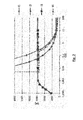
- Fig. 2 shows current-time characteristics which are helpful for the design of the retrievable current-time characteristic I4 an overcurrent protection device according to the invention.
- a fuse is chosen so that the current-time characteristic of the fuse I1 is horizontally to the left of the pulse load capacity of the copper conductor I2 (positive distance), so that the fuse triggers in case of failure in a timely manner.
- the current-time characteristic of a fuse often differs significantly from the pulse load capacity of a copper conductor or other component to be protected and can also cut them, so that For example, copper conductors must have a higher cross-section than would be required with an optimized fuse.
Landscapes
- Engineering & Computer Science (AREA)
- Power Engineering (AREA)
- Chemical & Material Sciences (AREA)
- Chemical Kinetics & Catalysis (AREA)
- Electrochemistry (AREA)
- General Chemical & Material Sciences (AREA)
- Life Sciences & Earth Sciences (AREA)
- Sustainable Development (AREA)
- Sustainable Energy (AREA)
- Transportation (AREA)
- Mechanical Engineering (AREA)
- Manufacturing & Machinery (AREA)
- Protection Of Static Devices (AREA)
- Secondary Cells (AREA)
Abstract
Description
- Die vorliegende Erfindung betrifft eine Überstromschutzvorrichtung für ein Batteriesystem und ein Batteriesystem mit einer solchen Überstromschutzvorrichtung.
- Derartige Überstromschutzvorrichtungen werden insbesondere bei Lithium-Ionen Batteriesystemen eingesetzt um aus Sicherheitsgründen Komponenten des Hauptstromkreises des Batteriesystems, wie beispielsweise Zellverbinder, Leitungen, Shunts oder Anschlüsse des Batteriesystems, von den Batteriezellen trennen zu können. Zum Schutz der Komponenten vor thermischer bzw. elektrischer Überlastung in einem Fehlerfall wird üblicherweise eine Schmelzsicherung eingesetzt. Die Abschaltbedingungen einer Schmelzsicherung sind jedoch fest vorgegeben und kaum an die Erfordernisse einer solchen Schutzvorrichtung angepasst.
- Die Komponenten des Hauptstromkreises eins Batteriesystems weisen individuelle maximale Pulsbelastbarkeiten auf, abhängig von deren Materialeigenschaften, Gewicht, elektrischem Querschnitt und anderem.
- Bei der Dimensionierung der Komponente wird üblicherweise eine Sicherung ausgewählt, die den Hauptstrompfad im Fehlerfall sicher trennen kann. Die Auslösung der Sicherung erfolgt dabei idealerweise bevor die Komponenten thermisch oder elektrisch überlastet werden.
- Besonders in Anwendungen im Automobilbereich kommt es, auch für 12 Volt Lithium-Ionen Batterien, häufig bereits im Normalbetrieb zu Pulsbelastungen. Damit es aufgrund dieser Pulsbelastungen nicht zu einem Auslösen der Schmelzsicherung kommt, muss ein genügend großer Abstand zwischen der Auslösekennlinie (Strom-Zeit-Kennlinie) der Sicherung einerseits und der Strom-Zeit-Kennlinie der Komponenten andererseits gewählt werden. Daher müssen manche elektrische Komponenten stärker dimensioniert werden, als es deren Lastprofil erfordern würde, damit eine sinnvoll gewählte Schmelzsicherung das schwächste Glied in der Kette bleibt und ihre Funktion gewahrt bleibt.
- Es ist eine Aufgabe der Erfindung, eine verbesserte Überstromschutzvorrichtung für ein Batteriesystem und ein Batteriesystem mit einer solchen Überstromschutzvorrichtung anzugeben, wobei das Abschaltverhalten besser an das Batteriesystem angepasst werden kann, so dass auch die weiteren Komponenten des Batteriesystems ihrem Lastprofil besser entsprechend dimensioniert werden können.
- Die Lösung der Aufgabe erfolgt durch eine Überstromschutzvorrichtung für ein Batteriesystem, umfassend eine Strommesseinheit zur Messung einer Mess-Stromstärke des Batteriesystems, eine Trenneinheit zur Unterbrechung eines Stromflusses des Batteriesystems und eine Steuereinheit, wobei die Steuereinheit dazu eingerichtet ist, abhängig von der Mess-Stromstärke und einer von der Steuereinheit abrufbaren Strom-Zeit-Kennlinie die Trenneinheit zur Unterbrechung des Stromflusses zu aktivieren.
- Erfindungsgemäß ist eine frei vorgebbare, insbesondere frei programmierbare, Strom-Zeit-Kennlinie so hinterlegt, dass eine Steuereinheit auf diese zugreifen und entsprechend dieser Kennlinie eine Trenneinheit ansteuern kann, um somit der vorgegebenen Kennlinie entsprechend eine Trennung von Komponenten des Batteriesystems durchführen zu können.
- Hierdurch wird es möglich eine Strom-Zeit-Kennlinie zur Trennung von Komponenten des Batteriesystems beliebig genau auf das Batteriesystem abzustimmen und nicht an die vorgegebene Kennlinie beispielsweise einer Schmelzsicherung gebunden zu sein.
- Weiterbildungen der Erfindung sind in den abhängigen Ansprüchen, der Beschreibung sowie den beigefügten Zeichnungen angegeben.
- Gemäß einer Ausführungsform kann die Steuereinheit ein Teil der Strommesseinheit sein. Die selbe Steuereinheit kann somit auch zur Steuerung der Messeinheit eingesetzt werden.
- Vorzugsweise umfasst die Überstromschutzvorrichtung eine Weckeinheit, die dazu eingerichtet ist, die Steuereinheit von einem Ruhemodus in einen Aktivierungsmodus zu überführen, wenn die Mess-Stromstärke eine vorgegebene Referenz-Stromstärke überschreitet.
- Da das Trennen der Komponenten des Batteriesystems jederzeit, außer eventuell im tiefentladenen Zustand der Batterie, gewährleistet sein soll, ist es vorteilhaft in einem Ruhemodus des Steuergerätes dessen Hauptprozessor aufzuwecken.
- Dazu kann der gemessene Strom mit einer Referenz-Stromstärke verglichen werden, der zumindest so hoch oder höher liegt, als der maximal zu erwartende Batteriestrom im Ruhemodus. Wenn der gemessene Strom die Referenz-Stromstärke überschreitet, kann die Weckeinheit die Steuereinheit aktivieren.
- Durch die im Vergleich zur Systemdynamik schnellen Wake-up Zeiten von Mikroprozessoren ist eine schnelle Erfassung des fließenden Stromes gewährleistet. Dadurch kann eine frei programmierbare Abschaltgrenze realisiert werden, die auch im Ruhemodus gewährleistet ist.
- Die Weckeinheit kann ein Teil der Steuereinheit und/oder der Strommesseinheit sein.
- Ein erfindungsgemäßes Batteriesystem kann Zellen und einen positiven und einen negativen Anschlusspol umfassen, sowie eine Überstromschutzvorrichtung wie oben beschrieben.
- Die Strommesseinheit zur Messung einer Mess-Stromstärke ist bevorzugt zwischen den Zellen und dem positiven oder negativen Anschlusspol des Batteriesystems eingerichtet.
- Auch die Trenneinheit ist bevorzugt zwischen den Zellen und dem positiven oder negativen Anschlusspol des Batteriesystems eingerichtet. Insbesondere kann die Trenneinheit zwischen den Zellen und dem selben Anschlusspol angeordnet sein wie die Strommesseinheit.
- Vorzugsweise ist die abrufbare Strom-Zeit-Kennlinie so ausgebildet, dass die Stromwerte für alle Zeitwerte unterhalb der Stromwerte einer weiteren Strom-Zeit-Kennlinie einer vorgegebenen Komponente des Batteriesystems liegen, wobei die vorgegebene Komponente insbesondere ein Kupferleiter oder ein Aluminiumleiter sein kann.
- Bevorzugt handelt es sich bei dem erfindungsgemäßen Batteriesystem um eine Lithium-Ionen Batterie. Die Zellen sind daher bevorzugt Lithium-Ionen Zellen, beispielsweise eine 12 Volt Lithium-Ionen Batterie.
- Die Erfindung wird im Folgenden beispielhaft unter Bezugnahme auf die Zeichnungen beschrieben.
- Fig. 1
- ist eine schematische Darstellung einer erfindungsgemäßen Überstromschutzvorrichtung in einem Batteriesystem.
- Fig. 2
- zeigt Strom-Zeit-Kennlinien zur Auslegung der abrufbaren Strom-Zeit-Kennlinie einer erfindungsgemäßen Überstromschutzvorrichtung.
- In
Fig. 1 ist ein erfindungsgemäßes Batteriesystem umfassend eine Überstromschutzvorrichtung dargestellt. Die Überstromschutzvorrichtung umfasst eine Strommesseinheit 1 zur Messung einer Mess-Stromstärke des Batteriesystems, eine Trenneinheit 2 zur Unterbrechung eines Stromflusses des Batteriesystems, die eventuell benötigte Treiberstufen umfassen kann, und eine Steuereinheit 3 umfassend einen Mikroprozessor, wobei die Steuereinheit 3 dazu eingerichtet ist, abhängig von der Mess-Stromstärke und einer von der Steuereinheit 3 abrufbaren Strom-Zeit-Kennlinie, I4 inFig. 2 , die Trenneinheit 2 zur Unterbrechung des Stromflusses zu aktivieren. Die Strom-Zeit-Kennlinie I4 kann auf der Steuereinheit 3 gespeichert sein und kann frei programmierbar sein. - Die Steuereinheit 3 kann auch ein Teil der Strommesseinheit 1 sein.
- Die Überstromschutzvorrichtung umfasst ferner eine Weckeinheit 4, die dazu eingerichtet ist, die Steuereinheit 3 von einem Ruhemodus in einen Aktivierungsmodus zu überführen, wenn die Mess-Stromstärke eine vorgegebene Referenz-Stromstärke überschreitet.
- Strommesseinheit 1 und Trenneinheit 2 sind in der dargestellten Ausführungsform zwischen den Zellen 5 eines Batteriesystems, insbesondere einem Zellstapel, und dem negativem Anschlusspol 7 des Batteriesystems angeordnet - sie können aber auch zwischen Zellen 5 und positiven Anschlusspol 6 angeordnet sein.
-
Fig. 2 zeigt Strom-Zeit-Kennlinien die hilfreich sind zur Auslegung der abrufbaren Strom-Zeit-Kennlinie I4 einer erfindungsgemäßen Überstromschutzvorrichtung. - Dargestellt sind die Strom-Zeit-Kennlinie einer Schmelzsicherung I1 und die Impulsbelastbarkeit eines Kupferleiters I2. Eine Schmelzsicherung wird so gewählt, dass die Strom-Zeit-Kennlinie der Schmelzsicherung I1 jeweils horizontal links von der Impulsbelastbarkeit des Kupferleiters I2 liegt (positiver Abstand), damit die Schmelzsicherung im Fehlerfall rechtzeitig auslöst. Umso geringer der Abstand zwischen den beiden Kennlinien I1, I2 umso stärker wird die Kupferleitung des Batteriesystems belastet. Dabei weicht die Strom-Zeit-Kennlinie einer Schmelzsicherung oft deutlich von der Impulsbelastbarkeit eines Kupferleiters oder einer anderen zu schützenden Komponente ab und kann diese auch schneiden, so dass beispielsweise Kupferleiter einen höheren Querschnitt aufweisen müssen als mit einer optimierten Sicherung erforderlich wäre.
- Durch die vorliegende Erfindung kann die Strom-Zeitkennlinie des Trennelementes frei gewählt werden und somit der Sicherheitsabstand zur maximalen Belastbarkeit einer Komponente, wie zum Beispiel des Kupferleiters, optimiert werden, beispielsweise ein minimaler Abstand gewählt werden. Die abrufbare Strom-Zeit-Kennlinie I4 wurde derart optimiert gewählt, dass sie jeweils einen geringen positiven Abstand zur Impulsbelastbarkeit des Kupferleiters I2 aufweist, bis zum Erreichen eines maximalen Kurzschlussstromes. Für Stromwerte ab dem maximalen Kurzschlussstrom hat die Strom-Zeit-Kennlinie I4 einen höheren Abstand zur Impulsbelastbarkeit des Kupferleiters I2 um eine rasche Trennung zu gewährleisten.
-
- 1
- Strommesseinheit
- 2
- Trenneinheit
- 3
- Steuereinheit
- 4
- Weckeinheit
- 5
- Zellen
- 6
- positiver Anschlusspol
- 7
- negativer Anschlusspol
- I1
- Strom-Zeit-Kennlinie einer Schmelzsicherung
- I2
- Impulsbelastbarkeit von Kupferleitungen
- I3
- maximaler Kurzschlussstrom
- I4
- abrufbare Strom-Zeit-Kennlinie
Claims (8)
- Überstromschutzvorrichtung für ein Batteriesystem, umfassend eine Strommesseinheit (1) zur Messung einer Mess-Stromstärke des Batteriesystems, eine Trenneinheit (2) zur Unterbrechung eines Stromflusses des Batteriesystems und eine Steuereinheit (3), wobei die Steuereinheit (3) dazu eingerichtet ist, abhängig von der Mess-Stromstärke und einer von der Steuereinheit (3) abrufbaren Strom-Zeit-Kennlinie (I4) die Trenneinheit (2) zur Unterbrechung des Stromflusses zu aktivieren.
- Überstromschutzvorrichtung nach Anspruch 1,
dadurch gekennzeichnet, dass die Steuereinheit (3) ein Teil der Strommesseinheit (1) ist. - Überstromschutzvorrichtung nach zumindest einem der vorhergehenden Ansprüche,
dadurch gekennzeichnet, dass die Überstromschutzvorrichtung eine Weckeinheit (4) umfasst, die dazu eingerichtet ist, die Steuereinheit (3) von einem Ruhemodus in einen Aktivierungsmodus zu überführen, wenn die Mess-Stromstärke eine vorgegebene Referenz-Stromstärke überschreitet. - Überstromschutzvorrichtung nach Anspruch 3,
dadurch gekennzeichnet, dass die Weckeinheit (4) ein Teil der Steuereinheit (3) und/oder der Strommesseinheit (1) ist. - Batteriesystem umfassend eine Überstromschutzvorrichtung nach Anspruch 1, wobei das Batteriesystem Zellen (5) umfasst und einen positiven (6) und einen negativen Anschlusspol (7),
dadurch gekennzeichnet, die Strommesseinheit (1) zur Messung einer Mess-Stromstärke zwischen den Zellen (5) und dem positiven (6) oder negativen Anschlusspol (7) des Batteriesystems eingerichtet ist. - Batteriesystem nach Anspruch 5,
dadurch gekennzeichnet, die Trenneinheit (2) zwischen den Zellen (5) und dem positiven (6) oder negativen Anschlusspol (7) des Batteriesystems eingerichtet ist. - Batteriesystem nach Anspruch 5 oder 6,
dadurch gekennzeichnet, dass die Strom-Zeit-Kennlinie (14) so ausgebildet ist, dass die Stromwerte für alle Zeitwerte unterhalb der Stromwerte einer weiteren Strom-Zeit-Kennlinie (12) einer vorgegebenen Komponente des Batteriesystems liegen, wobei die vorgegebene Komponente insbesondere ein Kupferleiter ist. - Batteriesystem nach einem der Ansprüche 5 bis 7,
dadurch gekennzeichnet, dass die Zellen (5) Lithium-Ionen Zellen sind.
Priority Applications (1)
| Application Number | Priority Date | Filing Date | Title |
|---|---|---|---|
| EP15170242.0A EP3101713B1 (de) | 2015-06-02 | 2015-06-02 | Überstromschutzvorrichtung |
Applications Claiming Priority (1)
| Application Number | Priority Date | Filing Date | Title |
|---|---|---|---|
| EP15170242.0A EP3101713B1 (de) | 2015-06-02 | 2015-06-02 | Überstromschutzvorrichtung |
Publications (2)
| Publication Number | Publication Date |
|---|---|
| EP3101713A1 true EP3101713A1 (de) | 2016-12-07 |
| EP3101713B1 EP3101713B1 (de) | 2020-01-08 |
Family
ID=53274446
Family Applications (1)
| Application Number | Title | Priority Date | Filing Date |
|---|---|---|---|
| EP15170242.0A Active EP3101713B1 (de) | 2015-06-02 | 2015-06-02 | Überstromschutzvorrichtung |
Country Status (1)
| Country | Link |
|---|---|
| EP (1) | EP3101713B1 (de) |
Cited By (1)
| Publication number | Priority date | Publication date | Assignee | Title |
|---|---|---|---|---|
| WO2018219625A1 (de) * | 2017-05-29 | 2018-12-06 | Hoppecke Advanced Battery Technology Gmbh | Sicherungssystem zum schutz eines batteriesystems |
Citations (4)
| Publication number | Priority date | Publication date | Assignee | Title |
|---|---|---|---|---|
| US20050073282A1 (en) * | 2003-10-03 | 2005-04-07 | Carrier David A. | Methods of discharge control for a battery pack of a cordless power tool system, a cordless power tool system and battery pack adapted to provide over-discharge protection and discharge control |
| WO2013153889A1 (ja) * | 2012-04-11 | 2013-10-17 | 日立マクセル株式会社 | 充放電制御スイッチ回路付き電池パック |
| WO2013176087A1 (ja) * | 2012-05-22 | 2013-11-28 | 株式会社豊田自動織機 | 電池状態判定方法、電池制御装置、及び電池パック |
| EP2793308A1 (de) * | 2013-04-19 | 2014-10-22 | Samsung SDI Co., Ltd. | Batteriemodul und Steuerverfahren dafür |
-
2015
- 2015-06-02 EP EP15170242.0A patent/EP3101713B1/de active Active
Patent Citations (4)
| Publication number | Priority date | Publication date | Assignee | Title |
|---|---|---|---|---|
| US20050073282A1 (en) * | 2003-10-03 | 2005-04-07 | Carrier David A. | Methods of discharge control for a battery pack of a cordless power tool system, a cordless power tool system and battery pack adapted to provide over-discharge protection and discharge control |
| WO2013153889A1 (ja) * | 2012-04-11 | 2013-10-17 | 日立マクセル株式会社 | 充放電制御スイッチ回路付き電池パック |
| WO2013176087A1 (ja) * | 2012-05-22 | 2013-11-28 | 株式会社豊田自動織機 | 電池状態判定方法、電池制御装置、及び電池パック |
| EP2793308A1 (de) * | 2013-04-19 | 2014-10-22 | Samsung SDI Co., Ltd. | Batteriemodul und Steuerverfahren dafür |
Cited By (3)
| Publication number | Priority date | Publication date | Assignee | Title |
|---|---|---|---|---|
| WO2018219625A1 (de) * | 2017-05-29 | 2018-12-06 | Hoppecke Advanced Battery Technology Gmbh | Sicherungssystem zum schutz eines batteriesystems |
| CN110892602A (zh) * | 2017-05-29 | 2020-03-17 | 茵迪朗有限责任公司 | 用于保护电池系统的保险系统 |
| US11600990B2 (en) | 2017-05-29 | 2023-03-07 | Intilion Gmbh | Protection system for protecting a battery system |
Also Published As
| Publication number | Publication date |
|---|---|
| EP3101713B1 (de) | 2020-01-08 |
Similar Documents
| Publication | Publication Date | Title |
|---|---|---|
| DE102009007969B4 (de) | Schaltanlage mit Kurzschluss-Schutzvorrichtungen | |
| DE102014214840B4 (de) | Vorrichtung zur Überwachung eines Hochvolt-Bordnetzes eines elektrisch betriebenen Fahrzeugs auf das Vorliegen einer Überlastung | |
| DE102013110240B4 (de) | Schaltungsanordnung für einen Photovoltaikwechselrichter zur Ausschaltentlastung mit Kurzschlussschaltern und Verwendungen der Schaltungsanordnung | |
| DE102009023801A1 (de) | Sicherungsvorrichtung mit pyrotechnischer Sicherung | |
| EP3028357A1 (de) | Anordnung zur elektrischen absicherung eines potentiellen kurzschlusses bzw. einer überlast in einem gleichstromnetz mit systembedingten, variablem quellinnenwiderstand | |
| EP2865068B1 (de) | Batteriemanagementsystem mit erhöhter robustheit gegenüber negativen spannungen | |
| EP2777979A2 (de) | Elektrisch eigensicheres Batteriemodul mit ultraschneller Entladeschaltung und Verfahren zur Überwachung eines Batteriemoduls | |
| DE102013204534A1 (de) | Batteriezelleinrichtung mit Kurzschlusssicherheitsfunktion und Verfahren zum Überwachen einer Batteriezelle | |
| DE102011106297A1 (de) | Batterieanordnung für einen Kraftwagen | |
| WO2018219625A1 (de) | Sicherungssystem zum schutz eines batteriesystems | |
| DE102012214879A1 (de) | Verfahren und Vorrichtung für eine passive Aktivierung einer pyrotechnischen Sicherung im Batteriesystem | |
| DE102013012578B4 (de) | Vorrichtung zum Absichern einer elektrischen Leitung sowie Verfahren zum Betreiben einer auf einer elektrischen Leitung angeordneten Vorrichtung | |
| EP2779354B1 (de) | Elektrisch eigensicheres Batteriemodul mit umpolbarer Ausgangsspannung und Verfahren zur Überwachung eines Batteriemoduls | |
| DE102015117809A1 (de) | Verfahren zum Betreiben eines Leitungssystems | |
| EP3101713B1 (de) | Überstromschutzvorrichtung | |
| DE102014221526B4 (de) | Vorrichtung zur zellspannungssensitiven Überstromunterbrechung, Lithium-Io-nen-Batterie | |
| DE102013204524A1 (de) | Batteriezelleinrichtung mit Überladungssicherheitsfunktion und Verfahren zum Überwachen einer Batteriezelle | |
| EP3907110B1 (de) | Verfahren zum betreiben einesbordspannungssystems für ein fahrzeug | |
| DE102012016696A1 (de) | Schaltungsanordnung und Verfahren zur Gleichstromunterbrechung | |
| EP3834270B1 (de) | Batterieanordnung für den hilfsbetrieb eines schienenfahrzeugs | |
| DE102011082560A1 (de) | Batteriezelle, Batteriezellenmodul, Batterie, Verfahren zur Entladung einer Batteriezelle und Kraftfahrzeug | |
| DE102019128338A1 (de) | Bordnetzkomponente für ein Kraftfahrzeug | |
| EP4489049B1 (de) | Elektronischer schutzschalter, schaltungsanordnung mit einem elektronischen schutzschalter und verfahren zum verhindern eines störlichtbogens mittel eines elektronischen schutzschalters | |
| DE102015009569A1 (de) | Elektrische Schutzschaltung zur Vermeidung eines thermischen Events einer Batteriezelle einer Kraftfahrzeugbatterie | |
| WO2024088650A1 (de) | Verfahren und schutzeinrichtung zum schützen einer einrichtung vor einem fehlerstrom und entsprechend eingerichtetes kraftfahrzeug |
Legal Events
| Date | Code | Title | Description |
|---|---|---|---|
| PUAI | Public reference made under article 153(3) epc to a published international application that has entered the european phase |
Free format text: ORIGINAL CODE: 0009012 |
|
| STAA | Information on the status of an ep patent application or granted ep patent |
Free format text: STATUS: REQUEST FOR EXAMINATION WAS MADE |
|
| 17P | Request for examination filed |
Effective date: 20160419 |
|
| AK | Designated contracting states |
Kind code of ref document: A1 Designated state(s): AL AT BE BG CH CY CZ DE DK EE ES FI FR GB GR HR HU IE IS IT LI LT LU LV MC MK MT NL NO PL PT RO RS SE SI SK SM TR |
|
| AX | Request for extension of the european patent |
Extension state: BA ME |
|
| STAA | Information on the status of an ep patent application or granted ep patent |
Free format text: STATUS: EXAMINATION IS IN PROGRESS |
|
| 17Q | First examination report despatched |
Effective date: 20171020 |
|
| REG | Reference to a national code |
Ref country code: DE Ref legal event code: R079 Ref document number: 502015011436 Country of ref document: DE Free format text: PREVIOUS MAIN CLASS: H01M0002340000 Ipc: B60L0003000000 |
|
| GRAP | Despatch of communication of intention to grant a patent |
Free format text: ORIGINAL CODE: EPIDOSNIGR1 |
|
| RIC1 | Information provided on ipc code assigned before grant |
Ipc: H01M 2/34 20060101ALI20190725BHEP Ipc: B60L 3/04 20060101ALI20190725BHEP Ipc: B60L 3/00 20190101AFI20190725BHEP Ipc: H01M 10/0525 20100101ALI20190725BHEP Ipc: H01M 10/48 20060101ALI20190725BHEP |
|
| STAA | Information on the status of an ep patent application or granted ep patent |
Free format text: STATUS: GRANT OF PATENT IS INTENDED |
|
| INTG | Intention to grant announced |
Effective date: 20190829 |
|
| RIN1 | Information on inventor provided before grant (corrected) |
Inventor name: FRITZ, JUERGEN Inventor name: LETTNER, MARKUS |
|
| GRAS | Grant fee paid |
Free format text: ORIGINAL CODE: EPIDOSNIGR3 |
|
| GRAA | (expected) grant |
Free format text: ORIGINAL CODE: 0009210 |
|
| STAA | Information on the status of an ep patent application or granted ep patent |
Free format text: STATUS: THE PATENT HAS BEEN GRANTED |
|
| AK | Designated contracting states |
Kind code of ref document: B1 Designated state(s): AL AT BE BG CH CY CZ DE DK EE ES FI FR GB GR HR HU IE IS IT LI LT LU LV MC MK MT NL NO PL PT RO RS SE SI SK SM TR |
|
| REG | Reference to a national code |
Ref country code: GB Ref legal event code: FG4D Free format text: NOT ENGLISH |
|
| REG | Reference to a national code |
Ref country code: CH Ref legal event code: EP |
|
| REG | Reference to a national code |
Ref country code: DE Ref legal event code: R096 Ref document number: 502015011436 Country of ref document: DE |
|
| REG | Reference to a national code |
Ref country code: IE Ref legal event code: FG4D Free format text: LANGUAGE OF EP DOCUMENT: GERMAN |
|
| REG | Reference to a national code |
Ref country code: AT Ref legal event code: REF Ref document number: 1222263 Country of ref document: AT Kind code of ref document: T Effective date: 20200215 |
|
| REG | Reference to a national code |
Ref country code: NL Ref legal event code: MP Effective date: 20200108 |
|
| REG | Reference to a national code |
Ref country code: LT Ref legal event code: MG4D |
|
| PG25 | Lapsed in a contracting state [announced via postgrant information from national office to epo] |
Ref country code: FI Free format text: LAPSE BECAUSE OF FAILURE TO SUBMIT A TRANSLATION OF THE DESCRIPTION OR TO PAY THE FEE WITHIN THE PRESCRIBED TIME-LIMIT Effective date: 20200108 Ref country code: NO Free format text: LAPSE BECAUSE OF FAILURE TO SUBMIT A TRANSLATION OF THE DESCRIPTION OR TO PAY THE FEE WITHIN THE PRESCRIBED TIME-LIMIT Effective date: 20200408 Ref country code: NL Free format text: LAPSE BECAUSE OF FAILURE TO SUBMIT A TRANSLATION OF THE DESCRIPTION OR TO PAY THE FEE WITHIN THE PRESCRIBED TIME-LIMIT Effective date: 20200108 Ref country code: RS Free format text: LAPSE BECAUSE OF FAILURE TO SUBMIT A TRANSLATION OF THE DESCRIPTION OR TO PAY THE FEE WITHIN THE PRESCRIBED TIME-LIMIT Effective date: 20200108 Ref country code: LT Free format text: LAPSE BECAUSE OF FAILURE TO SUBMIT A TRANSLATION OF THE DESCRIPTION OR TO PAY THE FEE WITHIN THE PRESCRIBED TIME-LIMIT Effective date: 20200108 Ref country code: PT Free format text: LAPSE BECAUSE OF FAILURE TO SUBMIT A TRANSLATION OF THE DESCRIPTION OR TO PAY THE FEE WITHIN THE PRESCRIBED TIME-LIMIT Effective date: 20200531 |
|
| PG25 | Lapsed in a contracting state [announced via postgrant information from national office to epo] |
Ref country code: BG Free format text: LAPSE BECAUSE OF FAILURE TO SUBMIT A TRANSLATION OF THE DESCRIPTION OR TO PAY THE FEE WITHIN THE PRESCRIBED TIME-LIMIT Effective date: 20200408 Ref country code: IS Free format text: LAPSE BECAUSE OF FAILURE TO SUBMIT A TRANSLATION OF THE DESCRIPTION OR TO PAY THE FEE WITHIN THE PRESCRIBED TIME-LIMIT Effective date: 20200508 Ref country code: GR Free format text: LAPSE BECAUSE OF FAILURE TO SUBMIT A TRANSLATION OF THE DESCRIPTION OR TO PAY THE FEE WITHIN THE PRESCRIBED TIME-LIMIT Effective date: 20200409 Ref country code: HR Free format text: LAPSE BECAUSE OF FAILURE TO SUBMIT A TRANSLATION OF THE DESCRIPTION OR TO PAY THE FEE WITHIN THE PRESCRIBED TIME-LIMIT Effective date: 20200108 Ref country code: LV Free format text: LAPSE BECAUSE OF FAILURE TO SUBMIT A TRANSLATION OF THE DESCRIPTION OR TO PAY THE FEE WITHIN THE PRESCRIBED TIME-LIMIT Effective date: 20200108 Ref country code: SE Free format text: LAPSE BECAUSE OF FAILURE TO SUBMIT A TRANSLATION OF THE DESCRIPTION OR TO PAY THE FEE WITHIN THE PRESCRIBED TIME-LIMIT Effective date: 20200108 |
|
| REG | Reference to a national code |
Ref country code: DE Ref legal event code: R097 Ref document number: 502015011436 Country of ref document: DE |
|
| PG25 | Lapsed in a contracting state [announced via postgrant information from national office to epo] |
Ref country code: ES Free format text: LAPSE BECAUSE OF FAILURE TO SUBMIT A TRANSLATION OF THE DESCRIPTION OR TO PAY THE FEE WITHIN THE PRESCRIBED TIME-LIMIT Effective date: 20200108 Ref country code: RO Free format text: LAPSE BECAUSE OF FAILURE TO SUBMIT A TRANSLATION OF THE DESCRIPTION OR TO PAY THE FEE WITHIN THE PRESCRIBED TIME-LIMIT Effective date: 20200108 Ref country code: CZ Free format text: LAPSE BECAUSE OF FAILURE TO SUBMIT A TRANSLATION OF THE DESCRIPTION OR TO PAY THE FEE WITHIN THE PRESCRIBED TIME-LIMIT Effective date: 20200108 Ref country code: SK Free format text: LAPSE BECAUSE OF FAILURE TO SUBMIT A TRANSLATION OF THE DESCRIPTION OR TO PAY THE FEE WITHIN THE PRESCRIBED TIME-LIMIT Effective date: 20200108 Ref country code: SM Free format text: LAPSE BECAUSE OF FAILURE TO SUBMIT A TRANSLATION OF THE DESCRIPTION OR TO PAY THE FEE WITHIN THE PRESCRIBED TIME-LIMIT Effective date: 20200108 Ref country code: EE Free format text: LAPSE BECAUSE OF FAILURE TO SUBMIT A TRANSLATION OF THE DESCRIPTION OR TO PAY THE FEE WITHIN THE PRESCRIBED TIME-LIMIT Effective date: 20200108 Ref country code: DK Free format text: LAPSE BECAUSE OF FAILURE TO SUBMIT A TRANSLATION OF THE DESCRIPTION OR TO PAY THE FEE WITHIN THE PRESCRIBED TIME-LIMIT Effective date: 20200108 |
|
| PLBE | No opposition filed within time limit |
Free format text: ORIGINAL CODE: 0009261 |
|
| STAA | Information on the status of an ep patent application or granted ep patent |
Free format text: STATUS: NO OPPOSITION FILED WITHIN TIME LIMIT |
|
| 26N | No opposition filed |
Effective date: 20201009 |
|
| PG25 | Lapsed in a contracting state [announced via postgrant information from national office to epo] |
Ref country code: IT Free format text: LAPSE BECAUSE OF FAILURE TO SUBMIT A TRANSLATION OF THE DESCRIPTION OR TO PAY THE FEE WITHIN THE PRESCRIBED TIME-LIMIT Effective date: 20200108 Ref country code: MC Free format text: LAPSE BECAUSE OF FAILURE TO SUBMIT A TRANSLATION OF THE DESCRIPTION OR TO PAY THE FEE WITHIN THE PRESCRIBED TIME-LIMIT Effective date: 20200108 |
|
| REG | Reference to a national code |
Ref country code: CH Ref legal event code: PL |
|
| PG25 | Lapsed in a contracting state [announced via postgrant information from national office to epo] |
Ref country code: SI Free format text: LAPSE BECAUSE OF FAILURE TO SUBMIT A TRANSLATION OF THE DESCRIPTION OR TO PAY THE FEE WITHIN THE PRESCRIBED TIME-LIMIT Effective date: 20200108 Ref country code: PL Free format text: LAPSE BECAUSE OF FAILURE TO SUBMIT A TRANSLATION OF THE DESCRIPTION OR TO PAY THE FEE WITHIN THE PRESCRIBED TIME-LIMIT Effective date: 20200108 |
|
| PG25 | Lapsed in a contracting state [announced via postgrant information from national office to epo] |
Ref country code: LU Free format text: LAPSE BECAUSE OF NON-PAYMENT OF DUE FEES Effective date: 20200602 |
|
| REG | Reference to a national code |
Ref country code: BE Ref legal event code: MM Effective date: 20200630 |
|
| PG25 | Lapsed in a contracting state [announced via postgrant information from national office to epo] |
Ref country code: LI Free format text: LAPSE BECAUSE OF NON-PAYMENT OF DUE FEES Effective date: 20200630 Ref country code: CH Free format text: LAPSE BECAUSE OF NON-PAYMENT OF DUE FEES Effective date: 20200630 Ref country code: IE Free format text: LAPSE BECAUSE OF NON-PAYMENT OF DUE FEES Effective date: 20200602 |
|
| PG25 | Lapsed in a contracting state [announced via postgrant information from national office to epo] |
Ref country code: BE Free format text: LAPSE BECAUSE OF NON-PAYMENT OF DUE FEES Effective date: 20200630 |
|
| PG25 | Lapsed in a contracting state [announced via postgrant information from national office to epo] |
Ref country code: TR Free format text: LAPSE BECAUSE OF FAILURE TO SUBMIT A TRANSLATION OF THE DESCRIPTION OR TO PAY THE FEE WITHIN THE PRESCRIBED TIME-LIMIT Effective date: 20200108 Ref country code: MT Free format text: LAPSE BECAUSE OF FAILURE TO SUBMIT A TRANSLATION OF THE DESCRIPTION OR TO PAY THE FEE WITHIN THE PRESCRIBED TIME-LIMIT Effective date: 20200108 Ref country code: CY Free format text: LAPSE BECAUSE OF FAILURE TO SUBMIT A TRANSLATION OF THE DESCRIPTION OR TO PAY THE FEE WITHIN THE PRESCRIBED TIME-LIMIT Effective date: 20200108 |
|
| PG25 | Lapsed in a contracting state [announced via postgrant information from national office to epo] |
Ref country code: MK Free format text: LAPSE BECAUSE OF FAILURE TO SUBMIT A TRANSLATION OF THE DESCRIPTION OR TO PAY THE FEE WITHIN THE PRESCRIBED TIME-LIMIT Effective date: 20200108 Ref country code: AL Free format text: LAPSE BECAUSE OF FAILURE TO SUBMIT A TRANSLATION OF THE DESCRIPTION OR TO PAY THE FEE WITHIN THE PRESCRIBED TIME-LIMIT Effective date: 20200108 |
|
| P01 | Opt-out of the competence of the unified patent court (upc) registered |
Effective date: 20230528 |
|
| PGFP | Annual fee paid to national office [announced via postgrant information from national office to epo] |
Ref country code: DE Payment date: 20250604 Year of fee payment: 11 |
|
| PGFP | Annual fee paid to national office [announced via postgrant information from national office to epo] |
Ref country code: GB Payment date: 20250529 Year of fee payment: 11 |
|
| PGFP | Annual fee paid to national office [announced via postgrant information from national office to epo] |
Ref country code: FR Payment date: 20250610 Year of fee payment: 11 |
|
| PGFP | Annual fee paid to national office [announced via postgrant information from national office to epo] |
Ref country code: AT Payment date: 20250610 Year of fee payment: 11 |