EP3096575A1 - Method, system and computer-readable medium for updating a broadcast area - Google Patents
Method, system and computer-readable medium for updating a broadcast area Download PDFInfo
- Publication number
- EP3096575A1 EP3096575A1 EP15305755.9A EP15305755A EP3096575A1 EP 3096575 A1 EP3096575 A1 EP 3096575A1 EP 15305755 A EP15305755 A EP 15305755A EP 3096575 A1 EP3096575 A1 EP 3096575A1
- Authority
- EP
- European Patent Office
- Prior art keywords
- user equipments
- group
- extension
- area
- depending
- Prior art date
- Legal status (The legal status is an assumption and is not a legal conclusion. Google has not performed a legal analysis and makes no representation as to the accuracy of the status listed.)
- Granted
Links
- 238000000034 method Methods 0.000 title claims abstract description 72
- 239000006185 dispersion Substances 0.000 claims abstract description 33
- 238000006073 displacement reaction Methods 0.000 claims description 7
- 230000015654 memory Effects 0.000 description 10
- 230000006870 function Effects 0.000 description 9
- 238000005562 fading Methods 0.000 description 4
- 238000004422 calculation algorithm Methods 0.000 description 3
- 238000010586 diagram Methods 0.000 description 3
- 238000005516 engineering process Methods 0.000 description 3
- 238000012545 processing Methods 0.000 description 3
- 230000006399 behavior Effects 0.000 description 2
- 230000005540 biological transmission Effects 0.000 description 2
- 238000013500 data storage Methods 0.000 description 2
- 238000005259 measurement Methods 0.000 description 2
- 238000004458 analytical method Methods 0.000 description 1
- 238000013459 approach Methods 0.000 description 1
- 238000004364 calculation method Methods 0.000 description 1
- 230000001413 cellular effect Effects 0.000 description 1
- 238000012512 characterization method Methods 0.000 description 1
- 238000004590 computer program Methods 0.000 description 1
- 230000002452 interceptive effect Effects 0.000 description 1
- 230000004807 localization Effects 0.000 description 1
- 238000013507 mapping Methods 0.000 description 1
- 230000003287 optical effect Effects 0.000 description 1
- 230000000737 periodic effect Effects 0.000 description 1
- 230000003068 static effect Effects 0.000 description 1
- 230000007704 transition Effects 0.000 description 1
Images


Classifications
-
- H—ELECTRICITY
- H04—ELECTRIC COMMUNICATION TECHNIQUE
- H04W—WIRELESS COMMUNICATION NETWORKS
- H04W4/00—Services specially adapted for wireless communication networks; Facilities therefor
- H04W4/06—Selective distribution of broadcast services, e.g. multimedia broadcast multicast service [MBMS]; Services to user groups; One-way selective calling services
-
- H—ELECTRICITY
- H04—ELECTRIC COMMUNICATION TECHNIQUE
- H04W—WIRELESS COMMUNICATION NETWORKS
- H04W72/00—Local resource management
- H04W72/30—Resource management for broadcast services
-
- H—ELECTRICITY
- H04—ELECTRIC COMMUNICATION TECHNIQUE
- H04W—WIRELESS COMMUNICATION NETWORKS
- H04W4/00—Services specially adapted for wireless communication networks; Facilities therefor
- H04W4/02—Services making use of location information
- H04W4/025—Services making use of location information using location based information parameters
- H04W4/027—Services making use of location information using location based information parameters using movement velocity, acceleration information
Definitions
- the present subject matter relates to the updating of a broadcasting area in order to adapt the broadcasting area to the displacement of the user equipments served by this broadcast area.
- the broadcast area can be a MBMS (Multimedia Broadcast Multicast Services) area or eMBMS (enhanced Multimedia Broadcast Multicast Services) area.
- MBMS Multimedia Broadcast Multicast Services
- eMBMS enhanced Multimedia Broadcast Multicast Services
- small cells networks constitute an interesting alternative to meet the above-mentioned objectives.
- Small cells stand for cells of small size (generally about 100 or 200 m). They target to deliver high per-user data rates uniformly across the coverage area and provide greater overall throughput via higher spatial reuse. Adding to that, they can be operated and can cover both indoor and outdoor environments.
- the operator designates in advance a set of locations where the broadcast could be activated, for example a stadium or a mall.
- the operator defines a set of MBMS Single Frequency Network area (MBSFN).
- MBSFN MBMS Single Frequency Network area
- the network defines an MBMS service area where a MBMS service is broadcast.
- One MBMS service area consists of one or more cells and corresponds to one or more MBSFN area.
- the BM-SC Broadcast Multicast Service Center
- the network entities can use the MBMS service area to determine the eNBs to which the corresponding MBMS service should be distributed on the network side through the notion of MBMS area.
- the idea of the broadcast is interesting to save radio resources.
- the network will send once the information and many people can consume it rather than sending it individually to each consumer.
- This summary is provided to introduce concepts related to the updating of a broadcasting area in order to adapt the broadcasting area to the displacement of the user equipments served by this broadcast area.
- a method is described.
- the aim of this method is to determine at least one new broadcast area, the new broadcast area containing a plurality of cells and serving a plurality of user equipments, the user equipments being organized within a plurality of groups.
- the method comprises the following steps realized for at least one of the group a first step of determining a principal direction depending of directions of the user equipments of the group, a second step of determining a dispersion of the directions, depending of the directions of the users equipments of the group and of the principal direction, a third step of determining a center, depending of positions of the user equipments of the group, a fourth step of determining a geographical area; the geographical area being centered on the center and the geographical area having a first extension, along the principal direction, this first extension depending of the speeds of the user equipments of the group and the geographical area having a second extension, along a direction perpendicular to the principal direction, this second extension depending of the dispersion and the speeds of the user equipments of the group.
- a system configured to update a broadcast area containing a plurality of cells and serving a plurality of user equipments, the user equipments being organized within a plurality of groups.
- the system comprises a first determination module configured to determine a principal directions depending of directions of the user equipments of the group, a second determination module configured to determine a dispersion depending of the directions of the users equipments of the group, a third determination module configured to determine a center, depending of positions of the user equipments of the group, a fourth determination module configured to determine a geographical area; the geographical area being centered on the center and the geographical area having a first extension, along the principal direction, this first extension depending of the speeds of the user equipments of the group and the geographical area having a second extension, along a direction perpendicular to the principal direction, this second extension depending of the dispersion and the speeds of the user equipments of the group.
- the system also comprises a fifth determination module configured to determine the new broadcast area, as being coverage areas of cells overlapping the geographical area.
- a computer-readable medium has embodied thereon a method for updating a broadcast area containing a plurality of cells and serving a plurality of user equipments, the user equipments being organized within a plurality of groups.
- the method comprises a first step of determining a principal directions depending of directions of the user equipments of the group, a second step of determining a dispersion depending of the directions of the users equipments of the group, a third step of determining a center, depending of positions of the user equipments of the group, a fourth step of determining a geographical area; the geographical area being centered on the center and the geographical area having a first extension, along the principal direction, this first extension depending of the speeds of the user equipments of the group and the geographical area having a second extension, along a direction perpendicular to the principal direction, this second extension depending of the dispersion and the speeds of the user equipments of the group.
- the method also comprises a fifth step of determining the new broadcast area, as being coverage areas of cells overlapping the geographical area.
- broadcast delivery allows a single data stream to reach multiple users simultaneously. Most importantly, it avoids separately sending redundant content to multiple users. For this reason, broadcast delivery of popular multimedia content is an attractive way to optimize network resources and wireless capacity. In addition, it is a good way to remain the user experience good as the number of users receiving content from broadcast delivery ranges from a small number to high number.
- broadcasting area we mean a set of cells of a cellular network that are dedicated to the transmission of the same data flow, for example a media content such us video, image, audio or a file, to different user equipments.
- the 3GPP specification TS26.346 comprises numerous use case of broadcasting area.
- the context awareness on the utilizing context information in a real-time manner based on network, devices, applications, and the user behavior is captured and used in the determination of the MBSFN area.
- the velocity information which is critical information that should be considered when MBSFN area is updated.
- One embodiment of the present subject matter is a method to leverage the previously described limitation by allowing the MBSFN area to be dynamically updated during the session in order to cover the user equipments during the displacement of the user equipments.
- the idea is to make the MBSFN area dynamic according to the user density (consuming the broadcast service) and their mobility/trajectory in the network in order to deliver the best Quality of Experience (QoE) for the most users and in the same time optimize the radio resources.
- QoE Quality of Experience
- the MBFSN area will be adapted to the movement of the user equipments and so the user equipments could stay within the broadcasting area.
- the network would not have to support most of the users through, and at the end save a lot of radio resources.
- One embodiment of the present subject matter is a method describes figure 1 .
- This method allows the determination of at least one new broadcast area.
- the broadcast area contains a plurality of cells and serves a plurality of user equipments.
- the user equipments are organized within a plurality of groups.
- the method comprises the following steps realizes for at least one of the group:
- the method object of the present subject matter allows the determination of a broadcast area of the right size, when deploying a broadcast service for example a MBMS service.
- the broadcast area is adapted dynamically according to the mobility of user equipments. It adapts the location and the size of the broadcast area dynamically according to the user's mobility and behavior. For example, for in-venue event the broadcast area coverage is limited to the stadium area during the event and at the end of the event when people flood leave the stadium, the broadcast area moves with the people flows.
- the basic idea of this embodiment is to adapt the broadcasting area according to the context of the subscribed users and its evolution.
- This method allows the controlling of the joining/leaving of cells dynamically to the broadcasting area according to the trajectory of the users.
- the method also comprises:
- the aim is to consider user equipments with direction and/or velocity that are in the same range, in order to obtain a broadcasting area containing user equipments that are involved in the same movement.
- the method comprises the classification step 201 and 202 of figure 2 .
- the steps 101, 102, 103, 104, 105 are realized for at least two groups associated to two different couples constituted of a direction class and a speed class.
- This embodiment can also comprise a step 301 of merging at least two new broadcast areas.
- This merging can be realized by, after determining the area of the broadcast, selecting all the cells overlapping with this area. So you have a list of cells (referenced by their Cell_Id) that cover a broadcasting area. You apply the same thing for the others broadcast areas, you obtain a new set of cells.
- the merging consists in union of all the obtained set of cells.
- each broadcasting area can be determined, in order to have a plurality of broadcast areas.
- Each broadcasting area more precisely follows the movement of group of user equipments.
- each user notifies the network his joining to the broadcasted content in a predefined broadcast area, for example a MBSFN area.
- the network collects in a database all the information related to the speed and the direction.
- the method examines the context of the different terminals consuming same broadcasted content through the broadcast area, for example the velocity, principal direction, stationnarity of the terminal trajectory.
- the method classifies the user equipments according to their speed.
- the following step is a direction classification step. In this step and for each speed class, the method determines the direction of the user equipments of the speed class. For that, the classification method is run again using different parameters to compute the direction of their trajectory.
- the next step is the determination of the broadcasting area, this is done by finding the different cell which should be part of the new broadcast area for each selected couple of speed and direction classes, we determine the new broadcast area boundary.
- the next step is a step wherein each cell in the new broadcast area will join the new broadcast area. The cell not yet belonging to the broadcast area will leave the broadcast area.
- the method is iterative and the method is restarted by doing again a step of collecting the new data of the users in each broadcast area during a predefined time interval Ts.
- the method comprises a step of examination and determination of the user equipments velocity as well as the evolution of this trajectory in a periodic manner.
- the aim is to determine the speed and the direction of the user equipments; this can be achieved through different methods. Different approaches can applied for wireless networks for the localization of the terminal and thus the calculation of their velocity and direction:
- step 201 of classifying the user equipments according to their speed within a plurality of speed class, each speed class being a range of speeds is presented in figure 4-a and comprises the following steps:
- determining a number of user equipments of the speed class we mean determining the number of user equipments whose speed are within a speed range or interval of speeds associated to the speed class.
- the method object of the present subject matter could determine different broadcasting areas adapted to each of the speed classes.
- the aim of the step 402-a of selecting the speed classes containing a number of user equipments above a first threshold is to avoid taken into account speed classes with too few user equipments.
- the histogram values is comparing with a threshold, experimentally set-up, to determine the importance of a class in the decision. For example if the class contains 1% of the total number of user equipments associated to the broadcast area, it will not be considered in the algorithm.
- 5 different speed classes are taken into account. These classes are the class 0 to 20 km/h, the class 20 km/h to 40km/h, the class 40 km/h to 60 km/h the class 60 km/h to 80km/h and the class 80 km/h and above.
- the first threshold is 5% of the total number of user equipments associated to the broadcast area.
- the example of this embodiment is only an illustration of how the method of this disclosure works. It is up to the operator to configure his preferences regarding the first threshold and the definition of the classes.
- the step 202 of classifying the user equipments according to their direction within a plurality of direction class direction comprises; a step 402-a of determining, for at least one direction class a number of user equipments of the direction class; and a step 402-b of selecting the direction classes containing more user equipments than a second threshold.
- First class is the interval 0 to pi/2
- the second class is the interval pi/2 to pi
- the third class is the interval pi to 3pi/2
- the fourth class is the interval 3pi/2 to 2pi.
- the second threshold is 37% of the total number of user equipments associated to the broadcast area.
- the example of this embodiment is only an illustration of how the method of this disclosure works. It is up to the operator to configure his preferences regarding the first threshold and the definition of the classes.
- the first step 101 of determining a principal direction is configured to determine the principal direction as being a median of the directions of the user equipments of the group.
- the first step 101 of determining a principal direction is configured to determine the principal direction as being a mean of the directions of the user equipments of the group.
- theta_i principal represents the principal direction of the group i
- j represents one of the sub-group of the group i
- number o f users in sub group j represents the number of user of the sub group j
- Total of users represents the total numbers of users consuming the broadcasted content
- theta j represents the means direction of the users of the sub-group j .
- the second determination step 102 is also configured to determine the dispersion as being the variance of the direction of the directions of the user equipments of the group compared to the principal direction.
- variance means a function that measures how far a set of numbers is spread out compared to a given value.
- the third determination step 103 is configured to determine the center as being the centroid of positions of the user equipments of the group.
- centroid we mean the arithmetic mean, also known as average, of the positions of all the user equipments of the group.
- the figure 5 presents an ellipse; this ellipse is one of the geographical areas obtainable by one embodiment of the fourth step 104 of determining a geographical area.
- the first extension is calculated according to range of the speeds of the user equipments of the group following a simple rule: For high velocity, we set a long ellipse that tends to cover future positions of the terminals. In the contrary, for low velocity, we suppose that position of the terminal will not change a lot. Thus, we consider an ellipse with low major axis value.
- the second extension is calculated according to the dispersion of the directions of the user equipments of the group compared to the principal direction. If the dispersion is weak, it means that mostly of the users are in the same direction. In that case, the second extension should be small. Otherwise, it means that, users are moving in the same area/direction but with a lot of dispersion. In that case, we have to set up a large value for the second extension.
- the fourth step 104 of determining a geographical area is configured to determine an ellipse
- ceiling function we mean a function that determines the smallest integer following a real number.
- the diameter of the cell coverage depends on the type of deployments. In small cell deployments, the cell average is around 200m. In case of Macro cell, it is about 2 Km.
- the determined geographical area is an ellipse, see figure 5 .
- This ellipse is centered in cx, cy, the major axis of this ellipse is a and the minor axis of this ellipse is b.
- Each cell is characterized by the coordinates ( x, y ) of the center of her coverage area and If this coordinates respect the following equation; / a 2 x - cx 2 + / b 2 y - cy 2 ⁇ 1 the cell is considered to be part of the broadcast area.
- the minor axis is chosen according to the variance ( var ) of the directions of the user equipments to the principal direction.
- var variance of the directions of the user equipments to the principal direction.
- this parameter can be calculated according to range of the speed of the user equipments using the following mapping function:
- processor(s) may be implemented as one or more microprocessors, microcomputers, microcontrollers, digital signal processors, central processing units, state machines, logic circuitries, and/or any devices that manipulate signals based on operational instructions.
- the processor(s) can be a single processing unit or a number of units, all of which could also include multiple computing units.
- the processor(s) are configured to fetch and execute computer-readable instructions stored in the memory.
- This system for updating a broadcast area containing a plurality of cells and serving a plurality of user equipments is presented figure 6 .
- the user equipments are organized within a plurality of groups.
- the system comprises;
- processor may be provided through the use of dedicated hardware as well as hardware capable of executing software in association with appropriate software.
- the functions may be provided by a single dedicated processor, by a single shared processor, or by a plurality of individual processors, some of which may be shared.
- explicit use of the term "processor” should not be construed to refer exclusively to hardware capable of executing software, and may implicitly include, without limitation, digital signal processor (DSP) hardware, network processor, application specific integrated circuit (ASIC), field programmable gate array (FPGA), read only memory (ROM) for storing software, random access memory (RAM), and non volatile storage.
- DSP digital signal processor
- ASIC application specific integrated circuit
- FPGA field programmable gate array
- ROM read only memory
- RAM random access memory
- non volatile storage Other hardware, conventional and/or custom, may also be included.
- the memory may include any computer-readable medium known in the art including, for example, volatile memory, such as static random access memory (SRAM) and dynamic random access memory (DRAM), and/or non-volatile memory, such as read only memory (ROM), erasable programmable ROM, flash memories, hard disks, optical disks, and magnetic tapes.
- volatile memory such as static random access memory (SRAM) and dynamic random access memory (DRAM)
- non-volatile memory such as read only memory (ROM), erasable programmable ROM, flash memories, hard disks, optical disks, and magnetic tapes.
- the memory includes modules and data.
- the modules include routines, programs, objects, components, data structures, etc., which perform particular tasks or implement particular abstract data types.
- the data serves as a repository for storing data processed, received, and generated by one or more of the modules.
- program storage devices for example, digital data storage media, which are machine or computer readable and encode machine-executable or computer-executable programs of instructions, where said instructions perform some or all of the steps of the described method.
- the program storage devices may be, for example, digital memories, magnetic storage media, such as a magnetic disks and magnetic tapes, hard drives, or optically readable digital data storage media.
- An embodiment of the subject matter is a computer program, configured to realize the method described figure 1 .
- This method is dedicated for updating a broadcast area containing a plurality of cells and serving a plurality of user equipments.
- the user equipments are organized within a plurality of groups.
- the method comprises:
Landscapes
- Engineering & Computer Science (AREA)
- Computer Networks & Wireless Communication (AREA)
- Signal Processing (AREA)
- Multimedia (AREA)
- Mobile Radio Communication Systems (AREA)
Abstract
Description
- The present subject matter relates to the updating of a broadcasting area in order to adapt the broadcasting area to the displacement of the user equipments served by this broadcast area. In a non limiting example the broadcast area can be a MBMS (Multimedia Broadcast Multicast Services) area or eMBMS (enhanced Multimedia Broadcast Multicast Services) area.
- Mobile data traffic has been growing at an exponential rate with traffic volume doubling every year and with some predicting more than 18-fold increase in data traffic in five years. A significant portion of which is video on demand (non-interactive, pre-recorded content) with more than 25% coming from Youtube alone.
- To respond to this growing trend, small cells networks constitute an interesting alternative to meet the above-mentioned objectives. Small cells stand for cells of small size (generally about 100 or 200 m). They target to deliver high per-user data rates uniformly across the coverage area and provide greater overall throughput via higher spatial reuse. Adding to that, they can be operated and can cover both indoor and outdoor environments.
- On the other hand, an efficient mean to deliver massively video contents to a large population relies on broadcast delivery solution such as MBMS, eMBMS etc. Such solutions are well suited for popular live or scheduled contents, or in venue video events (like stadium coverage).
- The operator designates in advance a set of locations where the broadcast could be activated, for example a stadium or a mall. The operator defines a set of MBMS Single Frequency Network area (MBSFN). On top of MBSFN area, the network defines an MBMS service area where a MBMS service is broadcast.
- One MBMS service area consists of one or more cells and corresponds to one or more MBSFN area. The BM-SC (Broadcast Multicast Service Center) informs network entities about the MBMS service area corresponding to the session. The network entities can use the MBMS service area to determine the eNBs to which the corresponding MBMS service should be distributed on the network side through the notion of MBMS area.
- The idea of the broadcast is interesting to save radio resources. The network will send once the information and many people can consume it rather than sending it individually to each consumer.
- This summary is provided to introduce concepts related to the updating of a broadcasting area in order to adapt the broadcasting area to the displacement of the user equipments served by this broadcast area.
- In one implementation a method is described. The aim of this method is to determine at least one new broadcast area, the new broadcast area containing a plurality of cells and serving a plurality of user equipments, the user equipments being organized within a plurality of groups. The method comprises the following steps realized for at least one of the group a first step of determining a principal direction depending of directions of the user equipments of the group, a second step of determining a dispersion of the directions, depending of the directions of the users equipments of the group and of the principal direction, a third step of determining a center, depending of positions of the user equipments of the group, a fourth step of determining a geographical area; the geographical area being centered on the center and the geographical area having a first extension, along the principal direction, this first extension depending of the speeds of the user equipments of the group and the geographical area having a second extension, along a direction perpendicular to the principal direction, this second extension depending of the dispersion and the speeds of the user equipments of the group. The method also comprises a fifth step of determining the new broadcast area, as being coverage areas of cells overlapping the geographical area.
- In another implementation a system is described. The system is configured to update a broadcast area containing a plurality of cells and serving a plurality of user equipments, the user equipments being organized within a plurality of groups. The system comprises a first determination module configured to determine a principal directions depending of directions of the user equipments of the group, a second determination module configured to determine a dispersion depending of the directions of the users equipments of the group, a third determination module configured to determine a center, depending of positions of the user equipments of the group, a fourth determination module configured to determine a geographical area; the geographical area being centered on the center and the geographical area having a first extension, along the principal direction, this first extension depending of the speeds of the user equipments of the group and the geographical area having a second extension, along a direction perpendicular to the principal direction, this second extension depending of the dispersion and the speeds of the user equipments of the group. The system also comprises a fifth determination module configured to determine the new broadcast area, as being coverage areas of cells overlapping the geographical area.
- In another implementation a computer-readable medium is described. The computer-readable medium has embodied thereon a method for updating a broadcast area containing a plurality of cells and serving a plurality of user equipments, the user equipments being organized within a plurality of groups. The method comprises a first step of determining a principal directions depending of directions of the user equipments of the group, a second step of determining a dispersion depending of the directions of the users equipments of the group, a third step of determining a center, depending of positions of the user equipments of the group, a fourth step of determining a geographical area; the geographical area being centered on the center and the geographical area having a first extension, along the principal direction, this first extension depending of the speeds of the user equipments of the group and the geographical area having a second extension, along a direction perpendicular to the principal direction, this second extension depending of the dispersion and the speeds of the user equipments of the group. The method also comprises a fifth step of determining the new broadcast area, as being coverage areas of cells overlapping the geographical area.
- The detailed description is given with reference to the accompanying figures. In the figures, the left-most digit(s) of a reference number identifies the figure in which the reference number first appears. The same numbers are used throughout the figures to reference like features and components. Some embodiments of system and/or methods in accordance with embodiments of the present subject matter are now described, by way of example only, and with reference to the accompanying figures, in which:
-
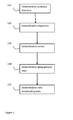
Figure 1 presents a first embodiment of the method object of the present subject matter -
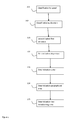
Figure 2 presents a second embodiment of the method object of the present subject matter -
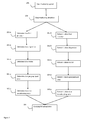
Figure 3 presents a third embodiment of the method object of the present subject matter -
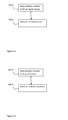
Figure 4-a presents an embodiment of thestep 201 of classifying the user equipments according to their speed -
Figure 4-b presents an embodiment of thestep 202 of classifying the user equipments according to their direction -
Figure 5 presents an ellipse obtained in an embodiment of the fourth step -
Figure 6 presents an embodiment of the system object of the present subject matter - In the present document, the word "exemplary" is used herein to mean "serving as an example, instance, or illustration." Any embodiment or implementation of the present subject matter described herein as "exemplary" is not necessarily to be construed as preferred or advantageous over other embodiments.
- It should be appreciated by those skilled in the art that any block diagrams herein represent conceptual views of illustrative systems embodying the principles of the present subject matter. Similarly, it will be appreciated that any flow charts, flow diagrams, state transition diagrams, pseudo code, and the like represent various processes which may be substantially represented in computer readable medium and so executed by a computer or processor, whether or not such computer or processor is explicitly shown.
- The embodiments of the present subject matter apply to the broadcast delivery of contents within different types of broadcasting area, for example MBMS or eMBMS. Broadcast delivery allows a single data stream to reach multiple users simultaneously. Most importantly, it avoids separately sending redundant content to multiple users. For this reason, broadcast delivery of popular multimedia content is an attractive way to optimize network resources and wireless capacity. In addition, it is a good way to remain the user experience good as the number of users receiving content from broadcast delivery ranges from a small number to high number. By broadcasting area we mean a set of cells of a cellular network that are dedicated to the transmission of the same data flow, for example a media content such us video, image, audio or a file, to different user equipments. The 3GPP specification TS26.346 comprises numerous use case of broadcasting area.
- In an embodiment of the present subject matter, the context awareness on the utilizing context information in a real-time manner based on network, devices, applications, and the user behavior is captured and used in the determination of the MBSFN area. For example, we can cite the velocity information which is critical information that should be considered when MBSFN area is updated.
- One embodiment of the present subject matter is a method to leverage the previously described limitation by allowing the MBSFN area to be dynamically updated during the session in order to cover the user equipments during the displacement of the user equipments.
- In other words the idea is to make the MBSFN area dynamic according to the user density (consuming the broadcast service) and their mobility/trajectory in the network in order to deliver the best Quality of Experience (QoE) for the most users and in the same time optimize the radio resources.
- In order to more precisely explain the purpose of the embodiments of the present subject matter we can refer to the following example:
- Assume we are in a campus where many users are consuming a broadcasted content (e.g. the final of world Cup Football). These users are connected to a pre-deployed and pre-defined MBSFN area. Without using the embodiments of the present subject matter, when these users are leaving the campus and when most of them are moving in one direction (e.g. taking the public transport), most of the users will be detached from the MBSFN area and their sessions will be switched to unicast or Packet-switched Streaming Service (PSS) delivery. This way of working follows the specification described in 3GPP TS 23.246 and 3GPP TS 26.346. In contrary when using the embodiments of the present subject matter, the MBFSN area will be adapted to the movement of the user equipments and so the user equipments could stay within the broadcasting area. Using the embodiments of the present subject matter, it results that the network would not have to support most of the users through, and at the end save a lot of radio resources.
- One embodiment of the present subject matter is a method describes
figure 1 . This method allows the determination of at least one new broadcast area. The broadcast area contains a plurality of cells and serves a plurality of user equipments. The user equipments are organized within a plurality of groups. The method comprises the following steps realizes for at least one of the group: - a
first step 101 of determining a principal direction depending of directions of the user equipments of the group, - a
second step 102 of determining a dispersion of the directions, depending of the directions of the user equipments of the group and of the principal direction, - a
third step 103 of determining a center depending of positions of the user equipments of the group, - a
fourth step 104 of determining an geographical area;
the geographical area being centered on the center and
the geographical area having a first extension, along the principal direction, this first extension depending of the speeds of the user equipments of the group and
the geographical area having a second extension of the geographical area, along a direction perpendicular to the principal direction, this second extension depending of the dispersion and the speeds of the user equipments of the group, - Numerous publications and methods are known by the person having ordinary skill in art to extract the speed and direction of an user equipment, for example the covariance based methods. These methods consist in estimating the speed by analyzing the characteristics of the received signal. The Doppler frequency is estimated via the computation of the covariance function of the received signal. The radial speed of users is then derived. Examples of these algorithms are described in the publication of Rosa Zheng Yahong and Xiao Chengshan. Mobile speed estimation for broadband wireless communications over rician fading channels, published IEEE Transactions On Wireless Communications, page 8, jan 2009. Other documents where direction and speed estimation are tackled are for example the publication of Zajic, A.G., Estimation of Mobile Velocities and Direction of Movement in Mobile-to-Mobile Wireless Fading Channels, published IEEE Transactions on Vehicular Technology, vol. 61, Issue 1, pp. 130-139.
- The method object of the present subject matter allows the determination of a broadcast area of the right size, when deploying a broadcast service for example a MBMS service. Thanks to the embodiments of the present subject matter, the broadcast area is adapted dynamically according to the mobility of user equipments. It adapts the location and the size of the broadcast area dynamically according to the user's mobility and behavior. For example, for in-venue event the broadcast area coverage is limited to the stadium area during the event and at the end of the event when people flood leave the stadium, the broadcast area moves with the people flows.
- In other words the basic idea of this embodiment is to adapt the broadcasting area according to the context of the subscribed users and its evolution. Here, we focus mainly on the terminal speed and direction. This method allows the controlling of the joining/leaving of cells dynamically to the broadcasting area according to the trajectory of the users.
- In another embodiment describes
figure 2 the method also comprises: - a
step 201 of classifying the user equipments according to their speed within a plurality of speed classes, each speed class being associated to a range of speeds and containing the user equipments with speed of displacement within the range of speeds, - a
step 202 of classifying the user equipments according to their direction within a plurality of direction classes, each direction class being associated to a range of directions and containing the user equipments with direction of displacement within the range of directions, - In the previously described embodiment some classifications method are applied. The aim is to consider user equipments with direction and/or velocity that are in the same range, in order to obtain a broadcasting area containing user equipments that are involved in the same movement.
- In another embodiment describes
figure 3 the method comprises theclassification step figure 2 . In the method object of this embodiment thesteps step 301 of merging at least two new broadcast areas. This merging can be realized by, after determining the area of the broadcast, selecting all the cells overlapping with this area. So you have a list of cells (referenced by their Cell_Id) that cover a broadcasting area. You apply the same thing for the others broadcast areas, you obtain a new set of cells. The merging consists in union of all the obtained set of cells. - In other words, in the
figure 3 , several broadcast areas can be determined, in order to have a plurality of broadcast areas. Each broadcasting area more precisely follows the movement of group of user equipments. - In other words, within the methods of the present subject matter, each user notifies the network his joining to the broadcasted content in a predefined broadcast area, for example a MBSFN area. The network collects in a database all the information related to the speed and the direction. After that the method examines the context of the different terminals consuming same broadcasted content through the broadcast area, for example the velocity, principal direction, stationnarity of the terminal trajectory. After that the method classifies the user equipments according to their speed. The following step is a direction classification step. In this step and for each speed class, the method determines the direction of the user equipments of the speed class. For that, the classification method is run again using different parameters to compute the direction of their trajectory. The next step is the determination of the broadcasting area, this is done by finding the different cell which should be part of the new broadcast area for each selected couple of speed and direction classes, we determine the new broadcast area boundary. The next step is a step wherein each cell in the new broadcast area will join the new broadcast area. The cell not yet belonging to the broadcast area will leave the broadcast area. The method is iterative and the method is restarted by doing again a step of collecting the new data of the users in each broadcast area during a predefined time interval Ts.
- In an embodiment of the present subject matter and if it results, after running the method for updating a broadcast area, that two or more new separate broadcast areas are created then the method will be run independently on each broadcast area for the next time interval. This situation is possible if we have distinct sub-groups in the original broadcast area.
- In an embodiment of the present subject matter, the method comprises a step of examination and determination of the user equipments velocity as well as the evolution of this trajectory in a periodic manner. The aim is to determine the speed and the direction of the user equipments; this can be achieved through different methods. Different approaches can applied for wireless networks for the localization of the terminal and thus the calculation of their velocity and direction:
- Using GPS (Global Positioning System) for example as described within the article of S. Omar, C. Rizos S. "Incorporating GPS into Wireless Networks: Issues and Challenges" published during the 6th International Symposium on Satellite Navigation Technology Including Mobile Positioning & Location Services, 2003.
- Using TDOA (Time Difference Of Arrival) system as described within the article of Fredrik Gustafsson and Fredrik Gunnarsson, "Positioning using time-difference of arrival measurements", published during IEEE International Conference on Acoustics, Speech, and Signal Processing, 2003. Proceedings. (ICASSP '03).
- Other less precise methods can also be used. These other methods can inform on the terminal velocity at low precision (for example classification of the user among three classes: immobile, low velocity and high velocity, basing on received power measurements). This is for example described in the article of Salah-Eddine Elayoubi, Afef Ben Hadj Alaya-Feki, Emmanuelle Villebrun, Benoît Fourestié, "Wavelet analysis for velocity characterization in mobile networks". Presented during VTC Spring 2006 pages 793-797.
- Numerous publications and methods are known by the person having ordinary skill in art to extract the speed and direction of an user equipment, for example the covariance based methods. These methods consist in estimating the speed by analyzing the characteristics of the received signal. The Doppler frequency is estimated via the computation of the covariance function of the received signal. The radial speed of users is then derived. Examples of these algorithms are described in the publication of Rosa Zheng Yahong and Xiao Chengshan. Mobile speed estimation for broadband wireless communications over rician fading channels, published IEEE Transactions On Wireless Communications, page 8, jan 2009. Other documents where direction and speed estimation are tackled are for example the publication of Zajic, A.G., Estimation of Mobile Velocities and Direction of Movement in Mobile-to-Mobile Wireless Fading Channels, published IEEE Transactions on Vehicular Technology, vol. 61, Issue 1, pp. 130-139.
- An embodiment of the
step 201 of classifying the user equipments according to their speed within a plurality of speed class, each speed class being a range of speeds, is presented infigure 4-a and comprises the following steps: - a step 401-a of determining for at least one speed class a number of user equipments of the speed class,
- and a step 402-a of selecting the speed classes containing more user equipments than a first threshold.
- By determining a number of user equipments of the speed class we mean determining the number of user equipments whose speed are within a speed range or interval of speeds associated to the speed class.
- The aim of the step 401-a of determining a number of user equipments to each speed class is to determine the different classes of the terminals: immobile (eg: speed=0 km/h), pedestrian-like (eg: between 0 and 10 km/h) or vehicular (eg: >10km/h) etc. The method object of the present subject matter could determine different broadcasting areas adapted to each of the speed classes.
- The aim of the step 402-a of selecting the speed classes containing a number of user equipments above a first threshold is to avoid taken into account speed classes with too few user equipments. In other words, the histogram values is comparing with a threshold, experimentally set-up, to determine the importance of a class in the decision. For example if the class contains 1% of the total number of user equipments associated to the broadcast area, it will not be considered in the algorithm.
- In an embodiment of the determination step 401-a, 5 different speed classes are taken into account. These classes are the class 0 to 20 km/h, the class 20 km/h to 40km/h, the class 40 km/h to 60 km/h the class 60 km/h to 80km/h and the class 80 km/h and above.
- In an embodiment of the selection step 401-b, the first threshold is 5% of the total number of user equipments associated to the broadcast area.
- The example of this embodiment is only an illustration of how the method of this disclosure works. It is up to the operator to configure his preferences regarding the first threshold and the definition of the classes.
- In an embodiment, presented
figure 4-b , thestep 202 of classifying the user equipments according to their direction within a plurality of direction class direction, comprises;
a step 402-a of determining, for at least one direction class a number of user equipments of the direction class;
and a step 402-b of selecting the direction classes containing more user equipments than a second threshold. - In an embodiment of the determination step 402-a, four direction classes are taken into account. First class is the interval 0 to pi/2, the second class is the interval pi/2 to pi, the third class is the interval pi to 3pi/2 and the fourth class is the interval 3pi/2 to 2pi.
- In an embodiment of the selection step 402-b, the second threshold is 37% of the total number of user equipments associated to the broadcast area.
- The example of this embodiment is only an illustration of how the method of this disclosure works. It is up to the operator to configure his preferences regarding the first threshold and the definition of the classes.
- In an embodiment the
first step 101 of determining a principal direction is configured to determine the principal direction as being a median of the directions of the user equipments of the group. - In an embodiment the
first step 101 of determining a principal direction is configured to determine the principal direction as being a mean of the directions of the user equipments of the group. - In an embodiment the
first step 101 of determining a principal direction is configured;
to classify the user equipments of the group within a set of subgroups, and to use the following equation;
- In this equation theta_iprincipal represents the principal direction of the group i, j represents one of the sub-group of the group i, number o f users in sub group j represents the number of user of the sub group j, Total of users represents the total numbers of users consuming the broadcasted content, and thetaj represents the means direction of the users of the sub-group j .
- In an embodiment of the present subject matter the
second determination step 102 is also configured to determine the dispersion as being the variance of the direction of the directions of the user equipments of the group compared to the principal direction. - By variance we mean a function that measures how far a set of numbers is spread out compared to a given value. For example the variance can be determined using the following formula:

Wherein σ is the variance, N is the number of element, xi is the value of the element i and µ is the mean of the set of elements, for example
- However the man ordinary skilled in the art knows some other way of expressing the variance and would easily apply this other ways within the present subject matter.
- In an embodiment of the present subject matter the
third determination step 103 is configured to determine the center as being the centroid of positions of the user equipments of the group. - By centroid we mean the arithmetic mean, also known as average, of the positions of all the user equipments of the group.
- The
figure 5 presents an ellipse; this ellipse is one of the geographical areas obtainable by one embodiment of thefourth step 104 of determining a geographical area. In this embodiment the first extension is calculated according to range of the speeds of the user equipments of the group following a simple rule: For high velocity, we set a long ellipse that tends to cover future positions of the terminals. In the contrary, for low velocity, we suppose that position of the terminal will not change a lot. Thus, we consider an ellipse with low major axis value. In this embodiment the second extension is calculated according to the dispersion of the directions of the user equipments of the group compared to the principal direction. If the dispersion is weak, it means that mostly of the users are in the same direction. In that case, the second extension should be small. Otherwise, it means that, users are moving in the same area/direction but with a lot of dispersion. In that case, we have to set up a large value for the second extension. - In this embodiment the
fourth step 104 of determining a geographical area is configured to determine an ellipse; - this ellipse is centered on the center , the first extension representing a major axis of the ellipse and the second extension representing a minor axis of the ellipse, and
- with the first extension;
- being equal to the diameter of the coverage of 4 cells if the speed of the user equipments is lower than 20 km/h,
- being equal to the diameter of the coverage of 8 cells if the speed of the user equipments is comprised between 20 km/h and 40km/h,
- being equal to the diameter of the coverage of 16 cells if the speed of the user equipments is comprised between 40 km/h and 60km/h,
- being equal to the diameter of the coverage of 32 cells if the speed of the user equipments is comprised between 60km/h and 80km/h,
- being equal to the diameter of the coverage of 32 cells if the speed of the user equipments is higher than 80km/h
- with the second extension;
- being equal to two times the cell diameter if the dispersion is lower than π/3;
- being equal to the first extension if the dispersion is within the rang π/3 to π/4;
- being equal to ceil(a/2) times the cell diameter, if the dispersion is within the rang π/4 to π/6;
- being equal to ceil(a/3) times the cell diameter if the dispersion is upper than π/6;
- wherein a is equal to the first extension and ceil is the ceiling function.
- By ceiling function we mean a function that determines the smallest integer following a real number.
- The diameter of the cell coverage depends on the type of deployments. In small cell deployments, the cell average is around 200m. In case of Macro cell, it is about 2 Km.
- In an embodiment the determined geographical area is an ellipse, see
figure 5 . This ellipse is centered in cx, cy, the major axis of this ellipse is a and the minor axis of this ellipse is b. Each cell is characterized by the coordinates (x, y) of the center of her coverage area and If this coordinates respect the following equation;
the cell is considered to be part of the broadcast area. - In other words, in the embodiment described above and by using the references of the
figure 6 , the minor axis is chosen according to the variance (var) of the directions of the user equipments to the principal direction. We can select the value of b following this rule
if
if
if
- Regarding the major axis, this parameter can be calculated according to range of the speed of the user equipments using the following mapping function:
- For velocity in [0, 20[, select a = 4 cell diameter
- For velocity in [20, 40[, select a = 8 cell diameter
- For velocity in [40, 60[, select a = 16 cell diameter
- For velocity in [60, 80[, select a = 32 cell diameter
- For velocity higher than 80, select a = 32 cell diameter
- An embodiment of the present subject matter the method is implemented within a system comprising one or more processor(s), I/O interface(s), a memory coupled to the processor(s) and transmission means. The processor(s) may be implemented as one or more microprocessors, microcomputers, microcontrollers, digital signal processors, central processing units, state machines, logic circuitries, and/or any devices that manipulate signals based on operational instructions. The processor(s) can be a single processing unit or a number of units, all of which could also include multiple computing units. Among other capabilities, the processor(s) are configured to fetch and execute computer-readable instructions stored in the memory.
- This system for updating a broadcast area containing a plurality of cells and serving a plurality of user equipments is presented
figure 6 . The user equipments are organized within a plurality of groups. The system comprises; - a
first determination module 601 configured to determine a principal directions depending of directions of the user equipments of the group, - a
second determination module 602 configured to determine a dispersion depending of the directions of the users equipments of the group, - a
third determination module 603 configured to determine a center, depending of positions of the user equipments of the group, - a
fourth determination module 604 configured to determine a geographical area;- the geographical area being centered on the center and
- the geographical area having a first extension, along the principal direction, this first extension depending of the speeds of the user equipments of the group
- the geographical area having a second extension, along a direction perpendicular to the principal direction, this second extension depending of the dispersion and the speeds of the user equipments of the group,
- and a
fifth determination module 605 configured to determine the new broadcast area, as being coverage areas of cells overlapping the geographical area. - The functions realized by the processor may be provided through the use of dedicated hardware as well as hardware capable of executing software in association with appropriate software. When provided by a processor, the functions may be provided by a single dedicated processor, by a single shared processor, or by a plurality of individual processors, some of which may be shared. Moreover, explicit use of the term "processor" should not be construed to refer exclusively to hardware capable of executing software, and may implicitly include, without limitation, digital signal processor (DSP) hardware, network processor, application specific integrated circuit (ASIC), field programmable gate array (FPGA), read only memory (ROM) for storing software, random access memory (RAM), and non volatile storage. Other hardware, conventional and/or custom, may also be included.
- The memory may include any computer-readable medium known in the art including, for example, volatile memory, such as static random access memory (SRAM) and dynamic random access memory (DRAM), and/or non-volatile memory, such as read only memory (ROM), erasable programmable ROM, flash memories, hard disks, optical disks, and magnetic tapes. The memory includes modules and data. The modules include routines, programs, objects, components, data structures, etc., which perform particular tasks or implement particular abstract data types. The data, amongst other things, serves as a repository for storing data processed, received, and generated by one or more of the modules.
- A person skilled in the art will readily recognize that steps of the methods, presented above, can be performed by programmed computers. Herein, some embodiments are also intended to cover program storage devices, for example, digital data storage media, which are machine or computer readable and encode machine-executable or computer-executable programs of instructions, where said instructions perform some or all of the steps of the described method. The program storage devices may be, for example, digital memories, magnetic storage media, such as a magnetic disks and magnetic tapes, hard drives, or optically readable digital data storage media.
- An embodiment of the subject matter is a computer program, configured to realize the method described
figure 1 . This method is dedicated for updating a broadcast area containing a plurality of cells and serving a plurality of user equipments. The user equipments are organized within a plurality of groups. The method comprises: - a
first step 101 of determining a principal directions depending of directions of the user equipments of the group, - a
second step 102 of determining a dispersion depending of the directions of the users equipments of the group, - a
third step 103 of determining a center, depending of positions of the user equipments of the group, - a
fourth step 104 of determining a geographical area;- the geographical area being centered on the center and
- the geographical area having a first extension, along the principal direction, this first extension depending of the speeds of the user equipments of the group
- the geographical area having a second extension, along a direction perpendicular to the principal direction, this second extension depending of the dispersion and the speeds of the user equipments of the group,
- and a
fifth step 105 of determining the new broadcast area, as being coverage areas of cells overlapping the geographical area.
Claims (13)
- Method for determining at least one new broadcast area, the new broadcast area containing a plurality of cells and serving a plurality of user equipments, the user equipments being organized within a plurality of groups, the method comprising the following steps realized for at least one of the group:a first step (101) of determining a principal direction depending of directions of the user equipments of the group,a second step (102) of determining a dispersion of the directions, depending of the directions of the users equipments of the group and of the principal direction,a third step (103) of determining a center, depending of positions of the user equipments of the group,a fourth step (104) of determining a geographical area;the geographical area being centered on the center andthe geographical area having a first extension, along the principal direction, this first extension depending of the speeds of the user equipments of the group andthe geographical area having a second extension, along a direction perpendicular to the principal direction, this second extension depending of the dispersion and the speeds of the user equipments of the group,the method also comprising a fifth step (105) of determining the new broadcast area, as being coverage areas of cells overlapping the geographical area.
- Method according to claim 1 also comprising two initial steps;
a step (201) of classifying the user equipments according to their speed within a plurality of speed classes, each speed class being associated to a range of speeds and containing the user equipments with speed of displacement within the range of speeds,
a step (202) of classifying the user equipments according to their direction within a plurality of direction classes, each direction class being associated to a range of directions and containing the user equipments with direction of displacement within the range of directions,
wherein each group is associated to a couple constituted of a speed class and a direction class and the user equipments of a group are the user equipments classify within the associated speed class and direction class. - Method according to claim 2 wherein the steps of claim 1 are realized for at least two groups associated to two different couples constituted of one of the speed classes and of the direction classes, the method also comprising a step (301) of merging at least two new broadcast areas in a merged broadcast area.
- Method according to claim 2 or 3 wherein the speed classification step (201) also comprises;
a step (401-a) of determining for at least one speed class a number of user equipments of the speed class,
and a step (402-a) of selecting the speed classes containing more user equipments than a first threshold. - Method according to claim 2 or 3 or 4 wherein the direction classification step (202) also comprises;
a step (401-b) of determining, for at least one direction class a number of user equipments of the direction class;
and a step (402-b) of selecting the direction classes containing more user equipments than a second threshold. - Method according to claim 3 or 4 or 5 wherein the merging step (301) is also configured to determine cells of the two new broadcast areas and
to determine the merged broadcast area as a broadcast area containing the cells of the two new broadcast areas. - Method according to any of the previous claims wherein the first determination step (101) is also configured;
to determine the principal direction as being a median of the directions of the user equipments of the group or,
to determine the principal direction as being a mean of the directions of the user equipments of the group or
to determine the principal direction as being a mean of a minimal direction of the user equipments of the group and of a maximal direction of the user equipments of the group or
to classify the user equipments of the group within a set of subgroups and to use the following equation;
In this equation theta_iprincipal represents the principal direction of the group i, j represents one of the sub-group of the group i, number o f users in sub group j represents the number of user of the sub group j, Total of users represents the total numbers of users served by the new broadcast area, and thetaj represents the means direction of the users of the sub-group j. - Method according to any of the previous claims wherein;
the second determination step (102) is also configured to determine the dispersion as being the variance of the direction of the directions of the user equipments of the group compared to the principal direction. - Method according to any of the previous claims wherein;
the third determination step (103) is also configured to determine the center as being the centroid of positions of the user equipments of the group. - Method according to any of the previous claims wherein;the fourth determination step (104) is also configured to determine the geographical area forming an ellipse;this ellipse is centered on the center, the first extension representing a major axis of the ellipse and the second extension representing a minor axis of the ellipse andwith the first extension;being equal to the diameter of the coverage of 4 cells if the speed of the user equipments is lower than 20 km/h,being equal to the diameter of the coverage of 8 cells if the speed of the user equipments is comprised between 20 km/h and 40km/h,being equal to the diameter of the coverage of 16 cells if the speed of the user equipments is comprised between 40 km/h and 60km/h,being equal to the diameter of the coverage of 32 cells if the speed of the user equipments is comprised between 60km/h and 80km/h,being equal to the diameter of the coverage of 32 cells if the speed of the user equipments is higher than 80km/hwith the second extension;being equal to two times the cell diameter if the dispersion is lower than π/3being equal to the first extension if the dispersion is within the rang π/3 to π/4;being equal to ceil(a/2) times the cell diameter, if the dispersion is within the rang π/4 to π/6being equal to ceil(a/3) times the cell diameter if the dispersion is upper than π/6;wherein a is equal to the first extension and ceil is the ceiling function.
- Method according to the claim 10 wherein the fifth determination step (105) is also configured;
to select cells of the new broadcast area as cells, to which a center (x, y) of the coverage area respects the following formula:
wherein cx and cy are coordinates of the center of the ellipse, a is the major axis of the ellipse and b is the minor axis of the ellipse and x and y are the coordinates of the center of the coverage area of the cell. - System for updating a broadcast area containing a plurality of cells and serving a plurality of user equipments, the user equipments being organized within a plurality of groups, the system comprising:a first determination module (601) configured to determine a principal directions depending of directions of the user equipments of the group,a second determination module (602) configured to determine a dispersion depending of the directions of the users equipments of the group,a third determination module (603) configured to determine a center, depending of positions of the user equipments of the group,a fourth determination module (604) configured to determine a geographical area;the geographical area being centered on the center andthe geographical area having a first extension, along the principal direction, this first extension depending of the speeds of the user equipments of the group andthe geographical area having a second extension, along a direction perpendicular to the principal direction, this second extension depending of the dispersion and the speeds of the user equipments of the group,the system also comprising a fifth determination module (605) configured to determine the new broadcast area, as being coverage areas of cells overlapping the geographical area.
- A computer-readable medium having embodied thereon a method for updating a broadcast area containing a plurality of cells and serving a plurality of user equipments, the user equipments being organized within a plurality of groups, the method comprising:a first step (101) of determining a principal directions depending of directions of the user equipments of the group,a second step (102) of determining a dispersion depending of the directions of the users equipments of the group,a third step (103) of determining a center, depending of positions of the user equipments of the group,a fourth step (104) of determining a geographical area;the geographical area being centered on the center andthe geographical area having a first extension, along the principal direction, this first extension depending of the speeds of the user equipments of the group andthe geographical area having a second extension, along a direction perpendicular to the principal direction, this second extension depending of the dispersion and the speeds of the user equipments of the group,the method also comprising a fifth step (105) of determining the new broadcast area, as being coverage areas of cells overlapping the geographical area.
Priority Applications (3)
| Application Number | Priority Date | Filing Date | Title |
|---|---|---|---|
| EP15305755.9A EP3096575B1 (en) | 2015-05-20 | 2015-05-20 | Method, system and computer-readable medium for updating a broadcast area |
| PCT/EP2016/058800 WO2016184637A1 (en) | 2015-05-20 | 2016-04-20 | Method, system and computer-readable medium for updating a broadcast area |
| TW105114463A TWI574524B (en) | 2015-05-20 | 2016-05-10 | Method, system and computer-readable medium for updating a broadcast area |
Applications Claiming Priority (1)
| Application Number | Priority Date | Filing Date | Title |
|---|---|---|---|
| EP15305755.9A EP3096575B1 (en) | 2015-05-20 | 2015-05-20 | Method, system and computer-readable medium for updating a broadcast area |
Publications (2)
| Publication Number | Publication Date |
|---|---|
| EP3096575A1 true EP3096575A1 (en) | 2016-11-23 |
| EP3096575B1 EP3096575B1 (en) | 2018-01-10 |
Family
ID=53396398
Family Applications (1)
| Application Number | Title | Priority Date | Filing Date |
|---|---|---|---|
| EP15305755.9A Not-in-force EP3096575B1 (en) | 2015-05-20 | 2015-05-20 | Method, system and computer-readable medium for updating a broadcast area |
Country Status (3)
| Country | Link |
|---|---|
| EP (1) | EP3096575B1 (en) |
| TW (1) | TWI574524B (en) |
| WO (1) | WO2016184637A1 (en) |
Cited By (1)
| Publication number | Priority date | Publication date | Assignee | Title |
|---|---|---|---|---|
| CN109639574A (en) * | 2019-01-30 | 2019-04-16 | 四川省电子信息产业技术研究院有限公司 | A kind of adaptive QoS routing selection method |
Families Citing this family (1)
| Publication number | Priority date | Publication date | Assignee | Title |
|---|---|---|---|---|
| US11228870B2 (en) * | 2019-12-17 | 2022-01-18 | Industrial Technology Research Institute | Method and device for dynamically adjusting broadcast area |
Citations (3)
| Publication number | Priority date | Publication date | Assignee | Title |
|---|---|---|---|---|
| WO2008141305A1 (en) * | 2007-05-11 | 2008-11-20 | The Trustees Of Columbia University In The City Of New York | Systems and methods for implementing reliable neighborcast protocol |
| WO2011026499A1 (en) * | 2009-09-01 | 2011-03-10 | Telefonaktiebolaget Lm Ericsson (Publ) | Method for controlling ptm service transmission |
| EP2456238A1 (en) * | 2010-11-17 | 2012-05-23 | Alcatel Lucent | System for broadcasting services to a group of users |
Family Cites Families (1)
| Publication number | Priority date | Publication date | Assignee | Title |
|---|---|---|---|---|
| US20070149208A1 (en) * | 2002-12-27 | 2007-06-28 | Hanno Syrbe | Location based services for mobile communication terminals |
-
2015
- 2015-05-20 EP EP15305755.9A patent/EP3096575B1/en not_active Not-in-force
-
2016
- 2016-04-20 WO PCT/EP2016/058800 patent/WO2016184637A1/en not_active Ceased
- 2016-05-10 TW TW105114463A patent/TWI574524B/en not_active IP Right Cessation
Patent Citations (3)
| Publication number | Priority date | Publication date | Assignee | Title |
|---|---|---|---|---|
| WO2008141305A1 (en) * | 2007-05-11 | 2008-11-20 | The Trustees Of Columbia University In The City Of New York | Systems and methods for implementing reliable neighborcast protocol |
| WO2011026499A1 (en) * | 2009-09-01 | 2011-03-10 | Telefonaktiebolaget Lm Ericsson (Publ) | Method for controlling ptm service transmission |
| EP2456238A1 (en) * | 2010-11-17 | 2012-05-23 | Alcatel Lucent | System for broadcasting services to a group of users |
Non-Patent Citations (5)
| Title |
|---|
| FREDRIK GUSTAFSSON; FREDRIK GUNNARSSON: "Positioning using time-difference of arrival measurements", IEEE INTERNATIONAL CONFERENCE ON ACOUSTICS, SPEECH, AND SIGNAL PROCESSING, 2003 |
| ROSA ZHENG YAHONG; XIAO CHENGSHAN: "Mobile speed estimation for broadband wireless communications over rician fading channels", IEEE TRANSACTIONS ON WIRELESS COMMUNICATIONS, January 2009 (2009-01-01), pages 8 |
| S. OMAR; C. RIZOS S: "Incorporating GPS into Wireless Networks: Issues and Challenges", 6TH INTERNATIONAL SYMPOSIUM ON SATELLITE NAVIGATION TECHNOLOGY INCLUDING MOBILE POSITIONING & LOCATION SERVICES, 2003 |
| SALAH-EDDINE ELAYOUBI; AFEF BEN HADJ ALAYA-FEKI; EMMANUELLE VILLEBRUN; BENOIT FOURESTIE: "Wavelet analysis for velocity characterization in mobile networks", PRESENTED DURING VTC SPRING, 2006, pages 793 - 797, XP002703580 |
| ZAJIC, A.G.: "Estimation of Mobile Velocities and Direction of Movement in Mobile-to-Mobile Wireless Fading Channels", IEEE TRANSACTIONS ON VEHICULAR TECHNOLOGY, vol. 61, no. 1, pages 130 - 139, XP011397250, DOI: doi:10.1109/TVT.2011.2175410 |
Cited By (2)
| Publication number | Priority date | Publication date | Assignee | Title |
|---|---|---|---|---|
| CN109639574A (en) * | 2019-01-30 | 2019-04-16 | 四川省电子信息产业技术研究院有限公司 | A kind of adaptive QoS routing selection method |
| CN109639574B (en) * | 2019-01-30 | 2021-02-09 | 四川省电子信息产业技术研究院有限公司 | Self-adaptive multicast routing method |
Also Published As
| Publication number | Publication date |
|---|---|
| TW201701604A (en) | 2017-01-01 |
| TWI574524B (en) | 2017-03-11 |
| EP3096575B1 (en) | 2018-01-10 |
| WO2016184637A1 (en) | 2016-11-24 |
Similar Documents
| Publication | Publication Date | Title |
|---|---|---|
| Huh et al. | Understanding edge computing: Engineering evolution with artificial intelligence | |
| Ateya et al. | Energy-and latency-aware hybrid offloading algorithm for UAVs | |
| US9439044B2 (en) | Mechanism for determining location history via multiple historical predictors | |
| US11483739B2 (en) | Method and system for automated dynamic network slice deployment using artificial intelligence | |
| Lin et al. | Low-latency edge video analytics for on-road perception of autonomous ground vehicles | |
| CN107624249B (en) | Method and system for real-time counting of aggregated persons by aggregated data of telecommunication network | |
| Cheng et al. | Advanced formation and delivery of traffic information in intelligent transportation systems | |
| US20230068437A1 (en) | Using user-side contextual factors to predict cellular radio throughput | |
| EP3213552B1 (en) | Method, apparatus, system and non-transitory computer readable storage medium for downlink machine-to-machine communications | |
| Wang et al. | Radio resource allocation for bidirectional offloading in space-air-ground integrated vehicular network | |
| CN107637098A (en) | Pass through the method and system of the number in the aggregated data Posterior estimator one or more crowd of communication network | |
| Nguyen et al. | Adaptive safety context information for vulnerable road users with mec support | |
| EP3096575B1 (en) | Method, system and computer-readable medium for updating a broadcast area | |
| CN118679761A (en) | Method and apparatus for sensing region identification | |
| Alasmary et al. | Crowdsensing in vehicular sensor networks with limited channel capacity | |
| Abada et al. | Traffic flow modeling for UAV-enabled wireless networks | |
| US12574783B2 (en) | Method for characterization of paths travelled by mobile user terminals | |
| CN114630359B (en) | Method, device, electronic equipment and computer storage medium for determining network coverage | |
| JP2018106704A (en) | User mobility profiling | |
| US9433010B2 (en) | Method and apparatus for network based positioning (NBP) | |
| Lima et al. | Human mobility support for personalised data offloading | |
| Meuser et al. | Relevance-aware information dissemination in vehicular networks | |
| Sánchez-González et al. | On learning mobility patterns in cellular networks | |
| Klessig et al. | Twitter as a source for spatial traffic information in big data-enabled self-organizing networks | |
| Amiri et al. | Efficient road traffic estimation for proactive beam allocation in an ISAC setup |
Legal Events
| Date | Code | Title | Description |
|---|---|---|---|
| PUAI | Public reference made under article 153(3) epc to a published international application that has entered the european phase |
Free format text: ORIGINAL CODE: 0009012 |
|
| AK | Designated contracting states |
Kind code of ref document: A1 Designated state(s): AL AT BE BG CH CY CZ DE DK EE ES FI FR GB GR HR HU IE IS IT LI LT LU LV MC MK MT NL NO PL PT RO RS SE SI SK SM TR |
|
| AX | Request for extension of the european patent |
Extension state: BA ME |
|
| 17P | Request for examination filed |
Effective date: 20170523 |
|
| RBV | Designated contracting states (corrected) |
Designated state(s): AL AT BE BG CH CY CZ DE DK EE ES FI FR GB GR HR HU IE IS IT LI LT LU LV MC MK MT NL NO PL PT RO RS SE SI SK SM TR |
|
| GRAP | Despatch of communication of intention to grant a patent |
Free format text: ORIGINAL CODE: EPIDOSNIGR1 |
|
| RIC1 | Information provided on ipc code assigned before grant |
Ipc: H04W 4/06 20090101ALN20170920BHEP Ipc: H04W 4/02 20090101ALN20170920BHEP Ipc: H04W 72/00 20090101AFI20170920BHEP |
|
| INTG | Intention to grant announced |
Effective date: 20171002 |
|
| GRAS | Grant fee paid |
Free format text: ORIGINAL CODE: EPIDOSNIGR3 |
|
| GRAA | (expected) grant |
Free format text: ORIGINAL CODE: 0009210 |
|
| AK | Designated contracting states |
Kind code of ref document: B1 Designated state(s): AL AT BE BG CH CY CZ DE DK EE ES FI FR GB GR HR HU IE IS IT LI LT LU LV MC MK MT NL NO PL PT RO RS SE SI SK SM TR |
|
| REG | Reference to a national code |
Ref country code: CH Ref legal event code: EP Ref country code: AT Ref legal event code: REF Ref document number: 963741 Country of ref document: AT Kind code of ref document: T Effective date: 20180115 |
|
| REG | Reference to a national code |
Ref country code: IE Ref legal event code: FG4D |
|
| REG | Reference to a national code |
Ref country code: DE Ref legal event code: R096 Ref document number: 602015007442 Country of ref document: DE |
|
| REG | Reference to a national code |
Ref country code: CH Ref legal event code: PCOW Free format text: NEW ADDRESS: SITE NOKIA PARIS SACLAY ROUTE DE VILLEJUST, 91620 NOZAY (FR) |
|
| RAP2 | Party data changed (patent owner data changed or rights of a patent transferred) |
Owner name: ALCATEL LUCENT |
|
| REG | Reference to a national code |
Ref country code: NL Ref legal event code: MP Effective date: 20180110 |
|
| REG | Reference to a national code |
Ref country code: FR Ref legal event code: PLFP Year of fee payment: 4 |
|
| REG | Reference to a national code |
Ref country code: AT Ref legal event code: MK05 Ref document number: 963741 Country of ref document: AT Kind code of ref document: T Effective date: 20180110 |
|
| PG25 | Lapsed in a contracting state [announced via postgrant information from national office to epo] |
Ref country code: NL Free format text: LAPSE BECAUSE OF FAILURE TO SUBMIT A TRANSLATION OF THE DESCRIPTION OR TO PAY THE FEE WITHIN THE PRESCRIBED TIME-LIMIT Effective date: 20180110 |
|
| PG25 | Lapsed in a contracting state [announced via postgrant information from national office to epo] |
Ref country code: HR Free format text: LAPSE BECAUSE OF FAILURE TO SUBMIT A TRANSLATION OF THE DESCRIPTION OR TO PAY THE FEE WITHIN THE PRESCRIBED TIME-LIMIT Effective date: 20180110 Ref country code: CY Free format text: LAPSE BECAUSE OF FAILURE TO SUBMIT A TRANSLATION OF THE DESCRIPTION OR TO PAY THE FEE WITHIN THE PRESCRIBED TIME-LIMIT Effective date: 20180110 Ref country code: FI Free format text: LAPSE BECAUSE OF FAILURE TO SUBMIT A TRANSLATION OF THE DESCRIPTION OR TO PAY THE FEE WITHIN THE PRESCRIBED TIME-LIMIT Effective date: 20180110 Ref country code: NO Free format text: LAPSE BECAUSE OF FAILURE TO SUBMIT A TRANSLATION OF THE DESCRIPTION OR TO PAY THE FEE WITHIN THE PRESCRIBED TIME-LIMIT Effective date: 20180410 Ref country code: ES Free format text: LAPSE BECAUSE OF FAILURE TO SUBMIT A TRANSLATION OF THE DESCRIPTION OR TO PAY THE FEE WITHIN THE PRESCRIBED TIME-LIMIT Effective date: 20180110 Ref country code: LT Free format text: LAPSE BECAUSE OF FAILURE TO SUBMIT A TRANSLATION OF THE DESCRIPTION OR TO PAY THE FEE WITHIN THE PRESCRIBED TIME-LIMIT Effective date: 20180110 |
|
| PG25 | Lapsed in a contracting state [announced via postgrant information from national office to epo] |
Ref country code: AT Free format text: LAPSE BECAUSE OF FAILURE TO SUBMIT A TRANSLATION OF THE DESCRIPTION OR TO PAY THE FEE WITHIN THE PRESCRIBED TIME-LIMIT Effective date: 20180110 Ref country code: SE Free format text: LAPSE BECAUSE OF FAILURE TO SUBMIT A TRANSLATION OF THE DESCRIPTION OR TO PAY THE FEE WITHIN THE PRESCRIBED TIME-LIMIT Effective date: 20180110 Ref country code: LV Free format text: LAPSE BECAUSE OF FAILURE TO SUBMIT A TRANSLATION OF THE DESCRIPTION OR TO PAY THE FEE WITHIN THE PRESCRIBED TIME-LIMIT Effective date: 20180110 Ref country code: RS Free format text: LAPSE BECAUSE OF FAILURE TO SUBMIT A TRANSLATION OF THE DESCRIPTION OR TO PAY THE FEE WITHIN THE PRESCRIBED TIME-LIMIT Effective date: 20180110 Ref country code: BG Free format text: LAPSE BECAUSE OF FAILURE TO SUBMIT A TRANSLATION OF THE DESCRIPTION OR TO PAY THE FEE WITHIN THE PRESCRIBED TIME-LIMIT Effective date: 20180410 Ref country code: GR Free format text: LAPSE BECAUSE OF FAILURE TO SUBMIT A TRANSLATION OF THE DESCRIPTION OR TO PAY THE FEE WITHIN THE PRESCRIBED TIME-LIMIT Effective date: 20180411 Ref country code: IS Free format text: LAPSE BECAUSE OF FAILURE TO SUBMIT A TRANSLATION OF THE DESCRIPTION OR TO PAY THE FEE WITHIN THE PRESCRIBED TIME-LIMIT Effective date: 20180510 Ref country code: PL Free format text: LAPSE BECAUSE OF FAILURE TO SUBMIT A TRANSLATION OF THE DESCRIPTION OR TO PAY THE FEE WITHIN THE PRESCRIBED TIME-LIMIT Effective date: 20180110 |
|
| REG | Reference to a national code |
Ref country code: DE Ref legal event code: R097 Ref document number: 602015007442 Country of ref document: DE |
|
| PG25 | Lapsed in a contracting state [announced via postgrant information from national office to epo] |
Ref country code: AL Free format text: LAPSE BECAUSE OF FAILURE TO SUBMIT A TRANSLATION OF THE DESCRIPTION OR TO PAY THE FEE WITHIN THE PRESCRIBED TIME-LIMIT Effective date: 20180110 Ref country code: RO Free format text: LAPSE BECAUSE OF FAILURE TO SUBMIT A TRANSLATION OF THE DESCRIPTION OR TO PAY THE FEE WITHIN THE PRESCRIBED TIME-LIMIT Effective date: 20180110 Ref country code: IT Free format text: LAPSE BECAUSE OF FAILURE TO SUBMIT A TRANSLATION OF THE DESCRIPTION OR TO PAY THE FEE WITHIN THE PRESCRIBED TIME-LIMIT Effective date: 20180110 Ref country code: EE Free format text: LAPSE BECAUSE OF FAILURE TO SUBMIT A TRANSLATION OF THE DESCRIPTION OR TO PAY THE FEE WITHIN THE PRESCRIBED TIME-LIMIT Effective date: 20180110 |
|
| PLBE | No opposition filed within time limit |
Free format text: ORIGINAL CODE: 0009261 |
|
| STAA | Information on the status of an ep patent application or granted ep patent |
Free format text: STATUS: NO OPPOSITION FILED WITHIN TIME LIMIT |
|
| PG25 | Lapsed in a contracting state [announced via postgrant information from national office to epo] |
Ref country code: SM Free format text: LAPSE BECAUSE OF FAILURE TO SUBMIT A TRANSLATION OF THE DESCRIPTION OR TO PAY THE FEE WITHIN THE PRESCRIBED TIME-LIMIT Effective date: 20180110 Ref country code: DK Free format text: LAPSE BECAUSE OF FAILURE TO SUBMIT A TRANSLATION OF THE DESCRIPTION OR TO PAY THE FEE WITHIN THE PRESCRIBED TIME-LIMIT Effective date: 20180110 Ref country code: SK Free format text: LAPSE BECAUSE OF FAILURE TO SUBMIT A TRANSLATION OF THE DESCRIPTION OR TO PAY THE FEE WITHIN THE PRESCRIBED TIME-LIMIT Effective date: 20180110 Ref country code: CZ Free format text: LAPSE BECAUSE OF FAILURE TO SUBMIT A TRANSLATION OF THE DESCRIPTION OR TO PAY THE FEE WITHIN THE PRESCRIBED TIME-LIMIT Effective date: 20180110 |
|
| REG | Reference to a national code |
Ref country code: CH Ref legal event code: PL |
|
| 26N | No opposition filed |
Effective date: 20181011 |
|
| REG | Reference to a national code |
Ref country code: BE Ref legal event code: MM Effective date: 20180531 |
|
| PG25 | Lapsed in a contracting state [announced via postgrant information from national office to epo] |
Ref country code: MC Free format text: LAPSE BECAUSE OF FAILURE TO SUBMIT A TRANSLATION OF THE DESCRIPTION OR TO PAY THE FEE WITHIN THE PRESCRIBED TIME-LIMIT Effective date: 20180110 |
|
| REG | Reference to a national code |
Ref country code: IE Ref legal event code: MM4A |
|
| PG25 | Lapsed in a contracting state [announced via postgrant information from national office to epo] |
Ref country code: CH Free format text: LAPSE BECAUSE OF NON-PAYMENT OF DUE FEES Effective date: 20180531 Ref country code: LI Free format text: LAPSE BECAUSE OF NON-PAYMENT OF DUE FEES Effective date: 20180531 Ref country code: SI Free format text: LAPSE BECAUSE OF FAILURE TO SUBMIT A TRANSLATION OF THE DESCRIPTION OR TO PAY THE FEE WITHIN THE PRESCRIBED TIME-LIMIT Effective date: 20180110 |
|
| PG25 | Lapsed in a contracting state [announced via postgrant information from national office to epo] |
Ref country code: LU Free format text: LAPSE BECAUSE OF NON-PAYMENT OF DUE FEES Effective date: 20180520 |
|
| PG25 | Lapsed in a contracting state [announced via postgrant information from national office to epo] |
Ref country code: IE Free format text: LAPSE BECAUSE OF NON-PAYMENT OF DUE FEES Effective date: 20180520 |
|
| PG25 | Lapsed in a contracting state [announced via postgrant information from national office to epo] |
Ref country code: BE Free format text: LAPSE BECAUSE OF NON-PAYMENT OF DUE FEES Effective date: 20180531 |
|
| PGFP | Annual fee paid to national office [announced via postgrant information from national office to epo] |
Ref country code: DE Payment date: 20190508 Year of fee payment: 5 |
|
| PGFP | Annual fee paid to national office [announced via postgrant information from national office to epo] |
Ref country code: FR Payment date: 20190410 Year of fee payment: 5 |
|
| PGFP | Annual fee paid to national office [announced via postgrant information from national office to epo] |
Ref country code: GB Payment date: 20190515 Year of fee payment: 5 |
|
| PG25 | Lapsed in a contracting state [announced via postgrant information from national office to epo] |
Ref country code: MT Free format text: LAPSE BECAUSE OF NON-PAYMENT OF DUE FEES Effective date: 20180520 |
|
| PG25 | Lapsed in a contracting state [announced via postgrant information from national office to epo] |
Ref country code: TR Free format text: LAPSE BECAUSE OF FAILURE TO SUBMIT A TRANSLATION OF THE DESCRIPTION OR TO PAY THE FEE WITHIN THE PRESCRIBED TIME-LIMIT Effective date: 20180110 |
|
| PG25 | Lapsed in a contracting state [announced via postgrant information from national office to epo] |
Ref country code: PT Free format text: LAPSE BECAUSE OF FAILURE TO SUBMIT A TRANSLATION OF THE DESCRIPTION OR TO PAY THE FEE WITHIN THE PRESCRIBED TIME-LIMIT Effective date: 20180110 |
|
| PG25 | Lapsed in a contracting state [announced via postgrant information from national office to epo] |
Ref country code: MK Free format text: LAPSE BECAUSE OF NON-PAYMENT OF DUE FEES Effective date: 20180110 Ref country code: HU Free format text: LAPSE BECAUSE OF FAILURE TO SUBMIT A TRANSLATION OF THE DESCRIPTION OR TO PAY THE FEE WITHIN THE PRESCRIBED TIME-LIMIT; INVALID AB INITIO Effective date: 20150520 |
|
| REG | Reference to a national code |
Ref country code: DE Ref legal event code: R119 Ref document number: 602015007442 Country of ref document: DE |
|
| GBPC | Gb: european patent ceased through non-payment of renewal fee |
Effective date: 20200520 |
|
| PG25 | Lapsed in a contracting state [announced via postgrant information from national office to epo] |
Ref country code: GB Free format text: LAPSE BECAUSE OF NON-PAYMENT OF DUE FEES Effective date: 20200520 Ref country code: FR Free format text: LAPSE BECAUSE OF NON-PAYMENT OF DUE FEES Effective date: 20200531 |
|
| PG25 | Lapsed in a contracting state [announced via postgrant information from national office to epo] |
Ref country code: DE Free format text: LAPSE BECAUSE OF NON-PAYMENT OF DUE FEES Effective date: 20201201 |