EP3093020A1 - Anti-malarial agent - Google Patents
Anti-malarial agent Download PDFInfo
- Publication number
- EP3093020A1 EP3093020A1 EP15735415.0A EP15735415A EP3093020A1 EP 3093020 A1 EP3093020 A1 EP 3093020A1 EP 15735415 A EP15735415 A EP 15735415A EP 3093020 A1 EP3093020 A1 EP 3093020A1
- Authority
- EP
- European Patent Office
- Prior art keywords
- formula
- antimalarial
- malaria
- alkyl
- antimalarial drug
- Prior art date
- Legal status (The legal status is an assumption and is not a legal conclusion. Google has not performed a legal analysis and makes no representation as to the accuracy of the status listed.)
- Withdrawn
Links
- 0 C#CC**=*N Chemical compound C#CC**=*N 0.000 description 2
- KXZQYLBVMZGIKC-UHFFFAOYSA-N C(c1ncccc1)NCc1ccccn1 Chemical compound C(c1ncccc1)NCc1ccccn1 KXZQYLBVMZGIKC-UHFFFAOYSA-N 0.000 description 1
- UDAUEOYRKMKBBZ-UHFFFAOYSA-N CC(C)C(N(Cc1ncccc1)Cc1ccccn1)=O Chemical compound CC(C)C(N(Cc1ncccc1)Cc1ccccn1)=O UDAUEOYRKMKBBZ-UHFFFAOYSA-N 0.000 description 1
- DRGAZIDRYFYHIJ-UHFFFAOYSA-N c1ccnc(-c2nc(-c3ncccc3)ccc2)c1 Chemical compound c1ccnc(-c2nc(-c3ncccc3)ccc2)c1 DRGAZIDRYFYHIJ-UHFFFAOYSA-N 0.000 description 1
Images


Classifications
-
- A—HUMAN NECESSITIES
- A61—MEDICAL OR VETERINARY SCIENCE; HYGIENE
- A61K—PREPARATIONS FOR MEDICAL, DENTAL OR TOILETRY PURPOSES
- A61K31/00—Medicinal preparations containing organic active ingredients
- A61K31/33—Heterocyclic compounds
- A61K31/395—Heterocyclic compounds having nitrogen as a ring hetero atom, e.g. guanethidine or rifamycins
- A61K31/435—Heterocyclic compounds having nitrogen as a ring hetero atom, e.g. guanethidine or rifamycins having six-membered rings with one nitrogen as the only ring hetero atom
- A61K31/47—Quinolines; Isoquinolines
- A61K31/4738—Quinolines; Isoquinolines ortho- or peri-condensed with heterocyclic ring systems
- A61K31/4745—Quinolines; Isoquinolines ortho- or peri-condensed with heterocyclic ring systems condensed with ring systems having nitrogen as a ring hetero atom, e.g. phenantrolines
-
- A—HUMAN NECESSITIES
- A61—MEDICAL OR VETERINARY SCIENCE; HYGIENE
- A61K—PREPARATIONS FOR MEDICAL, DENTAL OR TOILETRY PURPOSES
- A61K31/00—Medicinal preparations containing organic active ingredients
- A61K31/13—Amines
- A61K31/132—Amines having two or more amino groups, e.g. spermidine, putrescine
-
- A—HUMAN NECESSITIES
- A61—MEDICAL OR VETERINARY SCIENCE; HYGIENE
- A61K—PREPARATIONS FOR MEDICAL, DENTAL OR TOILETRY PURPOSES
- A61K31/00—Medicinal preparations containing organic active ingredients
- A61K31/185—Acids; Anhydrides, halides or salts thereof, e.g. sulfur acids, imidic, hydrazonic or hydroximic acids
- A61K31/19—Carboxylic acids, e.g. valproic acid
- A61K31/195—Carboxylic acids, e.g. valproic acid having an amino group
- A61K31/197—Carboxylic acids, e.g. valproic acid having an amino group the amino and the carboxyl groups being attached to the same acyclic carbon chain, e.g. gamma-aminobutyric acid [GABA], beta-alanine, epsilon-aminocaproic acid or pantothenic acid
- A61K31/198—Alpha-amino acids, e.g. alanine or edetic acid [EDTA]
-
- A—HUMAN NECESSITIES
- A61—MEDICAL OR VETERINARY SCIENCE; HYGIENE
- A61K—PREPARATIONS FOR MEDICAL, DENTAL OR TOILETRY PURPOSES
- A61K31/00—Medicinal preparations containing organic active ingredients
- A61K31/33—Heterocyclic compounds
- A61K31/395—Heterocyclic compounds having nitrogen as a ring hetero atom, e.g. guanethidine or rifamycins
-
- A—HUMAN NECESSITIES
- A61—MEDICAL OR VETERINARY SCIENCE; HYGIENE
- A61K—PREPARATIONS FOR MEDICAL, DENTAL OR TOILETRY PURPOSES
- A61K31/00—Medicinal preparations containing organic active ingredients
- A61K31/33—Heterocyclic compounds
- A61K31/395—Heterocyclic compounds having nitrogen as a ring hetero atom, e.g. guanethidine or rifamycins
- A61K31/40—Heterocyclic compounds having nitrogen as a ring hetero atom, e.g. guanethidine or rifamycins having five-membered rings with one nitrogen as the only ring hetero atom, e.g. sulpiride, succinimide, tolmetin, buflomedil
- A61K31/407—Heterocyclic compounds having nitrogen as a ring hetero atom, e.g. guanethidine or rifamycins having five-membered rings with one nitrogen as the only ring hetero atom, e.g. sulpiride, succinimide, tolmetin, buflomedil condensed with other heterocyclic ring systems, e.g. ketorolac, physostigmine
-
- A—HUMAN NECESSITIES
- A61—MEDICAL OR VETERINARY SCIENCE; HYGIENE
- A61K—PREPARATIONS FOR MEDICAL, DENTAL OR TOILETRY PURPOSES
- A61K31/00—Medicinal preparations containing organic active ingredients
- A61K31/33—Heterocyclic compounds
- A61K31/395—Heterocyclic compounds having nitrogen as a ring hetero atom, e.g. guanethidine or rifamycins
- A61K31/435—Heterocyclic compounds having nitrogen as a ring hetero atom, e.g. guanethidine or rifamycins having six-membered rings with one nitrogen as the only ring hetero atom
- A61K31/44—Non condensed pyridines; Hydrogenated derivatives thereof
- A61K31/4427—Non condensed pyridines; Hydrogenated derivatives thereof containing further heterocyclic ring systems
- A61K31/4439—Non condensed pyridines; Hydrogenated derivatives thereof containing further heterocyclic ring systems containing a five-membered ring with nitrogen as a ring hetero atom, e.g. omeprazole
-
- A—HUMAN NECESSITIES
- A61—MEDICAL OR VETERINARY SCIENCE; HYGIENE
- A61K—PREPARATIONS FOR MEDICAL, DENTAL OR TOILETRY PURPOSES
- A61K31/00—Medicinal preparations containing organic active ingredients
- A61K31/33—Heterocyclic compounds
- A61K31/395—Heterocyclic compounds having nitrogen as a ring hetero atom, e.g. guanethidine or rifamycins
- A61K31/435—Heterocyclic compounds having nitrogen as a ring hetero atom, e.g. guanethidine or rifamycins having six-membered rings with one nitrogen as the only ring hetero atom
- A61K31/44—Non condensed pyridines; Hydrogenated derivatives thereof
- A61K31/4427—Non condensed pyridines; Hydrogenated derivatives thereof containing further heterocyclic ring systems
- A61K31/444—Non condensed pyridines; Hydrogenated derivatives thereof containing further heterocyclic ring systems containing a six-membered ring with nitrogen as a ring heteroatom, e.g. amrinone
-
- A—HUMAN NECESSITIES
- A61—MEDICAL OR VETERINARY SCIENCE; HYGIENE
- A61K—PREPARATIONS FOR MEDICAL, DENTAL OR TOILETRY PURPOSES
- A61K31/00—Medicinal preparations containing organic active ingredients
- A61K31/33—Heterocyclic compounds
- A61K31/395—Heterocyclic compounds having nitrogen as a ring hetero atom, e.g. guanethidine or rifamycins
- A61K31/53—Heterocyclic compounds having nitrogen as a ring hetero atom, e.g. guanethidine or rifamycins having six-membered rings with three nitrogens as the only ring hetero atoms, e.g. chlorazanil, melamine
-
- A—HUMAN NECESSITIES
- A61—MEDICAL OR VETERINARY SCIENCE; HYGIENE
- A61K—PREPARATIONS FOR MEDICAL, DENTAL OR TOILETRY PURPOSES
- A61K31/00—Medicinal preparations containing organic active ingredients
- A61K31/69—Boron compounds
-
- A—HUMAN NECESSITIES
- A61—MEDICAL OR VETERINARY SCIENCE; HYGIENE
- A61K—PREPARATIONS FOR MEDICAL, DENTAL OR TOILETRY PURPOSES
- A61K33/00—Medicinal preparations containing inorganic active ingredients
- A61K33/24—Heavy metals; Compounds thereof
- A61K33/30—Zinc; Compounds thereof
-
- A—HUMAN NECESSITIES
- A61—MEDICAL OR VETERINARY SCIENCE; HYGIENE
- A61P—SPECIFIC THERAPEUTIC ACTIVITY OF CHEMICAL COMPOUNDS OR MEDICINAL PREPARATIONS
- A61P33/00—Antiparasitic agents
- A61P33/02—Antiprotozoals, e.g. for leishmaniasis, trichomoniasis, toxoplasmosis
- A61P33/06—Antimalarials
-
- Y—GENERAL TAGGING OF NEW TECHNOLOGICAL DEVELOPMENTS; GENERAL TAGGING OF CROSS-SECTIONAL TECHNOLOGIES SPANNING OVER SEVERAL SECTIONS OF THE IPC; TECHNICAL SUBJECTS COVERED BY FORMER USPC CROSS-REFERENCE ART COLLECTIONS [XRACs] AND DIGESTS
- Y02—TECHNOLOGIES OR APPLICATIONS FOR MITIGATION OR ADAPTATION AGAINST CLIMATE CHANGE
- Y02A—TECHNOLOGIES FOR ADAPTATION TO CLIMATE CHANGE
- Y02A50/00—TECHNOLOGIES FOR ADAPTATION TO CLIMATE CHANGE in human health protection, e.g. against extreme weather
- Y02A50/30—Against vector-borne diseases, e.g. mosquito-borne, fly-borne, tick-borne or waterborne diseases whose impact is exacerbated by climate change
Definitions
- the present invention relates to an antimalarial drug.
- Malaria is a protozoan infection whose pathogen is a malaria parasite. Infection with malaria has been found in not less than 100 countries in the world. According to estimation by the World Health Organization (WHO), about 500 million people are infected with malaria per year, and about 1.5 million people die of malaria every year.
- WHO World Health Organization
- drugs such as artemisinin, chloroquine, and atovaquone have been used. However, the number of types of the drugs is small compared to drugs for other infections.
- it is clear that development of novel therapeutic and prophylactic agents for malaria is an urgent task.
- Invasion of malaria parasites into the body is mediated by anopheline mosquitoes. After infection of erythrocytes with the malaria parasites, the malaria parasites grow by degradation and utilization of proteins and lipids in the erythrocytes. When the nutrient becomes insufficient, the malaria parasites destroy the cell membrane, and cause infection of other erythrocytes. Therefore, natural compounds and synthetic compounds that are capable of specifically inhibiting this life cycle may be hopeful as novel antimalarial drugs. Artemisinin is activated by iron ion, and inhibits the function of an endoplasmic reticulum-type calcium pump, PfATP6, to exhibit the antimalarial activity.
- PfATP6 endoplasmic reticulum-type calcium pump
- Chloroquine exhibits its antimalarial activity by inhibition of the detoxification process in which ferriprotoporphyrin IX is polymerized to produce hemozoin. Atovaquone specifically inhibits the electron transfer system driven by cytochrome bc1, to exhibit the antimalarial activity.
- Non-patent Document 1 N, N, N ', N '-tetrakis(2-pyridylmethyl)ethylenediamine (TPEN), which is a zinc chelator, inhibits infection with malaria parasites.
- TPEN N, N, N ', N '-tetrakis(2-pyridylmethyl)ethylenediamine
- DPA dipicolinic acid
- DFO desferrioxamine
- An object of the present invention is to provide means for preventing and/or treating malaria.
- metal chelators such as tris(2-pyridylmethyl)amine have high antimalarial activity, thereby completed the present invention.
- the present invention provides the followings.
- malaria can be effectively prevented and/or treated.
- the antimalarial drug of the present invention is an antimalarial drug comprising, as an active ingredient(s), one or more compounds selected from the group consisting of compounds represented by the Formula (I), compounds represented by the Formula (III), compounds represented by the Formula (IV), compounds represented by the Formula (V), compounds represented by the Formula (VI), and compounds represented by the Formula (VII), and pharmaceutically acceptable salts and metal complexes thereof.
- the one or more compounds selected from the group consisting of compounds represented by the Formula (I), compounds represented by the Formula (III), compounds represented by the Formula (IV), compounds represented by the Formula (V), compounds represented by the Formula (VI), and compounds represented by the Formula (VII), and pharmaceutically acceptable salts and metal complexes thereof, contained in the antimalarial drug of the present invention are also referred to as "active ingredients".
- n 1 , n 2 , and n 3 each independently represent 1 or 2.
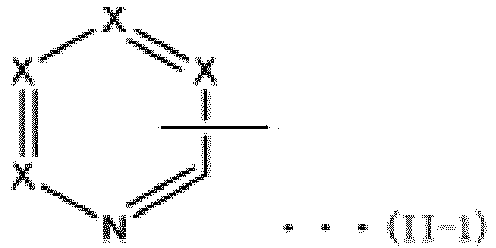
- R 1 , R 2 , and R 3 each independently represent a group represented by the Formula (II-1), (II-2), or (II-3), or hydrogen, C 1 -C 5 alkyl, or phenyl.
- the group represented by the Formula (II-1) may be referred to as "pyridine-type substituent”; the group represented by the Formula (II-2) may be referred to as “imidazole-type substituent”; and the group represented by the Formula (II-3) may be referred to as "ethylamine-type substituent”.
- All of R 1 , R 2 , and R 3 preferably represent a group(s) represented by the Formula (II-1).
- any one of the Xs represents carbon (C) or nitrogen (N), and the other three Xs represent carbon (C).
- the other three Xs represent carbon (C).
- all of the Xs represent carbon (C).
- Each substituent represented by Formula (II-1) is bound as a substituent R 1 , R 2 , or R 3 through a carbon atom of the 6-membered ring.
- each hydrogen (H) may be independently substituted as described later.
- each X independently represents carbon (C) or nitrogen (N)
- Y represents carbon (C), nitrogen (N), or boron (B).
- all of the Xs represent carbon (C).
- Each substituent represented by Formula (II-2) is bound as a substituent R 1 , R 2 , or R 3 through a carbon atom of the 5-membered ring.
- substituent represented by Formula (II-2) include those having the following structural formulae.
- each hydrogen (H) may be independently substituted as described later.
- R 4 and R 5 each independently represent hydrogen or C 1 -C 5 alkyl.
- n 1 is preferably 2.
- n 2 is preferably 2.
- n 3 is preferably 2.
- each hydrogen may be substituted as described later.
- R 1 , R 2 , and R 3 each independently represent a group represented by the above Formula (II-1), Formula (II-2), or Formula (II-3), or hydrogen, C 1 -C 5 alkyl, phenyl, or phenylmethoxy.
- n 1 and n 2 each independently represent 1 or 2);
- each hydrogen may be substituted as described later.
- R and R' each independently represent hydrogen or alkyl.
- R and R' each independently represent hydrogen or alkyl.
- halogen examples include fluorine, chlorine, bromine, and iodine.
- the alkyl is preferably C 1 -C 10 alkyl, more preferably C 1 -C 5 alkyl.
- the alkyl may be either linear or branched.
- the alkyl is preferably linear. Specific examples of the alkyl include methyl, ethyl, propyl, butyl, pentyl, hexyl, heptyl, octyl, nonyl, and decyl.
- the alkoxy is preferably C 1 -C 10 alkoxy, more preferably C 1 -C 5 alkoxy.
- the alkoxy may be either linear or branched.
- the alkoxy is preferably linear. Specific examples of the alkoxy include methoxy, ethoxy, propoxy, butoxy, pentoxy, hexyloxy, heptyloxy, octyloxy, nonyloxy, and decyloxy.
- n 1 , n 2 , and n 3 may be 1; all of n 1 , n 2 , and n 3 may be 2; or n 1 , n 2 , and n 3 may be an arbitrary combination of 1 and 2. That is, in Formula (I), zero, one, two, or three "n”s selected from n 1 , n 2 , and n 3 may be 1, and the remaining "n”s may be 2. However, in cases where one or more selected from R 1 , R 2 , and R 3 are ethylamine-type substituents, the "n” corresponding to each ethylamine-type substituent "R" is 2.
- n 1 is 2; in cases where R 2 is an ethylamine-type substituent, n 2 is 2; and, in cases where R 3 is an ethylamine-type substituent, n 3 is 2.
- R 1 , R 2 , and R 3 may be pyridine-type substituents; all of R 1 , R 2 , and R 3 may be imidazole-type substituents; all of R 1 , R 2 , and R 3 may be ethylamine-type substituents; or R 1 , R 2 , and R 3 may be an arbitrary combination of two or more substituents each selected from pyridine-type substituents, imidazole-type substituents, and ethylamine-type substituents.
- zero, one, two, or three "R”s selected from R 1 , R 2 , and R 3 may be pyridine-type substituents, and the remaining “R”s may be imidazole-type substituents or ethylamine-type substituents, or an arbitrary combination thereof.
- zero, one, two, or three "R”s selected from R 1 , R 2 , and R 3 may be imidazole-type substituents, and the remaining "R”s may be pyridine-type substituents or ethylamine-type substituents, or an arbitrary combination thereof.
- R 1 , R 2 , and R 3 may be ethylamine-type substituents, and the remaining "R”s may be pyridine-type substituents or imidazole-type substituents, or an arbitrary combination thereof.
- n 1 , n 2 , and n 3 are 1; all of R 1 , R 2 , and R 3 are pyridine-type substituents; all of the Xs are carbon; and none of the hydrogens is substituted; is shown by the following Formula.
- This compound is tris(2-pyridylmethyl)amine (L6 in Examples).
- the compound can be synthesized according to a normal synthesis method, or can be purchased from Sigma-Aldrich.
- This compound is 2,2':6',2"-terpyridine (L18 in Examples).
- the compound can be synthesized according to a normal synthesis method, or can be purchased from Tokyo Chemical Industry Co., Ltd.
- L2 can be purchased from Sigma-Aldrich
- L3 can be purchased from Sigma-Aldrich
- L16 can be purchased from Tokyo Chemical Industry Co., Ltd.
- L17 can be purchased from Dojindo Laboratories.
- the active ingredient may be a free compound; a salt or a metal complex thereof; or a mixture of these.
- the salt is not limited as long as it is a pharmaceutically acceptable salt.
- Specific examples of the salt include, as salts for acidic groups, ammonium salt; salts with alkali metals such as sodium and potassium; salts with alkali earth metals such as calcium and magnesium; aluminum salt; zinc salt; salts with organic amines such as triethylamine, ethanolamine, morpholine, pyrrolidine, piperidine, piperazine, and dicyclohexylamine; and salts with basic amino acids such as arginine and lysine.
- the salt include, as salts for basic groups, salts with inorganic acids such as hydrochloric acid, sulfuric acid, phosphoric acid, nitric acid, and hydrobromic acid; salts with organic carboxylic acids such as acetic acid, citric acid, benzoic acid, maleic acid, fumaric acid, tartaric acid, succinic acid, tannic acid, butyric acid, hibenzic acid, pamoic acid, enanthic acid, decanoic acid, teoclic acid, salicylic acid, lactic acid, oxalic acid, mandelic acid, and malic acid; and salts with organic sulfonic acids such as methanesulfonic acid, benzenesulfonic acid, and p-toluenesulfonic acid.
- inorganic acids such as hydrochloric acid, sulfuric acid, phosphoric acid, nitric acid, and hydrobromic acid
- organic carboxylic acids such as acetic acid, cit
- metal complexes of zinc, iron, copper, cobalt, nickel, and manganese examples include metal complexes of zinc, iron, copper, cobalt, nickel, and manganese.
- the metal complex is preferably a zinc complex.
- a single kind of compound may be used, or a combination of two or more kinds of compounds may be used.
- the active ingredient a commercially available compound may be used, or a synthesized compound may be used as appropriate.
- the active ingredient may be either a purified compound or an unpurified compound.
- the active ingredient may be used after purification to a desired purity, if necessary.
- the purity of the active ingredient may be, for example, not less than 30% (w/w), not less than 50% (w/w), not less than 70% (w/w), not less than 90% (w/w), or not less than 95% (w/w).
- the purification may be carried out by, for example, a known method. Examples of such a method include ionexchange chromatography, reversed phase chromatography, affinity chromatography, gel filtration chromatography, membrane separation, and crystallization.
- the antimalarial drug of the present invention comprises the above-described active ingredients.
- the antimalarial drug of the present invention may be composed of only the above-described active ingredients, or may also contain another component.
- the “another component” is not limited as long as it is pharmaceutically acceptable. Examples of the “another component” include those used as components to be contained in pharmaceuticals.
- the antimalarial drug of the present invention may be, for example, formulated into an arbitrary dosage form.
- the dosage form include liquids, suspensions, powders, tablets, balls, capsules, and injection solutions.
- pharmaceutically acceptable additives such as vehicles, binders, disintegrators, lubricants, stabilizers, corrigents, flavoring agents, perfumes, diluents, and surfactants may be used.
- the antimalarial drug of the present invention may also contain another antimalarial component.
- a component examples include mefloquine, chloroquine, amodiaquin, quinine, artemisinin, atovaquone, Fansidar, halofantrine, proguanil, and doxycycline, and derivatives thereof.
- the concentration of the active ingredient in the antimalarial drug of the present invention is not limited as long as malaria can be prevented and/or treated using the antimalarial drug of the present invention.
- the concentration may be appropriately set depending on conditions such as the type of the active ingredient, the formulation of the antimalarial drug of the present invention, and the administration mode of the antimalarial drug of the present invention.
- the concentration of the active ingredient in the antimalarial drug of the present invention is not limited, it may be, for example, not more than 100% (w/w), not more than 10% (w/w), or not more than 1% (w/w).
- the concentration of the active ingredient in the antimalarial drug of the present invention is not limited, it may be, for example, not less than 0.01% (w/w), not less than 0.1% (w/w), or not less than 1% (w/w).
- the antimalarial drug of the present invention is, in other words, a pharmaceutical composition for prevention and/or treatment of malaria.
- the present invention also provides a method for preventing and/or treating malaria, comprising administration of the antimalarial drug of the present invention to a subject.
- the type of the malaria to be prevented and/or treated with the antimalarial drug of the present invention is not limited. Specific examples of the malaria include falciparum malaria, vivax malaria, ovale malaria, and malariae malaria, and malaria caused by mixed infection with two or more types of malaria parasites.
- the antimalarial drug of the present invention may be applied to any of the types of malaria described above.
- the antimalarial drug of the present invention may be administered to the subject as it is, or after dilution, dissolution, dispersion, or the like in a pharmaceutically acceptable solvent such as water, physiological saline, or a buffer. Needless to say, the antimalarial drug after such dilution, dissolution, dispersion, or the like is included within the scope of the antimalarial drug of the present invention.
- a pharmaceutically acceptable solvent such as water, physiological saline, or a buffer.
- the administration mode include, but are not limited to, oral administration; invasive administration such as injection; and transdermal administration.
- the administration mode may be set depending on conditions such as the formulation of the antimalarial drug of the present invention.
- the dose of the antimalarial drug of the present invention may be appropriately set depending on conditions such as the content of the active ingredient, usage, age, sex, and severity of symptoms.
- the dose of the antimalarial drug of the present invention may be, for example, preferably 0.1 mg/kg body weight/day to 500 mg/kg body weight/day, more preferably 1 mg/kg body weight/day to 100 mg/kg body weight/day, in terms of the dose of the active ingredient.
- the antimalarial drug of the present invention may be administered once per day, or dividedly in a plurality of times per day. Alternatively, the antimalarial drug of the present invention may be administered once per several days or several weeks.
- the dose of the antimalarial drug, in terms of the dose of the active ingredient may be either constant or variable among the times of administration.
- the antimalarial drug of the present invention may be administered either alone or in combination with one or more other drugs.
- the antimalarial drug of the present invention may be used in combination with one or more other antimalarial drugs.
- the other antimalarial drugs include pharmaceuticals containing the other antimalarial components described above.
- L1 to L25 in Fig. 1 Compounds that chelate metal ions in various modes (L1 to L25 in Fig. 1 ) were selected, and their antimalarial activities were evaluated by LDH assay. Since infection with malaria causes an increase in the LDH activity, the evaluation can be made based on the criteria that the lower the detected LDH activity, the higher the antimalarial activity.
- the names of the compounds L1 to L25 are as follows.
- the LDH assay was carried out according to the following procedure. That is, 0.5 ⁇ L of a solution of each compound in DMSO was added to 100 ⁇ L of a culture liquid of erythrocytes (88% RPMI solution; 2 % erythrocytes, provided by the Japanese Red Cross Society; and 10% human serum, provided by the Japanese Red Cross Society) infected with falciparum malaria parasites ( Plasmodium falciparum 3D7 strain) (infection rate of erythrocytes, 0.3%). The resulting culture liquid was subjected to culture in a 96-well plate under an atmosphere of 5 % CO 2 , 5 % O 2 , and 90 % N 2 at 37°C for three days.
- the culture liquid was cooled at -80°C for three hours, and then returned to room temperature.
- an LDH enzyme reaction liquid (0.15 mg/mL diaphorase, 37.5 ⁇ L/mL of 50 % sodium lactate, 0.17 mg/mL NBT, 0.11 mg/mL APAD, 0.16 mL/mL of 1 M Tris-HCl (pH 8), and 8.3 ⁇ L/mL of Tween 20)
- the absorbance at 620 nm was measured.
- L6 tris(2-pyridylmethyl)amine
- Fig. 2 L17 (4,7-diphenyl-1,10-phenanthroline) and L18 (2,2':6',2"-terpyridine) were found to show relatively strong antimalarial activity ( Fig. 2 ).
- erythrocytes infected with malaria were treated with L6 (about 40 nM) together with iron ion (about 50 ⁇ M), copper ion (about 1 ⁇ M), or zinc ion (about 10 ⁇ M), and the antimalarial activity was evaluated by LDH assay.
- L6 forms stable zinc complex at a ratio of L6: zinc ion of 1:1 ( Fig. 3 ).
- HEK293T human embryonic kidney cells
- HeLa human cervical cancer cells
- NIH3T3 mouse fibroblast cells
- tsNRK rat kidney cells
- 3Y1 rat fibroblasts
- mice 7 weeks old, Balb/c, male
- erythrocytes infected with mouse malaria parasites Plasmodium berghei ANKA strain
- total number of erythrocytes per mouse about 10 7 ; rate of malaria-infected erythrocytes, 0.3%) were intraperitoneally injected.
- L6 was administered (20 mg/kg, intraperitoneal injection) to each of the thus obtained malaria-infected mice, and the rate of malaria-infected erythrocytes was measured.
- the infection rate tended to increase in the negative control to which only DMSO was administered.
- the infection rate could be remarkably suppressed in the case where L6 was administered ( Fig. 4 ).
- the effect of L6 to reduce the infection rate was almost equivalent to the effect of an existing drug, chloroquine (CQ). That is, L6 was found to exhibit antimalarial activity also in vivo.
- L6 tris(2-pyridylmethyl)amine
- HL60 human promyelocytic leukemia cells
- HeLa human cervical cancer cells
- C3H10T1/2 murine multipotential mesenchymal cells
- HEK293 human embryonic kidney 293 cells
- WA-014 (19.2 mg, 63%) as a colorless oily product.
- WA-015 (19.9 mg, 65%) as a colorless oily product.
- WA-016 15.6 mg, 69%) as a colorless oily product.
Landscapes
- Health & Medical Sciences (AREA)
- Veterinary Medicine (AREA)
- Chemical & Material Sciences (AREA)
- Medicinal Chemistry (AREA)
- Pharmacology & Pharmacy (AREA)
- Life Sciences & Earth Sciences (AREA)
- Animal Behavior & Ethology (AREA)
- General Health & Medical Sciences (AREA)
- Public Health (AREA)
- Epidemiology (AREA)
- Inorganic Chemistry (AREA)
- Tropical Medicine & Parasitology (AREA)
- Chemical Kinetics & Catalysis (AREA)
- General Chemical & Material Sciences (AREA)
- Nuclear Medicine, Radiotherapy & Molecular Imaging (AREA)
- Organic Chemistry (AREA)
- Pharmaceuticals Containing Other Organic And Inorganic Compounds (AREA)
Abstract
Description
- The present invention relates to an antimalarial drug.
- Malaria is a protozoan infection whose pathogen is a malaria parasite. Infection with malaria has been found in not less than 100 countries in the world. According to estimation by the World Health Organization (WHO), about 500 million people are infected with malaria per year, and about 1.5 million people die of malaria every year. For treatment of malaria, drugs such as artemisinin, chloroquine, and atovaquone have been used. However, the number of types of the drugs is small compared to drugs for other infections. Moreover, in view of the current situation where malaria parasites resistant to the drugs described above are found, it is clear that development of novel therapeutic and prophylactic agents for malaria is an urgent task.
- Invasion of malaria parasites into the body is mediated by anopheline mosquitoes. After infection of erythrocytes with the malaria parasites, the malaria parasites grow by degradation and utilization of proteins and lipids in the erythrocytes. When the nutrient becomes insufficient, the malaria parasites destroy the cell membrane, and cause infection of other erythrocytes. Therefore, natural compounds and synthetic compounds that are capable of specifically inhibiting this life cycle may be hopeful as novel antimalarial drugs. Artemisinin is activated by iron ion, and inhibits the function of an endoplasmic reticulum-type calcium pump, PfATP6, to exhibit the antimalarial activity. Chloroquine exhibits its antimalarial activity by inhibition of the detoxification process in which ferriprotoporphyrin IX is polymerized to produce hemozoin. Atovaquone specifically inhibits the electron transfer system driven by cytochrome bc1, to exhibit the antimalarial activity.
- In recent years, "metallomics", which is research for elucidation of roles and significances of trace metal elements (zinc, iron, copper, and the like) that are involved in life phenomena and cellular functions, is attracting attention. In particular, it has been suggested not only that zinc ion is deeply involved in maintenance of the structures of proteins, activation of metalloenzymes, nucleic acid synthesis, transcription regulation, second messengers, and the like, but also that it influences cell death, oxidative stress, carcinogenesis, and the like. In terms of association with malaria, it has been reported that, in the growth cycle of malaria parasites, the zinc ion concentration in the erythrocytes infected with malaria parasites increases in accordance with an increase in the DNA concentration (Non-patent Document 1). It has also been reported that N, N, N',N'-tetrakis(2-pyridylmethyl)ethylenediamine (TPEN), which is a zinc chelator, inhibits infection with malaria parasites (Non-patent Document 1).
- As metal chelators having antimalarial activity, dipicolinic acid (DPA, Non-patent Document 2) and desferrioxamine (DFO; Non-patent Document 3) have been reported. However, neither of these exhibits high antimalarial activity (DPA, antimalarial activity ED50 = 1 mM; DFO, antimalarial activity IC50 = 21 µM, cell growth inhibition IC50 = 7 to 21 µM).
-
- Non-patent Document 1: Marvin RG, et al., Chem Biol. 2012 Jun 22; 19(6): 731-41.
- Non-patent Document 2: Ginsburg H, et al., Biochim Biophys Acta. 1986 May 29; 886(3): 337-44.
- Non-patent Document 3: Glickstein H, et al., Blood. 1996 Jun 1; 87(11): 4871-8.
- An object of the present invention is to provide means for preventing and/or treating malaria.
- The present inventors intensive studied to solve the problems described above and, as a result, discovered that metal chelators such as tris(2-pyridylmethyl)amine have high antimalarial activity, thereby completed the present invention.
- That is, the present invention provides the followings.
-
- [1] An antimalarial drug comprising, as an active ingredient(s), one or more compounds selected from the group consisting of compounds represented by the following Formula (I), compounds represented by the following Formula (III), compounds represented by the following Formula (IV), compounds represented by the following Formula (V), compounds represented by the following Formula (VI), and compounds represented by the following Formula (VII):


-NR4R5 ... (II-3)
(in Formula (II-3), R4 and R5 each independently represent hydrogen or C1-C5 alkyl);


and pharmaceutically acceptable salts and metal complexes thereof. - [2] The antimalarial drug according to [1], wherein, in the Formula (I), each of n1, n2, and n3 is 1.
- [3] The antimalarial drug according to [1] or [2], wherein, in the Formula (I), each of R1, R2, and R3 is a group represented by the Formula (II-1).
- [4] The antimalarial drug according to [1], wherein the compound represented by the Formula (I) is tris(2-pyridylmethyl)amine.
- [5] The antimalarial drug according to [1], wherein the compound represented by the Formula (III) is 2,2':6',2"-terpyridine.
- [6] The antimalarial drug according to [1], wherein the compound represented by the Formula (V) is either one of the following compounds:

- [7] The antimalarial drug according to any one of [1] to [6], wherein the metal complex is a zinc complex.
- [8] A method of treating or preventing malaria, comprising administering a therapeutically or prophylactically effective amount(s) of one or more compounds selected from the group consisting of the compounds represented by the above Formula (I), the compounds represented by the above Formula (III), the compounds represented by the above Formula (IV), the compounds represented by the above Formula (V), the compounds represented by the above Formula (VI), and the compounds represented by the above Formula (VII), and pharmaceutically acceptable salts and metal complexes thereof, to a subject suffering from malaria or a subject suspected of having malaria.
- [9] A compound represented by the above Formula (I), a compound represented by the above Formula (III), a compound represented by the above Formula (IV), a compound represented by the above Formula (V), a compound represented by the above Formula (VI), or a compound represented by the above Formula (VII), or a pharmaceutically acceptable salt or metal complex thereof, for use in treatment and/or prevention of malaria.
- By the present invention, malaria can be effectively prevented and/or treated.
-
-
Fig. 1 is a diagram illustrating the structures of metal chelators. -
Fig. 2 is a diagram showing the antimalarial activities of metal chelators as measured by LDH assay. For each of L1 to L25, data obtained at 10 nM, 30 nM, 100 nM, 300 nM, 1µM, 3µM, and 10µM are shown from right to left. -
Fig. 3 is a diagram showing the detection result for a zinc complex of tris(2-pyridylmethyl)amine by ESI mass measurement. -
Fig. 4 is a diagram showing the malaria infection-suppressing effect of tris(2-pyridylmethyl)amine. "L6" represents tris(2-pyridylmethyl)amine, and "CQ" represents chloroquine. -
Fig. 5 is a diagram showing the life-prolonging effect of tris(2-pyridylmethyl)amine after infection with malaria. "L6" represents tris(2-pyridylmethyl)amine, and "CQ" represents chloroquine. -
Fig. 6 is a diagram showing the life-prolonging effects of tris(2-pyridylmethyl)amine and its zinc complex after infection with malaria. "L6" represents tris(2-pyridylmethyl)amine; "Zn-L6" represents a zinc complex of tris(2-pyridylmethyl)amine; and "Control" represents use of only a buffer. - The present invention is described below in detail.
- The antimalarial drug of the present invention is an antimalarial drug comprising, as an active ingredient(s), one or more compounds selected from the group consisting of compounds represented by the Formula (I), compounds represented by the Formula (III), compounds represented by the Formula (IV), compounds represented by the Formula (V), compounds represented by the Formula (VI), and compounds represented by the Formula (VII), and pharmaceutically acceptable salts and metal complexes thereof. In the present invention, the one or more compounds selected from the group consisting of compounds represented by the Formula (I), compounds represented by the Formula (III), compounds represented by the Formula (IV), compounds represented by the Formula (V), compounds represented by the Formula (VI), and compounds represented by the Formula (VII), and pharmaceutically acceptable salts and metal complexes thereof, contained in the antimalarial drug of the present invention are also referred to as "active ingredients".


- Specific examples of the substituent represented by Formula (II-1) include those having the following structural formulae. In the following structural formulae, each hydrogen (H) may be independently substituted as described later.


- Specific examples of the substituent represented by Formula (II-2) include those having the following structural formulae. In the following structural formulae, each hydrogen (H) may be independently substituted as described later.


-NR4R5 ... (II-3)
- In Formula (II-3), R4 and R5 each independently represent hydrogen or C1-C5 alkyl.
- In cases where R1 is a group represented by Formula (II-3), n1 is preferably 2. In cases where R2 is a group represented by Formula (II-3), n2 is preferably 2. In cases where R3 is a group represented by Formula (II-3), n3 is preferably 2.

- In Formula (III), each hydrogen may be substituted as described later.


- In Formula (II-1), Formula (II-2), Formula (II-3), Formula (III), and Formula (V), each hydrogen (H) may be independently substituted with a halogen, alkyl, phenyl, alkoxy, hydroxyl (-OH), carboxyl (-COOH), amino (-NH2), benzamide (-NHCOC6H5), benzylamino (-NHCH2C6H5), tert-butylamide (-NHCO-tBu), neopentylamino (-NHCH2-tBu), -C(=O)OR, -S(=O)2OR, or -OP(=O)(OR)(OR'). R and R' each independently represent hydrogen or alkyl.
- Further, each hydrogen (H) in the alkyl, phenyl, alkoxy, "-C6H5" of the benzamide, "-C6H5" of the benzylamino, "-tBu" of the tert-butylamide, and "-CH2-" and "-tBu" of the neopentylamino may be independently substituted with a halogen, hydroxyl, amino, -C(=O)OR, -S(=O)2OR, or -OP(=O)(OR)(OR'). R and R' each independently represent hydrogen or alkyl.
- Examples of the halogen include fluorine, chlorine, bromine, and iodine.
- The alkyl is preferably C1-C10 alkyl, more preferably C1-C5 alkyl. The alkyl may be either linear or branched. The alkyl is preferably linear. Specific examples of the alkyl include methyl, ethyl, propyl, butyl, pentyl, hexyl, heptyl, octyl, nonyl, and decyl.
- The alkoxy is preferably C1-C10 alkoxy, more preferably C1-C5 alkoxy. The alkoxy may be either linear or branched. The alkoxy is preferably linear. Specific examples of the alkoxy include methoxy, ethoxy, propoxy, butoxy, pentoxy, hexyloxy, heptyloxy, octyloxy, nonyloxy, and decyloxy.
- In Formula (I), all of n1, n2, and n3 may be 1; all of n1, n2, and n3 may be 2; or n1, n2, and n3 may be an arbitrary combination of 1 and 2. That is, in Formula (I), zero, one, two, or three "n"s selected from n1, n2, and n3 may be 1, and the remaining "n"s may be 2. However, in cases where one or more selected from R1, R2, and R3 are ethylamine-type substituents, the "n" corresponding to each ethylamine-type substituent "R" is 2. That is, in cases where R1 is an ethylamine-type substituent, n1 is 2; in cases where R2 is an ethylamine-type substituent, n2 is 2; and, in cases where R3 is an ethylamine-type substituent, n3 is 2.
- In Formula (I), all of R1, R2, and R3 may be pyridine-type substituents; all of R1, R2, and R3 may be imidazole-type substituents; all of R1, R2, and R3 may be ethylamine-type substituents; or R1, R2, and R3 may be an arbitrary combination of two or more substituents each selected from pyridine-type substituents, imidazole-type substituents, and ethylamine-type substituents. That is, for example, in Formula (I), zero, one, two, or three "R"s selected from R1, R2, and R3 may be pyridine-type substituents, and the remaining "R"s may be imidazole-type substituents or ethylamine-type substituents, or an arbitrary combination thereof. For example, in Formula (I), zero, one, two, or three "R"s selected from R1, R2, and R3 may be imidazole-type substituents, and the remaining "R"s may be pyridine-type substituents or ethylamine-type substituents, or an arbitrary combination thereof. For example, in Formula (I), zero, one, two, or three "R"s selected from R1, R2, and R3 may be ethylamine-type substituents, and the remaining "R"s may be pyridine-type substituents or imidazole-type substituents, or an arbitrary combination thereof.
- As an example of the compound represented by Formula (I), a compound in which all of n1, n2, and n3 are 1; all of R1, R2, and R3 are pyridine-type substituents; all of the Xs are carbon; and none of the hydrogens is substituted; is shown by the following Formula. This compound is tris(2-pyridylmethyl)amine (L6 in Examples). The compound can be synthesized according to a normal synthesis method, or can be purchased from Sigma-Aldrich.

- Other examples of the compound represented by Formula (I) include the following compounds. These compounds can be similarly synthesized.

- As an example of the compound represented by Formula (III), a comopund in which none of the hydrogens is substituted is shown below. This compound is 2,2':6',2"-terpyridine (L18 in Examples). The compound can be synthesized according to a normal synthesis method, or can be purchased from Tokyo Chemical Industry Co., Ltd.

- As examples of the compound represented by Formula (V), the following compounds are shown. These compounds can be synthesized according to normal synthesis methods. L2 can be purchased from Sigma-Aldrich; L3 can be purchased from Sigma-Aldrich; L16 can be purchased from Tokyo Chemical Industry Co., Ltd.; and L17 can be purchased from Dojindo Laboratories.


- As examples of the compound represented by Formula (IV), the following compounds are shown. These compounds can be synthesized according to the methods in Reference Examples described later.


- In the present invention, the active ingredient may be a free compound; a salt or a metal complex thereof; or a mixture of these.
- The salt is not limited as long as it is a pharmaceutically acceptable salt. Specific examples of the salt include, as salts for acidic groups, ammonium salt; salts with alkali metals such as sodium and potassium; salts with alkali earth metals such as calcium and magnesium; aluminum salt; zinc salt; salts with organic amines such as triethylamine, ethanolamine, morpholine, pyrrolidine, piperidine, piperazine, and dicyclohexylamine; and salts with basic amino acids such as arginine and lysine. Specific examples of the salt include, as salts for basic groups, salts with inorganic acids such as hydrochloric acid, sulfuric acid, phosphoric acid, nitric acid, and hydrobromic acid; salts with organic carboxylic acids such as acetic acid, citric acid, benzoic acid, maleic acid, fumaric acid, tartaric acid, succinic acid, tannic acid, butyric acid, hibenzic acid, pamoic acid, enanthic acid, decanoic acid, teoclic acid, salicylic acid, lactic acid, oxalic acid, mandelic acid, and malic acid; and salts with organic sulfonic acids such as methanesulfonic acid, benzenesulfonic acid, and p-toluenesulfonic acid. As the salt, a single kind of salt may be used, or a combination of two or more kinds of salts may be used.
- Examples of the metal complex include metal complexes of zinc, iron, copper, cobalt, nickel, and manganese. The metal complex is preferably a zinc complex.
- As the active ingredient, a single kind of compound may be used, or a combination of two or more kinds of compounds may be used.
- As the active ingredient, a commercially available compound may be used, or a synthesized compound may be used as appropriate.
- The active ingredient may be either a purified compound or an unpurified compound. For example, the active ingredient may be used after purification to a desired purity, if necessary. The purity of the active ingredient may be, for example, not less than 30% (w/w), not less than 50% (w/w), not less than 70% (w/w), not less than 90% (w/w), or not less than 95% (w/w). The purification may be carried out by, for example, a known method. Examples of such a method include ionexchange chromatography, reversed phase chromatography, affinity chromatography, gel filtration chromatography, membrane separation, and crystallization.
- The antimalarial drug of the present invention comprises the above-described active ingredients. The antimalarial drug of the present invention may be composed of only the above-described active ingredients, or may also contain another component. The "another component" is not limited as long as it is pharmaceutically acceptable. Examples of the "another component" include those used as components to be contained in pharmaceuticals.
- The antimalarial drug of the present invention may be, for example, formulated into an arbitrary dosage form. Examples of the dosage form include liquids, suspensions, powders, tablets, balls, capsules, and injection solutions. For the formulation, one or more of pharmaceutically acceptable additives such as vehicles, binders, disintegrators, lubricants, stabilizers, corrigents, flavoring agents, perfumes, diluents, and surfactants may be used.
- The antimalarial drug of the present invention may also contain another antimalarial component. Examples of such a component include mefloquine, chloroquine, amodiaquin, quinine, artemisinin, atovaquone, Fansidar, halofantrine, proguanil, and doxycycline, and derivatives thereof.
- The concentration of the active ingredient in the antimalarial drug of the present invention is not limited as long as malaria can be prevented and/or treated using the antimalarial drug of the present invention. The concentration may be appropriately set depending on conditions such as the type of the active ingredient, the formulation of the antimalarial drug of the present invention, and the administration mode of the antimalarial drug of the present invention. Although the concentration of the active ingredient in the antimalarial drug of the present invention is not limited, it may be, for example, not more than 100% (w/w), not more than 10% (w/w), or not more than 1% (w/w). Although the concentration of the active ingredient in the antimalarial drug of the present invention is not limited, it may be, for example, not less than 0.01% (w/w), not less than 0.1% (w/w), or not less than 1% (w/w).
- By administration of the antimalarial drug of the present invention to a subject, prevention and/or treatment of malaria can be carried out. Thus, the antimalarial drug of the present invention is, in other words, a pharmaceutical composition for prevention and/or treatment of malaria. The present invention also provides a method for preventing and/or treating malaria, comprising administration of the antimalarial drug of the present invention to a subject.
- The type of the malaria to be prevented and/or treated with the antimalarial drug of the present invention is not limited. Specific examples of the malaria include falciparum malaria, vivax malaria, ovale malaria, and malariae malaria, and malaria caused by mixed infection with two or more types of malaria parasites. The antimalarial drug of the present invention may be applied to any of the types of malaria described above.
- The antimalarial drug of the present invention may be administered to the subject as it is, or after dilution, dissolution, dispersion, or the like in a pharmaceutically acceptable solvent such as water, physiological saline, or a buffer. Needless to say, the antimalarial drug after such dilution, dissolution, dispersion, or the like is included within the scope of the antimalarial drug of the present invention. Examples of the administration mode include, but are not limited to, oral administration; invasive administration such as injection; and transdermal administration. The administration mode may be set depending on conditions such as the formulation of the antimalarial drug of the present invention.
- The dose of the antimalarial drug of the present invention may be appropriately set depending on conditions such as the content of the active ingredient, usage, age, sex, and severity of symptoms. The dose of the antimalarial drug of the present invention may be, for example, preferably 0.1 mg/kg body weight/day to 500 mg/kg body weight/day, more preferably 1 mg/kg body weight/day to 100 mg/kg body weight/day, in terms of the dose of the active ingredient. The antimalarial drug of the present invention may be administered once per day, or dividedly in a plurality of times per day. Alternatively, the antimalarial drug of the present invention may be administered once per several days or several weeks. The dose of the antimalarial drug, in terms of the dose of the active ingredient, may be either constant or variable among the times of administration.
- The antimalarial drug of the present invention may be administered either alone or in combination with one or more other drugs. For example, the antimalarial drug of the present invention may be used in combination with one or more other antimalarial drugs. Examples of the other antimalarial drugs include pharmaceuticals containing the other antimalarial components described above.
- The present invention is described below more concretely by way of Examples.
- Compounds that chelate metal ions in various modes (L1 to L25 in
Fig. 1 ) were selected, and their antimalarial activities were evaluated by LDH assay. Since infection with malaria causes an increase in the LDH activity, the evaluation can be made based on the criteria that the lower the detected LDH activity, the higher the antimalarial activity. The names of the compounds L1 to L25 are as follows. - L1: 2,2'-Bipyridyl
- L2: (1,10)-Phenanthrolin
- L3: (1,10)-Phenanthrolin-5-amine
- L4: Di-(2-picolyl)amine
- L5: 2-(Bis-(2-pyridylmethyl)amine ethanol
- L6: Tris(2-pyridylmethyl)amine
- L7: N,N,N',N'-Tetrakis(2-pyridylmethyl)ethylenediamine
- L8: Ethylenediaminetetraacetic acid
- L9: N,N,N',N'-Tetramethylethylenediamine
- L10: 1,4,7-Triazacyclononane
- L11: N,N,N',N",N" -Pentamethyldiethylenetiiamine
- L12: 1,1,4,7,10,10-Hexamethyltriethylenetetramine
- L13: Tris[2-(dimethylamino)ethyl]amine
- L14: 1,4,7-Trimethyl-1,4,7-triazacyclononane
- L15: 1,4,7,10-Tetraazacyclododecane
- L16: 5-Methyl-1,10-phenanthroline
- L17: 4,7-Diphenyl-1,10-phenanthroline
- L18: 2,2':6',2"-Terpyridine
- L19: 2,6-Bis(2-benzimidazolyl)pyridine
- L20: 2,4,6-Tri(2-pyridyl)-1,3,5-triazine
- L21: Potassium tris(1-pyrazolyl)borohydride
- L22: Potassium tri(3,5-dimethyl-1-pyrazolyl)borohydride
- L23: 29H,31H-Phthalocyanine
- L24: Disodium phthalocyanine
- L25: Nitrilotriacetic acid
- The LDH assay was carried out according to the following procedure. That is, 0.5 µL of a solution of each compound in DMSO was added to 100 µL of a culture liquid of erythrocytes (88% RPMI solution; 2 % erythrocytes, provided by the Japanese Red Cross Society; and 10% human serum, provided by the Japanese Red Cross Society) infected with falciparum malaria parasites (Plasmodium falciparum 3D7 strain) (infection rate of erythrocytes, 0.3%). The resulting culture liquid was subjected to culture in a 96-well plate under an atmosphere of 5 % CO2, 5 % O2, and 90 % N2 at 37°C for three days. Subsequently, the culture liquid was cooled at -80°C for three hours, and then returned to room temperature. After addition of 150 µL of an LDH enzyme reaction liquid (0.15 mg/mL diaphorase, 37.5 µL/mL of 50 % sodium lactate, 0.17 mg/mL NBT, 0.11 mg/mL APAD, 0.16 mL/mL of 1 M Tris-HCl (pH 8), and 8.3 µL/mL of Tween 20), the absorbance at 620 nm was measured.
- As a result, L6 (tris(2-pyridylmethyl)amine) was found to show remarkable antimalarial activity (
Fig. 2 ). In addition, L17 (4,7-diphenyl-1,10-phenanthroline) and L18 (2,2':6',2"-terpyridine) were found to show relatively strong antimalarial activity (Fig. 2 ). As a result of calculation of the IC50 value for the antimalarial activity based on the LDH assay, it was found that the IC50 value of L6 (= about 31 nM) is close to the IC50 values of existing antimalarial drugs (chloroquine, about 45 nM; artemisinin, about 16 nM). Further, L6 was found to exhibit antimalarial activity also against a chloroquine-resistant strain. - By the same procedure as in
Experiment 1, erythrocytes infected with malaria were treated with L6 (about 40 nM) together with iron ion (about 50 µM), copper ion (about 1 µM), or zinc ion (about 10 µM), and the antimalarial activity was evaluated by LDH assay. As a result, suppression of the antimalarial activity was found to some extent in the case where excess zinc ion was added to L6. Further, as a result of detection of zinc complex by ESI mass measurement, it was found that L6 forms stable zinc complex at a ratio of L6: zinc ion of 1:1 (Fig. 3 ). - After treating various kinds of cells (HEK293T: human embryonic kidney cells; HeLa: human cervical cancer cells; NIH3T3: mouse fibroblast cells; tsNRK: rat kidney cells; and 3Y1: rat fibroblasts) with a metal chelator for 48 hours, the cytotoxicities of the cells were evaluated by WST-8 assay. As a result, it was found that the concentration at which L6 exhibits antimalarial activity is about 170 times lower (IC50 value = about 31 nM) than the concentration at which toxicity is exerted (IC50 value = about 5.08 to 5.61 µM) on human cells (HEK293T and HeLa) (Table 1).
[Table 1] Cell L3 L6 L7 HEK293T 0.49/0.47 5.08/5.31 1.99/3.14 HeLa - 5.61/5.16 5.53/4.96 NIH3T3 - 1.80/1.95 1.66/1.79 tsNRK 6.12/3.08 1.88/1.90 1.84/2.09 3Y1 0.73/0.67 2.42/3.87 5.11/4.93 - To mice (7 weeks old, Balb/c, male), erythrocytes infected with mouse malaria parasites (Plasmodium berghei ANKA strain) (total number of erythrocytes per mouse, about 107; rate of malaria-infected erythrocytes, 0.3%) were intraperitoneally injected. L6 was administered (20 mg/kg, intraperitoneal injection) to each of the thus obtained malaria-infected mice, and the rate of malaria-infected erythrocytes was measured. As a result, on
Day 2 toDay 6 after the infection, the infection rate tended to increase in the negative control to which only DMSO was administered. On the other hand, the infection rate could be remarkably suppressed in the case where L6 was administered (Fig. 4 ). The effect of L6 to reduce the infection rate was almost equivalent to the effect of an existing drug, chloroquine (CQ). That is, L6 was found to exhibit antimalarial activity also in vivo. - After administration of L6 to malaria-infected mice (20 mg/kg, intraperitoneal injection), changes in the number of surviving individuals were investigated. As a result, a remarkable life-prolonging effect could be observed after the administration of L6 (
Fig. 5 ). The life-prolonging effect by L6 was almost equivalent to the effect of an existing drug, chloroquine (CQ). That is, L6 was again found to exhibit antimalarial activity also in vivo. - As described above, compounds such as L6 (tris(2-pyridylmethyl)amine) were discovered as novel antimalarial drugs. These compounds are useful for prevention and/or treatment of malaria.
- According to the same procedure as in
Experiment 1, the antimalarial activities of metal complexes (M-L6) synthesized by mixing various kinds of metal ions (MSO4: M = Zn, Fe, Cu, Co, Ni, or Mn) with L6 at a molar ratio of 1:1 were evaluated by LDH assay. As a result, it was found that, compared to the antimalarial activity produced by L6 alone, the antimalarial activities produced by the metal complexes M-L6 (M = Fe, Cu, Co, Ni, and Mn) are uniformly low. On the other hand, in the case of the zinc complex Zn-L6, the antimalarial activity (IC50) was almost the same as that in the case of L6 alone. Thus, it is thought that the influence of formation of zinc complex on the antimalarial activity is very small (Table 2). It was also found that L6 and the zinc complex Zn-L6 can exert antimalarial activity also against the K1 strain and the Dd2 strain, which are drug-resistant malaria parasites, at the same level of concentration (IC50 = 80 to 160 nM).[Table 2] IC50 (µM) 3D7 K1 Dd2 L6 0.084 0.082 0.144 Zn-L6 0.093 0.089 0.166 Fe-L6 0.19 - - Cu-L6 0.12 - - Co-L6 0.55 - - Ni-L6 0.74 - - Mn-L6 0.11 - - - not tested - Subsequently, the following cell types: HL60 (human promyelocytic leukemia cells), HeLa (human cervical cancer cells), C3H10T1/2 (murine multipotential mesenchymal cells), and HEK293 (human embryonic kidney 293 cells); were treated with metal complexes M-L6 (M = Zn, Fe, Cu, Co, Ni, and Mn) for 48 hours, and then subjected to WST-8 assay to perform evaluation of the cytotoxicity of each kind of metal complex. As a result, it was revealed that L6 and the metal complexes M-L6 (M = Fe, Cu, Co, Ni, and Mn) show cytotoxicity (IC50) within the concentration range of several micromolar to several ten micromolar. On the other hand, it was revealed that the zinc complex Zn-L6 does not show cytotoxicity even at a concentration of not less than 100 µM (Table 3).
[Table 3] IC50 (µM) HL60 HeLa C3H10T1/2 HEK293 L6 1.8 5.8 5.7 6.0 Zn-L6 >100 >100 >100 >100 Fe-L6 4.8 9.5 9.6 6.1 Cu-L6 5.0 13.0 12.0 6.0 Co-L6 6.6 18.0 18.0 20.6 Ni-L6 16.0 32.0 54.0 47.6 Mn-L6 1.5 4.5 4.2 3.7 - To malaria-infected mice obtained by the same procedure as in
Experiment 4, an aqueous solution of L6 or the zinc complex Zn-L6 was orally administered (at a dose of 200 mg/kg onDay 1,Day 3, andDay 6; N=6), and changes in the number of surviving individuals were investigated. As a result (Fig. 6 ), it was found that the influence of toxicity appears when L6 alone is administered at the high concentration used in the present experiment. On the other hand, in the case of the zinc complex Zn-L6, a significantly better life-prolonging effect than in the control could be observed, and completely cured mice, in which the infection rate of malaria was 0%, could be found. That is, it is thought that, by formation of metal complex with zinc ion, L6 can remarkably suppress the toxicity in vivo while sufficiently maintaining the antimalarial activity. - According to the same procedure as in
Experiment 1, the antimalarial activities of L18 and di-2-pyridylketone 4,4-dimethyl-3-thiosemicarbazone (Sigma) against the malaria parasite 3D7 strain and the drug-resistant malaria parasite K1 strain were evaluated by LDH assay. As a result, those compounds were found to exhibit remarkable antimalarial activities against both malaria parasites (L18: IC50 = about 280 nM (3D7) and about 120 nM (K1); di-2-pyridylketone 4,4-dimethyl-3-thiosemicarbazone: IC50 = about 4 nM (3D7) and about 3 nM (K1)).
-

- To a stirred solution of bis(pyridin-2-ylmethyl)amine (19.9 mg, 0.1 mmol) and pyridine (16.1 µl, 0.2 mmol) in 1mL of dichloromethane, isobutyryl chloride (16.0 µL, 0.15 mmol) was added under nitrogen atmosphere at room temperature. After stirring the resulting mixture for 15 minutes, the mixture was concentrated under vacuum. The resulting residue was purified by SiO2 column chromatography (chloroform:MeOH = 5:1), to obtain WA-009 (12.1 mg, 45%) as a colorless oily product.
WA-009 : 1H NMR (500 MHz, CDCl3) δ 1.16 (d, J = 6.9 Hz, 6H), 2.87 (qq, J = 6.9 Hz, 1H), 4.75 (s, 2H), 4.79 (s, 2H), 7.16 (bdd, J = 8.0, 5.0 Hz, 1H), 7.17 (d, J = 8.0 Hz, 1H), 7.20 (bdd, J = 8.0, 5.0 Hz, 1H), 7.29 (d, J = 8.0 Hz, 1H), 7.64 (ddd, J = 8.0, 8.0, 1.5 Hz, 1H), 7.67 (ddd, J = 8.0, 8.0, 1.5 Hz, 1H), 8.49 (bdd, J = 5.0, 1.5 Hz, 1H), 8.57 (bdd, J = 5.0, 1.5 Hz, 1H).
13C NMR (125 MHz, CDCl3) δ 19.6, 30.4, 51.4, 52.9, 120.4, 122.2, 122.3, 122.4, 136.8, 136.9, 149.0, 149.8, 156.6, 157.6, 178.2. -

- To a stirred solution of bis(pyridin-2-ylmethyl)amine (19.9 mg, 0.1 mmol) in 0.5 mL of aqueous 1N Na2CO3 solution, benzyl chloroformate (21.1 µL, 0.15 mmol) was added at room temperature. After stirring the resulting mixture for 15 minutes, the mixture was diluted with ethyl acetate, and the organic layer was washed with water and brine, followed by drying over Na2SO4 and concentration under vacuum. The resulting residue was purified by SiO2 column chromatography (chloroform:MeOH = 10:1), to obtain WA-011 (23.0 mg, 69%) as a colorless oily product.
WA-011 : 1H NMR (500 MHz, CDCl3) δ 4.69 (s, 2H), 4.74 (s, 2H), 5.20 (s, 2H), 7.11-7.19 (m, 3H), 7.23-7.34 (m, 6H), 7.58 (bdd, J = 7.5, 7.5 Hz, 1H), 7.64 (bdd, J = 7.5, 7.5 Hz, 1H), 8.52 (bs, 2H).
13C NMR (125 MHz, CDCl3) δ 52.3, 52.8, 67.5, 121.0, 122.0, 122.1, 122.3, 127.8, 127.9, 128.4, 136.4, 136.6, 136.7, 149.3, 149.3, 156.7, 157.3, 157.5. -

- To a stirred solution of bis(pyridin-2-ylmethyl)amine (19.9 mg, 0.1 mmol), 4-dimethylaminopyridine (DMAP) (1 mg), and 3-(3-dimethylaminopropyl)-1-ethylcarbodiimide (EDC) hydrochloride (34.5 mg, 0.18 mmol) in 1mL of dehydrated DMF, nicotinic acid (14.8 mg, 0.12 mmol) was added under nitrogen atmosphere at room temperature. After stirring the resulting mixture for three days, the mixture was concentrated under vacuum, and diluted with ethyl acetate. The organic layer was washed with water and brine, and then dried over Na2SO4, followed by concentration under vacuum. The resulting residue was purified by diol column chromatography (chloroform), to obtain WA-014 (19.2 mg, 63%) as a colorless oily product.
WA-014 : 1H NMR (500 MHz, CDCl3) δ 4.68 (s, 2H), 4.87 (s, 2H), 7.16 (d, J = 7.5 Hz, 1H), 7.21 (bs, 2H), 7.30 (dd, J = 7.5, 4.5 Hz, 1H), 7.42 (bd, J = 7.5 Hz, 1H), 7.63-7.72 (m, 2H), 7.97 (ddd, J = 7.5, 1.5, 1.5 Hz, 1H), 8.54 (bd, J = 3.5 Hz, 1H), 8.60 (bd, J = 3.5 Hz, 1H), 8.62 (bd, J = 4.5 Hz, 1H), 8.86 (bd, J = 1.5 Hz, 1H). 13C NMR (125 MHz, CDCl3) δ 50.5, 54.3, 121.7, 122.4, 122.7, 123.2, 132.0, 135.0, 136.5, 136.8, 148.0, 149.3, 150.0, 150.7, 155.8, 156.6, 170.0. -

- To a stirred solution of bis(pyridin-2-ylmethyl)amine (19.9 mg, 0.1 mmol), 4-dimethylaminopyridine (DMAP) (1 mg), and 3-(3-dimethylaminopropyl)-1-ethylcarbodiimide (EDC) hydrochloride (34.5 mg, 0.18 mmol) in 1 mL of dehydrated DMF, isonicotinic acid (14.8 mg, 0.12 mmol) was added under nitrogen atmosphere at room temperature. After stirring the resulting mixture for four days, the mixture was concentrated under vacuum, and diluted with ethyl acetate. The organic layer was washed with water and brine, and then dried over Na2SO4, followed by concentration under vacuum. The resulting residue was purified by diol column chromatography (chloroform), to obtain WA-015 (19.9 mg, 65%) as a colorless oily product.
WA-015 :1H NMR (500 MHz, CDCl3) δ 4.62 (s, 2H), 4.85 (s, 2H), 7.13 (bd, J = 7.5 Hz, 1H), 7.18-7.24 (m, 2H), 7.40 (bd, J = 7.5 Hz, 1H), 7.49 (dd, J = 5.0, 1.5 Hz, 1H), 7.66 (ddd, J = 8.0, 7.5, 1.5 Hz, 1H), 7.68 (ddd, J = 8.0, 7.5, 1.5 Hz, 1H), 8.54 (bd, J = 4.0 Hz, 1H), 8.60 (bd, J = 4.0 Hz, 1H), 8.64 (dd, J = 5.0, 1.5 Hz, 1H).
13C NMR (125 MHz, CDCl3) δ 50.2, 54.0, 121.3, 121.7, 122.5, 122.7, 136.7, 136.8, 143.7, 149.3, 150.0, 150.1, 155.7, 156.5, 170.1. -
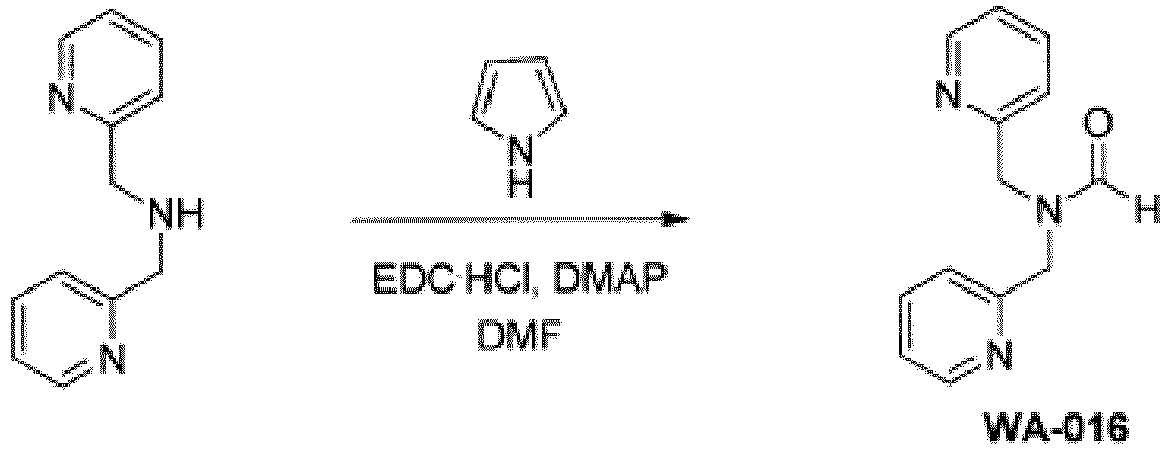
- To a stirred solution of bis(pyridin-2-ylmethyl)amine (19.9 mg, 0.1 mmol), 4-dimethylaminopyridine (DMAP) (1 mg), and 3-(3-dimethylaminopropyl)-1-ethylcarbodiimide (EDC) hydrochloride (34.5 mg, 0.18 mmol) in 1mL of dehydrated DMF, pyrrol-2-carboxylic acid (13.3 mg, 0.12 mmol) was added under nitrogen atmosphere at room temperature. After stirring the resulting mixture for four days, the mixture was concentrated under vacuum, and diluted with ethyl acetate. The organic layer was washed with water and brine, and then dried over Na2SO4, followed by concentration under vacuum. The resulting residue was purified by diol column chromatography (chloroform), to obtain WA-016 (15.6 mg, 69%) as a colorless oily product.
WA-016: 1H NMR (500 MHz, CDCl3) δ 4.58 (s, 2H), 4.64 (s, 2H), 7.17 (dd, J = 7.5, 4.5 Hz, 1H), 7.19-7.23(m, 2H), 7.25 (bd, J = 8.0 Hz, 1H), 7.62 (ddd, J = 8.0, 7.5, 1.5 Hz, 1H), 7.66 (ddd, J = 8.0, 7.5, 1.5 Hz, 1H), 8.48 (s, 1H), 8.51 (bd, J = 4.0 Hz, 1H), 8.57 (bd, J = 4.5 Hz, 1H).
13C NMR (125 MHz, CDCl3) δ 47.7, 53.0, 122.0, 122.5, 122.6, 122.8, 136.80, 136.83, 149.3, 149.9, 155.8, 156.2, 163.5. - The present invention is described above with emphasis on its preferred embodiments. It would be obvious for those skilled in the art that such embodiments may be modified, and equivalents of such embodiments may be used, as long as such modification and equivalents are within the idea of the present invention. The present description includes the contents described in the description and the drawings of
JP 2014-002428 A
Claims (7)
- An antimalarial drug comprising, as an active ingredient(s), one or more compounds selected from the group consisting of compounds represented by the following Formula (I), compounds represented by the following Formula (III), compounds represented by the following Formula (IV), compounds represented by the following Formula (V), compounds represented by the following Formula (VI), and compounds represented by the following Formula (VII):


-NR4R5 ... (II-3)
(in Formula (II-3), R4 and R5 each independently represent hydrogen or C1-C5 alkyl);


and pharmaceutically acceptable salts and metal complexes thereof. - The antimalarial drug according to claim 1, wherein, in said Formula (I), each of n1, n2, and n3 is 1.
- The antimalarial drug according to claim 1 or 2, wherein, in said Formula (I), each of R1, R2, and R3 is a group represented by said Formula (II-1).
- The antimalarial drug according to claim 1, wherein said compound represented by said Formula (I) is tris(2-pyridylmethyl)amine.
- The antimalarial drug according to claim 1, wherein said compound represented by said Formula (III) is 2,2':6',2"-terpyridine.
- The antimalarial drug according to claim 1, wherein said compound represented by said Formula (V) is either one of the following compounds:

- The antimalarial drug according to any one of claims 1 to 6, wherein said metal complex is a zinc complex.
Applications Claiming Priority (2)
| Application Number | Priority Date | Filing Date | Title |
|---|---|---|---|
| JP2014002428A JP2017048115A (en) | 2014-01-09 | 2014-01-09 | Antimalarial |
| PCT/JP2015/050513 WO2015105184A1 (en) | 2014-01-09 | 2015-01-09 | Anti-malarial agent |
Publications (2)
| Publication Number | Publication Date |
|---|---|
| EP3093020A1 true EP3093020A1 (en) | 2016-11-16 |
| EP3093020A4 EP3093020A4 (en) | 2018-01-10 |
Family
ID=53524007
Family Applications (1)
| Application Number | Title | Priority Date | Filing Date |
|---|---|---|---|
| EP15735415.0A Withdrawn EP3093020A4 (en) | 2014-01-09 | 2015-01-09 | Anti-malarial agent |
Country Status (4)
| Country | Link |
|---|---|
| US (1) | US9861626B2 (en) |
| EP (1) | EP3093020A4 (en) |
| JP (1) | JP2017048115A (en) |
| WO (1) | WO2015105184A1 (en) |
Families Citing this family (2)
| Publication number | Priority date | Publication date | Assignee | Title |
|---|---|---|---|---|
| JP6912547B2 (en) | 2019-11-22 | 2021-08-04 | 株式会社バンダイ | Programs, terminals, game systems and providers |
| WO2022270459A1 (en) * | 2021-06-24 | 2022-12-29 | 国立研究開発法人理化学研究所 | Therapeutic medicine for dysentery amebiasis |
Family Cites Families (3)
| Publication number | Priority date | Publication date | Assignee | Title |
|---|---|---|---|---|
| GB9601603D0 (en) | 1996-01-26 | 1996-03-27 | Isis Innovations Ltd | Terpyridine-platinum (II) complexes |
| US8841281B2 (en) * | 2011-10-17 | 2014-09-23 | Virginia Tech Intellectual Properties, Inc. | Transition metal complexes of amino acids and related ligands and their use as catalysts, anti-microbials, and anti-cancer agents |
| JP2014002428A (en) | 2012-06-15 | 2014-01-09 | Panasonic Corp | Production plan adjusting apparatus |
-
2014
- 2014-01-09 JP JP2014002428A patent/JP2017048115A/en active Pending
-
2015
- 2015-01-09 US US15/110,708 patent/US9861626B2/en not_active Expired - Fee Related
- 2015-01-09 WO PCT/JP2015/050513 patent/WO2015105184A1/en not_active Ceased
- 2015-01-09 EP EP15735415.0A patent/EP3093020A4/en not_active Withdrawn
Also Published As
| Publication number | Publication date |
|---|---|
| US20160324847A1 (en) | 2016-11-10 |
| JP2017048115A (en) | 2017-03-09 |
| EP3093020A4 (en) | 2018-01-10 |
| US9861626B2 (en) | 2018-01-09 |
| WO2015105184A1 (en) | 2015-07-16 |
Similar Documents
| Publication | Publication Date | Title |
|---|---|---|
| Matsa et al. | Thiosemicarbazone derivatives: Design, synthesis and in vitro antimalarial activity studies | |
| Pandey et al. | Synthesis and bioevaluation of novel 4-aminoquinoline-tetrazole derivatives as potent antimalarial agents | |
| EP3055310B1 (en) | Deubiquitinase inhibitors and methods for use of the same | |
| RU2311410C2 (en) | Derivatives of 3-hydroxy-2-pyridone and pharmaceutical composition based on thereof | |
| Friebolin et al. | Antimalarial dual drugs based on potent inhibitors of glutathione reductase from Plasmodium falciparum | |
| Gorka et al. | Relative to quinine and quinidine, their 9-epimers exhibit decreased cytostatic activity and altered heme binding but similar cytocidal activity versus Plasmodium falciparum | |
| CH707498B1 (en) | Heterocyclic dihydro five-membered ring ketone derivatives as DHODH inhibitors and their uses. | |
| EP2006287B1 (en) | Compound with antimalarial activity and antimalarial drug containing the same as active ingredient | |
| Saayman et al. | Design, synthesis, electrochemistry and anti-trypanosomatid hit/lead identification of nitrofuranylazines | |
| US9861626B2 (en) | Anti-malarial agent | |
| Das et al. | Deciphering the Mechanism of MRSA Targeting Copper (II) Complexes of NN 2 Pincer-Type Ligands | |
| US10292976B2 (en) | Anti-malarial agent | |
| Baartzes et al. | Mono-and polynuclear ferrocenylthiosemicarbazones: Synthesis, characterisation and antimicrobial evaluation | |
| KR950001040B1 (en) | Thiourea derivatives and antimicrobial and antiulcer agents containing the same | |
| US10137119B2 (en) | Anti-malarial agent | |
| Baartzes et al. | Synthesis, characterization and antimicrobial evaluation of mono-and polynuclear ferrocenyl-derived amino and imino complexes | |
| Cunico et al. | Synthesis and anti-mycobacterial activity of novel amino alcohol derivatives | |
| AU2010268666B2 (en) | Fluorinated derivatives of 3-Hydroxypyridin-4-ones | |
| EP0785924B1 (en) | Bis-2-aminopyridines, preparation method therefor and use thereof for controlling parasitic infections | |
| JP2002506855A (en) | Cytotoxic metal chelating agents, their preparation and use | |
| Kaur et al. | Extended side chain analogues of 8-aminoquinolines: Synthesis and evaluation of antiprotozoal, antimicrobial, β-hematin inhibition, and cytotoxic activities | |
| DE60132981T2 (en) | DUAL MOLECULES CONTAIN A PEROXIDE DERIVATIVES, THEIR SYNTHESIS, AND THEIR USE AS CEREALS | |
| EP3301100A1 (en) | Organometallic fluconazole derivates and their use as antimycotics | |
| EP3649109B1 (en) | Ethynyl compounds, their preparation and their therapeutic use for the treatment of malaria | |
| JP4965428B2 (en) | Free radical scavengers containing semicarbazide derivatives |
Legal Events
| Date | Code | Title | Description |
|---|---|---|---|
| PUAI | Public reference made under article 153(3) epc to a published international application that has entered the european phase |
Free format text: ORIGINAL CODE: 0009012 |
|
| 17P | Request for examination filed |
Effective date: 20160726 |
|
| AK | Designated contracting states |
Kind code of ref document: A1 Designated state(s): AL AT BE BG CH CY CZ DE DK EE ES FI FR GB GR HR HU IE IS IT LI LT LU LV MC MK MT NL NO PL PT RO RS SE SI SK SM TR |
|
| AX | Request for extension of the european patent |
Extension state: BA ME |
|
| DAX | Request for extension of the european patent (deleted) | ||
| RIC1 | Information provided on ipc code assigned before grant |
Ipc: A61K 31/53 20060101ALI20170904BHEP Ipc: A61P 33/06 20060101ALI20170904BHEP Ipc: A61K 33/30 20060101ALI20170904BHEP Ipc: A61K 31/444 20060101AFI20170904BHEP Ipc: A61K 31/4439 20060101ALI20170904BHEP Ipc: A61K 31/132 20060101ALI20170904BHEP Ipc: A61K 31/198 20060101ALI20170904BHEP Ipc: A61K 31/407 20060101ALI20170904BHEP Ipc: A61K 31/395 20060101ALI20170904BHEP Ipc: A61K 31/4745 20060101ALI20170904BHEP Ipc: A61K 31/69 20060101ALI20170904BHEP |
|
| A4 | Supplementary search report drawn up and despatched |
Effective date: 20171212 |
|
| RIC1 | Information provided on ipc code assigned before grant |
Ipc: A61K 33/30 20060101ALI20171206BHEP Ipc: A61K 31/407 20060101ALI20171206BHEP Ipc: A61K 31/69 20060101ALI20171206BHEP Ipc: A61K 31/4745 20060101ALI20171206BHEP Ipc: A61K 31/395 20060101ALI20171206BHEP Ipc: A61K 31/444 20060101AFI20171206BHEP Ipc: A61K 31/4439 20060101ALI20171206BHEP Ipc: A61P 33/06 20060101ALI20171206BHEP Ipc: A61K 31/53 20060101ALI20171206BHEP Ipc: A61K 31/198 20060101ALI20171206BHEP Ipc: A61K 31/132 20060101ALI20171206BHEP |
|
| STAA | Information on the status of an ep patent application or granted ep patent |
Free format text: STATUS: EXAMINATION IS IN PROGRESS |
|
| 17Q | First examination report despatched |
Effective date: 20190628 |
|
| STAA | Information on the status of an ep patent application or granted ep patent |
Free format text: STATUS: THE APPLICATION IS DEEMED TO BE WITHDRAWN |
|
| 18D | Application deemed to be withdrawn |
Effective date: 20220804 |