EP3089243A1 - Negative active material for lithium secondary battery - Google Patents
Negative active material for lithium secondary battery Download PDFInfo
- Publication number
- EP3089243A1 EP3089243A1 EP14873662.2A EP14873662A EP3089243A1 EP 3089243 A1 EP3089243 A1 EP 3089243A1 EP 14873662 A EP14873662 A EP 14873662A EP 3089243 A1 EP3089243 A1 EP 3089243A1
- Authority
- EP
- European Patent Office
- Prior art keywords
- active material
- negative active
- alloy
- silicon
- copper
- Prior art date
- Legal status (The legal status is an assumption and is not a legal conclusion. Google has not performed a legal analysis and makes no representation as to the accuracy of the status listed.)
- Withdrawn
Links
Images




Classifications
-
- H—ELECTRICITY
- H01—ELECTRIC ELEMENTS
- H01M—PROCESSES OR MEANS, e.g. BATTERIES, FOR THE DIRECT CONVERSION OF CHEMICAL ENERGY INTO ELECTRICAL ENERGY
- H01M4/00—Electrodes
- H01M4/02—Electrodes composed of, or comprising, active material
- H01M4/36—Selection of substances as active materials, active masses, active liquids
- H01M4/38—Selection of substances as active materials, active masses, active liquids of elements or alloys
- H01M4/386—Silicon or alloys based on silicon
-
- H—ELECTRICITY
- H01—ELECTRIC ELEMENTS
- H01M—PROCESSES OR MEANS, e.g. BATTERIES, FOR THE DIRECT CONVERSION OF CHEMICAL ENERGY INTO ELECTRICAL ENERGY
- H01M4/00—Electrodes
- H01M4/02—Electrodes composed of, or comprising, active material
- H01M4/13—Electrodes for accumulators with non-aqueous electrolyte, e.g. for lithium-accumulators; Processes of manufacture thereof
- H01M4/134—Electrodes based on metals, Si or alloys
-
- H—ELECTRICITY
- H01—ELECTRIC ELEMENTS
- H01M—PROCESSES OR MEANS, e.g. BATTERIES, FOR THE DIRECT CONVERSION OF CHEMICAL ENERGY INTO ELECTRICAL ENERGY
- H01M4/00—Electrodes
- H01M4/02—Electrodes composed of, or comprising, active material
- H01M4/36—Selection of substances as active materials, active masses, active liquids
- H01M4/362—Composites
- H01M4/364—Composites as mixtures
-
- H—ELECTRICITY
- H01—ELECTRIC ELEMENTS
- H01M—PROCESSES OR MEANS, e.g. BATTERIES, FOR THE DIRECT CONVERSION OF CHEMICAL ENERGY INTO ELECTRICAL ENERGY
- H01M4/00—Electrodes
- H01M4/02—Electrodes composed of, or comprising, active material
- H01M4/36—Selection of substances as active materials, active masses, active liquids
- H01M4/38—Selection of substances as active materials, active masses, active liquids of elements or alloys
-
- H—ELECTRICITY
- H01—ELECTRIC ELEMENTS
- H01M—PROCESSES OR MEANS, e.g. BATTERIES, FOR THE DIRECT CONVERSION OF CHEMICAL ENERGY INTO ELECTRICAL ENERGY
- H01M4/00—Electrodes
- H01M4/02—Electrodes composed of, or comprising, active material
- H01M4/36—Selection of substances as active materials, active masses, active liquids
- H01M4/38—Selection of substances as active materials, active masses, active liquids of elements or alloys
- H01M4/46—Alloys based on magnesium or aluminium
-
- H—ELECTRICITY
- H01—ELECTRIC ELEMENTS
- H01M—PROCESSES OR MEANS, e.g. BATTERIES, FOR THE DIRECT CONVERSION OF CHEMICAL ENERGY INTO ELECTRICAL ENERGY
- H01M4/00—Electrodes
- H01M4/02—Electrodes composed of, or comprising, active material
- H01M4/36—Selection of substances as active materials, active masses, active liquids
- H01M4/38—Selection of substances as active materials, active masses, active liquids of elements or alloys
- H01M4/46—Alloys based on magnesium or aluminium
- H01M4/463—Aluminium based
-
- H—ELECTRICITY
- H01—ELECTRIC ELEMENTS
- H01M—PROCESSES OR MEANS, e.g. BATTERIES, FOR THE DIRECT CONVERSION OF CHEMICAL ENERGY INTO ELECTRICAL ENERGY
- H01M4/00—Electrodes
- H01M4/02—Electrodes composed of, or comprising, active material
- H01M4/62—Selection of inactive substances as ingredients for active masses, e.g. binders, fillers
- H01M4/621—Binders
- H01M4/622—Binders being polymers
-
- H—ELECTRICITY
- H01—ELECTRIC ELEMENTS
- H01M—PROCESSES OR MEANS, e.g. BATTERIES, FOR THE DIRECT CONVERSION OF CHEMICAL ENERGY INTO ELECTRICAL ENERGY
- H01M4/00—Electrodes
- H01M4/02—Electrodes composed of, or comprising, active material
- H01M4/62—Selection of inactive substances as ingredients for active masses, e.g. binders, fillers
- H01M4/624—Electric conductive fillers
- H01M4/625—Carbon or graphite
-
- H—ELECTRICITY
- H01—ELECTRIC ELEMENTS
- H01M—PROCESSES OR MEANS, e.g. BATTERIES, FOR THE DIRECT CONVERSION OF CHEMICAL ENERGY INTO ELECTRICAL ENERGY
- H01M10/00—Secondary cells; Manufacture thereof
- H01M10/05—Accumulators with non-aqueous electrolyte
- H01M10/052—Li-accumulators
-
- H—ELECTRICITY
- H01—ELECTRIC ELEMENTS
- H01M—PROCESSES OR MEANS, e.g. BATTERIES, FOR THE DIRECT CONVERSION OF CHEMICAL ENERGY INTO ELECTRICAL ENERGY
- H01M4/00—Electrodes
- H01M4/02—Electrodes composed of, or comprising, active material
- H01M2004/026—Electrodes composed of, or comprising, active material characterised by the polarity
- H01M2004/027—Negative electrodes
-
- H—ELECTRICITY
- H01—ELECTRIC ELEMENTS
- H01M—PROCESSES OR MEANS, e.g. BATTERIES, FOR THE DIRECT CONVERSION OF CHEMICAL ENERGY INTO ELECTRICAL ENERGY
- H01M4/00—Electrodes
- H01M4/02—Electrodes composed of, or comprising, active material
- H01M4/13—Electrodes for accumulators with non-aqueous electrolyte, e.g. for lithium-accumulators; Processes of manufacture thereof
- H01M4/139—Processes of manufacture
- H01M4/1395—Processes of manufacture of electrodes based on metals, Si or alloys
-
- Y—GENERAL TAGGING OF NEW TECHNOLOGICAL DEVELOPMENTS; GENERAL TAGGING OF CROSS-SECTIONAL TECHNOLOGIES SPANNING OVER SEVERAL SECTIONS OF THE IPC; TECHNICAL SUBJECTS COVERED BY FORMER USPC CROSS-REFERENCE ART COLLECTIONS [XRACs] AND DIGESTS
- Y02—TECHNOLOGIES OR APPLICATIONS FOR MITIGATION OR ADAPTATION AGAINST CLIMATE CHANGE
- Y02E—REDUCTION OF GREENHOUSE GAS [GHG] EMISSIONS, RELATED TO ENERGY GENERATION, TRANSMISSION OR DISTRIBUTION
- Y02E60/00—Enabling technologies; Technologies with a potential or indirect contribution to GHG emissions mitigation
- Y02E60/10—Energy storage using batteries
Definitions
- the present invention relates to a negative active material for a lithium secondary battery, and more particularly, to a negative active material for a lithium secondary battery having a high active material discharge capacity and excellent initial efficiency.
- a lithium battery in the related art uses a lithium metal as a negative active material, but when a lithium metal is used, a battery is short-circuited by formation of dendrite to cause danger of explosion, so that a carbon-based material is widely used as a negative active material, instead of a lithium metal.
- the carbon-based active material includes crystalline carbon, such as natural graphite and artificial graphite, and amorphous carbon, such as soft carbon and hard carbon.
- crystalline carbon such as natural graphite and artificial graphite
- amorphous carbon such as soft carbon and hard carbon.
- the amorphous carbon has a large capacity, but has a problem in that irreversibility is large during a charging/discharging process.
- Graphite is representatively used as the crystalline carbon, and has a theoretical limit capacity of 372 mAh/g, which is large, so that the graphite is used as a negative active material.
- a development of a negative active material having a high capacity beyond the capacity of graphite is essential.
- a material, which is currently and actively researched is a negative active material using a silicon alloy.
- the silicon has a high capacity and a high energy density, and capable of occluding and discharging more lithium ions than the negative active material using the carbon-based material, so that it is possible to manufacture a secondary battery having a high capacity and a high energy density.
- the silicon-based active material has a problem in a volume expansion, and in order to solve the problem, a silicon alloy, in which silicon is finely dispersed within a basic metal material is considered as the technology having the most probability.
- a representative silicon-based alloy is disclosed in Korean Patent No. 10-1263265. More particularly, the Patent discloses the silicon-based alloy, in which silicon (Si), titanium (Ti), and iron (Fe) are mixed in a ratio of 67%:16.5%:16.5%, 70%:15%:15%, or 74%:13%:13%, thereby exhibiting a high capacity characteristic and improving a cycle life.
- the silicon-based alloy including silicon (Si), titanium (Ti), and iron (Fe) includes a matrix on TiFeSi2 that is an intermetallic compound, so that the amount of silicon, which is substantially involved in charging/discharging lithium ions, is small. That is, in the silicon-based alloy including silicon (Si), titanium (Ti), and iron (Fe) in a ratio of 70%:15%:15%, silicon of about 30% is used for forming TiFeSi 2 , so that silicon of only 40% is involved in occlusion and discharging lithium ions.
- a negative active material including the silicon-based alloy including silicon (Si), titanium (Ti), and iron (Fe) has a relatively small capacity, which does not satisfy needs of a consumer requiring a high capacity battery, and restricts an advantage of silicon appropriate for implementing a high capacity battery.
- the silicon-based alloy negative active material is generally fabricated by melting silicon and metals by an inductive melting method or an arc melting method, and then using a rapid solidifying method of dispersing the melted material in a rotated copper roll through a fine nozzle.
- silicon is included in the melted material with a high content, viscosity of the melted material is increased, so that there are problems in that it is difficult to disperse the melted material through the fine nozzle, and process yield is decreased.
- a method of increasing a size of a hole of the fine nozzle has been used, but when a size of a hole of the fine nozzle is increased, a cooling speed of the melted material is decreased, a tissue of a final alloy becomes coarse.
- An object of the present invention is to provide a negative active material for a lithium secondary battery, which is capable of a secondary battery having a high capacity and excellent initial efficiency.
- Another object of the present invention is to provide a negative active material for a lithium secondary battery, which is capable of improving yield of a fabricating process of a negative active material.
- a negative active material for a lithium secondary battery includes: silicon (Si) of 40 to 60 at%; and an alloy including copper (Cu) and aluminum (Al), in which a ratio of the aluminum (Al) to the copper (Cu) included in the alloy is 30:70 to 65:35, and the silicon (Si) does not substantially form an intermetallic compound within the alloy.
- the ratio of the aluminum (Al) to the copper (Cu) included in the alloy may be 50:50.
- a + B may be 30 to 40.
- the alloy may further include iron (Fe) of 1 to 5 at%.
- the alloy may further include titanium (Ti) of 1 to 5 at%.
- the alloy may further include zirconium (Zr) of 1 to 5 at%.
- the present invention has an effect in that it is possible to implement a secondary battery having a high capacity and excellent initial efficiency.
- the present invention has an effect in that it is possible to improve yield of a fabricating process of a negative active material.
- a negative active material for a lithium secondary battery includes: silicon (Si) of 40 to 60 at%; and an alloy including copper (Cu) and aluminum (Al), in which a ratio of the aluminum (Al) to the copper (Cu) included in the alloy is 30:70 to 65:35, and the silicon (Si) does not substantially form an intermetallic compound within the alloy.
- Respective characteristics of several exemplary embodiments of the present disclosure may be partially or entirely coupled or combined, and technically and variously connected and driven enough for those skilled in the art to fully understand, and respective exemplary embodiments may be independently carried out, and implemented together according to an associated relation.
- a unit "%” used in the present specification means “atom%” unless otherwise regulated.
- the present invention is an alloy including silicon (Si), copper (Cu), and aluminum (Al), and silicon of 40 to 60at% exists within the alloy, a ratio of aluminum to copper included in the alloy is 30:70 to 65:35, and silicon (Si) within the alloy provides a negative active material which does not substantially form an intermetallic compound.
- silicon (Si) may be involved in occlusion and discharge of lithium ions when the negative active material is used as a battery.
- silicon (Si) of 40 to 60 at% exists within the alloy. Accordingly, it is possible to decrease viscosity of a melted material used for fabricating a negative active material, compared to a silicon-based negative active material in the related art, in which silicon (Si) of more than 60 at% exists within an alloy. Accordingly, it is possible to improve yield of a fabricating process of the negative active material by dispersing the more amount of melted material through a fine nozzle. Further, it is possible to finely fabricate a tissue of a final alloy by improving a cooling speed of the melted material.
- silicon (Si) does not substantially form an intermetallic compound within the alloy.
- the intermetallic compound in a metal technical field refers to a compound, in which two or more metals or semi-metal elements are combined in a simple integer ratio.
- the intermetallic compound In contrast to a solid solution that is a common alloy, the intermetallic compound has a crystal structure or a physical-chemical property, which is clearly different from that of the corresponding component element, and generally has a uniform melting point.
- the characteristic that silicon (Si) does not substantially form the intermetallic compound within the alloy may mean that a peak of a compound, in which silicon and a metal are combined in an integer ratio, is not observed as a result of the ex situ XRD analysis of the alloy.
- silicon (Si) does not substantially form an intermetallic compound within the alloy, all of the silicon included in the alloy may be substantially involved in occlusion and discharge of the lithium ions. Accordingly, in contrast to the negative active material in the related art, in which silicon (Si) forms the intermetallic compound, it is possible to maximally use silicon (Si) included in the alloy for occlusion and discharge of the lithium ions. As a result, when the negative active material of the present invention is applied to a secondary battery, it is possible to implement a secondary battery having a high capacity.
- copper (Cu), and aluminum (Al) form a metal matrix, in which silicon (Si) is dispersible.
- Copper (Cu) and aluminum (Al) may form a metal matrix while forming a solid solution or an intermetallic compound.
- a ratio of aluminum (Al) to copper (Cu) included in the alloy is 30 to 70 to 65 to 35.
- the ratio of aluminum (Al) to copper (Cu) included in the alloy is less than 30 to 70, a life characteristic of the negative active material included in the alloy may be degraded, and when the ratio of aluminum (Al) to copper (Cu) included in the alloy is greater than 65 to 35, it is difficult to implement a battery having a high capacity.
- a ratio of aluminum (Al) to copper (Cu) included in the alloy is 50 to 50.
- the ratio of aluminum (Al) to copper (Cu) is 50 to 50, the final alloy may have finer tissues.
- a + B may be 30 to 40.
- iron (Fe) of 1 to 5 at% may be further included in the alloy of the present invention.
- iron (Fe) is added to the alloy composed of silicon (Si), copper (Cu), and aluminum (Al) to serve to improve a charging quantity and a discharging quantity of the negative active material.
- titanium (Ti) of 1 to 5 at% may be further included in the alloy of the present invention.
- titanium (Ti) is added to the alloy composed of silicon (Si), copper (Cu), aluminum (Al), and iron (Fe) to serve to make tissues of the final alloy be fine.
- zirconium (Zr) of 1 to 5 at% may be further included in the alloy of the present invention.
- zirconium (Zr) is added to the alloy composed of silicon (Si), copper (Cu), aluminum (Al), and iron (Fe) to serve to make tissues of the final alloy be fine and improve a life characteristic of the negative active material.
- iron (Fe), titanium (Ti), and zirconium (Zr) do not substantially form an intermetallic compound with silicon (Si). That is, as a result of the analysis of the Si-Cu-Al-Fe alloy, the Si-Cu-Al-Fe-Ti alloy, the Si-Cu-Al-Fe-Zr alloy by the ex situ XRD, a peak of the compound, in which iron (Fe), titanium (Ti), or zirconium (Zr) is combined with silicon (Si) in an integer ratio, is not observed.
- the method of fabricating the negative active material of the present invention is not particularly limited, and for example, various fine powder preparing methods (a gas atomizer method, a centrifugal gas atomizer method, a plasma atomizer method, a rotating electrode method, and a mechanical alloying method) publicly known in the art may be used as the method.
- various fine powder preparing methods a gas atomizer method, a centrifugal gas atomizer method, a plasma atomizer method, a rotating electrode method, and a mechanical alloying method
- Example 1 a negative active material having a composition of Si 50 (Cu 61 Al 39 ) 50 was fabricated by mixing silicon (Si), copper (Cu), and aluminum (Al), melting the mixture by an arc melting method and the like, and then applying a single-roll rapid solidification which injects the melt to a copper roll.
- Example 2 a negative active material was fabricated by the same manner as that of Example 1 except the negative active material has a composition of Si 50 (Cu 50 Al 50 ) 50 .
- Example 3 a negative active material was fabricated by the same manner as that of Example 1 except the negative active material has a composition of Si 50 (Cu 33 Al 67 ) 50 .
- Example 4 a negative active material was fabricated by the same manner as that of Example 1 except the negative active material has a composition of Si 60 (Cu 50 Al 50 ) 37.5 Fe 2.5 .
- Example 5 a negative active material was fabricated by the same manner as that of Example 1 except the negative active material has a composition of Si 60 (Cu 50 Al 50 ) 35 Fe 5 .
- Example 6 a negative active material was fabricated by the same manner as that of Example 1 except the negative active material has a composition of Si 60 (Cu 50 Al 50 ) 35 Fe 2.5 Zr 2.5 .
- Example 7 a negative active material was fabricated by the same manner as that of Example 1 except the negative active material has a composition of Si 60 (Cu 50 Al 50 ) 32.5 Fe 5 Zr 2.5 .
- Example 8 a negative active material was fabricated by the same manner as that of Example 1 except the negative active material has a composition of Si 60 (Cu 50 Al 50 ) 35 Fe 2.5 Ti 2.5 .
- Example 9 a negative active material was fabricated by the same manner as that of Example 1 except the negative active material has a composition of Si 60 (Cu 50 Al 50 ) 32.5 Fe 5 Ti 2.5 .
- a negative active material was fabricated by the same manner as that of Example 1 by mixing silicon (Si), titanium (Ti), and iron (Fe) except the negative active material has a composition of Si 70 Ti 15 Fe 15 .
- FIGs. 1A to 1I are SEM pictures of the enlarged negative active materials of Examples 1 to 9, and FIG. 1J is an SEM picture of the enlarged negative active material of Comparative Example 1.
- the negative active material in which the ratio of aluminum (Al) to copper (Cu) is 50:50, that is, which has the composition of Si 50 (Cu 50 Al 50 ) 50 , has relatively finer tissues than those of the negative active material having the composition of Si 50 (Cu 61 Al 39 ) 50 and the negative active material having the composition of Si 50 (Cu 33 Al 67 ) 50 .
- the Cu k ⁇ ray XRD measurement was performed on the negative active materials fabricated in Examples 1 to 9, and the results thereof are represented in FIGs. 2A to 2D . Further, the Cu k ⁇ ray XRD measurement was performed on the negative active material fabricated in Comparative Example 1, and the result thereof is represented in FIG. 2E .
- FIG. 2A represents XRD data for the negative active materials fabricated in Examples 1 to 3.
- FIG. 2A as the result of the XRD analysis of the negative active materials fabricated in Examples 1 to 3, it can be seen that only the peak of silicon (Si) and the peak of the intermetallic compound (that is, CuAl 2 and Al 4 Cu 9 ) of copper (Cu) and aluminum (Al) are present, but the peak of the compound, in which silicon (Si) and the metal are combined in an integer ratio, is not observed. That is, it can be seen that silicon (Si) does not substantially form an intermetallic compound within the alloy.
- FIG. 2B represents XRD data for the negative active materials fabricated in Examples 4 and 5.
- FIG. 2B as the result of the XRD analysis of the negative active materials fabricated in Examples 4 and 5, it can be seen that only the peak of silicon (Si) and the peak of the intermetallic compound (that is, CuAl and CuAl 2 ) of copper (Cu) and aluminum (Al) are present, but the peak of the compound, in which silicon (Si) and the metal are combined in an integer ratio, is not observed.
- FIG. 2C represents XRD data for the negative active materials fabricated in Examples 6 and 7.
- FIG. 2C as the result of the XRD analysis of the negative active materials fabricated in Examples 6 and 7, it can be seen that only the peak of silicon (Si) and the peak of the intermetallic compound (that is, AlCu and CuAl 2 ) of copper (Cu) and aluminum (Al) are present, but the peak of the compound, in which silicon (Si) and the metal are combined in an integer ratio, is not observed.
- FIG. 2D represents XRD data for the negative active materials fabricated in Examples 8 and 9.
- FIG. 2D as the result of the XRD analysis of the negative active materials fabricated in Examples 8 and 9, it can be seen that only the peak of silicon (Si) and the peak of the intermetallic compound (that is, AlCu) of copper (Cu) and aluminum (Al) are present, but the peak of the compound, in which silicon (Si) and the metal are combined in an integer ratio, is not observed.
- silicon (Si) does not substantially form an intermetallic compound within the alloy.
- FIG. 2E represents XRD data for the negative active material fabricated in Comparative Example 1.
- FIG. 2E as the result of the XRD analysis of the negative active material fabricated in Comparative Example 1, it can be seen that the peak of the compound, in which silicon (Si), titanium (Ti), and iron (Fe) are combined in an integer ratio, is present. That is, in the negative active material of Comparative Example 1, it can be seen that silicon (Si) substantially forms an intermetallic compound within the alloy.
- Secondary batteries shaped like coins were manufactured by using the negative active materials fabricated in Examples 1 to 9 and Comparative Example 1, and the charging/discharging evaluation was performed.
- the secondary batteries were manufactured so that a mixing ratio of the active material, a conductive agent (KB-based conductive agent), and a binder (PAI-based binder) during the manufacturing of the plate shaped like a coin is 86.6:3.4:10 (active material : conductive agent : binder) wt%.
- the manufactured plate was charged/discharged one time, and then the active material charging quantity (mAh/g), the active material discharging quantity (mAh/g), and initial efficiency (%) were measured, and the results of the measurement are represented in FIG. 3 .
- silicon does not substantially form an intermetallic compound within the alloy, so that the relatively larger amount of silicon is involved in occlusion and discharging of lithium ions, but in Comparative Example 1, silicon forms an intermetallic compound within the alloy, so that the relatively small amount of silicon is involved in occlusion and discharging of lithium ions, so that it is determined that the aforementioned result was drawn (although the negative active material of Example 1 represents the smaller active material discharging quantity than that of the negative active material of Comparative Example 1, but in consideration that silicon (Si) is added to the negative active material of Example 1 by 50 at%, which is substantially the small quantity, so that it can be seen that silicon (Si) of a relatively higher ratio is involved in occlusion and discharging of lithium ions in the negative active material of Example 1, compared to the negative active material of Comparative Example 1).
Landscapes
- Chemical & Material Sciences (AREA)
- Chemical Kinetics & Catalysis (AREA)
- Electrochemistry (AREA)
- General Chemical & Material Sciences (AREA)
- Engineering & Computer Science (AREA)
- Materials Engineering (AREA)
- Composite Materials (AREA)
- Battery Electrode And Active Subsutance (AREA)
- Silicon Compounds (AREA)
Abstract
Description
- The present invention relates to a negative active material for a lithium secondary battery, and more particularly, to a negative active material for a lithium secondary battery having a high active material discharge capacity and excellent initial efficiency.
- A lithium battery in the related art uses a lithium metal as a negative active material, but when a lithium metal is used, a battery is short-circuited by formation of dendrite to cause danger of explosion, so that a carbon-based material is widely used as a negative active material, instead of a lithium metal.
- The carbon-based active material includes crystalline carbon, such as natural graphite and artificial graphite, and amorphous carbon, such as soft carbon and hard carbon. However, the amorphous carbon has a large capacity, but has a problem in that irreversibility is large during a charging/discharging process. Graphite is representatively used as the crystalline carbon, and has a theoretical limit capacity of 372 mAh/g, which is large, so that the graphite is used as a negative active material.
- In order to develop a next-generation high capacity lithium battery, a development of a negative active material having a high capacity beyond the capacity of graphite is essential. To this end, a material, which is currently and actively researched, is a negative active material using a silicon alloy. The silicon has a high capacity and a high energy density, and capable of occluding and discharging more lithium ions than the negative active material using the carbon-based material, so that it is possible to manufacture a secondary battery having a high capacity and a high energy density.
- The silicon-based active material has a problem in a volume expansion, and in order to solve the problem, a silicon alloy, in which silicon is finely dispersed within a basic metal material is considered as the technology having the most probability. A representative silicon-based alloy is disclosed in Korean Patent No. 10-1263265. More particularly, the Patent discloses the silicon-based alloy, in which silicon (Si), titanium (Ti), and iron (Fe) are mixed in a ratio of 67%:16.5%:16.5%, 70%:15%:15%, or 74%:13%:13%, thereby exhibiting a high capacity characteristic and improving a cycle life.
- However, the silicon-based alloy including silicon (Si), titanium (Ti), and iron (Fe) includes a matrix on TiFeSi2 that is an intermetallic compound, so that the amount of silicon, which is substantially involved in charging/discharging lithium ions, is small. That is, in the silicon-based alloy including silicon (Si), titanium (Ti), and iron (Fe) in a ratio of 70%:15%:15%, silicon of about 30% is used for forming TiFeSi2, so that silicon of only 40% is involved in occlusion and discharging lithium ions. Based on the fact, a negative active material including the silicon-based alloy including silicon (Si), titanium (Ti), and iron (Fe) has a relatively small capacity, which does not satisfy needs of a consumer requiring a high capacity battery, and restricts an advantage of silicon appropriate for implementing a high capacity battery.
- Further, the silicon-based alloy negative active material is generally fabricated by melting silicon and metals by an inductive melting method or an arc melting method, and then using a rapid solidifying method of dispersing the melted material in a rotated copper roll through a fine nozzle. However, when silicon is included in the melted material with a high content, viscosity of the melted material is increased, so that there are problems in that it is difficult to disperse the melted material through the fine nozzle, and process yield is decreased. In order to solve the problem, a method of increasing a size of a hole of the fine nozzle has been used, but when a size of a hole of the fine nozzle is increased, a cooling speed of the melted material is decreased, a tissue of a final alloy becomes coarse.
- Accordingly, a new negative active material capable of implementing a high capacity secondary battery and improving yield of a fabricating process is continuously demanded.
- An object of the present invention is to provide a negative active material for a lithium secondary battery, which is capable of a secondary battery having a high capacity and excellent initial efficiency.
- Another object of the present invention is to provide a negative active material for a lithium secondary battery, which is capable of improving yield of a fabricating process of a negative active material.
- Objects of the present invention are not limited to the objects described above, and other objects that are not described will be clearly understood by a person skilled in the art from the description below.
- In order to achieve the aforementioned object, a negative active material for a lithium secondary battery according to an exemplary embodiment of the present invention includes: silicon (Si) of 40 to 60 at%; and an alloy including copper (Cu) and aluminum (Al), in which a ratio of the aluminum (Al) to the copper (Cu) included in the alloy is 30:70 to 65:35, and the silicon (Si) does not substantially form an intermetallic compound within the alloy.
- The ratio of the aluminum (Al) to the copper (Cu) included in the alloy may be 50:50.
- When it is assumed that the copper (Cu) is included in the alloy by A at% and the aluminum (Al) is included in the alloy by B at%, A + B may be 30 to 40.
- The alloy may further include iron (Fe) of 1 to 5 at%.
- The alloy may further include titanium (Ti) of 1 to 5 at%.
- The alloy may further include zirconium (Zr) of 1 to 5 at%.
- Other detailed matters of the exemplary embodiment are included in the detailed description and the drawings.
- The present invention has an effect in that it is possible to implement a secondary battery having a high capacity and excellent initial efficiency.
- Further, the present invention has an effect in that it is possible to improve yield of a fabricating process of a negative active material.
- Objects of the present invention are not limited to the objects described above, and other objects that are not described will be clearly understood by a person skilled in the art from the description below.
-
-
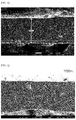
FIGs. 1A to 1J are SEM pictures of Examples 1 to 9, and Comparative Example 1. -
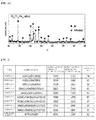
FIGs. 2A to 2E are XRD data of Examples 1 to 9, and Comparative Example 1. -
FIG. 3 is a table representing an active material charging quantity, an active material discharging quantity, and initial efficiency of negative active materials fabricated in Examples 1 to 9, and Comparative Example 1. - In order to achieve the aforementioned object, a negative active material for a lithium secondary battery according to an exemplary embodiment of the present invention includes: silicon (Si) of 40 to 60 at%; and an alloy including copper (Cu) and aluminum (Al), in which a ratio of the aluminum (Al) to the copper (Cu) included in the alloy is 30:70 to 65:35, and the silicon (Si) does not substantially form an intermetallic compound within the alloy.
- Advantages and features of the present disclosure and methods accomplishing the advantages and features will become apparent from the following detailed description of exemplary embodiments with reference to the accompanying drawings. However, the present invention is not limited to exemplary embodiment disclosed herein but will be implemented in various forms. The exemplary embodiments are provided so that the present invention is completely disclosed, and a person of ordinary skilled in the art can fully understand the scope of the present invention. Therefore, the present invention will be defined only by the scope of the appended claims.
- Respective characteristics of several exemplary embodiments of the present disclosure may be partially or entirely coupled or combined, and technically and variously connected and driven enough for those skilled in the art to fully understand, and respective exemplary embodiments may be independently carried out, and implemented together according to an associated relation.
- The term "approximate" used in the present specification is used as a numerical value or a meaning close to the numerical value when an unique manufacturing and material allowable error is suggested to a mentioned meaning, and is used for preventing an unconscionable infringer from illegally using the disclosed contents including an accurate or absolute numerical value mentioned for helping the understanding of the present invention.
- A unit "%" used in the present specification means "atom%" unless otherwise regulated.
- The present invention is an alloy including silicon (Si), copper (Cu), and aluminum (Al), and silicon of 40 to 60at% exists within the alloy, a ratio of aluminum to copper included in the alloy is 30:70 to 65:35, and silicon (Si) within the alloy provides a negative active material which does not substantially form an intermetallic compound.
- In the present invention, silicon (Si) may be involved in occlusion and discharge of lithium ions when the negative active material is used as a battery.
- In the present invention, silicon (Si) of 40 to 60 at% exists within the alloy. Accordingly, it is possible to decrease viscosity of a melted material used for fabricating a negative active material, compared to a silicon-based negative active material in the related art, in which silicon (Si) of more than 60 at% exists within an alloy. Accordingly, it is possible to improve yield of a fabricating process of the negative active material by dispersing the more amount of melted material through a fine nozzle. Further, it is possible to finely fabricate a tissue of a final alloy by improving a cooling speed of the melted material.
- In the present invention, silicon (Si) does not substantially form an intermetallic compound within the alloy.
- The intermetallic compound in a metal technical field refers to a compound, in which two or more metals or semi-metal elements are combined in a simple integer ratio. In contrast to a solid solution that is a common alloy, the intermetallic compound has a crystal structure or a physical-chemical property, which is clearly different from that of the corresponding component element, and generally has a uniform melting point.
- In the present invention, the characteristic that silicon (Si) does not substantially form the intermetallic compound within the alloy may mean that a peak of a compound, in which silicon and a metal are combined in an integer ratio, is not observed as a result of the ex situ XRD analysis of the alloy.
- In the present invention, since silicon (Si) does not substantially form an intermetallic compound within the alloy, all of the silicon included in the alloy may be substantially involved in occlusion and discharge of the lithium ions. Accordingly, in contrast to the negative active material in the related art, in which silicon (Si) forms the intermetallic compound, it is possible to maximally use silicon (Si) included in the alloy for occlusion and discharge of the lithium ions. As a result, when the negative active material of the present invention is applied to a secondary battery, it is possible to implement a secondary battery having a high capacity.
- In the present invention, copper (Cu), and aluminum (Al) form a metal matrix, in which silicon (Si) is dispersible. Copper (Cu) and aluminum (Al) may form a metal matrix while forming a solid solution or an intermetallic compound.
- In the present invention, a ratio of aluminum (Al) to copper (Cu) included in the alloy is 30 to 70 to 65 to 35.
- When the ratio of aluminum (Al) to copper (Cu) included in the alloy is less than 30 to 70, a life characteristic of the negative active material included in the alloy may be degraded, and when the ratio of aluminum (Al) to copper (Cu) included in the alloy is greater than 65 to 35, it is difficult to implement a battery having a high capacity.
- In the present invention, a ratio of aluminum (Al) to copper (Cu) included in the alloy is 50 to 50. When the ratio of aluminum (Al) to copper (Cu) is 50 to 50, the final alloy may have finer tissues.
- In the present invention, when it is assumed that copper (Cu) is included in the alloy by A at% and aluminum (Al) is included in the alloy by B at%, A + B may be 30 to 40.
- In addition to silicon (Si), copper (Cu), and aluminum (Al), iron (Fe) of 1 to 5 at% may be further included in the alloy of the present invention.
- In the present invention, iron (Fe) is added to the alloy composed of silicon (Si), copper (Cu), and aluminum (Al) to serve to improve a charging quantity and a discharging quantity of the negative active material.
- In addition to silicon (Si), copper (Cu), aluminum (Al), and iron (Fe), titanium (Ti) of 1 to 5 at% may be further included in the alloy of the present invention.
- In the present invention, titanium (Ti) is added to the alloy composed of silicon (Si), copper (Cu), aluminum (Al), and iron (Fe) to serve to make tissues of the final alloy be fine.
- In addition to silicon (Si), copper (Cu), aluminum (Al), and iron (Fe), zirconium (Zr) of 1 to 5 at% may be further included in the alloy of the present invention.
- In the present invention, zirconium (Zr) is added to the alloy composed of silicon (Si), copper (Cu), aluminum (Al), and iron (Fe) to serve to make tissues of the final alloy be fine and improve a life characteristic of the negative active material.
- In the present invention, iron (Fe), titanium (Ti), and zirconium (Zr) do not substantially form an intermetallic compound with silicon (Si). That is, as a result of the analysis of the Si-Cu-Al-Fe alloy, the Si-Cu-Al-Fe-Ti alloy, the Si-Cu-Al-Fe-Zr alloy by the ex situ XRD, a peak of the compound, in which iron (Fe), titanium (Ti), or zirconium (Zr) is combined with silicon (Si) in an integer ratio, is not observed.
- The method of fabricating the negative active material of the present invention is not particularly limited, and for example, various fine powder preparing methods (a gas atomizer method, a centrifugal gas atomizer method, a plasma atomizer method, a rotating electrode method, and a mechanical alloying method) publicly known in the art may be used as the method.
- In Example 1, a negative active material having a composition of Si50(Cu61Al39)50 was fabricated by mixing silicon (Si), copper (Cu), and aluminum (Al), melting the mixture by an arc melting method and the like, and then applying a single-roll rapid solidification which injects the melt to a copper roll.
- In Example 2, a negative active material was fabricated by the same manner as that of Example 1 except the negative active material has a composition of Si50(Cu50Al50)50.
- In Example 3, a negative active material was fabricated by the same manner as that of Example 1 except the negative active material has a composition of Si50(Cu33Al67)50.
- In Example 4, a negative active material was fabricated by the same manner as that of Example 1 except the negative active material has a composition of Si60(Cu50Al50)37.5Fe2.5.
- In Example 5, a negative active material was fabricated by the same manner as that of Example 1 except the negative active material has a composition of Si60(Cu50Al50)35Fe5.
- In Example 6, a negative active material was fabricated by the same manner as that of Example 1 except the negative active material has a composition of Si60(Cu50Al50)35Fe2.5Zr2.5.
- In Example 7, a negative active material was fabricated by the same manner as that of Example 1 except the negative active material has a composition of Si60(Cu50Al50)32.5Fe5Zr2.5.
- In Example 8, a negative active material was fabricated by the same manner as that of Example 1 except the negative active material has a composition of Si60(Cu50Al50)35Fe2.5Ti2.5.
- In Example 9, a negative active material was fabricated by the same manner as that of Example 1 except the negative active material has a composition of Si60(Cu50Al50)32.5Fe5Ti2.5.
- In Comparative Example 1, a negative active material was fabricated by the same manner as that of Example 1 by mixing silicon (Si), titanium (Ti), and iron (Fe) except the negative active material has a composition of Si70Ti15Fe15.
- A Scanning Electron Microscopy (SEM) analysis was performed on the fabricated negative active material.
FIGs. 1A to 1I are SEM pictures of the enlarged negative active materials of Examples 1 to 9, andFIG. 1J is an SEM picture of the enlarged negative active material of Comparative Example 1. - Referring to
FIGs. 1A to 1C , it can be seen that the negative active material, in which the ratio of aluminum (Al) to copper (Cu) is 50:50, that is, which has the composition of Si50(Cu50Al50)50, has relatively finer tissues than those of the negative active material having the composition of Si50(Cu61Al39)50 and the negative active material having the composition of Si50(Cu33Al67)50. - Further, referring to
FIGs. 1F and1G , it can be seen that titanium (Ti) is added, so that the tissues of the negative active material are finer. - Further, referring to
FIGs. 1H and1I , it can be seen that zirconium (Zr) is added, so that the tissues of the negative active material are finer. - The Cu kα ray XRD measurement was performed on the negative active materials fabricated in Examples 1 to 9, and the results thereof are represented in
FIGs. 2A to 2D . Further, the Cu kα ray XRD measurement was performed on the negative active material fabricated in Comparative Example 1, and the result thereof is represented inFIG. 2E . -
FIG. 2A represents XRD data for the negative active materials fabricated in Examples 1 to 3. Referring toFIG. 2A , as the result of the XRD analysis of the negative active materials fabricated in Examples 1 to 3, it can be seen that only the peak of silicon (Si) and the peak of the intermetallic compound (that is, CuAl2 and Al4Cu9) of copper (Cu) and aluminum (Al) are present, but the peak of the compound, in which silicon (Si) and the metal are combined in an integer ratio, is not observed. That is, it can be seen that silicon (Si) does not substantially form an intermetallic compound within the alloy. -
FIG. 2B represents XRD data for the negative active materials fabricated in Examples 4 and 5. Referring toFIG. 2B , as the result of the XRD analysis of the negative active materials fabricated in Examples 4 and 5, it can be seen that only the peak of silicon (Si) and the peak of the intermetallic compound (that is, CuAl and CuAl2) of copper (Cu) and aluminum (Al) are present, but the peak of the compound, in which silicon (Si) and the metal are combined in an integer ratio, is not observed. Based on the fact, it can be seen that even if iron (Fe) is added to the alloy composed of silicon (Si), copper (Cu), and aluminum (Al) by 1 to 5 at%, silicon (Si) does not substantially form an intermetallic compound within the alloy. -
FIG. 2C represents XRD data for the negative active materials fabricated in Examples 6 and 7. Referring toFIG. 2C , as the result of the XRD analysis of the negative active materials fabricated in Examples 6 and 7, it can be seen that only the peak of silicon (Si) and the peak of the intermetallic compound (that is, AlCu and CuAl2) of copper (Cu) and aluminum (Al) are present, but the peak of the compound, in which silicon (Si) and the metal are combined in an integer ratio, is not observed. Based on the fact, it can be seen that even if zirconium (Zr) is added to the alloy composed of silicon (Si), copper (Cu), aluminum (Al), and iron (Fe) by 1 to 5 at%, silicon (Si) does not substantially form an intermetallic compound within the alloy. -
FIG. 2D represents XRD data for the negative active materials fabricated in Examples 8 and 9. Referring toFIG. 2D , as the result of the XRD analysis of the negative active materials fabricated in Examples 8 and 9, it can be seen that only the peak of silicon (Si) and the peak of the intermetallic compound (that is, AlCu) of copper (Cu) and aluminum (Al) are present, but the peak of the compound, in which silicon (Si) and the metal are combined in an integer ratio, is not observed. Based on the fact, it can be seen that even if titanium (Ti) is added to the alloy composed of silicon (Si), copper (Cu), aluminum (Al), and iron (Fe) by 1 to 5 at%, silicon (Si) does not substantially form an intermetallic compound within the alloy. -
FIG. 2E represents XRD data for the negative active material fabricated in Comparative Example 1. Referring toFIG. 2E , as the result of the XRD analysis of the negative active material fabricated in Comparative Example 1, it can be seen that the peak of the compound, in which silicon (Si), titanium (Ti), and iron (Fe) are combined in an integer ratio, is present. That is, in the negative active material of Comparative Example 1, it can be seen that silicon (Si) substantially forms an intermetallic compound within the alloy. - Secondary batteries shaped like coins were manufactured by using the negative active materials fabricated in Examples 1 to 9 and Comparative Example 1, and the charging/discharging evaluation was performed. The secondary batteries were manufactured so that a mixing ratio of the active material, a conductive agent (KB-based conductive agent), and a binder (PAI-based binder) during the manufacturing of the plate shaped like a coin is 86.6:3.4:10 (active material : conductive agent : binder) wt%. The manufactured plate was charged/discharged one time, and then the active material charging quantity (mAh/g), the active material discharging quantity (mAh/g), and initial efficiency (%) were measured, and the results of the measurement are represented in
FIG. 3 . - Although not limited by theory, in the cases of Examples 1 to 9, silicon does not substantially form an intermetallic compound within the alloy, so that the relatively larger amount of silicon is involved in occlusion and discharging of lithium ions, but in Comparative Example 1, silicon forms an intermetallic compound within the alloy, so that the relatively small amount of silicon is involved in occlusion and discharging of lithium ions, so that it is determined that the aforementioned result was drawn (although the negative active material of Example 1 represents the smaller active material discharging quantity than that of the negative active material of Comparative Example 1, but in consideration that silicon (Si) is added to the negative active material of Example 1 by 50 at%, which is substantially the small quantity, so that it can be seen that silicon (Si) of a relatively higher ratio is involved in occlusion and discharging of lithium ions in the negative active material of Example 1, compared to the negative active material of Comparative Example 1).
- Further, referring to
FIG. 3 , it can be seen that the negative active materials of Examples 1 to 9 represent more excellent initial efficiency than that of the negative active material of Comparative Example 1. - The exemplary embodiments of the present invention have been described in more detail with reference to the accompanying drawings, but the present invention is not essentially limited to the exemplary embodiments, and may be variously modified and carried out within the scope of the technical spirit of the present invention. Accordingly, the various exemplary embodiments disclosed herein are not intended to limit the technical spirit but describe with the true scope and spirit being indicated by the following claims. The scope of the present invention should be construed based on the following appended claims and it should be construed that the technical spirit included within the scope equivalent to the claims belongs to the present invention.
Claims (6)
- A negative active material for a lithium secondary battery, comprising:silicon (Si) of 40 to 60 at%; andan alloy including copper (Cu) and aluminum (Al),wherein a ratio of the aluminum (Al) to the copper (Cu) included in the alloy is 30:70 to 65:35, and the silicon (Si) does not substantially form an intermetallic compound within the alloy.
- The negative active material of claim 1, wherein the ratio of the aluminum (Al) to the copper (Cu) included in the alloy is 50:50.
- The negative active material of claim 1, wherein when it is assumed that the copper (Cu) is included in the alloy by A at% and the aluminum (Al) is included in the alloy by B at%, A + B is 30 to 40.
- The negative active material of claim 1, wherein the alloy further includes iron (Fe) of 1 to 5 at%.
- The negative active material of claim 4, wherein the alloy further includes titanium (Ti) of 1 to 5 at%.
- The negative active material of claim 4, wherein the alloy further includes zirconium (Zr) of 1 to 5 at%.
Applications Claiming Priority (2)
| Application Number | Priority Date | Filing Date | Title |
|---|---|---|---|
| KR1020130163123A KR20150074905A (en) | 2013-12-24 | 2013-12-24 | Negative active material for lithium secondary battery |
| PCT/KR2014/012087 WO2015099325A1 (en) | 2013-12-24 | 2014-12-09 | Negative active material for lithium secondary battery |
Publications (2)
| Publication Number | Publication Date |
|---|---|
| EP3089243A1 true EP3089243A1 (en) | 2016-11-02 |
| EP3089243A4 EP3089243A4 (en) | 2017-07-05 |
Family
ID=53479126
Family Applications (1)
| Application Number | Title | Priority Date | Filing Date |
|---|---|---|---|
| EP14873662.2A Withdrawn EP3089243A4 (en) | 2013-12-24 | 2014-12-09 | Negative active material for lithium secondary battery |
Country Status (6)
| Country | Link |
|---|---|
| US (1) | US20160315318A1 (en) |
| EP (1) | EP3089243A4 (en) |
| JP (1) | JP2017508240A (en) |
| KR (1) | KR20150074905A (en) |
| CN (1) | CN105917498A (en) |
| WO (1) | WO2015099325A1 (en) |
Families Citing this family (3)
| Publication number | Priority date | Publication date | Assignee | Title |
|---|---|---|---|---|
| KR102285151B1 (en) * | 2017-03-10 | 2021-08-04 | 삼성에스디아이 주식회사 | Negative active material, negative electrode and lithium battery including the same, and method of preparing the negative active material |
| CN107779661A (en) * | 2017-09-30 | 2018-03-09 | 山西沃特海默新材料科技股份有限公司 | A kind of copper alusil alloy nanometer anode material of lithium battery and preparation method thereof |
| US11688848B2 (en) * | 2021-02-09 | 2023-06-27 | Enevate Corporation | Method and system for pulverization mitigation additives for silicon dominant anodes |
Family Cites Families (13)
| Publication number | Priority date | Publication date | Assignee | Title |
|---|---|---|---|---|
| JP2001015102A (en) * | 1999-07-01 | 2001-01-19 | Matsushita Electric Ind Co Ltd | Non-aqueous electrolyte secondary battery and manufacturing method thereof |
| JP2005011650A (en) * | 2003-06-18 | 2005-01-13 | Sony Corp | Negative electrode material and battery using the same |
| KR100949330B1 (en) * | 2005-11-29 | 2010-03-26 | 삼성에스디아이 주식회사 | Anode active material for lithium secondary battery and lithium secondary battery comprising same |
| KR100814816B1 (en) * | 2006-11-27 | 2008-03-20 | 삼성에스디아이 주식회사 | Anode active material for lithium secondary battery and lithium secondary battery comprising same |
| KR100859687B1 (en) * | 2007-03-21 | 2008-09-23 | 삼성에스디아이 주식회사 | Anode active material for lithium secondary battery and lithium secondary battery comprising same |
| KR100796664B1 (en) * | 2007-03-21 | 2008-01-22 | 삼성에스디아이 주식회사 | Anode active material for lithium secondary battery and lithium secondary battery comprising same |
| KR100869796B1 (en) * | 2007-04-05 | 2008-11-21 | 삼성에스디아이 주식회사 | Anode active material for lithium secondary battery, method for preparing same, and lithium secondary battery comprising same |
| JP5343342B2 (en) * | 2007-06-26 | 2013-11-13 | 大同特殊鋼株式会社 | Negative electrode active material for lithium secondary battery and lithium secondary battery |
| KR101263265B1 (en) | 2010-07-30 | 2013-05-10 | 일진전기 주식회사 | Negative active material |
| KR101385602B1 (en) * | 2011-12-14 | 2014-04-21 | 엠케이전자 주식회사 | Anode active material for secondary battery and method of manufacturing the same |
| KR101403498B1 (en) * | 2012-01-31 | 2014-06-11 | 엠케이전자 주식회사 | Anode active material for secondary battery and secondary battery including the same |
| US9306216B2 (en) * | 2012-02-01 | 2016-04-05 | Samsung Sdi Co., Ltd. | Negative active material, method of preparing the same, negative electrode for lithium secondary battery including negative active material, and lithium secondary battery including negative electrode |
| US9123955B2 (en) * | 2012-04-06 | 2015-09-01 | Samsung Sdi Co., Ltd. | Negative active material, lithium battery including the material, and method for manufacturing the material |
-
2013
- 2013-12-24 KR KR1020130163123A patent/KR20150074905A/en not_active Ceased
-
2014
- 2014-12-09 CN CN201480070917.7A patent/CN105917498A/en active Pending
- 2014-12-09 WO PCT/KR2014/012087 patent/WO2015099325A1/en not_active Ceased
- 2014-12-09 EP EP14873662.2A patent/EP3089243A4/en not_active Withdrawn
- 2014-12-09 US US15/104,453 patent/US20160315318A1/en not_active Abandoned
- 2014-12-09 JP JP2016543066A patent/JP2017508240A/en active Pending
Also Published As
| Publication number | Publication date |
|---|---|
| US20160315318A1 (en) | 2016-10-27 |
| CN105917498A (en) | 2016-08-31 |
| KR20150074905A (en) | 2015-07-02 |
| WO2015099325A1 (en) | 2015-07-02 |
| JP2017508240A (en) | 2017-03-23 |
| EP3089243A4 (en) | 2017-07-05 |
Similar Documents
| Publication | Publication Date | Title |
|---|---|---|
| KR101884476B1 (en) | Negative electrode material for lithium ion battery | |
| JP5761758B2 (en) | Anode active material for secondary battery | |
| JP7000155B2 (en) | Negative electrode plate for lithium secondary battery and lithium secondary battery including it | |
| JP5554839B2 (en) | Negative electrode active material for lithium secondary battery and lithium secondary battery | |
| JP6211961B2 (en) | Negative electrode materials for electricity storage devices | |
| JP5367921B2 (en) | Anode active material for non-aqueous electrolyte secondary battery | |
| KR20140023885A (en) | Si alloy powder for negative electrode of lithium-ion secondary cell, and method for manufacturing same | |
| KR102060205B1 (en) | Negative electrode material for lithium ion battery | |
| JP2009176712A (en) | Hydrogen storage alloy, and alkaline battery using the same as negative electrode active material | |
| WO2011111709A1 (en) | Negative electrode active material for nonaqueous electrolyte secondary battery | |
| JP2014500579A (en) | Si negative electrode material | |
| TWI618284B (en) | Si alloy powder for negative active material of lithium ion battery and manufacturing method thereof | |
| EP3089243A1 (en) | Negative active material for lithium secondary battery | |
| US20160372745A1 (en) | Negative electrode active material for lithium secondary battery | |
| JP6726798B2 (en) | Negative electrode for alkaline storage battery, manufacturing method thereof, and alkaline storage battery | |
| JP6116068B2 (en) | Negative electrode for lithium ion secondary battery | |
| JP4923877B2 (en) | Anode material for non-aqueous electrolyte secondary battery and method for producing the same | |
| KR101620849B1 (en) | Negative active material for lithium secondary battery | |
| JP7146710B2 (en) | Negative electrode for alkaline storage battery, manufacturing method thereof, and alkaline storage battery | |
| JP5408267B2 (en) | Anode material for non-aqueous electrolyte secondary battery and method for producing the same | |
| JP5547002B2 (en) | Si alloy negative electrode material and lithium ion battery | |
| JP2017188271A (en) | Negative electrode active material for lithium ion battery, and method for manufacturing the same | |
| JP6045879B2 (en) | Sn alloy powder used as a raw material of the negative electrode active material of a lithium ion secondary battery, and its manufacturing method. | |
| WO2013043121A1 (en) | An anode material for a lithium ion battery |
Legal Events
| Date | Code | Title | Description |
|---|---|---|---|
| PUAI | Public reference made under article 153(3) epc to a published international application that has entered the european phase |
Free format text: ORIGINAL CODE: 0009012 |
|
| 17P | Request for examination filed |
Effective date: 20160615 |
|
| AK | Designated contracting states |
Kind code of ref document: A1 Designated state(s): AL AT BE BG CH CY CZ DE DK EE ES FI FR GB GR HR HU IE IS IT LI LT LU LV MC MK MT NL NO PL PT RO RS SE SI SK SM TR |
|
| AX | Request for extension of the european patent |
Extension state: BA ME |
|
| DAX | Request for extension of the european patent (deleted) | ||
| A4 | Supplementary search report drawn up and despatched |
Effective date: 20170608 |
|
| RIC1 | Information provided on ipc code assigned before grant |
Ipc: H01M 4/46 20060101ALI20170530BHEP Ipc: H01M 4/38 20060101AFI20170530BHEP Ipc: H01M 4/134 20100101ALI20170530BHEP |
|
| STAA | Information on the status of an ep patent application or granted ep patent |
Free format text: STATUS: THE APPLICATION HAS BEEN WITHDRAWN |
|
| 18W | Application withdrawn |
Effective date: 20171106 |