EP3088571A1 - Environmentally friendly aluminum coatings as sacrificial coatings for high strength steel alloys - Google Patents
Environmentally friendly aluminum coatings as sacrificial coatings for high strength steel alloys Download PDFInfo
- Publication number
- EP3088571A1 EP3088571A1 EP15382212.7A EP15382212A EP3088571A1 EP 3088571 A1 EP3088571 A1 EP 3088571A1 EP 15382212 A EP15382212 A EP 15382212A EP 3088571 A1 EP3088571 A1 EP 3088571A1
- Authority
- EP
- European Patent Office
- Prior art keywords
- aluminum
- coating
- alkyl
- coatings
- substrate
- Prior art date
- Legal status (The legal status is an assumption and is not a legal conclusion. Google has not performed a legal analysis and makes no representation as to the accuracy of the status listed.)
- Granted
Links
- 0 **1C=*C=C1 Chemical compound **1C=*C=C1 0.000 description 2
Images





Classifications
-
- C—CHEMISTRY; METALLURGY
- C25—ELECTROLYTIC OR ELECTROPHORETIC PROCESSES; APPARATUS THEREFOR
- C25D—PROCESSES FOR THE ELECTROLYTIC OR ELECTROPHORETIC PRODUCTION OF COATINGS; ELECTROFORMING; APPARATUS THEREFOR
- C25D7/00—Electroplating characterised by the article coated
-
- C—CHEMISTRY; METALLURGY
- C25—ELECTROLYTIC OR ELECTROPHORETIC PROCESSES; APPARATUS THEREFOR
- C25D—PROCESSES FOR THE ELECTROLYTIC OR ELECTROPHORETIC PRODUCTION OF COATINGS; ELECTROFORMING; APPARATUS THEREFOR
- C25D3/00—Electroplating: Baths therefor
- C25D3/02—Electroplating: Baths therefor from solutions
- C25D3/42—Electroplating: Baths therefor from solutions of light metals
- C25D3/44—Aluminium
-
- C—CHEMISTRY; METALLURGY
- C25—ELECTROLYTIC OR ELECTROPHORETIC PROCESSES; APPARATUS THEREFOR
- C25D—PROCESSES FOR THE ELECTROLYTIC OR ELECTROPHORETIC PRODUCTION OF COATINGS; ELECTROFORMING; APPARATUS THEREFOR
- C25D11/00—Electrolytic coating by surface reaction, i.e. forming conversion layers
- C25D11/38—Chromatising
-
- C—CHEMISTRY; METALLURGY
- C25—ELECTROLYTIC OR ELECTROPHORETIC PROCESSES; APPARATUS THEREFOR
- C25D—PROCESSES FOR THE ELECTROLYTIC OR ELECTROPHORETIC PRODUCTION OF COATINGS; ELECTROFORMING; APPARATUS THEREFOR
- C25D17/00—Constructional parts, or assemblies thereof, of cells for electrolytic coating
- C25D17/10—Electrodes, e.g. composition, counter electrode
-
- C—CHEMISTRY; METALLURGY
- C25—ELECTROLYTIC OR ELECTROPHORETIC PROCESSES; APPARATUS THEREFOR
- C25D—PROCESSES FOR THE ELECTROLYTIC OR ELECTROPHORETIC PRODUCTION OF COATINGS; ELECTROFORMING; APPARATUS THEREFOR
- C25D3/00—Electroplating: Baths therefor
- C25D3/66—Electroplating: Baths therefor from melts
- C25D3/665—Electroplating: Baths therefor from melts from ionic liquids
-
- C—CHEMISTRY; METALLURGY
- C25—ELECTROLYTIC OR ELECTROPHORETIC PROCESSES; APPARATUS THEREFOR
- C25D—PROCESSES FOR THE ELECTROLYTIC OR ELECTROPHORETIC PRODUCTION OF COATINGS; ELECTROFORMING; APPARATUS THEREFOR
- C25D5/00—Electroplating characterised by the process; Pretreatment or after-treatment of workpieces
- C25D5/003—Electroplating using gases, e.g. pressure influence
-
- C—CHEMISTRY; METALLURGY
- C25—ELECTROLYTIC OR ELECTROPHORETIC PROCESSES; APPARATUS THEREFOR
- C25D—PROCESSES FOR THE ELECTROLYTIC OR ELECTROPHORETIC PRODUCTION OF COATINGS; ELECTROFORMING; APPARATUS THEREFOR
- C25D5/00—Electroplating characterised by the process; Pretreatment or after-treatment of workpieces
- C25D5/34—Pretreatment of metallic surfaces to be electroplated
- C25D5/36—Pretreatment of metallic surfaces to be electroplated of iron or steel
-
- C—CHEMISTRY; METALLURGY
- C25—ELECTROLYTIC OR ELECTROPHORETIC PROCESSES; APPARATUS THEREFOR
- C25D—PROCESSES FOR THE ELECTROLYTIC OR ELECTROPHORETIC PRODUCTION OF COATINGS; ELECTROFORMING; APPARATUS THEREFOR
- C25D5/00—Electroplating characterised by the process; Pretreatment or after-treatment of workpieces
- C25D5/48—After-treatment of electroplated surfaces
- C25D5/50—After-treatment of electroplated surfaces by heat-treatment
-
- C—CHEMISTRY; METALLURGY
- C25—ELECTROLYTIC OR ELECTROPHORETIC PROCESSES; APPARATUS THEREFOR
- C25D—PROCESSES FOR THE ELECTROLYTIC OR ELECTROPHORETIC PRODUCTION OF COATINGS; ELECTROFORMING; APPARATUS THEREFOR
- C25D5/00—Electroplating characterised by the process; Pretreatment or after-treatment of workpieces
- C25D5/48—After-treatment of electroplated surfaces
- C25D5/52—After-treatment of electroplated surfaces by brightening or burnishing
Definitions
- This specification refers to an environmentally friendly electroplating process for coating a ferrous alloy steel substrate, preferably a high strength steel alloy, using a novel aluminum bath formulation comprising more safe-handling, less-harzardous and environmentally friendly components than the formulation used in the AlumiPlateTM process, which was the most promising aluminum coating alternative for Cd replacement known until now. Additionally, the present patent application refers to both the aluminum coating and the coated ferrous alloy steel substrate obtained by such process, as well as the use of both in applications such as aeronautical, automotive, marine, construction, industrial and household applications.
- this specification provides an electroplating process and aluminum bath formulation suitable for providing an aluminum coating useful as a safe nickel-free alternative to the cadmium coatings used in high strength steel components in aerospace.
- AlumiPlateTM is a plating technology that uses organic solvents as electrolytes, a toluene-based very flammable and toxic solution which also contains pyrophoric alkylaluminum constituent components. Therefore, it involves handling hazardous and non-environmentally friendly plating solutions.
- Zinc-nickel electroplating is one of the most promising candidates. Zinc-nickel plating is possible in a wide range of pHs, using both alkaline or acidic electrolyte baths, so several chemistries have been developed in a wide range of pH leading to a range of Zn-Ni alloy compositions. Amongst all of them, only 2 coating specifications are compatible with high strength steel substrates: the AMS 2417G and the ASTM B 841. These specifications allow both alkaline and acid plating baths.
- Ion Vapour Deposition (IVD) aluminum technology has been developed as a replacement of cadmium electroplating in some aeronautic applications.
- Some of the disadvantages of this technology include the limited ability to coat internal and deeply recessed surfaces: depending on the orientation of the part's surfaces in the chamber, the coating thickness may not be equivalent in all areas (especially for internal diameters), the coating does not pass the re-embrittlement test as per HSSJTP [High-Strength Steel Joint Test Protocol, for Validation of Alternatives to Low Hydrogen Embrittlement Cadmium For High-Strength Steel Landing Gear and Component Applications, July 31, 2003; AFRL/MLSC/WPAFB, OH 45433-7718; Approved for public release; distribution unlimited (26 March 2003)] and large components may be physically restricted from IVD-AI coating by the dimensions of the vacuum vessel.
- the magnetron sputtered aluminum process was specifically designed to coat internal diameters or recessed areas to overcome the limitations of Ion Vapor Deposited Aluminum (IVD-AI).
- IVD-AI Ion Vapor Deposited Aluminum
- electroplating is the one of the most versatile and economic alternatives.
- aprotic electrolytes such as nonaqueous inorganic or organic electrolyte systems can be used to electroplate this metal.
- AlumiPlateTM is an aluminum electroplating technology from organic electrolyte systems. This technology is commercially produced by means of the Siemens Sigal® process, which was developed by Siemens AG (Germany), and most recently has also been processed in Europe at Aluminal Corporation. The process was licensed in the United States to AlumiPlate, Inc. in 1995.
- the plating formulation of AlumiPlateTM comprises a toluene-based solution containing a pyrophoric alkylaluminum constituent and other compounds, such as ethers, aluminoxanes or ammonium salts [ US2007261966A1, 2007-11-15 , Alumiplate Inc. (US), Aluminum Electroplating Formulations].
- the aluminum coatings obtained with the AlumiPlateTM plating process have demonstrated to have better performance than cadmium in a number of tests, such as hydrogen embrittlement, stress corrosion cracking, acidified (SO 2 ) salt fog, fluid corrosion resistance tests, etc. If compared with to IVD-AI, it provides coatings with better corrosion resistance and density. This process can also lead to a similar throwing power or coverage than cadmium plating by using auxiliary anodes to coat the internal recessed surfaces.
- a key disadvantage of this process is that is not environmentally friendly, since it employs a toluene-based toxic and very flammable solution which also contains pyrophoric alkylaluminum constituent components. Therefore, it must be operated in an humidity and oxygen controlled atmosphere line.
- the elimination of the cadmium by this method addresses only one aspect of cadmium substitution on high strength steel components, the elimination of a toxic coating.
- the process still involves handling toxic and non-environmentally friendly plating solutions [ US2007261966A1, 2007-11-15 , Alumiplate Inc. (US), Aluminum Electroplating Formulations].
- Global lonix has developed a plating chemistry composed by more environmentally preferred organic solvents for aluminum electrodeposition.
- the plating formulation comprises non aromatic organic solvents, such as ethanol, isopropanol or butanol, a conductive additive and aluminum salts, such as aluminum alcoxides and aluminum chloride.
- Global lonix has reported that this formulation provides coatings with throwing power comparable to cadmium electroplating [ WO2004079054A1, 2004-09-16 , Global lonix (CA), Electrodeposition of aluminum and refractory metals from non-aromatic organic solvents].
- Hitachi Metals LTD has developed an aluminum electroplating bath comprising dimethyl sulfone solvent and ammonium chloride or a tetraalkylammonium chloride which is applied by means of a barrel plating method. According to the inventors of this formulation, this plating solution has improved the coatings electrical conductivity, which in turn provides uniform aluminum coatings. They also state that this bath possesses an extended bath life [ US2011253543A1, 2011-10-20 , Hitachi Metals Ltd. Aluminum Electroplating Solution and Method for forming Aluminum Plating Film].
- Ionic liquids are novel fluids entirely consisting of ionic species which usually have a melting point of 100 °C or below. If the adequate chemical structure is selected, they can have a wide electrochemical window, negligible-volatility (which provides them with a non-flammable nature), high solubility of metal salts, aprotic nature, or a high conductivity in comparison to organic solvents [ Phys. Chem. Chem. Phys., 2006, 8, 4265-4279, Andrew P. Abbott and Katy J. McKenzie, Application of ionic liquids to the electrodeposition of metals ].
- Al-Zr coatings electroplated with this formulation have good adhesion (in the tape test, which is less severe than the bend test), smooth cross section and can stand from 700 to 1500 hours in the SST (Salt Spray Test- JISZ2371) without developing red rust
- US2010285322A1, 2010-11-11 Dipsol Chem (Japan), Hyundai Motor Co Ltd (Japan), Electric Al-Zr Alloy Plating Bath Using Room Temperature Molten Salt Bath and Plating Method Using the Same; US2012205249A1, 2012-08-16 , Hyundai Motor CO LTD (Japan) Dipsol Chem. (Japan), Aluminum or Aluminum Alloy Barrel Electroplating Method].
- a more recent patent of Dipsol discloses new formulations including the same ionic liquid, a brightening agent, an organic polymer but without any organic solvent. These formulations also contain dimethylamine borane and hydrides, such as aluminum lithium hydride. They have demonstrated that this process has a good throwing power [ US2013292255 A1, 2013-11-07 , Dipsol Chem. (Japan), Electrical Aluminium or Aluminium alloy fused salt plating bath having good throwing power, and electroplating method and pretreatment using the same].
- this formulation still has serious handling and health risks since the hydrides in this bath liberate extremely flammable gases in contact with water, causing severe burns. Also, in this particular case, no hydrogen embrittlement performance has yet been reported.
- This specification provides a safer handling, less-hazardous and more environmentally friendly process, compared with other known processes such as AlumiPlateTM, for coating ferrous alloy steel such as high strength steel alloy with an aluminum coating.
- AlumiPlateTM for coating ferrous alloy steel such as high strength steel alloy with an aluminum coating.
- this patent application provides a process suitable for complying with environmental and occupational health and safety regulations.
- This aluminum coating can be useful in applications such as aeronautical, automotive, marine, construction, industrial and household applications, in particular as a Ni-free Cd replacement for high strength steel alloys.
- this specification provides a process for obtaining aluminum metallic coatings as a Ni-free Cd replacement for ferrous alloy steel such as high strength steel alloys, with the main objective of achieving similar or better performance than the LHE Cd or the AlumiPlateTM methods, but plating using safer handling, less-hazardous and more environmentally friendly electrolytes, i.e., the developed ionic liquid electrolytes for aluminum plating described in this patent application.
- the Al coating obtained by the electroplating process described herein is suitable for complying with environmental and occupational health and safety regulations, while passing the structural and functional requirements established for Cd replacement process qualification in high strength ferrous alloy steels.
- the coatings proposed in this patent application show comparable behavior to Low Hydrogen Embrittlement Cd (LHE Cd) and AlumiPlateTM reference coatings with respect to compliance with most or, more preferably, all the preliminarily acceptance criteria established for Cd replacement in ferrous alloy steel such as high strength steel alloys, i.e. coating appearance, morphology, throwing power, adhesion, corrosion resistance and hydrogen embrittlement performance. But, advantageously, they are produced with an environmentally friendly and safe handling plating bath and plating process.
- both the aluminum coating and the ferrous alloy steel substrate, preferably high strength steel alloy, coated with an aluminum coating by the process described in this patent application are particularly useful in aerospace applications.
- the aluminum coating obtained by the process described herein may be particularly useful as sacrificial coatings in such applications wherein Cd sacrificial coatings were used, for example, high strength steel landing gear, high strength steel actuators, steel fasteners (bolts, rivets) or electrical connector shells.
- This specification provides an electroplating process for coating a ferrous alloy steel cathode substrate with an aluminum coating, characterised in that the process comprises:
- the aluminum plating bath formulation is preferably anhydrous and the electroplating is conducted under a dry inert gas stream in order to prevent contact of the electrolyte with the ambient's moisture.
- a dry inert gas stream in order to prevent contact of the electrolyte with the ambient's moisture.
- an accurate control of oxygen and moisture in the electrochemical cell is not needed.
- the process described herein can be applied to different types of ferrous alloy steel substrates [ ASM Handbook Volume 1, Properties and Selection: Irons, Steels, and High Performance Alloys ]. Specifically, the process can be applied to plain carbon steels with low-carbon (lower than 0.2% C), medium-carbon (between 0.2-0.5% C) or high-carbon (more than 0.5% C); to low alloy steels (alloys with not more than 8% of alloying elements) and to high-alloy steels (alloys with more than 8% alloying elements).
- the ferrous alloy steel substrate is a medium-carbon ultra-high strength structural low-alloy steel, e.g., a steel alloy containing between 0.2 and 0.5% of C, not more than 8% of alloying elements and with an ultra-high structural strength.
- This substrate is also referred to as "high strength steel alloy" in this patent application.
- Low-alloy steels constitute a category of ferrous materials that exhibit mechanical properties superior to plain carbon steels as the result of additions of such alloying elements as nickel, chromium, and molybdenum.
- Total alloy content in low-alloy steels can range from 2% up to levels just below that of stainless steels, which contain a minimum of 10% Cr.
- the primary function of the alloying elements is to increase hardenability in order to optimize mechanical properties and toughness after heat treatment.
- medium-carbon ultra-high strength steels are structural steels with yield strengths that can exceed 1380 MPa (200 ksi).
- SAE-AISI designations or are proprietary compositions and include AISI/SAE 4130, the higher-strength AISI/SAE 4140, and the deeper hardening, higher-strength AISI/SAE 4340.
- SAE-AISI designations or are proprietary compositions and include AISI/SAE 4130, the higher-strength AISI/SAE 4140, and the deeper hardening, higher-strength AISI/SAE 4340.
- the high strength steel alloys may be those which currently are being electroplated with cadmium as sacrificial coating in aerospace applications.
- medium carbon ultra-high strength low-alloy steels may include, for example:
- the source of aluminum may be an aluminum compound such as, for example, aluminum halide, aluminum sulfate, aluminum methanesulfonate, aluminum trifluoromethanesulfonate, an aluminum salt formed with other anions or oxoanions such as isopropoxide or ethoxide, or any combination of the mentioned aluminum compounds.
- the source of aluminum is an aluminum halide such as fluroride, chloride, bromide or iodide. More preferably, the aluminum halide is aluminum trichloride as it provides good performance for Al electroplating and is cost effective.
- the aluminum bath formulation described herein comprises a source of aluminum and a further compound, refered to as "ionic liquid” in this specification, which is an ionic compound or salt in the liquid state.
- ionic liquid is liquid in the electroplating working condition, giving rise to an electrolyte solution capable to electroplate aluminum.
- the term "ionic liquid” may be understood as ionic compounds or salts whose melting point is below some established temperature, such as 100°C. While ordinary liquids are predominantly made of electrically neutral molecules, ionic liquids are largely made of ions and short-lived ion pairs. The term ionic liquid was coined to distinguish these lower temperature ionic liquids from the high temperature analogues (i.e. high temperature molten salts) which are composed predominantly of inorganic ions.
- the ionic liquid comprised in the aluminum plating bath formulation is a nitrogen-containing compound selected from N-alkyl-pyridinium salts, N-alkyl-N'-alkyl' imidazolium salts, N-alkyl-N-alkyl' pyrrolidinium salts, N-alkyl-N-alkyl' piperidinium salts, quaternary ammonium salts and combinations thereof.
- phosphor-containing compounds such as, for example, quaternary phosphonium salts or sulfur-containing compounds such as, for example, tertiary sulfonium salts may be also used as ionic liquid in the aluminum plating bath formulation described herein.
- the counter-anion of any of these salts may be, for example, a complex anion such as bis(trifluoromethylsulfonyl)imide, a cyano-containing anion such as dicyanamide, a sulphur-containing anion such as sulfate (for example, methylsulfate) or sulfonate (for example, methanesulfonate, tosylate or trifluoromethanesulfonate), a phosphate such as hexafluorophosphate, a borate such as tetrafluoroborate, or an halide such as fluoride, chloride, bromide or iodide.
- a complex anion such as bis(trifluoromethylsulfonyl)imide, a cyano-containing anion such as dicyanamide, a sulphur-containing anion such as sulfate (for example, methylsulfate) or sulfonate (
- the counter-anion of the source of aluminum and the counter-anion of the ionic liquid may be the same. As a result, the solubility of both components may be improved.
- the bath formulation described herein may comprise compounds which may form an ionic liquid-type electrolyte solution by reaction with a source of aluminum such as aluminum halide.
- ionic liquid-type compounds may be acetamide, urea, or a derivative thereof, for example, the acetamide or urea derivatives described in patent application US2013/0001092 A1 .
- the nitrogen-containing compound comprises a counter-anion defined as mentioned above.
- this counter-anion is an halide, and a cation is selected from N-alkyl-N'-alkyl' imidazolium (I) and N-alkyl-N-alkyl' pyrrolidinium (II), wherein the sustituents R and R' independently represent an alkyl group. More specifically, any of these radicals may represent a C 1 -C 8 alkyl group such as, among others, methyl, ethyl, propyl, butyl or octyl.
- the aluminum plating bath formulation may comprise a mixture of an aluminum trichloride with a nitrogen-containing compound selected from N-alkyl-N'-alkyl' imidazolium chloride and N-alkyl-N-alkyl' pyrrolidinium chloride. More specifically, the molar ratio between aluminum trichloride and the nitrogen-containing compound may range from 80:40 to 60:40.
- imidazolium based ionic liquids generally offer lower viscosity and higher conductivity than the pyrrolidinium based ones. A high conductivity and low viscosity are beneficial to increase the throwing power and decrease the ohmic losses of the electrodeposition process.
- the molar ratio of the aluminum trichloride and the nitrogen-containing compound, for example, 1-ethyl-3-methylimidazolium chloride is too low, there will be not enough concentration of active aluminum species to electrodeposit aluminum coatings.
- the aluminum bath formulation described herein comprises a brightening agent, which is an organic compound that may be selected, for example, from a large organic cyclic compound, a bicyclic compound, a monocyclic compound or an acyclic compound.
- a brightening agent which is an organic compound that may be selected, for example, from a large organic cyclic compound, a bicyclic compound, a monocyclic compound or an acyclic compound.
- Examples of large organic cyclic compounds are, azine or oxazine dyes (e.g azine dye - methylene blue dye), bipyridine compounds (e.g. 1,10 phenantroline), amino polyaryl methanes (e.g. triphenyl methane dye - magenta dye) or proteins (e.g. casein).
- Examples of monocyclic and bicyclic compounds are azines (e.g. phthalazine), hydrazides (isoniazid), thiazolines (e.g. mercaptothiazoline), thiazole derivatives (e.g. 2-aminothiazole), aromatic sulfonic acids (e.g.
- benzene sulfonic acid 1,3,6 naphtalene sulfonic acid
- aromatic sulfonamides e.g. p-toluene sulfonamide
- aromatic sulfonimides e.g. saccharin
- heterocyclic sulfonic acids e.g. thiophen-2-sulfonic acid
- aromatic sulfinic acids e.g. benzene sulfinic acid
- sulfonated aryl aldehydes e.g. ⁇ -sulpho benzaldehyde
- saturated and unsaturated carboxylic acids and their esters e.g.
- nicotinic acid isonicotinic acid, ⁇ -hydroxy-cinnamic acid
- 1,2 benzo pyrones e.g. coumarin
- benzodioxole e.g. 3,4-methylenedioxy toluene
- aromatic alcohols e.g. ⁇ -naphtol, catechol, phenol or resorcinol
- quinolinium quinaldinium
- pyridinium compounds e.g. N-methyl quinolinium iodide
- imidazole compounds e. g. methylimidazole
- quinidines pyrazoles, indazoles and pyrimidines (e.g.
- cytosine cytosine
- azo dyes e.g. p-aminoazobenzene
- thiourea derivatives e.g o-phenylene thiourea - 2-mercaptobenzimidazole
- acyclic compounds are ethylenic aliphatic sulfonic acids (e.g. allyl sulphonic acid), aldehydes (e.g. formaldehyde), chloro and bromo substituted aldehydes (e.g. chloral hydrate), allyl and vinyl compounds (e.g. allyl sulfonic acid), saturated carboxylic acids and their esters (e.g.
- alcohols e.g. 2-butyne 1,4-diol
- carboxylic acids e.g. phenyl propiolic acid
- sulfonic acids e.g. 2-butyne 1,4-sulfonic acid
- ⁇ -cyanoethyl thioether amines and polyamines (e.g. tetraethylene pentamine, sulfobetaines), thiourea and derivatives (e.g. allyl thiourea), alcohols (e.g. glycerol), polyethylene glycols and sulfur compounds (e.g. carbon disulfide).
- amines and polyamines e.g. tetraethylene pentamine, sulfobetaines
- thiourea and derivatives e.g. allyl thiourea
- alcohols e.g. glycerol
- polyethylene glycols and sulfur compounds e.g. carbon disulfide
- the brightening agent is preferably less-hazardous and more environmentally friendly than the constituents of other aluminum plating baths such as the AlumiPlateTM plating baths. Therefore, preferred brightening agents may be, for example, 1,10-phenantroline, phtalazine, saccharine, isoniazid, coumarin, isonicotinic acid, nicotinic acid, 3,4-(methylenedioxi)toluene, 1,4-butynediol, 2-aminothiazole, 2-mercaptothiazoline, 1-methylimidazole or combinations thereof.
- the brightening agent is 1,10-phenantroline since its use allows the electrodeposition of uniform, highly levelled aluminum coatings.
- the brightening agent specifically wherein this agent is 1,10-phenanthroline, is present in the aluminum bath formulation in an amount ranging from 0.01 to 1.0 by weight respect to the total weight of the aluminum plating bath formulation.
- the cation of the metal salt comprised in the aluminum plating bath formulation described herein may be selected, for example, from an alkali-metal, alkali-earth metal, transition metal, post-transition metal, rare-earth metal and combinations thereof.
- the counter-anion may be selected, for example, from halide, sulfate, sulfonate, an oxoanion and combinations thereof.
- the halide may be fluoride, chloride, bromide or iodide. Examples of oxoanions are isopropoxide or ethoxide.
- the counter-anion of the metal salt and the counter-anion of the source of aluminum and/or the counter-anion of the ionic liquid may be the same. As a result, the solubility of the components may be improved.
- the metal salt is an alkali metal halide such as, for example, potassium chloride, potassium bromide, sodium chloride or litium chloride.
- the alkali metal halide is potassium chloride, this compound is preferably present in an amount ranging from 0.04 to 3.70 % by weight respect to the total weight of the aluminum plating bath formulation, which corresponds to a range from 5 g/L to 50 g/L.
- the aluminum plating bath formulation used in the electroplating process as described therein consist of:
- the aluminum plating bath formulation consists of: a range from 95.3 to 99.5 wt% of a mixture of aluminum trichloride and 1-ethyl-3-methylimidazolium chloride in a molar ratio of 60:40; a range from 0.1 to 1.0 wt% of 1,10-phenantroline and a range from 0.4 to 3.7 wt% of KCI.
- the preferred bath formulations described in the above paragraphs comprise the required amounts of all the components in order to get aluminum coatings with improved performance and particularly suitable to be used as Ni-free Cd replacement coating.
- a molar ratio of the aluminum trichloride and 1-ethyl-3-methylimidazolium chloride of 60:40 provides enough concentration of active aluminum species and, therefore, to get a suitable Al coating.
- the reported amounts of 1,10-phenantroline and KCI give rise to an improvement in the delicate balance between the requirements needed to use aluminum coatings as Ni-free Cd replacement coatings.
- the plating bath formulation Prior to the anodic polarization step, the plating bath formulation may be conditioned by purging the electrolyte with a dry inert gas stream inside the plating bath formulation during at least 30 minutes. Once the electrolyte has been appropriately conditioned, the anodic polarization and electroplating steps may be performed with dry inert gas outside the electrolyte.
- the electroplating step c) is carried out with a current density ranging from 5 to 25 mA/cm 2 , a temperature ranging from 40 to 75 °C and stirring the electrolyte in a range from 500 to 1000 rpm.
- the throwing power of the aluminum coatings usually decreases when increasing the temperature with respect to the range stated above.
- Aluminum coatings composed by multiple consecutive layers, poorly adhered to each other, are usually obtained when plating without stirring the electrolyte.
- Aluminum coatings with a more brittle appearance may be produced when higher current densities than 25 mA/cm 2 are applied.
- the aluminum anode substrate is immersed in the etching/plating bath, and then the bath formulation may be conditioned, for example, as previously described.
- the ferrous alloy steel cathode substrate preferably high strength steel alloy
- the ferrous alloy steel cathode substrate is immersed in the conditioned bath formulation described in this patent application, which will be used afterwards for aluminum plating, and an anodic polarization step ranging from 0.6 to 1.2 V may be applied during a period ranging from 10 to 30 seconds.
- This etching step b) may be done, for example, at the same temperature as the plating step c).
- the aluminum anode substrate used in the electroplating process described in this patent application is polished, cleaned, deoxidized and dried aluminum.
- the electroplating process is more easily performed if the aluminum substrate is polished, e.g., is free from oxides and compounds formed upon the exposure of the anode to the air or during previous electrodeposition processes.
- the aluminum substrate should also be cleaned and dried to avoid contamination of the plating formulation bath.
- the aluminum anode substrate used in the electroplating process described herein could have been subjected to a pre-treatment in order to get a polished, clean, deoxidixed and dry aluminum anode substrate.
- This pre-treatment may comprise one or more of the steps described in the following paragraphs.
- the aluminum anode substrate used in the electroplating described herein is subject to a pre-treatment comprising:
- the step iv) may comprise the drying of the aluminum substrate with hot air at a temperature of at least 60°C during at least 1 minute, until constant weight is achieved.
- the mechanical polishing may comprise first manual polish with P-120 emery paper and then removing the powder remaining on the surface, for example, with a white cloth.
- the alkaline cleaning may be done by immersing the aluminum anode substrate in an aqueous alkaline cleaning agent such as, for example, a range from 45 to 60 g/L of Turco-4215 NC LT and a range from 1 to 3 g/L of T-4215 NC LT ADD (additive) during a period ranging from 5 to 30 min.
- the alkaline cleaning may be carried out, for example, stirring in a range from 200 to 500 rpm, at a temperature ranging from 45 to 55°C.
- the aluminum anode substrate may be rinsed, for example, first with tap water followed by deionized water.
- the deoxidizing step may be carried out by immersing the aluminum anode substrate in the deoxidizing bath containing a deoxidizing agent such as, for example, a range from 60 to 120 g/L of Turco Smut Go NC and a range from 15 to 30 g/L of HNO 3 (42°Bé) during a period ranging from 1 to 10 min.
- the deoxidizing step may be carried out, for example, at a temperature in the range from 20 to 50°C.
- the aluminum anode substrate may be rinsed, for example, first with tap water followed by deionized water.
- the pretreated aluminum anode substrate is dried, for example, using hot air. Previously to the drying step, it may be rinsed with a more volatile solvent such as acetone in order to remove part of water with this solvent.
- a more volatile solvent such as acetone
- the ferrous alloy steel cathode substrate is a degreased and blasted ferrous alloy steel, preferably a degreased and blasted high strength steel alloy.
- the electroplating process is more easily performed if the steel substrate is degreased, i.e. it is free from any grease or oil on its surface that could hinder a uniform aluminum electrodeposition.
- the steel substrate would be blasted in order to get a mechanical etching of the surface and subsequent good adhesion of the electrodeposited aluminum layer.
- this mechanical etching helps coating adhesion but does not provoke any risk of hydrogen embrittlement for the substrate, on the contrary to conventional chemical acid or alkaline pre-treatments.
- the ferrous alloy steel used in the electroplating process may be subjected to a pre-treatment in order to get a degreased and blasted ferrous alloy steel.
- This pre-treatment may comprise one or more of the steps as described in the following paragraphs.
- the ferrous alloy steel cathode is subjected to a pre-treatment comprising:
- the ferrous alloy steel cathode substrate may be degreased using any degreasing agent such as, for example, acetone or an aqueous alkaline degreasing agent.
- This step may comprise the immersion of the steel in a degreasing agent, manual cleaning with the help of a white cloth and the application of ultrasonic agitation for at least 10 minutes, until neither oil nor grease remains on their surface.
- the steel may be dried, for example, using hot air.
- the degreased steel surface may be blasted, for example, with alumina grit, silicon carbide grit, glass beads or steel grit to remove any possible oxide and impurities off the steel substrate.
- the powder remaining on the surface after blasting may be removed with compressed air.
- the blasting agent has a particle size from F-36 to F-80 macrogrits (i.e. a mean diameter ranging from 185 to 525 microns), since the use of this blasting agent in the electroplating process described herein results in an improvement in the bend adhesion of the aluminum coating obtained.
- Examples of those preferred blasting agents are F-80 and F-36 alumina grit.
- the electroplating process described in this patent application preferably comprises rinsing the aluminum coated ferrous alloy steel with alcohol and water.
- it may comprise rinsing first with ethyl alcohol followed by water rinsing such as deionized water rinsing, until a clean surface free of any rest of ionic liquid is obtained.
- the aluminum plated specimens may be stored in a humidity controlled atmosphere.
- the electroplating coating process described herein further comprises step e), wherein a heat treatment is applied to the aluminum coated ferrous steel alloy obtained in step d).
- the aluminum coated specimens are baked at 190 ⁇ 14°C for at least 23 hours.
- step e) is preferably included in order to the aluminum coated specimens obtained comply with the hydrogen embrittlement requirements. Therefore, this step is preferably included to the electroplating coating process when the ferrous steel alloy is a high strength steel alloy, substrates which are susceptible to hydrogen embrittlement.
- the electroplating coating process described herein further comprises applying a conversion coating to the aluminum coated ferrous steel alloy obtained in step d), or preferably the ones obtained in step e), wherein this conversion coating is selected from hexavalent chromium conversion coating and a Cr-free conversion coating, in particular Cr-free conversion coating with a similar performance to the hexavalent chromium conversion coating.
- the aluminum plated specimens may be optionally conversion coated using conventional Cr VI based conversion treatments, such as Alodine 1200S or similar.
- Cr-free conversion treatments such as those described in US 8,298,350 B2 and US 2013/0052352 A1 patent disclosures or similar products and developments may be used.
- this specification provides a safer handling and more environmentally friendly electroplating process and bath formulation for coating ferrous alloy steel, preferably a high strength steel alloy, with an aluminum coating.
- the Al coatings obtained by the process described herein are also more environmentally friendly than Cd coatings and other known Cd alternative coatings (e.g. Zn-Ni).
- this specification provides a process to obtain an aluminum coating useful in the applications such as aeronautical, automotive, marine, construction, industrial and household applications.
- the coating obtained by the process described in this patent application can be used as Cd replacement in sacrificial coatings for high strength steel alloys.
- the electroplating process described herein comprises: the pre-treatment of the high strength steel alloy cathode substrate and the aluminum anode substrate as described in this patent application; the electroplating treatment using an aluminum plating bath formulation which comprises: a range from 95.30 to 99.95 wt% of a mixture of aluminum trichloride and 1-ethyl-3-methylimidazolium chloride in a molar ratio ranging from 80:40 to 60:40, a range from 0.01 to 1.0 wt% of 1,10-phenantroline, and a range from 0.04 to 3.7 wt% of KCI; and the post-treatment of the obtained coating as described in this patent application.
- This specific combination of process steps and bath composition provides an aluminum coating with particularly improved properties that makes the product obtained a particularly preferred candidate for Cd replacement as sacrificial coatings for high strength steel alloys.
- the electroplating process for coating a high strength steel alloy substrate with an aluminum coating comprises:
- the ferrous steel alloy is a high strength steel alloy as described therein.
- this specification refers to the aluminum coating obtained by the process described herein.
- the aluminum coating obtained by the electroplating process described can be used in the aeronautical industry, preferably as Ni-free Cd replacement in sacrificial coatings for high strength steel alloys.
- the aluminum coating described herein can achieve a similar or better performance than the one obtained by LHE Cd or the AlumiPlateTM methods, but plating using safer handling, less-hazardous and more environmentally friendly electrolytes.
- a further object of this specification refers to an aluminum plating bath formulation comprising: a source of aluminum, an ionic liquid, a brightening agent and an alkali metal halide, wherein all these components have the same meaning as previously described in this specification.
- the aluminum plating bath formulation may comprise, or consist of:
- the aluminum plating bath formulation may comprise, or consists of:
- This environmentally friendly optimized formulation is particularly suitable for using in the aluminum electroplating process described herein, since allows getting an aluminum coating particularly useful as Ni-free Cd replacement in sacrificial coatings for high strength steel alloys.
- the aluminum coating obtained with this environmentally friendly formulation shows similar or better performance than the LHE Cd or the AlumiPlate TM methods but plating using safer handling, less hazardous and more environmentally friendly electrolytes.
- the aluminum bath formulation described herein may be synthesized as follows:
- the ionic liquid for example the nitrogen-containing compound, may be dried at 70°C under vacuum.
- the required amount of aluminum halide may be added slowly under inert gas, such as argon, flow.
- the ionic liquid may be cooled down and, optionally, stored in a humidity-free atmosphere.
- commercial ionic liquid comprising the required ratio of ionic liquid (for example, nitrogen-containing compound) and aluminum halide may also be used.
- the ionic liquid may be heated up to 80°C in a closed vessel under a dry inert gas stream while stirring and the brightening agent may be added to the heated ionic liquid.
- this mixture may be stirred during 2 h at 80°C in the closed vessel under a dry inert gas stream.
- the alkali metal halide may be added to the mixture, and the formulation may be stirred during 2 h at 80°C in the closed vessel under a dry inert gas stream.
- the bath formulation may be cooled down and stored in a humidity-free atmosphere.
- B01 Either the as-received BasionicsTMAl01 ionic liquid electrolyte from BASF or the house-made AlCl 3 -EMIC 60:40 electrolyte (see below) were independently used as baseline electrolytes to be modified with the different additives.
- the house-made AlCl 3 -EMIC 60:40 electrolyte was prepared by mixing the corresponding amounts of aluminum trichloride and 1-ethyl-3-methyl-imidazolium chloride, as follows: The 1-ethyl-3-methylimidazolium chloride [EMIC] (Fluka Ref. 30764, purity min 93%), was dried at 70°C under vacuum for several hours. Then, it was placed into a glass vessel. The aluminum trichloride [AlCl 3 ] (Across Organics Ref.
- B01-phen The baseline electrolyte was heated up to 80°C in a closed vessel under a dry inert gas stream while stirring. Then, a range from 0.1 to 1.0 %wt of 1,10-phenantroline was added. The Basionics TMAl01 ionic liquid modified with the 1,10-phenantroline was stirred during 2 h at 80°C in the closed vessel under a dry inert gas stream. Finally, the ionic liquid formulation obtained was cooled down and stored in a humidity-free atmosphere.
- B01-phen-KCl An ionic liquid formulation comprising 1,10-phenantroline obtained as described above (B01-phen) was heated up to 80°C in a closed vessel under a dry inert atmosphere gas stream while stirring. Then, a range from 5 to 50 g/L of KCI was added and the formulation obtained was stirred during 2 h at 80°C in the closed vessel under a dry inert gas stream. Finally, the aluminum plating formulation bath was cooled down and stored in a humidity-free atmosphere.
- the cathode was a high strength steel rectangular sheet panel.
- the cathode was a rectangular flat panel machined from 4130 alloy steel conforming to AMS 6350 steel sheet.
- the anodes were 2 rectangular 99.999% purity aluminum sheets and were positioned at both sides of the cathode.
- the cathode was a high strength steel cylindrical specimen.
- the cathode was a cylindrical 1.a.1 geometry type AISI 4340 / SAE AMS-S-5000 steel specimen with the size and geometry required by the ASTM F-519 standard.
- the material was certified by the supplier according to the requirements of the ASTM F-519 standard.
- the anode was an Al1050 aluminum cylindrical sheet, which was positioned around the cathode.
- the aluminum anode substrates were all pre-treated following a same procedure, independently of the plating bath's formulation and the electroplating conditions. These pre-treatment involved:
- the steel cathode substrates were all pre-treated following the same procedure, independently of the plating bath formulation and the electroplating conditions. These pre-treatment involved:
- the aluminum anode substrates were immersed in the plating bath and the electrolyte was conditioned by purging the plating bath formulation with a dry inert gas stream placed inside the plating bath during 30 minutes. Once the electrolyte had been conditioned, the dry inert gas purger was placed outside the electrolyte.
- the steel cathode substrates were immersed in the conditioned ionic liquid bath, which was to be used afterwards for aluminum plating, and an anodic polarization step of 0.6 V was applied during 30 seconds. Etching was done at the same temperature as plating.
- the experimental set-up for aluminum plating was the same independently of the plating bath's composition and the plating conditions. This set-up slightly changed depending on the geometry of the specimens (cathode substrates) to be electroplated.
- the electrochemical cell consisted of a closed vessel containing a predetermined amount of the ionic liquid electrolyte.
- the electroplating was conducted under a dry inert gas stream in order to prevent contact of the electrolyte with the ambient's moisture.
- an accurate control of oxygen and moisture in the electrochemical cell was not needed.
- the cover of the vessel had different slots and holes where the cathode, the anodes, the temperature controller and the inert gas inlet and exhaust were assembled.
- the electroplating process comprised the immersion of the pre-treated steel specimens in the bath formulation, closing the electric circuit with the adequate fixtures and applying a pre-determined cathodic direct current density to the cathode for a pre-determined amount of time and temperature while the electrolyte is kept at a pre-determined temperature.
- the electroplating experiments were performed using a current rectifier to provide the power supply under dry inert gas stream.
- a hot plate with magnetic stirrer coupled to a temperature controller provided the necessary heat and stirred the electrolyte at different rpms.
- Table I Aluminum electroplating conditions Ref. Current density (mA/cm 2 ) Temperature (°C) Bath agitation Plating time (minutes) B01-1 2.5-7.5 50 No 60-180 B01-2 5 40 No 270 B01-phen 5-25 40-75 Yes 30-120 B01-phen-KCl 5-25 40-75 Yes 30-120
- the aluminum coatings were all post-treated following the procedure described below, independently of the plating bath's composition and the plating conditions used.
- the aluminum plated cathode substrates were manually rinsed with deionized water or, alternatively, with ethyl alcohol followed by deionized water until a clean surface free of any rest of ionic liquid were obtained.
- the aluminum plated cathode substrates were dried using hot air. Finally, some of the aluminum plated cathode substrates were baked at 190 ⁇ 14°C for 23 hours.
- the aluminum plated cathode substrates were stored in a controlled atmosphere without humidity.
- Some of the aluminum plated cathode substrates were conversion coated using the conventional Cr VI based conversion treatment Alodine 1200S.
- the high strength steel specimens Al plated using the electrolyte compositions and process conditions described above were tested in terms of coating's appearance, thickness, composition, cross section morphology, adhesion, corrosion resistance, throwing power and hydrogen embrittlement susceptibility according to the test procedures described in Table II (see below).
- LHE Cd plated specimens conforming to MIL-STD-870B specification Class 2 Type II were also tested for comparison.
- the different aluminum plated coatings as well as the LHE Cd controls were rated, at a minimum, providing pass/fail results according to the success criteria agreed in Table II for each test.
- a "pass" rating typically indicates a performance equivalent or better than that of Cd.
- the results were also compared to those found for AlumiPlate TM in the literature ([Final report WP-200022] and [Report number JF130828, Juergen Fischer et al, Electrodeposition of aluminum with different ionic liquid based electrolytes and their comparison with the AlumiPlate® layer, University of North Dakota, January 2014 ]).
- the types of substrates and test specimens that were used for evaluating coating appearance, thickness, composition, cross section morphology, adhesion and corrosion resistance were rectangular flat panels machined from 4130 alloy steel conforming to AMS 6350 steel sheet.
- test-specimens for thickness and composition determination, cross section morphology examination and adhesion tests were nominally 1 inch x 4 inch x 0.04 inches (25.4 mm x 101.6 mm x 0.10 mm). Unless otherwise specified, two specimens were used for each test.
- test-specimens for corrosion resistance tests were nominally 2 inch x 4 inch x 0.04 inches (50.8 mm x 101.6 mm x 0.10 mm). Unless otherwise specified, two specimens were used for each test (2 scribed and 2 unscribed).
- the types of substrates and test-specimens that were used for hydrogen embrittlement were cylindrical 1.a.1 geometry type AISI 4340 / SAE AMS-S-5000 steel specimens with the size and geometry required by the ASTM F-519 standard.
- the material and the test-specimens were certified by the supplier according to the requirements of the ASTM F-519 standard. Unless otherwise specified, four specimens were used for hydrogen embrittlement testing.
- test-specimens for the throwing power assessment were cylindrical 1.a.1 geometry type AISI 4340 / SAE AMS-S-5000 steel specimens conforming to ASTM F-519 standard. Unless otherwise specified, the coverage of the notch by the coating in all specimens to be subjected to hydrogen embrittlement tests was evaluated.
- Tested samples are:
- Pass B01-phen-KCI (2)(4)(6)(9) White-grey colored and semi-bright reflective appearance. Coating is continuous, uniform, smooth, adherent, free from blisters, pits, excessive powder and contamination.
- Pass B01-phen-KCI (2)(4)(6)(10) White-grey colored and semi-bright reflective appearance. Coating is continuous, uniform, smooth, adherent, free from blisters, pits, excessive powder and contamination.
- the thickness of B01-phen and B01-phen-KCI coatings was determined to be acceptable (between 12 and 20 ⁇ m) as well as that of the baseline LHE Cd coating. Thus, these coatings were given a "pass" rating for thickness.
- the thickness of the B01-1 and B01-2 coatings was not fine-tuned to be within 12-20 ⁇ m and, thus, they were given a "fail” rating.
- the detailed results of the cross section's inspection of the coatings (according to ASTM B-487) are shown in Table IV.
- Table IV Thickness (cross-section examination ASTM B-487) Coating Reading average ( ⁇ m) Pass/Fail Specimen 1 Specimen 2 AlumiPlateTM ⁇ 13 (targeted 23) Pass LHE Cd (1)(8) 12 12 Pass B01-1 (2)(3)(5)(8) 7.3 6.9 Fail B01-2 (2)(3)(5)(8) 23 25 Fail B01-phen (2)(4)(5)(8) 12 12 Pass B01-phen-KCl (2)(4)(6)(8) 14 14 Pass B01-phen-KCl (1)(4)(6)(8) 17 16 Pass
- composition of the tested coatings was determined to be acceptable (not less than 99% of Al). Thus, the coatings were given a "pass" rating for composition.
- the composition of B01-phen-KCI (1)(4)(6)(8) was less than 99% of Al due to the Cr-VI post-treatment on top of the aluminum coating.
- the detailed results of the surface SEM/EDS examination are shown in Table V.
- Table V Composition (surface SEM/EDS examination) Coating Reading Average Pass/ Fail Wt% O Wt% Al Wt% S Wt% Cl Wt% Cr Wt% Fe Wt% Cd AlumiPlateTM 100 Pass LHE Cd (1)(8) 53.73 0 0.80 0 7.66 0 37.81 - B01-1 (2)(3)(5)(8) 0 100 0 0 0 0 0 0 Pass B01-2 (2)(3)(5)(8) - - - - - - - - B01-phen (2)(4)(5)(8) 0 100 0 0 0 0 0 0 Pass B01-phen-KCl (2)(4)(6)(8) 0 99.14 0 0.0 0 0.86 0 Pass B01-phen-KCl (1)(4)(6)(8) 19.47 75.66 0.25 0 4.02 0.61 0 -
- the cross section morphology of the coatings electroplated from the B01-phen and B01-phen-KCI electrolytes was determined to be acceptable (uniform, adherent, dense and levelled coatings) as well as that of the baseline LHE Cd coating. Thus, these coatings were given a "pass" rating for cross section morphology.
- the coatings electroplated from the B01-1 and B01-2 electrolytes failed since non-uniform, non-dense coatings tending to dendritic morphology were obtained.
- the cross section morphology of the aluminum coatings was radically improved when the AlCl 3 -EMIC 60:40 (Basionics TMAl01) baseline electrolyte was modified with the 1,10-phenantroline additive.
- the addition of KCI did not jeopardize the cross section morphology of the coatings while improving other properties.
- the cross section morphology for B01-phen-KCl coatings was acceptable even if a bigger alumina particle size of F-80 grit was used during blasting in the pre-treatment.
- B01-phen-KCl (2)(4)(6)(9) Uniform adherent and levelled coatings that completely covered the substrate; Pass Borders were uniformly and well covered.
- B01-phen-KCl (2)(4)(6)(10) Uniform adherent and levelled coatings that completely covered the substrate; Pass Borders were uniformly and well covered.
- the bend adhesion of the coatings electroplated from the B01-1 electrolyte was determined to be acceptable, since no separation of the coating from the basis metal at the rupture edge occurred, as well as that of the baseline LHE Cd coating. These coatings were given a "pass" rating for bend adhesion. The rest of the coatings failed, even if the failure was only marginal for the coatings electroplated from the B01-phen-KCl electrolyte.
- the coatings electroplated from the B01-2 electrolyte were considerably thicker than those plated from the B01-1 electrolyte, which resulted detrimental for the adhesion.
- the coatings electroplated from the B01-phen-KCl electrolyte passed the adhesion test.
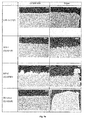
- Table VIII The detailed results of the visual examination conducted after subjecting the specimens to the adhesion test are shown in Table VIII.
- Figure 4 shows representative panels of each candidate coating after the adhesion tests.
- Table VIII Bend adhesion (ASTM B 571 / s. 3) Coating Bend adhesion results Pass/Fail AlumiPlateTM Cracking of coating up to 1/8 inch.
- Pass LHE Cd (1)(8) No separation of the coating from the basis metal at the rupture edge.
- the corrosion resistance of unscribed panels of coatings electroplated from the B01-phen-KCI electrolyte was determined to be acceptable (more than 3,000 hours to red rust) as well as that of the baseline LHE Cd coating, both with CrVI post-treatment on top. These coatings were given a "pass" rating for unscribed salt spray corrosion resistance according to HSSJTP criteria. The B01-2 coatings were also given a "pass” since they were able to withstand more than 3,000 hours to red rust without any kind of conversion coating post-treatment on top.
- the corrosion resistance of the coatings obtained with B01-1, B01-2 and B01-phen-KCl was determined to be acceptable according to the criteria of the MIL-DTL-83488D standard (Class 3 coatings - minimum of 8 micron thick: more than 168 hours to red rust for unpassivated coatings; Class 2 coatings - minimum of 13 microns thick: more than 336 hours to red rust for unpassivated coatings; Class 3 coatings - minimum of 8 micron thick: more than 336 hours to red rust for coatings with supplementary CrVI treatment; Class 2 coatings - minimum of 13 microns thick: more than 504 hours to red rust for coatings with supplementary CrVI treatment).
- the coatings electroplated from the B01-2 electrolyte were considerably thicker than those plated from the B01-1 electrolyte, which resulted advantageous for the corrosion resistance.
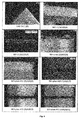
- Table IX The detailed results of the visual examination conducted after subjecting the specimens to the corrosion test are shown in Table IX.
- Figure 5 shows representative panels of each coating after the corrosion test.
- Table IX NSSF Corrosion resistance - Unscribed panels (ASTM B-117 angle 6°off) Coating Reading average thickness ( ⁇ m) Hours to red rust (2 speciments) Pass/Fail HSSJTP (with CrVI post-treatment) MIL-DTL-83488 AlumiPlateTM ⁇ 13 (targeted 23) >3,000 Pass Pass LHE Cd (1)(8) 12 >3,000 Pass - B01-1 (2)(3)(5)(8) 10 216 - Pass 216 - Pass B01-2 (2)(3)(5)(8) -30 3,864 Pass Pass 5,208 Pass Pass B01-phen (2)(4)(5)(8) - - - - B01-phen-KCl (2)(4)(6)(8) -17 504 - Pass 504 B01-phen-KCl (1)(4)(6)(8) -17 >3,500 Pass Pass >3,500
- the corrosion resistance of scribed panels of the B01-phen-KCl coatings and that of the baseline LHE Cd coating (both with Cr-VI post-treatment on top) was determined to be acceptable (requirement of more than 1,000 hours to red rust) and were given a "pass" rating for scribed salt spray corrosion resistance according to HSSJTP criteria.
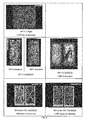
- Table X The detailed results of the visual examination conducted after subjecting the specimens to the corrosion test are shown in Table X.
- Figure 6 shows representative panels of each coating after the corrosion tests.
- Table X NSSF Corrosion resistance - Scribed panels (ASTM B-117 angle 6°off) Coating Reading average thickness ( ⁇ m) (3) Hours to red rust Pass/Fail (HSSJTP) (with CrVI post-treatment) AlumiPlateTM ⁇ 13 (targeted 23) 1000 Pass LHE Cd (1)(8) 12 >1,000 Pass B01-1 (2)(3)(5)(8) 9.5 192 - 168 B01-2 (2)(3)(5)(8) -30 1512 - 336 B01-phen (2)(4)(5)(8) - - B01-phen-KCl (2)(4)(6)(8) -19 336 - 336 B01-phen-KCl (1)(4)(6)(8) 21 >3,500 Pass 17 3,168
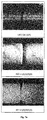
- the throwing power of the coatings electroplated from the B01-2 and B01-phen-KCl electrolytes was determined to be acceptable, since achieved full coating coverage in the notch, as well as that of the baseline LHE Cd coating. Thus, these coatings were given a "pass" rating for throwing power. The coatings electroplated from the B01-1 and B01-phen electrolytes failed.
- Rinsing with ethyl alcohol rather than water during post-treatment helped to remove completely the remaining electrolyte from the notch avoiding stains and preventing possible corrosion due to the presence of electrolyte.
- FIG. 7a and 7b show representative photographs of the notched areas of 1.a.1 geometry type specimens.
- Table XI Throwing power (surface / cross section examination) Coating Coverage of 1.a.1 geometry type notch Pass/Fail AlumiPlateTM Full coating coverage in the notch Pass LHE Cd (1)(8) Full coating coverage in the notch Pass B01-1 (2)(3)(5)(8) Uncoated areas in the notch root Fail B01-2 (2)(3)(5)(8) Full coating coverage in the notch Pass B01-phen (2)(4)(5)(8) Uncoated areas in the notch root Fail B01-phen-KCl (2)(4)(6)(8) Full coating coverage in the notch Pass B01-phen-KCl (1)(4)(6)(8) Full coating coverage in the notch Pass B01-phen-KCl (2)(4)(6)(7)(8) Full coating coverage in the notch Pass
- Table XII Hydrogen embrittlement (ASTM F-519) Coating Load/Loading time required by ASTM F-519 Hours without fracturing Pass/Fail AlumiPlateTM 200 Pass 200 200 200 LHE Cd (1)(8) 75% NFS / 200h 200 Pass 200 200 200 B01-1 (2)(3)(5)(8) 75% NFS / 200h 200 Pass 200 200 200 B01-2 (2)(3)(5)(8) 75% NFS / 200h 200 Pass 200 200 B01-phen (2)(4)(5)(8) - - - B01-phen-KCl (2)(4)(6)(8) - - - B01-phen-KCl (1)(4)(6)(8) 75%NFS/200h 216 Fail 123,3 215,4 177,6 B01-phen-KCl (2)(4)(6)(7)(8) 75% NFS / 200h 200 Pass 200 200 200 200 200
- the throwing power of the electrolyte was considerably improved with respect to that of the B01-phen.
- This electrolyte also allowed an acceptable aluminum plating at higher current density and higher temperature than the B01 (without any additives), which results in higher electrodeposition rates.
- the B01-phen-KCI electroplating bath achieves an improvement of the electrical conductivity of the bath and facilitates the deposition of aluminum because of the shift of the reduction potential of Al towards a nobler direction, so that an improvement of the throwing power can also be achieved.
- the B01-phen-KCI electroplating process also achieved good adhesion properties of the resulting aluminum coating when F-80 to F-36 alumina grit blasting from was used during pre-treatment.
- the B01-phen-KCI electroplating process also achieved good hydrogen embrittlement resistance when a baking step at 190 ⁇ 14°C for at least 23 hours was used during post-treatment.
- the aluminum coating complying with all of the tests reported may be considered a more environmentally friendly coating than other sacrificial coatings for high strength ferrous steel parts such as Cd and Zn-Ni.
- the process to achieve such coating would be considered more environmentally friendly, more safe and easier to handle than Cd plating, Zn/Ni plating, Al plating from organic solvents or AlumiPlateTM plating process.
- the aluminum coating complying with most of the tests reported may still be considered a more environmentally friendly coating than other sacrificial coatings for ferrous steel parts such as Cd and Zn-Ni providing similar or superior corrosion resistance performance than Cd or Zn/Ni.
- the process to achieve such coating would be still considered more environmentally friendly, more safe and easier to handle than Cd plating, Zn/Ni plating, Al plating from organic solvents or AlumiPlateTM plating process.
Landscapes
- Chemical & Material Sciences (AREA)
- Engineering & Computer Science (AREA)
- Chemical Kinetics & Catalysis (AREA)
- Electrochemistry (AREA)
- Materials Engineering (AREA)
- Metallurgy (AREA)
- Organic Chemistry (AREA)
- Electroplating And Plating Baths Therefor (AREA)
- Electroplating Methods And Accessories (AREA)
Abstract
Description
- This specification refers to an environmentally friendly electroplating process for coating a ferrous alloy steel substrate, preferably a high strength steel alloy, using a novel aluminum bath formulation comprising more safe-handling, less-harzardous and environmentally friendly components than the formulation used in the AlumiPlate™ process, which was the most promising aluminum coating alternative for Cd replacement known until now. Additionally, the present patent application refers to both the aluminum coating and the coated ferrous alloy steel substrate obtained by such process, as well as the use of both in applications such as aeronautical, automotive, marine, construction, industrial and household applications.
- In particular, this specification provides an electroplating process and aluminum bath formulation suitable for providing an aluminum coating useful as a safe nickel-free alternative to the cadmium coatings used in high strength steel components in aerospace.
- Numerous alternative technologies are being developed and tested to replace cadmium sacrificial coatings for high strength alloy steels and some of them are promising for some applications, but none of them is yet authorized for all applications. Amongst the most promising ones for some applications, low hydrogen embrittlement Zn-Ni (LHE Zn-Ni) and AlumiPlate™ coatings offer similar performance in most tests [Final Report WP-200022-Cadmium Alternatives for High-Strength Steel, WP-200022, Steven A. Brown, Naval Air Warfare Center Aircraft Division, Patuxent River, MD, September 22, 2011; Approved for public release; distribution unlimited], but it is still desirable to provide a safer handling, less-hazardous and more environmentally friendly coating and/or electroplating bath composition. AlumiPlate™ is a plating technology that uses organic solvents as electrolytes, a toluene-based very flammable and toxic solution which also contains pyrophoric alkylaluminum constituent components. Therefore, it involves handling hazardous and non-environmentally friendly plating solutions.
- A summary of the most promising technologies that have been assessed or are under current assessment is described below.
- Zinc-nickel electroplating is one of the most promising candidates. Zinc-nickel plating is possible in a wide range of pHs, using both alkaline or acidic electrolyte baths, so several chemistries have been developed in a wide range of pH leading to a range of Zn-Ni alloy compositions. Amongst all of them, only 2 coating specifications are compatible with high strength steel substrates: the AMS 2417G and the ASTM B 841. These specifications allow both alkaline and acid plating baths.
- Aluminum is an excellent environmentally friendly replacement for cadmium on aeronautical components of high strength steel. Ion Vapour Deposition (IVD) aluminum technology has been developed as a replacement of cadmium electroplating in some aeronautic applications. Some of the disadvantages of this technology include the limited ability to coat internal and deeply recessed surfaces: depending on the orientation of the part's surfaces in the chamber, the coating thickness may not be equivalent in all areas (especially for internal diameters), the coating does not pass the re-embrittlement test as per HSSJTP [High-Strength Steel Joint Test Protocol, for Validation of Alternatives to Low Hydrogen Embrittlement Cadmium For High-Strength Steel Landing Gear and Component Applications, July 31, 2003; AFRL/MLSC/WPAFB, OH 45433-7718; Approved for public release; distribution unlimited (26 March 2003)] and large components may be physically restricted from IVD-AI coating by the dimensions of the vacuum vessel.
- The magnetron sputtered aluminum process was specifically designed to coat internal diameters or recessed areas to overcome the limitations of Ion Vapor Deposited Aluminum (IVD-AI). However, some of the drawbacks of this technology are the high cost and the fact that so far only limited applications are authorized.
- Amongst the technologies available for low temperature aluminum coating (such as IVD aluminum and sputtered aluminum), electroplating is the one of the most versatile and economic alternatives. However, because of the rather negative standard potential of aluminum, it is not possible to electroplate aluminum from aqueous solutions because hydrogen evolution occurs at the potentials at which aluminum is plated, making the process not efficient and causing hydrogen embrittlement to the substrate, which is not acceptable for the high strength alloys used in aeronautical applications. Therefore, only aprotic electrolytes such as nonaqueous inorganic or organic electrolyte systems can be used to electroplate this metal [Electrochimica Acta, Vol. 42, No1, pages 3-13 (1997), Yuguang Zhao and T. J. VanderNoot, Review: Electrodeposition of aluminum from nonaqueous organic electrolytic systems and room temperature molten salts].
- AlumiPlate™ is an aluminum electroplating technology from organic electrolyte systems. This technology is commercially produced by means of the Siemens Sigal® process, which was developed by Siemens AG (Germany), and most recently has also been processed in Europe at Aluminal Corporation. The process was licensed in the United States to AlumiPlate, Inc. in 1995. The plating formulation of AlumiPlate™ comprises a toluene-based solution containing a pyrophoric alkylaluminum constituent and other compounds, such as ethers, aluminoxanes or ammonium salts [
US2007261966A1, 2007-11-15 , Alumiplate Inc. (US), Aluminum Electroplating Formulations]. - The aluminum coatings obtained with the AlumiPlate™ plating process have demonstrated to have better performance than cadmium in a number of tests, such as hydrogen embrittlement, stress corrosion cracking, acidified (SO2) salt fog, fluid corrosion resistance tests, etc. If compared with to IVD-AI, it provides coatings with better corrosion resistance and density. This process can also lead to a similar throwing power or coverage than cadmium plating by using auxiliary anodes to coat the internal recessed surfaces.
- A key disadvantage of this process is that is not environmentally friendly, since it employs a toluene-based toxic and very flammable solution which also contains pyrophoric alkylaluminum constituent components. Therefore, it must be operated in an humidity and oxygen controlled atmosphere line. Thus, the elimination of the cadmium by this method addresses only one aspect of cadmium substitution on high strength steel components, the elimination of a toxic coating. However, the process still involves handling toxic and non-environmentally friendly plating solutions [
US2007261966A1, 2007-11-15 , Alumiplate Inc. (US), Aluminum Electroplating Formulations]. - In view of the issues of the commercial aluminum electroplating processes, new formulations involving more environmentally preferred solvents are being developed. For example, Global lonix has developed a plating chemistry composed by more environmentally preferred organic solvents for aluminum electrodeposition. The plating formulation comprises non aromatic organic solvents, such as ethanol, isopropanol or butanol, a conductive additive and aluminum salts, such as aluminum alcoxides and aluminum chloride. Global lonix has reported that this formulation provides coatings with throwing power comparable to cadmium electroplating [
WO2004079054A1, 2004-09-16 , Global lonix (CA), Electrodeposition of aluminum and refractory metals from non-aromatic organic solvents]. - Also, Hitachi Metals LTD has developed an aluminum electroplating bath comprising dimethyl sulfone solvent and ammonium chloride or a tetraalkylammonium chloride which is applied by means of a barrel plating method. According to the inventors of this formulation, this plating solution has improved the coatings electrical conductivity, which in turn provides uniform aluminum coatings. They also state that this bath possesses an extended bath life [
US2011253543A1, 2011-10-20 , Hitachi Metals Ltd. Aluminum Electroplating Solution and Method for forming Aluminum Plating Film]. - It must be noted that aluminum electroplating from ionic liquids is an incipient technology compared to the rest of technologies described before. Ionic liquids are novel fluids entirely consisting of ionic species which usually have a melting point of 100 °C or below. If the adequate chemical structure is selected, they can have a wide electrochemical window, negligible-volatility (which provides them with a non-flammable nature), high solubility of metal salts, aprotic nature, or a high conductivity in comparison to organic solvents [Phys. Chem. Chem. Phys., 2006, 8, 4265-4279, Andrew P. Abbott and Katy J. McKenzie, Application of ionic liquids to the electrodeposition of metals].
- The first studies of aluminum electroplating from ionic liquids were reported in 1980s by Osteryoung et al, although they did not start being more actively studied until 2000s. Since then, different ionic liquid categories have been explored, such as ionic liquids based on dialkylimidazolium or dialkylammonium cations combined with halide anions or more complex anions, such as bis(trifluoromethyl sulfonyl)imide, etc. [Electrochimica Acta, Vol. 42, No1, pages 3-13 (1997), Yuguang Zhao and T. J. VanderNoot, Review: Electrodeposition of aluminium from nonaqueous organic electrolytic systems and room temperature molten salts]. Most of these electrolytes contained AlCl3 as the aluminium ion source whose educts, once dissolved in the ionic liquid, made the resulting electrolyte hygroscopic. This hygroscopic nature requires this process to be handled under an inert gas atmosphere to keep the electrolyte's stability. However, the electrolytes are not flammable and do not have explosion's risk.
- Most of the published studies have aimed at demonstrating the feasibility of aluminum electroplating in different substrates, and the characterization and optimization of the coatings' appearance or morphology. One of the most advanced ionic liquid processes found, considering cadmium electroplating substitution, is the development carried out by Dipsol. This company has patented a formulation containing the ionic liquid 1-methyl-3-propylimidazolium bromide mixed with 10 to 50% by volume of toluene, AlCl3, ZrCl2 polystyrene, 1,10-phenantroline, isoniccotinic acid hidrazide and/or thiouracil to electroplate Al and Al-Zr alloys. According to the patent specification, 8 microns Al-Zr coatings electroplated with this formulation have good adhesion (in the tape test, which is less severe than the bend test), smooth cross section and can stand from 700 to 1500 hours in the SST (Salt Spray Test- JISZ2371) without developing red rust [
US2010285322A1, 2010-11-11 , Dipsol Chem (Japan), Honda Motor Co Ltd (Japan), Electric Al-Zr Alloy Plating Bath Using Room Temperature Molten Salt Bath and Plating Method Using the Same;US2012205249A1, 2012-08-16 , Honda Motor CO LTD (Japan) Dipsol Chem. (Japan), Aluminum or Aluminum Alloy Barrel Electroplating Method]. However, no data was found regarding the throwing power and the hydrogen embrittlement of this formulation, key requirements in order to use the coating as an alternative to Cd sacrificial coatings for high strength steel alloys. In addition, this process contains aromatic organic solvents so it still implies environmental, handling, and health issues. - With respect to the last point, a more recent patent of Dipsol discloses new formulations including the same ionic liquid, a brightening agent, an organic polymer but without any organic solvent. These formulations also contain dimethylamine borane and hydrides, such as aluminum lithium hydride. They have demonstrated that this process has a good throwing power [
US2013292255 A1, 2013-11-07 , Dipsol Chem. (Japan), Electrical Aluminium or Aluminium alloy fused salt plating bath having good throwing power, and electroplating method and pretreatment using the same]. However, in spite of the elimination of organic solvents, this formulation still has serious handling and health risks since the hydrides in this bath liberate extremely flammable gases in contact with water, causing severe burns. Also, in this particular case, no hydrogen embrittlement performance has yet been reported. - In conclusion, despite the potential and promising results achieved in aluminum electroplating with these novel electrolytes, it seems that all the ionic liquid based formulations developed so far that can provide a balanced compromise between the basic properties required for Cd replacement still require non-environmentally friendly, toxic and/or hazardous additives and solvents.
- This specification provides a safer handling, less-hazardous and more environmentally friendly process, compared with other known processes such as AlumiPlate™, for coating ferrous alloy steel such as high strength steel alloy with an aluminum coating. In particular, this patent application provides a process suitable for complying with environmental and occupational health and safety regulations. This aluminum coating can be useful in applications such as aeronautical, automotive, marine, construction, industrial and household applications, in particular as a Ni-free Cd replacement for high strength steel alloys.
- In particularly preferred embodiments, this specification provides a process for obtaining aluminum metallic coatings as a Ni-free Cd replacement for ferrous alloy steel such as high strength steel alloys, with the main objective of achieving similar or better performance than the LHE Cd or the AlumiPlate™ methods, but plating using safer handling, less-hazardous and more environmentally friendly electrolytes, i.e., the developed ionic liquid electrolytes for aluminum plating described in this patent application.
- Thus, the Al coating obtained by the electroplating process described herein is suitable for complying with environmental and occupational health and safety regulations, while passing the structural and functional requirements established for Cd replacement process qualification in high strength ferrous alloy steels. The coatings proposed in this patent application show comparable behavior to Low Hydrogen Embrittlement Cd (LHE Cd) and AlumiPlate™ reference coatings with respect to compliance with most or, more preferably, all the preliminarily acceptance criteria established for Cd replacement in ferrous alloy steel such as high strength steel alloys, i.e. coating appearance, morphology, throwing power, adhesion, corrosion resistance and hydrogen embrittlement performance. But, advantageously, they are produced with an environmentally friendly and safe handling plating bath and plating process.
- Only high strength steel alloys, for example, steel alloys with tensile strength higher than 1000 MPa or hardness higher than 30HRc, are sensitive to hydrogen embrittlement. Therefore, the compliance with this test is not required when the aluminum coating is applied to other ferrous alloy steel not susceptible to hydrogen embrittlement. On the other side, an aluminum coating not complying with the bend adhesion requirement can be useful as Cd replacement sacrificial coating in less exigent applications, or, alternatively, this coating may be used in combination with other means to improve the bend adhesion such as the application of an electrocleaning step during surface preparation or the application of a nickel strike bond layer between the ferrous alloy steel substrate and the Al coating.
- Therefore, both the aluminum coating and the ferrous alloy steel substrate, preferably high strength steel alloy, coated with an aluminum coating by the process described in this patent application are particularly useful in aerospace applications. Specifically, the aluminum coating obtained by the process described herein may be particularly useful as sacrificial coatings in such applications wherein Cd sacrificial coatings were used, for example, high strength steel landing gear, high strength steel actuators, steel fasteners (bolts, rivets) or electrical connector shells.
- This specification provides an electroplating process for coating a ferrous alloy steel cathode substrate with an aluminum coating, characterised in that the process comprises:
- a) immersing an aluminum anode substrate in an aluminum plating bath formulation comprising:
- a source of aluminum,
- an ionic liquid,
- a brightening agent, and
- a metal salt;
- b) etching a ferrous steel alloy cathode substrate by immersing it into the aluminum plating bath formulation of step a) and performing an anodic polarization step;
- c) electroplating the etched ferrous alloy steel cathode substrate of step b) with the aluminum plating bath formulation of step a), wherein this step is carried out with a current density ranging from 1 to 100 mA/cm2, at a temperature ranging from 20 to 100°C, preferably stirring, and under a dry inert gas, for example, nitrogen, helium or argon; and
- d) rinsing the aluminum coated ferrous steel alloy obtained in step c). Preferably the aluminum coated ferrous steel alloy is rinsed with alcohol and water, followed by drying.
- The aluminum plating bath formulation is preferably anhydrous and the electroplating is conducted under a dry inert gas stream in order to prevent contact of the electrolyte with the ambient's moisture. However, an accurate control of oxygen and moisture in the electrochemical cell is not needed.
- The process described herein can be applied to different types of ferrous alloy steel substrates [
ASM Handbook Volume 1, Properties and Selection: Irons, Steels, and High Performance Alloys - In preferred embodiments, the ferrous alloy steel substrate is a medium-carbon ultra-high strength structural low-alloy steel, e.g., a steel alloy containing between 0.2 and 0.5% of C, not more than 8% of alloying elements and with an ultra-high structural strength. This substrate is also referred to as "high strength steel alloy" in this patent application.
- Low-alloy steels constitute a category of ferrous materials that exhibit mechanical properties superior to plain carbon steels as the result of additions of such alloying elements as nickel, chromium, and molybdenum. Total alloy content in low-alloy steels can range from 2% up to levels just below that of stainless steels, which contain a minimum of 10% Cr. For many low-alloy steels, the primary function of the alloying elements is to increase hardenability in order to optimize mechanical properties and toughness after heat treatment. Among low-alloy steels, medium-carbon ultra-high strength steels are structural steels with yield strengths that can exceed 1380 MPa (200 ksi). Many of these steels are covered by SAE-AISI designations or are proprietary compositions and include AISI/SAE 4130, the higher-strength AISI/SAE 4140, and the deeper hardening, higher-strength AISI/SAE 4340. [
ASM Handbook Volume 1, Properties and Selection: Irons, Steels, and High Performance Alloys - The high strength steel alloys may be those which currently are being electroplated with cadmium as sacrificial coating in aerospace applications.
- In particular, medium carbon ultra-high strength low-alloy steels may include, for example:
- Alloy Steel 4130, conforming to AMS 6350 steel, sheet, and plate; and
- Alloy Steel 4340, conforming to AMS 6414P steel, bars, forgings and tubing, 260-280KSI.
- The source of aluminum may be an aluminum compound such as, for example, aluminum halide, aluminum sulfate, aluminum methanesulfonate, aluminum trifluoromethanesulfonate, an aluminum salt formed with other anions or oxoanions such as isopropoxide or ethoxide, or any combination of the mentioned aluminum compounds. In preferred embodiments, the source of aluminum is an aluminum halide such as fluroride, chloride, bromide or iodide. More preferably, the aluminum halide is aluminum trichloride as it provides good performance for Al electroplating and is cost effective.
- Thus, the aluminum bath formulation described herein comprises a source of aluminum and a further compound, refered to as "ionic liquid" in this specification, which is an ionic compound or salt in the liquid state. The admixture of the source of aluminium and the ionic liquid described herein is liquid in the electroplating working condition, giving rise to an electrolyte solution capable to electroplate aluminum. More specifically, the term "ionic liquid" may be understood as ionic compounds or salts whose melting point is below some established temperature, such as 100°C. While ordinary liquids are predominantly made of electrically neutral molecules, ionic liquids are largely made of ions and short-lived ion pairs. The term ionic liquid was coined to distinguish these lower temperature ionic liquids from the high temperature analogues (i.e. high temperature molten salts) which are composed predominantly of inorganic ions.
- In preferred embodiments, the ionic liquid comprised in the aluminum plating bath formulation is a nitrogen-containing compound selected from N-alkyl-pyridinium salts, N-alkyl-N'-alkyl' imidazolium salts, N-alkyl-N-alkyl' pyrrolidinium salts, N-alkyl-N-alkyl' piperidinium salts, quaternary ammonium salts and combinations thereof. Additionally, phosphor-containing compounds such as, for example, quaternary phosphonium salts or sulfur-containing compounds such as, for example, tertiary sulfonium salts may be also used as ionic liquid in the aluminum plating bath formulation described herein. The counter-anion of any of these salts may be, for example, a complex anion such as bis(trifluoromethylsulfonyl)imide, a cyano-containing anion such as dicyanamide, a sulphur-containing anion such as sulfate (for example, methylsulfate) or sulfonate (for example, methanesulfonate, tosylate or trifluoromethanesulfonate), a phosphate such as hexafluorophosphate, a borate such as tetrafluoroborate, or an halide such as fluoride, chloride, bromide or iodide.
- In some embodiments, the counter-anion of the source of aluminum and the counter-anion of the ionic liquid may be the same. As a result, the solubility of both components may be improved.
- Moreover, alternatively to the ionic liquids defined above, the bath formulation described herein may comprise compounds which may form an ionic liquid-type electrolyte solution by reaction with a source of aluminum such as aluminum halide. These "ionic liquid-type" compounds may be acetamide, urea, or a derivative thereof, for example, the acetamide or urea derivatives described in patent application
US2013/0001092 A1 . - In more preferred embodiments, the nitrogen-containing compound comprises a counter-anion defined as mentioned above. Preferably this counter-anion is an halide, and a cation is selected from N-alkyl-N'-alkyl' imidazolium (I) and N-alkyl-N-alkyl' pyrrolidinium (II), wherein the sustituents R and R' independently represent an alkyl group. More specifically, any of these radicals may represent a C1-C8 alkyl group such as, among others, methyl, ethyl, propyl, butyl or octyl.

- The aluminum plating bath formulation may comprise a mixture of an aluminum trichloride with a nitrogen-containing compound selected from N-alkyl-N'-alkyl' imidazolium chloride and N-alkyl-N-alkyl' pyrrolidinium chloride. More specifically, the molar ratio between aluminum trichloride and the nitrogen-containing compound may range from 80:40 to 60:40. For a fixed anion and alkyl substituents, imidazolium based ionic liquids generally offer lower viscosity and higher conductivity than the pyrrolidinium based ones. A high conductivity and low viscosity are beneficial to increase the throwing power and decrease the ohmic losses of the electrodeposition process.
- If the molar ratio of the aluminum trichloride and the nitrogen-containing compound, for example, 1-ethyl-3-methylimidazolium chloride, is too low, there will be not enough concentration of active aluminum species to electrodeposit aluminum coatings.
- The aluminum bath formulation described herein comprises a brightening agent, which is an organic compound that may be selected, for example, from a large organic cyclic compound, a bicyclic compound, a monocyclic compound or an acyclic compound.
- Examples of large organic cyclic compounds are, azine or oxazine dyes (e.g azine dye - methylene blue dye), bipyridine compounds (e.g. 1,10 phenantroline), amino polyaryl methanes (e.g. triphenyl methane dye - magenta dye) or proteins (e.g. casein). Examples of monocyclic and bicyclic compounds are azines (e.g. phthalazine), hydrazides (isoniazid), thiazolines (e.g. mercaptothiazoline), thiazole derivatives (e.g. 2-aminothiazole), aromatic sulfonic acids (e.g. benzene sulfonic acid, 1,3,6 naphtalene sulfonic acid), aromatic sulfonamides (e.g. p-toluene sulfonamide), aromatic sulfonimides (e.g. saccharin), heterocyclic sulfonic acids (e.g. thiophen-2-sulfonic acid), aromatic sulfinic acids (e.g. benzene sulfinic acid), sulfonated aryl aldehydes (e.g. δ-sulpho benzaldehyde), saturated and unsaturated carboxylic acids and their esters (e.g. nicotinic acid, isonicotinic acid, δ-hydroxy-cinnamic acid), 1,2 benzo pyrones (e.g. coumarin), benzodioxole (e.g. 3,4-methylenedioxy toluene), aromatic alcohols (e.g. β-naphtol, catechol, phenol or resorcinol), quinolinium, quinaldinium, pyridinium compounds (e.g. N-methyl quinolinium iodide), imidazole compounds (e. g. methylimidazole), quinidines, pyrazoles, indazoles and pyrimidines (e.g. cytosine), azo dyes (e.g. p-aminoazobenzene) and thiourea derivatives (e.g o-phenylene thiourea - 2-mercaptobenzimidazole). Examples of acyclic compounds are ethylenic aliphatic sulfonic acids (e.g. allyl sulphonic acid), aldehydes (e.g. formaldehyde), chloro and bromo substituted aldehydes (e.g. chloral hydrate), allyl and vinyl compounds (e.g. allyl sulfonic acid), saturated carboxylic acids and their esters (e.g. oxalic acid, sodium oxalate), unsaturated carboxylic acids and their esters (e.g. diethyl maleate), acetylenic compounds such as alcohols (e.g. 2-
butyne 1,4-diol), carboxylic acids (e.g. phenyl propiolic acid), sulfonic acids (e.g. 2-butyne 1,4-sulfonic acid), amines (e.g. 3-dimethylamino 1-propyne) and aldehydes (e.g. propargyl aldehyde), nitriles (e.g. ethyl cyanohydrin), thionitriles (e.g. β-cyanoethyl thioether), amines and polyamines (e.g. tetraethylene pentamine, sulfobetaines), thiourea and derivatives (e.g. allyl thiourea), alcohols (e.g. glycerol), polyethylene glycols and sulfur compounds (e.g. carbon disulfide). - As the other components included in the bath formulation of this patent application, the brightening agent is preferably less-hazardous and more environmentally friendly than the constituents of other aluminum plating baths such as the AlumiPlate™ plating baths. Therefore, preferred brightening agents may be, for example, 1,10-phenantroline, phtalazine, saccharine, isoniazid, coumarin, isonicotinic acid, nicotinic acid, 3,4-(methylenedioxi)toluene, 1,4-butynediol, 2-aminothiazole, 2-mercaptothiazoline, 1-methylimidazole or combinations thereof.
- More preferably, the brightening agent is 1,10-phenantroline since its use allows the electrodeposition of uniform, highly levelled aluminum coatings.
- In other preferred embodiments, the brightening agent, specifically wherein this agent is 1,10-phenanthroline, is present in the aluminum bath formulation in an amount ranging from 0.01 to 1.0 by weight respect to the total weight of the aluminum plating bath formulation.
- The cation of the metal salt comprised in the aluminum plating bath formulation described herein may be selected, for example, from an alkali-metal, alkali-earth metal, transition metal, post-transition metal, rare-earth metal and combinations thereof. On the other side, the counter-anion may be selected, for example, from halide, sulfate, sulfonate, an oxoanion and combinations thereof. Specifically, the halide may be fluoride, chloride, bromide or iodide. Examples of oxoanions are isopropoxide or ethoxide.
- In some embodiments, the counter-anion of the metal salt and the counter-anion of the source of aluminum and/or the counter-anion of the ionic liquid may be the same. As a result, the solubility of the components may be improved.
- In other preferred embodiments, the metal salt is an alkali metal halide such as, for example, potassium chloride, potassium bromide, sodium chloride or litium chloride. When the alkali metal halide is potassium chloride, this compound is preferably present in an amount ranging from 0.04 to 3.70 % by weight respect to the total weight of the aluminum plating bath formulation, which corresponds to a range from 5 g/L to 50 g/L.
- In other preferred embodiments, the aluminum plating bath formulation used in the electroplating process as described therein, consist of:
- a range from 95.30 to 99.95 wt% of a mixture of aluminum trichloride and 1-ethyl-3-methylimidazolium chloride, wherein both components are present in the mixture in a molar ratio ranging from 80:40 to 60:40,
- a range from 0.01 to 1.0 wt% of 1,10-phenantroline, and
- a range from 0.04 to 3.7 wt% of KCI.
- In more preferred embodiments, the aluminum plating bath formulation consists of: a range from 95.3 to 99.5 wt% of a mixture of aluminum trichloride and 1-ethyl-3-methylimidazolium chloride in a molar ratio of 60:40; a range from 0.1 to 1.0 wt% of 1,10-phenantroline and a range from 0.4 to 3.7 wt% of KCI.
- The preferred bath formulations described in the above paragraphs comprise the required amounts of all the components in order to get aluminum coatings with improved performance and particularly suitable to be used as Ni-free Cd replacement coating. Thus, a molar ratio of the aluminum trichloride and 1-ethyl-3-methylimidazolium chloride of 60:40 provides enough concentration of active aluminum species and, therefore, to get a suitable Al coating. Additionally, the reported amounts of 1,10-phenantroline and KCI give rise to an improvement in the delicate balance between the requirements needed to use aluminum coatings as Ni-free Cd replacement coatings.
- Prior to the anodic polarization step, the plating bath formulation may be conditioned by purging the electrolyte with a dry inert gas stream inside the plating bath formulation during at least 30 minutes. Once the electrolyte has been appropriately conditioned, the anodic polarization and electroplating steps may be performed with dry inert gas outside the electrolyte.
- In other preferred embodiments, the electroplating step c) is carried out with a current density ranging from 5 to 25 mA/cm2, a temperature ranging from 40 to 75 °C and stirring the electrolyte in a range from 500 to 1000 rpm. The throwing power of the aluminum coatings usually decreases when increasing the temperature with respect to the range stated above. Aluminum coatings composed by multiple consecutive layers, poorly adhered to each other, are usually obtained when plating without stirring the electrolyte. Aluminum coatings with a more brittle appearance may be produced when higher current densities than 25 mA/cm2 are applied.
- In the electroplating process described herein, the aluminum anode substrate is immersed in the etching/plating bath, and then the bath formulation may be conditioned, for example, as previously described.
- On the other side, the ferrous alloy steel cathode substrate, preferably high strength steel alloy, is immersed in the conditioned bath formulation described in this patent application, which will be used afterwards for aluminum plating, and an anodic polarization step ranging from 0.6 to 1.2 V may be applied during a period ranging from 10 to 30 seconds. This etching step b) may be done, for example, at the same temperature as the plating step c).
- In other preferred embodiments, the aluminum anode substrate used in the electroplating process described in this patent application is polished, cleaned, deoxidized and dried aluminum. Thus, the electroplating process is more easily performed if the aluminum substrate is polished, e.g., is free from oxides and compounds formed upon the exposure of the anode to the air or during previous electrodeposition processes. Moreover, the aluminum substrate should also be cleaned and dried to avoid contamination of the plating formulation bath.
- When the aluminum anode substrate is not correctly polished, cleaned, deoxidized and/or dried, stains and an accused dendritic growth of the aluminum coating may arise in the borders of the aluminum electrodeposited high strength steel cathodes.
- The aluminum anode substrate used in the electroplating process described herein could have been subjected to a pre-treatment in order to get a polished, clean, deoxidixed and dry aluminum anode substrate. This pre-treatment may comprise one or more of the steps described in the following paragraphs.
- In preferred embodiments, the aluminum anode substrate used in the electroplating described herein is subject to a pre-treatment comprising:
- i) mechanical polishing an aluminum anode substrate,
- ii) alkaline cleaning the polished aluminum anode substrate followed by water rinsing,
- iii) deoxidizing the cleaned aluminum substrate followed by water rinsing, and
- iv) drying the deoxidized aluminum anode substrate to obtain a polished, clean, deoxidized and dry aluminum anode substrate.
- In some embodiments, the step iv) may comprise the drying of the aluminum substrate with hot air at a temperature of at least 60°C during at least 1 minute, until constant weight is achieved.
- The mechanical polishing may comprise first manual polish with P-120 emery paper and then removing the powder remaining on the surface, for example, with a white cloth.
- The alkaline cleaning may be done by immersing the aluminum anode substrate in an aqueous alkaline cleaning agent such as, for example, a range from 45 to 60 g/L of Turco-4215 NC LT and a range from 1 to 3 g/L of T-4215 NC LT ADD (additive) during a period ranging from 5 to 30 min. The alkaline cleaning may be carried out, for example, stirring in a range from 200 to 500 rpm, at a temperature ranging from 45 to 55°C. After the cleaning step, the aluminum anode substrate may be rinsed, for example, first with tap water followed by deionized water.
- The deoxidizing step may be carried out by immersing the aluminum anode substrate in the deoxidizing bath containing a deoxidizing agent such as, for example, a range from 60 to 120 g/L of Turco Smut Go NC and a range from 15 to 30 g/L of HNO3 (42°Bé) during a period ranging from 1 to 10 min. The deoxidizing step may be carried out, for example, at a temperature in the range from 20 to 50°C. After that, the aluminum anode substrate may be rinsed, for example, first with tap water followed by deionized water.
- Finally, the pretreated aluminum anode substrate is dried, for example, using hot air. Previously to the drying step, it may be rinsed with a more volatile solvent such as acetone in order to remove part of water with this solvent.
- In other preferred embodiments, the ferrous alloy steel cathode substrate is a degreased and blasted ferrous alloy steel, preferably a degreased and blasted high strength steel alloy. Thus, the electroplating process is more easily performed if the steel substrate is degreased, i.e. it is free from any grease or oil on its surface that could hinder a uniform aluminum electrodeposition. It is also preferred that the steel substrate would be blasted in order to get a mechanical etching of the surface and subsequent good adhesion of the electrodeposited aluminum layer. Advantageously, this mechanical etching helps coating adhesion but does not provoke any risk of hydrogen embrittlement for the substrate, on the contrary to conventional chemical acid or alkaline pre-treatments.
- The ferrous alloy steel used in the electroplating process may be subjected to a pre-treatment in order to get a degreased and blasted ferrous alloy steel. This pre-treatment may comprise one or more of the steps as described in the following paragraphs.
- In preferred embodiments, the ferrous alloy steel cathode is subjected to a pre-treatment comprising:
- v) degreasing a steel alloy substrate, and
- vi) dry-blasting the degreased steel alloy, followed by removing any powder remaining in the surface of the stripped steel alloy to obtain a degreased and dry-blasted ferrous steel alloy substrate. Preferably, the ferrous alloy steel is a high strength steel as described above.
- The ferrous alloy steel cathode substrate may be degreased using any degreasing agent such as, for example, acetone or an aqueous alkaline degreasing agent. This step may comprise the immersion of the steel in a degreasing agent, manual cleaning with the help of a white cloth and the application of ultrasonic agitation for at least 10 minutes, until neither oil nor grease remains on their surface. Additionally, after the degreasing step, the steel may be dried, for example, using hot air.
- The degreased steel surface may be blasted, for example, with alumina grit, silicon carbide grit, glass beads or steel grit to remove any possible oxide and impurities off the steel substrate. The powder remaining on the surface after blasting may be removed with compressed air. Preferably, the blasting agent has a particle size from F-36 to F-80 macrogrits (i.e. a mean diameter ranging from 185 to 525 microns), since the use of this blasting agent in the electroplating process described herein results in an improvement in the bend adhesion of the aluminum coating obtained. Examples of those preferred blasting agents are F-80 and F-36 alumina grit.
- The electroplating process described in this patent application preferably comprises rinsing the aluminum coated ferrous alloy steel with alcohol and water. In particular, it may comprise rinsing first with ethyl alcohol followed by water rinsing such as deionized water rinsing, until a clean surface free of any rest of ionic liquid is obtained.
- The aluminum plated specimens may be stored in a humidity controlled atmosphere.
- In other preferred embodiments, the electroplating coating process described herein further comprises step e), wherein a heat treatment is applied to the aluminum coated ferrous steel alloy obtained in step d).
- In more preferred embodiments, the aluminum coated specimens are baked at 190 ± 14°C for at least 23 hours. The addition of step e) is preferably included in order to the aluminum coated specimens obtained comply with the hydrogen embrittlement requirements. Therefore, this step is preferably included to the electroplating coating process when the ferrous steel alloy is a high strength steel alloy, substrates which are susceptible to hydrogen embrittlement.
- In other preferred embodiments, the electroplating coating process described herein further comprises applying a conversion coating to the aluminum coated ferrous steel alloy obtained in step d), or preferably the ones obtained in step e), wherein this conversion coating is selected from hexavalent chromium conversion coating and a Cr-free conversion coating, in particular Cr-free conversion coating with a similar performance to the hexavalent chromium conversion coating.
- The aluminum plated specimens may be optionally conversion coated using conventional Cr VI based conversion treatments, such as Alodine 1200S or similar. Optionally, Cr-free conversion treatments such as those described in
US 8,298,350 B2 andUS 2013/0052352 A1 patent disclosures or similar products and developments may be used. - Thus, this specification provides a safer handling and more environmentally friendly electroplating process and bath formulation for coating ferrous alloy steel, preferably a high strength steel alloy, with an aluminum coating. Additionally, the Al coatings obtained by the process described herein are also more environmentally friendly than Cd coatings and other known Cd alternative coatings (e.g. Zn-Ni). Thus, this specification provides a process to obtain an aluminum coating useful in the applications such as aeronautical, automotive, marine, construction, industrial and household applications. Particularly, the coating obtained by the process described in this patent application can be used as Cd replacement in sacrificial coatings for high strength steel alloys.
- In particularly preferred embodiments, the electroplating process described herein comprises: the pre-treatment of the high strength steel alloy cathode substrate and the aluminum anode substrate as described in this patent application; the electroplating treatment using an aluminum plating bath formulation which comprises: a range from 95.30 to 99.95 wt% of a mixture of aluminum trichloride and 1-ethyl-3-methylimidazolium chloride in a molar ratio ranging from 80:40 to 60:40, a range from 0.01 to 1.0 wt% of 1,10-phenantroline, and a range from 0.04 to 3.7 wt% of KCI; and the post-treatment of the obtained coating as described in this patent application. This specific combination of process steps and bath composition provides an aluminum coating with particularly improved properties that makes the product obtained a particularly preferred candidate for Cd replacement as sacrificial coatings for high strength steel alloys.
- Thus, according to particularly preferred embodiments, the electroplating process for coating a high strength steel alloy substrate with an aluminum coating comprises:
- 1) pre-treatment of an aluminum anode substrate, wherein this pre-treatment further comprises:
- i) mechanical polishing an aluminum anode substrate,
- ii) alkaline cleaning the polished aluminum substrate followed by water rinsing,
- iii) deoxidizing the cleaned aluminum substrate followed by water rinsing, and
- iv) drying the deoxidized aluminum substrate to obtain a polished, clean, deoxidized and dry aluminum anode substrate;
- 2) pre-treatment of a high strength steel alloy cathode substrate, wherein this pre-treatment comprises:
- v) degreasing the steel alloy cathode substrate, and
- vi) dry-blasting the degreased steel alloy, preferably with a blasting agent with a particle size ranging from F-36 to F-80 macrogrits such as F-80 or F-36 alumina grit, followed by removing any powder remaining in the surface of the stripped steel alloy to obtain a degreased and blasted high strength steel alloy substrate;
- 3) electroplating treatment comprising:
- a) immersing the aluminum anode substrate obtained in the pre-treatment of 1) in an aluminum plating bath formulation comprising:
- a range from 95.30 to 99.95 wt% of a mixture of aluminum trichloride and 1-ethyl-3-methylimidazolium chloride, wherein both components are present in the mixture in a molar ratio ranging from 80:40 to 60:40,
- a range from 0.01 to 1.0 wt% of 1,10-phenantroline, and
- a range from 0.04 to 3.7 wt% of KCI;
- b) etching the high strength steel alloy cathode substrate obtained in the pre-treatment of 2) by immersing it into the aluminum plating bath formulation of step 3a) and performing an anodic polarization step;
- c) electroplating the etched high strength steel alloy cathode substrate of step 3b) with the aluminum plating bath formulation of step 3a), wherein this step is carried out with a current density ranging from 1 to 100 mA/cm2, at a temperature ranging from 20 to 100°C, under a dry inert gas and stirring;
- d) rinsing the aluminum coated ferrous steel alloy obtained in step 3c), preferably with alcohol and water followed by drying until constant weight; and
- e) heat treating the aluminum coated specimens at 190 ± 14°C for at least 23 hours.
- a) immersing the aluminum anode substrate obtained in the pre-treatment of 1) in an aluminum plating bath formulation comprising:
- This specification further refers to the aluminum coated ferrous steel alloy obtained by the electroplating process described herein. Preferably, the ferrous steel alloy is a high strength steel alloy as described therein.
- Additionally, this specification refers to the aluminum coating obtained by the process described herein. The aluminum coating obtained by the electroplating process described can be used in the aeronautical industry, preferably as Ni-free Cd replacement in sacrificial coatings for high strength steel alloys.
- Thus, the aluminum coating described herein can achieve a similar or better performance than the one obtained by LHE Cd or the AlumiPlate™ methods, but plating using safer handling, less-hazardous and more environmentally friendly electrolytes.
- A further object of this specification refers to an aluminum plating bath formulation comprising: a source of aluminum, an ionic liquid, a brightening agent and an alkali metal halide, wherein all these components have the same meaning as previously described in this specification.
- More specifically, the aluminum plating bath formulation may comprise, or consist of:
- an aluminum halide,
- a nitrogen-containing compound selected from N-alkyl-N'-alkyl' imidazolium halide and N-alkyl-N-alkyl' pyrrolidinium halide,
- a brightening agent such as, for example, 1,10-phenantroline, phtalazine, saccharine, isoniazid, coumarin, isonicotinic acid, nicotinic acid, 3,4-(methylenedioxi)toluene, 1,4-butynediol, 2-aminothiazole, 2-mercaptothiazoline, 1-methylimidazole, or combinations thereof, and
- an alkali metal halide.
- In preferred embodiments, the aluminum plating bath formulation may comprise, or consists of:
- a range from 95.30 to 99.95 wt% of a mixture of aluminum trichloride and 1-ethyl-3-methylimidazolium chloride, wherein both components are present in the mixture in a molar ratio ranging from 80:40 to 60:40,
- a range from 0.01 to 1.0 wt% of 1,10-phenantroline, and
- a range from 0.04 to 3.7 wt% of KCI.
- This environmentally friendly optimized formulation is particularly suitable for using in the aluminum electroplating process described herein, since allows getting an aluminum coating particularly useful as Ni-free Cd replacement in sacrificial coatings for high strength steel alloys. Thus, the aluminum coating obtained with this environmentally friendly formulation shows similar or better performance than the LHE Cd or the AlumiPlate™ methods but plating using safer handling, less hazardous and more environmentally friendly electrolytes.
- The aluminum bath formulation described herein may be synthesized as follows: The ionic liquid, for example the nitrogen-containing compound, may be dried at 70°C under vacuum. Then, the required amount of aluminum halide may be added slowly under inert gas, such as argon, flow. Finally, the ionic liquid may be cooled down and, optionally, stored in a humidity-free atmosphere. Alternatively, commercial ionic liquid comprising the required ratio of ionic liquid (for example, nitrogen-containing compound) and aluminum halide may also be used.
- Then, the ionic liquid may be heated up to 80°C in a closed vessel under a dry inert gas stream while stirring and the brightening agent may be added to the heated ionic liquid.
- After that, this mixture may be stirred during 2 h at 80°C in the closed vessel under a dry inert gas stream. Then, the alkali metal halide may be added to the mixture, and the formulation may be stirred during 2 h at 80°C in the closed vessel under a dry inert gas stream. Finally, the bath formulation may be cooled down and stored in a humidity-free atmosphere.
-
-
Figure 1 : Aluminum electroplating process flow-diagram according to a particularly preferred embodiment. -
Figure 2a and2b : Cross section's micrographs of each coating. (1) With Cr-VI post-treatment; (2) Bare aluminum without conversion coating post-treatment; (3) In-house formulated AlCl3-EMIC 60:40; (4) Basionics™ Al01 based; (5) Water rinsing during post-treatment; (6) Ethyl-alcohol rinsing during post-treatment; (8) F-220 alumina grit blasting during pre-treatment; (9) F-80 alumina grit blasting during pre-treatment; (10) F-36 alumina grit blasting during pre-treatment. -
Figure 3 : Representative photographs of aluminum electroplated panels subjected to the scribe-grid + tape adhesion tests. (1) With Cr-VI post-treatment; (2) Bare aluminum without conversion coating post-treatment; (3) In-house formulated AlCl3-EMIC 60:40; (4) Basionics ™ Al01 based; (5) Water rinsing during post-treatment; (6) Ethyl-alcohol rinsing during post-treatment; (8) F-220 alumina grit blasting during pre-treatment. -
Figure 4 : Representative photographs of aluminum electroplated panels subjected to the bend adhesion tests. (1) With Cr-VI post-treatment; (2) Bare aluminum without conversion coating post-treatment; (3) In-house formulated AlCl3-EMIC 60:40; (4) Basionics ™ Al01 based; (5) Water rinsing during post-treatment; (6) Ethyl-alcohol rinsing during post-treatment; (8) F-220 alumina grit blasting during pre-treatment; (9) F-80 alumina grit blasting during pre-treatment; (10) F-36 alumina grit blasting during pre-treatment. -
Figure 5 : Representative panels of each coating after the corrosion tests, unscribed panels. (1) With Cr-VI post-treatment; (2) Bare aluminum without conversion coating post-treatment; (3) In-house formulated AlCl3-EMIC 60:40; (4) Basionics ™ Al01 based; (5) Water rinsing during post-treatment; (6) Ethyl-alcohol rinsing during post-treatment; (8) F-220 alumina grit blasting during pre-treatment. -
Figure 6 : Representative panels of each coating after the corrosion tests, scribed panels. (1) With Cr-VI post-treatment; (2) Bare aluminum without conversion coating post-treatment; (3) In-house formulated AlCl3-EMIC 60:40; (4) Basionics ™ Al01 based; (5) Water rinsing during post-treatment; (6) Ethyl-alcohol rinsing during post-treatment; (8) F-220 alumina grit blasting during pre-treatment. -
Figures 7a and7b : Results of the throwing power assessment. (1) With Cr-VI post-treatment; (2) Bare aluminum without conversion coating post-treatment; (3) In-house formulated AlCl3-EMIC 60:40; (4) Basionics ™ Al01 based; (5) Water rinsing during post-treatment; (6) Ethyl-alcohol rinsing during post-treatment; (8) F-220 alumina grit blasting during pre-treatment. - The ionic liquid electrolytes used in these examples were synthesized as follows:
- B01 : Either the as-received Basionics™Al01 ionic liquid electrolyte from BASF or the house-made AlCl3-EMIC 60:40 electrolyte (see below) were independently used as baseline electrolytes to be modified with the different additives.
- The house-made AlCl3-EMIC 60:40 electrolyte was prepared by mixing the corresponding amounts of aluminum trichloride and 1-ethyl-3-methyl-imidazolium chloride, as follows: The 1-ethyl-3-methylimidazolium chloride [EMIC] (Fluka Ref. 30764, purity min 93%), was dried at 70°C under vacuum for several hours. Then, it was placed into a glass vessel. The aluminum trichloride [AlCl3] (Across Organics Ref. 19578, anhydrous, 99%, granules) was weighted (as received) inside a glovebox filled with argon inside a glass dispenser; then, it was transferred to an addition funnel, taken out of the glovebox, and placed on top of the glass vessel already containing the EMIC. The ionic liquid electrolyte was synthesized by slowly adding the AlCl3 to the EMIC under an argon flow. Finally, the ionic liquid electrolyte was cooled down and stored in a humidity-free atmosphere.
- B01-phen : The baseline electrolyte was heated up to 80°C in a closed vessel under a dry inert gas stream while stirring. Then, a range from 0.1 to 1.0 %wt of 1,10-phenantroline was added. The Basionics ™Al01 ionic liquid modified with the 1,10-phenantroline was stirred during 2 h at 80°C in the closed vessel under a dry inert gas stream. Finally, the ionic liquid formulation obtained was cooled down and stored in a humidity-free atmosphere.
- B01-phen-KCl: An ionic liquid formulation comprising 1,10-phenantroline obtained as described above (B01-phen) was heated up to 80°C in a closed vessel under a dry inert atmosphere gas stream while stirring. Then, a range from 5 to 50 g/L of KCI was added and the formulation obtained was stirred during 2 h at 80°C in the closed vessel under a dry inert gas stream. Finally, the aluminum plating formulation bath was cooled down and stored in a humidity-free atmosphere.
- To plate onto flat rectangular panels, there was a rectangular slot in the center of the electrochemical cell's cover to fix the cathode. The cathode was a high strength steel rectangular sheet panel. In particular, the cathode was a rectangular flat panel machined from 4130 alloy steel conforming to AMS 6350 steel sheet. The anodes were 2 rectangular 99.999% purity aluminum sheets and were positioned at both sides of the cathode.
- To plate onto specimens with cylindrical geometry, there was a cylindrical hole in the center of the electrochemical cell's cover to fix the cathode. The cathode was a high strength steel cylindrical specimen. In particular, the cathode was a cylindrical 1.a.1 geometry type AISI 4340 / SAE AMS-S-5000 steel specimen with the size and geometry required by the ASTM F-519 standard. The material was certified by the supplier according to the requirements of the ASTM F-519 standard. The anode was an Al1050 aluminum cylindrical sheet, which was positioned around the cathode.
- The aluminum anode substrates were all pre-treated following a same procedure, independently of the plating bath's formulation and the electroplating conditions. These pre-treatment involved:
- Mechanical polishing: The aluminum anode substrates were first manually polished with P-120 emery paper and the powder remaining on the surface was then removed with a white cloth.
- Alkaline cleaning: The polished aluminum anode substrates were immersed in a cleaning bath which contained a range from 45 to 60 g/L of Turco-4215 NC LT and a range from 1 to 3 g/L of T-4215 NC LT ADD (additive) during a period ranging from 5 to 30 min. Alkaline cleaning was carried out stirring at a range from 200 to 500 rpm, at a temperature ranging from 45 to 55°C. After that, the aluminum anode substrates were manually rinsed with tap water followed by deionized water rinsing.
- Deoxidizing: The cleaned aluminum anode substrates were immersed in an deoxidizing bath which contained a range from 60 to 120 g/L of Turco Smut Go NC and a range from 15 to 30 g/L of HNO3 (42°Bé) during a period ranging from 1 to 10 min. Deoxidizing was carried out at a temperature in the range from 20 to 50°C. After that, the aluminum anode substrates are manually rinsed with tap water followed by deionized water rinsing.
- Drying: The deoxidized aluminum anode substrates were manually rinsed with acetone and were dried using hot air.
- Racking: Finally, the aluminum anode substrates were placed in the holding rack.
- The steel cathode substrates were all pre-treated following the same procedure, independently of the plating bath formulation and the electroplating conditions. These pre-treatment involved:
- Degreasing: The steel cathode substrates were first manually degreased with acetone and then they were immersed in acetone which was placed in an ultrasonic bath for 10 minutes, until neither oil nor grease remained on their surface. After that, the specimens were dried using hot air.
- Stripping: The degreased steel surface was then dry-blasted with F-220, F-80 or F-36 grit alumina to remove any possible oxide and impurities off the steel substrate. The powder remaining on the surface after blasting was removed with compressed air.
- Masking: The areas of a part which do not need to be plated were masked using conventional means which do not contaminate the plating bath formulation, such as masking tape.
- Racking: The pre-treated steel cathode substrates were placed in the holding rack.
- Prior to the anodic polarization step, the aluminum anode substrates were immersed in the plating bath and the electrolyte was conditioned by purging the plating bath formulation with a dry inert gas stream placed inside the plating bath during 30 minutes. Once the electrolyte had been conditioned, the dry inert gas purger was placed outside the electrolyte.
- After that, the steel cathode substrates were immersed in the conditioned ionic liquid bath, which was to be used afterwards for aluminum plating, and an anodic polarization step of 0.6 V was applied during 30 seconds. Etching was done at the same temperature as plating.
- The experimental set-up for aluminum plating was the same independently of the plating bath's composition and the plating conditions. This set-up slightly changed depending on the geometry of the specimens (cathode substrates) to be electroplated.
- The electrochemical cell consisted of a closed vessel containing a predetermined amount of the ionic liquid electrolyte. The electroplating was conducted under a dry inert gas stream in order to prevent contact of the electrolyte with the ambient's moisture. However, an accurate control of oxygen and moisture in the electrochemical cell was not needed. The cover of the vessel had different slots and holes where the cathode, the anodes, the temperature controller and the inert gas inlet and exhaust were assembled.
- The electroplating process comprised the immersion of the pre-treated steel specimens in the bath formulation, closing the electric circuit with the adequate fixtures and applying a pre-determined cathodic direct current density to the cathode for a pre-determined amount of time and temperature while the electrolyte is kept at a pre-determined temperature.
- The electroplating experiments were performed using a current rectifier to provide the power supply under dry inert gas stream. A hot plate with magnetic stirrer coupled to a temperature controller provided the necessary heat and stirred the electrolyte at different rpms.
- The process conditions for aluminum coatings subjected to the preliminary qualification tests are summarized in the following table (Table I).
Table I: Aluminum electroplating conditions Ref. Current density (mA/cm2) Temperature (°C) Bath agitation Plating time (minutes) B01-1 2.5-7.5 50 No 60-180 B01-2 5 40 No 270 B01-phen 5-25 40-75 Yes 30-120 B01-phen-KCl 5-25 40-75 Yes 30-120 - After the cathode substrates were electroplated, the aluminum coatings were all post-treated following the procedure described below, independently of the plating bath's composition and the plating conditions used.
- The aluminum plated cathode substrates were manually rinsed with deionized water or, alternatively, with ethyl alcohol followed by deionized water until a clean surface free of any rest of ionic liquid were obtained.
- If rinsed only with water, a corrosion attack of the aluminum coating was observed in the recessed areas of the cylindrical specimens because of the resulting hydrolysis products, mainly hydrochloric acid. Thus, rinsing with ethyl alcohol followed by water rinsing was the preferred option.
- The aluminum plated cathode substrates were dried using hot air. Finally, some of the aluminum plated cathode substrates were baked at 190 ± 14°C for 23 hours.
- The aluminum plated cathode substrates were stored in a controlled atmosphere without humidity.
- Some of the aluminum plated cathode substrates were conversion coated using the conventional Cr VI based conversion treatment Alodine 1200S.
- The high strength steel specimens Al plated using the electrolyte compositions and process conditions described above were tested in terms of coating's appearance, thickness, composition, cross section morphology, adhesion, corrosion resistance, throwing power and hydrogen embrittlement susceptibility according to the test procedures described in Table II (see below).


- LHE Cd plated specimens conforming to MIL-STD-
870B specification Class 2 Type II were also tested for comparison. The different aluminum plated coatings as well as the LHE Cd controls were rated, at a minimum, providing pass/fail results according to the success criteria agreed in Table II for each test. A "pass" rating typically indicates a performance equivalent or better than that of Cd. The results were also compared to those found for AlumiPlate™ in the literature ([Final report WP-200022] and [Report number JF130828, Juergen Fischer et al, Electrodeposition of aluminum with different ionic liquid based electrolytes and their comparison with the AlumiPlate® layer, University of North Dakota, January 2014]). The corrosion results were also evaluated according to the MIL-DTL-83488D specification (Detail Specification, Coating, Aluminum, High purity) standard considered by the aerospace industry for the evaluation of Cd replacement candidates whose composition is pure Al (e.g. IVD Al, AlumiPlate®, etc) (see Table II). - The types of substrates and test specimens that were used for evaluating coating appearance, thickness, composition, cross section morphology, adhesion and corrosion resistance were rectangular flat panels machined from 4130 alloy steel conforming to AMS 6350 steel sheet.
- The test-specimens for thickness and composition determination, cross section morphology examination and adhesion tests were nominally 1 inch x 4 inch x 0.04 inches (25.4 mm x 101.6 mm x 0.10 mm). Unless otherwise specified, two specimens were used for each test.
- The test-specimens for corrosion resistance tests were nominally 2 inch x 4 inch x 0.04 inches (50.8 mm x 101.6 mm x 0.10 mm). Unless otherwise specified, two specimens were used for each test (2 scribed and 2 unscribed).
- The types of substrates and test-specimens that were used for hydrogen embrittlement were cylindrical 1.a.1 geometry type AISI 4340 / SAE AMS-S-5000 steel specimens with the size and geometry required by the ASTM F-519 standard. The material and the test-specimens were certified by the supplier according to the requirements of the ASTM F-519 standard. Unless otherwise specified, four specimens were used for hydrogen embrittlement testing.
- The test-specimens for the throwing power assessment were cylindrical 1.a.1 geometry type AISI 4340 / SAE AMS-S-5000 steel specimens conforming to ASTM F-519 standard. Unless otherwise specified, the coverage of the notch by the coating in all specimens to be subjected to hydrogen embrittlement tests was evaluated.
- Tested samples are:
- LHE Cd (1)
- B01-1 (2)(3)(5)(8)
- B01-2 (2)(3)(5)(8)
- B01-phen (2)(4)(5)(8)
- B01-phen-KCl (2)(4)(6)(8)
- B01-phen-KCl (1)(4)(6)(8)
- B01-phen-KCl (2)(4)(6)(7)(8)
- B01-phen-KCl (2)(4)(6)(9)
- B01-phen-KCl (2)(4)(6)(10)
wherein- B01-phen: 0.1
%wt 1,10-phenantroline, - B01-phen-KCl: 0.1 % 1,10-phenantroline and 5 g/L KCI
- (1) with Cr-VI post-treatment
- (2) bare Al without conversion coating post-treatment
- (3) in-house formulated AlCl3-EMIC 60:40
- (4) Basionics ™Al01 based
- (5) water rinsing during post-treatment
- (6) ethyl-alcohol rinsing during post-treatment
- (7) baking post-treatment
- (8) F-220 alumina grit blasting during pre-treatment
- (9) F-80 alumina grit blasting during pre-treatment
- (10) F-36 alumina grit blasting during pre-treatment
- B01-phen: 0.1
- In general, the appearance of all tested coatings was determined to be acceptable and all candidate coatings as well as the baseline LHE Cd coating were given a "pass" rating for appearance. The detailed results from the visual examination of the coatings are shown in Table III.
Table III: Appearance Coating Appearance results Pass/ Fail AlumiPlate™ Coating is continuous, uniform, smooth, adherent, free from blisters, pits, excessive powder and contamination. Pass LHE Cd (1)(8) Coating is continuous, uniform, smooth, adherent, free from blisters, pits, excessive powder and contamination. Pass B01-1 (2)(3)(5)(8) White-grey colored and dull appearance. Coating is continuous, uniform, smooth, adherent, free from blisters, pits, excessive powder and contamination. Pass B01-2 (2)(3)(5)(8) White-grey colored and dull appearance. Coating is continuous, uniform, smooth, adherent, free from blisters, pits, excessive powder and contamination. Pass B01-phen (2)(4)(5)(8) White-grey colored and semi-bright reflective appearance. Coating is continuous, uniform, smooth, adherent, free from blisters, pits, excessive powder and contamination. Pass B01-phen-KCI (2)(4)(6)(8) White-grey colored and semi-bright reflective appearance. Coating is continuous, uniform, smooth, adherent, free from blisters, pits, excessive powder and contamination. Pass B01-phen-KCI (1)(4)(6)(8) Yellowish colored and semi-bright appearance. Coating is continuous, uniform, smooth, adherent, free from blisters, pits, excessive powder and contamination. Pass B01-phen-KCI (2)(4)(6)(9) White-grey colored and semi-bright reflective appearance. Coating is continuous, uniform, smooth, adherent, free from blisters, pits, excessive powder and contamination. Pass B01-phen-KCI (2)(4)(6)(10) White-grey colored and semi-bright reflective appearance. Coating is continuous, uniform, smooth, adherent, free from blisters, pits, excessive powder and contamination. Pass - The thickness of B01-phen and B01-phen-KCI coatings was determined to be acceptable (between 12 and 20 µm) as well as that of the baseline LHE Cd coating. Thus, these coatings were given a "pass" rating for thickness. The thickness of the B01-1 and B01-2 coatings was not fine-tuned to be within 12-20 µm and, thus, they were given a "fail" rating. The detailed results of the cross section's inspection of the coatings (according to ASTM B-487) are shown in Table IV.
Table IV: Thickness (cross-section examination ASTM B-487) Coating Reading average (µm) Pass/ Fail Specimen 1 Specimen 2AlumiPlate™ ≥ 13 (targeted 23) Pass LHE Cd (1)(8) 12 12 Pass B01-1 (2)(3)(5)(8) 7.3 6.9 Fail B01-2 (2)(3)(5)(8) 23 25 Fail B01-phen (2)(4)(5)(8) 12 12 Pass B01-phen-KCl (2)(4)(6)(8) 14 14 Pass B01-phen-KCl (1)(4)(6)(8) 17 16 Pass - The composition of the tested coatings was determined to be acceptable (not less than 99% of Al). Thus, the coatings were given a "pass" rating for composition. The composition of B01-phen-KCI (1)(4)(6)(8) was less than 99% of Al due to the Cr-VI post-treatment on top of the aluminum coating. The detailed results of the surface SEM/EDS examination are shown in Table V.
Table V: Composition (surface SEM/EDS examination) Coating Reading Average Pass/ Fail Wt% O Wt% Al Wt% S Wt% Cl Wt% Cr Wt% Fe Wt% Cd AlumiPlate™ 100 Pass LHE Cd (1)(8) 53.73 0 0.80 0 7.66 0 37.81 - B01-1 (2)(3)(5)(8) 0 100 0 0 0 0 0 Pass B01-2 (2)(3)(5)(8) - - - - - - - - B01-phen (2)(4)(5)(8) 0 100 0 0 0 0 0 Pass B01-phen-KCl (2)(4)(6)(8) 0 99.14 0 0.0 0 0.86 0 Pass B01-phen-KCl (1)(4)(6)(8) 19.47 75.66 0.25 0 4.02 0.61 0 - - The cross section morphology of the coatings electroplated from the B01-phen and B01-phen-KCI electrolytes was determined to be acceptable (uniform, adherent, dense and levelled coatings) as well as that of the baseline LHE Cd coating. Thus, these coatings were given a "pass" rating for cross section morphology. The coatings electroplated from the B01-1 and B01-2 electrolytes failed since non-uniform, non-dense coatings tending to dendritic morphology were obtained.
- The cross section morphology of the aluminum coatings was radically improved when the AlCl3-EMIC 60:40 (Basionics ™Al01) baseline electrolyte was modified with the 1,10-phenantroline additive. The addition of KCI did not jeopardize the cross section morphology of the coatings while improving other properties.
- The cross section morphology for B01-phen-KCl coatings was acceptable even if a bigger alumina particle size of F-80 grit was used during blasting in the pre-treatment.
- The detailed results from the cross section inspection of the coatings are shown in Table VI.
Figures 2a and2b show representative cross section's micrographs of each coating.Table VI: Cross section morphology Coating Cross section examination results Pass/ Fail AlumiPlate™ Coating showing with complete coverage of the substrate Pass LHE Cd (1)(8) Uniform adherent and levelled coatings that completely covered the substrate; Borders were uniformly and well covered. Pass B01-1 (2)(3)(5)(8) Non-uniform coating, non-dense, non-compact, dendritic, especially in the edges Fail B01-2 (2)(3)(5)(8) Non-uniform coating, non-dense, non-compact, dendritic, especially in the edges Fail B01-phen (2)(4)(5)(8) Uniform adherent and levelled coatings that completely covered the substrate; Pass Borders were uniformly and well covered. B01-phen-KCl (2)(4)(6)(8) Uniform adherent and levelled coatings that completely covered the substrate; Pass Borders were uniformly and well covered. B01-phen-KCl (1)(4)(6)(8) Uniform adherent and levelled coatings that completely covered the substrate; Pass Borders were uniformly and well covered. B01-phen-KCl (2)(4)(6)(9) Uniform adherent and levelled coatings that completely covered the substrate; Pass Borders were uniformly and well covered. B01-phen-KCl (2)(4)(6)(10) Uniform adherent and levelled coatings that completely covered the substrate; Pass Borders were uniformly and well covered. - In general, the scribe-grid tape adhesion of all tested coatings was determined to be acceptable (no coating detachment between the scribed lines) and all candidate coatings as well as the baseline LHE Cd coating were given a "pass" rating for scribe-grid tape adhesion. The detailed results of the visual examination conducted after subjecting the specimens to the adhesion test are shown in Table VII.
Figure 3 shows representative panels of each candidate coating after the adhesion testing.Table VII: Scribe-grid and tape adhesion (ASTM B571/s. 13 applying a pressure sensitive tape) Coating Scribe grid + tape adhesion results Pass/Fail LHE Cd (1)(8) No coating detachment between the scribed lines Pass B01-1 (2)(3)(5)(8) No coating detachment between the scribed lines Pass B01-2 (2)(3)(5)(8) No coating detachment between the scribed lines Pass B01-phen (2)(4)(5)(8) No coating detachment between the scribed lines Pass B01-phen-KCl (2)(4)(6)(8) No coating detachment between the scribed lines Pass B01-phen-KCl (1)(4)(6)(8) No coating detachment between the scribed lines Pass - When the substrates were pre-treated using F-220 alumina grit during pre-treatment, the bend adhesion of the coatings electroplated from the B01-1 electrolyte was determined to be acceptable, since no separation of the coating from the basis metal at the rupture edge occurred, as well as that of the baseline LHE Cd coating. These coatings were given a "pass" rating for bend adhesion. The rest of the coatings failed, even if the failure was only marginal for the coatings electroplated from the B01-phen-KCl electrolyte.
- The coatings electroplated from the B01-2 electrolyte were considerably thicker than those plated from the B01-1 electrolyte, which resulted detrimental for the adhesion.
- The bend adhesion of the aluminum coatings seemed to decrease when using the 1,10-phenantroline and KCI additives in the AlCl3-EMIC 60:40 (Basionics ™Al01) baseline electrolyte.
- However, when increasing the particle size of the alumina grit used during blasting (i.e. when F-80 or F-36 alumina grit was used during pre-treatment instead of F-220 alumina grit), the coatings electroplated from the B01-phen-KCl electrolyte passed the adhesion test.
- The detailed results of the visual examination conducted after subjecting the specimens to the adhesion test are shown in Table VIII.
Figure 4 shows representative panels of each candidate coating after the adhesion tests.Table VIII: Bend adhesion (ASTM B 571 / s. 3) Coating Bend adhesion results Pass/Fail AlumiPlate™ Cracking of coating up to 1/8 inch. Pass LHE Cd (1)(8) No separation of the coating from the basis metal at the rupture edge. Pass B01-1 (2)(3)(5)(8) No separation of the coating from the basis metal at the rupture edge. Pass B01-2 (2)(3)(5)(8) Significant coating detachment in the rupture edge Fail B01-phen (2)(4)(5)(8) Significant coating detachment in the rupture edge Fail B01-phen-KCl (2)(4)(6)(8) Slight coating detachment in the central area of the rupture edge and especially at the side edges. Fail but marginal B01-phen-KCl (1)(4)(6)(8) Coating detachment in the central area and at the borders of the rupture edge. Fail B01-phen-KCl (2)(4)(6)(9) No cracks or coating detachment in the central area of the tested face. Some coating detachment at the borders of the ruptured edge. Pass B01-phen-KCl (2)(4)(6)(10) No cracks or coating detachment in the central area of the tested face. Some coating detachment at the borders of the ruptured edge. Pass - The corrosion resistance of unscribed panels of coatings electroplated from the B01-phen-KCI electrolyte was determined to be acceptable (more than 3,000 hours to red rust) as well as that of the baseline LHE Cd coating, both with CrVI post-treatment on top. These coatings were given a "pass" rating for unscribed salt spray corrosion resistance according to HSSJTP criteria. The B01-2 coatings were also given a "pass" since they were able to withstand more than 3,000 hours to red rust without any kind of conversion coating post-treatment on top.
- On the other hand, the corrosion resistance of the coatings obtained with B01-1, B01-2 and B01-phen-KCl (without or with conversion coating post-treatment on top) was determined to be acceptable according to the criteria of the MIL-DTL-83488D standard (
Class 3 coatings - minimum of 8 micron thick: more than 168 hours to red rust for unpassivated coatings;Class 2 coatings - minimum of 13 microns thick: more than 336 hours to red rust for unpassivated coatings;Class 3 coatings - minimum of 8 micron thick: more than 336 hours to red rust for coatings with supplementary CrVI treatment;Class 2 coatings - minimum of 13 microns thick: more than 504 hours to red rust for coatings with supplementary CrVI treatment). - The coatings electroplated from the B01-2 electrolyte were considerably thicker than those plated from the B01-1 electrolyte, which resulted advantageous for the corrosion resistance.
- The corrosion resistance of the aluminum coatings seemed to decrease when using the 1,10-phenantroline and KCI additives in the AlCl3-EMIC 60:40 (Basionics ™Al01) baseline electrolyte.
- The detailed results of the visual examination conducted after subjecting the specimens to the corrosion test are shown in Table IX.
Figure 5 shows representative panels of each coating after the corrosion test.Table IX: NSSF Corrosion resistance - Unscribed panels (ASTM B-117 angle 6°off)Coating Reading average thickness (µm) Hours to red rust (2 speciments) Pass/Fail HSSJTP (with CrVI post-treatment) MIL-DTL-83488 AlumiPlate™ ≥13 (targeted 23) >3,000 Pass Pass LHE Cd (1)(8) 12 >3,000 Pass - B01-1 (2)(3)(5)(8) 10 216 - Pass 216 - Pass B01-2 (2)(3)(5)(8) -30 3,864 Pass Pass 5,208 Pass Pass B01-phen (2)(4)(5)(8) - - - - B01-phen-KCl (2)(4)(6)(8) -17 504 - Pass 504 B01-phen-KCl (1)(4)(6)(8) -17 >3,500 Pass Pass >3,500 - The corrosion resistance of scribed panels of the B01-phen-KCl coatings and that of the baseline LHE Cd coating (both with Cr-VI post-treatment on top) was determined to be acceptable (requirement of more than 1,000 hours to red rust) and were given a "pass" rating for scribed salt spray corrosion resistance according to HSSJTP criteria.
- The rest of the coatings tested, i.e. B01-1, B01-2 and B01-phen-KCI without Cr-VI post-treatment on top, were not evaluated with respect to the HSSJTP and the MIL-DTL-83488 criteria since they do not set-up specifications respectively for coatings without Cr-VI post-treatment and for scribed coatings.
- The higher thickness of the coatings plated from the B01-2 electrolyte in comparison to those plated from the B01-1 electrolyte resulted advantageous for the coatings' corrosion resistance.
- The corrosion resistance of the aluminum coatings seemed to decrease when using the 1,10-phenantroline and KCI additives in the AlCl3-EMIC 60:40 (Basionics ™Al01) baseline electrolyte.
- The detailed results of the visual examination conducted after subjecting the specimens to the corrosion test are shown in Table X.
Figure 6 shows representative panels of each coating after the corrosion tests.Table X: NSSF Corrosion resistance - Scribed panels (ASTM B-117 angle 6°off)Coating Reading average thickness (µm) (3) Hours to red rust Pass/Fail (HSSJTP) (with CrVI post-treatment) AlumiPlate™ ≥13 (targeted 23) 1000 Pass LHE Cd (1)(8) 12 >1,000 Pass B01-1 (2)(3)(5)(8) 9.5 192 - 168 B01-2 (2)(3)(5)(8) -30 1512 - 336 B01-phen (2)(4)(5)(8) - - B01-phen-KCl (2)(4)(6)(8) -19 336 - 336 B01-phen-KCl (1)(4)(6)(8) 21 >3,500 Pass 17 3,168 - The throwing power of the coatings electroplated from the B01-2 and B01-phen-KCl electrolytes was determined to be acceptable, since achieved full coating coverage in the notch, as well as that of the baseline LHE Cd coating. Thus, these coatings were given a "pass" rating for throwing power. The coatings electroplated from the B01-1 and B01-phen electrolytes failed.
- The throwing power of the aluminum coatings seemed to decrease when using the 1,10-phenantroline additive in the AlCl3-EMIC 60:40 (Basionics ™Al01) baseline electrolyte. However, the addition of KCI to the B01-phen electrolyte considerably improved the throwing power without jeopardizing the rest of the properties.
- Rinsing with ethyl alcohol rather than water during post-treatment helped to remove completely the remaining electrolyte from the notch avoiding stains and preventing possible corrosion due to the presence of electrolyte.
- The detailed results of the visual examination of the coatings are shown in Table XI.
Figures 7a and7b show representative photographs of the notched areas of 1.a.1 geometry type specimens.Table XI: Throwing power (surface / cross section examination) Coating Coverage of 1.a.1 geometry type notch Pass/Fail AlumiPlate™ Full coating coverage in the notch Pass LHE Cd (1)(8) Full coating coverage in the notch Pass B01-1 (2)(3)(5)(8) Uncoated areas in the notch root Fail B01-2 (2)(3)(5)(8) Full coating coverage in the notch Pass B01-phen (2)(4)(5)(8) Uncoated areas in the notch root Fail B01-phen-KCl (2)(4)(6)(8) Full coating coverage in the notch Pass B01-phen-KCl (1)(4)(6)(8) Full coating coverage in the notch Pass B01-phen-KCl (2)(4)(6)(7)(8) Full coating coverage in the notch Pass - The aluminum coatings electroplated from the B01-1 and B01-2 electrolytes, not subjected to any baking post-treatment, passed the hydrogen embrittlement test (i.e., minimum of 200 hours without fracturing). Also, both the B01-phen-KCI and the LHE Cd coatings, when subjected to a baking step after aluminum electroplating, passed the the hydrogen embrittlement test. All these coatings were given a "pass" rating for hydrogen embrittlement.
- The B01-phen-KCI specimens not subjected to a baking post-treatment failed the test. The embrittling properties of the aluminum electroplating process seemed to decrease when using the 1,10-phenantroline and KCI additives in the AlCl3-EMIC 60:40 (Basionics ™Al01) baseline electrolyte. The detailed results of the hydrogen embrittlement tests are shown in Table XII.
Table XII: Hydrogen embrittlement (ASTM F-519) Coating Load/Loading time required by ASTM F-519 Hours without fracturing Pass/Fail AlumiPlate™ 200 Pass 200 200 200 LHE Cd (1)(8) 75% NFS / 200h 200 Pass 200 200 200 B01-1 (2)(3)(5)(8) 75% NFS / 200h 200 Pass 200 200 200 B01-2 (2)(3)(5)(8) 75% NFS / 200h 200 Pass 200 200 200 B01-phen (2)(4)(5)(8) - - - B01-phen-KCl (2)(4)(6)(8) - - - B01-phen-KCl (1)(4)(6)(8) 75%NFS/ 200h 216 Fail 123,3 215,4 177,6 B01-phen-KCl (2)(4)(6)(7)(8) 75% NFS / 200h 200 Pass 200 200 200 - The commercially available AlCl3-EMIC 60:40 ionic liquid without any additives (B01) led to about 30 micron thick coatings which complied with the requirements for appearance, thickness, compostion, throwing power, corrosion resistance, hydrogen embrittlement and scribe-grid adhesion. However, they had a dendritic morphology and insufficient bend adhesion for the approximately 30 µm thick coatings.
- When plating from the AlCl3-EMIC 60:40 + 1,10-phenantroline ionic liquid (B01-phen) the morphology was improved, but jeopardizing the throwing power and the bend adhesion for approximately 12 µm thick coatings. Even though, achieving dense and levelled aluminum coatings over the grit blasted high strength steel surfaces was an important breakthrough. This electrolyte allowed an acceptable aluminum plating at higher current density and higher temperature than the AlCl3-EMIC 60:40 baseline electrolyte (without any additives), which results in higher electrodeposition rates.
- Significant improved results were obtained with the AlCl3-EMIC 60:40 + 1,10-phenantroline + KCI electrolyte (B01-phen-KCl) since the coatings plated were uniform, not powdery, and had a semi-bright metallic appearance. In terms of coating's appearance, the electroplating process was quite robust, since coatings with very similar appearance were produced within all the tested operating range, i.e., with a current density ranging from 5 to 25mA/cm2, at a temperature ranging from 40 to 75°C and under a dry inert gas. The coatings had continuous, uniform, levelled and compact cross section morphology, comparable to that of the coatings electroplated from the B01-phen. The adhesion was similar to that of B01-phen coatings.
- The throwing power of the electrolyte was considerably improved with respect to that of the B01-phen. This electrolyte also allowed an acceptable aluminum plating at higher current density and higher temperature than the B01 (without any additives), which results in higher electrodeposition rates.
- The B01-phen-KCI electroplating bath achieves an improvement of the electrical conductivity of the bath and facilitates the deposition of aluminum because of the shift of the reduction potential of Al towards a nobler direction, so that an improvement of the throwing power can also be achieved.
- The B01-phen-KCI electroplating process also achieved good adhesion properties of the resulting aluminum coating when F-80 to F-36 alumina grit blasting from was used during pre-treatment.
- The B01-phen-KCI electroplating process also achieved good hydrogen embrittlement resistance when a baking step at 190 ± 14°C for at least 23 hours was used during post-treatment.
- These coatings showed comparable or superior behavior to LHE Cd and Alumiplate™ reference coatings.
- Moreover, the aluminum coating complying with all of the tests reported may be considered a more environmentally friendly coating than other sacrificial coatings for high strength ferrous steel parts such as Cd and Zn-Ni. The process to achieve such coating would be considered more environmentally friendly, more safe and easier to handle than Cd plating, Zn/Ni plating, Al plating from organic solvents or AlumiPlate™ plating process.
- Besides, the aluminum coating complying with most of the tests reported (except bend adhesion and/or hydrogen embrittlement) may still be considered a more environmentally friendly coating than other sacrificial coatings for ferrous steel parts such as Cd and Zn-Ni providing similar or superior corrosion resistance performance than Cd or Zn/Ni. The process to achieve such coating would be still considered more environmentally friendly, more safe and easier to handle than Cd plating, Zn/Ni plating, Al plating from organic solvents or AlumiPlate™ plating process.
Claims (17)
- An electroplating process for coating a ferrous alloy steel cathode substrate with an aluminum coating, characterised in that the process comprises:a) immersing an aluminum anode substrate in an aluminum plating bath formulation comprising:- a source of aluminum,- an ionic liquid,- a brightening agent, and- a metal salt;b) etching a ferrous steel alloy cathode substrate by immersing it into the aluminum plating bath formulation of step a) and performing an anodic polarization step;c) electroplating the etched ferrous alloy steel cathode substrate of step b) with the aluminum plating bath formulation of step a), wherein this step is carried out with a current density ranging from 1 to 100 mA/cm2, at a temperature ranging from 20 to 100°C and under a dry inert gas; andd) rinsing the aluminum coated ferrous steel alloy obtained in step c).
- The electroplating process of claim 1, wherein the ferrous alloy steel is a high strength steel alloy.
- The electroplating process of any one of claims 1 and 2, wherein the source of aluminum is an aluminum halide.
- The electroplating process of any one of claims 1 to 3, wherein the ionic liquid is a nitrogen-containing compound selected from N-alkyl-pyridinium salts, N-alkyl-N'-alkyl' imidazolium salts, N-alkyl-N-alkyl' pyrrolidinium salts, N-alkyl-N-alkyl' piperidinium salts, quaternary ammonium salts and combinations thereof.
- The electroplating process of claim 4, wherein the counter-anion of the nitrogen-containing compound is an halide, and the cation is selected from N-alkyl-N'-alkyl' imidazolium (I) and N-alkyl-N-alkyl' pyrrolidinium (II), wherein the sustituents R and R' independently represent an alkyl group.

- The electroplating process of any one of claims 1 to 5, wherein the brightening agent is selected from the group consisting of 1,10-phenantroline, phtalazine, saccharine, isoniazid, coumarin, isonicotinic acid, nicotinic acid, 3,4-(methylenedioxi)toluene, 1,4-butynediol, 2-aminothiazole, 2-mercaptothiazoline, 1-methylimidazole and combinations thereof.
- The electroplating process of any one of claims 1 to 6, wherein the metal salt is an alkali-metal halide.
- The electroplating process of any one of claims 1 to 7, wherein the aluminum plating bath formulation consists of:a range from 95.30 to 99.95 wt% of a mixture of aluminum trichloride and 1-ethyl-3-methylimidazolium chloride, wherein both components are present in the mixture in a molar ratio ranging from 80:40 to 60:40,a range from 0.01 to 1.0 wt% of 1,10-phenantroline, anda range from 0.04 to 3.7 wt% of KCI.
- The electroplating process of any one of claims 1 to 8, wherein the electroplating step is carried out with a current density ranging from 5 to 25 mA/cm2, a temperature ranging from 40 to 75 °C and stirring the electrolyte at in a range from 500 to 1000 rpm.
- The electroplating process of any one of claims 1 to 9, wherein an aluminum anode substrate is subject to a pre-treatment step comprising:i) mechanical polishing an aluminum anode substrate,ii) alkaline cleaning the polished aluminum substrate followed by water rinsing,iii) deoxidizing the cleaned aluminum substrate followed by water rinsing, andiv) drying the deoxidized aluminum substrate to obtain a polished, clean, deoxidized and dry aluminum anode substrate.
- The electroplating process of any one of claims 1 to 10, wherein the ferrous alloy steel cathode is subject to a pre-treatment comprising:v) degreasing an steel alloy substrate, andvi) dry-blasting the degreased steel alloy, followed by removing any powder remaining in the surface of the stripped steel alloy to obtain a degreased and blasted ferrous steel alloy cathode substrate.
- The electroplating process of any one of claims 1 to 11, futher comprising an step e), wherein a heat treatment is applied to the aluminum coated ferrous steel alloy obtained in step d).
- The electroplating process of any one of claims 1 to 12, further comprising applying a conversion coating to the aluminum coated ferrous steel alloy obtained in step d) or step e), wherein the conversion coating is selected from a hexavalent chromium conversion coating and a chromiun free conversion coating.
- Aluminum coated ferrous steel alloy obtained by the process described in any one of claims 1 to 13.
- Use of the aluminum coated ferrous steel alloy as described in claim 14 in aeronautical, automotive, marine, construction, industrial and household applications.
- Aluminum plating bath formulation comprising:- an aluminum halide,- a nitrogen-containing compound selected from N-alkyl-N'-alkyl' imidazolium halide and N-alkyl-N-alkyl' pyrrolidinium halide,- a brightening agent, and- an alkali metal halide.
- Aluminum plating bath formulation of claim 16, comprising:a range from 95.30 to 99.95 wt% of a mixture of aluminum trichloride and 1-ethyl-3-methylimidazolium chloride, wherein both components are present in the mixture in a molar ratio ranging from 80:40 to 60:40,a range from 0.01 to 1.0 wt% of 1,10-phenantroline, anda range from 0.04 to 3.7 wt% of KCI.
Priority Applications (3)
| Application Number | Priority Date | Filing Date | Title |
|---|---|---|---|
| EP15382212.7A EP3088571B1 (en) | 2015-04-28 | 2015-04-28 | Environmentally friendly aluminum coatings as sacrificial coatings for high strength steel alloys |
| US15/137,965 US20160319449A1 (en) | 2015-04-28 | 2016-04-25 | Environmentally friendly aluminum coatings as sacrificial coatings for high strength steel alloys |
| US16/721,081 US20200123672A1 (en) | 2015-04-28 | 2019-12-19 | Environmentally friendly aluminum coatings as sacrificial coatings for high strength steel alloys |
Applications Claiming Priority (1)
| Application Number | Priority Date | Filing Date | Title |
|---|---|---|---|
| EP15382212.7A EP3088571B1 (en) | 2015-04-28 | 2015-04-28 | Environmentally friendly aluminum coatings as sacrificial coatings for high strength steel alloys |
Publications (2)
| Publication Number | Publication Date |
|---|---|
| EP3088571A1 true EP3088571A1 (en) | 2016-11-02 |
| EP3088571B1 EP3088571B1 (en) | 2021-06-02 |
Family
ID=53177319
Family Applications (1)
| Application Number | Title | Priority Date | Filing Date |
|---|---|---|---|
| EP15382212.7A Active EP3088571B1 (en) | 2015-04-28 | 2015-04-28 | Environmentally friendly aluminum coatings as sacrificial coatings for high strength steel alloys |
Country Status (2)
| Country | Link |
|---|---|
| US (2) | US20160319449A1 (en) |
| EP (1) | EP3088571B1 (en) |
Cited By (1)
| Publication number | Priority date | Publication date | Assignee | Title |
|---|---|---|---|---|
| WO2020121667A1 (en) * | 2018-12-14 | 2020-06-18 | 日清紡ホールディングス株式会社 | Ammonium salt having saccharin anion |
Families Citing this family (10)
| Publication number | Priority date | Publication date | Assignee | Title |
|---|---|---|---|---|
| CA3019132A1 (en) | 2016-04-01 | 2017-10-05 | NOHMs Technologies, Inc. | Modified ionic liquids containing phosphorus |
| US20180320282A1 (en) * | 2017-05-05 | 2018-11-08 | Hamilton Sundstrand Corporation | Method of making aluminum-coated metal |
| WO2019018432A1 (en) | 2017-07-17 | 2019-01-24 | NOHMs Technologies, Inc. | Phosphorus containing electrolytes |
| CN107604346A (en) * | 2017-09-06 | 2018-01-19 | 中航沈飞民用飞机有限责任公司 | The processing method of a kind of aging method of chemical conversion solution and the chemical conversion solution newly prepared to sheet metal |
| CN108716011A (en) * | 2018-06-19 | 2018-10-30 | 哈尔滨工程大学 | A method for improving the bonding force between aluminum coating and magnesium alloy surface |
| US11661665B2 (en) | 2020-04-30 | 2023-05-30 | The Boeing Company | Aluminum and aluminum alloy electroplated coatings |
| CN111876811B (en) * | 2020-07-27 | 2022-02-25 | 上海交通大学 | A kind of aluminum-lithium alloy micro-arc oxidation method and electrolyte used therefor |
| CN112941577B (en) * | 2021-02-08 | 2024-04-16 | 浙江大学 | Ionic liquid aluminum plating solution containing brightener and method for preparing bright aluminum coating |
| CN114196908A (en) * | 2021-11-30 | 2022-03-18 | 西安航天发动机有限公司 | Preparation method of aluminum coating on surface of high-strength steel |
| JP2025128458A (en) * | 2024-02-22 | 2025-09-03 | 東京エレクトロン株式会社 | Plating method and plating apparatus |
Citations (15)
| Publication number | Priority date | Publication date | Assignee | Title |
|---|---|---|---|---|
| EP0339536A1 (en) * | 1988-04-26 | 1989-11-02 | Nisshin Steel Co., Ltd. | Plating bath for electrodeposition of aluminum and plating process making use of the bath |
| US4966660A (en) * | 1987-07-13 | 1990-10-30 | Nisshin Steel Co., Ltd. | Process for electrodeposition of aluminum on metal sheet |
| JPH0472089A (en) * | 1990-07-12 | 1992-03-06 | Deitsupusoole Kk | Aluminum plating bath |
| WO2004079054A1 (en) | 2003-03-05 | 2004-09-16 | Global Ionix Inc. | Electrodeposition of aluminum and refractory metals from non-aromatic organic solvents |
| US20070261966A1 (en) | 2001-04-30 | 2007-11-15 | Alumiplate Incorporated | Aluminum electroplating formulations |
| JP2008195990A (en) * | 2007-02-09 | 2008-08-28 | Dipsol Chem Co Ltd | Electroaluminum plating bath and plating method using the same |
| US20100285322A1 (en) | 2007-02-09 | 2010-11-11 | Dipsol Chemicals Co., Ltd. | Electric Al-Zr Alloy Plating Bath Using Room Temperature Molten Salt Bath and Plating Method Using the Same |
| US20110253543A1 (en) | 2008-10-15 | 2011-10-20 | Hitachi Metals, Ltd. | Aluminum electroplating solution and method for forming aluminum plating film |
| US20120006688A1 (en) * | 2009-03-18 | 2012-01-12 | Basf Se | Electrolyte and surface-active additives for the electrochemical deposition of smooth, dense aluminum layers from ionic liquids |
| US20120031766A1 (en) * | 2010-08-04 | 2012-02-09 | Honda Motor Co., Ltd. | Electric Al or Al Alloy Plating Bath Using Room Temperature Molten Salt Bath and Plating Method Using the Same |
| US20120205249A1 (en) | 2009-10-19 | 2012-08-16 | Honda Motor Co., Ltd. | Aluminum or Aluminum Alloy Barrel Electroplating Method |
| US8298350B2 (en) | 2006-08-08 | 2012-10-30 | The Boeing Company | Chromium-free conversion coating |
| US20130001092A1 (en) | 2009-11-25 | 2013-01-03 | Andrew Peter Abbott | Ionic liquids |
| US20130052352A1 (en) | 2006-08-08 | 2013-02-28 | The Boeing Company | Chromium-Free Conversion Coating |
| US20130292255A1 (en) | 2011-01-05 | 2013-11-07 | Dipsol Chemicals Co., Ltd | Aluminum or aluminum alloy molten salt electroplating bath having good throwing power, electroplating method using the bath, and pretreatment method of the bath |
Family Cites Families (33)
| Publication number | Priority date | Publication date | Assignee | Title |
|---|---|---|---|---|
| US3959030A (en) * | 1974-12-30 | 1976-05-25 | Sumitomo Metal Industries, Ltd. | Method of producing aluminum coated steel |
| NL7812062A (en) * | 1978-12-12 | 1980-06-16 | Philips Nv | METHOD FOR MANUFACTURING OBJECTS WITH A SUPER-GLAD ALUMINUM SURFACE. |
| US4247598A (en) * | 1979-05-29 | 1981-01-27 | Phillips Petroleum Company | Applying powder arylene sulfide polymer coatings to substrates |
| JP3274893B2 (en) * | 1992-10-07 | 2002-04-15 | 日本パーカライジング株式会社 | Pretreatment method for coating aluminum-based metal or aluminum-plated steel |
| DK1149185T3 (en) * | 1998-12-15 | 2004-06-07 | Lynntech Inc | Ferrate conversion coatings on metal substrates |
| AU2003901149A0 (en) * | 2003-03-13 | 2003-03-27 | Monash University School Of Physics And Materials Engineering | Rare earth - organic corrosion inhibiting coatings |
| FR2883007B1 (en) * | 2005-03-11 | 2007-04-20 | Usinor Sa | PROCESS FOR MANUFACTURING A COATED STEEL MEMBER HAVING VERY HIGH RESISTANCE AFTER THERMAL TREATMENT |
| JP5446057B2 (en) * | 2005-03-22 | 2014-03-19 | Jfeスチール株式会社 | Zinc-based galvanized steel sheet for chemical conversion treatment, method for producing the same, and chemical conversion treated steel sheet |
| JP2006312138A (en) * | 2005-05-09 | 2006-11-16 | Grebe Cashew (Japan) Ltd | Manufacturing method of painted stainless steel moldings |
| US8048285B2 (en) * | 2005-05-11 | 2011-11-01 | The Boeing Company | Low hydrogen embrittlement zinc/nickel plating for high strength steels |
| KR101352394B1 (en) * | 2006-03-01 | 2014-01-17 | 케메탈 게엠베하 | Composition for metal surface treatment, metal surface treatment method, and metal material |
| JP4456581B2 (en) * | 2006-04-25 | 2010-04-28 | 新日本製鐵株式会社 | High-strength automotive parts with excellent post-painting corrosion resistance of molded parts and hot pressing methods thereof |
| CL2009000031A1 (en) * | 2008-01-11 | 2009-06-12 | Sherwin Williams Co | Coating composition comprising; a phosphate functional polyester polyol, unsaturated in polyester fiber, without inter-bonding in coating composition, through double bonds in polyester fiber; and a curing agent. |
| JP2009173977A (en) * | 2008-01-22 | 2009-08-06 | Dipsol Chem Co Ltd | Electric Al or Al alloy plating bath using room temperature molten salt bath and plating method using the same |
| ATE531835T1 (en) * | 2008-02-26 | 2011-11-15 | Doerken Ewald Ag | COATING PROCESS FOR A WORKPIECE |
| US20090311534A1 (en) * | 2008-06-12 | 2009-12-17 | Griffin Bruce M | Methods and systems for improving an organic finish adhesion to aluminum components |
| US8641833B2 (en) * | 2008-07-04 | 2014-02-04 | Hitachi Metals, Ltd. | Corrosion-resistant magnet and method for producing the same |
| US8778164B2 (en) * | 2010-12-16 | 2014-07-15 | Honeywell International Inc. | Methods for producing a high temperature oxidation resistant coating on superalloy substrates and the coated superalloy substrates thereby produced |
| US10239287B2 (en) * | 2012-02-01 | 2019-03-26 | Showa Denko Packaging Co., Ltd. | Molding packaging material and method for producing same |
| JP5538468B2 (en) * | 2012-03-30 | 2014-07-02 | 株式会社日立製作所 | Method of machining pin joint of turbine rotor blade and turbine rotor, and turbine rotor blade |
| CN102766891B (en) * | 2012-07-18 | 2015-03-18 | 中国科学院宁波材料技术与工程研究所 | Method for electrodepositing Al protective plated layer on surface of NdFeB magnet by using ionic liquid |
| EA029583B1 (en) * | 2012-09-10 | 2018-04-30 | Вулкан Инокс Гмбх | METHOD AND MEANS OF ABRASIVE TREATMENT FOR THE SATINATION OF THE SURFACE ALUMINUM SURFACE |
| GB2507042B (en) * | 2012-10-16 | 2018-07-11 | Schlumberger Holdings | Electrochemical hydrogen sensor |
| CN103849911B (en) * | 2012-12-07 | 2016-12-21 | 中国科学院过程工程研究所 | A kind of ionic liquid electroplate liquid for low temperature preparation light aluminium coat and using method thereof |
| CN103071367A (en) * | 2013-01-29 | 2013-05-01 | 石家庄学院 | Preparation and Application of an Ionic Liquid Absorbing SO2 Gas |
| JP5791021B2 (en) * | 2013-05-31 | 2015-10-07 | 住友電気工業株式会社 | Aluminum molded body manufacturing method, aluminum analysis method, and aluminum plating system |
| NL2011269C2 (en) * | 2013-08-05 | 2015-02-09 | Onderzoekscentrum Voor Aanwending Van Staal N V | Structure for use in a corrosive environment. |
| US20150101935A1 (en) * | 2013-10-14 | 2015-04-16 | United Technologies Corporation | Apparatus and method for ionic liquid electroplating |
| CN103628016B (en) * | 2013-12-18 | 2017-01-11 | 江苏科技大学 | Protection method for high-temperature corrosion resistance of ultrasonic amplitude transformer |
| CN106661753B (en) * | 2014-04-15 | 2020-06-16 | 尼奥工业有限责任公司 | Ionic liquid electrolyte and method for electrodepositing metal |
| US9758888B2 (en) * | 2014-05-06 | 2017-09-12 | Apple Inc. | Preparation of metal substrate surfaces for electroplating in ionic liquids |
| CN104532322B (en) * | 2014-12-19 | 2017-06-13 | 浙江工业大学 | A kind of method of titanium-aluminium alloy anodic oxidation in ionic liquid |
| US10087540B2 (en) * | 2015-02-17 | 2018-10-02 | Honeywell International Inc. | Surface modifiers for ionic liquid aluminum electroplating solutions, processes for electroplating aluminum therefrom, and methods for producing an aluminum coating using the same |
-
2015
- 2015-04-28 EP EP15382212.7A patent/EP3088571B1/en active Active
-
2016
- 2016-04-25 US US15/137,965 patent/US20160319449A1/en not_active Abandoned
-
2019
- 2019-12-19 US US16/721,081 patent/US20200123672A1/en not_active Abandoned
Patent Citations (15)
| Publication number | Priority date | Publication date | Assignee | Title |
|---|---|---|---|---|
| US4966660A (en) * | 1987-07-13 | 1990-10-30 | Nisshin Steel Co., Ltd. | Process for electrodeposition of aluminum on metal sheet |
| EP0339536A1 (en) * | 1988-04-26 | 1989-11-02 | Nisshin Steel Co., Ltd. | Plating bath for electrodeposition of aluminum and plating process making use of the bath |
| JPH0472089A (en) * | 1990-07-12 | 1992-03-06 | Deitsupusoole Kk | Aluminum plating bath |
| US20070261966A1 (en) | 2001-04-30 | 2007-11-15 | Alumiplate Incorporated | Aluminum electroplating formulations |
| WO2004079054A1 (en) | 2003-03-05 | 2004-09-16 | Global Ionix Inc. | Electrodeposition of aluminum and refractory metals from non-aromatic organic solvents |
| US8298350B2 (en) | 2006-08-08 | 2012-10-30 | The Boeing Company | Chromium-free conversion coating |
| US20130052352A1 (en) | 2006-08-08 | 2013-02-28 | The Boeing Company | Chromium-Free Conversion Coating |
| US20100285322A1 (en) | 2007-02-09 | 2010-11-11 | Dipsol Chemicals Co., Ltd. | Electric Al-Zr Alloy Plating Bath Using Room Temperature Molten Salt Bath and Plating Method Using the Same |
| JP2008195990A (en) * | 2007-02-09 | 2008-08-28 | Dipsol Chem Co Ltd | Electroaluminum plating bath and plating method using the same |
| US20110253543A1 (en) | 2008-10-15 | 2011-10-20 | Hitachi Metals, Ltd. | Aluminum electroplating solution and method for forming aluminum plating film |
| US20120006688A1 (en) * | 2009-03-18 | 2012-01-12 | Basf Se | Electrolyte and surface-active additives for the electrochemical deposition of smooth, dense aluminum layers from ionic liquids |
| US20120205249A1 (en) | 2009-10-19 | 2012-08-16 | Honda Motor Co., Ltd. | Aluminum or Aluminum Alloy Barrel Electroplating Method |
| US20130001092A1 (en) | 2009-11-25 | 2013-01-03 | Andrew Peter Abbott | Ionic liquids |
| US20120031766A1 (en) * | 2010-08-04 | 2012-02-09 | Honda Motor Co., Ltd. | Electric Al or Al Alloy Plating Bath Using Room Temperature Molten Salt Bath and Plating Method Using the Same |
| US20130292255A1 (en) | 2011-01-05 | 2013-11-07 | Dipsol Chemicals Co., Ltd | Aluminum or aluminum alloy molten salt electroplating bath having good throwing power, electroplating method using the bath, and pretreatment method of the bath |
Non-Patent Citations (5)
Cited By (2)
| Publication number | Priority date | Publication date | Assignee | Title |
|---|---|---|---|---|
| WO2020121667A1 (en) * | 2018-12-14 | 2020-06-18 | 日清紡ホールディングス株式会社 | Ammonium salt having saccharin anion |
| US11512061B2 (en) | 2018-12-14 | 2022-11-29 | Nisshinbo Holdings Inc. | Ammonium salt having saccharin anion |
Also Published As
| Publication number | Publication date |
|---|---|
| US20160319449A1 (en) | 2016-11-03 |
| EP3088571B1 (en) | 2021-06-02 |
| US20200123672A1 (en) | 2020-04-23 |
Similar Documents
| Publication | Publication Date | Title |
|---|---|---|
| US20200123672A1 (en) | Environmentally friendly aluminum coatings as sacrificial coatings for high strength steel alloys | |
| Abbott et al. | Electrofinishing of metals using eutectic based ionic liquids | |
| CN102112664B (en) | Metal material with bismuth coating, method for producing the same, surface treatment solution used therein, and metal material for cationic electrodeposition coating and method for producing the same | |
| CN1327031C (en) | Post-treatment for metal coated substrates | |
| EP1853750B1 (en) | Process for sealing phosphoric acid anodized aluminums | |
| Shri Prakash et al. | Chromate (Cr6+)-free surface treatments for active corrosion protection of aluminum alloys: a review | |
| EP3022337B1 (en) | Method for cathodic corrosion protection of chromium surfaces | |
| CN103361682B (en) | Prevent the method for silver-colored variable color | |
| EP3002350B1 (en) | Cyanide-free electroplating baths for white bronze based on copper (i) ions | |
| TWI548782B (en) | Cyanide-free acidic matte silver electroplating compositions and methods | |
| WO2016116949A1 (en) | A process for the preparation of corrosion resistant sealed anodized coatings on aluminum alloy | |
| GB2115013A (en) | Composition for selective chemical removal of hard surface coatings from superalloy substrates | |
| US20050170201A1 (en) | Cobalt-phosphorous-boron coating and process for plating | |
| EP2096193B1 (en) | Process for the preparation of corrosion resistant zinc and zinc-nickel plated linear or complex shaped parts | |
| US8404097B2 (en) | Process for plating a metal object with a wear-resistant coating and method of coating | |
| CN110291229A (en) | Aqueous alkaline electrolyte for depositing zinc-containing layers on the surface of metal blanks | |
| JP2014224280A (en) | Composition for phosphate chemical-conversion treatment bath and method for forming phosphate chemical-conversion film | |
| CN101460664B (en) | Use of phosphinic acids and/or phosphonic acids in redox processes | |
| CN112267133B (en) | Zinc-nickel-cobalt electroplating solution and preparation method and electroplating method thereof | |
| US20220119975A1 (en) | High purity aluminum coating with zinc sacrificial underlayer for aluminum alloy fan blade protection | |
| EP1467003A1 (en) | METHOD FOR FORMING Re−Cr ALLOY COATING FILM THROUGH ELECTROPLATING USING Cr(IV)−CONTAINING BATH | |
| EP3399072B1 (en) | Method of making aluminum-coated metal | |
| US20230304182A1 (en) | Electrodeposited zinc and iron coatings for corrosion resistance | |
| CN218710932U (en) | Zinc-nickel alloy coating chromium-free passivation and hydroxyl graphene enclosed coating structure | |
| Smith et al. | Research into Chromate-Free Treatments for the Protection of Aluminum Alloys |
Legal Events
| Date | Code | Title | Description |
|---|---|---|---|
| PUAI | Public reference made under article 153(3) epc to a published international application that has entered the european phase |
Free format text: ORIGINAL CODE: 0009012 |
|
| 17P | Request for examination filed |
Effective date: 20150428 |
|
| AK | Designated contracting states |
Kind code of ref document: A1 Designated state(s): AL AT BE BG CH CY CZ DE DK EE ES FI FR GB GR HR HU IE IS IT LI LT LU LV MC MK MT NL NO PL PT RO RS SE SI SK SM TR |
|
| AX | Request for extension of the european patent |
Extension state: BA ME |
|
| STAA | Information on the status of an ep patent application or granted ep patent |
Free format text: STATUS: EXAMINATION IS IN PROGRESS |
|
| 17Q | First examination report despatched |
Effective date: 20180525 |
|
| GRAP | Despatch of communication of intention to grant a patent |
Free format text: ORIGINAL CODE: EPIDOSNIGR1 |
|
| STAA | Information on the status of an ep patent application or granted ep patent |
Free format text: STATUS: GRANT OF PATENT IS INTENDED |
|
| INTG | Intention to grant announced |
Effective date: 20201222 |
|
| GRAS | Grant fee paid |
Free format text: ORIGINAL CODE: EPIDOSNIGR3 |
|
| GRAA | (expected) grant |
Free format text: ORIGINAL CODE: 0009210 |
|
| STAA | Information on the status of an ep patent application or granted ep patent |
Free format text: STATUS: THE PATENT HAS BEEN GRANTED |
|
| REG | Reference to a national code |
Ref country code: CH Ref legal event code: EP |
|
| AK | Designated contracting states |
Kind code of ref document: B1 Designated state(s): AL AT BE BG CH CY CZ DE DK EE ES FI FR GB GR HR HU IE IS IT LI LT LU LV MC MK MT NL NO PL PT RO RS SE SI SK SM TR |
|
| REG | Reference to a national code |
Ref country code: GB Ref legal event code: FG4D |
|
| REG | Reference to a national code |
Ref country code: AT Ref legal event code: REF Ref document number: 1398501 Country of ref document: AT Kind code of ref document: T Effective date: 20210615 |
|
| REG | Reference to a national code |
Ref country code: IE Ref legal event code: FG4D |
|
| REG | Reference to a national code |
Ref country code: DE Ref legal event code: R096 Ref document number: 602015069940 Country of ref document: DE |
|
| REG | Reference to a national code |
Ref country code: LT Ref legal event code: MG9D |
|
| PG25 | Lapsed in a contracting state [announced via postgrant information from national office to epo] |
Ref country code: HR Free format text: LAPSE BECAUSE OF FAILURE TO SUBMIT A TRANSLATION OF THE DESCRIPTION OR TO PAY THE FEE WITHIN THE PRESCRIBED TIME-LIMIT Effective date: 20210602 Ref country code: BG Free format text: LAPSE BECAUSE OF FAILURE TO SUBMIT A TRANSLATION OF THE DESCRIPTION OR TO PAY THE FEE WITHIN THE PRESCRIBED TIME-LIMIT Effective date: 20210902 Ref country code: LT Free format text: LAPSE BECAUSE OF FAILURE TO SUBMIT A TRANSLATION OF THE DESCRIPTION OR TO PAY THE FEE WITHIN THE PRESCRIBED TIME-LIMIT Effective date: 20210602 Ref country code: FI Free format text: LAPSE BECAUSE OF FAILURE TO SUBMIT A TRANSLATION OF THE DESCRIPTION OR TO PAY THE FEE WITHIN THE PRESCRIBED TIME-LIMIT Effective date: 20210602 |
|
| REG | Reference to a national code |
Ref country code: NL Ref legal event code: MP Effective date: 20210602 |
|
| REG | Reference to a national code |
Ref country code: AT Ref legal event code: MK05 Ref document number: 1398501 Country of ref document: AT Kind code of ref document: T Effective date: 20210602 |
|
| PG25 | Lapsed in a contracting state [announced via postgrant information from national office to epo] |
Ref country code: GR Free format text: LAPSE BECAUSE OF FAILURE TO SUBMIT A TRANSLATION OF THE DESCRIPTION OR TO PAY THE FEE WITHIN THE PRESCRIBED TIME-LIMIT Effective date: 20210903 Ref country code: LV Free format text: LAPSE BECAUSE OF FAILURE TO SUBMIT A TRANSLATION OF THE DESCRIPTION OR TO PAY THE FEE WITHIN THE PRESCRIBED TIME-LIMIT Effective date: 20210602 Ref country code: SE Free format text: LAPSE BECAUSE OF FAILURE TO SUBMIT A TRANSLATION OF THE DESCRIPTION OR TO PAY THE FEE WITHIN THE PRESCRIBED TIME-LIMIT Effective date: 20210602 Ref country code: RS Free format text: LAPSE BECAUSE OF FAILURE TO SUBMIT A TRANSLATION OF THE DESCRIPTION OR TO PAY THE FEE WITHIN THE PRESCRIBED TIME-LIMIT Effective date: 20210602 Ref country code: NO Free format text: LAPSE BECAUSE OF FAILURE TO SUBMIT A TRANSLATION OF THE DESCRIPTION OR TO PAY THE FEE WITHIN THE PRESCRIBED TIME-LIMIT Effective date: 20210902 Ref country code: PL Free format text: LAPSE BECAUSE OF FAILURE TO SUBMIT A TRANSLATION OF THE DESCRIPTION OR TO PAY THE FEE WITHIN THE PRESCRIBED TIME-LIMIT Effective date: 20210602 |
|
| PG25 | Lapsed in a contracting state [announced via postgrant information from national office to epo] |
Ref country code: CZ Free format text: LAPSE BECAUSE OF FAILURE TO SUBMIT A TRANSLATION OF THE DESCRIPTION OR TO PAY THE FEE WITHIN THE PRESCRIBED TIME-LIMIT Effective date: 20210602 Ref country code: EE Free format text: LAPSE BECAUSE OF FAILURE TO SUBMIT A TRANSLATION OF THE DESCRIPTION OR TO PAY THE FEE WITHIN THE PRESCRIBED TIME-LIMIT Effective date: 20210602 Ref country code: SK Free format text: LAPSE BECAUSE OF FAILURE TO SUBMIT A TRANSLATION OF THE DESCRIPTION OR TO PAY THE FEE WITHIN THE PRESCRIBED TIME-LIMIT Effective date: 20210602 Ref country code: SM Free format text: LAPSE BECAUSE OF FAILURE TO SUBMIT A TRANSLATION OF THE DESCRIPTION OR TO PAY THE FEE WITHIN THE PRESCRIBED TIME-LIMIT Effective date: 20210602 Ref country code: RO Free format text: LAPSE BECAUSE OF FAILURE TO SUBMIT A TRANSLATION OF THE DESCRIPTION OR TO PAY THE FEE WITHIN THE PRESCRIBED TIME-LIMIT Effective date: 20210602 Ref country code: NL Free format text: LAPSE BECAUSE OF FAILURE TO SUBMIT A TRANSLATION OF THE DESCRIPTION OR TO PAY THE FEE WITHIN THE PRESCRIBED TIME-LIMIT Effective date: 20210602 Ref country code: PT Free format text: LAPSE BECAUSE OF FAILURE TO SUBMIT A TRANSLATION OF THE DESCRIPTION OR TO PAY THE FEE WITHIN THE PRESCRIBED TIME-LIMIT Effective date: 20211004 Ref country code: ES Free format text: LAPSE BECAUSE OF FAILURE TO SUBMIT A TRANSLATION OF THE DESCRIPTION OR TO PAY THE FEE WITHIN THE PRESCRIBED TIME-LIMIT Effective date: 20210602 Ref country code: AT Free format text: LAPSE BECAUSE OF FAILURE TO SUBMIT A TRANSLATION OF THE DESCRIPTION OR TO PAY THE FEE WITHIN THE PRESCRIBED TIME-LIMIT Effective date: 20210602 |
|
| REG | Reference to a national code |
Ref country code: DE Ref legal event code: R097 Ref document number: 602015069940 Country of ref document: DE |
|
| PLBE | No opposition filed within time limit |
Free format text: ORIGINAL CODE: 0009261 |
|
| STAA | Information on the status of an ep patent application or granted ep patent |
Free format text: STATUS: NO OPPOSITION FILED WITHIN TIME LIMIT |
|
| PG25 | Lapsed in a contracting state [announced via postgrant information from national office to epo] |
Ref country code: DK Free format text: LAPSE BECAUSE OF FAILURE TO SUBMIT A TRANSLATION OF THE DESCRIPTION OR TO PAY THE FEE WITHIN THE PRESCRIBED TIME-LIMIT Effective date: 20210602 |
|
| 26N | No opposition filed |
Effective date: 20220303 |
|
| PG25 | Lapsed in a contracting state [announced via postgrant information from national office to epo] |
Ref country code: AL Free format text: LAPSE BECAUSE OF FAILURE TO SUBMIT A TRANSLATION OF THE DESCRIPTION OR TO PAY THE FEE WITHIN THE PRESCRIBED TIME-LIMIT Effective date: 20210602 |
|
| REG | Reference to a national code |
Ref country code: CH Ref legal event code: PL |
|
| REG | Reference to a national code |
Ref country code: BE Ref legal event code: MM Effective date: 20220430 |
|
| PG25 | Lapsed in a contracting state [announced via postgrant information from national office to epo] |
Ref country code: MC Free format text: LAPSE BECAUSE OF FAILURE TO SUBMIT A TRANSLATION OF THE DESCRIPTION OR TO PAY THE FEE WITHIN THE PRESCRIBED TIME-LIMIT Effective date: 20210602 Ref country code: LU Free format text: LAPSE BECAUSE OF NON-PAYMENT OF DUE FEES Effective date: 20220428 Ref country code: LI Free format text: LAPSE BECAUSE OF NON-PAYMENT OF DUE FEES Effective date: 20220430 Ref country code: CH Free format text: LAPSE BECAUSE OF NON-PAYMENT OF DUE FEES Effective date: 20220430 |
|
| PG25 | Lapsed in a contracting state [announced via postgrant information from national office to epo] |
Ref country code: BE Free format text: LAPSE BECAUSE OF NON-PAYMENT OF DUE FEES Effective date: 20220430 |
|
| PG25 | Lapsed in a contracting state [announced via postgrant information from national office to epo] |
Ref country code: IE Free format text: LAPSE BECAUSE OF NON-PAYMENT OF DUE FEES Effective date: 20220428 |
|
| P01 | Opt-out of the competence of the unified patent court (upc) registered |
Effective date: 20230516 |
|
| PG25 | Lapsed in a contracting state [announced via postgrant information from national office to epo] |
Ref country code: HU Free format text: LAPSE BECAUSE OF FAILURE TO SUBMIT A TRANSLATION OF THE DESCRIPTION OR TO PAY THE FEE WITHIN THE PRESCRIBED TIME-LIMIT; INVALID AB INITIO Effective date: 20150428 |
|
| PG25 | Lapsed in a contracting state [announced via postgrant information from national office to epo] |
Ref country code: MK Free format text: LAPSE BECAUSE OF FAILURE TO SUBMIT A TRANSLATION OF THE DESCRIPTION OR TO PAY THE FEE WITHIN THE PRESCRIBED TIME-LIMIT Effective date: 20210602 Ref country code: CY Free format text: LAPSE BECAUSE OF FAILURE TO SUBMIT A TRANSLATION OF THE DESCRIPTION OR TO PAY THE FEE WITHIN THE PRESCRIBED TIME-LIMIT Effective date: 20210602 |
|
| PG25 | Lapsed in a contracting state [announced via postgrant information from national office to epo] |
Ref country code: MT Free format text: LAPSE BECAUSE OF FAILURE TO SUBMIT A TRANSLATION OF THE DESCRIPTION OR TO PAY THE FEE WITHIN THE PRESCRIBED TIME-LIMIT Effective date: 20210602 |
|
| PGFP | Annual fee paid to national office [announced via postgrant information from national office to epo] |
Ref country code: DE Payment date: 20250429 Year of fee payment: 11 |
|
| PGFP | Annual fee paid to national office [announced via postgrant information from national office to epo] |
Ref country code: GB Payment date: 20250428 Year of fee payment: 11 |
|
| PGFP | Annual fee paid to national office [announced via postgrant information from national office to epo] |
Ref country code: IT Payment date: 20250422 Year of fee payment: 11 |
|
| PGFP | Annual fee paid to national office [announced via postgrant information from national office to epo] |
Ref country code: FR Payment date: 20250425 Year of fee payment: 11 |
|
| PG25 | Lapsed in a contracting state [announced via postgrant information from national office to epo] |
Ref country code: TR Free format text: LAPSE BECAUSE OF FAILURE TO SUBMIT A TRANSLATION OF THE DESCRIPTION OR TO PAY THE FEE WITHIN THE PRESCRIBED TIME-LIMIT Effective date: 20210602 |